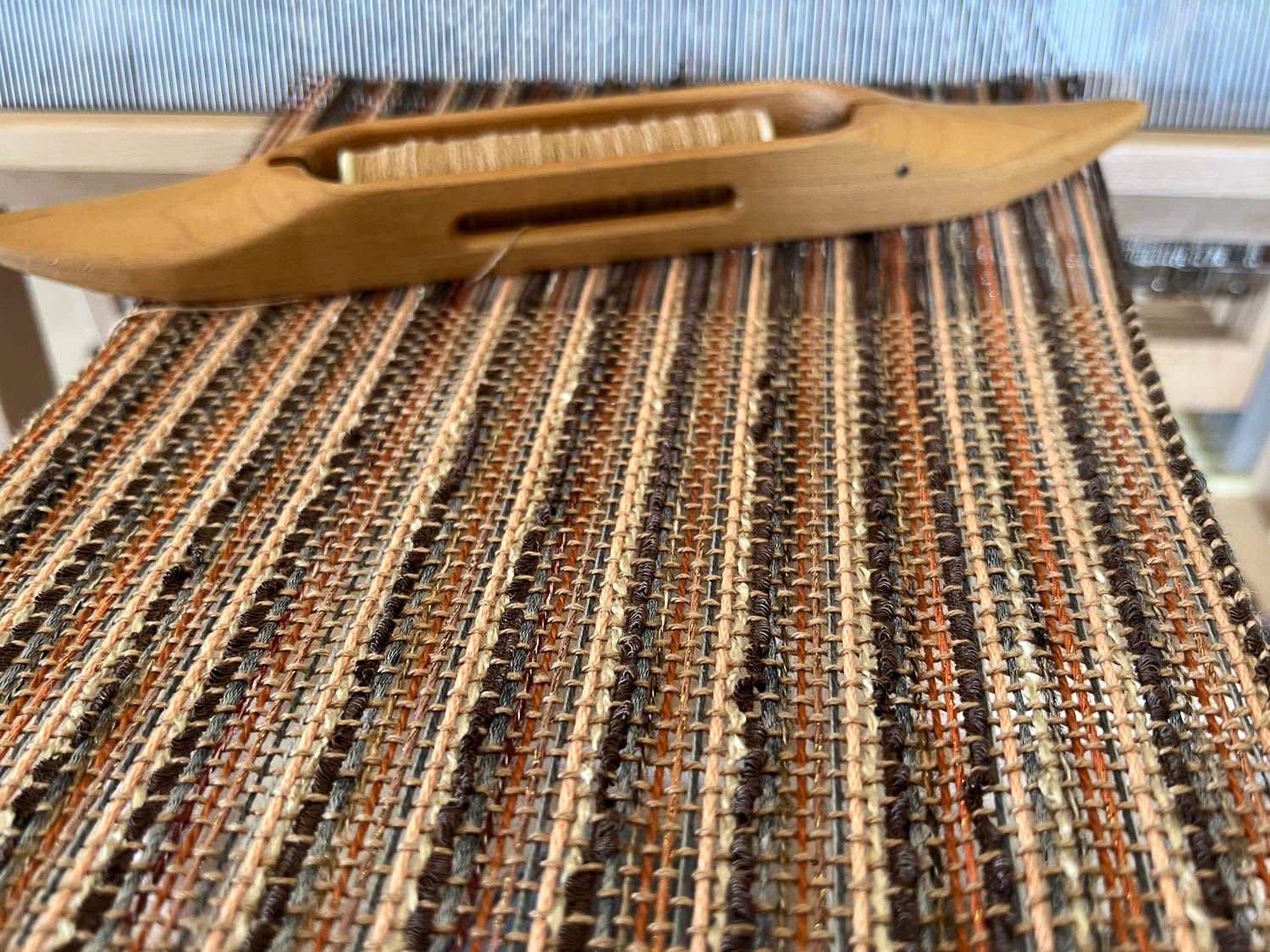
Weaving in 2023 – 2

Before the last couple of lamb posts I started to take a look back at weaving in 2023. Here is the next about weaving

Warp #1308 was baby blankets. I need to get another baby blanket warp on the loom because I’m almost out. Do you know that one of the first things I wove was a baby blanket for my son who is now 43? I have been weaving pretty much the same blankets all this time. If people still like them I guess that’s OK. I have a lot of other ideas though. Just no time.
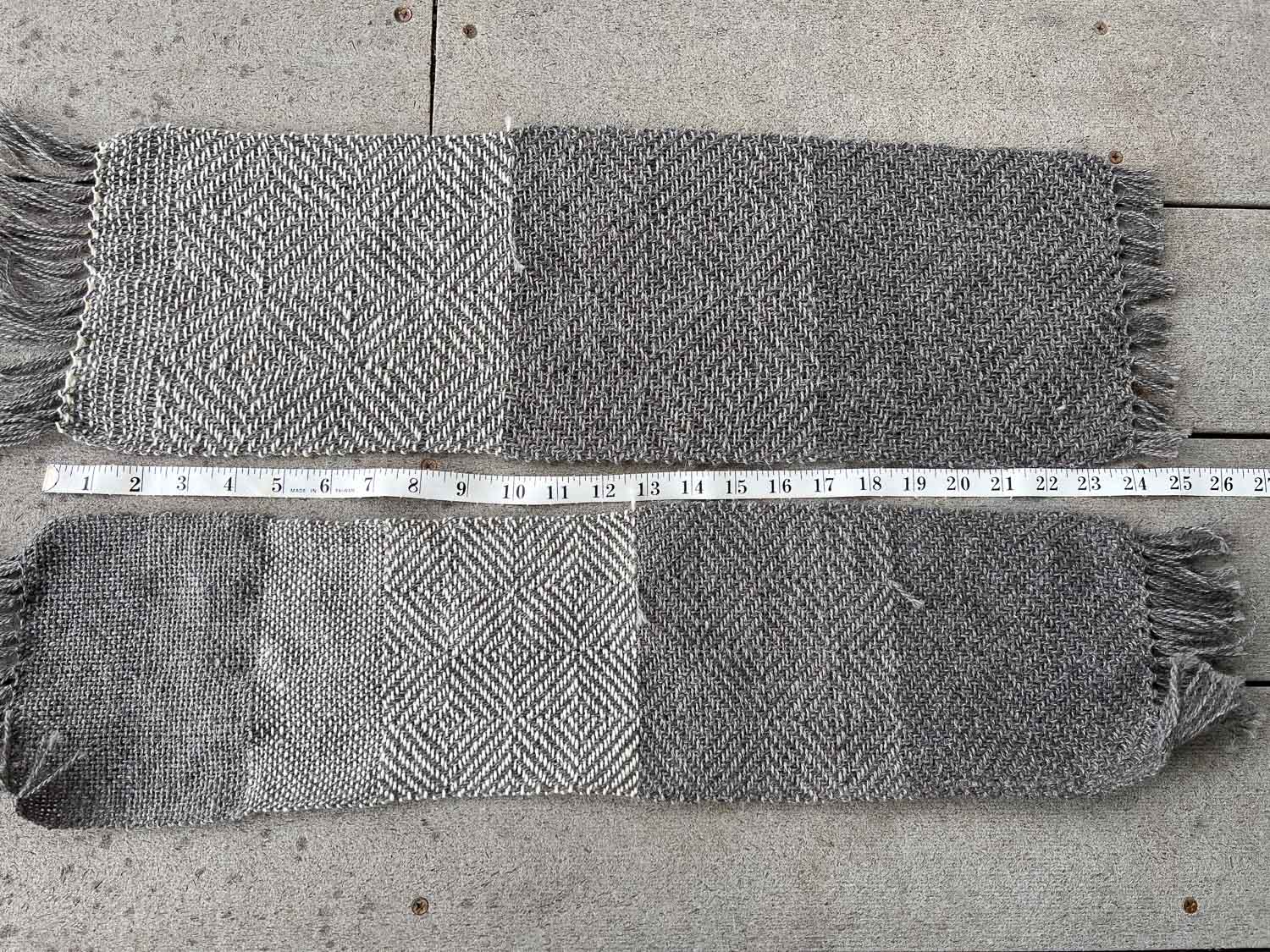
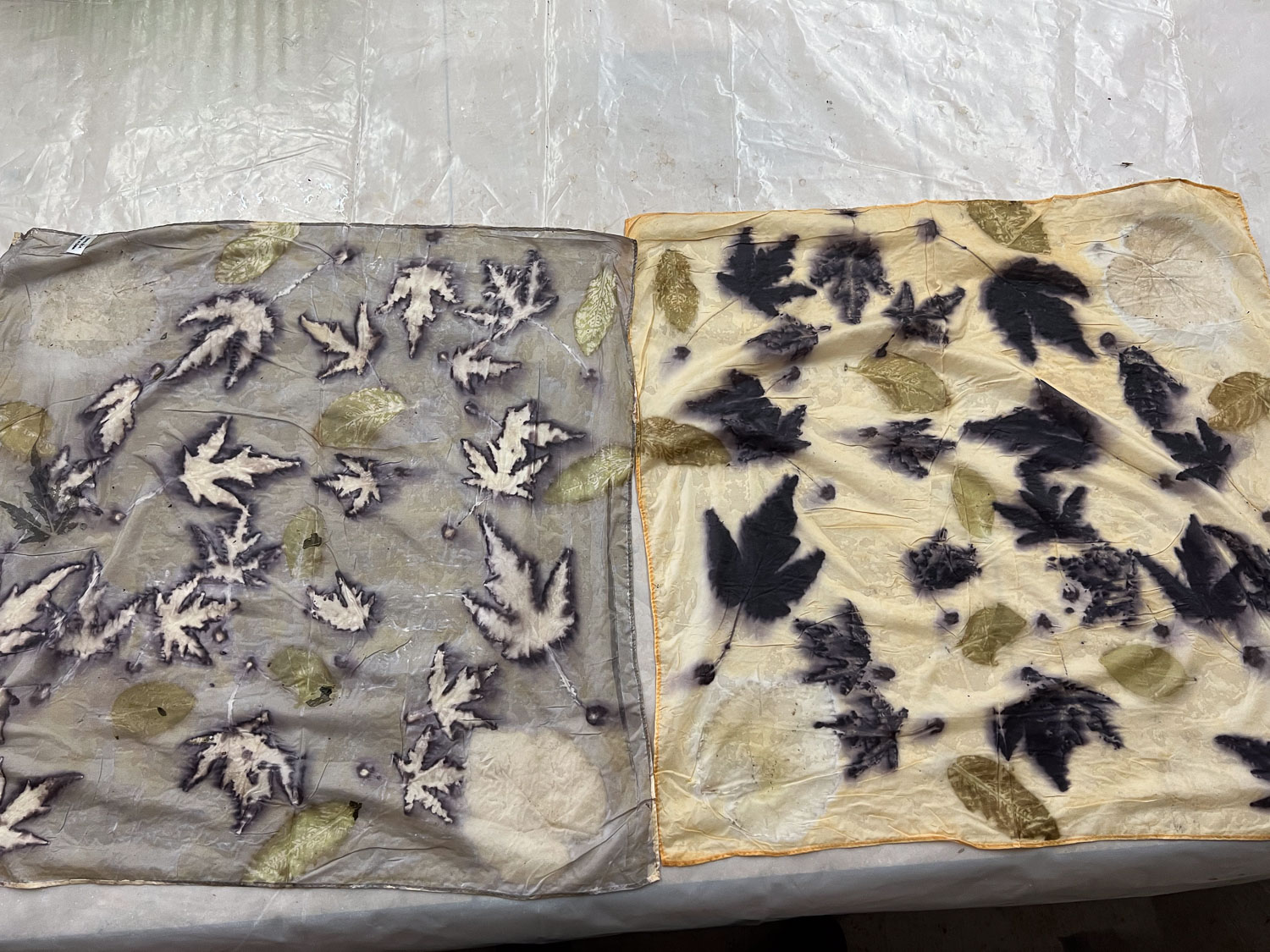
Warp # 1311 was for samples using the yarn I got back from one of the mills. The samples are Jacob warp with Jacob and Timm Ranch weft at two different setts. The photo on the left is before washing and the right is after washing. That is where differences in take-up and draw-in really show up.

These samples were all from one warp but resleyed to weave at 15 epi, 18 epi, and 24 epi. I used these for a Yarn Lab article for the Jan/Feb 2024 Handwoven magazine.
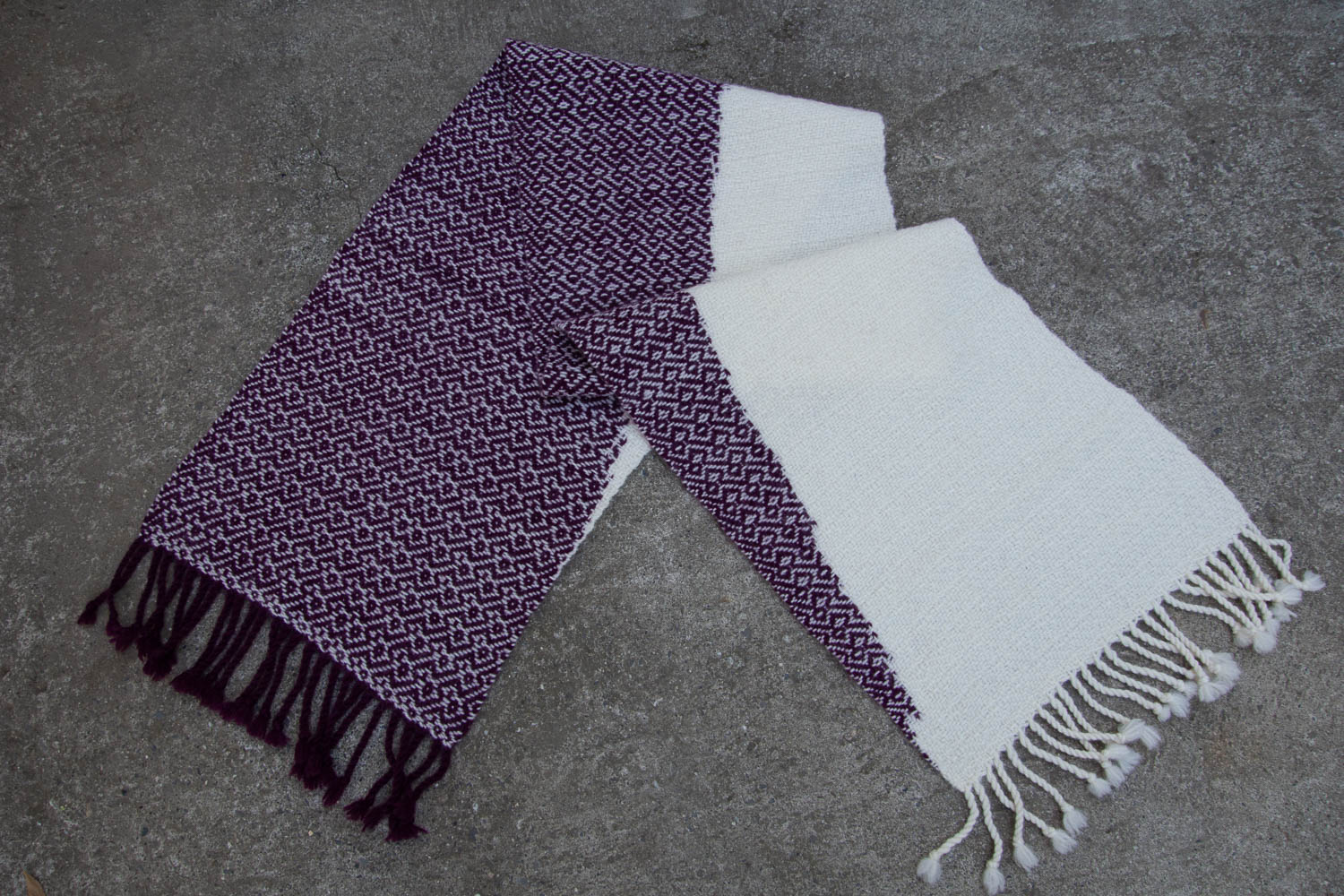
This is one of several clasped warp scarves and shawls I wove. They will be in an upcoming issue of Handwoven.

Warp 1326 was Timm Ranch yarn and I wove two shawls, one with indigo-dyed weft, and one with 3 supplementary warps to create the design.

The next warp is Jacob wool. I really like how the two sides of this pattern are so different.

This is Warp 1328 with 14 blankets. I weave these on my 60″ wide AVL production loom.

They look a little better when finished. Some of these are on the website now (here is one). Some are Year to Remember blankets that were custom orders.
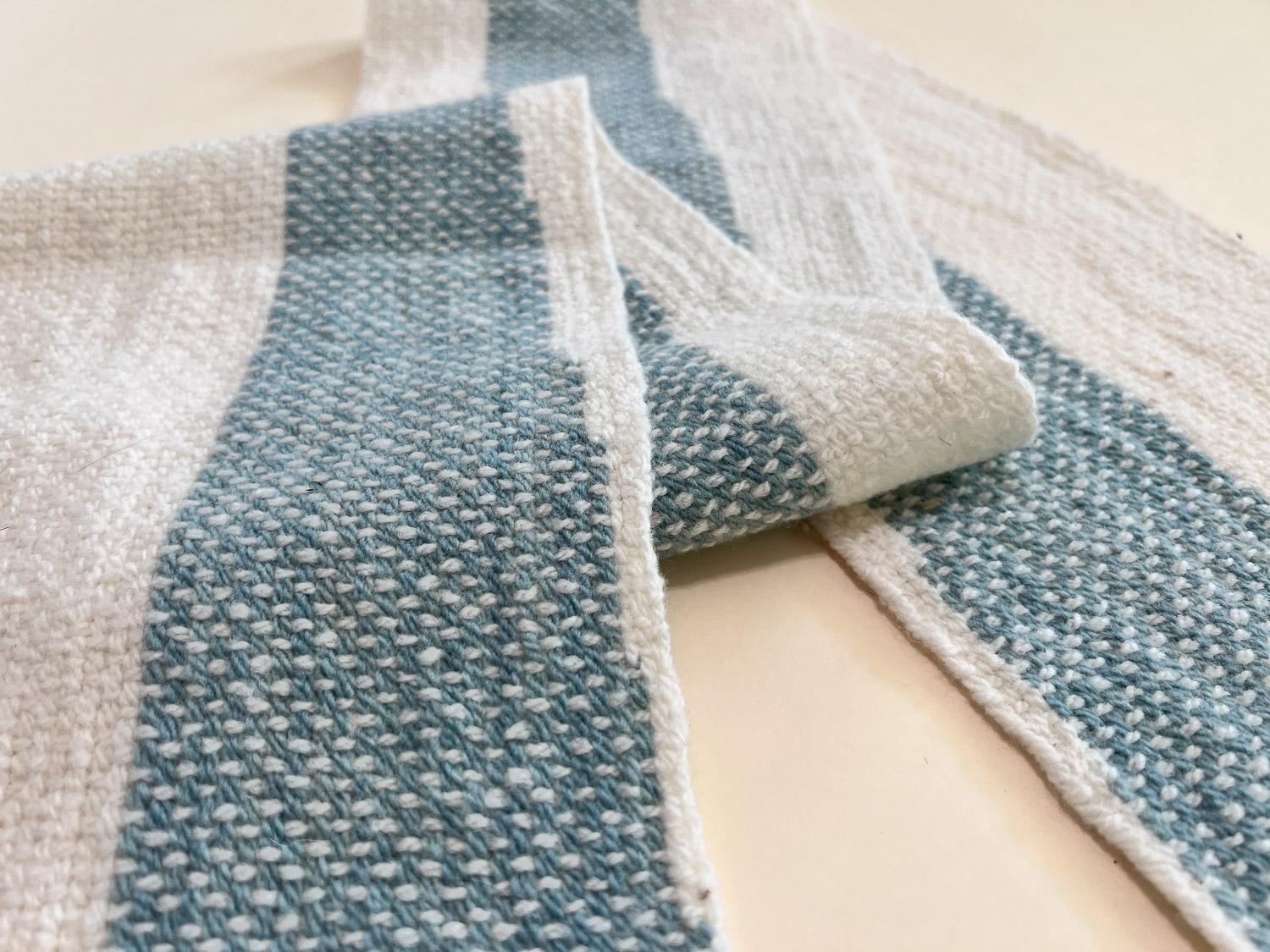
This is another clasped warp scarf using Timm Ranch wool that I dyed with homegrown indigo.
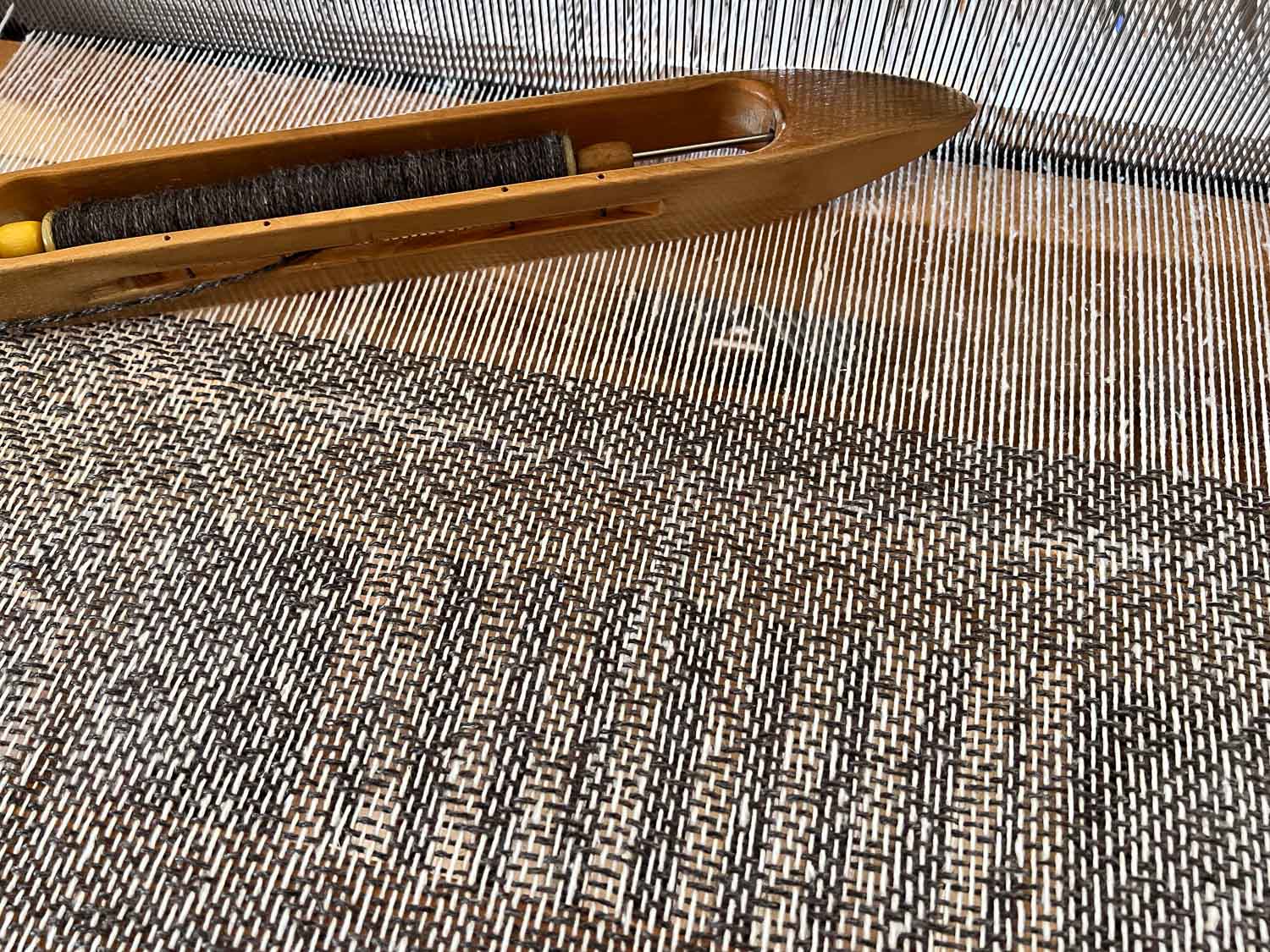
Warp 1337 on the loom. This is Timm Ranch warp and Jacob weft.

I wove enough for four pieces and made two into mobius shawls.

So many ideas and so little time. Back to the barn to feed lambs now.

Weaving in 2023 – 1

I saw a blog post the other day in which the writer had recorded everything she wove within that year. That gave me this idea. I’m taking photos and keeping notes all the time. I may as well use them. I won’t try to fit the whole year into one post however. Maybe I’ll post weaving, then I’ll post lambs, then weaving, then lambs. How’s that?

My warps are all numbered so I can find the info in my binder. This one is 1299 from January 2023, blankets on the AVL loom. My notebook shows that I wove 11 blankets on this warp, some of which were Year to Remember blankets. These three use temperature data from 2022 so the stripes are all the same, but the colors are very different. I weave custom Year to Remember blankets and use a sparkly yarn to distinguish the special date. I think I have enough warp still on the loom for one more of these this winter, so contact me if you want to know more.

This is 1301 a scarf using all these crazy yarns. I teach a class in weaving a scarf using a mixed warp wound with a paddle, “Mix it Up”. I haven’t taught that class in awhile and I probably need to change it from a 1-day class to maybe 1-1/2 days. I don’t know if people want to pay for an extra day, but I always forget that it takes longer in a class setting than I take if I’m just warping and weaving my own scarf.

Two more mixed warps on the loom. The one on the right is a shawl, now at the Artery I think. I wove 5 or 6 of these in different colors.

In February I demonstrated weaving at the Sacramento Weavers Open House. I missed it this year because lambs were coming earlier than the previous year. I wove a chenille warp on Saturday and a wool warp on Sunday.

This is the warp after I took it off the loom.

Warp 1317 was a handspun Jacob wool scarf. Two Farm Club members spun yarn from wool that was accumulated from years of samples sent in when registering rams. Each ram application requires a few locks of wool. We have been digitizing the papers and that means those baggies of wool are discarded. I decided to do a project like this and then donate the scarf to the Jacob Sheep Breeders raffle. I wove two scarves using wool two different people had spun.

Clasped Warp is a technique that I wrote about for Little Looms a few years ago. It has been used with rigid heddle looms to design warps that change color midway through the length. I decided to do the same thing on a floor loom, adding the woven in pattern to the elements of interest. This is a shawl woven on a 4-shaft loom using handspun yarn. I will have an article coming out in the next Handwoven on this technique.

I wove fabric for 4 bags to use in an article that was published in Little Looms last year. These are hemp and woven on a rigid heddle loom. The bag uses a length of fabric that is 8″ wide and 4 yards long. Folding it strategically gives a shoulder bag with and inside and outside pocket.

This was part of that last blanket warp. It used up odds and ends of the Ashford DK yarn that I use for the Year to Remember blankets. The shape isn’t exactly right because that warp is designed to weave throws that end up about 45-50″ wide. I wove random stripes and sewed two together for a bed-sized blanket. I should have woven them longer and then they’d fit the bed correctly, but I didn’t have a plan at the time.

More to come if I’m going to finish out the year.

Botanical Printing Explorations

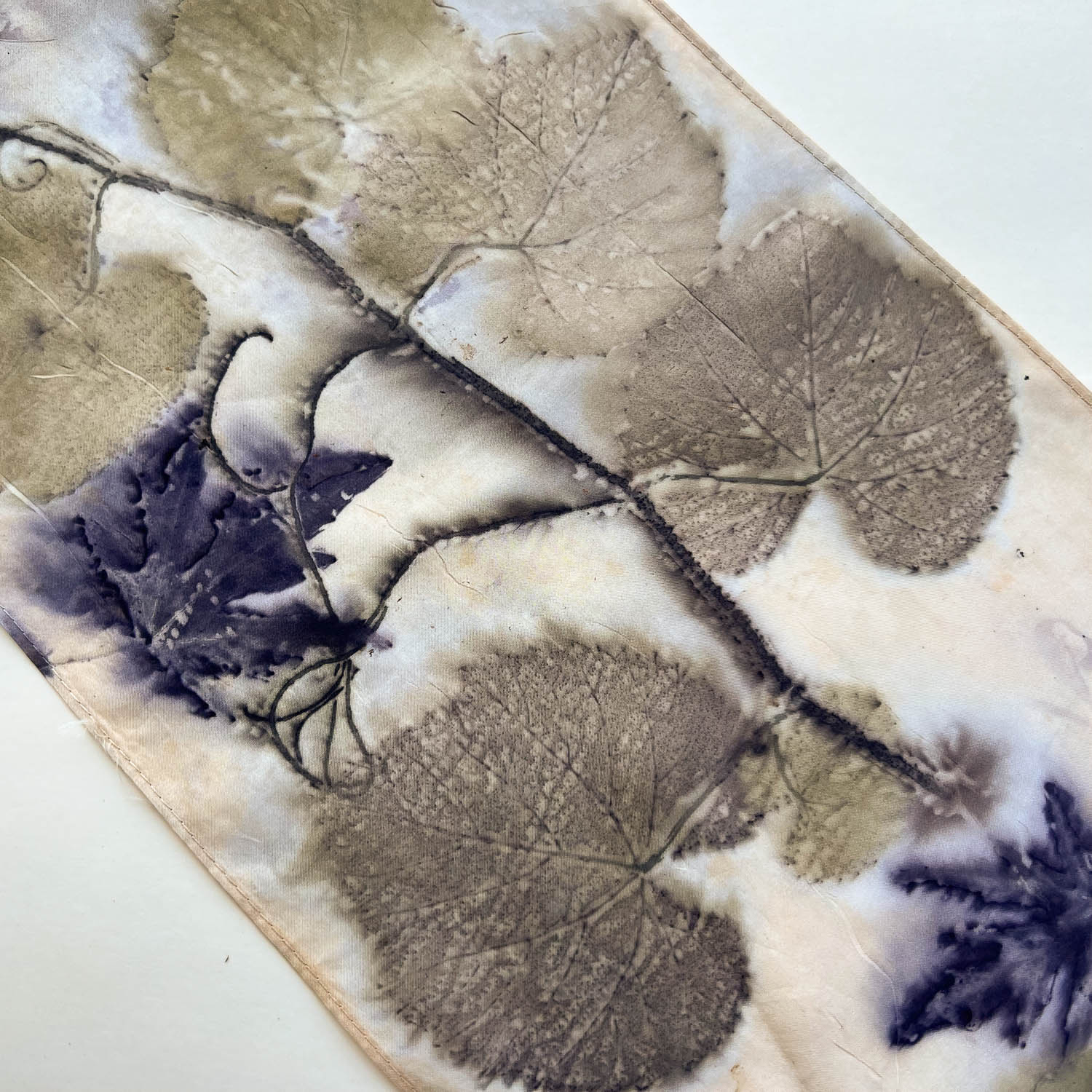
I consider that botanical printing (or ecoprinting as it is better known lately) is always an experiment. There are lots of variables beyond the obvious of the use of tannins and/or iron to bring out color or an imprint. Does the stage of growth of the plant make a difference? Is there a difference if the front or the back of the leave or the flower is against the cloth? How fresh is the plant? How about dried plants?

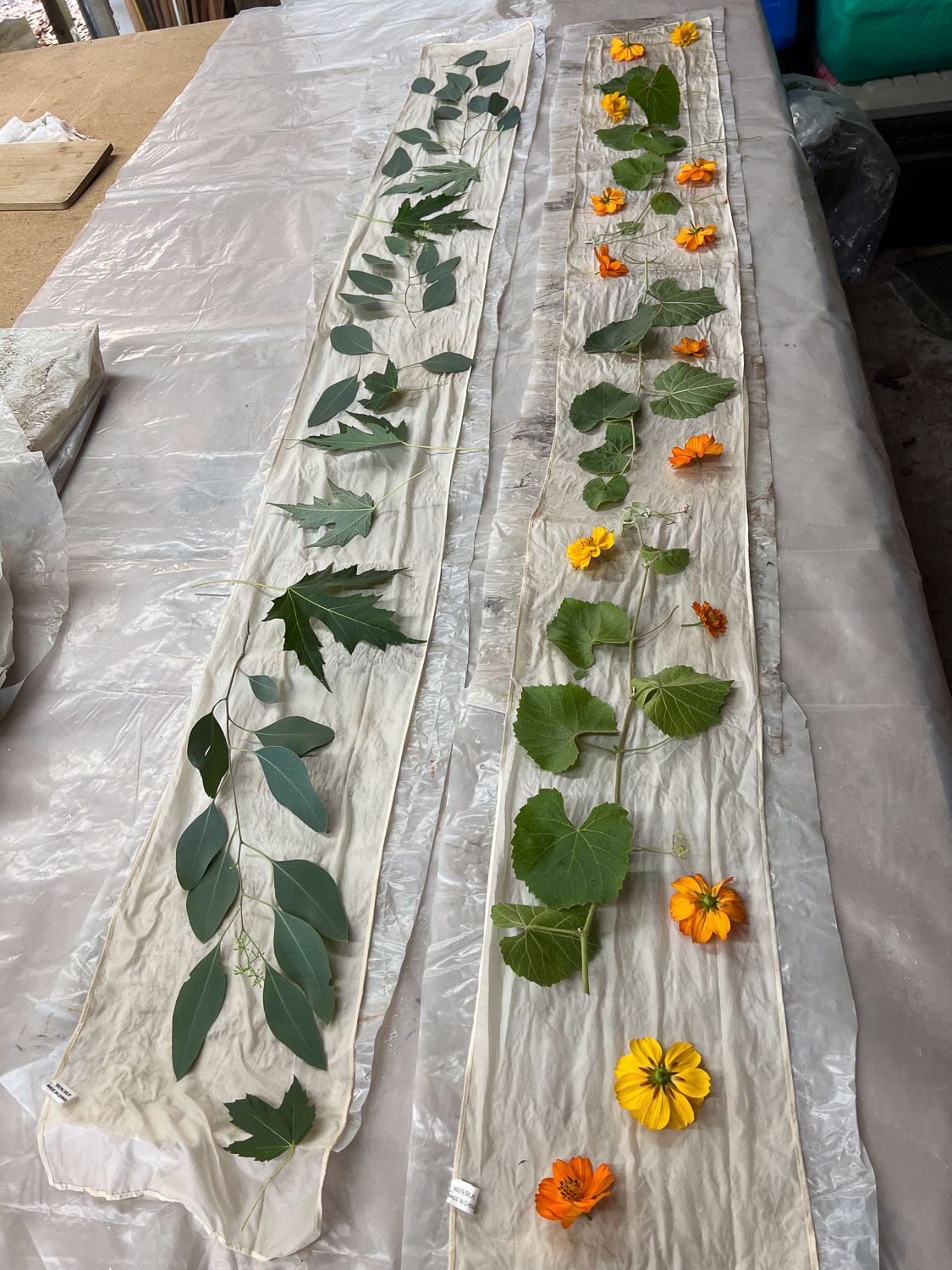
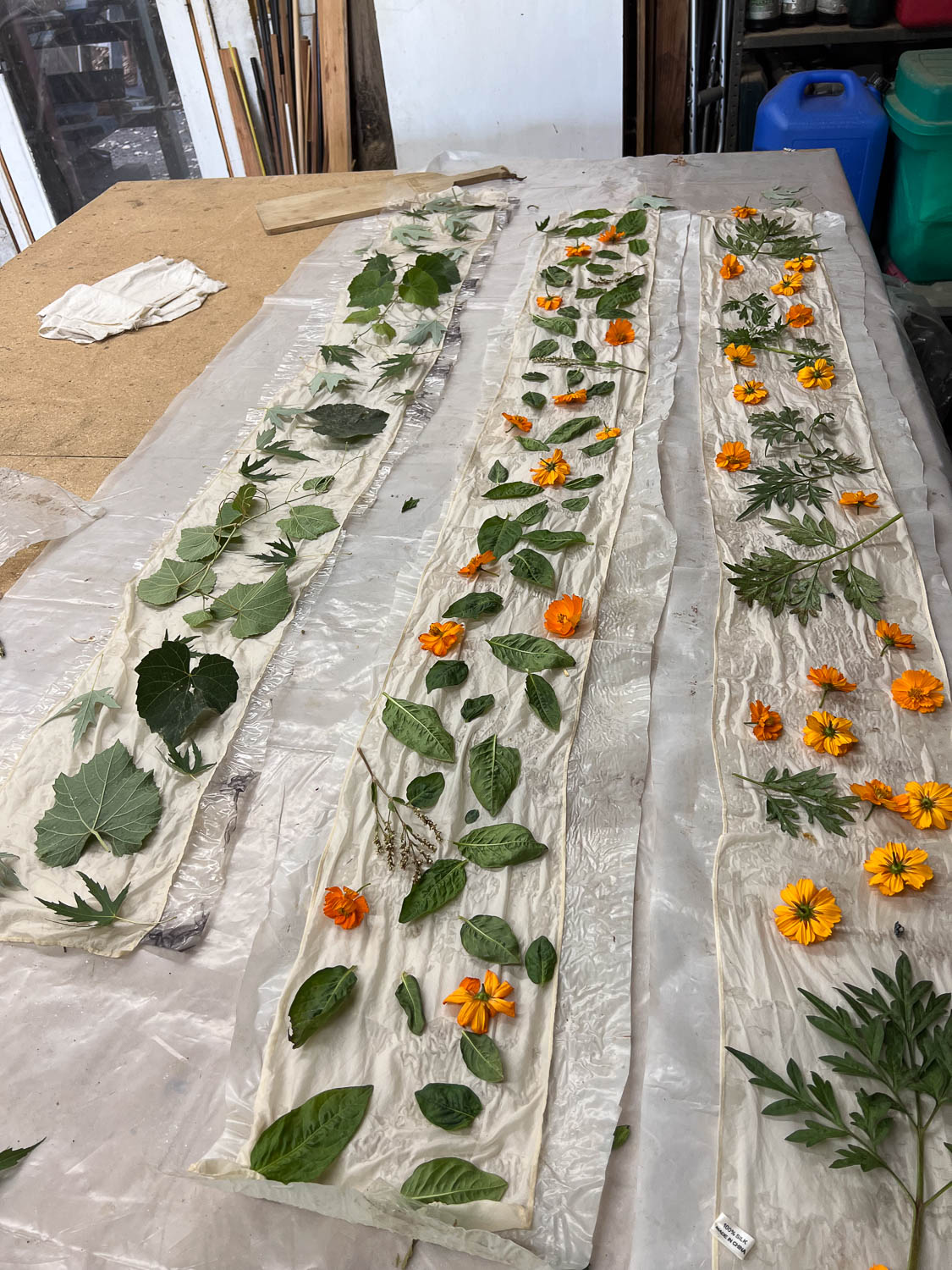
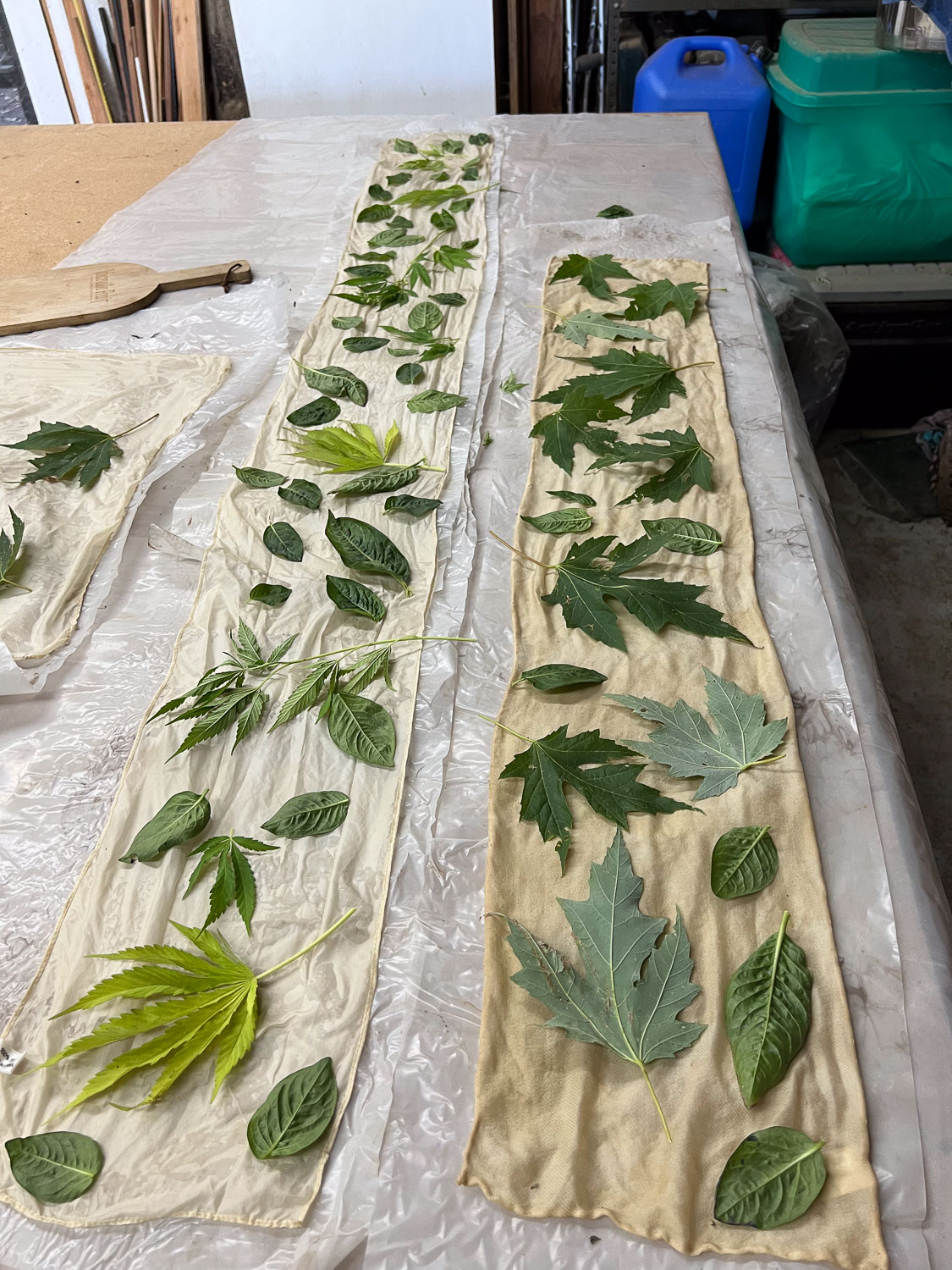
Here is what it looks like while I’m working. These are two different scarves, but I’ll end up with four because I put a second one on top of the first. These were soaked in a tannin solution before adding the plants. The second scarf is soaked in an iron solution. As I put the iron soaked scarf on the tannin soaked scarf a chemical reaction occurs that turns the tannin soaked scarf gray. Wow! Why didn’t we do this in high school chemistry? Maybe some of the rest of chemistry would have stuck.

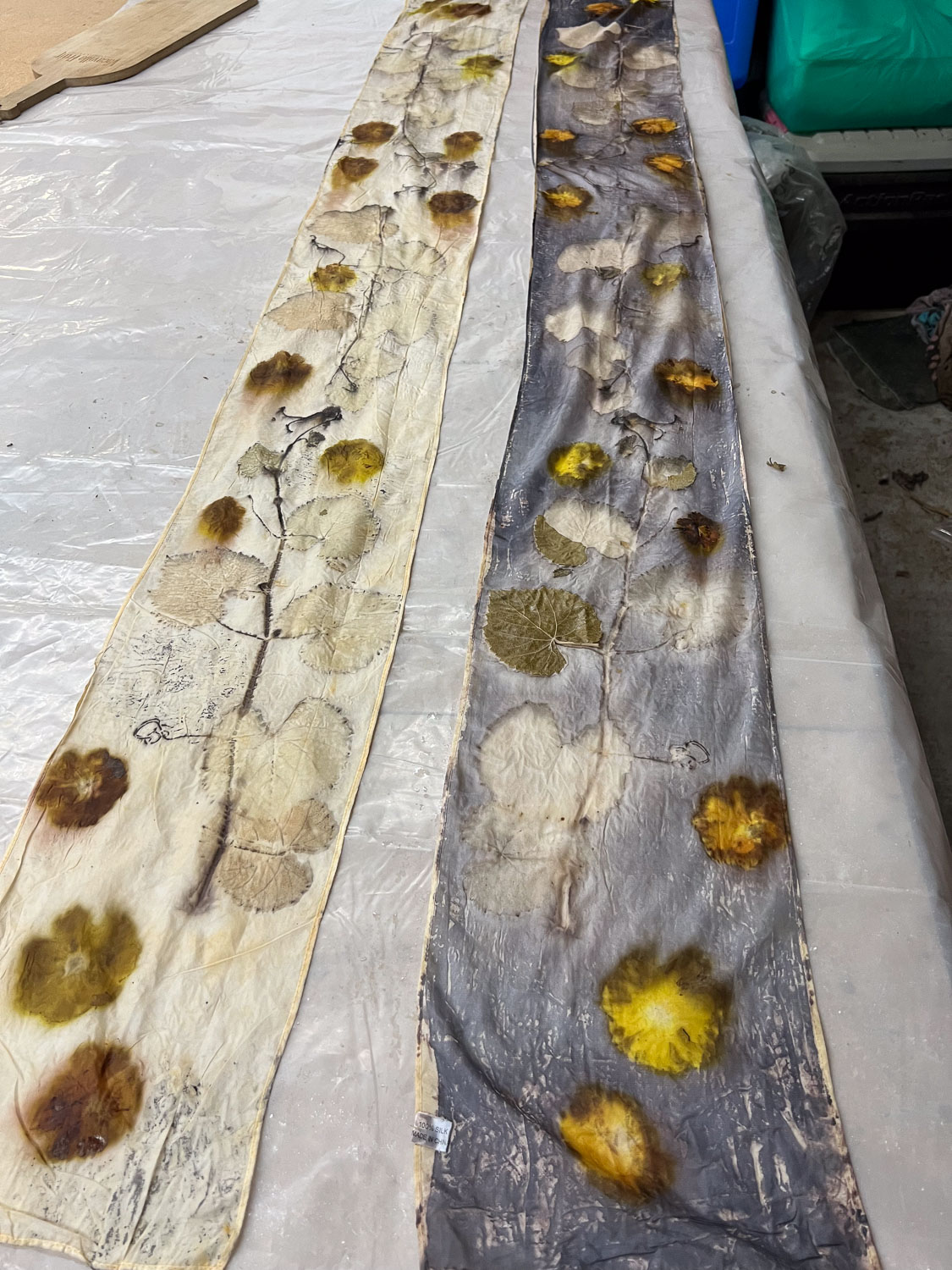
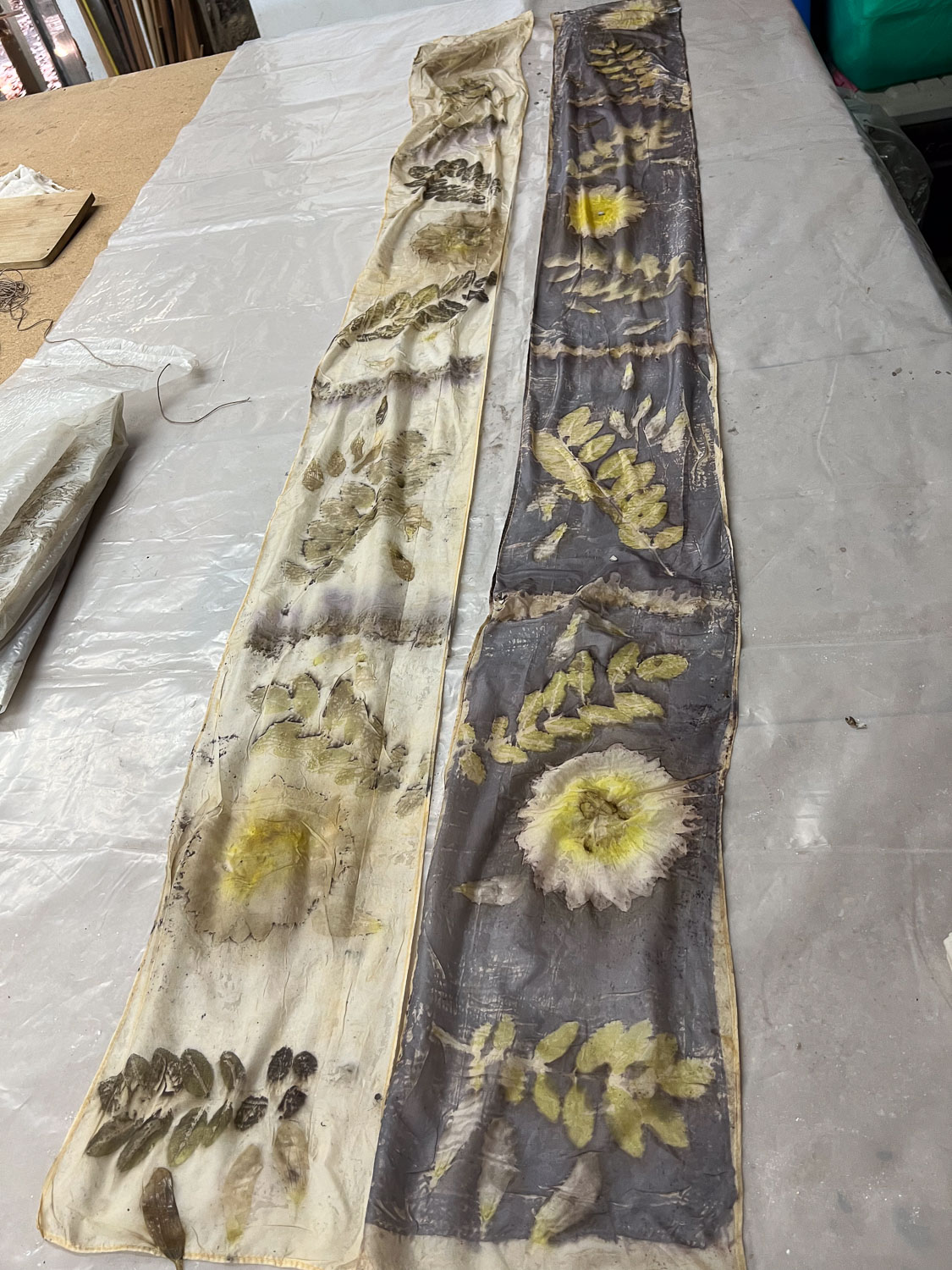
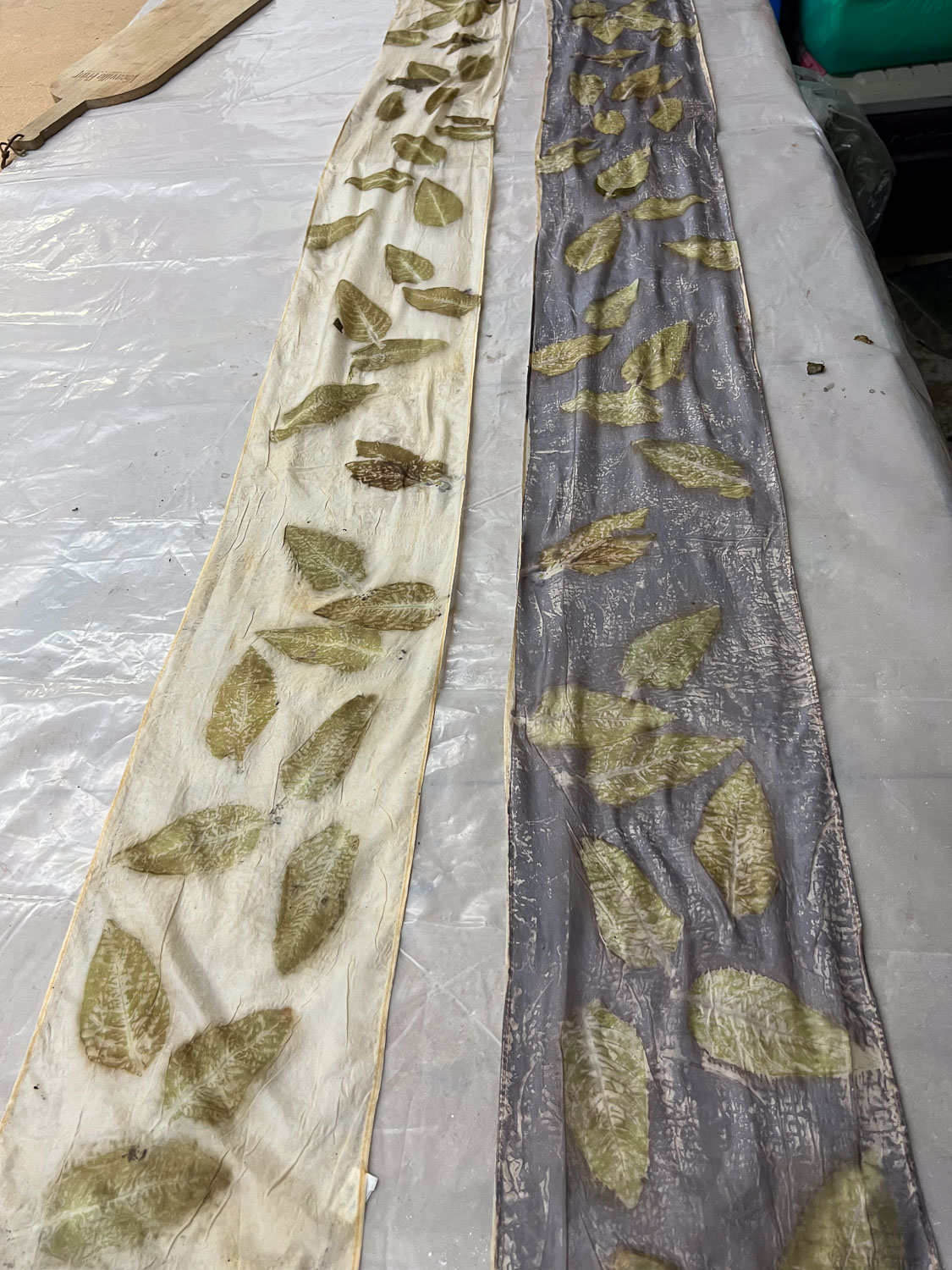
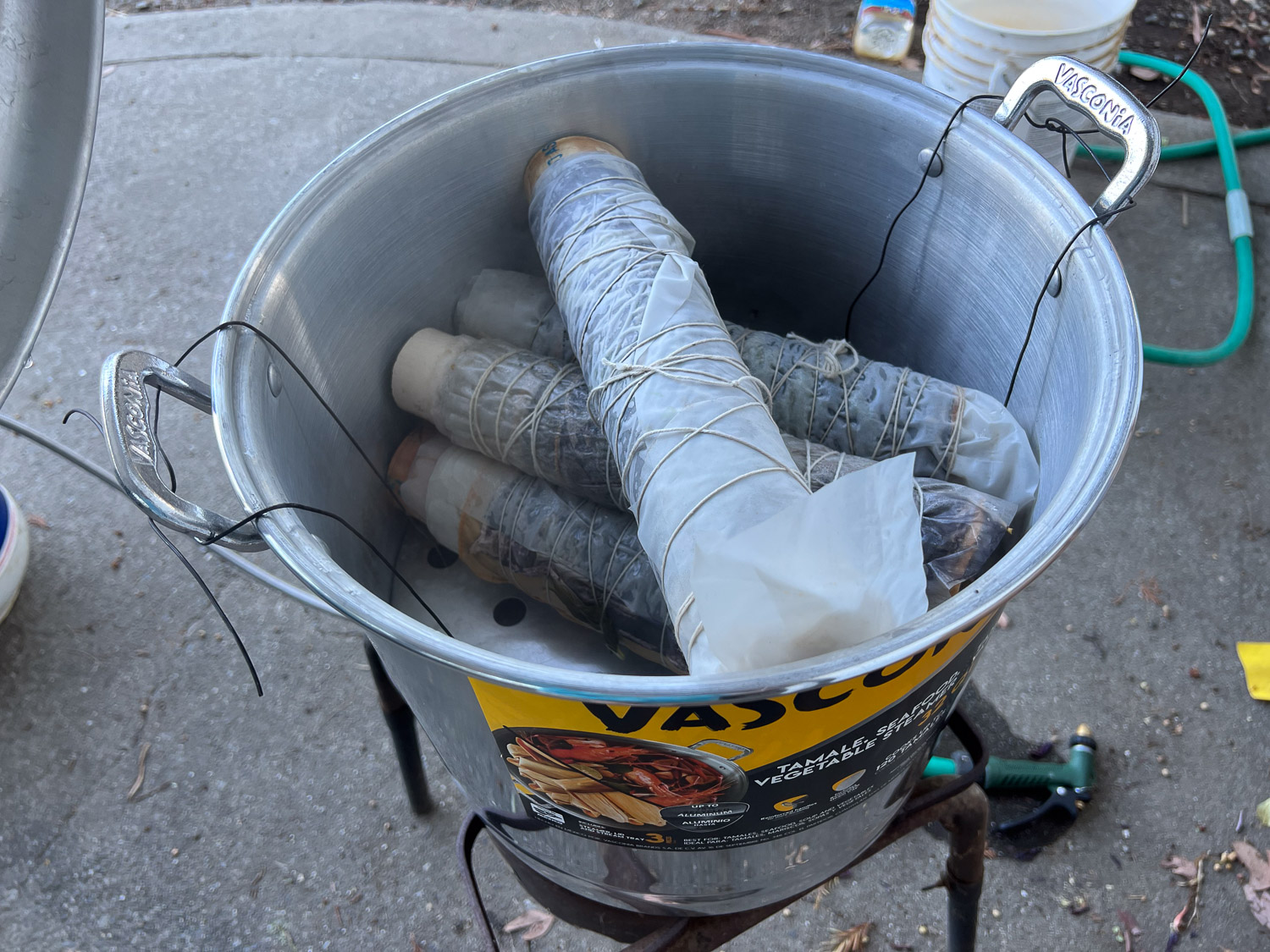
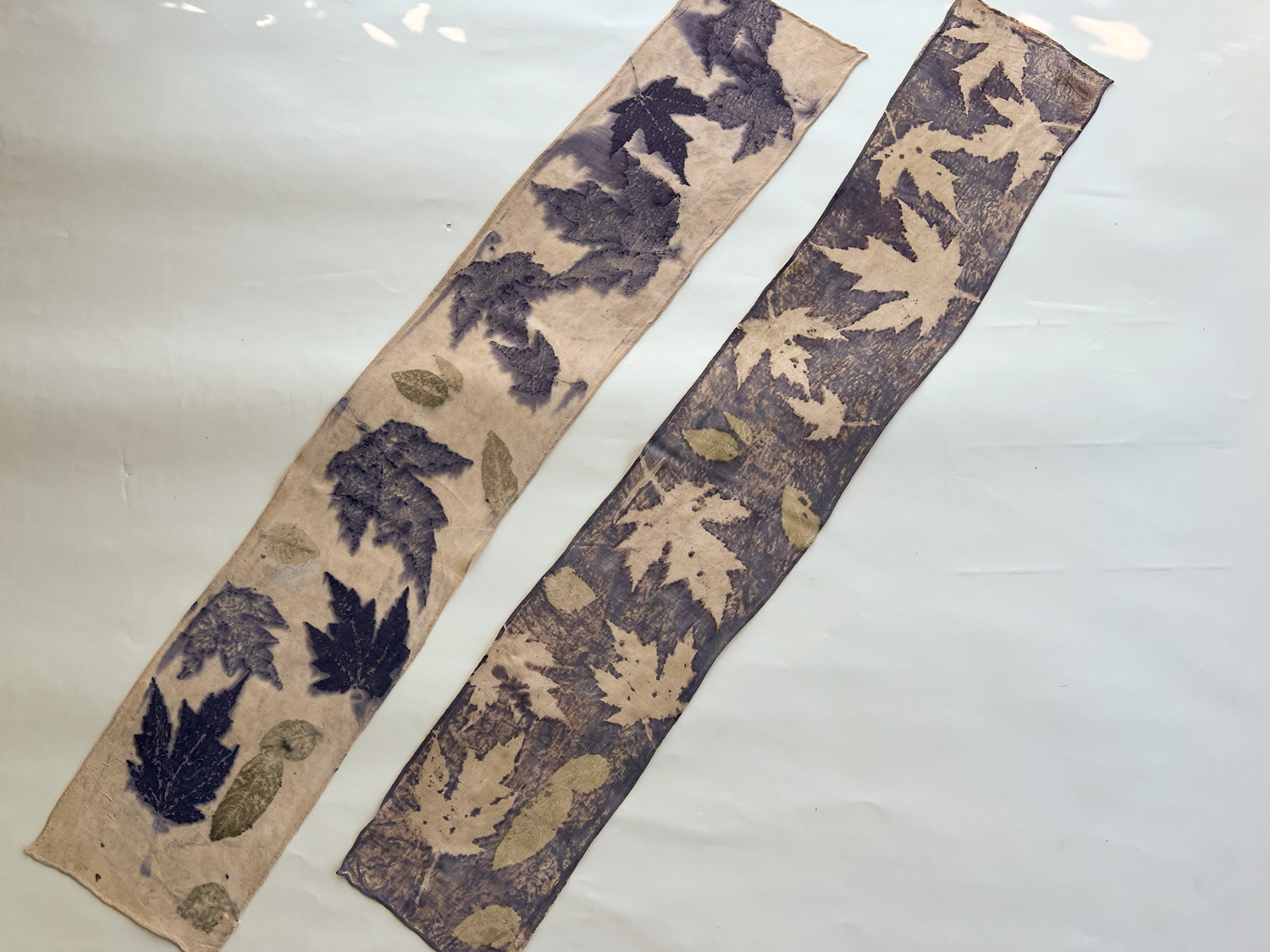
The pair of scarves sandwiching the leaves and flowers is rolled on a PVC pipe, tied tightly, and then steamed for an hour or more. The rolls cool overnight and then I get to open them. These two scarves are the pair from the left. The one on the left is the iron soaked scarf that was put on top of the flowers and leaves before rolling. Those are cosmos flowers from my dye garden and wild grape leaves from the front fence. I find it interesting that the top scarf has the imprints of veins from the leaves and the leaves act as a resist for the bottom scarf. (That green leaf is the actual leaf I haven’t pulled off yet.) The flowers print on both, but differently.

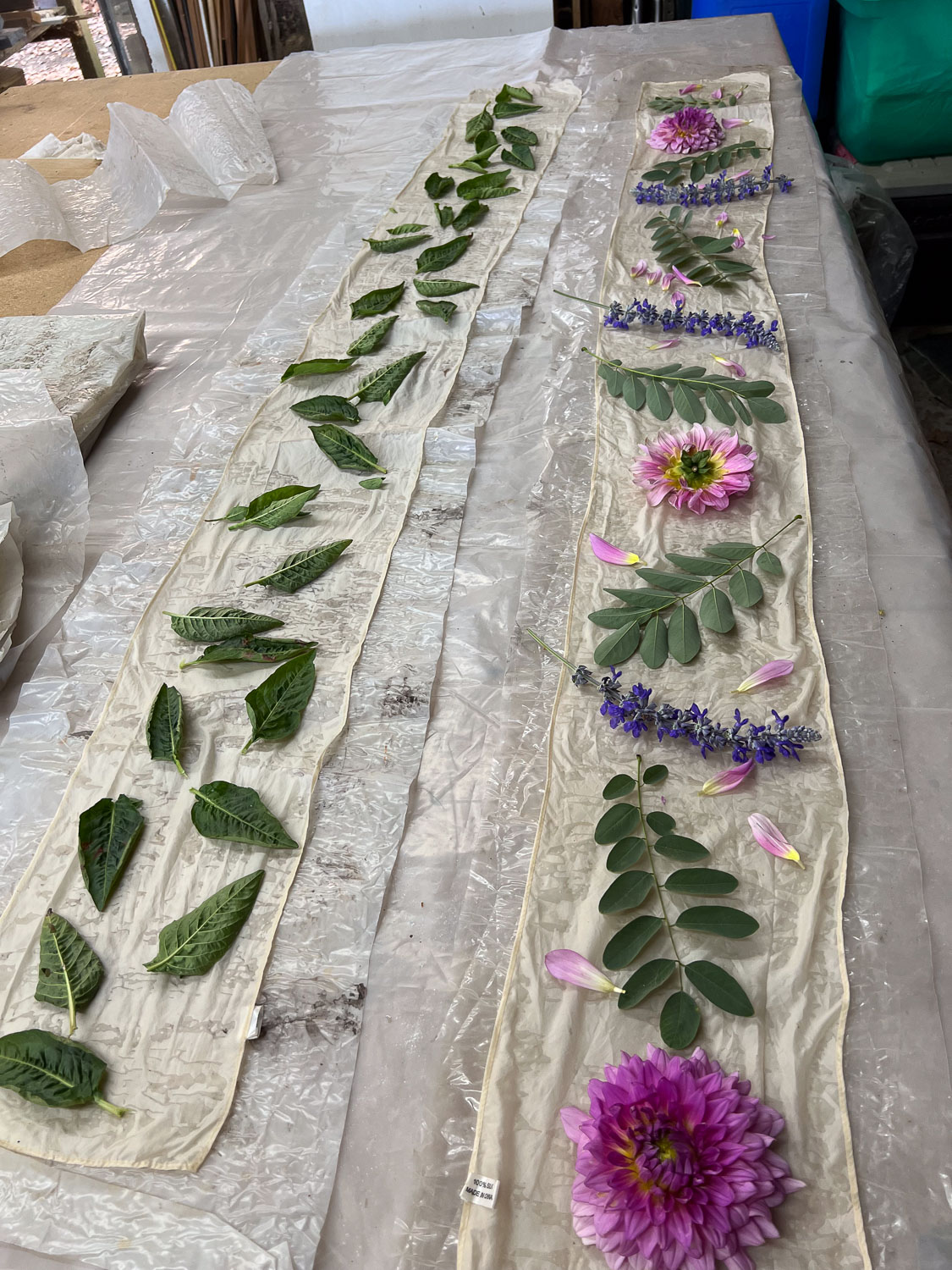
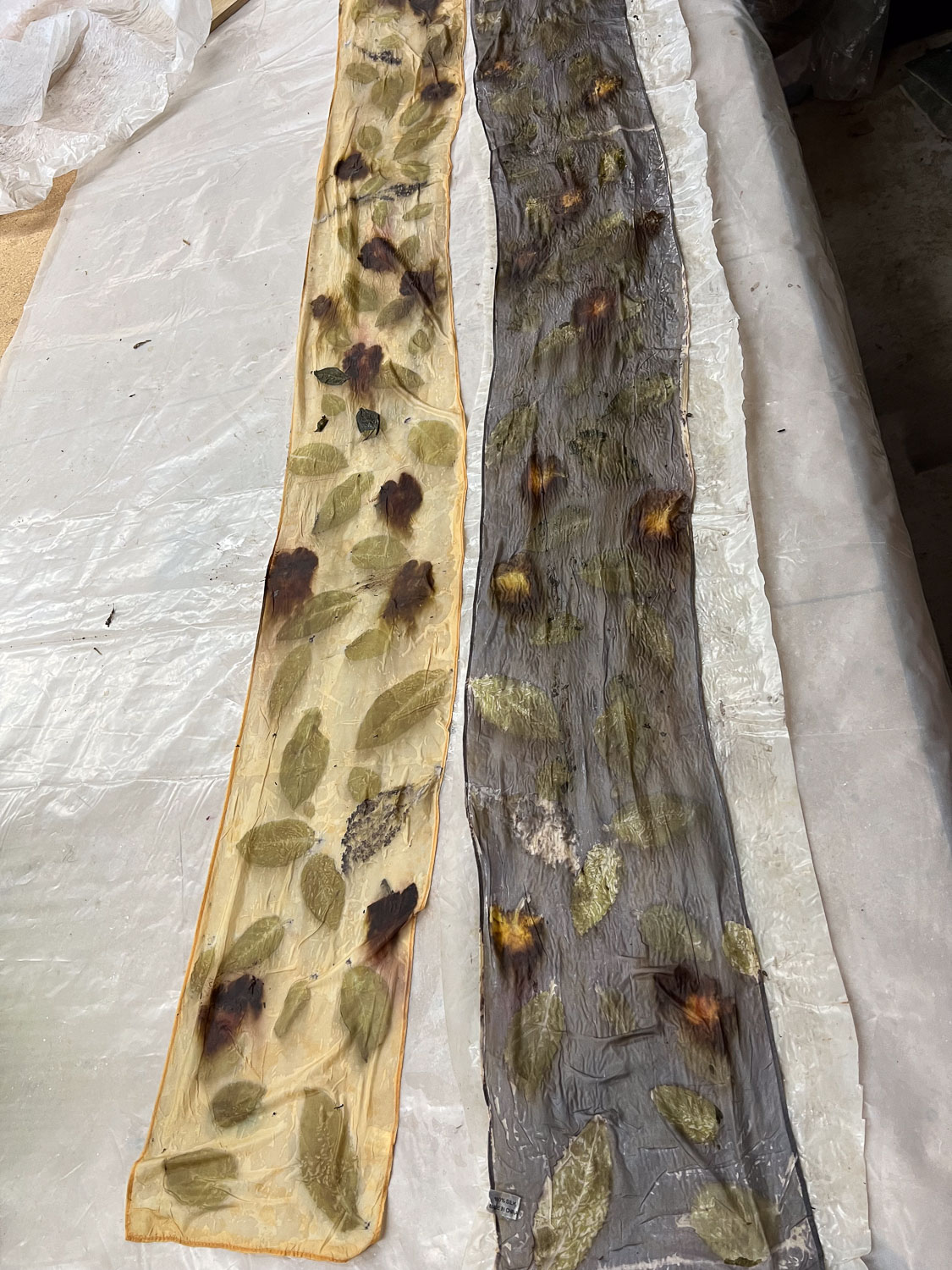
Here is another pair. That’s indigo leaves on the left and dahlia flowers on the right, along with something I can’t remember although I think I wrote it somewhere.

Here is the big reveal of the dahlia scarf.

The indigo scarf. In these two pairs, the leaves printed on both scarves instead of acting as a resist.

I have used a canning kettle in the past, but I just found this tamale steamer and bought it. The advantage is that a steamer tray comes with it. However I didn’t know if I could put enough water in to last over an hour, and I recently ran my old pot dry which ruined the scarves. So I wired the steamer rack high enough to put plenty of water in the bottom. Now I can fit many more at a time.

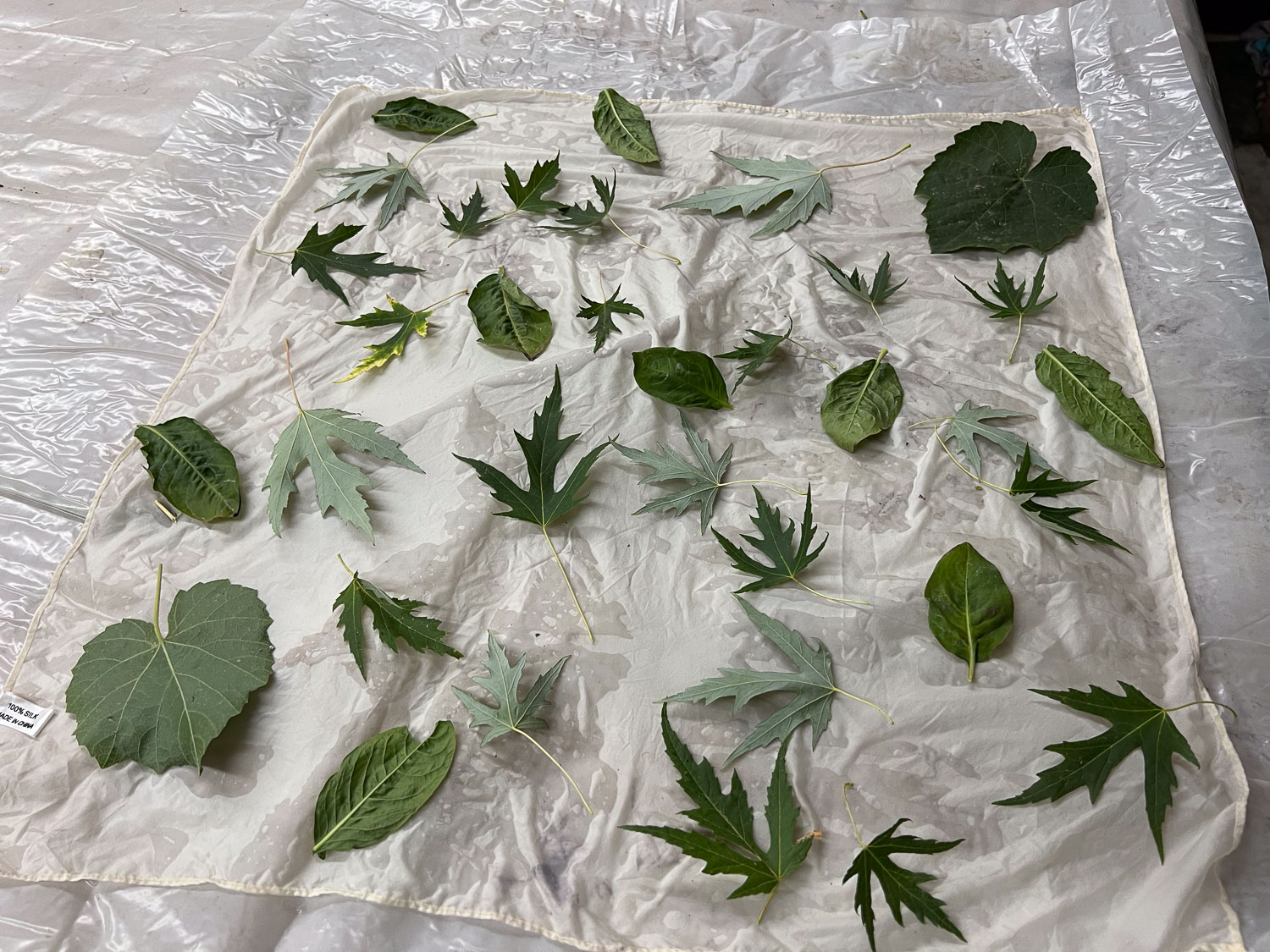
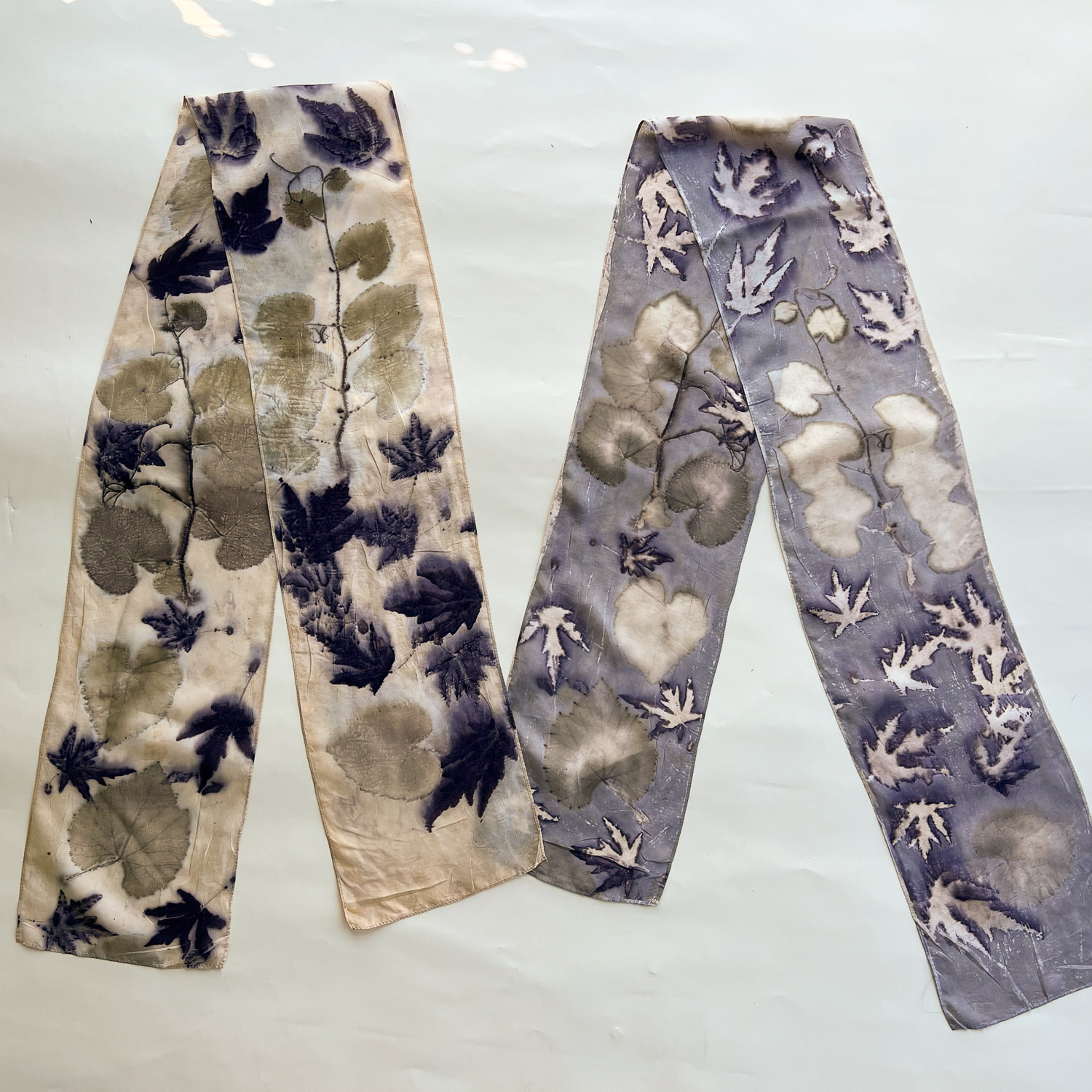
I’m experimenting with square scarves. I haven’t figured out the best way to display them at the Artery yet. This is maple, grape, and indigo leaves.

Here is the finished pair. Notice that the indigo dyes green on both scarves but the maple and grape leaves act as a resist on the gray scarf.

I worked on three at a time here. Maple and grape leaves on the left, indigo leaves and flowers and cosmos flowers in the middle, and cosmos leaves and flowers on the right.

These are the two scarves from the middle after unrolling.

These are the scarves from the left in that photo of three, after washing and ironing. I have four scarves listed on the Artery website right now–working on more listings but need photos. A lot more are in the store in Davis.

Here is a detail.

I printed more scarves the next day. All the scarves have been silk, but I tried a new batch that are 63% silk and 37% silk (right).

Here is that wool/silk scarf after finishing. These are the only ones on my website right now. Hopefully I’ll get more listed soon. I’ll tell you more about that other scarf in another post.

I need to get more photos.

Sprout Yarn Scarf

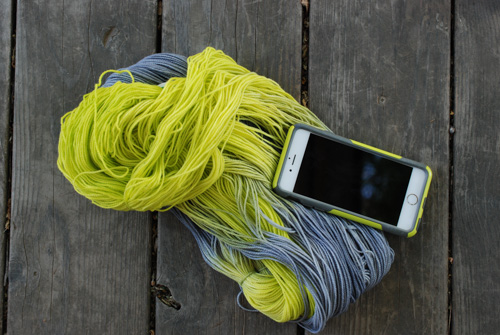
Friends and customers told me that I should start carrying sock yarns so last winter I chose a few special yarns. One is Sprout, a fingering weight superwash Merino yarn that is dyed and marketed by The Fiber Seed, the business name of a delightful couple who live in Florida.

IMG_1769

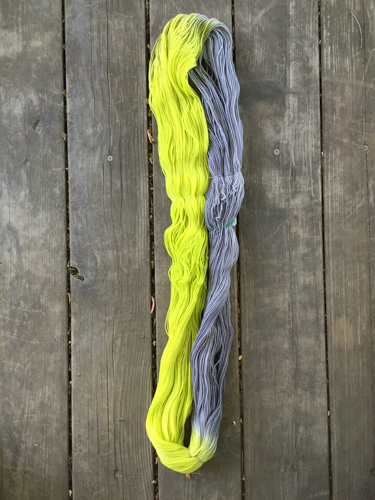
This colorway is called Quicksilver and is  dyed in one of several dye patterns they use.DSC_0024

Chris saw me photographing this and commented that I was going to weave something to match my cell phone.

IMG_1771

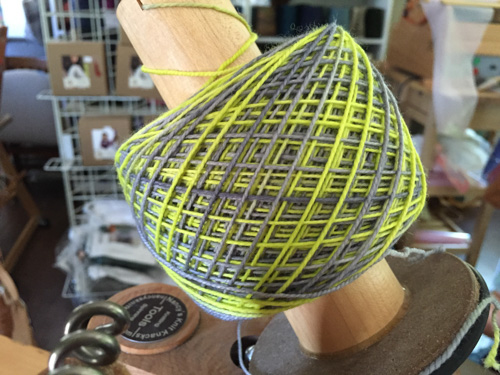
Here is what it looks like after winding into a ball.

Too many people think that you can’t using “knitting yarns” for weaving and vice-versa. To me, yarn is yarn. This yarn is very stretchy and you need to plan for that from the start. I measured the warp on my warping frame under a light tension, also taking time to match up the color repeat. That way I have a warp where the colors don’t mix, but move from yellow to gray and repeat (which you will see in the finished piece). That may not work with every dye pattern or warp plan, but it worked perfectly for this one.

IMG_1775

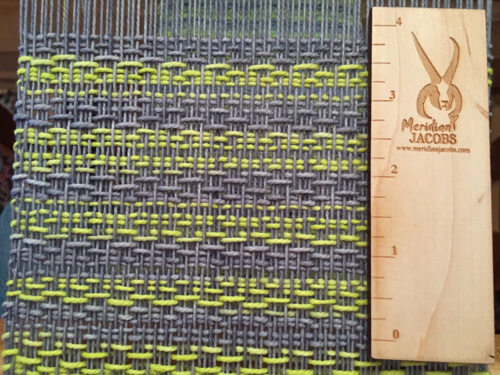
Notice how open this is. I sett the warp at 12 epi (ends per inch) and wove it with a very light beat. Beginning weavers often BEAT, instead of beat press the weft in. In this case that would completely cover up the warp and not make fabric appropriate for a scarf. This yarn is under tension and when it comes off the loom a lot of those spaces will fill in.

I could have chosen to weave this with a solid color to maximize the effect of the color movement in the warp, but one of my goals is to show what can be done using just one skein. The color repeat in the skein means that when using this yarn for weft the color changes after about every fourth weft pick. Notice also how the color changes over-ride the pattern of the weave structure. This is one of my favorite weave structures, but in this piece I used it for the drape and texture it would give the piece and not because you’d see the design it makes when I use solid yarns.

971 Sprout scarf

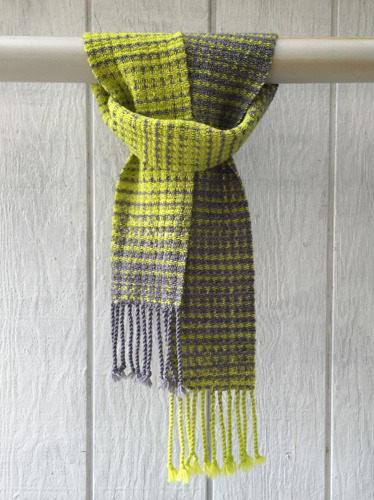
I knew this wool wouldn’t “full” because the yarn is superwash, but wet finishing will still change the look of the piece. I soaked it in water, agitating as if I was fulling it. I should have taken a photo but it was late at night. After that process the scarf looked pretty awful. The yarn reverted from being lofty and squishy to long and stringy. The fringe looked bad. I laid the scarf out to dry as I usually do and it was very disappointing. Then I remembered–Superwash! I put the scarf in the dryer with a big towel. That was the answer!

This scarf is lofty, bouncy, and very soft.

Here are the stats:

On the loom: 7.25″ x 81″ measured under tension

Off the loom: 6″ x 68″ (Remember, I told you it was stretchy!)

Wet after washing: 6.25″ x 72″ (and not looking very good)

After drying in dryer: 5.25″ x 58″  Perfect!

IMG_1772

Another cool thing for you knitters is that each yarn comes with a QR code that links to a knitting pattern using the yarn.

I guess I need to get these yarns on my website, but there are so many color and dye pattern choices that will be difficult. I’ll work on it. In the meantime, if you are interested you can always ask me to send photos or come to the shop.


Close to Home…Post #12 Wearables

The previous posts were all about the farms where I got the wool to use in my show, Close to Home…Yarn with a Story. Most of them featured blankets. I love weaving blankets. It doesn’t really matter what size they are, you can weave each in a different color and/or pattern, and who couldn’t use a warm blanket?

But I wove some wearables as well. 879-1 (1) 879-1 Above are shawls woven of the same style of yarn from Imperial Yarn Company as the Stars and Stripes blankets. The brown yarn was dyed with black walnut.black walnuts after dyingThis is what the black walnuts look like after having soaked in a bucket for a couple of weeks and then been boiled for an hour. eucaluyptus dyeThese are pots of eucalyptus leaves and twigs on the stove…Eucalyptus dye…and yarn in the dye made after boiling those pots. Notice that there are two different weights of yarn in this post. That finer yarn, also from Imperial Yarn Company, is used in the shawls below.IYC shawlThe weft in this shawl uses the fine yarn dyed in eucalyptus. One batch turned out rust and another was gold.Eucalyptus dyeYou can see the two different sides of each shawl in this photo. 883-2 (1)Here is a close-up.DSC_9797Another shawl that uses natural dyed yarn (black walnut) is this one in huck lace woven using yarn from the Timm Ranch.894-1 & 894-3Here is another in un-dyed yarn.Timm Ranch woolBy the way, here is what that shawl looks like while on the loom. I always have to convince new weavers to have faith that even if you see spaces when you’re weaving they will close up if you’re working with wool.

There are also several scarves in the show, some of which have been shown in earlier posts.DSC_0156These scarves use yarn from Fiber Confections, Anderson Ranch, and Meridian Jacobs.