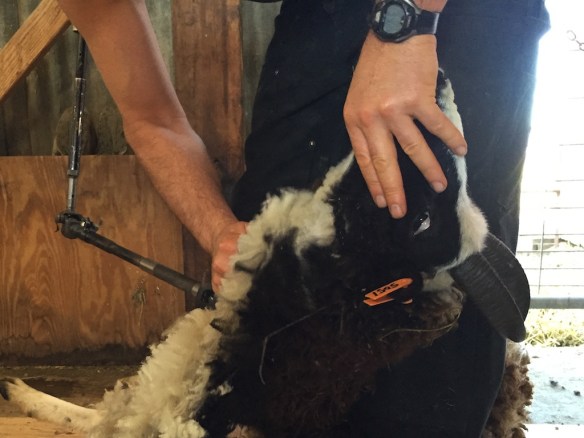




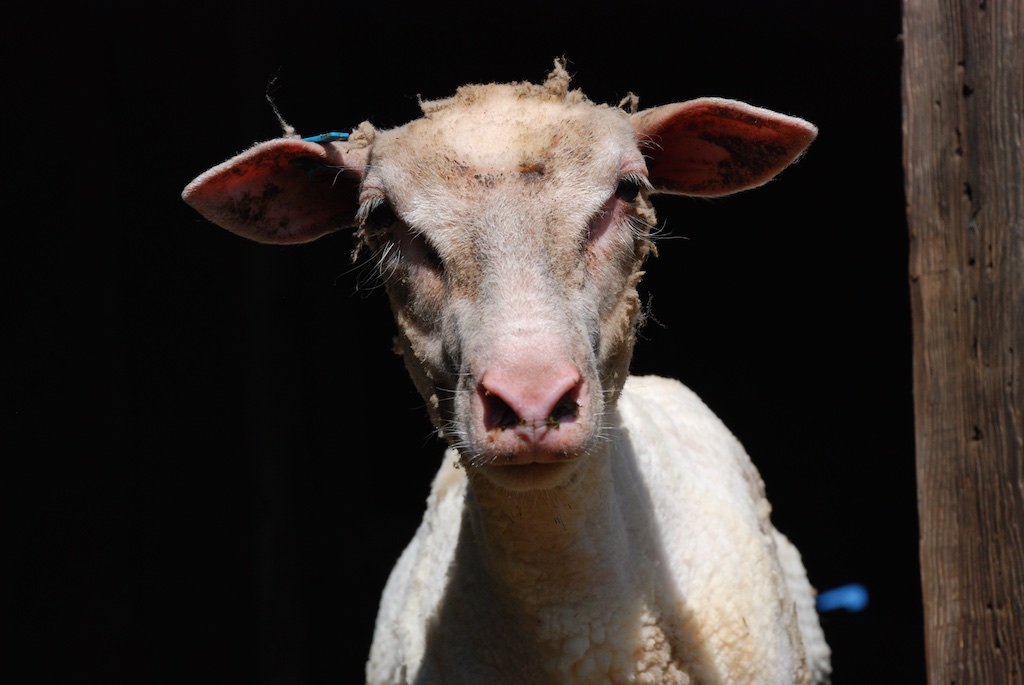
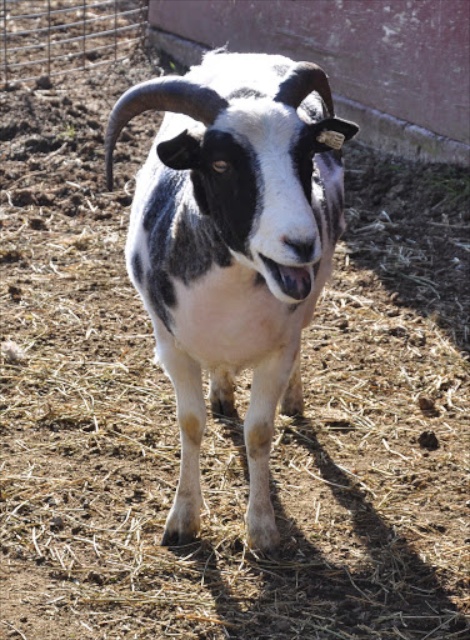
I’ve written a couple of posts about shearing day already, but I have so many photos to share. As John worked through the main flock I brought in the sheep from other areas. The two ewes with two-week old lambs were shorn (last post) and then the three Jacob rams.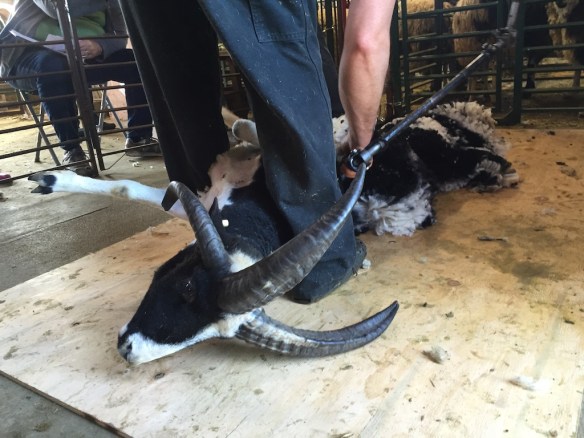 This is the yearling ram, Rotor.
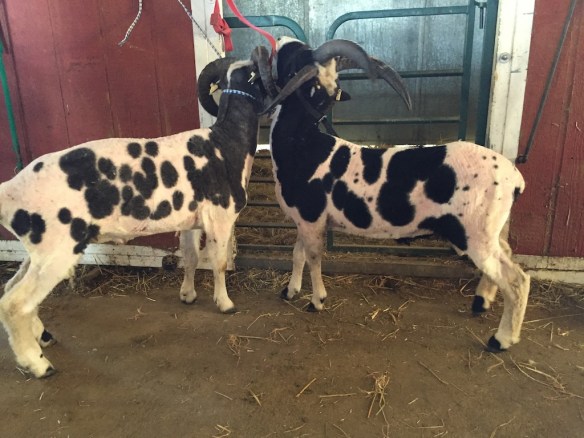 A good comparison of a lilac Jacob (Nash) and black & white (Rotor).
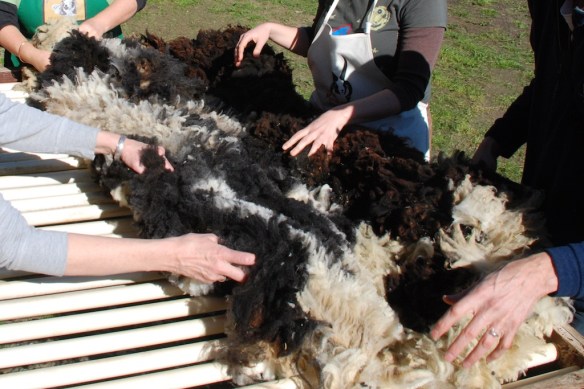
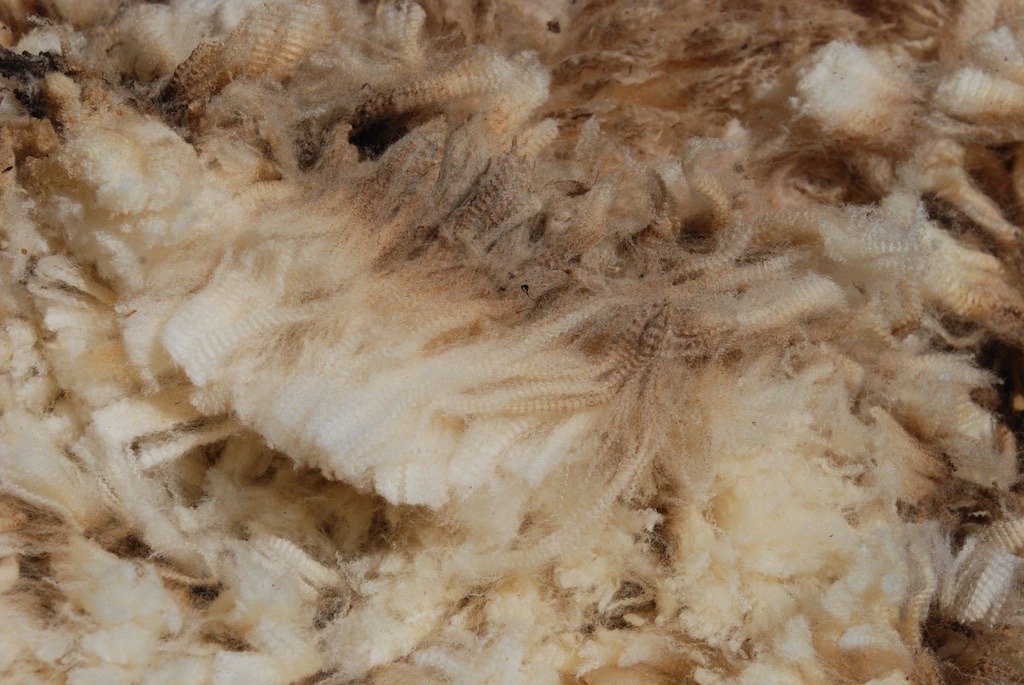
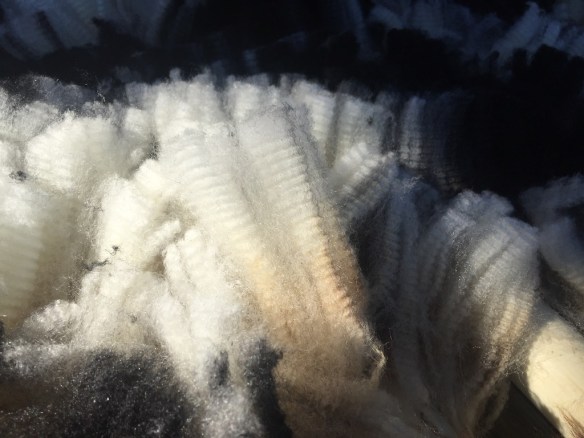 This is Rotor’s fleece.
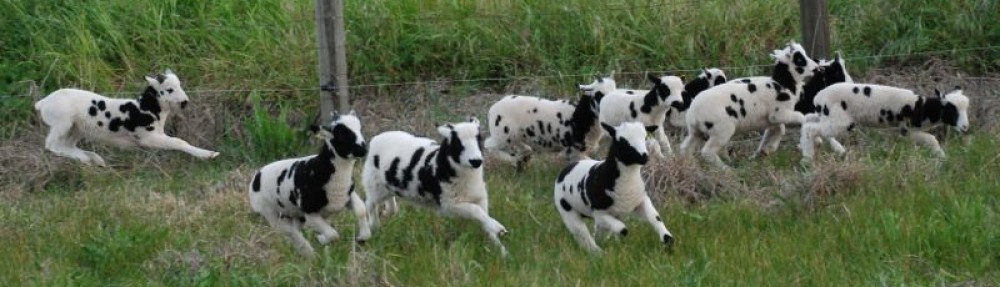
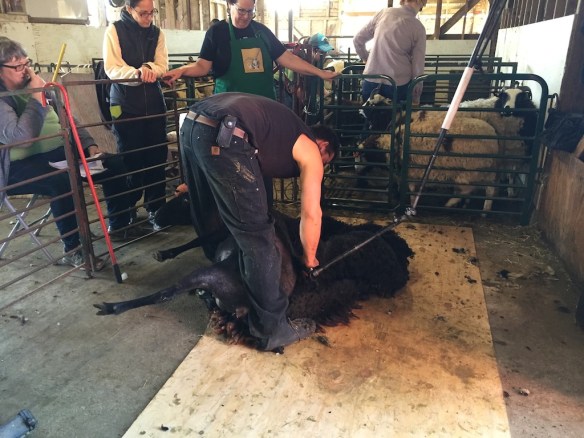 They aren’t all spotted. This is one of the BFL-Jacob cross ewes.
 Lots of people help to make Shearing Day fun and easy for me. Kathleen weighed fleeces.
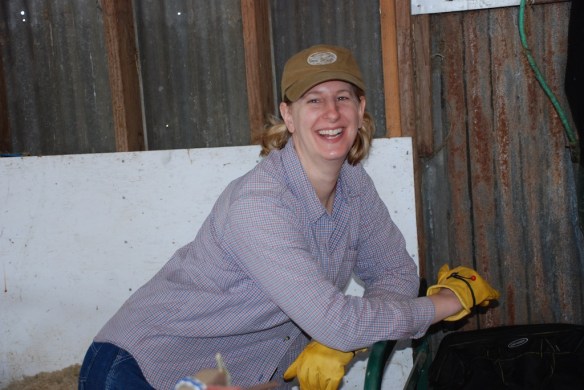 Stephany and Gynna wrangled sheep all morning.
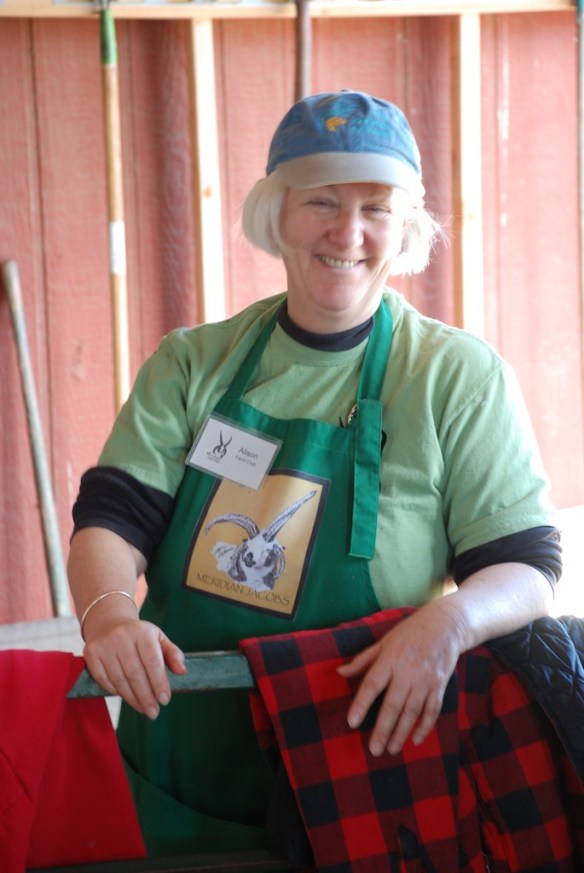 Alison and many others helped at the skirting table.
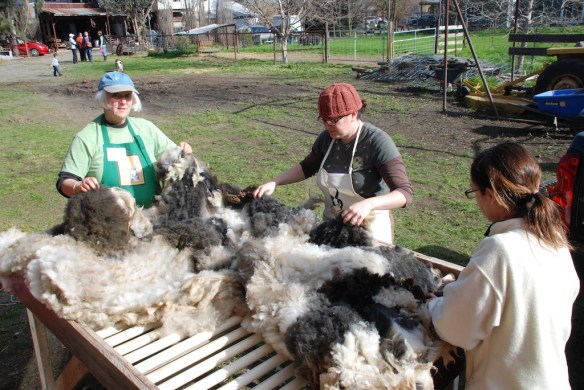 People are welcome to skirt their fleeces before buying or ask for advice about fleeces.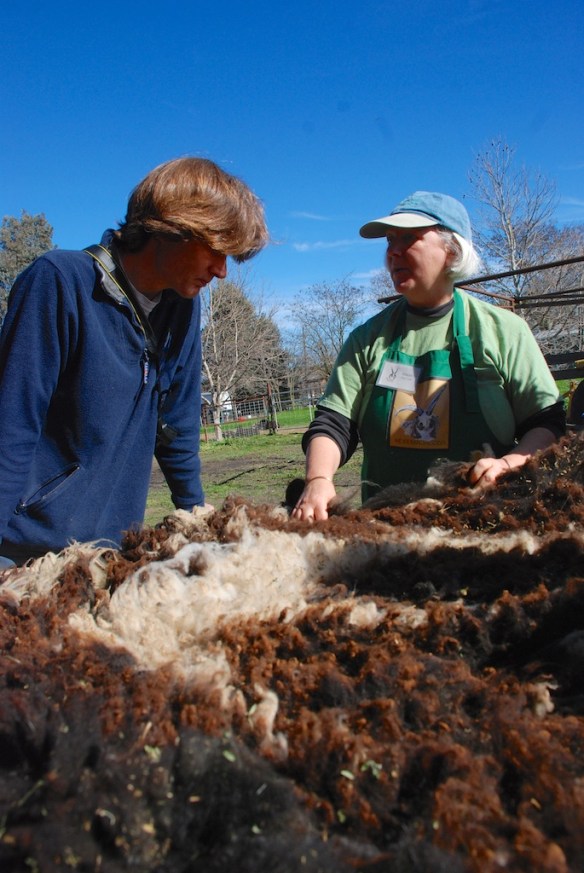
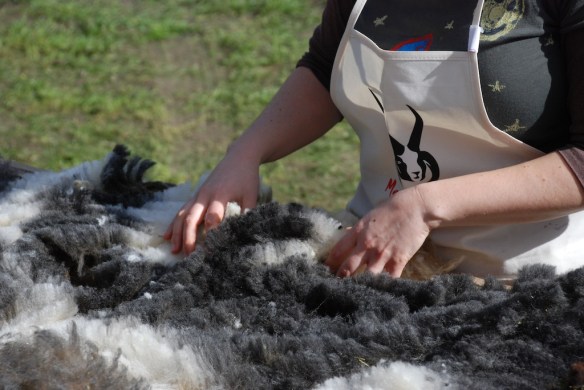 It was a great day to stand in the sun with your hands in freshly shorn wool.
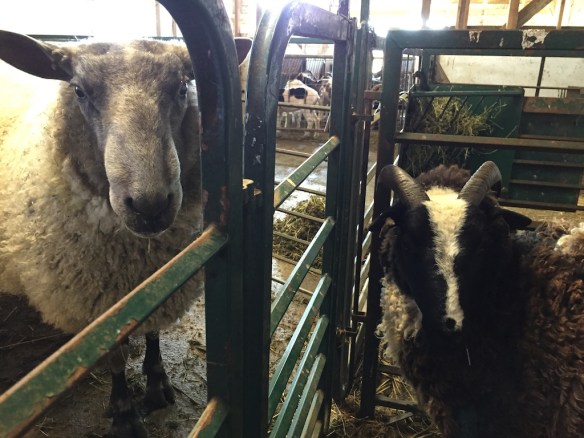 One more ewe to be shorn and then it was Faulkner’s turn.
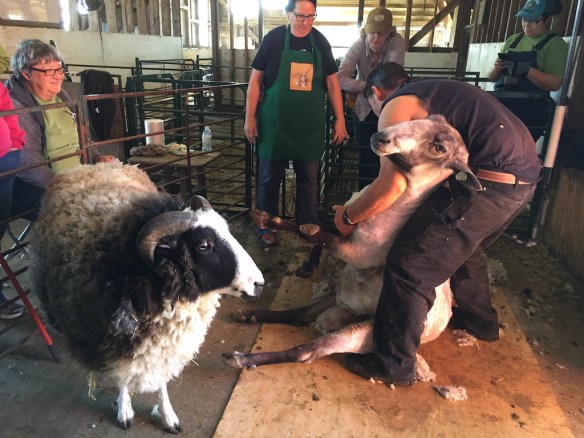 His buddy, Jerry looked on. Faulkner weighed in at 235 lbs (down about 30 pounds from what he sometimes weighs in the summer).
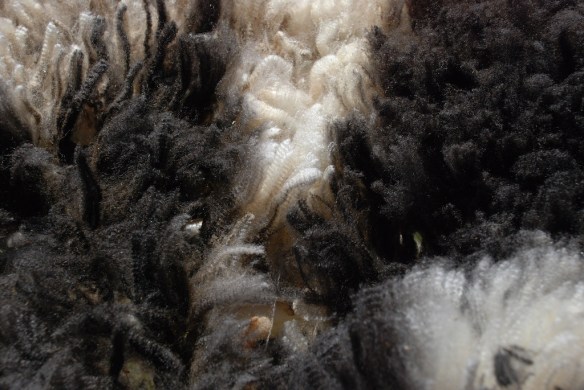 Fresh Jacob fleece.
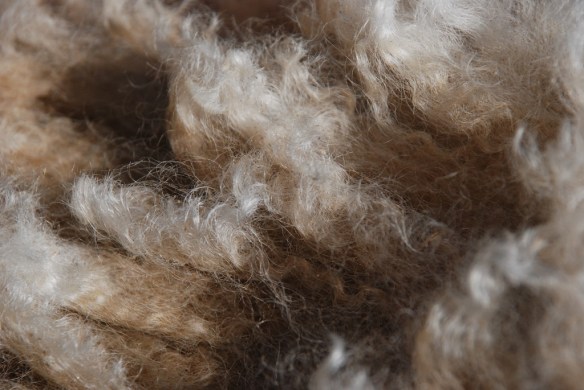 Faulkner’s fleece.
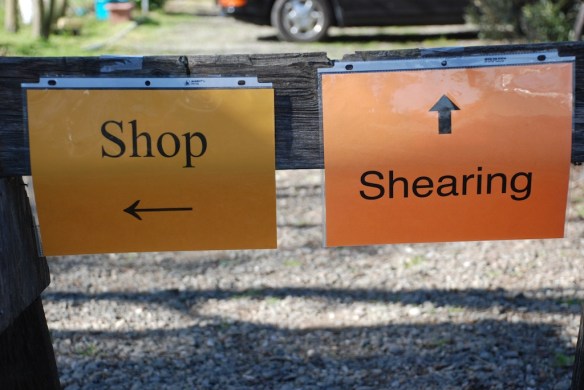 While the shearing and wool sorting was going on, friends were helping buyers in the shop.
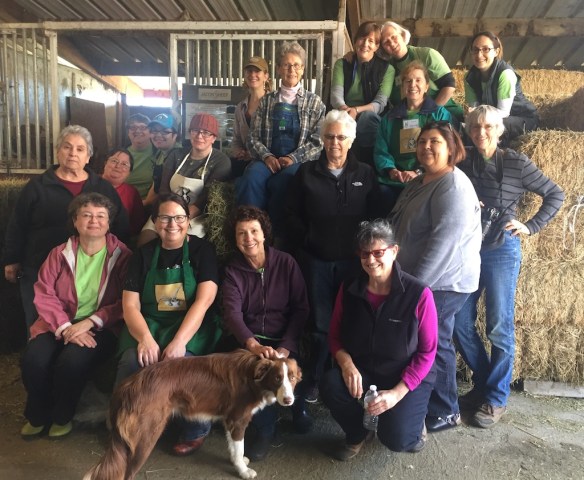 Later we got everyone (almost) to the barn for a group photo. That’s a lot of enthusiastic friends!
We sheared on Sunday. What a gorgeous day for shearing (but hoping that the weather doesn’t continue this way–winter shouldn’t be over yet). The day before we were cleaning up the area around the barn and pushed the brush pile into the corral area where it’s safer to burn. The sheep thought that there might be something worth eating…
 …or scratching on. I didn’t want them ruining a whole year of wool growth the night before being shorn so it was time to move them to the barn.
 I called the dogs in and Ginny got to help with the big group.
Sunday: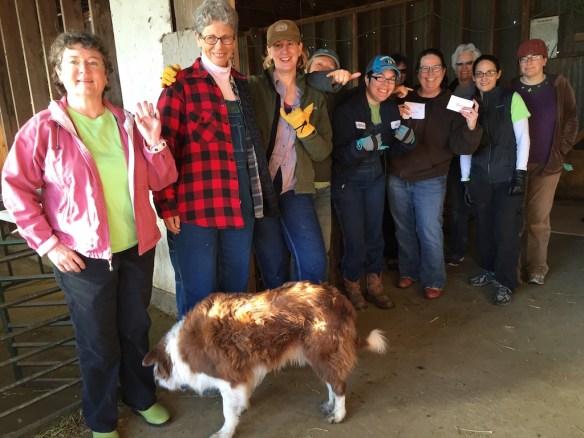 Farm Club members are ready for action.
 First sheep.
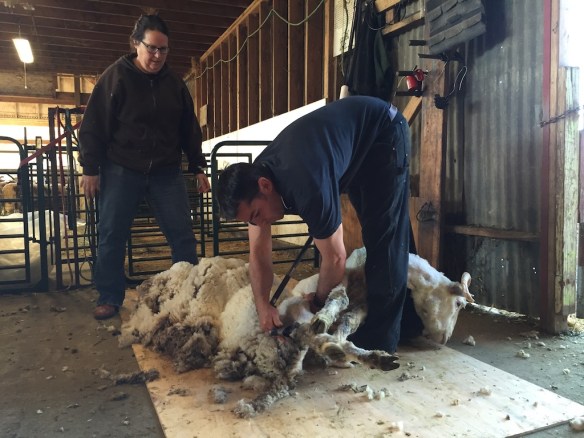 Mary is ready to grab and bag the fleece.
 Wait a minute. These sheep don’t look right.
 Cute, but not the right sheep.
 We started the day with 10 sheep from another farm. We told John (shearer) that was his warm-up.
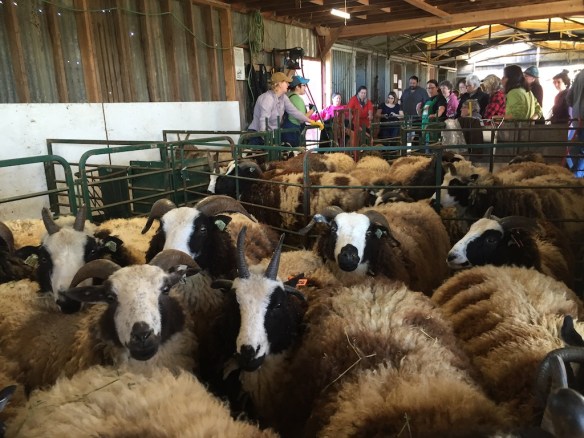 We got underway with the Jacobs. Farm Club members did all the work. Visitors watched. and I changed gates and moved sheep while playing with my camera.
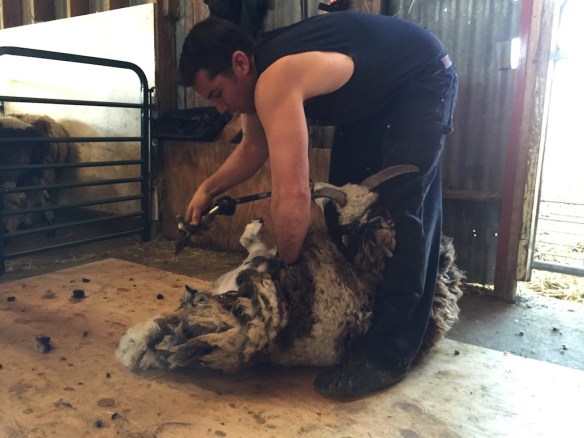 Here John is shearing Dazzle…
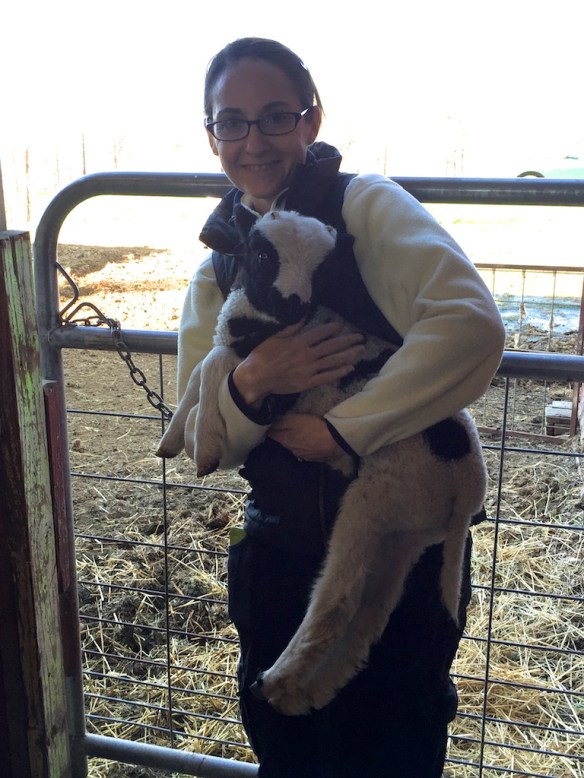 …while Amy holds her lamb.
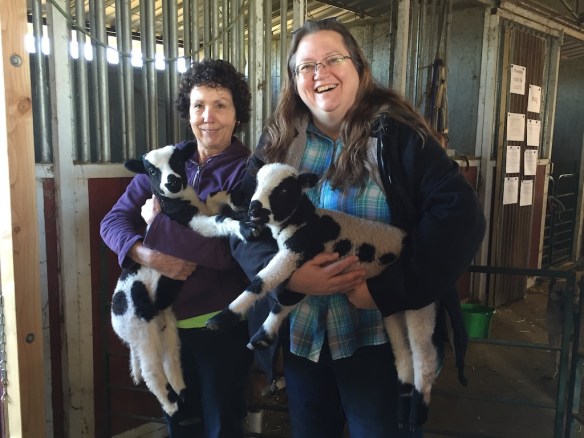 I think this is my favorite photo of the day. Peggy and Caroline babysit twins while their mom is being shorn.
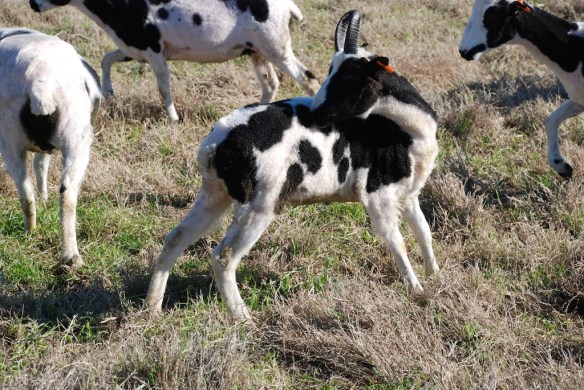
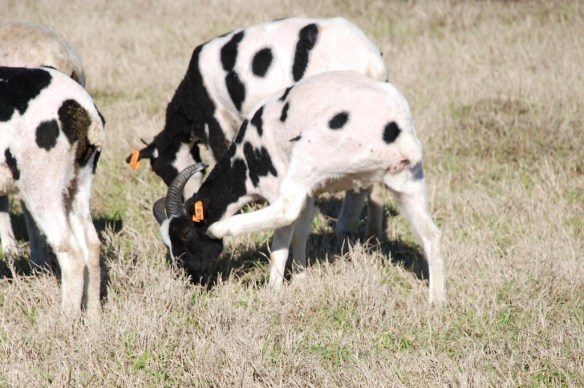
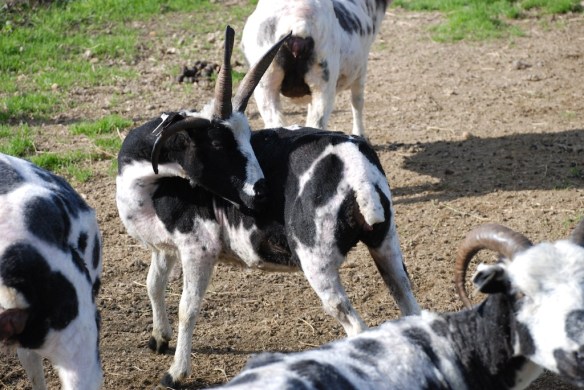
In the last post I shared photos of sheep that were overdue for shearing. I’m pleased to say that most of the fleeces looked great when they came off today. There will be other blog posts, but this is a quick one with photos of shorn sheep with something in common.




Here is where Colleen (Fiber Confections) and I spent last Sunday. I first got fleece from the Timm Ranch, just a few miles from here, last year in preparation for my show at the Artery. Here is a blog post with info about the ranch and photos of the blankets I wove with the wool. 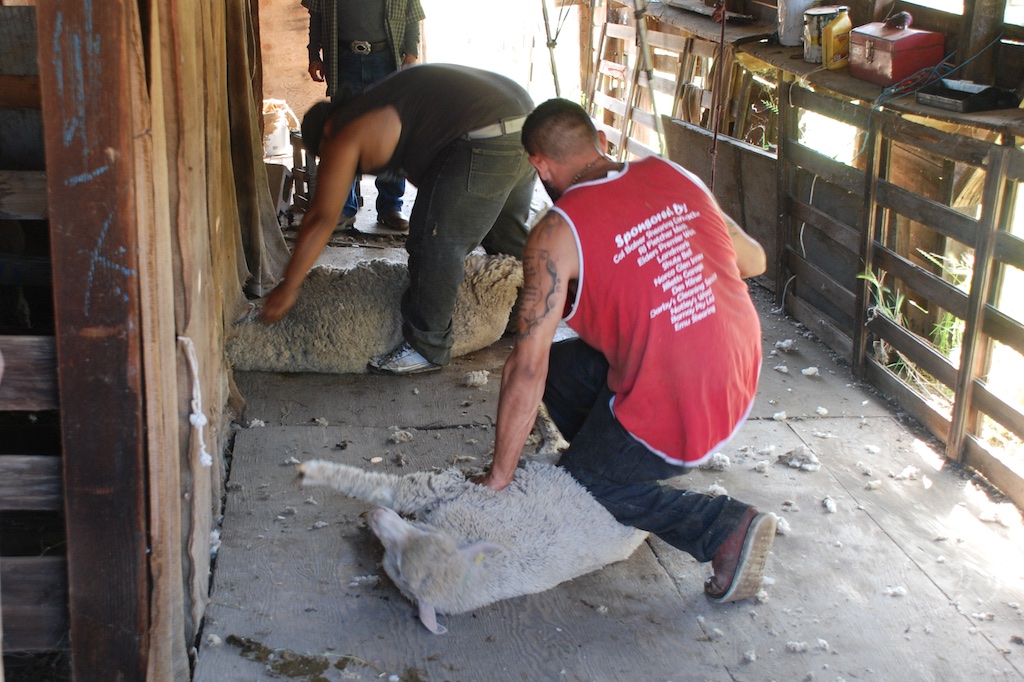 This is a view to the northwest taken while driving through the ranch.
 Much of the 2700 acres is leased for cattle grazing.
 The last gate before the ranch headquarters.There were about 90 ewes, several lambs, and five rams to shear. One group of sheep was already in the barn when we got there but I helped with the second group. These are a “ranch mix” developed many years ago and are a blend of Rambouillet, Targhee, and Polypay.
 The sheep are brought into the barn (on the left)……move along a lane in the north side of the barn……and end up in the pens in the middle where they are visually contained by burlap drapes. The shearer pulls the next sheep to shear through the drape and when he is finished the sheep is released and…
 …it walks out the door to the back.
 The wool is pushed through the window of the barn into a pile where it is later loaded into a wool press that compresses the wool into bales.
 These bales can weigh 300-400 pounds.
In this case Colleen and I diverted many fleeces to our piles and inspected, bagged, and weighed them. I had bagged up my predetermined amount of 200 pounds and was ready to leave (having been battling a cold for days and at this point in the day had completely lost my voice). But then it was time to shear the five rams.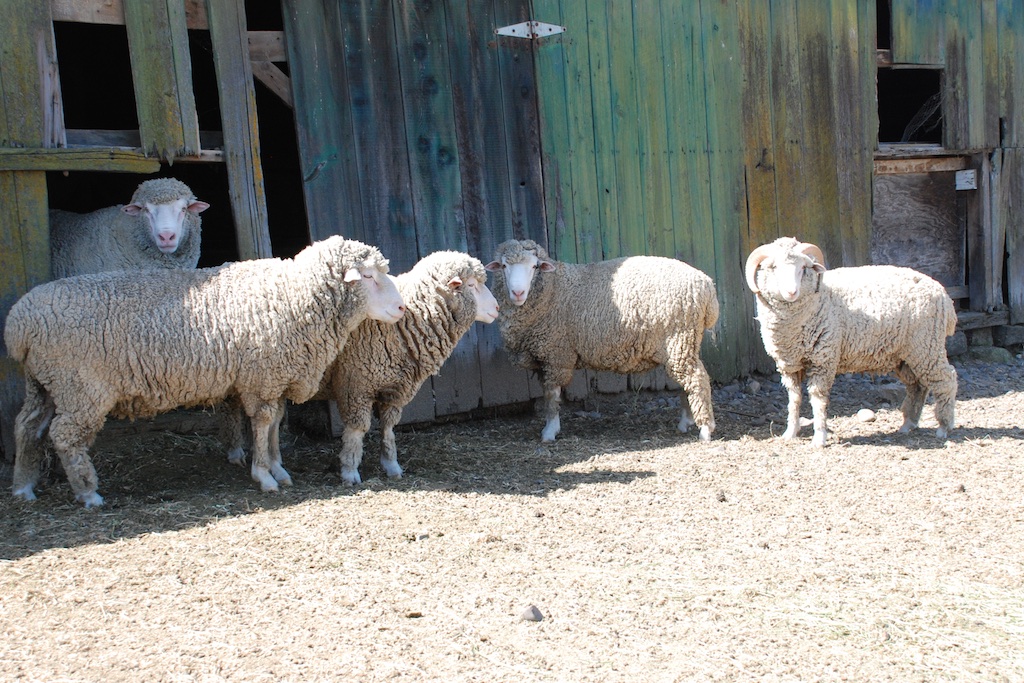 I figured that I’d been there this long. What’s another half hour?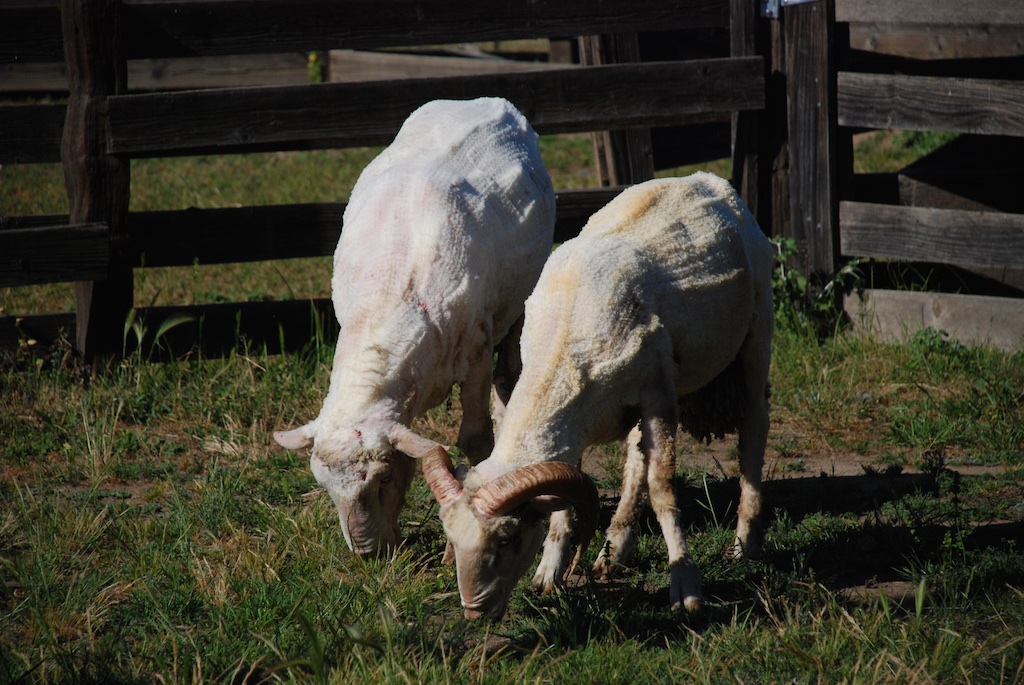
I’m glad that I stayed.
The ram fleeces were gorgeous. Whereas the ewe fleeces weighed 5+ to 8 pounds the ram fleeces I bought weighed 12 pounds (two mature rams) and 8 pounds (the yearling ram with the horns).
Last year I had the wool spun into yarn and put on cones (easy for weaving). I think that I’ll have this year’s fiber put into skeins because of the appeal to knitters. Last year’s fiber tested at an average of 23.5 microns. I think I’ll send some more samples in from this year’s wool. Be looking for this yarn in a few (several?) months.
I wrote a post about Shearing right afterwards but now I have Farm Club member, Dona’s photos to round it out a bit more or just to give a different perspective. All of these photos are hers.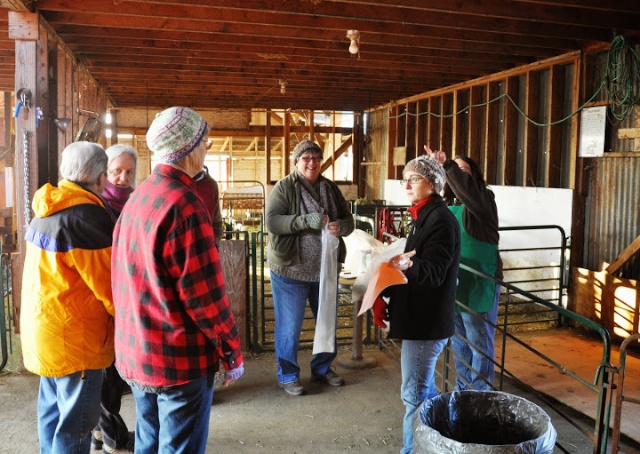 Farm Club members getting organized on a chilly morning.
 Sheep getting organized.
 There was a lot of Farm Club help and lots of visitors.
 A wonderful thing about Jacob sheep is the variety of fleeces from mostly black…
 …to mostly white…
 …to some of each.
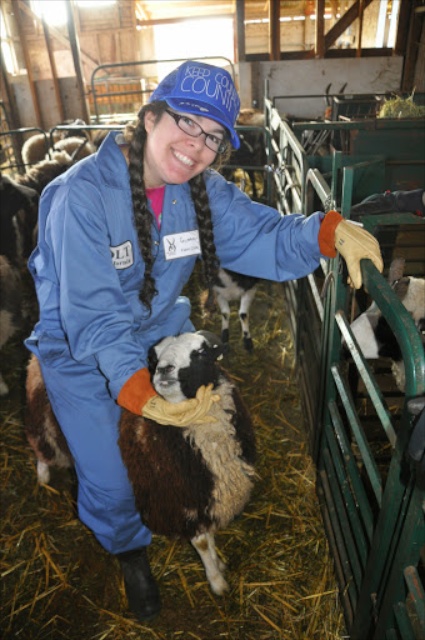 Gynna was one of our sheep wranglers, feeding sheep to the pen where Stephany had them ready for the shearer.
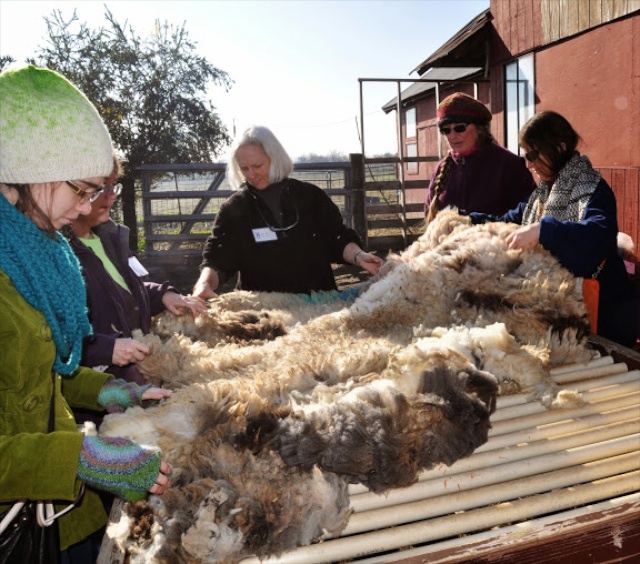 Alison was at the skirting table all morning teaching FC members and other visitors about evaluating and skirting fleeces.
 An important part of any fiber gathering is the food. We wouldn’t want to starve in the three hours it took to shear the sheep. This is the pot of vegetable chili I made and everyone else brought wonderful side dishes.
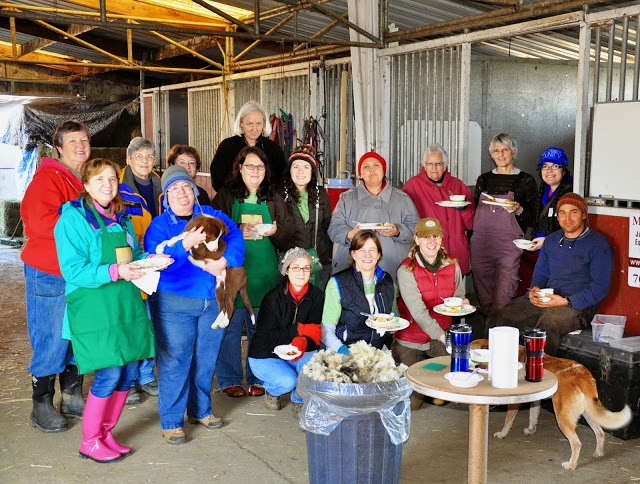 After shearing we could enjoy lunch. That’s our fabulous shearer, John, on the right. And everyone else are FC members. We missed getting Kathleen and Jackie in the photo. It’s hard to corral this group. (And somehow we missed Rusty. I think he was lying in the sun after a long morning of watching sheep crouched on the concrete floor.)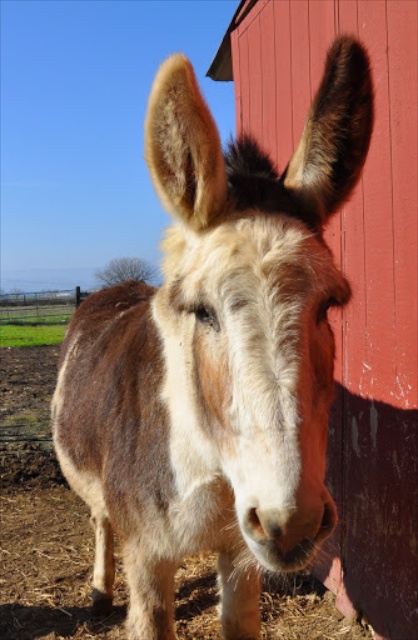
Amaryllis was grateful to NOT be part of the action.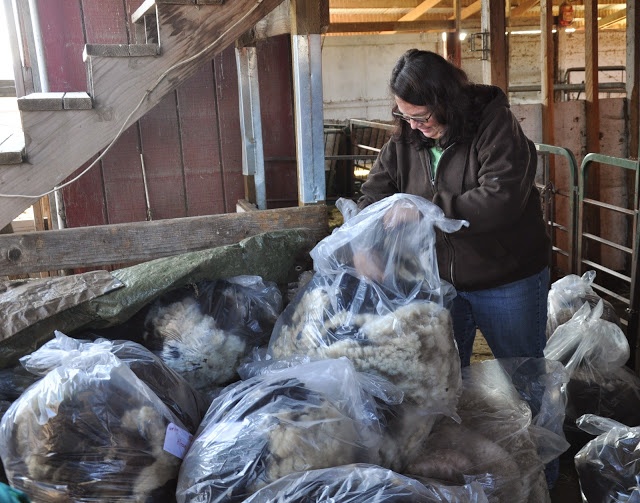 After shearing there was still time for FC members to do additional fleece shopping…
 …and other shopping.
  Lisa was one of many FC members who helped in the shop so that I could spend time in the barn.
. “Is it over?”
Although we had a cold start the weather for Shearing Day turned out great and a lot of people came out to watch and to buy fleeces. Ewes before shearing.
  Farm Club members handled all the jobs. I don’t have photos of all of them but FC photographer, Dona, will probably have some for me to add to another post. That’s Stephany and Gynna who wrangled sheep all morning.
  Alison and others helped skirt fleeces that people purchased.

 Here is a view from above. Carol and Amy are in place to sweep between sheep and to let the shorn sheep out the gate.
John Sanchez has been our shearer for several years. The fleeces are always beautiful and the sheep look great too. He’s prompt and he’s fast too. He finished everything in 3 hours. Looking at this photo I wish that I’d done a series of photos of footwear. There are a lot of stylish boots in our Farm Club.
 Jackie kept track of names and cards…
…while Mary scooped the fleeces into bags. All Farm Club members rotated tasks and helped all day–answering dozens of questions from visitors and also helping in the shop. Thanks to everyone: Alene, Alison, Amy, Betty, Carol, Dona, Gynna, Jackie, Janis, Joy, Kathleen, Lisa, Mary, Peggy, Polly, and Stephany (and to Judy for joining us). Jimmy is one of two wethers (castrated male) who was well marked so that the shearer would be told to watch for different parts while shearing off the belly wool.
Amaryllis was probably glad that she wasn’t on the shearing list.
This is what Dan made out of the pressure tank we had to replace a couple of months ago. It provided a welcome place to warm hands.  Maggie behaved admirably all day.Rusty kept watch.Ginny was in the barn with us but had her own pen to keep her out of trouble.
Bags of fleeces for me to sort through. 
 This is how I felt at the end of the day.
A couple of friends and I went to see shearing on a commercial sheep ranch about 30 miles south of here. We got there in just enough time to see the last part of shearing 3000 sheep in 2 1/2 days.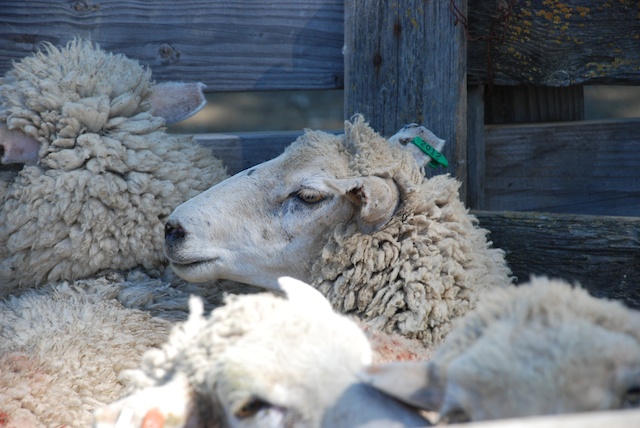 The original flock was made up of Corriedale sheep and over the years was crossed with Targhee and other commercial white-faced sheep.
  The sheep are gathered at the back of a trailer that is hauled from ranch to ranch with all the gear. They go up the chute with the encouragement of…
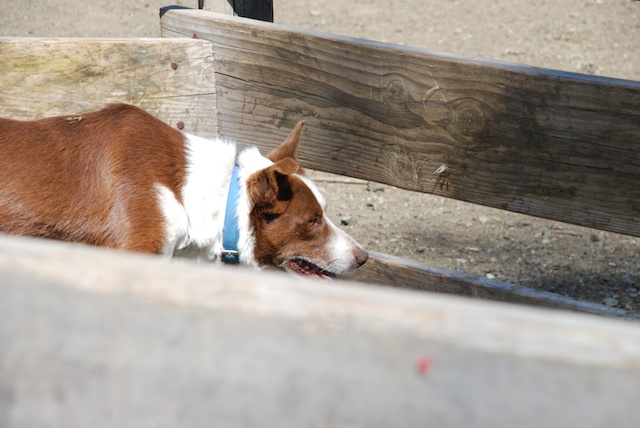 …Border Collies as well as people.
 Here is a view from the other end of the trailer. That sheep in front hangs out for awhile in that position because the other sheep are more likely to go forward if they see a sheep in front of them. Notice how the sheep walk on a raised alleyway while the freshly shorn fleeces are shoved out of the trailer below them.
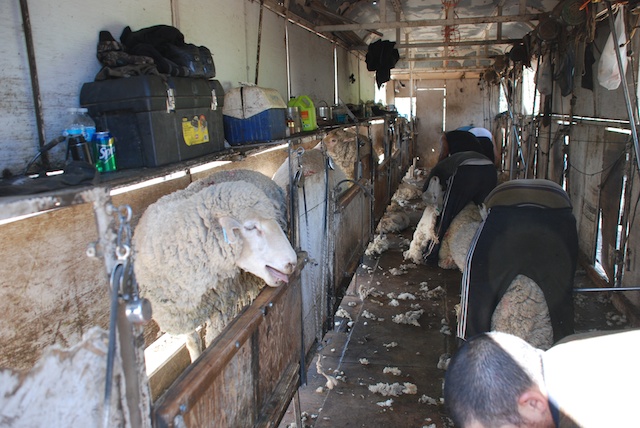 Here is a photo of the inside of the trailer. There are seven shearers at work. The sheep walk forward on the raised alley. Fleeces are pushed out beneath.
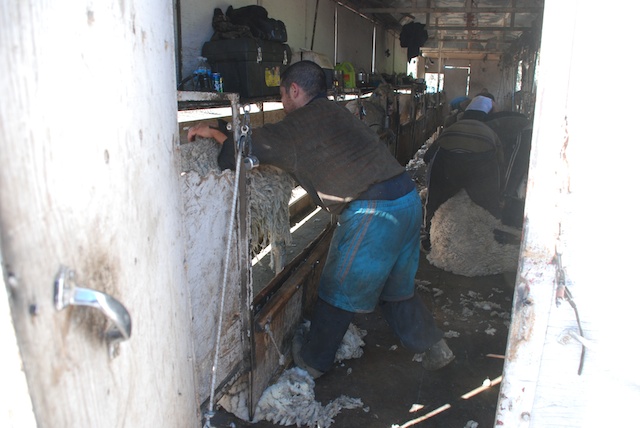 When the shearer is ready for the next sheep he pulls the door down with his foot and flips the sheep off the alleyway into position for shearing.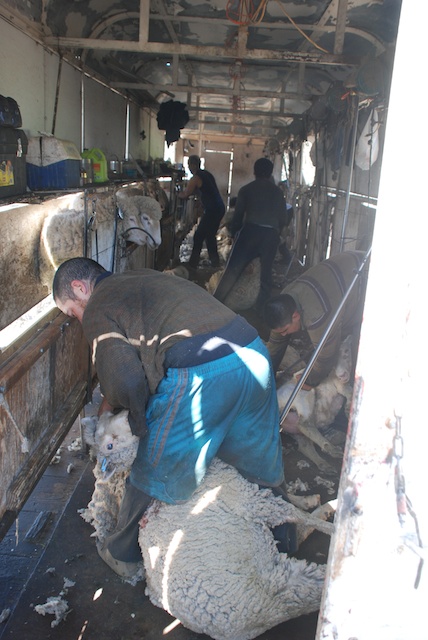
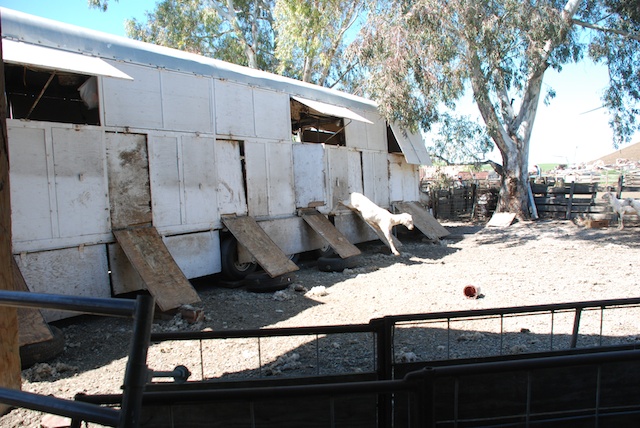 After the sheep are shorn they are sent out the doors on the other side of the trailer.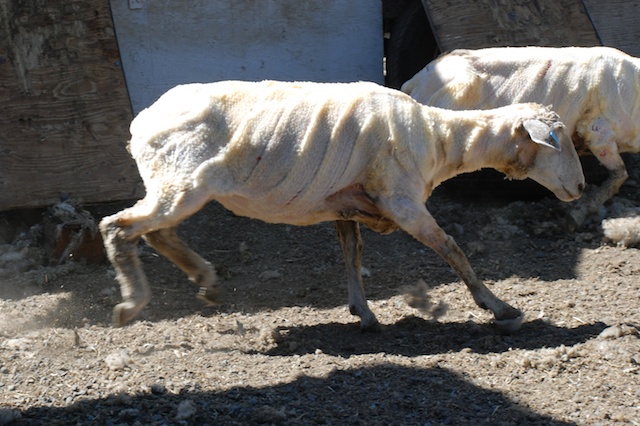
 The fleeces are scooped from the trailer and quickly examined by a sorter/classer who determines where they end up.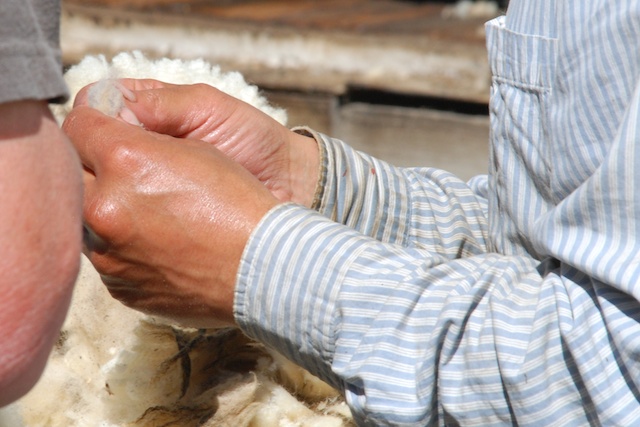
 The fleeces are thrown into the appropriate pile. My friends who owns the ranch had requested that the finer fleeces shorn on that day be put aside for us to look at. It turns out that even the not-so-fine fleeces seemed just as nice to us. Last year’s core samples indicated that most of this flock’s wool graded in the mid-20’s (microns) and the finer fleeces were in the low 20’s. For reference Jacob fleece ranges from about 25-35 microns and most of mine is probably about 28 to 29 microns. So all of this wool is finer than what I am used to using.
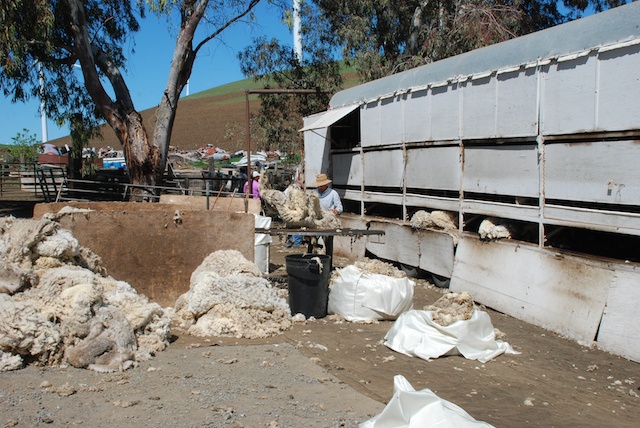 The fine fleece pile is the one nearest the table. The pile to the left are tender fleeces (fleeces that have a weak place usually due to nutritional stress or illness). The pile just barely visible behind the plywood is the “not as fine” pile. We chose our fleeces (all of the fine pile and a lot of the one behind the plywood) and the remaining wool was quickly baled.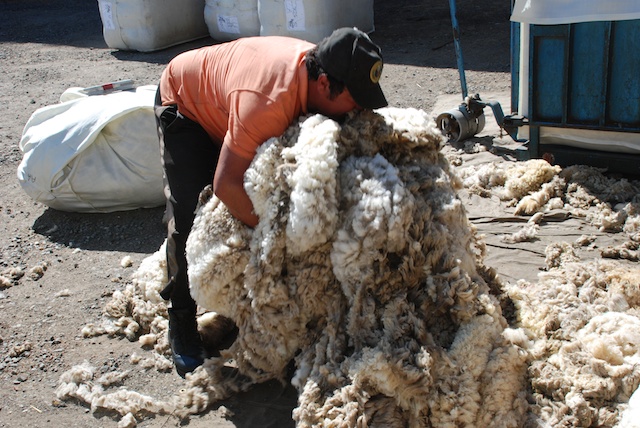
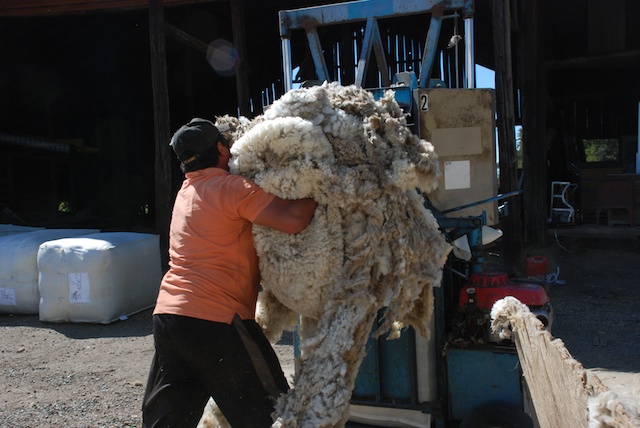 The wool is shoved into this wool press…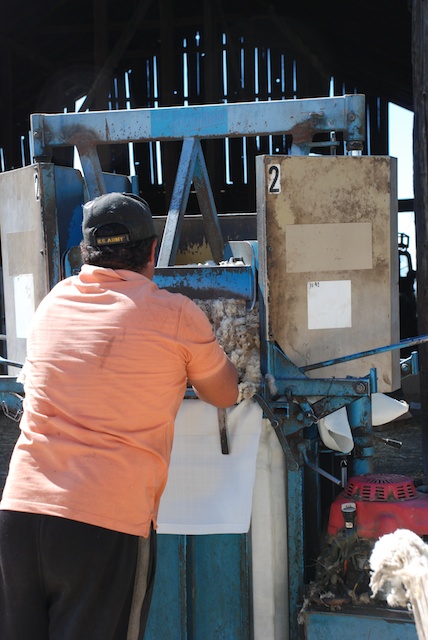
…and compacted… …and sealed into bales that are marked with the pertinent information. I forgot to ask how much these weigh but on-line sources say they would hold 240 to 450 pounds each.
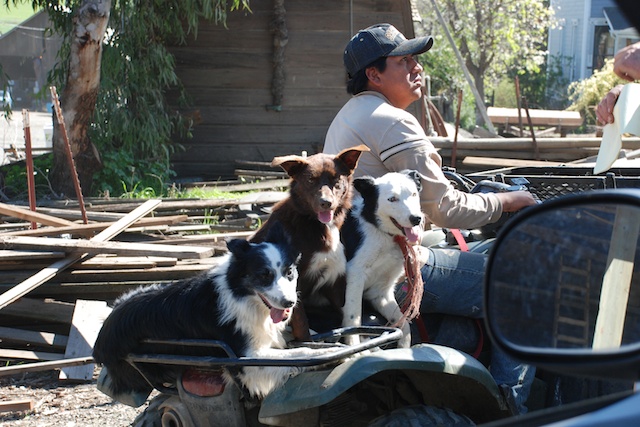 Before we left the shearing trailer was pulling out and everyone was getting ready to go to the next job.
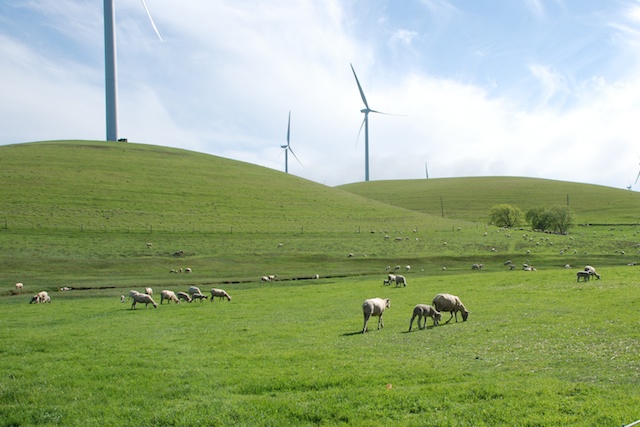 Freshly shorn sheep turned out to graze.
In about six months I hope to have blankets woven from this wool. They will be available at the Artery and the Fibershed Marketplace.
Marilyn is one of seven lambs that I kept from the 2013 lambing season.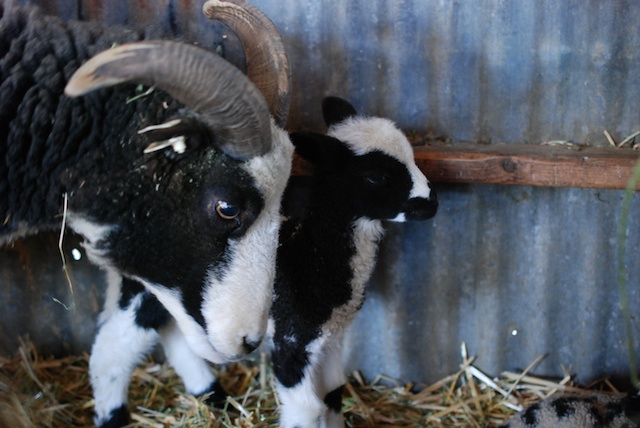 Here she is with her mom, Hot Lips.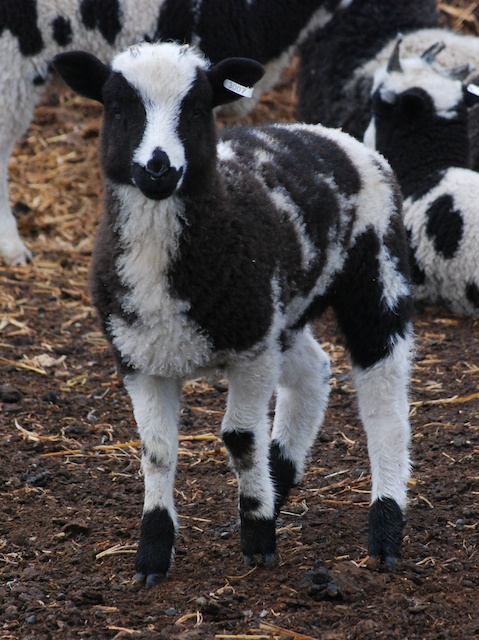
 Marilyn was my choice to take to Black Sheep Gathering last year where she won her class. (Hot Lips was Champion Jacob Ewe at BSG when I took her there!)
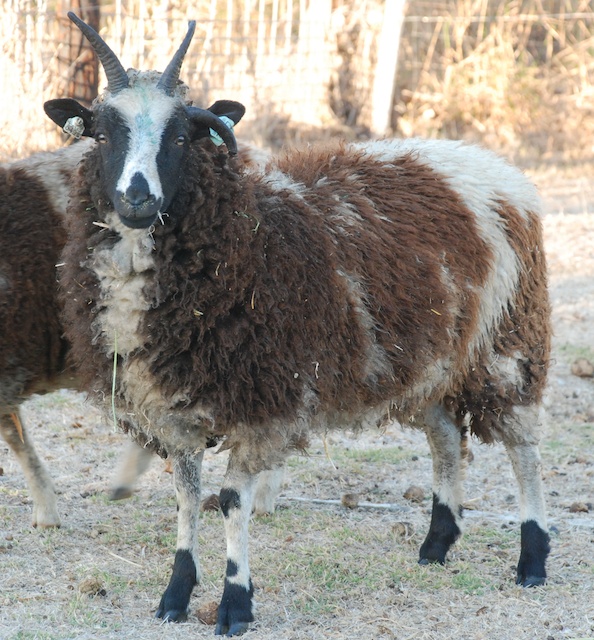 Here she is at 9 months old last fall. When Farm Club members chose their fleeces “on the hoof” I put my name on Marilyn’s.
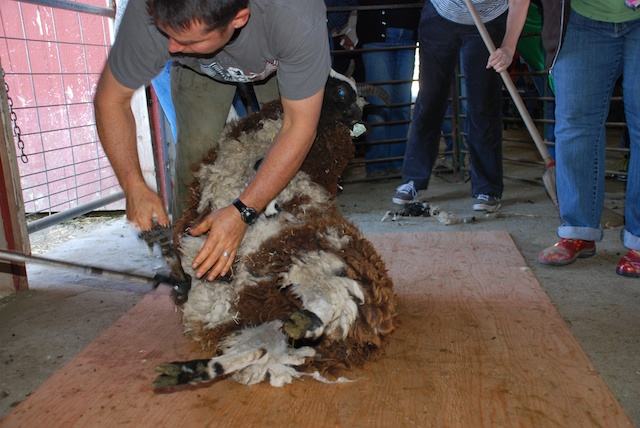 Shearing Day.
 Marilyn’s fleece looks brown, but those are sunbleached tips.
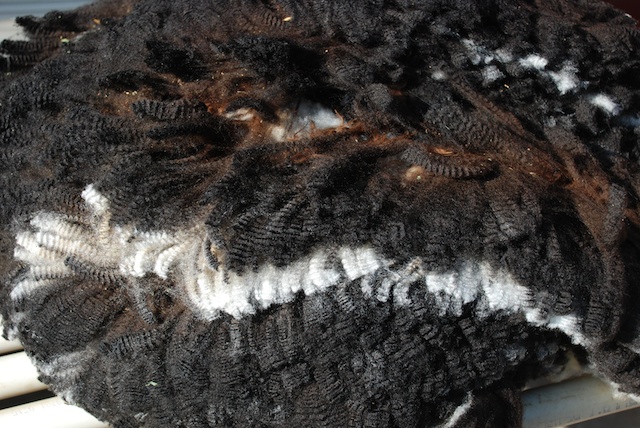 This is what her fleece looks like from the cut side. Isn’t it gorgeous?
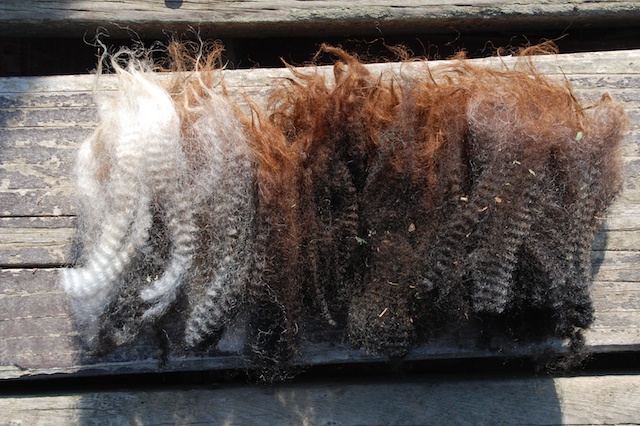 Detail of the staples.
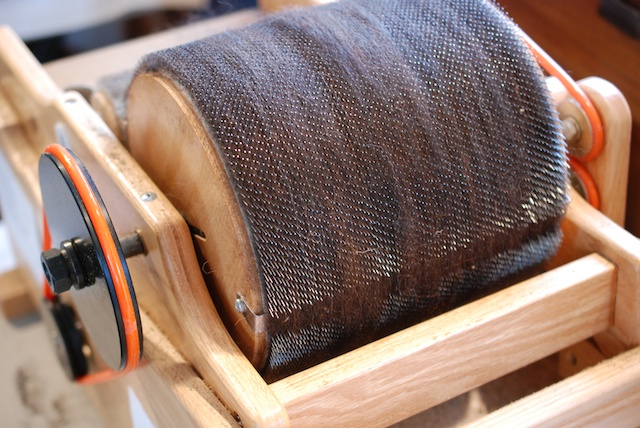 Last week I carded Marilyn’s fleece on my Clemes & Clemes electric drum carder.
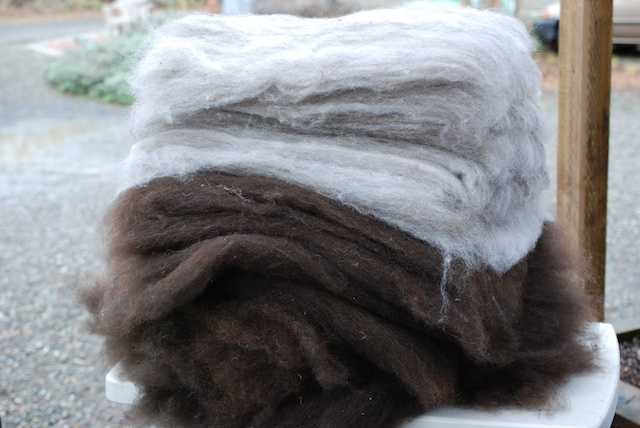 Here are the batts ready to spin. Hopefully there will be a post before too long in which I’ll have photos of finished yarn and a project. To be continued…
Sunday was Shearing Day and we sheared 71 sheep (61 ewes and 10 rams and wethers). I said “we”. Not really “we”, but John, my fabulous shearer. The sheep looked great, the fleece looked great and he finished shearing in two and a half hours! Shearing was finished by 11:30. Here are sheep ready to be shorn.
 Clover.
 Mary.
Mary.

John started with the rams… …and moved on to ewes.
Farm Club members were the other wonderful helpers who made it all work. Alison spent the morning at the skirting table explaining skirting and helping buyers skirt their fleeces.

 Shelby and Gynna were our sheep wranglers, making sure that there was always another sheep for John to shear.
 Mary and Carol bagged fleeces while Anna swept and Jackie worked the exit gate.
 Linda weighed and recorded fleeces. Other members helped too but I didn’t get photos.
 What would shearing day be without chili…
 …and Dona’s brownies (and Lisa’s Jacob sheep cookies, Jackie’s corn biscuits, Mary’s wonderful tangy chicken and fancy rice krispie treats and more).
 After shearing the sheep look so much thinner. This photo looks as though it was stretched vertically, but it wasn’t.
 Lila.
Lila. Cascade.

Gynna looks happy with her Farm Club fleece. And look at this gorgeous one!
After shearing we (Farm Club again and other friends) did demos of all kinds of spinning and fiber prep, but that’s another story, especially because it’s too late to write more.
 Meridian Jacobs' Blog