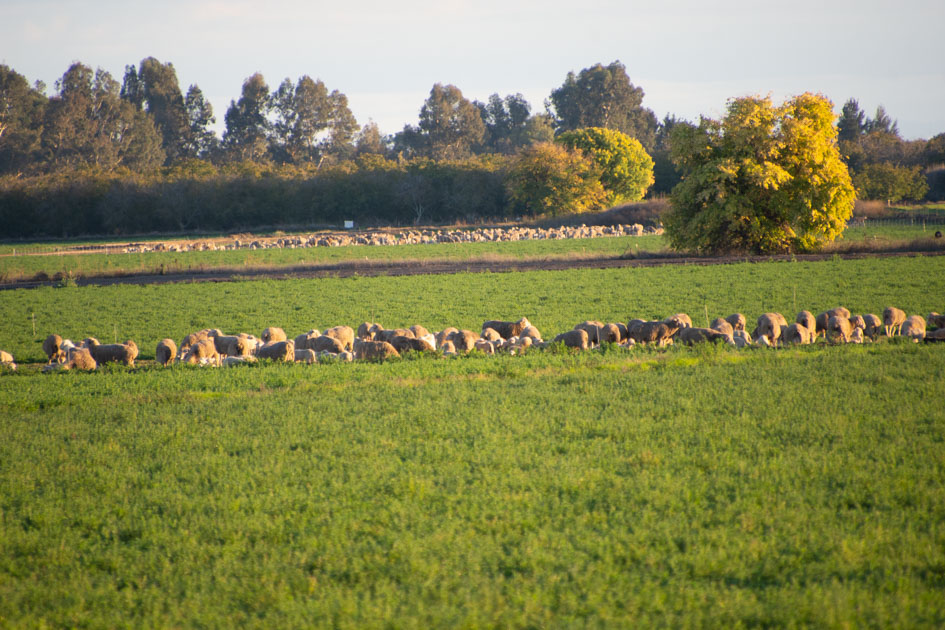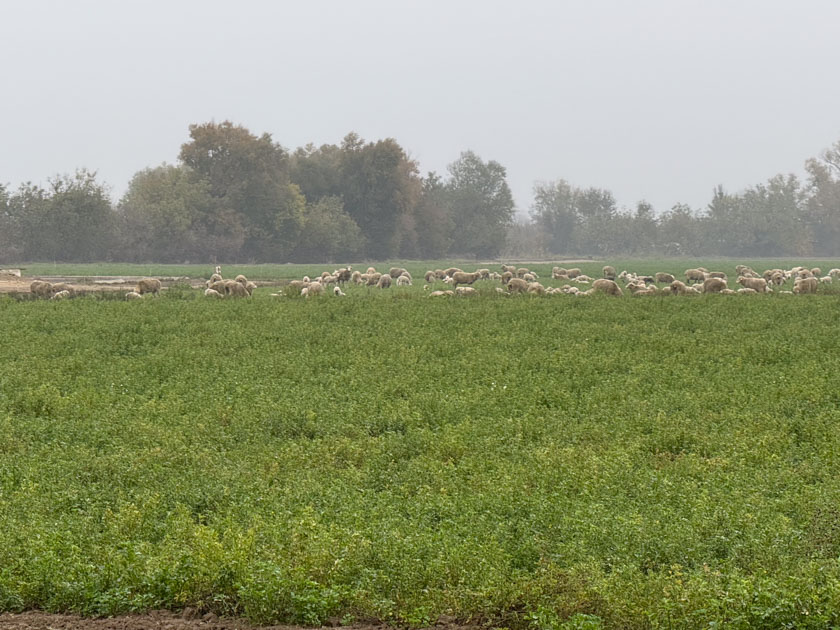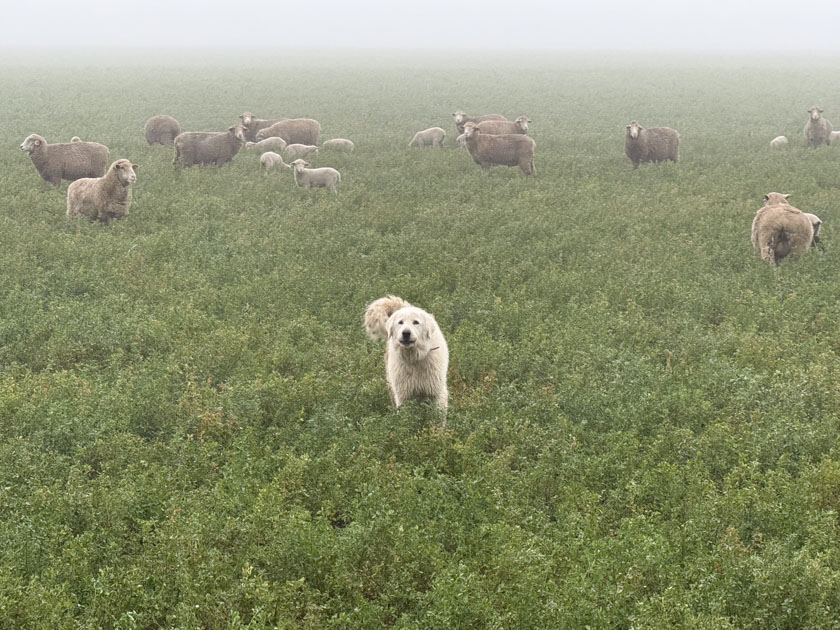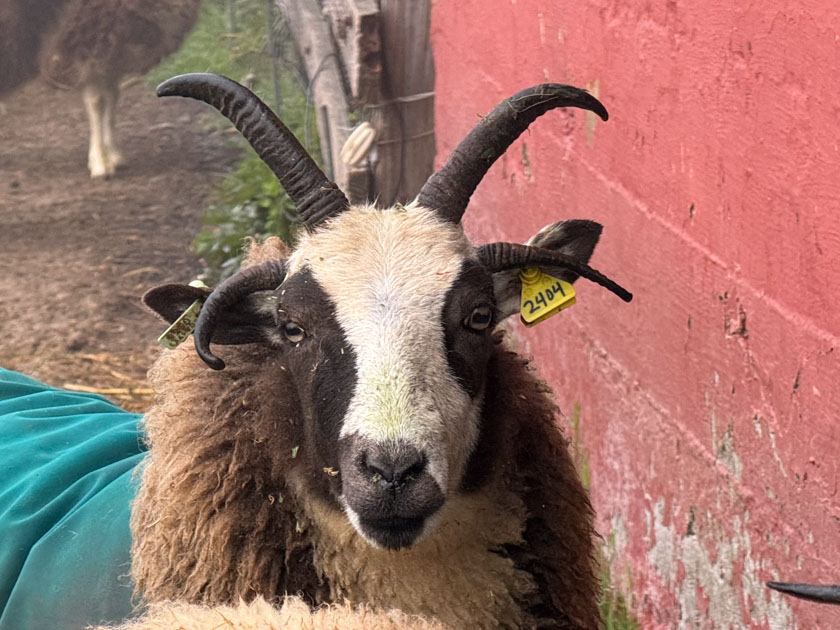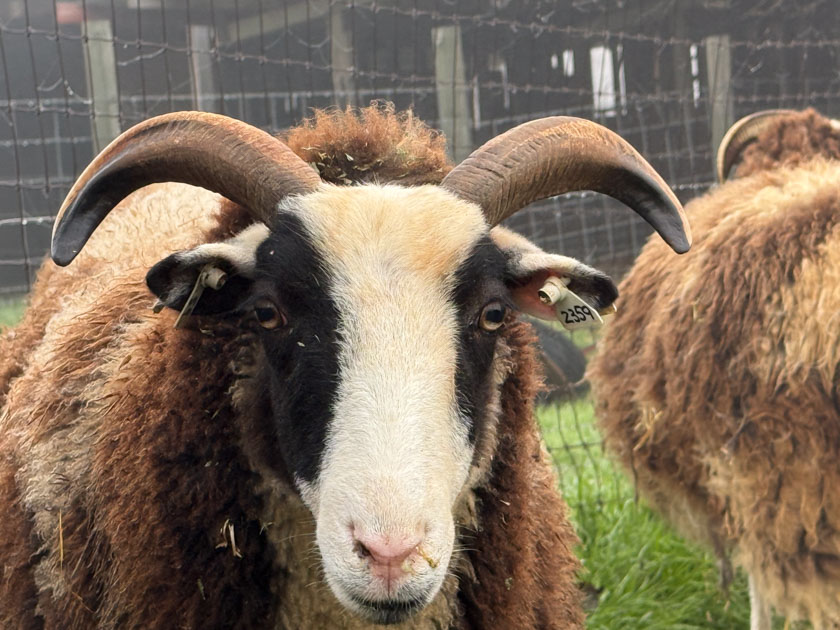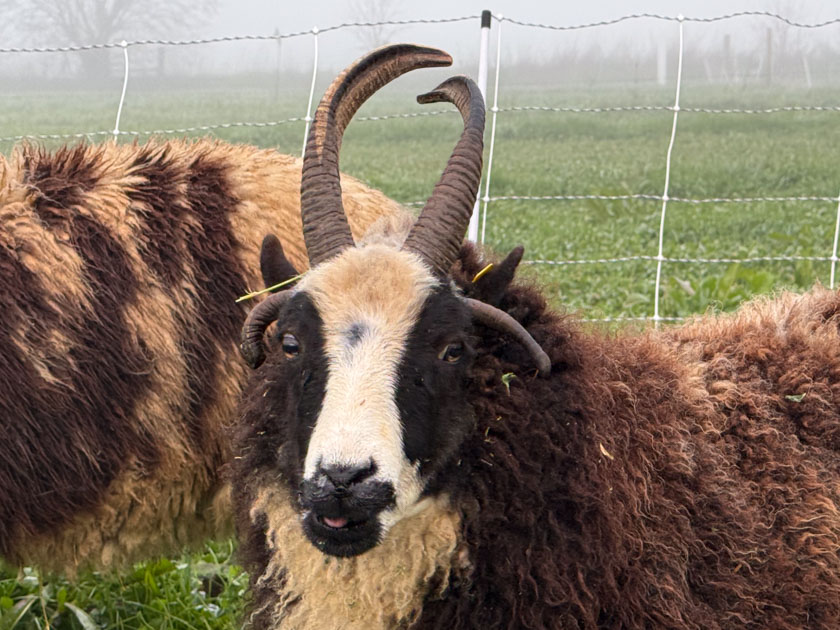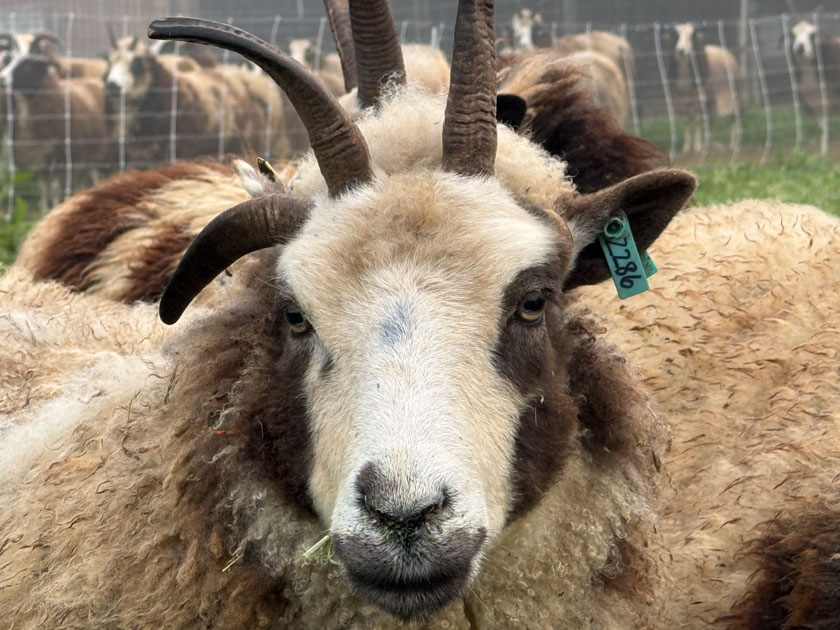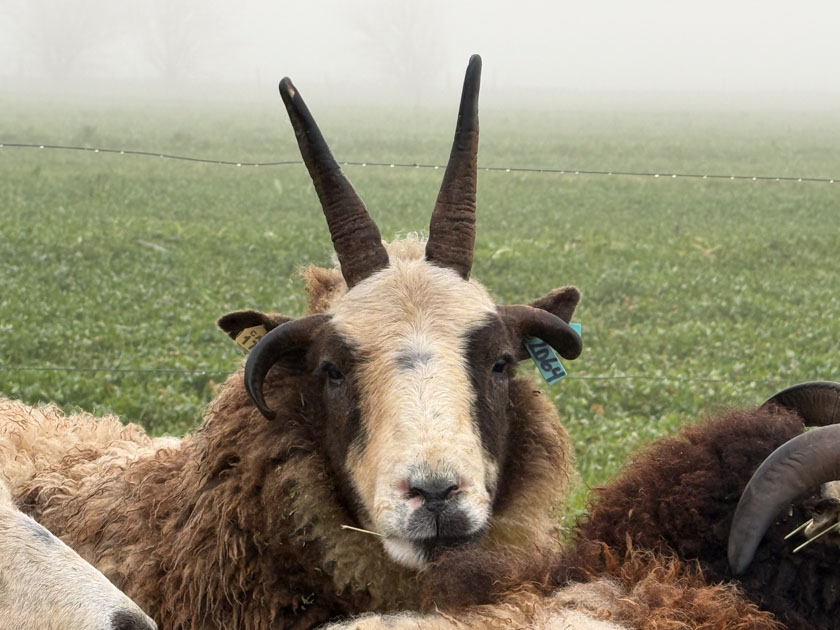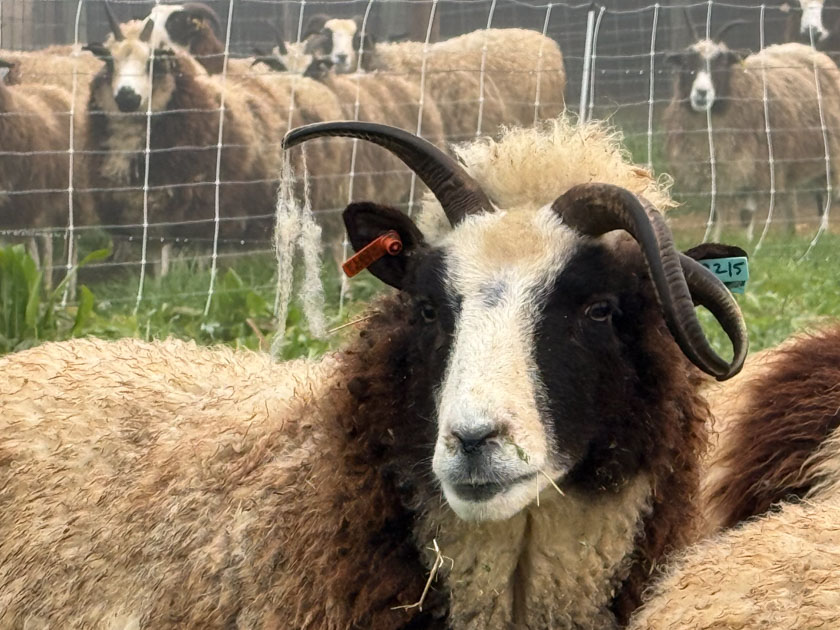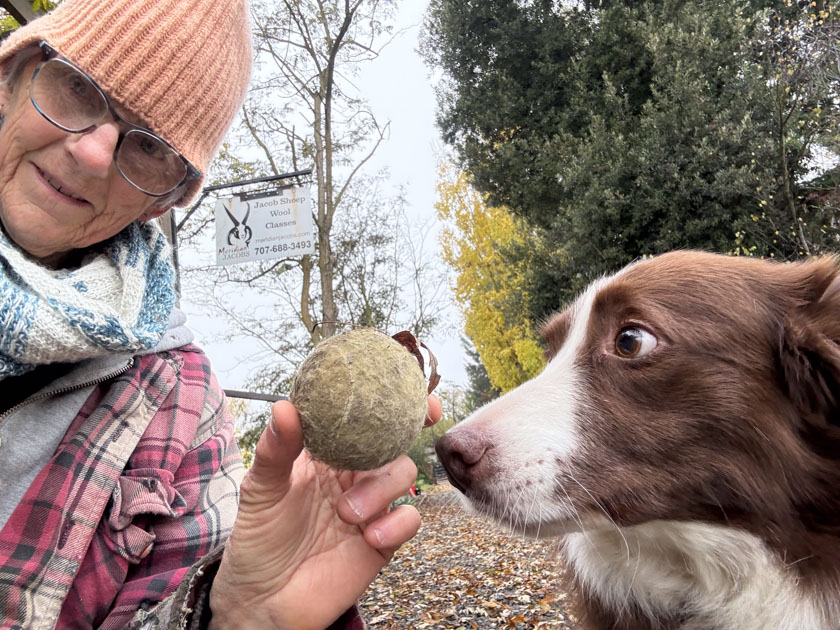
How Many Lambs in 2026?

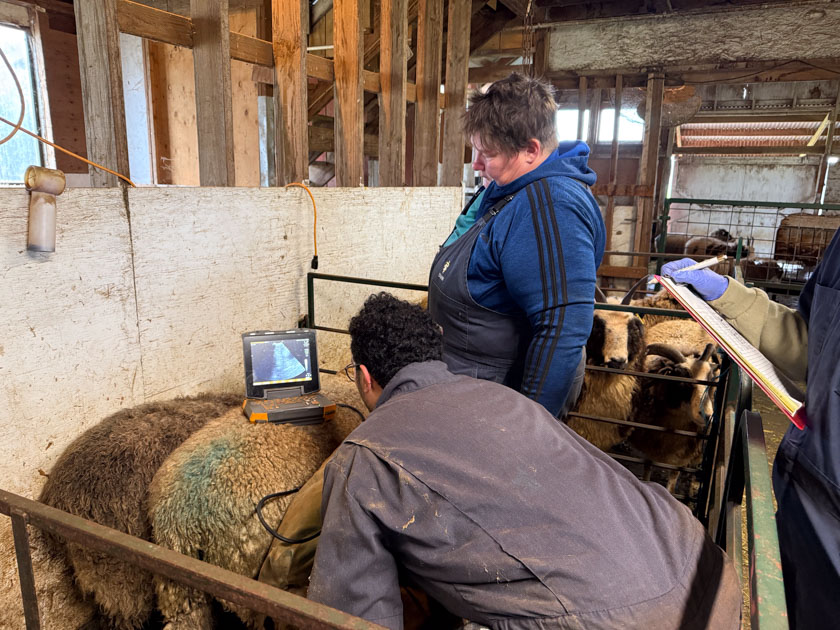
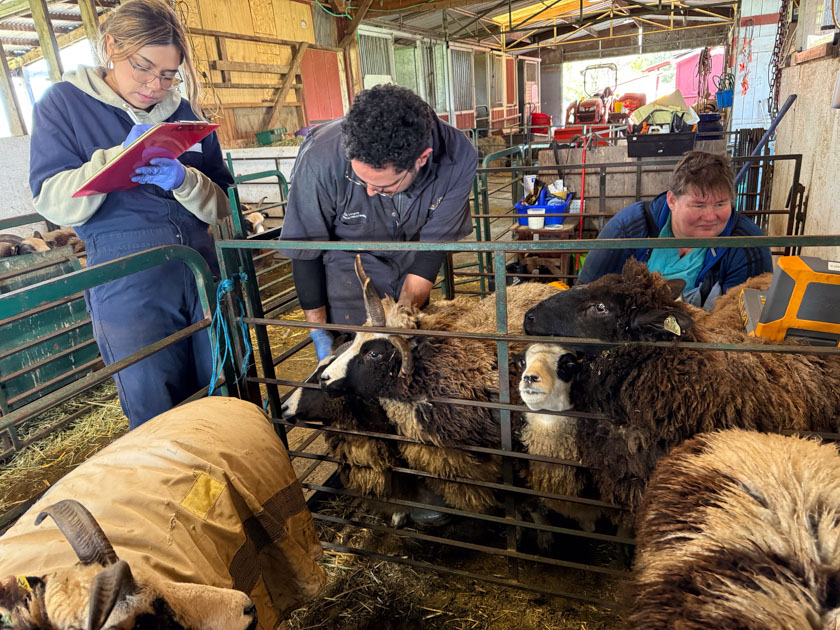
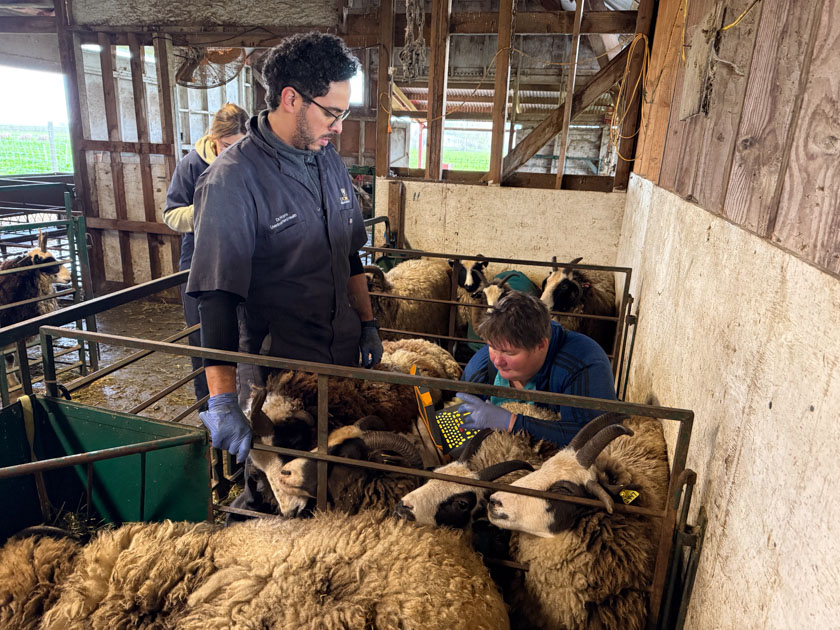
Yesterday was ultrasound day.

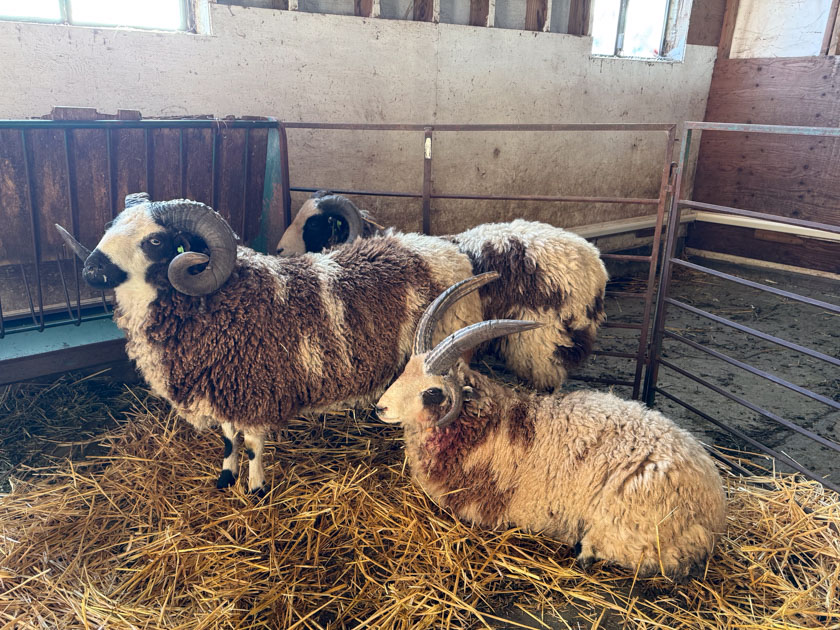
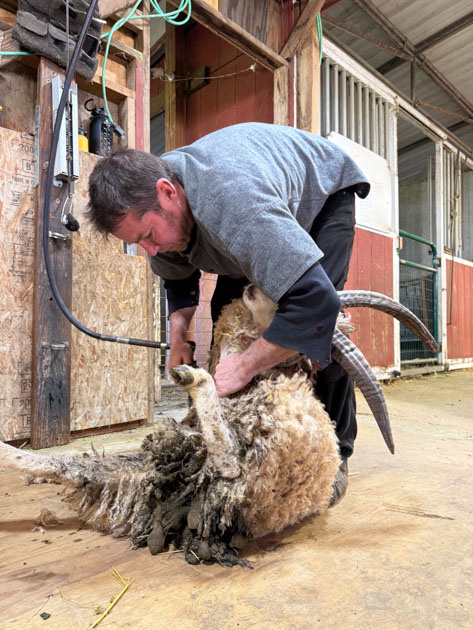
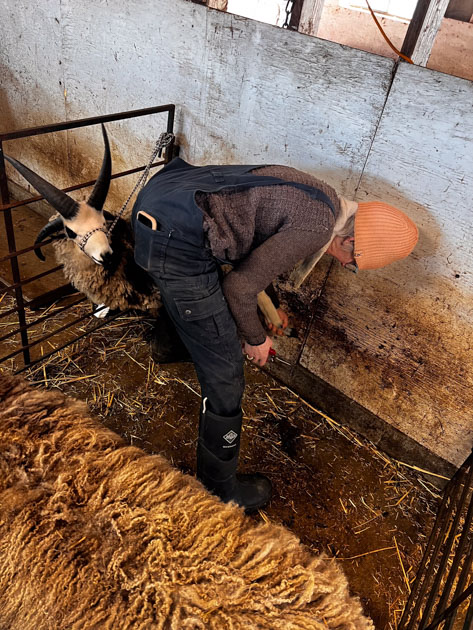
The day began and ended very differently as far as weather. This is how I was dressed for morning chores, just has I have been for the last few weeks with the drizzly fog. The vets arrived at 9 and we got to work.

It’s worth it for me to be have confirmation of pregnancy, confirmation of due dates, and idea of how many lambs to expect. It’s not an exact science. I remember a couple of years ago when the prediction was two sets of triplets and there were eight! Some of it is about the timing of the ultrasound. Breeding season this year was from September 27 to November 11. We scheduled ultrasound day so that the timing would be right to confirm pregnancy for the sheep bred the latest. For those bred at the beginning of breeding season, the vets can certainly confirm pregnant or not, but may not be able to get an accurate count of the number of lambs because of the size of them at that point.

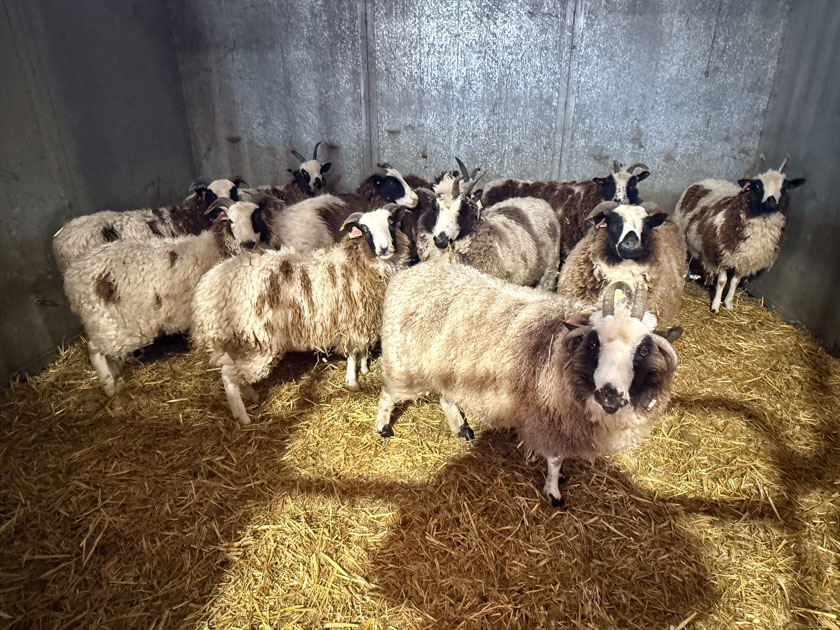
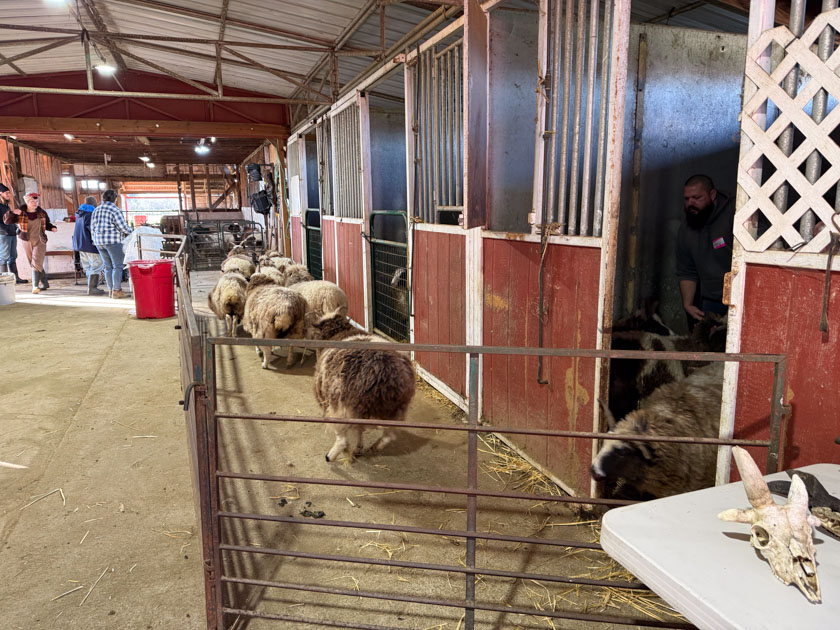
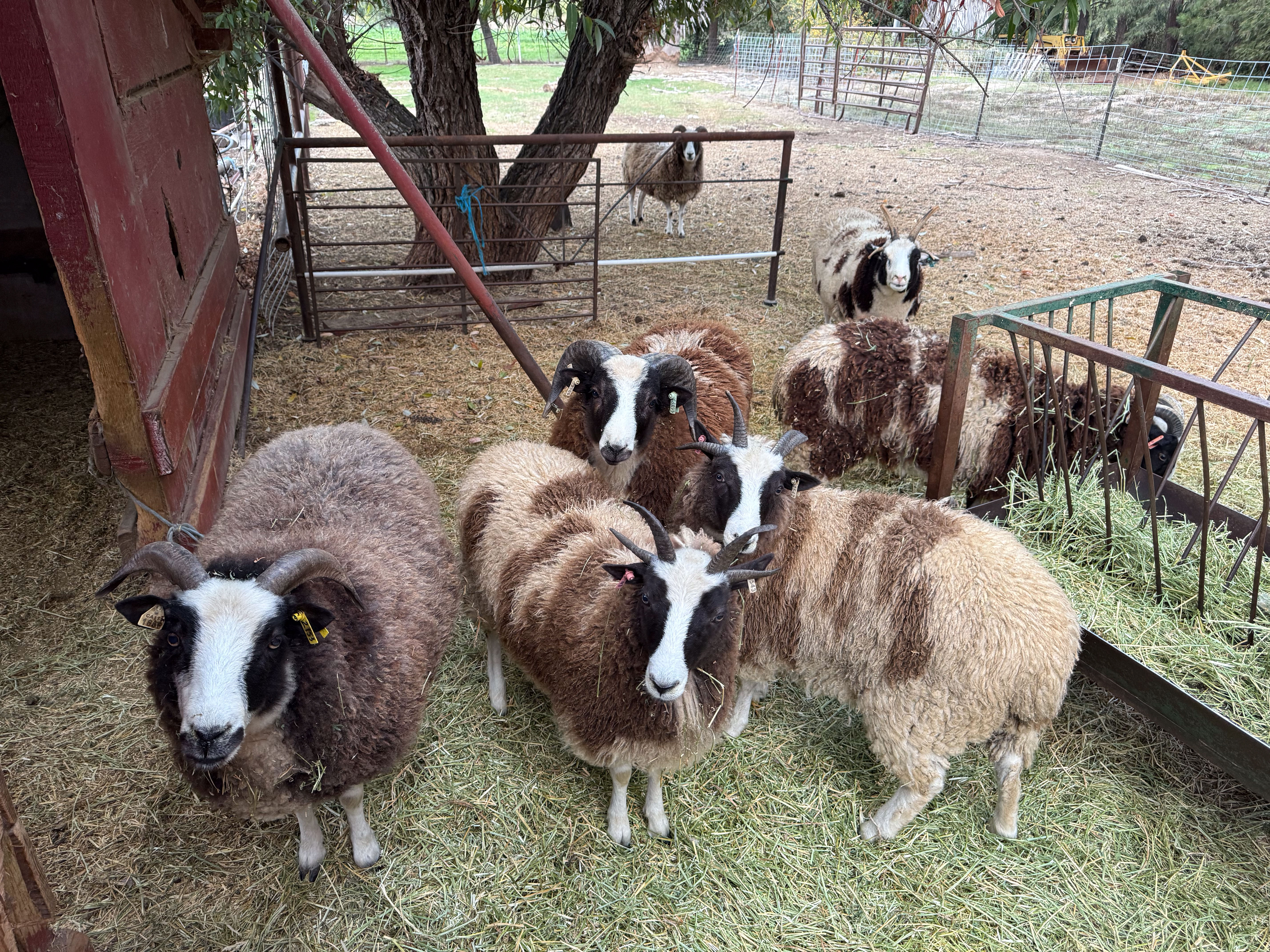
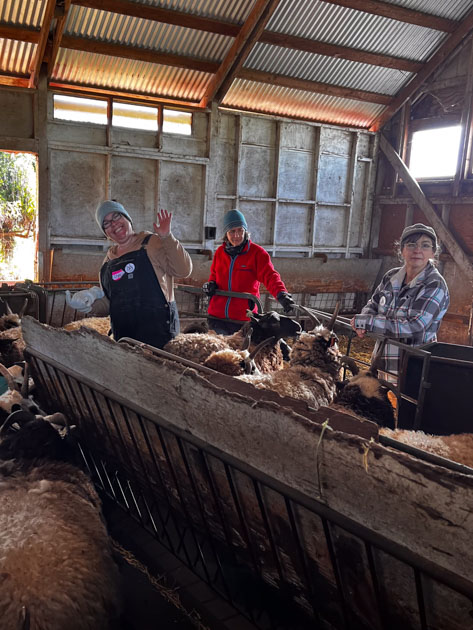
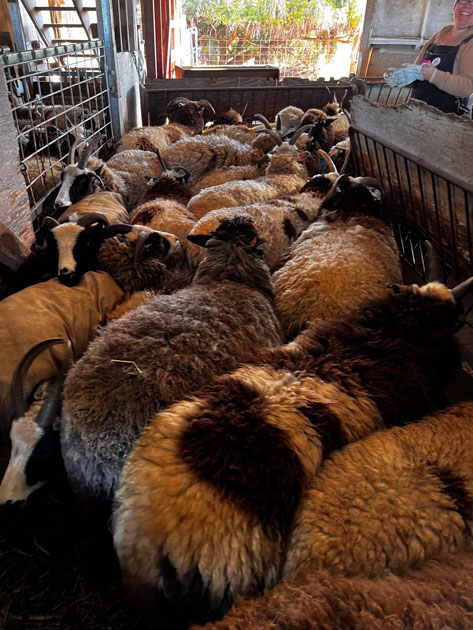
I gathered all the sheep in the barn and we put three or four in each lambing pen. When they are lined up four across it’s easier to keep them in one place, with the added advantage of a place to put the ultrasound unit.

One of the vets is a resident, having earned his DVM, but getting additional experience and training. So the visit probably took longer because he was getting help from Dr. Smith and then she also double checked some of the sheep.

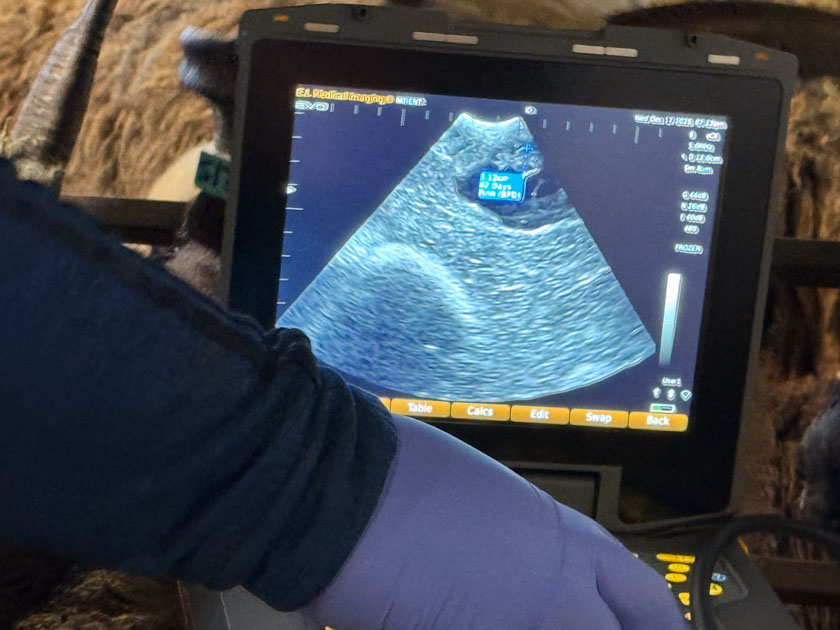
I took a few photos, but I sure can’t make out what is what. Whatever is important in this one is up in that top right part of the image.

It’s what is in the upper part of this image that is significant but I can’t tell you about this either…

…or this one…

…or this one.

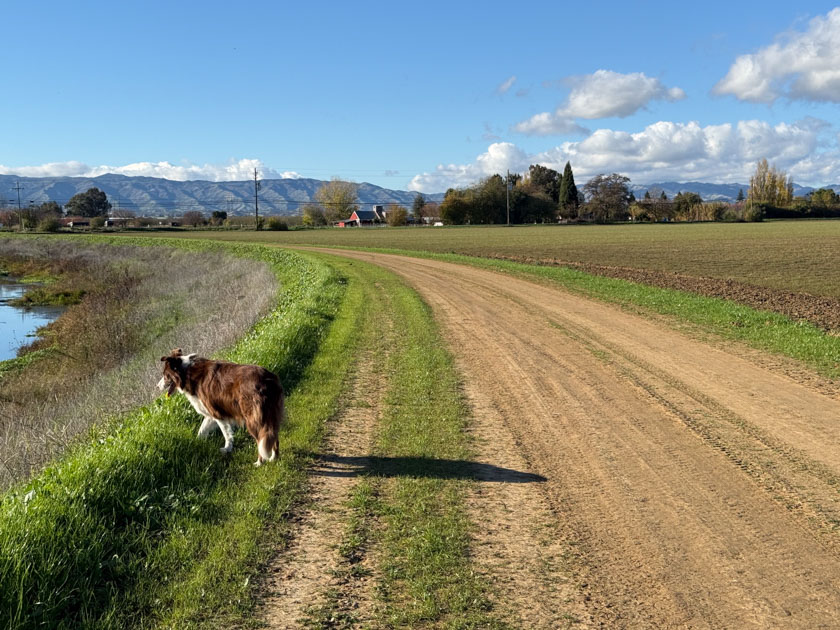
Brown border collie on dirt road with green grass and blue sky in the background.

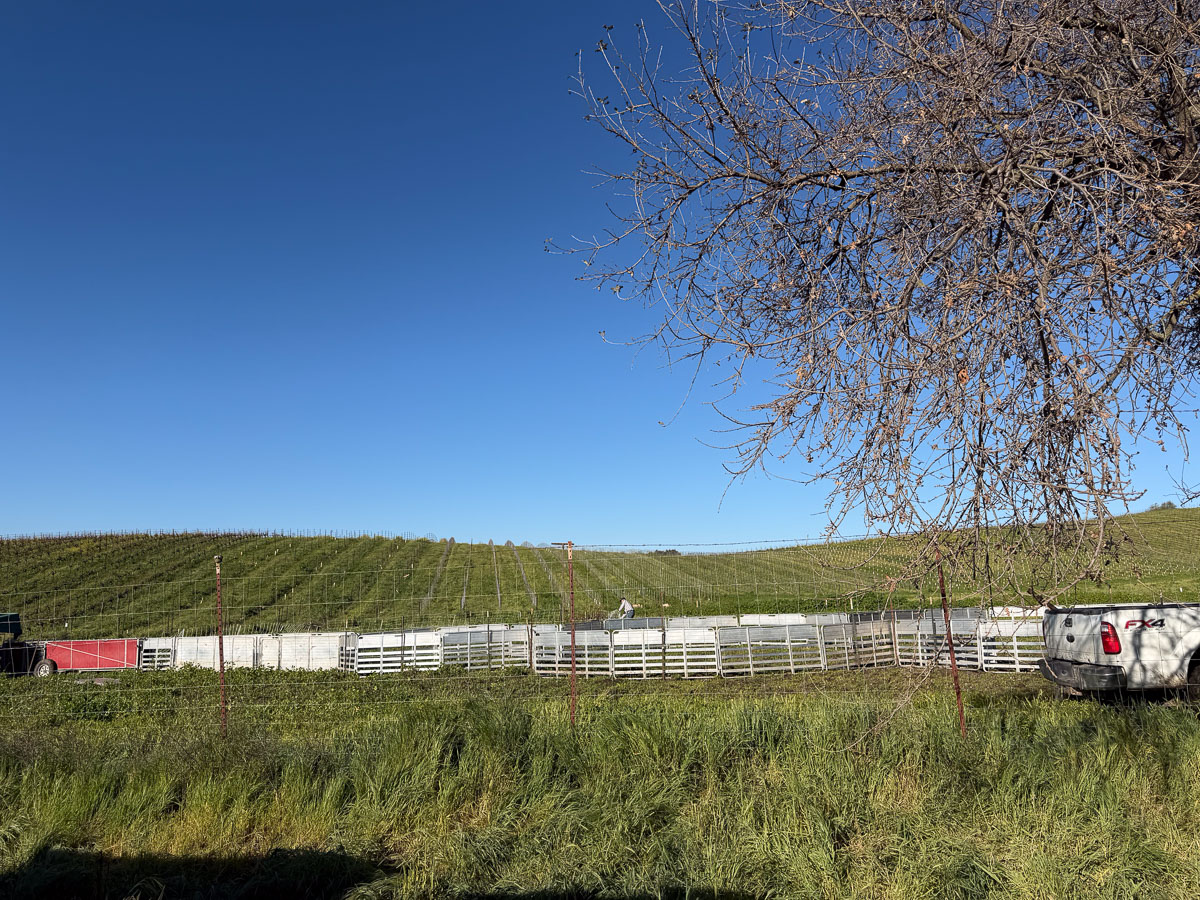
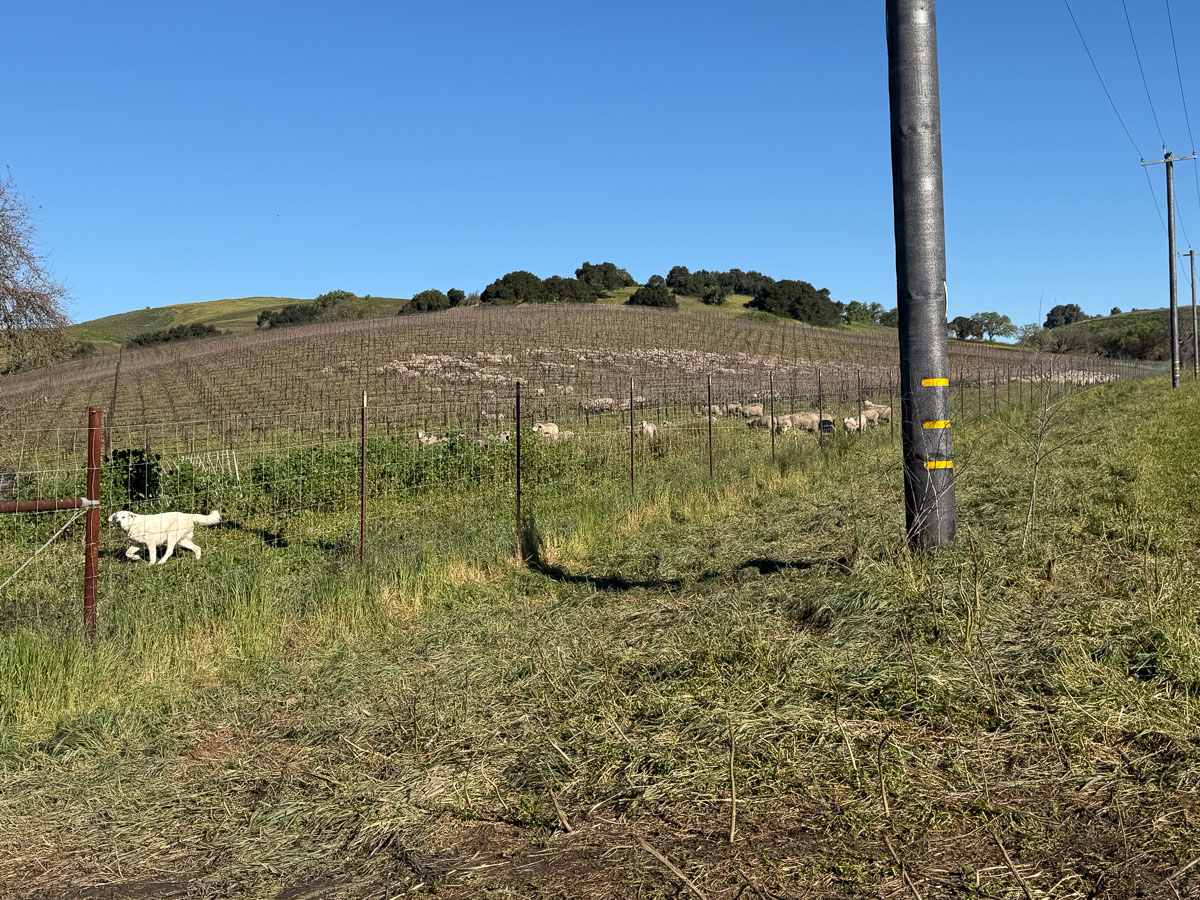
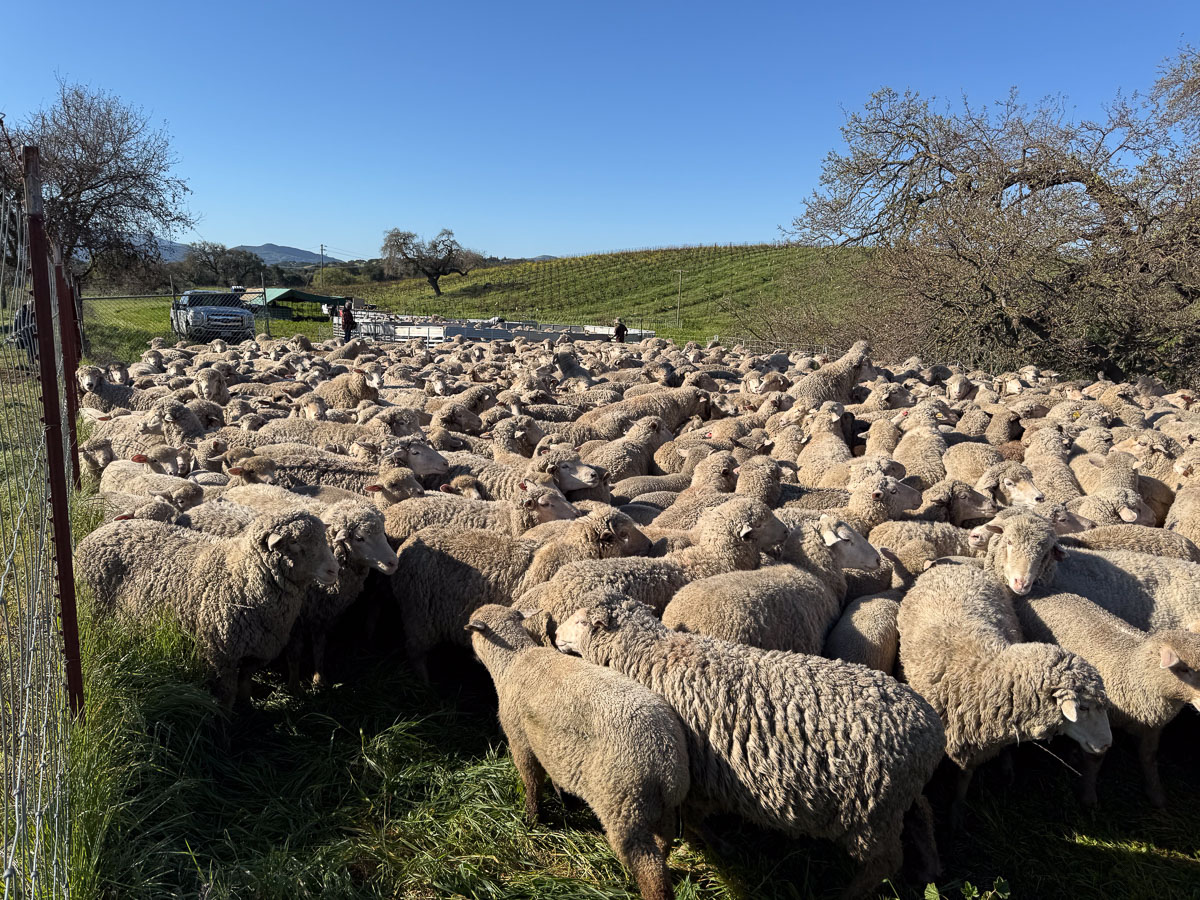
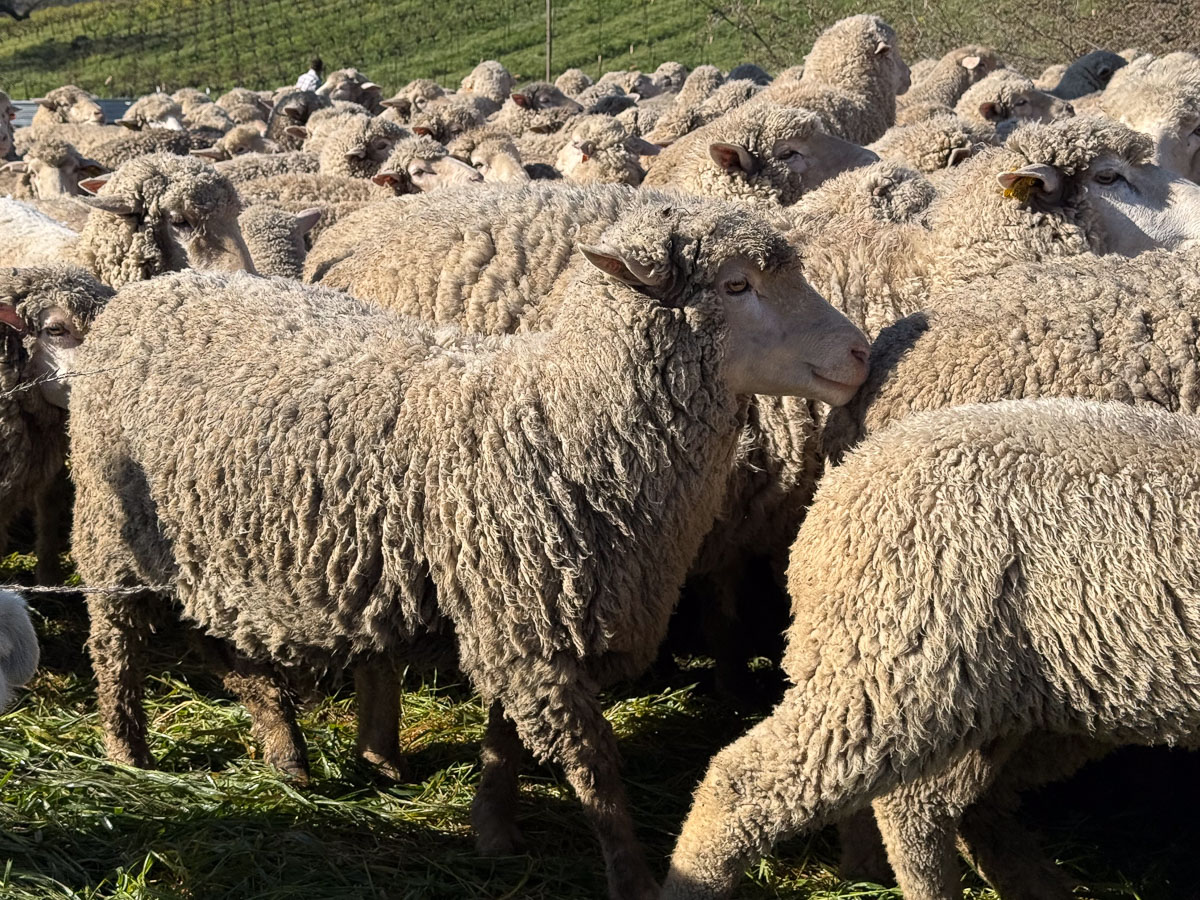
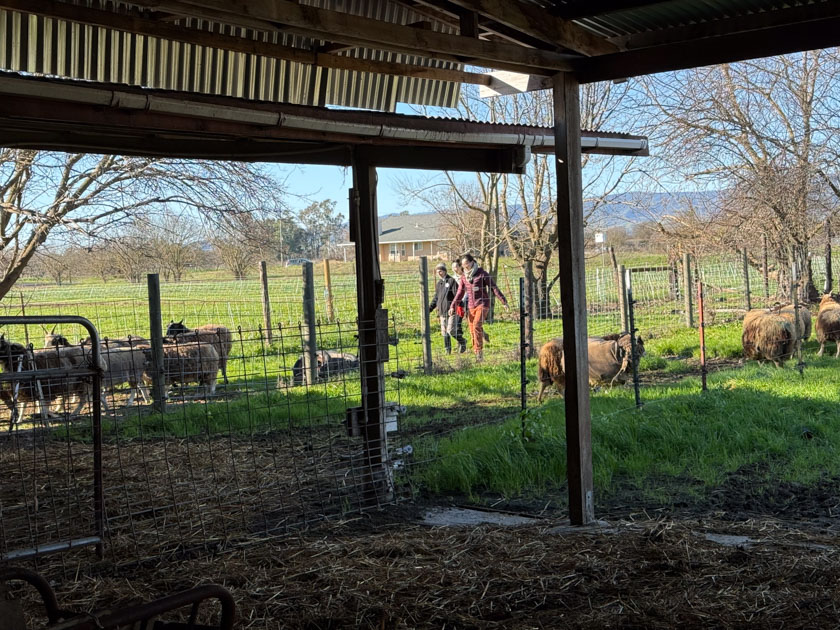
The sun came out–this was significant since it had been 23 days or so since we’d seen it! After the vets had left and I cleaned the barn I had to get out for a walk. The sheep that were Across the Road were moved a couple of days ago, but that is another story when I can get to it.

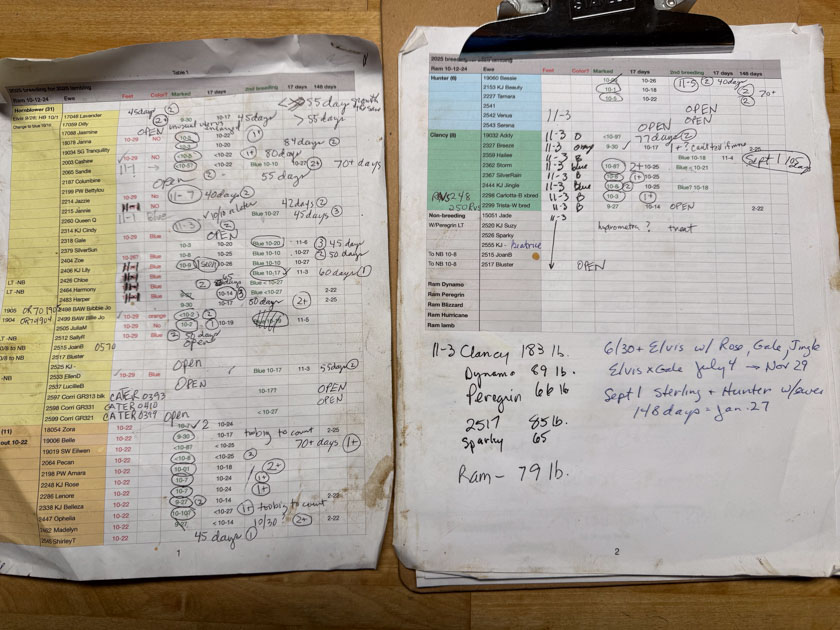
The vet tech wrote notes while they were working but this is how my spreadsheet looked when we were finished. Those people in Farm Club would recognize this as my breeding chart. Breeding groups are color coded on the left and dates are recorded as we go. (In case you’re getting a close-up look the dates on the left are hoof trimming, not breeding.) But all those circles and other notes are how I transcribed what the vets were saying. Fortunately I was able to take the vet tech’s notes and redo this spreadsheet, putting the rows into order of due date. That’s what we’ll refer to when breeding season starts.

One important item–when the rams got in with the ewes on September 1 at least one sheep was bred. The first due date is at the end of January while all the rest are due towards the end of February.

Random Farm Photos – Yesterday

This morning I shared photos of our grazing set-up now that it’s one year after the big project began. I just looked back through my blog and found this post when we seeded. That was November 19, just hours before we had a lot of rain. A lot has happened in a year. This winter it feels like a whole new experience because prior to this project I would not have been grazing in late November and would be waiting for spring.

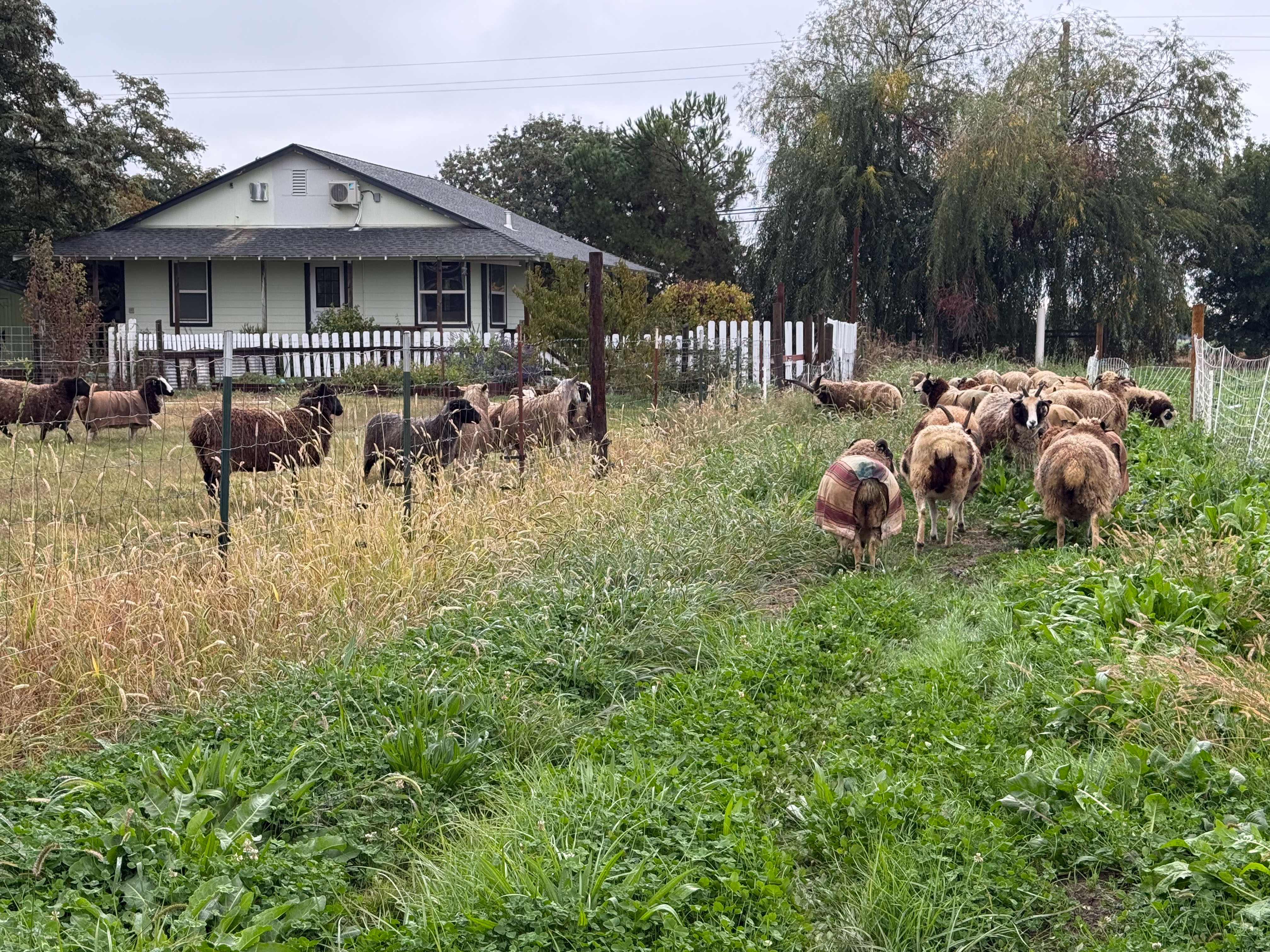
Yesterday about noon I walked out to check the fence. Some of the sheep were on their way in.

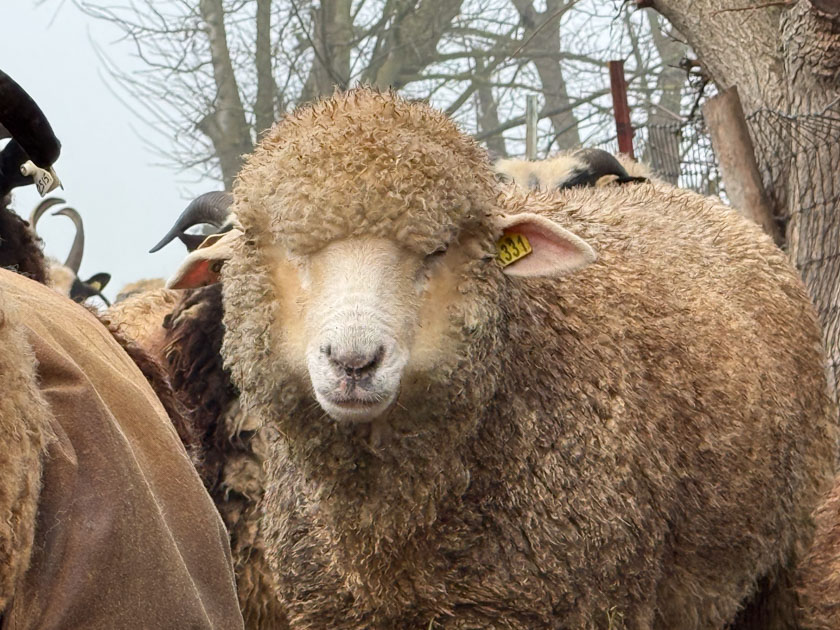
This is the corner of the new paddock I’d just set up. I think I mentioned something in previous posts about acquiring five new sheep. This is one of the three Corriedales, so far named Corri 1, Corri 2, and Corri 3. Yeah, not very creative. This is Corri 3…

…and she is one of my best friends.

Sparky is another.

I have been taking photos of individual sheep to update the pages on the website. I have updated this page with the current ewes, but haven’t included all the new photos yet. The ewe in this photo is Ophelia, a yearling.

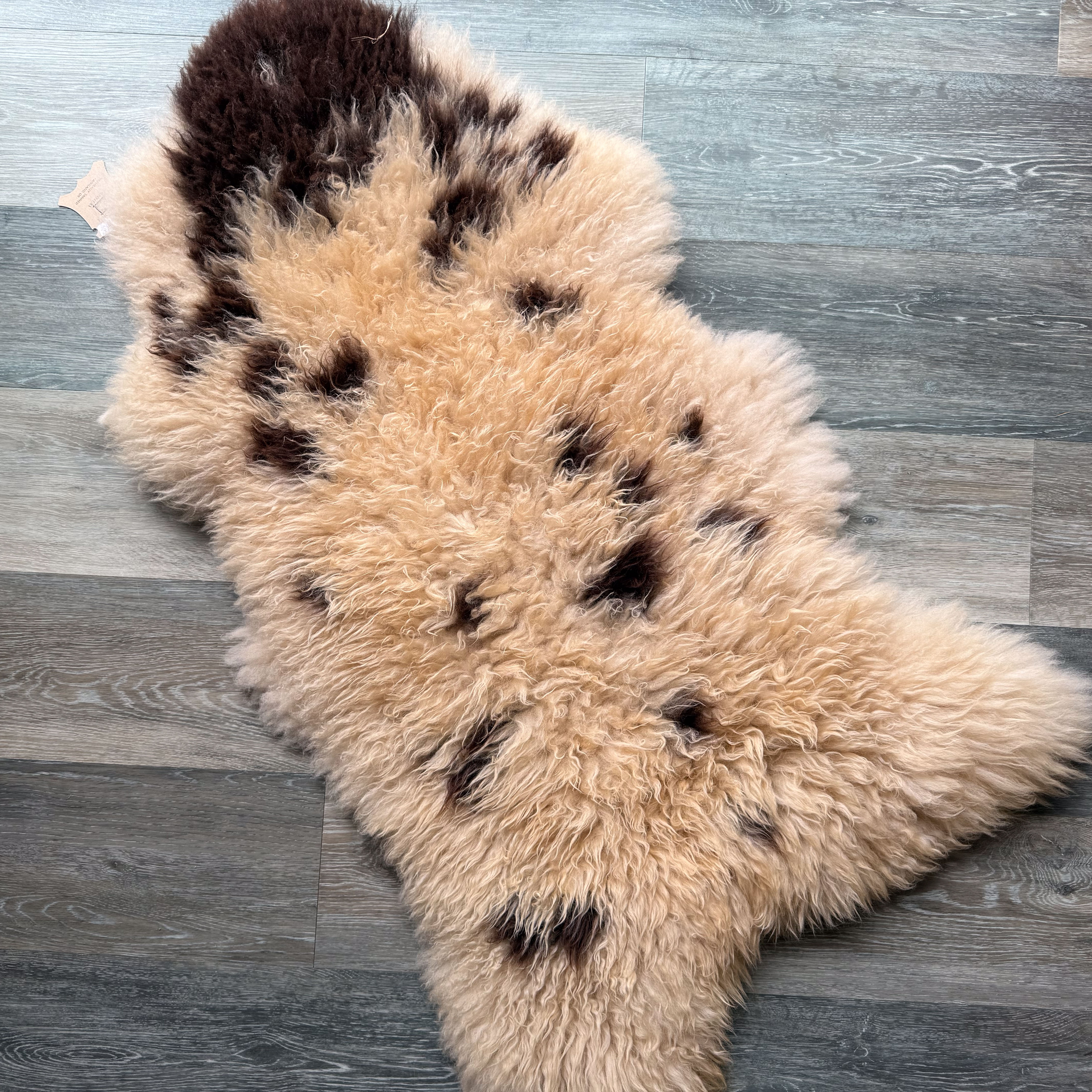
I also took photos of new lambskins yesterday. I stopped in the middle of writing this to list them here.

The hedgerow project wasn’t completely finished yesterday. I found more cardboard and cut it up for the remaining 19 plants and added more straw. We hadn’t got them all watered yesterday so I brought out a wagon to haul more water at one time.
I finished just as the sun went down.

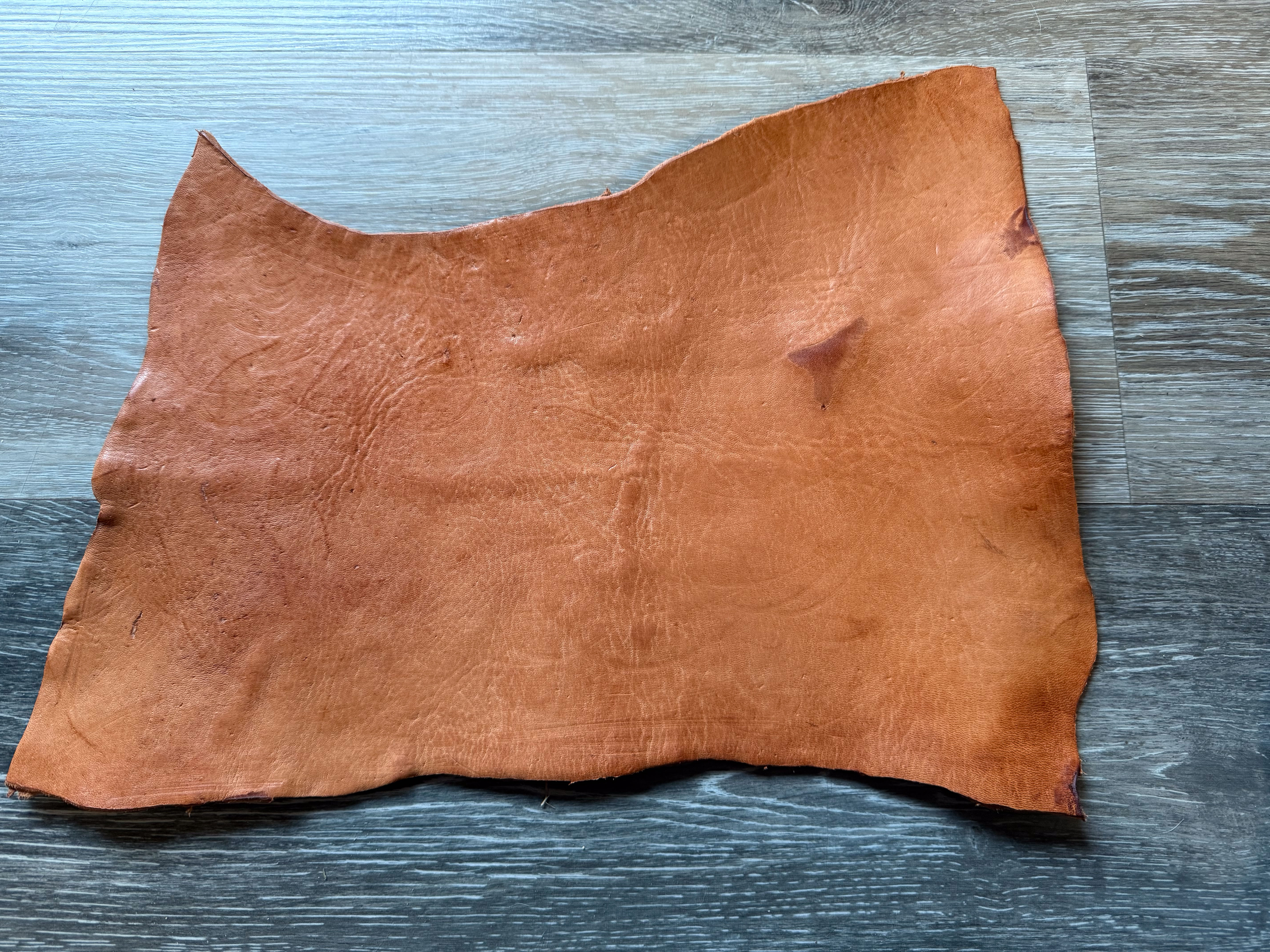
In the evening I jumped on Zoom for my final Basics of Bark Tan class presented by Traditional Tanners where I have had the latest sheepskins tanned. This is leather I made from deerskin! I highly recommend this class. It is very well presented and a lot of fun!

Sheep Across the Road

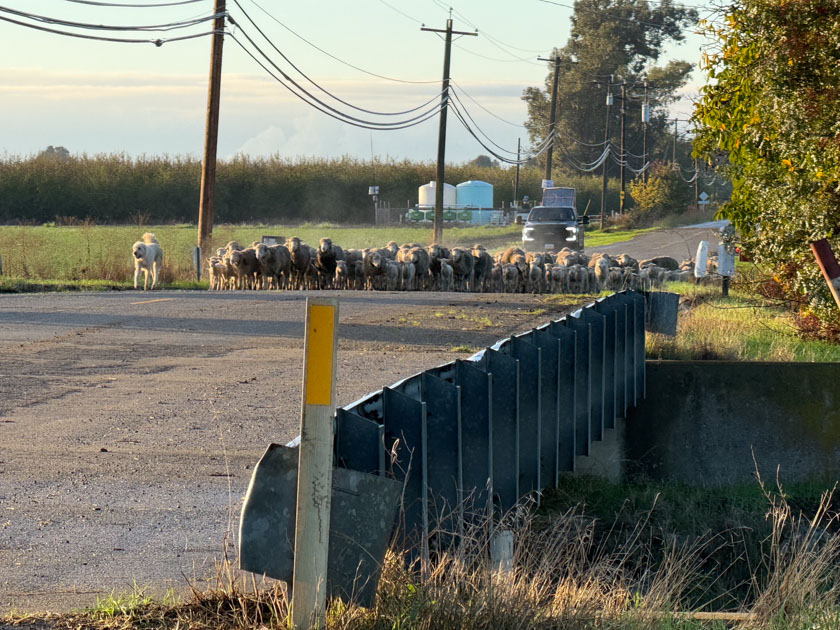
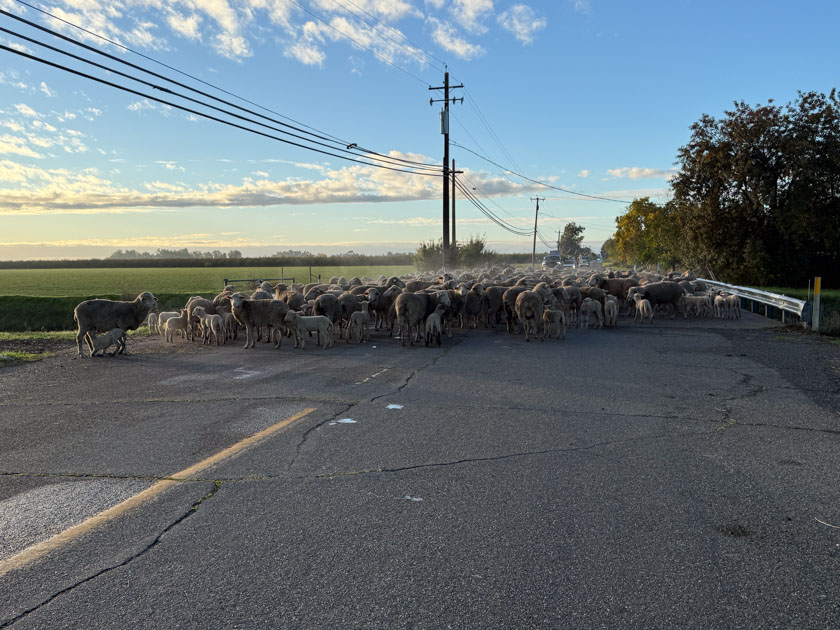
A few days ago I heard sheep making a lot of noise and saw that they were all going from the pasture to the barn. It seemed like more baaing than usual. Then I realized that I wasn’t hearing my sheep.

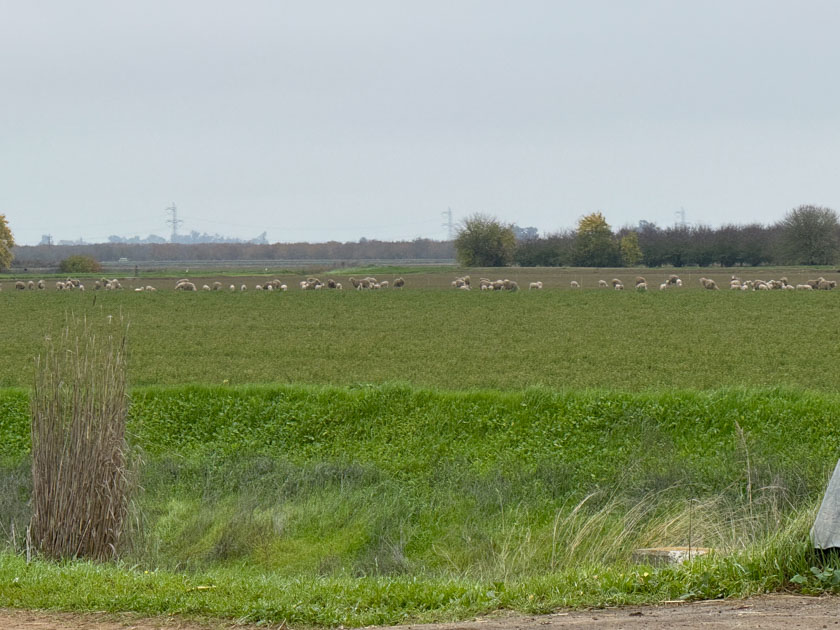
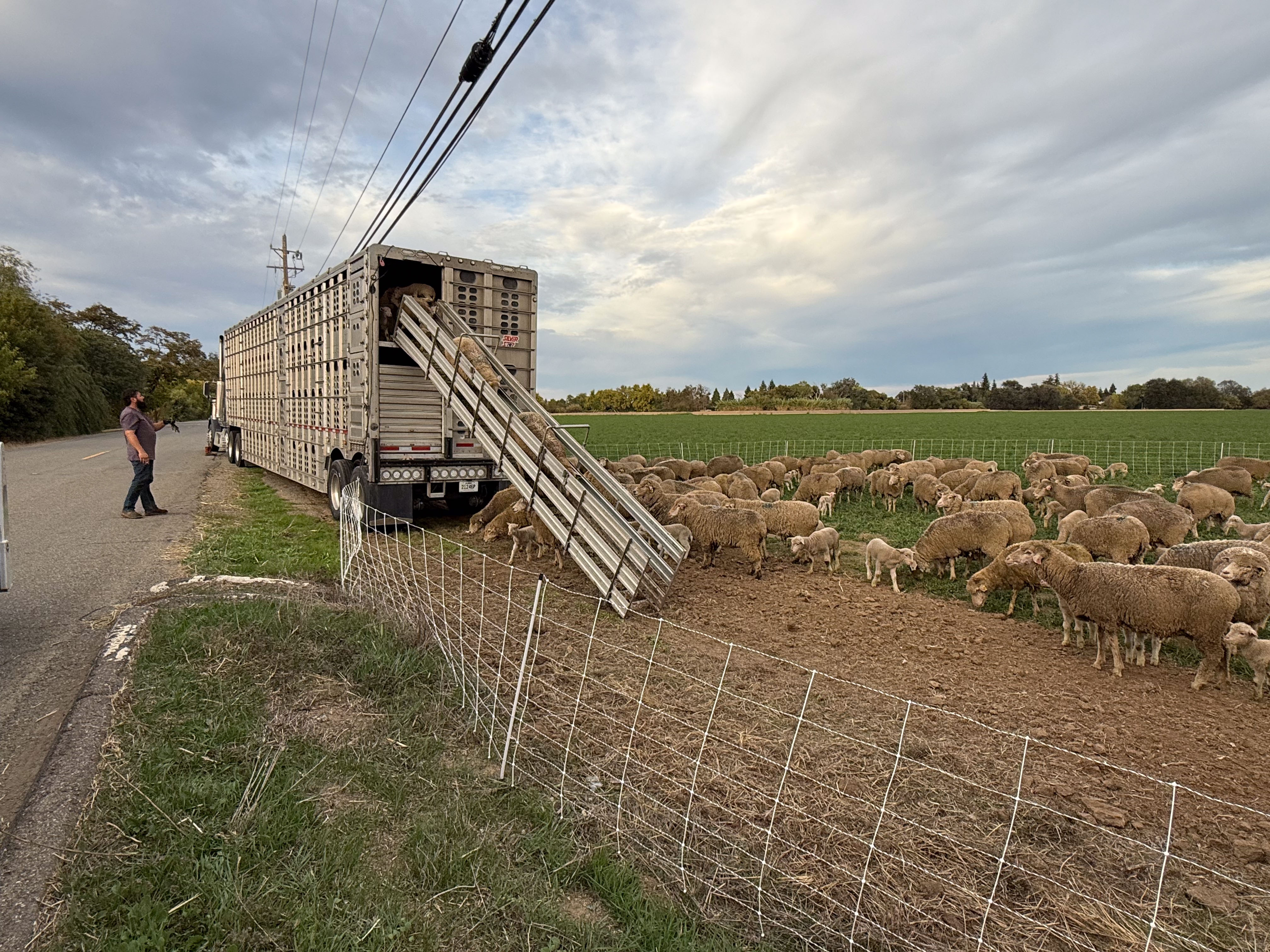
Two semi trucks with large livestock trailers parked on the road.

These trucks were parked just down the road but where I couldn’t see them from the house because of the trees.

Close up of the side of a livestock truck with a sheep and a dog poking their noses through the holes.

Notice that the two noses poking through the holes are different!

Ramp at the upper level of a livestock trailer where a sheep is looking out.

These trailers have four levels and all were full of ewes and lambs.

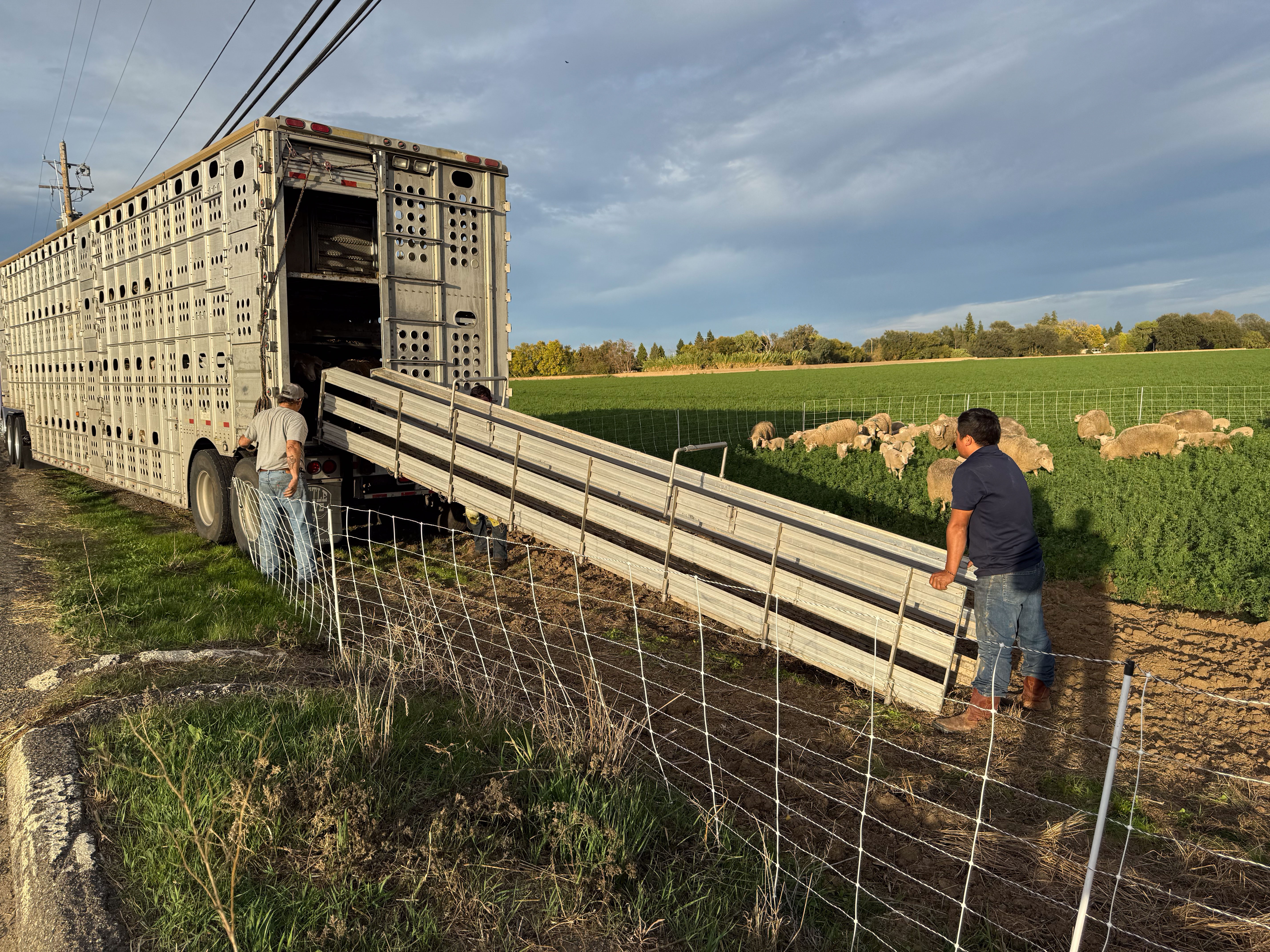
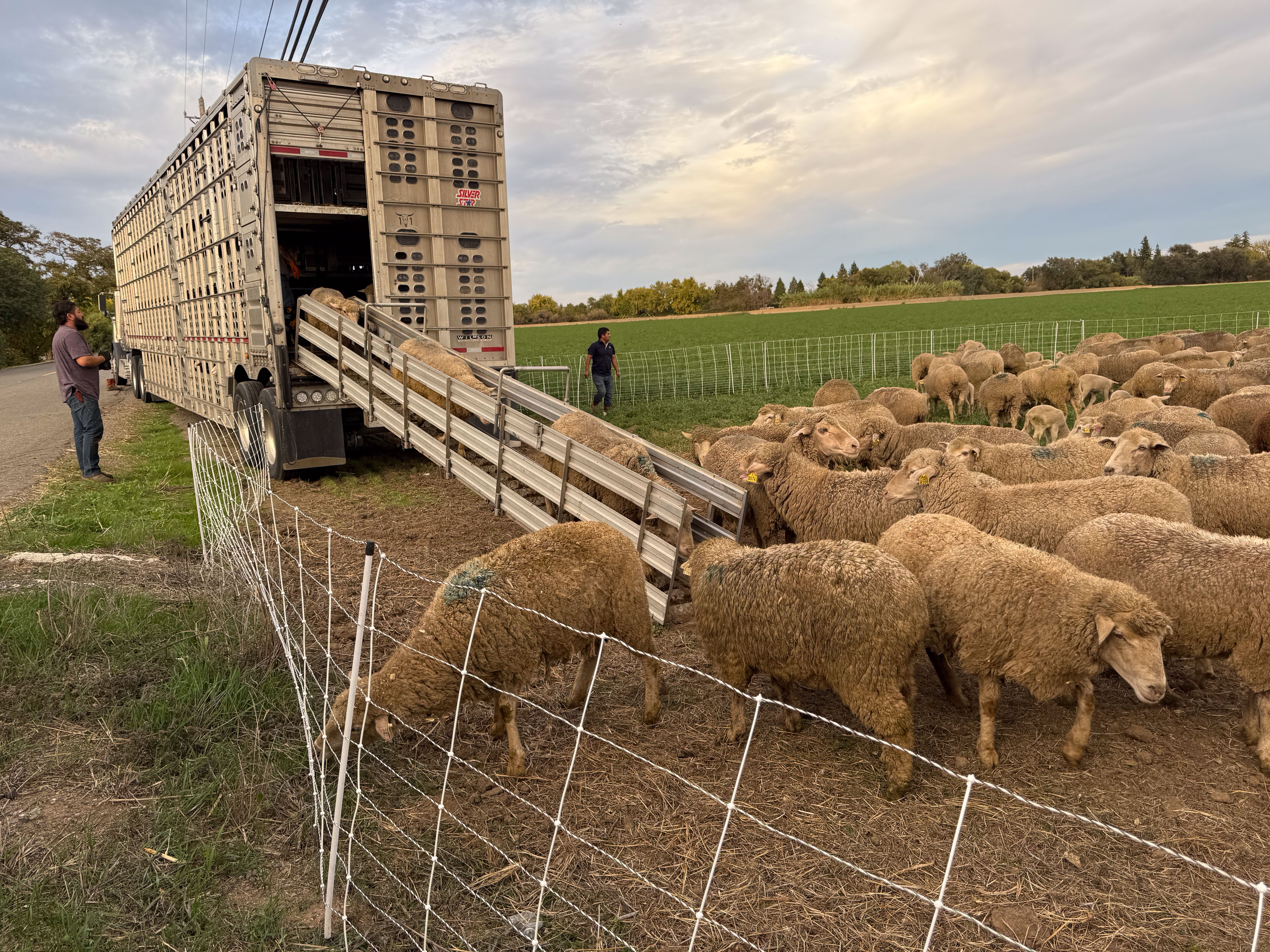
Two men placing a ramp at the back of a truck to unload sheep into an alfalfa field.

They move the ramp once because two levels can unload to one position of the ramp.

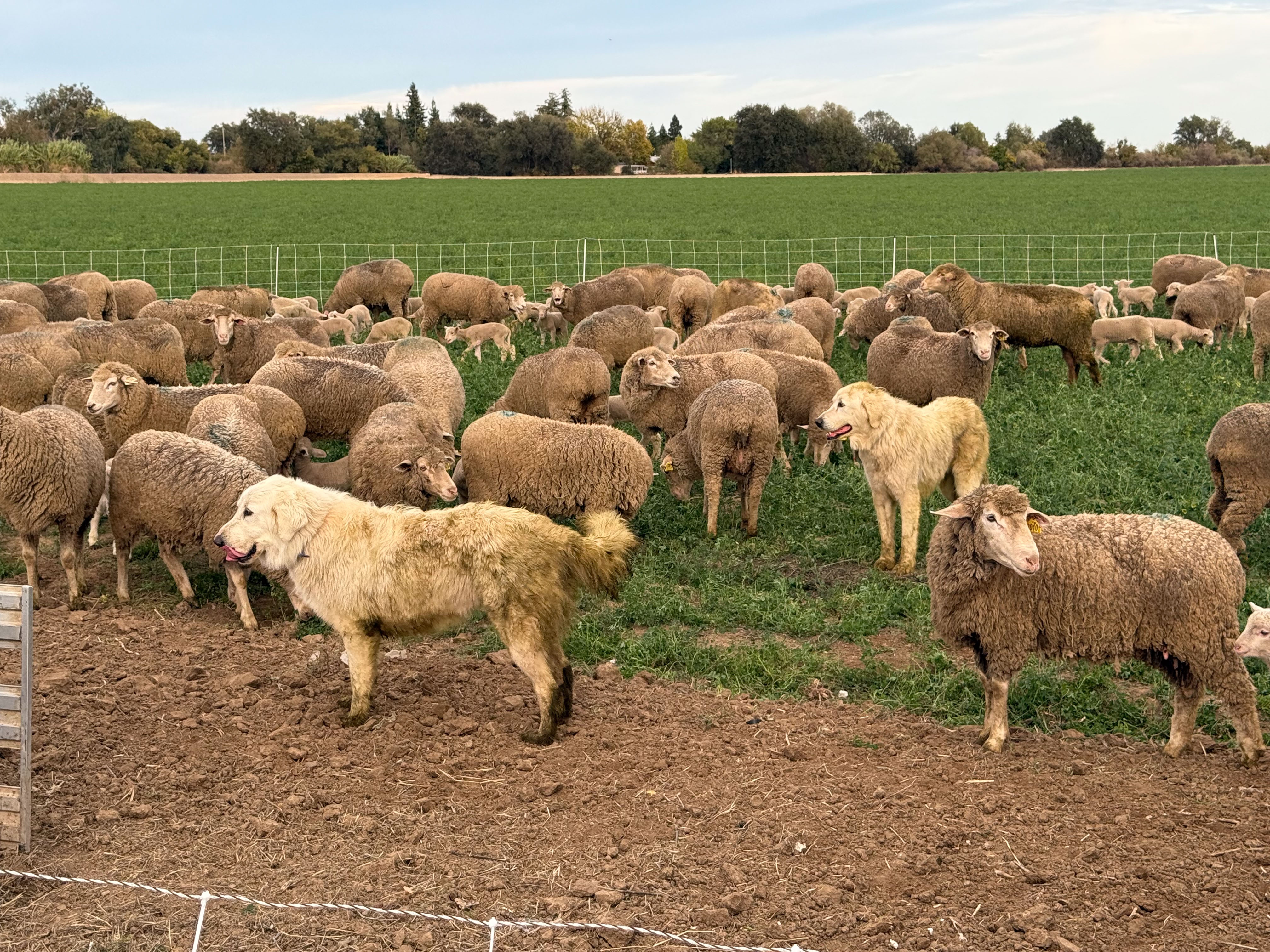
Ewes and lambs and two guardian dogs in an alfalfa field with a net fence holding them in.

Two guardian dogs were with the sheep.

Ewes and lambs with a white guardian dog.

I was surprised at how young some of the lambs were. It shouldn’t have been a surprise. It’s just that I have no experience with this kind of operation. Our sheep have it easy with barn access and personal attention all the time.
Ewes and lambs with a guardian dog inside a net fence set up in an alfalfa field.

It was quite noisy with lambs and ewes looking for each other.

Large truck with sheep walking down a ramp into a fence set up in an alfalfa field.

The second truck pulled up to unload.

Large truck with a ramp where sheep are being unloaded.

Each driver was responsible for unloading his truck. They switched to rubber boots so they could climb in with the sheep if necessary and keep their other footwear clean. I didn’t see any other fences so I wasn’t sure how they were going to deal with this many sheep.

Flock of ewes and lambs held within a net fence.

I have seen other alfalfa fields where they graze sheep but this is a first for “our” field–the one Across the Road that I know well. I talked to the truck drivers a bit. I think they said they had about 450 sheep to unload. I thought they said that was the number of ewes but maybe it included lambs. I wasn’t sure what they were going to do for the night because I didn’t see any other fences.

Flock of sheep being held in a net fence. A four wheeler with a border collie on it is outside the fence.

There were a lot of sheep crowded into this fenced area. It turns out that this was just a holding area while the trucks were being unloaded. This was late in the day and rain was coming in that night.

Green alfalfa field with herd of sheep being moved away from the fence.

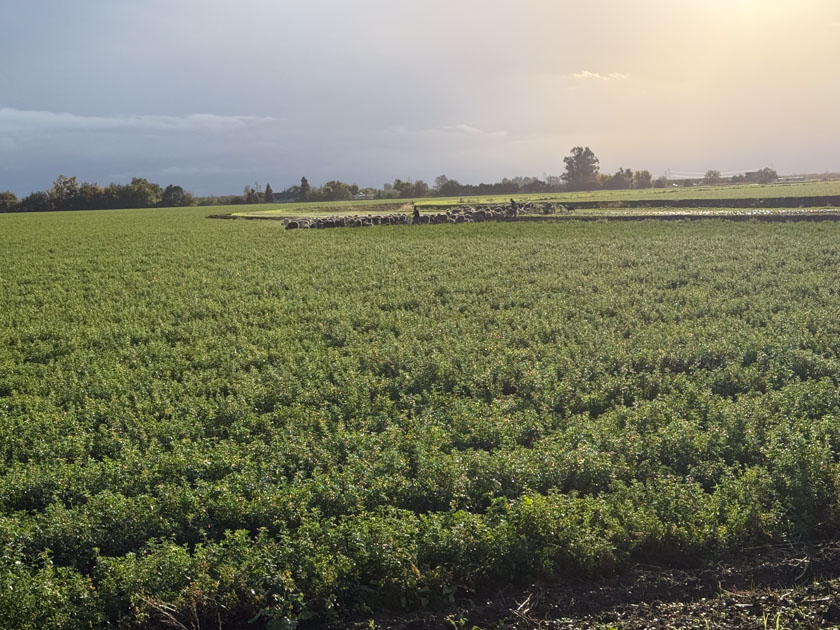
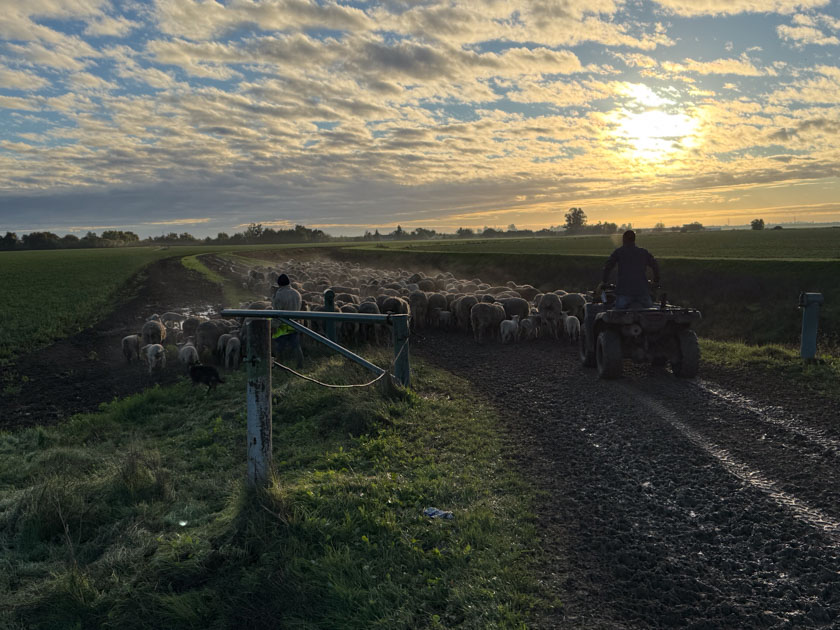
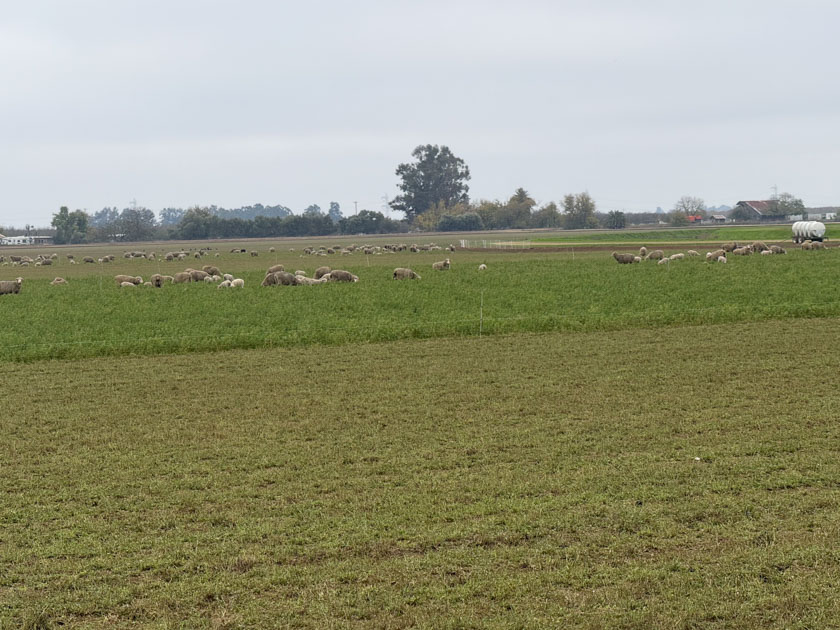
The fence was opened and two men with one 4-wheeler and 3 Border Collies moved the sheep to the east. Fencing was already set up somewhere else and a herder would stay in an RV near the sheep.

Green alfalfa field with an orchard in the distance and sheep in between.

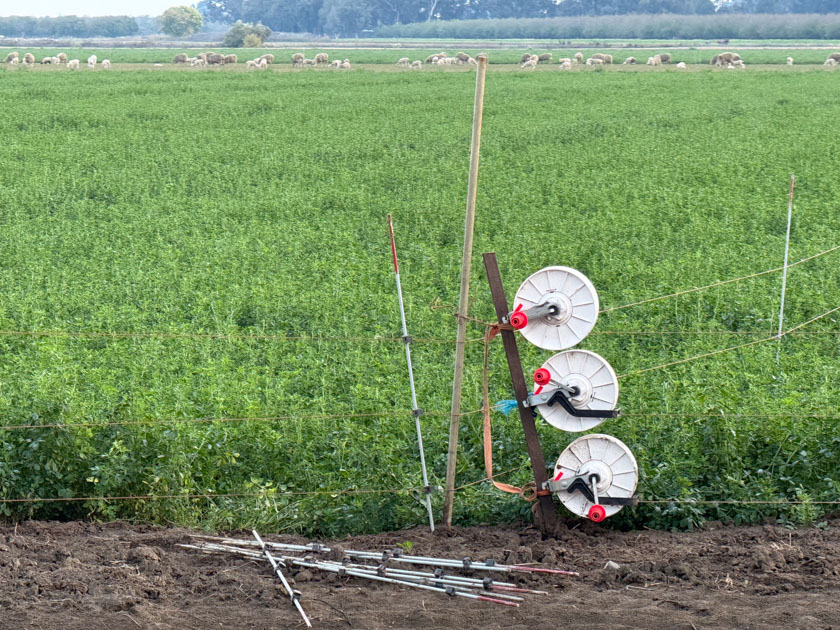
It rained that night and it was too muddy to walk across the road the next day and I was busy all day anyway. The following day I wanted to see where the sheep were. I walked half of my normal route but didn’t want to get close enough to alert the guardian dogs and cause a problem. It’s complicated to bring sheep to graze areas that aren’t set up for it. Fencing is supplied by the grazers–you can’t see the electric net fence in this photo. And they have to have a water source–that’s the white tank.

I’ll probably walk over there today and find out if they are in the same location.

Morning Chores

Sunrise with cloudy sky over alfalfa field.

This morning’s view. I walked across the road to take this photo.

Jacob sheep in green pasture.

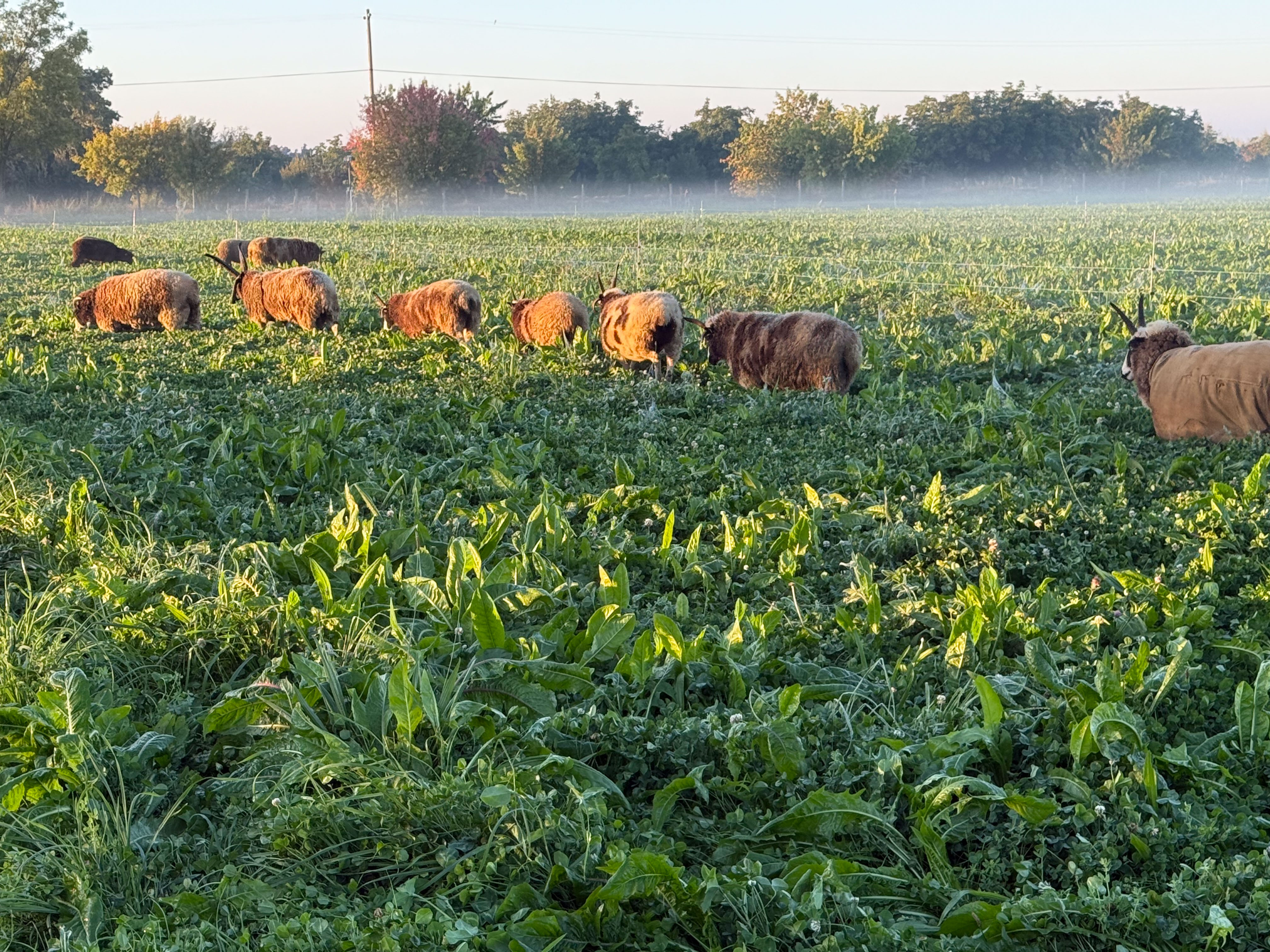
Back on our side of the road, this is the group of sheep with Hornblower, the 4-horn ram farthest back on the photo. They don’t need to be fed when they are on this pasture, still in great shape in late October. If you’re new to this blog and want to catch up on the pasture renovation start at the October 3, 2024 post and find 13 others titled Pasture and Irrigation Renovation and later 8 posts titled Grazing and Irrigation starting with this one in May, 2025.

Gray tabby cat and black cat eating out of bowls on a black mat.

On my way to the barn I stop and feed Tiger and Tippy. These are Dan’s garage cats, but I started feeding them in April after his knee replacement surgery. Now feeding cats is on my chore list, because they expect to be fed earlier in the day than Dan will come out. Each of these cats showed up here at different times (dumped or stray?) and now live here.

Breeding Season gets complicated because there are several groups of sheep. The next stop is the group of sheep with Clancy, the BFL. There are two significant points of this photo. One is the blue rear of the ewe in the back. She was the first marked September 27 but re-marked with blue at the next heat cycle. Also notice all that green behind the sheep. That is all new growth after that 2″ rain we had just 9 days ago.

At the barn there are multiple groups. These are non-breeding sheep. Jade, in the back near the post, is the oldest sheep here and will live out her live as a pet. There are six others in this group. Sparky and 5 other lambs (some Meridian and some KJ Royalty, Kirby’s flock name) are here because I want to may want to choose some non-nursing yearlings next year if we decide to go to any shows.

This is another breeding group that has access to the north pasture.

Elvis is the ram with this group.

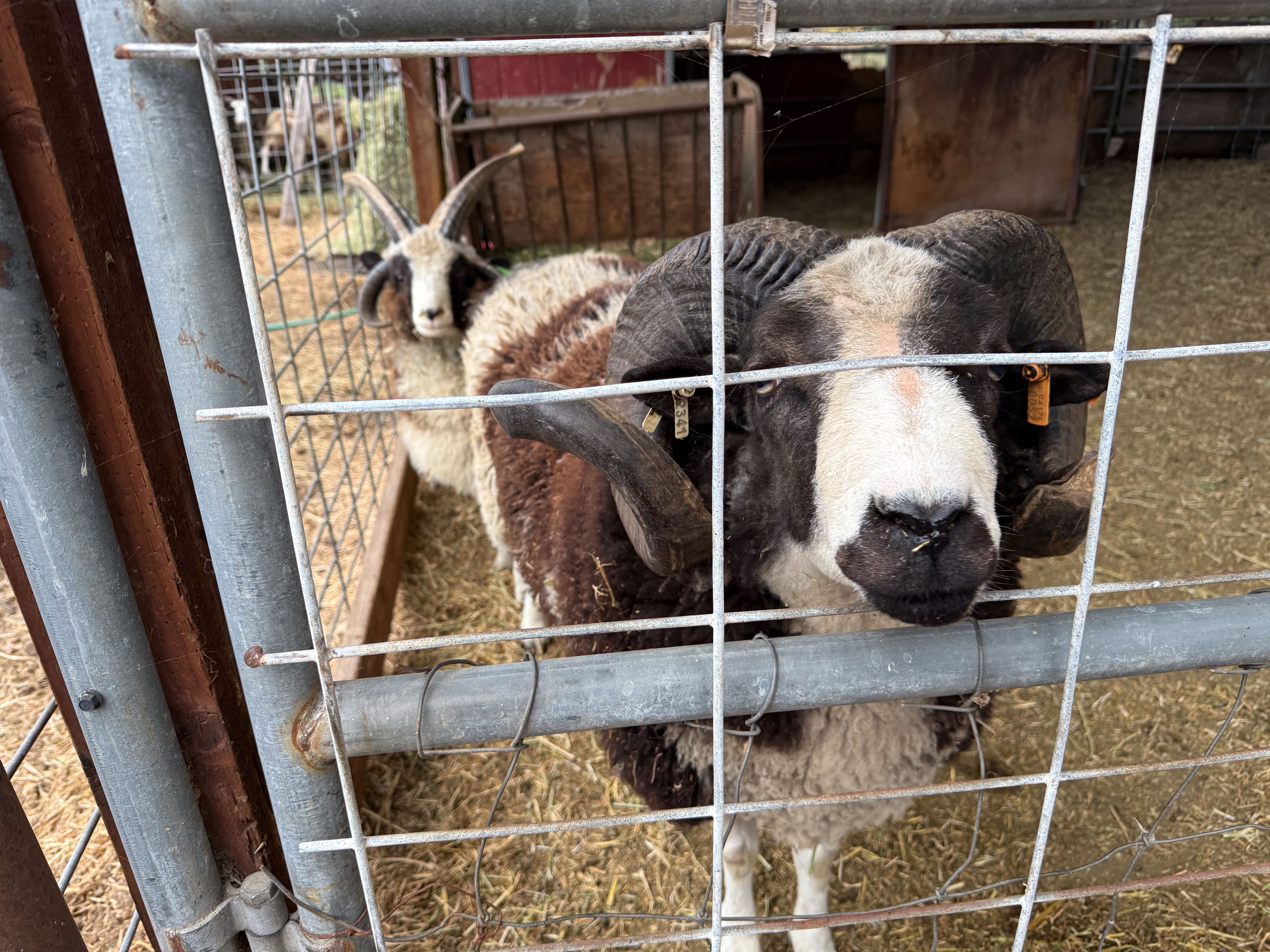
These are two young rams that I did not use to breed this year. The two horn ram is Meridian Dynamo. The four-horn is bide a wee Peregrin. He came from Oregon in September, was still on the young and small side, and I was able to get Starthist Hornblower, the adult 4-horn ram with the group in the pasture. So these guys will be in the line-up for next year.

Hunter is the two horn ram in the middle. He has six ewes.

I had two adult rams here, but one has been sold. Meridian Blizzard is hopefully sold and there is a ram lamb here that is the last of this year to be harvested for a customer.

I am ready to be done with Breeding Season, but when I look at the calendar I see that it has only been 3-1/2 weeks. I look forward to being able to put all the ewes back together and having them on the pasture together. There are challenges in putting the rams together, but I’ll deal with that when the time comes. For now they are all in separate places.

Mid-Breeding Season

As I’ve said before Breeding Season is a Season, overlapping the traditional seasons of summer and fall. If defining a Season influences how you live your life, Breeding Season definitely qualifies. It doesn’t take long before I’m ready for it to be over. It’s easier when all the ewes are in one place, the rams are somewhere else, and I don’t have to feed groups differently and watch my back when I’m with the ewes.

Thick green clover and chicory pasture with Jacob sheep grazing.

We have 4 breeding groups, a non-breeding group (the oldest sheep, Jade, and six ewe lambs), two young rams with potential for breeding (too young and/or small this year), and two older rams who are sold but still here. The breeding group with the most ewes is on the main pasture. Hornblower has about 30 ewes with him. Doesn’t that pasture look great?

Irrigated pasture with two electric net fences separating groups of sheep.

Elvis has eleven ewes and is on the pasture to the north. When I moved the Hornblower group to the next paddock of the south pasture I needed to separate the two groups with more than a single net fence, especially since I’m having some issues with the power to the north one. So I set up two fences and was able to power the north one from the south one.

Those pasture photos were taken October 10. On the 13th it rained. We had 1.6″ the first day and .5″ the second day. A significant rainfall usually marks the end of grazing. It is late in the year and the pasture is depleted or dormant. Also, the land is flat and the water doesn’t drain well. This year is different because the pasture has been renovated and there is a much better stand (mostly clover, trefoil, and chicory). We are not sure how long we’ll be able to graze but it seemed appropriate to continue as long as I moved the sheep to a fresh paddock.

Five days ago I moved Hornblower’s group to the paddock closest to the road.

The lane is adjacent to Clancy’s group. However there is hot wire on both sides of the net fence and there doesn’t seem to be any problem with either ram trying to get through.

You may notice some blue marks on the ewes. Those are more noticeable than the orange marks on several, The rams wear marking harnesses so we have a better idea of when to expect lambs. I hadn’t noticed as many marks lately.

Crayon markers worn by rams in breeding season. Two orange ones are almost empty ad a blue one is new.

Is this why? The rams went in with ewes three weeks ago on September 27. I substituted the orange markers from Clancy and Hornblower with blue markers a week ago. You can see the difference in a new one and the used ones.

Clancy’s group is in the field between the barn and the shop–not one of the renovated pastures. Notice two blue marks. The ewe in the background marked blue was the first one Clancy marked with orange on September 27.

White ewe with orange marker on her rear indicated that she was bred.

So we now know that she was not pregnant after that breeding. If all the ewes in this group are re-marked that would indicate a problem with the ram. Hopefully that is not the case. The other ewe marked blue in the photo above this one had not been marked before. I’ll keep watching to make sure that more of the oranges aren’t also marked blue in the next week.

Jacob sheep walking out into pasture of clover and chicory with morning mist.

This morning’s move to fresh pasture.

Ginny’s Birthday!

Ginny’s birthday was October 12. She just turned 11. I have only about a zillion photos of Ginny so it was time consuming to narrow this down.

Red and white Border Collie puppy.

December, 2014. Ginny was two months old.

Red Border Collie jumping for a ball that has splashed into the water.

Many of my photos focus on action with a ball. I wouldn’t say that Ginny is ball-obsessed to the exclusion of all else. On the other hand, she is somewhat ball-obsessed. I have lots of photos taken during our walks Across the Road of Ginny leaping for a ball I have thrown. One reason that there are so many is that I kept trying to get that perfect shot and Ginny was a willing subject over…and over…and over…

The heads and horns  of Jacob sheep that are staring at a red Border Collie.

I am a sheep farmer and the real reason to have a Border Collie is to help with sheep. That is not necessarily a good time for photos because we are trying to accomplish a task. I don’t have as much work for a dog as the dog would like. We have a small place and pasture management and fencing that makes it easy to move sheep. In recent years my main use of Ginny is to help move rams to catch them or to move the ewes into the barn from the corral. When I need to get sheep out of the pasture it’s usually easy to call them in.

Four dogs running on the dirt road. Two dogs are black and two are red.

This is a photo from 2018 taken on a walk Across the Road. At that time 5 dogs lived here. Rusty, the first red Border Collie came from Terry Mendenhall, as did Ginny. That’s Maggie at the top of the photo. The two black dogs are Finn and Sawyer who moved to Boise when Chris and Meryl moved.

Three dogs looking  in a pile of lumber for a rodent.

Rusty, Ginny, and Maggie pursuing some kind of critter, probably a ground squirrel that ran into the woodpile.

Five dogs waiting on the grass to be given a piece of cake off a platter.

This was a celebration of Finn’s and Sawyer’s birthday. All dogs had to wait for permission to have their treats.

Red and white border collie staring intently at the camera.

Ginny in 2019.

Two red and white Border Collies on a dirt road with a ditch on the right.

Ginny has always created her own entertainment by dropping the ball at the top of the ditch and letting it roll in. I tell her to “get it”, she retrieves the ball, and does it all over again farther up the road.

Tennis ball in a net made of the leash wrapped around a forked stick. Border collie in the background.

I try to pay attention when we get to the part of the canal that is cement. There are places where the water level drops a couple of feet and the water flows quickly, creating a whirlpool effect at that drop. Ginny can get in and out of the cement canal when the water is not so turbulent, but I don’t want her in this part. She seems to like the game of dropping the ball at those places and then expects me to get it out. The drop-off creates a turbulent whirlpool and the ball disappears and then resurfaces over and over, but doesn’t move downstream. I’m not getting in there and I’m not sending Ginny in. There have been several times when I was able to create a net with a forked stick and the leash, and eventually snag the ball by leaning over the wooden plank that is the walkway over the canal.

Border collie staring at a tennis ball on a pallet in front of alfalfa.

Here is another of Ginny’s habits. When the skirting table is in this part of the barn and I am working Ginny intentionally puts the ball in this spot and then moves behind the wall of the barn and that upright pipe and expects me to get the ball, often barking at me if I haven’t paid attention.

Red and white Border Collie in a pen with a dirt floor.

Lambtown was last weekend and Terry was there with her sheep and her older dog that she didn’t want to leave home. This is Jill, Ginny’s mom, who is now 14.

Red and white Border Collie on dirt road with hills behind.

I took this photos of Ginny last week. Looking pretty good for11!

Farm Day and Random Farm Photos

Kitten with Siamese markings near a bowl of cat food.

I’ll start with a random photo. This is the newest animal here, if he/she (?) is still here. Every morning we feed the two Garage Cats in, well, the garage. For a couple of weeks we have seen a third cat off and on. It (haven’t identified gender yet) has started to come in while I’m still there if I don’t make any fast moves. We don’t know where it came from–a neighboring property or dumped. The local newspaper had an article this week about the overwhelming number of dogs and cats that are abandoned. So we’ll never know about this one. I put out a live trap a few days ago but one of the other cats went in for the food. We’re going to be gone for a week so this is not the time to catch this kitten anyway. I did not see it the last two days so I don’t know if it is gone or just being more cautious. I’ve name it Smudge.

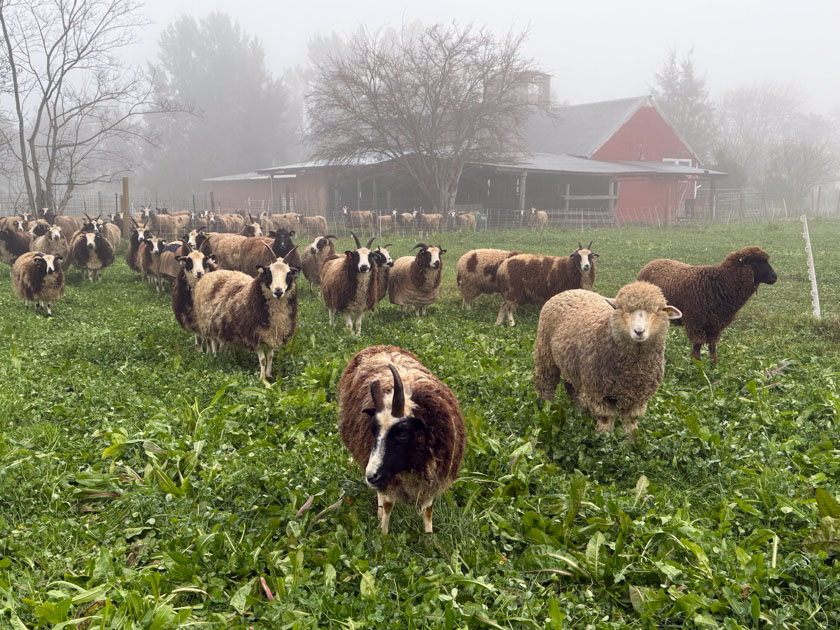
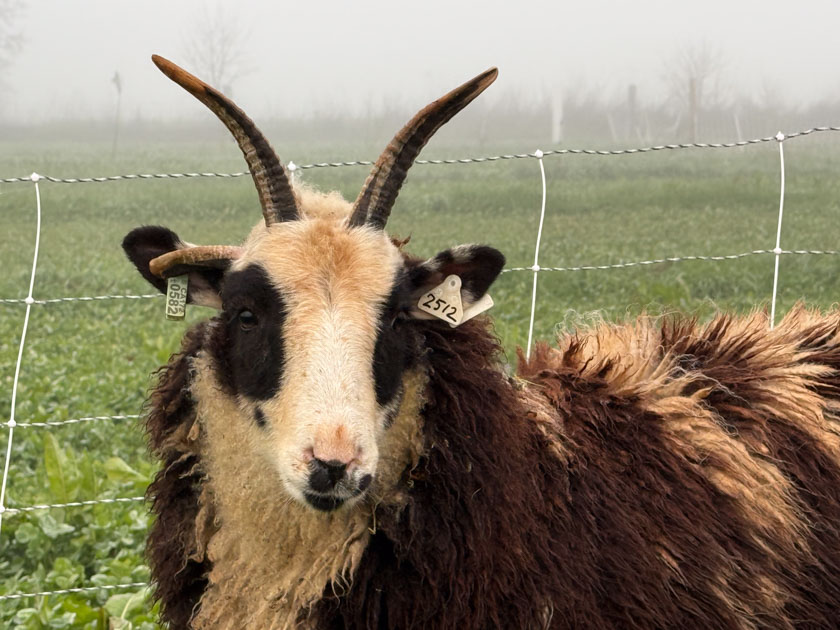
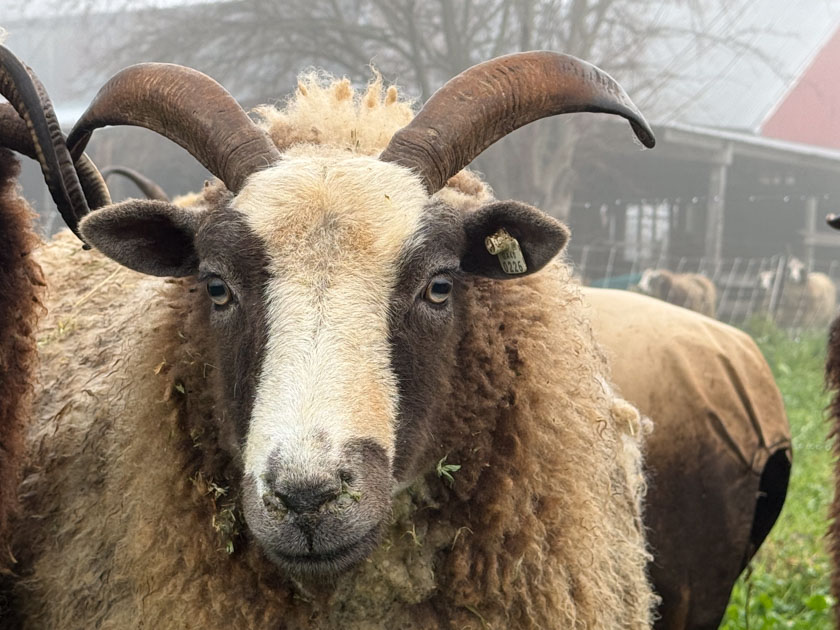
Back to sheep things. This is Patchwork Amara. You can glimpse the beautiful clover and trefoil in the background. This is what the sheep are grazing and that’s what this post is about.

Farm Club members came Saturday to help with a fencing project. We finally have all the permanent fencing back in the pasture. Dan has been working on that a bit at a time while trying to let his knee fully recover after knee replacement in April. Since last fall I have written a lot of blog posts about the pasture renovation and irrigation improvement. Grazing properly this spring was a challenge when I had to set up electric net fence for the whole paddock. Now we have 3-wire electric fence going north-south along every other check. That’s every 60 feet. Initially I was grazing each 30 foot width separately. Now it seems to work to graze the 60 foot width for four days. I think they are grazing it evenly enough.

I still need to use the electric net fence though. The posts for the permanent fencing are about 15 feet from the south perimeter fence so that we can drive a tractor there. We use net fences to block that 15 foot gap. That net fence is also important because it is how the charge is carried from the perimeter fence to the north-south paddock fence. In the past I have moved those fences from one end to the other as we moved the sheep. Wouldn’t it be nice to have enough of the 15′ fences to have them always in place and ready to go? I also wanted one fence to span the whole north-south distance in case I wanted to split those 60′ paddocks into two for grazing when we have fewer sheep out there. Another need is 60′ fences to block off the north end of those paddocks. That’s where Farm Club comes in.

I have been putting this off (not like I’m sitting around doing nothing) and thought that it would be a good task for Farm Club. Also if Farm Club members came to do it, I wouldn’t be able to procrastinate and move it to the “deal with it later” list.

Green pasture with white net fencing in the foreground and two people walking through the clover.

First we measured all the spaces in the pasture where I needed net fences. North-south lane fences need to be about 15 feet. The north-south fence to split the 60 foot paddock is 368 feet.

Strips of white net fencing spread out over a green field so they can be measured.

Then we gathered up all the fences that I’ve been using to create paddocks.We measured them and checked for damage.

Woman wearing ball cap sitting in green grass.

We used bright red labels provided by Susan so that we could easily find the label. This is Rachel marking these.

Three women working on a white net fence. Two are sitting in the grass.

Rachel made a list so we could match the needed fences with what was available. I found two 162 foot lengths and a 40+ foot length to use for the long fence I wanted. Then we started to cut the other fences and make sure the wires were attached at each end to carry the charge. I used to use 75+ foot fences to close the gaps in the old system. We could cut those into 60 and 15 foot fences or make multiple 15 foot fences, especially if there were bad spots to avoid. We did not finish the project, but made good headway. Now that all the fences are labeled we’ll have another Farm Day to finish the project. I have enough fences now so that the paddocks are set up for the week I’ll be gone and Farm Club members will be supervising.

Back to random photos.

Three pairs of shoes in red, blue, and green with black rubber boots on a gray surface.

Those are all mine. The green and blue shoes are wool and I like them best in the summer because they don’t get so hot.

Two young pigeons on wood board in front of peg board.

Young pigeons. A couple of months ago I realized that a pigeon had made a shallow nest at the top of the stairs in the barn. I should have tossed it out then. Last year Dan spent days cleaning out years of accumulated pigeon droppings in the second story. He blocked off all the access points, but one pigeon figured out how to fly over the top of the door at the stairway. There were two eggs I think. I took a photo of the baby pigeons on June 30 and I think they were only a few days old. I’m surprised that they didn’t try to fly when I walked up here. They look like they are old enough. I wonder if they haven’t figured out how to fly through the gap where the mother pigeon enters this space.

Two pigeons on wood step near a nest with two eggs.

And there are two more eggs. I don’t remember if I had seen four eggs and only two hatched, or if this is another generation. I have tossed these eggs. As soon as we get back from our upcoming trip I will move these pigeons out and clean this area. We don’t want to start another pigeon rookery.

Michigan – Days 3-4-5

I wrote about Day 1-2 in this post.

Sign with JSBS logo that says Annual General Meeting

I got to Michigan on Wednesday. The Annual General Meeting began on Friday.

Handwritten sign to Sheep Barn on a bale of straw.

The meeting was held at the Branch County Fairgrounds in Coldwater, Michigan. First stop was the sheep barn.

Old walking wheel outside the sheep barn with flowers in front.

This old spinning wheel was outside the barn.

Sheep pens in a barn with dozens of Jacob sheep.

It was sure fun to see this many Jacob sheep from different breeders in one place.

Jacob ewe in sheep pen

Notice the ear tags including a CA scrapie tag. This is Meridian Saffron who I sold to a fellow Jacob breeder in 2018. I was able to get her to the Maryland Sheep and Wool Festival that year. I just found the blog post about that. I wish I could have participated in some of the fun at AGM–that is buying and selling sheep–not possible when I’m flying.

Front of barn with sign that says Barnyard Children.

There are several barns at this fairgrounds. They are labeled sheep, cattle, horses, etc. I was amused by this sign.

Fleeces in bags at wool show with blue and red ribbons.

A wool show was one of the activities at this meeting. Another activity was the sheep show. I don’t have photos of that because I was a judge. I said I’d do it with a partner, not by myself. That was a challenge. I got good feedback, but I don’t want to do it again. Too much stress and it’s difficult to place 10 sheep in a class when they all look pretty good. Fortunately we needed to place only the first four sheep in each class.

Woman with large blanket knitted with gray and white roving.

One of the participants showed me her “arm-knit” blanket made of roving. It weighs 14 pounds!

Text on slide about mutation causing lilac coloring in Jacob sheep

The presentation I was most interested in was that by Gary Anderson about the study being conducted about lilac Jacobs. Gary showed this slide from a 1995 (I think) paper and noted that they said “the causative mutation” instead of “a”. I think I have written a blog post about the current study in which he involved, but I’m not looking for it now. I’m at the gate for my flight home and want to finish this before we board. I did find this post that is related to the study because of the sheep involved I may have to write more later.

Plaque on large rock about the Anderson Farm in Michigan.

Sunday morning I helped with some sheep loading and a little clean up. Then I got a ride with Gary to his farm in Sparta. My flight wasn’t leaving until 7:30 p.m. so Gary gave me a tour of the area. This is a plaque in place at his original family farm.

Large red barn with two silos  on green hillside .

The gorgeous barn at that farm.

Black Sheep Gathering 2025 – Friday

The map app shows that Albany, Oregon is under an 8 hour drive from here, but it took us about 9 hours pulling a trailer full of sheep. We had 15 sheep with us–8 of mine and 7 belonging to my granddaughter, Kirby.

Girl sitting on straw in pen with Jacob sheep and using her phone.

This is Kirby sitting with her sheep the first morning of the event. Shetlands showed first and then it was us.

Jacob sheep on halters tied to rails in pen.

The first two days of the Black Sheep Gathering sheep show are for the open show. The junior show is Sunday. I entered Kirby’s sheep in both shows. We needed at least three exhibitors to be able to have a Jacob show, and we were two of the three.

Two horn Jacob ram in show ring.

The first class was Yearling Ram and Meridian Elvis was the only entry.

Five people showing Jacob ram lambs in the show ring.

Ram lambs were next. Kirby and I had two ram lambs each. The other exhibitor had only a few sheep in the show and had lambs in this class. Thanks to Farm Club members, Doris and Chris, for helping to show. Thank you to Rachel for most of the photos.

Two people in show ring with Jacob lambs and Judge looking at one of them.

My ram lamb, Hunter, shown by Doris, and Kirby’s ram lamb, Gaston, were awarded Champion and Reserve Champion Jacob ram, respectively.

Four people showing spotted Jacob sheep in the show ring.

Kirby and I each had two ewe lambs. We also showed yearling ewes and aged ewes (2-year olds).

KJ Royalty is Kirby’s flock name. This is KJ Royalty Isabella.

Sign about Meridian Jacobs with champion ribbons displayed.

My sheep were awarded Champion and Reserve Champion Jacob Ewe and Champion Ram.

Girl in blue t-shirt on fence rail next to sign with champion ribbon.

Kirby had Reserve Champion Ram.

Kirby and Rachel wearing felt sheep ears on head bands

After the sheep show everyone was free to experience the rest of the Gathering. Kirby and Rachel became good friends and I’m grateful to Rachel for giving Kirby such a good time.
Girl doing handstand in swimming pool with only legs showing above the water.

Usually I pitch a tent in the lawn near the sheep barn at Black Sheep Gathering, but with Kirby and Dan along we decided to go for the neighboring hotel. There was an indoor pool and Friday night ended with pool play for Kirby.

More photos tomorrow.

Grazing and Irrigation 7- May

I wrote posts a couple of weeks ago to create a photo diary of our grazing progress as we started grazing the new pasture. As usual I got behind. It’s crazy now to try and document this the way I had intended. Instead I’ll start with this week and see where I go with this.
This is yesterday’s photo. I have numbered all the checks from west to east so I can keep track of what I’ve been doing. They are 30′ wide. We started grazing this spring with the paddocks in the north field. This is the previous post about that before I went on to the first irrigation. When we switched from grazing the north paddocks to the south ones we started with fencing two checks at a time and the idea was to split into smaller areas with cross fencing.

I have to say here that the main challenge here is that we have no permanent fences yet. When this project began (see the first post in October) we had to remove all the interior fences. Dan had knee replacement surgery in April and he wasn’t able to get those fences up before we needed to start grazing that month. I am using electronet fence and that means piecing together lengths of net and moving it as I move the sheep across the field.

This shows the length of fence as I have moved it from one check to another before setting it up.

There is plenty of clover and trefoil, but in some of the areas it has been overshadowed by the annual ryegrass. That is another challenge. Annual rye was NOT part of the seed mix. There were three perennial grasses in the mix, but the ryegrass that was already in the soil took over. Fortunately it is a good feed, but it grew so quickly that it has been a real challenge to manage. This paddock is one that Dan topped with the mower several weeks ago and the clover is more visible here.

So far it seems that I can graze the sheep on each 30′ strip for two days. I could probably add another day but I want to move them across the field to try and keep up with that ryegrass. We also want to make sure that the clover and trefoil get well established before grazing them heavily. It is time consuming to move that length of fence from one check to another every two days, so this last time I moved only one of the fences to the west. There is no fence down the center of this photo. I moved the fence that was on that check to the next check to the west. So the right half of the photo is where the fresh feed is. The sheep can tell where there is fresh feed, and they spent the next two days mostly on that half. They are also able to eat more of the ryegrass that is still on the check once the fence is removed. If this method works then I’ll move one fence every two or three days.

This photo is from a month ago when we moved them to the south field and set the north-south fences up to include two checks. We added east-west fences to have them eat each part more throughly. However, we have no drinking water source out there now so they have to have to be given access to the barn.

You can see how overwhelming the ryegrass is. There is clover there but it is hidden. When the grass is this tall the sheep trample it more than eat is and it has the effect of mulching the field. That is not what we want to encourage the clover and trefoil to grow.

When Dan topped the ryegrass the sheep could move through it more easily and it allowed the other plants to have light.

This view shows how they were able to graze the mowed part.

It’s great to have all this feed now, but I wish that I had more sheep right now to use all that feed.