Tomato Harvest

The field across the road was planted in tomatoes back at the end of May. See this post. I have watched the progress of the crop since then. When I walk Across the Road with Ginny it’s these fields I walk around. I wrote this post September 26.
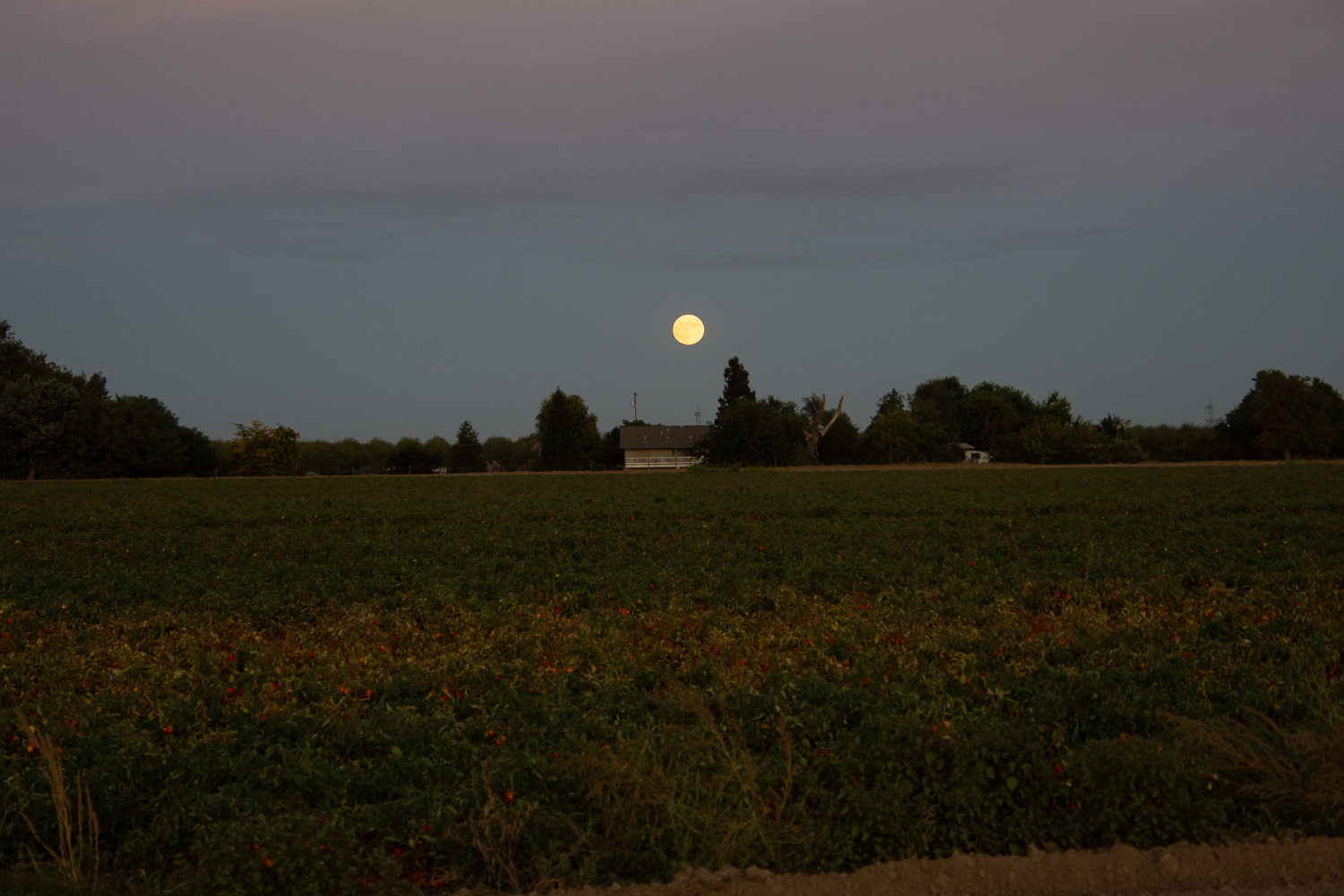
I took this photo at dusk Thursday, September 28 and heard activity over there just before midnight.
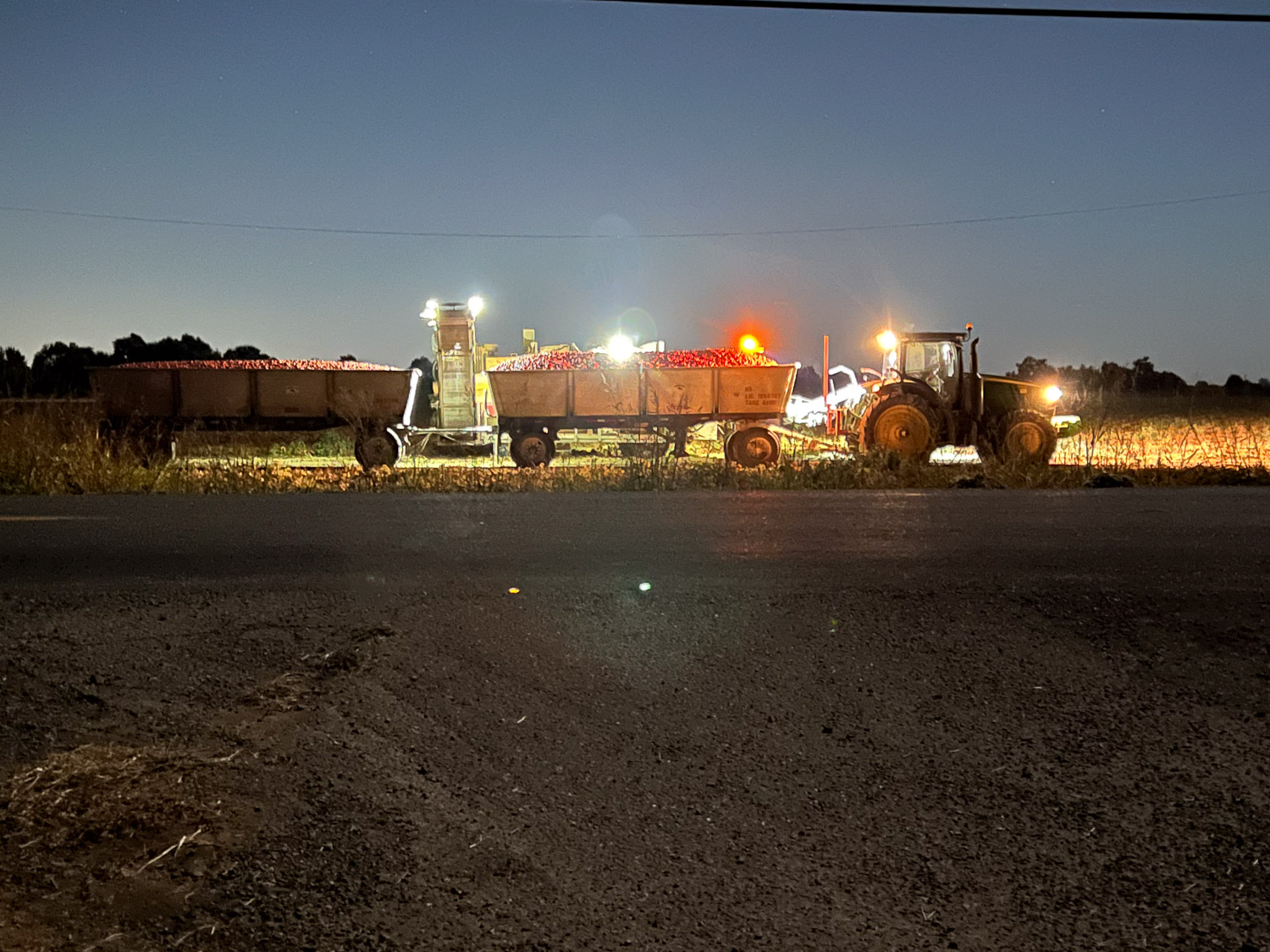
The harvest had started. I stood in our driveway and took photos. I didn’t want to miss it! I think I didn’t need to rush. I don’t know how many acres this field is, but it took about four days, working 24 hours/day. At first there was one harvester working, but later there were two.
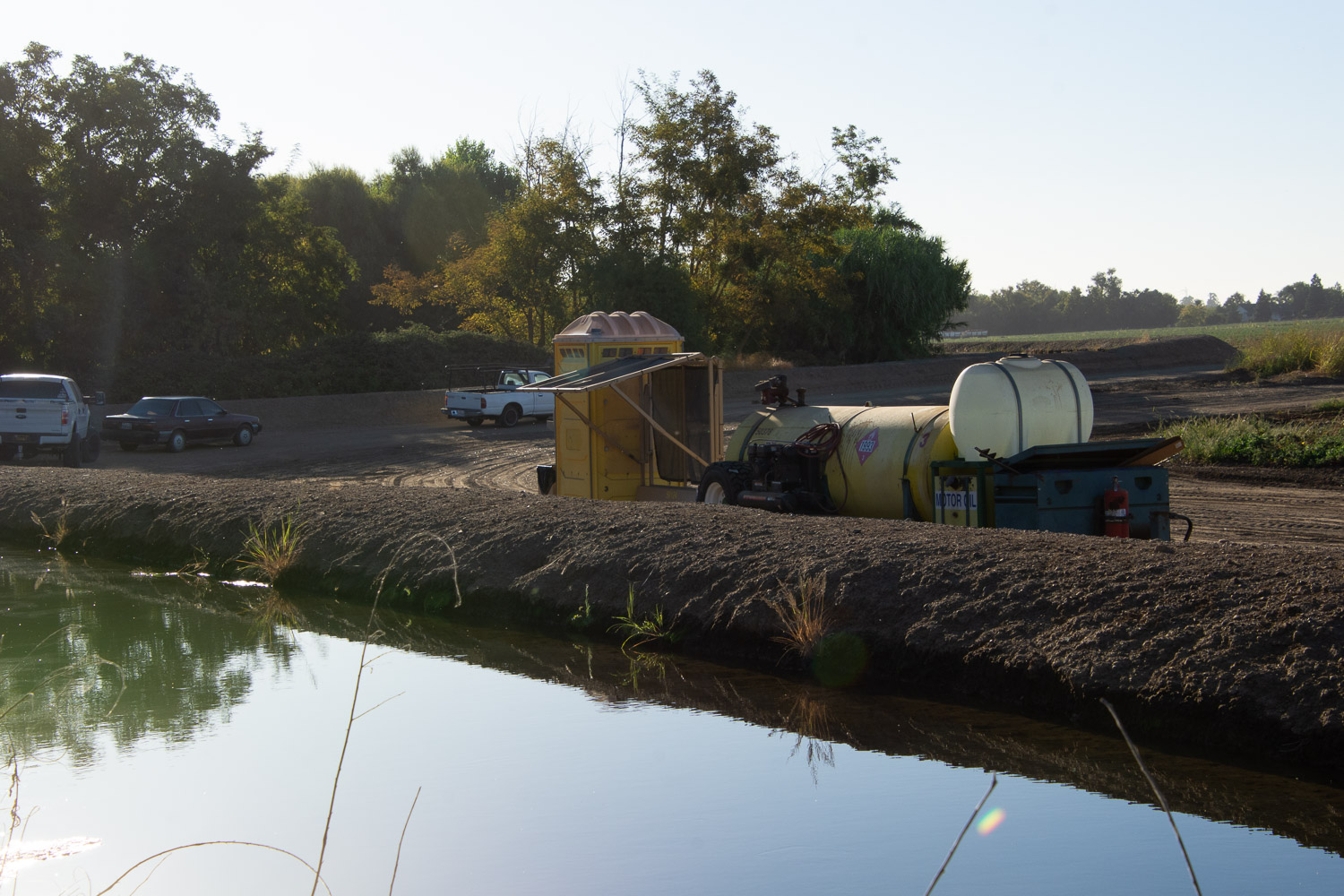
The first morning I took my usual walk, but walked on the other side of the main canal so that I wouldn’t get in anyone’s way. There is a lot of infrastructure involved. This is a water tank with a portable toilet and a place for shaded seating.
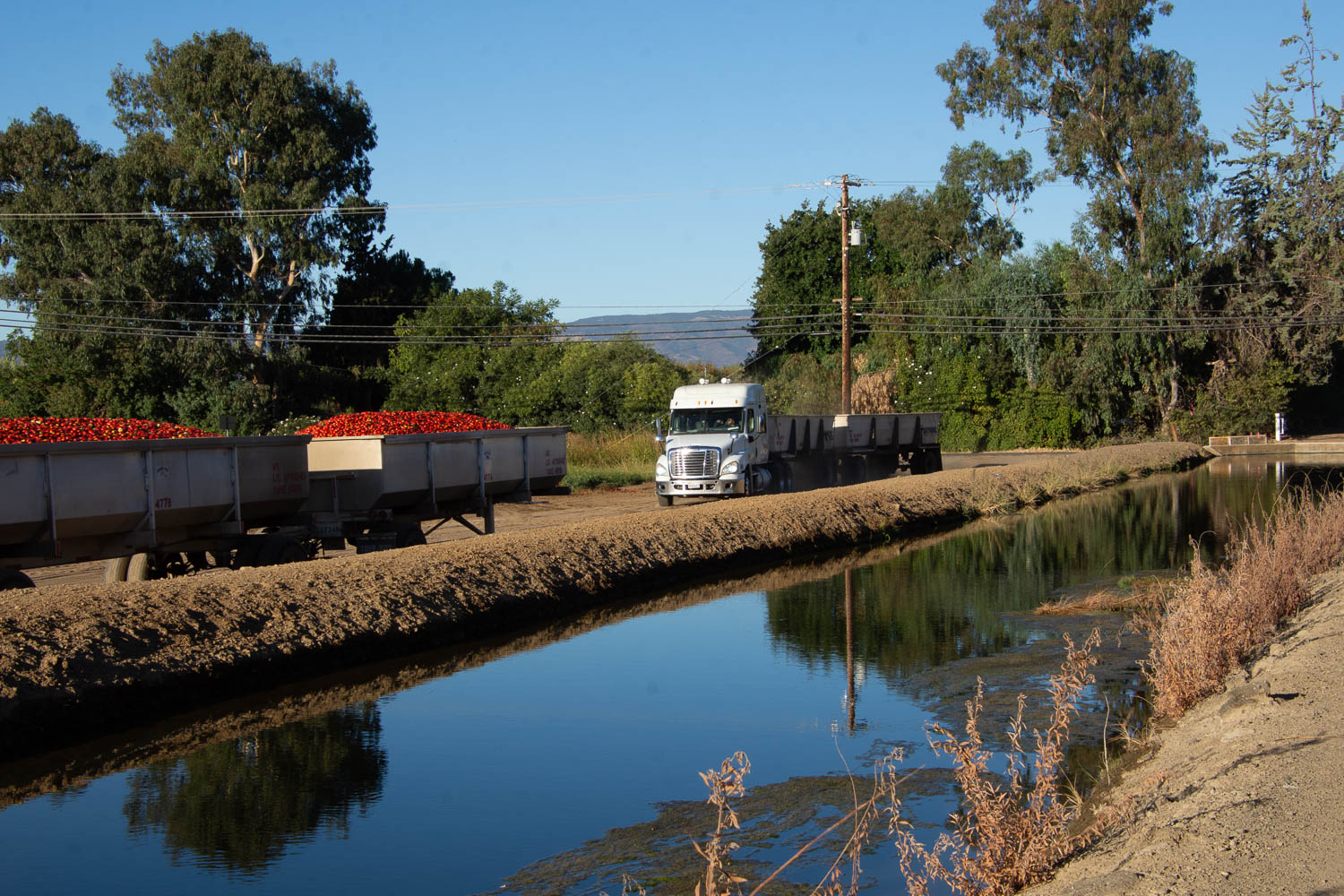
At times there were four or five sets of double trailers staged here. The tractor pulls them next the harvester as it works and then drops them here. Another tractor brings the next set of trailers to the harvester. The trucks come and go from here, taking full loads out and bringing back empty trailers.
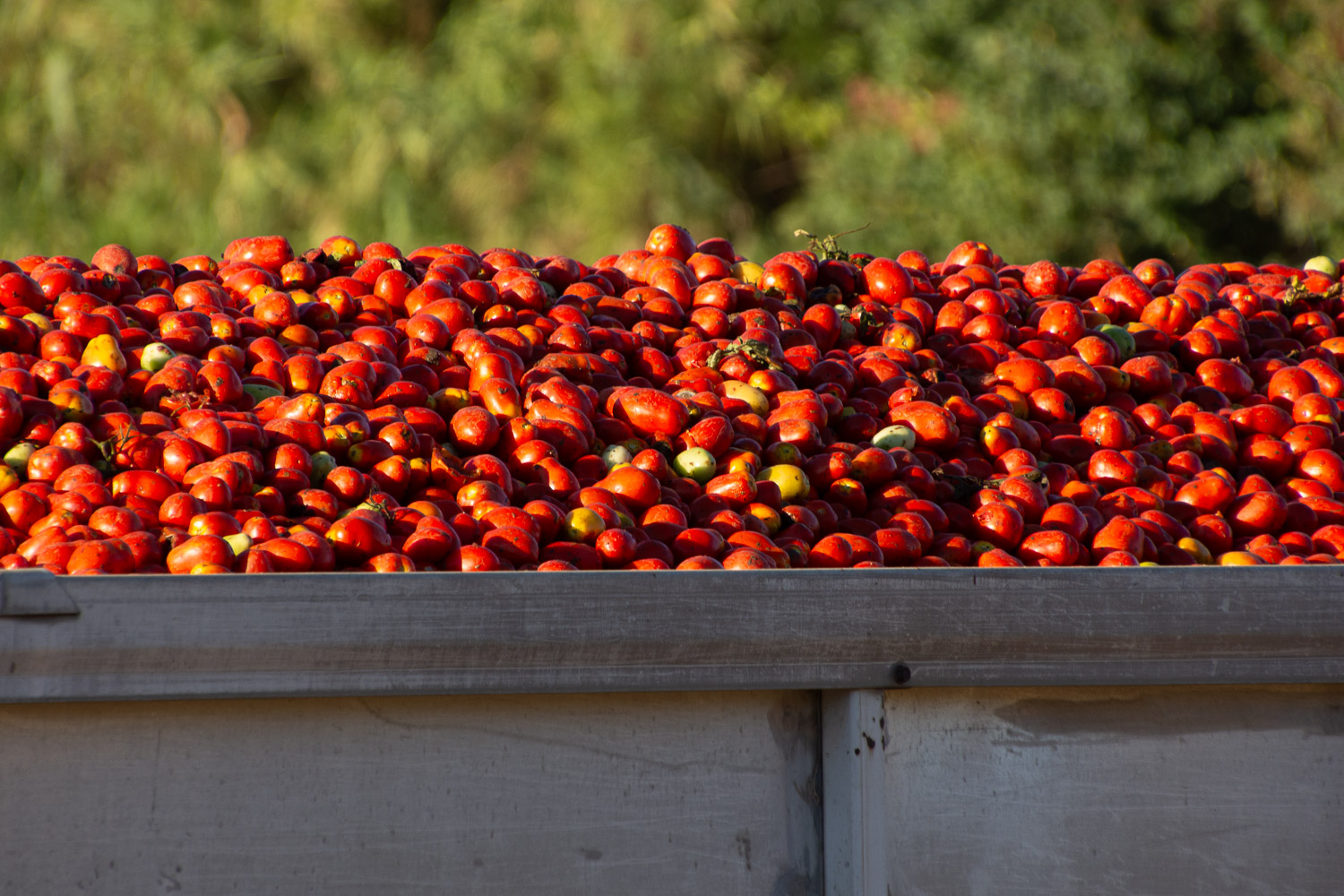
I know nothing about tons/acre, or how many loads were harvested, etc. Maybe I’ll ask next time I talk to someone. I think the answer is A LOT.
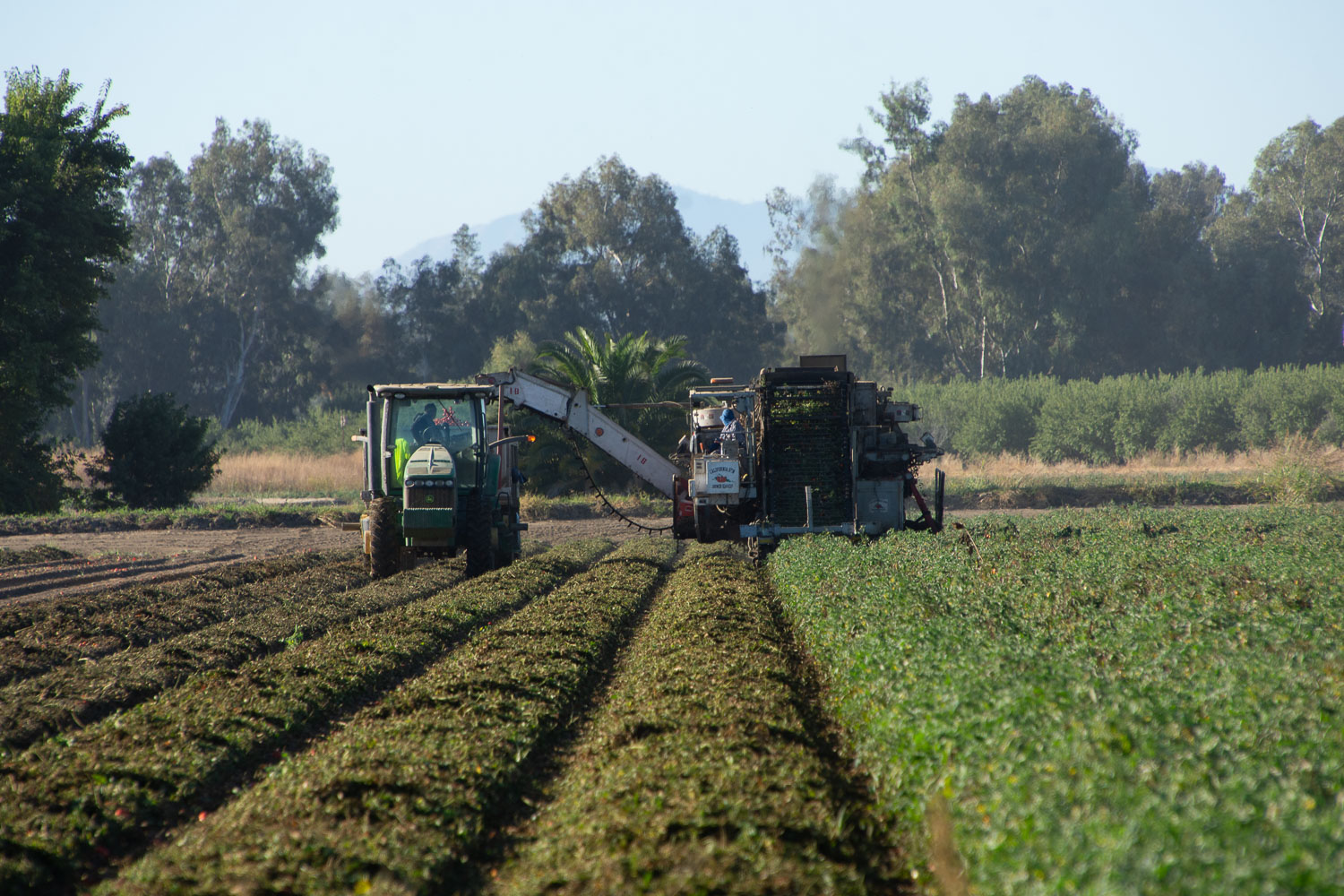
It is fascinating to watch the harvester at work. I have several short videos but I think I won’t try to load them here or I’ll never get this post written. I posted one on my YouTube channel but I’d like to do another showing more of the process. That one is good at showing what is going on with the harvester. The row of plants is cut and then lifted by the conveyor into the harvester. I haven’t seen inside but was told that lasers are used to sort the tomatoes and debris. Some debris goes out the back and some to the side while the tomatoes are being lifted into the trailers pulled by the tractor.
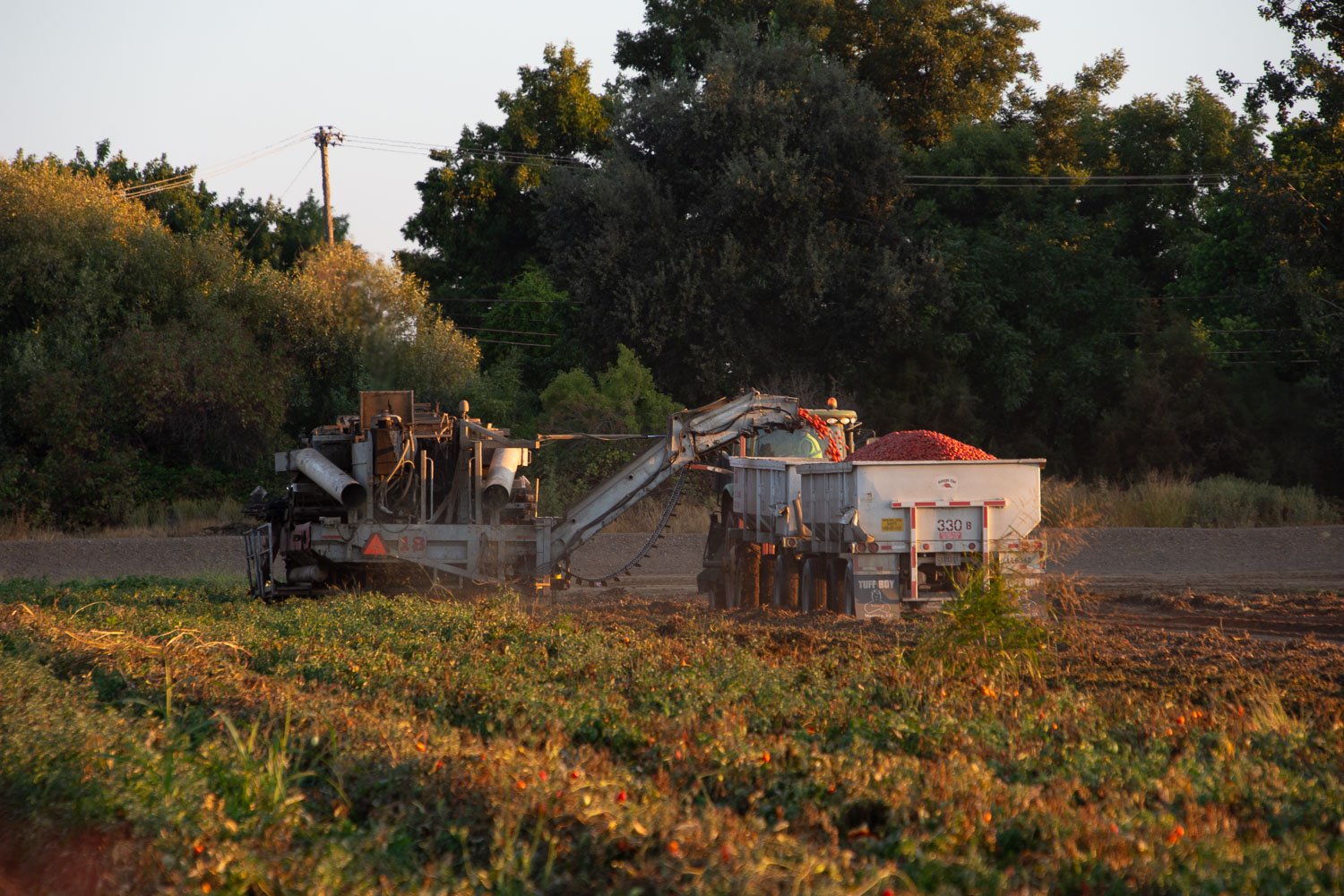
Here is a view from the other direction. The harvester fills the trailer in a back and forth motion while the tractor with the trailers pulls it forward as necessary to keep up with the harvester.
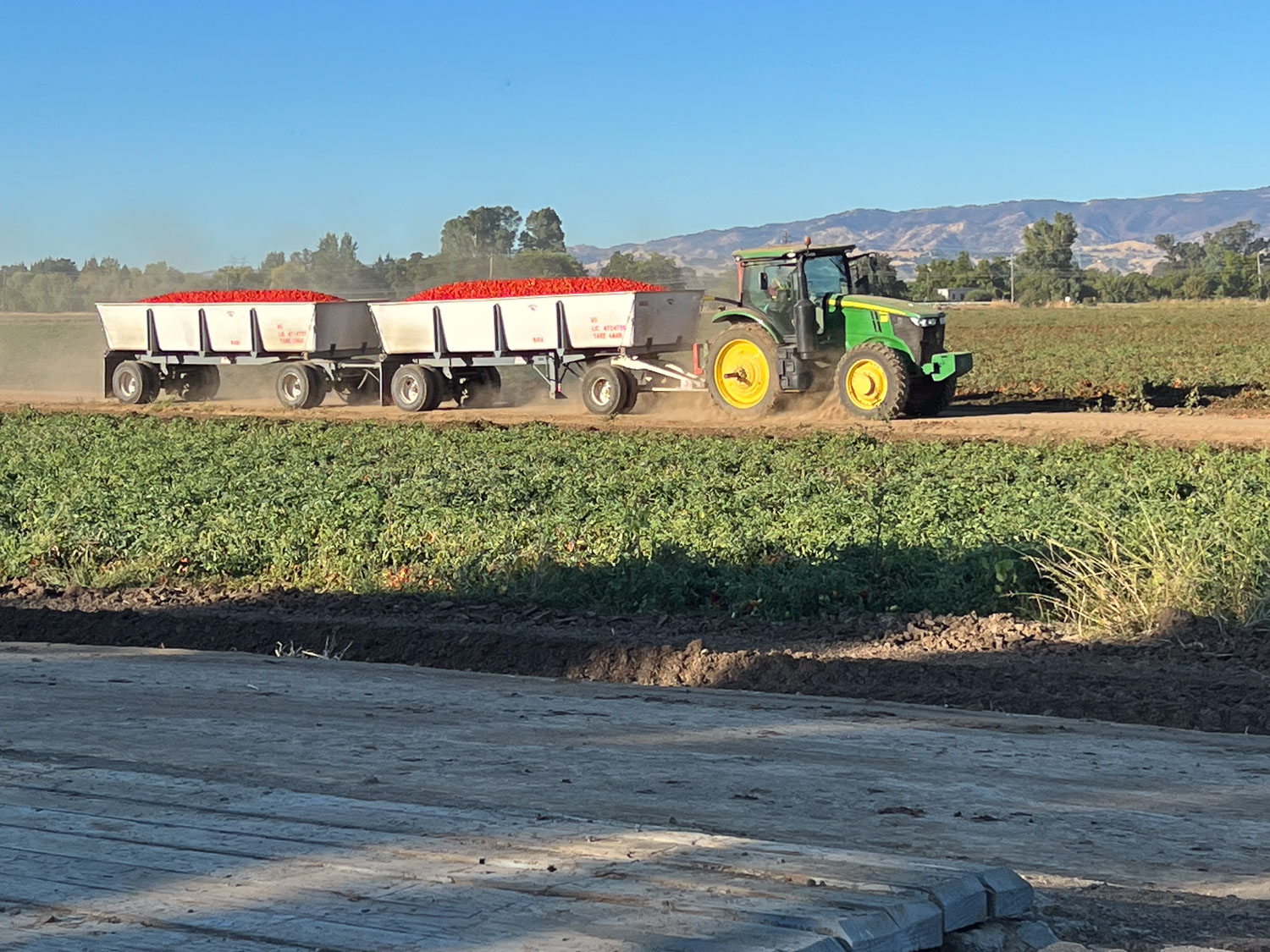
Taking two trailers back to the staging area.
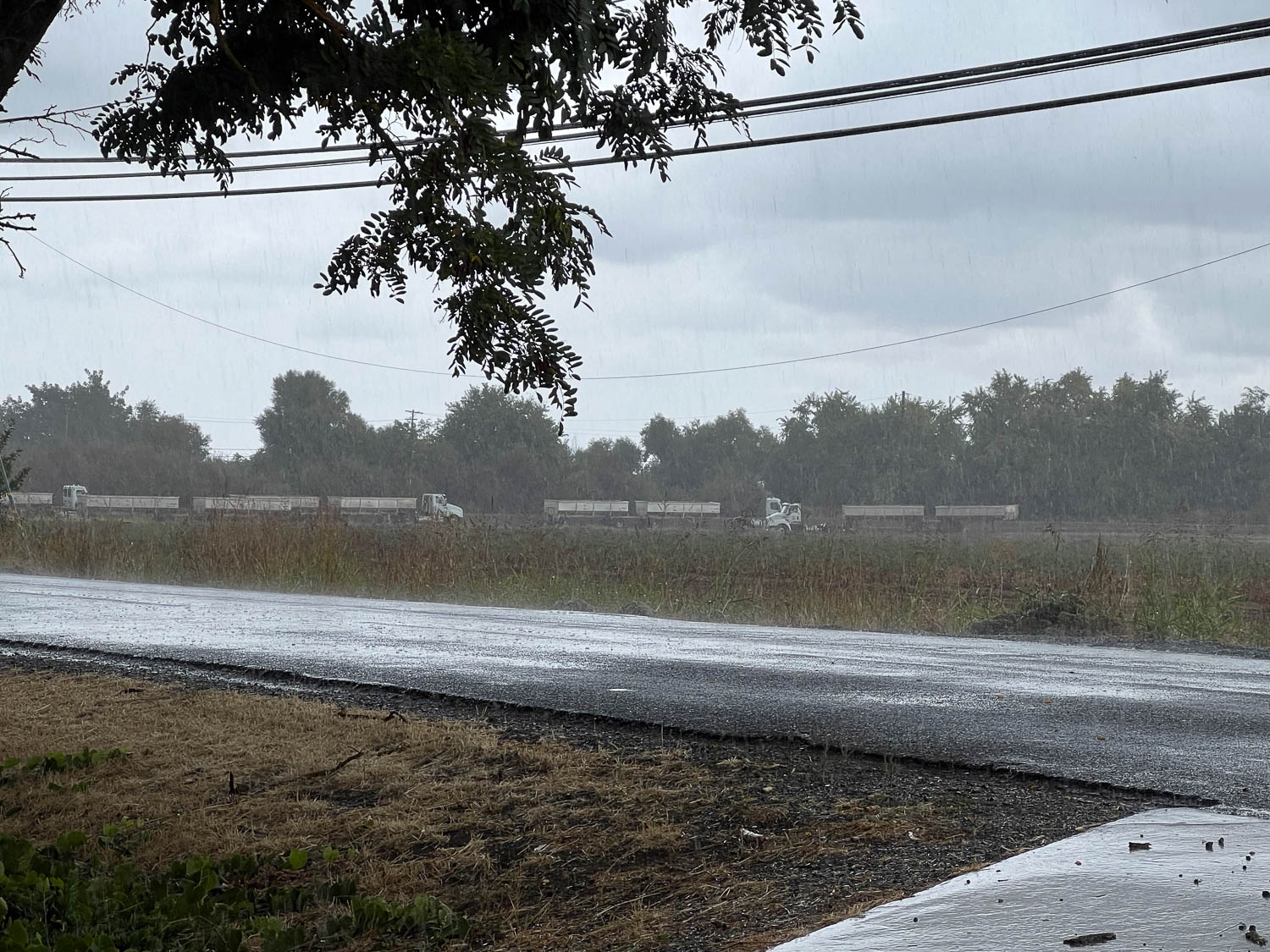
In the middle of the day on Saturday we had a brief, but heavy rain. We got 1/8 inch in less than 15 minutes. That’s a lot for us, especially when this was the first rain since spring. It’s dry enough here that it wasn’t enough to stop the harvest for long.
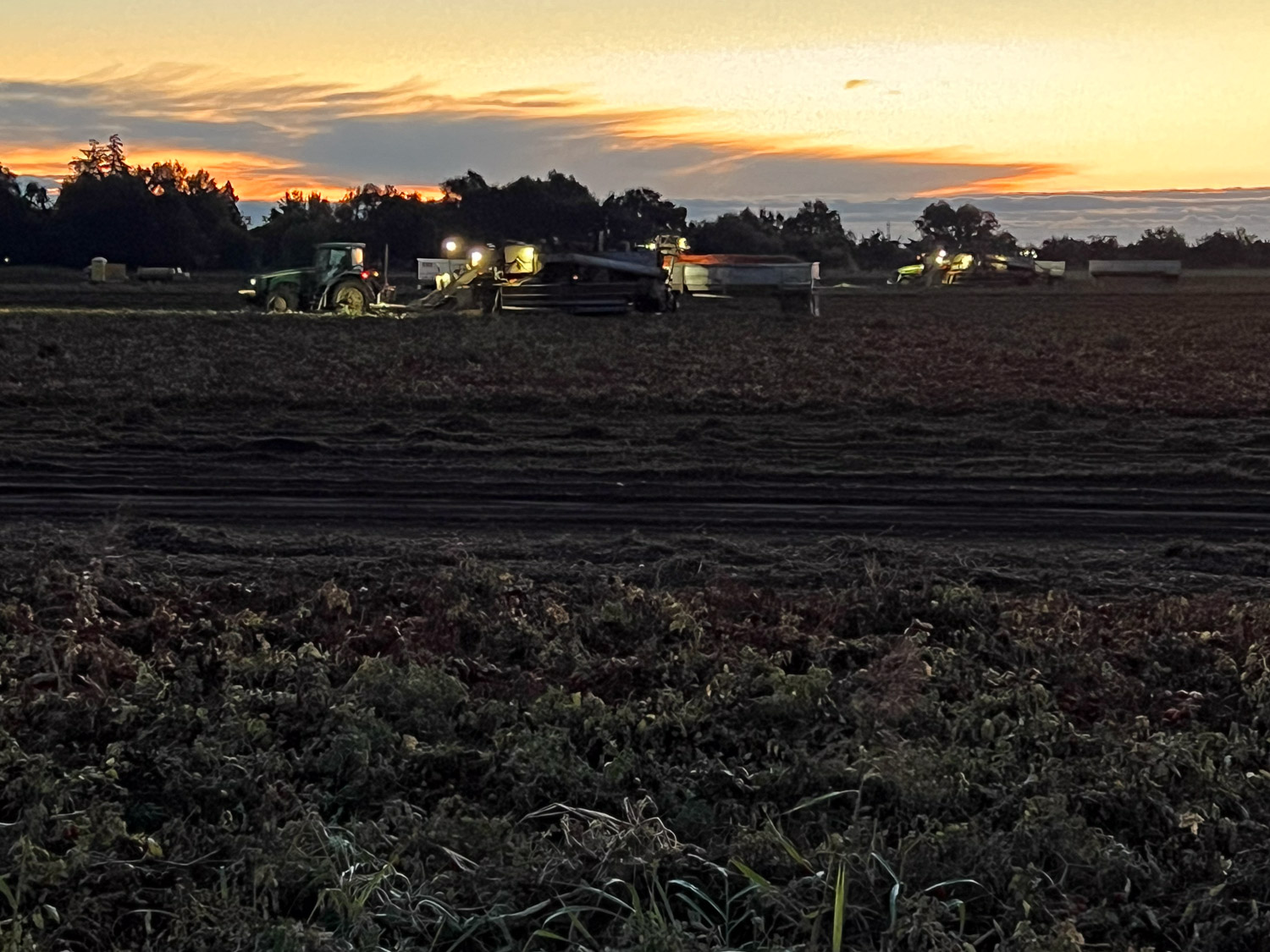
The harvesters worked all night and this was about 6:30 the next morning. By this time there were two harvesters at work with two tractors pulling trailers.
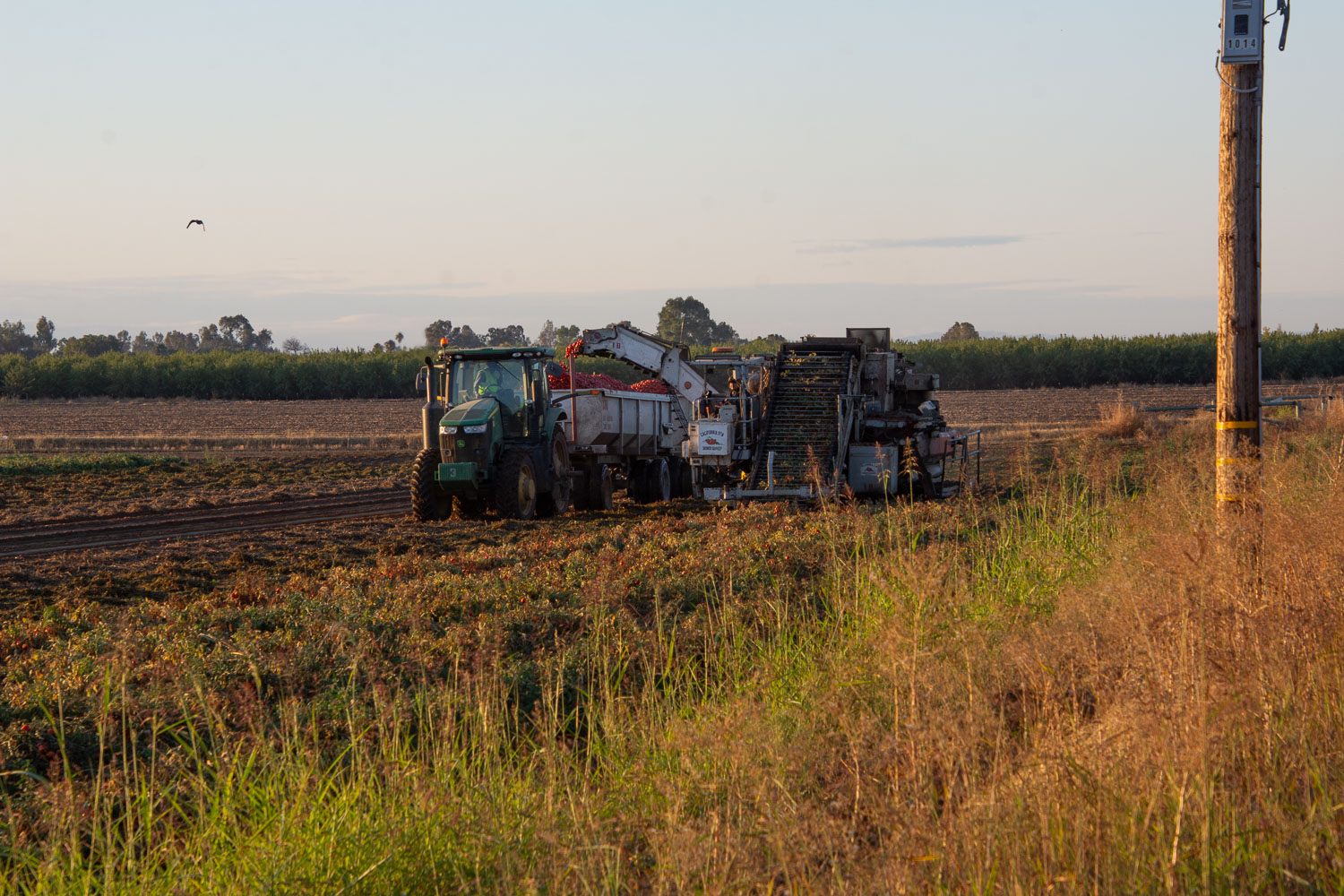
It was’t until Sunday that they finished the rows that were closest to the road.
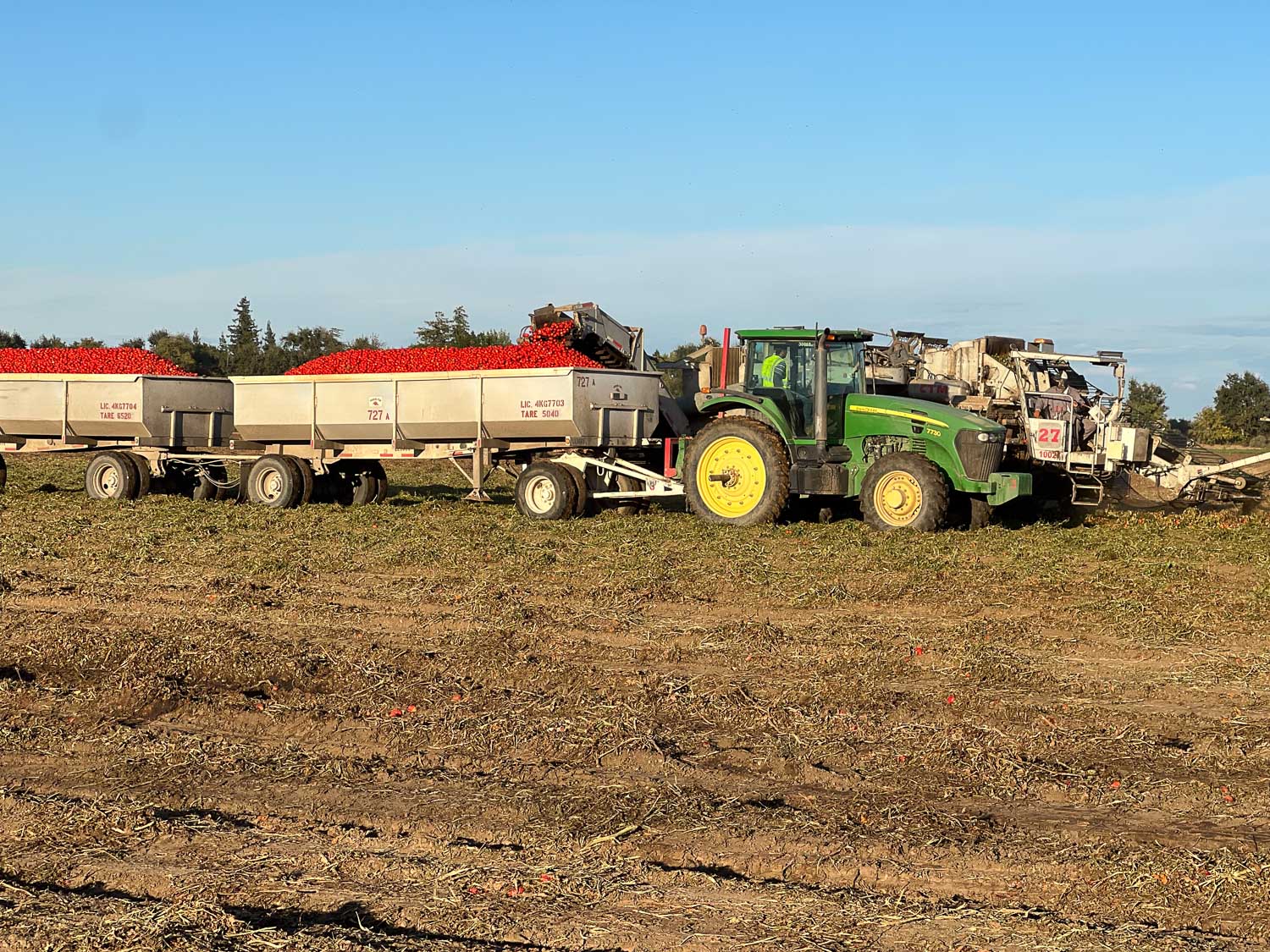
I don’t remember if they finished Sunday evening or if that was just the last photo that I took of the harvest.
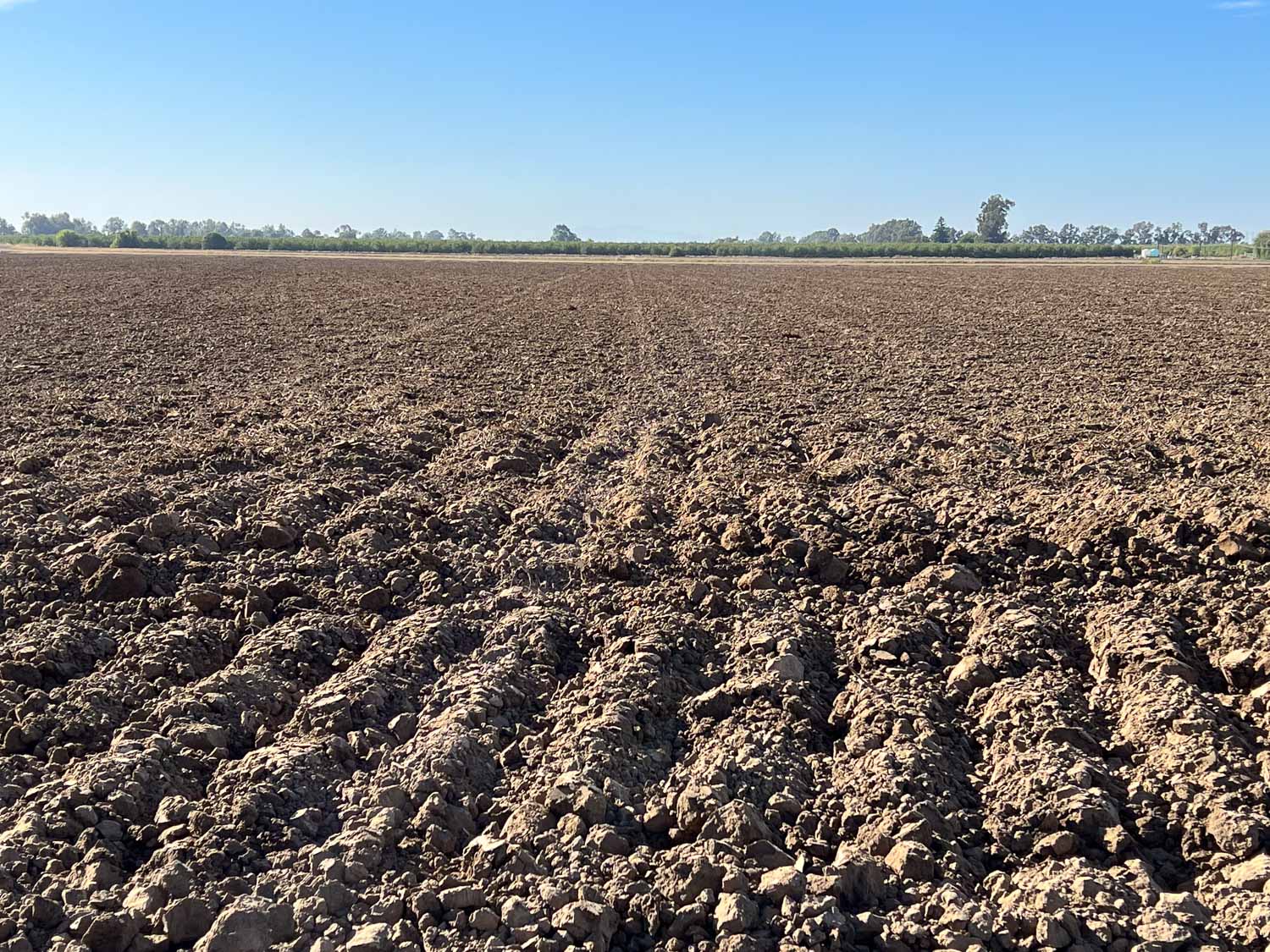
I have had a whirlwind of activity with Lambtown October 5-8 followed by a trip to Boise and now I’m getting ready for another adventure. So I missed all the steps that brought this field from one just harvested to this one that is ready for fall rain.
Across the Road – Tomatoes

The tomato plants Across the Road aren’t as striking as the sunflowers I showed in my last blog post, but it is still interesting to watch the progress of the crop, especially now as they get closer to harvest. I have heard that harvest time is problematic this year, mostly due to the prolonged rainy season this winter and spring. Fields didn’t dry out soon enough for farmers to work the fields and many planted 3 to 4 weeks later than normal. That means the tomatoes ripen 3 to 4 weeks later. Tomato farmers have contracts with the cannery that state when and how much they deliver. The cannery can only handle a certain amount at once and will turn away excess. Some farmers may risk harvesting while some tomatoes are still green. Others may have to wait until the cannery can take the load, but they risk over-ripe fruit or early rain. Farming isn’t as simple as it may seem.

If you’re interested in reading more about this situation in 2023 read this article in Ag Alert, published by the Farm Bureau.

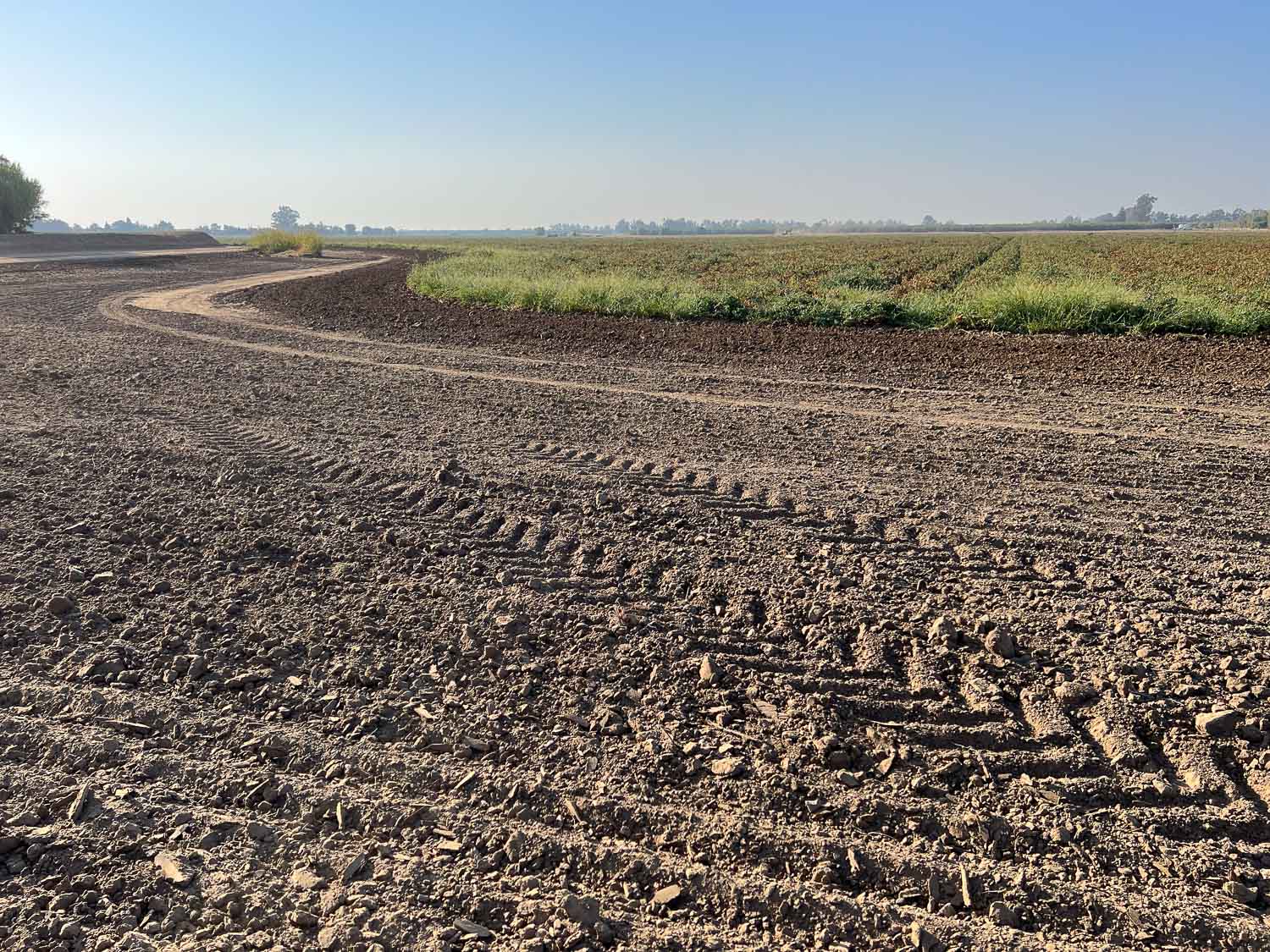
Here’s the tomato field I watch because it is right Across the Road. The latest ditch has been filled in and smoothed over. I assume there will be no more irrigation.

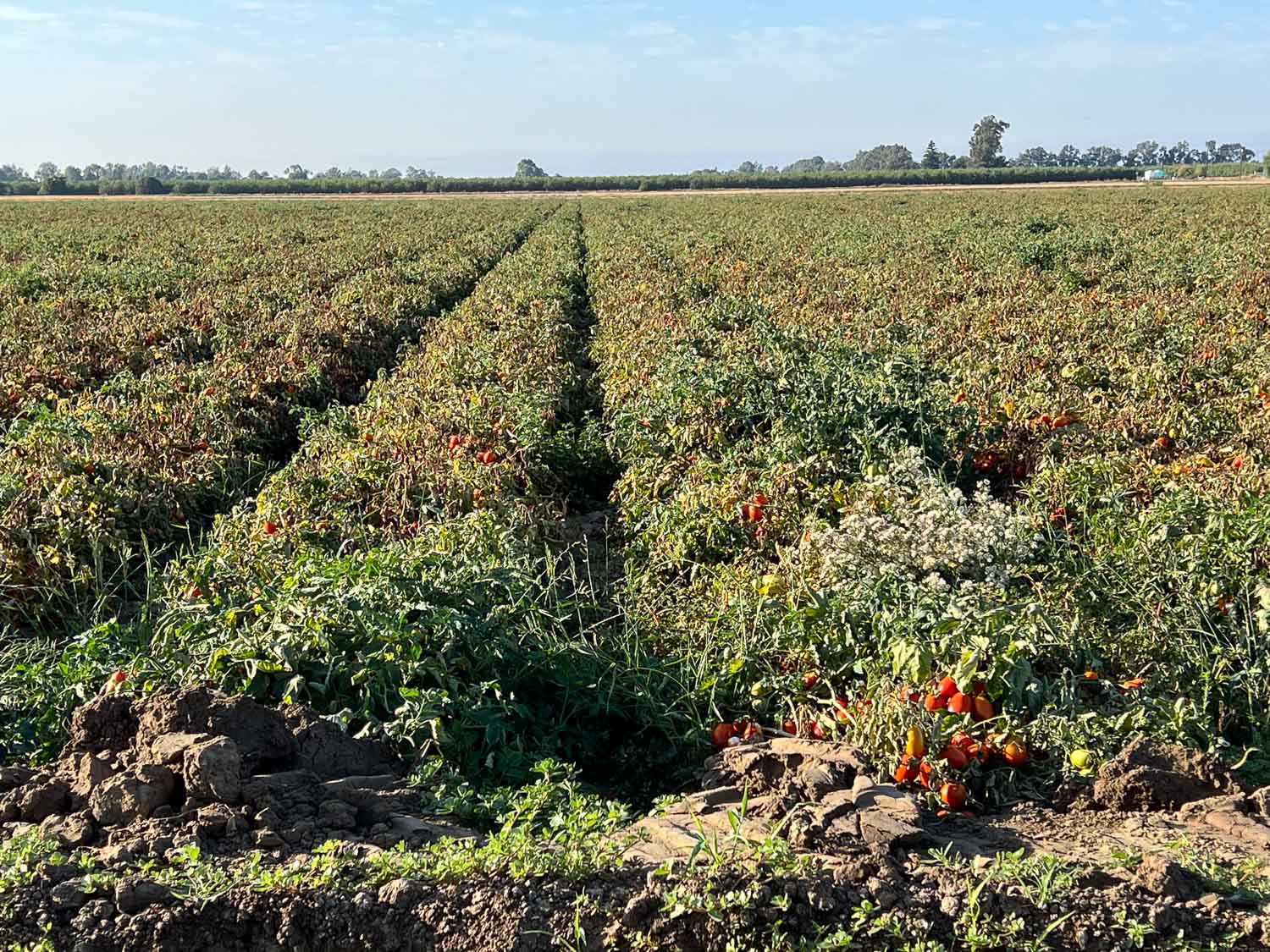
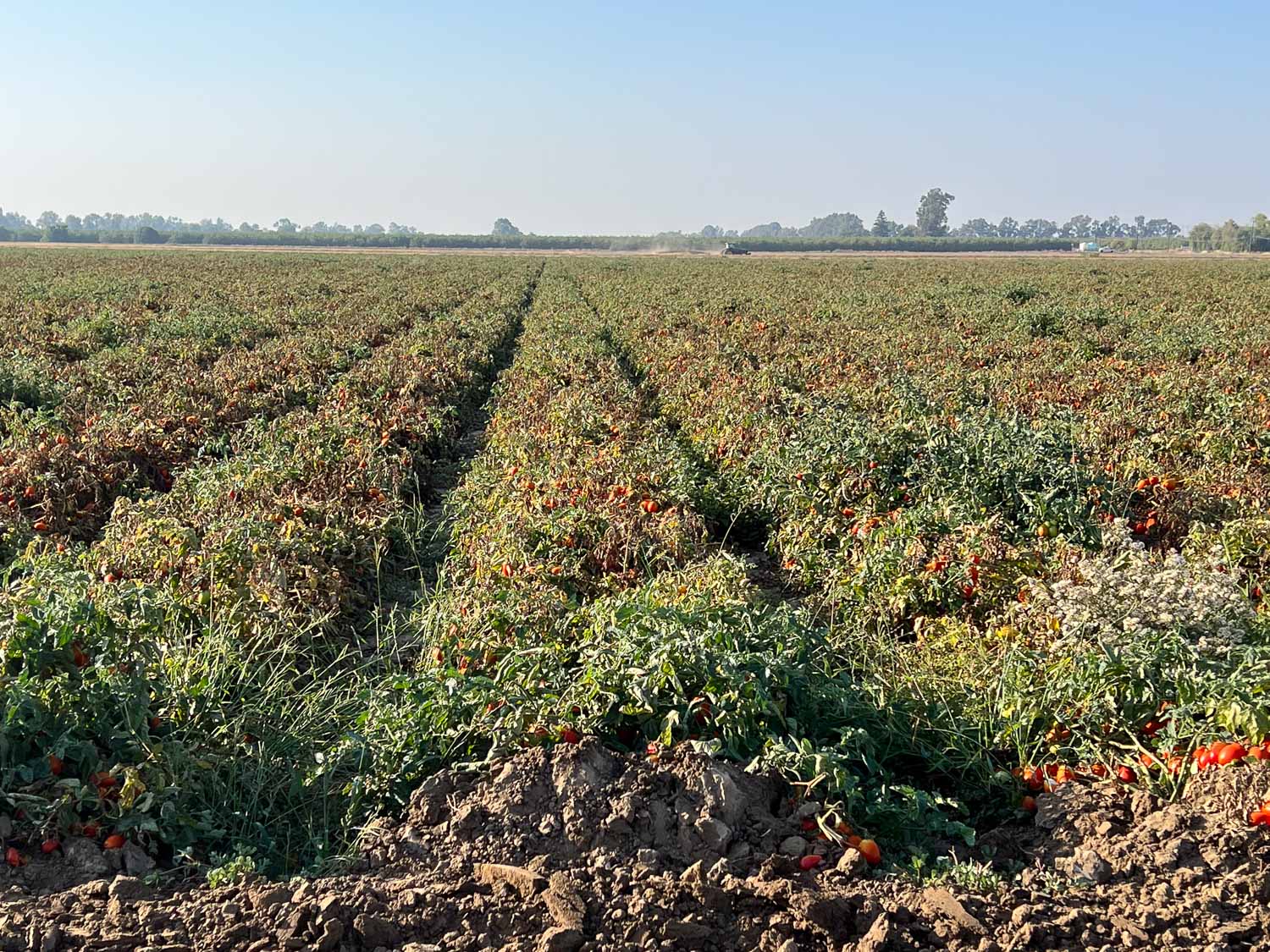
The plants are not that impressive when you look over the whole field.
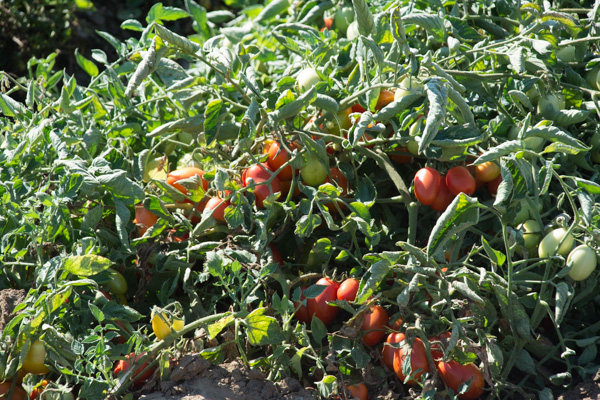
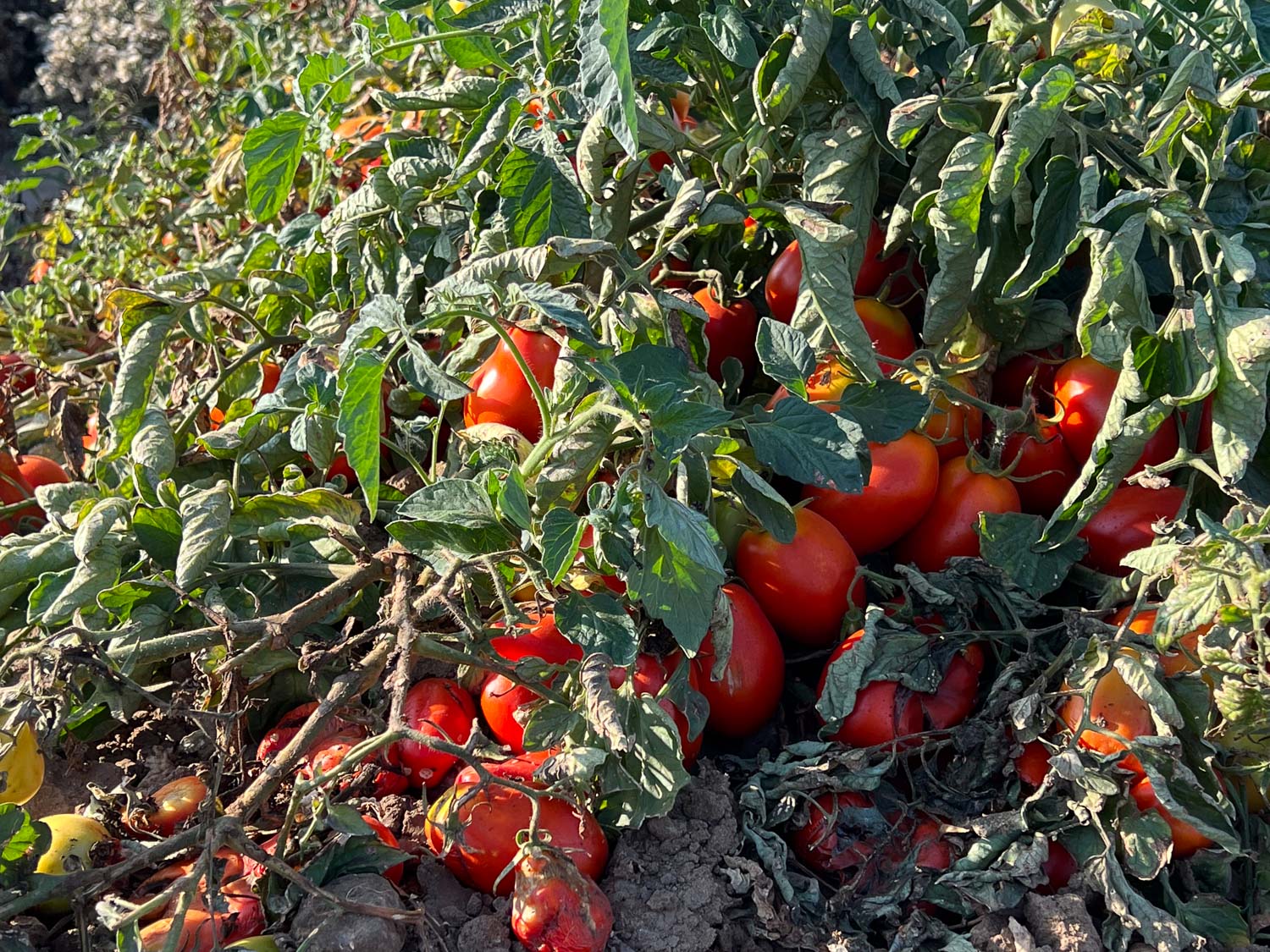
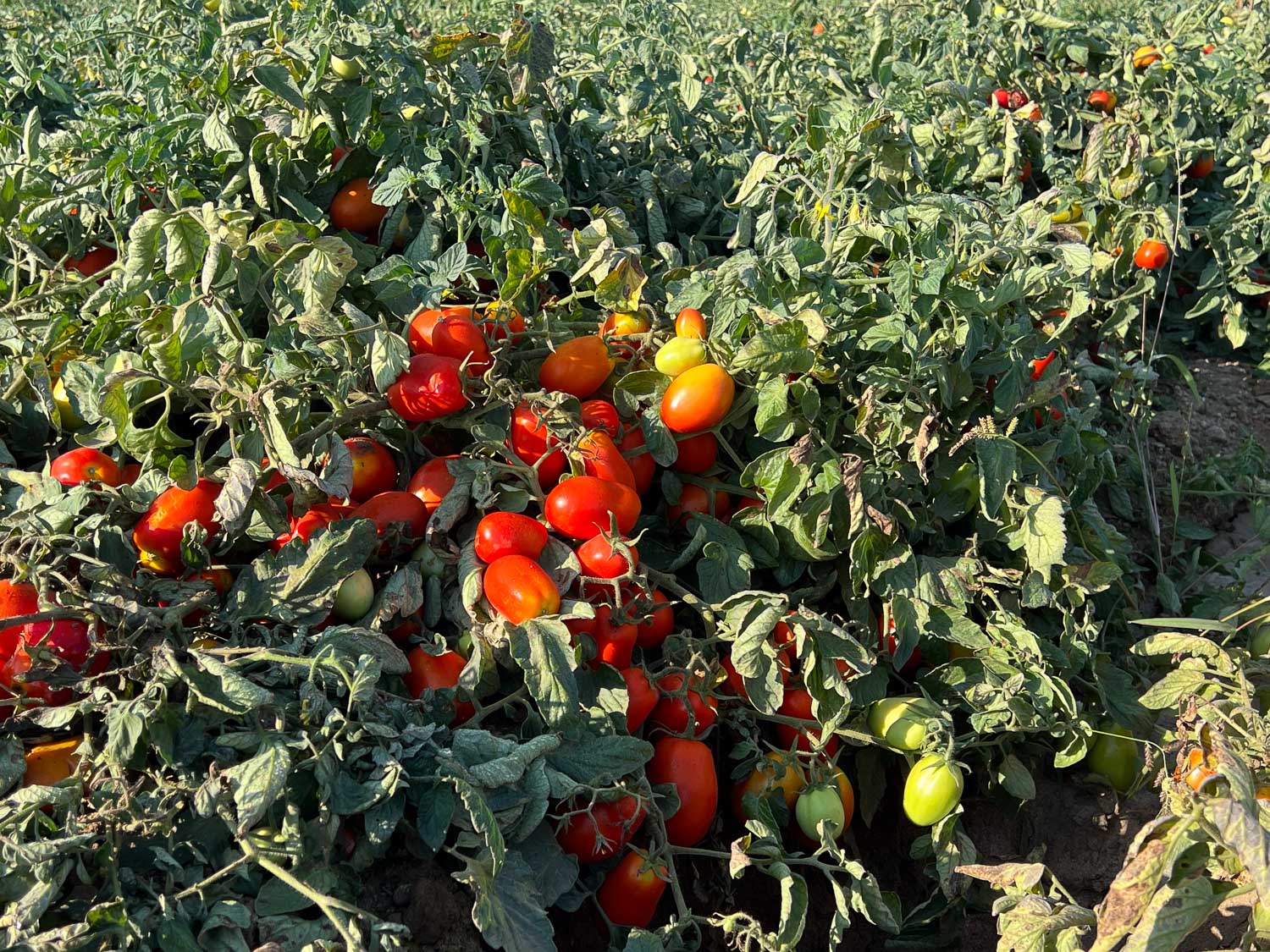
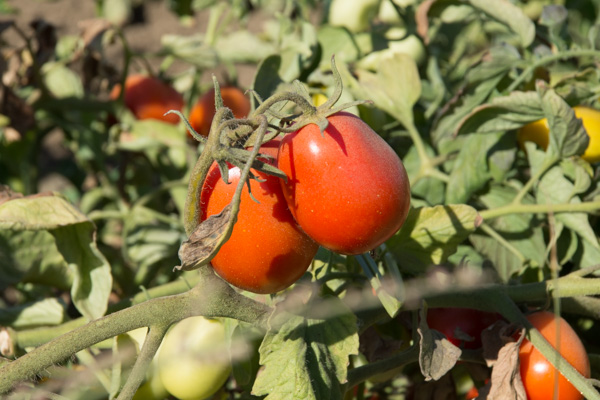
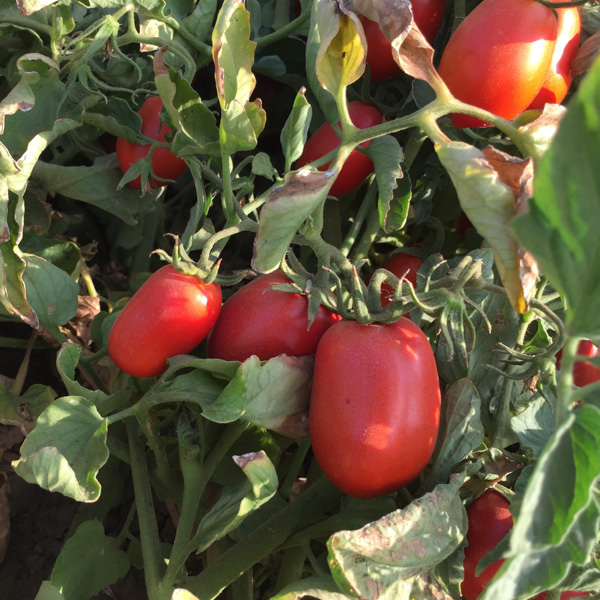
When you look up close you see the red tomatoes.

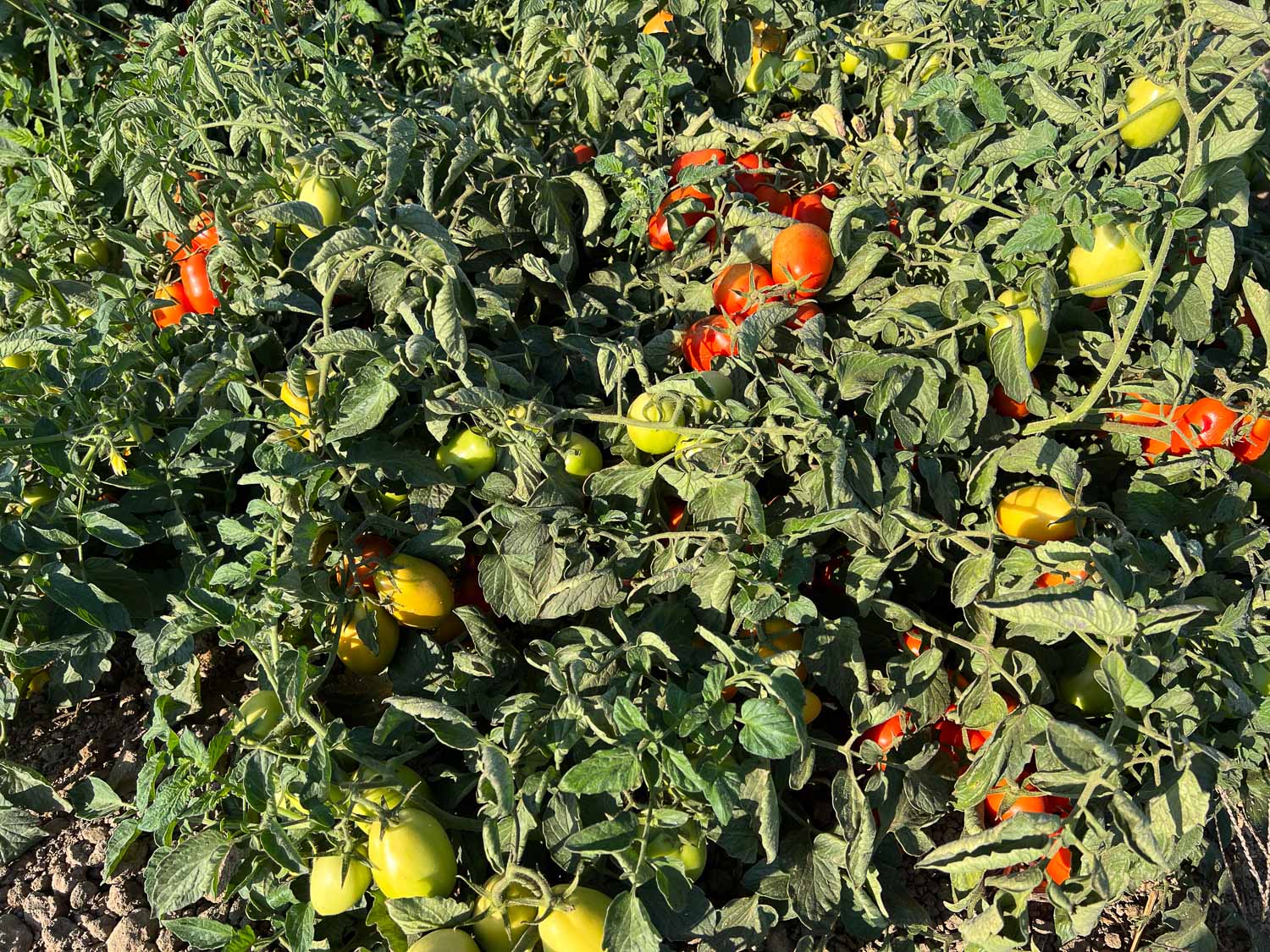
There are still a lot of green ones in some parts of the field.

My walks aren’t all about a study in agriculture. They are mainly to get some exercise to fight off the effects of aging and to get Ginny out. More views from Across the Road:

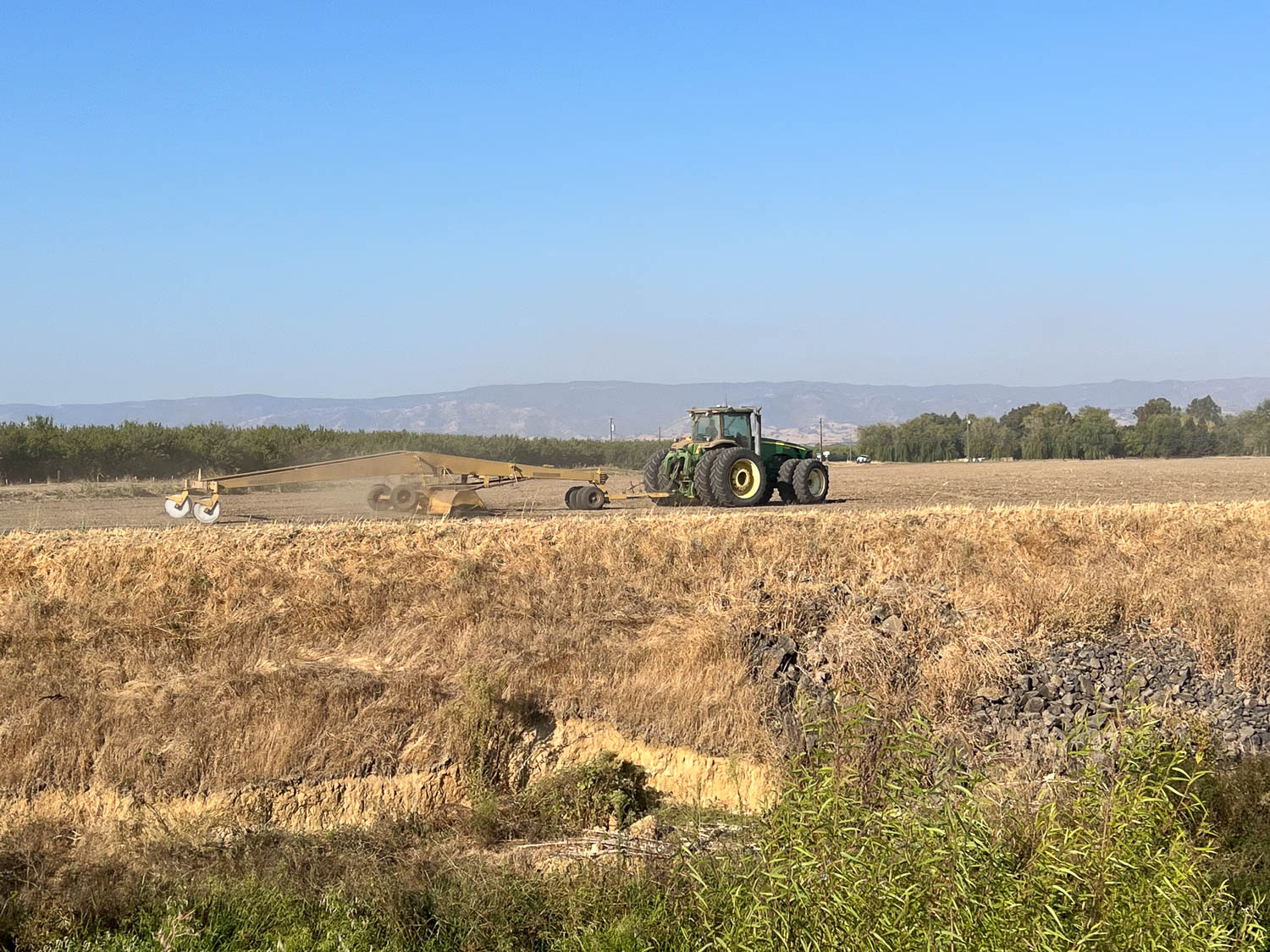
This field is across the canal from the tomato field. They just harvested hay and it will be interesting to see what goes in here next.

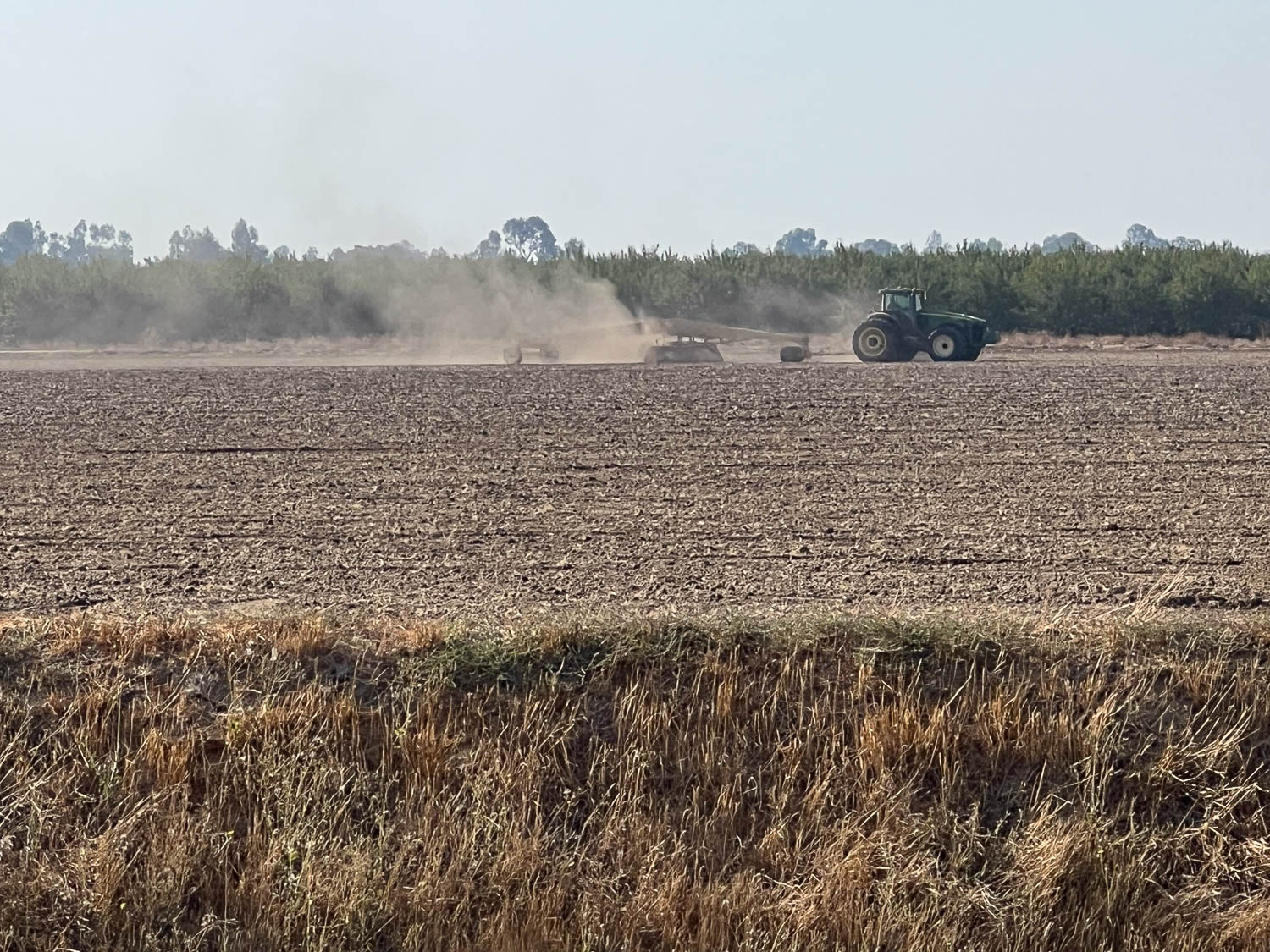
Another view of the field prep.

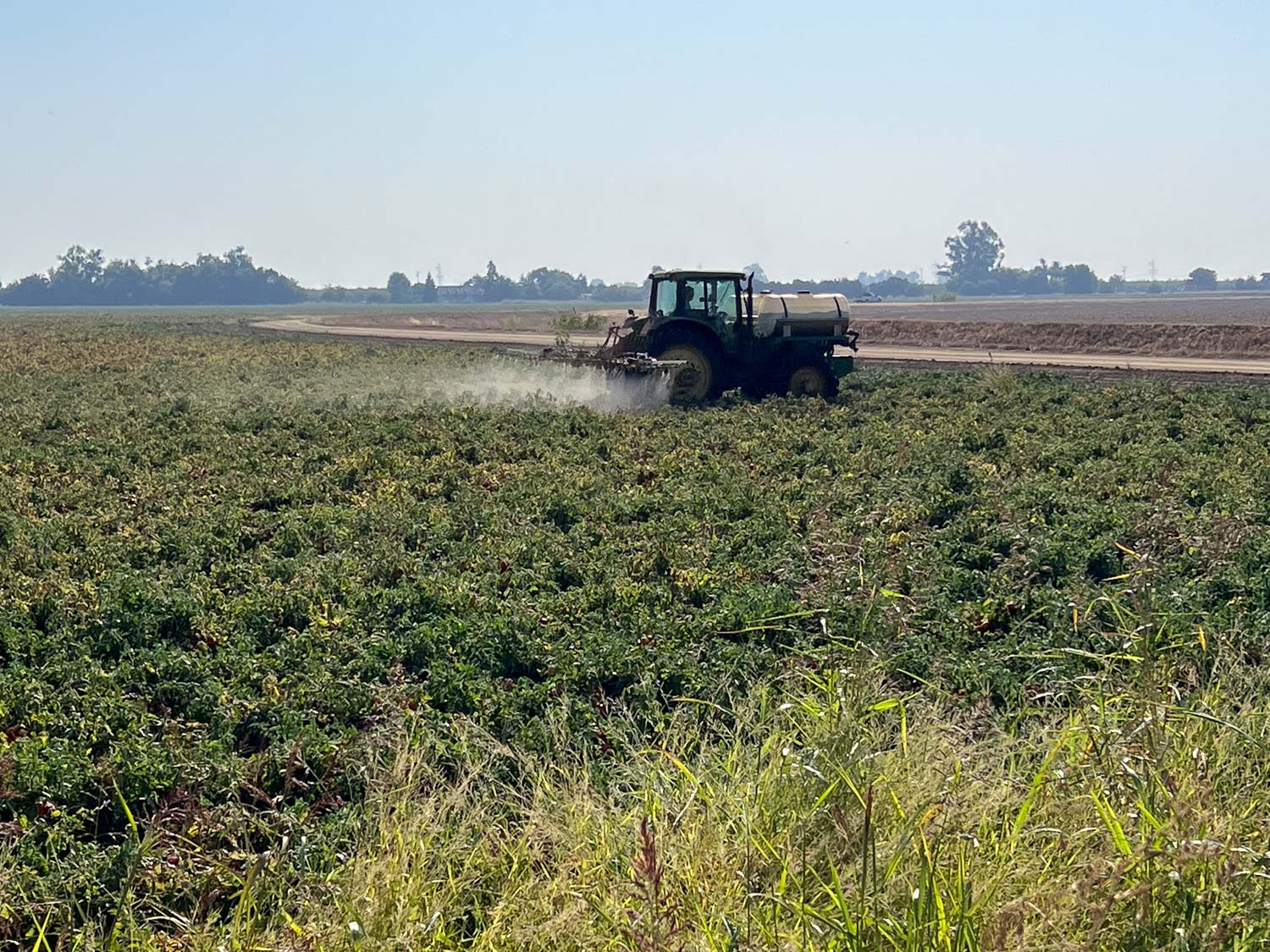
I usually don’t walk here when they are spraying, but this started just as I was getting back. I saw the label on the tank of spray. It’s a regularly used fungicide. The last time I saw spraying it was with a helicopter.

Planting Tomatoes

I didn’t plant tomatoes. They were planting across the road.

Here is the view this morning. It’s a big operation involving lots of people.

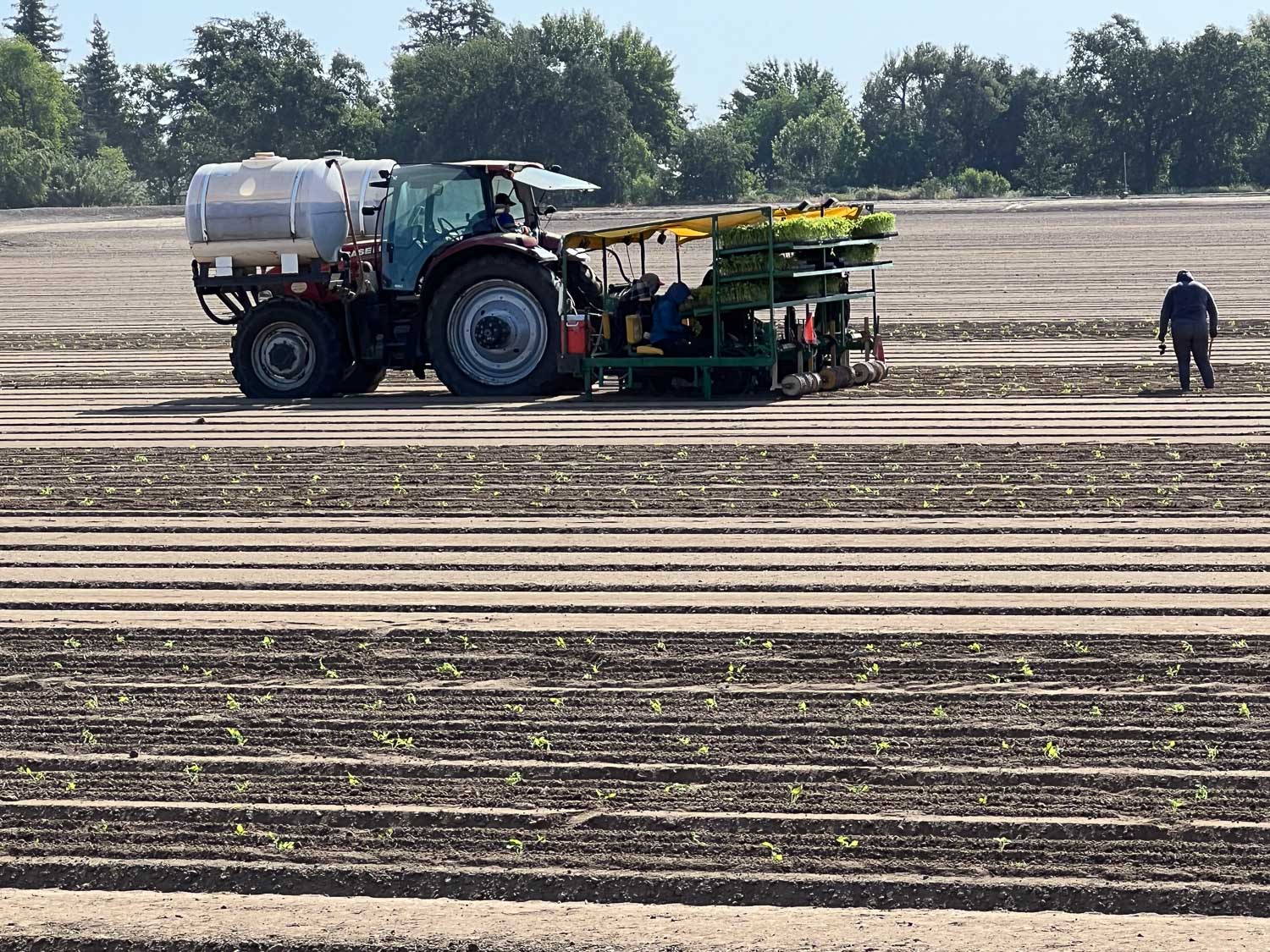
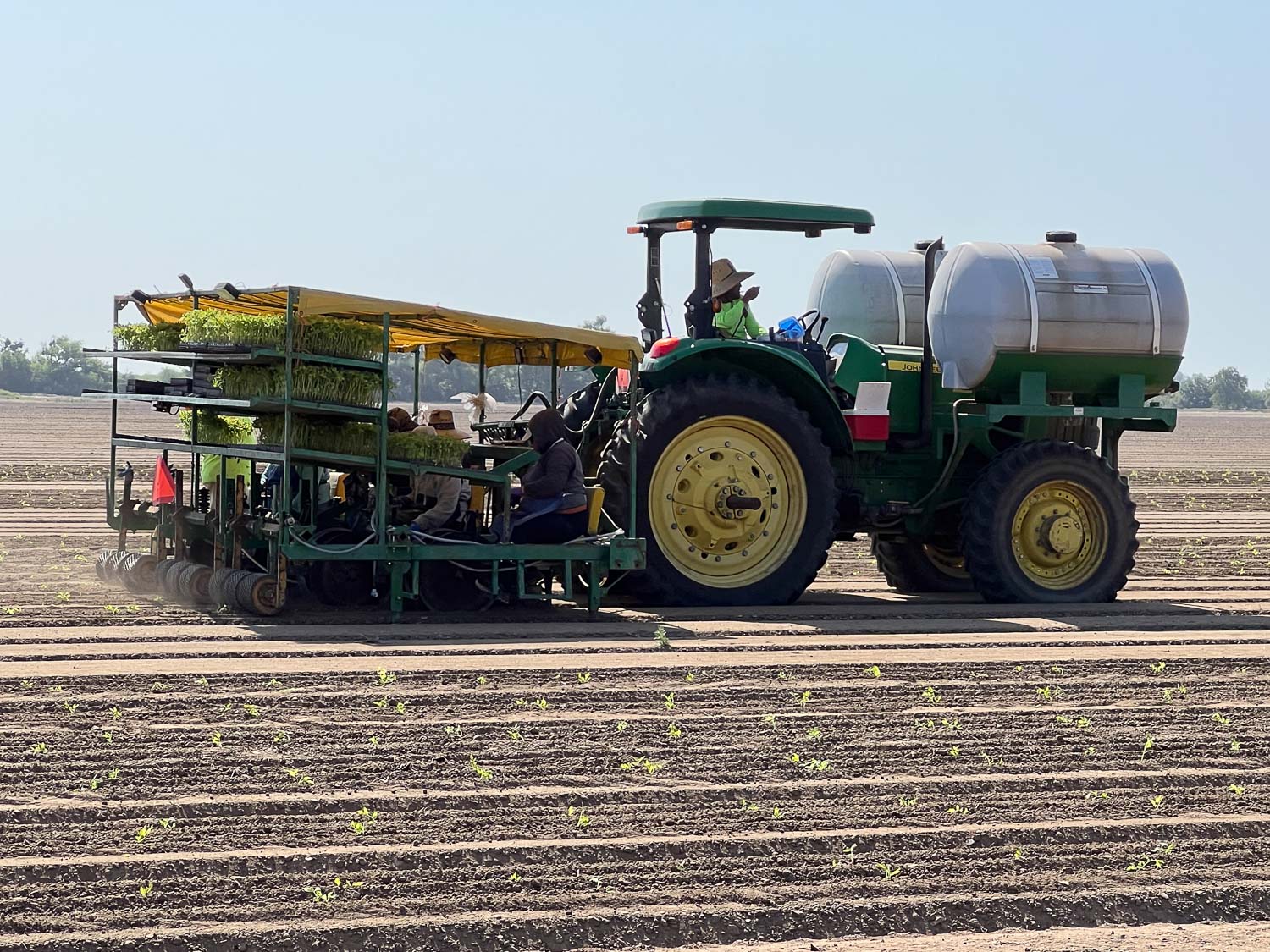
Each tomato planting machine is pulled by a tractor. There were four in this field today.

Tomato planting machine operated with a tractor.

There are six people sitting in the machine. Two other people were following. One of those moved the trays of seedlings, keeping up with the planters. The other seemed to be filling in spots where a tomato wasn’t planted. There is the tractor driver too. That is 9 people for each of these machines.

Close view of people sitting in tomato planting machine with trays of tomato seedlings.

Zoomed in view under the canopy.

I was amazed at how smoothly the beds were prepared a few days ago in preparation for this. Three beds are planted at a time, each with two rows of tomato plants.

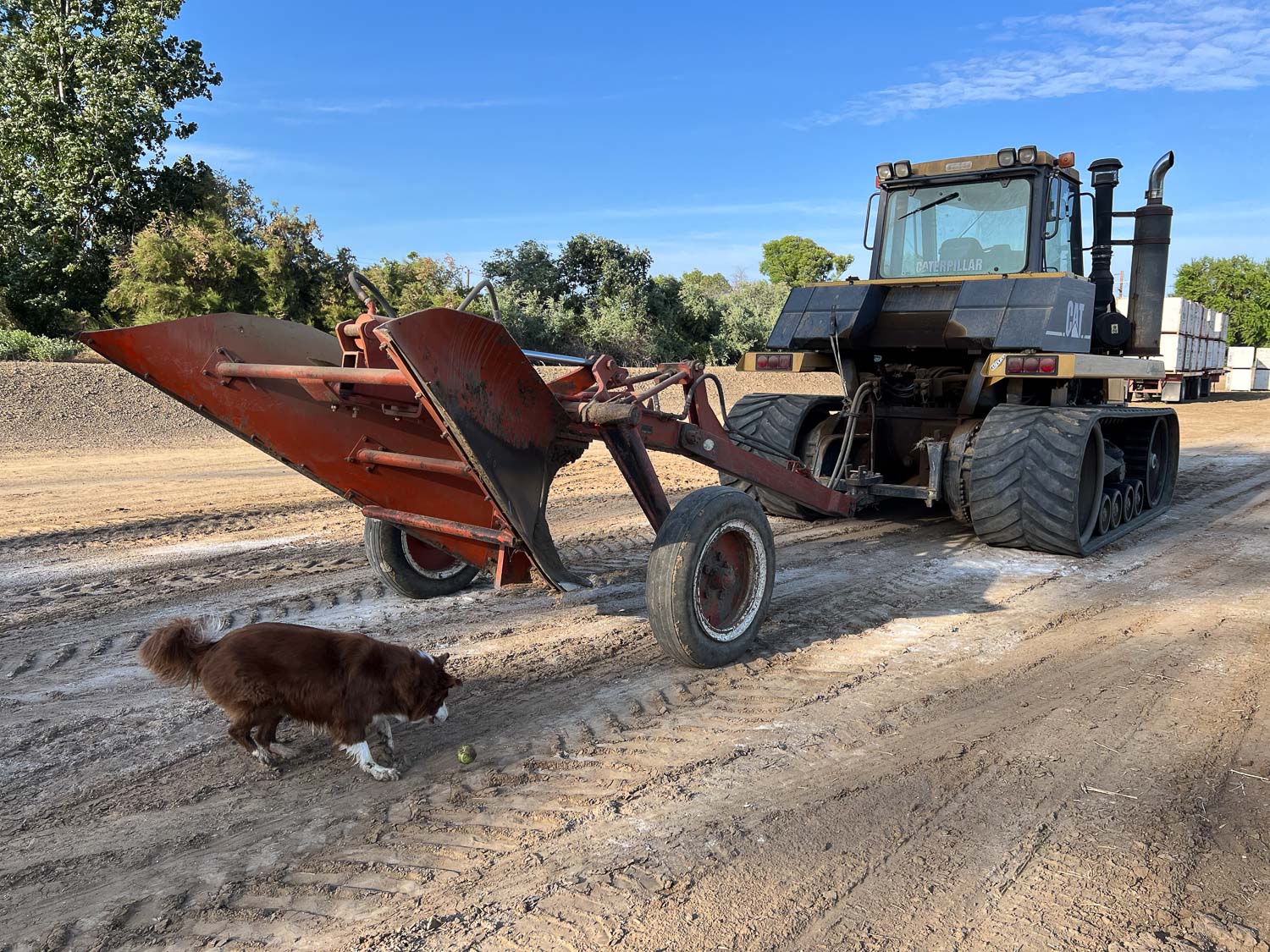
Caterpillar tractor with a ditcher behind.

I took Ginny for a walk in the evening after everyone had left for the day. The job was not finished. I was surprised to see how much more there is to go. I continue to marvel at the amount of people and equipment involved here. I’m sure that this tractor will pull the ditcher around the field as soon as the planting is finished.

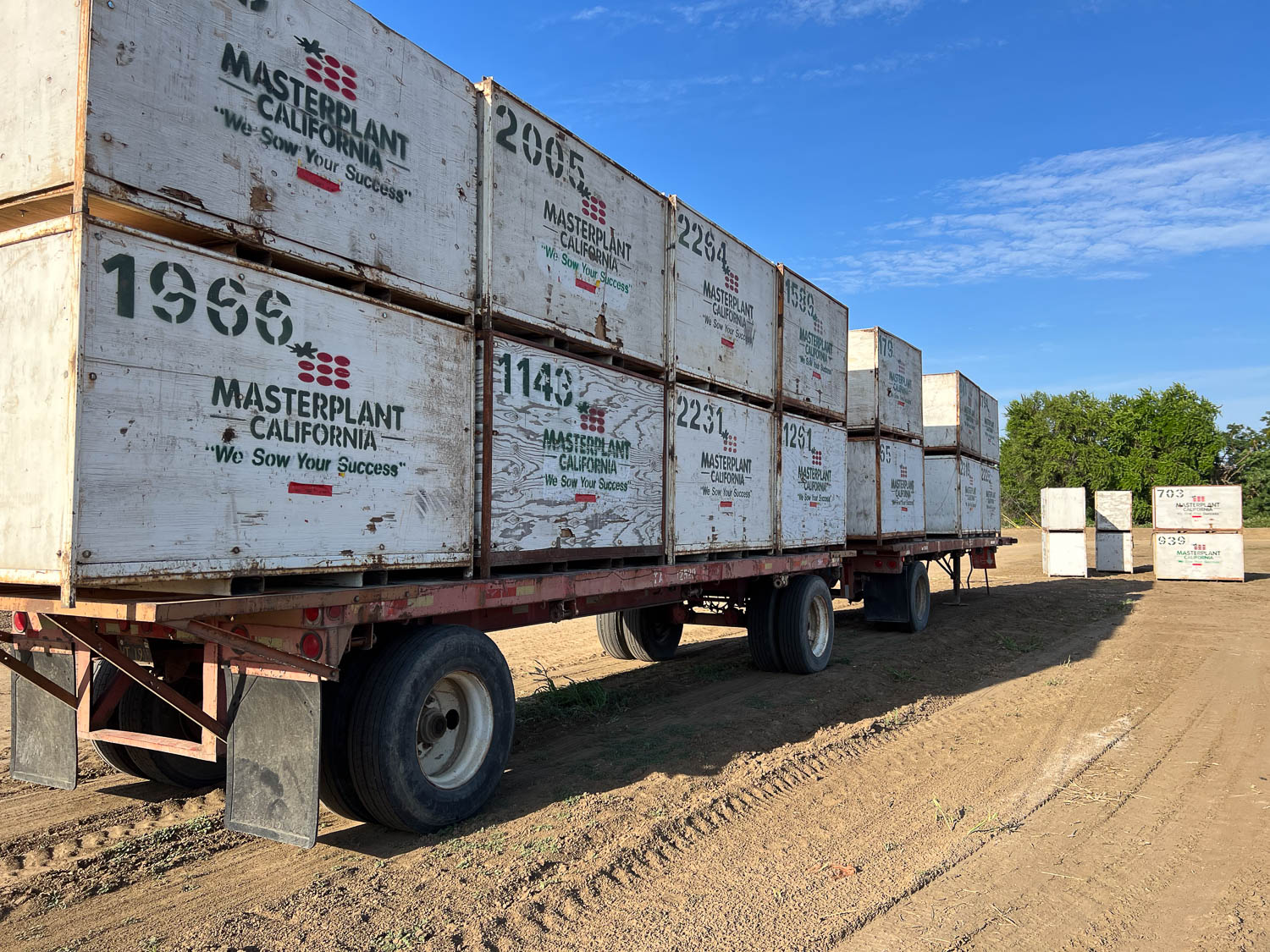
These are the crates that hold the tomato seedlings.

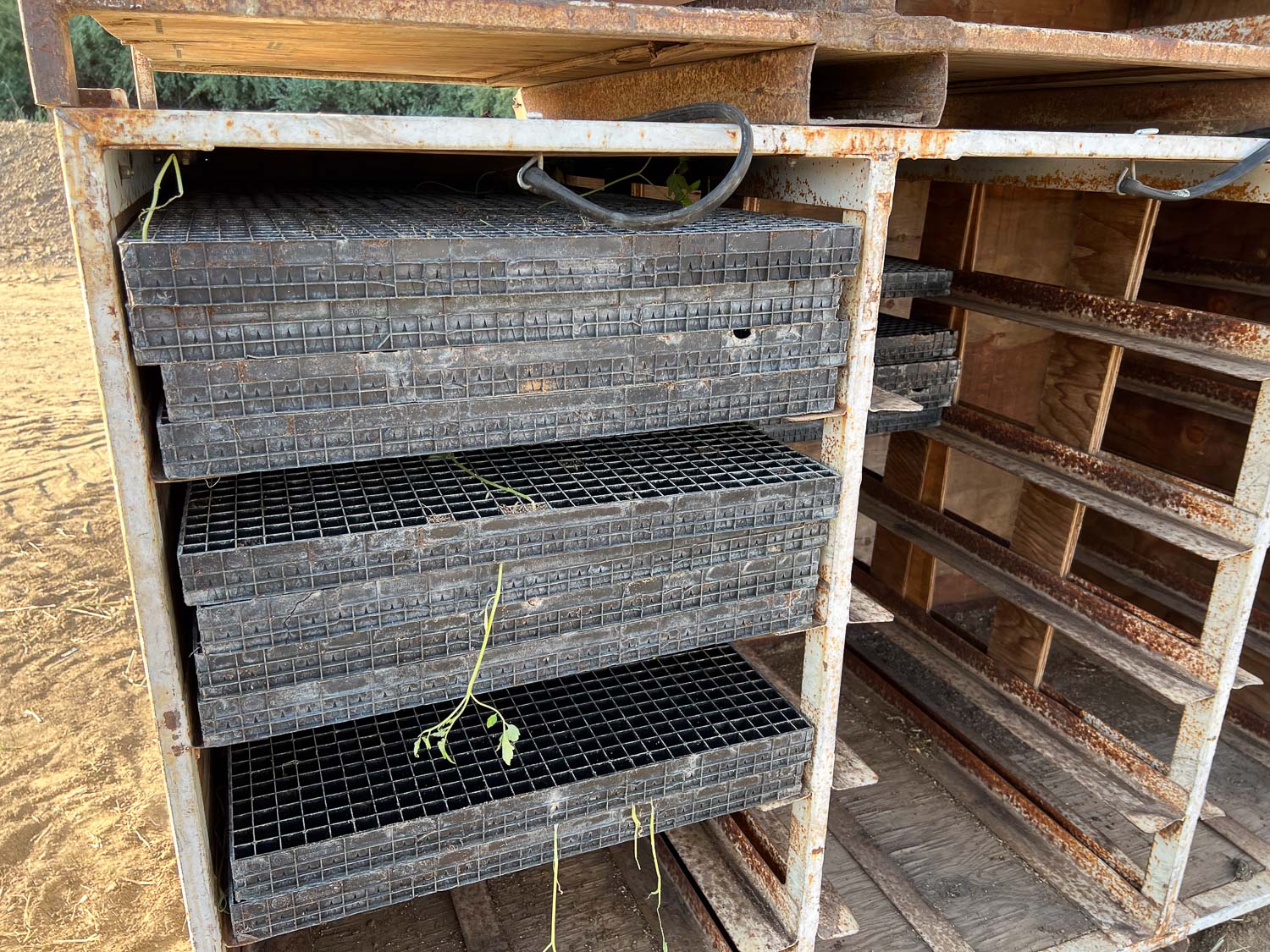
Empty trays that held tomato seedlings

These are stacks of the empty trays. I think I count 28 spaces in a row. These trays are square so that would be 784 seedlings in each tray.

Field of newly planted tomato seedlings.

This is a view of the field looking south to Mt. Diablo, just visible in the haze. Last year I took a photo from this same spot weekly and intended to have a post that followed the sunflower field from start to finish. I still have those photos but never had time to do that. I’ll try to continue with the tomatoes.

Table and benches with sunshade, on wheels for far workers to use.

There were two portable “comfort stations”. I just made that up–I don’t know what they are called. They have seating under a shade and toilets.

I’m not sure if these tanks supply water or fertilizer to the tractors pulling the planting machinery. About a week ago another machine was pulled through that I though injected something as they made the beds–maybe that was fertilizer. I think the seedlings are getting water now to keep them going until the whole job is finished and they can irrigate.

Here is what the planter looks like. There are six chairs facing back.

It’s really hard to describe how this works. I don’t understand it without having seen it in action close up. The seedling is put into that v-shaped thing in the middle. It is on a rotating disc and it gets put in the soil. Every pair of seats had one disc with three of the v-shaped slots and one with two. That means that the two rows of tomatoes in each bed are offset to give the plants more room.

View from where the people sit inside the tomato planting machine

This is the view from sitting in the seat next to this disc. I just found this video to show how one works. It’s not quite the same, but the same function.


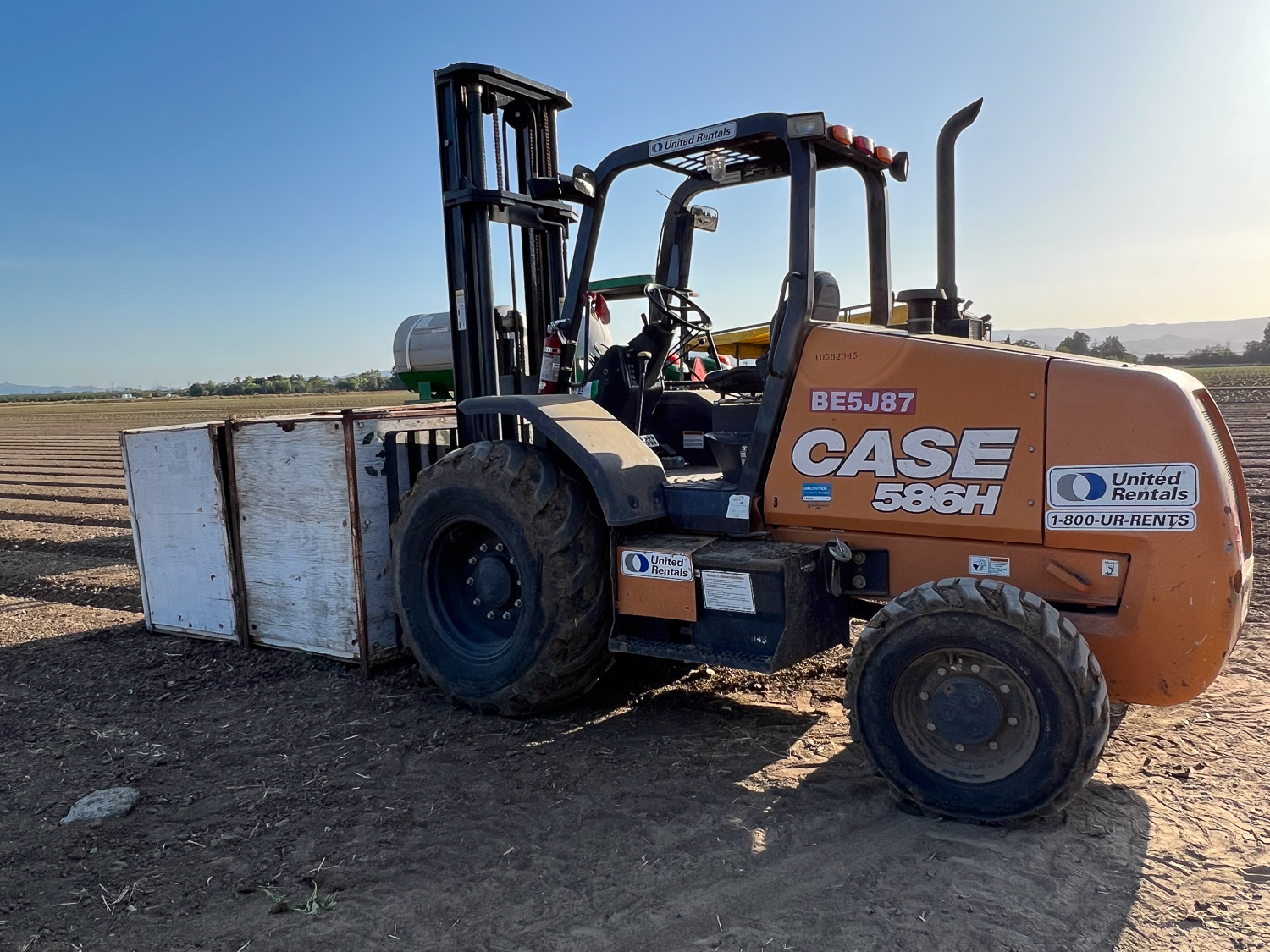
Forklift with large crates that hold tomato seedlings.

More infrastructure. There was a forklift to move the crates around.

Front view of tomato planting machinery with water tanks on front of the tractor.

The front view of the tractor with the tanks that I assume hold water. This part of the field is already planted so I think they just took it off the dirt road to park or maybe they needed to go back over this part for some reason.

Field partially planted with tomato seedlings. Planting machinery is in the field.

This shows the beds behind the tractor planted and beds in the foreground not planted yet.

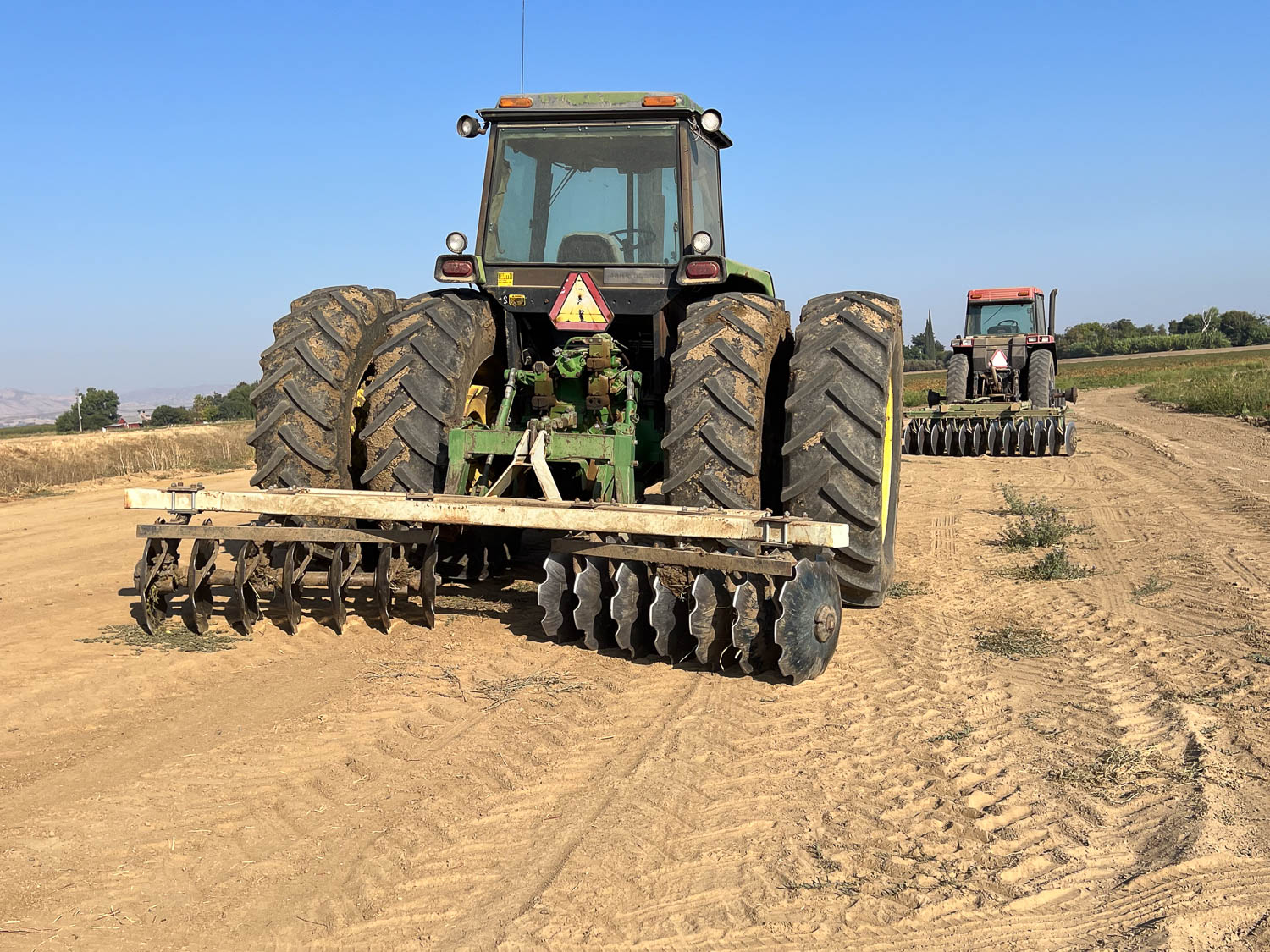
Disc and grader both attached to tractors on a dirt road.

Even more equipment. The disc had gone around the edge of the field followed by the grader to smooth it out. They are parked on the dirt road in this photo.

Rows of newly planted tomatoes.

View to the north.

Field with newly planted tomato seedlings.

Another view. That’s a lot of tomato plants. There are a lot more to plant. I don’t know if they will finish tomorrow. I’m sure they are under pressure to get those seedlings in the ground since those crates were delivered yesterday. At least it’s not very hot right now.

I hope I didn’t bore you with all these photos, but I’m fascinated by this.

Yellow and Red

Here are some recent Across the Road photos. If I can’t have my own 100’s of acres then at least I get to pretend by living right across the road from bigger farmland.

DSC_4041

Sunflower in the making.

DSC_4022

DSC_4149

DSC_4024

I have some weaving plans to incorporate these colors but haven’t had time to get to it.

DSC_4157

The tomatoes were harvested last week.

DSC_4142

These are canning tomatoes.

IMG_2043

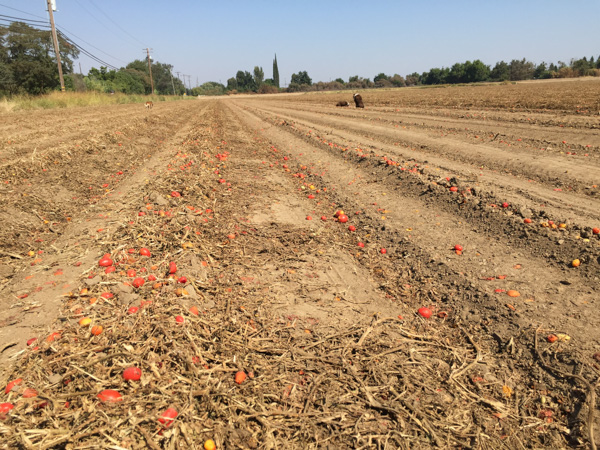
untitled-9

This was the aftermath. There were plants at the ends of some rows and at the edges of the field that were toppled over but not harvested.

untitled-11

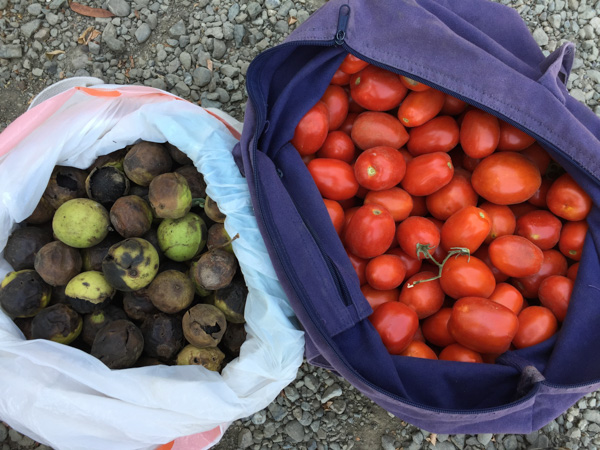
I gleaned 22 pounds on one walk and picked up black walnuts for dyeing as well.

untitled-19

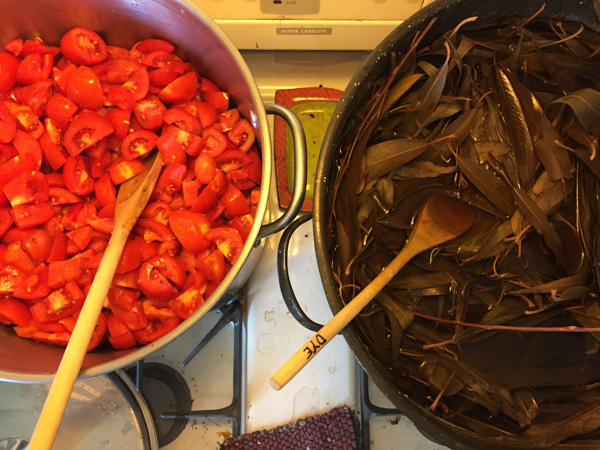
Tomatoes in one pot and weeping willow leaves in the other.

Planting Tomatoes Across the Road

We finally found out what crop was going in across the road.DSC_5241We suspected after the soil was worked over and over and finally bedded and rolled smooth and flat like this.DSC_5352 Then for a few days these tractors and other supporting equipment (water truck, fork lift, portable toilets) were parked at the edge of the field.DSC_5459 On Sunday planting began.DSC_5580 Although I’ve seen the tomato planters (people and equipment) working from a distance I didn’t know how it all worked. There are six seats for people in the front and several shelves for flats of tomato seedlings on the back of the transplanter. (I looked it up and that’s what the equipment is called. One brand name is Ferrari.) DSC_5585 A truck hauled in huge wooden crates full of flats of tomato seedlings and the forklift moved the crates from the truck to where they were needed. I walked over there Sunday evening and took more photos.IMG_3935Here are empty crates filled with the seedling trays. IMG_3947They struck me as interesting.IMG_3939

IMG_3962I looked up on Google how the transplanter works and found videos of some smaller ones. In those the person places individual seedlings into funnel shapes that are part of a revolving horizontally positioned disc. There is more to it than that but as the disc goes around and the tractor moves forward the seedlings drop through the funnel thing into the ground.IMG_3952In this equipment there were no horizontal discs with funnel shapes. Instead the seedlings drop down between those two metal “wheels” in the very center of the photo. (The wheel in the foreground is the one of another pair, but the other wheel is just out of the photo to the left.) You can barely see a left-over tomato seedling between those wheels. At least I can because I know it’s there. So the person sits on that yellow seat (and there is another right under where I am taking the photo) and places the seedling in position but I’m still not sure exactly how that part works. Part of the equipment is making a small hole or furrow into which the seedling will fall. At the same time the tractor is driving forward (towards me, the photographer) and the metal wheels serve to fill in dirt around the just-planted seedling. At the same time there are water barrels on the tractor and somewhere that water is being injected into the soil right around the roots.IMG_3950Am I getting a little carried away here about something as mundane as planting tomatoes? I am fascinated with the combination of automation and requirement for people. And living in the Central Valley of California one could use this as a platform to expound on social issues, political issues, and water issues. But right now I’m just interested in that simple question of “how do we get tomato sauce?” because I’m pretty sure that these are processing tomatoes.

I walked around the field (my usual walk Across the Road). The field wasn’t completely planted yet and this little seedling was on top of one of the crates still full of seedlings. I was pretty sure that it wasn’t going to live through the night so I carried it home and planted it. We’ll see if it can keep up with all of it’s kin (if I can save it from gophers).IMG_3934 The part of the field that was planted has two rows  of seedlings in each bed.IMG_3957 They pulled a ditcher along the edges and are beginning to irrigate today. Stay tuned to follow the story of the Tomatoes Across the Road.