Leftover Yarn

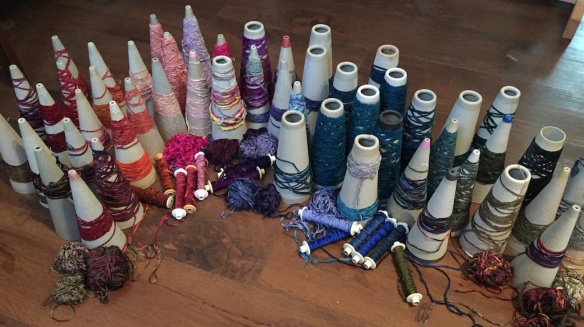
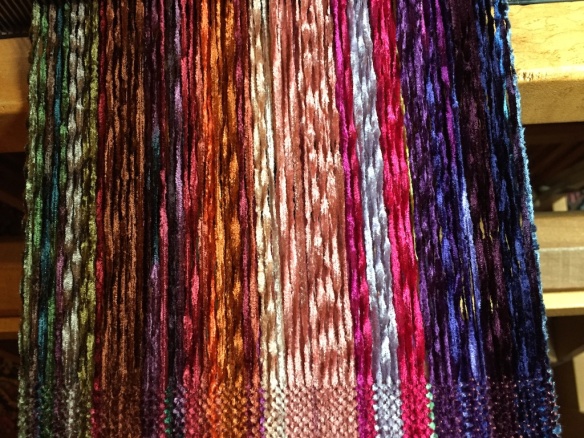
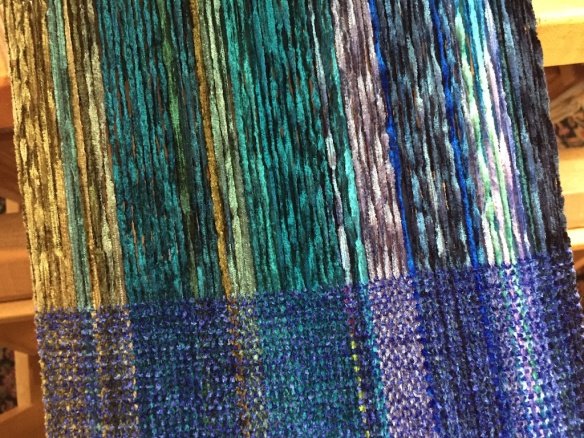
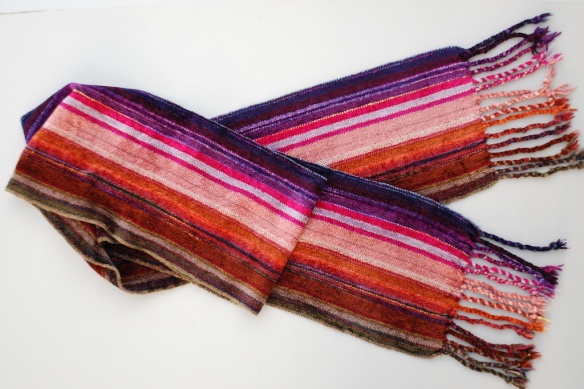
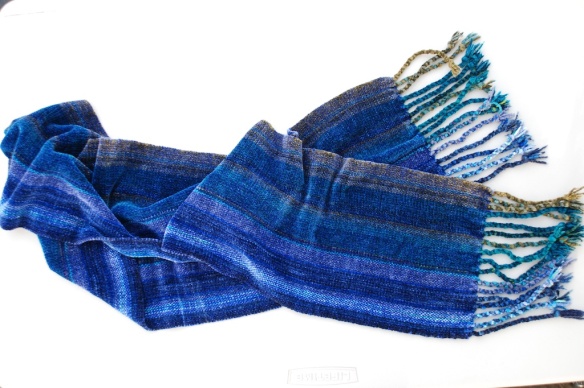
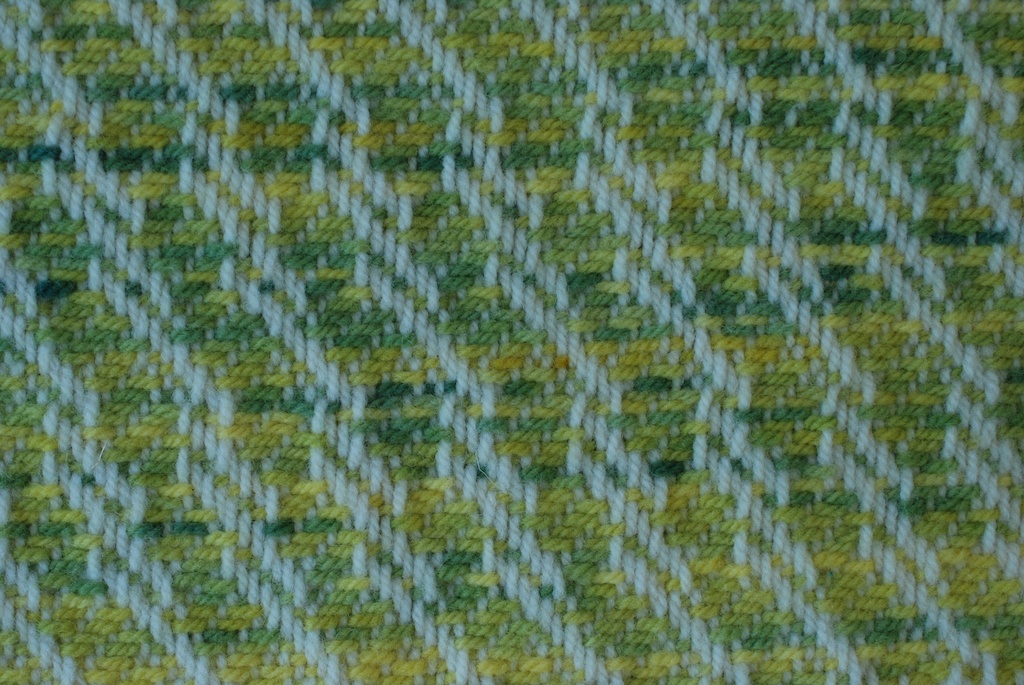
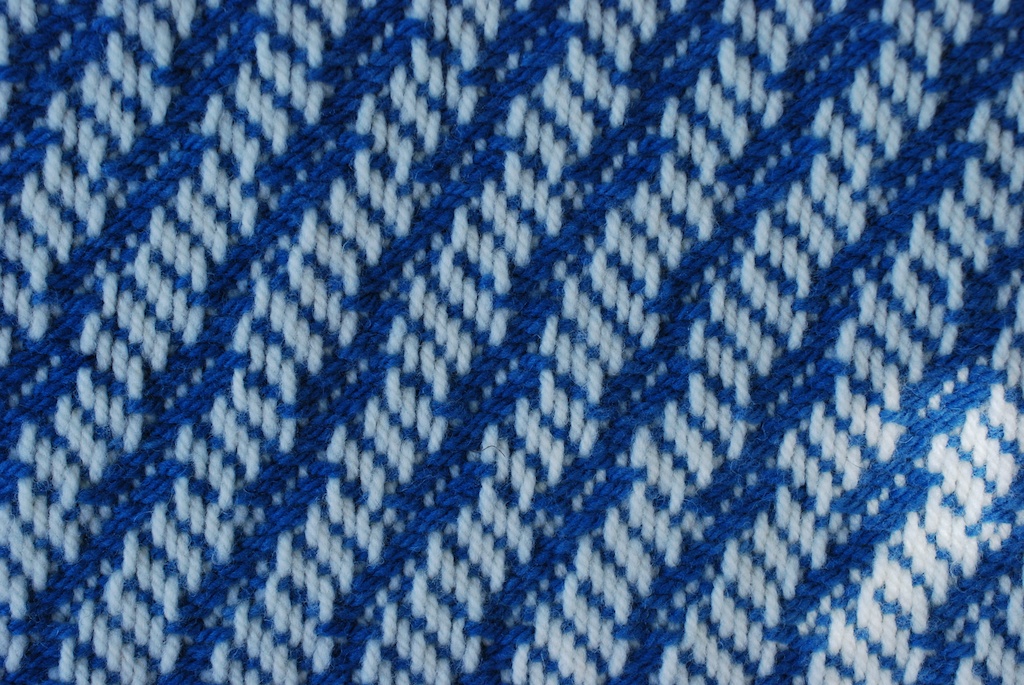
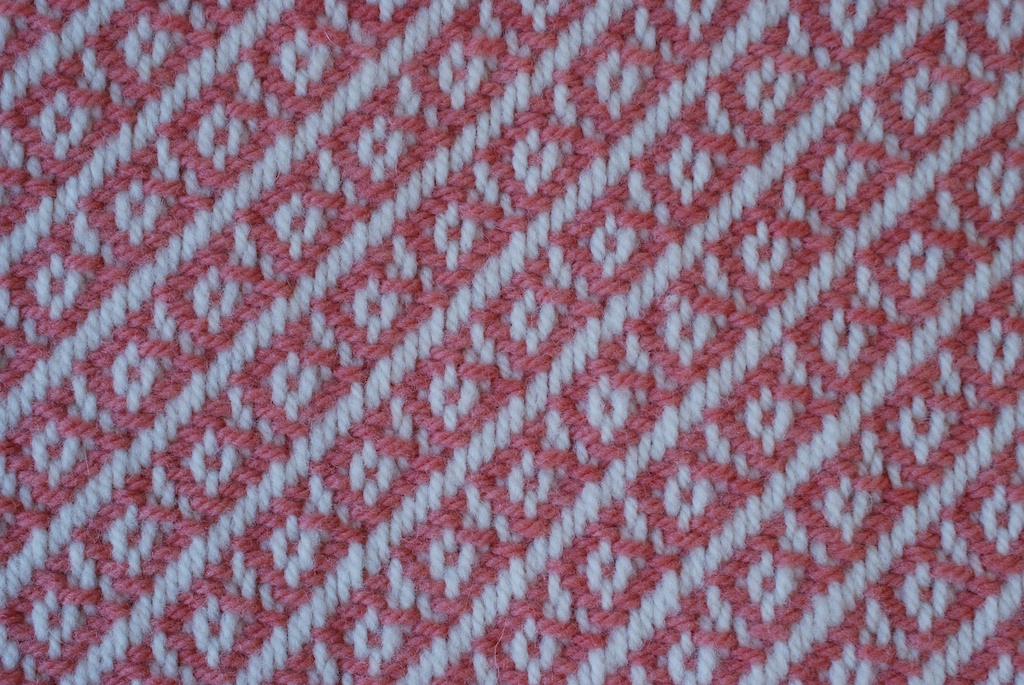
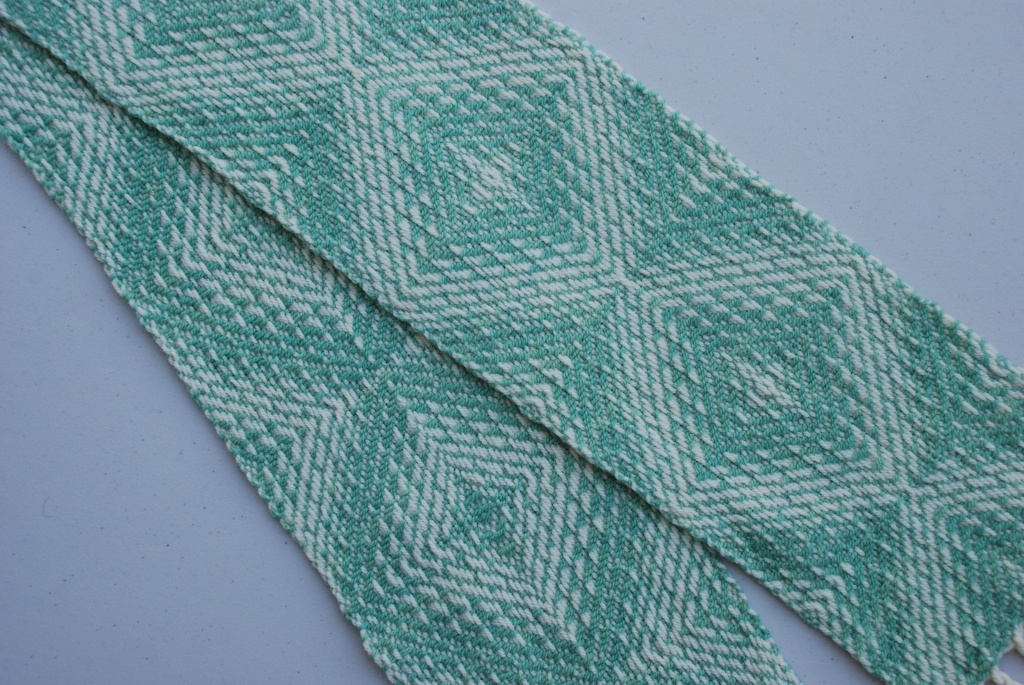
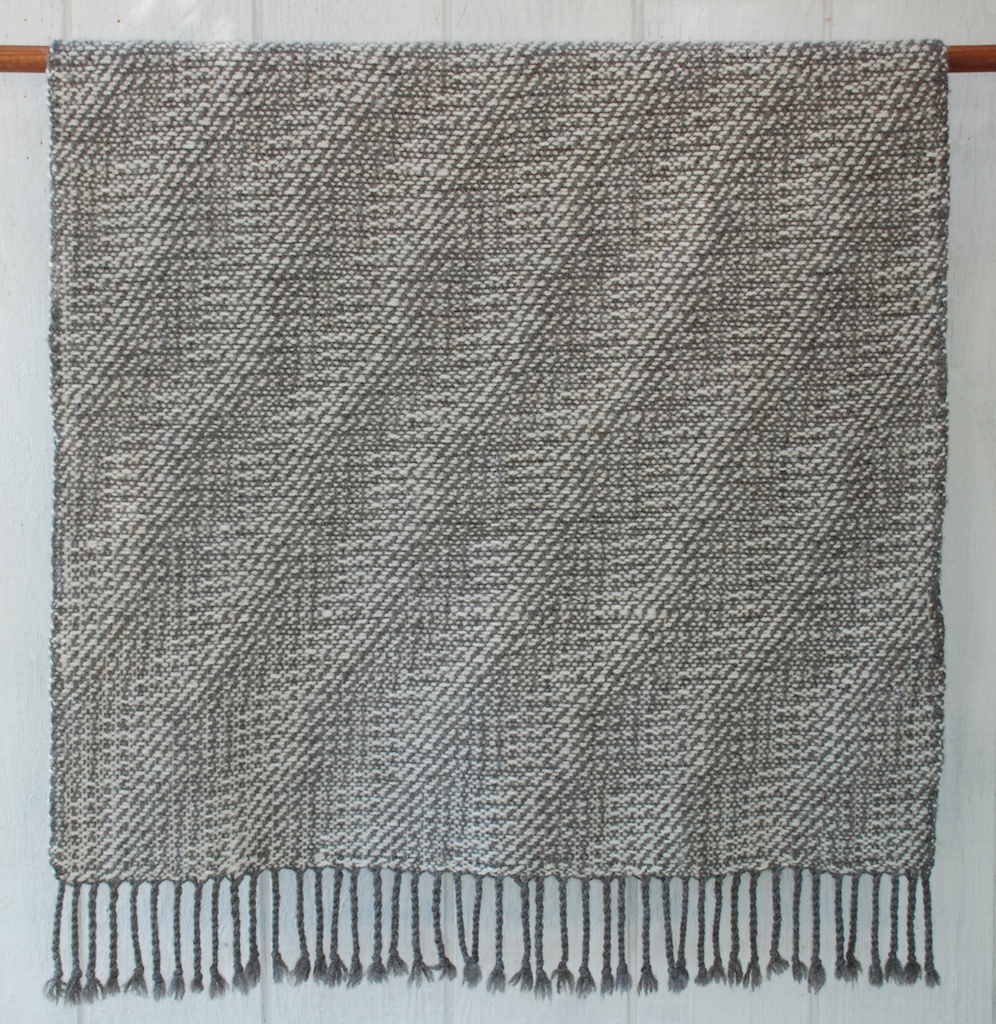
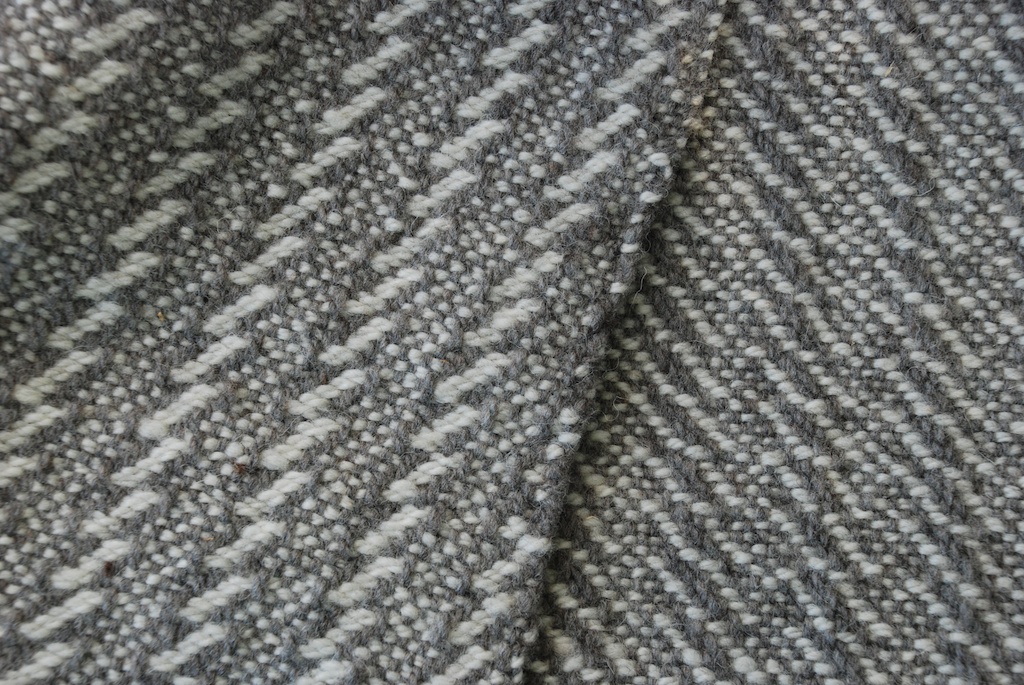
Never throw anything away. At the risk of being called a Yarn Hoarder I don’t throw any chenille away if there is at least a three yard length. IMG_7961Three yards (or a little less) is the length I need to make a scarf. I dumped out a couple of bags of leftover chenille and organized it by color. This made two warps.IMG_7964The first uses the yarns on the left side of the upper photo, going into the purple range.IMG_8020The color isn’t very good on this photo but this was mostly yarns from the right side. Here are the finished pieces:946 chenille scarfI used a fine cotton weft for this scarf mainly because I couldn’t figure out which color of chenille would work across all of these stripes. By using a fine weft the color of that disappears and the eye sees just the warp color.947 chenille scarfThis scarf was different. I used a blue chenille weft. The blue dominates but pulls all the other colors together.

These scarves are for sale at the Artery now and on my website.

Friendship Baby Blankets & Fixing Weaving Errors

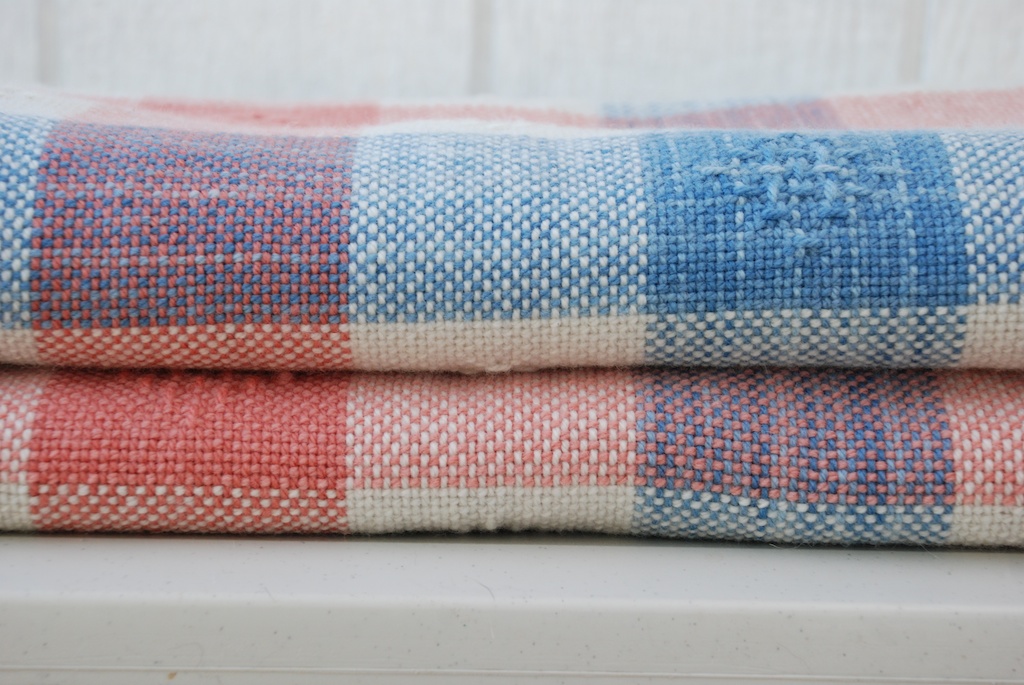
I finished  this project a couple of weeks ago but haven’t had time to share it. My friend, Irene of Cotton Clouds, is involved with The Natural Dye Project sponsored by Mayan Hands. She asked me to create a baby blanket out of the  Friendship Towel Kit that she is selling to support the Guatemalan women in this project.product_image_3074-2The towel kit makes 4 towels using naturally dyed 8/2 cotton.yarn_image_180I added Monte Cristo cotton boucle to the kit and came up with…DSC_2479   …two baby blankets, each using Monte Cristo and 8/2 cotton in the weft but using different patterns. It is easy weaving but things don’t always go smoothly. IMG_2029I happened to look at the first blanket winding its way onto the cloth beam just before starting the second blanket and saw 7 warp threads that should have been woven into the blanket.IMG_2030Because of the texture of the boucle yarn I hadn’t noticed the error while weaving. Now I can see it but it wasn’t obvious when I wasn’t looking for it. IMG_2027Here is the problem. When threading the heddles I inadvertently used 7 heddles from the Shaft #5 when I should have used Shaft #4. This is a 4-shaft structure so #5 didn’t lift at all. It is an easy fix for the second blanket. Just tie Shaft # 5 up to each treadle in which Shaft #4 is engaged. IMG_2033That works.IMG_2034However, the only way to fix Blanket #1 was to needle weave all 7 threads in after it was off the loom. That should be easy (over-under-over;over-under-under), but it took hours because of the nature of the boucle yarn. Thank goodness it was only 7 threads.

After weaving the blankets aren’t done yet. Wet finishing is an important step of weaving. It allows the yarns to “bloom” and fills in the spaces that are there when the yarns are under tension. It turns a bunch of interlocked threads into cloth.DSC_2558 It also results in shrinkage. See the difference in width in the strip that has not been washed and the finished blanket.

DSC_2564   Here is a detail.

The final step is a photo session. DSC_2533No baby was available so I used one of my kids’ teddy bears.DSC_2545My old teddy bear (I won’t tell you how old) featured in some of the shots too.

You can purchase this kit from Cotton Clouds at this link.

Weaving Faith

When weaving  the yarns are under tension on the loom so they look thinner than they will at the end of the process. In addition the yarn looks thinner on the cone than if it is wound in a skein. So there is some faith involved in planning a weaving project. It is important to know how the yarn will look once it is relaxed and after the very important step of wet finishing.Timm Ranch wool yarn on cone and skeinThis is one dramatic example of the same yarn on a cone and wound in a skein and washed.

Here is a project that I just finished:

.IMG_2288This is Jaggerspun Maine Line 3/8 sett at 10 epi (that’s ends per inch, or the number of threads wound in an inch, for you non-weavers). That photo is off the first blanket I wove as it was going around the cloth beam. The two colors alternate in the pattern blocks.

IMG_2289 This is the second blanket on the warp. I didn’t have enough of either of the warp colors so I used a third color and wove the whole blanket in the same color. Notice how much space there is between all the warp and weft threads? It’s harder to weave this way with it so open. And this is where the faith comes in. It sometimes takes awhile for brand new weavers to have that faith that it will all work out in the end.

IMG_2349

The photo above shows what the blankets look like off the loom and not under tension and there is a greater difference after washing. (Not the color difference–that is the lighting. I took the photo above in the evening because I wanted to get these washed that night.)

IMG_2382 The photo above and below show these blankets after washing and fulling.IMG_2383 

My Weekend in iPhone Photos

What a beautiful weekend we had, although I’d rather be able to say that it’s been raining and cold like winter is supposed to be. I wonder if this is the future. That will take some major adaptation. Regardless, here are photos from warm, sunny Solano County.

I usually don’t put the ewes out on the main pasture until late March when it has dried out. However, this year the water has drained away and I will take advantage of the grass growing now. If it doesn’t rain more this will be it until (and if) we get irrigation water.waiting for pastureWaiting for me to change the fence.pregnant ewes (1)Rear view of one of the ewes due to lamb in about 2-1/2  weeks.pregnant ewesMore rear views. These ewes won’t lamb for a month or more.

dallisgrass Thatch left over from the overgrown dallisgrass last fall. Nothing grows under it–at least not useful for sheep.mushroomsThis was growing inside that pile.mouse trailWhile walking around the pasture I saw something (rodent) scurry across this obviously well-used path from one clump of grass to the next.

rat holesSpeaking of rodents this is a view I see every morning when I go in the chicken house. Well, not this exact view. There are always new holes and new piles of dirt. There are only 2 chickens and I think I am feeding a whole colony of rats. I posted this photo on FB and was surprised at the number of responses. The overwhelming suggestion was to get terriers. Three dogs is enough and I won’t get another. If Maggie gets a chance she will kill rodents but she will also kill chickens, which is why they are in the chicken house. Next suggestion was the old-fashioned snap type of trap. I have used those for mice, but for rats it sounds disgusting. I think I will get some though. I tried a sticky trap under that garbage can but they just covered it with dirt.IMG_1864 Faulkner. I sent photos to someone who has been asked to supply rams to participate in a Year of the Sheep celebration in San Francisco this week. I suggested Faulkner because he is easy to handle (relatively). They want horned rams so I sent more photos….but probably not with spots. They are still discussing it and I haven’t heard the final word.Isadora and FoleyEven if the rams don’t get to go to the city, some of them are having fun. It’s time to breed my ewes that will lamb at the State Fair. This is Foley and Isadora yesterday. Today it was Crosby and Clover. straw bale gardenI hope that this will be one answer to another rodent problem. This is a trial straw bale garden. The gophers have made it impossible to grow anything successfully in this part of the garden. Last summer I put two bales out here and started watering them the way you’re are supposed to. Then I went to Texas to wait for my granddaughter to be born. I gave up the garden idea until now. I have planted lettuce and carrot seeds in this one and chard in another. We’ll see what happens.

IMG_1992   I took a quick trip to Sacramento Weavers Open House to pick up the things I had on display there. These are a few of my blankets. This is the first year in many, many years that I did not spend the weekend there demonstrating weaving. It felt odd to show up at the end.button on purseA friend’s purse that uses my horn buttons for the closure and to secure the strap.AVL loomI tried this AVL loom with the e-lift. One step on the button and the shed changes. No lifting 16 (or in this case 40) shafts with leg power.

Close to Home–Post #16 The End

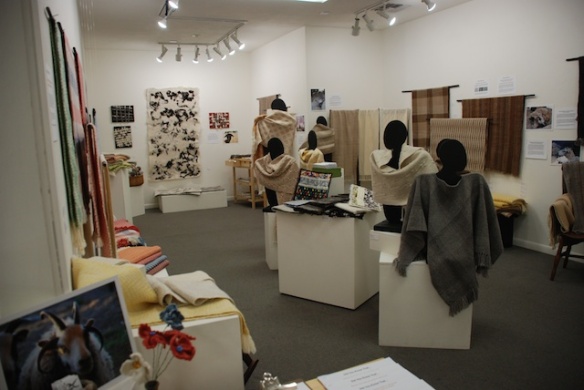
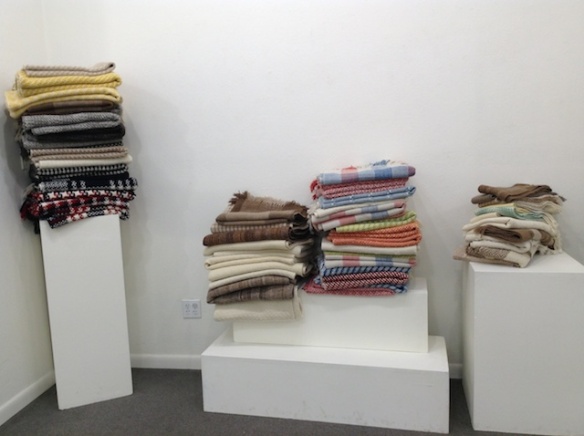
Monday I took down the show. Two dedicated  and fabulous friends came to help. They tagged and wrote price labels for all the pieces and sorted sold from unsold. I took out nails, patched holes, got the museum putty that held signs off the walls, and figured out how to condense this whole gallery….DSC_9931into the corner at the end of the room. I didn’t finish until the next day.IMG_0227This is some of the blankets all tagged and ready to show again.

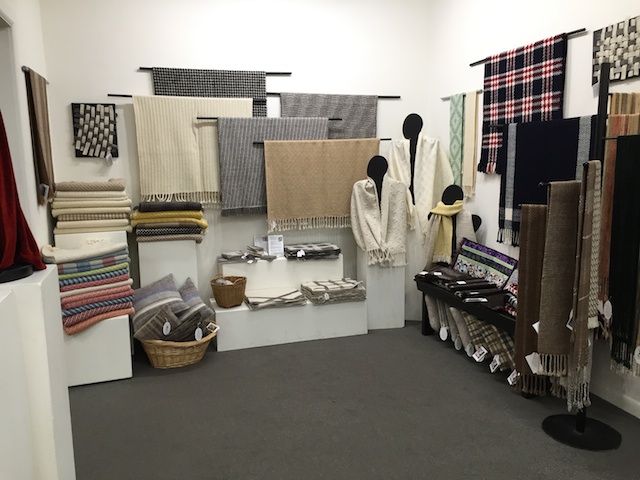
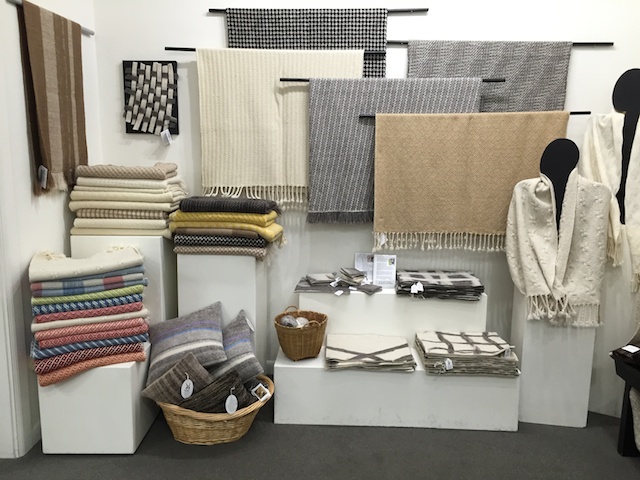
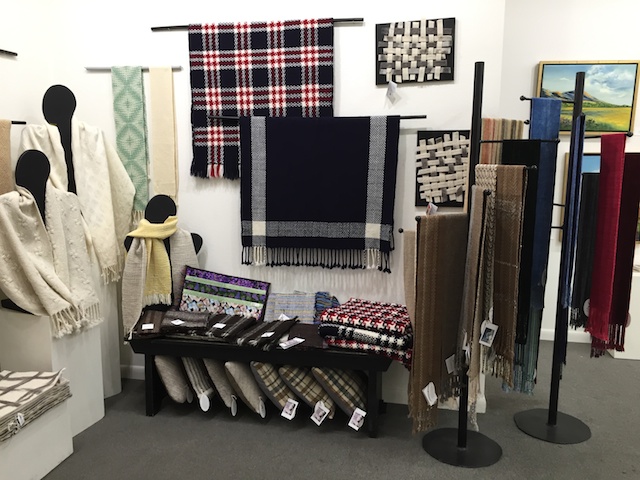
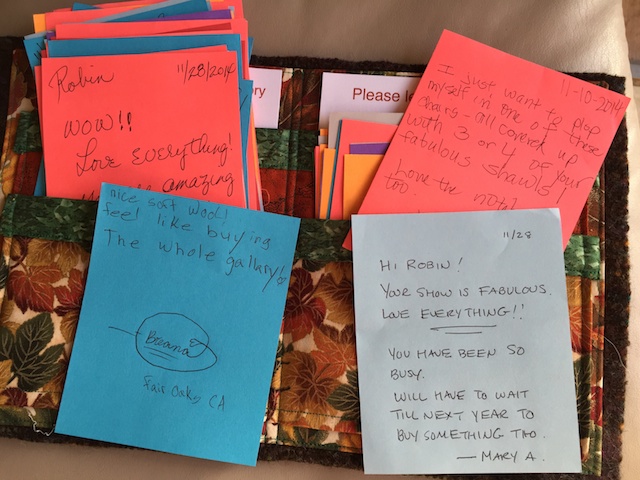
I was able to keep a lot of pieces there. I hope a lot sell because in January it will be someone else’s turn for a show in the gallery and my things will go back out to a smaller space in the main part of the store.IMG_0404 Here is what I did. The chenille scarves came back to the display, although baby blankets are still in the other room of the store.IMG_0405 One wall.IMG_0406 The other wall.DSC_9957Remember this?Close to Home, commentsNow it’s full of wonderful comments. I like Breanna from Fair Oaks mindset, don’t you?

Thanks to everyone who came, who commented, and who bought, and supported the local sheep industry and your local weaver/farmer!!!!


Close to Home…Post #15 Left-overs

My husband says that we are hoarders. When you’re a farmer you know that you’ll need that scrap of plywood, leftover fencing, rusty but still useable pipe, or roofing panel with only a few holes sometime, somewhere. So you keep it. What about the weaving studio? If there is warp left on the loom after finishing a project I weave it off and these pieces pile up. The Artery show gave me the incentive to finally use them.

These are several photos of Before and After felting. The process of “fulling” deserves it’s own post. Fulling transforms weaving fresh off the loom into cohesive cloth by using a controlled amount of agitation in hot soapy water. Felting happens when you take this process further. I used the washing machine and sometimes the dryer to maximize the effect of shrinking wool fabric into something much denser. (Another method is needlefelting, described in this post.)DSC_8620 DSC_8721The four fabrics in this photo are the same as in the photo above it but after felting.DSC_8630DSC_8714This is another pair of before and after photos.  blanket-Sincere Sheep wool. Left is fulled, right is felted The piece on the left is a blanket after fulling and the one on the right is the left-over piece of fabric after felting.DSC_8607Why felt this fabric and not use it as is or with only fulling? Felting creates a very dense stable fabric, good for a variety of projects where you don’t need (or want) the fabric to drape. Also, the fibers are so entangled that you can cut this fabric without worrying about it coming apart or fraying. Pillow stuffingI planned to use some of this fabric for pillows, but worried about staying true to the theme of locally produced fiber. I did use commercially available synthetic pillow forms (at least USA-made) for some of the pillows but for about half of them I made my own pillow forms using Suffolk wool from the Phillips Farm. I tracked down American Made Brand cotton fabric at two local quilt stores and used that for the covers and for the fabric backs of the pillows. P-4 and P-5Fabric left over from blankets that I wove years ago.Shetland pillowBarinaga East Friesian yarnFabric left over from the Barinaga blankets.Uses fabric leftover from weaving mom's yarn blanketFabric I wove using Mom’s yarn several years ago.P-1 to P-3These pillows use fabric spun and woven by my Mom.

Friends gave me another idea to use some of this felted fabric. In fact one friend helped sew some of the pillows and another dipped into her fabric stash and did the sewing in these organizers. There are about 20 organizers and they are all different. It may be hard to tell in these photos but there are fabric pockets of different sizes in each.DSC_9581 These two use handspun, woven fabric that Mom had basted into a jacket but never finished. After felting that fabric made 3 or 4 organizers.O-15 inside

O-11 O-12  The three photos above all use fabric leftover from Jacob blanket warps.

I still have left over fabric so there will be more of these to come.

Close to Home…Post #12 Wearables

The previous posts were all about the farms where I got the wool to use in my show, Close to Home…Yarn with a Story. Most of them featured blankets. I love weaving blankets. It doesn’t really matter what size they are, you can weave each in a different color and/or pattern, and who couldn’t use a warm blanket?

But I wove some wearables as well. 879-1 (1) 879-1 Above are shawls woven of the same style of yarn from Imperial Yarn Company as the Stars and Stripes blankets. The brown yarn was dyed with black walnut.black walnuts after dyingThis is what the black walnuts look like after having soaked in a bucket for a couple of weeks and then been boiled for an hour. eucaluyptus dyeThese are pots of eucalyptus leaves and twigs on the stove…Eucalyptus dye…and yarn in the dye made after boiling those pots. Notice that there are two different weights of yarn in this post. That finer yarn, also from Imperial Yarn Company, is used in the shawls below.IYC shawlThe weft in this shawl uses the fine yarn dyed in eucalyptus. One batch turned out rust and another was gold.Eucalyptus dyeYou can see the two different sides of each shawl in this photo. 883-2 (1)Here is a close-up.DSC_9797Another shawl that uses natural dyed yarn (black walnut) is this one in huck lace woven using yarn from the Timm Ranch.894-1 & 894-3Here is another in un-dyed yarn.Timm Ranch woolBy the way, here is what that shawl looks like while on the loom. I always have to convince new weavers to have faith that even if you see spaces when you’re weaving they will close up if you’re working with wool.

There are also several scarves in the show, some of which have been shown in earlier posts.DSC_0156These scarves use yarn from Fiber Confections, Anderson Ranch, and Meridian Jacobs.

Close to Home…Post #10 – Sincere Sheep

One of the first yarns I used when weaving for Close to Home was Targhee wool sold by Sincere Sheep.

Story:  Brooke Sinnes of Napa began Sincere Sheep in 2003 and focused on natural dyeing yarn sourced from local wool. Since that time she has included other lines of yarn sourced farther from home.
Sincere Sheep’s Bannock yarn is a 3-ply worsted weight yarn that features 100% Targhee wool from Montana and the Dakotas that is milled in North Carolina and spun in Maine.
The Targhee sheep is named after the Targhee National Forest near where the breed was developed beginning in the 1920’s. The goal of the U.S. Sheep Experiment Station in Idaho was to develop sheep with uniformly heavy fleshing and high quality fine wool that was adapted to rugged conditions of the Western range. Developed by crossing Rambouillet, Corriedale, and Lincoln sheep at the Experiment Station, the Targhee breed was expanded by selection of “Targhee type” ewes from large bands of range ewes crossed with Targhee rams. The flock book was closed in 1966.
Targhee sheep produce 10-12 pound fleeces with very soft, bright white fiber that measures 21-25 microns. Sincere Sheep’s Bannock yarn was named for a Targhee Native American Chief.IMG_1290This is one of only two yarns in this show that are not grown in Solano or Marin Counties but I included it because of the variety of colors, naturally dyed, and the quality of the yarn,  and it is grown in the Pacific Northwest, which is Closer to Home than many places where wool is grown.  Sincere Sheep I love the color variation in this yarn…Sincere Sheep …and the variety of designs that you can get on one warp.DSC_4153Sincere Sheep Sincere Sheep blanketsThat means that each of the blankets above was woven on the same warp threading in white yarn, but the patterns change by varying the treading and, of course, the color of the weft.Sincere Sheep yarn, Artery 2014 Another series of blankets.878-2, 878-3 And another.Sincere Sheep TargheeAt the end of the warp I just wove in white instead of making it plaid and then I felted the fabric. That made great fabric for pillows.Sincere SheepI also wove a series of blankets on a rusty red warp with a white weft

Sincere Sheep Targhee  Targhee yarn is very soft and perfect for scarves as well. After the Artery show whatever items are left will be for sale on my website.

Close to Home…Post #8 – Fiber Confections

I raise black and white sheep and my friend, Colleen, raises brown sheep so between us we have all the natural colors. I used some of her wool in my show at the Artery. If you’re just starting to read these posts go back to this one to read about the concept of this show.

I don’t have the sheep photo I used in the show because I borrowed the print from Colleen…CVM…but this one shows the distinctive color pattern on the face.

The story: Colleen Simon got her first sheep about 15 years ago. Since then her spinning and sheep raising hobby has evolved into a fiber business. She keeps about 20 ewes of varying shades of tan and brown and markets their wool as roving and yarn at the Davis Farmers Market. Colleen is an expert felter and creates felted hats and embellishments from her fiber. She sells her creations at the Farmers Market as well as at local festivals and Grand Hand in Napa. Lambs are sold to Superior Farms in Dixon.

Colleen’s flock is a blend of fine-wooled Romeldale, CVM, and colored Merino sheep. The Romeldale is a rare breed that was developed in California in the early 1900’s. Breeding long-wool Romney and fine-wool Rambouillet sheep resulted in a breed with heavy fleeces of very soft wool. The CVM or California Variegated Mutant is a not-so-appealing name of the colored variant of the Romeldale that has a multi-colored brown fleece and “badger-face” markings. The wool is very soft and measures 20.6 to 25 microns.

Colleen lives about a mile from me and we have shared sheep and fiber adventures for years. We make a good team because my flock grows black and white wool and hers grows brown wool so between us we have all the natural colors.CVM yarn (1)Some of the beautiful shades of wool used in the shawls below.

860-2, 860-3-AWB Shawl detail Artery 2014 Detail of the shawl on the left. 

Shawl detail

Detail of the show on the right. I also wove two plaid shawls that are in the show but I don’t have photos of those. The photos below are of soft CVM scarves.

CVM scarf CVM scarf CVM scarf Colleen took this photo of sheep in her field.

FullSizeRender

Close to Home…Post #7 – Jacob Wool

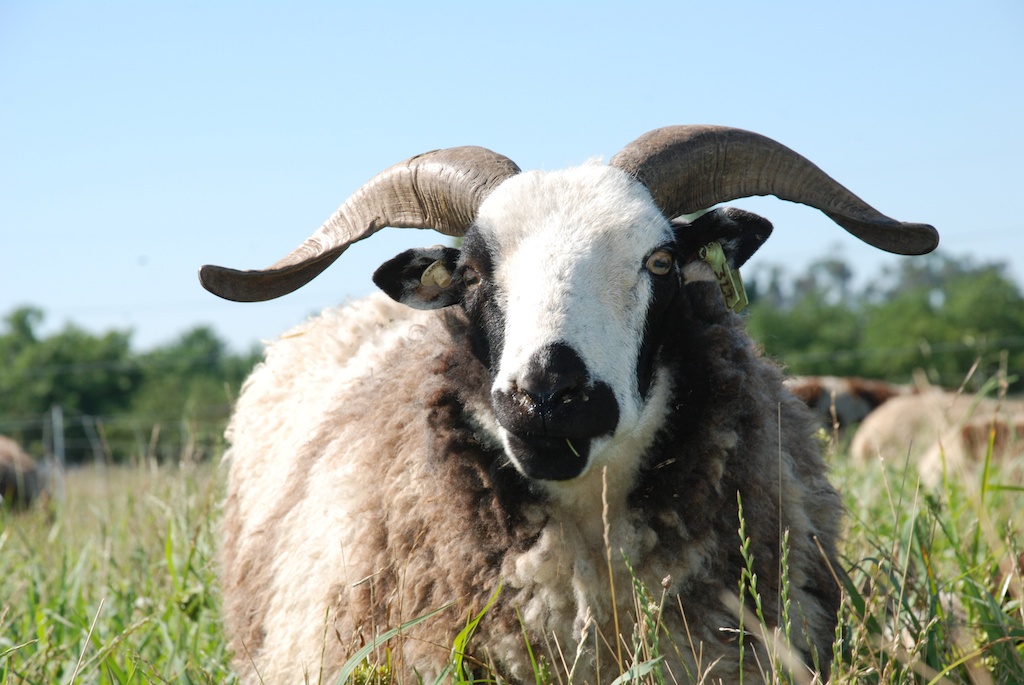
I’ve been writing about sources of wool from Solano and Marin Counties and from Oregon, but of course I used my own wool too for the Artery show. How to choose a representative photo of my sheep? I used more than one. I can do that because it’s my show.Fanny FannyLola Lolarams-frontRams.

Here is the story I wrote for the show:

I developed Meridian Jacobs after my family moved to Meridian Road, north of Vacaville, in 1999 and I purchased Jacob sheep. The Jacob sheep is a rare breed that is hardy and well-adapted to low-input, sustainable farming practices. My flock of 65+ sheep grazes irrigated pasture much of the year and is supplemented with locally grown alfalfa during the winter.

The sheep provide me with unique wool and tasty lamb and are the core upon which I have built a multi-faceted business, selling fiber (from my sheep and other yarns featured in this show), teaching classes, and creating the Farm Club. Lambs for meat are sold to individuals and to Superior Farms in Dixon.

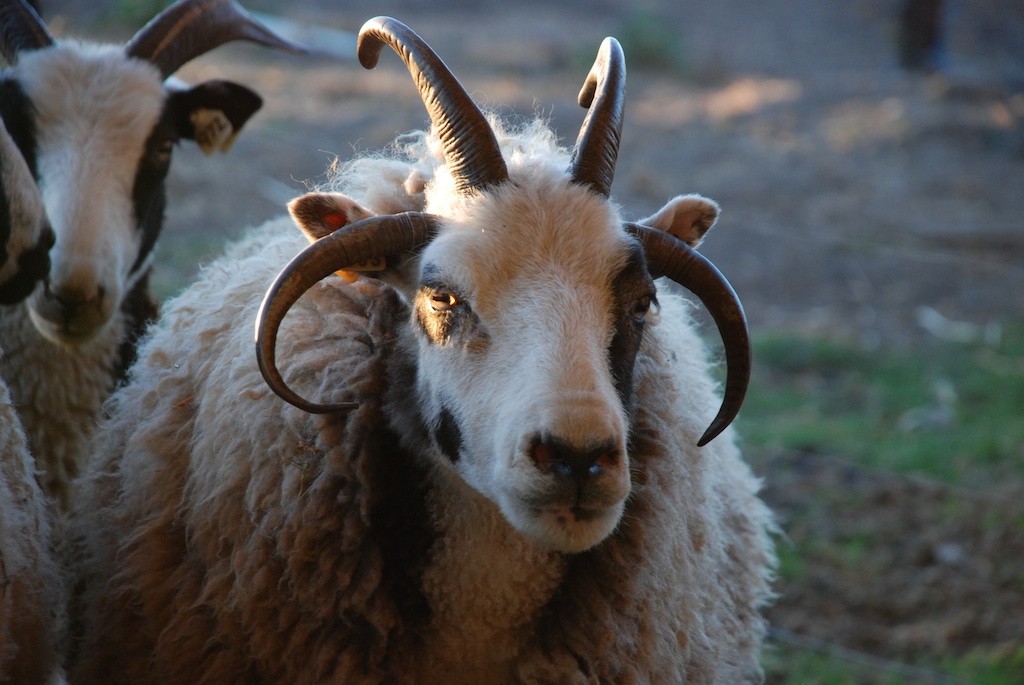
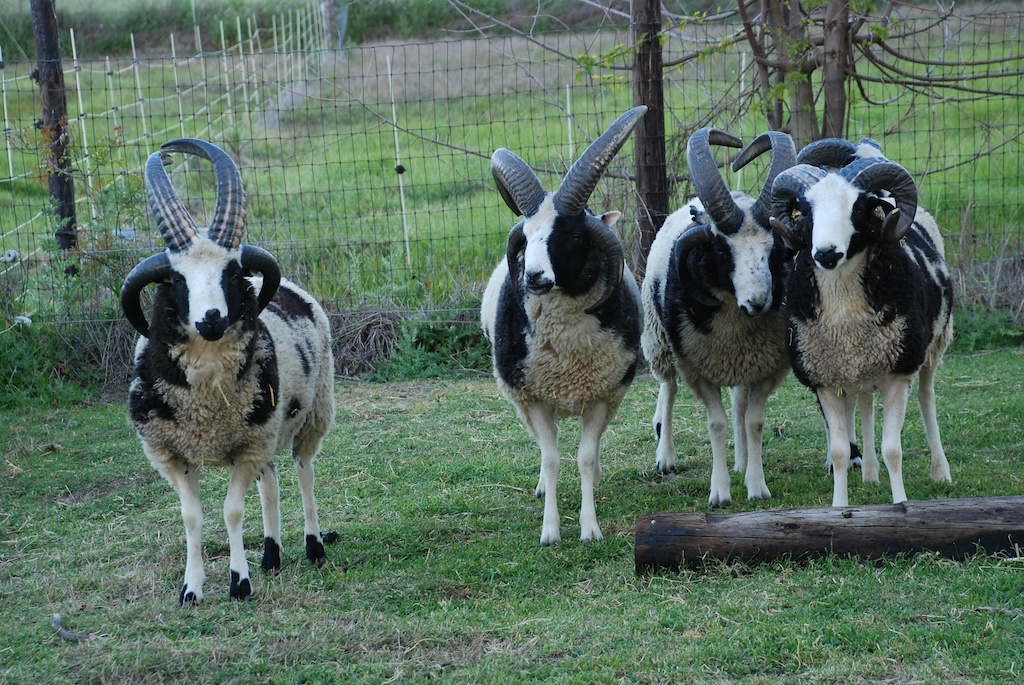
The Jacob sheep is striking in appearance with it’s spotted fleece and multiple horns. The sheep are shorn in the fall and yarn is spun at two California mills. My flock’s wool measures from 27 to 31 microns. By sorting fleeces by color and grade I produce a variety of natural shades and can use the softer fleeces for blankets and garments and coarser wool for felt items.

Meridian Jacobs evolved as I turned my passion for wool into a business.

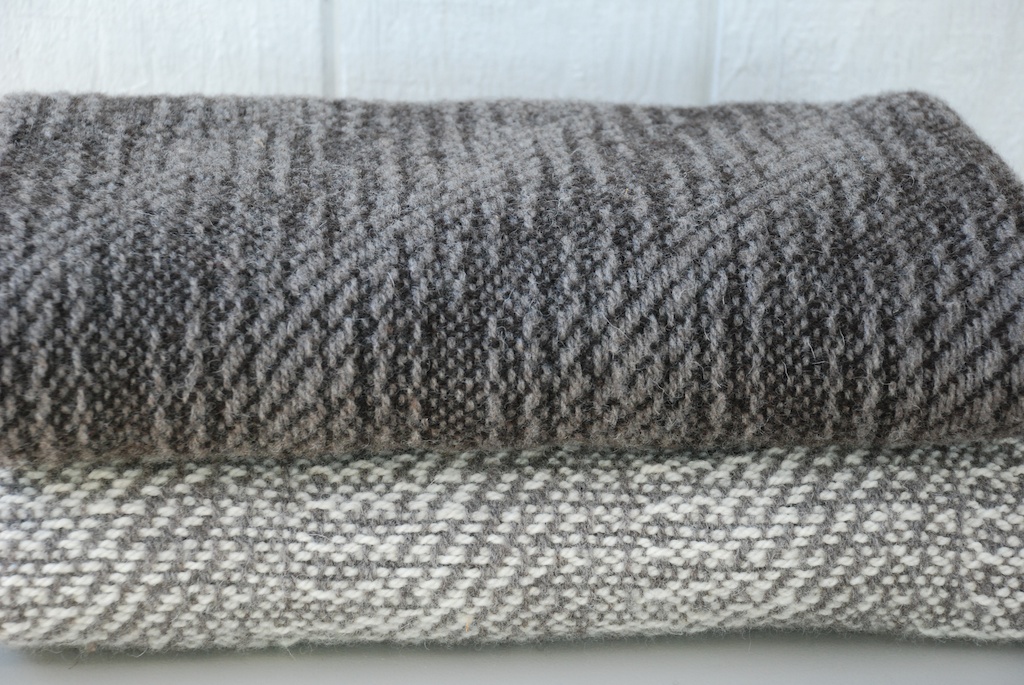
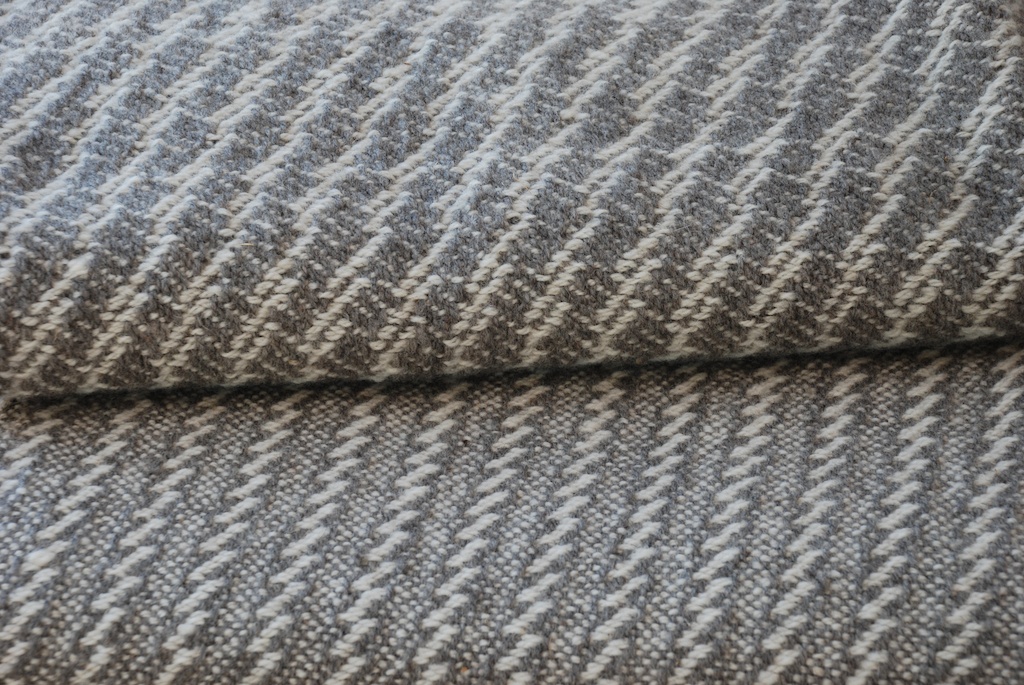
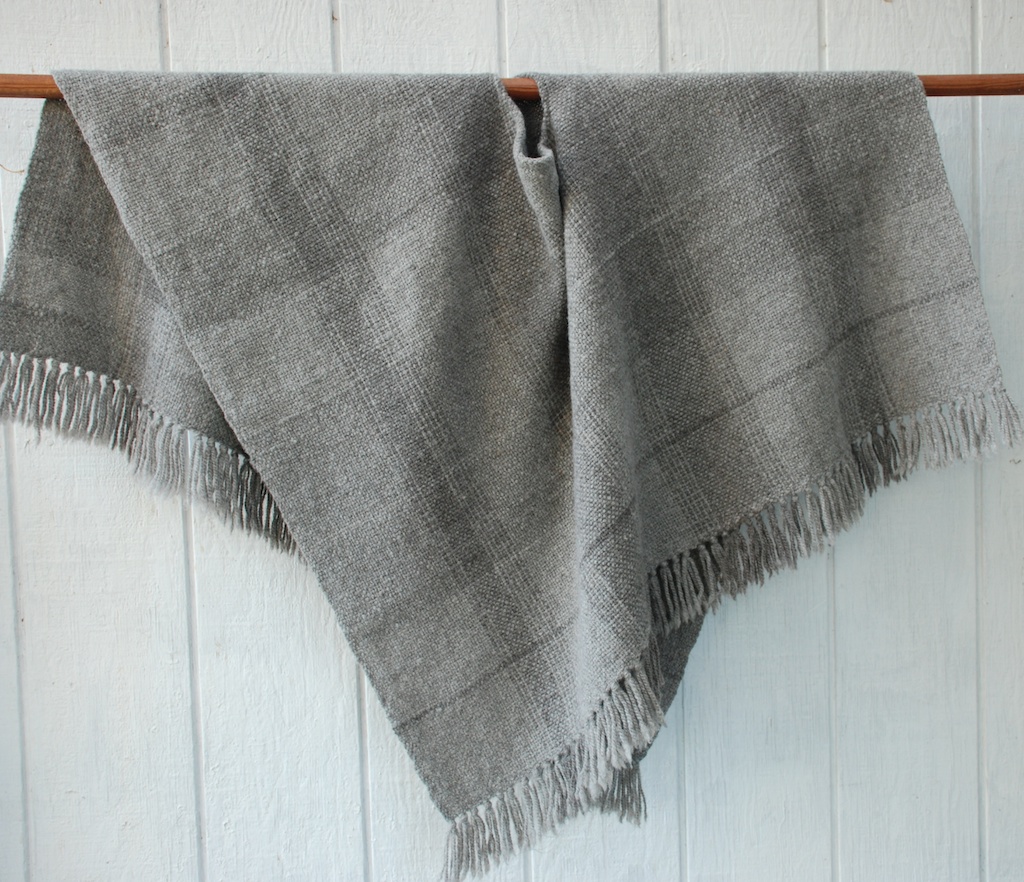
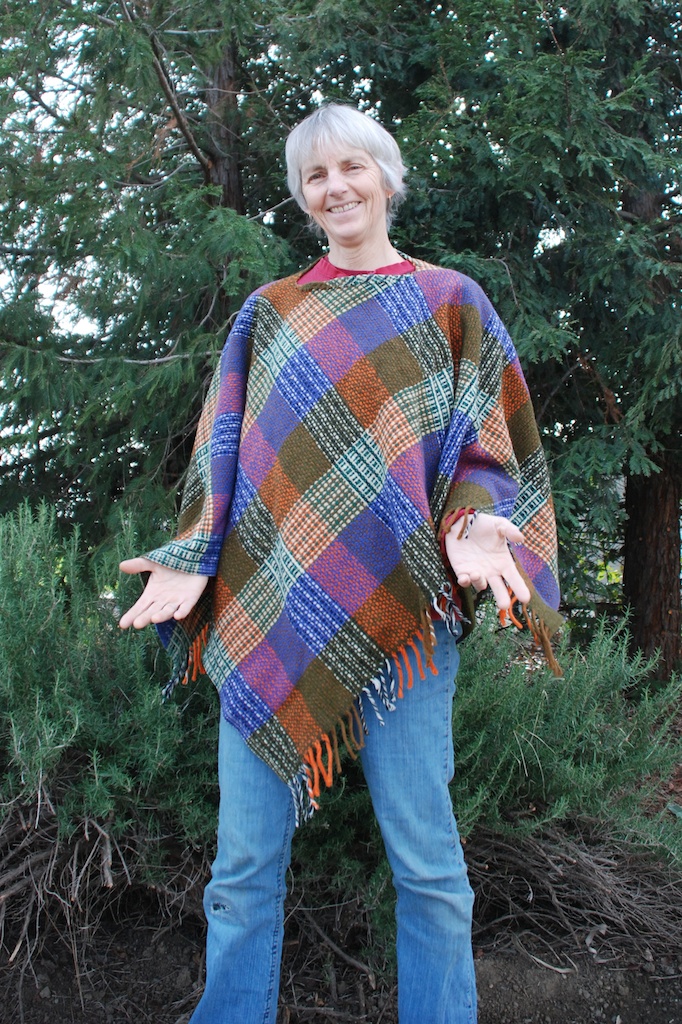
I had a limited amount of yarn from this year because I sold so many fleeces at shearing day. Some went to Farm Club members and I used most of the rest. It is beautiful yarn.Artery 2014 Jacob blanket Artery 2014 Artery 2014 These are all throw-sized blankets.Jacob blanketThe cool thing about Jacob wool is that you get all of these natural colors without dyeing. For this blanket I used odds and ends of the yarns that were left in warp and weft. It was going to be a poncho along with the other blanket on this warp. I have a poncho that I wore in high school:ponchoYes, I still have it because I always planned to use it for a pattern. (When I put it on it makes me look 17, right? Glasses are gone. With camera angle, you don’t see as many wrinkles. You can pretend that I bleached my hair back then.)Jacob wool 2014Anyway, the fabric in the first “poncho” photo was larger than the poncho that I wanted and it looked and felt so nice as a blanket that I didn’t cut a hole in it. (Good thing–it has sold to someone and it will be shipped to Australia.) This fabric was about the right size so I did turn it into a poncho. It can be purchased at the Artery (or from me after the show).887-4This is a scarf from more of the left-over yarn.