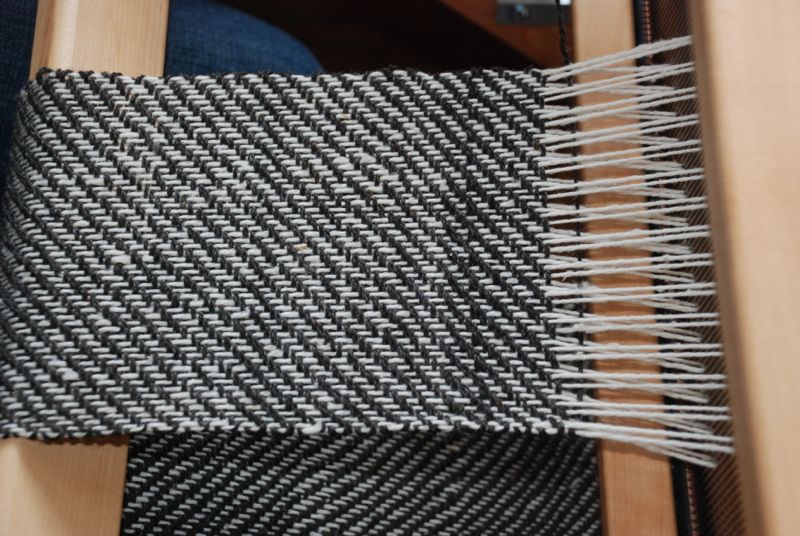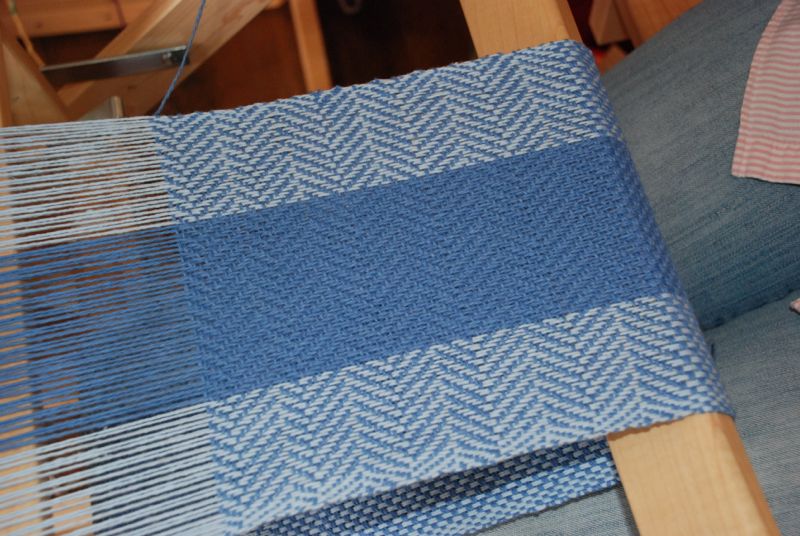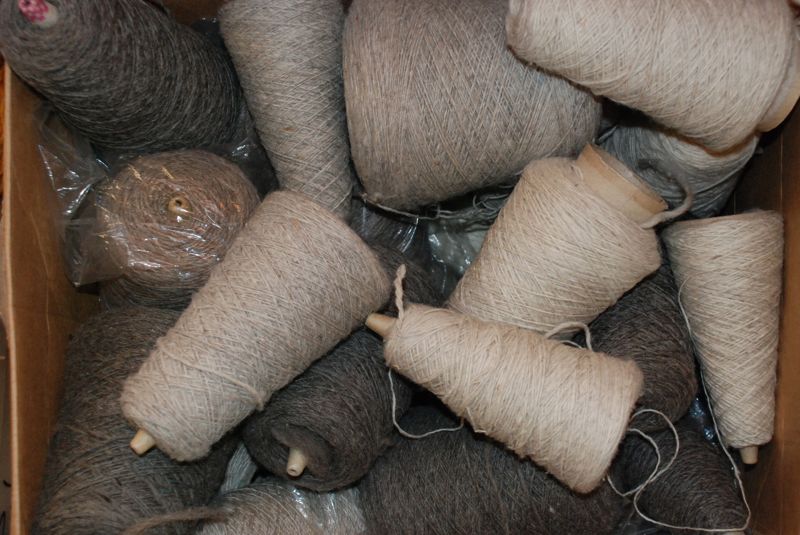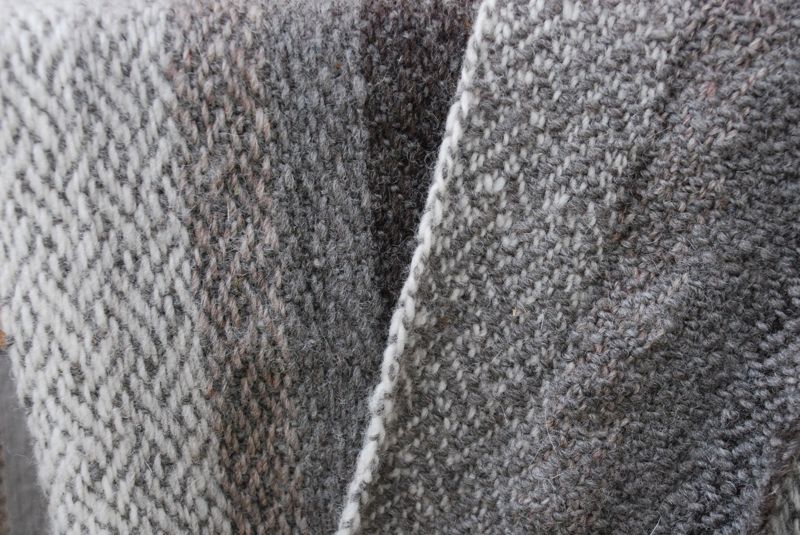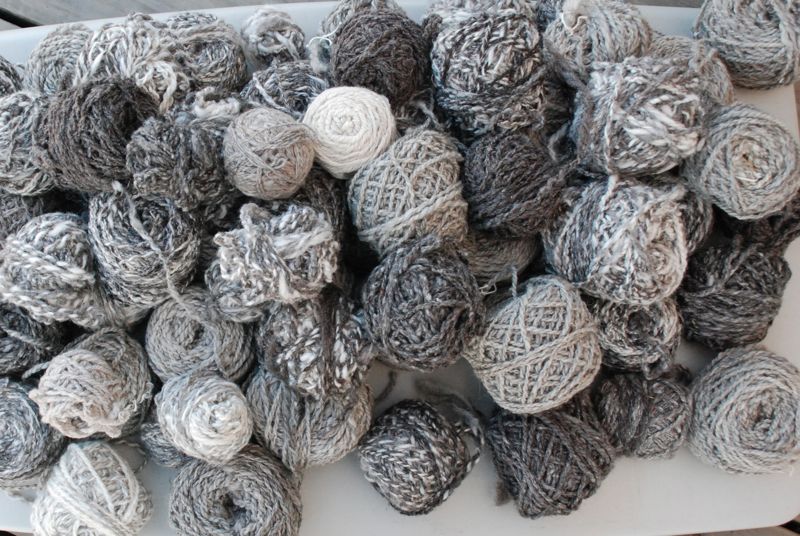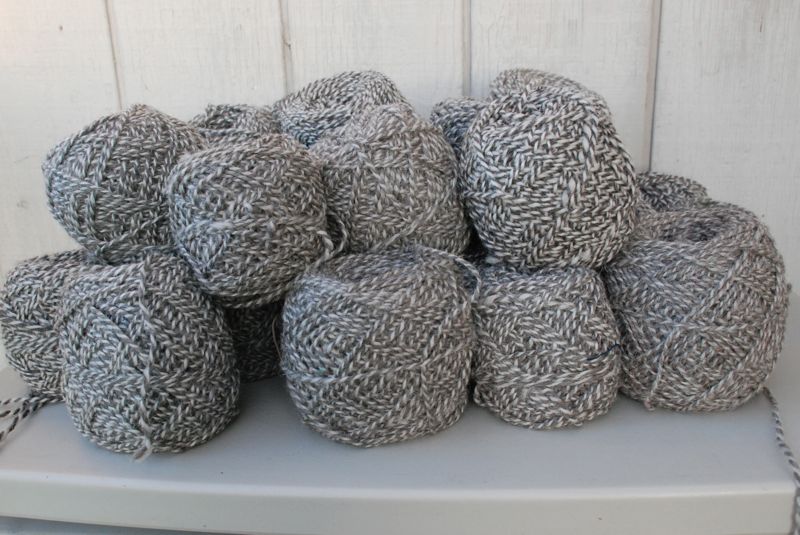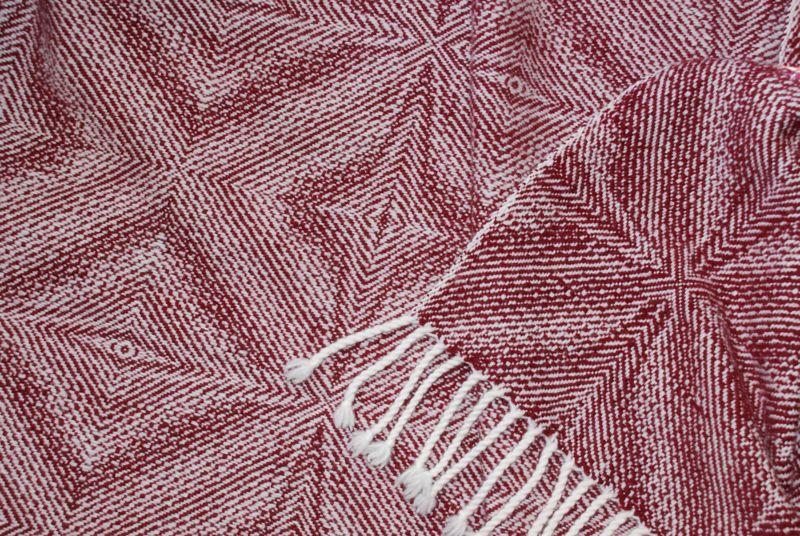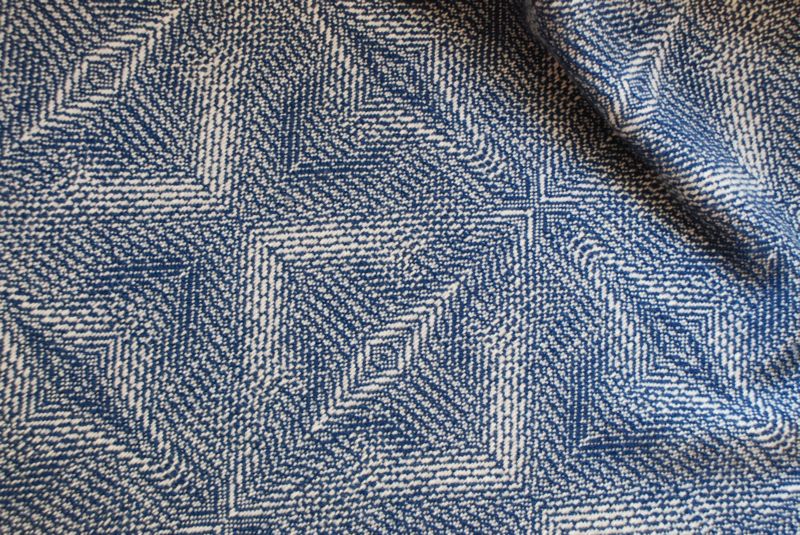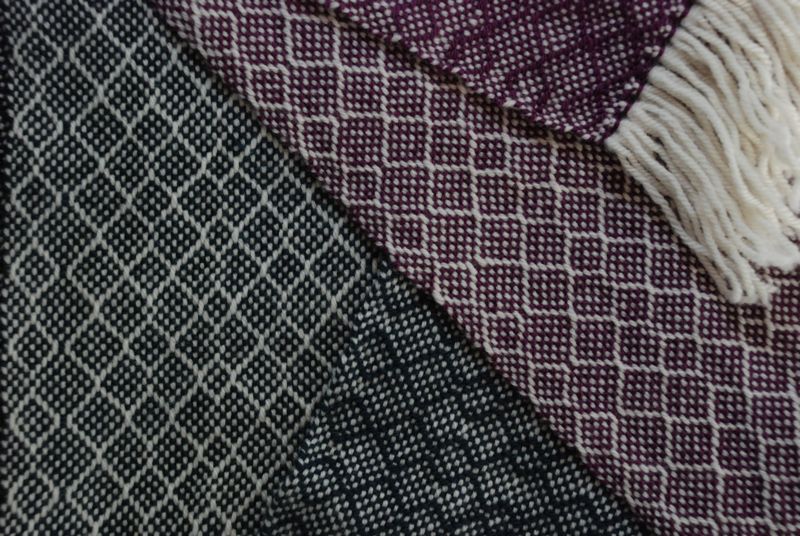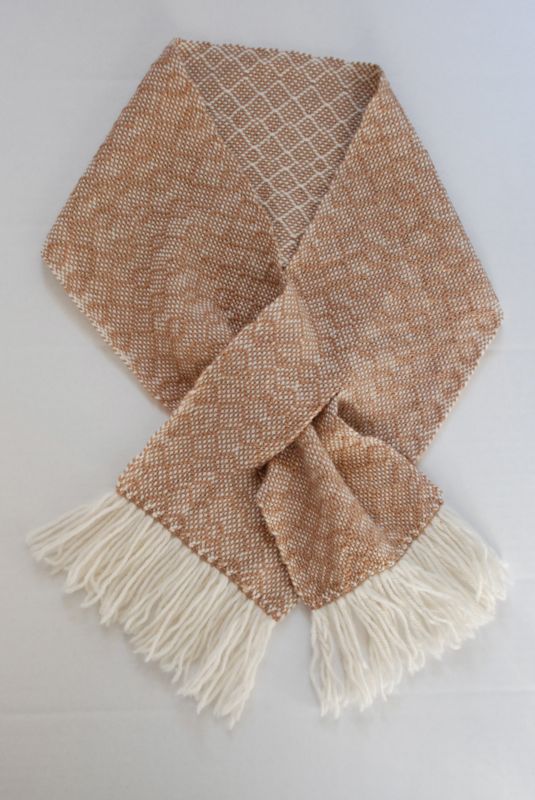
I finished 7 throws last week. Friends who saw them before washing tried to be polite but were un-impressed and maybe even shocked at how awful they looked. I used some yarn that had been spun several years ago at a mill that (I assume) uses a lot of spinning oil. The yarn on cones looks and feels like string that you would buy at the hardware store. The resulting blankets off the loom look and feel as though I wove them with string from the hardware store. Also, I wove them at a wide sett knowing that they would full.

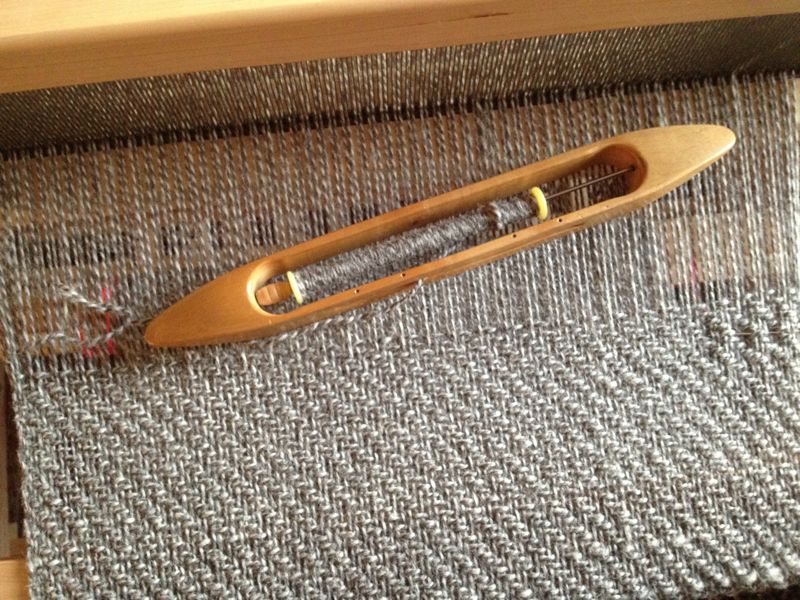
See how open this is. You can easily stick a finger or a toe through this. And a cat would pull those threads and destroy it.

A trip through the washing machine to full (Not the way to wash a finished blanket–to do that see my instructions here)…

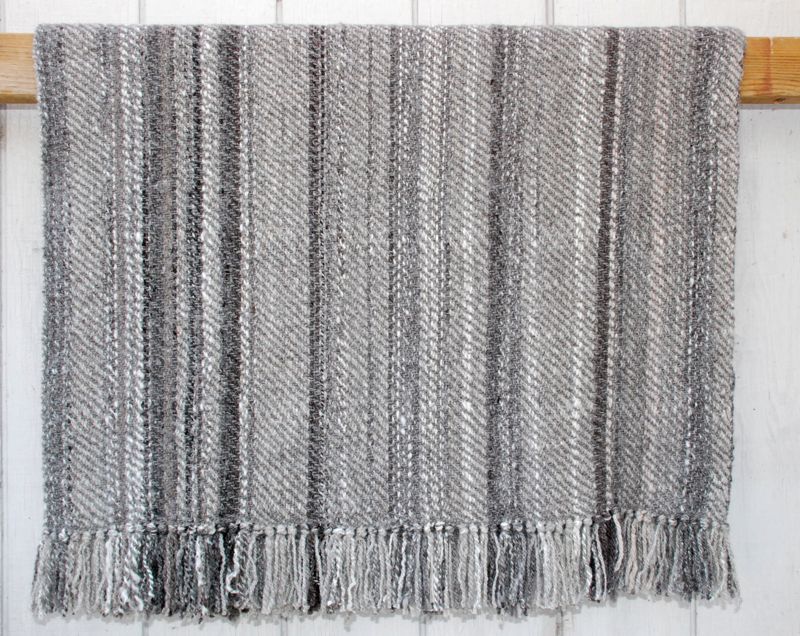
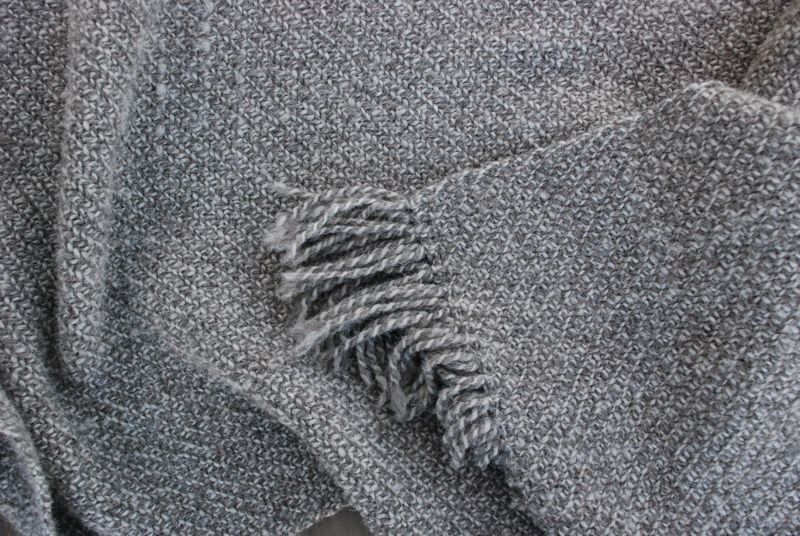
using Power Scour (normally for raw fleece, but this yarn was very greasy) changed that blanket into this:

Here is another before and after:

And another:

One of these blankets is a gift to the person from whom I got the wool several years ago. I’m sure she doesn’t see this blog so it will be a surprise until tomorrow when I take it to her. This blanket includes her dog hair that I washed and spun:

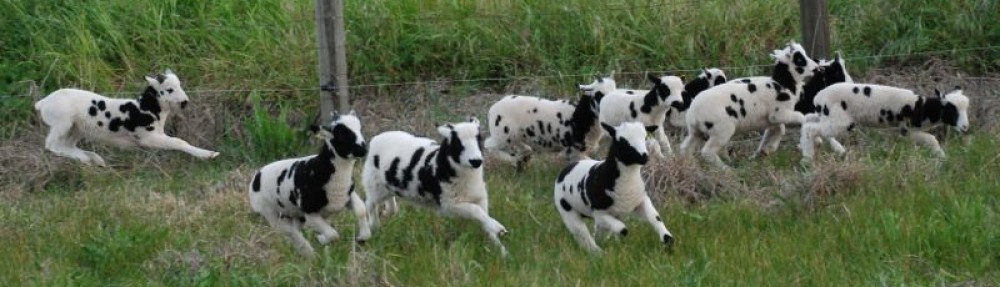
Here is one with Jacob weft:

All 7 blankets:

 

Using Yarn

There is a photoshoot next week for the Fibershed Marketplace and I have wanted to get some new items ready for it. I have boxes of yarn that I have intended to use and have just never got to. Now is the time. In fact, my goal is to use up all of these boxes by the end of the year.

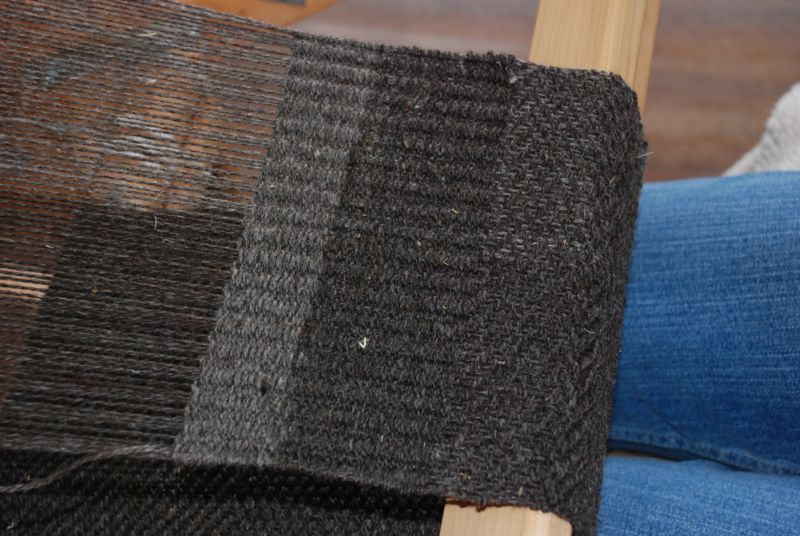
First box–Single ply Jacob yarn spun years ago at Yolo Wool Mill.

Three scarves in a plaited twill. They feel nice, but have a few issues. They curl at the edges because this is an unbalanced twill–warp emphasis on one side and weft emphasis on the other. Besides that the center stripe turned out to be something else. It probably has some llama fiber in it–it has less elasticity than the rest so it puckers. Are these design features? It serves me right for keeping yarn for so long that I don’t remember what it is.

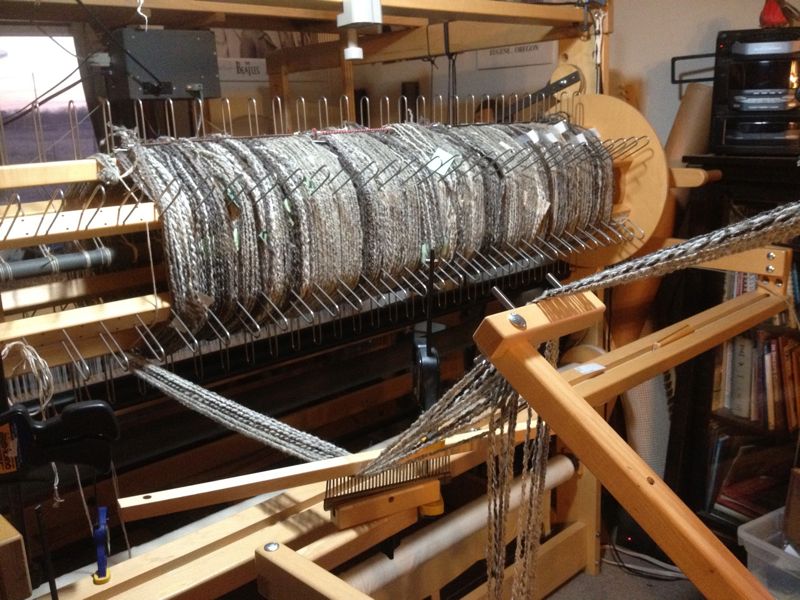
Second box. Full of funky, slubby, heavy handspun yarn, mostly spun by my mom–that means it was many years ago. It will make wonderful throws.

Here it is going on to the loom.

I wove two blankets using the handspun as warp and the finer singles yarn from the first box for weft. Handspun yarn has such a nice feel to it–I don’t think you can duplicate that with millspun yarn.

Third box–heavy 2-ply mill-spun Jacob yarn.

On the loom.

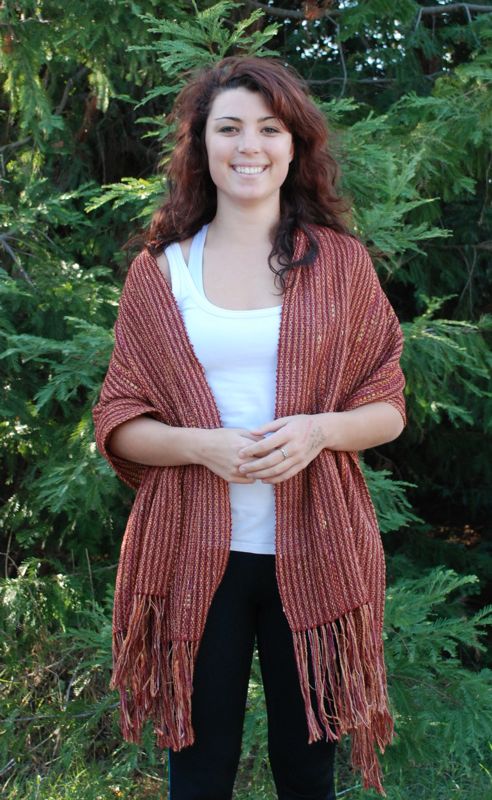
I was going to make ponchos, but I took this off the loom and decided that it was a great shawl (and if it was a shawl it was finished–no cutting and sewing). It is very soft with wonderful drape.

Three boxes started. I haven’t counted how many more to go.


Weaving in Blue

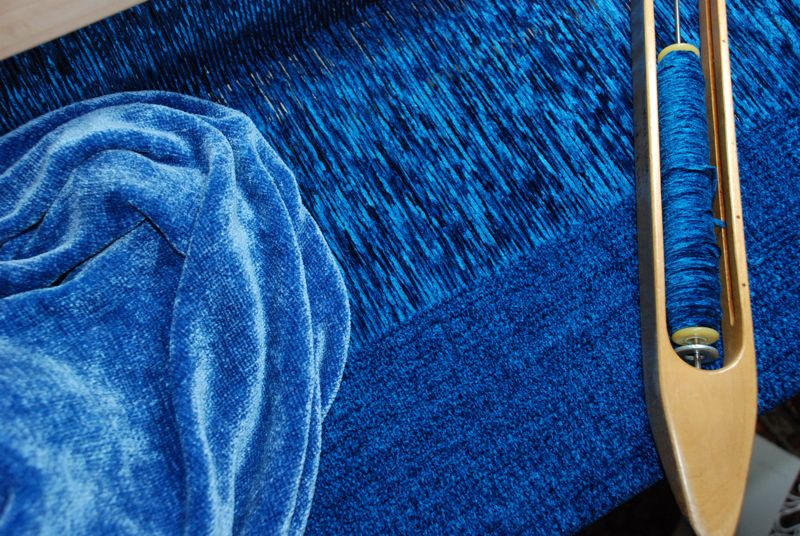
I got a new loom! It wasn’t from Santa. I realized that if I was going to try to sell Schacht looms I’d better have some examples here. I have the smaller looms, but not a large floor loom. So the week before Christmas my loom came. It’s an 8-shaft, 46″ loom and I ordered a double back beam and sectional beam. Wow! What should the first project  be? Fortunately I didn’t have time to worry about the appropriate first project. I had an order to weave a chenille throw and I’d been putting it off. The deadline was Christmas.

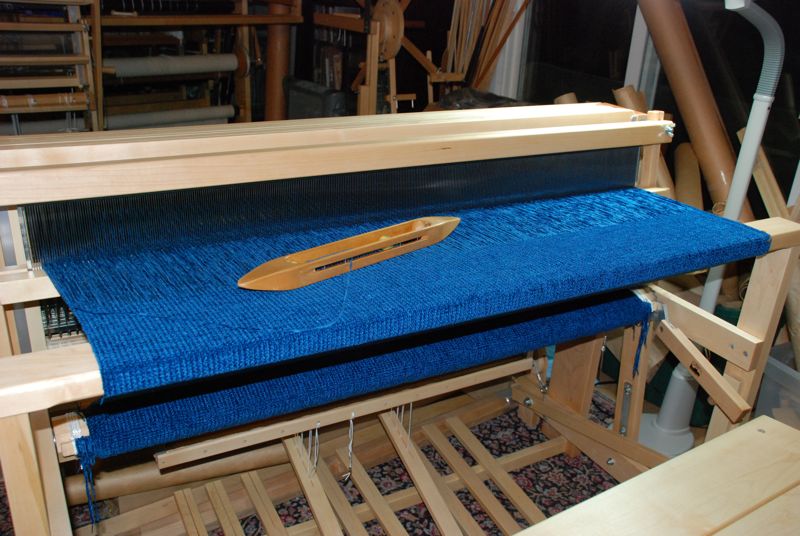
Here is the first warp on my new loom. I think that a 46″ wide chenille throw is a worthy project for the occasion.

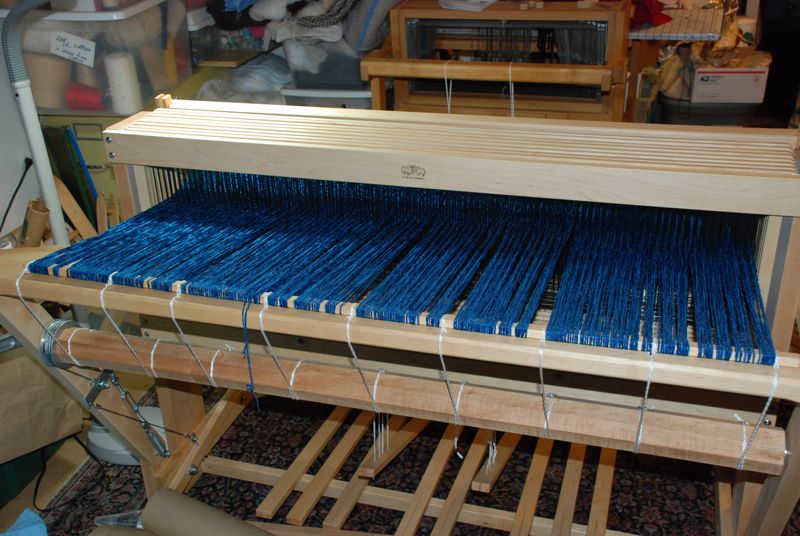
Back view of the loom (before adding the extra beam or even the rest of the treadle tie-ups.

The piece on the left is the original throw that I was to duplicate. The loom was a joy to weave on, even with a 46″ wide warp. I am thrilled and can’t wait to wind the next warp.

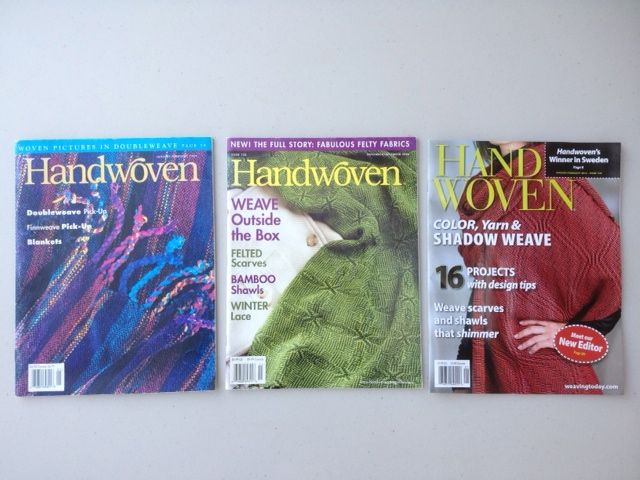
In the meantime I had a deadline for a piece to (hopefully) be used in the next issue of Handwoven.

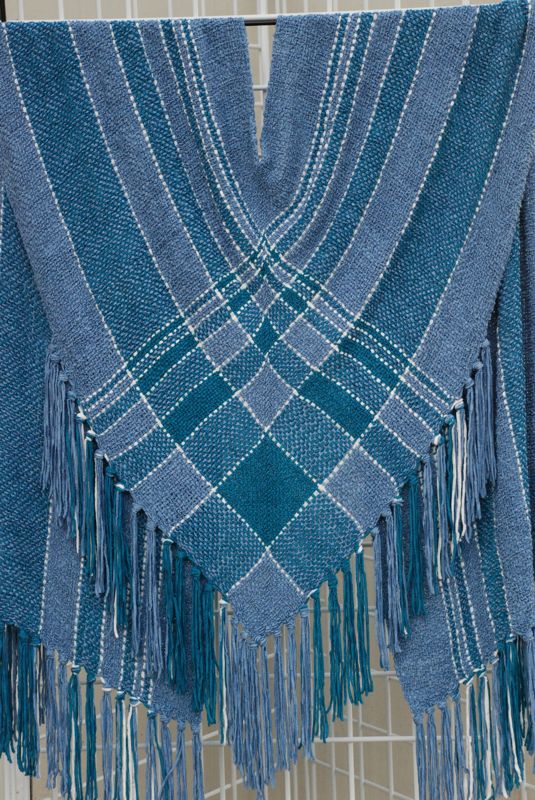
This was finished  yesterday and mailed today. Its a v-shawl out of yarn called Bambu Lace.

Weaving Wonderland

Image

I gave a presentation called World of Wool to the Portland Weavers Guild on Thursday. There are two meetings and the morning group meets at Ruthie’s Weaving Studio. IMG_0106This is a fabulous place. Look at the number of looms here! At Ruthie’s weavers can pay a monthly fee and use the looms and all the other equipment at any time the studio is open.

This loom has 16 or 20 shafts.

This loom is set up with a long warp for overshot coverlets. There is a waiting list for the weavers who want to weave a coverlet using the warp that is already threaded and ready to go.

This is a rug loom designed by Peter Collingwood.

Being able to see this in person I finally can finally understand how shaft-switching works.

Here is a small Jacquard loom.

Look at the size of this warping reel.

Inspirational textiles abound, including this sampler using Moorman technique.

Ruthie’s Weaving Studio

I stayed with a friend (who used to be part of the Sacramento Weavers Guild) not too far over the border in Washington. You catch a glimpse of Mt. St. Helens on the way to her house.  I hope to be back to Portland for more weaving related activities and some sight-seeing.

Weaving

The November show at the Artery will be the work of all of us fiber artists. I had plenty of warning about the show (many months) but, because I tend to work from deadline to deadline here is what I’ve been doing in the last couple of weeks.

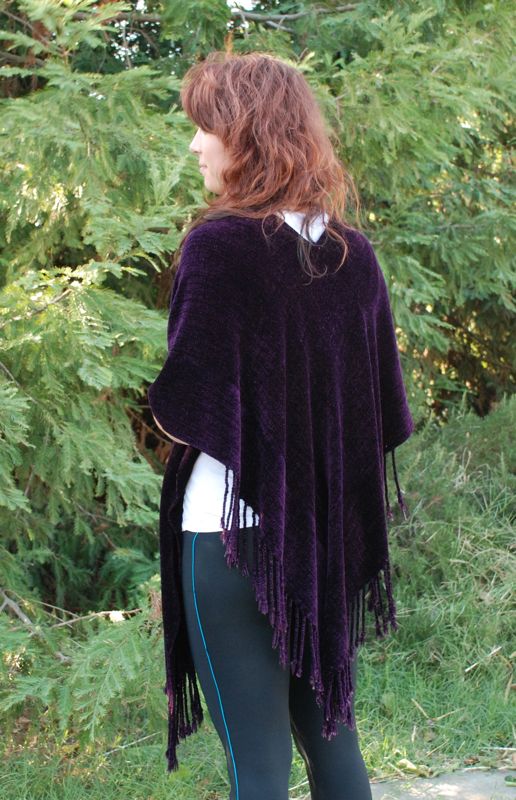
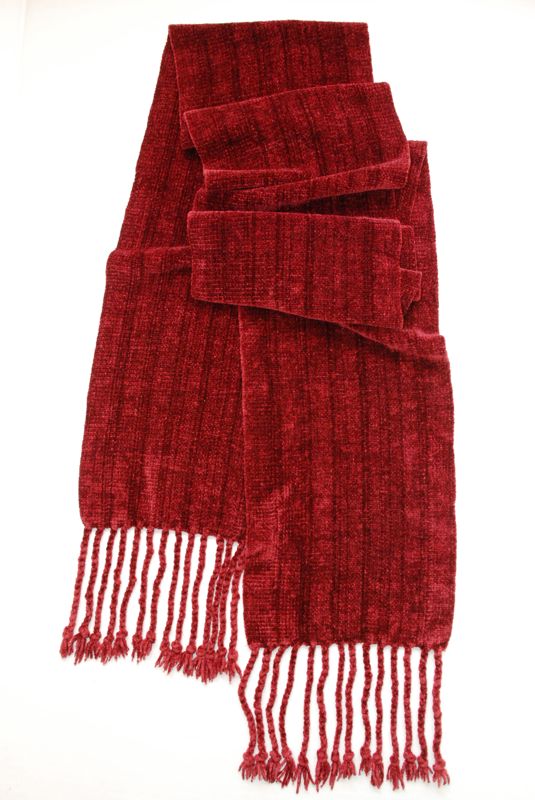
This is a stunning purple chenille v-shawl that includes a sparkly  yarn.

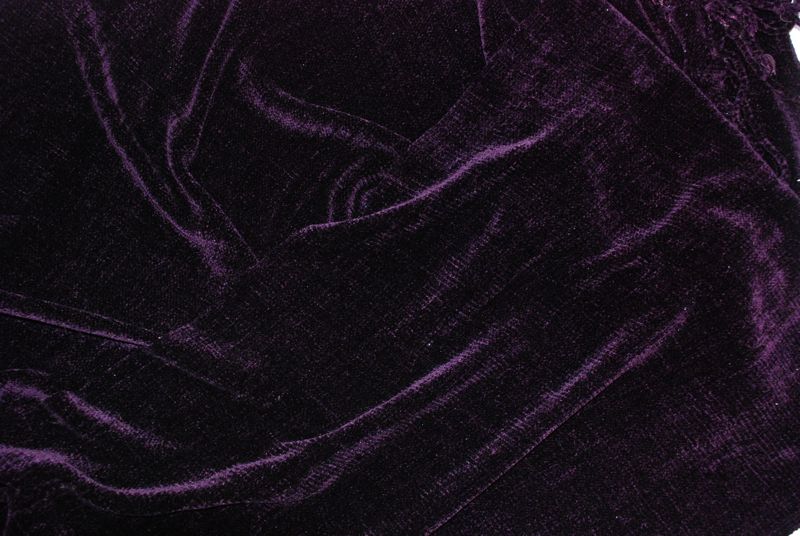
Close-up of the shawl.

Chenille scarves to be displayed with the shawl. You can’t tell from the photos but there are sparkles here too.

 Rayon & cotton shawl.

Advancing twill blanket in organic Merino wool.


Merino wool scarves that were woven using a “name draft” that I created for Katie’s wedding.

 The end of the warp that wasn’t long enough for a full scarf.

I was just talking to my friend who said that this wasn’t a bad accomplishment considering that I had deadlines for Handwoven magazine, my daughter’s wedding and a concert in my barn all in the last month.


Three Looms Warped

I have new projects on all three looms. That’s exciting!

This is a warp for 2 shawls. It is a mixed warp of cotton threads, a shiny slubby rayon thread, and Luna ribbon. I have already completed blue and purple shawls in my series of shawls for the Artery.

I know it’s 100+ degrees out but I’m getting a head start on the projects for the winter and I couldn’t wait to try out my new yarn. This is the newest Jacob yarn (1 ply black and 1 ply light gray)–not even labeled or on the website yet–and the project is a v-shawl.

I have been low on baby blankets for quite a while and while this warp may not help when someone needs a “boy blanket” it should give me several for girls–it’s 24 yards. Someone called today looked for a “neutral” blanket and I wonder if I weave with a blue thread if it could go for either. Here’s a small world experience. Yesterday I got an e-mail from a young woman New York who had been sent one of my baby blankets when she was a baby and her mother has been a regular customer ever since. The daughter now has a friend who is pregnant and wants to give one of the baby blankets. The call today was from the person who sent that first blanket  to his niece in New York and now wants to send a blanket to Germany.)

Silk Challenge-Part 2

When I have new fibers or yarns and am trying to figure out how to use them my first step is to sample. Sometimes this is a full-sized sample. For instance I go ahead and weave a blanket or a scarf, etc and learn as I go how the yarns work together and decide if I like it or if I should change something next time.

The silk challenge poses a different problem for me. I don’t have any idea of how these yarns will work and I don’t really have an end project in mind although a scarf is one idea. By the way, the responses to the last blog were good ideas

  • color and weave effect
  • accent colors on woven sheep as in  some very cool sheep paintings that Dona sent
  • fabric for the “squares jacket” that Diane brought to WWW
So my first step was to wind a narrow warp and experiment with weft. I started with the heavier red silk yarn at 6 epi.  I used the sari silk yarn, silk rags and bamboo yarn in various combinations of fiber and weave structure. Interesting but nothing jumps out at me.
My next sample was to use the sari silk yarn for warp. I was hesitant about this because it is so “hairy” I thought that it might not work well as the warp. At 6 epi it worked fine in this narrow sample and I like the results better than the first warp. I will have to evaluate all these different sections as to drape, durability, etc and decide where to go with this project.
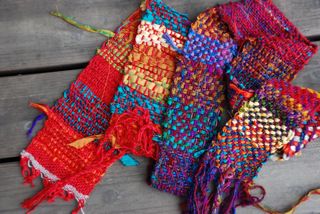
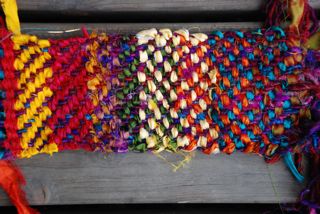
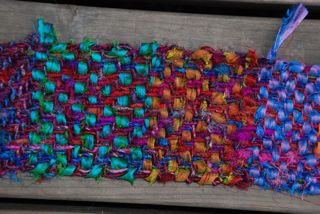
These are the samples. One thing that I don’t necessarily like about using the silk strips is that the colors become blocky–weaving 3-4 inches of each color. If I wove a wider piece that wouldn’t be as much of an issue but it will be in a narrow scarf.
In this sample I alternated colored strips so that one color blends into the next. I also beat more tightly. This wouldn’t be very good for a scarf but would be a great jacket or mat.
I like this part. I alternated the strips with the sari silk in a twill. This is beat more loosely so there is better drape, but it could be considered sleazy if the fabric was to be used for something that needed firmness.

A Silk Challenge

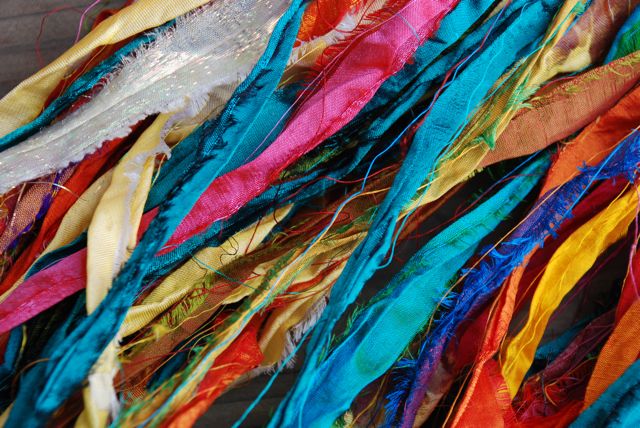
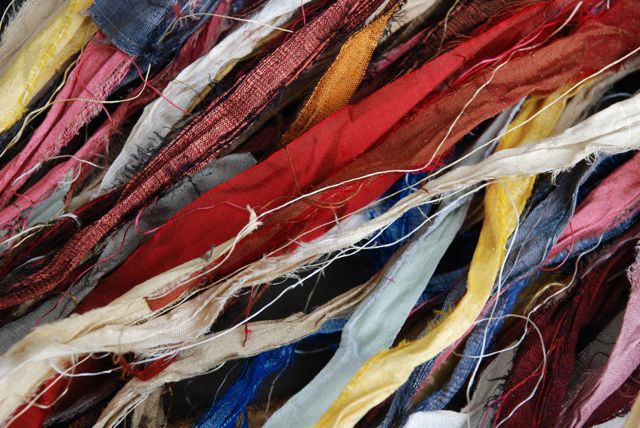
These are strips of silk. You can see the iridescence in some of them.


Here is another set of silk strips.

And this is the challenge. Choose a yarn for warp (choices are thin bamboo or a heavier silk) and weave something from these strips. I’ll report back when I have something. Any ideas?