The meaning of WWW

To my friends  it means Weekly Weaving Workshop. It is usually the Wednesday Weaving Workshop, but is sometimes on Friday. I have had a request for an evening group. Is that  EWWW? Maybe not.

Modeling three circle shawls. The one in the middle is the prototype that Diane brought a year ago. We analyzed the fabric construction and the design of the piece, after which Chris and I both wove shawls. Check out the back of these shawls:

Yesterday’s WWW was truly Wonderful–soaking up the January sun and talking about our favorite pastime!

Maybe I’ll change the name to WX4= Wonderful Wacky Weaving Women.

Tired of twisting

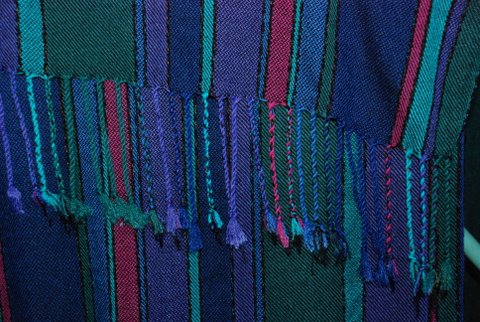
We’re setting up the Artery show on Thursday so instead of weaving all day I twisted fringe all day. I don’t particularly like twisting fringe, but I think that most of the things that I weave are best finished with a twisted fringe.

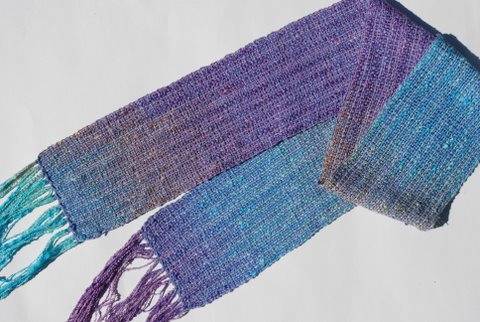
This is a shawl woven with fine bamboo yarn. If I leave the fringe loose it will get hopelessly tangled in use. Also, the bamboo yarn seems to separate into it’s plies fairly readily. So twist it is.

When I weave wool blankets I count on fulling them in the finishing process ( agitation in hot soapy water). The threads become somewhat attached to each other and the whole thing becomes a cohesive unit instead of a bunch of intertwined threads. That is not the process that you want for loose fringe. Twist again.

The green and brown blanket has already been washed. This light blanket (inspired by clouds in a painting of the Sierras while the green one represents the forest) has not been washed.

I wove this ruana fabric a few weeks ago but hadn’t twisted the fringe. Even though I had woven a lot of items I had hours ahead of fringing. Now I think I have just one shawl left and the scarf that I’ll finish tomorrow.


Weaving day

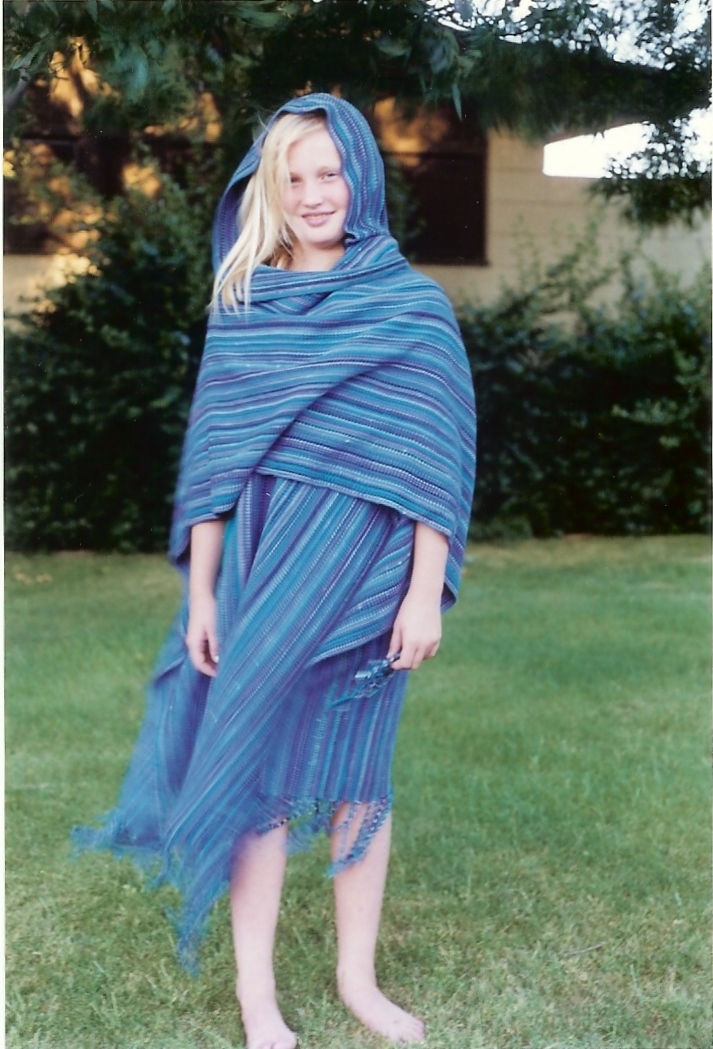
I spent most of the day at the loom weaving a project that it taking way longer than I expected. I planned to weave a ruana for the show coming up and I based the measurements on the ruana that my daughter wove way back when she was 11 years old.

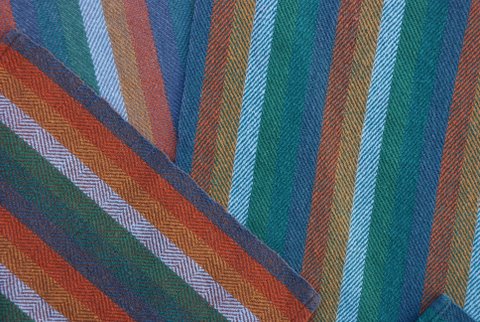
When I took the measurements of this piece I assumed that we had warped this using double weave–to come up with a double width fabric in the back and two separate layers for the fronts. That was assumption #1 that was wrong. I planned colors of stripes to coincide with two twill patterns. As I was winding the bouts of warp I put them in the raddle for my AVL 8-shaft loom. It occurred to me part way through that I needed 16 shafts to weave the 2 layers that I planned. OK, no problem. Since I hadn’t yet wound the warp onto the beam I could move the warp to the 16-shaft AVL.   This was a tedious project to thread. With the help of the computer (and a lot of trial and error) I figured out how to thread this and then have the twill lines reverse on the bottom layer.

I also used the computer to figure out how avoid 3-thread floats between the transitions of the two patterns. This is one layer (shafts 1-8). I did another draft for the 2nd layer (shafts 9-16) and then interspersed the tie-up to create double width and again for two layers.

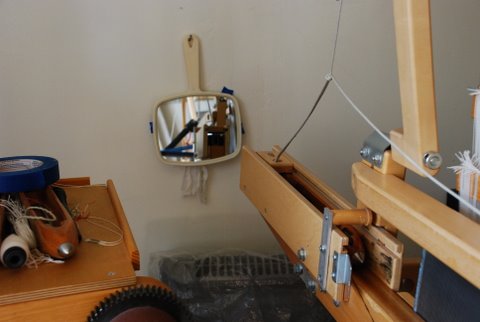
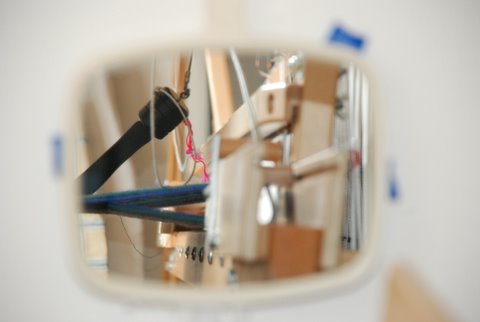
Here is the fabric on the loom. I am using the Zephyr 50% wool/50% silk yarn that I carry in my shop. The big mistake I made was planning this at double weave instead of just weaving one really long strip and sewing them up the back. My assumption about the original ruana was wrong–we did it just that way, not double weave. I’d have been finished a long time ago if I had woven one long strip. The double width isn’t so bad except that the yarn is so dense that I had to pay close attention to make sure that threads weren’t catching. Here is the system I rigged up for that.

A glance in the mirror each time I change sheds shows if it is clear or not.

The harder part is now that I’m weaving the two separate layers. Two shuttles is much slower than just half the speed of using one shuttle. I think I have another couple of hours tomorrow and then this warp will be finished and I can move on to other projects to finish in the next two weeks.

Here is a weaving project that is very different from the ruana. In a previous post I showed this pile of mohair and yarn scraps that was working on in Oregon:

This is what it turned into. Thanks to the ever willing Shelby for modeling. (Without a model it would probably not look much different than how the fiber looks piled on the table.)

A few days ago I wove another.

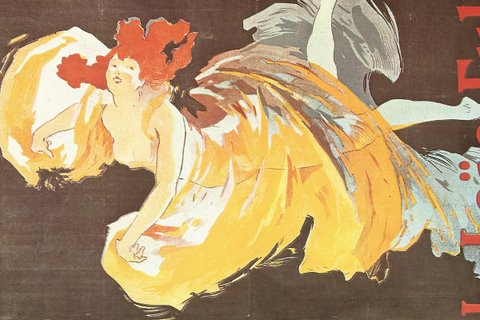
This will be in the Artful Fiber show at the Artery to accompany this painting:

There is something about this painting that makes me think of a fluffy boa.

What do I do all day?

What have I been doing all week? Way too much to write down and maybe not all that interesting. But I’m so busy that although I’m always taking photos and thinking of good blog posts I just haven’t had time.

Here are bits and pieces of this week.

I finally wove some more baby blankets. I have customers waiting.  After I took the blankets off the loom I realized that I had a lot of skipped threads along the left side of many blankets. I know why–has to do with combining 7 threads as one in the warp and trying to use 2 threads wound together on the pirn with a fly-shuttle. Just enough drag on the shuttle to cause it to catch the warp threads. AHHHH. That means a lot of fixing. My $/hour just went WAY down. Here are some of the 17 blankets.
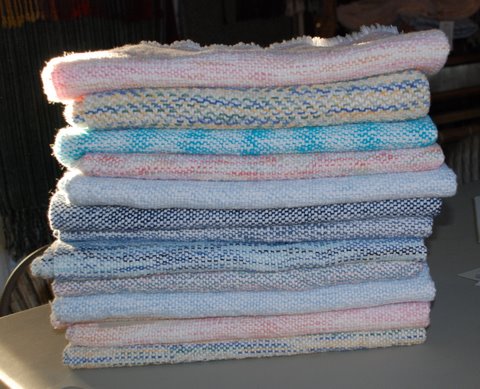
These blankets will be on my website after I get better photos. That’s another thing I spent time on. I tried in the sun and in the shade and none of the photos were very good. Back to the drawing board.

I have projects on three looms right now. Two are for the November show at the Artery. One is for my friend, Irene, owner of  Cotton Clouds. That project will be a surprise, but here is a preview:


14 carat gold thread–use sparingly!

This is more of the project. All of these yarns are going into the warp!

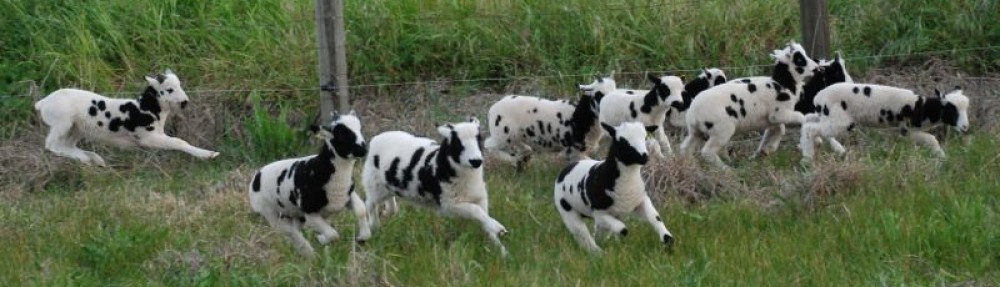
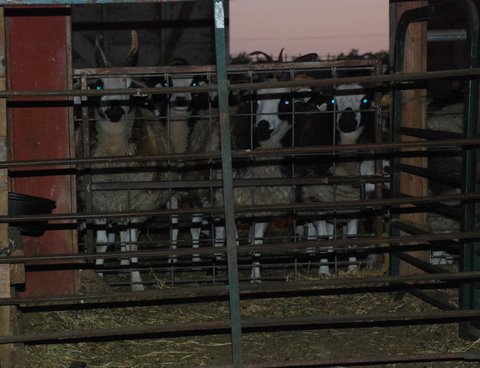
In the meantime there are sheep things going on. Savor, one of the yearling rams, had been with a group of ewes and I needed to put him somewhere temporarily. I didn’t want to put him back with his buddy, Tioga, because I figured that they’d have to fight it out first and I can’t deal with that right now. So I gathered up the ram lambs that are left and put them all together. Usually the lambs bow down to the older and stronger ram and leave him alone. There is posturing, but if they know what’s good for them they won’t antagonize the big guy.
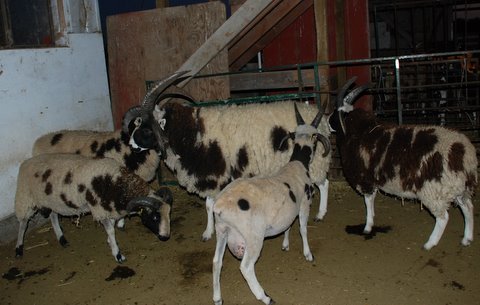
At first I thought it would be OK.

They look friendly enough, but finally Savor started threatening one of them more seriously. It happened to be a ram lamb who is already sold for breeding but hasn’t gone to his new home yet. I needed to separate them because I didn’t want to take a chance.

The ewes were all looking hopeful that they would get a chance to mingle with the rams. “We’re ready! Come hither!” Notice the double fence.

Last but not least–someone in this house has no problem taking naps:
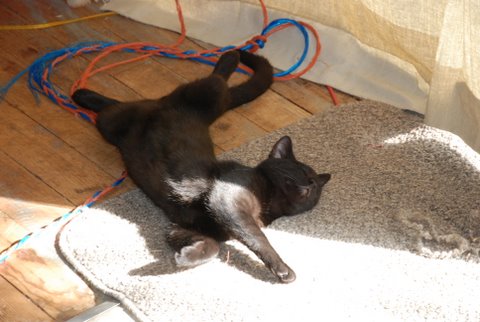
Petunias off the loom

Remember this photo? Here are the results of my weaving:

I made a warp long enough for two throws. (They were going to be shawls but because I wanted to keep all 16 colors the warp was too wide to turn into shawls.) This photo is a throw woven with a fine cotton weft so which you see the warp stripes, although it’s hard to really see all the colors.

I wove the second blanket with chenille yarns in the same colors and order as in the warp. If you could see the whole blanket you’d see that it starts with green on this end and finishes with blue on the other.

Julia, who is the felting half of the November Artery show, and I got together a couple of weeks ago to get a photo to be used for publicity.

Julia brought Lisa, her neighbor’s daughter  visiting from New York, who graciously agreed to be our model.

Isn’t she great?

I could weave O’Keefe inspired fabrics forever, but it’s on to Mondrian.

Weaving Inspiration

Remember the O’Keefe painting that I used for inspiration for chenille shawls?

Here is one of the finished shawls.

The next one is Petunia #2:

The red canna shawl has 12 colors in the warp and I had a hard time fitting them all in. There are 15 colors on the table now and I don’t want to leave any out. Since I couldn’t decide what to do I decided to wind a warp with all 15 colors in a paddle and weave some scarves before I move to a large project of a shawl or throw. Here is what that looks like on the loom:

More to come later.

It’s Showtime

It will be ShowTime in November. That’s when Julia (see Historic Fibers blog to the right) and I will have our show at the Artery. We started talking about this a year ago and figured that if we each created  one or two pieces/month we’d have plenty. Oops. Now it’s 3 1/2 months away. I’ve had the plans all that time–just haven’t made much progress in real life.

I posted a photo awhile ago of this Georgia O’Keefe painting. Here are the chenille yarns I chose that represent this painting.

And here is the shawl on the loom.

Weaving projects unearthed

I think I have figured out how to link WP and FB but to try it out I should have a real post.

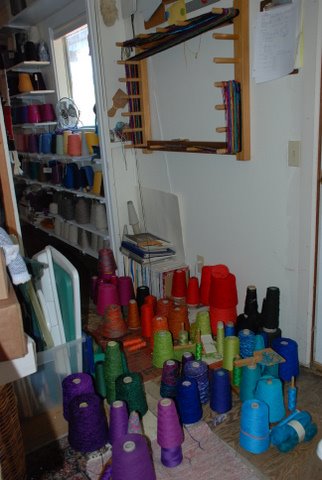
When I reorganized my shop I unearthed boxes and boxes of yarn, etc. Here are some scarves from a warp that I wound and space-dyed quite awhile ago. I like to plan warps and design projects but sometimes there are those days when you don’t want to have to think. What fun to pull out a warp that is ready to put on the loom.

The towels below are from a warp that I remember winding about 19 years ago. How do I know it was that long ago? When my now-19 year old son was a baby and would be awake in the middle of the night sometimes I put him in the backpack and kneading bread or winding warps would put him back to sleep!

Still weaving

I haven’t written about weaving lately, but I’m still working at the loom. I have orders from 3 regular customers for 9 baby blankets. I just finished a warp with 10 blankets.

Last week I finished an order for wool throws. This customer had her yarn spun at Yolo Wool Mill and wanted 5 different blankets. Sometimes it is necessary to add a lot of spinning oil to the wool during processing. The yarn isn’t very appealing in that state, but woven blankets aren’t truly finished until they are ‘wet finished’. In wet finishing  the  oil is removed and the blanket is fulled. Take a look at the before and after photos of these blankets.

I calculated a sett of 5.5 epi. I used a 6-dent reed and left every 12th dent open. After I started weaving I worried that you would see that empty space in all 5 blankets and that would distract from the woven pattern. I didn’t need to worry.  In the photo below you can sort of see that line, but when you see the blanket you focus on the diagonal twill and don’t even notice the vertical line.

Above is the before and after of another twill blanket.

Plain weave. Before fulling is above and after fulling is below.

This is one of my favorite weave structures. I was concerned about the finishing of this blanket. The yarn that I got from the mill was on cones and in skeins. The skeined yarn was so much oilier than the coned yarn  it almost seemed to be a different batch. You can see the difference in the photo. In fact, there was so much tacky grease that I had to pull a length of yarn out of the shuttle with every pass or my end-feed shuttle would go flying off the loom (guess that’s because I have a fly-shuttle loom!) because the yarn wouldn’t feed out properly. I was relieved after I washed the blanket that there was no difference in the fulling of the two yarns.

New Baby Blankets

I haven’t written much about weaving lately, but I’m getting a few things done. I have woven some baby blankets using SuperLamb. That’s the washable Merino wool  by Jaggerspun that i am selling in the shop. It will be great for baby blankets–very soft and the added advantage of being machine washed and dried.

Here are some of the blankets still on the loom.

And here they are off the loom. These blankets are at The Artery right now.