A Fiber Weekend

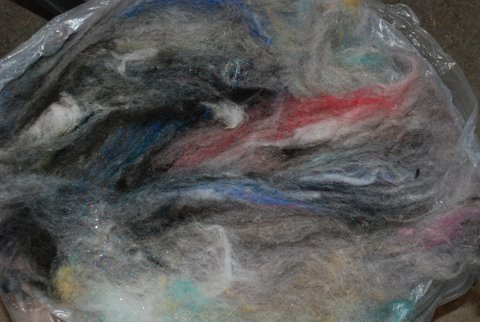
I spent the weekend at the Sacramento Weavers and Spinners Open House. When I wasn’t helping in the Sales Area I demonstrated carding with my Ashford drum carder.  I chose a fleece from the November shearing and washed it in two batches. I also wanted to experiment with my new Power Scour to find out how much I needed to get the wool clean.  The first 2 pounds of greasy wool weighed about 1 1/2 pounds when cleaned. I don’t think I got all of the lanolin out so I’ll probably increase the amount of Scour for the next batch. Even if there was still a bit of lanolin in the fiber it carded beautifully. I took this batch to the Open House on Saturday and here is what it looks like after carding.
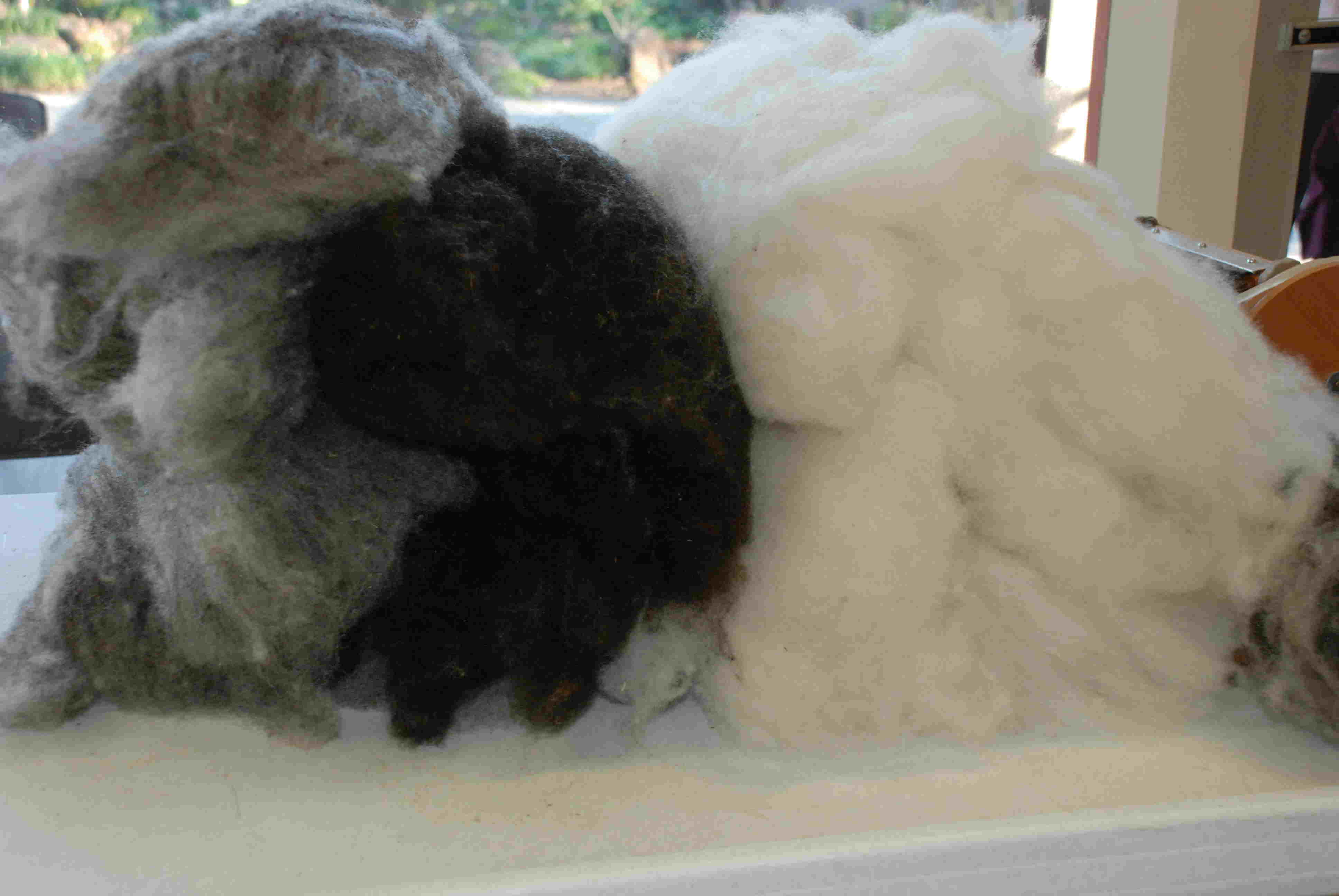
That will provide a lot of spinning time. I was sure impressed with the drum carder. It breezed through that fiber.

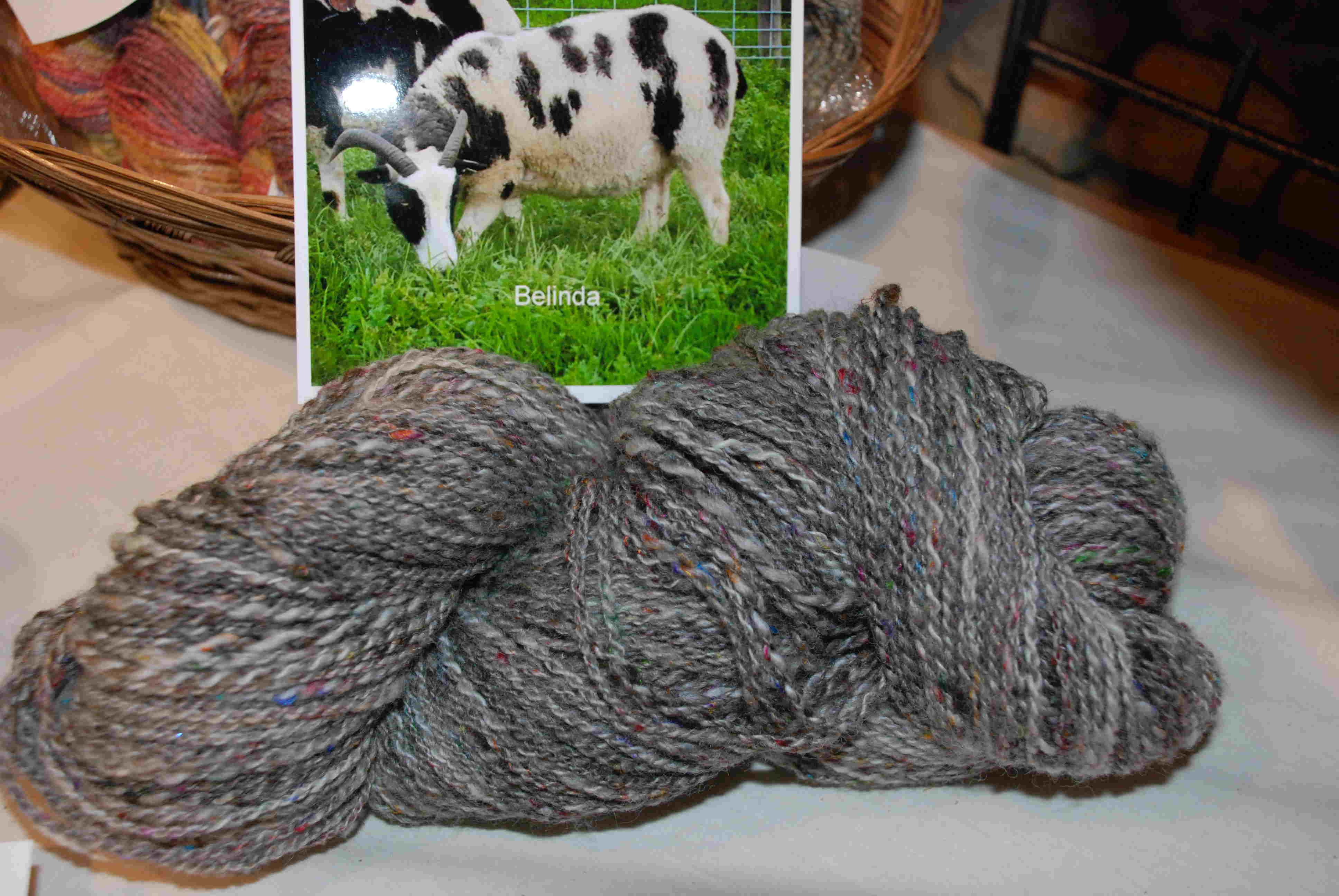
These are a couple of skeins spun by a friend of mine using fleeces she bought from me. Aren’t they lovely? The wool in the lower skein is blended with carded sari silk which adds beautiful flecks of color.
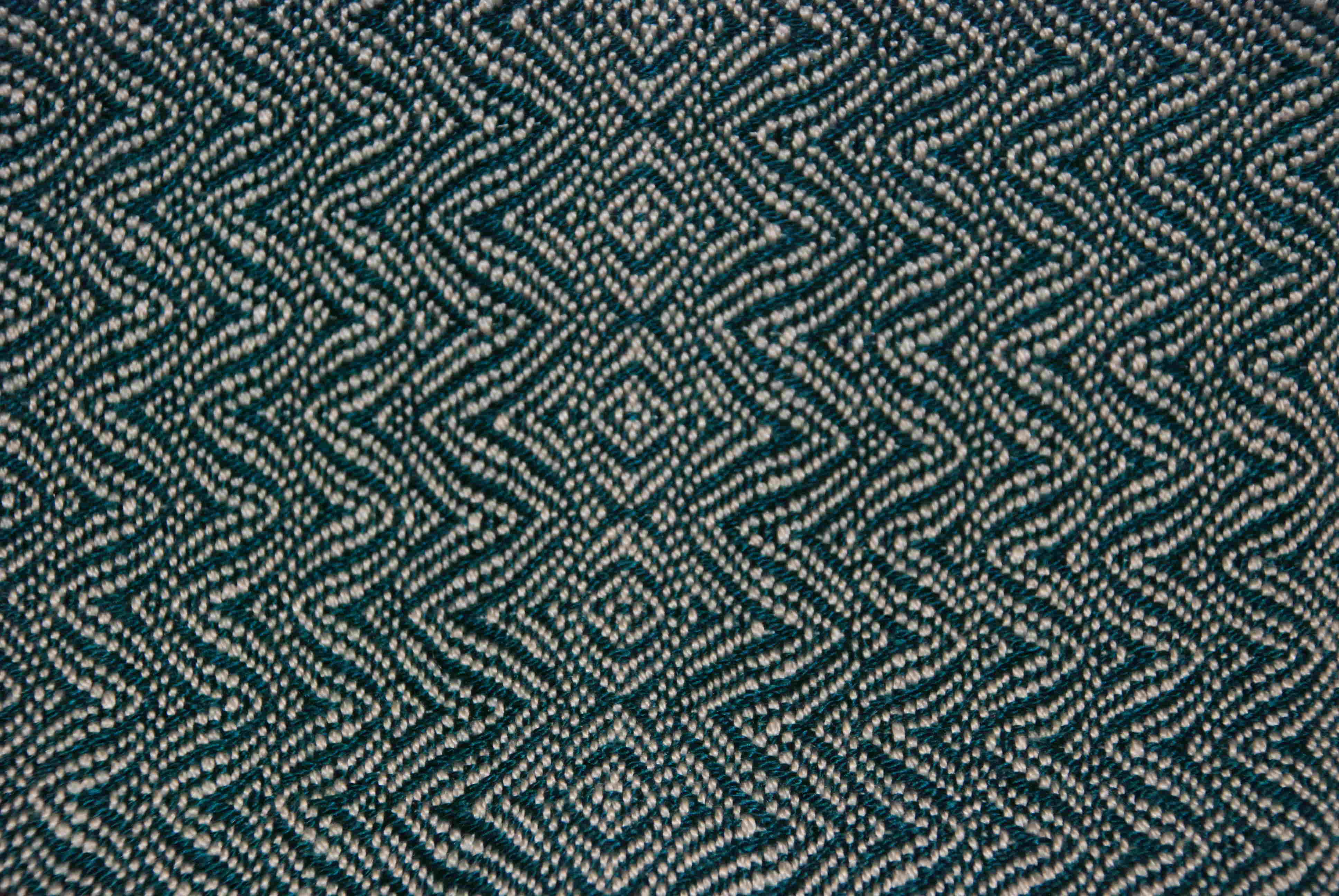
This is a close-up of one of the pieces I had at the show. It is a tencel scarf woven in undulating twill.

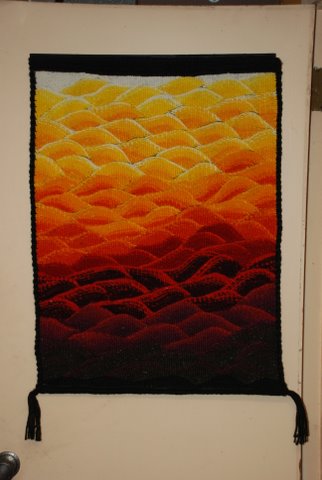
There are some very talented weavers in SWSG. Here are a couple of stunning pieces woven by members.
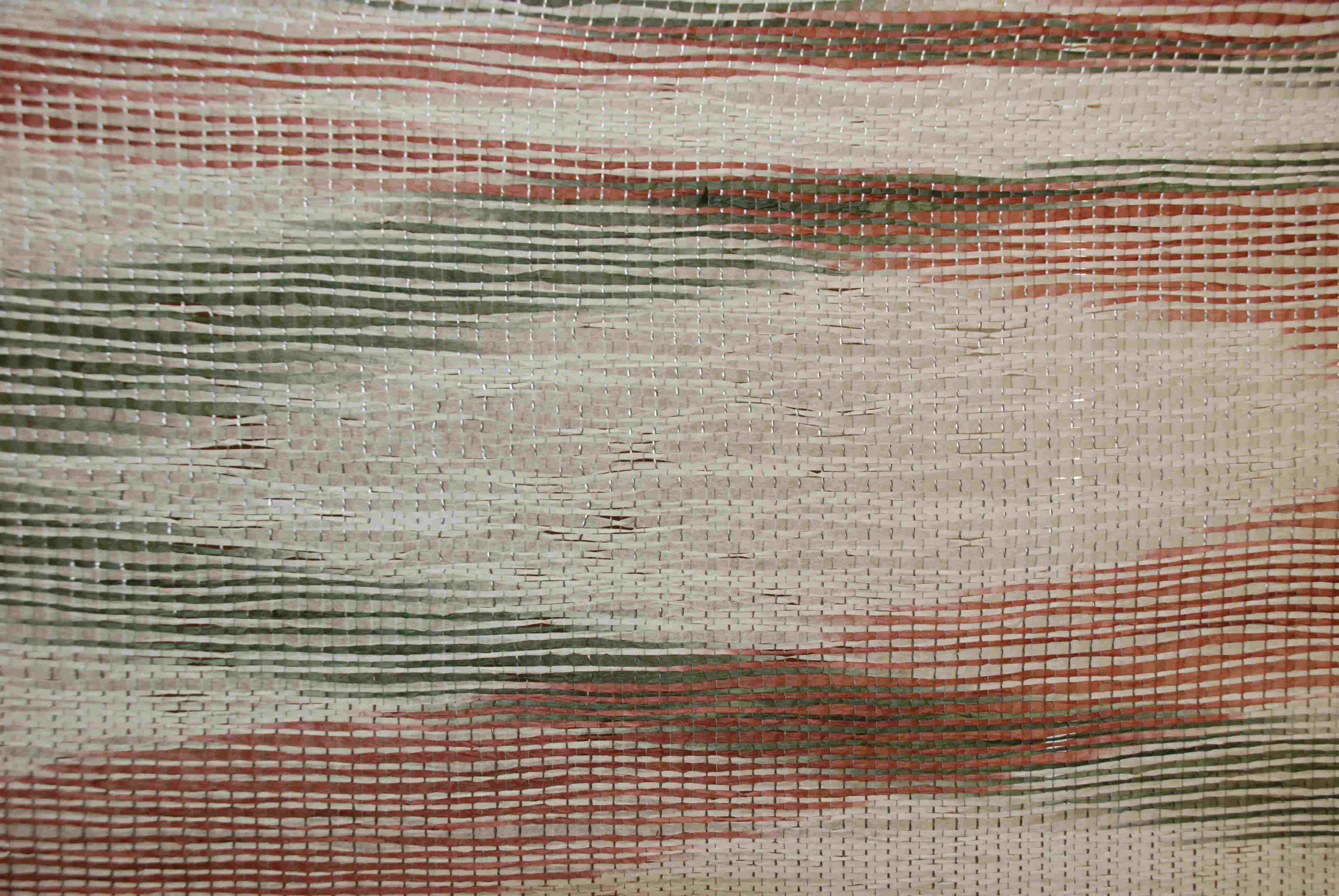
The warp for this screen is silk covered wire and it is woven with rice paper “yarn” if I remember correctly. (I thought that I’d remember from yesterday to today without taking a close up photo of the tag.)


New Yarn

Isn’t this a beautiful sight?

This is Jacob yarn and some black Rambouillet from a sheep rancher in Rio Vista.  The light gray Jacob in the lower corner is already sold!

This is white, lilac, dark gray, and black Jacob yarn, labeled and for sale .

Here is the Rambouillet. I  sent this batch to a mill that said that they could work with the fine, short-stapled Rambouillet, and they did a great job. It is very soft and I knit up a small sample on #6 needles. I don’t have this yarn on the website yet, but it’s available in the shop.

Here is some white yarn from sheep that live up the road from me. I can’t wait to start weaving with some of these yarns!

State Fair-Day 2

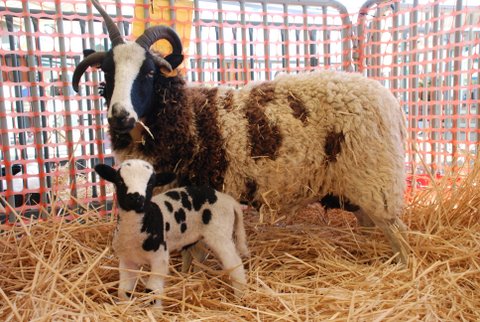
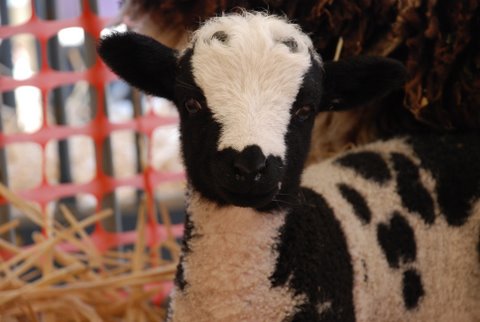
This is Day 2 for the sheep show at the State Fair, but a couple of my ewes have been there longer. Mary lambed there a few days ago with this nice ram lamb.

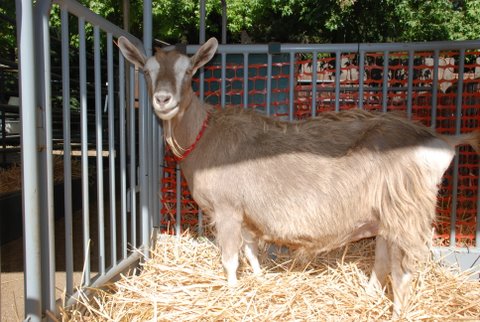
Stephanie is also at the fair waiting to kid.

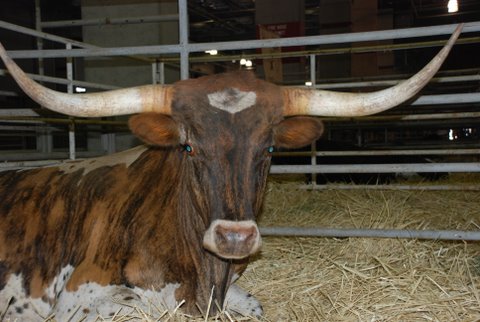
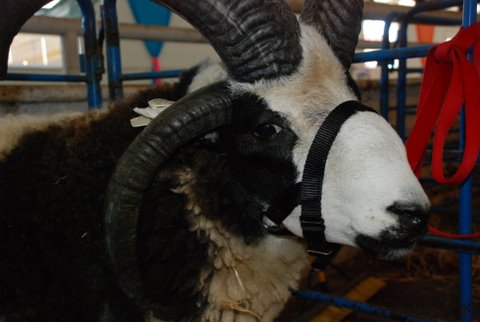
The longhorns are always at the fair white the sheep are there. There are not as many as previous years and that’s too bad. They’re sure fun to see.

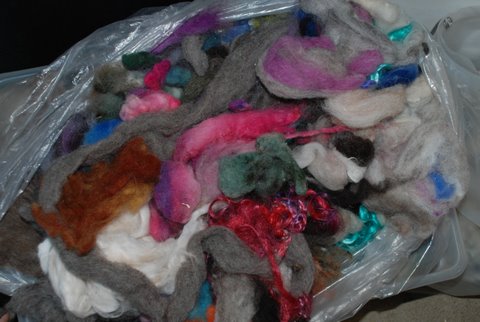
I have been staying at my sheep area all day  because I have a large display and am competing for awards for that. So today I took my drum carder and my electric spinner. I also took a bag of odds and ends that I’ve been waiting to send to the mill to blend with other wool. I decided that I’d do it at the fair. So this is what I’m starting with. It includes all the little bits and pieces that are left over from classes, samples from breeders, old dye projects, etc. There is mohair, Angora bunny, alpaca, silk, glitz, and a huge variety of wool.

These are some of the carded batts. I started spinning it tonight at the fair. I think I’ll ply it with a gray yarn and weave a blanket.

More photos tomorrow.

Wool samples, wet dogs, and a turkey!

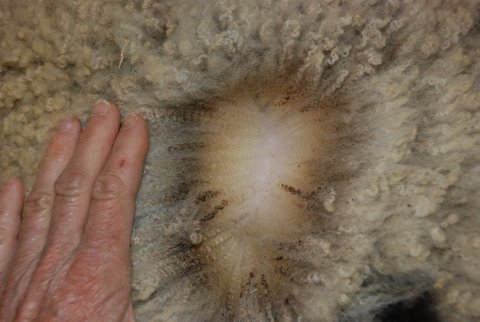
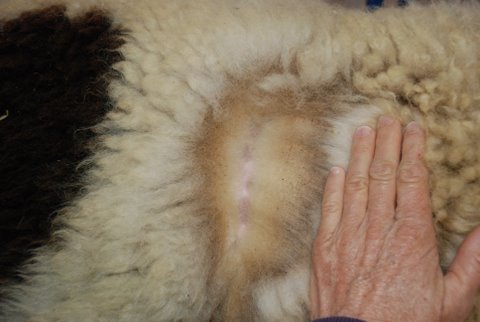
I posted a photo of my rams yesterday. Here are the wool photos:

This is the fleece of Meridian Tioga.

Here is Kenleigh’s Savor’s wool. Tioga’s wool is crimpy and soft. Savor’s wool is lofty without visible crimp. Both are good fleeces for spinning, but have different character.

Portrait of Savor.

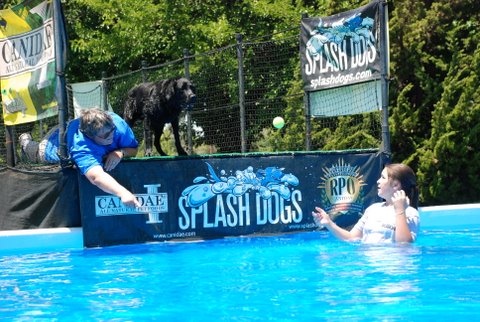
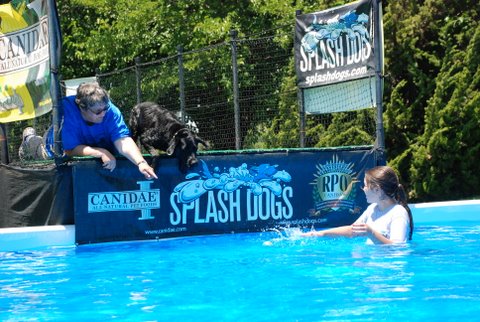
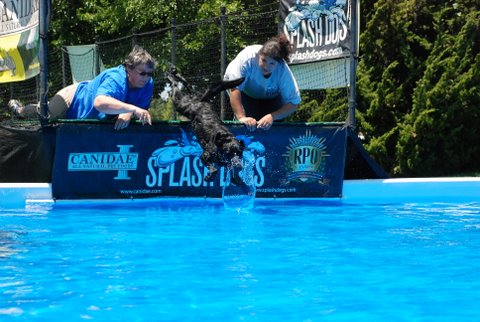
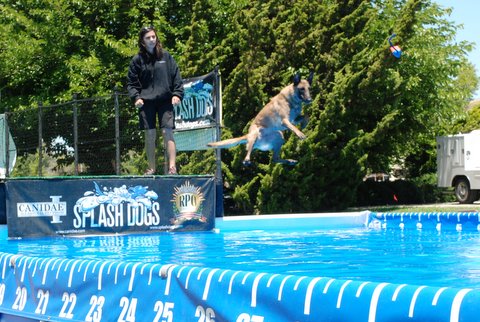
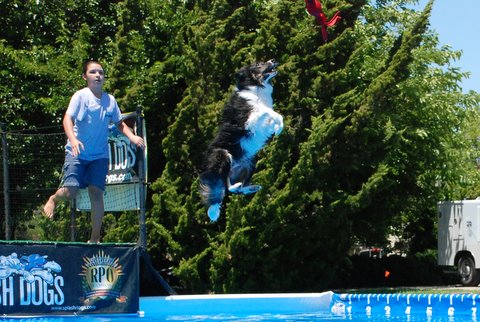
Jackie came back to the fair today to help out with the SplashDog performance and give her dog,  Ringo a lesson. These are photos of Ringo learning the game.

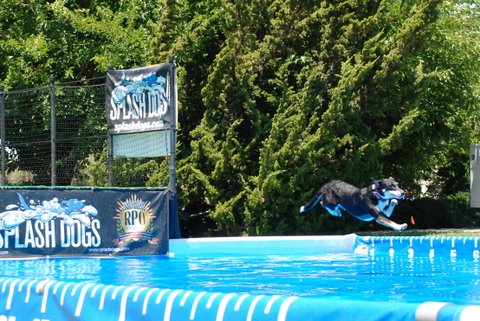
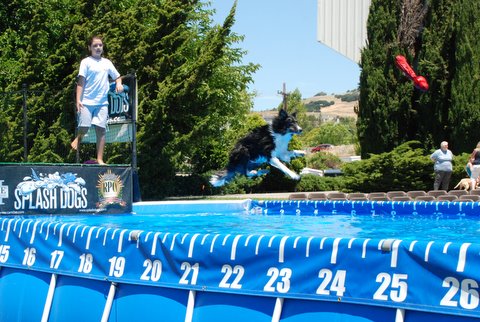
And here are some of the pros:

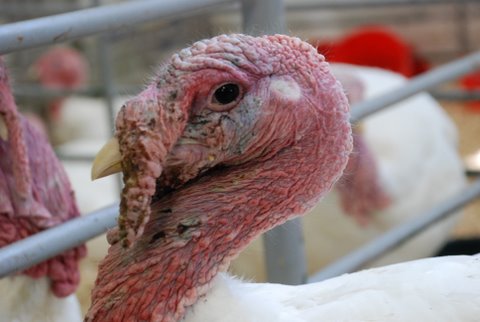
Obviously NOT a dog.

Trip to Santa Barbara – Part 1

There has been plenty to blog about but not enough hours in the day. I keep meaning to share photos I took in Santa Barbara when I made a quick sheep-delivery trip. People from San Diego  met me to pick up sheep and then I spent the rest of the weekend visiting with my friend, Kenna. We crammed a lot into Sunday of that weekend.

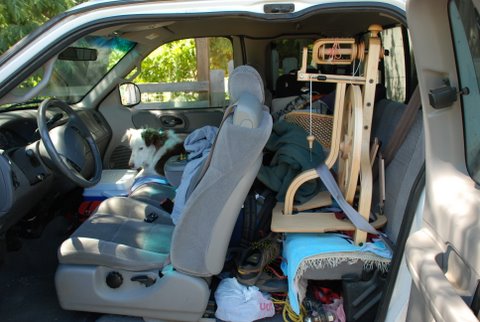
Double checking before I left that I had the important things–my dog and my spinning wheel.

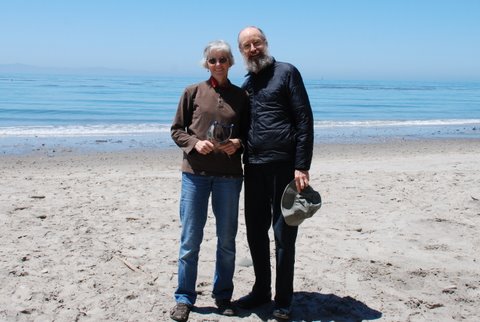
We had breakfast and a walk on the beach with my cousin, William, who lives in Santa Barbara.

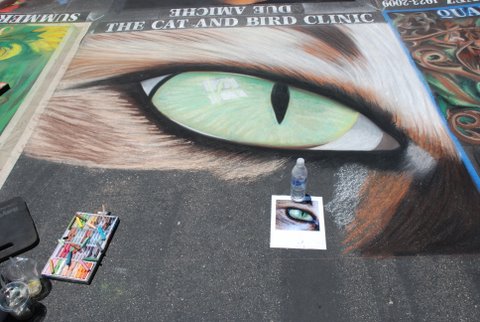
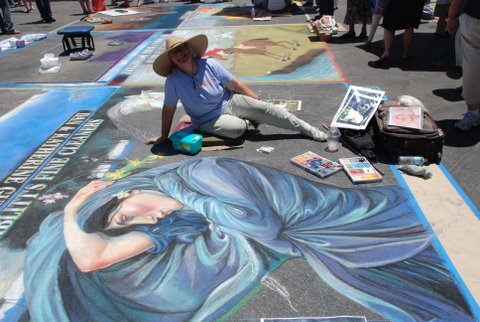
Next stop was the Santa Barbara Mission where it was the date of the annual I Madonarri festival, a fund raiser for the mission. This is based on the tradition of Italian street painting. Local businesses pay for spaces in the parking lot and then fill the spaces with chalk art. Look at the incredible detail in this design.

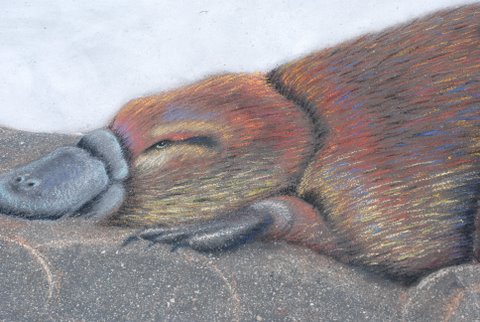
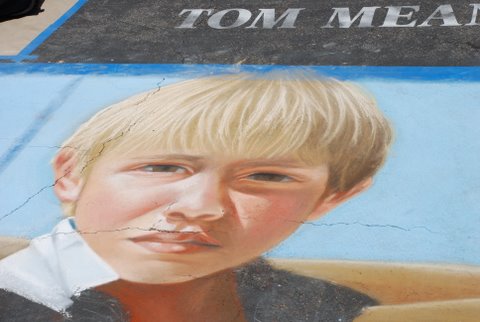
This is not just your regular side-walk chalk.

Aren’t these incredible?

After this Kenna and I went to her friend’s house nearby. Hebe is an incredible person–she is a quilter, weaver, jeweler, felter, painter, and probably more. She was recovering from back surgery but was gracious enough to take her to her basement workshop and show us some of her treasures.

This is a recently completed weaving.

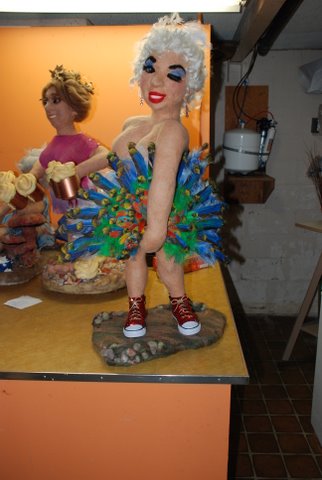
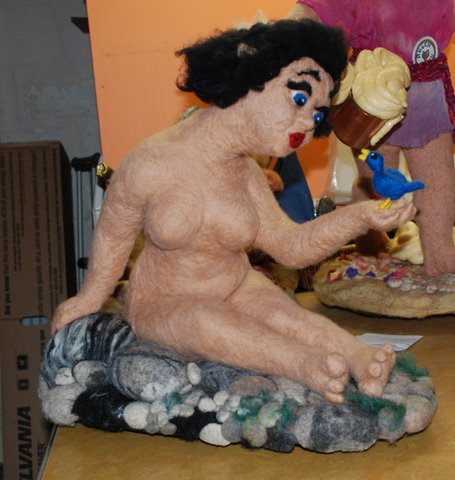
Hebe has completed 10 incredible felted figures and will have a show after she has finished 12. I can’t remember the names of these ladies (and men), but the figures are created with humorous themes in mind. Attention to detail is incredible. You can’t tell in this photo but the tennies are covered with sparkly red sequins.

The felted rocks alone are amazing, let alone the rest of the creation.

The afternoon’s adventures will come later.

Still weaving

I haven’t written about weaving lately, but I’m still working at the loom. I have orders from 3 regular customers for 9 baby blankets. I just finished a warp with 10 blankets.

Last week I finished an order for wool throws. This customer had her yarn spun at Yolo Wool Mill and wanted 5 different blankets. Sometimes it is necessary to add a lot of spinning oil to the wool during processing. The yarn isn’t very appealing in that state, but woven blankets aren’t truly finished until they are ‘wet finished’. In wet finishing  the  oil is removed and the blanket is fulled. Take a look at the before and after photos of these blankets.

I calculated a sett of 5.5 epi. I used a 6-dent reed and left every 12th dent open. After I started weaving I worried that you would see that empty space in all 5 blankets and that would distract from the woven pattern. I didn’t need to worry.  In the photo below you can sort of see that line, but when you see the blanket you focus on the diagonal twill and don’t even notice the vertical line.

Above is the before and after of another twill blanket.

Plain weave. Before fulling is above and after fulling is below.

This is one of my favorite weave structures. I was concerned about the finishing of this blanket. The yarn that I got from the mill was on cones and in skeins. The skeined yarn was so much oilier than the coned yarn  it almost seemed to be a different batch. You can see the difference in the photo. In fact, there was so much tacky grease that I had to pull a length of yarn out of the shuttle with every pass or my end-feed shuttle would go flying off the loom (guess that’s because I have a fly-shuttle loom!) because the yarn wouldn’t feed out properly. I was relieved after I washed the blanket that there was no difference in the fulling of the two yarns.

New Baby Blankets

I haven’t written much about weaving lately, but I’m getting a few things done. I have woven some baby blankets using SuperLamb. That’s the washable Merino wool  by Jaggerspun that i am selling in the shop. It will be great for baby blankets–very soft and the added advantage of being machine washed and dried.

Here are some of the blankets still on the loom.

And here they are off the loom. These blankets are at The Artery right now.

Clouds and green hills

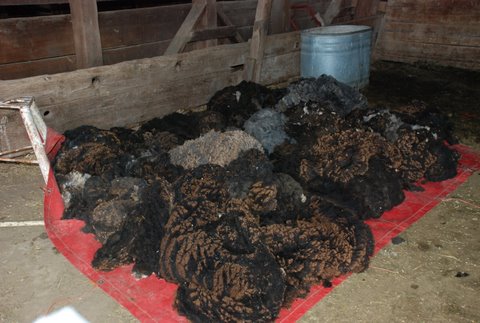
I drove back to Rio Vista today to pick up the black wool from yesterday’s shearing. It had been left in the barn for me.

No one was around. The shearing crew has moved on.

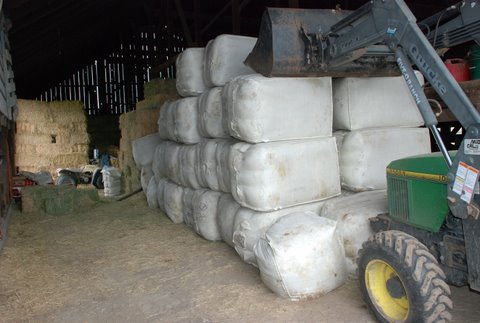
Here are the bales of white wool.

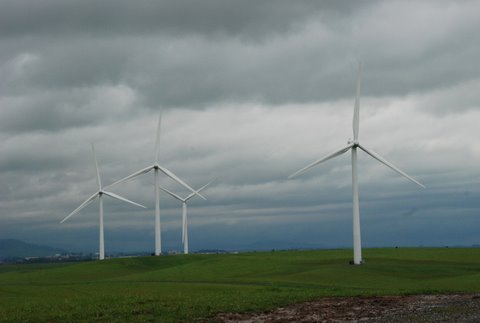
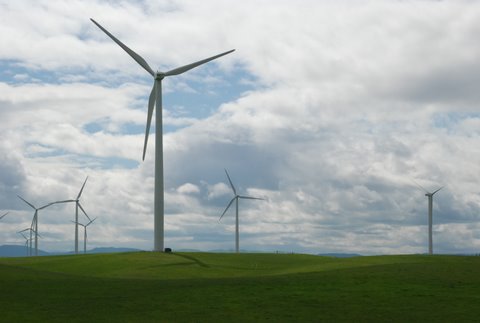
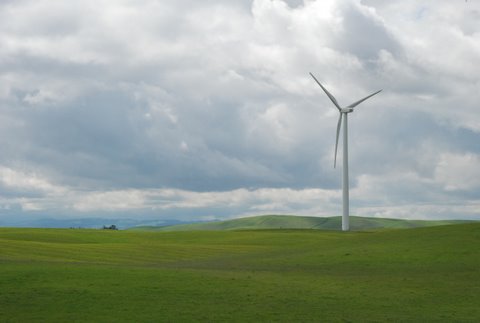
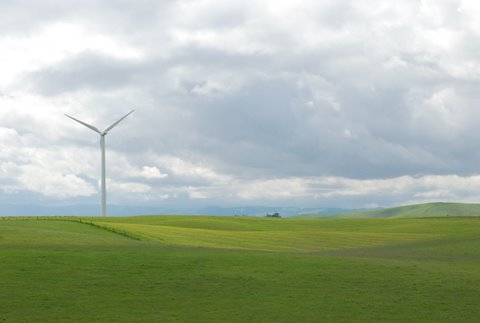
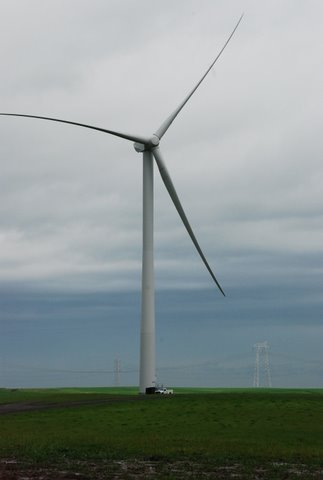
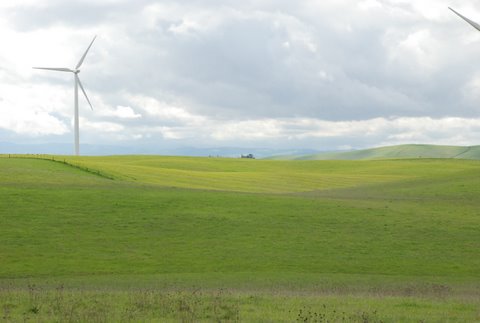
This is a beautiful time of year in the hills of Solano County and I am always fascinated by these huge windmills.


It’s hard to realize how large these are until you see the truck at the base of this one.

Shearing day times 20

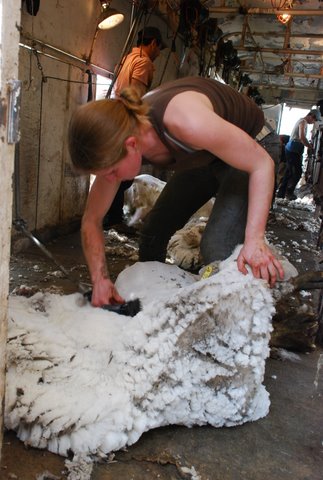
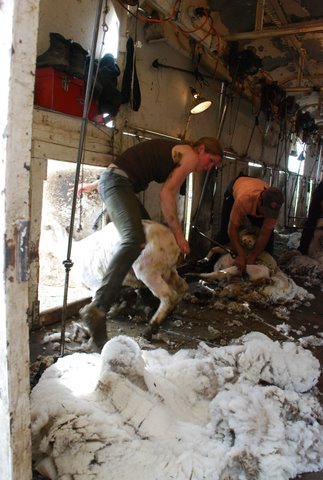
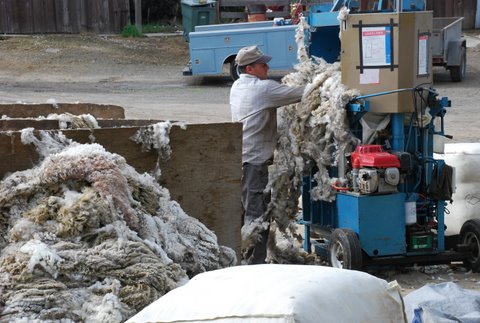
Friend and fellow Jacob sheep breeder, Lynette Frick, (IDEAL Jacobs) called me a couple of days ago and said that her shearing crew would be working nearby and she invited me to come watch. Lynette started shearing a year or so ago by going to one of the shearing schools and then being hired by a crew. I am so impressed. I don’t know if it makes her mom and dad nervous, but since I’m not her mom I don’t have to worry–I just think its cool.  I had never watched a commercial crew operate. They sheared 1000 sheep yesterday and hoped to finish today.  The shearers are working inside a long trailer.

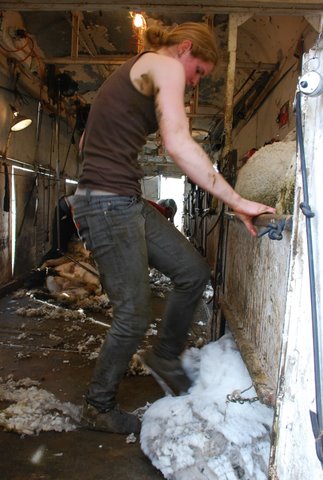
The sheep come in along one side and when the shearer is ready he (she) pulls down a gate and pulls the sheep out and over into the proper position.

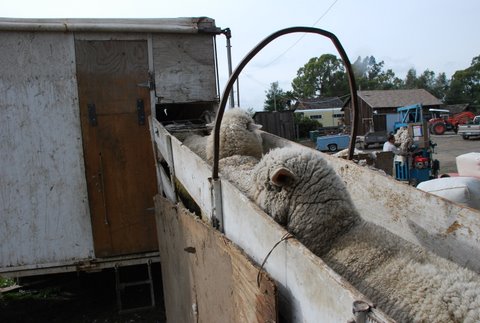
These are Rambouillet ewes. They’re definitely bigger than Jacobs!

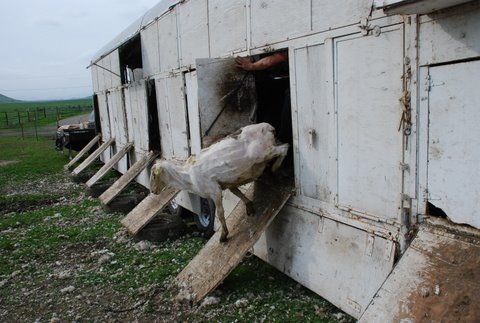
After shearing the sheep the shearer pushes her through a gate on the opposite side of the trailer.

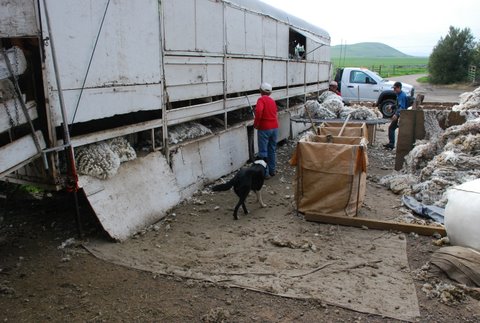
This is the outside of the shearing trailer.

The shearer pushes the fleece under the chute where the sheep are held…

…and someone on the outside of the trailer grabs the wool and takes it to the skirting table. It is graded and put into one of four piles–fine, medium, coarse, or poor quality (weak, short). Fortunately most of this clip was going into the fine and medium piles.

The wool is compressed into bales.

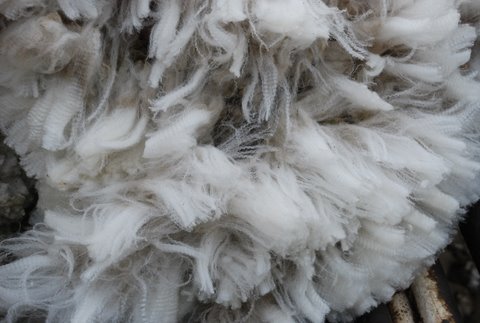
Isn’t this pretty wool?

The bulk of the flock is white, but these are some of the markers. There is approximately one black sheep for every one hundred sheep in the flock. That way the shepherd can get a rough count of the flock. Coincidentally, this is the ranch where I picked up the black Rambouillet that I used for the socks that I had made last year.   I will go back tomorrow to pick up the black fleeces.

Is she or isn’t she?

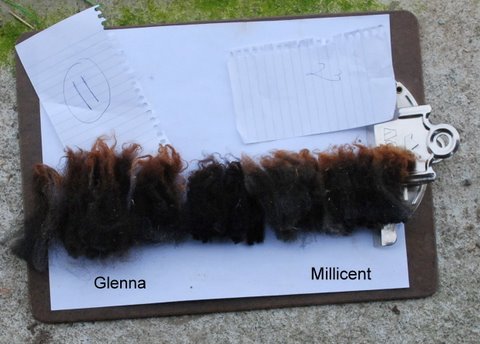
I’ve been sorting fleeces. Here are samples of Glenna and Millicent, 2009 March lambs that I got just before Christmas.

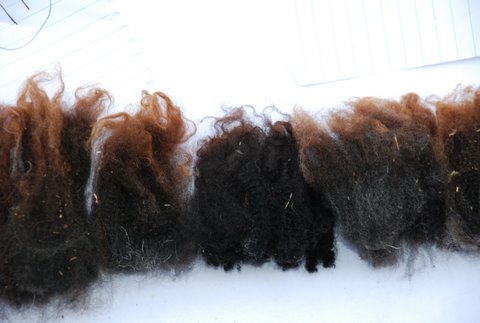
That is black wool from another sheep in the middle and here is a close-up:

When I got these sheep there was one definite lilac among them. (For those of you non-Jacob sheep people, lilac is a color other than the more common black and white, usually a shade of grayish-brown.) I wondered about the others because they are out of lilac ewes and sired by Kenleigh’s Nitro, who is registered as a lilac. Shannon, Nitro’s breeder says that he was very dark and one of the JSBA inspectors said he was “chocolate” lilac.

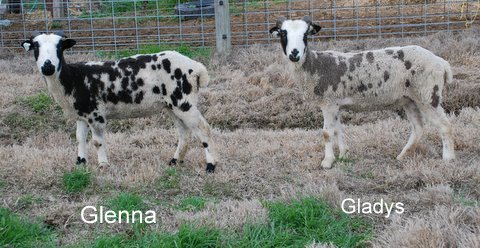
Gladys is the obvious lilac, but what about her sister?

This is Millicent,  out of Nitro and  Meridian Millie, a lilac ewe who I sold a few years ago.

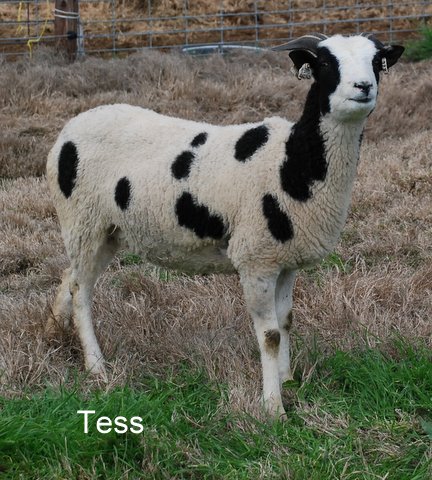
Here is Meridian Tess, who was born here, definitely not a lilac, but I thought she would be a good comparison.

So is there a difference between the black and white Tess and Millicent? Telilah is Millicent’s half sister/cousin (sired by Nitro and her dam is M. Tillie, a lilac ewe and the identical twin of Millie, but that’s another story.) Of course it’s hard to know what color you’re seeing on the computer, and I had decided that these sheep were regular black and white. But after opening up their fleeces today I think I’ve changed my mind.

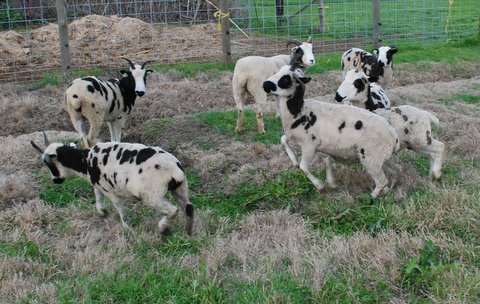
Here is the group of these new sheep playing in the early evening. They stay together most of the time–I think they’er happy to be on the pasture.

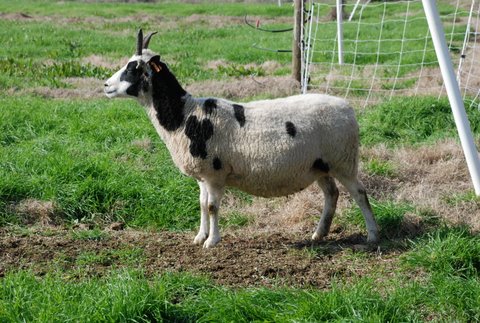
While we’re looking at sheep, here are a few that look ready to explode. The first lambs are due in about three weeks.

This is bide a wee Haylee…

and this is Hillside Paula.