The Younger Generation

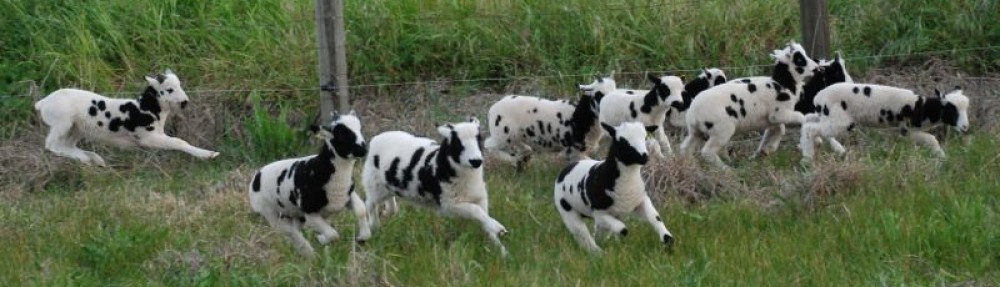
It simple math. If I had 65 sheep last November and  want 65 sheep next November, but  81 lambs were born, that means that  I need to sell 81 sheep before November. So out of all the lambs that were born I need to be very selective about which ones I will keep. Here are the chosen lambs so far.

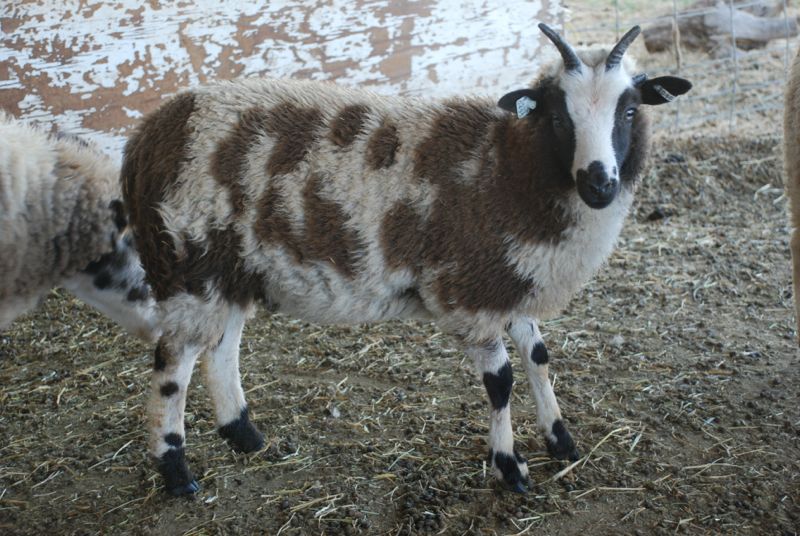
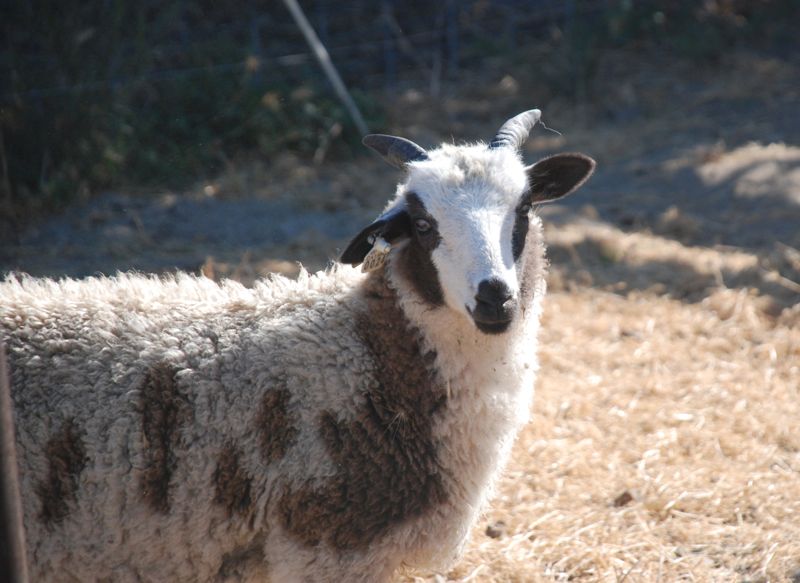
This is Sonata, daughter of Meridian Moon and Sweetgrass Clint.

Lila, a lilac ewe, daughter of  Meridian Lola and Mud Ranch’s Hudson.

Fandangle, daughter of Meridian Fran and Sweetgrass Clint.

Kenleigh’s Isadora who came from Kenleigh’s Acres in Oregon.

Mud Ranch’s Foxglove and …

…Mud Ranch’s Ginseng, both lilac lambs from Mud Ranch in Lewiston, CA.

There are plenty of other pretty lambs, but most of them will need to find homes elsewhere. I have my eye on one appealing ram lamb:

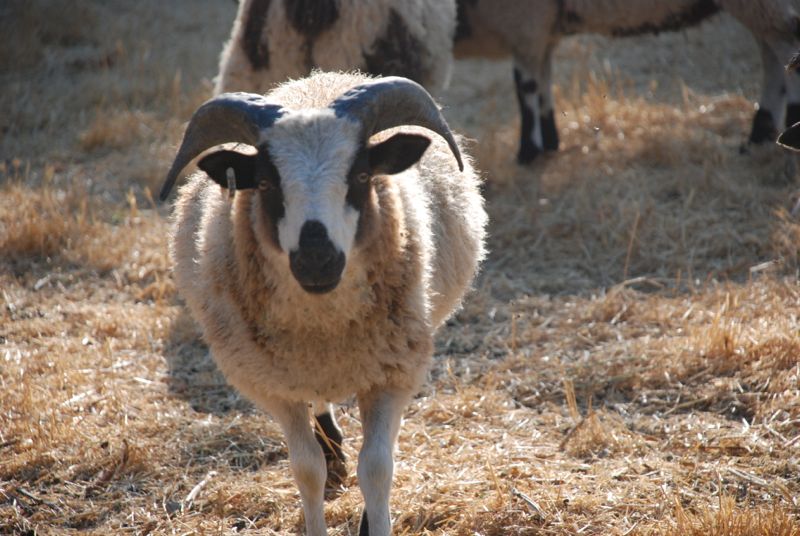
Axle, son of Meridian Tina and Sweetgrass Clint.

I almost forgot someone:

Onyx, daughter of Sparkle and Faulkner.

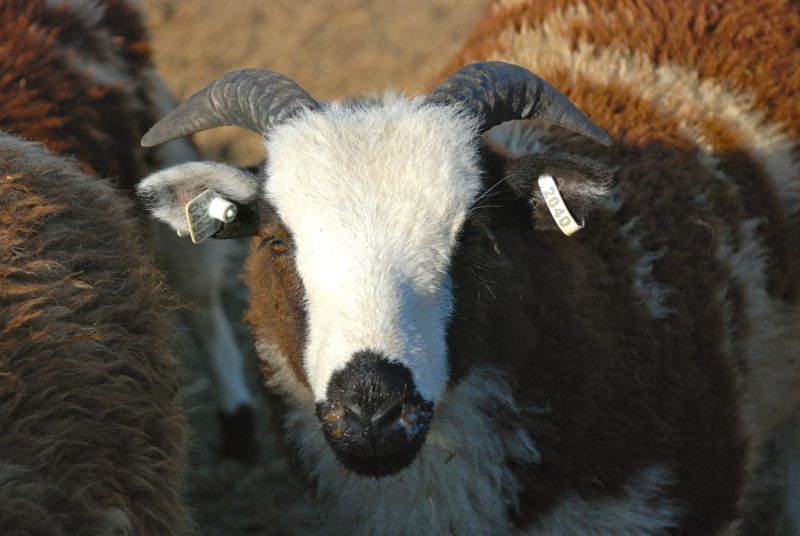
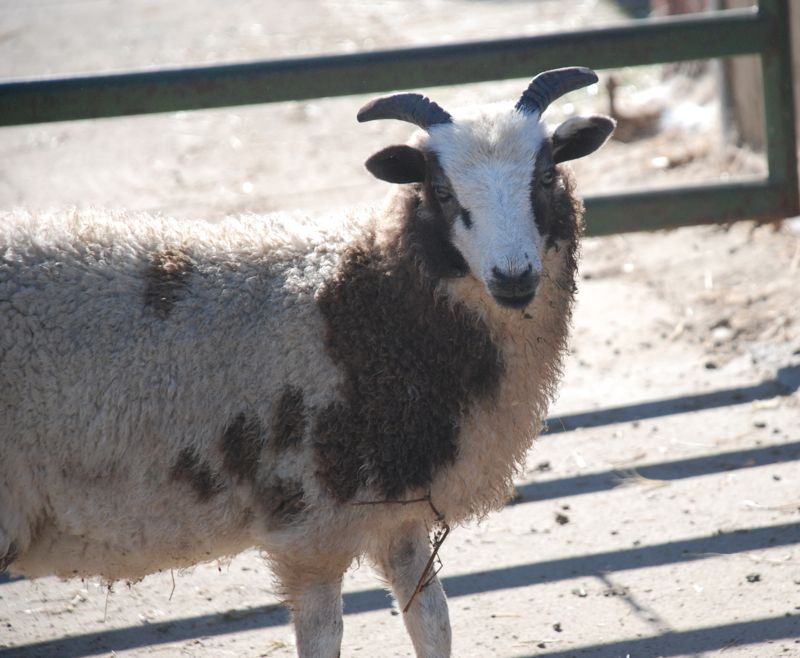
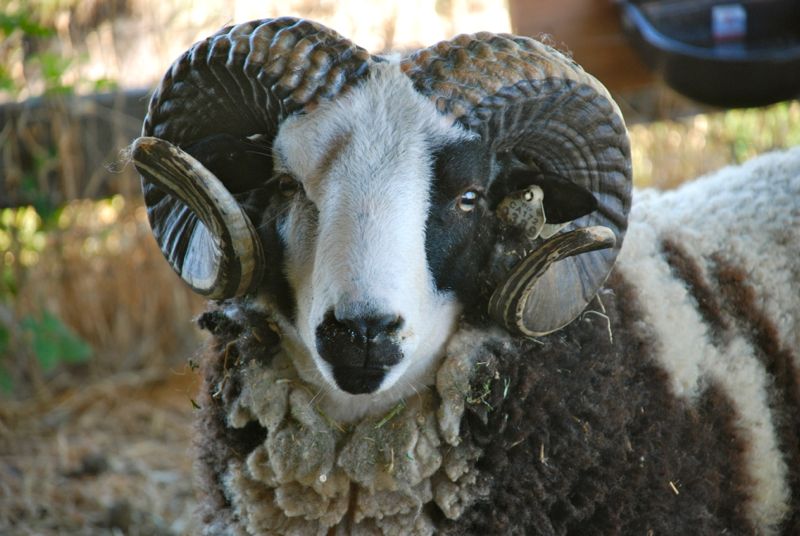
This is Fogerty, a ram who was born last spring. He is one of the rams that I will use for breeding this fall. Here is another photo:


Ladies in Waiting

It’s that time of year again.

We’re off to the CA State Fair Livestock Nursery.

Mary is a veteran of the fair. This will be her fifth time lambing here. Don’t worry Mary. It’s just the camera angle that makes your rear look so big.

Mary brought novices with her. That’s a yearling ewe, Toffee, lying down and a three year old ewe, Shelby, standing. Shelby is one of the ewes that we “rescued” from a foreclosure last year. (Yes, it’s still camera angle, Shelby.)

The State Fair opens tomorrow and runs through the last weekend of July. That’s when I’ll have more sheep there for the sheep show. In the meantime these three ewes will be well taken care of by the staff and students of the UC Davis VMTH (Veterinary Medical Teaching Hospital). We look forward to lambs in the next couple of weeks.

Green Pasture

You have all seen photos of my green pasture.

This does not happen naturally here in California’s Central Valley . We have what is known as a Mediterranean climate. I thought I’d give you a definition but what I found when I did a google search is more interesting:

There are not many places in the world that have our hot, dry summers and cool, wet winters. So how do we grow all that clover and grass in a hot, dry summer? Irrigation, of course. But irrigation water has to come from somewhere if it’s not coming out of the sky this time of year.

Our irrigation water is provided (sold) by Solano Irrigation District and comes from Lake Berryessa which fills from winter rainfall. Here is how our irrigation water is delivered.

Do you see that low spot in the mountains on the right side of the photo? Lake Berryessa is behind there. The water is carried down Putah Creek. Eventually it works it’s way into a system of canals. When I call for water the SID person opens a gate at the end of this ditch that is normally dry. The water flows to another gate at the northwest corner of my property (that cement box on the other side of the fence). When that gate is open the water flows under the fence into the standpipe in the foreground.

That black circle is the pipe carrying the water into the standpipe. It flows out the hole on the south side of the standpipe (at the top of the photo).

This is a close-up of that rushing cool water. It’s not a rushing mountain stream but it sure looked appealing this afternoon when I was outside working.

Here is where the water flows out of the standpipe into the pasture.

There is a ditch at the north end of each pasture. The water is just starting to fill the ditch.

I have to dig cut-outs in the ditch to get the water to flow where I want it. It’s not a perfect system because our ditches are worn out and trampled by sheep and the pastures aren’t level, but I can usually make it work. I have the water on for 24 to 36 hours to irrigate everything.

This is the last pasture the sheep were on yesterday and I finished mowing it (a story for another day)  just before irrigating.

This is what we’d have in the summer if we didn’t irrigate. (This is a small pen behind the barn.)

Here is what irrigation gives us.

Weaving blankets

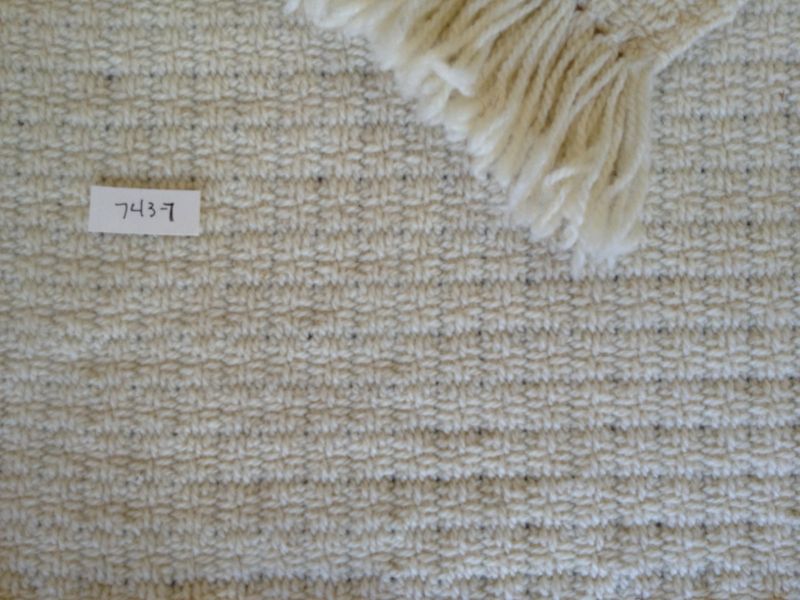
Here is a blanket that has become one of my favorites to weave.

In the book where I saw this draft it is called Breaks & Recesses. I think I need to come up with a different name.

I have mentioned before how much a woven piece changes after it is has been properly finished. In the case of wool that means wet-finishing or some degree of fulling. When a piece is fulled the individual threads  become less distinct as the wool fibers catch on each other and the piece becomes cloth instead of  a bunch of separate threads. (Fulling is an irreversible process that needs to be controlled–picture a wool sweater that goes through the washing machine and dryer.)
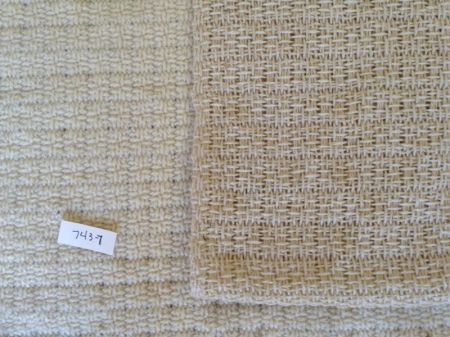
This is a dramatic example. The blanket on the right is the same draft and using the same yarn, but it has not been finished yet. This yarn is one that was mill-spun of wool from sheep at the place where I used to go for sheepdog training. The yarn feels harsh and oily, but it softens beautifully when fulled.

A custom blanket customer saw a similar blanket and wanted me to weave her a queen size blanket using this pattern. “Sure”, I said. “No problem.”

I use double weave to weave a queen (84 x 90) blanket on a 60″ wide loom. That means that I weave two layers at a time with a fold on one side.  I have to allow for take-up and shrinkage (part of that is the fulling I described) so this blanket measured 54″ wide on the loom (double–opened up that would be 108″) and I planned to weave 100″ in length. A lot of this is educated guessing based on previous similar projects.

This pattern is woven on 8 shafts. To weave a double width blanket I used 16 shafts, 8 for each layer. First I had to figure out that part. None of this will make sense if you are not a weaver and I didn’t intend for this post to be an explanation of all the steps. One of these days maybe I’ll do that, but not now.

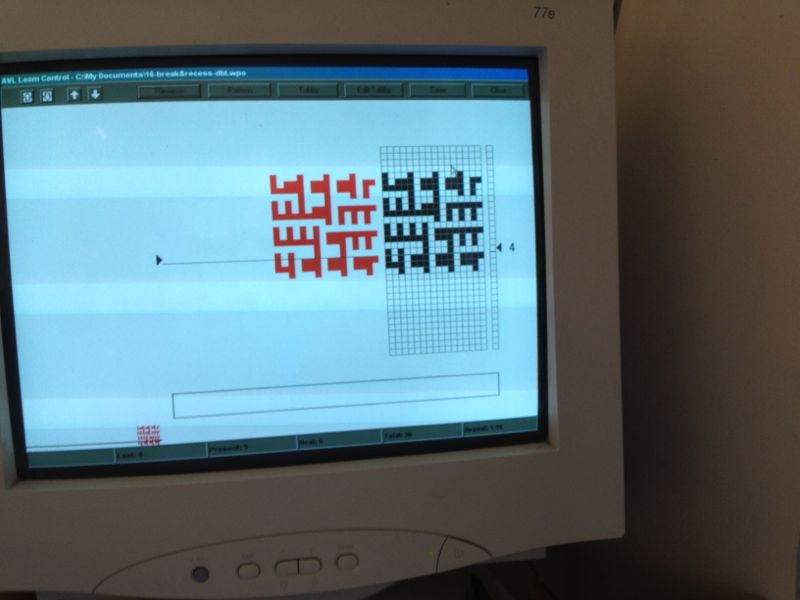
This looks nothing like the pattern in the finished blanket. That’s because in this draft every other horizontal and vertical line is the opposite layer (odd numbers are the top and even numbers are the bottom). When I buy new software it will be something that will show me the top and bottom layers.

When I finally started weaving the blanket I knew that something wasn’t right, but I had a hard time figuring out exactly what it was. I used a mirror to see the lower layer but I had to go back to the book and the computer to see that I had reversed some of the squares in the draft.
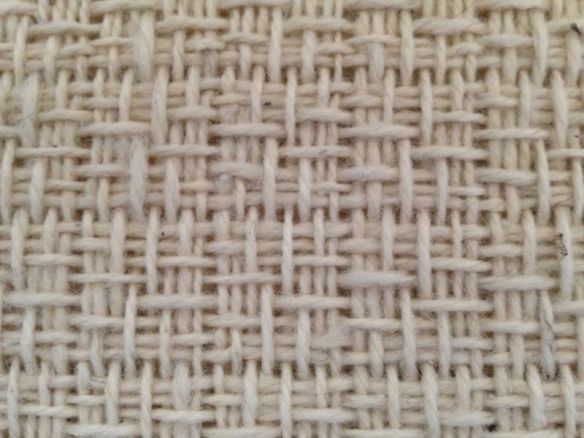
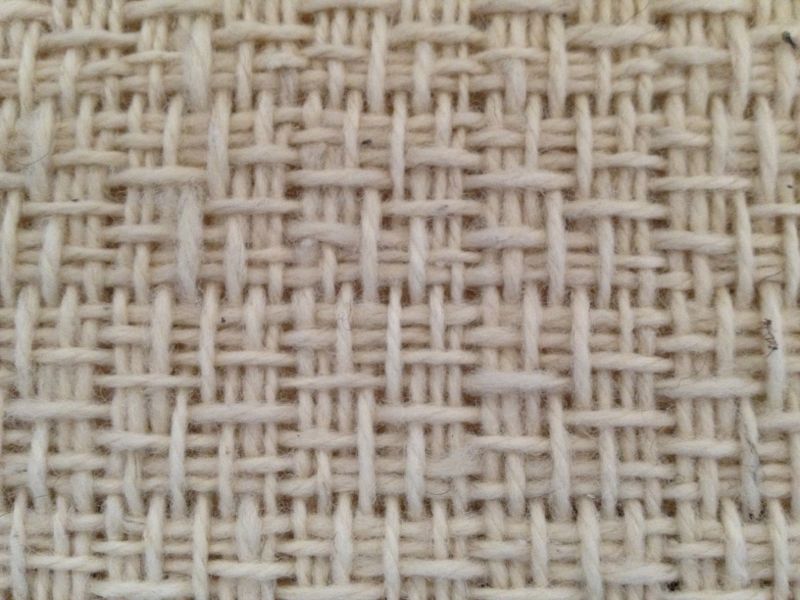
Here is a close-up of the top layer as I was weaving.

This is what the computer looks like as I am weaving. I have what is called a compu-dobby and the computer drives which shafts lift, although I do all the work.
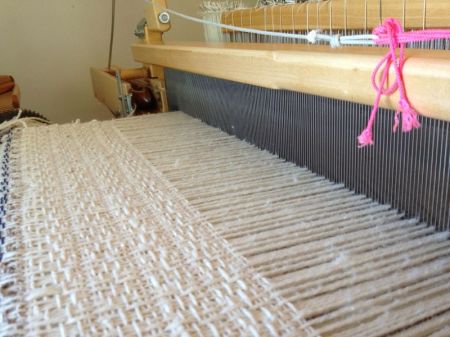
See the shuttle at the other side of the loom?

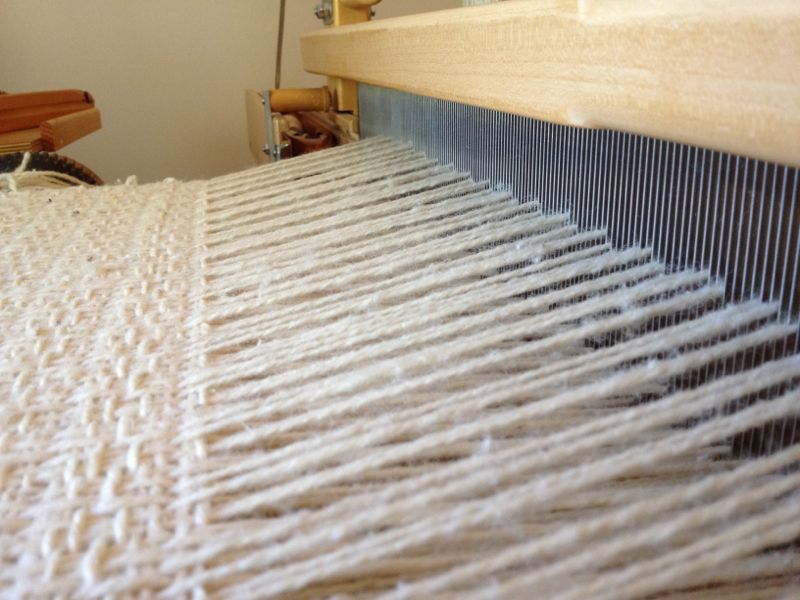
As I step on the treadle certain shafts lift so that the shuttle can carry the yarn in between the threads.
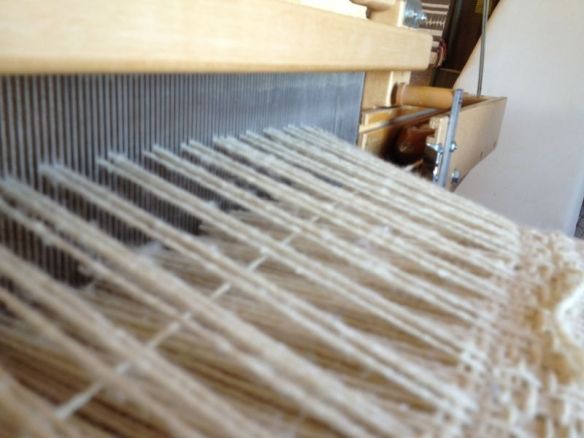
This is after the shuttle has gone from left to right and is now on the other side.
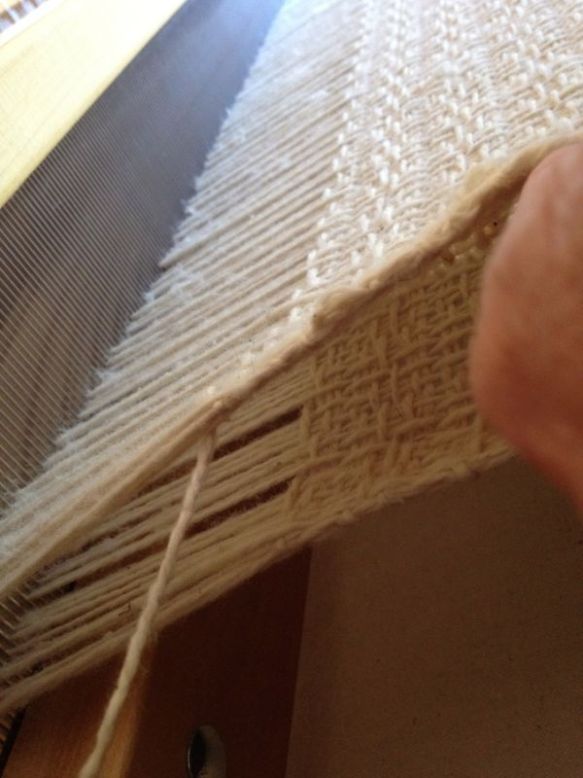
This is a view of the left side where I can separate the layers. The fold is on the right.

I finished weaving this blanket today and am working on correcting a few errors. Then I will have to crochet the edges before I full it. I should take photos of these processes and report back.