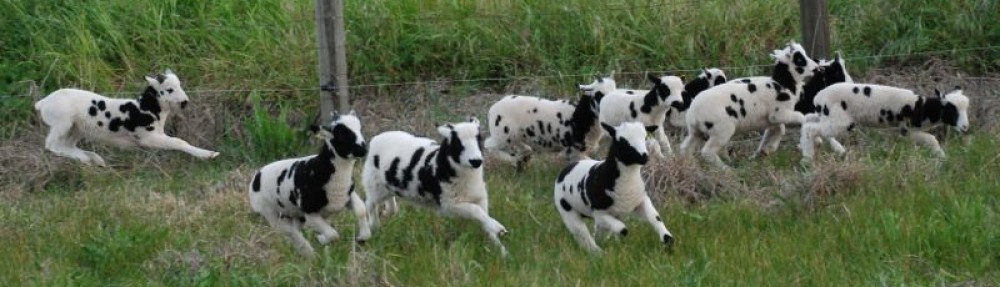

Farm Club members have spent time here during lambing and helped with cleaning, lamb ID, etc. And of course there is always lamb cuddling. Farm Club is a great way to learn about raising sheep before you invest in sheep or if you won’t ever have the lifestyle that lets you own a sheep.
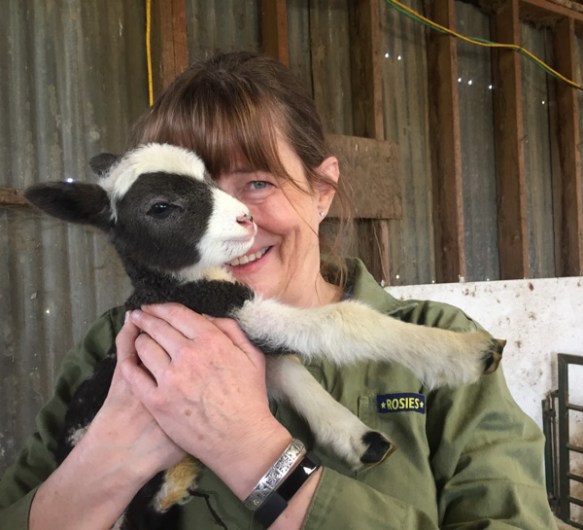 Zorra had plenty of cuddling while she was still in the lambing area with her mom. Lisa is a lamb cuddling Pro.
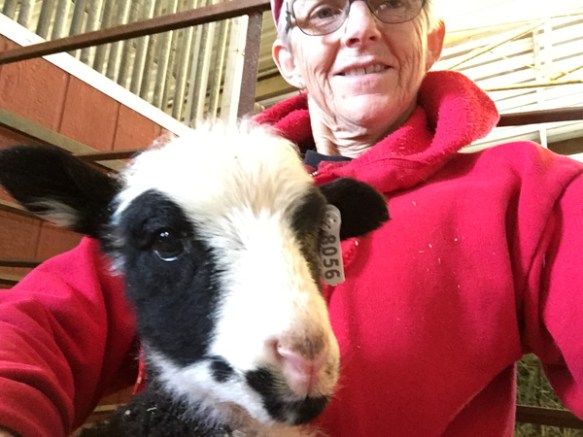 This is pet sheep Jade’s lamb (and me).
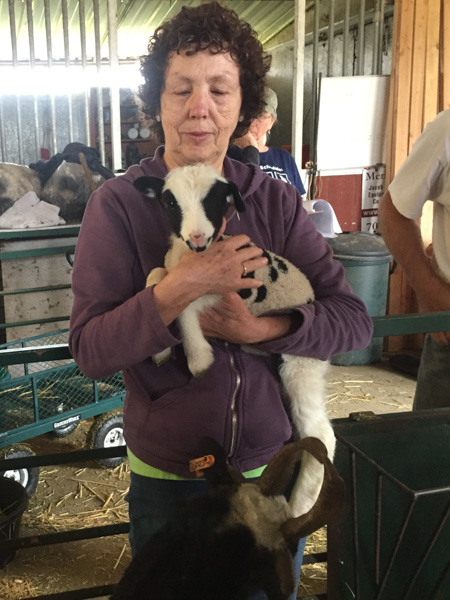 This is her again being held by Peggy. We’d really like her to be friendly too.
 This is Zorra again with Sumi.
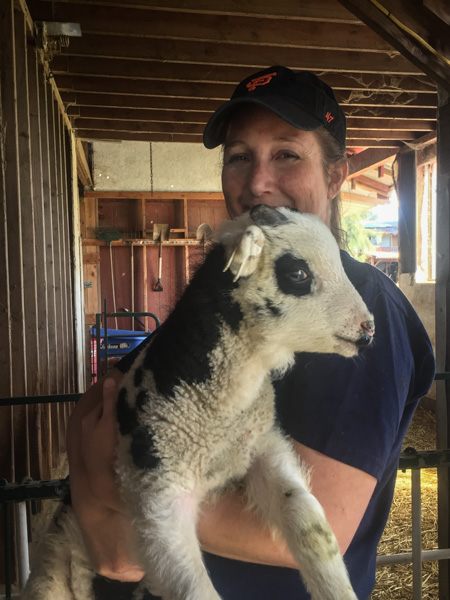 As the lambs get a little older we have other Farm Days. This was Betsy’s first day on the farm and she jumpred right in holding lambs as we ear tagged and castrated.
 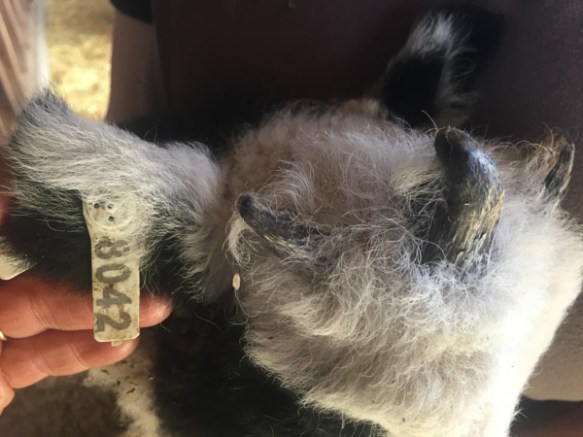 I don’t castrate many because it’s hard to know how they will grow out and which might be a great flock sire for someone. Some are easy though–too much or too little color to fit within the 15-85% breed standard. This one’s horns are already touching at the base under that hair. As the horns grow they will fuse and not grow well separately.
 Marina and Maggie (no photo) helped catch lambs too and Mary handled the clipboard. The lambs were all tagged with their white ID tags right after they were born but we put added a colored tag on Farm Day. I like to use a second tag for back-up ID if the first one falls out and also to color code the sire. It’s interesting to keep track of that and it also helps to find a lamb when you’re looking for one among 75. You can narrow it down some if you have a color to look for.
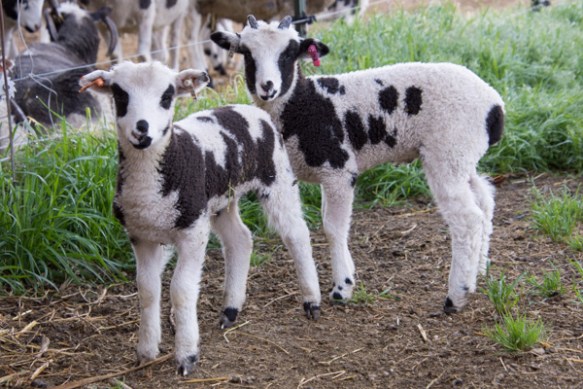 This year Cayenne’s lambs got orange tags. Pink tags go in all the lambs that have been castrated.
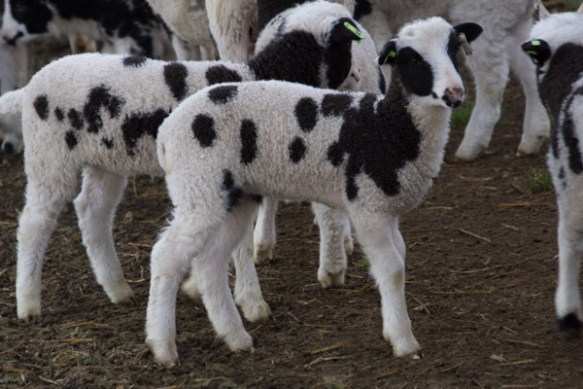 Green means these are Buster’s lambs.
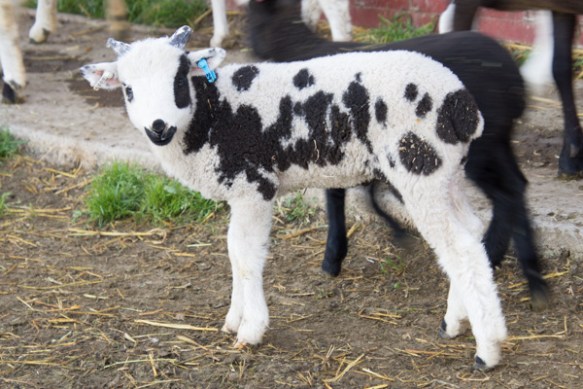 Blue was for Catalyst.
 Peyton’s lambs are obvious so don’t need an extra tag.
 After we tagged all the lambs Marina and Betsy stayed to help me set up the pasture for the sheep. I had put the sheep out for a few days but hadn’t cleaned and moved the water trough.
 We walked around the pasture and took stock of things. I always point out the issue that I have with the dallisgrass that is out of control. That’s what all that dry grass is. I’d much rather see green grass growing. The whole pasture was looking somewhat dismal from a growth standpoint. At this point we had just had March rain after two very dry and cold months. I wasn’t seeing much growth–at least not enough to feed 55 ewes and 75 lambs.
  We spotted this grass that I don’t recognize.
 I took photos to send to a friend of Marina’s who she think might recognize it.
Thanks Farm Club!


 During the discussion about other aspects of raising sheep we kept an eye on Zinnia, the ewe who was lambing. When she got more serious we watched.
 One thing of note was the presence of two bags, each a different color. A lot of time I just see membranes that have broken so I wouldn’t know if it were one or two, but it seemed unusual to see two distinct bags. I saw a bit of a small foot emerging but the whole thing seemed to be taking awhile so I thought I’d check. There was one foot and a head. Not very far back was another head. Both lambs were coming at the same time, and it was obvious from the two sacs that one had meconium staining, a sign of fetal distress. I pushed the second lamb back and was able to pull the first lamb with just the head and one foot. I could tell that it was very small. Usually it takes a little while for the second to come, but it was right there too. Weighing these later, they were 4.8 and 4.2 pounds.
 You can’t rush a lamb to be ready to nurse. I didn’t know if something was wrong with this one, but I knew that, even if it was normal, it needed a little more time. We went outside and looked at the fences and the pasture. When we came back in the first lamb was doing fine. The second still wasn’t able to stand but I could hold it up and get it to nurse.
 We kept checking back and eventually the second lamb was on it’s feet. This photo was taken later in the day.
 Later that afternoon a friend of mine came with another friend to take photos of the lambs. That’s Raquel with triplet ram lambs.


 Here is the tiny lamb from the morning.
 This was getting close to the end of lambing.
 Here are those two tiny lambs 12 days later and here is their
  The last time there were goats here they were Chris’ Toggenburgs that he raised for his FFA project. Stephany was the last goat from that era.
 Before that I had owned one goat. This is an Angora goat named Chenille in a photo from 1997. Katie was 9 then.
 These are two of a set of quads. One was the smallest of the batch and the other was having some trouble drinking from the LambBar bucket with all the others.
 I am not planning to show goats and I am bottle-feeding so those points didn’t matter…
 …and I brought these babies home.
 Oops. A third goat came along–mainly because my friend didn’t plan to raise him and I figured that I could find a home for him eventually.
 Te goats are popular with
 That’s Ellie on the left and Amelia on the right.
 Their temporary buddy, Kevin, is in the middle. He’s going to a new home tomorrow. Thank goodness.
  It’s sure easier to feed two than three.
 I have been keeping the kids in the barn but the weather has turned nice and I wanted to introduce them to Amaryllis. She was definitely interested.
 I hope that they will become her new BFFs. Here is
 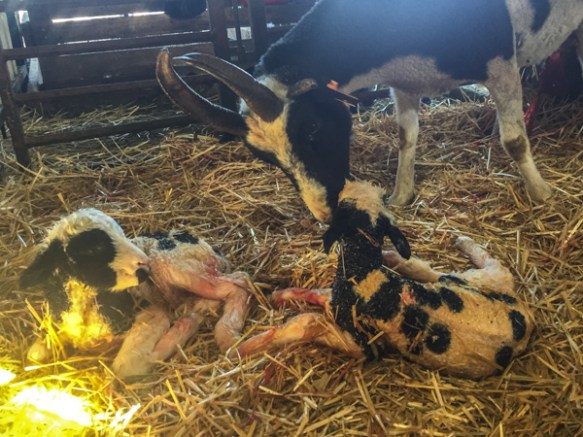 Jade is the biggest pet sheep here.
  She had a ewe and a ram lamb.
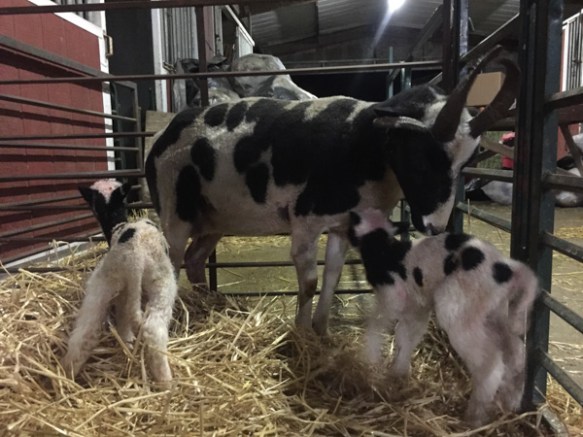 At that point I had overflow pens set up in the alley of the barn.
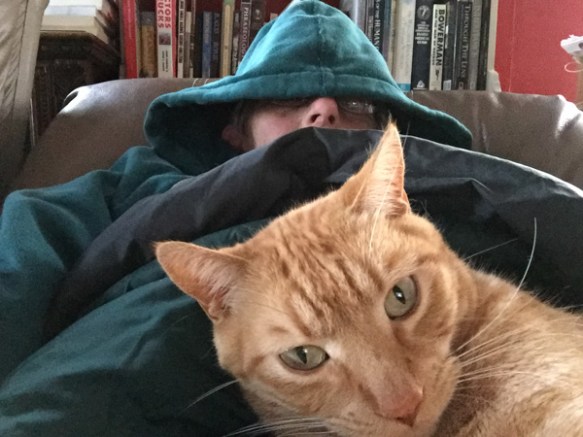 I think I slept some here and then was woken up.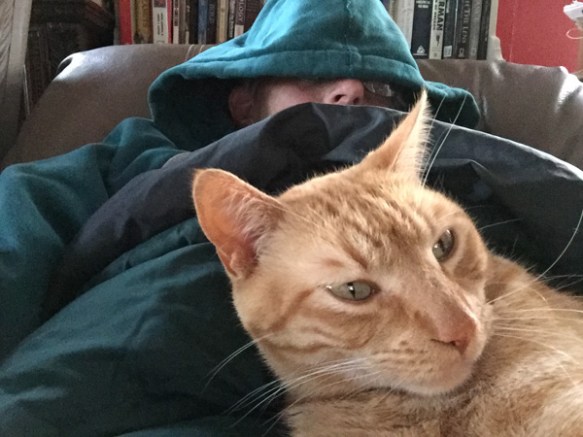
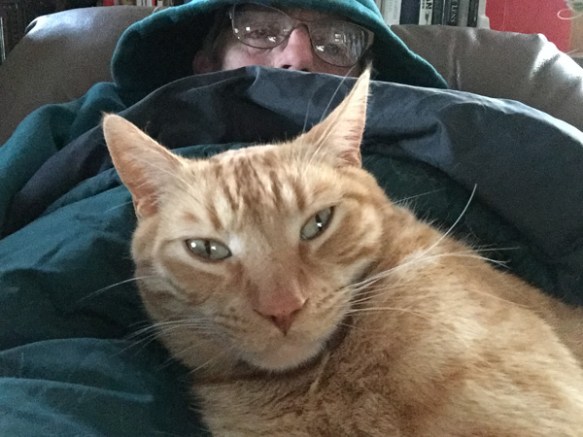 It looks as though Sunny is getting sleepy here. But I’m awake.
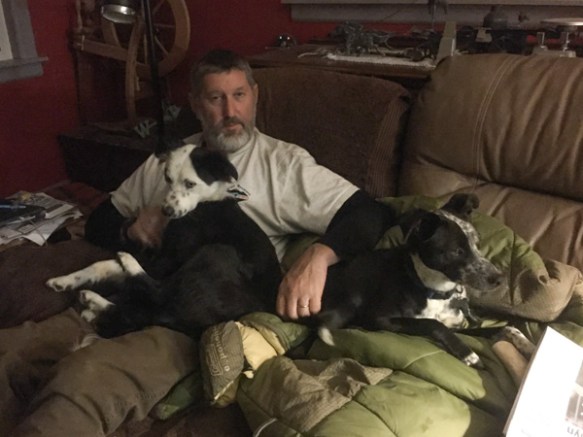 My son works as an EMT and he is often gone at night. The “puppies”, who live next door, get invited in our house if they are barking too much. They have no qualms about cuddling on the couch, something our dogs don’t get to do.
 Back to Jade. Here she is with one of her lambs at 2-1/2 weeks old.
 Here she is the previous day, looking rather uncomfortable.


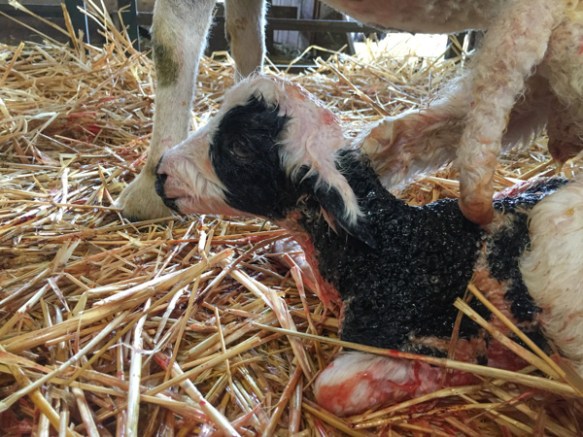
 Here is how the barn list looked at the end of the day.
 Meanwhile , in the pasture the lambs were playing.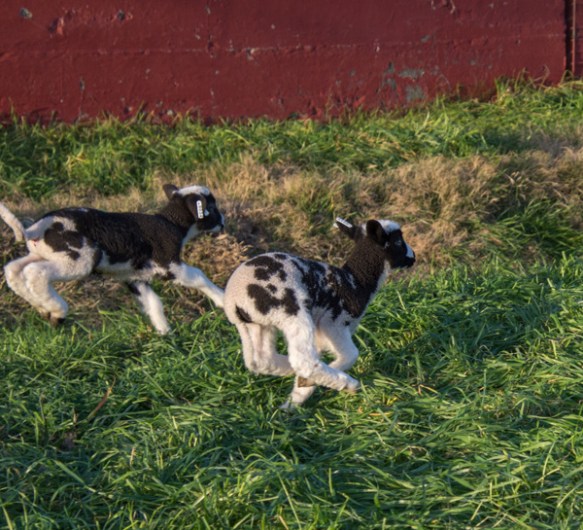
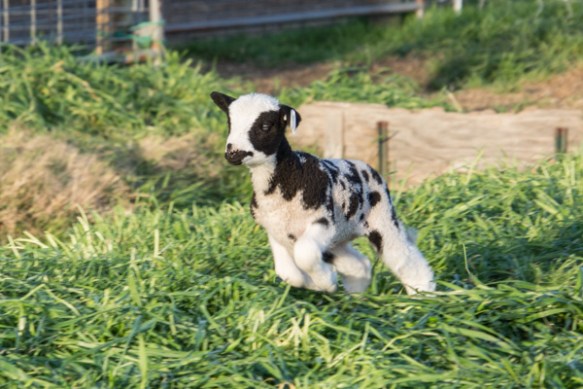
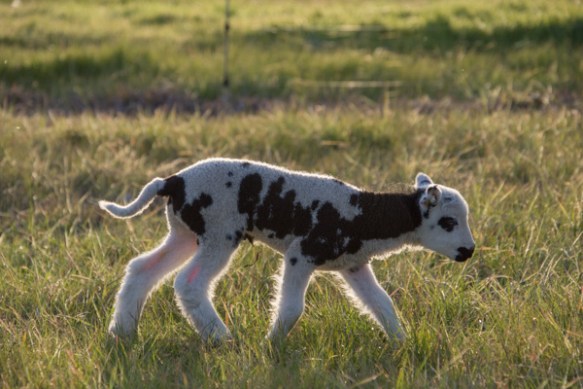


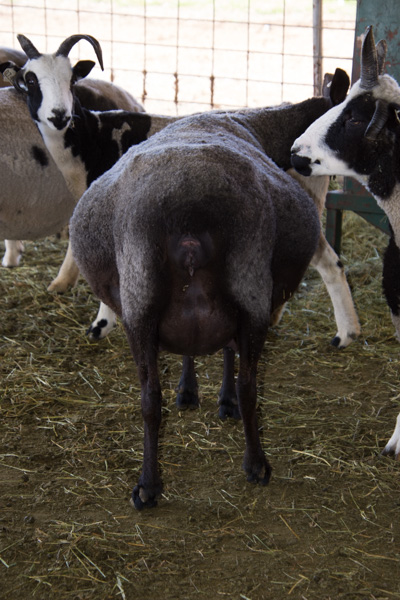 This photo was taken two days prior to the day she lambed.
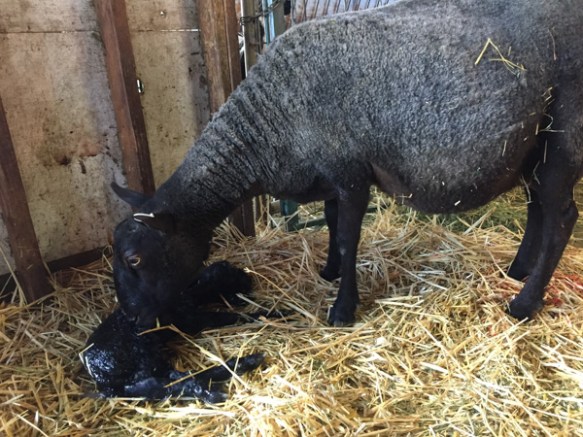 I now have a different BFL ram here so Ears was bred to Peyton, making her lambs 75% BFL.
 The first lamb was born about 1 in the afternoon.
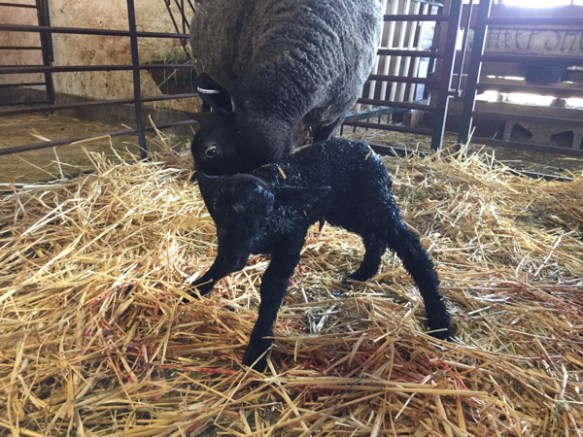 He was on his feet within 15 minutes.
 Even after as many lambs as I’ve watched just after birth I am always amazed by how quickly they stand and try to nurse.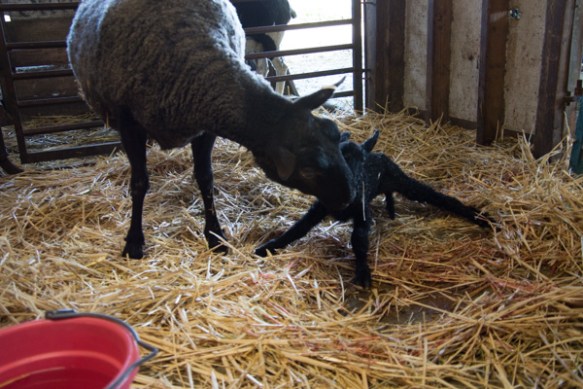
 Ears was working on the next lamb but it was an hour after the first had been born and I saw significant meconium staining. That indicates some level of fetal distress, so I pulled this lamb. No wonder it was slow in coming–it was 12.4 pounds!
 I checked for another lamb and this one was born in about another five minutes.
  This is 31 pounds of lambs!
 All were up and trying to nurse in half an hour.
  This is Ears and her triplets the next day.
 So very cute!!!
 That is Foxy lying down in the back.
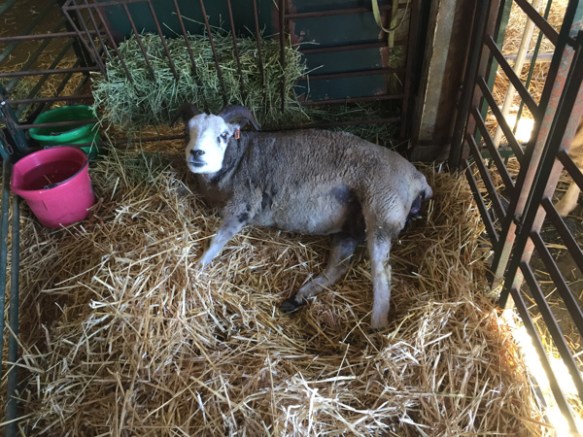 I brought her into the barn about an hour after I first noticed her.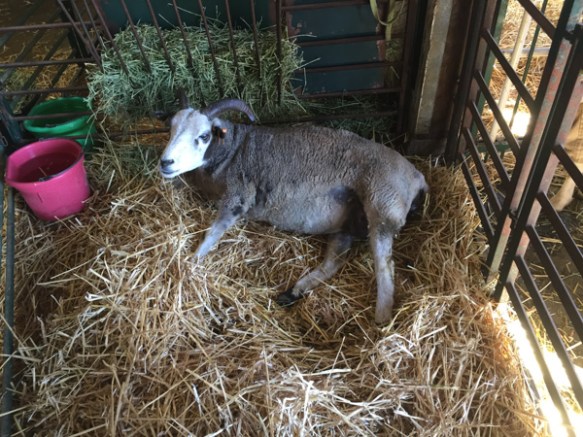


 She lambed about an hour later.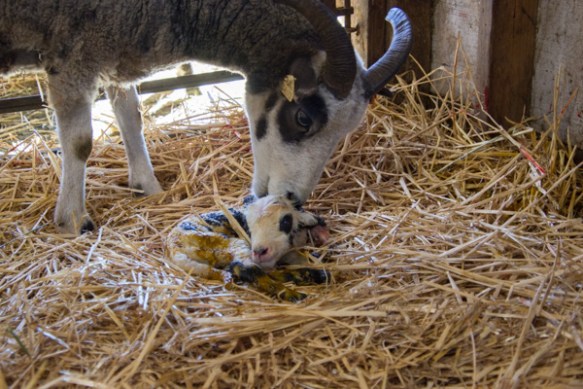


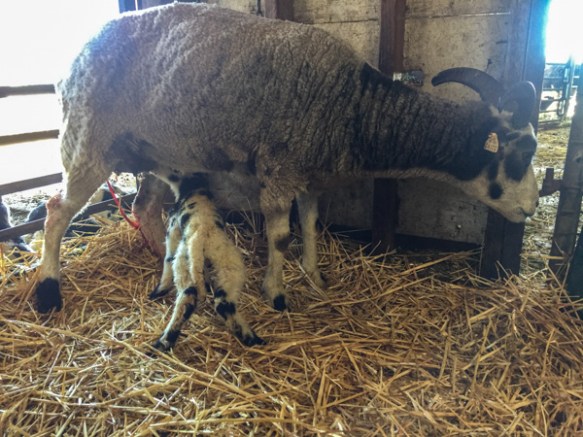
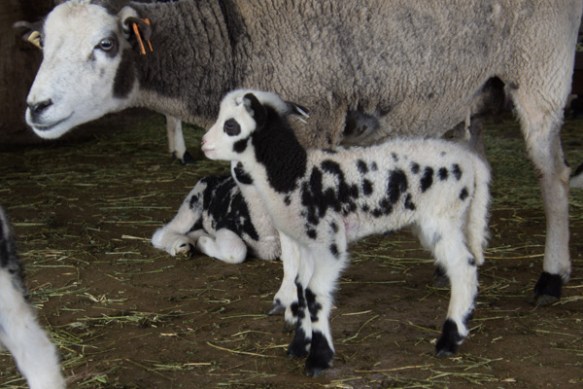 This is Foxy’s lamb at 6 days old.
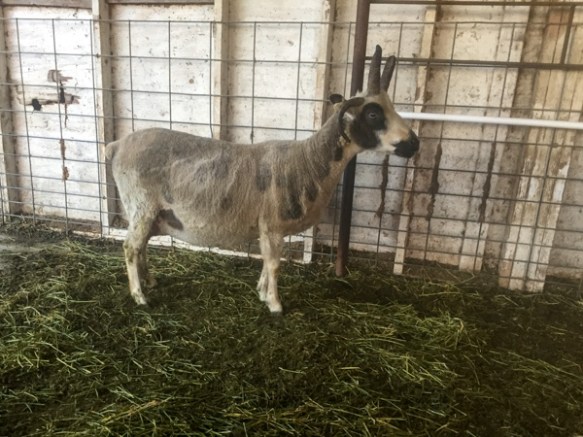 I saw her at about 7 a.m. and knew that she was in labor. The first sign of labor is often just behavior. You have to know what normal behavior looks like to know when something is different. I spend a lot of time looking at my sheep.
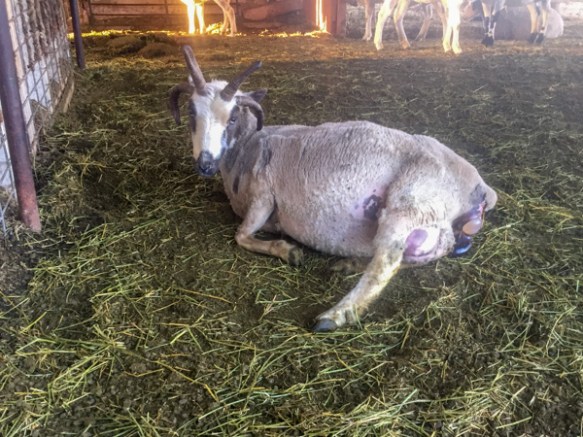 A more obvious sign is seeing the sac emerge when the ewe has contractions.
  The first lamb was born about 7:20 and I brought the lamb inside the barn.
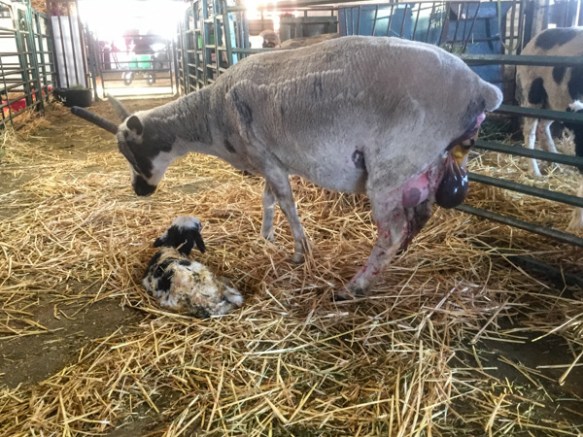 It sometimes takes much longer before the second lamb is born, but this one was coming within five minutes.
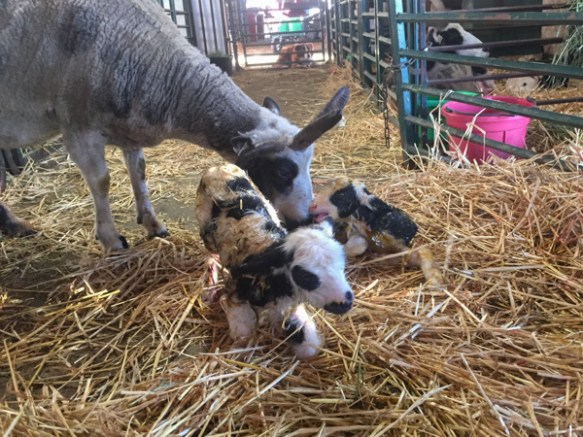 That’s the first lamb getting up within ten minutes of birth.

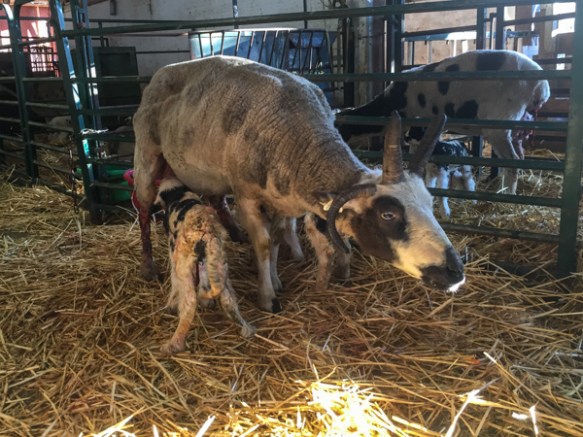 Both lambs were nursing within a half hour.
 This is the lamb board. These lambs were #49 and 50.
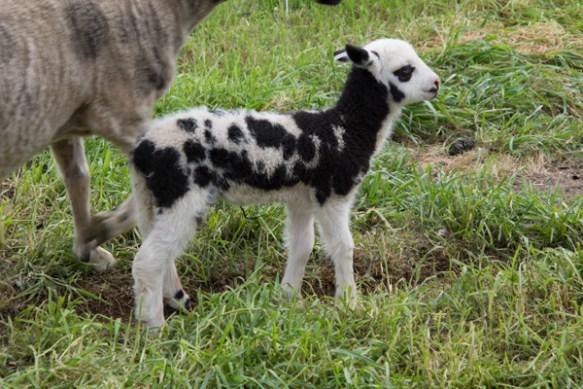 This is one of the lambs one week later.
 Do you remember this lamb from a couple of posts back? Trista had a 10+ pound lamb and then almost two hours later a 5 pound lamb. She didn’t want the little one and I struggled to get it to nurse. I ended up milking Trista and tube feeding the lamb colostrum. I left the lamb with Trista but she became increasingly less happy to have it around and more hostile.
 I saw this in the barn. This lamb was standing hunched up like a lamb does when it doesn’t feel good. This view from the top down shows how large it’s belly is and it was tight as a drum. From previous experience I suspected intestinal atresia, a malformation of the digestive tract where the intestine is not complete. The lamb eats normally at first and then there is no where for the milk to go and this lamb was already over 24 hours old–it didn’t have long to live and was in great discomfort.
 In addition the lamb had stopped nursing so the ewe was at risk of mastitis as her udder filled, even though there was a remaining twin. One side had started to fill more and become uncomfortable. That starts a vicious cycle where the ewe won’t let the lamb nurse and that side of the udder gets worse and worse. This is a photo of milk from Trista, the orphan’s mom. I got over two cups of milk from the ewe with the baby who died.
 I made a little lamb jacket out of the skin by cutting a neck hole and leg holes. It’s kind of hard to tell if you don’t know that’s what you’re looking at.
  The new lamb was smaller than the one that died so this jacket was a little large. The mom wasn’t convinced at first that it was her baby, but she didn’t outright reject it. The lamb had eaten (been tube fed) just two hours before so it wasn’t hungry. But later that night it was hungry. It was on it’s feet and when I held the ewe still it nursed!
  The next day the jacket was beginning to smell. The idea is that at first the mom smells her baby and eventually gets used to the new lamb smell. So our transition was original lamb smell mingled with new lamb smell, new lamb smell mingled with dead smell, all new lamb smell. I had cut a portion of the skin off to get more of the new lamb smell and because I wanted the lamb to be able to adjust to the cold when the second skin came off. But this skin jacket was so big that at that point it got tangled up and I took it off.
 We have success. I haven’t had to hold the ewe for a few days while they have been in a group pen. They will go out tomorrow and I’ll keep an eye on them. But I think the baby has a new mama.
 Meridian Jacobs' Blog