
I started to write an email to Farm Club about my recent car shopping experience and then I realized that I was writing a story.
Today’s adventure is really nothing out of the ordinary for most people, but for me it takes on epic proportion. Do you know how many cars I’ve had in my life?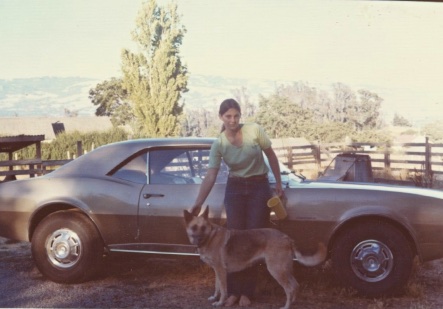
1: During the first year of college I got a ’67 Camaro. Too bad I don’t still have that one.
2: White car that I can’t remember right now. (No photos of this one.)

3: Then there was the big red Ford van. I have many fond memories of that car.

4: This maroon Safari mini-van was the only vehicle we bought new. I remember that the day I got it I drove to school to pick up Chris and he was shocked when I walked over to this strange van and opened the door. 
This photo was taken at CNCH (Conference of N. CA Handweavers) when it was held in Grass Valley and Katie and I camped at the fairgrounds.

5: Although I put about 100,000 miles on it I never really bonded with the ’04 Explorer. I bought it in 2008 and just sold it at CarMax because too many things were falling apart.

6: I bought the ’02 Ford truck from my son when he upgraded. Dan made the cool box for the back so that I could haul sheep to Black Sheep Gathering in Oregon. This is the first (I think) Farm Club road trip to BSG in 2011.

That trip was memorable for being pulled over to investigate possible sheep-rustling.
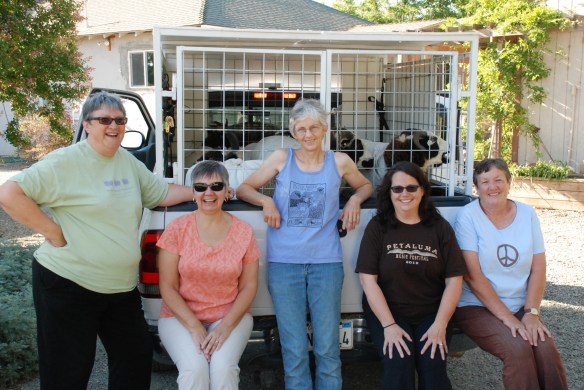 We took another trip in 2013 and again in 2015. I still have this truck.
My husband drives my mom’s ’85 Honda Civic and his ’99 Ford truck that he got when his dad moved to Hawaii.
So you can see that we’re not real big car buyers. I needed something in addition to the truck. I mean I really need to have a truck and I didn’t want to keep driving that one because I need it to last. So I started shopping about a month ago and had the proverbial sticker shock. This is embarrassing but we thought that we might spend $10-12,000 on a vehicle. It turns out that would buy me something like I just got rid of . I still need the ability to carry Things and Dogs (3) around with me and we want at least one vehicle with 4-WD so we aren’t limited about visits with our son in the winter or in our own travels…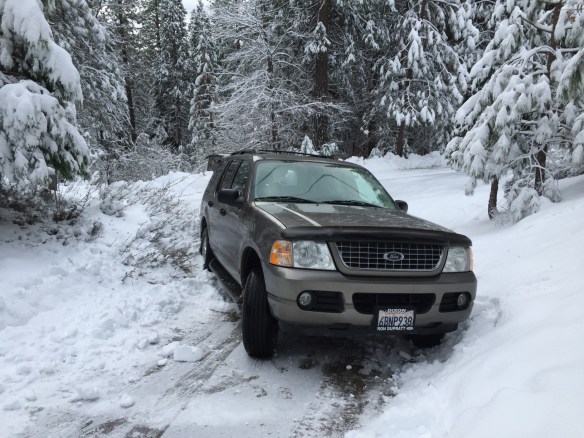 …although last Christmas the Explorer wasn’t adequate to get up the driveway. (That could have been because, knowing we were going to sell it, we hadn’t got new tires.)
I revived the hunt two days ago and realized that I needed to keep moving forward this time or I’d have to start all over again. After lots of time on the computer I had finally narrowed it down to a Honda CR-V. I searched through dozens of listings from Sunnyvale and Lodi to Sacramento. Nothing really struck me as the perfect car—what’s with all the black and sliver SUV’s out there? How about a little color? And price was still a big issue—that and the combination of price/mileage. I keep being told that 60,000 miles on a Honda is not like 60,000 miles on a Ford, but still. I wanted to go to the local Honda place to see what they had first. I like to support local business and I don’t like to Drive to The City. There were no 4-WD CR-v’s in the price range, but they asked, “have you tried a RAV-4?” No, I hadn’t. They brought one out and I liked it. But I hadn’t researched it like I had the other. I didn’t know which models had which features, what the extras are, etc. I told the guy that it’s like trying on shoes—even if I think the size 10 fits I need to try the 9 and the 11 to make sure.
So I went home and started researching it. I looked at the photo I took of the specs of the one I drove and realized that it was a 2WD, not 4 after all. By then I was immersed in the RAV-4 world and decided that maybe that really was the car for me. I spent all evening trying to organize the cars I found with year, price, miles, location, and color (still mostly versions of black, white and silver).
I was looking at 2011 and 2012 because I liked those versions. Mileage was mostly in the 50K to 70K range. I really wanted Someone Else to go on this car hunt with me, but that wasn’t happening right now, although my sons both gave me pep talks about bargaining.
This has become a long story. I came home with a car today. Last night I found a 2011 RAV4 with only 21,000 miles within the price range of the others I was looking at. I went to Sacramento this morning, drove it, and made the deal. I got some money off the asking price—maybe not as much as my kids would have but I think that getting 40,000 MILES off was just as valuable. This is not a very good photo but the one I took to show my husband what I bought while he wasn’t there.

Now I just have to get back to Sacramento to pick up my truck.
 Found it. I needed to get it on
 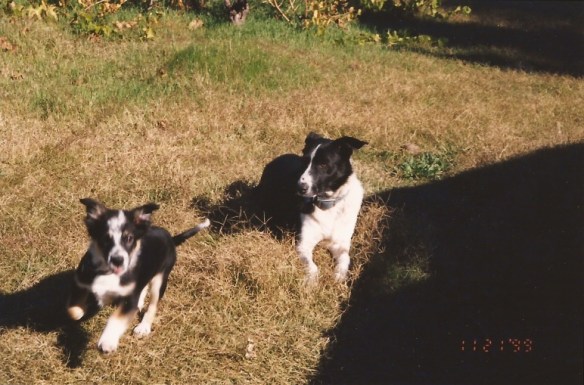 1999. Flash, my first Border Collie, who helped with dairy cows, and Benny who we got as a puppy when we first moved to our current location.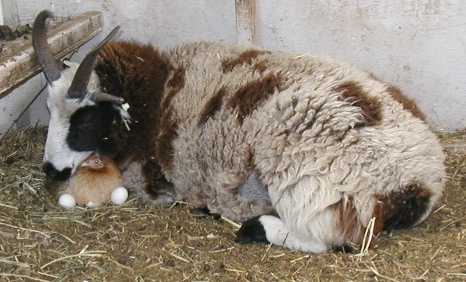

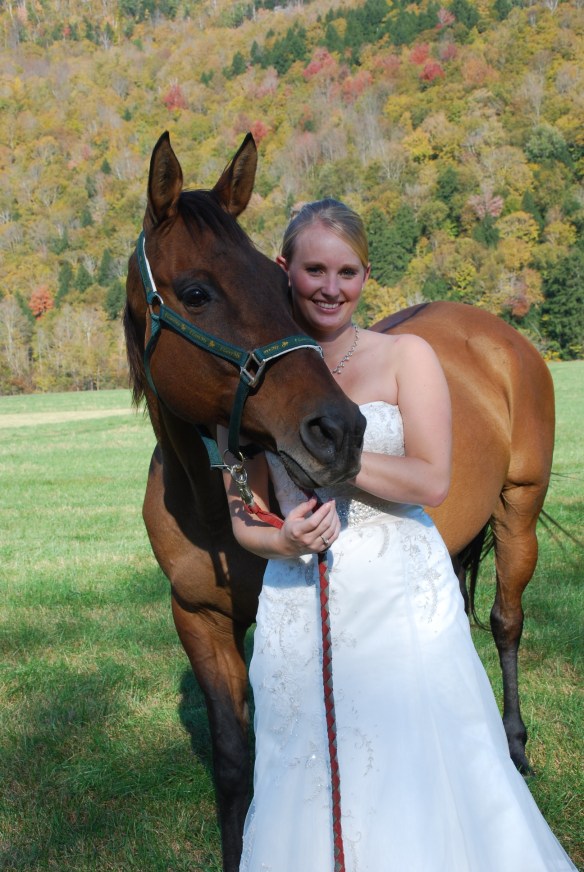 A gorgeous wedding day in Vermont.
 Amaryllis.
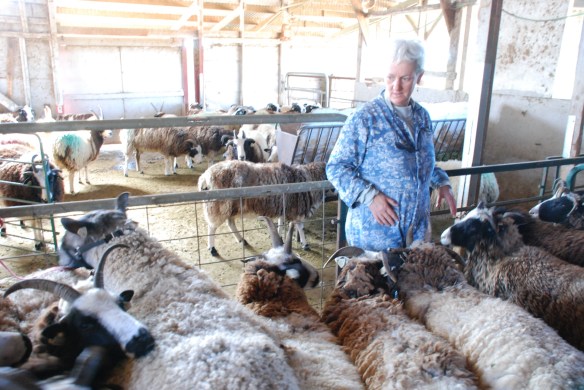 A line-up of the girls plus Faulkner, the BFL ram.
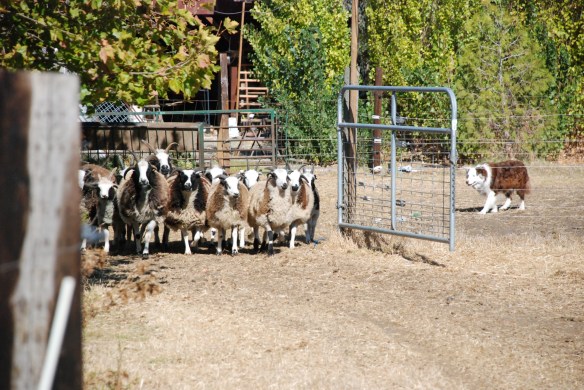 Rusty moving sheep.
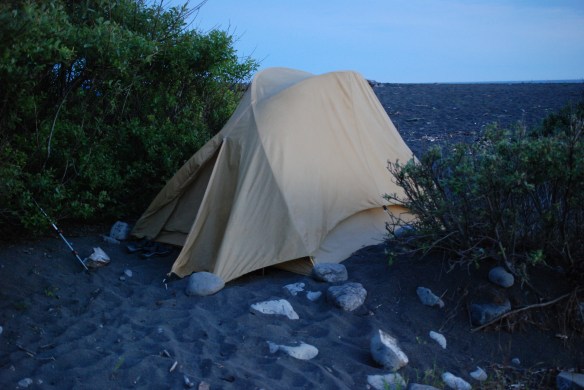 My tent when backpacking on the Lost Coast a few years ago.
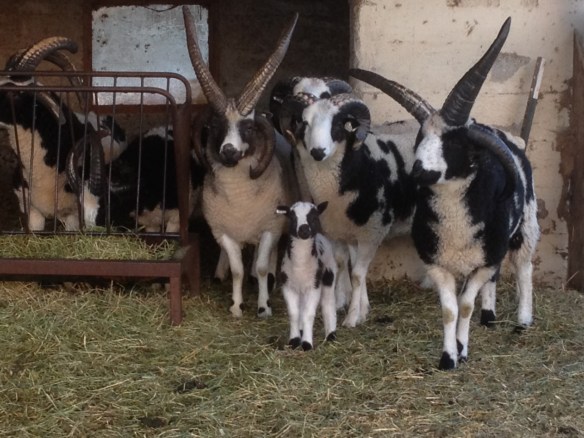 Taken 4 years ago. Look who got in with the big boys!
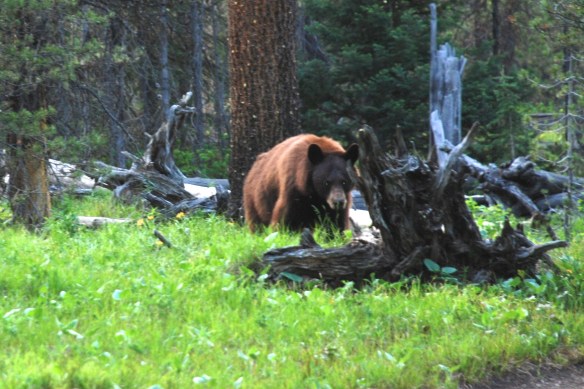 Speaking of big boys, this is a bear that Dan and came across when hiking in Grand Tetons National Park. She has a cub nearby and didn’t back down. Black bear or grizzly? We were never sure. We assumed it was a black bear but some people who saw they photo said grizzly.
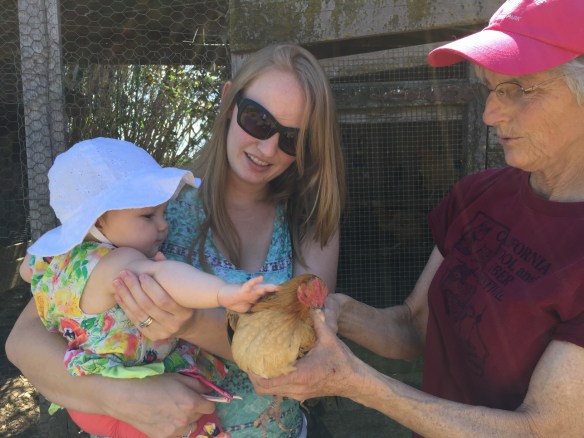 My granddaughter taken about a year ago. That’s the “little chicken”. Could that be the same one as in that photo with the sheep?
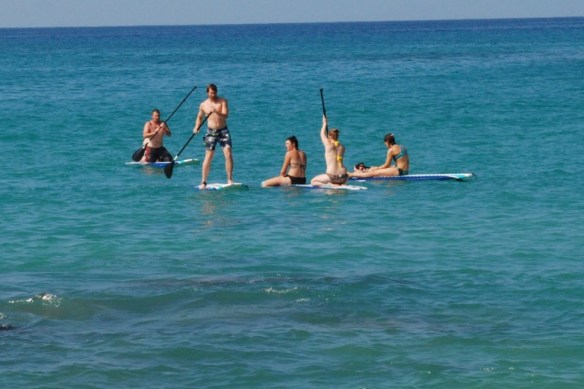 I took this photo in December when we were with all my kids and their spouses in Hawaii.
 …and was inspired to change to my 40 mm micro lens. Then I walked around looking at things through that lens. Some are tiny and some not so tiny, depending on the view.
 Grapes just forming.
 The rope part of Ginny’s Toy.
 Dried up “cone” from sheoak tree.
 That “cone” on the tree.
 Can you guess this one? Answer below the next photo.
 This is the new growth on the redwood tree. That photo above is the joint in a ram skull.
 Rose.
Rose. This bottlebrush is covered with flowers this year.
 This is what is left from last year’s flowers.
 Chain.
 I took the camera Across the Road too. This is a blackberry flower.
 Hoverfly on a blackberry leaf.
 Grass flowering.
 Buckeye flowers.
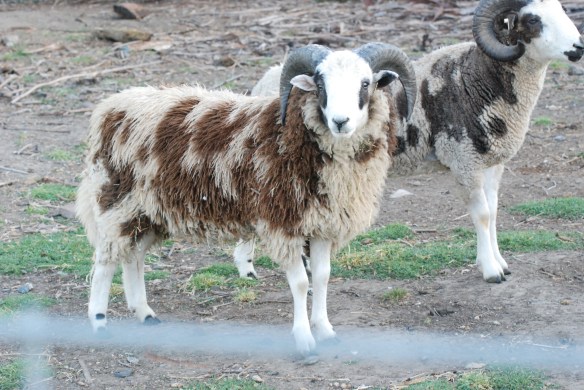 This is the 9 month old ram. He needs a name.
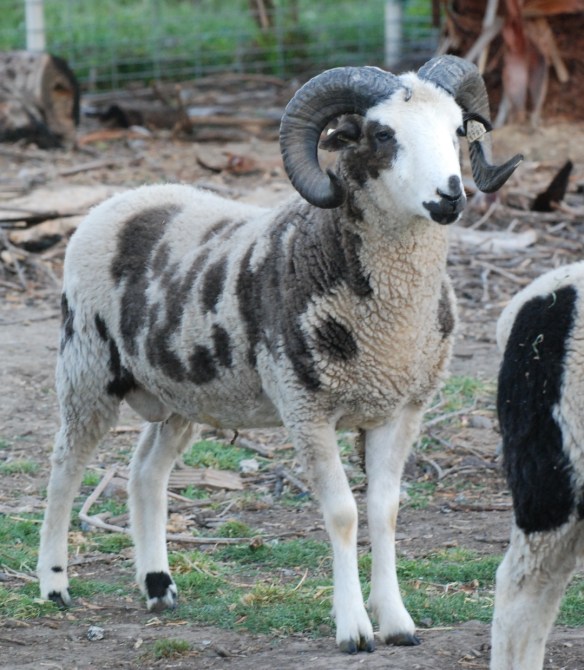 This is Meridian Nash. These rams have the same sire so I don’t need both. I think this one will be for sale.
 Puddleduck Ringo is also for sale. I have used him for two seasons and he needs to move on.
 Meridian Rotor.
  Isn’t this a beautiful stylish ewe lamb? She was born a month before everyone else because the ram lambs weren’t weaned soon enough. Too bad I don’t know her sire. Her very cute baby pictures with her brother are in
 Lamb in early morning light. Meridian Vanessa x Meridian Rotor.
 BFL-cross lamb. Love those BFL faces.
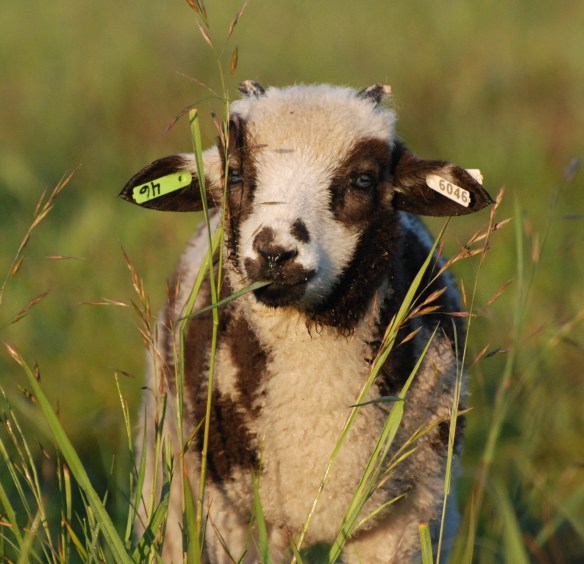 I’m keeping this lilac lamb. Mud Ranch’s Foxglove x Meridian Nash.
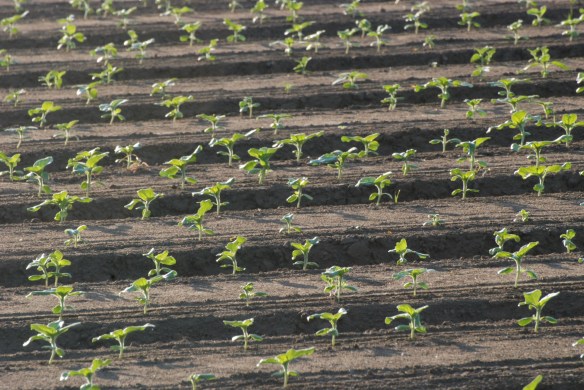 Not sheep, but the sunflowers Across the Road.
 Ginseng and BFL-X lambs.
 Fandango with lambs.
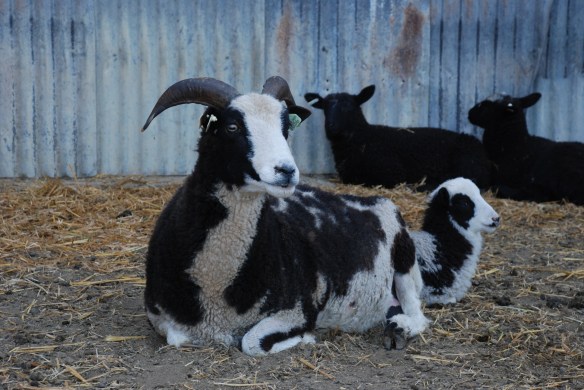 Hot Lips and lamb.
 Alexandria and her lambs.
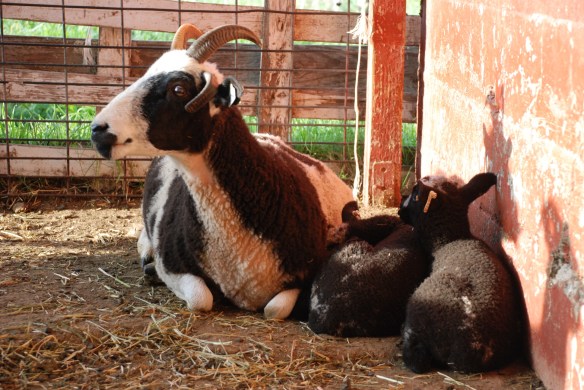 Isabelle with lambs.
 Melinda and lambs.
 These were the last ones born this year.
 Amaryllis.
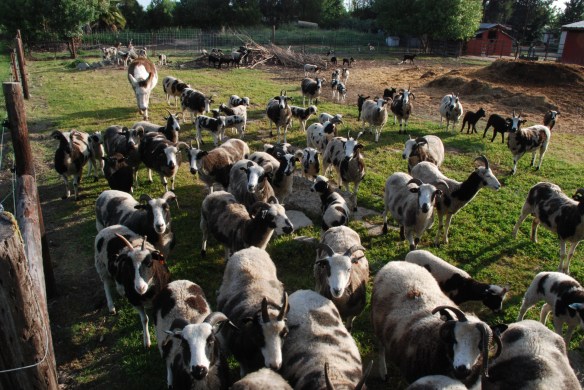 Sheep looking hopeful as I climb back over the gate.
 This is the ditch that runs north-south and brings the water from the upper ditch to the one that goes from west to east along the bigger pasture.
 This photo is looking the same direction but from a little bit west of the first one. You can see the same row of overgrown blackberries along the fence. The standpipe where the water comes in is in the upper left corner. In the lower center of the photo is one of the cut-outs that lets the water flow from the ditch into the field.
 Looking to the east as the water is flooding the pasture from north to south. In this photo the water hasn’t gotten very far into the paddock where the sheep are.
 Here is that tarp I showed in the last post.
 There are things to see besides just water and grass. One of the first things I noticed after the water filled the ditch was buzzing. These insects were everywhere over the water. I tried to ID it on the internet but didn’t find it. Anyone know what this is?
  This is one of the pair of Swainson’s hawks that lives nearby and hunts in our pasture.
 We have enough gophers to feed an army of hawks.
 This was taken from standing in the northwest corner of the property and looking west. When SID (Solano Irrigation District) opens the right gate the water comes down that canal, through a gate in the cement structure at the bottom of the photo and…
 …comes up through this standpipe. It goes out that hole on the left and…
 into this ditch. At the end of the ditch it turns south and goes into the other part of the pasture. Later in the year this ditch will require weed-wacking for the whole length to allow the water to flow. This time I didn’t need to do that.
 This part of the ditch has old pipes that take the water under the burm. I can find two of the three that used to be functional.
 The first job is to dig out around both ends of these.
 As I walk through the pasture I find thistles that need to be chopped.
 The rest of the pasture doesn’t have those pipes, but instead has cut-outs or places where the burm is cut away to allow the water to flow from the ditch into the pasture. I didn’t get photos of those. This photo is a cut-out (under the fence) that I had to fill in because it was where we had cut through the burm to allow water flow INTO the ditch in the winter to help drain the rainwater that was all around the barn.
  Here is the place at the northeast corner of the pasture where I have to put a tarp to keep the water backed up in the ditch. After this point the ditch turns south and drains at the southeast corner of the property.
 I can never remember what size tarp to get. I bought 2 sizes and took this photo to remind myself that this one is just fine.
 The idea is to set the tarp so that the edges are buried in dirt and those boards behind will keep the water from pushing the tarp down flat. I did this twice.
  The first time the dirt that holds the tarp down on the bottom was too high. That means when I released the tarp at the end of irrigating there would still be a dam. I have a hard enough time getting the ditch to empty that I don’t need to impede it more.
 This is a second tarp that I set just around the corner in the ditch that goes south. I shouldn’t have to do this, but due to gopher holes, tree roots, and maybe my lack of irrigator skills it seems that one is never enough. Two tarps hold the water back better. Or at least one is a back-up for the other.
 While I was working in the pasture I saw that a couple of lambs had their heads through the electric net fence and didn’t seem to care. That prompted a search for the problem with the electric fence. I found a broken wire at the south end. I got new wire and fixed it but then found several more places where I had joined new wire to old. The more times you do that the less conductivity there is. So I took out a long stretch of the old pieced-together wire and replaced it. Low and behold, my tester showed higher strength than it has in years!
 One thing leads to another. While I was at that end of the pasture I was bothered again by the old dallisgrass that effectively mulches my pasture. It’s one thing to mulch a garden to keep weeds from growing, but mulching a pasture is counter-productive. If you search dallisgrass in this blog you’ll find many attempts to deal with this. This time I was simply knocking it off the electric wire that is about a foot and a half up on inside this fenceline. It broke and pulled away so easily at this time (this is last year’s dry grass) that I started pulling it away by the armfuls. I didn’t have any tools or even gloves, but threw mounds of it over the fence–hey, I’ll mulch the outside of the fence and maybe keep the growth down there. That felt somewhat productive although it may not be useful at all. But at least I could see a difference in the before and after.


 This was taken on the first walk a few weeks ago. The dogs are on the leash until we get off of Meridian Road.
 The field was bedded up and planted about two weeks ago.
 Can you see the sprouts when you look at one of the lines almost right in the middle of the photo? Those are sunflowers.
 The most exciting thing for the dogs is that the canals were filled about a week ago.
 On the last walk I noticed that Rusty spent more time than usual in the water. He usually just goes in when he’s hot and gets out again, but this time he spent time cruising (the best way to describe his half walking/half swimming) up the canal. I think his hips are bothering him so much that it felt better to move that way.
 He also needs help getting out now. Last year I helped Ginny out. This year it will be Rusty.
  Wet dog.
 The alfalfa has been cut and baled once already and is now being irrigated.
 Here is another week’s growth of the sunflowers.
 The best surprise for Ginny I think is that she got to chase the Toy into the water again. Rusty will have more of these photos on
  Kind of like
  I got home from Modesto and went to the barn about 8 p.m. These lambs had been born within the hour. I don’t know why this ewe took so long. She was marked as bred during the first week of lambing. I suspect that she miscarried and it took her 6 weeks to cycle again. Faulkner was the clean-up ram so all the last lambs are crossbreds.
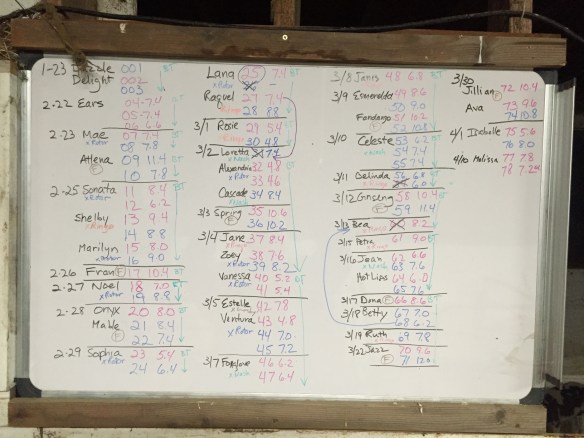 This is my lambing board. I’ll have the stats figured out at a later date.
