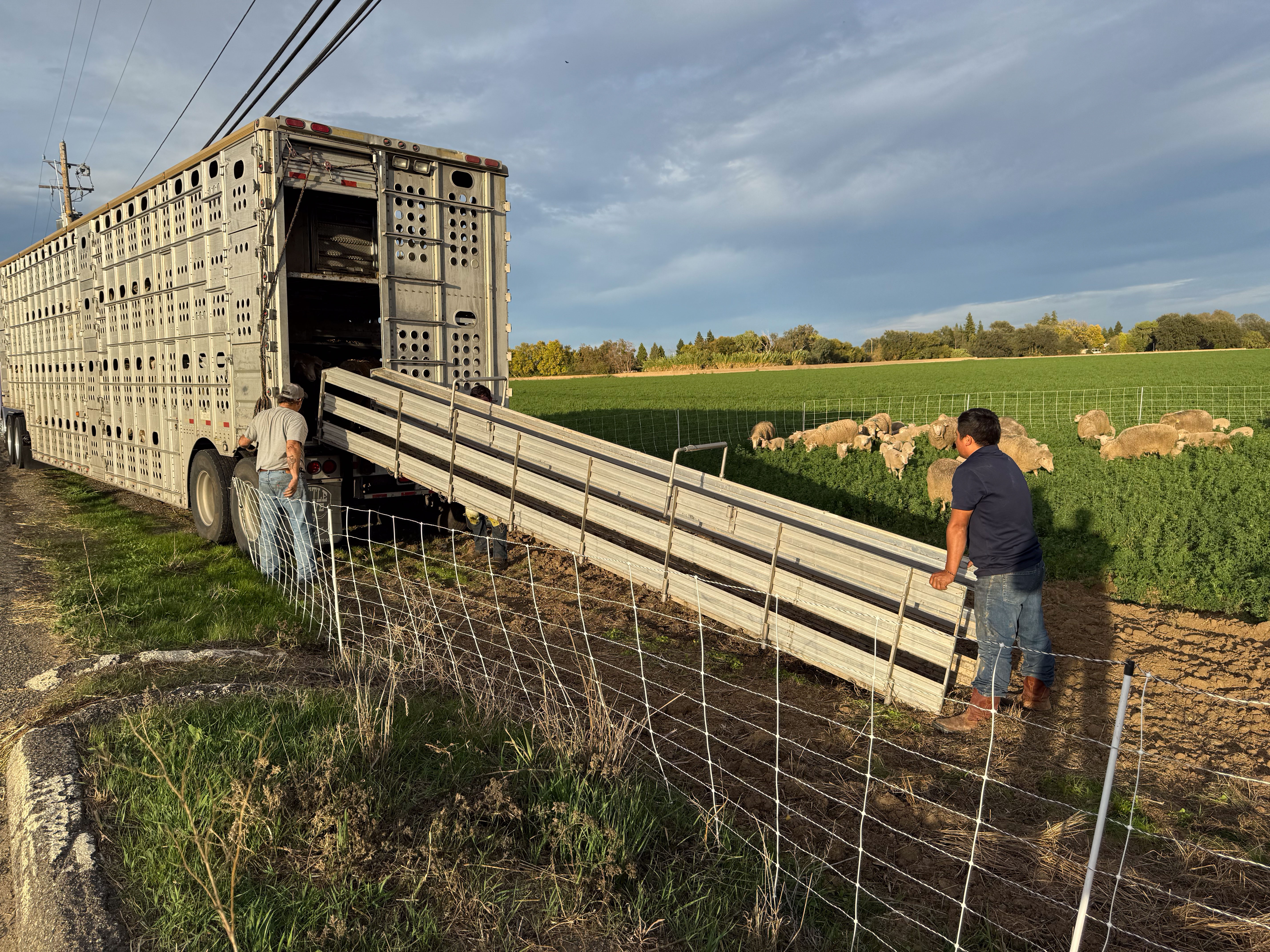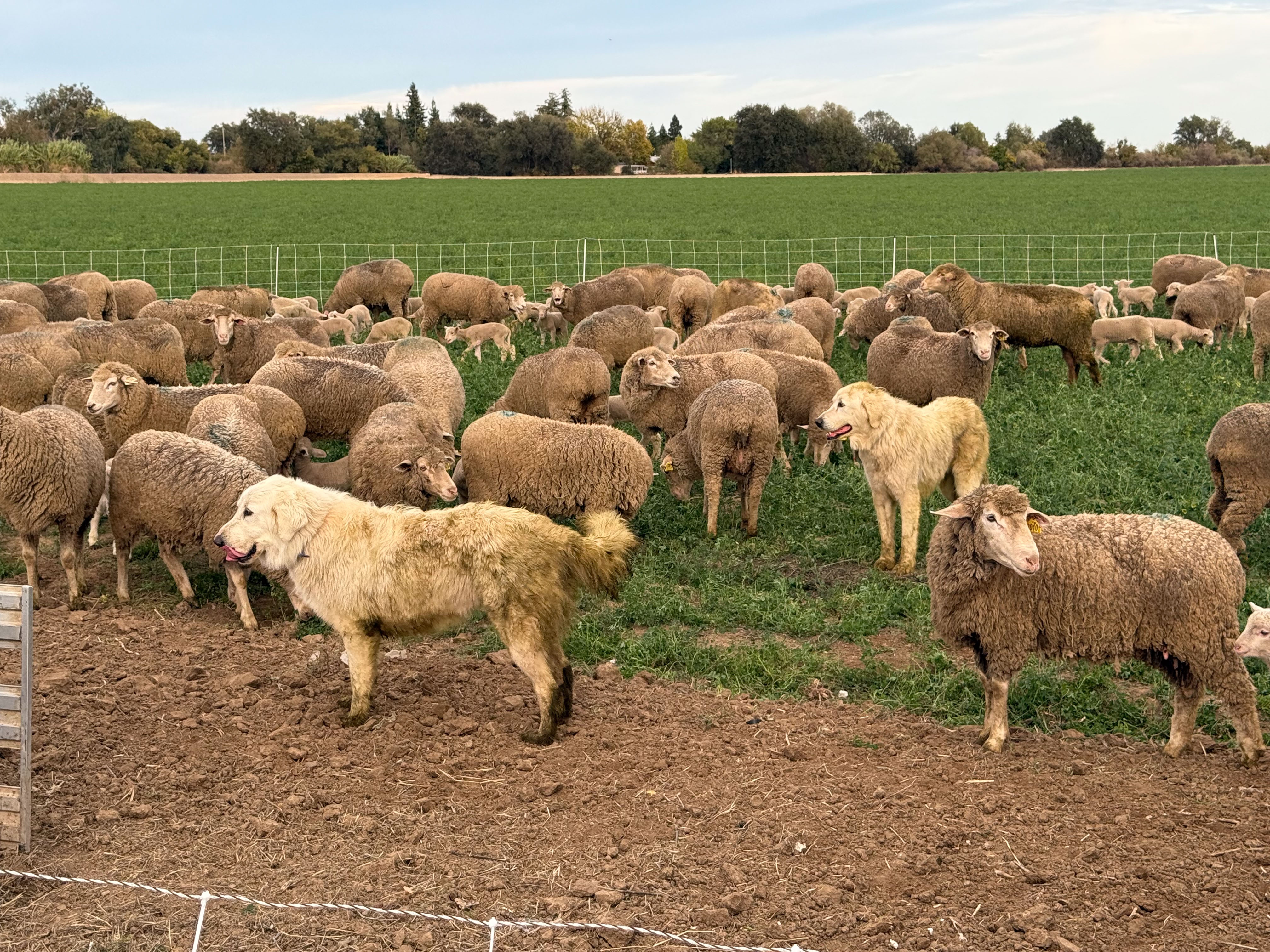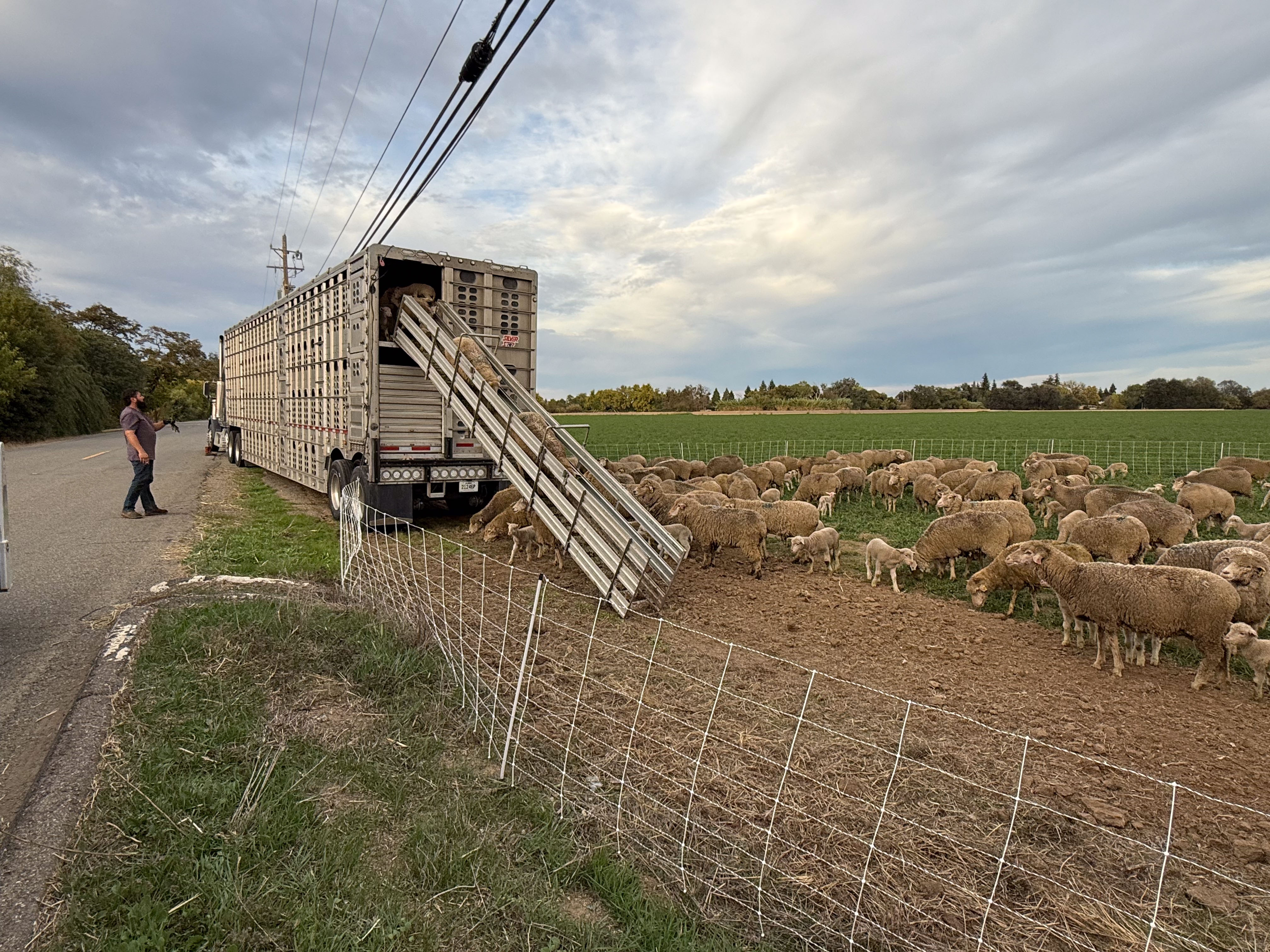
I explained in the last post that I try to limit the number of photos in each post. That is partly because I think it helps the post to load better and I also want to keep whatever audience I may have. That’s you! However, I guess I’m sort of cheating because now I’m writing two posts for each day if there are just too many photos that I want to remember.
We headed north from Bryce Canyon National Park with the plan to get to Hwy. 50 and drive east as far as was practical.
As we turned north we saw plumes of smoke on the horizon.
About an hour later those plumes were much closer. This was the Monroe Canyon fire. It started burning July 13 and had now (August 16) burned almost 74,000 acres.
We passed the a fire camp.
This view shows two helicopters making water drops.
They are filling the buckets from a small reservoir on the other side of the highway.
There is a helicopter in the middle of this photo.
ireBy the time we were in eastern Utah we had left the smoke behind. We continued on to Montrose where we got a motel room for the night.
I left off in the last post when we arrived at Bryce Canyon and secured the last tent campsite in the park.
After looking over the landscape from the rim that evening Dan studied the park map and planned a hike. We started at the Queen’s Garden Trail, so called because of one of the hoodoos that looks like a statue of Queen Victoria.
We followed the trail down, which gave a different perspective than the view from the rim.
We came across a sign that explained the Hike the Hoodoos Challenge. If you photograph yourself with three of the benchmarks along these trails you get a prize! We found four. The prize is a sticker from the visitor center.
I took over 175 photos on this day and that’s one reason it’s taken me so long to write this post. I try to keep my blog posts to ten photos or fewer and that means a lot of sorting and decisions. I still didn’t meet that goal.
Two perspectives of the same formation (photo above and below).
The Queen’s Garden Trail led to the Peek-A-Boo Trail which connected with the Navajo Loop, part of which is what they have named Wall Street (below).
Its difficult to show how amazing this formation is.
This view is looking back towards the path with the stairs, through that slot and past the tree growing in the slot. There were a lot of people on this part of the trail. Look at what I just learned how to do:
I use Lightroom to edit photos and I was just able to remove all the people from this photo. That’s a great thing for ending up with pleasing photos, but it does make me realize that you can’t believe everything you see in print (or online).
A non-edited photo in which you get a feel for the scale of this place because I did not remove the people. .
View from the top after we finished the hike. You can see some of the trails–along a ridge in the center, and just below center on the left.
We hiked about 7 miles. That was significant because this is the first time Dan has hiked in a year and a half, after a knee injury in 2023. He’s had a new knee for just under four months!
Two other thoughts: 1. We stayed on the trails. I found myself wondering how many other formations there are like that slot canyon called Wall Street. 2. In this photo, what looks like clouds, is smoke, probably from the fire burning at the Grand Canyon. I’ve been following the progress of the fires because my kids’ involvement in wild land fire fighting.
We spent most of the day at Cedar Breaks National Monument and then headed to Bryce Canyon National Park.
One of two tunnels cut through the red rock on the way to the Park entrance.
We didn’t have reservations for camping but took our chances. We got the last space available for tent camping in the two campgrounds in the park.
After securing our camping space we walked the trail along the rim for the views in the following photos.
I took this photo at Cedar Breaks. It shows the geology of this part of Utah and where some of the parks lie in relationship to each other. It is interesting to see the layers of the rock so clearly.
Bryce Canyon is not really a canyon, but a collection of giant natural amphitheaters.
The towering formations are known as HooDoos. They are created as a result of water freezing and thawing and opening cracks in the rock, following by erosion. Bryce Canyon is known to have the greatest concentration of hoodoos in the world.
Bristlcone Pine along the rim.
On the way bak to the campsite we found a family of deer.
The doe had twins.
There was a buck nearby. In fact, there were 4 bucks, mostly younger than this one.
We left home Tuesday morning and I shared photos in this post. It was getting late in the day when we got gas in Ely, Nevada and we took time to look at the map. We found a place to camp in the Ward Mountain Recreation Area a few miles out of town.
Here is the campsite in the morning. Dan was still in the tent.
I went for a walk as the sun was coming up.
We packed up and got to Utah about 9:30.
We got off the main highway to drive the original road through the mining town of Pioche. This sign describes the tramway, the remnants of which are still here on the east side of the road.
This is the tramway that facilitated movement of ore from higher up the mountain (behind us) to the valley below.
This is a closer view showing the cogs that held the chain or cable that carried the buckets. The structure that is on the horizon towards the left of the photo is one of the buckets still on the cable.
Our first stop where we planned to spend some time was Cedar Breaks National Monument. We checked out the visitor center first and then went for a hike.
All the views of the breaks are incredible. Do you notice that light spot just right of center on the bottom of the photo. It sure looked like a rock for the longest time.
Then I saw it for what it was – a hole through that wall. I still see it as a boulder part of the time.
Closer up view showing the colors in the rock walls.
Marmot along the trail.
View of the ridge where we had been walking.
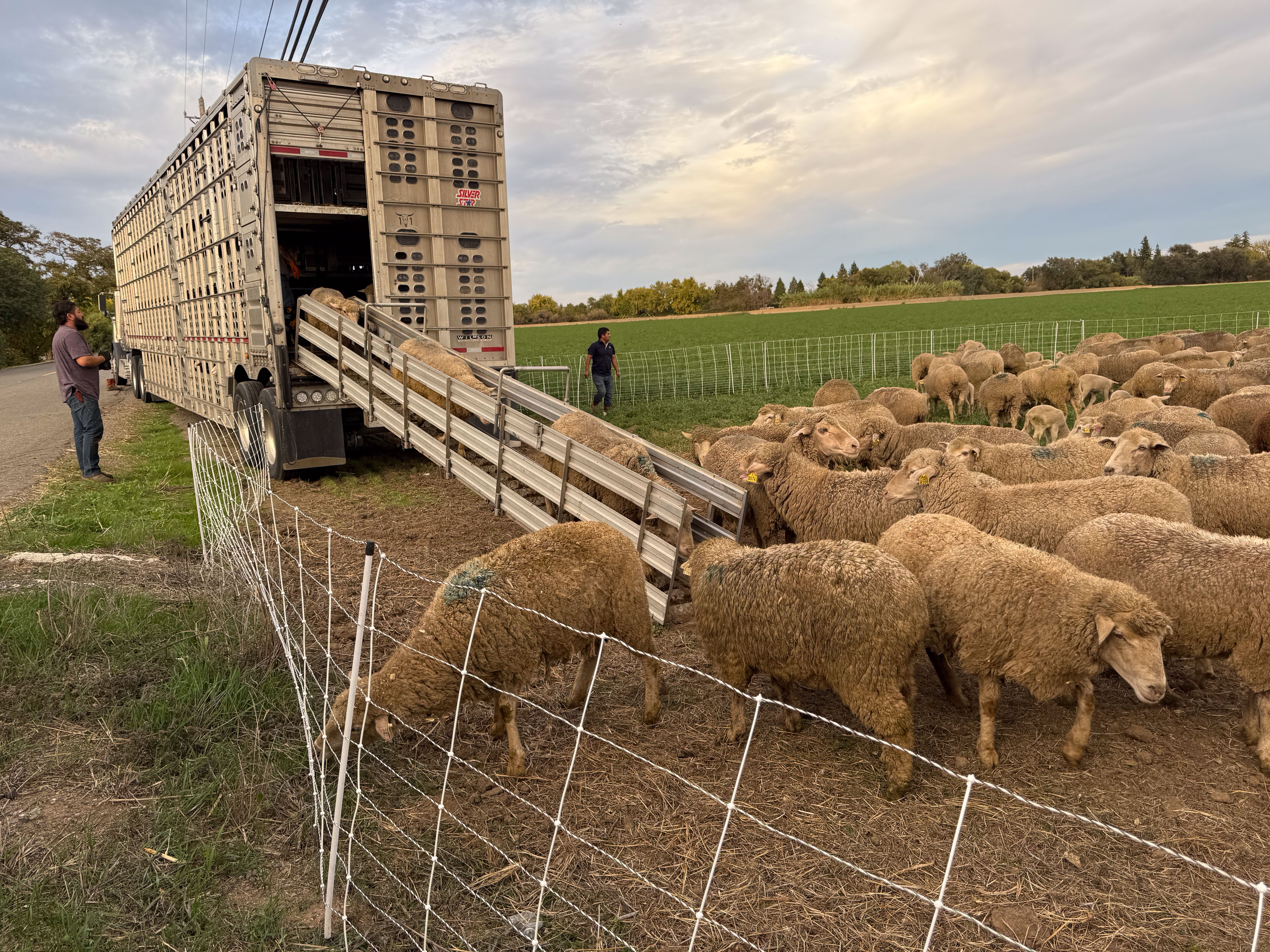
We left Cedar Breaks to get to Bryce Canyon before night. Flock of sheep and their herder along the road.
Except for some of the pandemic years we’ve taken a road trip each year since 2014. That’s when I see a trip to Yellowstone in my blog posts. There were a couple of years more recently where the road trip became a sheep themed trip. That’s different. It’s hard to stop for a hike when you have a trailer load of sheep. So this was planned to be a regular road trip. The major difference is that after last year’s trip the green truck is no longer an option for our travel. It was easy to crawl in the back of the truck for sleeping, but we’d need a tent this year if we were going to camp.
We began the trip on Tuesday, July 29.
The only part of the trip we had planned was to be in Trinidad, Colorado Friday night and Saturday for the opening of the art show sponsored by Cowgirl Artists of American. Other than that we were going to figure it out as we went along.
We were following Highway 50 and our first stop was along the Pony Express National Historical Trail. The Pony Express operated for only 18 months before being made obsolete in 1861 by the telegraph. But in that time young men traveled on horseback 1800 miles in about ten days. Stations were about 10 miles apart and there are remnants of some of these along the route.
This station probably started with two rooms but additional rooms added as the telegraph came in. The site had been completely covered with sand and was rediscovered in 1975.
This site is part of the Sand Mountain Recreation area managed by BLM, featuring 3-1/2 mile long Sand Mountain.
This is a popular OHV destination.
Continuing on through Nevada.
We stopped at this Petroglyph site…
…and walked the trail to find some of the petroglyphs.
It was late in the day when we drove into Ely, Nevada. This open pit copper mine is west of Ely. We found a place to camp in the mountains just west of town.
It’s not easy to leave when you have animals to care for. I am fortunate that there are long-time Farm Club members who have become good friends, and they are willing and able to spend a few days at the farm. Three friends organized the dates to suit their schedules so I know the animals are in good hands.
Anytime Dan and I will both be gone I spend at least a day getting organized. I needed to get the pasture set up to make it easier to graze. This has been “on the list” whether I was leaving or not. So Farm Club members came Saturday to help with that project and I shared that here.
This is on the list of things to fix, but there was no time to do it right before we left. This is the ram pen shelter and they have been enlarging the holes in the plywood. There is a 2×6 board on the inside so I haven’t been worried about the rams getting out, but do I want to take a chance when I’m gone? So I tied a metal panel to the outside.
The water trough needs cleaning at least weekly in the summer because it gets full of algae.
I needed to finish a proposal for an article for one of next year’s Handwoven magazines. That was due August 1. This is a photo to accompany that proposal.
After photographing the cosmos flowers I harvested this batch to dry. I pick them every few days so they will continue to bloom and to save them for dyeing later. The pink flowers are dahlias.
We were down to only six bales of alfalfa in the barn. Although the ewes would be on the pasture while we were gone, all the rams need to be fed hay. Since Dan’s knee replacement we have bought hay by the stack so it would be delivered. This is the first batch of ten bales that Dan has loaded himself since the surgery.
This job was not a priority but I continue to be distracted by gardening chores. I know this is not the time of year to prune roses, but I was tired of being attacked by rose branches every time I walked on that path or the deck at the Weaving House.
The lamb page of the website has not been updated for quite awhile and I needed current photos. The last photos are from mid-May and those lambs have changed a lot since then. I took these photos a couple of days before our trip but have not yet updated the site. Maybe by the time you read this post I will have added some of these. I will need to take more photos when I’m home.

A couple of days before leaving I was at the Artery to remove all of my pieces there. The Artery will be closed for two weeks while the floors are completely refinished. The old carpet and tile will be removed and the floor will be refinished. We found that there would have to be the added job of asbestos removal. The Artery will reopen August 11 so I’ll be returning my pieces the day before.
I got my Timm Ranch wool back from the mill right before we left. I had time only to open the boxes. I will list it on the website when I’m back.
Stay tuned for photos of our trip. We camped the first couple of nights but I’m in a hotel room right now and finally got my computer out. Now to try and make some updates to the sheep pages. Or maybe I should review 5 days of emails…
I’ll start with a random photo. This is the newest animal here, if he/she (?) is still here. Every morning we feed the two Garage Cats in, well, the garage. For a couple of weeks we have seen a third cat off and on. It (haven’t identified gender yet) has started to come in while I’m still there if I don’t make any fast moves. We don’t know where it came from–a neighboring property or dumped. The local newspaper had an article this week about the overwhelming number of dogs and cats that are abandoned. So we’ll never know about this one. I put out a live trap a few days ago but one of the other cats went in for the food. We’re going to be gone for a week so this is not the time to catch this kitten anyway. I did not see it the last two days so I don’t know if it is gone or just being more cautious. I’ve name it Smudge.
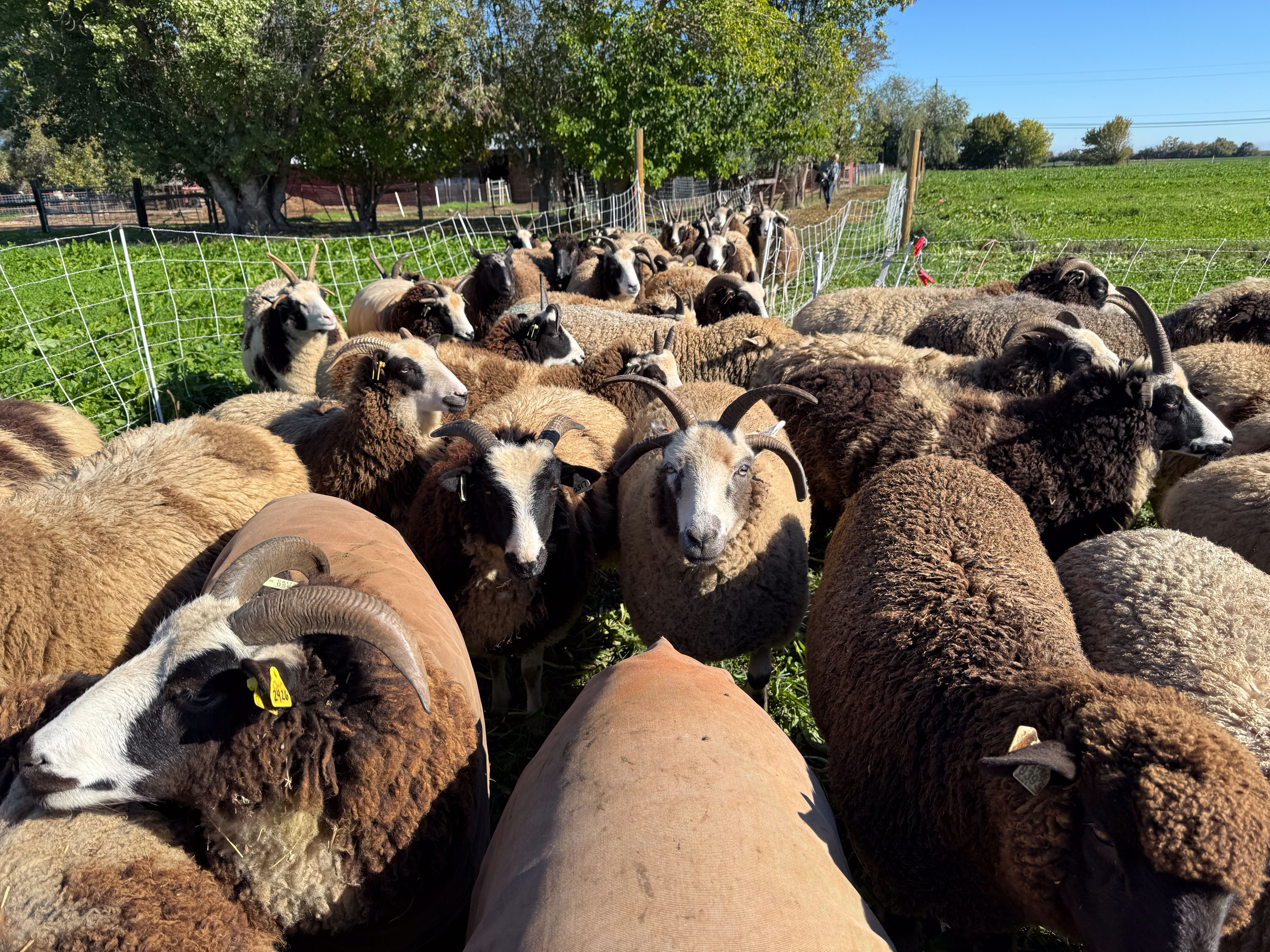
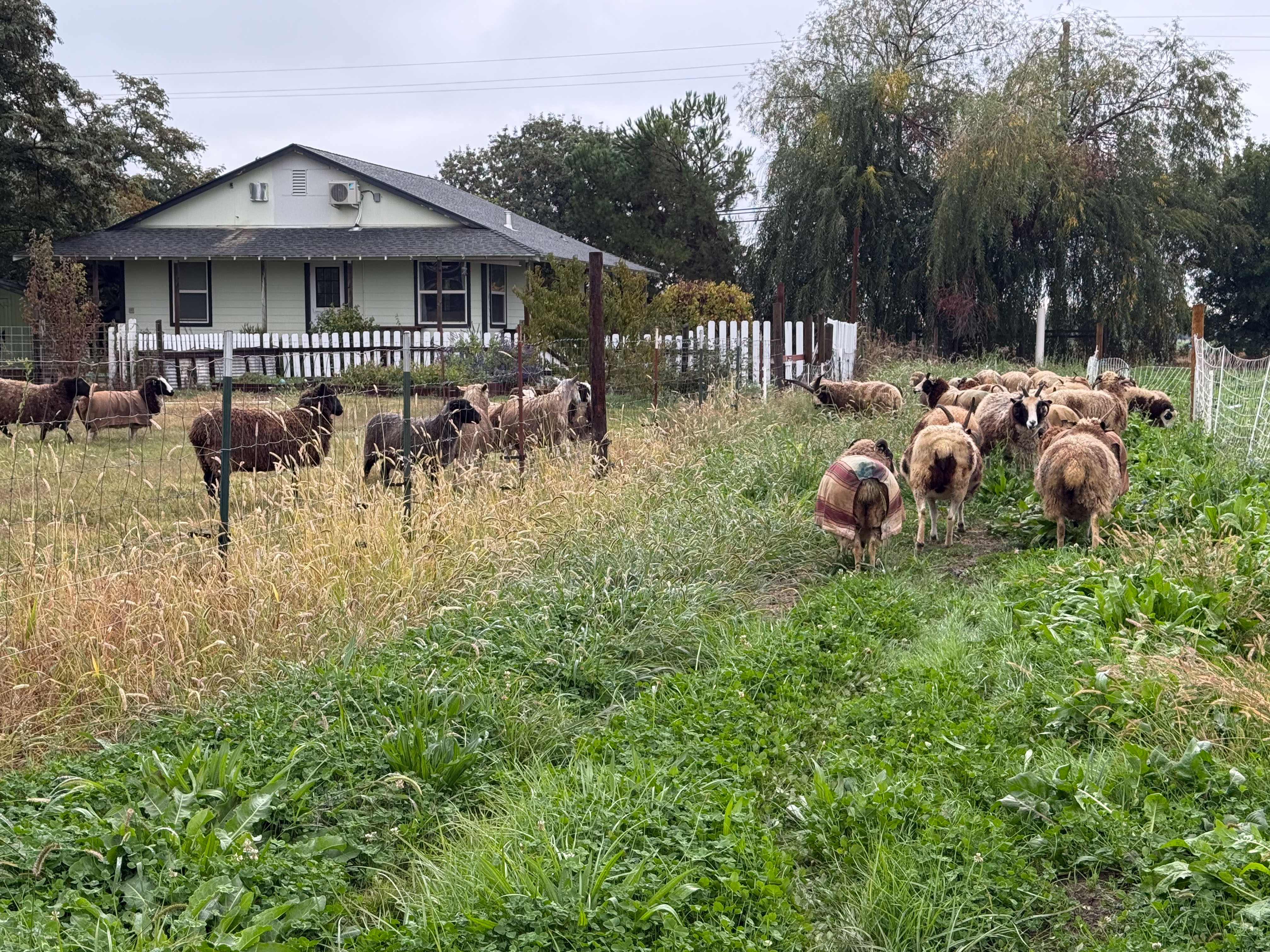
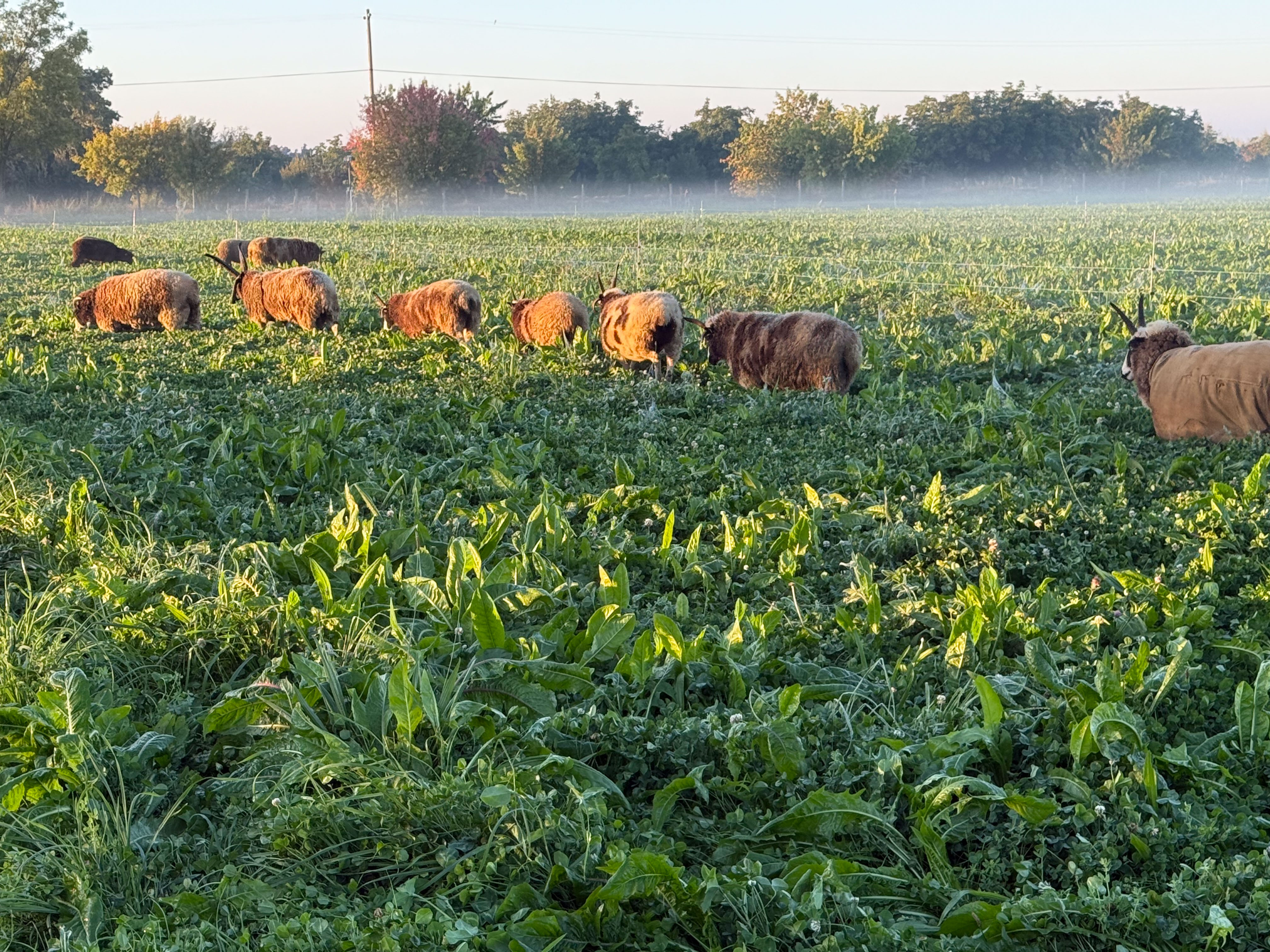
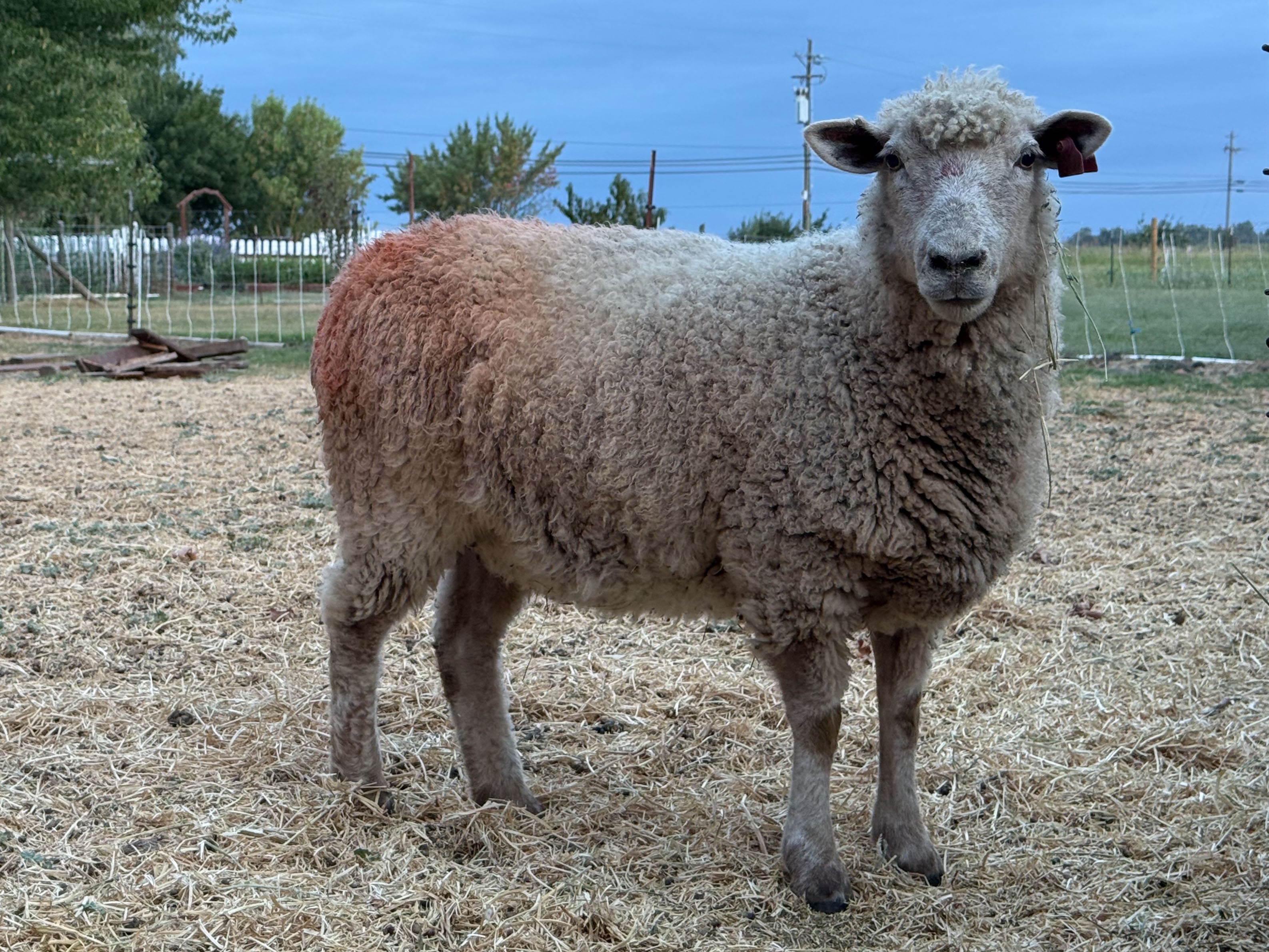
Back to sheep things. This is Patchwork Amara. You can glimpse the beautiful clover and trefoil in the background. This is what the sheep are grazing and that’s what this post is about.
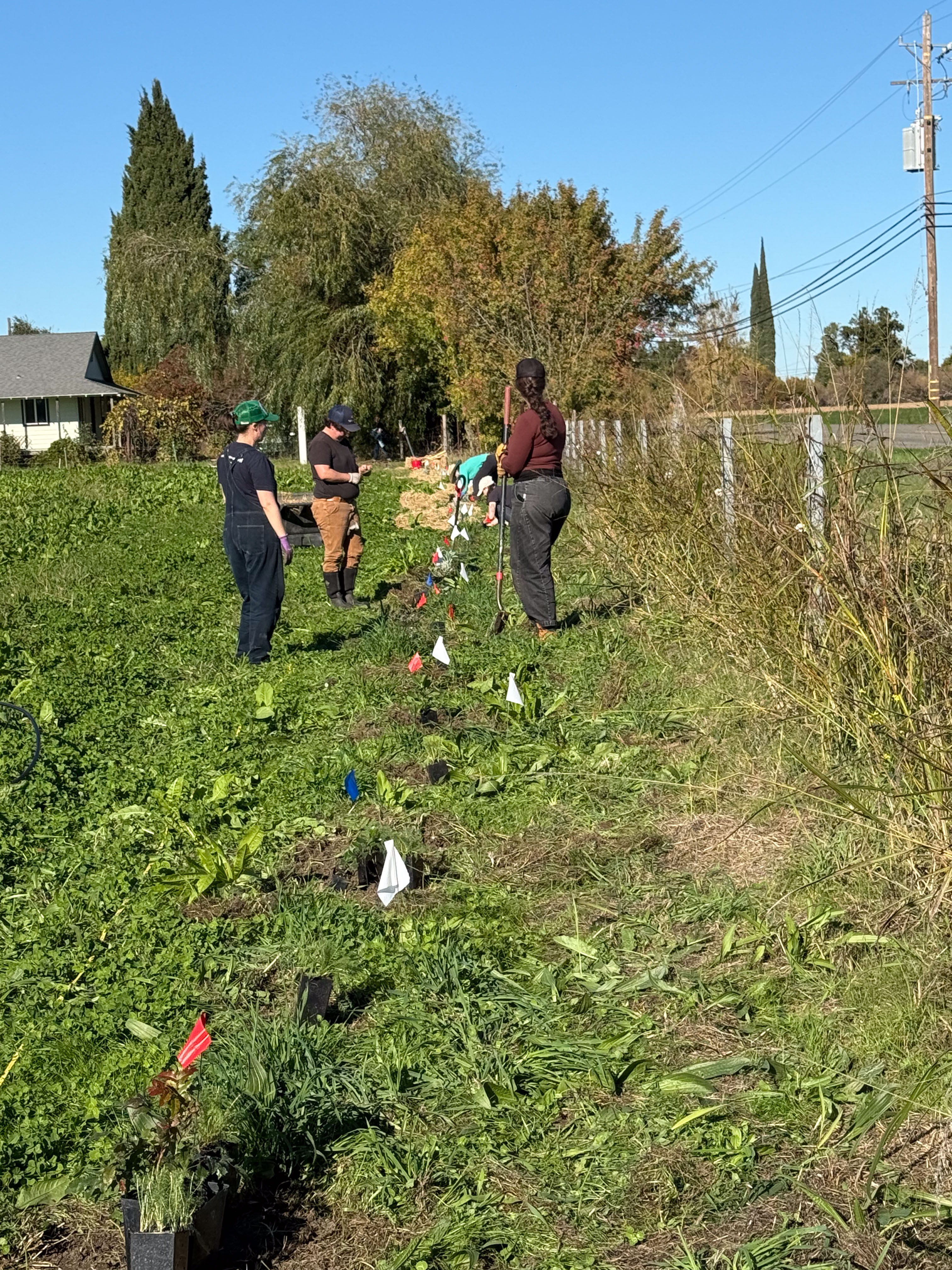
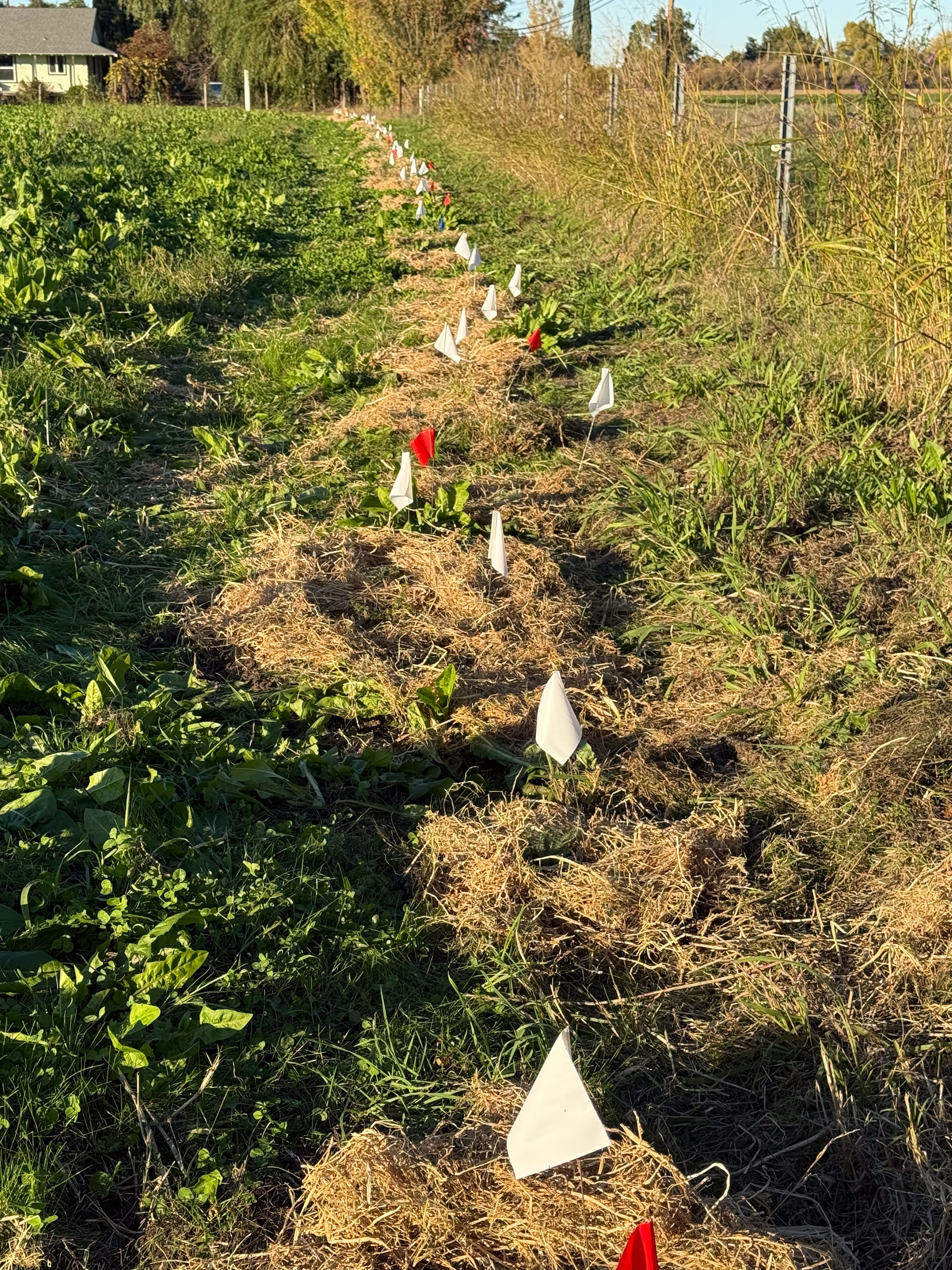
Farm Club members came Saturday to help with a fencing project. We finally have all the permanent fencing back in the pasture. Dan has been working on that a bit at a time while trying to let his knee fully recover after knee replacement in April. Since last fall I have written a lot of blog posts about the pasture renovation and irrigation improvement. Grazing properly this spring was a challenge when I had to set up electric net fence for the whole paddock. Now we have 3-wire electric fence going north-south along every other check. That’s every 60 feet. Initially I was grazing each 30 foot width separately. Now it seems to work to graze the 60 foot width for four days. I think they are grazing it evenly enough.
I still need to use the electric net fence though. The posts for the permanent fencing are about 15 feet from the south perimeter fence so that we can drive a tractor there. We use net fences to block that 15 foot gap. That net fence is also important because it is how the charge is carried from the perimeter fence to the north-south paddock fence. In the past I have moved those fences from one end to the other as we moved the sheep. Wouldn’t it be nice to have enough of the 15′ fences to have them always in place and ready to go? I also wanted one fence to span the whole north-south distance in case I wanted to split those 60′ paddocks into two for grazing when we have fewer sheep out there. Another need is 60′ fences to block off the north end of those paddocks. That’s where Farm Club comes in.
I have been putting this off (not like I’m sitting around doing nothing) and thought that it would be a good task for Farm Club. Also if Farm Club members came to do it, I wouldn’t be able to procrastinate and move it to the “deal with it later” list.
First we measured all the spaces in the pasture where I needed net fences. North-south lane fences need to be about 15 feet. The north-south fence to split the 60 foot paddock is 368 feet.
Then we gathered up all the fences that I’ve been using to create paddocks.We measured them and checked for damage.
We used bright red labels provided by Susan so that we could easily find the label. This is Rachel marking these.
Rachel made a list so we could match the needed fences with what was available. I found two 162 foot lengths and a 40+ foot length to use for the long fence I wanted. Then we started to cut the other fences and make sure the wires were attached at each end to carry the charge. I used to use 75+ foot fences to close the gaps in the old system. We could cut those into 60 and 15 foot fences or make multiple 15 foot fences, especially if there were bad spots to avoid. We did not finish the project, but made good headway. Now that all the fences are labeled we’ll have another Farm Day to finish the project. I have enough fences now so that the paddocks are set up for the week I’ll be gone and Farm Club members will be supervising.
Back to random photos.
Those are all mine. The green and blue shoes are wool and I like them best in the summer because they don’t get so hot.
Young pigeons. A couple of months ago I realized that a pigeon had made a shallow nest at the top of the stairs in the barn. I should have tossed it out then. Last year Dan spent days cleaning out years of accumulated pigeon droppings in the second story. He blocked off all the access points, but one pigeon figured out how to fly over the top of the door at the stairway. There were two eggs I think. I took a photo of the baby pigeons on June 30 and I think they were only a few days old. I’m surprised that they didn’t try to fly when I walked up here. They look like they are old enough. I wonder if they haven’t figured out how to fly through the gap where the mother pigeon enters this space.
And there are two more eggs. I don’t remember if I had seen four eggs and only two hatched, or if this is another generation. I have tossed these eggs. As soon as we get back from our upcoming trip I will move these pigeons out and clean this area. We don’t want to start another pigeon rookery.
I convinced a friend that she should teach a new class at my place. We held a trial class to figure out the time frame and how many people we could accommodate. It was such a blast!
Rachel prepared a lot of fiber for the class. She dyed wool, mohair, and silk.
She also brought metallic fiber, miscellaneous yarns, and more silk to use for preparing batts.
We started the class by learning the basics of core spinning. Everyone was given the same fiber and core yarn.
This is the variety of styles that were created from that fiber.
After that we selected fiber and carded our own batts. I carded two batts with a base of white Jacob fiber and added lots of blue accents.
These are the resulting core spun yarns.
Here are some of the batts and yarns that others prepared and spun during the class.
Susan’s yarn matched her outfit perfectly and Rachel was pleased!
We all decided to display our yarns by wearing them. This was a very fun class and I look forward to offering it in the fall. Subscribe to the newsletter to know when this will be offered.
I got to Michigan on Wednesday. The Annual General Meeting began on Friday.
The meeting was held at the Branch County Fairgrounds in Coldwater, Michigan. First stop was the sheep barn.
This old spinning wheel was outside the barn.
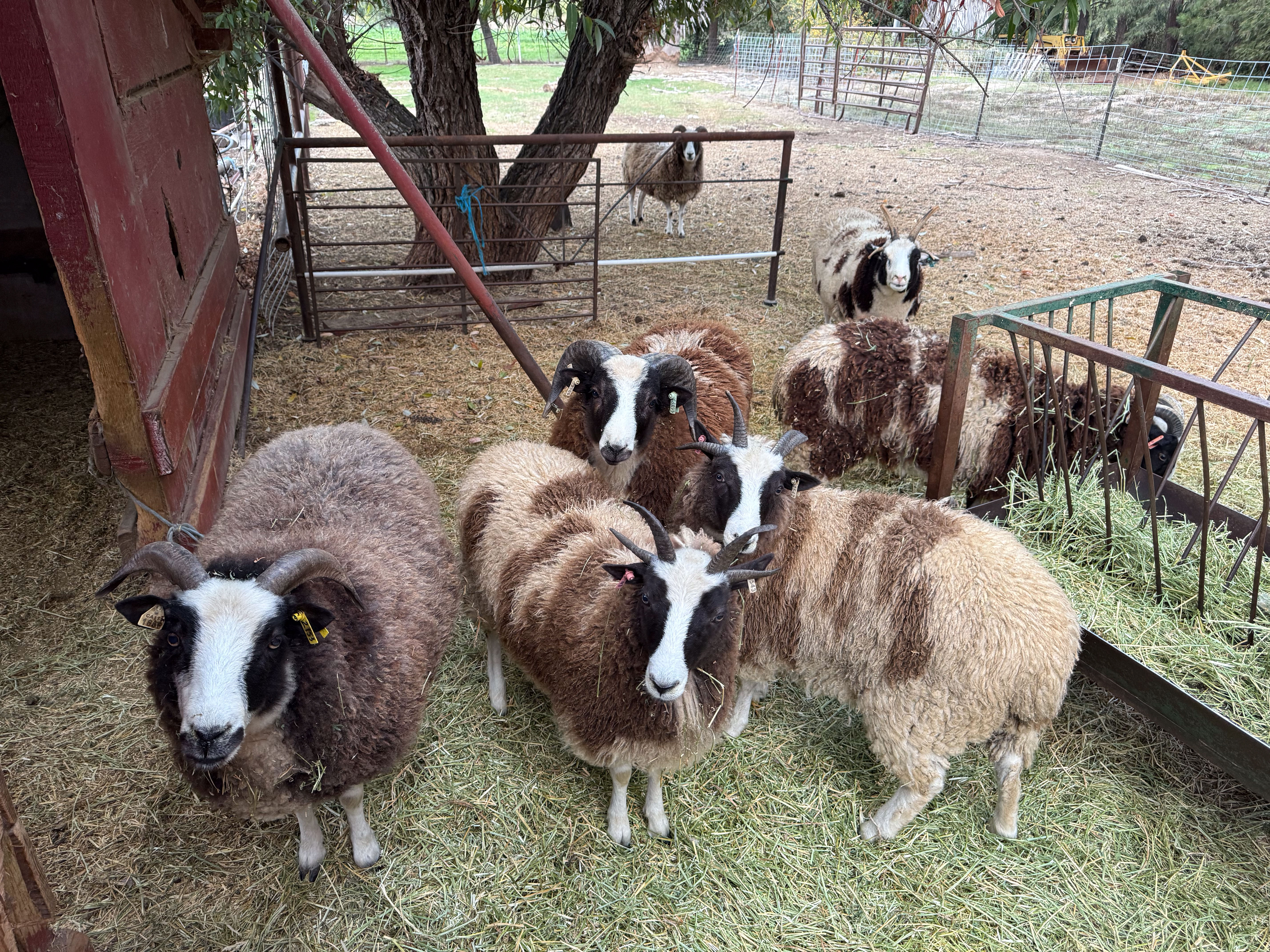
It was sure fun to see this many Jacob sheep from different breeders in one place.
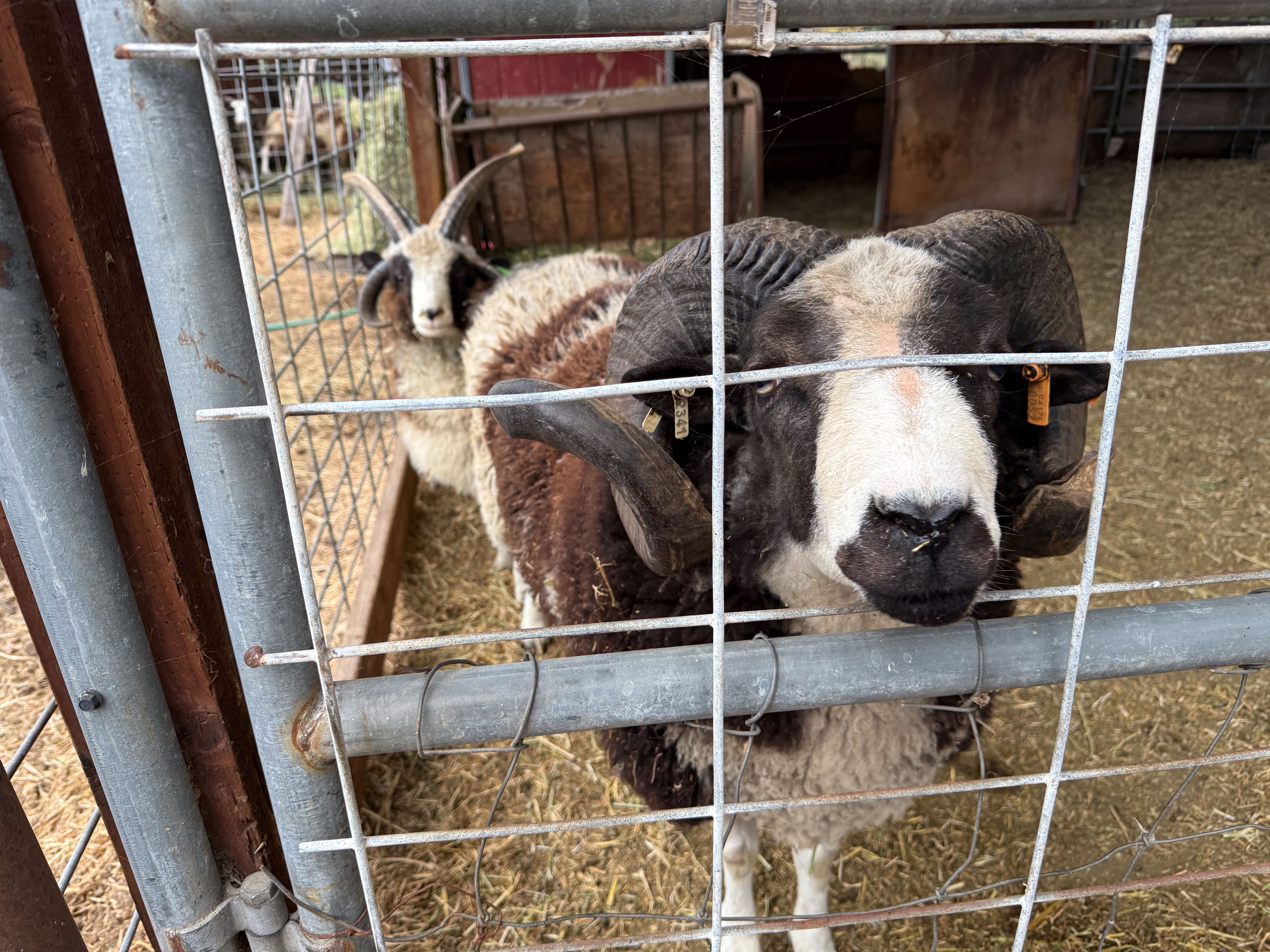
Notice the ear tags including a CA scrapie tag. This is Meridian Saffron who I sold to a fellow Jacob breeder in 2018. I was able to get her to the Maryland Sheep and Wool Festival that year. I just found the blog post about that. I wish I could have participated in some of the fun at AGM–that is buying and selling sheep–not possible when I’m flying.
There are several barns at this fairgrounds. They are labeled sheep, cattle, horses, etc. I was amused by this sign.
A wool show was one of the activities at this meeting. Another activity was the sheep show. I don’t have photos of that because I was a judge. I said I’d do it with a partner, not by myself. That was a challenge. I got good feedback, but I don’t want to do it again. Too much stress and it’s difficult to place 10 sheep in a class when they all look pretty good. Fortunately we needed to place only the first four sheep in each class.
One of the participants showed me her “arm-knit” blanket made of roving. It weighs 14 pounds!
The presentation I was most interested in was that by Gary Anderson about the study being conducted about lilac Jacobs. Gary showed this slide from a 1995 (I think) paper and noted that they said “the causative mutation” instead of “a”. I think I have written a blog post about the current study in which he involved, but I’m not looking for it now. I’m at the gate for my flight home and want to finish this before we board. I did find this post that is related to the study because of the sheep involved I may have to write more later.
Sunday morning I helped with some sheep loading and a little clean up. Then I got a ride with Gary to his farm in Sparta. My flight wasn’t leaving until 7:30 p.m. so Gary gave me a tour of the area. This is a plaque in place at his original family farm.
On Wednesday I flew to Michigan for the JSBA AGM. What? Jacob Sheep Breeders Annual General Meeting. It made sense to fly that far for a few reasons beyond getting to visit with other Jacob breeders whom I’ve met over the years. Dan’s sister lives in Kalamazoo, between the airport and the location of the meeting. She offered to pick me up at the airport and deliver me to the meeting. I could visit with her for a couple of days and not need to rent a car. In addition, because I use a Southwest credit card, the trip cost me only $11.20. Win!
Close to landing in Grand Rapids.
For years I’ve heard of the Elvis Museum created in the basement by my brother-in-law.
I finally got to see it.
I wish I could share the video that shows this in its full glory along with music. We spent the first evening watching footage of some of the Ed Sullivan shows that featured Elvis, and Michael filled in many details of Elvis’ life and impact on the music to come.
Michael has included quotes sprinkled in among the photos and other memorabilia.
On Thursday we drove to Lake Michigan. I had looked at weather apps that showed 80’s to 90’s with high humidity. Not this Thursday at the lake! North wind and cold. Red flags on the north side of these piers signaled that people should stay away from the shore. Yellow flags on the south side indicated caution. This is Molly and Michael on the pier with the lighthouse in the background.
Molly and me on the pier. We didn’t walk all the way to the end because waves were splashing over the pier and we were COLD.
The town of South Haven is tourist focused, at least near the lake. Cold as it was, a stop at the ice cream parlor was called for. Molly had told me that the four seasons in Michigan are Fall, Winter, Spring, and RoadWork. So I got a kick out of this ice cream label. The ice cream was excellent. That was only the beginning of great food all weekend!