Unknown's avatar

About Robin

Owner of Meridian Jacobs, farm and fiber shop. I raise Jacob sheep, teach fiber arts classes, weave handwovens for sale, and manage the store.

Yesterday

In a round-about way I figured out how out how to find my photos that are resized for the blog. I will probably learn a better way later.

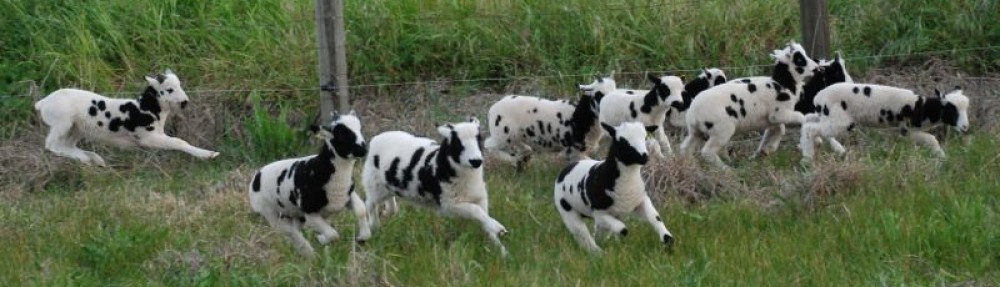
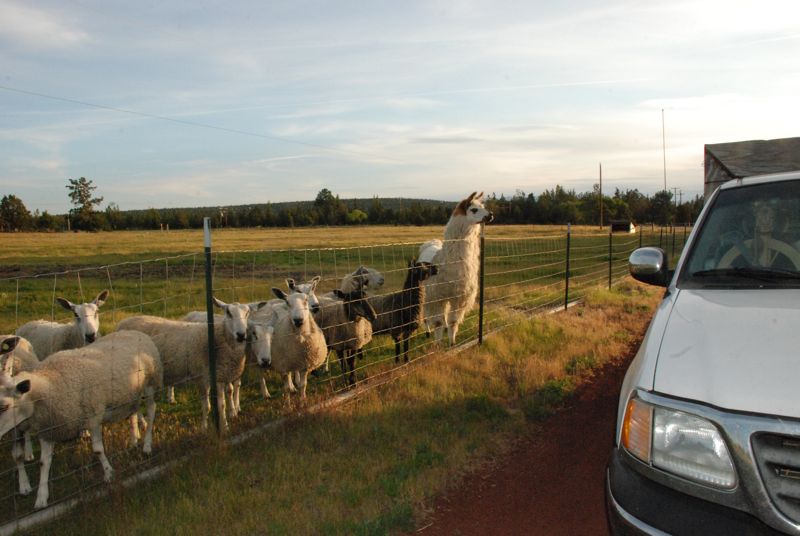
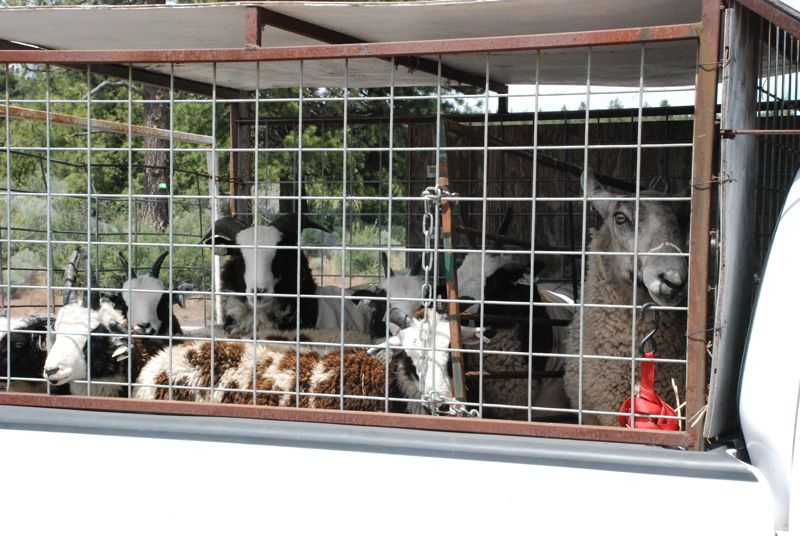
My friend, Jackie, had asked me to check Rusty’s social calendar  for Wednesday because she needed help moving her sheep into the shelter in preparation for shearing a few of them today. What a difference a dog makes. Poor Rusty didn’t get to do much because once he showed up the sheep WANTED to go in the shelter with the llama.
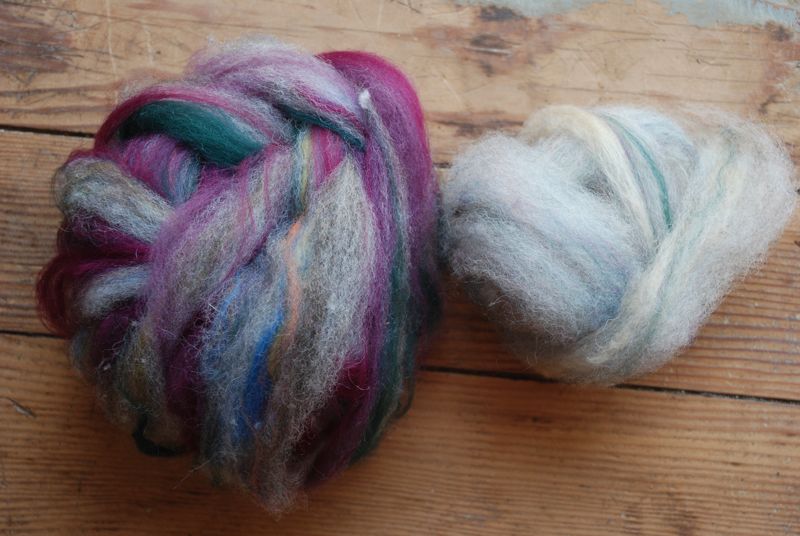
Back at the shop, here is what UPS delivered today. This is silk/merino sliver in several colors. Soft, ready to spin.

And this is soft Merino fiber. Now I need to get this posted on my website.

Learning curve

I have a new computer! Yippee! I’ve been thinking about this for a year. I debated desktop vs. laptop. Laptop won. I debated PC vs Mac. At first I decided that I had to stay with the PC but Mac eventually won out. I’m having a good time with it, but I don’t have any of my “work” on it yet. No Quickbooks. No Office. I have been playing with photos, but still don’t know how to resize them to put them here. If I figure it out before this post is done there will be a photo. If not, I’ll wait until I visit my DIL who is going to help me or I go to the class at the Apple store.

Experiments with Fire

Faithful readers of this blog will have read my whining about medusahead in the pasture. Medusahead is a noxious annual grass, unpalatable due to high silica content. Due to it’s later date of maturation, it is noticeable on the hills as the light green color when the other annual grasses have dried out. After it has gone to seed it leaves a dense litter through which nothing else will germinate. Medusahead covers part of one of my paddocks and is increasing in area. During my visit to Jepson Prairie (see pretty pictures in last post) I read the signs about how they had used prescribed fire to control medusahead. “Fire is usually 100% effective at controlling medusahead if done before its seed heads shatter.”

A couple of months ago I bought a fire-breather tool (I can’t remember the real name) that is attached to a propane tank. It is sold for use in weed control, particularly when weeds are small. It’s intended use is to heat the  plants and burst the cells rather than actually setting them on fire. I thought I’d experiment in the field. Having just irrigated (in addition to unexpected May rain) the plants were wet and there was even standing water in many areas of the pasture. I wasn’t worried about starting any wildfire.

On the way to the medusahead I saw a thistle. Normally I’d just dig this up, but having a propane tank  rather than a shovel, I blasted it with fire. You can see the singed leaves.

This is the thistle the next day. It may not have killed the whole plant, but you can see how it destroys the part that was heated. If the plant was very small that would be the end of it.

I didn’t really have a plan but started burning various parts of the medusahead covered area. Because of the moisture content, I wasn’t seeing much fire, but I was singing off the bristly parts of the seeds and burning a little of the litter. Then I noticed this.

Notice the forbs growing under the medusahead. I don’t want to kill those plants. I want to encourage them. This made me wonder if it would be effective to just burn (or superheat) the tops of the medusahead. This brought up several questions.  Would super-heating it stop the seed from developing? Are the seeds already viable even though the plants life cycle isn’t complete? If I heat the top of the plant enough to burn off the outer part of the seed head will it kill the seeds? If I do this will the plant produce more seed heads? I decided I needed a test-plot.

I used fiberglass fence posts to make 5 plots. The two upright fence posts mark two corners. They are hard to see, but trust me, they are there.

My plots are:

1. Flame (superheat) the tops of the medusahead long enough to burn off the outer halo of the seed heads.  Are the seeds already viable? If they aren’t, will this stop their development. If they are viable, will this kill them. I don’t know.

2. Flame the tops of the medusahead longer than in #1 so that I can see more damage done to the seed head. Same questions as #1.

3. Flame the stalk of the plant in between the base and the seed head. If the seeds aren’t already viable will this stop the development?

4. Flame the base of the plant to damage it.

5. Burn the whole *#@&^% thing.

Remember that the plants are wet from rain, the plants are still green, and in some places there is plenty of ground moisture if not standing water. If this were “normal” conditions I’d probably be starting a fire. And it may be that FIRE is the best answer. Even if I succeeed in reducing the seed produced by the medusahead, in much of the area there is still that heavy thatch which probalby needs to be burned off. And maybe I need to completely remove the plant and it’s seed by incinerating it.  But that’s another issue.

There are too many photos to post here, but I’ll give you an example of what I did.

Here is Plot 2 before burning.

This is a close-up of the tops of the plants after burning.

This is a view of the plot the next day.

This is Plot 3

This is Plot 3 after burning.

Plot 3 the next day.

I don’t know what all this will tell me. I didn’t set this up so that these are permanent plots and I think I want to burn everything to be sure. But I have raised some questions for which I want to find answers. I know a couple of people to ask. I’ll report back if I learn something.

Jepson Prairie

I wasn’t sure if I had missed most of the wildflower show at Jepson Prairie Reserve but I thought I’d go see this morning. Jepson Prairie is a natural area owned by the Solano Land Trust. The website says:

The reserve protects one of the best few remaining vernal-pool habitats, which are found only in the western United States and few other places in the world, as well as precious remnants of native bunchgrass prairie that once covered one-fourth of California.

Today’s weather is a bit crazy for May. The reserve is just about 10-15 miles southeast of our place and I was watching the black clouds as I got closer.  As I got out of the car I saw lightening and decided to wait it out for awhile (in the car). So I drove down the road through the reserve.

I can’t find my bird book so I’m going to count on my best birding friend (I was going to say Claire, but now there are more birding friends out there) to chime in here.

No that’s not snow in the background. It’s the hills that are drying out.

As green as it is in my pasture and in the surrounding farm land, the Central Valley would be a desert without water. So the prairie is drying out and I missed a lot of the wildflowers for the year, but not all.

The flowers that are blooming now are the ones that can handle the drying conditions. Now I don’t have the excuse of “I can’t find my wildflower book.” I used to know most of these flowers and now I can’t remember them. But I still enjoy them.

I think I remember this one –  Calochortus, Mariposa Lily.

Even the dry grass is pretty since I’m not worrying about foxtails here.

Here is the spectacular show. The rings of flowers around the lake change as the lake dries up later in the spring.

I think this is Gold Fields.

When you look closely you see another flower. Downingia comes from the recesses of my brain, but i don’t know if that is right.

Farm Club Comes Through Again

I sent an e-mail Friday  to the Farm Club  in which I said I was going to vaccinate lambs today and did anyone want to help? Dona and Tina were already planning on being here for a spinning class in the morning so they said that they would stay. Jacki, Shelby, and Allison came too.  Wow! What great response with only 24 hours’ notice.

I bought a new tool. For years I have been vaccinating with single dose syringes. That means that you have to reload the syringe each time you give an injection.

I just never thought about doing it differently, but I was at Higby’s Country Feed Store (my favorite store) and saw this syringe. There is a bit of a learning curve (remember to tighten needle, make sure you depress the handle part all the way, don’t drop because the barrel is glass–OOPS!), but what a huge difference it will make after I replace the glass part that broke about a third of the way into the job.

I appreciate all the Farm Club members (who are now friends) who show up for projects like this. Shelby manned the camera, as well as caught lambs and played with the loose chicken.

Alison, Jackie, Tina, and Dona all helped catch and mark lambs and…

fill syringes (after the unfortunate incident with the new one).

Shelby took the following portraits.

After vaccinating I let all the sheep out but then needed to catch one more lamb.

So Rusty had a chance to get involved also.

Thanks to all of you for helping. Wait until you hear about the next unscheduled Farm Day. I think it’s coming up soon.

Fun with Chenille

Lori and Kathi both came for a weaving class last month. They both had some prior weaving experience so warped the looms using twill and point twill threadings to weave samplers. This is a great way to experiment with weave structure and color.

Lori and Kathi came back for a chenille class and Mary joined them.

Great job, ladies! I posted this photo on the Meridian Jacobs Facebook page last night and you already have rave reviews!

Wedding Shawl Commission

Last month I posted the following photo that shows the array of yarns that were chosen by a friend for her daughter’s wedding shawl.

My friend originally planned to weave the shawl herself but then commissioned me to weave it.

This is the warp on the loom. I was concerned that the white weft was going make the shawl too white. No need to worry. It came out just right.

In this close-up you can see the variety of yarns used in the warp. The weft is relatively fine with a regular slub that helps keep the yarns in place even though the shawl is loosely woven.

My favorite model just happened to be here before my friend was to pick up the shawl. (That’s my daughter visiting from VT.)

I got the report back from my friend: “My daughter loves her wedding shawl!! She says it’s the most beautiful shawl she has ever seen!!  That’s a compliment from my very fussy and stylish daughter!”

Ram horn growth

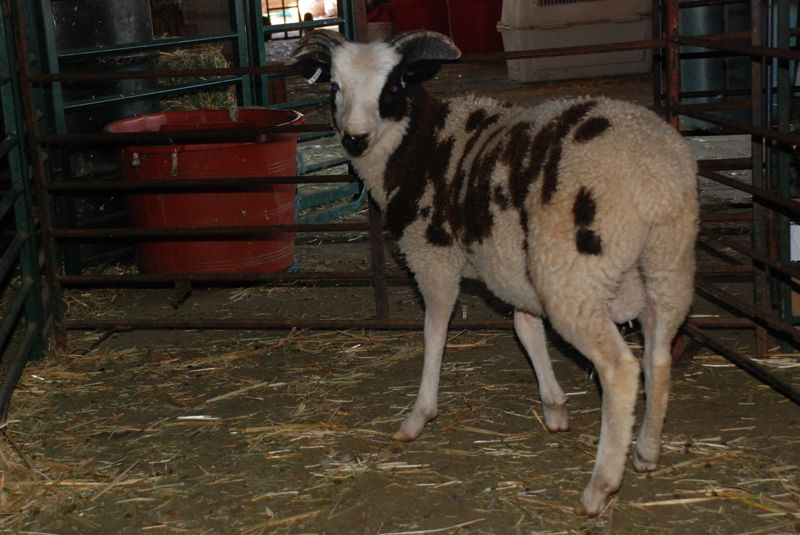
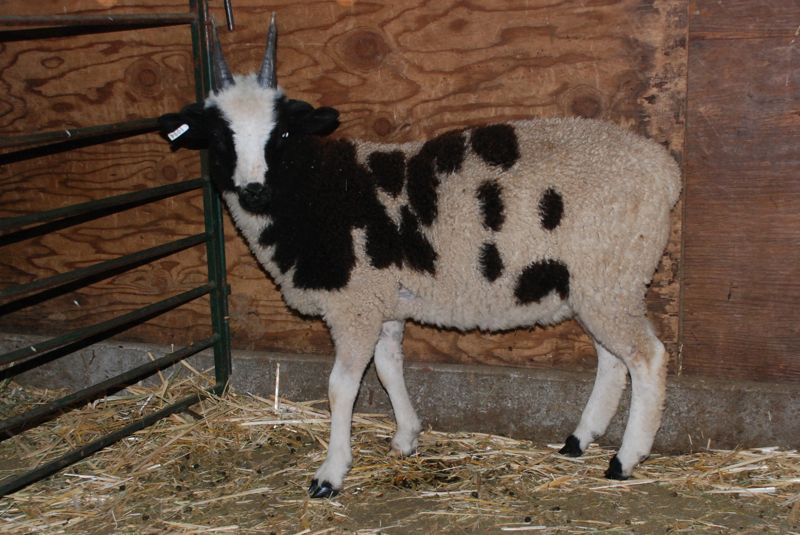
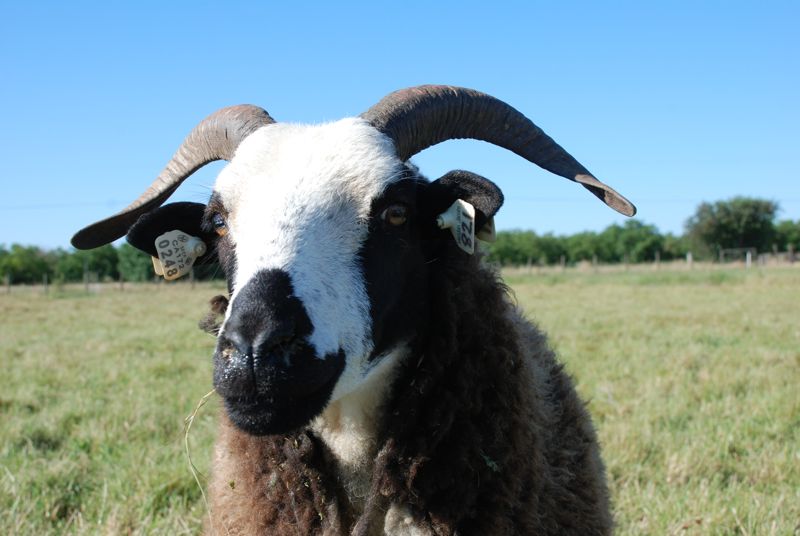
I have been talking to people who want to buy sheep. I explain that it’s hard to predict at this age (2 months) how ram lambs will turn out when they are six months or a year old. I finally got around to finding photos of some of my rams as younger ages. I have posted several of these in the photo gallery on my website to illustrate how the horns can change as the rams mature.  Here are a few of the photos, but look for the rest on the website.

Look at that nice spread.

These horns are still OK although as they have grown they have moved closer to his jaw.

Diego’s horns looked OK at 4 months.

At 6 months I had my doubts about his longevity.

Here I can barely get my finger between his right horn and his jaw. Diego became the entree for a crowd the other night and he will also provide a great pelt.

Community Cloth Celebration

I have posted before about Rebecca Burgess’s Fibershed project. Rebecca made a personal commitment that for a year she would wear only clothes that originated within 150 miles of her front door. Think about it. That’s not an easy task. This project is still ongoing, but yesterday there was a celebration of the project and of  Community Cloth , an effort to build the first farm-based cotton mill in the U.S. To have a viable “Fibershed” there must be a source of fine threads so that we can create cloth for t-shirts, jeans, and “regular” clothes, not just the kind of garments that most of us think of when we knit or weave. It is exciting that it is happening right here in northern California on Sally Fox’s organic cotton farm.

I drove over to Point Reyes Station with 3 friends. Here are some photos of our evening.

The event was held at Toby’s Feed Barn, originally a feed store and still a feed store, but also an event center and gift shop. Chris and Diane and I wandered around town for a little while before the event officially started.

There was great music all evening.

I provided a blanket and a lambskin for the silent auction.

Diane, Chris, and Shelby enjoying before-dinner beverages.

When it was announced that those people wearing their own hand-made garments would be first in line at the food table we all put our outerwear back on.

Check out this bicycle-powered drum carder. The power-source for the new mill will be the sun, not bicycles!

The highlight of the evening was the fashion show. Models wore clothing created by local designers from local fibers for Rebecca’s Fibershed project as well as many natural-colored cotton garments sewn from Sally’s cotton fabric stash. This is the sweater knit from Meridian Jacobs 2-ply yarn. Note the straw-bale runway!

This model is wearing natural-colored cotton garments. The slide show in the background was going on throughout the event. Paige Greene is a fabulous photographer and she, being the daughter-in-law of a fiber grower, has documented the project from it’s inception.

Those are my rams looking on as another model passes by.

Great event, great friends, and you know what is really great? There is so much enthusiasm, especially from people younger than me. I want to keep producing fiber, teaching about fiber, weaving, but not only do I not have time to adequately market my products, I don’t have the energy  to think about it or the expertise to do it successfully.  There are people out there who appreciate what people like me are doing and want to help!