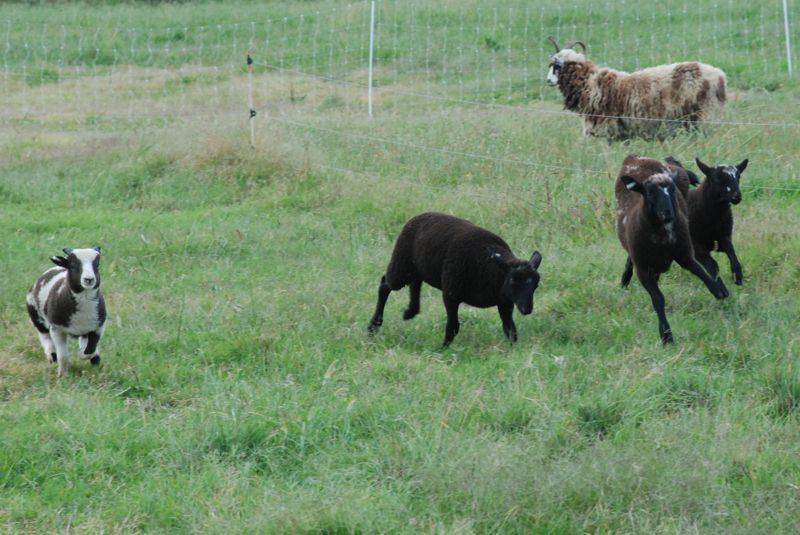
Grazing – Foggy Morning and Moving to Fresh Pasture

Jacob sheep on pasture grazed and trampled. A foggy morning.

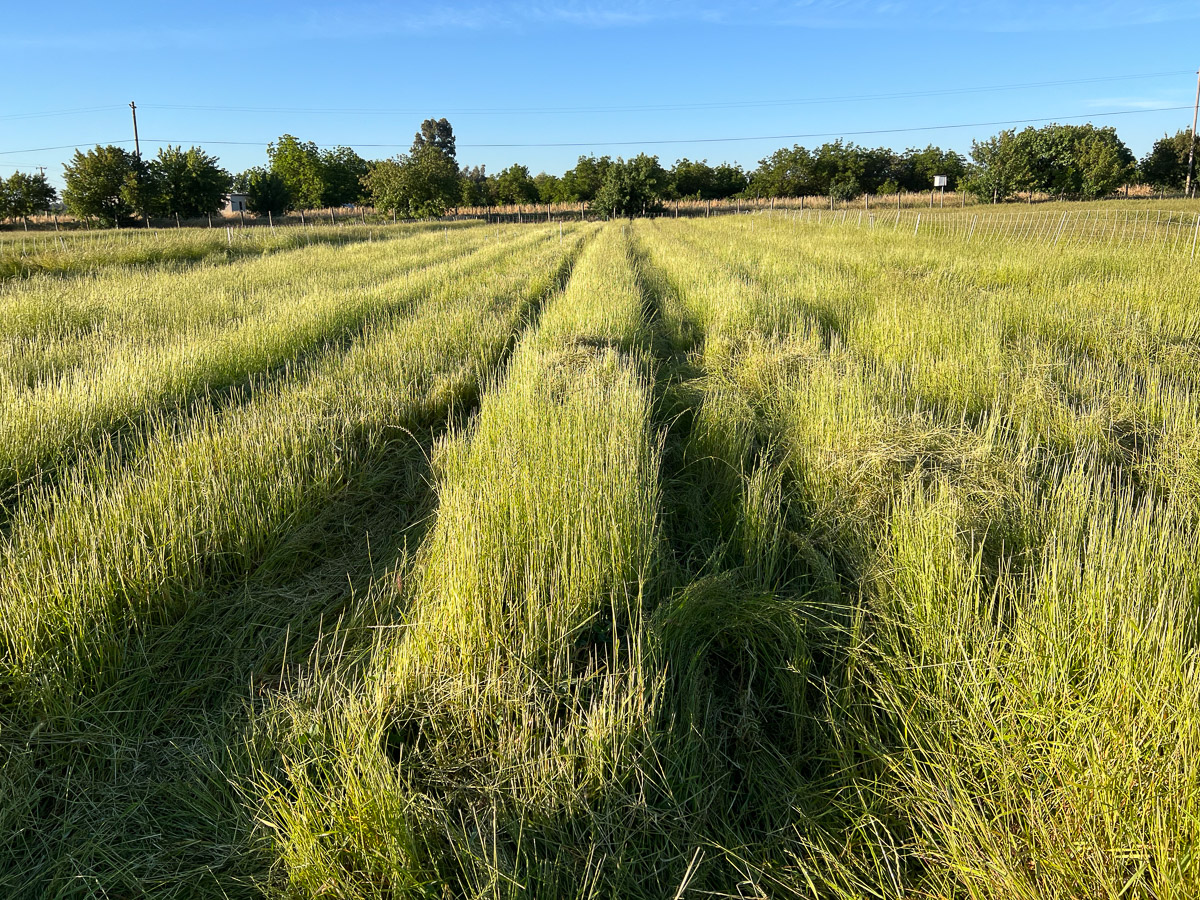
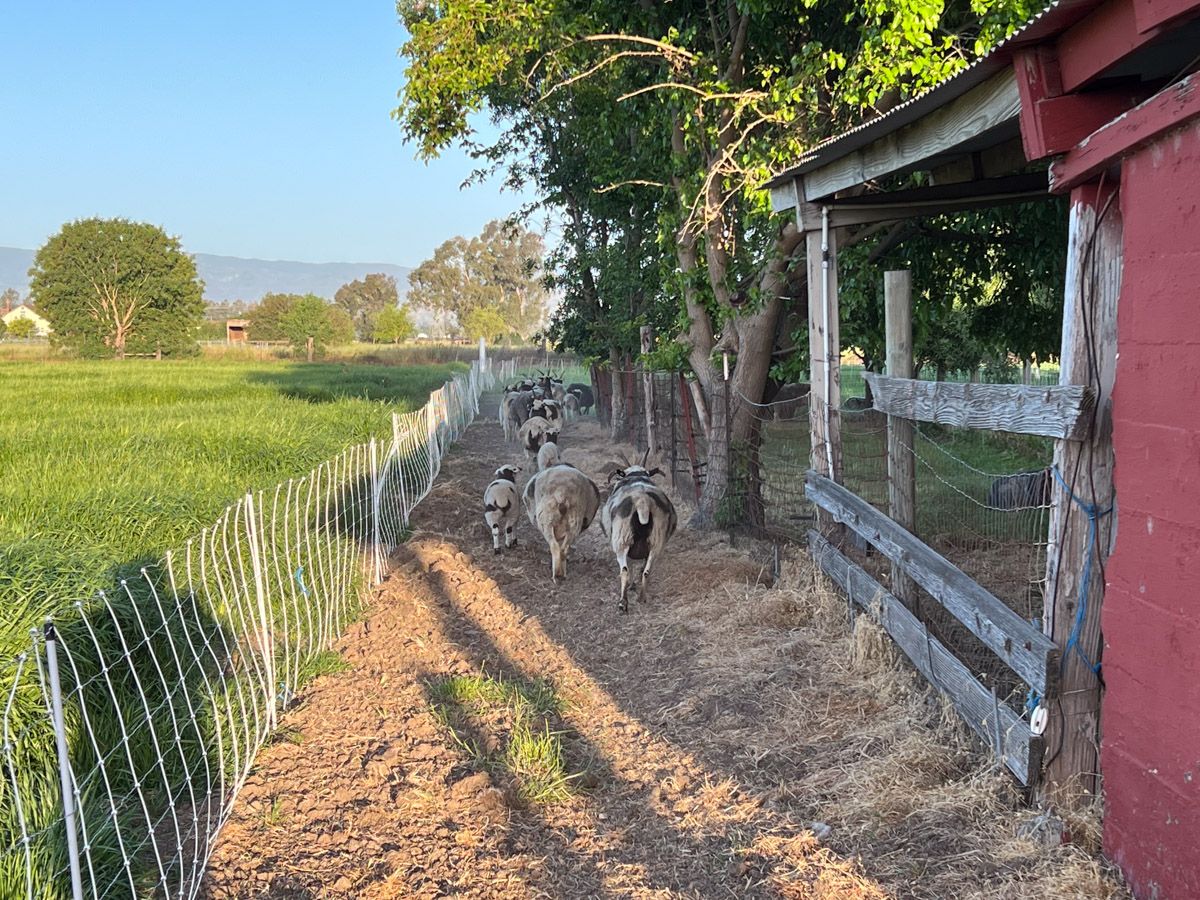
The sheep were out when I went to the barn yesterday morning. The paddocks are numbered from west to east, 1 to 21. Every other check has a permanent 3-wire fence, visible in this photo on the left. In the summer I grazed two at a time and 4 days seemed about right. After we got measurable rain I noticed significant trailing down the border check between the two paddocks they were grazing. The check is a raised strip running north to south that guides the water when we irrigate. I thought I’d better put a fence along that check so that they wouldn’t impact it as much. So that’s the way I’ve been grazing for the last few weeks. When Farm Club helped to measured net fences to make sure I had the correct fences where I needed them (blog post here) I had left 3 lengths of e-net that we measured to be the correct length for just this need. You can see the net fence on the right of this photo.

Jacob sheep in pasture that has just been grazed while there are lush plants on the other side of the white e-net fence.

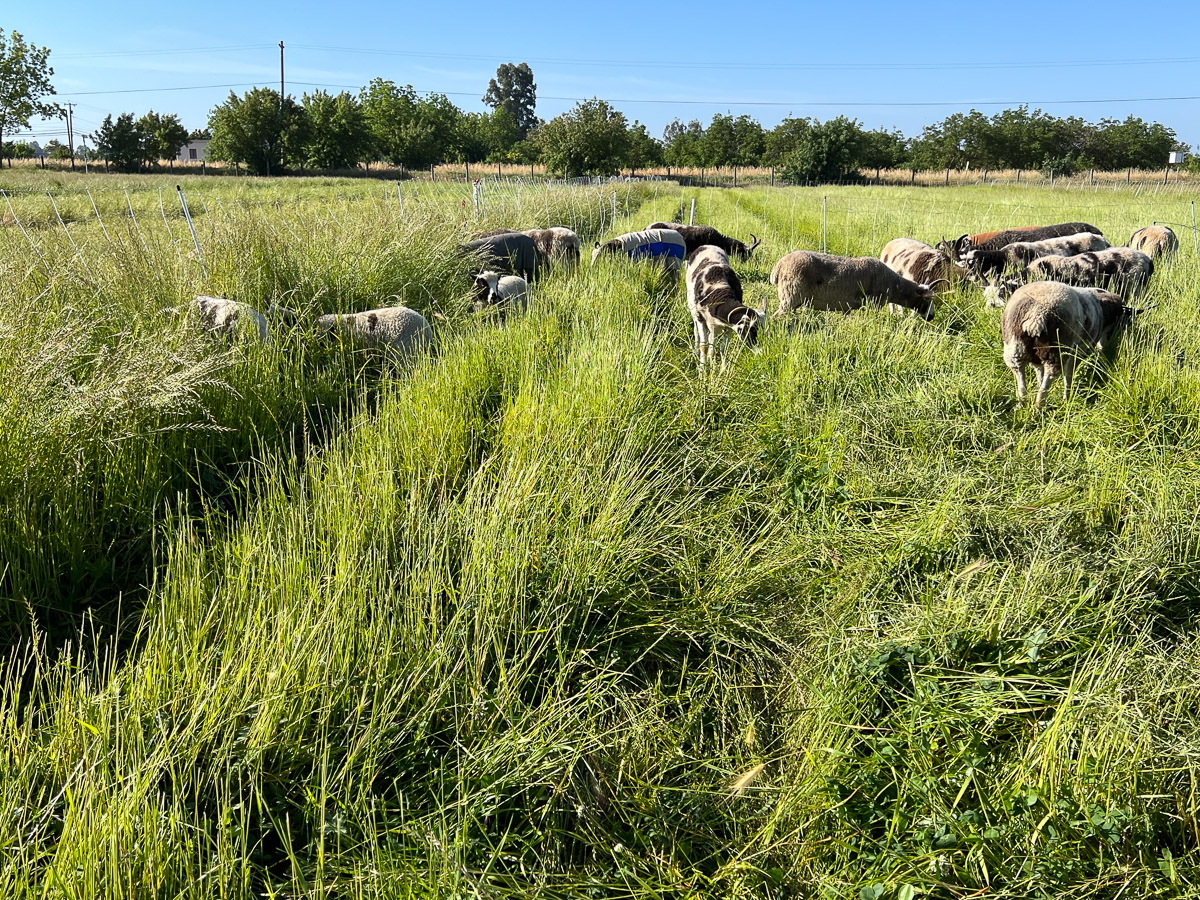
The sheep grazed this paddock (#4) for two days. This is the third morning and they need to move to #3. The fence is on the border check and you can see how they have grazed right up to it. The fence is purposely tipped away from the grazed paddock because I think the 4-horned sheep are less likely to get horns caught when they graze near the fence.
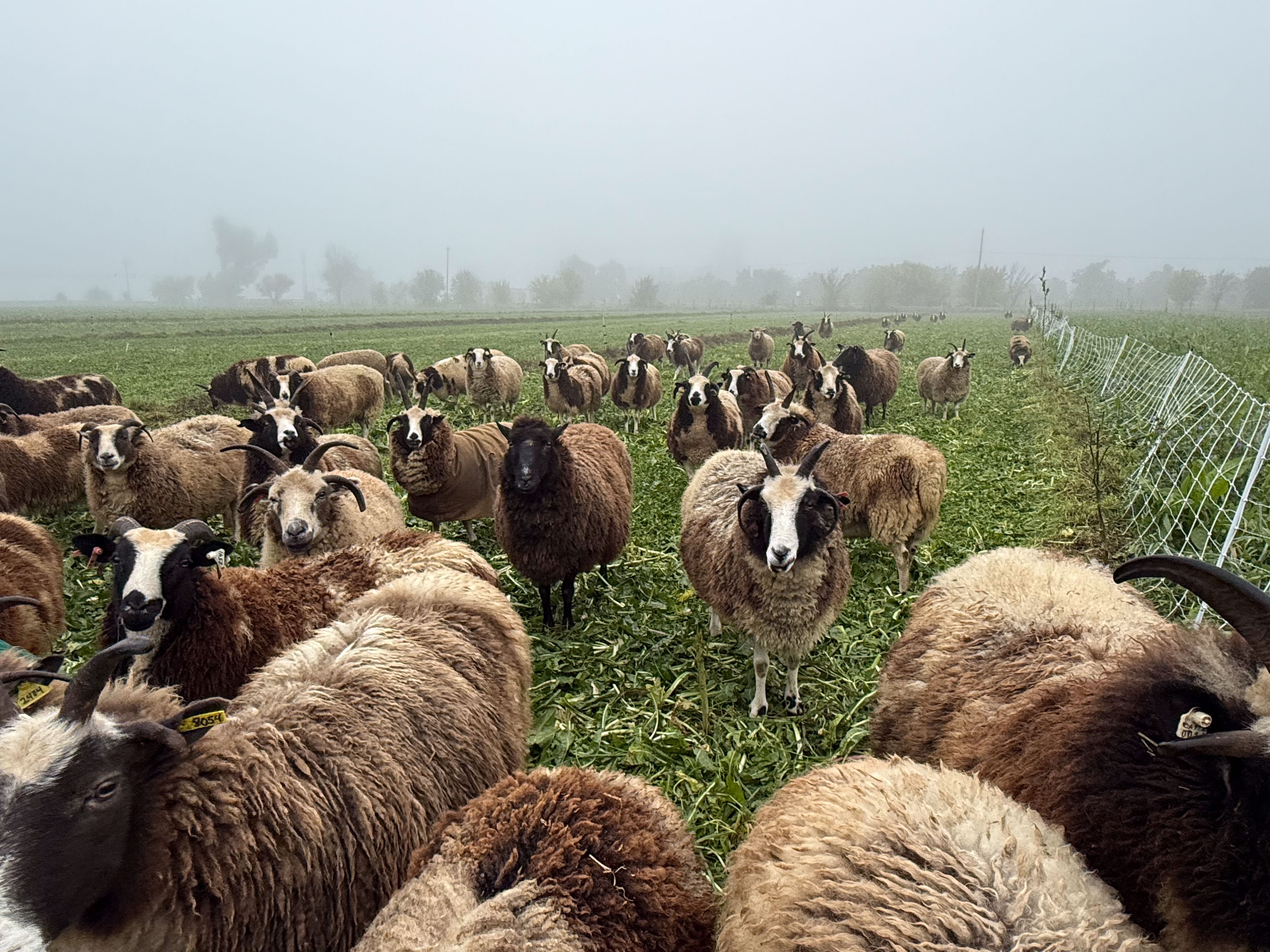
Jacob sheep walking towards me to move to a new pasture.

The sheep were anxious to get to fresh feed.
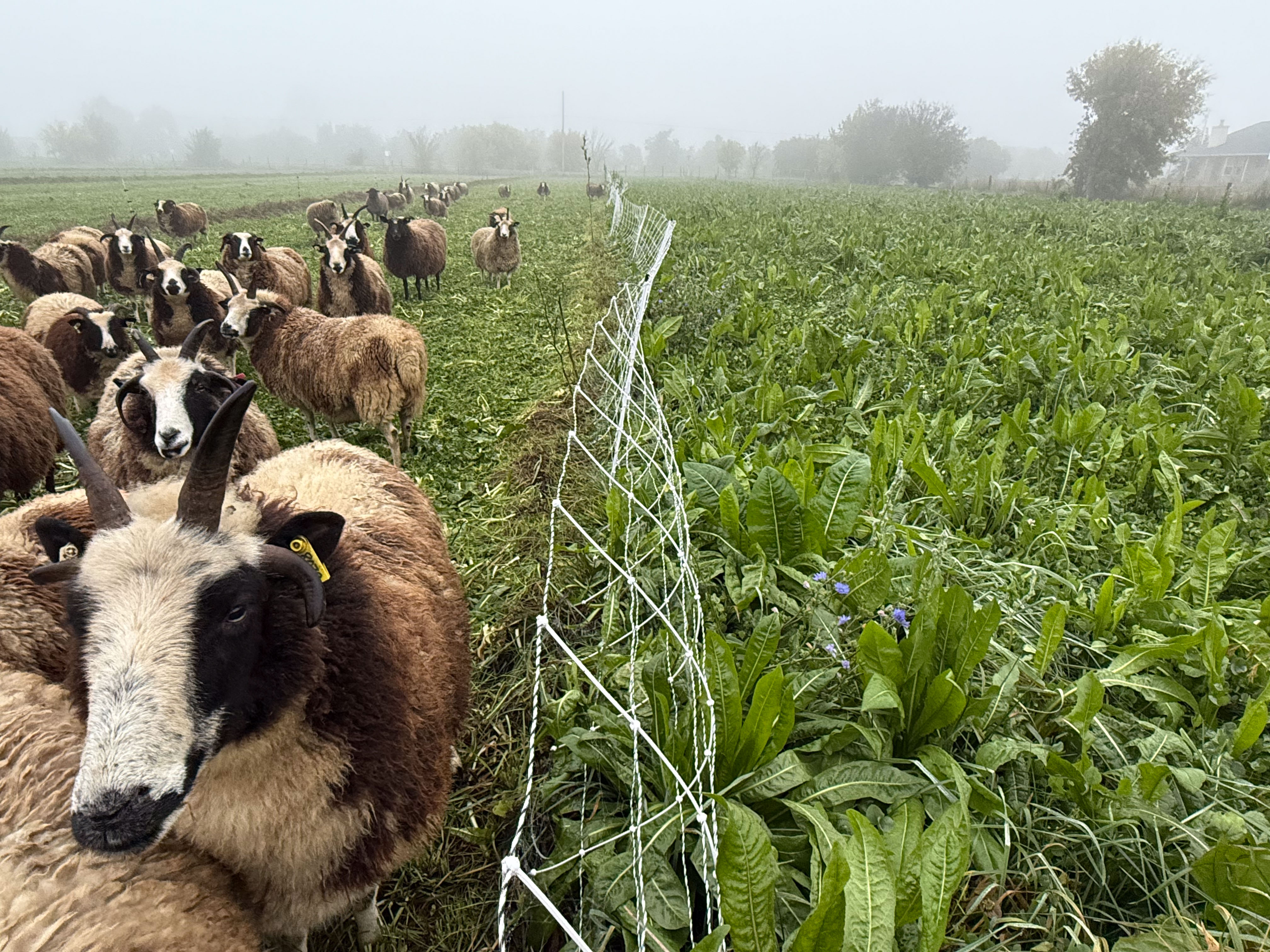
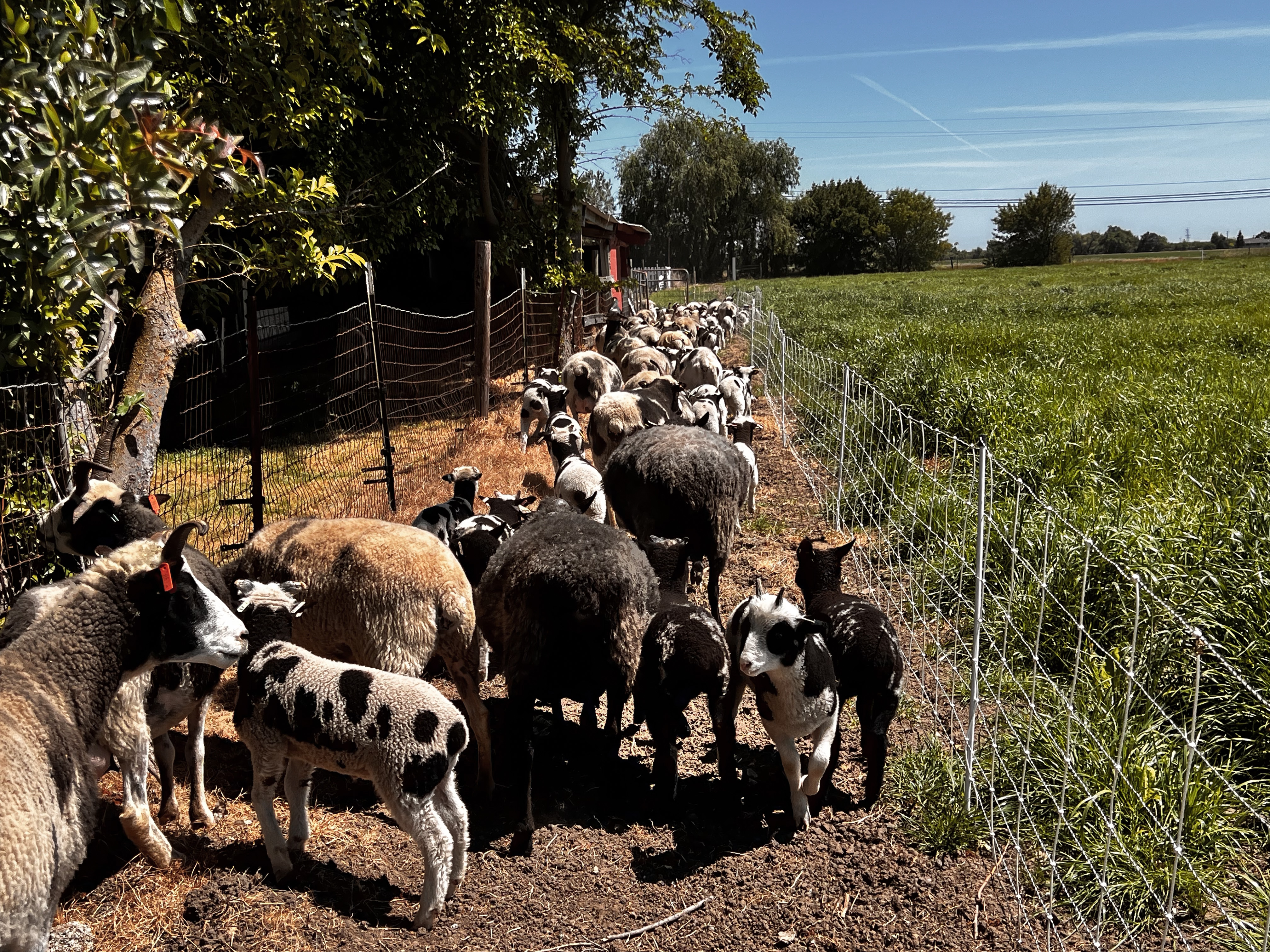
White electric net fence with sheep on the left and fresh pasture on the right.

I was able to move the fence that was blocking access to the next paddock and they all came around the end.

Fresh pasture on the right with sheep grazing. White e-net fence down the middle and grazed pasture on the left.

This is the view before I reset the net fence. I find it interesting to see how the sheep ate the leaves as far as they could reach on the chicory. By the way, the leafy plant that looks like we’re growing a crop of lettuce or chard is chicory. That was one of the three forbs in the seed mix we planted last fall. It didn’t grow as much as the clover until later in the summer, but it is sure evident now.

Close up of grazed leafless stalks of chicory with sheep on the other side of the fence in fresh pasture.

Another view of the fence before I moved it, and more chicory stalks.

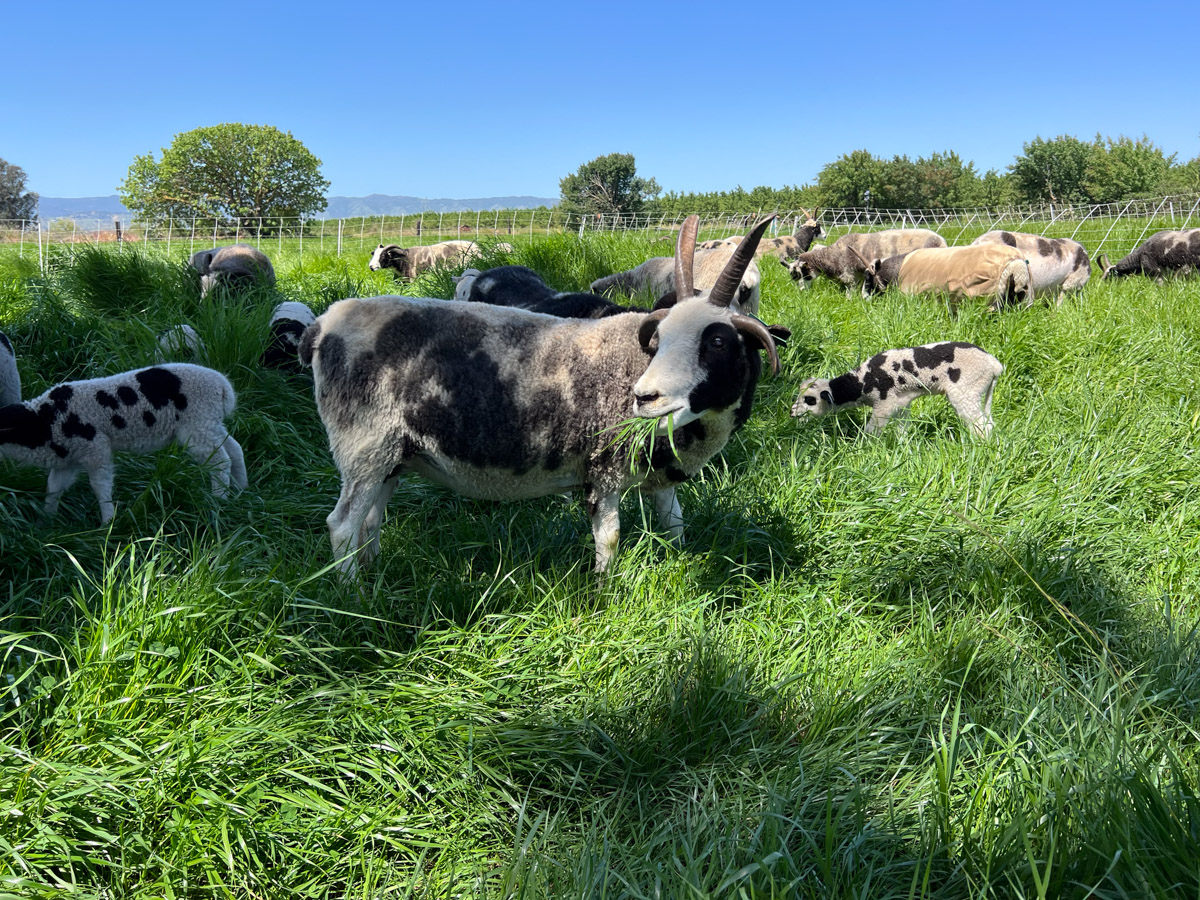
Sheep grazing chicory and clover on a foggy morning.

The sheep are happy on this new paddock. This is quite a contrast from the one grazed for only two days.

White net fence in the middle with grazed field on the right and not grazed on the left.

View to the north after re-setting most of the net fence.
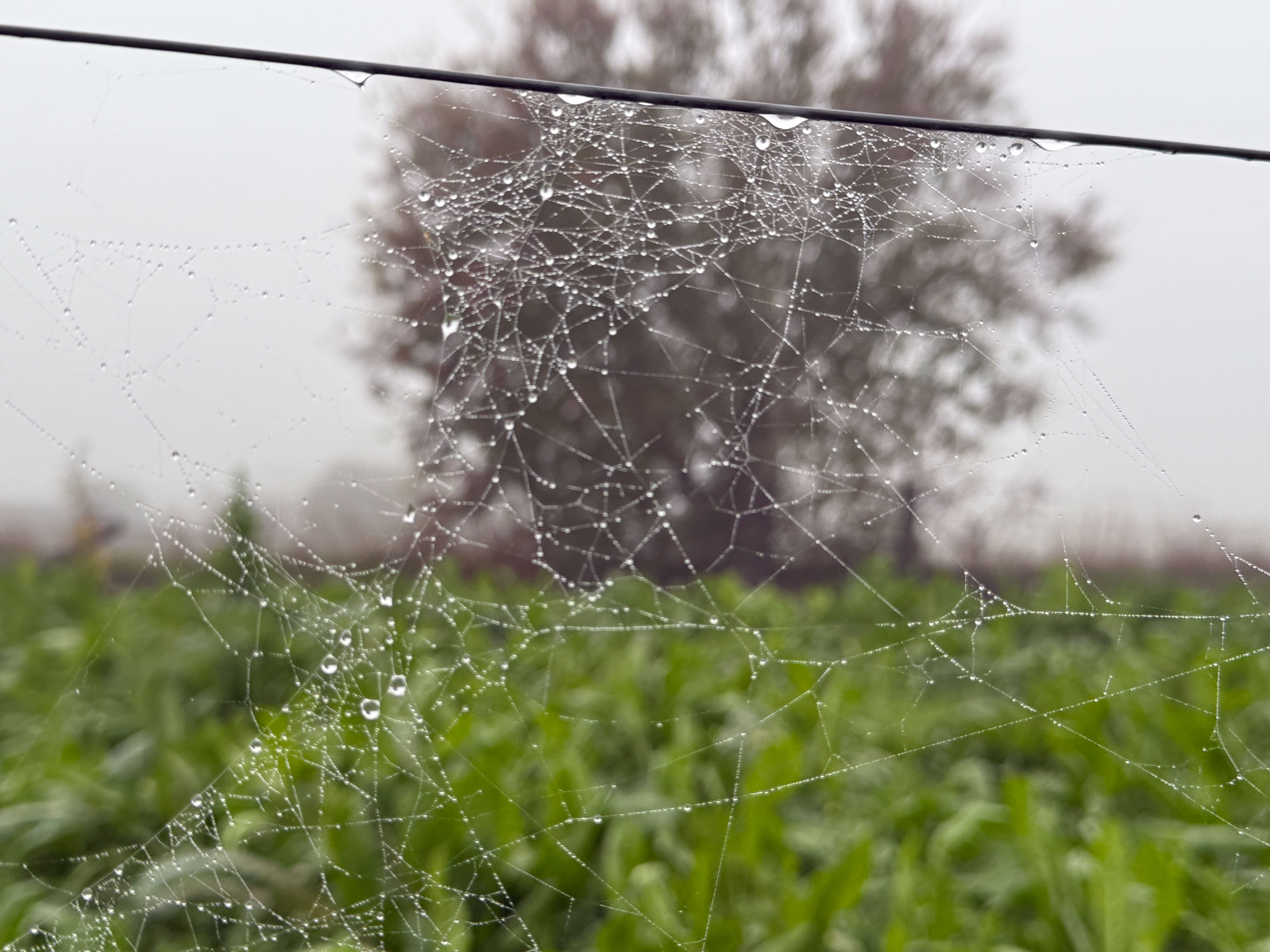
Foggy view.

Chicory flower at the end of the season.

Grazing and Irrigation 8 – September

When I wrote a newsletter yesterday I referred to the series of blog posts about the pasture that I wrote over the last year. You can find any of these by searching Pasture and Irrigation Renovation (14 posts) and Grazing and Irrigation (7 posts).

Tonight’s post will follow up on this Grazing and Irrigation post (#7) written in June about May grazing. The pasture looks much different now than it did then.

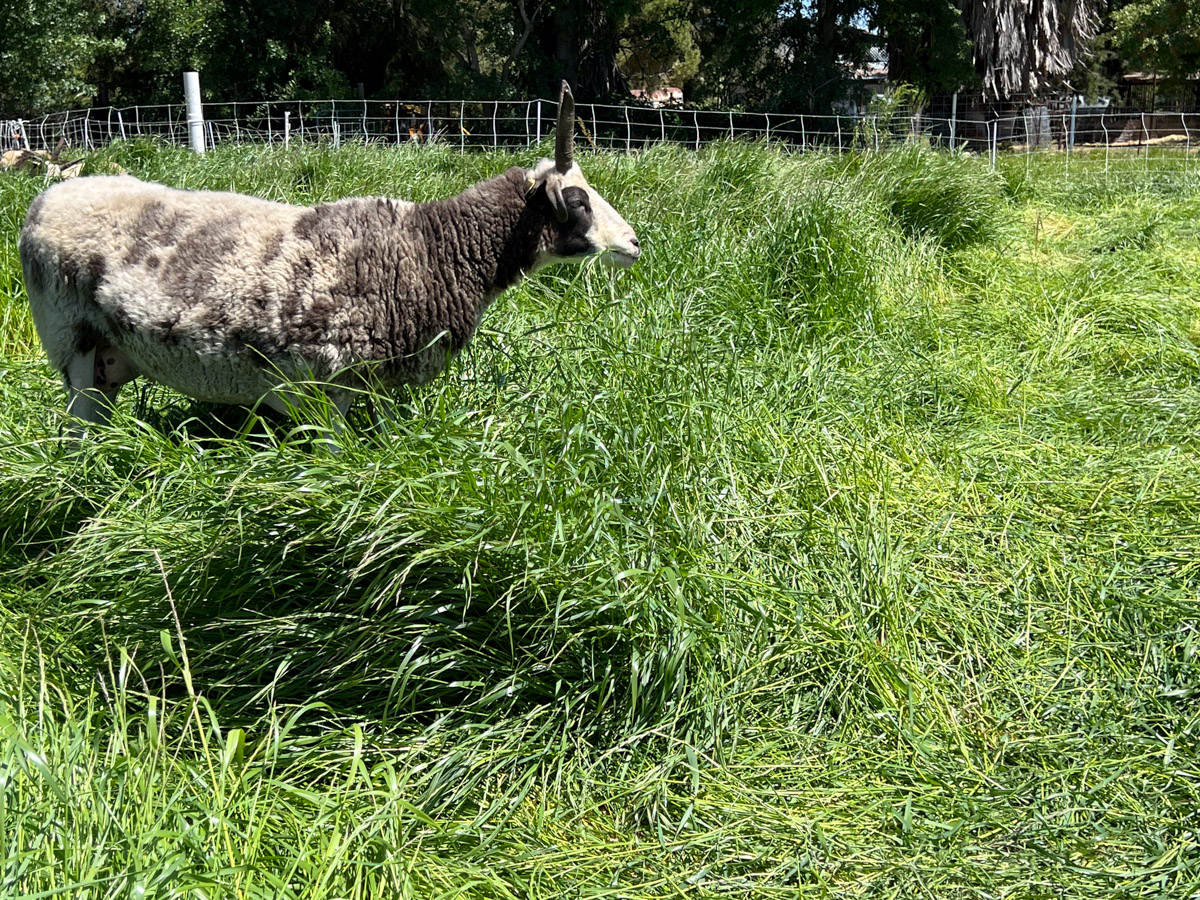
Four horned Jacob ewe with grass all over her horns in a clover pasture.

The ryegrass is gone and you see mostly clover.

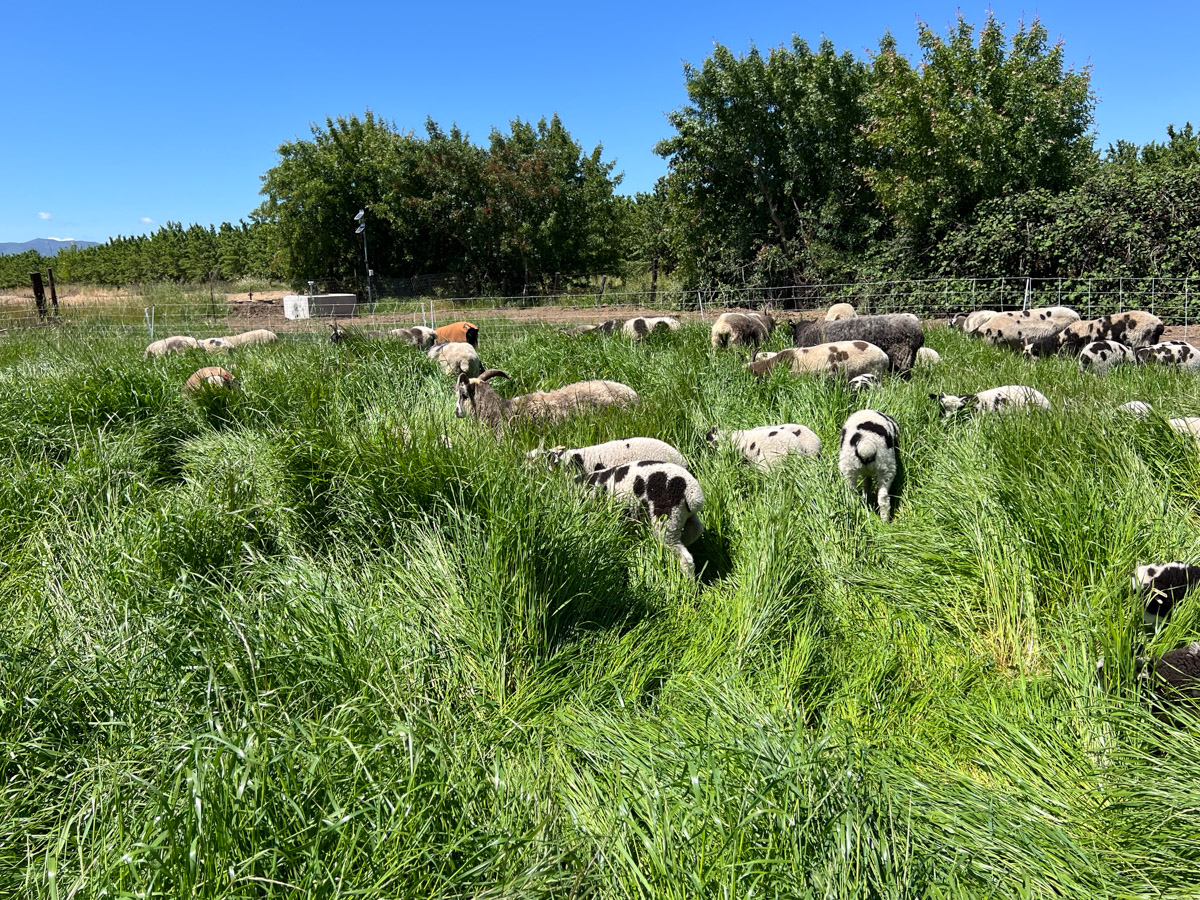
Jacob sheep grazing clover pasture.

Next most prominent is birdsfoot trefoil, and more recently the chicory has taken a foothold. Those are the three broadleaf plants that were in our seed mixture. All of the paddocks in the south pasture look like this now. Back in the spring we started topping the ryegrass with the mower before grazing and mowed again after grazing. This prevented the ryegrass from being flattened over the clover and becoming a mulch layer.

Pasture being irrigated. This area has a lot of dry grass and mounds of grass piled up.

The smaller field on the north is different. We didn’t graze early enough and this is where the annual ryegrass had such a head start on the clover and overwhelmed it in places. I took this photo while irrigating two weeks ago. While the pasture was flooded, some of the ryegrass “mulch” floated and I was able to rake a lot of it into piles thinking that I’d be able to move it out with the tractor.

Wheelbarrow piles high with old wet straw.

A few days later I realized that I didn’t want to wait until the field dried out enough to use the tractor. I was ready to graze again but the lane was still too muddy. I realized that I could use all that straw to cover up the mud. So I used the wheelbarrow.

Lane bordered by white net fence and green pasture. Lane is filled with old straw.

I used at least a dozen big loads of ryegrass straw to fill in the lane.

Two horn Jacob ewe lamb with mouthful of green leaves in a pasture.

This is Sparky in that north field. Hopefully over the course of winter these bare spots will fill in now the they aren’t covered with mulch.

Grazing and Irrigation 7- May

I wrote posts a couple of weeks ago to create a photo diary of our grazing progress as we started grazing the new pasture. As usual I got behind. It’s crazy now to try and document this the way I had intended. Instead I’ll start with this week and see where I go with this.

This is yesterday’s photo. I have numbered all the checks from west to east so I can keep track of what I’ve been doing. They are 30′ wide. We started grazing this spring with the paddocks in the north field. This is the previous post about that before I went on to the first irrigation. When we switched from grazing the north paddocks to the south ones we started with fencing two checks at a time and the idea was to split into smaller areas with cross fencing.

I have to say here that the main challenge here is that we have no permanent fences yet. When this project began (see the first post in October) we had to remove all the interior fences. Dan had knee replacement surgery in April and he wasn’t able to get those fences up before we needed to start grazing that month. I am using electronet fence and that means piecing together lengths of net and moving it as I move the sheep across the field.

This shows the length of fence as I have moved it from one check to another before setting it up.

There is plenty of clover and trefoil, but in some of the areas it has been overshadowed by the annual ryegrass. That is another challenge. Annual rye was NOT part of the seed mix. There were three perennial grasses in the mix, but the ryegrass that was already in the soil took over. Fortunately it is a good feed, but it grew so quickly that it has been a real challenge to manage. This paddock is one that Dan topped with the mower several weeks ago and the clover is more visible here.

So far it seems that I can graze the sheep on each 30′ strip for two days. I could probably add another day but I want to move them across the field to try and keep up with that ryegrass. We also want to make sure that the clover and trefoil get well established before grazing them heavily. It is time consuming to move that length of fence from one check to another every two days, so this last time I moved only one of the fences to the west. There is no fence down the center of this photo. I moved the fence that was on that check to the next check to the west. So the right half of the photo is where the fresh feed is. The sheep can tell where there is fresh feed, and they spent the next two days mostly on that half. They are also able to eat more of the ryegrass that is still on the check once the fence is removed. If this method works then I’ll move one fence every two or three days.

This photo is from a month ago when we moved them to the south field and set the north-south fences up to include two checks. We added east-west fences to have them eat each part more throughly. However, we have no drinking water source out there now so they have to have to be given access to the barn.

You can see how overwhelming the ryegrass is. There is clover there but it is hidden. When the grass is this tall the sheep trample it more than eat is and it has the effect of mulching the field. That is not what we want to encourage the clover and trefoil to grow.

When Dan topped the ryegrass the sheep could move through it more easily and it allowed the other plants to have light.

This view shows how they were able to graze the mowed part.

It’s great to have all this feed now, but I wish that I had more sheep right now to use all that feed.

Grazing and Irrigation 4 – April 28

I was gone for four days and my brother had finished setting up fences in the north pasture. This is how the pasture looked where I was to remove this fence and let them into the last part,

As described in the previous posts most of this tall grass is annual rye, not a species in the seed mix we planted.

The challenge was to graze it enough to not only feed the sheep, but to remove the cover from the clover growing beneath.

This is the opposite view from the first photo, but the same location where that net fence had been.

Dan took the tractor into the south field and mowed on top of the checks (the raised borders that control the irrigation water)–not so low as to impact the clover, but to top that grass and make the checks more visible and make it easier to set up the fences.

Close-up view showing the clover.

After mowing that strip.

Grazing and Irrigation – 3 – April 23

The previous post showed how this looked when the sheep went in. The growth of the annual rye was so fast at this time of year that we needed to move them through fairly quickly.

Here is another view of that same area (left) before removing the fence to graze the next section.

The sheep trail out from the barn to access that field.

It was a challenge to set up fence and graze this with the grass so tall. Thanks to my brother for coming to help set this up.

This was the last day before I had to be gone for four days. Dave came every day while I was gone to get the sheep out on new pasture.

Trista and triplets.

Grazing and Irrigation – 2 – April 21-22

I showed the first photos of grazing the new pasture here. This is the second and third day, now a month ago.

There is clover in this field but you can’t see it because the annual rye is so dense and tall.

There was certainly plenty of forage to eat, but a lot was also trampled.

The goal was to get the sheep to eat it as evenly as possible by fencing small areas.

After being on the first small section we moved the fence so they would go to fresh grass.

They still have to trail back to the barn for water.

Grazing and Irrigation – 1 – April 20

Way back in January I wrote the 14th Pasture and Irrigation Renovation post. I like my posts to be in order, but now I have skipped some important updates. Too many photos. Too confusing. Too much other stuff going on–lambing, teaching, deadlines, etc. The whole point of this renovation was to feed sheep and make it easier and more efficient to do so. If you look back at that linked post you’ll see plants growing, but they are small and there is a lot of bare ground. Fast forward past winter rain, warming temps, and 3 months. I’ll change the name of this series to Grazing and Irrigation.

The original plan when we applied for funding was that we might not be grazing for a year. It was evident by April that the pasture needed to be grazed NOW. I was committed to a teaching gig at the end of April and was going to put off grazing until I got back. Dan was not able to work on this only two weeks after a knee replacement. My brother, Dave, knowing how important it was to get started with this, offered to help set up the grazing before I left and handle it while I was gone.

A major problem was that all the permanent interior fencing had been removed at the beginning of this project. We would have to rely on electric net fencing. We gathered all the lengths of net fence that were stored in the barn.

We spread these out to figure out what we had and in what condition it was.

Dave made a plan and laid out fence, beginning in the northwest pasture, the one we call the Horse Pasture. Grazing started April 20.

This gives an idea of how thick the grass was. The seed mix we used had three forbs (clover, birdsfoot trefoil, and chicory) and three perennial grasses. There is a lot of clover and a moderate amount of trefoil. I don’t identify any chicory and all the visible grass is annual rye.The seed already in the soil completely overwhelmed any perennial grasses that might have started to grow and was covering the clover as well. This is one reason we needed to get going on the grazing.

Dave made strips going north-south and we blocked the sheep into a portion of the first strip. The idea is to get them to eat one area down more thoroughly before moving them to the next.

With no fences left in the pasture Dave had to create a lane to direct the sheep from the barn to where we wanted them.

You can see in this photo how the tall grass is trampled more than eaten.

This ewe may have not got the message about eating the grass instead of wearing it.

There is no drinking water in the pasture so at some point the sheep go back to the barn for water. This is something we have to work on.

Fall Grazing

Hendrix and his group of ewes have been in the back pasture since breeding season started and they have been at the north end of that pasture for a couple of weeks. Since hardly anything is growing (start the rain dance please) I figured that they couldn’t do too much damage leaving them that long. I thought that maybe that could take down the dallisgrass and they actually did a pretty good job of it in most of the pasture. It is still a challenge however along the ditch and the fence-line. (If you search dallis  in the blog search you’ll see several posts about my attempts to conquer it.)IMG_8004

This is the north end of the property. Notice the blackberries on the north fence. I cut these away in the spring to uncover the electric fence wire on the inside of the field fence. The sheep could help in that job except that this time of year the dallis grass growing in and around the ditch keeps them from going over there. It may seem hard to believe that a grass keeps sheep from something, but this stuff is so coarse and strong it’s like hacking your way through a jungle. And it’s very sticky now from a fungus that grows on the seed head. Several years ago I found a ewe whose horns were so tangled in it that she was stuck upside down in this ditch. The only reason that I knew she was there was that she was baaing.  The sheep in the photo above are in the ditch because I trampled some of the grass and put alfalfa there. IMG_7967IMG_7949 This photo shows that they are making progress. Now I can actually see a ditch and the sheep can get through it to the side with the blackberries.IMG_7951 They are finding the hay in the blackberries and it makes it worth their while to work their way through the grass.IMG_7959

IMG_8027After about a week we have worked our way through the ditch and I’m putting the hay near the fence.  IMG_8002   Then I moved beyond the blackberries and had them trample the dallisgrass along the rest of the fenceline.IMG_7960This is the east fence and it looked almost as full of grass before I started this project. It is more overrun with blackberries. The sheep have eaten some of the leaves off. I think I have to get in there with clippers now though. There is an electric fence hiding in there somewhere.

Sheepy Morning


DSC_5160The sheep follow me, always hopeful that I’ll switch them to a new paddock.DSC_5171 They are in luck this morning.DSC_5172 DSC_5175 DSC_5180 The young lambs don’t always figure out going around the post.DSC_5198DSC_5181 DSC_5191 DSC_5196  Now they’re going the right way. DSC_5212Sheep aren’t the only thing in the pasture.DSC_5152Can you tell what I’m looking at?DSC_5149The mosquitoes haven’t been too bad this year, but that has changed now. The pasture mosquitoes are out in force. I don’t go out in the pasture without my long sleeved “mosquito shirt”.

It’s a Jungle Out There

Here is a photo I took last September:photo

I was trying to figure out why I had no power on the electric fence and this was one of the areas that I had to check. Even though my charger will carry power through thick vegetation like these blackberries, the branches could be pushing the hot wire into the old fence and causing it to ground out. (Yes, is a strand of electric wire going through that mess.) I figured it was time to deal with it.photo-2

This is after I cut away blackberry branches. You can barely see the insulator that holds the electric wire near the bottom of the post. I cut those branches but left them between the ditch and the fence thinking that I would drag them away later to burn them. Yeah, right. (By the way, this was not the problem with the electric fence. It was grounding out elsewhere.)

IMG_4407 So only a few weeks later I knew that I needed to deal with the dallis grass along that same fence-line. This is the same area, but looking from the other direction. There is supposed to be an irrigation ditch in this photo.IMG_4411This is after weed-eating the ditch. You can see the blackberries that were cut a few weeks before that I never got around to moving and burning.

Fast forward to this spring. IMG_6398 This is the same view as the last photo. The blackberries are growing back through the old blackberries branches that were never moved AND through the mounds of dallis grass. This year I have a residential burn permit instead of an ag permit. If I don’t want to go get an ag permit then all my burning has to be done before May 1 (or maybe it’s the 30th). But in any case, I needed to get busy. I took a rake and the pruning shears and spent a couple of hours at it. IMG_6400 This is what it looks like now with 2 piles ready to burn. Now hopefully the sheep will keep up with the regrowth of sprouts. When it is so thick with brush and coarse grass the sheep don’t even try to get through it. IMG_6401 But there is more! This is the other fence-line–one that I did not deal with last year. See the two electric fence strands disappearing into it?IMG_6402Here it is from the other direction. Farm Club, where are you?