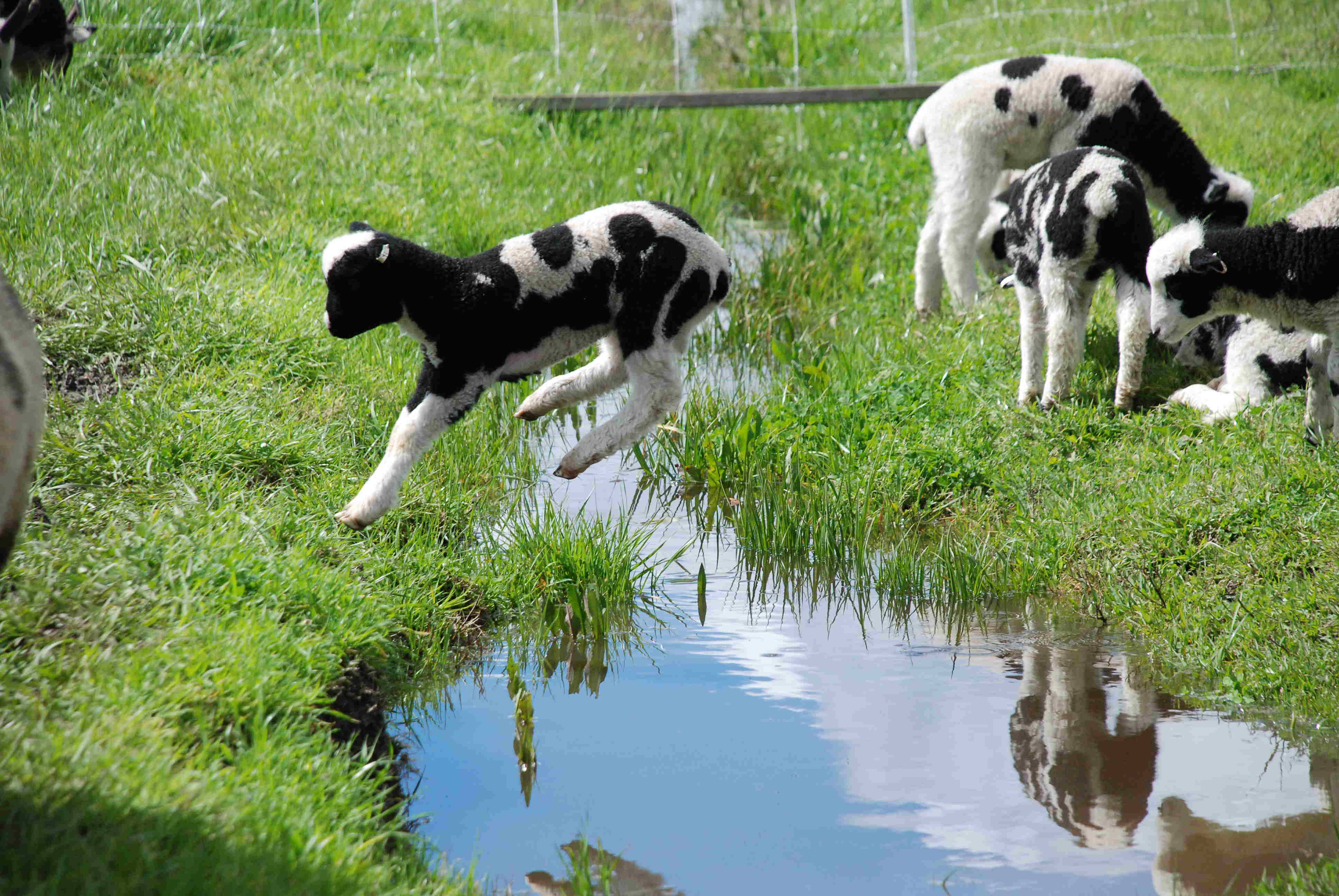
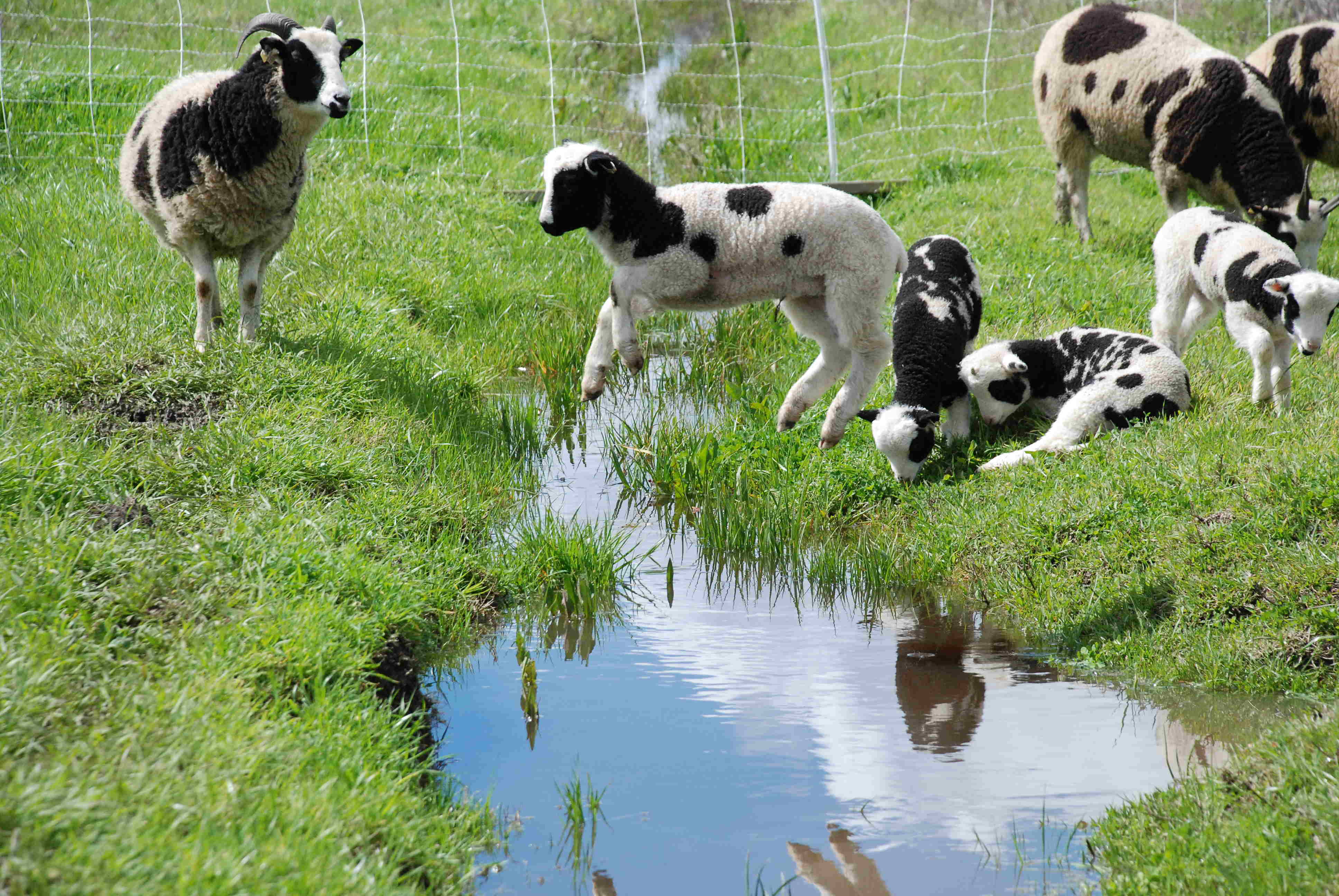
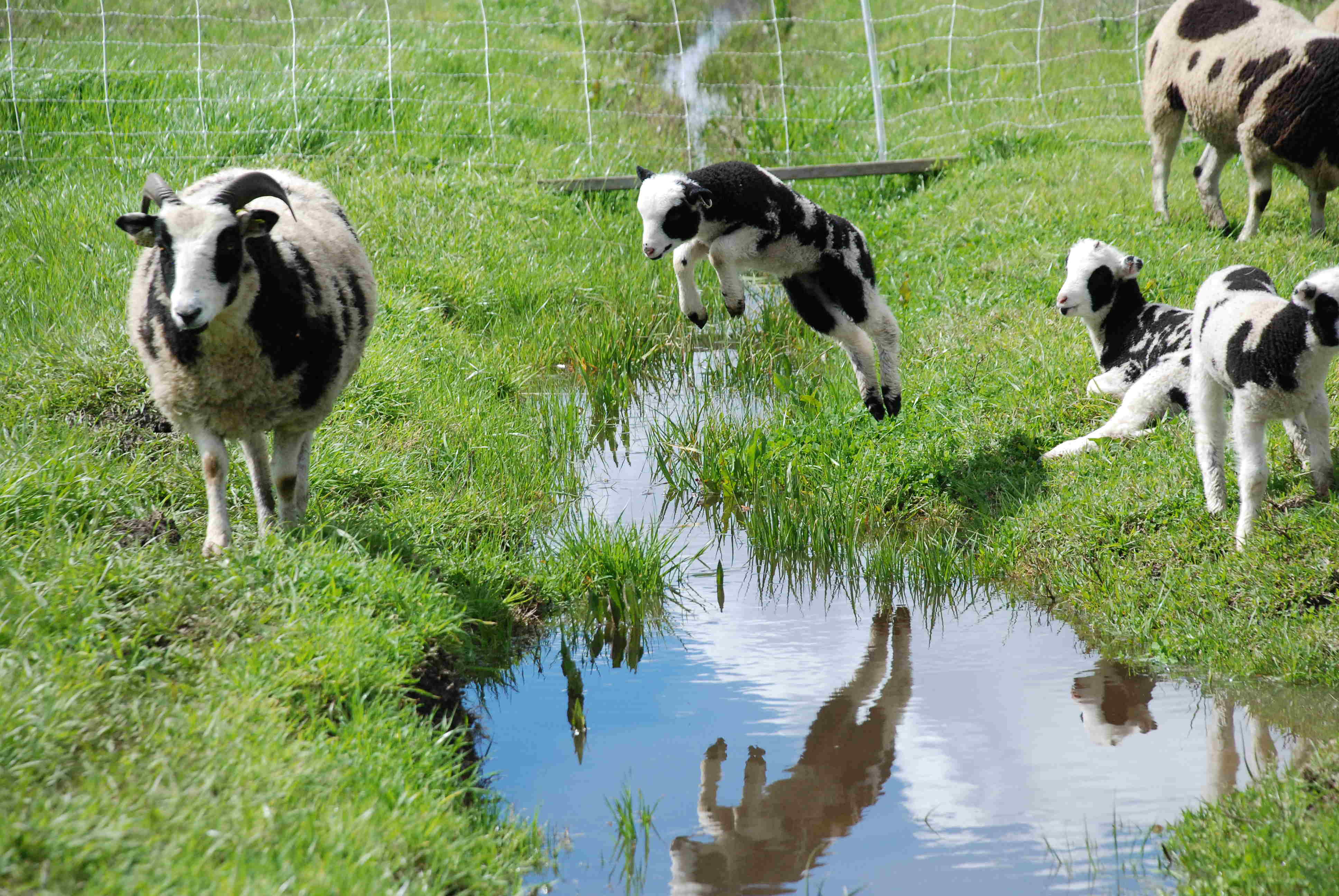
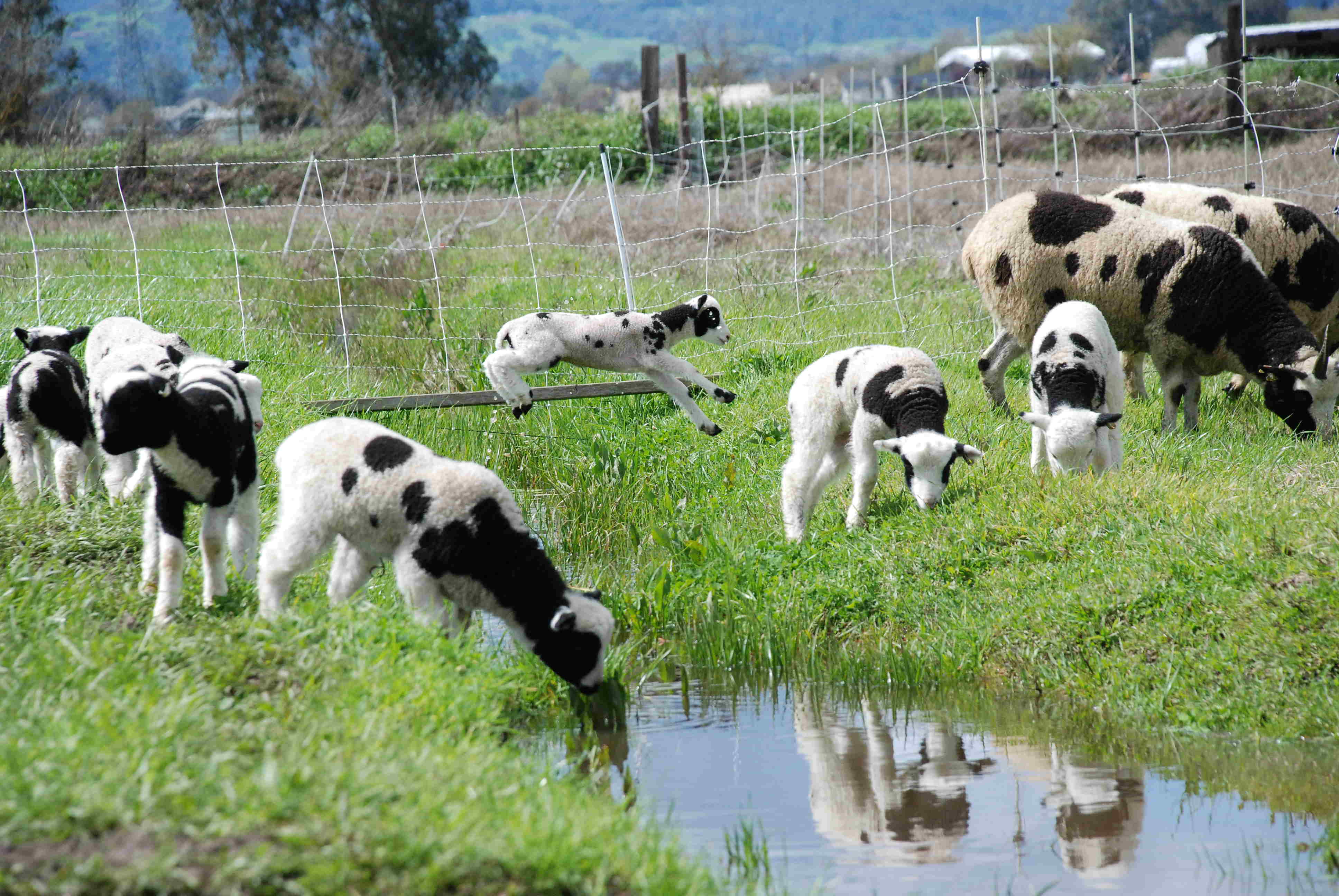
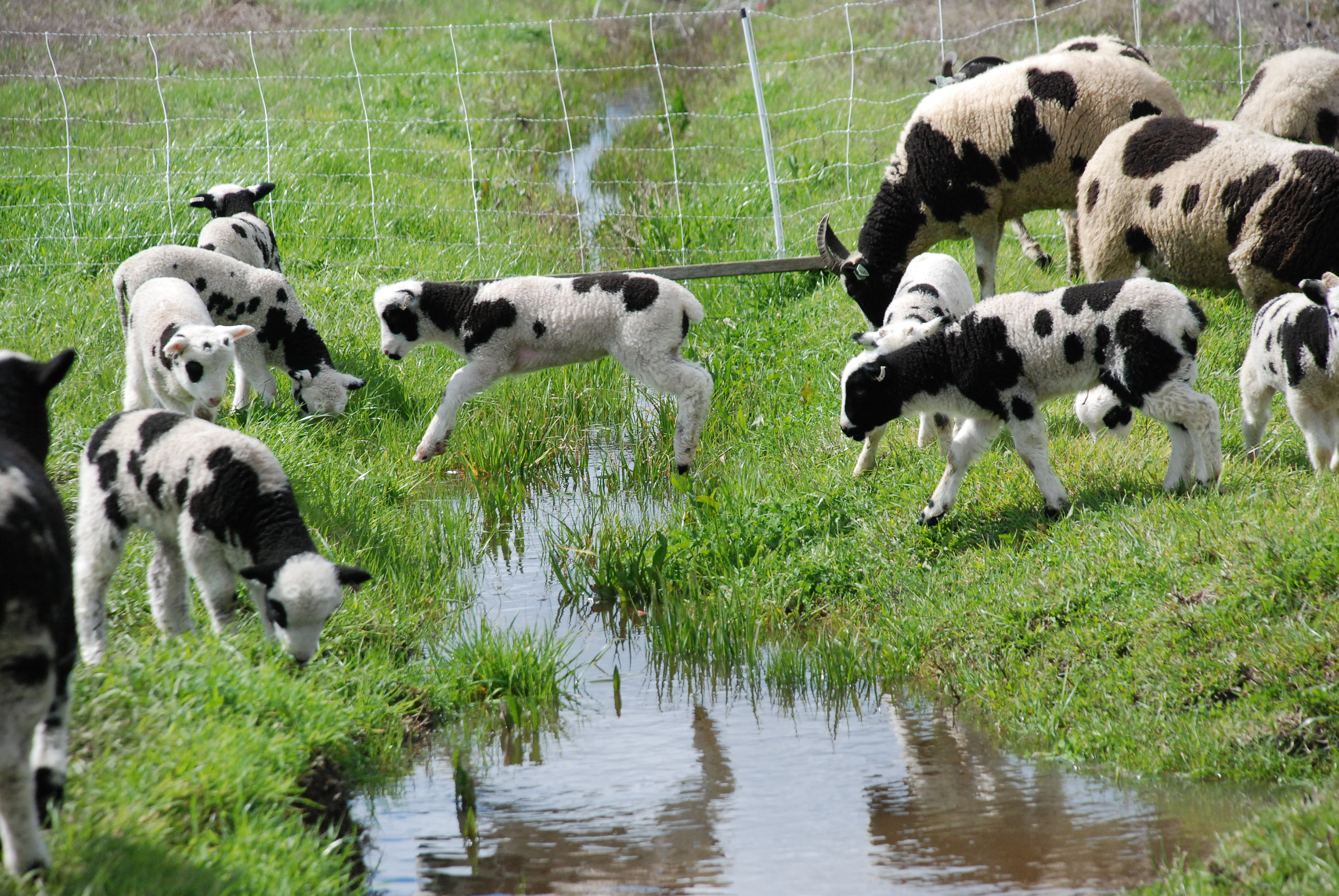
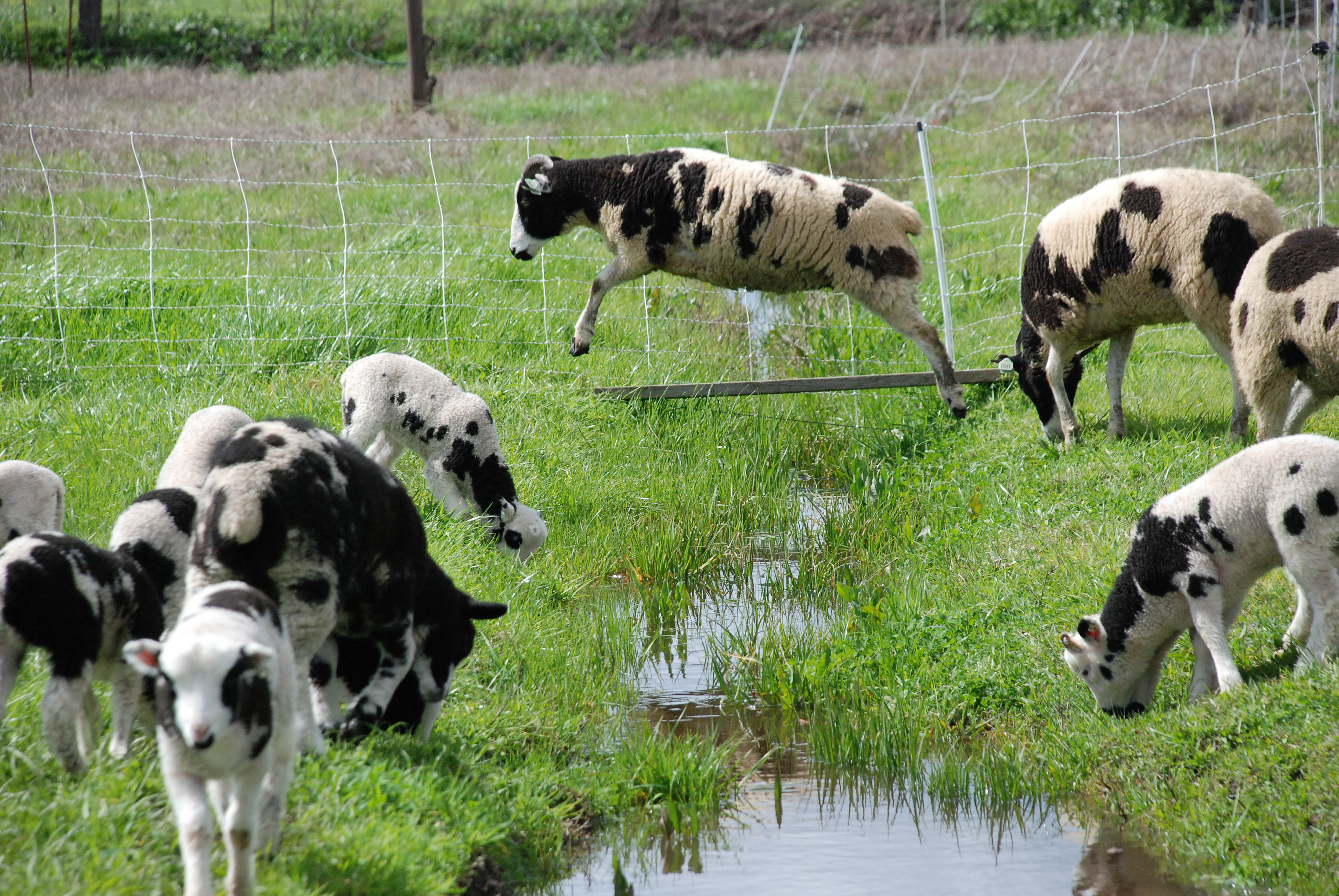
Because the grass was greener?
Because the grass was greener?
Farm Club members braved stormy weather to make the March Farm Day a fun and productive day. As usual I had more tasks on the list than we could hope to accomplish in the morning but we made good progress.
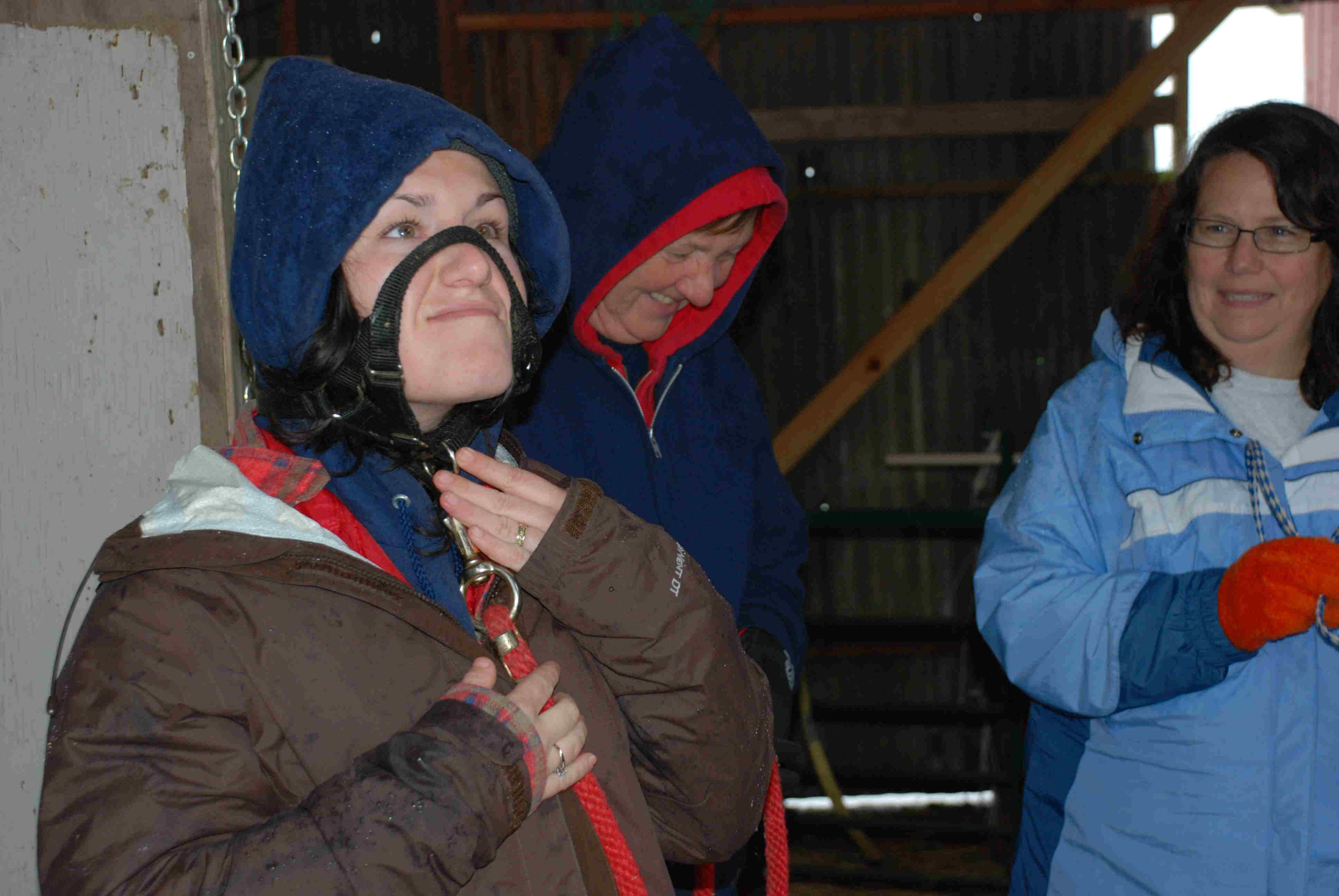
First on the list was a lesson on using a halter and tying a rope, using a knot that can be easily released. I didn’t mean that the people had to wear halters, but Shelby is always ready for anything.
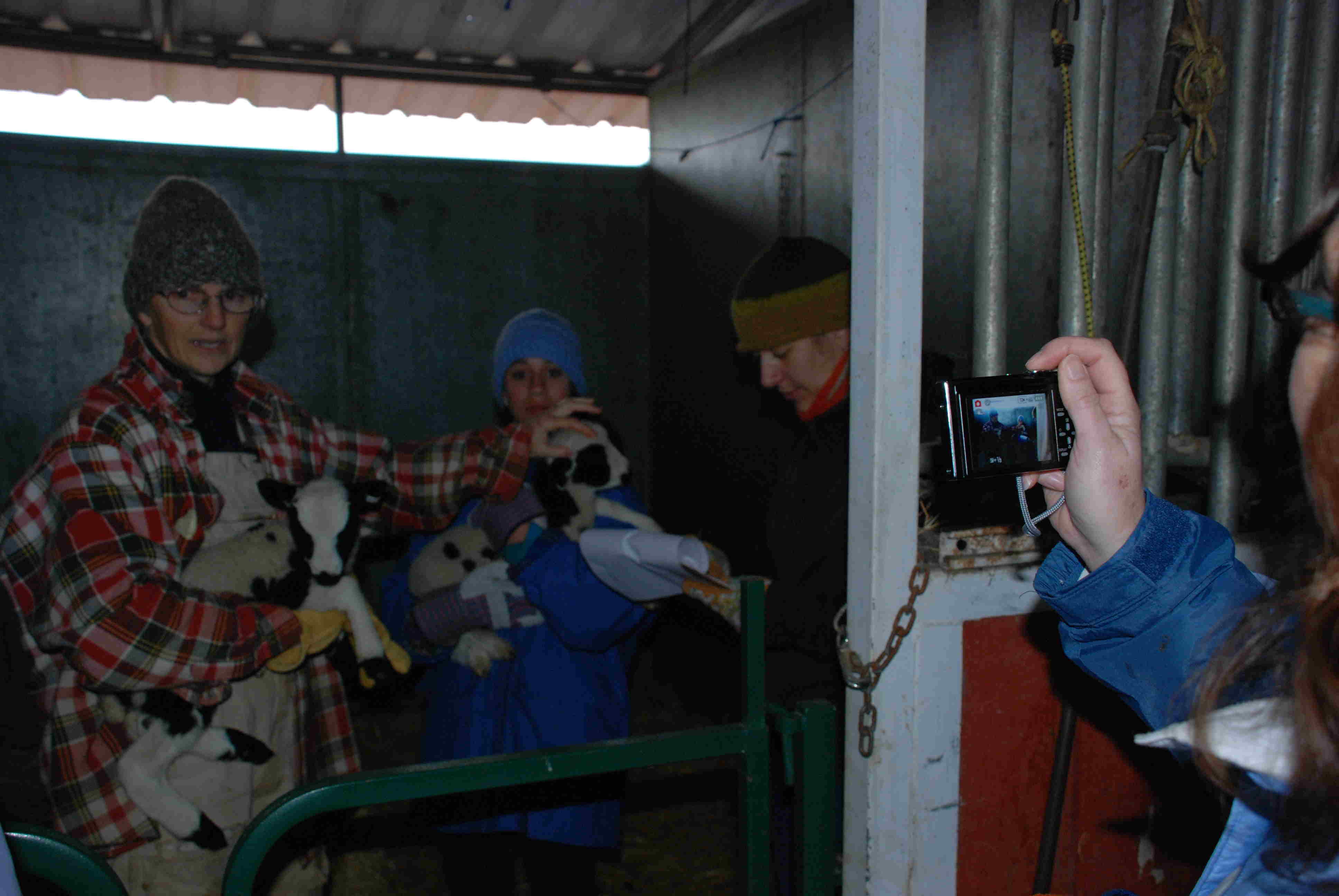
Everyone helped catch lambs and record the number of horns and whether or not there were any eyelid defects. (Split eyelids are not uncommon in 4-horn sheep.)
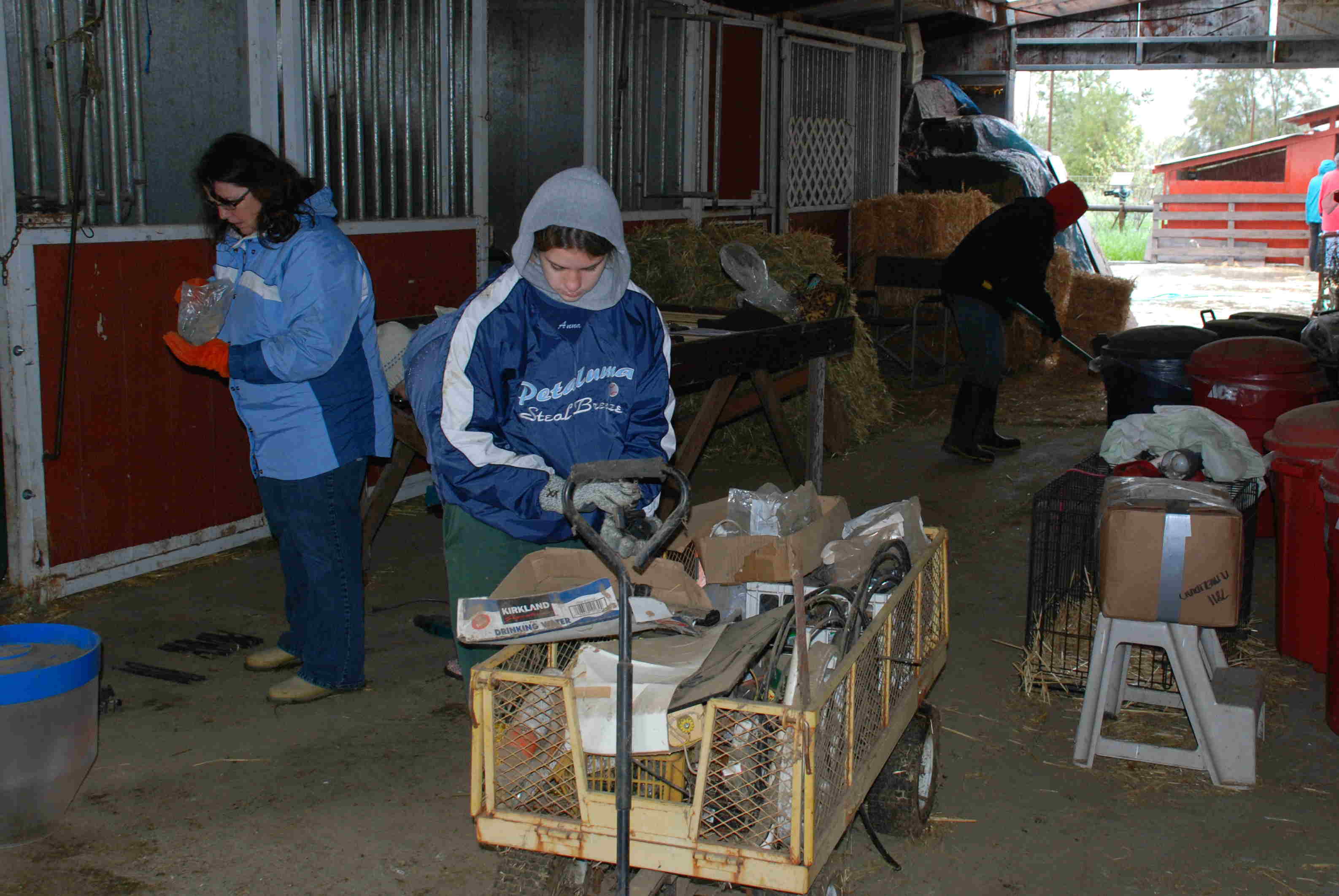
Next task: Empty this wagon that has been accumulating electric fence parts and who-knows-what-else for a could of years and sort it.
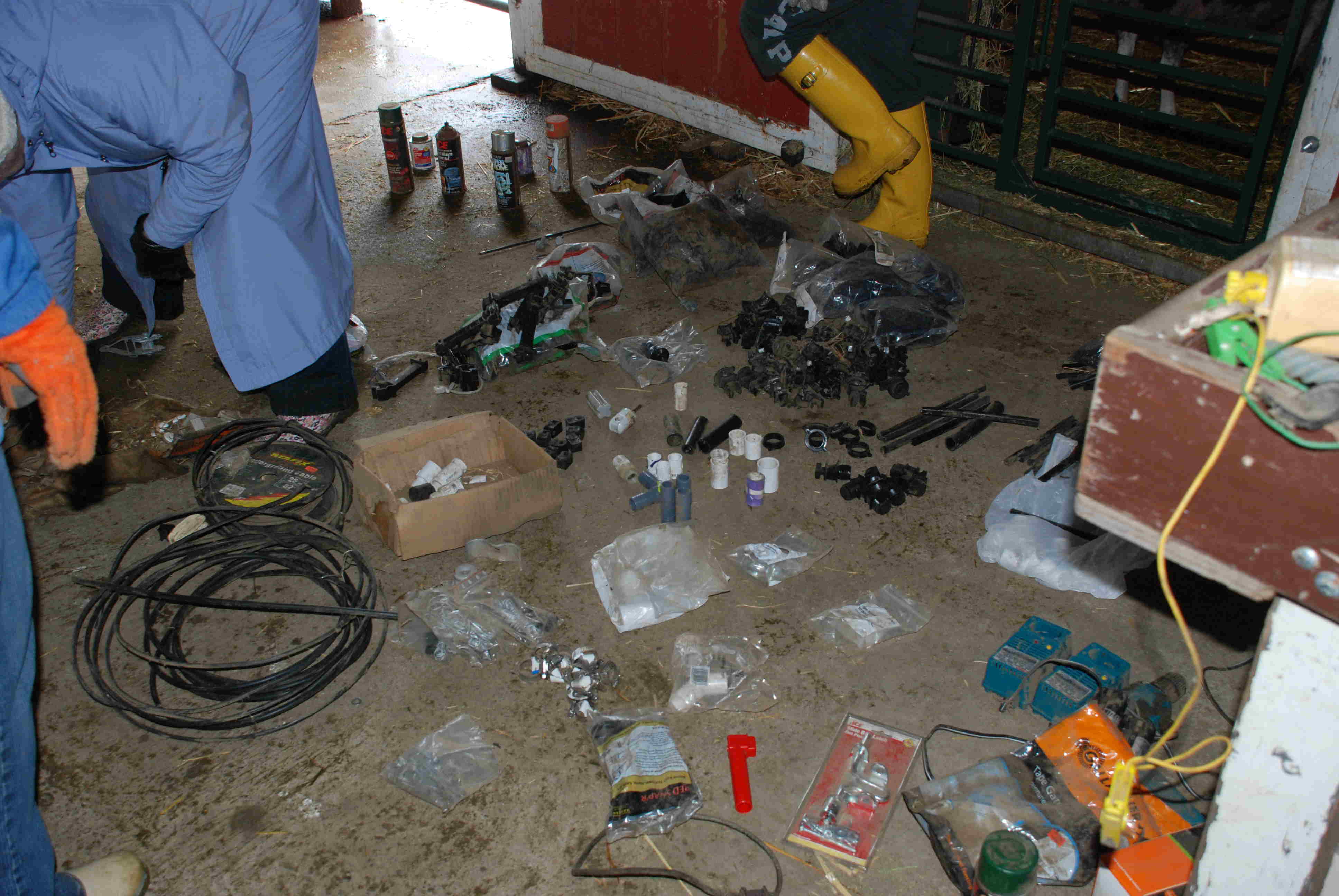
Good job, ladies! Now the trick is to throw out the true garbage and keep everything else sorted.
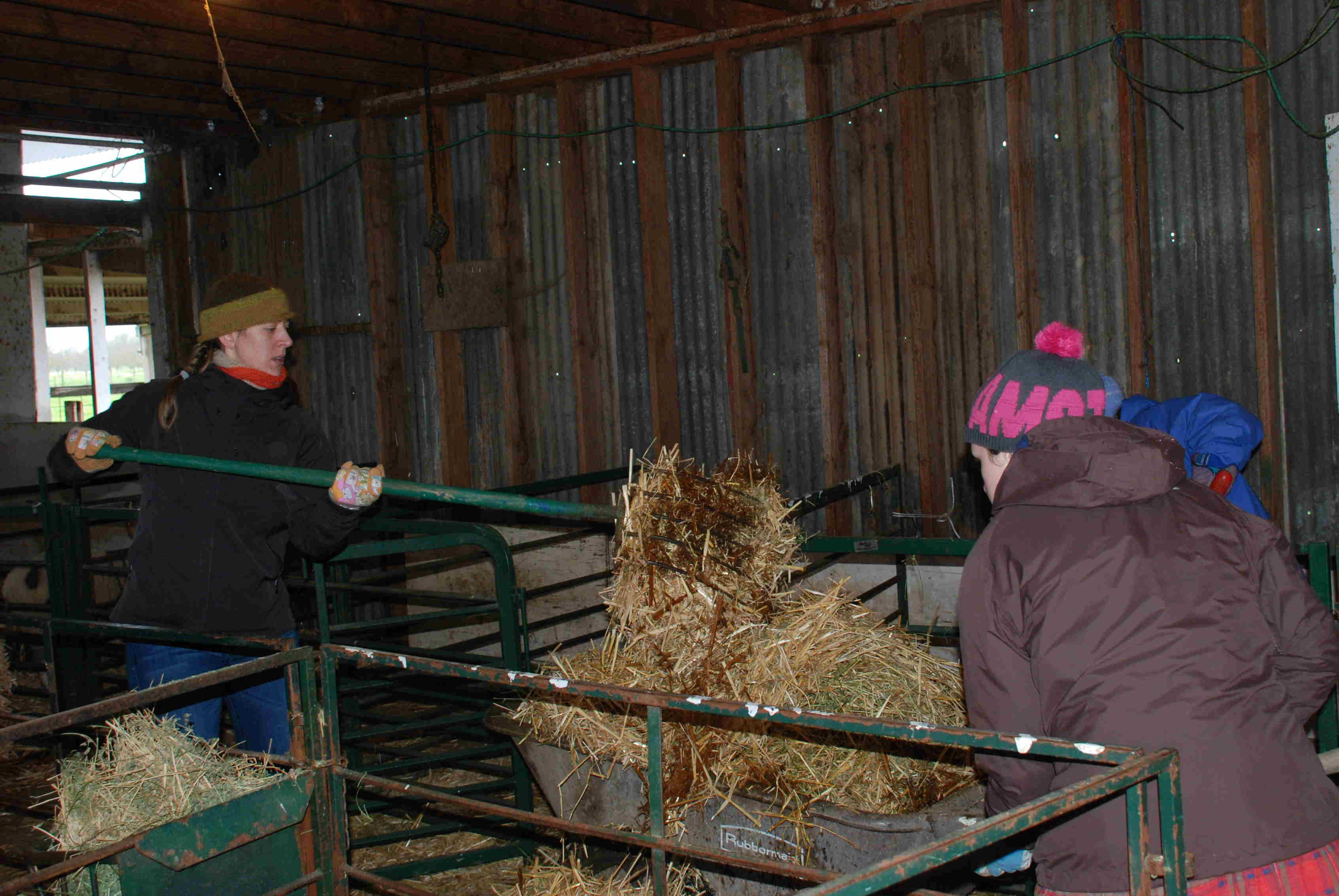
Tina, Shelby, and Lily cleaned lambing jugs.
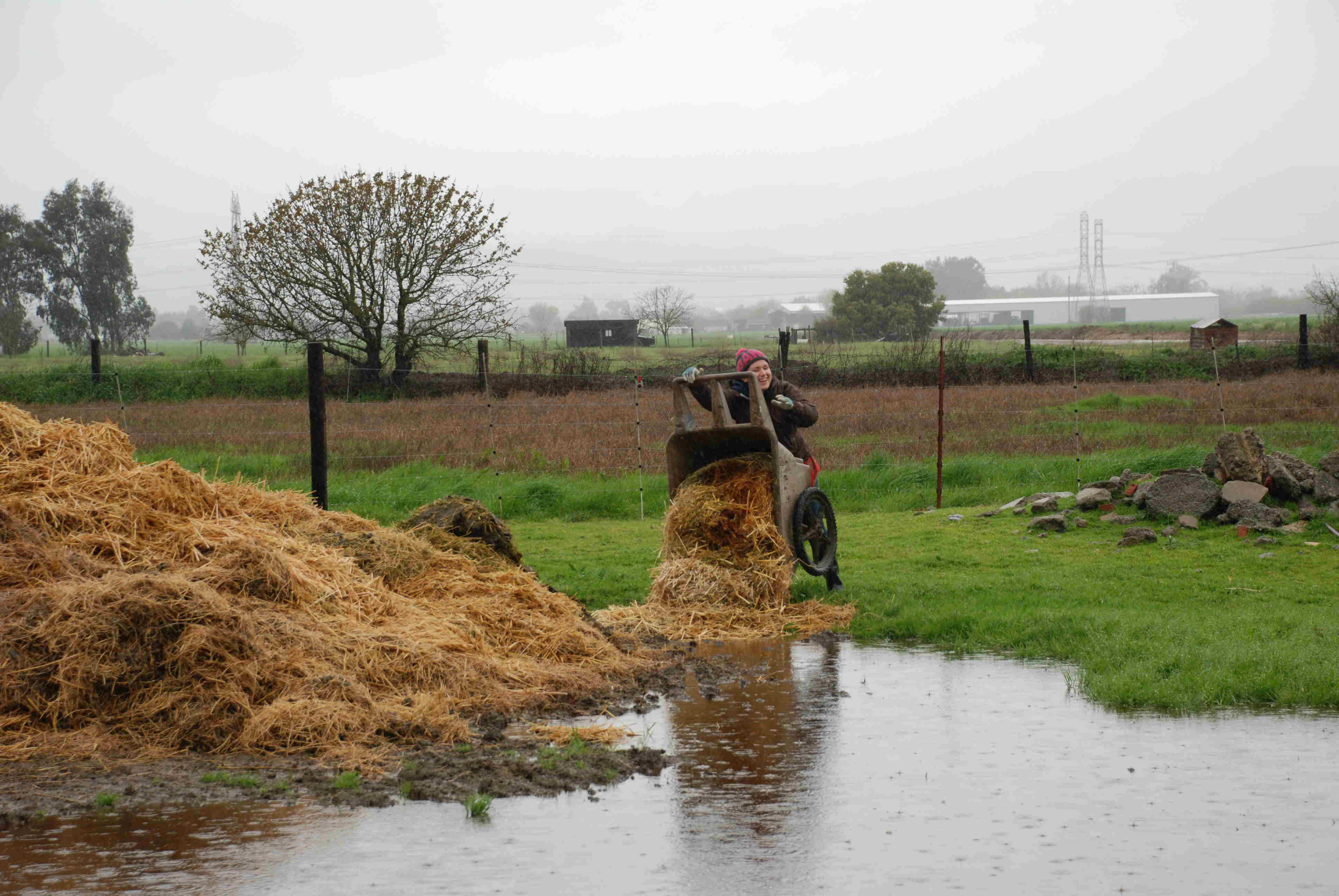
Shelby volunteered to brave the lake and dump the loads.
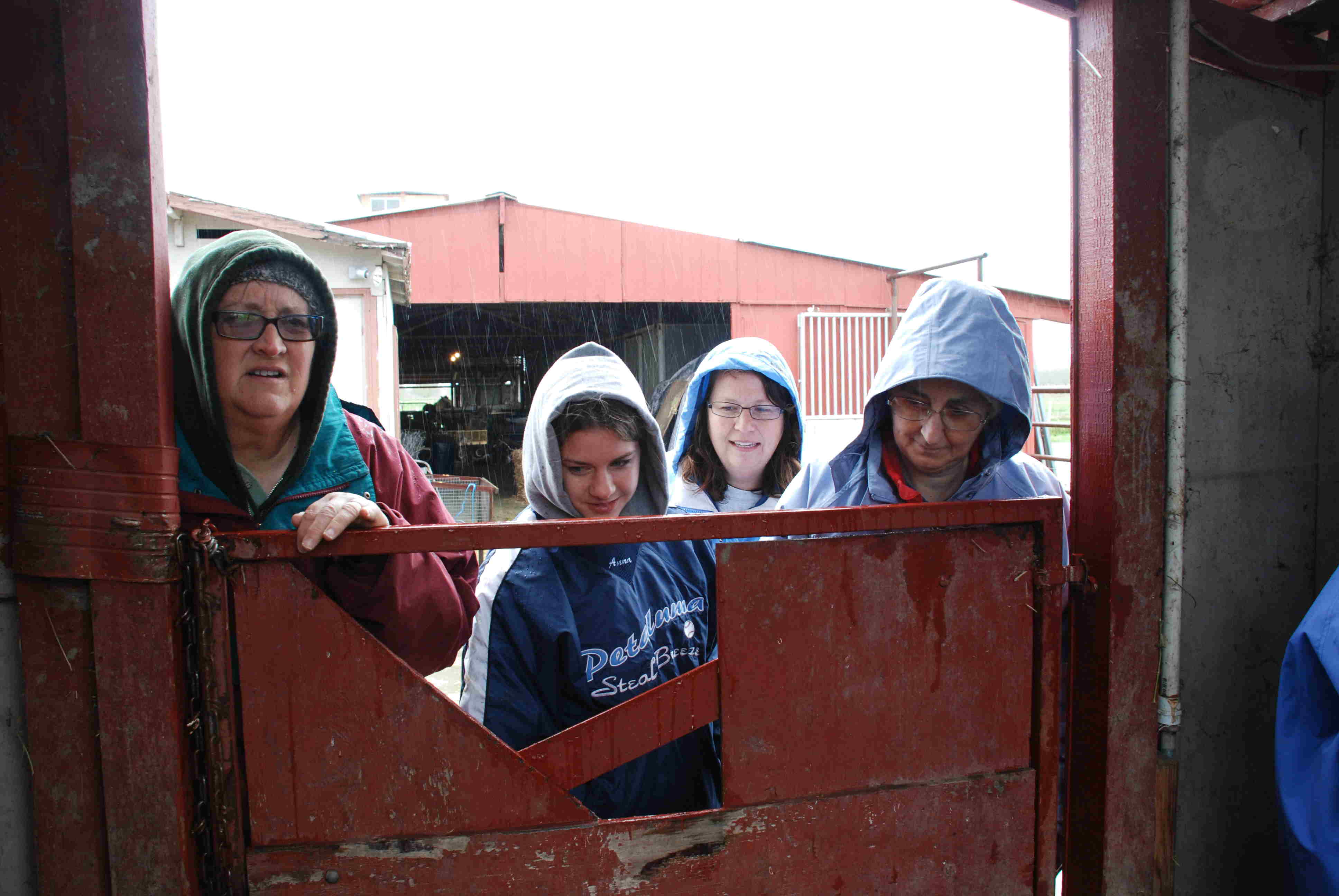
Can you see the rain coming down in the background?
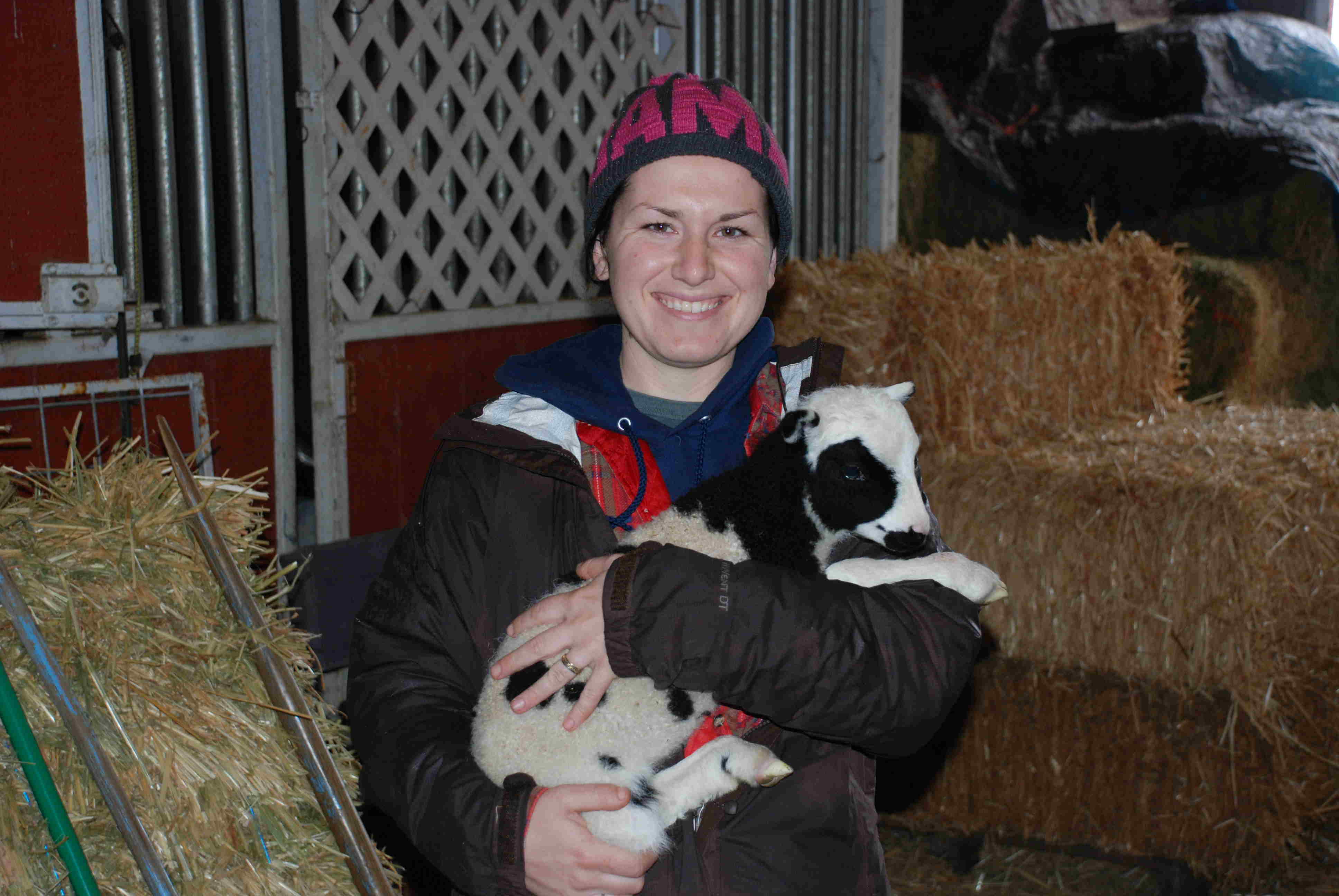
Shelby holding Shelby, the sheep’s, lamb.
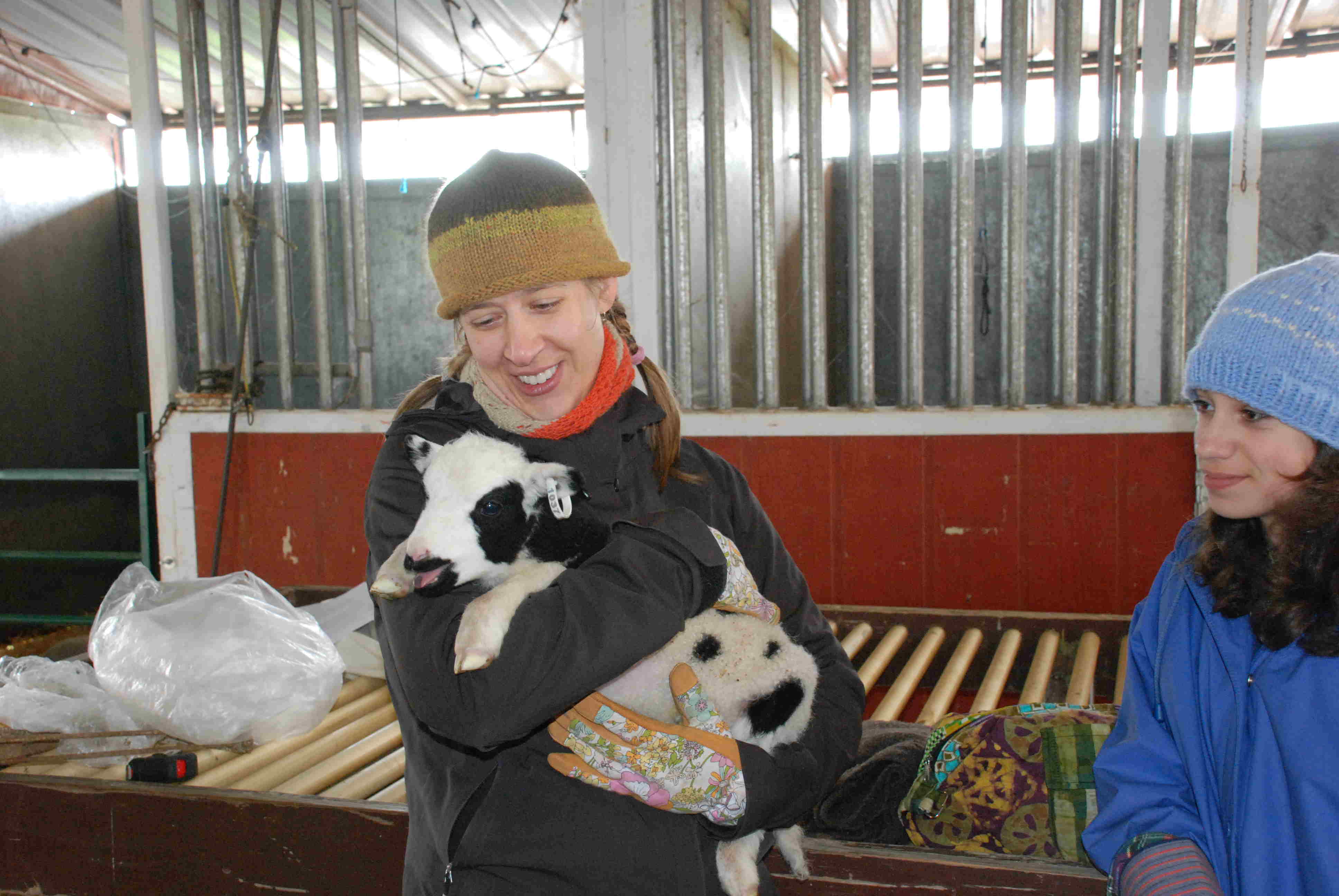
Tina’s turn.
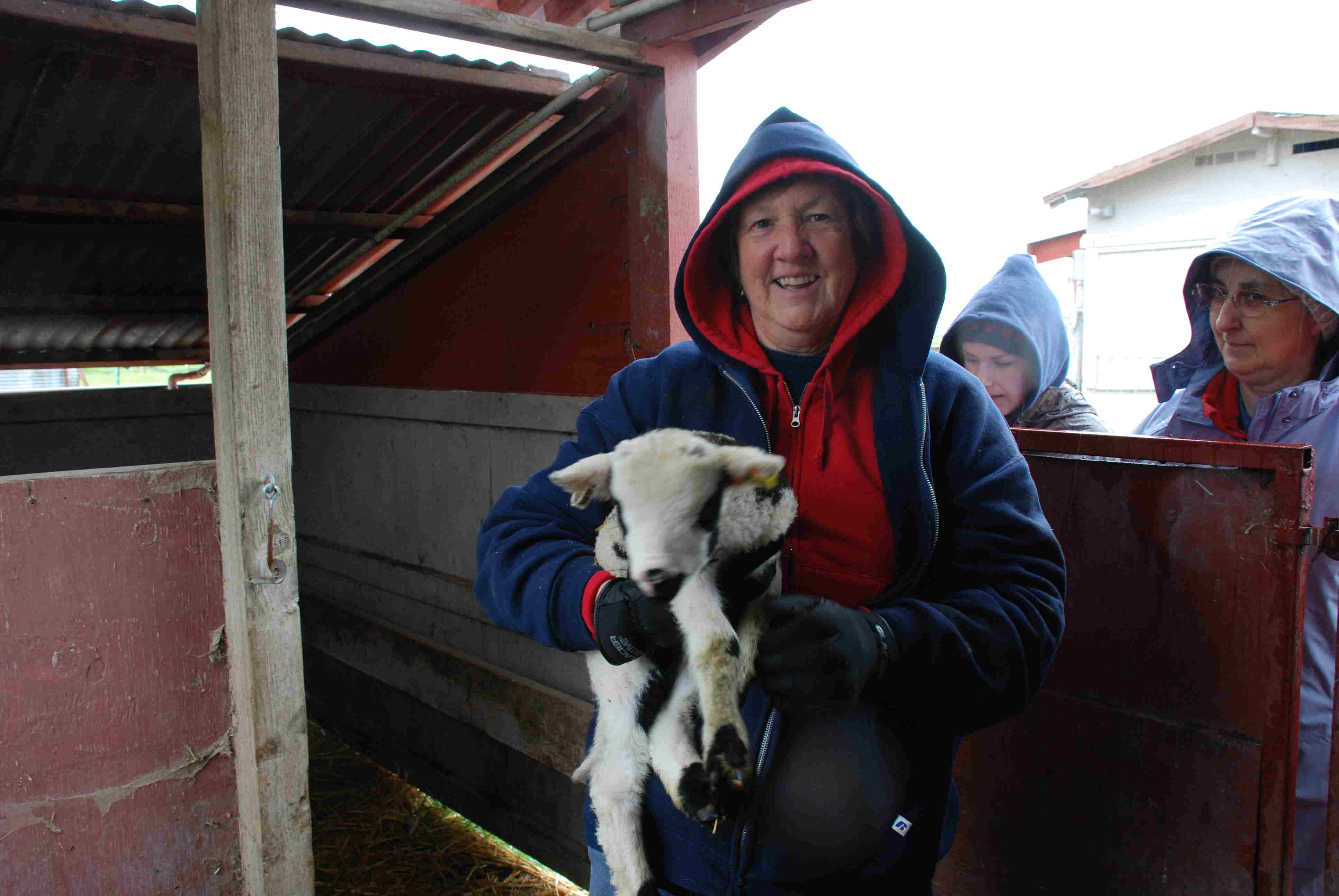
Dona holding her favorite.
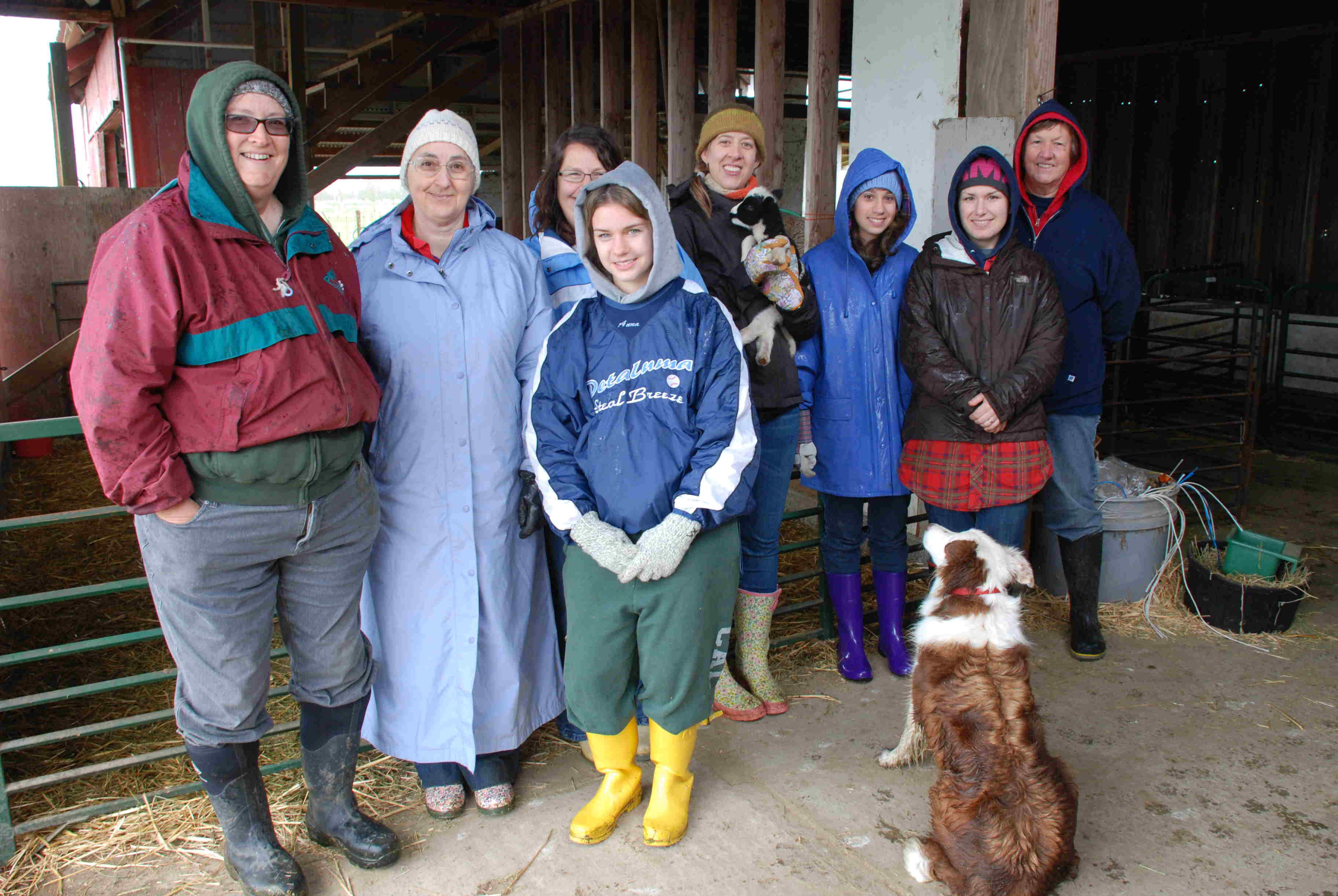
Here is the crew ready to have lunch and spend the afternoon in visiting in the warm, dry shop.
Thanks to all of you for your help and cheerful attitude!
Are you tired of new lambs photos?

This is the wet butterfly look. The ears remind me of recently-emerged butterfly wings.
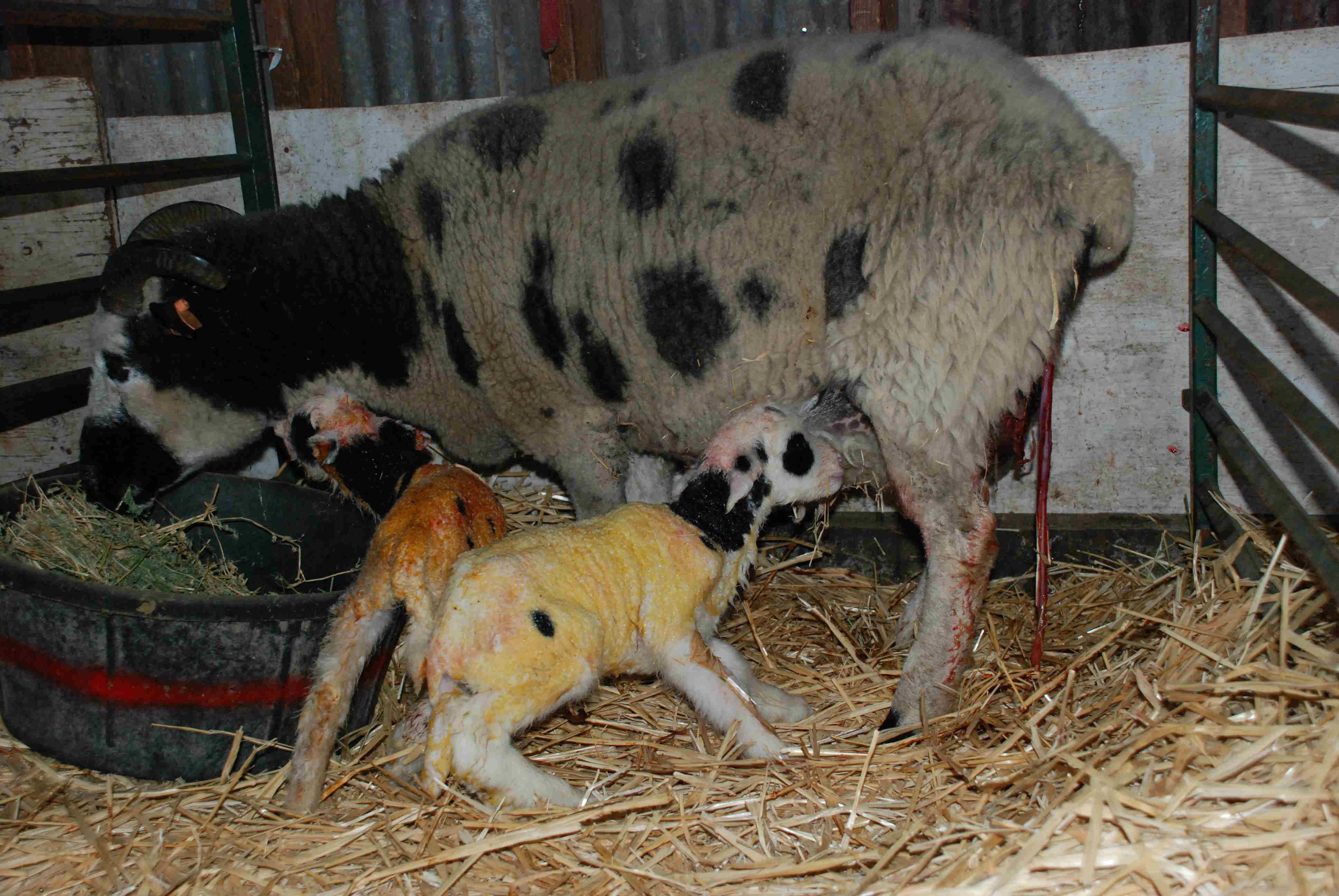
This is the “Jacobs come in all colors” look.

Weigh-in of new lambs. I don’t usually weigh lambs, but to be able to answer the question, “How much do they weigh?”, I’m weighing them all this year. My guess is an average of 7.5-8 pounds but I’ll report back when it’s all over.
Today Meridian Jacobs hosted a knitting class taught by superb knitter, Nancy Jane Campbell. The purpose of this class was to evaluate our current knitting habits and work to “Knit Better’. There was pre-class homework.
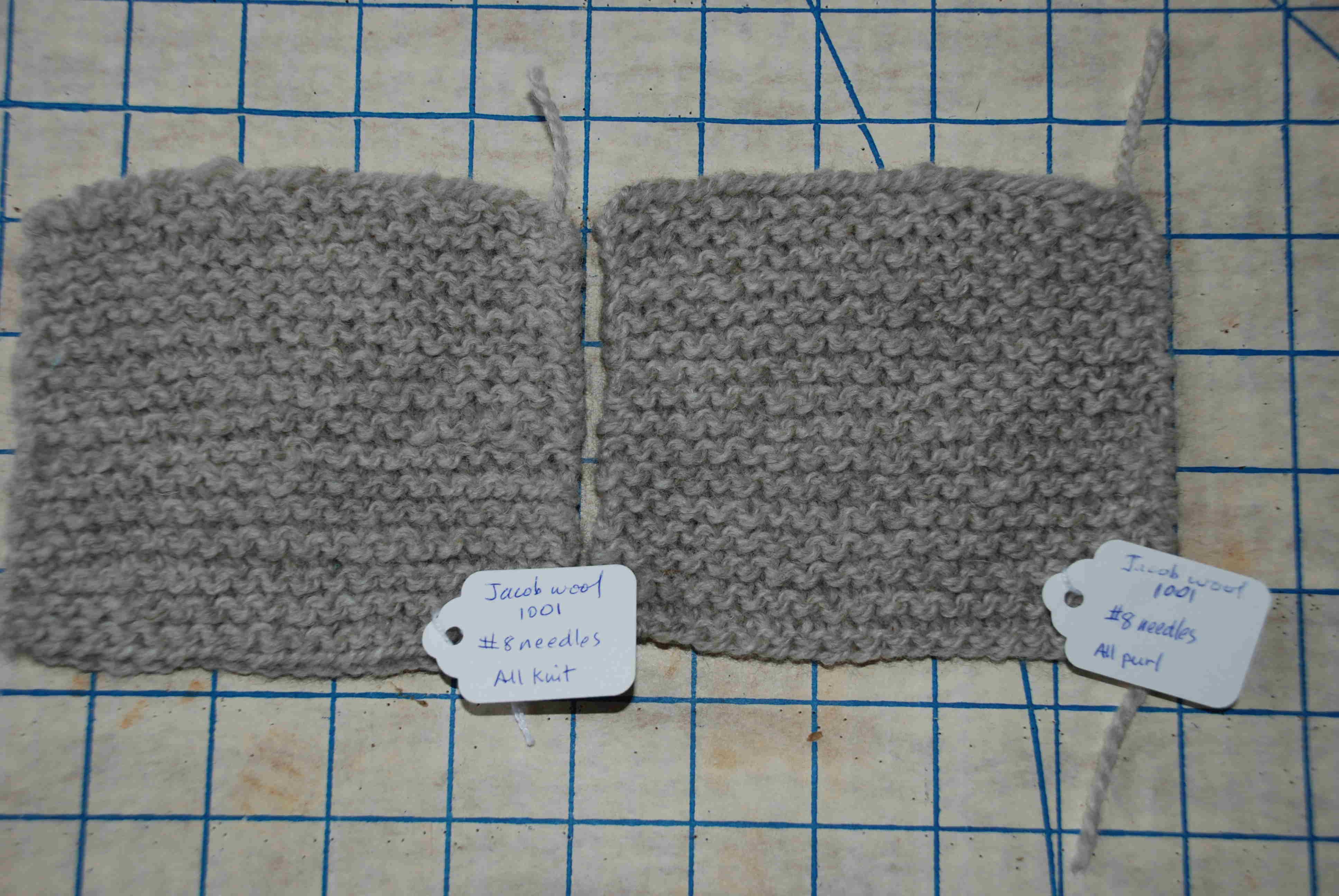
These are two garter stitch swatches. The difference is that one is the result of knitting every row and the other is knit by purling every row. There is a difference. Nancy pointed out that my purl sample is much more even than the knit sample. The stockinette sample (no photo) also showed that I knit and purl with different tensions, resulting in subtle ridges and uneven stitches.
Lunchtime. We went to the barn so I could feed Nellie. Yes, I named the bottle baby.
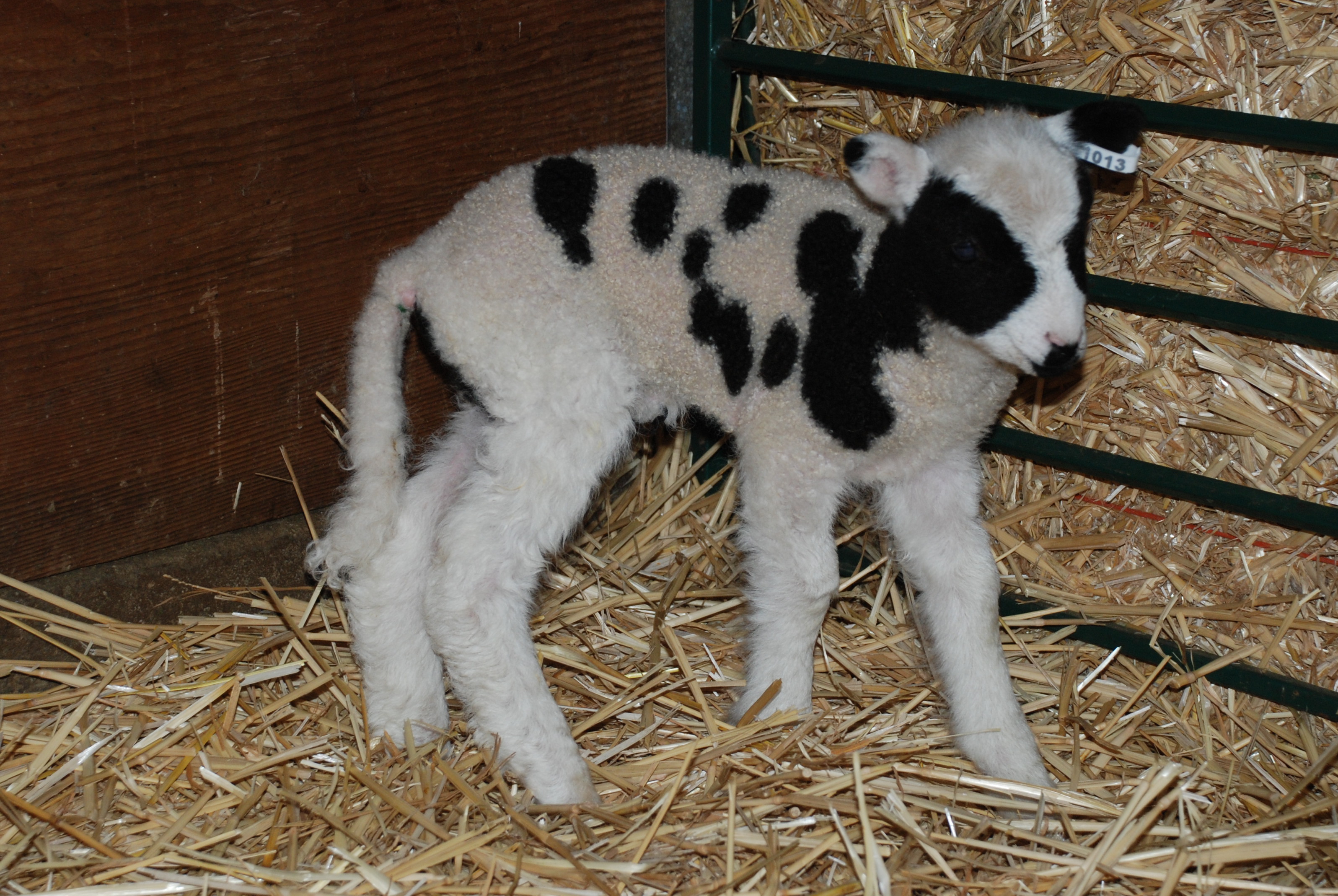
We found more lambs.
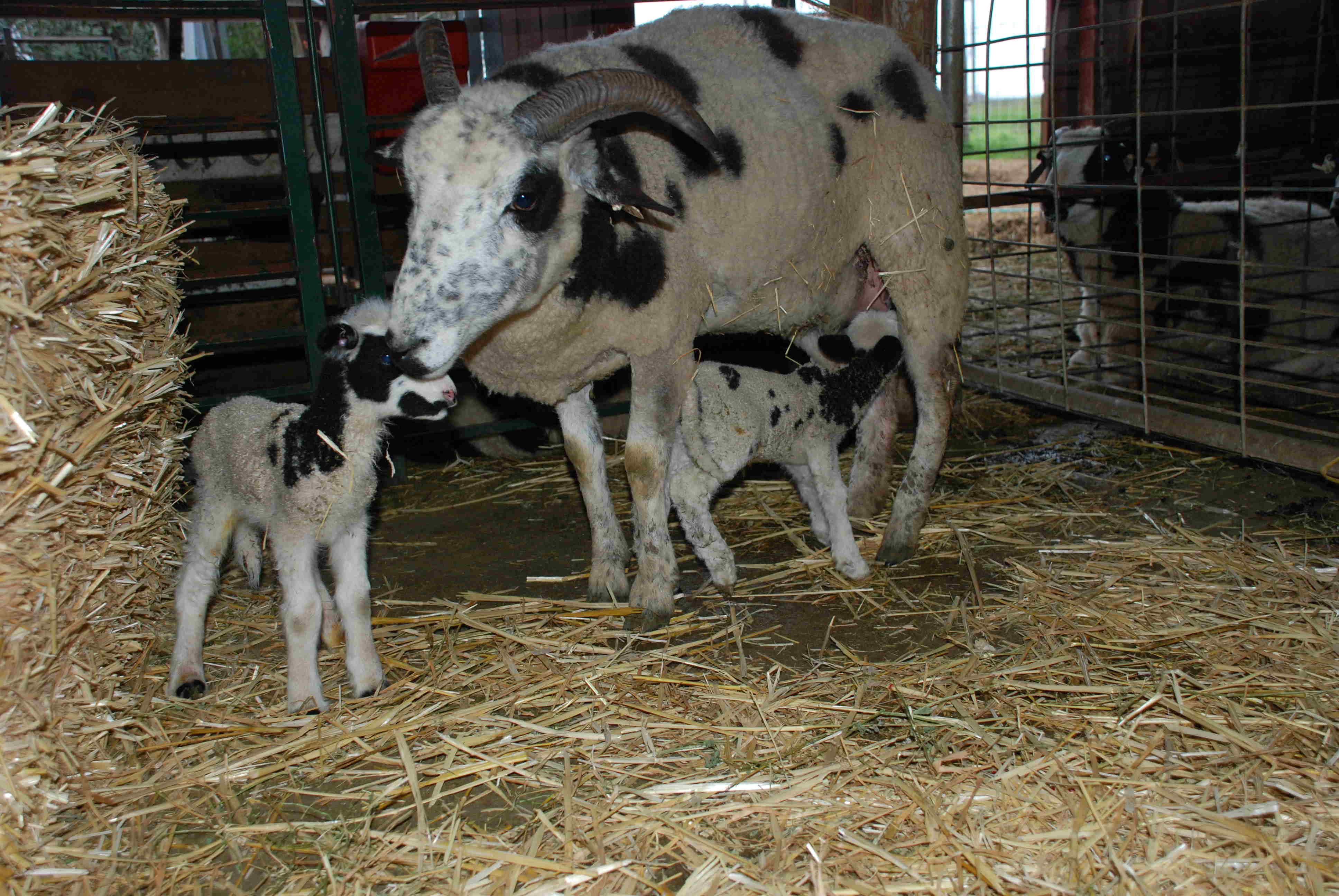
Soliloquy had twins–smallest lambs so far this year at 5-6 pounds and Victoria had triplets. I dealt with all of them and went back to the shop for the afternoon session of the class.
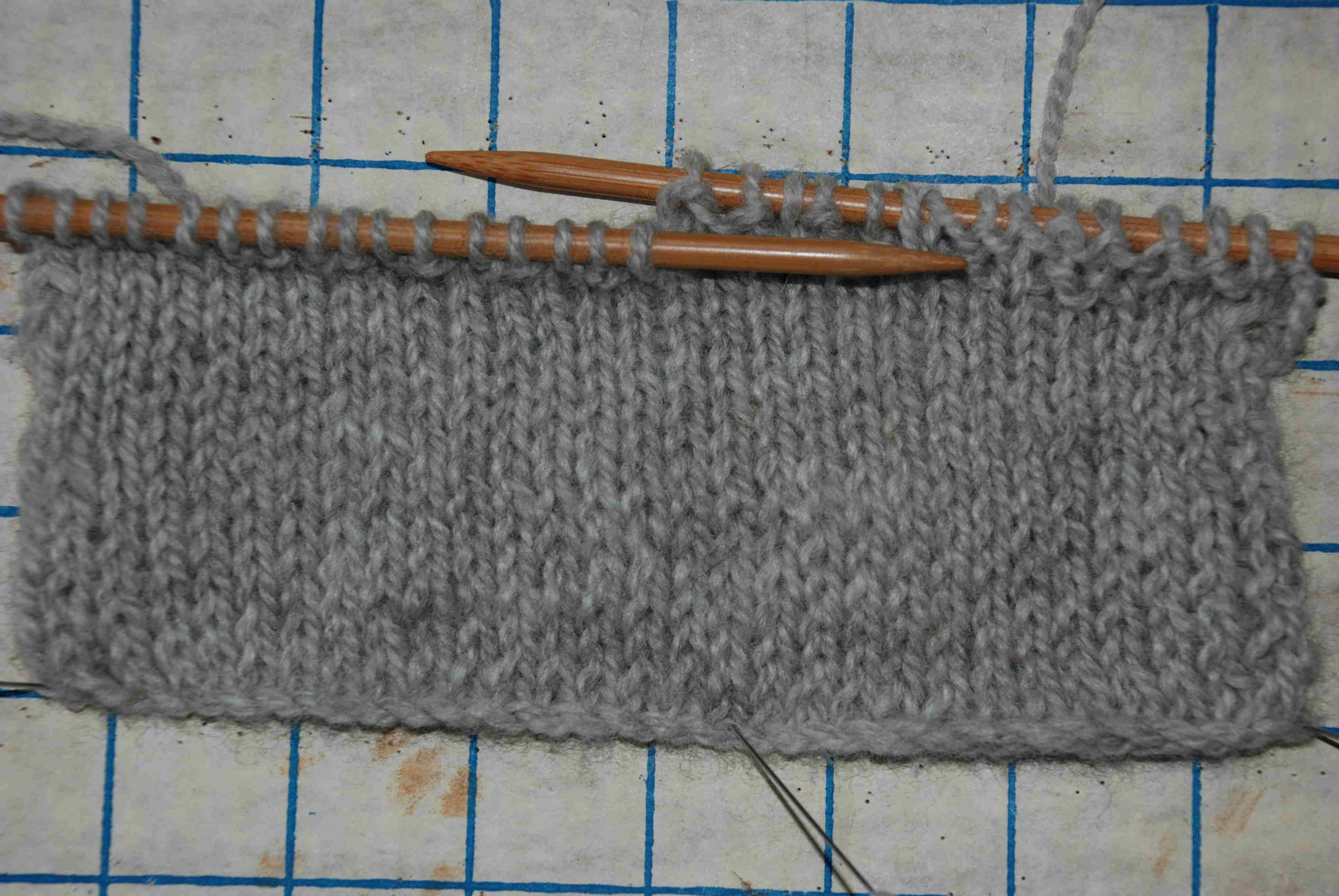
Before lunch we had measured and evaluated our samples. After lunch we started working on changing our habits and learning new techniques. The sample above may not be too impressive, but notice the very cool knitted cable cast-on edge. It looks much neater than my long-tail cast-on. And notice the inch or so closest to the needles. There is a a big difference in the knitting for that inch than the couple of inches below. At the risk of knitting too tightly I have been knitting way too loose. It’s a lot easier to be consistent when there is a little more tension on the yarn and the added benefit is that the stitches aren’t always falling off the needle. This was a great class and Nancy is going to come back and teach a color knitting class later in the year.
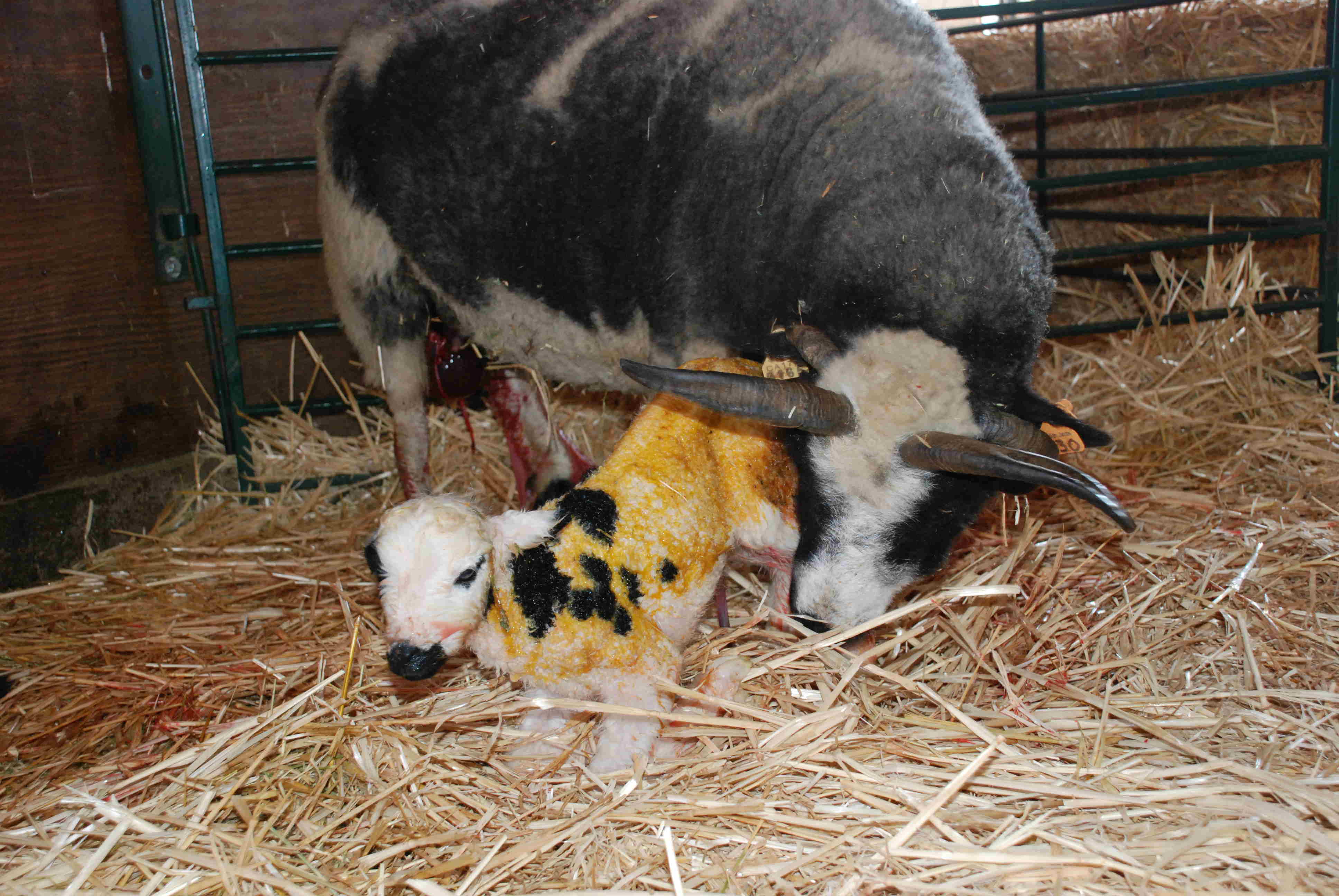
Babe lambed this morning.

Not the prettiest sight at this stage.

It gets better. This is one of Fran’s twins, born last night.
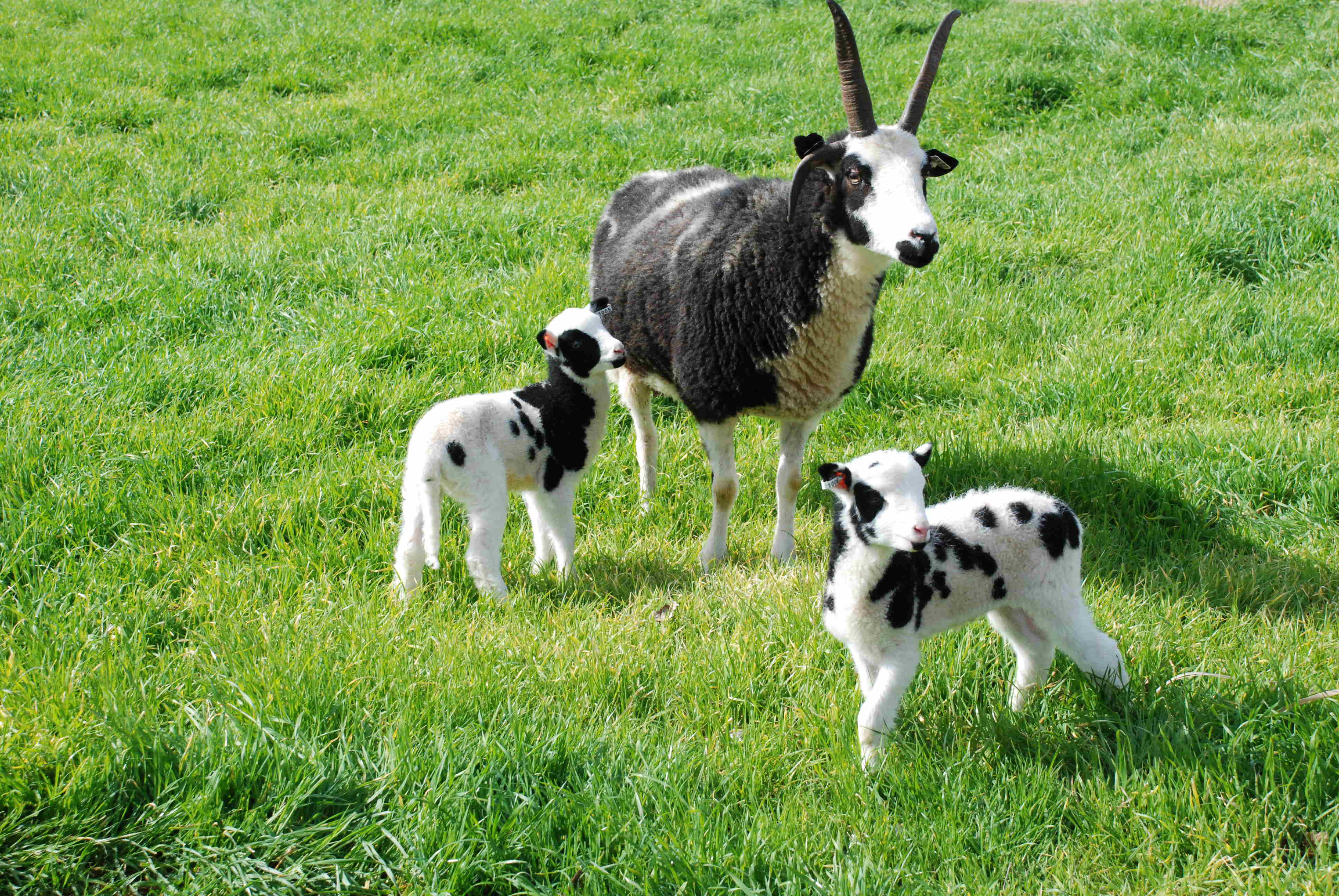
Ebony and her lambs born a week ago.
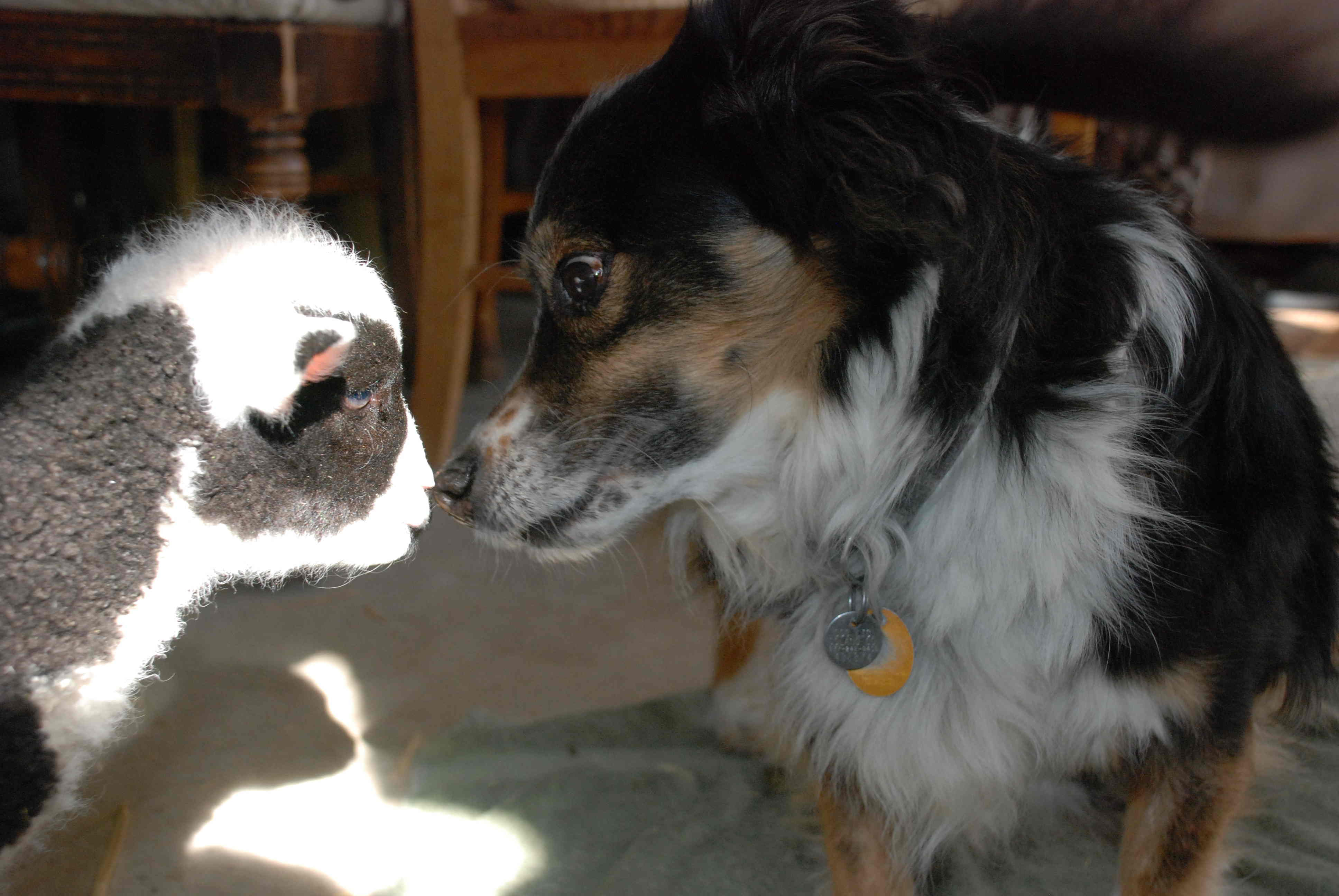
I really didn’t plan on a bottle baby, but I may have one. Here she is meeting the family.

When I went out this morning Paula had one live lamb and one dead one. As I was doing chores I noticed her pushing some more. I checked and there was a third lamb with the legs and head pointed down inside instead of out. I fished around inside and got everything straightened out and delivered the lamb. It was just about dead when I got it out–completely limp and not taking a breath. I got the lamb breathing but it remained completely flaccid and was losing body temperature quickly. Paula was still licking it so I left it with her covered in a towel while I warmed towels in the dryer. I wrapped up the lamb in the warm towels, tube fed it about an ounce of colostrum, and then brought it to the house and woke up my son so that the lamb could stay snuggled in bed with him while I finished chores. The lamb was still shivering and not trying to get up so I finally brought a crate and a heat lamp in the house.
All that was this morning. The lamb showed enough spunk to try and nurse earlier in the day and I took it back to the barn, but due to the the combination of inexperience on the lamb’s part and Paula’s increasing skepticism that she really had 2 lambs I finally gave up. The lamb is in the house tonight and I’m feeding it. So far it’s not doing real well with the bottle and I’ve tube fed it a couple of times. I hope that at the next feeding it will have figured it out.
Zelda lambed last night with twins sired by Savor.
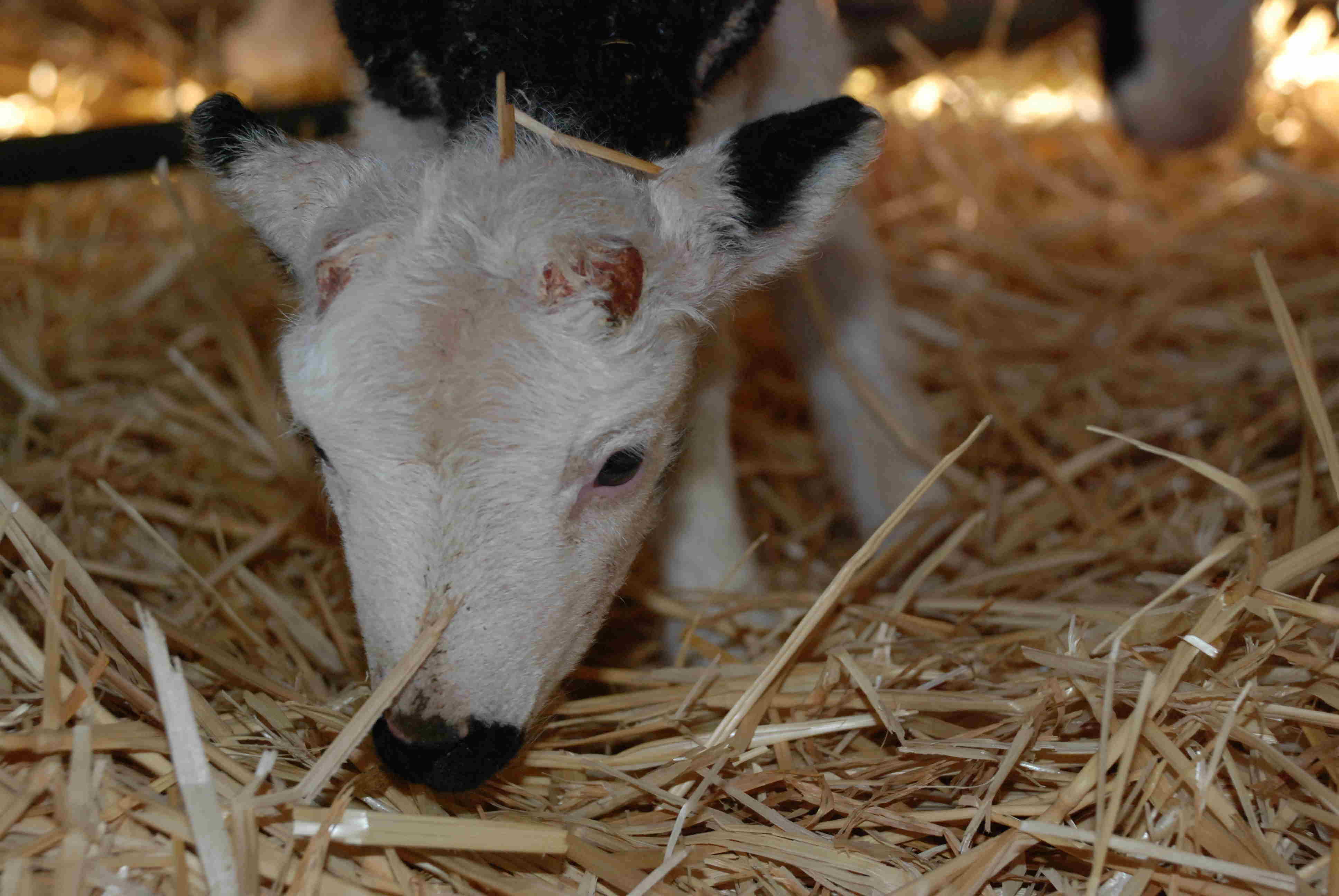
Look at the horns on this ram lamb!

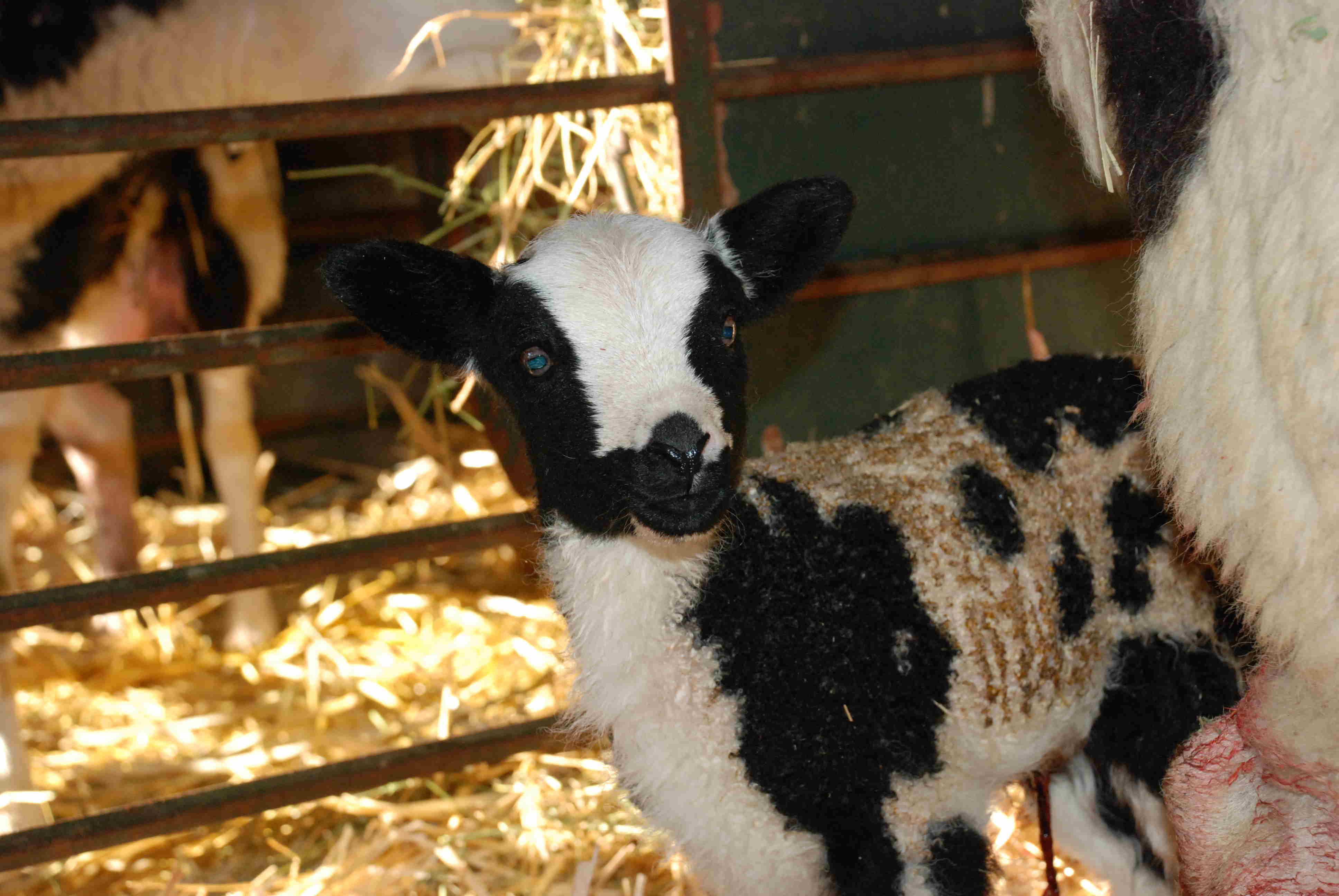
Moon had twin ewe lambs this afternoon. This lamb was very striking after she was clean and dry–sparkling white and none of the coarser birth coat that Jacob lambs are often born with.
While waiting for Moon to deliver, Jackie and I first castrated the two lambs that were born in January and then we dealt with one of last night’s twins that died. (If you don’t want to read the details then skip to the pretty yellow flower photo below.) When the lamb was born last night I thought that the umbilical cord was unusually large in diameter. My iodine dip didn’t dry this cord up like it did the other lamb’s. This morning the lamb looked cold, but finally nursed and seemed to warm up. It was in the afternoon that I saw that she was very sick (near death). She was bloated and there was smelly brown fluid draining from the over-sized umbilical cord. I necropsied her and found what I suspected–her intestine had a dead-end. There was no connection between the colon and the rectum so there was no where for digested food to go. I’m not sure what was leaking out the umbilical cord, but I wonder if it was putrid intestinal contents that filled the abdominal cavity. Hopefully this is the only birth defect this lambing season.

It’s a month before spring officially starts so it must be time for my annual blooming acacia photo. How can I resist that intense color?
These are Terraza’s lambs-twin ewes. Sire is Tioga.

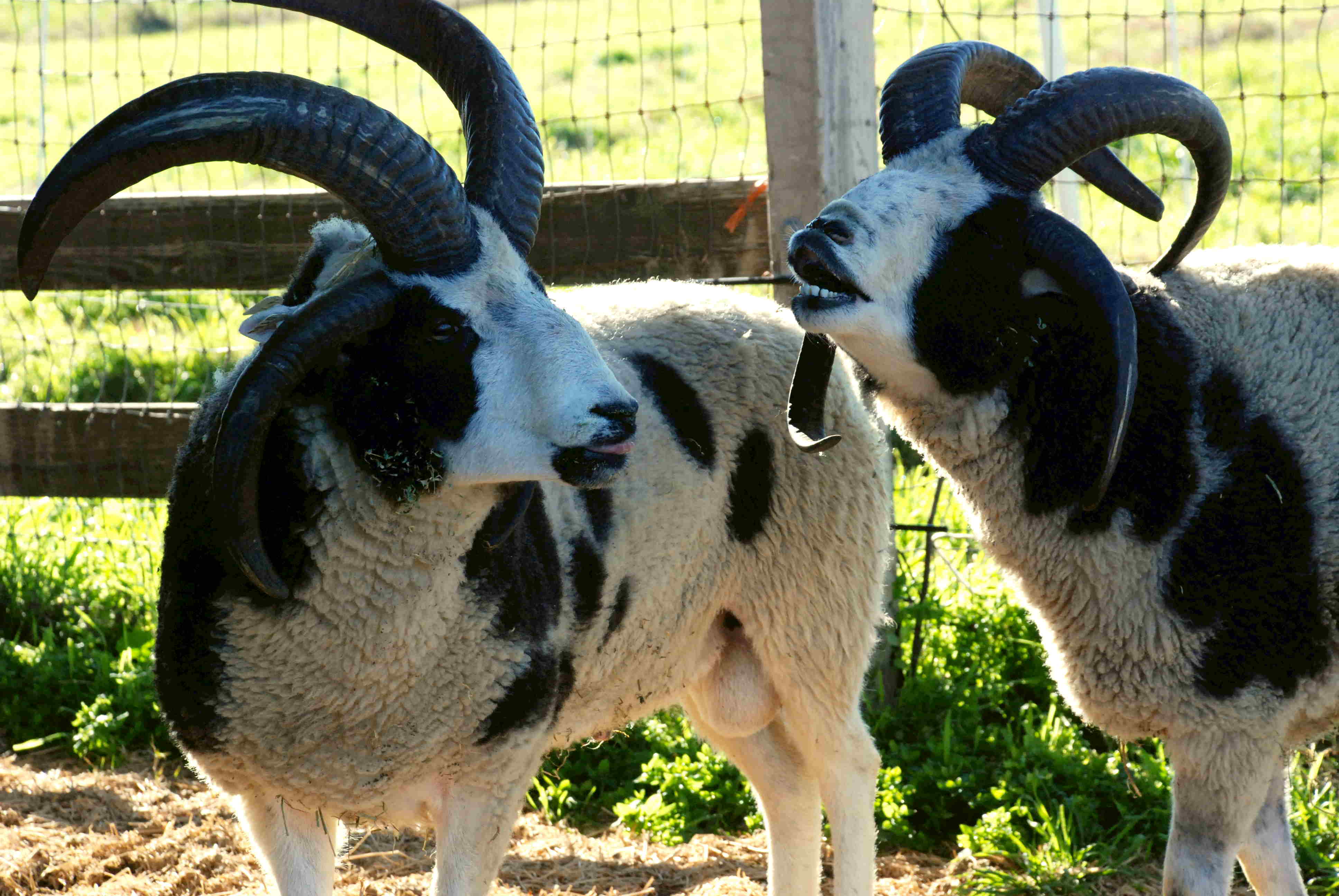
This is Savor and Tioga discussing fatherhood.
Now that it’s warm the grass is growing and the pasture has finally dried out enough to put the sheep out. However, there was a break in the electric fence and I couldn’t turn the sheep out until I fixed it. I finally got to that today.

“Can’t you hurry up and let us out?”
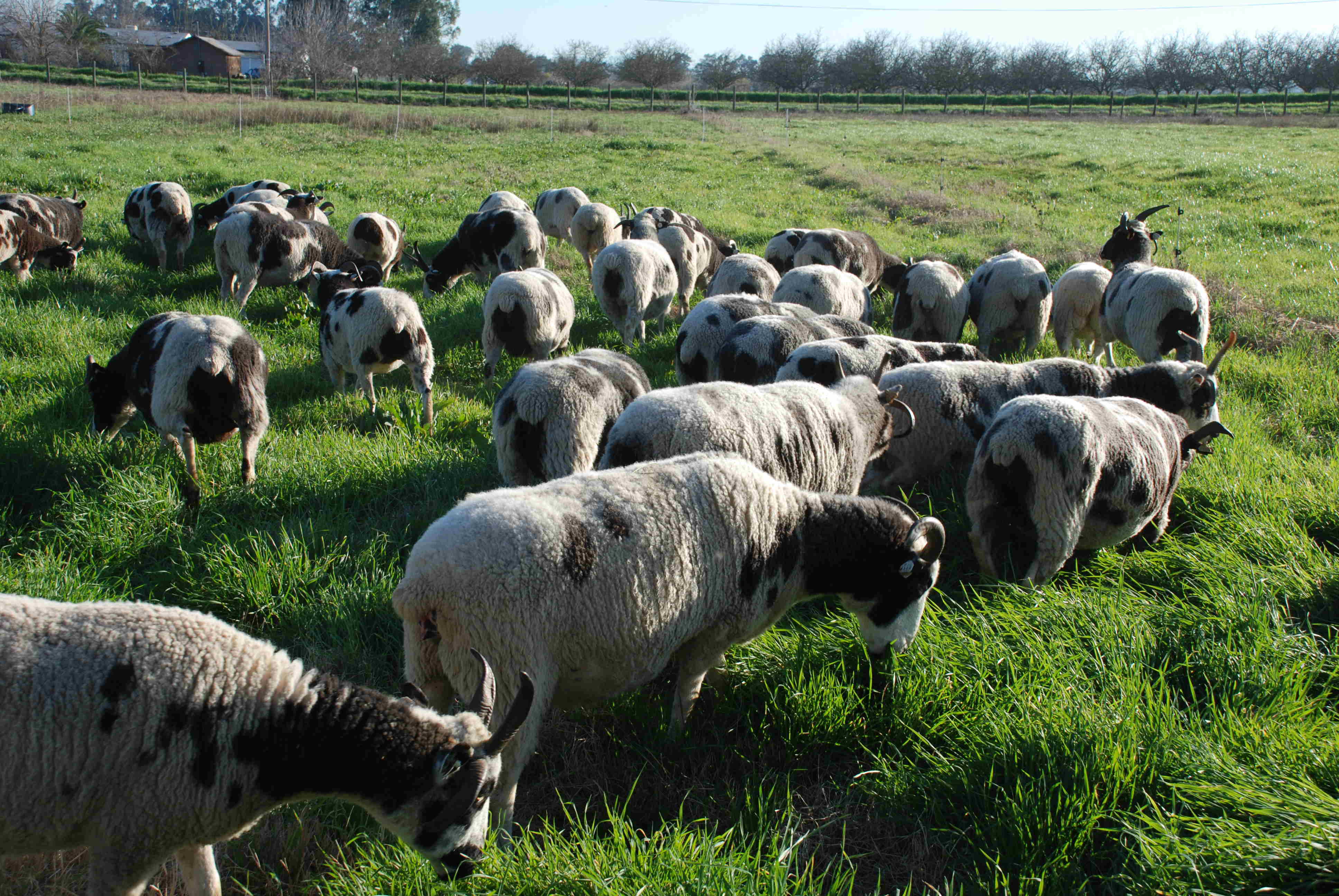


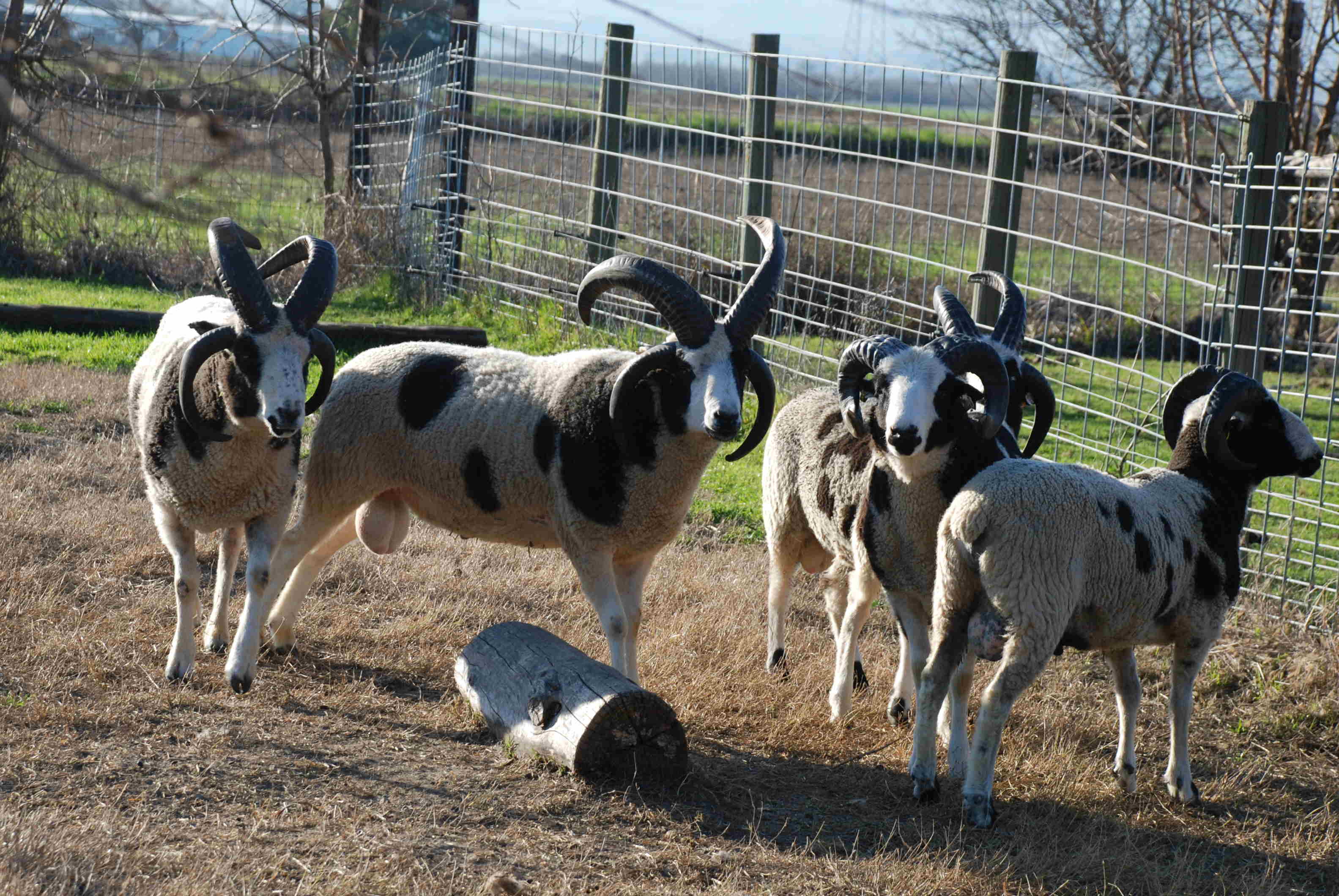
The rams are left behind in their bachelor quarters.
Lambs are due in about a month. That means that the ewes ready for their annual vaccinations. They get Covexin which protects against a variety of diseases caused by Clostridium bacteria including tetenus. They also get MUSE, which supplies selenium and Vitamin E. By vaccinating at this time in gestation the ewe’s milk will provide a high level of antibody protection to their lambs.
What’s a farmer to do? Call in the Farm Club! We have 3 regular Farm Days a year, but Farm Club members enjoy coming out more often and I am sure grateful for the help and the comraderie.

Shelby and Tina teamed up to vaccinate sheep. Shelby, person, is holding Shelby, sheep.

Dona held sheep while I vaccinated.

Mary and Kathy kept syringes loaded and ready to go.

Tina spent some time at the manure pile. It’s too wet to get the tractor out to the pile so re-stacking the pile needs to be done by hand (or pitchfork). It’s a good workout!


We spent the afternoon enjoying the sunny day. Notice the milk mustaches on these two. The lambs, that is!
 Meridian Jacobs' Blog