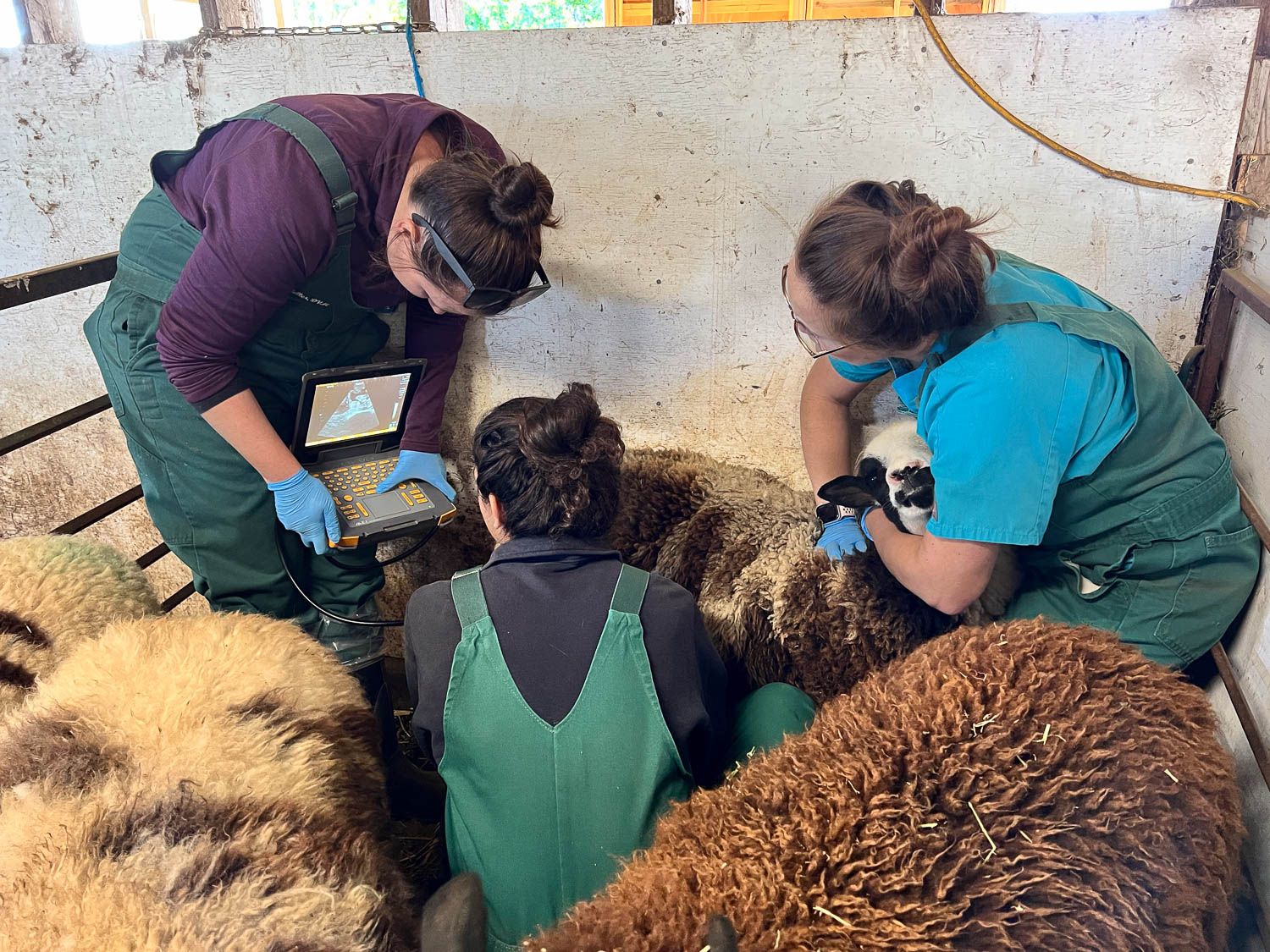
I’ve been having the vets come for ultrasounds the last few years. I tell them the first and last day the rams were with the ewes and they tell me the best date to confirm pregnancy and be able to count fetuses.

I gathered all the ewes into the barn and while I was waiting thought I could get a photo of a sheep and me both in wool. The wool I’m wearing is all handspun and knitted. You know that I am not a knitter, but I did knit the hat. One friend spun and knit the sweater and another spun and knit the dickie (which I just pulled out of the drawer today since we are now getting into the 30s at night). COZY, COZY!

That’s Jade on the left, Patchwork Bettylou in the middle, and Betty on the right. Betty is the second oldest sheep here–she’ll be 10 when she lambs in the spring.

Four veterinarians were here. One held the sheep. She was also at the end to do a quick FAMACHA score and check teeth on the old ones. No problems to report. The person who is crouching has the probe and they are all looking at the monitor (about the size of an ipad). The fourth vet recorded results.

They used to bring a small TV-sized monitor that had to be on a table. That meant we had to bring the sheep to the monitor. Now they are using this portable one. We can load all the lambing pens with four or five sheep and the vets move from pen to pen. They looked at about 50 sheep in two hours.

I wonder how long it takes before you are good at interpreting this. All I know is that the black part is fluid. I don’t make out the lambs very well.
They confirmed the breeding dates I had written down and where I had a question mark or two dates they gave an estimate of the correct date.
Results: All ewes I expected to be pregnant are pregnant. Ewes were all bred between September 10 and October 6. Lambs are due from February 5 to March 5. There are 45 pregnant ewes predicted to have 82 lambs. There are six marked 1+. That means they confirmed one but didn’t rule out a second, so there could be more than 82. Last year we had 96 lambs and my goal was to have fewer this time. I guess I met the goal but not by much.

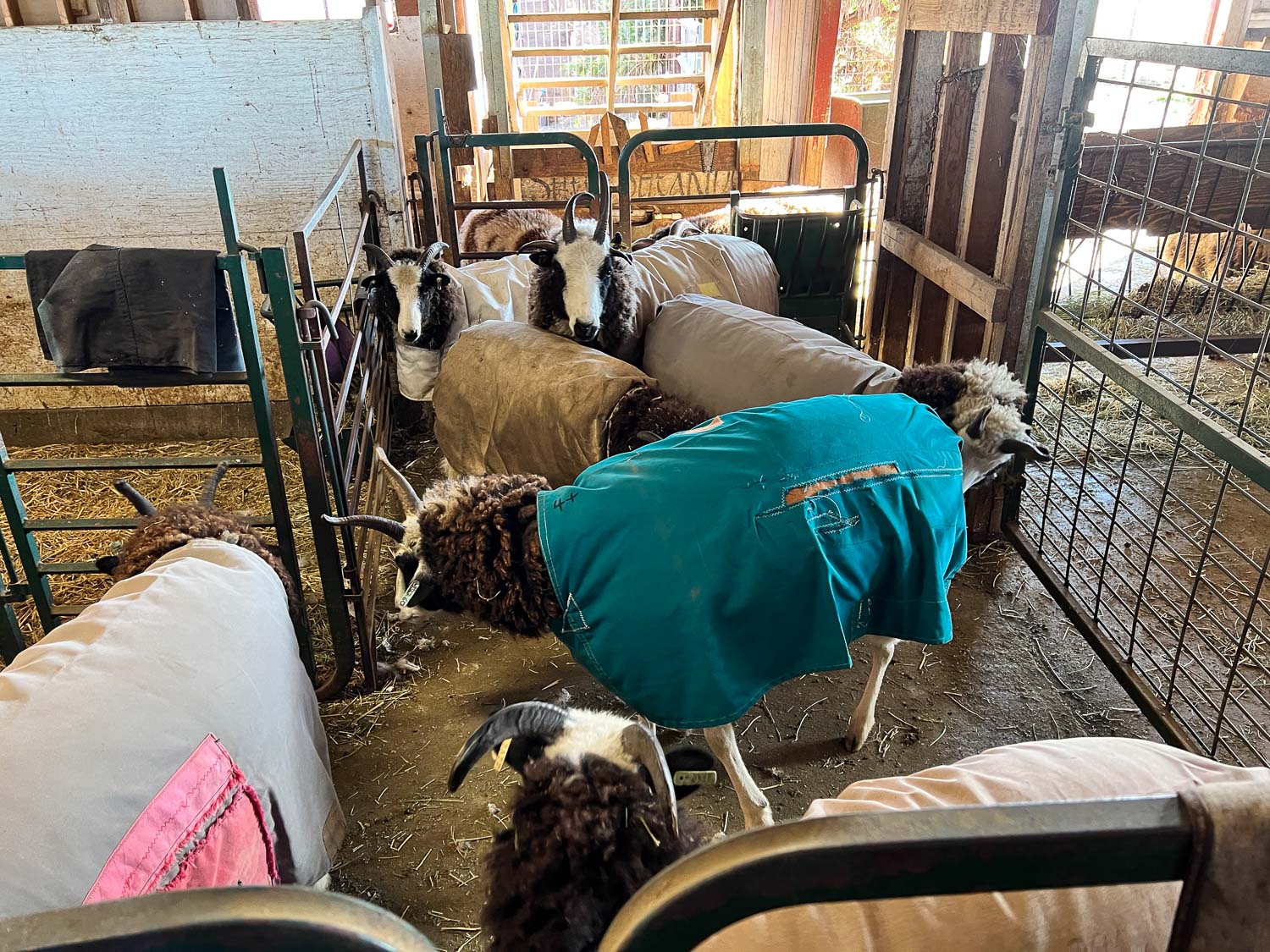
I kept one ewe back when we were finished because I hadn’t changed her coat when I changed the others last week. This is what her fleece looks like. It may be on the coarser side compared to some but it is sure long.
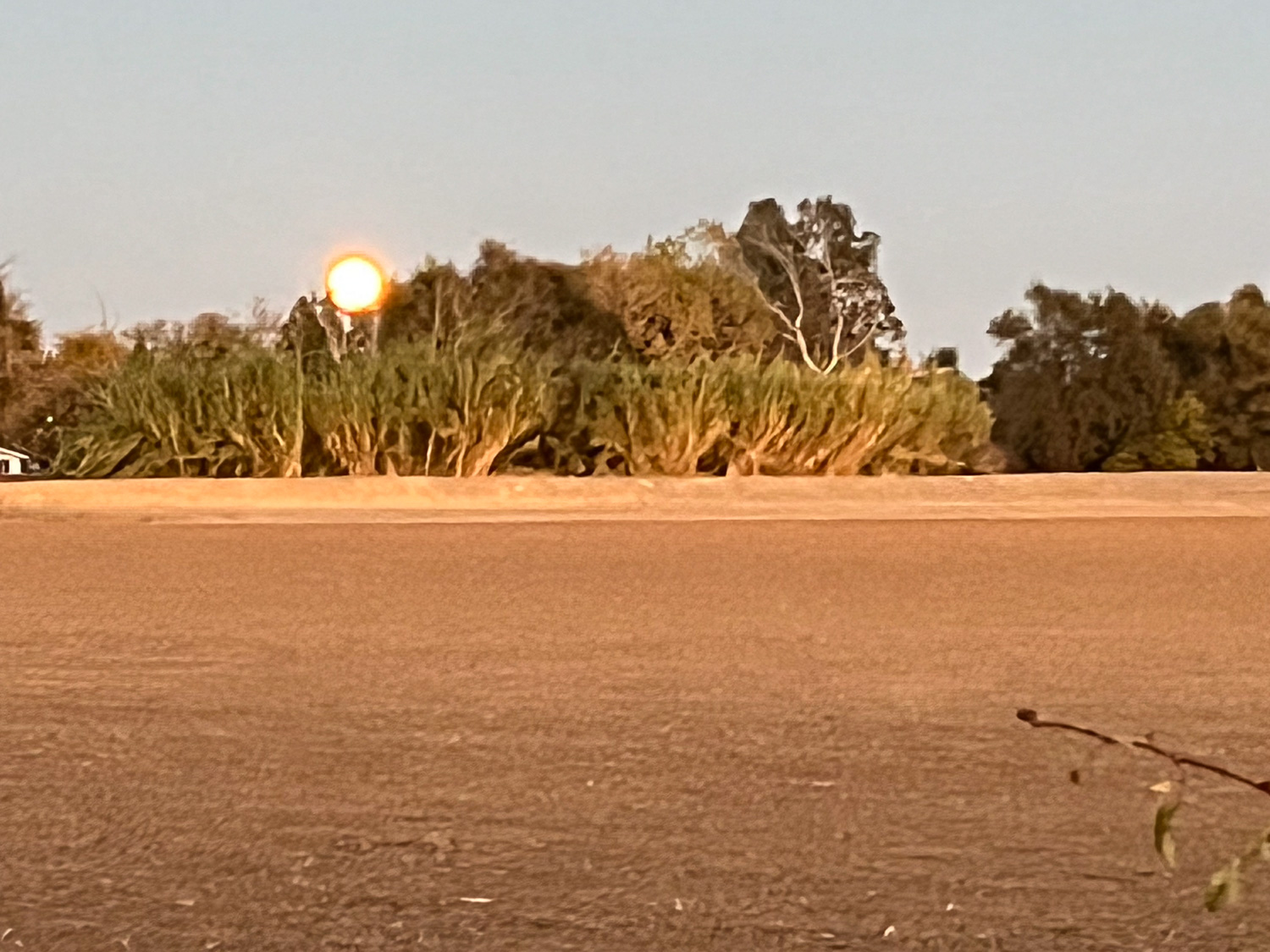
Moonrise this evening.



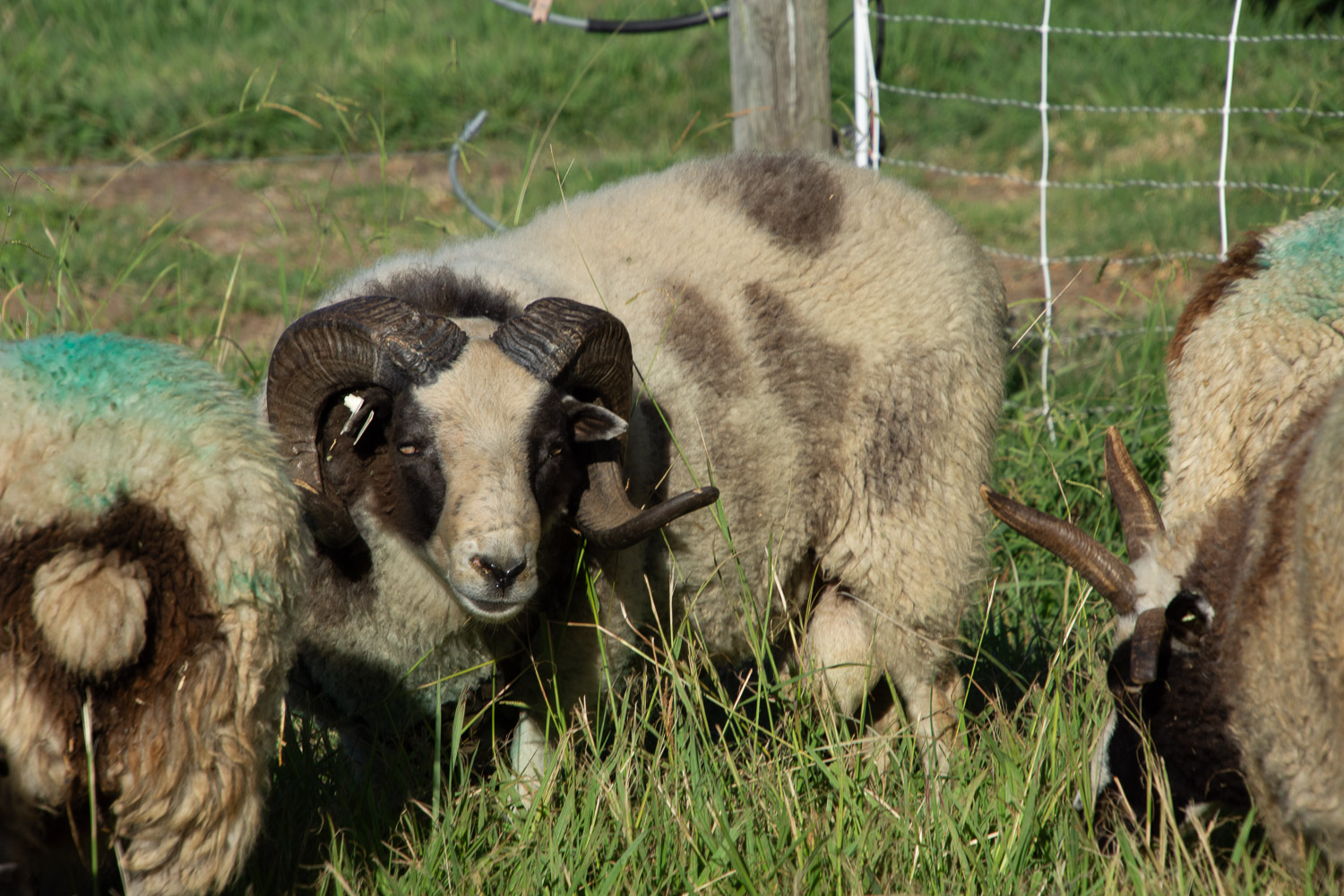
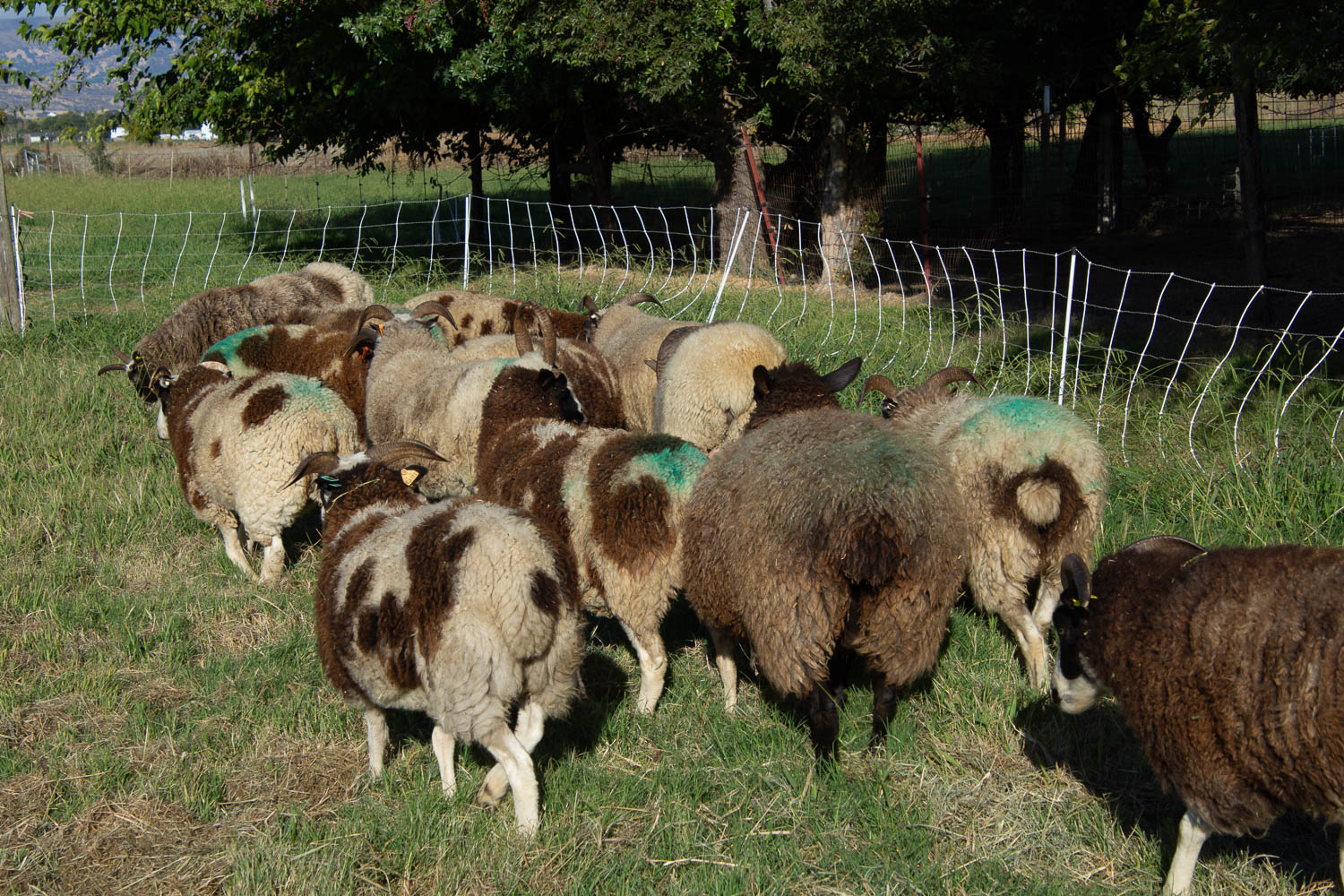
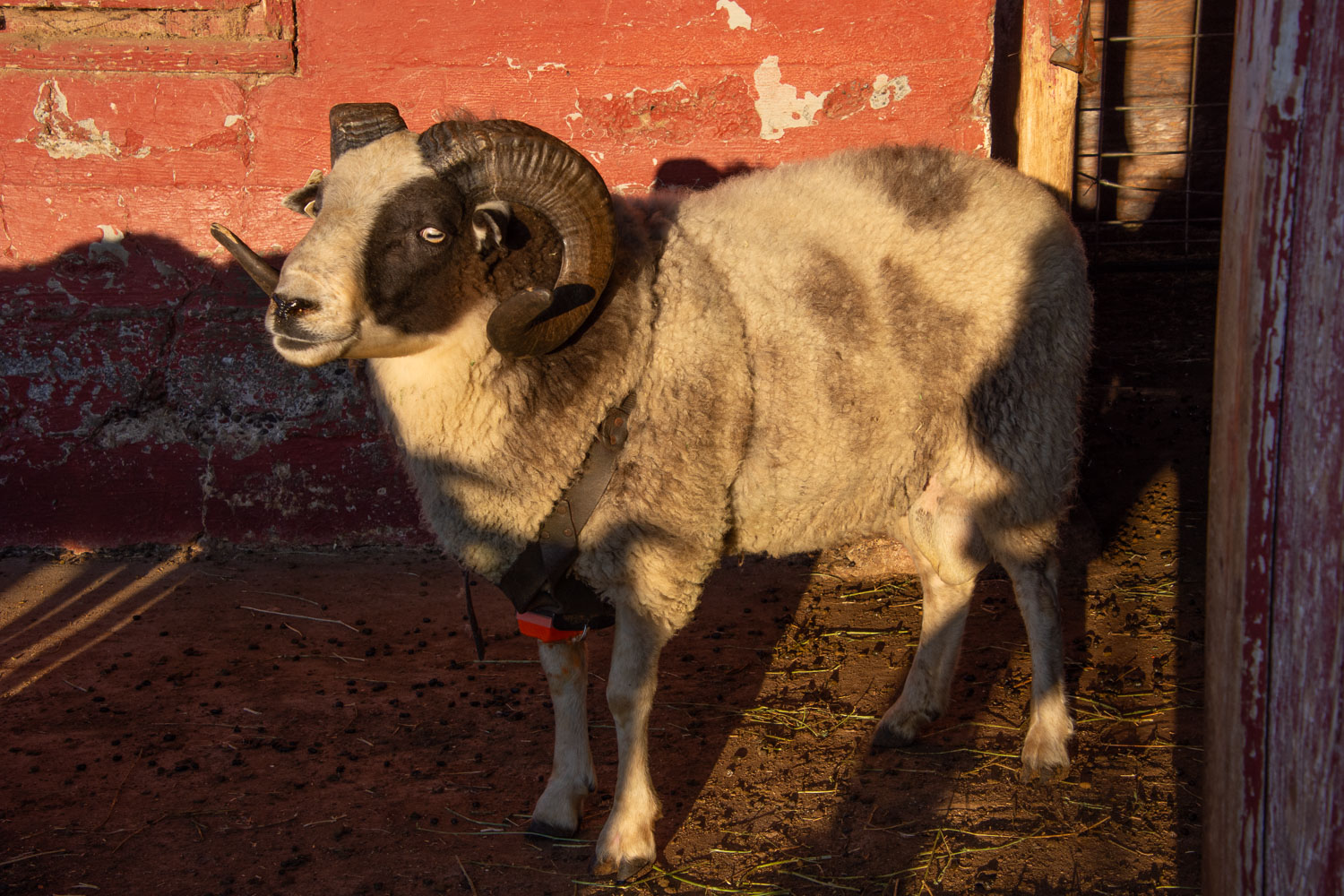
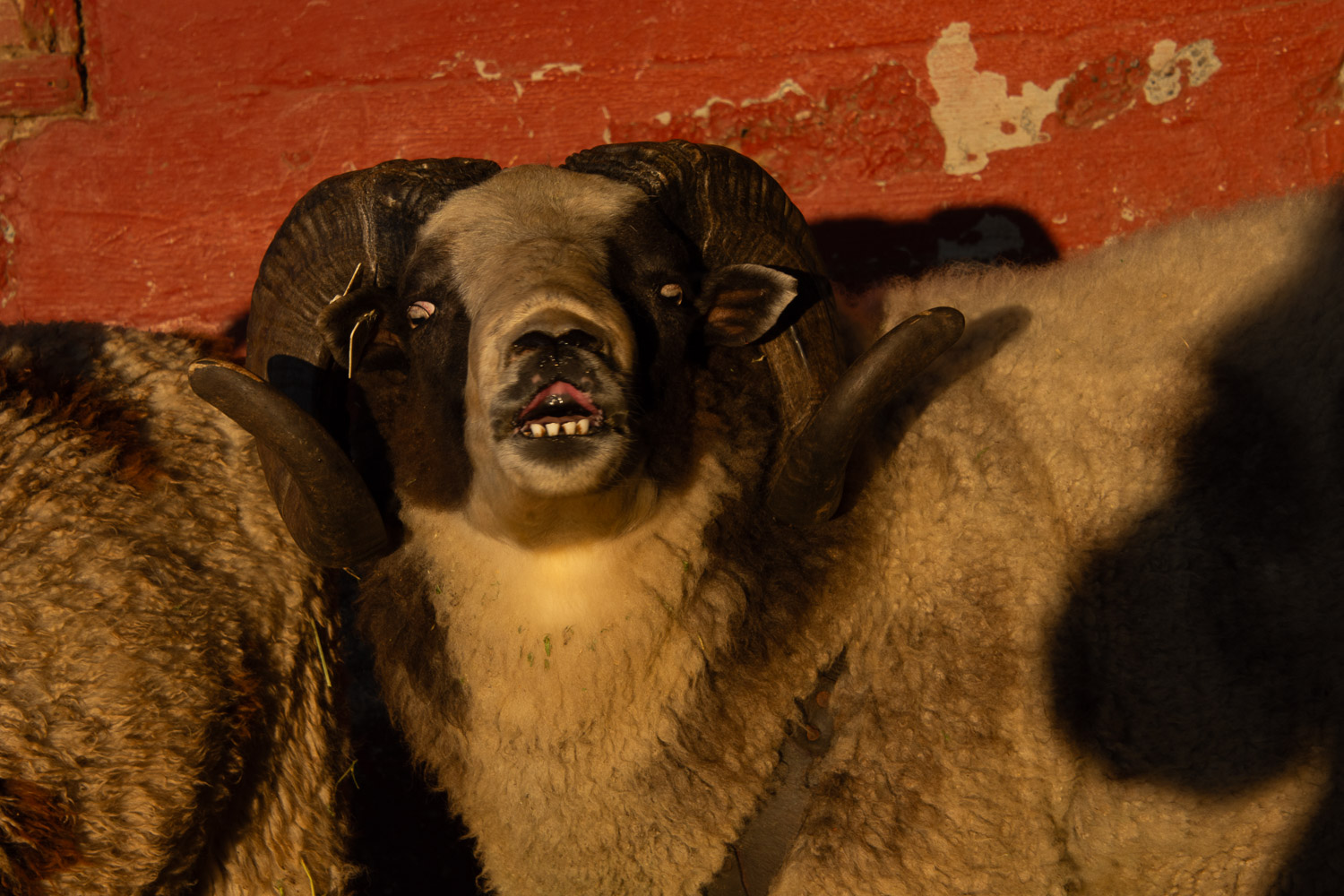
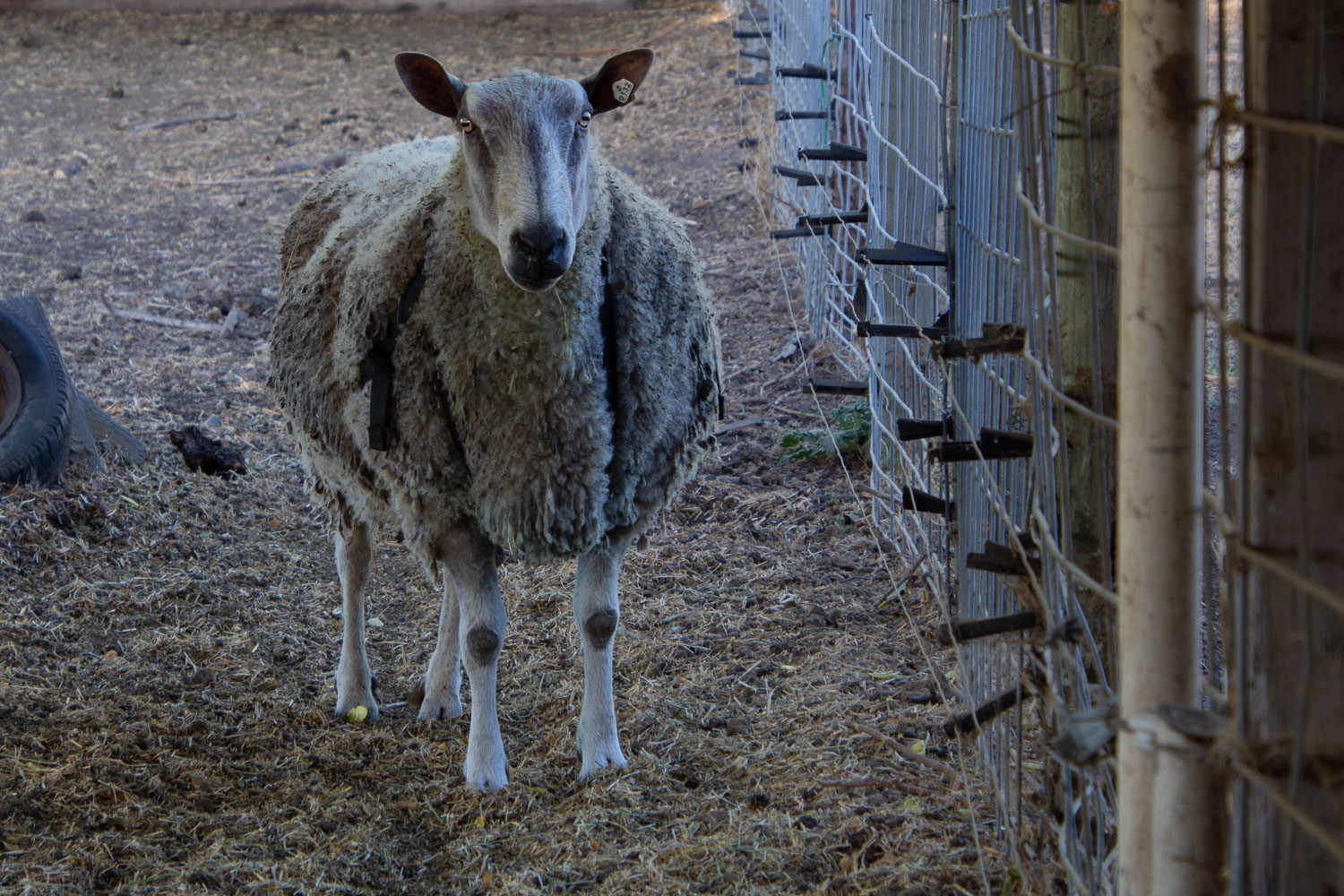
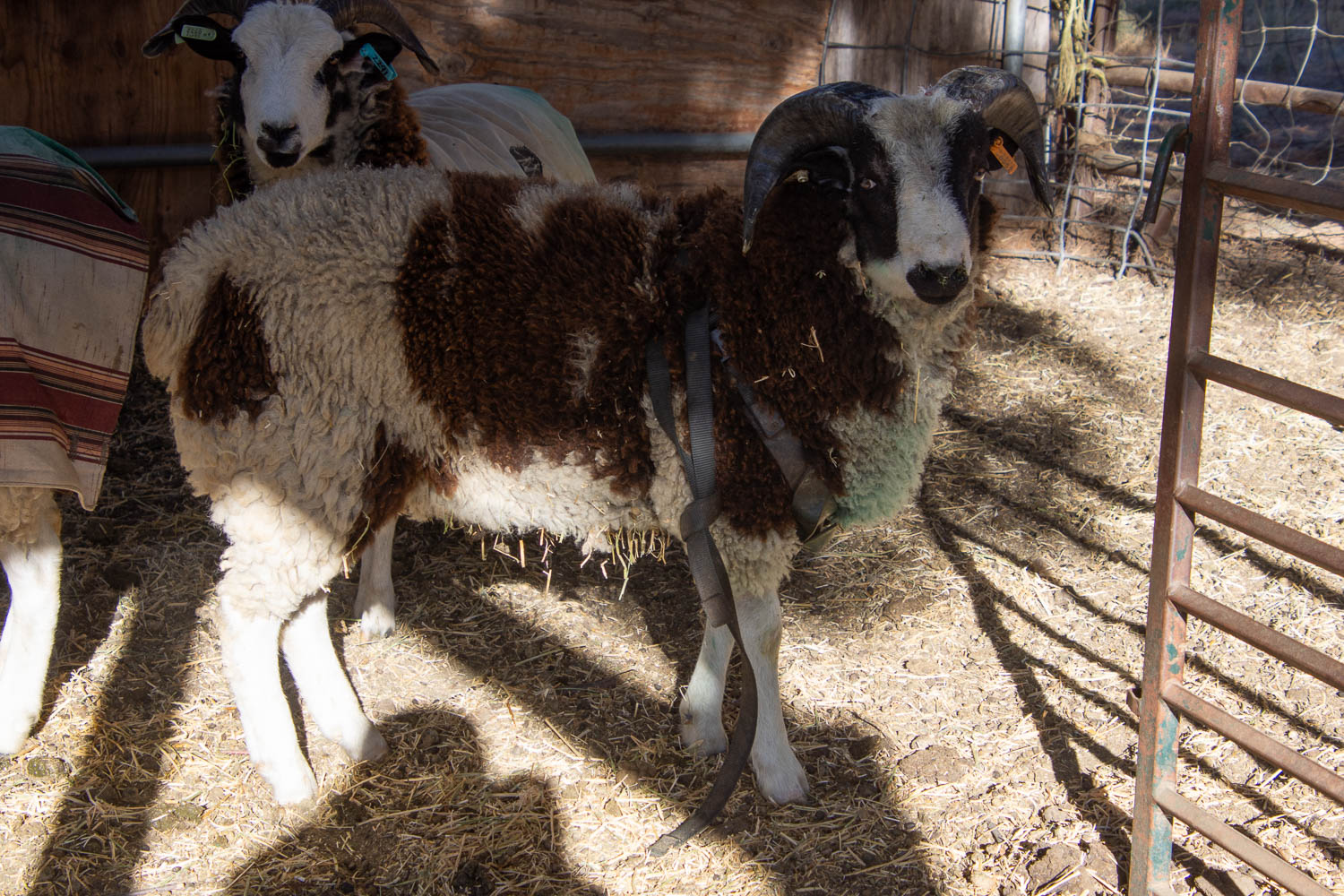
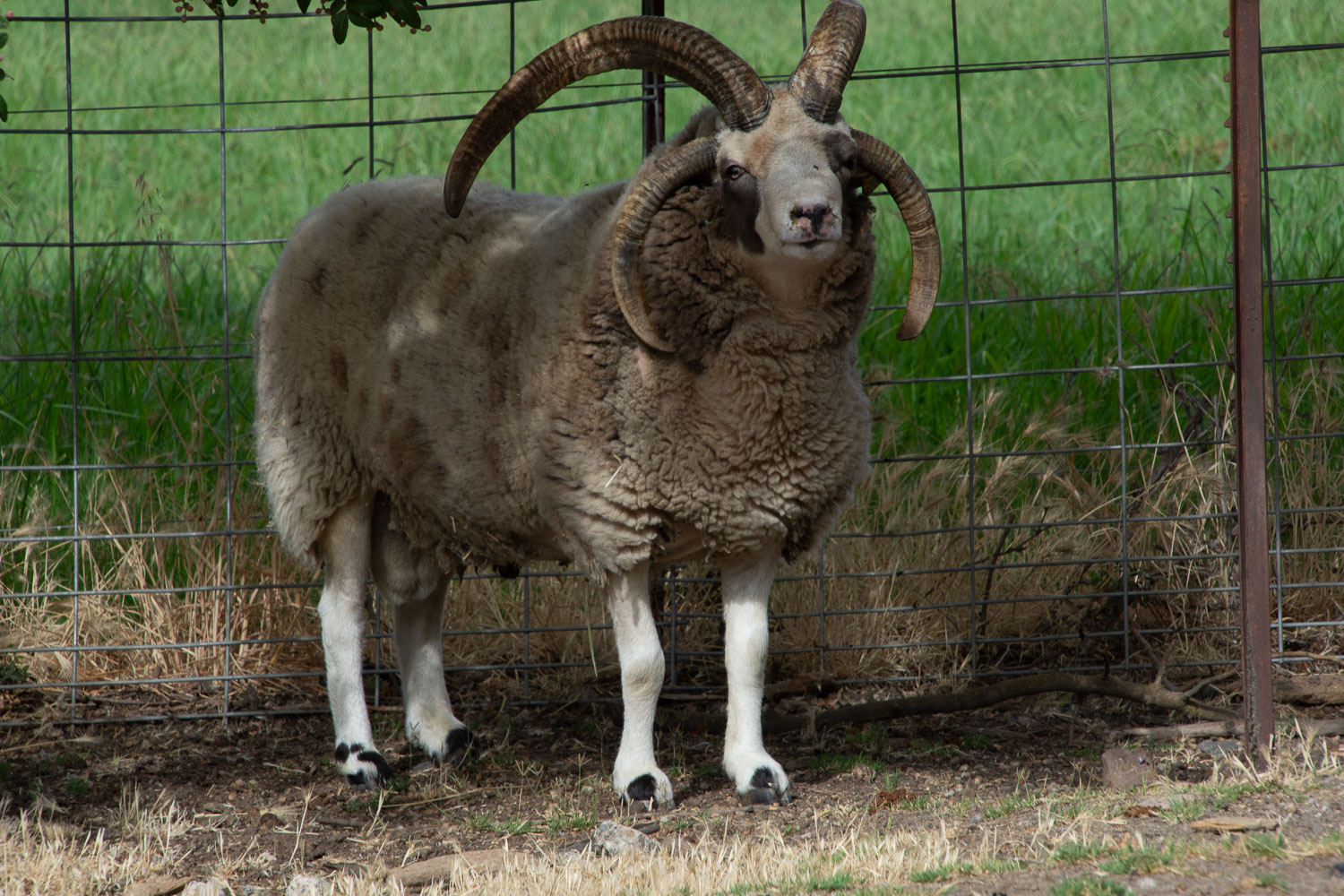
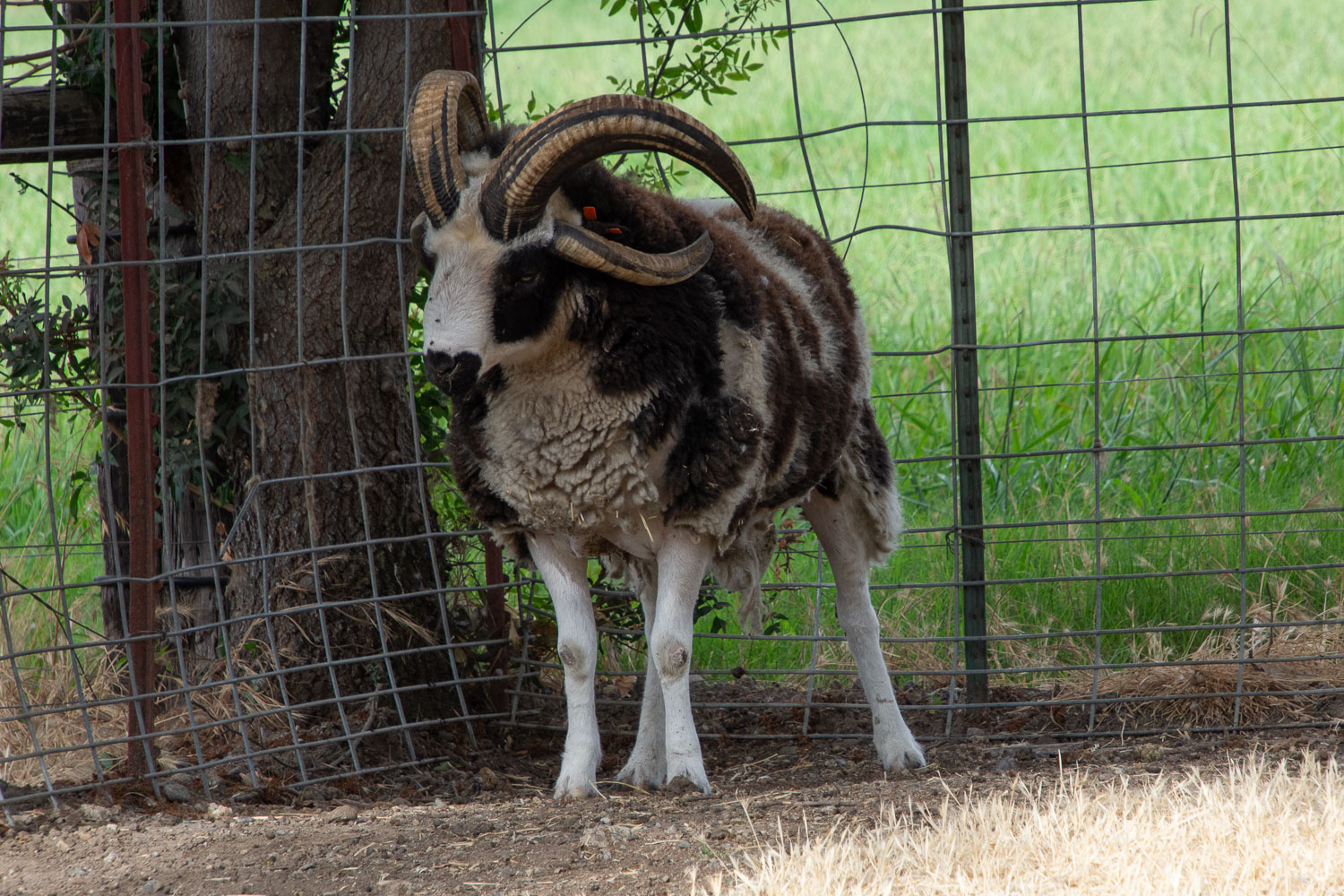
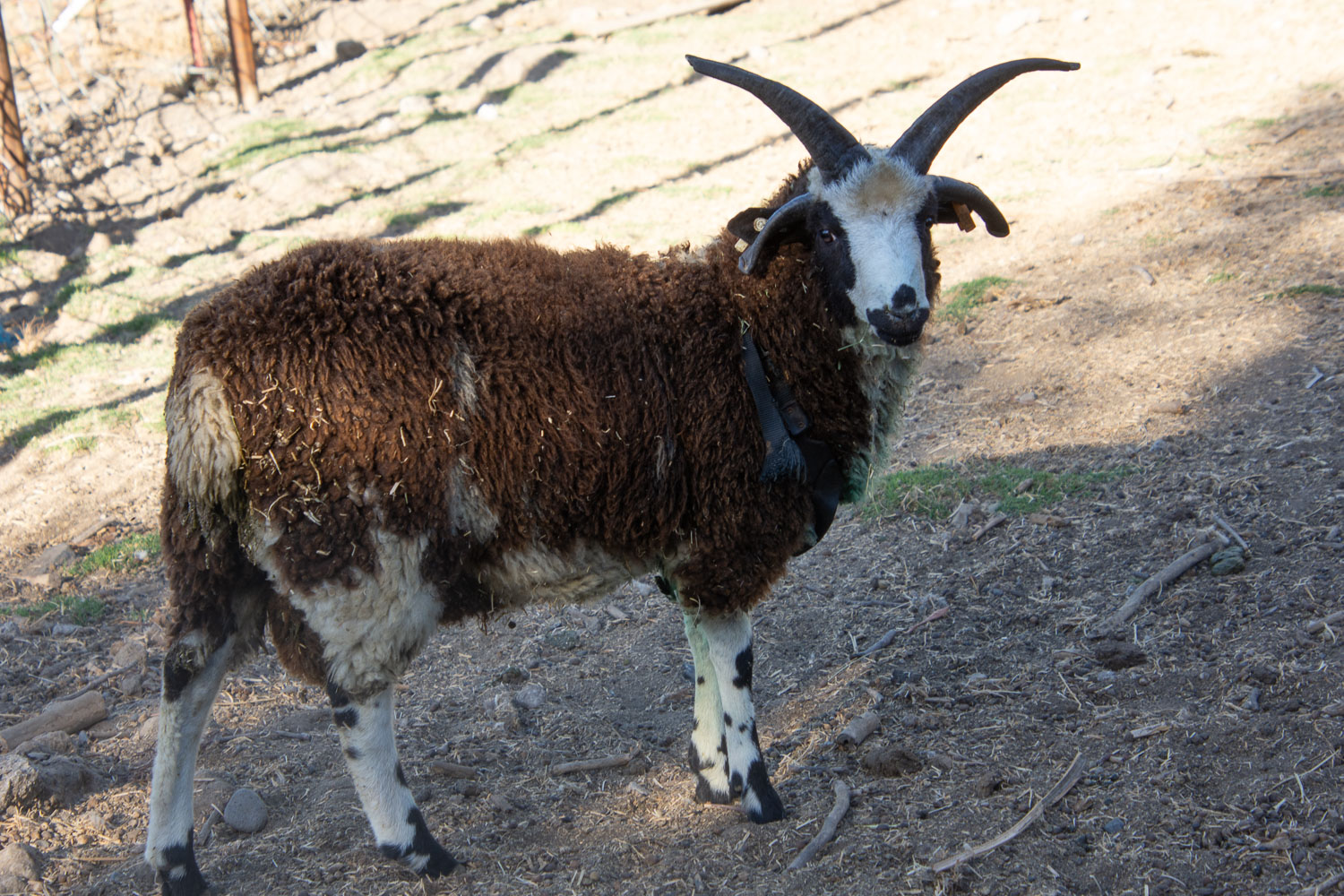
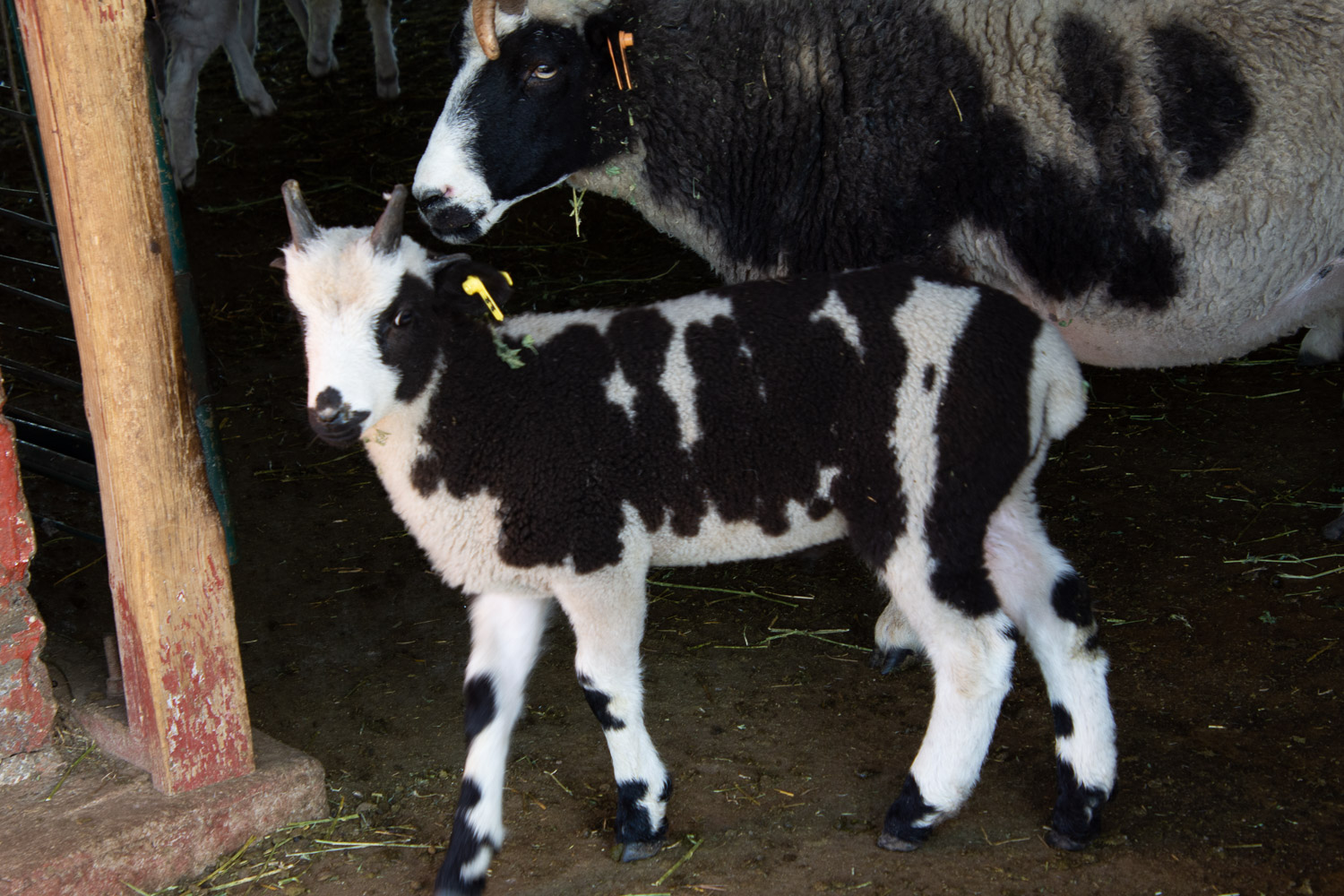


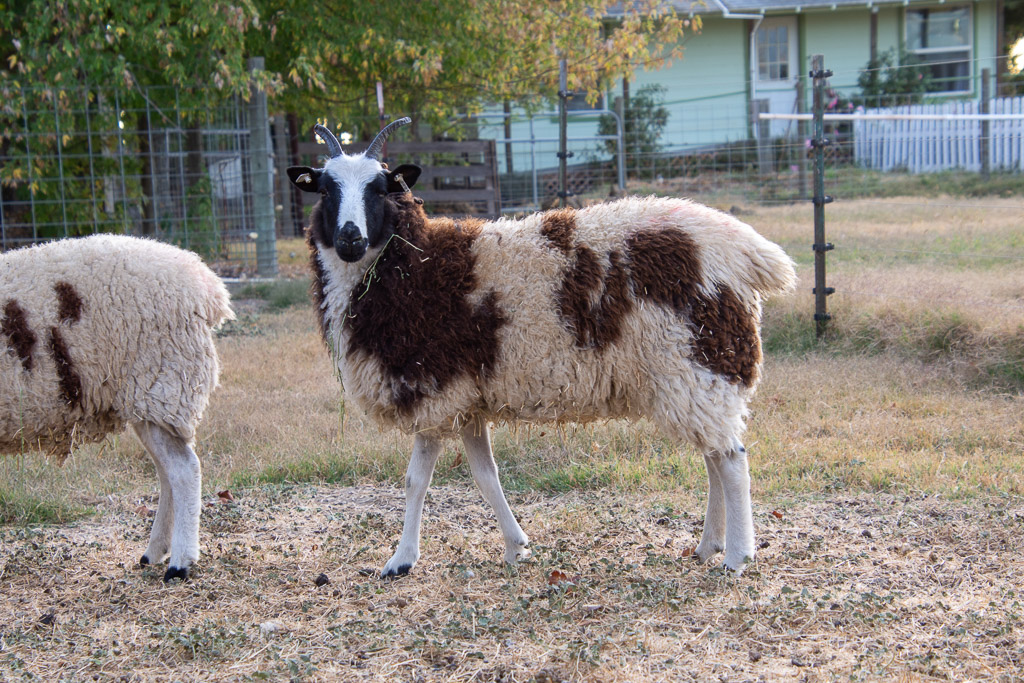 Meridian Janie (bide a wee Buster x Meridian Jane)
 Meridian Maybelle (bide a wee Buster x Meridian Mae) This ewe was going to be on my sale list but she had an unexpected tryst with Cayenne and may be pregnant.
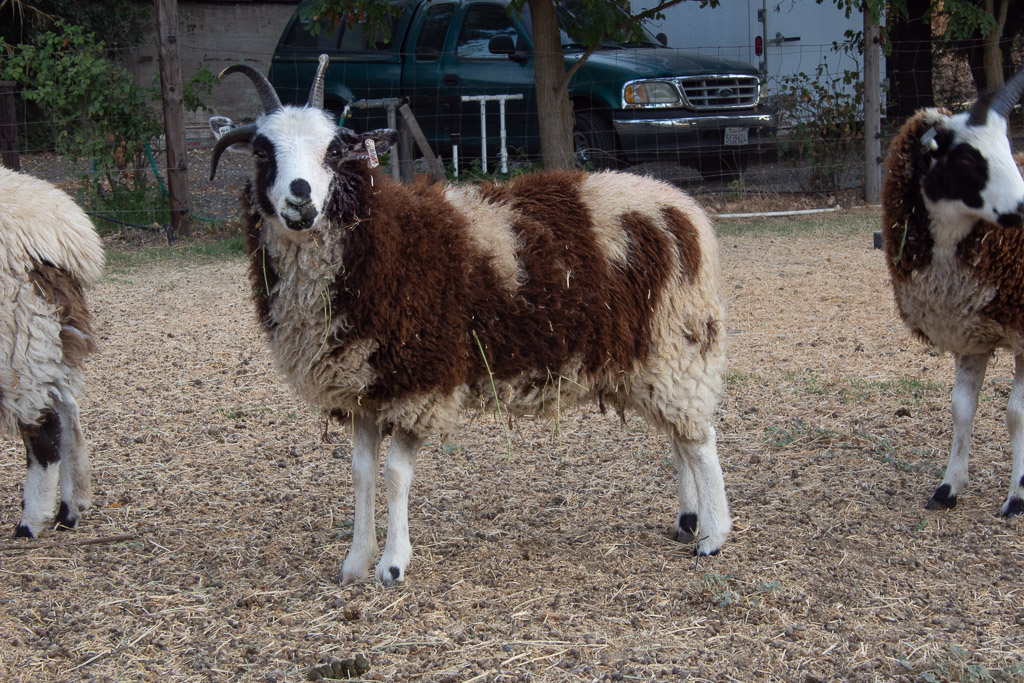 Meridian Ruthie (Meridian Cayenne x Meridian Ruth), who just broke her horn and is somewhat bloody on one side. This is another ewe who may be pregnant after the aforementioned incident.
 Meridian Zora (Meridian Cayenne x Meridian Betty)
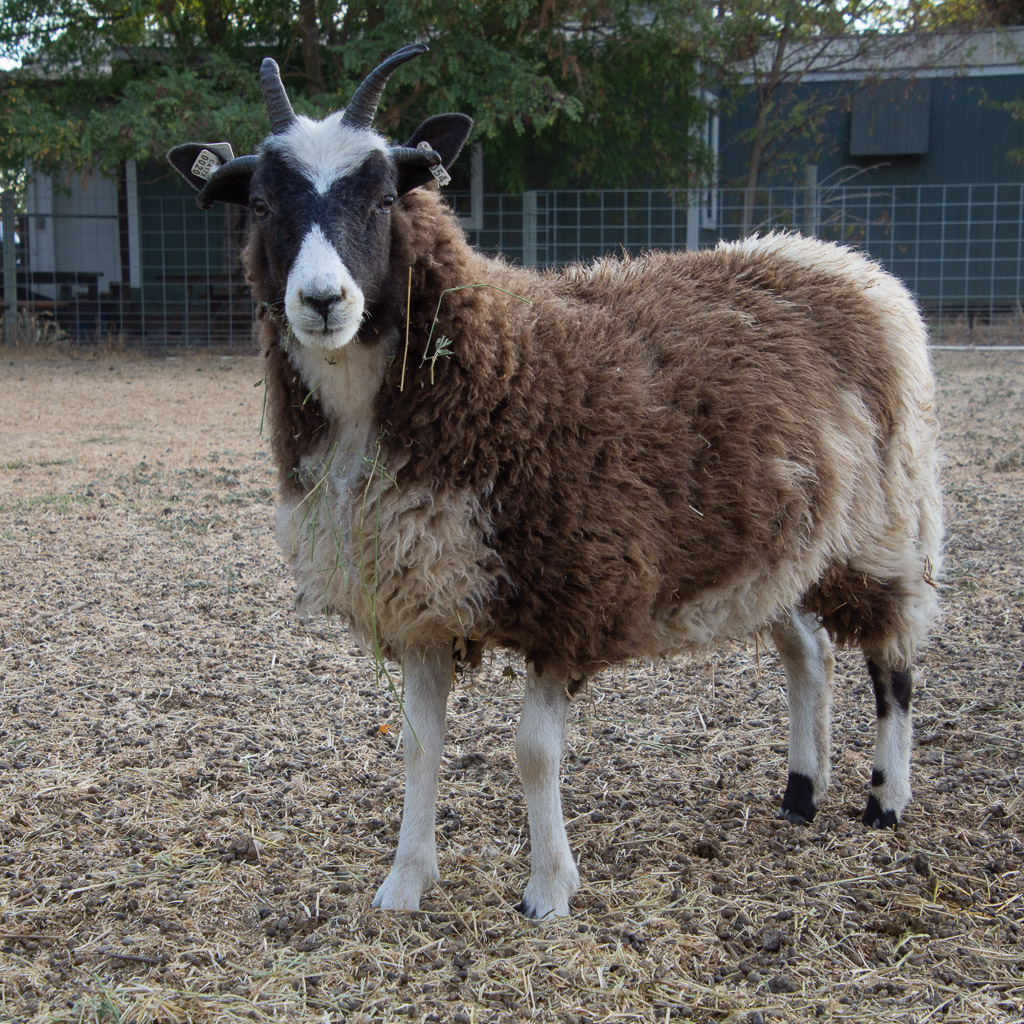 Zora is a pretty little lilac ewe who was chosen from Day 1 for her cute markings, although “cuteness” isn’t listed under the JSBA Breed Standard selection criteria.
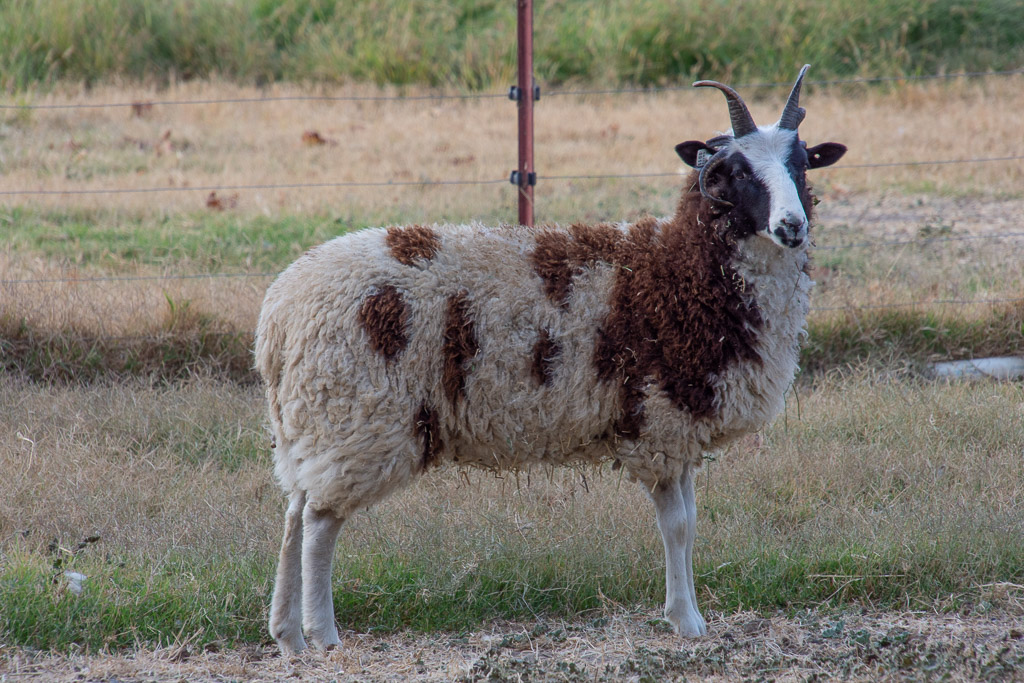 Meridian Quartz (bide a wee Buster x Meridian Jade). Quartz was chosen because, besides being a nice looking ewe, her mom is everyone’s favorite pet sheep and…
 …I want to see how her 6 horns grow out.
 Meridian ??? I haven’t named this lamb yet but she certainly deserved a good one. (Meridian Serrano x Unzicker Shenandoah)
 bide a wee Marion (Ruby Peak Cinnamon x Meridian Maven), who didn’t go home to Oregon after the AGM we hosted in August.
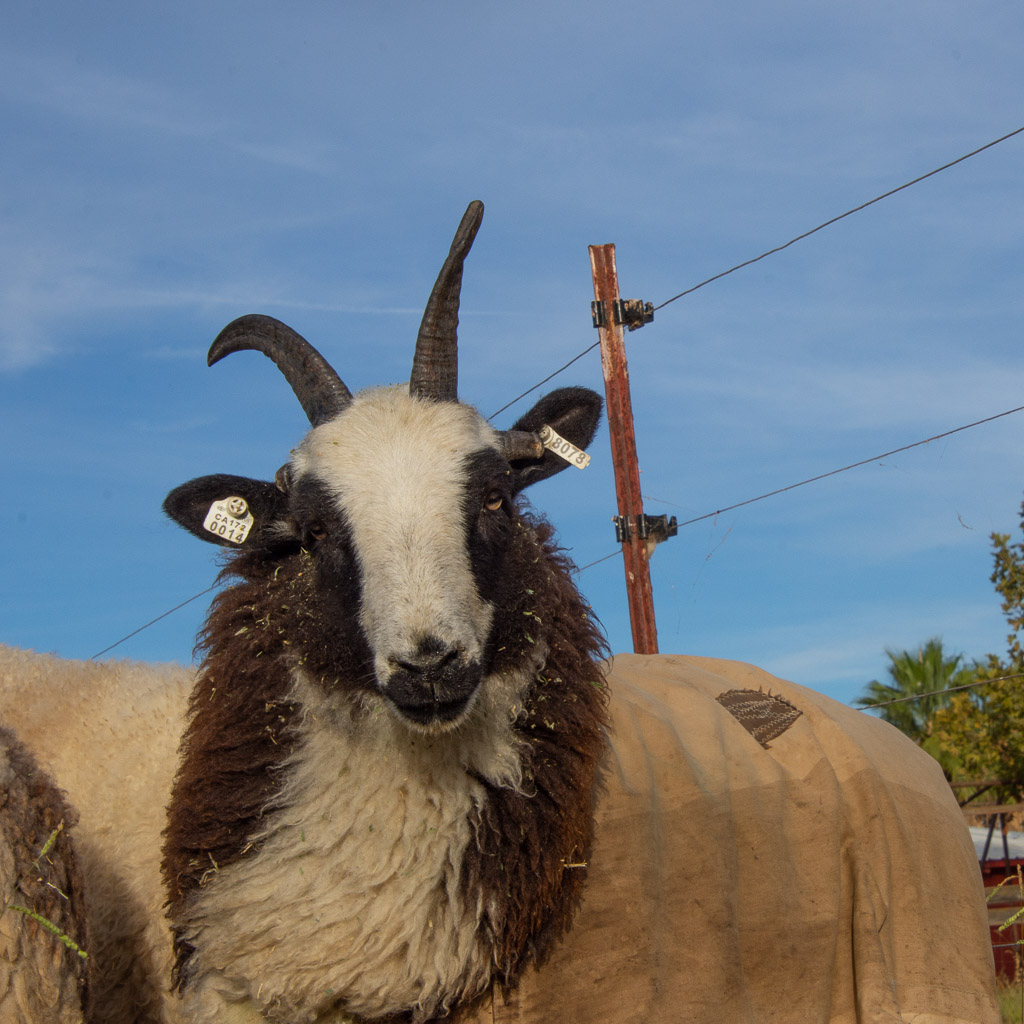 Meridian Janna (bide a wee Buster x Meridian Janis). Janna is a big tall ewe lamb and is out with the breeding group, possibly to be bred by Meridian Axle.
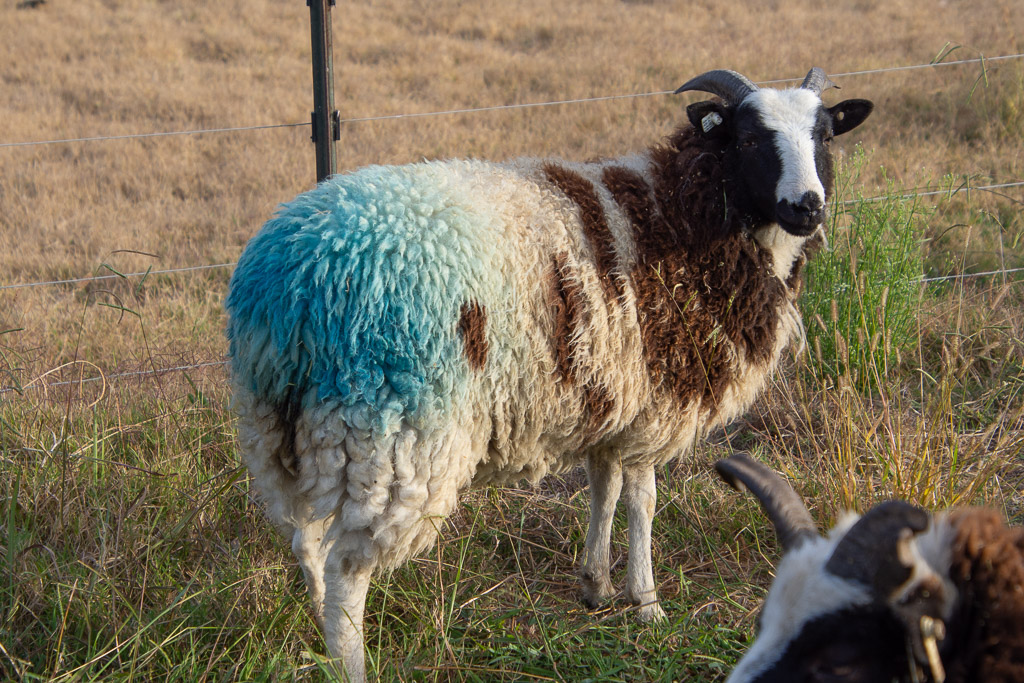 Meridian Soprano (bide a wee Buster x Meridian Sonata) has definitely been bred by Axle.
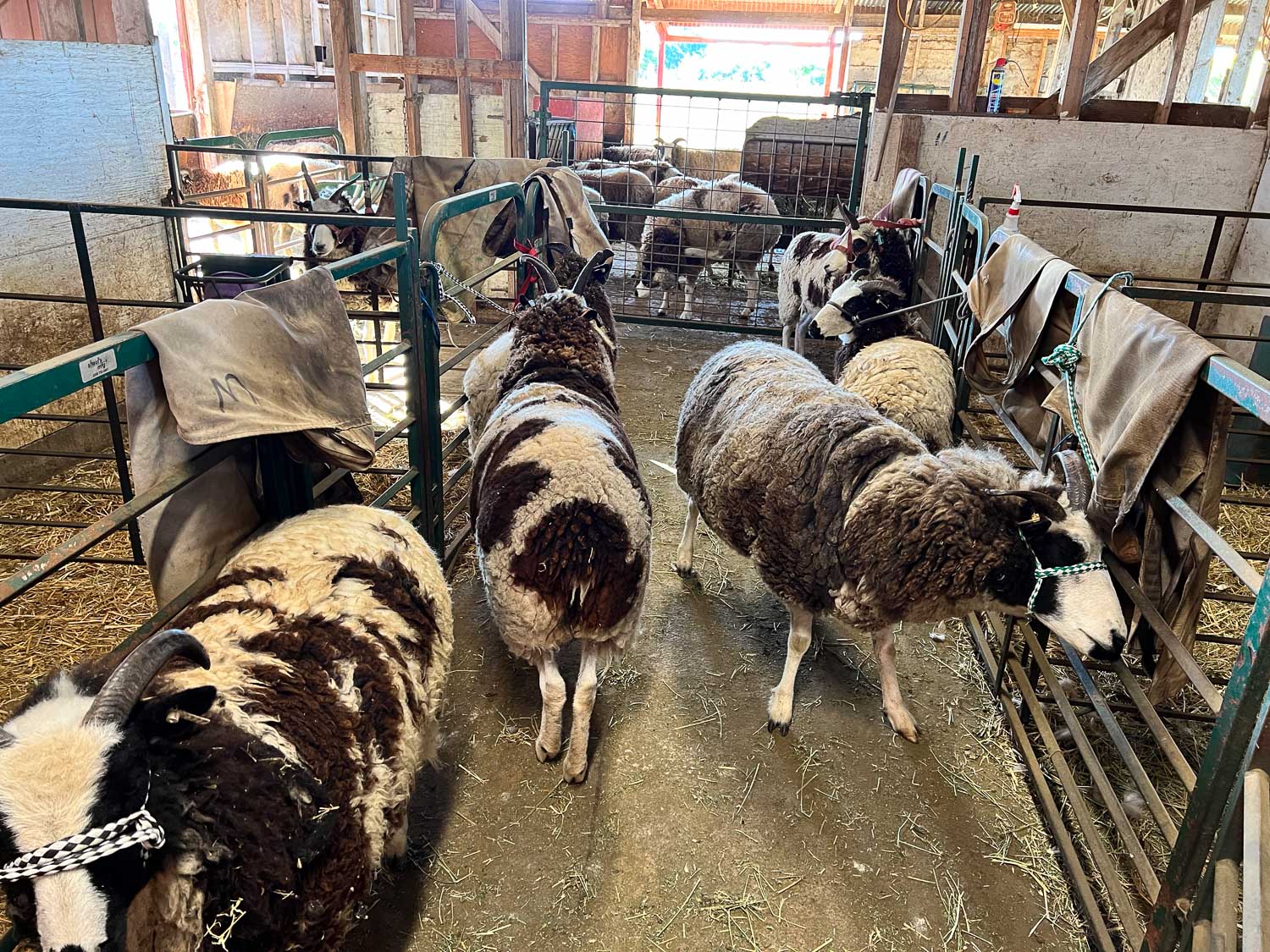
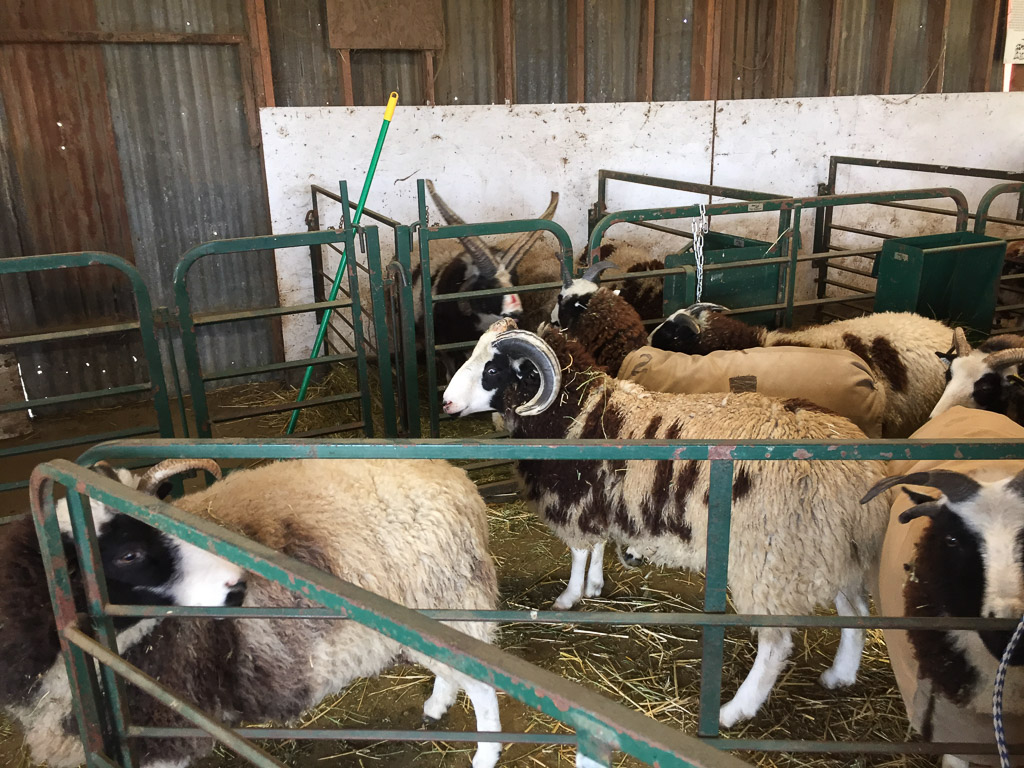 I brought the groups in one at a time and separated the rams. That’s Buster in the pen. His nose is already bloody because he was ramming the panel to try to get to Axle, the young 2-horn ram in the middle of the photo.
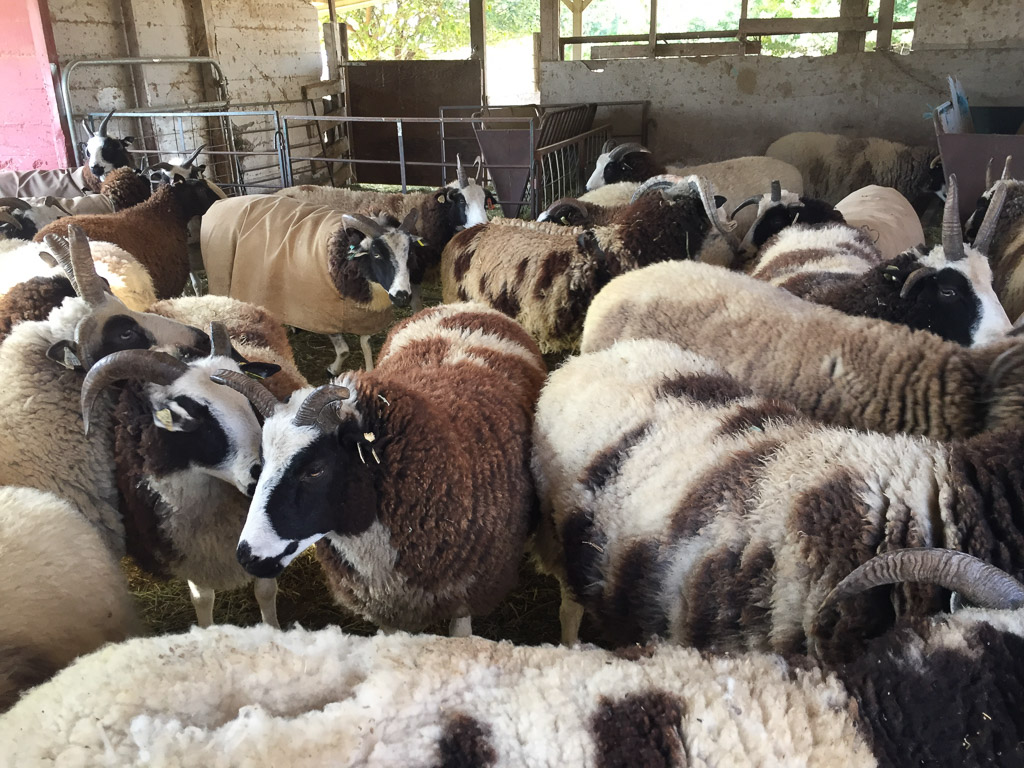 Most of the ewe flock was back together now and that was Clark’s lucky day! That’s him in the background with his head turned away.
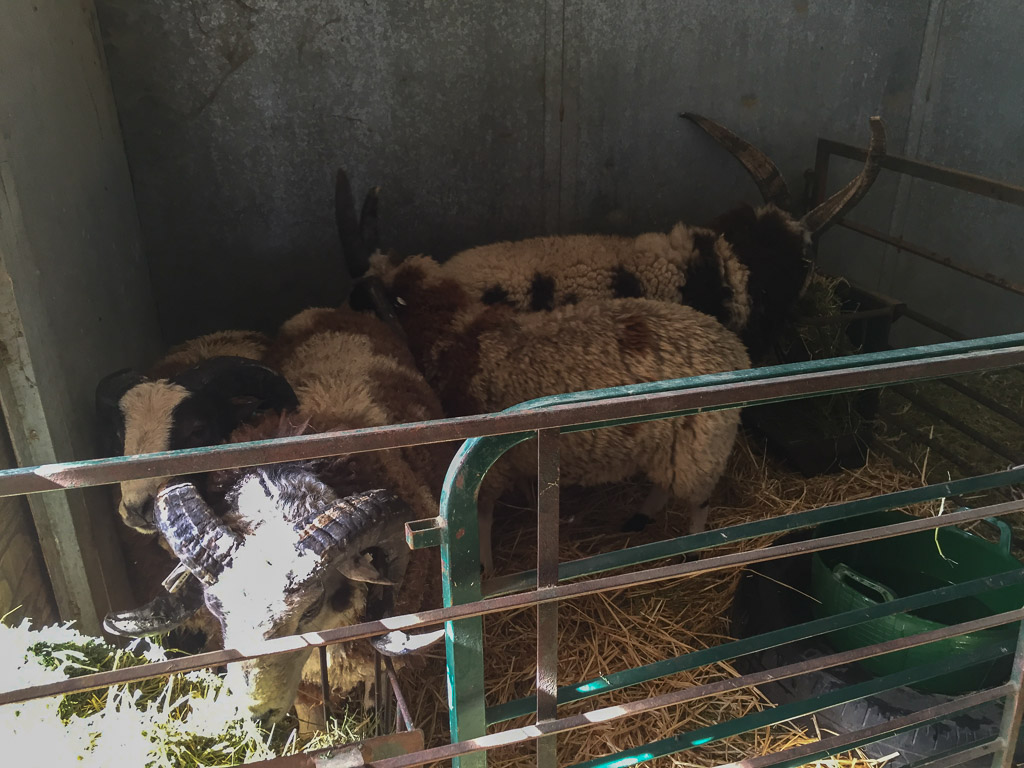 Meanwhile the other four rams went into their “buddy-up” pen. The point of this is that they are confined enough that they can’t do much damage. That doesn’t mean that they don’t hit each other but at least they can’t back up 10 feet and come charging.
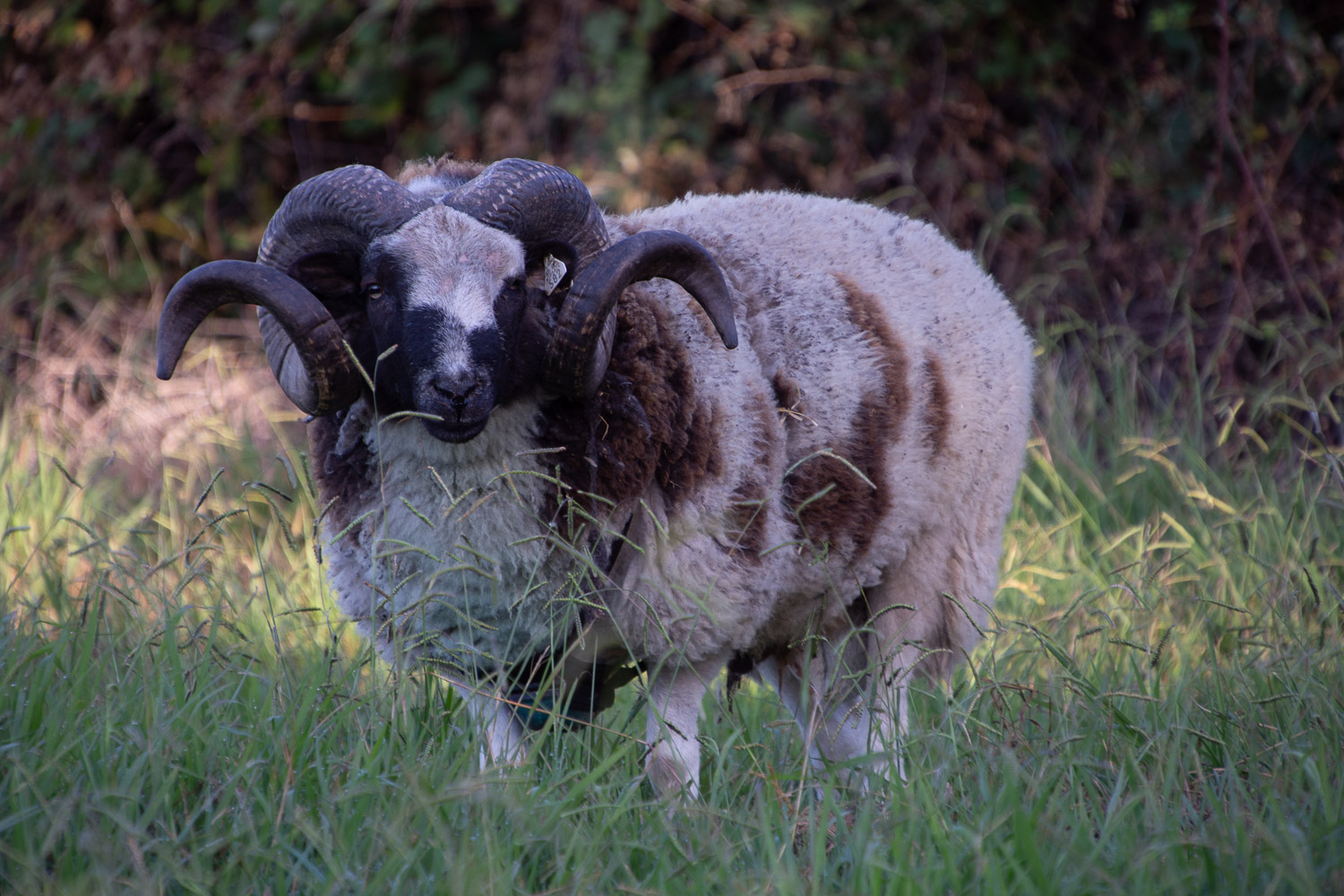
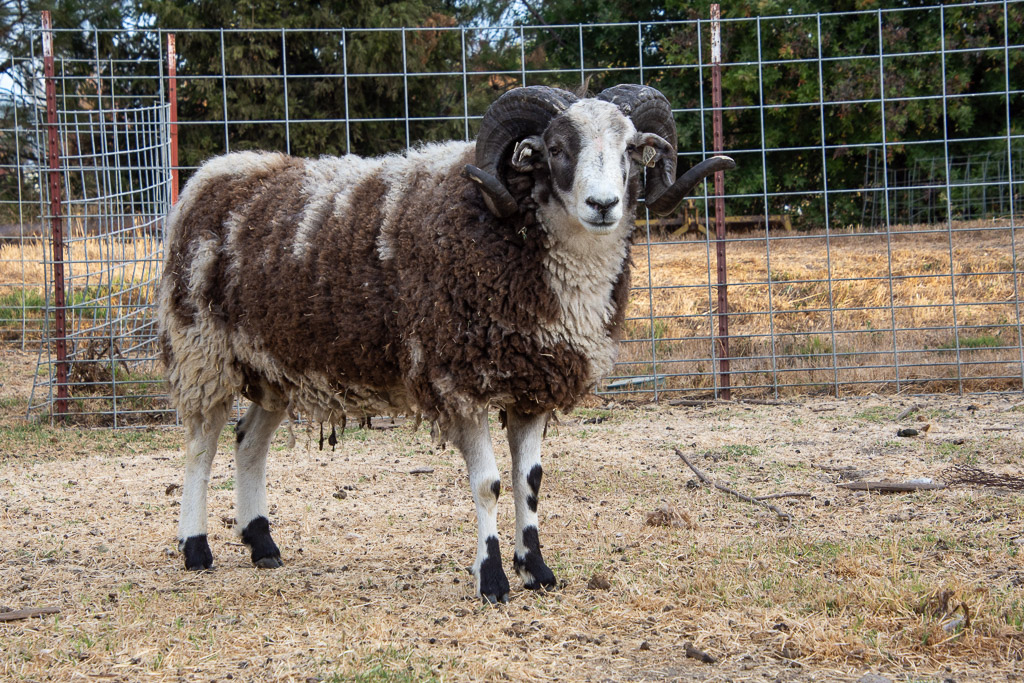 After a few days of learning to be buddies again they went back to the ram pen with minimal fuss. They all had figured out the pecking order. Cayenne (above) is #2.
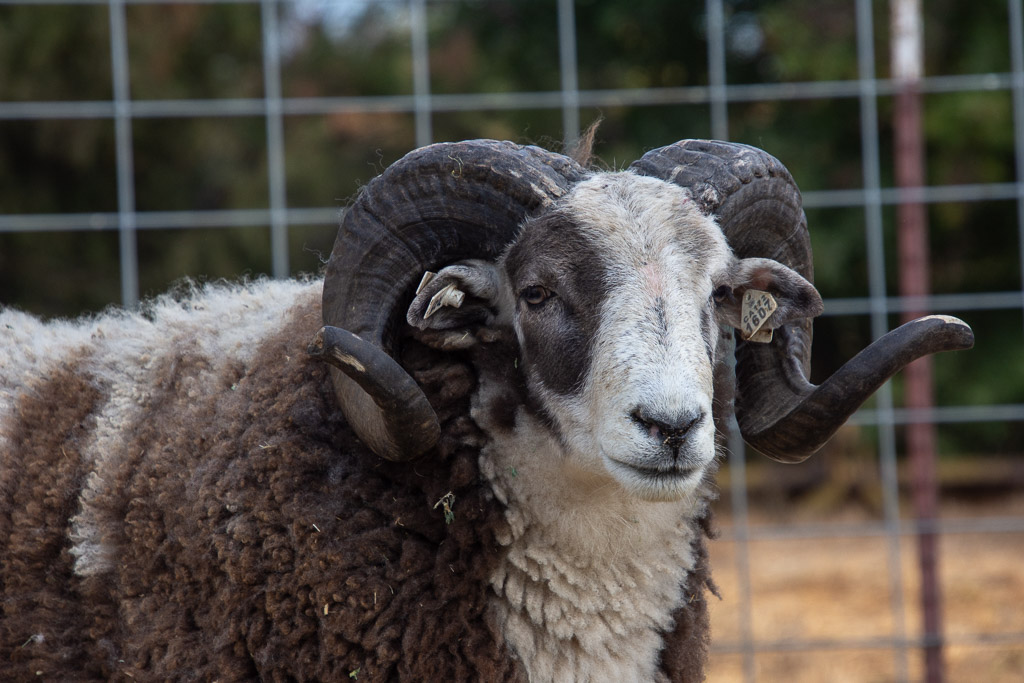 Cayenne. I love a nice two horn head.
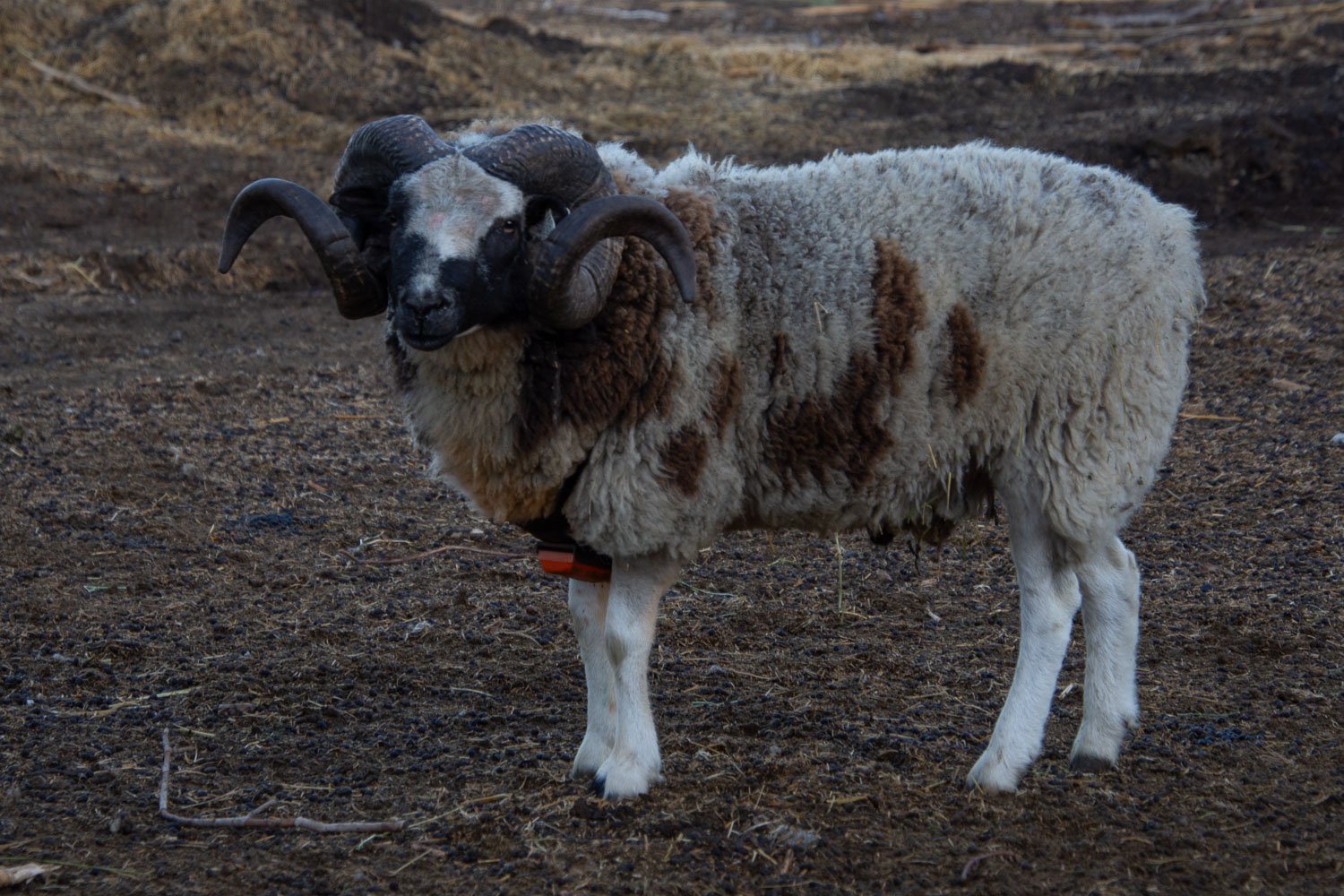
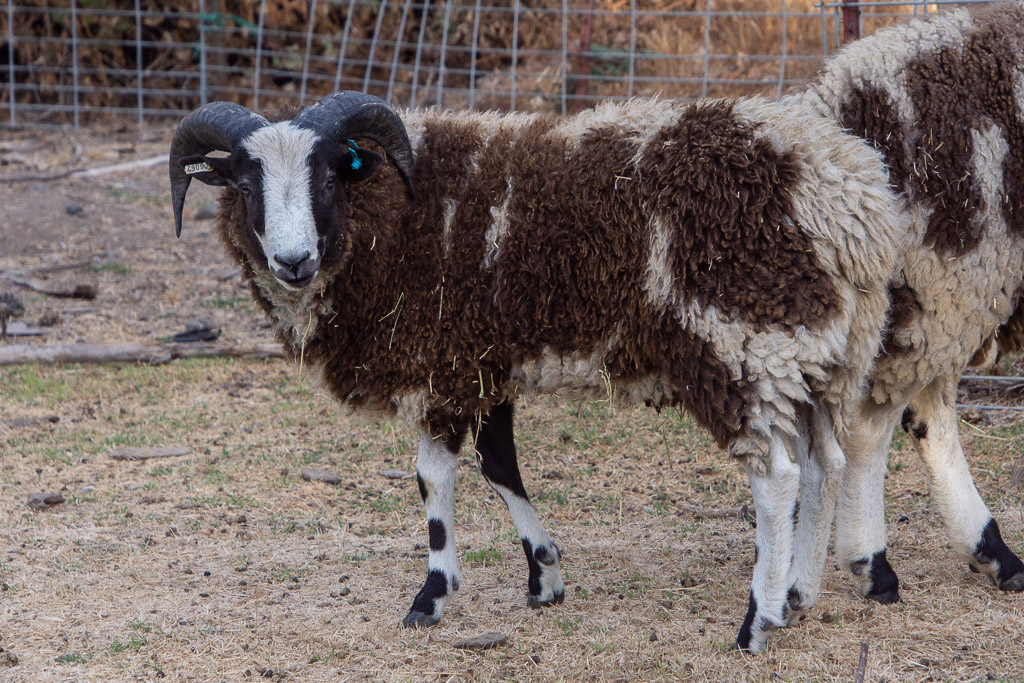 This is Spark, Cayenne’s full brother, born this year. There is the difference a year makes. Cayenne was born last year.
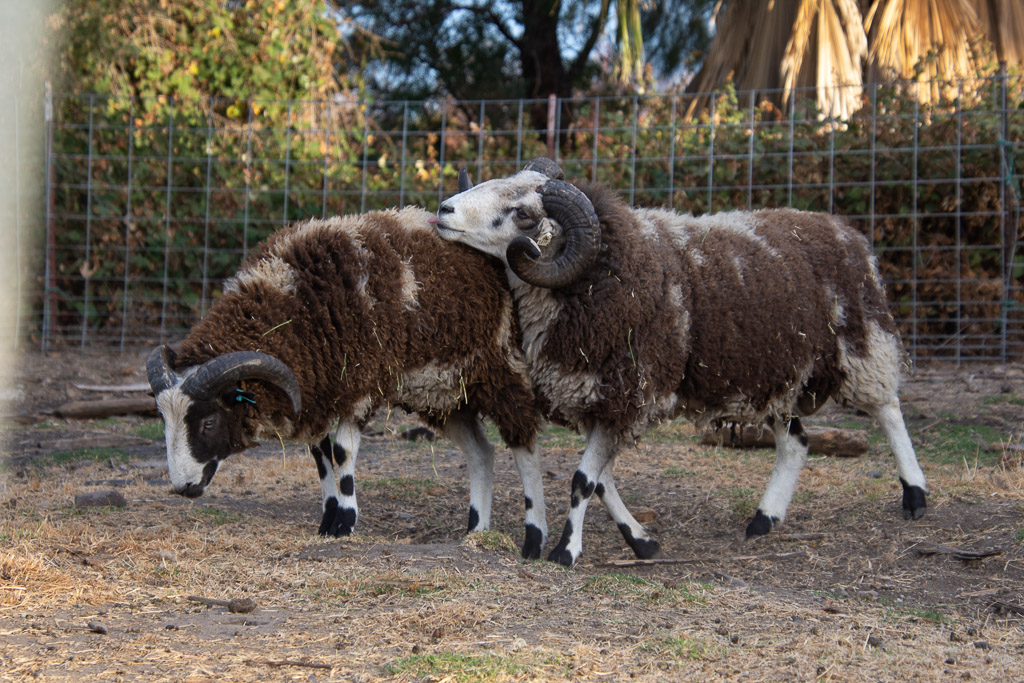 Brothers.
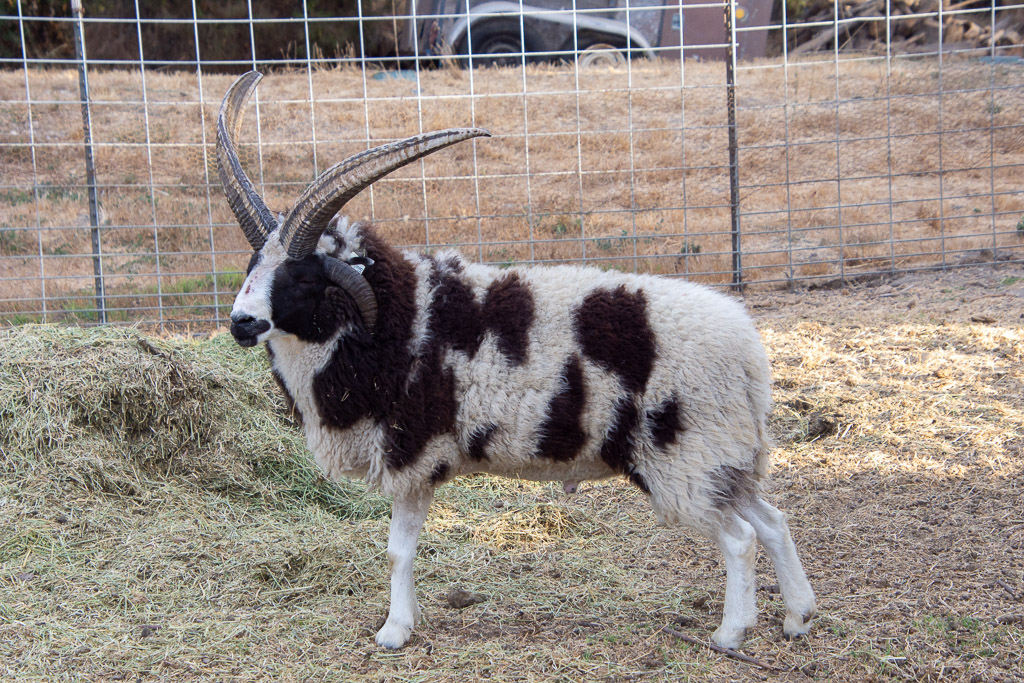 Bide a wee Buster is #1 in the ram pen.
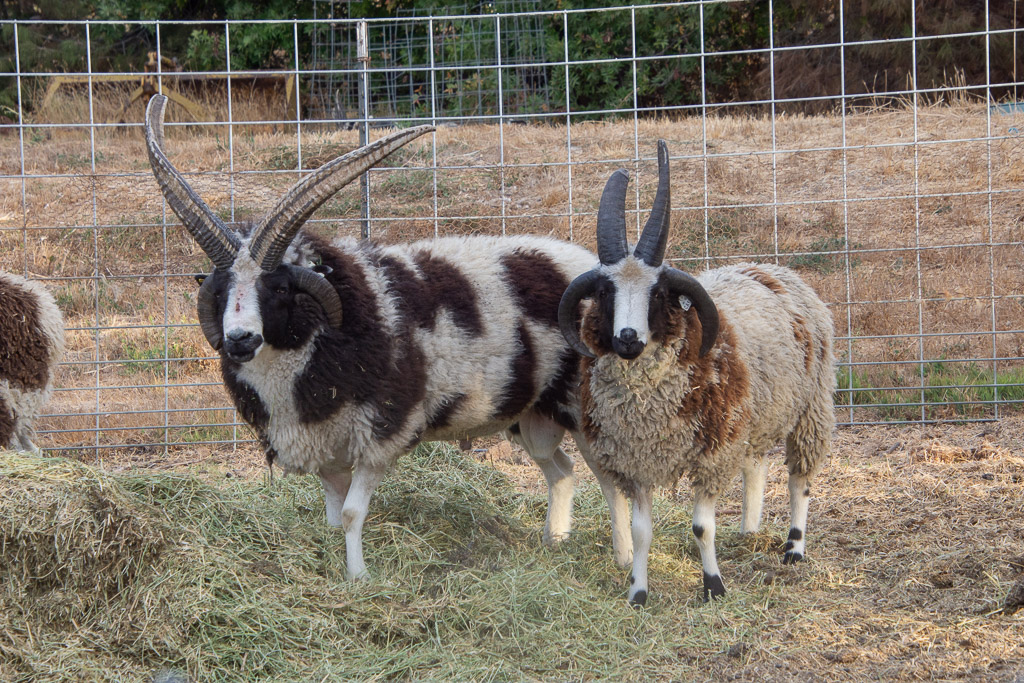 Buster is 3 years old and Clark is his son from this year.
 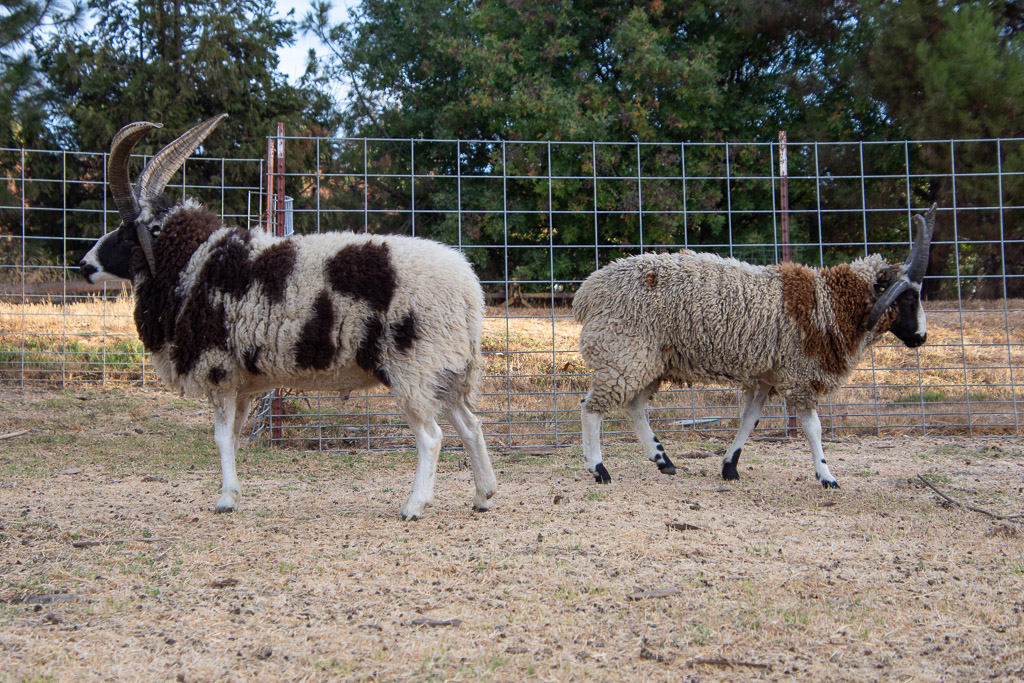 Bookends?
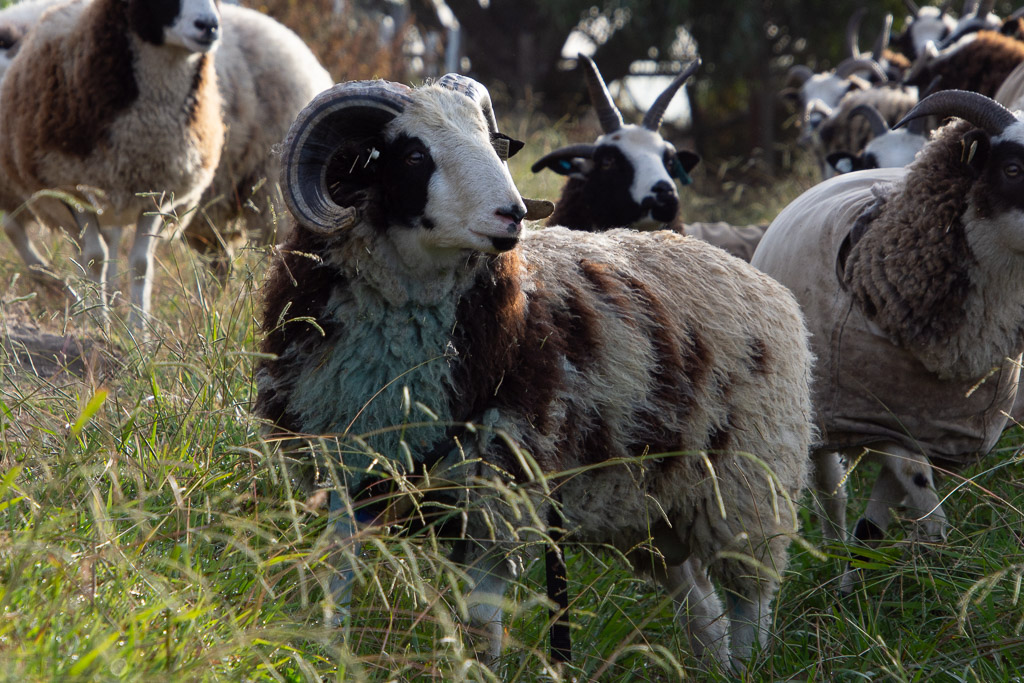 Here’s the lucky ram who gets to stay out with the ewes for another few weeks. This is Axle, also a 2018 ram. He is wearing a blue marker…
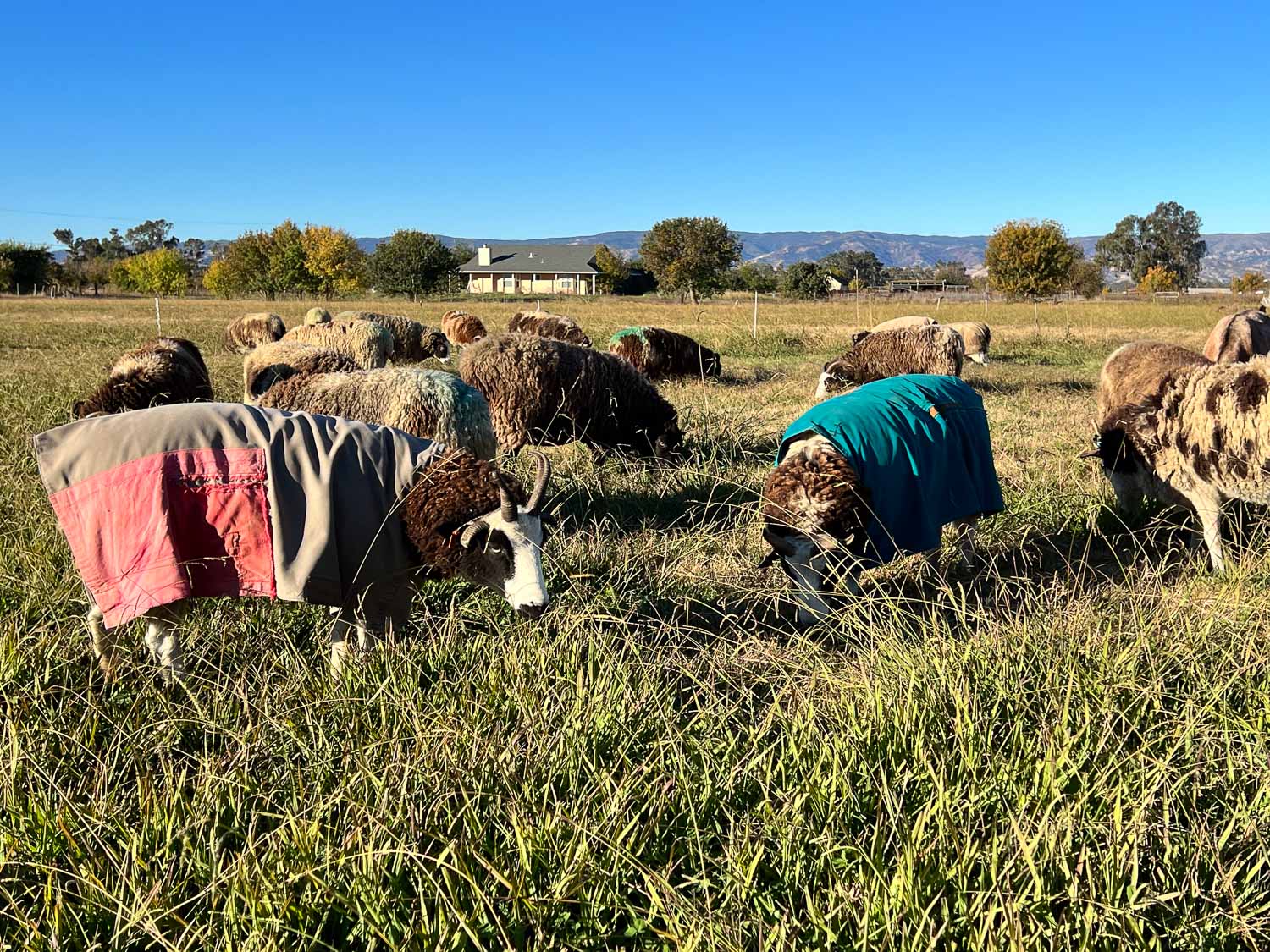
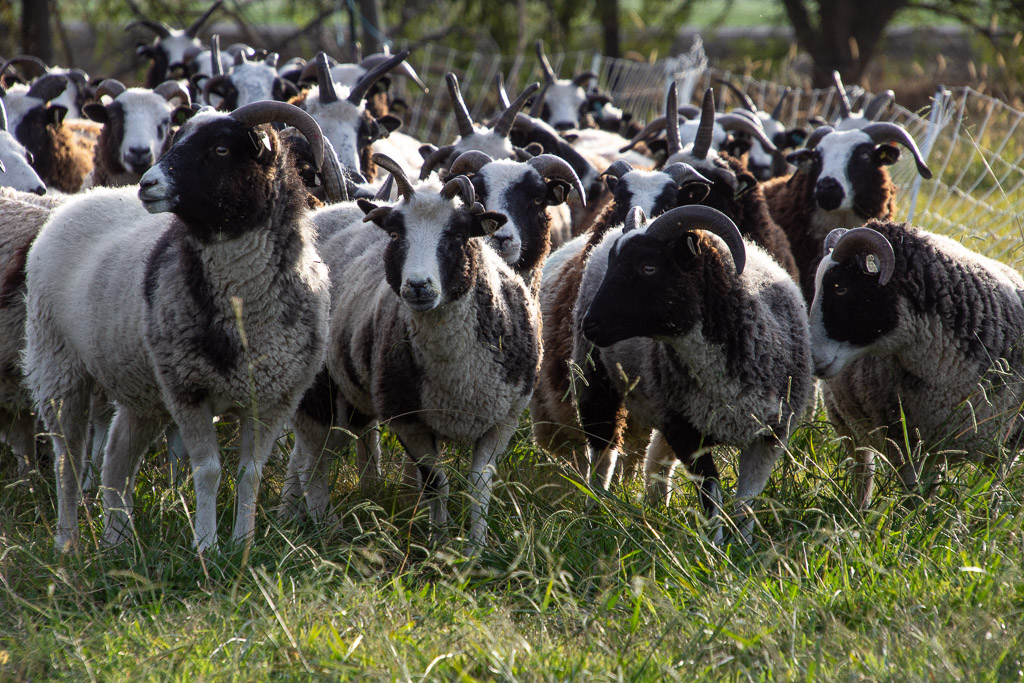 Today I moved most of Peyton’s ewes back to the flock. Three of them were the Pope Valley sheep that came this summer, and they immediately found their two friends. That’s the five or them in the front. Large Triangle, 4-Horn, Small Triangle, White Ear, and Crooked Blaze in the back. (They do have names but I remember them better by what I called them at first.)


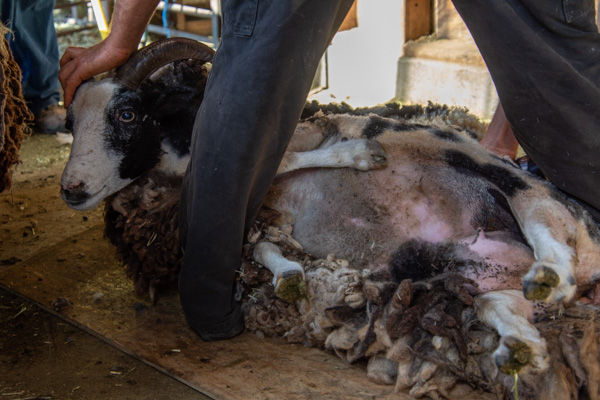
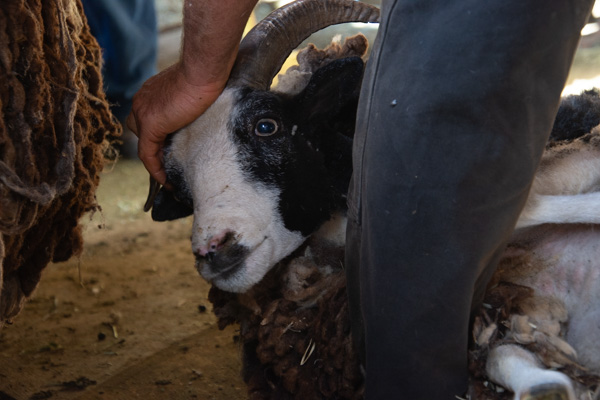
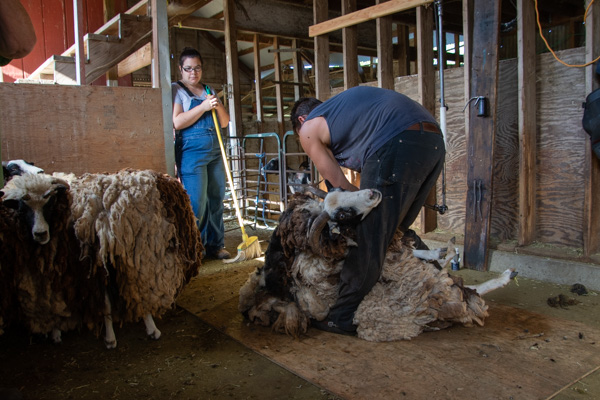
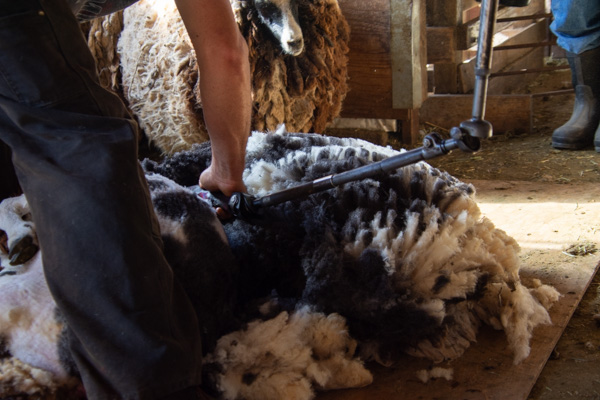
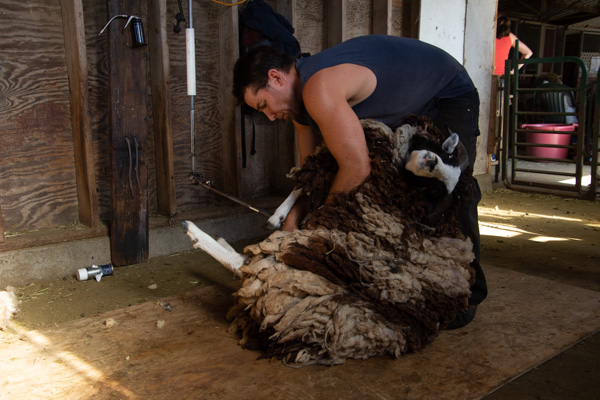
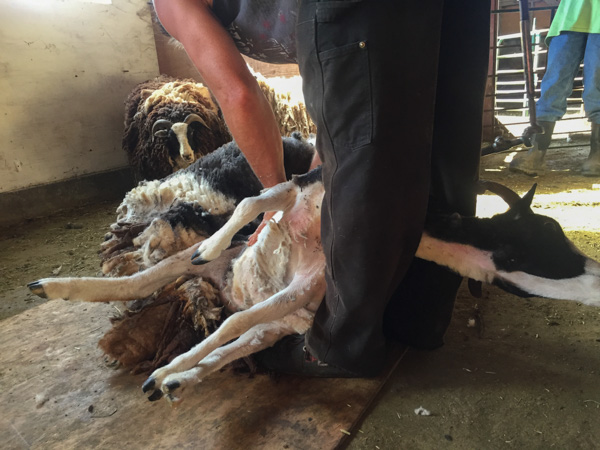
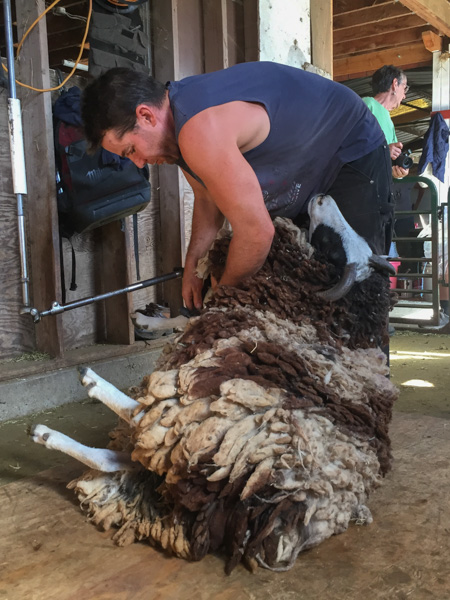
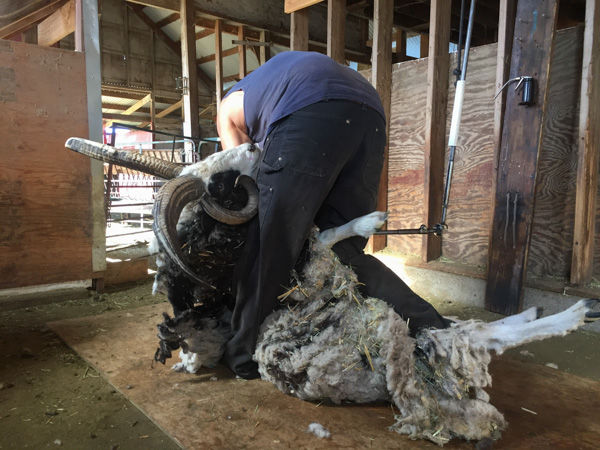
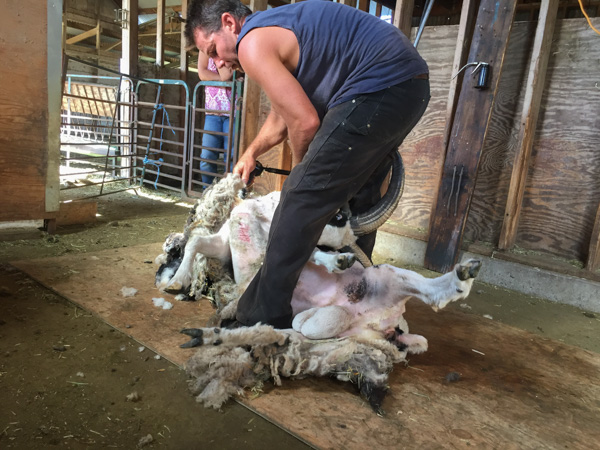
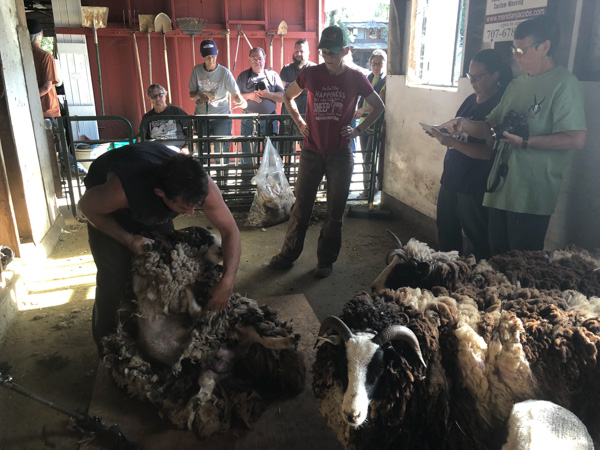 John is the Rock Star.
 We checked teeth to try and figure out the ages of the sheep.
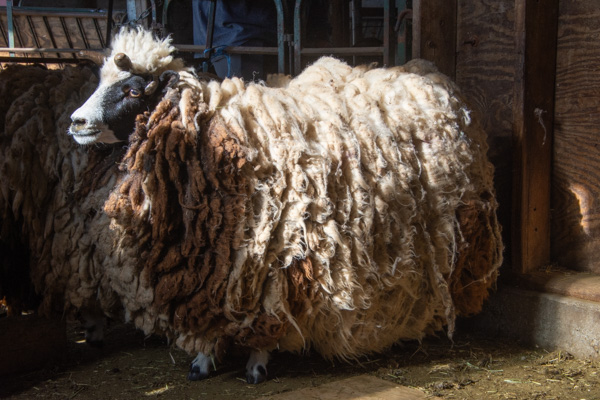
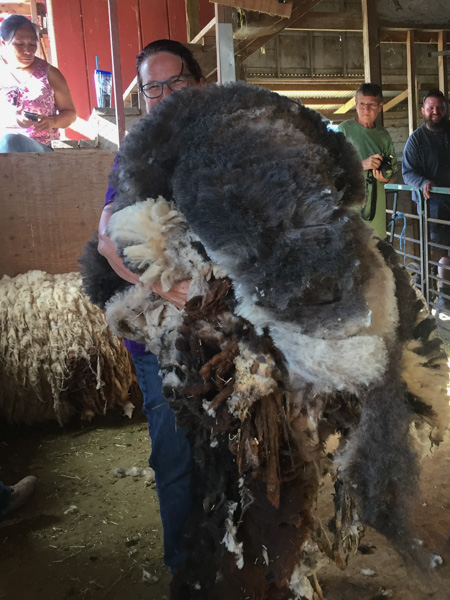
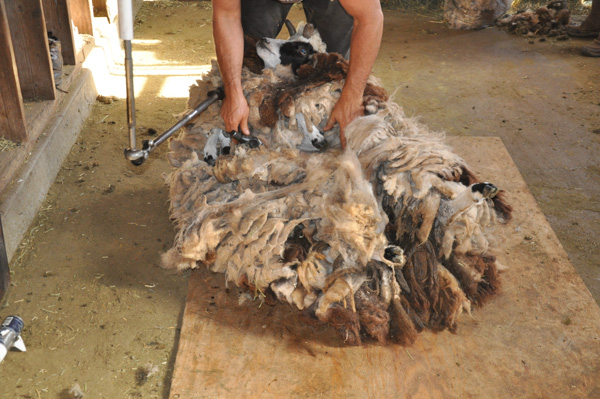 This sheep had a 13 pound fleece. The average for Jacob sheep is 3-6 pounds.
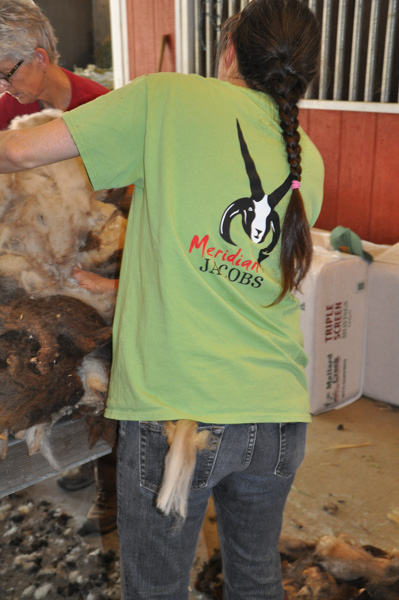
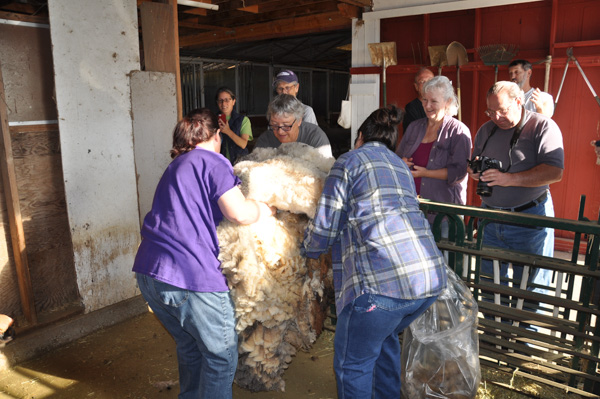 It was a multi-person operation to stuff some of these fleeces into plastic bags.
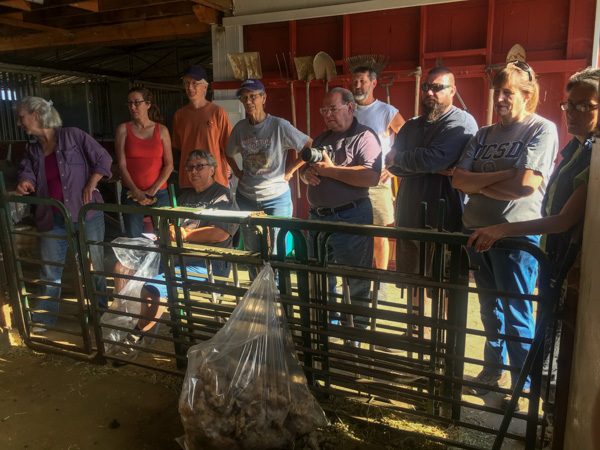
 The usual suspects were there to watch and cheer John on.
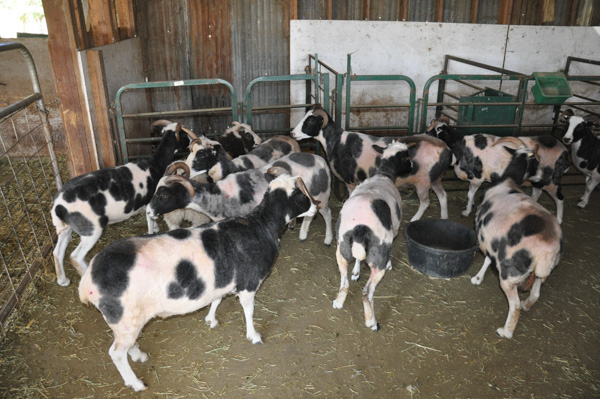 Not a bad looking group of ewes after shearing.
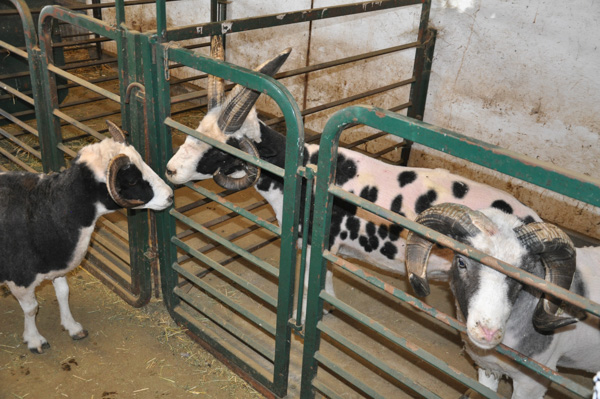 The two rams.
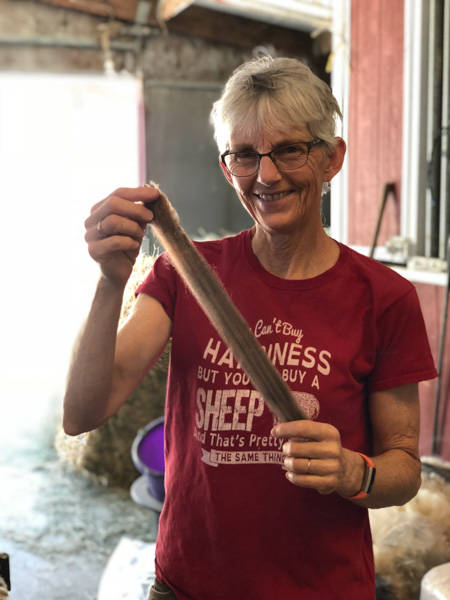
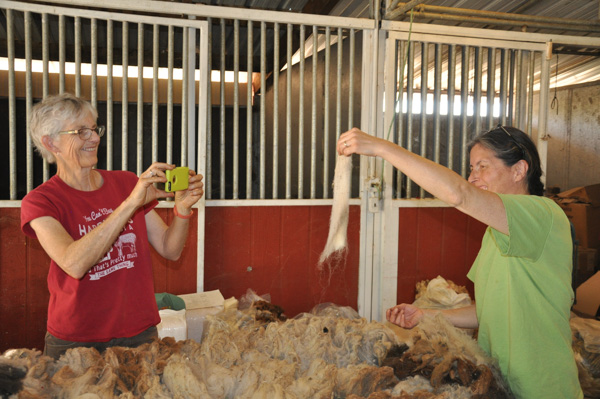 After shearing we looked at all the fleeces. The longer fleeces have a break about 4″ in from the outside, but the rest of the fleece seems sound.
 It will take some time to work through it all.
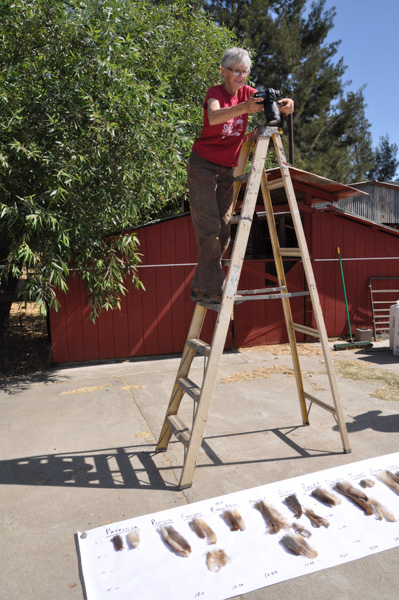 As we pulled out staples from some of the fleeces I thought it would be a good idea to get a photo. Susan and Gynna worked on this while we opened up and re-rolled the fleeces.
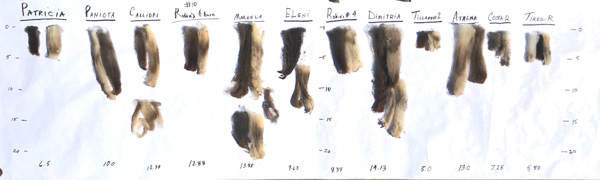 Note the measurements marked on the sides and down the middles. Weights are below.
  This was a fun day for all of us and a good day for these sheep.
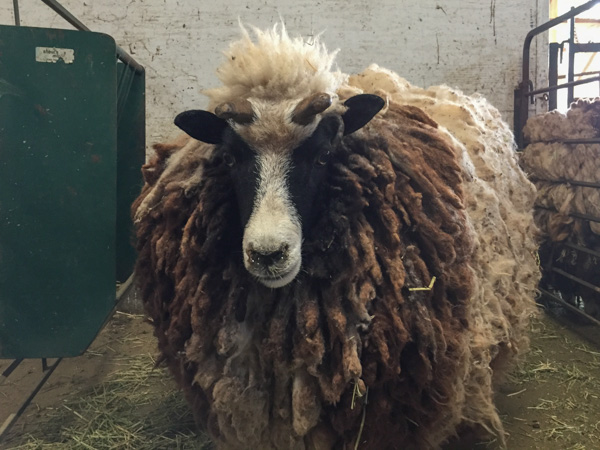 This is a ewe they called Athena.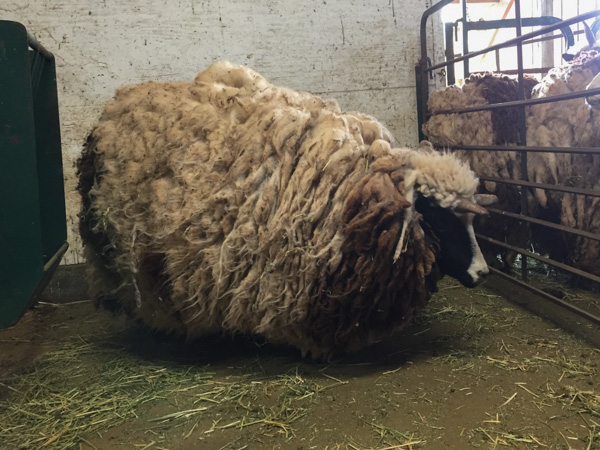
 I think that this is at least a 3-year fleece.
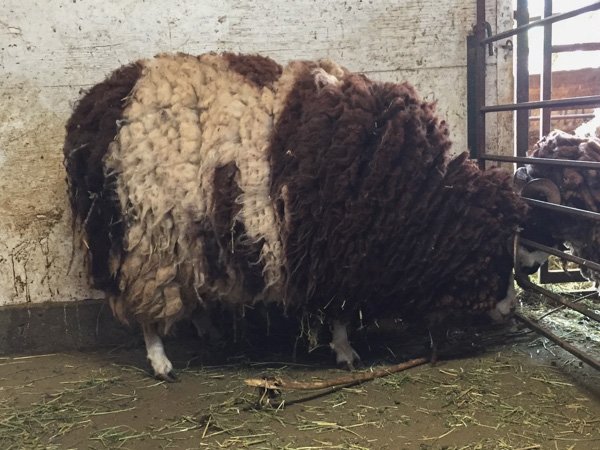 I love the markings on this ewe’s body. I don’t have any information about her.
 This is a ewe they called Caliope. She is pretty wild.


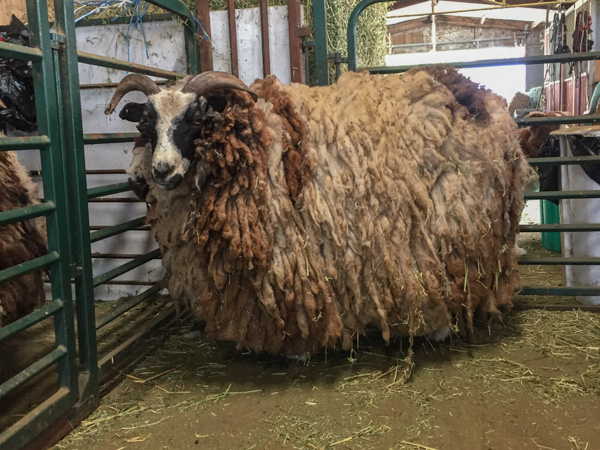 Markela, one of the original ewes purchased by this family.
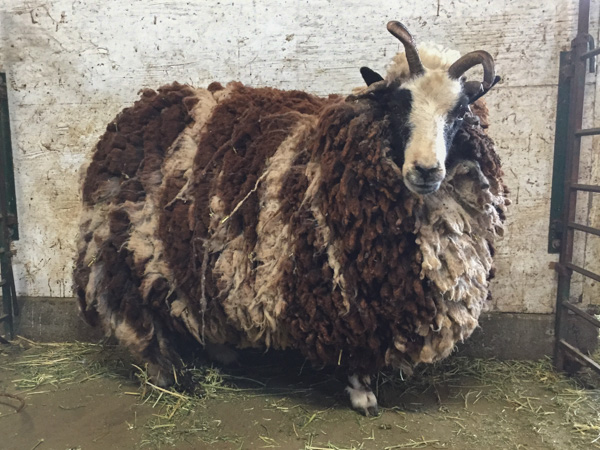 No idea about this ewe…
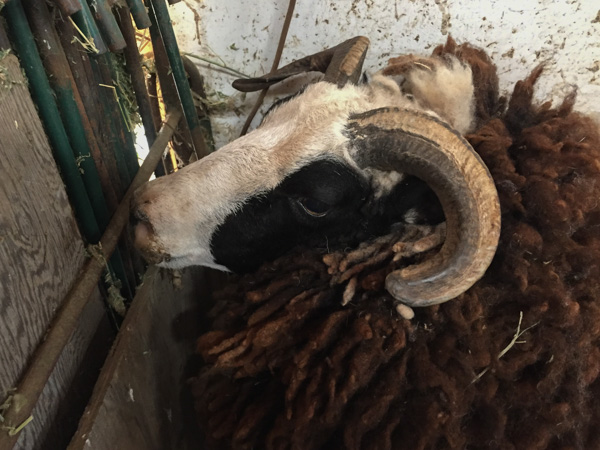 …or this one. Don’t you love her horns?
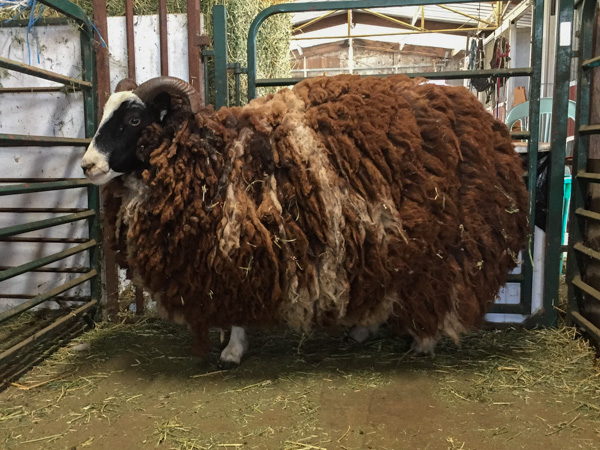 Paniota…
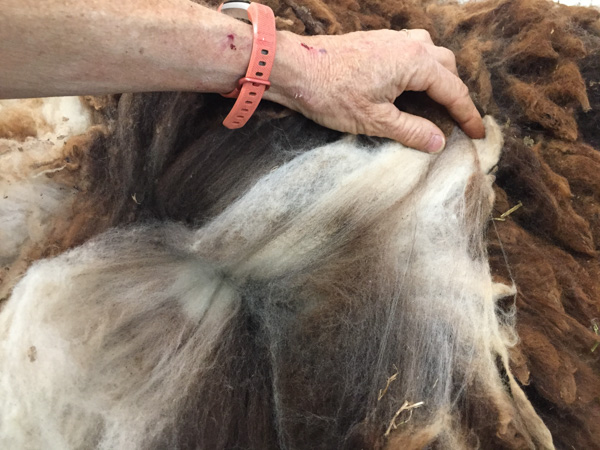 …and her fleece.
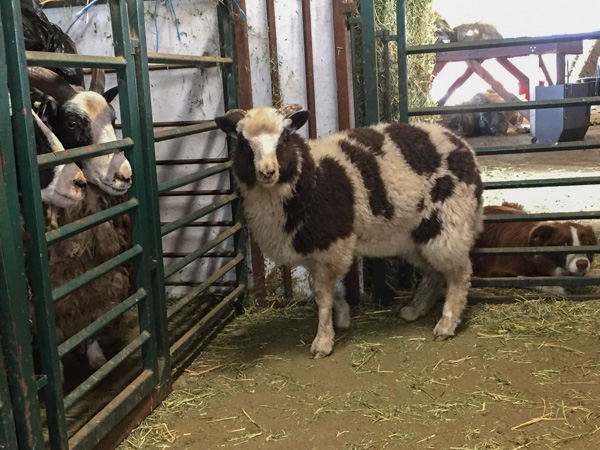 The lamb named Easter because that is when she was born.
 New temporary quarters.
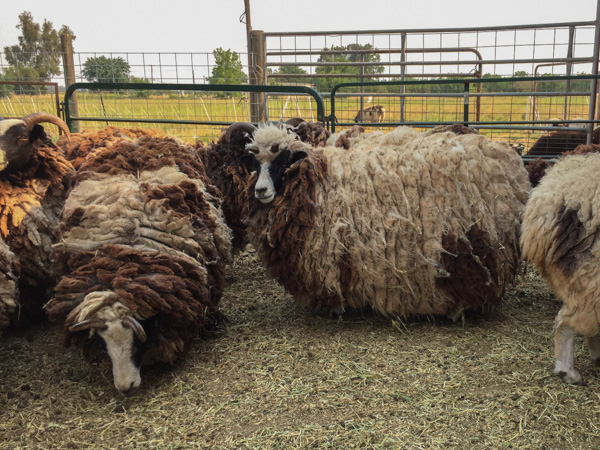 Stay tuned for a Shearing Day post.
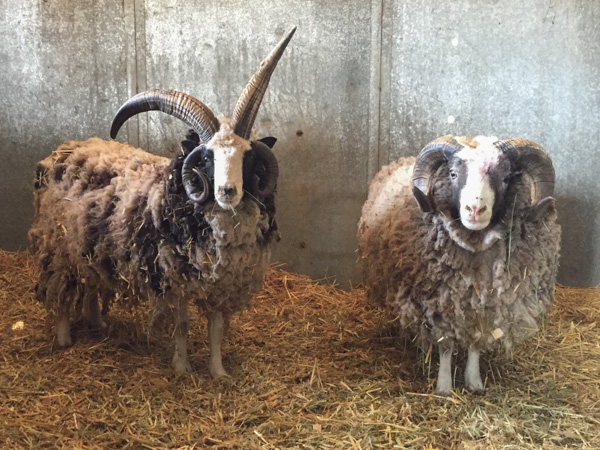 Let’s not forget the rams. Tikes on the left and Costa on the right. I think they are yearlings.


 First I sort and start narrowing down choices. This is two-horn rams.
 More two-horn rams.
 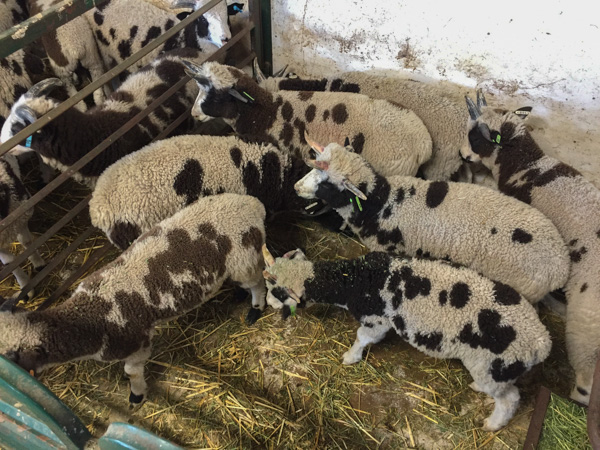 Four-horn rams (except for the one I liked best who broke his horn this morning and I put him out so he would hopefully not keep knocking it on others). I bred to two two-horn rams and one four-horn ram last year. There are more two horn lambs than four. Some ram lambs are missing from these groups because I had already castrated those that I knew right away would not be candidates for registration (too much or too little color or horns that were too close). Time to narrow these into groups.
 These are rams who will be on the cull list. It doesn’t take much for a ram to be moved to that list. In this case two of these lambs (on the right) have wide spacing between the upper and lower horns. That seems like it would be a good thing, but usually those upper horns tip forward and sometimes there are other issues with them. I’ll report back with more photos as they keep growing. The lamb facing the photo on the left doesn’t have enough spacing between horns. His right side horns are already touching at the base leaving no room for growth. The other two both have a lot of freckling, although it’s hard to see without parting the fleece and one is scrawny.
 Three of the potential 4-horn breeding rams. Nice horn spacing and shape so far. No sign of freckling. Color % OK. Nice looking fleeces. Britch wool not too high on back leg.
  Out of two pens of ram lambs I pulled these four out as potential at this point. That is mostly due to the wide horn growth. There may be others in the pens but I won’t guarantee the horn spread yet. Of course, they all have to meet the other criteria mentioned above as well.
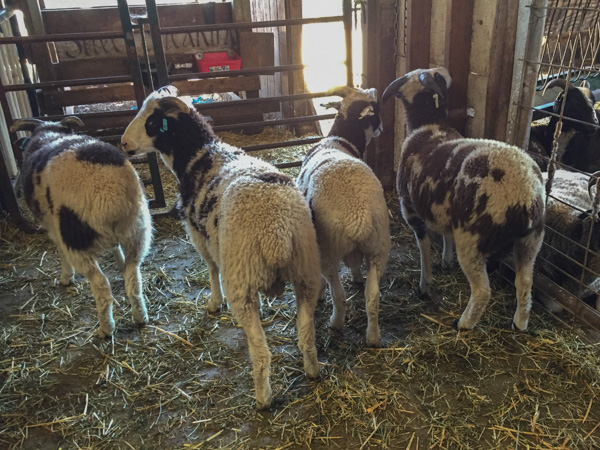 Here they are from the rear.
 Another from the front showing the ram with the best horn spread so far.
 These are the 4-horn ewes. I will be less picky about the ewe lambs than the rams. The breed standard isn’t so stringent and each ewe doesn’t play as large a part in the flock as the ram. Keeping a variety of ewe lambs is a good way to maintain some genetic diversity (although that is a good reason to buy some lambs from other people in August).
 The 2-horn ewe lambs.
 Another view of the pen on the right. Notice the two lambs (sisters) in the upper left corner. Compare their horn growth to the others. All these lambs are about the same age. Those two are showing minimal horn growth compared to the rest. I don’t know if that is temporary and their horns will be just fine when they are mature or if those are scurs. This is another reason to look at the lambs in a group. All of the rest of these lambs look fine to me so it will be hard to narrow this down to only a few to keep.
 These are some of my 4-horn choices. Preliminary selection is based on wool and lack of freckling in the lamb and the dam.
 The same group from the rear. I don’t fault the sheep for their rear leg position, but from this photo it would be the lamb on the left that I’d take to a show.
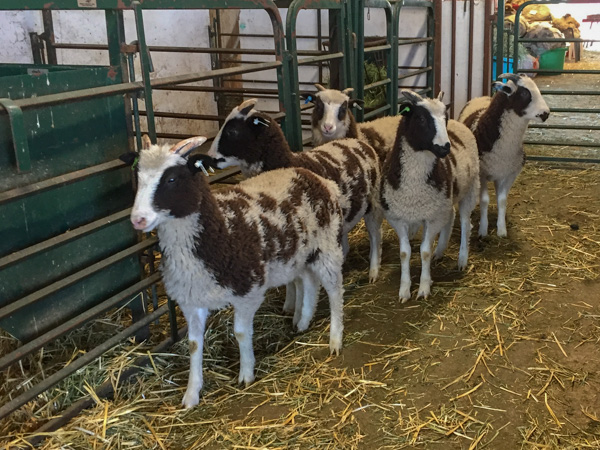 Two horn lambs that I like.
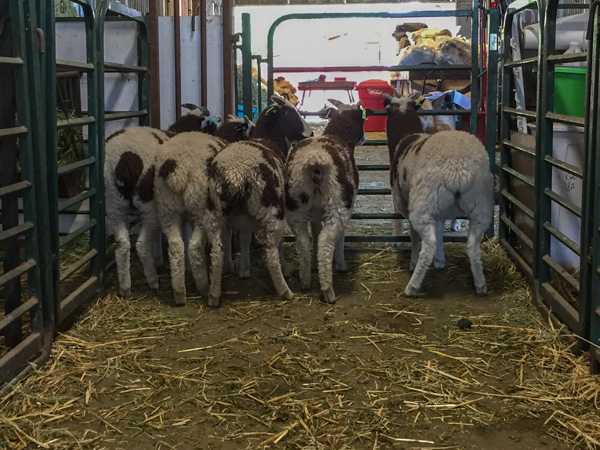 From the rear.
 Meridian Jacobs' Blog