There was a lot I wanted to accomplish this morning before people came for a dye day. So when I woke up at 5-something I got up. I went to the barn for chores.

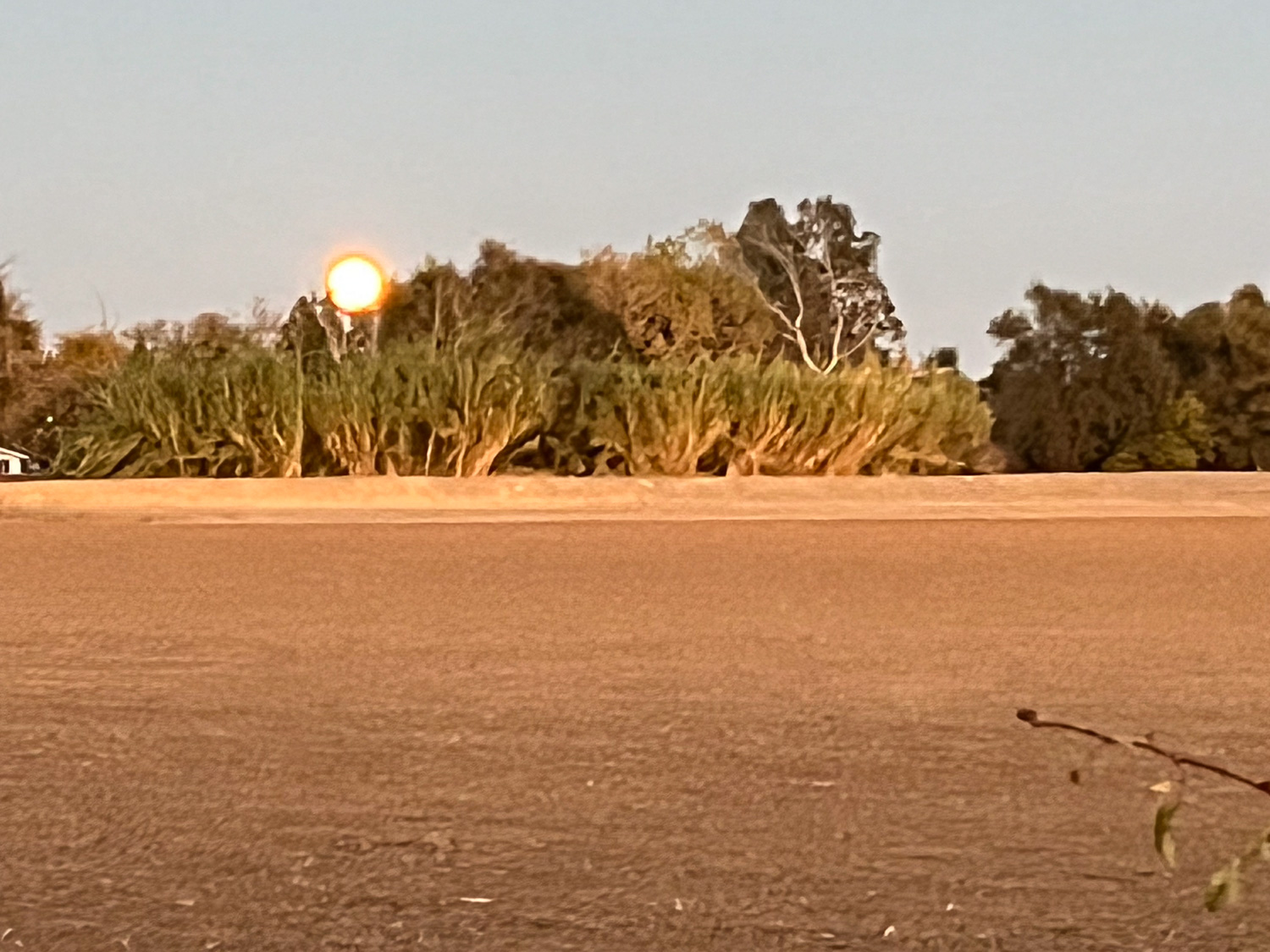
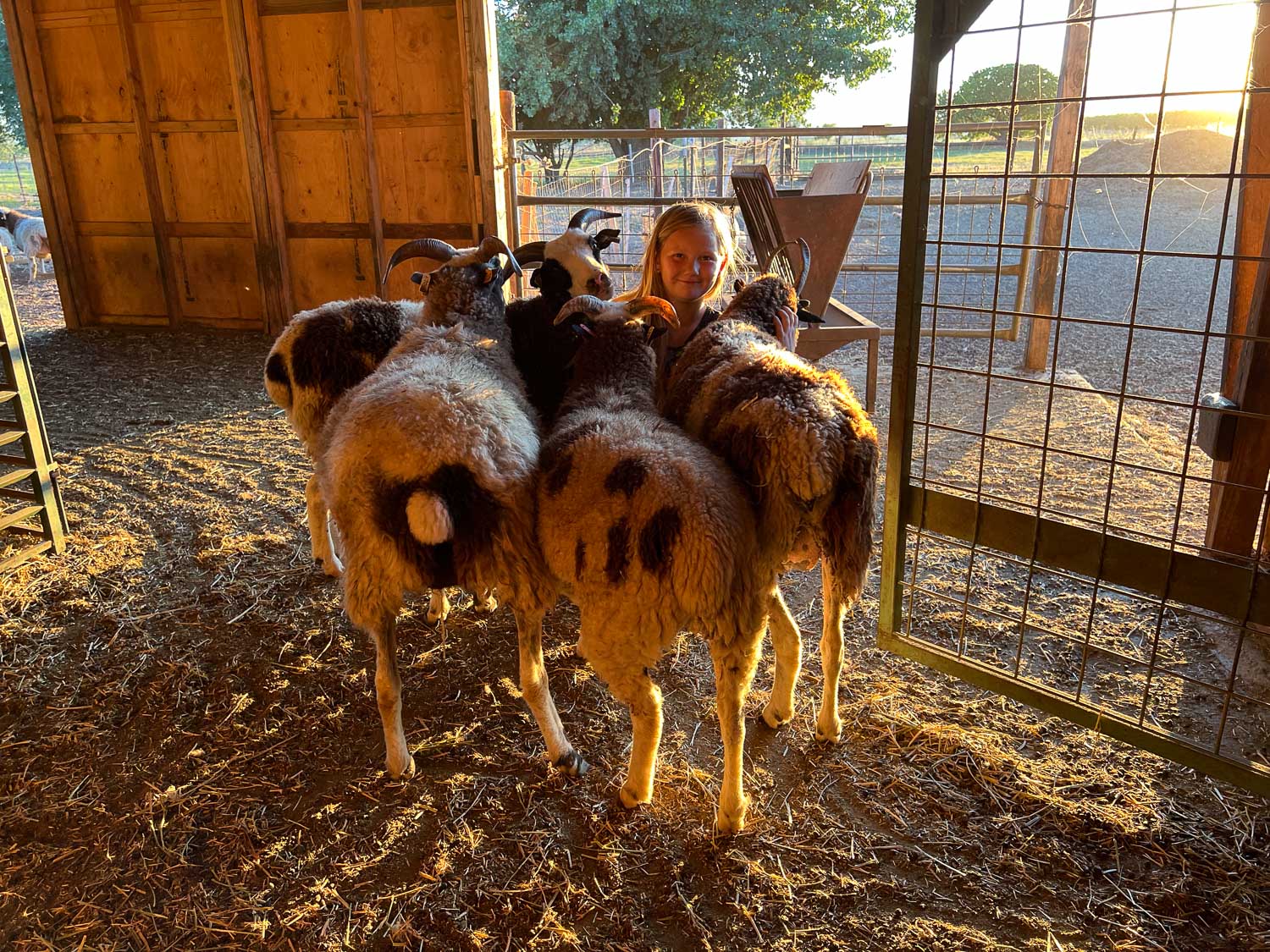
The sunset really was this intense this morning.
Every so often the Wednesday Weavers meet in person instead of just on Zoom. I know this isn’t Wednesday, but it was the day that several people could come for dyeing. I had planned to wind some warps to dye, but ran out of time after catching up with email and computer stuff and hemming Year to Remember blankets and photographing them.

This is a custom blanket for the birthday year and place of the recipient. Each color represents a 10 degree range of the high temperature for the day and I weave two threads for each 365 days of the year starting with January. This customer chose her colors.

These are three more blankets on that same warp. In this case, they represent 2023 in Vacaville and show how the stripe pattern will be the same for a given year and location, but the colors can be completely different. These will be listed on the website when I have time.

This is one of the three blankets in a “lifestyle” photo.

I think seven people came for Dye Day. I don’t do this for this group as an official class. They have all become friends and I can provide the space and materials to have a fun day. Fortunately we avoided rain today and even had a bit of sun at times. Usually we choose to do either protein fibers or cellulose because they use two different dyes and procedures. This time I got it all out.

I ended up dyeing some chenille warps that I found in a bag when I cleaned out the dye corner a month ago. These are four 7-yard warps of 4 to 5″ wide each. I think I must have wound these years ago to use up white and light colored yarns that I don’t usually use for my chenille scares. The narrow width means that I intended to wind solid colors to mix with these painted warps when they go on the loom.

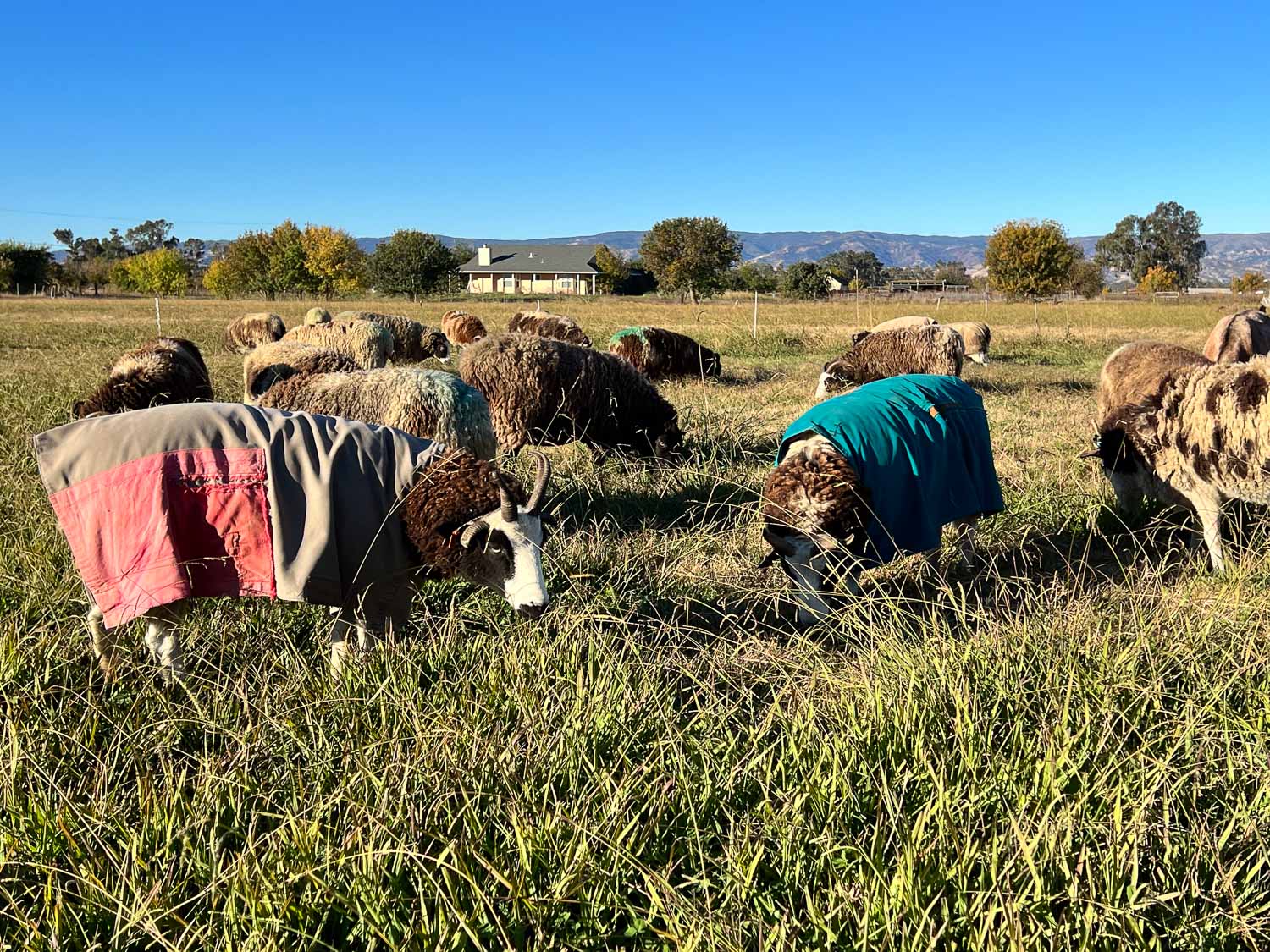
After we finished I finally came to the house to sit awhile and immediately got a text from Dan to say that there was a sheep with a coat problem and the other sheep were all panicked. I found April with the coat neck behind one front leg with the rest of it wrapping around underneath. She couldn’t get her foot away from the part on the ground so obviously wasn’t walking correctly. The sheep would panic and run away from her. But she wanted to be with the rest, so she’d follow.

That is one reason that I am not a big fan of coats, but look at the fleece underneath. We are only three days away from shearing and I wasn’t about to risk this fleece at this point. I had changed coats a few weeks ago. The point of changing coats is to go up a size so that the fleece doesn’t cot (felt on the sheep). But I guess this one had a leg strap that was too loose and eventually April got tangled up in it.

I found another coat of the same size. I wanted to tighten up the leg straps. Here are the tools.

The solution is to tuck a small rock under the coat and hold it in place with an elastrator band.

Now the coat fits just right.
The day isn’t over. I need to do chores right away and then I’m presenting a slide show to a weavers guild over Zoom. Got to go.
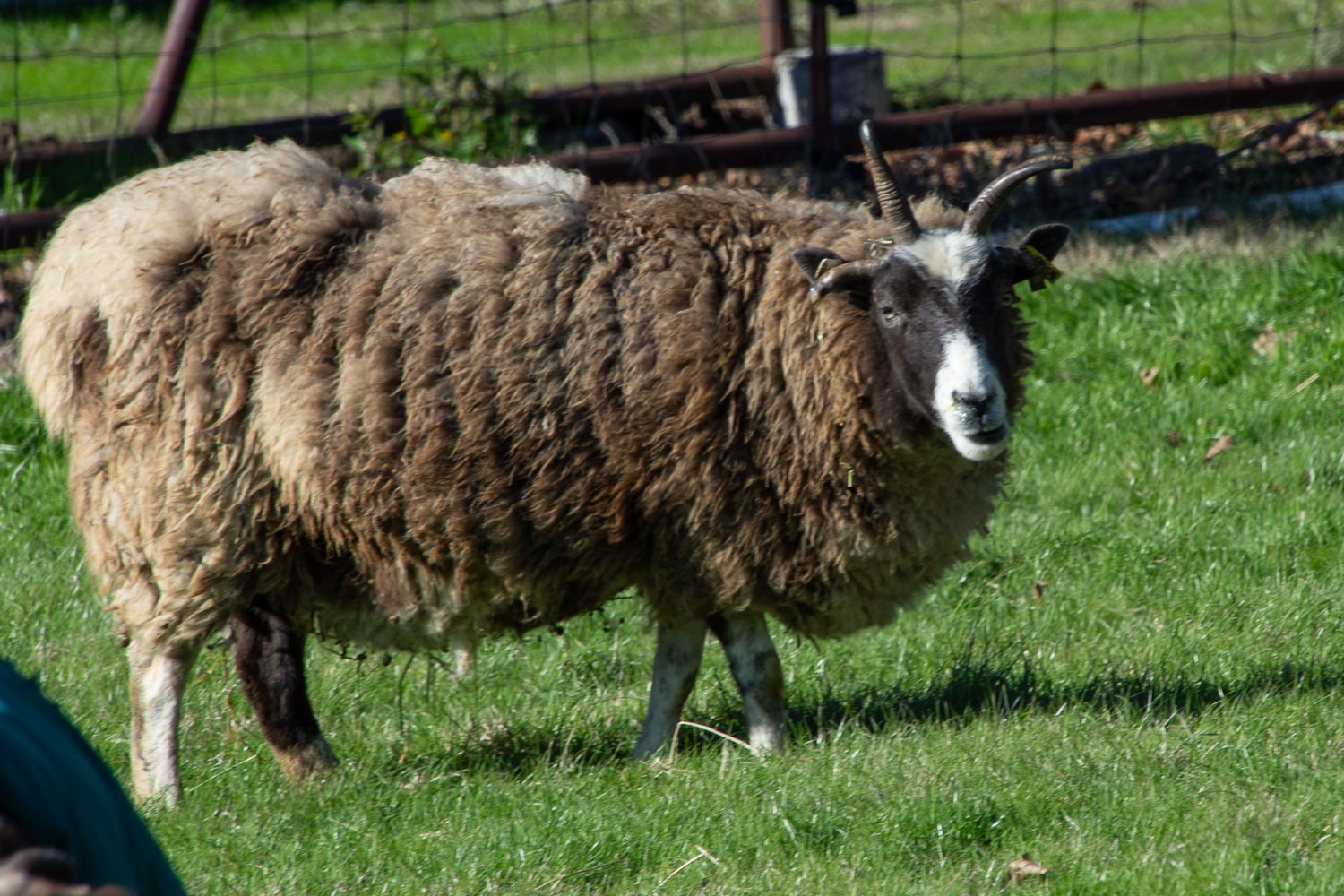






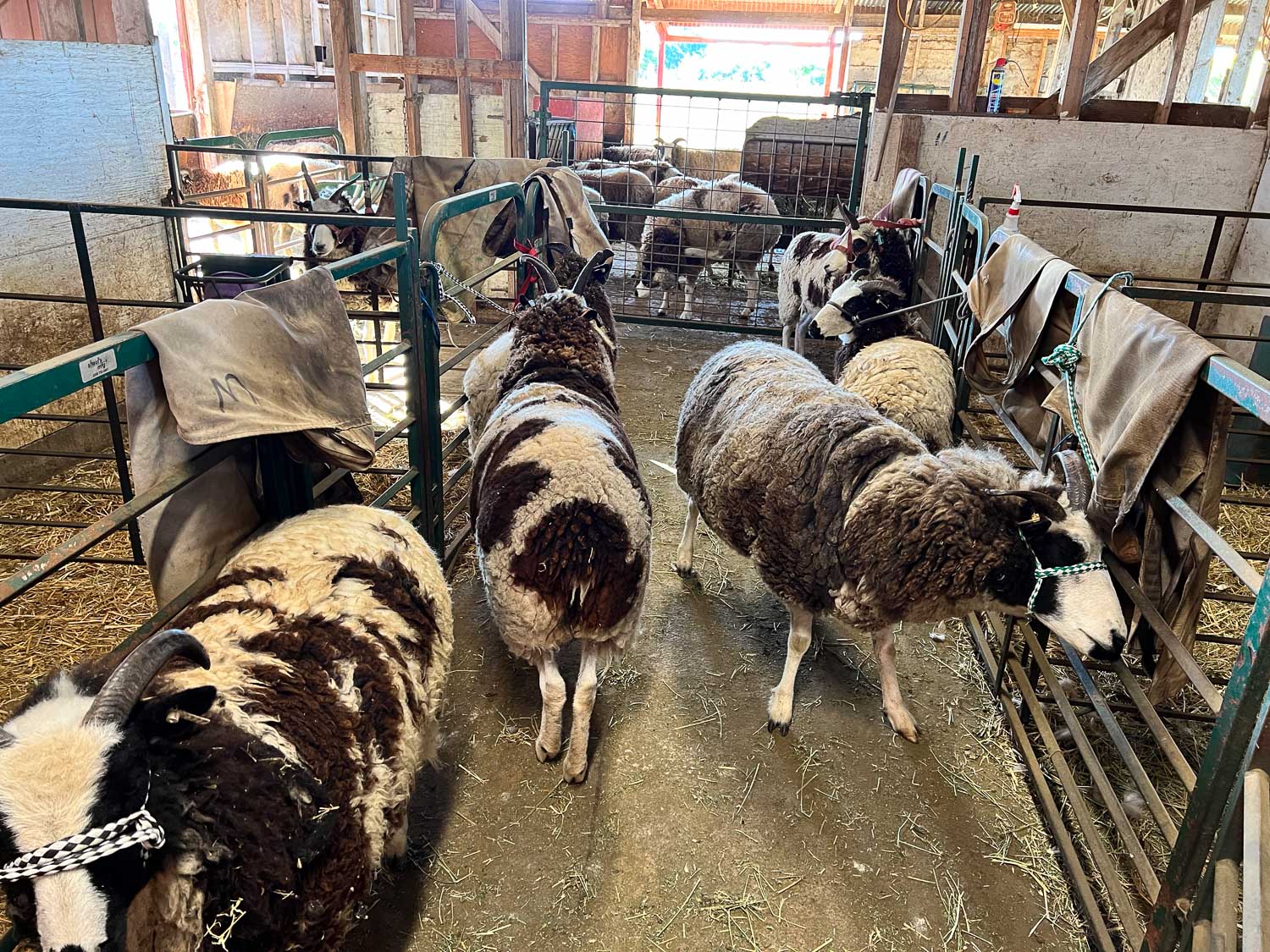









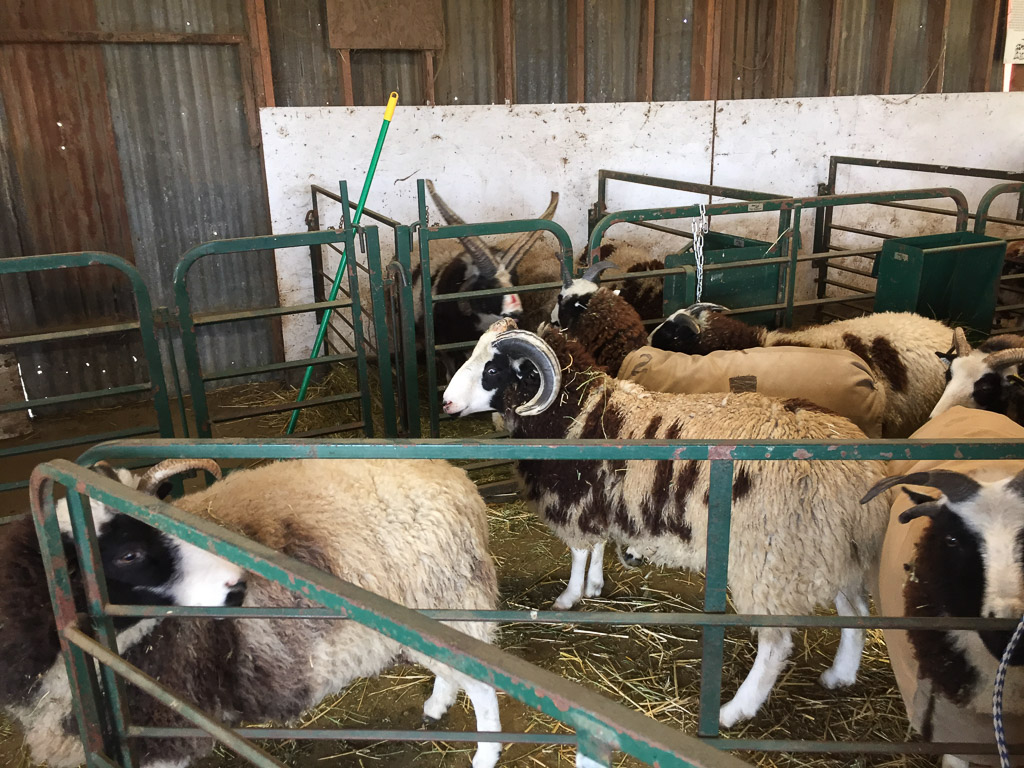 I brought the groups in one at a time and separated the rams. That’s Buster in the pen. His nose is already bloody because he was ramming the panel to try to get to Axle, the young 2-horn ram in the middle of the photo.
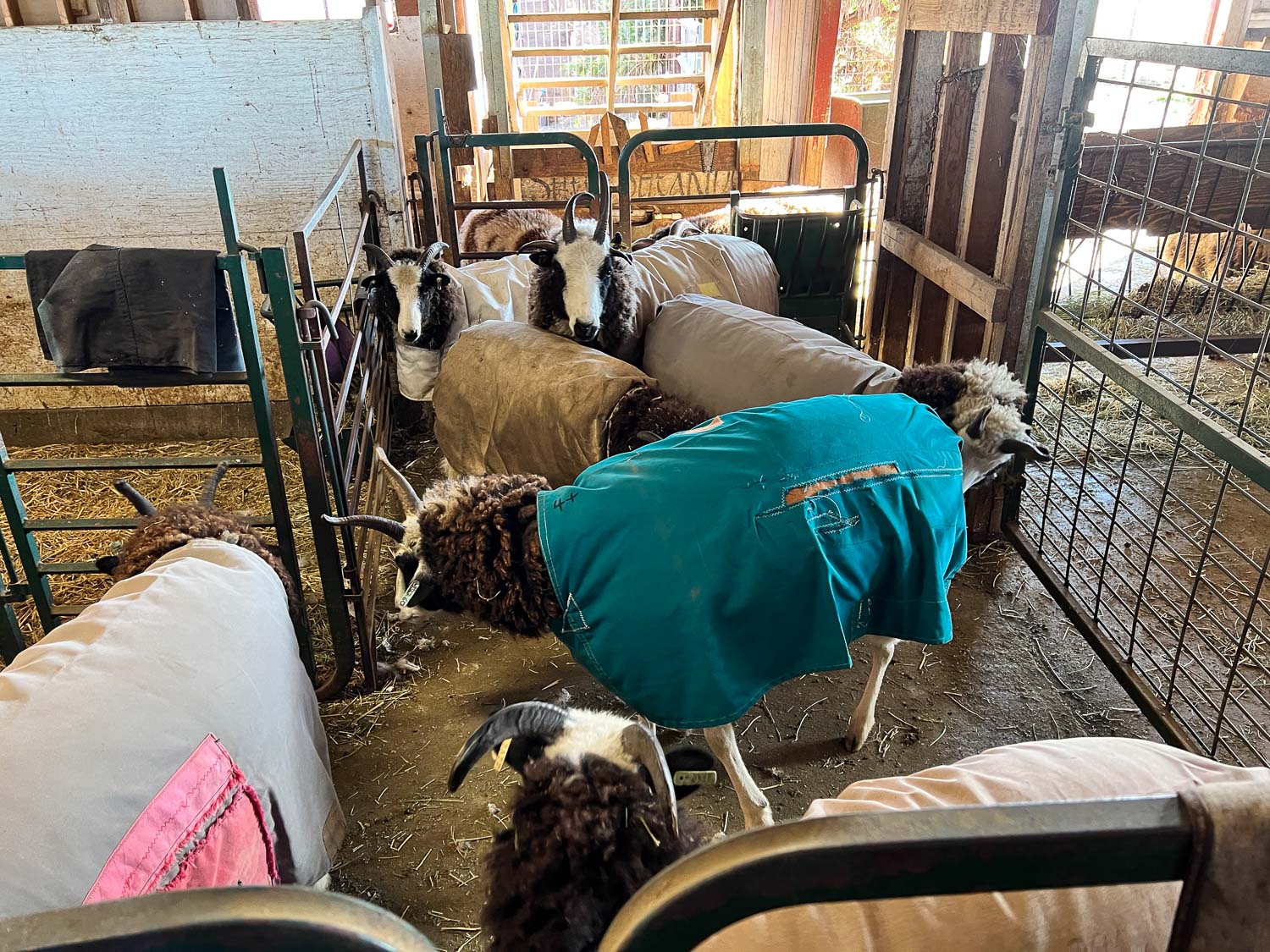
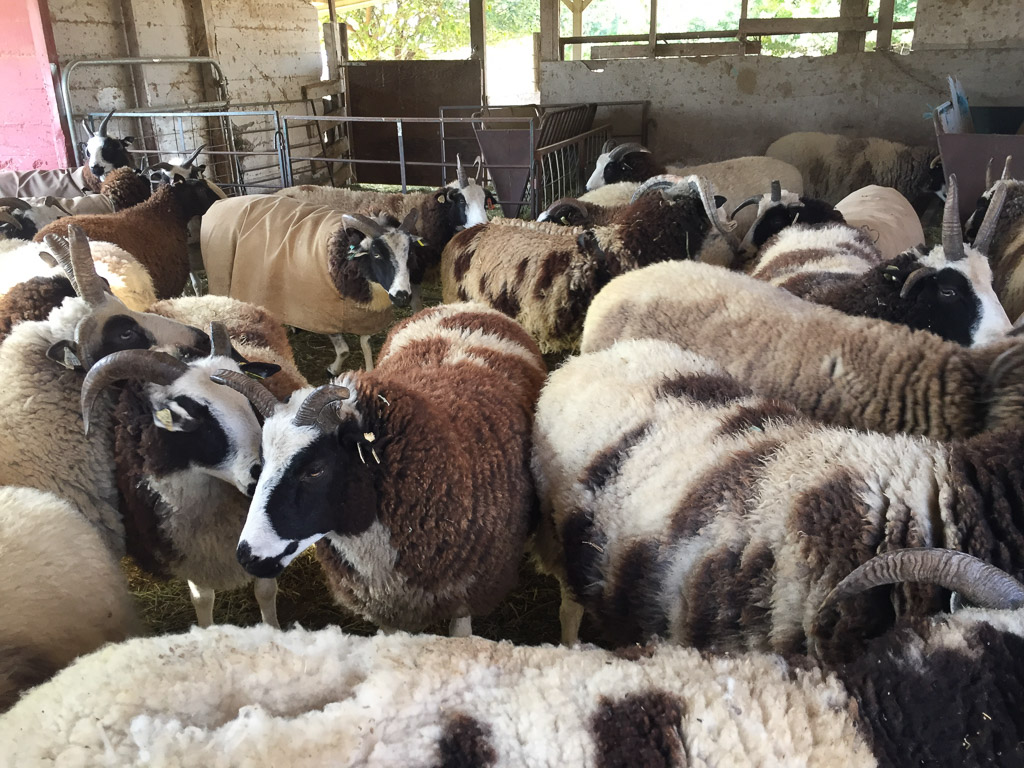 Most of the ewe flock was back together now and that was Clark’s lucky day! That’s him in the background with his head turned away.
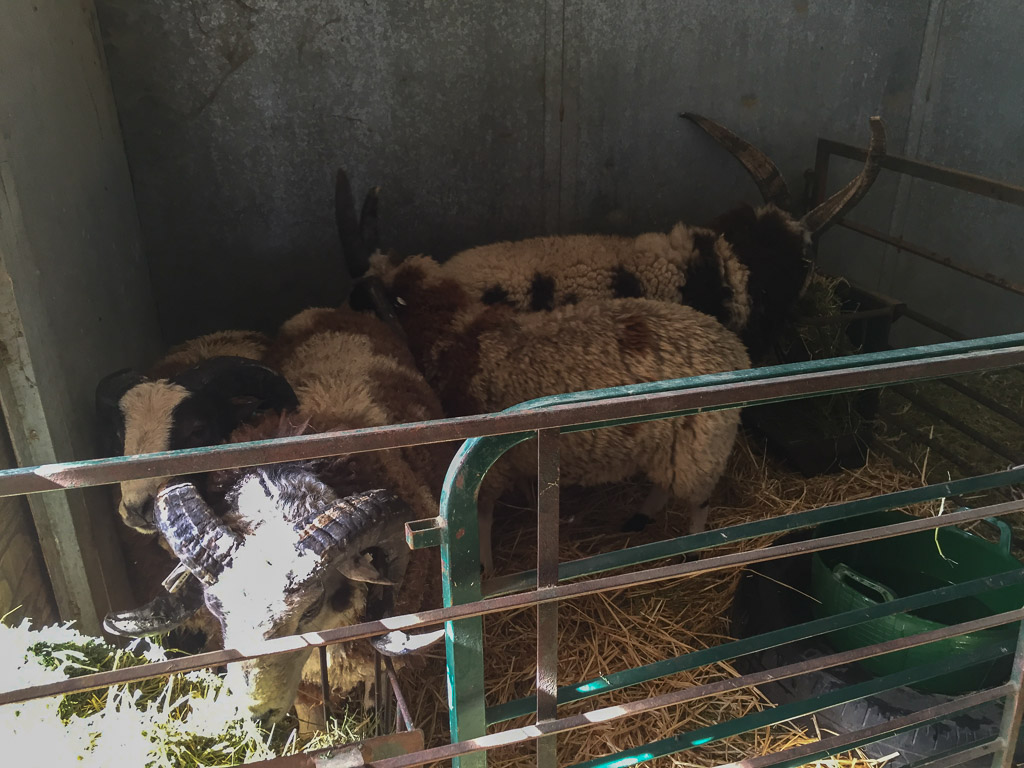 Meanwhile the other four rams went into their “buddy-up” pen. The point of this is that they are confined enough that they can’t do much damage. That doesn’t mean that they don’t hit each other but at least they can’t back up 10 feet and come charging.
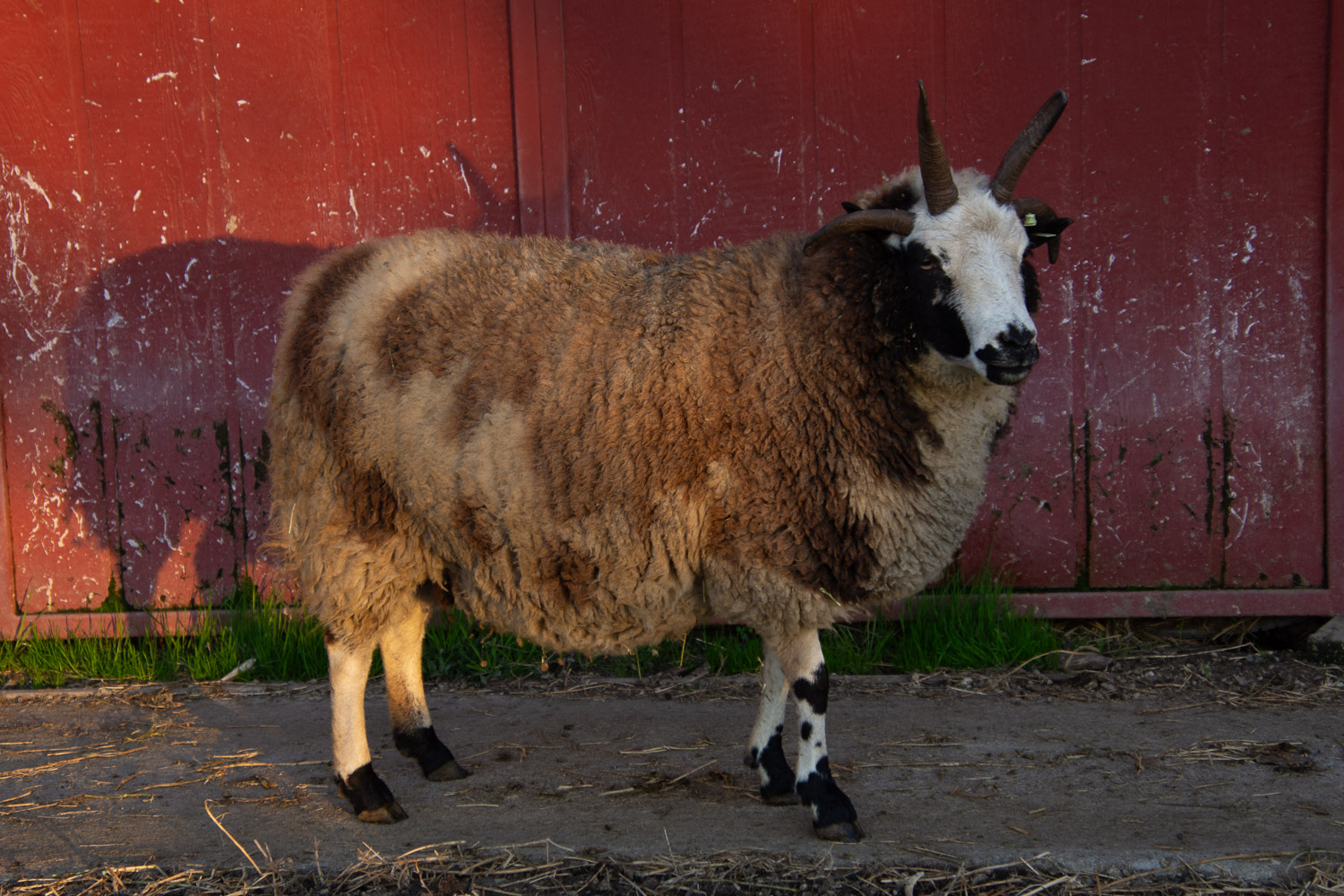
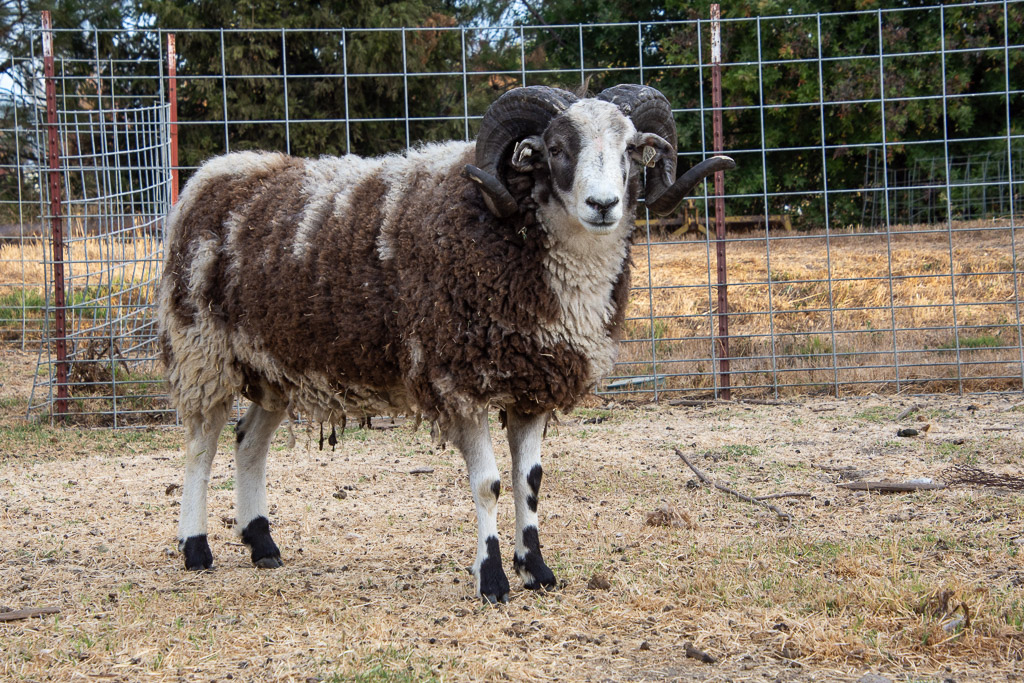 After a few days of learning to be buddies again they went back to the ram pen with minimal fuss. They all had figured out the pecking order. Cayenne (above) is #2.
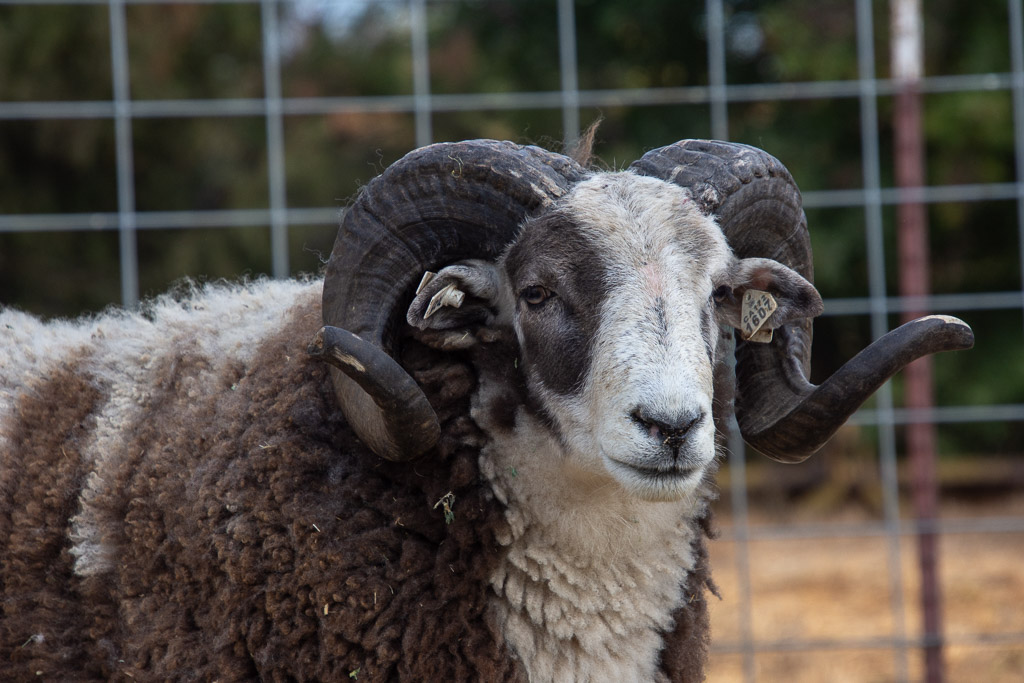 Cayenne. I love a nice two horn head.
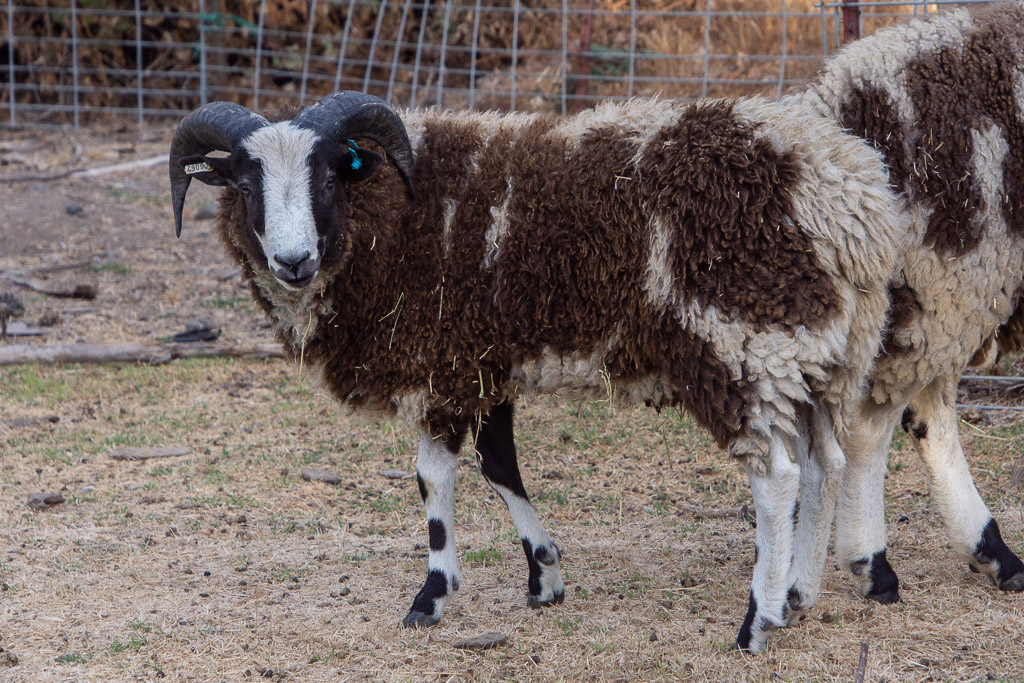 This is Spark, Cayenne’s full brother, born this year. There is the difference a year makes. Cayenne was born last year.
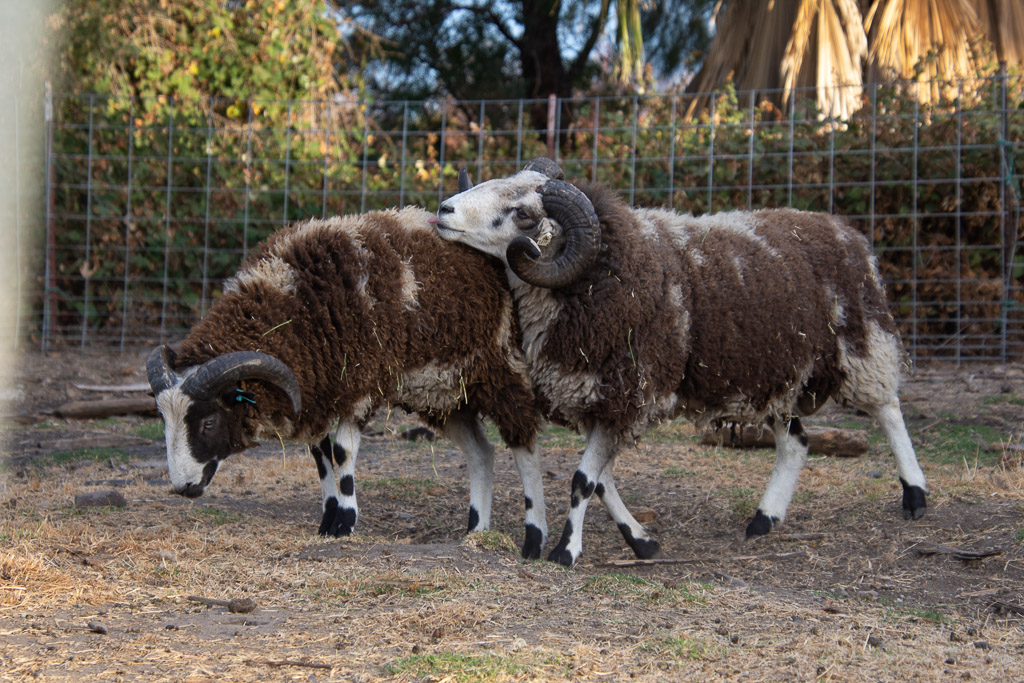 Brothers.
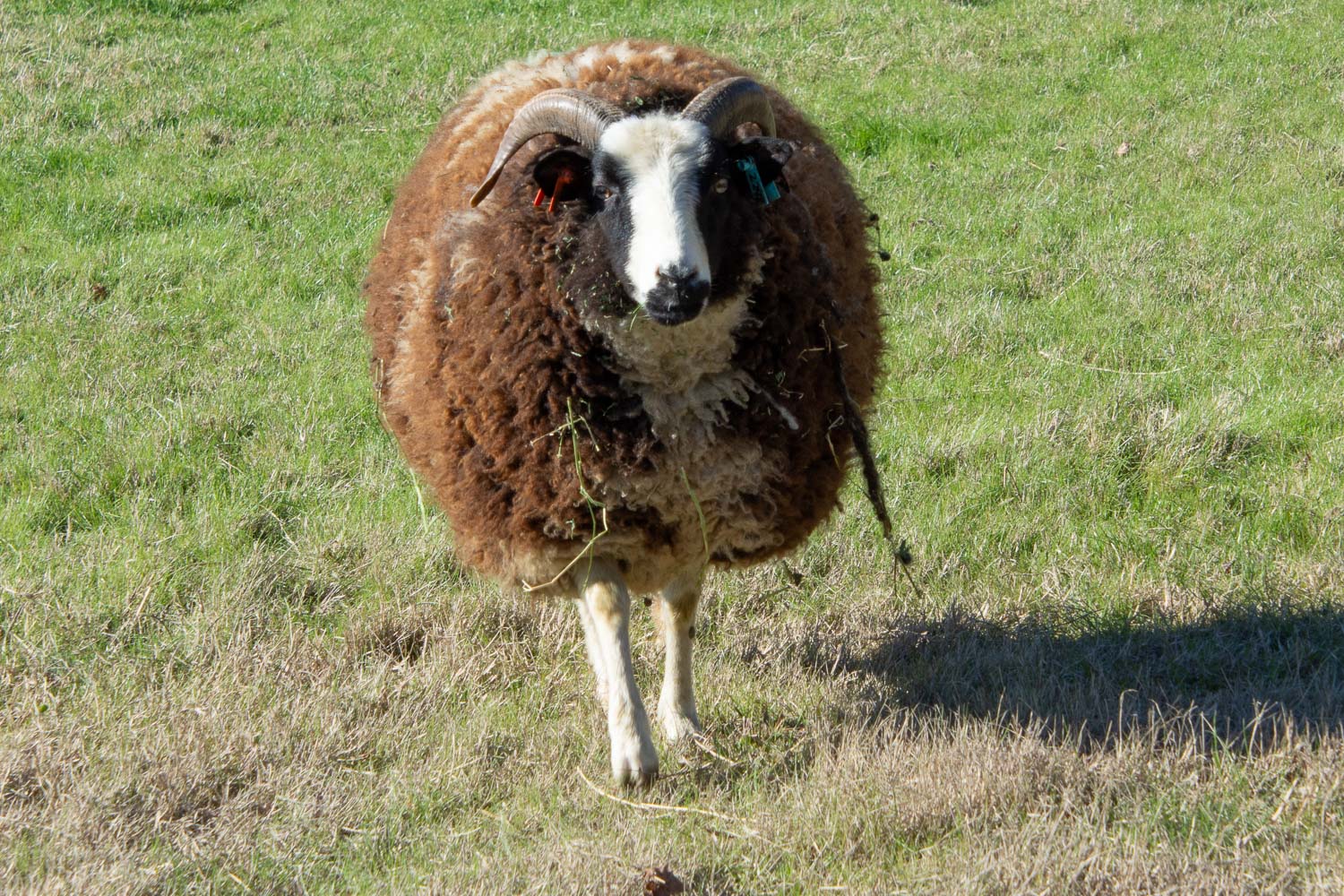
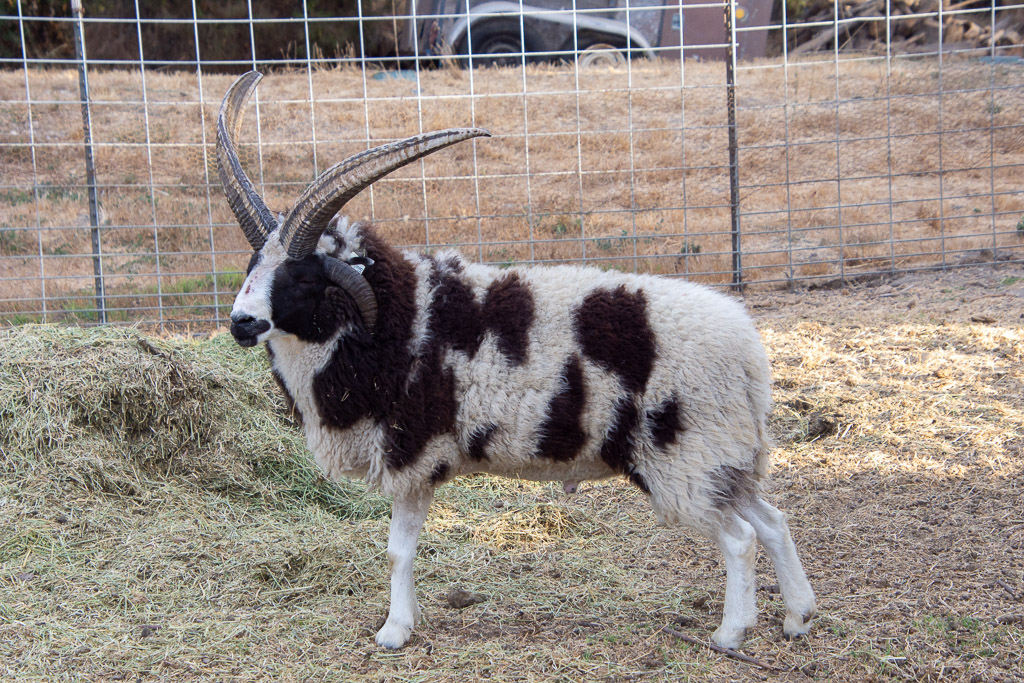 Bide a wee Buster is #1 in the ram pen.
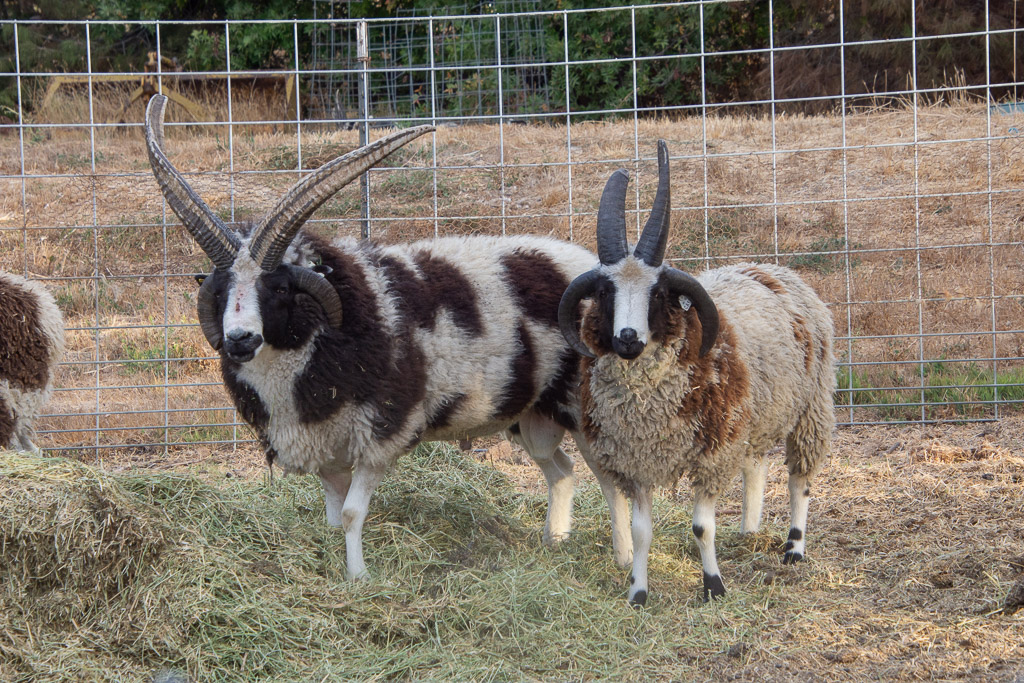 Buster is 3 years old and Clark is his son from this year.
 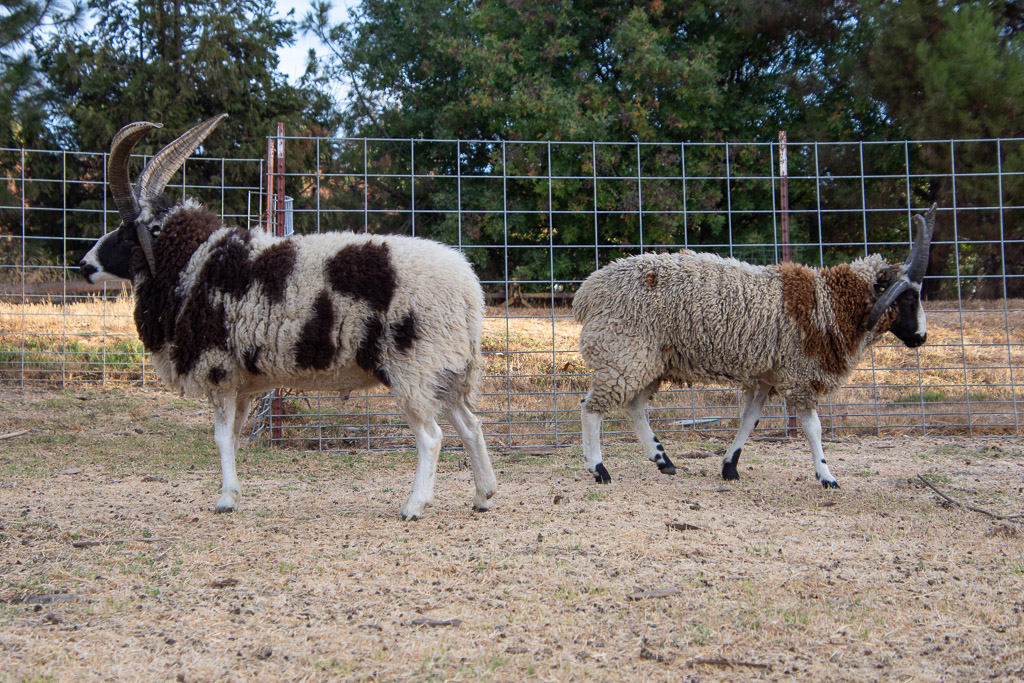 Bookends?
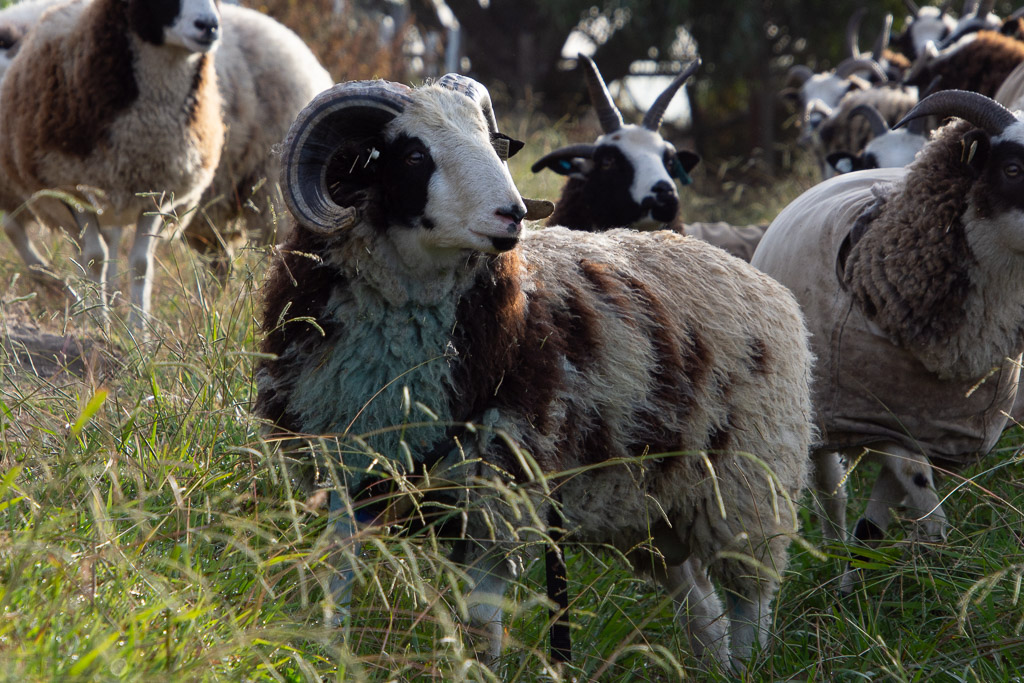 Here’s the lucky ram who gets to stay out with the ewes for another few weeks. This is Axle, also a 2018 ram. He is wearing a blue marker…
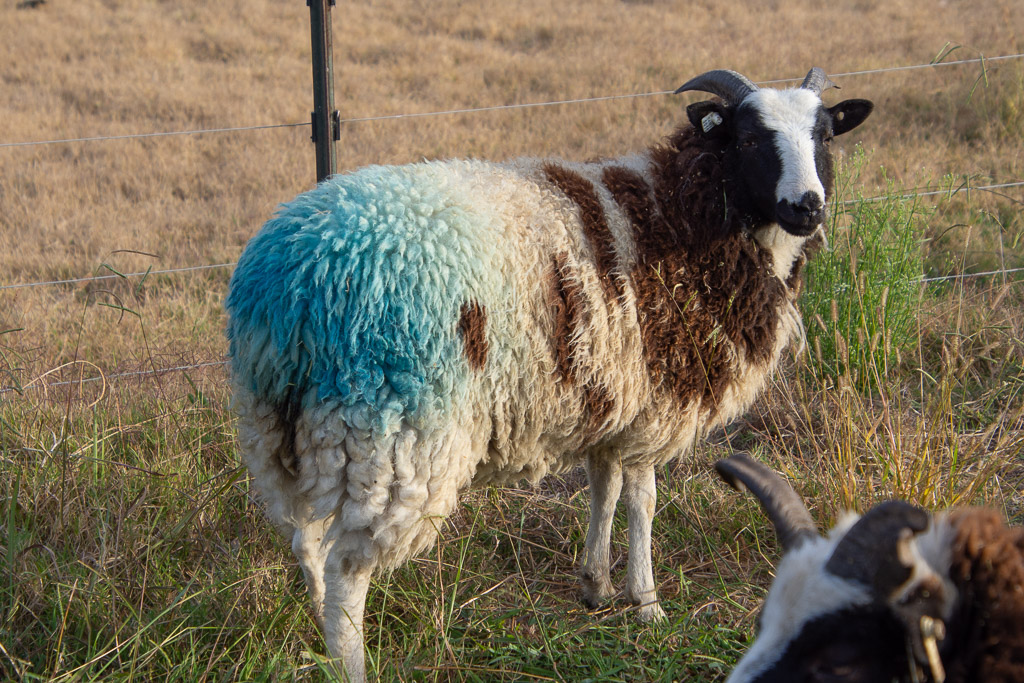 …and I finally saw some real color. This is ewe lamb, Soprano.
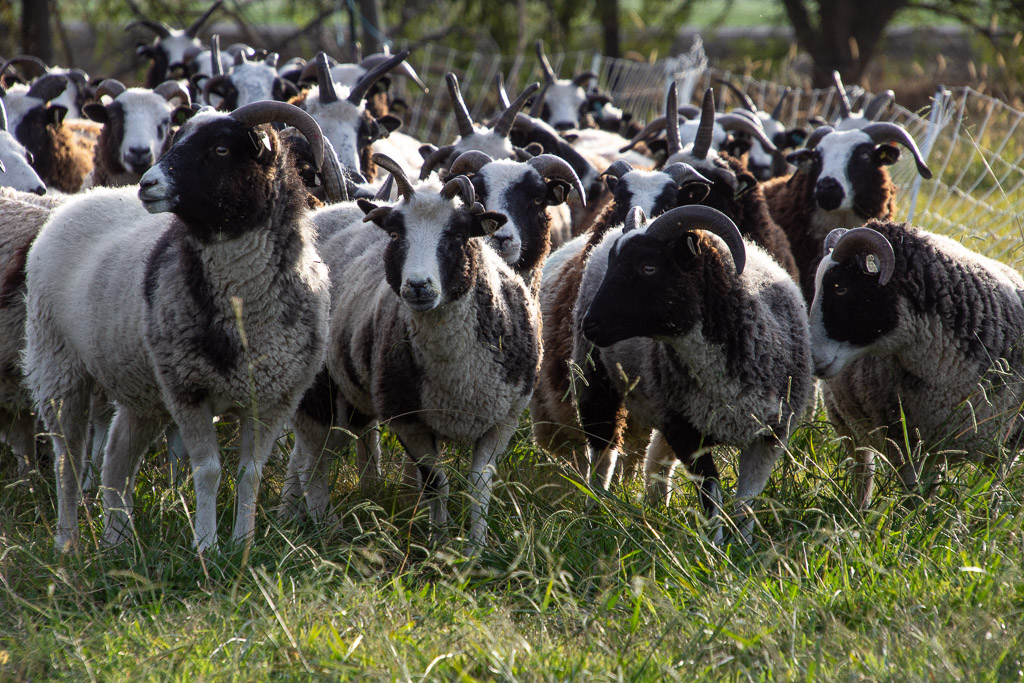 Today I moved most of Peyton’s ewes back to the flock. Three of them were the Pope Valley sheep that came this summer, and they immediately found their two friends. That’s the five or them in the front. Large Triangle, 4-Horn, Small Triangle, White Ear, and Crooked Blaze in the back. (They do have names but I remember them better by what I called them at first.)
 Meridian Jacobs' Blog