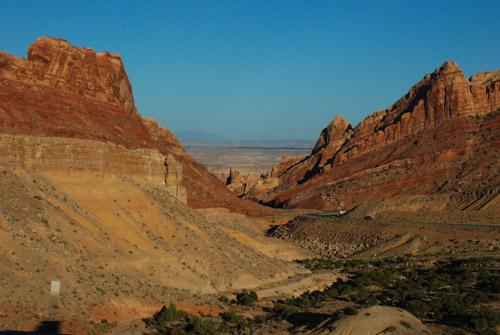
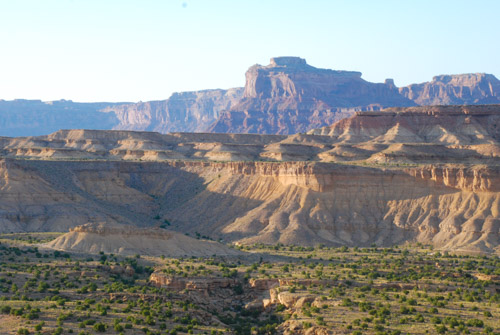
Road Trip to SD – Day 1 – Driving

I frantically got ready for this trip that I had been thinking about for six months.IMG_1354

This is why we were able to take a road trip in mid-August. It is finally sinking in for Dan that he isn’t going back after a summer break.

We still weren’t ready on Wednesday, the day of departure. I had told Dan that we WERE LEAVING IN THE MORNING. We did, but it was almost noon before we drove out of the driveway. The plan was to drive as far as we could, not stopping at all of the California and Oregon trail markers like we usually do because we wanted more time at the other end of the trip. For that reason and because I was not the driver-in-charge I have a lot of  “drive-by” photos. Many were deleted but some are OK and those are what I’ll share.

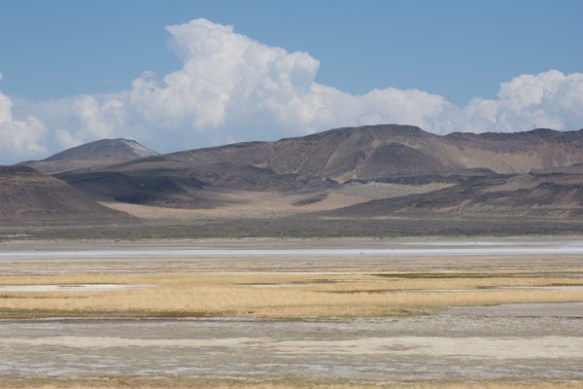
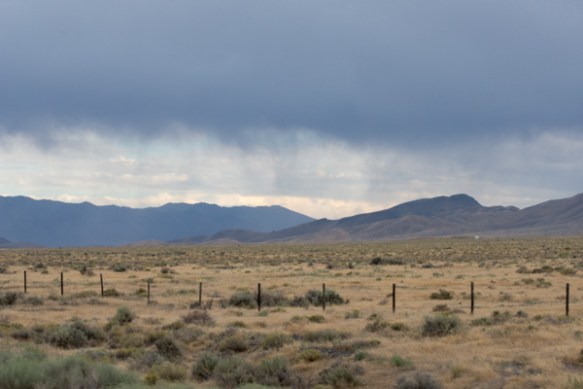
Fernly Sink & Hot Springs Mtns, NV

We were driving I-80. I love the scenery of the west, even in the Nevada desert. This is the Hot Springs Mountains that rise above the Fernley Sink.

Fernly Sink & Hot Springs Mtns, NV

According to Wikipedia, an irrigation system was constructed in the early to mid-1900s and “a drainage system was also constructed to carry away excess water and mineral salts from the farmlands. This system consists of channels (5 to 15 feet deep) dug adjacent to fields; it eventually terminates in the sink northeast of Fernley.

40-mile desert-NV

We didn’t stop at all the roadside points of interest but this was at a rest stop. Throughout this trip we thought about the pioneer trails. They are well marked in the road atlases that we have for each state and along the highways. I can’t even imagine what it would have been like to pack up the family and head west in the way that the pioneers did. We drove through the 40-mile desert in a little over 1/2 hour.

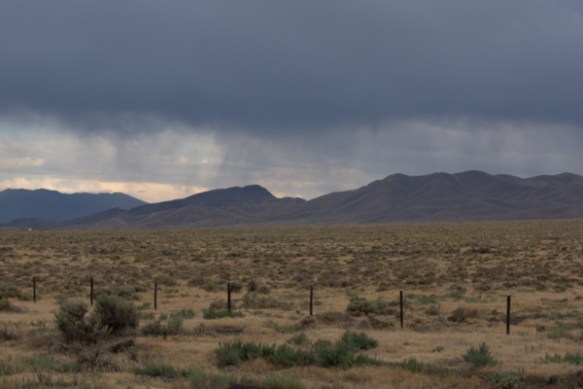
East of Valmy, NV

The mountains east of Valmy, Nevada.

East of Valmy, NV

We remember Valmy for it’s rest stop where we slept on one of our road trips a couple of years ago when there was a tremendous moth invasion. We didn’t need to stop to sleep here this time. Still daylight.

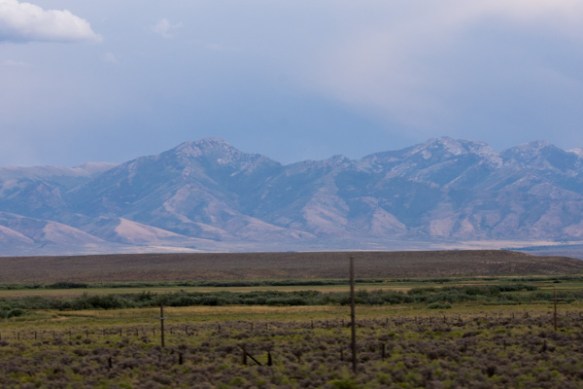
Humboldt Range, NV

Humboldt Range, southeast of Wells, Nevada.

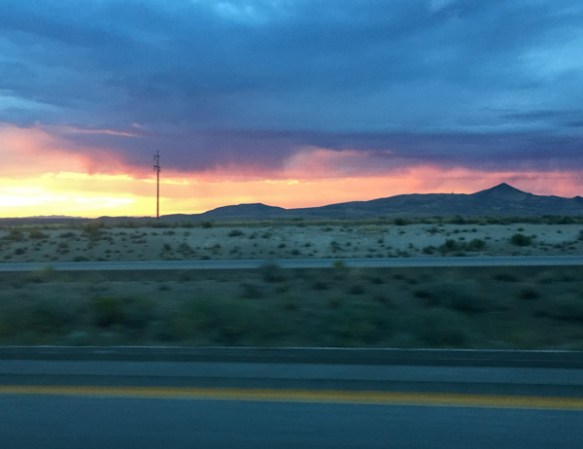
West of Wells, NV

These photos were looking back west as the sunset.

West of Wells, NV

I had to lean over the seat and reach behind Dan while holding and pointing the phone and the camera in the general direction.

Even though it was getting dark we weren’t ready to stop. If we had left earlier in the day we would made it to Salt Lake City. So Dan kept driving. There is a distinct difference in the town of West Wendover (NV) and Wendover (UT). Bright flashing (gaudy) lights and Last Chance To Gamble on one side of the border and dark and “normal” on the other side. Dan kept driving. We passed through the Great Salt Lake Desert in the dark and finally stopped at a rest stop at the east side of the salt flats.

Those of you who read my blog know that I have written a sort of travel journal with photos each year for the past several years when we have made our annual road trips. I have no idea how many people actually read these, but I write these blog posts because they substitute for the old scrapbooks and photo albums that I was never able to keep up with. I also like reviewing the photos and looking up some of the information that I may have forgotten. It helps me keep it all organized in my brain. If you are one of the regular readers, I’d love to know about it. Stay tuned for Day 2.


Getting Ready

It is always work to get ready to go somewhere. In my case I cram in all the things that I would probably put off if I were here, but now feel like they have to be done before I go. Part of it is to try and make things as foolproof as possible so that the people taking care of things don’t face issues.

IMG_1334

Now that the tractor finally works (sort of) I spent some time mowing. Then I wanted to try “spreading” manure. Spreading is in quotes because we don’t have a manure spreader. I have a tractor with a bucket and me with a shovel. Not practical…

IMG_1329

…even though I have made some darn fine compost.

IMG_1328

To make good compost the manure pile needs turning now and then, but the dryness on the top is deceptive. It’s wet underneath and it’s easy to get the tractor stuck–which requires me with the shovel again. Move onto other things that need doing.

IMG_1338

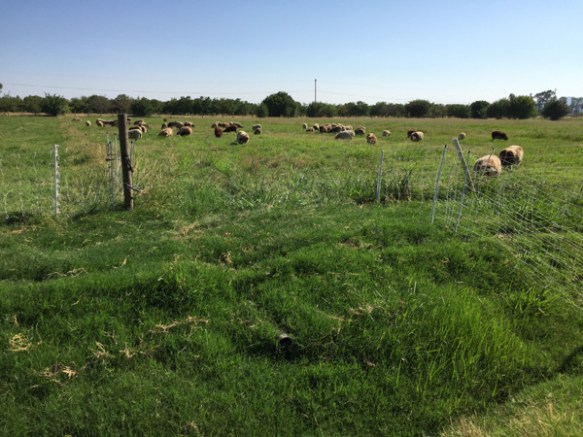
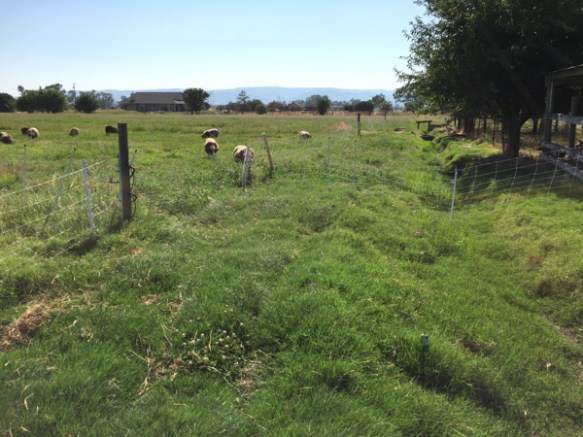
The ewes are on pasture and the white net fences are moved around to change the paddock to be grazed. I moved the ewes to the side of the pasture where there is less risk of them rubbing on a gate and inadvertently (or on purpose) pushing things out of wack while I’m gone.

IMG_1339

It’s hard to see in this photo but I set up the next three fences so that my kids don’t have to do it. They will have to close one but then the sheep just go to the next. There are always tricky things (like where there is concrete so the stakes for the fence don’t go in all the way and where you have to block off the irrigation ditch so they sheep can’t go under the fence, etc)

IMG_1341

I had the ram lambs grazing in the back but don’t want fence-to-fence contact with them and the ewes so they had to be moved. These are the panels that were keeping them away from the ewes while grazing the back. There is no water in that back field so they needed access to the corral for water. I’m going to leave this in place so that the ewes won’t be near the big ram fence (not a big fence, although it is double, but the big rams). I don’t need any more reason for the rams to try and mangle their fence while we’re gone.

IMG_1317

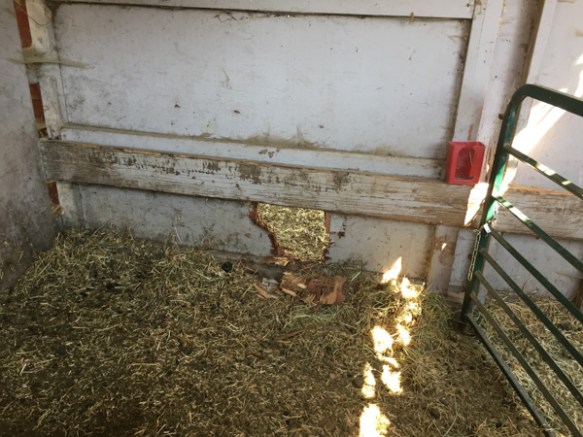
They did this just yesterday.

IMG_1335

Here is a temporary fix. They also beat up the other wall and pushed it away from the corner post. That green panel in the upper photo is keeping them away from that part of their shed. Not fixes, but hopefully stopping further destruction for now. I expect when I get back that wire panel over the hole will be mangled as well.

IMG_1336

Rusty doing his job of keeping the rams away while we put up the wire panel.

IMG_1321

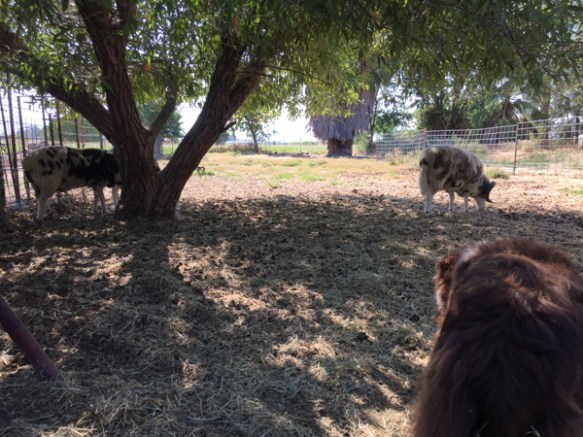
I said that I need to move the ram lambs out of the pasture. Ginny helps with that.

IMG_1323

You can see Ginny behind here. She doesn’t work with finesse, but she can do the job.

IMG_1315

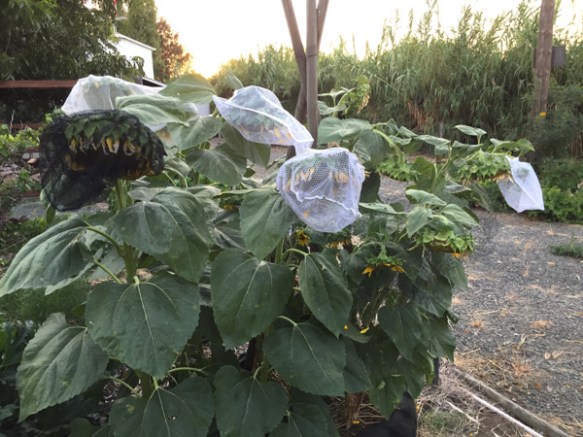
Back up at the house, the birds are starting to get to my black sunflower seeds. These are for future dyeing projects.

IMG_1316

I put net bags and bird netting over the flowers.

IMG_1343

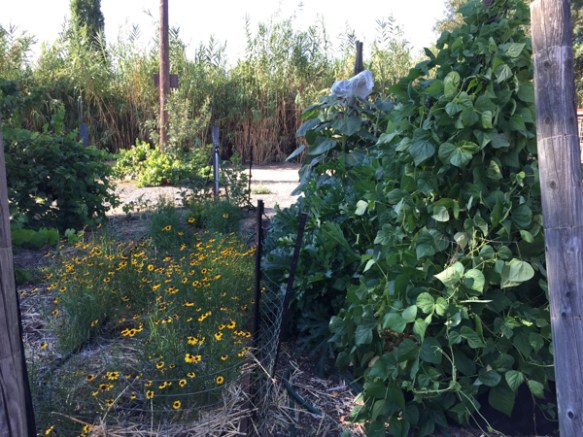
I water the garden and picked coreopsis. A friend will come and pick during the week to keep the flowers blooming and take squash from the plant that is taking over. The beans in the foreground look great but haven’t produced anything yet.

IMG_1340

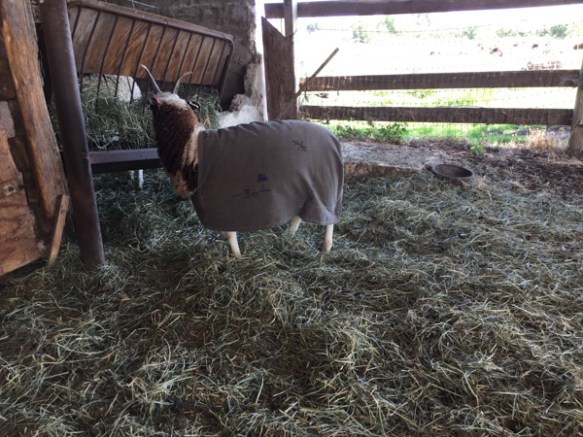
This is the wether in with Peyton. He had his leg through the front of the coat the other day so I caught him to take it off. Don’t want that happening while I’m gone and I didn’t have a needle and thread handy to make it smaller.

IMG_1351

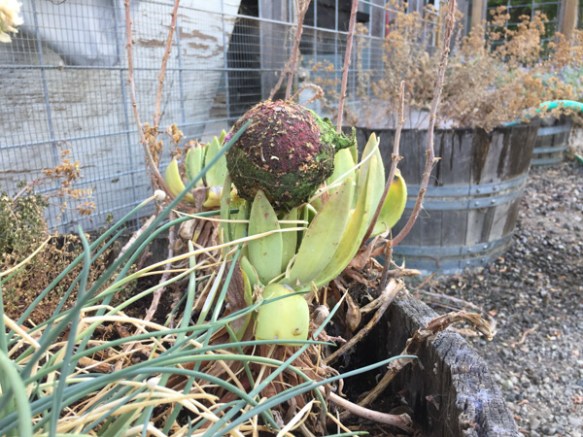
I was watering my barrels that have been neglected. Ginny knew where my attention was and placed her ball appropriately.

When condense into a few photos this doesn’t seem like much but I was going non-stop yesterday. I realized at about 9 p.m. that all I’d eaten was granola in the morning and watermelon through the day–it was too hot to want anything else. I am now  gathering up the last of the stuff to take. Where is that book about my camera?

IMG_1353

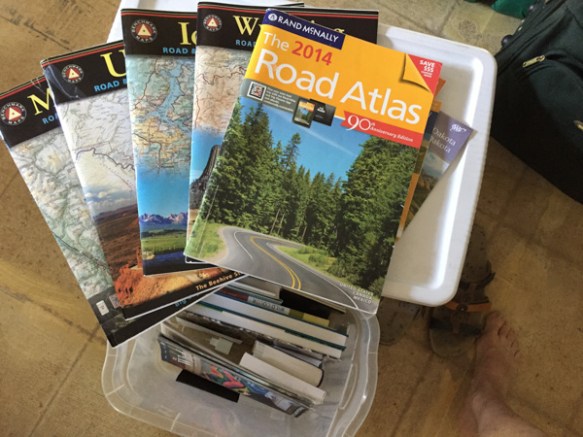
Here is a hint about the road trip. Do you think I have enough reading material with me?

MJ Adventure Team Goes to MD – Day 7 – Ponies!

It’s been almost a month since we  embarked on this trip so I guess I’ve had extended enjoyment while organizing photos and thinking about the blog posts.  I don’t know how many people really read my posts, but there have been some who have asked “what about the ponies?”

Day 6 was spent learning about Fort McHenry and exploring Harriet Tubman Underground Railroad. We spent a comfortable night at our AirB&B in Berlin and got on the road in time to get to the Assateague Island National Seashore…  DSC_1017

…when the Visitor Center opened. The area is managed jointly by the National Park Service and Maryland Park Service.

DSC_1019

Assateague Island is a barrier island that is 37 miles long and separated from the mainland by Chincoteague Bay and Sinepuxent Bay. The northern two thirds is in Maryland and the southern one third is part of Virginia. If you were a horse-crazy girl once then what you know about these islands is that there are wild ponies living there, made famous by Marguerite Henry’s book, Misty of Chincoteague.  We had come to find the ponies.

DSC_1025

Only part of  the island is accessible on a paved road that connects campgrounds and trails. We hadn’t gone far when we found them. Ponies!

DSC_1021

Just pretend that you don’t know that they were in a parking lot near the bathrooms. Signs everywhere warn people to leave the ponies alone and don’t offer food. It’s the same kind of warnings that you read in Yellowstone about not feeding bears and packing food away. People are kicked and bitten by ponies and the ponies are hit by cars when they get used to people offering food.

These ponies didn’t seem to be going anywhere soon…

DSC_1029

…so we walked to the beach.

IMG_9633

We had made it to the Atlantic.

DSC_1035

That is Ocean City, about 10 miles north. Can you see the ferris wheel and the amusement park in the middle of the photo? What a contrast when looking from the National Seashore.

DSC_1038

The barrier islands are “among the most dynamic landforms on earth”. There is constant change. Assateague Island is moving west, at an accelerated rate after jetties were constructed near Ocean City in the 1930s.  At one time Assateague Island was to be developed, and in the 1950s a 15-mile road was created on the Maryland side of the island. A hurricane in 1962 wiped out structures and covered the road, and legislation in 1965 created the National Seashore.

DSC_1070

The ponies are most likely descendants of horses that were brought to the island 300 years ago by farmers who took advantage of the natural “corral” made of water. Farmers were required to pay taxes on their livestock and by turning them loose on the island, they could avoid the tax. I usually try to be scientifically accurate about what I write, but there is some artistic license here. The documentation from the Park Service says that genetically these are HORSES, not PONIES. The small stature is a result of years of adaptation to a diet of abundant, but nutrient-poor salt-marsh grasses.

DSC_1064

Sorry. I will continue to call them ponies while I’m talking about our visit. They are used to paparazzi. We were lucky to be visiting in the off-season and on a weekday. There were very few people around. It would have been a very different scene if the parking lots and roads were full.

DSC_1044

The ponies wandered off and we drove on to find more.

DSC_1078

This looked like a very old pony at an empty campground. The Maryland ponies are managed as wildlife are. From the brochure, “While action may be taken to end the suffering of a gravely ill, seriously injured, or dying horse, no measure are taken to prolong the lives of Maryland’s wild horses. As with other species of Assateague wildlife, horses that are sick or weak do not survive.” The population is controlled using a non-hormonal, non-invasive vaccine, administered by a dart, to prevent pregnancy. With this method the birth rate has been lowered to fewer than ten foals each year which maintains the population at under 125 horses.

A fence that separates the Maryland and  Virginia herds. The Virginia herd is privately owned and produces 60-90 foals each year. The foals are sold at auction after the annual swim from Assateague Island to Chincoteague Island and the proceeds go to veterinary care, the fire department, and various charities. There are week-long festivities around this event and you can see videos at this link.

DSC_1103

There are three nature walk trails through the marsh, the forest, and the dunes. We started with the marsh trail.

DSC_1100

DSC_1088

We spotted this osprey that had caught a fish.

DSC_1107

We watched for quite awhile while it circled, still carrying it’s fish.

DSC_1116

Diamondback terrapins.

American Oystercatcher-Laughing Gull

Two laughing gulls and an American oystercatcher…

American Oystercatcher-Laughing Gull

…who was not welcome.

Short billed dowitcher

Short-billed dowitcher.

IMG_9649

DSC_1189

We drove down another road…

DSC_1190

…where we saw a group of people gathered. From my Yellowstone experience (people stopping in the road when wildlife is spotted), I figured that that meant Ponies!

DSC_1200

This group was a little more picturesque, being “in the wild” instead of “in the parking lot”.

DSC_1203

DSC_1210

DSC_1245-2

There was a Pony Patrol volunteer with that group of people answering questions and making sure that ponies aren’t harassed.

We drove to the next trail–the forest nature trail.

IMG_9650

Loblolly pines are the dominate forest species.

DSC_1301

DSC_1299

DSC_1297

Poison ivy.

IMG_9652

IMG_9645

IMG_9641

DSC_1275

At the end of that trail we saw the same group of ponies, but from a different view. Notice the paddle-boarders in the marsh. What a great way to see the marsh and the ponies.

One more interesting pony fact: “The Assateague horses drink over twice the amount of water that domesticated horses will due to their salty food supply. All that drinking combined with a high salt diet contributes to their bloated appearance.”

DSC_1307

We drove to the Dune Nature Trail.

IMG_9653

Chris needed some beach time so Kathleen and I walked the trail while Chris enjoyed the beach, albeit a bit cold and windy.

IMG_9655

DSC_1328

DSC_1332

Remember the road that I said was built in the 1950s? Part of it is still visible.

DSC_1341

DSC_1323

IMG_9630

IMG_9631

As we left the park we were faced with that age-old question.

DSC_1351

“Why does the pony cross the road?”

DSC_1352

Because the grass is greener?

This was another full day (and a very full blog post) but there is more Maryland scenery. That will be another post.

MJ Adventure Team Goes to MD – Day 5 – Gettysburg

After a fabulous time at MDSW the fun wasn’t over for three of us.
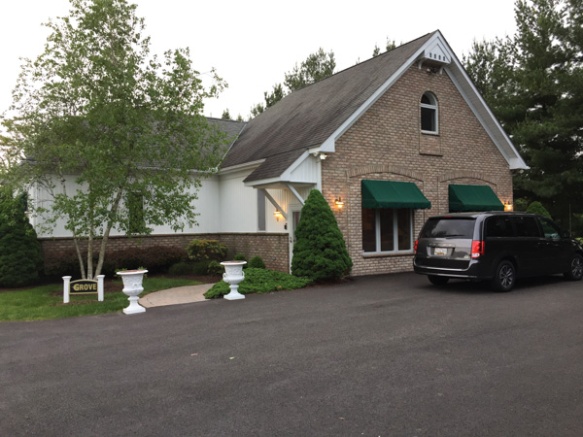
IMG_9411

This is the house where we’d stayed for the last 3 nights.
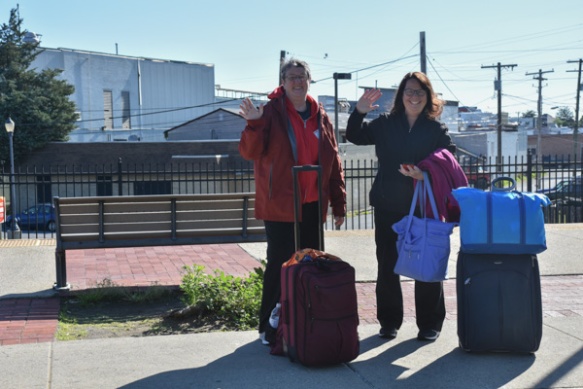
DSC_0721

We left Dona and Mary at the bus station in Frederick where they would take a shuttle to the airport, and Chris, Kathleen, and I drove on to continue the adventure.
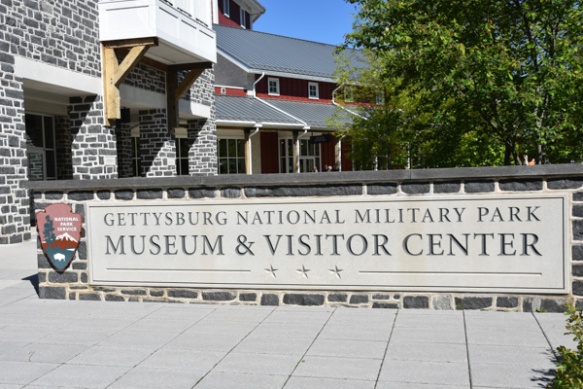
DSC_0723

Today’s plan was to see Gettysburg National Military Park.
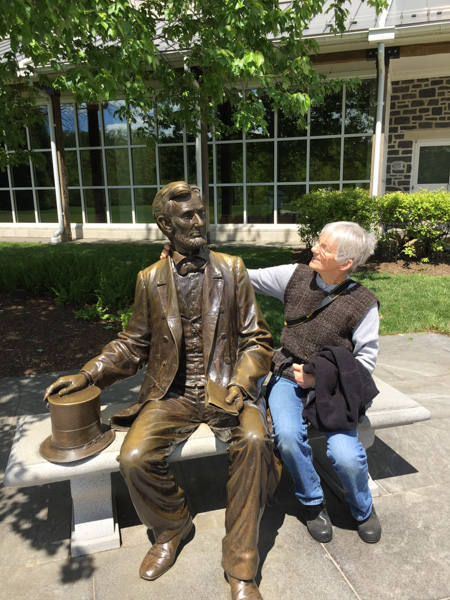
IMG_9518

A chat with Abe outside the Visitor Center.
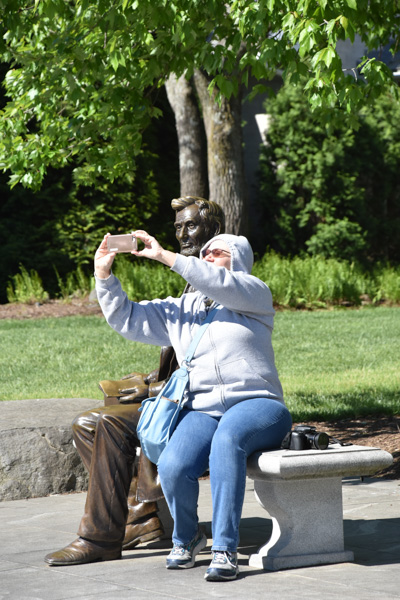
DSC_0725

Chris took a selfie with him.

IMG_9516

We spent a short time in the museum before entering the theater at our ticketed time for the presentation of a film about Gettysburg. This was a powerful film narrated by Morgan Freeman.

I must say here that I continue to be impressed with the modern visitor centers in our National Parks and Monuments. The presentation of history, natural history, collections of artifacts, etc is superb.  If you take the time to absorb all that is presented there is a lot to learn.
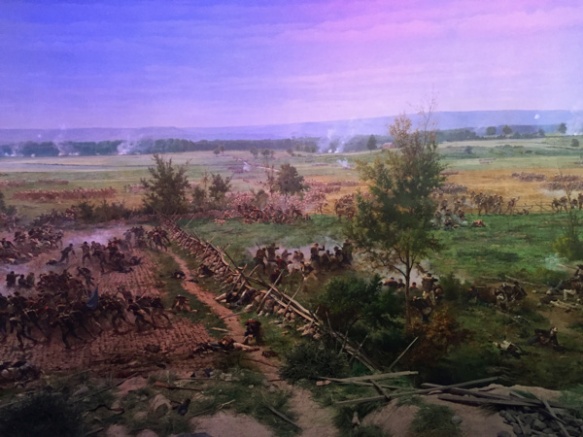
IMG_9515

After the film we were ushered into a circular room to see the Cyclorama. . It is a painting depicting Pickett’s Charge that was completed in 1884 and is 42 feet by 377 feet! The overhead lights go dim and you watch the sky lighten as dawn comes. Then you hear the story while different portions of the painting are illuminated, changing as the day (July 3, 1863) goes on and ends in carnage.

Here’s a refresher for those of you who remember as few details of U.S. history as I do.

The Civil War began in 1861 and the Battle of Gettysburg, fought from July 1-3, 1863, is considered the most important engagement. Troops commanded by General Robert E. Lee battled the Union Army, led by General George G. Meade. The two armies were on parallel ridges about a mile apart and on July 3 12,000 Confederate soldiers were sent across the open fields in an attack known as Pickett’s Charge. Over 5000 soldiers were killed within an hour and Lee retreated towards Virginia. This marked a turning point in the war and was (I think) the northernmost point reached by the Confederate Army.
DSC_0734

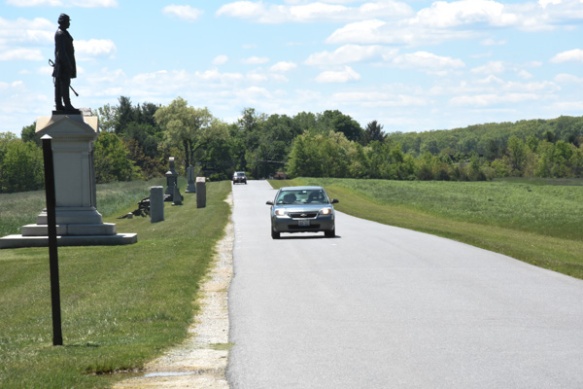
The Park encompasses the land upon which the battle was fought, located around the town of Gettysburg and there are signs that point out all the critical places that armies occupied and where battles were fought.  There is a 24-mile Self-guiding Auto Tour with opportunities to stop all along the way.
DSC_0776

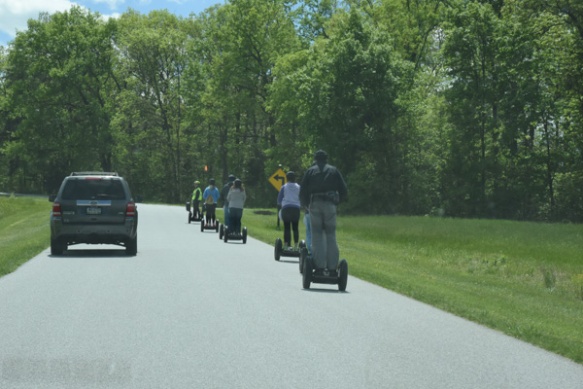
You don’t have to have an Auto to take the Auto Tour.
DSC_0735

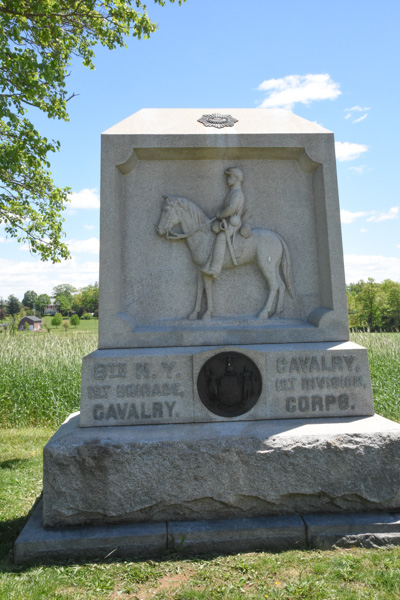
At first i took photos of all the statues we came across but I soon learned that there are over 1300 monuments and statues in the Park. Each regiment has their own and there are many markers that explain  the significance of some of the sites.DSC_0737
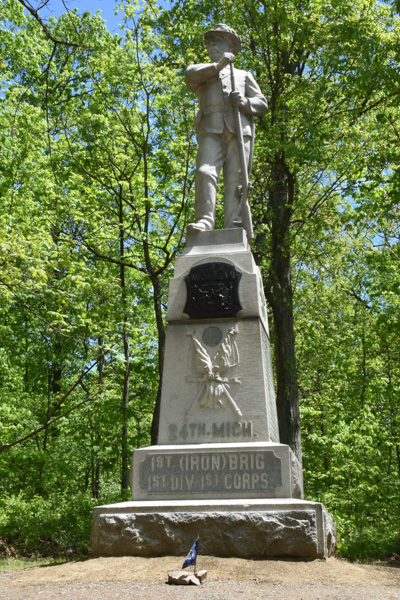
We looked specifically for this one because Chris has an ancestor who was represented here.
DSC_0744

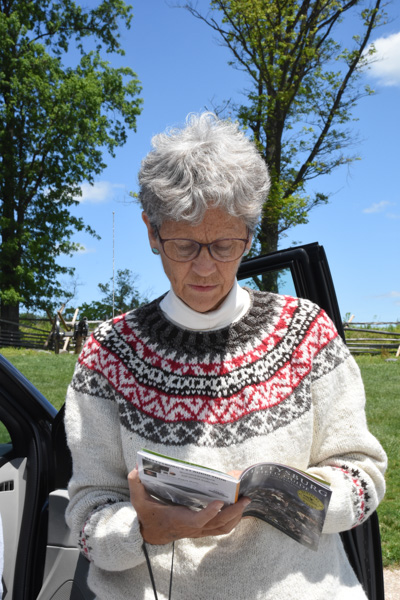
We had bought an audio guide to be downloaded on a phone and listened to while we drove through the area. We couldn’t make it work and Kathleen did a great job of narrating the tour using the accompanying book. Kathleen is wearing her MDSW awarding-winning handspun Jacob sweater that I mentioned in one of the previous posts.
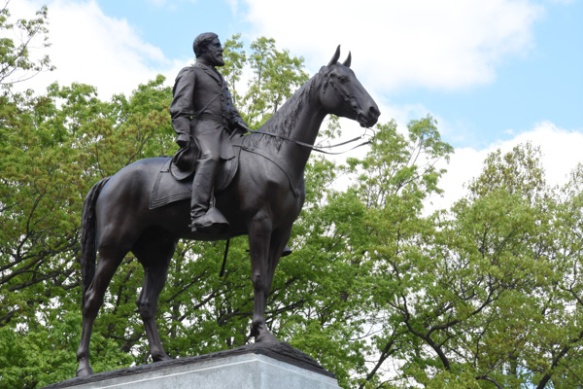
Virginia Mem.-Gen.LeeThis is the Virginia Memorial, including a statue of Robert E. Lee, at one of our first stops. I love horse statues.
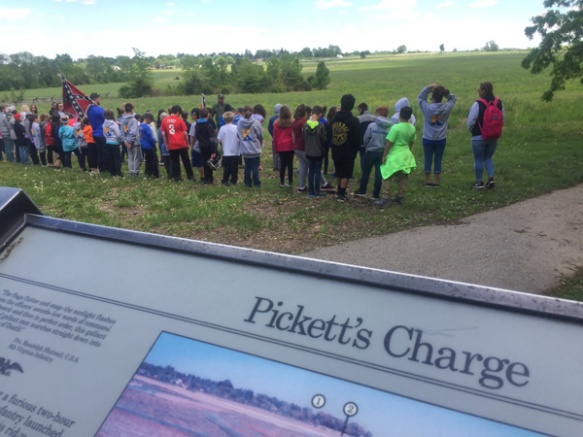
IMG_9528At this site we saw a couple of groups of school kids having a lesson in Civil War history. We listened awhile to the guide who explained things that I never thought about (importance of flags and drummers as a way to signal, for instance) and then had the kids line up in formation and “right face, left face, etc” It was cute to see most of them turn together but there were always a few that went the opposite way. Watching them reminded me of when my oldest son was in middle school and his history teacher, who was a film buff in addition to teaching history, led the kids in making a film of Pickett’s Charge. The kids were dressed in home-made or scrounged clothing to look the part and carrying home-made weapons (that wooden rifle is still around here somewhere I think). The school band participated as well as some of the kids who owned horses. They played out the event and made the film out in a field owned by a local farmer. I took a photo of these kids to send Matt as a fun reminder about that, but it became less “cute” and more sobering the more we read and the more we delved into the history of what actually happened here. DSC_0754This is a view from where the kids are standing and where the Confederate troops were positioned on Seminary Ridge. Union troops were across the valley on Cemetery Ridge. This is part of a Valley that extends a couple of miles and there are significant points to the Battle of Gettysburg throughout. It is incongruous in this beauty to think of thousands of dead and dying men. And no one ever says anything about the dead and wounded horses. Add that in to the scene.
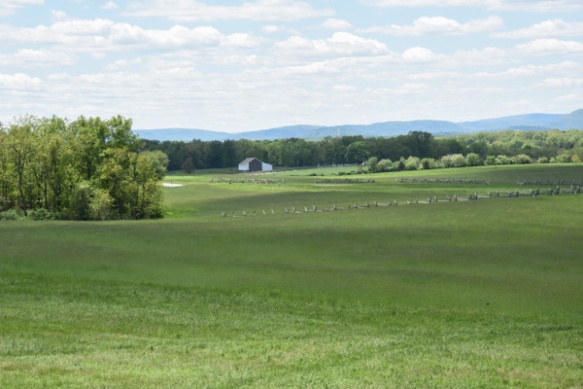
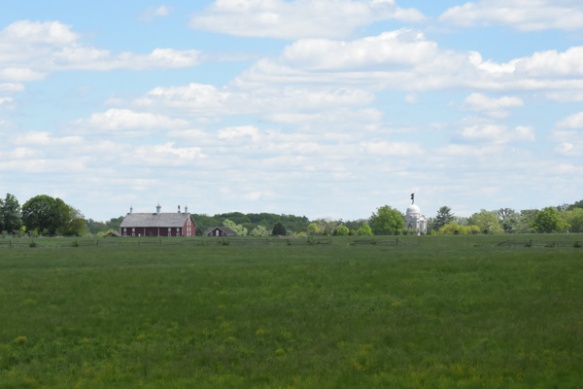
DSC_0771In this idyllic view you can see the Pennsylvania Memorial across the field and to the right. There are places along the route where you read (in the guidebook) about what the aftermath of a battle looks like–the biology of death–blood, flies, bloated bodies, etc.  I think that people need to hear that–does it help if we (they) are given mental pictures to try and  internalize the horror of war?  If kids hear that? What it really looks like? In person? Does it sink in at all what it means to kill another person? To be a bully in the most final sense?  This kind of atrocity is being played out in other parts of the world now. Do kids realize how lucky we are to live here? How about us adults too?

Traveling through history in such a vivid, visual way brings this out in me I guess. It seems that most historical events have to do with someone winning, someone losing, someone conquering. Kind of  like the newspaper. There isn’t much to say about normal people just living their lives. Off the soapbox now.
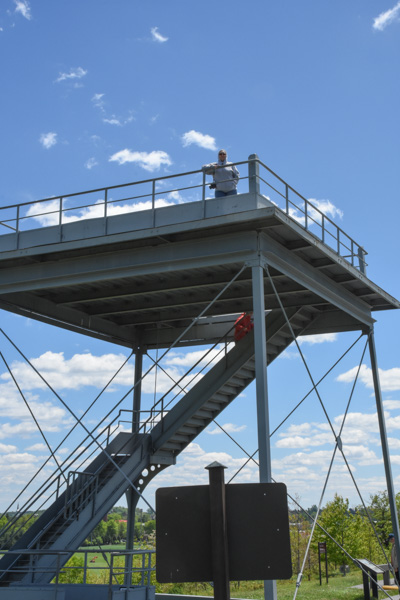
DSC_0752

There were observation towers at a few places that allowed us to get an overview of the whole area and visualize the events that played out.
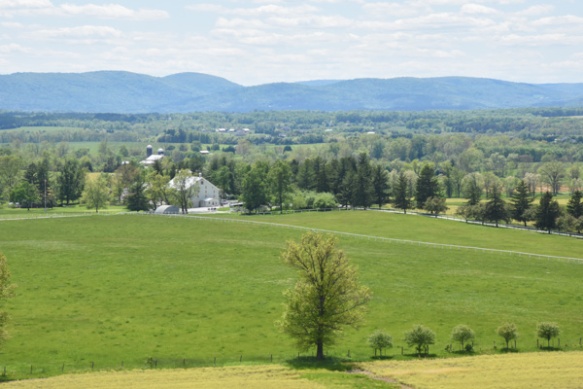
DSC_0779This is a view from the tower that includes, in the foreground, the Eisenhower National Historic Site, the home and farm of Eisenhower that he bought in 1950. We ran out of time to visit that.
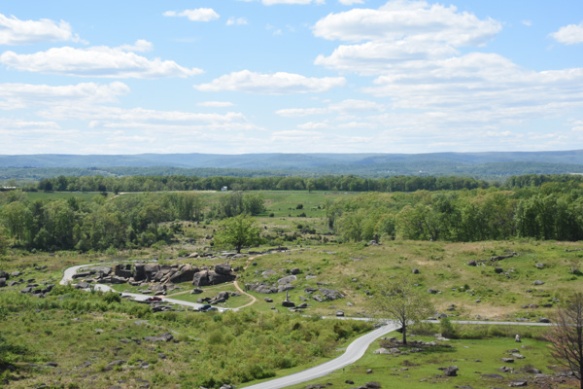
DSC_0789This view is from Little Round Top, a point controlled by Union soldiers. The rock formation below is known as Devil’s Den and the foreground is Slaughter Pen. There was fierce fighting as Confederate soldiers in a line a mile long approached from the far ridge and the Union soldiers tried to defend it. That description is too simplistic; there is detailed documentation about each battle site and each battle.
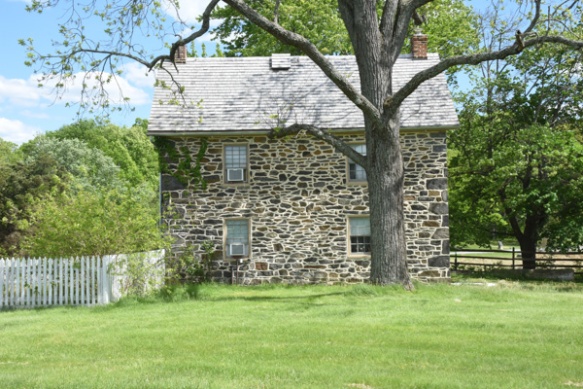
DSC_0804I don’t remember details of this house but it is along the tour route.
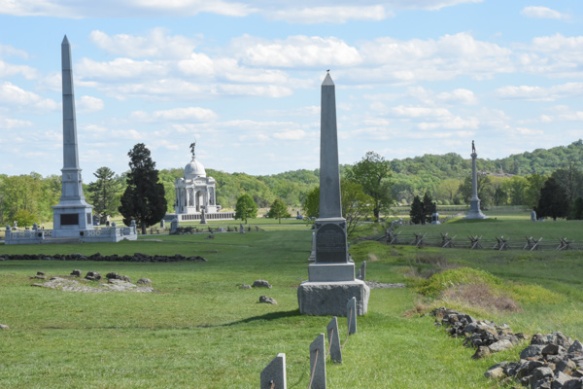
DSC_0830Near the end of the tour we were at what is known as the High Water Mark, the farthest point reached by Confederate soldiers during the Battle of Gettysburg.
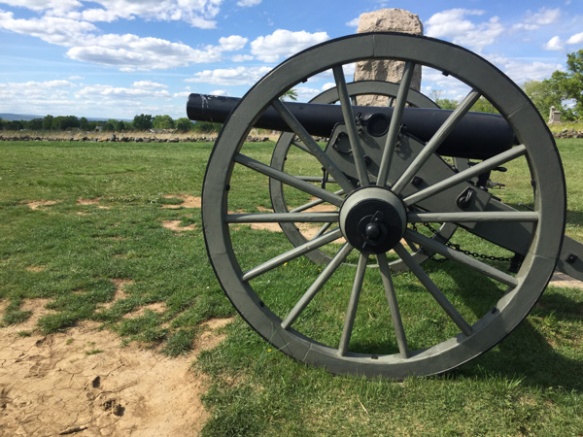
IMG_9534From the Park brochure: “July 3…Some 12,000 Confederates advanced across open fields toward the Federal center in an attack known as ‘Pickett’s Charge’. The attack failed and cost Lee over 5,000 soldiers in one hour. The Battle of Gettysburg was over.”
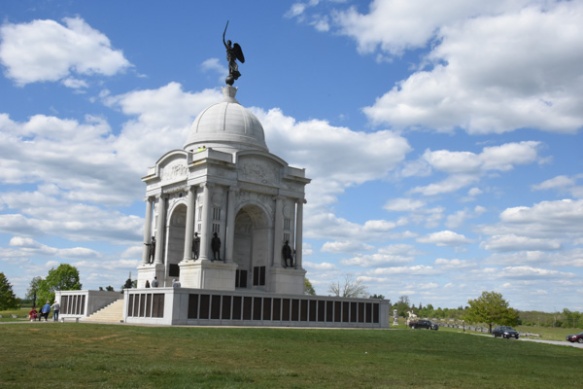
DSC_0808Completed in 1914, the Pennsylvania Memorial is the largest State Memorial in the Park and is near the High Water Mark.
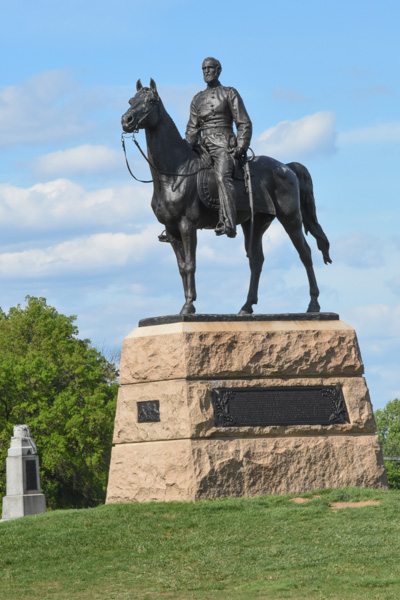
DSC_0835

Union General Meade’s statue is nearby.
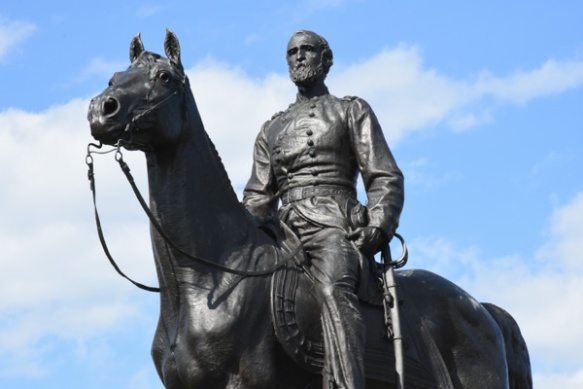
DSC_0838The auto tour was almost over. Instead of the 2-1/2 to 3 hours described in the brochure I think we were there for about 5 hours.
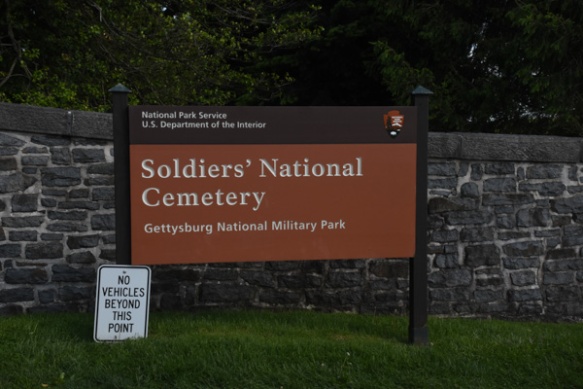
DSC_0846The tour ended at the Soldier’s National Cemetery, created after the battle, and where 3500 Union soldiers were later buried. Remains of 3,320 Confederate soldiers were removed from the battlefield to cemeteries in the South. Veterans from 1898 War with Spain to the Vietnam War are also buried here.
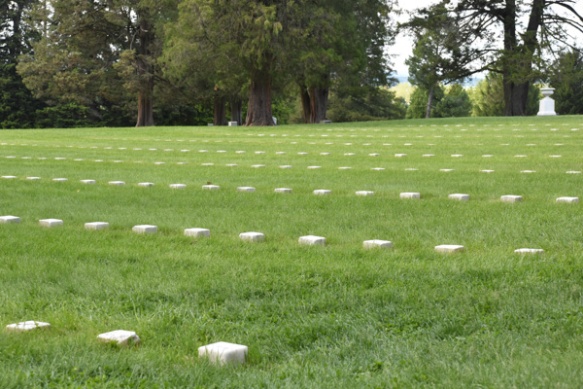
DSC_0852

Graves of unidentified Civil War soldiers.
DSC_0729

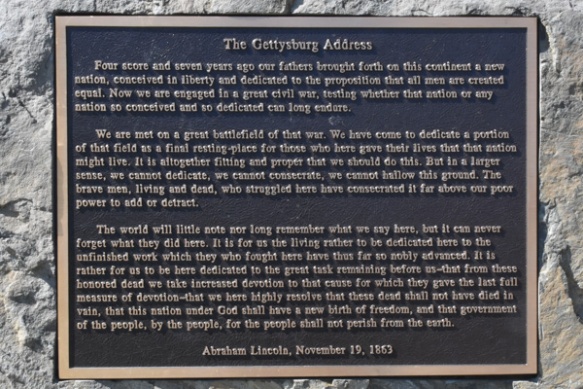
This cemetery is also the site where Lincoln gave his famous speech, taking two minutes  to speak these profound words, following a 2-hour speech  by Edward Everett, a well-known politician and orator from Massachusetts.
DSC_0863

Whew! This was a sobering day. It was also very windy and tiring and we were ready to find a hot dinner and warm bed.
IMG_9553

Dinner first. We tried one place that looked good but there was a 45 minute wait. Chris and Kathleen found another and we eventually had hot showers and warm beds.

Next post: Ft. McHenry and Harriet Tubman’s Underground Railroad.
MJ Adventure Team Goes to MD – Day 2 – Harpers Ferry

Here is Day 1–getting to Maryland. On Day 2 we woke up early with places to go, things to see. Our plan today was to take our fiber entries to the fairgrounds and then go to Harpers Ferry to explore some of the Civil War history of this area.QPAC4753

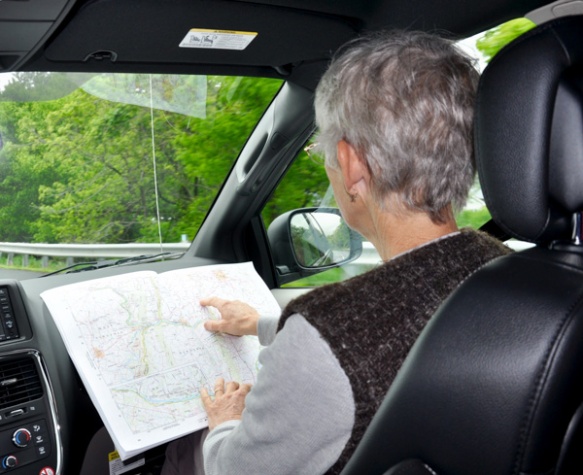
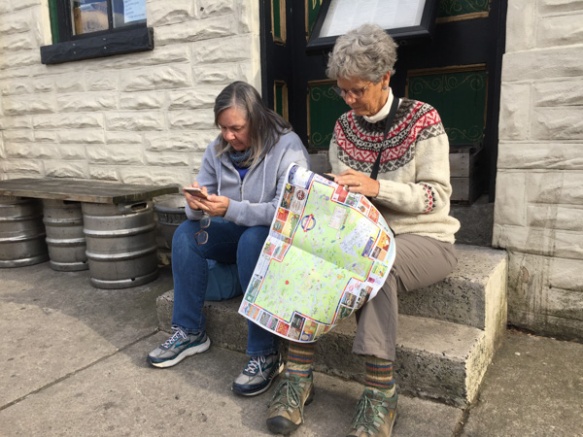
Chris drove and I got into my usual Road Trip mode–Map Book and phone.

DSC_0090

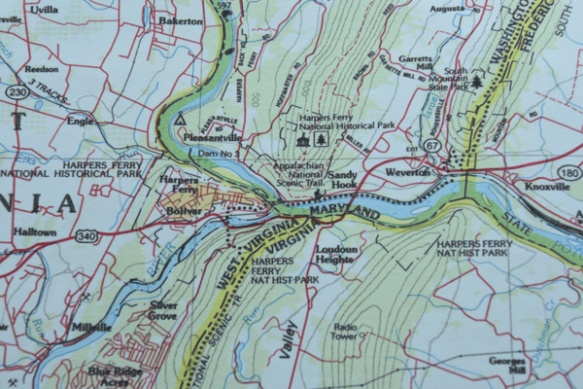
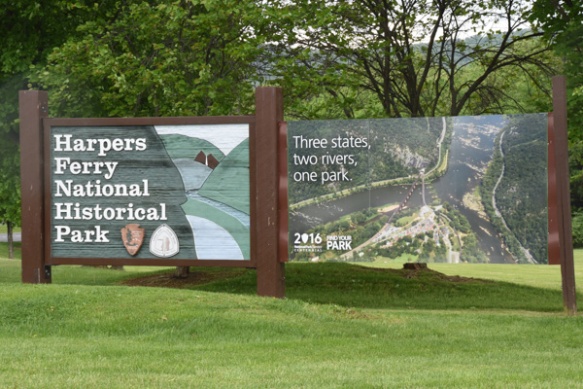
Here is the destination. Harpers Ferry is situated at the confluence of the Potomac and  Shenandoah Rivers, where Maryland, Virginia, and West Virginia meet. It is the easternmost town in West Virginia.

DSC_0116

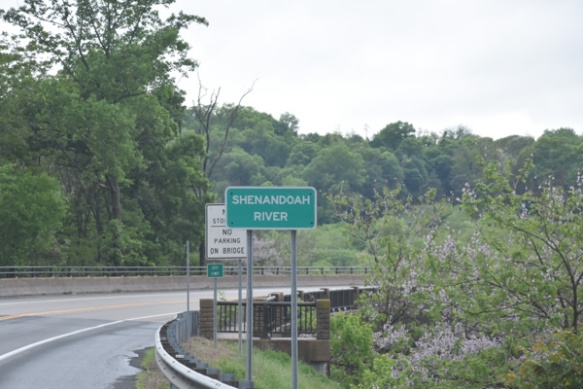
We were driving through the Blue Ridge Mountains and every time I said the name Shenandoah I felt like breaking into song (John Denver style).  Wikipedia says: “The Blue Ridge Mountains are noted for having a bluish color when seen from a distance. Trees put the “blue” in Blue Ridge, from the isoprene released into the atmosphere, thereby contributing to the characteristic haze on the mountains and their distinctive color.”

Also from Wikipedia: “Isoprene is produced and emitted by many species of trees (major producers are oaks, poplars, eucalyptus, and some legumes.”

Harpers Ferry

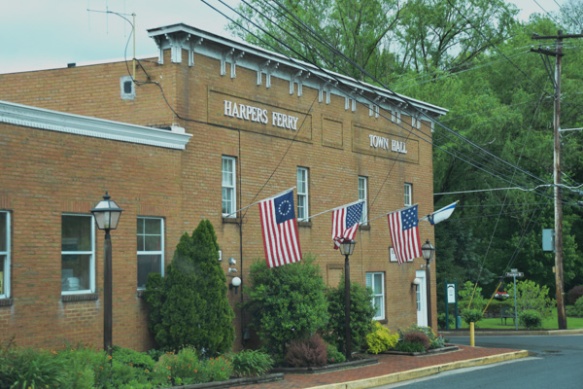
We were looking for Harpers Ferry National Historical Park.

DSC_0122

The whole town is in a National Historic District, but it is the lower part that is the National Historic Park.

DSC_0200

The Park is spread out in non-contiguous sections and we did cross state lines a number of times.

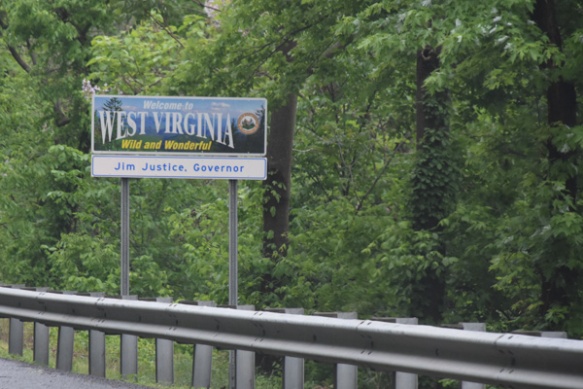
West Virginia

DSC_0214

IMG_9311

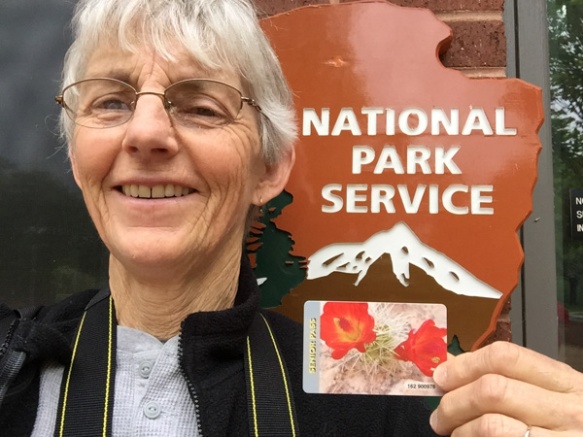
We finally found the headquarters and Visitors’ Center where I got my lifetime pass to all the parks, monuments, etc in the National Park System. (That’s the only good thing about the last birthday.) Kathleen and I bought the National Parks Passport book that shows all the parks and historical sites region by region and has places to include commemorative stickers and “postmark” stamps. We took a shuttle to Lower Harpers Ferry where there many restored old buildings, some preserved as museums and others with modern shops inside.

DSC_0128

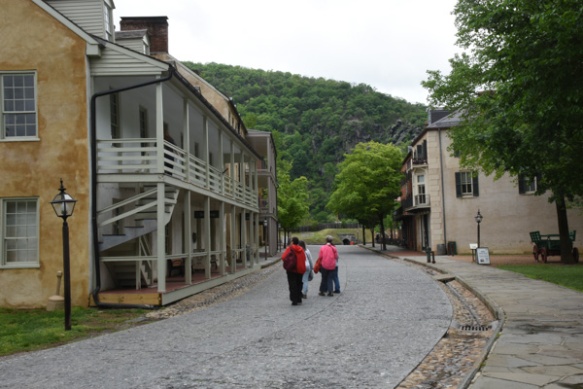
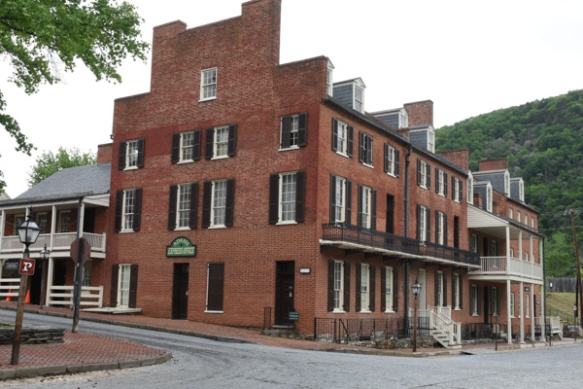
One of the buildings on Shenandoah Street houses a bookstore and the others are set up as they would have been in the 1800’s or as museums.

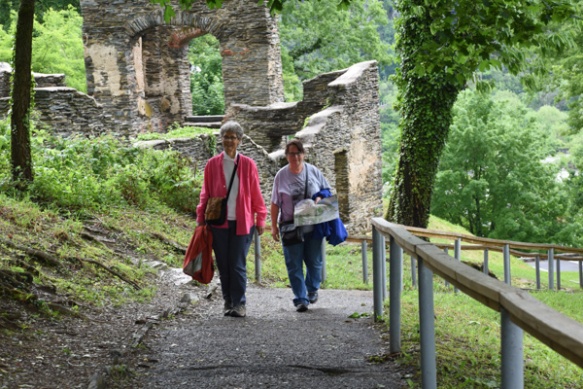
DSC_0143

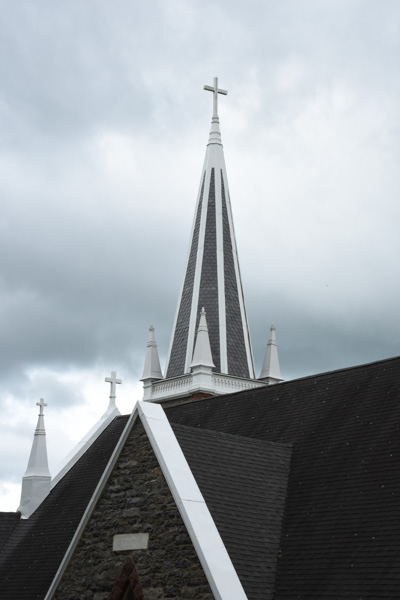
We climbed the path past the ruins of the Episcopal Church…

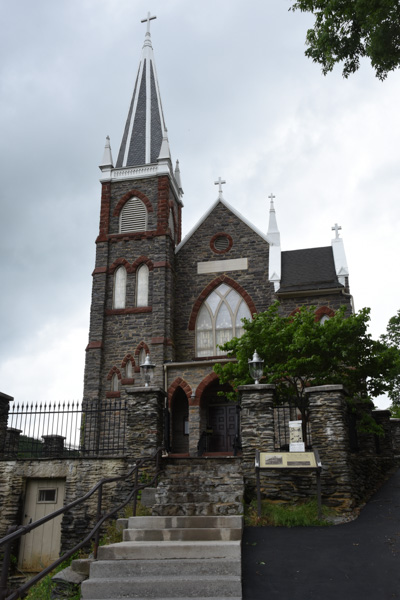
DSC_0138

…and the Catholic Church that was built in 1833.

DSC_0149

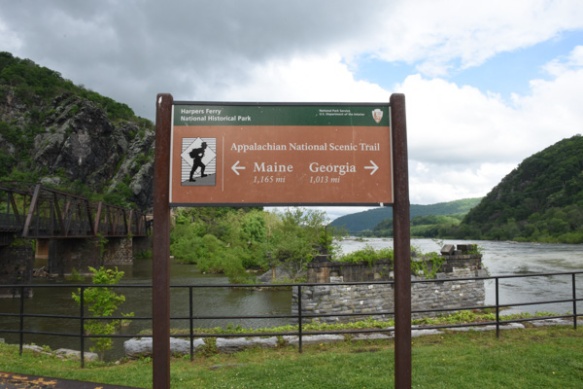
This route happens to be part of the Appalachian trail so we were able to stamp our  passport books with the Appalachian Trail stamp!

DSC_0156

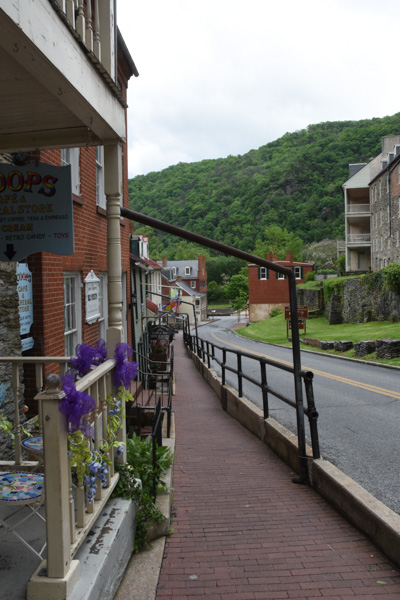
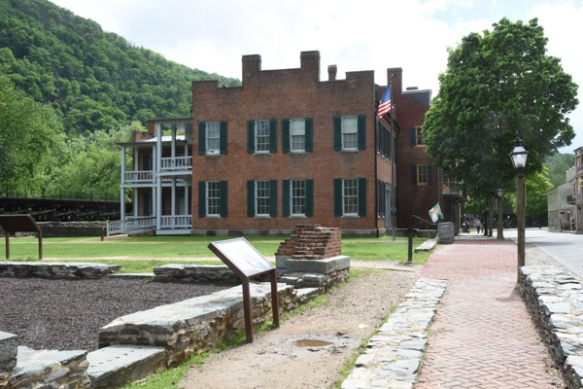
The shops on the left in this photo are all occupied with modern businesses, mostly souvenir shops or cafes.

DSC_0160

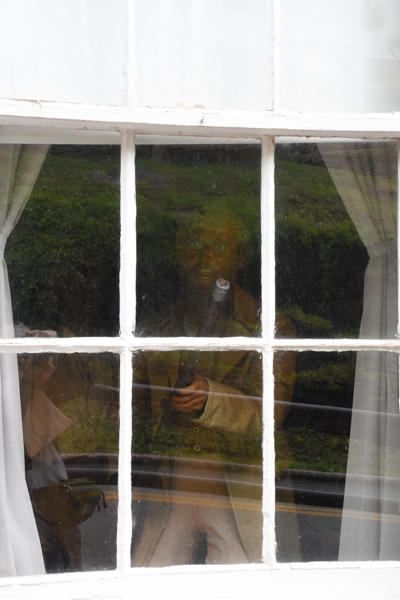
I saw this in one of the windows. As creepy as it is, it’s not nearly as bad as a doll in another window that looked like a crime victim or a participant in a horror movie. I took a photo but am creeped out enough by it to not want it in my blog post. Some of the people in this part of town have an interesting sense of humor.DSC_0157

IMG_9315

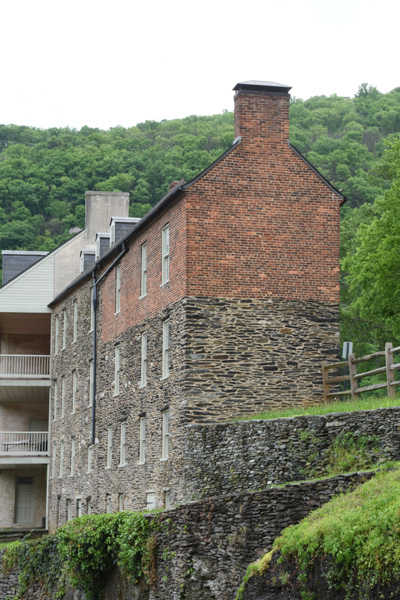
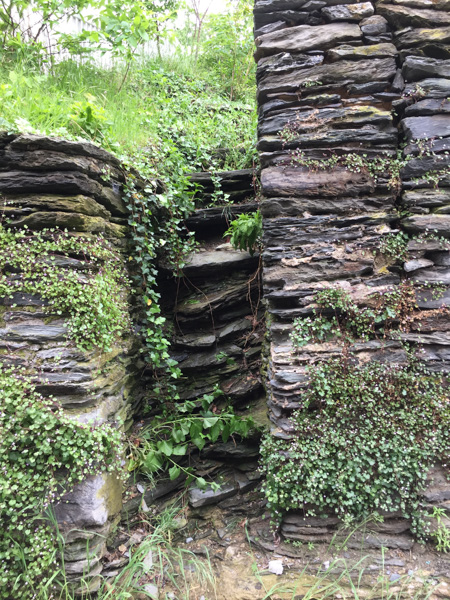
This is a detail of the stone wall in the photo above.

DSC_0129

DSC_0164

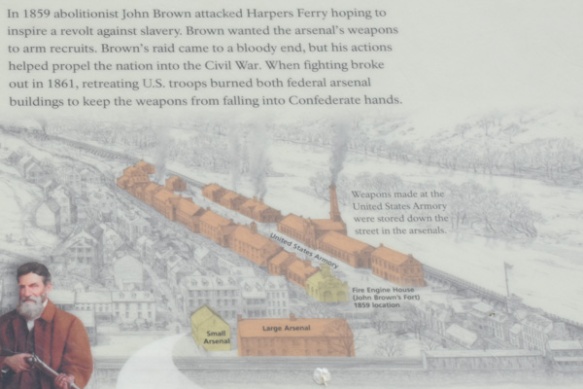
The town became an industrial center between 1801 and 1861 with the construction of  the U.S. Armory and Arsenal. Below is a detail of the sign in the foreground.

DSC_0163-2

Just below (in relation to this photo) is where the Shenandoah and Potomac Rivers meet, the Potomac cutting through a slot in the Blue Ridge Mountains.

DSC_0173

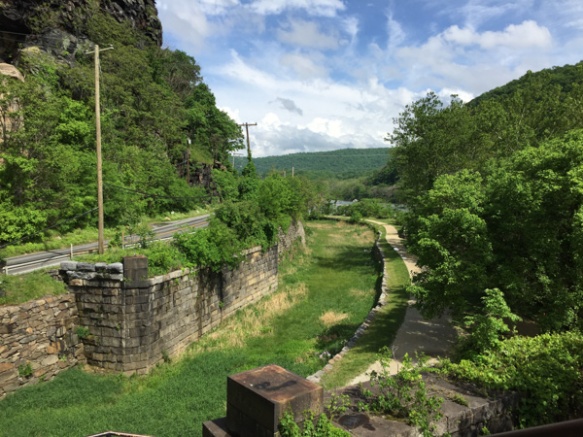
This is the confluence. There is a railroad bridge here and now a foot bridge that across the Shenandoah River.  The foot bridge is part of a system of trails including the Appalachian Trail, the north-south route along the crest of the Appalachians, and the 184-mile C & O Canal trail.   From the Chesapeake & Ohio Canal NHP site: “Preserving America’s early transportation history, the C&O Canal began as a dream of passage to Western wealth. Operating for nearly 100 years the canal was a lifeline for communities along the Potomac River as coal, lumber and agricultural products floated down the waterway to market. Today it endures as a pathway for discovering historical, natural and recreational treasures!”IMG_9324

This is the view from the western end of the bridge showing the old towpath and here is a link from a bicycling guide which states “the canal’s towpath remains a favorite of hikers, joggers, and bicyclists”.

IMG_9332

The overlook from the eastern side.

DSC_0183

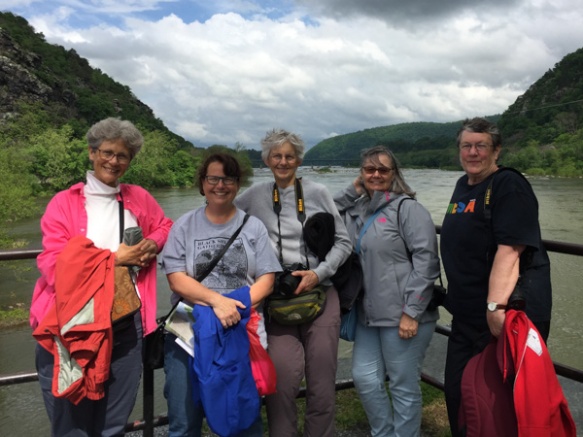
Mary and Chris are not checking their stock portfolios here. We have a group of friends back home who want to travel with us vicariously. We all have been sharing photos and updates.

DSC_0196

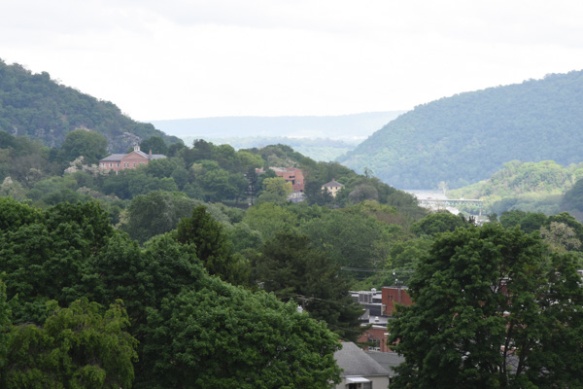
We drove to another part of the park to see the Civil War battlefields and another view of the town.

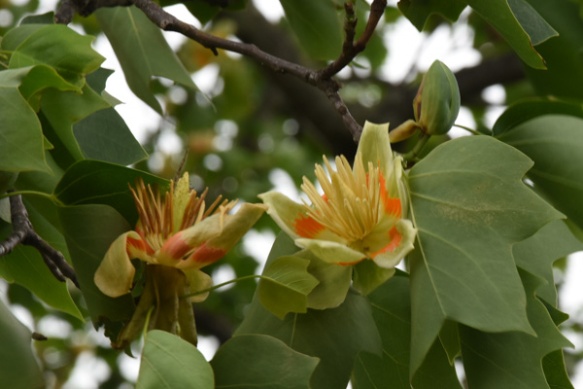
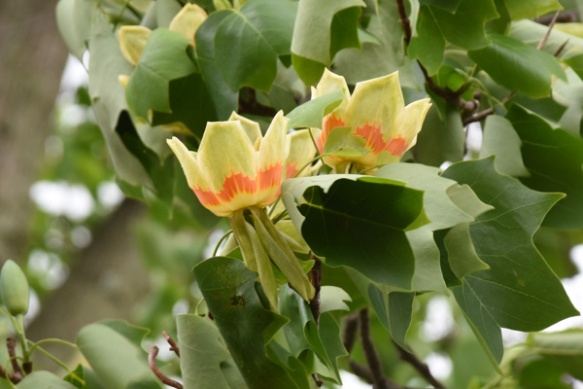
Tulip poplar

I noticed this flowering tree.

Tulip poplar-2

Green flowers are so unusual. This is a tulip poplar which is actually more closely related to a magnolia than a poplar.

We spent only a few hours at this park where you could spend days exploring. But we made this trip for the FIBER. Next stop was a yarn shop in the town of Frederick where there was a sale promoting some well-known yarn dyers.

DSC_0215

IMG_9339

Mary  found one of her favorite indie-dyers there…

IMG_9340

…who dyed these yarns. While she stood in line (a very long line) to make her purchases the rest of us walked around the area.

IMG_9342

I enjoyed this window scene more than a couple of those in Harpers Ferry.

DSC_0086

Preview of the next day.

Road Trip to CO – Nevada to Home

In the last post I wrote that we drove until dark and then kept going. We didn’t have a plan about where we’d stop and Dan just kept driving. (By the way, when I say that “we” drove I mean that Dan drove and I rode. I used to offer to drive but I don’t bother anymore on our trips. Dan likes to do the driving and that’s fine with me, since I’d rather be watching the scenery and napping when I get tired.)

Eventually, somewhere in eastern Nevada, Dan got too sleepy and pulled over. We didn’t try to stretch out in the back of the truck but slept in the front. After an hour or two I got too cold and uncomfortable (and bothered by someone snoring) and switched places with Dan so I could drive. When I got too tired and pulled over we both slept awhile until he recovered enough to go on.

DSC_1540

The view when I woke up next.

DSC_1541

Have you noticed that the Open Range signs in many places have cattle that look like dairy cows? The Open Range signs in Nevada show what looks like bulls.

DSC_1544

Even along Highway 50 in Nevada there are Points of Interest.

DSC_1547

It’s hard to see in this photo but there are remnants of a stone building surrounded by cyclone fence. One of the signs at Cold Springs (between Austin and Fallon) described The Overland Stage Station: “Constructed using the volcanic lava rock found throughout the area, the Cold Springs Stage Station was built in 1861. The original Pony Express Station was built 1-1/2 miles to the east of here in 1860. When the stage station was erected the Pony Express moved its operation to this building…Life at Cold Springs was not for the timid. The 2 to 3 man station crew endured the barest, leanest forms of living. They ate, lived, and slept in this crude structure for months at a time. Floors, when dry, were dirt and when wet, they were mud. Sanitary facilities were primitive. The handmade furniture was crude and utilitarian at best. There were no luxuries, only the necessities of life: food, water, and a firearm for protection.”

IMG_2952

IMG_2956

IMG_2951

Additional signs explained the quick progression of communication and transportation milestones that occurred here between 1860 and 1927–the Pony Express in 1860, then the Overland Stage in 1861, telegraph in 1861, (dooming the Pony Express), and eventually the creation of Highway 50.

DSC_1549

Here is one more sign. This one is provided by Trails West whose “primary activity is installing, and maintaining, distinctive steel-rail “T” markers along the many emigrant trails leading to California and publishing guide books to enable anyone to follow these trails from beginning to end.” They have placed over 600 markers along 2000 miles of trails.

IMG_2948

Putting my iPhone in my pocket it took this photo.


DSC_1564

Way back in this post I mentioned a Shoe Tree. Here is another west of Cold Springs. This one is even marked in our map book and described in this internet article.

DSC_1566

Not to be a spoil-sport, but I’m not a big fan.  Sure, it is a curiosity and, in this case, a landmark, but I think I’d rather just admire a nice tree growing in the desert. To me it brings to mind the question is graffiti artwork or vandalism?

DSC_1574

Sand Mountain is a 2-mile long, 6oo’ high sand dune that is 20 miles east of Fallon and is the site of another Pony Express Station.

DSC_1577

DSC_1568

DSC_1579

Impressive house in Fallon…

DSC_1582

..and an auto repair shop featuring a NAVY jet out front (representing Fallon Naval Air Station).

DSC_1586

Seen on the highway and reminiscent of a twill pattern in weaving.

DSC_1588

Just past Fallon, we left Highway 50, as it headed southwest, to get on I-80 toward Reno…

DSC_1591

…and, eventually, home.

DSC_1593

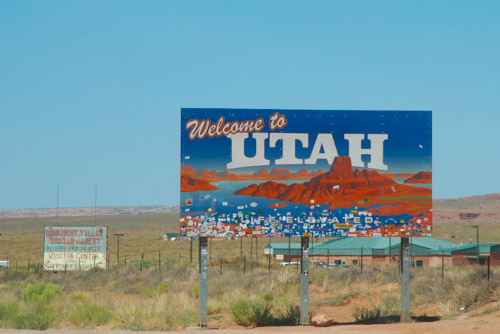
California! Only about 2-1/2 hours to home.

IMG_2992

We drove about 2800 miles on this trip. It’s marked in pink. Our 2015 trip to Texas is in blue. Orange is to Grand Tetons and Yellowstone in 2014 and Green was to Grand Canyon and beyond in 2013. Where to next year?

Road Trip to CO – Four Corners to Dark

Our 8 day road trip was almost over. We spent Monday night and Tuesday morning in Mesa Verde National Park but needed to be home on Wednesday. We decided to drive through Four Corners and Monument Valley–it wasn’t much out of the way and Dan had never seen the area (and I had been there just once).

DSC_1391

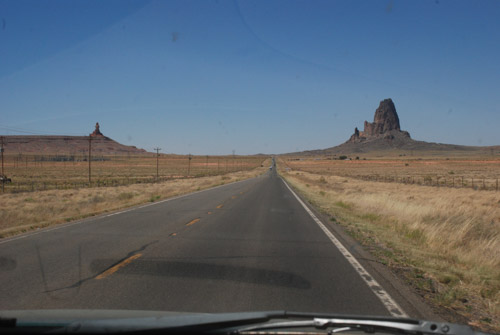
Most of the photos in this post were taken from the truck window at 70 mph. I found that I could sometimes roll the window down (yes, roll, there are no push buttons in this truck), sometimes remove the lens cap, and sometimes turn the camera on, but not always all three of those things.

DSC_1395

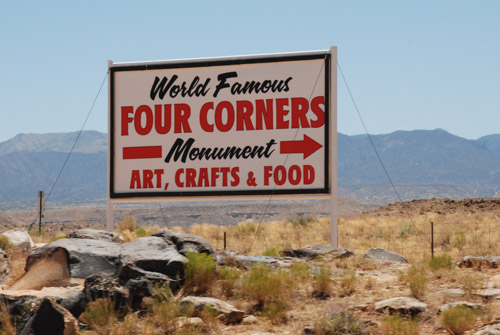
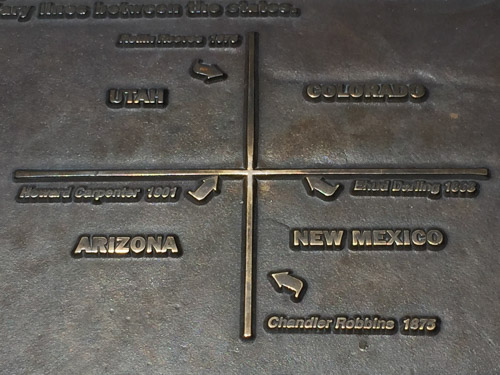
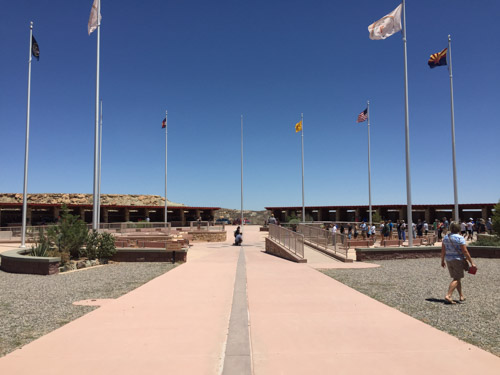
Four Corners is notable for being the only place in the United States where four states meet. It is also marks a boundary between the Navajo Nation and the Ute Mountain Ute Tribe Reservation. The Navajo Nation runs the Four Corners Monument as a tourist attraction.

IMG_2938

This is not the actual monument, but part of a sign about the surveying that began in the 1860’s. Wikipedia says, “the origins of the state boundaries marked by the monument occurred just prior to, and during, the American Civil War, when the United States Congress acted to form governments in the area to combat the spread of slavery to the region.”

IMG_2940

The marker itself is in the center of this courtyard. Notice the line of people to the right. They are all waiting to take their photos over the marker. We didn’t join them, but walked around the outside where there are stalls in which Navajo and Ute members sell souvenirs. Then we got back on the road.

DSC_1414

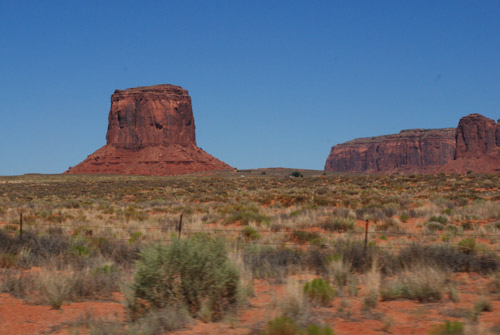
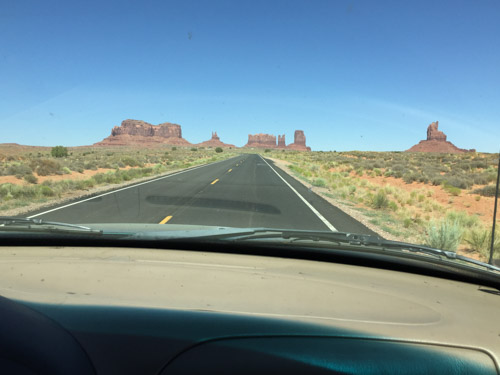
We took Highway 160 southwest to Kayenta where we turned north on Highway 163 to head back to Moab, but drive through part of Monument Valley. Wikipedia: “Monument Valley is a region of the Colorado Plateau characterized by a cluster of vast sandstone buttes, the largest reaching 1,000 ft above the valley floor…Director John Ford used the location for a number of his best-known films, and thus, in the words of critic Keith Phipps, ‘its five square miles have defined what decades of moviegoers think of when they imagine the American West.’ “DSC_1416

DSC_1419

DSC_1424

DSC_1435

DSC_1439

DSC_1446

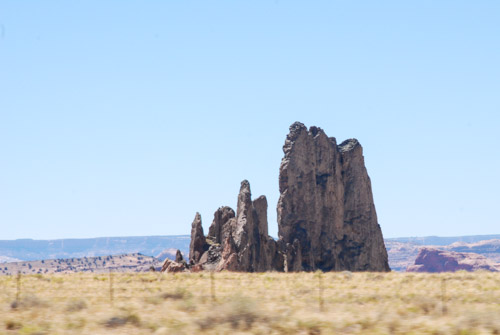
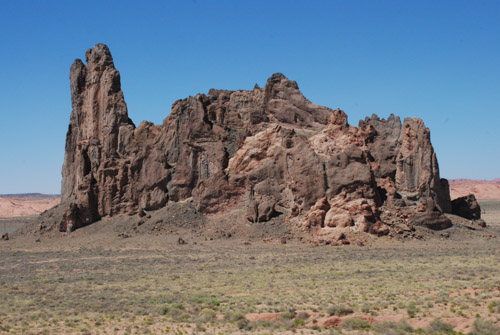
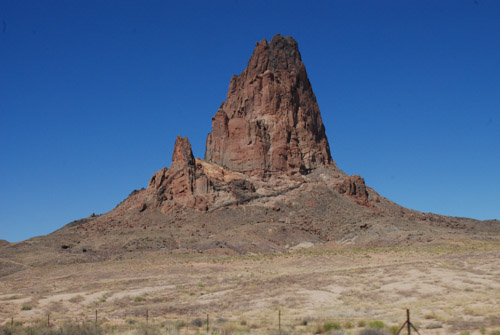
Spectacular country for it’s rock formations. A tough place to live on the land.

DSC_1459

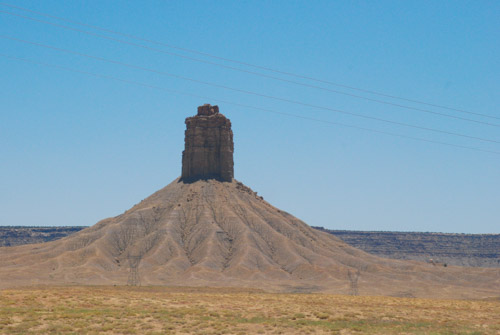
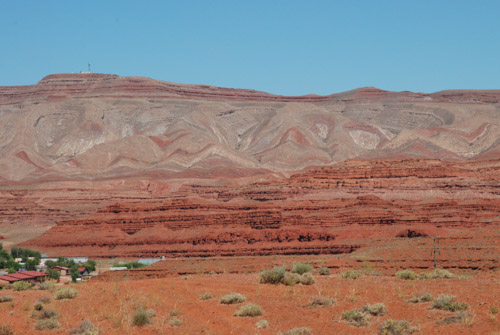
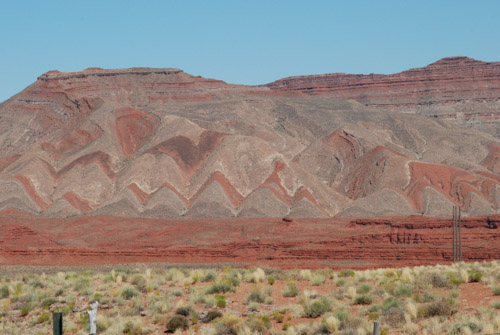
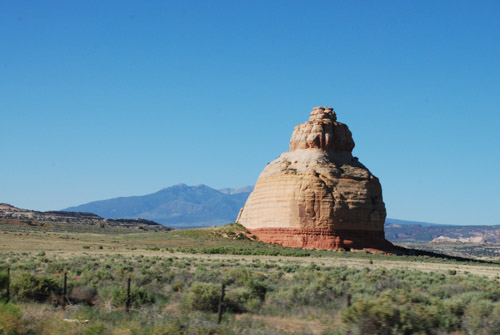
This rock formation kept us entertained for many miles as we drove closer and closer to it. I think it is just north of Bluff, Utah. I have googled a variety of words to describe this near both Bluff and Mexican Hat, Utah, but I don’t see any photos like this.

DSC_1473

I do know the highway roughly followed the course of the San Juan River between those two towns. The rock formations that show up on-line are the Mexican Hat for which the small town is named and…

DSC_1474

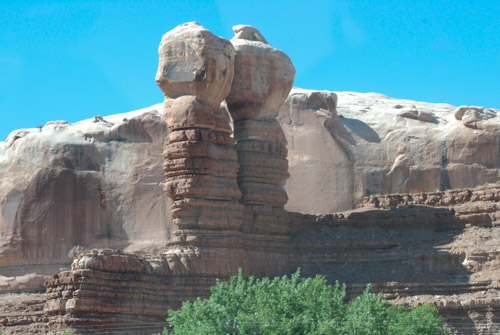
…Navajo Twin Rocks near the town of Bluff.

IMG_2943

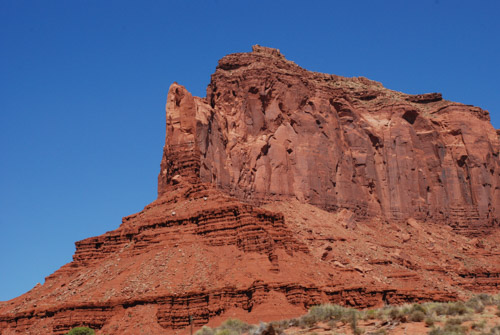
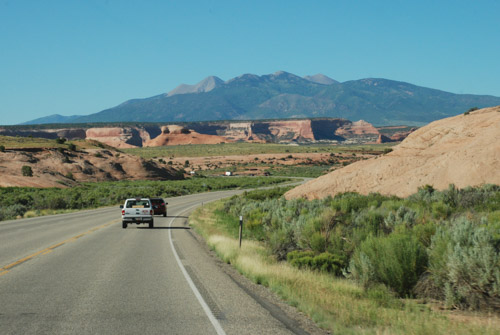
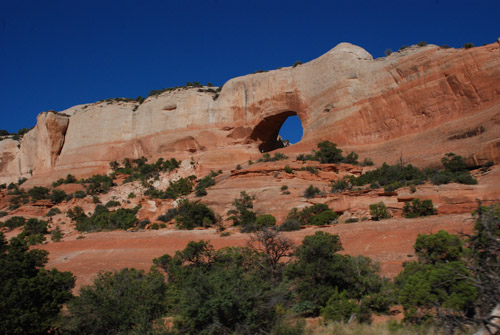
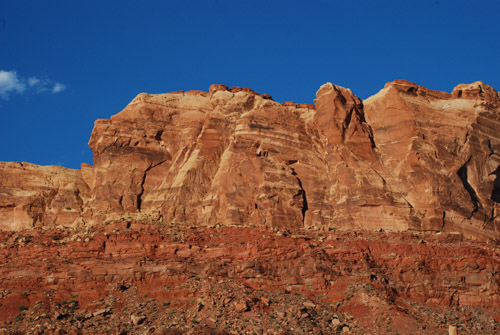
We continued to see red rock formations as we drove north toward Moab.DSC_1477

DSC_1486

DSC_1488

DSC_1499

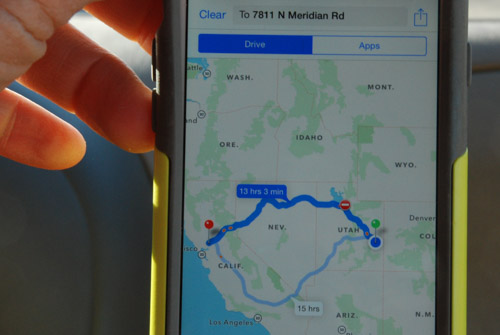
We hadn’t started the trip in Moab, but we’d been there just four or five days ago. I checked to see how long it would take to get home. I couldn’t get the phone to show me the route that we planned to take. We were headed to Highway 50 to cut straight across Nevada.

DSC_1494

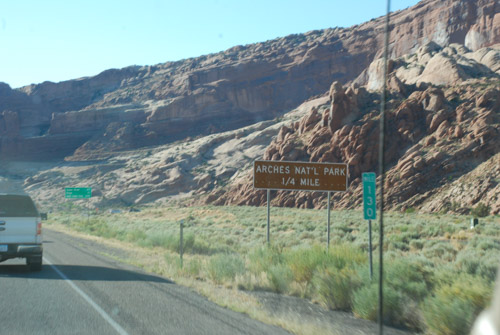
We passed Arches National Monument where we’d spent a day hiking

DSC_1507

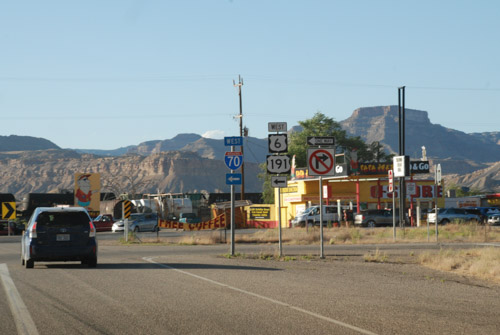
…and picked up Highway 50 at Crescent Junction.

DSC_1521

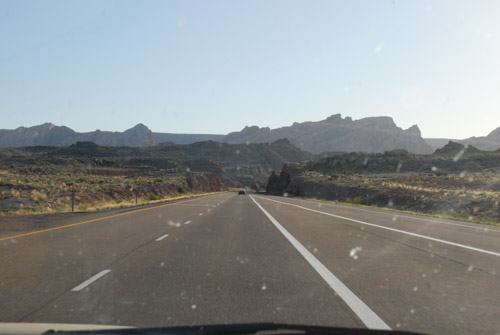
The plan was to drive west until we needed to stop.

DSC_1530

We’d seen some of this spectacular country but it looks different going the other direction.

DSC_1532

DSC_1533

We drove until it was took dark to take photos and then we kept driving.

To be continued…


Road Trip to CO – Mesa Verde

It has been a few weeks since we finished our road trip and there have been plenty of distractions since I’ve been back that have kept me from sharing the story. Now that the Olympics are on  TV I am trying to multi-task. But it’s hard to pull my eyes away from the TV at times.*  However I’m close to finishing–we are still in Colorado but once we headed for home we didn’t stop for much.

After we left Black Canyon of the Gunnison  National Park we looked at our trusty Benchmark map book for Colorado and saw that we could probably get to Mesa Verde National Park in time to spend the night there. So after driving through the marvelous San Juan Mountains it was a relatively short drive from Durango to Mesa Verde. We got there about 6 p.m. and found that there were plenty of open campsites.

DSC_1323

We looked at the Park maps and saw a couple of 2-mile trails that we would have time for before dark. First we hiked up to Point Lookout at 8427′ elevation. This view is to the northwest with the San Juan Mountains in the background and the town of Mancos in the center.

DSC_1295

Squirreltail…

DSC_1313

…and Indian rice grass along the trail.

DSC_1311

DSC_1321

DSC_1326

After getting hiking this trail we drove to the the Knife Edge Trail which follows a section of the precarious road built in 1914 which was part of the original main access into the park.

IMG_2869

IMG_0407

Dan took this photo of me with the booklet that described the plants and other features along this trail.

IMG_2866

IMG_2874IMG_2875

This is a popular place for park visitors to watch the sunset. We walked back to the car at dusk and it was dark when we found a campsite. With the dark it got cold and we didn’t have a working stove. We ate tuna sandwiches and went to bed. DSC_1358

This is what camp looked like in the morning.

DSC_1354-2.jpg

There were deer around the camp in the night and at dawn when I got up.

DSC_1366

Seen on my early morning walk.

IMG_2876

We had learned when we paid for our campsite that the way to see the features for which the park is best known (the cliff dwellings)  is to sign up for one of the tours. We showed up the next morning for the Balcony House tour.

IMG_2877

We were directed to follow the trail to the end where we would find a ladder and to wait there.

IMG_2881

This tour is listed as the “most adventurous cliff dwelling tour” and we were warned that we would “climb a 32′ ladder, crawl through an 18″ wide by 12′ long tunnel, and climb up a 60′ open cliff face with stone steps and two 10′ ladders”. Not quite an Indiana Jones adventure but it did seem challenging for some of the tour participants.

IMG_2882

Can you imagine what this was like when people really lived here?

IMG_2902

I can see the challenge of being a mother of a toddler.

The Ancestral Pueblo people lived in the Mesa Verde area for about 700 years from about AD 550 to the 1200’s, first living in pit houses, then above-ground pole and adobe structures. The people built the cliff dwellings from the 1190’s to 1270’s and lived there for less than 100 years. It is unknown why, in the span of a generation or two, the people left the area.

IMG_2910

Ranger Spenser was glad to answer questions and discuss his passion for the earlier residents of these dwellings.

IMG_2908

Each village or homesite has a kiva built below ground or in the case of the cliff dwellings, into the rock floor.

DSC_1386

This is the view across the canyon from Balcony House.

DSC_1384

This is the same view with a longer lens. It was remarkable that when you really started to look (or got out the binoculars) that you could see dwellings in many of the cliff walls.

DSC_1376

Here is another that we saw later in the day…

DSC_1378

…and here’s the close up. This is known as Square Tower House, a 4-story building.

IMG_2920

Remember the part about the 18″ x 12′ passage. Here it is…

IMG_2923

…followed by the ladders…

IMG_2924

…and steps up the cliff wall.

We drove through more of Mesa Verde, looking at some of the other sites, but knew that we needed to get on the road if we were to get home some time the next day.

Next post: Four Corners and Monument Valley.

*I still didn’t get this finished and now its the next day.

Road Trip to CO – Gunnison to Durango

We left home on Wednesday and planned to get home on the following Wednesday. This was Monday. We had driven the road north of the Gunnison River the day before and camped near the Blue Mesa Dam.

IMG_2788

This campsite was essentially a parking lot for RV’s, but we just needed a place to eat and sleep so it worked.

DSC_1131

The Black Canyon of the Gunnison became a National Monument in 1933 and was made a National Park in 1999, over twenty three years after I spent a summer in the area. It contains 14 miles of the canyon’s total 48 mile length.

IMG_2795

I guess they’ll take anyone as a Park Ranger.

DSC_1132

The canyon is so deep and narrow due to the power of the Gunnison River as it drops an average of 96 feet per mile.  The Gunnison loses more elevation in the 48 miles of the canyon than he Mississippi River loses in 1500 miles.

DSC_1194

It is a sobering thought that the power of this river is forever harnessed due to up-river dams that lessen seasonal flooding. Therefore, build up of sandbars and more vegetation has changed the ecology of the canyon.

DSC_1200

The Painted Wall was created over a billion years ago when molten rock flowed into fissures in the dark wall.

DSC_1177

That molten rock cooled into crystals of mica, quartz, and feldspar. Amazing patterns were revealed as the river cut through the rock, forming the canyon.

DSC_1166

Breakfast with a view.

DSC_1218

I enjoyed the signs along some of the trails to help with plant ID.DSC_1151

I recognized this bush with it’s remarkable fuzzy seed dispersal method, but couldn’t quite find the name in the recesses of my brain. Mountain Mahogany.

DSC_1206

I also recognized this as in the Mariposa Lily family. It’s called Gunnison Sego Lily.

We spent half the day exploring the canyon from the rim. There are no trails to the river in the Park. We saw a couple of trails when we drove along the north rim east of the Park, but they are not for the feint of heart or casual hiker. The rim views are spectacular enough. But we had limited time and needed to get on the road.

In the summer and fall of 1976 I worked  for the BLM in Montrose, Colorado. I had fond memories of renting a bunk house on property between Montrose and Ridgeway and spending weekends exploring the old mines and alpine meadows in the beautiful San Juan Mountains. I had never been back, but wanted to use this opportunity to drive through that country.

IMG_2812

As we were driving down Hwy. 550 I wondered if I would recognize the place. The highway followed the Uncompahgre River but was on the wrong side of the river. Surely I would have remembered living right next to a major river like that. My memory was that the bunkhouse was up against a bluff and just south of the big house. We got to a point where the river shifted course for a brief period to the west side of the highway and there it was. I’m glad to see that they place hasn’t been torn down and, in fact, looks as though it has been fixed up. The bunkhouse is just behind the red truck and, yep, there is a bluff behind it.

DSC_1239

The view heading south from the house. Not a bad place to spend a summer…or a life (if you can deal with snow).

DSC_1245

We drove south into the San Juan Mountains.

IMG_2814

I have memories of driving to Ouray and heading out from there towards Telluride to explore the mountains. I don’t think that these towns had the tourist appeal then that they do now.

IMG_2834

This is one of the most gorgeous places I can imagine. It’s hard to get photos that do it justice.

From dangerousroads.org “In the state of Colorado…there’s a special highway built in the late 1880’s: the Million Dollar Highway, part of the San Juan Skyway. It’s one of the nation’s most spectacular drives…The road’s winding design, providing stunning panoramic views, is very curvy and fun for a leisurely ride, so it pays to take it slow. Offering breathtaking mountain, valley and gorge views, the Million Dollar Highway is one of the most beloved roads in the country. This classic stretch of two-lane blacktop snakes its way through the San Juan Mountains, the wildest and most rugged peaks in the Rockies.”

From another website: “Originally built in 1883 by Otto Mears as a toll way from Ouray to the now abandoned town of Ironton, this two lane highway offers spectacular views of the San Juan Mountain Range, and Uncompaghre Gorge. The road was extended to connect Silverton and Ironton over Red Mountain pass, and operated as a toll road until the early 1920’s when it was rebuilt and became part of the present day US Highway 550.”

IMG_2829

Can you imagine the road when it was first built?

IMG_2828

Here a a panoramic view of the modern day bridge over Bear Creek Falls.

DSC_1249

Originally the road connected Ouray with the Red Mountain Mining District to the south.DSC_0239

There are signs overlooking the site of the Yankee Girl Mine, one of the richest concentrations of silver ore found in the U.S. It started in 1882 and produced ore valued in today’s market at over one hundred million dollars, but lasted only about 16 years.

DSC_1261

Just more pretty scenery.

IMG_2861

This is taken from Molas Pass (10, 910′), the second of three passes on this highway going towards to Durango.

IMG_2858

Loving the mountains.

IMG_2857

Fortunately I don’t have to carry my camera gear the way William Henry Jackson did when he documented the West.

Onward to Mesa Verde where we would spend the night.

Road Trip to CO – Leadville to Gunnison

The main reason that we headed to Colorado on this trip was so that we could be in Leadville when Dan’s brother competed in the Silver Rush 50, a 50-mile endurance run. We spent the previous afternoon walking around town and going on a self-guided mine tour. We had a pre-race meal of pizza and salad and went to bed.

In the morning we split up. Dan got up early to be at the race start with Rob and Renee and I slept in and met up with Sally and John to explore Turquoise Lake.

DSC_0184

Dan took these photos of the first part of the run. Rob is ready to go.

DSC_0188

This run begins at an elevation 10,200′ and goes to over 12,000′. The runners have no difficulty getting their heart rates up right away even if they just walk up the first hill.

DSC_0199

Rob wore neon green (although we discussed repeatedly whether he was wearing green or yellow–it’s sure green in the photos) which was helpful when trying to pick him out on a mountain road.

DSC_0198

Personal support is allowed here, unlike in the Ironman last weekend.

IMG_2761

While Rob was running, my sister-in-law, Sally, and I went for a walk at Turquoise Lake, just a few miles from Leadville.

DSC_1026

DSC_0216

Rob was still on the trail…DSC_0213

…and made a shoe change…

DSC_0204

…while the spectators’ attention was diverted from the runners by a moose who wanted to cross the road.
IMG_2760

Sally and I finished our walk and headed back to town.

IMG_2765

We walked through a few shops to find some t-shirts and postcards. There was a price tag on this sheep, but even marked down to $2700 it was out of my price range.

IMG_2770

We met up with Rob’s support crew at the 25-mile turn around.
IMG_2764

As usual, I entertained myself with my camera while waiting for Rob to run through.
DSC_1034

I don’t know what this plant or the bug is.

DSC_1036

You don’t see a runner in a kilt everyday.

DSC_1041

We finally saw Rob coming in. Although he has run this event before, this wasn’t his day for it. He wasn’t feeling well and had been battling injuries. He had events coming up (including last weekend’s Ironman) and thought it was prudent to stop at the 25 miles mark (as if running almost a marathon isn’t enough for one day). So we ended the day in Leadville early and left town by mid-afternoon, following Rob and Renee to Buena Vista where we would meet for lunch.

DSC_1054

This is Mount Elbert, the highest mountain in Colorado. How do I know that?

DSC_1056

This is why we like these map books. We can follow along and identify points of interest. If we have cell service then I can look up more info, but on this trip cell service definitely wasn’t reliable. We enjoyed a meal with Rob and Renee before they had to head home, we stocked up on groceries, and we continued on our trip.

DSC_1073

Smoke from one of the fires burning in Colorado.

IMG_2781

IMG_3402

We had decided to find a place to camp somewhere near Black Canyon of the Gunnison National Park. The park encompasses the narrow band of land (and cliffs) along the river below where it has been dammed (from center to upper left in this photo). It was late in the day when we got to the dam that creates Blue Mesa Reservoir (right in photo) and we had to decide what we had time to do. We decided that we would drive the road on the north side of the canyon along the narrow Morrow Point Reservoir (which is not in the park) and enter the park the next day by driving in at the southwest entrance.

DSC_1085

The Pinnacles on Blue Mesa Reservoir.

DSC_1099

It was a spectacular drive on the road that follows the canyon. There are plenty of places to get out and take a look into the canyon.

DSC_1101

We stood high above buzzards circling on the wind currents. That is three buzzards roosting in the center of the photo. I took lots of photos of the spectacular scenery as the sun was getting lower but this post is already over-full of photos.

DSC_1108

This photo was taken from the last overlook on this drive–or at least the point where we needed to turn around to go back to the campground we had seen. That is the San Juan Mountains in the distance, which we’d be driving through the next day.

IMG_2786

After our shopping trip in Buena Vista we had a hot meal planned, but the camp-stove wouldn’t work. Tuna sandwiches for dinner again. Dessert was a deliciously gooey melted giant chocolate kiss.