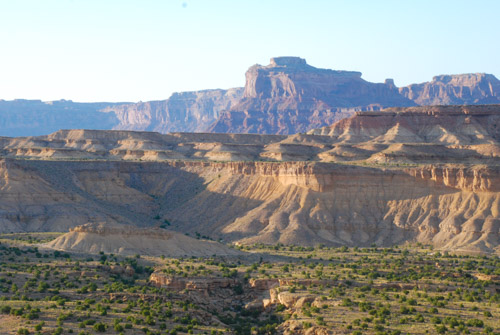
Road Trip to SD – Day 6 – Following the Pioneer Trail

At the end of  Day 5 we had stopped at the Horsethief Lake Campground in the Black Hills National Forest, still in South Dakota.
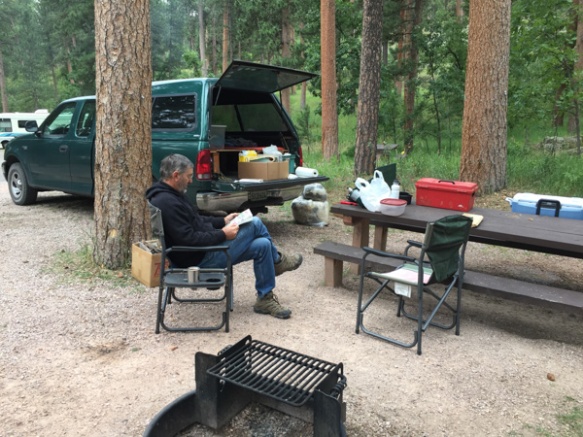
Black Hills NF, SD

We had looked at the map and planned the direction to start for home, wanting to roads that we hadn’t traveled before as much as possible.
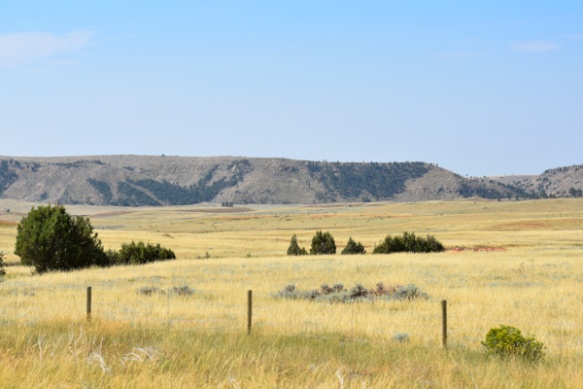
DSC_3223

We headed toward Wyoming…

DSC_3230

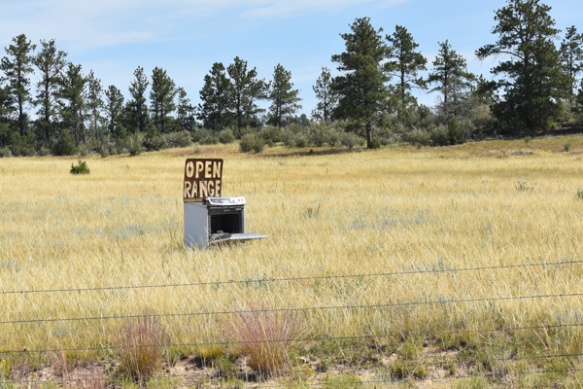
…and saw this along the road.

IMG_1563

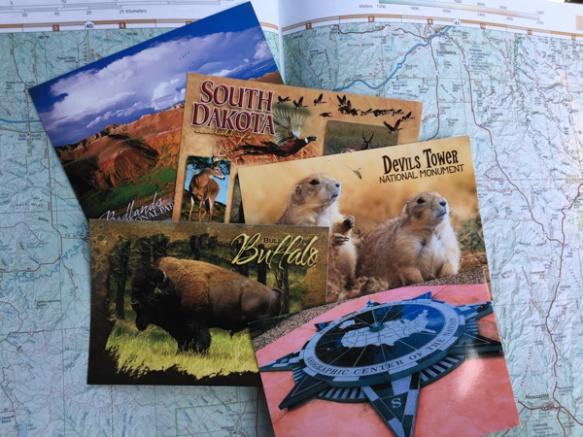
I had been collecting postcards to send to my 3-year-old granddaughter but hadn’t mailed many yet so today I was going to search out post offices in the small towns along the way.
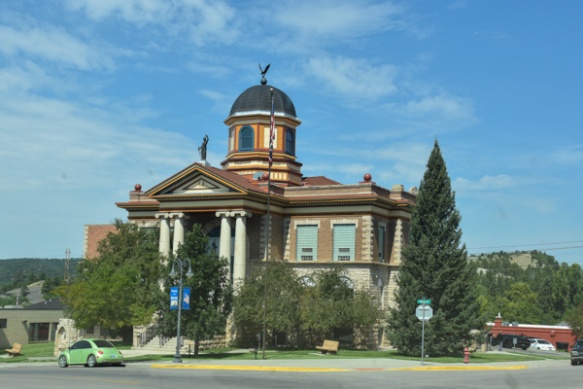
Newcastle, WY

A gorgeous building across the street from the post office in Newcastle. From there we took Highway 450  west through the Thunder Basin National Grassland toward Wright.
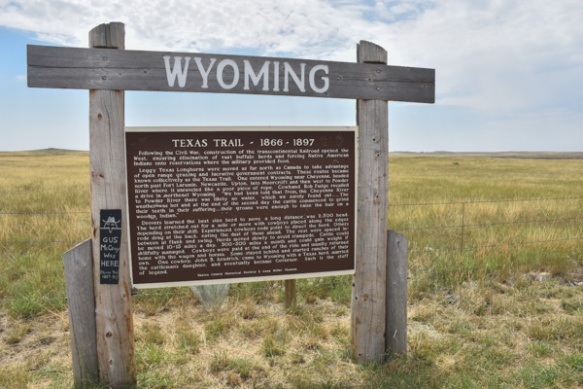
Thunder Basin N Grassland

We were driving through the country where huge herds of cattle had been driven as far north as Canada, grazing along the way, and then shipped by railroad to eastern markets. Belle Fourche, where we had been a couple of days before was one of the important shipping points. (Lonesome Dove fans, note the sign on the post.)
Thunder Basin N Grassland

According to the sign 2500 head of cattle strung were strung out for a mile, traveling 10 to 15 miles per day. They could gain weight over the 300 to 500 mile trip.
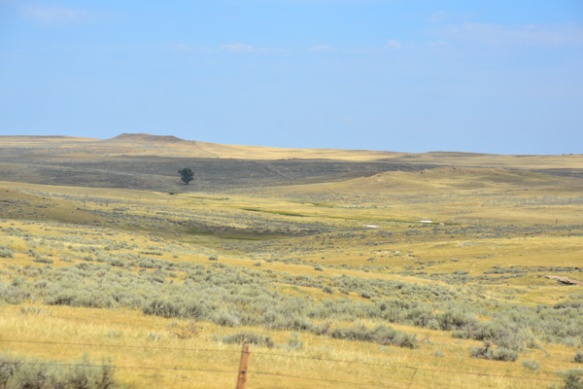
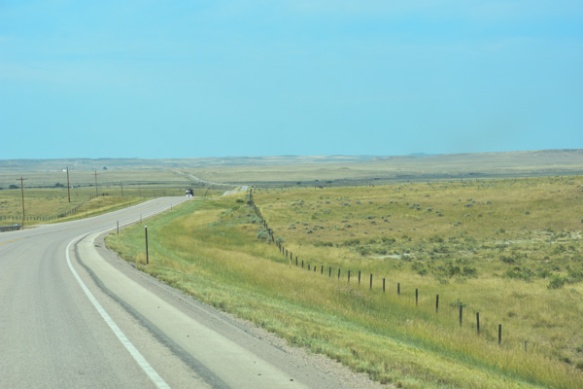
Thunder Basin N Grassland

Alternatively picture the thousands of bison that once roamed here while the Native American’s called this home. Same place. Different eras.
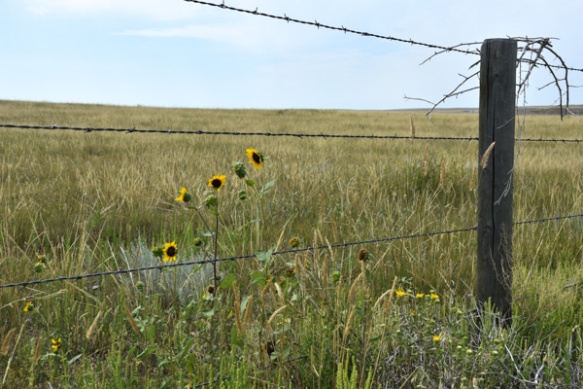
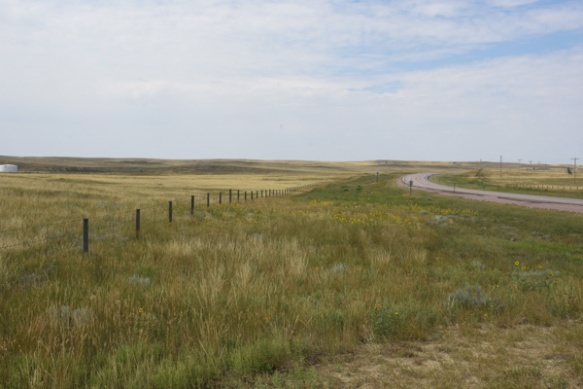
Thunder Basin N Grassland

Thunder Basin N Grassland

Black Thunder Mine,WY

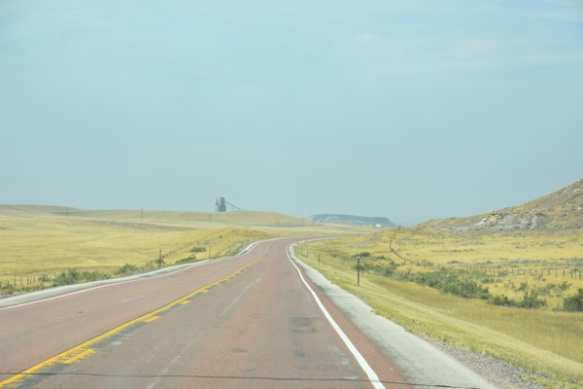
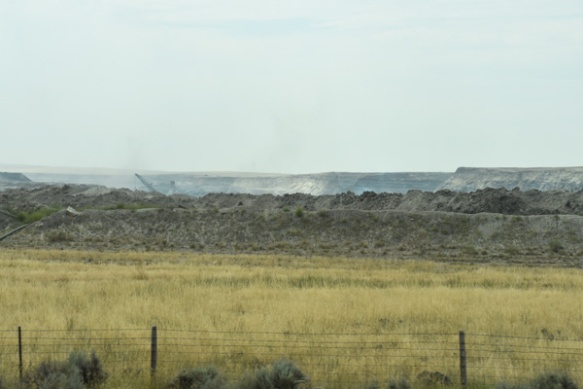
Before we got to Wright near the western edge of the Thunder Basin National Grassland we saw the first glimpse of a major industry in Wyoming…and the sky was more gray.
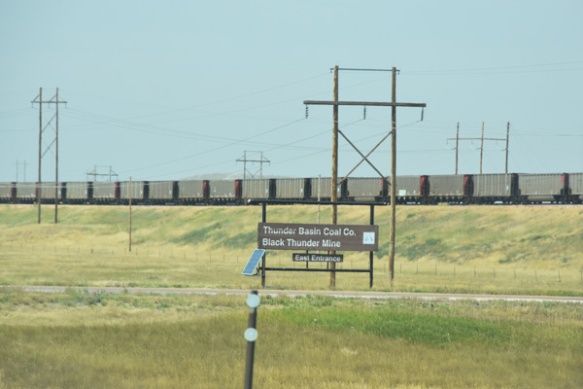
Black Thunder Mine,WY

According to Wikipedia, the Black Thunder Coal Mine is the world’s largest coal producer.
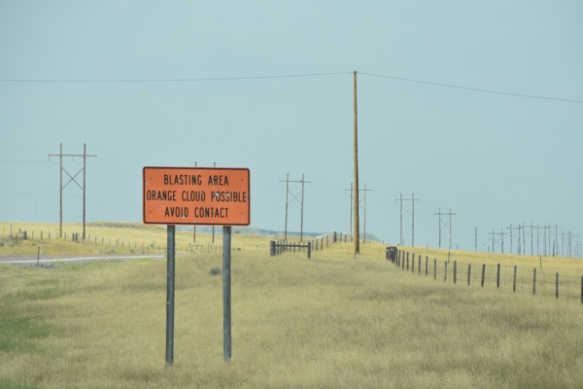
Black Thunder Mine,WY

This is an immense operation.

Black Thunder Mine,WY

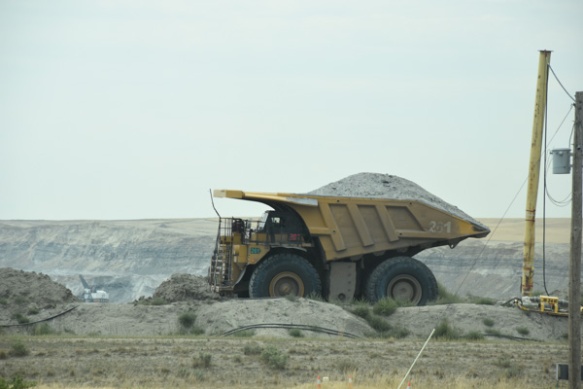
I couldn’t get photos to show the scale of what we were seeing. You can see a tip of the excavator down in the pit. Wikipedia says “Black Thunder’s dragline excavator is the biggest in the world and produces enough coal to load up to 20-25 trains per day.”
Black Thunder Mine,WY

The excavator fills this truck with one pass of it’s giant scoop. This is a huge truck–the driver is sitting in that little cab above the wheel.
Black Thunder Mine,WY

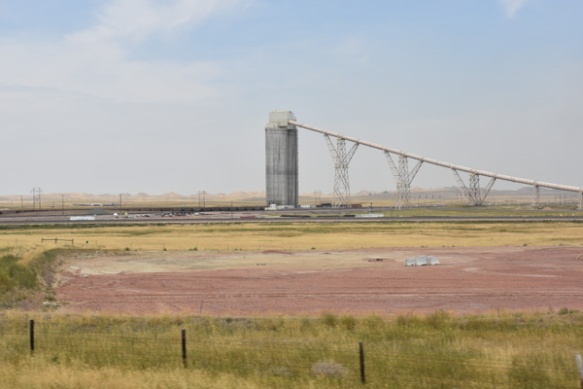
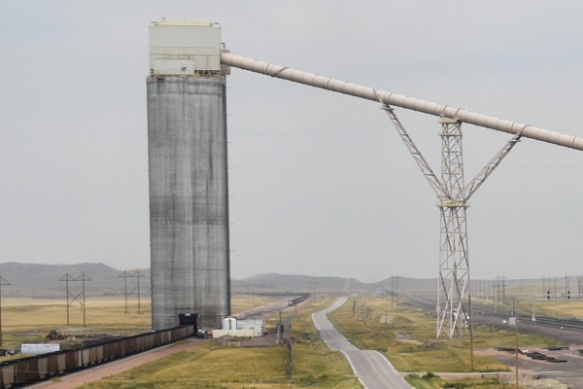
Take a look at the photo below to see the true size of this structure.
Black Thunder Mine,WY

east of Edgerton, WY

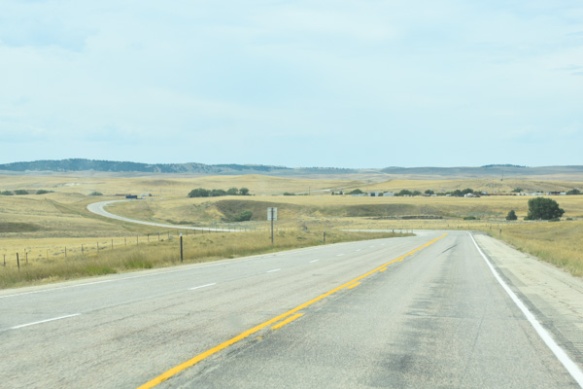
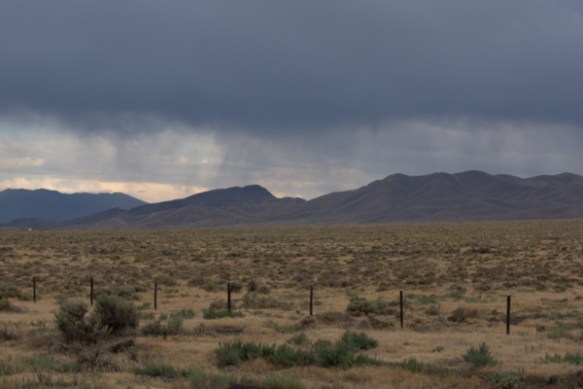
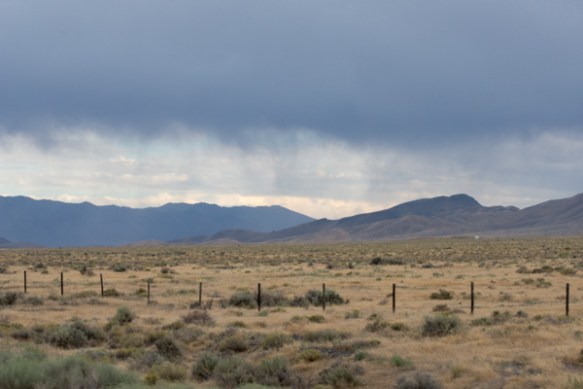
More of Wyoming prairie. This is between Wright and Edgerton.
near Edgerton, WY

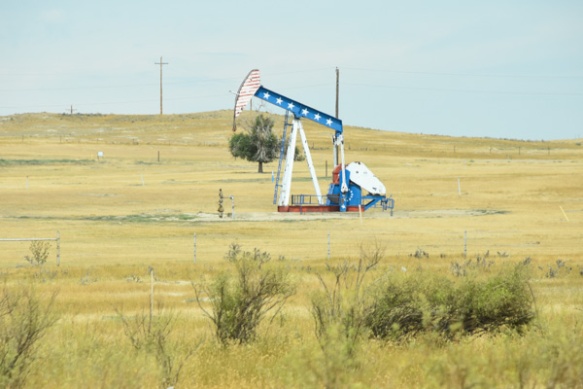
Someone has decorated their oil/gas well.
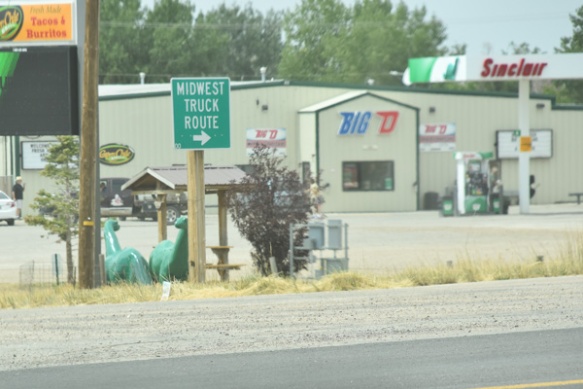
near Edgerton, WY

I have included this photo because of the two dinosaurs and it reminded me of a photo op that I missed earlier in the trip. The dinosaur seems to be the mascot for Sinclair gas stations. We passed a gas station somewhere along the way  where they had a dinosaur the size of these and it was tied to a fence post with a rope around its neck. I still think it’s one of the funniest things I saw on this trip. It would have looked natural to have a horse tied up right next to it.
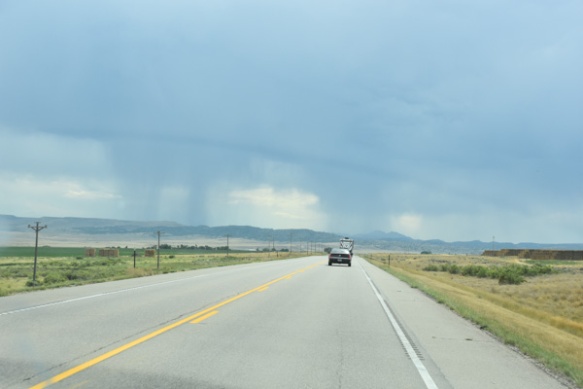
south of Casper, WY

We drove through Casper and took Hwy. 220 towards Rawlins.
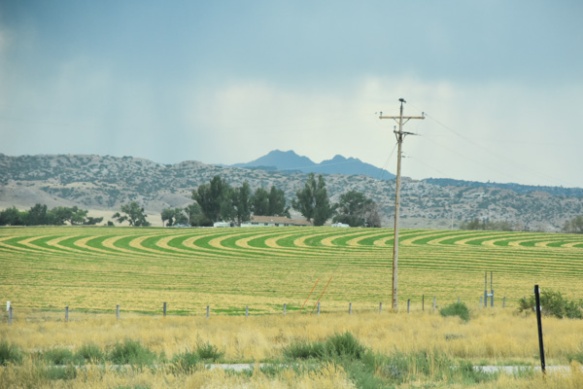
south of Casper, WY

We watched lightning in the distance. Do you know how hard it is to take lightening photos?
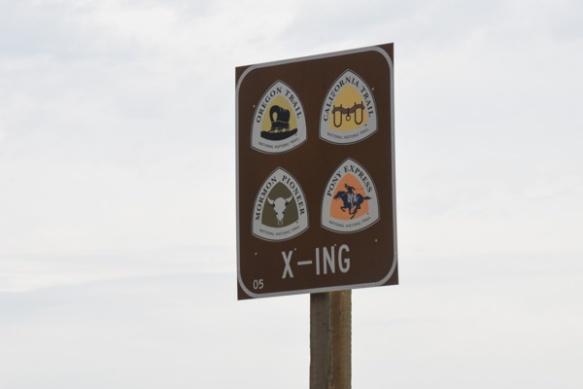
Independence Rock, WY

We were still following the trail of the pioneers…
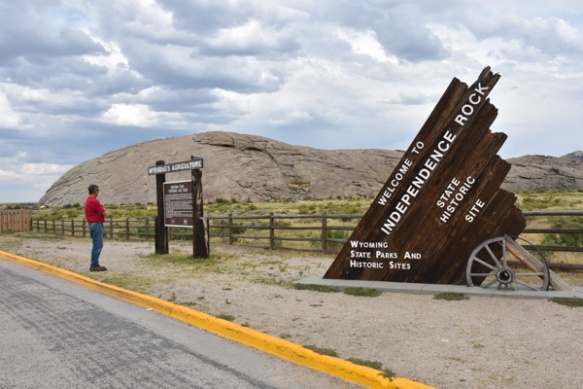
Independence Rock, WY

…and we stopped as they did when we reached the Independence Rock, which is now a State Historic Site.
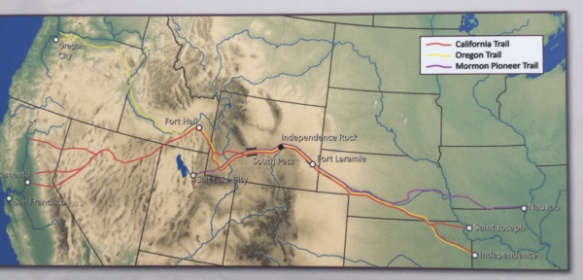
Independence Rock, WY

In one of the earlier posts (Day 2) we had stopped at South Pass. Then we were heading east, backwards from the direction the explorers and pioneers travelled. They would have been at Independence Rock first, looking west towards South Pass, 100 miles to the west.
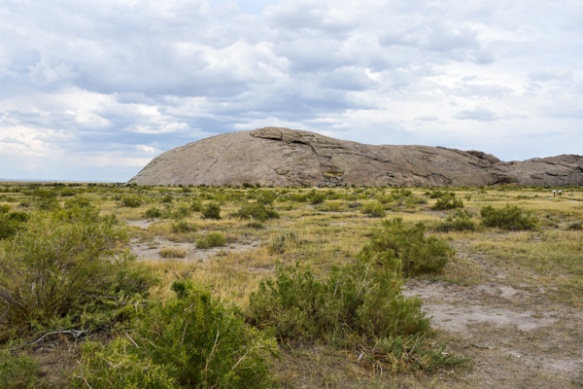
Independence Rock, WY

Independence Rock was the first major landmark after leaving the North Platter River to follow the Sweetwater River to South Pass.
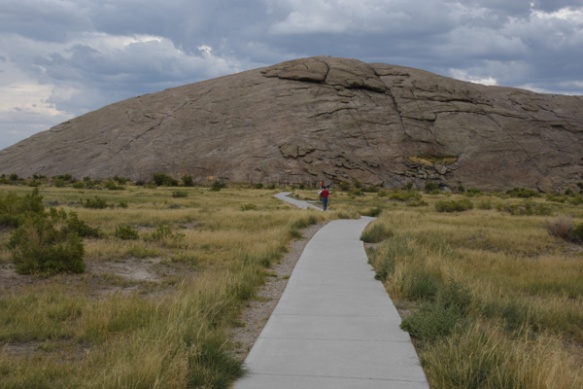
Independence Rock, WY

There is a trail around the rock for modern day visitors. You can see where early travelers left initials and names scratched into the rock.
Independence Rock, WY

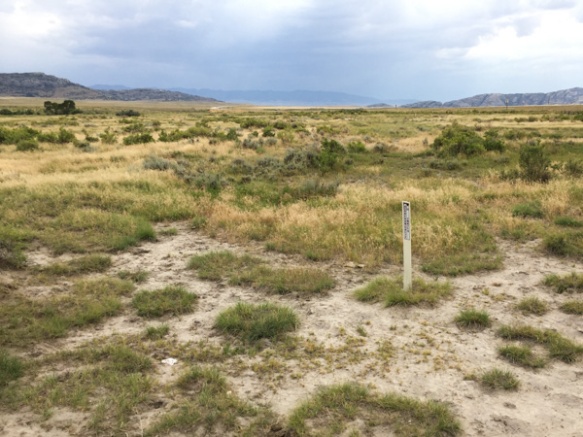
This is the remnants of the trail heading on southwest.
Great Divide Basin, WY

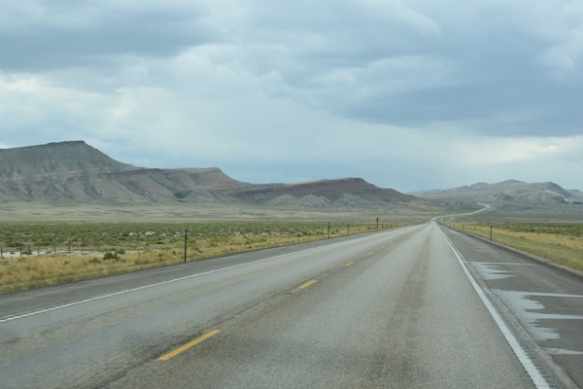
We were back on our trail towards Rawlins.
Great Divide Basin, WY

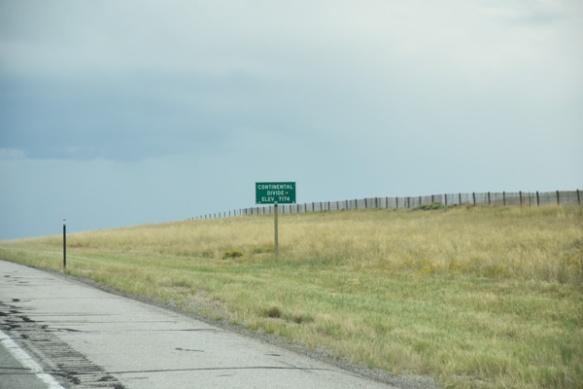
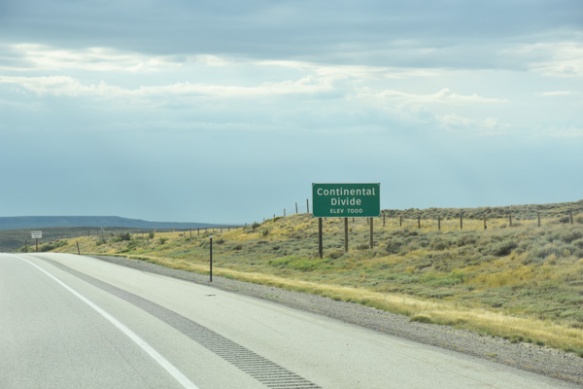
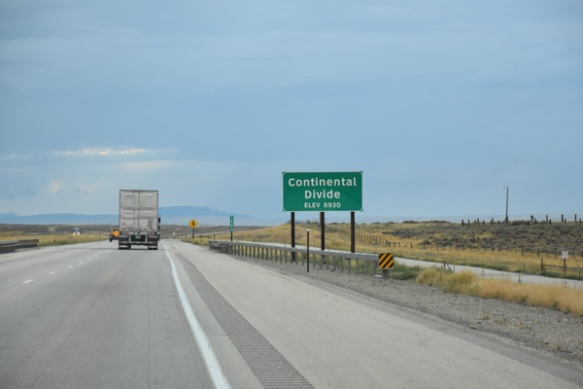
We crossed the Continental Divide.

IMG_1971

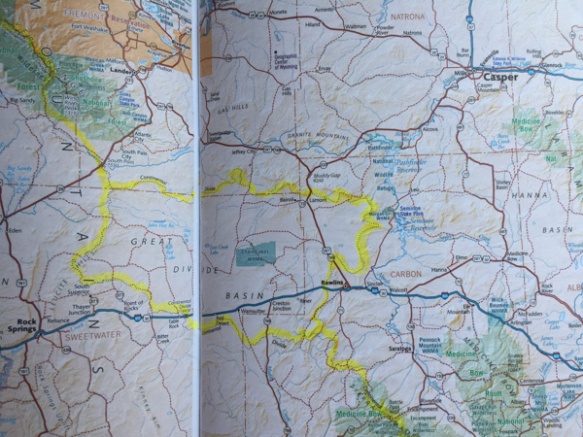
I used to think that you crossed the Continental Divide once and then were on the other side. I found out that there is an exception in Wyoming (and when I looked at a map of the Continental Divide, also in Mexico). Wikipedia again: The Great Divide Basin is an area of land in Wyoming’s Red Desert where none of the water falling as rain to the ground drains into any ocean, directly or indirectly.” I highlighted this on the map so that I could see it more clearly. South Pass is near that northern route of the Divide.
Rawlins, WY

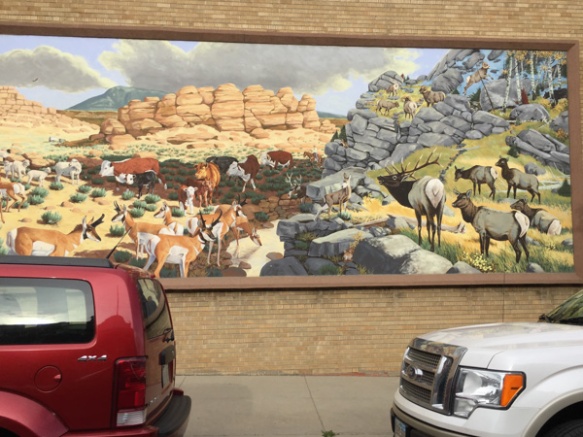
We found the Post Office in Rawlins (this was across the street)…
Great Divide Basin, WY

…and then crossed the Continental Divide again…
Great Divide Basin, WY

…and again.

East of Green River, WY

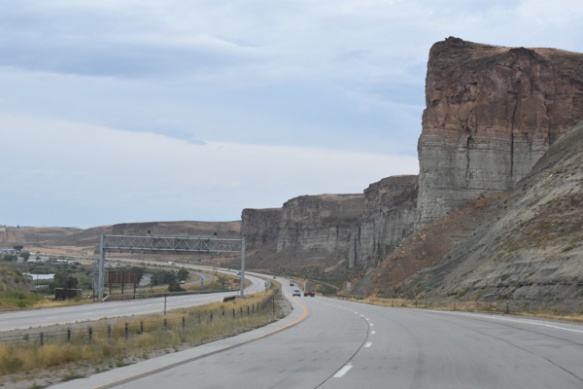
Near Green River on I-80. From here on we were backtracking where we’d already driven.
Evanston, WY

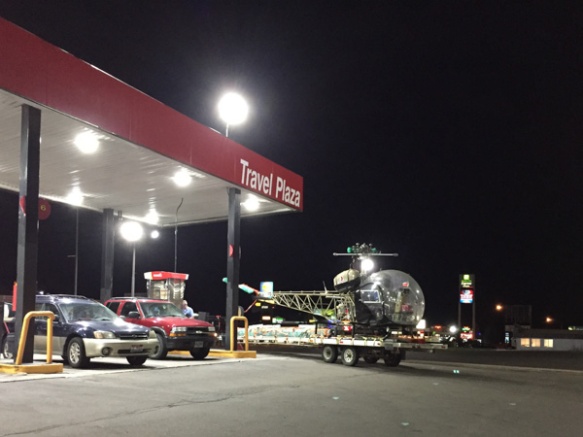
It was dark when we got to Evanston, just on the edge of the Wyoming-Utah border. Looking at the map book and trying to find somewhere to spend the night I had found one more point of interest for the next day. We still hadn’t figured out a good place to camp so we stopped here for gas and Subway sandwiches and took the maps inside for closer scrutiny.

To be continued…
Road Trip to SD – Day 5 – Mt. Rushmore

After driving through the Badlands we decided to continue on the scenic roads rather than go to the highway. Some of them were a bit of a guess since all we had was a road map of the state.

DSC_3163

Not far out of the National Park we stopped to watch a herd of bison. This is not much of a photo but it give you an idea of the number in the herd.

DSC_3196.jpg

Then we headed west on a gravel road that went through another part of the Buffalo Gap National Grassland. Most of the National Grasslands are located in or around the Great Plains and they are managed in the same way as National Forests. Until I looked up this information I didn’t know that there is a National Grassland in California. In fact it is near the Klamath National Forest where I worked when I was in college–but it was designated as such until after that.

DSC_3183

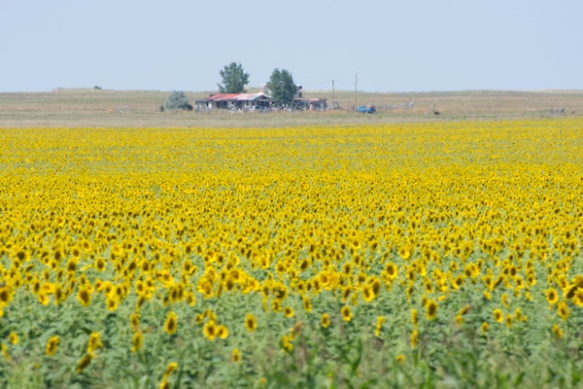
As I had seen on a map in one of the Visitors Centers, the public lands are interspersed with private lands. We saw miles of one of my favorite crops.

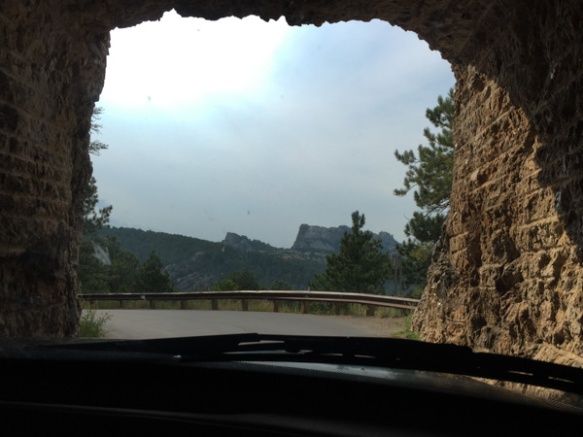
Leaving the grassland we drove into the forest again. The engineering of the road to Mt. Rushmore is a marvel in itself. From Custer State Park you drive 17 miles on Iron Mountain Road to Mt. Rushmore. There are three pigtail bridges and three tunnels that were engineered to frame Mt. Rushmore.

IMG_1552

This very poor photo shows what I mean by framing the mountain. Each of the tunnels is aligned to present the view of the mountain.DSC_3209

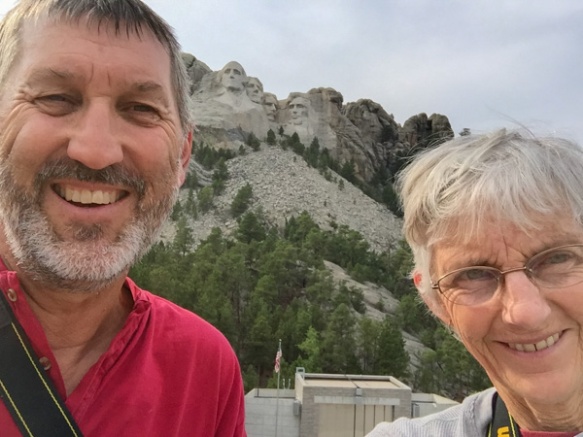
I was surprised when we arrived to be directed to the roof of a parking garage built into the mountain. It makes sense–they have to do something with all the cars that come here.

IMG_1553

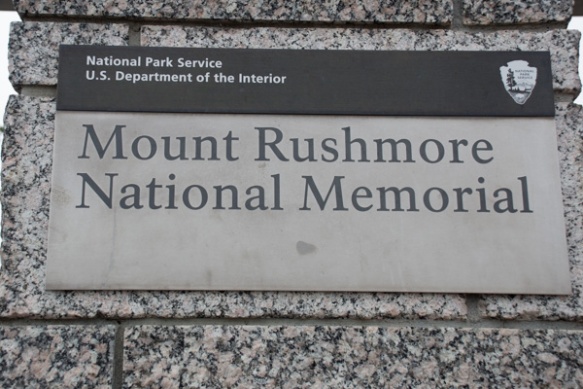
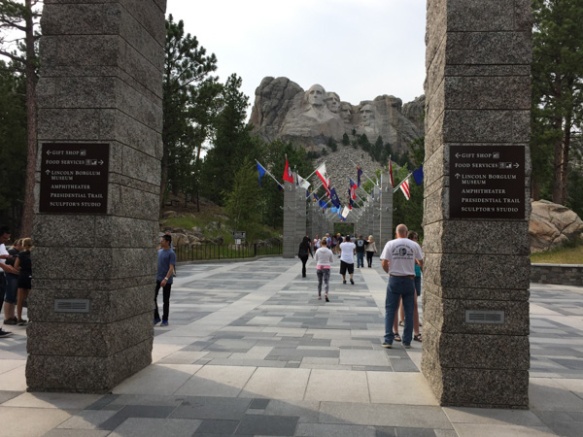
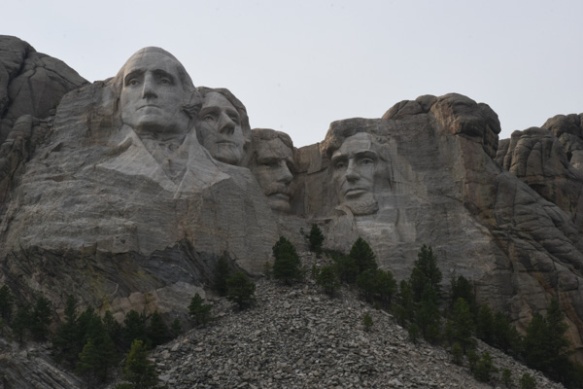
I knew what to expect of the mountain itself because I’ve seen pictures. But I didn’t know about the infrastructure built around this National Memorial.

DSC_3211

There is an amphitheater facing the mountain. From there you can walk on the Presidential Trail around the base of the mountain (or the rubble left from carving the sculptures) and then to the Sculptor’s Studio, where there is a plaster model and tools used by Gutzon Borglum, the sculptor of Mt. Rushmore. DSC_3212

This was an amazing feat in the 1930’s. It took 400 laborers to do this work. DSC_3213

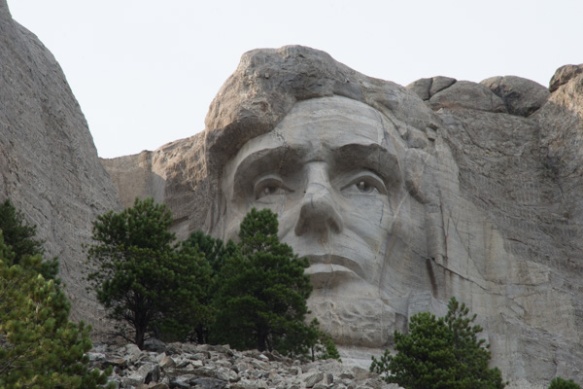
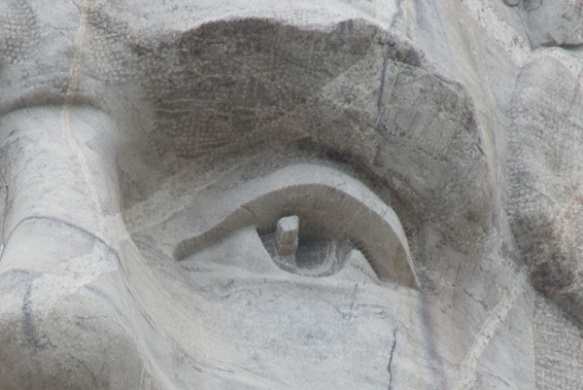
Look at the detail on Lincoln’s face. The noses are about 20 feet long and the eyes are about 11 feet wide. Can you imagine what it would be like to be hanging in a basket here drilling holes for dynamite?

IMG_1555

Time for us to move on. It looked as though there were several campsites in the nearby forest and I didn’t want to have a repeat of the night before. We stopped at the first one that we saw and found a good spot. We had time that evening to relax and read.

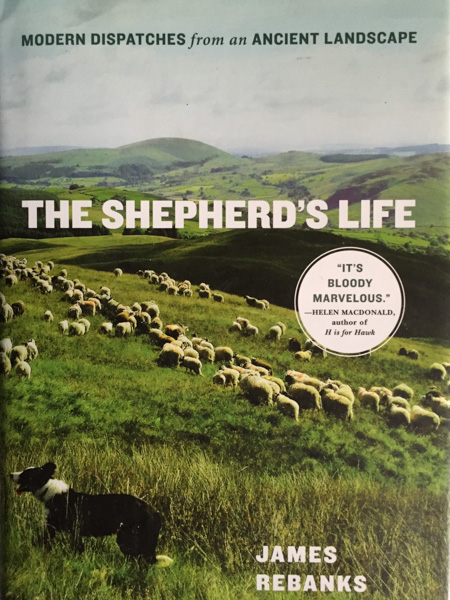
I finished a book called A Shepherd’s Life by James Rebanks.

IMG_1843

The author grew up on the family sheep farm in the Lake District of England.  At the beginning of the book he describes how he felt as a boy when it was assumed by “outsiders” that he would (or should) want to do something better with his life, but all he ever wanted to do was to continue with the sheep farm. Also he was resentful with the interest that others (non-residents/city people) showed for the landscape but in a way that he didn’t understand–they didn’t respect the farms and the farming life but looked at the landscape as something with a “higher” purpose. I’m not explaining this very well, but as I was reading this book in the evenings on this trip I found similarities in his description of the visitors to their farm land and the fells above and to us in taking this trip and the others we’ve taken. We are grateful that there are National Parks and other public lands so that we can explore these landscapes that we’d never have a chance to see in depth otherwise. In this landscape we were the visitors, admiring the stunning views, the wildlife, and the agriculture. But we don’t live the life there, don’t have to deal with weather challenges, prairie dog invasions, etc. As an adult Rebanks learned to see the other side and understood the appreciation the “city people” had for the land, albeit without the understanding of the integral part that centuries of farming had played in those landscapes. He found a way in his career (second to shepherding) to promote the importance of farming and shepherding on this land while allowing tourism to benefit the communities as well.

I couldn’t help but find parallels in this book to the experiences that we were having during this week vacation.

Road Trip to SD – Day 5 – Badlands in the Morning

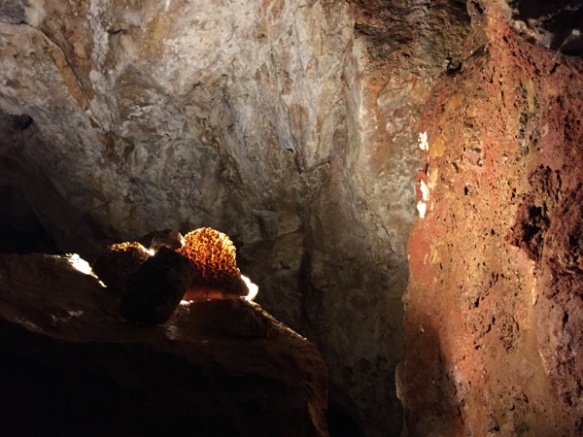
I wasn’t very complete in my description of Jewel Cave from Day 4 of this trip. I usually get out the brochure and re-read the info that is there. Those formations in some of the photos are called Dogtooth Spar, 6-sided calcite crystals formed completely underwater, and Draperies, formed as water trickles down, leaving deposits of calcite crystals. The brochure says that while the cave was forming it was completely submerged in groundwater that was rich in dissolved calcium carbonate. As conditions changed the calcium carbonate precipitated and formed calcite crystals off various depths and shapes on exposed surfaces.

IMG_1507

Here is one more photo from Jewel Cave. There is another cave nearby–Wind Cave National Park but we just didn’t have time for everything.

IMG_1521

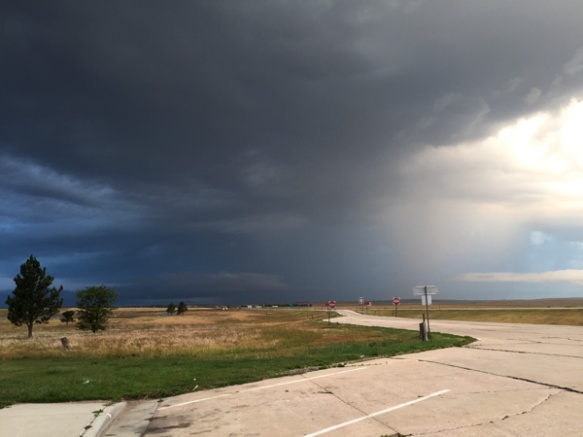
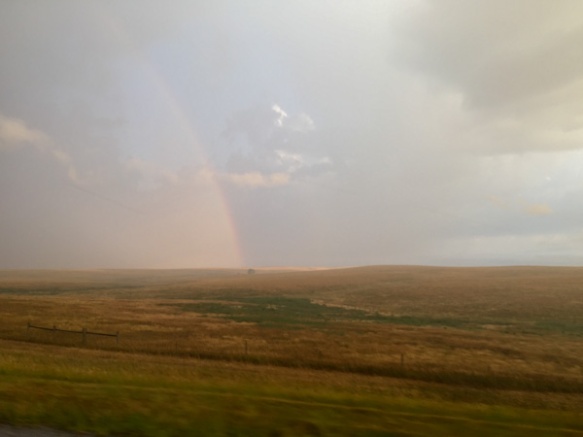
I left off the last post with heading to a Rest Stop in the dark. That was not our best night but at least we slept. However we had chosen this plan after passing up the trailhead parking that said “No Overnight Camping”. We didn’t want to be federal criminals. I will admit here that we are now criminals in the State of South Dakota. The rest stop had a sign posted about a SD rule that you can’t stay more than three hours at a rest stop and there was video surveillance for our safety. I keep expecting to get a summons in the mail.  The photo above is what we woke up to. That weather system was in the west, where we were headed to see the Badlands.

IMG_1524

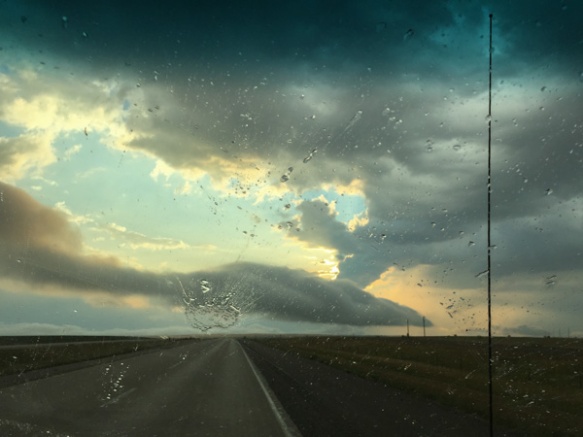
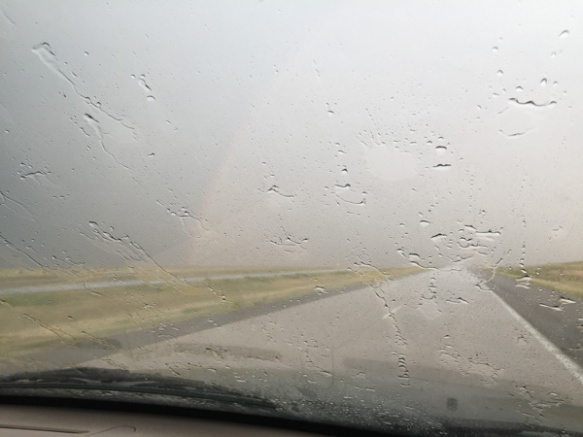
We first had to drive east to find a place to turn around. We commented that South Dakota has big raindrops.

IMG_1525

Now heading west.

IMG_1526

Eventually we drove through the storm, or it passed us over as it was heading east.  This was the first time that I’ve been “on the ground” in the Midwest and I found this side of South Dakota as beautiful as the Black Hills in western South Dakota, although very different.

DSC_3109

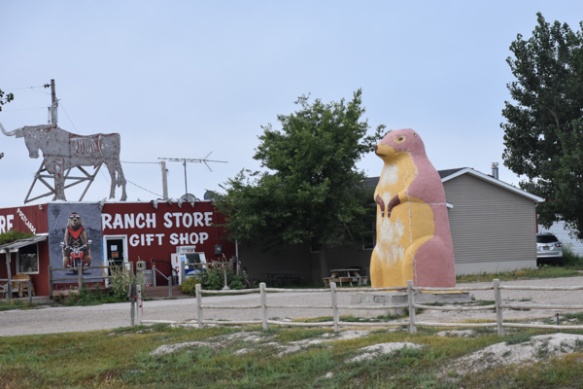
Change of pace. A bit of commercialism near the entrance to the National Park.

DSC_3110

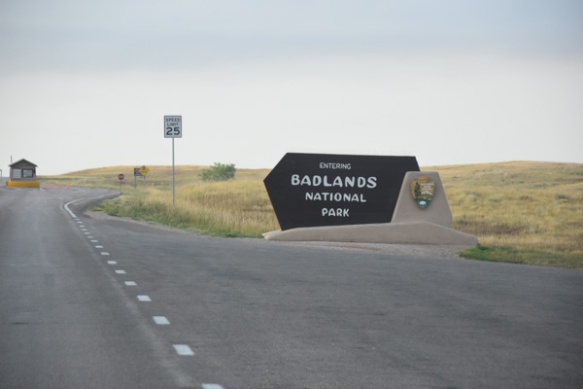
Now there was someone at the entrance station (it had been closed the night before) but there were no maps. It seems they had run out with all the motorcycle traffic. (We were able to get one at the Visitor Center.)

DSC_3111

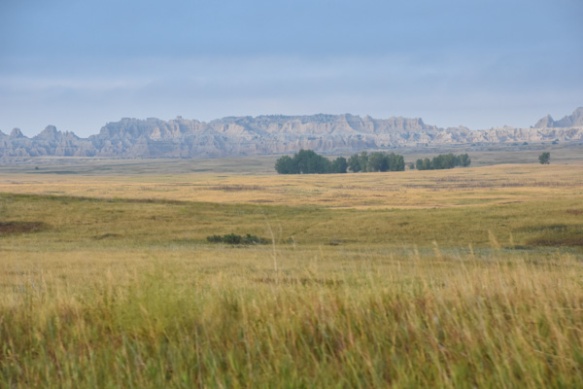
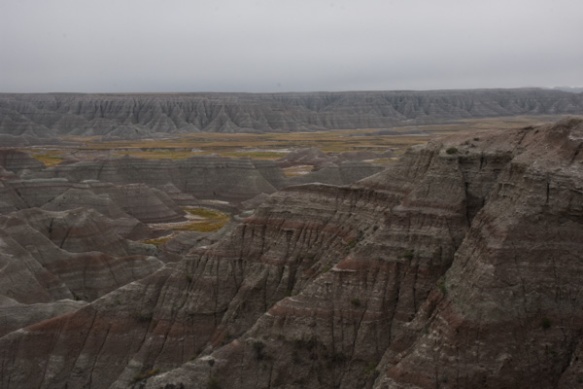
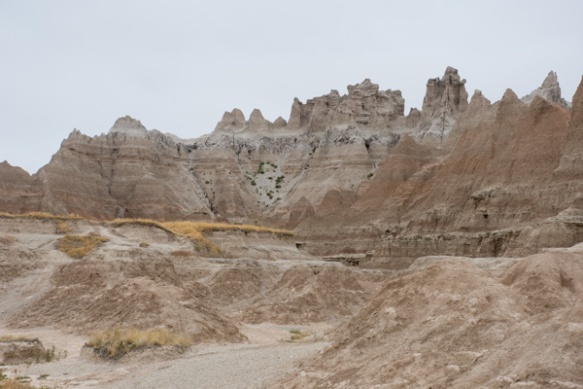
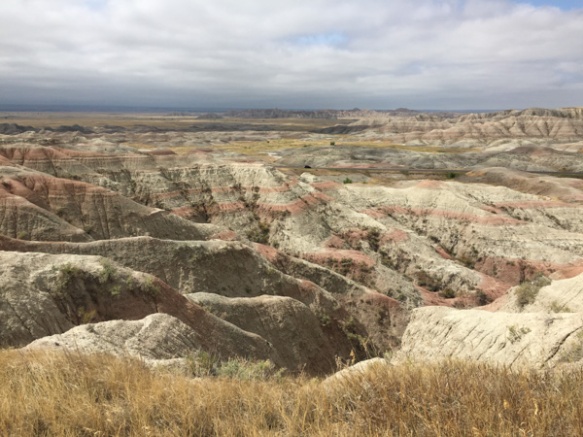
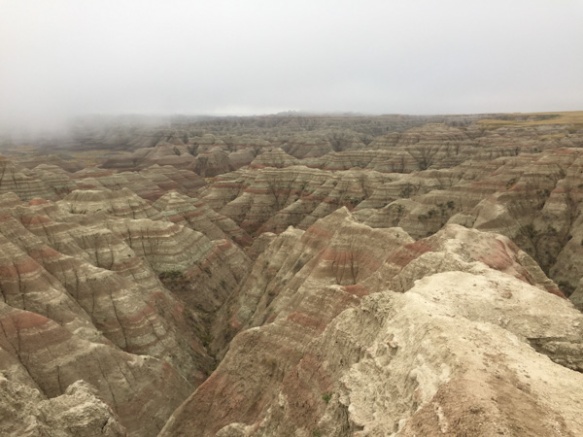
The first view of the Badlands, although we had a glimpse from the other side just before dark the night before.

IMG_1529

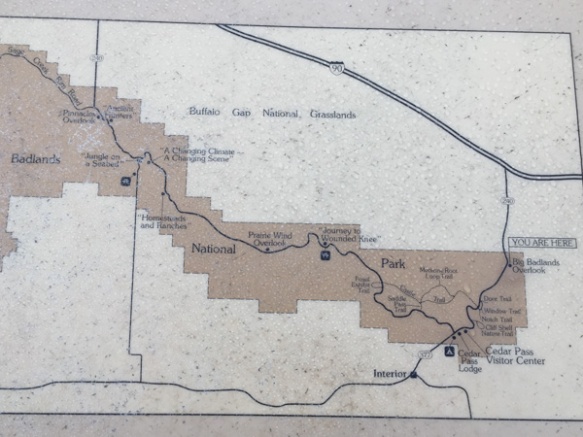
The previous night we had driven through the Buffalo Gap National Grasslands on that road south of the Badlands NP, through the eastern end of the Park and north to the highway. If we had more time we could have gone to the National Grasslands Visitor Center further west on Highway 90 in the town of Wall and the  Minuteman Missile National Historic Site just north of the Park. (Note to self: take another trip to SD and buy the Map Book first.) We planned to explore the trails here at the west end of the Park and then drive through the Park, starting our drive home.

DSC_3113

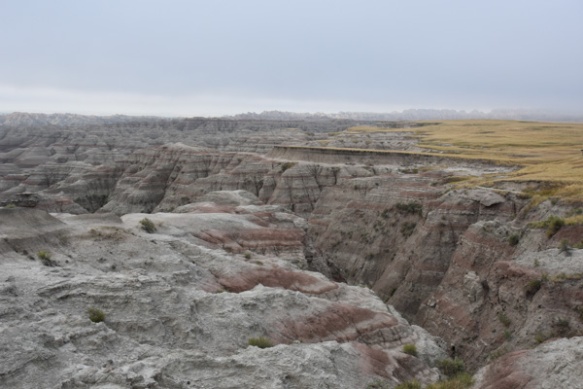
We stopped at an overlook. You can’t tell from this photo but the wind was blowing and it was cold. And what was weird is that this fog was rolling in. That sounds like something I would say standing over the San Francisco Bay. Fog rolling in here in the Badlands? In August?

IMG_1533

Maybe its not “rolling in”. But it sure settled fast.

IMG_1534

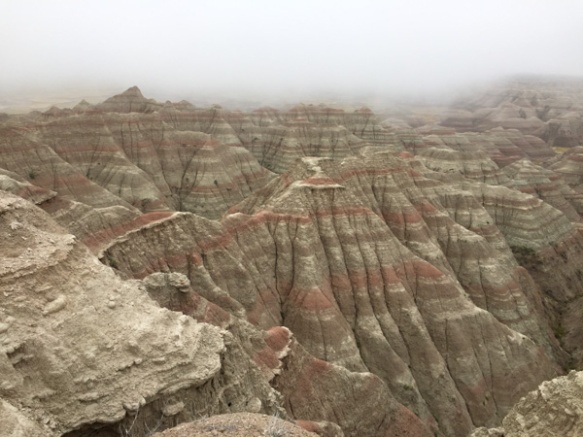
The distance view was gone within ten minutes. In fact these photos were taken ten minutes after the first one right after the National Park sign.

DSC_3116

We drove on. The formations were stunning but the surroundings did seem cold and gloomy.

DSC_3122

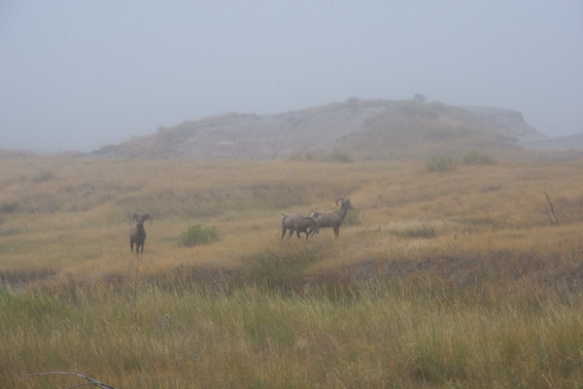
At the next stop we saw bighorn sheep! Yes! This was the clearest photo I had of them as the mist seemed to get thicker. “Sheep in Fog”. The sheep stayed around, in fact bedding down right there while we hiked on a short trail on the other side of the road.

Then we went to the Visitors Center to get warm, pick up a brochure and map, and see the exhibits.

IMG_1536

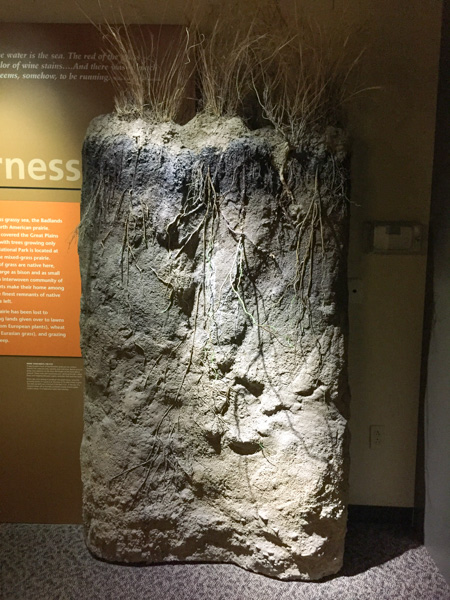
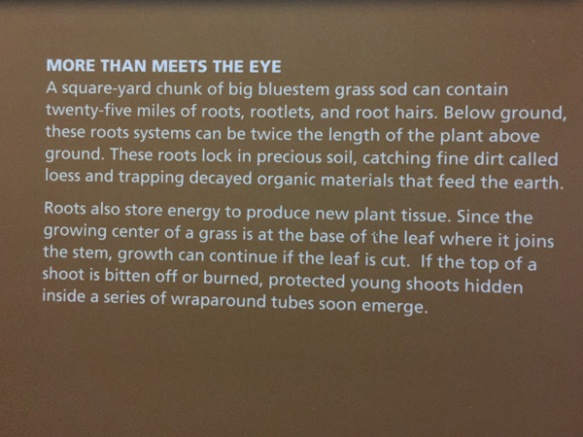
Did you know that my background is in Range and Wildlands Science? That’s what the UCD degree was called after it changed from Range Management before I graduated. I admit that I can’t identify most grasses anymore and certainly not these of the Great Plains, but I am interested. The grass is an extremely important part of an ecosystem, whether its these prairies or our irrigated pasture back home. This is a great exhibit.

IMG_1535

Remember the Dust Bowl? Well, most of us don’t remember it, but we know about it. This explains why, when you plow up the prairie you have set up the system for disaster. The Park brochure explains that “the Badlands prairie contains nearly 60 species of grass, the foundation for a complex community of plants and animals. The prairie once sprawled across one-third of North America.” Today there are only patchwork remnants of this prairie that “occurs in areas that are too dry to support trees but too wet to be deserts“.

DSC_3129

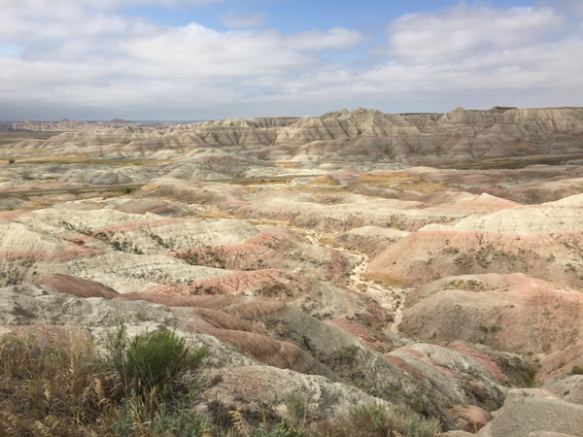
We drove on to the Fossil Exhibit Trail. This area went from being a under a shallow sea, to a jungle after the land lifted up, and then covered with sediment and volcanic ash that turned to soft rock. Eventually erosion exposed all the colorful layers and the fossils they hold, so the SD Badlands in known world-wide for it’s fossil record.

DSC_3139

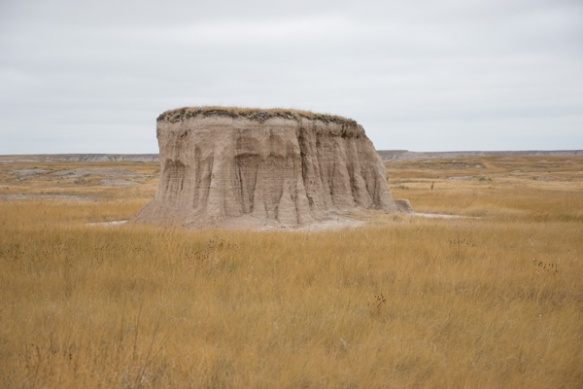
From information found on this website: “Although by definition badlands contain very little vegetation, some plants, particularly prairie grasses, are found in South Dakota’s badlands regions.  Sod tables, remnants of the prairie that have resisted erosion, provide platforms for vegetation.

IMG_1538

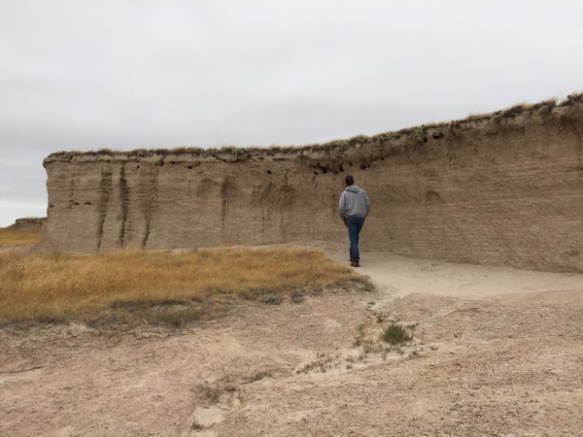
You can see the layer of soil that held by the roots of the vegetation but that isn’t enough to prevent the sides of the sod table to continue to erode. In fact, the Badlands are retreating to the north in general as natural erosion occurs. Notice the holes at the top of this sod table. We thought that maybe birds used these holes.

DSC_3138

Then we saw that these are rodent tunnels that have opened as the erosion occurs. You can see that in this photo.

IMG_1539

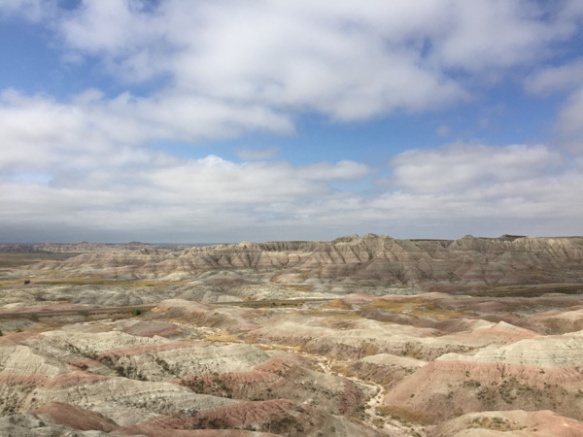
Beautiful landscape. What would an early explorer have thought, having just ridden over miles of grassland?

IMG_1541

IMG_1542

IMG_1543

DSC_3154

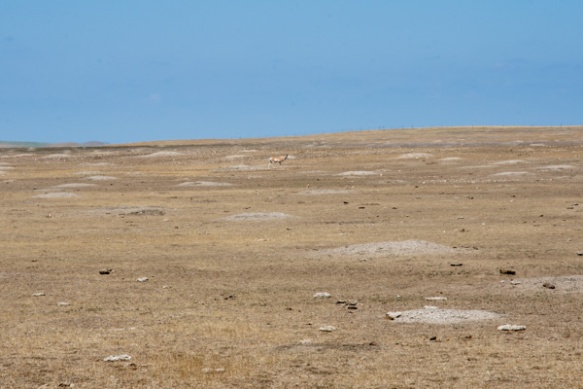
Here is a different landscape.  I might not have known for sure what this was except for having visited Devils Tower NM two days before. (By the way, there is a pronghorn in the photo but I’m talking about the mounds and the lack of grass.)

DSC_3155

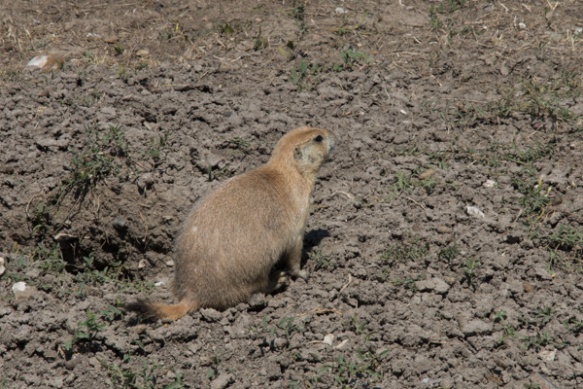
Here is the culprit. I can see how prairie dogs are considered a nuisance. The road took us past  acres and acres of this devastated landscape. As usual there are two (or more) sides to a story. I have to get on with other things right now and won’t try to research this one. Here is one article that gives various perspectives.

The day wasn’t over. We had another stop before camping for the night. That will be in the next post.


Road Trip to SD – Day 4 – Belle Fourche and Jewel Cave NM

We started Day 4 of our adventure after a restful night in the Black Hills National Forest in Wyoming. (Here is the campsite in Day 3.) I was up before Dan and walked off with my camera. Wildlife!

DSC_3067

So what if it’s just chipmunks! They were close enough for me to get decent photos.

DSC_3062

And they were fun to watch as they ran in one side of the cattle guard rail and out the other.

IMG_1462

This is a view of some of the forest outside the campground.

We got on the road and looked at where to go. Now I’ll tell you why I had originally chosen South Dakota as our destination for this year’s trip. Months ago I was reading a sheep magazine and saw a reference to a Sheep History exhibit in South Dakota. I looked it up and it was in an Ag Heritage Museum in Brooking, SD. There was a lot to see along the way so I suggested that as our turn-around point. However, Brooking is on the far eastern side of SD. After the first two days of driving and looking at all the things we wanted to see where we were now and our limited time I pulled the plug on driving clear across the state to see that one place. It seemed kind of silly to add another two days of driving to the trip just for a few hours in a museum (or to not add two days and be driving for that long a stretch).

So, back to the map. There was plenty to see in western SD: Mt. Rushmore NM, Jewel Cave NM, Wind Cave NP, Buffalo Gap National Grassland, Badlands NP. Dan still wanted to avoid Sturgis with all the crazy motorcycle stuff. So we looked for a road around it. I saw on the map “Geographical Center of the United State”. Really? I looked at the U.S. map. That didn’t look right. I googled it.

IMG_1466

If you include Alaska and Hawaii, yes, there is a place, not too far over the border of SD, that is the Geographical Center of the U.S.

DSC_3075

It turns out that the real center is in a privately owned pasture 20 miles north of the town of Belle Fourche.

DSC_3079

The town decided that there should be a more memorable and accessible monument for something as cool as being the Georaphical Center of the U.S. …

IMG_1478

…so this was created in 2008. It is at the Belle Fourche Visitor Center and Museum.

IMG_1467

The museum turned out to be very interesting (and maybe a smaller scale of the one that we were going to miss in Brooking) and we spent some time there. There were exhibits about the cattle drives from Mexico to Canada, the importance of the railroad station in Belle Fourche (4500 train carloads of cattle per month in 1895), the Old West in  movies and TV, early settlers, rodeo history, wartime, and old-time bad guys. There was also an exhibit about the importance of the sheep industry in South Dakota. DSC_3074

This is a sheepherder wagon that is outside the museum. There were a lot of photos of the sheep history of the area.

IMG_1473

South Dakota is currently fifth in the U.S. for sheep production…

IMG_1474

…and the sheep industry is an important part of South Dakota’s agricultural economy.

IMG_1468

This isn’t a very big museum but there was a lot to see in the small spaces. In the area that showed something about life in “the old days” there was this device used to do something to women’s hair. An early perm?

IMG_1471

it’s kind of hard to see this bicycle but I thought it was interesting in that the handlebars, seat, and wheel rims are made of wood.

DSC_3087

After a few hours we decided that we’d better get on the road again. This is a view before we left town.

DSC_3088

What do you think of this one? It was kind of scary to have this view on the highway   but that truck was going the same direction that were are because it was being towed behind another.

South Dakota was not what I expected.

DSC_3090

We had camped in the Black Hills National Forest in Wyoming but it continues in South Dakota.

DSC_3093

We were headed now to Jewel Cave National Monument and took a road designated a “scenic drive” and it was. Beautiful country. This is an area known as Spearfish Canyon.

DSC_3101

This National Monument as well as many of the others we planned to visit are all within this area of the Black Hills National Forest.

DSC_3098

IMG_1487

I continued to find the scenery breathtaking. Too bad the drive-by photos can’t really show that.

IMG_1493

We signed up for a cave tour but had some time in the Vistor’s Center first. Jewel Cave was discovered by two prospectors in 1900. Only a mile of it had been documented when it was made a National Monument in 1908. Now it is known to be the third longest cave in the world with over 180 miles of passages that have been mapped and more that have not. The cave extends beneath about four square miles of land but there is only one known entrance. The areas in yellow are closest to the surface and the redder the color, the deeper the passage. The deepest point is 749 feet below ground.

Thirty of us gathered with our Ranger and rode an elevator down to a double set of doors that created an airlock when entering the cave. I am not a big fan of dank, underground place, preferring wide open spaces and sun. Nevertheless, this was a cool (no pun intended although it was sweatshirt weather below ground) tour.

IMG_1498

It was OK to take photos. I can’t tell you what any of these formations are because (although once, for a very brief period, I thought I might be a geologist) I don’t ever remember rocks and geologic time.IMG_1499

I can admire them however.

IMG_1500

There were lights placed strategically along the mile-long tour route and lots of walkways and stairs.

IMG_1503

At one point the Ranger turned off all lights and that is very eerie. I think of Tom Sawyer and Becky in the cave and running out of candles. Yes, I prefer wide-open spaces and sunlight. (By the way, no photos of lights-out in the cave.)

IMG_1505

This one reminds me of an ocean scene.

IMG_1513

IMG_1515

Here is an example of the one of the walkways. The tour was about an hour. After that I bought my patch at the gift store and we spent a little more time in the Visitor Center.

IMG_1490

We read about the ecosystems we were traveling through. I have lived most of my life in California, have traveled in many of the western states, including the desert southwest (where I lived for a couple of years) but have never been in the prairie. This sign and others explained a bit about the difference between the Short Grass Prairie and the Tallgrass Prairie, where we’d be traveling next. The Black Hills are in between.

DSC_3106

Bison grazing.


IMG_1519

We planned to visit Badlands National Park the next day. We knew that it might be tough to find a camping spot on a weekend without a reservation in the National Park but we thought that we’d be able to find a place to pull over and sleep somewhere in the National Grassland that surrounds the Park. We had been told by a couple of people that (as we know is true in the National Forest) if it’s public land you can stay there. This sign indicated that we were in Buffalo Gap National Grasslands…

IMG_1520

…complete with buffalo.

My big mistake was not getting the map book for South Dakota before we left. I realized too late that we didn’t have it and thought that we might be able to find one on our trip. Since neither of us like to spend time driving through cities even if its to a bookstore, we never got one, and instead had to rely on a road map of the state. That was totally inadequate for the way we are used to traveling. We couldn’t tell where there was private land and public land and we had no idea where the little dirt roads went. Later I saw a map that would have been even better than the map book for our purposes. There is a map available of the Grassland that shows land ownership. No wonder we couldn’t figure it out–it’s all a big checkerboard of private and public land. We’ll know for next time.

So we drove through the Grassland as it was becoming dusk. We couldn’t identify anywhere that looked like we could stay. It is after all, grass, and all fenced. We’re used to driving through the forest or even the desert and being able to drive off on a dirt road away from the main road and camp. Eventually it got dark and we continued driving into the Badlands NP. As we thought the campground was full. We continued on, entering  the Grassland again. We pulled off on one possible road that was clearly marked as a trailhead on public land. But law-abiding citizens that we are, we left when we saw the sign that said “No Overnight Camping”. I was feeling less law-abiding than Dan, but I was not the driver. We tried another road that was still part of the Grassland and passed another place, Minuteman Missile National Historic Site, that would be interesting to visit in daylight hours. This gravel road was on our map and continued for a few miles. However, every time we turned on what looked like a possible side road, there was a gate, or an obviously cultivated field. We finally went back to the highway and drove east.

You might be wondering, why don’t they just get a motel room? The first answer is that there were none around. However, eventually we got to the highway, and, yes there would be motel rooms. But, this was a camping trip and we had comfy sleeping bags and I had a sheepskin to sleep on and we could sleep in our truck. All we needed was a place to park. We saw a rest area on the map so we went there.

To Be Continued.


Road Trip to SD – Day 3 – Devils Tower

After a morning spent touring Mountain Meadow Wool we headed east toward Devils Tower National Monument.

Coal mine-Gillette, WY

This is part of a coal facility near the town of Gillette, home to 12 coal mines which provide 1/10 of the jobs in the area. Up to 100 trains loaded with coal leave the town every day. We noticed that the sky over much of our trip was not as blue as we expected and that is evident in my photos. I am used to the Sacramento Valley haze in the summer, a result of dust, smoke from wildfires, and probably smog, but I didn’t expect this in Wyoming. I wonder if these hazy skies are from all the coal mines.

DSC_2955

Artwork seem when driving through one of the towns.

North of Moorcroft, WY

I wouldn’t call this artwork, but someone has a sense of humor. Am I the only one that sees these logs as weird animals?

North of Moorcroft, WY

As expected there were lots of cattle. This is north of the town of Moorcroft, where we turned off  of I-90 to head north to Devils Tower.

DSC_2978

First view of Devils Tower. The Tower rises 867 feet from the base and 1267 feet above the Belle Fourche River. The diameter at the base is 1000 feet and the area on top is 1-1/2 acre.

IMG_1447

There is a trail all the way around the Tower and it looks different on each “side”.

DSC_3000

This is looking at its southeast face. Do you see the column that is much shorter and tipped a bit just inside the part that is in shadow and that looks like it is just above the tree in the photo? Then do you see the column that rises up about twice as high as the shorter broken one?

DSC_3002

This is a close-up of that taller column. There is a climber! Look above the next column over (about an inch on my screen). That gives you some perspective about the size of this huge rock.

DSC_3010

This is a detail of the outer third of the Tower from that first photo (where, due to camera perspective, it looks more tipped than it really is).

DSC_3011

Tisis a closer view of the middle of the photo above. Those things that look like sticks? Those are the outer edge of a ladder that was used to get up the first 350 feet in the 1890’s. The ladder is anchored in the crack between the columns. Can you imagine? The lower part has since been removed and some of the upper restored by the Park Service in the 1970s.

DSC_3012

This is another view that includes the area of those close-ups just to give some perspective.

DSC_3019

The trail around the Tower is paved the whole way to accommodate the thousands of visitors  that come each year. Hot in the sun, it was very pleasant under the canopy of trees.

DSC_3023

Speaking of trees, these are pretty substantial trees at the base of the cliffs. Another measure of perspective.

DSC_3021

Look at those trees in this view.

DSC_3024

There were beautiful colors and patterns in the rock.IMG_1452

We were at the Tower for about two hours or so. Before leaving the National Monument we had to stop at the prairie dog town.

DSC_3034

These are certainly well-fed prairie dogs.

DSC_3047

But I didn’t realize the damage that they do to the landscape. There are prairie dog mounds throughout this photo. I have some very severe photos to share later on in these blogs.

DSC_3055

We drove north and then east from the Monument…IMG_1456

…and found a campground in the Bear Lodge Mountains, part of the Black Hills National Forest. Again, we needn’t have worried about the campground being over-run by motorcycles from Sturgis. Maybe the riders are not big campers. There was only one other person in this campground.

IMG_1455

This is a rare scene–not Dan reading a newspaper–but that we actually had time to relax and enjoy the evening in camp. Point #1: we got there early enough that there was still evening left before we needed to eat or get to sleep. Point #2: There were NO mosquitoes, it wan’t cold, and there was no rain. So Dan read his newspaper and I read The Shepherd’s Life by James Rebanks. I found that some of the author’s points resonated with me on this trip. More about that later. IMG_1461

An after-dinner fire. This reminds me of the disembodied head of Oz.


Road Trip to SD – Day 1 – Driving

I frantically got ready for this trip that I had been thinking about for six months.IMG_1354

This is why we were able to take a road trip in mid-August. It is finally sinking in for Dan that he isn’t going back after a summer break.

We still weren’t ready on Wednesday, the day of departure. I had told Dan that we WERE LEAVING IN THE MORNING. We did, but it was almost noon before we drove out of the driveway. The plan was to drive as far as we could, not stopping at all of the California and Oregon trail markers like we usually do because we wanted more time at the other end of the trip. For that reason and because I was not the driver-in-charge I have a lot of  “drive-by” photos. Many were deleted but some are OK and those are what I’ll share.

Fernly Sink & Hot Springs Mtns, NV

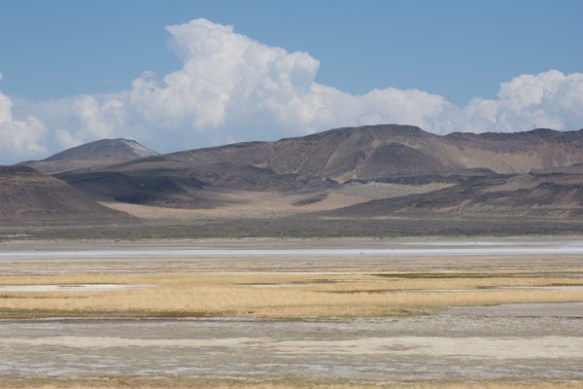
We were driving I-80. I love the scenery of the west, even in the Nevada desert. This is the Hot Springs Mountains that rise above the Fernley Sink.

Fernly Sink & Hot Springs Mtns, NV

According to Wikipedia, an irrigation system was constructed in the early to mid-1900s and “a drainage system was also constructed to carry away excess water and mineral salts from the farmlands. This system consists of channels (5 to 15 feet deep) dug adjacent to fields; it eventually terminates in the sink northeast of Fernley.

40-mile desert-NV

We didn’t stop at all the roadside points of interest but this was at a rest stop. Throughout this trip we thought about the pioneer trails. They are well marked in the road atlases that we have for each state and along the highways. I can’t even imagine what it would have been like to pack up the family and head west in the way that the pioneers did. We drove through the 40-mile desert in a little over 1/2 hour.

East of Valmy, NV

The mountains east of Valmy, Nevada.

East of Valmy, NV

We remember Valmy for it’s rest stop where we slept on one of our road trips a couple of years ago when there was a tremendous moth invasion. We didn’t need to stop to sleep here this time. Still daylight.

Humboldt Range, NV

Humboldt Range, southeast of Wells, Nevada.

West of Wells, NV

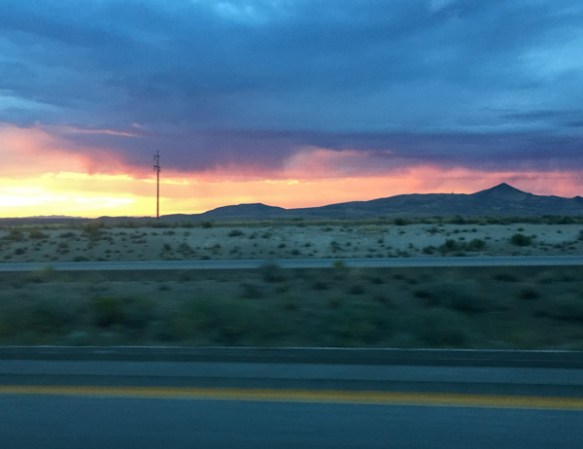
These photos were looking back west as the sunset.

West of Wells, NV

I had to lean over the seat and reach behind Dan while holding and pointing the phone and the camera in the general direction.

Even though it was getting dark we weren’t ready to stop. If we had left earlier in the day we would made it to Salt Lake City. So Dan kept driving. There is a distinct difference in the town of West Wendover (NV) and Wendover (UT). Bright flashing (gaudy) lights and Last Chance To Gamble on one side of the border and dark and “normal” on the other side. Dan kept driving. We passed through the Great Salt Lake Desert in the dark and finally stopped at a rest stop at the east side of the salt flats.

Those of you who read my blog know that I have written a sort of travel journal with photos each year for the past several years when we have made our annual road trips. I have no idea how many people actually read these, but I write these blog posts because they substitute for the old scrapbooks and photo albums that I was never able to keep up with. I also like reviewing the photos and looking up some of the information that I may have forgotten. It helps me keep it all organized in my brain. If you are one of the regular readers, I’d love to know about it. Stay tuned for Day 2.


Getting Ready

It is always work to get ready to go somewhere. In my case I cram in all the things that I would probably put off if I were here, but now feel like they have to be done before I go. Part of it is to try and make things as foolproof as possible so that the people taking care of things don’t face issues.

IMG_1334

Now that the tractor finally works (sort of) I spent some time mowing. Then I wanted to try “spreading” manure. Spreading is in quotes because we don’t have a manure spreader. I have a tractor with a bucket and me with a shovel. Not practical…

IMG_1329

…even though I have made some darn fine compost.

IMG_1328

To make good compost the manure pile needs turning now and then, but the dryness on the top is deceptive. It’s wet underneath and it’s easy to get the tractor stuck–which requires me with the shovel again. Move onto other things that need doing.

IMG_1338

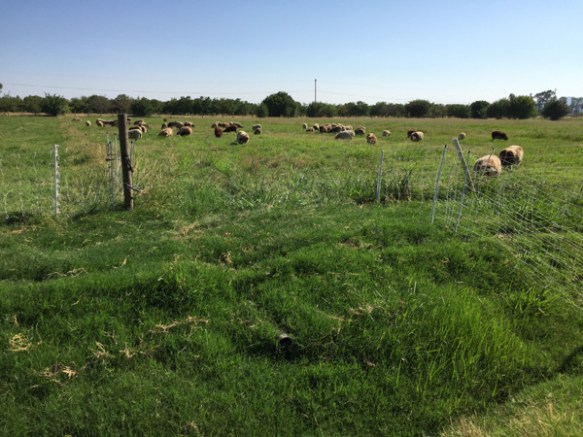
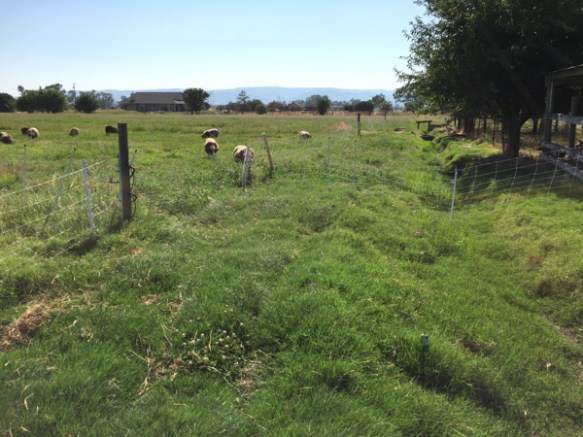
The ewes are on pasture and the white net fences are moved around to change the paddock to be grazed. I moved the ewes to the side of the pasture where there is less risk of them rubbing on a gate and inadvertently (or on purpose) pushing things out of wack while I’m gone.

IMG_1339

It’s hard to see in this photo but I set up the next three fences so that my kids don’t have to do it. They will have to close one but then the sheep just go to the next. There are always tricky things (like where there is concrete so the stakes for the fence don’t go in all the way and where you have to block off the irrigation ditch so they sheep can’t go under the fence, etc)

IMG_1341

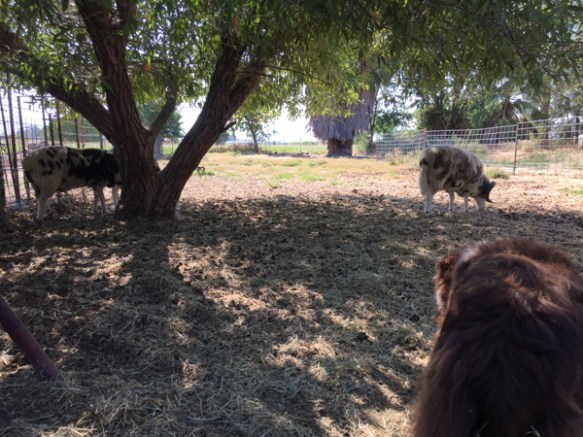
I had the ram lambs grazing in the back but don’t want fence-to-fence contact with them and the ewes so they had to be moved. These are the panels that were keeping them away from the ewes while grazing the back. There is no water in that back field so they needed access to the corral for water. I’m going to leave this in place so that the ewes won’t be near the big ram fence (not a big fence, although it is double, but the big rams). I don’t need any more reason for the rams to try and mangle their fence while we’re gone.

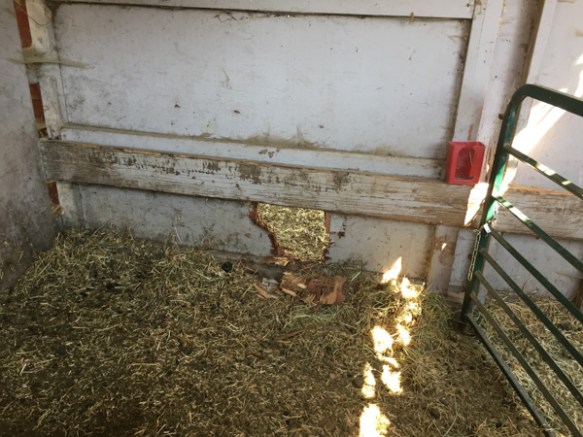
IMG_1317

They did this just yesterday.

IMG_1335

Here is a temporary fix. They also beat up the other wall and pushed it away from the corner post. That green panel in the upper photo is keeping them away from that part of their shed. Not fixes, but hopefully stopping further destruction for now. I expect when I get back that wire panel over the hole will be mangled as well.

IMG_1336

Rusty doing his job of keeping the rams away while we put up the wire panel.

IMG_1321

I said that I need to move the ram lambs out of the pasture. Ginny helps with that.

IMG_1323

You can see Ginny behind here. She doesn’t work with finesse, but she can do the job.

IMG_1315

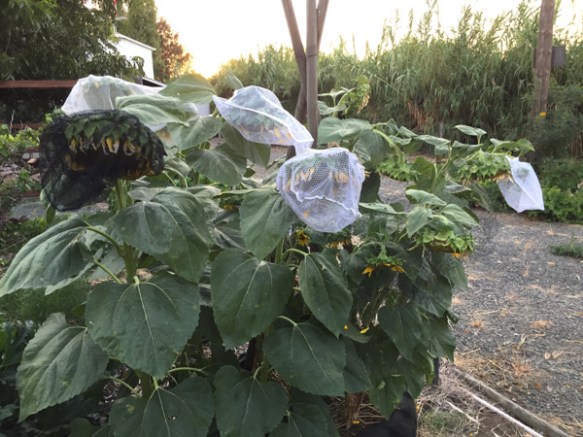
Back up at the house, the birds are starting to get to my black sunflower seeds. These are for future dyeing projects.

IMG_1316

I put net bags and bird netting over the flowers.

IMG_1343

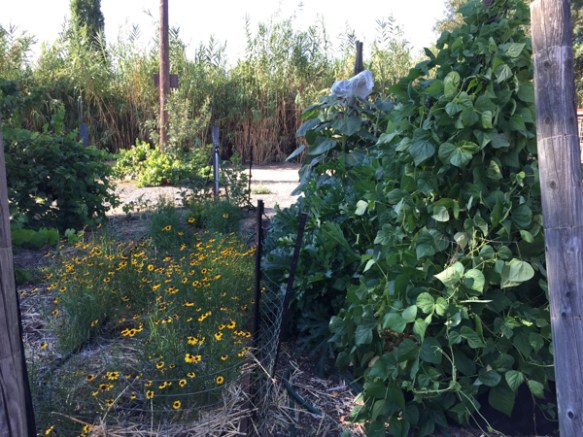
I water the garden and picked coreopsis. A friend will come and pick during the week to keep the flowers blooming and take squash from the plant that is taking over. The beans in the foreground look great but haven’t produced anything yet.

IMG_1340

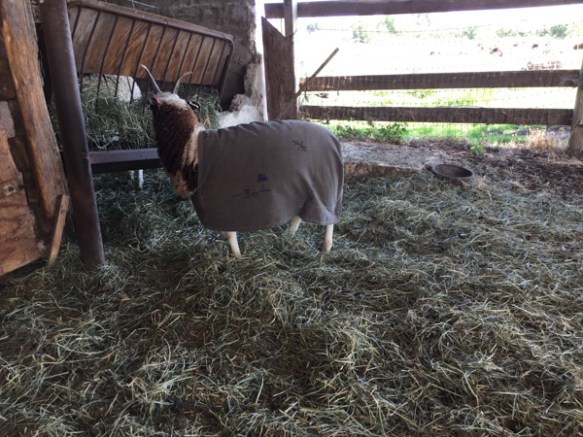
This is the wether in with Peyton. He had his leg through the front of the coat the other day so I caught him to take it off. Don’t want that happening while I’m gone and I didn’t have a needle and thread handy to make it smaller.

IMG_1351

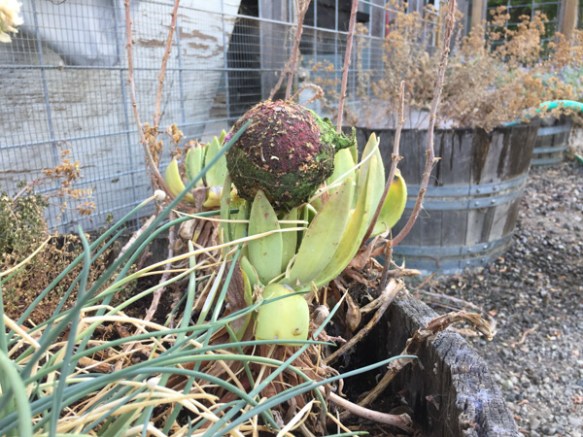
I was watering my barrels that have been neglected. Ginny knew where my attention was and placed her ball appropriately.

When condense into a few photos this doesn’t seem like much but I was going non-stop yesterday. I realized at about 9 p.m. that all I’d eaten was granola in the morning and watermelon through the day–it was too hot to want anything else. I am now  gathering up the last of the stuff to take. Where is that book about my camera?

IMG_1353

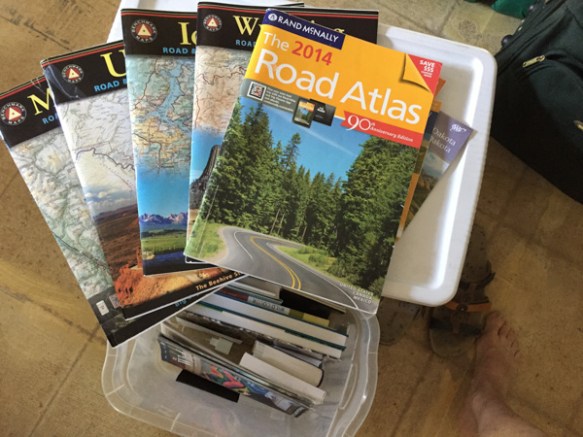
Here is a hint about the road trip. Do you think I have enough reading material with me?

Road Trip to CO – Nevada to Home

In the last post I wrote that we drove until dark and then kept going. We didn’t have a plan about where we’d stop and Dan just kept driving. (By the way, when I say that “we” drove I mean that Dan drove and I rode. I used to offer to drive but I don’t bother anymore on our trips. Dan likes to do the driving and that’s fine with me, since I’d rather be watching the scenery and napping when I get tired.)

Eventually, somewhere in eastern Nevada, Dan got too sleepy and pulled over. We didn’t try to stretch out in the back of the truck but slept in the front. After an hour or two I got too cold and uncomfortable (and bothered by someone snoring) and switched places with Dan so I could drive. When I got too tired and pulled over we both slept awhile until he recovered enough to go on.

DSC_1540

The view when I woke up next.

DSC_1541

Have you noticed that the Open Range signs in many places have cattle that look like dairy cows? The Open Range signs in Nevada show what looks like bulls.

DSC_1544

Even along Highway 50 in Nevada there are Points of Interest.

DSC_1547

It’s hard to see in this photo but there are remnants of a stone building surrounded by cyclone fence. One of the signs at Cold Springs (between Austin and Fallon) described The Overland Stage Station: “Constructed using the volcanic lava rock found throughout the area, the Cold Springs Stage Station was built in 1861. The original Pony Express Station was built 1-1/2 miles to the east of here in 1860. When the stage station was erected the Pony Express moved its operation to this building…Life at Cold Springs was not for the timid. The 2 to 3 man station crew endured the barest, leanest forms of living. They ate, lived, and slept in this crude structure for months at a time. Floors, when dry, were dirt and when wet, they were mud. Sanitary facilities were primitive. The handmade furniture was crude and utilitarian at best. There were no luxuries, only the necessities of life: food, water, and a firearm for protection.”

IMG_2952

IMG_2956

IMG_2951

Additional signs explained the quick progression of communication and transportation milestones that occurred here between 1860 and 1927–the Pony Express in 1860, then the Overland Stage in 1861, telegraph in 1861, (dooming the Pony Express), and eventually the creation of Highway 50.

DSC_1549

Here is one more sign. This one is provided by Trails West whose “primary activity is installing, and maintaining, distinctive steel-rail “T” markers along the many emigrant trails leading to California and publishing guide books to enable anyone to follow these trails from beginning to end.” They have placed over 600 markers along 2000 miles of trails.

IMG_2948

Putting my iPhone in my pocket it took this photo.


DSC_1564

Way back in this post I mentioned a Shoe Tree. Here is another west of Cold Springs. This one is even marked in our map book and described in this internet article.

DSC_1566

Not to be a spoil-sport, but I’m not a big fan.  Sure, it is a curiosity and, in this case, a landmark, but I think I’d rather just admire a nice tree growing in the desert. To me it brings to mind the question is graffiti artwork or vandalism?

DSC_1574

Sand Mountain is a 2-mile long, 6oo’ high sand dune that is 20 miles east of Fallon and is the site of another Pony Express Station.

DSC_1577

DSC_1568

DSC_1579

Impressive house in Fallon…

DSC_1582

..and an auto repair shop featuring a NAVY jet out front (representing Fallon Naval Air Station).

DSC_1586

Seen on the highway and reminiscent of a twill pattern in weaving.

DSC_1588

Just past Fallon, we left Highway 50, as it headed southwest, to get on I-80 toward Reno…

DSC_1591

…and, eventually, home.

DSC_1593

California! Only about 2-1/2 hours to home.

IMG_2992

We drove about 2800 miles on this trip. It’s marked in pink. Our 2015 trip to Texas is in blue. Orange is to Grand Tetons and Yellowstone in 2014 and Green was to Grand Canyon and beyond in 2013. Where to next year?

Road Trip to CO – Four Corners to Dark

Our 8 day road trip was almost over. We spent Monday night and Tuesday morning in Mesa Verde National Park but needed to be home on Wednesday. We decided to drive through Four Corners and Monument Valley–it wasn’t much out of the way and Dan had never seen the area (and I had been there just once).

DSC_1391

Most of the photos in this post were taken from the truck window at 70 mph. I found that I could sometimes roll the window down (yes, roll, there are no push buttons in this truck), sometimes remove the lens cap, and sometimes turn the camera on, but not always all three of those things.

DSC_1395

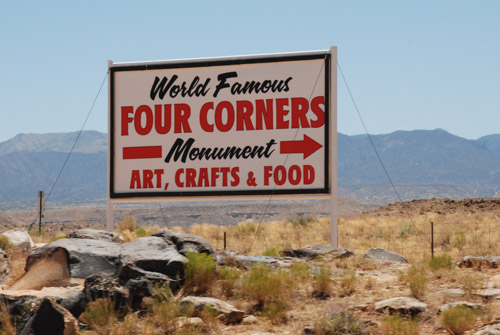
Four Corners is notable for being the only place in the United States where four states meet. It is also marks a boundary between the Navajo Nation and the Ute Mountain Ute Tribe Reservation. The Navajo Nation runs the Four Corners Monument as a tourist attraction.

IMG_2938

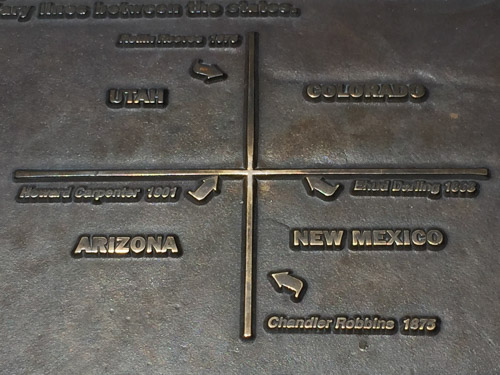
This is not the actual monument, but part of a sign about the surveying that began in the 1860’s. Wikipedia says, “the origins of the state boundaries marked by the monument occurred just prior to, and during, the American Civil War, when the United States Congress acted to form governments in the area to combat the spread of slavery to the region.”

IMG_2940

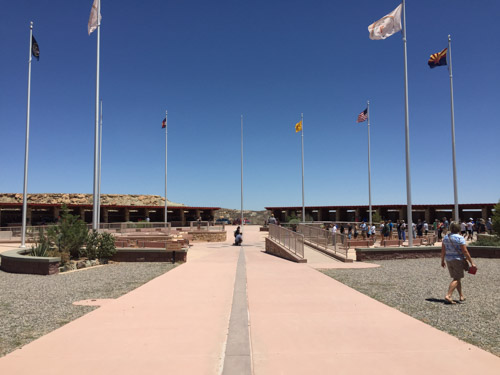
The marker itself is in the center of this courtyard. Notice the line of people to the right. They are all waiting to take their photos over the marker. We didn’t join them, but walked around the outside where there are stalls in which Navajo and Ute members sell souvenirs. Then we got back on the road.

DSC_1414

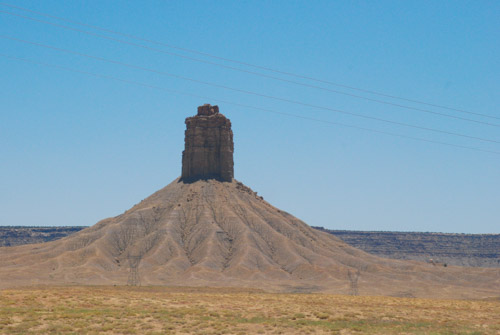
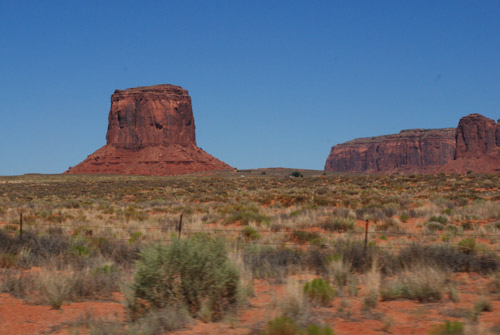
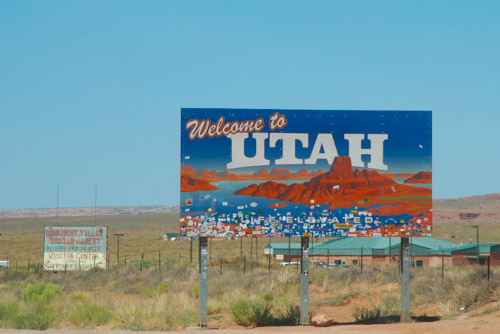
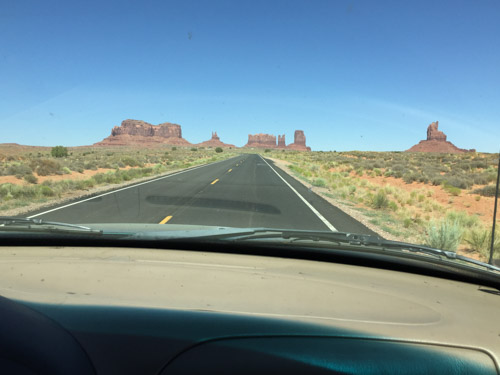
We took Highway 160 southwest to Kayenta where we turned north on Highway 163 to head back to Moab, but drive through part of Monument Valley. Wikipedia: “Monument Valley is a region of the Colorado Plateau characterized by a cluster of vast sandstone buttes, the largest reaching 1,000 ft above the valley floor…Director John Ford used the location for a number of his best-known films, and thus, in the words of critic Keith Phipps, ‘its five square miles have defined what decades of moviegoers think of when they imagine the American West.’ “DSC_1416

DSC_1419

DSC_1424

DSC_1435

DSC_1439

DSC_1446

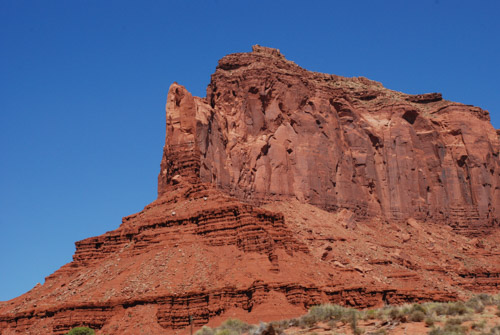
Spectacular country for it’s rock formations. A tough place to live on the land.

DSC_1459

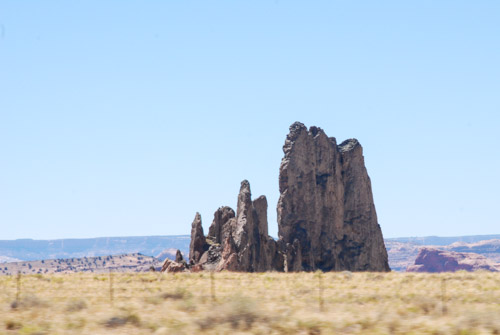
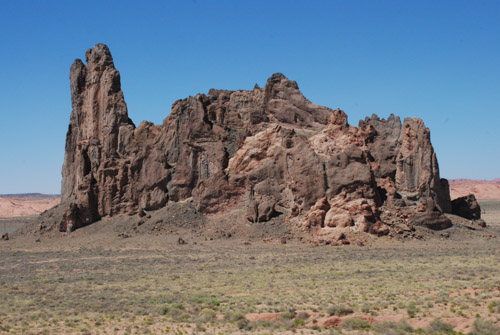
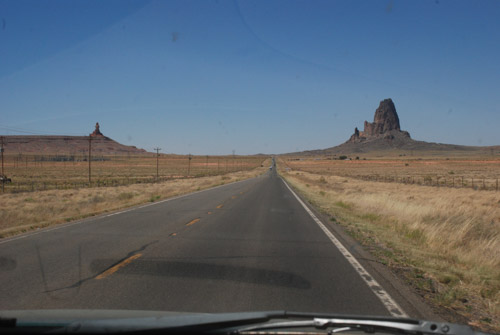
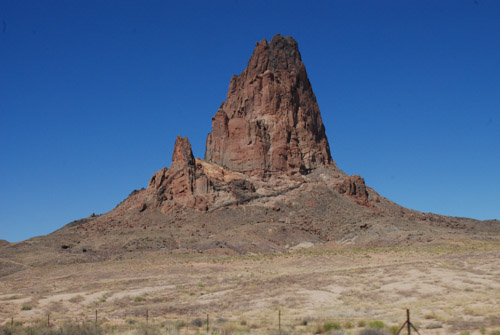
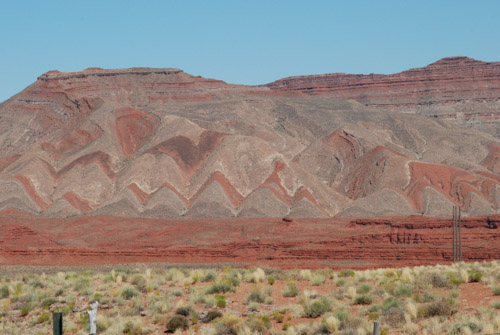
This rock formation kept us entertained for many miles as we drove closer and closer to it. I think it is just north of Bluff, Utah. I have googled a variety of words to describe this near both Bluff and Mexican Hat, Utah, but I don’t see any photos like this.

DSC_1473

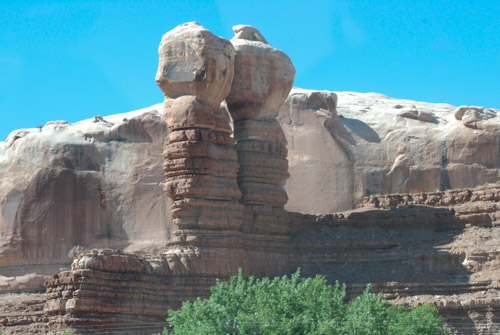
I do know the highway roughly followed the course of the San Juan River between those two towns. The rock formations that show up on-line are the Mexican Hat for which the small town is named and…

DSC_1474

…Navajo Twin Rocks near the town of Bluff.

IMG_2943

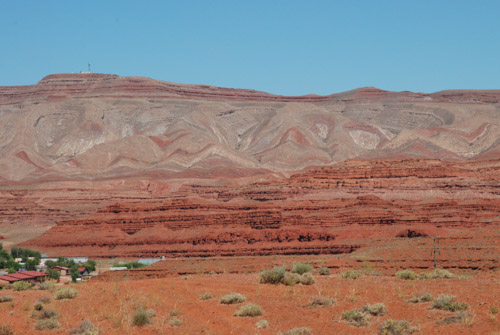
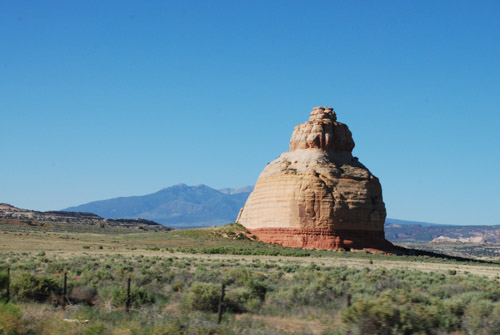
We continued to see red rock formations as we drove north toward Moab.DSC_1477

DSC_1486

DSC_1488

DSC_1499

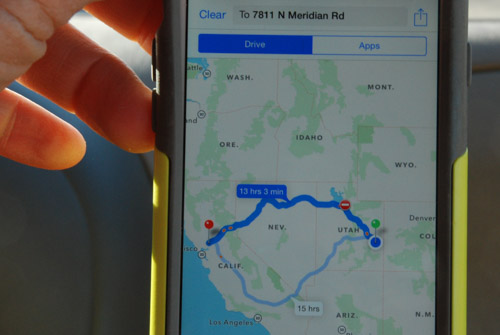
We hadn’t started the trip in Moab, but we’d been there just four or five days ago. I checked to see how long it would take to get home. I couldn’t get the phone to show me the route that we planned to take. We were headed to Highway 50 to cut straight across Nevada.

DSC_1494

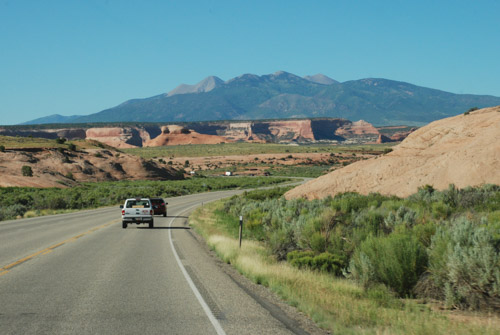
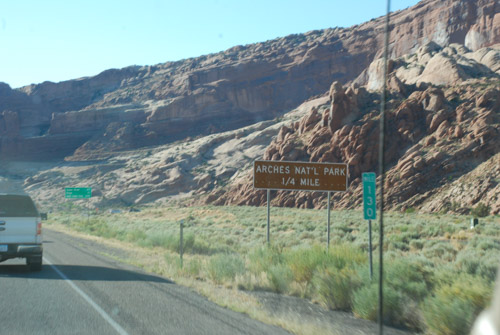
We passed Arches National Monument where we’d spent a day hiking

DSC_1507

…and picked up Highway 50 at Crescent Junction.

DSC_1521

The plan was to drive west until we needed to stop.

DSC_1530

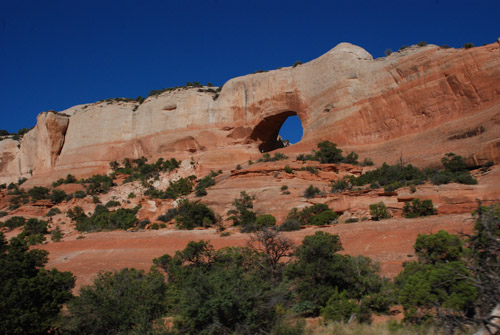
We’d seen some of this spectacular country but it looks different going the other direction.

DSC_1532

DSC_1533

We drove until it was took dark to take photos and then we kept driving.

To be continued…
 

Road Trip to CO – Mesa Verde

It has been a few weeks since we finished our road trip and there have been plenty of distractions since I’ve been back that have kept me from sharing the story. Now that the Olympics are on  TV I am trying to multi-task. But it’s hard to pull my eyes away from the TV at times.*  However I’m close to finishing–we are still in Colorado but once we headed for home we didn’t stop for much.

After we left Black Canyon of the Gunnison  National Park we looked at our trusty Benchmark map book for Colorado and saw that we could probably get to Mesa Verde National Park in time to spend the night there. So after driving through the marvelous San Juan Mountains it was a relatively short drive from Durango to Mesa Verde. We got there about 6 p.m. and found that there were plenty of open campsites.

DSC_1323

We looked at the Park maps and saw a couple of 2-mile trails that we would have time for before dark. First we hiked up to Point Lookout at 8427′ elevation. This view is to the northwest with the San Juan Mountains in the background and the town of Mancos in the center.

DSC_1295

Squirreltail…

DSC_1313

…and Indian rice grass along the trail.

DSC_1311

DSC_1321

DSC_1326

After getting hiking this trail we drove to the the Knife Edge Trail which follows a section of the precarious road built in 1914 which was part of the original main access into the park.

IMG_2869

IMG_0407

Dan took this photo of me with the booklet that described the plants and other features along this trail.

IMG_2866

IMG_2874IMG_2875

This is a popular place for park visitors to watch the sunset. We walked back to the car at dusk and it was dark when we found a campsite. With the dark it got cold and we didn’t have a working stove. We ate tuna sandwiches and went to bed. DSC_1358

This is what camp looked like in the morning.

DSC_1354-2.jpg

There were deer around the camp in the night and at dawn when I got up.

DSC_1366

Seen on my early morning walk.

IMG_2876

We had learned when we paid for our campsite that the way to see the features for which the park is best known (the cliff dwellings)  is to sign up for one of the tours. We showed up the next morning for the Balcony House tour.

IMG_2877

We were directed to follow the trail to the end where we would find a ladder and to wait there.

IMG_2881

This tour is listed as the “most adventurous cliff dwelling tour” and we were warned that we would “climb a 32′ ladder, crawl through an 18″ wide by 12′ long tunnel, and climb up a 60′ open cliff face with stone steps and two 10′ ladders”. Not quite an Indiana Jones adventure but it did seem challenging for some of the tour participants.

IMG_2882

Can you imagine what this was like when people really lived here?

IMG_2902

I can see the challenge of being a mother of a toddler.

The Ancestral Pueblo people lived in the Mesa Verde area for about 700 years from about AD 550 to the 1200’s, first living in pit houses, then above-ground pole and adobe structures. The people built the cliff dwellings from the 1190’s to 1270’s and lived there for less than 100 years. It is unknown why, in the span of a generation or two, the people left the area.

IMG_2910

Ranger Spenser was glad to answer questions and discuss his passion for the earlier residents of these dwellings.

IMG_2908

Each village or homesite has a kiva built below ground or in the case of the cliff dwellings, into the rock floor.

DSC_1386

This is the view across the canyon from Balcony House.

DSC_1384

This is the same view with a longer lens. It was remarkable that when you really started to look (or got out the binoculars) that you could see dwellings in many of the cliff walls.

DSC_1376

Here is another that we saw later in the day…
DSC_1378

…and here’s the close up. This is known as Square Tower House, a 4-story building.

IMG_2920

Remember the part about the 18″ x 12′ passage. Here it is…

IMG_2923

…followed by the ladders…

IMG_2924

…and steps up the cliff wall.

We drove through more of Mesa Verde, looking at some of the other sites, but knew that we needed to get on the road if we were to get home some time the next day.

Next post: Four Corners and Monument Valley.

*I still didn’t get this finished and now its the next day.