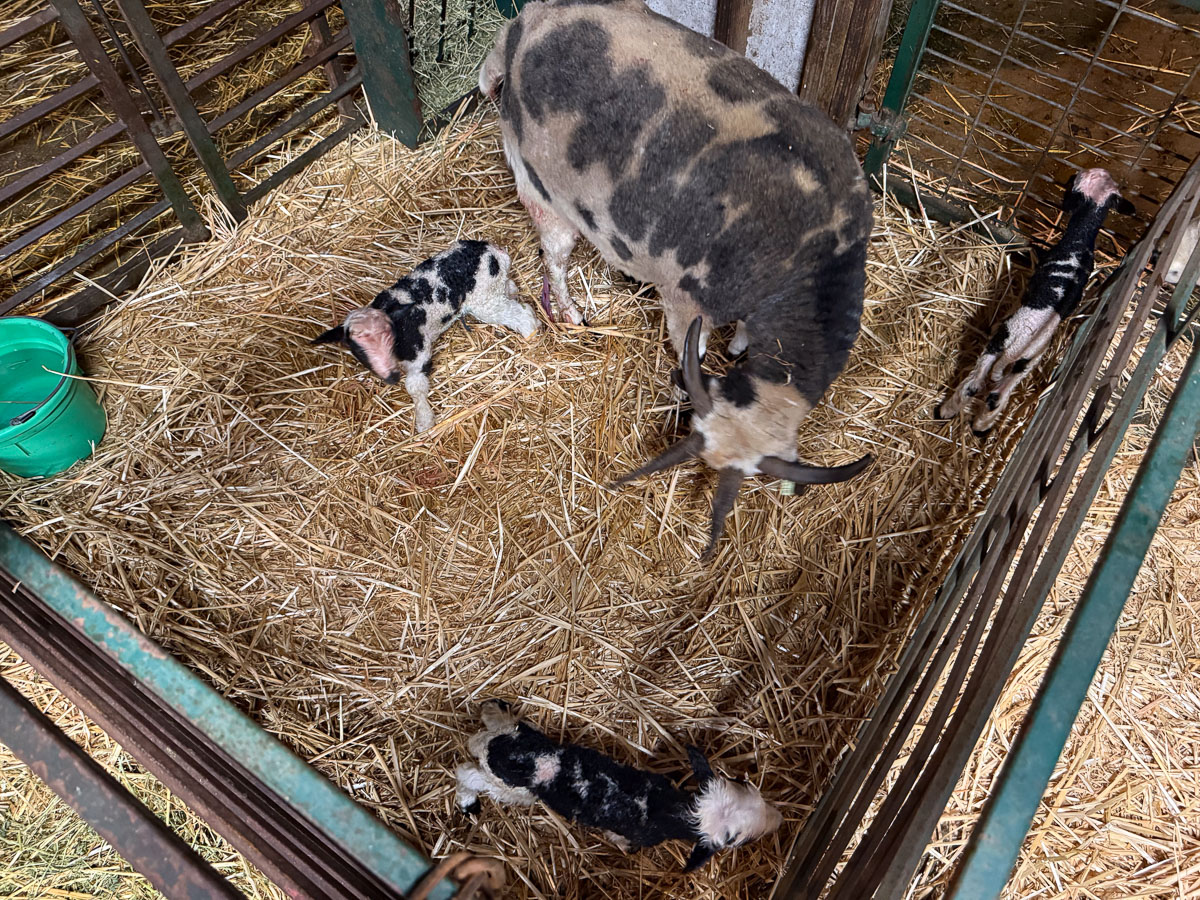
As the title indicates, I have already written one blog post about lambing. That described that lambing began on February 22. That’s nine days ago now, and a lot has happened. I started this post yesterday and it’s already outdated. However, I’m going to go with it because these photos are already loaded. Just play along and pretend it’s Monday. I was sharing photos in reverse order. Now I just need to add the text.
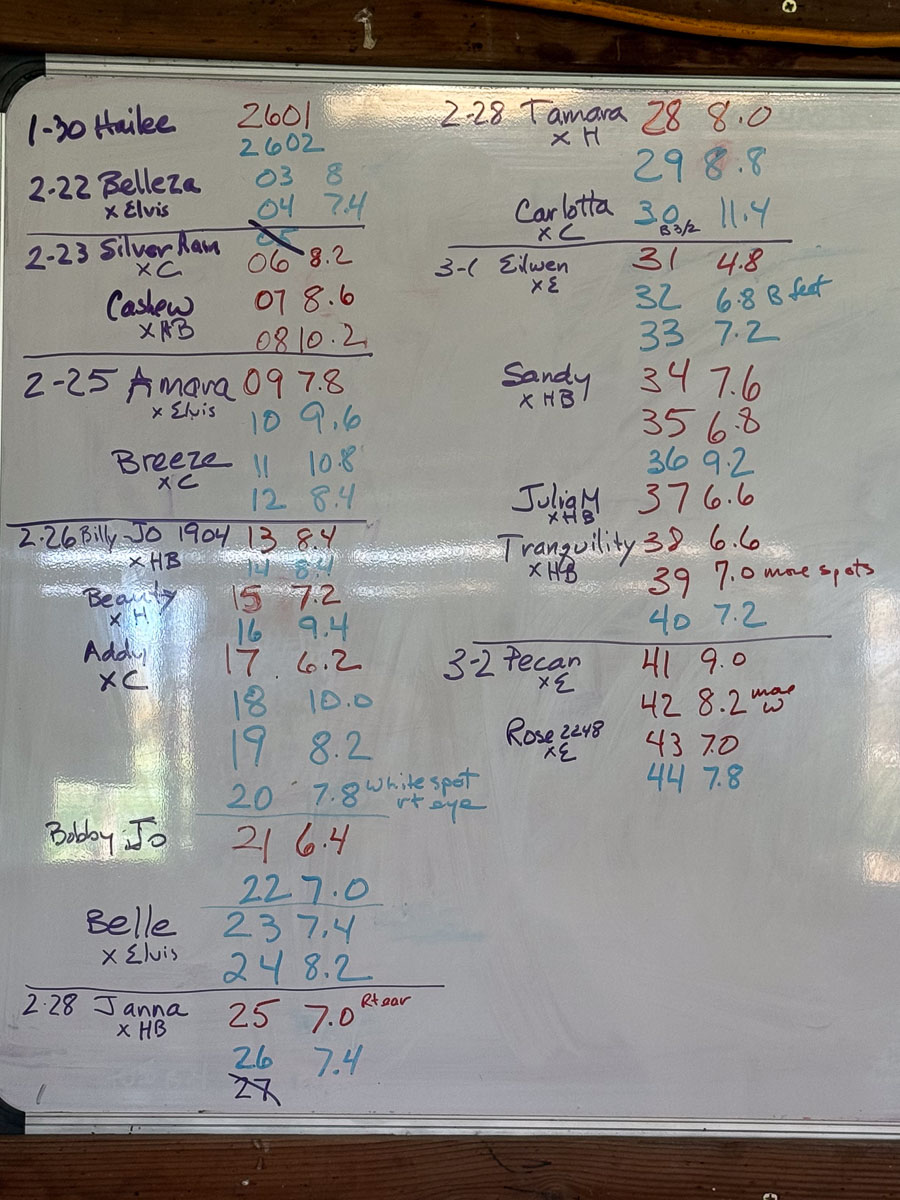
This is how I keep track of all the details. The numbers are the lamb ID, each with a 26 in front. Red ones are ewe lambs and blue are ram lambs. The next column is birth weight. The X _ indicates the sire: Hornblower, Clancy (BFL), Elvis, and Hunter.
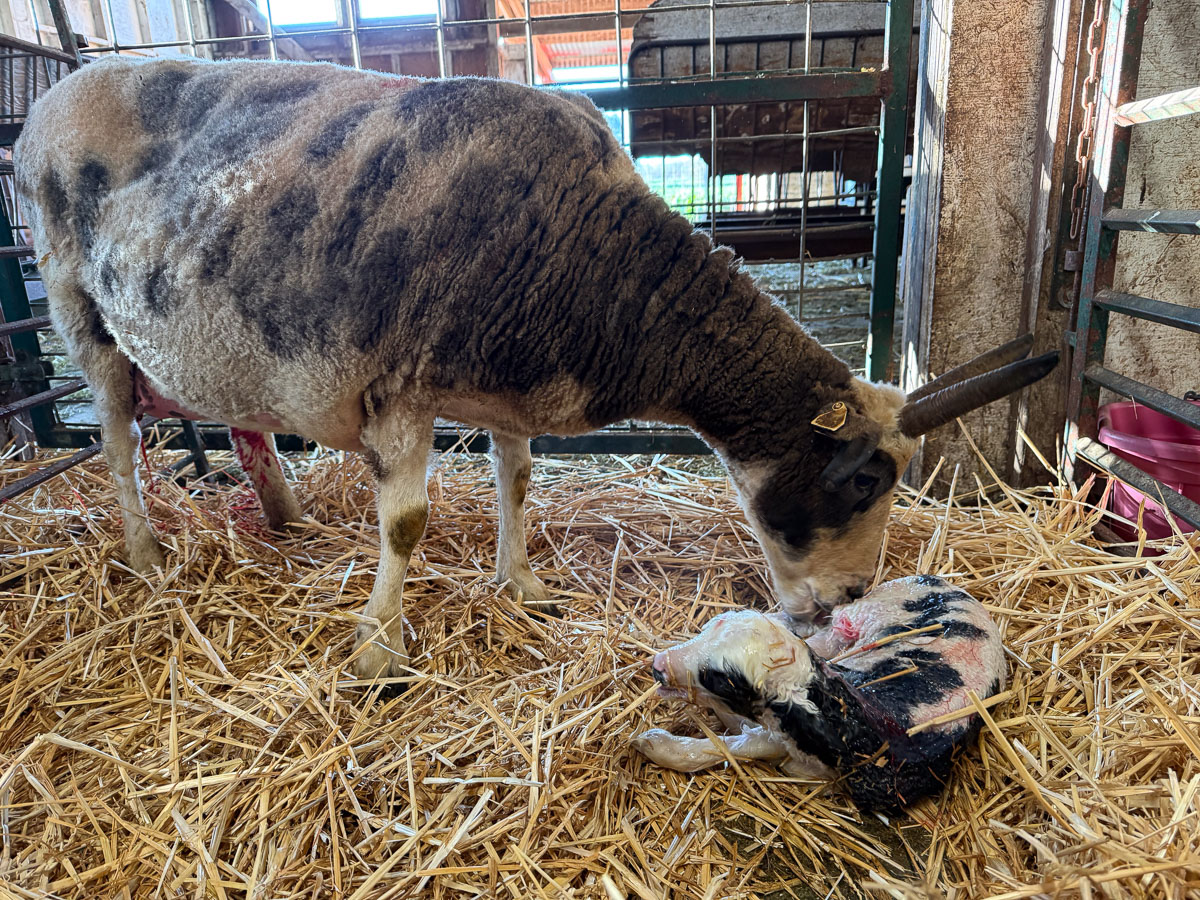
The last one on the board is Rose with twins. I usually try to have them in the lambing pen area when they are in labor but I missed this one.
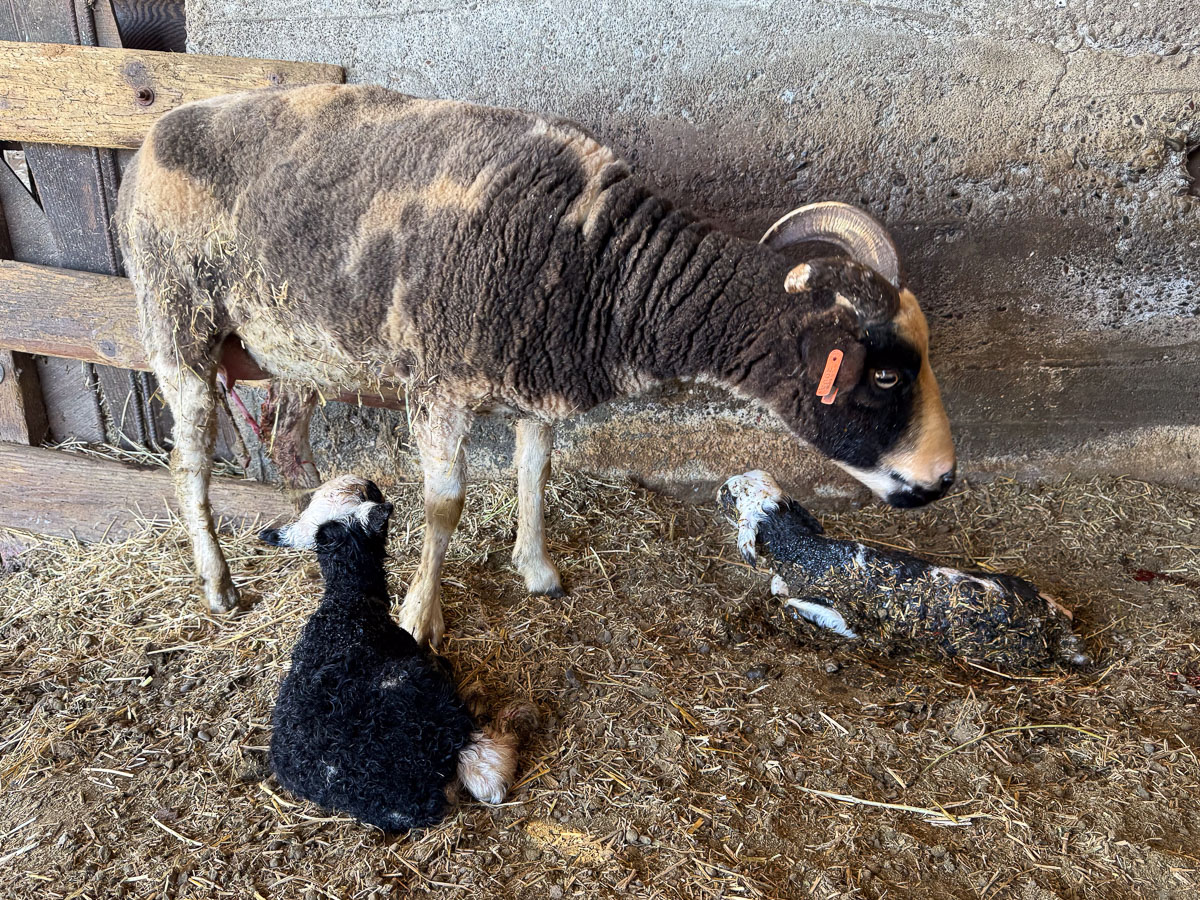
Pecan was just before Rose with twins.
Tranquility lambed the night before with triplets.
This is how Tranquility looked earlier in the day. When a ewe gets that sunken look in front of the hips that is a sign that the lambing is imminent. Maybe imminent isn’t the right word because I put her in the lambing area earlier in the day and she didn’t deliver until about 10:30 p.m.
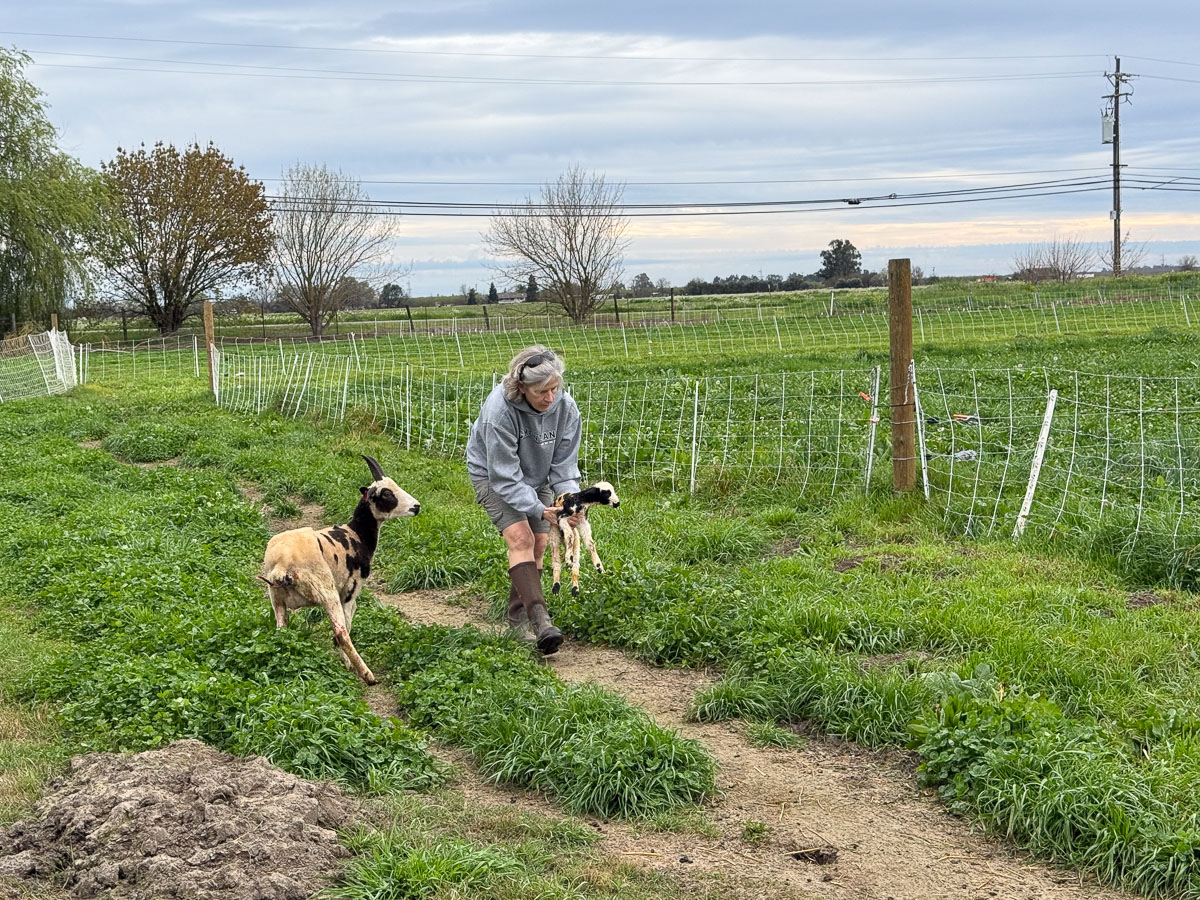
Julia is a yearling who lambed in the pasture. One of the Farm Club members who was here brought her lamb to the barn, carrying it low so the ewe would follow.
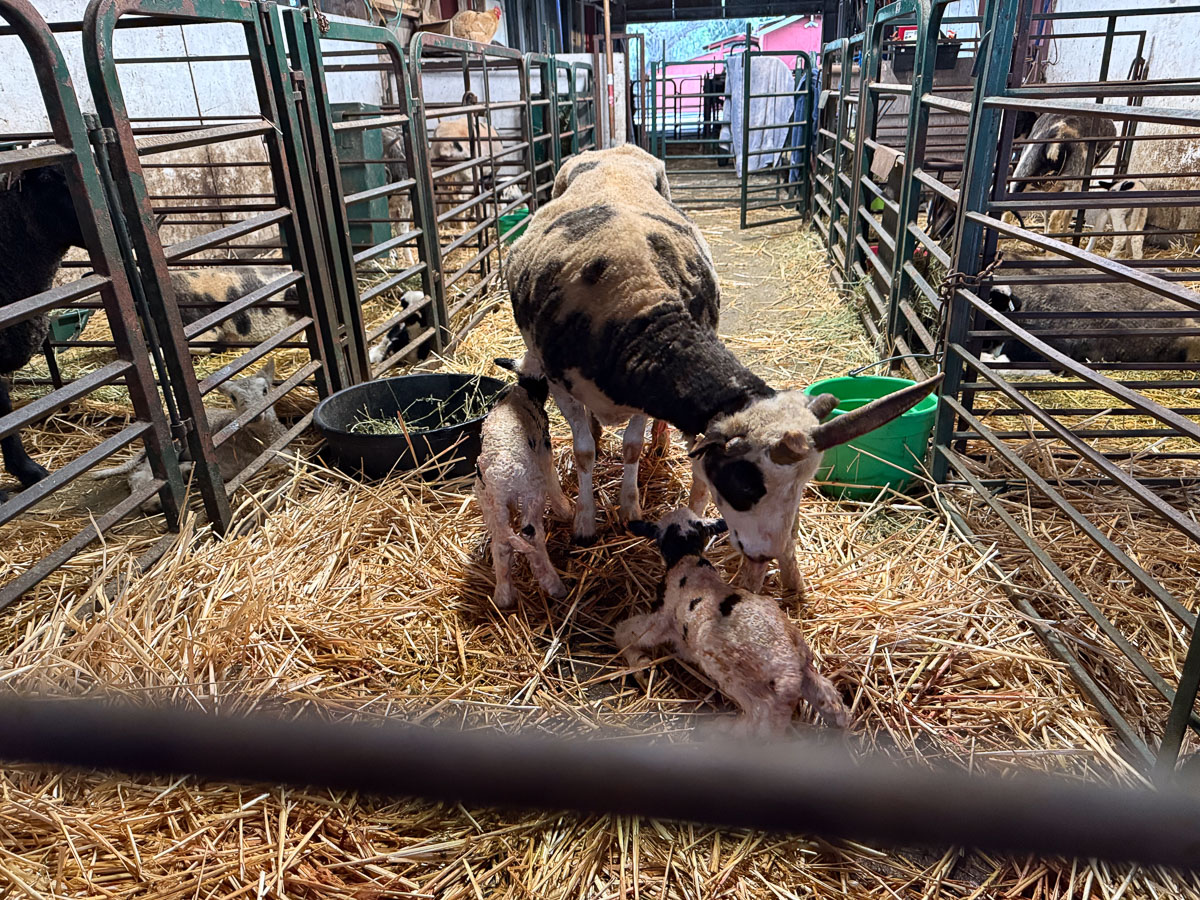
Sandy had lambed earlier in the morning with triplets. I set up panels to separate Sandy from Eilwen (next photo). This is like having hospital beds in the hall. The lambing pens were full and I already had overflow pens in the alley of the barn.
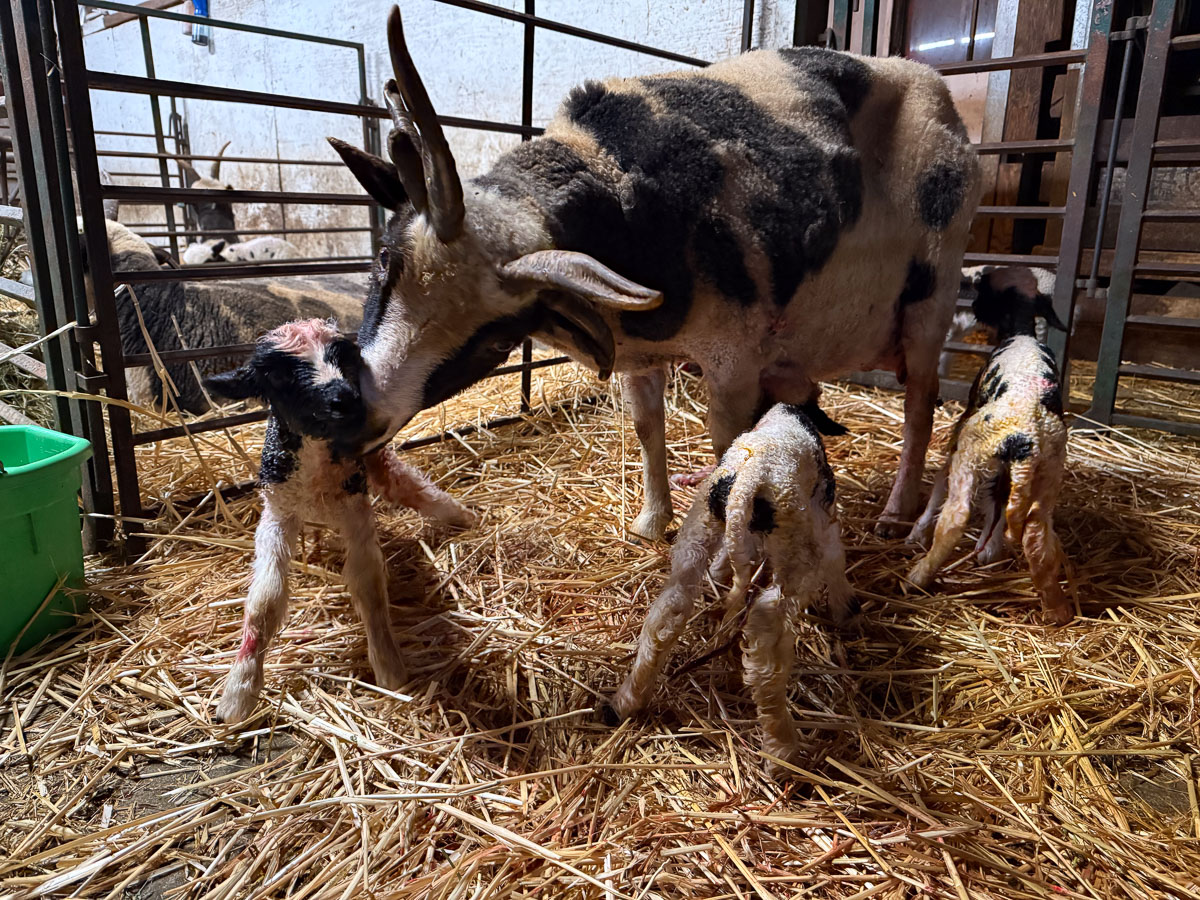
Eilwen with triplets around 2 a.m.
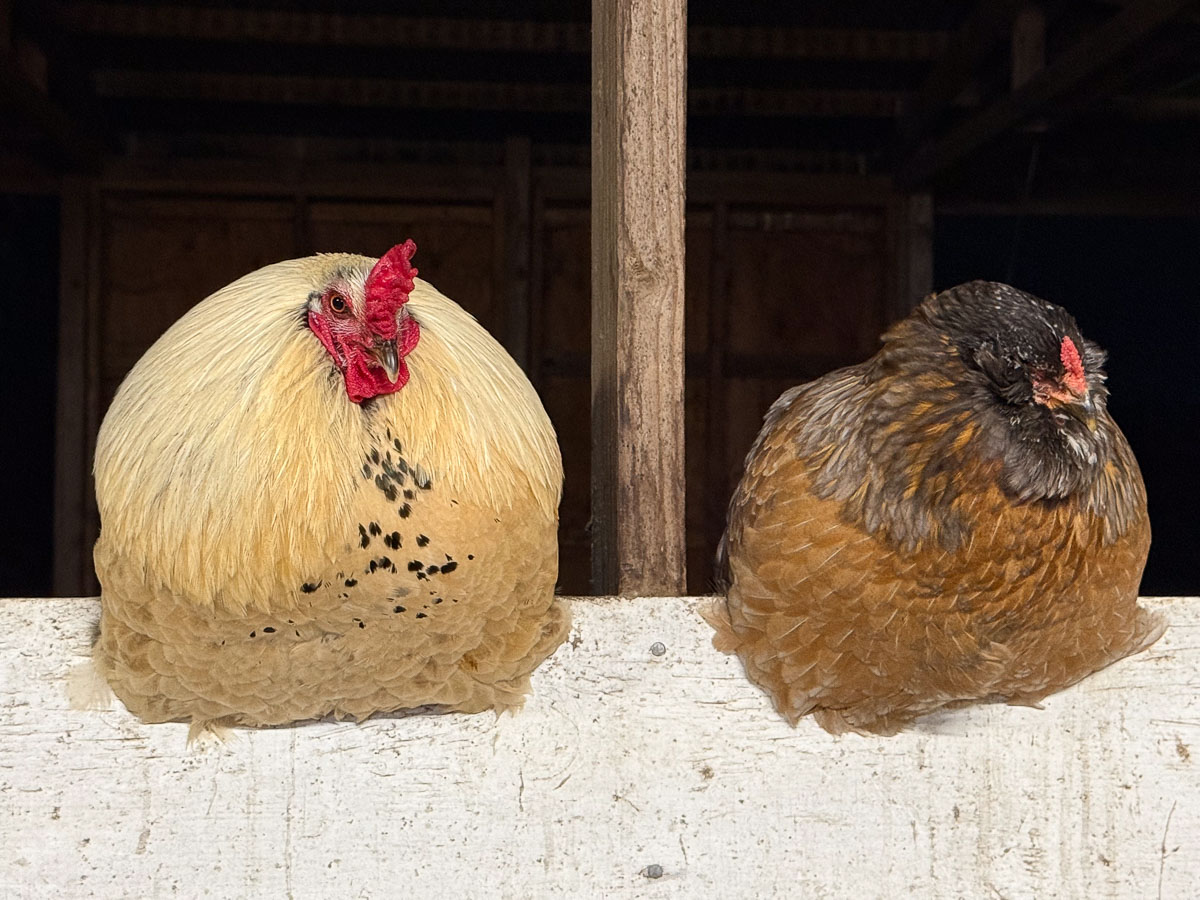
At night the chickens roost on the wall behind the lambing pens.
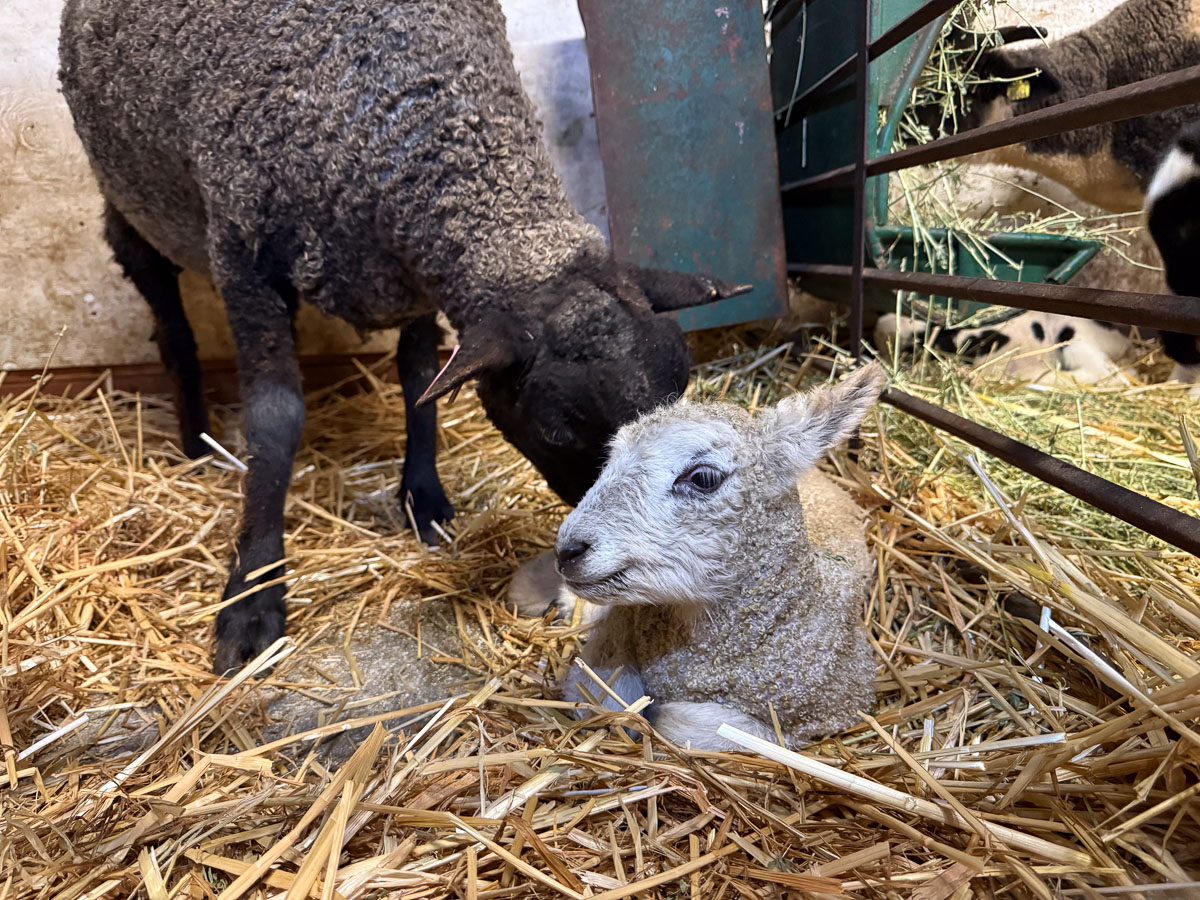
This is Carlotta from the previous day. She is a Romney/Lincoln/Corriedale cross. The lamb’s sire is Clancy, the BFL.
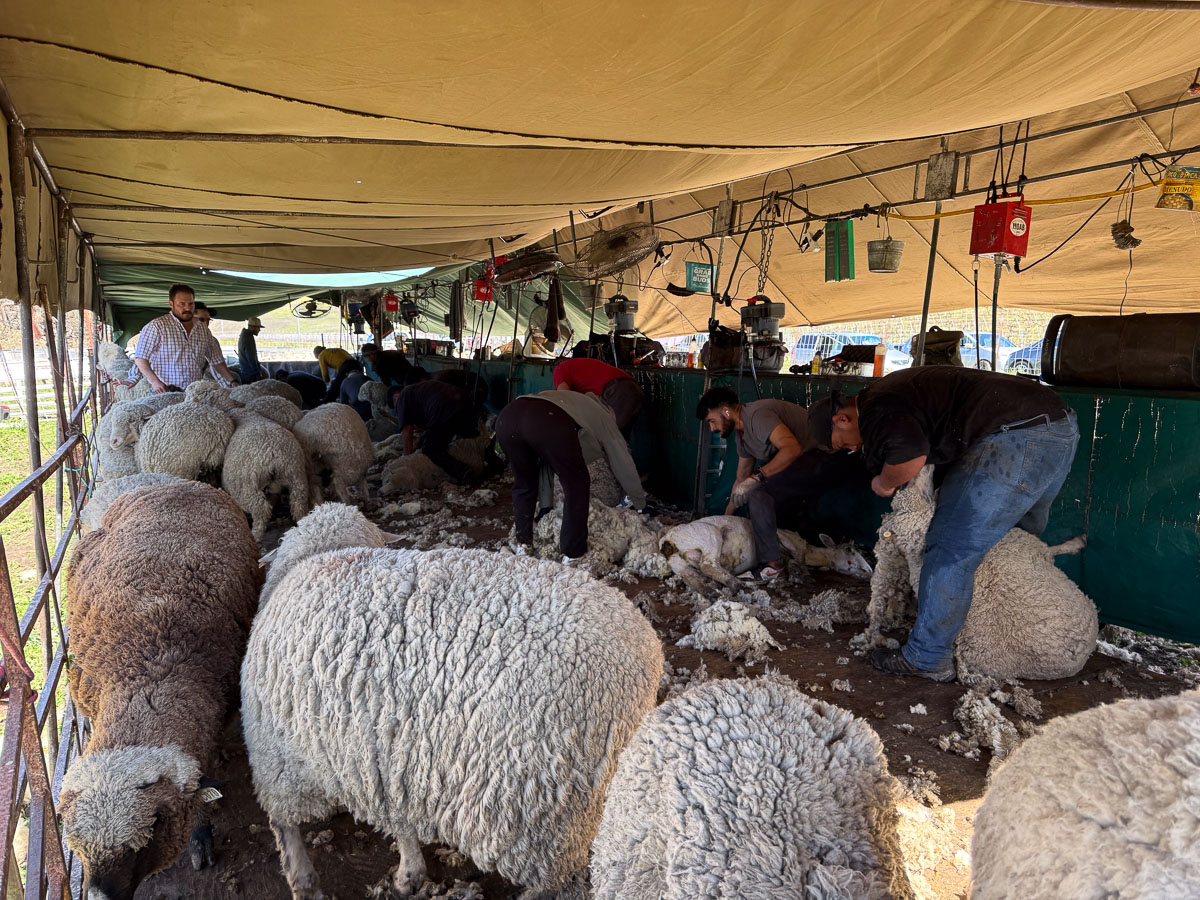
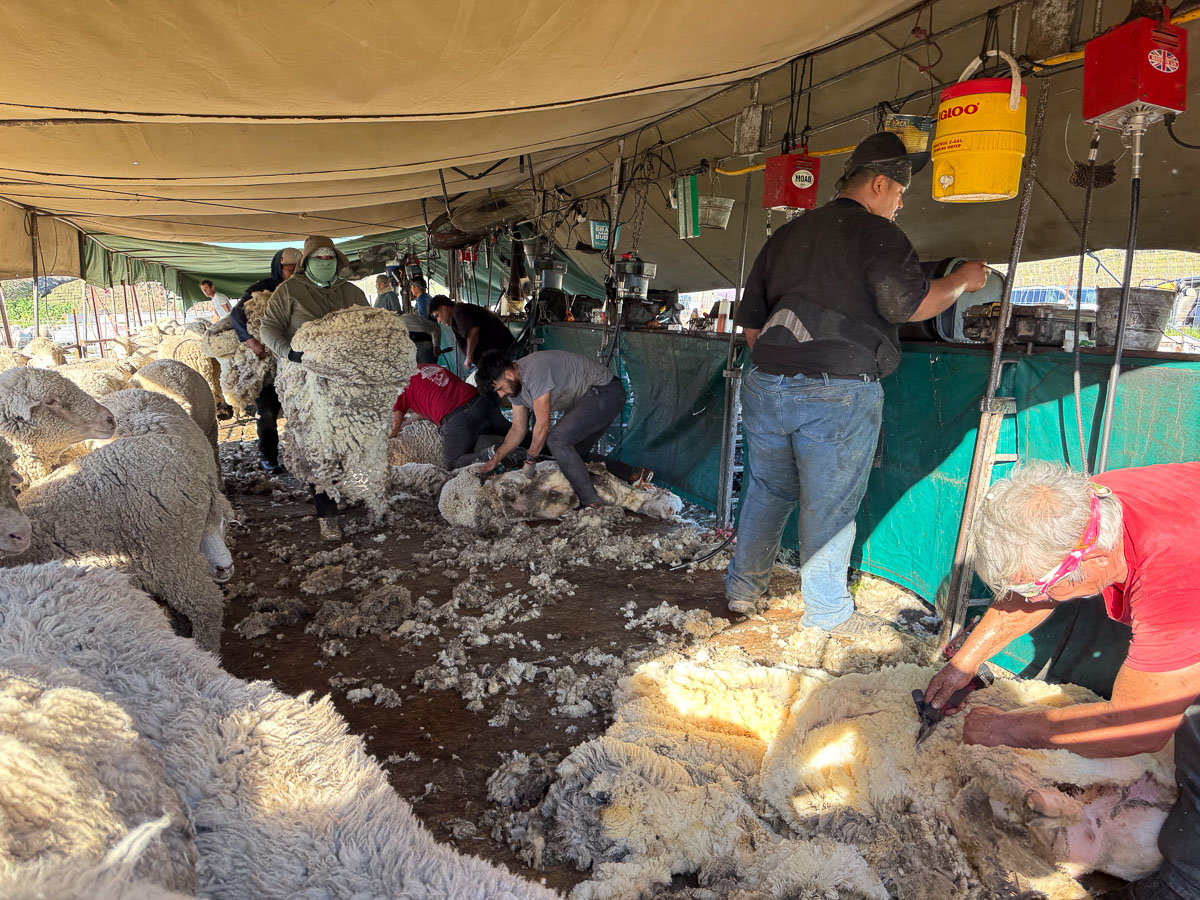
Part 1 is here. I had too many photos to use for one post. I didn’t mention in that post that they sheared 900 sheep on this day. I don’t know the average time for all of the shearers, but the one I watched sheared his sheep in two minutes.
This is another photo inside the shearing shed. The shearers work through a group of sheep and then the next comes in.
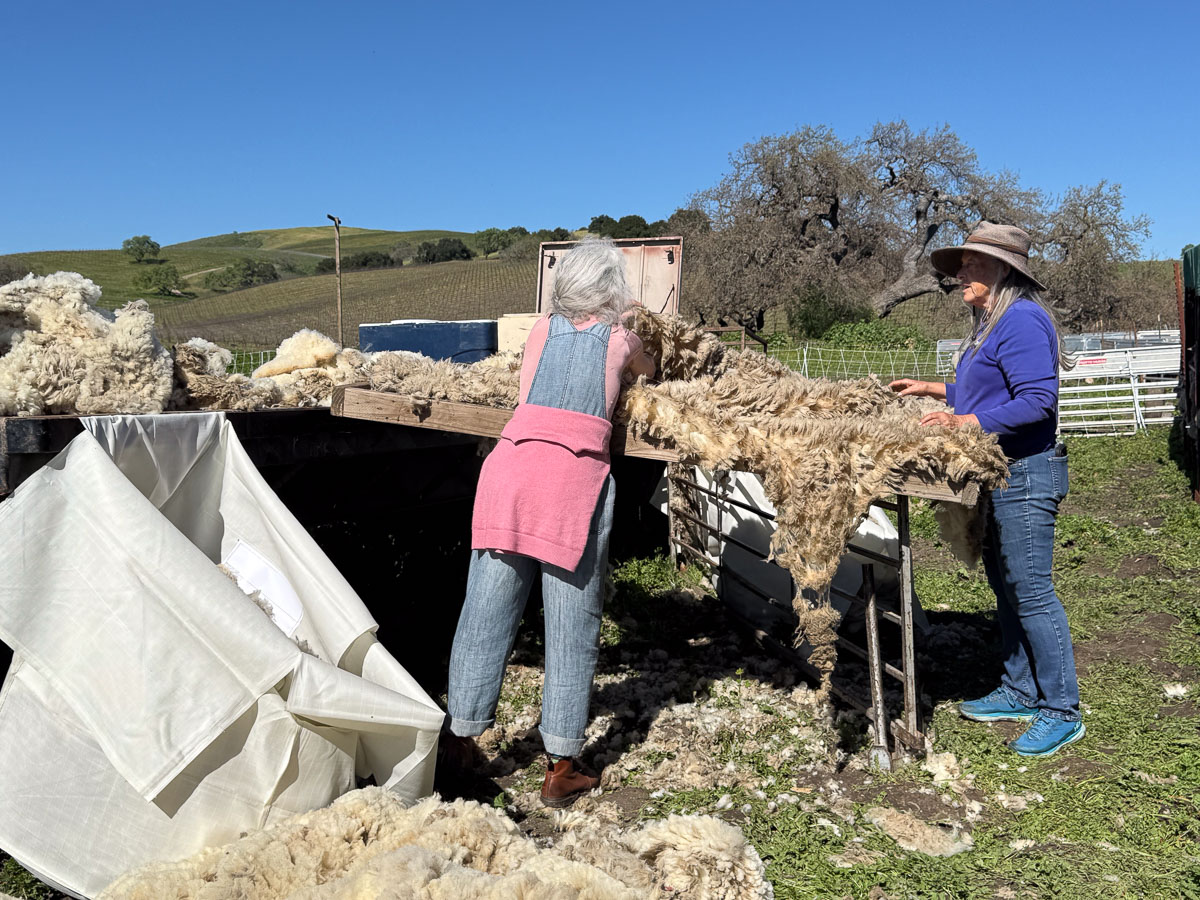
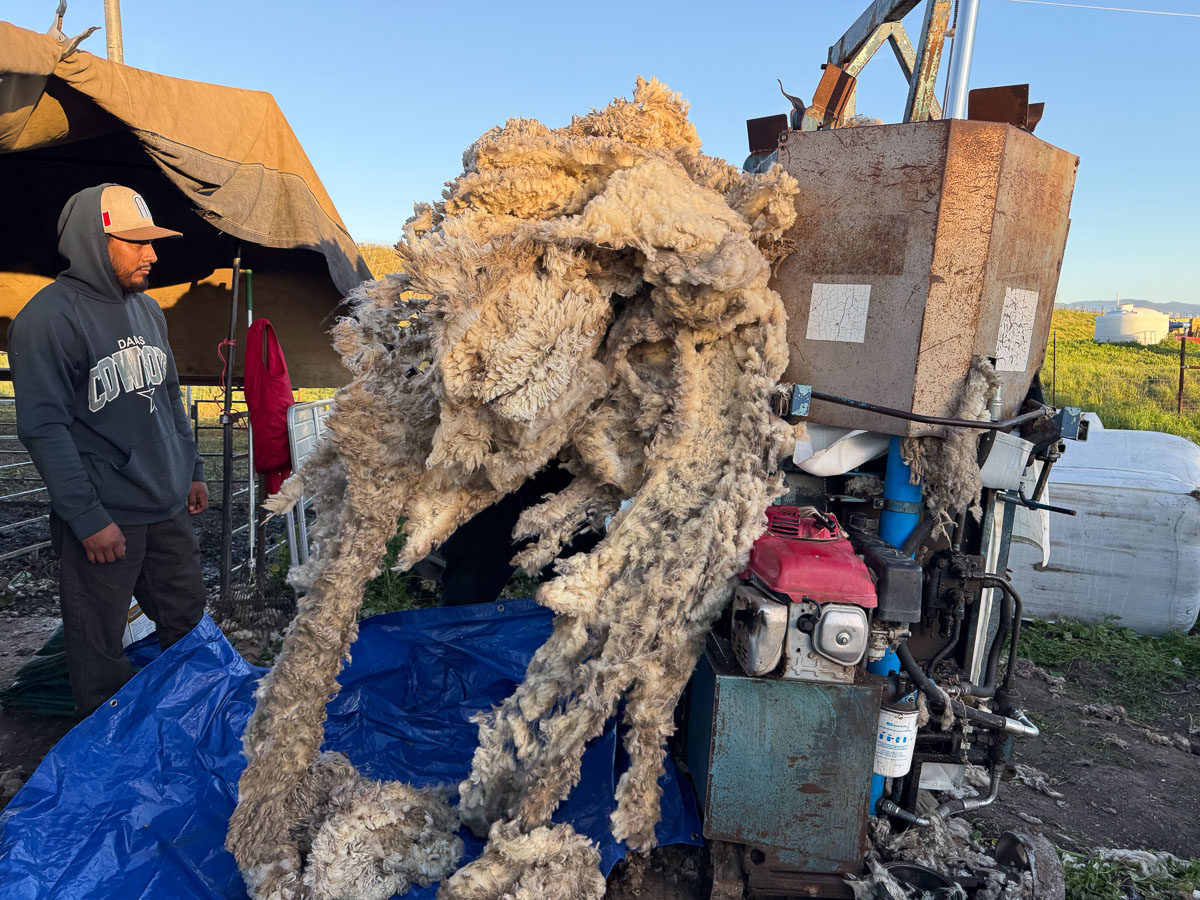
My goal was to get 250 to 300 pounds of wool, but I didn’t get that much for a variety of reasons. One is that there were only three of us working, one of whom had never worked with fleece. Another was our set-up. Notice that the skirting table that was available didn’t have legs. We rested one end on the flatbed truck and the other on a panel we tied to the trailer so it wouldn’t tip over. That made it awkward. The main problem was that we weren’t able to take an individual fleece from the shearing floor and toss it on the skirting table so it would land in sheep-shape. Instead most were picked up three or four at a time and pushed through a space at the end of the shed. They dropped onto a tarp and were picked up and pressed into a bale.
Cole, the sheep owner, was glad we were there and is excited for us to do something with his wool. He wanted to work with us to see our process, but he was moving sheep and dealing with other parts of the process the whole time. There would need to be some adaptations to make it realistic for a group like us to efficiently sort the wool. When I send wool to a small to moderate size mill it is up to me to send only the cleanest (regarding vegetable matter or VM) parts. I need to spread a fleece out so that we can properly skirt it, check for wool break or tenderness, and take only the best. The mills I use do not carbonize the wool. The following is from Woolmark.com and explains how most of the wool yarn that is sold on a large scale is handled
Carbonising is a continuous process which combines scouring to remove the wool grease and a chemical process which removes vegetable matter such as seeds, burs and grass. Carbonising occurs if the greasy wool contains a high percentage of vegetable matter (%VM), typically in excess of 2% to 3%.
Most of the VM contained in wool is cellulosic in nature, which is broken down into carbon, by firstly immersing in a strong solution (6% to 7% weight for volume) of Sulphuric acid (H2SO4) then followed by baking in a dryer set at 95oC to 120oC. After the VM has been turned into carbon the wool is passed through a series of heavy metal fluted rollers which crush the carbonised burs into dust.
I talked to the Cole’s partner, who also had sheep there. He sometimes send a few bales to the mill in Wyoming that I plan to use, although most of his also goes to a wool warehouse for sale. He said that when he bales the wool to be spun into locally sold yarn he has 4 skirting tables set up and a dozen people working to do exactly what we were trying to do. So I didn’t feel so bad about not being able to accomplish what I planned.
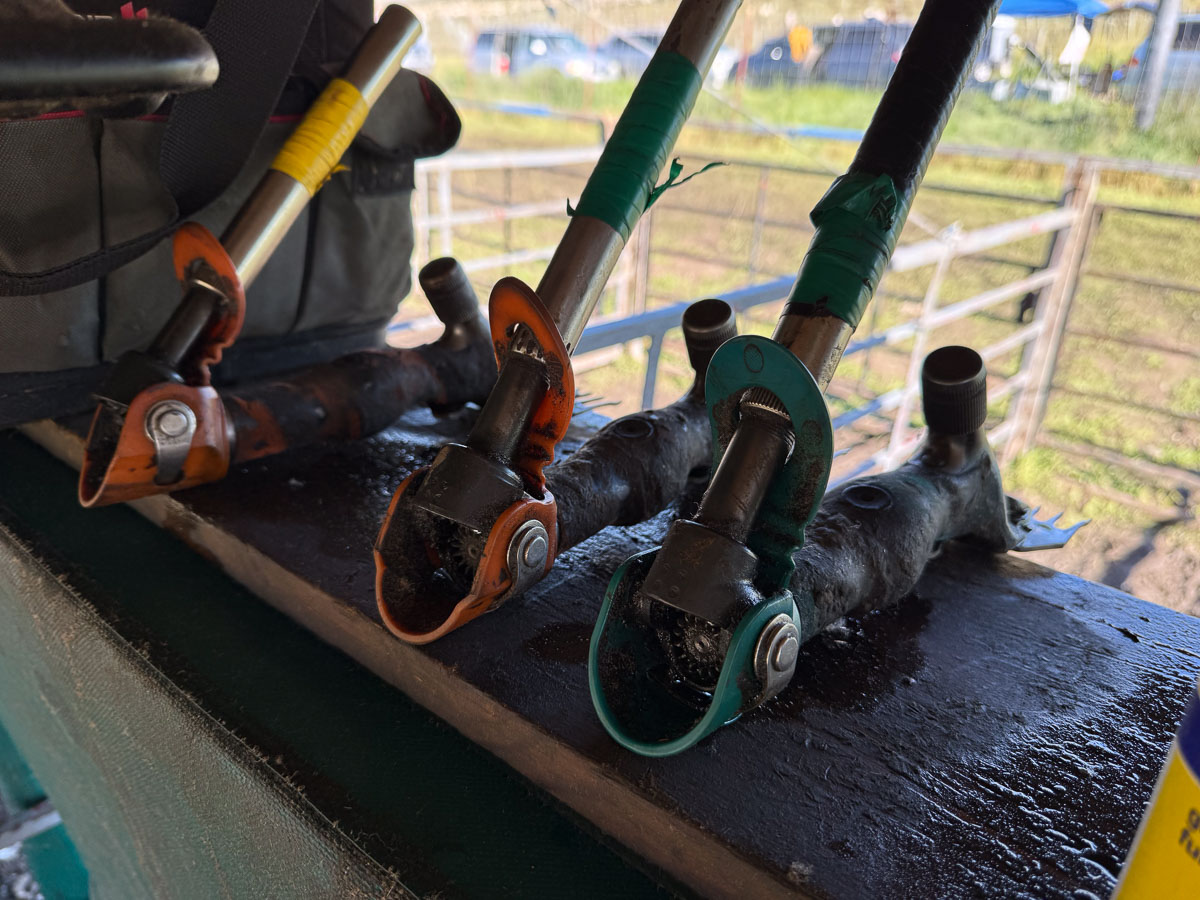
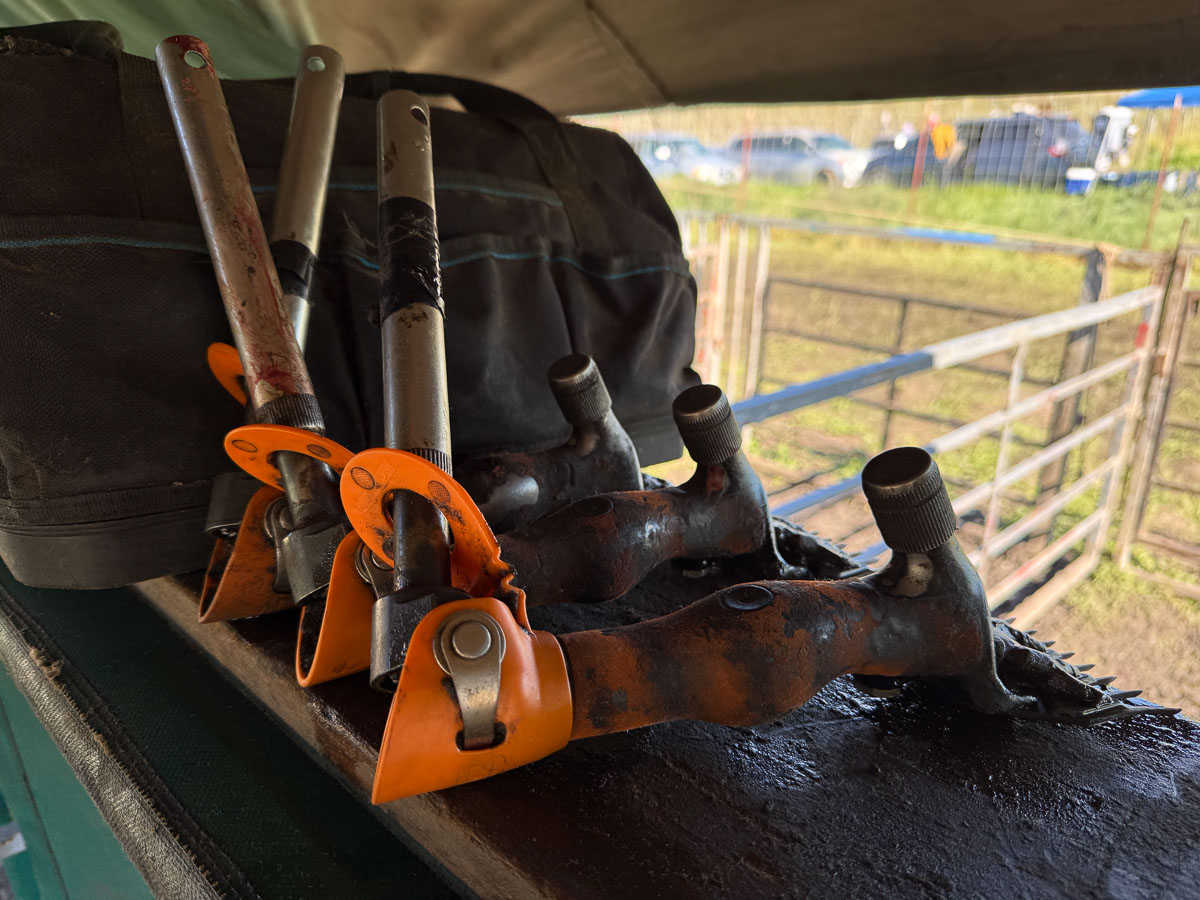
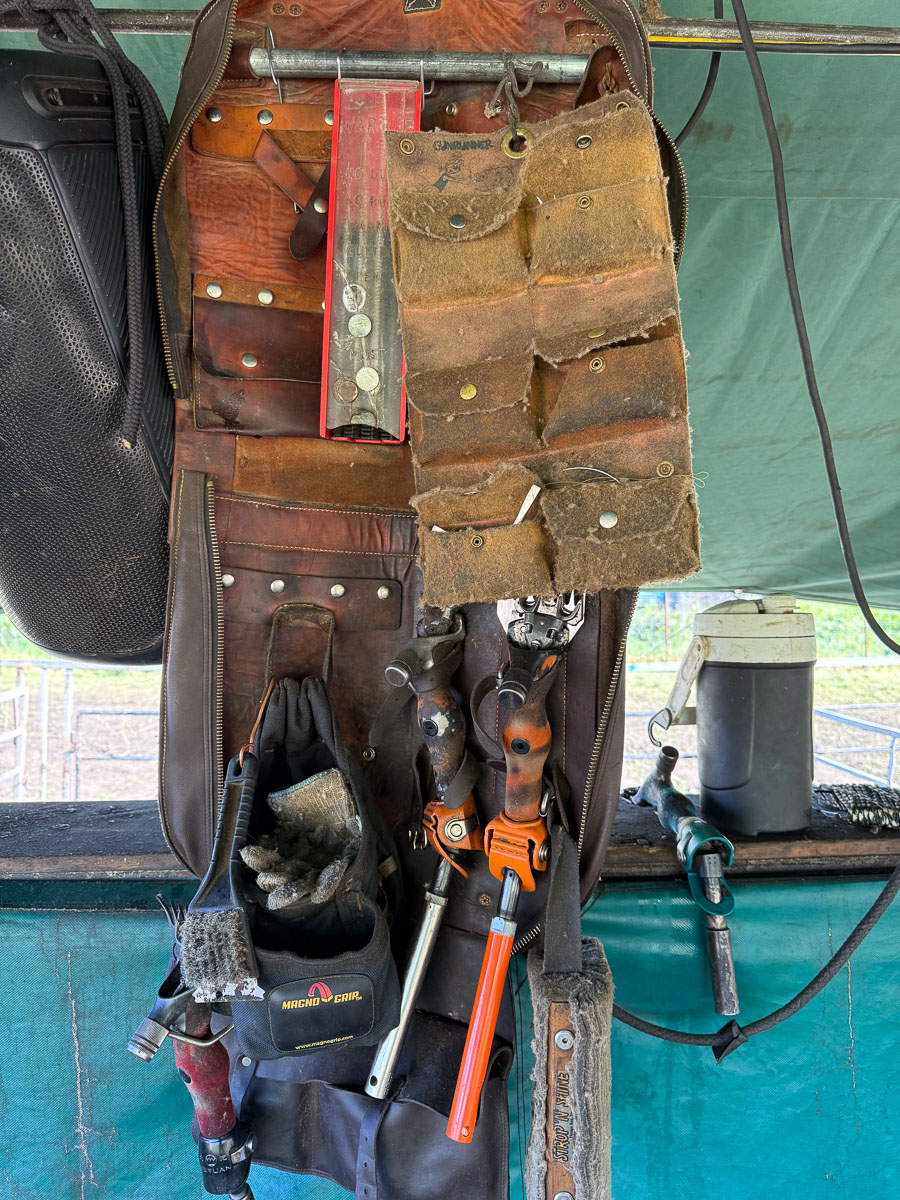
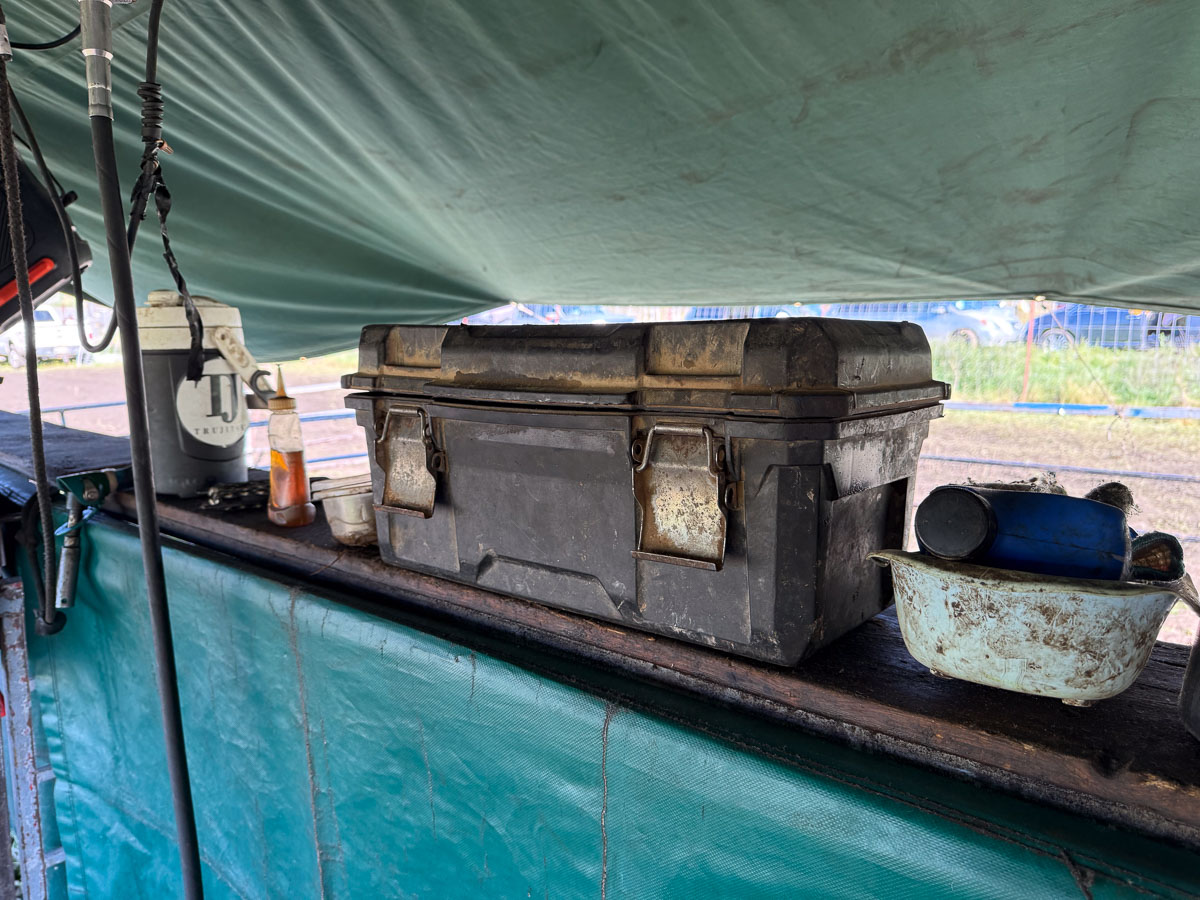
About 2 p.m. after the first 450 sheep were shorn, the shearers took a lunch break while the next group was being brought down from another hillside. I took photos of their gear.
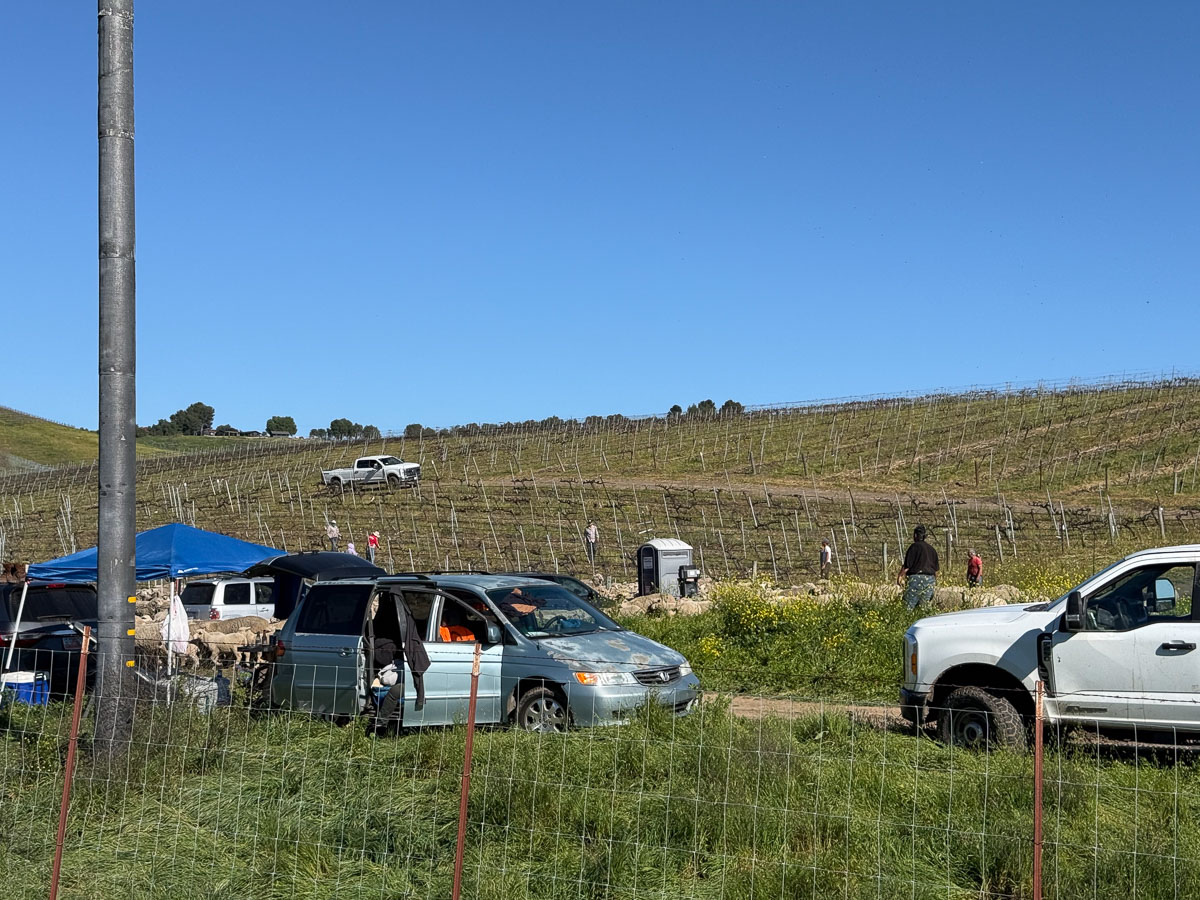
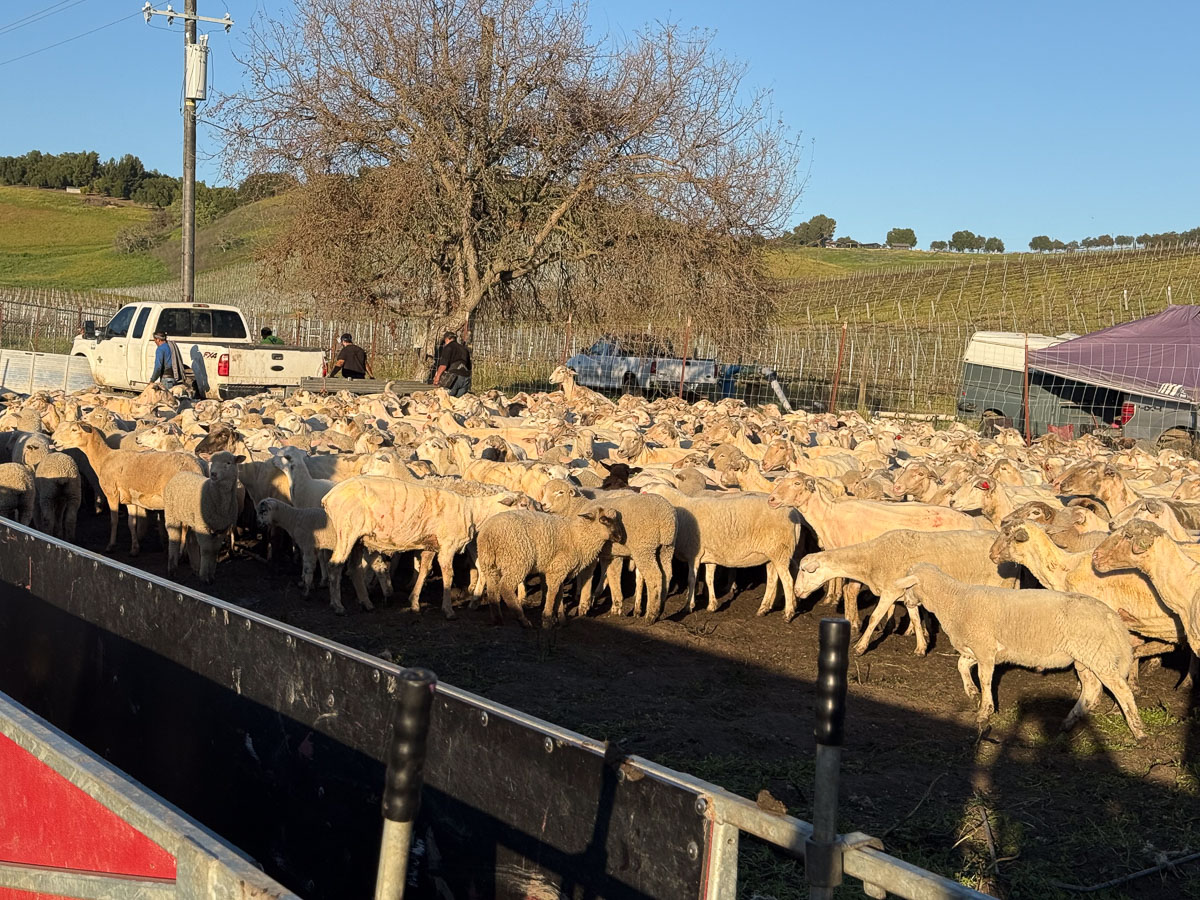
The shearers came in a variety of vehicles and put up the tarp where they had set up a kitchen of sorts. The sheep are below the vineyard and along the road, coming between the vehicles.
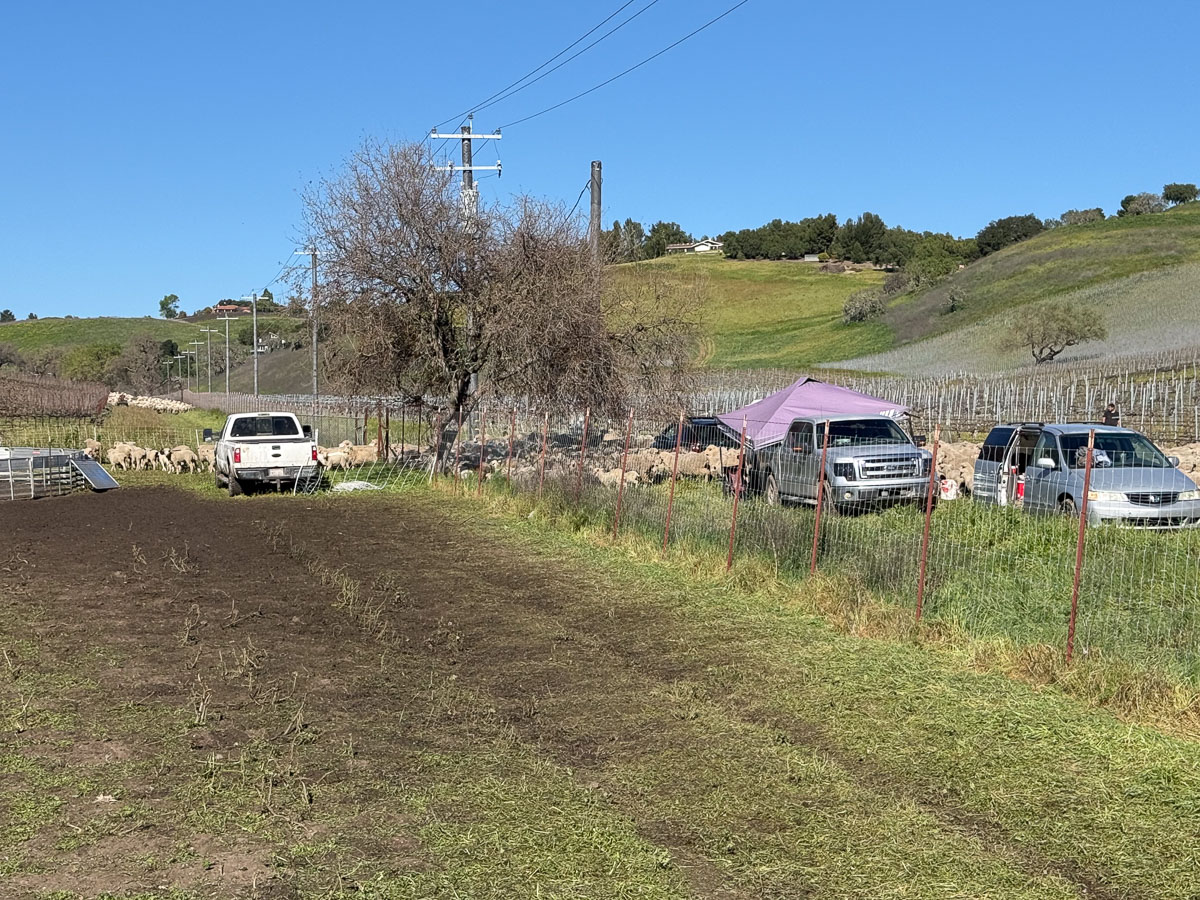
Another view as the sheep are moved into the corrals. The previous group is heading up the opposite hill with a 4-wheeler behind them.
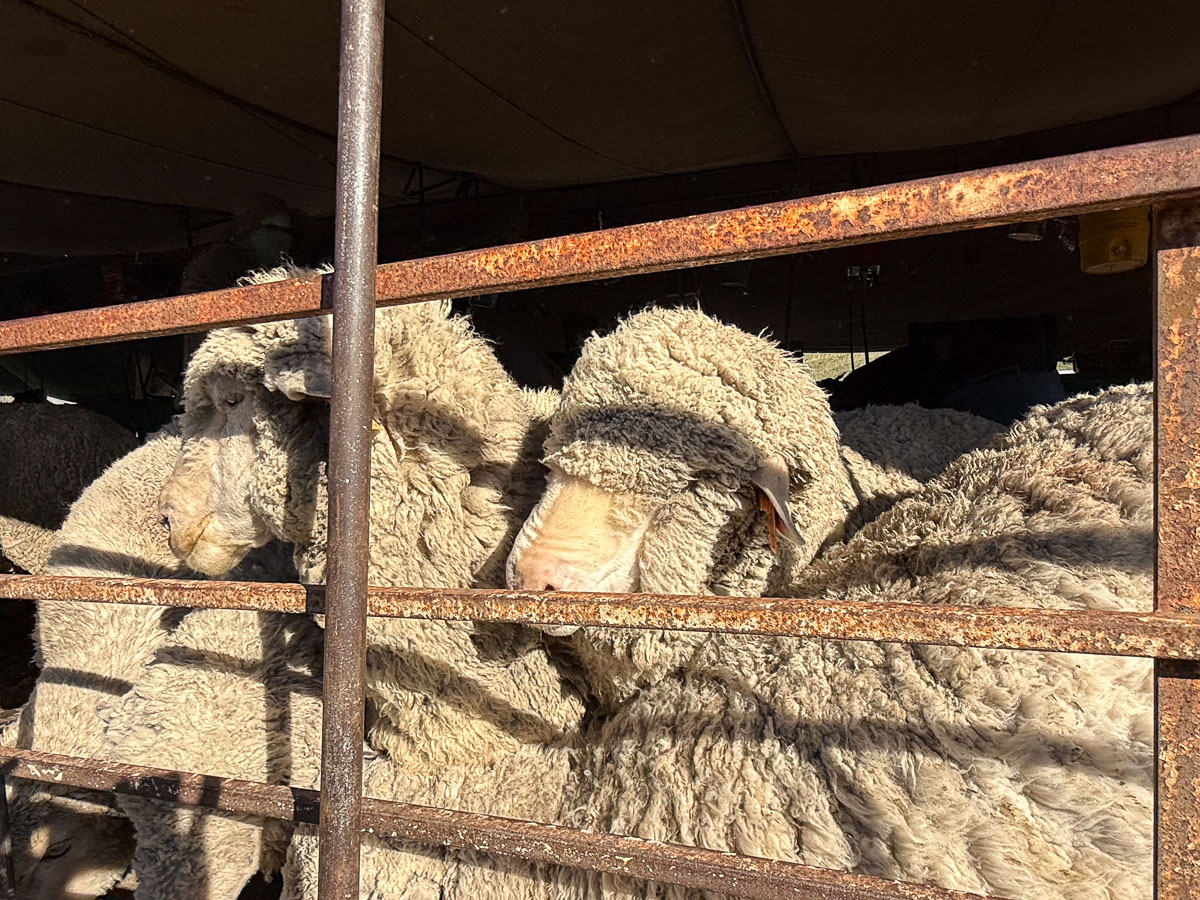
Sheep in the shearing shed.
Another view inside.
Shearing ended just before 5. Some of the shearers are heading back to their vehicles while others started to dismantle the shearing area.
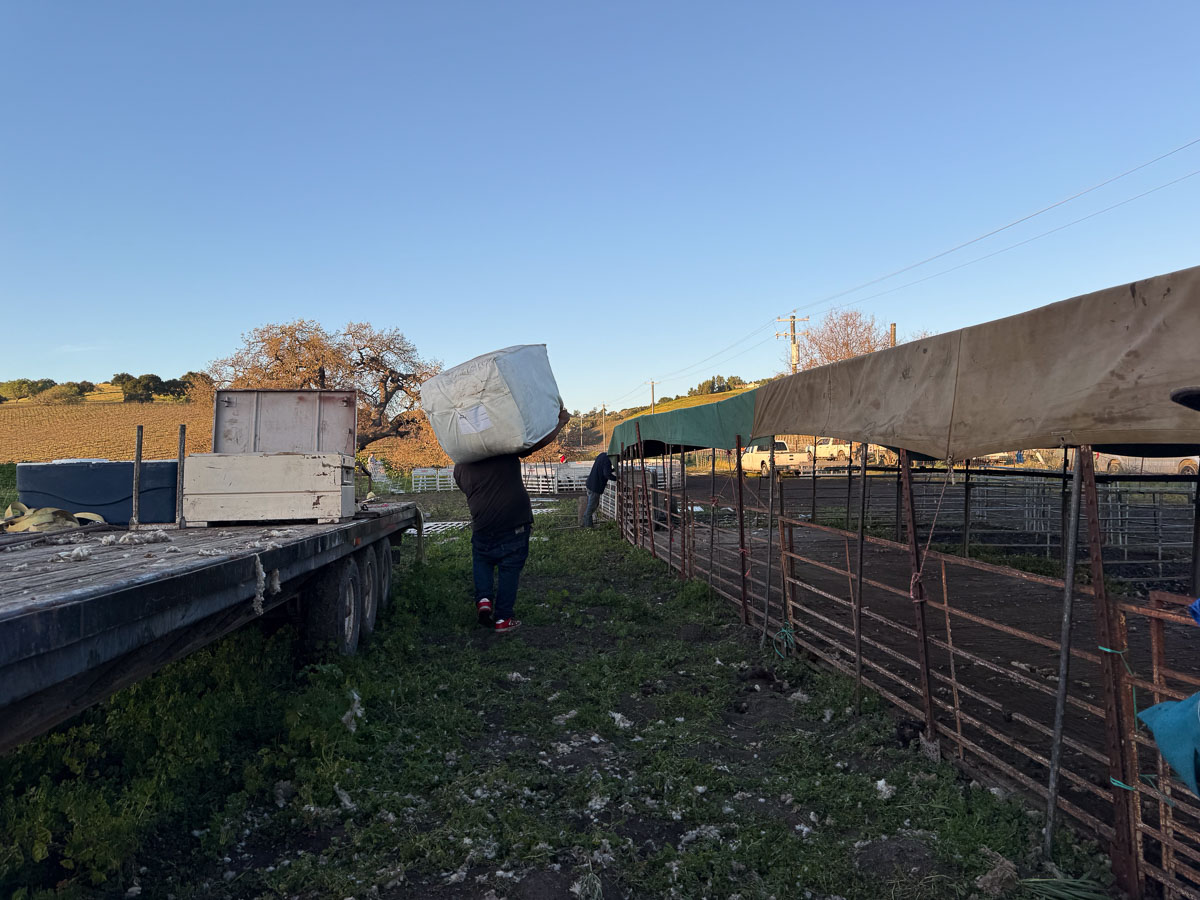
We waited until all the other wool was baled for our little amount to be pressed into a bale.
Bales are usually packed into a solid 400-500 pounds, but this one is only about 125 pounds and squishy. I wanted it baled, because I thought it would be the best way to ship it to Wyoming instead of trying to pack it into lots of boxes. At this point I will wait until after the Timm Ranch shearing day on March 22 and hope I can fit two bales on one pallet.
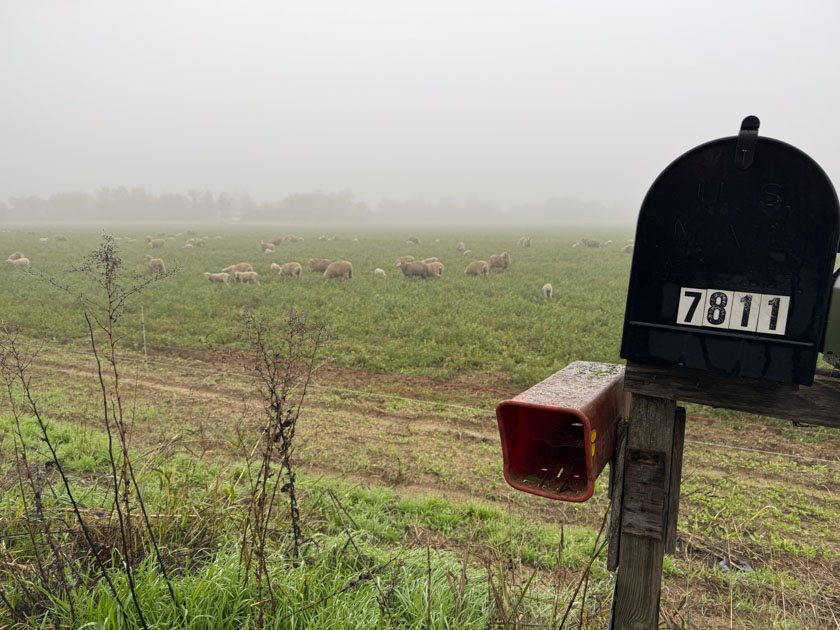
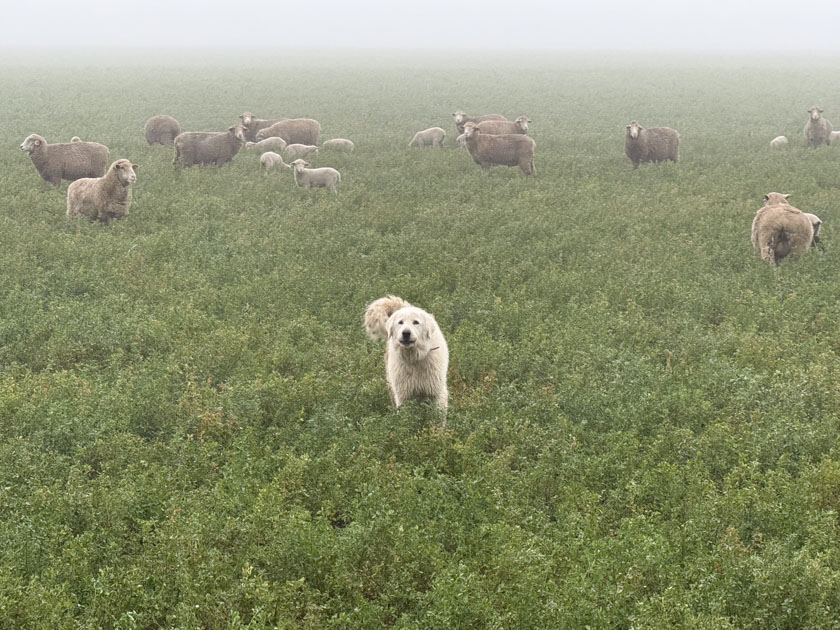
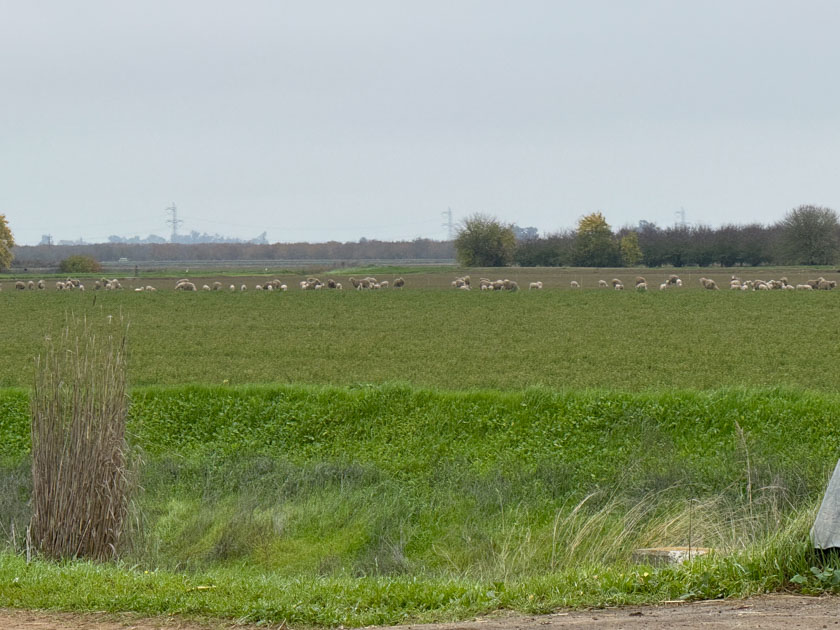
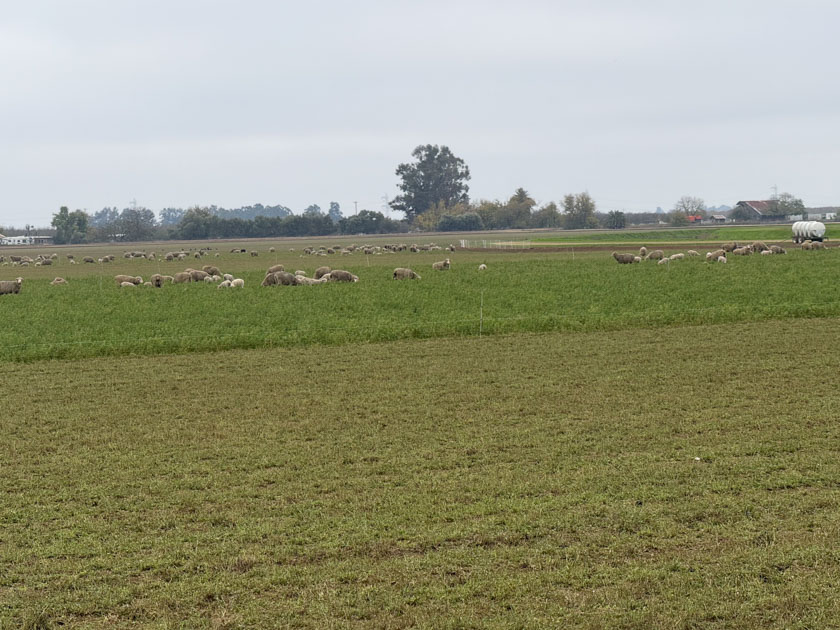
I first shared photos and a sheep story in the November 9 blog post. The sheep were brought in to graze the alfalfa Across the Road November 4 and were there until December 14. Now I have another story to tell about this flock and the grazing operation, but I should at least finish the part of the story that was right across the road two months ago.
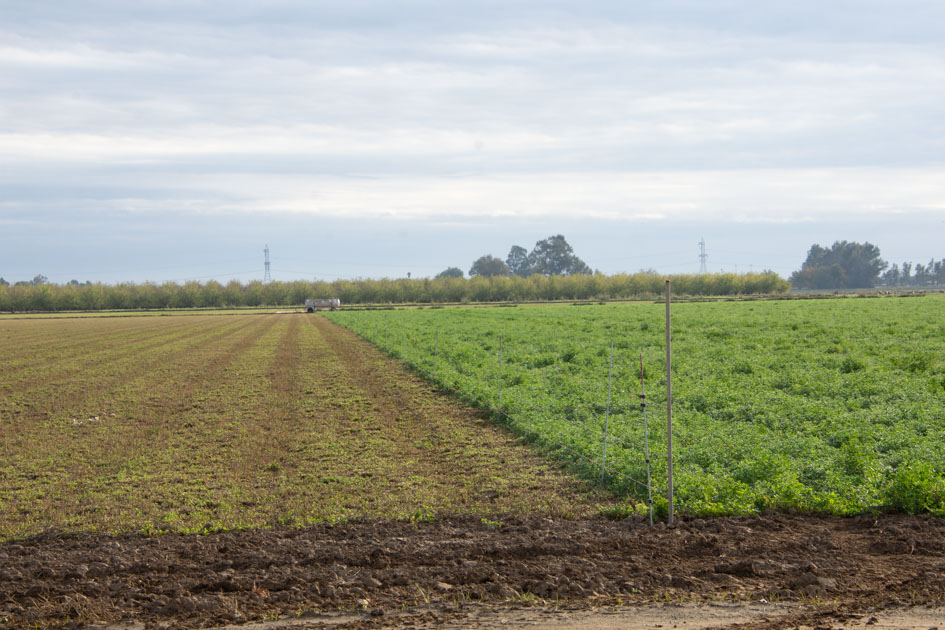
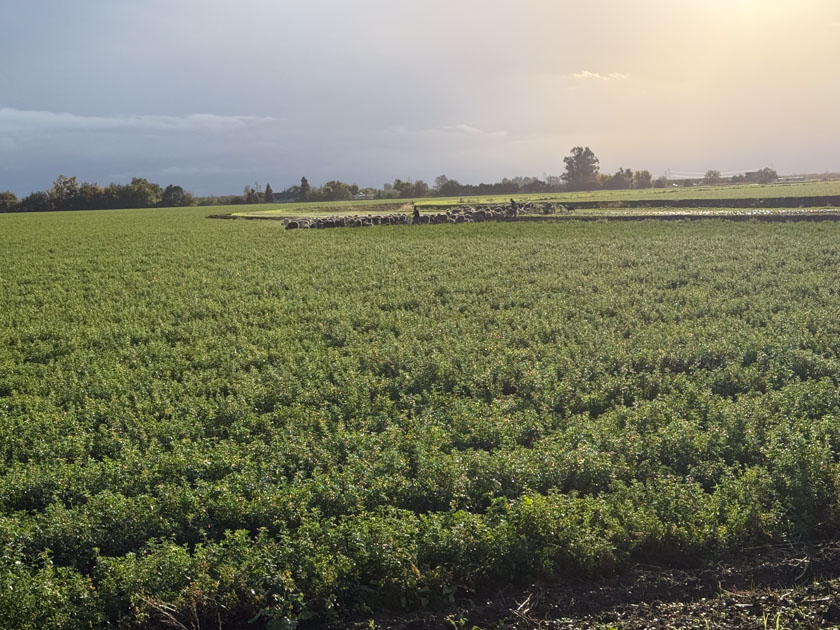
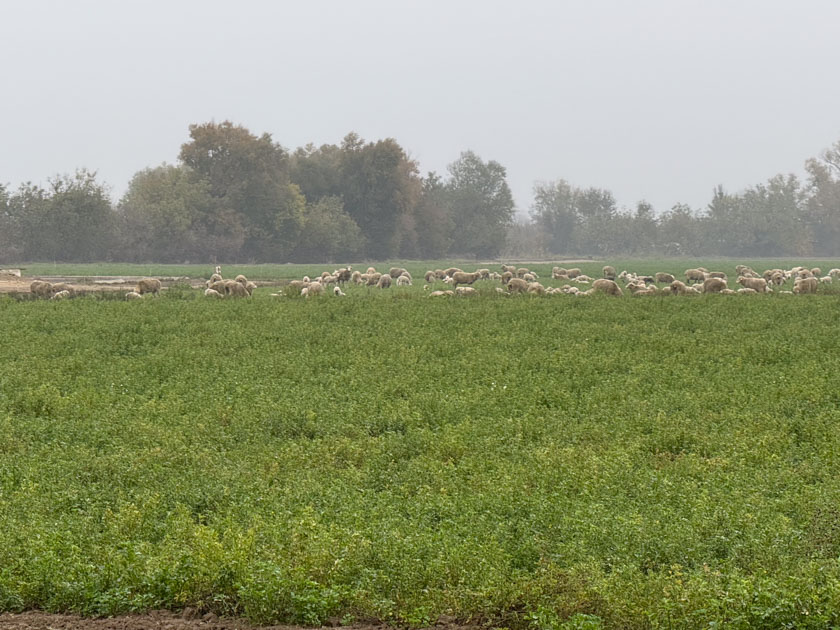
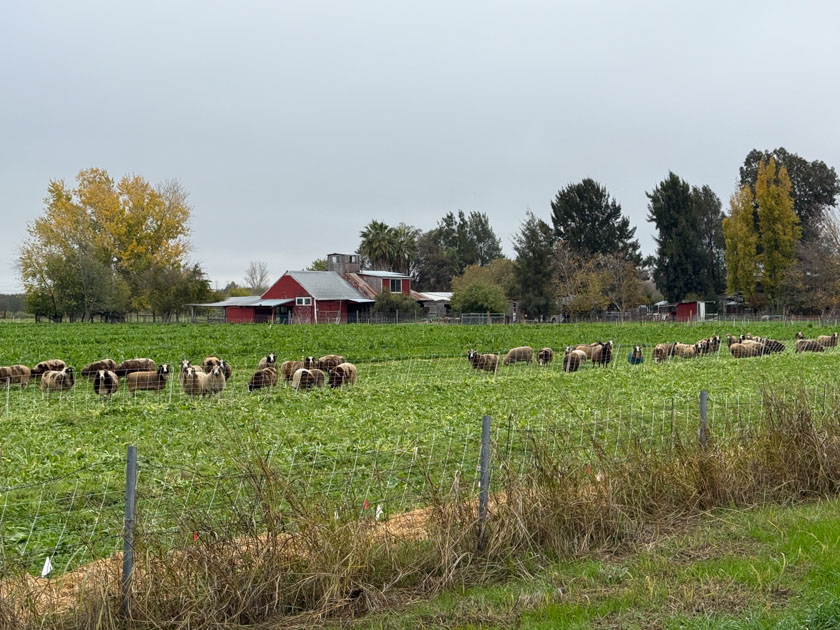
I often walk Across the Road with Ginny, but during this month I didn’t walk there very much. That was mainly because I didn’t want to cause any trouble with the guardian dogs that were on duty, but maybe also because that was the month it was so miserably foggy and dreary. It’s not foggy in this photo but it is a good example of how thoroughly the sheep grazed each paddock before they were moved to the next.
One morning I was checking the fence in our pasture when I saw the sheep being moved away from the main road back to where they had been farther back in the alfalfa. I assumed they had gotten out during the night and wandered out on the road and now they were being herded back. The next day I realized that I interpreted that scene wrong.
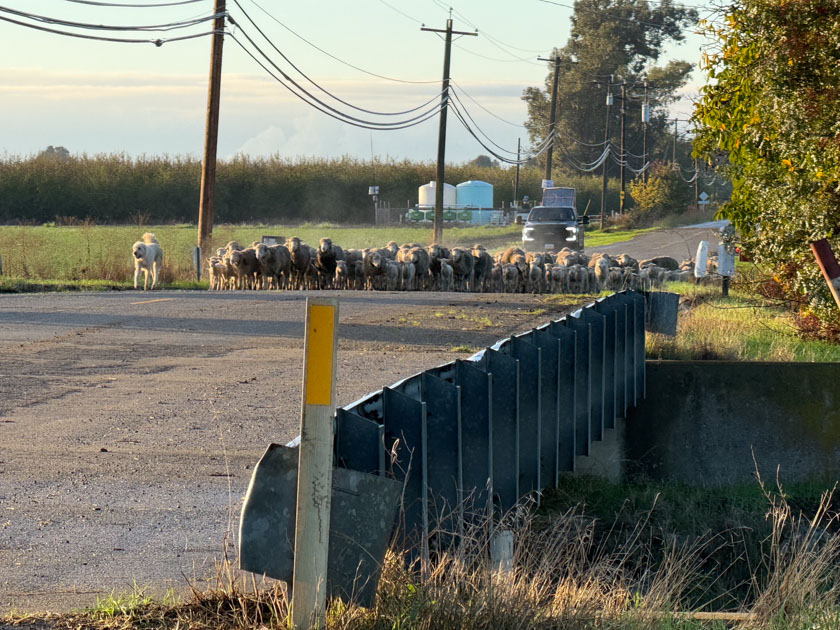
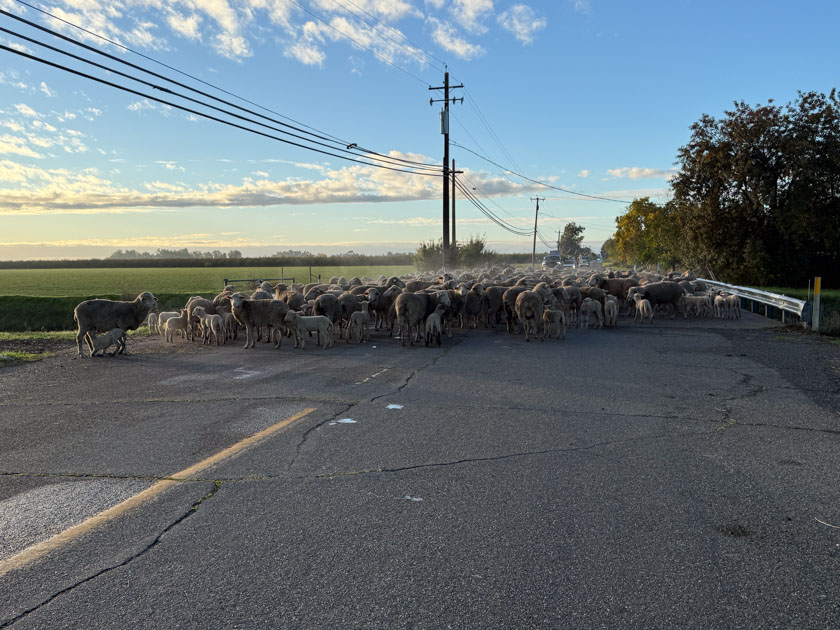
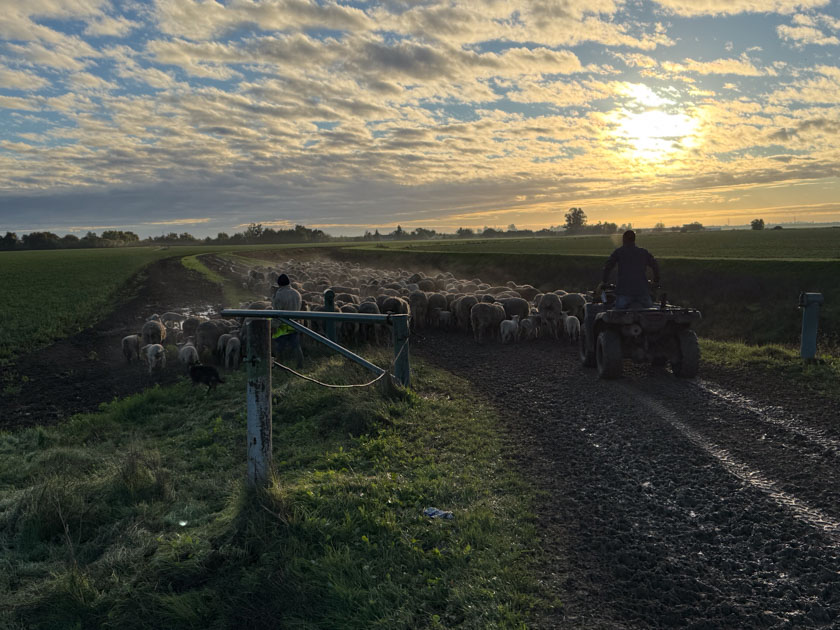
That morning, about two weeks after the sheep had first arrived I saw this scene from the southeast corner of our property. This wasn’t the same flock, but another being trailed up the road.
They had been grazing another property and were being moved to the one near us, as had the sheep the day before.
They turned the corner onto the road along the canal and were herded to a paddock further to the east.
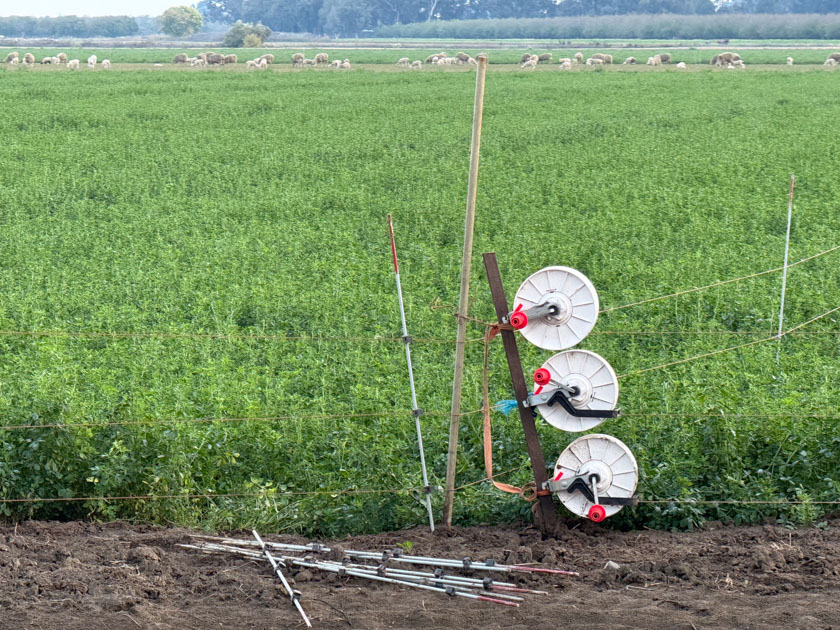
This is the fencing that the herder moved to set up new paddocks when it was time for the sheep to move.
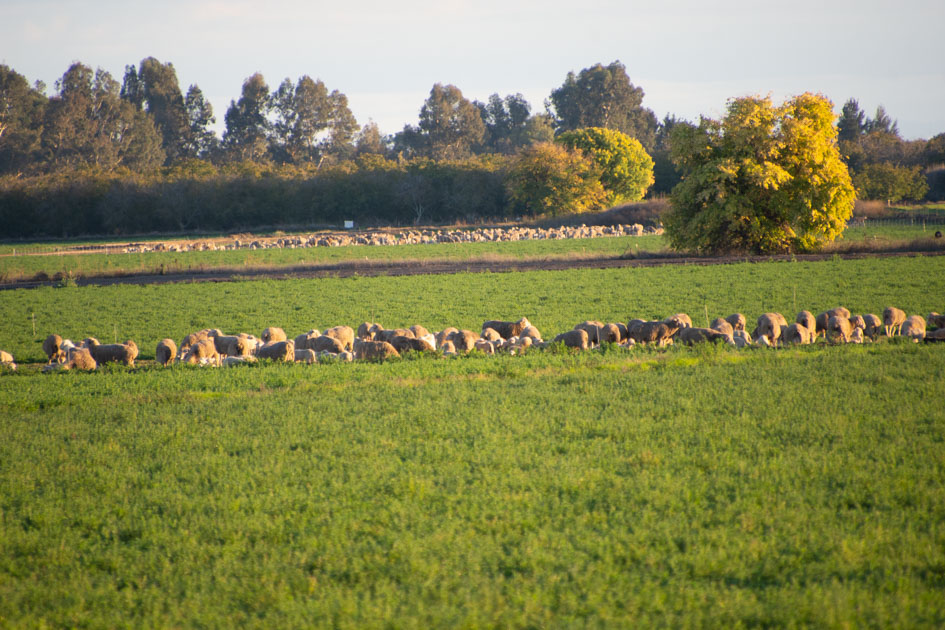
The three flocks were kept separate. I counted from about 180 to 220 ewes in the groups. That’s not counting the lambs.
That was from a distance with binoculars, but I later confirmed with the owner that was about right.
Eventually they moved to the alfalfa right across the road from us.
If I went to the mailbox the guardian dog came alert.
One of the flocks moved to south of the canal.
The other two were north.
My flock grazed just across the road. It’s a very different scale of management.
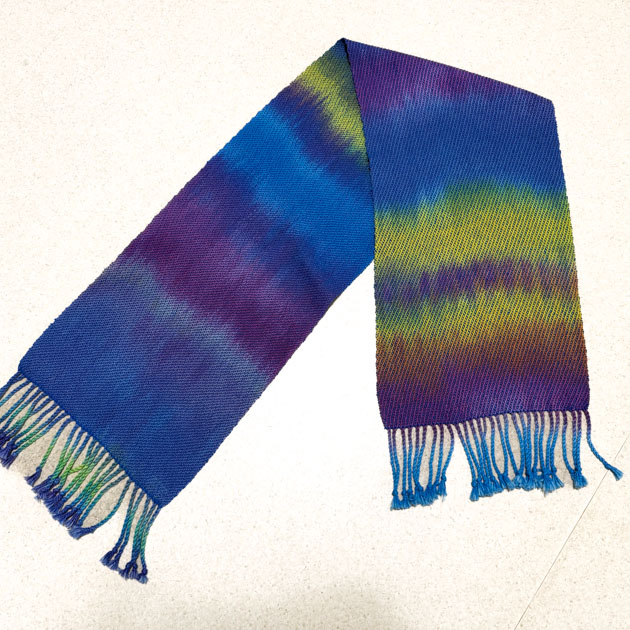
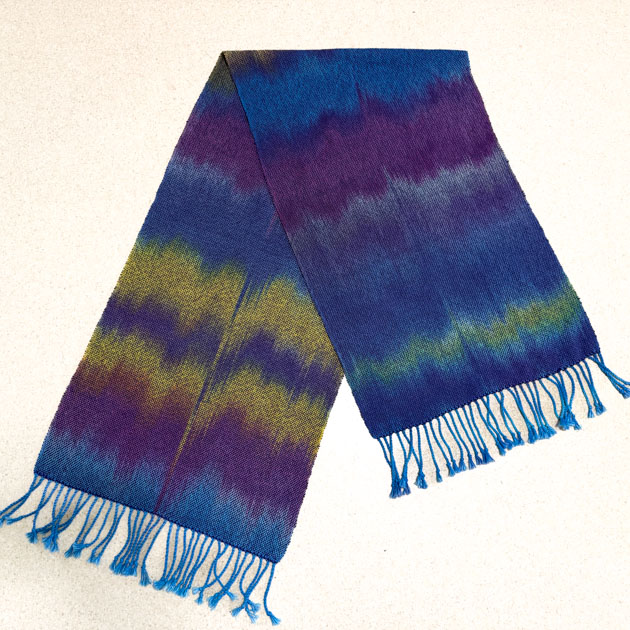
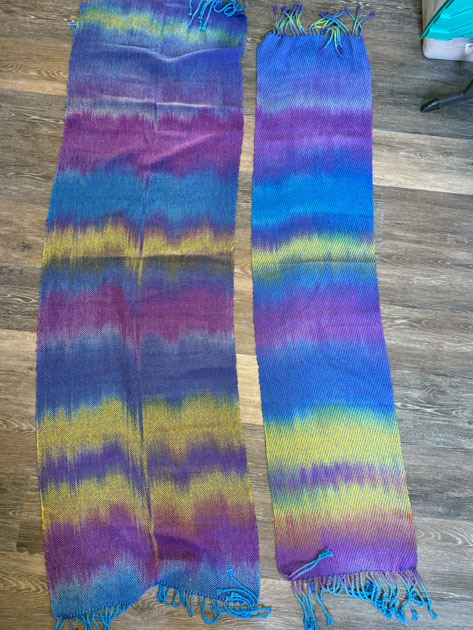
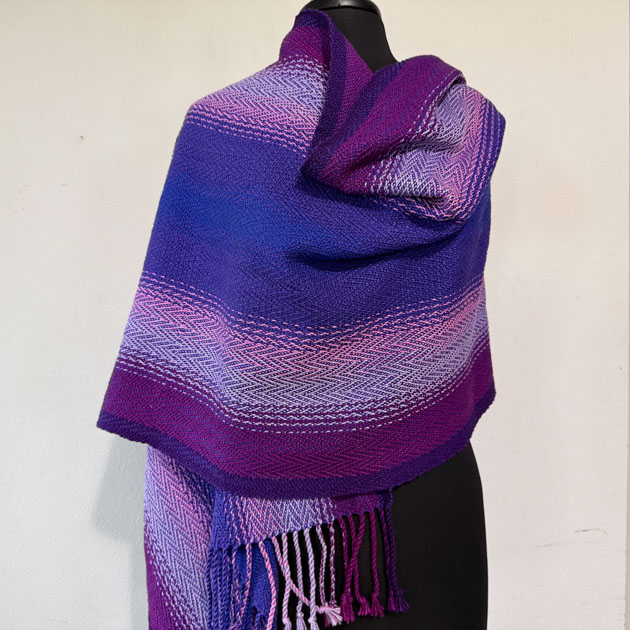
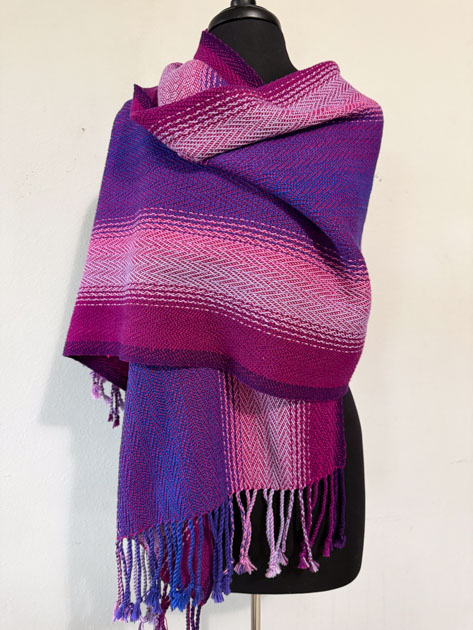
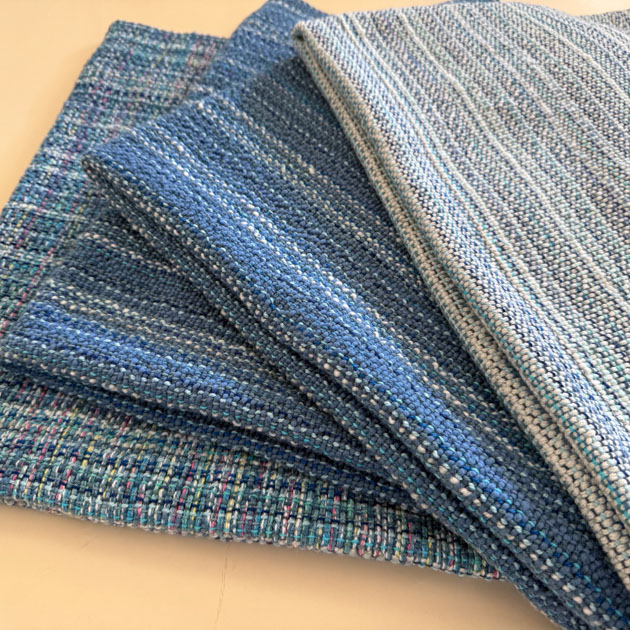
I wove these recently but they are from a warp I dyed several months ago. Can you tell that the warp was folded in half while I applied dye? Each half became a scarf.
These are the two pieces just off the loom before wet finishing.
These cotton shawls are also woven on the same warp. I used a lighter weight cotton weft for one.
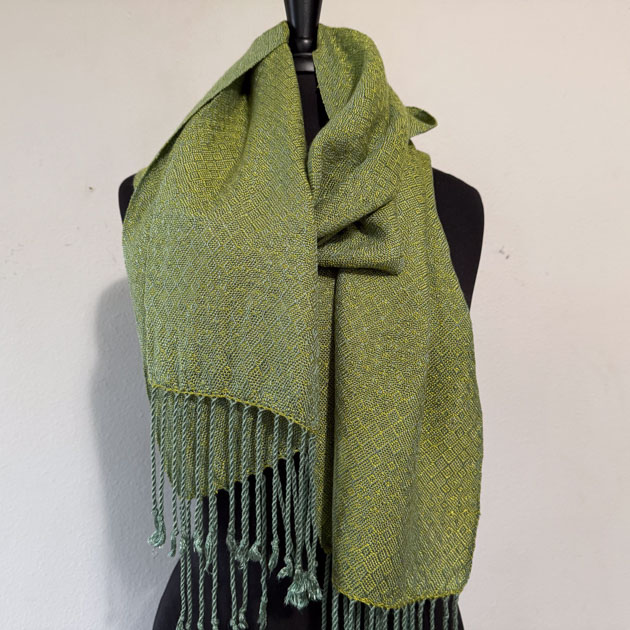
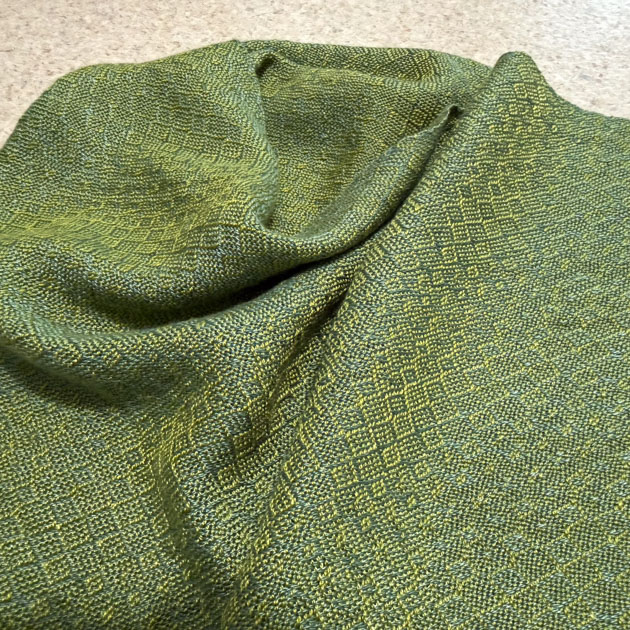
This is a tencel scarf. There is another but I haven’t finished the fringe yet. The photo below gives a somewhat better idea of the iridescence to the pieces.
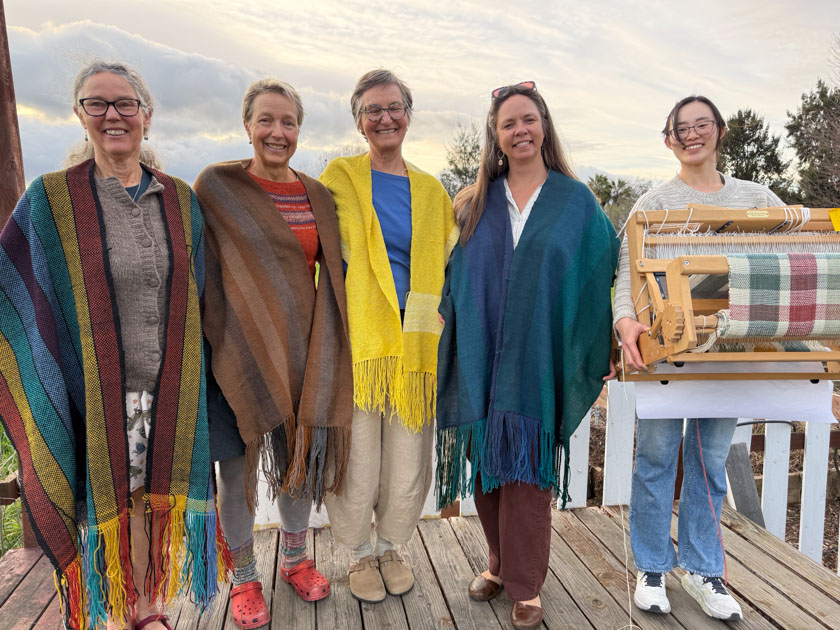
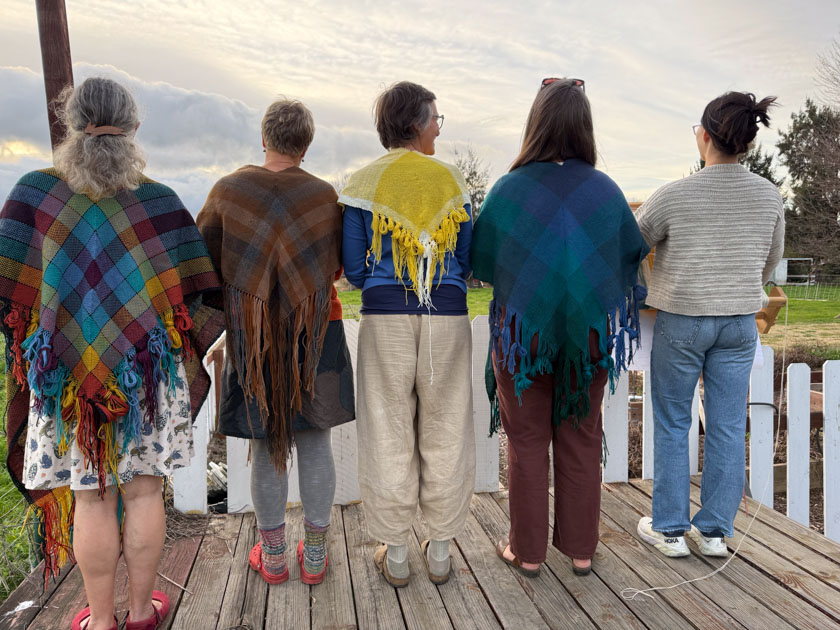
These are weavers at the end of the V-Shawl class I taught last weekend.
The exciting part of this shawl is the back so we always have to have that view. Fringes were left to finish at home. The shawl that is still on the loom in the photos is finished now! These are beautiful pieces.
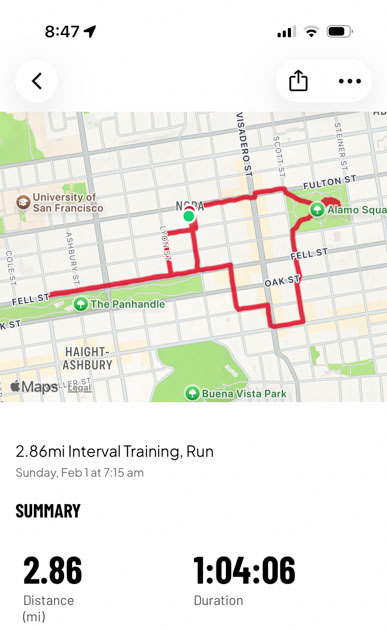
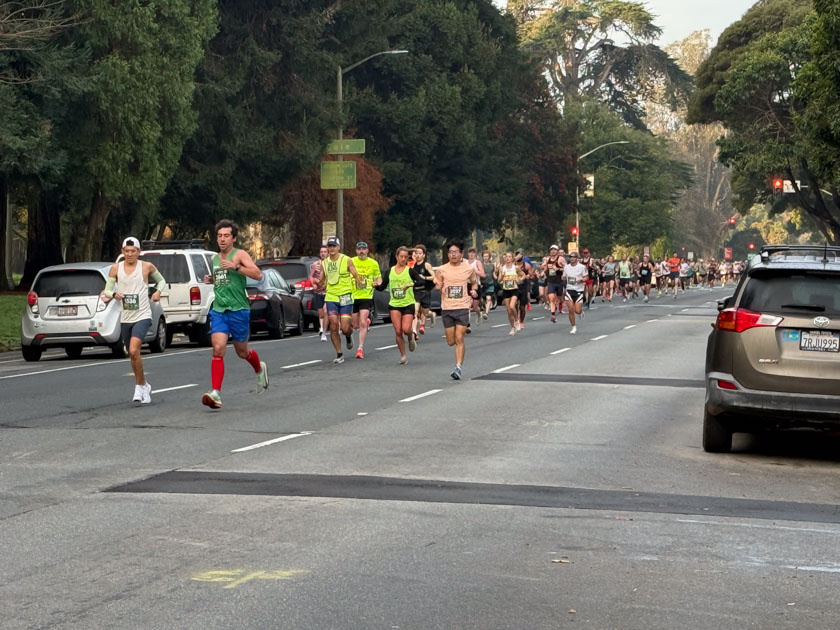
This was another morning when I got up before the others and went for a walk. I headed south and saw flashing lights and road closures. There was a half- marathon scheduled to begin in about a half hour.
Screenshot
I thought I’d catch the start and headed south and east.
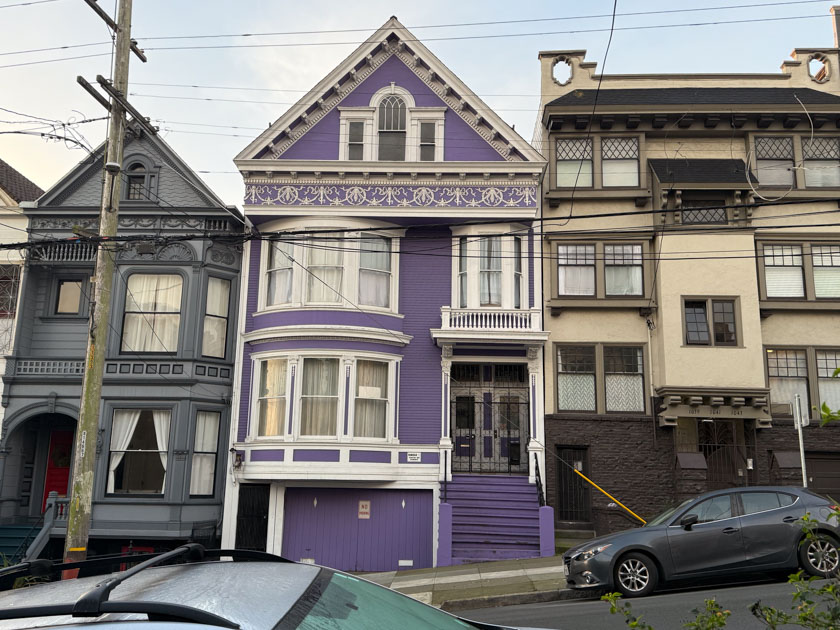
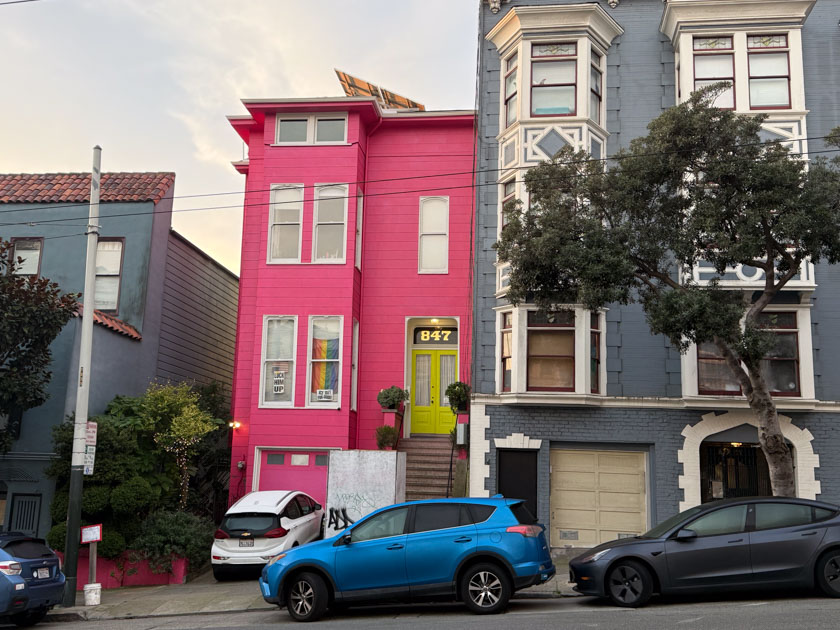
I like seeing these well maintained older houses. What I’d really like is to peek inside.
I took this photo from that small park that shows on the map. I realized that the traffic control people had disappeared and there was no sign of a race. I checked my phone and found that it started in Golden Gate Park.
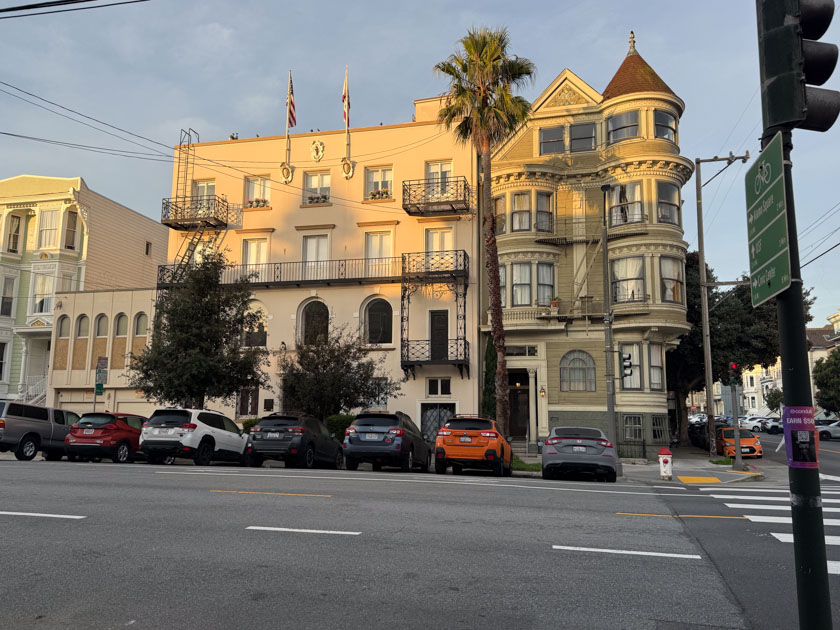
I walked back in that direction. This is the NDGW Home where we were staying–not the one on the corner, but just to the left of the palm tree.
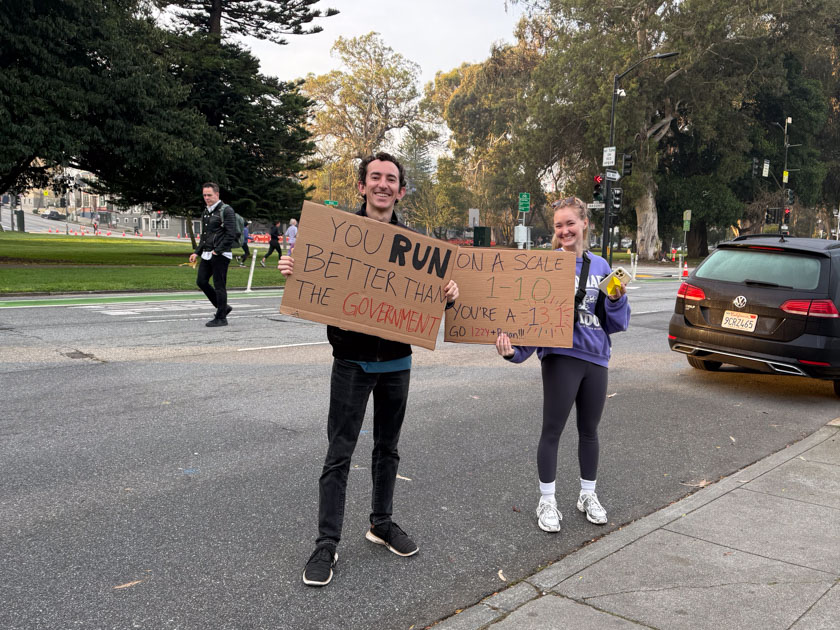
I started to see spectators. I was amused by this sign and asked to take a photo.
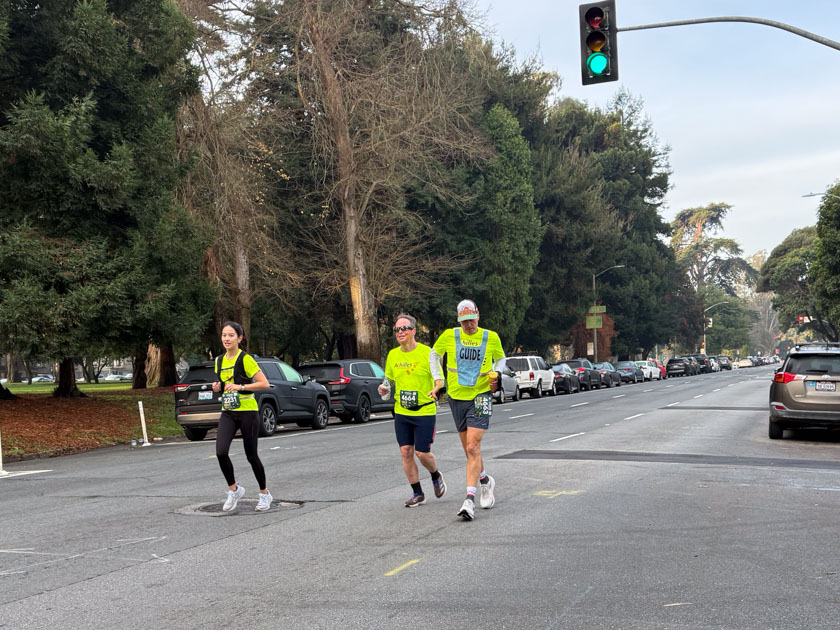
These runners came through before we saw the lead motorcycle and bicycle accompanying the first in the race. I learned something after looking up the logo on the yellow shirts.
There were more of the yellow shirts along the way. They are part of Achilles International, an organization made up of people with disabilities who want to be active and people who volunteer as guides. There were two guides with each athlete.The athletes I saw had signs that said blind or deaf or both. After watching awhile I went back to the Home to join everyone for breakfast.
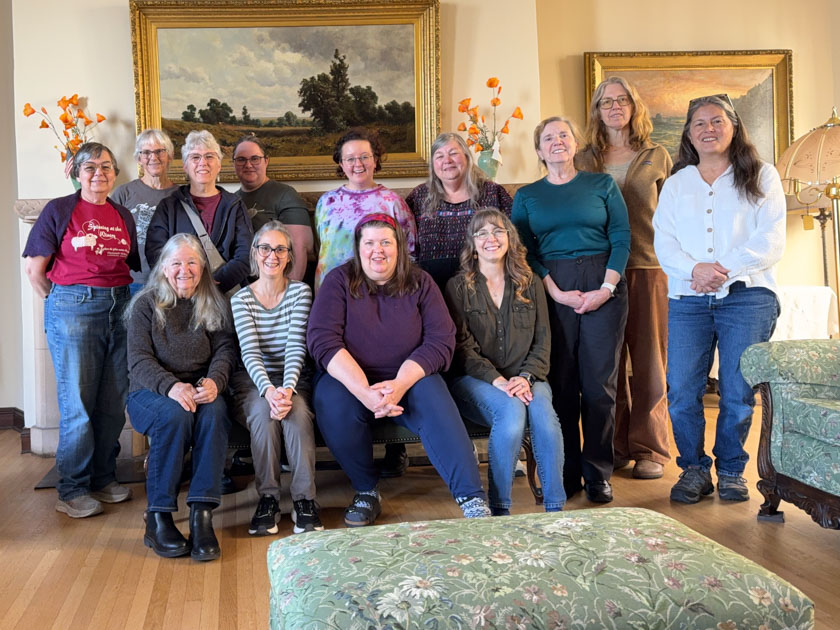
We plan our Farm Club San Francisco Retreat for a weekend that is after shearing and before lambing. We were introduced to Native Daughters of the Golden West by one of the original Farm Club members who was also a member of NDGW. Members and their guests can stay in “The Home” designed by Julia Morgan and built in the 1920’s. This time thirteen of us gathered for the weekend and three others met up with us on Saturday.
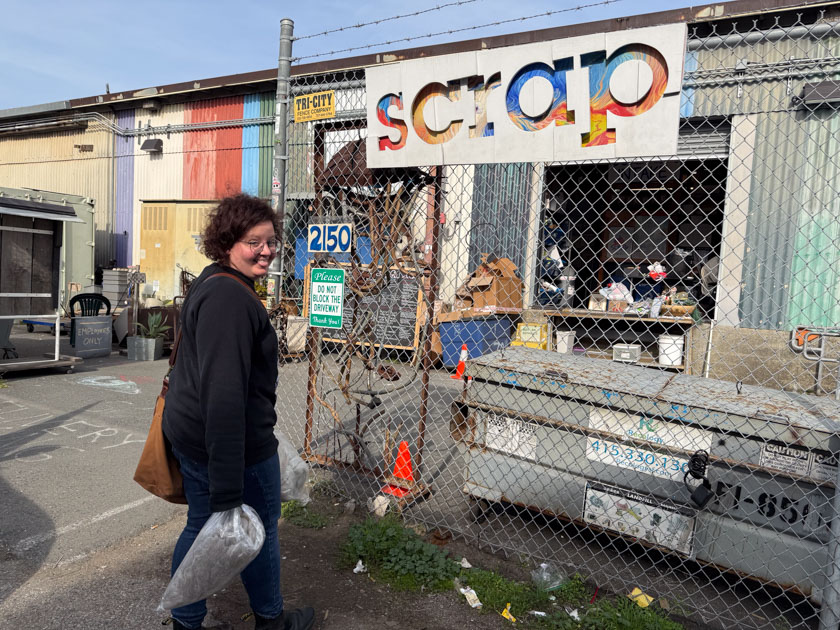
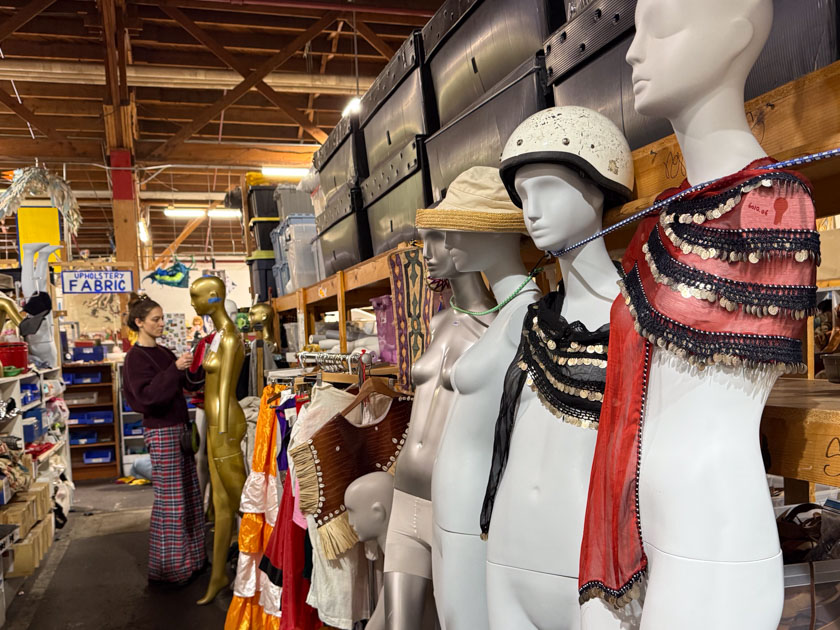
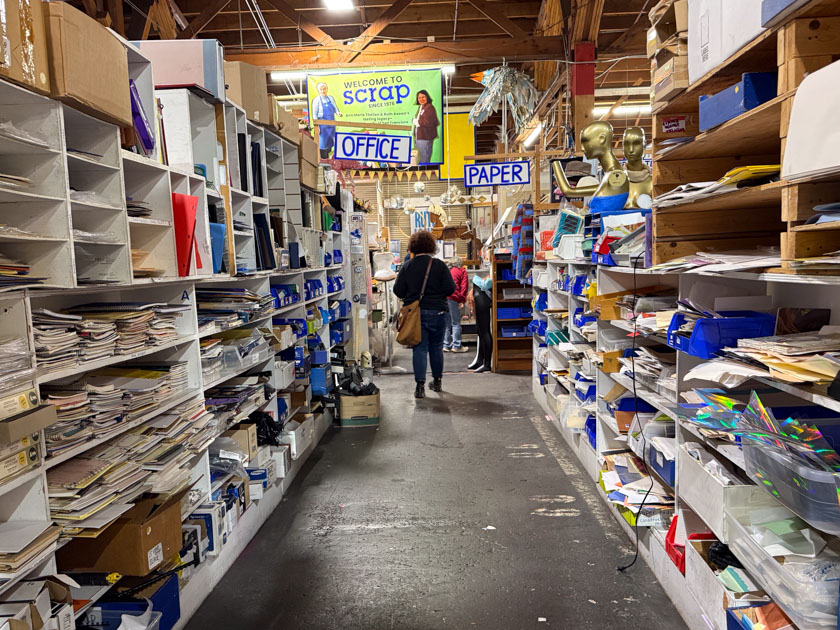
Since Farm Club members are scattered around several counties we couldn’t all meet here to carpool. Four of us left from the farm and decided to check out SCRAP on the way. SCRAP is “a non-profit organization working at the intersection of arts, eduction, and the environment”.
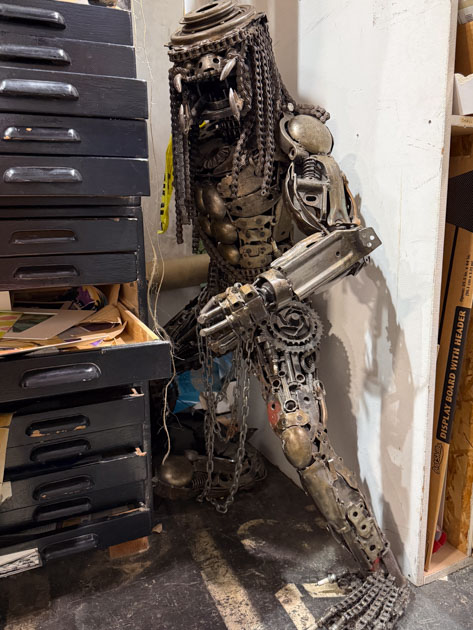
This building holds an amazing amount of STUFF that has been donated–all things that someone could imagine using for an art or craft project, however wacky it is. There is a complete list on the website of what they will and won’t accept. I have included just a few photos here, although it is very difficult to portray what it is really like inside.
We spent a couple of hours here and then drove to our destination.
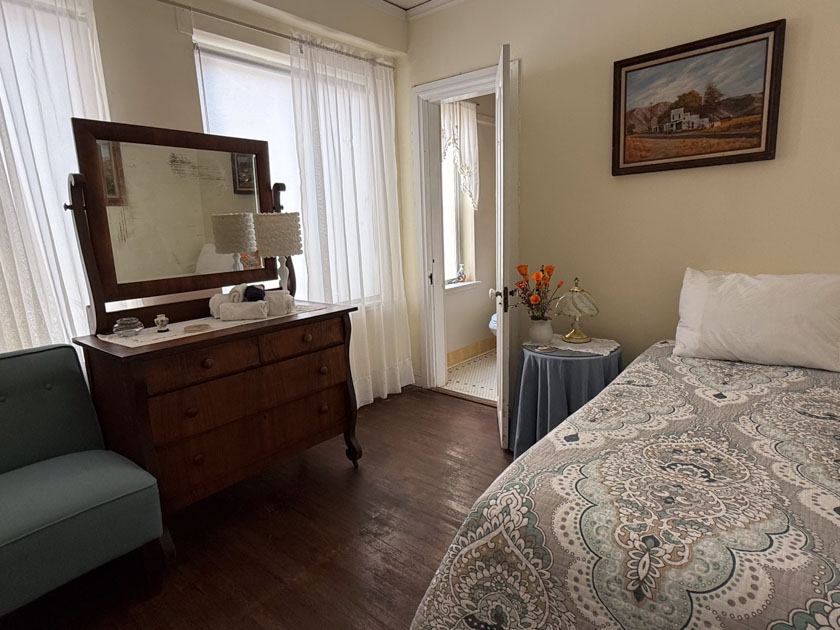
A feeling of serenity after the chaos of SCRAP. This is the room that I had for the weekend. We usually don’t spend much time in our rooms because we are gathered in the parlor, the dining room, or on an adventure of some kind in the city.
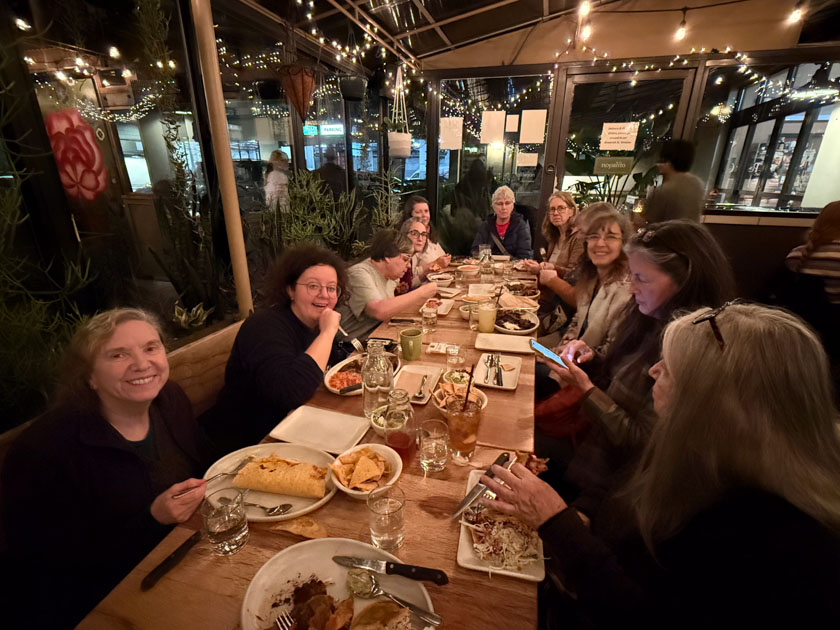
We ate dinner at a Mexican restaurant within walking distance of the Home…
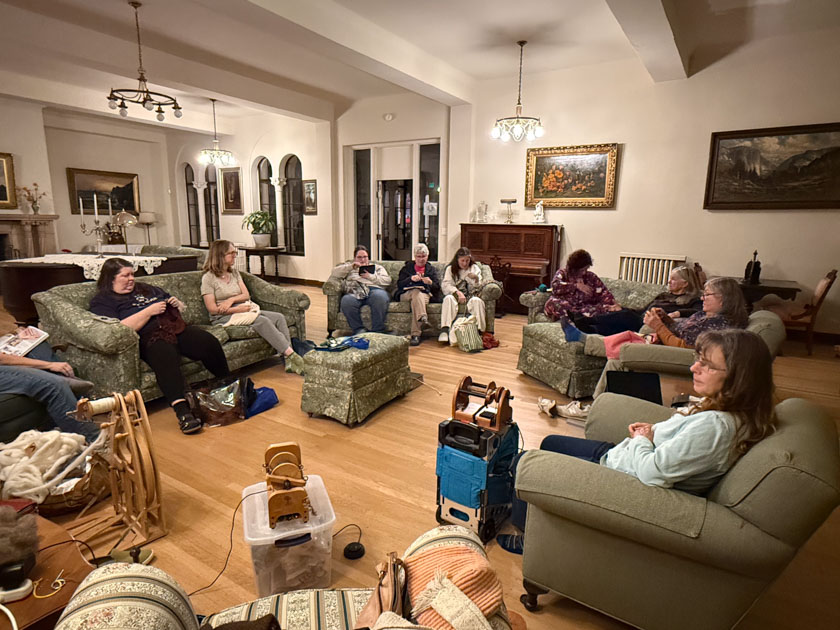
…and spent the rest of the evening in the parlor spinning and knitting and visiting. To be continued…
In the 2025 Weaving Recap blog post I included a photo of baby blankets still on the loom and said that warp had been on the loom since October. How about August? That’s what I found when I looked back for photos of warping this loom. Don’t ask me why I decided to wind a warp this way, but it seemed like a good idea at the time.
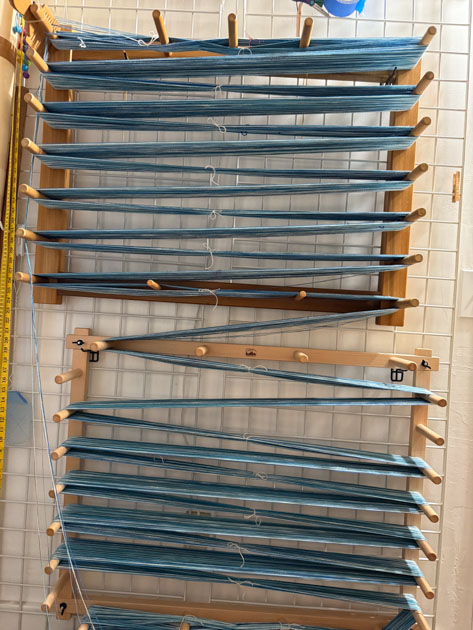
I used a paddle so each pass was four threads and I made a 26 yard warp.
I have wound 20 or 30 yard warps sectionally using the traditional method for sectional warping or using the AVL warping wheel. But I got this idea of using two warping boards and thought, why not?
I had to wind two bouts to accommodate all the yarn. My goal was to use up odds and ends of cones of yarn so the second warp. That meant the second warp would be different from the first, but I wanted the colors distributed throughout. I spaced the first one out in the raddle.
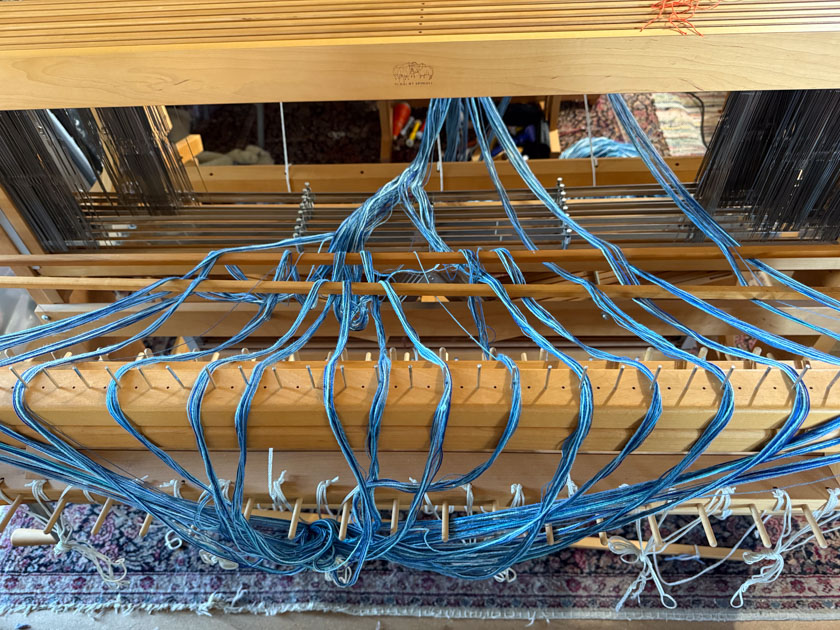
Then I added the second warp in the empty spaces.
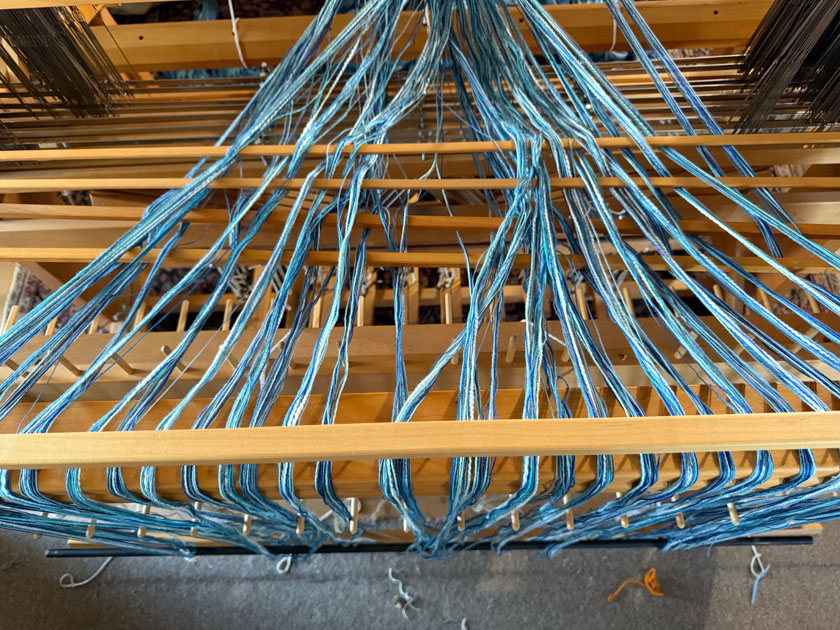
I used two end sticks instead of trying to intersperse the two bouts onto one stick.
This looked good.
This side was a little messier, but it all worked out eventually.
Weaving in progress.
I had an order for blankets so I cut some off the loom early and didn’t get back to that warp until recently.
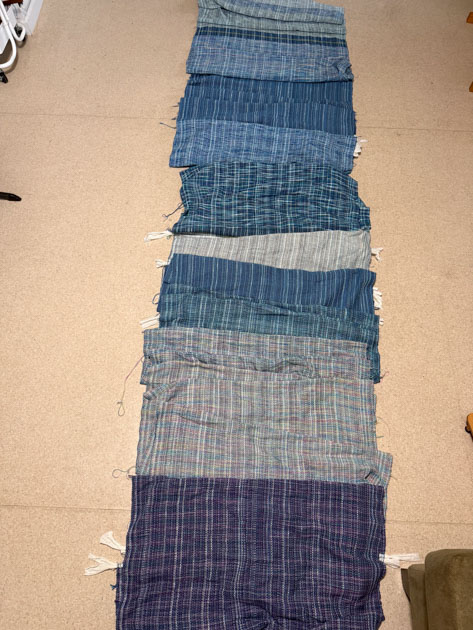
This is the warp I just finished before cutting anything apart. People always ask how long does it take to weave a piece. There are processes other than weaving that go into completing a project. In this case all blankets were machine stitched at each end before cutting them apart. Then some were hemmed. All are washed and then I sew on my label and add the hangtag.
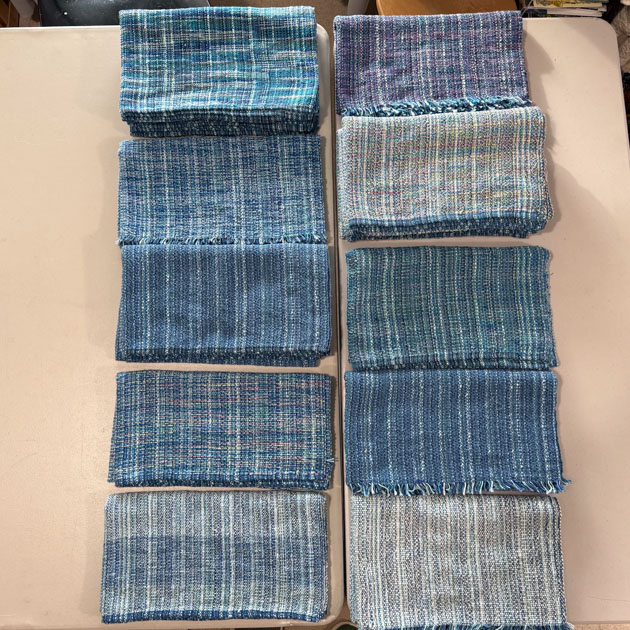
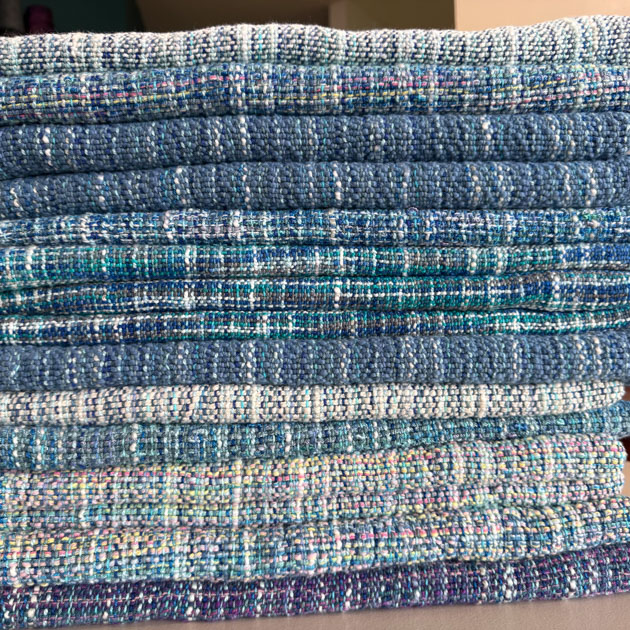
There are multiples of some of these blankets. Those are stacked with two or three.
Another view of all the blankets. You can find some of these blankets on my website and here at the farm store. Others are at The Artery and some are on the Artery’s webstore (local pick-up for those right now). Next up will be a white warp so I can have a variety of colors.
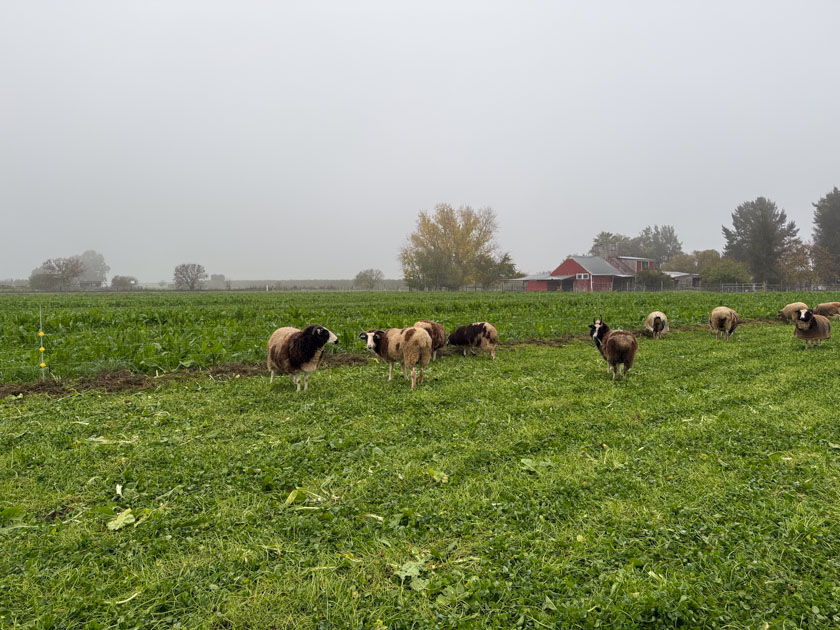
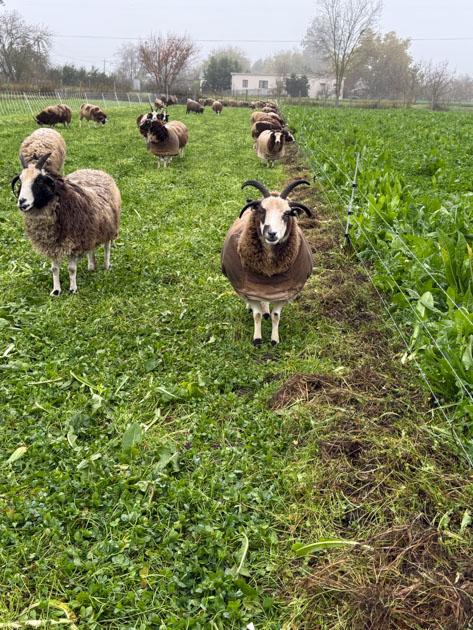
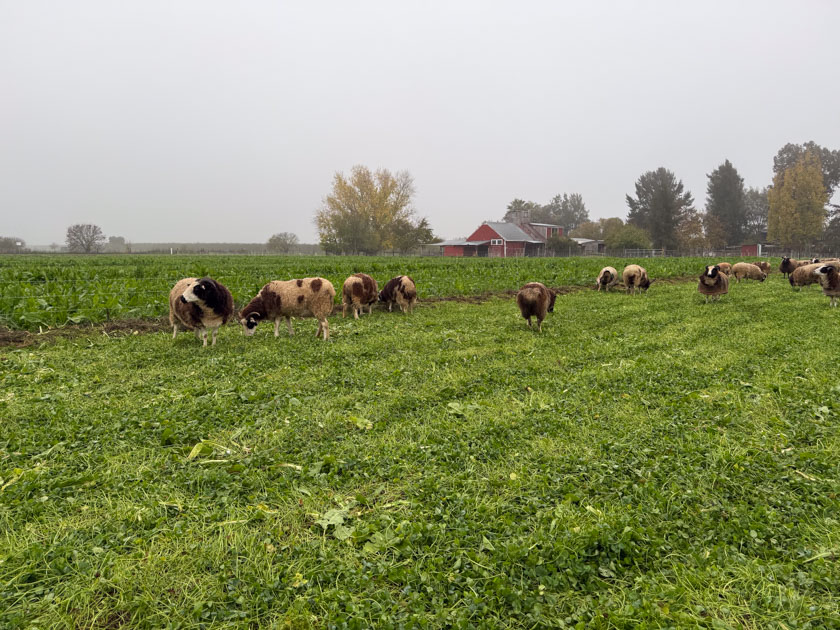
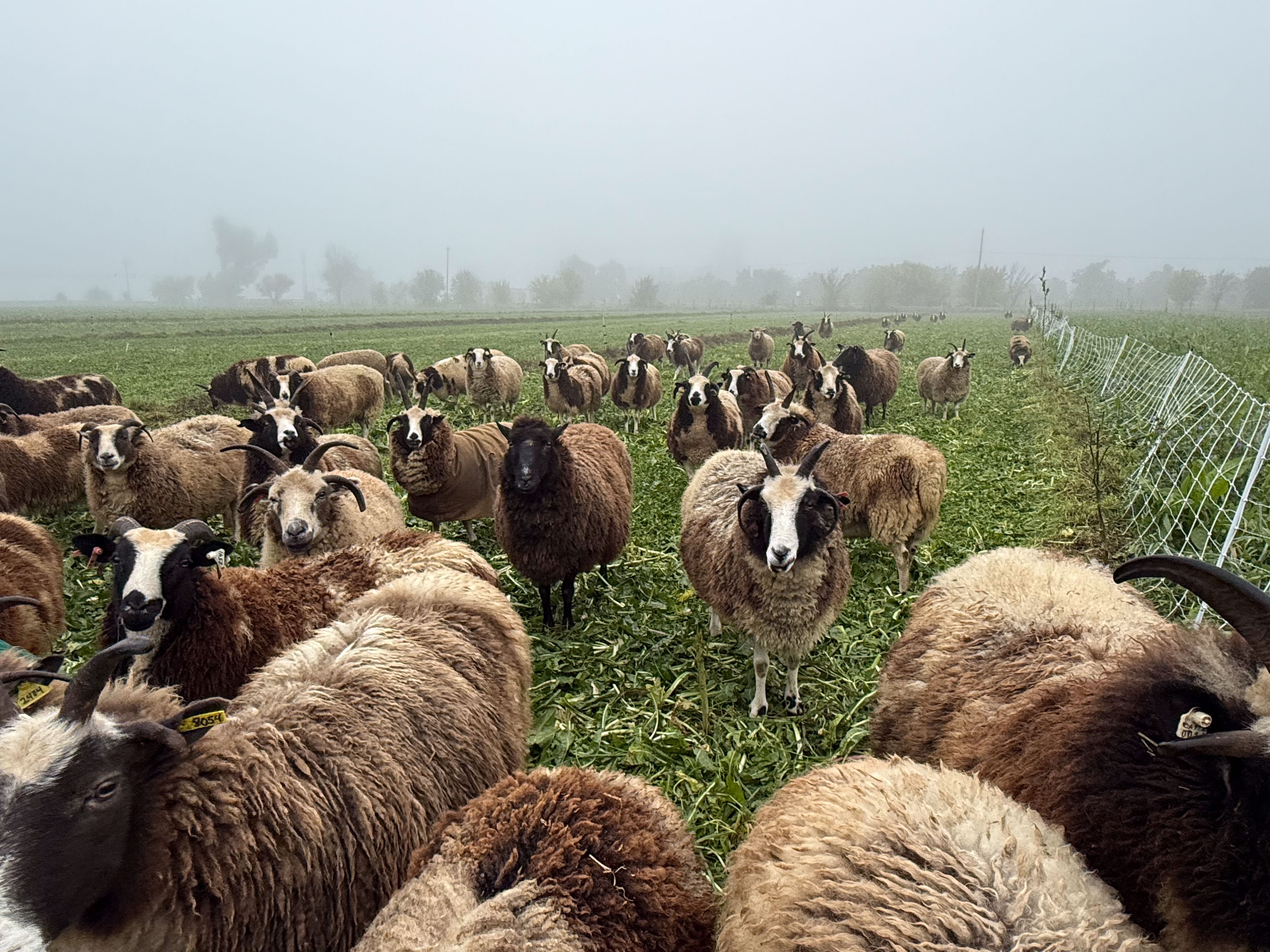
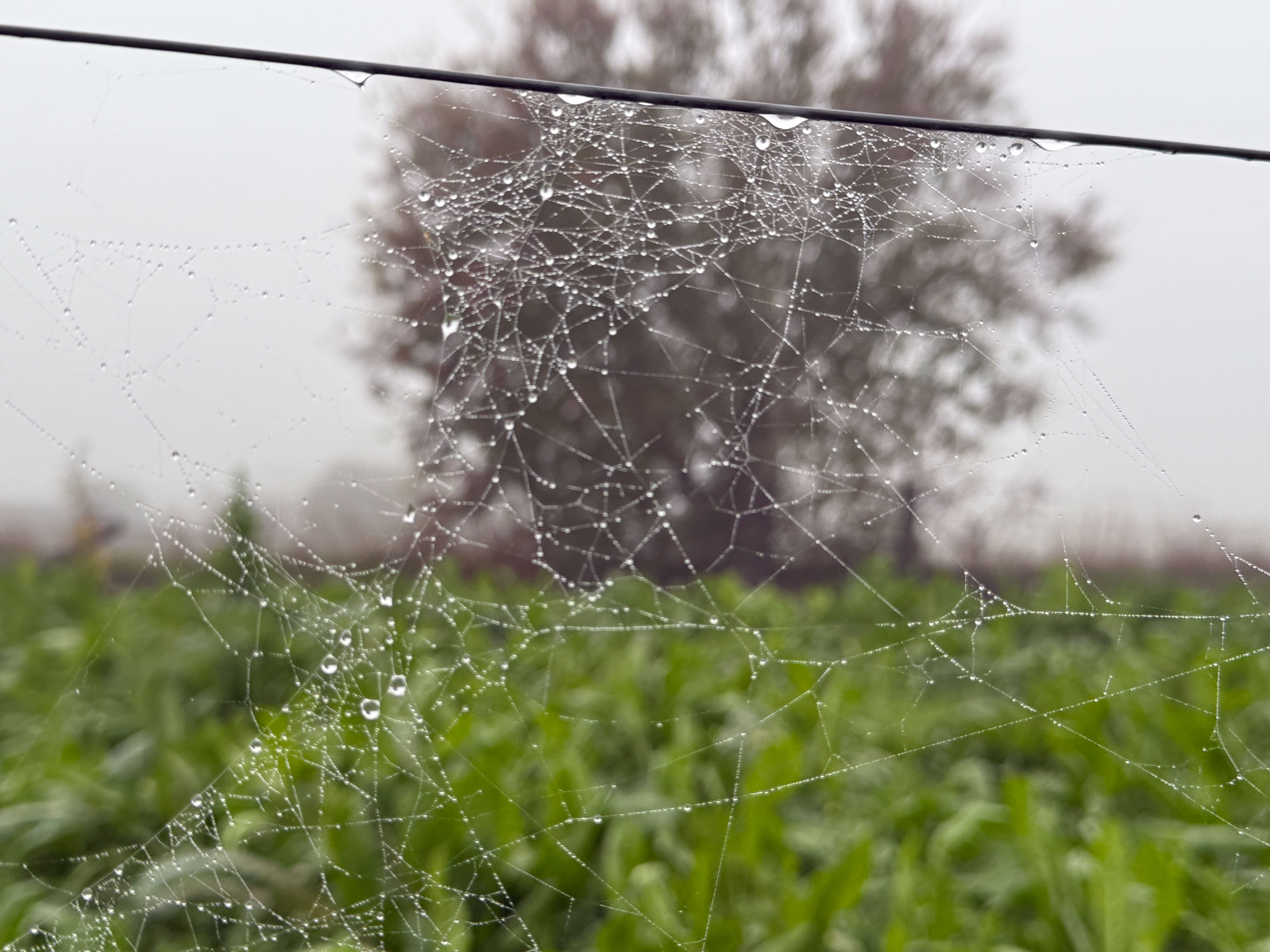
Dan saw a report that we have reached a record of 22 days of tule fog. Cold and drippy. I think I can handle cold (sort of) when it is balanced by a bit of sun. At least the green pasture and fluffy sheep look cheerful.
This is looking northwest to the hills. What hills? Fog instead.
This is the second day grazing Paddock 17. There is still more feed out there, but I want to move them across the other paddocks.
It seems that two days is about right for each of these 30-foot strips. Notice in this photo and the previous one how well the sheep eat right to the edges. The fences are on the checks, the raised strips that channel the irrigation water down the pasture. I think they eat those closer because they aren’t trampled like the middle of the paddock.
This is another view of that paddock.
I moved the net fencing this morning and this is Paddock 16. .
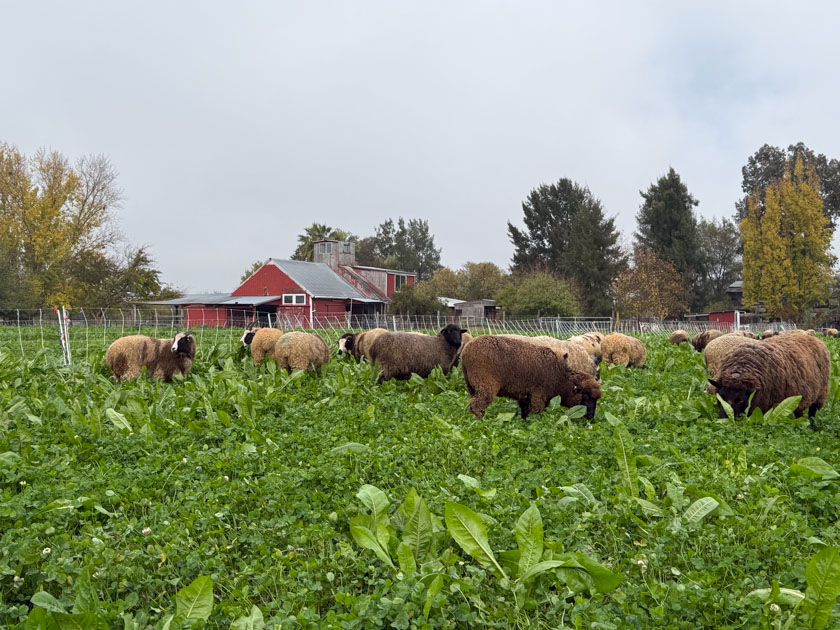
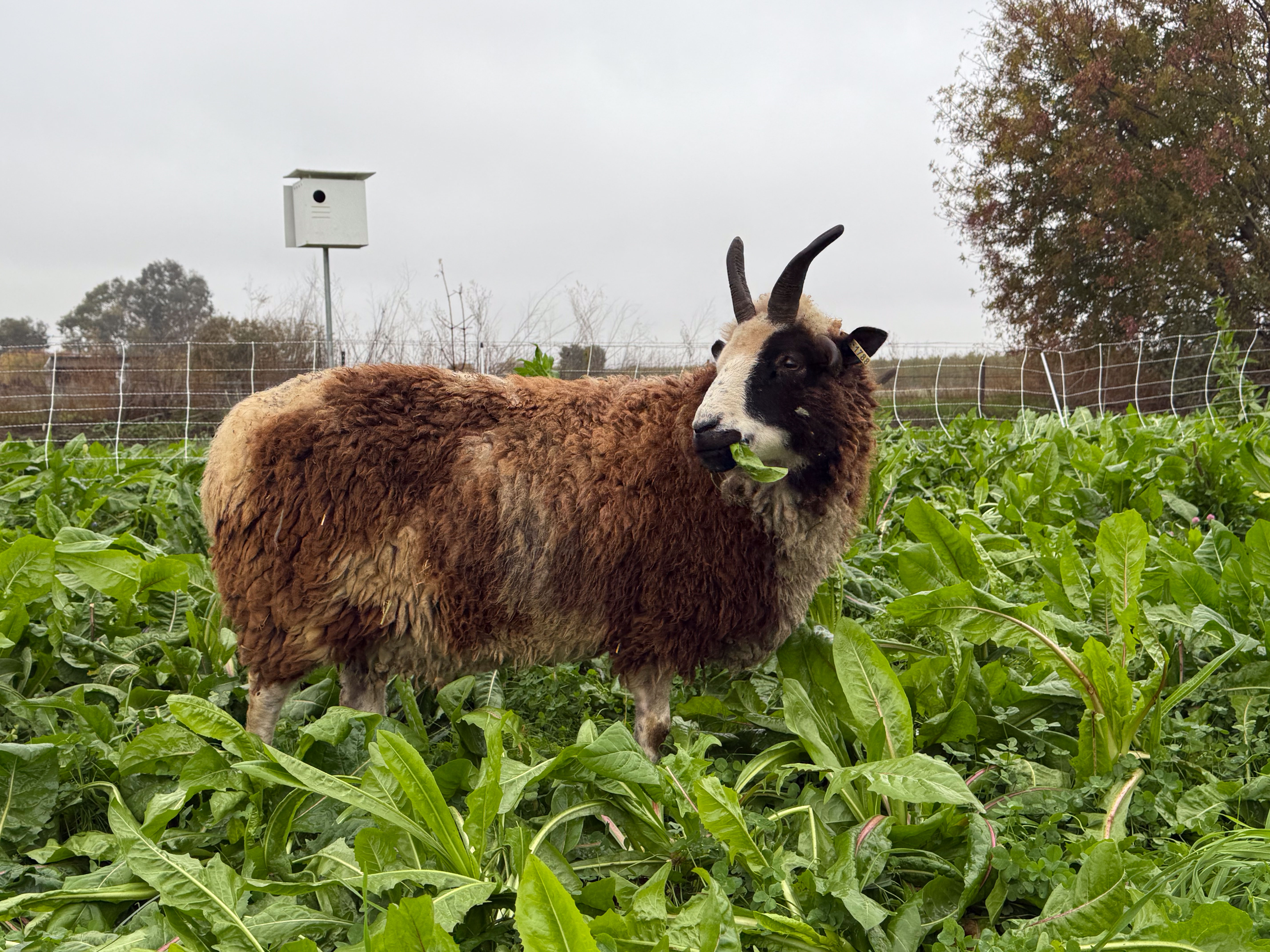
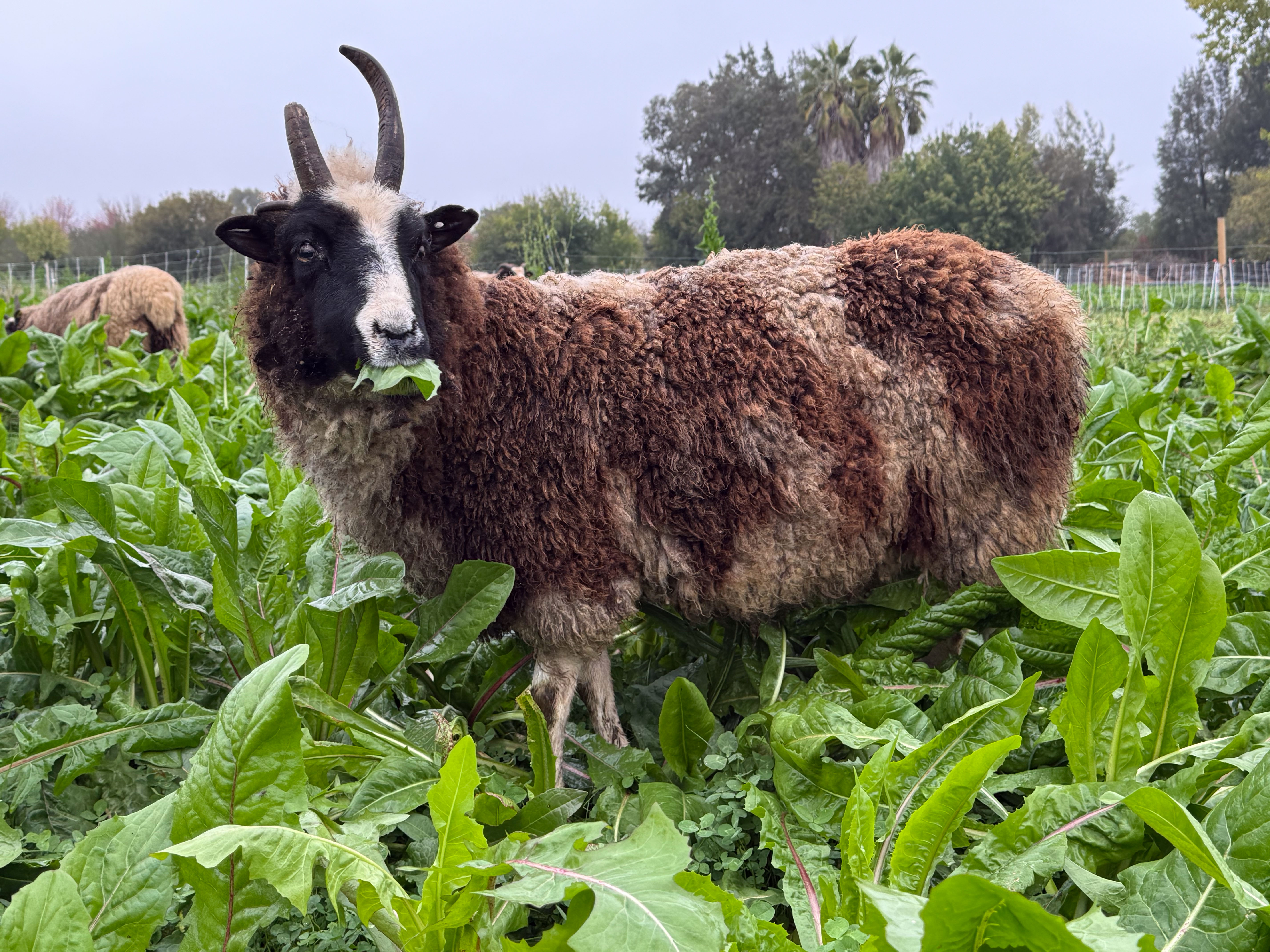
Some of the chicory has red in the leaves and some does not.
We’re almost to the last check in the south pasture. Well, we are at it but that is today and this blog post is about yesterday.
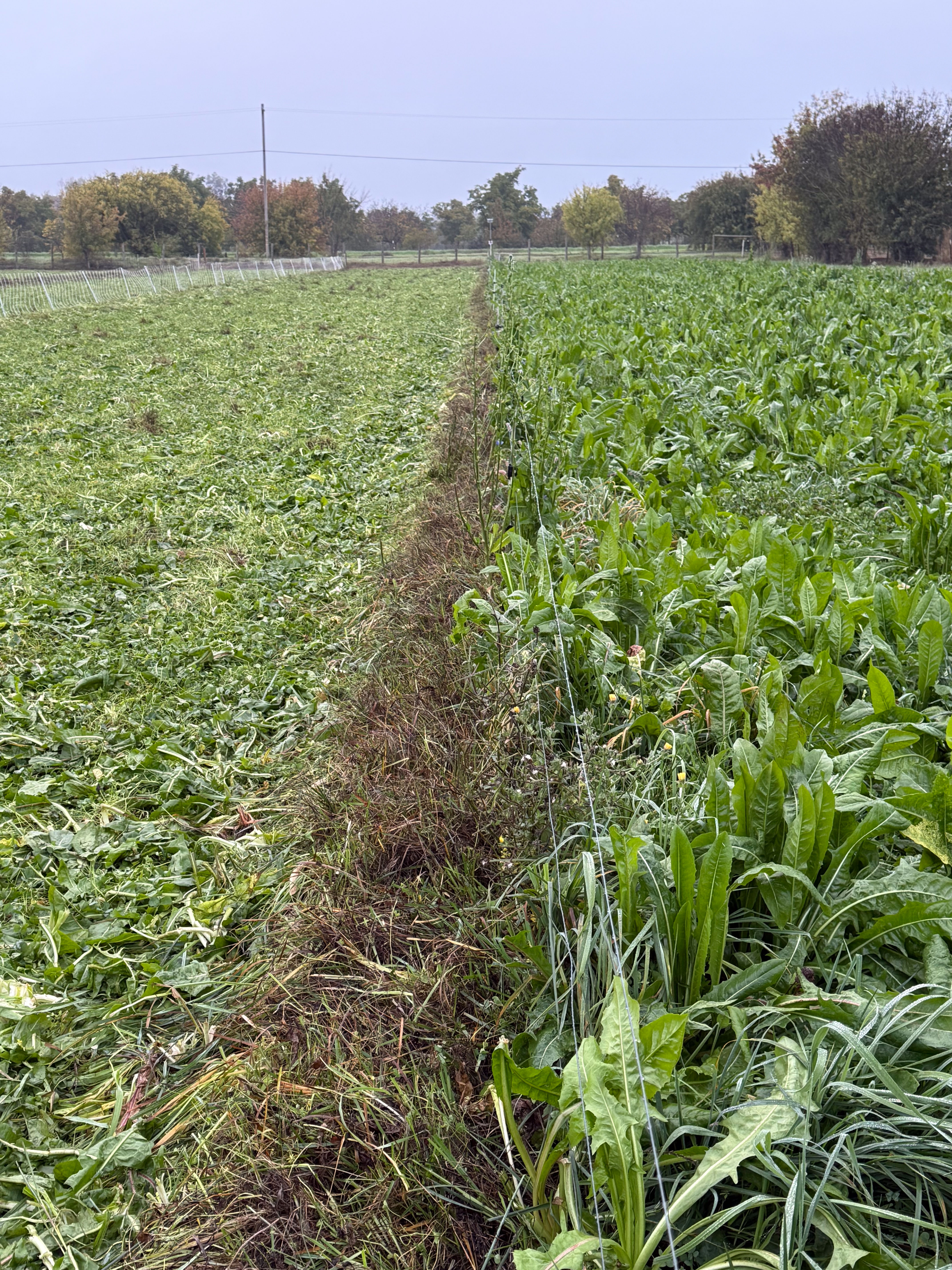
This is looking south and Paddock 2 on the right. That is the one the sheep were just grazing for two days, after grazing Paddock 3 (left) for two days. You can see how this looked two days ago here.
Anther view of that same fence line.
Moving west, this is the fenceline between #3 and #2. I had to move that net fence from the division between #3 and 4 to the division between #2 and 1.
The fence line between #’s 2 and 1, neither yet grazed
The sheep were out when I went to the barn yesterday morning. The paddocks are numbered from west to east, 1 to 21. Every other check has a permanent 3-wire fence, visible in this photo on the left. In the summer I grazed two at a time and 4 days seemed about right. After we got measurable rain I noticed significant trailing down the border check between the two paddocks they were grazing. The check is a raised strip running north to south that guides the water when we irrigate. I thought I’d better put a fence along that check so that they wouldn’t impact it as much. So that’s the way I’ve been grazing for the last few weeks. When Farm Club helped to measured net fences to make sure I had the correct fences where I needed them (blog post here) I had left 3 lengths of e-net that we measured to be the correct length for just this need. You can see the net fence on the right of this photo.
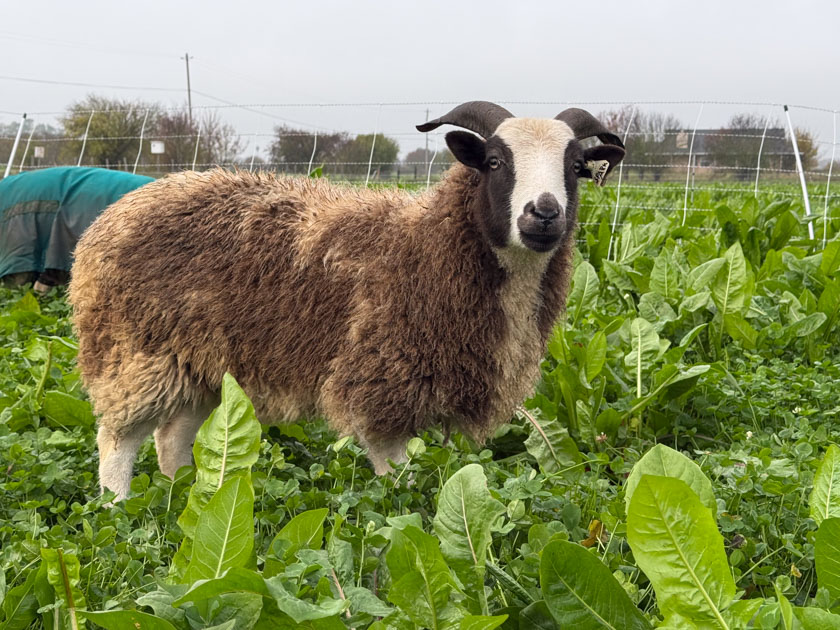
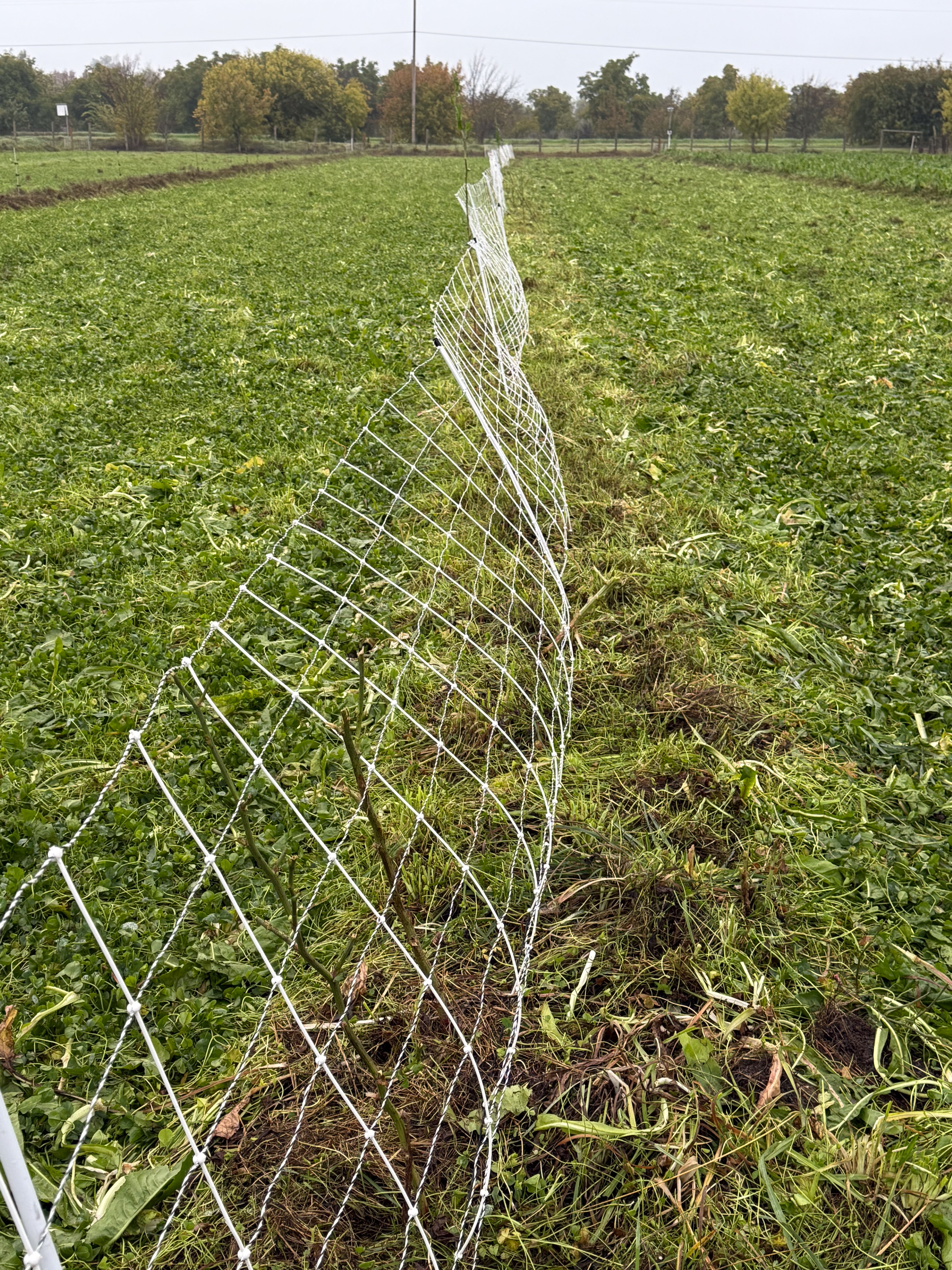
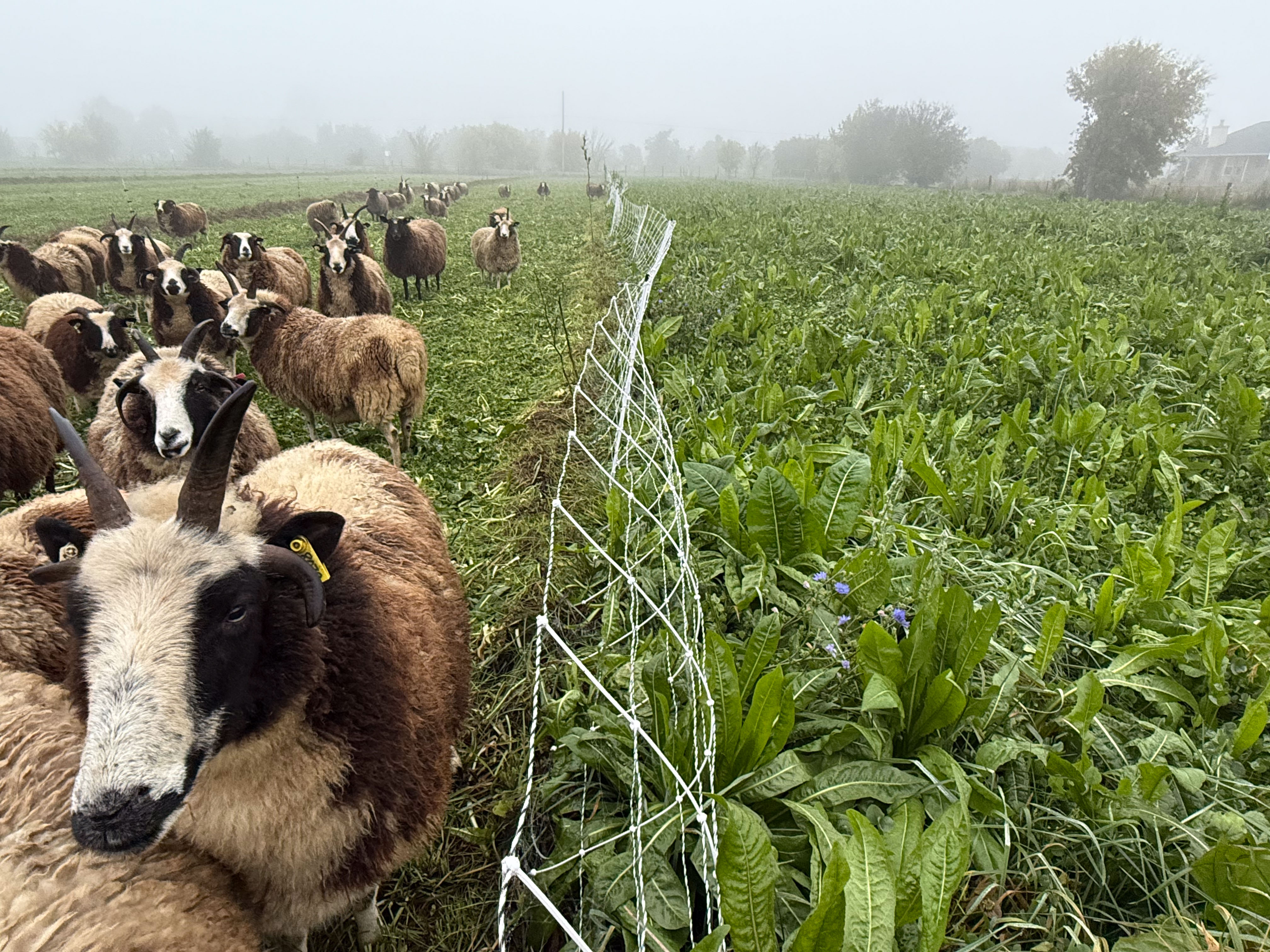
The sheep grazed this paddock (#4) for two days. This is the third morning and they need to move to #3. The fence is on the border check and you can see how they have grazed right up to it. The fence is purposely tipped away from the grazed paddock because I think the 4-horned sheep are less likely to get horns caught when they graze near the fence.
The sheep were anxious to get to fresh feed.
I was able to move the fence that was blocking access to the next paddock and they all came around the end.
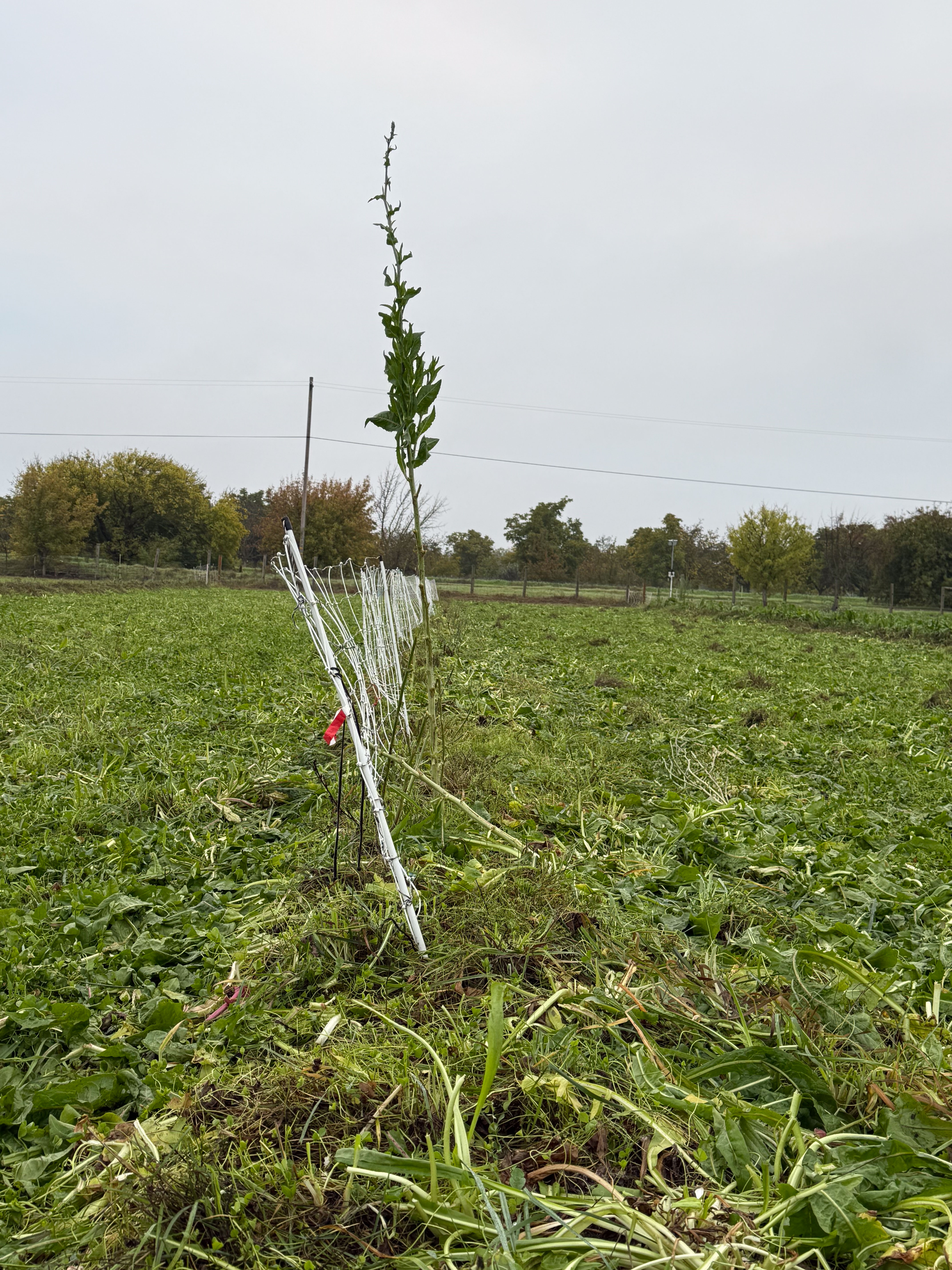
This is the view before I reset the net fence. I find it interesting to see how the sheep ate the leaves as far as they could reach on the chicory. By the way, the leafy plant that looks like we’re growing a crop of lettuce or chard is chicory. That was one of the three forbs in the seed mix we planted last fall. It didn’t grow as much as the clover until later in the summer, but it is sure evident now.
Another view of the fence before I moved it, and more chicory stalks.
The sheep are happy on this new paddock. This is quite a contrast from the one grazed for only two days.
View to the north after re-setting most of the net fence.













 Meridian Jacobs' Blog