Yesterday I went to a meeting to discuss how to better use our Fibershed Marketplace and to find out what’s going on within our Fibershed. Part of the fun of the meeting was gathering at the Napa ranch of one of our members, Mary Pettis-Sarley. When I asked how many alpacas there are, Mary said between 150 and 200. They roam the hills on the ranch, accompanied by guardian dogs.
 This is one of the many ranch dogs that include guardian and herding dogs. We were told that this one is only 8 months old.
 Our meeting was in the greenhouse located near the field where the bucks live.
 This guy seemed pretty friendly.
 Before we started the meeting we admired each others fiber products. This is one of the Twirl yarns produced by Mary.
 This is what I brought to share–sheepskins, buttons, yarn, and shawls from my Jacob sheep. The new Timm Ranch yarn is at the lower left.
 This is a felted hat made by Colleen Simon using my Jacob fiber.
 Here is Jackie showing a newly carded batt…
 …and this is a piece she felted from the wool of Vicki, one of my Jacob sheep.
 We were able to see the recently produced Wool and Fine Fiber Book. Each producer has a spread in which samples of their fiber is attached. These books will be circulated to designers and manufacturers who want to find out what kinds of fiber are available locally, how to contact the producers, and to learn how these fibers might be used in end products. This was an amazing undertaking by Fibershed.
Speaking of amazing things, we learned about the “projects” that Fibershed founder, Rebecca Burgess, has underway. I say “projects” in quotation marks because really these are major undertakings and far beyond the scope of anything that I ever attempt. Rebecca is not only writing another book, but is working with the Wendell Berry Farming Center on hemp efforts in Kentucky, an initiative in California to legalize the growing of hemp for fiber use, research that is underway on waterless wool washing, and the carbon research project in which we can all participate by submitting soil samples from our farms. Whew! While hearing about all this we were also doing what Fibershed producers do best, eating and baby animal snuggling. This is a two-day old kid who needs some TLC.
 One of the dogs was feeling left out.
 Even Rebecca found some goat snuggling time.
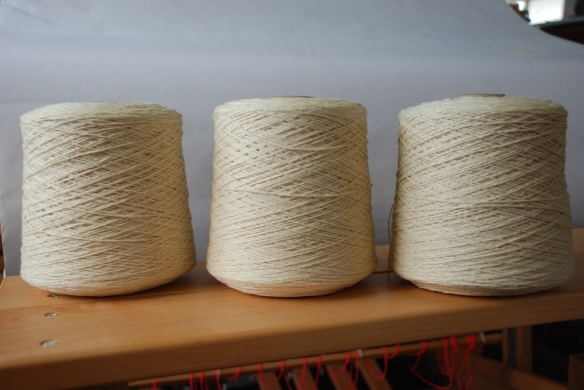 I hadn’t had a chance to do anything with it until recently. The first step was to gather some information.
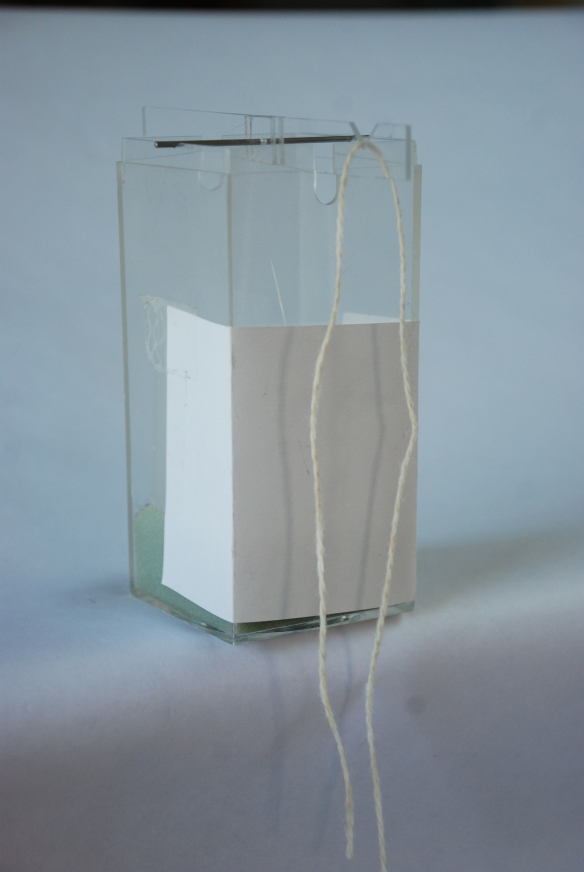 The McMorran yarn balance is one tool to do that. You trim the ends off a strand of yarn until the arm balances.
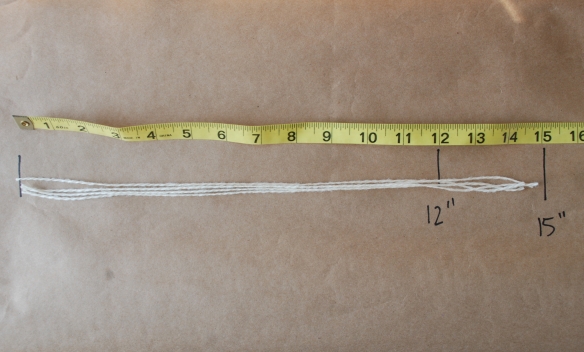 Then you measure that length of yarn and multiply by 100 to get ypp (yards/pound). I repeated that a few times to get an average–1500 ypp.
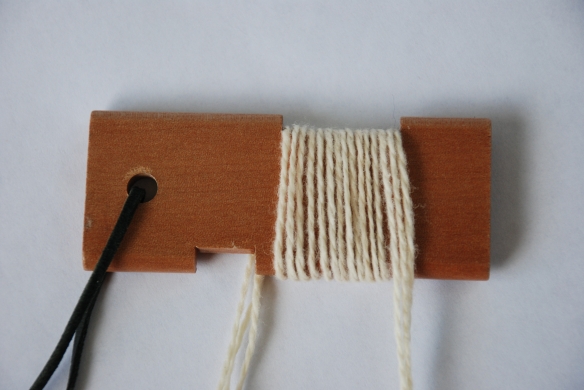 Another measurement is wpi (wraps/inch). This yarn measure 15 wpi. However, from past experience I know that this isn’t quite accurate. Most yarn is scoured (washed) and skeined before it is sold in yarn stores. That can have a dramatic effect on the yarn. The yarn that I got from the mill on cones has not been scoured yet, so it is not really “finished”.
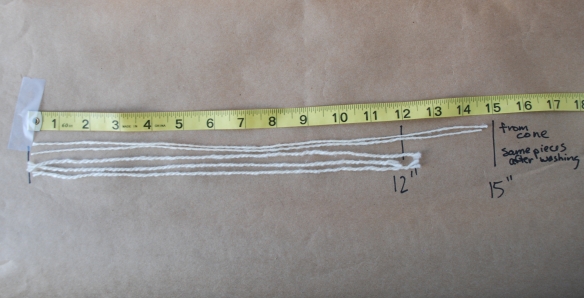 Look at the difference a soak in warm water makes. Now this yarn measure 1200 ypp (which is what the specs from the mill were)…
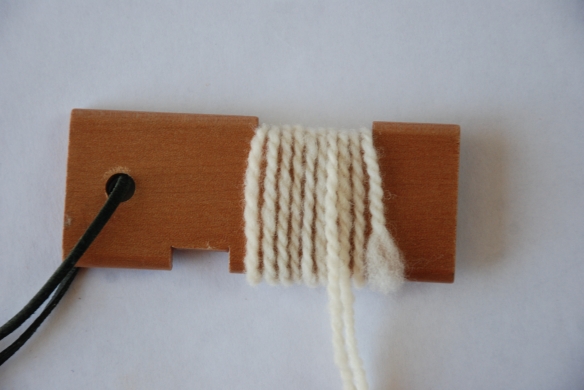 and it is 10 wpi. Based on those measurements I wove some samples.
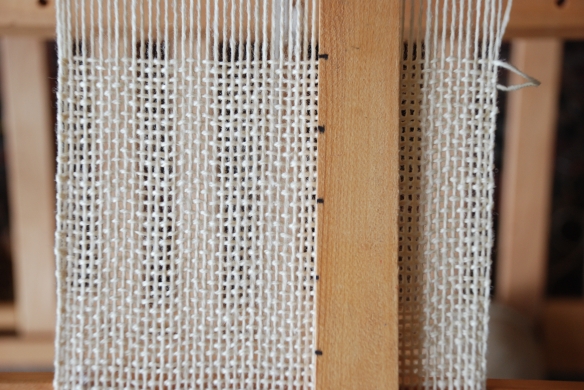 These samples look pretty open on the loom…
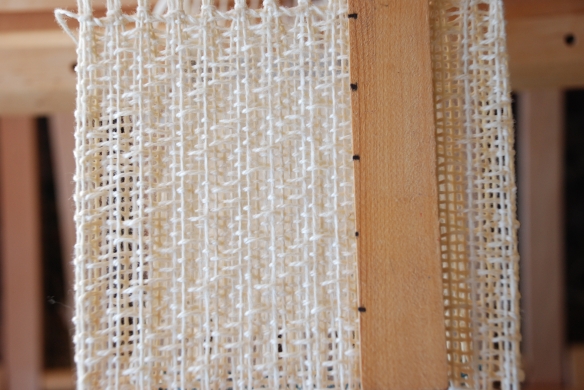 …and I had to be careful to not beat the weft yarn down too much.
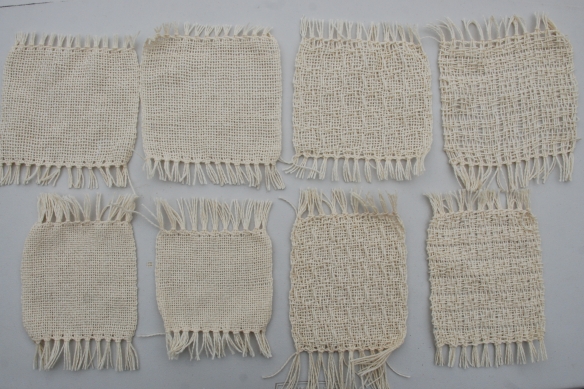 This is how the samples look off the loom. The 8 epi samples are in the top row.
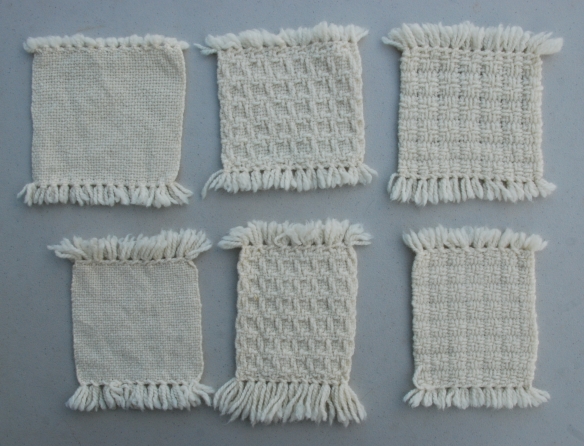 And here is how they look after a quick wash. Dramatic difference from the loom to the finished fabric.
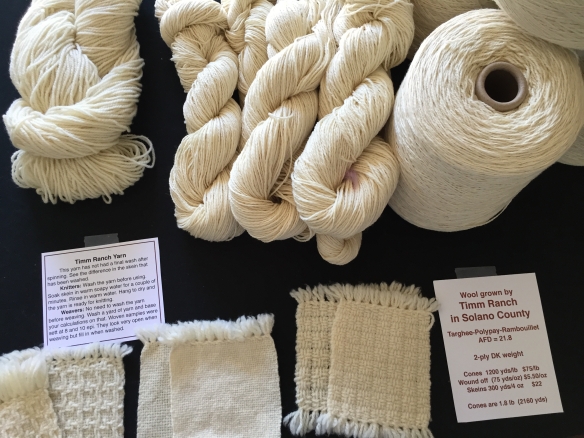 Here is how I had them displayed in the shop at the recent Shearing Day. The skein on the left has been washed. But these yarns aren’t just for weaving. My friend, Mary, bought some, washed it, and then used it for a Mystery Knit Along. Here is the shawl she knit.
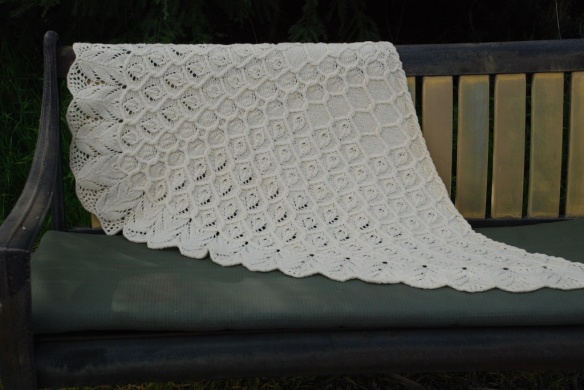 This was knit over a few weeks with a new direction given out each week.
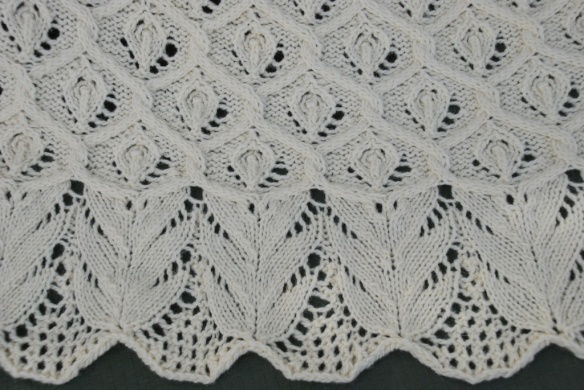 It is gorgeous in person and has a wonderful hand. I can’t wait to get some of this yarn on the loom and get to work with it.
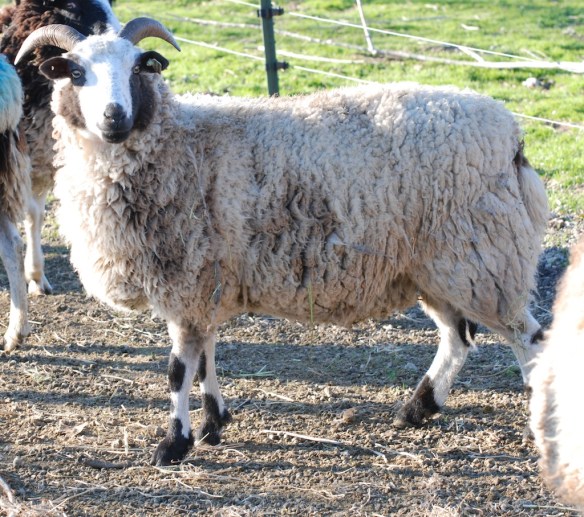 This is Ginseng above and below.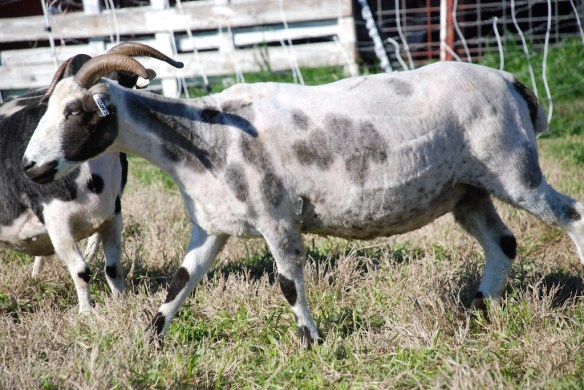
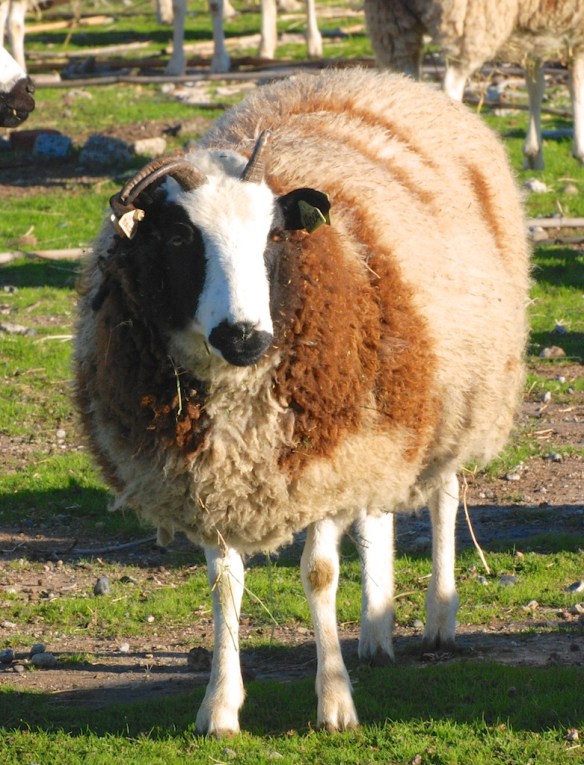 This is Betty.
 Esmerelda.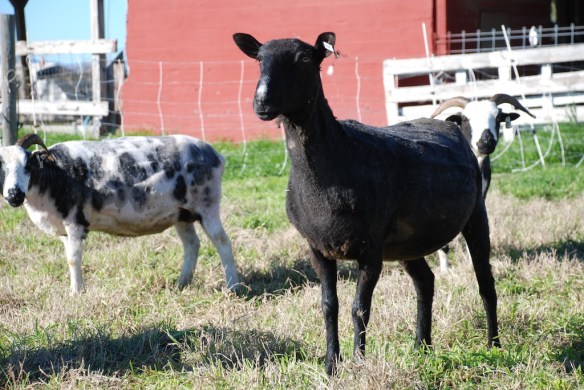
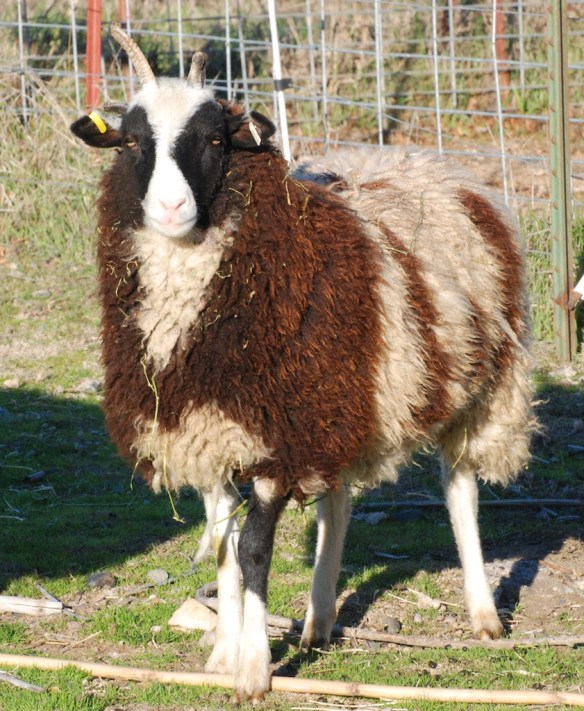 Lauren, one of last year’s lambs, almost a yearling. The yearlings look a lot skinnier than the older ewes with no wool.
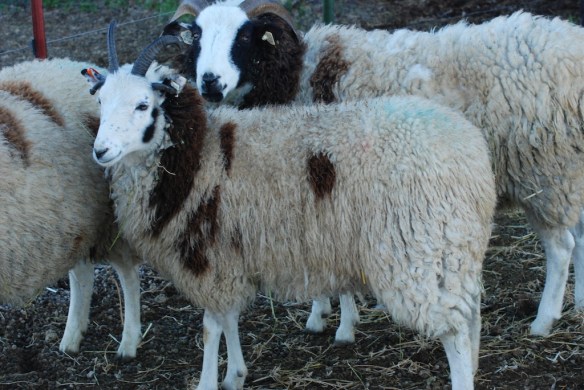 Jillian, another yearling.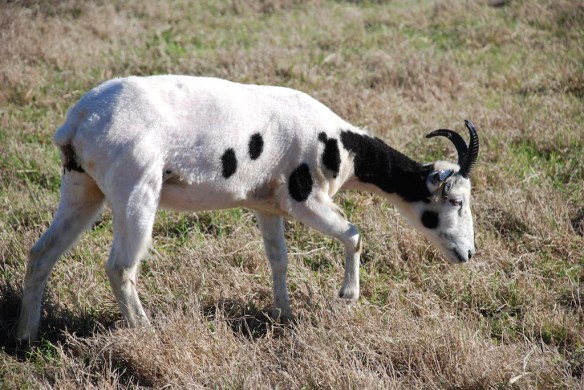
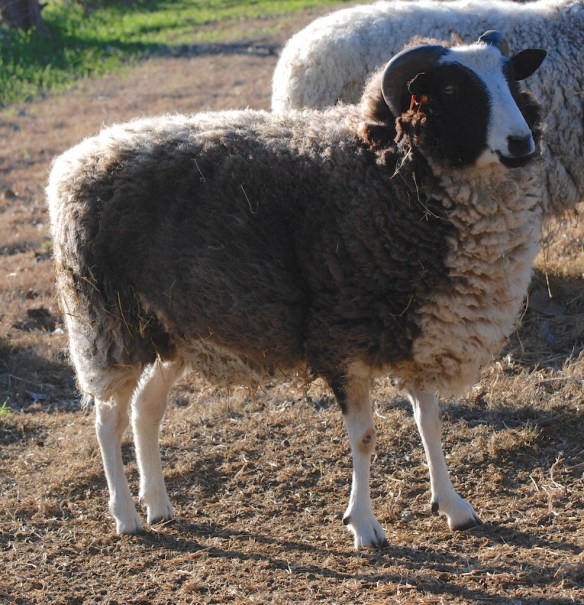 Jerry, a wether.
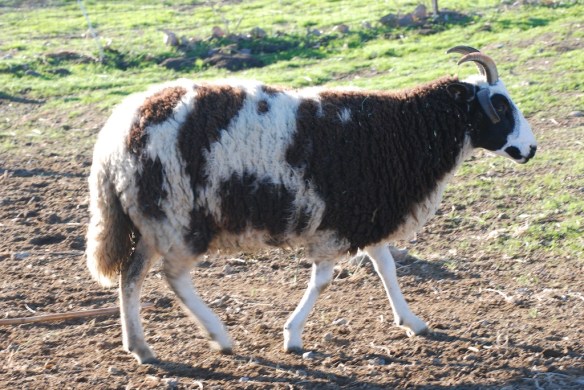 Isabelle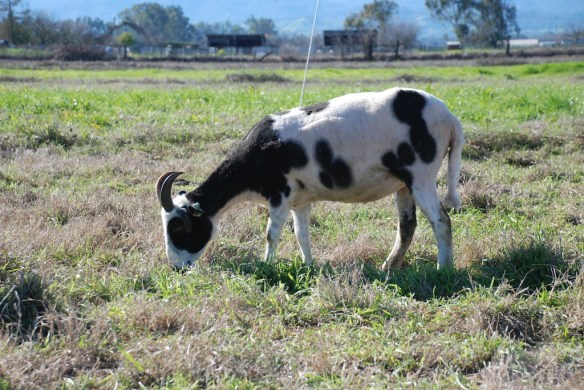
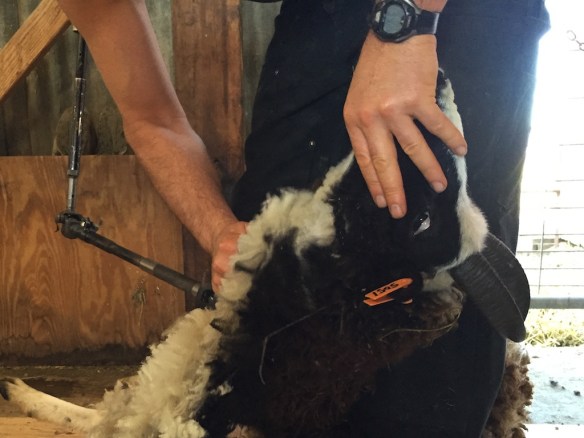




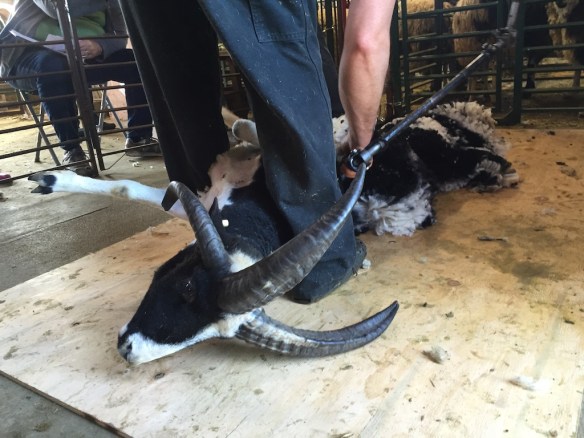 This is the yearling ram, Rotor.
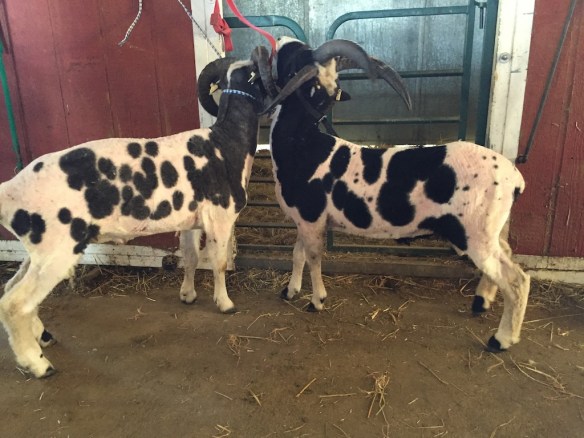 A good comparison of a lilac Jacob (Nash) and black & white (Rotor).
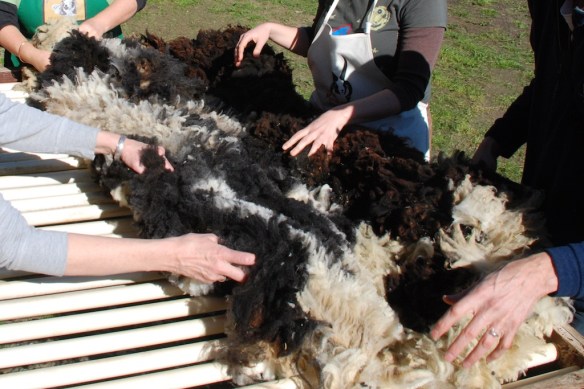
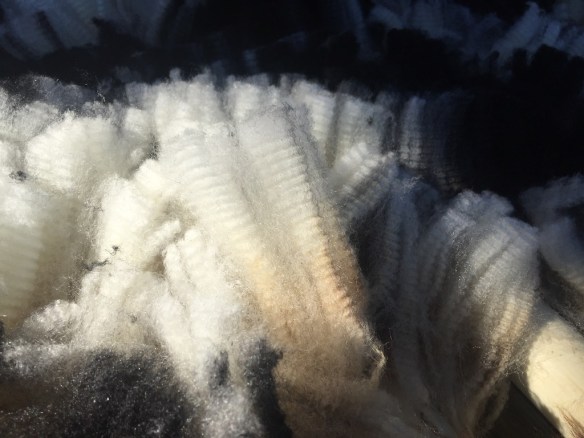 This is Rotor’s fleece.
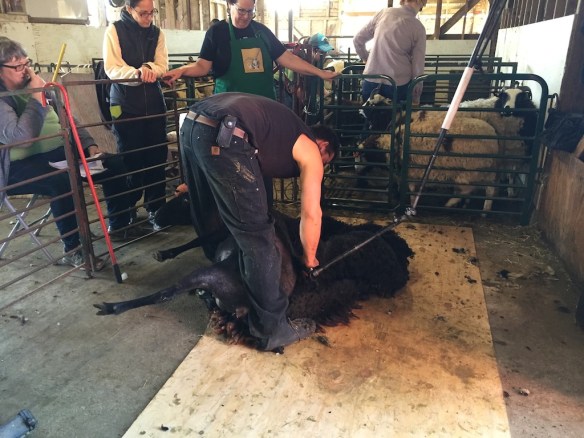 They aren’t all spotted. This is one of the BFL-Jacob cross ewes.
 Lots of people help to make Shearing Day fun and easy for me. Kathleen weighed fleeces.
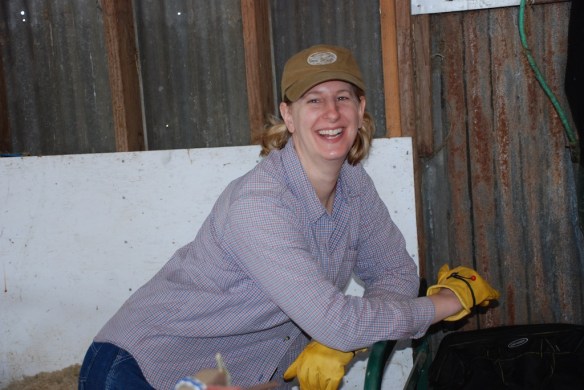 Stephany and Gynna wrangled sheep all morning.
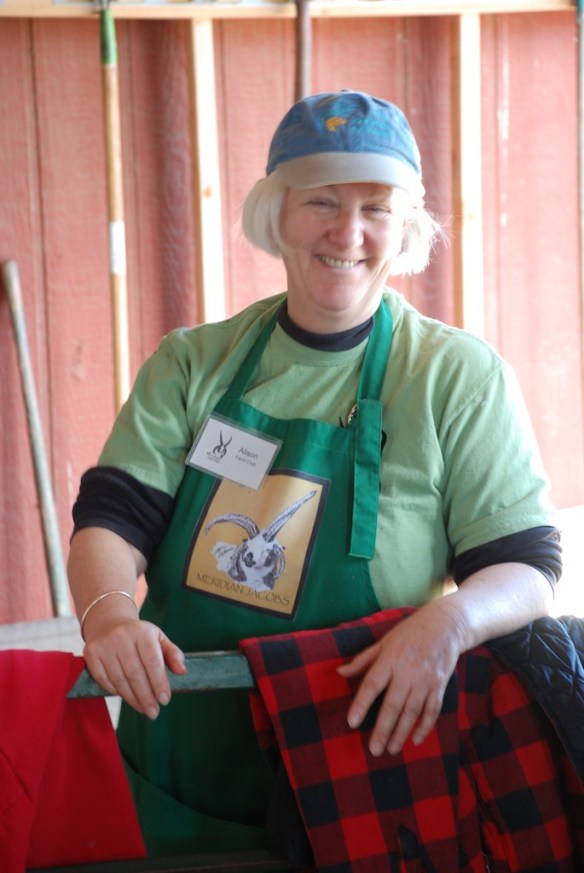 Alison and many others helped at the skirting table.
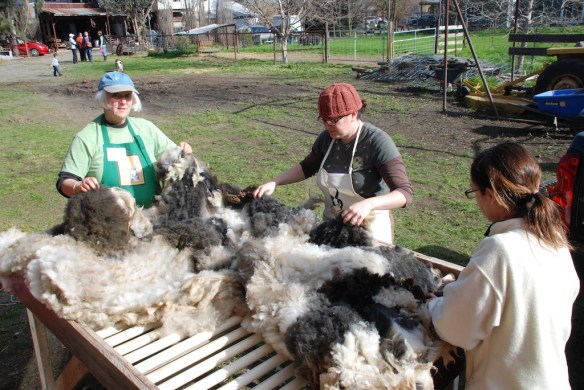 People are welcome to skirt their fleeces before buying or ask for advice about fleeces.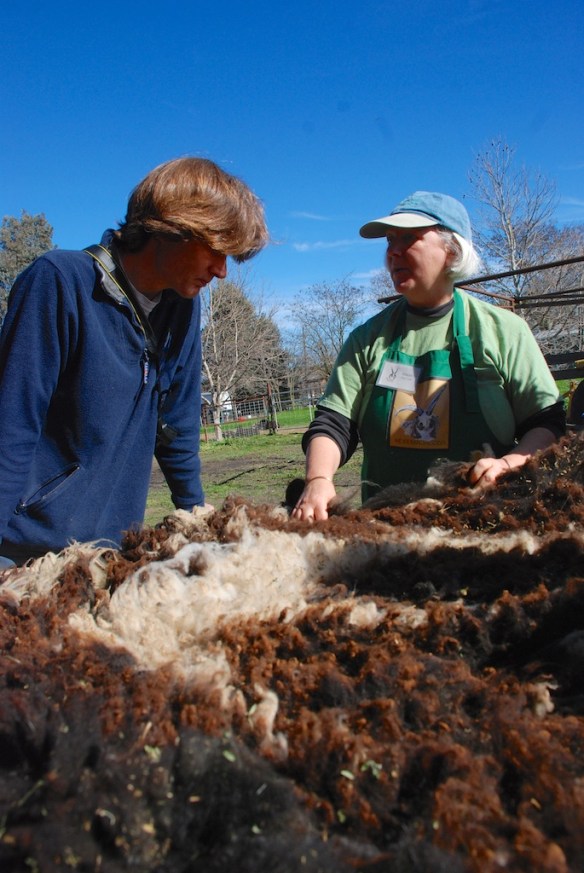
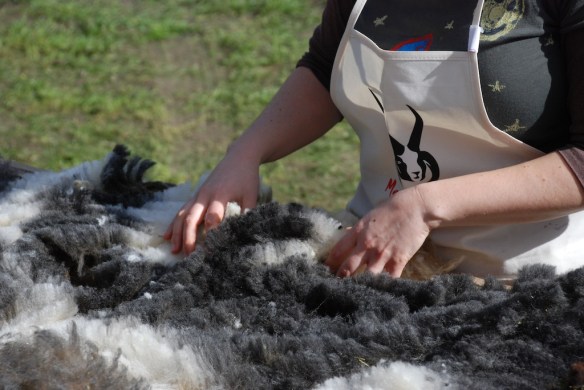 It was a great day to stand in the sun with your hands in freshly shorn wool.
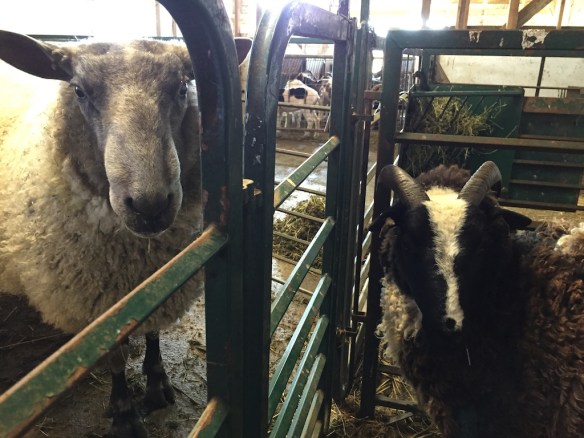 One more ewe to be shorn and then it was Faulkner’s turn.
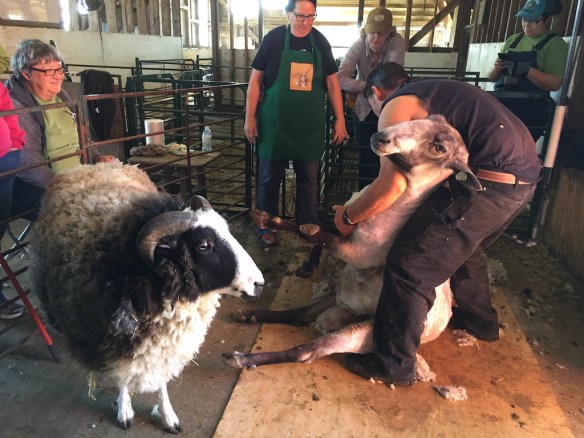 His buddy, Jerry looked on. Faulkner weighed in at 235 lbs (down about 30 pounds from what he sometimes weighs in the summer).
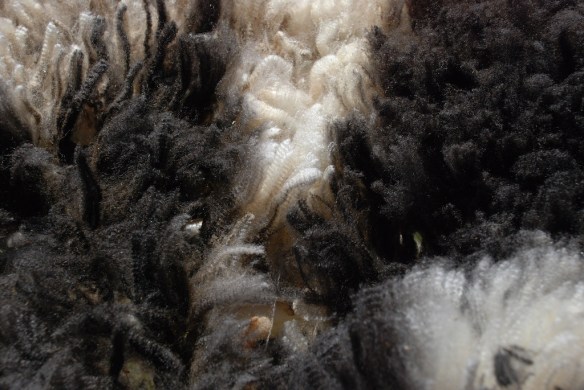 Fresh Jacob fleece.
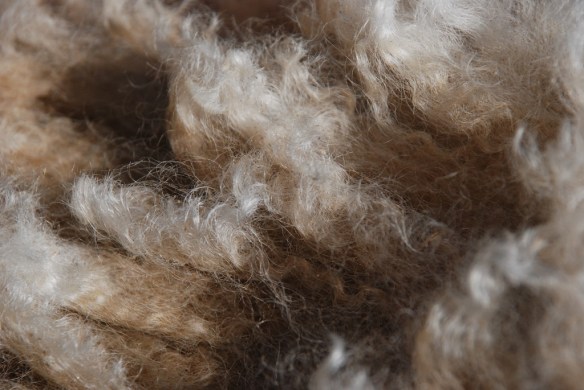 Faulkner’s fleece.
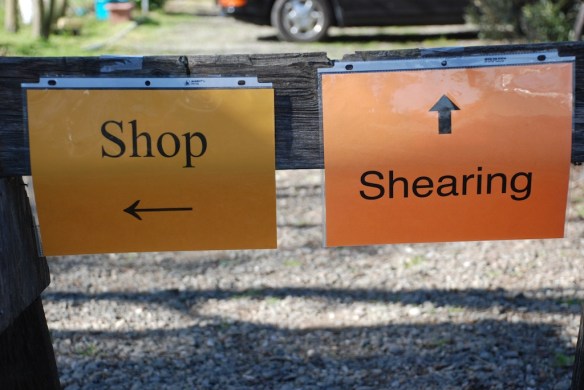 While the shearing and wool sorting was going on, friends were helping buyers in the shop.
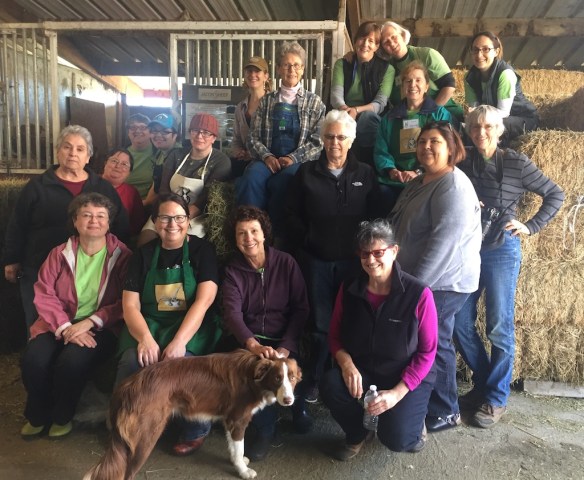 Later we got everyone (almost) to the barn for a group photo. That’s a lot of enthusiastic friends!
 The day before we were cleaning up the area around the barn and pushed the brush pile into the corral area where it’s safer to burn. The sheep thought that there might be something worth eating…
 …or scratching on. I didn’t want them ruining a whole year of wool growth the night before being shorn so it was time to move them to the barn.
 I called the dogs in and Ginny got to help with the big group.
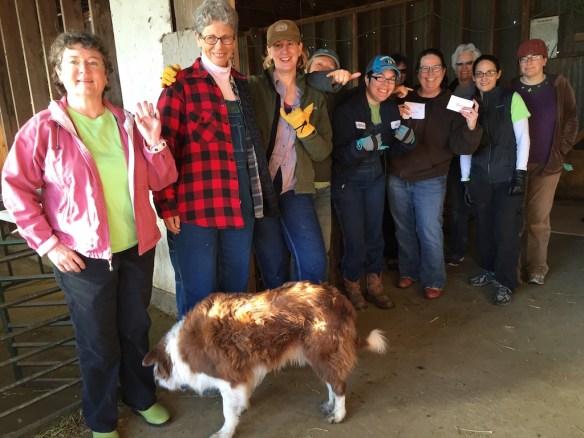 Farm Club members are ready for action.
 First sheep.
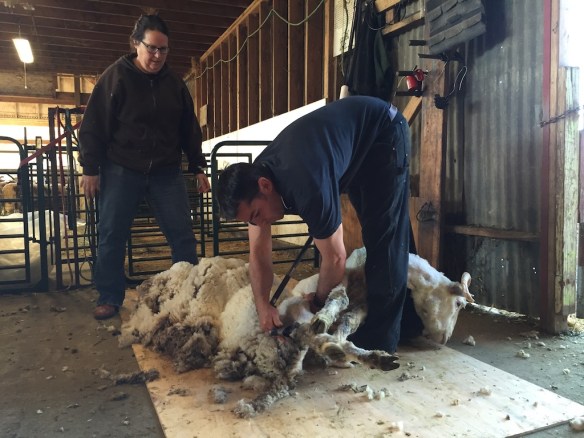 Mary is ready to grab and bag the fleece.
 Wait a minute. These sheep don’t look right.
 Cute, but not the right sheep.
 We started the day with 10 sheep from another farm. We told John (shearer) that was his warm-up.
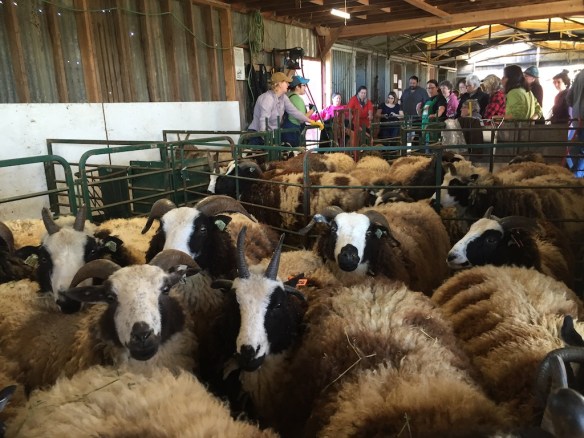 We got underway with the Jacobs. Farm Club members did all the work. Visitors watched. and I changed gates and moved sheep while playing with my camera.
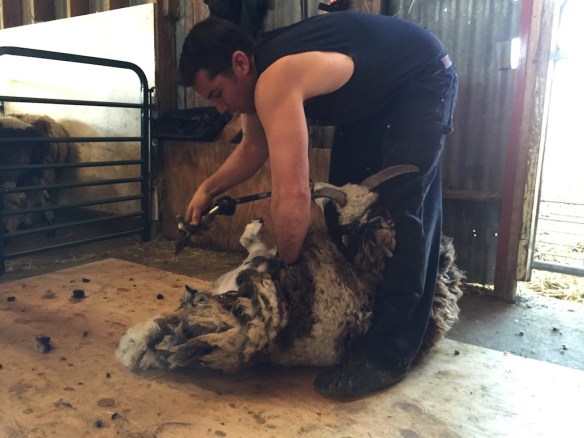 Here John is shearing Dazzle…
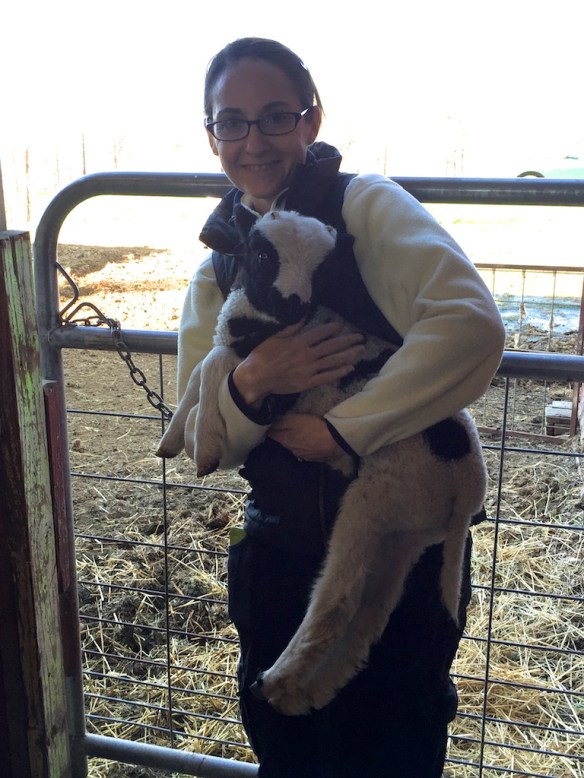 …while Amy holds her lamb.
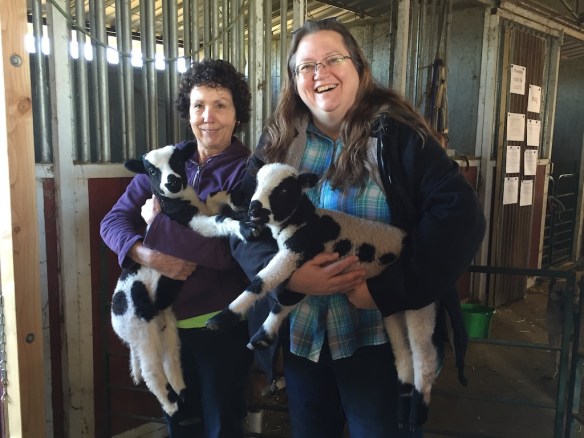 I think this is my favorite photo of the day. Peggy and Caroline babysit twins while their mom is being shorn.

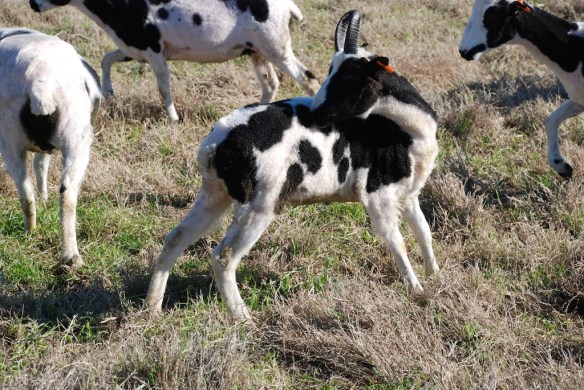
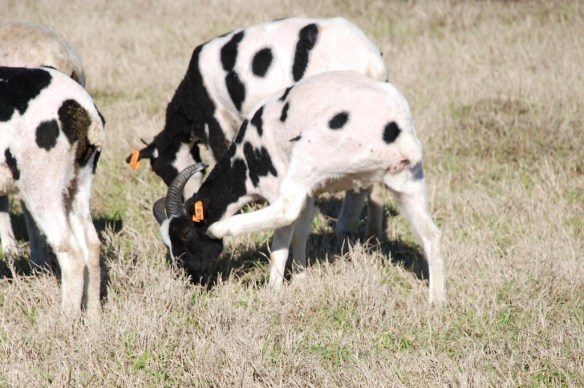


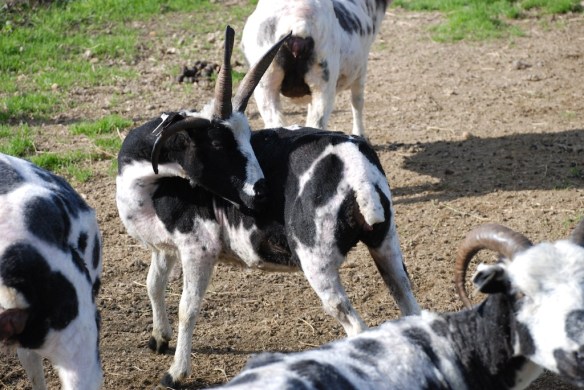
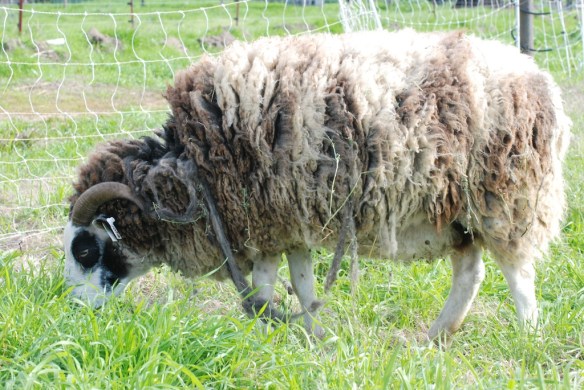 Mable.
 Ginseng.
 Shelby.
 Jazz.
Jazz.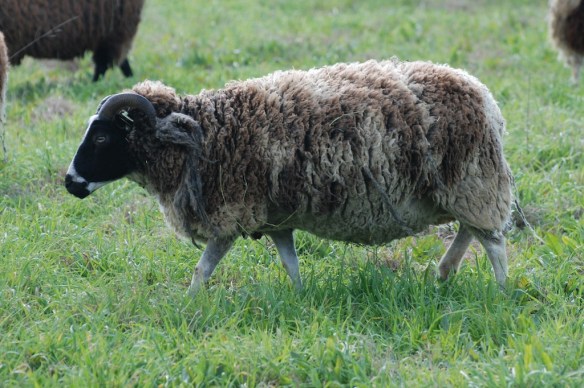 Noel.
Noel. Petra.
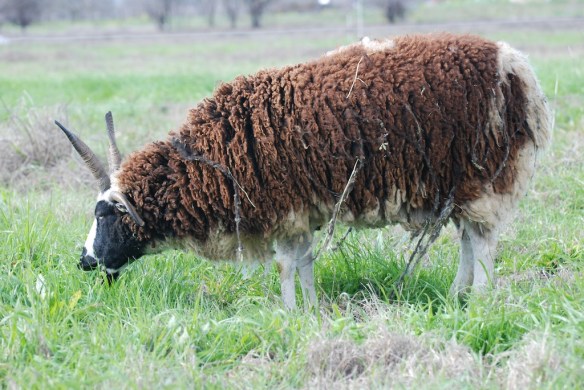 Petra again.
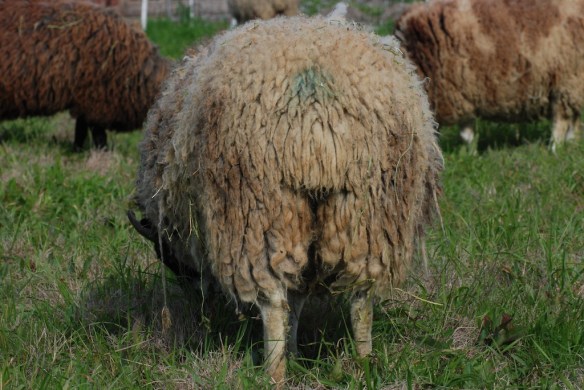 I’m not sure who this is but she’s certainly round.
 Speaking of big and round, this is Spring. Last year she was so big that we had a couple of wagers on lambing–when and how many?
 Isabelle sporting her tech head-gear. The video will be coming soon.
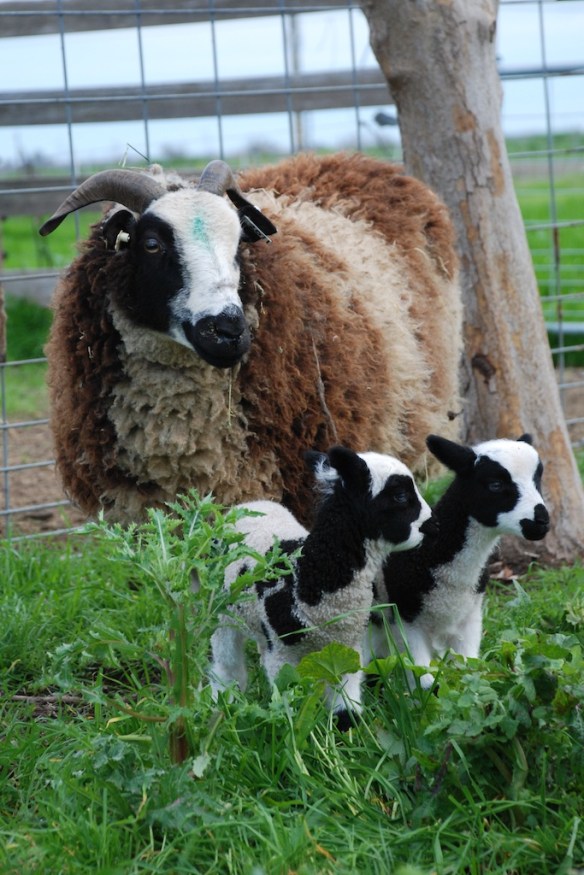 This is Delight with her twins.
 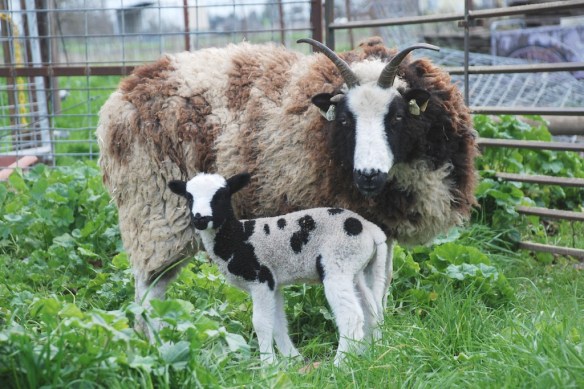 This is Dazzle with her single lamb. One of the problems I have photographing Jacob sheep is the fact that they have black markings around their eyes. I find that it is hard to expose the photo properly and also be able to see the faces. I edited this lower photo to where I could see the lamb’s eyes, although they aren’t showing up here very well and the photo looks washed out compared to the top one.

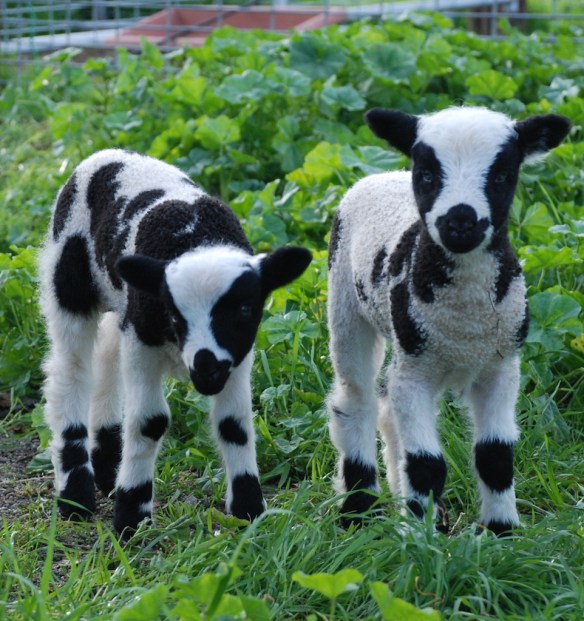 Here is another pair of photos. Which is better? Top or bottom?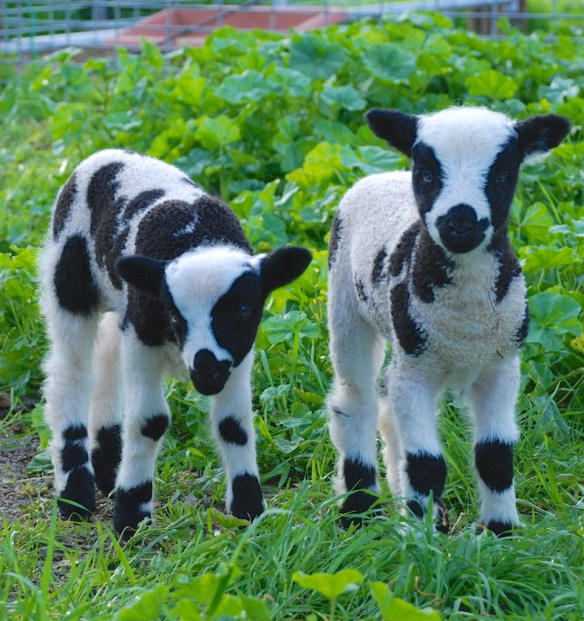
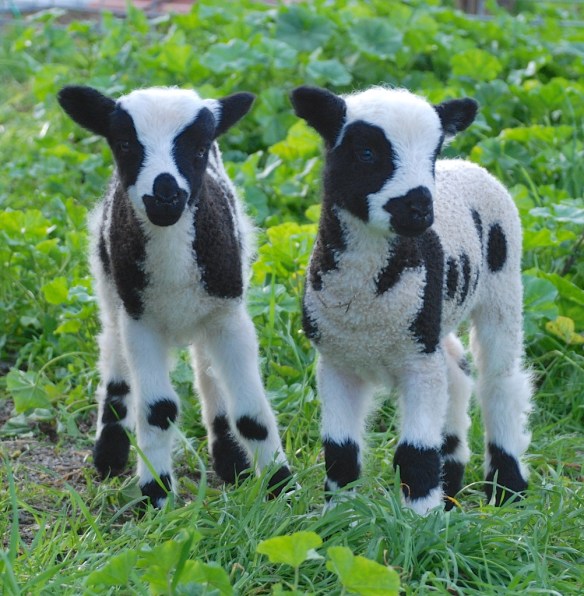 At least I have CUTE going for me.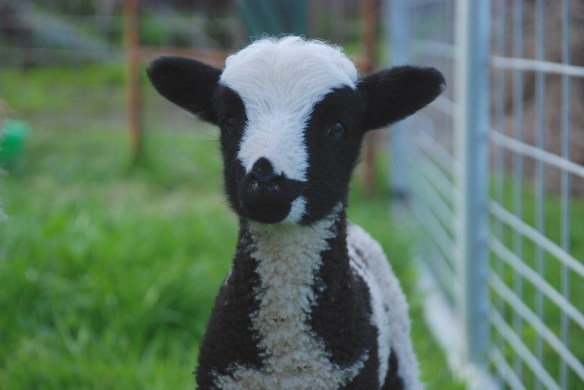
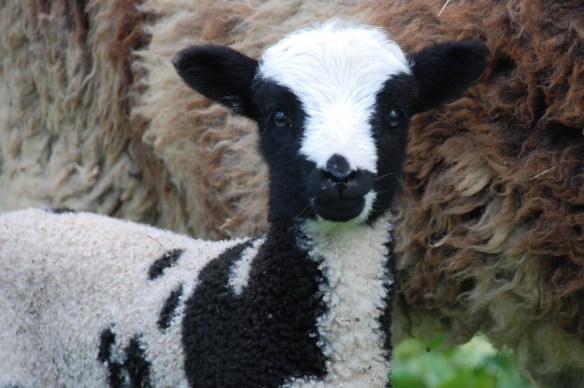
 Speaking of cute, can you tell the difference in these two photos? It’s not in editing. Try the focus…Ginny’s focus, that is.
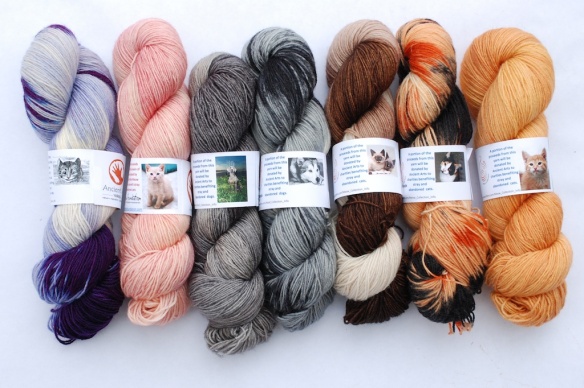 This is a selection of the BFL yarn in fingering weight. That’s a light weight yarn often used for knitting socks. You might wonder how purple and pink fit into cat and dog colors. The purple is called “cheshire cat”. I still didn’t understand how that fit until I googled “cheshire cat” and found that Disney’s version of the cheshire cat is indeed purple.
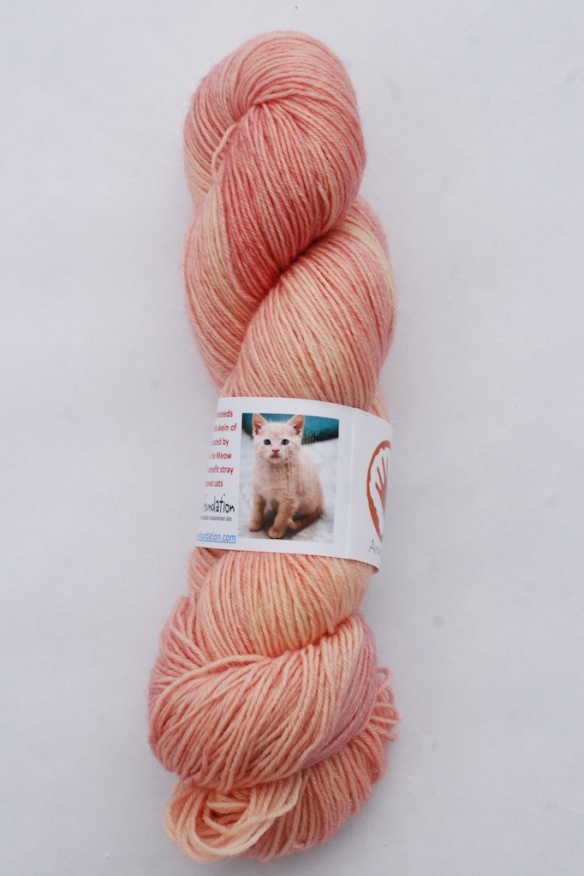 What about this one? It’s called Kitten Nose Pink.
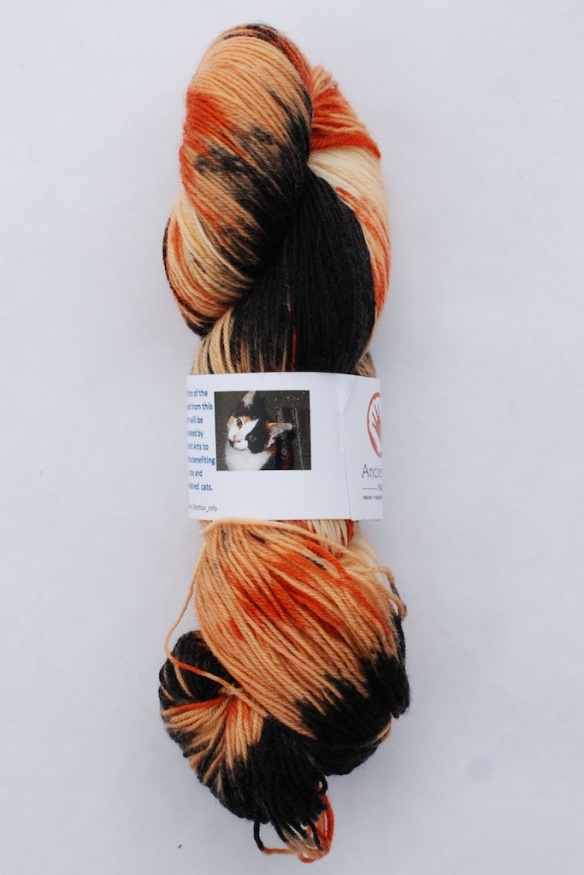 It’s easy to see the calico here.
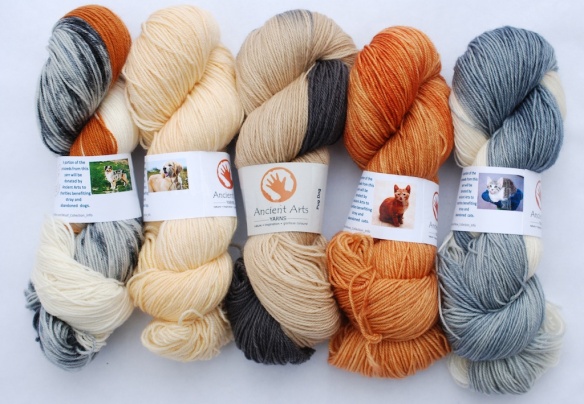 These yarns are Merino fingering weight. They come in the same colorways. I bought a variety of each because I couldn’t get them all.
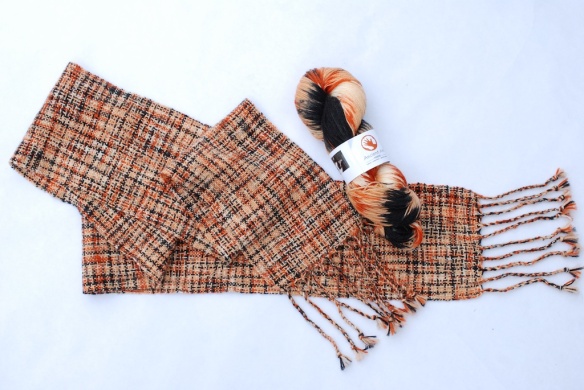 Here is my first project using one of the yarns. One skein will easily make a scarf.
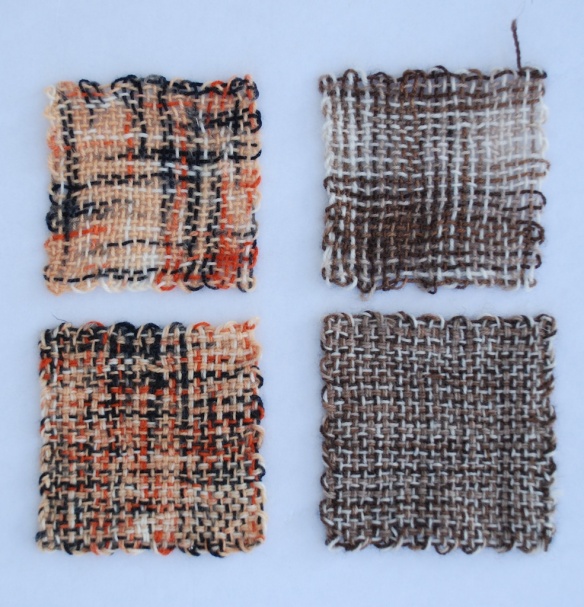 I also tried the Zoom Loom to see how they looked. The yarn is too thin to use singly, but doubled it’s great!
 Meridian Jacobs' Blog