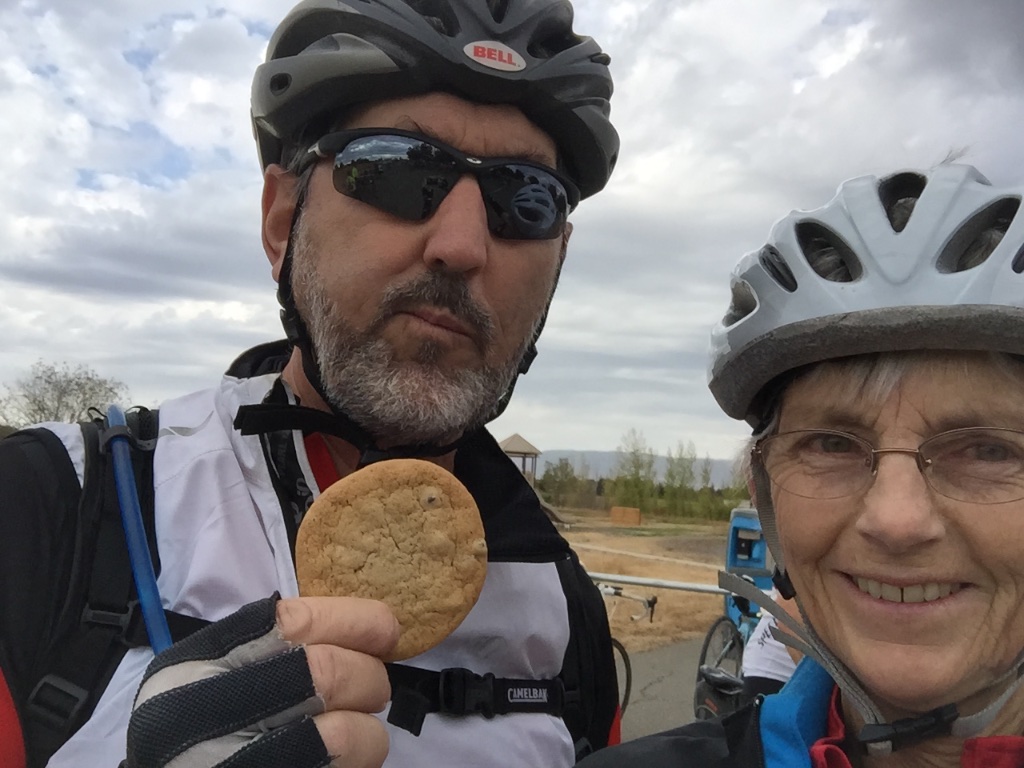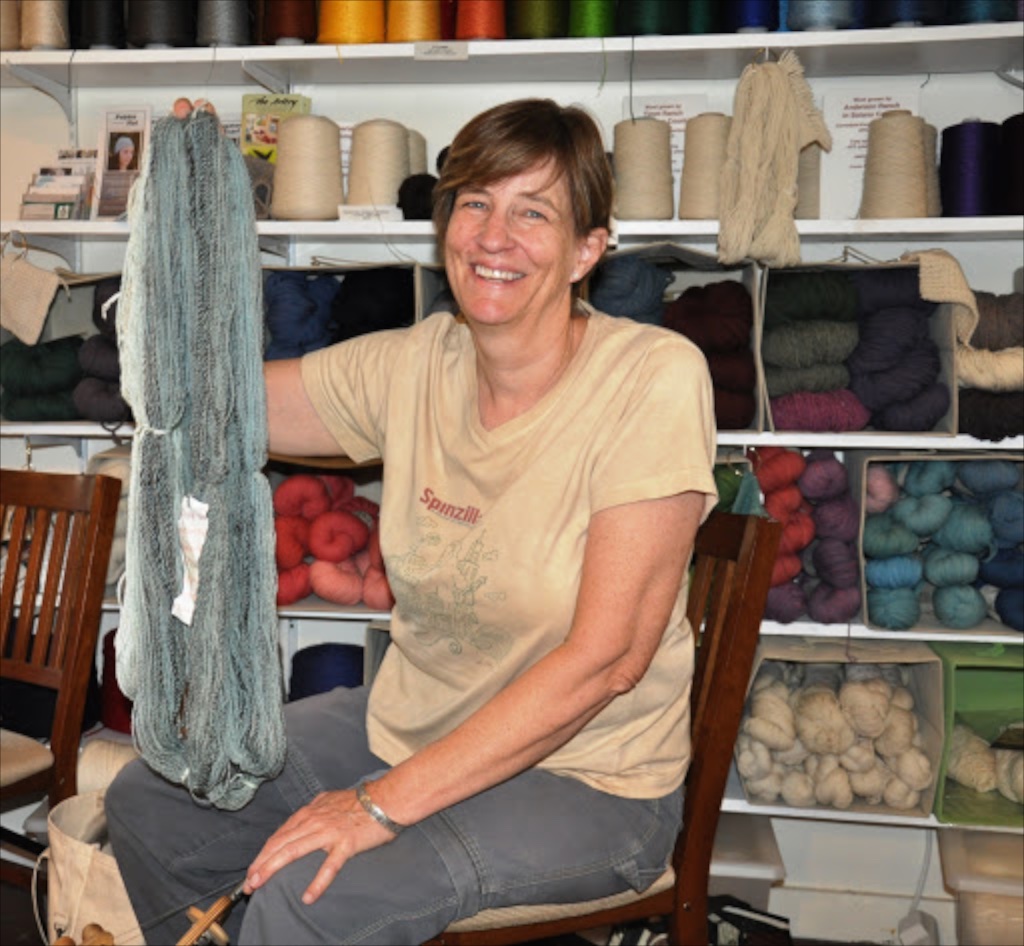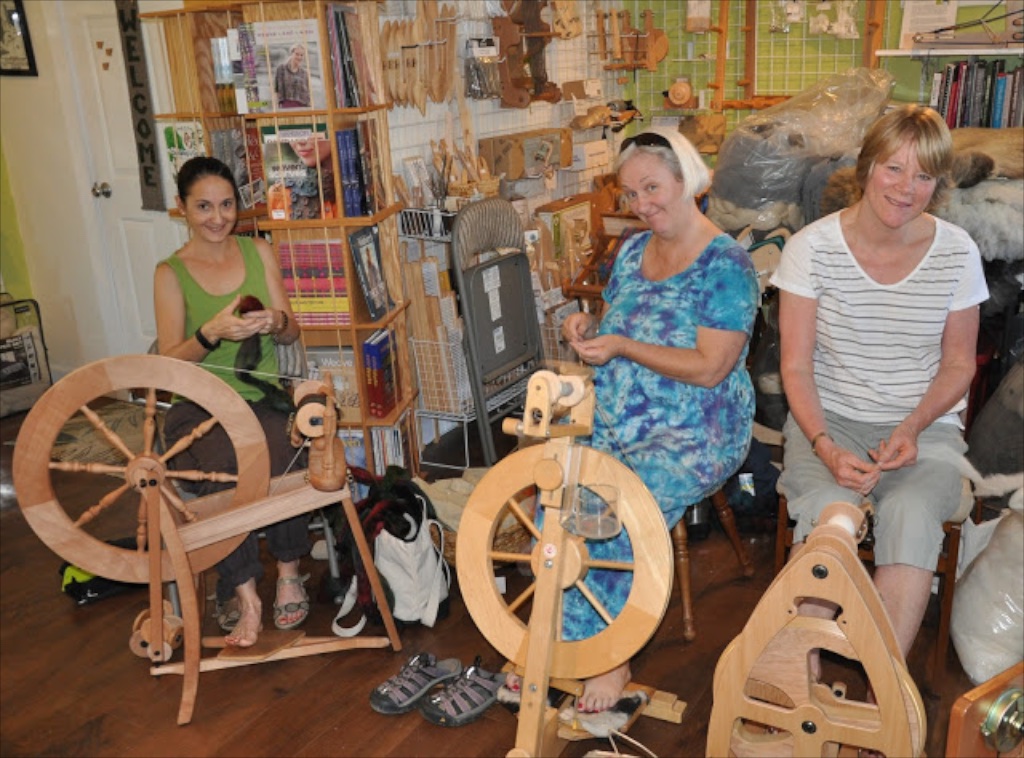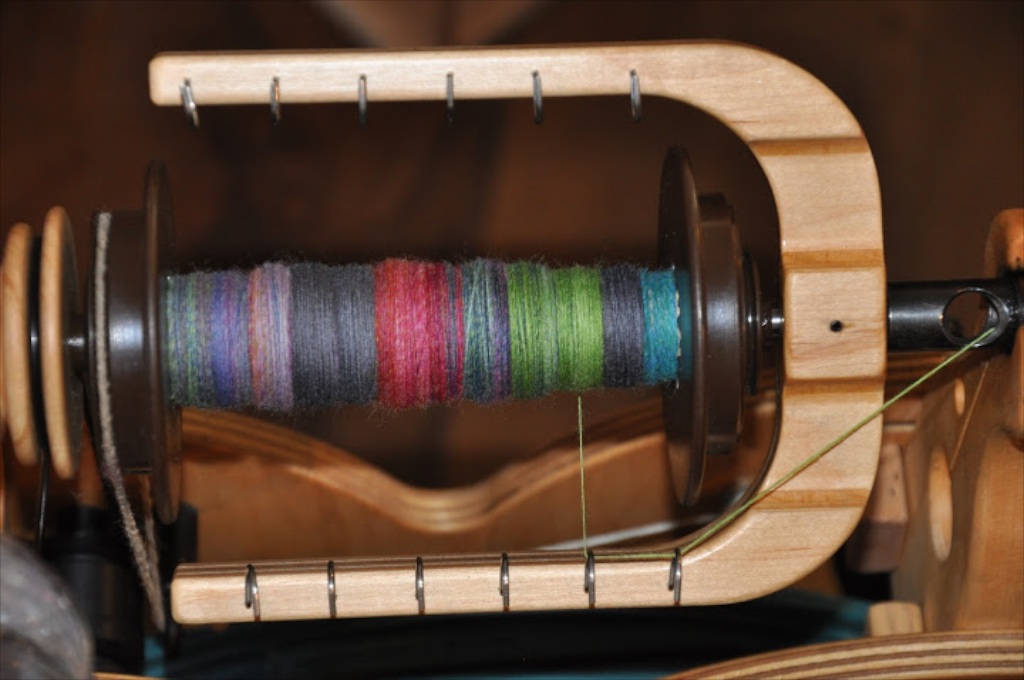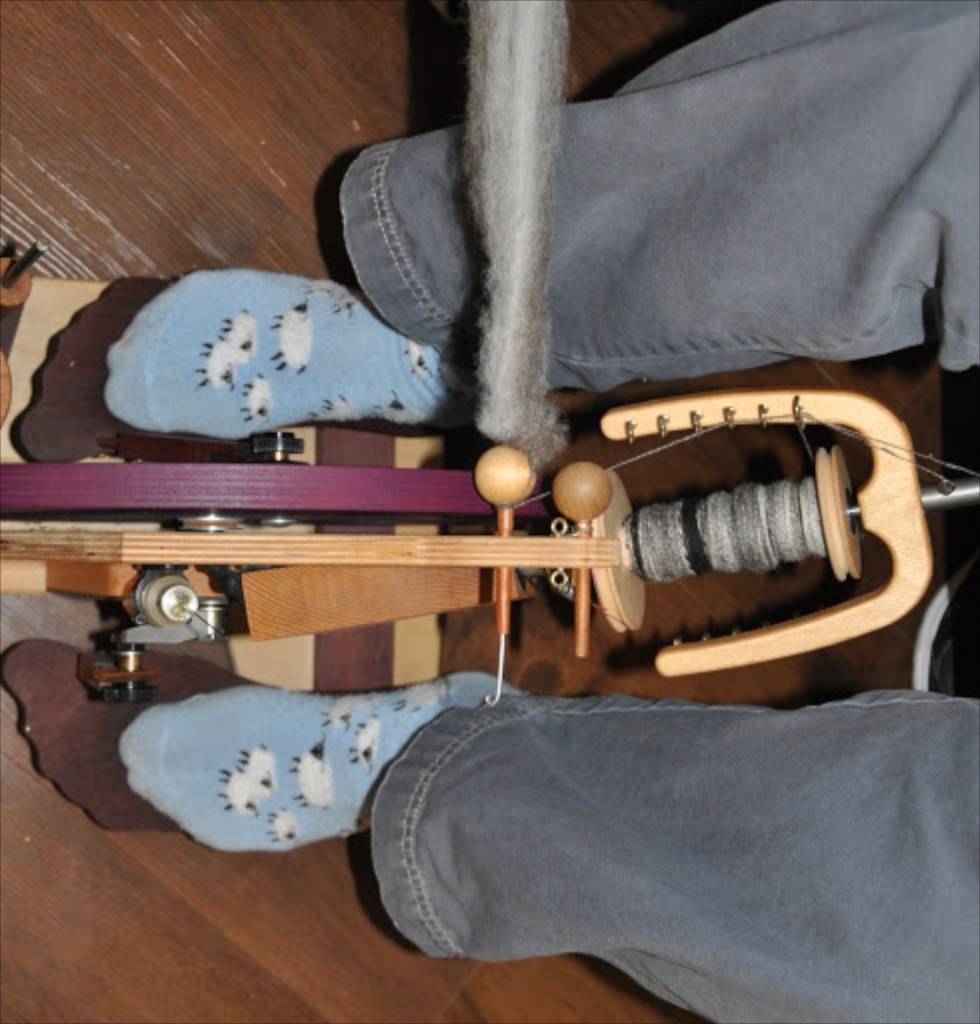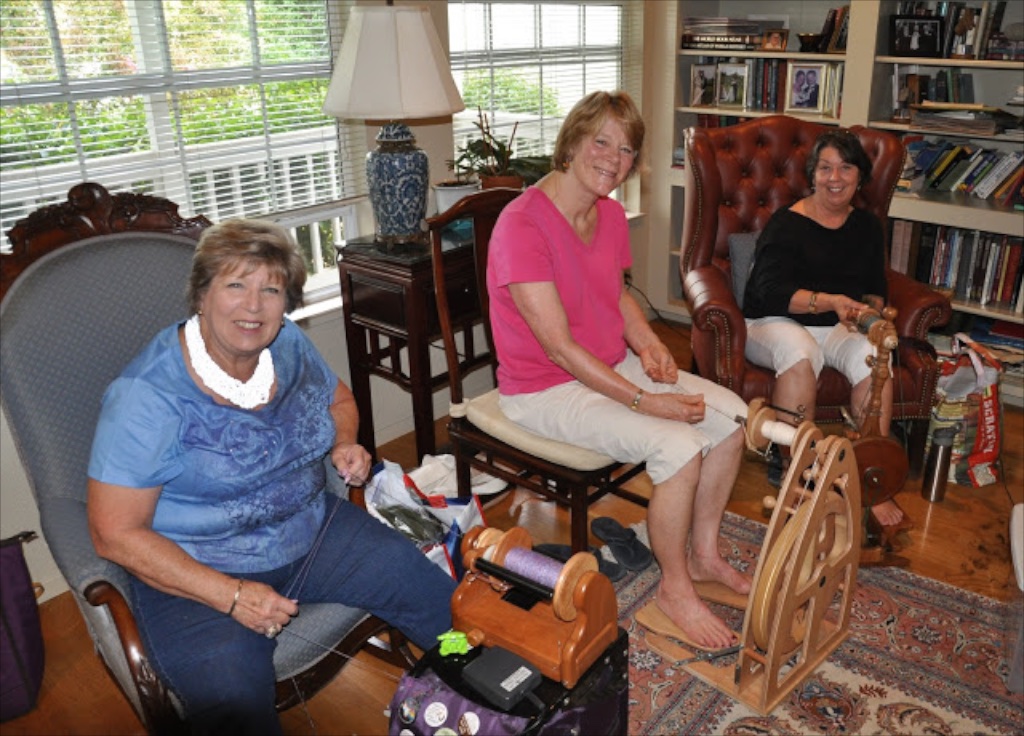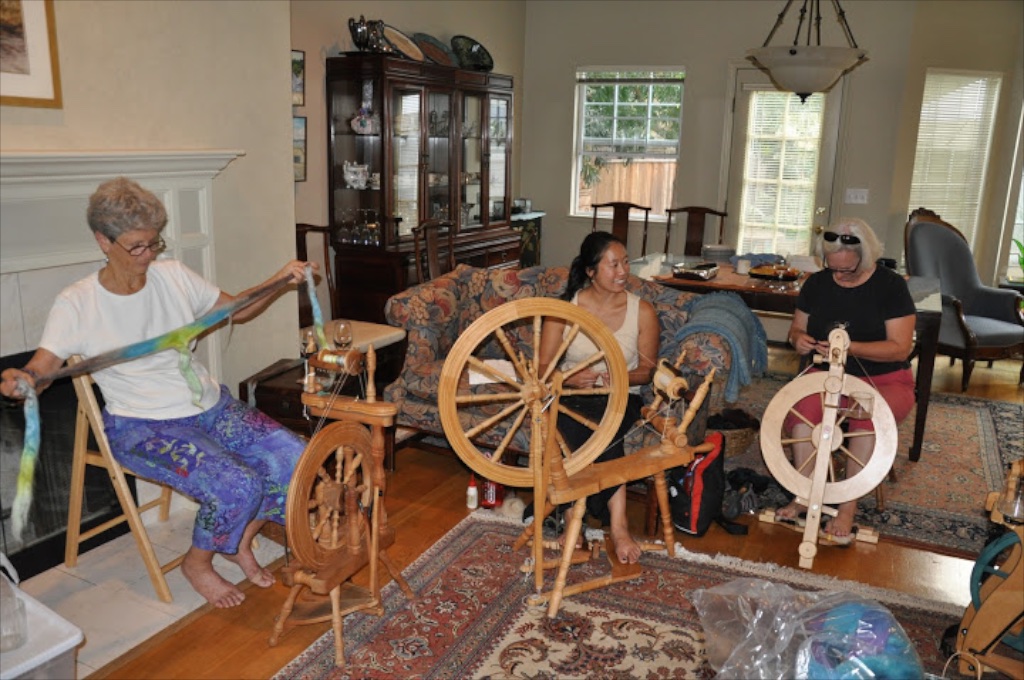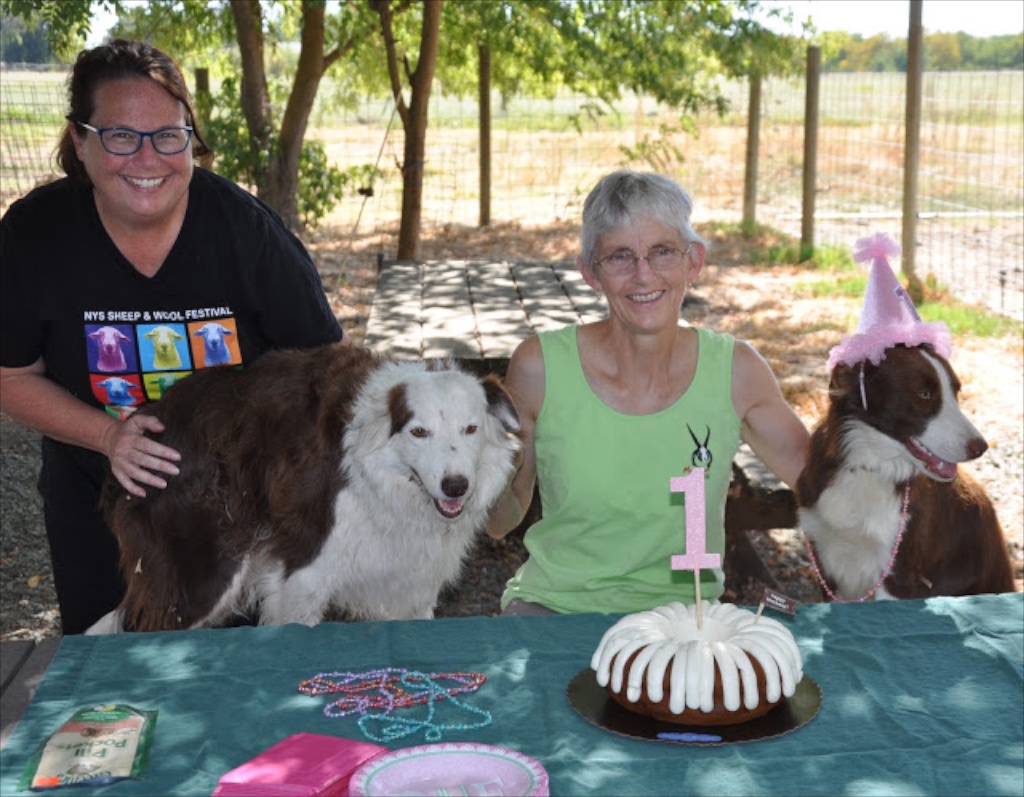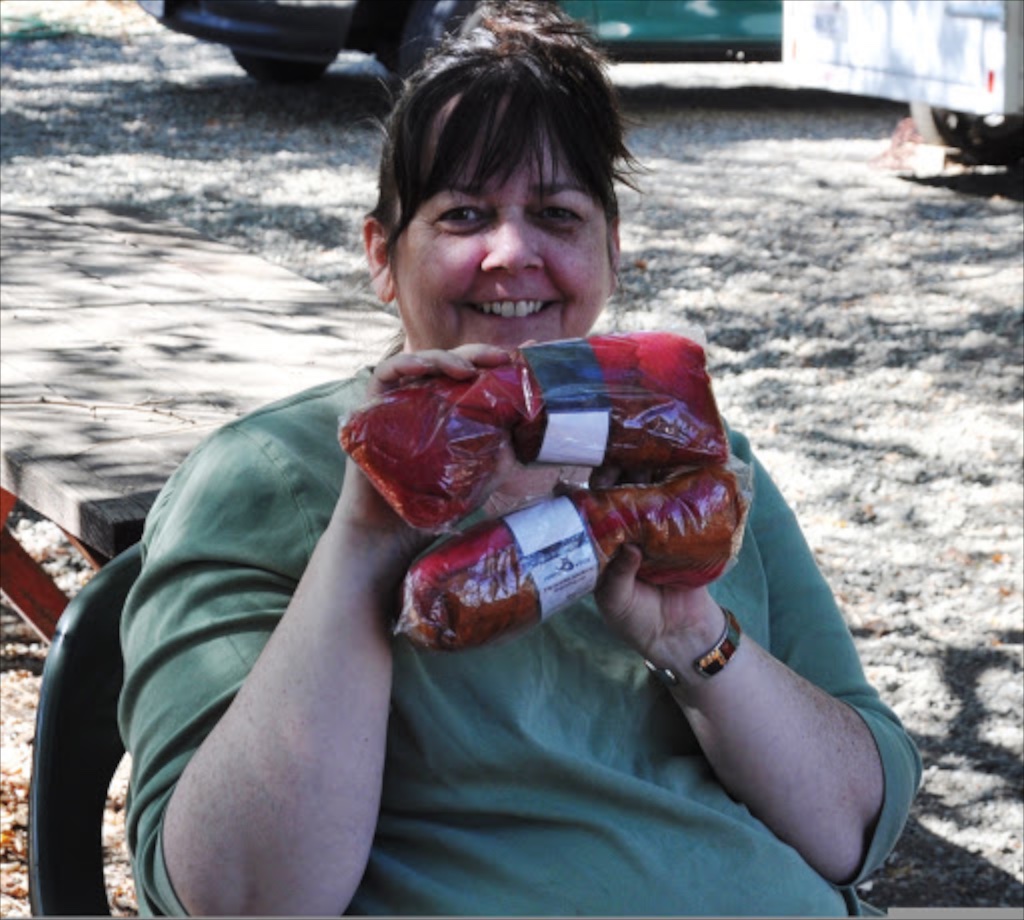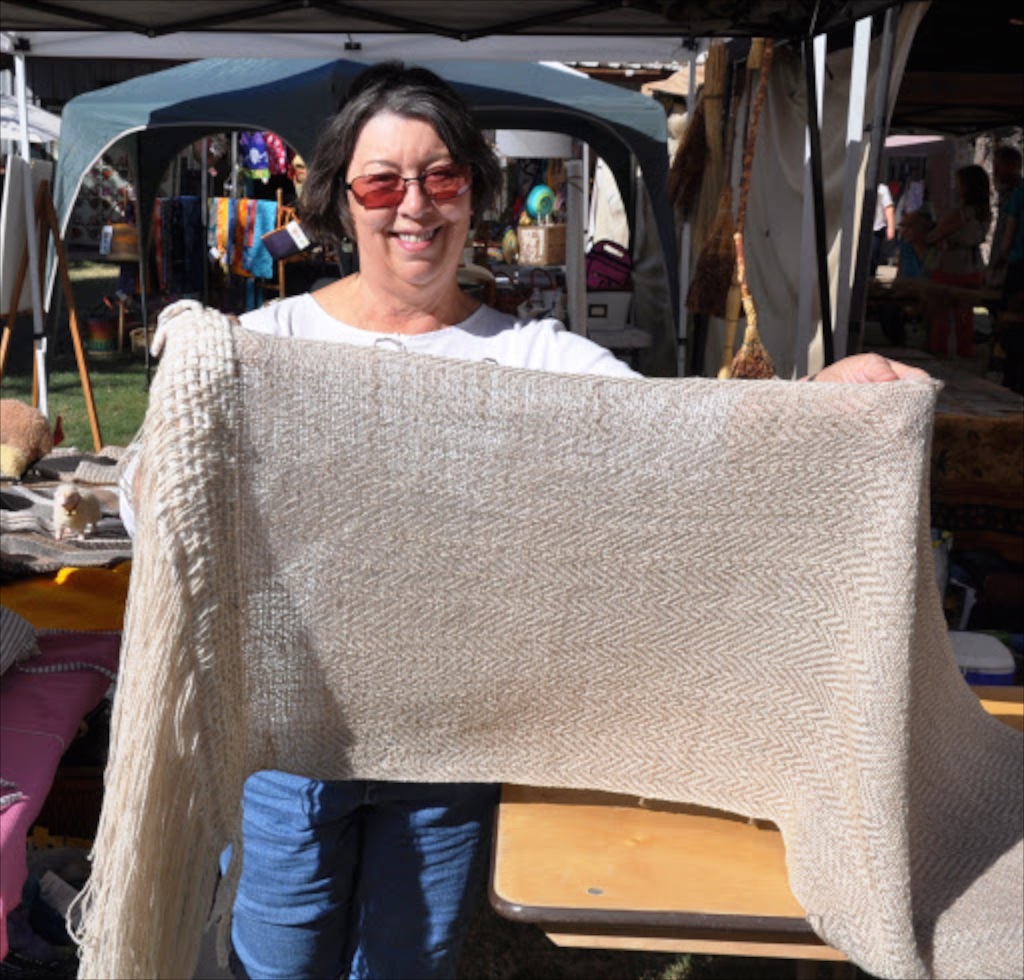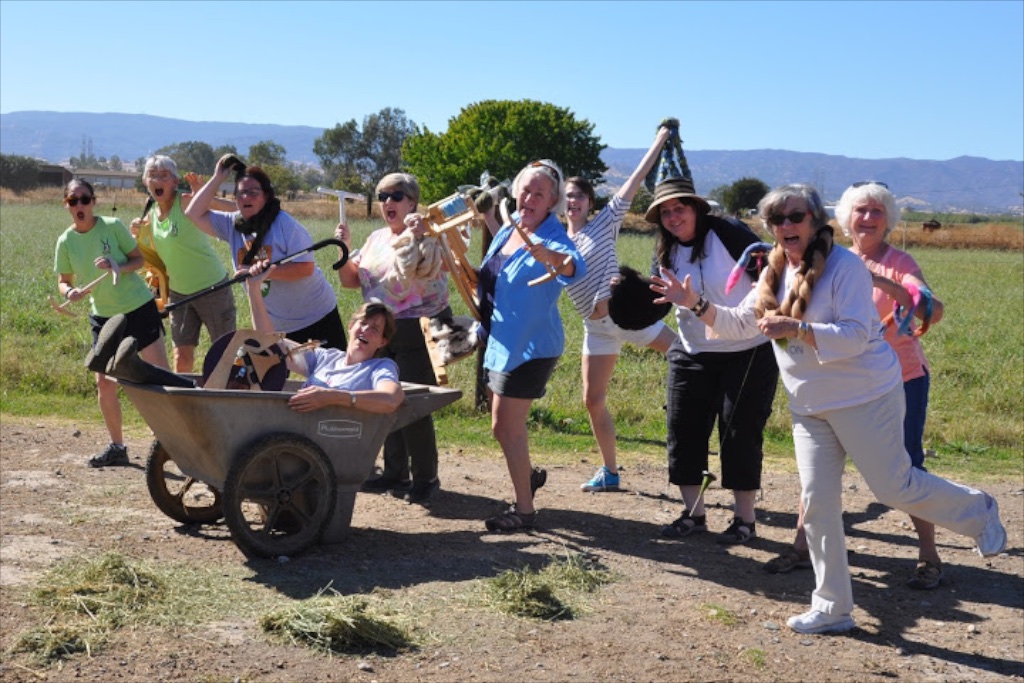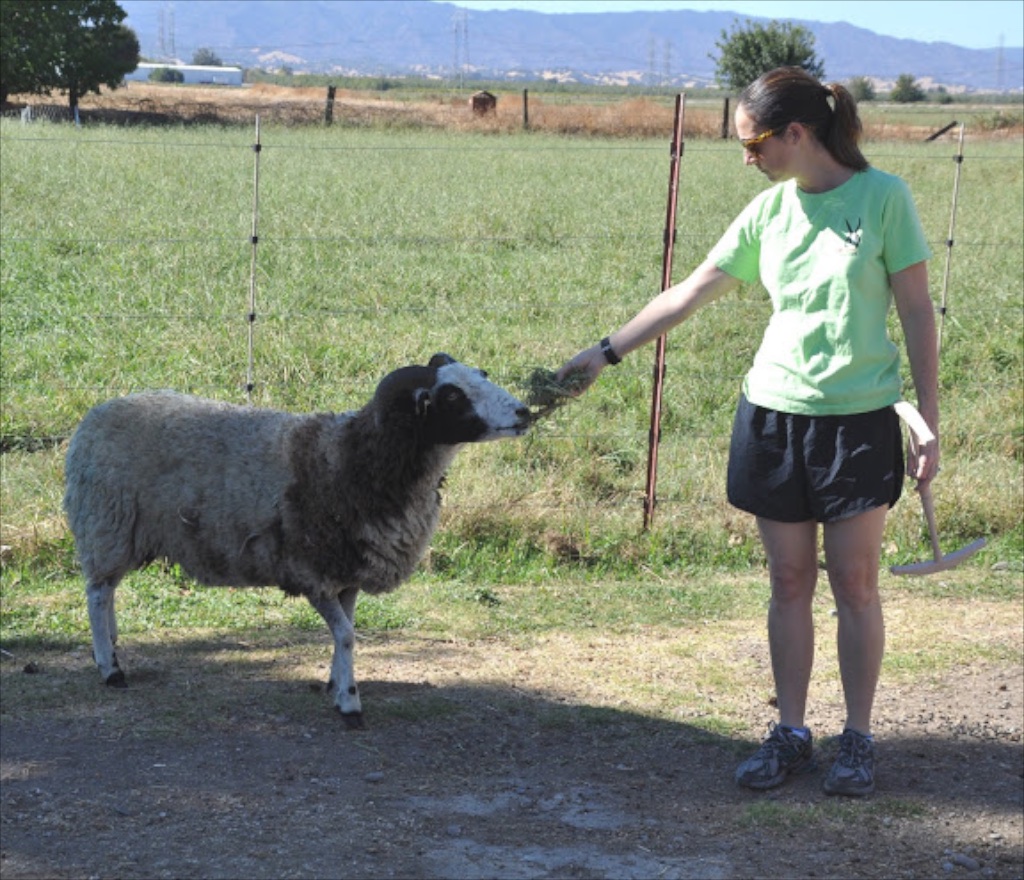
The holidays are upon us. I finally got a newsletter out. I usually get to it about once a month, but if I expect to sell anything at this time of year I need to do it more frequently. You don’t sell things if no one remembers that you exist. So the first one is out, announcing a Holiday Open House in a couple of weeks with two other local fiber vendors and…  …a holiday craft project (above) and…
 …a photo op with our friendliest sheep dressed in her Christmas garb.
 Here are some more ornaments that I made from locally grown and dyed wool.
By the way, if you’d like to get my e-mail newsletter let me know and I’ll add you to the list.
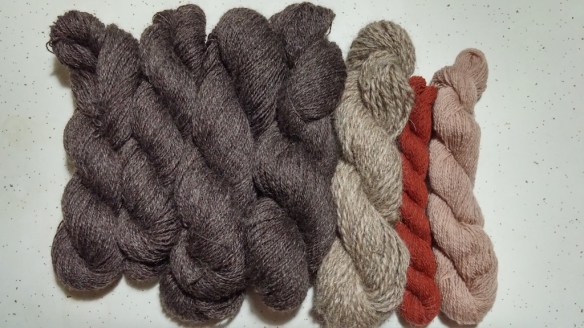
 This is 5 batches of yarn out of the same dye pot. The first four skeins on the top are from the first batch. The next four are from the second and I crammed the tablecloth in that pot too. The rest of that row is from the third batch using the same dye. It looked like there was still plenty of dye in the pot so I did two more batches that are on the bottom row. They are lighter but still colored.
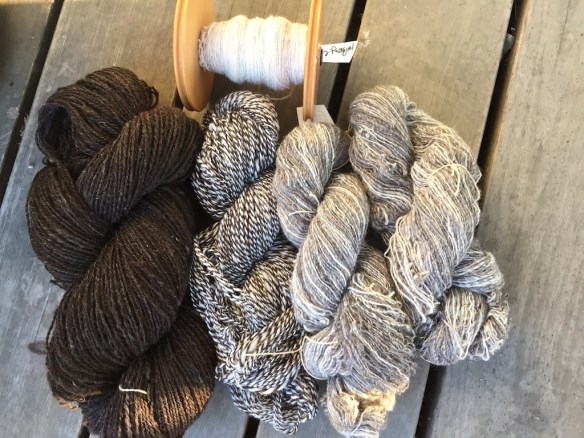
 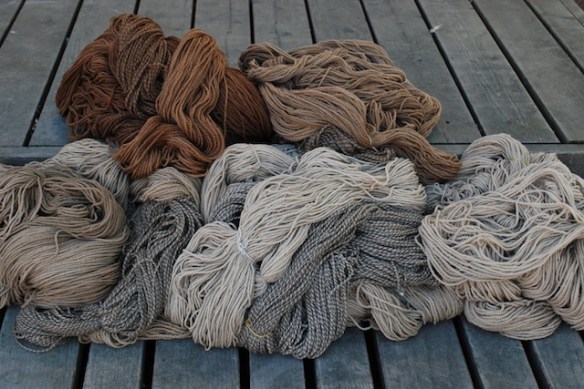 Here is another view. It is interesting (at least to me) that the fifth batch appears to have slightly more color than the fourth. It is a different yarn. The first four batches included
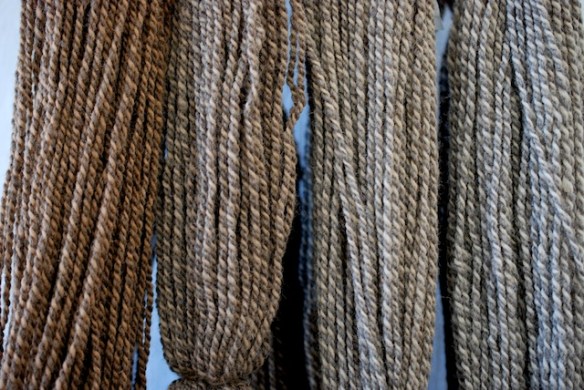
 I was photographing the skeins outside and out of the corner of my eye I kept seeing this other brilliant color.
 The first was a rigid heddle weaving class with four students.
 The second class was a new one I developed using the Schacht
  I couldn’t bring 16 different cones with me but I had wound off several groups of all those colors in 8 yards (enough for a Zoom Loom square) each. It wasn’t difficult to separate the colors.
 Students learned how to use the loom and went home with flowers and the knowledge to go further with the little loom.
 After that Sunday morning class Katie and Kirby and I walked around the vendor buildings.
 These are batts of fiber ready to felt…
 …on the needlefelt loom that this vendor brings to the shows. Customers can needlefelt the fiber they buy from her for no charge or pay a fee to use the loom for fiber that they bring.
 Angora goats are common in Texas and there were some at the show.
 Where you have Angora goat producers you’re going to have dyed mohair.







 The tour was a very full day and I took dozens of photos. I’ve tried to narrow them down for this post but there are still a lot.
 In most cotton crops a defoliant is applied prior to harvest.
 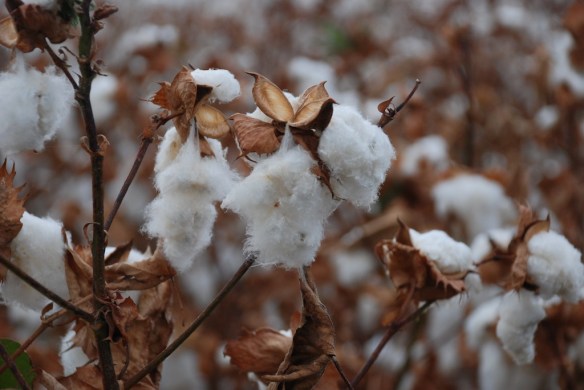 I was reading up on this and find that, as in most things, it is a whole lot more complicated than that simple statement implies. Dozens of factors are involved in the decision of to defoliate or not, type of defoliant (hormonal or herbicidal), and timing of defoliation (based on crop maturity and desired harvest time with some weather predicting skill necessary).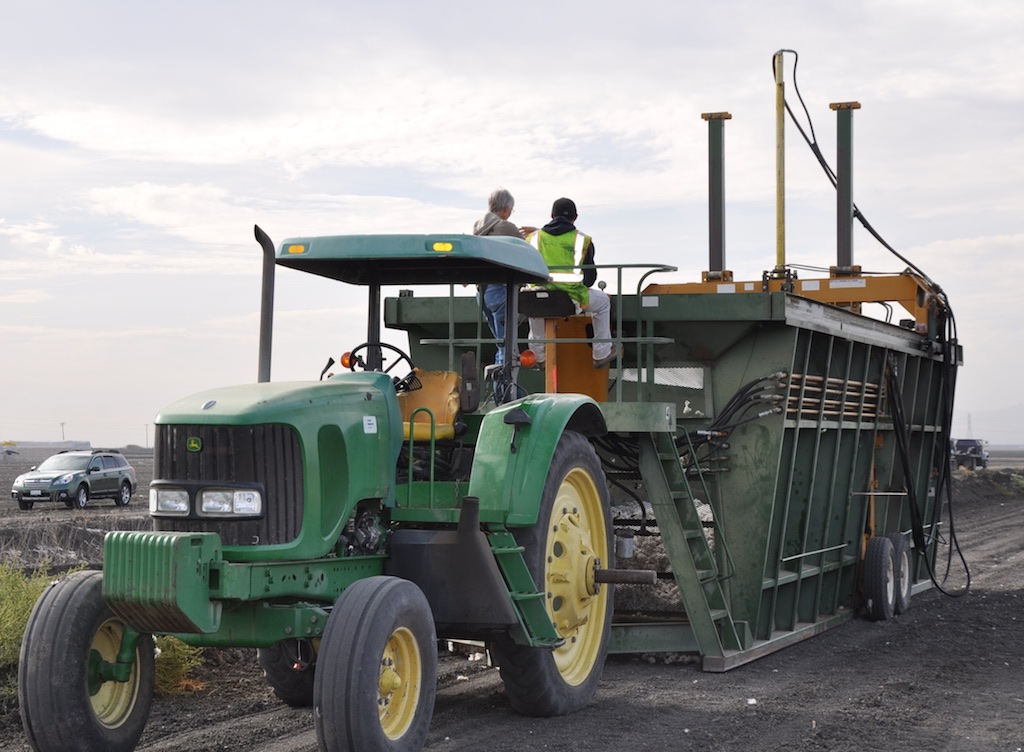

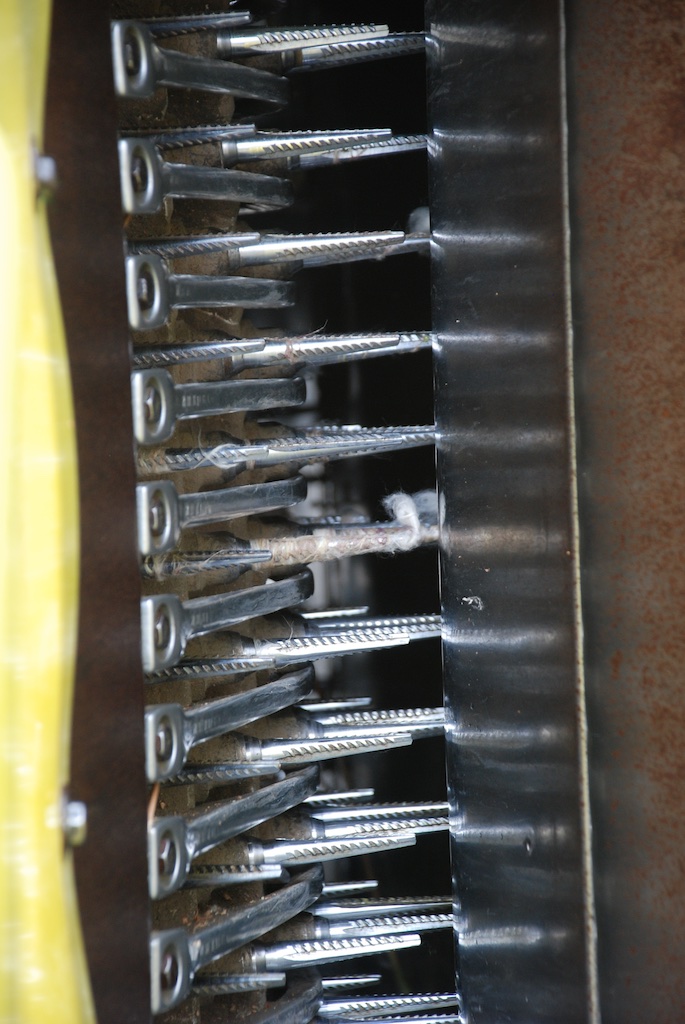
 …where it is hydraulically pressed into modules that will produce up to 14 bales of cotton.
 The process was described to us prior to entering the gin but once inside I wasn’t sure which machine was which. There are dozens of machines and tubes are running everywhere.
 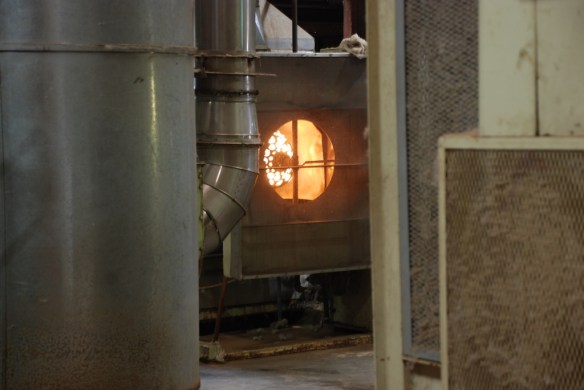 In the ginning process modules are broken apart and the cotton enters a dryer which removes excess moisture. It passes through several rotating, spiked cylinder cleaners that break up large clumps and remove soil and leaves. The saw gin separates the fibers from the seeds and l