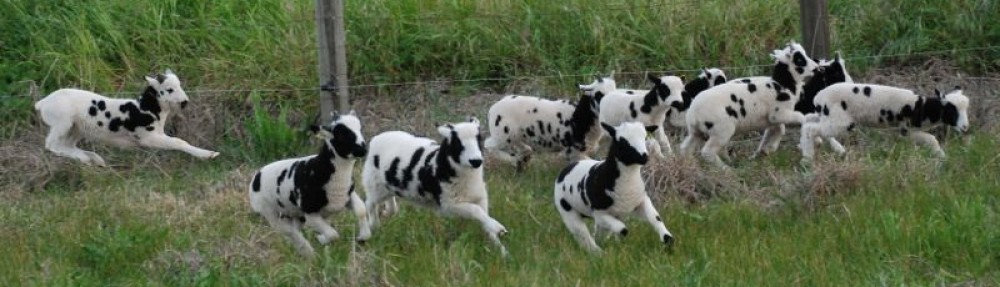
Saturday I wrote a post about Hug a Sheep Day and left a teaser at the end. This is Part 2. The group of friends who were still here in the middle of the afternoon after we put the sheep away were sitting outside and spinning or knitting. I told the story of my Squirrelinator purchase. The Squirrelinator is a ground squirrel trap that I saw in use at a recent event I attended.
Let me back up and tell you that ground squirrels are a serious problem here. They have built underground cities and have moved enough dirt out of their tunnels to make huge piles in the corners and along the walls inside the barn. Those tunnels are under the concrete floors which makes me wonder when the floors are going to collapse. They have made tunnels in the drain field of the engineered septic system for the second house on the property. The drain field is a newer version of an old leach field and is a long mound with layers of sand, gravel, stones, and pipe. At one point we found that they had dug into the layer of stones and had pulled dozens of 3″ stones out of the tunnels.
So, when I saw the Squirrelinator and heard success stories I ordered one. I put the trap on that septic mound and sprinkled some grain in the trap. It took about three days before I caught my first squirrel. I was surprised that the trap was moved about three feet from where I placed it, but didn’t think much more about it. A few days later I walked back to where it was and I couldn’t find it. Keep in mind that this is a wire cage about two feet square by 4″ high. How can a two foot square cage disappear? I searched all around the area. There are thick tangled black berries on the west, fences on the west, south, and north, and a structure on the east. Tangled tree branches reach the ground on the north. There are old trailers, and old tractor, broken pallets, piles of wire, and all the STUFF that accumulates on a farm because you never know when you’ll need something.
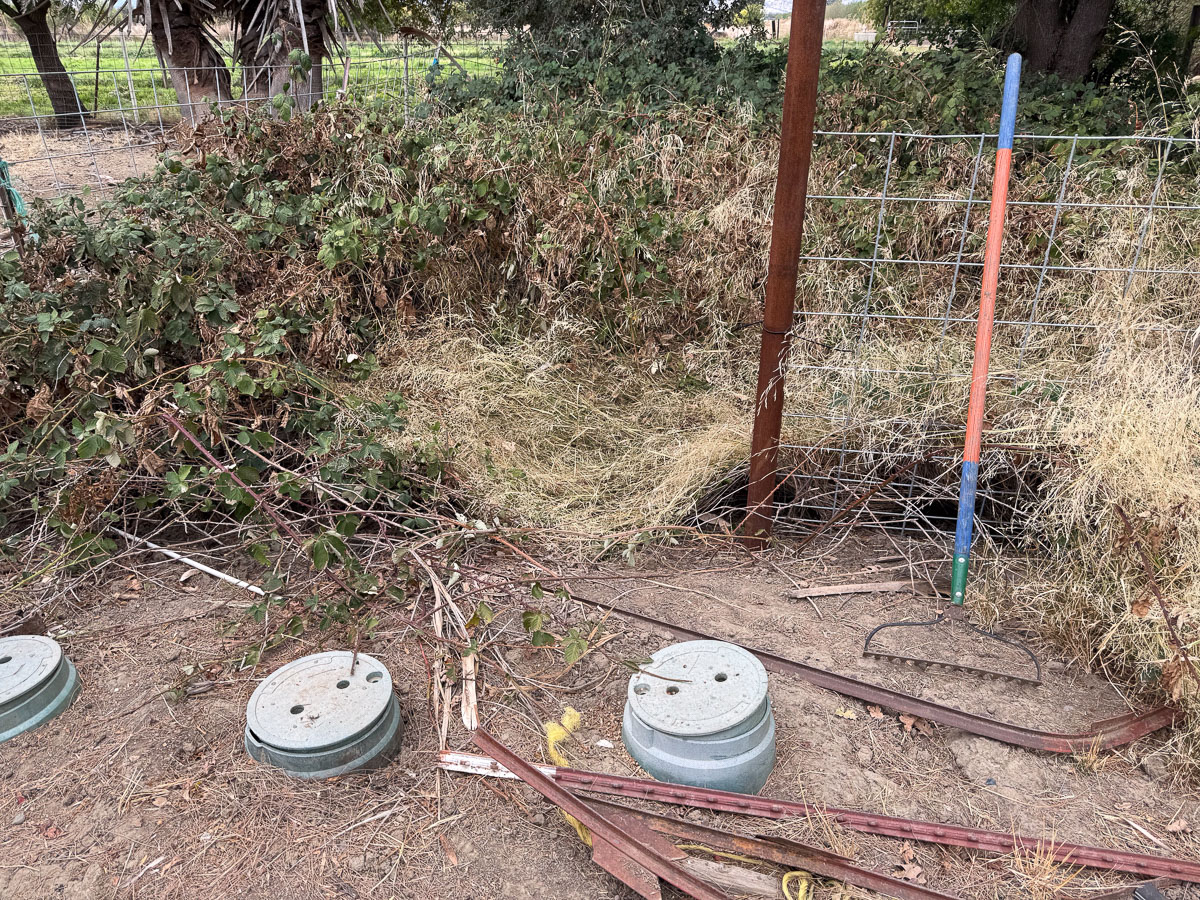
The group of Farm Club members were intrigued and decided that they would find the Squirrelinator. I was dubious, because I couldn’t imagine how an animal (coyote or dog?) could have moved it so far, and I had searched all over and at the edge of the neighbor’r orchard to the north. This photo shows the west end of the septic drain field. There are squirrel holes under the blackberries and at times when I walk past this to get to the irrigation valves further west I have counted 10 squirrels running to their holes.
Katie stomped through the blackberries and found the Squirrelinator!
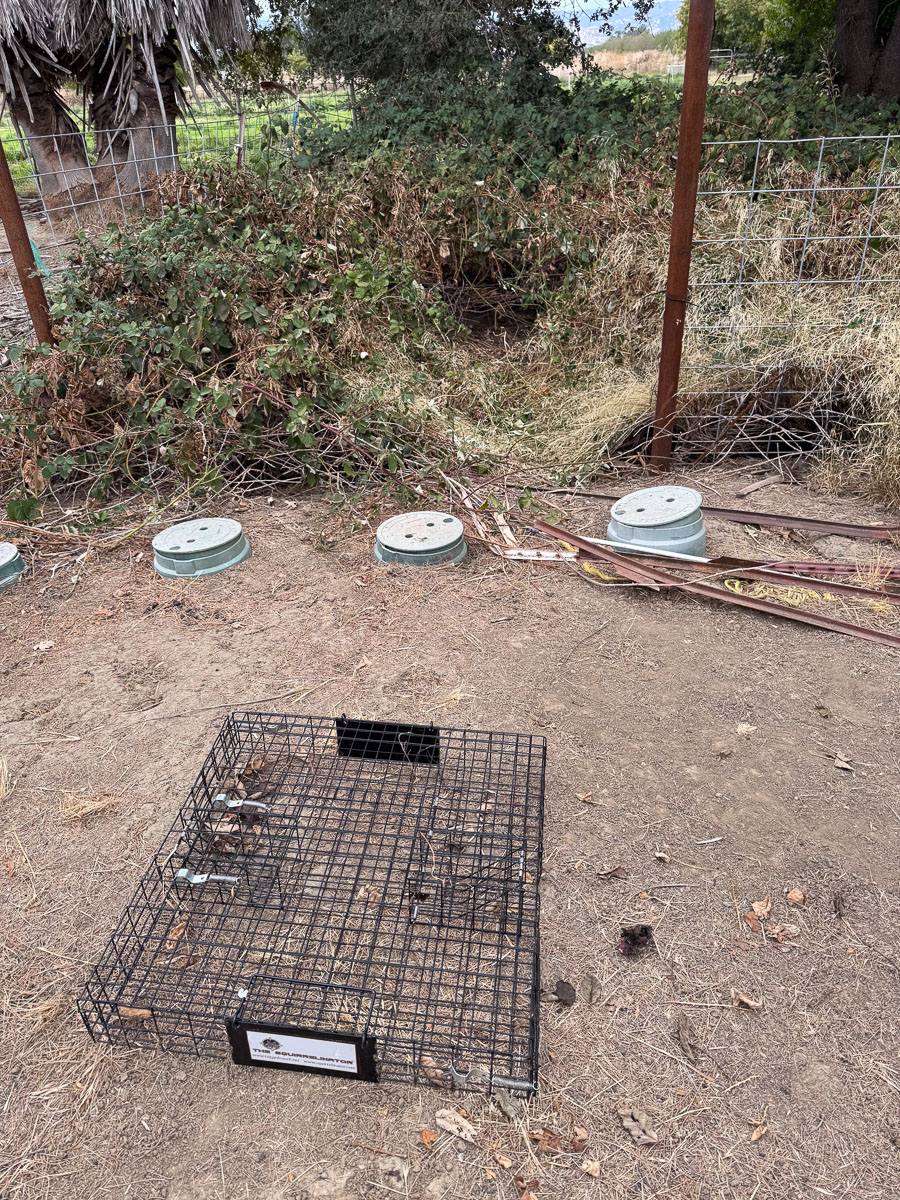
I went to the barn for clippers to cut away the blackberries and a rake to clear the path. It was under the branches where you see a hole in this photo.
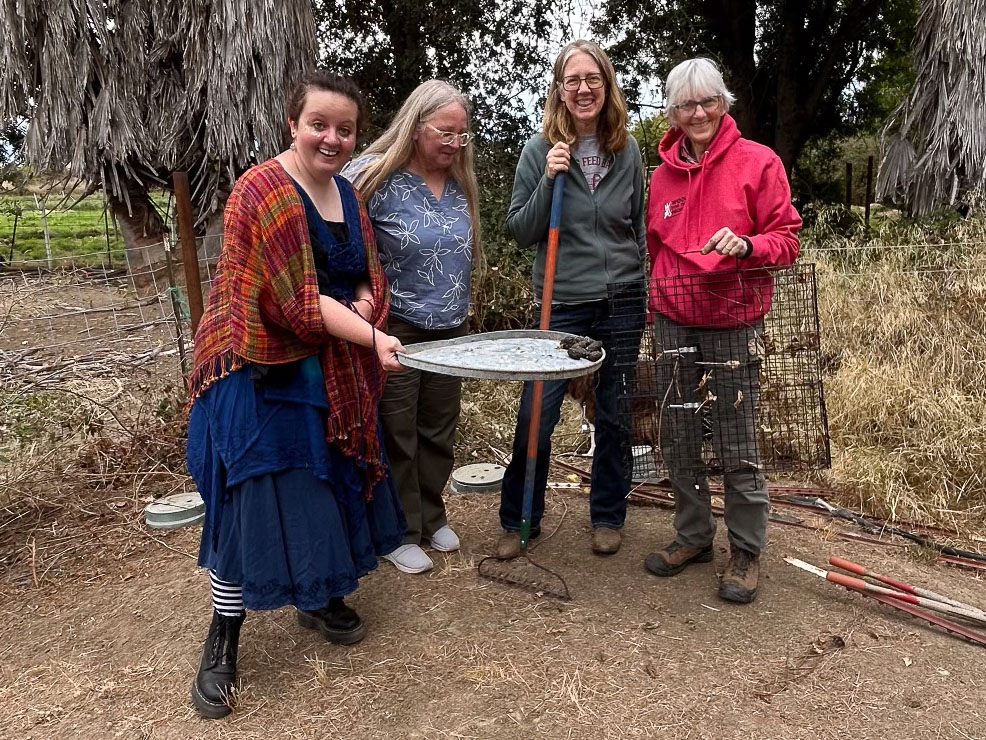
I thought that we should have a photo mimicking those you see of hunters with their prey.
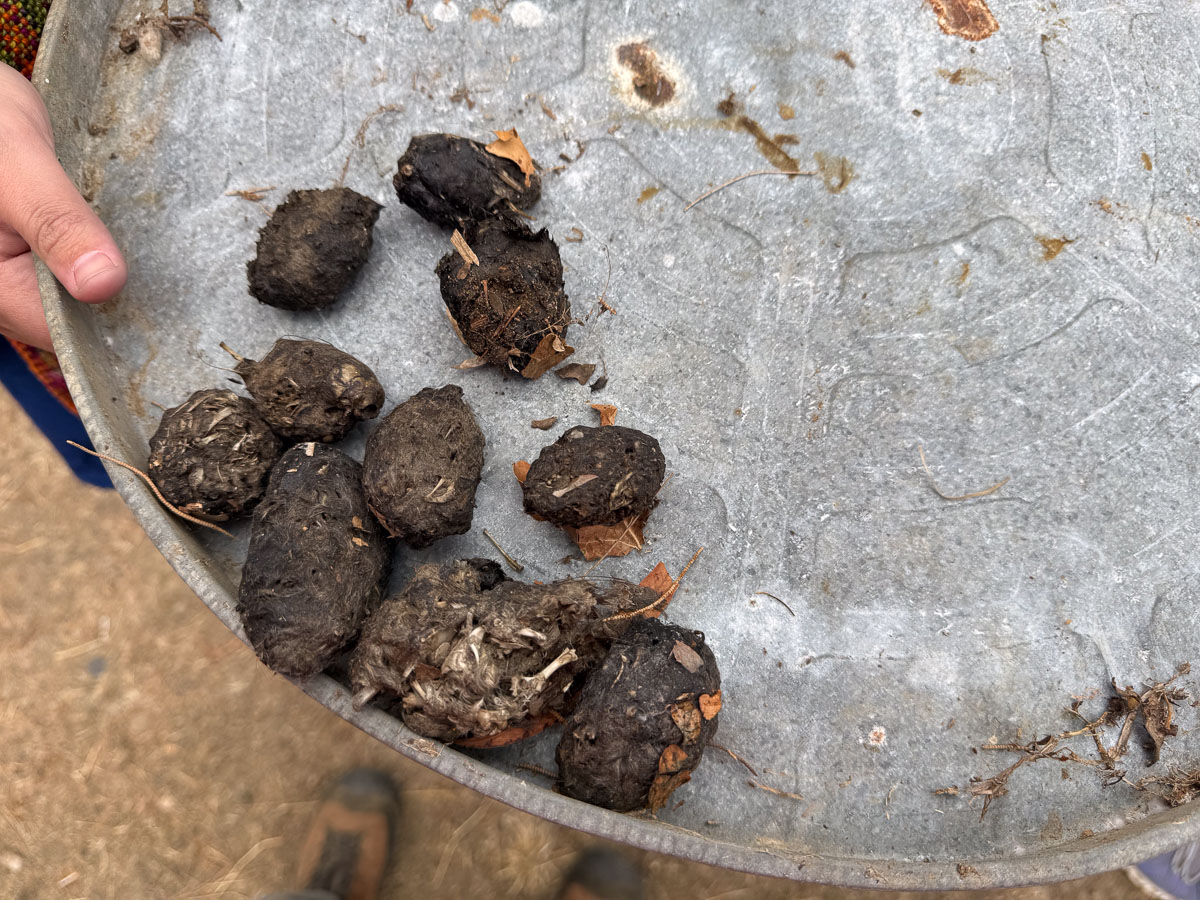
The garbage can lid became a tray for the owl pellets we had found on our quest.
Have you ever picked apart an owl pellet to find out what’s inside? Most of you probably know about owl pellets. A google search tells me: “Owl pellets are compact, tightly bound masses of indigestible animal parts—such as fur, bones, teeth, and feathers—that owls cough up or regurgitate.”
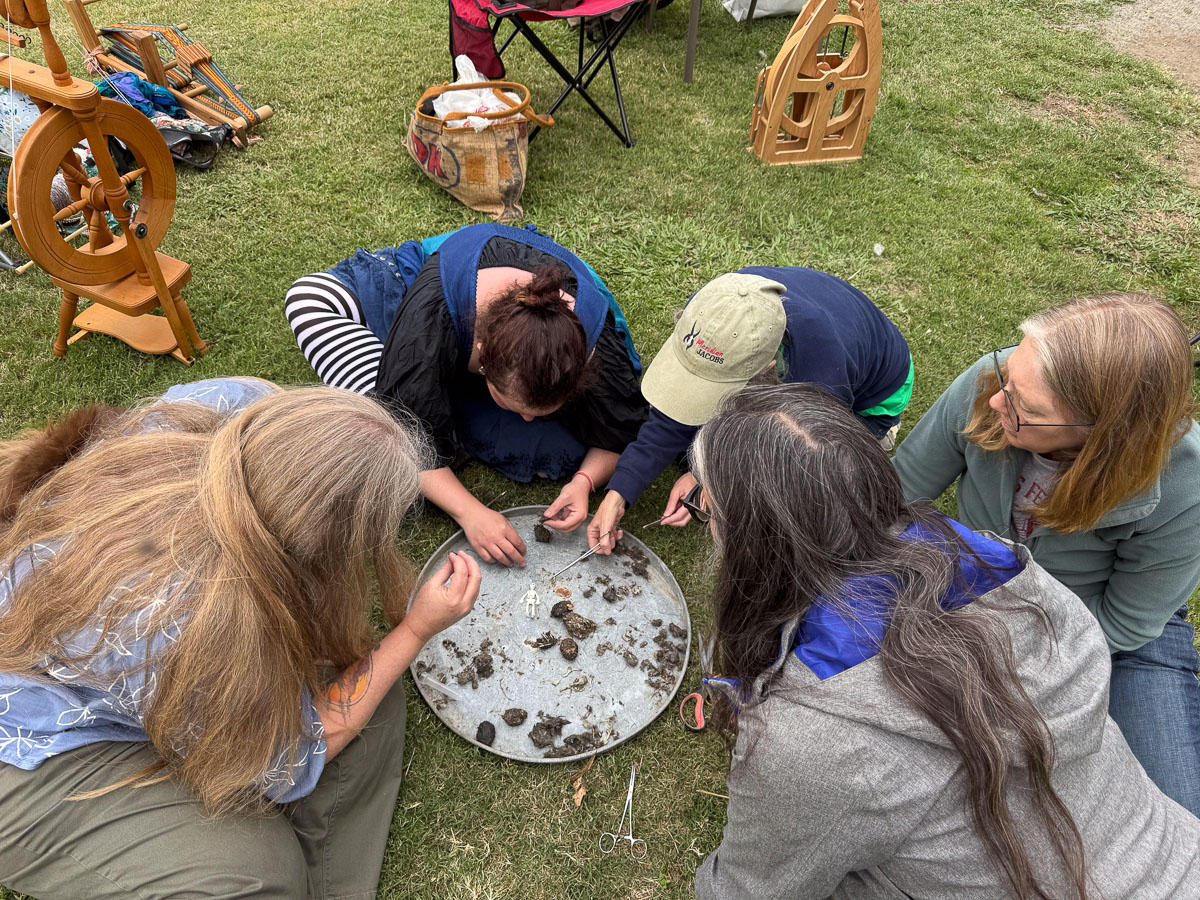
We found some tools with points (forceps and scissors) to start poking and pulling the pellets apart.
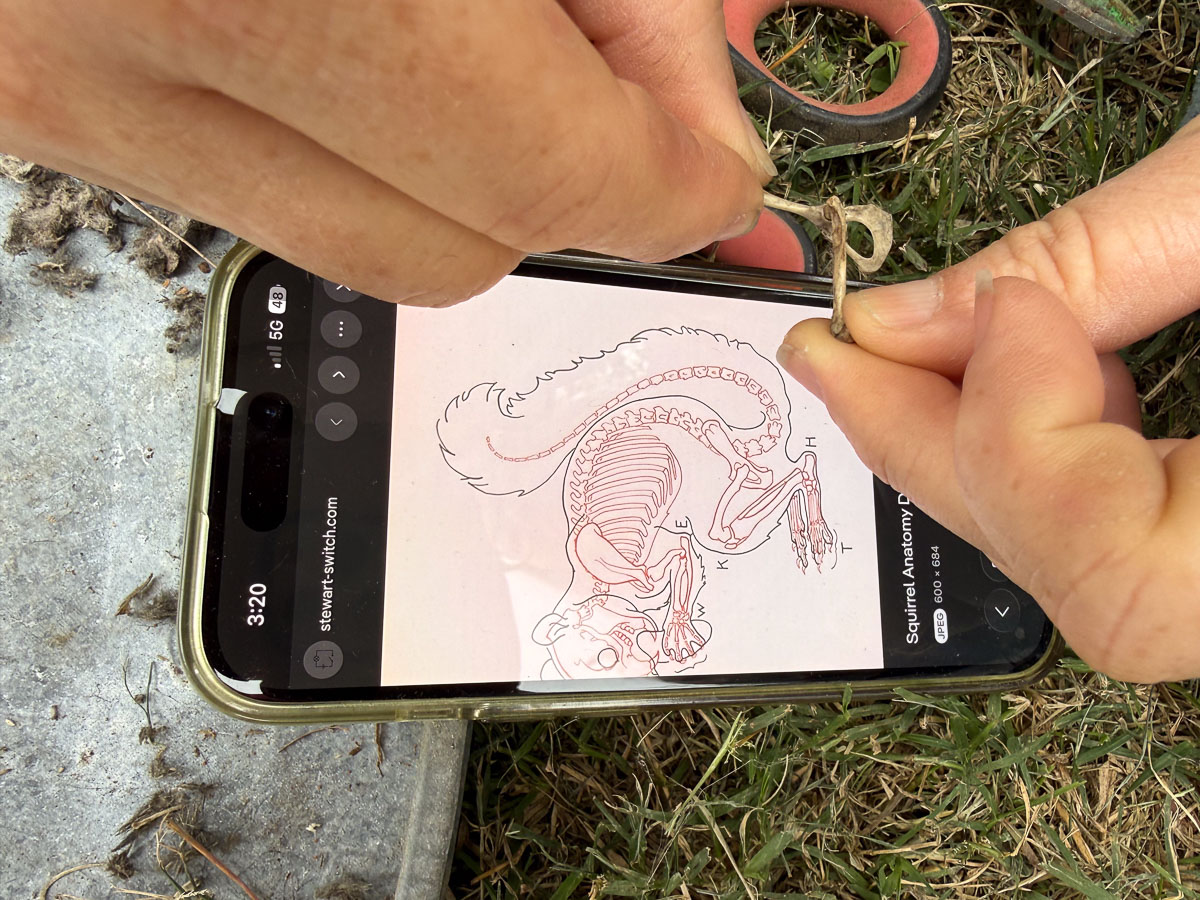
Doris found a picture of squirrel anatomy so we could identify the bones we found.
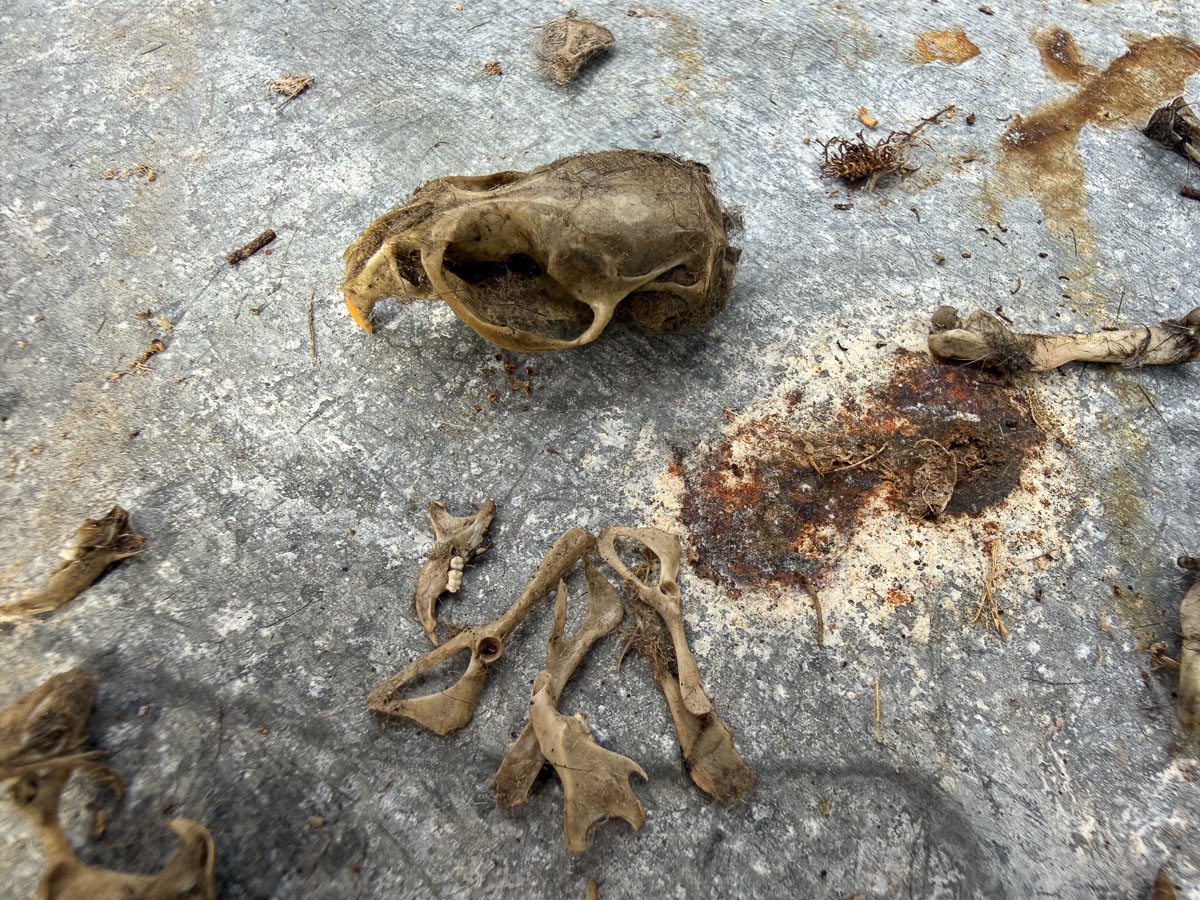
Each pellet had at least one skull and several hip bones, among dozens of others.
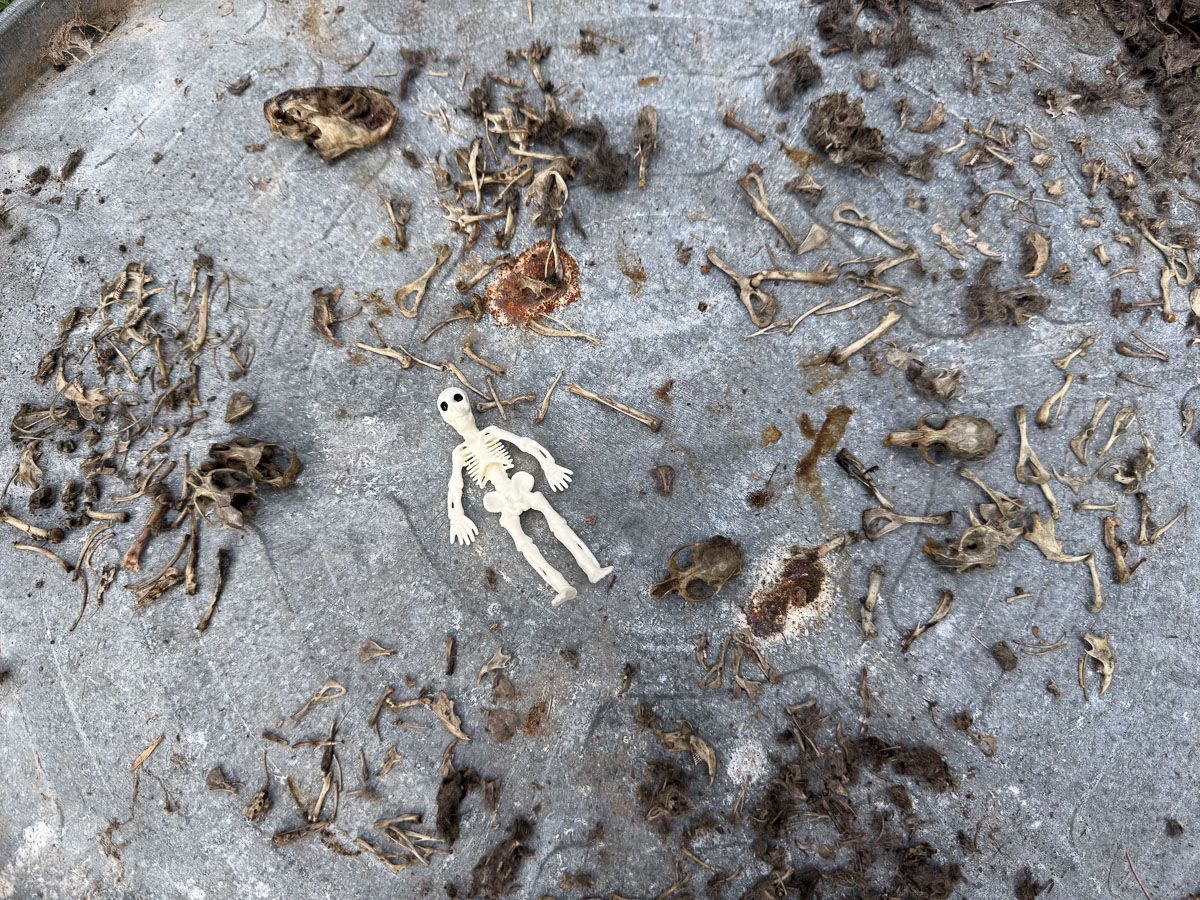
Here is a collection of what we found. The plastic skeleton is one that Rachel brought to celebrate the day.
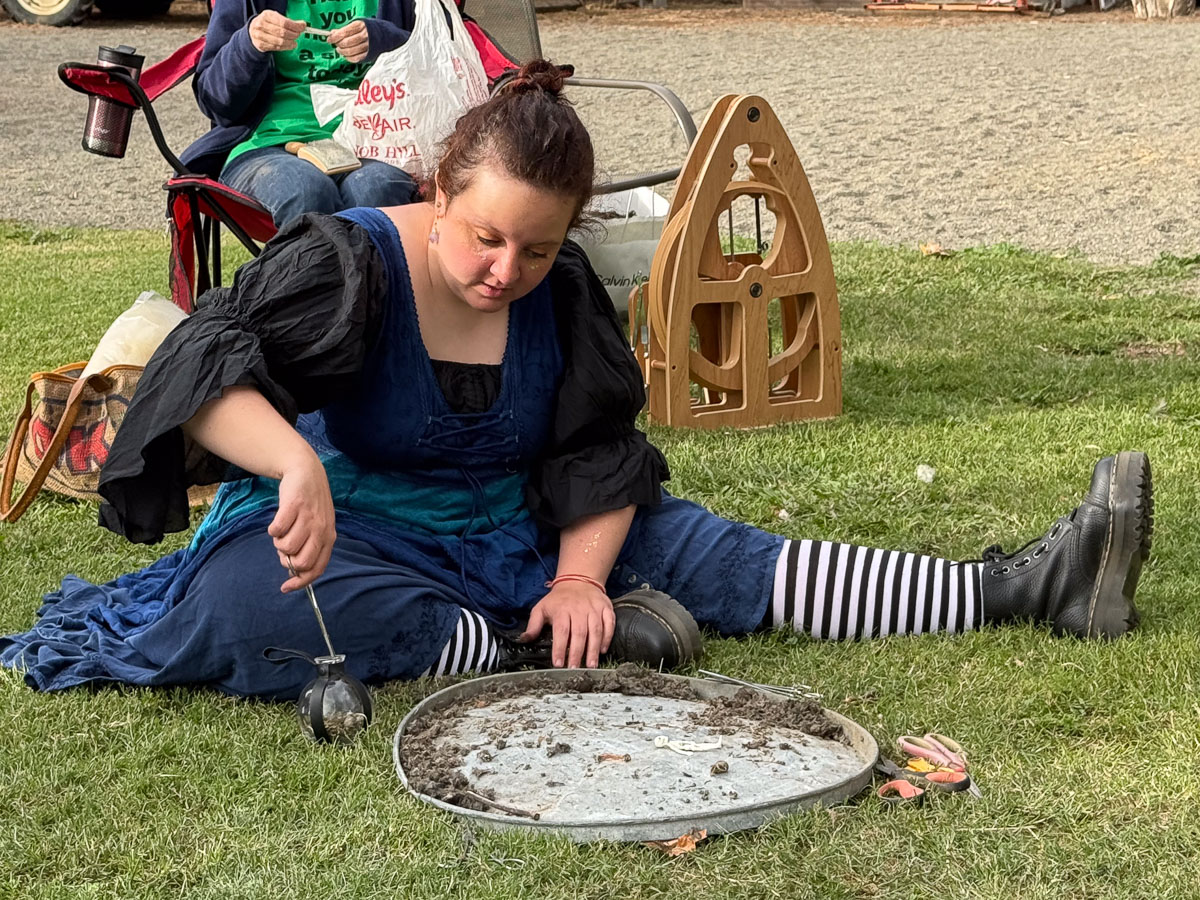
Rachel decided that the bones should have a place in her flask and then be a fixture in the Weaving House.
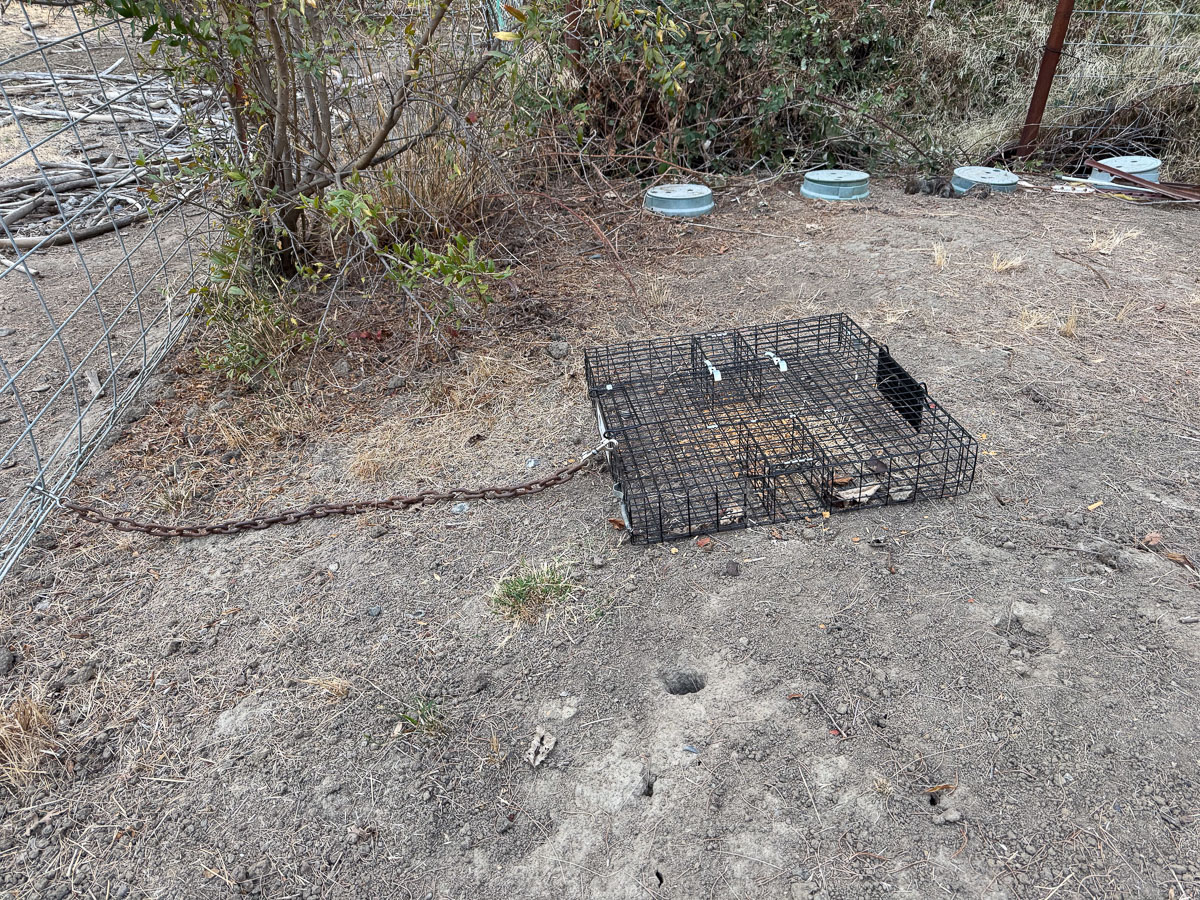
After evening chores I set the trap up again, but this time chained it to a fence so it couldn’t disappear.

The group of us shared a lot of texts that evening and, after Rachel found a reference to CSI-SVU (Special Squirrel Unit), Amy got creative with this AI-generated description. Maybe the squirrel shouldn’t look quite so happy.
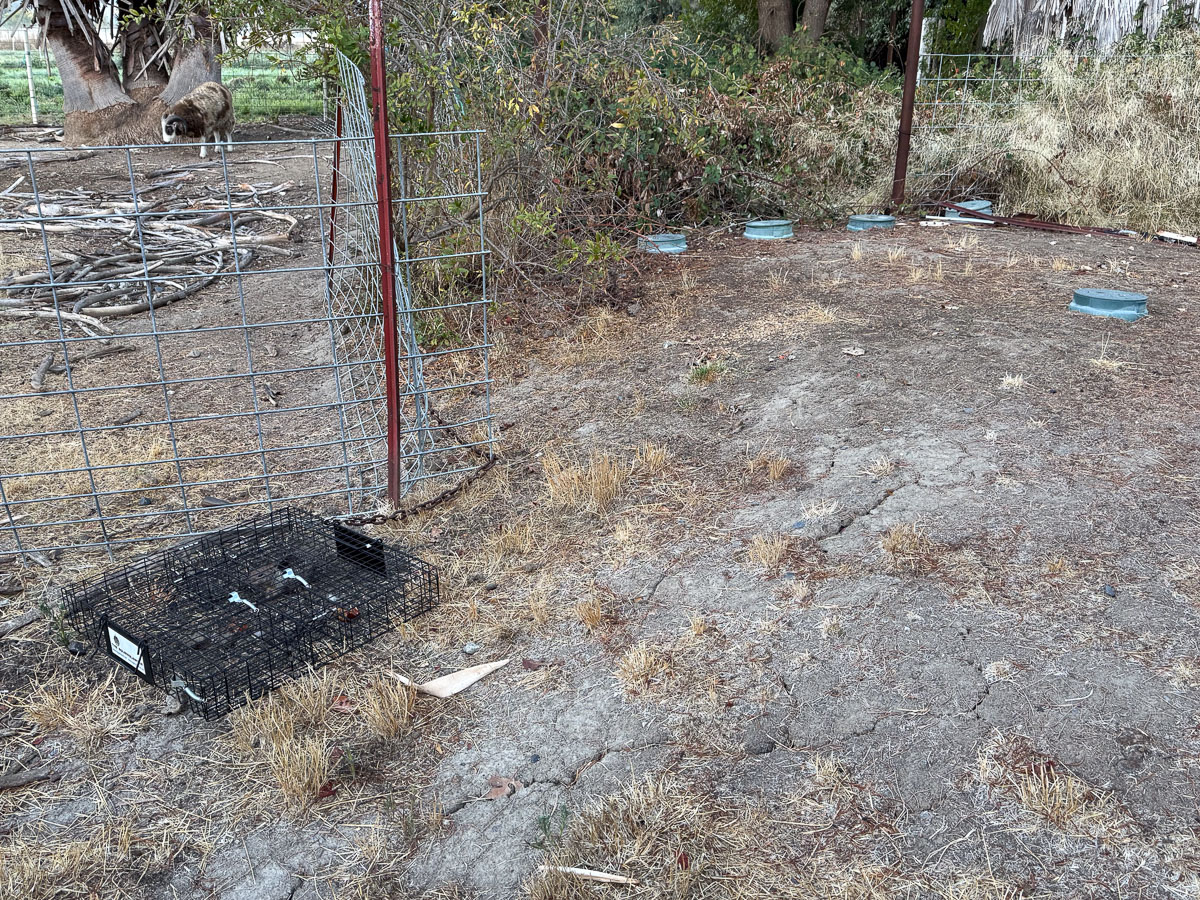
It’s a good thing I added a chain to the trap. This is how I found it this morning. Next I want to set up a trail camera to find out what’s going on after dark.
 This is the ditch that runs north-south and brings the water from the upper ditch to the one that goes from west to east along the bigger pasture.
 This photo is looking the same direction but from a little bit west of the first one. You can see the same row of overgrown blackberries along the fence. The standpipe where the water comes in is in the upper left corner. In the lower center of the photo is one of the cut-outs that lets the water flow from the ditch into the field.
 Looking to the east as the water is flooding the pasture from north to south. In this photo the water hasn’t gotten very far into the paddock where the sheep are.
 Here is that tarp I showed in the last post.
 There are things to see besides just water and grass. One of the first things I noticed after the water filled the ditch was buzzing. These insects were everywhere over the water. I tried to ID it on the internet but didn’t find it. Anyone know what this is?
 This is one of the pair of Swainson’s hawks that lives nearby and hunts in our pasture.
 We have enough gophers to feed an army of hawks.

 I had not planned to be a vendor here. Instead I was scheduled for a talk about the fiber business. I brought a couple of sheep and fiber, yarn, buttons, and lambskins. Some of Team Meridian Jacobs made the two hour drive here to spin together.

 Our neighbors on one side were Shaul’s, who make all the panels and feeders that I use in the barn. I brought a few more pieces home with me.

 You can’t make out the geese in these but here is the view with my other camera:
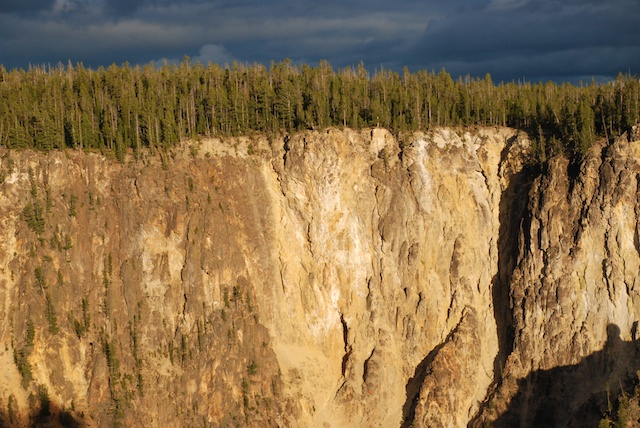
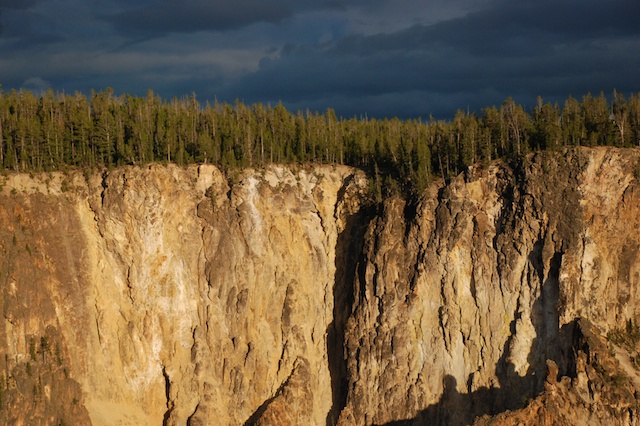
 These don’t do the scene justice.




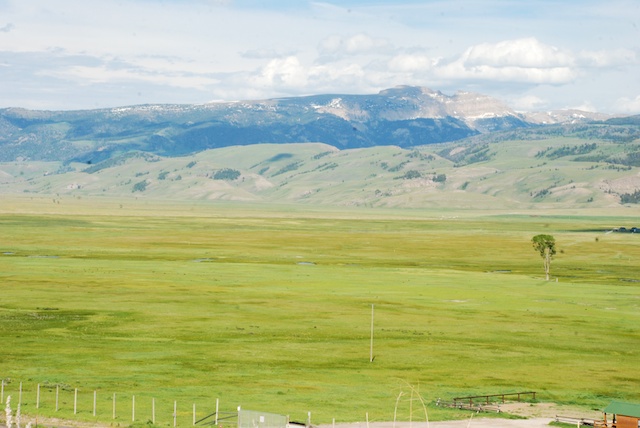 This is a view to the east looking from the museum.


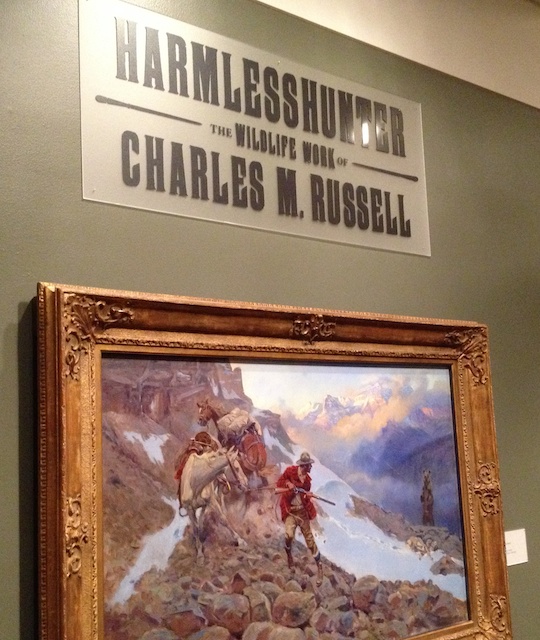 There was a room devoted to wildlife art by Charles Russell and I took a few photos there before reading the sign that you weren’t supposed to photograph any the Russell work.


