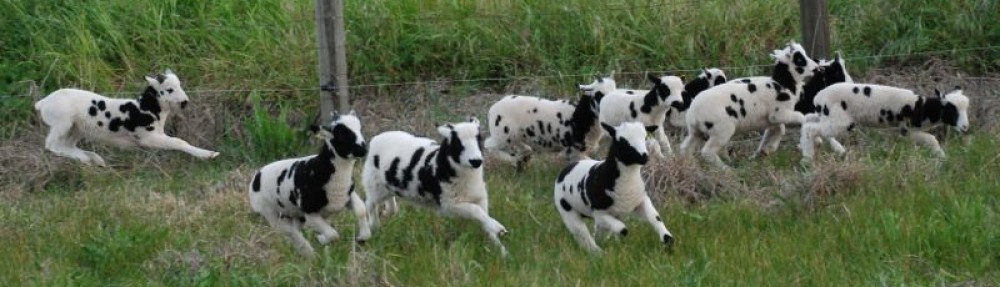
Week With the Grandkids – 1

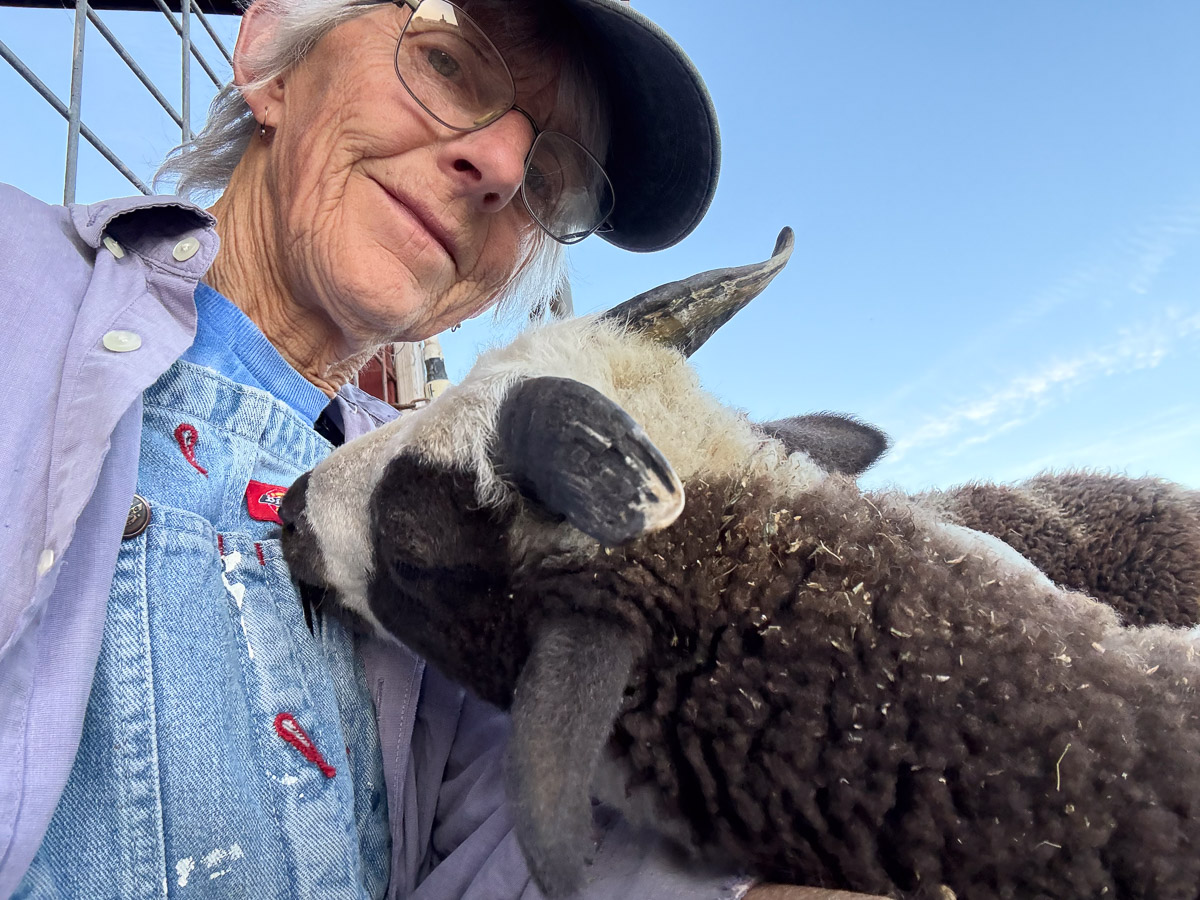
I’ve written a few posts about lambing, but that wasn’t the only thing going on. During the middle of lambing the Texas grandkids were here for a week. Kirby, age 10, and Kasen, age 8, flew solo (without parents) in mid-March, also spending a few days with the other grandparents a few miles away.

The first afternoon here we walked across the road with Ginny. I like this view of Mt. Diablo due south.

This photo shows the main canal to the right. I got carried away just now and did a bit of internet research about this channel, which I know is called Sweeney Creek, but it doesn’t look much like a creek anymore. This document describes the Ulatis Flood Control Project constructed in the 1960’s and 70’s, a series of channels that end in the delta. The focus of the document is a fish survey done in 2023 and sampling point #9 is at this location. How does this relate to this post? The kids wanted to walk down to the water and the easiest place for that is below the structure at the right of this photo.

At that point we saw splashing and realized that there were a lot of large fish in the rocky area below that structure. There is a fish at the top of this photo.

In a small still area we saw over a dozen fish.

Kirby decided that a rescue was called for to move the fish from the small rocky pools to a place where the water flowed more freely. She was able to easily catch several of the fish that were in the small pool.

One of my friends identified this as a Sacramento sucker, which I learned is the native fish found at this location in that 2023 fish survey.

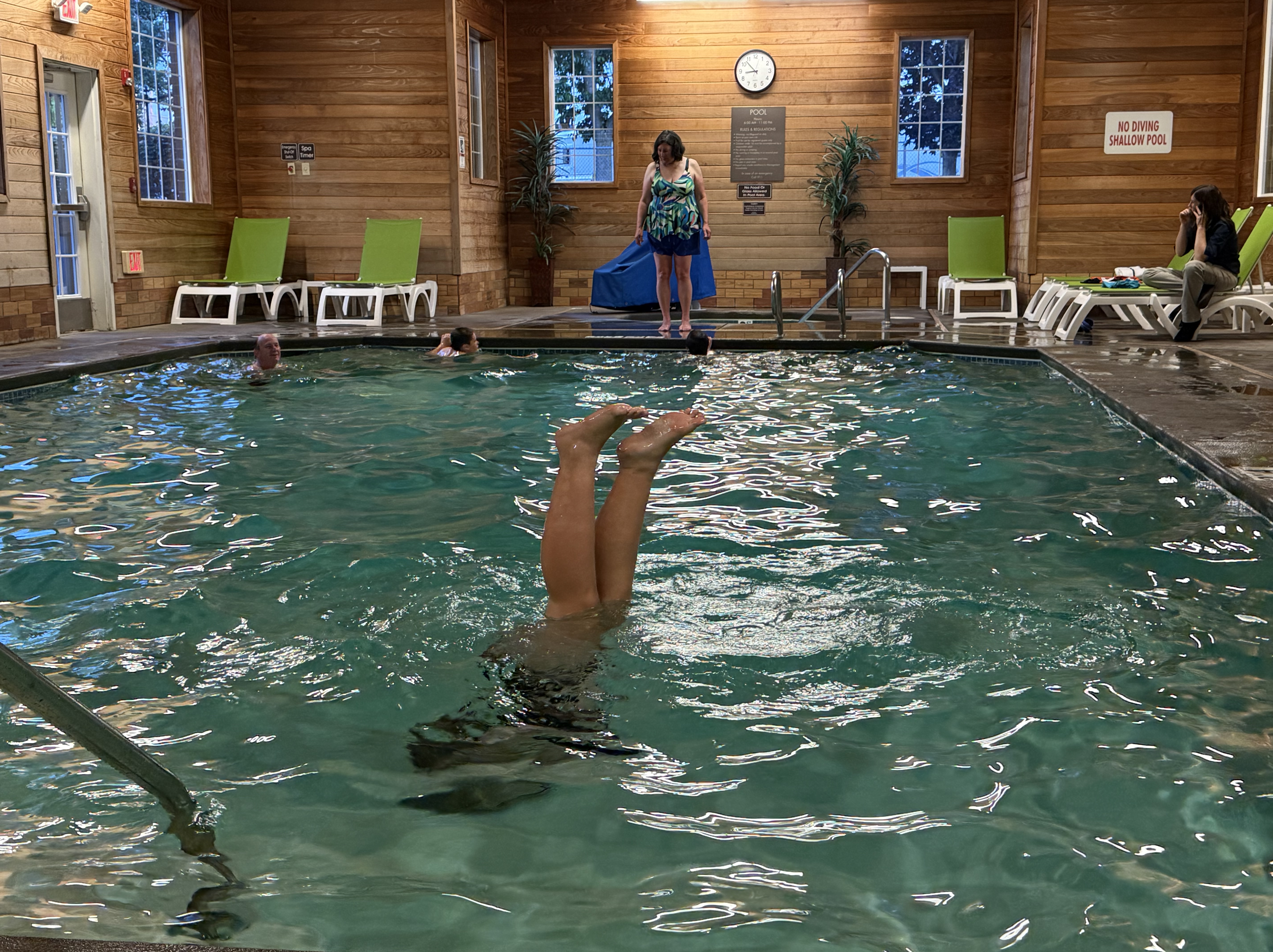
The kids spent about an hour splashing in the water and catching fish.

I walked along the water edge and an artifact I recognized. How many tennis balls have we lost during our walks?

This one has become its own ecosystem.

Kirby’s rubber boots didn’t keep her feet dry after awhile

Ginny’s look after her explorations.

Another look after getting back on the road.

Lambing, the End (Almost)

I have lamb photos to share but not necessarily in order because I didn’t keep up as lambing progressed.

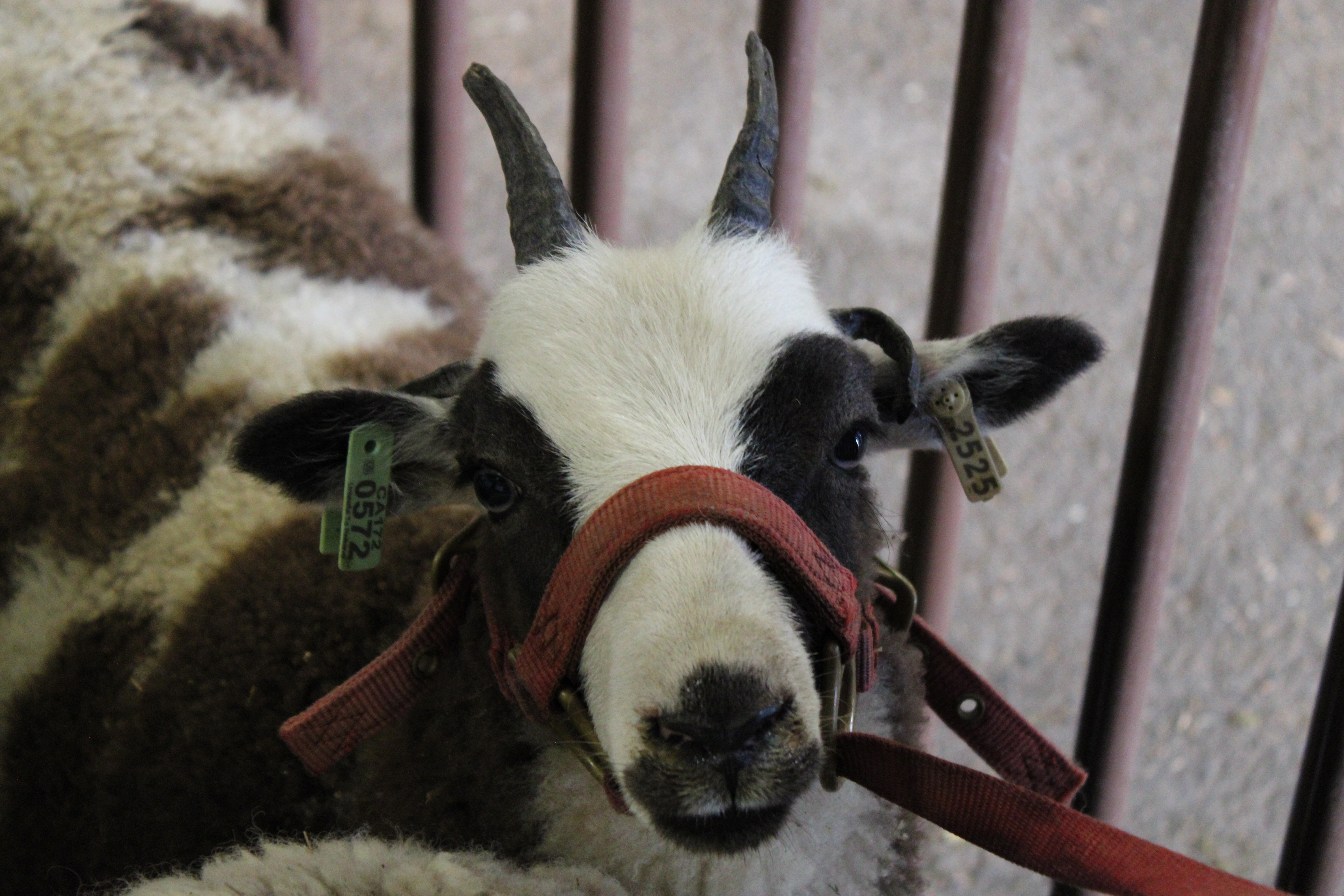
The last lambs of Lambing Season, Part 1, were born two days ago, March 31. Part 1? That’s another story, but there may be four ewes due to lamb at the end of April. This is Tamara with two ewe lambs, #2553 and 2554.

Bide a wee Trista lambed March 28 with triplets.

This photos was taken three days BEFORE lambing. Trista certainly carried that twenty pounds of lambs low. She is getting grain now to help her put some weight back on and supply enough milk.

This is lamb #2545 born to SilverRain March 21. Lambing had slowed down at that point.

The lambing board shows that there was a lot of action for about a week and then days between the later lambs. My granddaughter made the notes on the board before she left on March 25.

Sweetgrass Tranquility had triplet ewes March 19.

My grandkids were here for a week and shared bottle feeding Sparky. This is 8-year-old Kasen.

I was able to finish skirting and sorting the Jacob wool be the time lambing was over. This wool is now at the mill and hopefully I’ll have some of it back by the fall.

Lambing Season is between Winter and Spring

I’ve talked about this before–the seasons. Spring, Summer, Fall, Winter, and Lambing–right there between Winter and Spring. It’s a busy time. I wrote one blog post at the start and the one about Sparky two weeks into the season. It was an intense two weeks and now things have slowed down considerably. I’m waiting for three ewes to lamb by the end of the month.

March 9 three ewes had twins and one had triplets. This is Janna with triplets and Sandie and Beauty with twins.

The next day Juniper lambed with twins.

It was beginning to feel like the next new season–spring!

Janna and lambs moved into a stall a couple after lambing. This gives the ewes and lambs more space to move around, but it’s easy to keep an eye on them for a few days before they go out with the other sheep. That’s Farm Club member, Lisa, holding the lamb.

More signs of spring.

Flannel Bush is one of my favorites.

Cindy lambed two days after Juniper.

A cloudy sunset.

The rooster and one hen roost every night on this panel between the hay and the lambs.

Jazzie lambed that night with twins, lambs #22 and 23.

Amara seemed the most likely to lamb next and she went into the lambing area. That leads up to the post about Sparky.

Meet Sparky

Lambing started only two weeks ago but is almost over (except for the lambs that will come at the end of April due to acquiring a ram around Thanksgiving). I like to keep my blog posts in chronological order, but I’m giving up on that for now. I may share other lambing photos later, but for now I’ll write this story.

It was only a week ago (Thursday, March 13), that Patchwork Amara lambed. I had put her in the evening before and didn’t see anything when I checked the barn at 2 a.m. When I went back at 6:00 I found a big lamb in good shape and a small lamb that at first I thought was dead. When I picked her up she wasn’t completely flaccid like a dead lamb would be and I could see her take shallow breaths. She was very cold.

I brought the lamb to the house and put her in a dishpan of warm water. As her body warmed she started to move her legs. After I’d warmed her enough I wrapped her in a towel and went back to the barn. I set up a heat lamp and moved Amara and the big lamb to a clean pen. Lisa was helping for a few days and when she came to the barn I gave her lamb holding duty.

I milked colostrum from Amara and tube fed the lamb.

While we were feeding her we realized that Amara was having a third lamb.

Those big brothers were 9.2 and 8.6 pounds. Sparky, as Lisa named her when she showed a spark of life, was only 4 pounds.

I found a size Small coat for Sparky, It was way too big and eventually Lisa cut some off.

Sparky was spunky enough after the tube feeding to nurse on her own. Throughout the day we made sure that she was nursing.

The next morning Amara was tired of having three lambs and was getting a bit aggressive towards Sparky. I didn’t feel comfortable leaving her there and decided that she would be a bottle lamb. That was 6 days ago.

Farm Club members came on Saturday and Sparky was a favorite.

I picked up my grandkids at the airport yesterday and we went to the barn right after we got home. Ten-year-old Kirby.

Eight-year old Kasen. The kids are taking turns bottle feeding, although the next feeding is in a few minutes (11:30 p.m.) and no one has volunteered for that one.

Sparky has had plenty of attention. The kids are taking her out of the barn and letting her run around in the grass. I tried to share a video here don’t know if I can make it work. Let’s try this YouTube link.

Lambing 2025

I’m 9 days into lambing and haven’t had a chance to share any of it. Here is Day 1 on March 6.

There was a field trip from a Waldorf school in the morning. I had told them that I couldn’t promise lambs, but maybe there would be some. There were not. However, they had plenty of time to pet sheep. Notice Jade enjoying the attention.

I had a tax appointment after the kids left and when I got back I found Addy with triplets.

After I brought them into the barn the first order of business was to erase last year’s Lambing Board. This shows 88 lambs from January 25 through March 7 plus other notes squeezed in. So we ended lambing last year at the same time we’re starting this year. That was partly because we wanted to take a trip to Texas to see the grandkids and the eclipse in April. I didn’t want to have lambs coming if we were not here. This year I’m back to a more normal schedule.

Cashew lambed the following day. There were no lambs the day after that. A slow start.

Farm Club Retreat #12 in San Francisco – Part 2

Part 1 of this year’s retreat is here. We planned to go to the Ferry Building Saturday afternoon because several people were interested in the book signing and demo at Book Passages. We split up to get there. A couple of people took the bus.

Five of us walked…

…and four chose to try their first Waymo (self-driving car).

We made it to the Ferry Building and listened to Julie Beeler describe mushroom dying. Several people bought her autographed book, The Mushroom Color Atlas.

Rachel found a moment to knit.

We walked to PIer 39 to find the sea lions.

Rachel and Sarah found some along the way.

After watching the real sea lions we went back to the home by bus, by Uber, and by taxi.

Rachael had brought a collection of fiber and yarn and her drum carder so she could make art yarn batts. She invited the rest of us to make a batts.

Here is my creation. I spun this as well.

We ordered in dinner and afterwards played Battle Sheep before moving back to the parlor for an evening of fiber.

The 2025 Farm Club Retreat Team. That’s Rachel, Sarah, Klara, me, Brenda, Beth, Deborah, Katy, Amy, and Carol. Looking forward to 2026!

Farm Club Retreat #12 in San Francisco

We started the tradition of the Farm Club Retreat in 2011. We find a weekend between shearing and lambing that we can stay in the house owned by NDGW (Native Daughters of the Golden West). We skipped 2020 through 2022 because of the pandemic, so that makes this one #12. This is last year’s Retreat.

Two of us are members of NDGW and can bring guests to the Home. Sometimes we have a planned excursion and other times we make it up as we go along. But we always have plenty of time for enjoying each other’s company while working on projects.

There were ten of us this year. On Friday afternoon we gathered in the parlor to spin or knit. We found a place Mexican restaurant about three blocks away to eat dinner.

Saturday morning I got up early and went on a walk.

I am always entertained by the variety of houses. I sure would like to see them inside.

The color of this house and the amazing flowers certainly make it unique.

I walked south on streets that wound their way up the hills and I found that I was on a part of the Bay Area Ridge Trail.

I wanted to get to Sutro Tower because it seemed like as good a destination as any and it is certainly a visible landmark. Sutro Tower is a 3-legged radio and TV tower 977 feet tall built in 1973. It’s not quite so visible when the clouds are low.

The hilly part of this course made it feel like a good workout considering that I usually only walk where it is flat. I got back in time for breakfast.

Our traditional breakfast is pie! This time we had lemon pie, pumpkin pie, two apple pies, and quiche.

This was enough to provide us some dessert after dinner that night too.

We spent the next couple of hours in the parlor

Siobhan couldn’t spend the night but came for the camaraderie on Saturday. Here she is spindle spinning flax.

Klara knit a lace shawl. I took this photo because I liked the color scheme, knitting green, wearing green, and sitting in a green chair.

Rachel worked with wild colors and fibers!

Stay tuned for Part 2.

Random Farm Photos from Yesterday

Oxalis, also known as sour grass, wood sorrel and other names. It is considered a weed, but the flowers give a dye. Before Dan took the mower to these growing in the front yarn I picked flowers.

Dan started to fill in the low spot behind the barn.

First he re-stacked the compost pile and then moved dirt and ash from the burn pile that has accumulated over years.

Four rams posing. Left to right: Sterling and Griffin, both yearlings; Horatio and Blizzard, older.

We’re getting close to lambing. This is Tranquility and Eileen, due in the next ten days.

Roca

Trista, also due in the next 10 days.

Zoe is a 2024 lamb and is not pregnant, but I included here because I just skirted her fleece and saw something interesting. The locks below are from her fleece.

I have seen one other ewe’s fleece this year with a similar change in fleece color occurring part way through the year. I’m not sure of the cause.

Wool sorted and ready for the mill. I have more to finish before I can deliver this.

Photographing a naturally dyed Year to Remember blanket.

A Totally Random Sheep-Related Post

I was looking for something on my computer. Now I can’t remember what but I was browsing through my folder with the title Sheep. That includes everything from Breeding and Lambing Dates to Body Condition Scoring to Processing Skulls to Vet info and Wool Facts. Now I remember what I was looking for–a list of butcher lamb customers because I have an email from someone who wants a lamb this year–we haven’t even started lambing, so how am I going to remember that person if I don’t add it to a list that I still haven’t found?

Anyway, look at what I found while I was browsing through the files.

I have no idea where I got this photo or who is in it, but the file name is WWII-German . That sure looks like a Jacob lamb!

So this prompted a post of random sheep photos. I found this photo that I had scanned not long ago.

This is my brother and me with our 4-H market lambs.This was probably in the late 60’s. I barely remember raising market lambs because I mainly raised dairy heifers in 4-H.

I thought there must be more and I plugged in a hard drive that I’ve had a hard time viewing. Now it seems to be working! I might get carried away with old photos at some point! I’ll stick with sheep tonight.

This is the house we had in Cotati. Mom and my brother are feeding lambs in the kitchen while Joe, our favorite college student renter, looked on. These were Dave’s and Mom’s sheep. I had a horse and dairy cattle at this point.

Mom with sheep

I think I was going to school at UC Davis by now. Mom had a merino sheep and I think the other sheep were probably Dave’s. Mom is holding a lamb and a white cat named Bill. That is Honky, the goose, on the right.

So there’s a trip down Memory Lane. There may be more to come.

Computer Time and Cycles

This was a catch-up day at the computer. I’m still not caught up, but accomplished a few things. Did you know there is a Meridian Jacobs YouTube channel?

I spent some time today editing videos.There is probably a way to embed them here, but I don’t know how. I’ll include links. Two are from shearing day. Shearing Jacob Rams and Shearing Two Jacob Ewes. The third is one I’ve been meaning to put together for quite awhile. I show how I Using A Warping Wheel to warp my big loom. This is a specialized piece of equipment that is hard to explain even to other weavers.

To make this post a little more interesting, here are some photos that relate to the videos.

This is one of the ewes that was shorn in the video. It’s not always possible to keep hay out of he wool!

This is Eli, one of the rams in the shearing video.

Here is the warp I was winding in the Warping Wheel video. These are the blankets just cut off the loom.

These six blankets are some from the previous photo after wet finishing. The yarn in the blue blankets is dyed with indigo I grew and the brown yarn is dyed with walnut hulls.

There is are cycles to farming. The sheep are shorn and starting to grow new wool. The ewes are pregnant and lambing season will start soon. These blankets are woven using wool I get from Timm Ranch and have spun into yarn. Timm Ranch shearing will be in March and I’ll skirt fleeces and buy wool for the 2025 yarn. I am still waiting on the 2024 Timm Ranch yarn. Due to unforeseen circumstances I will be combining the 2024 and 2025 wool for the next batch of yarn.

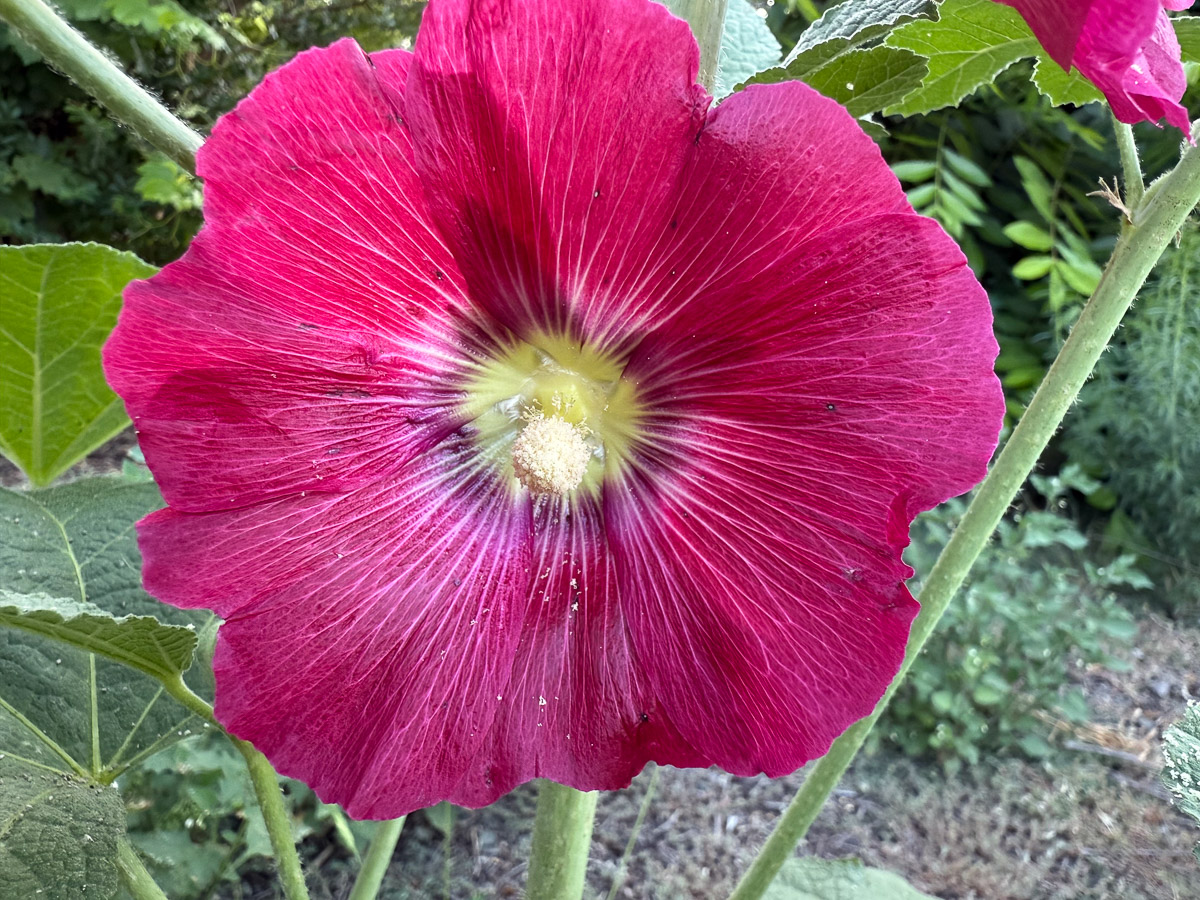
The dye garden has its own cycle. I won’t be ready to dye blue yarn until the indigo plants get big enough…and they aren’t even planted yet for this year. Fortunately I have some dried cosmos and hollyhock flowers that I can use, but that’s only if I have enough yarn left from previous years. The cycles don’t always overlap the way you want them too.