Way back in January I wrote the 14th Pasture and Irrigation Renovation post. I like my posts to be in order, but now I have skipped some important updates. Too many photos. Too confusing. Too much other stuff going on–lambing, teaching, deadlines, etc. The whole point of this renovation was to feed sheep and make it easier and more efficient to do so. If you look back at that linked post you’ll see plants growing, but they are small and there is a lot of bare ground. Fast forward past winter rain, warming temps, and 3 months. I’ll change the name of this series to Grazing and Irrigation.
The original plan when we applied for funding was that we might not be grazing for a year. It was evident by April that the pasture needed to be grazed NOW. I was committed to a teaching gig at the end of April and was going to put off grazing until I got back. Dan was not able to work on this only two weeks after a knee replacement. My brother, Dave, knowing how important it was to get started with this, offered to help set up the grazing before I left and handle it while I was gone.
A major problem was that all the permanent interior fencing had been removed at the beginning of this project. We would have to rely on electric net fencing. We gathered all the lengths of net fence that were stored in the barn.
We spread these out to figure out what we had and in what condition it was.
Dave made a plan and laid out fence, beginning in the northwest pasture, the one we call the Horse Pasture. Grazing started April 20.
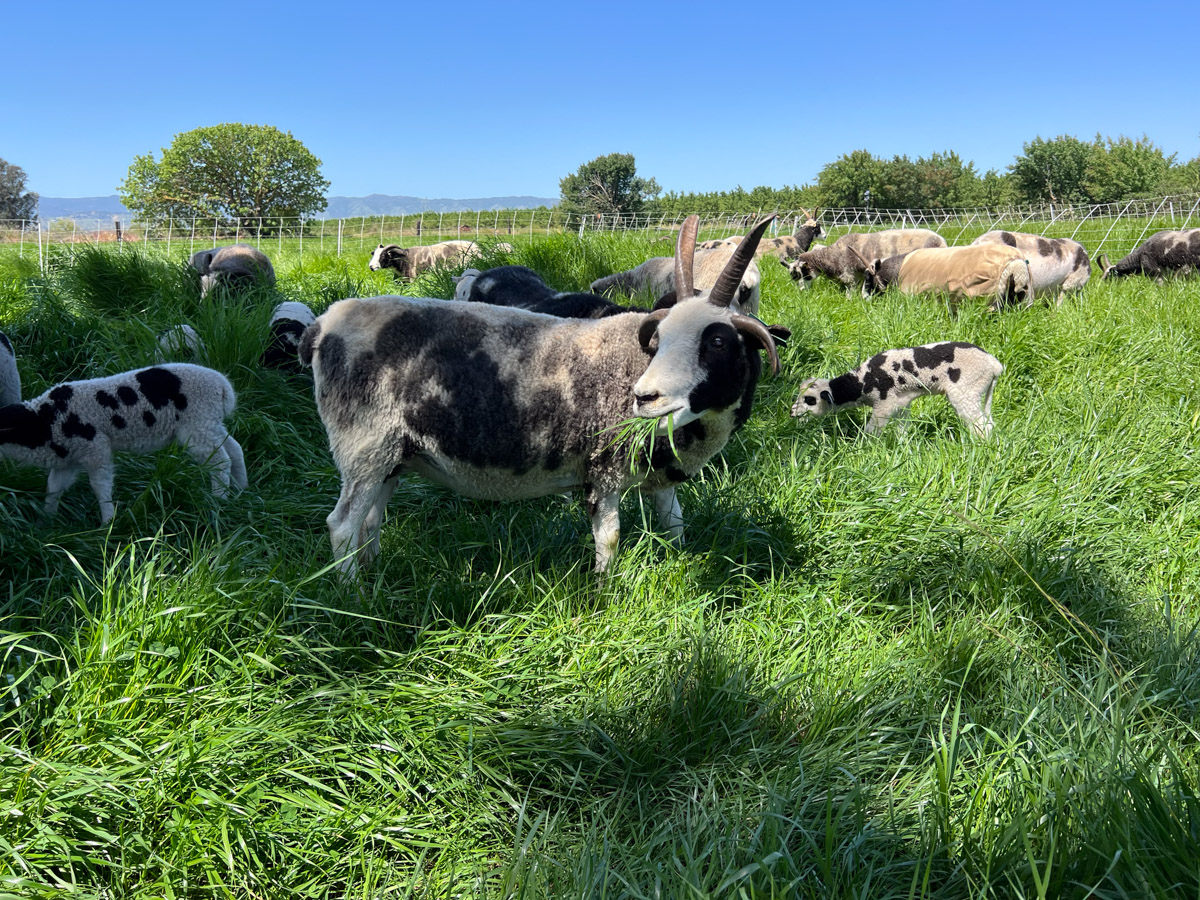
This gives an idea of how thick the grass was. The seed mix we used had three forbs (clover, birdsfoot trefoil, and chicory) and three perennial grasses. There is a lot of clover and a moderate amount of trefoil. I don’t identify any chicory and all the visible grass is annual rye.The seed already in the soil completely overwhelmed any perennial grasses that might have started to grow and was covering the clover as well. This is one reason we needed to get going on the grazing.
Dave made strips going north-south and we blocked the sheep into a portion of the first strip. The idea is to get them to eat one area down more thoroughly before moving them to the next.
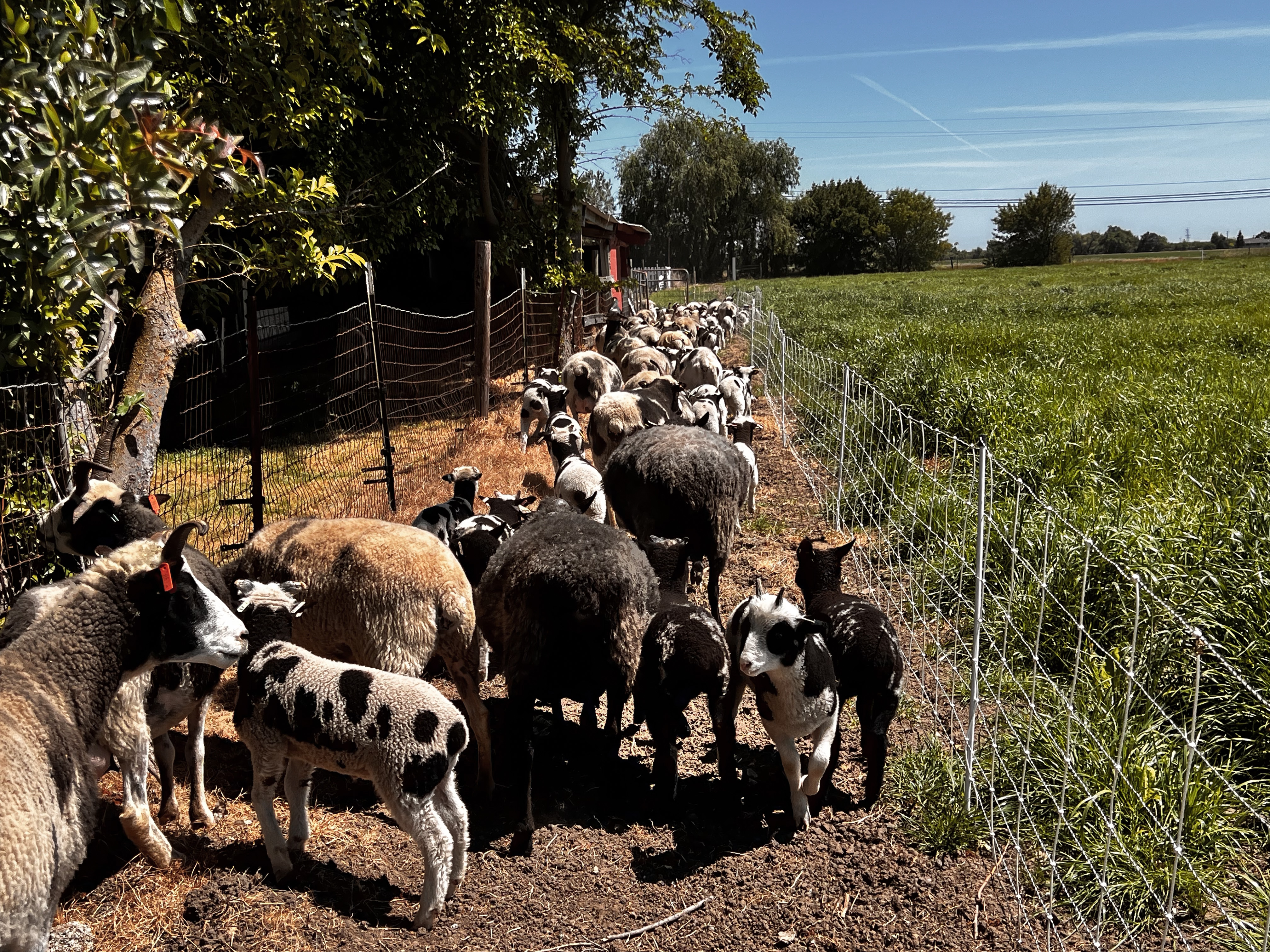
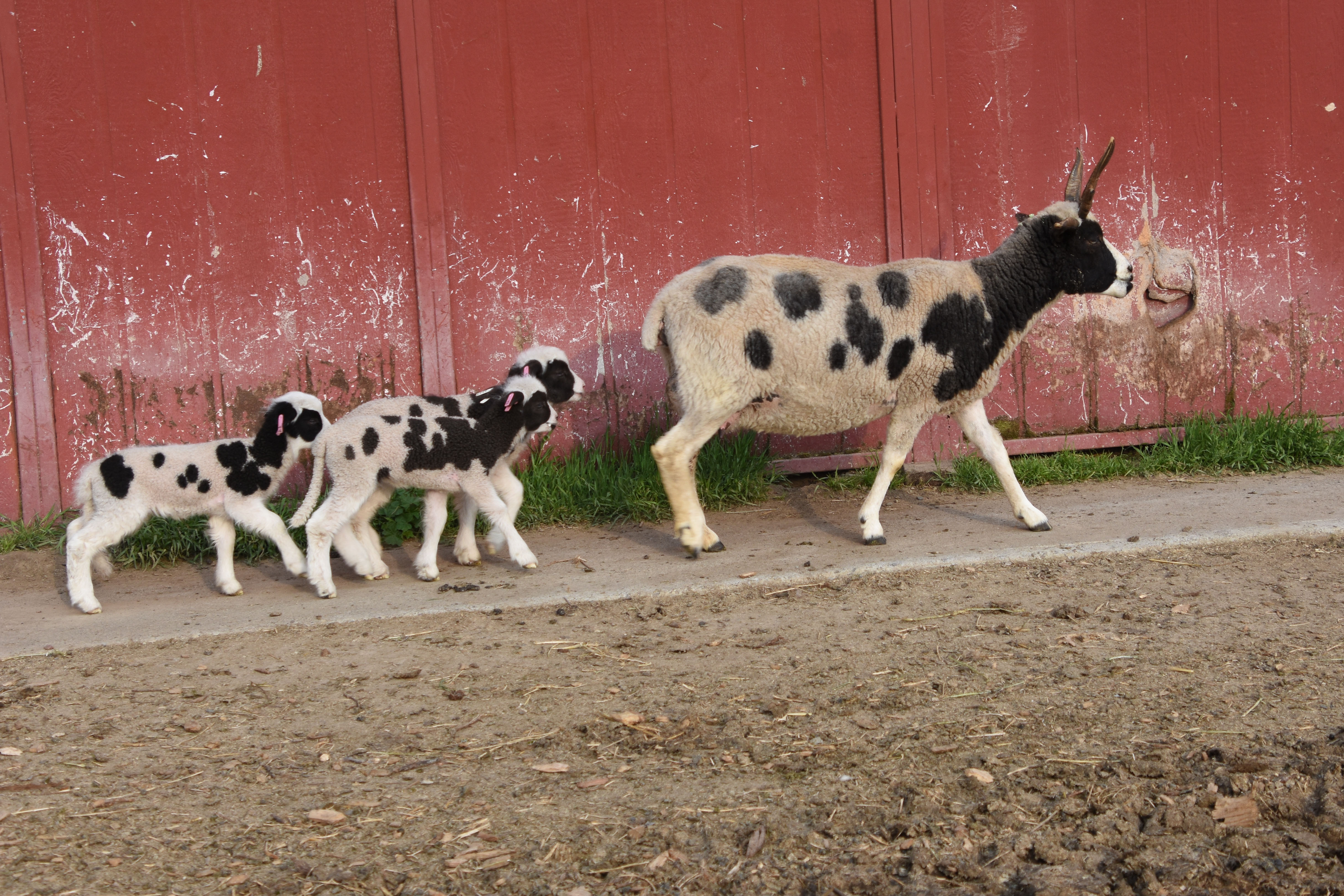
With no fences left in the pasture Dave had to create a lane to direct the sheep from the barn to where we wanted them.
You can see in this photo how the tall grass is trampled more than eaten.
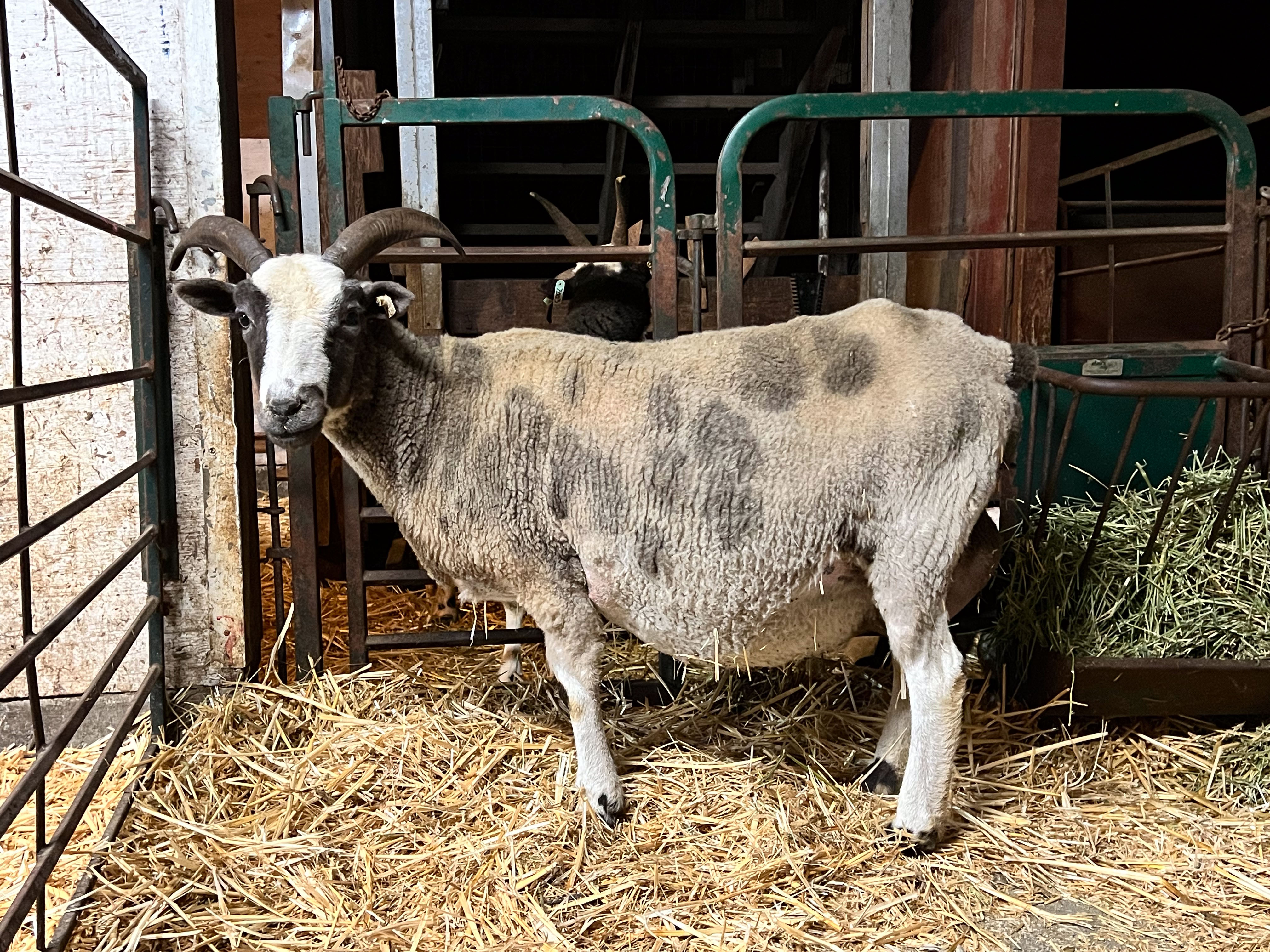
This ewe may have not got the message about eating the grass instead of wearing it.
There is no drinking water in the pasture so at some point the sheep go back to the barn for water. This is something we have to work on.
Most of the lambs came as planned during the month of March. There were some late lambs, also expected, but not originally planned. That is because I unexpectedly acquired a ram in late November.
Ginger Lynn’s Eli was sired by a Meridian ram that I sold a few years ago.The breeder of Eli sold him to someone who unexpectedly needed to re-home him due to a move, so we drove to the Redding area to pick him up. When I got him here I decided to put a few ewes with him. We hadn’t bred the whole flock this year because of the pasture renovation project that has been described in other posts. A 5-month gestation means lambs in late April or early May.
Here is Eli after shearing in January. He is not here anymore because I returned him to the breeder who wished she had not sold him to the other person. I hoped for some nice lambs.
This is lamb # 2555 born April 27, the only ewe lamb from this group. Ginger Lynn’s Eli x Meridian Belle. Belle is my granddaughter’s sheep and this lamb is sure pretty, so she will stay and I’ll let Kirby think of a name.
Jasmine was next to lamb with a ram lamb but I can’t find a photo right now.
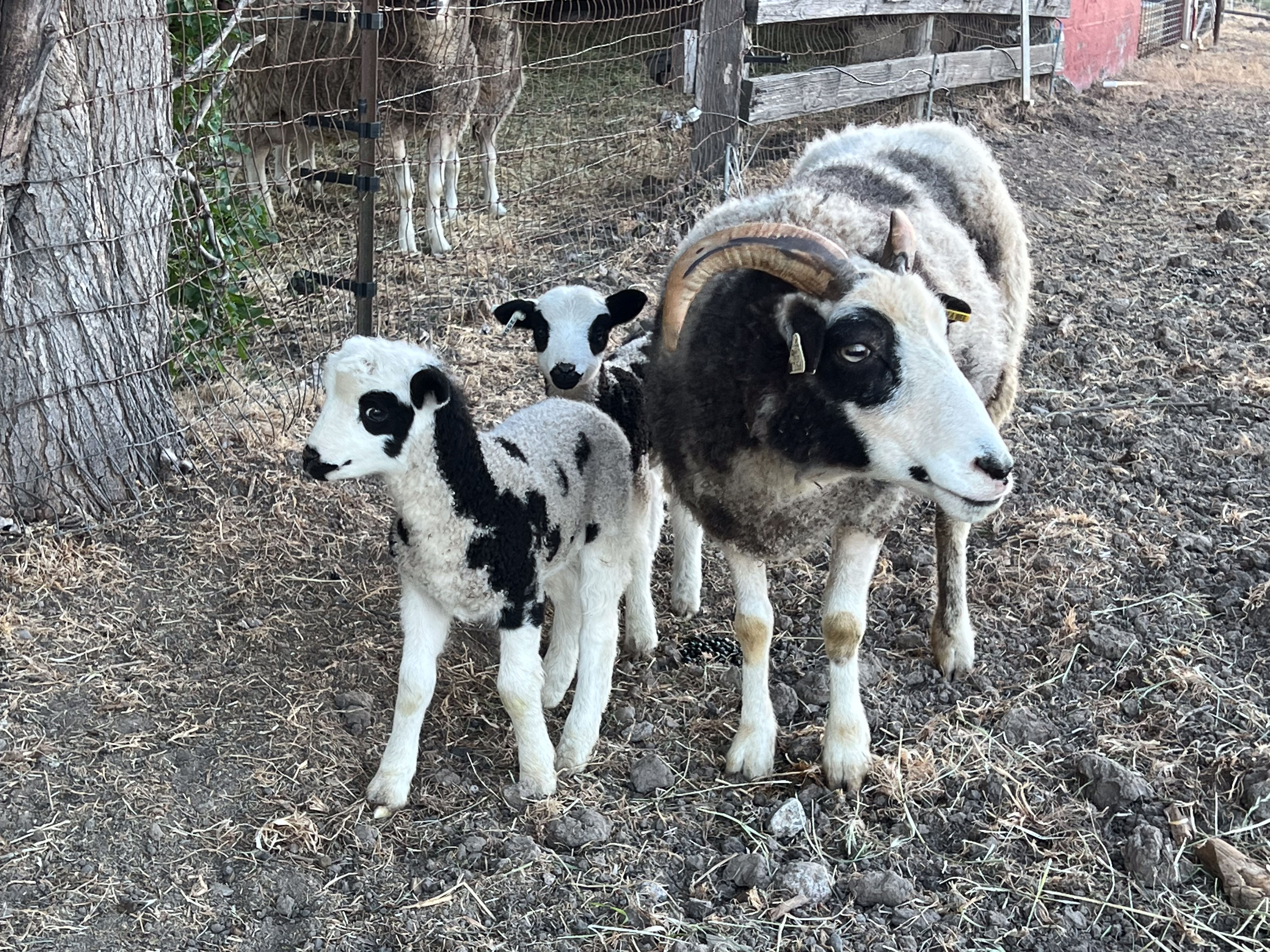
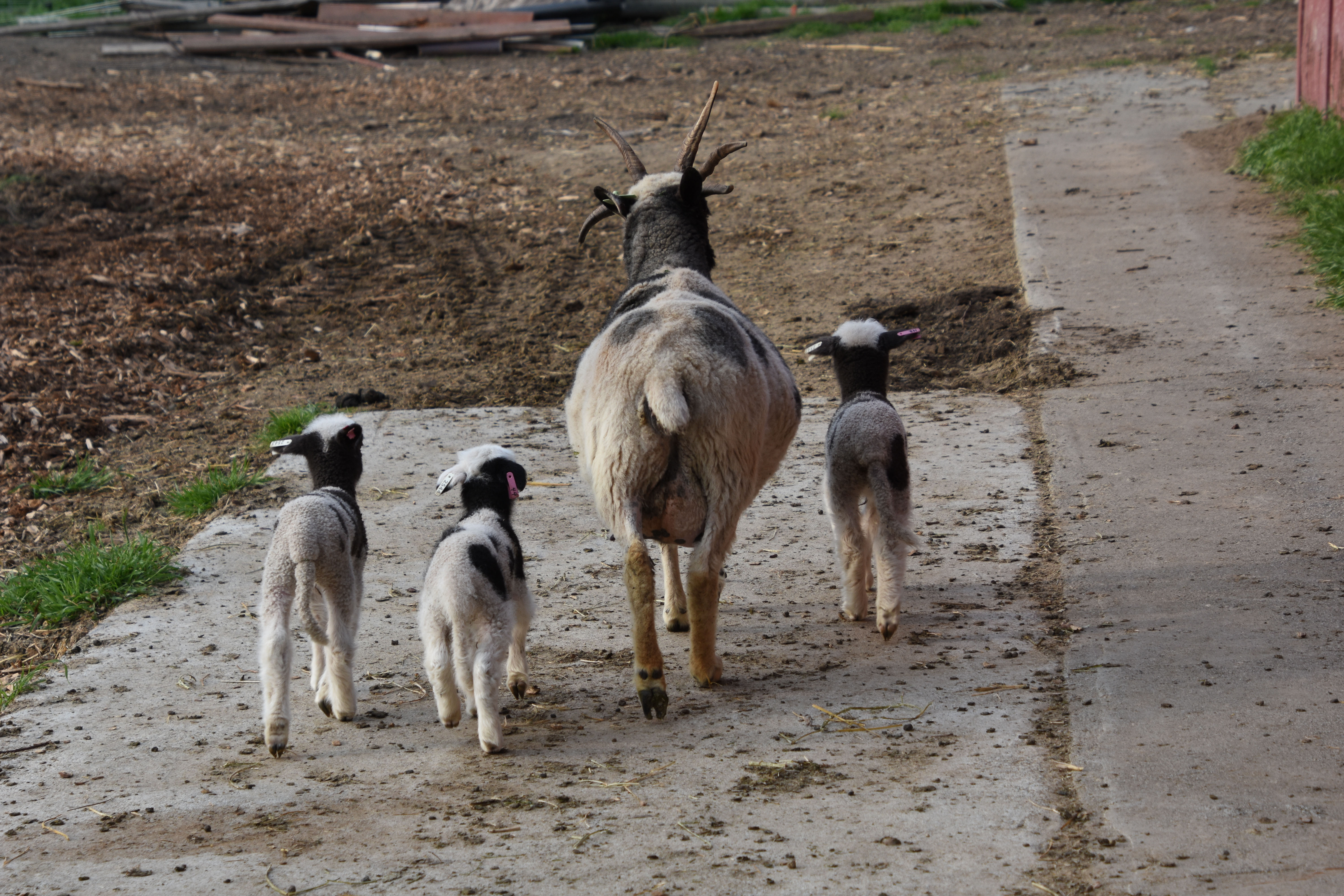
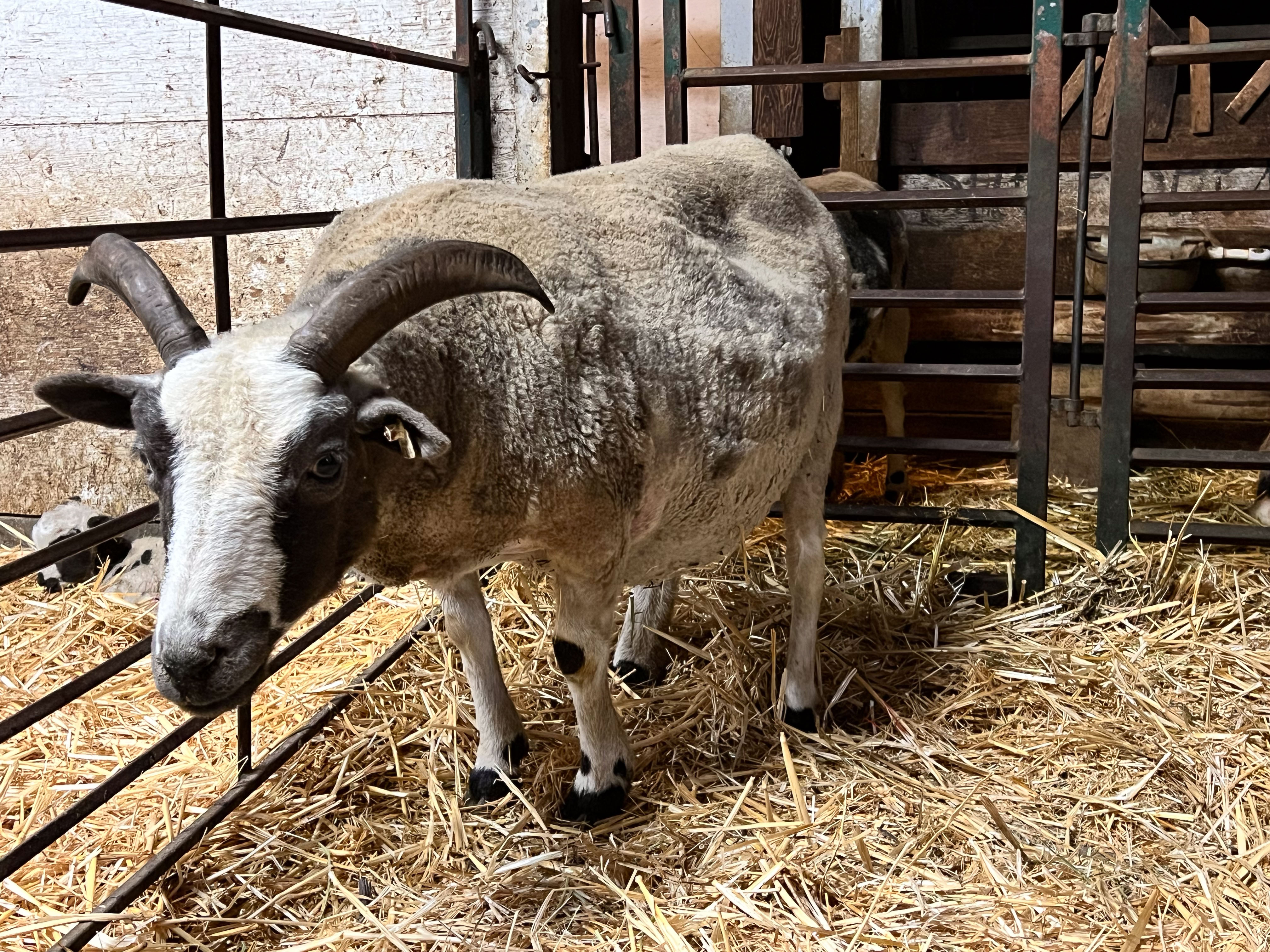
Bide a wee Hallie is ten years old and these will be her last lambs. These are two ram lambs, one with 4 horns and one with two.
Here are the last entries for the Lambing Board. Hallie’s lambs were 12 and 10 pounds!!
I spent many days (weeks, months?) working towards going to CNCH (Conference of Northern California Handweavers) as one of the teachers at this retreat-style conference held at Asilomar on the California coast. I have taught Learn to Weave many times and can do it without thinking, but the prep is different when I am not teaching at home and when there will be so many people in the class. This is a class presented to people who may have some weaving experience but not enough to warp a loom themselves, people who may have woven long ago but need a refresher, and those who have never woven anything. Many don’t have looms or at least not looms that are portable.
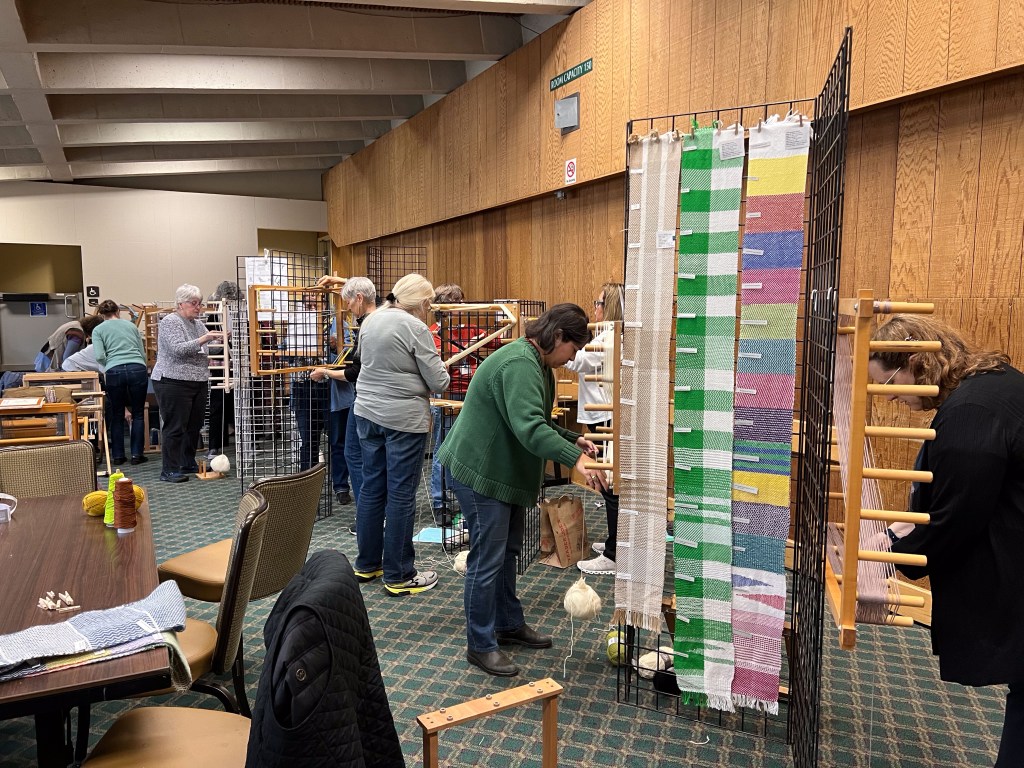
Fifteen people signed up for this workshop. Five of them were bringing looms, five looms were borrowed from local guild members, and I provided five. That’s not just the looms–five warping boards, benches, and all the equipment that goes along with winding warp and weaving. I also supplied yarn, and not being someone who wants to tell people they have to choose only one or two colors, I brought plenty of choices…and in wool or cotton–their choice. This is where I staged what I was to put in the trailer. It doesn’t include the grid wall that was already in the trailer. You’ll see that in use in some of the photos.
I got the classroom set up by Thursday evening. Many thanks go to the person who organized the conference and made sure that I would have two helpers. My two requests for teaching the class were space (this room was great!) and another person (I had two!). With a beginning level class there are a lot of questions along the way one person can’t provide all the answers in a timely manner. There was also the issues of unfamiliar looms getting them set up to work with the class.
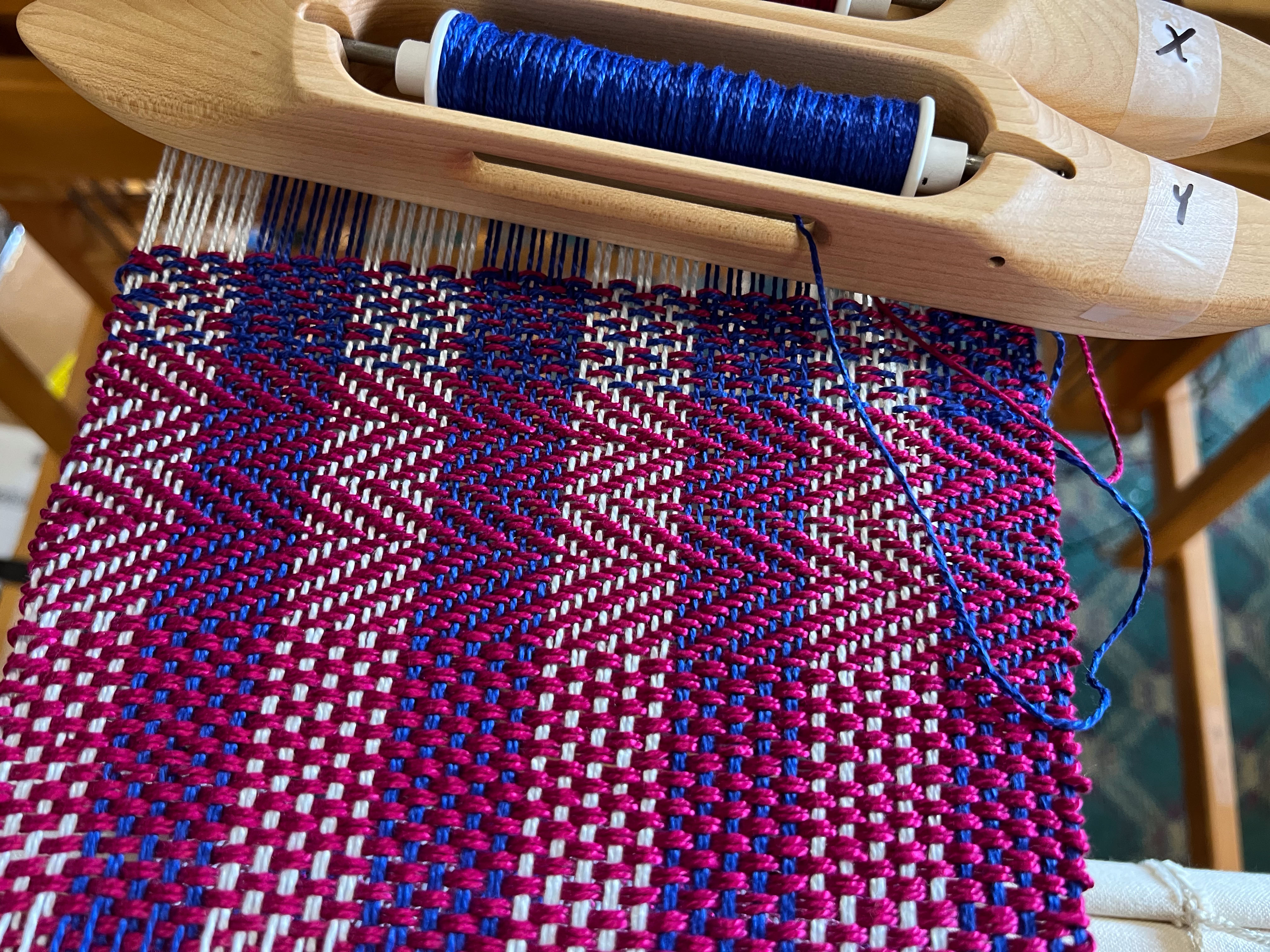
Samplers in wool on the left and cotton in the center. On the right are some of my shawls.
One of the perks of teaching this class was staying at Asilomar. My room was at the end of this building.
We set up grid wall to hold warping frames on this side of the room.
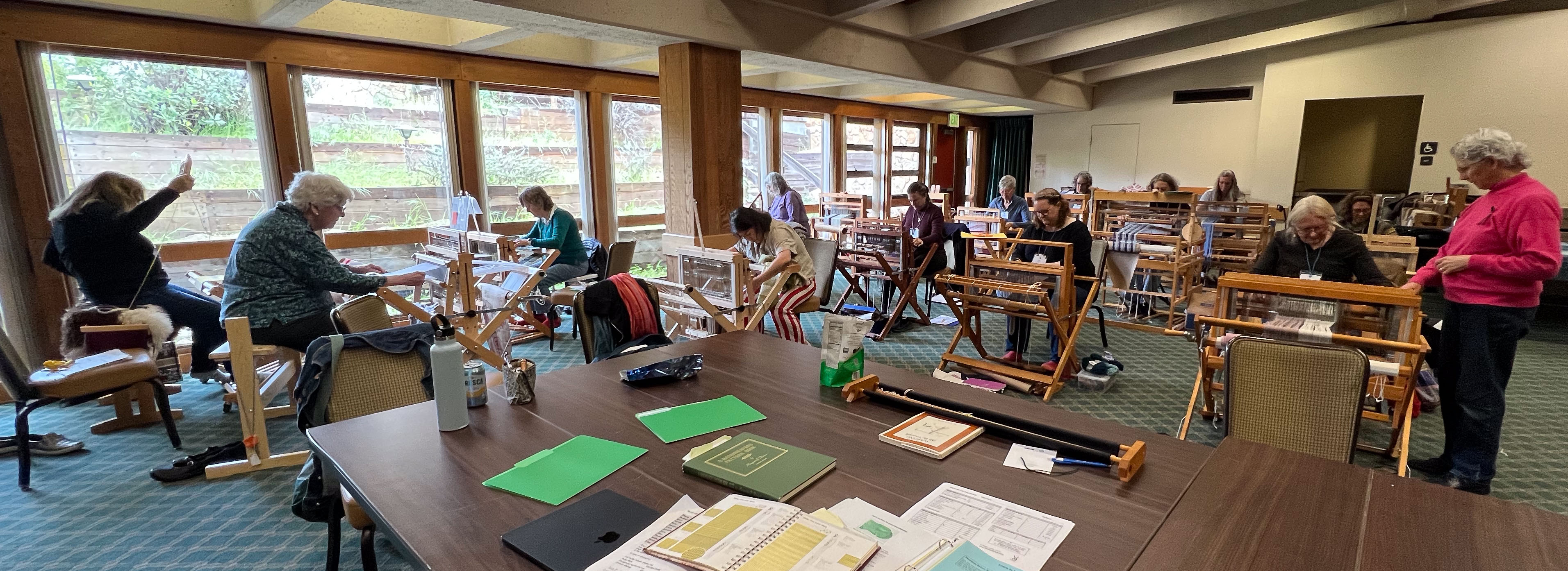
The looms were near windows on the other side.
These are only portions of the samplers people could weave.
The workshop was Friday and Saturday with finishing up on Sunday morning.
This is a photo of most of us. Thanks to all of the participants and the helper weavers! I hope to do this again. When I teach this class here at the farm I take three to five people. The class is described here.
Part of the prep for this workshop was planning for farm chores. My husband had a knee replacement only a few weeks before and there were limits to what he was supposed to do. Thanks to a good friend and my brother who handled a lot of that.
When I got home Sunday there was a new lamb which was not a complete surprise, but that’s another story.
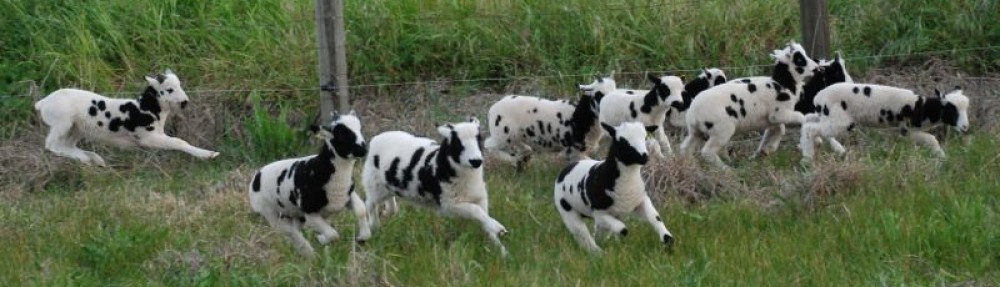
I’ve been trying to get the lamb pages on the website updated, so most of the photos I’ve been taking are of individual lambs…and trying to make sure I can read ear tag numbers. If I go out earlier in the morning I sometimes find lambs bedded down next to their moms. There were five sets of triplets this year.
This is Janna with her three lambs–two rams and a ewe.
Bide a wee Trista also has two rams and a ewe. You can’t see the ewe very well–she is mostly black and behind the two spotted lambs.
Sweetgrass Tranquility with triplet ewe lambs.
Addy with her lambs, the first of the season. Addy is a BFL/Jacob cross.
Patchwork Amara was the other ewe to have triplets, but Sparky required intervention and became a bottle lamb. Her story is here and she features in several of the posts since then. Her brothers are 2527 and 2528 on the ram lamb page.
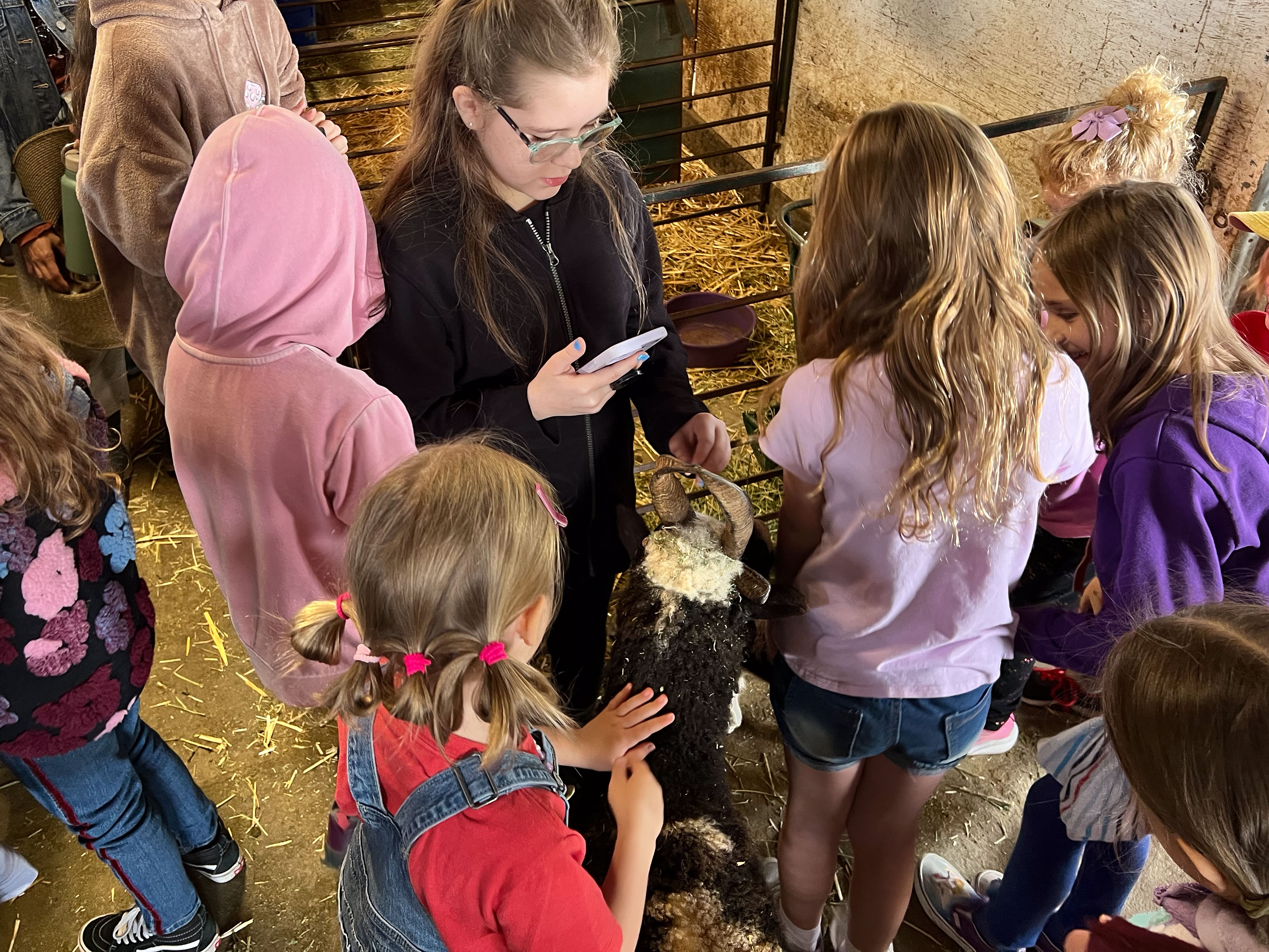
It was a busy over the last week. (Well, it’s always busy, but last week I was scheduling other people into the routine.) On Friday I hosted a field trip of 26 third graders as well as a few other visitors. On Saturday Kira K led a Knitters Retreat, and on Tuesday about 15 homeschoolers visited. These aren’t great photos but I said I’d take photos where the kids are mostly not recognizable.
Jade is in the middle of all those kids and loving it!
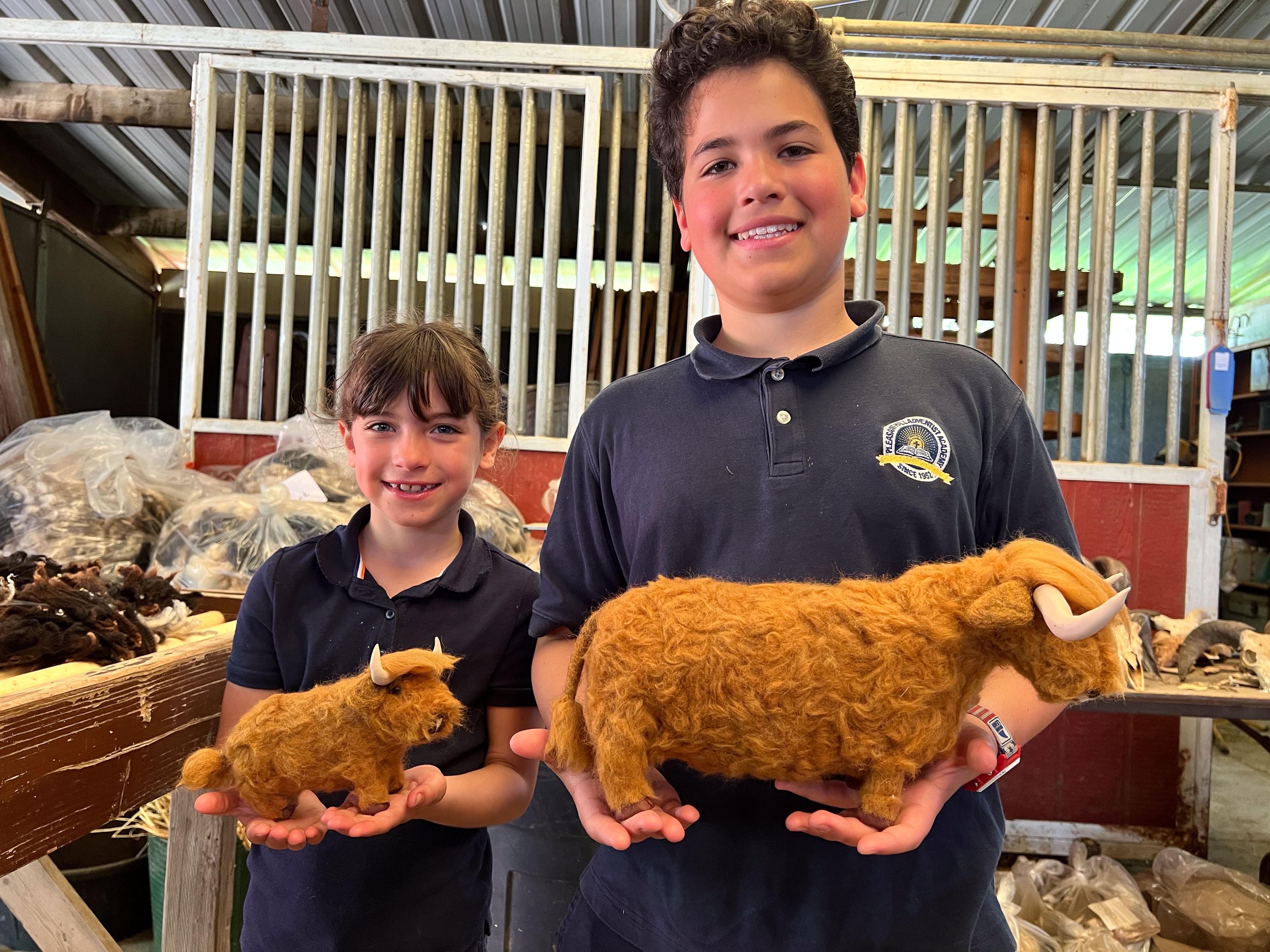
These two were glad to have me take photos. The fifth grade boy taught himself to needle felt watching YouTube videos! He came here to buy fleece for his next project and is ambitious enough that he plans to wash the fleece and then felt with it.
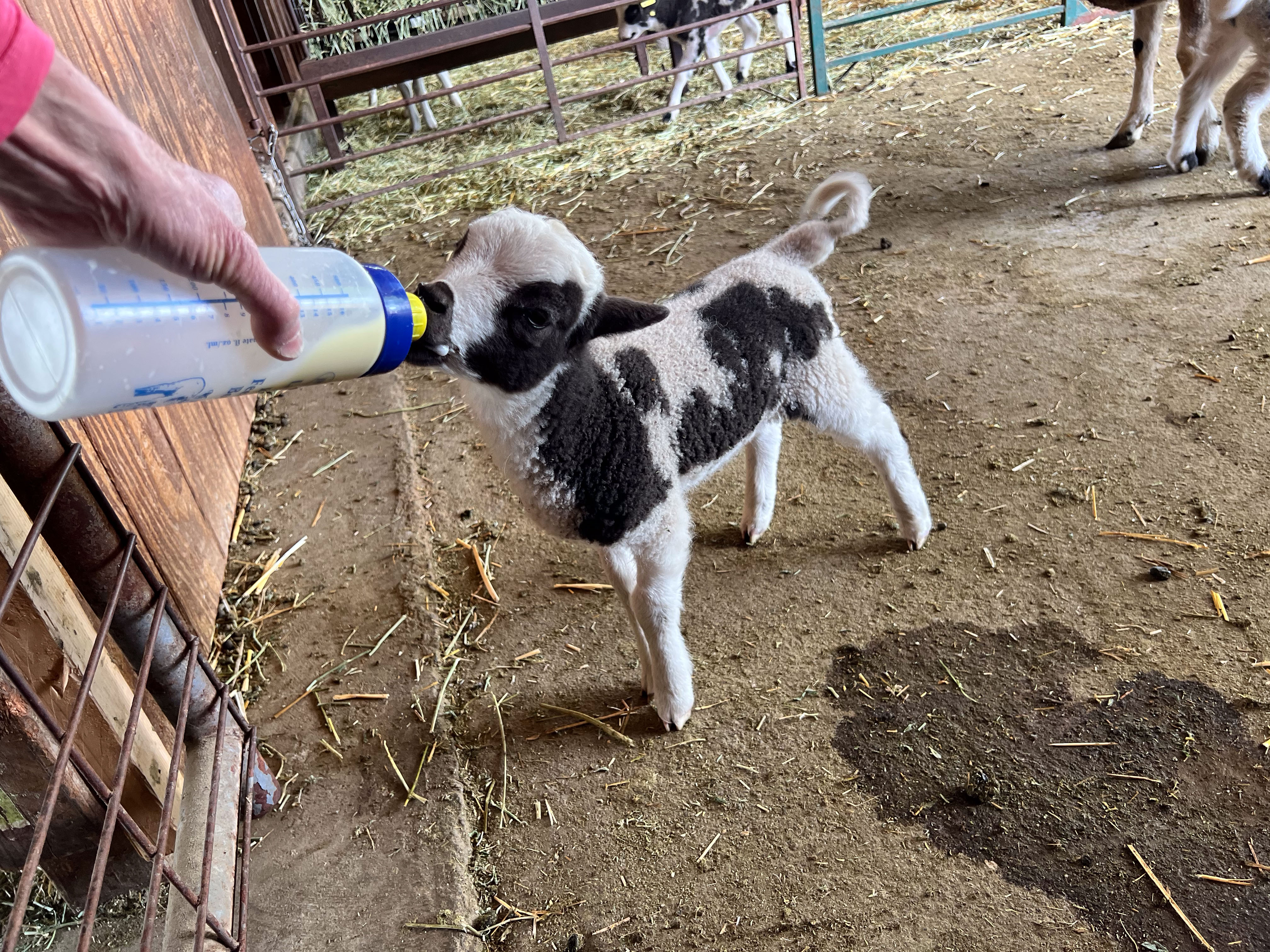
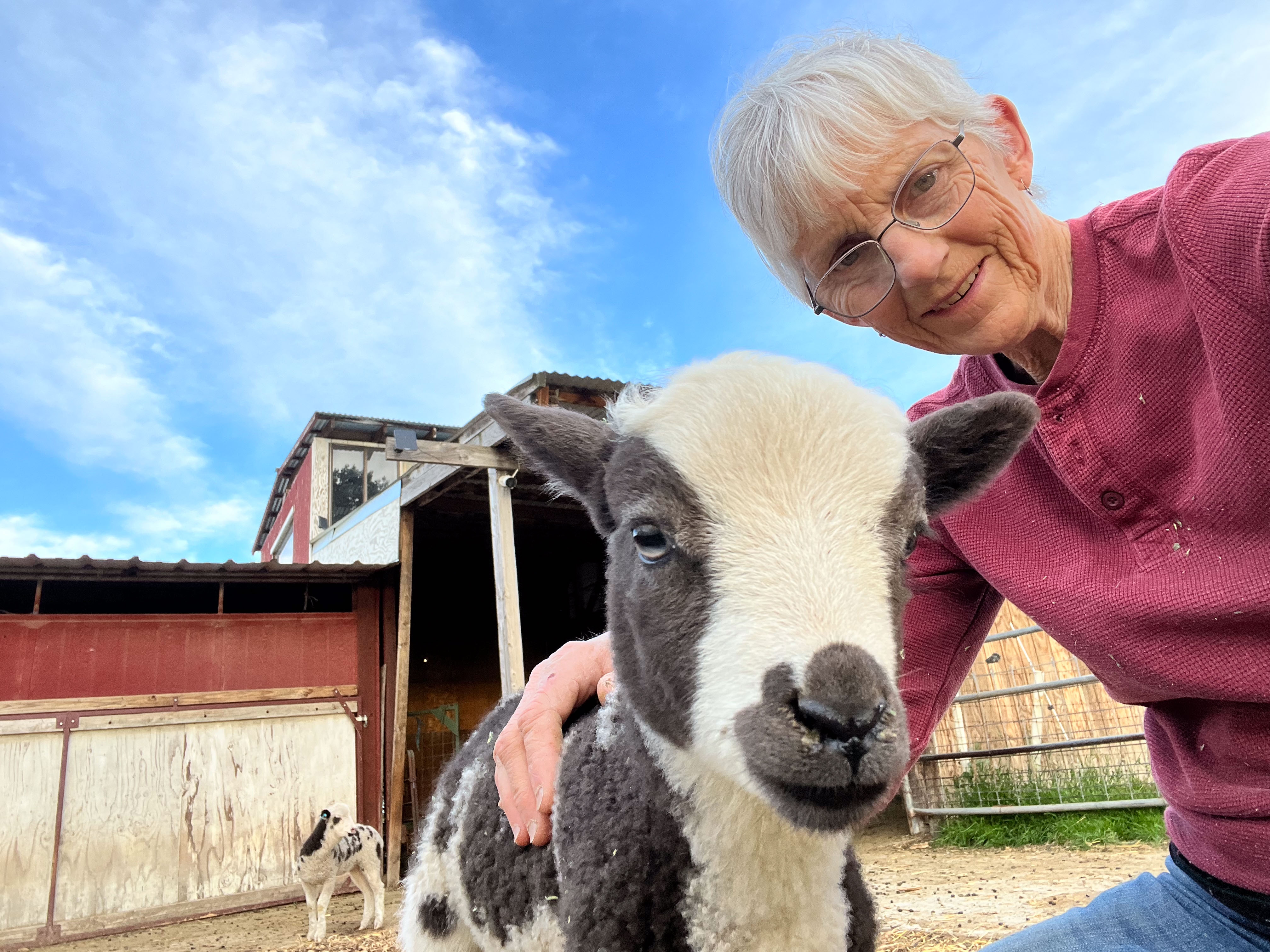
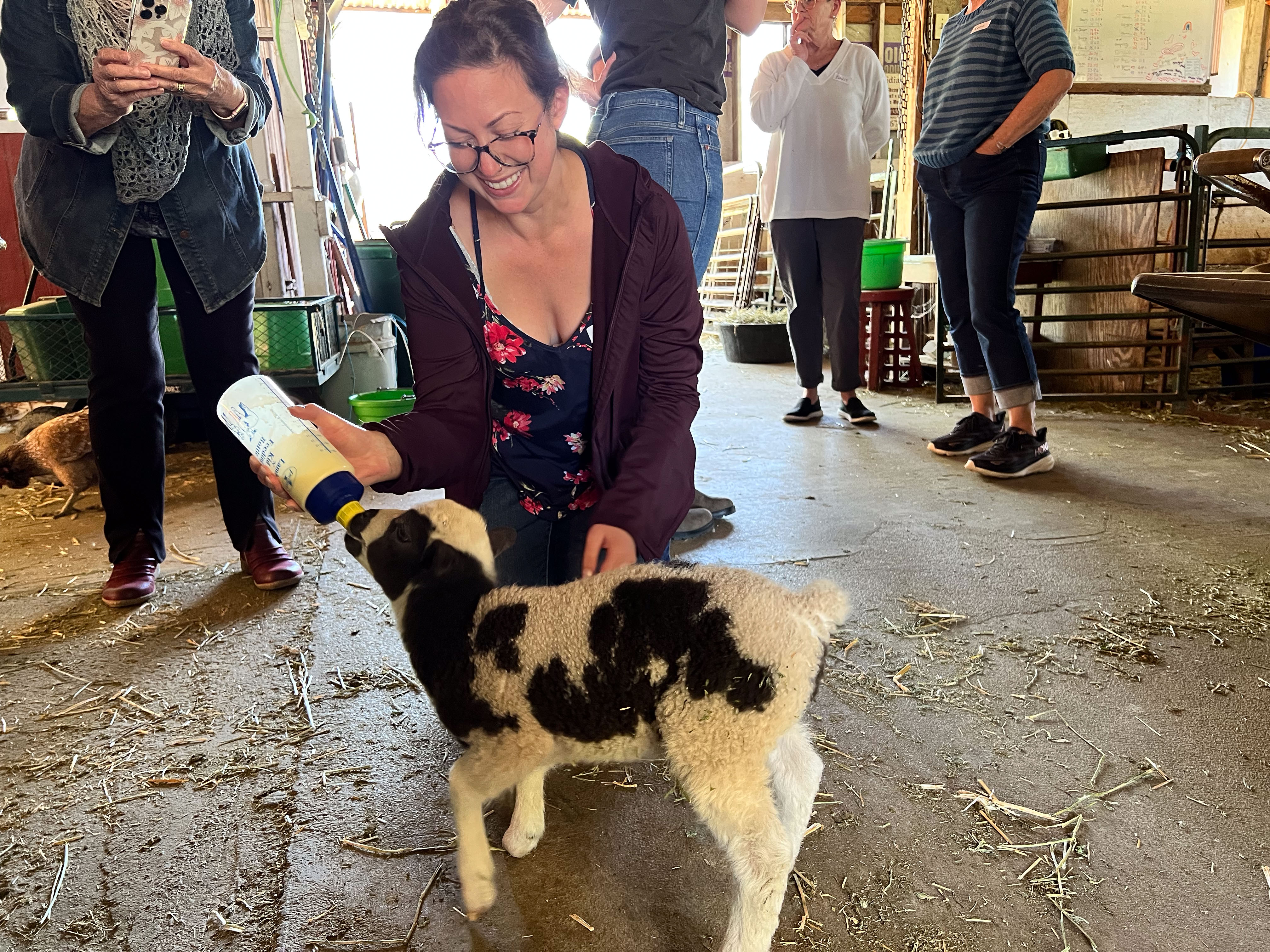
Two people from Kira K’s Knitters’ Retreat. A big part of the retreat is going to the barn and cuddling lambs. That’s Sparky on the left and another lamb I’ve been partially bottle-feeding.
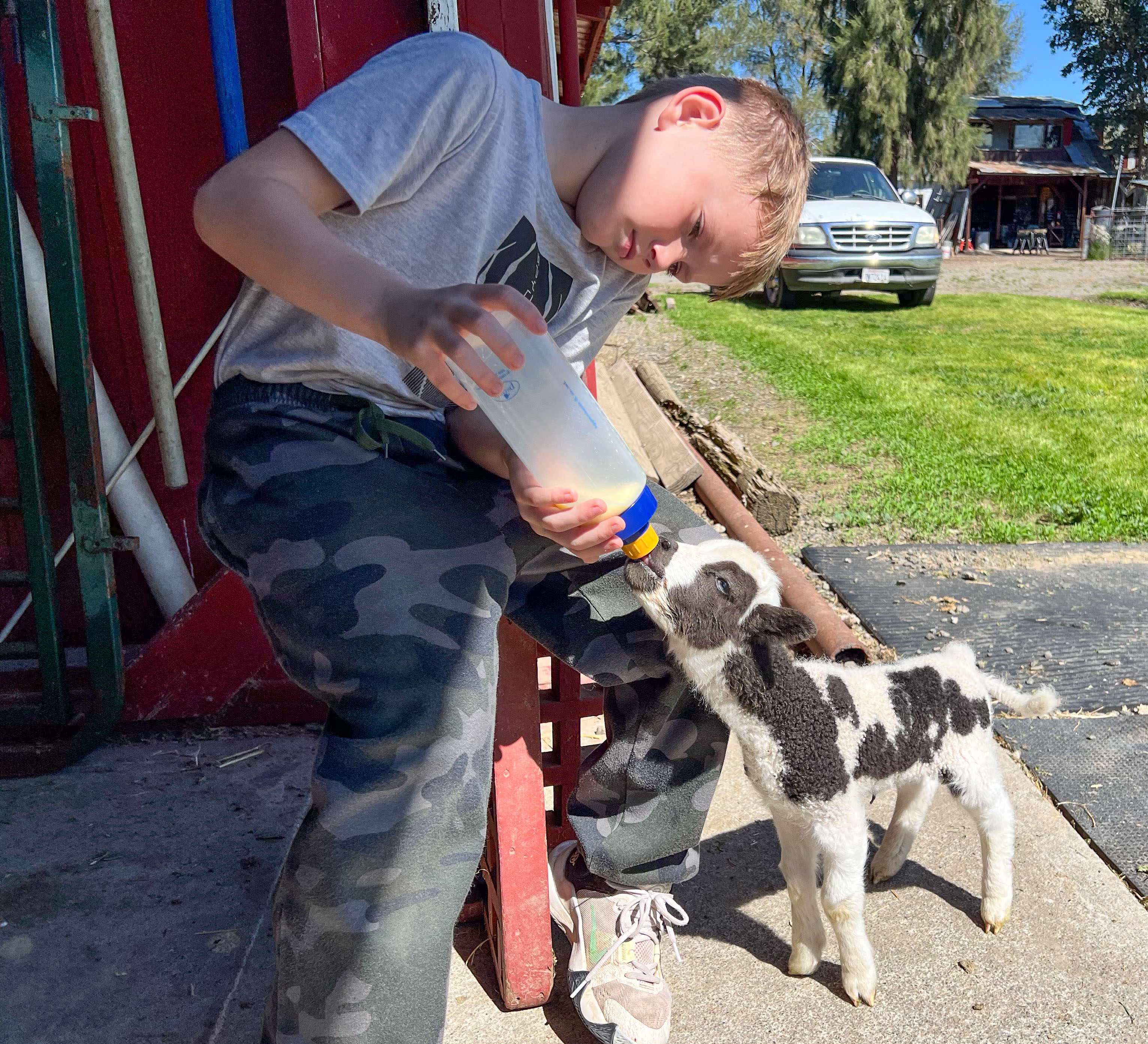
Sparky getting her 1 p.m. bottle.
Kira describing the knitting and crochet patterns the attendees were given.
The weather was great and everyone sat outside at the picnic tables the whole day.
Here are some examples of beginning the knitted cowl. These are both naturally dyed Timm Ranch yarn. The yarns are dyed with cosmos, madder, and hollyhock.
I took photos the first day the grandkids were here and shared them in this post. The focus for the next few days was the barn and lambs.
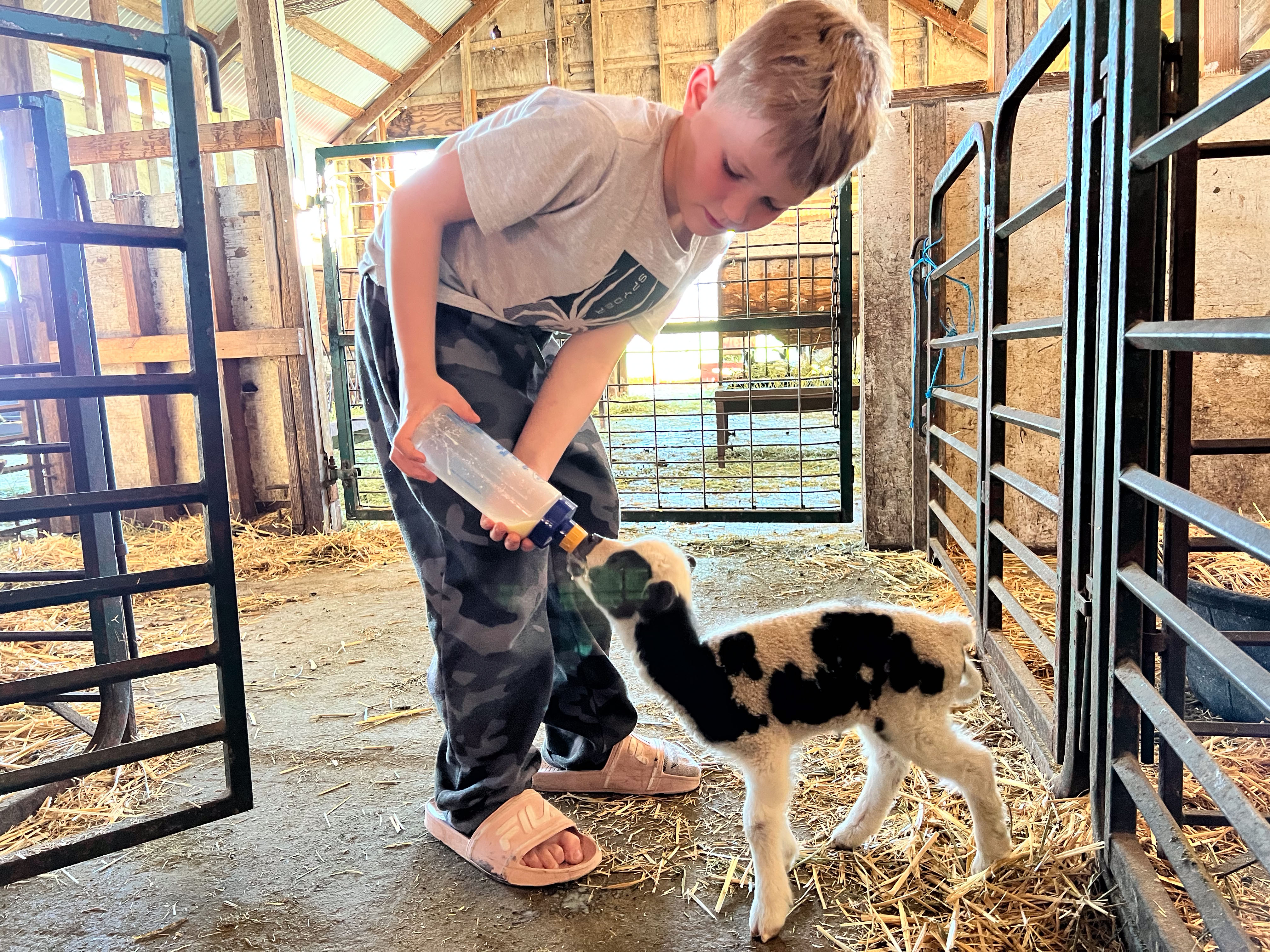
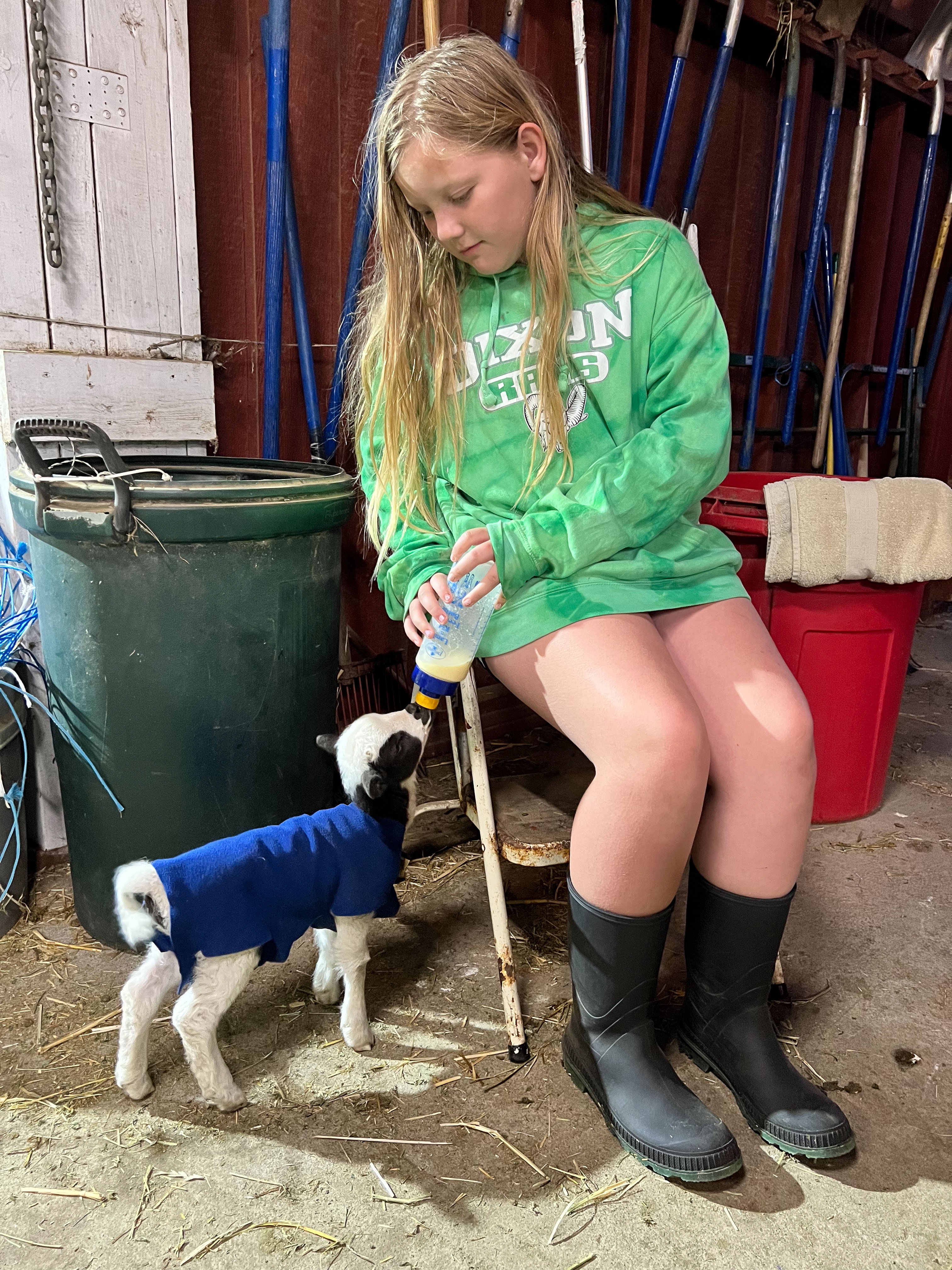
The kids traded off feeding times for Sparky–at least the two mid-day feedings.
No one volunteered for early morning or late night.
We went to Fairfield to have lunch with by brother and sister-in-law. Dave makes sure the GREAT part of Great-Uncle Dave is not forgotten.
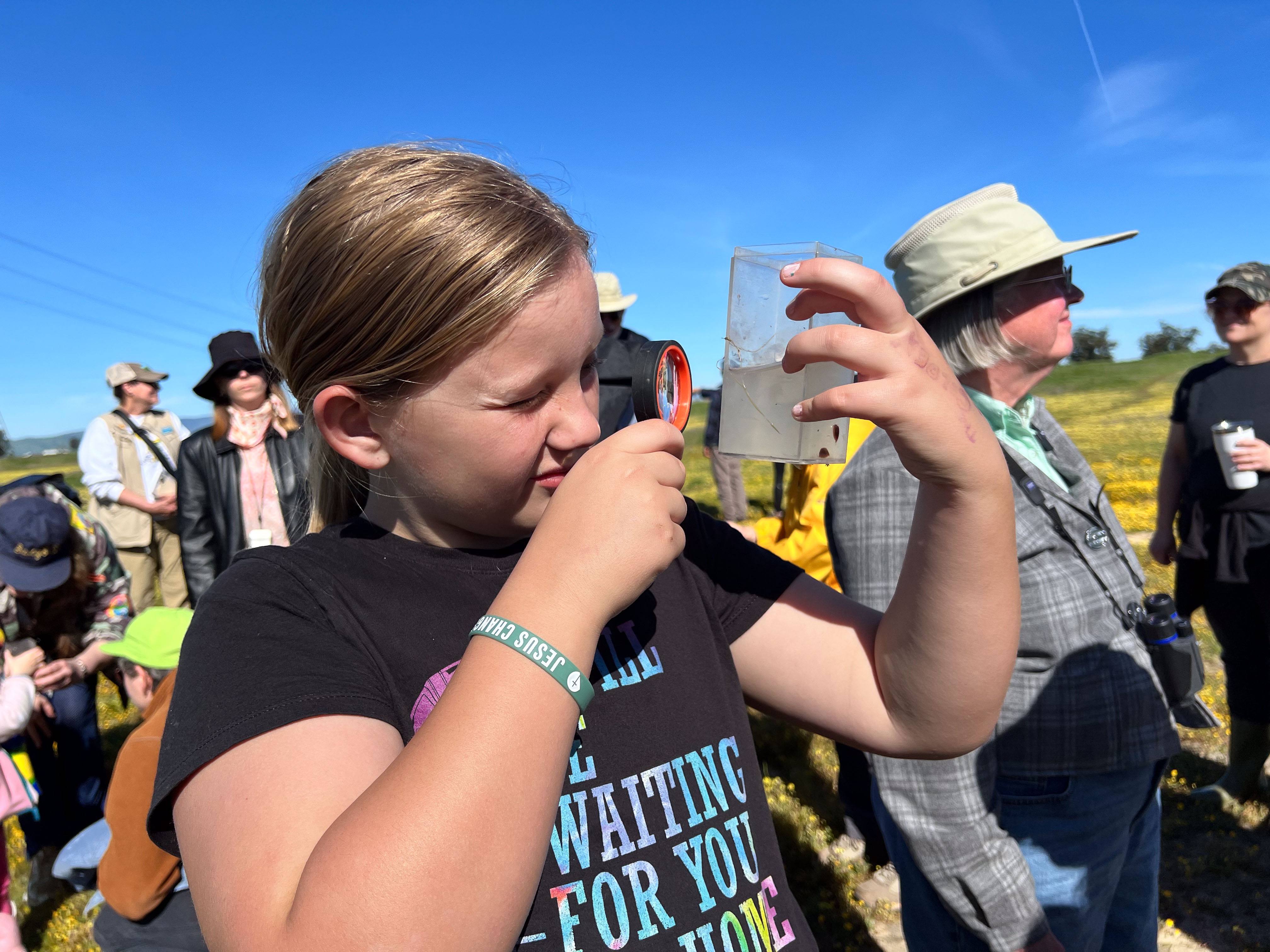
On the Sunday of the kids’ visit we went to Jepson Prairie for a docent-led walk through the reserve. The docents scoop aquatic creatures from Olcott Lake prior to the tours and share the containers with the public.
Kasen is looking at a Pacific Chorus Frog.
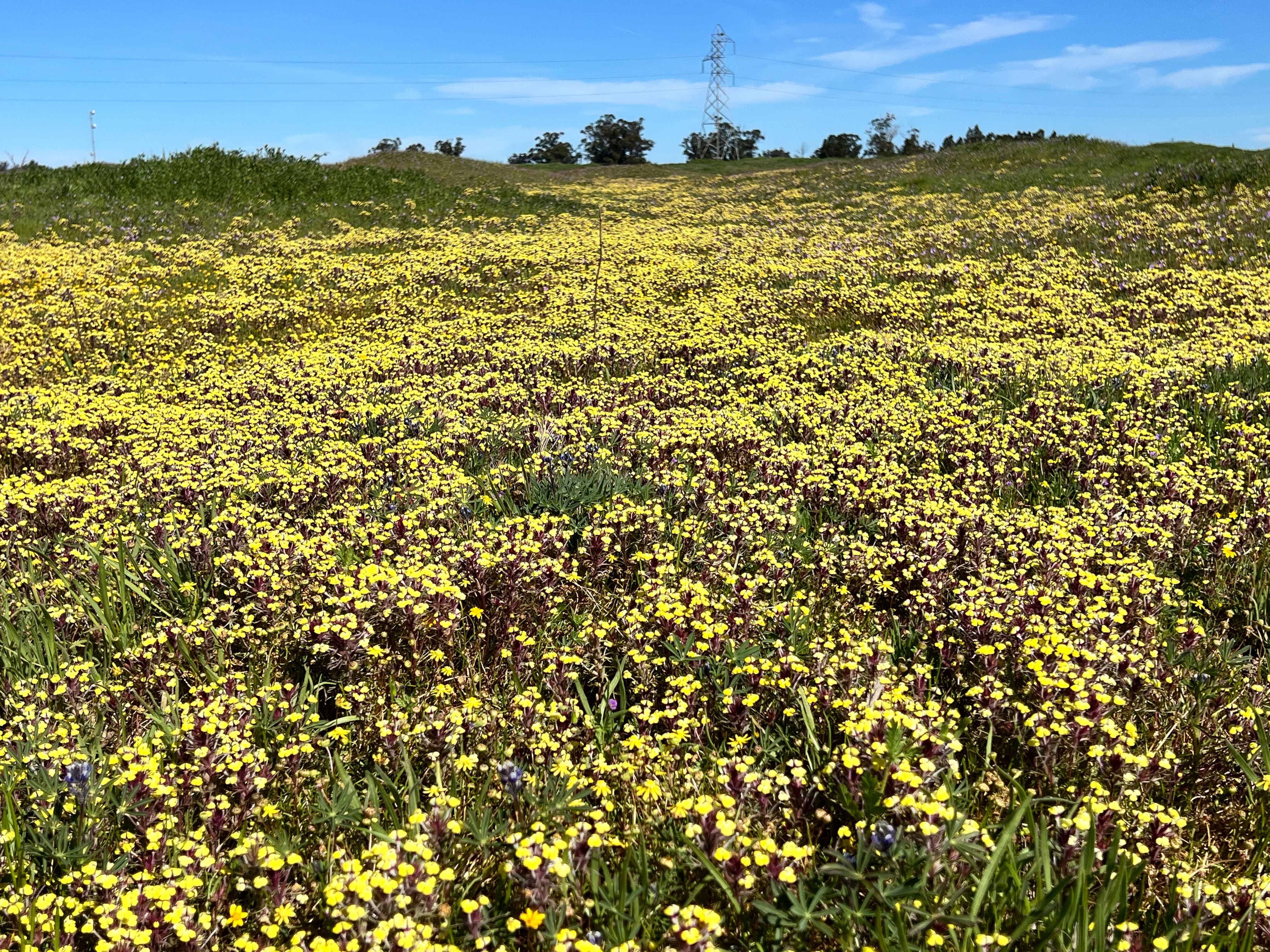
The view is filled with a flower called Butter and Eggs .
The view to the south shows Mt. Diablo which features prominently is my photos take Across the Road. The clumps of flowers are California Golden Violet.
It is notable that the grass and other plants don’t grow as tall as at other sites. This area dries out quickly and plants have adapted to a short season.
Back at home some of the cousins from Sacramento came to visit.
The weather was nice enough for a snack on the deck.
More lamb feeding.
This photo features Jade and Sparky. I can tell that Sparky will someday replace Jade as the farm’s most friendly sheep.
I’ve written a few posts about lambing, but that wasn’t the only thing going on. During the middle of lambing the Texas grandkids were here for a week. Kirby, age 10, and Kasen, age 8, flew solo (without parents) in mid-March, also spending a few days with the other grandparents a few miles away.
The first afternoon here we walked across the road with Ginny. I like this view of Mt. Diablo due south.
This photo shows the main canal to the right. I got carried away just now and did a bit of internet research about this channel, which I know is called Sweeney Creek, but it doesn’t look much like a creek anymore. This document describes the Ulatis Flood Control Project constructed in the 1960’s and 70’s, a series of channels that end in the delta. The focus of the document is a fish survey done in 2023 and sampling point #9 is at this location. How does this relate to this post? The kids wanted to walk down to the water and the easiest place for that is below the structure at the right of this photo.
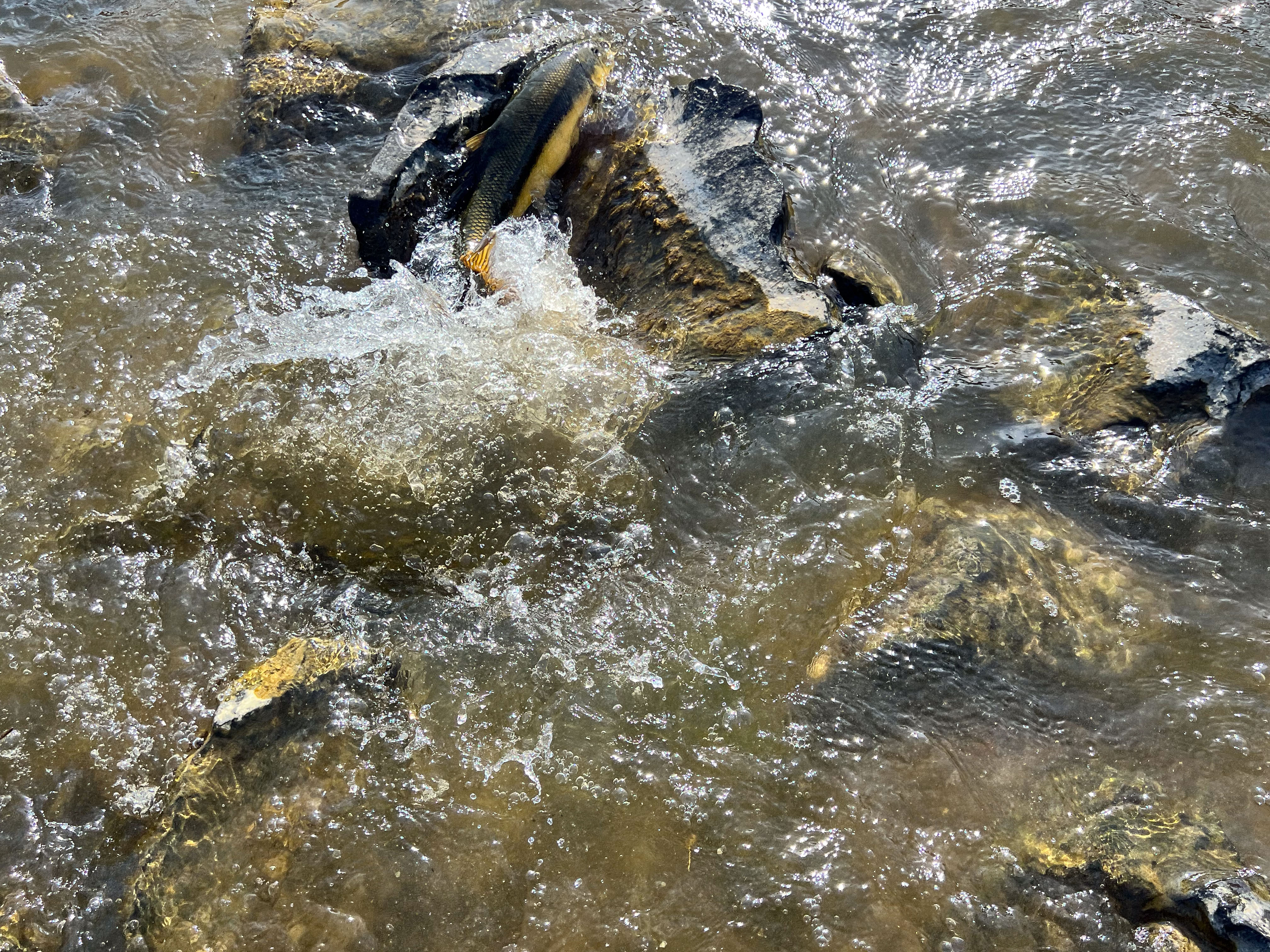
At that point we saw splashing and realized that there were a lot of large fish in the rocky area below that structure. There is a fish at the top of this photo.
In a small still area we saw over a dozen fish.
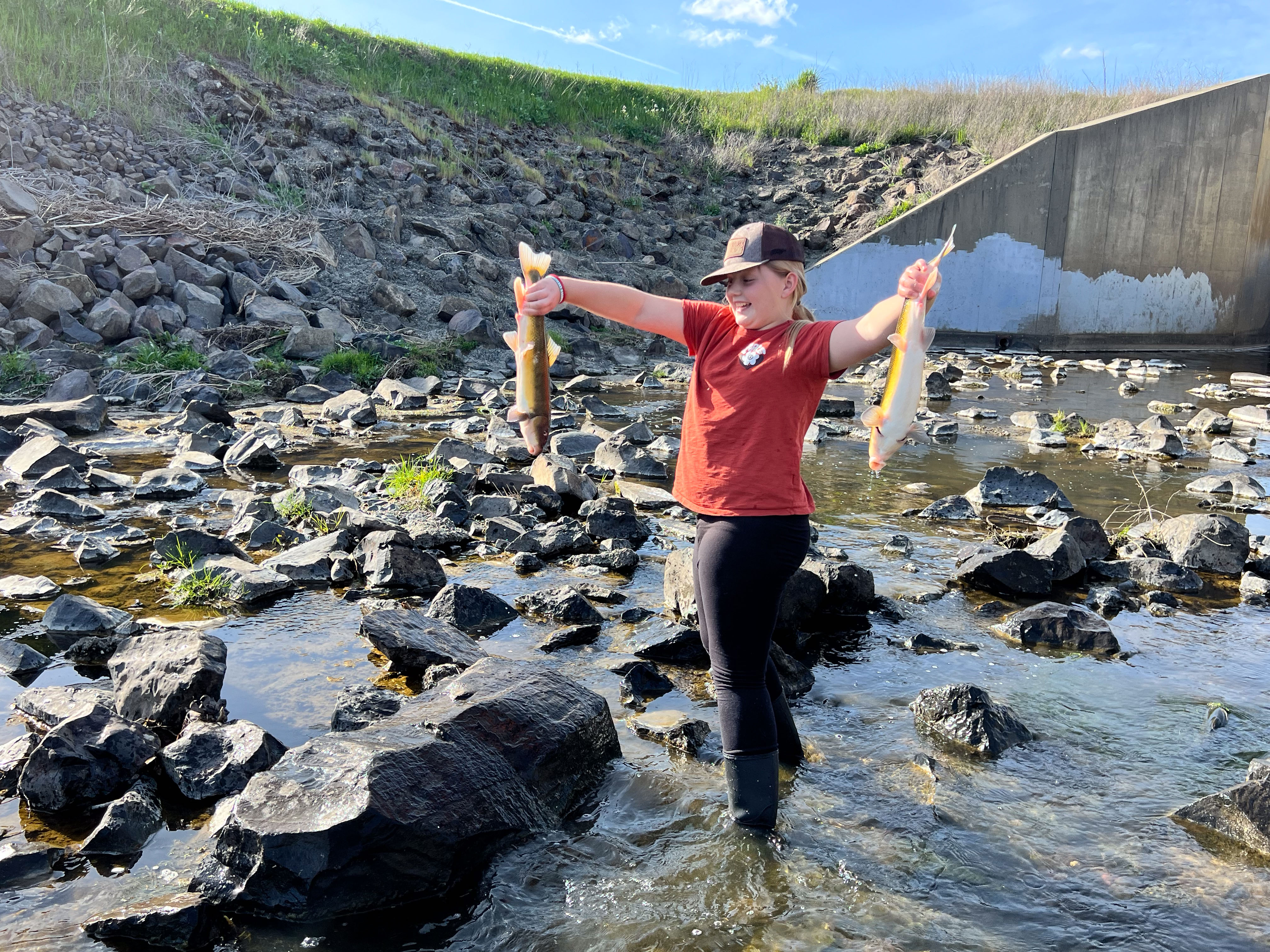
Kirby decided that a rescue was called for to move the fish from the small rocky pools to a place where the water flowed more freely. She was able to easily catch several of the fish that were in the small pool.
One of my friends identified this as a Sacramento sucker, which I learned is the native fish found at this location in that 2023 fish survey.
The kids spent about an hour splashing in the water and catching fish.
I walked along the water edge and an artifact I recognized. How many tennis balls have we lost during our walks?
This one has become its own ecosystem.
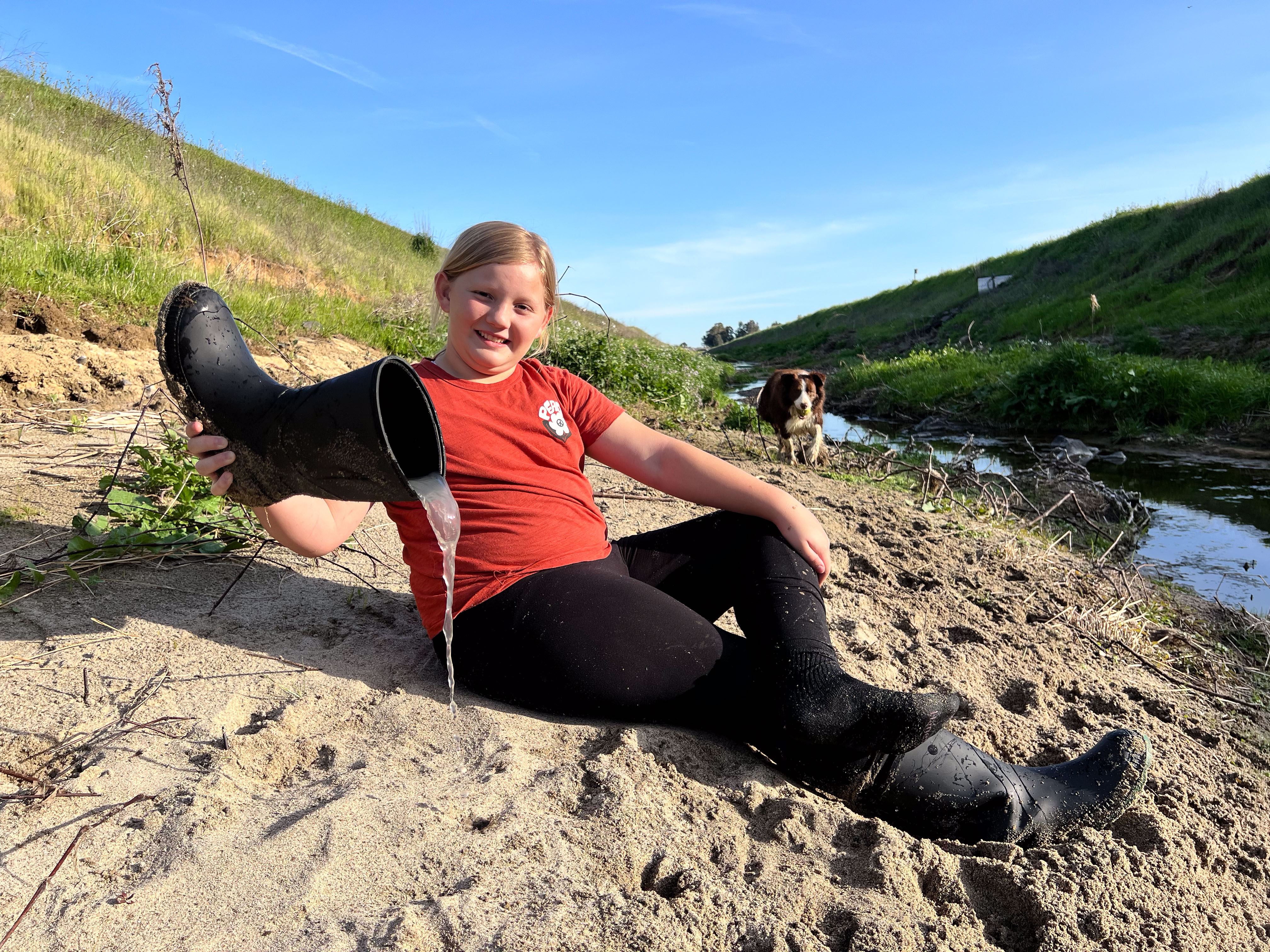
Kirby’s rubber boots didn’t keep her feet dry after awhile
I have lamb photos to share but not necessarily in order because I didn’t keep up as lambing progressed.
The last lambs of Lambing Season, Part 1, were born two days ago, March 31. Part 1? That’s another story, but there may be four ewes due to lamb at the end of April. This is Tamara with two ewe lambs, #2553 and 2554.
Bide a wee Trista lambed March 28 with triplets.
This photos was taken three days BEFORE lambing. Trista certainly carried that twenty pounds of lambs low. She is getting grain now to help her put some weight back on and supply enough milk.
This is lamb #2545 born to SilverRain March 21. Lambing had slowed down at that point.
The lambing board shows that there was a lot of action for about a week and then days between the later lambs. My granddaughter made the notes on the board before she left on March 25.
Sweetgrass Tranquility had triplet ewes March 19.
My grandkids were here for a week and shared bottle feeding Sparky. This is 8-year-old Kasen.
I was able to finish skirting and sorting the Jacob wool be the time lambing was over. This wool is now at the mill and hopefully I’ll have some of it back by the fall.
I’ve talked about this before–the seasons. Spring, Summer, Fall, Winter, and Lambing–right there between Winter and Spring. It’s a busy time. I wrote one blog post at the start and the one about Sparky two weeks into the season. It was an intense two weeks and now things have slowed down considerably. I’m waiting for three ewes to lamb by the end of the month.
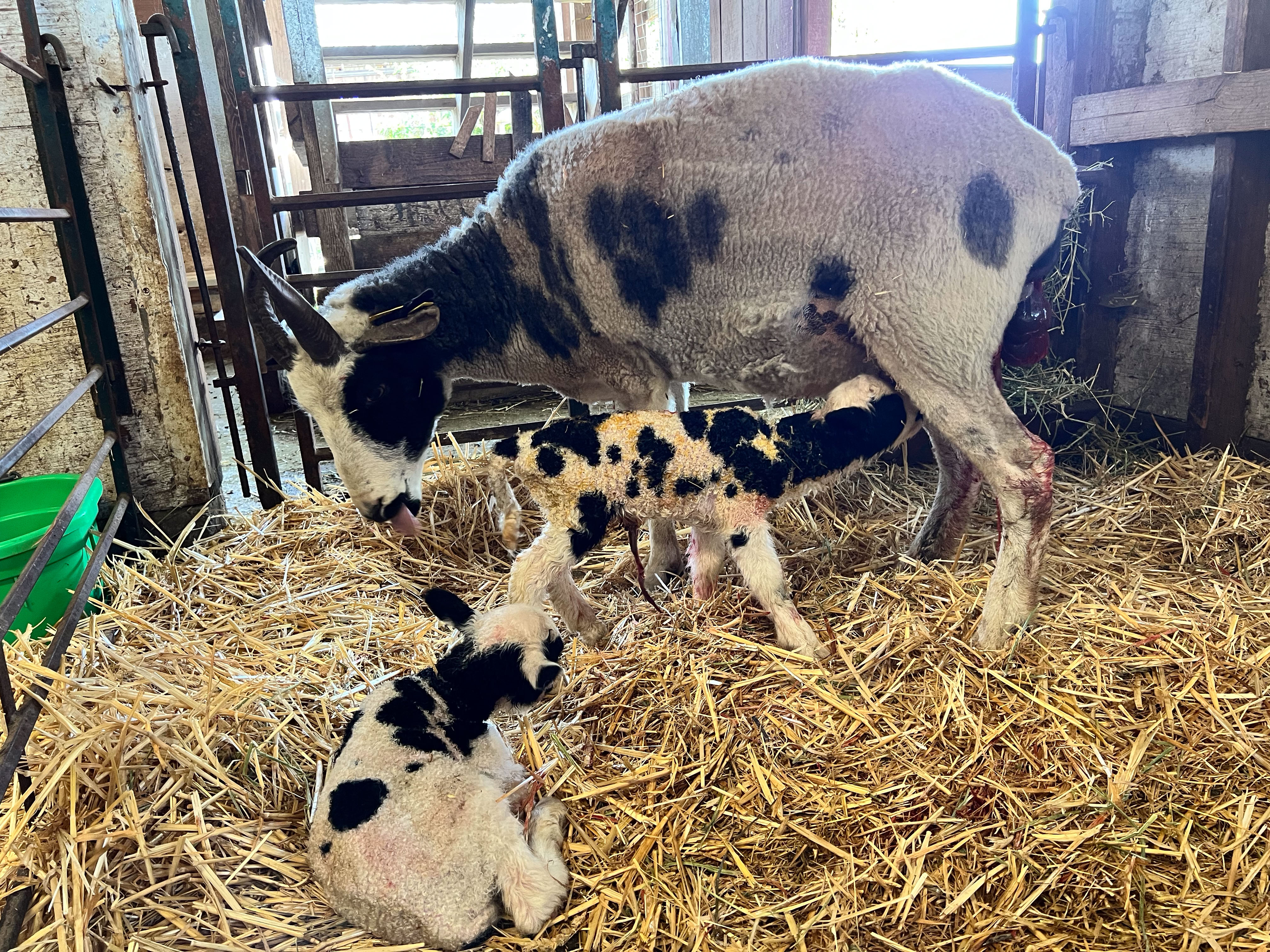
March 9 three ewes had twins and one had triplets. This is Janna with triplets and Sandie and Beauty with twins.
The next day Juniper lambed with twins.
It was beginning to feel like the next new season–spring!
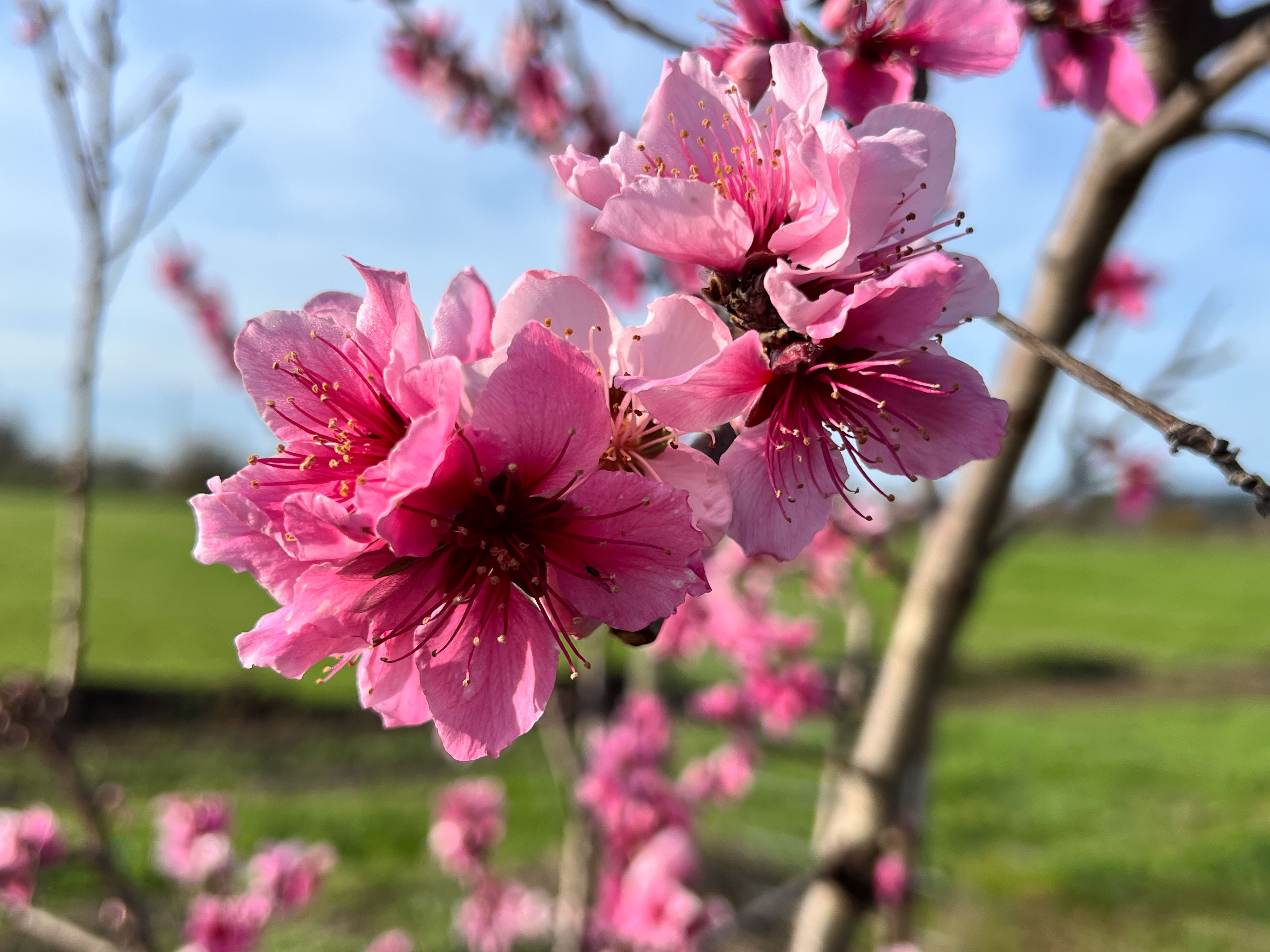
PeachWesterben RedbudDaffodial
Janna and lambs moved into a stall a couple after lambing. This gives the ewes and lambs more space to move around, but it’s easy to keep an eye on them for a few days before they go out with the other sheep. That’s Farm Club member, Lisa, holding the lamb.
More signs of spring.
Flannel Bush is one of my favorites.
Cindy lambed two days after Juniper.
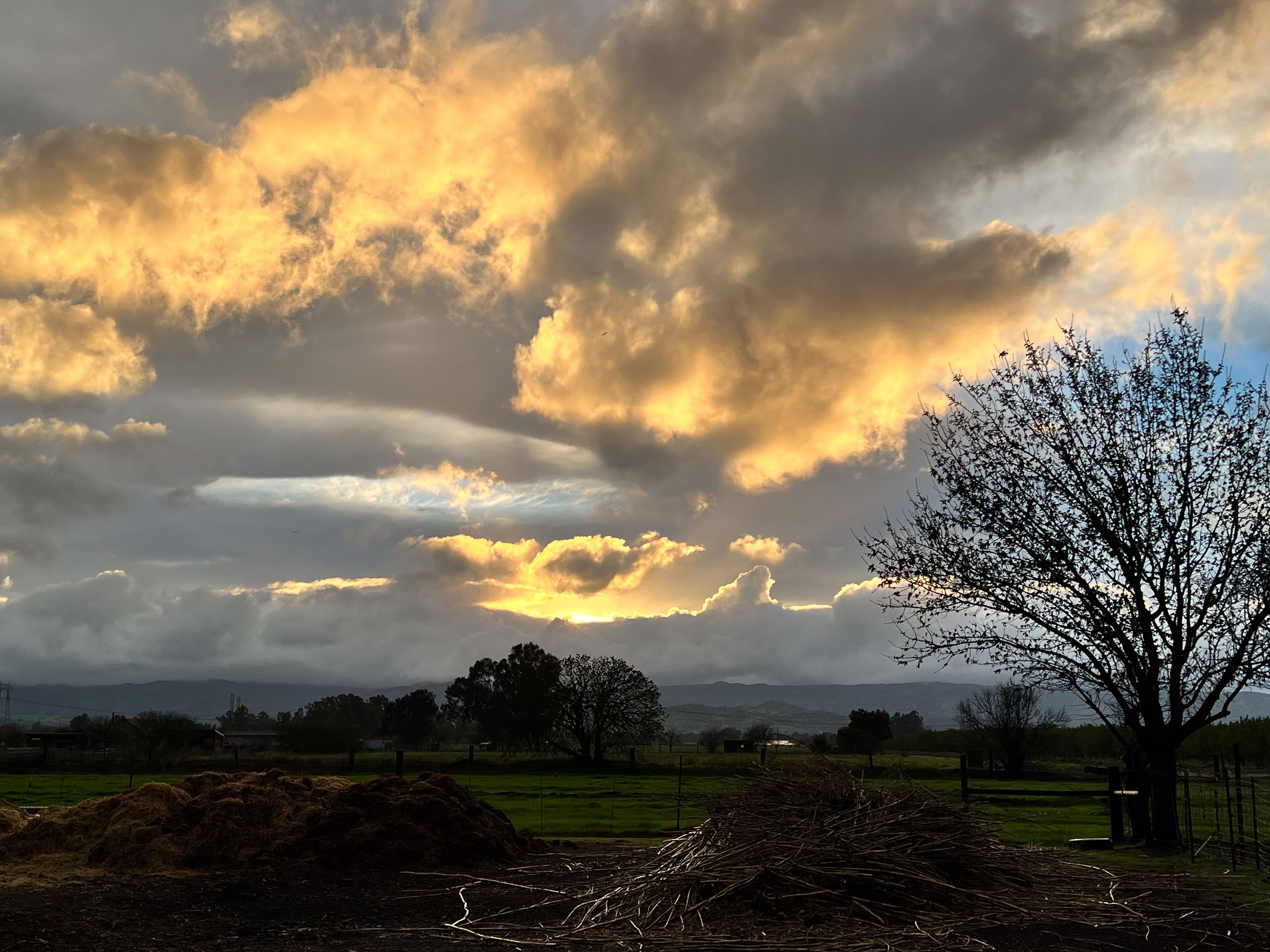
A cloudy sunset.
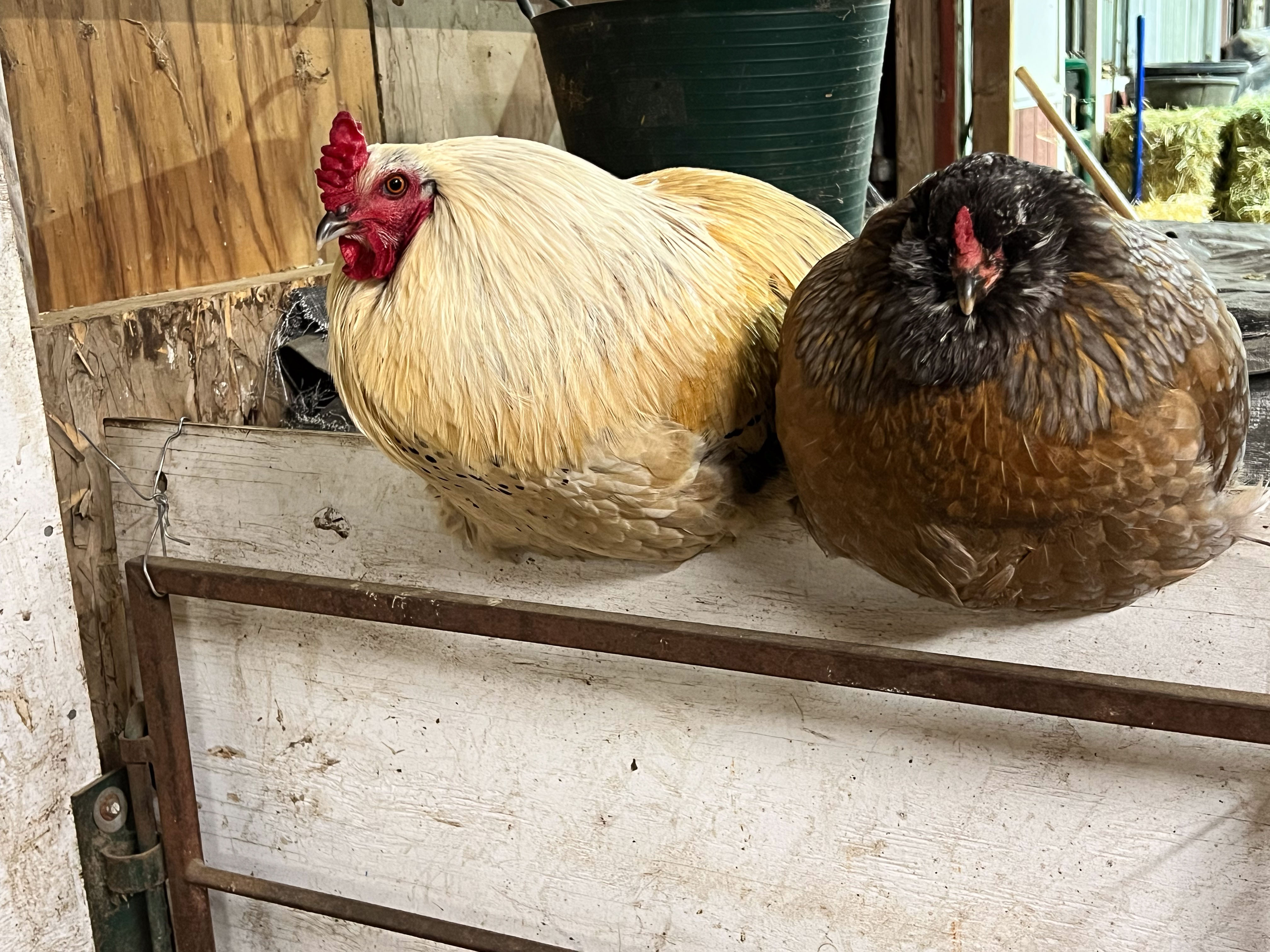
The rooster and one hen roost every night on this panel between the hay and the lambs.
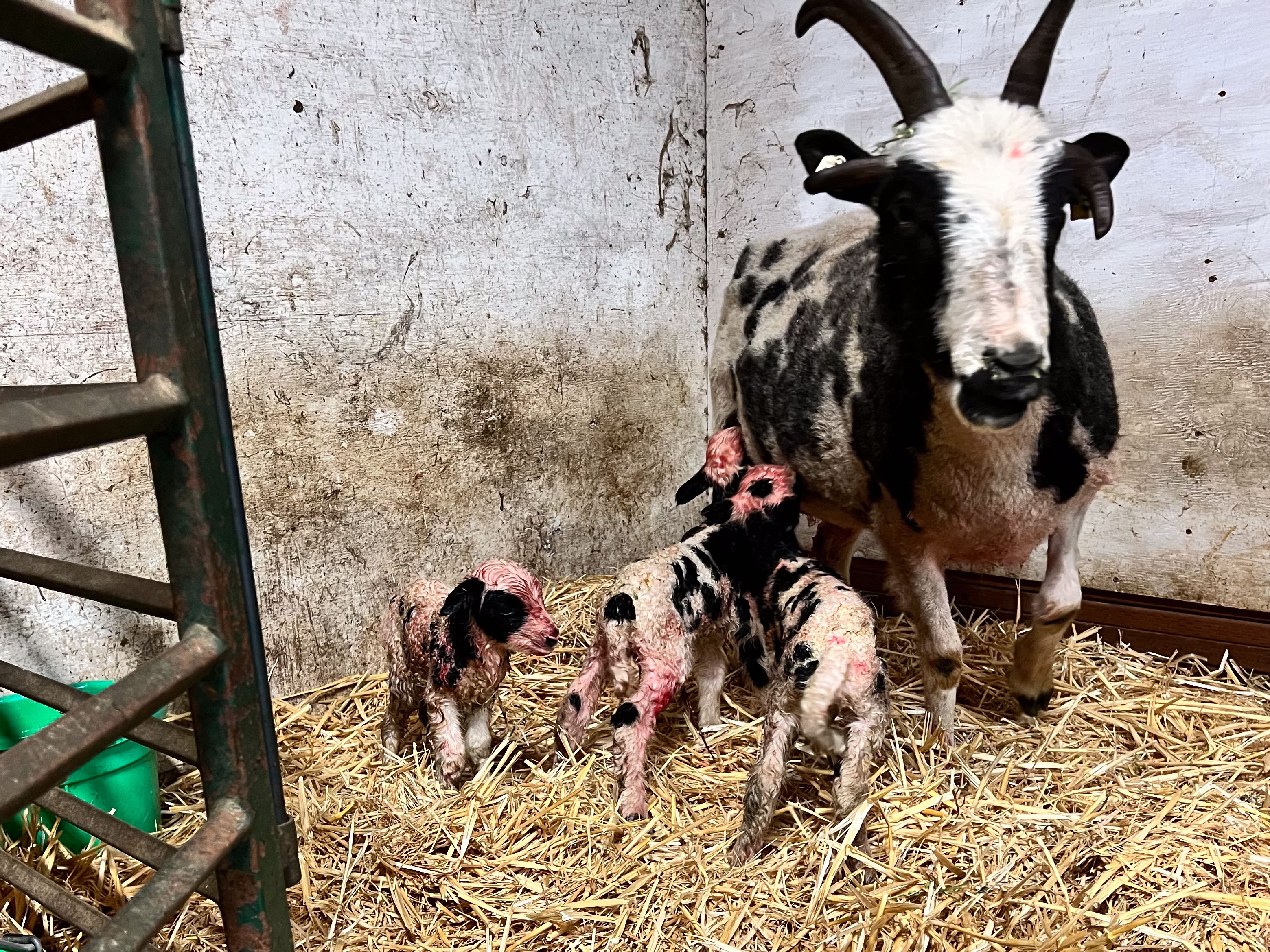
Jazzie lambed that night with twins, lambs #22 and 23.
Amara seemed the most likely to lamb next and she went into the lambing area. That leads up to the post about Sparky.