I’ve written a lot of blog posts in my head, but none of them have made it to the computer. How about some photos?
I’ve written a lot of blog posts in my head, but none of them have made it to the computer. How about some photos?
Regular blog readers may know that in the late summer and fall I start complaining about the unpalatable late summer grasses. I’m sorry, but I’m going to complain now even though it is only spring. I only graze about 7 acres so all of it seems precious. We dealt with some of the issues of the thick dallisgrass a couple of weeks ago by burning it. I hope something starts growing where all that heavy thatch was.
Today’s issue is the condition of the east paddock. Medusahead is a nasty, unpalatable grass that goes to seed in the summer, covering all the soil with thick dry thatch. The medusahead is starting to grow now and the only other thing growing with it is a perennial grass (Elymus–wild rye– I think) that the sheep don’t like either. The rest of the soil is covered with the dry residue from both of these. My goal in this paddock is to graze it hard enough that they will at least trample and break up the dried up grasses from last year and hopefully eat some of the less palatable grass.
As I was uploading these photos I realized that they don’t show what I’ve been talking about.

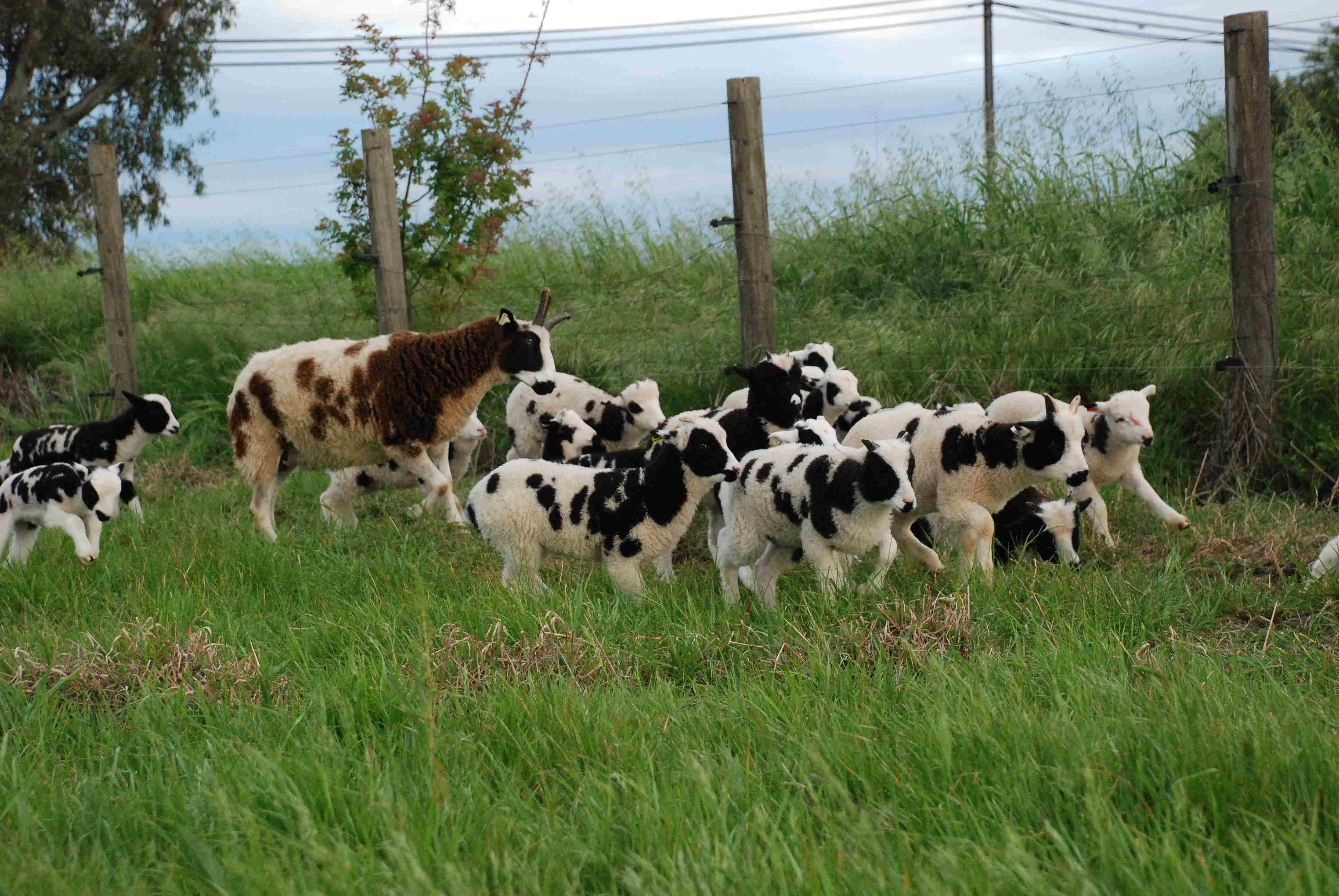
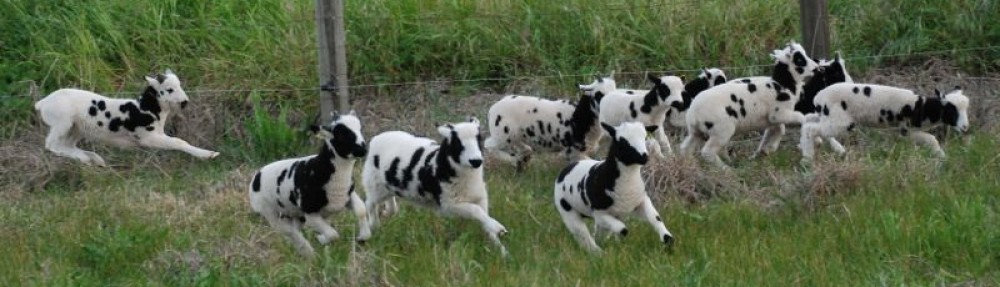
This is the view looking south. You can’t tell, but it’s the east side (left) of the east paddock that has the problem vegetation. It took them only a day to clear off almost everything in the south part of this paddock (as opposed to 2 days in equal sized paddocks with better vegetation).

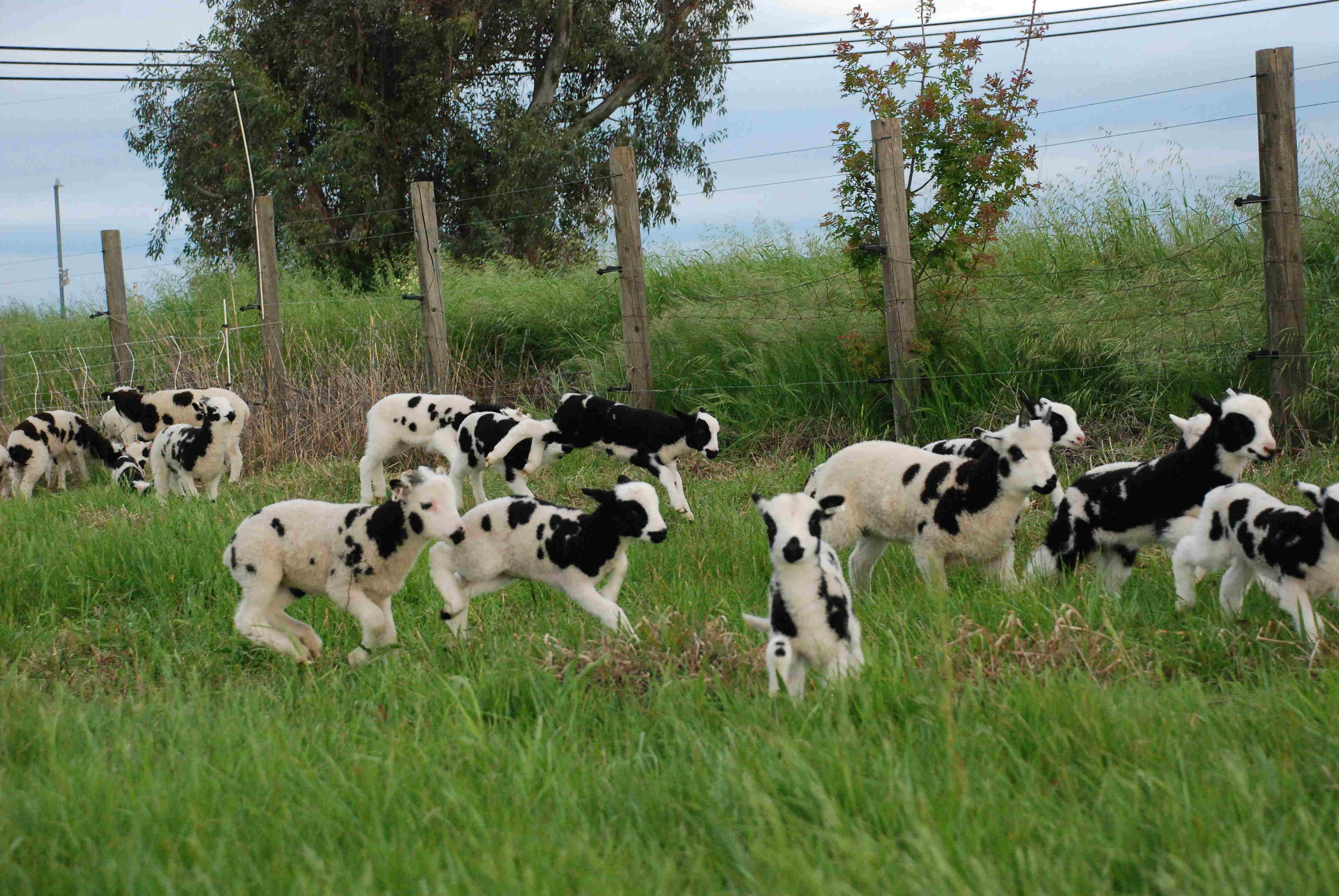
They are hungry and ready to move.

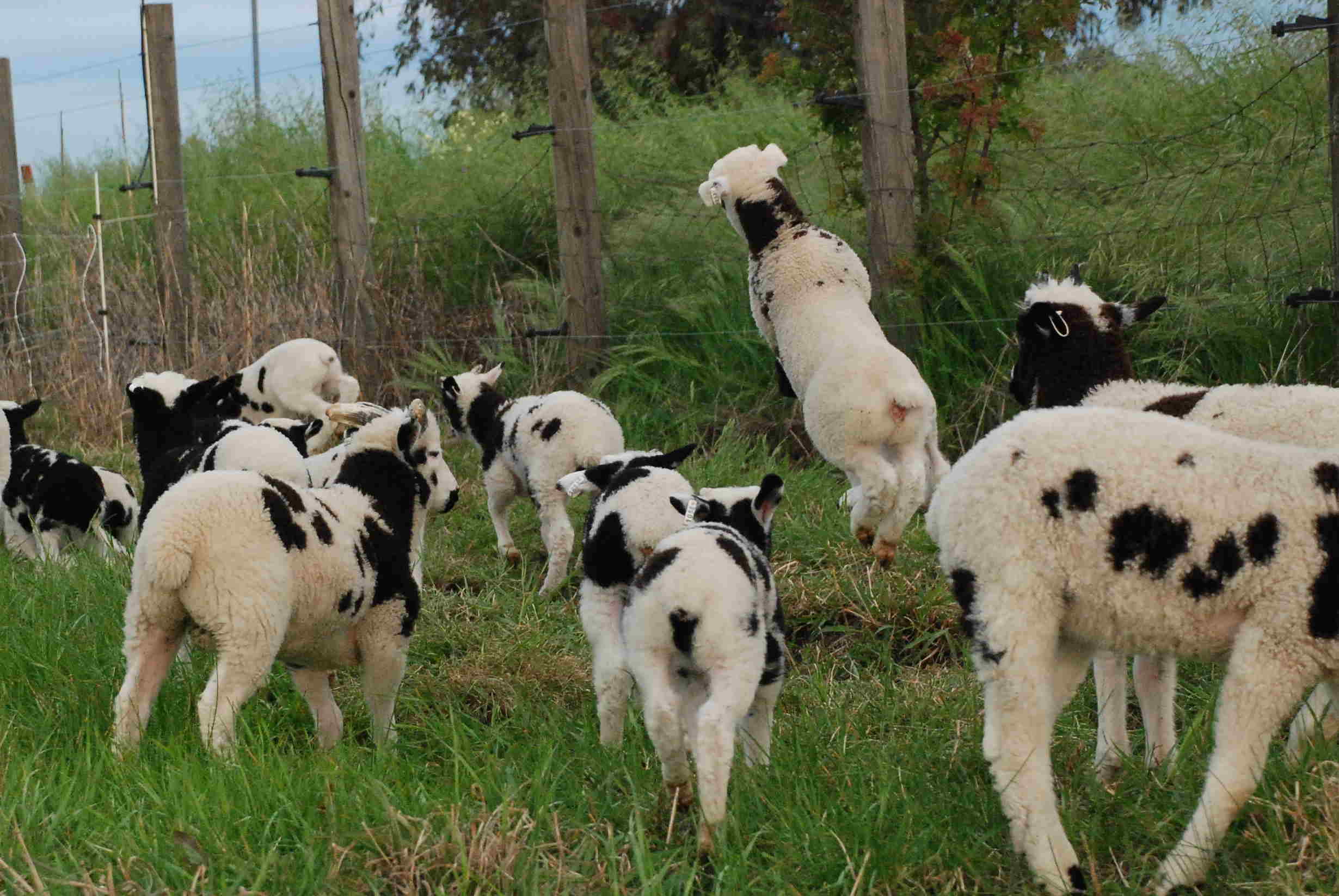
I took this photo as I opened the fence and stepped back so I wouldn’t get trampled.

Arthritic Stephanie follows the running sheep.

Amaryllis brings up the rear. She will follow Stephanie anywhere.

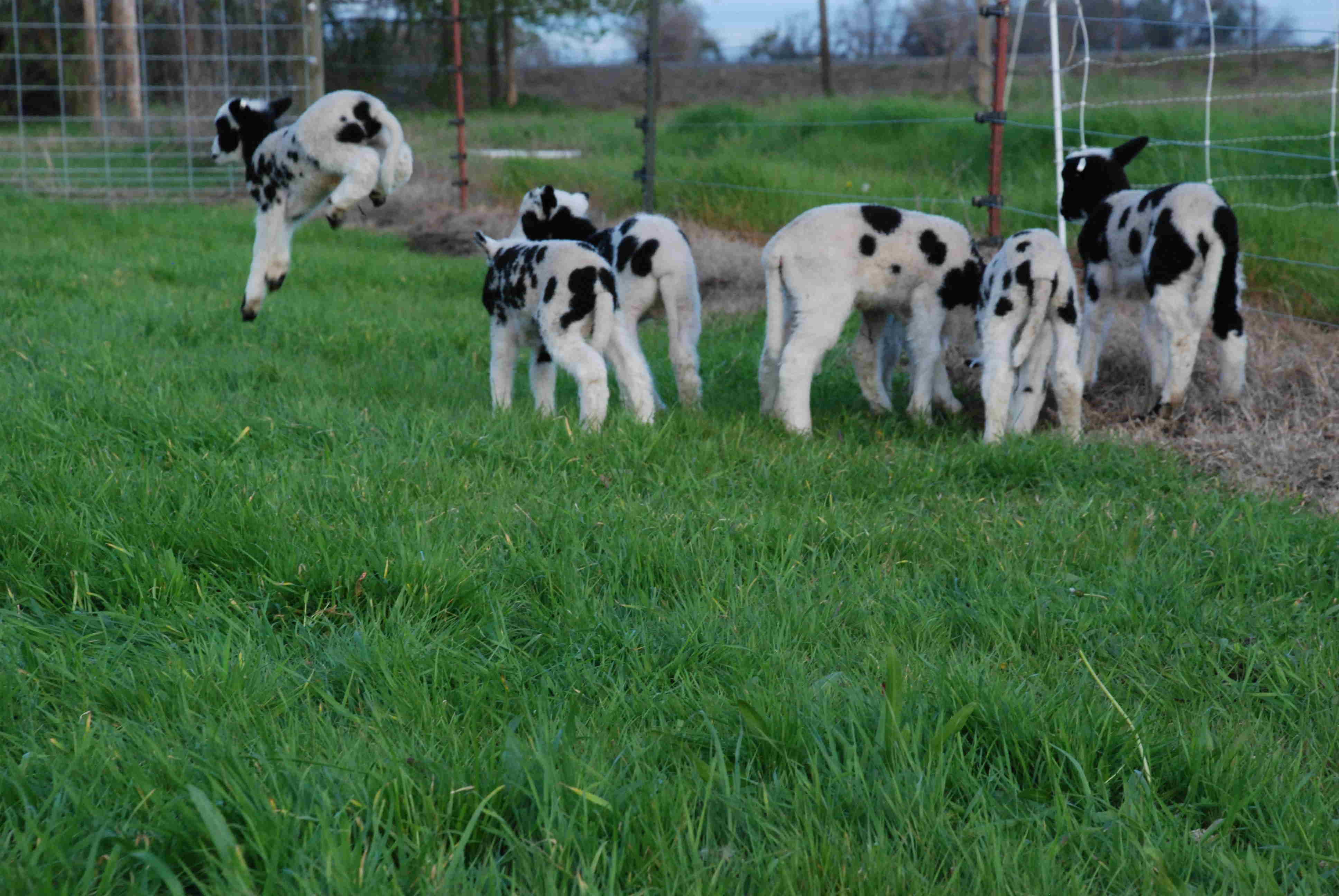
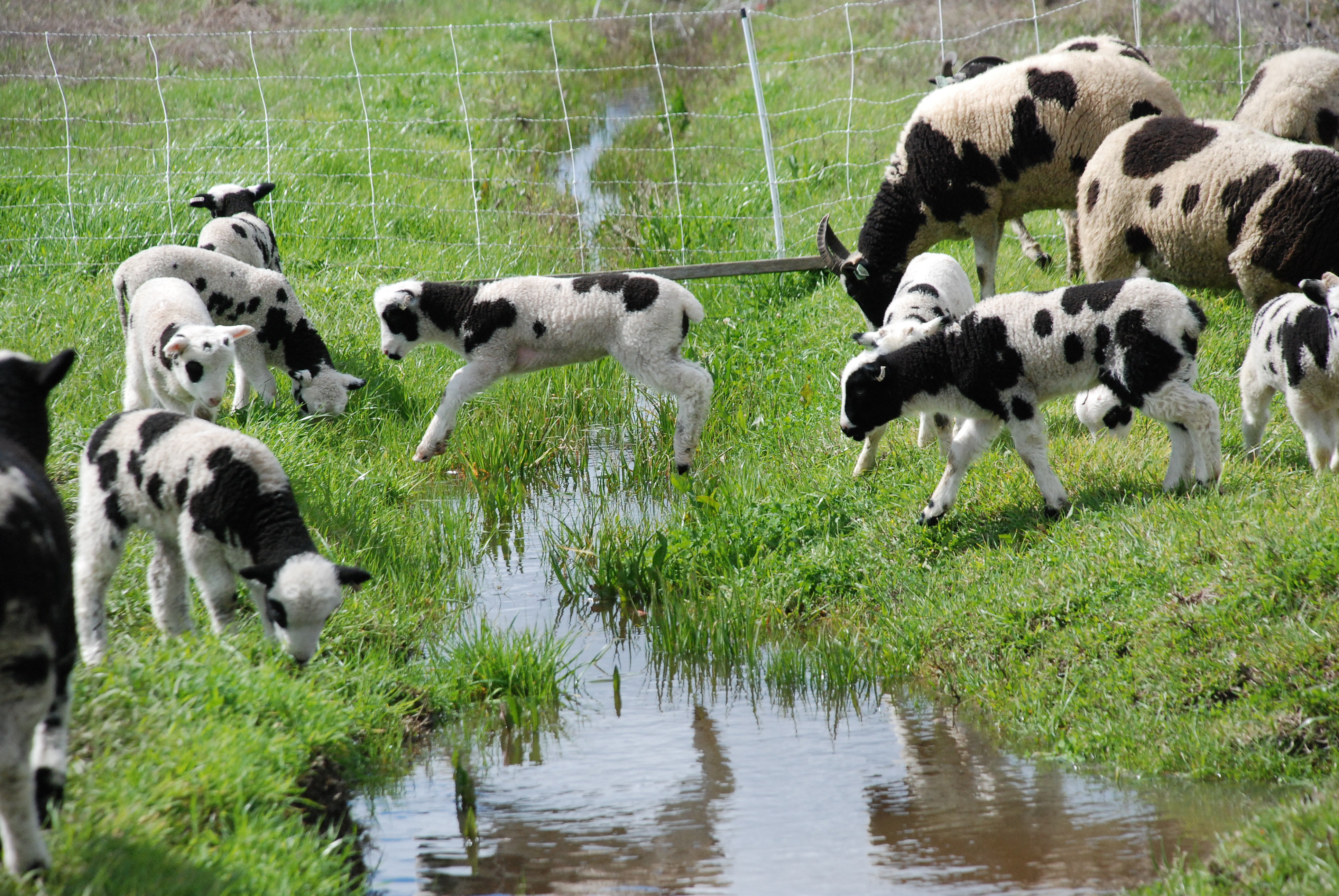
This view is looking north, from the part of the paddock they just left. In this photo you can’t really tell the difference in vegetation between the west (now on the left) and east sides of the paddock. It’s much easier in person, but notice where the sheep are. There is no fence keeping them from the east side–it just doesn’t have what they want to eat.

Compare this photo to the one where they are running into the new pasture. There is a blue cast to these plants–this is very sparse (although it may not look so in a photo from this angle) and it is so tall because the sheep avoided eating it the last time they were here.
Tomorrow I will start irrigating. I hope for some warm weather to follow so that the clover and trefoil will come in faster.
I taught a Learn To Weave class this weekend and we welcome 3 more weavers to the community!
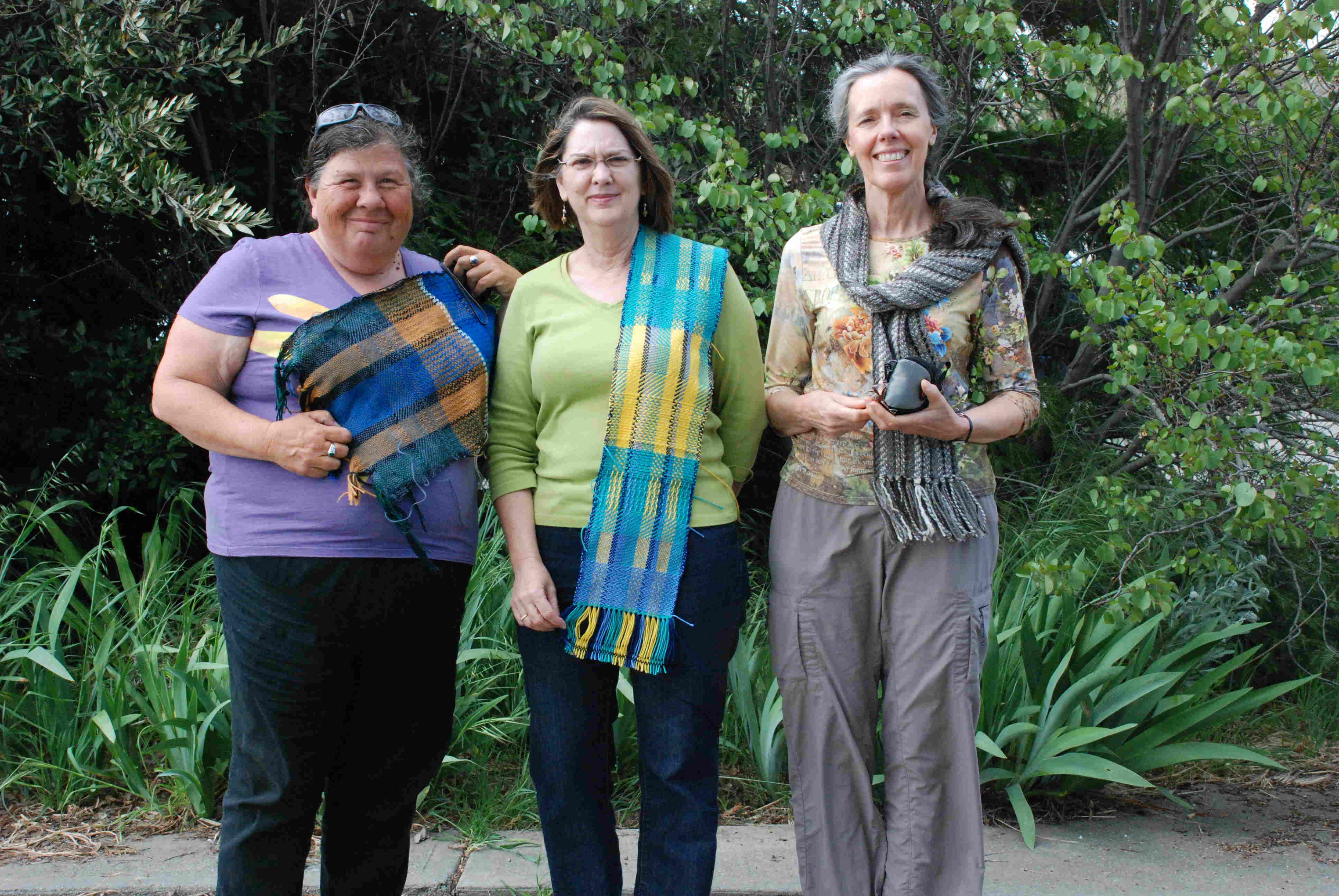
I don’t make everyone use the same yarns. Kat used Jaggerspun MaineLine wool, Jan chose Jaggerspun Superlamb washable wool (as a sample for a baby blanket) and Sandy wove a scarf of Jacob wool. Great projects!
Here’s a look at what I am doing in the weaving studio.

These are the yarns for a wedding shawl for a friend’s daughter. This will be a random mixed warp in a lacy light weight shawl.

My son’s girlfriend chose these colors for her chenille scarf.

Llama rug that I finally got off the loom awhile ago. I think that most people don’t usually wash rugs, but it still has a llama smell so I plan to wash it. I’ve been waiting for a hot day so it will dry outside.

This is the roll of 3 full-sized blankets woven in double width broken twill. I have cut them off the loom and now need to crochet edges on all of them.
My husband is a teacher so we can plan a vacation during his spring break and before my son goes off to work on the USFS hotshot fire crew. Chris held down the fort here (with 12 lambs born) while we were gone.
Meet the Sheep was Saturday and I didn’t have time to prepare for this trip until Sunday. We packed Sunday morning and headed south. The only plan we had was to get to Hoover Dam for a tour on Monday.
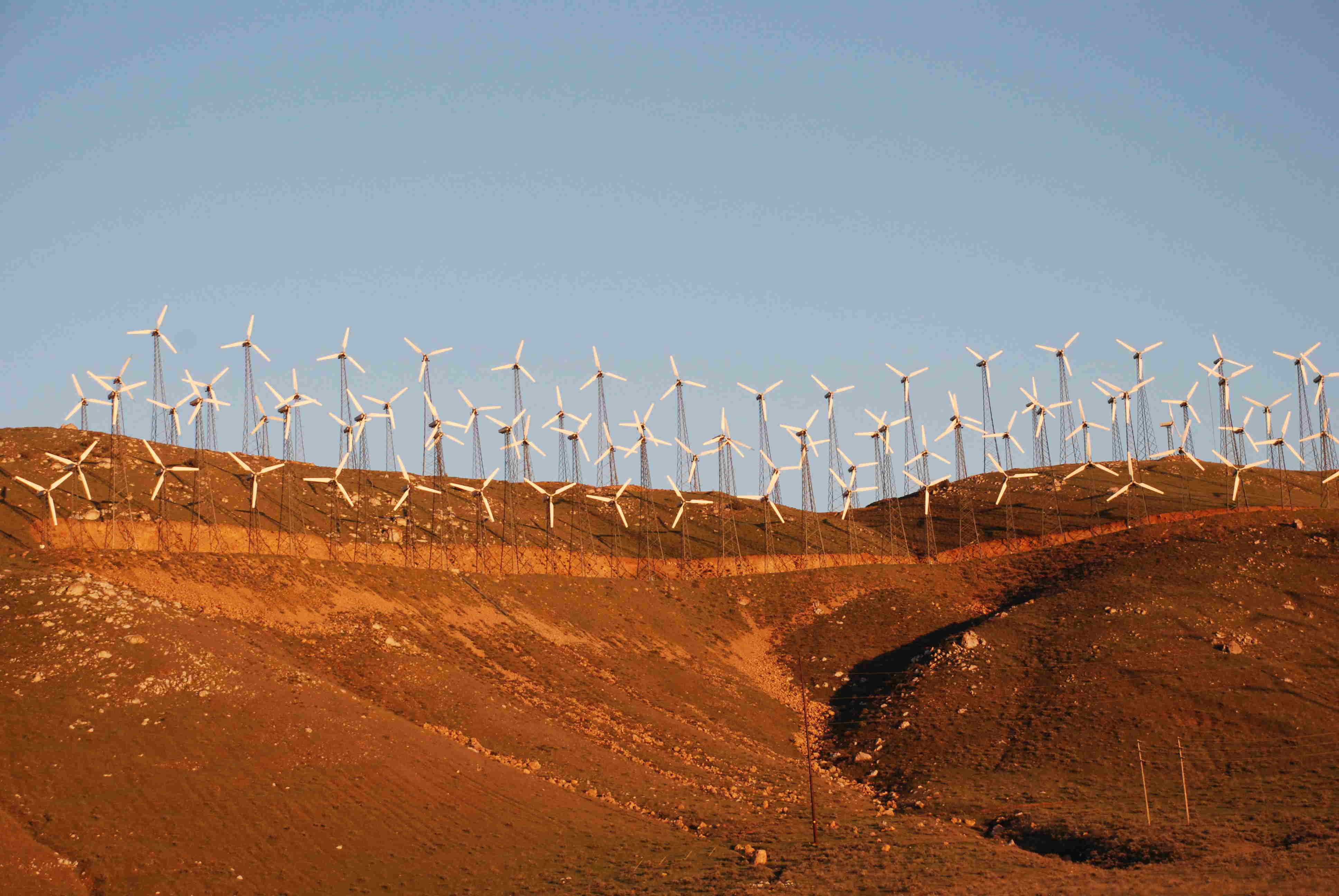
Driving on I-15 east of Tehachapi. We got to Las Vegas at midnight and spent the night there. The next morning we drove to Hoover Dam.

This is a view of the new bridge just below the dam. All the cross-country traffic used to have to follow a winding, tourist-packed road that crossed the dam. That must have been a nightmare for truck-drivers and anyone else that just wanted to get to where they were going.

Here is the dam from the bridge. We took a tour inside the dam. Hopefully some of my videos will come out well, but I haven’t even downloaded them to the computer yet.
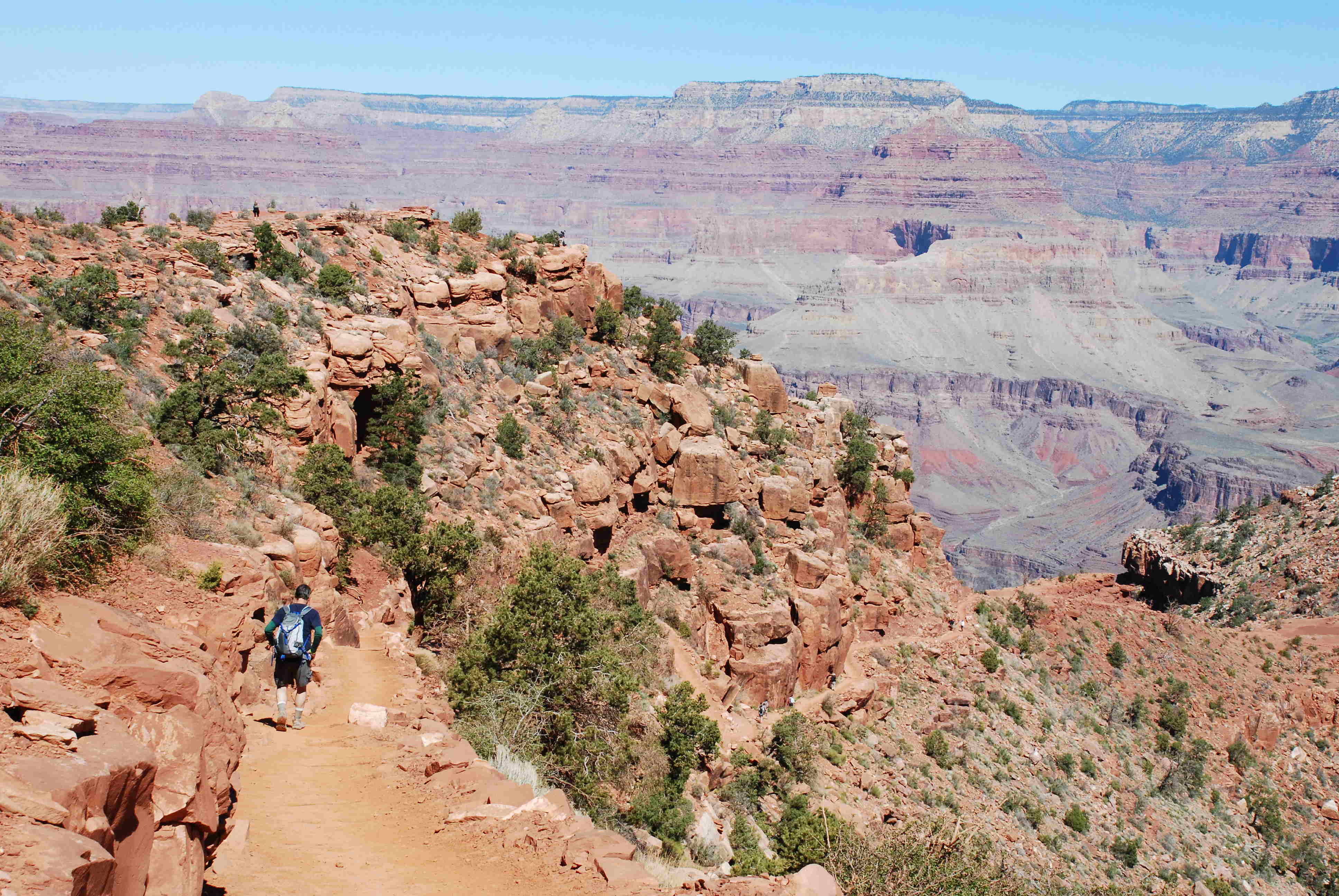
After sleeping in the Explorer that night (note to self–get an air mattress. The 20 year old foam pad doesn’t work anymore) we spent the day at the Grand Canyon. My photography left something to be desired, but it was just not possible for me to capture the Grand part of the Grand Canyon. We chose the Kaibab trail and hiked about 3.5 miles into the canyon.
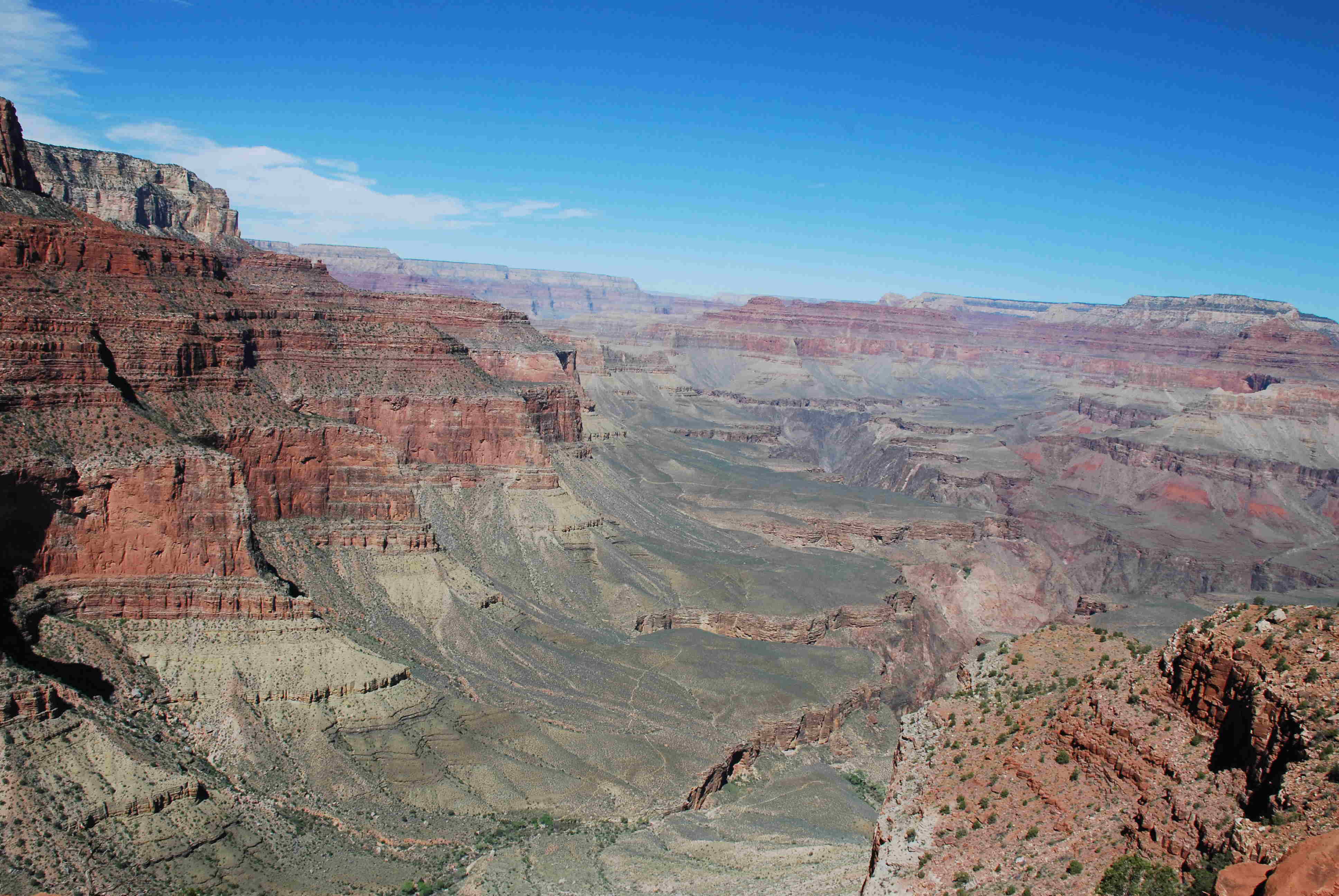
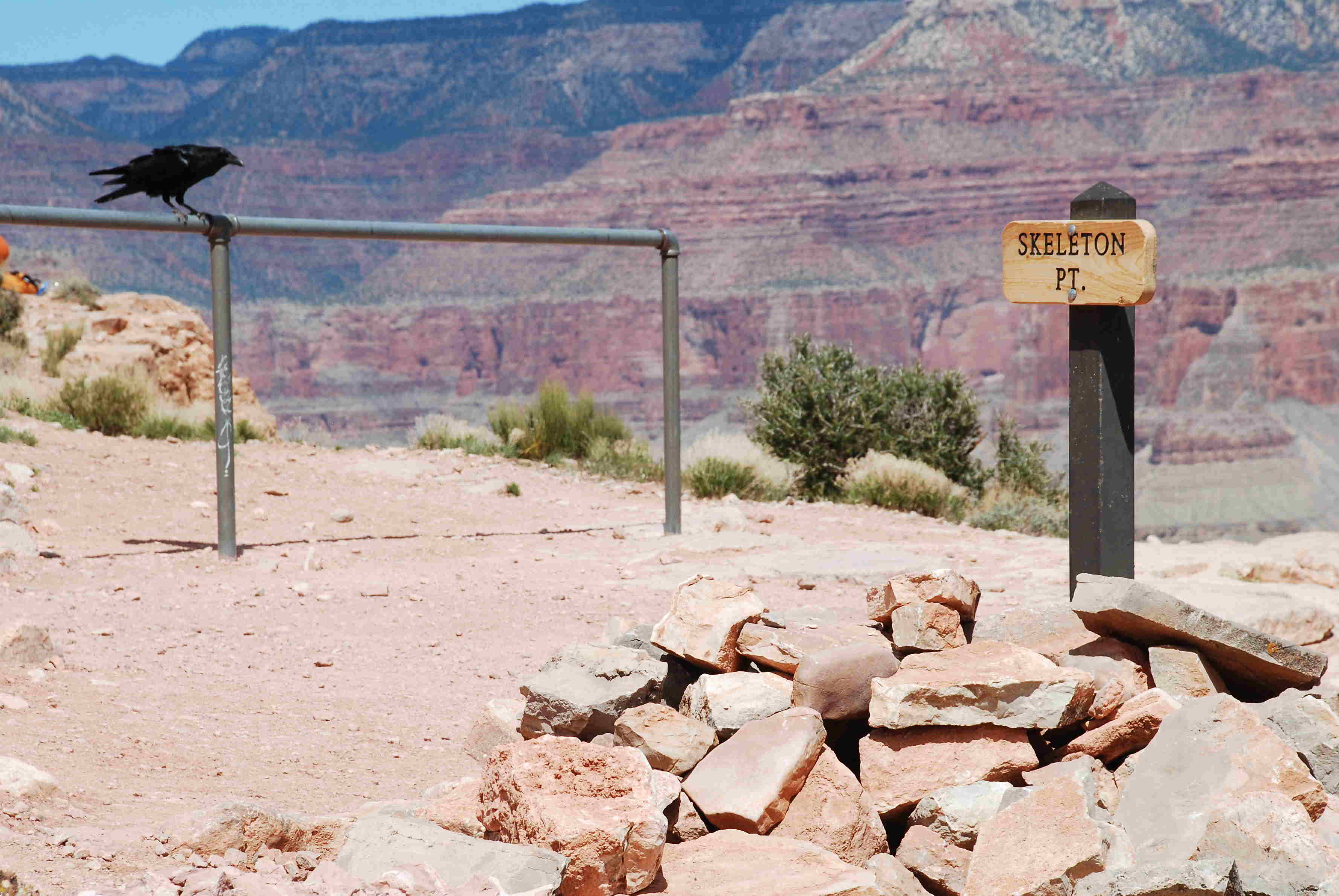
Another few miles would have taken us to the bottom but had not planned an overnight trip and didn’t think it would be smart to try it in a day.
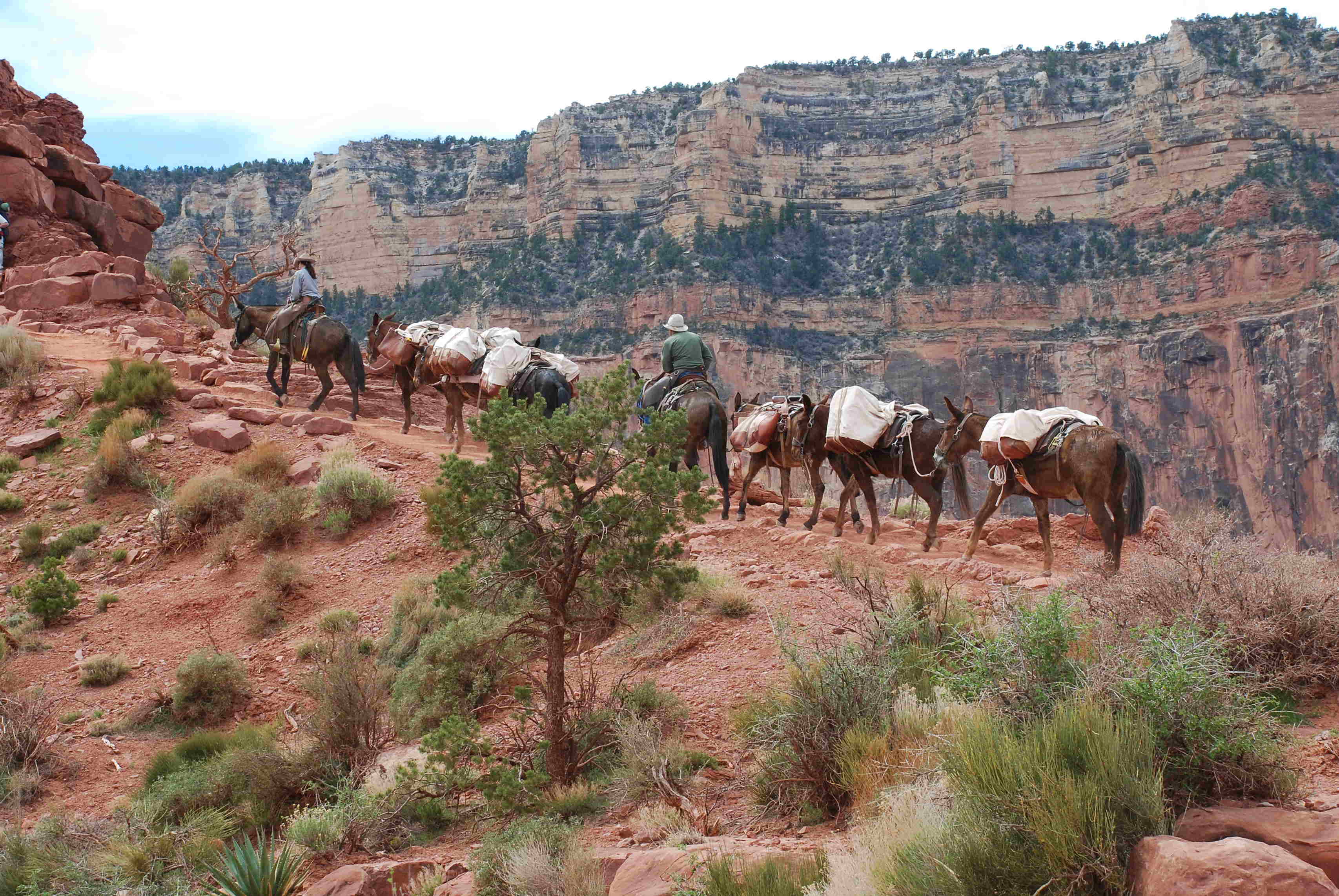
If we had the help of mules we could have done it, although even the mules are making overnight stops in the bottom.
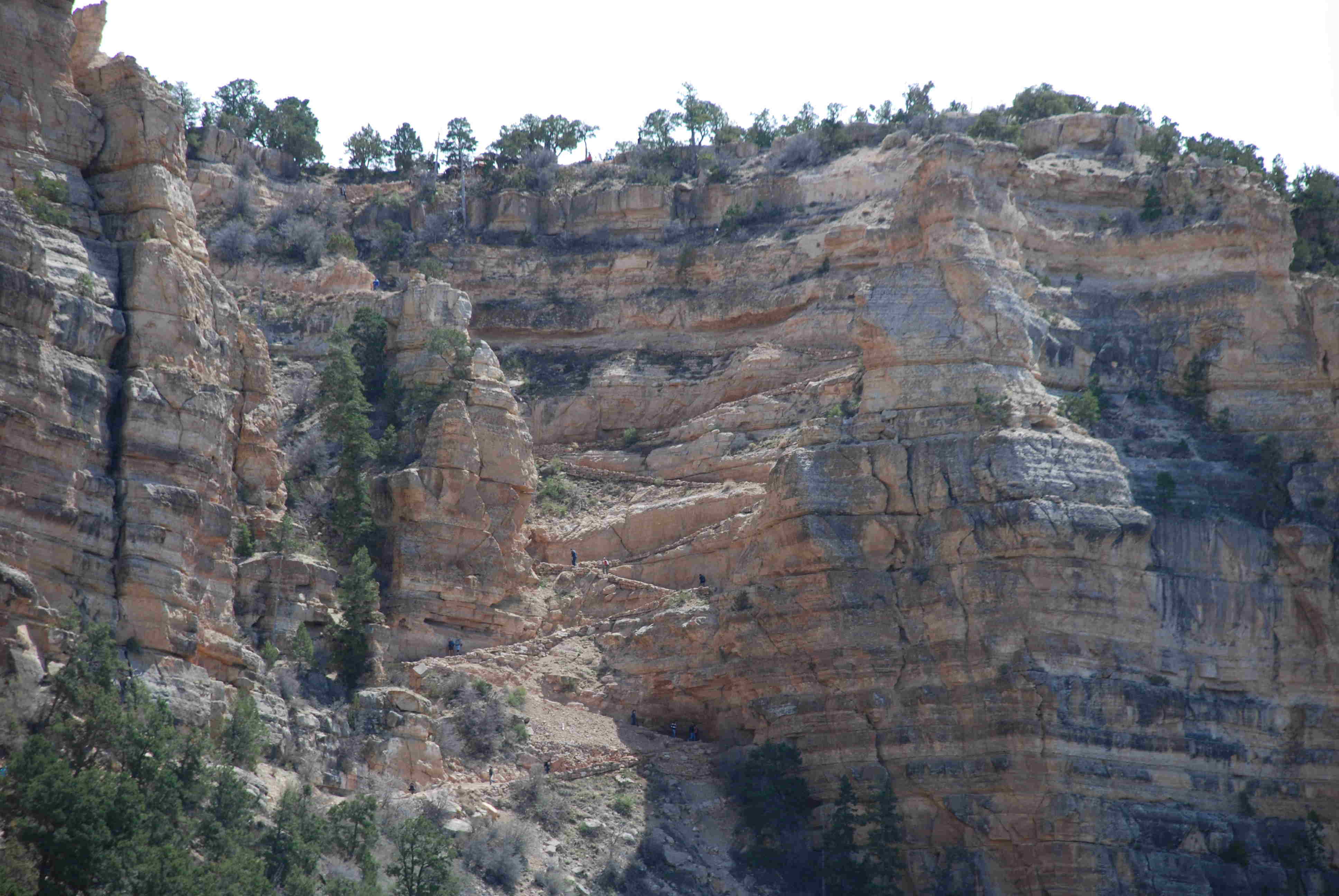
See that zig-zaggy trail going up the wall. That’s the last leg of the hike back up.
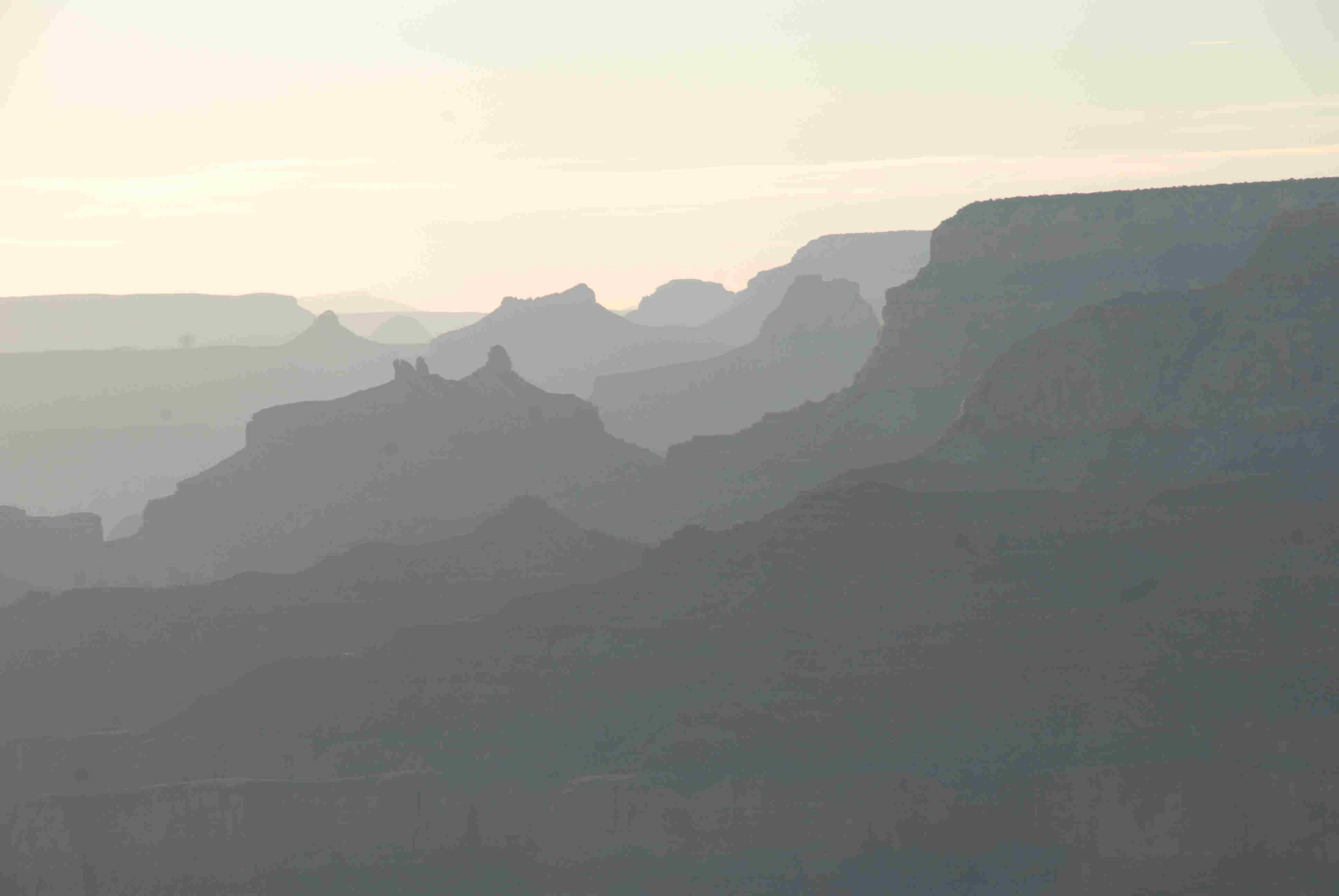
Leaving the canyon late in the day and looking west toward the setting sun.
Stay tuned for Part 2.
After a very wet winter, we welcomed fabulous weather (and our first dry weekend) for Meet the Sheep, our annual Open House. Even with the great weather it would not have been such a success without all my friends helping.

Julie set up a dying and drum carding demo area and also brought…

her cute Pygora goats.

Colleen skipped Saturday at he Farmer’s Market to bring her Fiber Confections booth here.
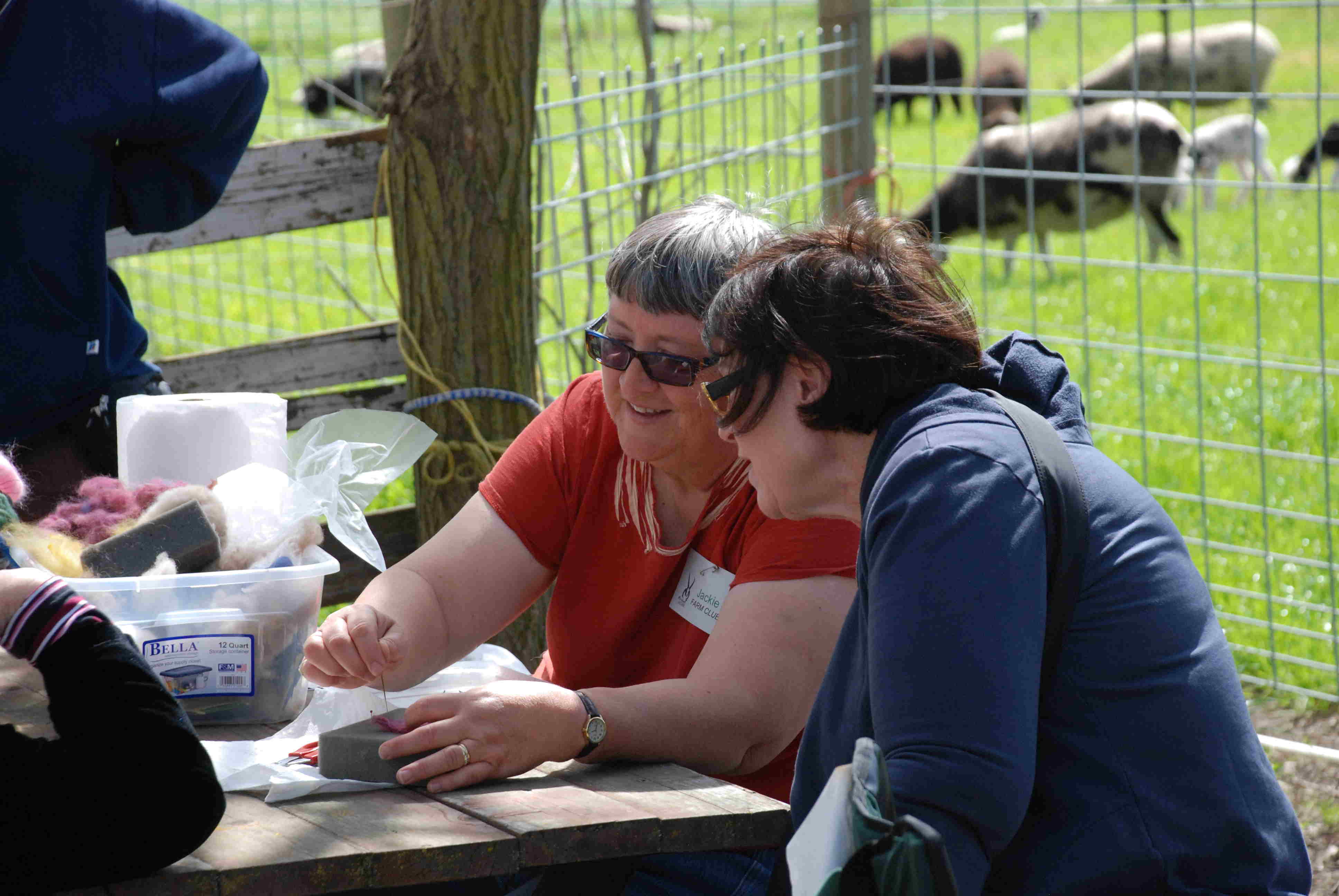
Jackie had her booth here and helped people learn to needle-felt.
I don’t have photos of everyone but I am grateful to Farm Club members for helping as well as to my friend Chris who worked in the shop.

There were a lot of visitors.

This is Marissa who modeled her first sweater made of handspun yarn, from Jacob wool of course.

New weavers enjoyed the weather, their wine, and a new weaving book.
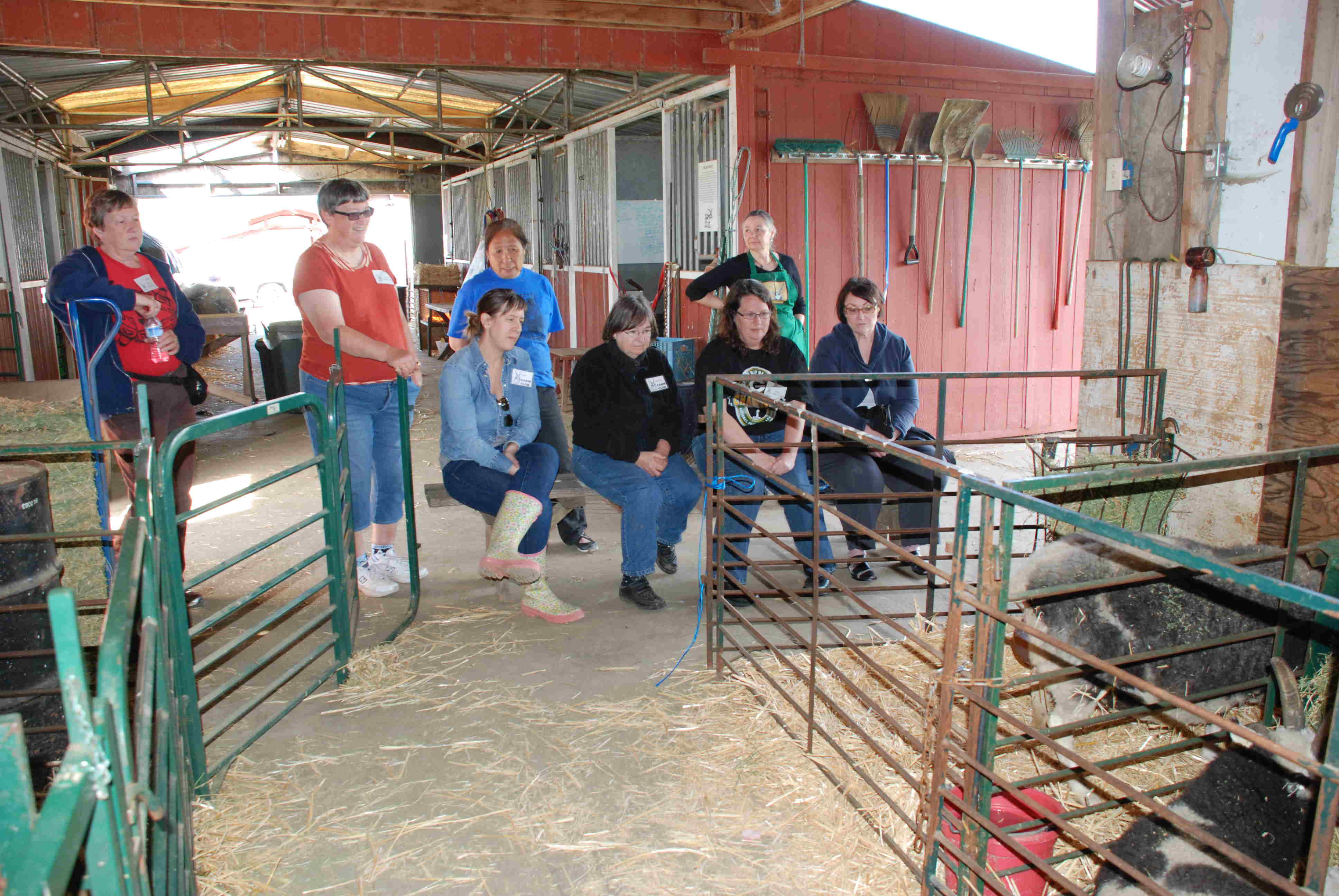
At the end of an exhausting day Laura finally decided it was time to lamb. Most of the Farm Club members were here watching.
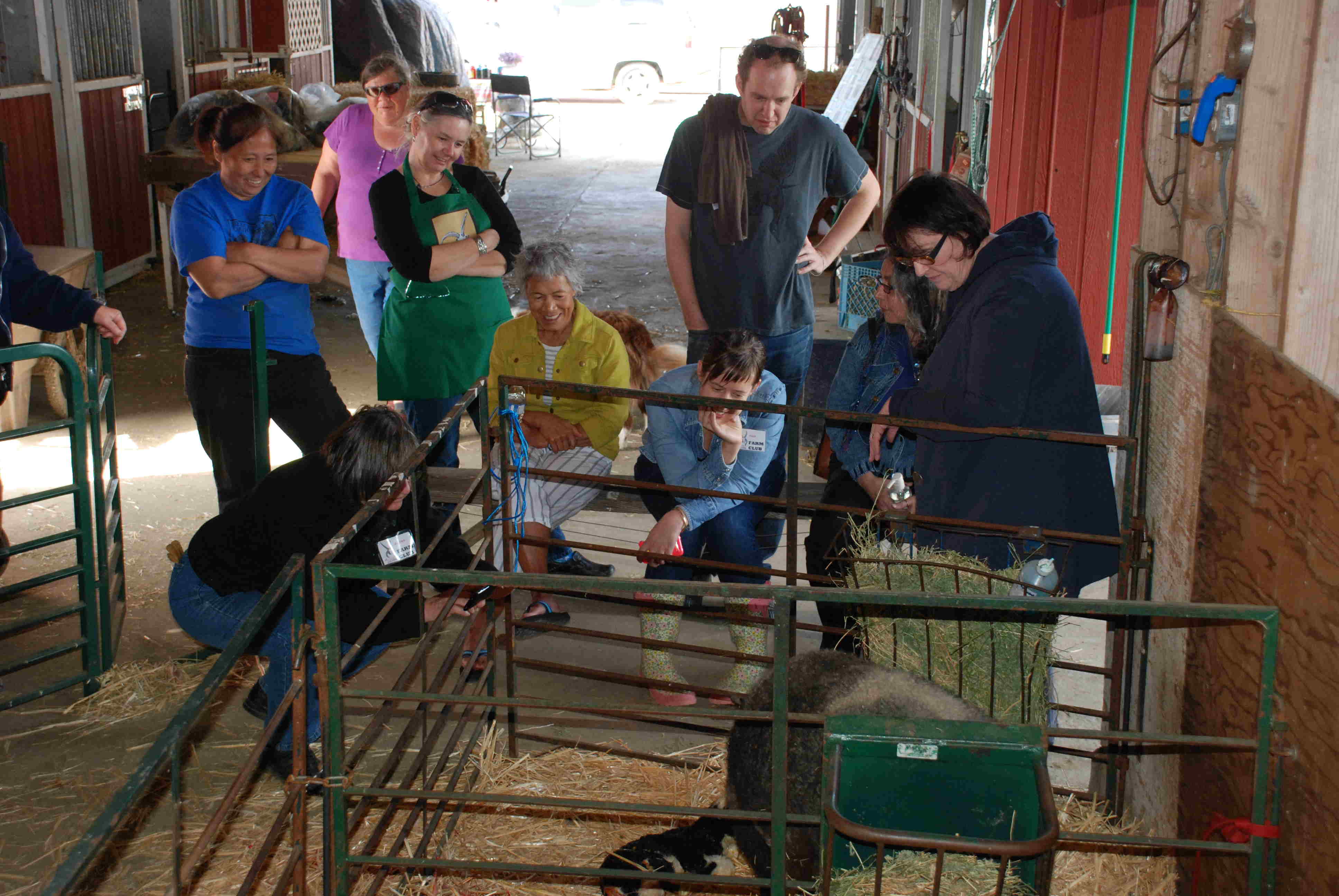
There was relief after Laura delivered a healthy set of twins.
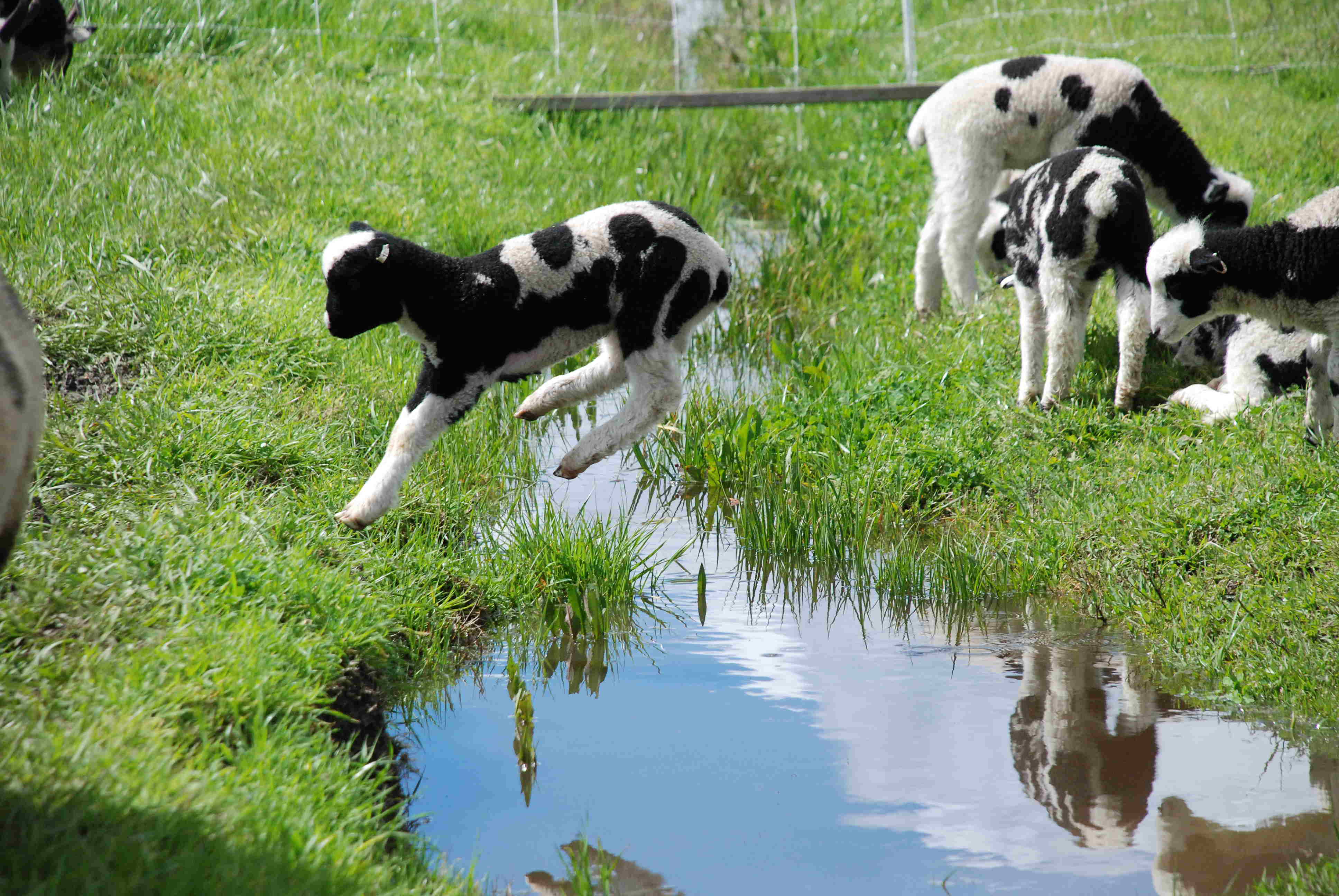
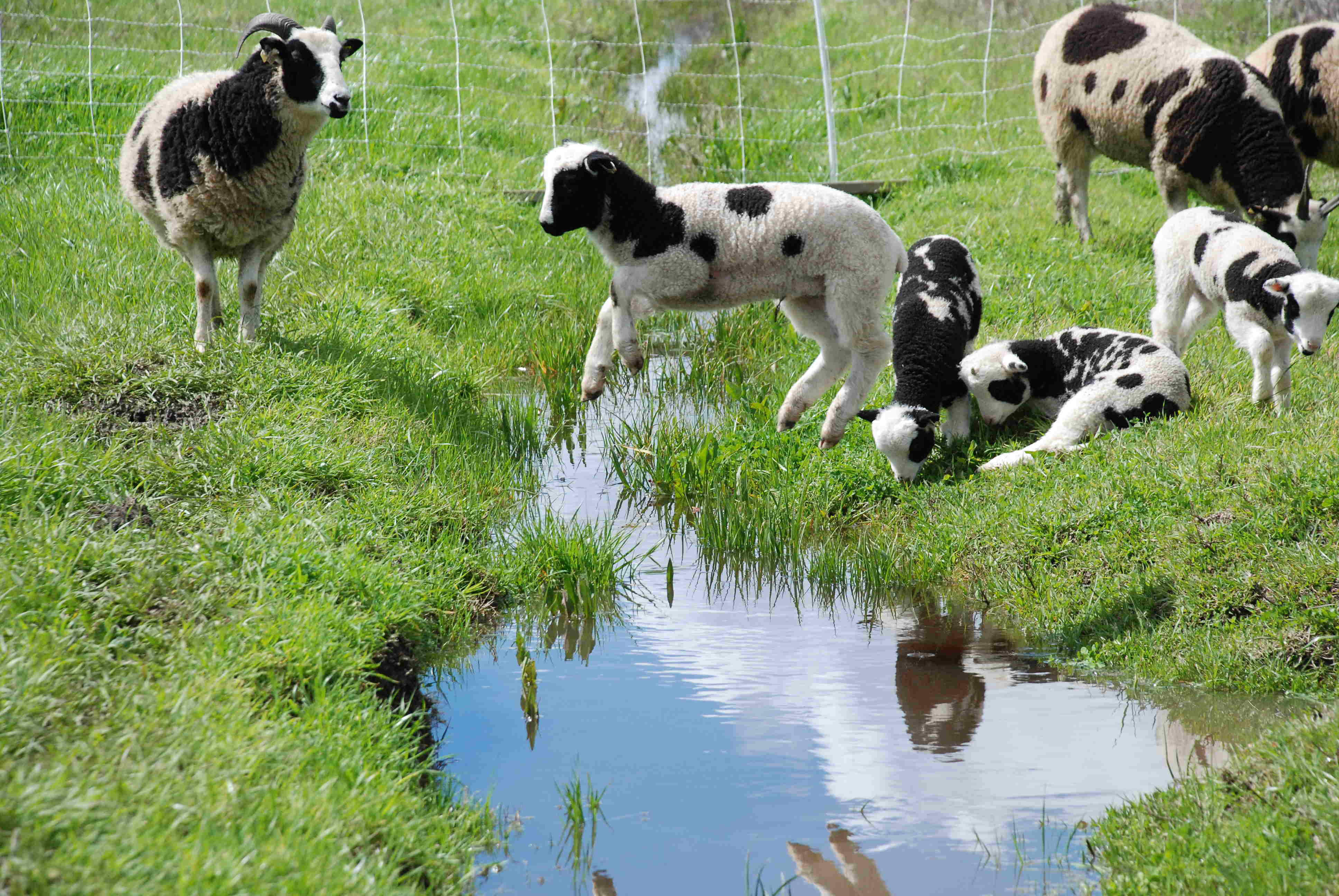
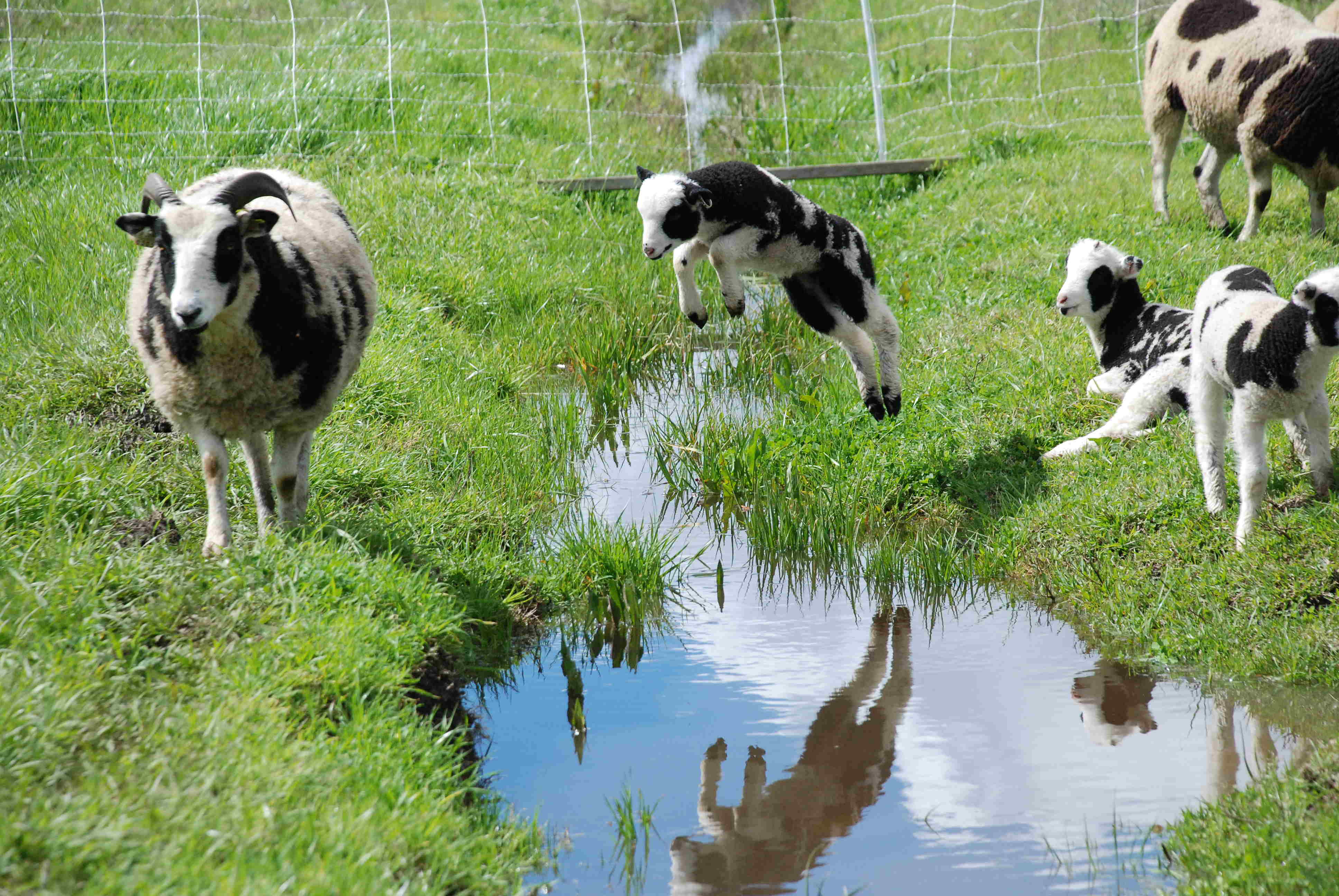
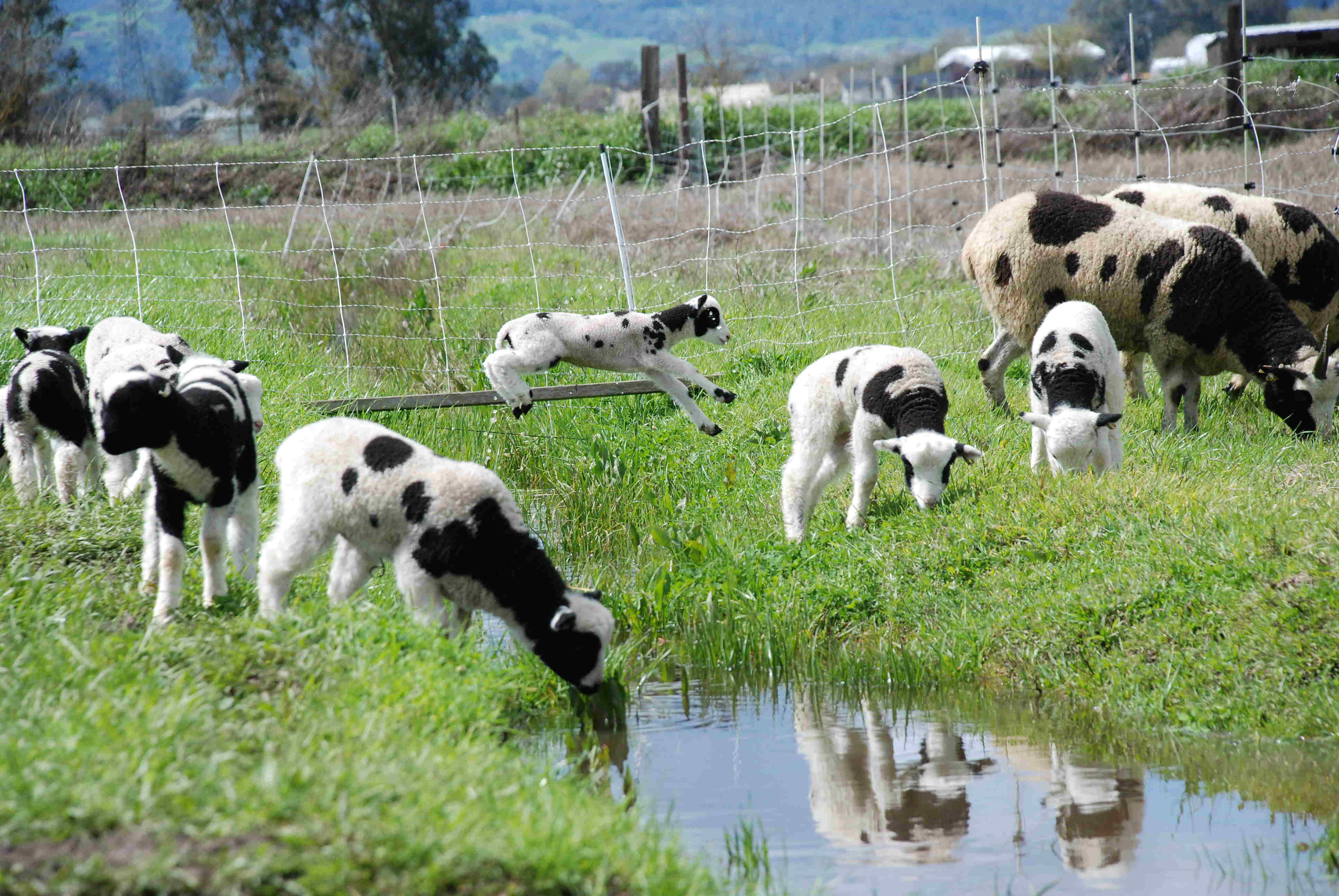
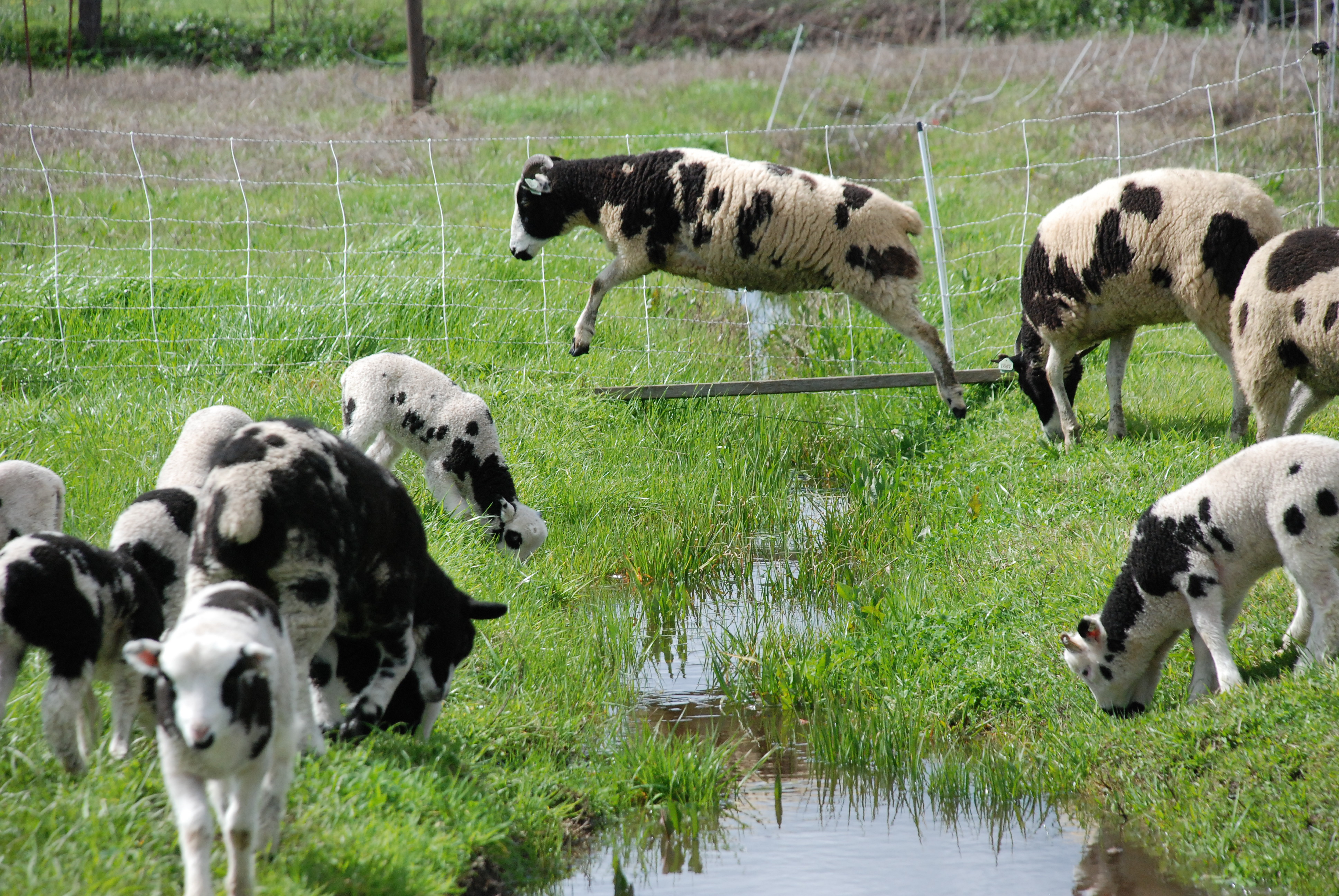
Because the grass was greener?
The weaving show I presented at the Artery in November was featured in the March/April issue of Handwoven magazine.

I am amazed at how many pieces the editor fit into a two page spread.
Today this article was mentioned in Interweave Press’s blog: Weaving Today.
Farm Club members braved stormy weather to make the March Farm Day a fun and productive day. As usual I had more tasks on the list than we could hope to accomplish in the morning but we made good progress.
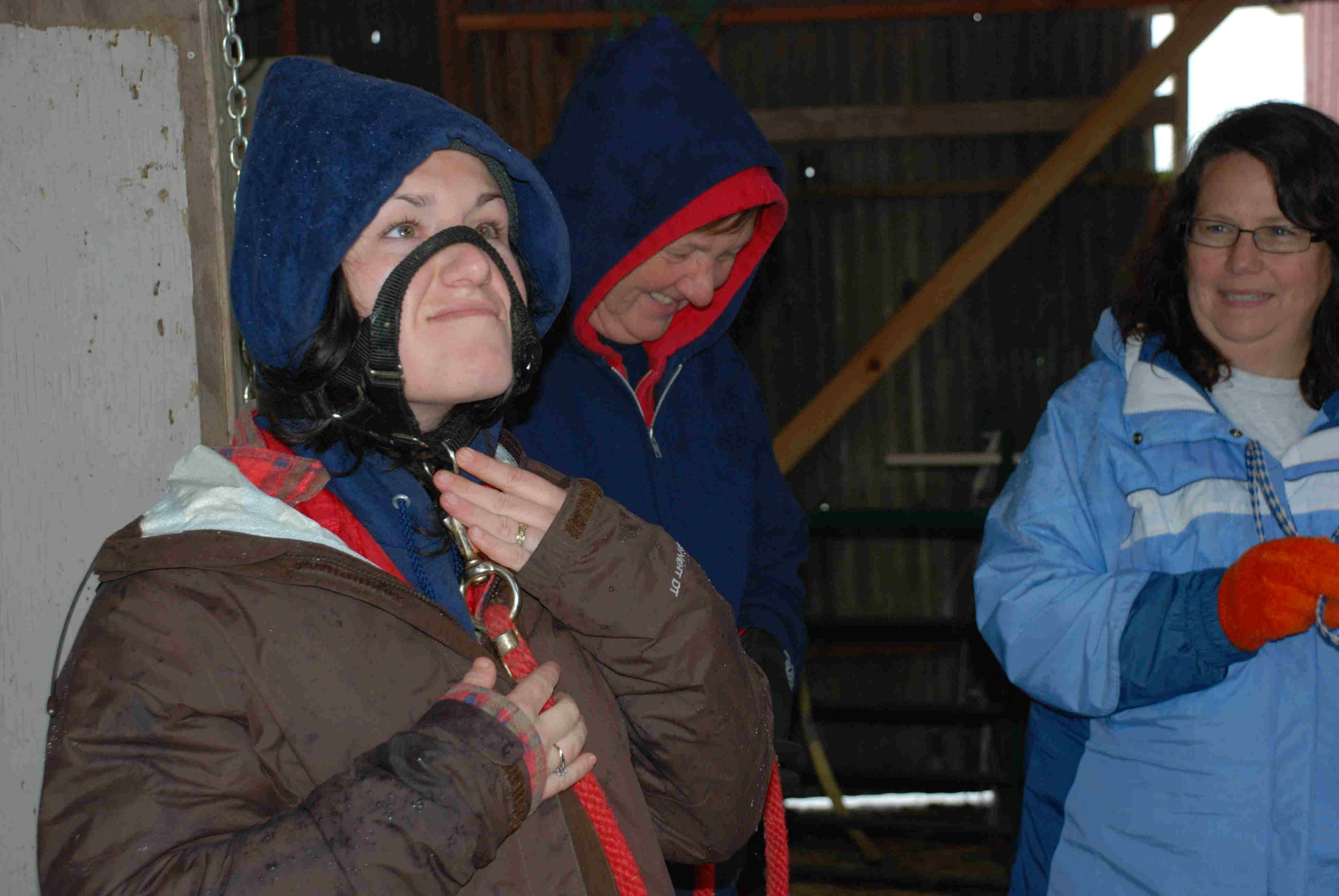
First on the list was a lesson on using a halter and tying a rope, using a knot that can be easily released. I didn’t mean that the people had to wear halters, but Shelby is always ready for anything.
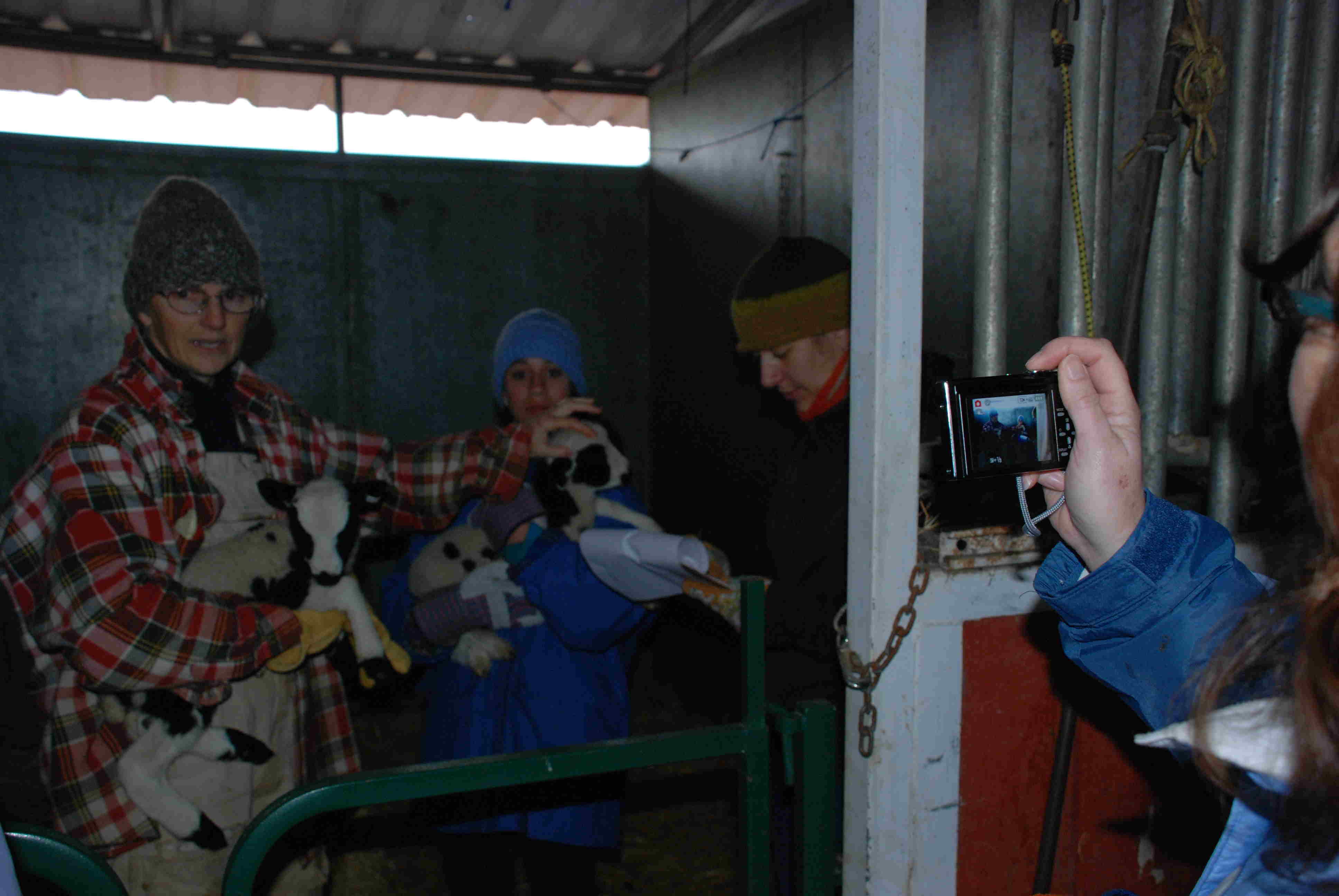
Everyone helped catch lambs and record the number of horns and whether or not there were any eyelid defects. (Split eyelids are not uncommon in 4-horn sheep.)
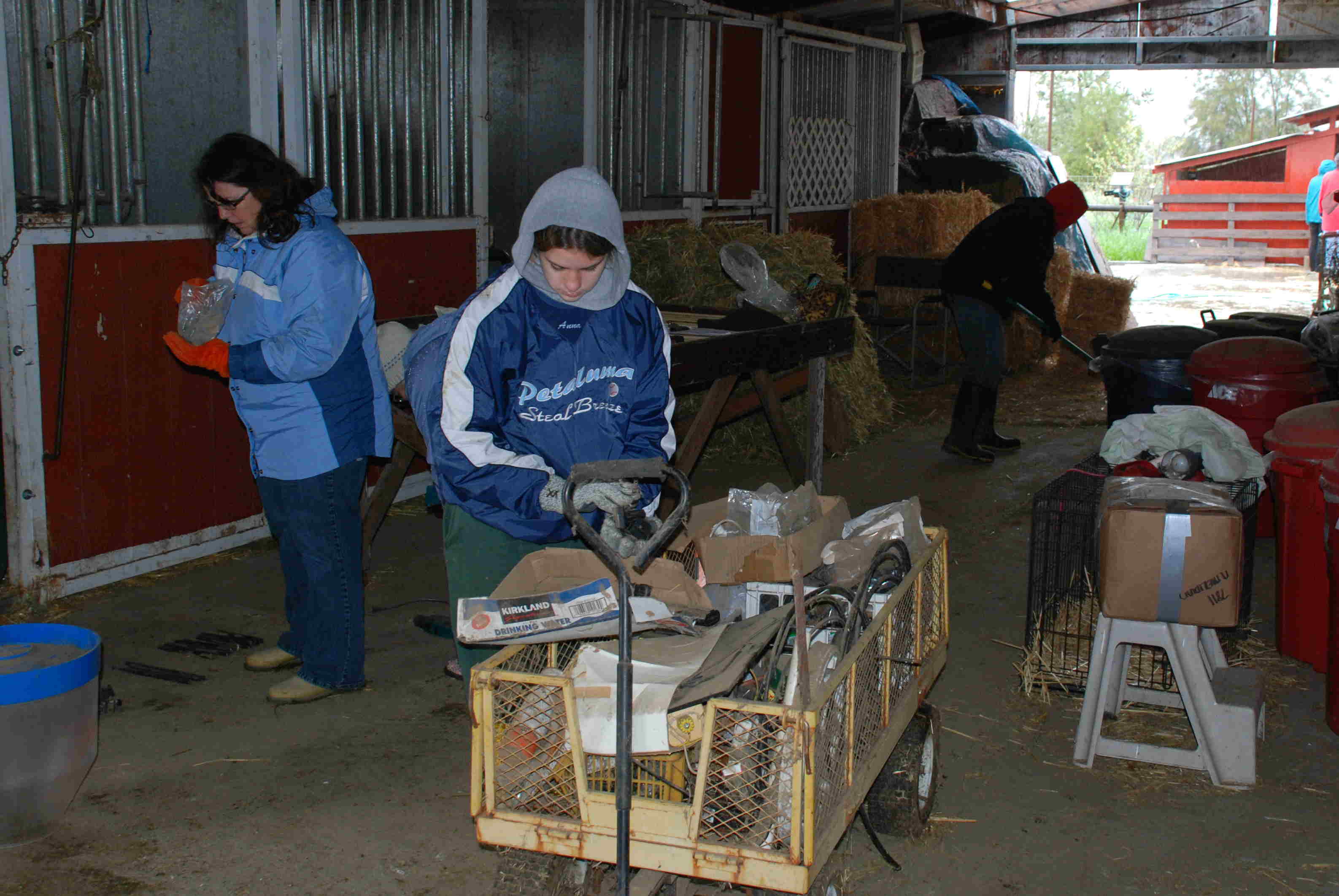
Next task: Empty this wagon that has been accumulating electric fence parts and who-knows-what-else for a could of years and sort it.
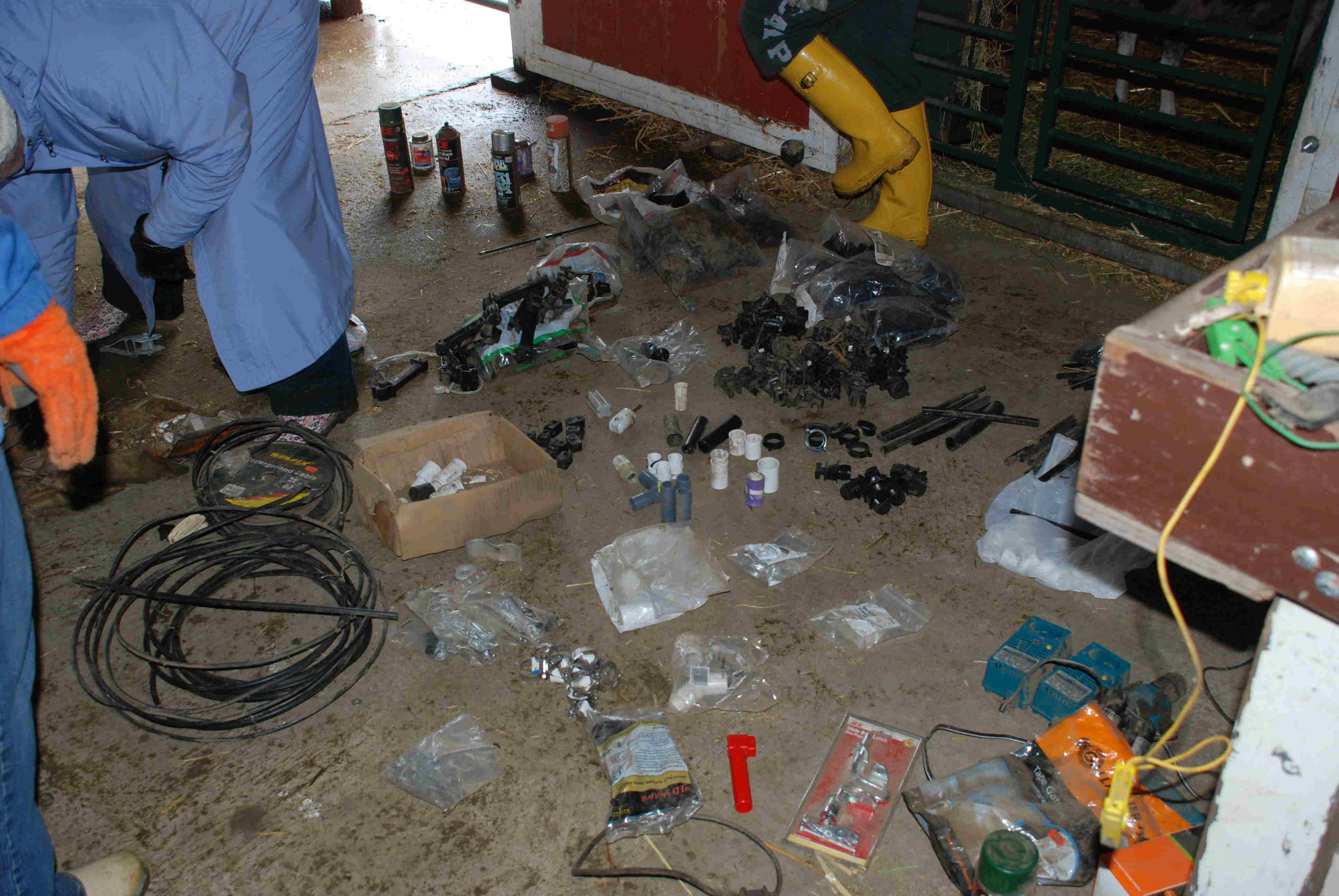
Good job, ladies! Now the trick is to throw out the true garbage and keep everything else sorted.
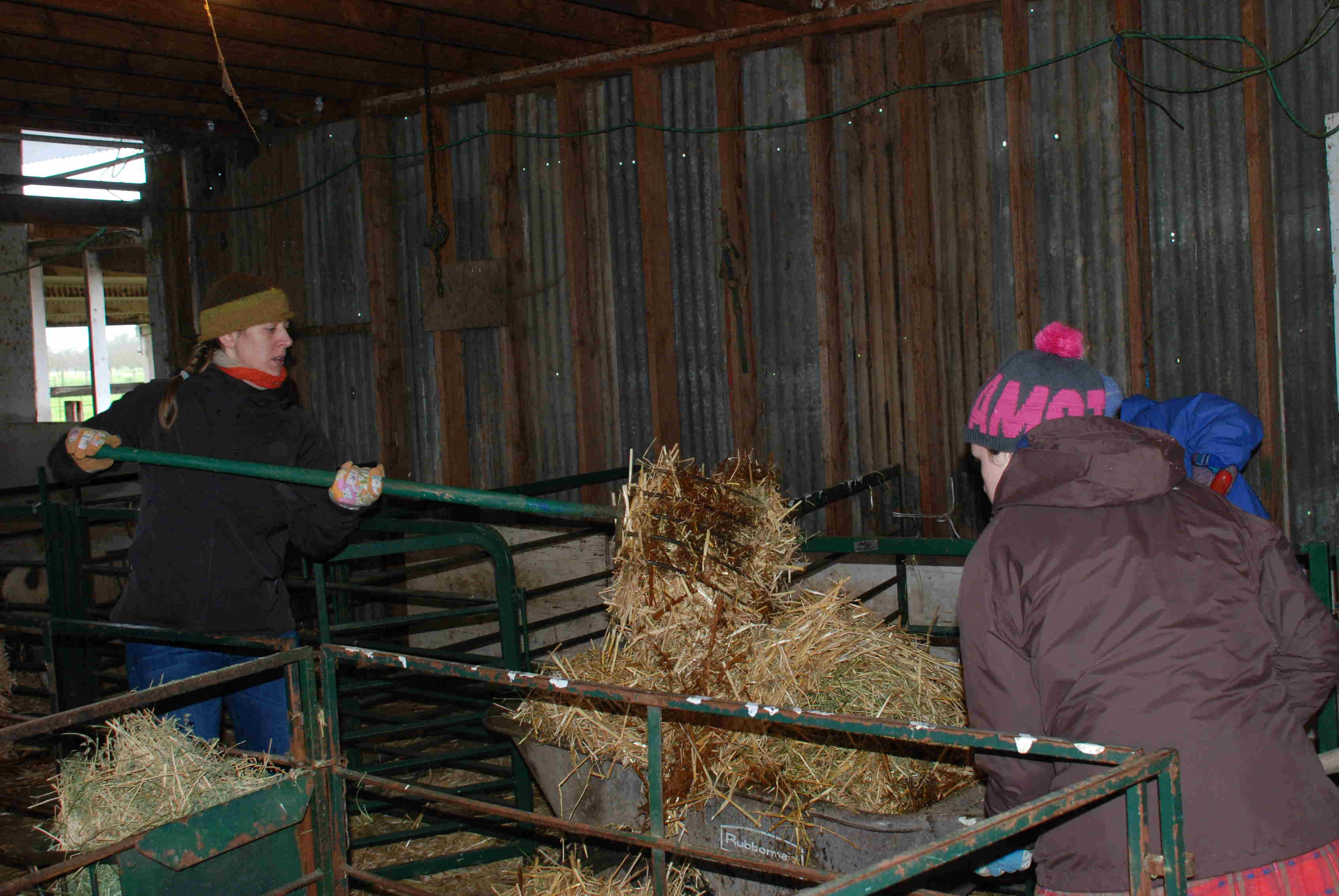
Tina, Shelby, and Lily cleaned lambing jugs.
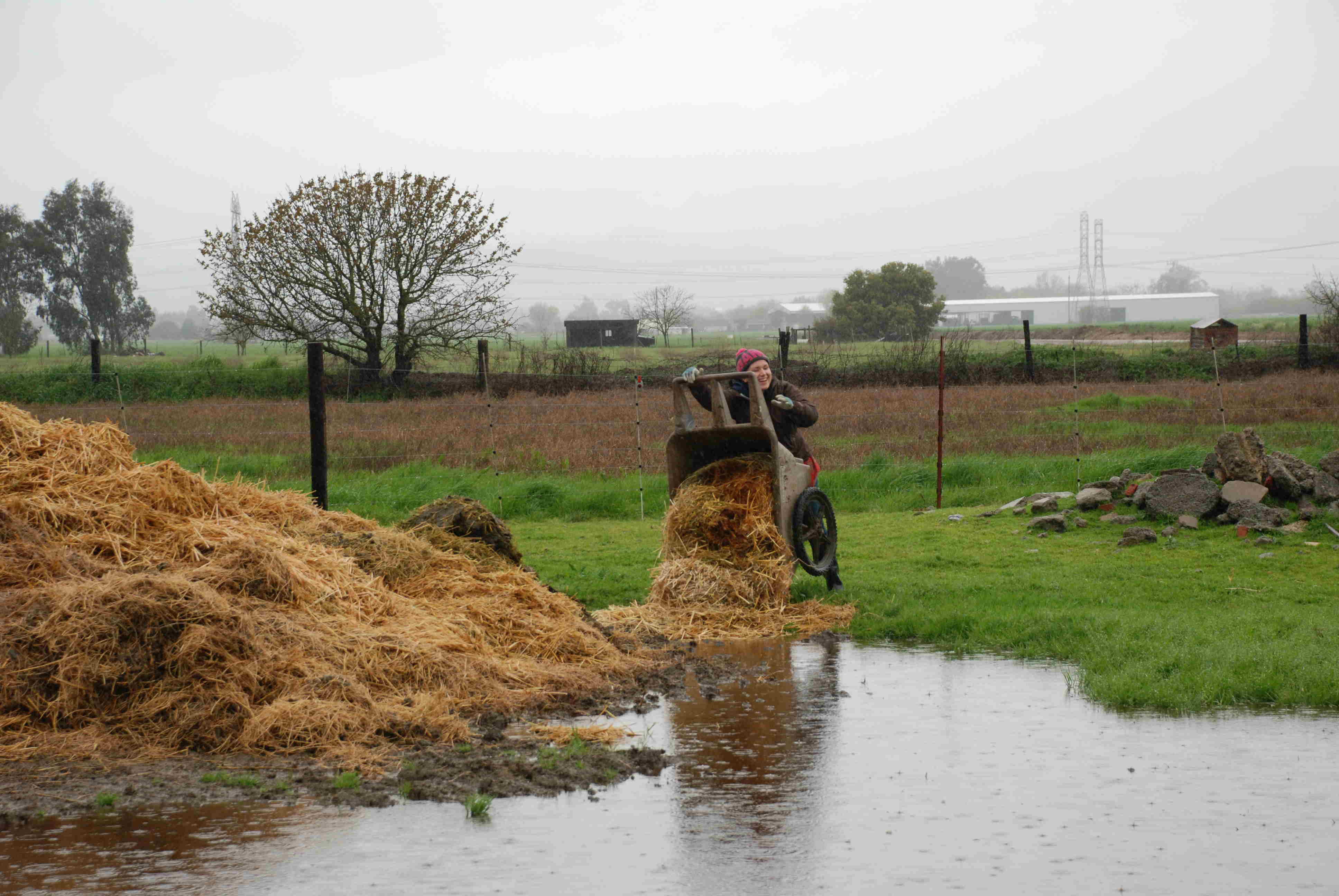
Shelby volunteered to brave the lake and dump the loads.
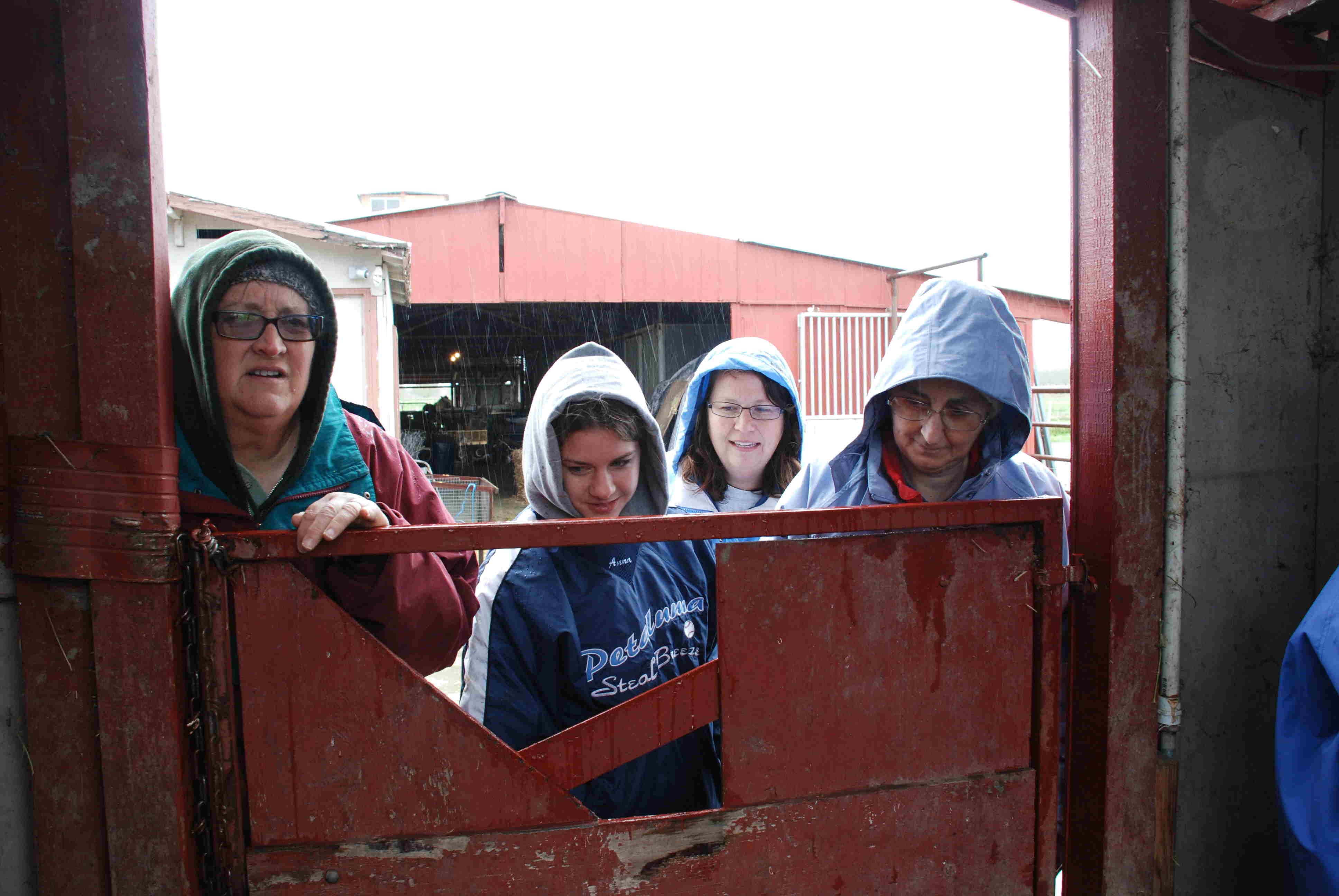
Can you see the rain coming down in the background?
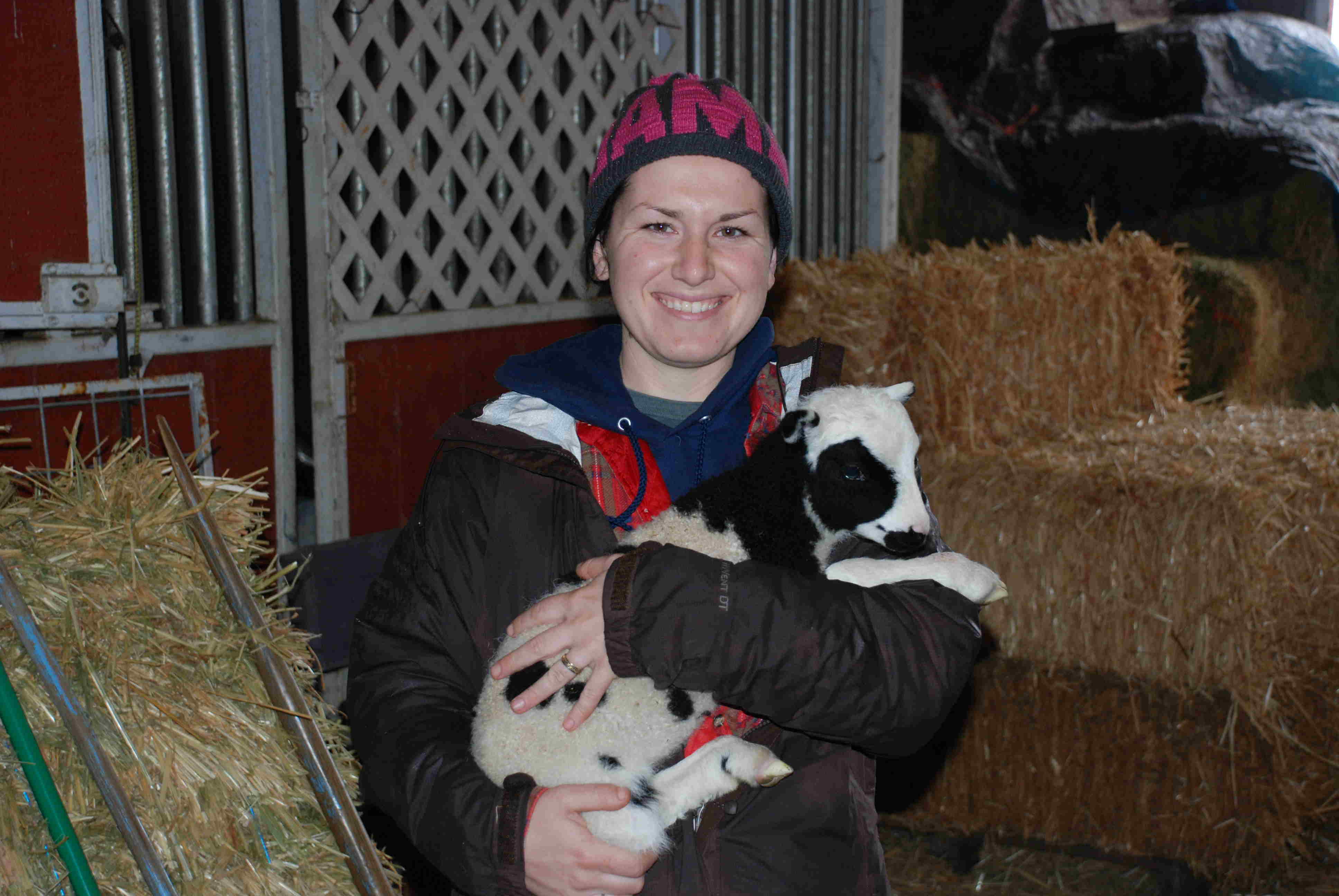
Shelby holding Shelby, the sheep’s, lamb.
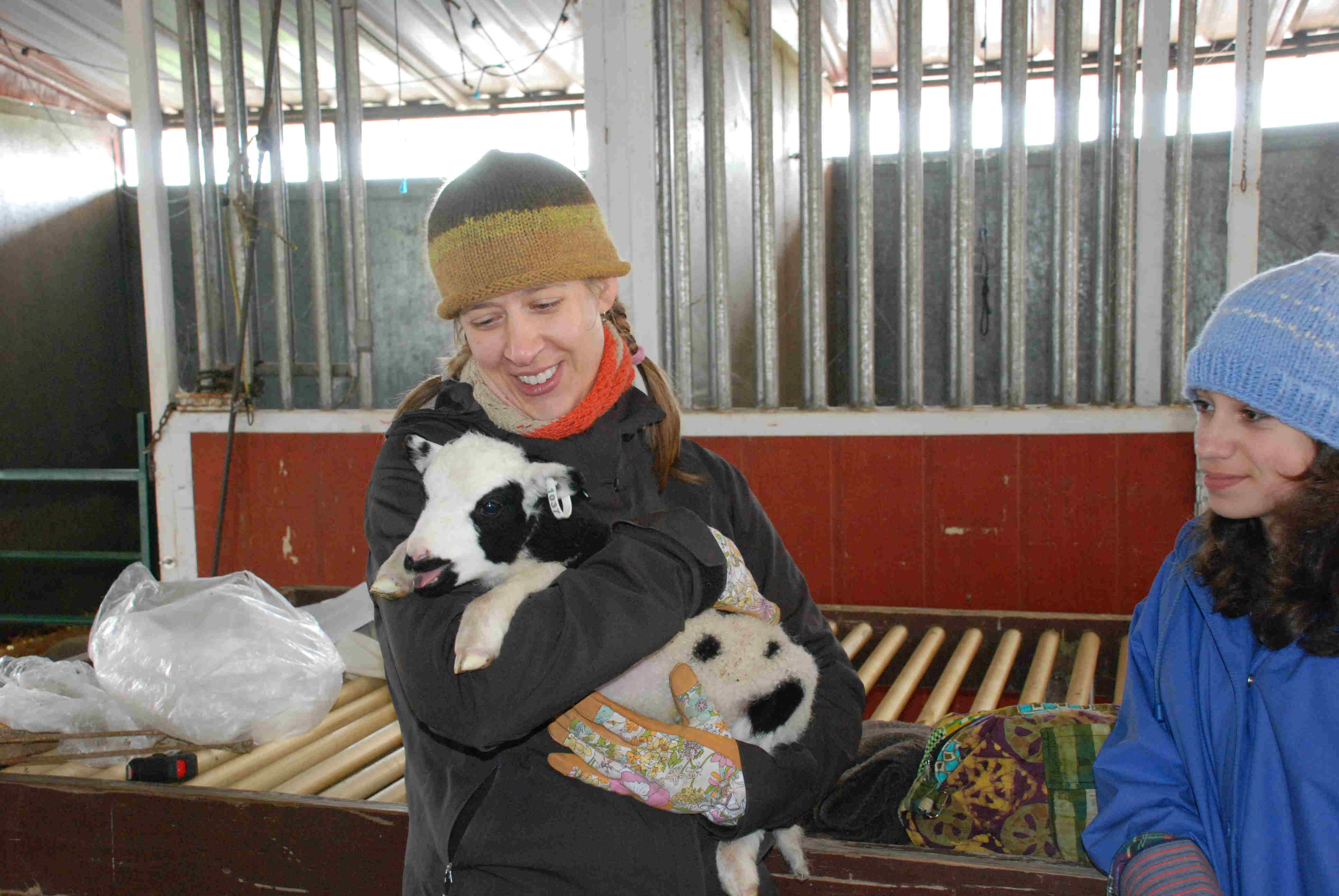
Tina’s turn.
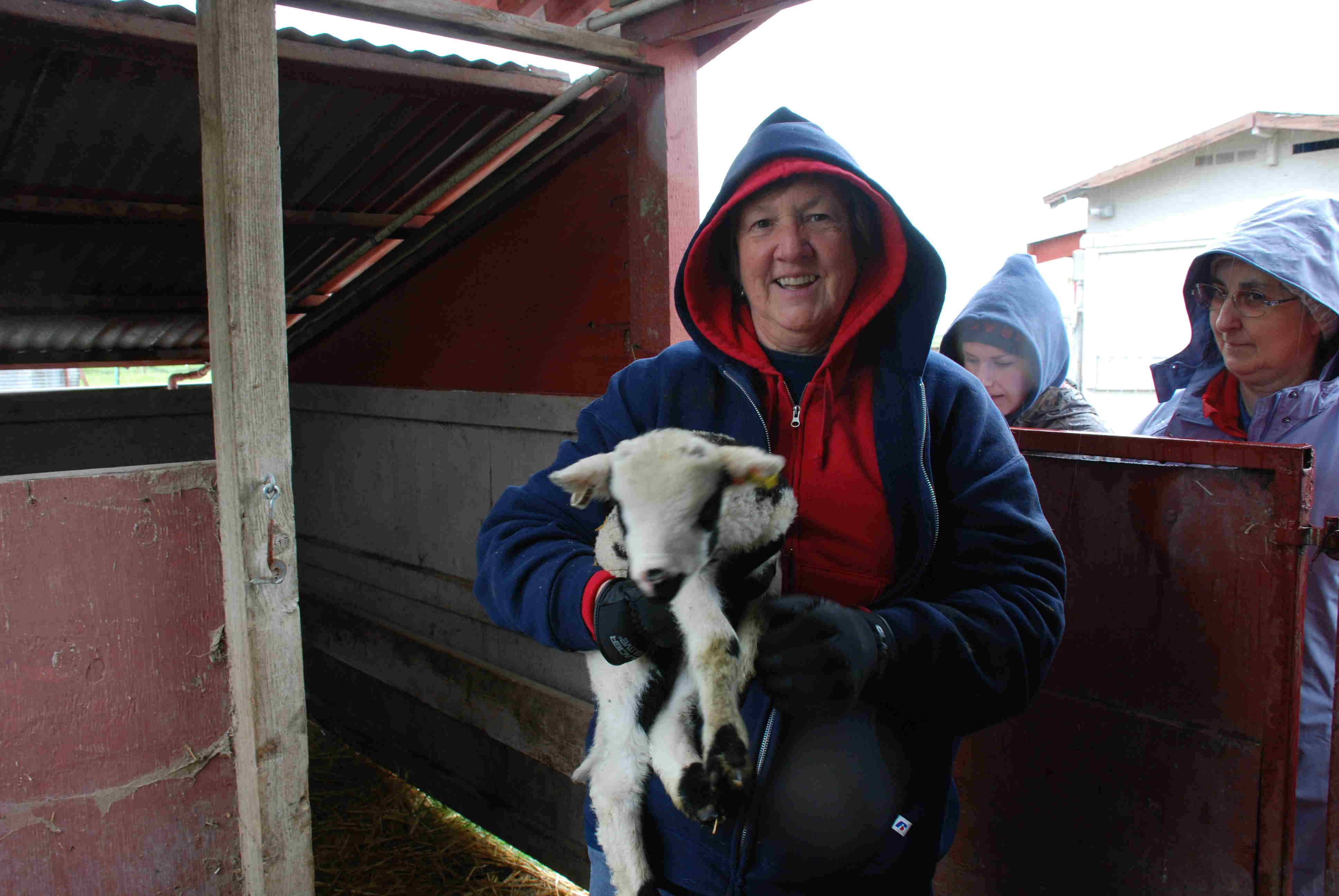
Dona holding her favorite.
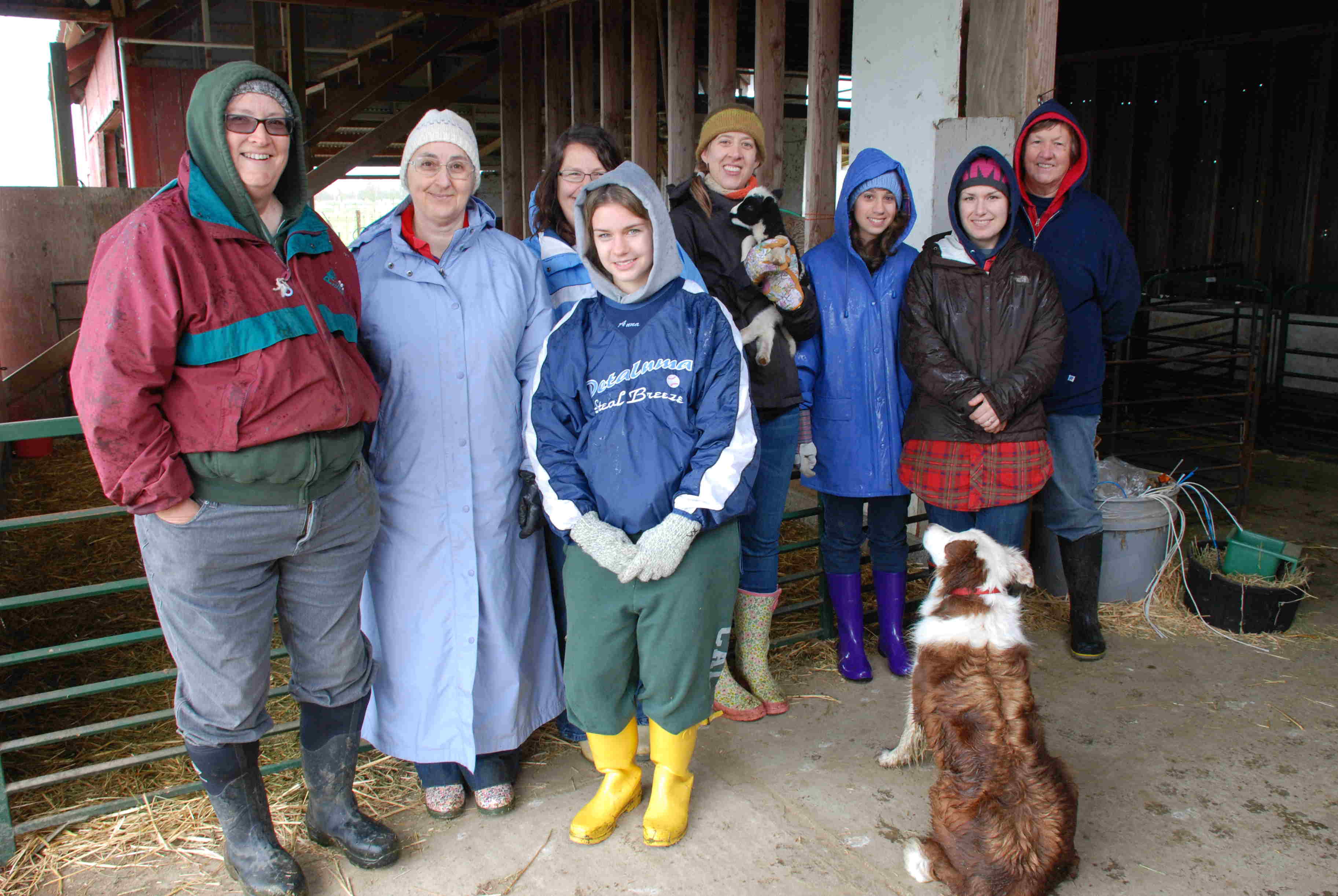
Here is the crew ready to have lunch and spend the afternoon in visiting in the warm, dry shop.
Thanks to all of you for your help and cheerful attitude!
My friend and business mentor, Irene of Cotton Clouds asked me to weave a scarf as a sample for the Coloring Contest for Weavers that is on her website. Usually I can whip up a scarf in a few hours, but with an “irene project”, as I fondly refer to our endeavors, there is always something that slows me down. This scarf was to be on the rigid heddle loom AND using a pick-up technique. I have been planning to teach myself those techniques, but have never quite got around to it. Well, now was the time.
Irene sent me several colors of Cotton Classic and Cotton Classic Lite yarn and I started to play around with color order. I chose a warp float pattern out of The Weaver’s Idea Book by Jane Patrick. The pattern unit is six threads so I wanted to make the color changes in 6 thread increments. I arranged the colors randomly with the exception of using the same color at each edge. Here is the sample I wove. I used the heavier Cotton Classic first (bottom of sample) in purple and navy, then the lighter Cotton Classic Lite in navy and then lavender, and then black 5/2 cotton.
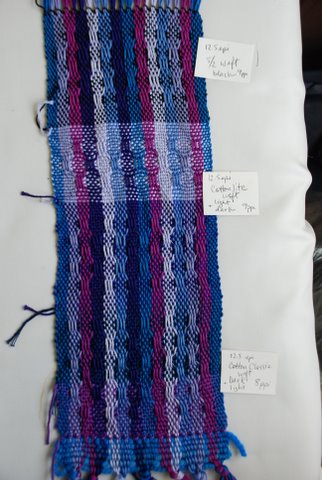
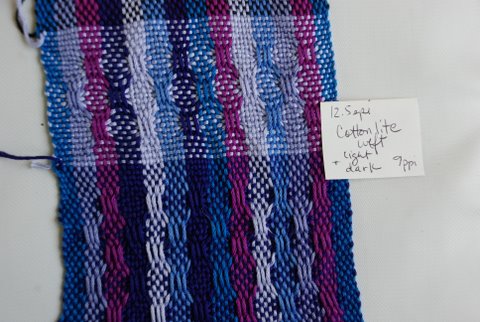
This is a detail of the middle part of the sampler. Notice the huge difference there is depending on the value of the yarn you use. These two sections are the same pattern but the lighter yarn shows the pattern as circles. The darker weft accents the warp floats.
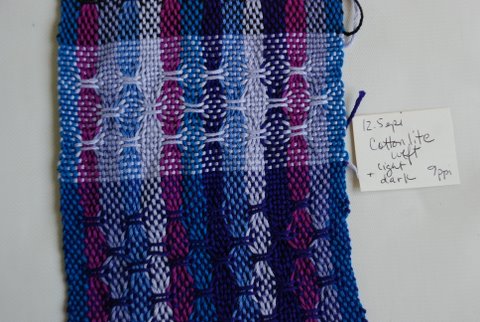
This is the back of the sample. Warp floats on one side mean weft floats on the other.
I like both effects but decided to use the darker yarn for the final scarf. I made other changes as well. When you look at the top photo what does your eye see? I first notice the light value stripes. I decided that was too distracting. I also decided to vary the size of the stripes. However I didn’t have enough yarn to wind another warp. So I removed the lightest value yarns from the warp and rearranged the other yarns in the rigid heddle, adding a few more warp ends as needed. Then I wove with purple. The result is below. Unfortunately the color of the photo below shows up differently than the photos above even though these are the same yarns. (But the trials and tribulations of photographing weaving are another story.)

Another bonus of this project–I love this pick-up technique. it’s not hard at all once you get used to the pattern. I can see more of these in my future.

