New York Adventure – Day 1

For now I’m skipping over the time between Lambtown and the current adventure, but I may backtrack later.

Do you remember in 2019 when I had a major accident? This is the BlogPost about that. (I just reread that post and see all the typos—that was because my hand still wasn’t working very well and I didn’t catch all the mistakes.) In 2019 a group of friends and I had planned to go to the New York Sheep and Wool Festival in Rhinebeck, New York. Until I talked to these friends a couple of days ago I didn’t realize that the accident was only two days before our planned trip. My skull was repaired in February 2020 but that was just before the pandemic started. So now in 2023 we resurrected that trip we missed in 2019. It’s the same group minus one.

Landing in Chicago where we changed planes.

Kathleen and Mary and me in the airport waiting for the next flight. We were going to meet up with Chris who had already been exploring NY for a week with her husband and other friends.

We landed in Albany around 10 p.m., picked up a rental car, and found the nearby hotel we had booked. The next morning we had breakfast with Chris and got on the road. Kathleen wanted to find an apple cider donut and an apple farm was our first stop.

This farm was near Vischer Ferry and had you-pick apples as well as a fully stocked gift shop and bakery. There were apples of all varieties.

We each chose apples of different varieties. I like that this one says “Very firm with a loud crunch”.

How about this one that says “monster crunch, two-napkin juicy”?

We continued on towards our AirBnB near the small town of Tivoli, but wanted to explore some of the country. We saw the Erie Canal on the map and decided to stop at the Erie Canalway Trail near Vischer Ferry Nature and Historic Preserve. According to signs the canal opened in 1825 to facilitate transportation between Buffalo and Albany and was enlarged in the 1840s. It was abandoned in 1917.

This is the canal today.

There was parking near this bridge which was originally over another part of the canal. It had been moved in 1917 to a private farm and in 1997 was brought to the canal where there had been a similar bridge.

Kathleen and I chose to walk the trail for awhile.

Kathleen was looking for birds while I kept getting sidetracked by all the plants that are different from what I’m used to. White berries on this one.

Yellow berries here.

Red berries here. I loaded this photo into a plant ID app on my phone and it was identified as winterberry holly.

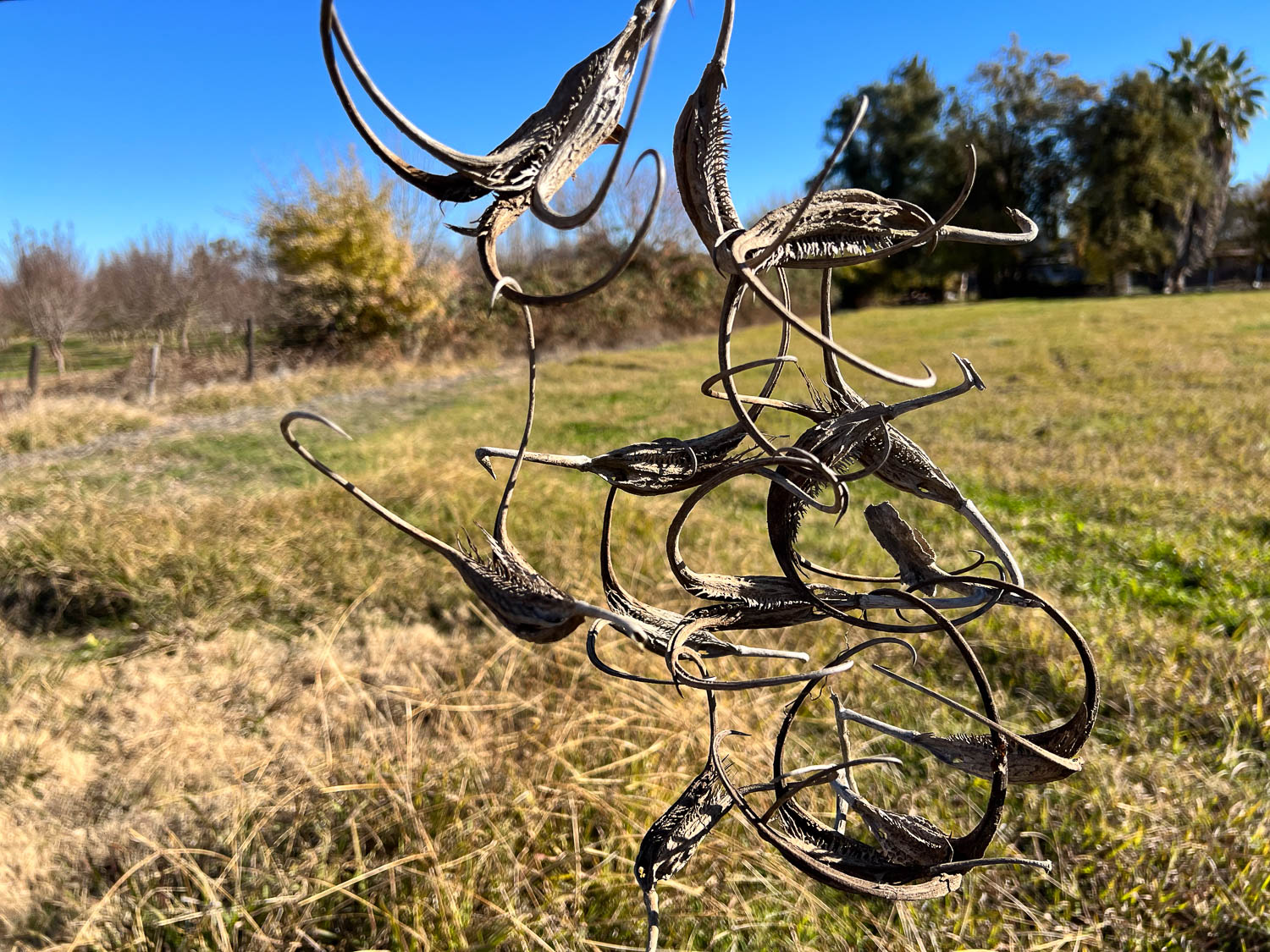
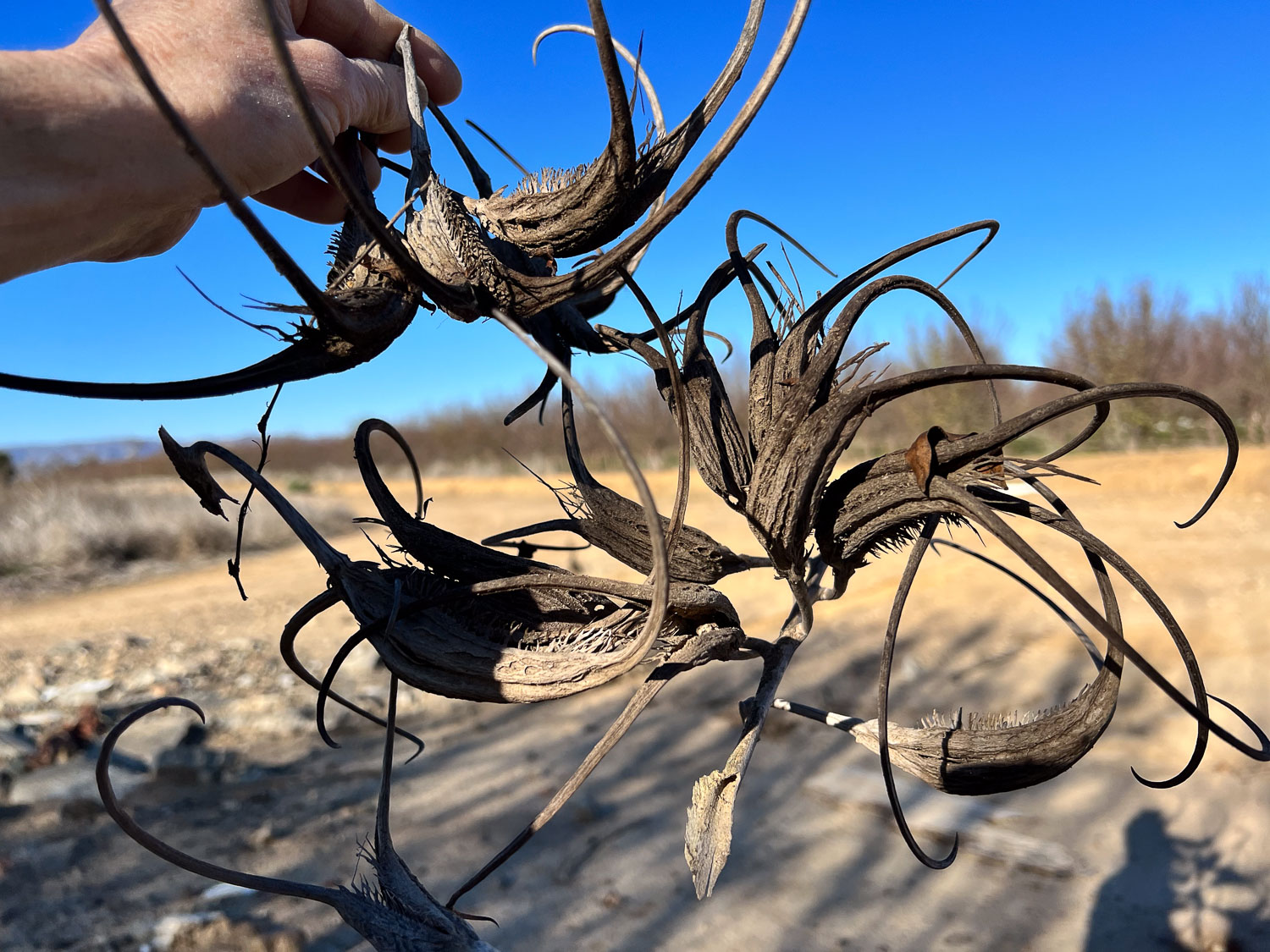
Berries are the fruit of the tree or bush and contain the seeds. We saw lots of other interesting mechanisms of seed dispersal, but I don’t have ID on any of these plants.

Another unknown.

Gorgeous colors.

We could see the other side of the canal from the trail. I assume that this is the original rock wall. But I don’t really know enough about it.

It’s larger here—maybe part of an old bridge or where there was a lock??

We drove on to explore Cohoes Falls on the Mohawk River.

It was fascinating to see the original cotton mill buildings in the town and to read about how they were powered by the river water. Many of the old mill buildings are still here but have been converted into apartments.

Here is how it looks today.

This is the outlet of the fish transport pipe as described in the sign below.

To be continued….

Lambtown Sheep Show with Farm Club

One of the Lambtown events is the sheep show. I live so close that I like to participate and I know that people like to see my sheep there. But I knew that I couldn’t be a vendor AND show sheep. I told the FarmClub that I would get sheep to Lambtown if they wanted to handle the show. They were willing.

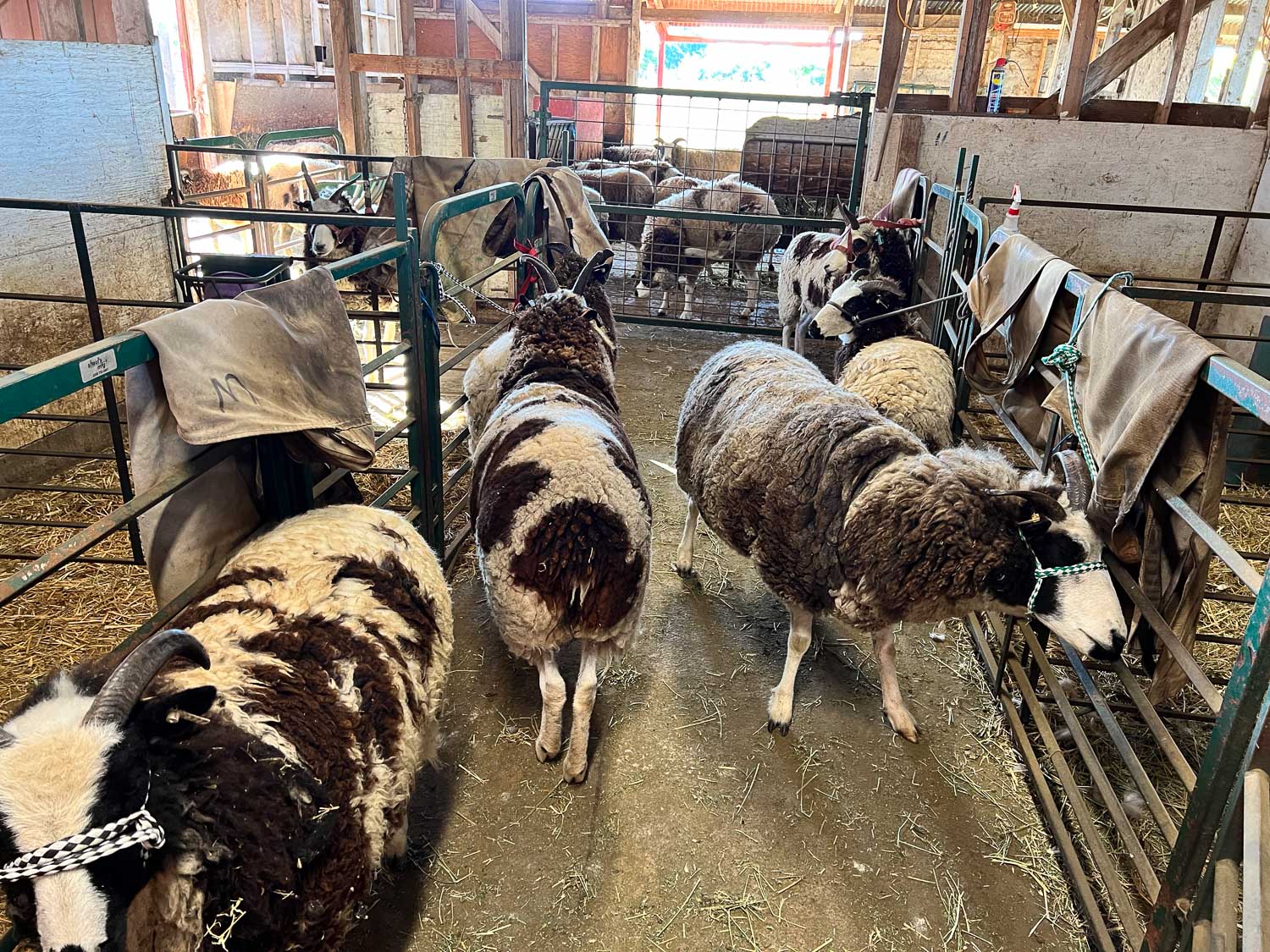
This was simpler than some other shows because there were no group classes and, as at many shows, you could only enter yearlings and lambs. I sold my yearling ram at Estes Park in June so we didn’t even have to worry about who would want to handle a ram. I entered two ram lambs, two ewe lambs, and two yearling ewes. It’s the yearling ewes in this photo. These are twins born in 2022.

Farm Club members set up a display about Jacob sheep and Farm Club. All I had to do was bring a few of the panels that we use at State Fair and the box of photos and signs. I forgot that I’d be using the Meridian Jacobs sign in my vendor booth so Lisa used her t-shirt to indicate Meridian Jacobs. Clever!

I have to explain about that panel in the center. When you wind a warp on a loom you pack the layers of yarn with paper as you roll it on the beam. During one of the Sheep-to-Shawl competitions a few years ago FC member, Alison, thought that the paper used for rolling the warp could be made more interesting. As the shawl was woven, this message emerged from the back of the loom. Isn’t that a great idea?I thought it was worth laminating and using as a sign.

I did not get to see the sheep show, but many Farm Club members were there and some took the following photos.

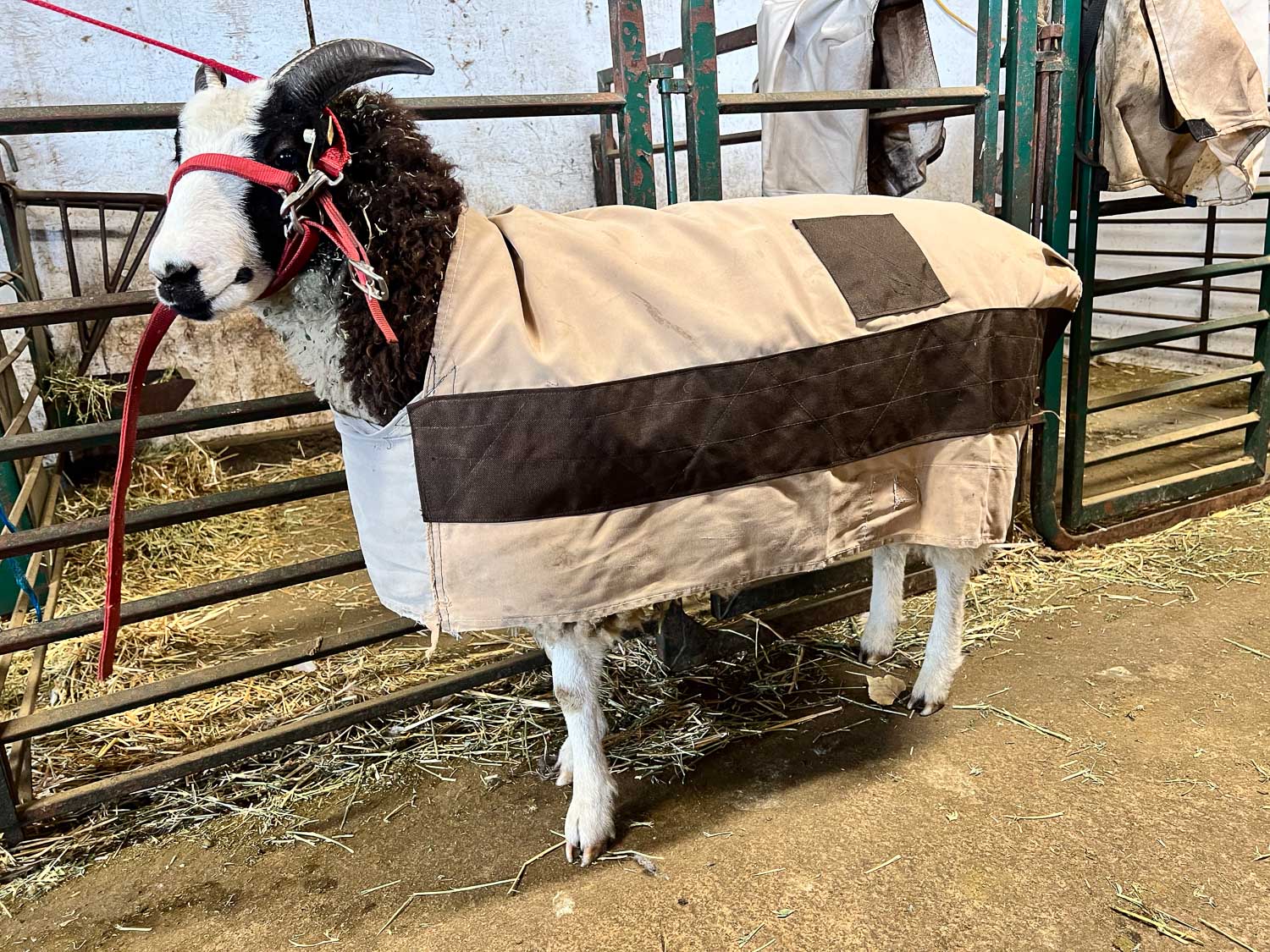
Beth and Marina did most of the showing. The competition was from a Shetland breeder. This is the ewe lamb class.

This is the ram lamb class. The green on the ram is because our breeding season had already started and this ram lamb was wearing a marking harness when he was with his group of ewes.

Beth ended up with a challenging sheep. This ewe decided to go on strike.

We ended up with Champion Ram and Champion Ewe of the Primitive Breeds division.

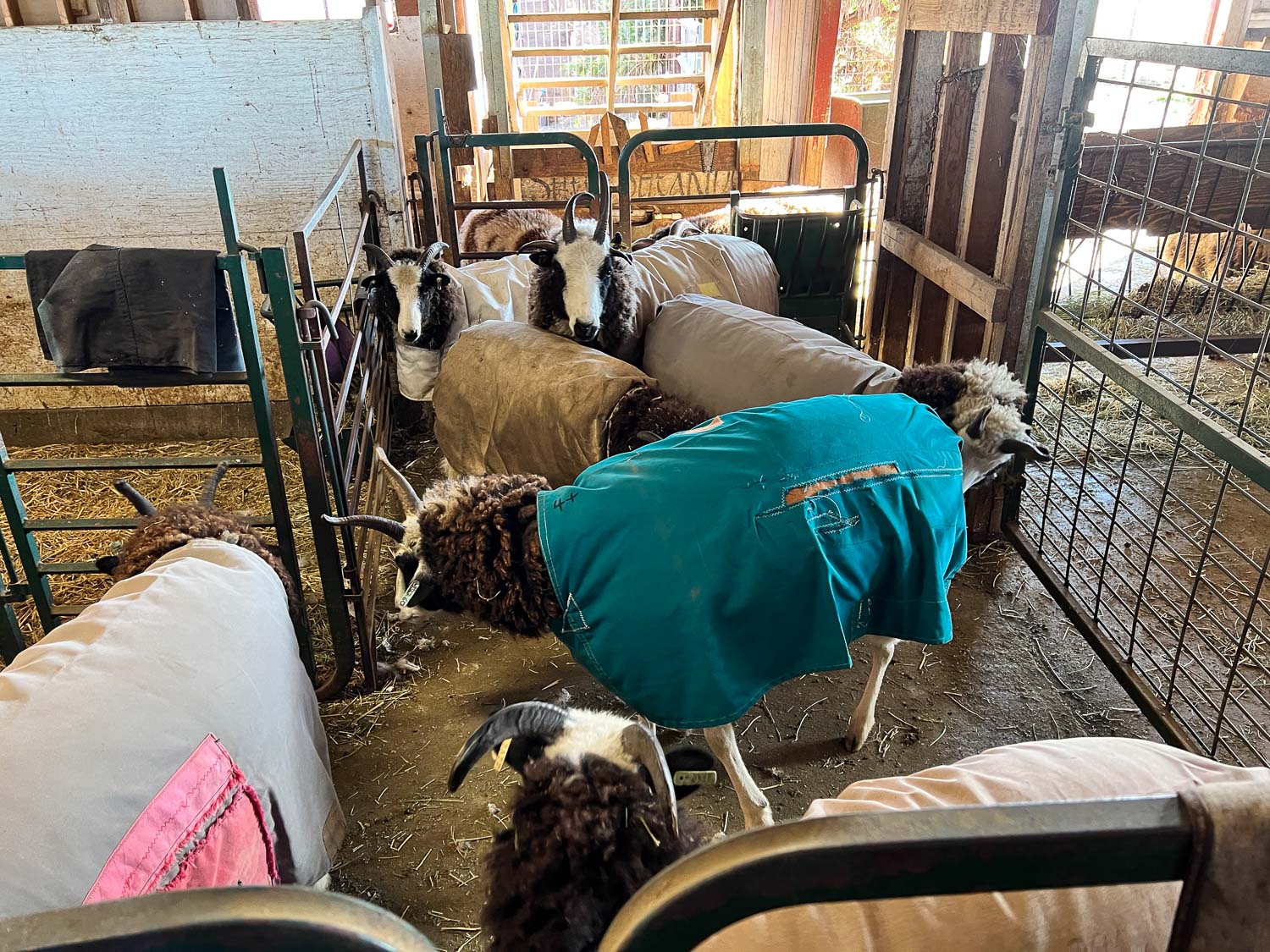
Deborah helped out when a third person was needed for the champion class. Once again Beth had a less cooperative sheep, but handled him well.

Dan spent all afternoon driving the tractor and wagon that transported people back and forth from the vendor halls to the livestock area.

This was very popular not only with adults that appreciated the rides, but with kids who liked to sit in the front. Dan took extra laps to give some of those kids more time sitting on the front bench.

Lambtown 2023 was a big success for all of us. The crew that put the show on this year is to be commended for the time they spent on planning and organizing and the professionalism they brought to the event.

Lambtown 2023

In the last post I wrote about the class I taught at Lambtown a couple of weeks ago. Now I want to share photos of my vendor booth and the sheep show.

I am still experimenting with posting from my iPad which isn’t as easy as from my computer. These photos are all entered as Medium size—that’s just a note to myself for when I review this later.

Bales of straw with the letters that say Lambtown in the early morning.

I ended up with a booth and a half space and now I’m spoiled. Will I ever want to go back to a single booth space? It’s hard to get a good feel for it from this photo. I used a rack in front to hold handwoven blankets. There wouldn’t not have been room in a single booth. There was plenty of room for people to wander in and really look at everything. There were so many people at Lambtown this year that I didn’t take this photo until after 4 on Saturday when I could finally step out of the booth. The following photos are some of the things I had in my booth.

I spent a lot of time the last couple of weeks packaging the flowers I grew and used for my own dyeing this year.

I had forgotten I had these in my shop on the farm because there is always something in front of them.

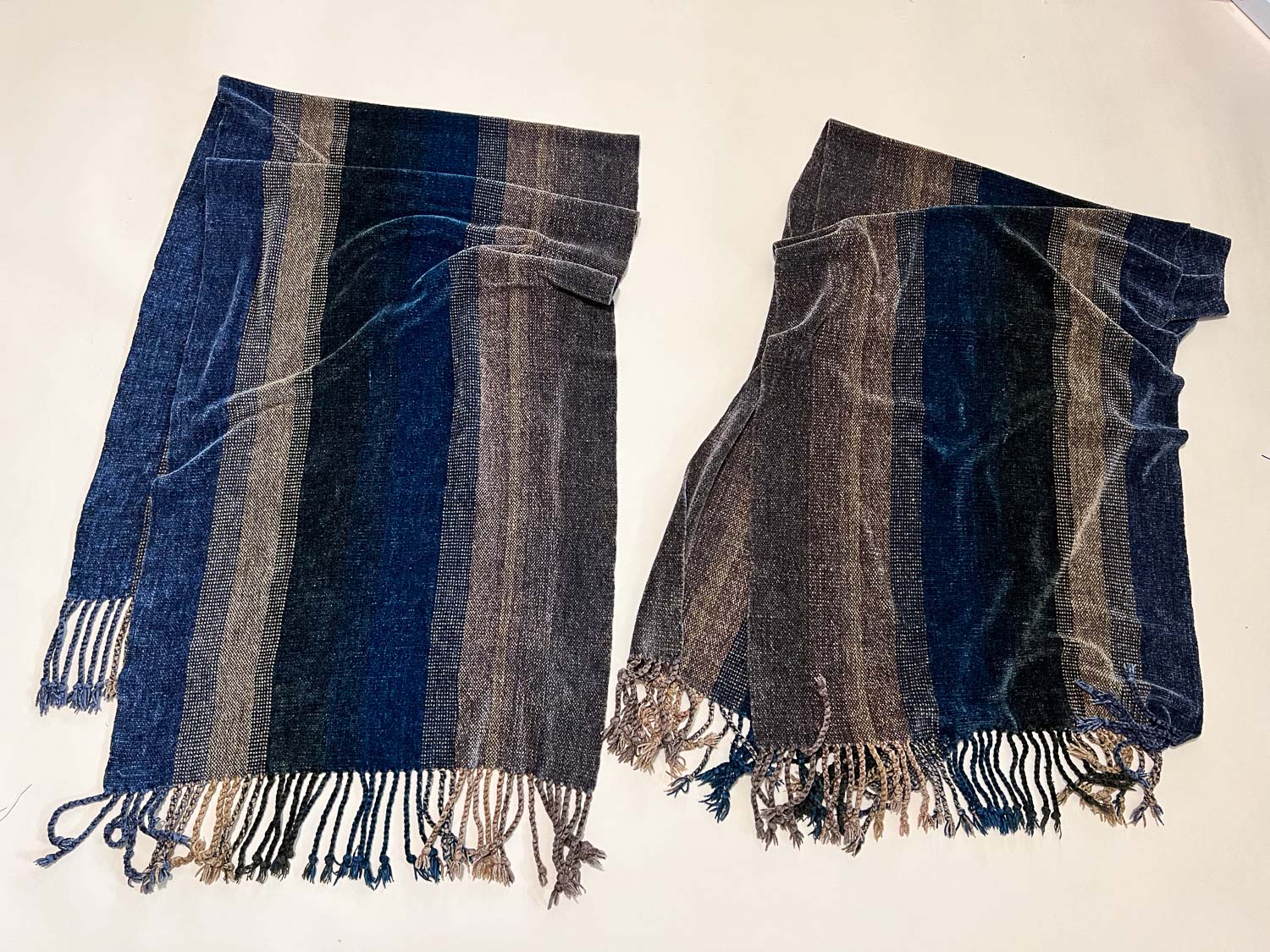
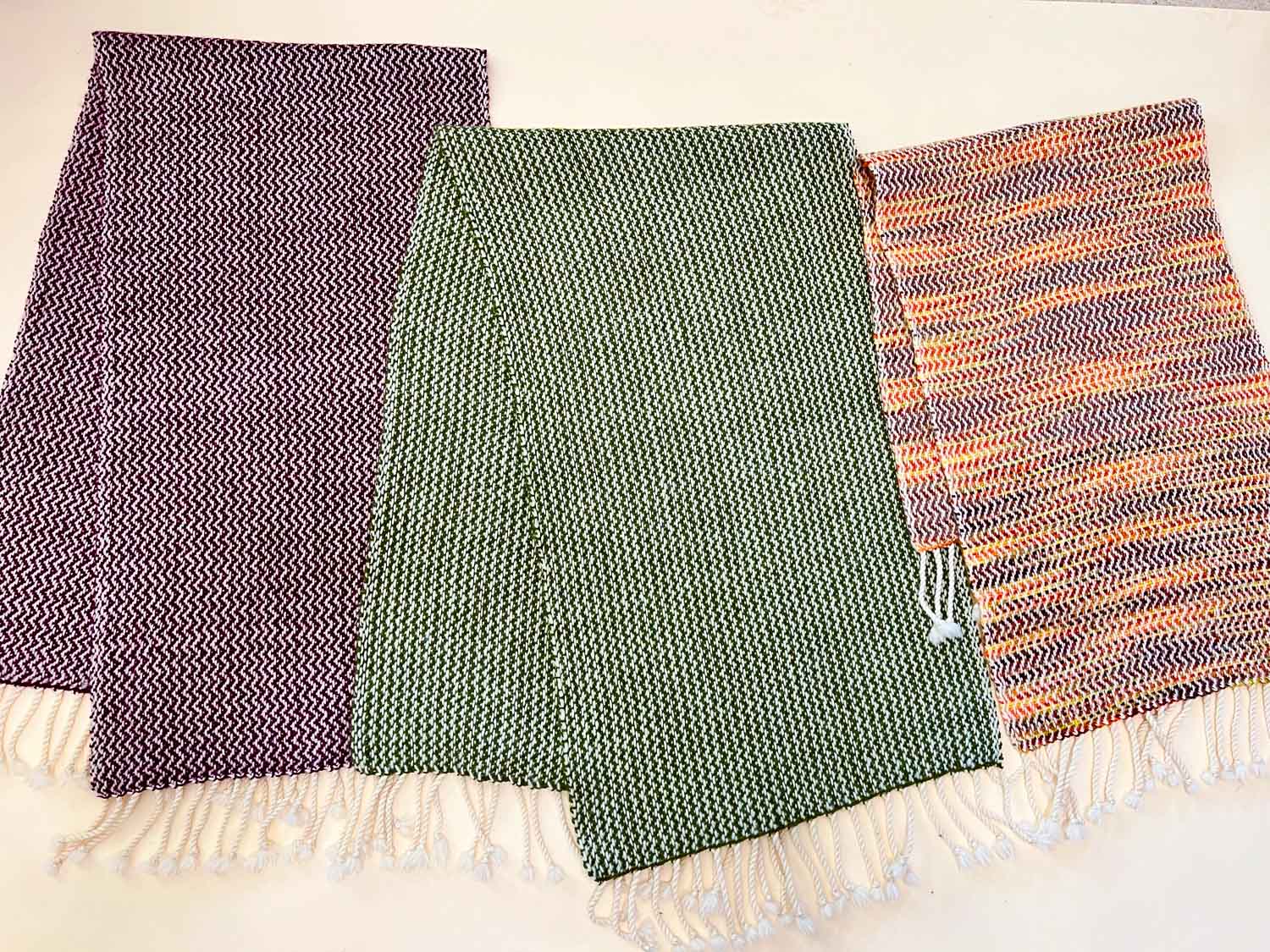
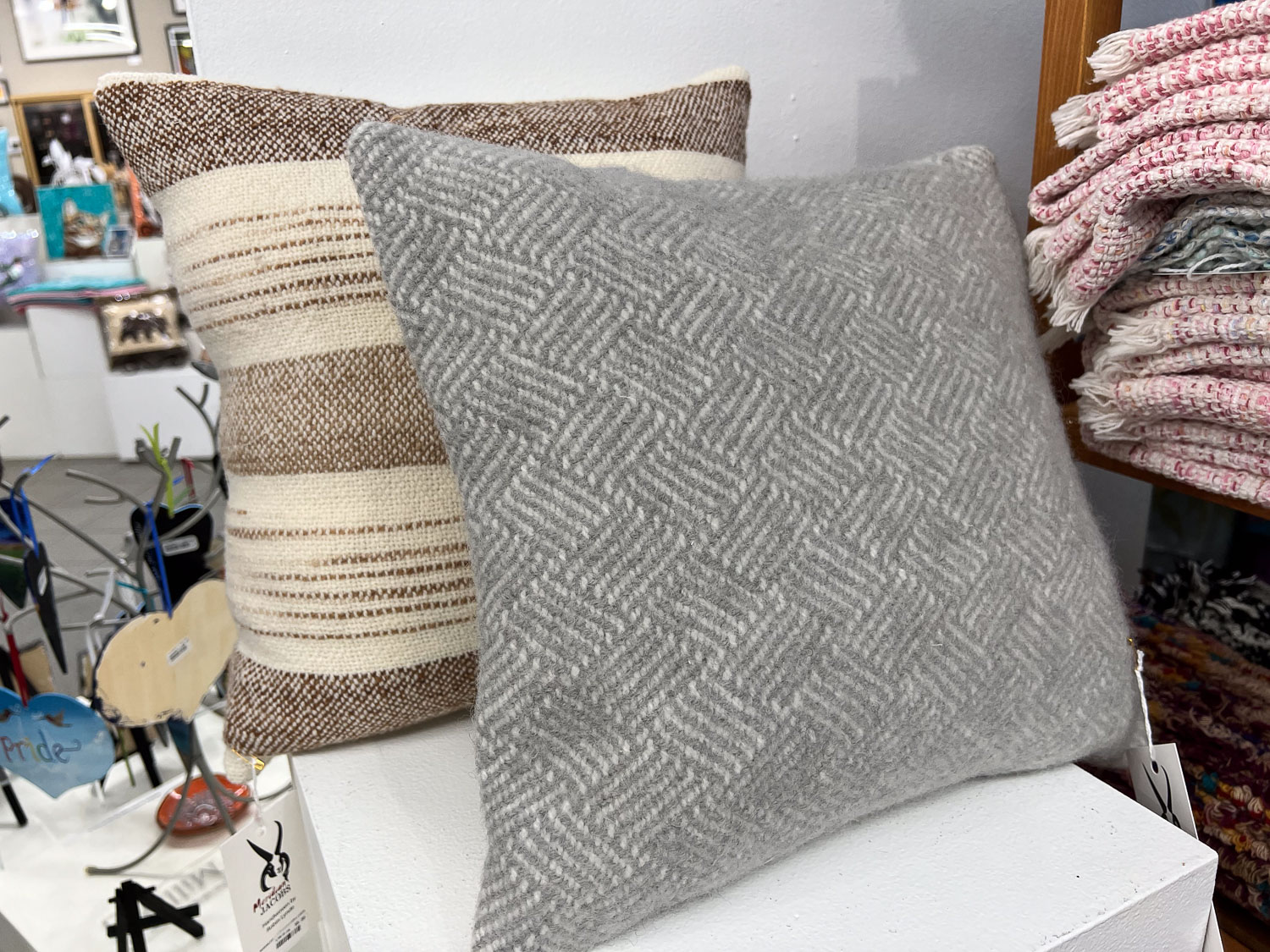
Year to Remember blankets, so called because I will custom weave these for people who want to commemorate a special year. These two use the same stripe pattern (although you can’t tell with them folded in this photo) but different colorways. The one on the left uses all naturally dyed yarns.

The hemp bag I made and wrote an article about for the most recent article of Little Looms.

The newest product in the shop and online.

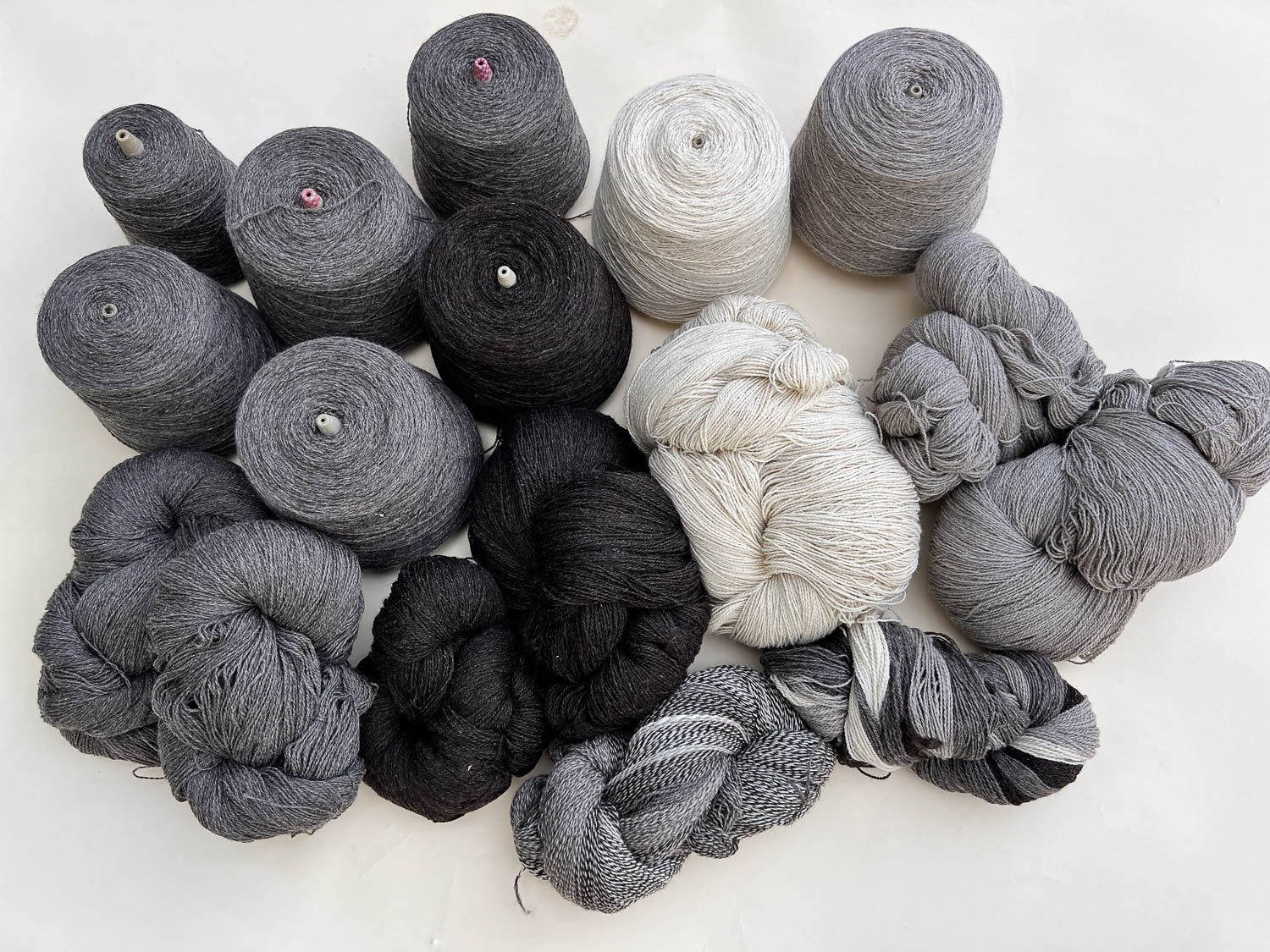
The 2023 wool I just got back from the mill. I haven’t had time to put this online yet.

I have an odd variety of buttons in the shop and I brought these to Lambtown.

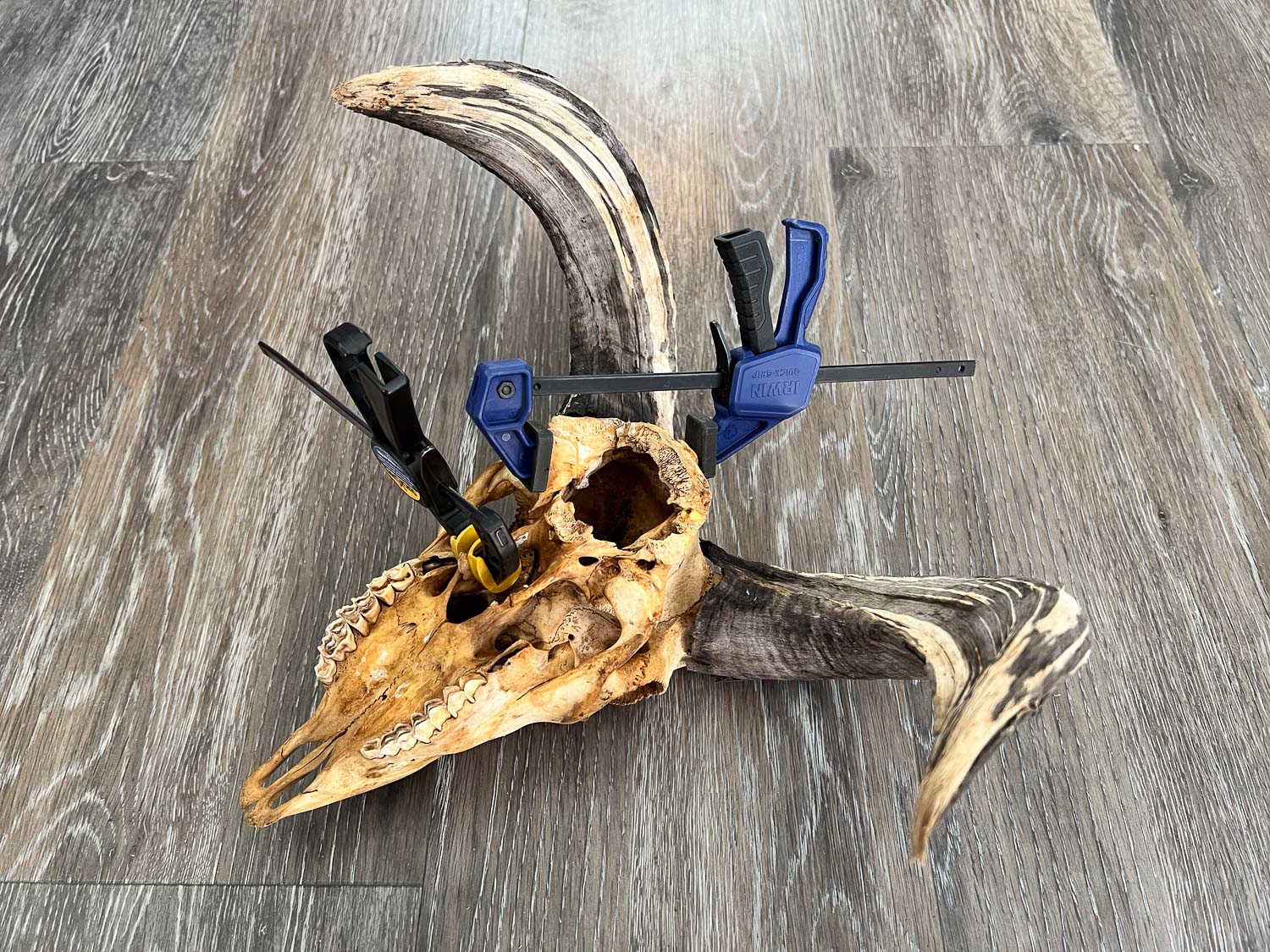
I brought four sheep skulls to Lambtown and sold them all. I have more at home I haven’t had time to finish.

Some of the silk scarves I’ve printed recently.

Timm Ranch yarn dyed with Indigo, hollyhock, madder, dahlia, and cosmos.

I had my own horn buttons with me and I love the way Siobhan used these two to create a closure for her woven piece.

That’s it for now. One more post for the sheep show.

Link

I have already moved onto the next adventure, but I missed writing posts about the last few and I like my blog posts (scrapbook) to be in order. I usually use my computer but I’ll experiment with writing on my iPad. If it’s easy then maybe I can get caught up and move on to this week’s event.

Lambtown Festival in Dixon, California (and only 10 minutes from the farm) is held the first weekend of October. The main event is on the weekend but classes were held for four days. I taught Clasped Warp on the Rigid Heddle Loom on Thursday. There were 9 students so 9 different warps.

NOTE. I have a way of exporting photos and uploading them on my computer that I know what to expect of the photos. I am experimenting here with sizes. The first one is uploaded “small”, the next one is “medium” and the third will be “large”.

With clasped warp you wind one yarn from one direction and one yarn from the other and they are joined (or clasped) in the middle. Direct warping is the only way that it makes sense to do this so working on a rigid heddle loom is great.

We could fit two people at each table working on opposite sides. I like how often people’s yarn choices match their clothing.

Once the looms are warped everyone sits at their own space to weave. In the past I have taught this as a half day class. Students learned the warping technique and started weaving but most of the weaving was done at home. This class was scheduled for morning and afternoon sessions.

Only a few finished weaving their projects, but that was OK because they all owned the looms. We took a class photo with warps mostly done but not off the looms yet.

Here are two that were finished and cut off the loom.

This was a fun class. I’ll be teaching it next summer at Convergence in Kansas as well as scheduling it at my place before then.

Tomato Harvest

The field across the road was planted in tomatoes back at the end of May. See this post. I have watched the progress of the crop since then. When I walk Across the Road with Ginny it’s these fields I walk around. I wrote this post September 26.

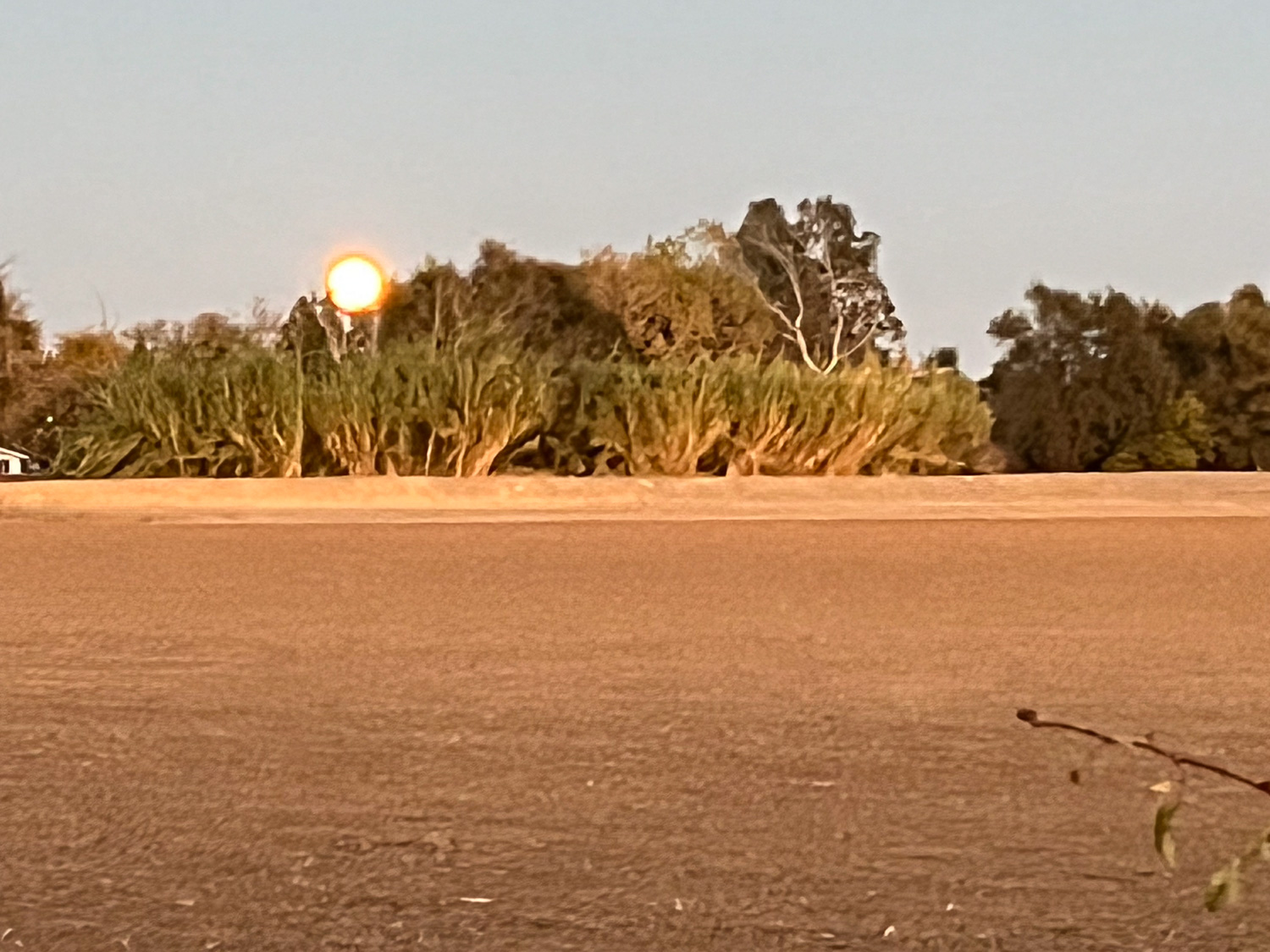
I took this photo at dusk Thursday, September 28 and heard activity over there just before midnight.

The harvest had started. I stood in our driveway and took photos. I didn’t want to miss it! I think I didn’t need to rush. I don’t know how many acres this field is, but it took about four days, working 24 hours/day. At first there was one harvester working, but later there were two.

The first morning I took my usual walk, but walked on the other side of the main canal so that I wouldn’t get in anyone’s way. There is a lot of infrastructure involved. This is a water tank with a portable toilet and a place for shaded seating.

At times there were four or five sets of double trailers staged here. The tractor pulls them next the harvester as it works and then drops them here. Another tractor brings the next set of trailers to the harvester. The trucks come and go from here, taking full loads out and bringing back empty trailers.

I know nothing about tons/acre, or how many loads were harvested, etc. Maybe I’ll ask next time I talk to someone. I think the answer is A LOT.

It is fascinating to watch the harvester at work. I have several short videos but I think I won’t try to load them here or I’ll never get this post written. I posted one on my YouTube channel but I’d like to do another showing more of the process. That one is good at showing what is going on with the harvester. The row of plants is cut and then lifted by the conveyor into the harvester. I haven’t seen inside but was told that lasers are used to sort the tomatoes and debris. Some debris goes out the back and some to the side while the tomatoes are being lifted into the trailers pulled by the tractor.

Here is a view from the other direction. The harvester fills the trailer in a back and forth motion while the tractor with the trailers pulls it forward as necessary to keep up with the harvester.

Taking two trailers back to the staging area.

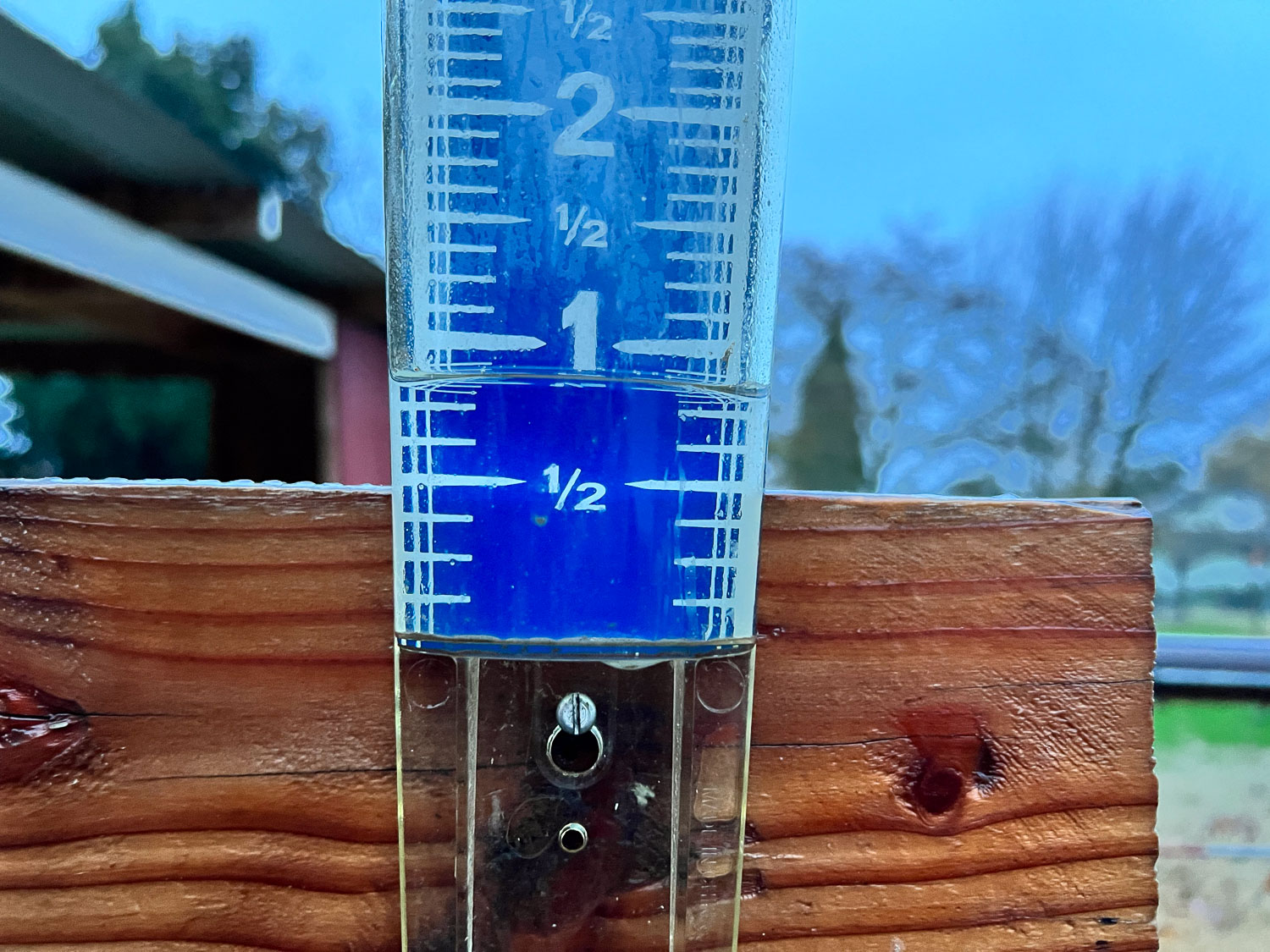
In the middle of the day on Saturday we had a brief, but heavy rain. We got 1/8 inch in less than 15 minutes. That’s a lot for us, especially when this was the first rain since spring. It’s dry enough here that it wasn’t enough to stop the harvest for long.

The harvesters worked all night and this was about 6:30 the next morning. By this time there were two harvesters at work with two tractors pulling trailers.

It was’t until Sunday that they finished the rows that were closest to the road.

I don’t remember if they finished Sunday evening or if that was just the last photo that I took of the harvest.

I have had a whirlwind of activity with Lambtown October 5-8 followed by a trip to Boise and now I’m getting ready for another adventure. So I missed all the steps that brought this field from one just harvested to this one that is ready for fall rain.

Breeding Season — Almost Over?

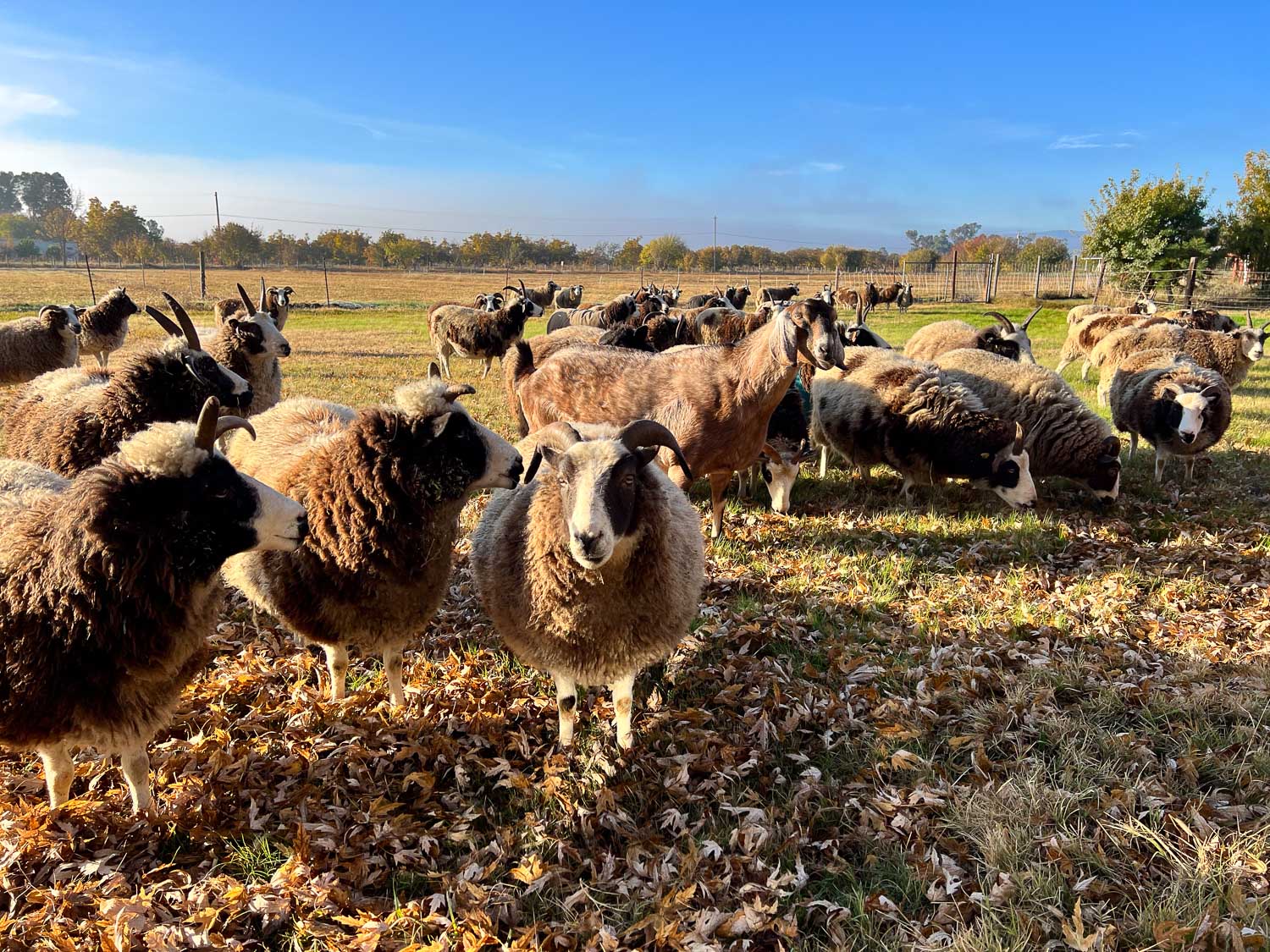
Can breeding season be over already? We put the rams out only 16 days ago and almost all ewes are marked! That makes sense because the sheep heat cycle is 16-17 days. Jacob sheep are seasonal breeders as are most breeds, and this is the season. Even though they may have all been bred we’ll keep the rams out at least another two to three weeks. I changed the marker color from green to orange. Now would be the time that I’d start to see orange on top of green if a ewe I thought was bred really was not. If there were several of those in one group that would mean that ram has a problem. Last year was the first time I had an infertility problem in the flock (one ram who got sick), and that extended lambing season as it was the clean-up ram that bred some of the ewes that were supposed to be bred earlier.

Hillside Gabby’s Barrett came from Hillside Farm in Michigan a couple of years ago. That’s an impressive set of horns for a ram that is just 2-1/2 years old. There are 13 ewes with him and all are marked as of today.

Barrett had a green marker in the first photo but I just changed to orange. The last two ewes were marked yesterday and today with orange.

I brought Fair Adventure Horatio here from Colorado in June. He is also 2-1/2 years. He has 19 ewes with him.

Horatio’s group walking out to pasture a couple of days ago.

This is today’s photo.

He has a bit of a demonic look here! Actually, this is common behavior for rams with ewes, and it is called Flehmen. From the linked website: “Flehmen is a behavior exhibited primarily by males, occasionally by females, in which the animal raises the nose into the air, with the mouth slightly open, to facilitate pheromone detection by an odor detection organ in the roof of the mouth.”

Peyton is a BFL (Bluefaced Leicester) ram and I breed him to a few of the ewes to get a few bigger lambs for the butcher market. The crossbred lambs are black.

Meridian Blizzard was born in March and he has three ewes with him. He will be shown at Lambtown this weekend along with two of the ewes in his pen.

So far these are all two-horn rams. I would normally have included a four-horn ram in the line-up.

Patchwork Townes was going to be the main ram, as he was last year. About three weeks ago I found him dead. He liked to beat up the fence and he somehow hooked the tips of those upper horns in the welded wire fence at about a foot from the ground. When we found him the only way we could get him out was to cut the fence.

Meridian Silverado was the other four horn ram I could use. However I had him fertility tested because he was sick during the summer and he failed the test. I think it’s likely he had bluetongue, a virus carried by midges this time of year. It can cause infertility and I think that’s what happened to Barrett about half way through the season in 2022. Silverado is still here but not in the breeding line-up. Blizzard is his son.
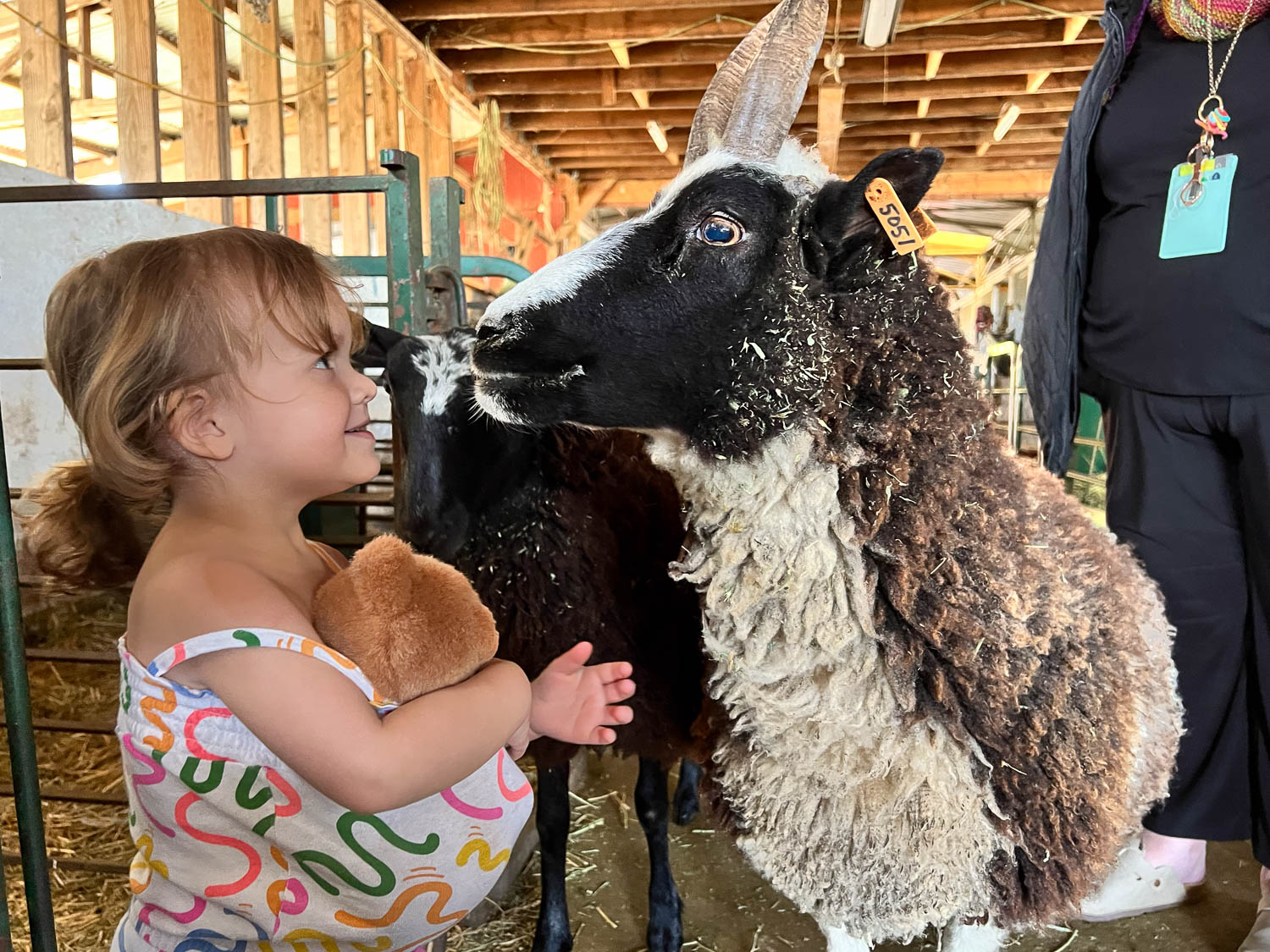
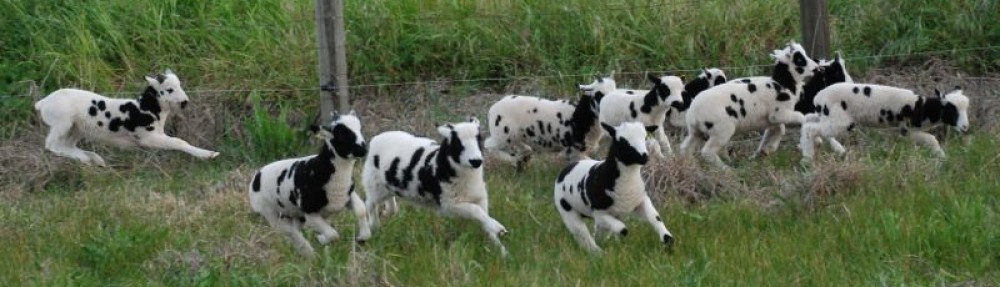
I wanted to use at least one four-horn ram and the one I had my eye on ended up with disappointing horns and will be culled. This one is Typhoon. He was almost sold this summer when I was going to Oregon. Right before that trip he broke both his lower horns and the buyer substituted another ram. I’m glad she did because Typhoon has gorgeous fleece and his horns look good now. We don’t recommend breeding to a ram lamb until after he is registered at 6 months. However I needed to breed before waiting another month for this guy to grow up. The breed standard for Jacob Sheep requires that sheep be no more than 85% black. This ram is close, but I looked at his baby photos.

When you see Typhoon as a lamb you can see that he just makes that 85% limit. At least I think so. It’s often hard to know for sure when they are in full fleece.
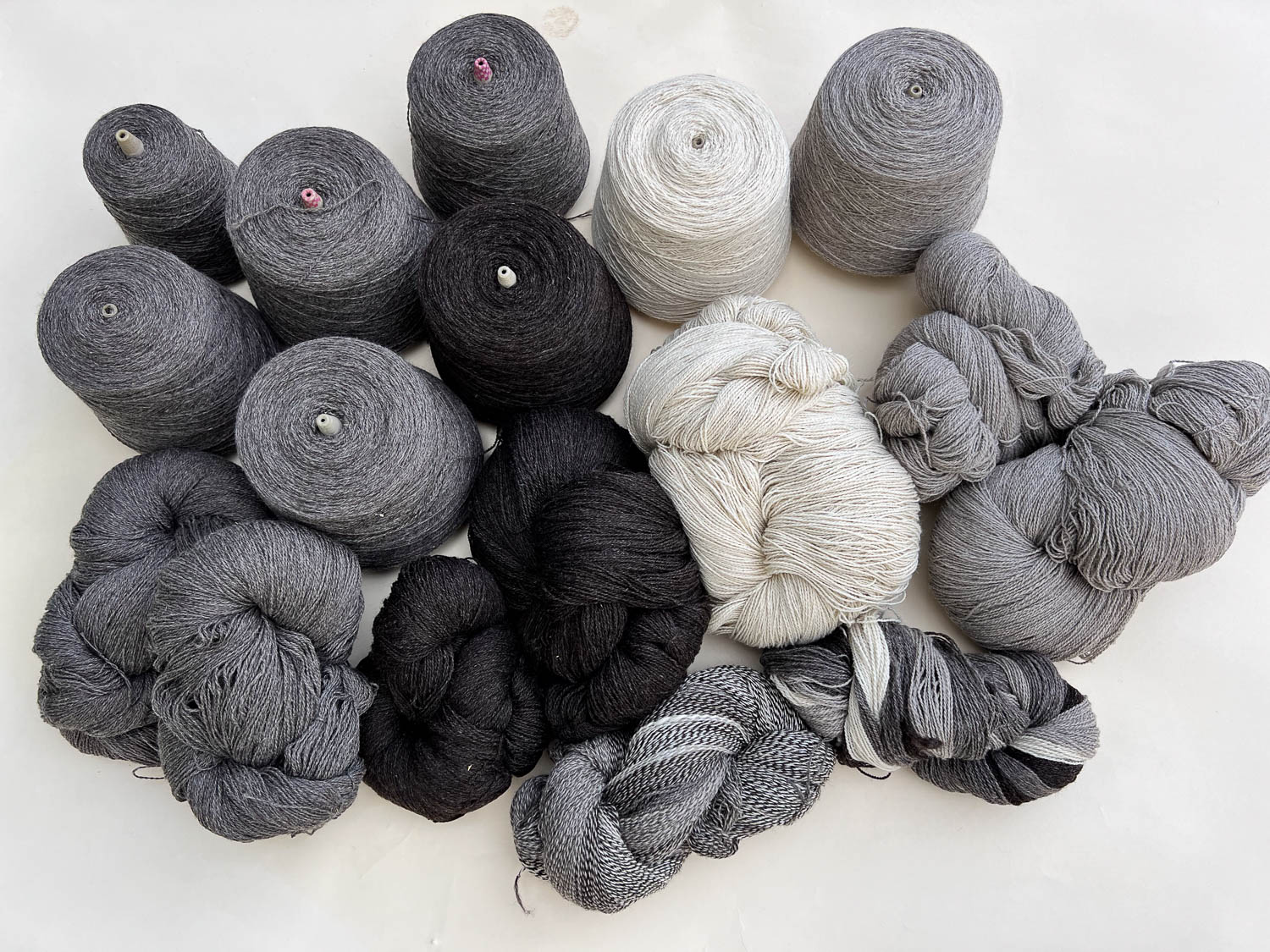
Typhoon has 7 ewes.
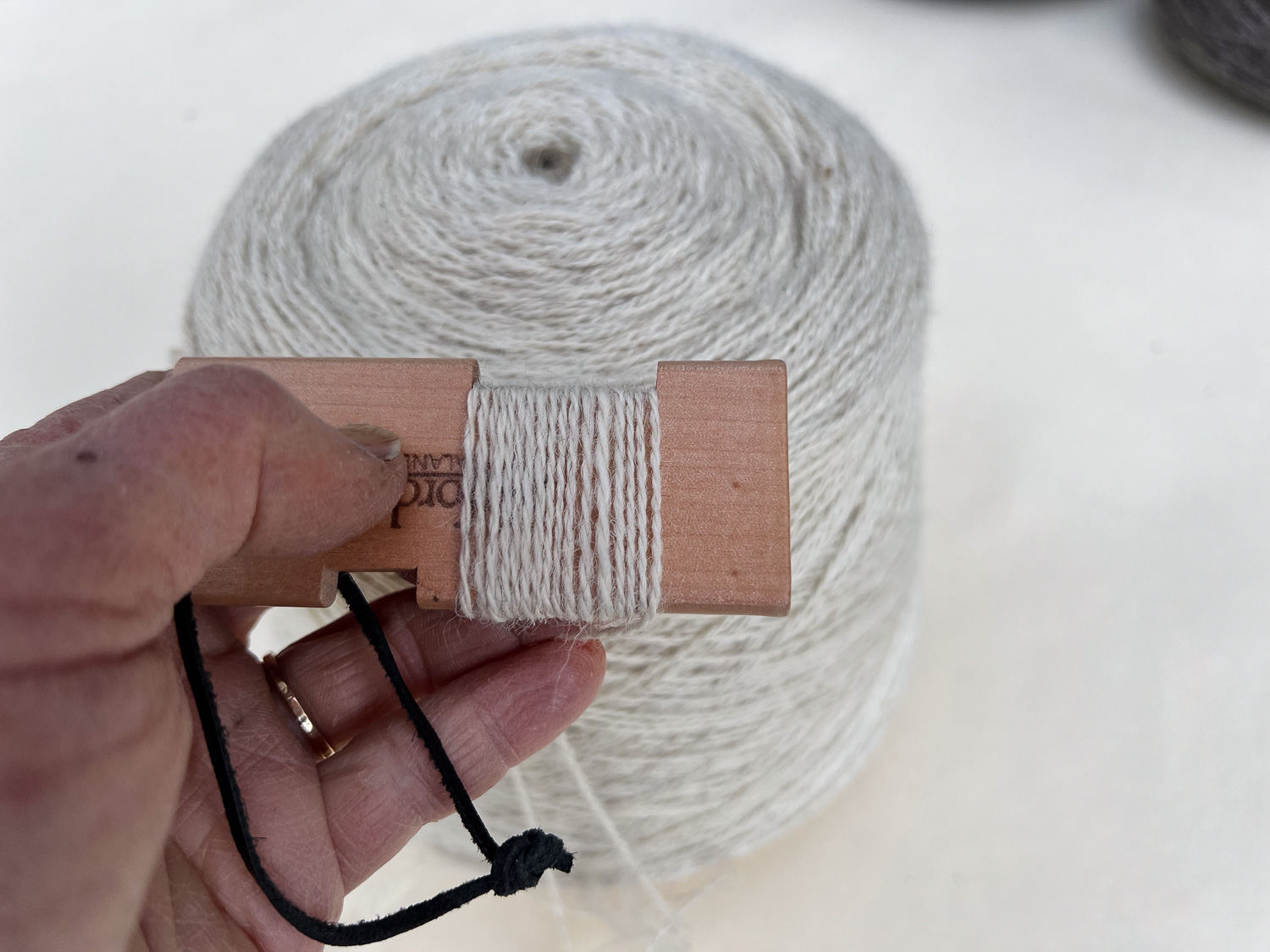
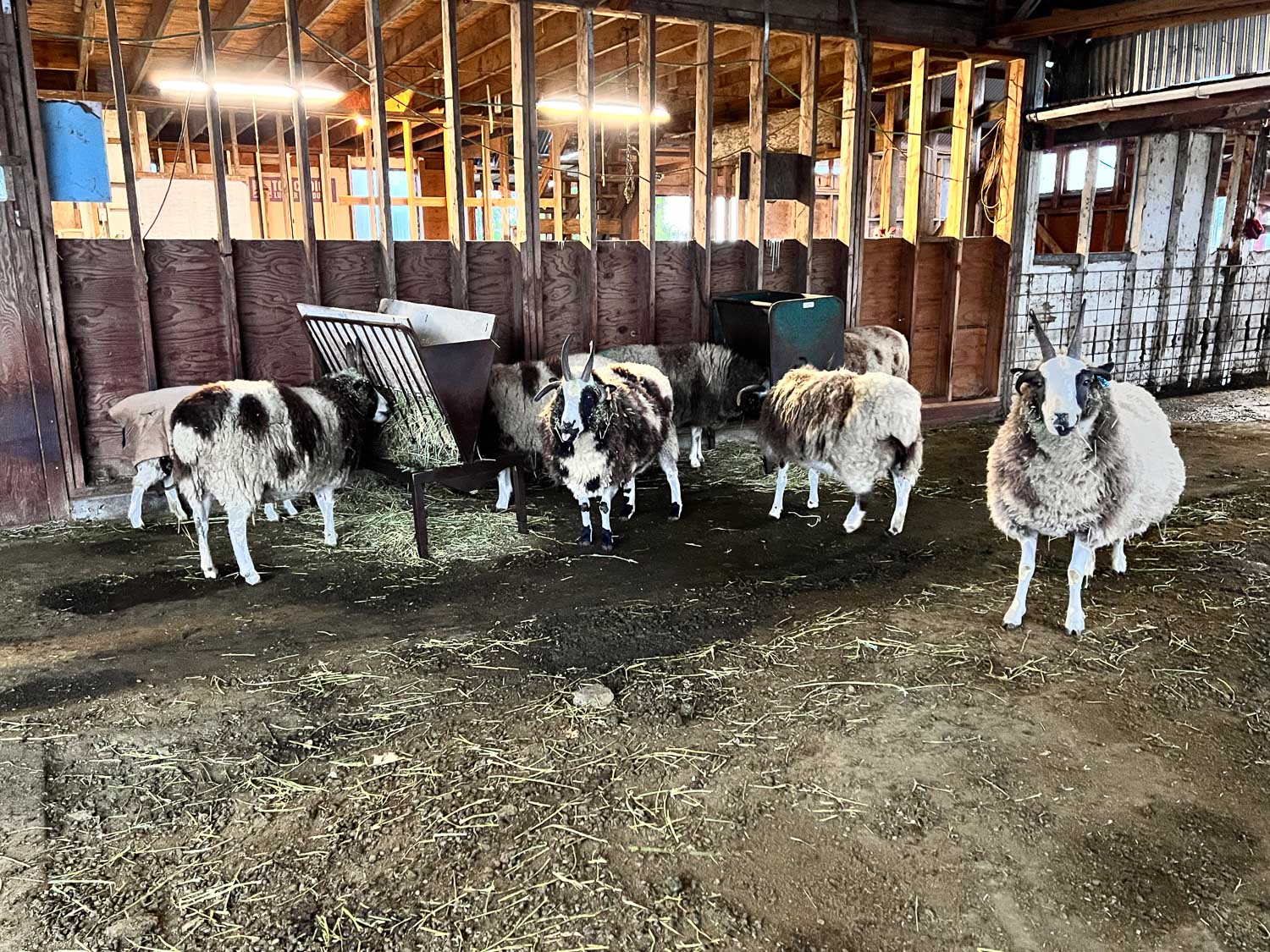
We decided to not breed the 2023 ewe lambs this year. We had too many lambs last year for the conditions (rain and more rain) and it was too crowded. So this group is not being bred. There are also a few cull ewes and a goat in here.

Looking forward to February 10, 2024!

Across the Road – Tomatoes

The tomato plants Across the Road aren’t as striking as the sunflowers I showed in my last blog post, but it is still interesting to watch the progress of the crop, especially now as they get closer to harvest. I have heard that harvest time is problematic this year, mostly due to the prolonged rainy season this winter and spring. Fields didn’t dry out soon enough for farmers to work the fields and many planted 3 to 4 weeks later than normal. That means the tomatoes ripen 3 to 4 weeks later. Tomato farmers have contracts with the cannery that state when and how much they deliver. The cannery can only handle a certain amount at once and will turn away excess. Some farmers may risk harvesting while some tomatoes are still green. Others may have to wait until the cannery can take the load, but they risk over-ripe fruit or early rain. Farming isn’t as simple as it may seem.

If you’re interested in reading more about this situation in 2023 read this article in Ag Alert, published by the Farm Bureau.

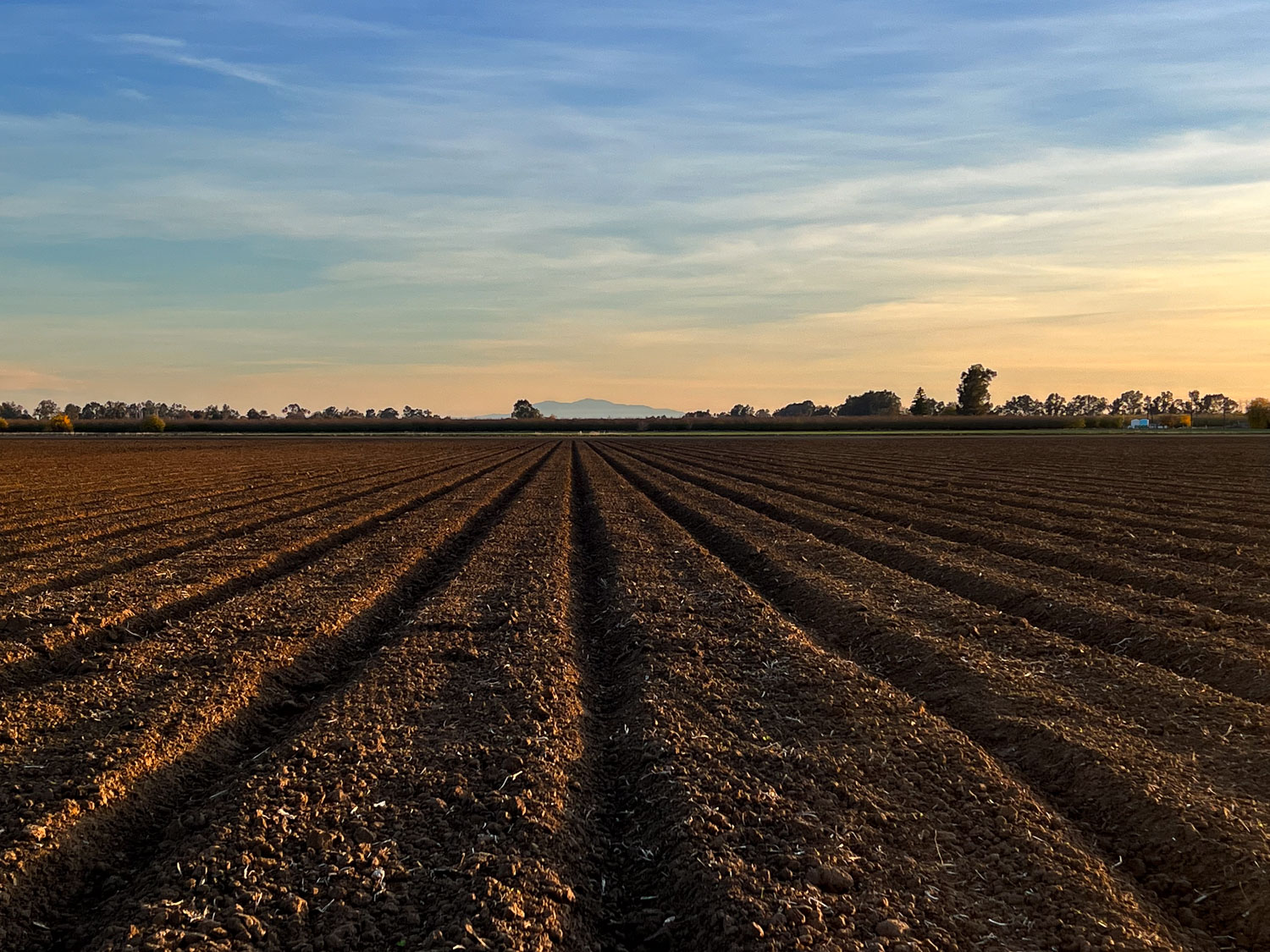
Here’s the tomato field I watch because it is right Across the Road. The latest ditch has been filled in and smoothed over. I assume there will be no more irrigation.

The plants are not that impressive when you look over the whole field.

When you look up close you see the red tomatoes.

There are still a lot of green ones in some parts of the field.

My walks aren’t all about a study in agriculture. They are mainly to get some exercise to fight off the effects of aging and to get Ginny out. More views from Across the Road:

This field is across the canal from the tomato field. They just harvested hay and it will be interesting to see what goes in here next.

Another view of the field prep.

I usually don’t walk here when they are spraying, but this started just as I was getting back. I saw the label on the tank of spray. It’s a regularly used fungicide. The last time I saw spraying it was with a helicopter.

Sunflowers

I’ve been moving my photos from my computer’s hard drive to an external hard drive because I’m running out of room. As I moved the Across the Road folder I saw yellow flashing by and I thought I’d share. The landowner Across the Road from me often grows alfalfa in those fields. That is usually a three or four year crop. So every fourth or fifth year there is something else there. This year it is tomatoes. Other years there have been sunflowers. I love sunflowers.

There isn’t a story here. I’m just sharing photos of sunflowers…and in no particular order. I just like seeing these flowers.

Today’s Random Farm Photos

Yesterday I spent time with sheep and weaving and ecoprinting and computer. I did more of the same today but didn’t take any weaving photos.

I changed the fence today to move the sheep into a separate paddock. You can’t tell from this photo but there are 8 paddocks that run north-south on this half of the property. There are 3-wire electric fences that keep the sheep in and I change the net fences at the two ends to open or close paddocks. Notice the hot-air balloons. It’s that time of year. There are four in this photo.

This looks like a lot of grass. It is a lot of grass, but it’s not the desirable grass and forbs I’d like. There is a lot of bermuda grass and dallisgrass. Those two take over this time of year. The sheep don’t like them when they get too coarse and head out. Then they go dormant in the winter and choke out the winter/spring annuals that I’d like to see. At least it’s green right now. That’s because we irrigate–there is no summer rain here.

Close up of one of the balloons. Who remembers Rusty? Blog post from 2011. Rusty even had his own blog for several years. I just got distracted and read back through some of it. Rusty was a pretty good writer and I enjoyed reading through his posts just now. I wonder if I could get Ginny to write a blog.

Anyway, about Rusty. He was afraid of these balloons. During “balloon season” he wouldn’t leave the house first thing in the morning. He knew that they’d be gone by mid-morning and then he would go out. Ginny doesn’t mind the balloons, but she is sure gun-shy and that’s a problem with all the recreational shooting around here.

Speaking of things in the sky, this is the third time there has been a helicopter spraying the tomato field across the road.

Before I went to the house after this morning’s chores I wanted to unroll the ecoprints from yesterday (see yesterday’s blog post). I have taken over this work table in the garage. The ecoprints are still rolled up on the right of the table. This is a look at the other projects I have going on–getting these skulls in some shape that I can sell them.

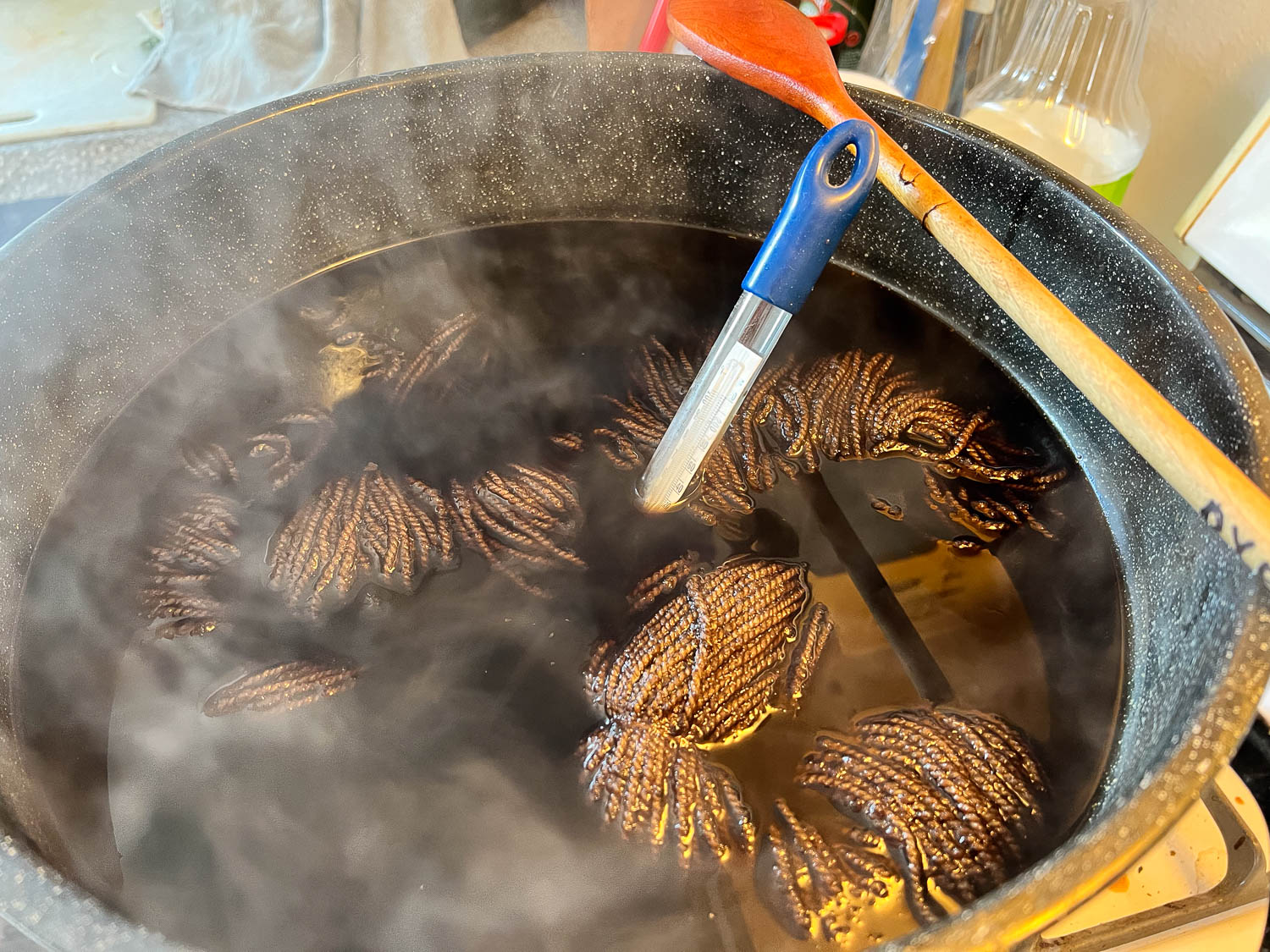
While I was working on the ecoprint scarves this morning I had a pot cooking with a couple of skulls to see if I could get them cleaned up better.

Here is a pair of square scarves. The photos in yesterday’s post show scarves with leaves or flowers in place. I put a second scarf on top of each of those and then roll them around a PVC pipe to steam. These photos show the pairs of scarves after unrolling. This pair has cosmos leaves and flowers. I am always fascinated by the different looks on the two scarves.

This one is all cannabis leaves (supplied by a friend). These don’t have that classic look of the ones below because by the time I got to this, the remaining leaves had started to fold up and at that point it is very tedious to spread them out again, especially with all these small ones.

Cannabis leaves in the more classic look.

Another set of cannabis leaves with a close-up below.

Some plants print on one scarf and create a resist on the other. These are printing on both scarves.

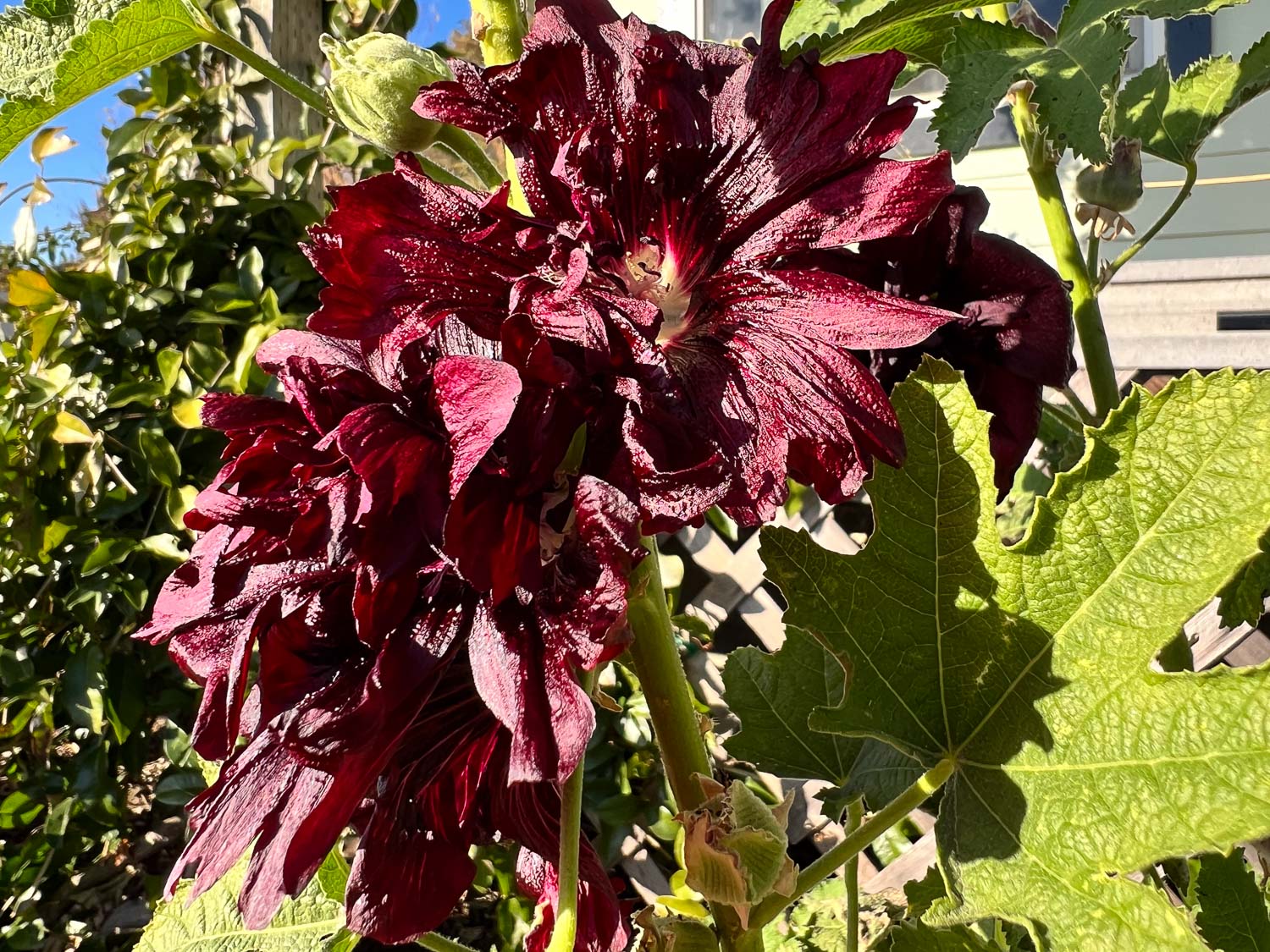
No, I am not selling cannabis. These are purple hollyhocks and cosmos flowers that I have added to my website and will have at Lambtown.

Tomorrow is a Farm Day and we’re setting up breeding groups! I need to look at my list one ore time.

Random Photos–How I Spend My Time

I don’t have photos of everything I do during the day. Standing at the computer for hours doesn’t make for very exciting photos.

Six 2-horn spotted Jacob lambs tied to the fence with red halters.

Now that the only ewe lambs left are those that I’m keeping, I wanted to halter break them. I don’t expect them to lead like a horse, but I like to be able to tie them to a fence without them panicking. Also, a couple of these will be going to the Lambtown sheep show at the beginning of October. It will make it easier for my Farm Club crew if the lambs are at least somewhat halter broke.

Goat and sheep eating a huge zucchini from a feeder.

There is a bit too much giant zucchini. Too bad zucchini isn’t a dye plant. But at least I can feed the extra to someone.

Gold and maroon yarn being wound onto a loom in the clasped warp method.

I have a couple of articles scheduled for Handwoven Magazine for next spring. The deadlines are approaching and I need to finish some more weaving so that I have photos for one article and the project to send for another. This is Clasped Warp, a technique usually done on a rigid heddle loom. I am adapting it to use on a multi-shaft loom.

Seven colorful balls of yarn arranged in a circle.

I have some custom projects in progress on the AVL loom in the shop. I have woven two Year to Remember blankets on this warp. Now I need to finish the warp with other blankets. The yarn above is all naturally dyed and I want to use that for a blanket that I can post on the new Fibershed Market site (not available yet). The yarn is dyed with mushroom (dark gray), hollyhock (blue-green), indigo (blue), weld, (yellow), cosmos (orange), and madder (rose).

Weaving underway on the loom. Yarns are blue, yellow, and orange.

Here is how it looks on the loom.

Silk scarves spread out on a work table with cannabis leaves arranged on them.

A friend dropped off more plant material to use for ecoprinting scarves and I wanted to get to it right away while the leaves were fresh. I have learned something about working with cannabis leaves–they start to fold up quickly. It’s tedious to arrange them the way I want them to look. They have a property of differential friction–the little hairs on the leaves allow them to slide one way on the fabric, but not the other. There is a second scarf that goes on top of these and it’s important to have the leaves spread out as the second scarf is spread across the first. Each scarf is wet with different solutions and they begin to react quickly upon contact.

Square silk scarf with cosmos flowers and leaves arranged on top.

I am trying out some square scarves as well. This one is printed with cosmos flowers and leaves.

Silk scarves ready to be rolled for ecoprinting. They have cannabis, indigo, and maple leaves arranged on them.

These scarves use maple and madder leaves (left) and cannabis and indigo leaves (right). I rolled all of these up on PVC pipes and they steamed for 90 minutes. They are cooling in the pot and taturhe unveiling will happen tomorrow.