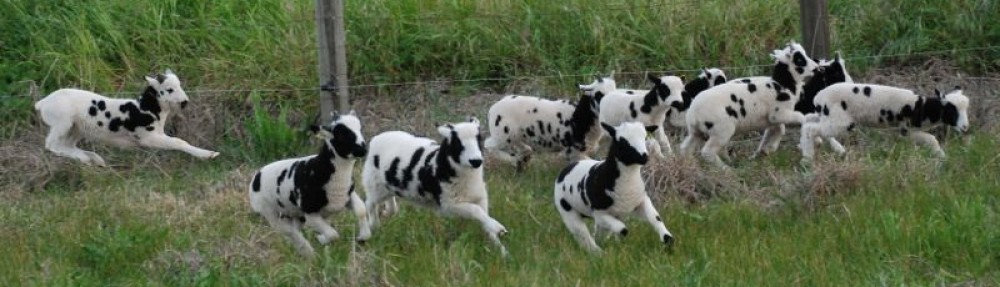
We have traveled days to see some of our spectacular National Parks and Monuments, but there are some nearby that don’t need as much planning to get to.
Now that Dan is retired he has more lots of flexibility and my schedule is the one that we have to work around. Last Tuesday was open. We wanted to see some of the spring wildflowers before they were gone for this year. We drove to one of the nation’s newest National Monuments. Berryessa Snow Mountain NM was designated in 2015 (and was on DT’s list to cut, but fortunately was spared). This is over 330,000 acres of mostly chaparral and spans a long corridor from Lake Berryessa into the Mendocino National Forest in the mountains west of Willows.
We first planned to drive up Bear Valley just east of the monument, where we’d heard the wildflower show is spectacular, and then find a hiking trail at the northern end. Then Dan suggested we drive north on one of the roads through the monument and come back on Bear Valley Road. So we turned north on an unpaved road, driving toward Indian Valley Reservoir.
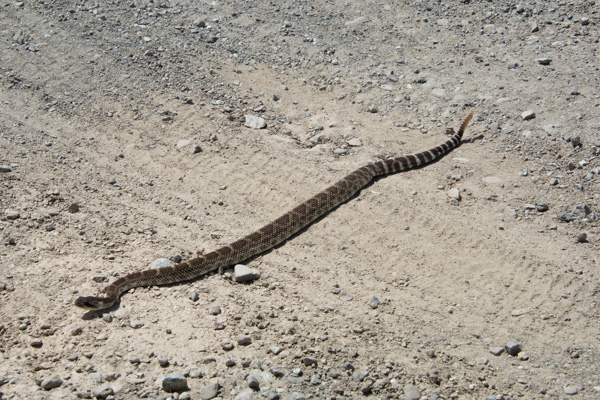 Wildlife!
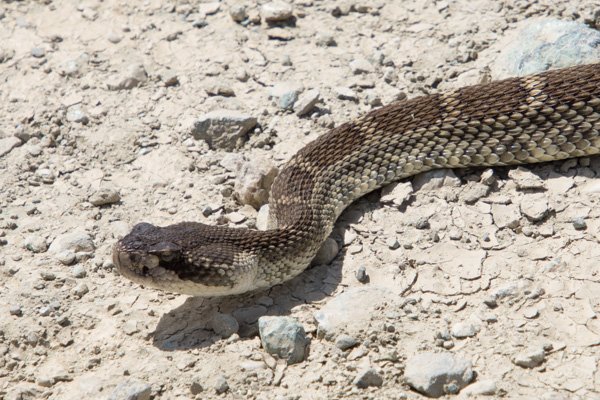 I stayed in the car to photograph this one.
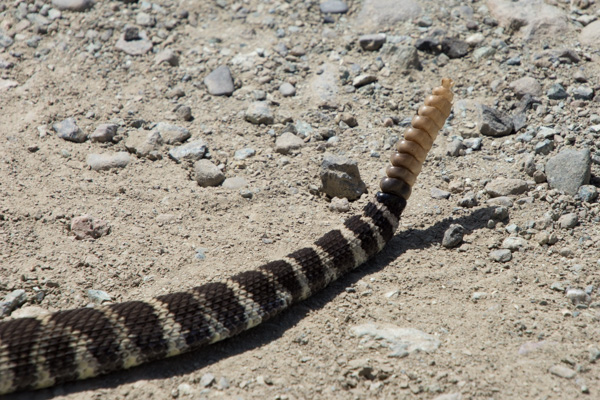 After all, he (she?) was conveniently right in the middle of the road.
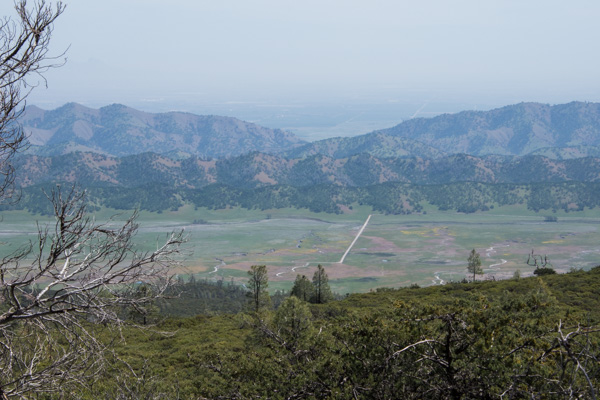 We got several miles in on a ridge line and got out to take in the scenery. The day was sunny, but the haze to the east was typical of summer in the Central Valley. We could just make out the Sutter Buttes in the valley but you can’t see them in this photo. This is looking down on the road that we were going to take that goes through Bear Valley. Most of that color is displays of wildflowers.
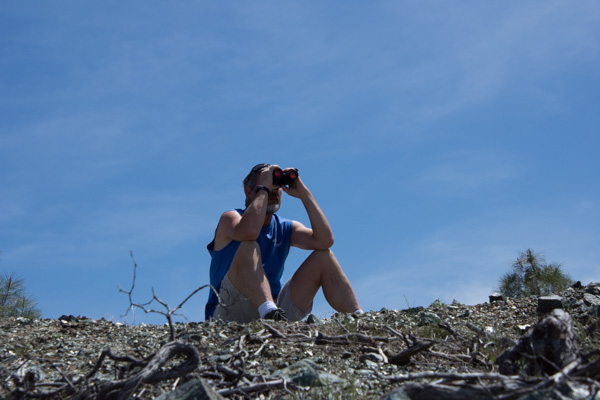
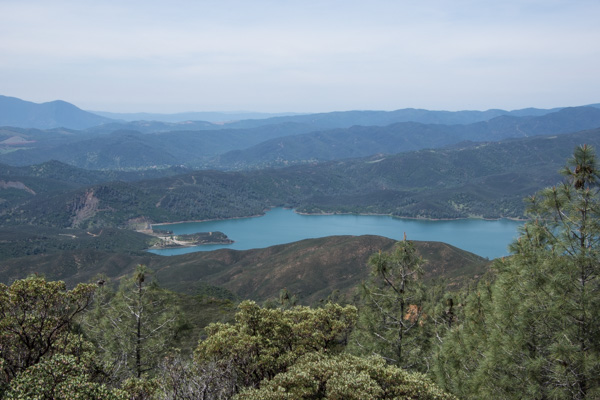 Looking to the west it was hazy/cloudy. This is Indian Valley Reservoir.
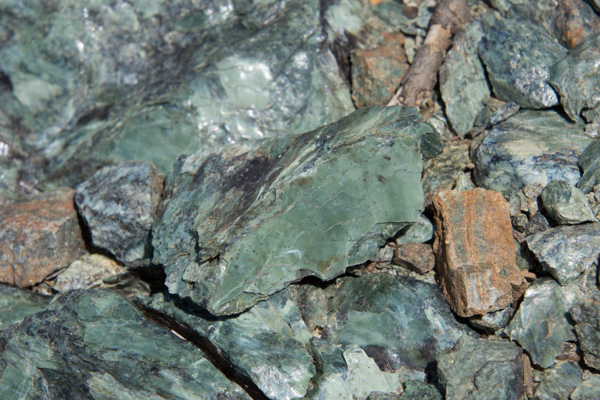 The place where we stopped was strikingly green.
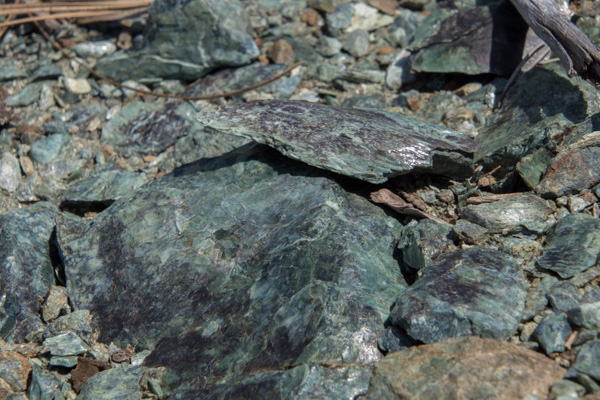 From the Davis Enterprise: “Serpentine, scientifically called “serpentinite,” is a rock formed by combining water with rock that originally was part of the Earth’s mantle, the layer beneath the Earth’s crust. Soils formed from serpentinite rocks lack certain elements required by most plants.”
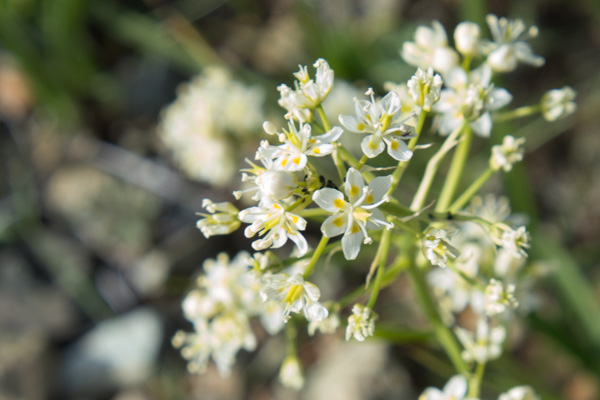
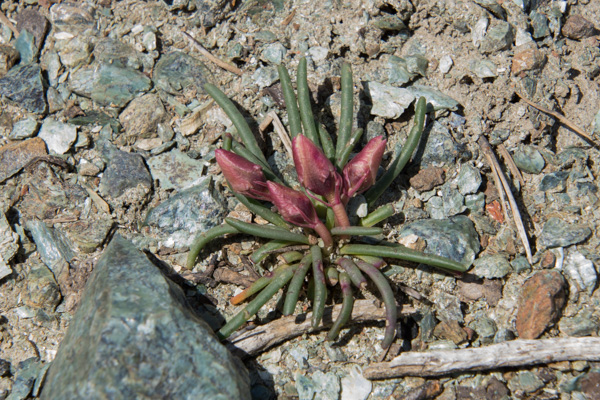 There are a number of plants that grow only in this ecosystem. I haven’t identified this one that hasn’t yet opened its flowers. **Now ID’d by friends as Bitter Root, Lewisa rediviva”.
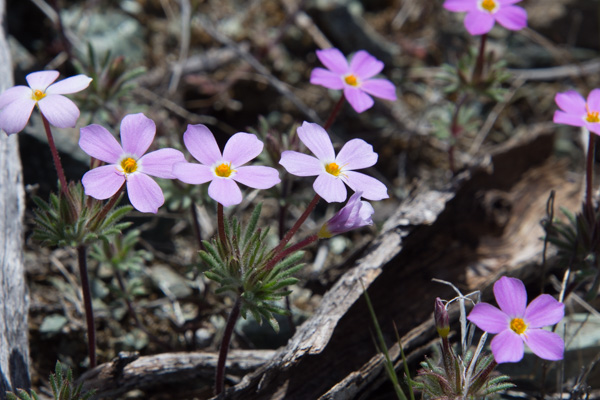 Here is another. **This one just ID’d as True Baby Stars, Leptosiphon bicolor.
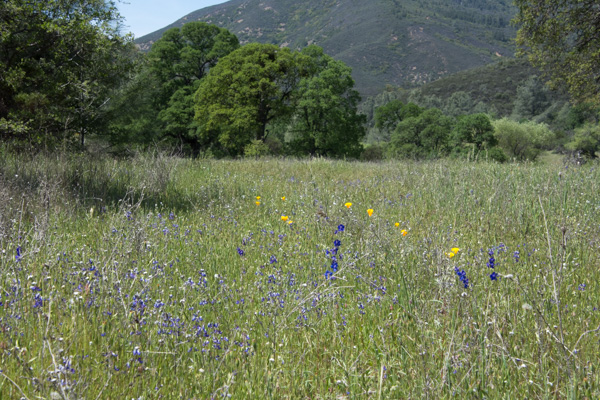 We continued to drive, getting out here and there to take in the scenery.
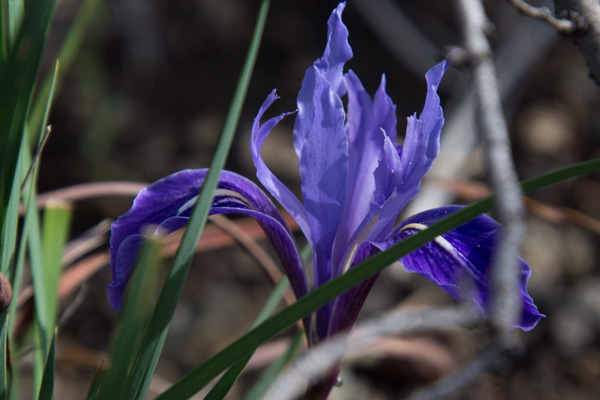
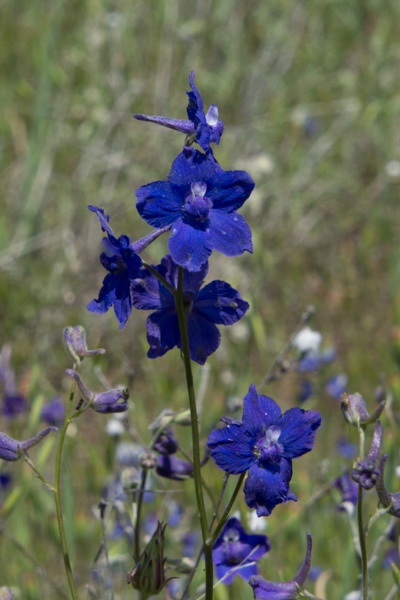 Delphinium.
We did a lot of driving on the rocky somewhat rutted roads. Somehow we missed the road we were looking for to take us to the trails at the north end of the valley. We came to a fork and made the decision to head north. We drove probably a mile on an even more rutted, slower road and then came to a creek crossing with a drop off that I was sure my RAV-4 couldn’t make–at least not without knocking off the bumper. And if we found an even worse spot further up I don’t think we could have come back up that ledge. So we turned around there and took the better maintained gravel road that ended at Clear Lake. We’d left our house around 9:00 and it was around 4:00 by this time. We hadn’t put in that many miles, but lots of hours in the car.
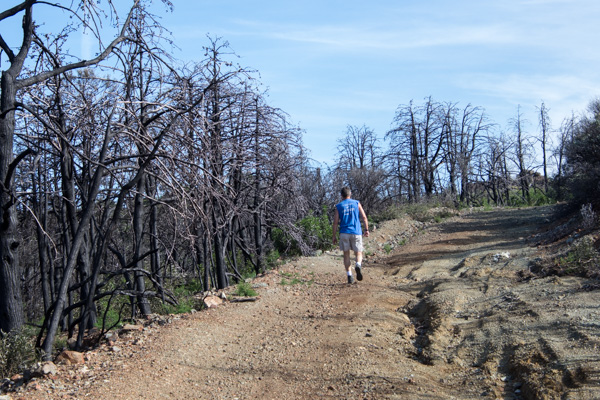
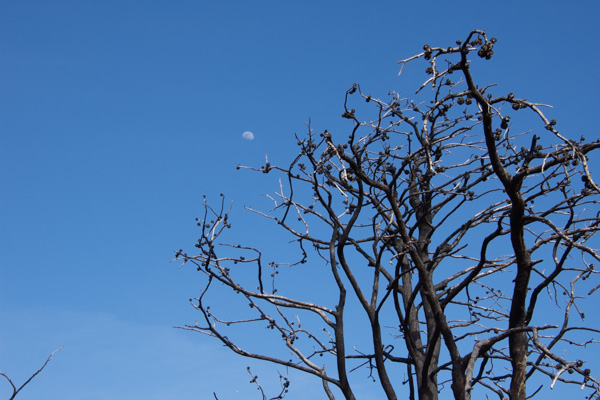
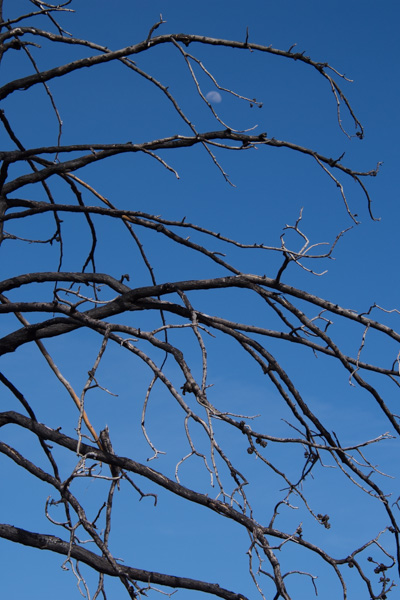
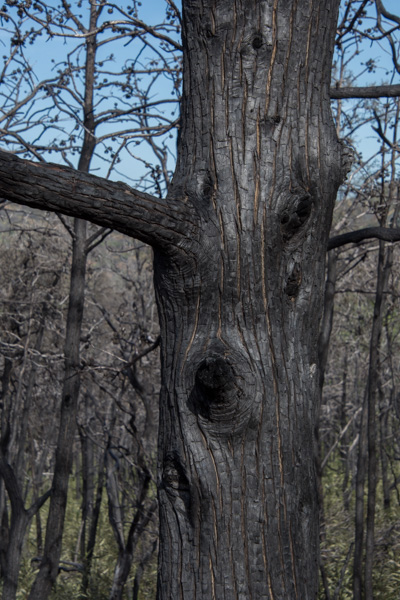
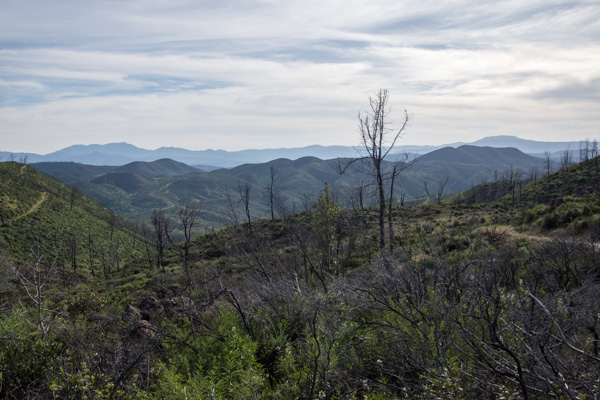
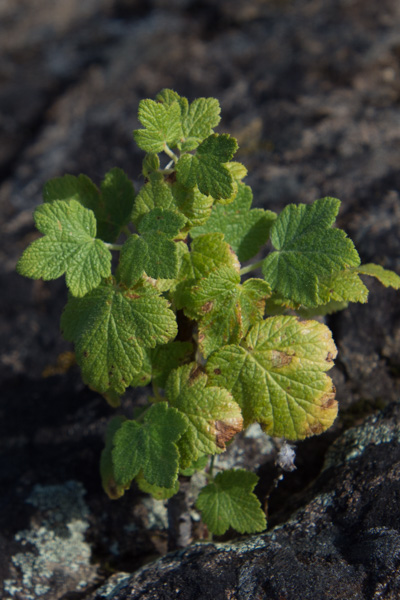
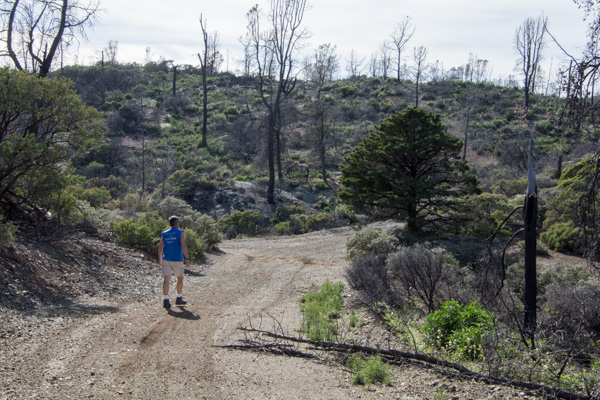 There was one more trail in the direction home. We stopped at the Knoxville Staging Area which we found out is a staging area for ORVs, and walked for about an hour. This area was ravaged by one of the wildfires a couple of years ago.
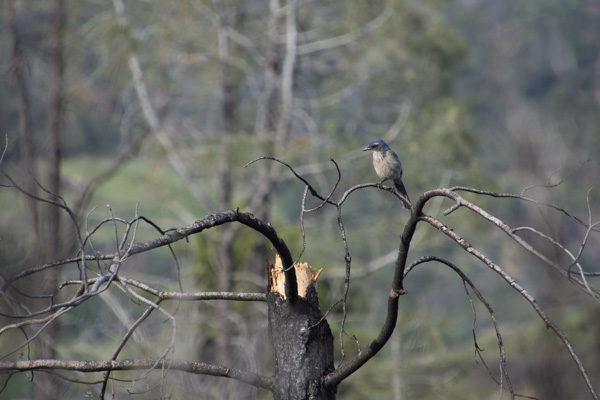 As we walked back towards the car I first heard and then saw this scrub jay.
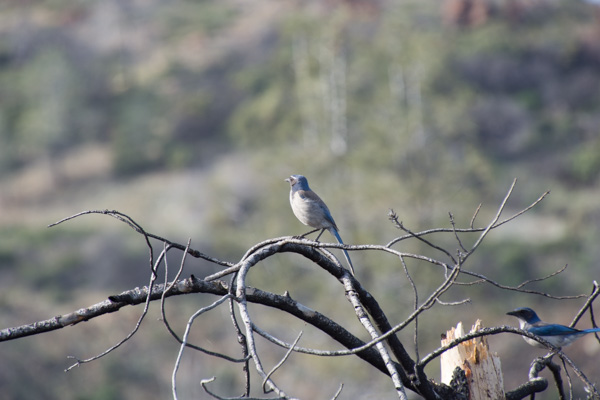 It seems that he was hungry.
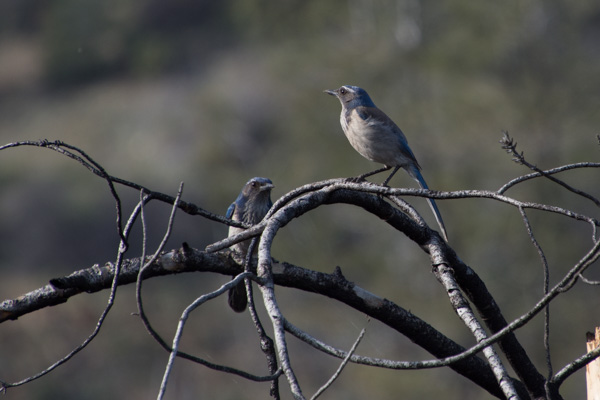
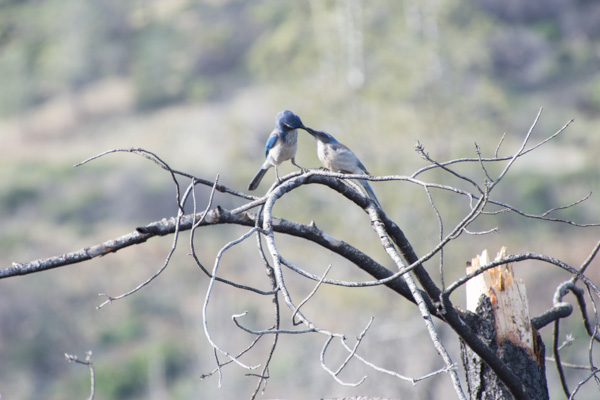 It was getting late in the afternoon when we left this area and headed south towards Lake Berryessa.
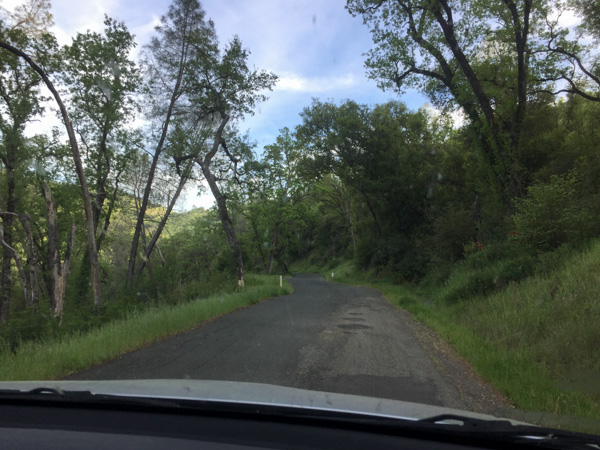 We didn’t get out here and I didn’t take many photos but this was one of the most beautiful places of the day. The road passes the site of the Homestake Mine.
From the Napa Valley Register : “The history books have it all wrong. For Napa County, the Gold Rush wasn’t in 1849. It happened less than 30 years ago in a remote corner of the county ruled by jackrabbits. From 1985 to 2002, Homestake Mining Co. extracted $1 billion worth of gold from the desolate landscape above Lake Berryessa. For a time, the McLaughlin Mine was the biggest producer in California and one of the largest in the world.”
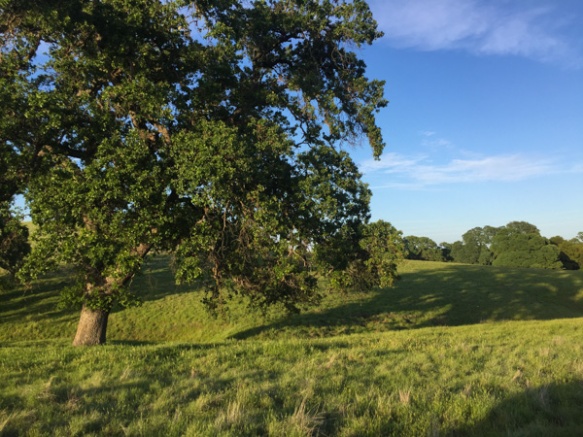
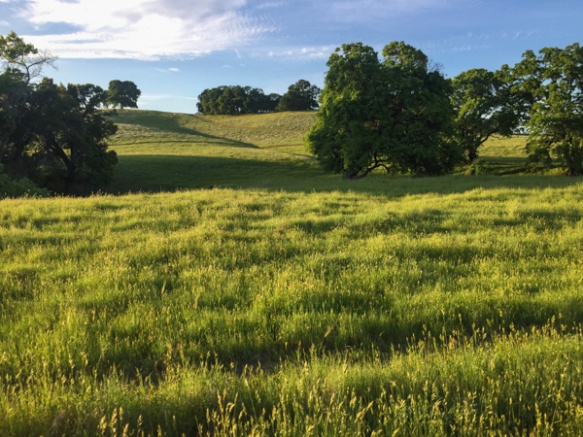
This area is now the Knoxville Wildlife Area owned by the CA Department of Fish and Game. The road follows the creek and the hills are covered with green grass and oak trees. I was in awe of the beauty at this time of year. I still love the hillsides in the summer, but I guess it’s been a long time since I’ve been out in the California hills in the springtime when it is so green.
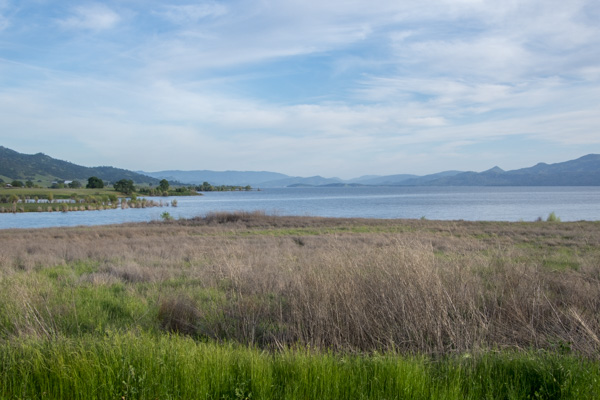 The road took us to the northern end of Lake Berryessa. I’m not a big fan of reservoirs but this time of year with everything so green it looked like a natural lake.
Most of the day was spent driving but what a splendid exposure to a little known region right in my backyard. Next time we’ll hit the Bear Valley Road first and then get to those hiking trails.


 Goat paparazzi.


 I’m not sure that I’d call this mannerly but everyone had fun.

 After a rainy and overcast week the sunny day was a welcome change and the ranch was a beautiful place to spend the day.
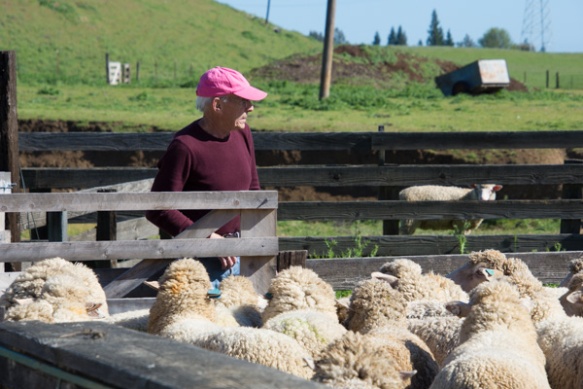 The sheep were in pens when we got there.
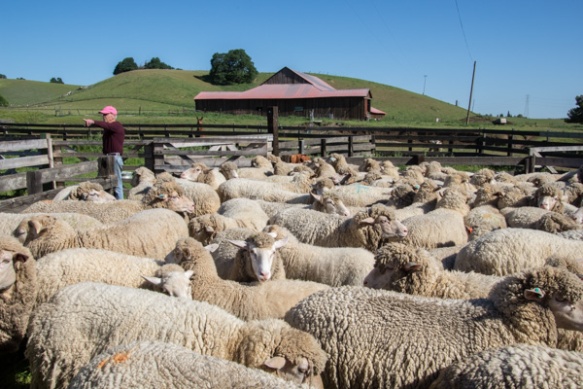 We helped to move them toward the lane into the barn.
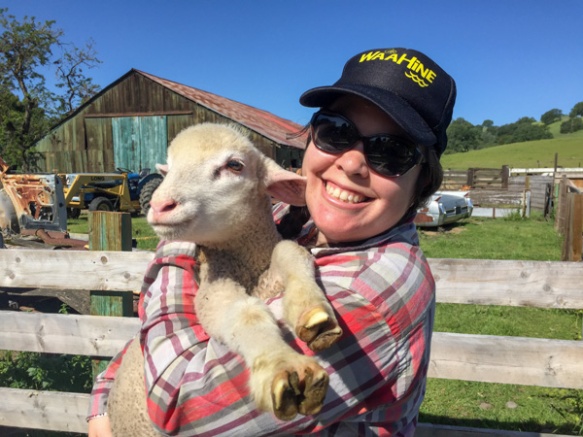 Most of the lambs were born much earlier but there were a few late lambs too.


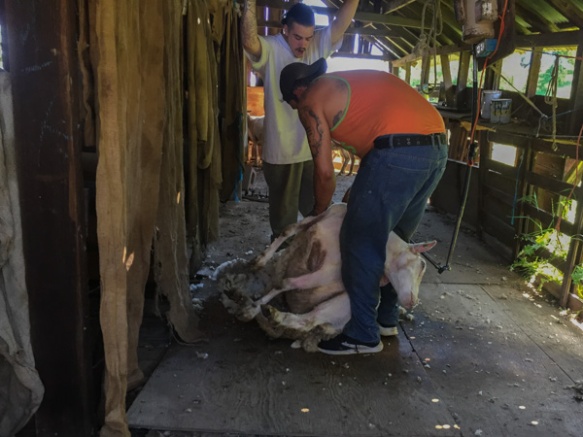 The shearer works in the old barn where there are signs of what shearing would have been like in the “old days” when there would have been hundreds of sheep to shear in the day.
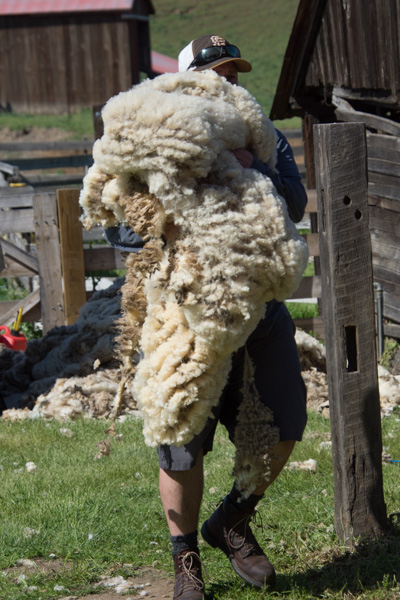 We brought each fleece to the skirting tables…
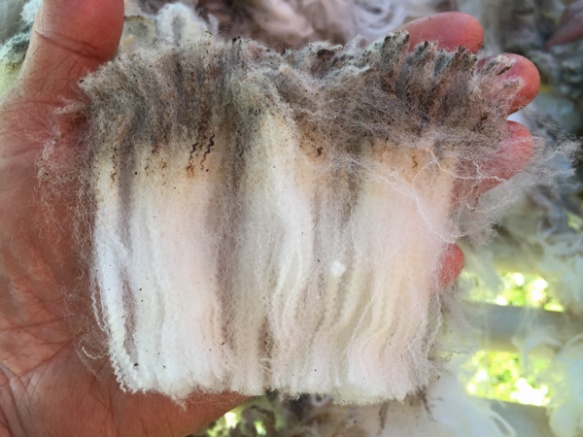
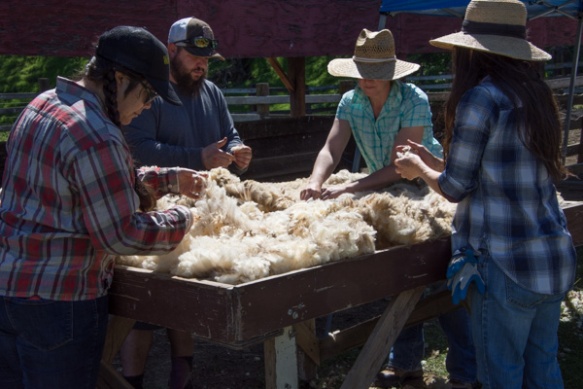 …and inspected them for strength, length, and VM (vegetable matter)
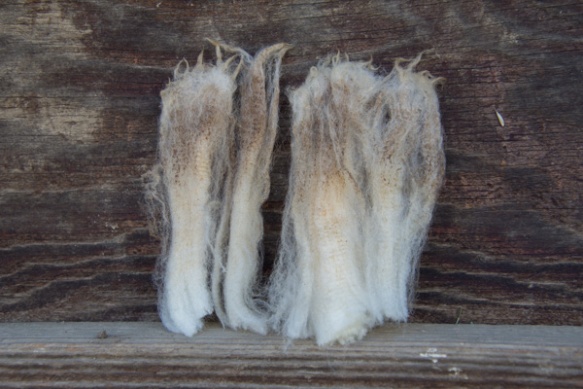


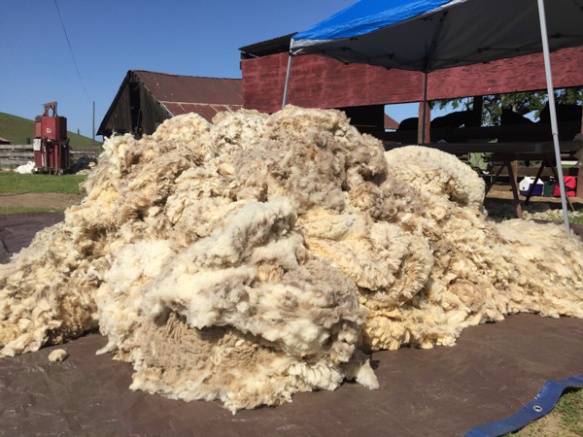 I ended up with 270 pounds of beautiful fleece.
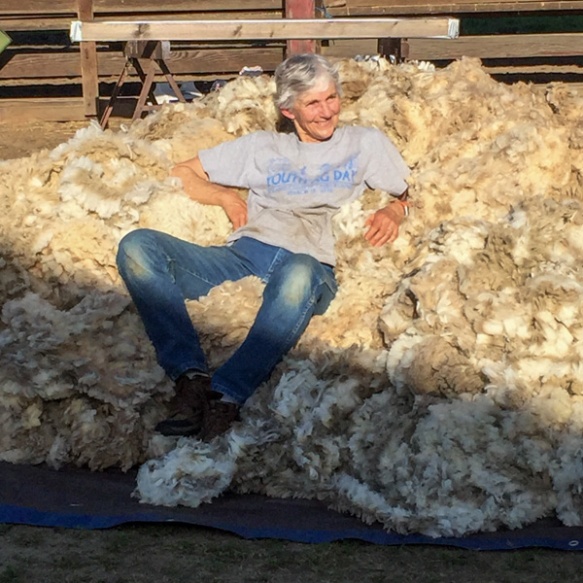
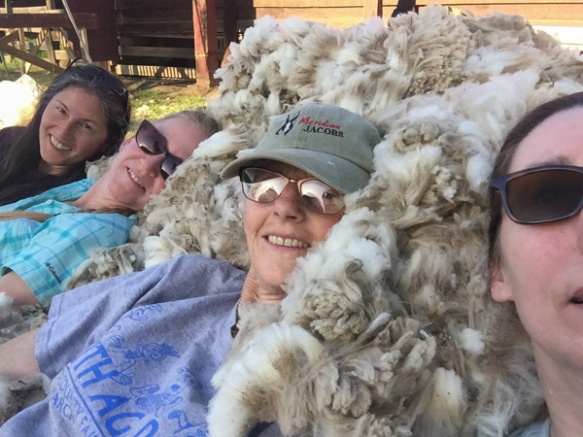
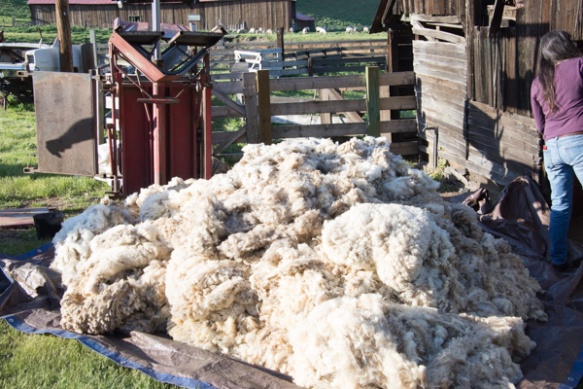 We dragged it on a tarp over to the baler…
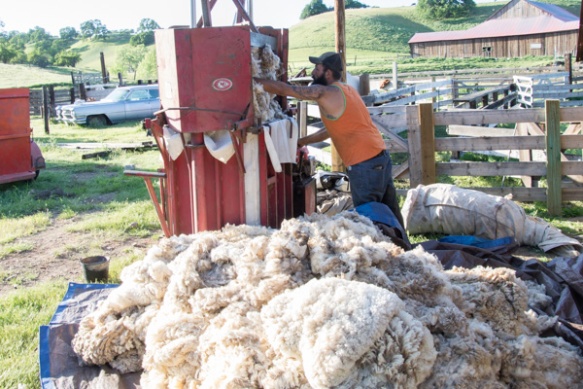 …where the shearer baled it.
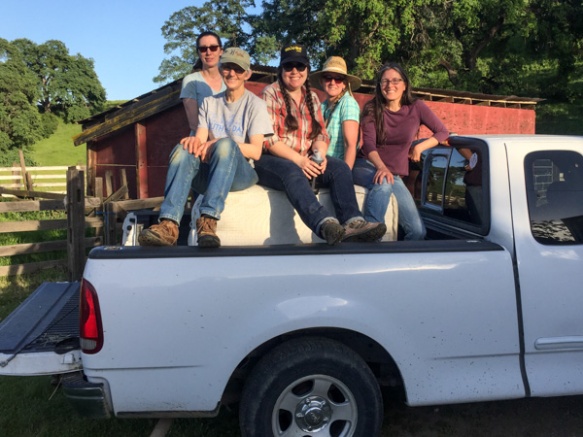 This is our 270 pound bale in the truck. I am grateful to Farm Club members for helping out on this day. It not only made the work easier, but it was fun to spend time together.
 Farm Cub members are invited to be vendors. This is Jackie with Sheep to Shop.
 These are some of her handspun, handknit pillows.
 Colleen has Fiber Confections.
 She usually sells at the Davis Farmers’ Market.
 Gynna makes socks.
 Here are some of her socks knit from my
 Joy sells dye plants…
 …ready to use for dyeing and ready to grow. Her butterfly is made from a


 Of course, it’s all about the animals, especially the lambs.
 Betsy, Mary, Sue, and Marina helped children pet lambs.
 My little goats were an added attraction this year since Julie, who usually brings goats and bunnies, couldn’t be here.
 This fence helped keep the kids in one place. Moms could relax temporarily.
 I saved the small field behind the shop so that the sheep would be enticed to come to fresh pasture for the weekend.


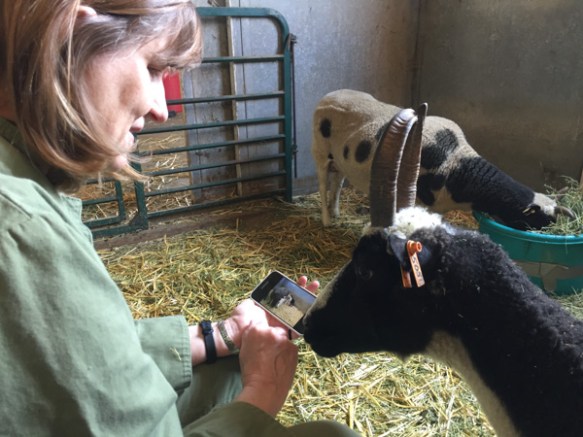 Now I find out that she likes watching videos with friends.
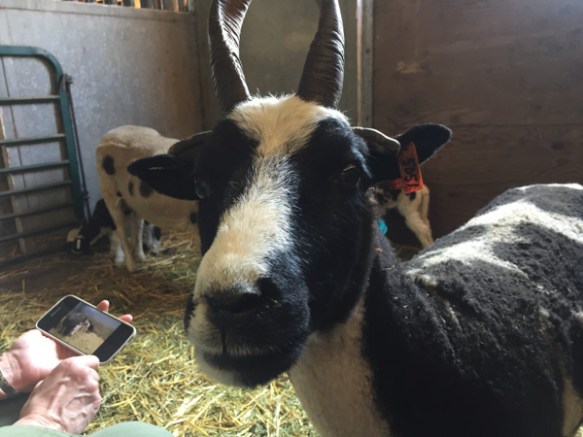 “Don’t you like watching videos with friends?”
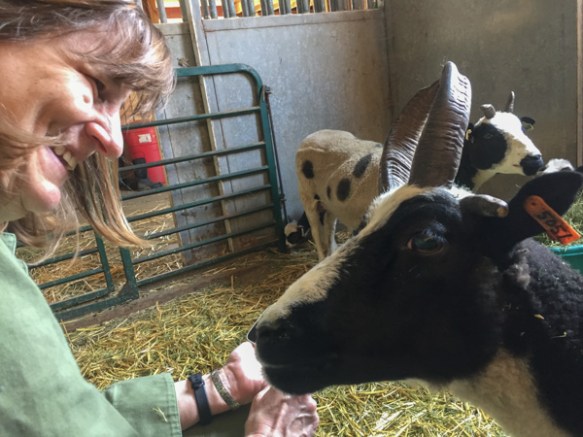
 “Yes Jade, you have nice white teeth.”
 “You too, Lisa”


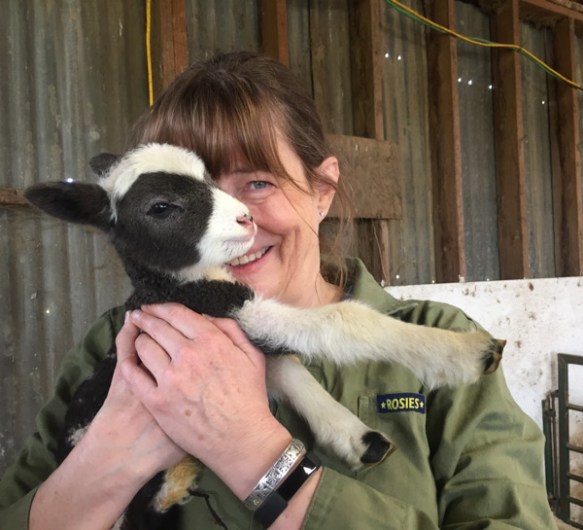 Zorra had plenty of cuddling while she was still in the lambing area with her mom. Lisa is a lamb cuddling Pro.
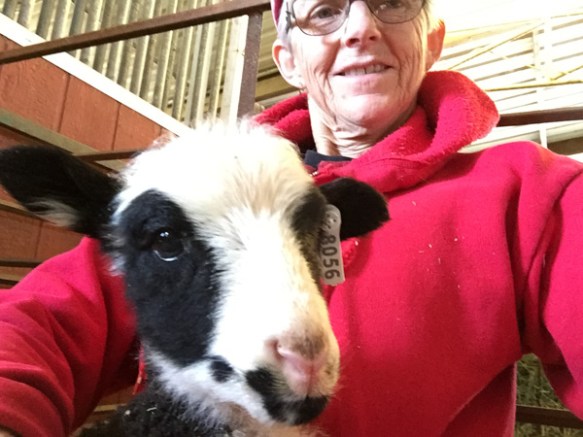 This is pet sheep Jade’s lamb (and me).
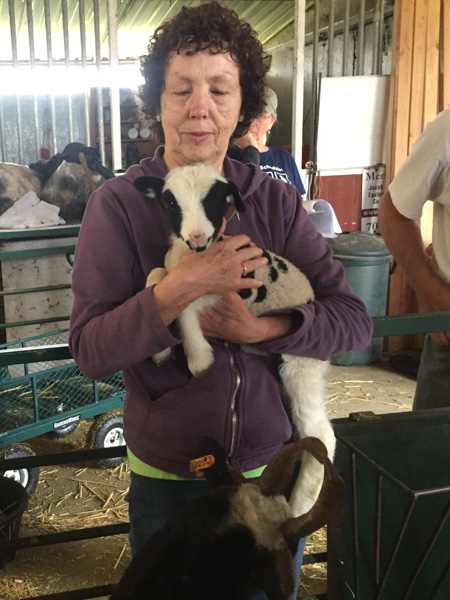 This is her again being held by Peggy. We’d really like her to be friendly too.
 This is Zorra again with Sumi.
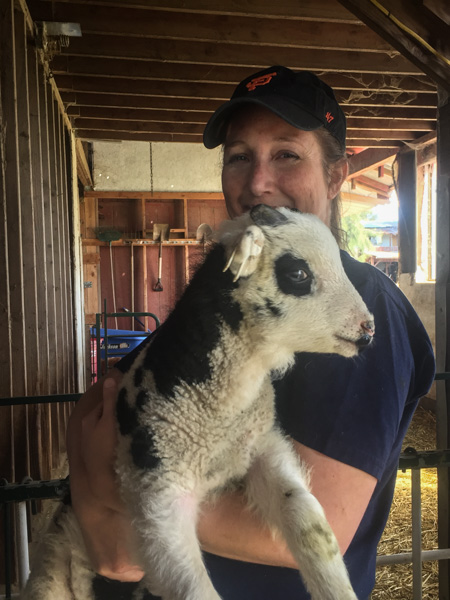 As the lambs get a little older we have other Farm Days. This was Betsy’s first day on the farm and she jumpred right in holding lambs as we ear tagged and castrated.
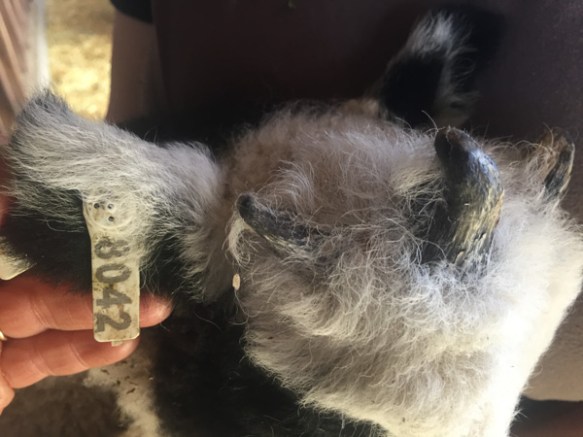 I don’t castrate many because it’s hard to know how they will grow out and which might be a great flock sire for someone. Some are easy though–too much or too little color to fit within the 15-85% breed standard. This one’s horns are already touching at the base under that hair. As the horns grow they will fuse and not grow well separately.
 Marina and Maggie (no photo) helped catch lambs too and Mary handled the clipboard. The lambs were all tagged with their white ID tags right after they were born but we put added a colored tag on Farm Day. I like to use a second tag for back-up ID if the first one falls out and also to color code the sire. It’s interesting to keep track of that and it also helps to find a lamb when you’re looking for one among 75. You can narrow it down some if you have a color to look for.
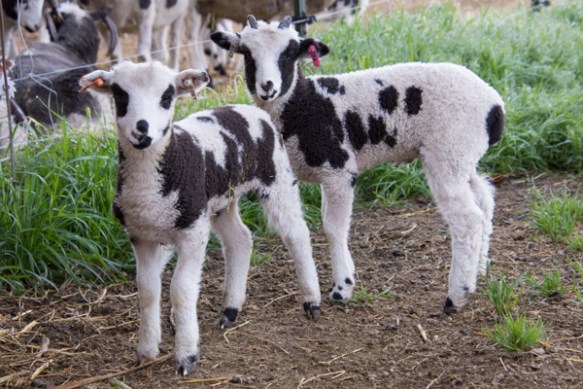 This year Cayenne’s lambs got orange tags. Pink tags go in all the lambs that have been castrated.
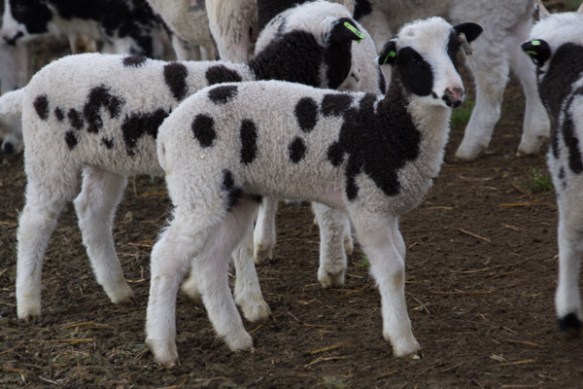 Green means these are Buster’s lambs.
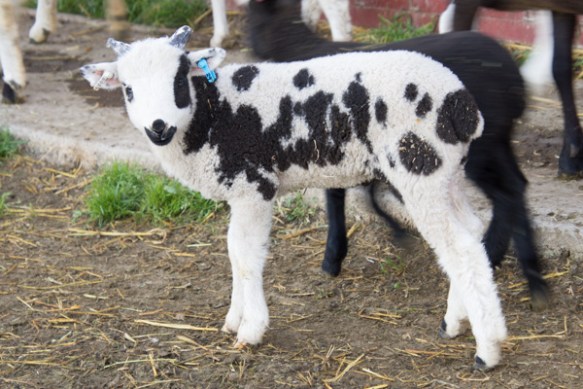 Blue was for Catalyst.
 Peyton’s lambs are obvious so don’t need an extra tag.
 After we tagged all the lambs Marina and Betsy stayed to help me set up the pasture for the sheep. I had put the sheep out for a few days but hadn’t cleaned and moved the water trough.
 We walked around the pasture and took stock of things. I always point out the issue that I have with the dallisgrass that is out of control. That’s what all that dry grass is. I’d much rather see green grass growing. The whole pasture was looking somewhat dismal from a growth standpoint. At this point we had just had March rain after two very dry and cold months. I wasn’t seeing much growth–at least not enough to feed 55 ewes and 75 lambs.
 We spotted this grass that I don’t recognize.
 I took photos to send to a friend of Marina’s who she think might recognize it.


 During the discussion about other aspects of raising sheep we kept an eye on Zinnia, the ewe who was lambing. When she got more serious we watched.
 One thing of note was the presence of two bags, each a different color. A lot of time I just see membranes that have broken so I wouldn’t know if it were one or two, but it seemed unusual to see two distinct bags. I saw a bit of a small foot emerging but the whole thing seemed to be taking awhile so I thought I’d check. There was one foot and a head. Not very far back was another head. Both lambs were coming at the same time, and it was obvious from the two sacs that one had meconium staining, a sign of fetal distress. I pushed the second lamb back and was able to pull the first lamb with just the head and one foot. I could tell that it was very small. Usually it takes a little while for the second to come, but it was right there too. Weighing these later, they were 4.8 and 4.2 pounds.

 You can’t rush a lamb to be ready to nurse. I didn’t know if something was wrong with this one, but I knew that, even if it was normal, it needed a little more time. We went outside and looked at the fences and the pasture. When we came back in the first lamb was doing fine. The second still wasn’t able to stand but I could hold it up and get it to nurse.
 We kept checking back and eventually the second lamb was on it’s feet. This photo was taken later in the day.
 Later that afternoon a friend of mine came with another friend to take photos of the lambs. That’s Raquel with triplet ram lambs.


 Here is the tiny lamb from the morning.

 This was getting close to the end of lambing.
 Here are those two tiny lambs 12 days later and here is their
 The last time there were goats here they were Chris’ Toggenburgs that he raised for his FFA project. Stephany was the last goat from that era.
 Before that I had owned one goat. This is an Angora goat named Chenille in a photo from 1997. Katie was 9 then.
 These are two of a set of quads. One was the smallest of the batch and the other was having some trouble drinking from the LambBar bucket with all the others.
 I am not planning to show goats and I am bottle-feeding so those points didn’t matter…
 …and I brought these babies home.
 Oops. A third goat came along–mainly because my friend didn’t plan to raise him and I figured that I could find a home for him eventually.
 Te goats are popular with

 That’s Ellie on the left and Amelia on the right.
 Their temporary buddy, Kevin, is in the middle. He’s going to a new home tomorrow. Thank goodness.
 It’s sure easier to feed two than three.
 I have been keeping the kids in the barn but the weather has turned nice and I wanted to introduce them to Amaryllis. She was definitely interested.
 I hope that they will become her new BFFs. Here is
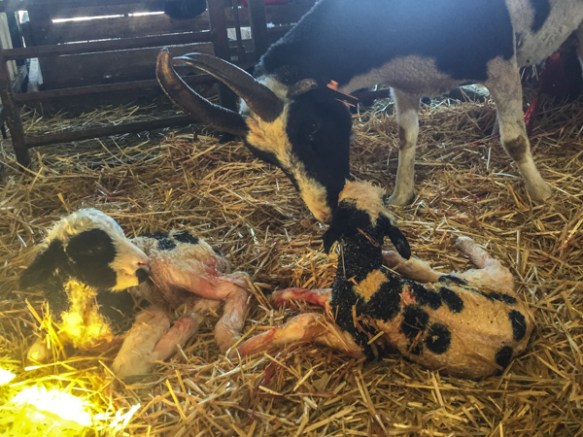 Jade is the biggest pet sheep here.
 She had a ewe and a ram lamb.
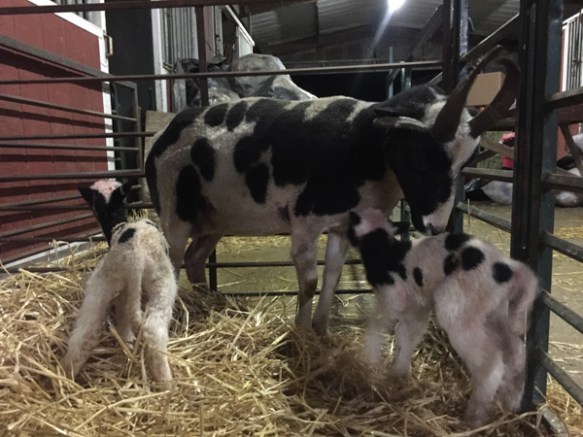 At that point I had overflow pens set up in the alley of the barn.
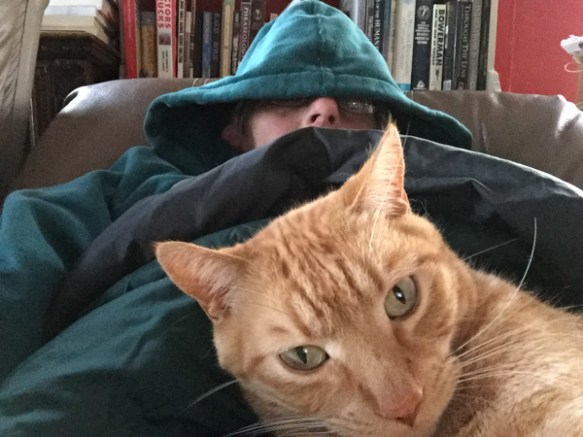 I think I slept some here and then was woken up.
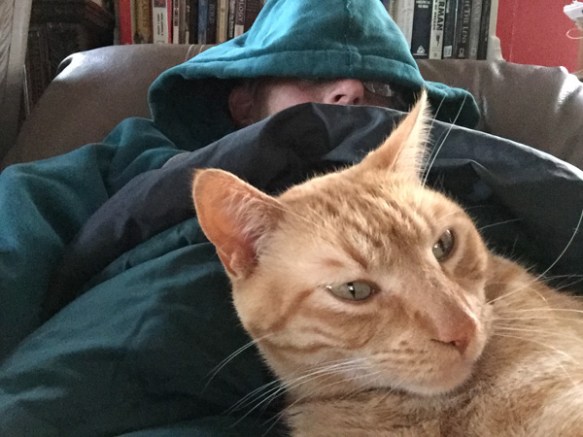
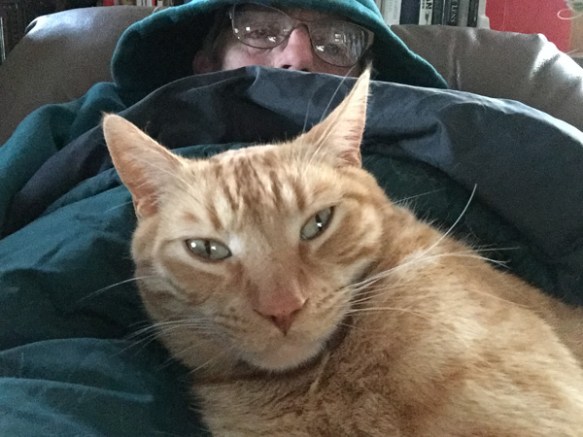 It looks as though Sunny is getting sleepy here. But I’m awake.
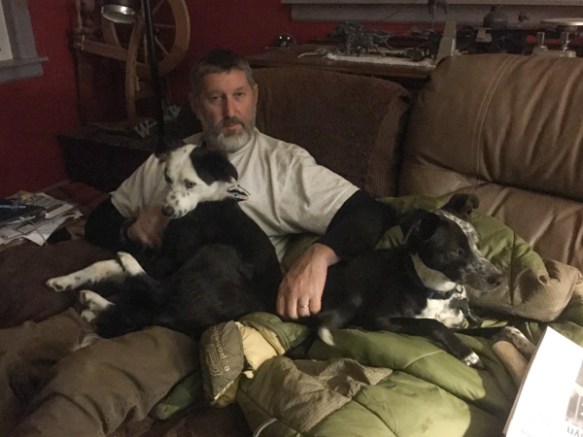 My son works as an EMT and he is often gone at night. The “puppies”, who live next door, get invited in our house if they are barking too much. They have no qualms about cuddling on the couch, something our dogs don’t get to do.
 Back to Jade. Here she is with one of her lambs at 2-1/2 weeks old.

