It’s been over a week since I was at The National Needlearts Association Convention in San Diego but I haven’t been working with my photos. (And in my mind, what’s a blog without photos?) This show is where yarn shop owners go to purchase items to bring into their shops. I have to remind myself that my shop is small, I’m not open 7 (or even 4 or 5) days/week so don’t go crazy. As always I found a few things that I’ll be very excited to bring into the shop over the next couple of months.
Part of the fun though is hanging out with my friend, Irene, who owns Cotton Clouds. She made our hotel reservations. What fun place!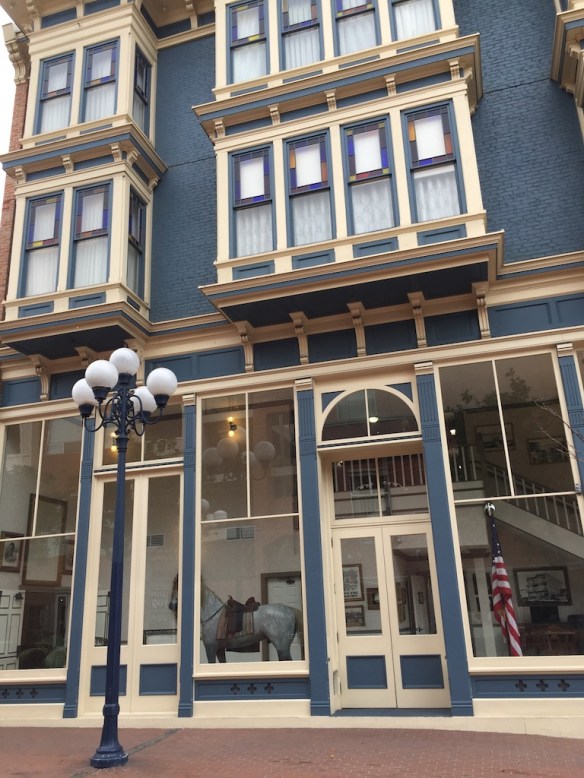 This is the beautiful Horton Grand Hotel…
 …and this is Sunshine, a paper-mache horse who stands in the lobby. He came from the saddle shop that was on the ground floor of the neighboring less formal hotel. The hotels were built in the mid 1800’s but the saddle shop originated in 1912. Wickipedia says: “Both hotels were scheduled for demolition in the 1970s when the City of San Diego purchased them to build the Horton Plaza shopping center on the site. The hotels were dismantled brick by brick, with each brick numbered, catalogued, and stored. In 1986 the hotels were rebuilt into an entirely new hotel at the present location at Fourth Street and Island Avenue.”
 Our room was lovely.
 What fun to decorate a hotel like this. The furniture was all old so I assume it was found at estate sales and flea markets. We even had a fireplace (gas so no wool hauling).
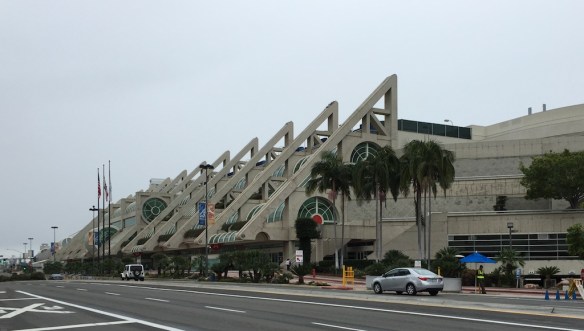 We spent a lot of our time at the San Diego Convention Center.
 Here is a message to be read on the way there. This quote in context of time and author if quite serious. In my world the last sentence has particular meaning and is serious enough in my life, if not with as profound a meaning.
  Fun view while going up the escalator in the Convention Center.
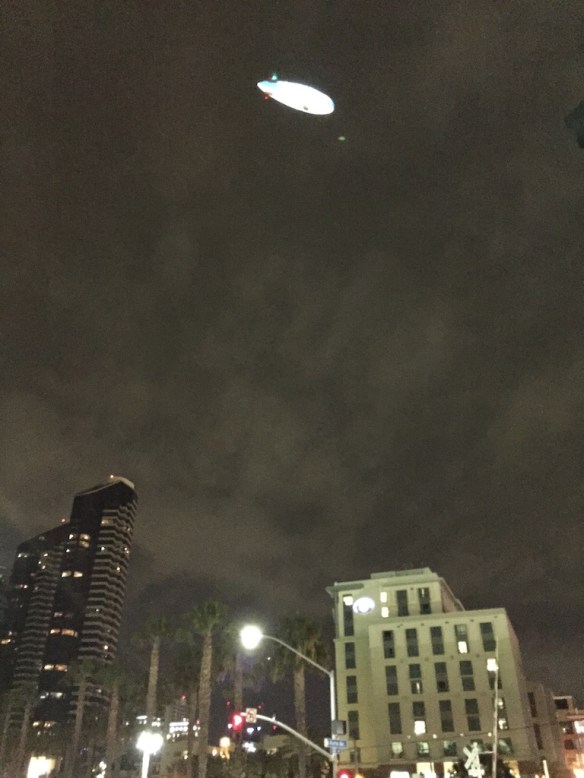 Leaving the hotel at night. This is the Gas Lamp District, kind of like Old Sac is for Sacramento.
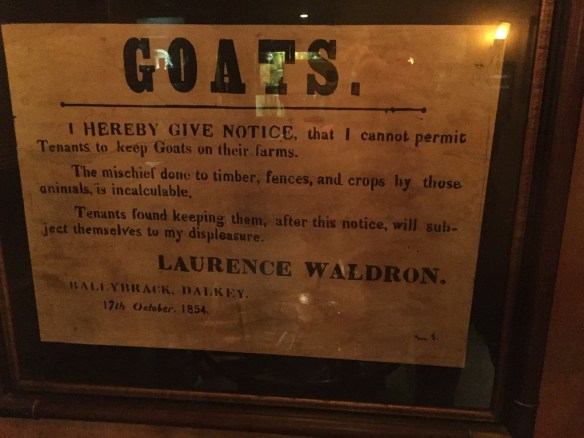 We ate one night at The Field, an Irish pub, while listening to Irish music and dancers. This sign caught my notice.
So what did I buy? My customers sent me on a quest for “sock yarn” so that is what I focused on. But first I found some new equipment. These are prototypes of cool little sample looms designed by author and teacher, Liz Gipson. The unique thing about these looms is that they will be produced in 8, 10, and 12 epi versions, enabling quick sampling of yarns at those setts (and at 4, 5, and 6 epi). There are a few other gadgets I am purchasing here as well.
 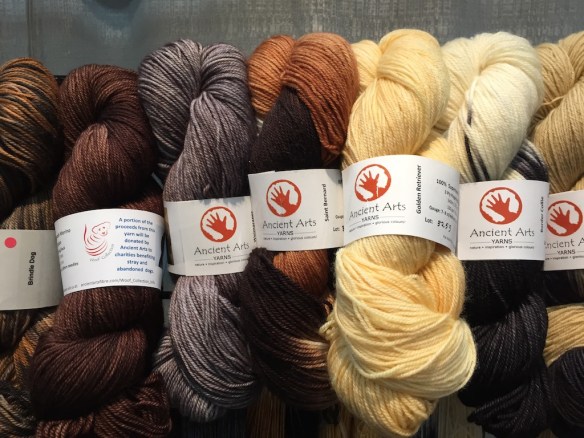 This is the Meow and Woof collection from Ancient Arts Yarns. Each yarn has a photo of the cat or dog that inspired the color. I strayed from my “buy American” plan because I was so enamored with these. They were spun in Italy and are sold by a Canadian company and a percentage of sales goes to dog and cat rescue groups. I have wove a scarf out of the calico cat yarn–that is another post.
 I already carry yarn from Imperial Yarn Company and these are some inexpensive and simple kits some of which use the yarns that I already have. I want to have a knit-along with some of these.
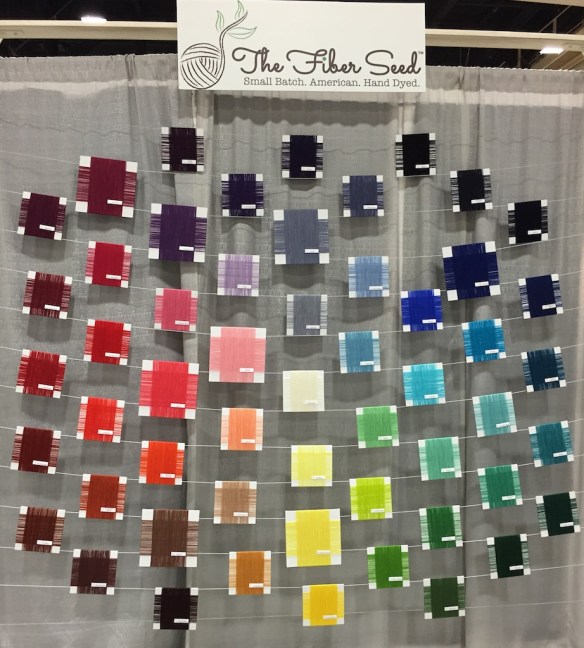 The Fiber Seed will be a new yarn for me. They have some wonderful gradient yarns put together in kits. I’ll get those as well as some of the solids and variegated yarns.
Mountain Meadows is a company who has their own mill. I’m getting a sock-weight Merino yarn that is grown in Wyoming. How to choose from all those colors? I’m getting yarn in about a dozen colors.
What will be first in the shop? I can’t wait for the UPS truck to show up.
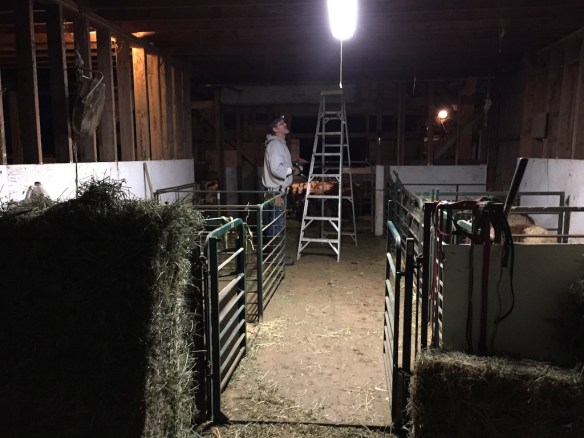
 Dona took this photo of all of us as we stopped for a group photo in the barn.
 This is Jade sporting her new eartag. The ewe lambs’ small tags were replaced with their grown-up tags. I decided to start color coding again. All the 2015 lambs have orange. There were also a lot of adult sheep whose ear tags were missing, so we replaced those.
 We got son, Chris to the barn to take a group shot so Dona could be in it too.
 We finished up at the ram pen. I took fleece samples to send in for micron testing.
 Time to relax in the shop…
 …and enjoy donuts that Mary brought to celebrate Dona’s birthday last week.
 This is a poor view of the sliding door at the south end of the barn.
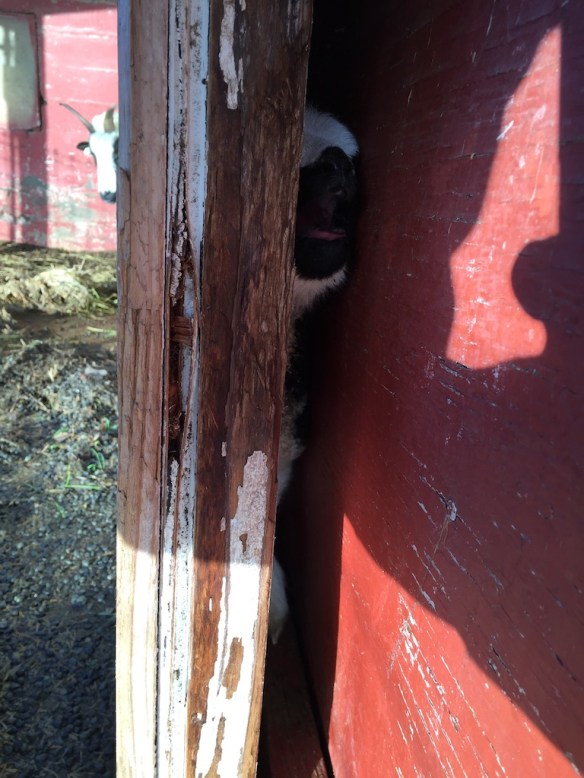 This is looking from the other end. This happened once before–a lamb stumbled into the opening between the door and the wall and then couldn’t get out. Fortunately it wasn’t wet or too cold that night.
 Here he is with mom, Dazzle, in the barn.
 Dazzle’s lamb was a surprise although I didn’t have a breeding date for her, which was an indication that she may have already been bred. I went back out last night to check the ewe I expected to lamb.
 She was lambing and had nice big twins.
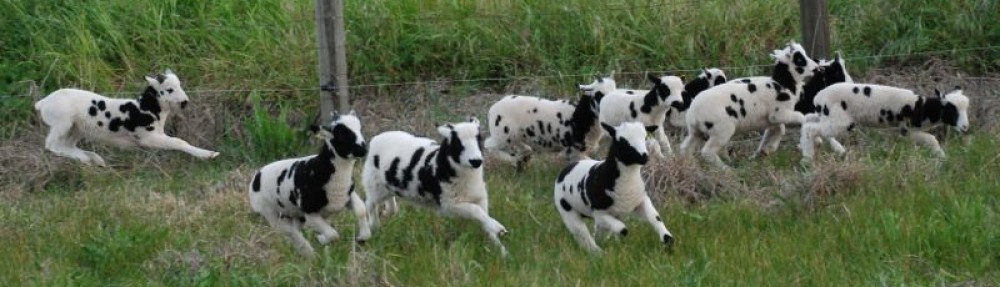
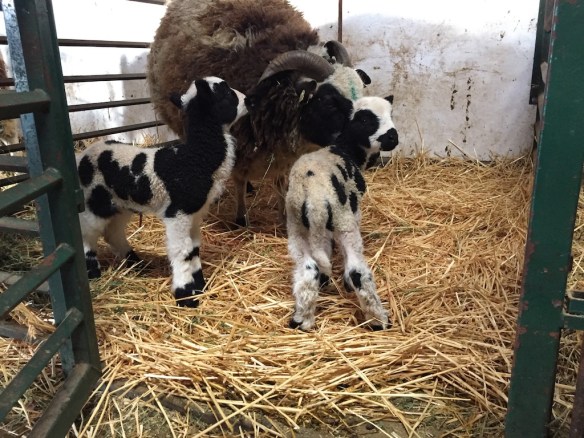 These are some flashy looking lambs, especially the little ram on the right. If he grows up nicely, those markings would make him a very pretty show lamb. Too bad he doesn’t have a known father so he can’t be in the show. Maybe he’ll make someone a nice fiber pet if he’s wethered.
 Ginny was just a baby at last lambing season and wasn’t out on her own much. Today it didn’t take her long to discover a dog’s favorite part of lambing time. I usually make sure the afterbirth is not dog-accessible but when it falls out of the wheelbarrow it’s up for grabs.
 Its a good sign when the chickens start laying again. That means there is more daylight. I have 5 chickens, 1 of whom is old and the other is ancient. I don’t expect eggs from the old chickens, but it’s nice to know the young ones have kicked into high gear.
 Rain. That’s a good thing, although I’m never really happy about dealing with the mud on the way to the compost (manure) pile.
 However, it’s good when the manure pile is wet through and through. It will become a compost pile much more quickly. I was going to try these for dye but I went out today and they are all shriveled up. Not very long-lived.
 My friends came and did a Shop Intervention. I need to drastically change some things and get rid of the clutter. I still haven’t dealt with that big box but that is all the newest Timm Ranch yarn. I need to get that on the website and start working with it. After the friends left there was room…
 …for a Learn to Weave class.
 Mid-January always means that I’m getting older as my youngest son celebrates his birthday. That isn’t the full amount of candles he should have had, but it is bright enough!
 Sonata.
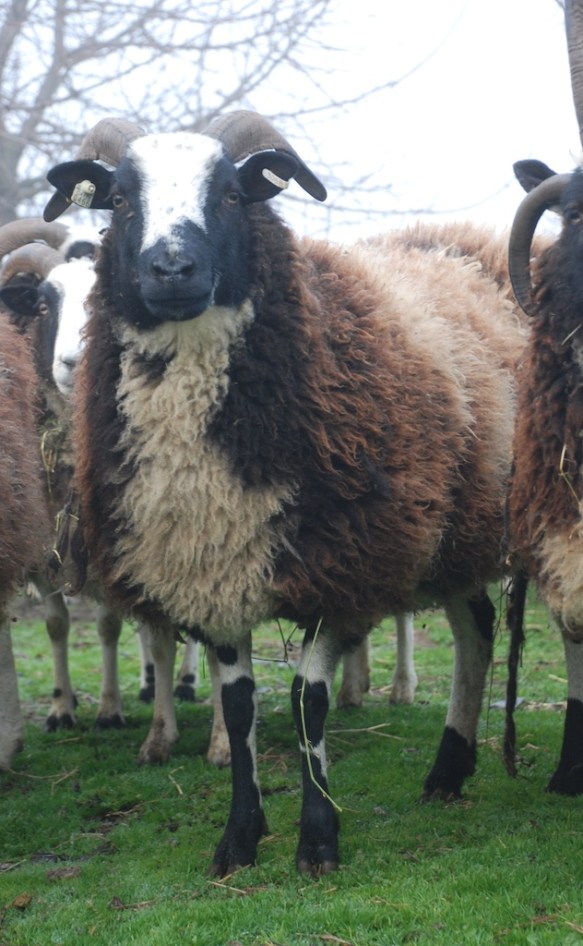
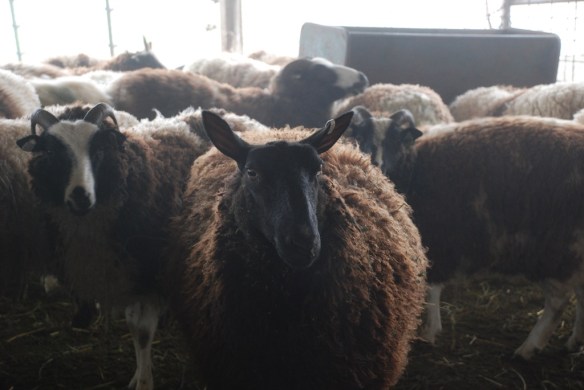 The BFL-cross named Ears.
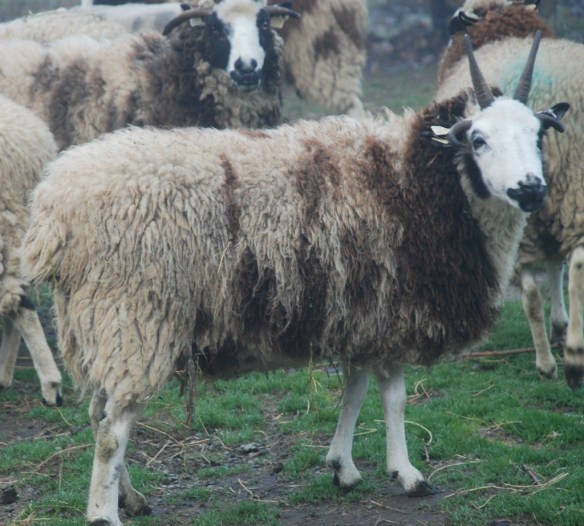 This is Kenleigh’s Isadora.
 Vanessa.
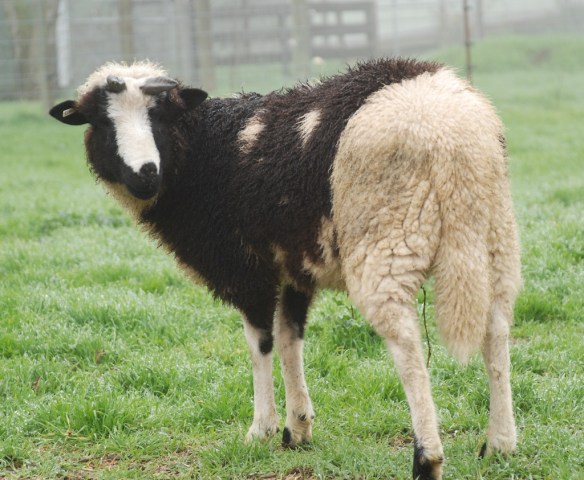 Wesley is one of three wethers that are part of Ginny’s sheepdog training flock.
 Wesley and Wally are BFL-crosses and the other two wethers in Ginny’s flock. They were all born at the fair in July.
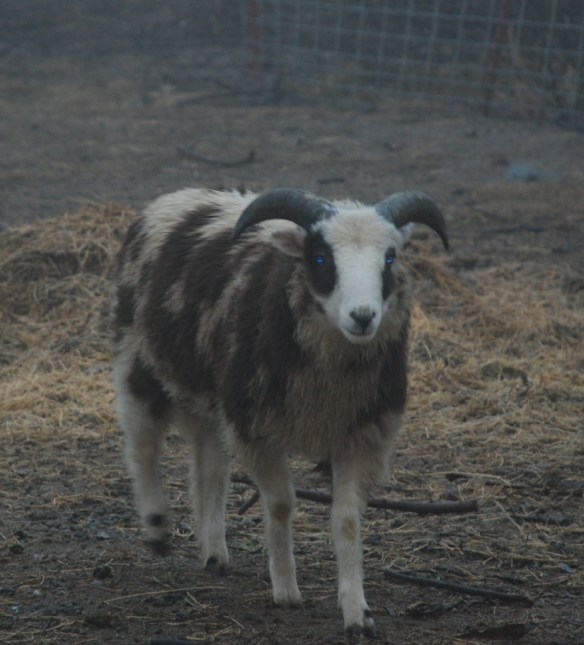 This ram was also born at the fair. I’ll have to decide about shearing them since they will have only 6-month fleeces and it will be more of a stress on them.
 For this month’s show we invited our family members to join us in sharing their art work.
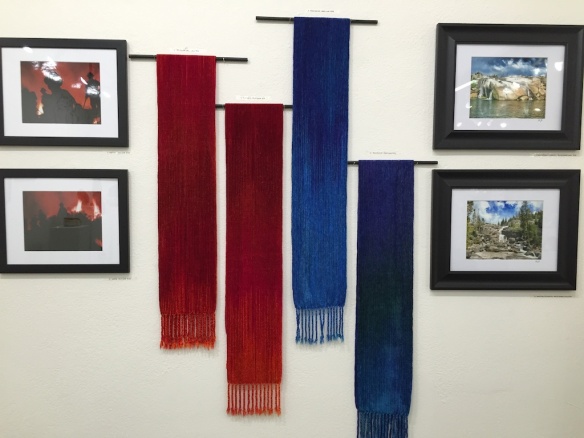 My sons and daughter-in-law entered their photos. Sorry that my photos don’t show theirs very well. Chris took photos while on the fire line last summer. Matt and Kaleena’s photos are taken in their “backyard” of the El Dorado National Forest. I wove 7 Fire scarves and 5 Sky scarves so that I could choose the ones I wanted to display with the photos. You can’t tell from this but the Fire scarves have sparkles (and have a lot more color variation than shows up here).
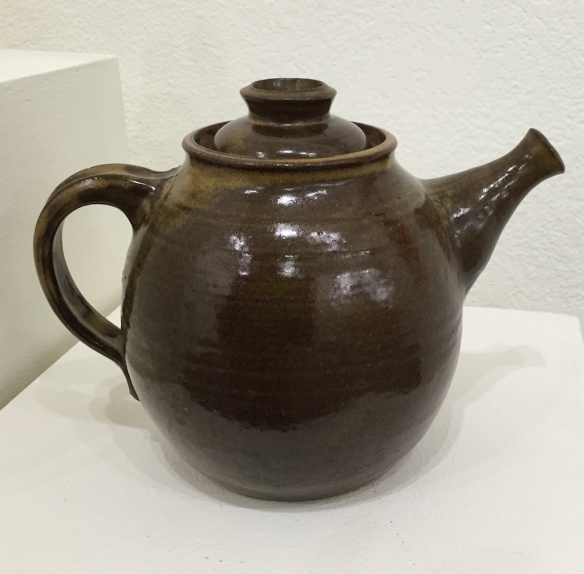 I also included two of my mom’s pieces. She was always proud of her teapots because she could create a dripless spout.
 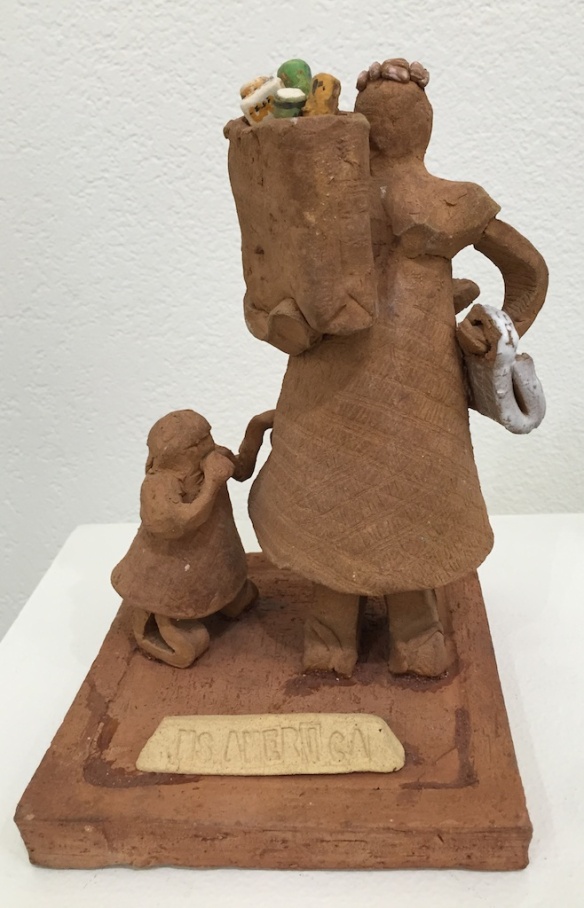 Mom mostly made functional pieces like plates, bowls, and mugs, but also made tiles for the kitchen, a bathroom sink (the actual sink !), lanterns, birdbaths, and a sundial. This is a rare statement on society…
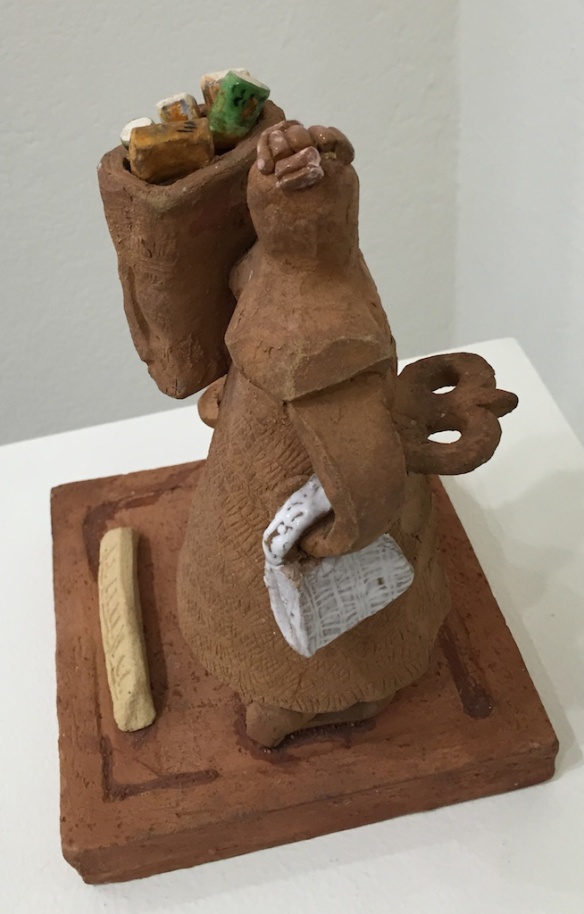 …but I’m not really sure what she meant.
 I took only a few more photos in the gallery because I ran out of time. Artery member Marjan made the 3-D flowers and her mom did the silk paintings.
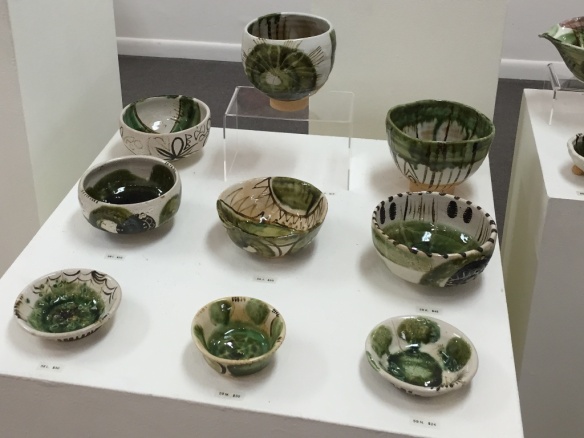 Heidi’s husband and dad collaborated with her making bowls.
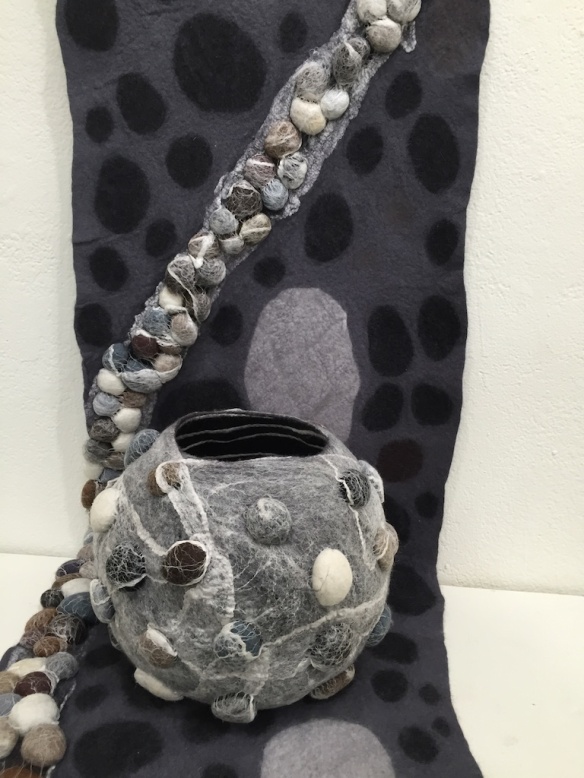 Sorry, but I don’t remember whose work this is but it is all felt, including the rocks.
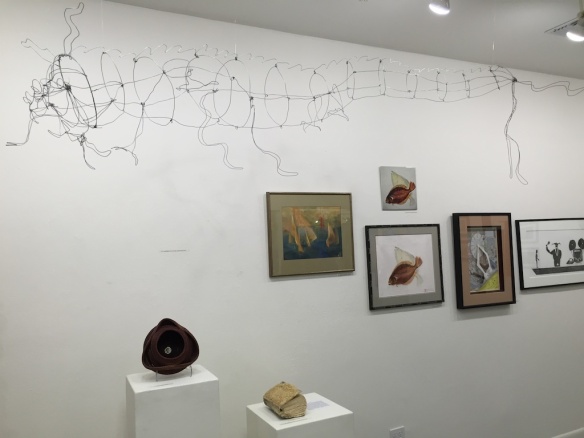 Here is a wild “Dragon Drawn in Space” above member Chris’ family’s art.
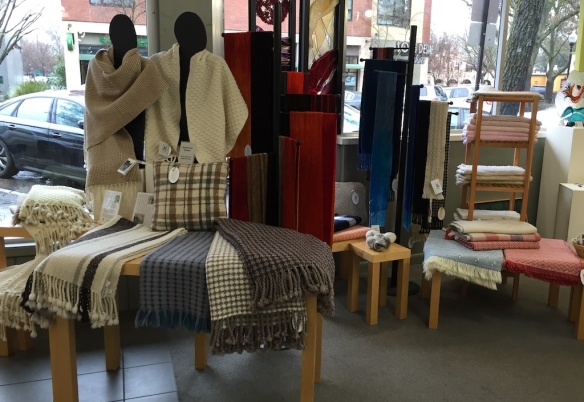 My regular work moved out of the gallery and is in the front of the Artery for the next month or two.
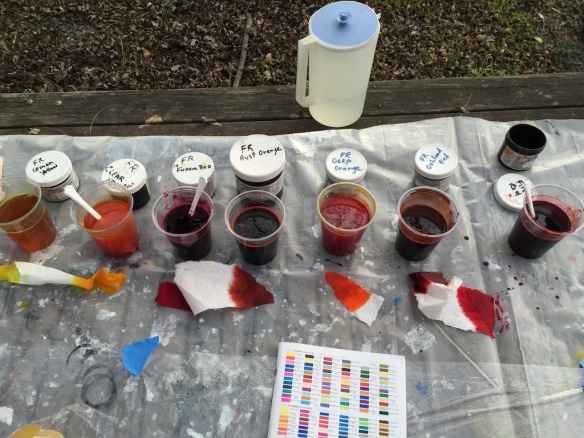 I was OK for Fire. I had wound the two white/off-white warps but wanted to start with something else to try out the colors.
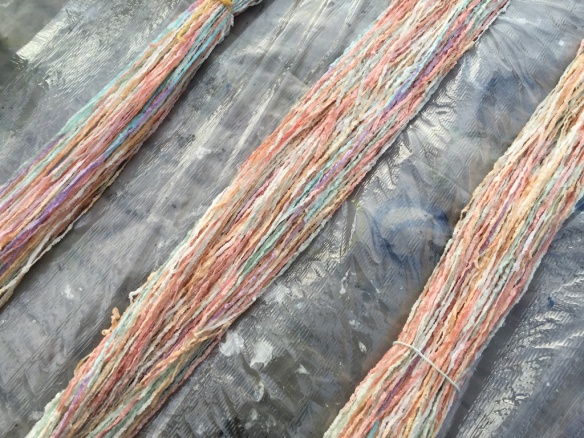 I still have some warps leftover from my
 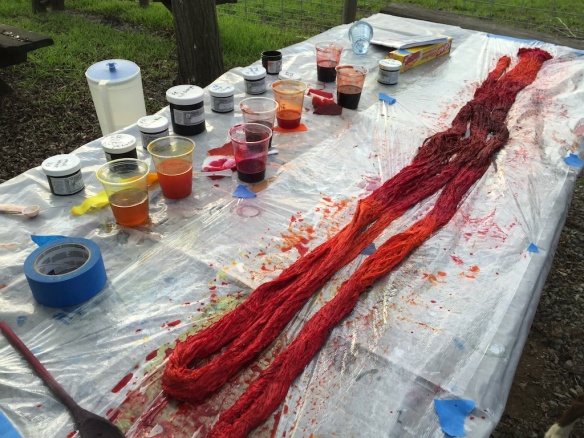 Now was the time. I started with yellow but it didn’t cover the colors very well so this warp went to oranges and reds.
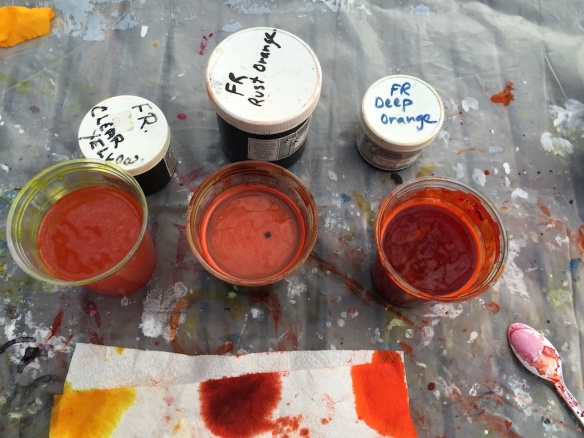 That was the “practice” warp. Now it was time for the “real” one and I decided to use just these colors.
 You can see the yarns that I used weren’t all the same because I didn’t have enough of any one shade. Here is where my photo documentary of the process has holes. This was a cold, damp day. I was bundled up in overalls and Carhart jacket and wool layers. I had footwarmers in my boots but I had to keep switching from warm gloves to rubber gloves, neither of which lent themselves to taking lots of photos. And it was getting late in the day and I was starting to lose the light. So no more photos of these warps after dyeing.
 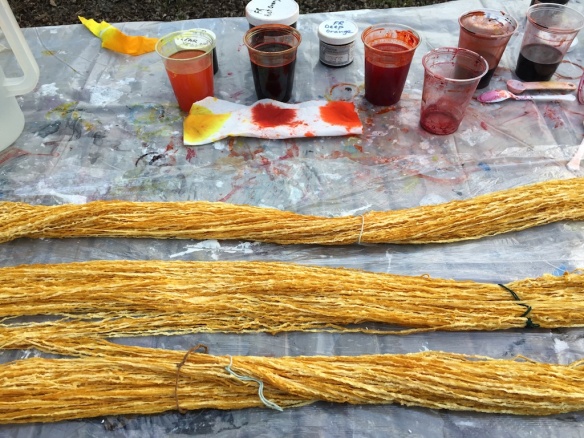 I wasn’t satisfied with the dye job on the white warp so I wound another but this time used yellow yarns because I didn’t have anymore white. I dyed this in those same colors.
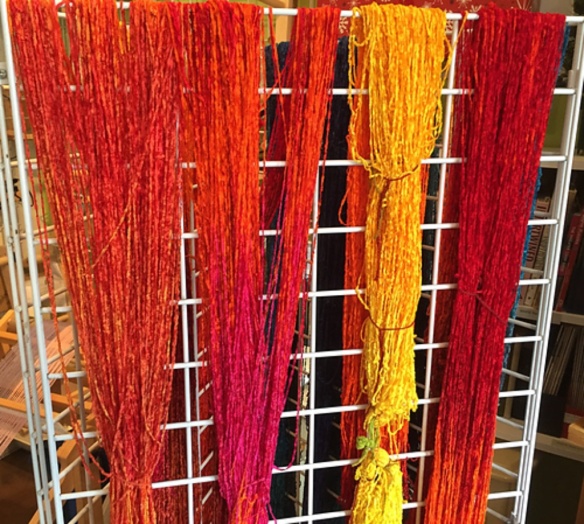 Dona was at the shop the day I was trying to get these warps to dry. She took this photo of them hanging near the heater.
 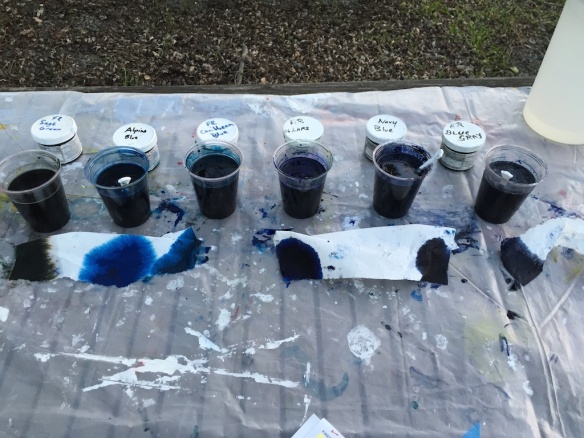 Back to the dye day. These were the blues. It was getting late so not many more photos.
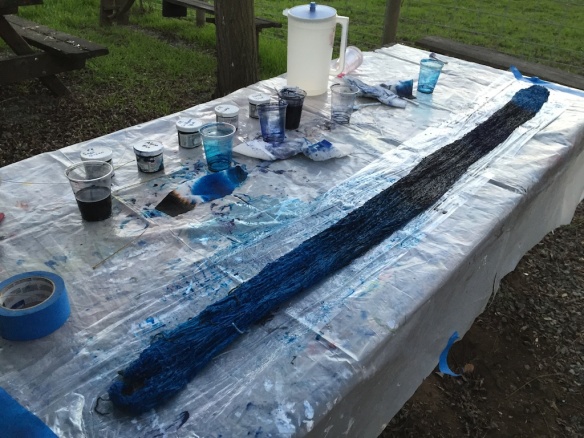 Here is one of the Mountain Sky warps.
 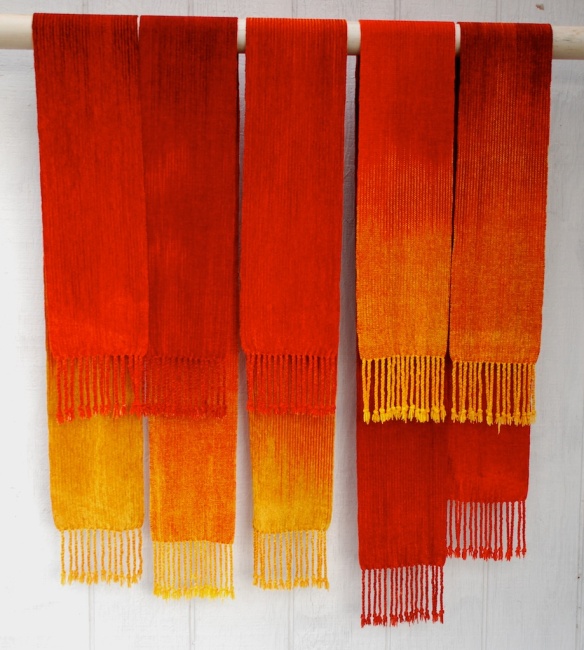 I wove seven Fire scarves (two were finished the night before the show so aren’t photographed here) and five Mountain Sky scarves.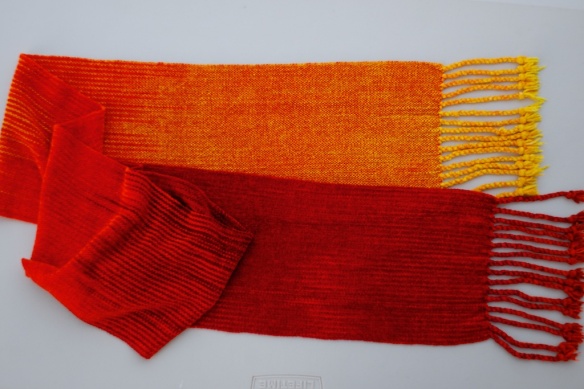
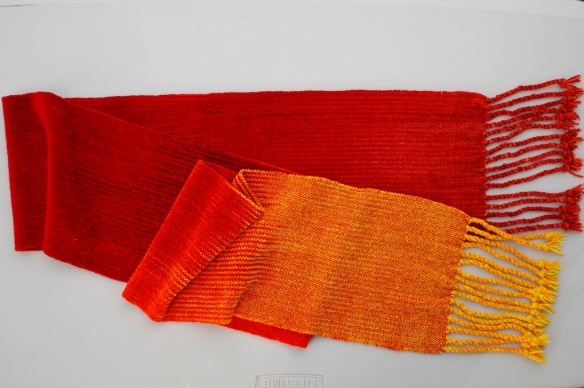
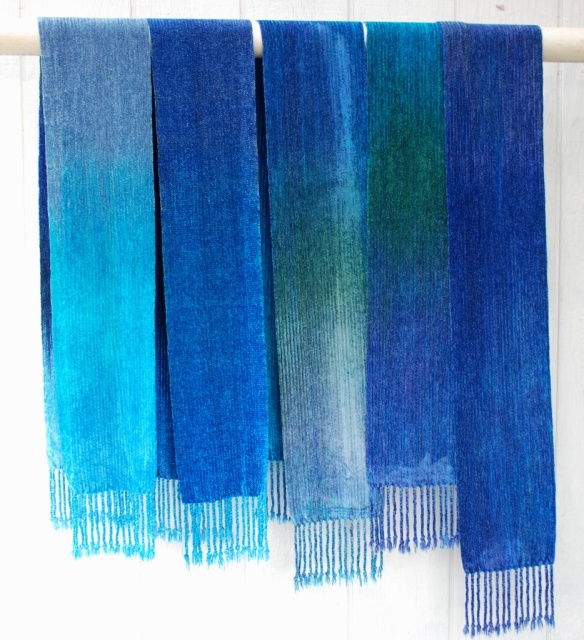
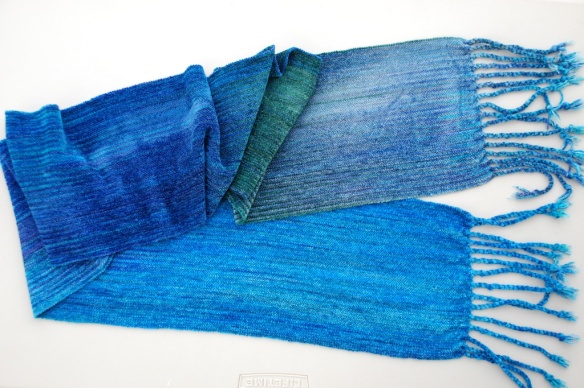
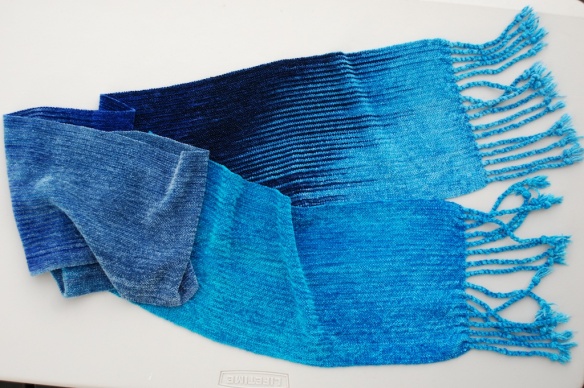 I will do another post of how the Artery show looks.
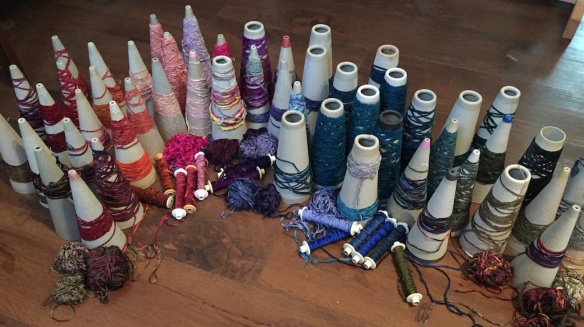 Three yards (or a little less) is the length I need to make a scarf. I dumped out a couple of bags of leftover chenille and organized it by color. This made two warps.
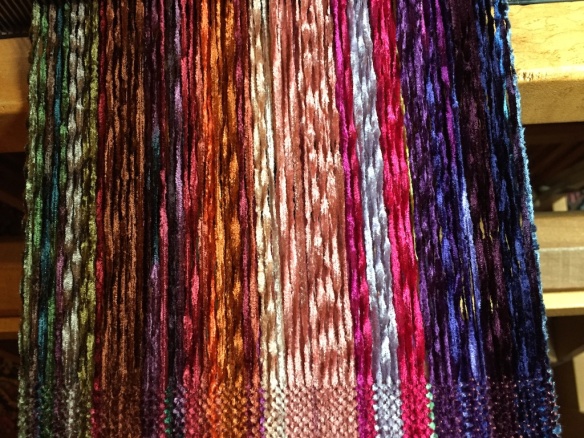 The first uses the yarns on the left side of the upper photo, going into the purple range.
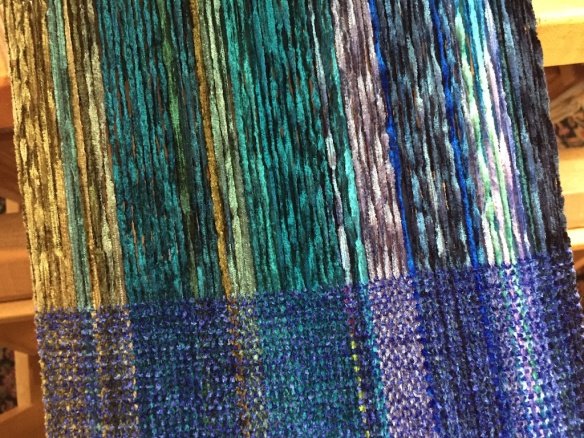 The color isn’t very good on this photo but this was mostly yarns from the right side. Here are the finished pieces:
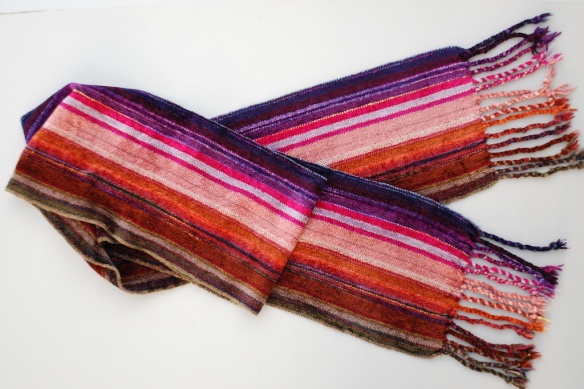 I used a fine cotton weft for this scarf mainly because I couldn’t figure out which color of chenille would work across all of these stripes. By using a fine weft the color of that disappears and the eye sees just the warp color.
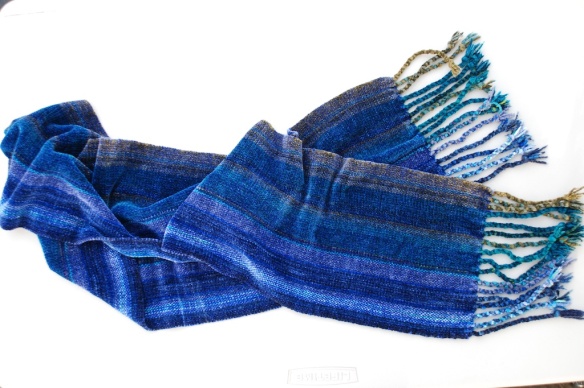 This scarf was different. I used a blue chenille weft. The blue dominates but pulls all the other colors together.
 January 22, 2015.
  February 5.
 February. Almonds are blooming.
 April 26, 2015. The field has been bedded, ready for tomatoes.
 May 3, 2015
 June 9, 2015
 July 22, 2015
 August 9, 2015
 August 30, 2015
 This is a photo taken across the road, from Across the Road. (That is my pasture looking west.)
 The alfalfa field that is the green triangle in the upper right in the aerial photo.
 Beans that were planted after the wheat harvest in the are shown in the triangle that is the upper center of the aerial photo.
 September 5, 2015.
 September 9, 2015. It took 4 days, working 24 hours/day to finish harvesting this field.
 September 23, 2015. Back to the beans. The dry plants have been put into windrows waiting for harvest.
 September 27, 2015.
 October 6, 2015. Field disked and bedded waiting for the next planting. I’m told that it will be planted to sunflowers this spring.
 November 29, 2015. If we have regular rain I can’t walk across here because it gets too muddy. There have been very few days that we haven’t been able to walk.
  December 1, 2015. View of our place, looking west across the field. We need to see more green on those hills.

 What time I have spent in the snow has been well after the storms have come through. There is something very different and beautiful about being there immediately after the snowfall…
 …while the branches are still heavy with snow.

 I loved seeing the snow clear to the tops of the trees. As the sun started warming the trees, snow cascaded from the highest branches.
 I spent the night at M & K’s (Dan came home for chores and dog duty) and the next day Dan came back and brought Chris and Meryl with him. Then we celebrated our private family Christmas.
 The younger generation helping the older one with digital issues.
 Chris plays a mini-flute sporting his new Storm Trooper oven mitt.
 Here are my sheep/barn related Christmas gifts. My wheelbarrows constantly need their tires pumped up so Dan got the fittings to go on an extra air compressor in the barn. There are tubes and tires for my handtruck. Dog treats from Hawaii. Sheep and dog magnets. All the attachments for my new GoPro (birthday present). Footrot Flats is a comic strip series that I think only a sheep farmer would enjoy. Hand and foot warmers packets that I’ll share with Farm Club in the barn.
  We took another hike that afternoon. This was a great two-day Christmas celebration with family. And it’s not quite over. The kids are taking us to see StarWars in a couple of days. The only thing missing was my granddaughter and her family but at least we spent a week with them not long ago.
