It’s been several days since I wrote the post about Day 7 of our vacation. The vacation wasn’t quite over. We needed to be back home on Tuesday but there were two places to visit in Oregon. (Actually I had marked many others on the map in my head–Hell’s Canyon National Recreation Area, John Day Fossil Beds National Monument, a friend in Boise, a cousin near Portland–but those will all have to wait for another trip.)
We arrived in Pendleton… 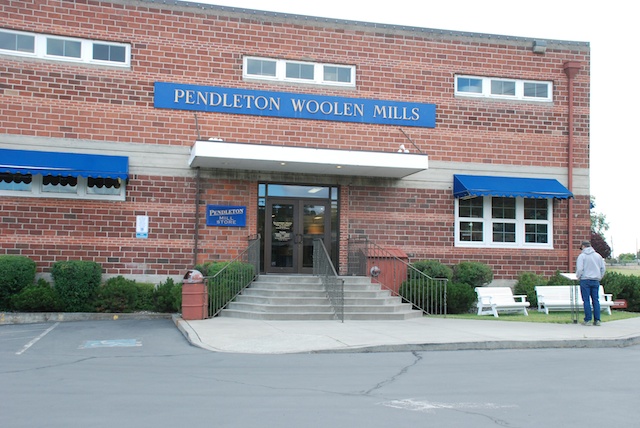 …and easily found the woolen mill. There is also a mill near Portland. That is where they weave cloth for the Pendleton clothing line. At this mill in Pendleton they spin and weave blankets.
  There were about a dozen people there for the tour even at 9 a.m. on a Monday morning. It was interesting to see the workings of the mill but now I have a lot of unanswered questions. We all wore headsets so that we could hear the tour guide over noise of the mill machinery but that meant that there was no opportunity to ask questions while we were walking. And the tour was fast. I would have liked to stop and watch what was going on with each loom. Now that I’m looking at my photos I realize that I have even more questions about what I was seeing. I guess I’ll just have to go back!
 The Mill uses Rambouillet wool from Oregon and surrounding states and Merino wool from New Zealand and Australia. The wool is scoured in Texas and then comes to Oregon for spinning and weaving. The carding and spinning equipment was on the second floor. That room was quite humid. The guide told us that high humidity lessons the quantity of airborne particles so employees don’t have to wear dust masks. Now I wonder if that is the main reason for the humidity or if it makes carding and spinning more efficient (or both). The photo above shows the carding equipment operating behind plexiglass.
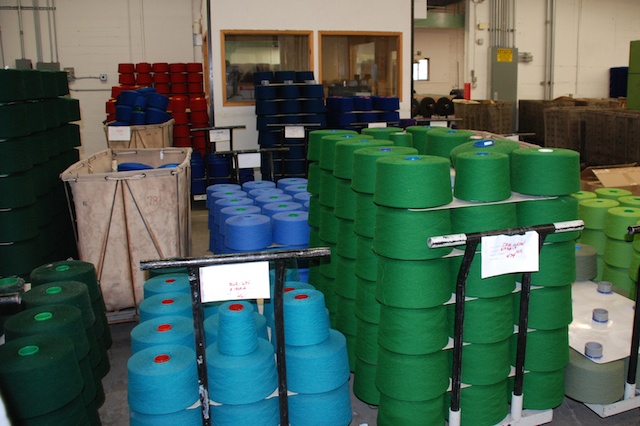 Pencil roving is spun onto big spools and the yarn is later transferred to cones.
 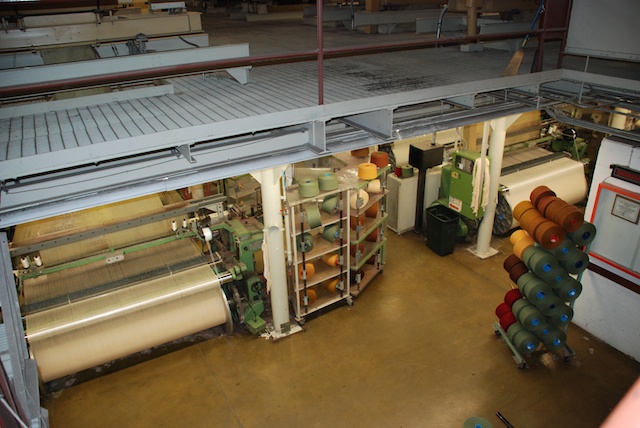 The yarn is steamed to set the twist. Now I can’t remember the details. I think it was steamed for an hour or so. This is a view from the second floor looking down on the looms that are on the first floor.
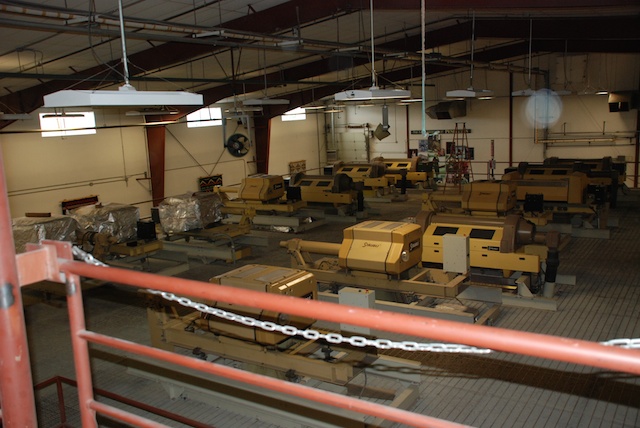 Above the looms are the computers that operate them and fans that keep the lint from settling and, thereby, prevent overheating.
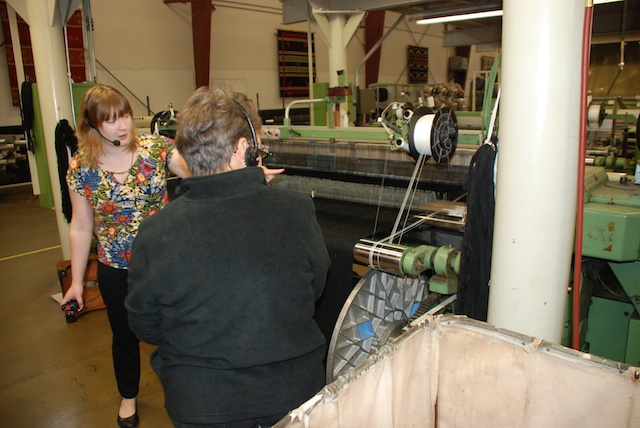 Here is where I now have more questions than answers. This is one of the Jacquard looms. A Jacquard loom can weave complicated patterns because all the threads operate independently. Notice the selvedge threads that are wound separately.It is only after looking at this photo that I see the selvedges being cut off as the cloth rolls onto the cloth beam. At least I think that is what I am seeing. (This will only have significance to those of you who are weavers.) This is one of the dobby looms. I think that guide said that with their newer dobby looms a blanket takes 15 minutes to weave.
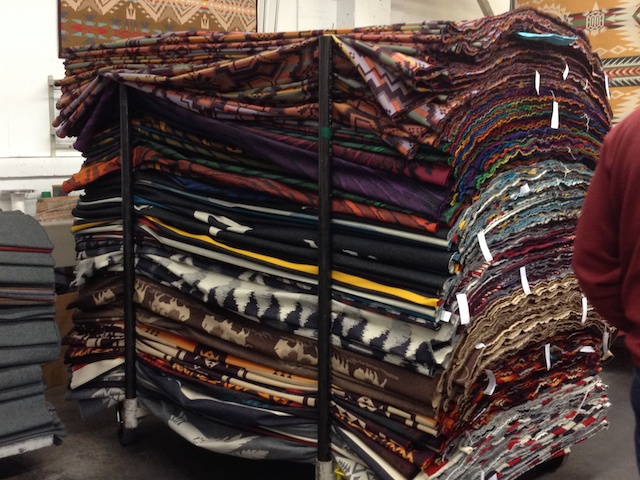 The blankets in a continuous roll are inspected for flaws as they roll over a light table (middle of the photo where the bright light is). Blankets ready for finishing touches.
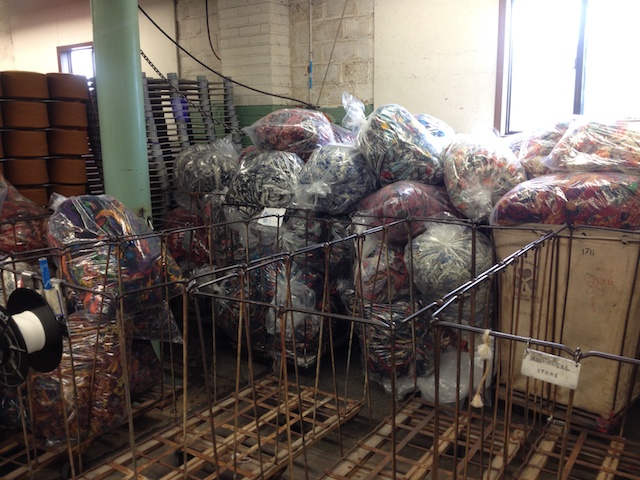 Bags of selvedges ready to sell to people who want to make rugs.
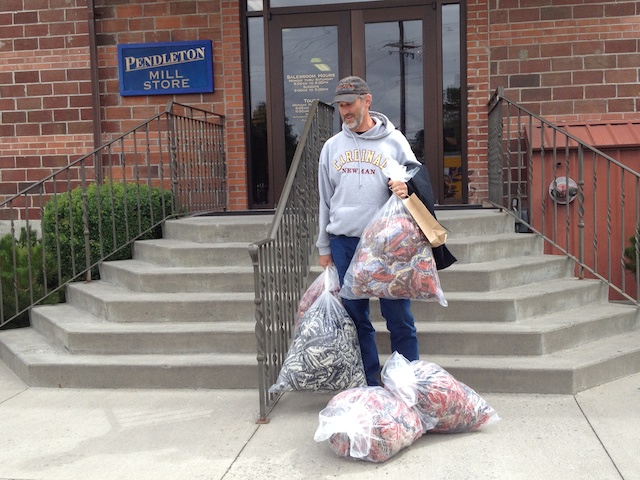 We left with a few bags of our own. Dan wanted to point out that his purchase (BBQ sauce) fit into that little paper bag.
Next post: Second half of Day 8–sheep.


 We were entertained by following our map books. We started out with California and Nevada. I think we picked up Idaho somewhere on the way. Later we found Montana and Wyoming in a used bookstore in Jackson, WY. Eventually we found Oregon in a bookstore in Pendleton. We found these books to be a way to keep the travel interesting even in the broad stretches of “nothing” in the high desert landscapes. There are always geological formations, land features, mines or mountain-tops with names and the books offer much more detail as far as land ownership and dirt roads than regular road maps. The books came in particularly useful when we wanted to camp along the way and find roads into Forest Service land. (Yes, I also have an iPhone and I use it, but there is not always service and sometimes it’s just easier to see the whole thing on one page.)


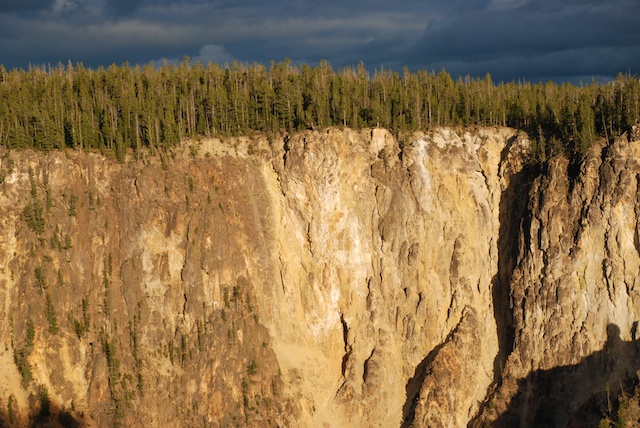
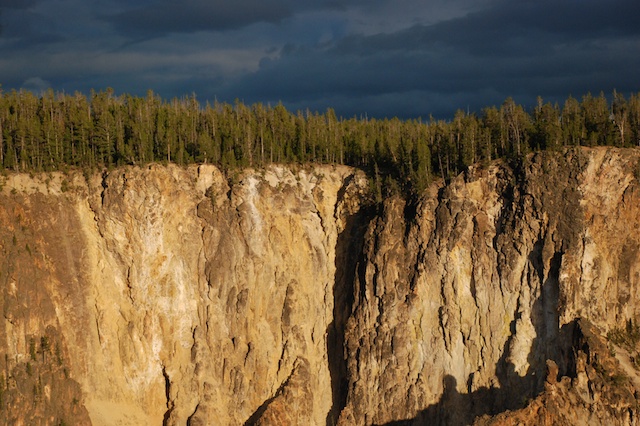


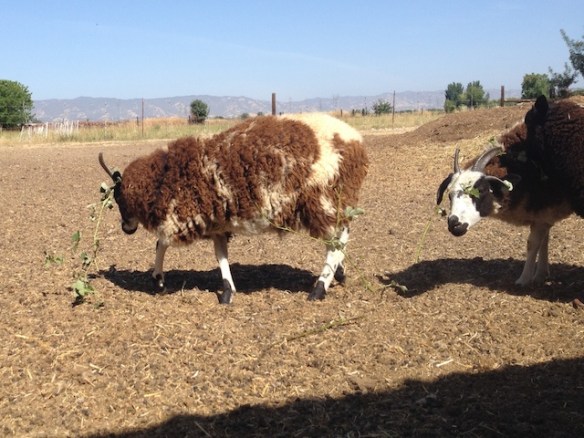 However I’m not happy that the branches get stuck in their wool.

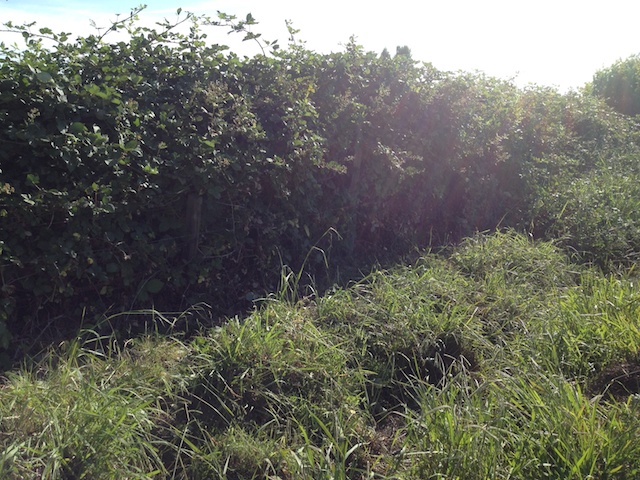

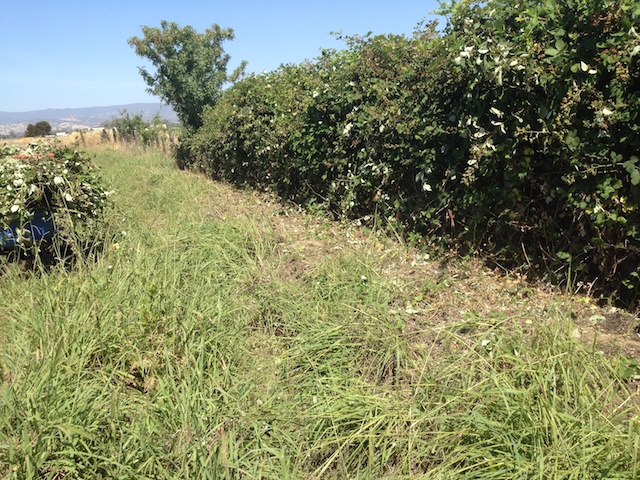
 There are plenty of these still on what is left and they will be easier to get to. With my luck though they will all ripen just about the time that I go to Texas for the birth of my granddaughter.
 This is a view to the east looking from the museum.


 There was a room devoted to wildlife art by Charles Russell and I took a few photos there before reading the sign that you weren’t supposed to photograph any the Russell work.


 Late evening view from Signal Mountain.


 This is the view from the top of Inferno Cone. The Visitor’s Center is just right of center. Notice the plume of smoke on the horizon at the left. That continued to grow and drift across the whole landscape through the afternoon.


 At dusk we found an almost empty campground along the Snake River. After a meal of beans and popcorn we went to bed. No moths. No wind. Perfect.