Pasture Maintenance

Nothing very exciting in this post.  But I spent all day Sunday in the pasture  after thinking the job at hand would take only a couple of hours.  I find that I am always writing blog posts in my head so here it is.

I started by mowing the paddock that the sheep had just been grazing. Now that I have my mower (never meant for this heavy duty work, but so far still working) I have been working on the dallisgrass that gets ahead of the sheep this time of year. In the past I have tried burning, trampling, weed eating (photos and past efforts in this post and this post and this post), but I think this mower will be the answer. It is at the south end of my pasture(right side of the photo) that the dallisgrass gets so thick and tall. The idea is to mow right after grazing and then everything has an equal change of regrowth, and the dallisgrass will be in a more palatable stage and the sheep will keep up with the growth.

In this photo the paddock that I just mowed is to the right. The sheep grazed the one on the left a few days before. I mowed that one that last time they grazed it and that made a big difference. I shouldn’t have to mow after each grazing–maybe once or twice per season I think. Notice the fence-line. That is a 3-wire electric fence and this was the other thing I wanted to deal with on this day. I have been putting off cleaning up the fence-line with the weed eater, but when you can’t even see the wire, it’s time. I have already used the weed-eater in the area where you can see the wire. This dallisgrass is tough. I have the heavy duty string on the weed-eater and it still gets used up quickly.  Slow-going. It took me about 3 hours to finish this fence-line.

Speaking of problem plants, here is another. This is what the medusahead looks like when it’s dry. There are plenty of posts about my battle with this noxious weed also. This is along the perimeter fence.

And lets not forget devils-claw. This one isn’t so bad because I don’t have much of it and it is easy to chop out the big plants. It doesn’t invade the irrigated pasture, but is along the edges where it is dry.

What is the problem with devils-claw? See the fruit? See those curved, pointed ends? When the fruit dries it splits in two and those curved points get caught in wool. I’ll show you other photos sometime. This is seed dispersal in action.

Moving on to other plant problems. This is the small blackberry bush on the west fence. On this morning I actually had breakfast here because the berries are ripe, but in general the blackberry bushes become a problem when they cover the electric fence as they do on my west fenceline. (Note wheelbarrow full of devils-claw.)

I started irrigating Sunday evening. Here is a spot that I hoped to get water to this time. The last few times I irrigated the water didn’t get here.

This is the pathetic state of the trefoil that didn’t get water.

Here is what it looks like where it was irrigated.

And here is a view of a paddock that has had plenty of water, has a manageable amount of dallisgrass,and hasn’t been grazed for a few weeks.

This is  self-portrait of the irrigator.

Wanted: Winter Storm

Wow! Look at that grass!

This photo was taken a few years ago in early February.

Here is another that shows the edge of the pasture.

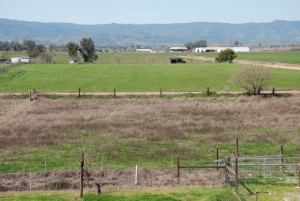
This is the same field as in the first photo and the larger pasture is in the background. Why the difference? No rain.

The Central Valley of California has a Mediterranean climate–hot, dry summers and cool, wet winters. We count on the winter rains (and snow in the mountains), starting some time in October or November and continuing through April or May (and last year, into June) to fill reservoirs, replenish aquifers, and to grow grass. Normally the annual grasses start growing when it rains in the fall and when it gets warmer in the spring the grass growth takes off and we get the kind of growth as seen in that first photo. The annual grasses dry out in the spring, but can still provide feed through the summer when properly managed. The cycle starts over with the next fall rains.

I have irrigated pasture. I usually have the best of two worlds. I take advantage of that lush spring growth of annual plants…

Grazing annual ryegrass as some of the other annuals are drying out.

…but I start irrigated in May or June. Through the summer, when livestock on dry land eat dry feed, my sheep eat perennial forages that include clovers and birdsfoot trefoil.

Birdsfoot trefoil

Clover

The  perennial plants drastically slow their growth in the winter but rely on winter rain to grow strong root systems and be ready to support new growth in the summer. Look at the next photo taken two weeks ago.

Annual grasses that germinated after the good rain in November have since died. Some plants are still trying valiantly to hang on but there is virtually no growth. The dry grass in this photo is the remnants of the late summer growth of less desirable yellow foxtail and bermudagrass.

This photo is behind the barn. That clump of grass in the foreground is under the place where any moisture (fog, dew) drips off the roof. Had there been normal rainfall the whole place would look like that.

Let’s hope we see the rain that has been promised for this week so we can look forward to this scene soon.


A Typical Day…


…or why I don’t get everything done that I have planned for a day.

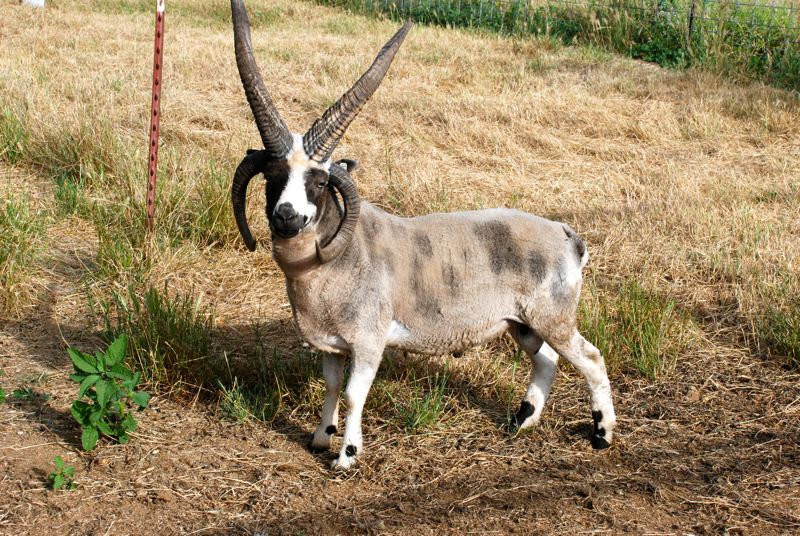
First up is morning chores and spend some time admiring Hudson, my new ram from Mud Ranch Jacobs. Joan brought him yesterday and took home a couple of ewe lambs. Hudson warrants a blog post all by himself, but he’ll have to wait for that. Hudson is a lilac ram and by breeding him to my lilac and lilac-carrier ewes I’ll have lilac lambs next spring. (Lilac is a Jacob color different than the more common black and white.)


One of the risers in my pasture water line pulled out a couple of days ago and I had to wait for the water to subside to be able to fix it. I left the hole open awhile to make sure that there are no more leaks.


Here is the result of a repaired pipe line–drinking water in the pasture so the sheep don’t have to come into the barn for water.

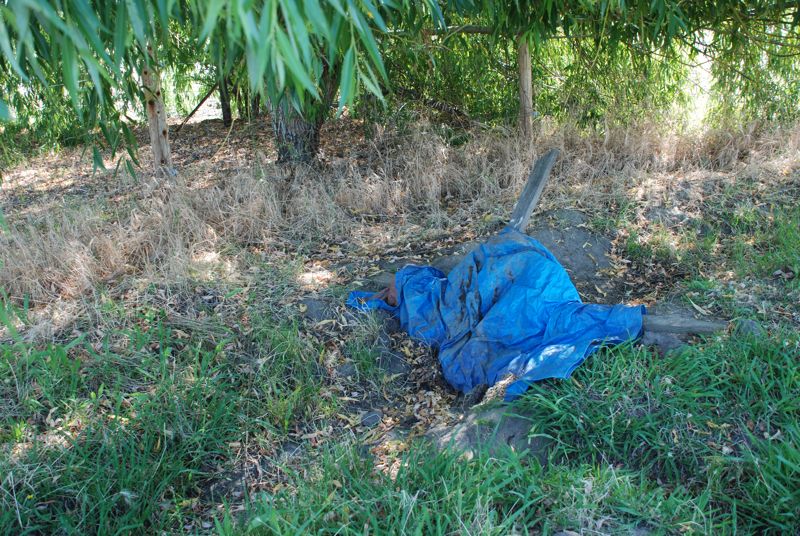
I will have irrigation water tomorrow so I needed to set up tarps in the ditch. The water is provided by the Solano Irrigation District, not my well. The tarps allow the water to back up and fill the ditch and then flow out into the pasture. 

The green forage is the result of irrigating. Even with all the rain we had recently it wasn’t enough to keep the desirable pasture plants growing. Notice the brown part on the left. My 24-hour irrigation hasn’t been enough to get water to the all the pasture and that brown area is part that wasn’t irrigated when I had water on last month. I have asked for 36 hours for this irrigation and hopefully I can get water to the rest of the pasture. Otherwise I have lost about a fifth of my forage for the summer.

This small green area is a section in the eastern paddock that my son burned earlier in the spring. He didn’t think that the burn was successful because the medusahead was green and didn’t catch fire readily. However, the burning killed it allowing other plants to grow. I want to burn the rest of it but I’m a bit worried about burning now–even if the burning would be permitted now. Maybe next year.


Throw in a littel bird watching in the morning.


Spend some time petting Stephanie…


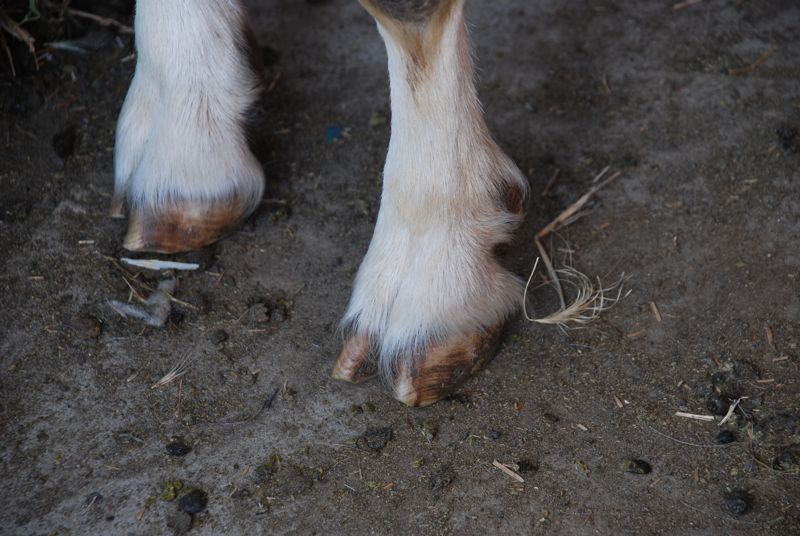
after trimming her feet which she considers to be an insult.


More bird-watching.


Scrounged and cut wood to fit inside the feeders so that hay won’t fall onto the backs of the sheep.

Jackie and Chris came out about 1 to help with halter breaking. (By the way, thanks to all the help, the lambs are showing remarkable improvement after only 3 days.) I thought a couple of them had rather droopy ears.

I pulled these out of one ear and found one other lamb with foxtails bothering her, although not lodged like these were. It makes me wonder how many I’m missing.

That’s about half the day, but a long enough post.


Experiments with Fire

Faithful readers of this blog will have read my whining about medusahead in the pasture. Medusahead is a noxious annual grass, unpalatable due to high silica content. Due to it’s later date of maturation, it is noticeable on the hills as the light green color when the other annual grasses have dried out. After it has gone to seed it leaves a dense litter through which nothing else will germinate. Medusahead covers part of one of my paddocks and is increasing in area. During my visit to Jepson Prairie (see pretty pictures in last post) I read the signs about how they had used prescribed fire to control medusahead. “Fire is usually 100% effective at controlling medusahead if done before its seed heads shatter.”

A couple of months ago I bought a fire-breather tool (I can’t remember the real name) that is attached to a propane tank. It is sold for use in weed control, particularly when weeds are small. It’s intended use is to heat the  plants and burst the cells rather than actually setting them on fire. I thought I’d experiment in the field. Having just irrigated (in addition to unexpected May rain) the plants were wet and there was even standing water in many areas of the pasture. I wasn’t worried about starting any wildfire.
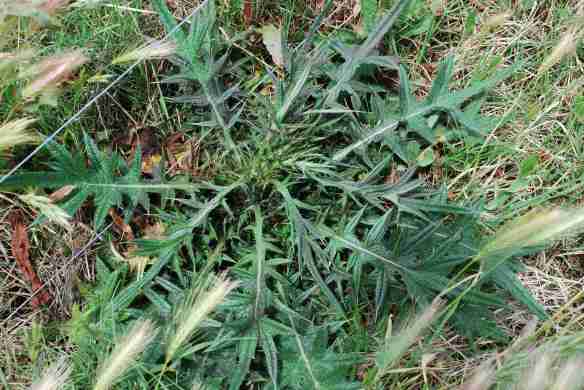
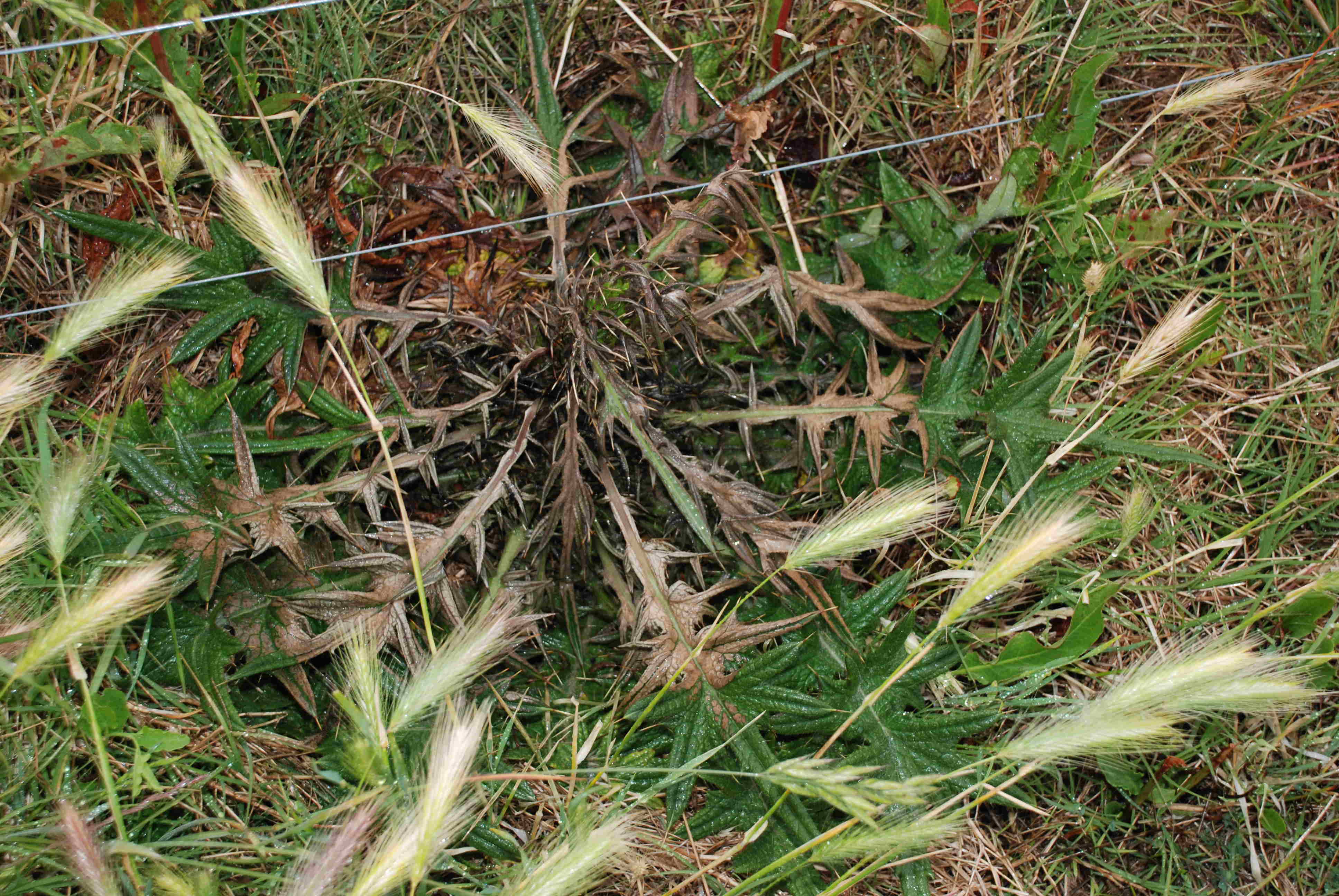
On the way to the medusahead I saw a thistle. Normally I’d just dig this up, but having a propane tank  rather than a shovel, I blasted it with fire. You can see the singed leaves.
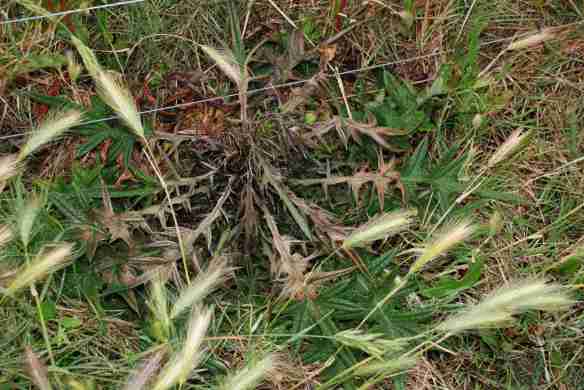
This is the thistle the next day. It may not have killed the whole plant, but you can see how it destroys the part that was heated. If the plant was very small that would be the end of it.

I didn’t really have a plan but started burning various parts of the medusahead covered area. Because of the moisture content, I wasn’t seeing much fire, but I was singing off the bristly parts of the seeds and burning a little of the litter. Then I noticed this.

Notice the forbs growing under the medusahead. I don’t want to kill those plants. I want to encourage them. This made me wonder if it would be effective to just burn (or superheat) the tops of the medusahead. This brought up several questions.  Would super-heating it stop the seed from developing? Are the seeds already viable even though the plants life cycle isn’t complete? If I heat the top of the plant enough to burn off the outer part of the seed head will it kill the seeds? If I do this will the plant produce more seed heads? I decided I needed a test-plot.
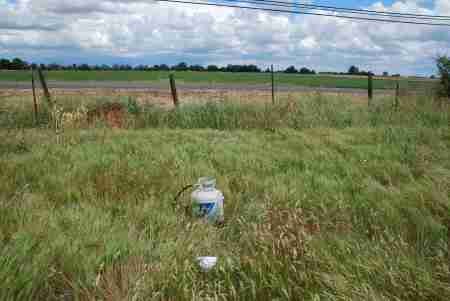
I used fiberglass fence posts to make 5 plots. The two upright fence posts mark two corners. They are hard to see, but trust me, they are there.

My plots are:

1. Flame (superheat) the tops of the medusahead long enough to burn off the outer halo of the seed heads.  Are the seeds already viable? If they aren’t, will this stop their development. If they are viable, will this kill them. I don’t know.

2. Flame the tops of the medusahead longer than in #1 so that I can see more damage done to the seed head. Same questions as #1.

3. Flame the stalk of the plant in between the base and the seed head. If the seeds aren’t already viable will this stop the development?

4. Flame the base of the plant to damage it.

5. Burn the whole *#@&^% thing.

Remember that the plants are wet from rain, the plants are still green, and in some places there is plenty of ground moisture if not standing water. If this were “normal” conditions I’d probably be starting a fire. And it may be that FIRE is the best answer. Even if I succeeed in reducing the seed produced by the medusahead, in much of the area there is still that heavy thatch which probalby needs to be burned off. And maybe I need to completely remove the plant and it’s seed by incinerating it.  But that’s another issue.

There are too many photos to post here, but I’ll give you an example of what I did.
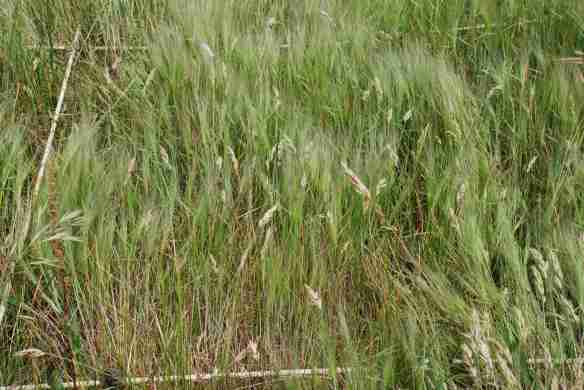
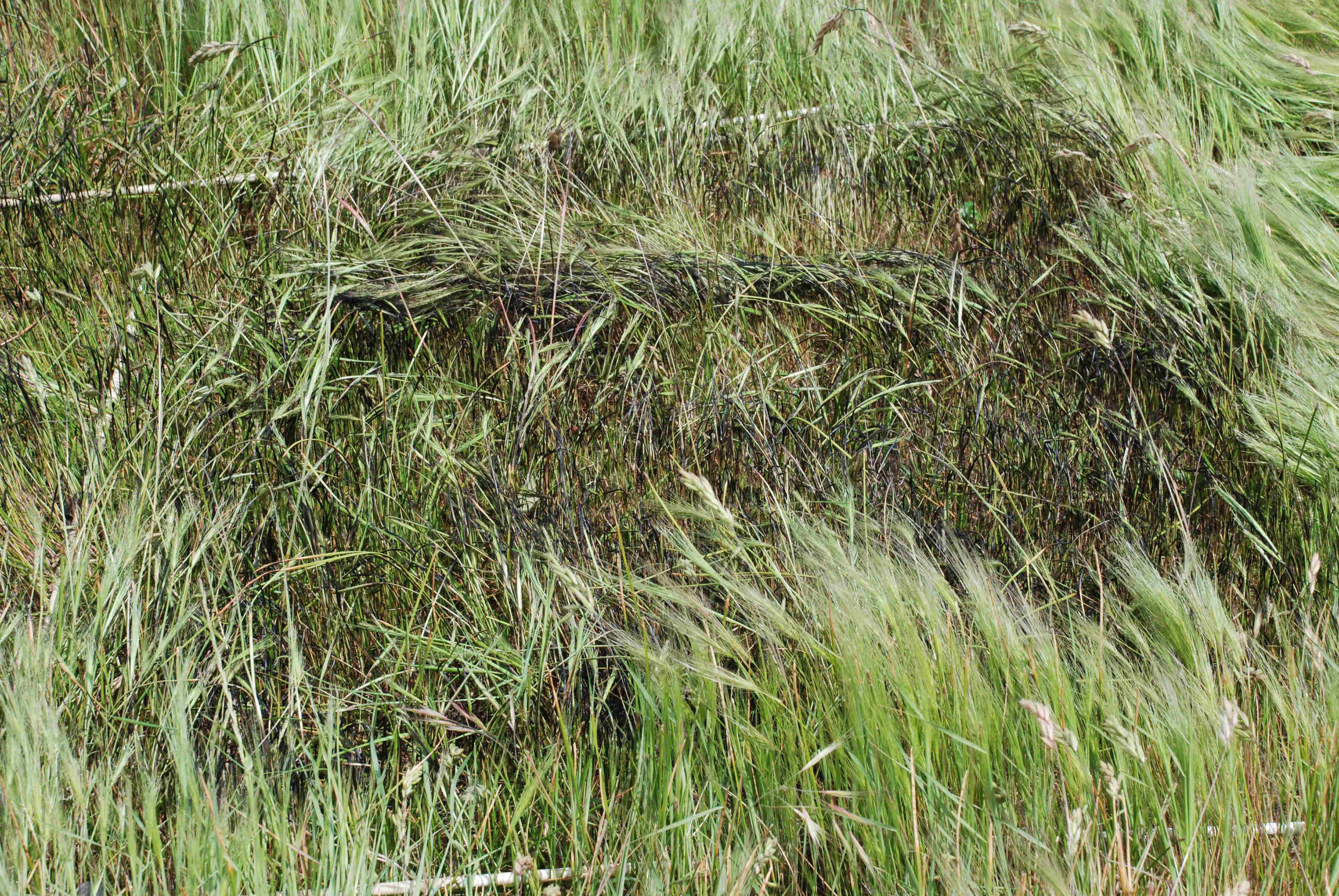
Here is Plot 2 before burning.
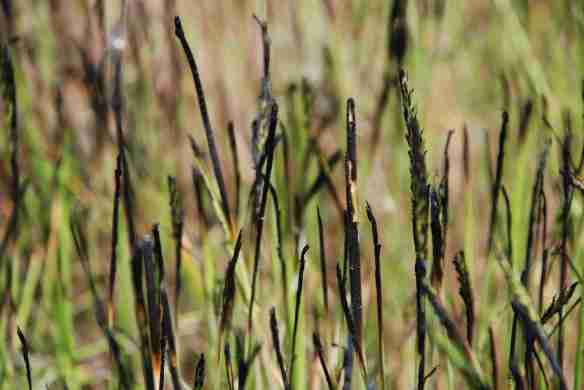
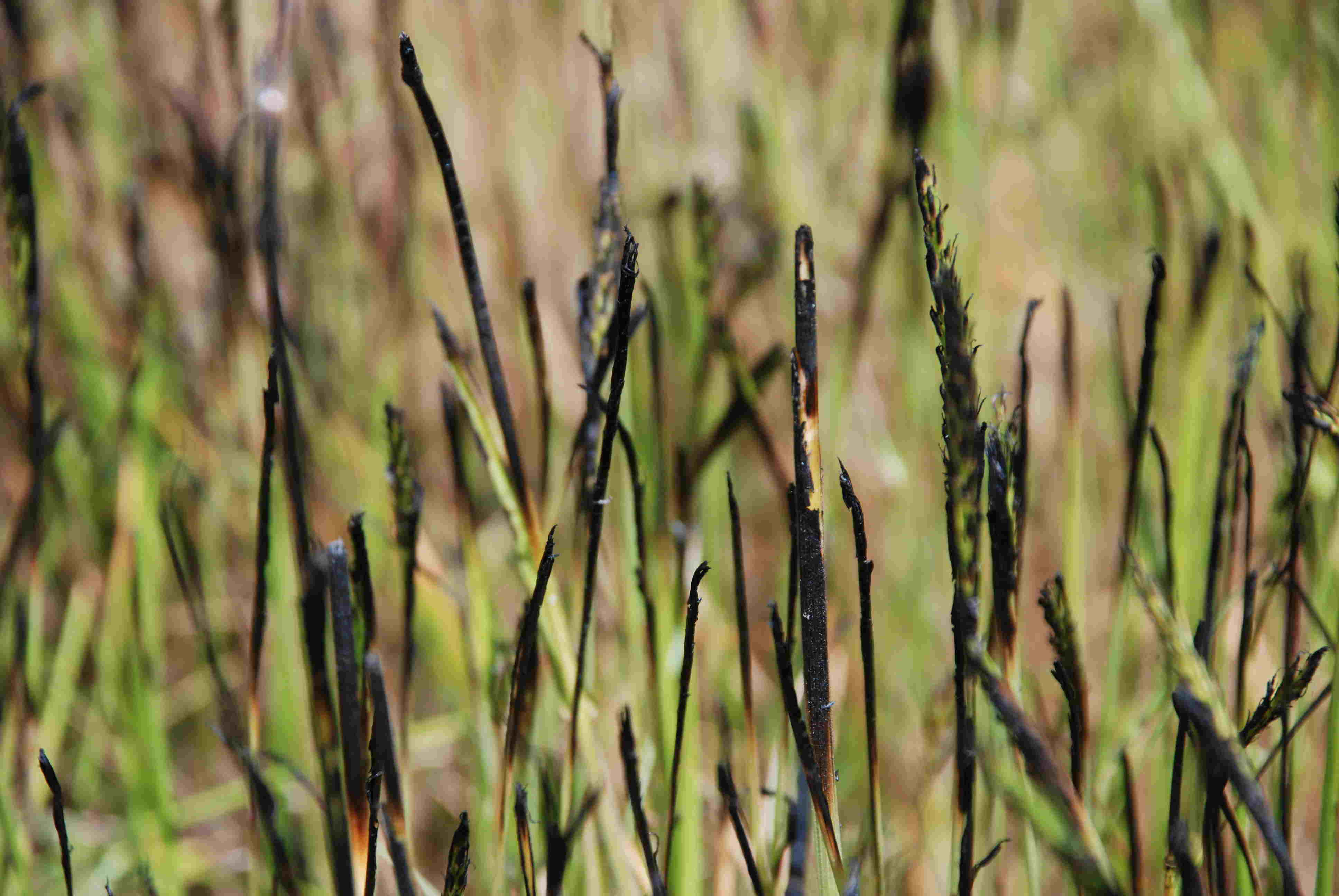
This is a close-up of the tops of the plants after burning.

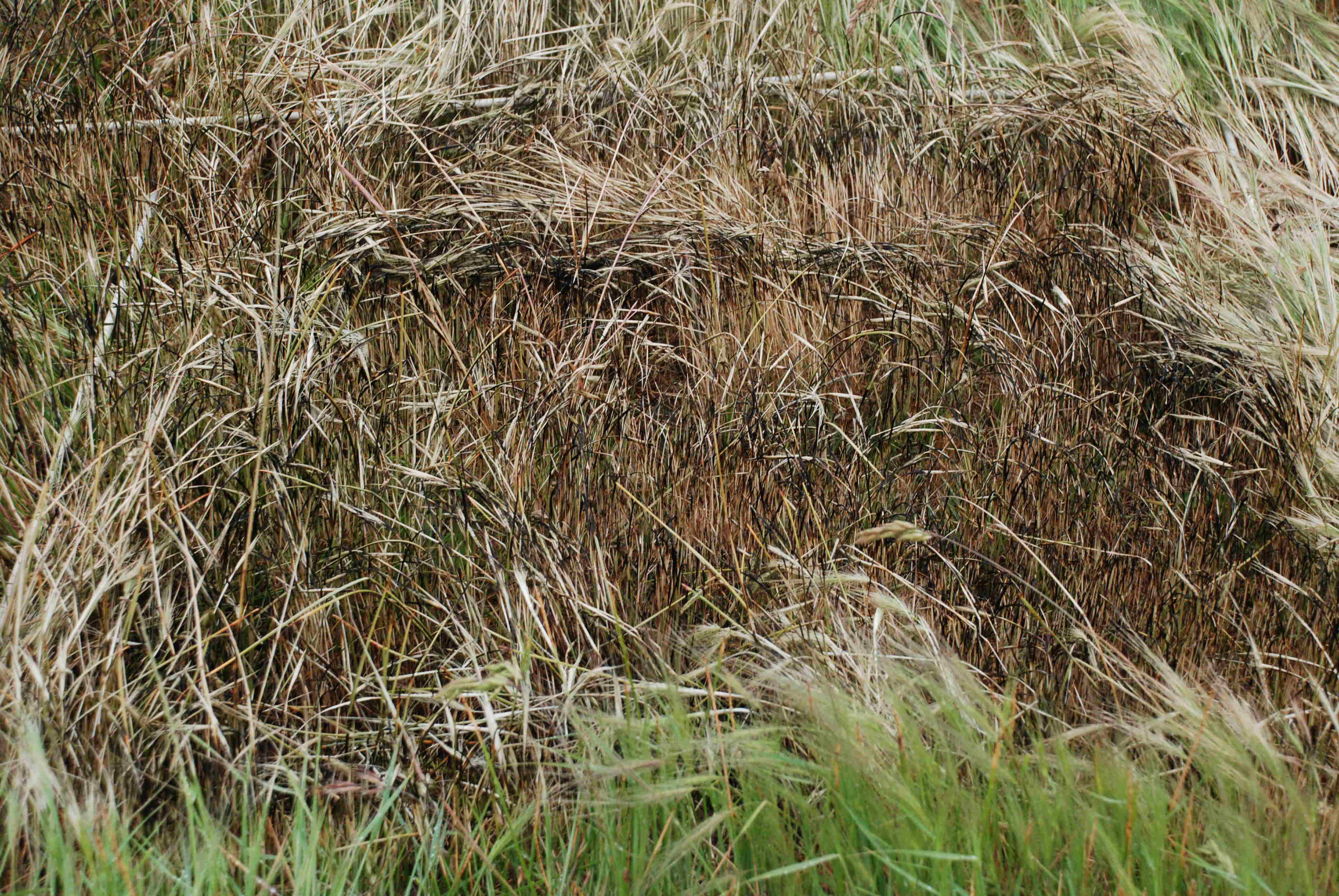
This is a view of the plot the next day.
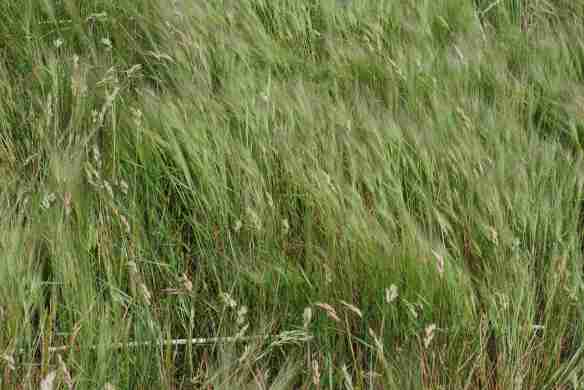
This is Plot 3
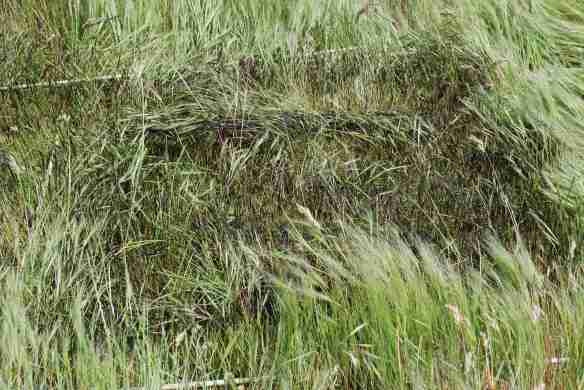
This is Plot 3 after burning.
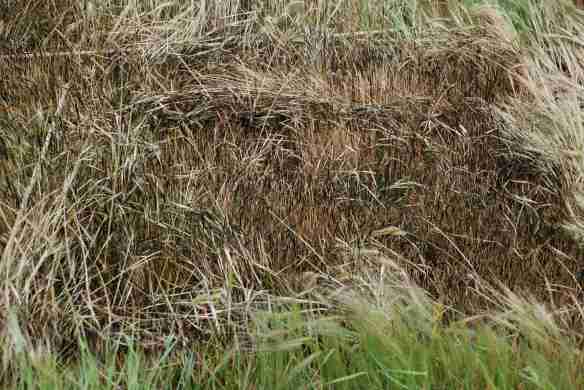
Plot 3 the next day.

I don’t know what all this will tell me. I didn’t set this up so that these are permanent plots and I think I want to burn everything to be sure. But I have raised some questions for which I want to find answers. I know a couple of people to ask. I’ll report back if I learn something.
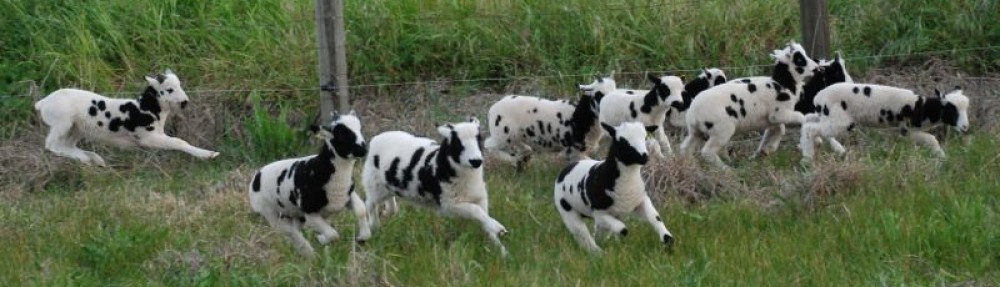
I’ll race you to breakfast!

I’m pleased with the pasture this year, especially considering the number of sheep I have grazing. One 5-acre pasture is subdivided with electric fence (NZ spider fence) into 8 paddocks, each of which can be split in half using electric net fencing. There is one other 2-acre piece that I split in half. Here is the paddock the sheep went into yesterday.

If you go to the “prescribed burning” tag on the right you will see this same paddock (looking from the other direction). See all the dry grass? There was so much tall, rank dallis-grass that there was no green feed growing up through it. We burned it two years ago and with proper grazing I’m able to keep the dallis-grass in check and there is a lot of trefoil and other desirable plants. In the photo above it’s those clumps that are the dallis-grass. The sheep eat it readily if it’s kept in an early vegetative stage.

This is after I opened the net-fence at the end of this paddock and the sheep are going into the new one.

A few lambs who didn’t get all the way around the fence and then started following the ewes back up the fence line on the wrong side. Now Rusty gets to help.

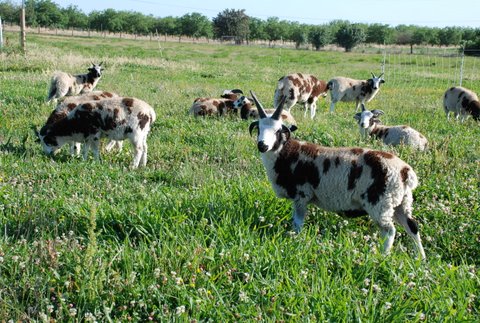
You can easily see the difference between the paddock they were just on and the new one. A paddock is not overgrazed by putting a lot of animals on it; it’s overgrazed by time. Once a pasture is eaten low it needs to rest. If the animals continue to graze it as the new growth occurs, there will be negative impact on the root system and it will take much longer for the plants to recover. So the trick is to eat the paddock evenly and then move the sheep to a new paddock. By concentrating the sheep on a small area they eat all the plants, not just the ones they like best. This also helps with parasite control. right now with the lambs getting so big I’m moving the sheep every day or two. If I go through all the paddocks too quickly I may need to hold the sheep off and feed them in the barn for a little bit. I will probably try to coincide that with my next irrigation when I have to have sheep off the pasture anyway.

Another fence-line photo.

Entries for Solano County Fair were due this week so I needed to figure out who to enter. It was fun to separate out all my yearlings for a look. You get a different feel for the sheep when you get them out of the main group and I hadn’t had a look at the yearlings as a group since they were lambs last year.

This is most of the 19 yearlings in the flock. There are some really nice sheep with with great fleece in this group. I narrowed the field down more and more until I chose my show sheep. (drum roll please….) And the winners are…

…Dazzle and Spring. They both have nice conformation, good size, and consistent fleeces. I have entered these two, the two yearling rams, and 4 lambs. Does anyone want to come help me show? It’s June 22-24, a few days after Black Sheep Gathering.

What’s for Breakfast?

I moved the sheep to a new section of pasture this morning.

grazing 1-w

They immediately buried their heads. This is like a salad bar for the sheep–something for everyone. In the photo below you can see clover, trefoil (yellow flower), Dallis grass (broad-leaf grass), yellow foxtail (that grass with the foxtail-looking head), bermudagrass, dock, and other plants.

grazing 2-w

Some of these plants make summer grazing tough. The bermuda and yellow foxtail are late summer grasses and take over the pasture, crowding more desirable plants.  The sheep choose to eat the plants they like and leave the less desirable ones.That’s why, to graze properly, you put more livestock on a small area and move them frequently. When the sheep are in a small area they eat even  the less palatable plants while eating the ones they really like. Then you move them to the next area. This also helps with control of internal parasites.

Dallis grass has been a problem too. It is a perennial grass that originated in South America and can be a good pasture grass if grazed properly. If I can’t keep it grazed low it gets so tall and coarse that the sheep won’t touch it. Then it takes over and nothing else can grow. If you go back to older posts in the blog you’ll see where last year at this time I was doing everything I could think of to get the sheep to eat the thick stand of dallis grass. In the spring we finally burned it.

So what did I see in the salad bar pasture this morning?

grazing 3-donkey-w

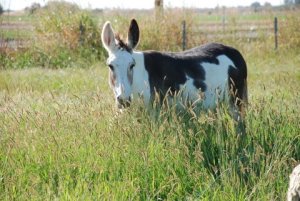
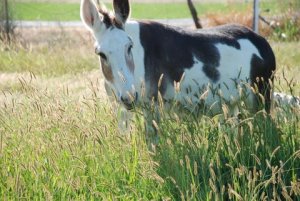
Amaryllis went right for the yellow foxtail! Nobody else eats that.grazing 4-donkey-w

Here is another undesirable plant. This grass is medusahead. It is an annual grass that grows in dry areas and has these nasty seed heads. Sheep don’t want to eat it even when it is still green. The medusahead started growing in this side of the pasture when I couldn’t get irrigation water to this area. The last few times I irrigated I have been more successful at getting water here so that’s why it’s green underneath. I hope that if I’m successful at irrigating this area next year the medusahead won’t be able to take over.

grazing-8 medusahd-w

But look who is eating it!

grazing 8-donkey-w

So what are the sheep eating?

grazing 7-w

This is Della with her mouth full of dallis grass. (That’s the dallis grass seed head in the foreground.)

grazing 10-w

Ebony is eating trefoil and dock.

grazing-11-w

Linda is eating dallis grass.

grazing-13-goat-w

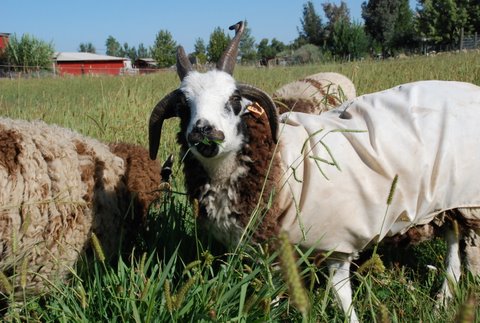
The goat, Chloe, is eating trefoil and…

grazing-14-goat-w

Jasmine is eating dallis grass.

One way to join me in a “pasture-walk” and photo shoot is to join the Farm Club and spend some time here. It’s on my website–see the link on the right.

Hot chick!

hot chicken-2

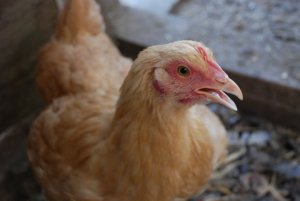
This is Goldie, the chicken that likes me.  She runs to me and expects to be picked up when I open the chicken house door. She is hot, like the rest of us. The TV news people love it because they get to say “triple digits”.  Of course they’re inside their air conditioned offices.

So what am I doing on these hot days? Plugging away at everything that needs to get done. We’re mainly working on getting the shop put back together. No photos until it is done! I’m taping and painting and putting down floor. Dan is building a deck, doing electrical work, etc. I have a spinning class this weekend so I have to be able to get in the door!

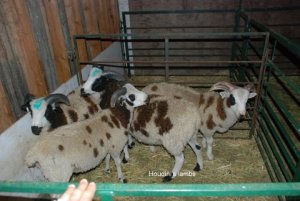
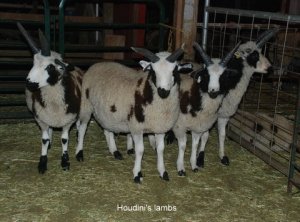
I’ve been sorting sheep again. State Fair entries are due this week so I needed to figure out who to show. I have a lot of lambs from which to choose. I sorted the lambs into groups based on sire so that I could choose 4 lambs with the same sire for one of the group classes. These are Houdini’s 2-horn ram lambs…

houdini lambs2-w

…and these are his 4-horn ram lambs.

houdini lambs-w

These photos are in the dark because it was night before I got to this task. Hard to evaluate fleece in the dark. So I looked again in the morning.

rusty2-w

You can barely see Rusty behind the rams. They are so dog-broke now that I can work with them in the field.

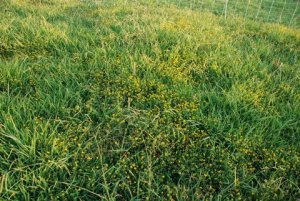
They are going into one of the pastures that was so swamped with tall grass last year. We burned it in the spring. Look at the trefoil growing in what was a 4-foot tall sward of grass.

trefoil-w

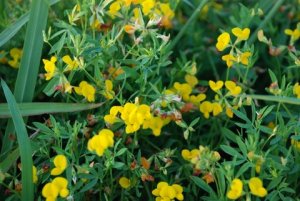
Here is a close-up. This is one of my favorite flowers–bright and pretty and good forage for sheep.

trefoil close-w

Some parts of the pasture are starting to get overrun with that Dallisgrass again. I’m hoping that the ewes can make a dent in it if I keep them out there longer. I’ve been letting them in the barn during the hot part of the day. If I don’t make them go back out they’ll bed down in the barn at night, but they will have more of an effect on the pasture (bedding down, manure deposited, etc) if they are out all night. So I’ve been moving them out at dusk.

ewes to pasture-w

Do you see that big round one–third up from the right? That’s Madeline. She is pregnant and due to lamb at State Fair just before Labor Day.

I can’t believe I sheared in November and I still haven’t processed wool. I sold a lot of it, but I have some to process. Wait until you see the new products I’m going to have! (I’m not telling right now.) Three bags full:

wool-bags-w

These guys are waiting for something fun to happen. They are ready for the girls, but we’ll wait a few months.

yearling rams-w

That’s Rubicon on the left and Moonshine on the right.

Back to more painting!

Who’s in the barn?

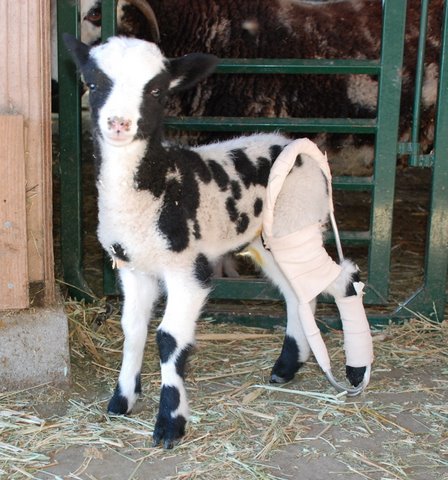
The lambs in the last post are 10 days old now and yesterday I let them into the pasture with all the other sheep. Last night I found the little ram lamb limping and I diagnosed a broken leg, but wasn’t sure where.  I took him to see my vet today and she came up with this splint to immobilize the leg. The break is at the top of the tibia and this splint holds the joints on either side immobile.  We’ll leave it on about 3 weeks and see how he is.

988-w

While I had my camera in the barn I took other photos.

amaryllis-1-w

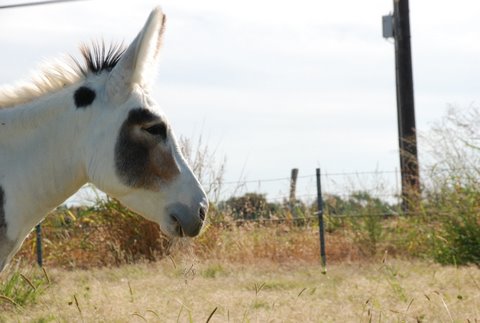
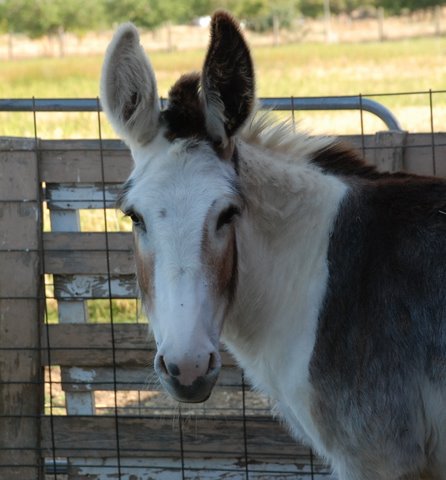
Amaryllis, the donkey.

DSC_0442-1-w

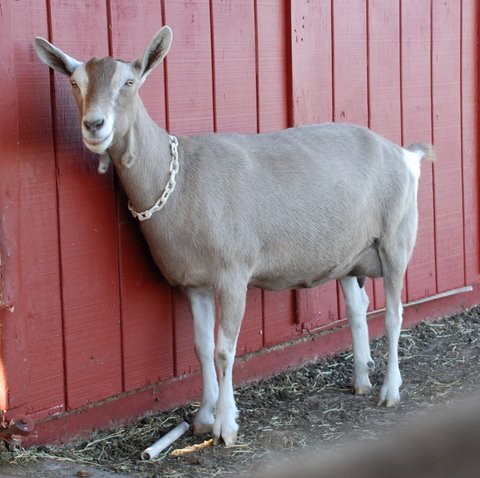
Jasmine, one of my son’s does. He has gone to his summer job and I’m milking the goats that are left.

ewes-1-w

Ewes and ewe lambs on the pasture.

rams-1-w

These ram lambs were so happy to get out onto the pasture after being in a dry lot getting hay for weeks. I have to keep them separate from the ewes now so my options are more limited. This pasture now has plenty of feed.

trefoil-1-w

This is trefoil, one of my favorite flowers, and good sheep feed. There is a lot of it in that ram pasture.

shovel-1-w

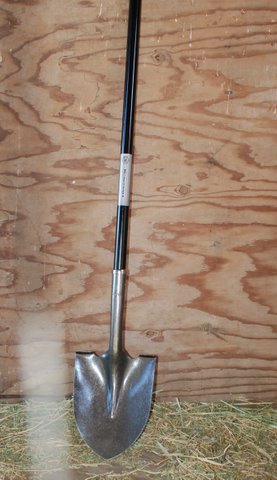
My husband came back from the hardware store and told me he bought something for me. The other day when I was irrigating I broke the only shovel that I could find –one with the handle taped. So this is MY shovel.

Light My Fire

If you are a faithful Meridian Jacobs blog reader you may remember my attempts last fall to get the sheep to eat and/or trample the shoulder high dallas grass. Dallas grass is a late summer perennial that takes over the pasture. There is so much thick dead grass that nothing grows under it.In this photo see the little bit of green with all that dead grass that takes over the field. (That’s a hay field in the background.)

0007-w

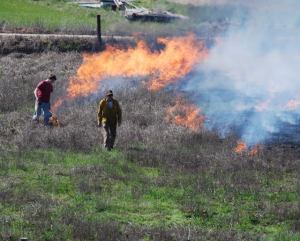
My oldest son is a firefighter for the U.S. Forst Service and I talked him into burning the fields for me.

0043-w

0053-w

These are my two sons. Chris is lighting the fire here–he will be working on a hotshot crew this summer after graduation.

0080-w

This is oldest son, Matt, and his friend, David. Matt is lighting the fire and David is hosing down the fiberglass posts to keep them from melting.

As the fire crew (also included my brother and a friend of Chris) was working I was working with a previously scheduled class. Talk about double-booking. In the shop we were  winding warp, warping looms, etc and I made a couple of quick trips out with the camera. Some of the class participants enjoyed the time spent in the barn watching lambs. The last 3  people here were treated to watching a lamb being born. However this was more interactive than observation as the lamb turned out to be a huge ram–over 12 lbs! Thanks to Chris for helping and  getting her  hands slimey (but not spotting her white shirt!).

Chris also stayed to help me get the electric fence back up so I could put the sheep out on the pasture. Unfortunately some of the insulators at the south end of the pasture were melted by the fire and the wire broke (burned?) So I need to do some fence repair in the morning.

More photos tomorrow to show the results of the burn.

More about the pasture

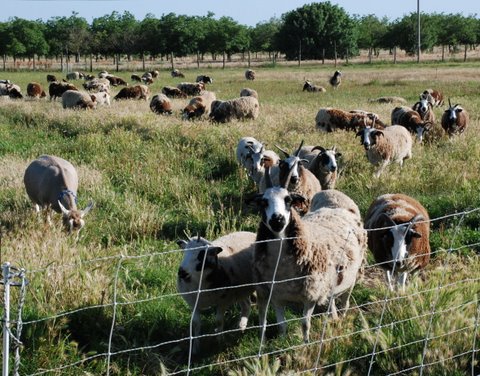
This photo is of the same field that is in the last post, but it’s taken in the other direction. See that tower on top of the barn? That’s where I was when I took the other photo. This 5-acre pasture is divided into 8 vertical strips with high-tensile electric wire. I subdivide those strips with electric net fence and it’s that fence that I move when I put the sheep on fresh feed every day or two. In the photo below the sheep see me on the other side of the fence and they are waiting for me to let them in. In the photo you can’t really see the green grass and clover because the dry grass is taller, but it’s there.

changing-fence

This is a not-so-flattering photo of Ranger waiting with the ewes.

dsc_0406

As I open up the net fence the sheep go rushing through.

through-the-fence

I spend time just watching sheep eat! I like to see what they go for first.

dsc_0415