Grazing and Irrigation 4 – April 28

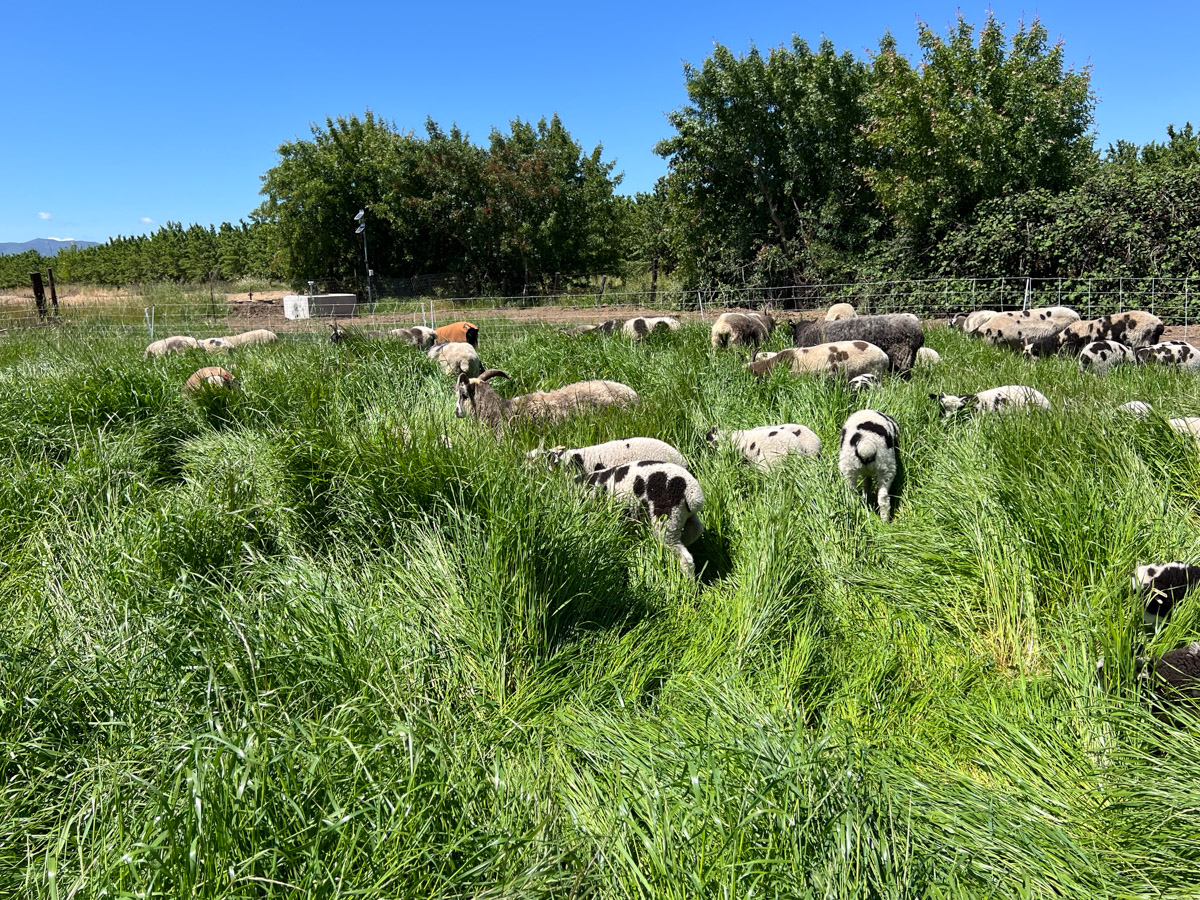
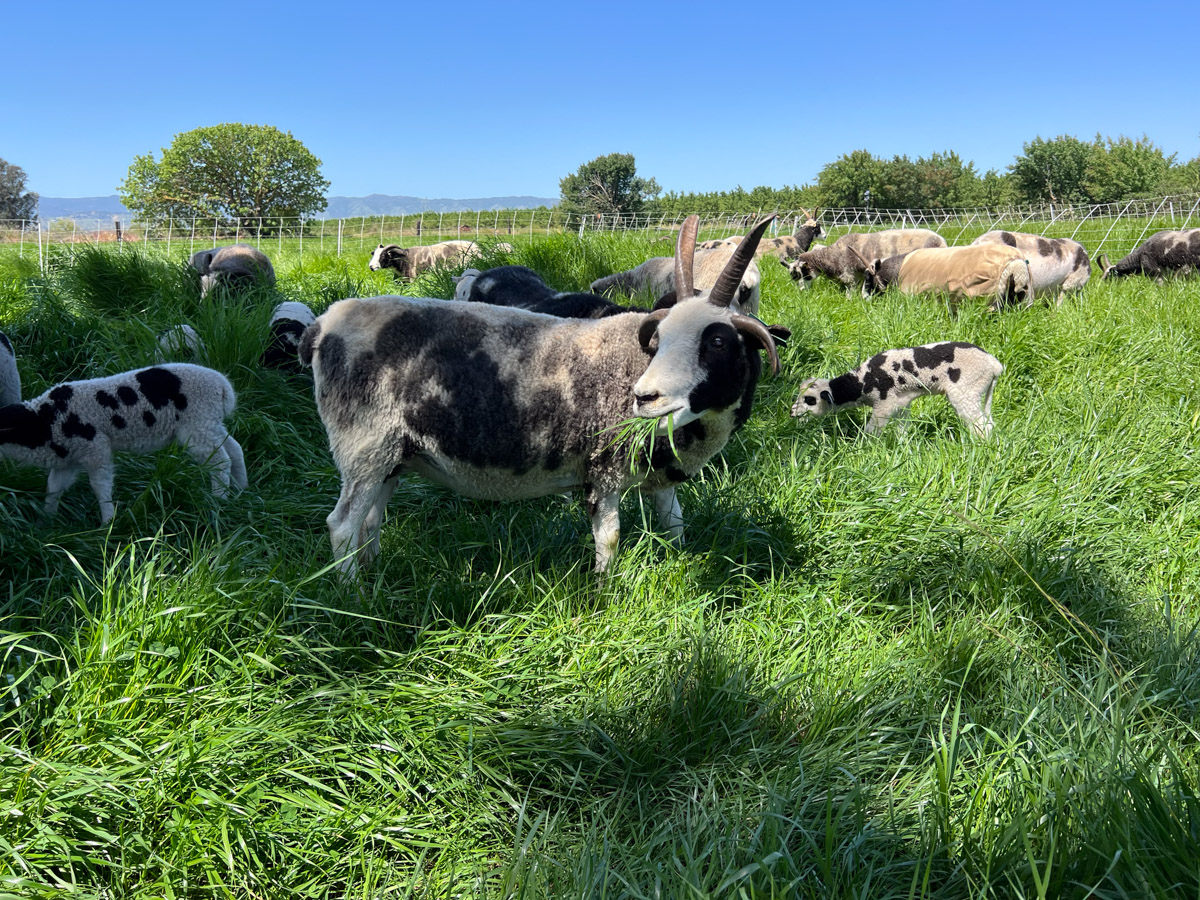
I was gone for four days and my brother had finished setting up fences in the north pasture. This is how the pasture looked where I was to remove this fence and let them into the last part,

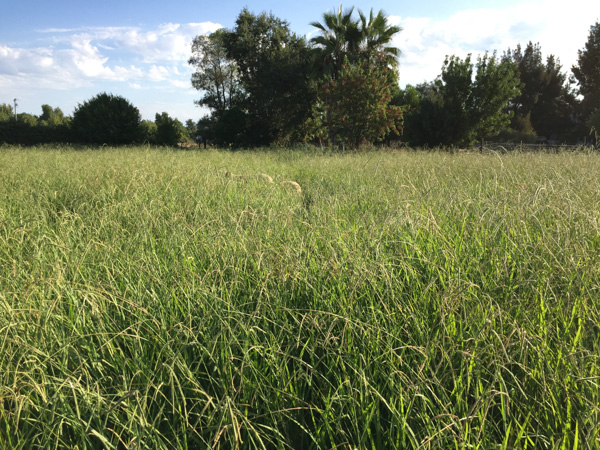
As described in the previous posts most of this tall grass is annual rye, not a species in the seed mix we planted.

The challenge was to graze it enough to not only feed the sheep, but to remove the cover from the clover growing beneath.

This is the opposite view from the first photo, but the same location where that net fence had been.

Dan took the tractor into the south field and mowed on top of the checks (the raised borders that control the irrigation water)–not so low as to impact the clover, but to top that grass and make the checks more visible and make it easier to set up the fences.

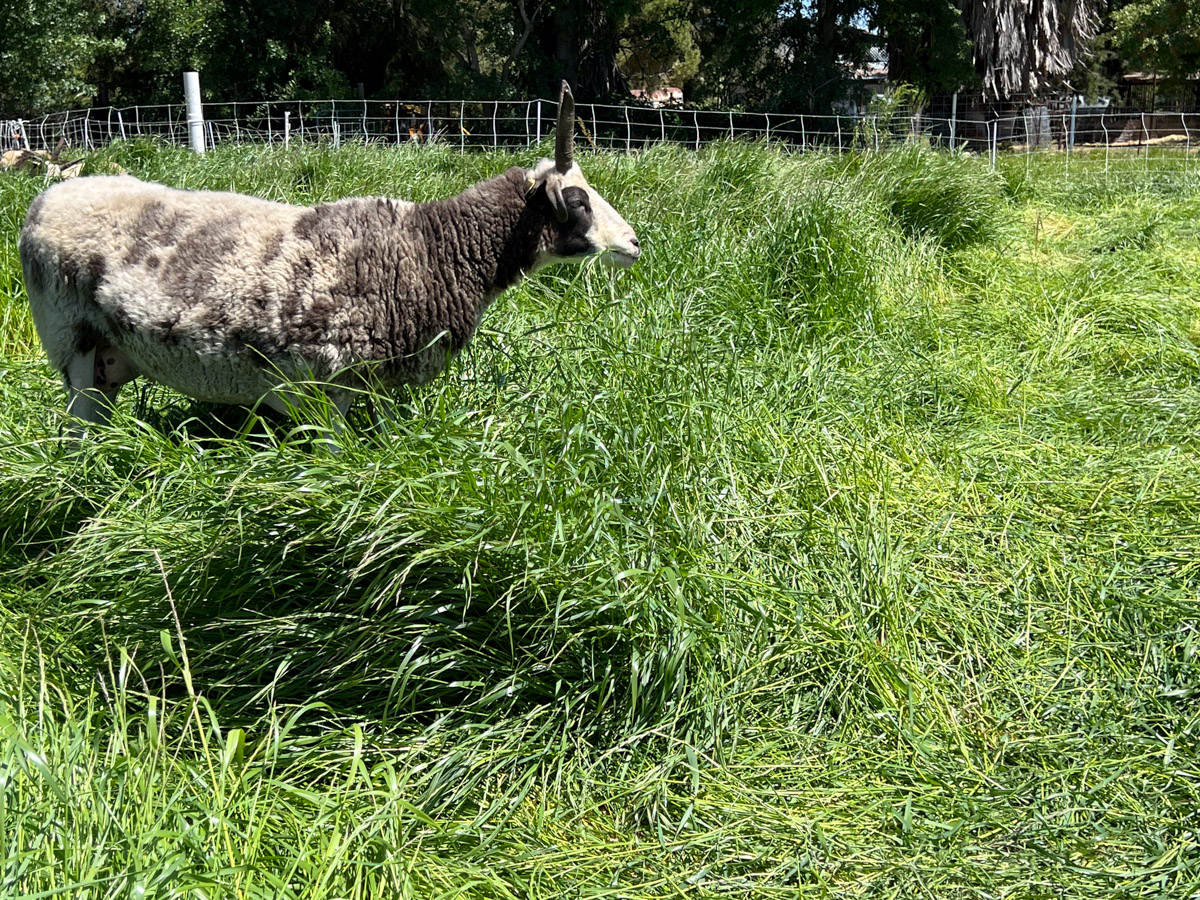
Close-up view showing the clover.

After mowing that strip.

Grazing and Irrigation – 3 – April 23

The previous post showed how this looked when the sheep went in. The growth of the annual rye was so fast at this time of year that we needed to move them through fairly quickly.

Here is another view of that same area (left) before removing the fence to graze the next section.

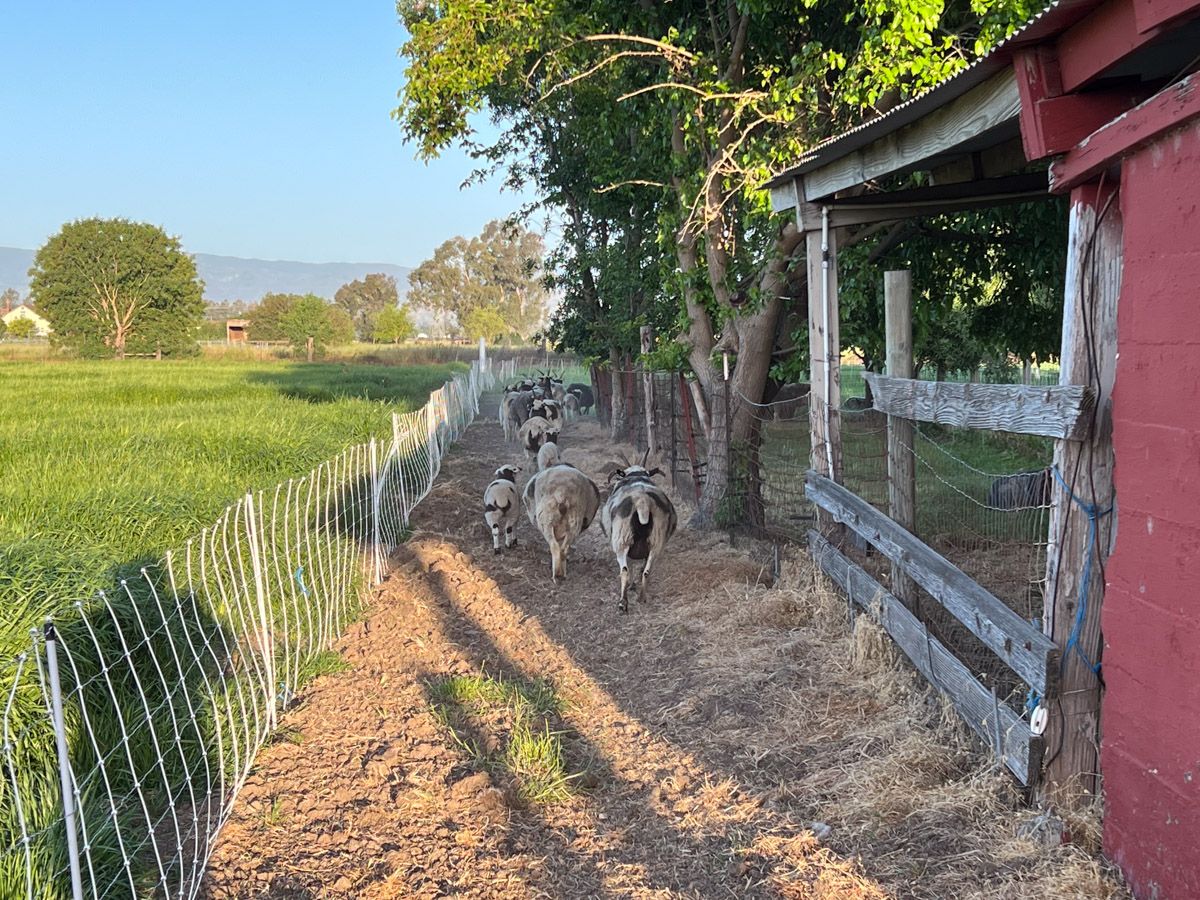
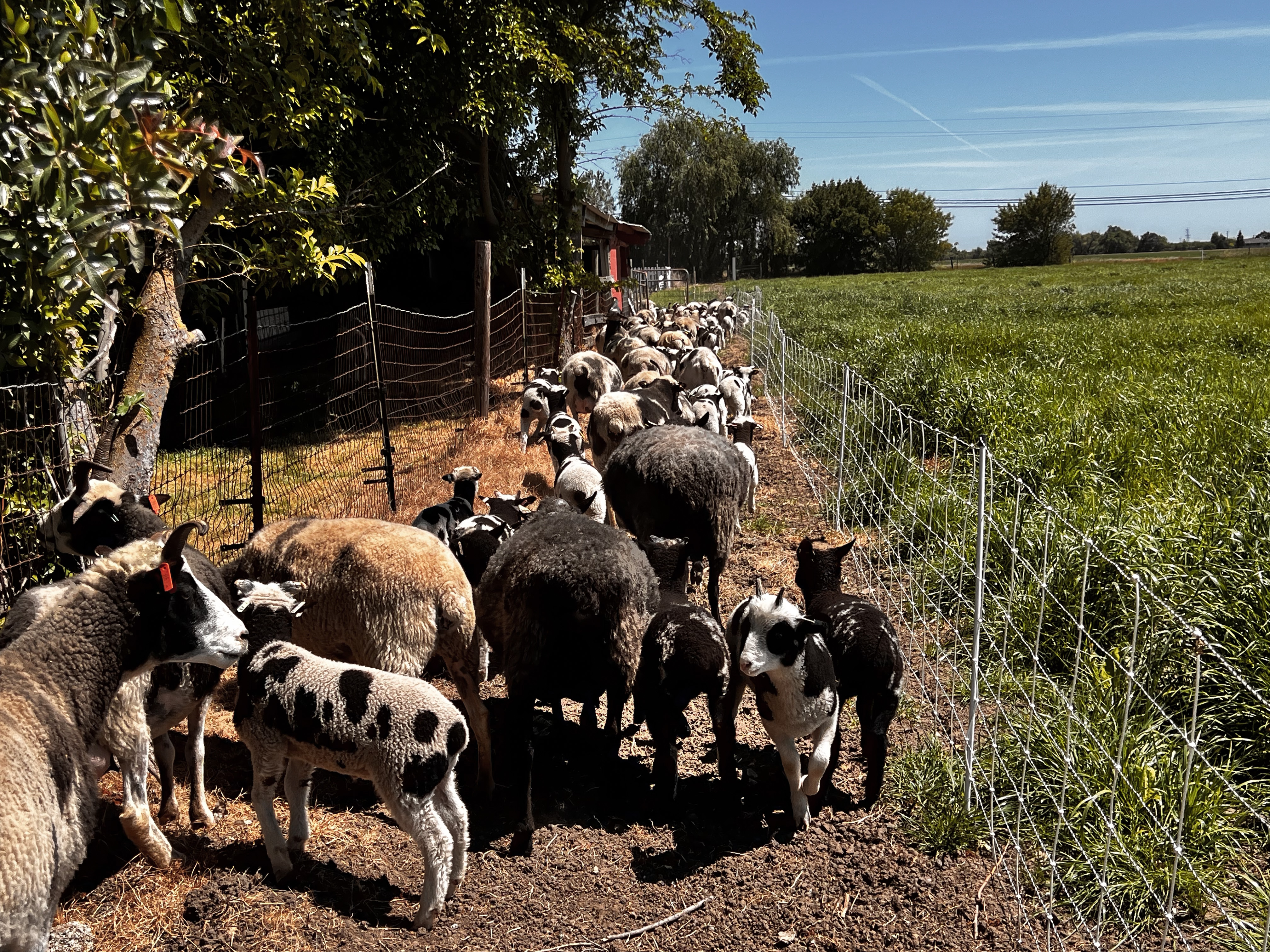
The sheep trail out from the barn to access that field.

It was a challenge to set up fence and graze this with the grass so tall. Thanks to my brother for coming to help set this up.

This was the last day before I had to be gone for four days. Dave came every day while I was gone to get the sheep out on new pasture.

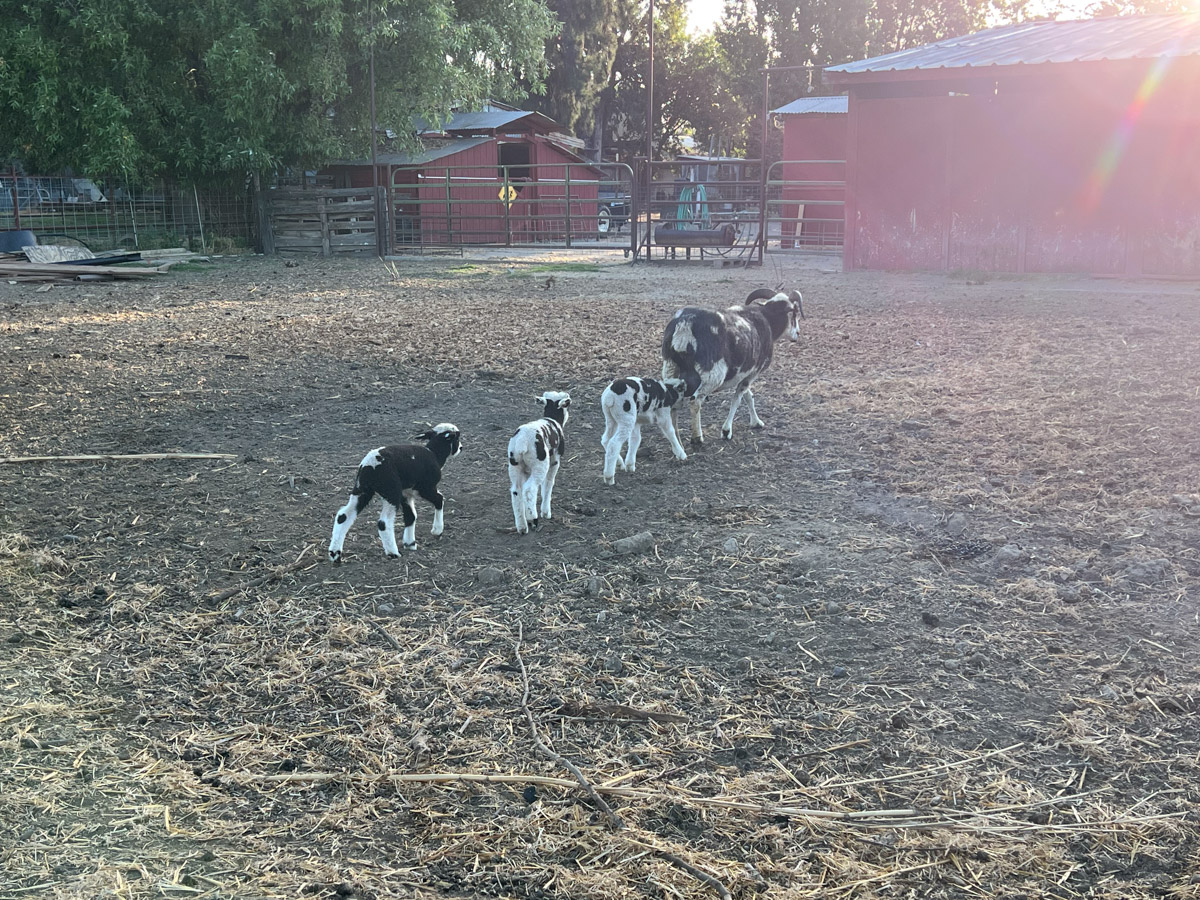
Trista and triplets.

Grazing and Irrigation – 2 – April 21-22

I showed the first photos of grazing the new pasture here. This is the second and third day, now a month ago.

There is clover in this field but you can’t see it because the annual rye is so dense and tall.

There was certainly plenty of forage to eat, but a lot was also trampled.

The goal was to get the sheep to eat it as evenly as possible by fencing small areas.

After being on the first small section we moved the fence so they would go to fresh grass.

They still have to trail back to the barn for water.

Grazing and Irrigation – 1 – April 20

Way back in January I wrote the 14th Pasture and Irrigation Renovation post. I like my posts to be in order, but now I have skipped some important updates. Too many photos. Too confusing. Too much other stuff going on–lambing, teaching, deadlines, etc. The whole point of this renovation was to feed sheep and make it easier and more efficient to do so. If you look back at that linked post you’ll see plants growing, but they are small and there is a lot of bare ground. Fast forward past winter rain, warming temps, and 3 months. I’ll change the name of this series to Grazing and Irrigation.

The original plan when we applied for funding was that we might not be grazing for a year. It was evident by April that the pasture needed to be grazed NOW. I was committed to a teaching gig at the end of April and was going to put off grazing until I got back. Dan was not able to work on this only two weeks after a knee replacement. My brother, Dave, knowing how important it was to get started with this, offered to help set up the grazing before I left and handle it while I was gone.

A major problem was that all the permanent interior fencing had been removed at the beginning of this project. We would have to rely on electric net fencing. We gathered all the lengths of net fence that were stored in the barn.

We spread these out to figure out what we had and in what condition it was.

Dave made a plan and laid out fence, beginning in the northwest pasture, the one we call the Horse Pasture. Grazing started April 20.

This gives an idea of how thick the grass was. The seed mix we used had three forbs (clover, birdsfoot trefoil, and chicory) and three perennial grasses. There is a lot of clover and a moderate amount of trefoil. I don’t identify any chicory and all the visible grass is annual rye.The seed already in the soil completely overwhelmed any perennial grasses that might have started to grow and was covering the clover as well. This is one reason we needed to get going on the grazing.

Dave made strips going north-south and we blocked the sheep into a portion of the first strip. The idea is to get them to eat one area down more thoroughly before moving them to the next.

With no fences left in the pasture Dave had to create a lane to direct the sheep from the barn to where we wanted them.

You can see in this photo how the tall grass is trampled more than eaten.

This ewe may have not got the message about eating the grass instead of wearing it.

There is no drinking water in the pasture so at some point the sheep go back to the barn for water. This is something we have to work on.

More Farm Views

I have dozens of blog posts in my head and I’m determined to catch up with them.

DSC_3728-2

Look back at the post before this one to see the dallisgrass in the paddock where I put the sheep a couple of days ago. There comes a point after they have grazed it for five days or so when I want to move them. The plants I prefer (clover, trefoil) have been eaten to the round and I know that they will never finish off this grass. Besides, while they are in one paddock the dallisgrass in the next is just growing more. After I move them, then we mow. This is what the paddock looks like after mowing. I’d really like to rake up all that leftover grass and get it off the field, but the only way that happens is if I go out and do it by hand.

DSC_4108

This is Trista, also known as the Velcro Sheep.

DSC_4109

Do you see why? When she was a lamb she actually got herself stuck in the blackberries. Is this a the sheep way to always have a snack with you?

DSC_4159

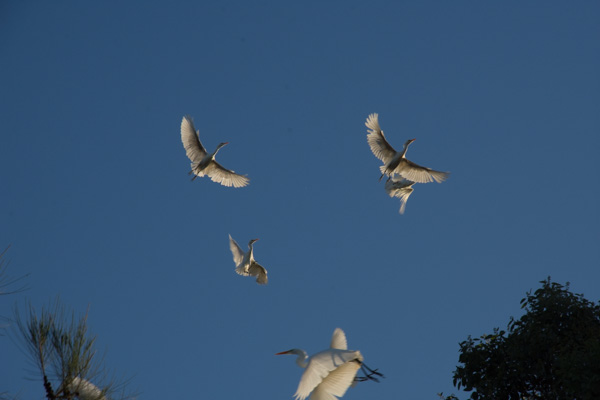
Cattle egrets in the eucalyptus tree.

DSC_4166

Take off.

DSC_4167

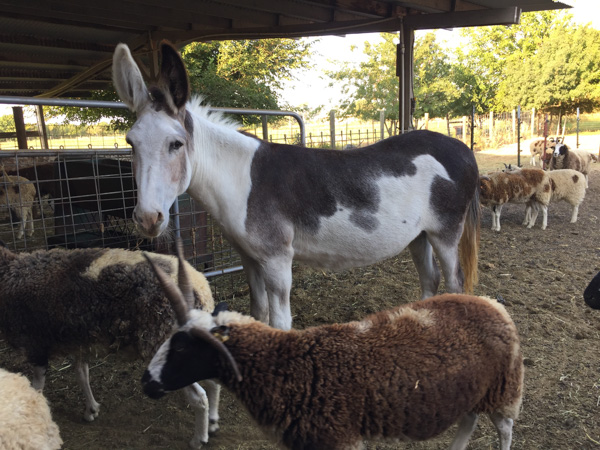
Donkey

Amaryllis looking slim(mer).

IMG_1932

As I go through this batch of photos, here is another dallisgrass one. This is in the horse pasture (so called because when we had horses that is where they grazed–no horses now).

IMG_1935

Yes, there are sheep there.

IMG_2041

This is at the end of Dixon Avenue on our way to town. I am amused that someone added a tail. I’ll be at this festival in Dixon next weekend. I’m teaching three weaving classes, will have a vendor booth, and will have sheep there for the show.

IMG_2056

Last random photo for this post. That’s Chris with his unexpectedly large pumpkin!

Keeping Busy on the Farm

I’m keeping busy.

IMG_2286

Most of the photos are from yesterday but this was a few days ago. I like this view.

IMG_2365

Morning chores. Do you see the grass on this ewe’s back? The dallisgrass is tall right now and it’s sticky. (From the web: Once dallisgrass seed heads ripen they can be infected with an ergot fungus. Infected seed heads are black and sticky.”) It is so strong that it trips me up when I walk and get my feet stuck under it. The sheep are coming in with it draped around their necks. They are dirty because all the dust sticks to the dirt. We’ll need rain to get them clean again.

IMG_2396

The sheep were going into this paddock on the right. I pulled the net fence out of the dallisgrass and put it back in so that it tipped the other way so hopefully they don’t get their horns in the fence.

IMG_2397

There is a 3-wire electric fence here that you can barely see. I stomped down the dallisgrass on the side of the paddock they’ll be in so that the fenceline is more visible. The only way this fence works when the grass is so tall is that the flock is used to the configuration of the paddocks.

IMG_2400

The ewes don’t even want to venture in when it’s that tall. They walked in and then came back to this part in the lane where they could graze normally.

Catalyst-Buster

The rams spend most of their time right now at this fence looking for the ewes. At night there are always a few ewes hanging around here. Tomorrow is the day, boys.

DSC_4743

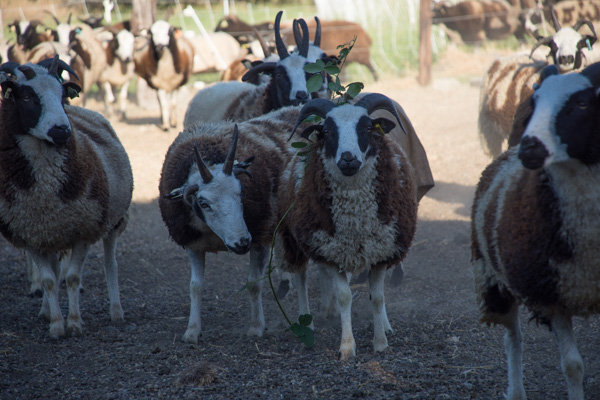
A good contrast of lilac and black and white coloring. Also typical 2-horn and 4-horn contrast. That’s Catalyst on the left and Buster on the right.

1019-dyed yarn

This photo is from a few days ago. These are yarns I used as the warp for two shawls that I just finished weaving. There will be photos of them after they are washed. These are dyed with weeping willow and hollyhock. IMG_2324

More recent dyed yarn.  Weeping willow on the left and coreopsis on the right. The three shades are successive runs through the same dyebath. All that color from 8 ounces of flowers!

Eucalyptus

I set up this pot outside. Eucalyptus getting ready to add yarn.

DSC_4850

I am moving onto plans for a sunflower series of chenille scarves for my upcoming show. I finally got to the warp dyeing part.

IMG_2384

There will be more photos as I progress with these.

DSC_4860

Warp chains–two scarves each.

DSC_4851

While I was dyeing yesterday we got a hay delivery. Eighty more bales to go in the barn.

Redbud leaf

Color inspiration next to my dye table. Redbud leaf. It is incredible what you can see when you look closely.

IMG_2431

Ginny in her usual behavior. He’s not going to throw it, Ginny.

Fall Grazing

Hendrix and his group of ewes have been in the back pasture since breeding season started and they have been at the north end of that pasture for a couple of weeks. Since hardly anything is growing (start the rain dance please) I figured that they couldn’t do too much damage leaving them that long. I thought that maybe that could take down the dallisgrass and they actually did a pretty good job of it in most of the pasture. It is still a challenge however along the ditch and the fence-line. (If you search dallis  in the blog search you’ll see several posts about my attempts to conquer it.)IMG_8004

This is the north end of the property. Notice the blackberries on the north fence. I cut these away in the spring to uncover the electric fence wire on the inside of the field fence. The sheep could help in that job except that this time of year the dallis grass growing in and around the ditch keeps them from going over there. It may seem hard to believe that a grass keeps sheep from something, but this stuff is so coarse and strong it’s like hacking your way through a jungle. And it’s very sticky now from a fungus that grows on the seed head. Several years ago I found a ewe whose horns were so tangled in it that she was stuck upside down in this ditch. The only reason that I knew she was there was that she was baaing.  The sheep in the photo above are in the ditch because I trampled some of the grass and put alfalfa there. IMG_7967IMG_7949 This photo shows that they are making progress. Now I can actually see a ditch and the sheep can get through it to the side with the blackberries.IMG_7951 They are finding the hay in the blackberries and it makes it worth their while to work their way through the grass.IMG_7959

IMG_8027After about a week we have worked our way through the ditch and I’m putting the hay near the fence.  IMG_8002   Then I moved beyond the blackberries and had them trample the dallisgrass along the rest of the fenceline.IMG_7960This is the east fence and it looked almost as full of grass before I started this project. It is more overrun with blackberries. The sheep have eaten some of the leaves off. I think I have to get in there with clippers now though. There is an electric fence hiding in there somewhere.

Pasture Maintenance

Nothing very exciting in this post.  But I spent all day Sunday in the pasture  after thinking the job at hand would take only a couple of hours.  I find that I am always writing blog posts in my head so here it is.

I started by mowing the paddock that the sheep had just been grazing. Now that I have my mower (never meant for this heavy duty work, but so far still working) I have been working on the dallisgrass that gets ahead of the sheep this time of year. In the past I have tried burning, trampling, weed eating (photos and past efforts in this post and this post and this post), but I think this mower will be the answer. It is at the south end of my pasture(right side of the photo) that the dallisgrass gets so thick and tall. The idea is to mow right after grazing and then everything has an equal change of regrowth, and the dallisgrass will be in a more palatable stage and the sheep will keep up with the growth.

In this photo the paddock that I just mowed is to the right. The sheep grazed the one on the left a few days before. I mowed that one that last time they grazed it and that made a big difference. I shouldn’t have to mow after each grazing–maybe once or twice per season I think. Notice the fence-line. That is a 3-wire electric fence and this was the other thing I wanted to deal with on this day. I have been putting off cleaning up the fence-line with the weed eater, but when you can’t even see the wire, it’s time. I have already used the weed-eater in the area where you can see the wire. This dallisgrass is tough. I have the heavy duty string on the weed-eater and it still gets used up quickly.  Slow-going. It took me about 3 hours to finish this fence-line.

Speaking of problem plants, here is another. This is what the medusahead looks like when it’s dry. There are plenty of posts about my battle with this noxious weed also. This is along the perimeter fence.

And lets not forget devils-claw. This one isn’t so bad because I don’t have much of it and it is easy to chop out the big plants. It doesn’t invade the irrigated pasture, but is along the edges where it is dry.

What is the problem with devils-claw? See the fruit? See those curved, pointed ends? When the fruit dries it splits in two and those curved points get caught in wool. I’ll show you other photos sometime. This is seed dispersal in action.

Moving on to other plant problems. This is the small blackberry bush on the west fence. On this morning I actually had breakfast here because the berries are ripe, but in general the blackberry bushes become a problem when they cover the electric fence as they do on my west fenceline. (Note wheelbarrow full of devils-claw.)

I started irrigating Sunday evening. Here is a spot that I hoped to get water to this time. The last few times I irrigated the water didn’t get here.

This is the pathetic state of the trefoil that didn’t get water.

Here is what it looks like where it was irrigated.

And here is a view of a paddock that has had plenty of water, has a manageable amount of dallisgrass,and hasn’t been grazed for a few weeks.

This is  self-portrait of the irrigator.
Revisiting the pasture

I have irrigation water coming on tomorrow morning at 7 a.m.  (It comes through Solano Irrigation District and I have to call when I want the water “on”–in my ditches.) Irrigation has been a struggle this year. Even with the water on for 36 hours there are some paddocks that have died back because I can’t get water to them. Part of the problem is probably the old culvert–too deep and too small. It is half filled with mud that I can’t get out. I taught a weaving class today but after that we went out to tackle the problem.


Dan dug the culvert out with the tractor.

For tomorrow’s irrigation the water will be running through the ditch. Eventually we need to replace the culvert with a bigger one.


After setting up the tarps to keep the water in the ditches I checked the paddock where I experimented with burning medusahead. This is the plot that my son burned early in the season. He didn’t think it was effective but the medusahead is still gone.


The area of trefoil is where I burned the medusahead that was growing over it. This is some of the area that got water but that medusahead is still thick. I hope the pasture plants will choke it out.

This is some of the area that I haven’t been able to irrigate. Not much forage there and look at the medusahead cover.
Medusahead closeup.


Here is the trefoil that would be a wonderful replacement for the medusahead. Hopefully irrigation will go a little better tomorrow and we’ll get water on those dry areas.

Pasture management revisited

Regular blog readers may know that in the late summer and fall I start complaining about the unpalatable late summer grasses. I’m sorry, but I’m going to complain now even though it is only spring. I only graze about 7 acres so all of it seems precious. We dealt with some of the issues of the thick dallisgrass a couple of weeks ago by burning it. I hope something starts growing where all that heavy thatch was.

Today’s issue is the condition of the east paddock. Medusahead is a nasty, unpalatable grass that goes to seed in the summer, covering all the soil with thick dry thatch. The medusahead is starting to grow now and the only other thing growing with it is a perennial grass (Elymus–wild rye– I think) that the sheep don’t like either. The rest of the soil is covered with the dry residue from both of these. My goal in this paddock is to  graze it hard enough that they will at least trample and break up the dried up grasses from last year and hopefully eat some of the less palatable grass.

As I was uploading these photos I realized that they don’t show what I’ve been talking about.

This is the view looking south. You can’t tell, but it’s the east side (left) of the east paddock that has the problem vegetation.  It took them only a day to clear off almost everything in the south part of this paddock (as opposed to 2 days in equal sized paddocks with better vegetation).

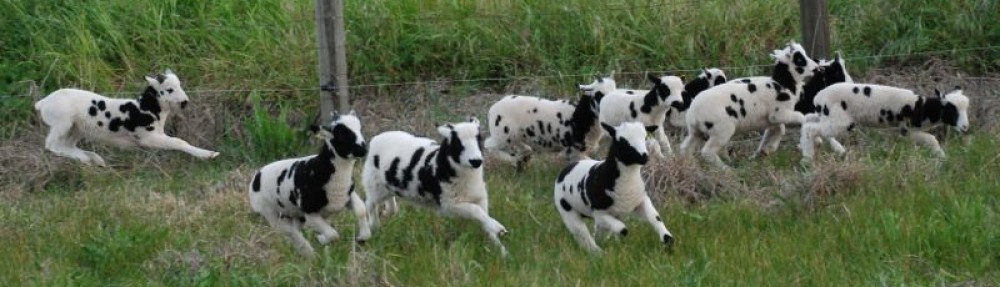
They are hungry and ready to move.

I took this photo as I opened the fence and stepped back so I wouldn’t get trampled.

Arthritic Stephanie follows the running sheep.

Amaryllis brings up the rear. She will follow Stephanie anywhere.

This view is looking north, from the part of the paddock they just left. In this photo you can’t really tell the difference in vegetation between the west (now on the left) and east sides of the paddock. It’s much easier in person, but notice where the sheep are. There is no fence keeping them from the east side–it just doesn’t have what they want to eat.

Compare this photo to the one where they are running into the new pasture. There is a blue cast to these plants–this is very sparse (although it may not look so in a photo from this angle) and it is so tall because the sheep avoided eating it the last time they were here.

Tomorrow I will start irrigating. I hope for some warm weather to follow so that the clover and trefoil will come in faster.