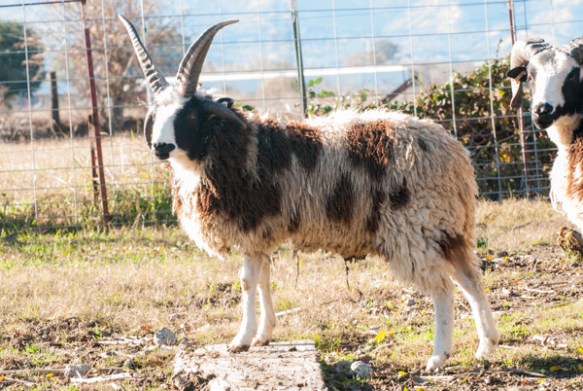
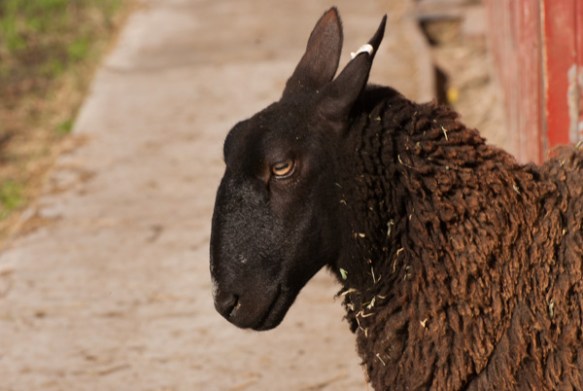
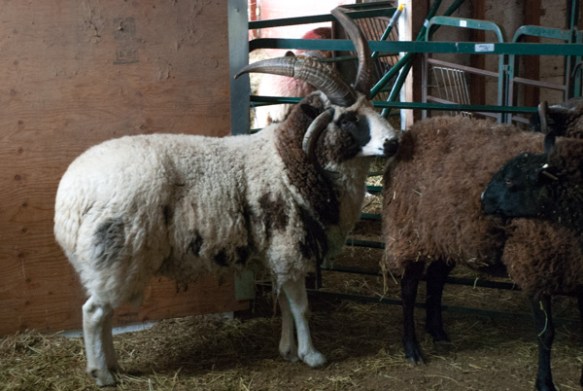
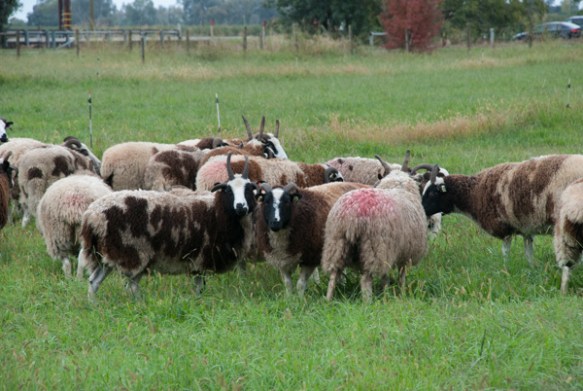
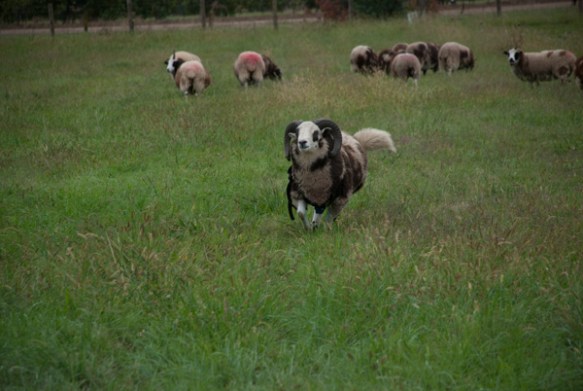
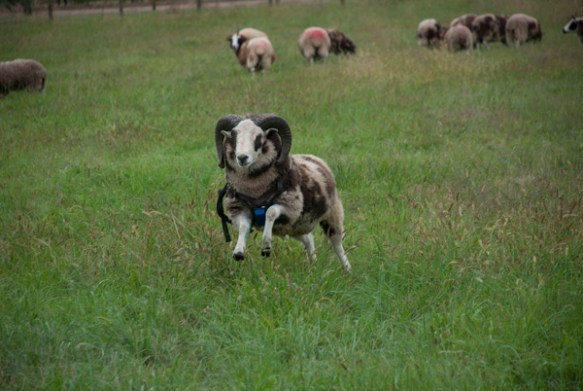
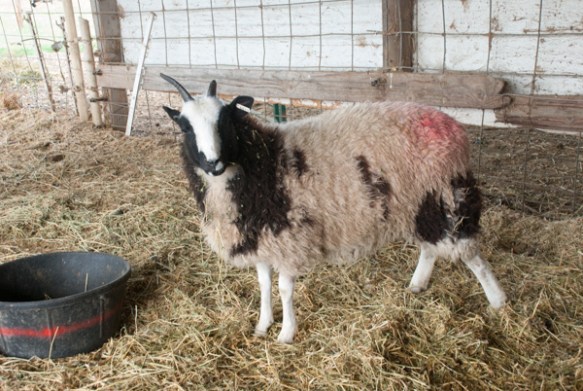
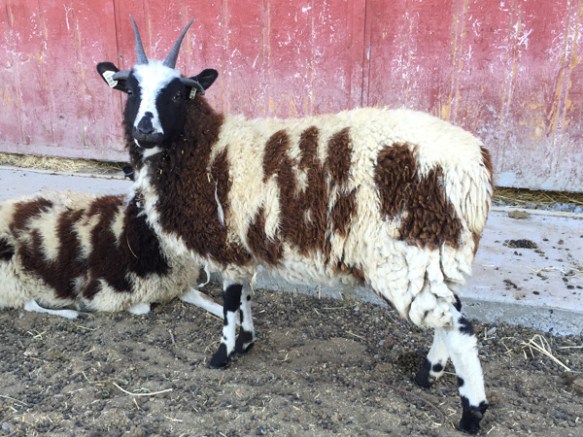
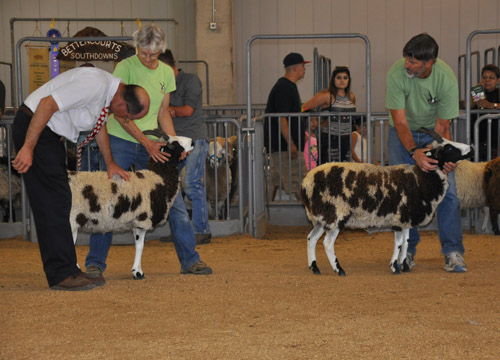
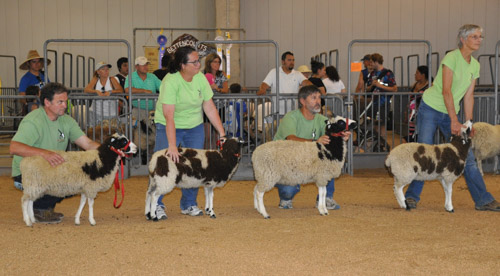
The Flock

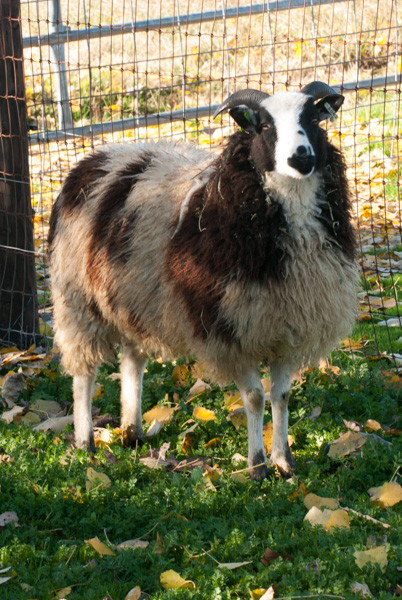
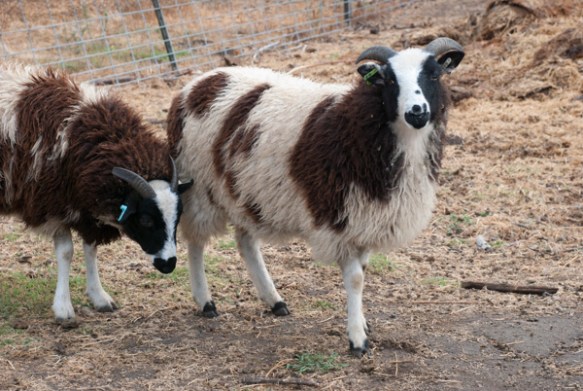
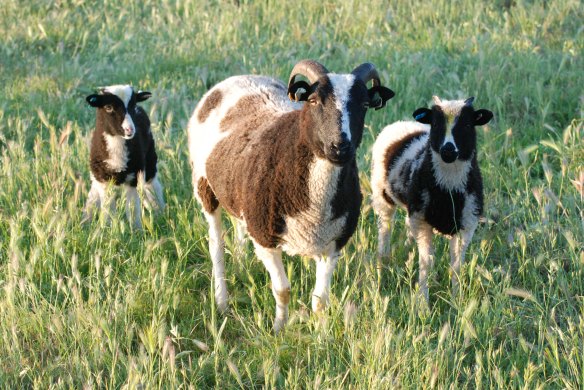
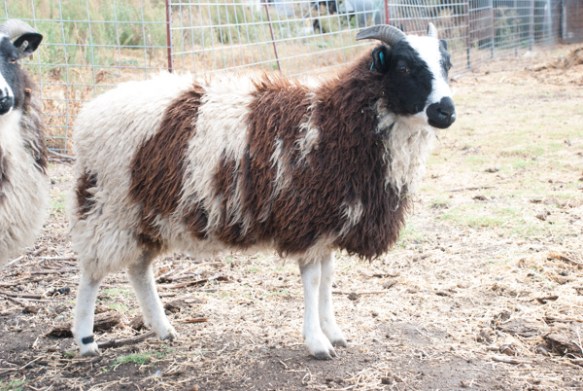
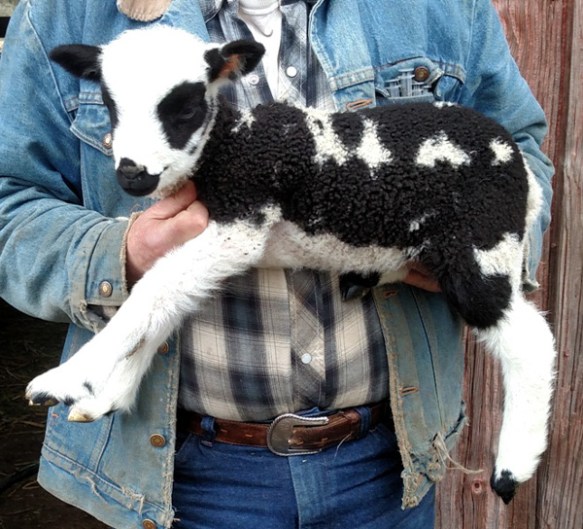
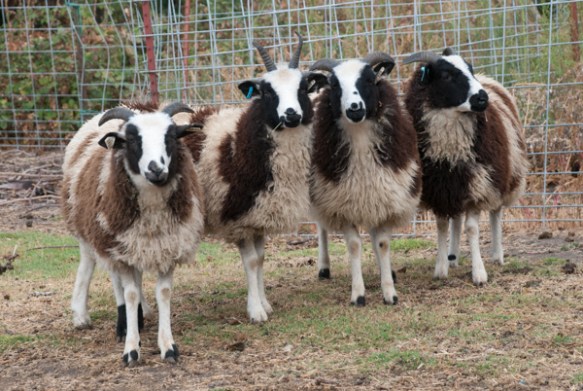
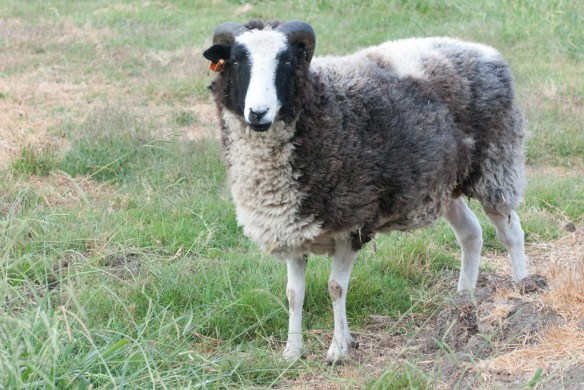
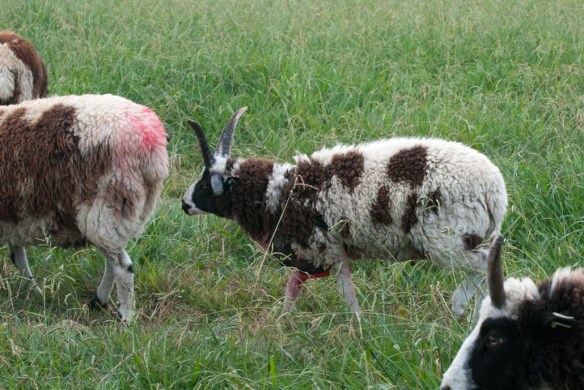
Every year I put together a Flock List for the Farm Club members. This includes photos and a little information about each sheep (and dog and other characters) on the farm. I like to get current photos of each sheep and I’ll share a few here. Shearing Day is in just a month so they are in almost full fleece. I’ll have to get before and after shots of them as well. 11047-zoey-3

Zoey.

11086-alexandria-2

Alexandria.

12018-sonata

Sonata.

13044-ears

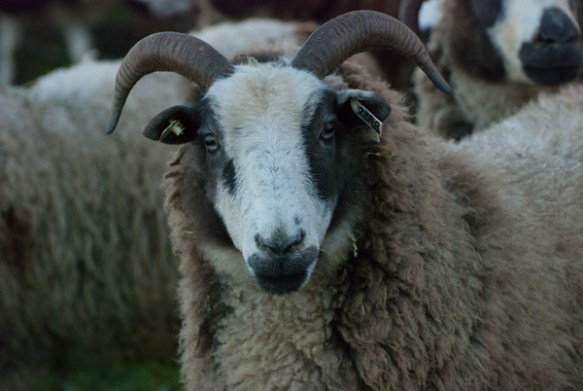
Ears.

13068-cascade

Cascade.

14013-jean-2

Jean.

15031-15053

Two almost 2-year-olds, Honey and Zinnia.

16015-marilla-13007

Marilla, a 2016 lamb, and her mother, Marilyn.

sheenashelby

This photo was taking during the summer of two of the sheep I bought from flocks in Oregon. That is Kenleigh’s Sheena on the left and Shadow Mountain Shelby on the right. I found this photo while I was looking for another. It is a good example showing a lilac ewe (right) and a black and white ewe.

dsc_4747

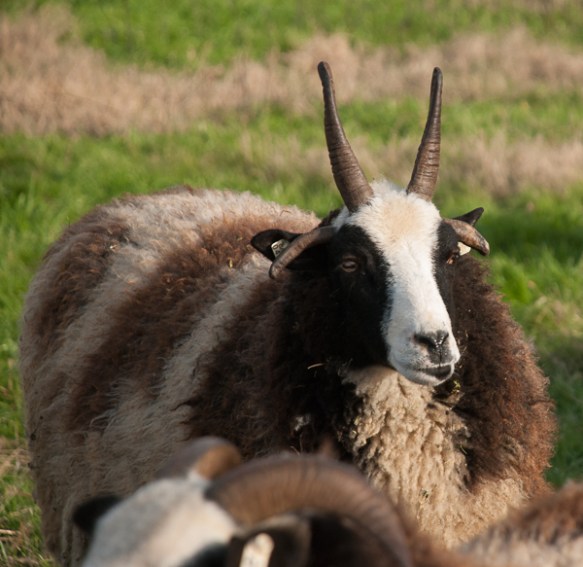
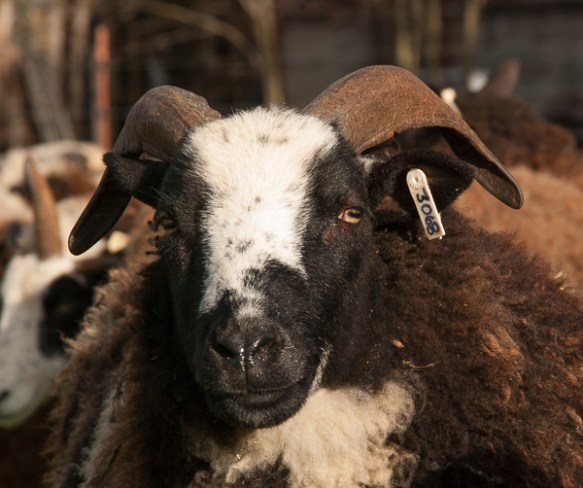
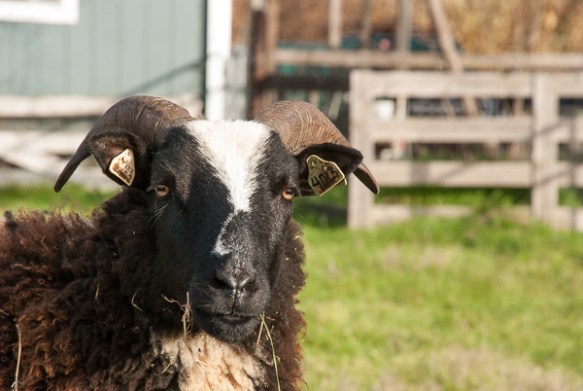
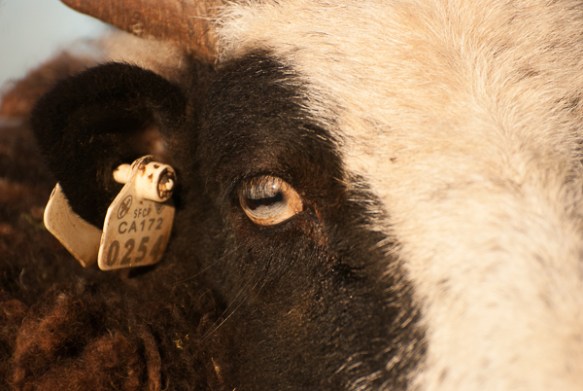
Most sheep eyes.

blue-eyes

Some of the lilac sheep have striking blue eyes

Sheep

Every year at this time I create a Cast of Characters for the Farm Club members. So I took sheep photos today. Here are some of them:

dsc_4683

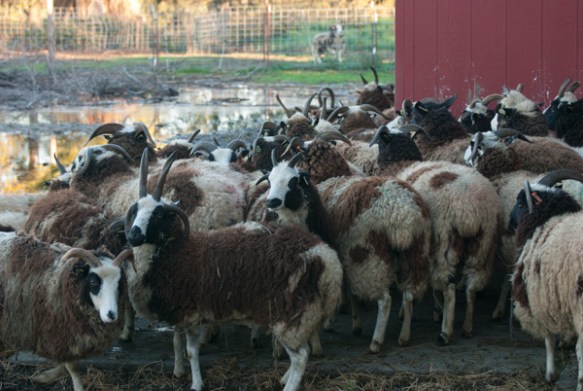
I started before chore time in the morning and had to chase all the sheep out of the barn. They weren’t too happy about missing breakfast.

dsc_4686

And they don’t like the deep mud so they all stayed on the cement that Dan poured behind the barn this summer.

dsc_4688

This is Janis.

12098-foxglove

Mud Ranch’s Foxglove. She is a lilac ewe.

15073-alice-2

Alice.

16043-virginia-2

One of the 2016 lambs, Virginia.

16062-cindy

Another lamb, Cindy.

bronagh

This is Windy Acres Bronagh, another lilac ewe.

buster-2

Bide a wee Buster, and March ram lamb.

dsc_4837

Ears.

dsc_4908

While I was taking photos, my DIL was throwing the ball for the puppies, Sawyer and Finn..

dsc_4916

Ginny ended up with their ball.


The Right Decision

We all have to make difficult decisions at times. I was in that position last month about a ram I had bought only a couple of months previously. Today I had confirmation that I made the right call. WARNING: There are some yucky photos part way through this post.

I wrote this blog post about the trip to pick up a new ram in early August. I have looked through my photos and can’t find a “before” photo of the left side of Legolas. This is the one that was posted on Facebook by the seller:

legolas

In early September I noticed that his horn looked like this on the left:

legolas-8-of-8

That left horn is touching his face. I knew that the horn wasn’t like that when I bought the ram and I was amazed that it could grow so fast that in a month. There was no obvious sign of damage. I had noticed flies around his horns, but again, no sign of blood or a wound. With the horn that close to his face it would be a problem if it continued to grow that direction, putting pressure on the jaw. Even if it didn’t grow more there would be continued skin irritation at the point of contact.

A few days later I caught Legolas to figure out what to do about that horn. I couldn’t even get my finger between the horn and the jaw. Here is what surprised me. When I held the horn not only did it move, but I could see movement in part of the skull where the horn was attached. Yikes!

legolas-horns-3

Behind the horns I found a small opening, which got a little bigger as I scrubbed with hydrogen peroxide. This had been covered with hair and really wasn’t visible until I started  cleaning up around it. I could squeeze out a little bit of pus but not very much. There was minimal blood or drainage and the edges of that wound looked already healed over, just not healed together to close up the pocket.

legolas-horns-5

I could move the horn (and skull) so that there was a little space between the horn and the jaw, so I tried to anchor the horn in place with duct tape and wire attached to the other horn. (This was the most mild-mannered ram I’ve ever worked with.)

legolas-horns-6

This is all the progress that was made by that–not much but better than touching the jaw.

legolas-horns-8

That pink stuff is Swat to keep flies away. As I was working on this I was thinking that I didn’t remember these rams fighting, but that would be the only way to account for this injury. At the time I think I just had Catalyst and Marv in the ram pen. When I first brought this ram home I used the “buddy-up” pen, a very VERY small pen where the rams can tussle with each other but not move backwards and run at each other. They usually fight in this small pen where they can barely turn around and when they move to the big pen after a couple of days they mostly behave themselves. They may still posture and fight but hopefully they quickly figure out the hierarchy and the hitting isn’t as violent.

I looked back through my videos and found one of Catalyst (another two-horn ram) and Legolas making some pretty hard hits. Then I remembered that a few days after I moved them all out to the ram pen I was worried about Legolas. He seemed “off”, shaking his head and not eating much. Nasal bots will make sheep very uncomfortable.

Legolas also had bloody lips and gums. I remembered talking to my vet to find out if that was a another symptom of bluetongue because bluetongue causes edema, ulceration, and soreness of the mouth, in addition to listlessness and not eating (because of the sore mouth). At that time I treated him for nasal bots and with antibiotics to prevent secondary infection due to bluetongue. Eventually he got better.

But now, a month later, I realized that he had probably been injured the month prior but the damage to his skull was not obvious.

The wire and duct tape didn’t work. I didn’t take long for Legolas to start scratching and rubbing on the tree and fence and put the horn right back where it had been. I thought about using rebar or something stouter but I knew that I wouldn’t be able to rig up something stable enough to keep the horn in place and besides I wasn’t able to move it enough to be a long term fix. This was not a sustainable situation.

I made the decision to put the ram in the freezer. I am in the sheep business, not the sheep rehab and geriatrics business. Butchering the ram would provide meat and I would have his hide and skull to sell.

Before I can sell the skull it needs to be cleaned. I take the easy way out and put it out in the back and let nature take its course. Today some Farm Club members were here and some of them wanted to see the skull. I was amazed that we could clearly see the damage done to the skull by the fighting. This photo shows the skull fracture clearly:

legolas-skull-3

I have had two other rams die from fighting. Once, early on in my Jacob-raising days, one ram killed another (a 6-month old ram lamb owned by my friend but here for breeding) through the electric fence. The ram lamb was standing when I went into the barn and lying dead at the fence when I came out. (I tried butchering that one myself but that wasn’t so easy. Now that I’m thinking of that I remember that my daughter and I finally dug a hole to bury him, thinking that eventually we’d be able to dig up a skeleton–she was taking a taxidermy class at the time.) Now I do all I can to separate breeding groups without fence-line contact. Another time I was watching when two rams (that had been buddies just a moment ago) started fighting and one staggered away and finally dropped. I took a wheelbarrow in to the pen to get him out and found that he was still breathing. I guess he was in a coma because it’s not normal to be able to load a living adult ram into a wheelbarrow, but I did. I was able to have that one butchered to salvage meat and hide.

The other memorable fighting ram story is about Ranger, a ram that had a beautiful fleece and personality. He wasn’t killed fighting but suffered a skull fracture. With that one I discovered how serious it was when I saw his eye bulging from it’s socket. The swelling in his head was so bad that it pushed the eye forward and the lid couldn’t close over it. I don’t remember if the vet came out or we just talked on the phone, but remember  treating and covering the eye and I kept the ram in a small pen until the swelling went down and there was no movement of the horn and skull.

At the time I asked the vet how to tell if there was brain damage. I still remember her answer: “It’s not like he has to drive heavy machinery.”

Consolidating Breeding Groups

For almost four weeks I’ve had sheep in five different breeding groups plus a non-breeding group. It doesn’t take long before I’m tired of dealing with that. By last Friday all the ewes were marked and very few were being re-marked so it was time to pull out a few rams.

dsc_3929

Dragon, this 4-horn ram, went back to his farm up the rad from here. Buster went with him to finish up the job there. Joker went back to the ram pen with Marv (after spending a couple of days in the “buddy-up” pen, or “jail” as I also think of it.

dsc_3935

Faulkner was a lucky ram who got to stay out with his ewes for another month or so. However, he knew that something was going on in the barn and thought that maybe he should really have a few more ewes on his side of the gate.

dsc_3901

All the rest of the ewes were consolidated into one group and spent some time meeting and greeting.

dsc_3890

How are you Fran? Did you hear what happened to…?”

dsc_3898

What is that scent you’re wearing?…Who have you been hanging around?

dsc_3896

dsc_3900

dsc_3907

dsc_3891

Catalyst is the Jacob ram who stayed out with the ewes. He spent some time introducing himself to the ewes who had been in the other groups but they all ignored him.

dsc_3940

Here is he after another couple of ewes were turned into the field.

dsc_3941

dsc_3943

Happy boy even though he’s not seeing any action.

Hug a Sheep Day

Hug a Sheep Day originated a few years ago at Punkin’s Patch and we think its a great idea! We were a little concerned with the forecast (rain from midnight through noon, then clearing). We went ahead with plans and didn’t see rain all day.  In fact the sun came out and the welcome rain from the previous week had cleared the sky, washed away the dust, and started the grass growing. Beautiful!

dsc_3963

Farm Club friends came early and helped set up pens and find the huggable sheep. Jade will follow you anywhere for a chin scratch.

dsc_3964

Jazz likes those scratches too.

dsc_3967

This is Jade and Jazz both lined up for attention.

img_4672

Jazz is probably the most huggable sheep here.

dsc_3976

dsc_3978

Spinners enjoyed the wonderful weather and the camaraderie.

dsc_3982

Alison is wearing her handspun 4-ply Jacob vest. Notice the very cool felt Christmas stocking in the background. Jackie was here with her Sheep-to-Shop booth but I didn’t get good photos of that.

img_4682

Claire is a friend I’ve known since we were in college in Davis in the 70’s.

img_4684

I kind of like this photo because it shows a lot about the marketing of a small sheep farm. Alison and Stephany are both Farm Club members, Alison is wearing yarn from the fleece she bought several years ago, Stephany is knitting more yarn, and she bought a skull, and of course there is the sheep ready to be shorn again in a few months.

dsc_3987

At the end of the day we decided there should be a group hug, although I realize now that this was more of a group picture than a group hug.

dsc_3992

Next year we’ll make sure we all get in on the hug part.

The Lucky Ones

As you must know when there are almost 80 lambs born in the spring I can’t keep them all. How many sheep would I have in 5 years? Who can do the math? My sheep capacity is about 55-65 adults. That includes a few wethers, more rams than I probably need, and the ewe lambs that I choose to keep. Someone has to go and a handful get to stay.

I just sent registration applications in for the lambs who are staying here. I was going to share their photos and then I thought that it would be fun to see their baby photos as well. For those of you who pay attention to who the sheep are I have included the (sire x dam).

16011-sylvia-2This one is Sylvia and the photo below was taken last week. (Rotor x Sonata)16011-sylvia-lt

16015-marillaHere is Marilla (named in a contest for her mother, Marilyn, and because she was our Spinzilla ravatar) in March and below in September. This is a good pair of photos that show that even when a sheep is black and white, the wool may look brown due to sun bleaching. The markings on the face and legs will indicate the true color, at least in Jacob sheep.16015-marilla-left

16016-marvThis is Marilla’s brother, Marv. He is one of only two ram lambs that I kept this year. He was champion Jacob ram at Black Sheep Gathering and his dad, Rotor, was Supreme Champion at the CA State Fair. The photo below shows the difference in rate of horn growth between ewes (Marilla) and rams (Marv). (Rotor x Marilyn)16016-marv-rt

estelle-and16042This is Stacy as a newborn lamb and below at 7 months. (Crosby x Estelle)16042-stacy-lt

jean-16062-16063More newborn photos. This is Jean with twins. I kept both of these lambs. The ewe lamb, trying to stand, is Cindy, below. The lamb nursing is the ram, Joker, in the photo below Cindy. (Nash x Jean)

16062-cindy-rt

16063-joker-2

Joker has a group of ewes and is wearing a marking harness with a red marker.

vanessa-and-16040 This is Vanessa with her lambs. Vanna , on the right, was 5.2 pounds when she was born, but you wouldn’t know that now. (Rotor x Vanessa)16040-vanna-rt

16046

Vixen is the only lilac lamb I kept. Her markings are a brown/gray instead of black. That shows up better in the photo above than below. (Nash x Foxglove)16046-vixen-rt

16043

This lamb is Virginia (Rotor x Ventura).16043-virginia-lt

trista-lt

This is bide a wee Trista, the one lamb that I purchased, so I didn’t take a baby photo. But I just looked and, yes there is one on the bide a wee farm website. Here is Trista as a little lamb.

trista

dsc_3438

Vixen, Virginia, Cindy, Vanna.

Breeding Season

This week it was time to separate sheep into breeding groups. After much debate and deliberation I ended up using five rams this year. I don’t NEED five rams for the number of ewes I have but it’s always fun to find out how each ram will match with the flock…and there is also a bit of “not putting all one’s eggs in one basket”.

There are a lot of criteria in selecting a ram to buy or a ram lamb to keep in the flock.

Fleece is the most important characteristic for me. If I don’t like a ram’s fleece then I don’t want to use him no matter how great he looks otherwise. I want to stay within the Jacob breed standards but consider fleece weight, fiber diameter (determines if a fleece is soft or scratchy), crimp, and freckling. One problem with making decisions about young rams is that you’re better off waiting until 18 months to fully evaluate fleeces. That is a long time to hang onto a ram and then decide he stays or goes. With my small acreage I just can’t hang onto several rams to evaluate a year later. I need to make my best guess at about six months old.

16044 fleece

Here is an example of a ram lamb from this year who lucked out. I love his fleece but he is freckled. He’s castrated and is the donkey companion for now.

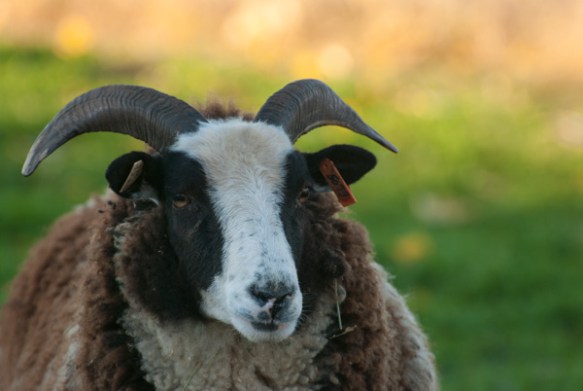
Horns. You can have the best ram from all the other standpoints, but if the horns grow into the face he will have to go. Here is a blog post with examples of two-horn rams.

Color. The Jacob Breed Standard states that registered sheep must have 15-85% color. That’s a broad range, but not all sheep fit that category.

11080-jerry

Jerry is a 5-year-old wether who won the sheep-lottery by having a beautiful fleece, but with too much color to be kept as a breeding ram. He was castrated as a lamb and was kept to be a buddy to any sheep who had to be separated from the flock. He lives permanently with Faulkner, the BFL ram. Also note how narrow his horns are. If he had not been castrated those horns would have grown tight onto his neck or face.

There is more, but this was going to be a post about the rams I am using this year, not a how-to-choose-your-flock-sire post. However other traits to consider are personality (yes, really), conformation, size, birth weight, gain, and is he a single/twin/triplet.

16063-joker-3

I hadn’t planned on keeping Meridian Joker, but as I looked at lamb weights over the last few months he stood out as one of the heavier ones. I sell at least half the lambs for butcher and the sooner they can be sold the better. So rate of gain is important. His horns don’t have a huge spread, but hopefully they will be all right as he grows.

By the way all the rams in these photos are wearing marking harnesses with red crayons. That’s what all the color is.

dragonStarthist Dragon is on loan from a friend. When I evaluated his lamb fleece a couple of years ago I was impressed and Trish remembered that so offered him for the season.busterBide a wee Buster came here from Oregon last June. He was so small I had my doubts about him being up for the task this month, but I should have had faith.dsc_3257

Meridian Catalyst is a ram who was born at the 2015 State Fair Nursery. He is a lilac ram with nice fleece and markings. That’s him in the middle of the ewes on the second day of breeding season.dsc_3239Faulker is ram #5. He is a Bluefaced Leicester (BFL) and sires the black (brown) lambs. He is the big guy in the center of the photos. His lambs are larger than the 100% Jacob lambs and are mostly sold for meat although they have very pretty fleeces and also wind up in some spinners’ flocks.dsc_3267Faulkner enjoying some time with the ladies.isabelleIsabelle, marked by Joker.15071-skyeSkye is in Catalyst’s group.15050-jillianJillian is with Faulkner.16063-joker-2Joker looks a little disheveled after a few days.buster-2Buster has his work cut out for him to reach those big ewes…buster-3…and needed a nap after the first morning out.

For any of you who pay attention to this stuff and may be wondering about the other Jacob ram I bought this summer…I discovered a few weeks ago that he must have been injured by another ram and his horn had changed position so that it was growing right up against his jaw. I found that the point of attachment was movable (I don’t know if went all the way to the skull which means that it would have been fractured). I tried to give his face a little more space by using wire and duct tape but that didn’t work. This is not a sustainable situation so he is no longer with us.

A Sheep Adventure – Part 2

I forgot to put a couple of photos in the last post. Besides the BearFest that was going on through the summer in Grants Pass, there was also a Fifties celebration the week we were there. There was a car show that evening and here are some cars that we saw in the motel parking lot.

IMG_3258

I have no idea what they are but I took these photos to show my husband.

IMG_3260

IMG_3261

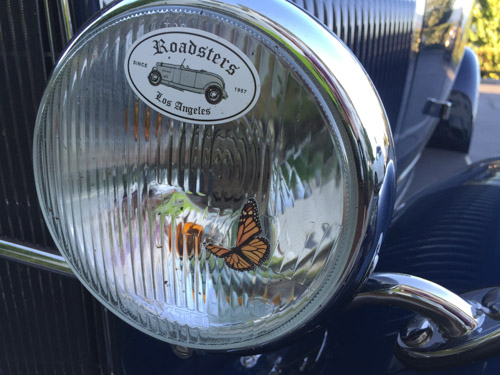
This is not how butterflies normally look on my headlights.

We got on the road about 7:30 and drove to Selma, Oregon where Jackie’s sheep had been delivered the day before. She was picking up two English Leicesters that came from Michigan.
IMG_3266

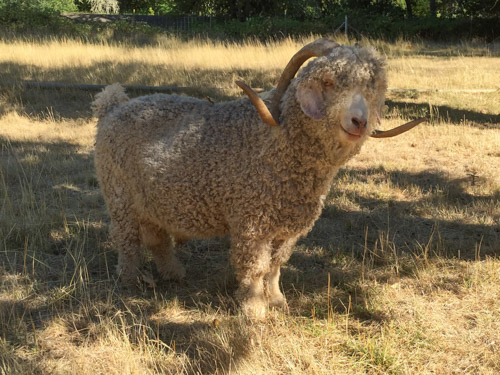
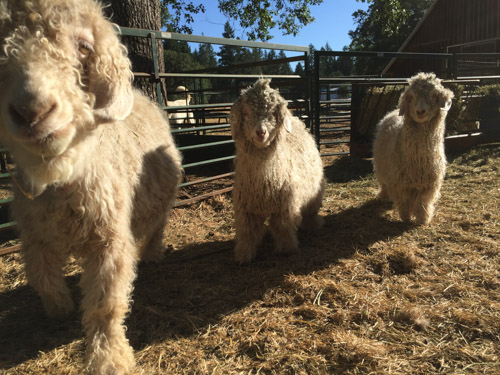
Carol Ronan graciously took time to give us a tour of her beautiful farm. She raises Angora goats (above) and Gotland sheep (below). Information about her sheep and goats (and the beautiful farm which is for sale) is at this link.

IMG_3276

IMG_3278

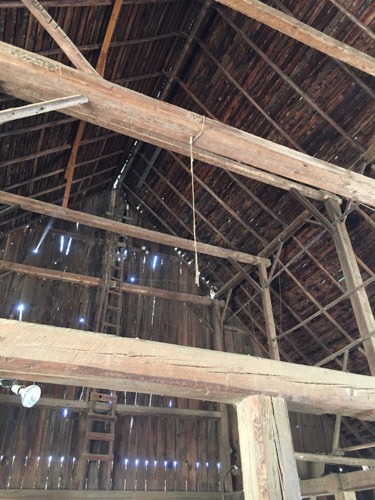
The animals have access to this 100+ year old barn that has been reinforced and given a new roof (which will probably give it another 100 years).

IMG_3281

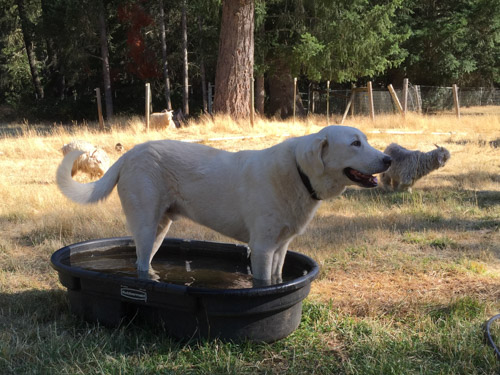
I don’t remember the dogs names but this was an older one who put up with the nosy sheep.
IMG_3284

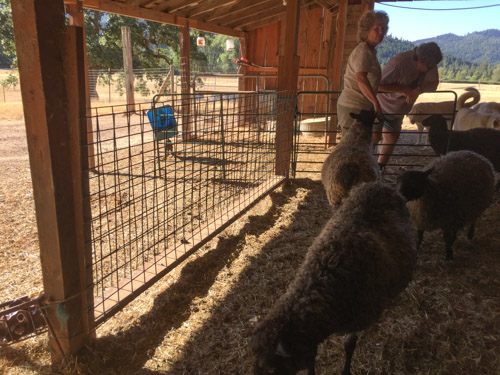
I took this photo because I wanted to remember this oh-so-simple feeder idea. That welded wire panel is not a fence. There are two panels attached to a 2×6 at the bottom and to posts with slightly tapered pieces of wood on the sides. Perfect for dropping in a flake of hay and feeding on both sides.

IMG_3290

We walked to the field with the bucks…IMG_3292
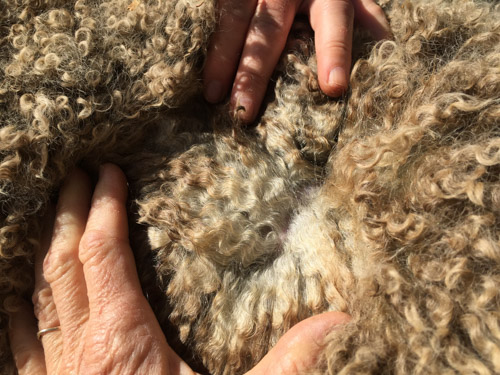
…and examined fleeces.

IMG_3295

IMG_3297

IMG_3298

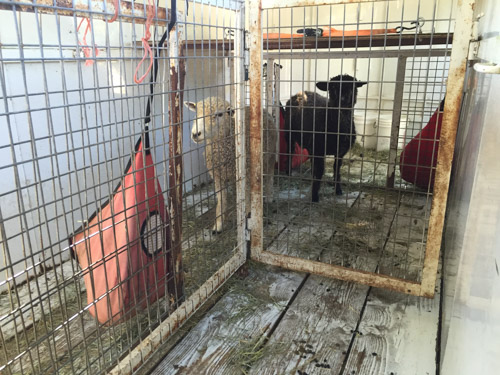
Here are Jackie’s new sheep who had been housed in the trailer overnight.IMG_3299

They were easily switched to my truck and we got on the road. There are not too many photos of the part of the trip that became more of an adventure. I didn’t want to backtrack to Grant’s Pass and I-5. BORING. If you take Hwy. 199 south from Selma you can turn off onto a road that winds its way through the rugged Siskiyou Mountains to Happy Camp. It wasn’t a good idea for me to be taking photos while driving on this road that was full of switchbacks and Jackie probably would have thrown my camera out the window. We didn’t stop because we had spent a lot of time at Carol’s and had planned to make the next stop by mid-morning (weren’t going to make that) and get home in the afternoon, trying to avoid being on I-5 through Redding at the hottest part of the day.

IMG_3307

At Happy Camp we turned east onto Highway 96 and watched for landmarks until we got to this sign and across the road…

IMG_3306

…this bridge where we crossed Horse Creek and drove north along hillside edging a green valley . We were supposed to go 2 miles and find the correct street address for the farm where my ram would be. We saw a few numbers on mailboxes, passed what should have been the right place, found a place to turn around and chose a driveway that seemed to be in the right place. We drove in past barns and farm equipment but didn’t see a house, sheep, or any signs of someone looking for sheep buyers who were late. We drove out of the driveway, down the road and chose another driveway with the number that would be the neighbors to the place we were looking for.

As I drove down the steep driveway, several large dogs ran out barking. However I saw someone looking through a window and waited for him to come out. He wasn’t happy about seeing us and told us to go back up the road and take the driveway with “the lifetime gate”. “Can I drive forward and turn around down there?”, I asked. “No” was the answer. OK then. I’ll back up the steep rocky driveway that has a sharp turn onto the road and a steep drop-off to the side, while trying to see the end of my truck through the plywood sheep crate on my truck. I did that with several back and forths and only one minor mishap.

IMG_3302

Finally backing into the road in the wrong direction we drove down it again, passing this sing, turned around and came back. (Note: When my sons have fought fires in these mountains they have been turned away from entering access roads to the forest by surly land-owners. The firefighters are warned by their supervisors to be careful in or avoid areas where they have spotted marijuana or equipment for growing or harvesting.)

So we took the same driveway we had before with the barns and cattle equipment. Steep-Driveway-And-Big-Dogs-Guy was there to meet us, having gone from his house, across the creek, through the barns, to this upper driveway. He pointed and said “no, go back to the lifetime gate”. Lifetime gate? When we looked more closely there was a closed gate down a dirt road that branched off to the right of this main driveway. Jackie opened the gate and we drove into what looked like a little used driveway that stopped before you got to a house where I could hear children. So at least someone was home.

IMG_3303

I found the sheep owner who strapped her baby on her back and we walked out to the barn with other kids running beside us. We arranged bales of hay to create a step up into the truck and loaded the ram. She pointed us out a dirt road that  ends up on a different paved road which seems to be their main access and is “easier”.

IMG_3305

This is the field (sheep in the distance) that Kenleigh’s Legolas left behind.
IMG_3308

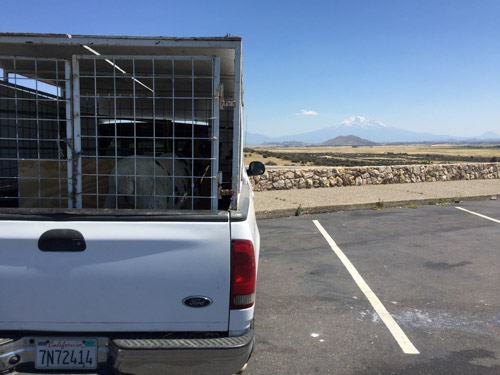
We drove east through Yreka to I-5 and headed for home. I always stop for a photo at this overview of Mt. Shasta. We stopped several times to check on the sheep. There was really nothing we could do about the heat but the truck thermometer was showing 108 (or was it 109?) through Redding. It was in the 100’s for most of the trip, but the sheep survived. I didn’t dawdle, wanting to get them out of the truck as quickly as we could.
IMG_3311

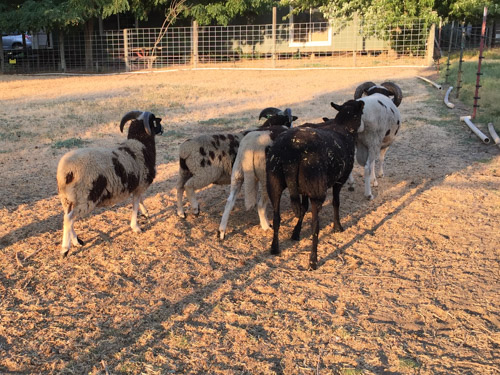
I put Legolas in with the young rams and a wether. They followed him around for awhile.

DSC_1605

There was fighting among themselves, but not with Legolas, because it was obvious that he would be the dominant ram of the bunch.

DSC_1606

This will be the first year that I will breed the bulk of the flock to 2-horned rams. There is Kenleigh’s Legolas (Lego for short), Meridian Catalyst, a 2-horned lilac ram, and bide a wee Buster, the younger ram with 4 horns.
One More State Fair Post

Before I get back to my Road Trip blogs I have a few more photos to share. No big surprises in this post like there were in the last one, but Dona sent me the great photos that she had taken of the show. And since I’m writing another fair post I’ll include a few others as well.

I didn’t see much of the fair besides the livestock area but I walked around briefly. Here is what caught my eye.

IMG_3122

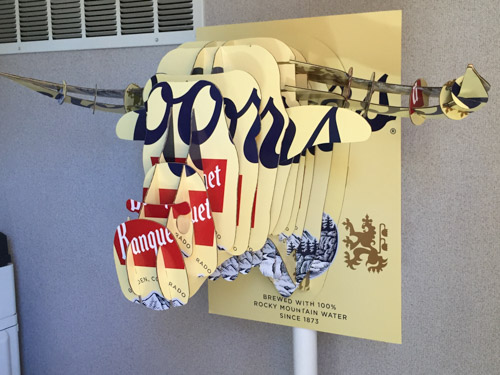
On the wall of the livestock office.

IMG_3147

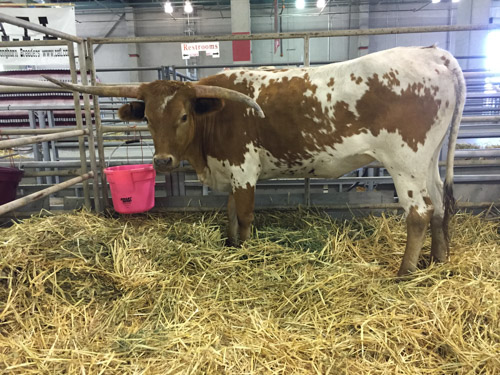
Another longhorn, this time with not-so-symmetrical horns.

IMG_3141

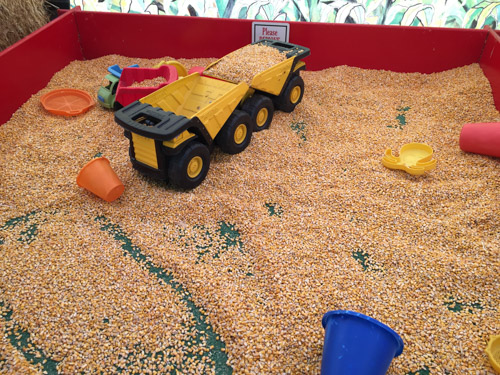
A “corn-box” for children.

IMG_3142-2

This seems like a good idea for kids but I think I’d want it far from my house. It’s hard to tell in the photo but there are metal bars hanging at each station for banging “music making”.

IMG_3159

I always like walking through “The Farm” to get ideas for my garden. I like these bricks that made the corners of the raised beds. It would be easy to change the location of the beds.

DSC_8141

Back to the show ring. Rotor was sometimes reluctant at moving around the ring.

DSC_8168

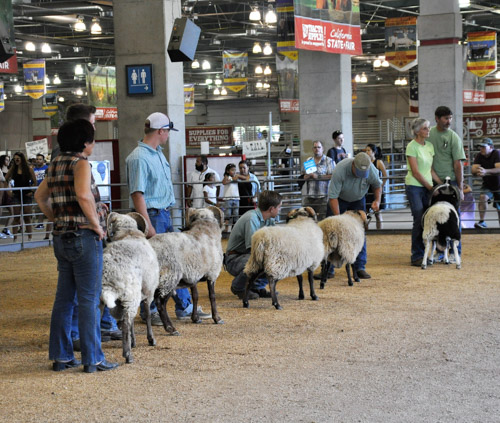
Here he is at the head of the class of Shetlands and Karakuls.

DSC_8216

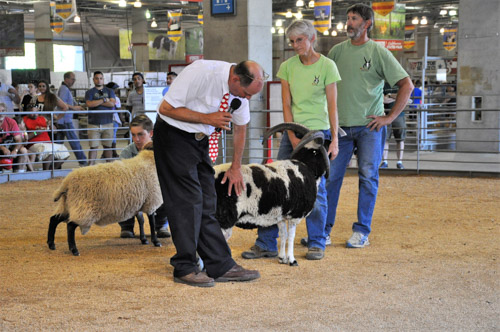
This is the Primitive Breeds Champion judging.

DSC_8218

DSC_8248

None of my other sheep did as well as Rotor. The judge preferred his fleece over that of my other sheep, although I think they are just fine. Meridian Honey, shown by my husband, had won Champion Jacob ewe at Black Sheep Gathering in June, but she was last in this class. That is part of showing any livestock, especially Jacob sheep. There is such a wide variety in acceptable traits in our sheep that it may not really be appropriate to judge them against each other. That is why Jacobs used to be judged by “card-grading”. Each sheep would get a “grade” based on the characteristics–not putting one of a similar grade above another. But that’s not how it’s done in traditional livestock shows.

DSC_8258

These are my two yearling ewes, Meridian Honey and Meridian Zinnia.

DSC_8319

This is the Jacob portion of the Primitive Breeds ewe lamb class. The two lambs without much color have a bit more on the other side. They are sisters and my friend, Mary, has bought one of them.

DSC_8362

Here is our Flock entry in the Primitive Breeds Division.

DSC_8380

Rotor’s debut on the photo stage after winning this show. See the previous blog for his other winning photos.

Seen on the Farm

This one isn’t actually on OUR farm. I love this sunflower crop that is Across the Road.

Sunflower

I took the rest of these photos here.

Monarch caterpillar

Monarch caterpillar on narrow-leaf milkweed.

DSC_0589

Alfalfa butterfly. The caterpillars are considered pests in fields of alfalfa. They also consume other legumes (like clover and trefoil in my pasture).

DSC_0581

I still don’t know what this one is. Previously I tentatively identified one in a better photo as a forage looper moth. Maybe? Do you know how hard it is to chase a butterfly/moth that doesn’t want to be photographed?CA Red dragonfly

California Red Dragonfly. While we’re looking at insects here are nasty ones that supposedly the dragonflies eat.

DSC_0577

We were doing pretty well keeping the pasture mosquitoes at bay.  I guess it was the last irrigation followed by a heat wave that brought them on to this degree. This morning in the pasture I was covered head to foot–overalls and a hooded sweatshirt with the hood tied around my face. I could still hear them buzzing.

paper wasp-2

While on the subject of nasty buzzing things in the barn last year’s paper wasp nests are active again. I guess I need to find the wasp spray.

Black widow

Same subject. Different pest. This is another black widow on the hay. You have to be careful pulling bales of hay away from the wall or off the floor.

brewers blackbird nest

Also in the barn but no stings or bites (except maybe when the parents dive-bomb the dogs). This is another nest of Brewer’s blackbirds. This photo was taken a couple of weeks ago…

Brewer's blackbird nest

…and this one a little later. These birds have left the nest now.

DSC_0590

Sheep going to pasture in the morning.

DSC_0597

These are some of the new sheep. That’s Bronagh who seems to take the lead. They are out with the rest of the flock now and are as anxious to come to the fence for grain when I rattle the bucket as the other sheep.