This Sheep Adventure started the night before with hooking up the trailer, gathering halters and panels, and checking to see which roads would be closed due to the fire burning in the general vicinity of where we were headed.
Someone named Michael in Idaho had called me a couple of months ago asking if I could help him sell Jacob sheep that were at his parents’ place in Napa County. It seems his sister and father got some sheep a few years ago but Michael thought that they had lost interest or there were health issues or for whatever reason the sheep weren’t getting the attention that they needed. I didn’t hear from him again until a few days ago when he said that his mother was in the hospital and the sheep needed to go.
Dona and Rick got here about 7 and we took off. I drove my truck with the trailer and Rick drove his truck with a sheep crate in the back.
 I brought Ginny because Michael had thought that we might need a dog to catch the sheep. I had my doubts that we could do much with sheep that had never been worked by a dog and were possibly wild but it was a good excuse to bring Ginny along. She is not a big fan of car rides.
The map on the phone showed it would take about 1 hour 50 minutes to get to where we were going near Pope Valley. What with unclear directions and road signs (and maybe a bit of distraction as Dona and I talked the whole time) I had to turn around and back up the trailer in the middle of the road three times before we got to where we were going.
We were met by Michael’s brother who evidently is the person who has been feeding the sheep. He told us that their mother had just died a few hours ago but he’d help us get the sheep rounded up.
 He said that he would be able to get them in the fenced in area with some grain, so we stayed out of sight while he enticed the sheep into the pen.
 This is nine ewes and one ewe lamb. Two rams were up the hill in another area.
 If you know anything about sheep you’ll see that this ewe is way overdue for shearing.
 All but one were in this condition. I wonder if the ewe in full, but not horribly excessive fleece (in the back in this photo) might have had a fleece break a year or more ago, lost that fleece and now has only a year’s growth.
 We didn’t get photos of the process but we set up our panels to help catch the sheep. We put halters on the ewes two at a time and brought them to the trailer. Next we got the rams.
  It was a tight fit for those nine adult ewes with as much fleece as probably should have been on 25 sheep.
 The rams weren’t much better.
The drive home went better as far as not missing turns and having to turn around. However we did have another mishap.
 The first clue I had was the thump/thwack that I heard. Fortunately I was able to pull over in a wide driveway on this windy road (Hwy. 121) and the weather was relatively mild with a breeze because those sheep were really packed in. Fortunately Rick was there because he had the right tools in his truck — I never did find the lug wrench in mine (although now that I think about it, maybe it was under the hood). Fortunately Rick was there to get the lug nuts off because with as much trouble as he had with the last one I’m pretty sure I wouldn’t have been able to do it. I had made sure before we left that yes, I had paid the AAA membership that was due…but there was no cell service here. Rick replaced the tire with the spare and we lowered the jack. That tire was too low to drive on so Rick jacked up the trailer again, took the tire off, and left in his truck to find somewhere to fill it up. I think he was gone almost an hour before he came back with a fully inflated tire–he had found a group of fire trucks and been able to get the tire filled by the crew.
The original plan was to take these sheep to Dona and Rick’s place in Wilton where there were empty pastures waiting. But with no spare for the trailer (and the other tire looking in not very good shape) I didn’t want to drive an extra 2 hours on the freeway in rush hour traffic and 100 degree heat. So we unloaded at my place. After getting our hands on these sheep I think that they are in surprisingly good health. They seem to be in decent condition under all that wool and from their teeth I think that they are all four years or under.
 There are two with ear tags that indicate a friend’s flock. Those two are docked. None of the others are docked and I think that all of those descended from those two and maybe another that I was told had died. I don’t think that any of those born at this place have ever been shorn. So that’s our first order of business–to find a shearer. Then Dona and I will figure out the next steps.
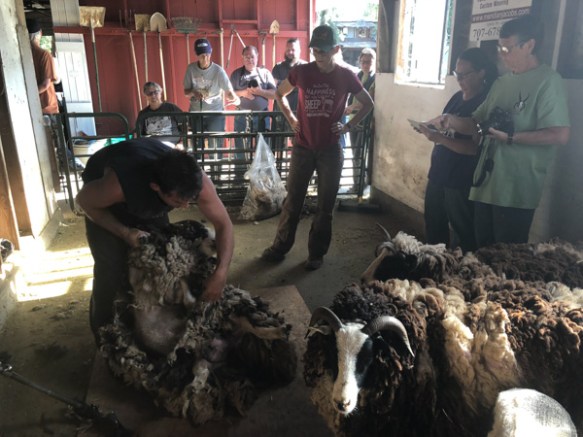 John is the Rock Star.
 We checked teeth to try and figure out the ages of the sheep.
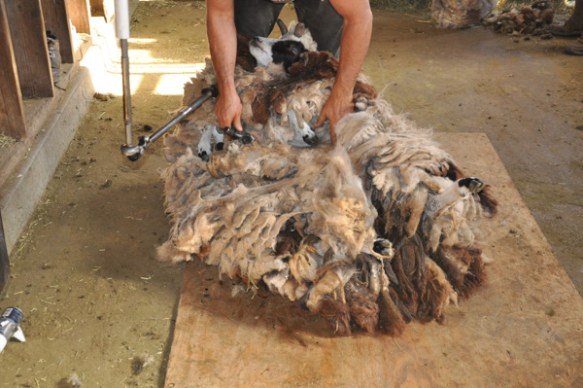 This sheep had a 13 pound fleece. The average for Jacob sheep is 3-6 pounds.
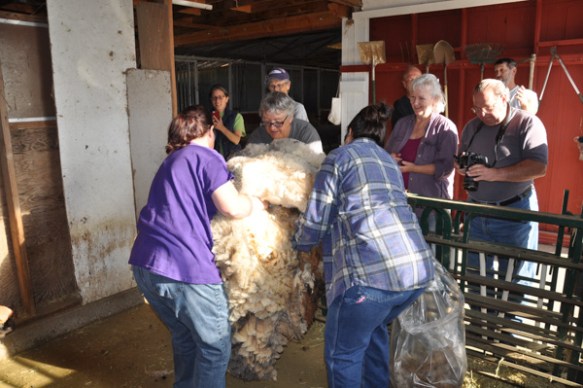 It was a multi-person operation to stuff some of these fleeces into plastic bags.
 The usual suspects were there to watch and cheer John on.
 Not a bad looking group of ewes after shearing.
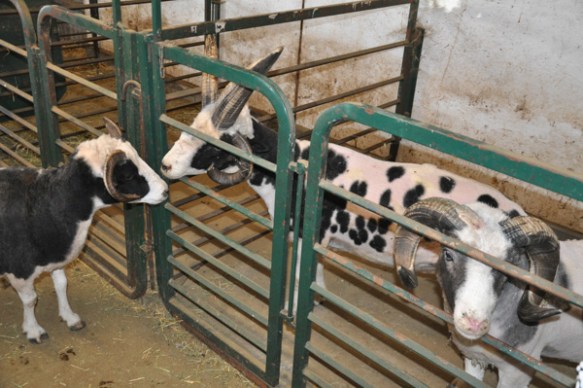 The two rams.
 After shearing we looked at all the fleeces. The longer fleeces have a break about 4″ in from the outside, but the rest of the fleece seems sound.
 It will take some time to work through it all.
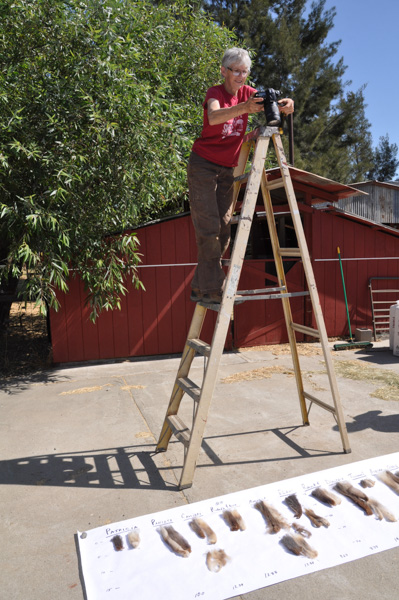 As we pulled out staples from some of the fleeces I thought it would be a good idea to get a photo. Susan and Gynna worked on this while we opened up and re-rolled the fleeces.
 Note the measurements marked on the sides and down the middles. Weights are below.
  This was a fun day for all of us and a good day for these sheep.
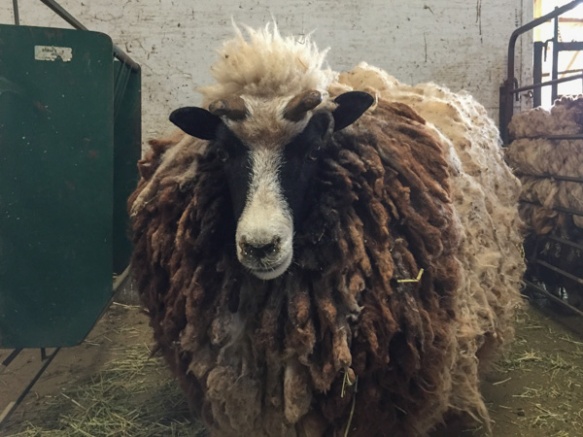 This is a ewe they called Athena.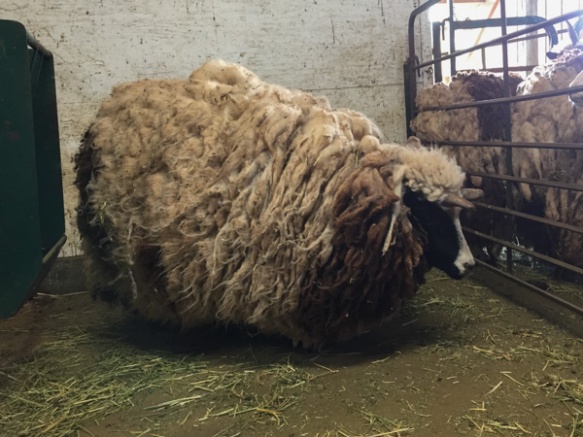
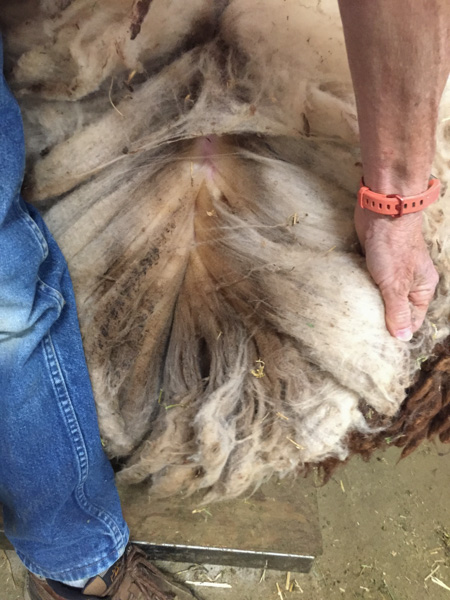 I think that this is at least a 3-year fleece.
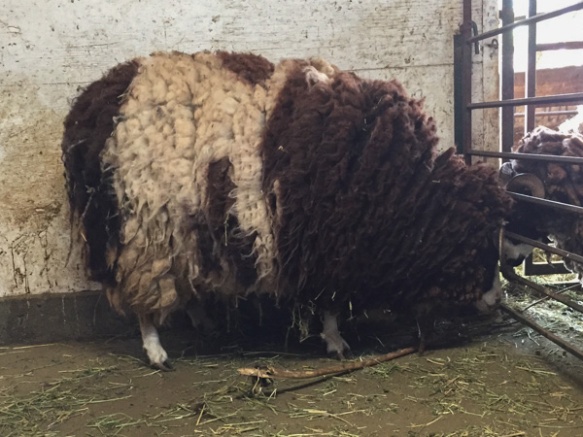 I love the markings on this ewe’s body. I don’t have any information about her.
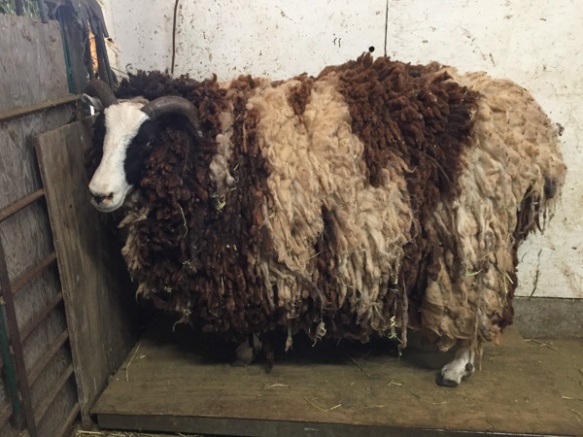 This is a ewe they called Caliope. She is pretty wild.


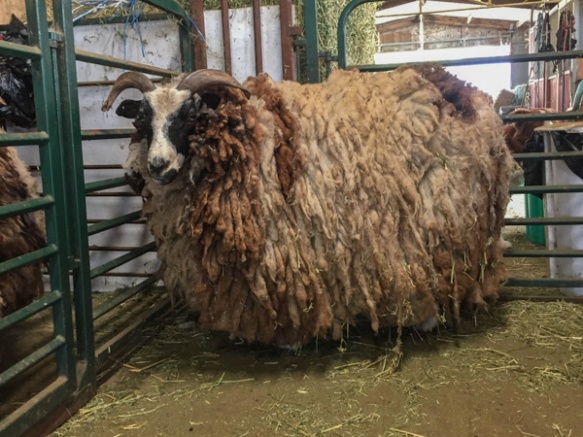 Markela, one of the original ewes purchased by this family.
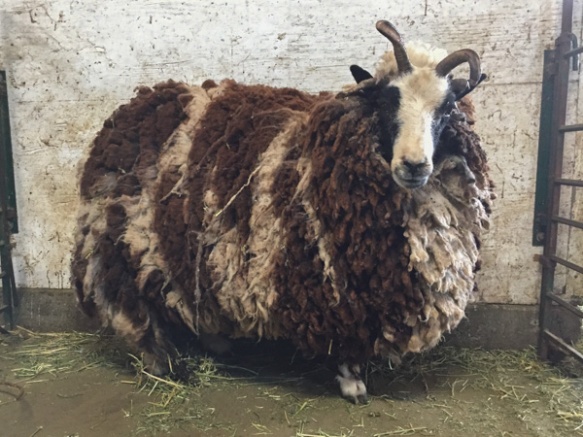 No idea about this ewe…
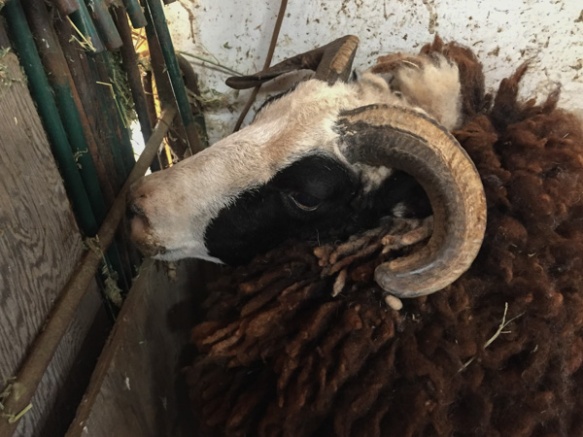 …or this one. Don’t you love her horns?
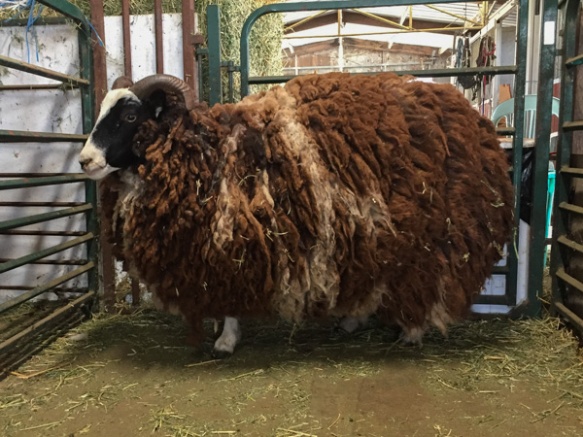 Paniota…
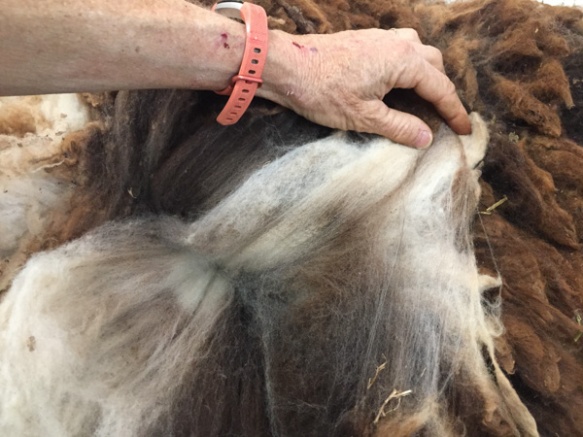 …and her fleece.
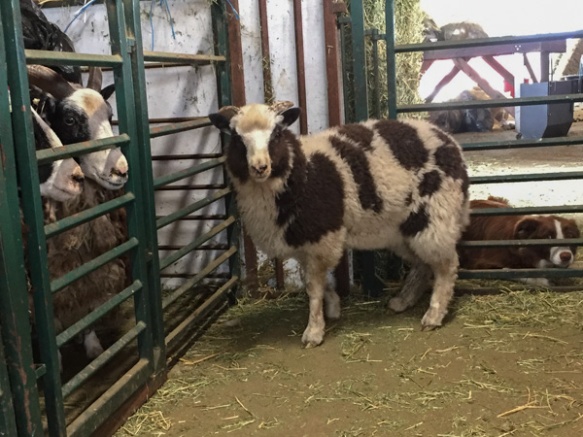 The lamb named Easter because that is when she was born.
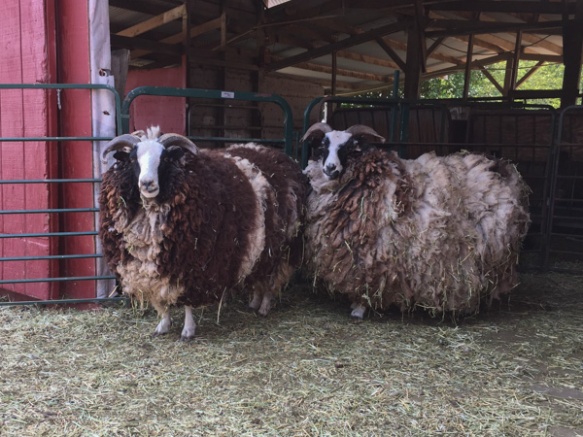 New temporary quarters.
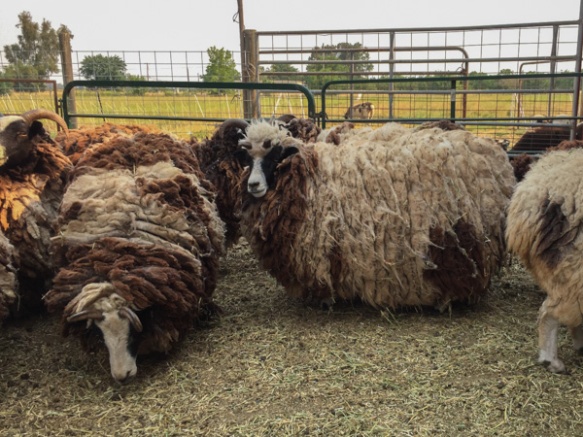 Stay tuned for a Shearing Day post.
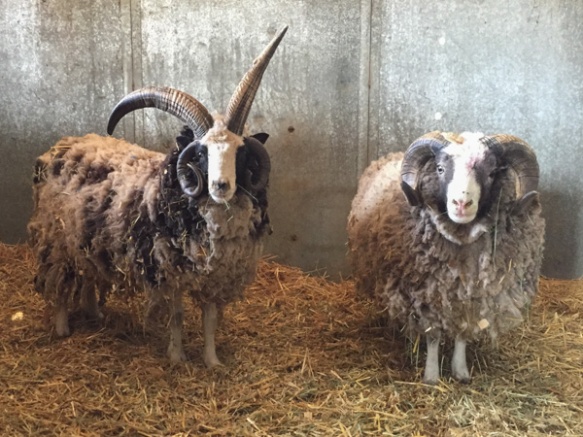 Let’s not forget the rams. Tikes on the left and Costa on the right. I think they are yearlings.
 This is the yearling ram, Cayenne. He is not for sale.
 Yearling ram, Gotham, is for sale.
 Ewe lamb (Meridian Catalyst x Shadow Mountain Shelby).
 Ewe lamb (Meridian Catalyst x Meridian Delight).
 Ewe lamb (bide a wee Buster x bide a wee Hallie).
 Ram lamb (Meridian Catalyst x Meridian Ava).
 Six-horn ewe lamb not for sale (bide a wee Buster x Meridian Jade).
  Four-horn ewe lamb, Janna, not for sale (bide a wee Buster x Meridian Janis)
 Oops! For sale, but not for breeding. Ugly-horned ram lamb. If you’re interested in lambs for meat see
  ..with this sheep ?
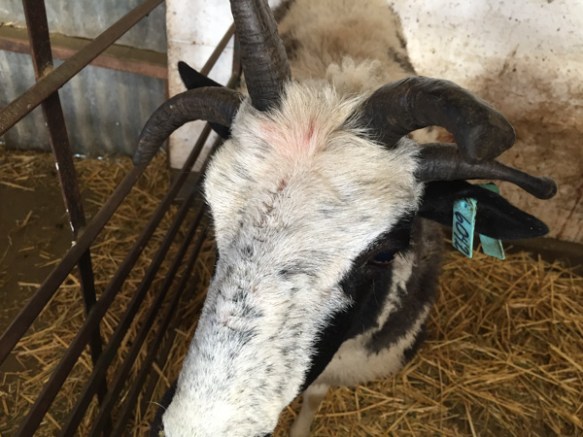 Here she is not too long ago. Staples were still in but ready to come out.
 The end result.


 First I sort and start narrowing down choices. This is two-horn rams.
 More two-horn rams.
  Four-horn rams (except for the one I liked best who broke his horn this morning and I put him out so he would hopefully not keep knocking it on others). I bred to two two-horn rams and one four-horn ram last year. There are more two horn lambs than four. Some ram lambs are missing from these groups because I had already castrated those that I knew right away would not be candidates for registration (too much or too little color or horns that were too close). Time to narrow these into groups.
 These are rams who will be on the cull list. It doesn’t take much for a ram to be moved to that list. In this case two of these lambs (on the right) have wide spacing between the upper and lower horns. That seems like it would be a good thing, but usually those upper horns tip forward and sometimes there are other issues with them. I’ll report back with more photos as they keep growing. The lamb facing the photo on the left doesn’t have enough spacing between horns. His right side horns are already touching at the base leaving no room for growth. The other two both have a lot of freckling, although it’s hard to see without parting the fleece and one is scrawny.
 Three of the potential 4-horn breeding rams. Nice horn spacing and shape so far. No sign of freckling. Color % OK. Nice looking fleeces. Britch wool not too high on back leg.
  Out of two pens of ram lambs I pulled these four out as potential at this point. That is mostly due to the wide horn growth. There may be others in the pens but I won’t guarantee the horn spread yet. Of course, they all have to meet the other criteria mentioned above as well.
 Here they are from the rear.
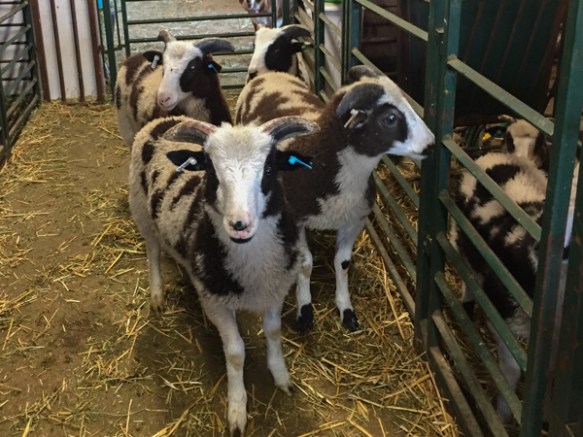 Another from the front showing the ram with the best horn spread so far.
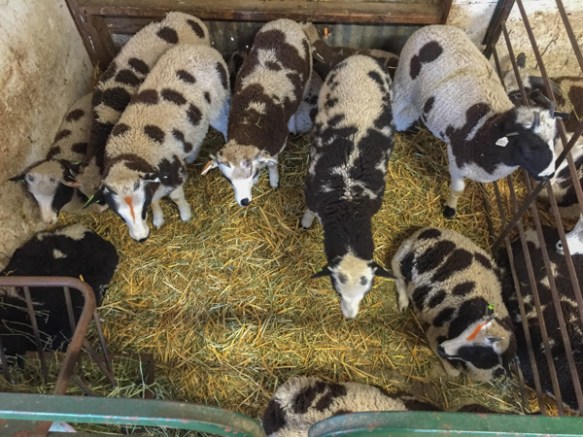 These are the 4-horn ewes. I will be less picky about the ewe lambs than the rams. The breed standard isn’t so stringent and each ewe doesn’t play as large a part in the flock as the ram. Keeping a variety of ewe lambs is a good way to maintain some genetic diversity (although that is a good reason to buy some lambs from other people in August).
 The 2-horn ewe lambs.
 Another view of the pen on the right. Notice the two lambs (sisters) in the upper left corner. Compare their horn growth to the others. All these lambs are about the same age. Those two are showing minimal horn growth compared to the rest. I don’t know if that is temporary and their horns will be just fine when they are mature or if those are scurs. This is another reason to look at the lambs in a group. All of the rest of these lambs look fine to me so it will be hard to narrow this down to only a few to keep.
 These are some of my 4-horn choices. Preliminary selection is based on wool and lack of freckling in the lamb and the dam.
 The same group from the rear. I don’t fault the sheep for their rear leg position, but from this photo it would be the lamb on the left that I’d take to a show.
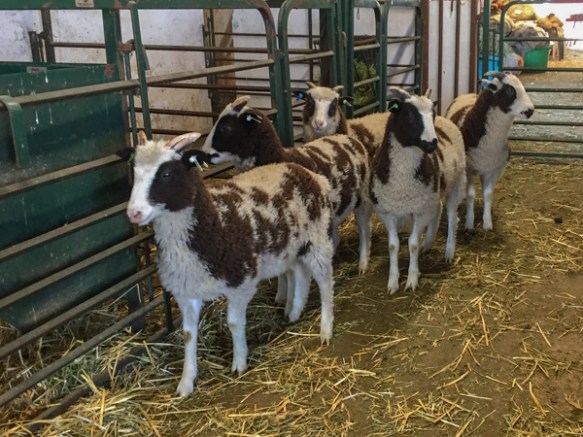 Two horn lambs that I like.
 From the rear.
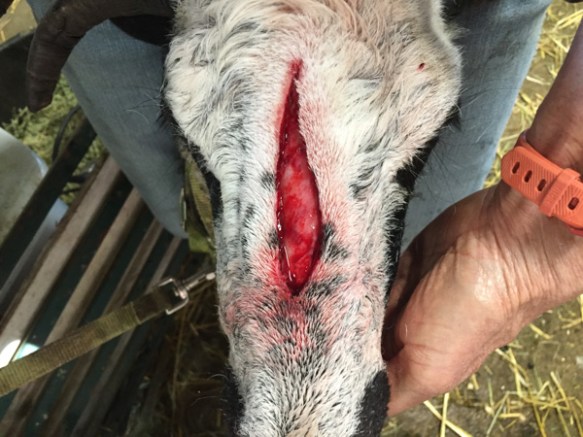
 Stacy’s face was split open to the bone. I called my vet and she said that if I wanted her to come it would be a couple of hours, but I could fix it myself. She told me what to do.
 I thought that the hardest part might be getting the old goat clippers to work. I found them in the tool box and after oiling they worked fine. That showed that the wound was longer than it appeared with hair over it.
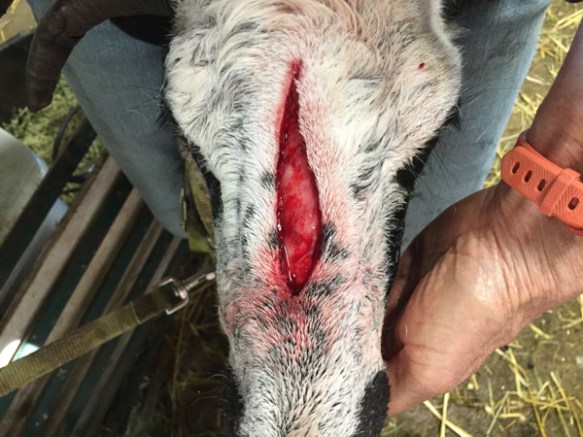 Then I scrubbed with betadyne.
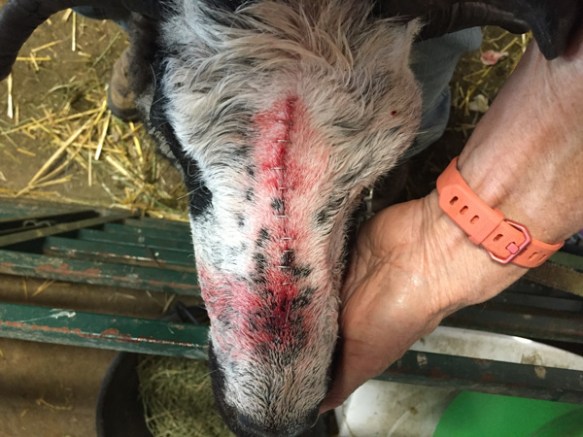 Fortunately I had bought the staple gun (meant for this purpose) a long time ago. I had forgotten about it until the vet suggested using staples. She barely flinched throughout this.
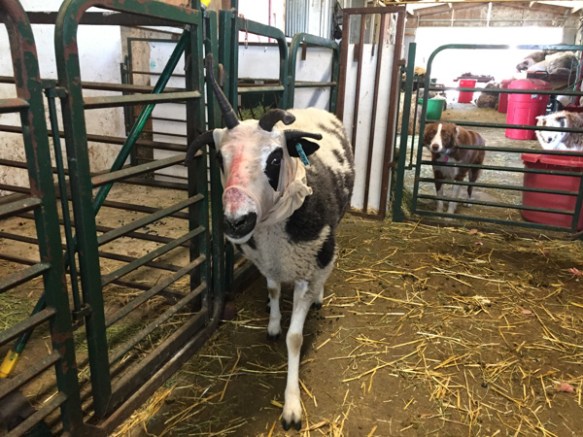 Nancy also suggested putting some kind of cover over this for a few days just to protect it. Since I haven’t worn pantyhose in more years than I can remember so it was lucky that there were some in the back of a drawer.
 The most stylish sheep are doing it!
 While I’m at the barn, here is a photo of the long-awaited work on the southwest corner where a lot of the wood is rotten.
 And speaking of veterinary issues, these are foxtails I pulled out of Rusty’s chest this morning. You can see on a couple of those how they had worked their way into the skin.


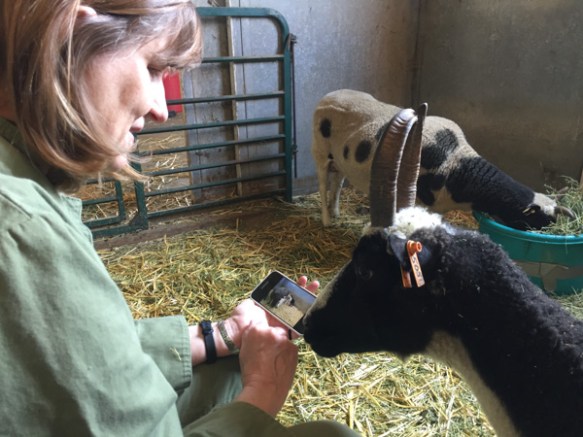 Now I find out that she likes watching videos with friends.
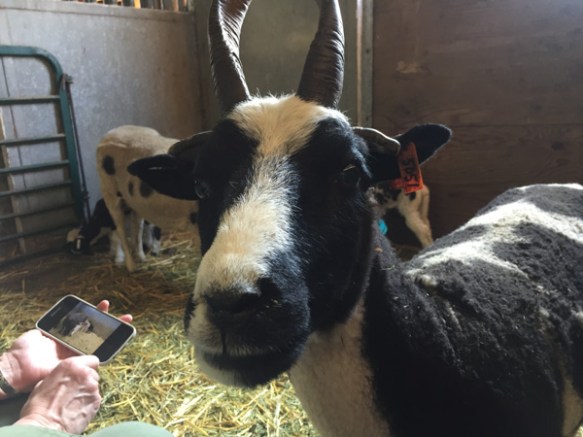 “Don’t you like watching videos with friends?”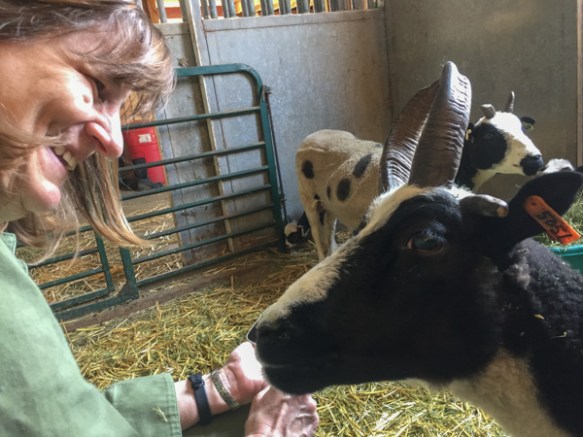
 “Yes Jade, you have nice white teeth.”
 “You too, Lisa”

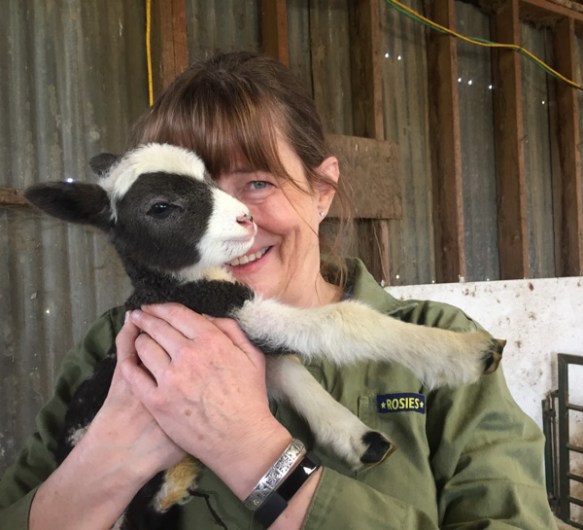 Zorra had plenty of cuddling while she was still in the lambing area with her mom. Lisa is a lamb cuddling Pro.
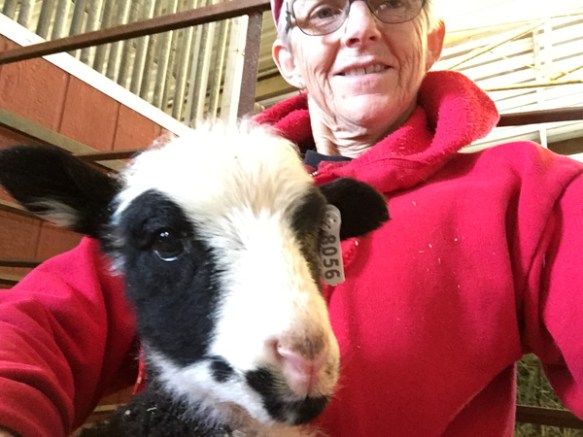 This is pet sheep Jade’s lamb (and me).
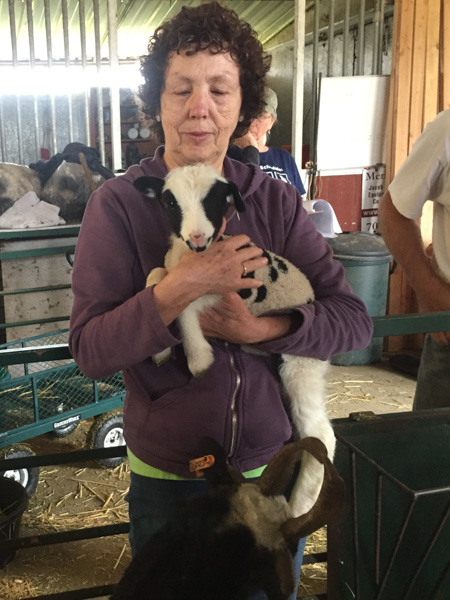 This is her again being held by Peggy. We’d really like her to be friendly too.
 This is Zorra again with Sumi.
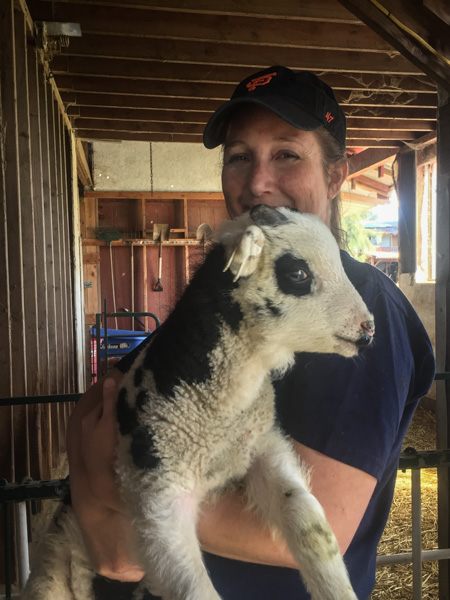 As the lambs get a little older we have other Farm Days. This was Betsy’s first day on the farm and she jumpred right in holding lambs as we ear tagged and castrated.
 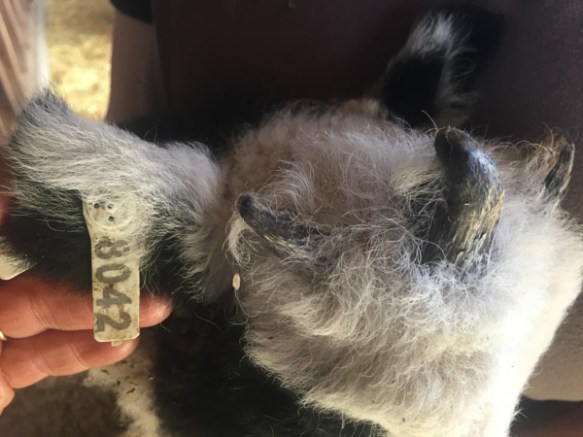 I don’t castrate many because it’s hard to know how they will grow out and which might be a great flock sire for someone. Some are easy though–too much or too little color to fit within the 15-85% breed standard. This one’s horns are already touching at the base under that hair. As the horns grow they will fuse and not grow well separately.
 Marina and Maggie (no photo) helped catch lambs too and Mary handled the clipboard. The lambs were all tagged with their white ID tags right after they were born but we put added a colored tag on Farm Day. I like to use a second tag for back-up ID if the first one falls out and also to color code the sire. It’s interesting to keep track of that and it also helps to find a lamb when you’re looking for one among 75. You can narrow it down some if you have a color to look for.
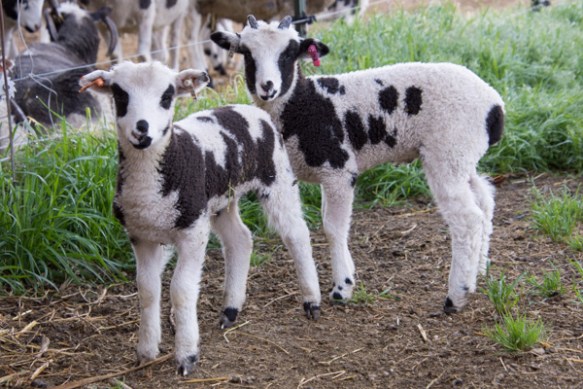 This year Cayenne’s lambs got orange tags. Pink tags go in all the lambs that have been castrated.
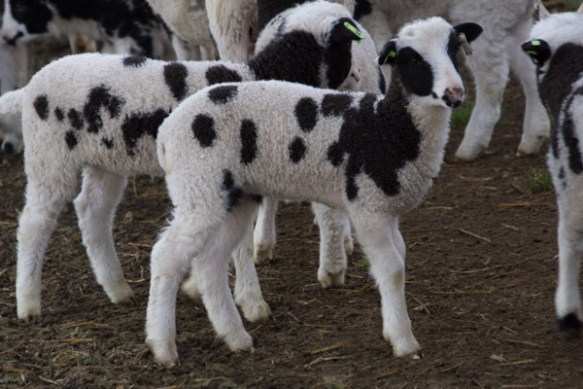 Green means these are Buster’s lambs.
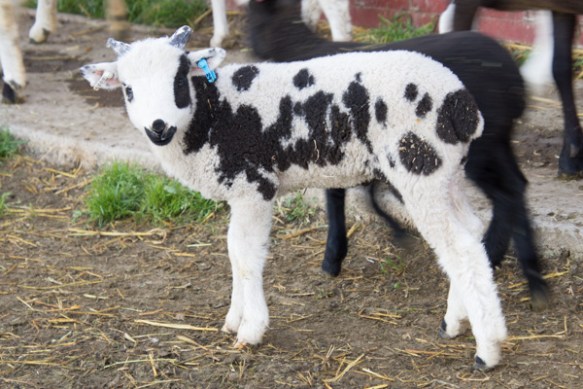 Blue was for Catalyst.
 Peyton’s lambs are obvious so don’t need an extra tag.
 After we tagged all the lambs Marina and Betsy stayed to help me set up the pasture for the sheep. I had put the sheep out for a few days but hadn’t cleaned and moved the water trough.
 We walked around the pasture and took stock of things. I always point out the issue that I have with the dallisgrass that is out of control. That’s what all that dry grass is. I’d much rather see green grass growing. The whole pasture was looking somewhat dismal from a growth standpoint. At this point we had just had March rain after two very dry and cold months. I wasn’t seeing much growth–at least not enough to feed 55 ewes and 75 lambs.
  We spotted this grass that I don’t recognize.
 I took photos to send to a friend of Marina’s who she think might recognize it.


 Meridian Jacobs' Blog