Do you remember this post from May 15…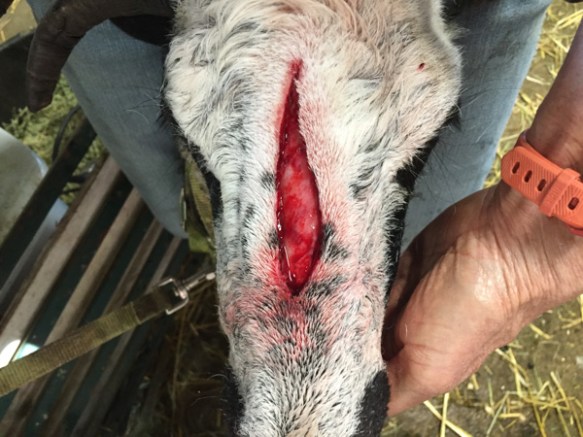 ..with this sheep ?
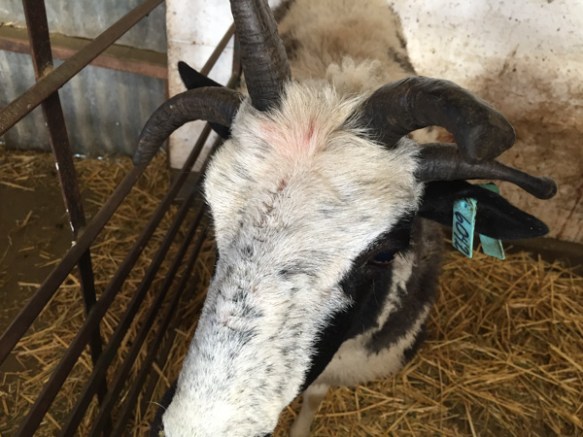 Here she is not too long ago. Staples were still in but ready to come out.
 The end result.
Scarface Follow-up
1
Do you remember this post from May 15… ..with this sheep ? Here she is not too long ago. Staples were still in but ready to come out. The end result.
We had 81 lambs this year. I’d like to keep…well I’d like to keep a lot but realistically I should keep only about five. In fact since the JSBA AGM is here in August I should allow myself enough space to buy/trade from other people. So I have to narrow down my choices. I also have to figure out which lambs will be sold to other breeders and which may go to market. It would be nice to wait until they are all six months old or more to evaluate them but that is not realistic either. I am weaning the oldest lambs now and buyers want to take them home. (And I need to get them away from here because they are getting bigger and eating more.)


I take lots of photos of lambs as they grow to put on the Sheep for Sale part of the website, but sometimes I need to gather the whole batch to be able to make real comparisons. I did this about a month ago. First I sort and start narrowing down choices. This is two-horn rams.
 More two-horn rams.
  Four-horn rams (except for the one I liked best who broke his horn this morning and I put him out so he would hopefully not keep knocking it on others). I bred to two two-horn rams and one four-horn ram last year. There are more two horn lambs than four. Some ram lambs are missing from these groups because I had already castrated those that I knew right away would not be candidates for registration (too much or too little color or horns that were too close). Time to narrow these into groups.
 These are rams who will be on the cull list. It doesn’t take much for a ram to be moved to that list. In this case two of these lambs (on the right) have wide spacing between the upper and lower horns. That seems like it would be a good thing, but usually those upper horns tip forward and sometimes there are other issues with them. I’ll report back with more photos as they keep growing. The lamb facing the photo on the left doesn’t have enough spacing between horns. His right side horns are already touching at the base leaving no room for growth. The other two both have a lot of freckling, although it’s hard to see without parting the fleece and one is scrawny.
 Three of the potential 4-horn breeding rams. Nice horn spacing and shape so far. No sign of freckling. Color % OK. Nice looking fleeces. Britch wool not too high on back leg.
  Out of two pens of ram lambs I pulled these four out as potential at this point. That is mostly due to the wide horn growth. There may be others in the pens but I won’t guarantee the horn spread yet. Of course, they all have to meet the other criteria mentioned above as well.
 Here they are from the rear.
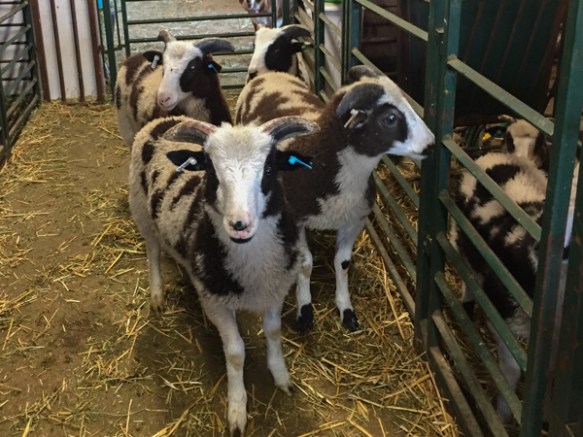 Another from the front showing the ram with the best horn spread so far.
On to the ewe lambs.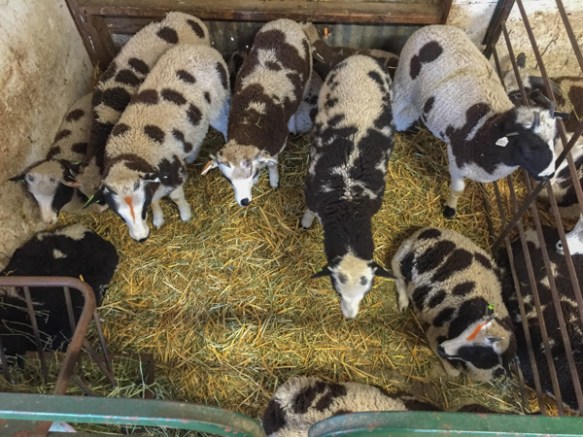 These are the 4-horn ewes. I will be less picky about the ewe lambs than the rams. The breed standard isn’t so stringent and each ewe doesn’t play as large a part in the flock as the ram. Keeping a variety of ewe lambs is a good way to maintain some genetic diversity (although that is a good reason to buy some lambs from other people in August).
 The 2-horn ewe lambs.
 Another view of the pen on the right. Notice the two lambs (sisters) in the upper left corner. Compare their horn growth to the others. All these lambs are about the same age. Those two are showing minimal horn growth compared to the rest. I don’t know if that is temporary and their horns will be just fine when they are mature or if those are scurs. This is another reason to look at the lambs in a group. All of the rest of these lambs look fine to me so it will be hard to narrow this down to only a few to keep.
 These are some of my 4-horn choices. Preliminary selection is based on wool and lack of freckling in the lamb and the dam.
 The same group from the rear. I don’t fault the sheep for their rear leg position, but from this photo it would be the lamb on the left that I’d take to a show.
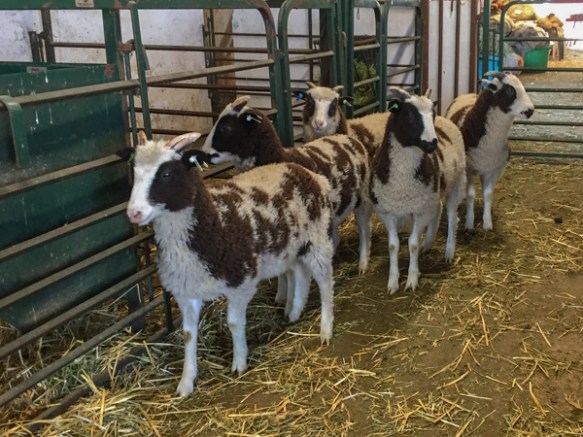 Two horn lambs that I like.
 From the rear.
Uh oh. I have selected a few more than my original five or fewer. There will be more selection work ahead.
I haven’t finished my posts about the trip to MD, but that’s because I have so many photos to sort through. I’ll take a break and do a farm post or two.
Yesterday I gathered sheep to show a buyer and saw this: Stacy’s face was split open to the bone. I called my vet and she said that if I wanted her to come it would be a couple of hours, but I could fix it myself. She told me what to do.
 I thought that the hardest part might be getting the old goat clippers to work. I found them in the tool box and after oiling they worked fine. That showed that the wound was longer than it appeared with hair over it.
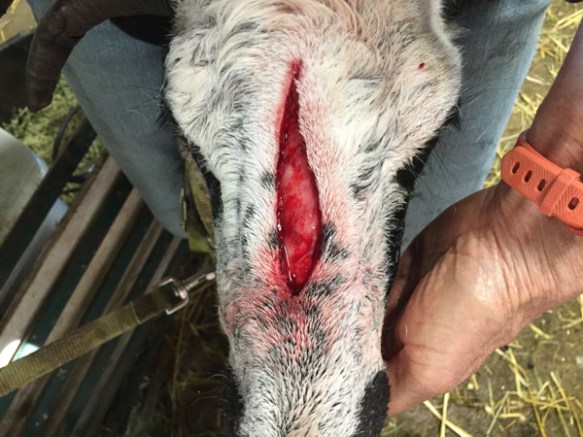 Then I scrubbed with betadyne.
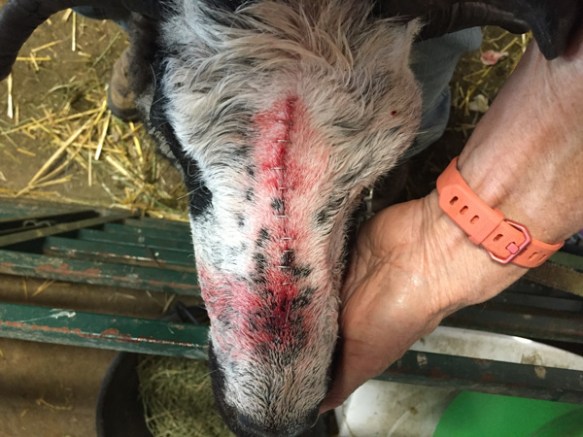 Fortunately I had bought the staple gun (meant for this purpose) a long time ago. I had forgotten about it until the vet suggested using staples. She barely flinched throughout this.
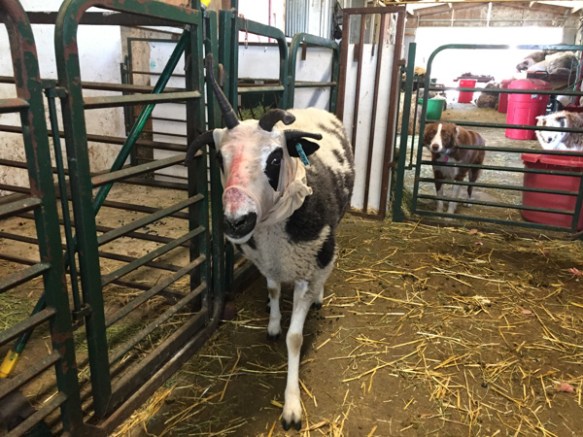 Nancy also suggested putting some kind of cover over this for a few days just to protect it. Since I haven’t worn pantyhose in more years than I can remember so it was lucky that there were some in the back of a drawer.
 The most stylish sheep are doing it!
 While I’m at the barn, here is a photo of the long-awaited work on the southwest corner where a lot of the wood is rotten.
 And speaking of veterinary issues, these are foxtails I pulled out of Rusty’s chest this morning. You can see on a couple of those how they had worked their way into the skin.
I’ve had tame sheep before, but not like Jade. I always bring her out when we have field trips and let her loose with the kids.


She stands still when kids are all around as long as she is being petted. She lets people touch her horns when I tell them to feel how the horns are warm at the base and cool at the top.
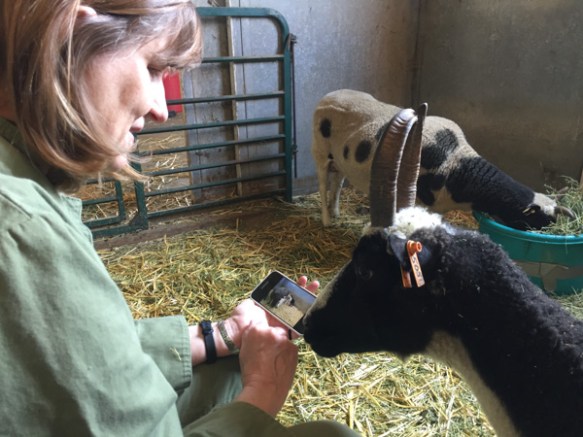 Now I find out that she likes watching videos with friends.
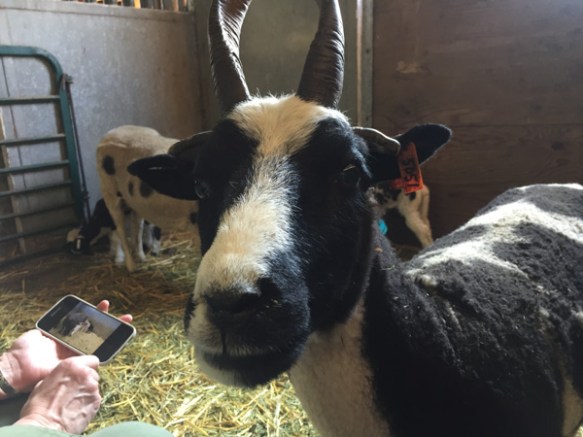 “Don’t you like watching videos with friends?”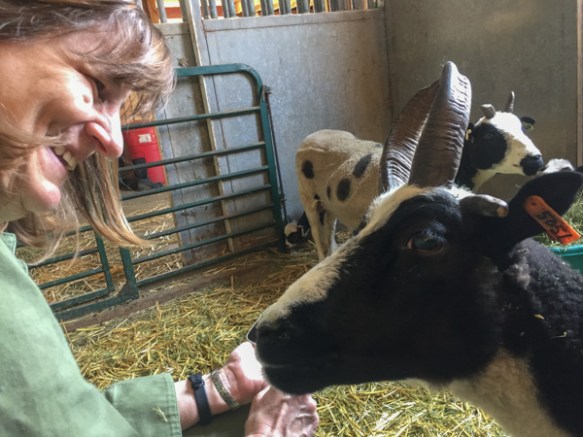
 “Yes Jade, you have nice white teeth.”
 “You too, Lisa”

Farm Club members have spent time here during lambing and helped with cleaning, lamb ID, etc. And of course there is always lamb cuddling. Farm Club is a great way to learn about raising sheep before you invest in sheep or if you won’t ever have the lifestyle that lets you own a sheep.
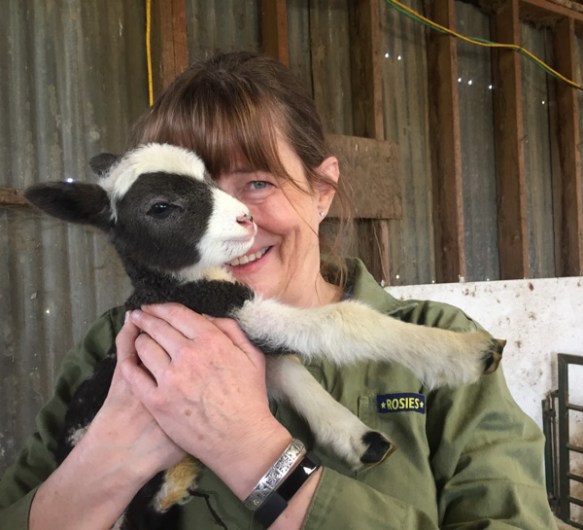 Zorra had plenty of cuddling while she was still in the lambing area with her mom. Lisa is a lamb cuddling Pro.
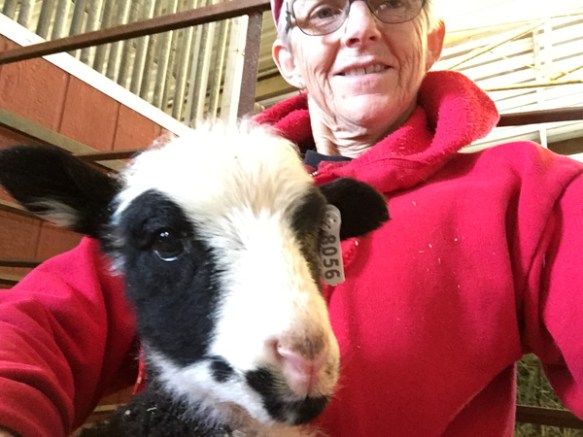 This is pet sheep Jade’s lamb (and me).
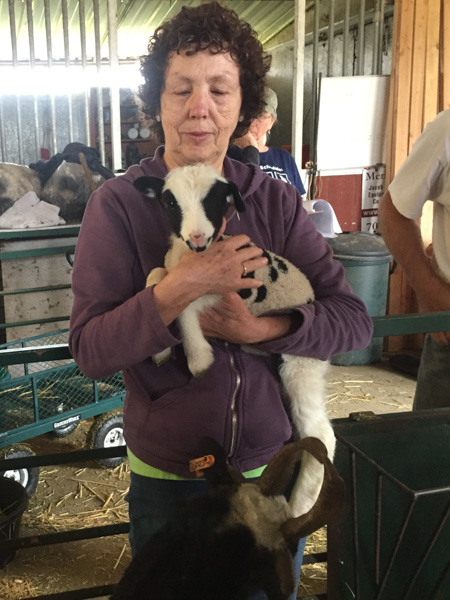 This is her again being held by Peggy. We’d really like her to be friendly too.
 This is Zorra again with Sumi.
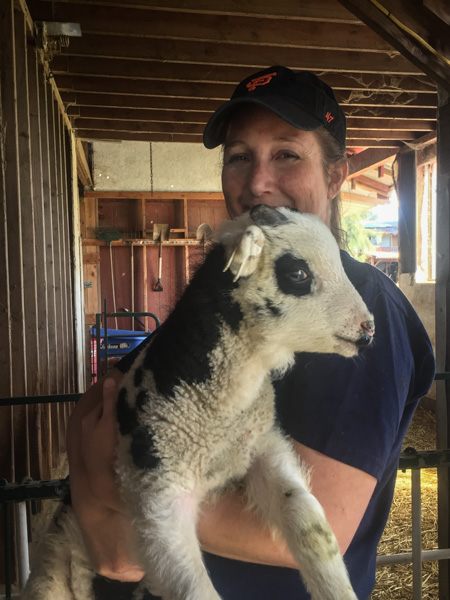 As the lambs get a little older we have other Farm Days. This was Betsy’s first day on the farm and she jumpred right in holding lambs as we ear tagged and castrated.
 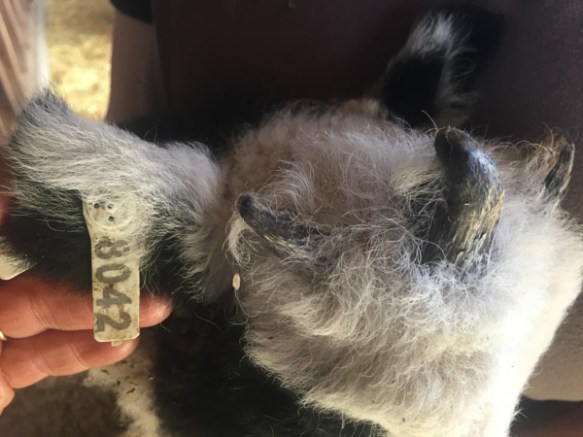 I don’t castrate many because it’s hard to know how they will grow out and which might be a great flock sire for someone. Some are easy though–too much or too little color to fit within the 15-85% breed standard. This one’s horns are already touching at the base under that hair. As the horns grow they will fuse and not grow well separately.
 Marina and Maggie (no photo) helped catch lambs too and Mary handled the clipboard. The lambs were all tagged with their white ID tags right after they were born but we put added a colored tag on Farm Day. I like to use a second tag for back-up ID if the first one falls out and also to color code the sire. It’s interesting to keep track of that and it also helps to find a lamb when you’re looking for one among 75. You can narrow it down some if you have a color to look for.
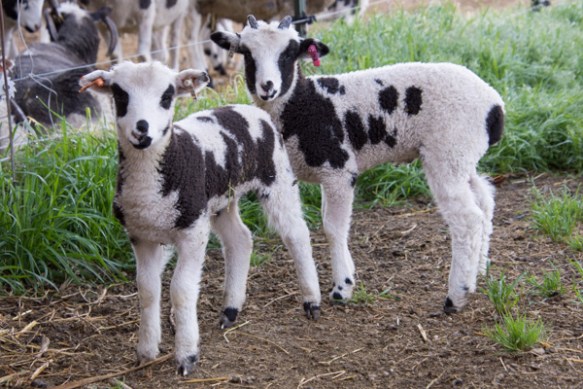 This year Cayenne’s lambs got orange tags. Pink tags go in all the lambs that have been castrated.
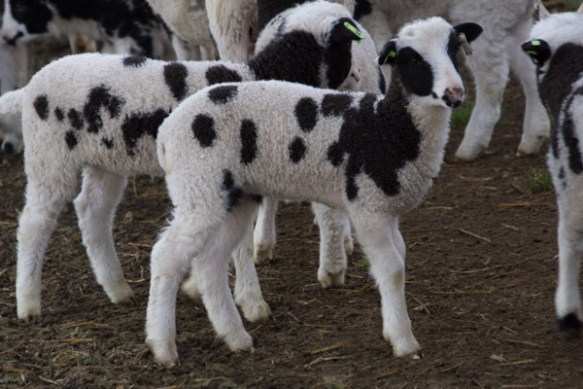 Green means these are Buster’s lambs.
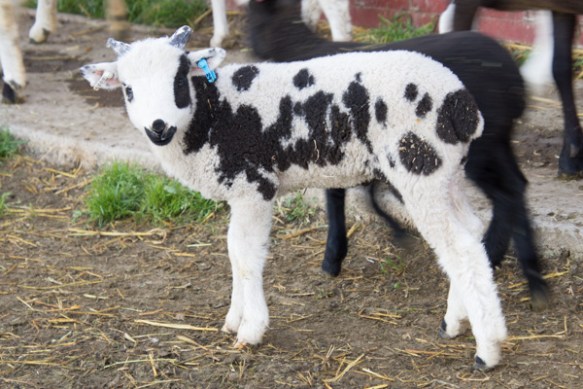 Blue was for Catalyst.
 Peyton’s lambs are obvious so don’t need an extra tag.
 After we tagged all the lambs Marina and Betsy stayed to help me set up the pasture for the sheep. I had put the sheep out for a few days but hadn’t cleaned and moved the water trough.
 We walked around the pasture and took stock of things. I always point out the issue that I have with the dallisgrass that is out of control. That’s what all that dry grass is. I’d much rather see green grass growing. The whole pasture was looking somewhat dismal from a growth standpoint. At this point we had just had March rain after two very dry and cold months. I wasn’t seeing much growth–at least not enough to feed 55 ewes and 75 lambs.
  We spotted this grass that I don’t recognize.
 I took photos to send to a friend of Marina’s who she think might recognize it.
Thanks Farm Club!
I was in the right place at the right time for these shots. I can’t decide which I like best. Well, I think I have it narrowed to three or four…or six. I haven’t edited much other than straightening and a little cropping. I could do a lot with the color, but I hesitate to change things to what doesn’t look as natural to me. I’d love to hear what you think. Do you have a favorite?


I could have also titled this “One of these things is not like the other.” Did you see it?
I’ll be working with these photos more and will do some editing to see how that goes.
Lambing seems like it was a long time ago now, but this was only 2-1/2 weeks ago.
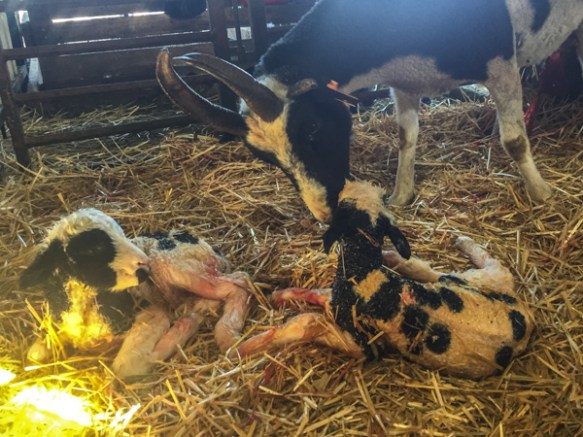 Jade is the biggest pet sheep here.
  She had a ewe and a ram lamb.
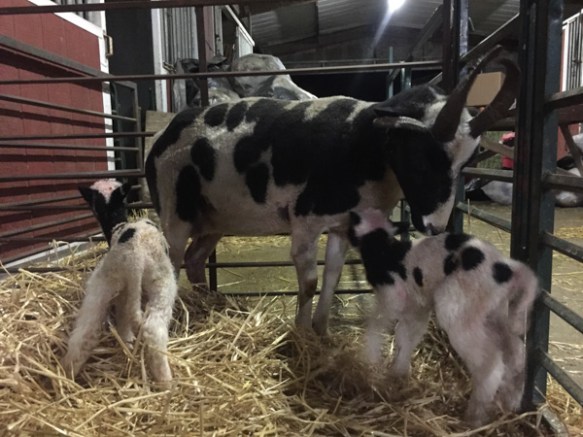 At that point I had overflow pens set up in the alley of the barn.
Lambing gets exhausting and you have to get your sleep when you can.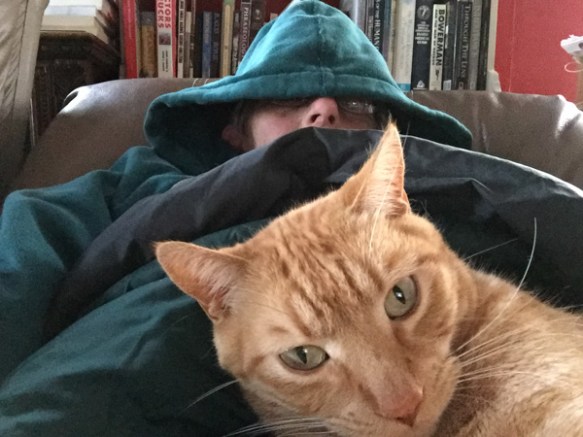 I think I slept some here and then was woken up.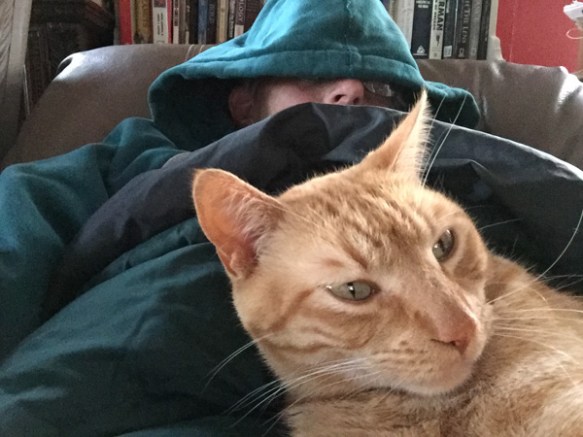
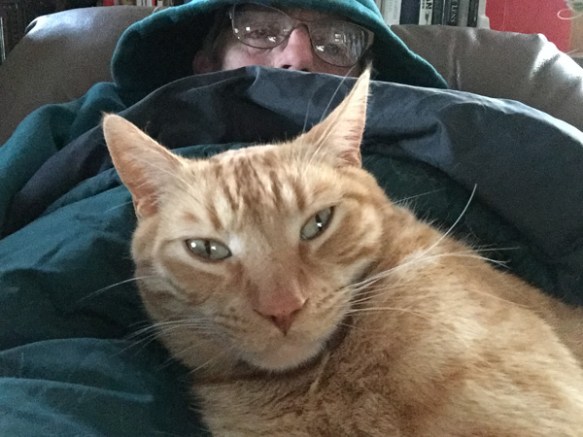 It looks as though Sunny is getting sleepy here. But I’m awake.
While we’re thinking about getting cozy on the couch…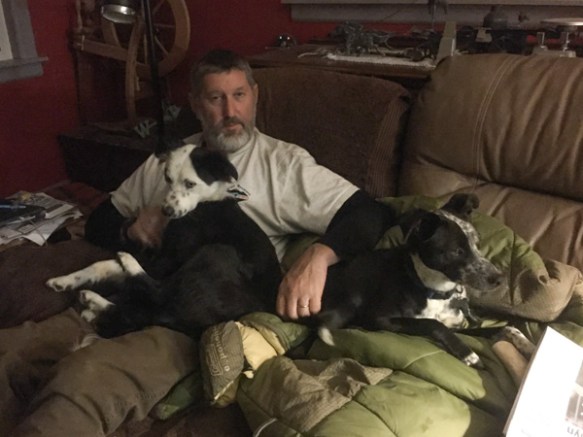 My son works as an EMT and he is often gone at night. The “puppies”, who live next door, get invited in our house if they are barking too much. They have no qualms about cuddling on the couch, something our dogs don’t get to do.
 Back to Jade. Here she is with one of her lambs at 2-1/2 weeks old.
Raquel lambed the day after Ears, also with triplets.
 Here she is the previous day, looking rather uncomfortable.


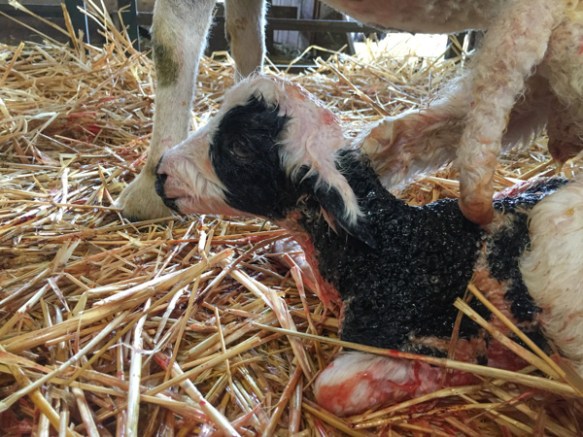
 Here is how the barn list looked at the end of the day.
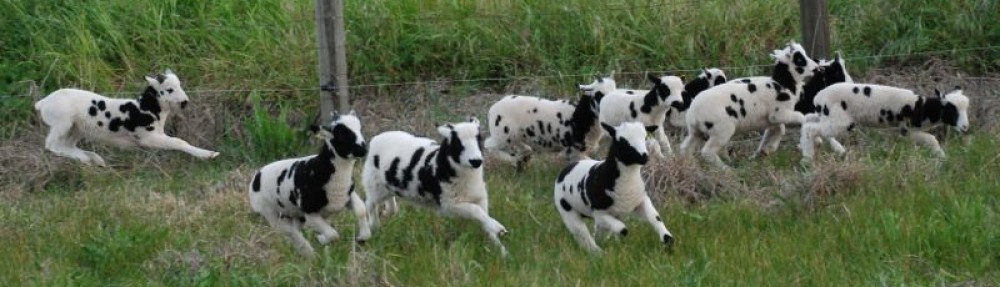
 Meanwhile , in the pasture the lambs were playing.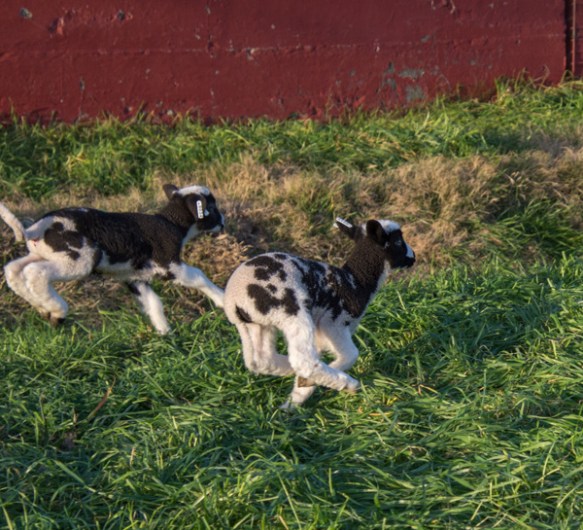
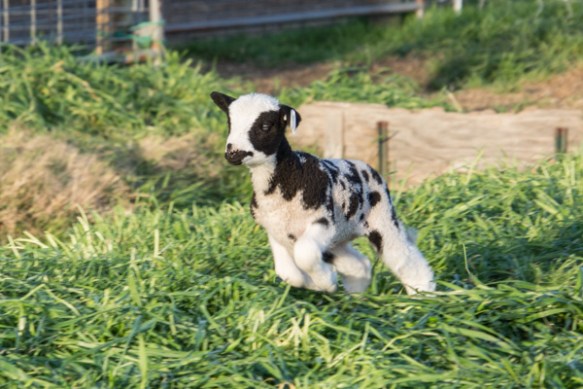
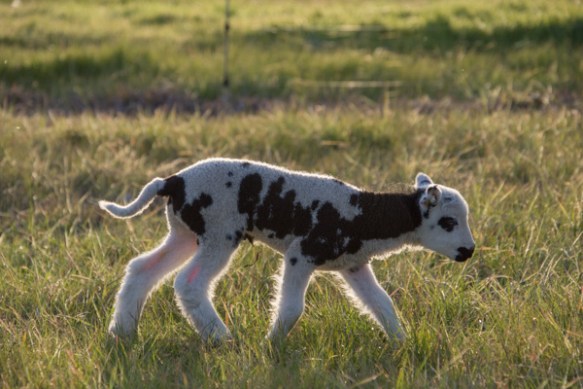


Enjoy life!
After Bronagh lambed, Foxy was next. That is Foxy lying down in the back.
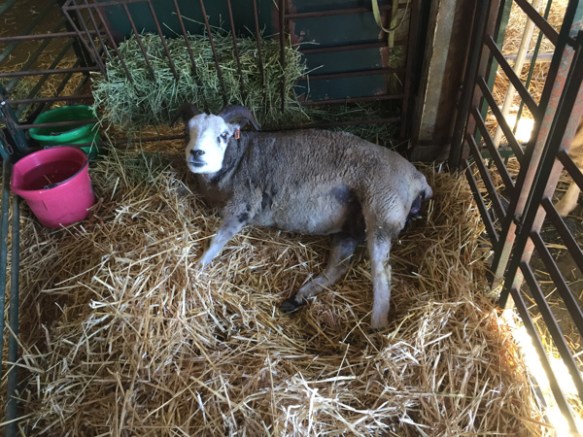 I brought her into the barn about an hour after I first noticed her.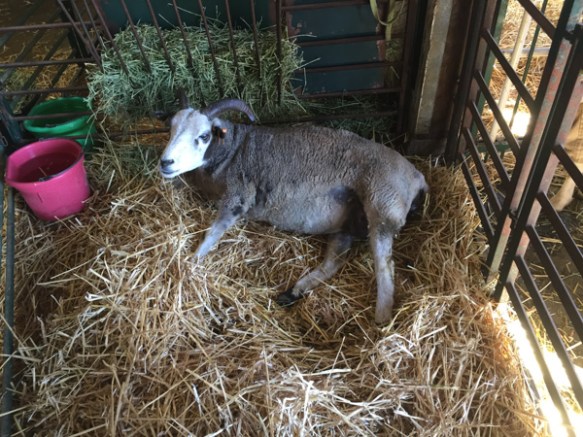


 She lambed about an hour later.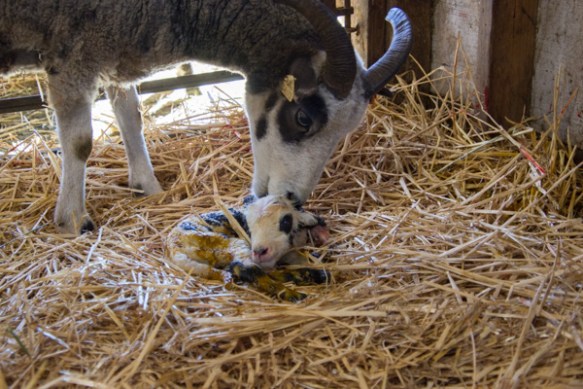


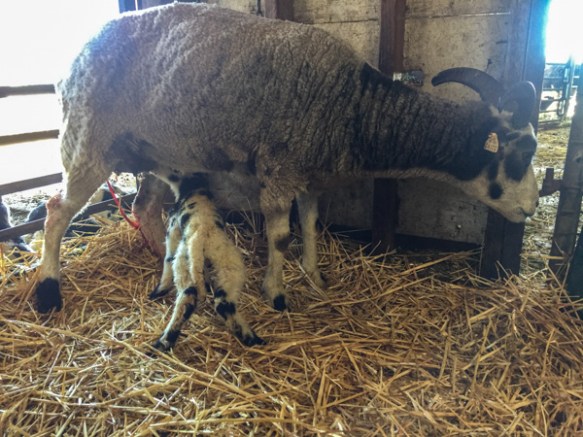
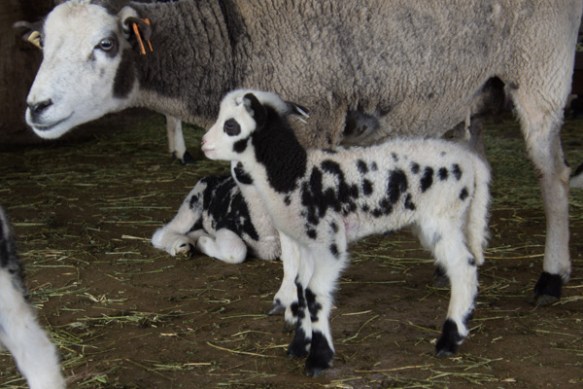 This is Foxy’s lamb at 6 days old.
While I’m working in the barn I often take photos of the lambing process–partly to amuse myself and partly to use as a resource when new sheep raisers ask about the lambing experience. It is useful to know how much time there is between seeing a ewe in labor and when lambs are born, time between deliveries of twins, time it takes for a lamb to start nursing. There are wide variations in these figures, but I like to be able to show a “real-life” scenario.
This is a ewe named Windy Acres Bronagh who lambed a week ago.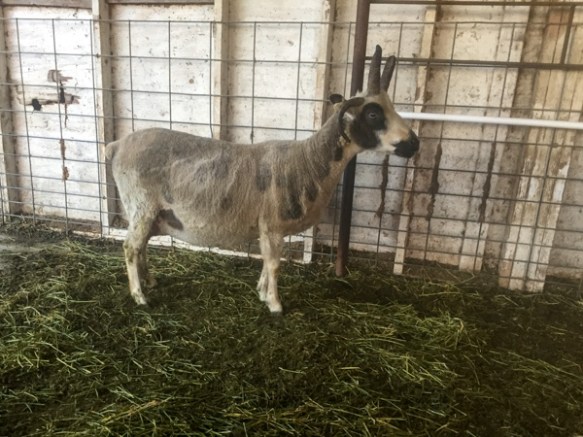 I saw her at about 7 a.m. and knew that she was in labor. The first sign of labor is often just behavior. You have to know what normal behavior looks like to know when something is different. I spend a lot of time looking at my sheep.
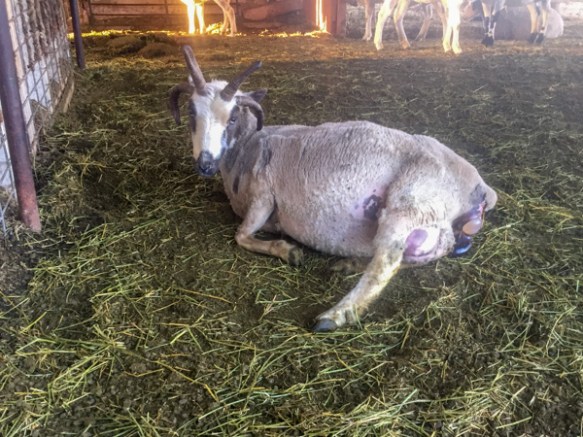 A more obvious sign is seeing the sac emerge when the ewe has contractions.
  The first lamb was born about 7:20 and I brought the lamb inside the barn.
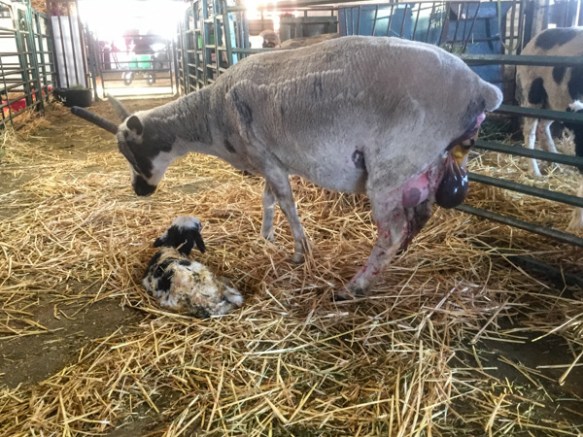 It sometimes takes much longer before the second lamb is born, but this one was coming within five minutes.
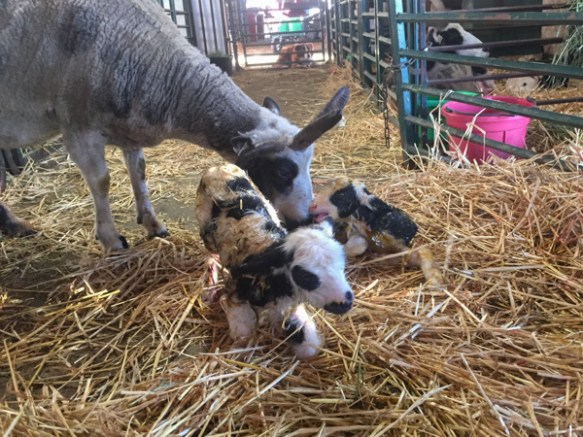 That’s the first lamb getting up within ten minutes of birth.


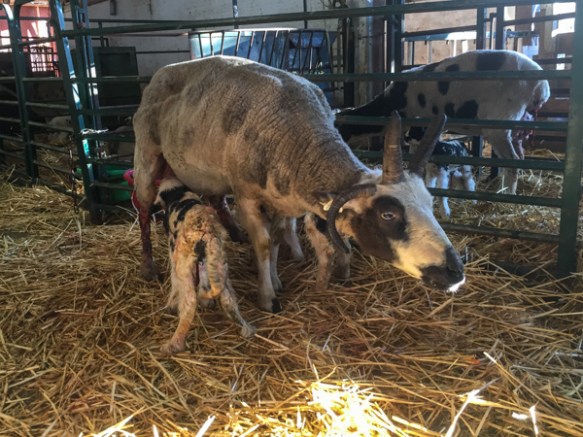 Both lambs were nursing within a half hour.
 This is the lamb board. These lambs were #49 and 50.
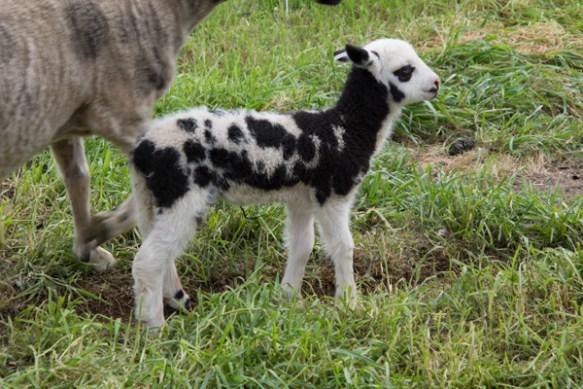 This is one of the lambs one week later.

