Road Trip to Washington – Day 3

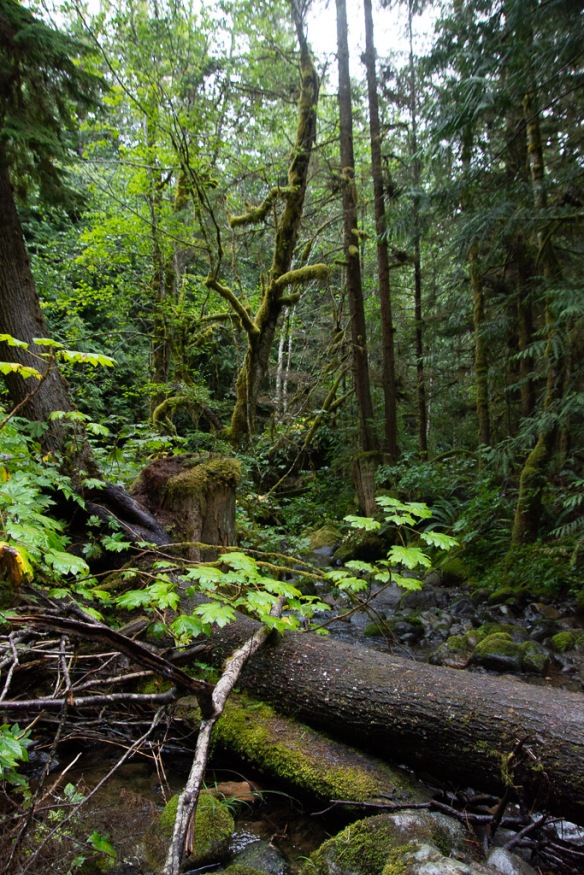
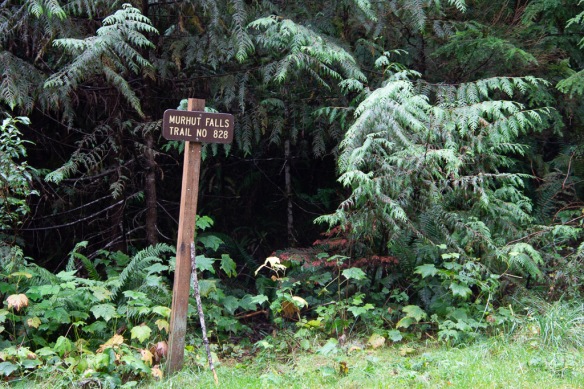
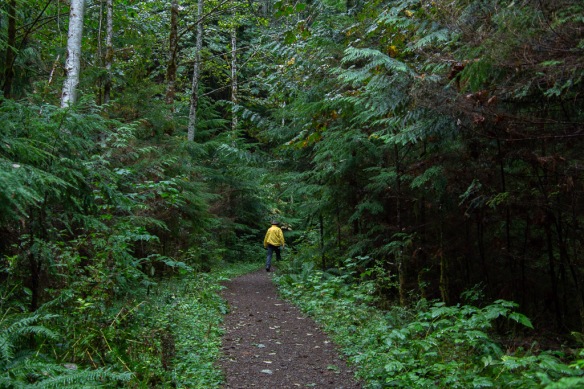
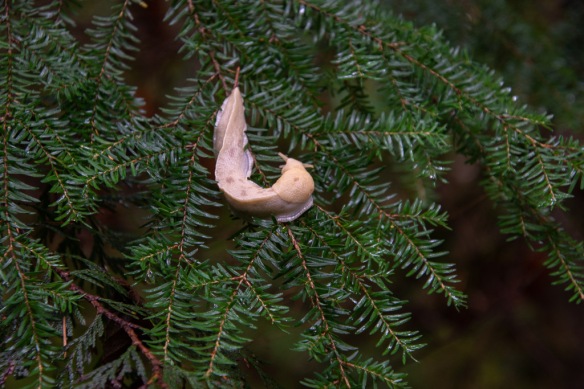
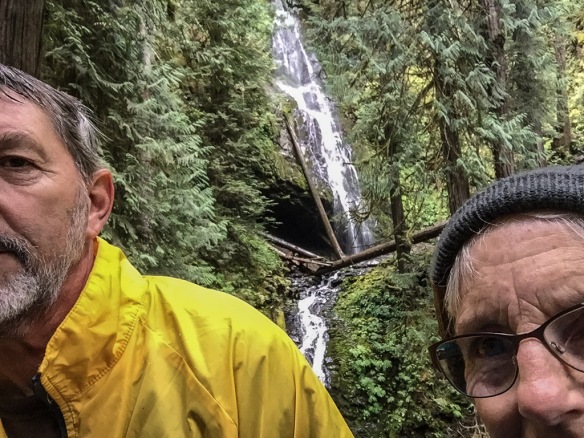
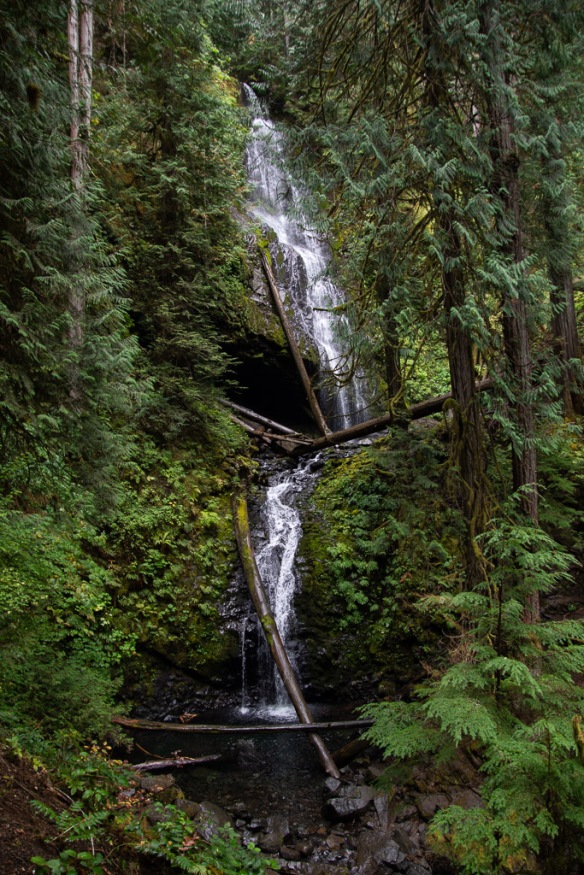
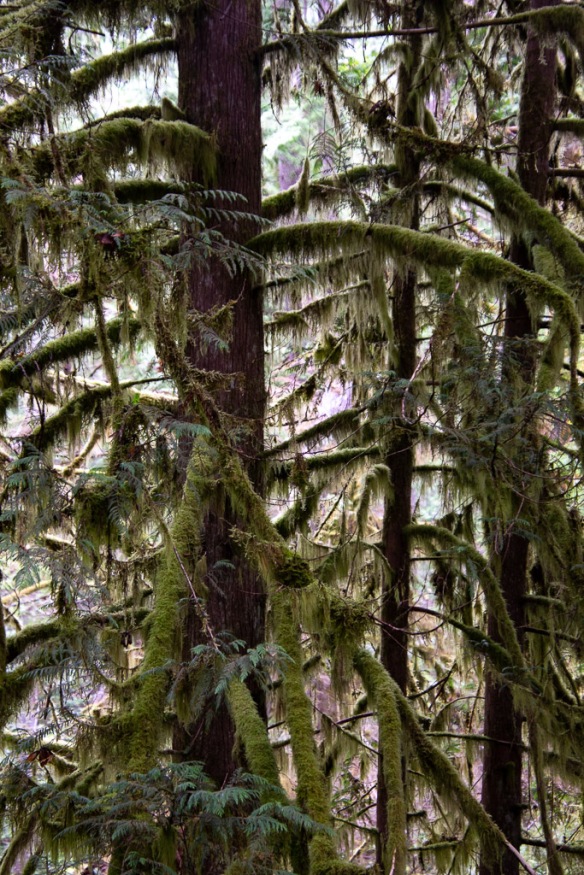
We certainly could have spent more time at Mt. St. Helens NVM (Day 2) or gone to see Mt. Rainier, or any number of other interesting places in Washington, but now we were on to our primary destination, Olympic National Park. We were concurrently following the Olympic Peninsula Waterfall Trail that Dan had read about.DSC_3635Our first waterfall on the trail, and before getting to the park, was Murhut Falls on the Duckabush River.DSC_3641I first wondered about the name of the river. You have to duck under bushes if you don’t have a ready made trail? No, in a side trip to Google I found that it is an Indian word meaning red face, referring to reddish bluffs in the area. IMG_9663As we found in all our wanderings in this area, the forest is dense, damp, and spectacular.DSC_3636A wildlife shot along the way. So far the only wildlife I was photographing was slow moving.IMG_9665About 3/4 mile up the trail we found the falls.DSC_3643The waterfall trail guide says that this one is 120 feet with another 35 feet below this point. Photos don’t do any of the forest scenery justice.DSC_3644Weather continued to be damp and misty but not much real rain.
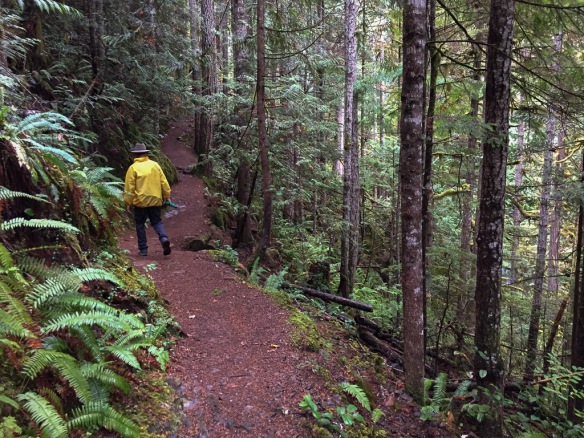
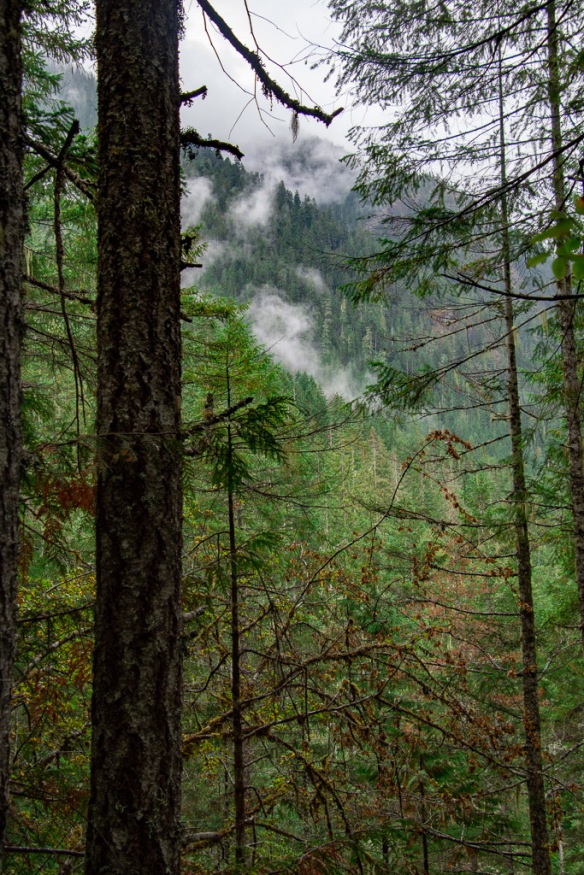
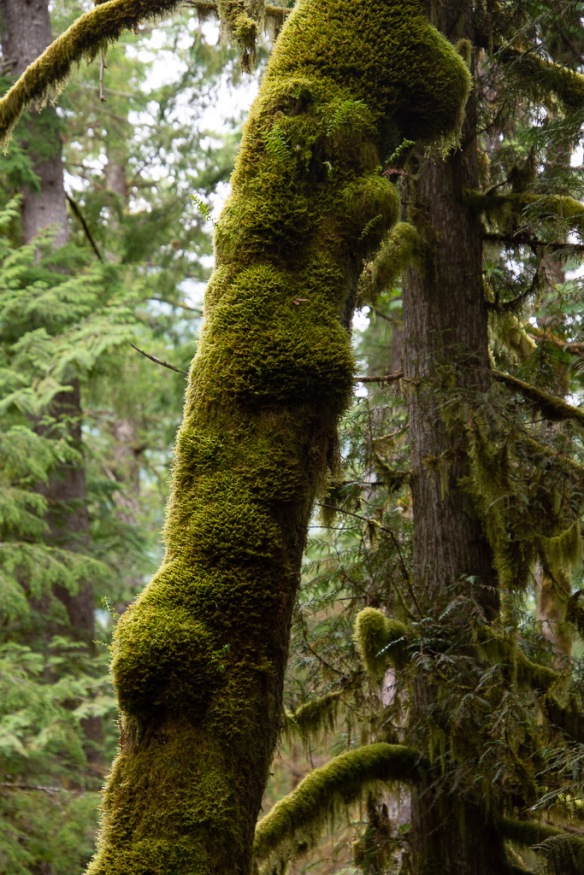
DSC_3647You can certainly tell that this is a wet climate as opposed to most of the places we find ourselves hiking and camping.DSC_3648
We continued north with the Hood Canal on our right and heading towards the Strait of Juan de Fuca, the body of water that separates the U.S. from Canada. I had thought that we’d have time to visit some of the nearby islands, but that will also have to be another trip.

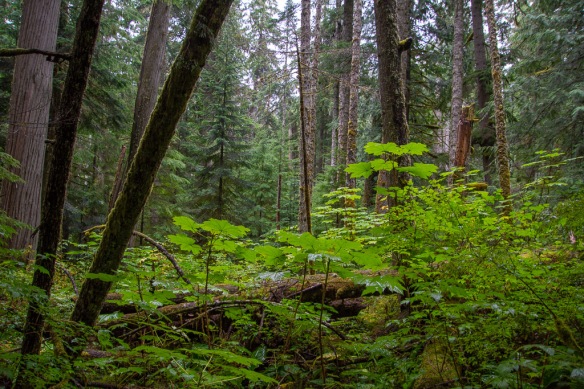
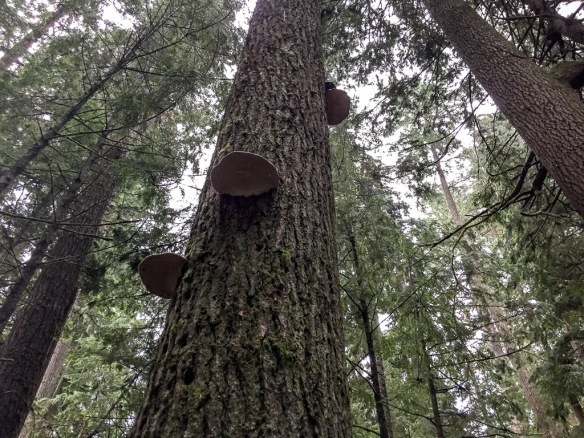
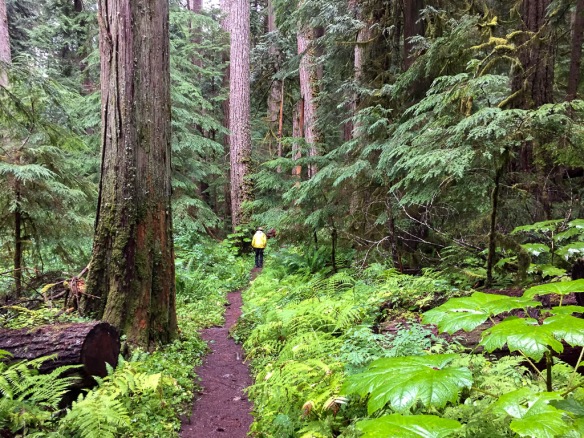
We stopped at the Visitor Center in Port Angeles to pick up a map, but didn’t spend much time there because we were anxious to get to the Park and figure out where we were going to spend the night. We found that the Heart O’ the Hills Campground had spaces so we parked in one and then went hiking.IMG_9677The forest was stunning. The trees were massive.DSC_3654Vegetation is dense.
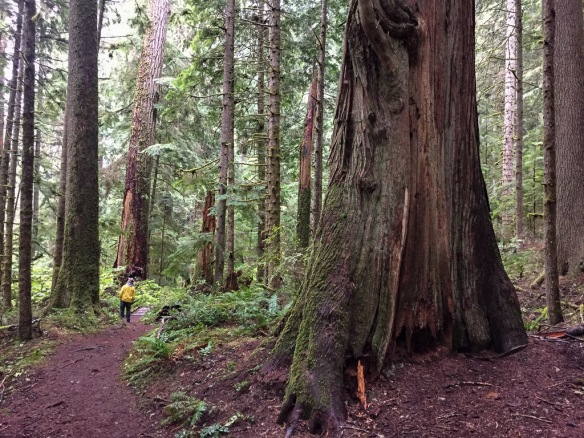
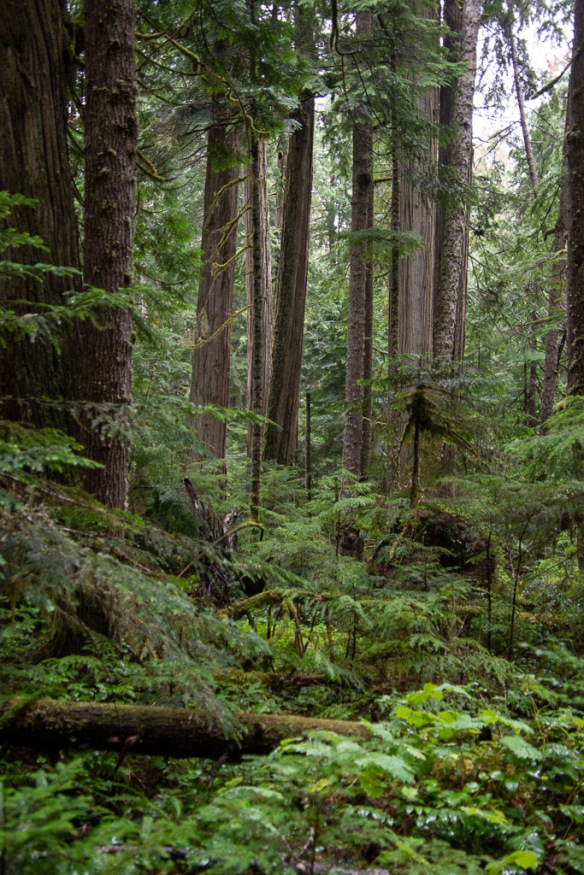
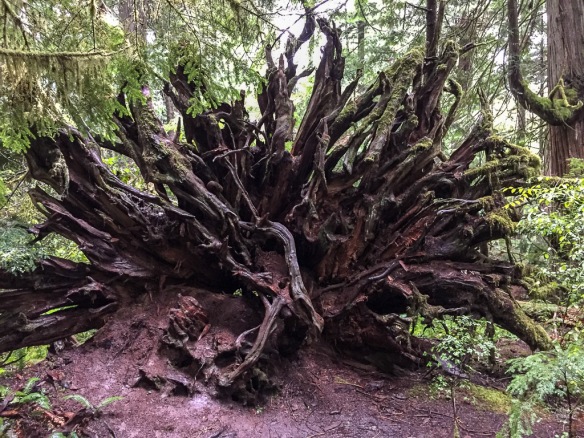
IMG_9672There were lots of trees down throughout this part of the forest, but it doesn’t take long before ferns and herbaceous plants are growing on the downed trees and the forest covers them over.IMG_9679
DSC_3651

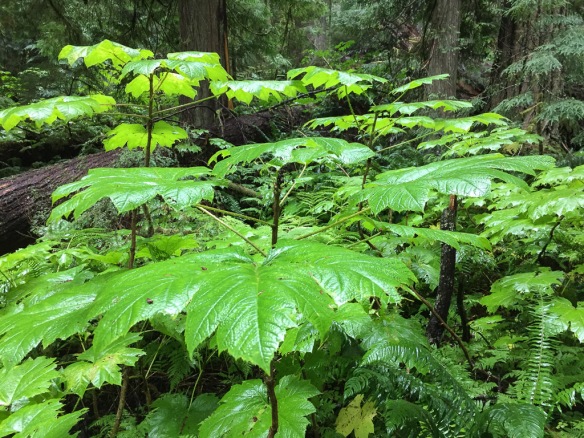
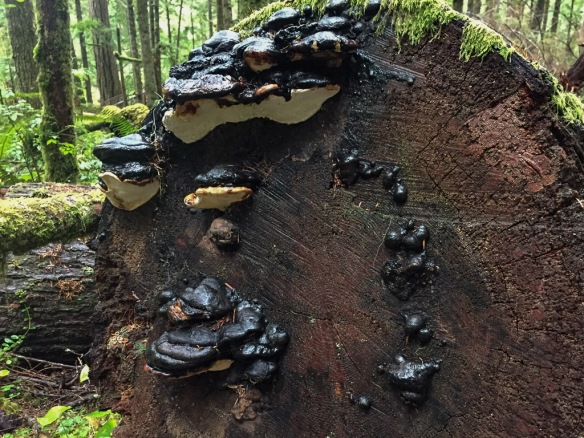
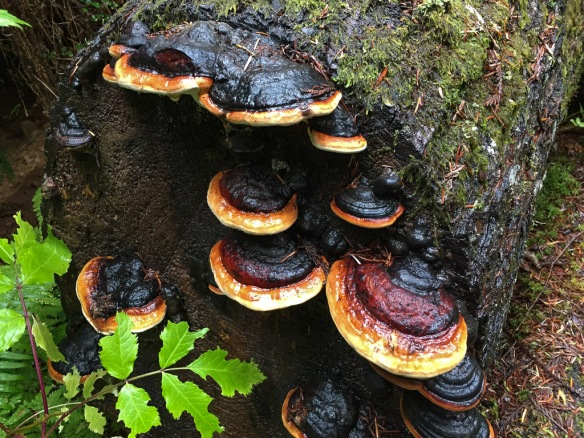
IMG_9678This plant with huge (up to 15″) leaves was everywhere in the understory (see the three photos above). It is called Devils Club (Oplopanax horridus) and is endemic to dense, moist, old-growth forests of the Pacific Northwest. It has a long list of uses by Native Americans from medicinals to face paint and is covered with irritating spines.DSC_3652Dwarf Dogwood, Cornus candensis.IMG_9674 I didn’t even try to identify fungi, but took photos because I like to share these with a friend who dyes with mushrooms.DSC_3655
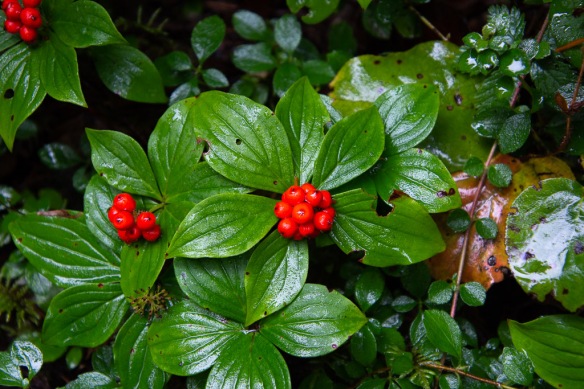
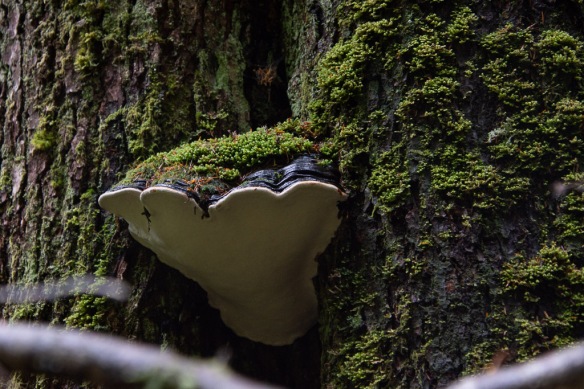
IMG_9680

IMG_9673

DSC_3659We walked until we reached the creek and were undecided how far the trail continued. But it was getting to be dusk and we decided that we’d better turn back.IMG_9682This forest would be pretty dark when the sun was down.
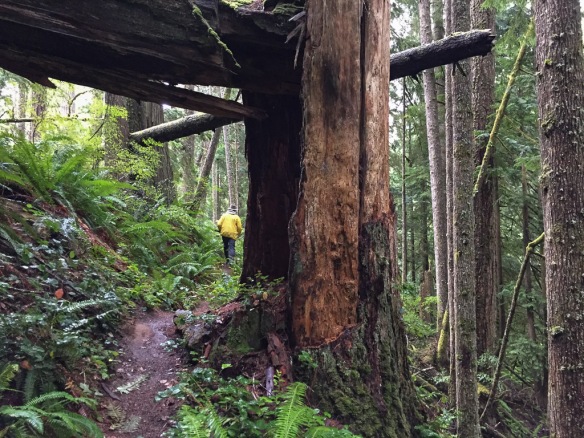
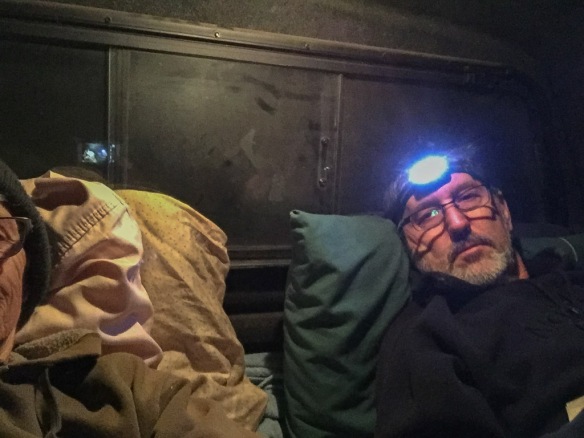
I’ve lost track of our camping meals because they are not exactly gourmet food. On this trip much of the time it was dark by the time we got the camp-stove out and we just dumped a couple of cans of chili in a pan and put hard-boiled eggs and cheese on a salad mix from Safeway. Our sleeping accommodations in the camper shell are just as fancy. We sleep on top of a platform that Dan made so that you can pack all the stuff underneath.IMG_9683Fortunately it was warm enough with sleeping bag on top of my thick sheepskin. (Maybe it wasn’t that warm, seeing that I’m wearing my wool beanie and a sweatshirt.) IMG_9684 Oh, I have a wool blanket with me too (handspun Jacob by the way). This is the view out from my sleeping bag.
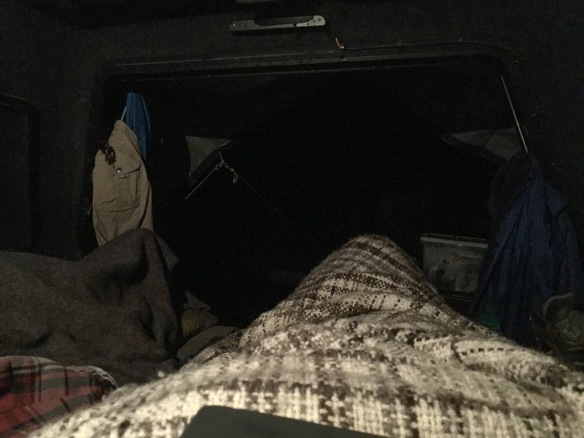
More tomorrow.

Visiting Texas – Day 4

I finished the last post with it snowing on Thursday evening. This is a rare event in this part of Texas and the fact that the snow stuck around through the next day was even more rare. It made for an all new landscape to photograph.

2017-12-TX-23              The view from the back walkway.

2017-12-TX-29         There is the decorated tree just inside the gate on the right.

2017-12-TX-28      Everyone else was still in bed but I went for a walk up the road as the sun was coming over the hills.

2017-12-TX-55


2017-12-TX-47

2017-12-TX-73


IMG_3783

2017-12-TX-117                  I got back to the house and checked inside the truck. Dan had chosen to drive to Texas instead of flying. He says, now that he has retired, “everyday is Saturday” and he preferred to throw a road trip into the plans. He had left five days before I did and spent time hiking and camping along the way. He met me at the airport in Austin on Tuesday. Now that all the kids were at the house we had to spread out with sleeping arrangements and he decided to continue with the camping mode and sleep in the truck.

2017-12-TX-120                                               Eventually everyone else came out into the snow.

2017-12-TX-127                     Kirby started a snowman with the help of…

2017-12-TX-122                                                       …Uncle Matt…

2017-12-TX-131                      …and Aunt Meryl.

2017-12-TX-137

2017-12-TX-149

2017-12-TX-151                  I love these kids.


And these kids too.

A Retreat

Some friends and I had planned a retreat for a few days last week–a get-away to a house in the mountains with as many craft projects as we could fit in our cars. As it turns out it was also a retreat, albeit briefly, from the political scene. We watched, stunned, on Tuesday, but then were able to postpone thinking about it for the most part while we enjoyed friendship and fiber and walking in the woods.
Some of us brought dogs.
dsc_4273

Ginny will write her own post about the week.
dsc_4242

I debated taking a dog. Rusty couldn’t go because he would have had a difficult time with all the stairs in the house where we were staying. Maggie wouldn’t be my first choice because she gets car sick. Ginny is the one that would be going stir-crazy left home while Dan was at work all day. So Ginny came with me and I’m glad I brought her. Having her there made me get out and walk at least twice every day. It would have been very easy to just stay inside and work on my projects, but I’m glad that I didn’t miss the beautiful woods. The weather was fabulous, although a bit scary to have summer-like weather in November. Of course I had my camera with me on some of the walks.

dsc_4264

dsc_4267

dsc_4271

dsc_4297

dsc_4299

dsc_4301

dsc_4300

dsc_4308

The walks were refreshing (and necessary for Ginny), but most of my focus was spent on my projects. I didn’t get to everything but made a valiant effort, staying up late every night. We shared the cooking so I only spent one evening in the kitchen and that was making an easy batch of mac and cheese.

img_4907

It might be hard to tell what this is from the photo. When it is delivered to my granddaughter in December it will have a covered mat on the floor, a hula-hoop supporting the scalloped roof and be supported from the ceiling. It has windows (thanks for demonstrating, Mary), inside pockets, and a door with glittery decorations. If I have time I will weave a rag rug with the leftover material. This is soooo cute, but it took soooo long to sew…and I’m not quite finished.

img_4912

This is a photo of all my projects for the 3-1/2 days. You can see on the pattern envelope how the canopy looks when it is set up. From bottom left and around: a batch of 41 dryer balls ready to be felted, a rag runner woven on the Cricket loom, a baggie of walnuts ready for the freezer (those weren’t mine because I didn’t get to cracking any that we didn’t eat–I need to finish this at home), Ginny 🙂 , six chenille scarves fringed (half of the 12 that I brought), and a warp wound for two ponchos. Not shown is the painted warp that I did that was in a plastic bag ready to come home and be rinsed.

dsc_4317

I drove home Friday, but not before stopping at the lake. It doesn’t seem right to go to Lake Tahoe and not actually go to the lake.

img_4915

Ginny learned quickly that she could retrieve her ball from the lake but she’ll tell you about that in Rusty’s blog.

A Walk in the Woods

This morning I drove to my son’s house in El Dorado County to work on some computer issues. When there was a break in the rain we drove a short distance to Bridal Veil Picnic Area on the South Fork of the American River to take the dogs for a walk.

img_4695

I just used my iPhone for photos because I didn’t want to deal with the other camera in the rain  so it’s hard to see Kirin in this shot. He’s way out in the river swiming back with a tennis ball. That’s Sam nearer the shore and Ginny trying to decide about the river. Ginny isn’t use to going on walks without the focus of The Toy or The Ball.

img_4713

This Ball was Kirin’s and it wouldn’t have been smart for Ginny to compete for it.

img_4716

Eventually though I took one ball and when Kirin was distracted in one direction Ginny got to go for the ball in another. I didn’t want to throw it too far out in the river because #1, I wasn’t sure how far she would go out to get it and #2, we weren’t sure if she could handle the current if she did go out farther.

img_4719

She did get plenty of ball time on the trail.

img_4709

The people were looking at things besides tennis balls.

img_4707

img_4724

img_4726

img_4727

img_4735

img_4732

We spent about an hour and needed to get back to the house.

img_4699

What a beautiful interlude. The rain makes everything look and smell so clean and fresh.

Sunflowers – June Through August

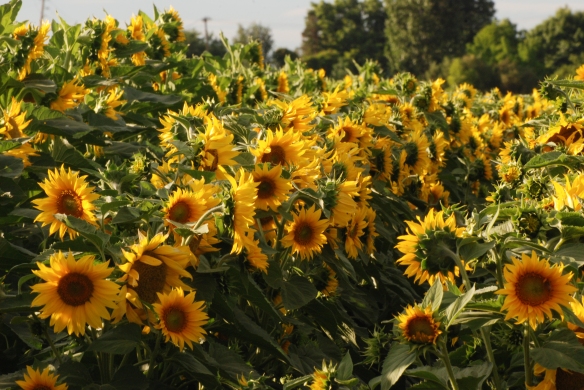
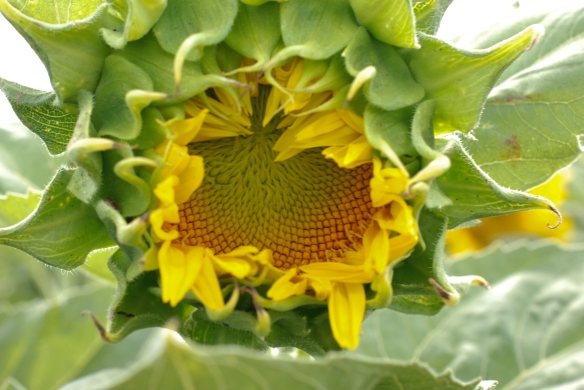
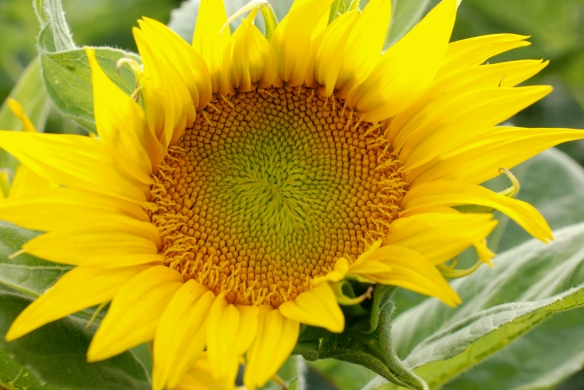
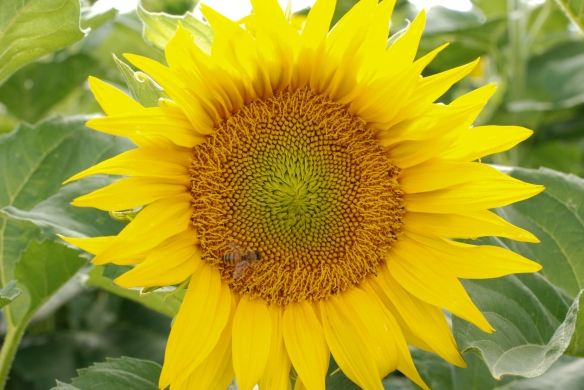
I have too many sunflower photos for one post so I split them up into yesterday’s post and this one.

20160615-dsc_0222

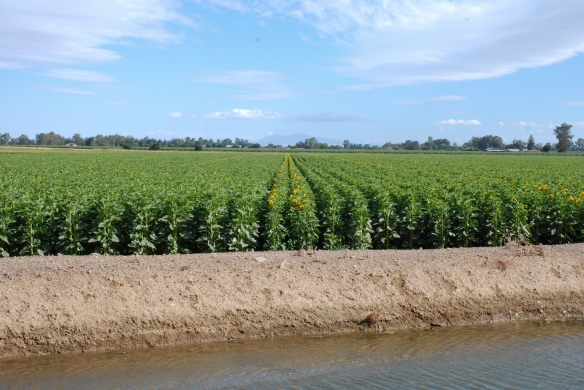
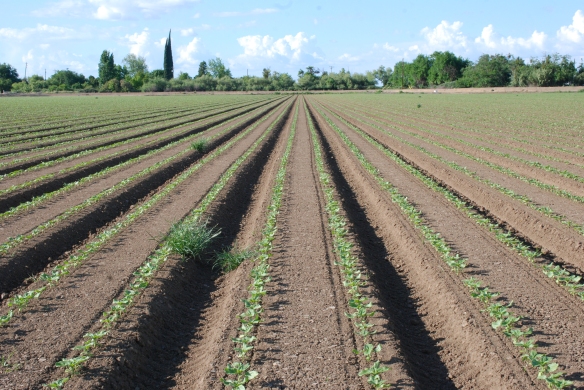
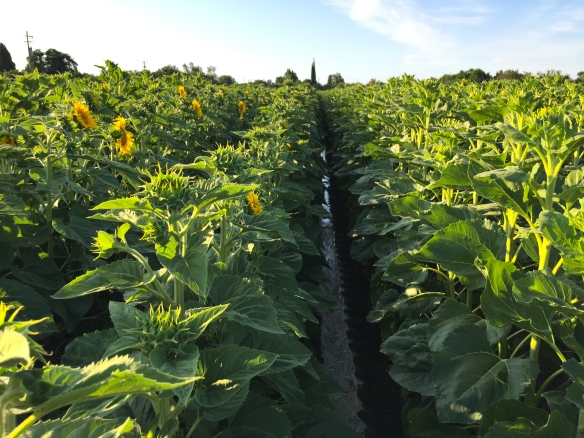
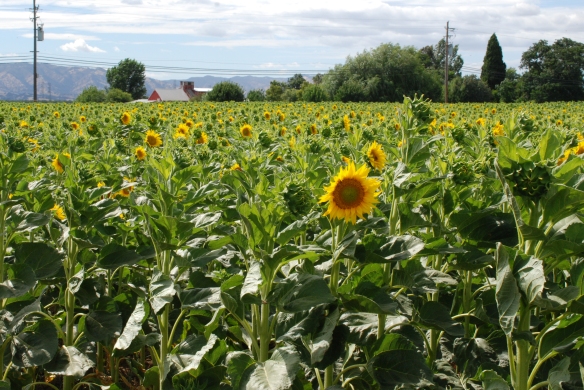
Do you see the flowering sunflowers in the center of the photo? If you count 10 rows to each side you’ll see (barely) that every 10th and 11th row there are flowers in bloom. The field was planted with two varieties of sunflowers, a smaller one that bloomed earlier and the larger variety. The following is from Wikipedia:

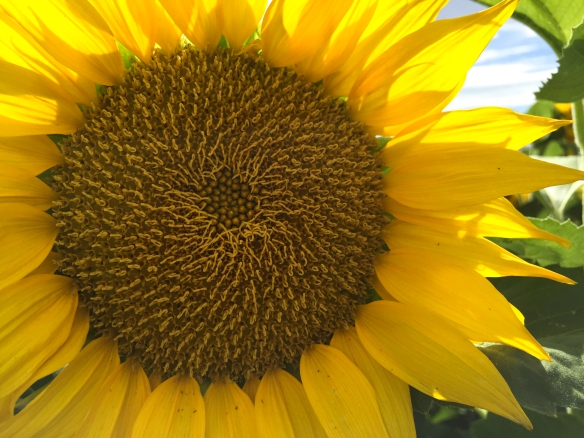
Typically, sunflowers tend to be self sterile. But for a sunflower to produce seeds, it needs pollen from a different sunflower. This is also known as cross-breeding, or in this case, cross-pollination. Occasionally, a sunflower can self-pollinate. Self-pollination produces an inbred line which, when bred with a separate inbred line, will result in a hybrid flower.”

20160620-dsc_0335

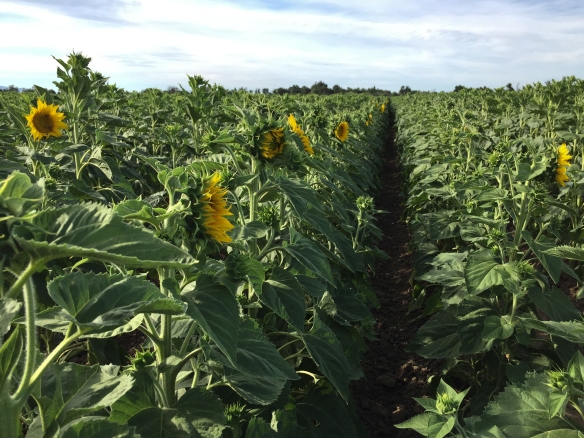
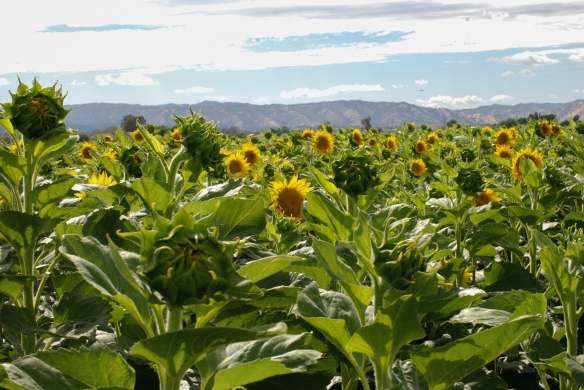
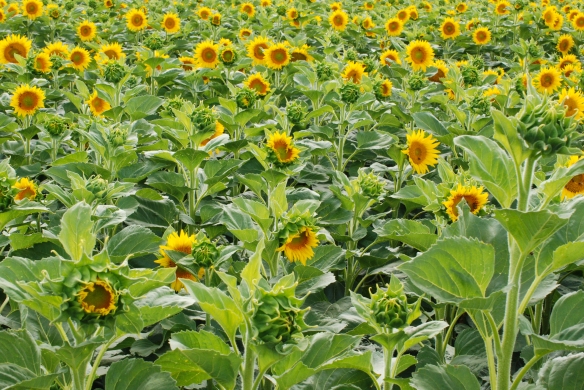
This is two of the shorter rows in full bloom. The taller sunflowers are also blooming. I assume that these are two varieties that (with probably a male-sterile flower on the larger plants) produce a hybrid seed. At harvest time I talked to a representative of the buyer who was out in the field and she said that this was a seed crop that was going to Europe to be planted for oil production.

20160616-img_1876

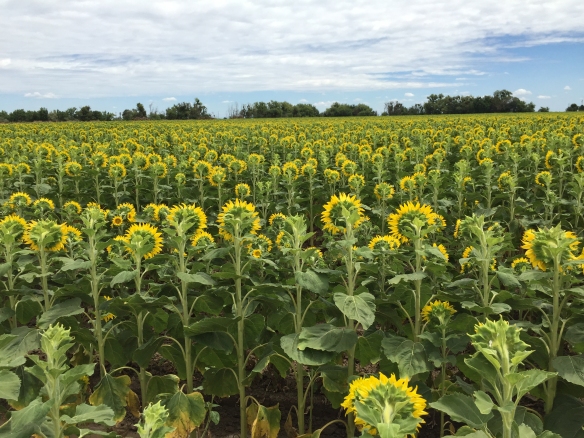
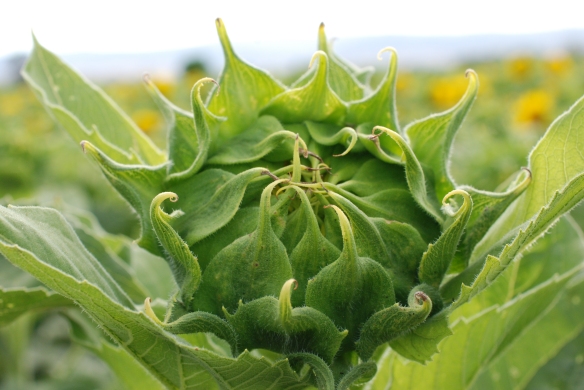
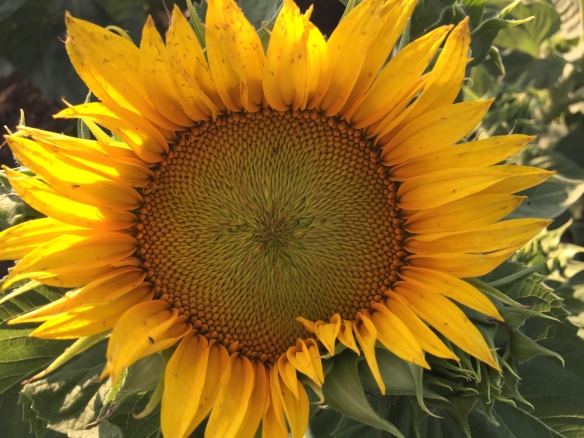
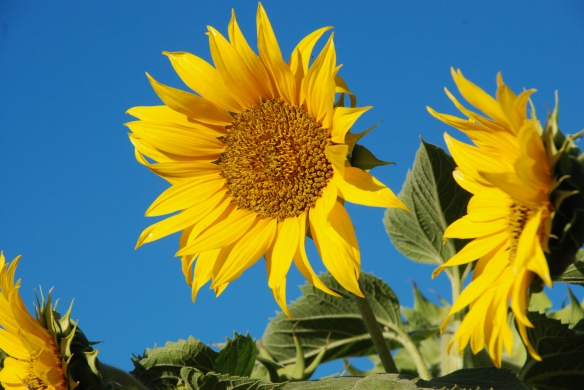
Sunflowers typically follow the sun, but when they get large the heads don’t move anymore. This was the view from my house –all the flowers facing east. If I wanted to see the pretty faces I had to walk around the field. Do you want to know more about this? Here is an article from the New York Times that explains why and how the sunflowers move to face the sun. This is an excerpt from it:

The answer was in their stems. Like those of other plants, the stems of young sunflowers grow more at night — but only on their west side, which is what allows their heads to bend eastward. During the day, the stems’ east side grows, and they bend west with the sun. Dr. Atamian collected samples of the opposite sides of stems from sunflowers periodically, and found that different genes, related to light detection and growth, appeared active on opposite sides of the stems.”

Isn’t that amazing? And isn’t it cool that there is so much to be learned about the seemingly most mundane things in our world? I’m all for promoting science to explore ideas and not just to solve a problem. But I digress…20160615-img_1868

20160620-dsc_0339

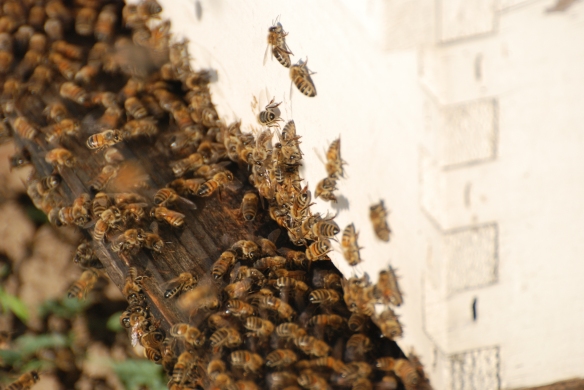
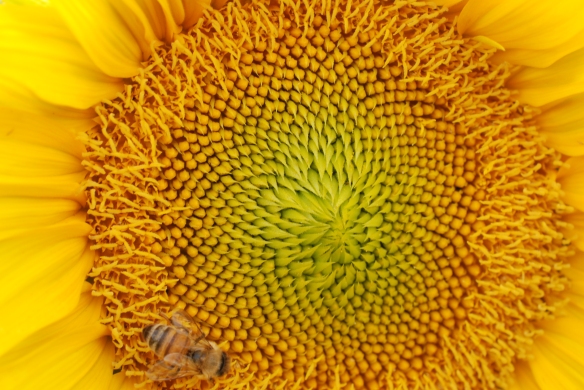
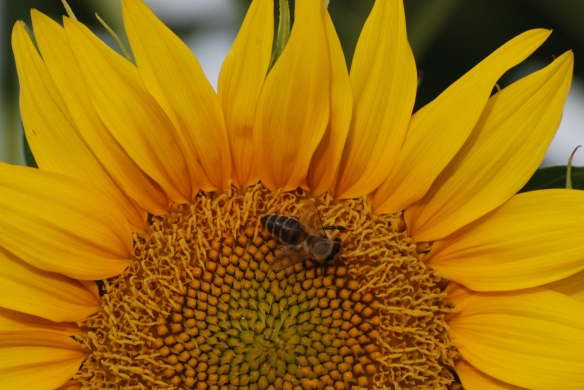
You saw bees on the sunflowers in the previous post.20160620-dsc_0370

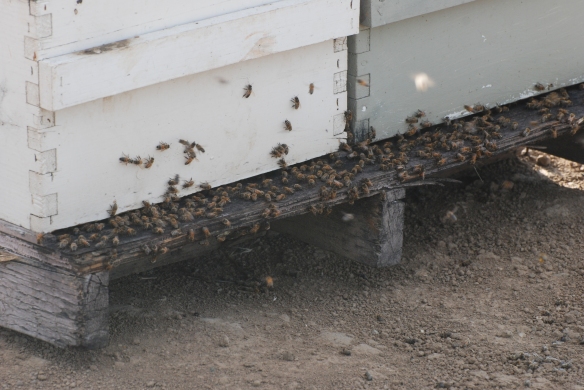
Here they are at their hives. Hives were placed all around the field.20160620-dsc_0390

Here is another interesting article–this one about the bees that pollinate sunflowers. “In sunflower hybrid seed production, pollen from a male row of sunflowers must be moved by bees to a female (male-sterile) row. Growers typically use honey bees to accomplish this task. However, most honey bee workers specialize as either nectar or pollen foragers. Nectar foragers tend primarily to visit female rows, while pollen foragers visit male rows. If few bees cross between rows, growers can experience poor seed-set.” The article goes on to say that native bees  collect both pollen and nectar and by chasing the honeybees from row to row they make the whole process more efficient in terms of getting the 100% pollination. Therefore growers should encourage native bee populations.

20160629-dsc_0563

The photos above were all taken in June.

20160718-img_3086

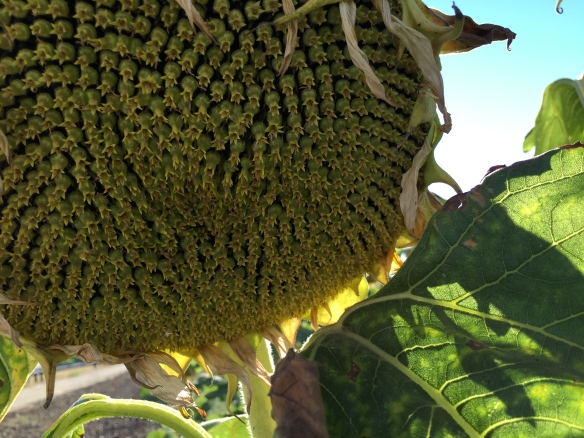
By mid-July the heads were drooping and the two rows of smaller plants were cut. The sole purpose of those sunflowers was to provide half of the genetics of the hybrid seed to be harvested from the larger plants.

20160718-img_3087

20160812-dsc_2070

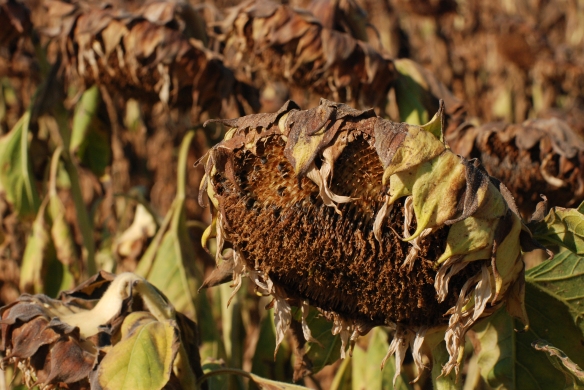
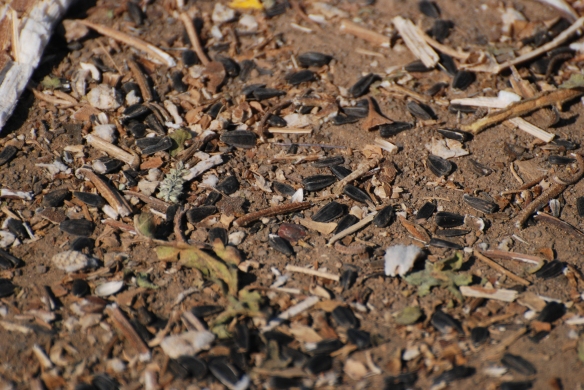
The seed was ready to harvest in mid-August.

dsc_2054

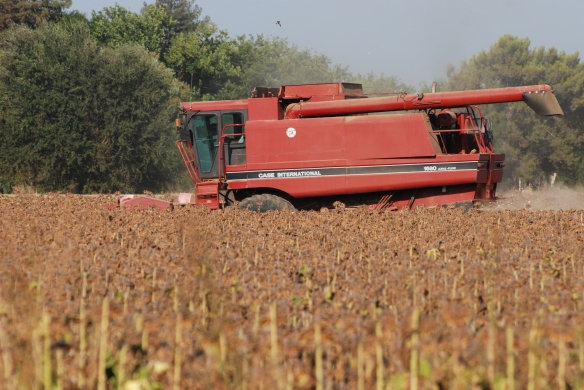
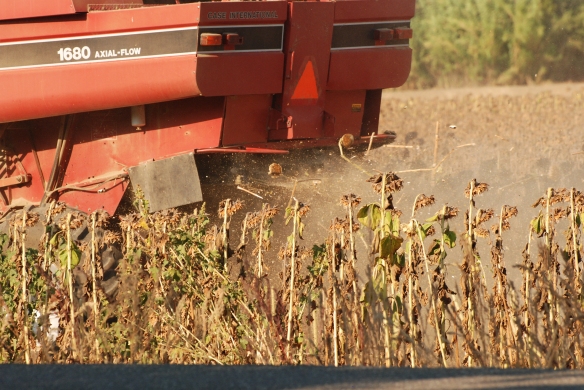
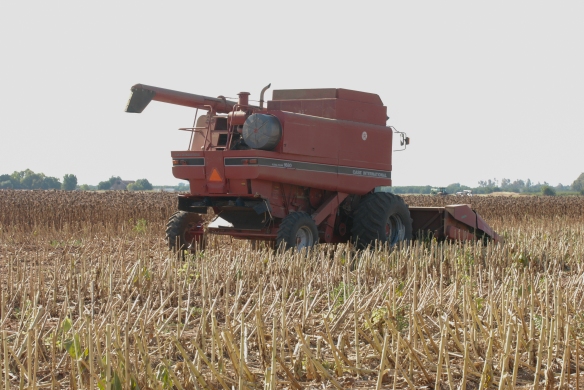
The harvester drove through the field, cutting the plants,…dsc_2061

…sorting out the waste,…dsc_2055

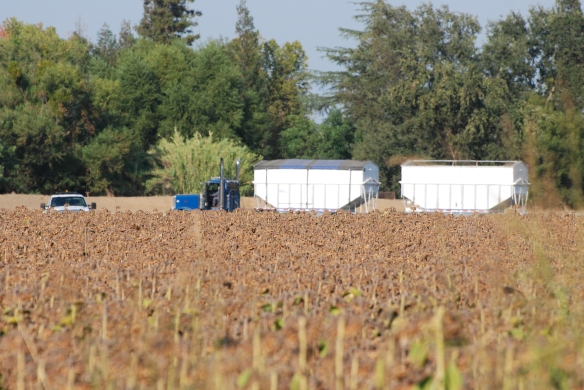
…and periodically dumping the seed into a waiting truck.

20160812-dsc_2071

20160812-dsc_2092

20160812-dsc_2135

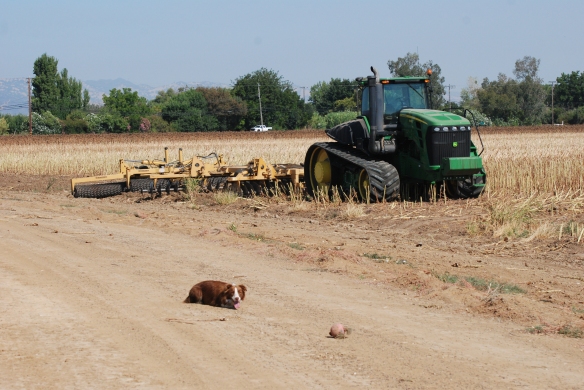
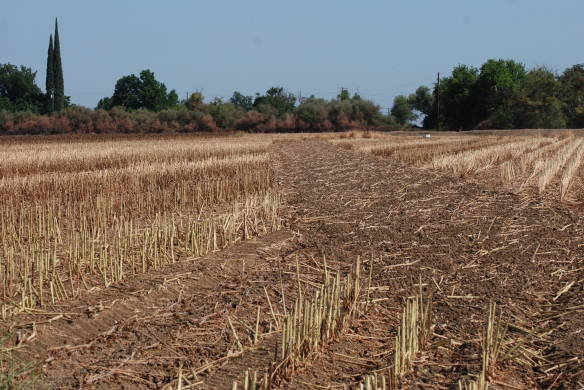
But the job isn’t over. While plants were being harvested in one part of the field the other part was being disked.

20160812-dsc_2136

20160825-img_3826

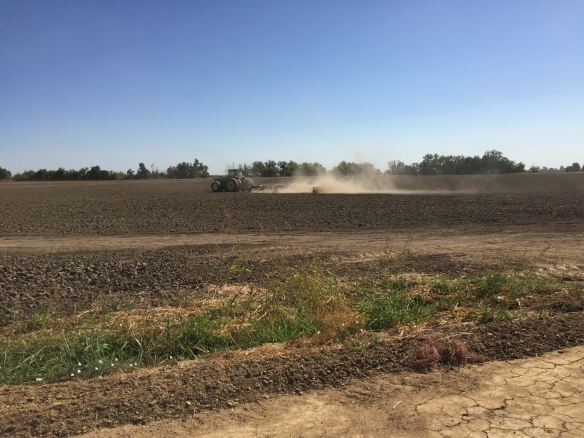
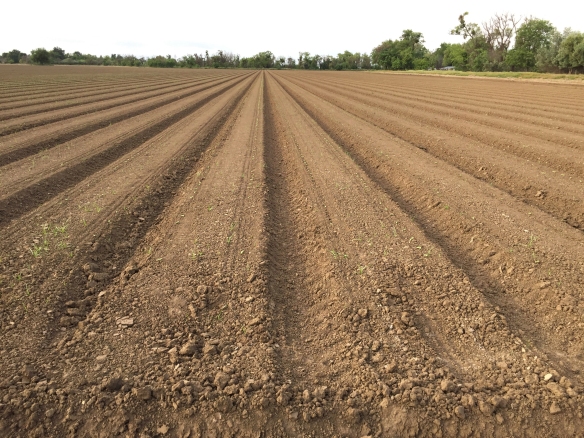
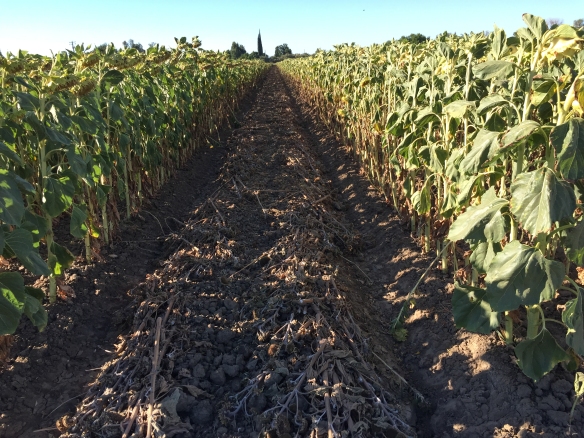
A month later the field is still being prepped to get ready for next year’s crop–tomatoes.

Sunflowers-April through June

We have only 10 acres here, but having the field Across the Road makes it seem as though we have much more. We are careful to be good neighbors and we are grateful that we have permission to spend time exploring that property. So I feel kind of like the crops grown there are mine although I have none of the work involved.  This summer’s crop was sunflowers–one of my favorites. I have way too many photos so I’ll break this into two posts.

img_0682

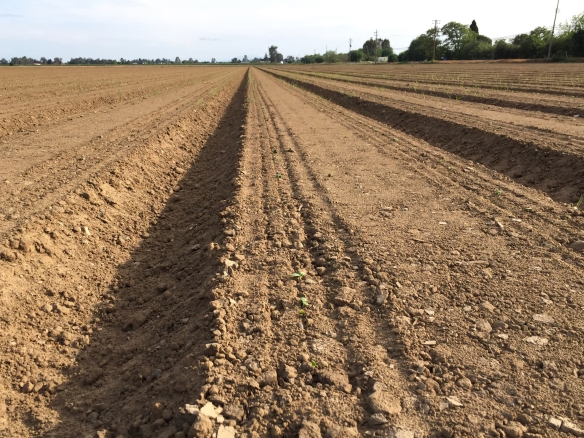
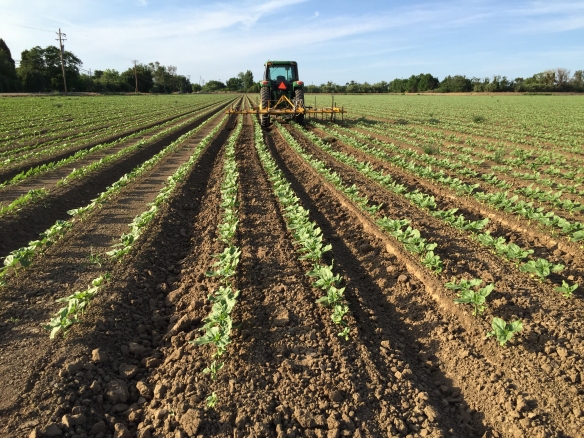
April 12. You can just see the tiny plants.

sunflowers-sprouting

dsc_8711

April 27

dsc_8423dsc_8669dsc_8674

20160502-img_1064

May 2. Cultivating.

20160611-img_1797

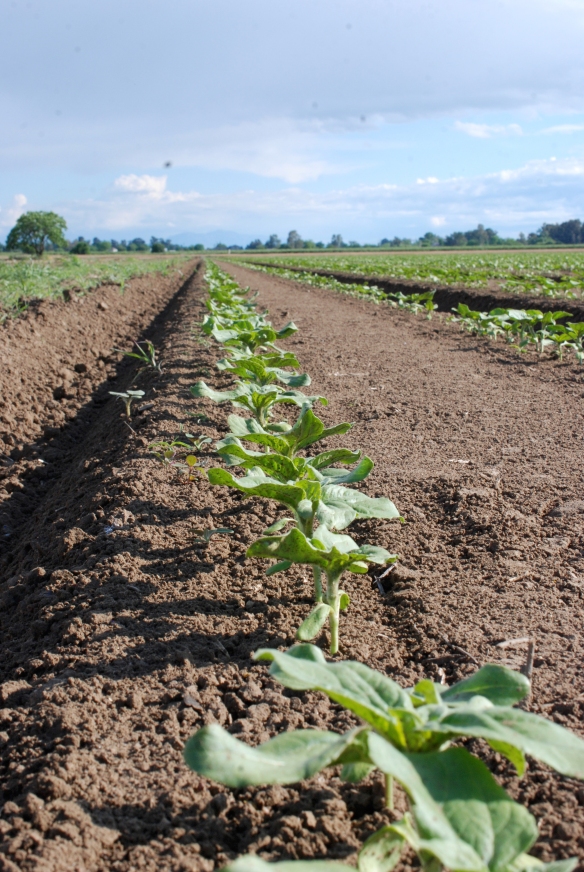
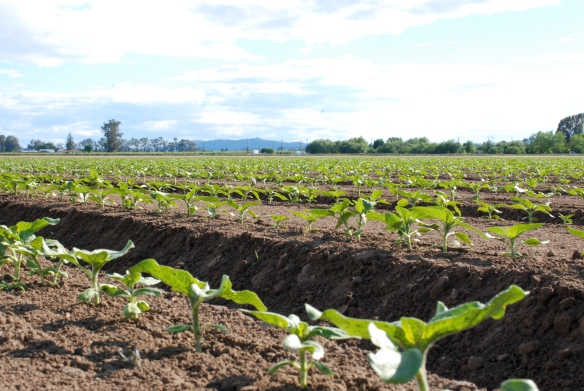
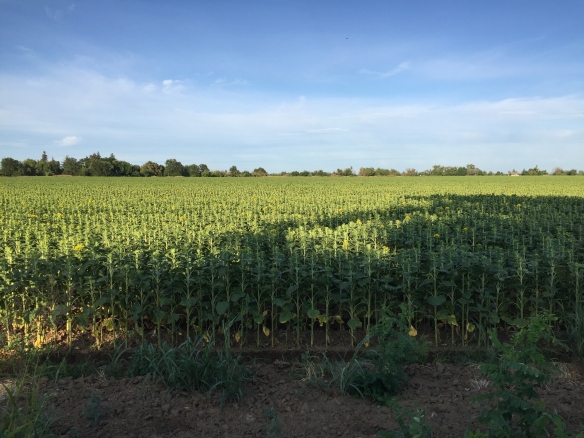
June 11. They’re growing up. I sound like a proud parent.

20160611-img_1799

The rest of the photos in this post were taken throughout June.

20160608-img_1758

20160615-dsc_0162

20160615-dsc_0193

20160615-dsc_0203

20160615-dsc_0206

20160615-dsc_0207

20160615-dsc_0208

20160611-img_1807

20160615-dsc_0209

20160615-dsc_0210

Life and Death on a Milkweed Plant

While mowing the pasture the other day I saw a fluttering monarch butterfly.

IMG_3453

I thought, “Cool, I’m watching this butterfly emerge from the chrysalis.” However, as I watched I realized that for some reason the butterfly had been stuck in this position and now was hopelessly damaged. I helped it out of the chrysalis but its wings were damaged and all it could do was flutter, but not fly.IMG_3460

I continued mowing.

IMG_3468There were plenty more milkweed plants that were teeming with life. That’s the Common Buckeye Butterfly and the Alfalfa Butterfly (see my last post).

IMG_3462

Here is what the seed pods have inside when they are ripe. (Spinning, anyone?)

IMG_3476I identified this one in Bug Guide.net  as the Small Milkweed Bug (also the Common Milkweed Bug, Lygaeus kalmii). It’s surprising how many similar looking bugs you find when you google “red and black bug in CA”.

Small milkweed bug or Common milkweed bug, Lygaeus kalmii

I had to look closely to see the identifying markings. The Guide says: “Adults suck nectar from flowers of various herbaceous plants, and also feed on milkweed seeds(?). Also reported to be scavengers and predators, especially in spring when milkweed seeds are scarce. They have been reported feeding on honey bees, monarch caterpillars and pupae, and dogbane beetles, among others.”

IMG_3479

Here is more life, but I’m not going to try and specifically ID this one.

And the circle continues…

Monarch caterpillar on milkweed

The other photos were from a couple of weeks ago and I just saw this monarch caterpillar a few days ago on another milkweed.

Road Trip to Colorado – Arches N.P.

The mosquitoes that had been relentless the night before (this post) were slightly less so in the morning.

IMG_2631

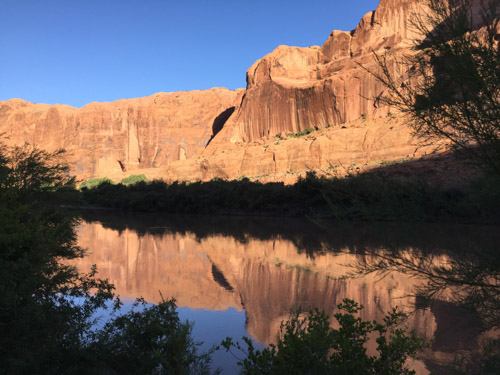
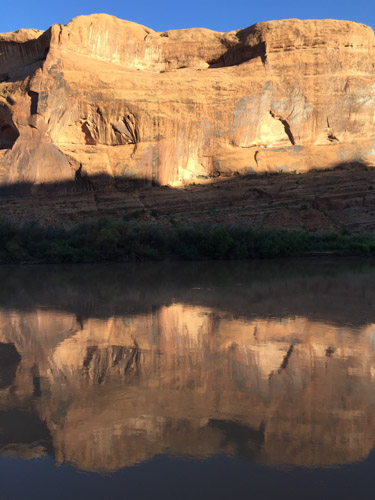
However the surroundings were beautiful as the sun reached the west side of the canyon.

IMG_2628

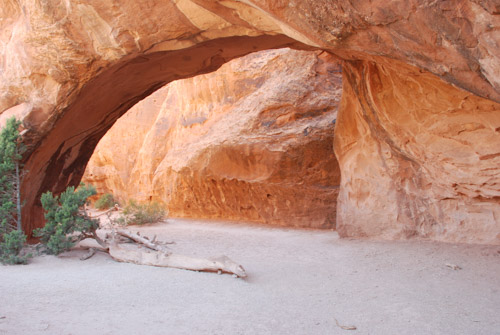
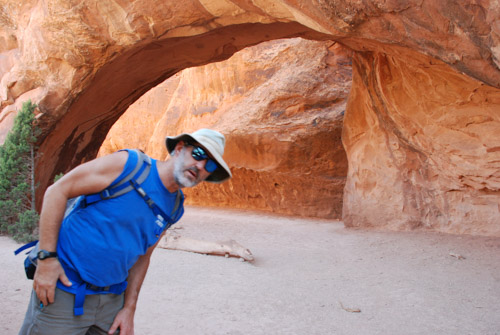
But we didn’t linger around camp. We packed up and drove just north of Moab to the entrance of Arches National Park.

DSC_0801

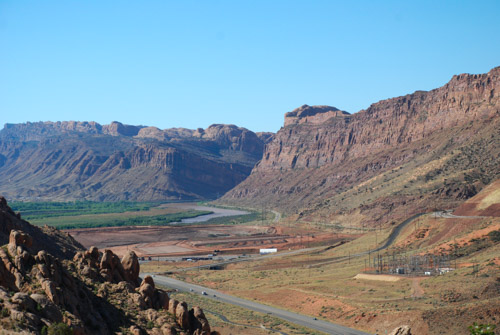
The cliffs on the left side of the photo are part of Arches and that’s the Colorado River flowing our of the canyon in the center of the photo.

IMG_2632

I had been here once or twice before but that was almost forty years ago. (Oh yeah, I was going to find my old slides and see if I have photos from back then.)

I don’t remember the names of all the arches. Besides sometimes I don’t want to know what names other people have used for formations. I like to enjoy them without always having to see or think of something that is not a rock. I’ll make up my own name if something comes to me.

IMG_2636

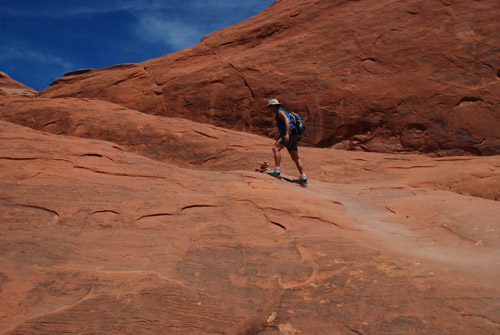
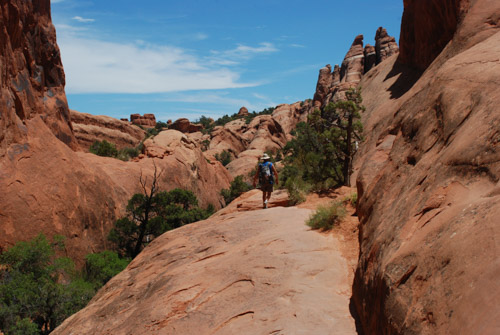
We had one day to see the park and, knowing that it was going to be a hot day, we decided to start with one of the longer trails. Out and back on the more traveled trail would have been about 5 miles. We ended up taking the “primitive” route to come back and that was 7 miles.

IMG_2648

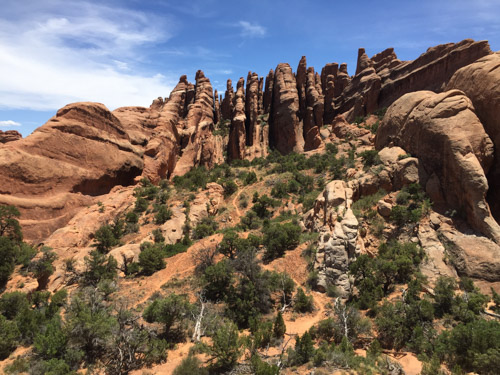
I thought about giving up taking photos because it seem so hard to capture the grandeur, the color, the textures.

IMG_2655

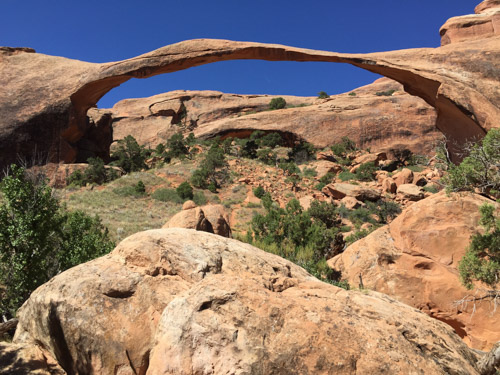
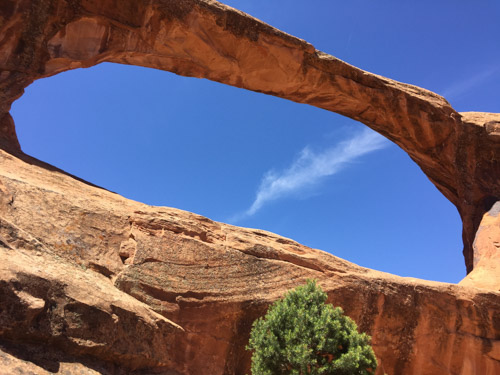
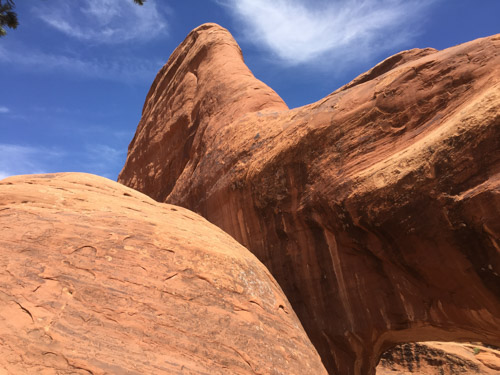
But of course I continued to shoot photos and I am sharing some of my favorites.

DSC_0816DSC_0818

IMG_2663

Distances are so deceptive in this country. We had seen these rock walls in the distance and I had thought, “it’s a good thing we’re not going there”. The “primitive route” took us around those and beyond.

DSC_0852

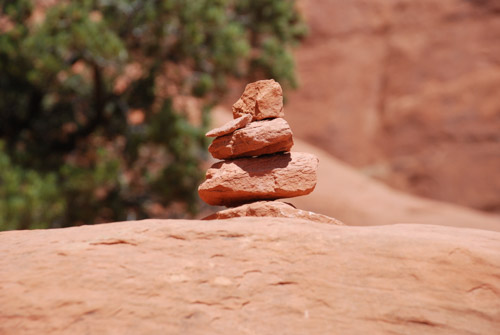
Cairns are important in finding the trails over slickrock and through washes. Seeing those little rock towers kept us on track in places where the trail wasn’t obvious.

DSC_0854

DSC_0857

DSC_0838

More from Arches National Park in the next post.

Sunday Morning in the Pasture

I switched lenses this morning to get a different view of What’s In The Pasture.DSC_0309

The sheep followed me to the horse pasture gate but I didn’t let them out there. DSC_0306

Instead I climbed on the gate to get a photo of the neighbor’s alfalfa being cut.hawk hunting

This hawk was flying over the field hopeful that breakfast would be flushed out from the alfalfa harvest.

Western kingbird

Western Kingbird on the powerline at the south end of the pasture.Swainson's hawk

Swainson’s hawk over our pasture.

Buckeye butterfly

Buckeye butterfly. I read that adults live for a little over a week and that plantain is one of the plants where they lay eggs. There is plenty of that in the pasture right now. I’ll have to go inspect those for eggs and caterpillars.

Forage looper moth-m

This might be a Forage Looper Moth–that is the closest ID I got from browsing the internet for look-alike moths and butterflies.

Johnson grass

Johnson grass. This grass is taller than me and is growing at the south end of the pasture. We try to get rid of it when we find it because it is very competitive and the sheep won’t eat the coarse leaves and stems. From the internet: “Under certain conditions, the leaves of johnsongrass (and sorghum) can produce toxic amounts of hydrocyanic acid, which can poison livestock when ingested.” Medusahead-dry

The medusahead is drying out. DSC_0303

I moved the fence and the sheep were ready to go out for breakfast.