Grazing and Irrigation 7- May

I wrote posts a couple of weeks ago to create a photo diary of our grazing progress as we started grazing the new pasture. As usual I got behind. It’s crazy now to try and document this the way I had intended. Instead I’ll start with this week and see where I go with this.

This is yesterday’s photo. I have numbered all the checks from west to east so I can keep track of what I’ve been doing. They are 30′ wide. We started grazing this spring with the paddocks in the north field. This is the previous post about that before I went on to the first irrigation. When we switched from grazing the north paddocks to the south ones we started with fencing two checks at a time and the idea was to split into smaller areas with cross fencing.

I have to say here that the main challenge here is that we have no permanent fences yet. When this project began (see the first post in October) we had to remove all the interior fences. Dan had knee replacement surgery in April and he wasn’t able to get those fences up before we needed to start grazing that month. I am using electronet fence and that means piecing together lengths of net and moving it as I move the sheep across the field.

This shows the length of fence as I have moved it from one check to another before setting it up.

There is plenty of clover and trefoil, but in some of the areas it has been overshadowed by the annual ryegrass. That is another challenge. Annual rye was NOT part of the seed mix. There were three perennial grasses in the mix, but the ryegrass that was already in the soil took over. Fortunately it is a good feed, but it grew so quickly that it has been a real challenge to manage. This paddock is one that Dan topped with the mower several weeks ago and the clover is more visible here.

So far it seems that I can graze the sheep on each 30′ strip for two days. I could probably add another day but I want to move them across the field to try and keep up with that ryegrass. We also want to make sure that the clover and trefoil get well established before grazing them heavily. It is time consuming to move that length of fence from one check to another every two days, so this last time I moved only one of the fences to the west. There is no fence down the center of this photo. I moved the fence that was on that check to the next check to the west. So the right half of the photo is where the fresh feed is. The sheep can tell where there is fresh feed, and they spent the next two days mostly on that half. They are also able to eat more of the ryegrass that is still on the check once the fence is removed. If this method works then I’ll move one fence every two or three days.

This photo is from a month ago when we moved them to the south field and set the north-south fences up to include two checks. We added east-west fences to have them eat each part more throughly. However, we have no drinking water source out there now so they have to have to be given access to the barn.

You can see how overwhelming the ryegrass is. There is clover there but it is hidden. When the grass is this tall the sheep trample it more than eat is and it has the effect of mulching the field. That is not what we want to encourage the clover and trefoil to grow.
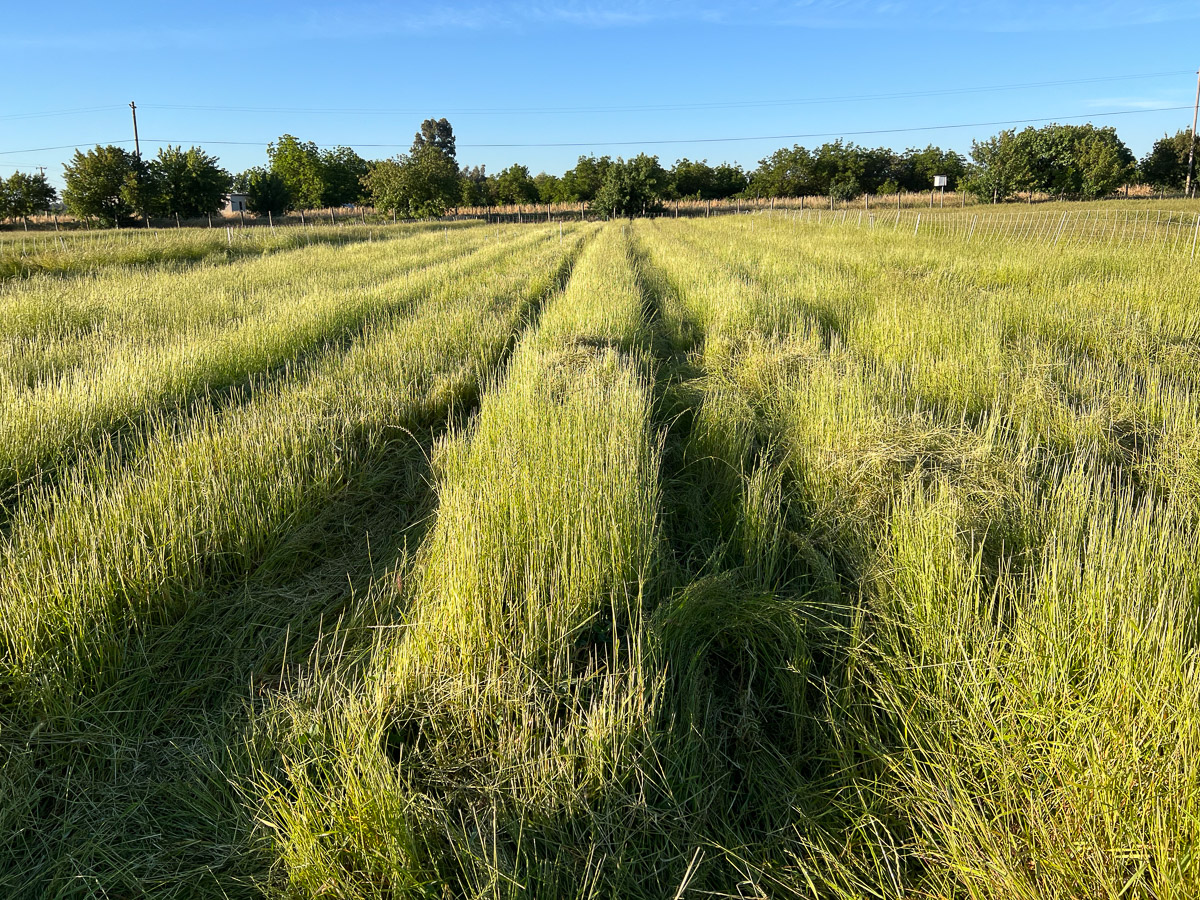
When Dan topped the ryegrass the sheep could move through it more easily and it allowed the other plants to have light.
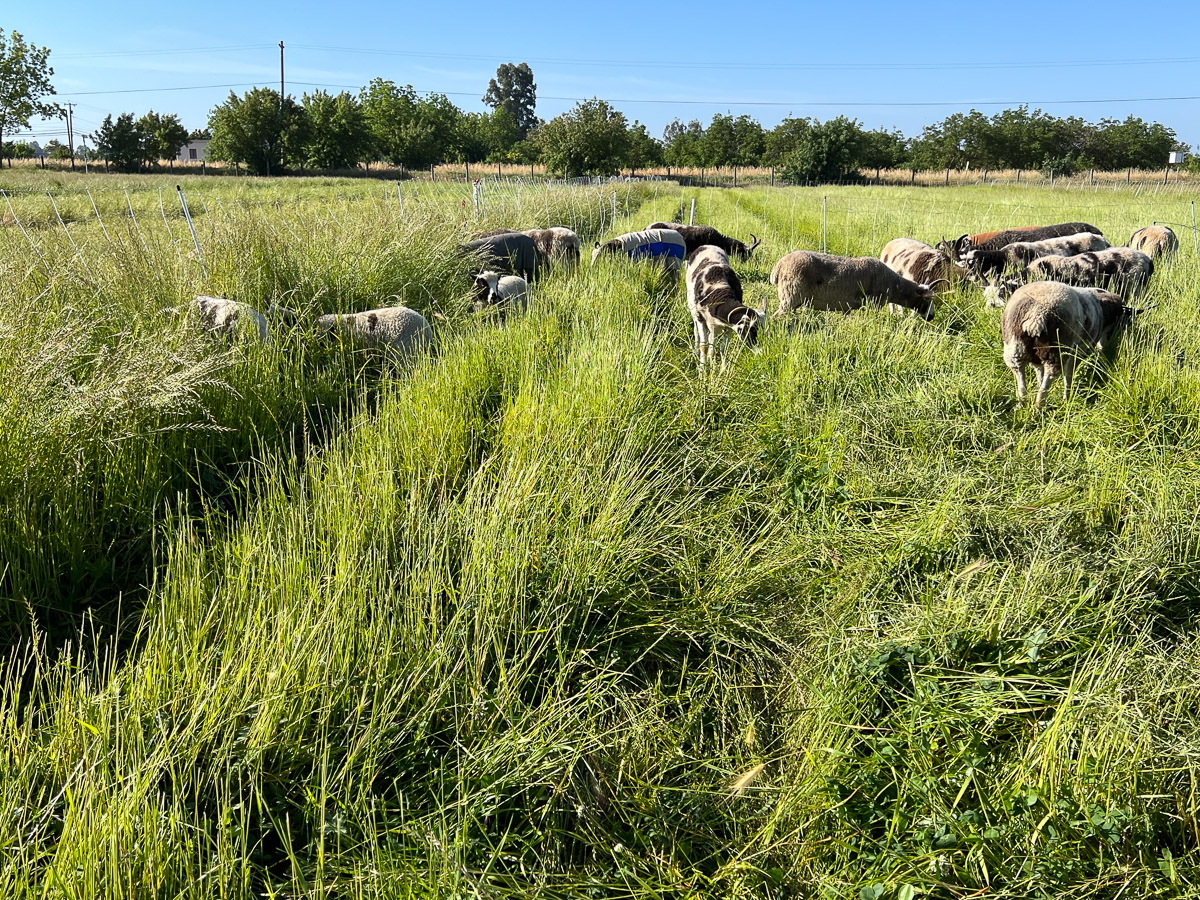
This view shows how they were able to graze the mowed part.

It’s great to have all this feed now, but I wish that I had more sheep right now to use all that feed.

Who’ll Stop the Rain?

Can you tell that I just watched a Creedence Clearwater Revival documentary (and I’m of an age to have that phrase pop into my mind)? Did you know that the CCR members got together in junior high?

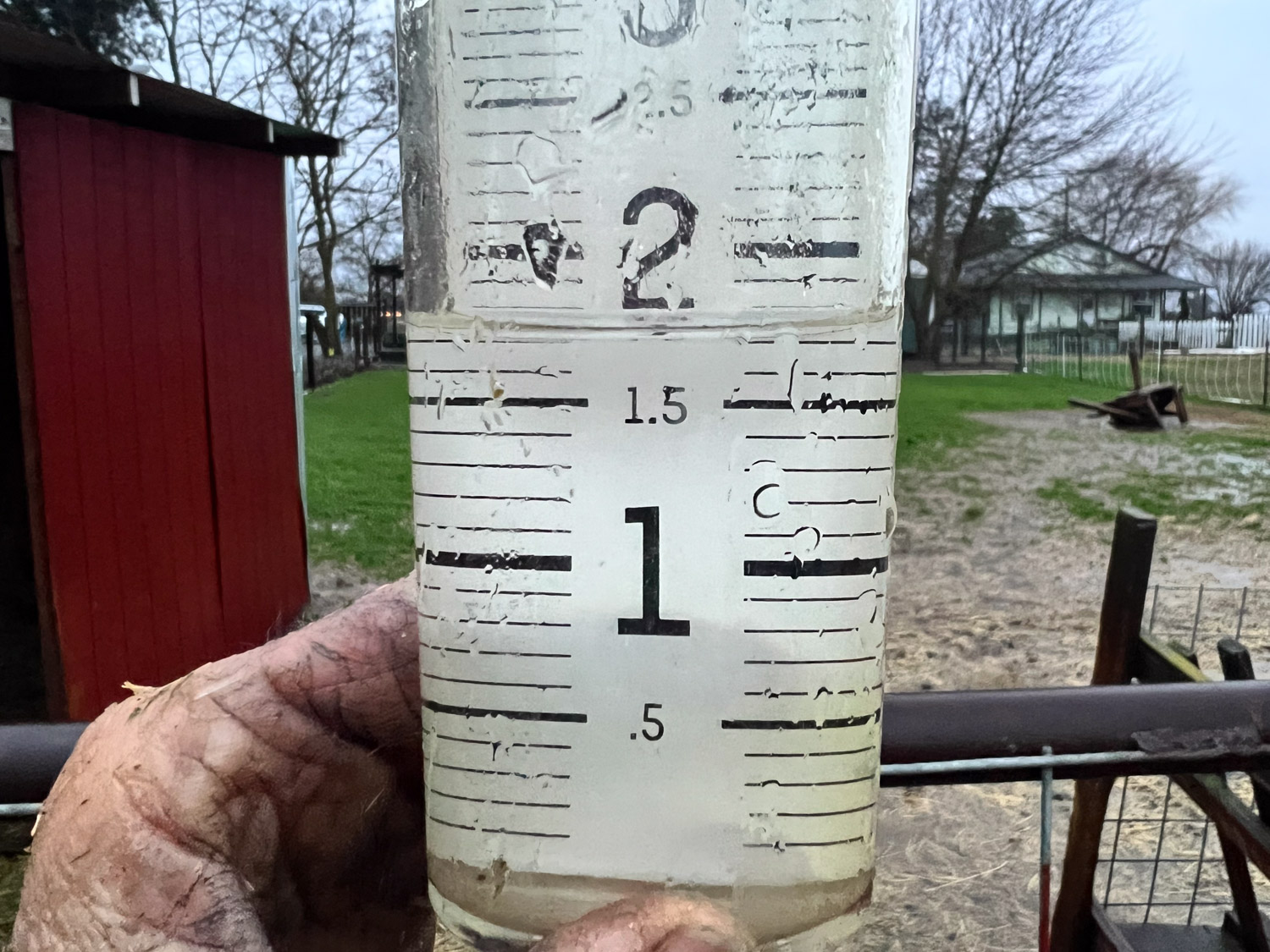
But I digress. This was to be a post that follows up on the Pasture and Irrigation Renovation posts because it’s about the pasture….and rain. After NO rain in January the first few days of February were wet. We had almost 5″, with close to 2″ in one day. That doesn’t sound like a lot to people in many parts of the country but it’s a lot for our flat property. That is 1/5 of our annual 24″ in five days.

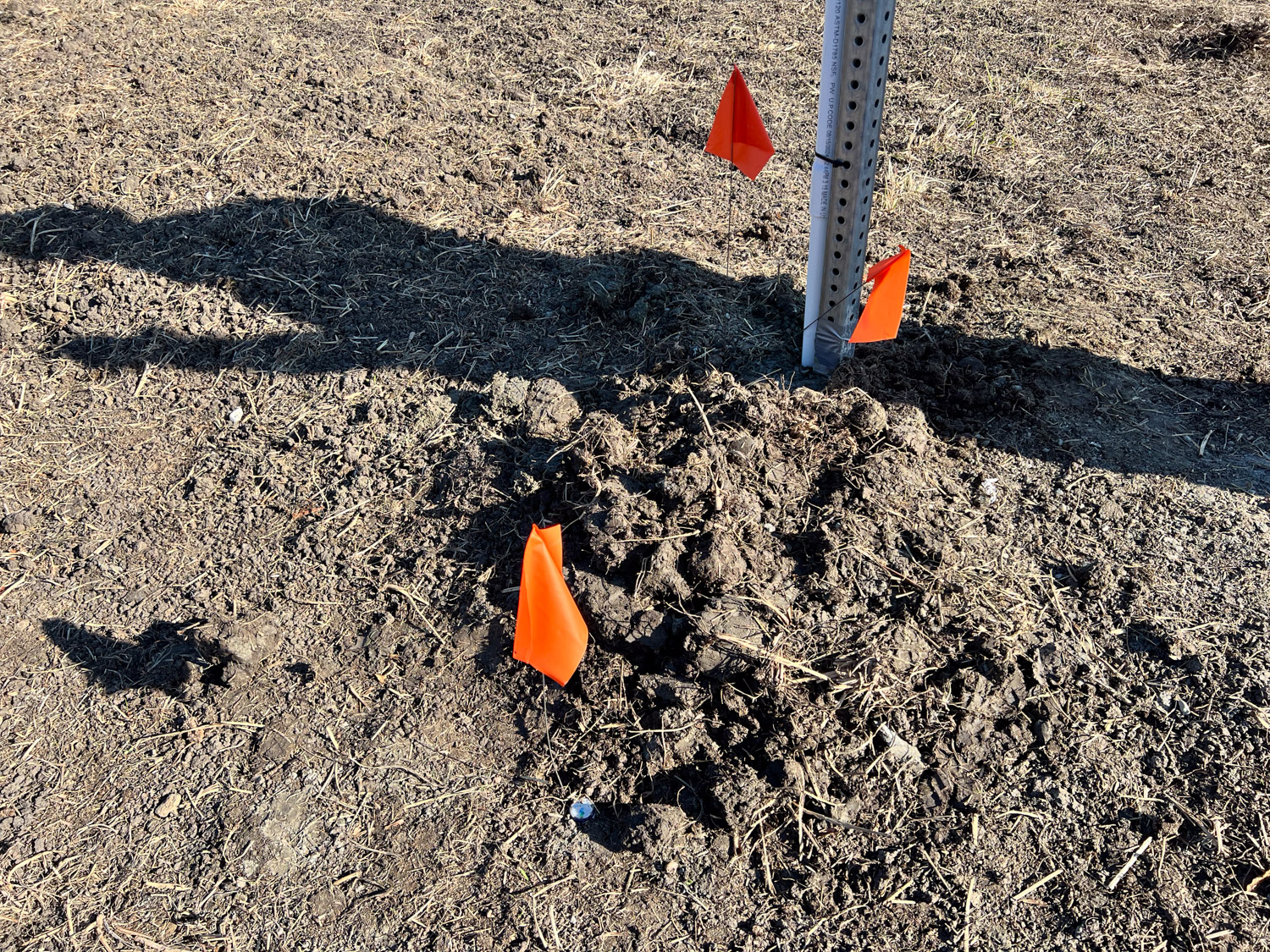
This was before the last inch of rain fell. There was a break in the rain and I walked to the south end of the property. That post with the orange flags holds one of the soil moisture sensor I mentioned in the last post.

This is the other sensor. We are not happy about the lines in the field that have become ditches. We needed to disc and seed the fields before the heavy rain in November, which was finished hours before that storm (blog post). However the irrigation pipeline work was not completely finished. That involved more traffic back and forth in the field and we have truck tracks to deal with.

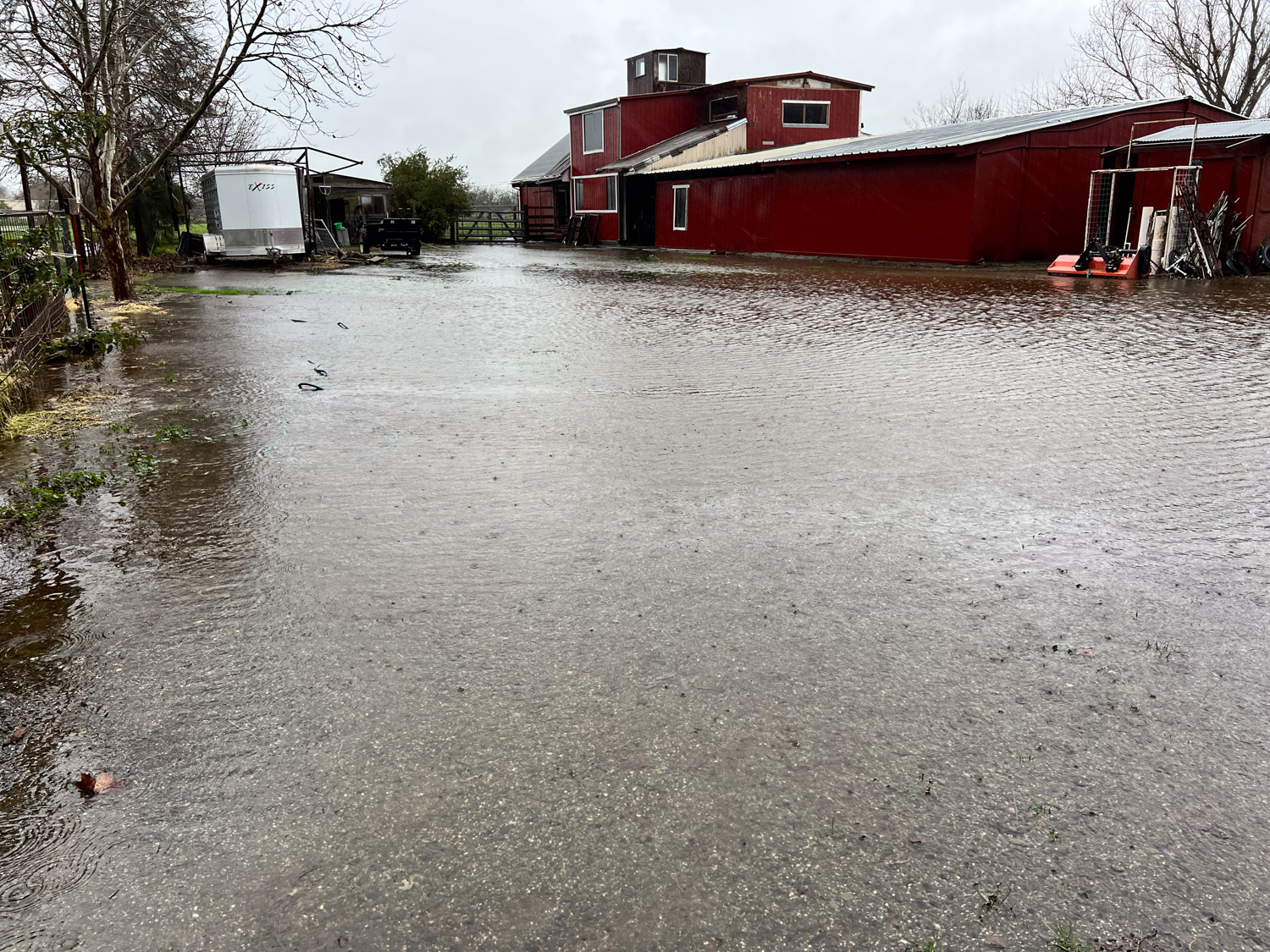
Back to the barn. For those of you who have been here, you know that this is where we walk to the barn from the house. It doesn’t take much rain (well, 2″ on top of 3″ the previous days) to look like this. Thankfully our barn stays dry inside…so far.

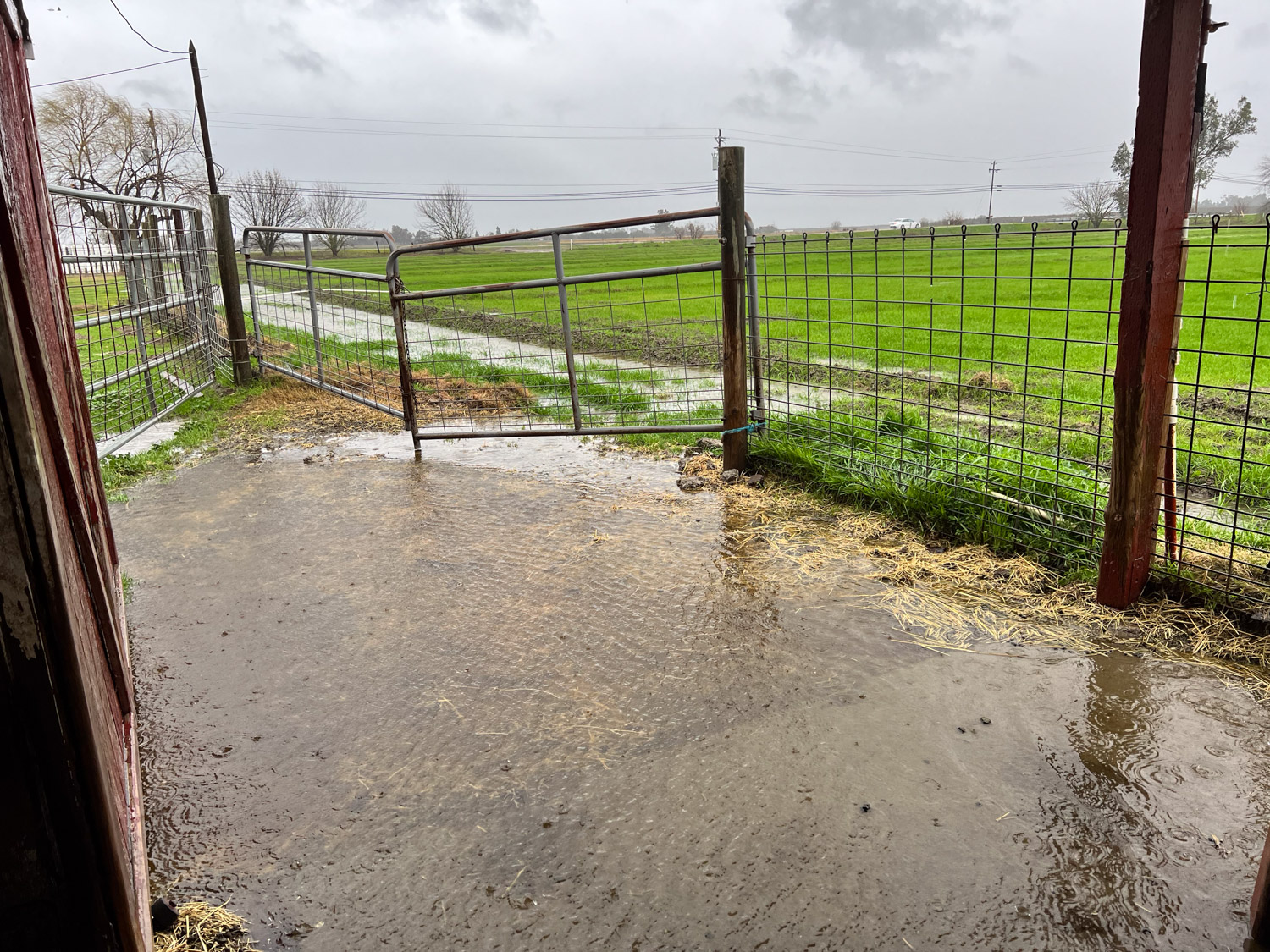
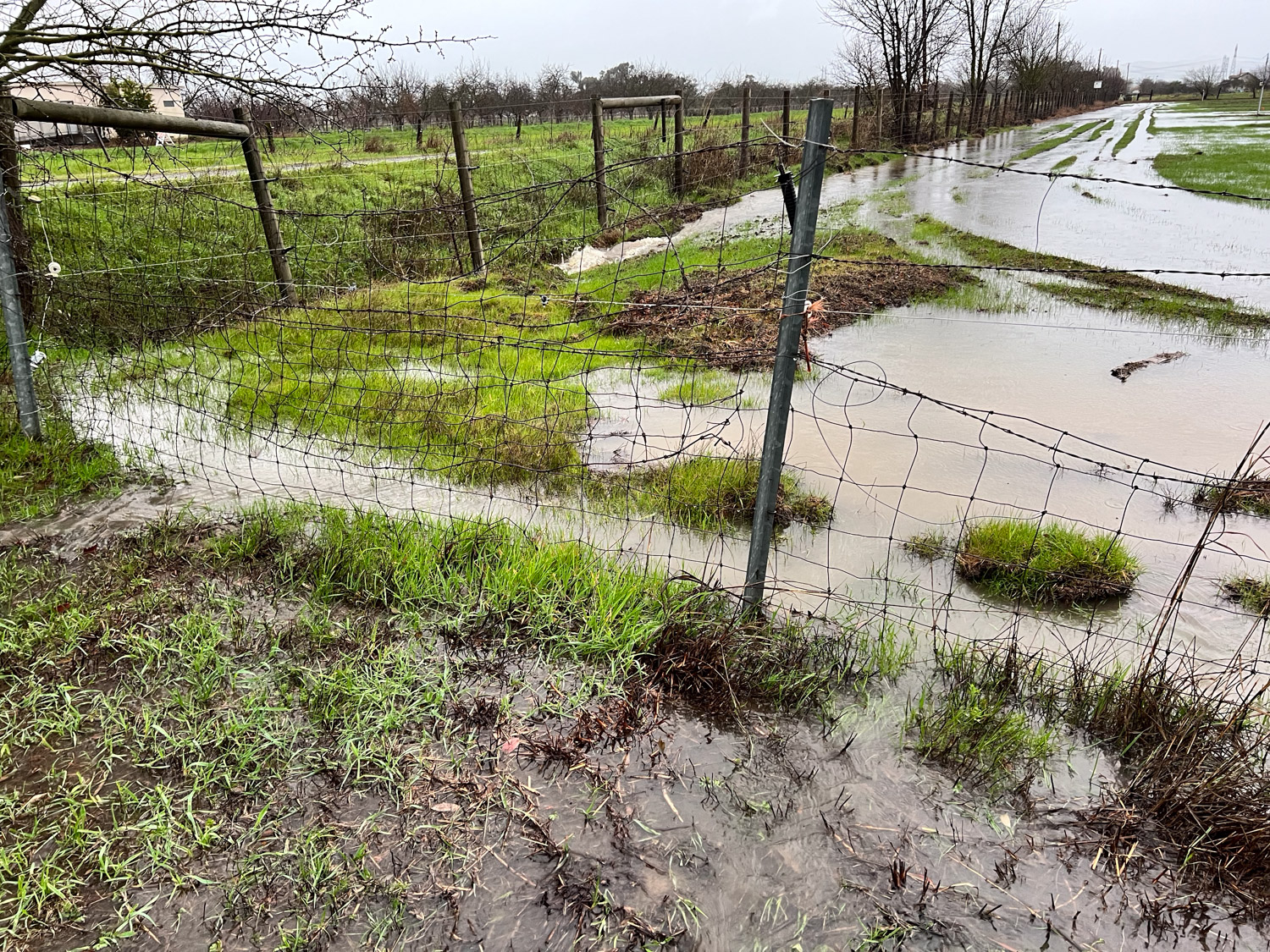
Looking south from the barn door. Normally I’d be digging a ditch to drain the water from here to the irrigation ditch. But we don’t have an irrigation ditch anymore. We have a pipeline which will hopefully make life so much easier and more efficient in the summer.

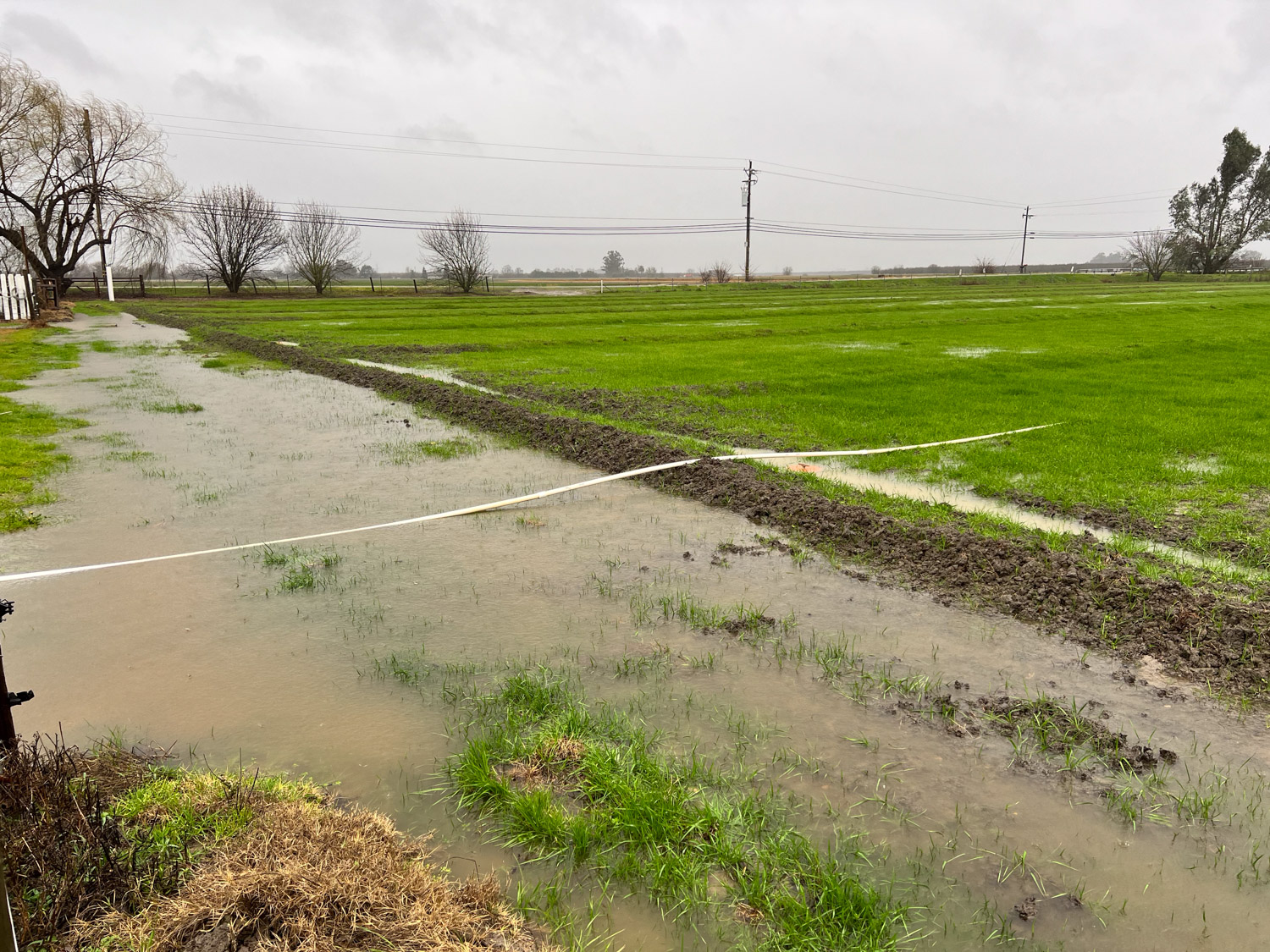
What looks like a ditch in the foreground is where the old ditch was. Now there is a buried pipeline on the other side of that row of dirt. All of this is still settling so we don’t know what it will look like eventually. The water drains off our property from the southeast corner (near the tree in the top right corner of the photo). Dan set up a pump to take the water from the near the barn through an old pipe and over that row of dirt into the field. It seemed to work OK.

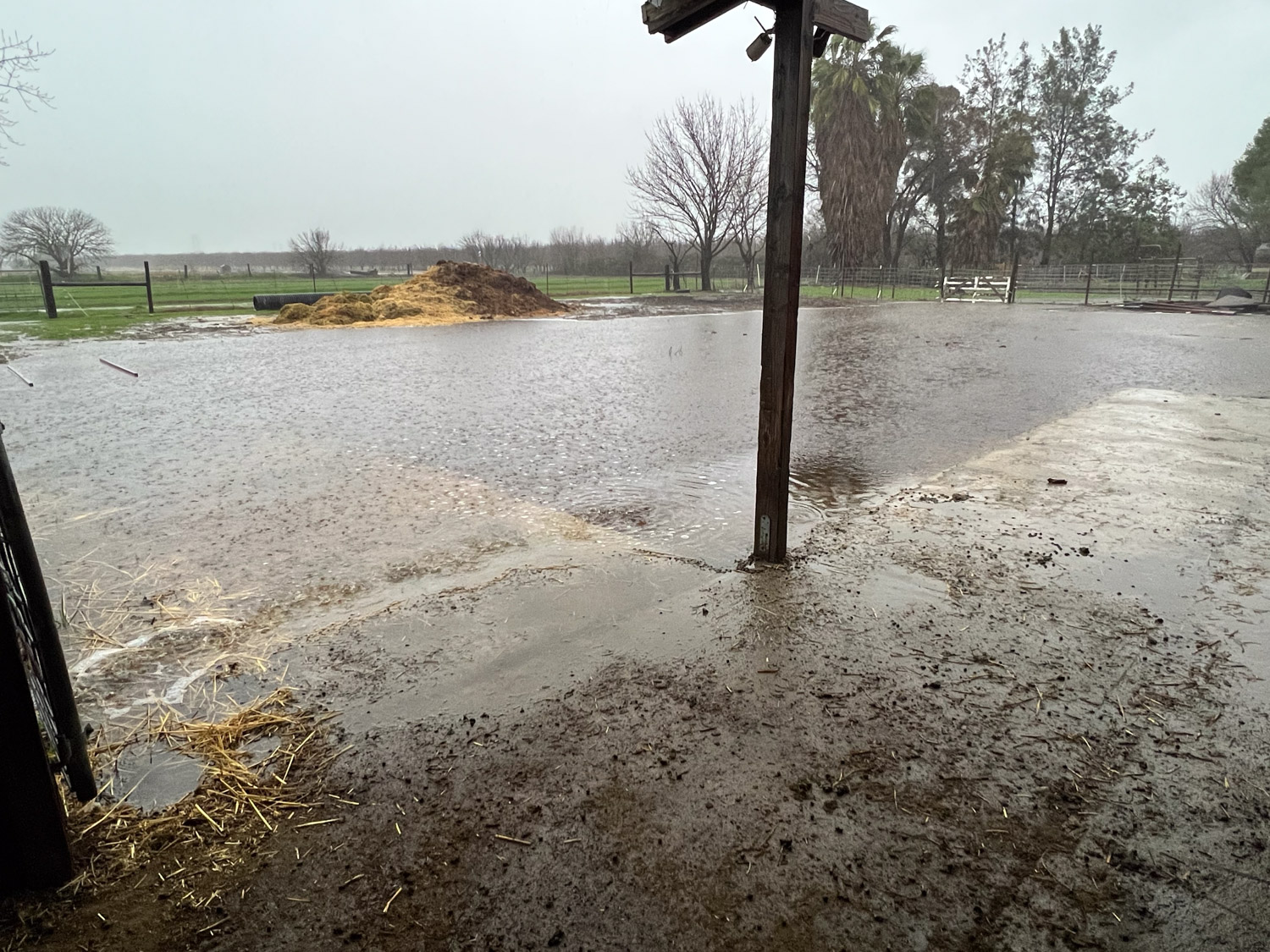
This is the view behind the barn.

Later in the afternoon I walked back to the southeast corner and brought a shovel. Like I’m going to drain this with a shovel. There is a ditch that is between the fence and the road with a culvert that takes water into the canal, and water was starting to flow under the fence here. The problem to deal with eventually is that the water flowing along the south fence line erodes the soil there as it goes under that fence into another culvert, and eventually those posts will go.

Wednesday’s total.

Yesterday was dry and sunny. Today it started raining again and that’s why the title of this post came to me.

Pasture and Irrigation Renovation – Part 14

The last time I wrote about this project was over six weeks ago in December.

About two weeks ago one of the NRCS representatives came to check on the progress of the pasture seeding. Not a great photo, but he is putting down a grid to aid in evaluating plant growth.

This is what it looks like and I should have asked more about it. I didn’t see him mark where he put it or count plants. We were talking about generalities in the pasture, but now I’m going to ask. Did you know that my degree from UC Davis is in Range and Wildlands Science? So I recognize this for what it is–a tool for analysis of plant germination and growth–but we didn’t talk about it.

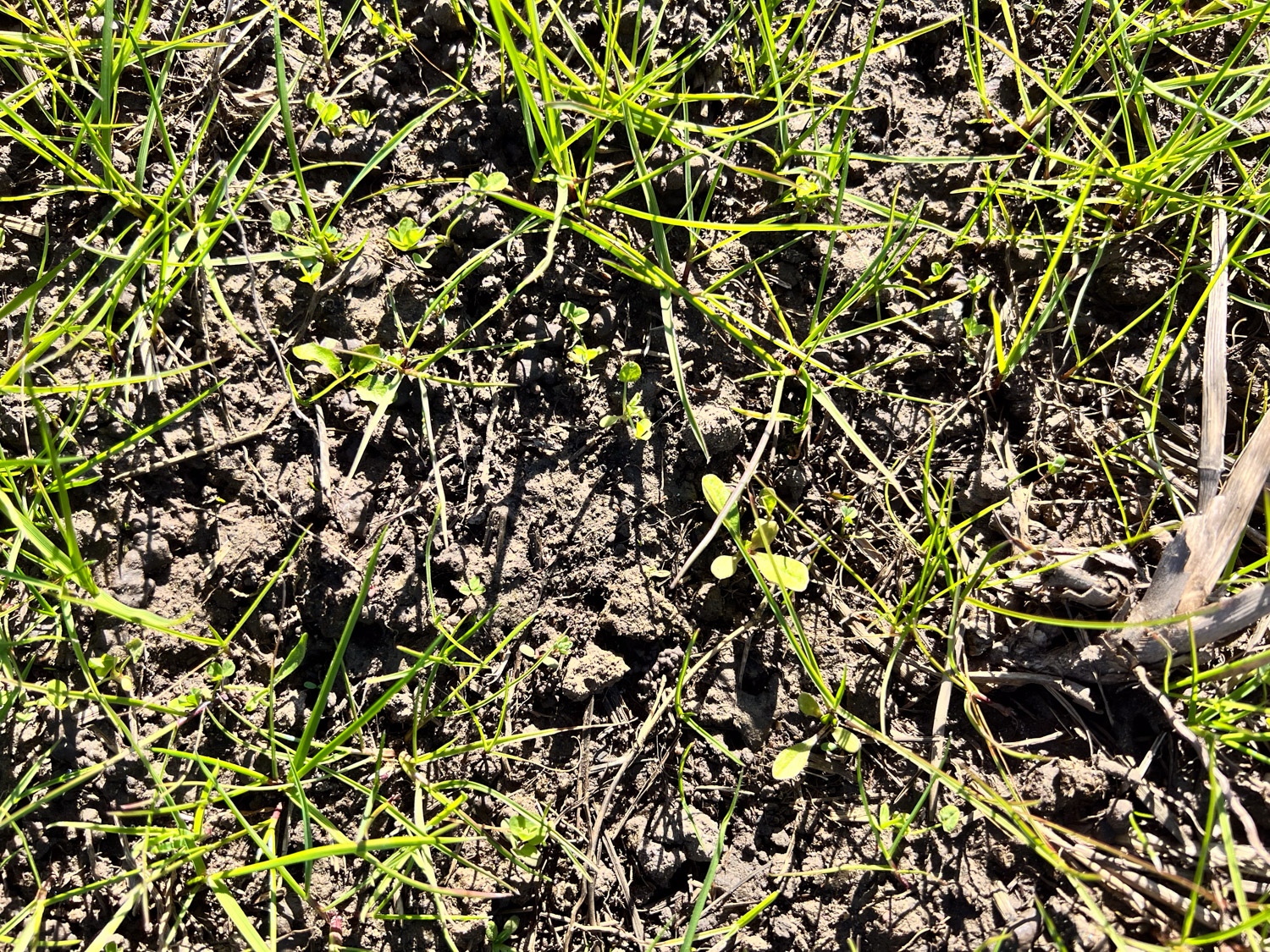
Do you see how hard it is to evaluate growth when you look across the field and not straight down? Compare the first photo to the next two. In the second photo close up photo it shows grasses and forbs. There were three of each in the seed mix. We identified clover and chicory, but I don’t see trefoil yet. I can’t identify the grasses.

This is the field west of the barn. The grass growth is thicker here, at least in that small area.

This is a photo taken from the same spot as the last one, but looking north. This is the check where there was traffic from the people working on the irrigation system. We’re thinking that it probably needs discing again.

Last week we met with a representative from the company that makes the soil moisture sensors that were installed. He showed us how to see the info generated by the two sensors and we talked about how we’ll use that. They are sensors are at the south end of the field, one near the west edge and one in the center, still in line-of-sight with the sensor in the northwest corner.

The flag in the foreground marks where the sensor is at this station.

This is what it looks like inside the box.

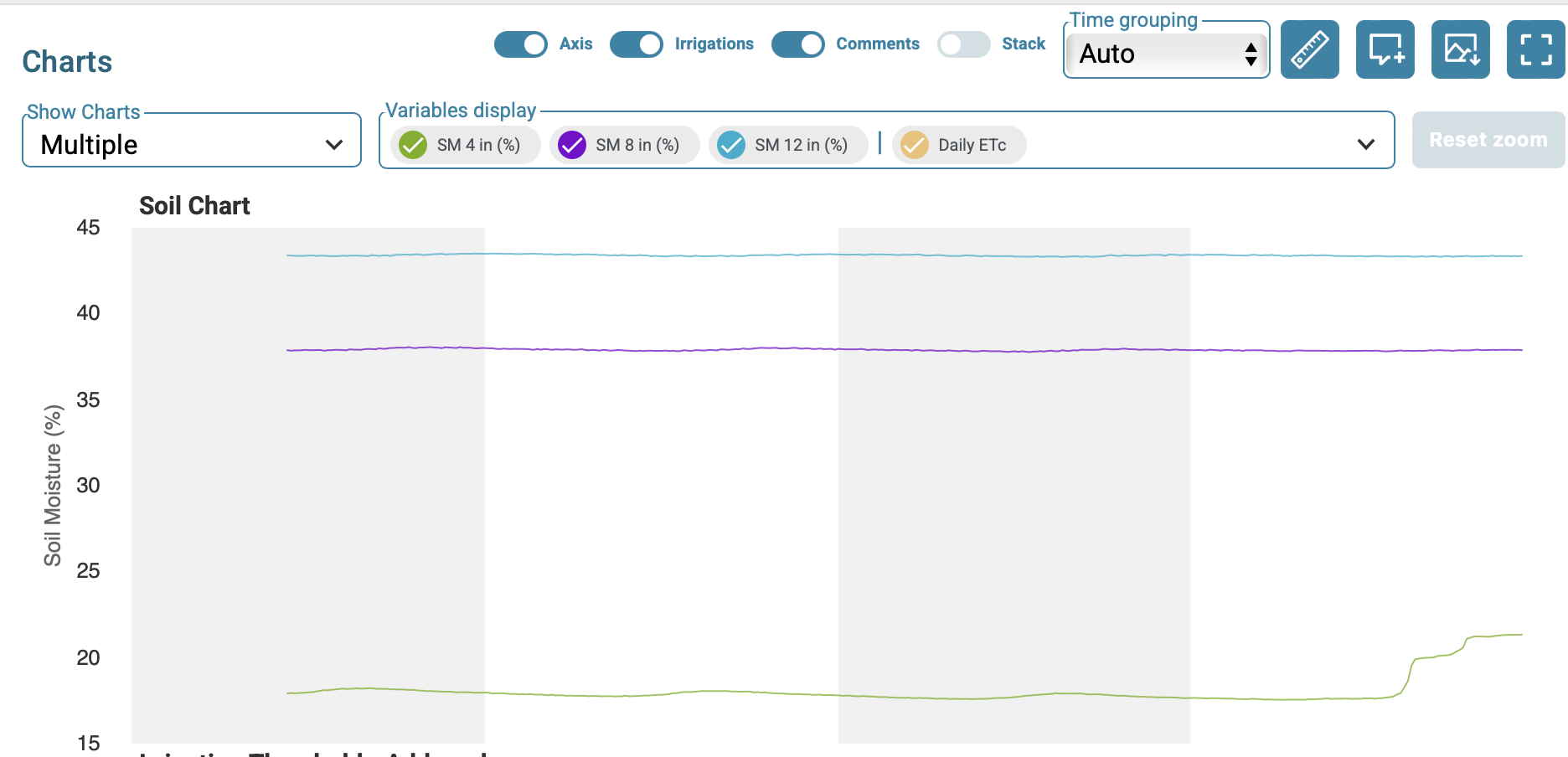
We haven’t had rain for a month and there have been north winds that make things dry out even more. We were getting worried about this new pasture. Those little seedlings need moisture in their root zone to stay alive. This is a screenshot of what the sensor shows for one station. The gray and white columns each indicate a day. The horizontal green line is 4″ depth, purple is 8″, and blue is 12″. You can tell that today’s 1/4″ rain just started to soak in.

Here is what the other sensor shows. The scale on the left axis is different. This 4″ level had more moisture to begin with than the other two. We will be learning how to use this info. There is a lot more available. I just copied this portion for now. This will sure be interesting to follow.