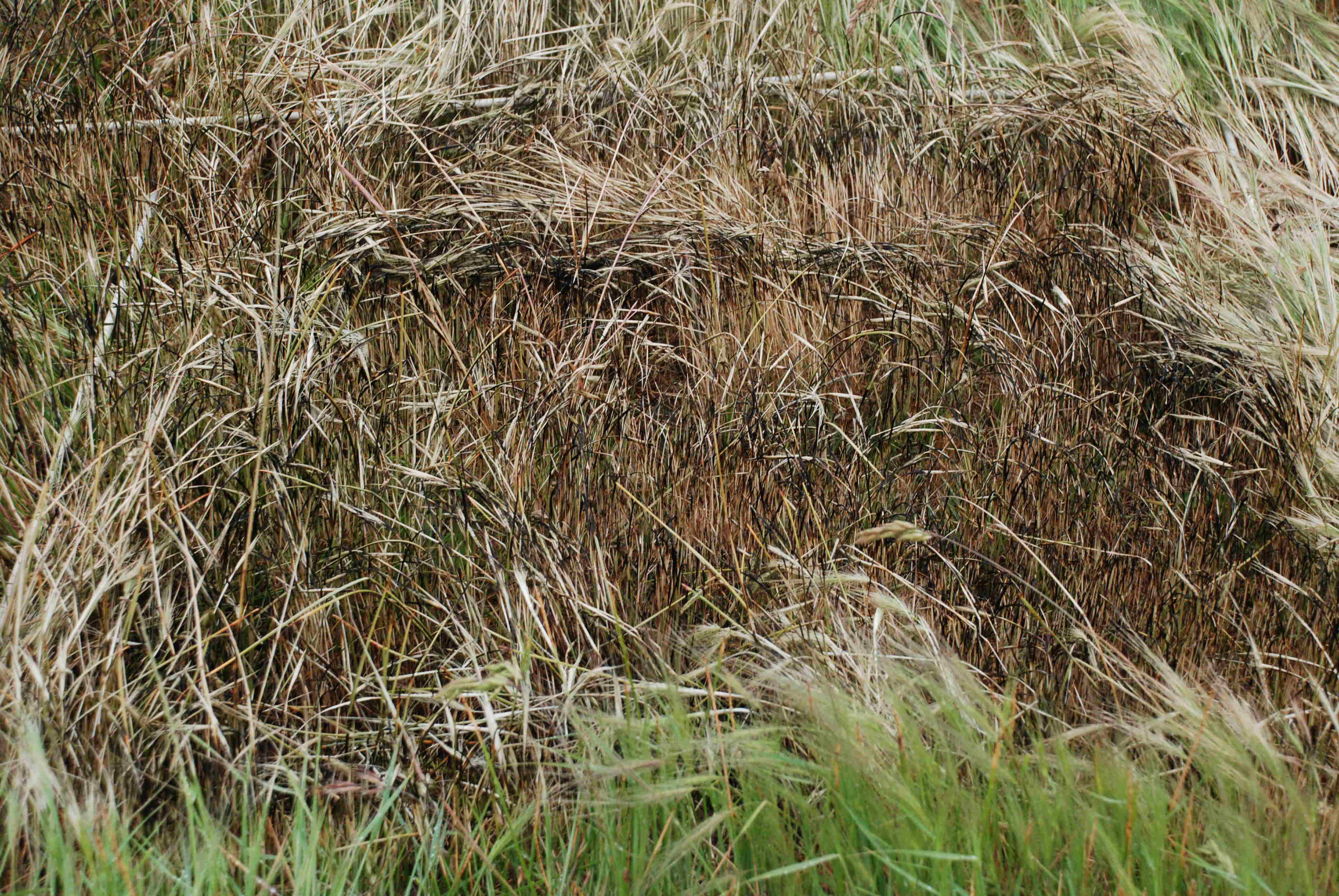
It’s a Jungle Out There

Here is a photo I took last September:photo

I was trying to figure out why I had no power on the electric fence and this was one of the areas that I had to check. Even though my charger will carry power through thick vegetation like these blackberries, the branches could be pushing the hot wire into the old fence and causing it to ground out. (Yes, is a strand of electric wire going through that mess.) I figured it was time to deal with it.photo-2

This is after I cut away blackberry branches. You can barely see the insulator that holds the electric wire near the bottom of the post. I cut those branches but left them between the ditch and the fence thinking that I would drag them away later to burn them. Yeah, right. (By the way, this was not the problem with the electric fence. It was grounding out elsewhere.)

IMG_4407 So only a few weeks later I knew that I needed to deal with the dallis grass along that same fence-line. This is the same area, but looking from the other direction. There is supposed to be an irrigation ditch in this photo.IMG_4411This is after weed-eating the ditch. You can see the blackberries that were cut a few weeks before that I never got around to moving and burning.

Fast forward to this spring. IMG_6398 This is the same view as the last photo. The blackberries are growing back through the old blackberries branches that were never moved AND through the mounds of dallis grass. This year I have a residential burn permit instead of an ag permit. If I don’t want to go get an ag permit then all my burning has to be done before May 1 (or maybe it’s the 30th). But in any case, I needed to get busy. I took a rake and the pruning shears and spent a couple of hours at it. IMG_6400 This is what it looks like now with 2 piles ready to burn. Now hopefully the sheep will keep up with the regrowth of sprouts. When it is so thick with brush and coarse grass the sheep don’t even try to get through it. IMG_6401 But there is more! This is the other fence-line–one that I did not deal with last year. See the two electric fence strands disappearing into it?IMG_6402Here it is from the other direction. Farm Club, where are you?

Field Trip Season

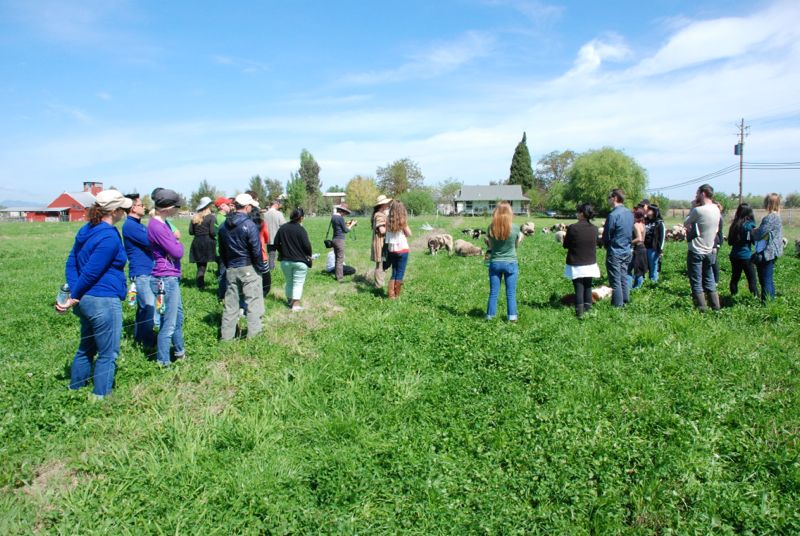
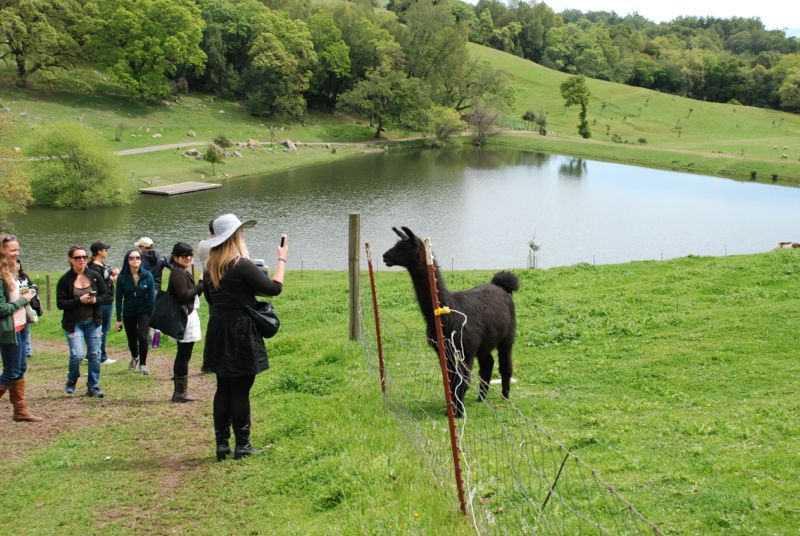
I found a new Season. Field Trip Season. I’ve had 4 field trips here in the last couple of weeks. I don’t get very good photos during field trips because I’m the one who is leading the field trip, but I’ll use a few. Today I’ll share yesterday’s field trip because I got to be a participant (as opposed to leader) of part of it.DSC_0412Fibershed sponsored a field trip for representatives of Smartwool, Northface, Lucy (and maybe others) to learn about our end of textile production. Many (most?) people who purchase and use fabric, individually or commercially, don’t necessarily have a sense of where it comes from. The goal of this trip was to expand the awareness of fiber production–the animals, the farmers, the soil and plants–and the importance of supporting sustainable local farms, and the idea that there is plenty of wool grown in N. CA but not the infrastructure to turn it into cloth. That is a primary goal of Fibershed–to set in motion the creation of that infrastructure and to create thriving businesses that support farmers, designers, fiber processers, and consumers. Whew! Pretty lofty goals? I am always amazed at what Rebecca (creator of Fibershed) has coming up next. I really hope that you’ll spend some time on the Fibershed website  because I think it’s one of the most important non-profit groups you’ll find.

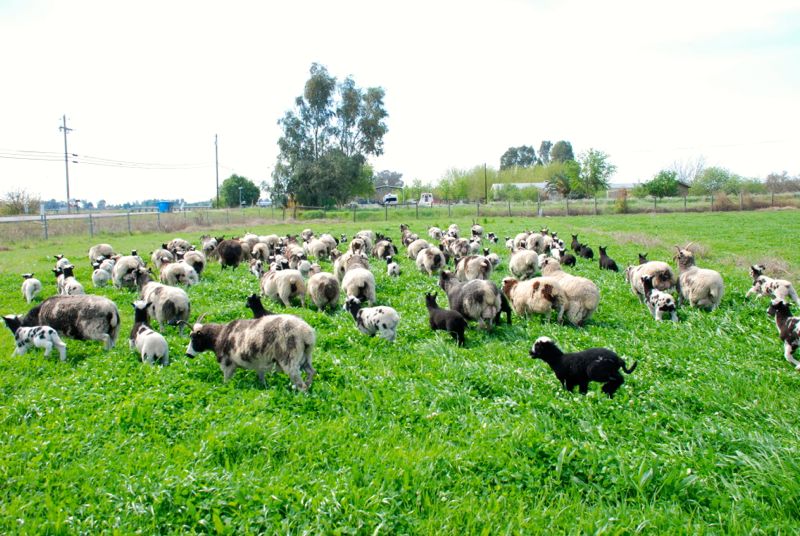
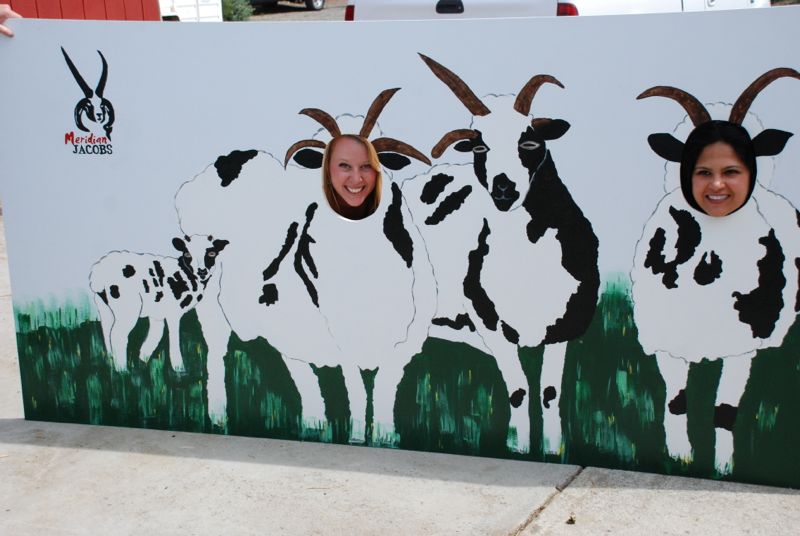
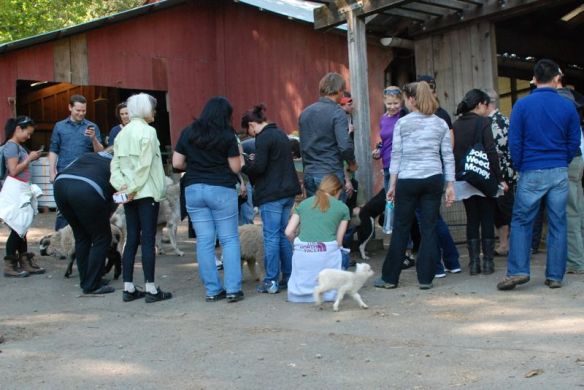
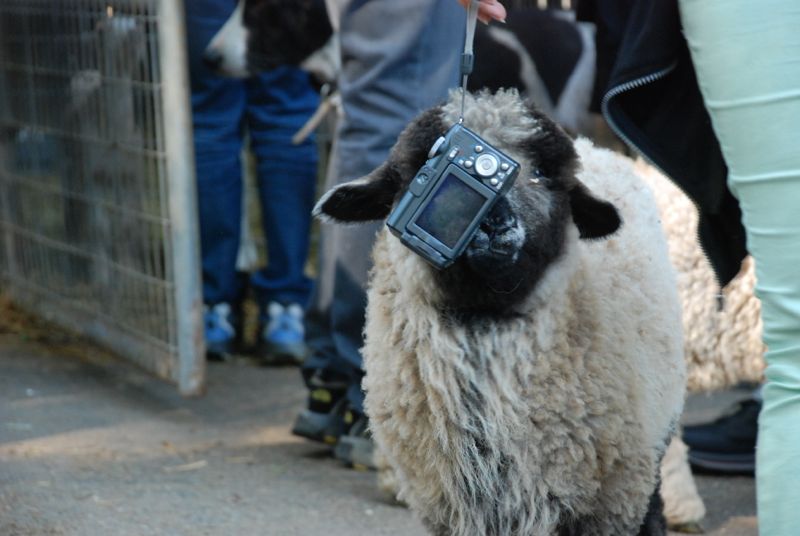
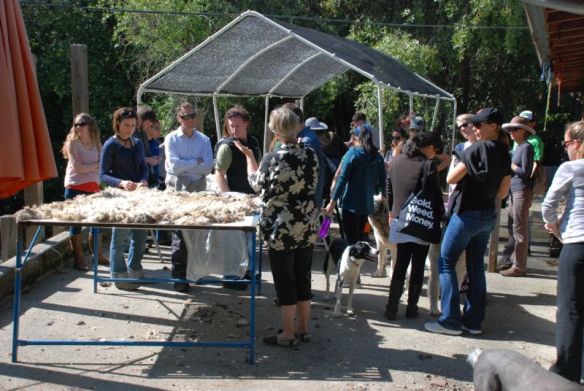
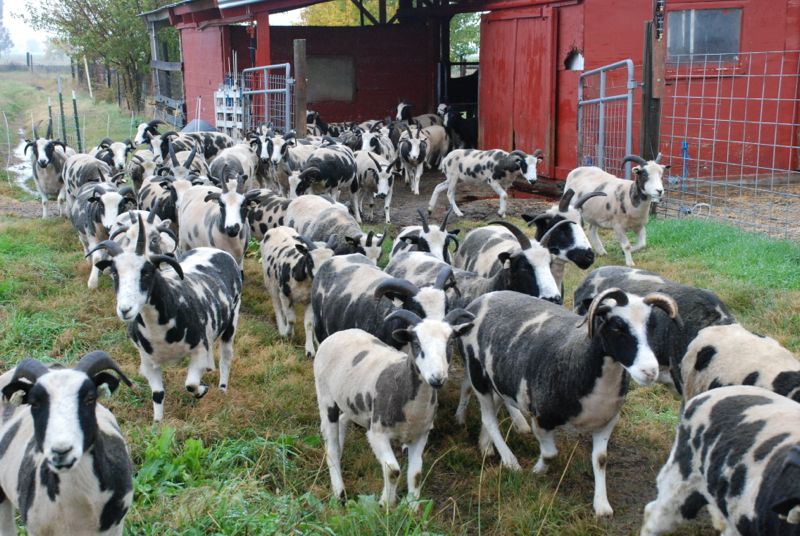
On to the field trip. I expected 5-6 people. There was a busload! First stop for us was the pasture.DSC_0388 The sheep performed admirably. I had waited to move the fence for the day’s grazing until the field trip was here. The sheep rushed to the fresh pasture just like they always do.DSC_0394 This is the group in the pasture. We spent a lot of time discussing pasture management, irrigation, choice of breed, wool types, etc.DSC_0401 Friend, Dona, brought this board over, getting ready for Meet the Sheep on Saturday. Some of the braver visitors tried it out.

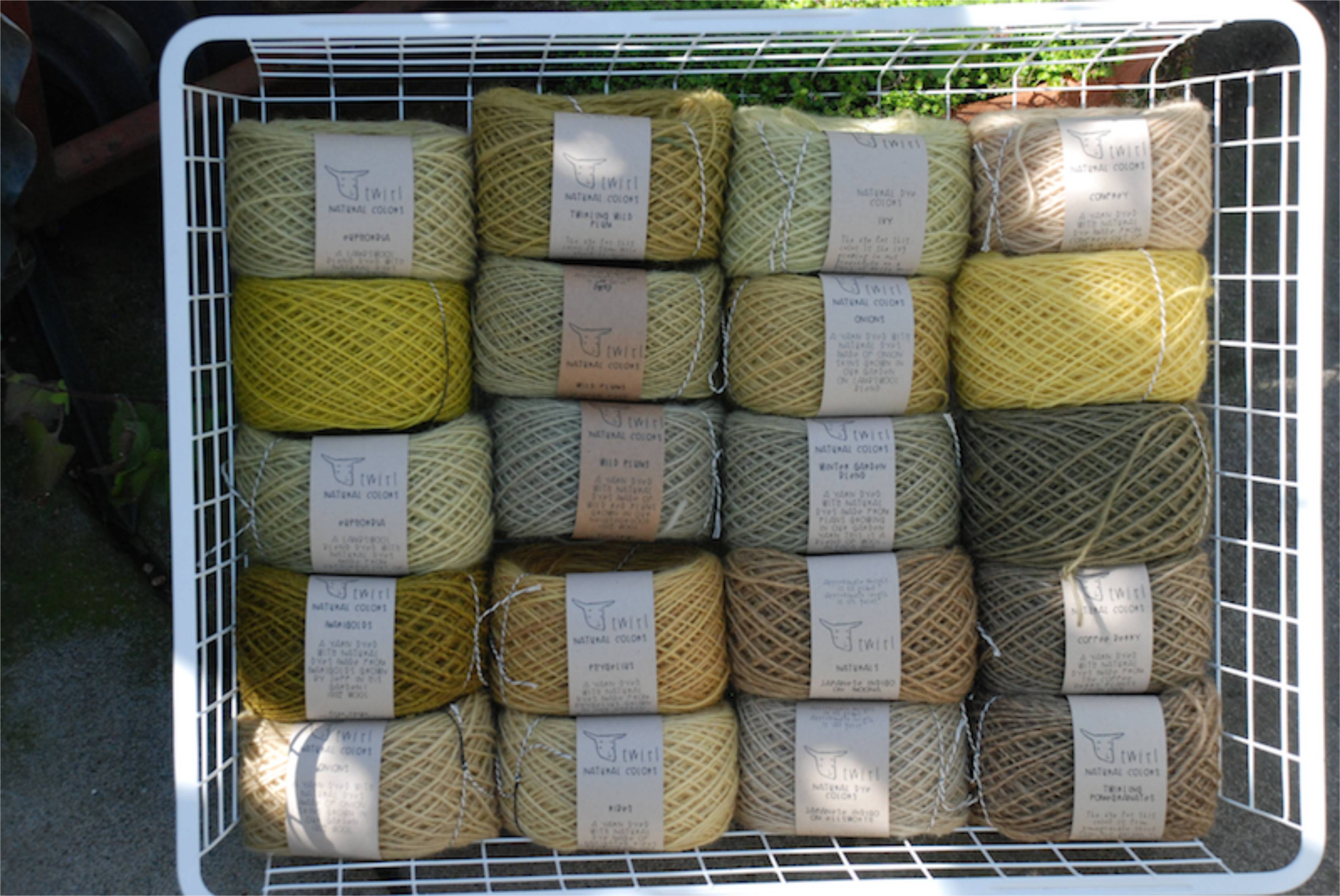
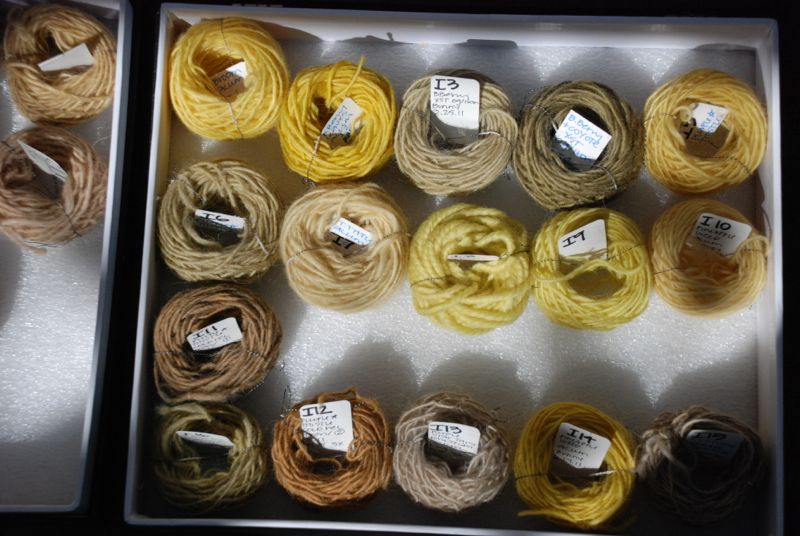
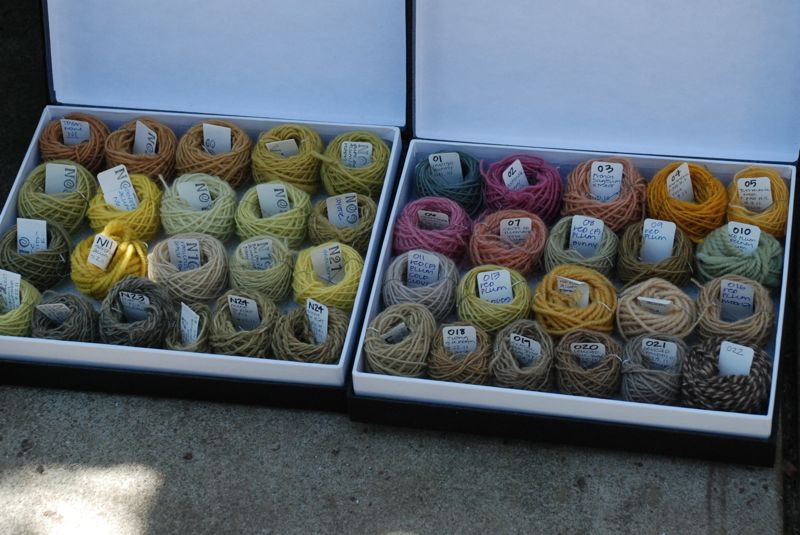
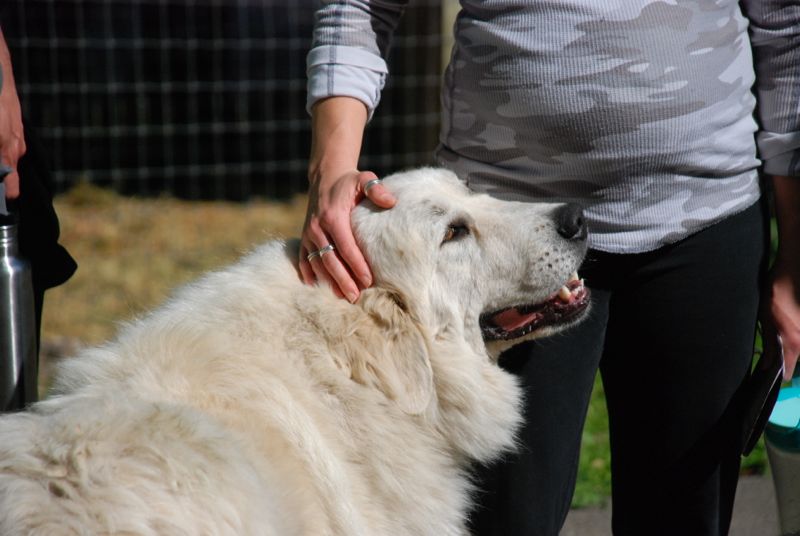
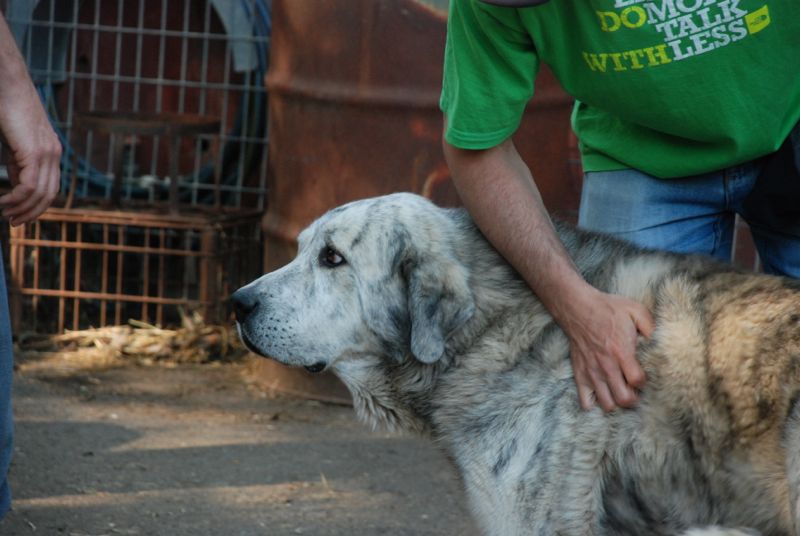
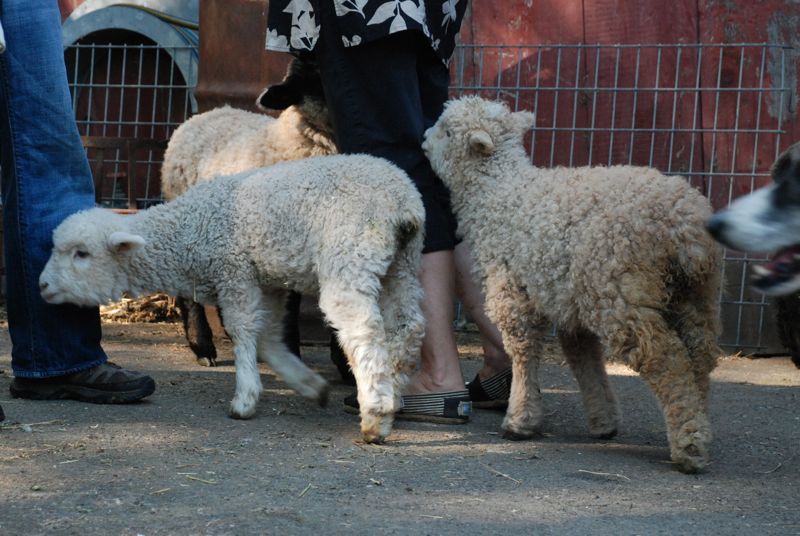
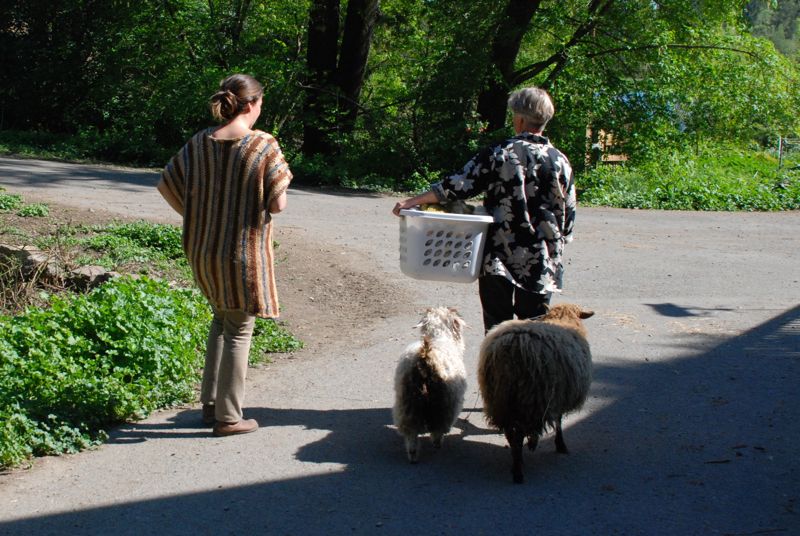
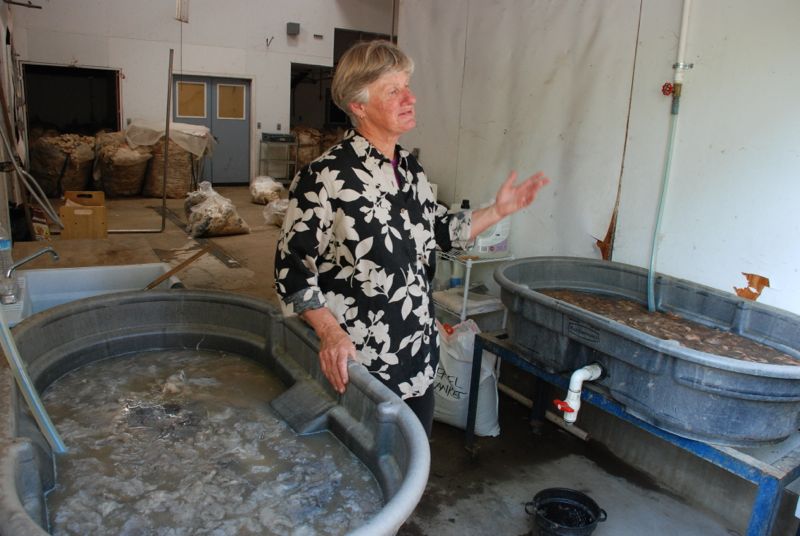
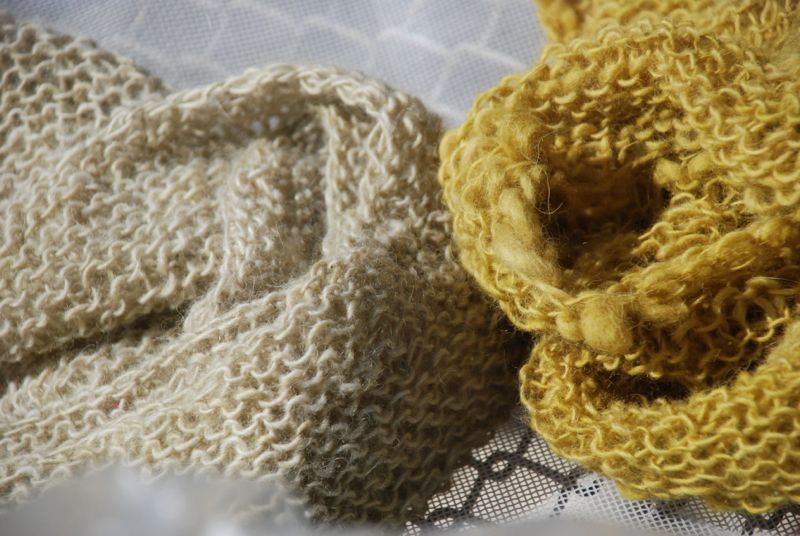
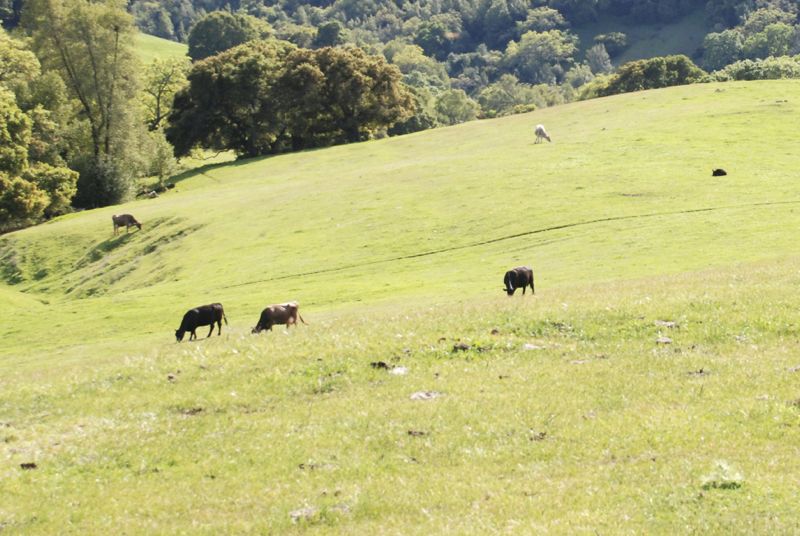
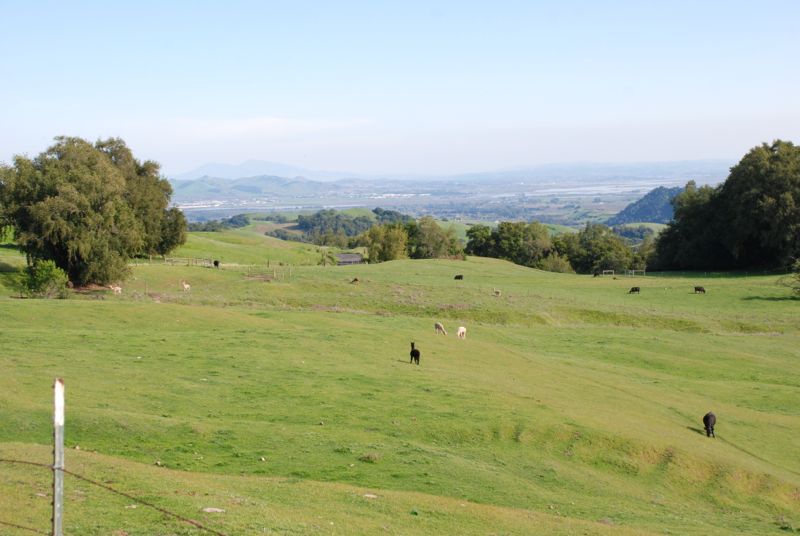
The second part of the tour was a trip to Mary Pettis-Sarley’s ranch in the hills west of Napa. DSC_0411  Mary has a variety of sheep, cattle, and alpacas who live in a beautiful setting.DSC_0420 She creates Twirl yarn using unique blends of the fibers she grows.DSC_0421 The yarns are all natural colored or dyed with natural dyes from plants that grow on the ranch. The “I” in these labels indicates that the dyeplants are invasive species.DSC_0423 DSC_0432 A major challenge of raising livestock in the hills is the predator problem. Mary has 17 dogs, most of whom are various breeds of livestock guardian dogs (LGD). They can be intimidating when you drive onto the property, but aren’t so scary once they know you’re on the approved list (or maybe that you’re not a 4-legged hungry visitor).DSC_0442DSC_0437 Mary let out the bottle babies…DSC_0446 …and I think her part of the field trip won the Cuteness Factor award.DSC_0450 DSC_0455 We were accompanied by two of the pets on the way to Mary’s wool washing station.DSC_0468Now I’m jealous, not only of the property, but of this. Maybe I’d wash more of my own fleeces if I could figure out a set-up like this.DSC_0462 Here is where the fleeces are dried. Mary had several fleeces spread out so that the visitors could handle them and feel the characteristics that we’d been talking about all day.DSC_0465  A couple of scarves knit with Mary’s yarn.DSC_0483 As I drove way I saw some of Mary’s cows. As it happens, these cows are the daughters and granddaughters of Jennie, a Brown Swiss cow that Mary got from us when we left our dairy life in 1998. Talk about happy CA cows. These truly have a happy life.DSC_0489Look at their view of the Napa Valley if they choose to look up from all that grass. (Alpacas in this photo–they were right next to the cows.)

Dallisgrass revisited

I have  posted several times about dallisgrass in the pasture. It features in this post a few years ago, this this post about burning it, this post in August 2011 and this post in August 2012. Please ignore the fact that I have spelled it differently in several of this posts. It is dallisgrass and here is a definition: “a tall tufted tropical South American perennial grass (Paspalum dilatatum) introduced as a pasture and forage grass in the southern United States”.

This came up in an e-mail conversation last night. Why don’t I shear before breeding season to avoid the blue and red and green markings on the wool?

Good question and that is a discussion for another post. I was thinking about pros and cons of shearing before breeding–sometime in September. I was explaining that the dallisgrass grows so tall and develops seed heads in the late summer. At some point in the cycle the seed heads are very sticky and the sheep (and Rusty…

…and my pants) are covered with sticky goo that catches dirt and the seeds that come off of the grass. After a few weeks the sticky part goes away and then fall rains clean the sheep. I thought I’d look this up to see why the seed heads are so sticky. I was surprised to learn that the goo is actually the result of a fungus that is common on dallis grass and is toxic to cattle. Who would have thought? That doesn’t change anything, but I find it interesting. So this morning I wanted to see for myself.

This dallisgrass looks “clean”.

This one is infected.

The dry grass here is dallisgrass.

See how tall and thick it is? Some of the leaves are still green, but they are so coarse that the sheep will choose to eat the dallisgrass only after they have eaten all the grass and clover that they prefer.

A few sheep photos. This is Sierra.

This is Aurelia, the ewe I got from Kreutzer Farms  in Nebraska.

Onyx, the Jacob x BFL cross. Notice the ewe in the top right corner of the photo that is almost invisible in the tall grass.

And while I’m talking about fungus in the pasture, what about this one?

 It is huge.

Green Pasture

You have all seen photos of my green pasture.

This does not happen naturally here in California’s Central Valley . We have what is known as a Mediterranean climate. I thought I’d give you a definition but what I found when I did a google search is more interesting:

There are not many places in the world that have our hot, dry summers and cool, wet winters. So how do we grow all that clover and grass in a hot, dry summer? Irrigation, of course. But irrigation water has to come from somewhere if it’s not coming out of the sky this time of year.

Our irrigation water is provided (sold) by Solano Irrigation District and comes from Lake Berryessa which fills from winter rainfall. Here is how our irrigation water is delivered.

Do you see that low spot in the mountains on the right side of the photo? Lake Berryessa is behind there. The water is carried down Putah Creek. Eventually it works it’s way into a system of canals. When I call for water the SID person opens a gate at the end of this ditch that is normally dry. The water flows to another gate at the northwest corner of my property (that cement box on the other side of the fence). When that gate is open the water flows under the fence into the standpipe in the foreground.

That black circle is the pipe carrying the water into the standpipe. It flows out the hole on the south side of the standpipe (at the top of the photo).

This is a close-up of that rushing cool water. It’s not a rushing mountain stream but it sure looked appealing this afternoon when I was outside working.

Here is where the water flows out of the standpipe into the pasture.

There is a ditch at the north end of each pasture. The water is just starting to fill the ditch.

I have to dig cut-outs in the ditch to get the water to flow where I want it. It’s not a perfect system because our ditches are worn out and trampled by sheep and the pastures aren’t level, but I can usually make it work. I have the water on for 24 to 36 hours to irrigate everything.

This is the last pasture the sheep were on yesterday and I finished mowing it (a story for another day)  just before irrigating.

This is what we’d have in the summer if we didn’t irrigate. (This is a small pen behind the barn.)

Here is what irrigation gives us.

Wanted: Winter Storm

Wow! Look at that grass!

This photo was taken a few years ago in early February.

Here is another that shows the edge of the pasture.

This is the same field as in the first photo and the larger pasture is in the background. Why the difference? No rain.

The Central Valley of California has a Mediterranean climate–hot, dry summers and cool, wet winters. We count on the winter rains (and snow in the mountains), starting some time in October or November and continuing through April or May (and last year, into June) to fill reservoirs, replenish aquifers, and to grow grass. Normally the annual grasses start growing when it rains in the fall and when it gets warmer in the spring the grass growth takes off and we get the kind of growth as seen in that first photo. The annual grasses dry out in the spring, but can still provide feed through the summer when properly managed. The cycle starts over with the next fall rains.

I have irrigated pasture. I usually have the best of two worlds. I take advantage of that lush spring growth of annual plants…

Grazing annual ryegrass as some of the other annuals are drying out.

…but I start irrigated in May or June. Through the summer, when livestock on dry land eat dry feed, my sheep eat perennial forages that include clovers and birdsfoot trefoil.

Birdsfoot trefoil

Clover

The  perennial plants drastically slow their growth in the winter but rely on winter rain to grow strong root systems and be ready to support new growth in the summer. Look at the next photo taken two weeks ago.

Annual grasses that germinated after the good rain in November have since died. Some plants are still trying valiantly to hang on but there is virtually no growth. The dry grass in this photo is the remnants of the late summer growth of less desirable yellow foxtail and bermudagrass.

This photo is behind the barn. That clump of grass in the foreground is under the place where any moisture (fog, dew) drips off the roof. Had there been normal rainfall the whole place would look like that.

Let’s hope we see the rain that has been promised for this week so we can look forward to this scene soon.


Revisiting the pasture

I have irrigation water coming on tomorrow morning at 7 a.m.  (It comes through Solano Irrigation District and I have to call when I want the water “on”–in my ditches.) Irrigation has been a struggle this year. Even with the water on for 36 hours there are some paddocks that have died back because I can’t get water to them. Part of the problem is probably the old culvert–too deep and too small. It is half filled with mud that I can’t get out. I taught a weaving class today but after that we went out to tackle the problem.


Dan dug the culvert out with the tractor.


For tomorrow’s irrigation the water will be running through the ditch. Eventually we need to replace the culvert with a bigger one.


After setting up the tarps to keep the water in the ditches I checked the paddock where I experimented with burning medusahead. This is the plot that my son burned early in the season. He didn’t think it was effective but the medusahead is still gone.


The area of trefoil is where I burned the medusahead that was growing over it. This is some of the area that got water but that medusahead is still thick. I hope the pasture plants will choke it out.

This is some of the area that I haven’t been able to irrigate. Not much forage there and look at the medusahead cover.

Medusahead closeup.


Here is the trefoil that would be a wonderful replacement for the medusahead. Hopefully irrigation will go a little better tomorrow and we’ll get water on those dry areas.

Experiments with Fire

Faithful readers of this blog will have read my whining about medusahead in the pasture. Medusahead is a noxious annual grass, unpalatable due to high silica content. Due to it’s later date of maturation, it is noticeable on the hills as the light green color when the other annual grasses have dried out. After it has gone to seed it leaves a dense litter through which nothing else will germinate. Medusahead covers part of one of my paddocks and is increasing in area. During my visit to Jepson Prairie (see pretty pictures in last post) I read the signs about how they had used prescribed fire to control medusahead. “Fire is usually 100% effective at controlling medusahead if done before its seed heads shatter.”

A couple of months ago I bought a fire-breather tool (I can’t remember the real name) that is attached to a propane tank. It is sold for use in weed control, particularly when weeds are small. It’s intended use is to heat the  plants and burst the cells rather than actually setting them on fire. I thought I’d experiment in the field. Having just irrigated (in addition to unexpected May rain) the plants were wet and there was even standing water in many areas of the pasture. I wasn’t worried about starting any wildfire.
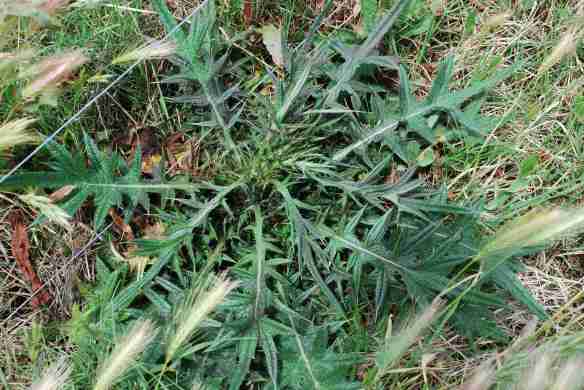
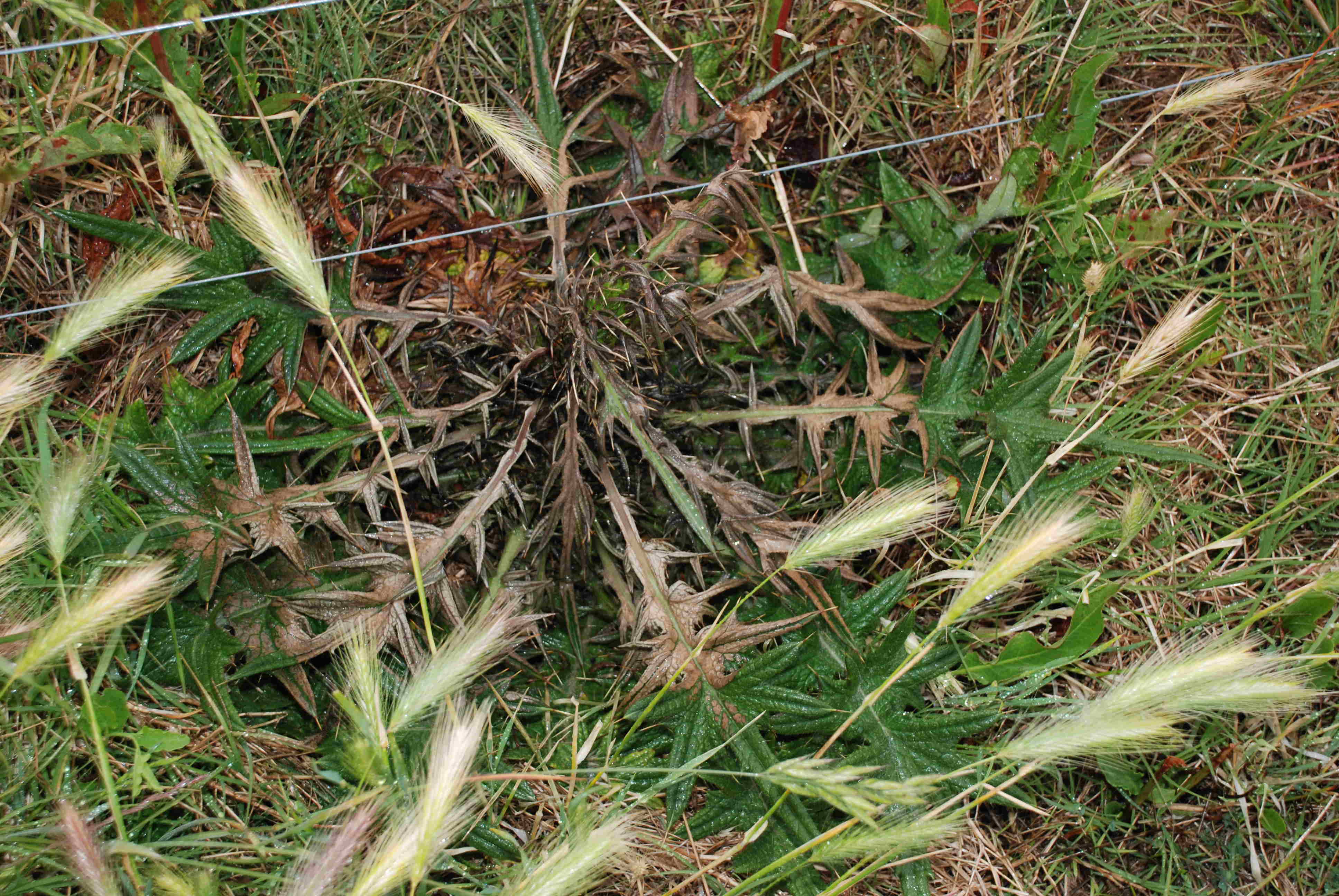
On the way to the medusahead I saw a thistle. Normally I’d just dig this up, but having a propane tank  rather than a shovel, I blasted it with fire. You can see the singed leaves.
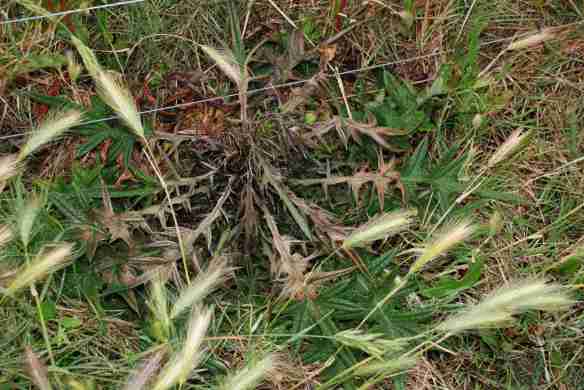
This is the thistle the next day. It may not have killed the whole plant, but you can see how it destroys the part that was heated. If the plant was very small that would be the end of it.

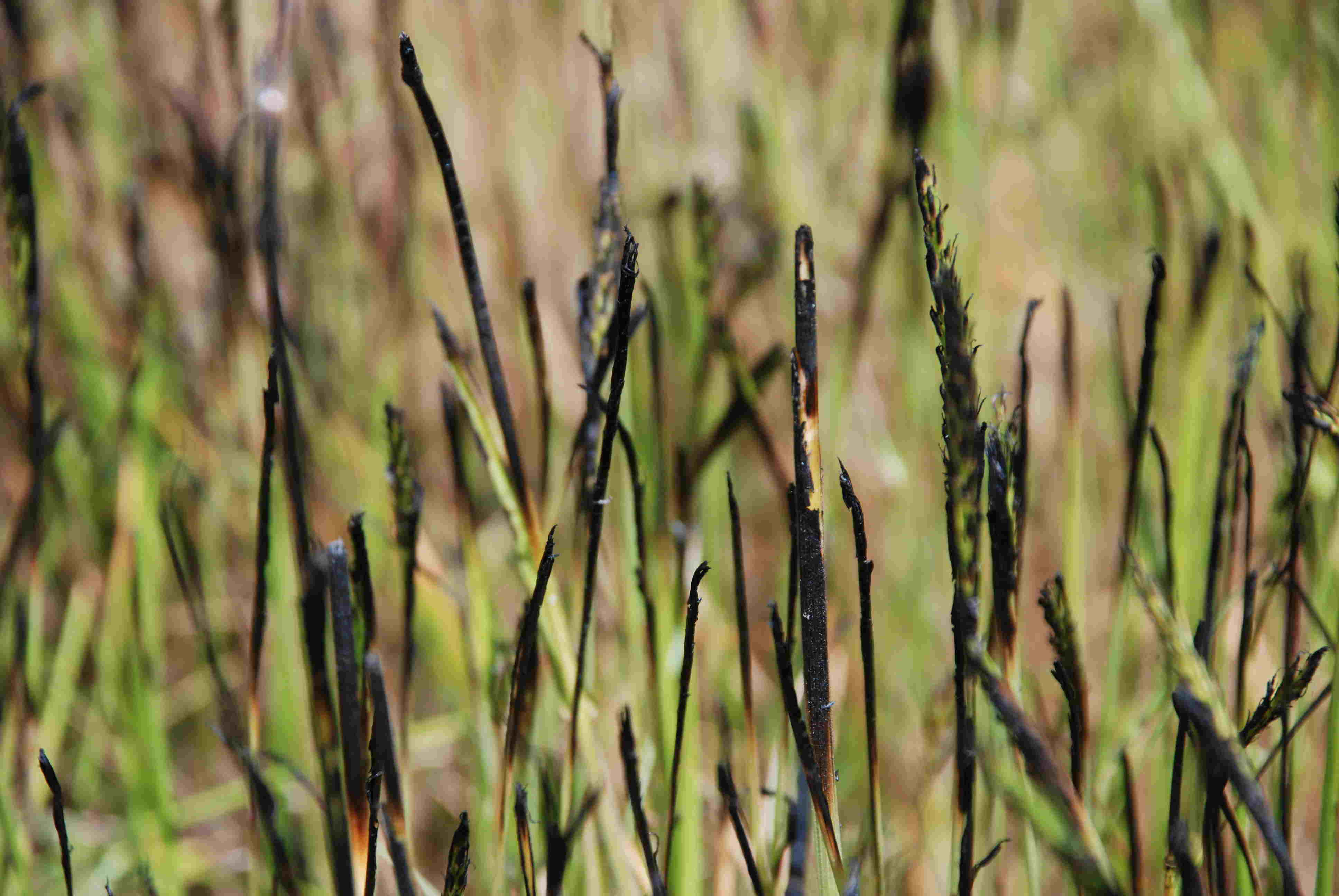
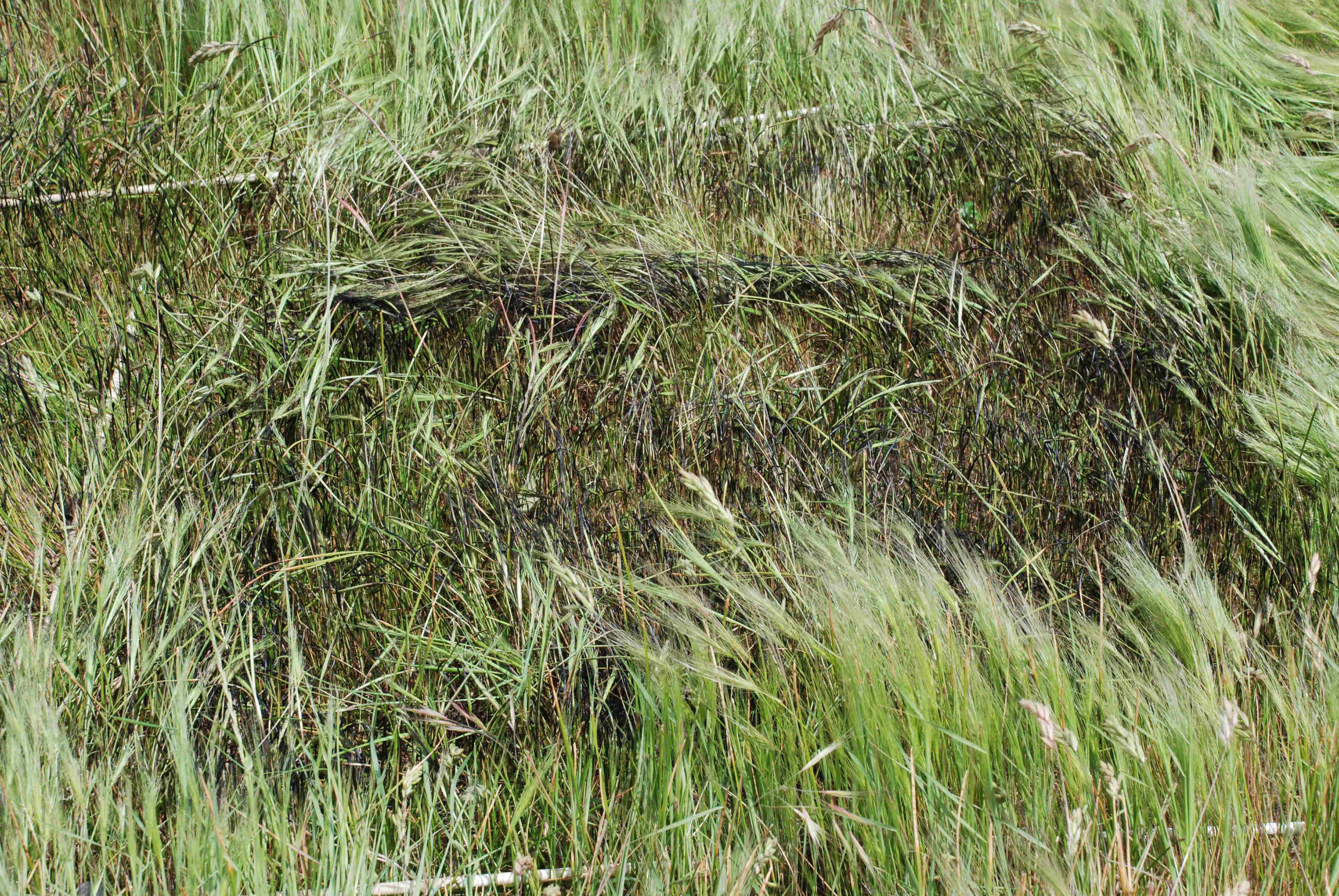
I didn’t really have a plan but started burning various parts of the medusahead covered area. Because of the moisture content, I wasn’t seeing much fire, but I was singing off the bristly parts of the seeds and burning a little of the litter. Then I noticed this.

Notice the forbs growing under the medusahead. I don’t want to kill those plants. I want to encourage them. This made me wonder if it would be effective to just burn (or superheat) the tops of the medusahead. This brought up several questions.  Would super-heating it stop the seed from developing? Are the seeds already viable even though the plants life cycle isn’t complete? If I heat the top of the plant enough to burn off the outer part of the seed head will it kill the seeds? If I do this will the plant produce more seed heads? I decided I needed a test-plot.
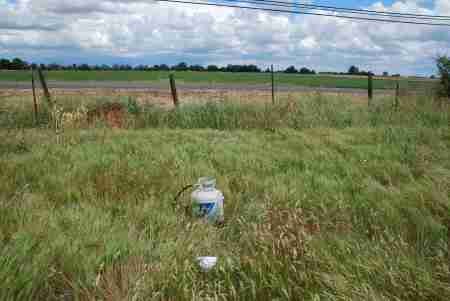
I used fiberglass fence posts to make 5 plots. The two upright fence posts mark two corners. They are hard to see, but trust me, they are there.

My plots are:

1. Flame (superheat) the tops of the medusahead long enough to burn off the outer halo of the seed heads.  Are the seeds already viable? If they aren’t, will this stop their development. If they are viable, will this kill them. I don’t know.

2. Flame the tops of the medusahead longer than in #1 so that I can see more damage done to the seed head. Same questions as #1.

3. Flame the stalk of the plant in between the base and the seed head. If the seeds aren’t already viable will this stop the development?

4. Flame the base of the plant to damage it.

5. Burn the whole *#@&^% thing.

Remember that the plants are wet from rain, the plants are still green, and in some places there is plenty of ground moisture if not standing water. If this were “normal” conditions I’d probably be starting a fire. And it may be that FIRE is the best answer. Even if I succeeed in reducing the seed produced by the medusahead, in much of the area there is still that heavy thatch which probalby needs to be burned off. And maybe I need to completely remove the plant and it’s seed by incinerating it.  But that’s another issue.

There are too many photos to post here, but I’ll give you an example of what I did.
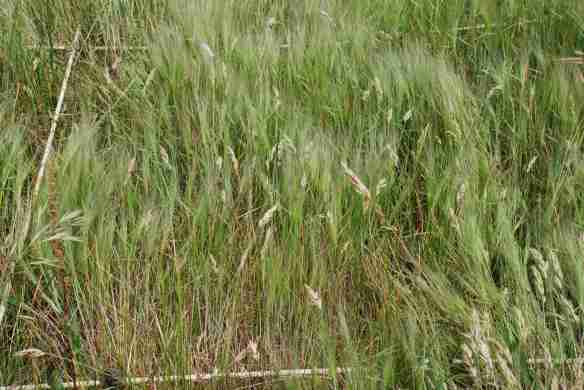
Here is Plot 2 before burning.
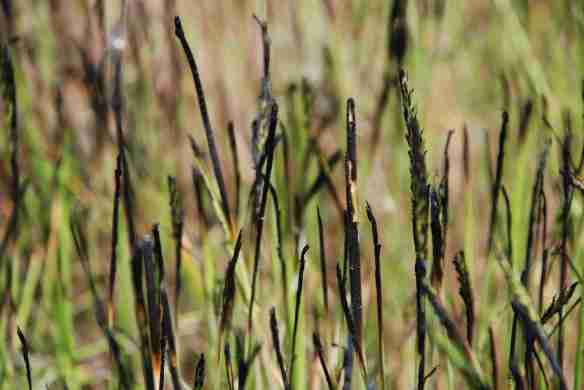
This is a close-up of the tops of the plants after burning.

This is a view of the plot the next day.
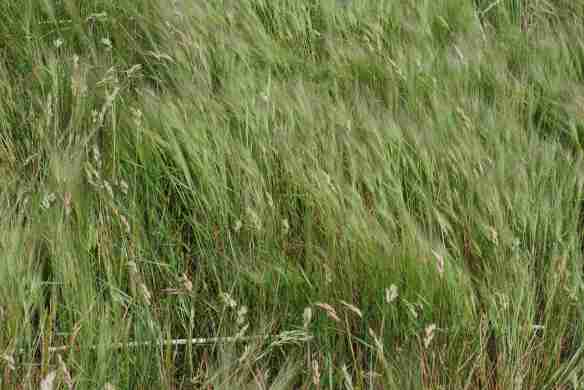
This is Plot 3
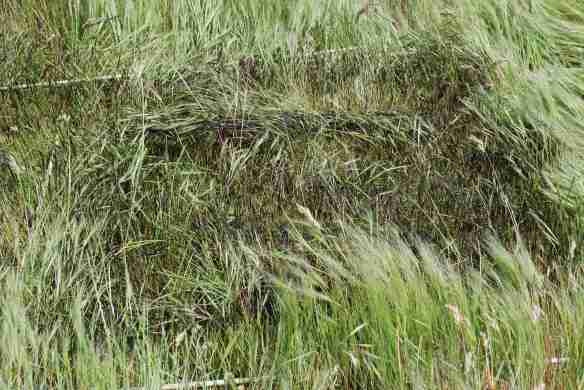
This is Plot 3 after burning.
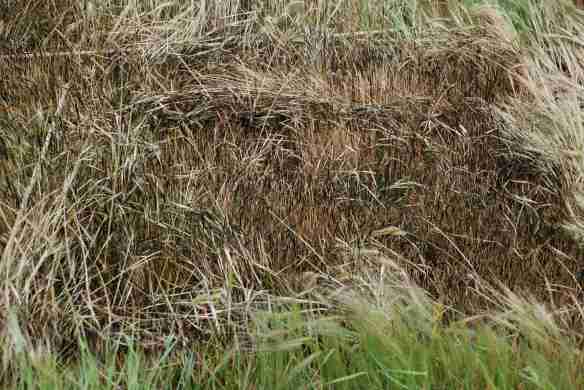
Plot 3 the next day.

I don’t know what all this will tell me. I didn’t set this up so that these are permanent plots and I think I want to burn everything to be sure. But I have raised some questions for which I want to find answers. I know a couple of people to ask. I’ll report back if I learn something.
Pasture management revisited

Regular blog readers may know that in the late summer and fall I start complaining about the unpalatable late summer grasses. I’m sorry, but I’m going to complain now even though it is only spring. I only graze about 7 acres so all of it seems precious. We dealt with some of the issues of the thick dallisgrass a couple of weeks ago by burning it. I hope something starts growing where all that heavy thatch was.

Today’s issue is the condition of the east paddock. Medusahead is a nasty, unpalatable grass that goes to seed in the summer, covering all the soil with thick dry thatch. The medusahead is starting to grow now and the only other thing growing with it is a perennial grass (Elymus–wild rye– I think) that the sheep don’t like either. The rest of the soil is covered with the dry residue from both of these. My goal in this paddock is to  graze it hard enough that they will at least trample and break up the dried up grasses from last year and hopefully eat some of the less palatable grass.

As I was uploading these photos I realized that they don’t show what I’ve been talking about.

This is the view looking south. You can’t tell, but it’s the east side (left) of the east paddock that has the problem vegetation.  It took them only a day to clear off almost everything in the south part of this paddock (as opposed to 2 days in equal sized paddocks with better vegetation).

They are hungry and ready to move.

I took this photo as I opened the fence and stepped back so I wouldn’t get trampled.

Arthritic Stephanie follows the running sheep.

Amaryllis brings up the rear. She will follow Stephanie anywhere.

This view is looking north, from the part of the paddock they just left. In this photo you can’t really tell the difference in vegetation between the west (now on the left) and east sides of the paddock. It’s much easier in person, but notice where the sheep are. There is no fence keeping them from the east side–it just doesn’t have what they want to eat.

Compare this photo to the one where they are running into the new pasture. There is a blue cast to these plants–this is very sparse (although it may not look so in a photo from this angle) and it is so tall because the sheep avoided eating it the last time they were here.

Tomorrow I will start irrigating. I hope for some warm weather to follow so that the clover and trefoil will come in faster.