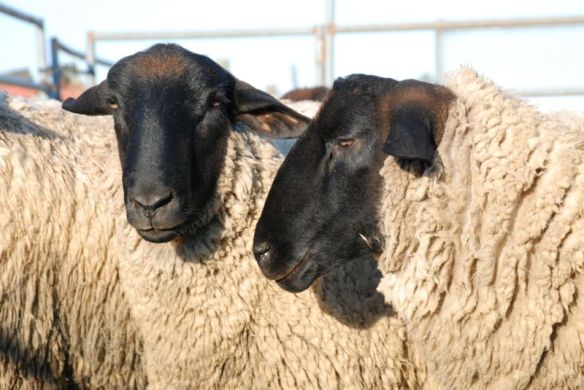
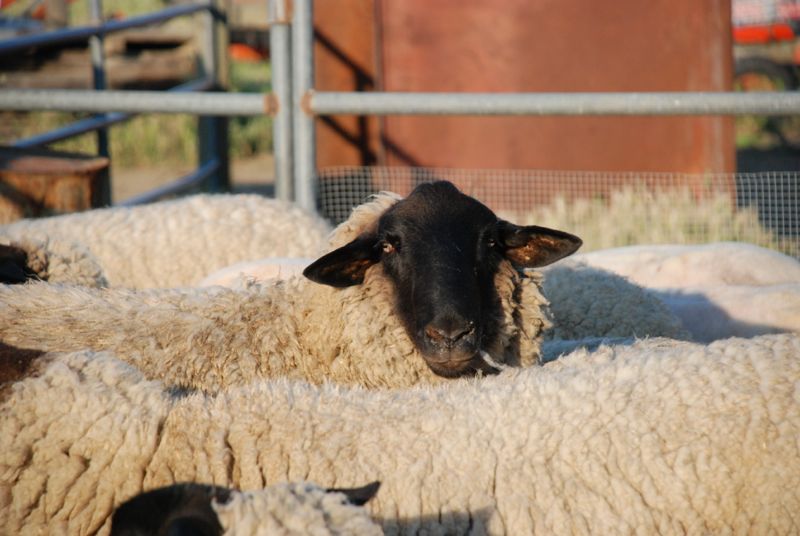
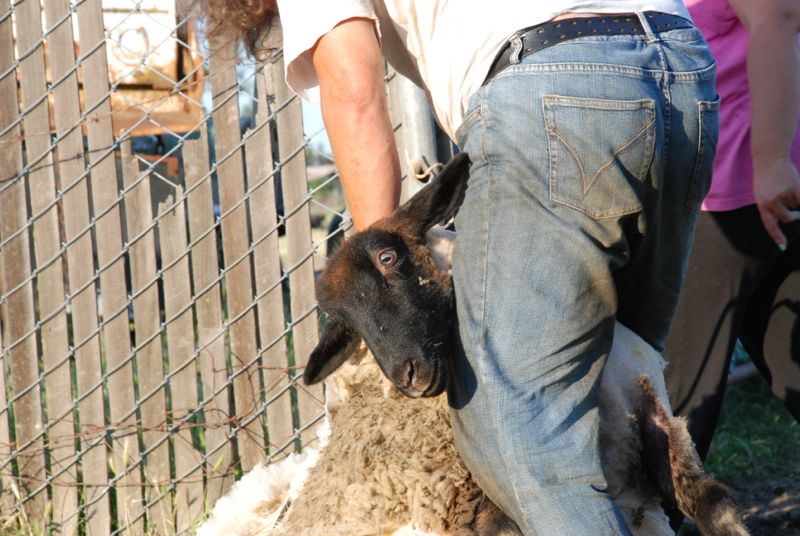
One of my neighbors has Suffolk sheep and this was shearing day. Here are some photos.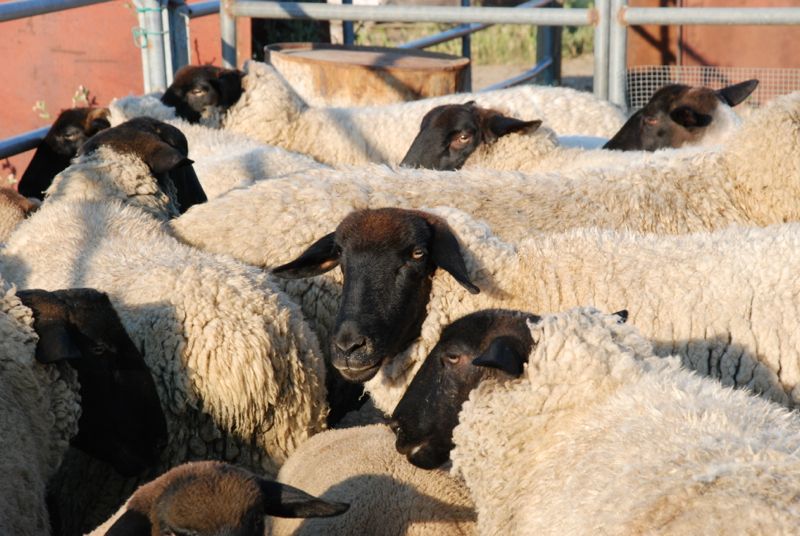


Shearing Suffolks
Reply
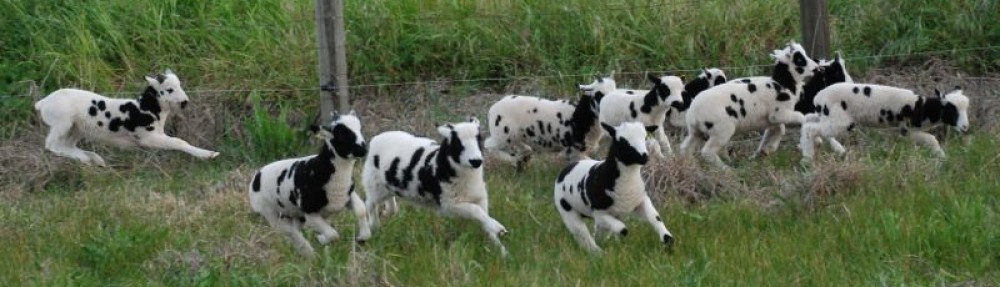
One of my neighbors has Suffolk sheep and this was shearing day. Here are some photos.
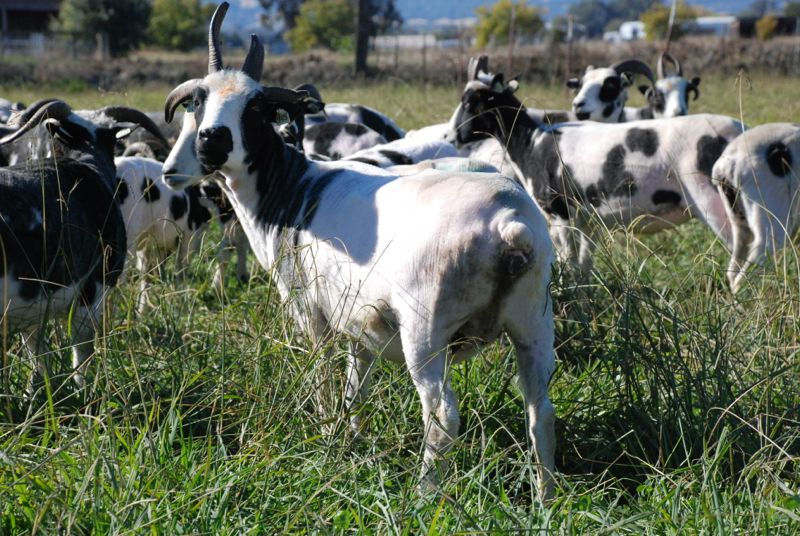
Does this haircut make my rear look big?
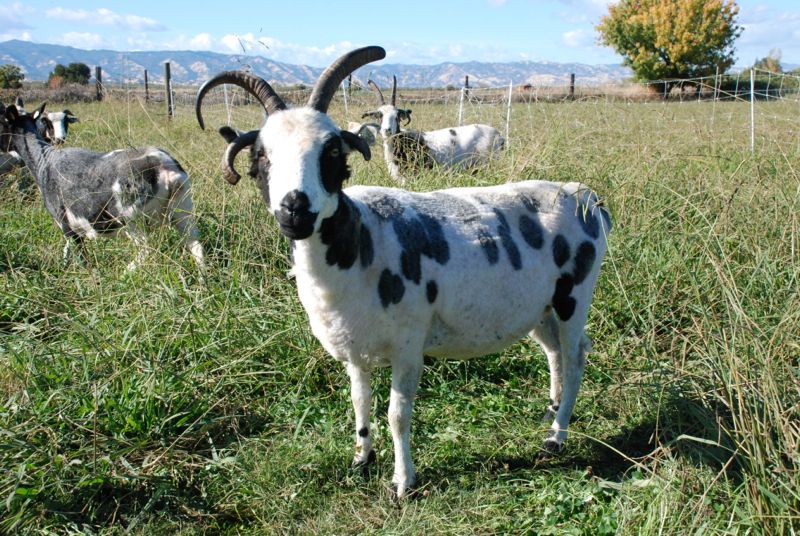
Does this haircut make my head look big?
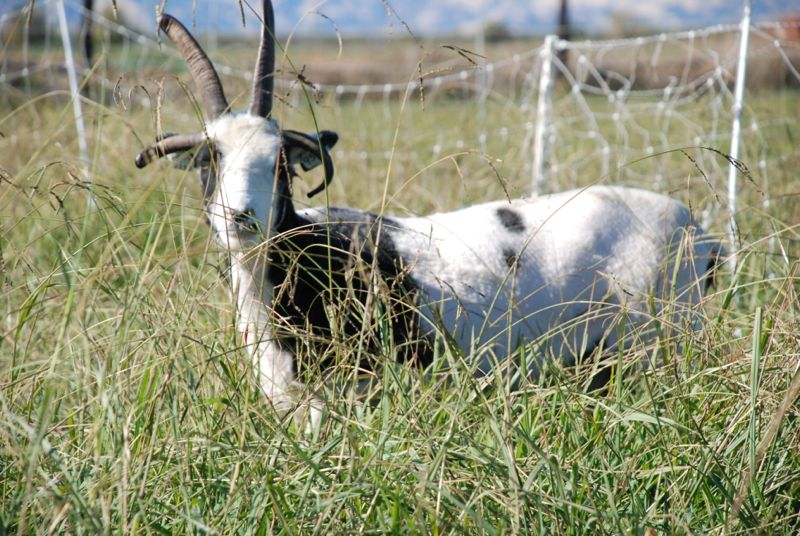
If I don’t move she won’t see me.
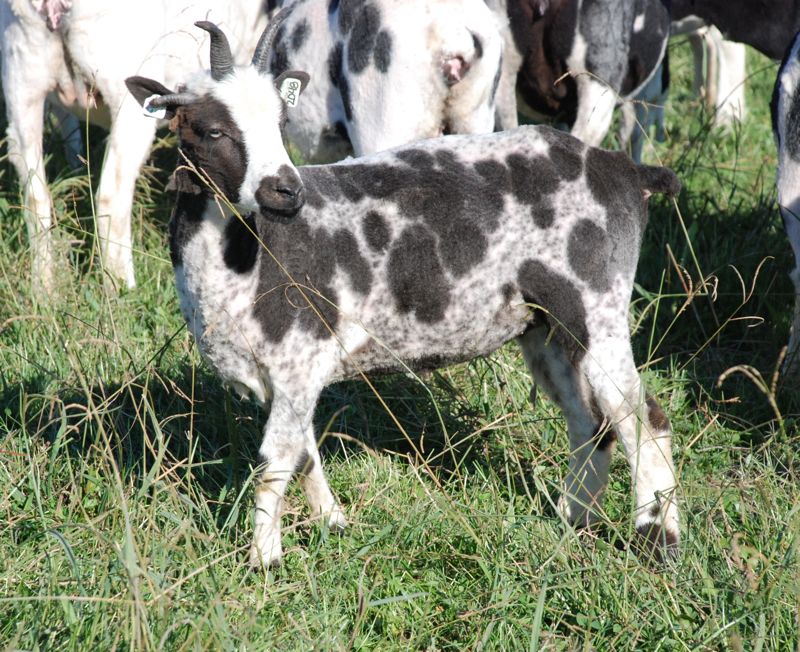
Where did all those freckles come from?
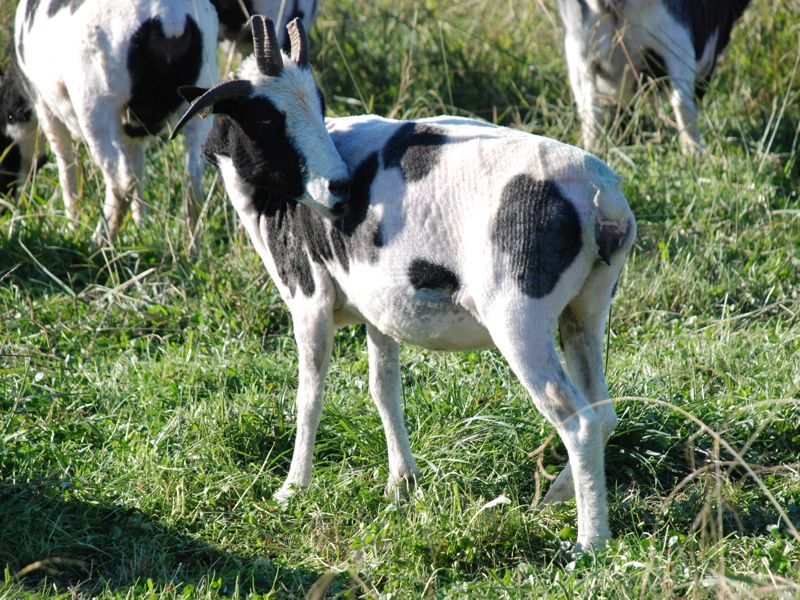
I can finally reach that itch.
Overheard in the Ram Pen, after weaning the ram lambs born at the State Fair in July:
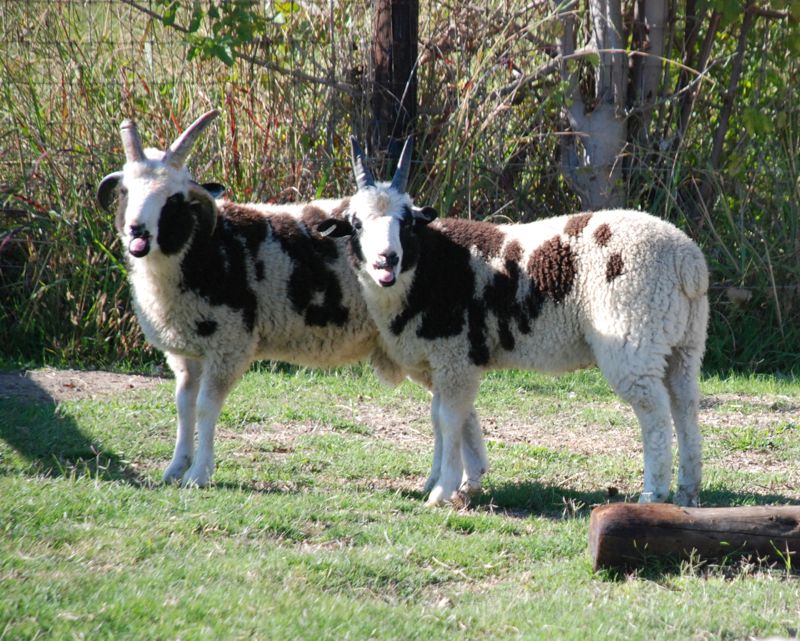
MOM !
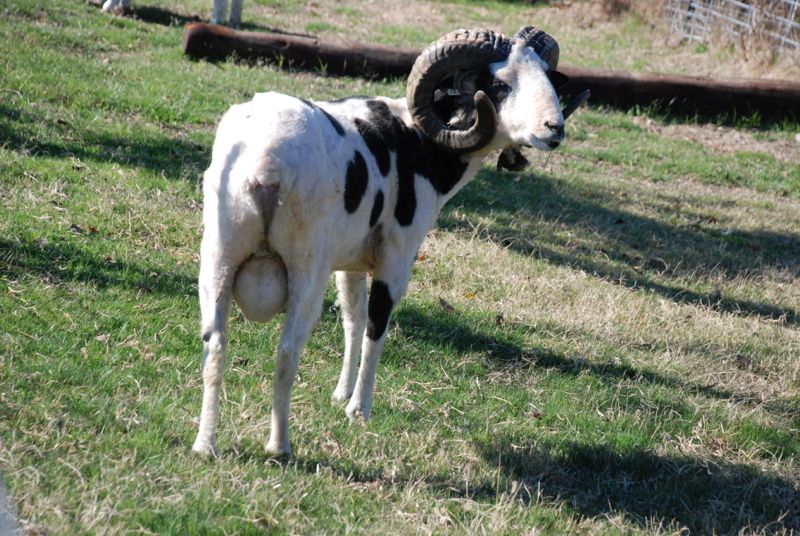
Does this haircut make my …uh…horns look big?
Shearing Day was yesterday. What a wonderful time. Farm Club came through (as always) and handled all the various tasks of the day. (Except for Rusty’s job, which he describes in his blog so I am not duplicating his photos here). I am grateful to the great shearer who has come for the last few years. He does a wonderful job–the sheep look good and the fleeces look good. John is so fast that he finished with 64 sheep in about 2 1/2 hours.
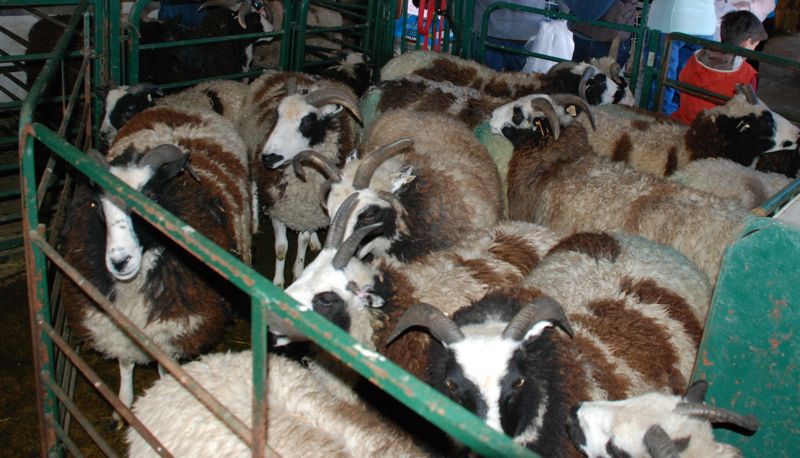
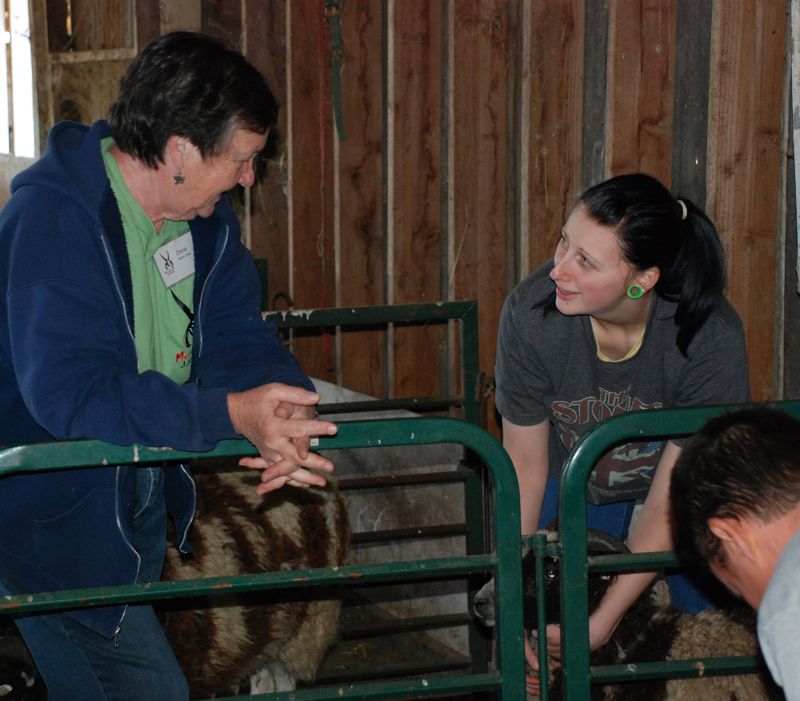 One important job is making sure that the shearer always has a sheep to shear as soon as he finishes with the last one.
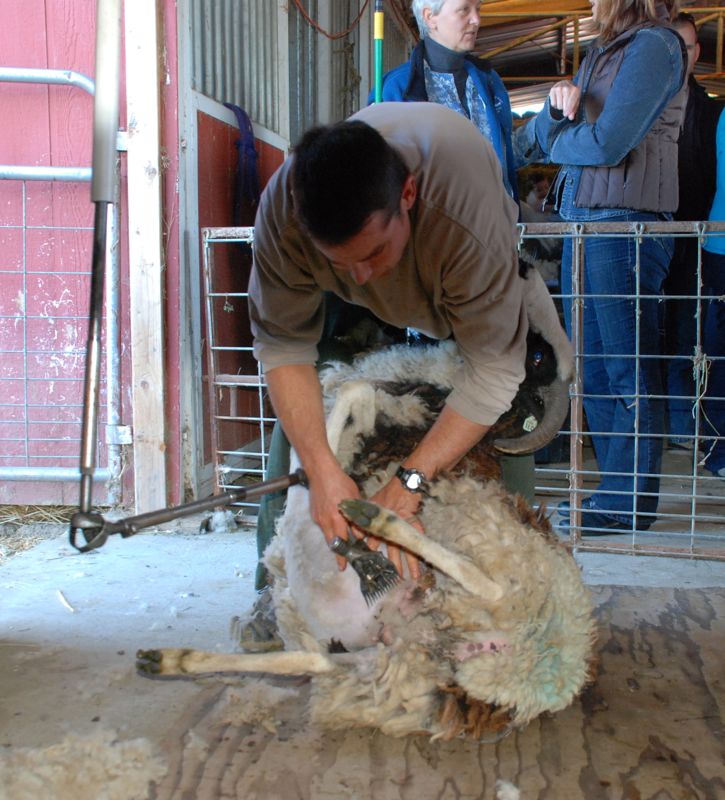
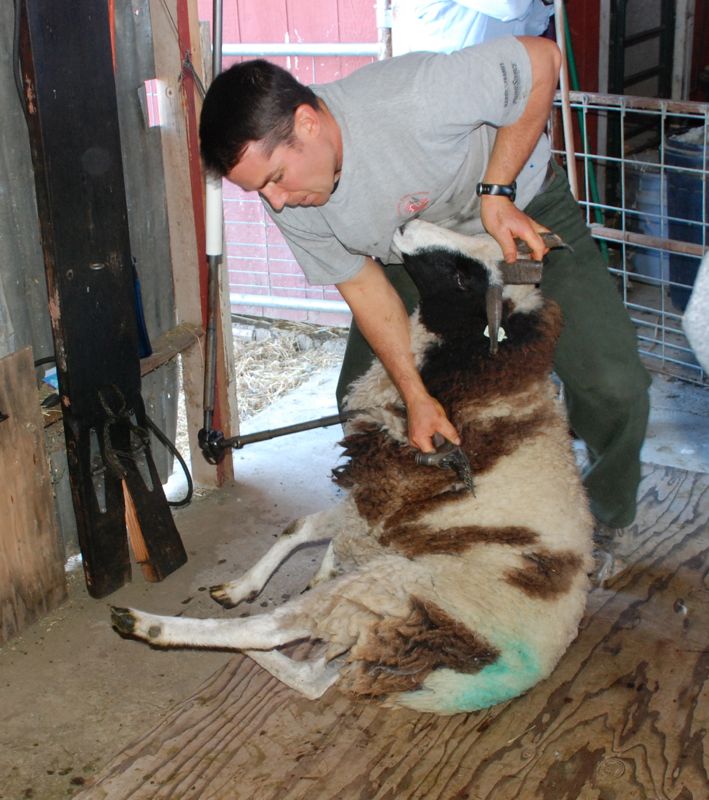 I took some videos too but it will take me awhile to get those edited. You can sign up on the Meridian Jacobs YouTube Channel and see them when they are ready.
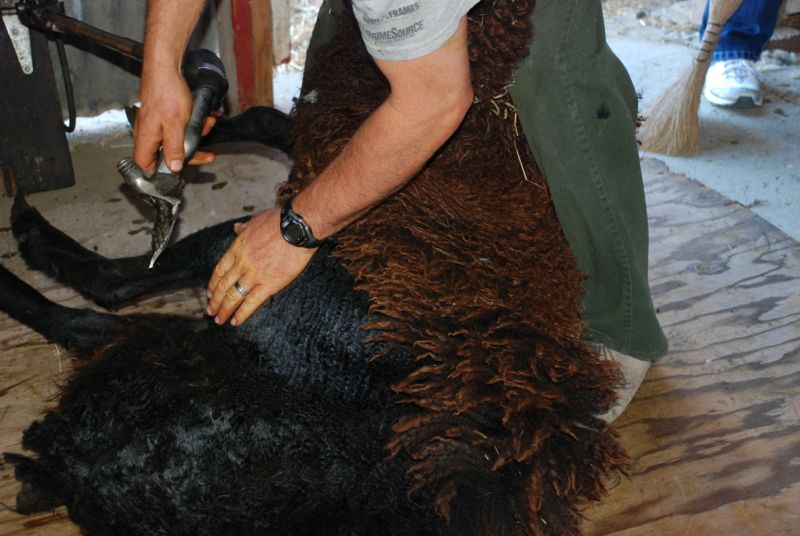 This is the BFL/Jacob crossbred ewe. I probably could have started a bidding war on her fleece, but I’m keeping it.
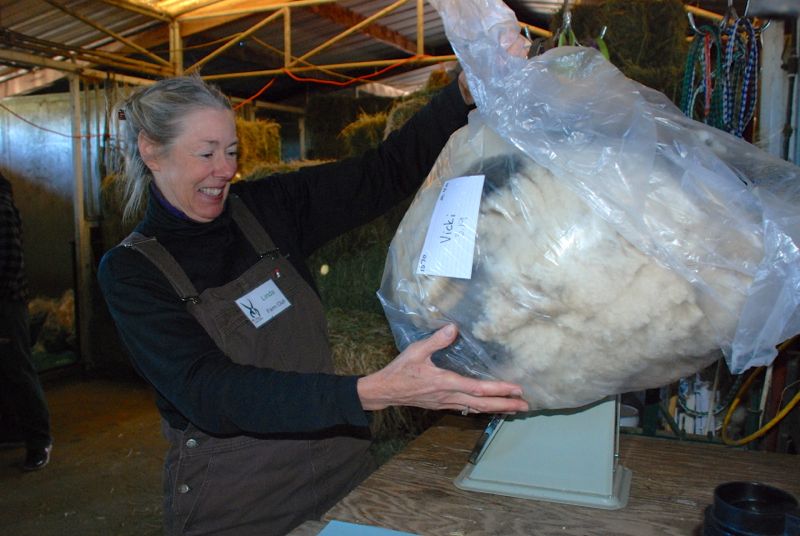 A couple of people bagged fleeces after shearing and then each fleece was weighed.
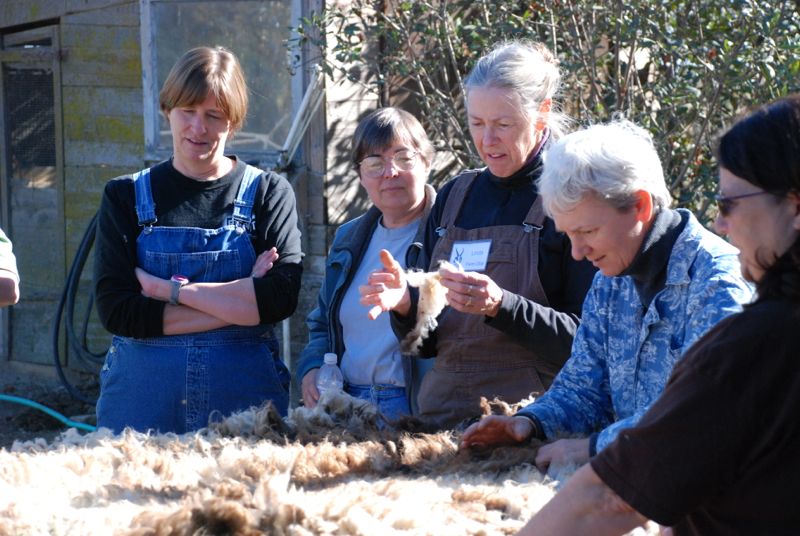 Alison and Linda helped many new Farm Club members and other visitors evaluate fleeces at the skirting table.
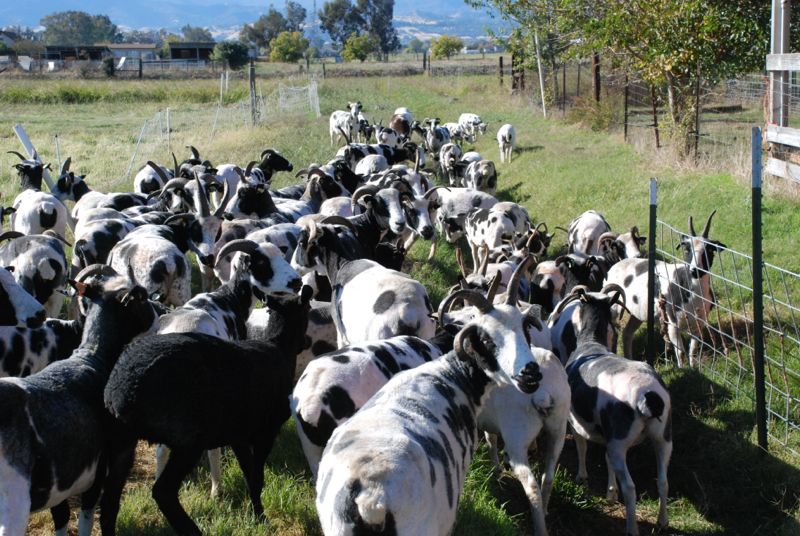 The warm afternoon sun was welcome after the cold morning.
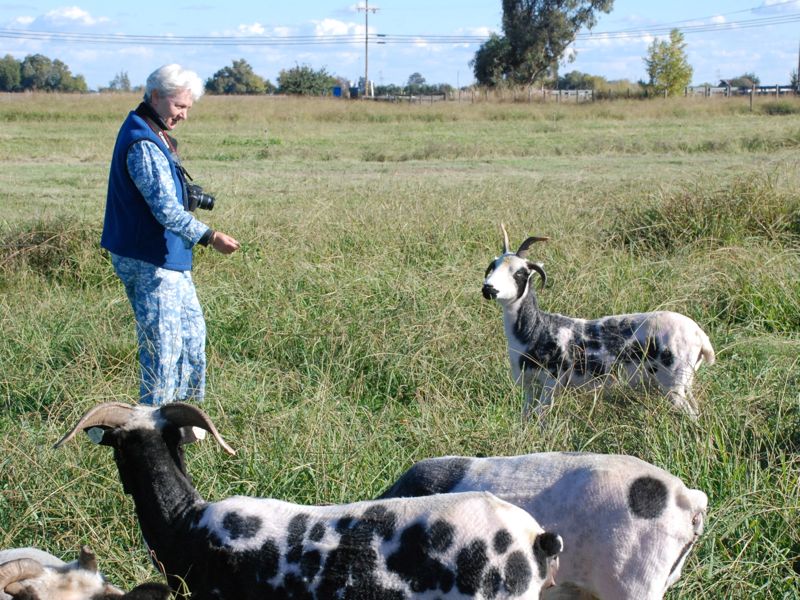
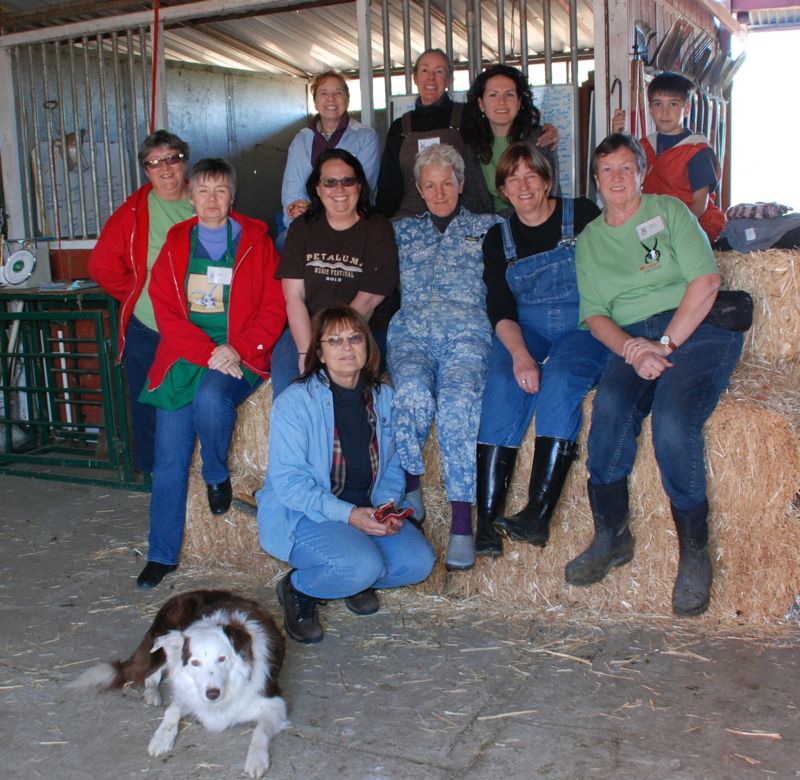 Good friendships and sharing the work make a day like this extra fun.
Last weekend I attended a Wool Handling School presented by the American Sheep Industry. On Sunday we spent the day at Flying Mule Farm in Auburn where the flock was being shorn. It was fun to attend a shearing day and just be a spectator. Lots of photo ops. And lots of learning too.

We spent the day with instructor, Ron Cole, handling wool and learning how to class fleeces. Flying Mule Farm sells most of their wool through the commercial market and it was surprising to me how little skirting is actually done (none other than removing bellies and manure tags). Fleeces that measure in the low 20’s (microns) or less would be skirted more carefully, but there is still quite different from what I do. When large flocks are being shorn, the skirting and classing must keep up with the shearing so they have to be quick. No agonizing over every little bit of fleece and of course there is no sorting of color. If there are any black sheep they must be shorn last and that wool kept away from the white wool.

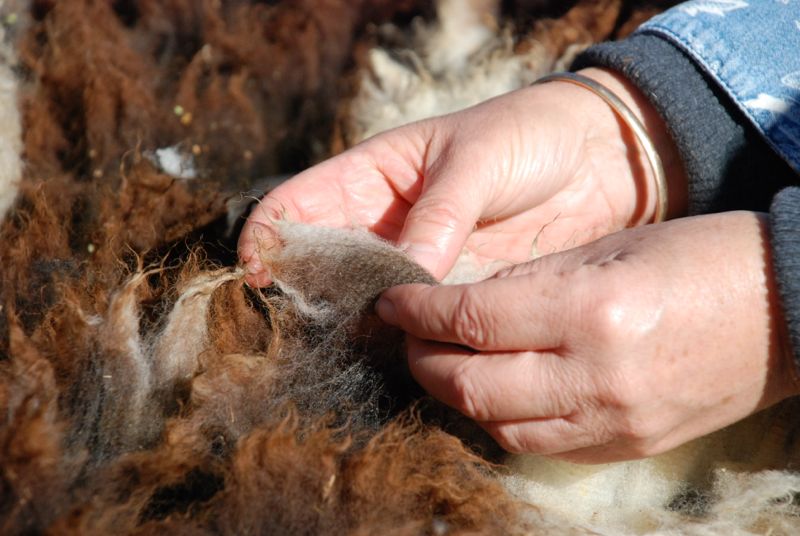
Different parts of the fleece are examined.

Check for strength.

We learned how to throw a fleece. Normally you would pick it up right from the shearing floor and, using this method, throw the fleece on the skirting table. The idea is for the fleece to land cut side down already spread out for classing and/or skirting. In this case the fleeces were handed over the fence and then we all took turns learning to throw them.
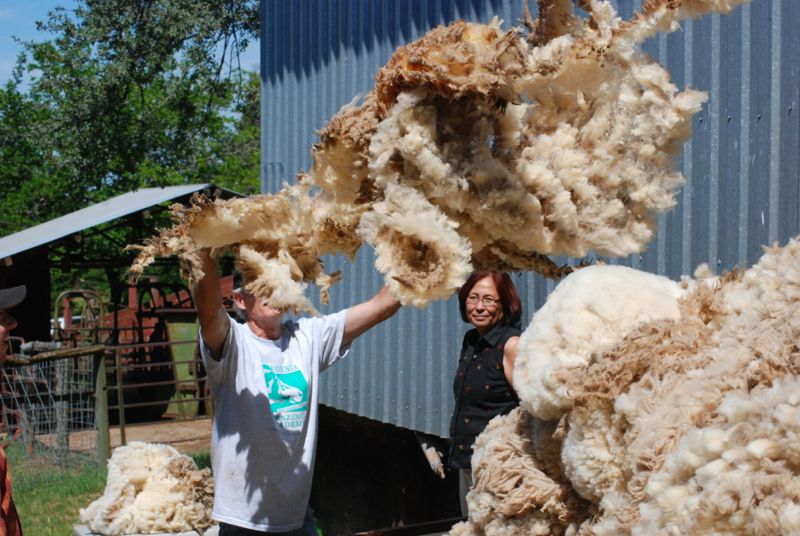
I took videos of this as well and will post those when I have time.

Wool was packed into burlap sacks.


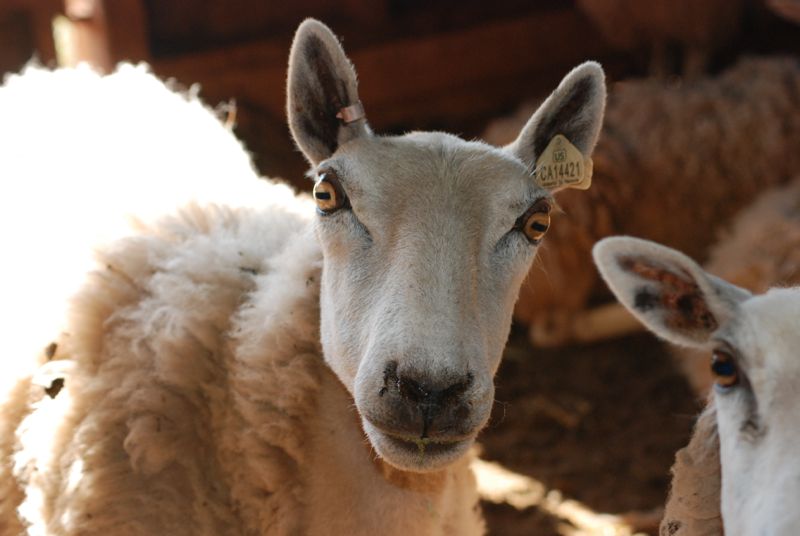
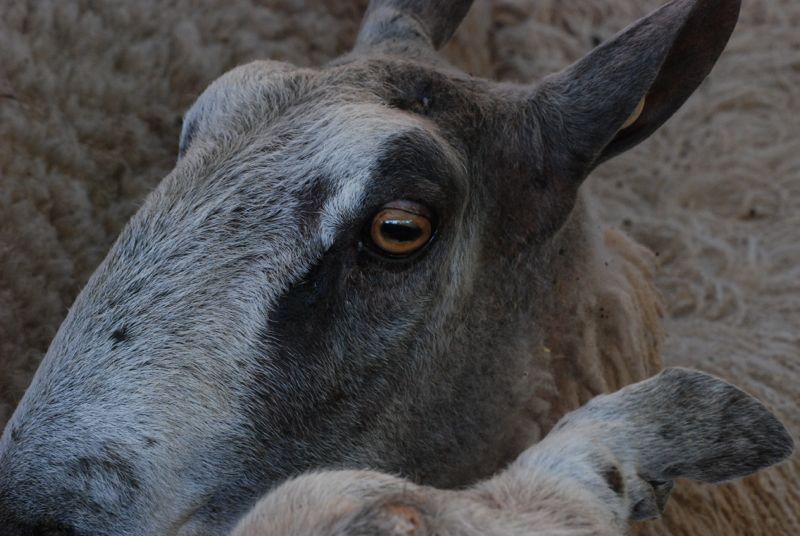
Blue-faced Leicester ram.
The attendees of this school were mostly new and/or small farmers and we spent some time at the end of the day discussing the differences in our perspective from that of larger producers. The focus of this school is how to improve quality and cleanliness of fleeces because all producers who send wool into the commercial market have an effect on the reputation (and therefore value) of U.S. wool in the world market. Farmers like me rely on niche marketing and we have direct contact with our customers. I appreciated this opportunity to learn about other perspectives.
I haven’t had time to sort many fleeces yet. In fact, other than those I’ve sold I have only skirted the ram and wether fleeces. But I’m very happy with those that I’ve seen.
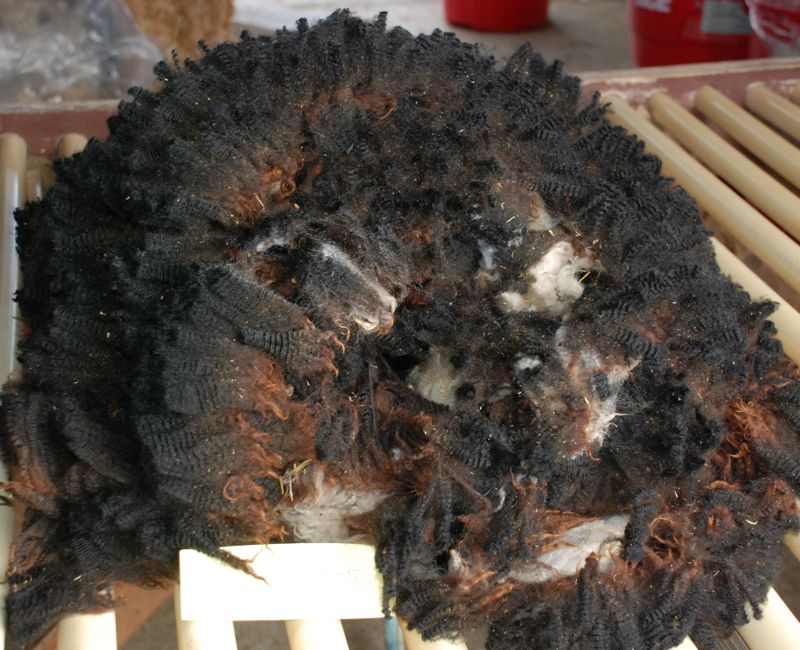
This is the fleece of a wether, Jerry. He is mostly black, not a good Jacob trait, but he will get to live his life being Faulkner’s companion. Faulkner is the BFL ram and I am not going to subject him to living with a group of rams with huge horns.
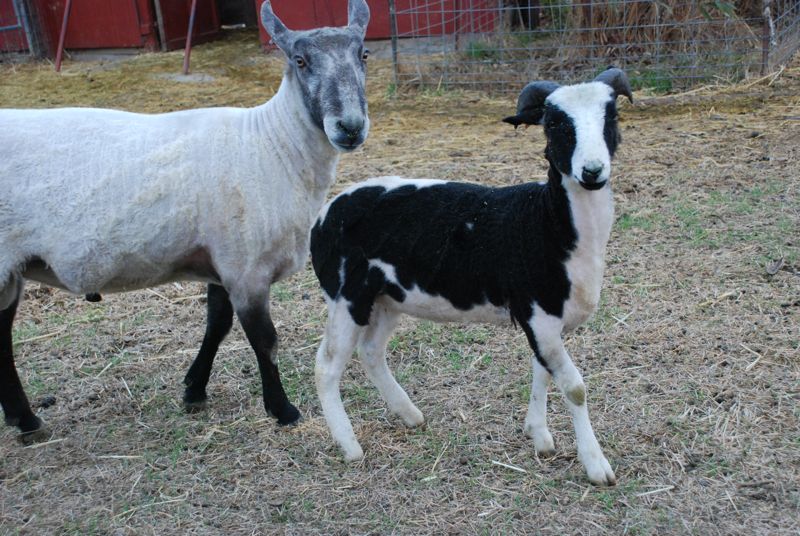
Faulkner and Jerry
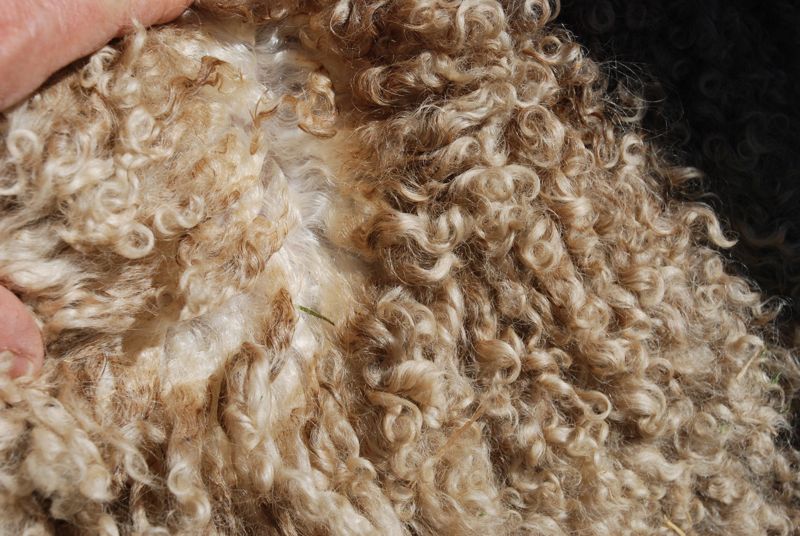
This is what Faulkner’s fleece looked like “on the hoof”. This photo was taken shortly after I got him so it had grown a lot since then.
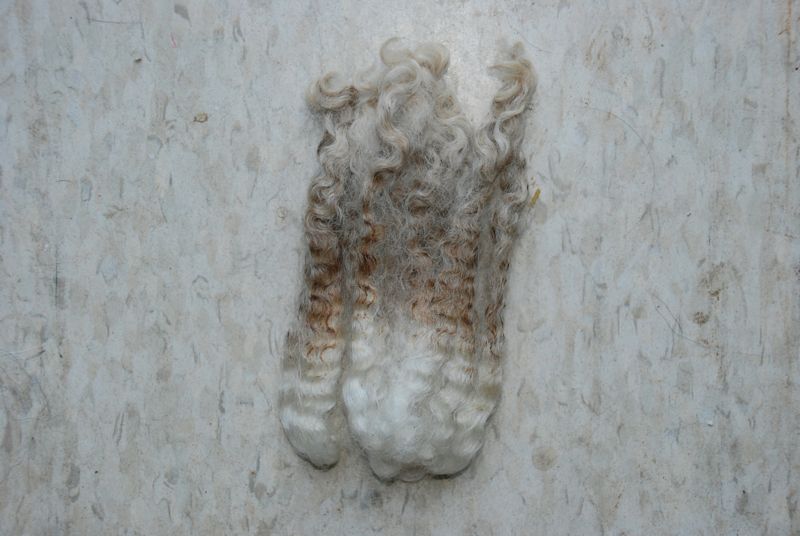
This is a lock after shearing.
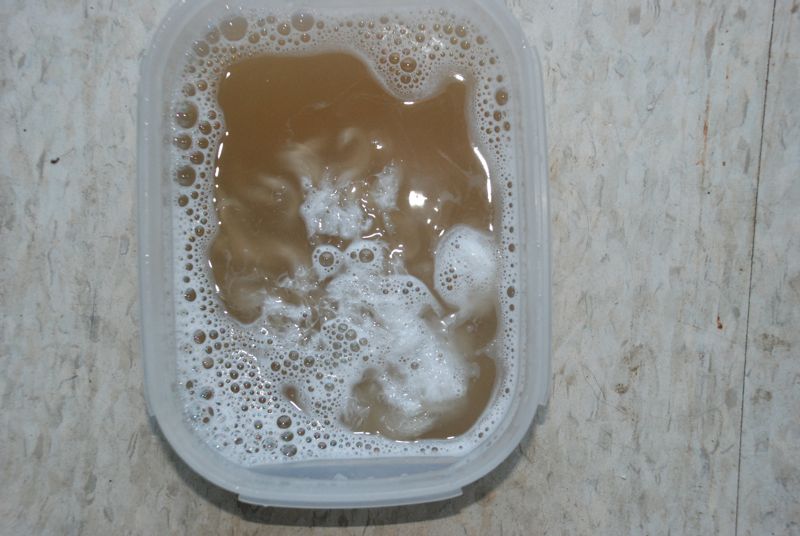
Less than a minute in hot soapy water.
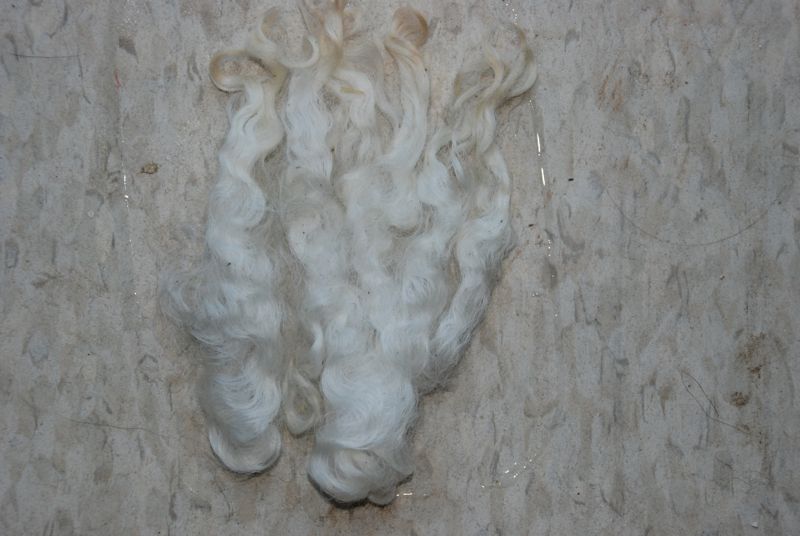
Silky, white locks!
I have irrigation water coming on tomorrow morning at 7 a.m. (It comes through Solano Irrigation District and I have to call when I want the water “on”–in my ditches.) Irrigation has been a struggle this year. Even with the water on for 36 hours there are some paddocks that have died back because I can’t get water to them. Part of the problem is probably the old culvert–too deep and too small. It is half filled with mud that I can’t get out. I taught a weaving class today but after that we went out to tackle the problem.

Dan dug the culvert out with the tractor.


For tomorrow’s irrigation the water will be running through the ditch. Eventually we need to replace the culvert with a bigger one.

After setting up the tarps to keep the water in the ditches I checked the paddock where I experimented with burning medusahead. This is the plot that my son burned early in the season. He didn’t think it was effective but the medusahead is still gone.

The area of trefoil is where I burned the medusahead that was growing over it. This is some of the area that got water but that medusahead is still thick. I hope the pasture plants will choke it out.

This is some of the area that I haven’t been able to irrigate. Not much forage there and look at the medusahead cover.

Medusahead closeup.

Here is the trefoil that would be a wonderful replacement for the medusahead. Hopefully irrigation will go a little better tomorrow and we’ll get water on those dry areas.
I look forward to Shearing Day all year and this was one of the best ever. That is due to the number of friends who helped and to the outstanding shearer. Farm Club members helped in the barn and two good friends staffed in the shop (unfortunately I don’t have photos of them). That left me free to run and back and forth for things we needed, take photos, move sheep, and thoroughly enjoy the day. Shearer John sheared 67 of my sheep, 19 sheep that belonged to other people, and 7-8 Angora goats. He started a little before 9 a.m. and finished at 1:30! Here’s the photo tour.
Sheep in full fleece the day before shearing.

This is Fran.

Here is Tioga…
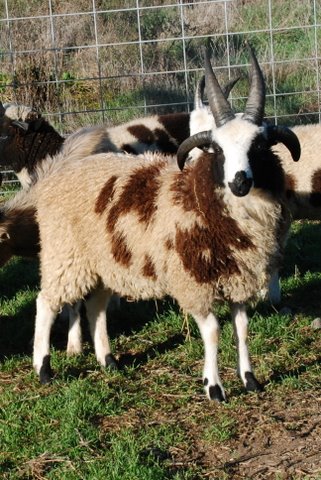
… and Clint, the ram lamb I got from the Sweetgrass flock in Michigan.

We gathered all the ewes while John was shearing my friend’s goats.

Farm club members, Tina and Kathy, and Kathy’s friend, Haylee, helped bag fleeces…
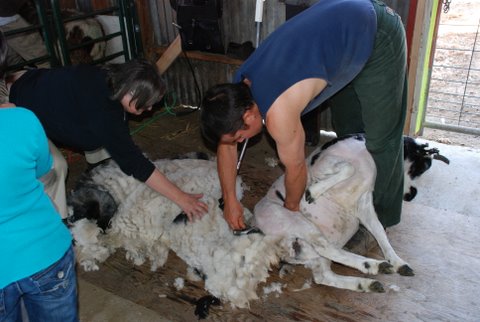
…and keep the shearing area clean.

Shelby (and her husband, Greg, who escaped my photos) did a lot of sheep wrangling. This is Shelby with her namesake sheep.

Tina did her share of sheep handling too…
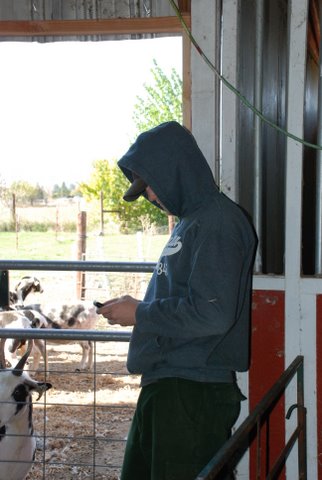
…while my son multi-tasked.
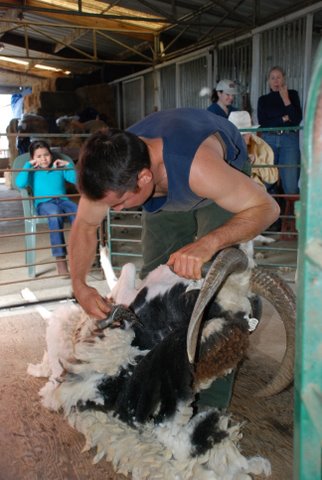
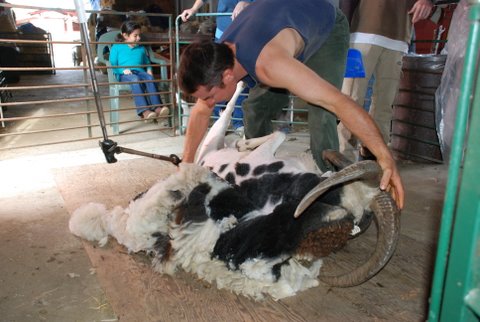
John is an excellent shearer, making shearing look easy (and I know it isn’t). He is fast, the sheep look great, and the fleeces are perfect wth no second cuts. We are very happy to have found him. It is always impressive to watch the rams being shorn. This is Savor being shorn.

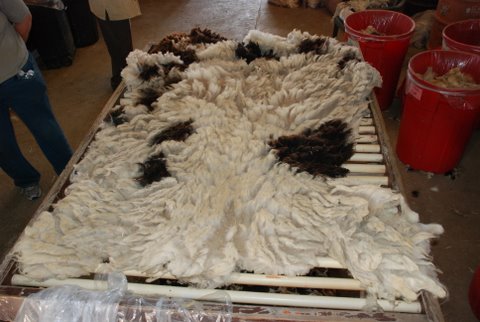
Savor’s fleece.

Staple from Savor’s fleece. This fleece went home with Jackie, another Farm club member, who helped skirt and sort fleeces and answer questions.
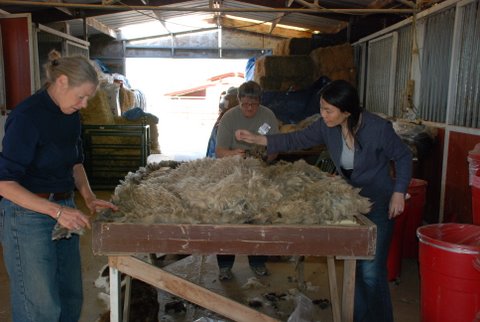
Jackie, and another helper, Linda, helping a customer skirt a fleece…
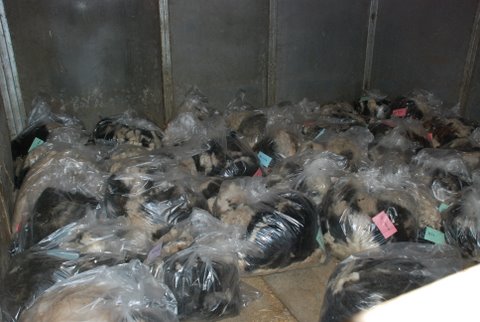
…and now I have a lot of fleeces to skirt and put on the website for sale.
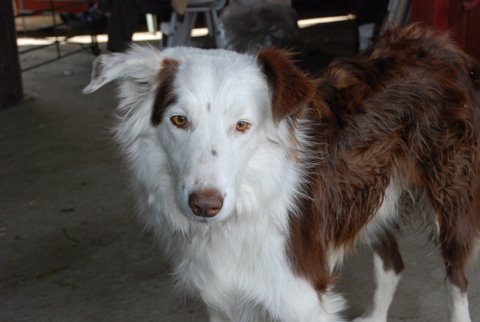
Rusty enjoyed the day.

Sometimes I think the sheep enjoy getting that wool off.
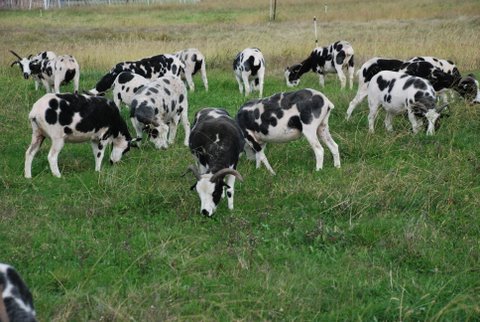
We certainly had great weather from the sheep’s point of view.
Thanks to all of my helpers!
Friend and fellow Jacob sheep breeder, Lynette Frick, (IDEAL Jacobs) called me a couple of days ago and said that her shearing crew would be working nearby and she invited me to come watch. Lynette started shearing a year or so ago by going to one of the shearing schools and then being hired by a crew. I am so impressed. I don’t know if it makes her mom and dad nervous, but since I’m not her mom I don’t have to worry–I just think its cool. I had never watched a commercial crew operate. They sheared 1000 sheep yesterday and hoped to finish today. The shearers are working inside a long trailer.
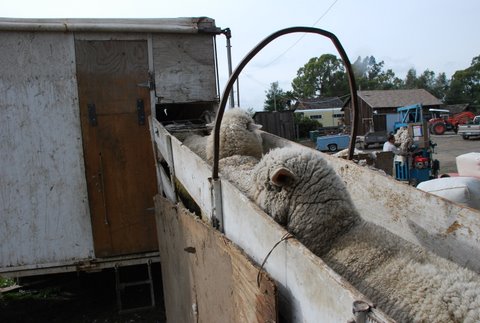
The sheep come in along one side and when the shearer is ready he (she) pulls down a gate and pulls the sheep out and over into the proper position.

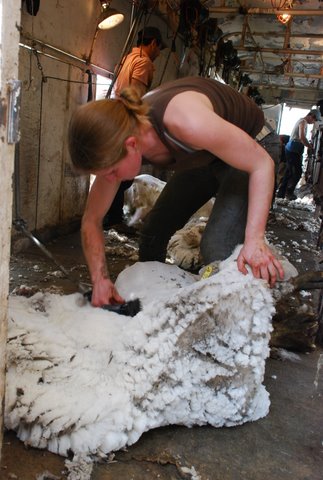
These are Rambouillet ewes. They’re definitely bigger than Jacobs!
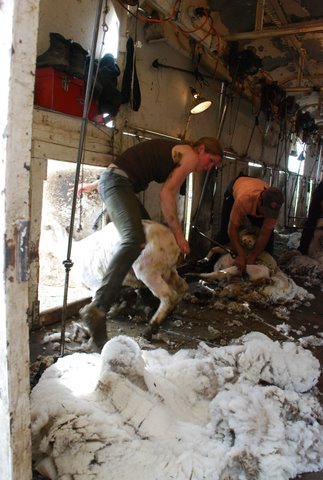
After shearing the sheep the shearer pushes her through a gate on the opposite side of the trailer.
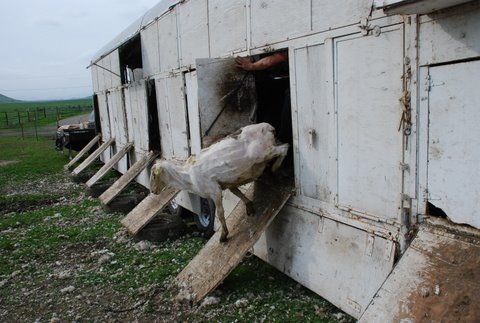
This is the outside of the shearing trailer.
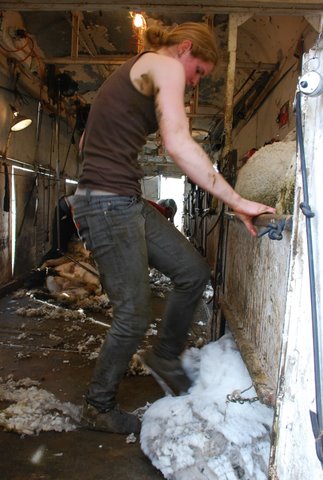
The shearer pushes the fleece under the chute where the sheep are held…
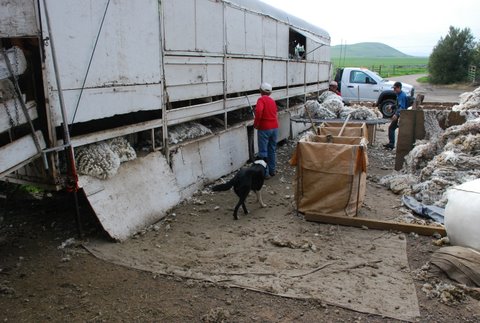
…and someone on the outside of the trailer grabs the wool and takes it to the skirting table. It is graded and put into one of four piles–fine, medium, coarse, or poor quality (weak, short). Fortunately most of this clip was going into the fine and medium piles.
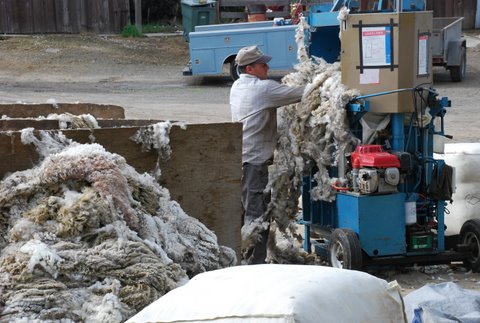
The wool is compressed into bales.
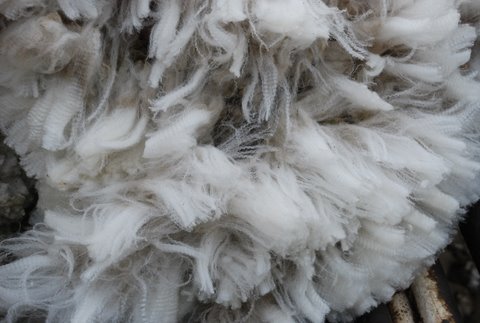
Isn’t this pretty wool?

The bulk of the flock is white, but these are some of the markers. There is approximately one black sheep for every one hundred sheep in the flock. That way the shepherd can get a rough count of the flock. Coincidentally, this is the ranch where I picked up the black Rambouillet that I used for the socks that I had made last year. I will go back tomorrow to pick up the black fleeces.
We sheared on Saturday. I used a new shearer this year and he did a fabulous job. He was fast (70 + Jacobs shorn before noon) and the fleeces and the sheep look great.
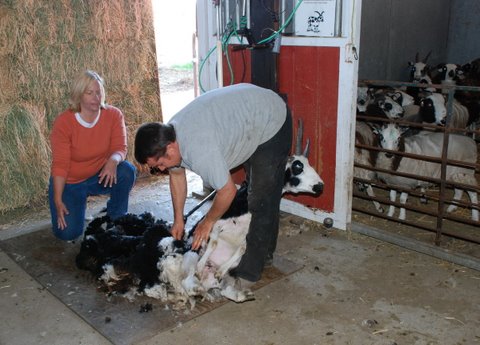
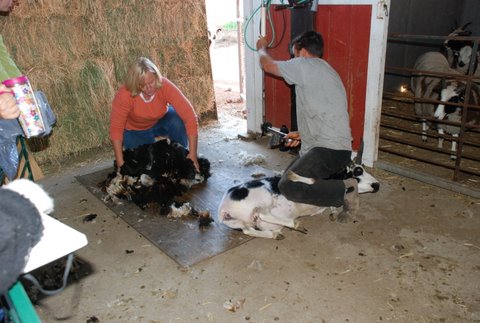
I am grateful for all the help I had. Linda gathered up and bagged wool all day. Other friends weighed wool, answered questions from visitors, etc.
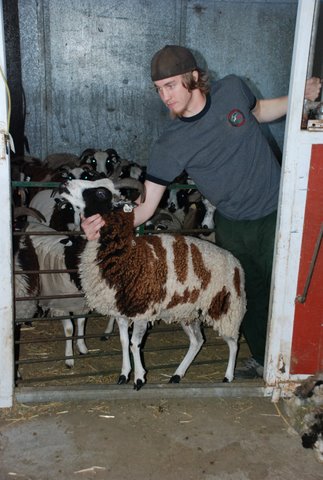
My son, Chris, made sure that the shearer didn’t run out of sheep.

We also sheared Colleen’s CVM-cross sheep (while she took care of my shop) and…

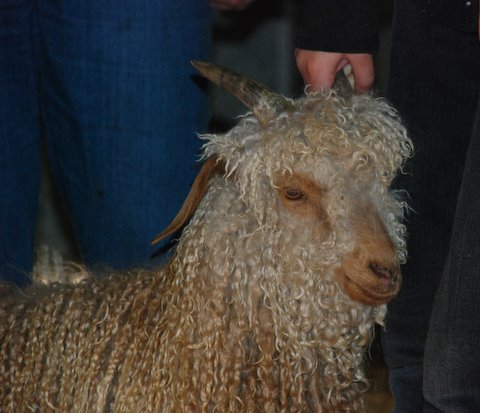
Diane’s goats. I have to admit they are stunning in full fleece.
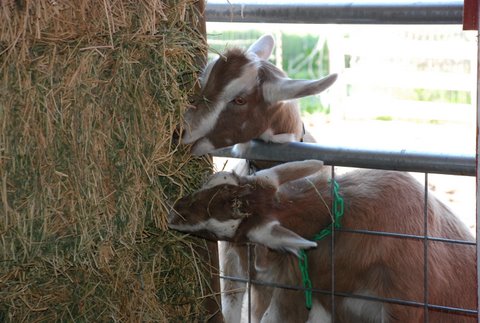
These are Chris’ goats and don’t need to be shorn, but they never miss a chance to sneak some a meal.
I didn’t skirt nearly as many fleeces as I thought I would. We just barely kept up with the fleeces that people wanted to purchase. I missed my friend, Joan, who usually spends all day at the skirting table. I think it might be worth switching shearing back to Sunday so she can be here!
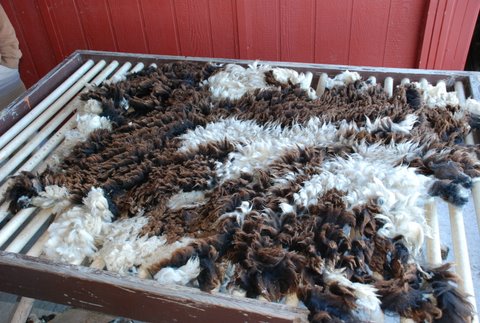
Here is one fleece spread out. People asked about how to tell a good fleece, which is better than another, etc. I honestly answered that I don’t have any sheep whose fleece I don’t like.

The sunny day certainly helped make shearing day pleasant and I’m sure the sheep appreciated the warm sun.
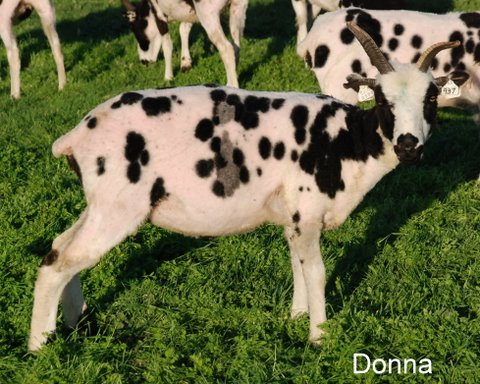
Take a look at this shorn lamb. There was some discussion earlier this year about tri-colored Jacob sheep (if such a thing exists). I didn’t know this lamb had those gray spots until she was shorn! I’ve never had another like this.
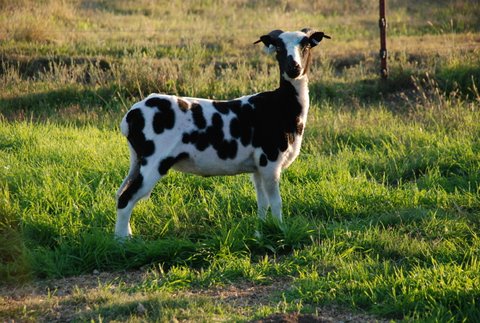
Here is another pretty lamb.

This is Violet, loading into her van. That’s a cooperative sheep! Violet lived here until about a month ago. She is a wonderful friendly ewe and I’m so glad that she has a great home now with two other Meridian sheep at Aimee’s place.
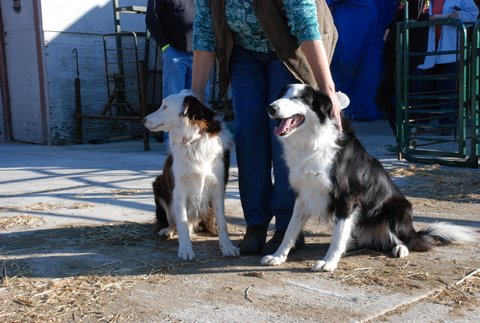
Rusty’s brother, Jake, came to visit at the end of the day. The dogs were not too happy about posing for a brotherly photo.
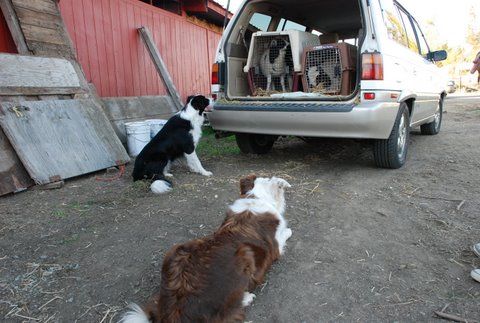
But they were going to make sure these lambs stayed put.
There are more shearing photos that can be accessed on Picassa by going to my website and clicking on the photo in the shearing article.
Shearing Day was a week ago now. What a great day! The sun was out and a lot of people came to watch and buy fleeces. I sold 28 of the 60 fleeces we sheared! I started to worry that I wouldn’t have enough left for me!

Here is a photo of Judd shearing Houdini.

Judd doesn’t mind a crowd of people watching.
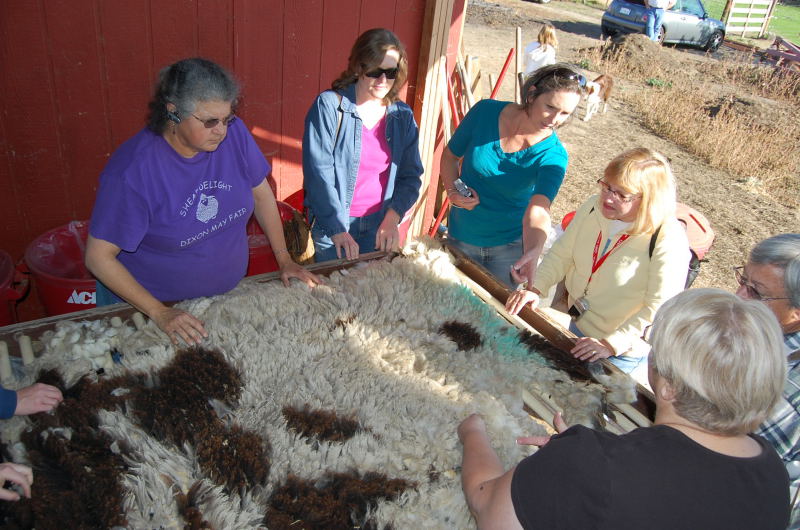
A couple of friends (Joan in purple and Toni in black) helped all day at the skirting table.
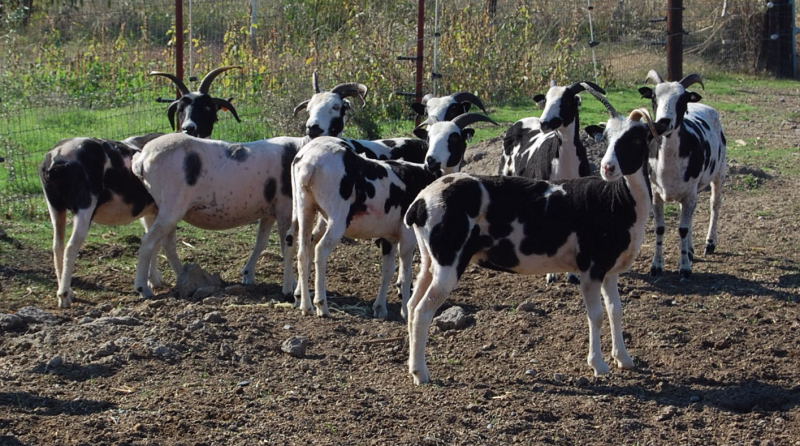
Freshly shorn ewes.
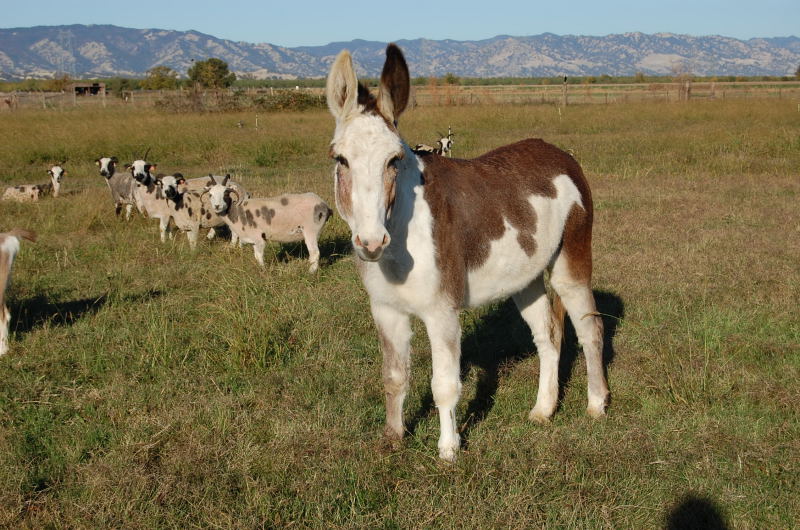
Donkey, Amaryllis, is now out with the sheep full-time.
 Meridian Jacobs' Blog
