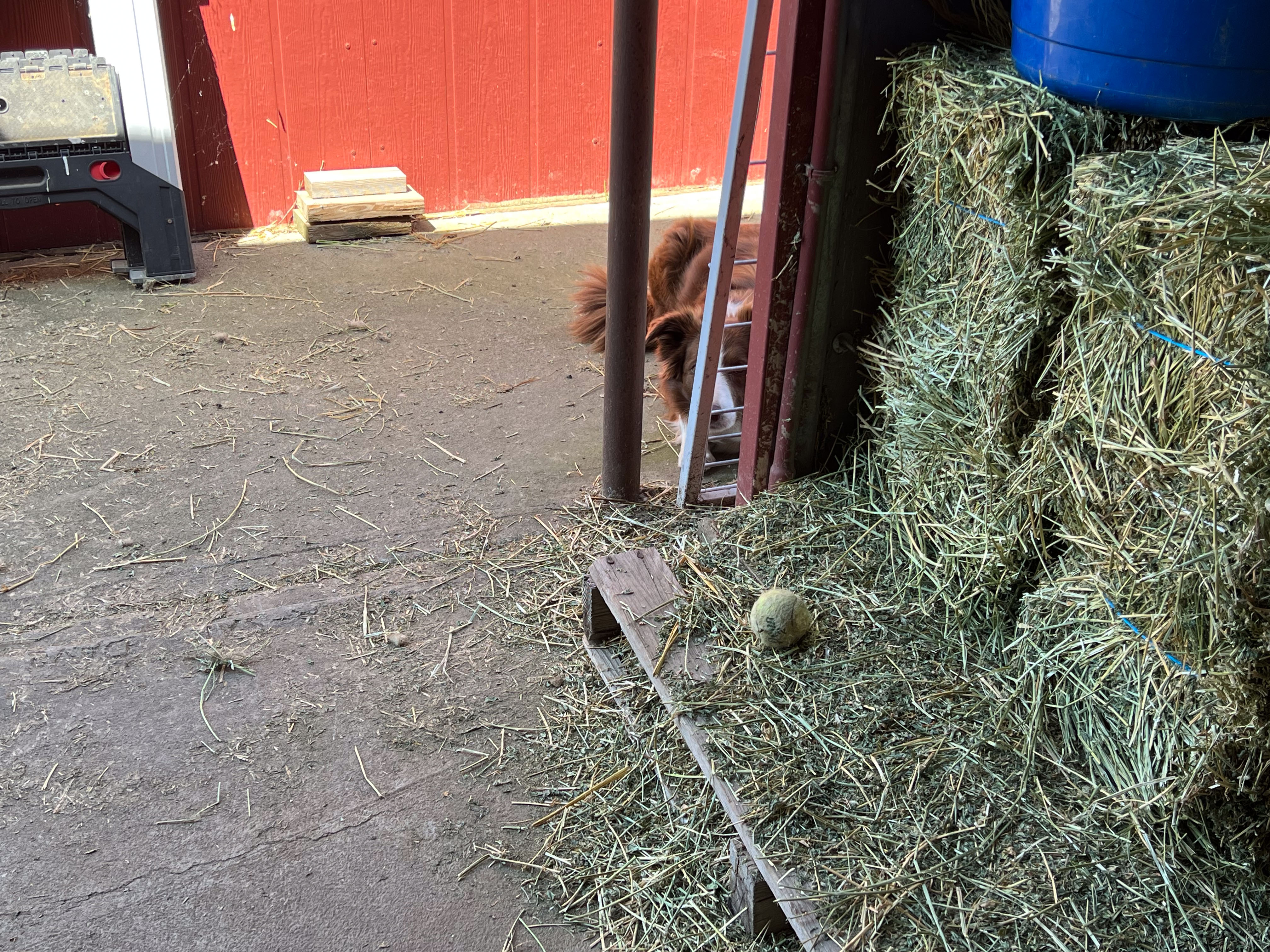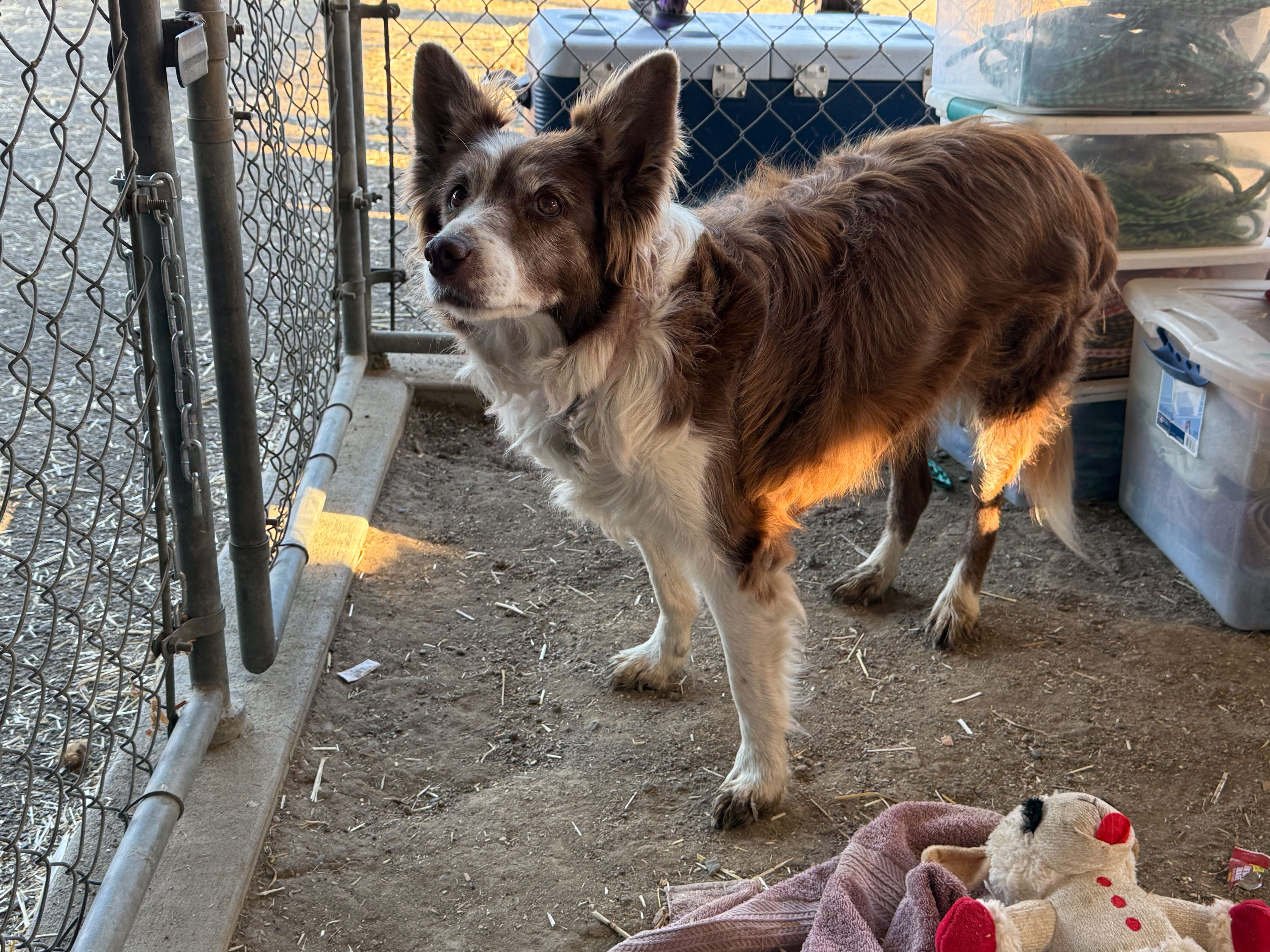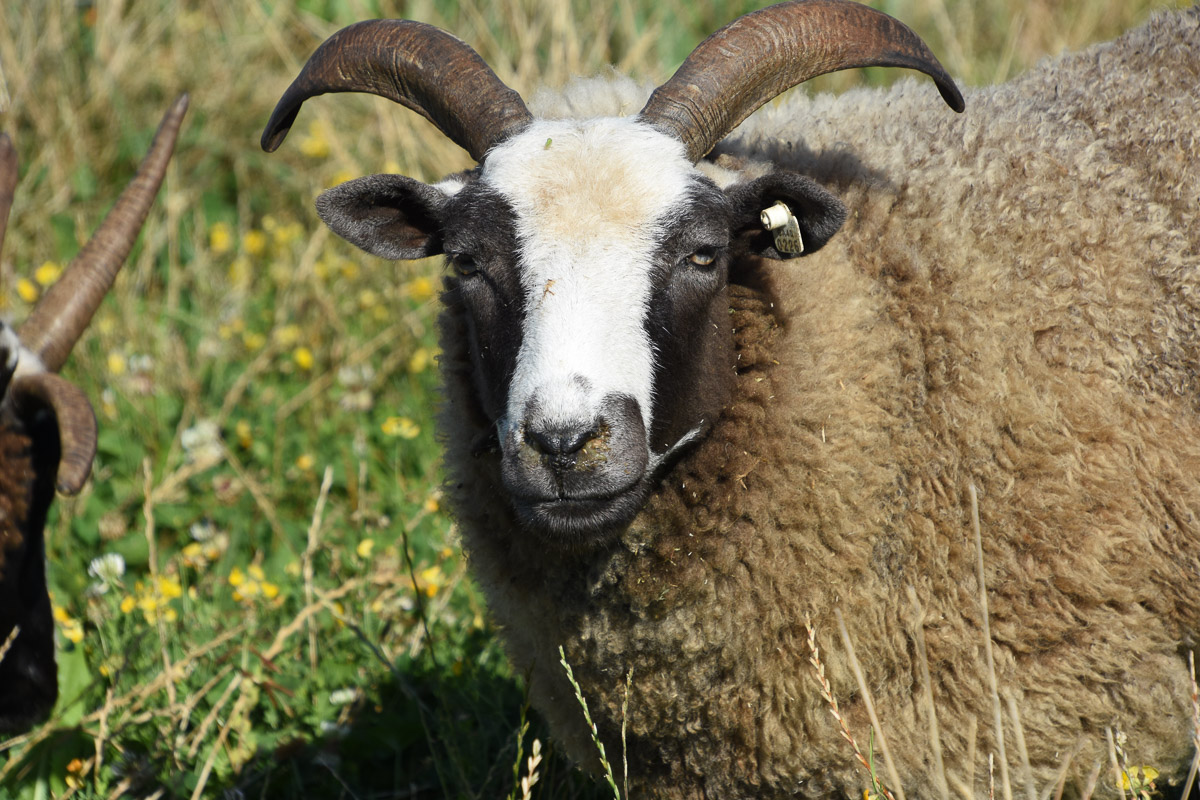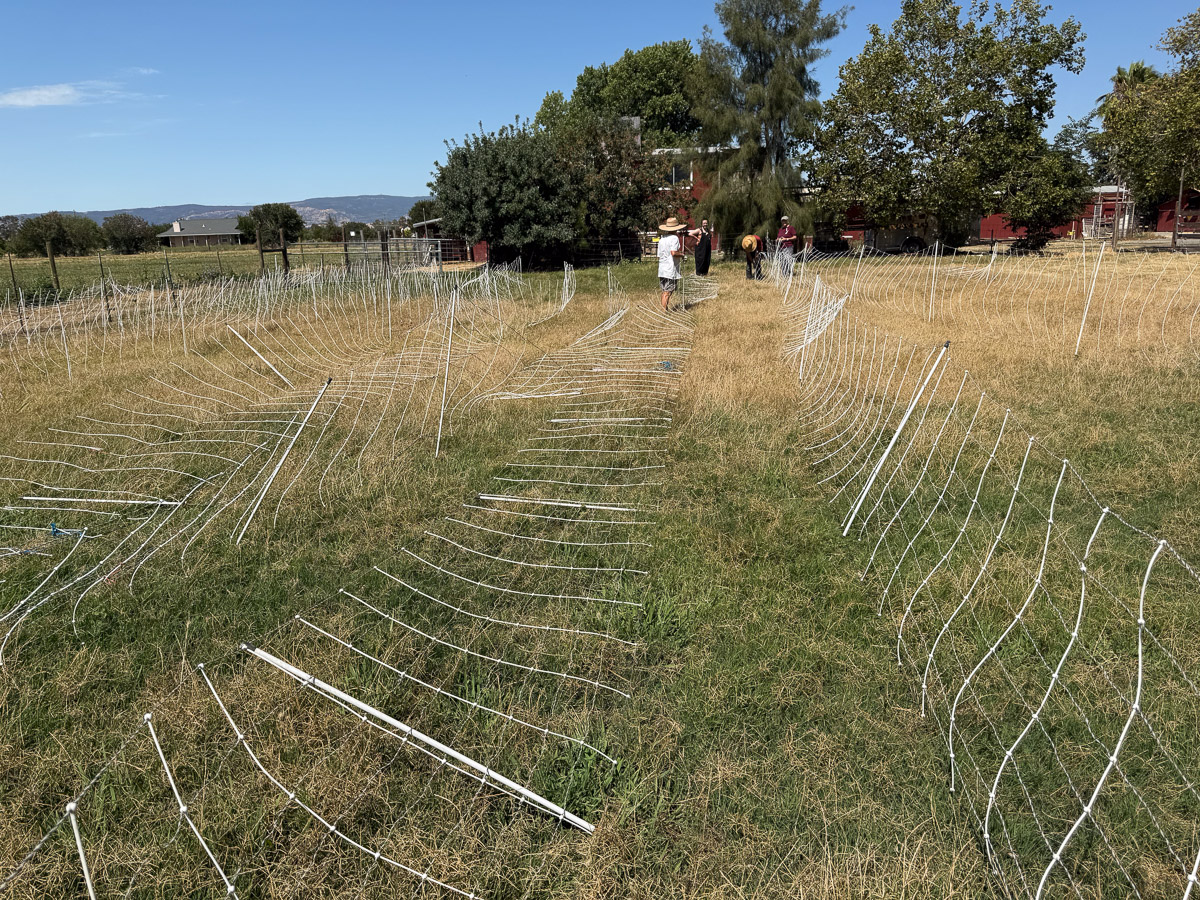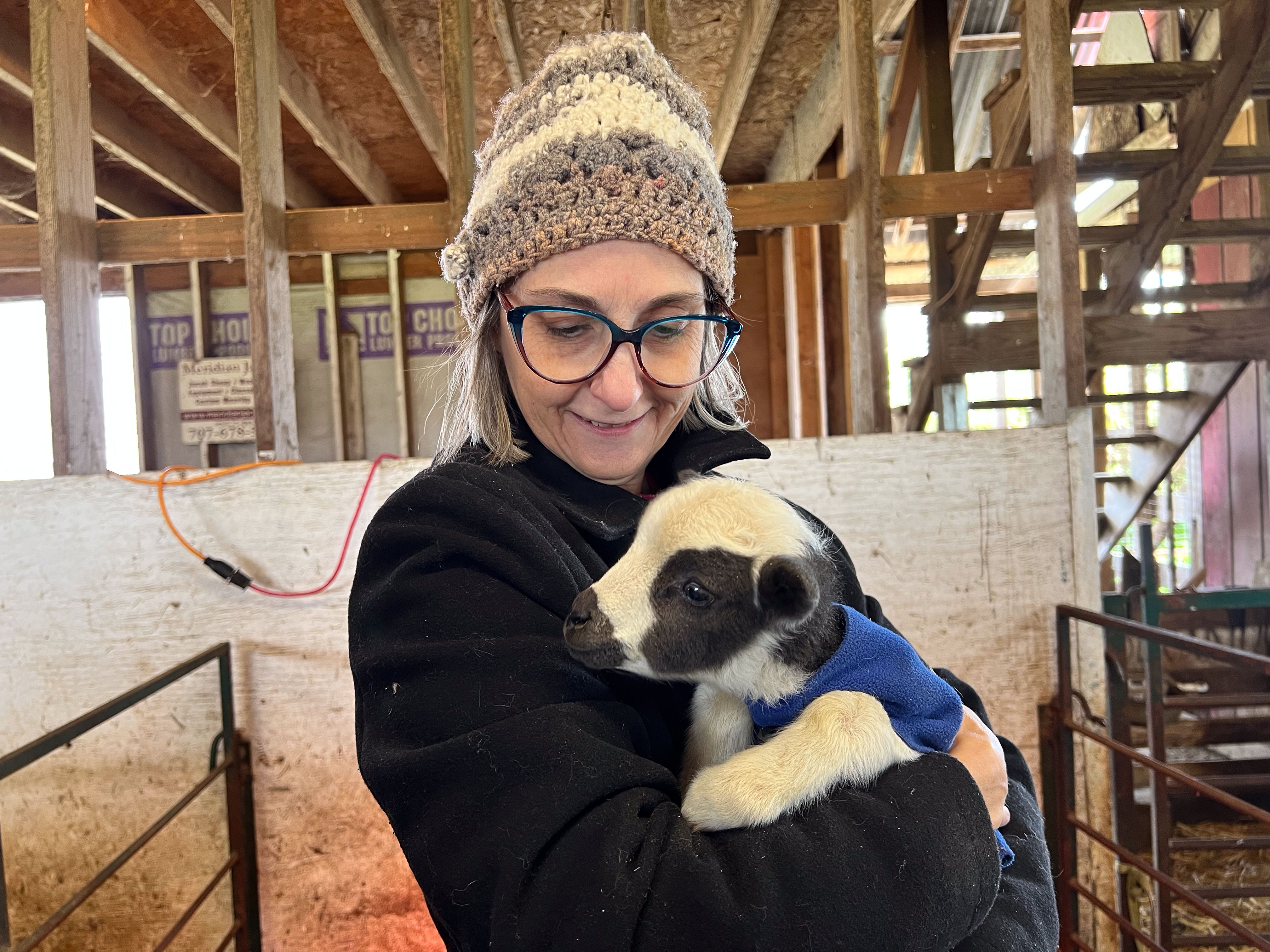
Meet Sparky

Lambing started only two weeks ago but is almost over (except for the lambs that will come at the end of April due to acquiring a ram around Thanksgiving). I like to keep my blog posts in chronological order, but I’m giving up on that for now. I may share other lambing photos later, but for now I’ll write this story.

It was only a week ago (Thursday, March 13), that Patchwork Amara lambed. I had put her in the evening before and didn’t see anything when I checked the barn at 2 a.m. When I went back at 6:00 I found a big lamb in good shape and a small lamb that at first I thought was dead. When I picked her up she wasn’t completely flaccid like a dead lamb would be and I could see her take shallow breaths. She was very cold.

I brought the lamb to the house and put her in a dishpan of warm water. As her body warmed she started to move her legs. After I’d warmed her enough I wrapped her in a towel and went back to the barn. I set up a heat lamp and moved Amara and the big lamb to a clean pen. Lisa was helping for a few days and when she came to the barn I gave her lamb holding duty.

I milked colostrum from Amara and tube fed the lamb.

While we were feeding her we realized that Amara was having a third lamb.

Those big brothers were 9.2 and 8.6 pounds. Sparky, as Lisa named her when she showed a spark of life, was only 4 pounds.

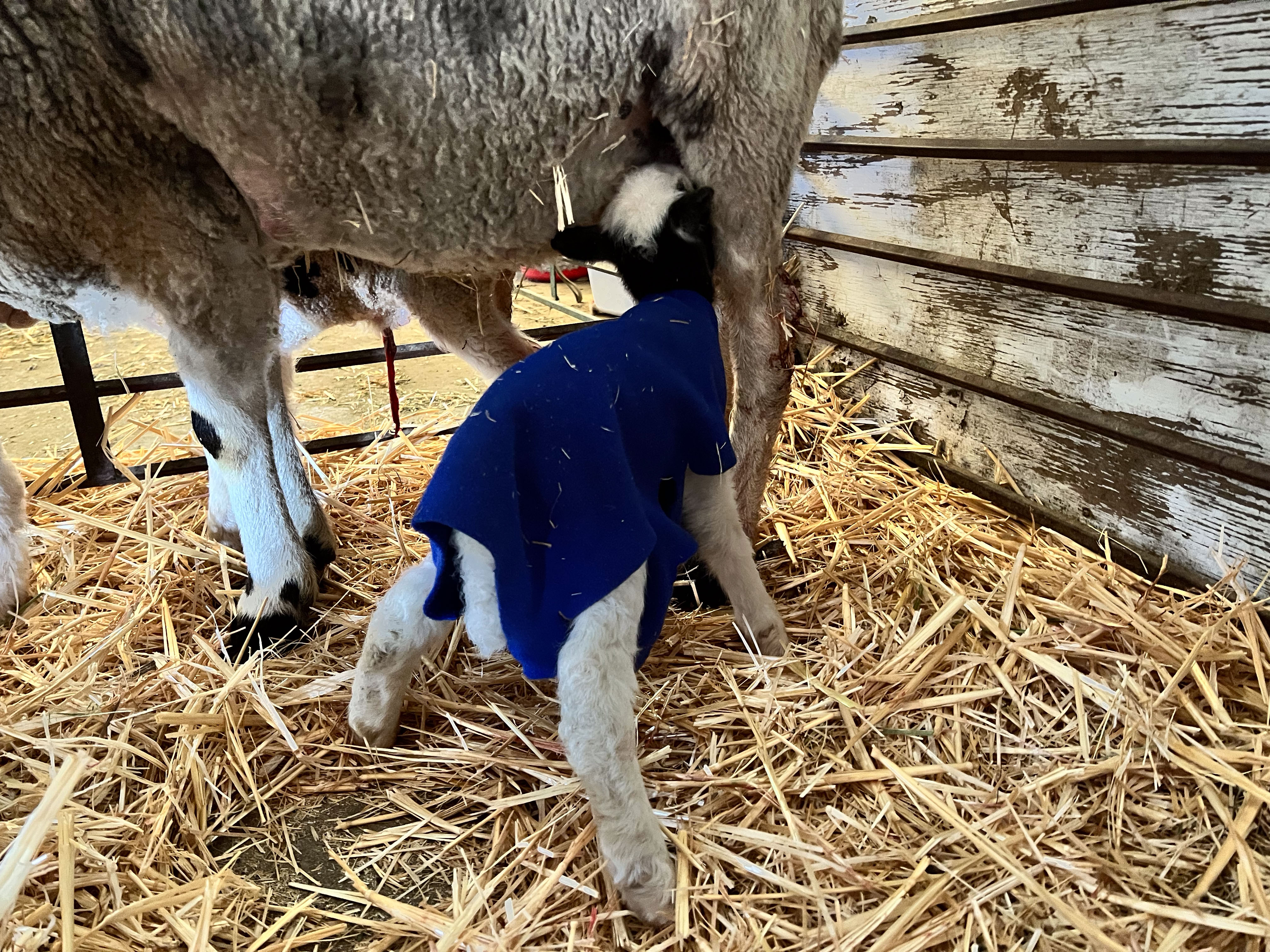
I found a size Small coat for Sparky, It was way too big and eventually Lisa cut some off.

Sparky was spunky enough after the tube feeding to nurse on her own. Throughout the day we made sure that she was nursing.

The next morning Amara was tired of having three lambs and was getting a bit aggressive towards Sparky. I didn’t feel comfortable leaving her there and decided that she would be a bottle lamb. That was 6 days ago.

Farm Club members came on Saturday and Sparky was a favorite.

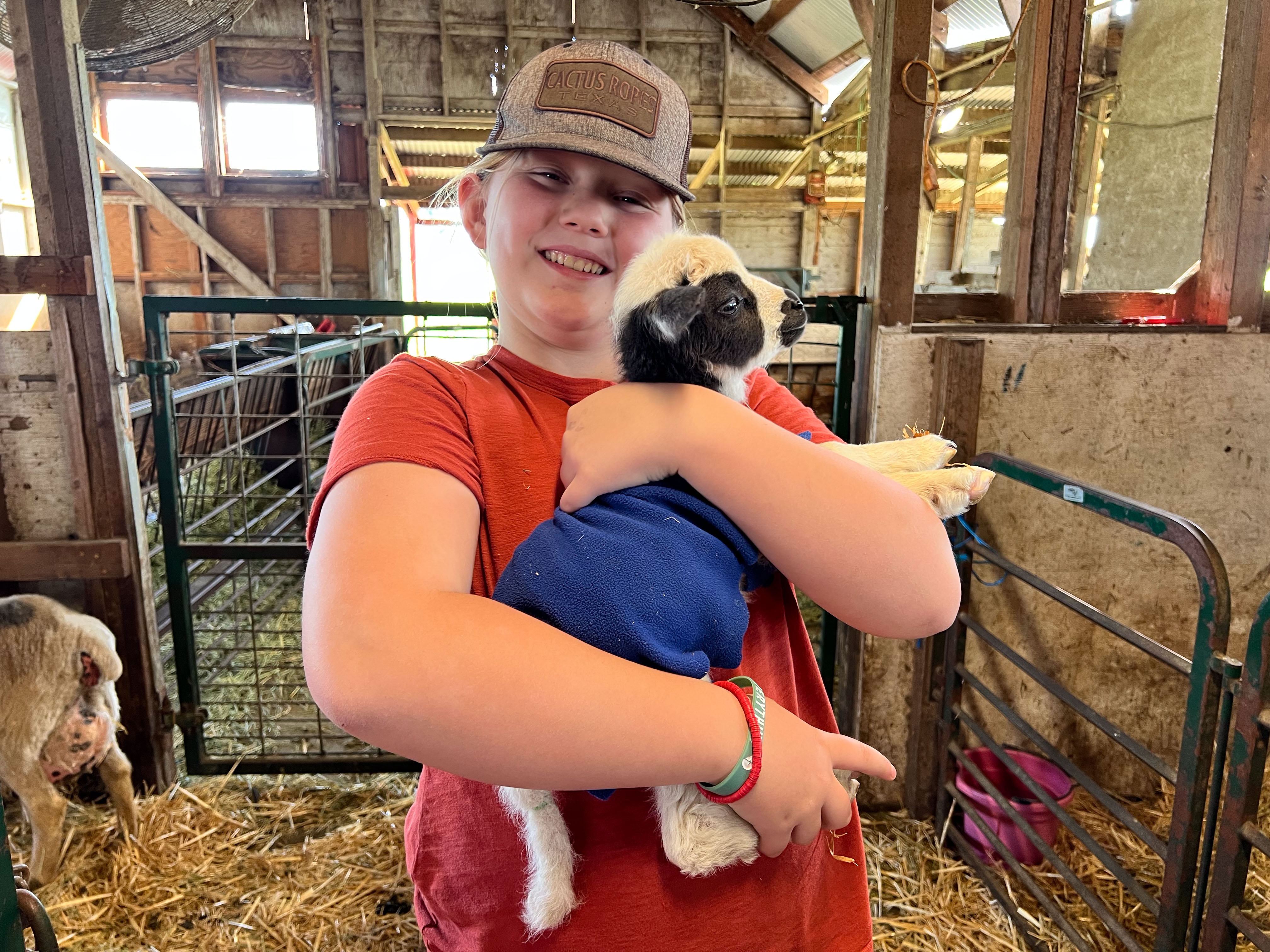
I picked up my grandkids at the airport yesterday and we went to the barn right after we got home. Ten-year-old Kirby.

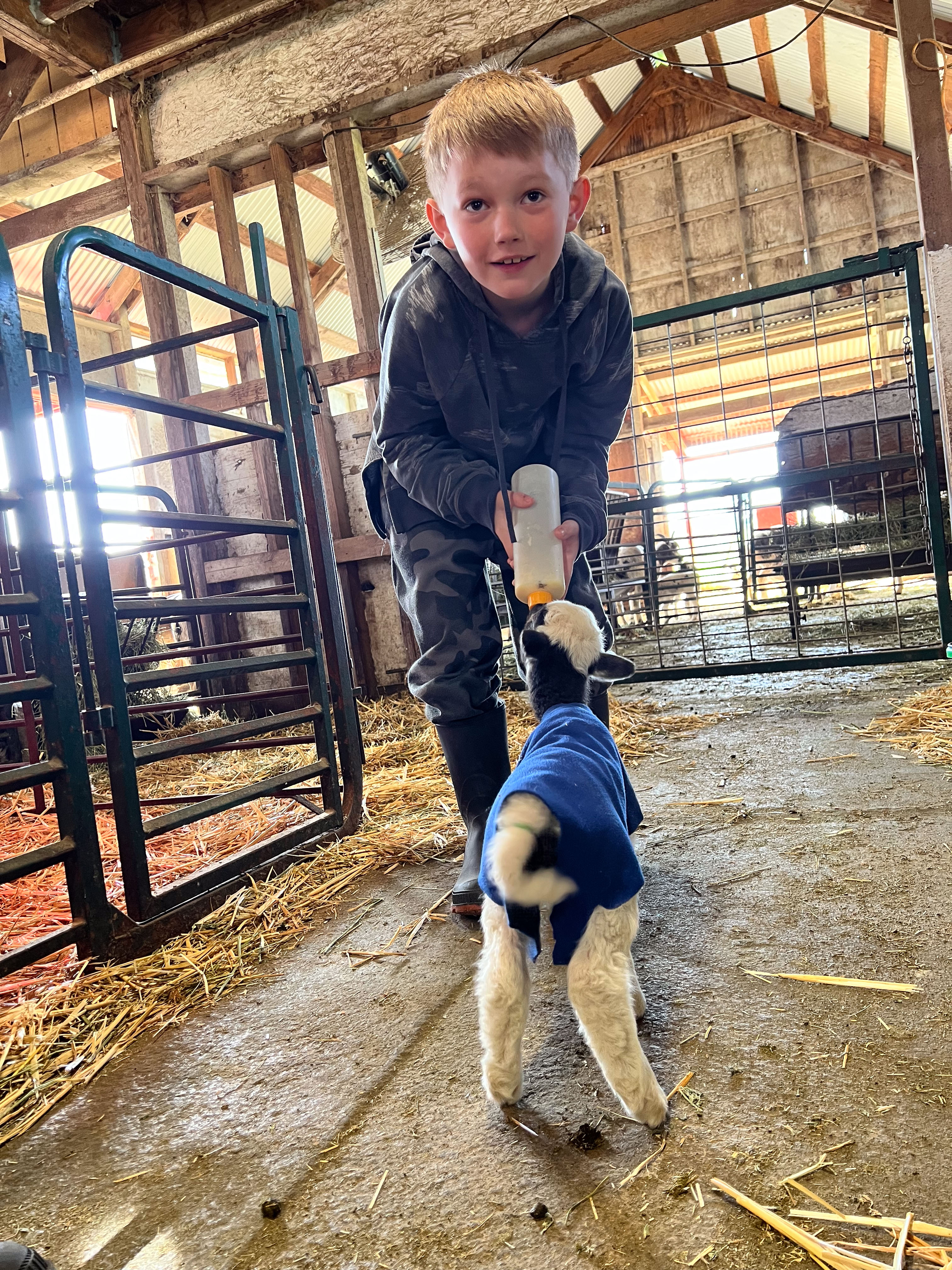
Eight-year old Kasen. The kids are taking turns bottle feeding, although the next feeding is in a few minutes (11:30 p.m.) and no one has volunteered for that one.

Sparky has had plenty of attention. The kids are taking her out of the barn and letting her run around in the grass. I tried to share a video here don’t know if I can make it work. Let’s try this YouTube link.

A Totally Random Sheep-Related Post

I was looking for something on my computer. Now I can’t remember what but I was browsing through my folder with the title Sheep. That includes everything from Breeding and Lambing Dates to Body Condition Scoring to Processing Skulls to Vet info and Wool Facts. Now I remember what I was looking for–a list of butcher lamb customers because I have an email from someone who wants a lamb this year–we haven’t even started lambing, so how am I going to remember that person if I don’t add it to a list that I still haven’t found?

Anyway, look at what I found while I was browsing through the files.

I have no idea where I got this photo or who is in it, but the file name is WWII-German . That sure looks like a Jacob lamb!
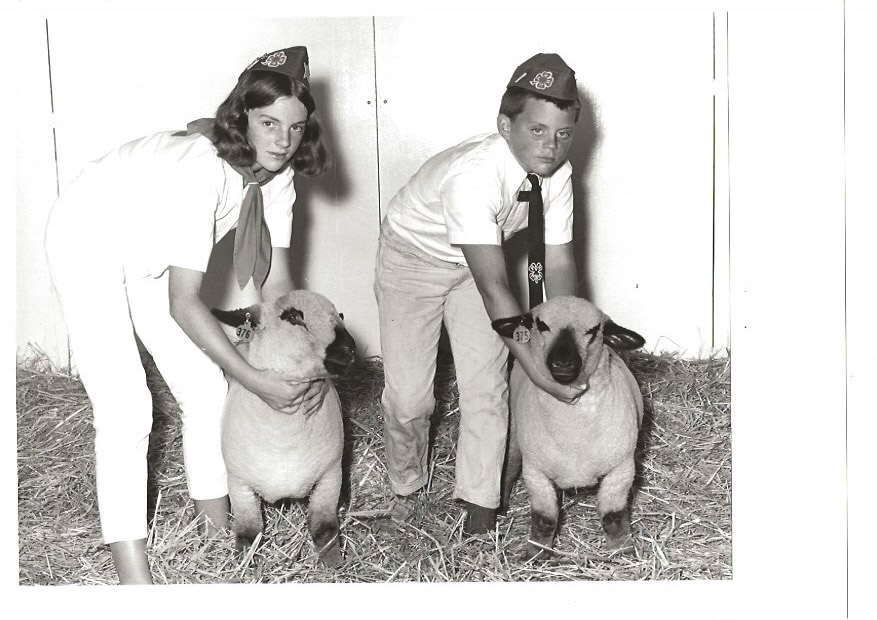
So this prompted a post of random sheep photos. I found this photo that I had scanned not long ago.

This is my brother and me with our 4-H market lambs.This was probably in the late 60’s. I barely remember raising market lambs because I mainly raised dairy heifers in 4-H.

I thought there must be more and I plugged in a hard drive that I’ve had a hard time viewing. Now it seems to be working! I might get carried away with old photos at some point! I’ll stick with sheep tonight.

This is the house we had in Cotati. Mom and my brother are feeding lambs in the kitchen while Joe, our favorite college student renter, looked on. These were Dave’s and Mom’s sheep. I had a horse and dairy cattle at this point.

Mom with sheep

I think I was going to school at UC Davis by now. Mom had a merino sheep and I think the other sheep were probably Dave’s. Mom is holding a lamb and a white cat named Bill. That is Honky, the goose, on the right.

So there’s a trip down Memory Lane. There may be more to come.

Shearing Day 2025 – Part 2

Shearing Day was a week ago. Here is the first post.

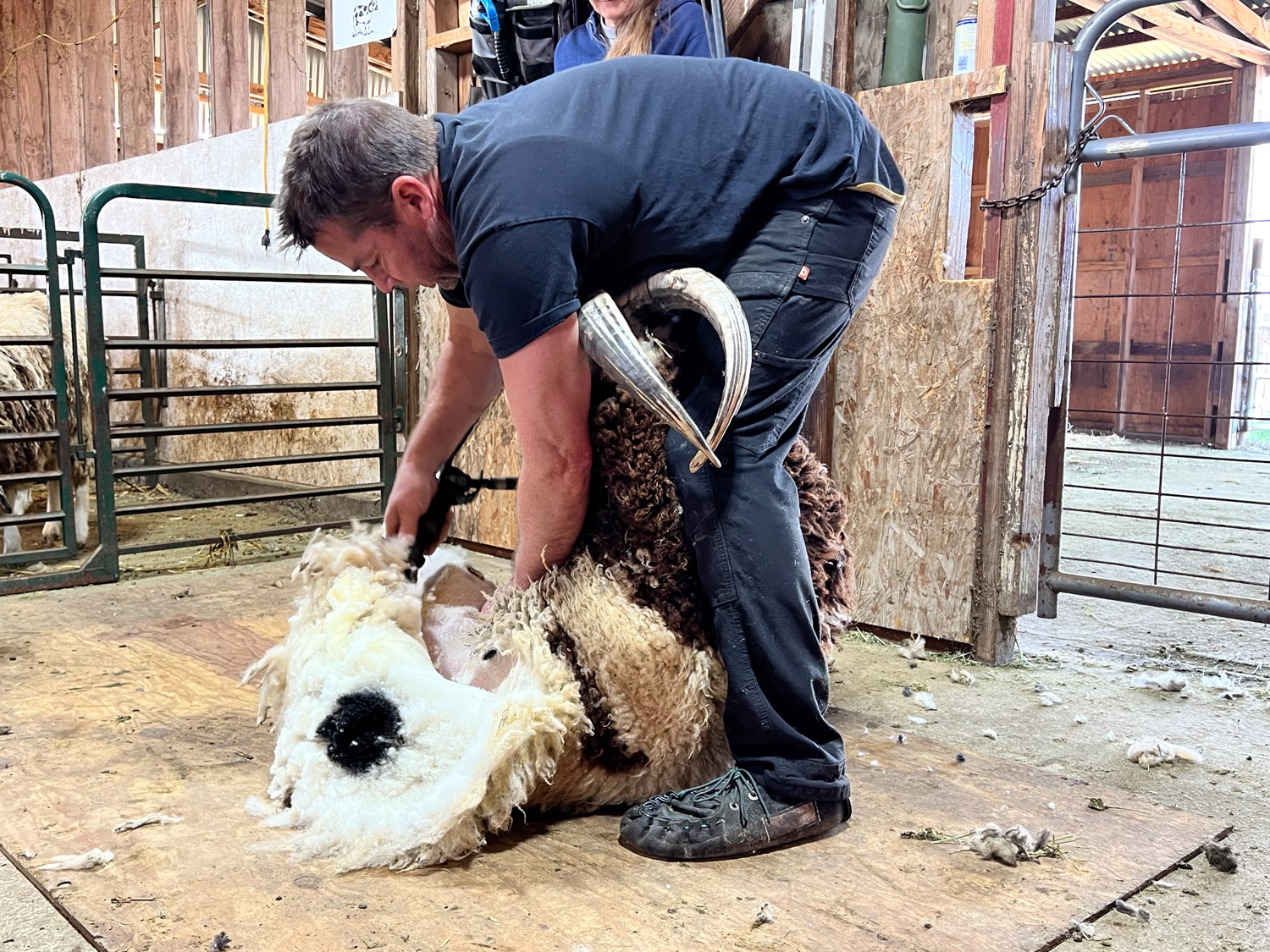
As we loaded Trish’s sheep into the trailer John kept shearing, starting with my rams…

…and then moving on to ewes.

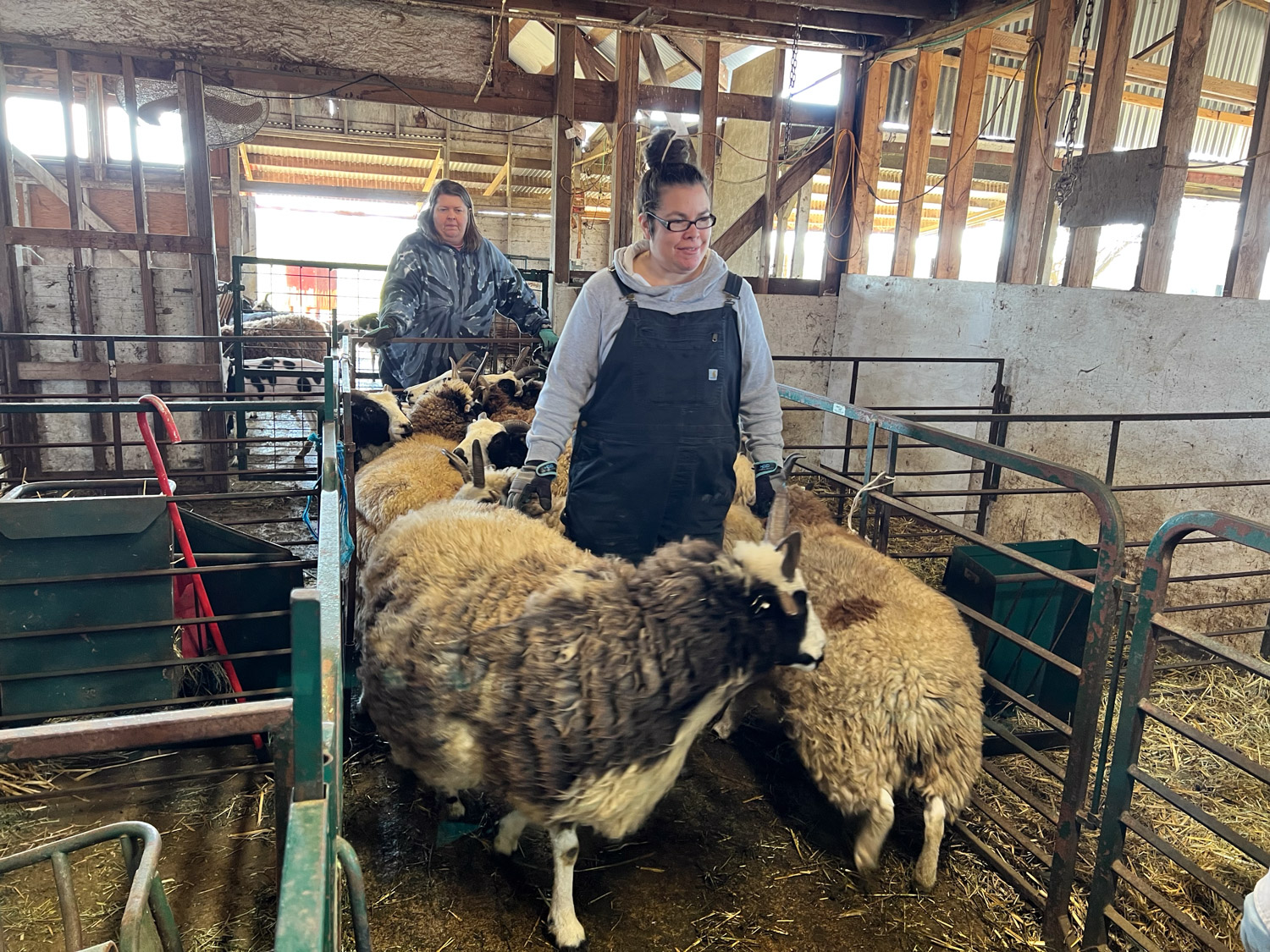
Farm Club members kept the sheep coming so that John didn’t have to wait.

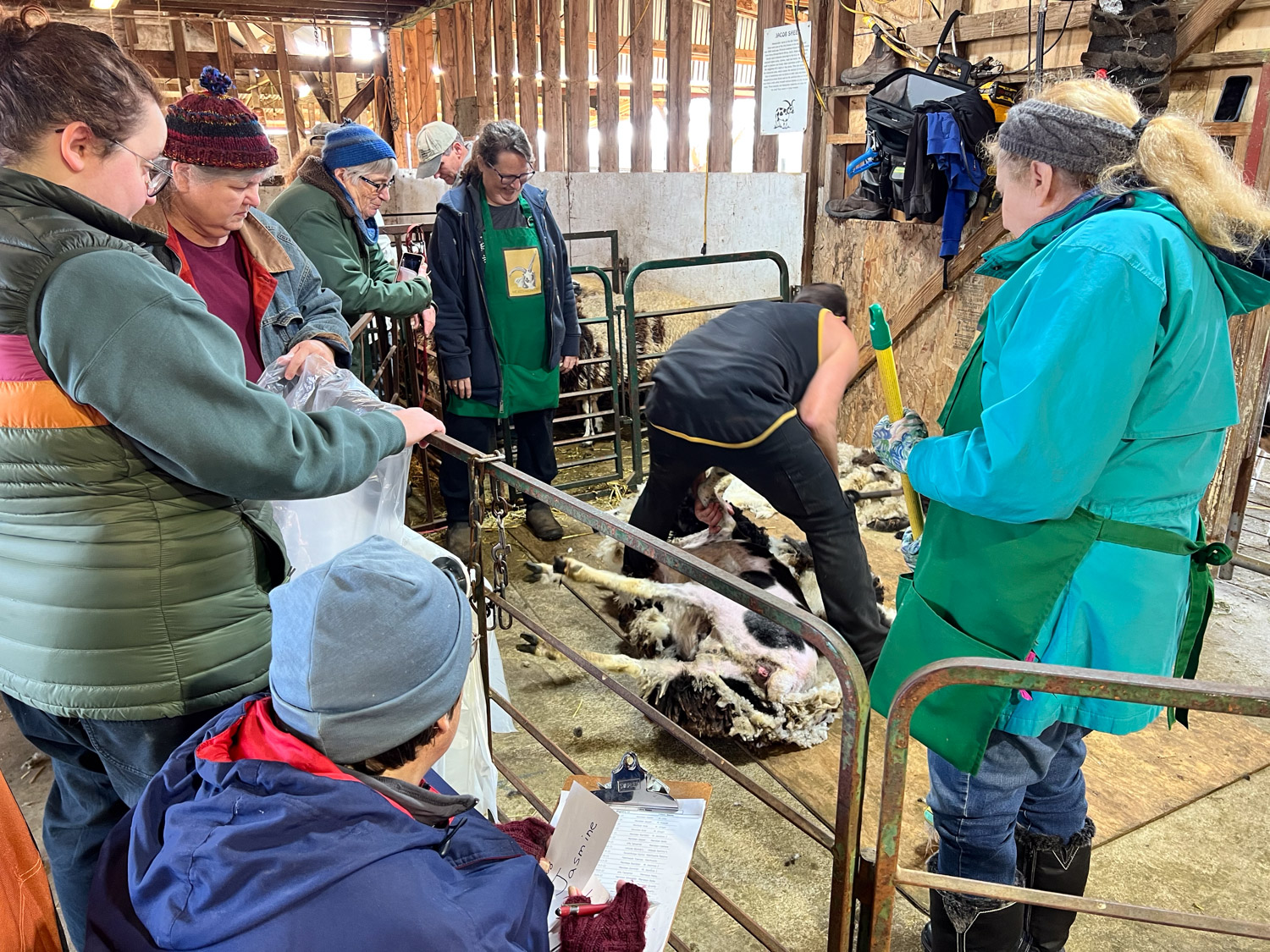
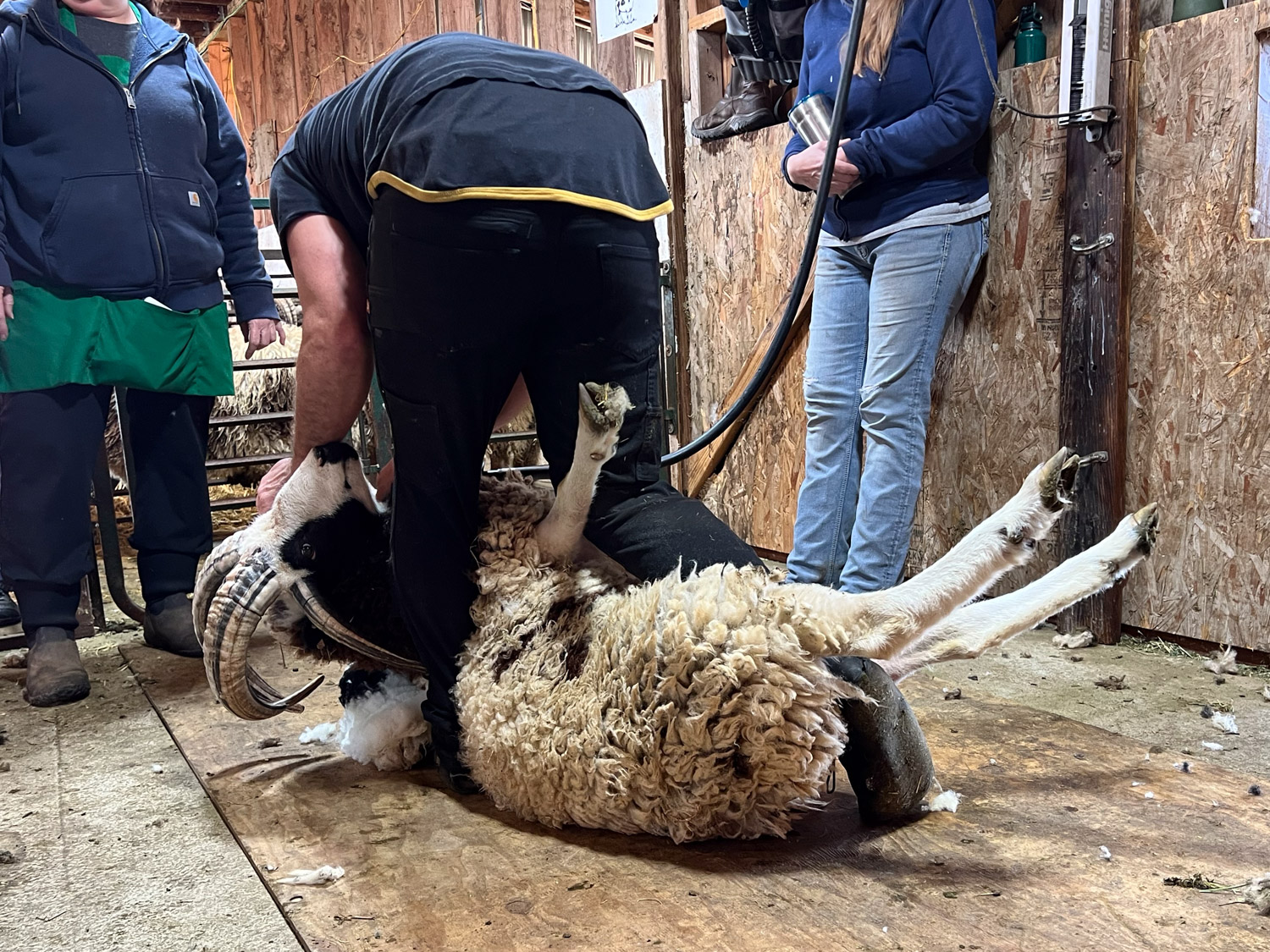
Farm Club members covered all the jobs. They moved sheep, bagged fleece, checked the ciipboard, swept between sheep and let sheep out as they finished. I have videos of shearing but haven’t had time to post them yet. Because I recorded 4 or 5 videos I can say that John shears a sheep in just over 2 minutes. It is amazing to watch.

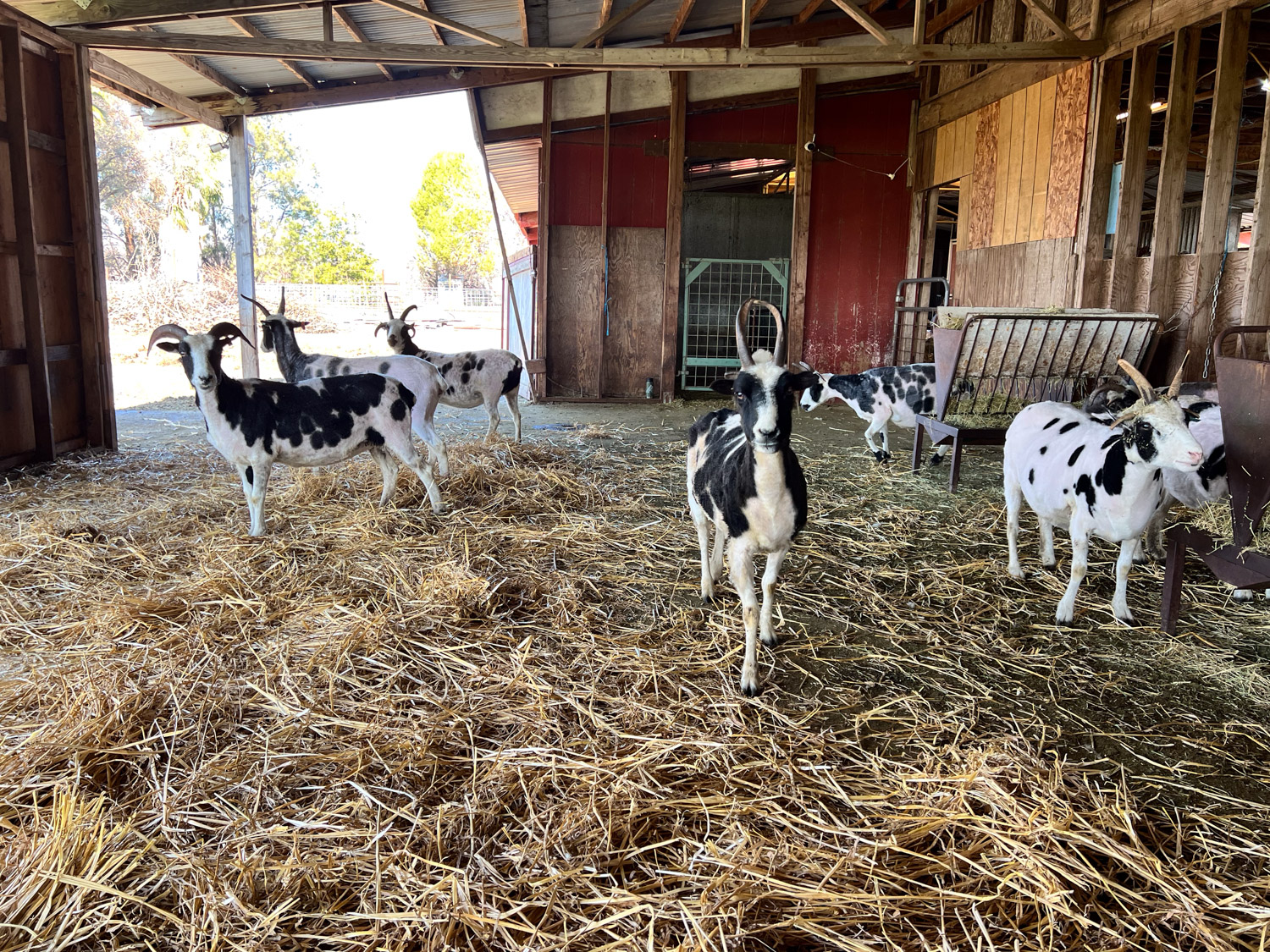
We bedded the barn with straw knowing that would help with the cold at night.

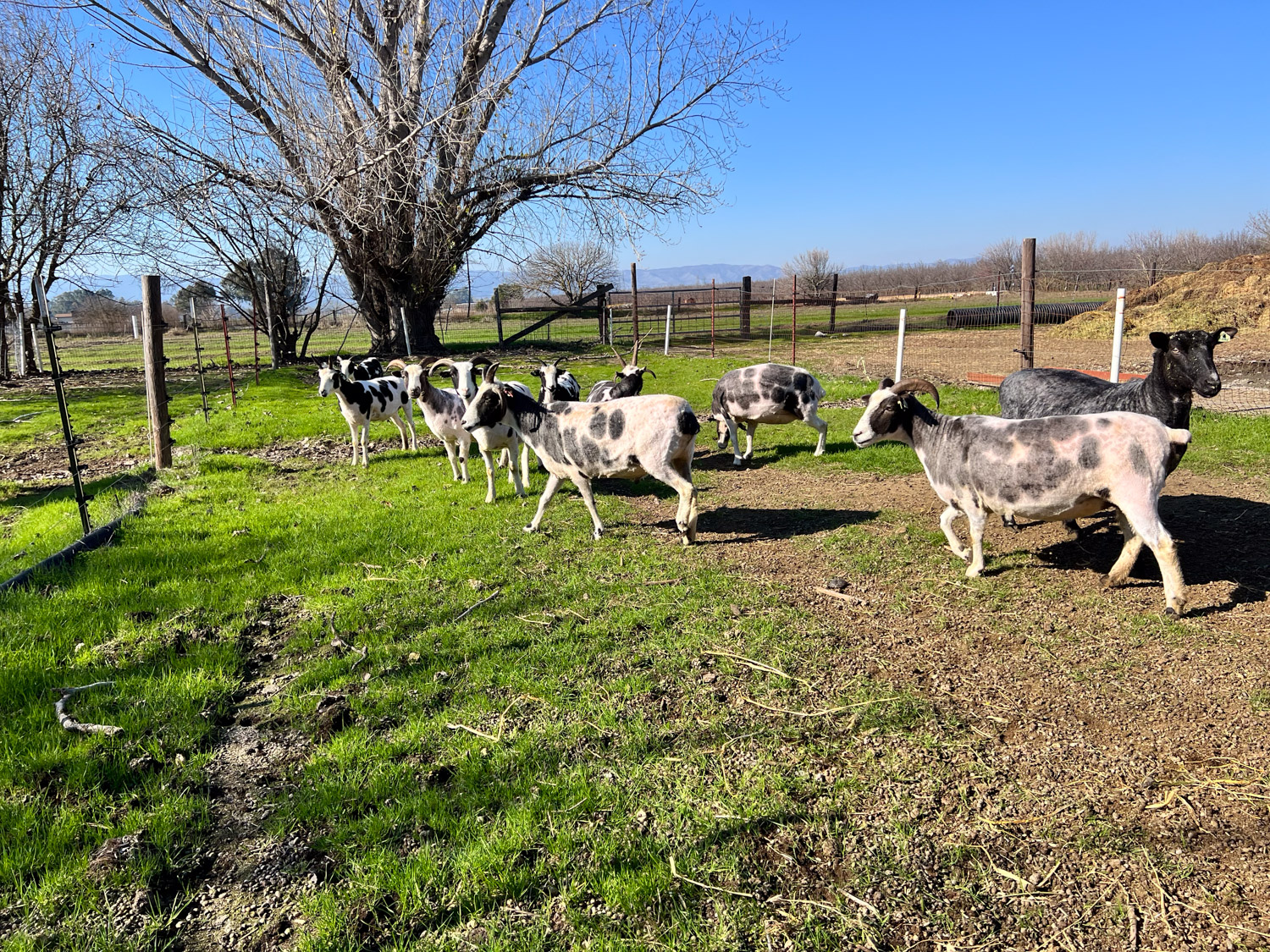
The shorn sheep enjoyed the sun during the day.

Farm Club member, Kathleen, took over her annual job of weighing fleeces.

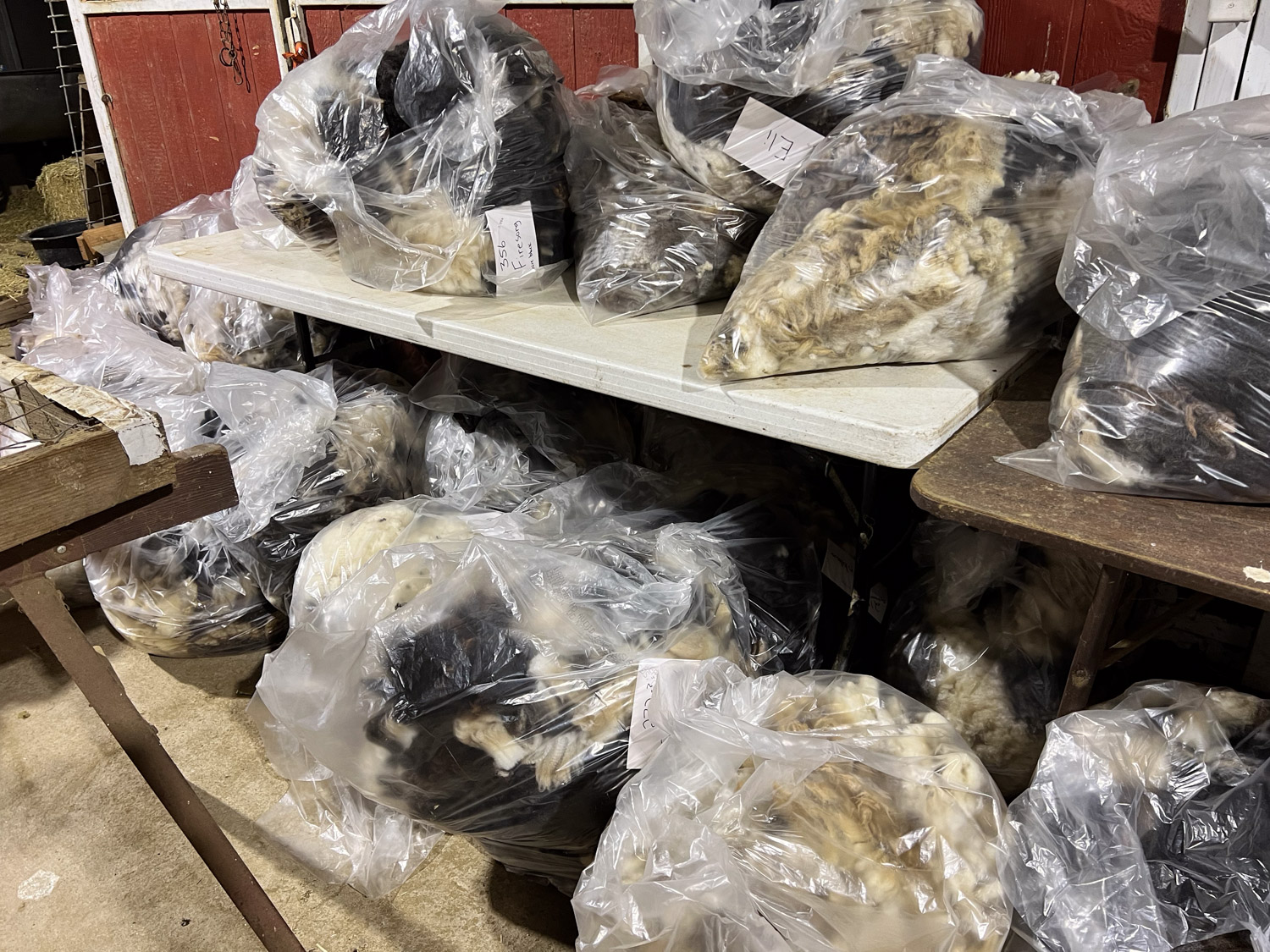
This is just some of the fleeces, bagged and labeled with sheep name and weight.

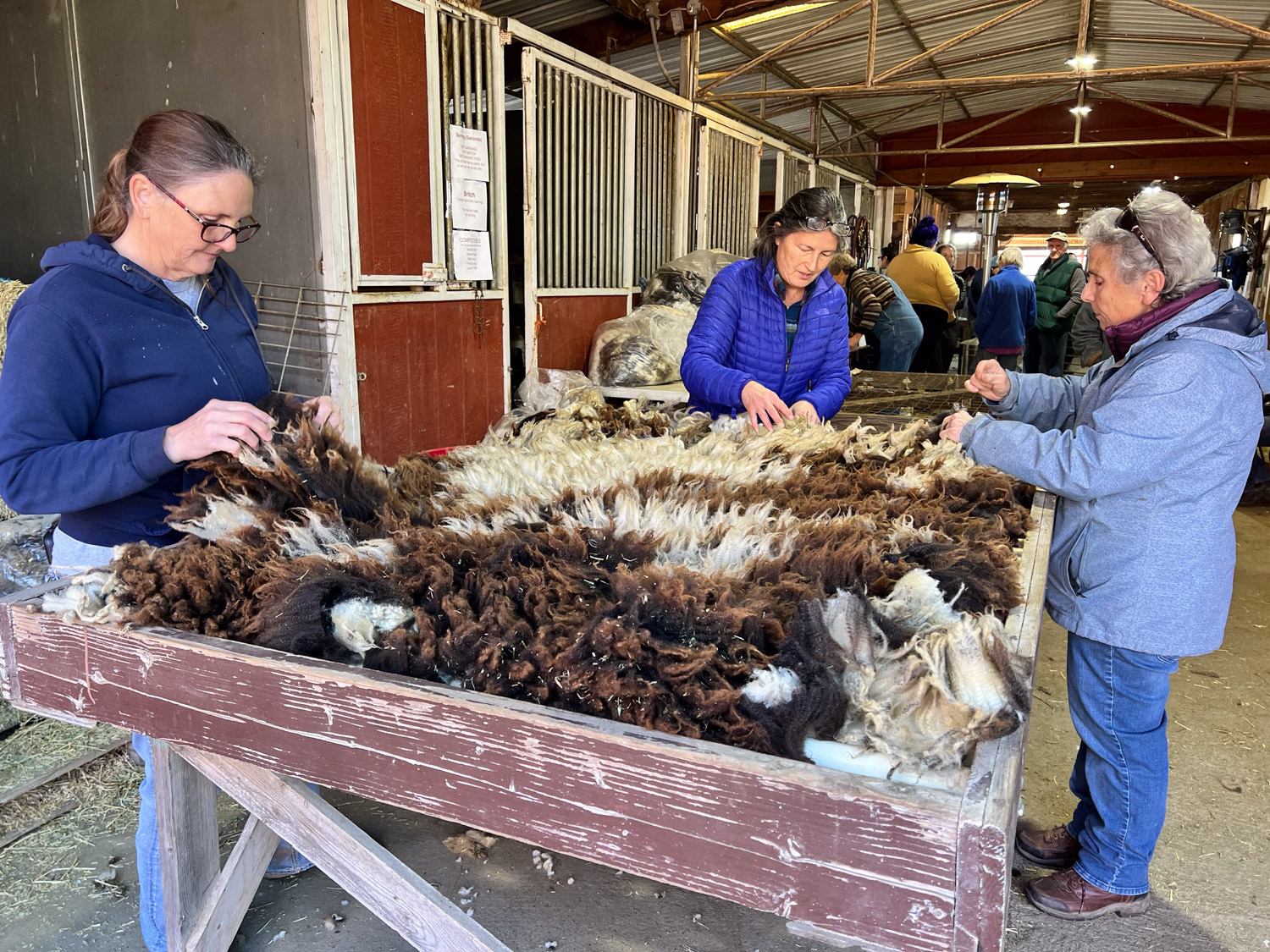
Farm Club members and other friends who purchased fleeces were able to skirt fleeces the selected.

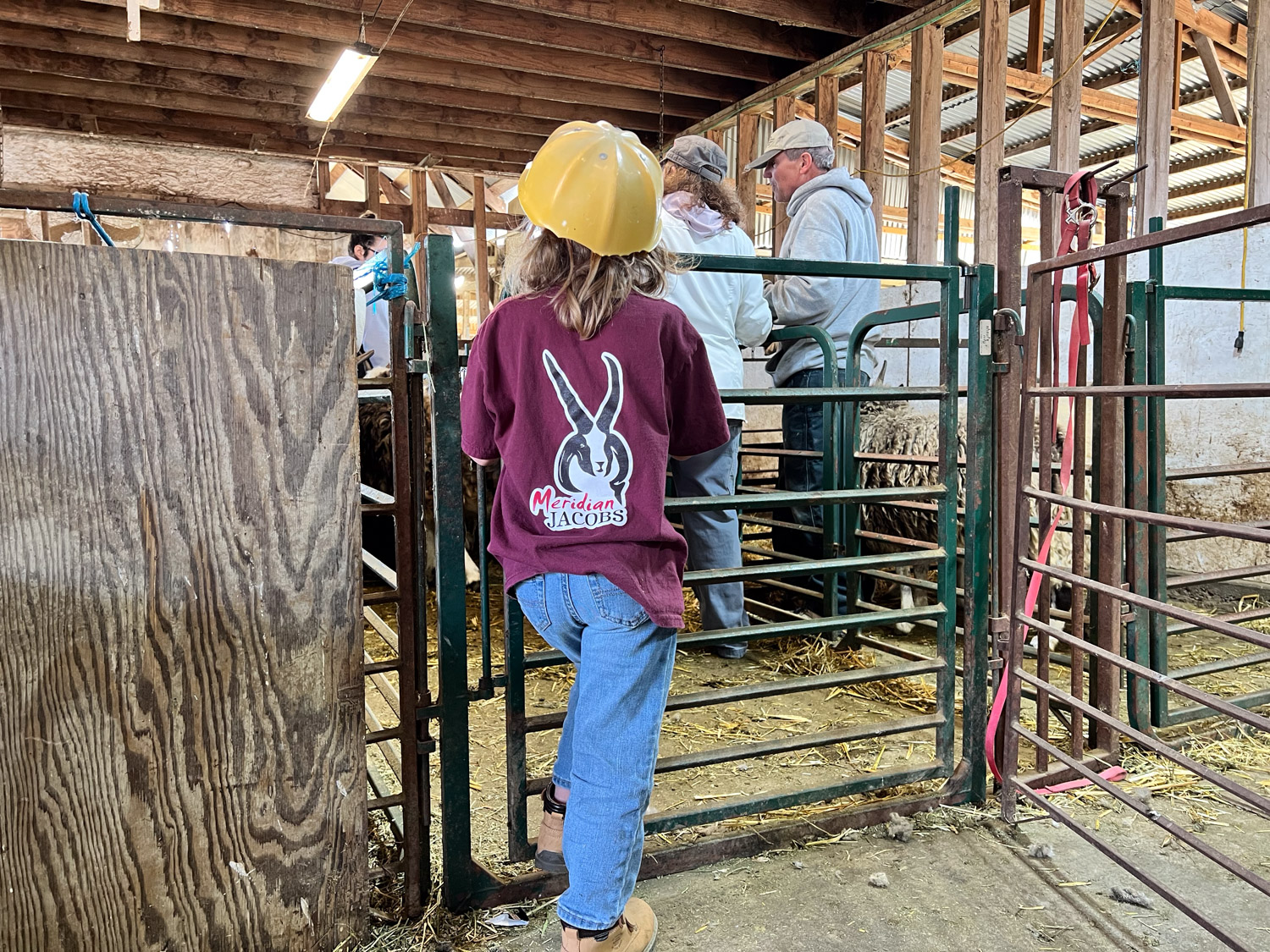
This is our youngest Farm Club associate, son of a member. He wanted a job and spent most of the morning cleaning the barn with the help of Dad.

Shearing Day can be tiring. This is Oakley, John’s dog, in a pile of belly wool.

After shearing was over I called on three Farm Club members, who are now tagged as the Tech Team, to figure out why I couldn’t get the barn cameras to work after we made a big switch to a new internet service. I hadn’t been able to get them set up again. Farm Club members have links to those cameras. Success!

Shearing stats: We sheared 64 ewes, 12 rams, and a wether. That’s important to know because shearers charge more for rams. I guess it’s a good thing that they don’t charge more for horns. (Joke) Of those sheep 47 ewes, 9 rams, and the wether are mine. We didn’t shear 2 ewes who will be the subject of another blog post. Fleece weights range from 2.5 to 6 pounds. That’s typical for Jacob sheep.

I need to start skirting and sorting fleeces so I can get some on the website for sale and others to the mill for processing.

Shearing Day 2025 – Part 1

We were lucky on Shearing Day. It was cold in the early morning, but there was no threat of rain and the sun was out.

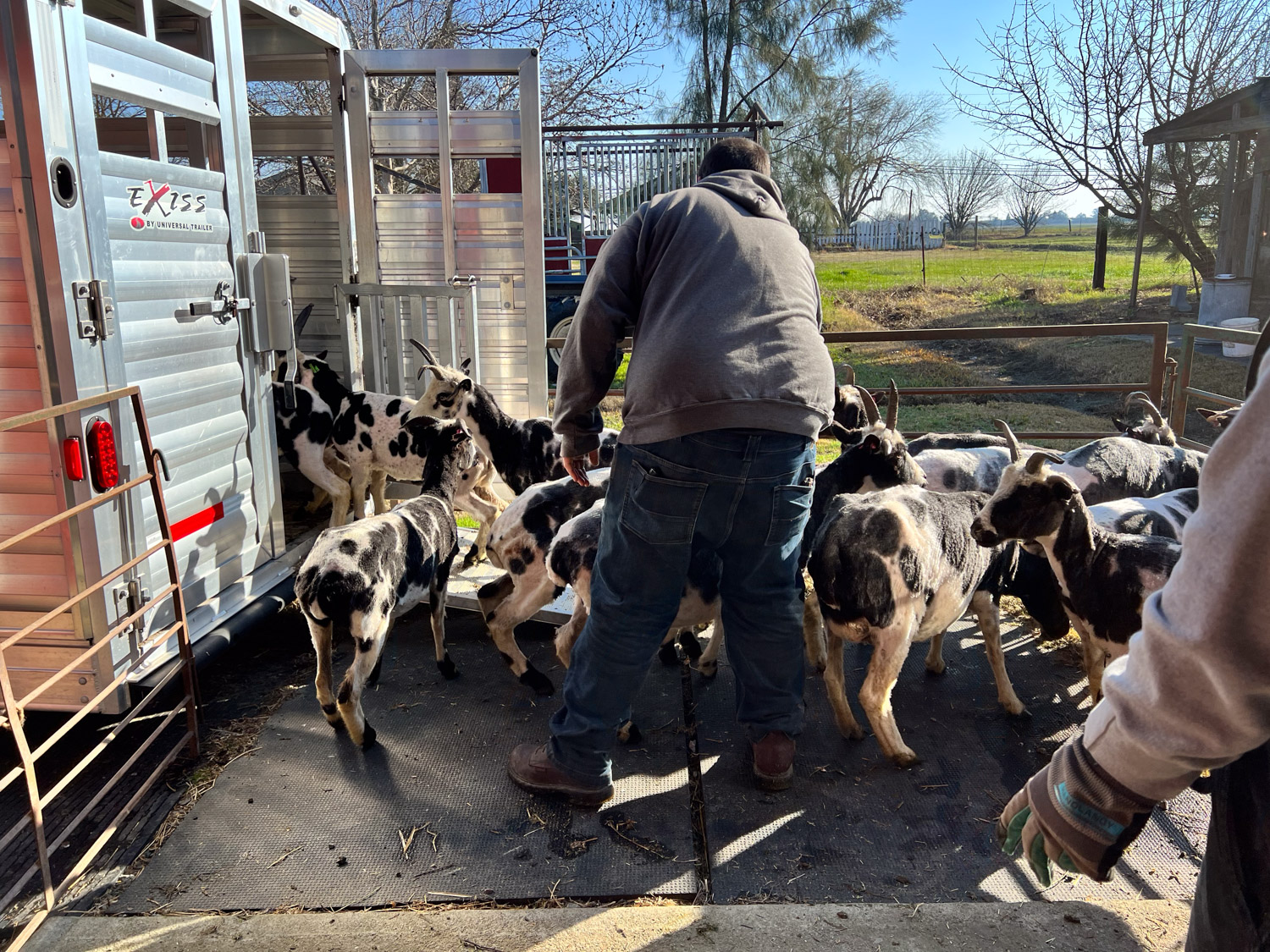
The day before we took our trailer to Trish’s farm a few miles away. We loaded 21 sheep to bring them to our place for shearing the next day. It turns out that one of the 21 was mine–I had forgotten about the ram lamb Trish borrowed in September to breed some of her ewes. So now I have 9 rams–that’s a few too many!

These are Trish’s sheep the next morning. I remember that ewe on the left from last year. See her photo below.

Her hair style makes her memorable.

John got here at 9 and we started with Trish’s sheep. This ram is Starthist Goldhill, sired by one of my 2-horn rams who is no longer here.

Farm Club members were on hand to help with all the jobs. They kept the shorn sheep out of John’s way while he worked.

After all 20 of Trish’s sheep were shorn we moved panels around to load them back in the trailer.

They fit better after shearing.

Then John started on my rams. This is Eli.

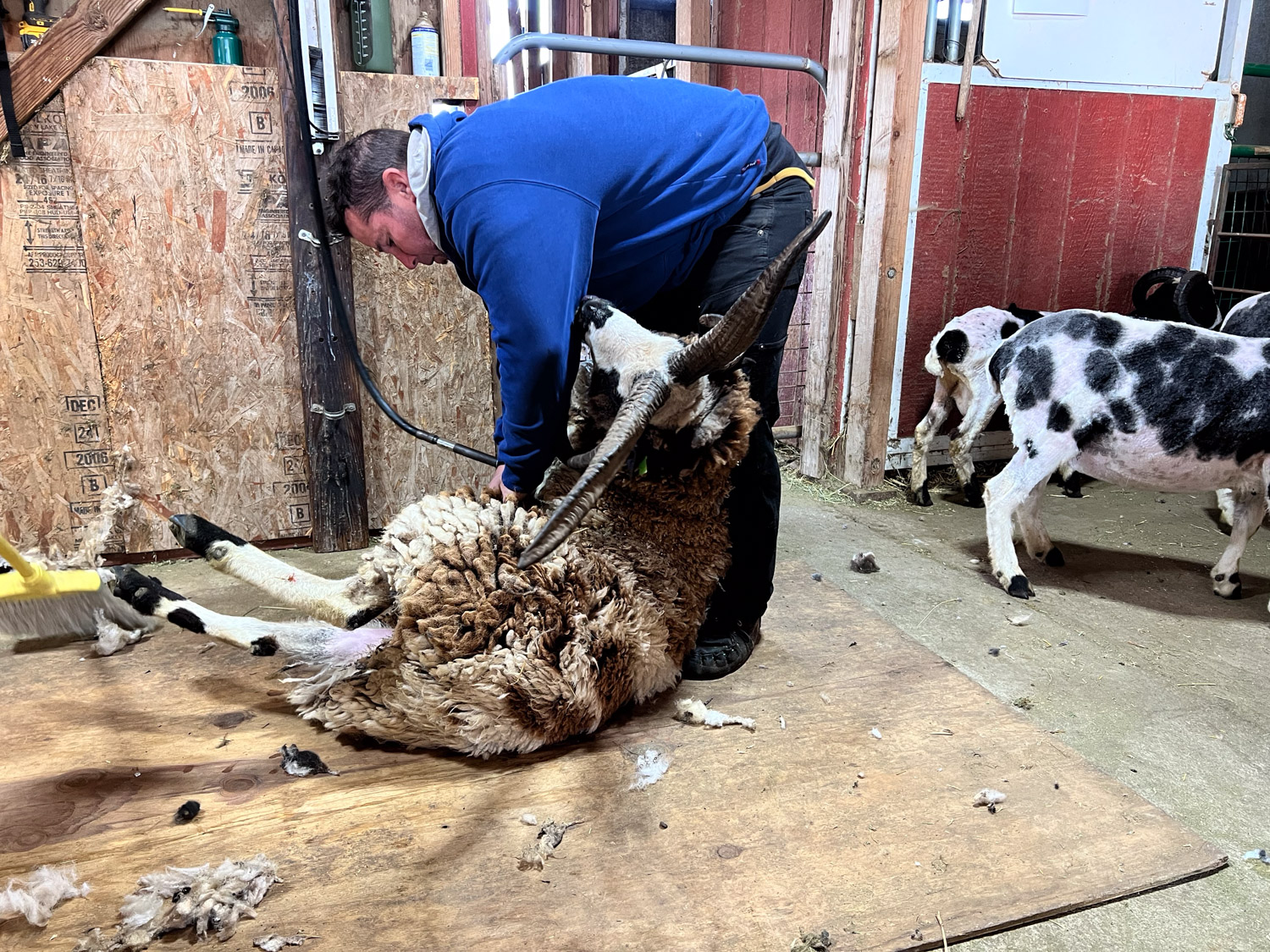
For those of you who may not have watched shearing, the shearer follows the same pattern on all the sheep.

I recorded video of shearing four or five sheep. I haven’t had time to edit and post those videos yet, but because of recording I know how long it took to shear those sheep. What do you think?

John is shearing each sheep in under 2-1/2 minutes. Some are close to 2 minutes!

More shearing photos in the next post.

Sheep and an Owl

I wandered out back with my camera–the real one–so I could take better photos of sheep. I like to update the sheep page on the website every year when the sheep are in full fleece. I did not update the website yet, but I took some photos with that in mind.

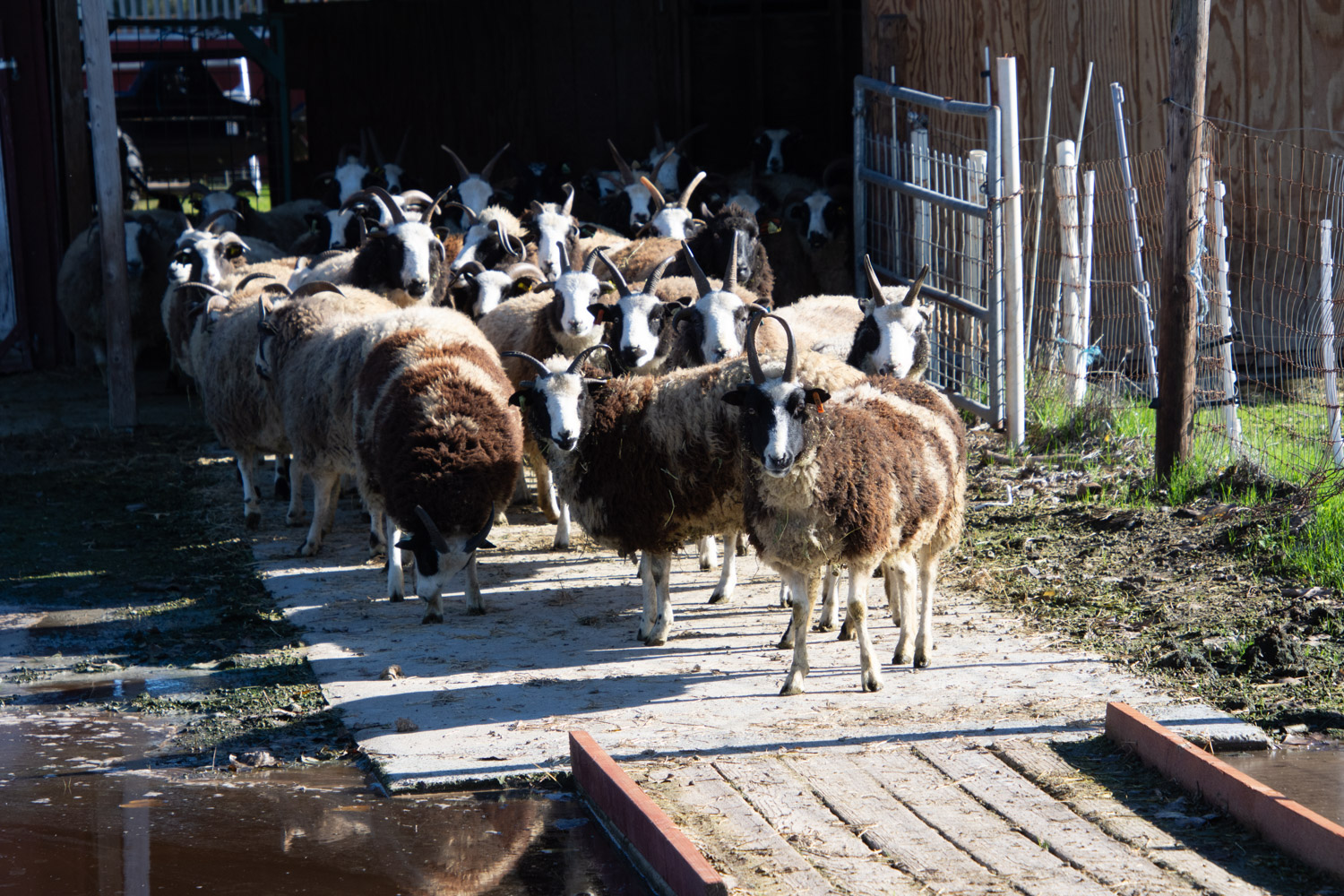
It’s wet behind the barn and we have a lot of piles of brush to burn (to the left out of the picture). The sheep can’t go on the newly seeded pasture so space is limited. There is a concrete pad and then a wooden bridge over the lowest spot.

As I walked towards the pasture gate the sheep were hopeful that I’d open the gate. Jade led the way.

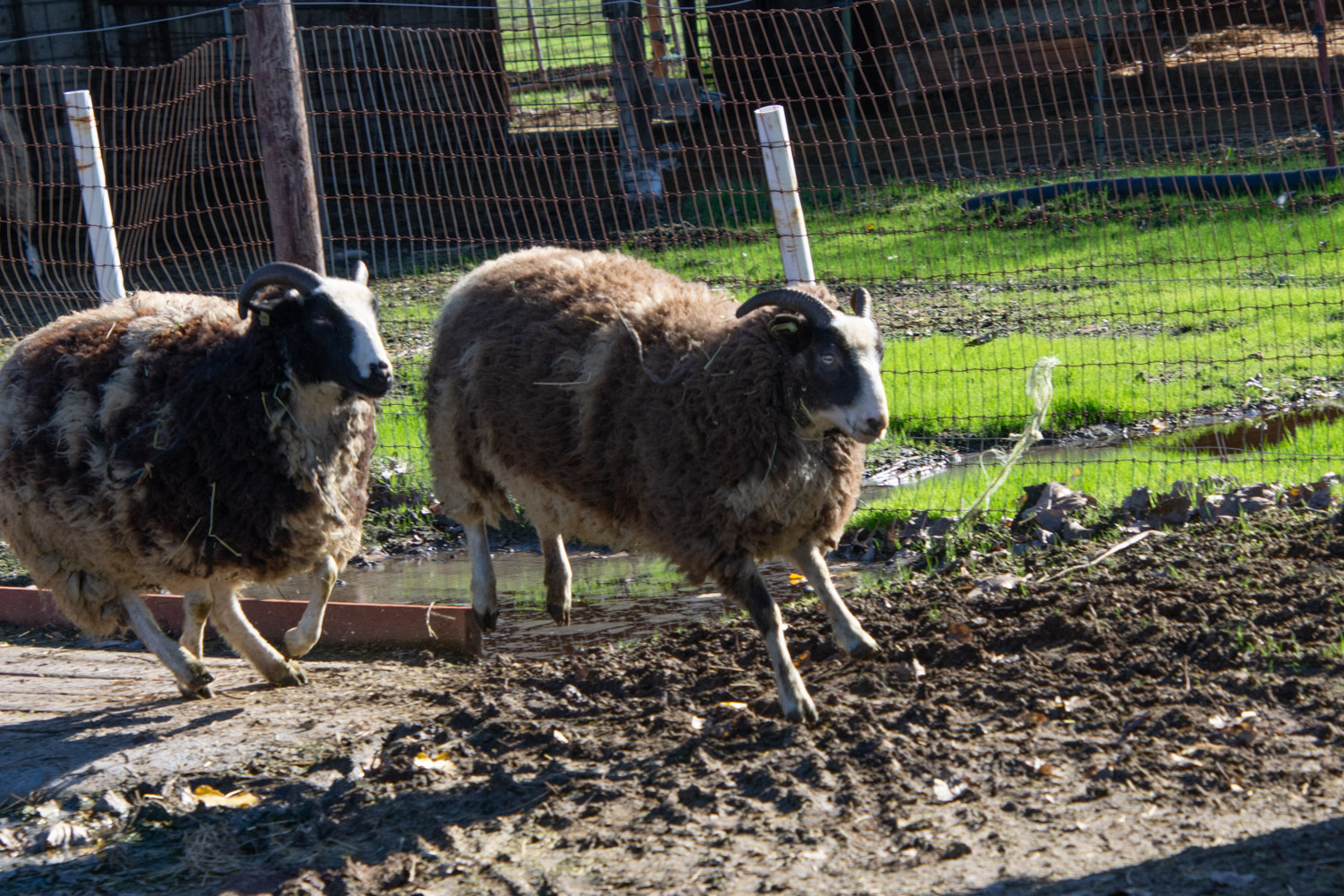
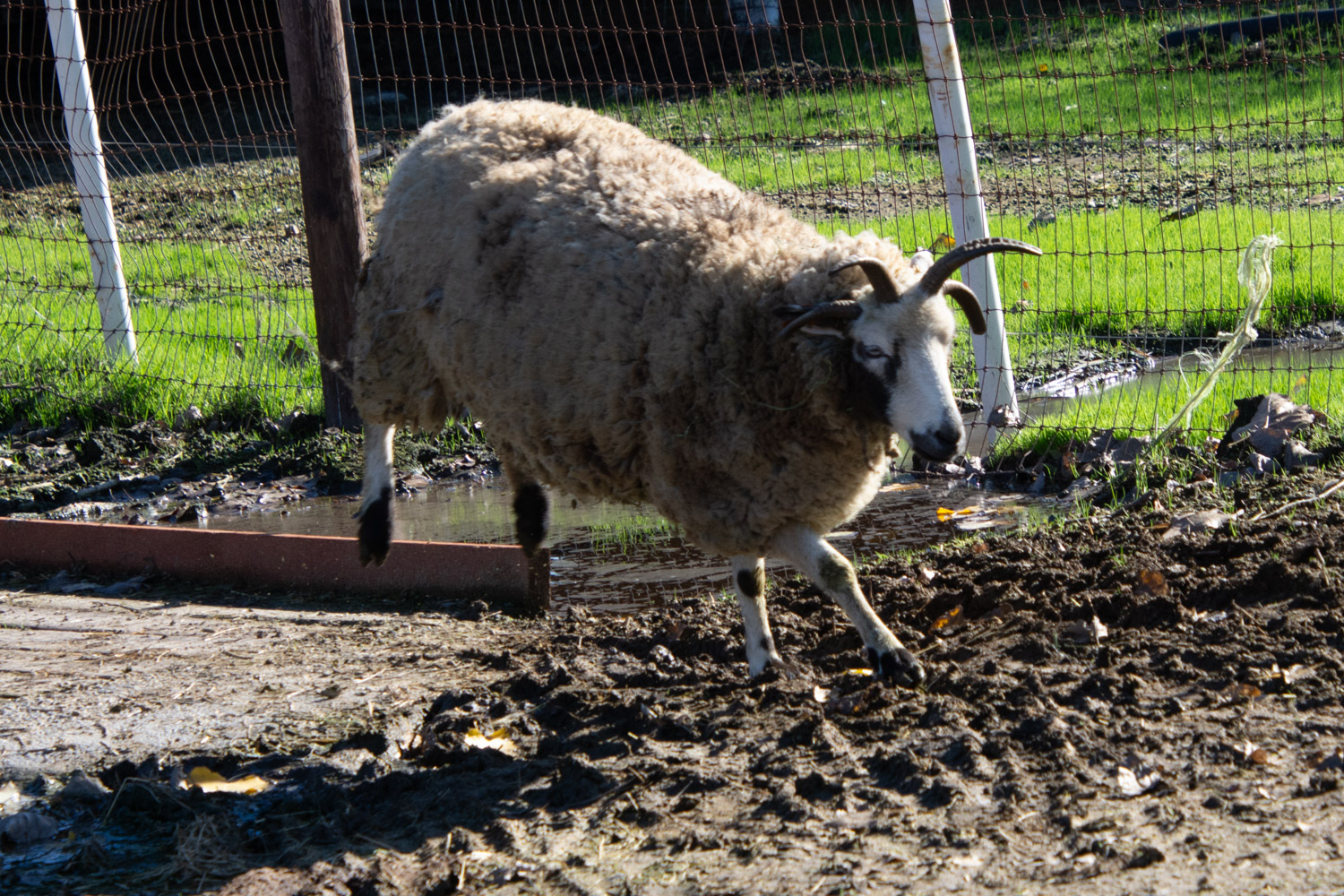
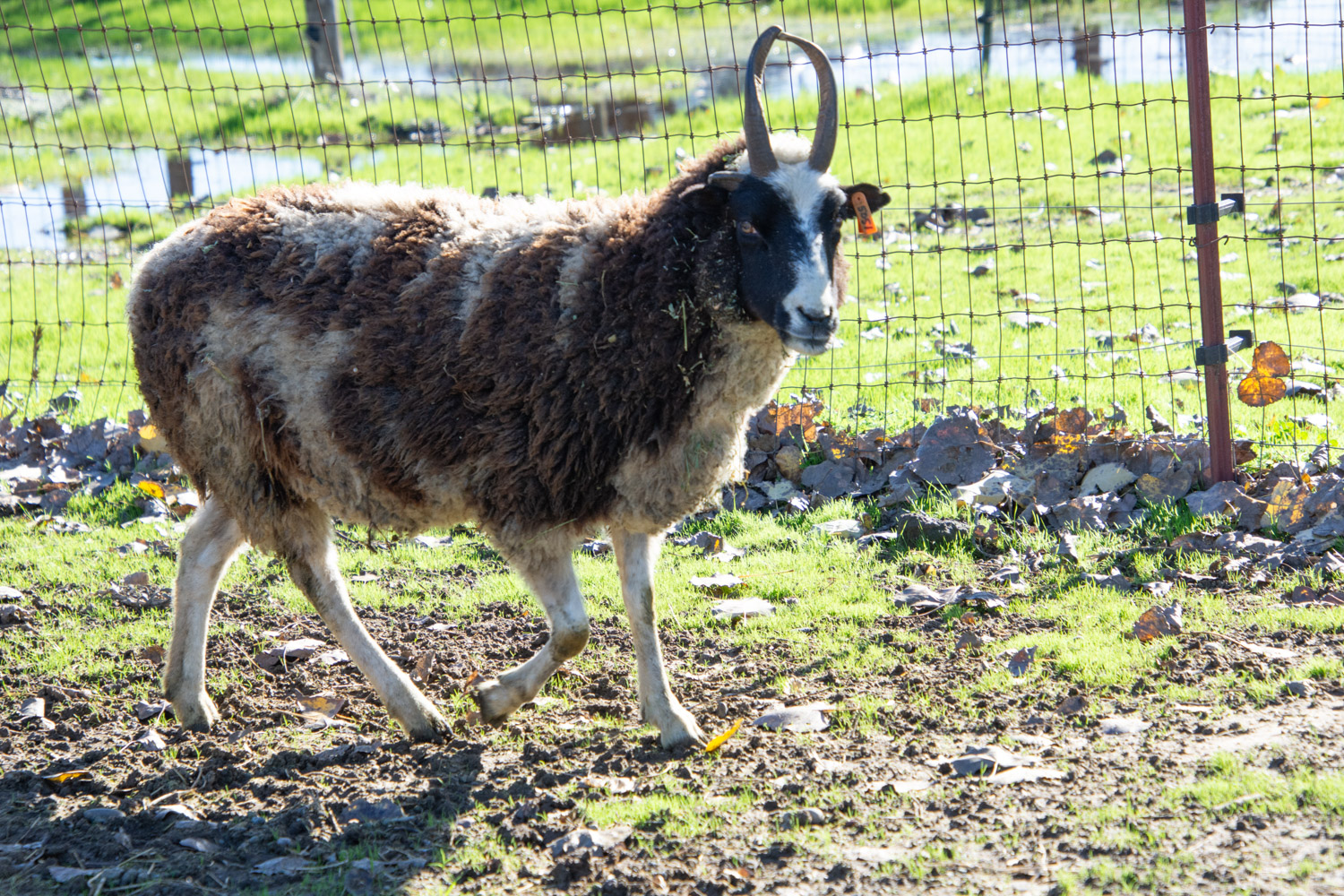
Many of the sheep weren’t happy about the mud just past the bridge and decided they had to jump it. These are two 2024 lambs and I can’t sort them out by name yet.

This ewe is Jannie.

Cindy.

This is Sandie…

…and her twin, Pecan.

Jade.

Patchwork Bettylou, the ewe that had hernia surgery in October.

Here are three of the 2024 lambs. Harmony, Zoe, and Lily.

I walked out behind the ram pen and stood under this palm tree wondering if the resident barn owl is still around. It’s impossible to find owl pellets because, even if pellets could drop through all the old dry palm leaves, the blackberries grow around the base of the tree.

While I was standing there the owl flew out of the palm tree into one of the sheoaks.

Who is Going to Lamb and When? Ultrasounds

For the last few years I’ve asked the UC Davis vets to come here and do ultrasounds. It is certainly useful to know ahead of time the ewes that are not pregnant and, hopefully, the number of lambs to expect from those that are.

I told the Dr. Smith the dates the ewes were with rams and December 20 was chosen as the optimal time for ultrasounds. (Never mind that a few ewes went in with the new ram, Eli, right at Thanksgiving. This ultrasound date was scheduled before Eli came here. It won’t be hard when the time comes to know if those few ewes will lamb.

I purposely did not breed as many ewes this year because of the limited space with our pasture being off limits for most, if not all, of the next grazing season. If you read this blog regularly then you know about the Pasture and Irrigation Renovation going on. Look back over the last few months for those blog posts.

Farm Club members came and, since I was otherwise preoccupied with an overlapping visit by my son and DIL and Matt’s offer to help me with some loom/computer issues, they did all the work of getting the sheep organized and in pens, ready for the vets.

There were four from UC Davis. I lose track of the titles, but I think one person was an intern and/or student and maybe a couple were in residency. They took turns doing the scans and reading the results, with Dr. Smith overseeing it all.

Don’t ask me what we’re seeing. I’m good when I see a ribcage go by as they move the probe around, but I have a hard time with the rest of it unless it’s pointed out. They judge size of the lamb’s head and, therefore, its gestational age. Amount of fluid and relative position of the lambs are other factors they consider.

The next group of ewes waiting.

Trading places in scanning.

Meanwhile, one reason Matt came was to climb the weeping willow and cut a couple of large branches that had broken during the summer. FIY, he is using safety gear to prevent falling in case of slips.

It’s amazing how quickly this tree has grown. Matt cut the problem branches, but then cleaned out a lot more where it overhangs the pasture and the fence.

Back at the barn they are still scanning, but we could used last year’s lambing list on the white board (to be erased at the beginning of the next lambing) to pick out which ewes had triplets last year.

Here are the stats:
Fetuses counted: 51
Sets of triplets: 2
Sets of twins: 17
Singles: 5
Sets of 2+ (twins, but not ruling out a 3rd): 3
Ewes pregnant: 27
Ewes open who were with a ram: 3
Ewes maybe pregnant, bred late by Eli: 4
Ewes not with.a ram: 7
Ewe lambs not bred: 8

Stay tuned for March 9, the first due date based on when I put rams in with ewes.

Using the Whole Sheep – Sheepskins

I started raising sheep because I wanted to produce wool. For me lamb meat (Gourmet Lamb on my website) is a by-product of my wool and fiber business, although for most sheep raisers wool may be the by-product. I make a point to use as much of the sheep as possible. Sheepskins are a major by-product of the lamb business. I thought I’d show what goes into producing a beautiful sheepskin.

I don’t have photos of the process of getting the sheepskin from the sheep. That is not something I should put here, but I will say that the person who harvests the sheep is very fast and does an excellent job of getting the skin off the carcass in good shape. My job is to cut off extra skin that came from the legs and salt the pelts as soon as possible to prevent them from decaying.

I ran into trouble this year getting the right salt. You need to use fine salt to cover the most surface area. The one on the left is what I usually use, but it was out of stock for part of the summer. You’d think that the one on the right would be OK since it’s labeled “fine”, however it is not nearly as fine as the “solar mixing salt”.

Dan built this rack a couple of years ago so the hides won’t take up as much room as if they were spread out. I have covered hide with a layer of salt, making sure that all parts of the hide are covered.

Even though I had the rack I had to spread some hides on pallets when there were too many to fit. It the middle of the summer they dry enough within a week to move to a stack. If the weather changes and there is moisture in the air sometimes the pelts still feel damp.

You’re not supposed to dry the pelts in the sun, but I after the initial drying and before shipping I may spread them out for a few hours. After the salt has done its job of drawing the moisture out of the skin it sometimes draws moisture from the air and I don’t want there to be extra moisture when I ship them to the tannery.

I flipped them over and dried both sides.

A stack of pelts. The next job is to find an adequate box. I sold a couple of looms this year and still had the boxes. I’m trying to remember now if I was able to fit ten pelts in a loom box.

I take photos of the hides before boxing them. With the two tanneries I am using now I don’t think I have to worry about this step. Over the last few years I have tried three other tanneries. One is now out of business. One is all the way across the country and takes a longer time. The other (in California) sent hides back that were definitely not mine. That’s what prompted me to start taking photos before shipping.

I am satisfied now with the two tanneries I will continue to use. Driftless Tannery is in Wisconsin. Living Sky is in Idaho and last year I was able to deliver hides when I visited my son and DIL in Boise. This year I shipped them all. Both tanneries use mimosa bark for their tanning process. This is a more environmentally friendly alternative than methods that some tanneries use. I also like the resulting leather–it is flexible, yet sturdy.

I have photos of the front and back of each hide. People ask me how the hides are tanned. My answer is that it is magic. The photos don’t show how bad these hides look when I ship them. They are stiff and the wool is dirty, including hay, grass, and blood. The tanneries work magic and the hides are returned clean and fluffy.

I went through my photos and found some that I could match up with the finished sheepskins.

These are three of the hides that came back from Idaho. Can you match the first two up to the photo above? The middle sheepskin is the one on the top right in the photo above. I think the sheepskin on the left is the one in the lower left of the photo with six. Magic!

This is from the batch I sent to Wisconsin.

The sheepskin on the left is the middle one on the bottom row in the photo above. The middle sheepskin is middle, top row above. The one on the right is in the lower left corner above. More magic!

When I get the sheepskins back I need to measure and photograph each one so I can put them on the website. See this page for all that I have listed.

Lambtown 2024 – Part 2

The entrance to Lambtown.

I went early on Saturday and Sunday to feed sheep. This is the display that Farm Club members put together for the barn.

The ram, Blizzard, started out in a different pen but he and the ram lambs were fighting through the fence during the night. Dan and Farm Club members switched pens for him and a couple of ewes so there wasn’t direct contact with the other rams.

Walking back to the vendor building I stopped at Woolly Adventures. This is quite an undertaking, but Gynna does a fabulous job.

There are over a dozen different activities for kids here. ..

…and she thinks up more each year.

I labeled more naturally dyed yarn Saturday night and had it at the booth on Sunday..

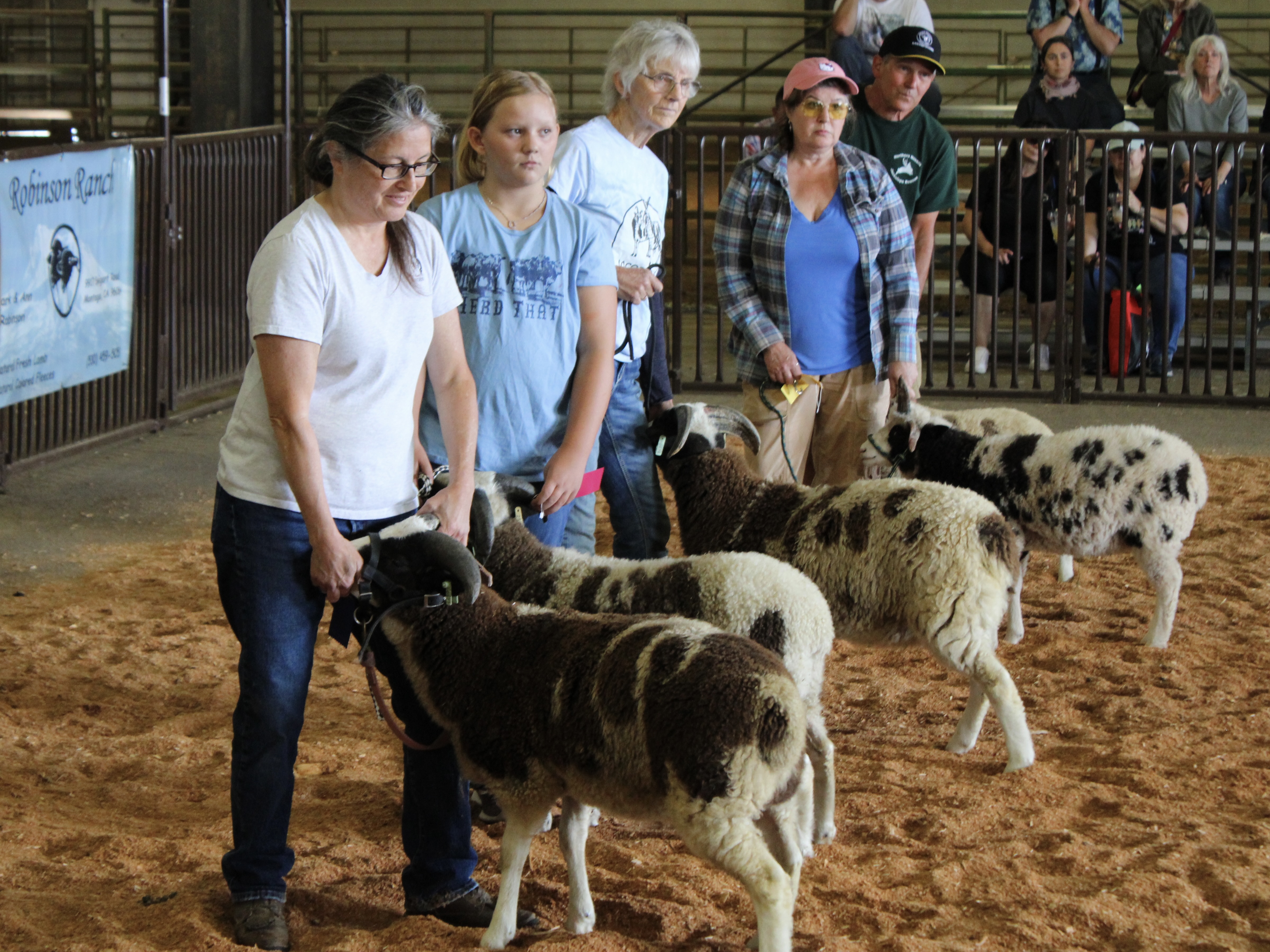
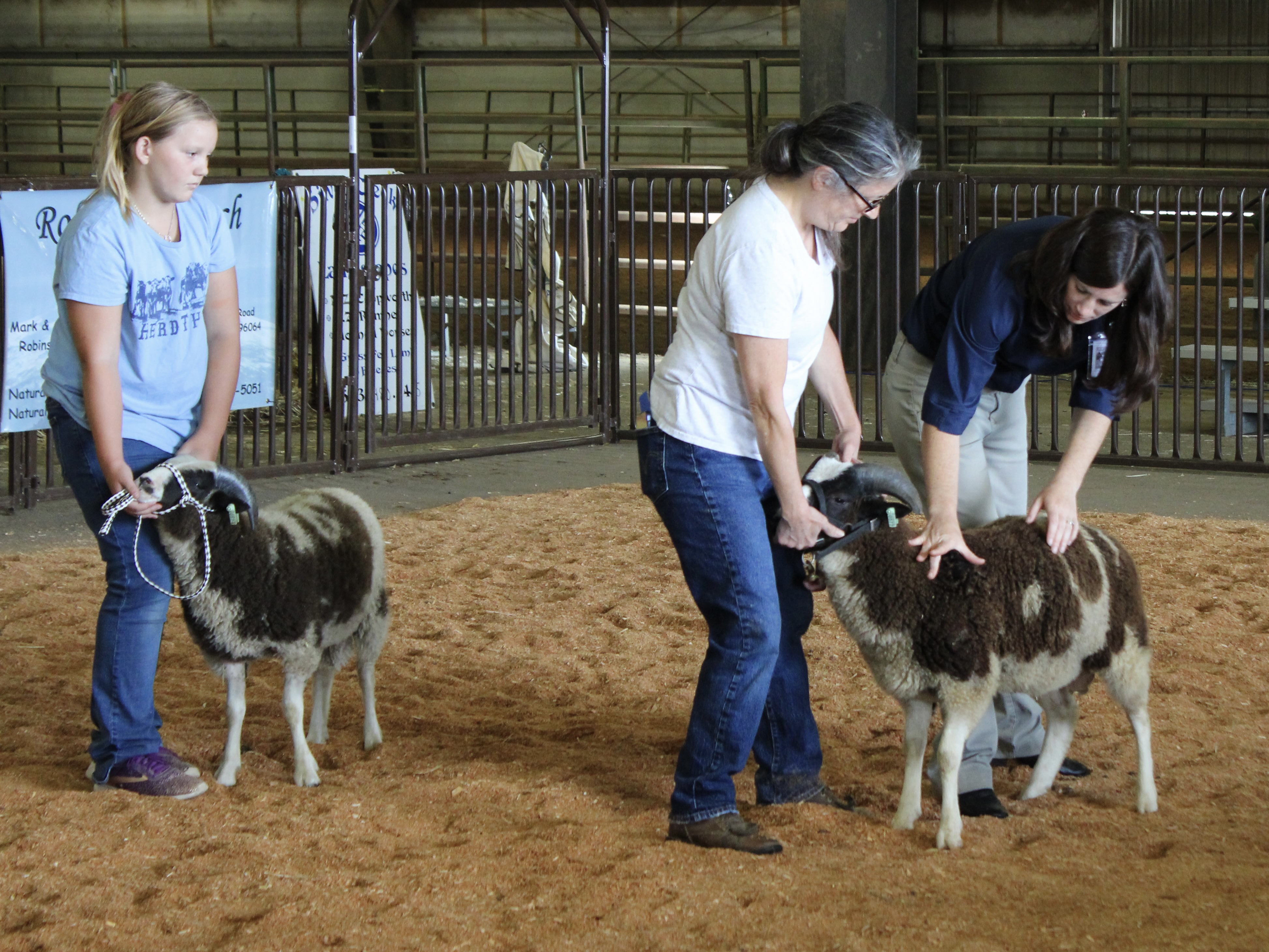
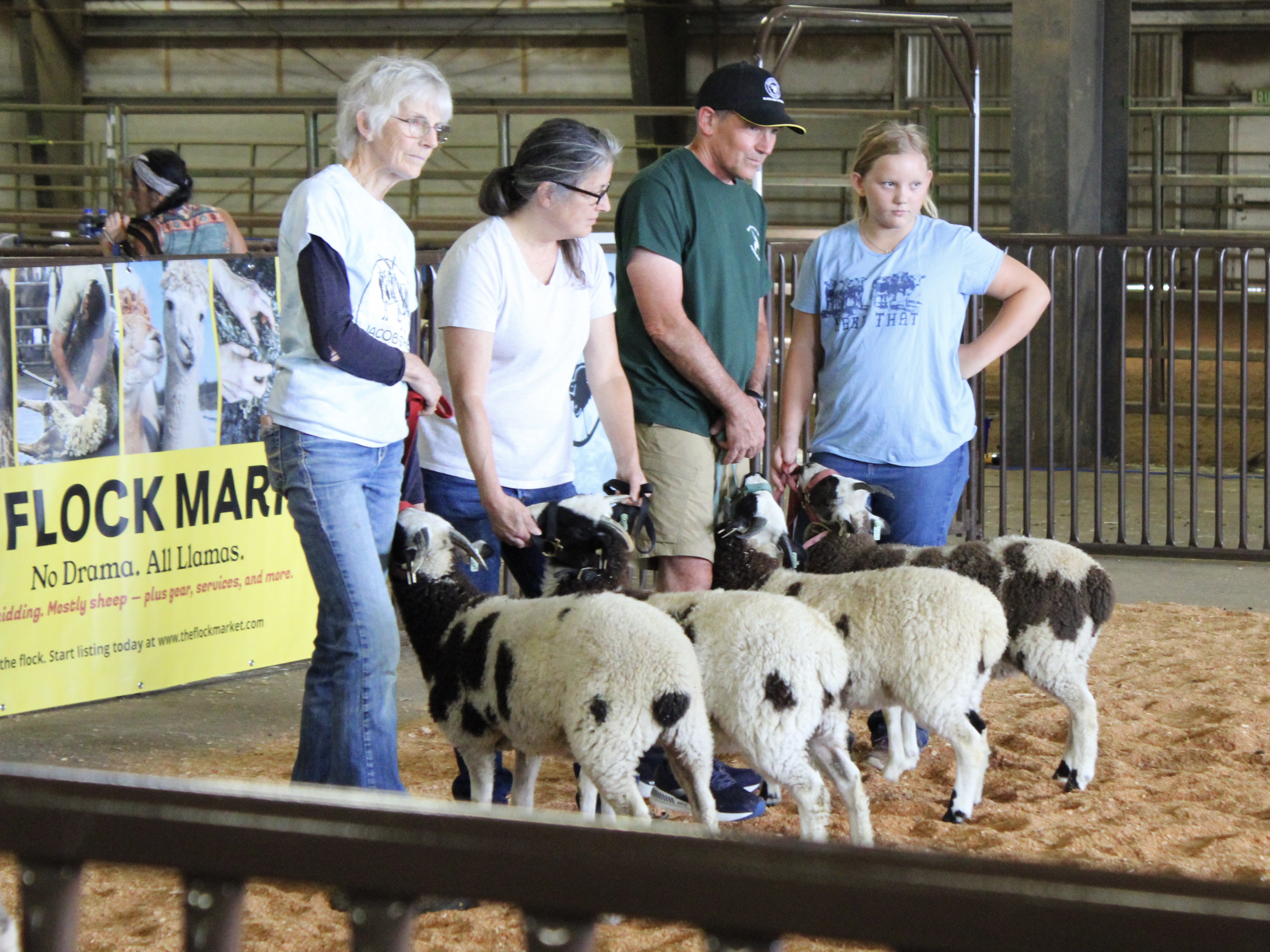
The sheep show was on Sunday. I had to be in the vendor hall so Farm Club members handled all the show details. Marina, Beth, Reba, and Nicki showed most of the sheep.

Dan helped out with the yearling ram.

Sheep show--sheep in the show ring.

Thanks to Deborah and Nicki for the photos of the sheep show.

Thanks to Doris for recording the show and the judge’s comments so I could watch it later at home! The sheep show didn’t end until after 4 when the vendor hall closed. Friends and I took the booth down quickly. Dan loaded sheep and drove them home. Then he came back with the other trailer for the booth.

He walked in with this new dolly with a note that said Happy Birthday (early for my November birthday)

All these years I have carried these grids in and out of buildings two at a time. Now it will be easier.

Lambtown 2024 – Part 1

Lambtown is our local fiber festival–only 15 minutes from my farm. After a very different beginning many years ago (but that would be another story) it is now a full-fledged fiber show complete with sheep, sheepdogs, contests, classes, vendors, demonstrations, and other activities. It is the first weekend of October, but starts on Thursday with classes. If I am going to teach it has to be on Thursday because I set up a vendor booth on Friday and am in the booth both Saturday and Sunday. This makes for a busy week. I knew I had to have the trailer packed up on Wednesday.

The kitchen island one of the evenings that week. I described making these buttons here. After making them I still have to put them on cards, especially for selling online later.

A friend thought that I should sell cosmos seeds to grow flowers for dyeing and printing, so I worked on that too.

I picked up the 2024 Jacob fiber from the mill on Tuesday and needed to weigh it. Some were single color bags and others are a mix of all four colors.

A few of the shop while I was still trying to decide what to pack up for the show.

Thursday morning, Brett was at work discing the pasture. That project was described here. We haven’t moved beyond the last discing. Hopefully leveling will happen soon.

Thursday there were ten students in my “Let’s Get Fancy” class where I showed hand-manipulated techniques for design in weaving.

Danish Medallions.

Brook’s Bouquet, Leno, and Loops.

Friday was a full day as we harvested lambs first. A friend brought her lambs here for one of my customers and I salted the hides. We finished around 11 and went to the fairgrounds by noon.

Here is what the booth looked like by the time I went home.

The other half of the booth. It still needed tweaking, but it was mostly done, thanks to a couple of friends who spent the afternoon helping. We still needed to get the sheep here for the sheep exhibit so I went home to load sheep.

Dan and I drove back with sheep and Farm Club members met to figure out how to best set up a display.

Stay tuned for Part 2.

Using the Whole Sheep – Buttons

Each year many of the lambs produced here end up in someone’s freezer. I wouldn’t be able o breed sheep if there wasn’t a market for these lambs. There were 88 lambs born this year. I selected some to keep, but most are sold to other breeders or for meat. I want to use the WHOLE sheep and buttons are one of the products that I can make.

These are just some of the horns from the latest lambs. I did not photograph the first step because I can’t take a photo while using a Sawzall (just looked that up–a reciprocating saw) and my blog would probably get black-listed if I had a photo of cutting horns off a dead sheep head. The second step is to put the horns in a bucket of water in the sun for a few days. There is a bony core and the living tissue between the bone and the outer horn needs to degrade enough that I can get those horns off.

From Wikipedia: horn is a permanent pointed projection on the head of various animals that consists of a covering of keratin and other proteins surrounding a core of live bone. Horns are distinct from antlers, which are not permanent. 

Look at what you can learn about by reading my blog. I read about horns or horn-like features on a variety of animals from giraffes to triceratops.

I took photos of the button making stages with three horns, but I think that’s too many photos to put in one post. I’ll start with this one which is unusual because it is mostly white.

The first step (beyond what I described above) is to cut the horn into button shapes. I use a band saw.

The solid core makes buttons of interesting shapes. most people think of horns as round but you can see that the shape of these horns are anything but round.

Here are all the pieces I cut from that horn. The squarish shapes come from the hollow part of the horn that surrounded the core. I often try to make a few pieces that can be used with a shawl pin. I was told that I could call it an annular although that usually refers to a medieval brooch with a pin attached.

The next step is drilling holes, another step that is difficult to photograph while in progress.

All pieces after drilling the holes.

Then I move on to sanding using a belt sander. This is the step that takes me the longest. It’s difficult to get to all the edges.

I can’t use the pliers for all of it and I have been known to come away with nicely (completely) sanded fingernails.

Here are all the buttons from that one horn after sanding.

I have figured out the best way for me to apply a lacquer finish. I can put the buttons on wires that I dip in the lacquer and then I put poke the wires into styrofoam packing material saved from purchased items. These are the buttons made from three horns.

Throughout the process II keep track of the buttons that are from the solid part of the horns so I can match the up for sale. If I plan to sell buttons online I need to be able to identify individual buttons and sets. So the last step is to attach them to cards I have printed.

These buttons are not on the website yet because I’m going to wait until after Lambtown and post those that haven’t sold.