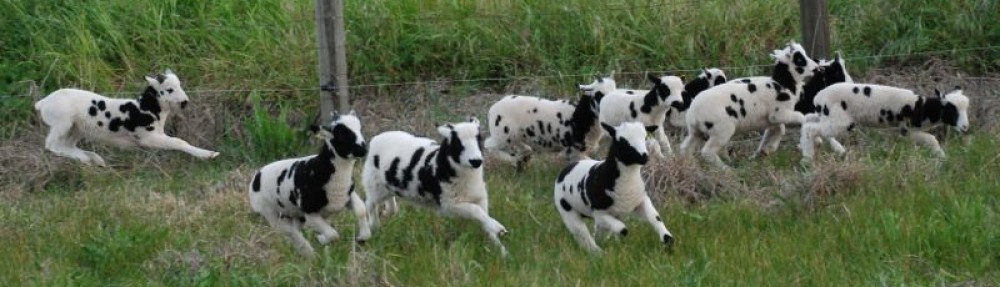
Close to Home…Post #2

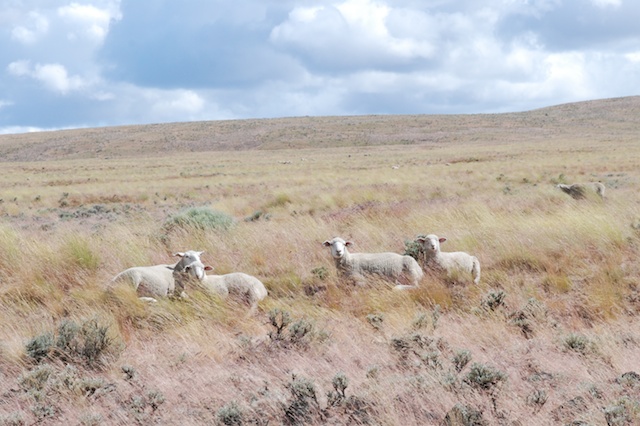
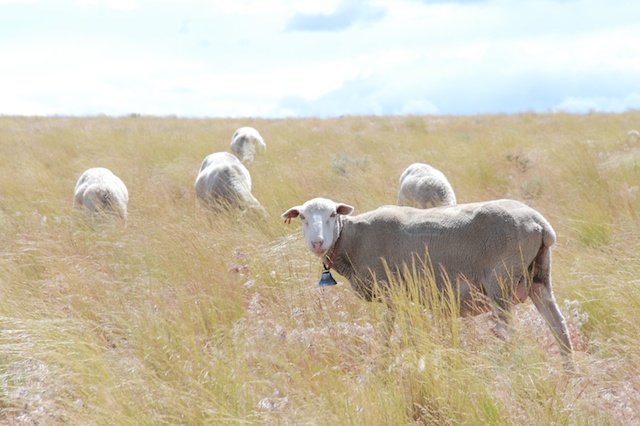
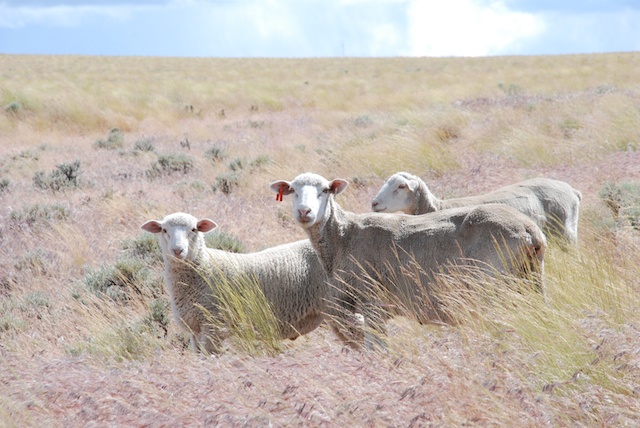
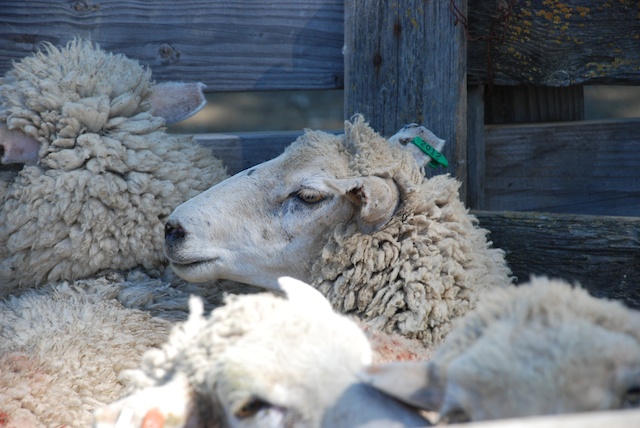
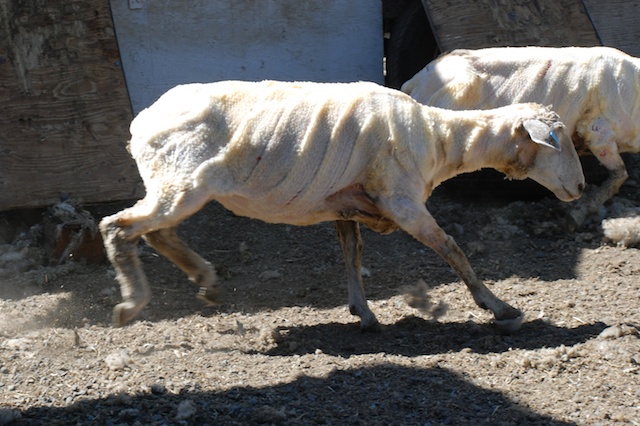
I explained the concept behind my Artery show in the last post. Here are some more photos. I’ll start as you walk in the gallery. I have a photo and a story for each ranch whose yarn I used.DSC_5209Columbia sheep at the Imperial Stock Ranch in Oregon.
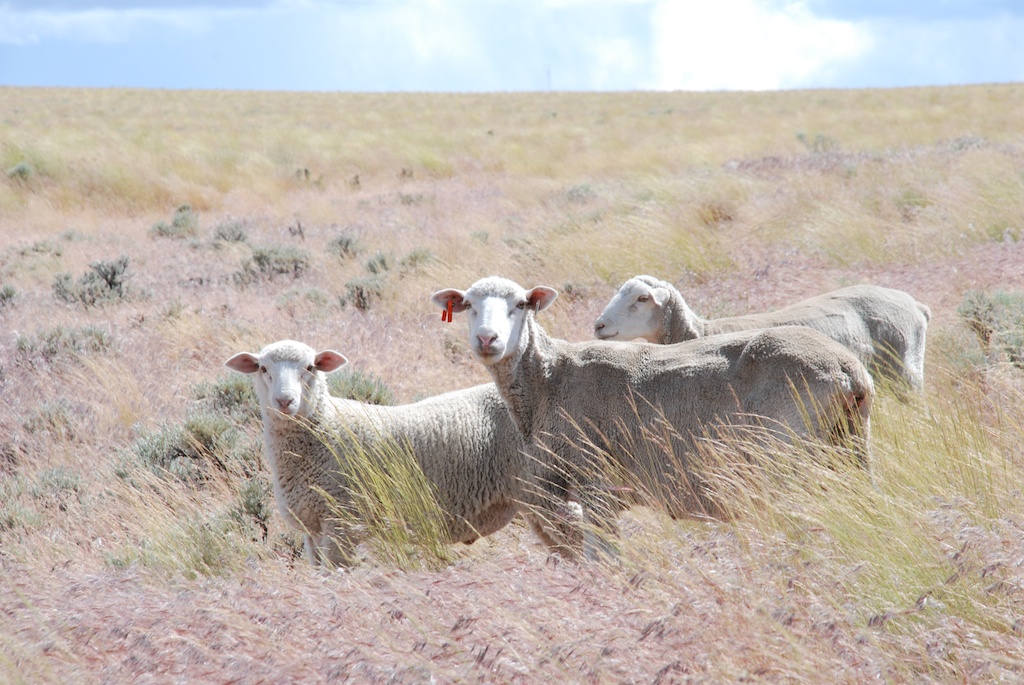
The story: The Imperial Stock Ranch is located on 32,000 acres in Oregon’s high desert and is owned and operated by the Carver family, who raise sheep and cattle and produce grain and hay.

In the late 1990’s the U.S. processing and manufacturing industry drastically declined (moving overseas) and the ranch, like thousands of others, was unable to sell their wool through traditional commodity channels. If the Carvers were going to continue to raise the Columbia sheep that had grazed the ranch for a century they needed to find a way to market the wool. Jeanne Carver’s response was to create and sell premium wool yarns and the Imperial Yarn Company was born.

The Carvers were thrilled to find out that their home-grown “Erin” yarn was chosen by Ralph Lauren for the 2014 Olympics Opening Ceremony sweaters. I saw this yarn at a trade show and was awed by the rich colors. I knew I had to use this for a Stars and Stripes series of blankets.

The Columbia sheep was developed by the U.S.D.A. in the early 1900’s to create a true-breeding large ewe that would yield more pounds of lamb and wool than the randomly crossbred range sheep. The Columbia is a result of crossing Lincoln rams and Rambouillet ewes and is a very large breed that produces 10-16 pound fleeces that measure 24-31 microns.

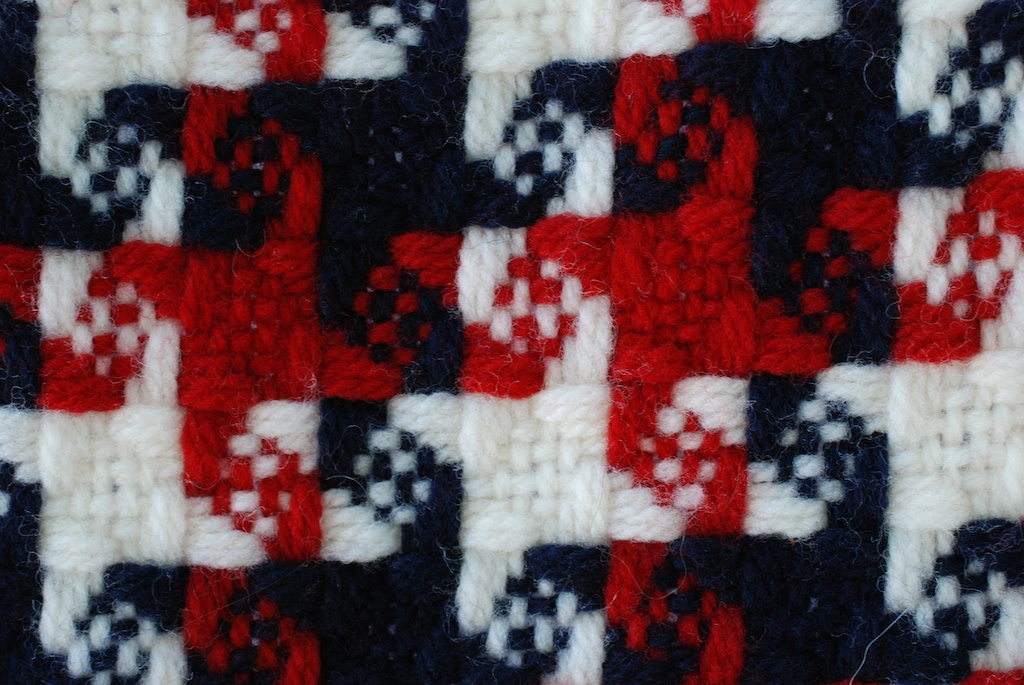
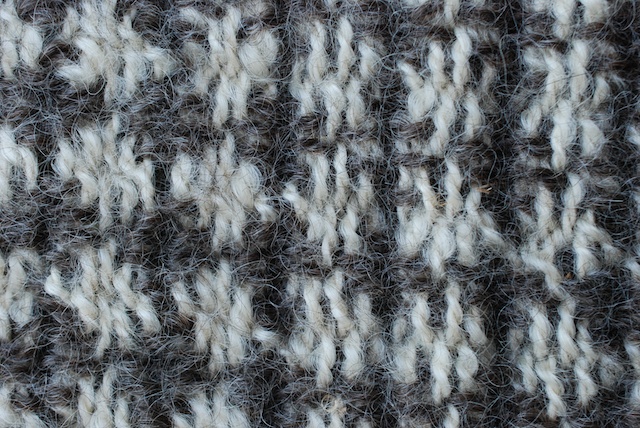
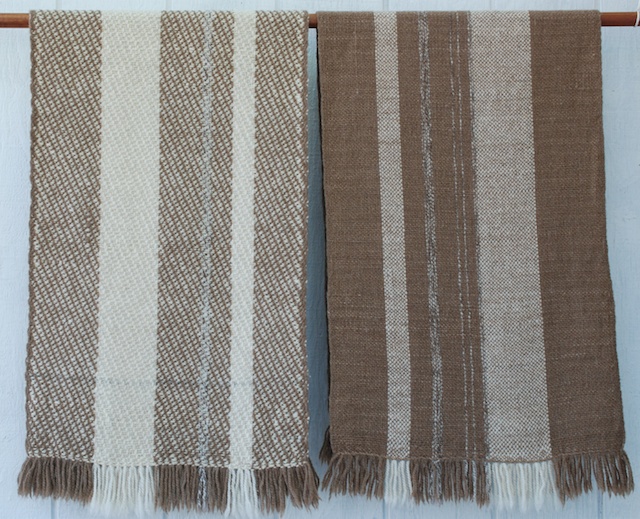
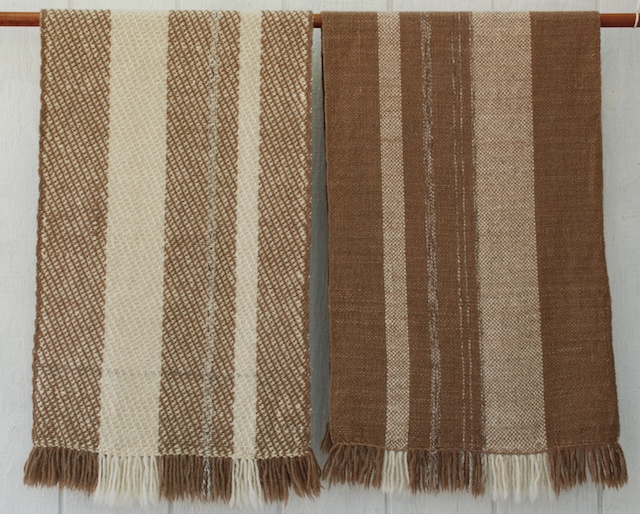
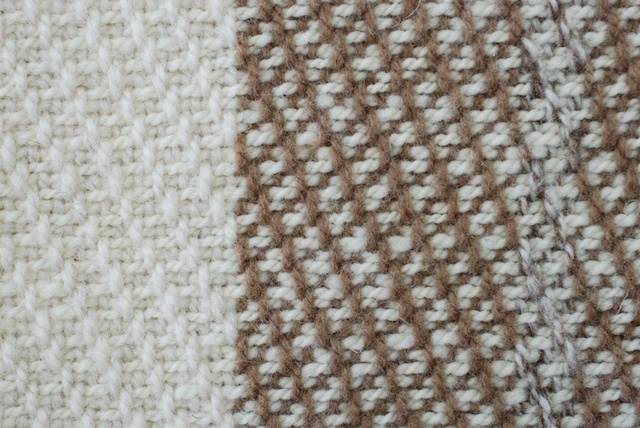
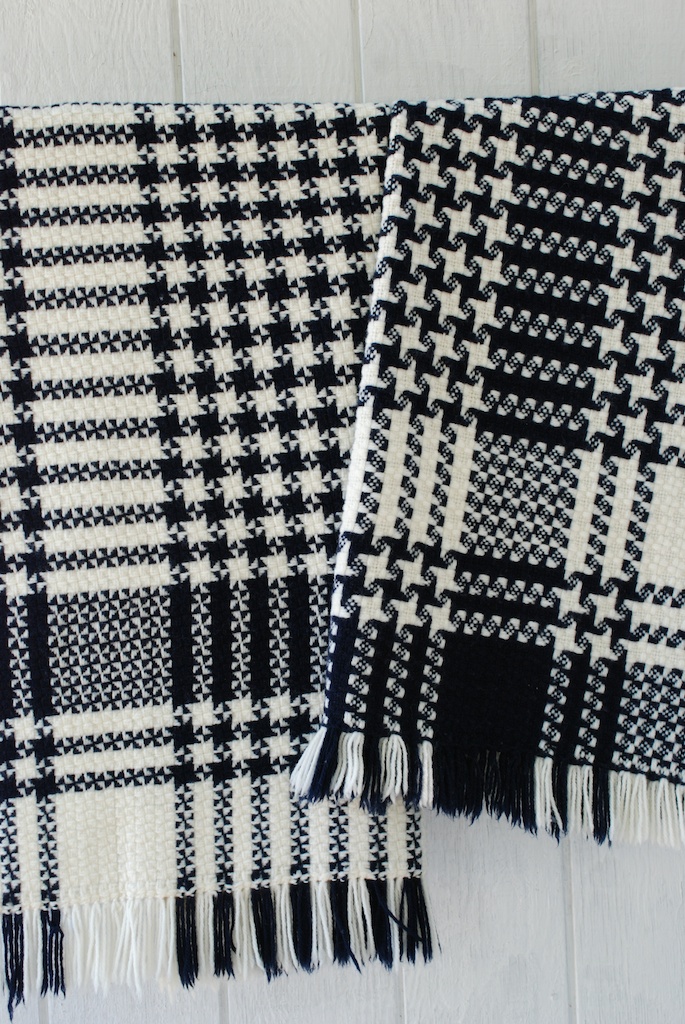
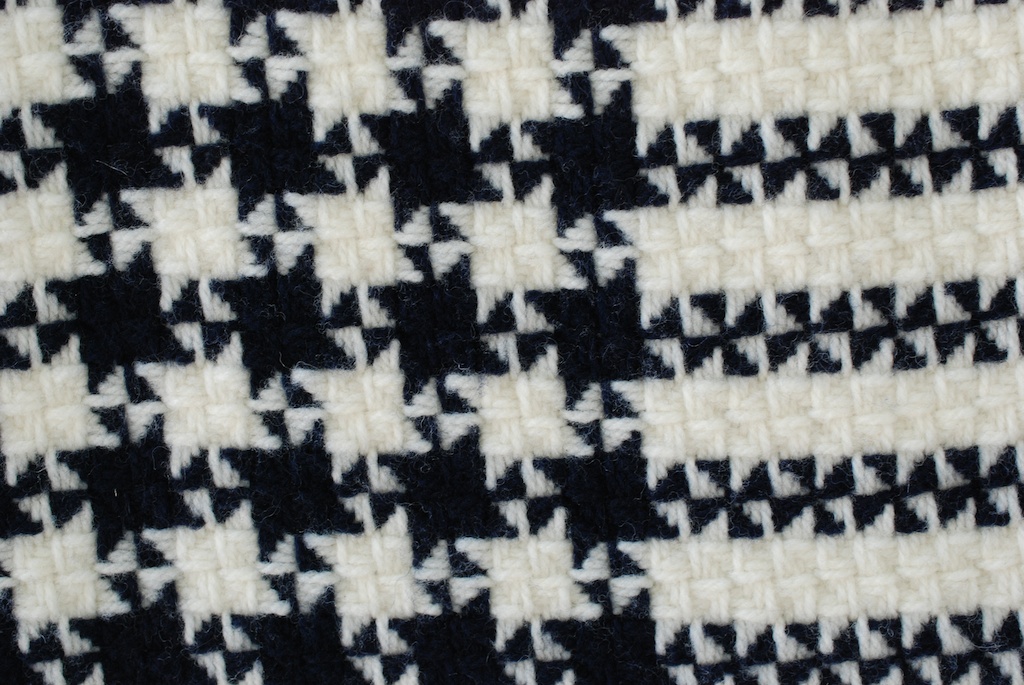
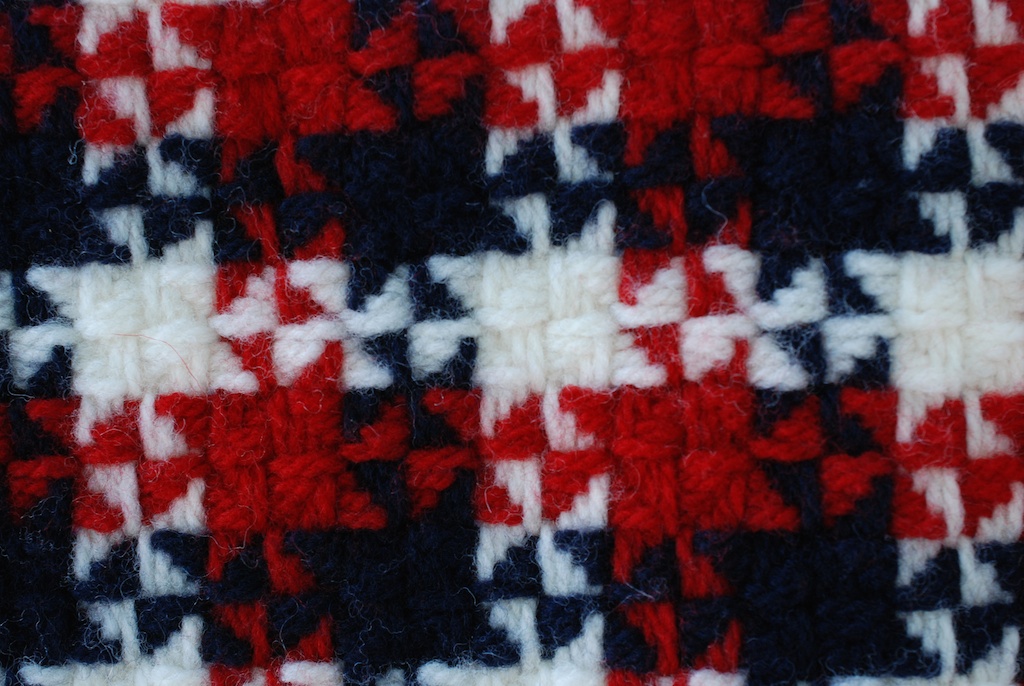
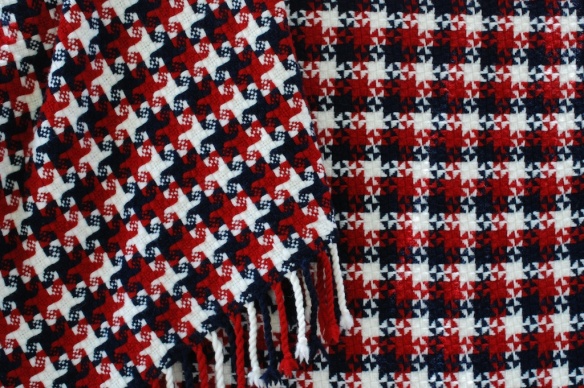
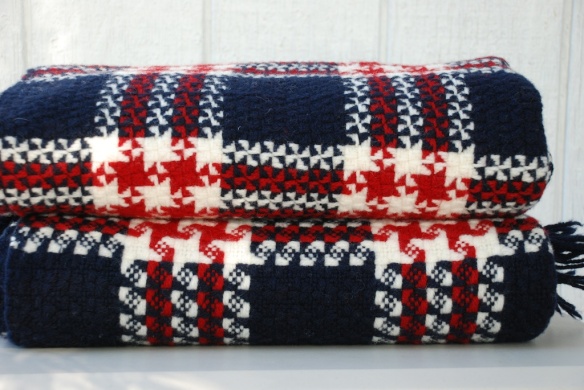
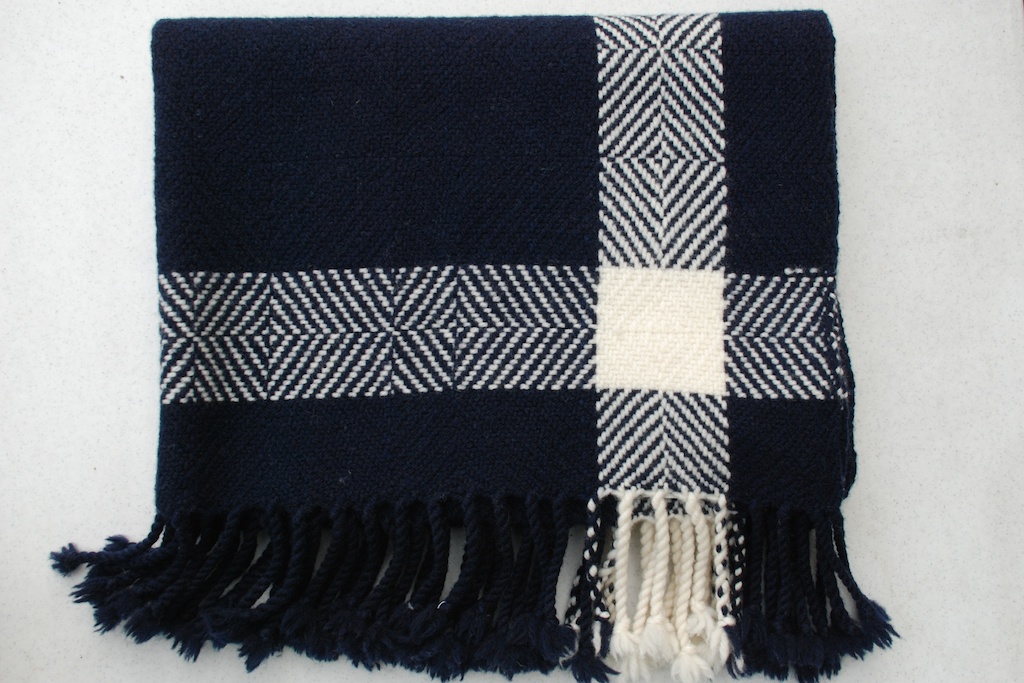
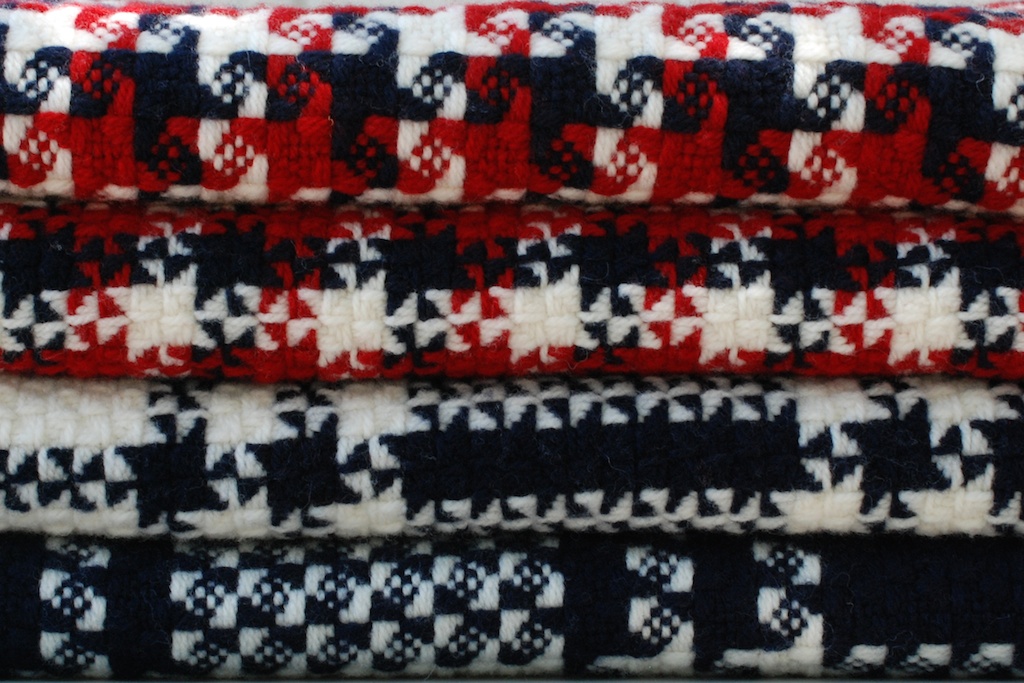
Here are some of the blankets that I wove. In another post I’ll explain the process of weaving these blankets. Also look for a later post of shawls using a fine wool yarn from the Imperial Yarn Company.DSC_5338The first blankets that I wove were in blue and white. All of these blankets except the mostly blue ones at the bottom are woven using “color and weave”. The weave structure is the same throughout the blanket but it is the color order of the threads (8 blue/8 white) in the warp and the weft that allow the pattern to show. Where there are solid areas of white or blue in warp and/or weft you don’t see the star pattern.870-2 For a true Stars and Stripes theme I needed to use some red.Artery 2014 871-2 These are the same weave structures as above but with 8 white/8 red/8 blue threads in the pattern area.Artery 2014In the first two red, white, and blue blankets I repeated the 8-thread sequence throughout.Blanket 885In the next two I designed blocks, sort of plaid like, where the star pattern would show up. Then I decided that there should be something in this collection that was more restful for the eye. IYC blanket  I thought about solid colors but had to throw in a bit of design.IYC blanketIn addition to being colorful this yarn is very soft and wonderful to work with for weaving or for knitting. I sell it at my shop and on the website.DSC_5378 - Version 2 Next up: Yarn from the Barinaga sheep dairy in Marin County.
Road Trip – 2nd half of Day 8 – Oregon

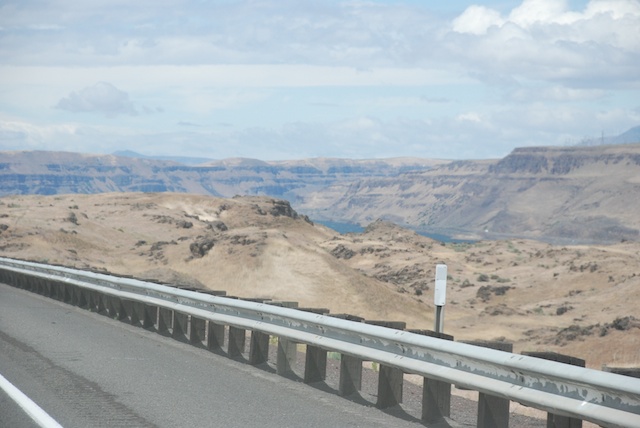
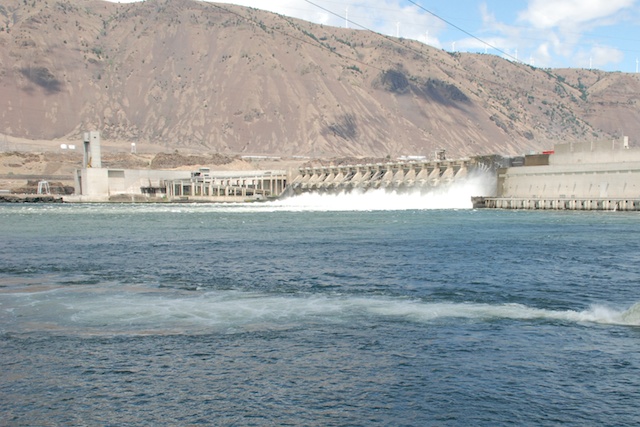
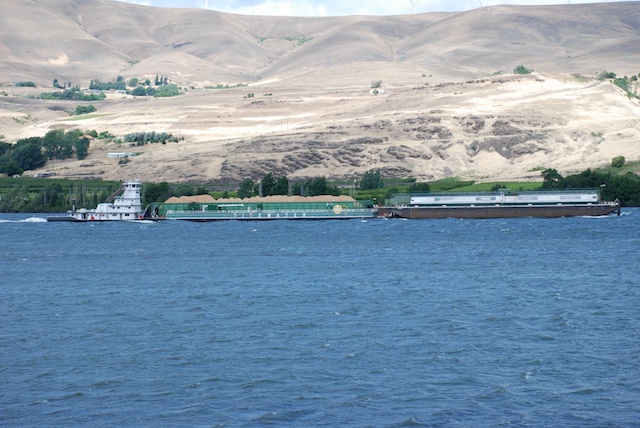
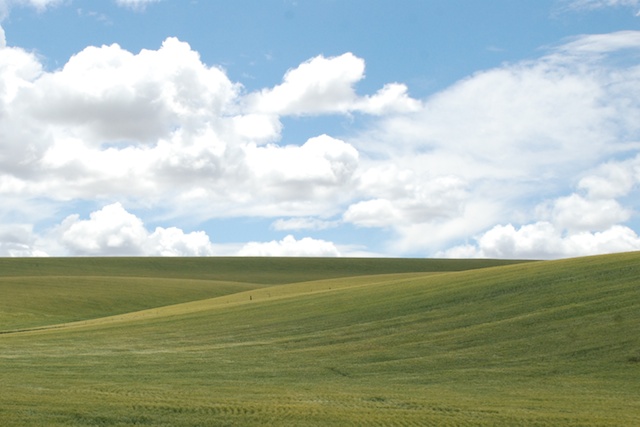
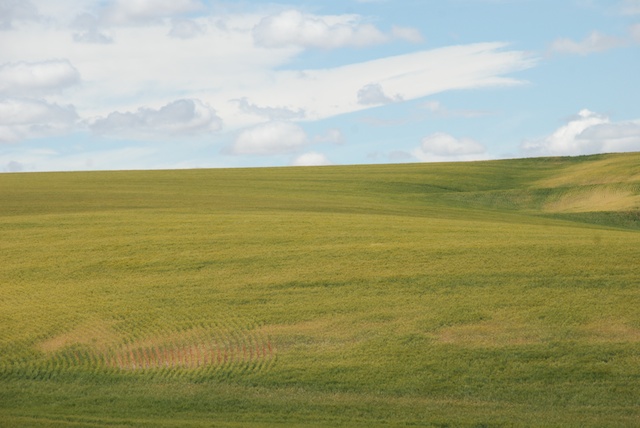
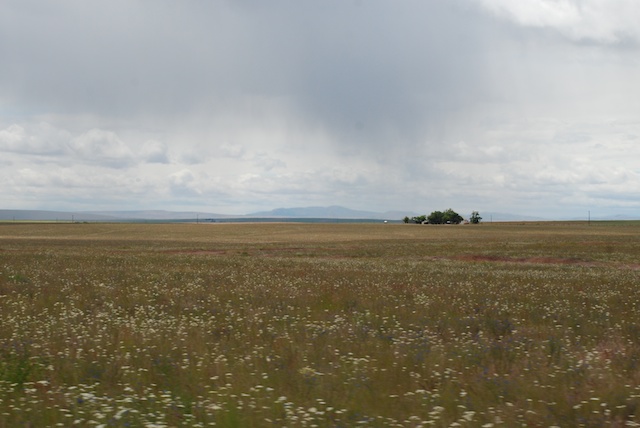
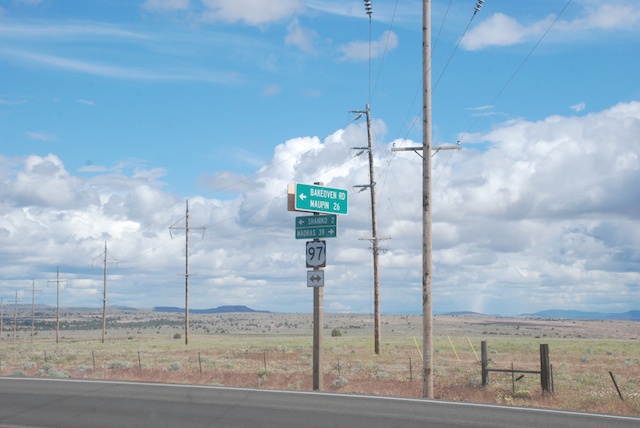
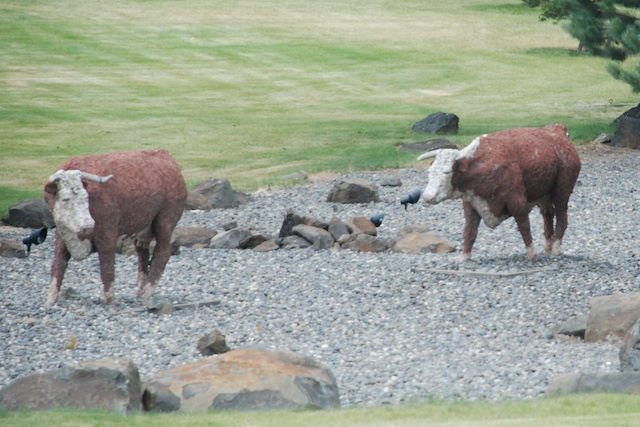
After touring Pendleton Woolen Mill we got on the road again. Just as we were getting on the freeway to head west we saw this scene:PendletonHerding cattle next to the freeway and across lawn? Look again.Pendleton These are beautifully made full-size sculptures.DSC_5105Not far from Pendleton Highway 84 meets up with and then follows the Columbia River. John Day Dam We followed the Columbia River. This is the John Day Lock and Dam.DSC_5120 In some places we saw windsurfers on the river, but elsewhere there were huge barges. I don’t have photos but we also saw several bighorn sheep on the rocky cliffs just south of the highway in this area. DSC_5128We turned south onto Highway 97 which would take us all the way to California.DSC_5126 More stunning landscape, sky and wide, open spaces.DSC_5134 Rolling hills of wheat.DSC_5142 Isolated ranches and distant mountains.

We passed the town of Shaniko (population of 36 at 2010 census) which was known in 1900 as the Wool Capitol of the World. The largest landowner at the time was R.R. Hinton who had first homesteaded in the 1870’s and continued to purchase land until his Imperial Stock Ranch became the largest individually owned ranch in Oregon. The Imperial Stock Ranch eventually ran 35,000 head of sheep in 12-14 bands that would winter on the home ranch and be trailed to summer range on Forest Service land. Hinton was involved in breeding programs that led to the one of the first sheep breeds developed in the U.S., the large-framed, fine-wooled Columbia sheep, originating from Lincoln and Rambouillet ancestors.  The newly formed town of Shaniko (built as the railroad reached the area) was less than 15 miles from the Imperial Stock Ranch’s headquarters,  and its wool warehouse shipped 4 million pounds of wool by rail in 1901.DSC_5166Imperial Stock Ranch is now owned by Dan and Jeannie Carver and they have developed the Imperial Yarn Company using Columbia wool produced on the ranch and elsewhere in the state. This is some of my favorite yarn in the shop and I have recently been using it to weave blankets. Since we were going to be driving through this part of Oregon I had asked if we could visit the ranch. The photo above is the road into the headquarters. DSC_5158

Keelia, lives on the ranch and was there to show us around the headquarters. This is the house built by R.R. Hinton, now headquarters of the Yarn Company.DSC_5160The headquarters complex has been entered into the National Register of Historic Places and the history of the buildings and the Hinton family are available for review.Silo

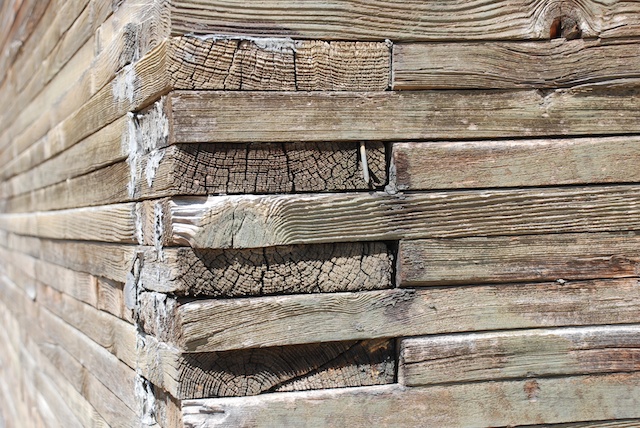
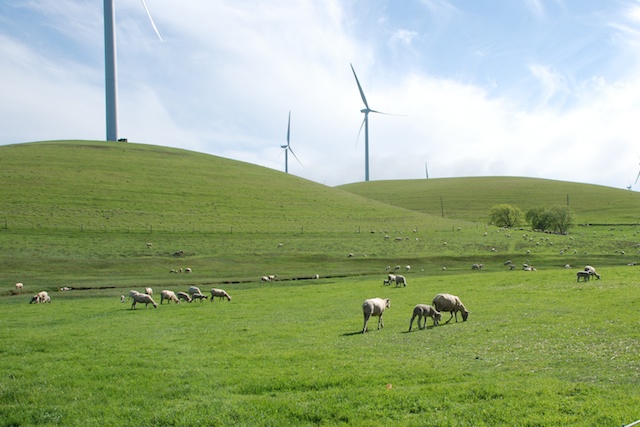
The grain silo. See the detail of the construction below. Silo This is one sturdy building.  We also saw the shearing shed and other buildings that are still in use.IMG_0095A few bottle lambs hand out under the house to greet visitors.DSC_5197 As we left the ranch headquarters some of the sheep were near enough the road to get some photographs of them in this majestic setting.DSC_5203DSC_5209DSC_5217Back on the road on the last leg of the trip.

Next post: California’s scenery isn’t too shabby either. Mt. Shasta and home.


Road Trip – Day 8 – Pendleton

It’s been several days since I wrote the post about Day 7 of our vacation. The vacation wasn’t quite over. We needed to be back home on Tuesday but there were two places to visit in Oregon. (Actually I had marked many others on the map in my head–Hell’s Canyon National Recreation Area, John Day Fossil Beds National Monument, a friend in Boise, a cousin near Portland–but those will all have to wait for another trip.)

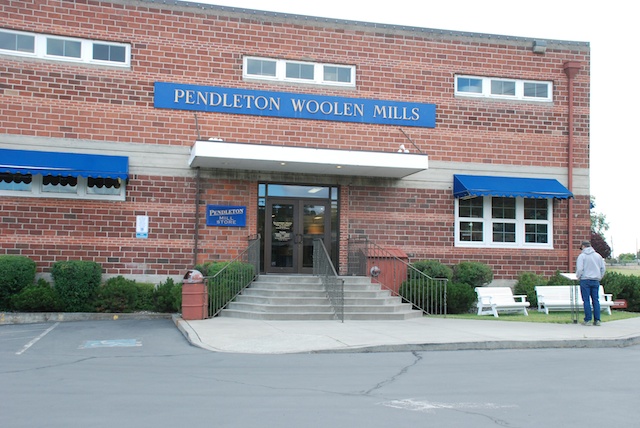
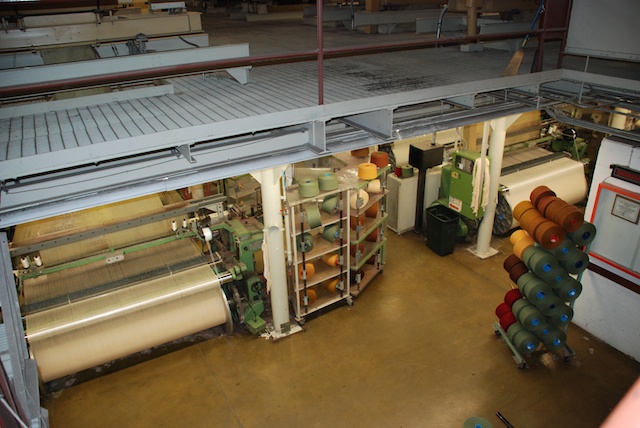
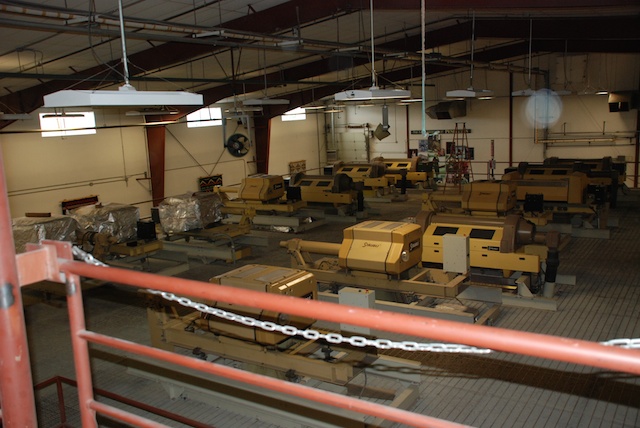
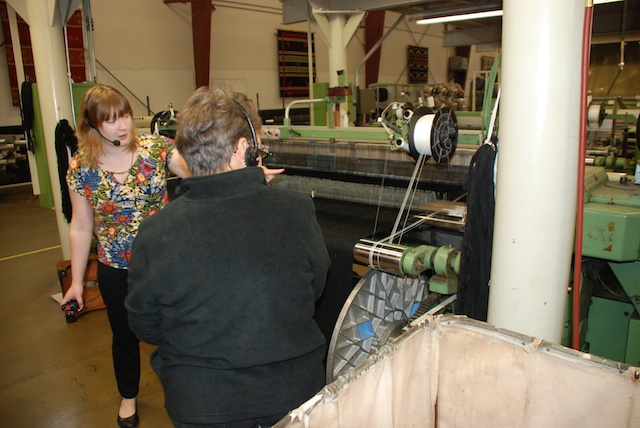
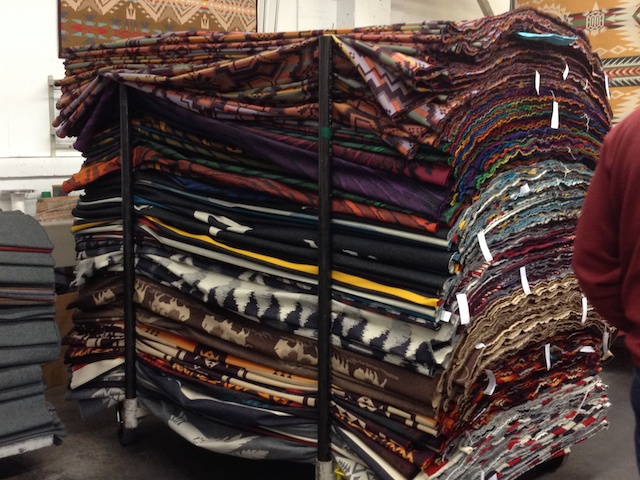
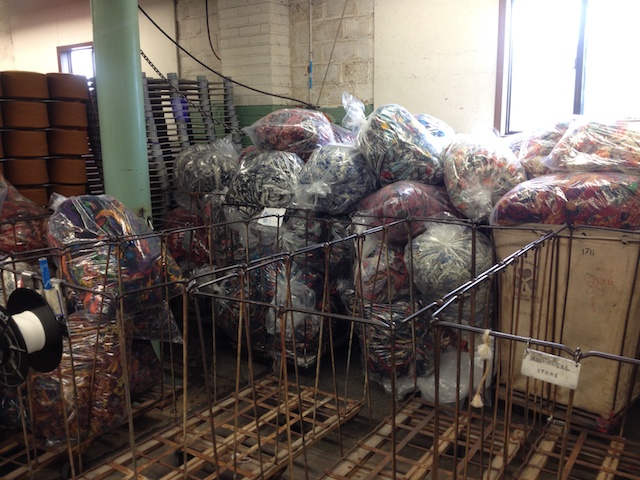
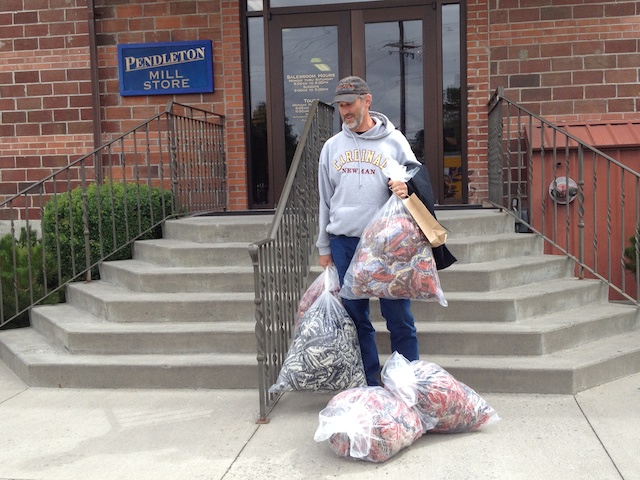
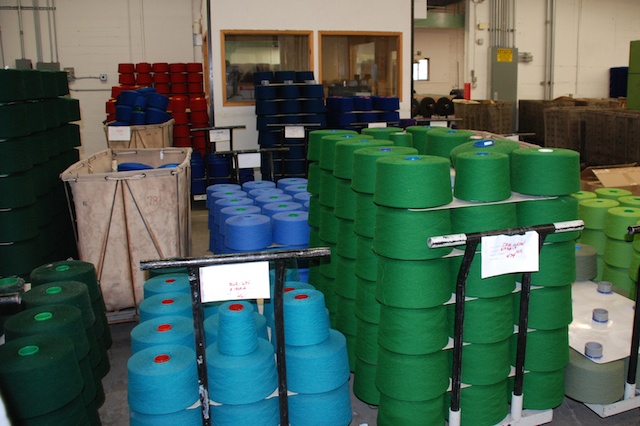
We arrived in Pendleton…   DSC_5058 …and easily found the woolen mill. There is also a mill near Portland. That is where they weave cloth for the Pendleton clothing line. At this mill in Pendleton they spin and weave blankets. DSC_5068There were about a dozen people there for the tour even at 9 a.m. on a Monday morning. It was interesting to see the workings of the mill but now I have a lot of unanswered questions. We all wore headsets so that we could hear the tour guide over noise of the mill machinery but that meant that there was no opportunity to ask questions while we were walking. And the tour was fast. I would have liked to stop and watch what was going on with each loom. Now that I’m looking at my photos I realize that I have even more questions about what I was seeing. I guess I’ll just have to go back!DSC_5076The Mill uses Rambouillet wool from Oregon and surrounding states and Merino wool from New Zealand and Australia. The wool is scoured in Texas and then comes to Oregon for spinning and weaving. The carding and spinning equipment was on the second floor. That room was quite humid. The guide told us that high humidity lessons the quantity of airborne particles so employees don’t have to wear dust masks. Now I wonder if that is the main reason for the humidity or if it makes carding and spinning more efficient (or both). The photo above shows the carding equipment operating behind plexiglass.DSC_5073Pencil roving is spun onto big spools and the yarn is later transferred to cones.DSC_5065 IMG_0066The yarn is steamed to set the twist. Now I can’t remember the details. I think it was steamed for an hour or so.DSC_5071 This is a view from the second floor looking down on the looms that are on the first floor.DSC_5072Above the looms are the computers that operate them and fans that keep the lint from settling and, thereby, prevent overheating.Jacquard loomHere is where I now have more questions than answers. This is one of the Jacquard looms. A Jacquard loom can weave complicated patterns because all the threads operate independently. Notice the selvedge threads that are wound separately.DSC_5091It is only after looking at this photo that I see the selvedges being cut off as the cloth rolls onto the cloth beam. At least I think that is what I am seeing. (This will only have significance to those of you who are weavers.)DSC_5089  This is one of the dobby looms. I think that guide said that with their newer dobby looms a blanket takes 15 minutes to weave.IMG_0078The blankets in a continuous roll are inspected for flaws as they roll over a light table (middle of the photo where the bright light is). IMG_0076 Blankets ready for finishing touches.IMG_0087 Bags of selvedges ready to sell to people who want to make rugs.IMG_0089We left with a few bags of our own. Dan wanted to point out that his purchase (BBQ sauce) fit into that little paper bag.
Next post: Second half of Day 8–sheep.

Weaving More Blankets

This was the last order of blankets from BC (Before Christmas). Now there is only one more thing that I have committed to weave for someone else (that’s you, I.S.). Then I can focus on my LVIP (Looming Very Important Project)…pun there, but not intended.

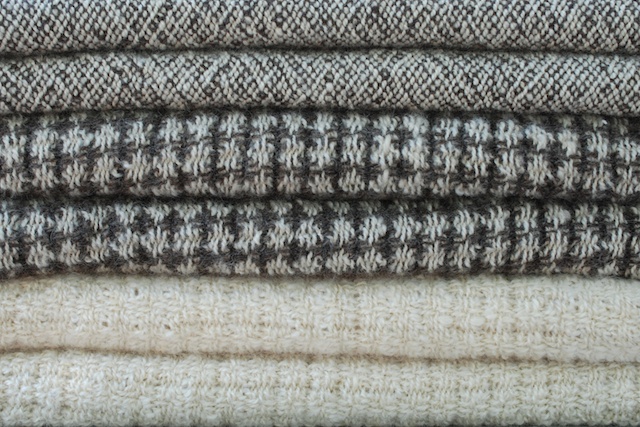
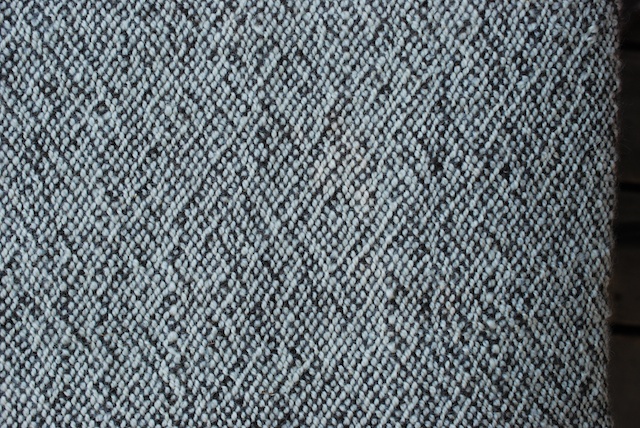
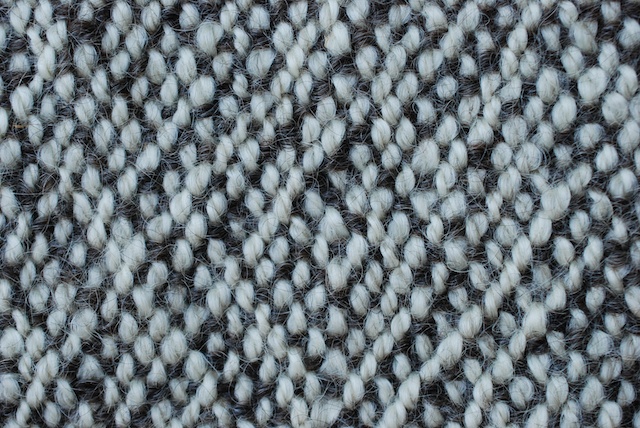
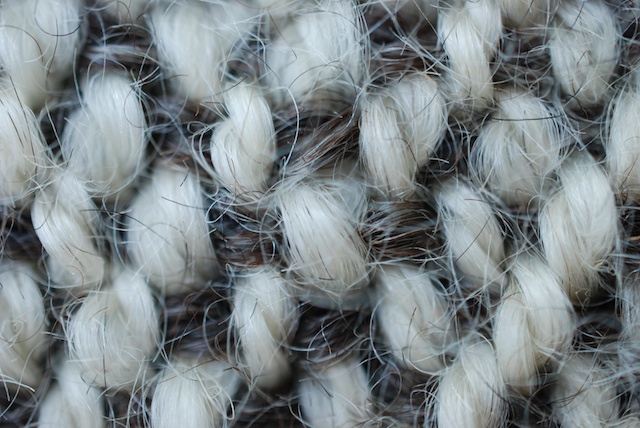
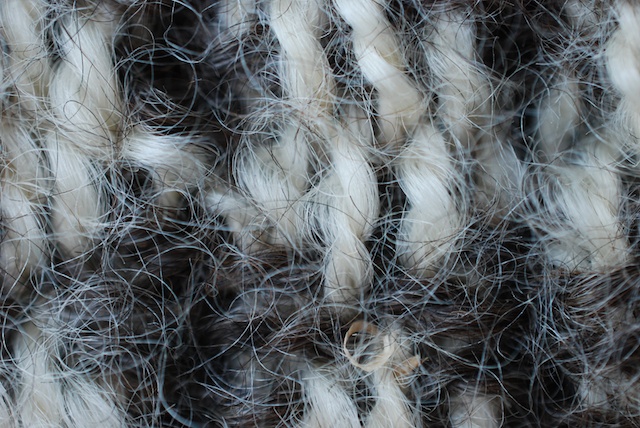
DSC_3466 This is six throws on the same warp. I don’t remember what the wool is, but there are some longwools (or maybe it’s mohair)  in here as you will see in the detail. They add luster as well as weight to the blankets. They also act very differently when fulled. Some of that has to do with the extra twist in the yarn.Tracking The top two blankets in the first photo are in plain weave, but at a glance they may not look like plain weave, in which every other thread is over and under. There are diagonals in here that are not characteristic of plain weave. This is called tracking and is not uncommon when weaving plain weave with yarns that are over-twisted and woven at a relatively loose sett.Tracking Detail of a plain weave blanket. You can see that the weave structure is plain weave, but the over-twist of the threads is causing them to migrate and twist after wet finishing.Close up of wool yarnMore detail because with this lens I can.Close up of wool yarn Do you see the “hairiness” of those fibers? That is more characteristic of a “long wool” breed.Blanket detail More blankets and details.Blanket detailClose up of wool yarnBlanket detailClose up of wool yarn

At the Loom

It hasn’t been all hiking and lambing. I’ve been at the loom too.King size blanket This is a king-size blanket I wove for a customer who had their llama/wool yarn spun at Yolo Wool Mill. I also wove 2 throws for this person. 859-1, 859-4These are two lap blankets woven of wool from sheep at the Barinaga Ranch, a sheep dairy in Marin County.859 Lap blankets-AWBThis is a close up of all four blankets on that warp. The brown weft is Jacob wool dyed with black walnut. I’m always trying to get better photos. The photo above is shot on AWB (auto white balance). The one below, shot on the cloudy setting, isn’t that much different, although on my computer the AWB photo has more of a bluish cast.859 Lap blankets-cloudy

But look at the next one.859 Lap blankets-shade  The white balance was set to “shade” which is where I took the photo. What is reality? I think it’s closer to the top two.860-2, 860-3-AWB I just finished a warp for three shawls. This is CVM yarn in the warp with different locally produced weft yarns.  860-2, 860-3-cloudy Same shawls with white balance set to “shade”.Shawl detail Detail of shawl on the left.


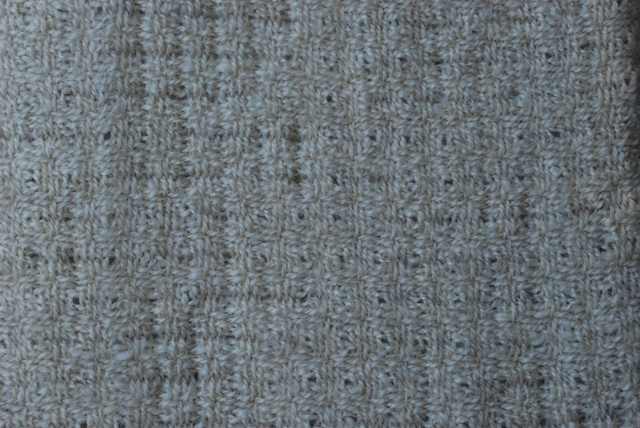
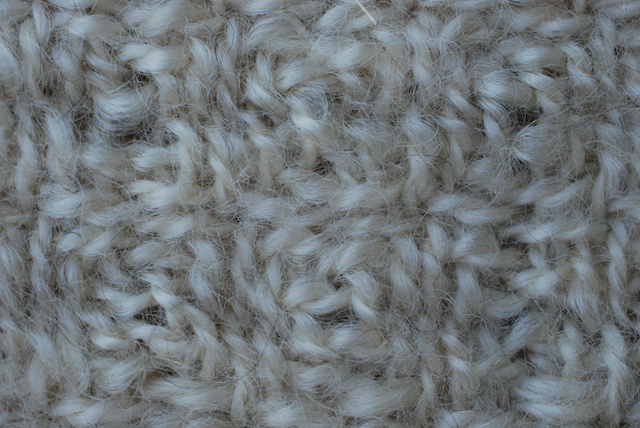
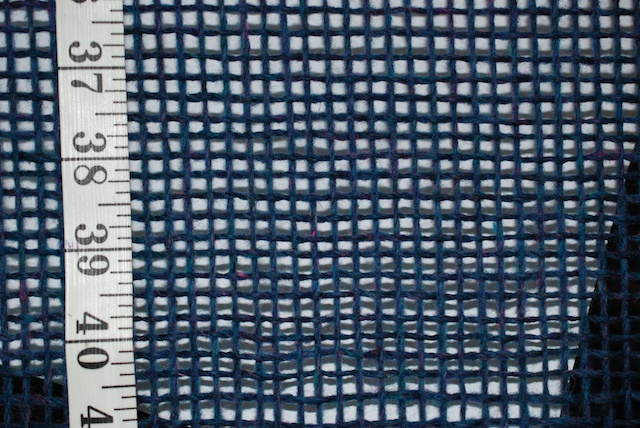
Imperial yarn, Columbia This is on the loom now. An experiment. Hopefully all those holes will fill in when it is finished.

The pieces above will be for sale on my website and at the Fibershed Marketplace after our photoshoot that is in a few weeks.

Spring Shearing in a Big Way

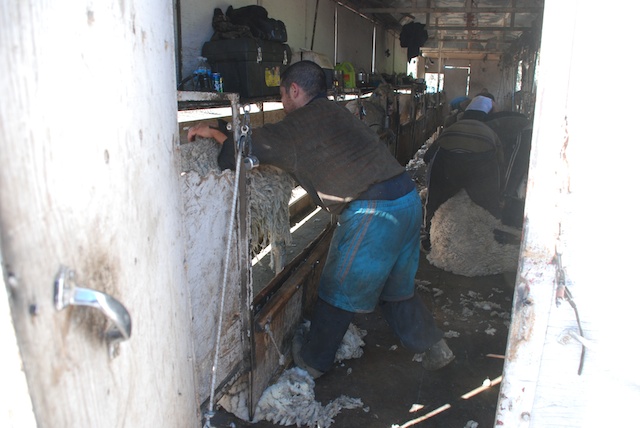
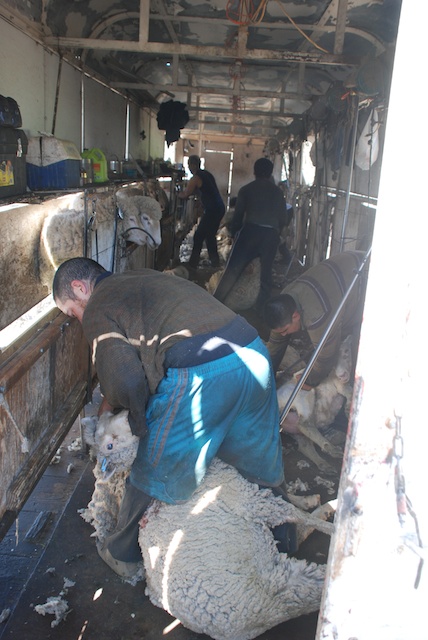
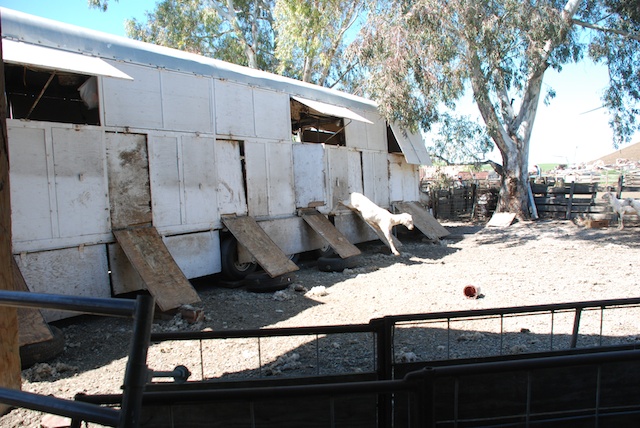
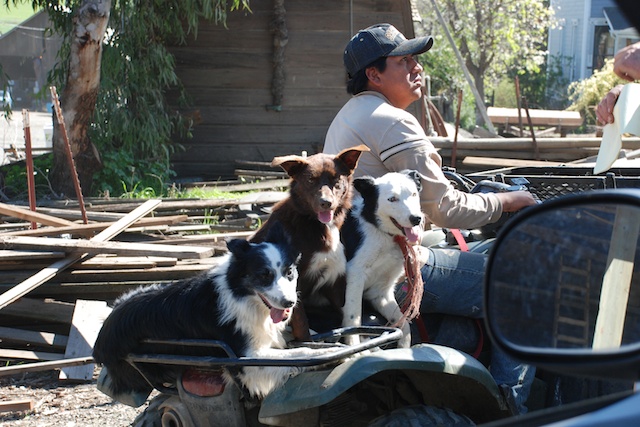
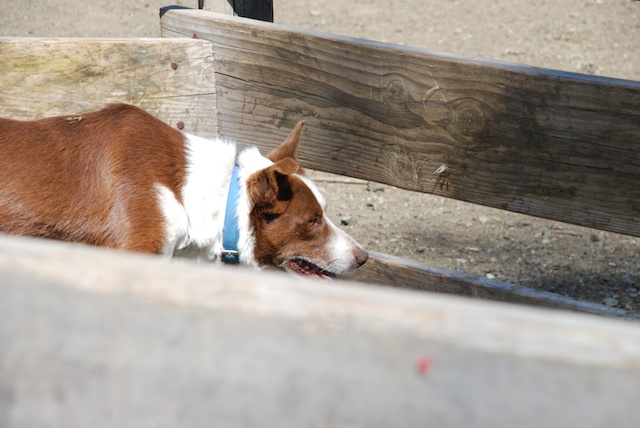
A couple of friends and I went to see shearing on a commercial sheep ranch about 30 miles south of here. We got there in just enough time to see the last part of shearing 3000 sheep in 2 1/2 days.DSC_0779The original flock was made up of Corriedale sheep and over the years was crossed with Targhee and other commercial white-faced sheep. Sheep going into shearing trailerThe sheep are gathered at the back of a trailer that is hauled from ranch to ranch with all the gear. They go up the chute with the encouragement of…Red border collie…Border Collies as well as people.DSC_0746Here is a view from the other end of the trailer. That sheep in front hangs out for awhile in that position because the other sheep are more likely to go forward if they see a sheep in front of them. Notice how the sheep walk on a raised alleyway while the freshly shorn fleeces are shoved out of the trailer below them.DSC_0802Here is a photo of the inside of the trailer. There are seven shearers at work. The sheep walk forward on the raised alley. Fleeces are pushed out beneath.DSC_0812When the shearer is ready for the next sheep he pulls the door down with his foot and flips the sheep off the alleyway into position for shearing.DSC_0794
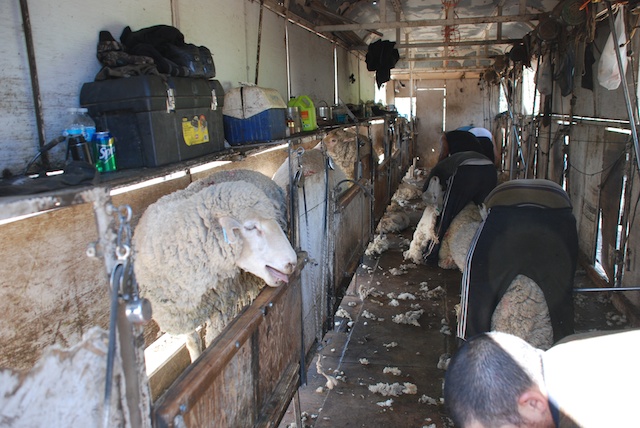
DSC_0752After the sheep are shorn they are sent out the doors on the other side of the trailer.Shorn sheep

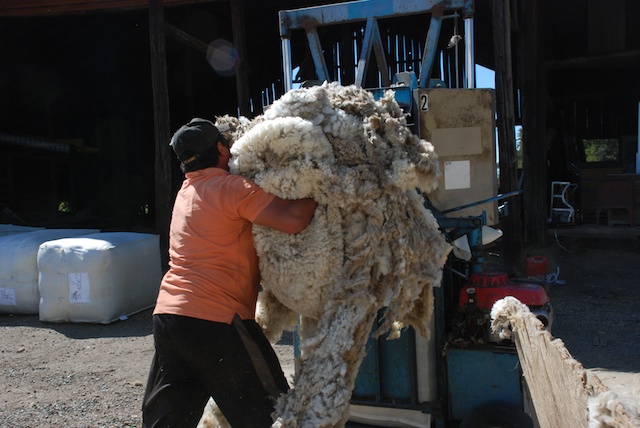
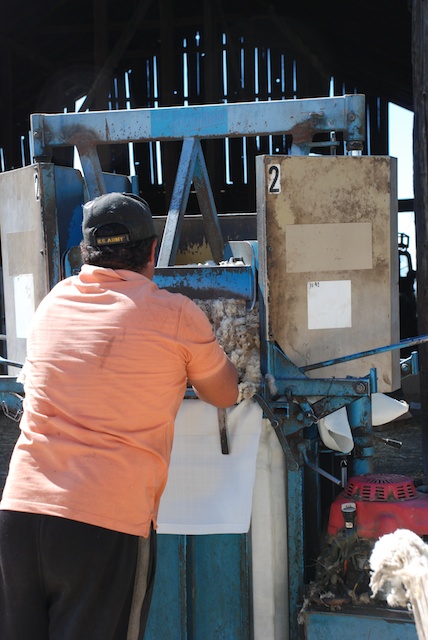
DSC_0737 The fleeces are scooped from the trailer and quickly examined by a sorter/classer who determines where they end up.Testing fleeceDSC_0738 The fleeces are thrown into the appropriate pile. My friends who owns the ranch had requested that the finer fleeces shorn on that day be put aside for us to look at. It turns out that even the not-so-fine fleeces seemed just as nice to us. Last year’s core samples indicated that most of this flock’s wool graded in the mid-20’s (microns) and the finer fleeces were in the low 20’s. For reference Jacob fleece ranges from about 25-35 microns and most of mine is probably about 28 to 29 microns. So all of this wool is finer than what I am used to using.DSC_0745 The fine fleece pile is the one nearest the table. The pile to the left are tender fleeces (fleeces that have a weak place usually due to nutritional stress or illness). The pile just barely visible behind the plywood is the “not as fine” pile. We chose our fleeces (all of the fine pile and a lot of the one behind the plywood) and the remaining wool was quickly baled.Picking up fleece for balingFleece going into baler  The wool is shoved into this wool press…DSC_0786

…and compacted…DSC_0820 …and sealed into bales that are marked with the pertinent information. I forgot to ask how much these weigh but on-line sources say they would hold 240 to 450 pounds each.DSC_0828 Before we left the shearing trailer was pulling out and everyone was getting ready to go to the next job.DSC_0832Freshly shorn sheep turned out to graze.

In about six months I hope to have blankets woven from this wool. They will be available at the Artery and the Fibershed Marketplace.

Marilyn’s Fleece

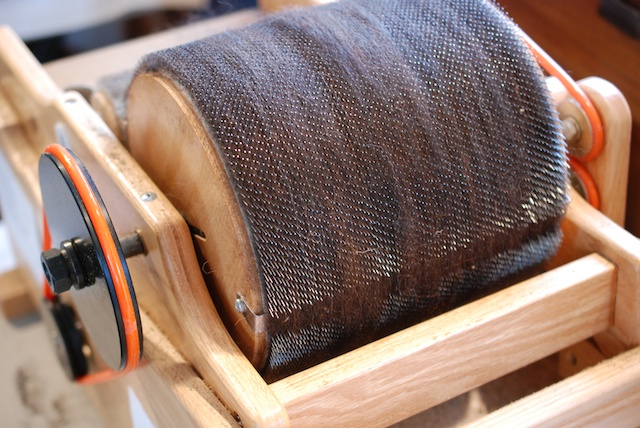
Marilyn is one of seven lambs that I kept from the 2013 lambing season.Hot LIps and 3007Here she is with her mom, Hot Lips.30071st place ewe lamb 3007 Marilyn was my choice to take to Black Sheep Gathering last year where she won her class. (Hot Lips was Champion Jacob Ewe at BSG when I took her there!)Marilyn 13007 leftHere she is at 9 months old last fall. When Farm Club members chose their fleeces “on the hoof” I put my name on Marilyn’s.Shearing MarilynShearing Day.DSC_7448 Marilyn’s fleece looks brown, but those are sunbleached tips.DSC_7429 This is what her fleece looks like from the cut side. Isn’t it gorgeous?DSC_7521 Detail of the staples.DSC_9047 Last week I carded Marilyn’s fleece on my Clemes & Clemes electric drum carder.

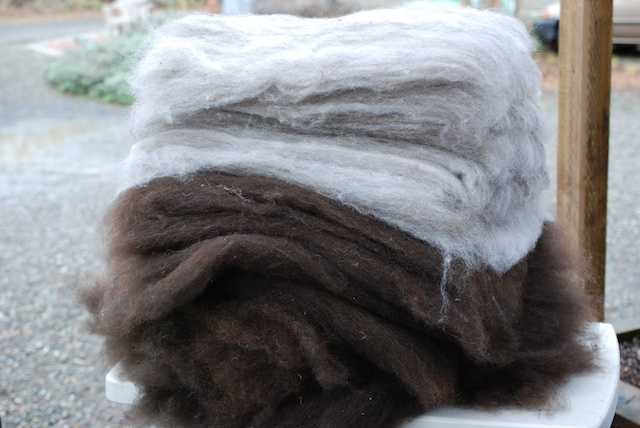
DSC_9056  Here are the batts ready to spin. Hopefully there will be a post before too long in which I’ll have photos of finished yarn and a project. To be continued…

Shearing Day

Sunday was Shearing Day and we sheared 71 sheep (61 ewes and 10 rams and wethers). I said “we”. Not really “we”, but John, my fabulous shearer. The sheep looked great, the fleece looked great and he finished shearing in two and a half hours! Shearing was finished by 11:30.DSC_6831Here are sheep ready to be shorn.DSC_6800Clover.DSC_6805Mary.

Shearing Miller

John started with the rams…DSC_6818…and moved on to ewes.

Farm Club members were the other wonderful helpers who made it all work.DSC_6764 Alison spent the morning at the skirting table explaining skirting and helping buyers skirt their fleeces.DSC_6767 DSC_6812DSC_6958Shelby and Gynna were our sheep wranglers, making sure that there was always another sheep for John to shear.DSC_6773 DSC_6776 Mary and Carol bagged fleeces while Anna swept and Jackie worked the exit gate.DSC_6783 Linda weighed and recorded fleeces.   Other members helped too but I didn’t get photos.DSC_6884What would shearing day be without chili…DSC_6885…and Dona’s brownies (and Lisa’s Jacob sheep cookies, Jackie’s corn biscuits, Mary’s wonderful tangy chicken and fancy rice krispie treats and more).DSC_6902After shearing the sheep look so much thinner. This photo looks as though it was stretched vertically, but it wasn’t.DSC_6826    Lila.DSC_6891 Cascade.DSC_6894 Gynna with fleece

Gynna looks happy with her Farm Club fleece.fleece And look at this gorgeous one!
After shearing we (Farm Club again and other friends) did demos of all kinds of spinning and fiber prep, but that’s another story, especially because it’s too late to write more.

Field Trip Season

I found a new Season. Field Trip Season. I’ve had 4 field trips here in the last couple of weeks. I don’t get very good photos during field trips because I’m the one who is leading the field trip, but I’ll use a few. Today I’ll share yesterday’s field trip because I got to be a participant (as opposed to leader) of part of it.DSC_0412Fibershed sponsored a field trip for representatives of Smartwool, Northface, Lucy (and maybe others) to learn about our end of textile production. Many (most?) people who purchase and use fabric, individually or commercially, don’t necessarily have a sense of where it comes from. The goal of this trip was to expand the awareness of fiber production–the animals, the farmers, the soil and plants–and the importance of supporting sustainable local farms, and the idea that there is plenty of wool grown in N. CA but not the infrastructure to turn it into cloth. That is a primary goal of Fibershed–to set in motion the creation of that infrastructure and to create thriving businesses that support farmers, designers, fiber processers, and consumers. Whew! Pretty lofty goals? I am always amazed at what Rebecca (creator of Fibershed) has coming up next. I really hope that you’ll spend some time on the Fibershed website  because I think it’s one of the most important non-profit groups you’ll find.

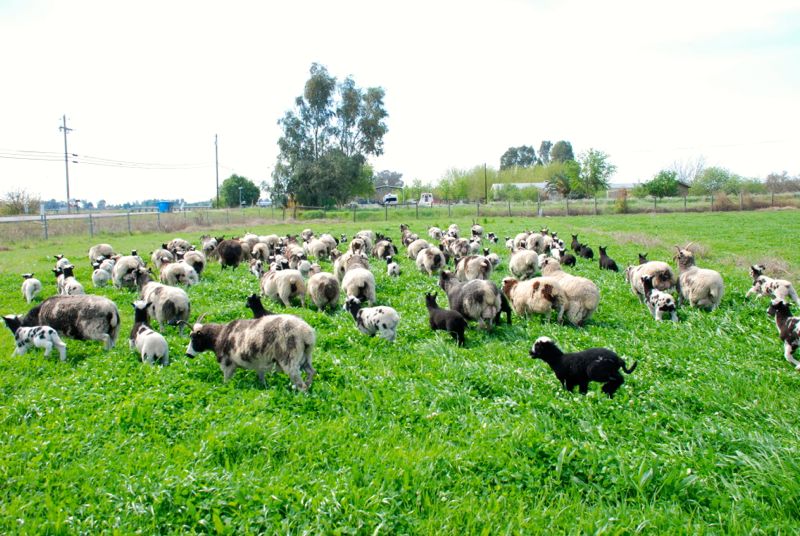
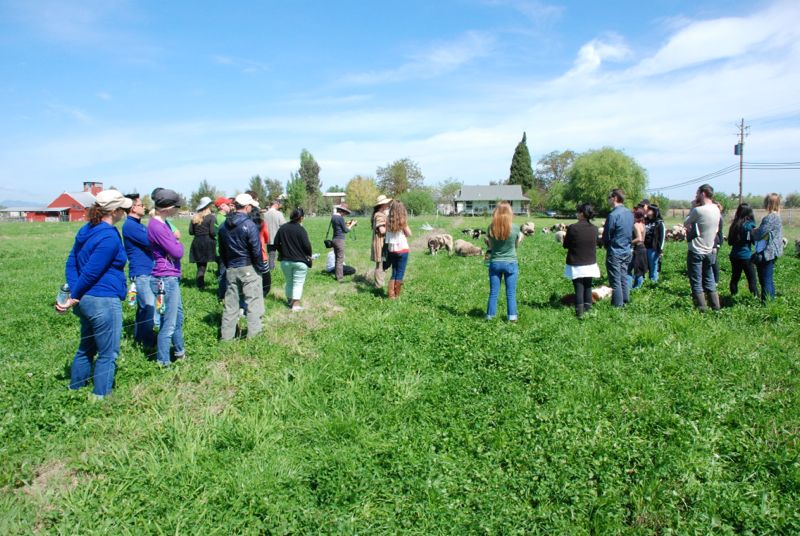
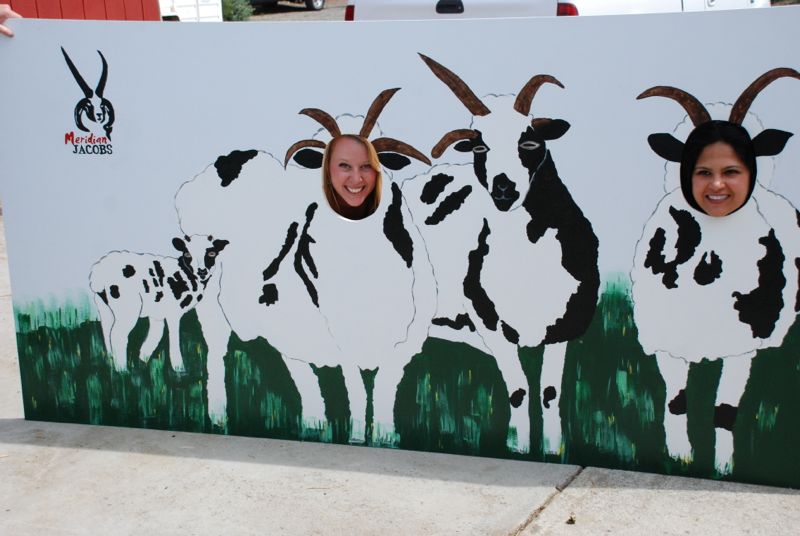
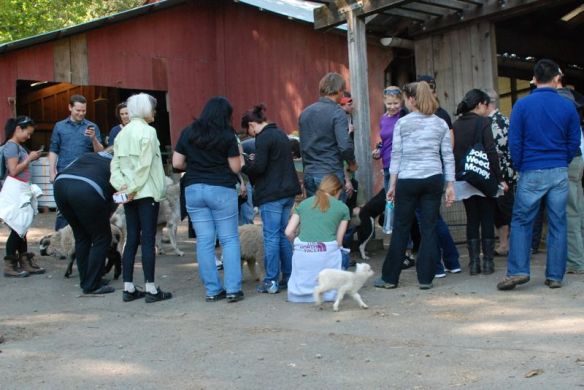
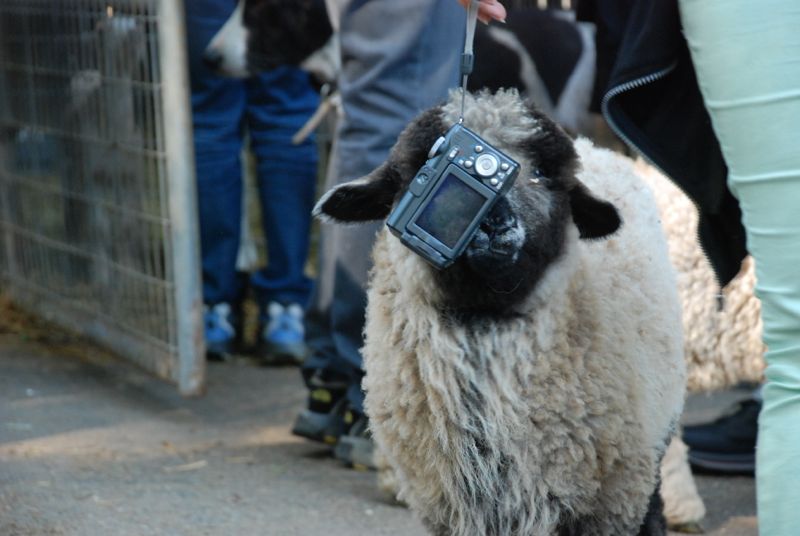
On to the field trip. I expected 5-6 people. There was a busload! First stop for us was the pasture.DSC_0388 The sheep performed admirably. I had waited to move the fence for the day’s grazing until the field trip was here. The sheep rushed to the fresh pasture just like they always do.DSC_0394 This is the group in the pasture. We spent a lot of time discussing pasture management, irrigation, choice of breed, wool types, etc.DSC_0401 Friend, Dona, brought this board over, getting ready for Meet the Sheep on Saturday. Some of the braver visitors tried it out.

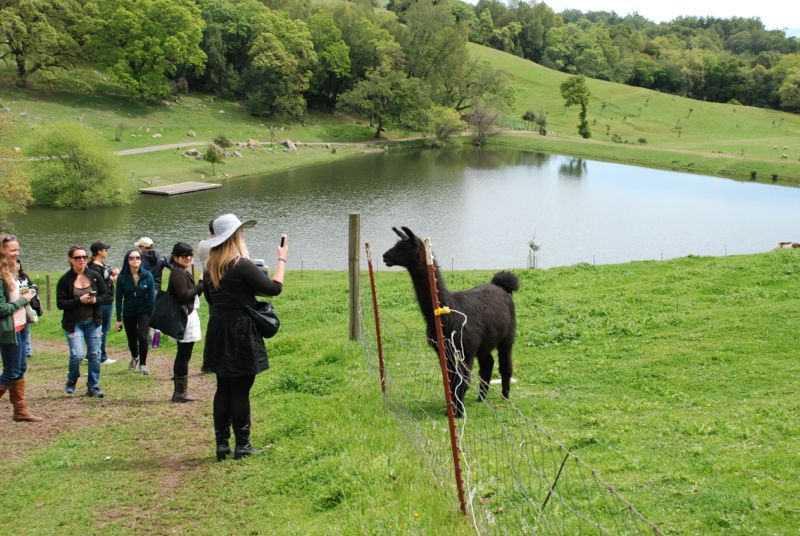
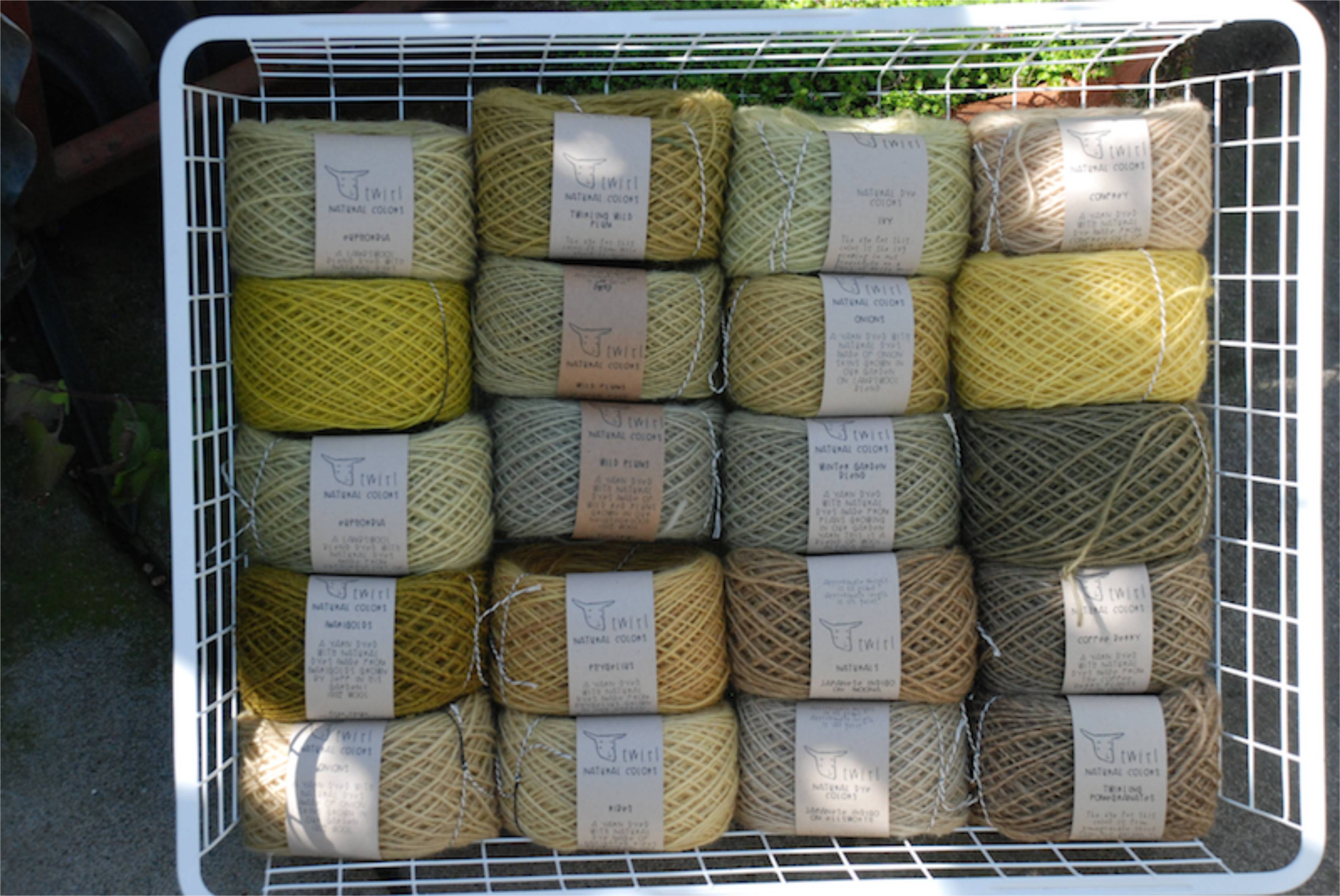
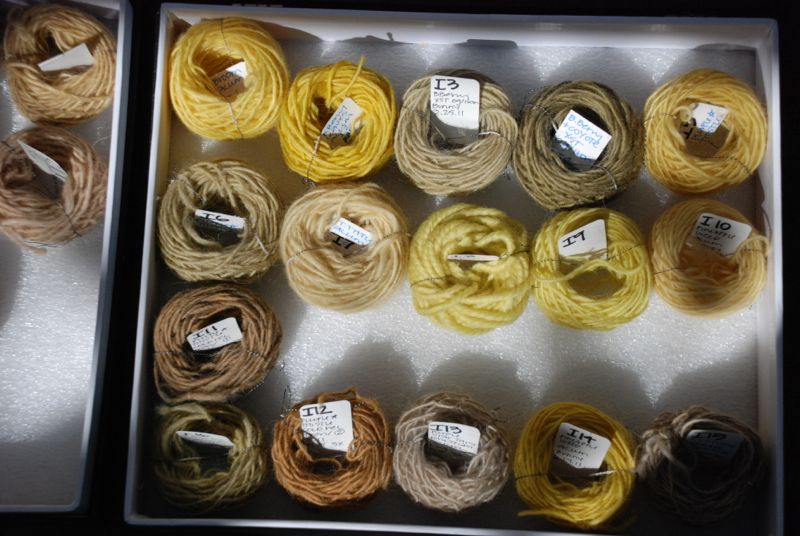
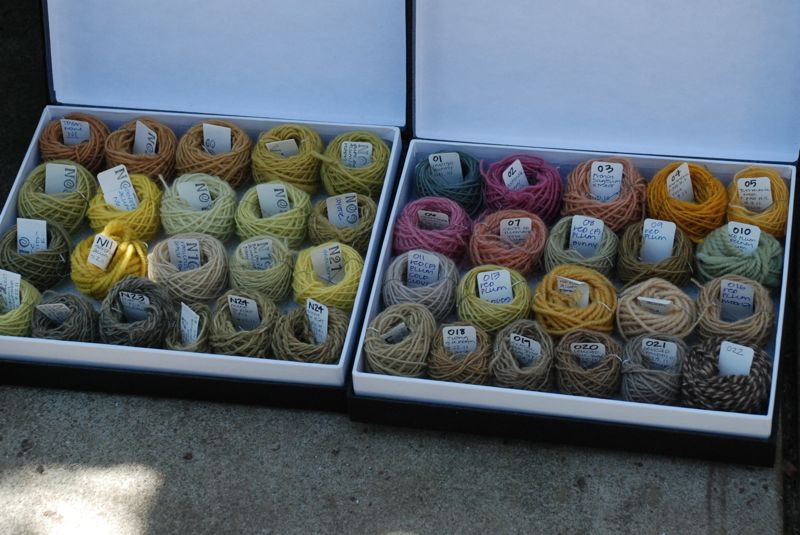
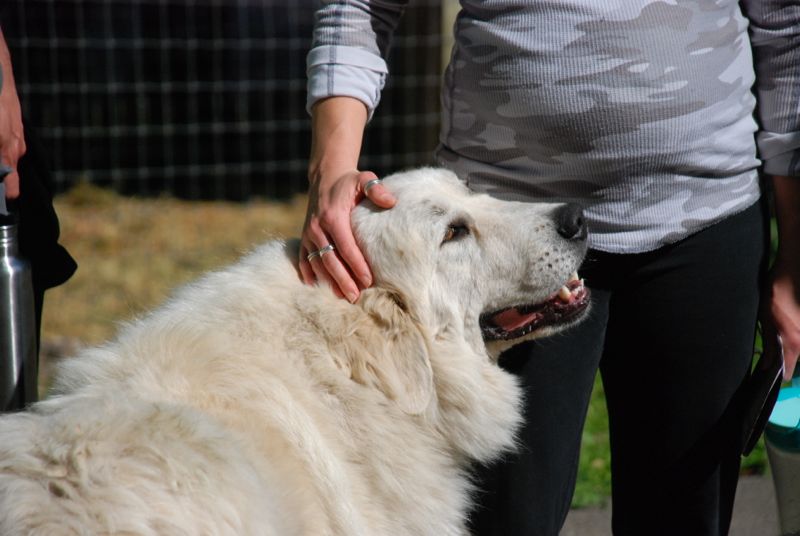
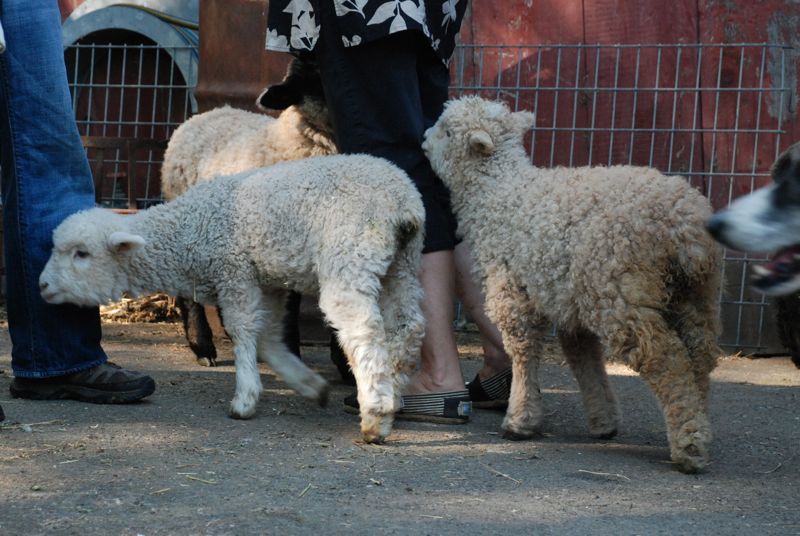
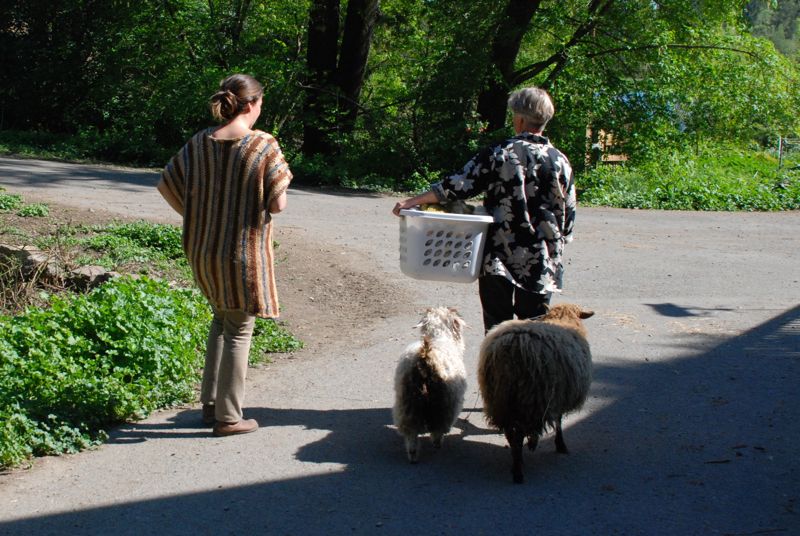
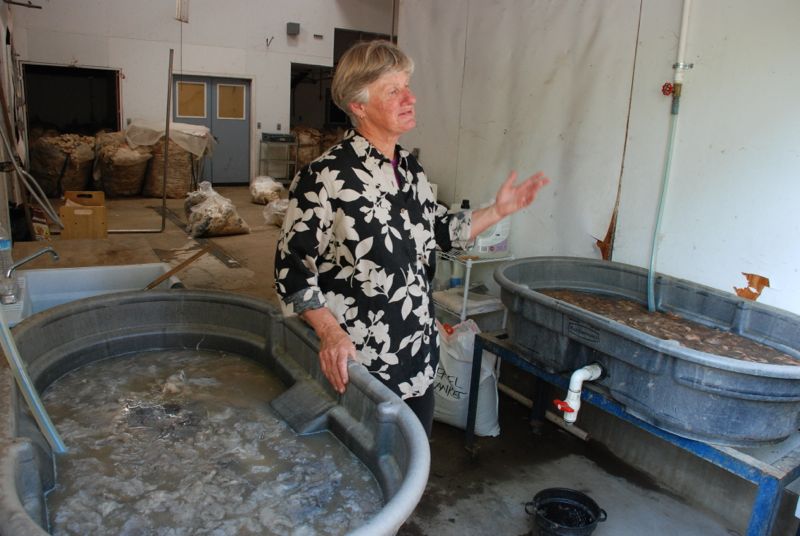
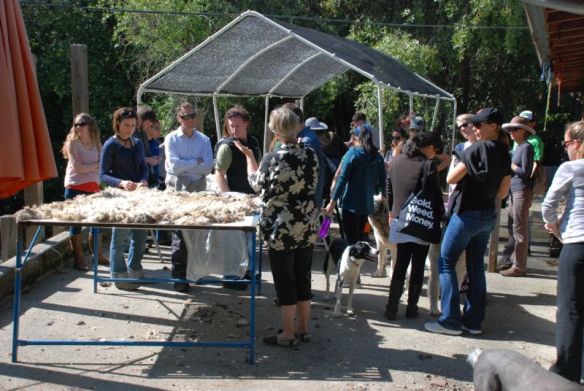
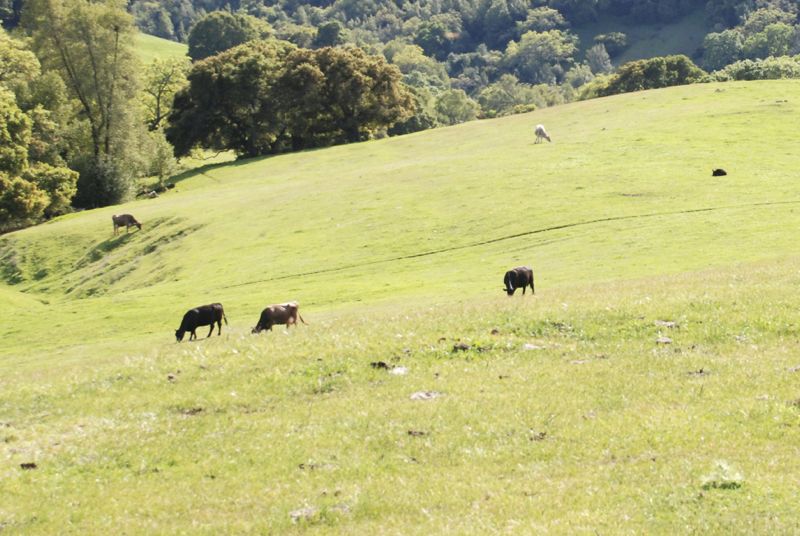
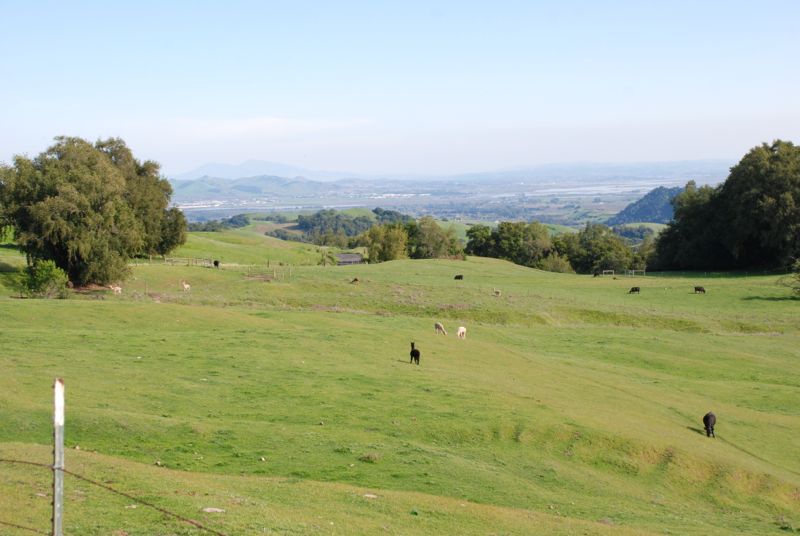
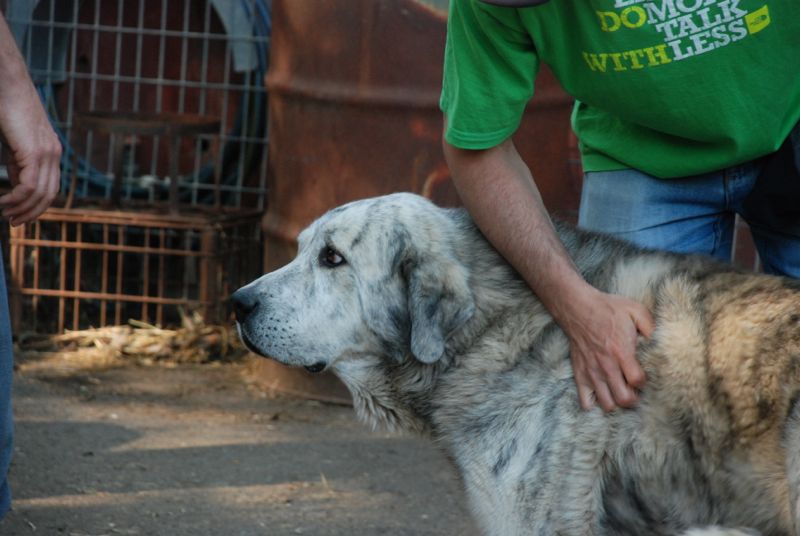
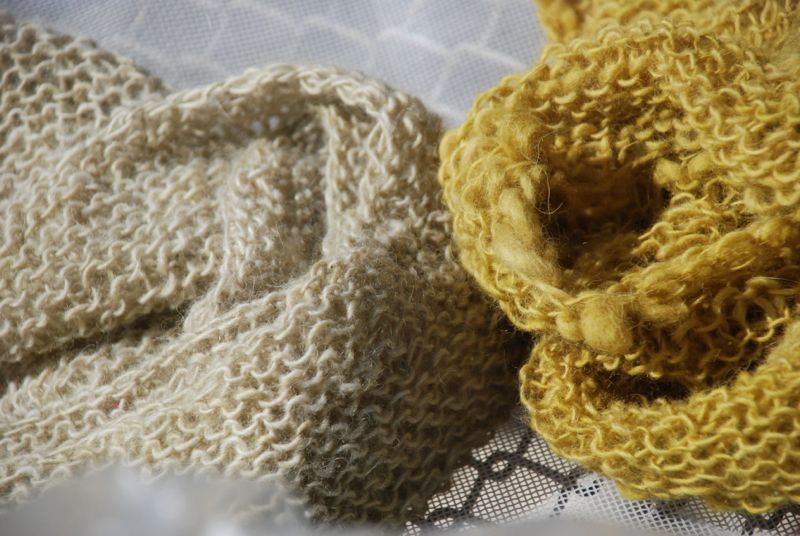
The second part of the tour was a trip to Mary Pettis-Sarley’s ranch in the hills west of Napa. DSC_0411  Mary has a variety of sheep, cattle, and alpacas who live in a beautiful setting.DSC_0420 She creates Twirl yarn using unique blends of the fibers she grows.DSC_0421 The yarns are all natural colored or dyed with natural dyes from plants that grow on the ranch. The “I” in these labels indicates that the dyeplants are invasive species.DSC_0423 DSC_0432 A major challenge of raising livestock in the hills is the predator problem. Mary has 17 dogs, most of whom are various breeds of livestock guardian dogs (LGD). They can be intimidating when you drive onto the property, but aren’t so scary once they know you’re on the approved list (or maybe that you’re not a 4-legged hungry visitor).DSC_0442DSC_0437 Mary let out the bottle babies…DSC_0446 …and I think her part of the field trip won the Cuteness Factor award.DSC_0450 DSC_0455 We were accompanied by two of the pets on the way to Mary’s wool washing station.DSC_0468Now I’m jealous, not only of the property, but of this. Maybe I’d wash more of my own fleeces if I could figure out a set-up like this.DSC_0462 Here is where the fleeces are dried. Mary had several fleeces spread out so that the visitors could handle them and feel the characteristics that we’d been talking about all day.DSC_0465  A couple of scarves knit with Mary’s yarn.DSC_0483 As I drove way I saw some of Mary’s cows. As it happens, these cows are the daughters and granddaughters of Jennie, a Brown Swiss cow that Mary got from us when we left our dairy life in 1998. Talk about happy CA cows. These truly have a happy life.DSC_0489Look at their view of the Napa Valley if they choose to look up from all that grass. (Alpacas in this photo–they were right next to the cows.)
Fleeces Revisited

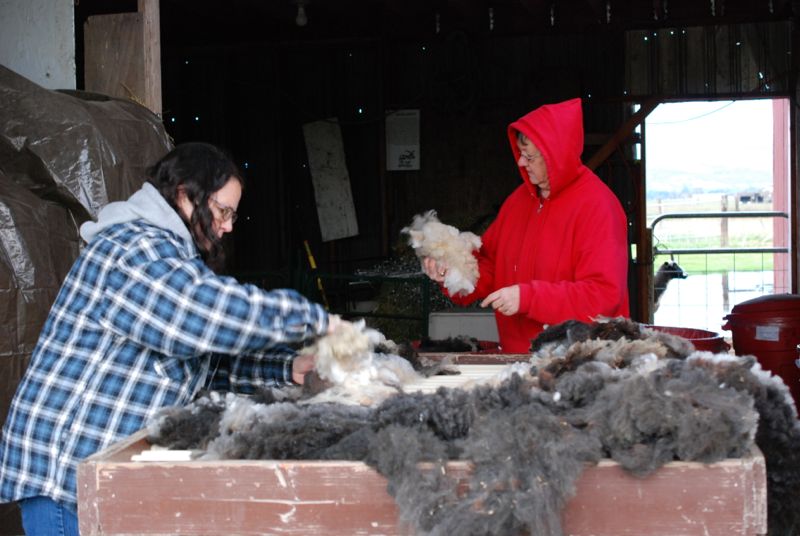
I haven’t finished getting the wool ready to send to the mill. Holidays get in the way. Now it’s COLD. Farm Club members have been helping and I think one more afternoon of skirting and sorting will do it. Sending wool off in January means I’m way ahead of my usual schedule.

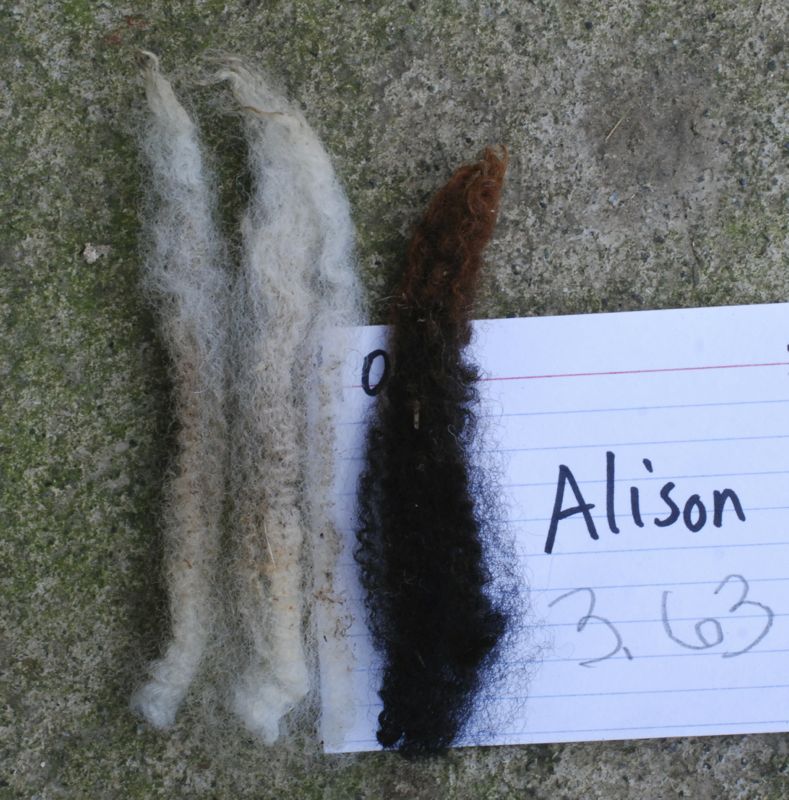
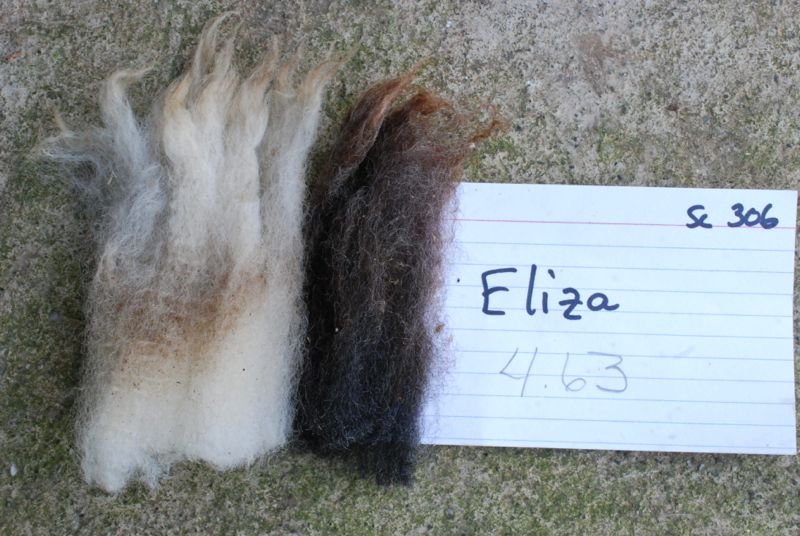
If you are not excited about wool these photos won’t be very interesting. But to me they are a precursor of beautiful yarn and blankets.DSC_7777Alison’s fleece. The 3 x 5 cards provide scale (as well as remind me of whose wool is whose).DSC_7782 Eliza’s fleece


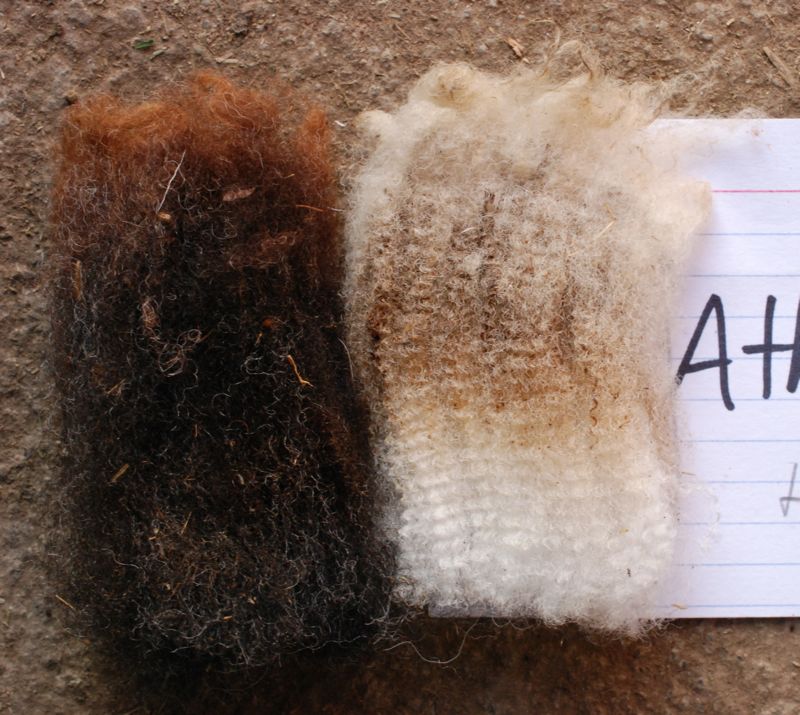
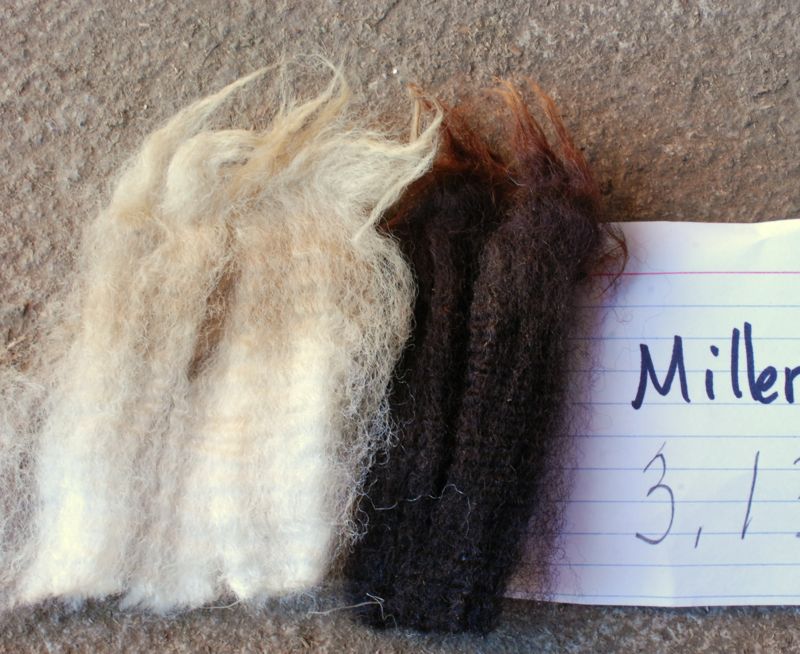
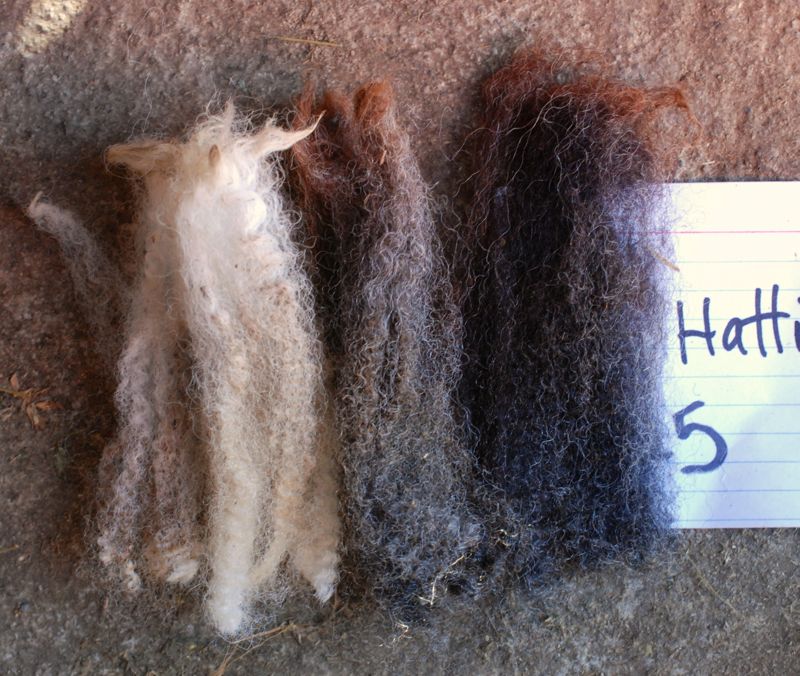
AthenaAthena’s fleece is a little shorter than the others, but very soft.  DSC_7798  Miller is a ram lamb born last March. This fleece is only 9 months growth. I can’t wait for next year’s.DSC_7816Hattie’s fleeceDSC_7793Did I say it was cold while we were working? Mary and Dona helped one day and Linda on another. DSC_7811Here was the best place to stand–a south-facing wall in the sun. We already finished with your fleece, Jazz.