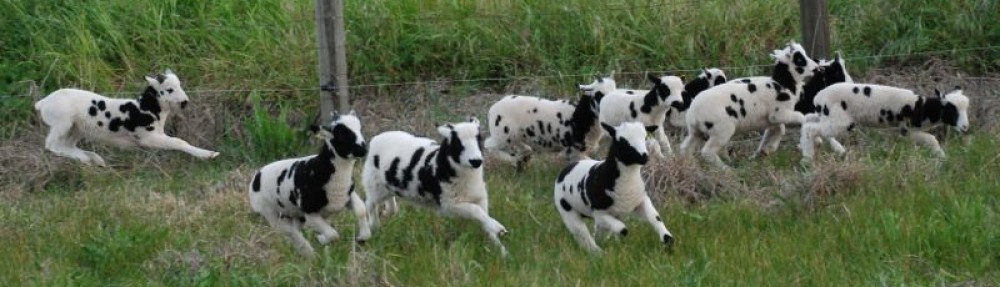
Pasture and Irrigation Renovation – Part 14

The last time I wrote about this project was over six weeks ago in December.

About two weeks ago one of the NRCS representatives came to check on the progress of the pasture seeding. Not a great photo, but he is putting down a grid to aid in evaluating plant growth.

This is what it looks like and I should have asked more about it. I didn’t see him mark where he put it or count plants. We were talking about generalities in the pasture, but now I’m going to ask. Did you know that my degree from UC Davis is in Range and Wildlands Science? So I recognize this for what it is–a tool for analysis of plant germination and growth–but we didn’t talk about it.
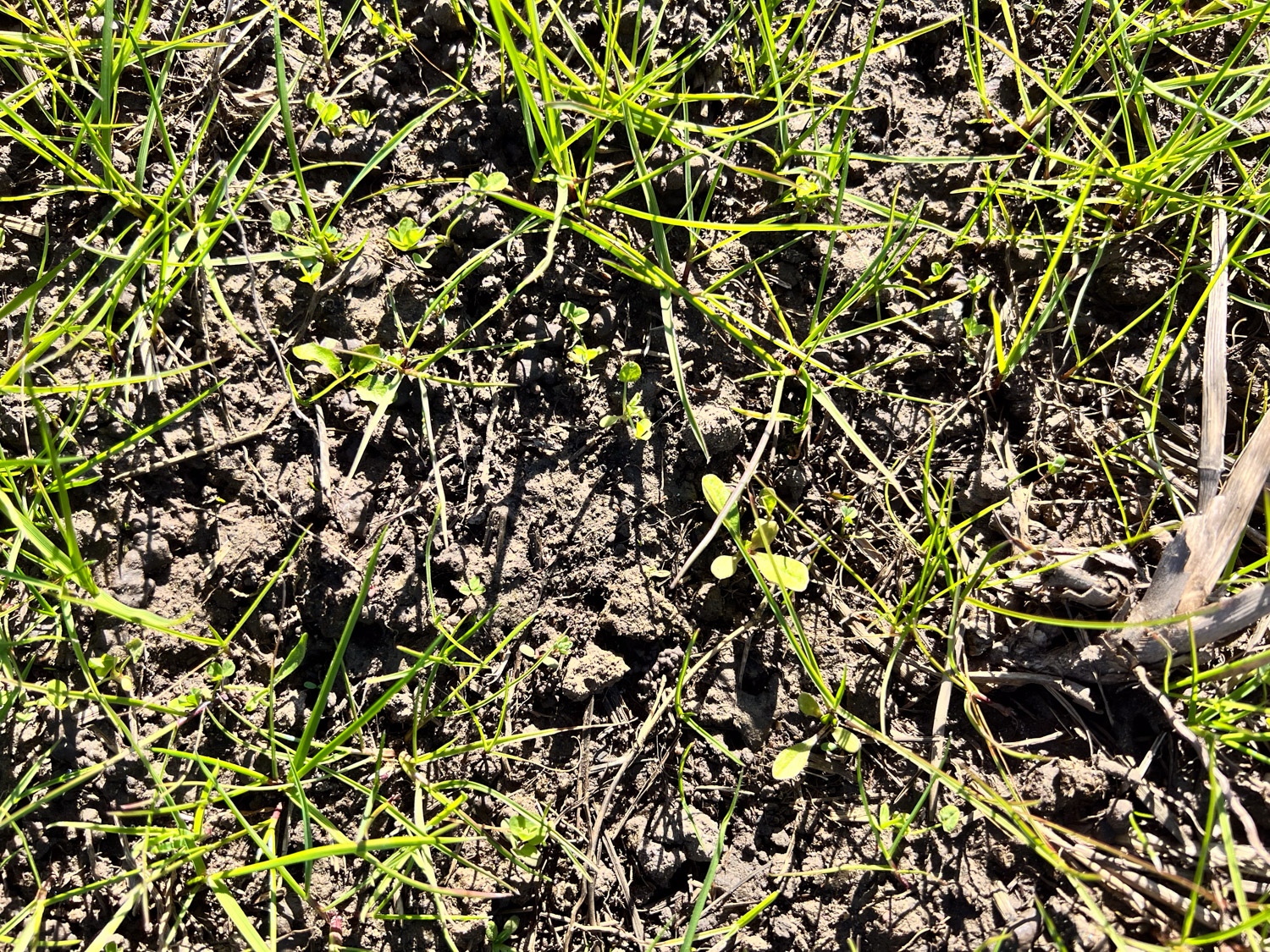
Do you see how hard it is to evaluate growth when you look across the field and not straight down? Compare the first photo to the next two. In the second photo close up photo it shows grasses and forbs. There were three of each in the seed mix. We identified clover and chicory, but I don’t see trefoil yet. I can’t identify the grasses.

This is the field west of the barn. The grass growth is thicker here, at least in that small area.

This is a photo taken from the same spot as the last one, but looking north. This is the check where there was traffic from the people working on the irrigation system. We’re thinking that it probably needs discing again.

Last week we met with a representative from the company that makes the soil moisture sensors that were installed. He showed us how to see the info generated by the two sensors and we talked about how we’ll use that. They are sensors are at the south end of the field, one near the west edge and one in the center, still in line-of-sight with the sensor in the northwest corner.
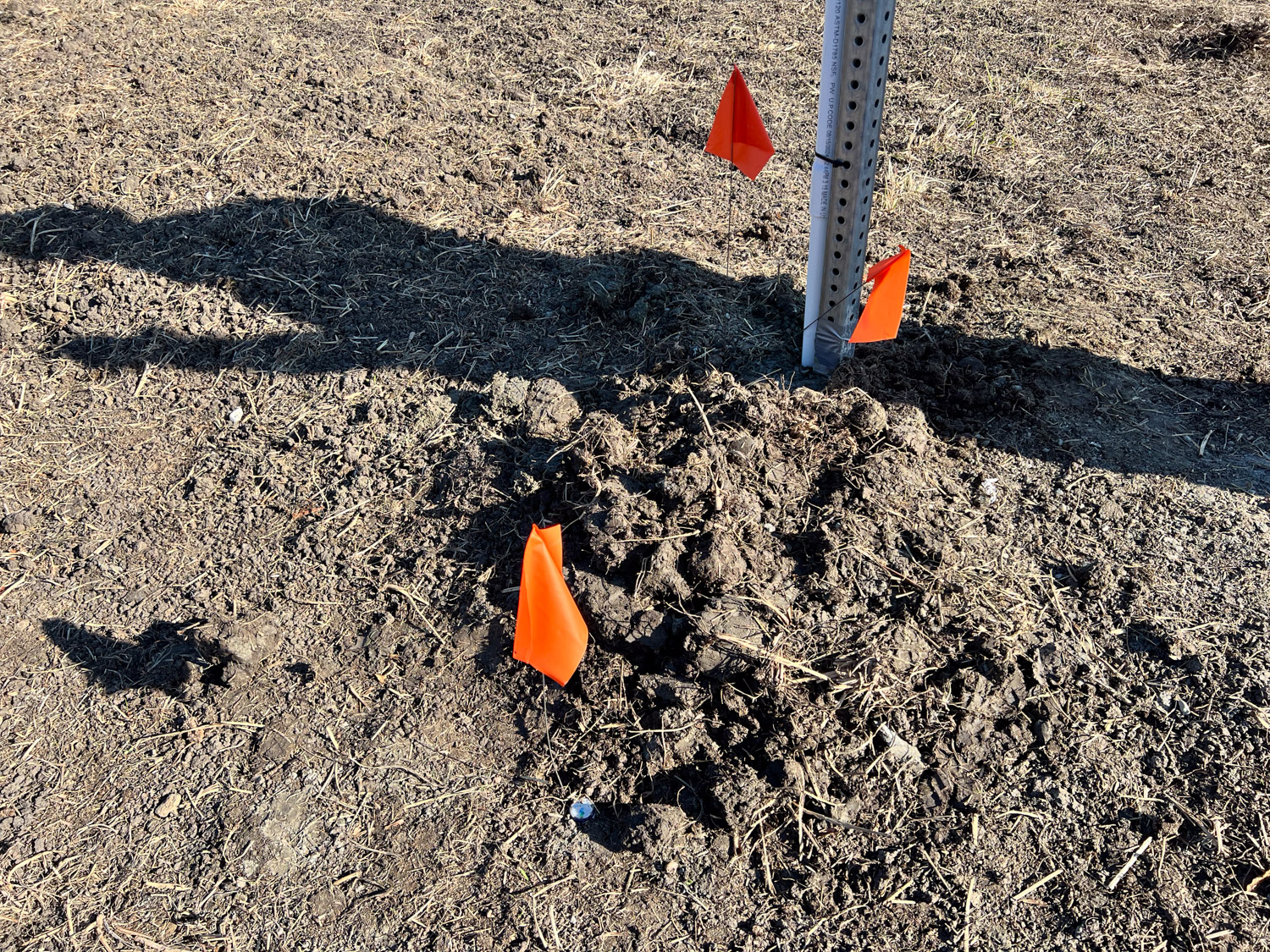
The flag in the foreground marks where the sensor is at this station.

This is what it looks like inside the box.
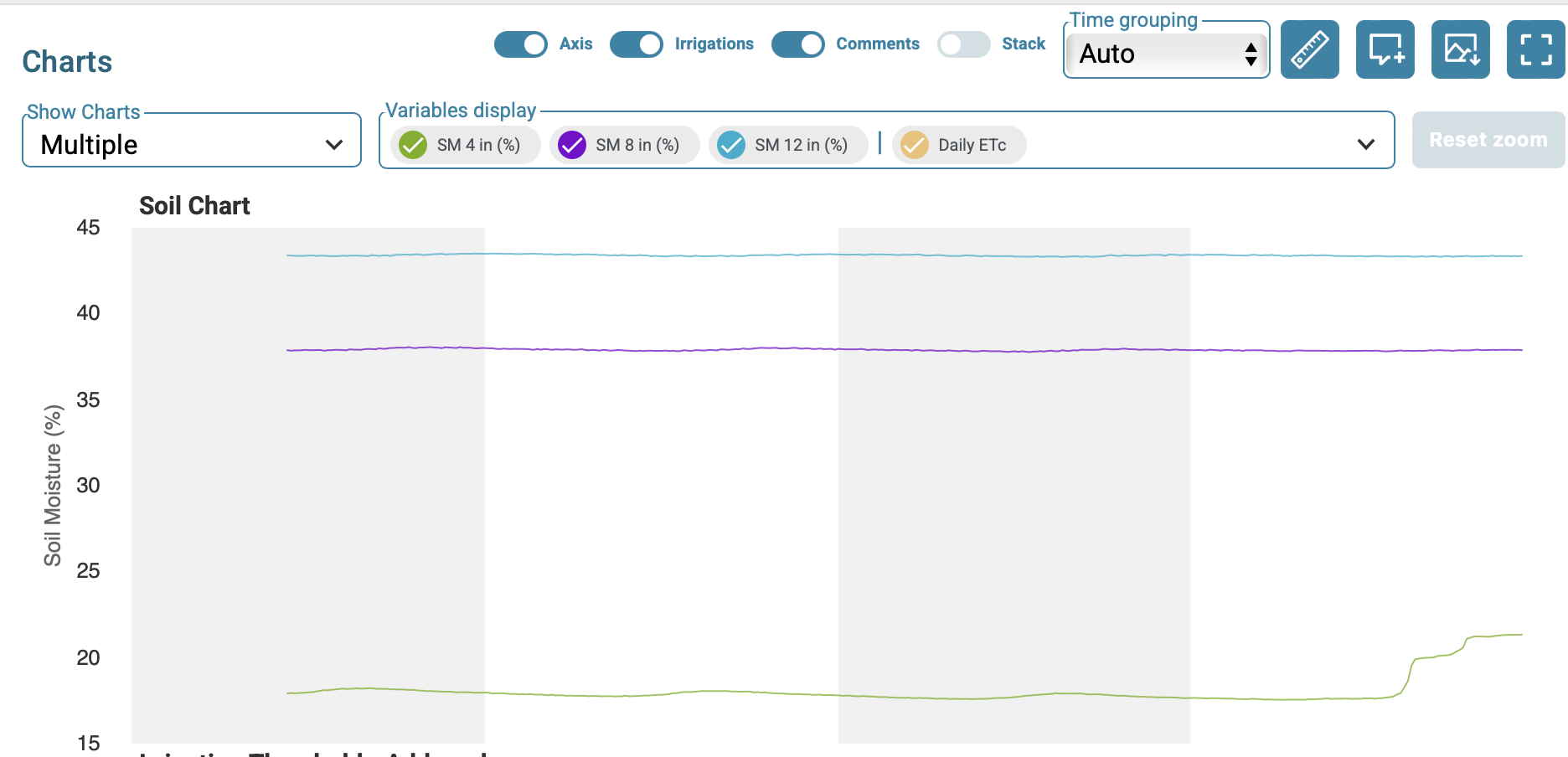
We haven’t had rain for a month and there have been north winds that make things dry out even more. We were getting worried about this new pasture. Those little seedlings need moisture in their root zone to stay alive. This is a screenshot of what the sensor shows for one station. The gray and white columns each indicate a day. The horizontal green line is 4″ depth, purple is 8″, and blue is 12″. You can tell that today’s 1/4″ rain just started to soak in.

Here is what the other sensor shows. The scale on the left axis is different. This 4″ level had more moisture to begin with than the other two. We will be learning how to use this info. There is a lot more available. I just copied this portion for now. This will sure be interesting to follow.

Shearing Day 2025 – Part 2

Shearing Day was a week ago. Here is the first post.

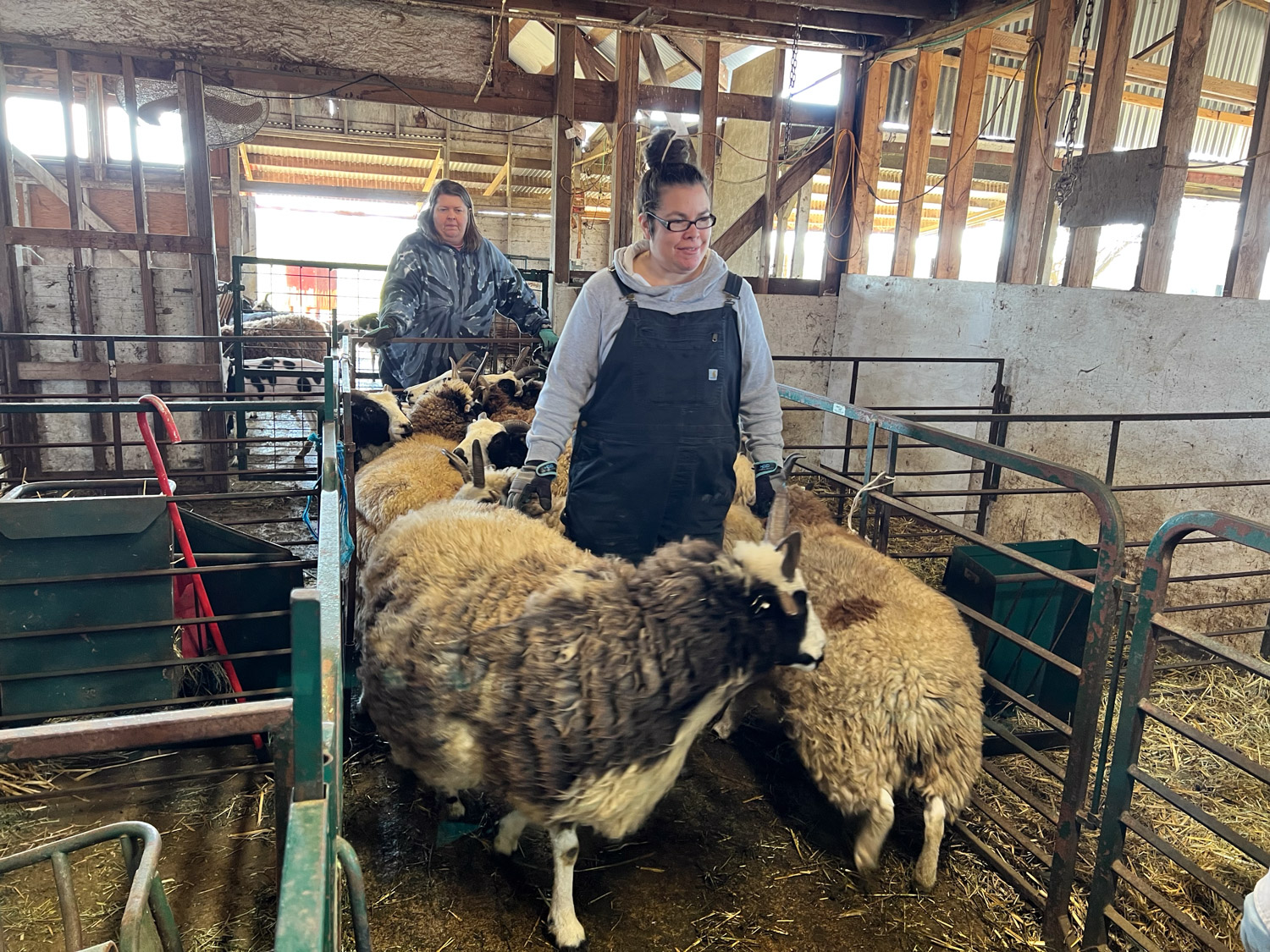
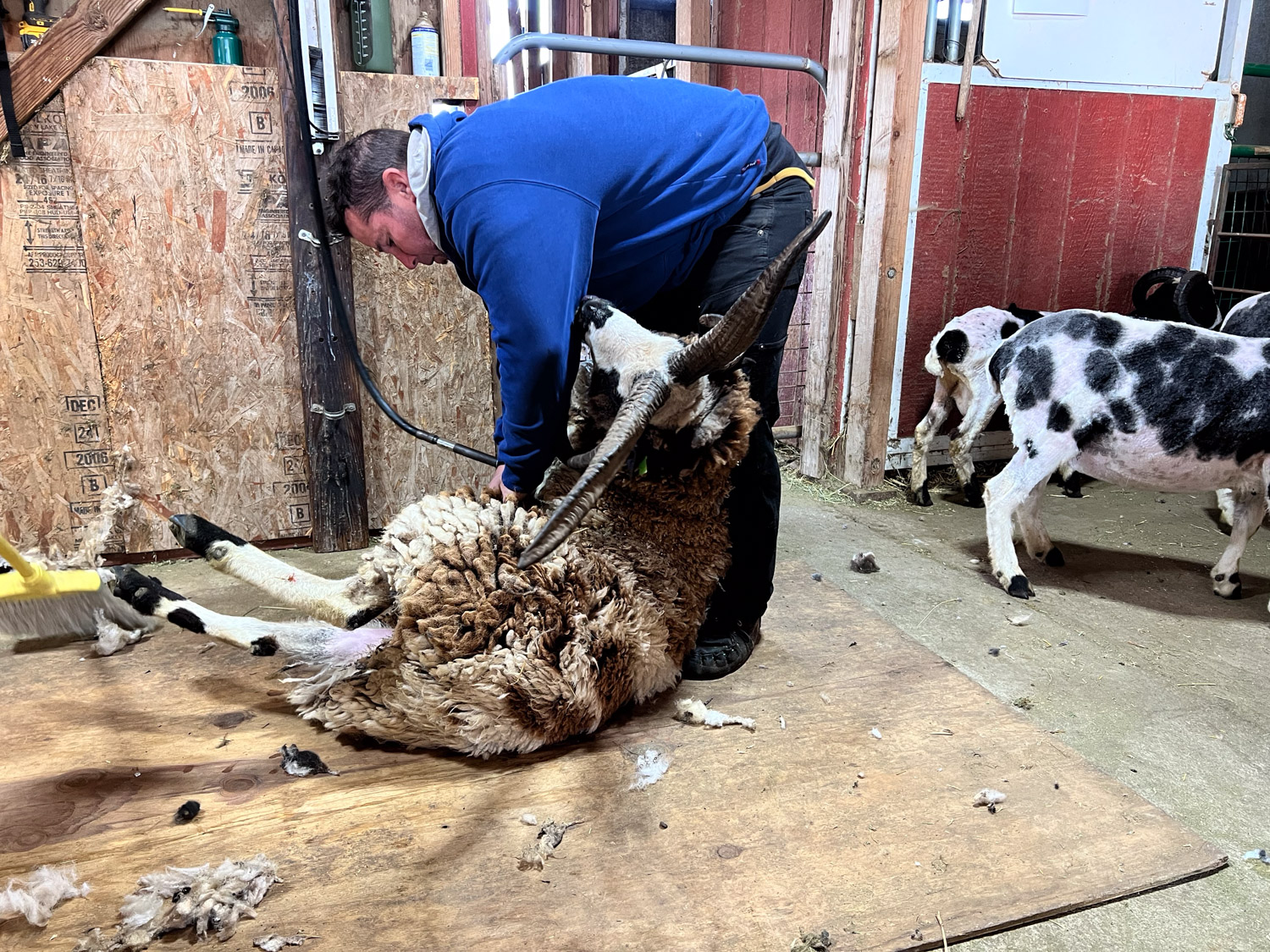
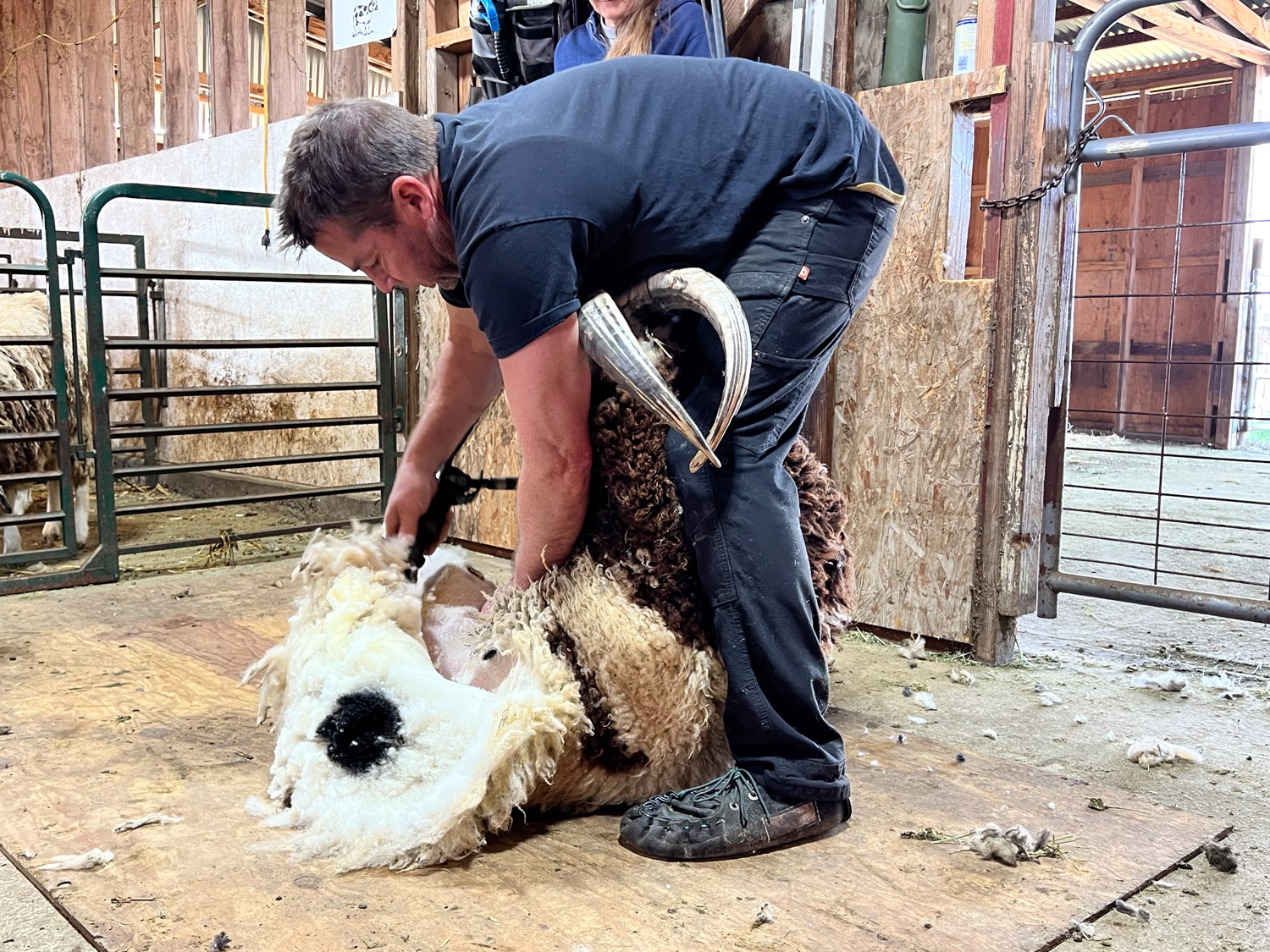
As we loaded Trish’s sheep into the trailer John kept shearing, starting with my rams…

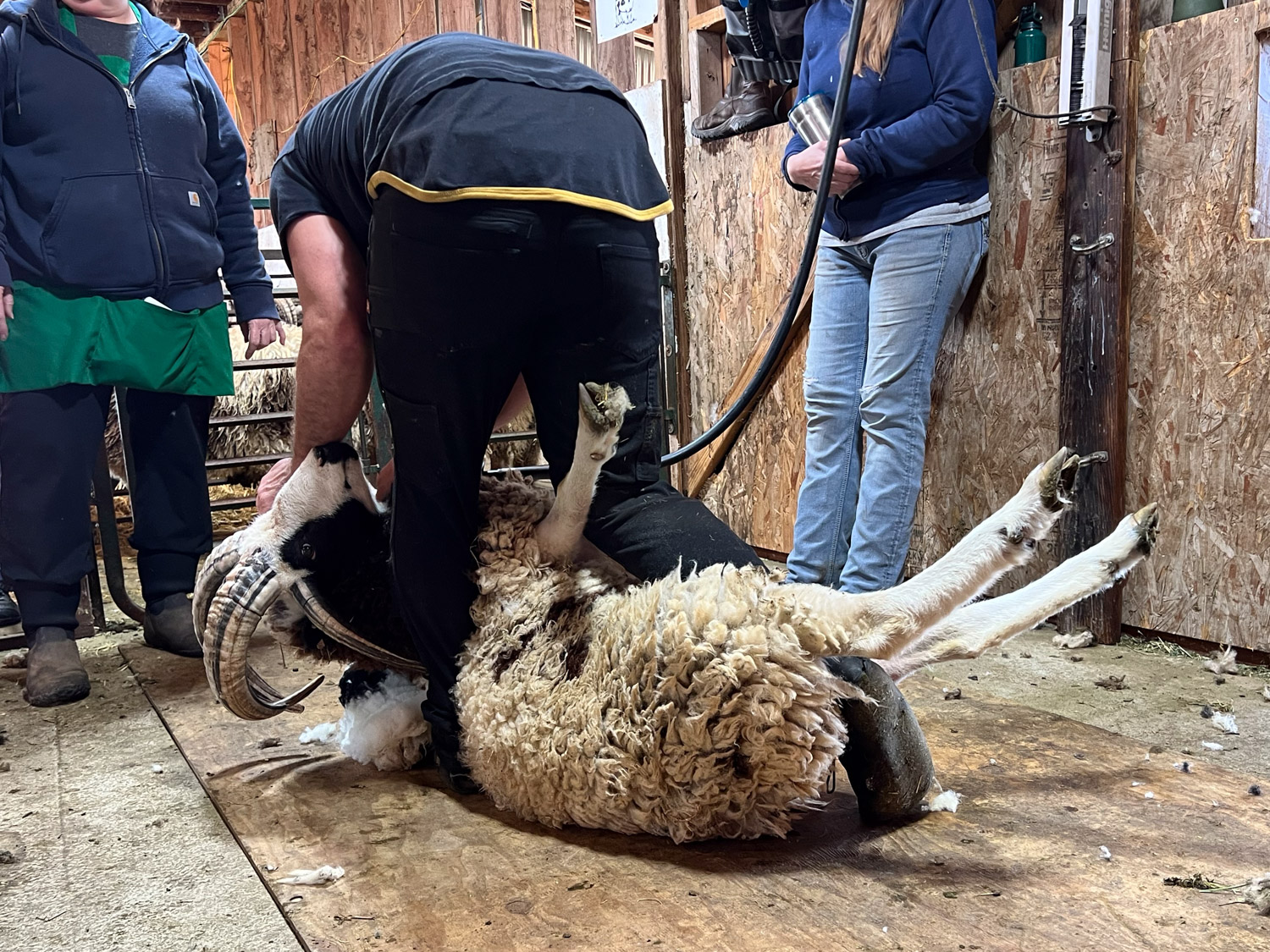
…and then moving on to ewes.

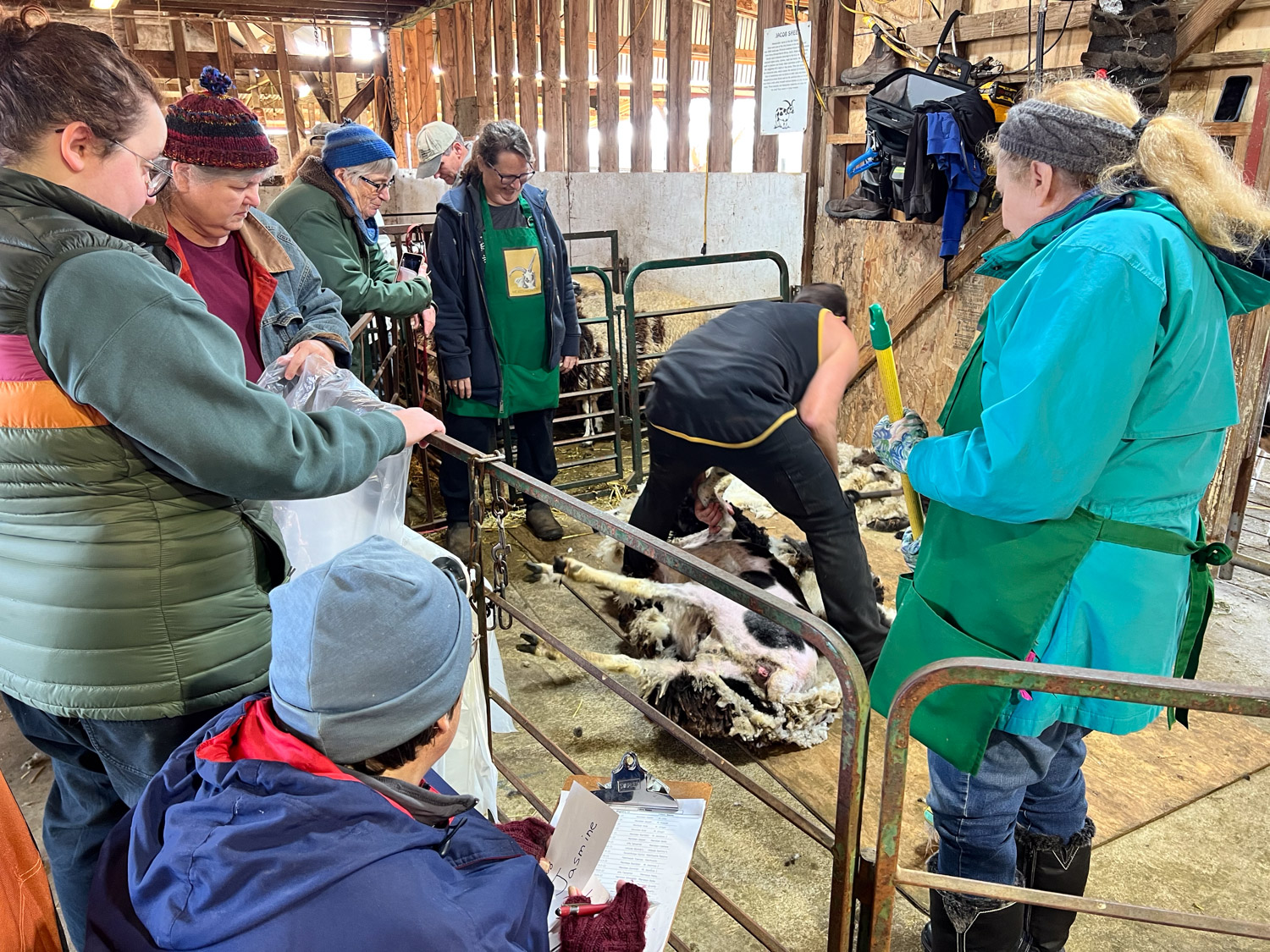
Farm Club members kept the sheep coming so that John didn’t have to wait.

Farm Club members covered all the jobs. They moved sheep, bagged fleece, checked the ciipboard, swept between sheep and let sheep out as they finished. I have videos of shearing but haven’t had time to post them yet. Because I recorded 4 or 5 videos I can say that John shears a sheep in just over 2 minutes. It is amazing to watch.

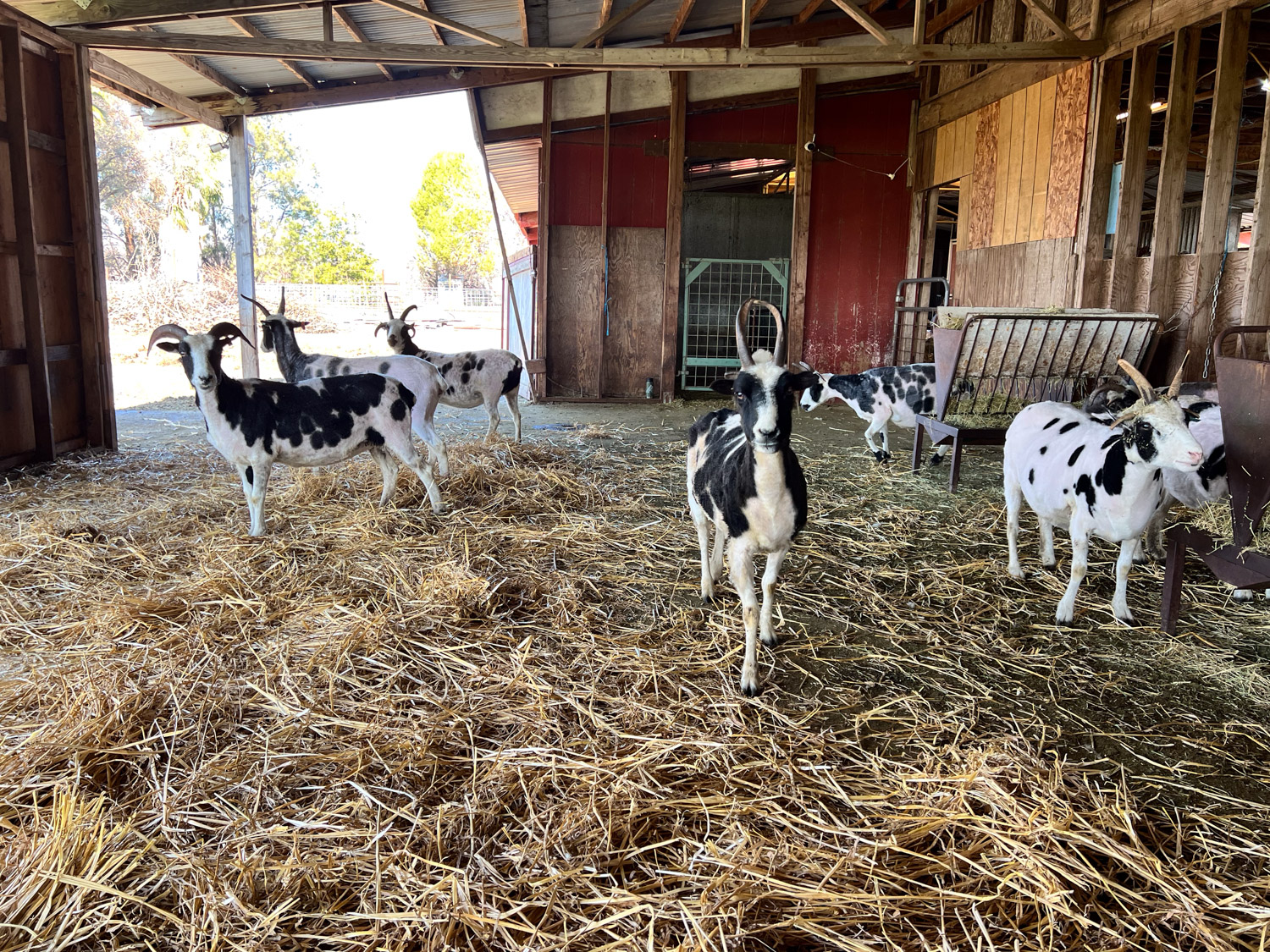
We bedded the barn with straw knowing that would help with the cold at night.

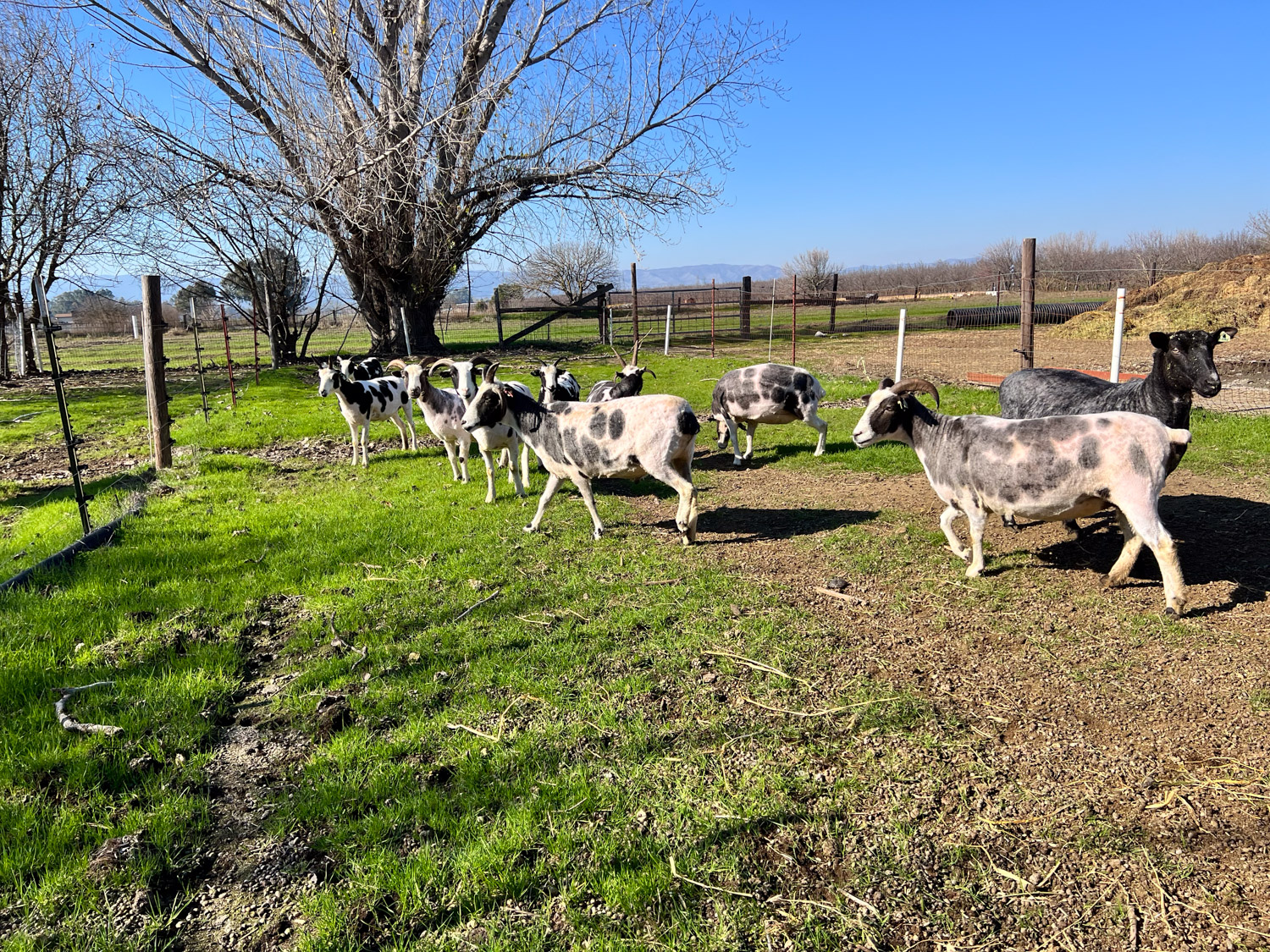
The shorn sheep enjoyed the sun during the day.

Farm Club member, Kathleen, took over her annual job of weighing fleeces.

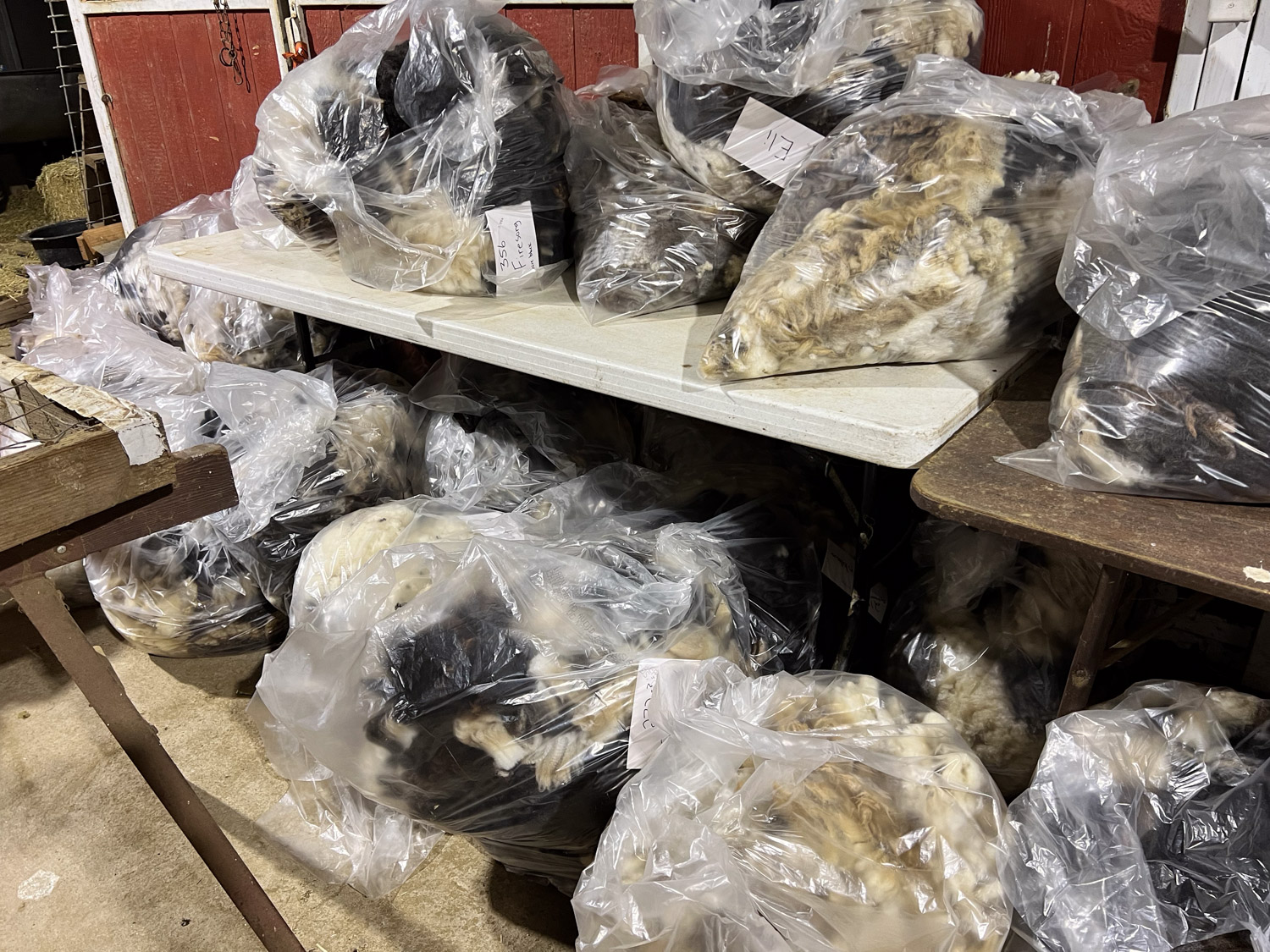
This is just some of the fleeces, bagged and labeled with sheep name and weight.

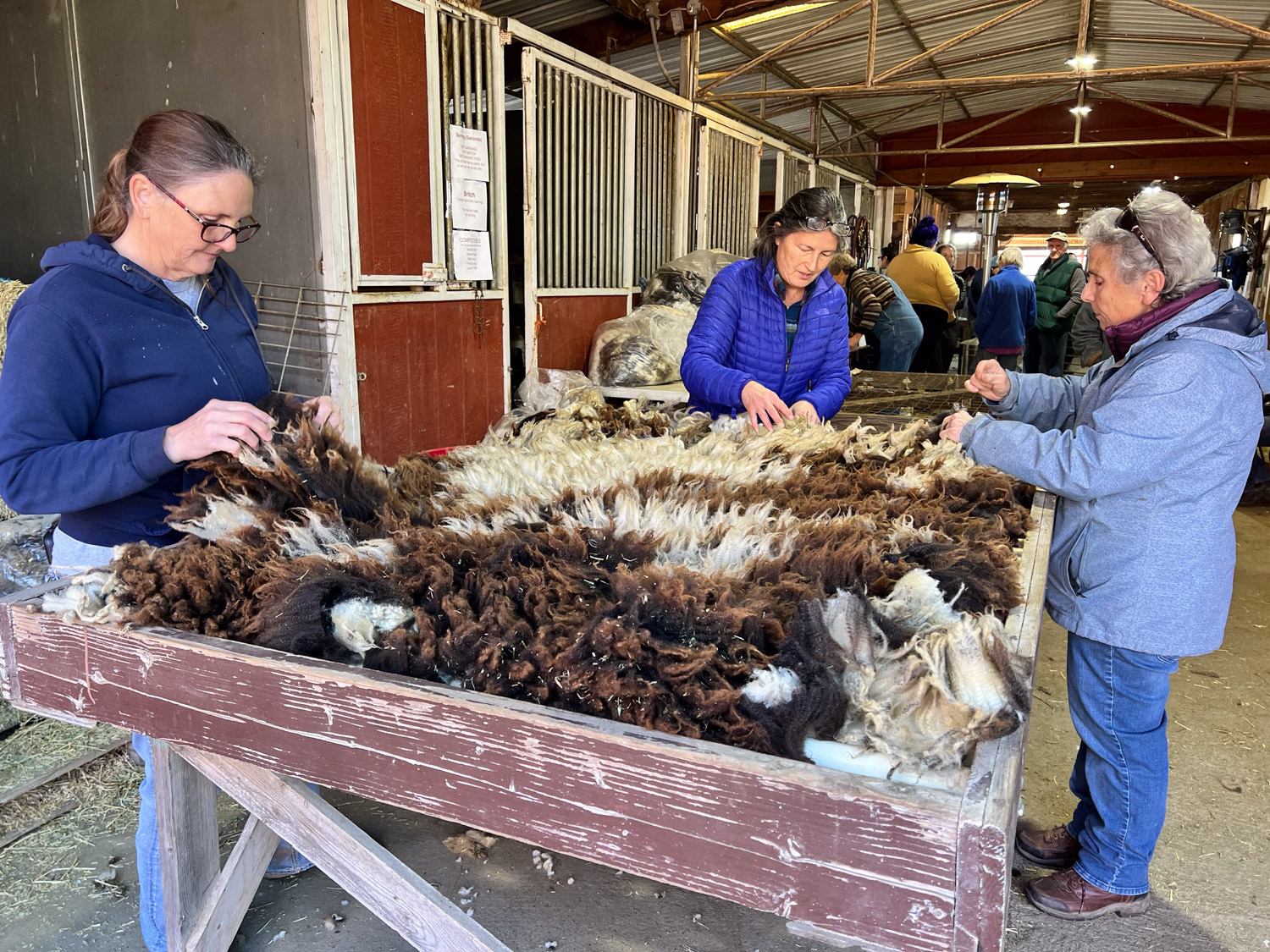
Farm Club members and other friends who purchased fleeces were able to skirt fleeces the selected.

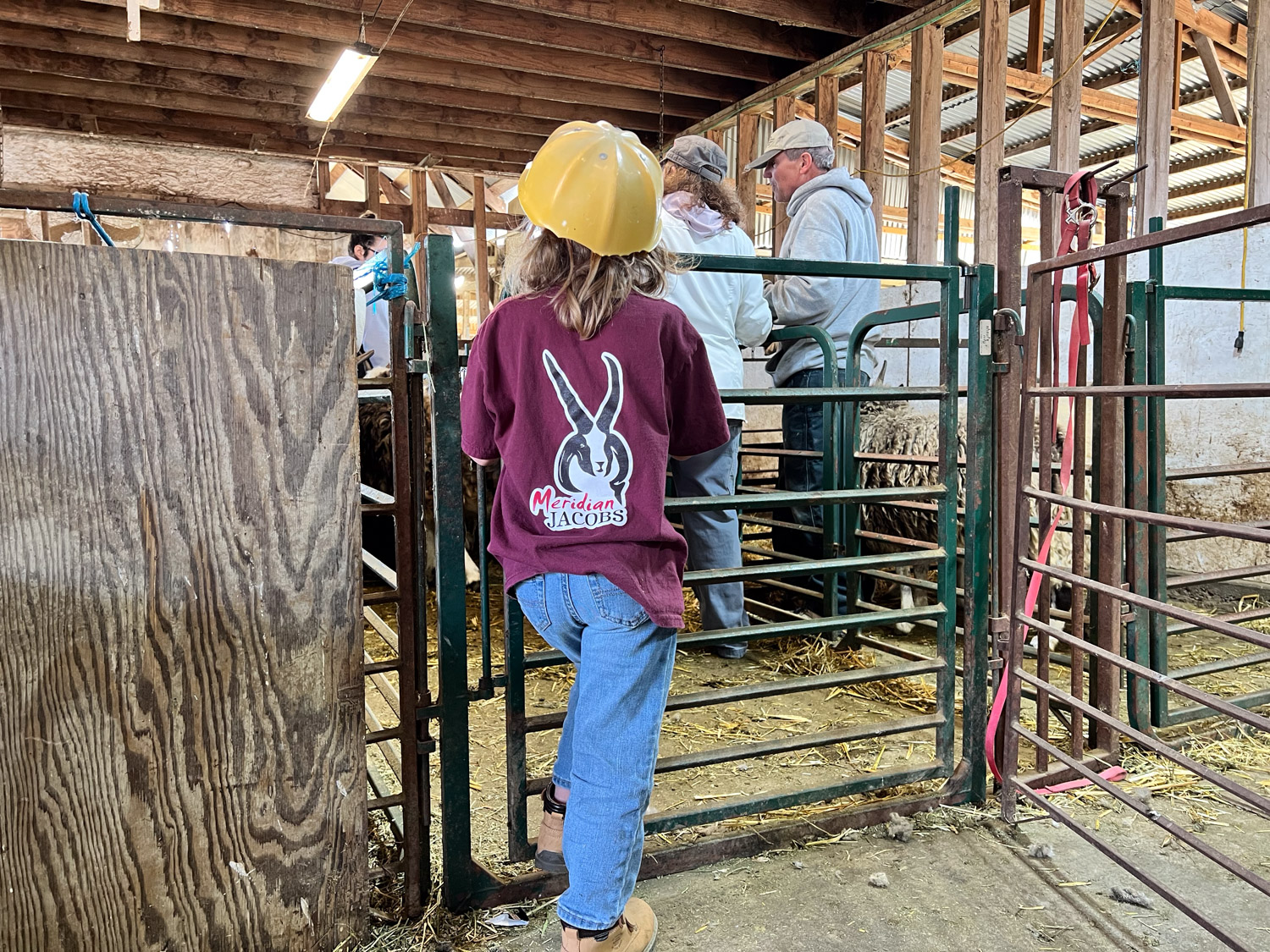
This is our youngest Farm Club associate, son of a member. He wanted a job and spent most of the morning cleaning the barn with the help of Dad.

Shearing Day can be tiring. This is Oakley, John’s dog, in a pile of belly wool.

After shearing was over I called on three Farm Club members, who are now tagged as the Tech Team, to figure out why I couldn’t get the barn cameras to work after we made a big switch to a new internet service. I hadn’t been able to get them set up again. Farm Club members have links to those cameras. Success!

Shearing stats: We sheared 64 ewes, 12 rams, and a wether. That’s important to know because shearers charge more for rams. I guess it’s a good thing that they don’t charge more for horns. (Joke) Of those sheep 47 ewes, 9 rams, and the wether are mine. We didn’t shear 2 ewes who will be the subject of another blog post. Fleece weights range from 2.5 to 6 pounds. That’s typical for Jacob sheep.

I need to start skirting and sorting fleeces so I can get some on the website for sale and others to the mill for processing.

Shearing Day 2025 – Part 1

We were lucky on Shearing Day. It was cold in the early morning, but there was no threat of rain and the sun was out.

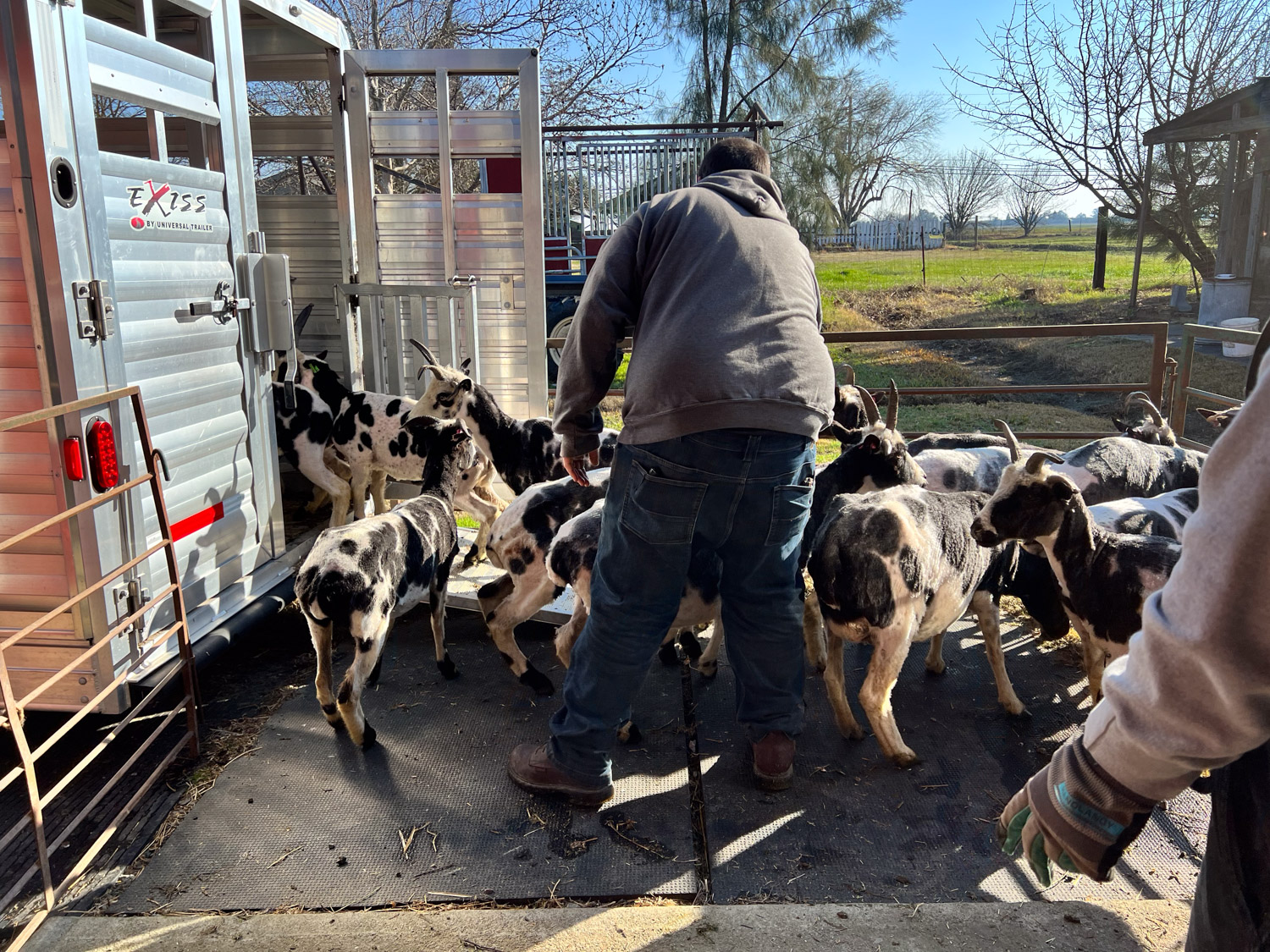
The day before we took our trailer to Trish’s farm a few miles away. We loaded 21 sheep to bring them to our place for shearing the next day. It turns out that one of the 21 was mine–I had forgotten about the ram lamb Trish borrowed in September to breed some of her ewes. So now I have 9 rams–that’s a few too many!

These are Trish’s sheep the next morning. I remember that ewe on the left from last year. See her photo below.

Her hair style makes her memorable.

John got here at 9 and we started with Trish’s sheep. This ram is Starthist Goldhill, sired by one of my 2-horn rams who is no longer here.

Farm Club members were on hand to help with all the jobs. They kept the shorn sheep out of John’s way while he worked.

After all 20 of Trish’s sheep were shorn we moved panels around to load them back in the trailer.

They fit better after shearing.

Then John started on my rams. This is Eli.

For those of you who may not have watched shearing, the shearer follows the same pattern on all the sheep.

I recorded video of shearing four or five sheep. I haven’t had time to edit and post those videos yet, but because of recording I know how long it took to shear those sheep. What do you think?

John is shearing each sheep in under 2-1/2 minutes. Some are close to 2 minutes!

More shearing photos in the next post.

Weaving Retrospective 2024

I number all my warps (except for the ones I forget to put in my notebook like some of the rigid heddle projects). Someday I’ll have to look for the notebook with #1, although that wouldn’t be truly #1–it would be the first one I recorded. I think that notebook is here somewhere.

The first one this year was #1351. The notebook page says 12-26-2023, but that would be when I started winding warp. I wove most of the ten blankets in 2024. This photo is two Year to Remember blankets. The one on the left was a custom blanket, commemorating the recipient’s wedding anniversary.

This Year to Remember blanket (Vacaville, 2023) is woven with yarn I dyed using plant material growing here. It is still available on the website.

One of my favorite patterns, also woven on this warp using gray Jacob yarn for weft.

I wove several v-shawls in 2024. The one on the left is still for sale here.

Warp #1387 went on the loom in July, but I didn’t finish the last blanket until December. I get distracted by weaving on other looms and the rest of life going on around me. This photo shows how each weft yarn may behave differently. Some yarns have more elasticity than others, either due to the type of wool or whether or not they have been naturally dyed. The warp and all the naturally dyed yarns are Timm Ranch wool from various years.

Here is that warp off the loom. The blue weft yarn was naturally dyed with my home-grown indigo. The brown yarns are mostly dyed with walnut hulls. Yarns on the left are Ashford DK.

Finished indigo and walnut hull blankets.

The last warp of the year was #1404, a warp for three chenille shawls. This is the first piece off the loom in the process of twisting fringe. This warp is still on the loom with two more shawls to weave. I had wanted to get at least one off to get it to the Artery before the last couple of shopping days before Christmas.

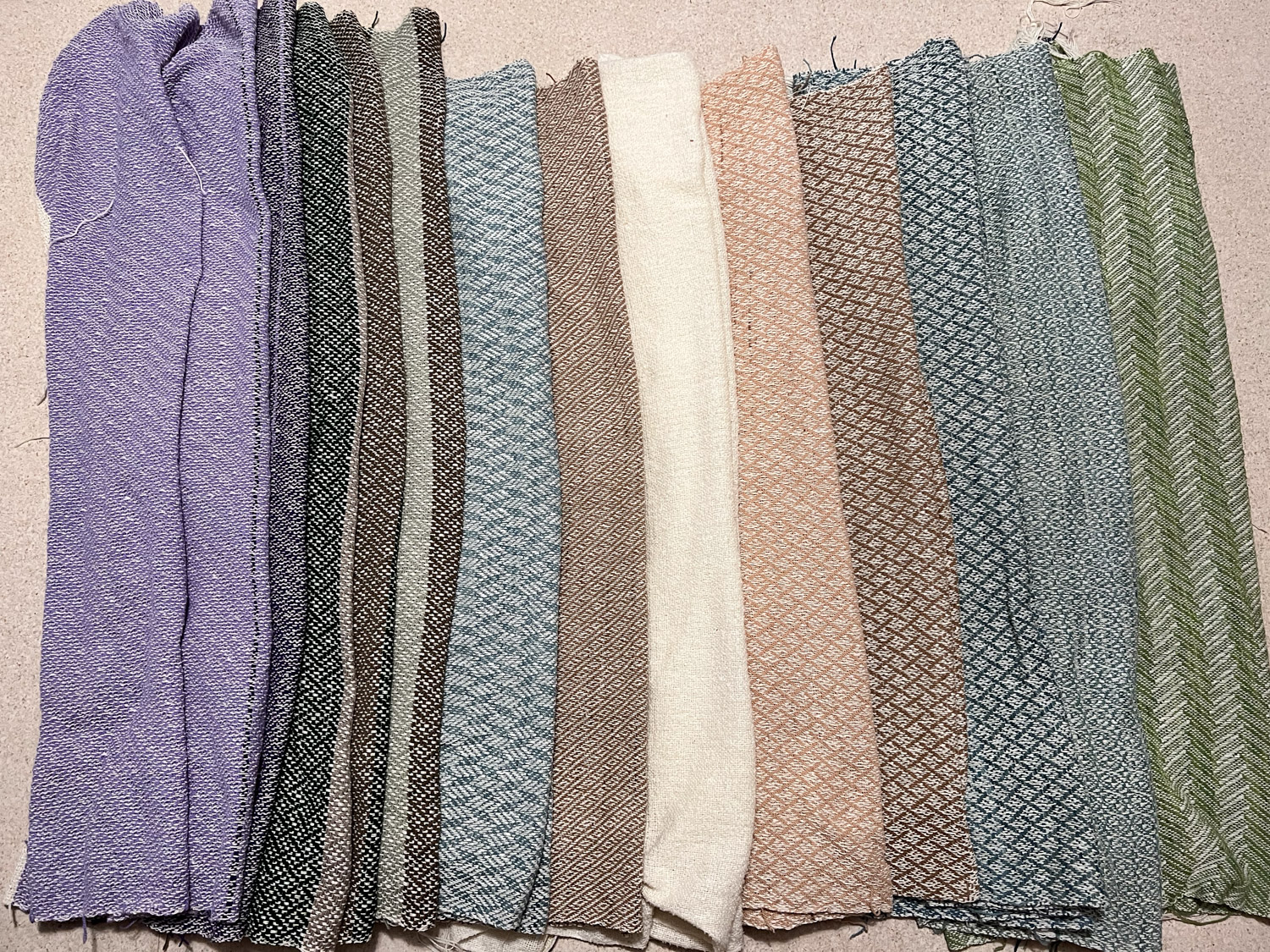
Warp # 1403 went on the loom before the chenille warp, and I finished it just in time for our family Christmas on the 27th. There are ten hemp towels.

There are two colors in the warp and a different weft color in most of the towels.

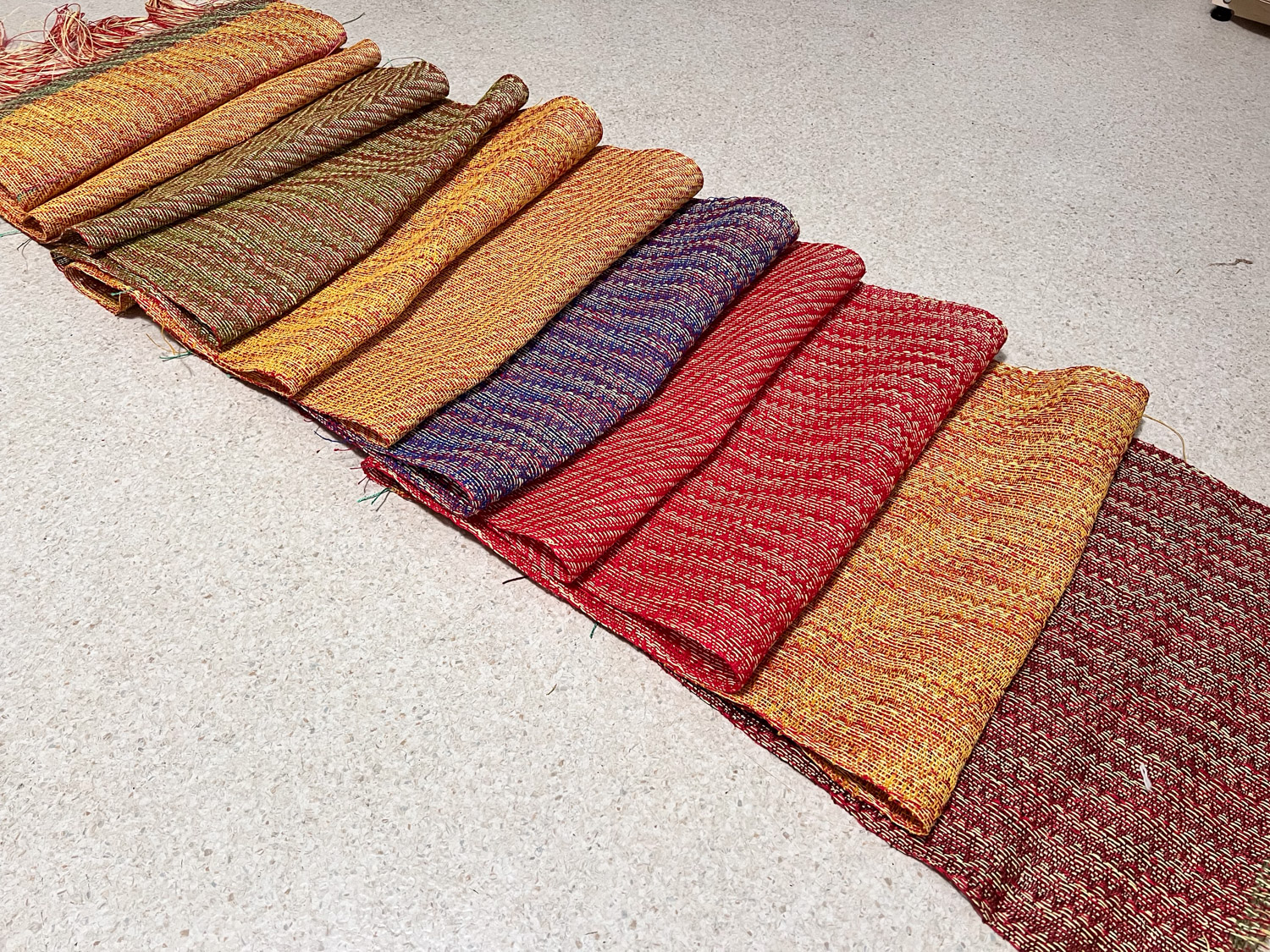
Another favorite this year was a chenille warp. I wove two rectangular shawls and this piece that is sewn to leave a neck hole and be worn over the shoulders sort of like a poncho. I will put this on the website soon.

New Year’s Day 2025

I planned to go on a hike today, but that was mid-day. Feeding sheep is first.

Sunrise viewed from the barn. After chores I drove to the newly opened 1500 acre Patwino Worrtla Kodak Dihii open space park managed by Solano Land Trust, outside Fairfield and only about 25 minutes from home. I had never been to this park but had read about the progress made on opening it for the public.

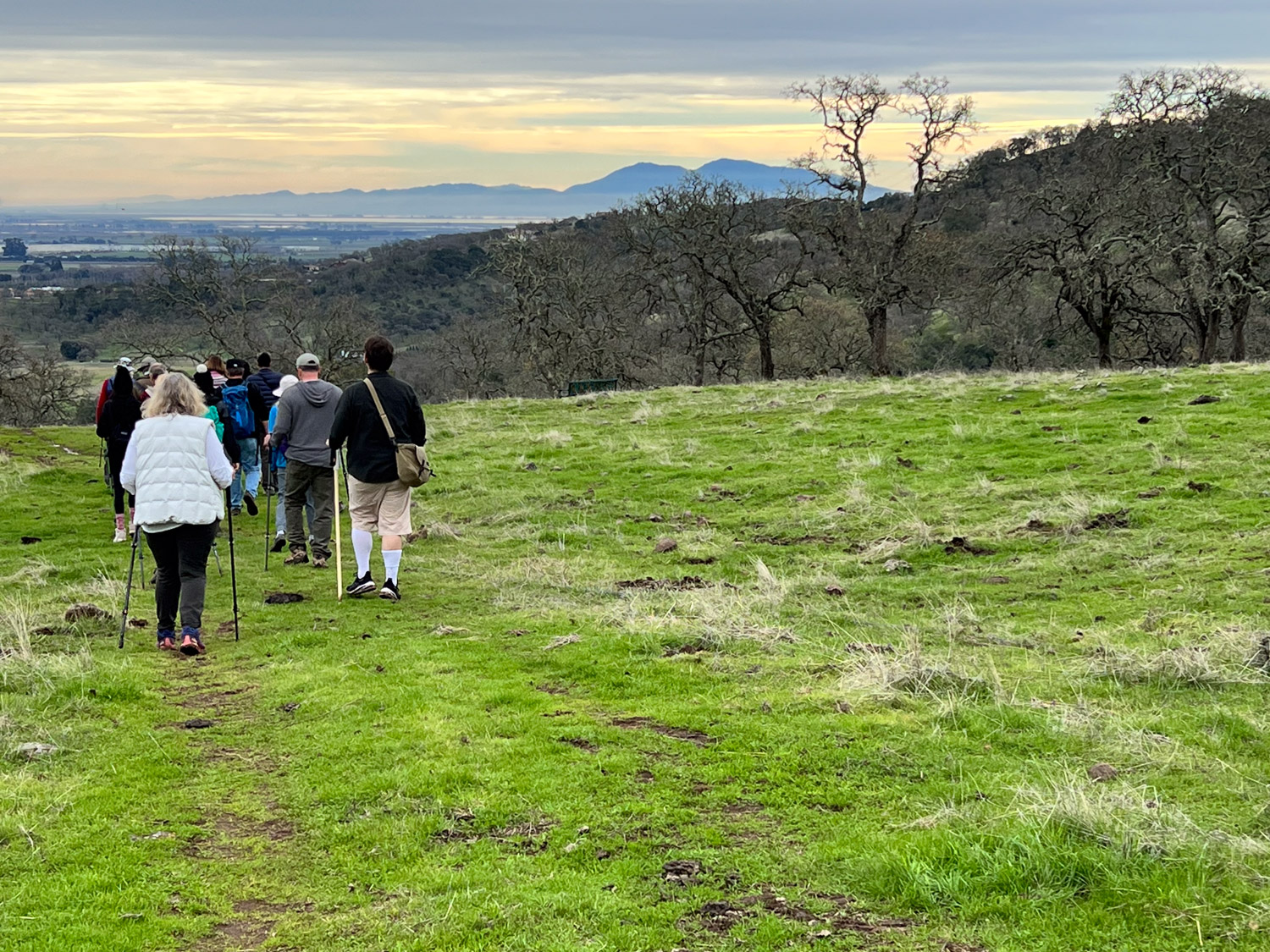
The park is usually open Friday through Monday, but there was a special New Year’s Day docent-led hike. There is good signage throughout the property so you can always figure out what trail you are on. We started at the Welcome Plaza at the bottom of this map. We saw the east half of the property, making it to the loop at the northeast and then back down the Bay Area Ridge Trail. That was just under six miles total.

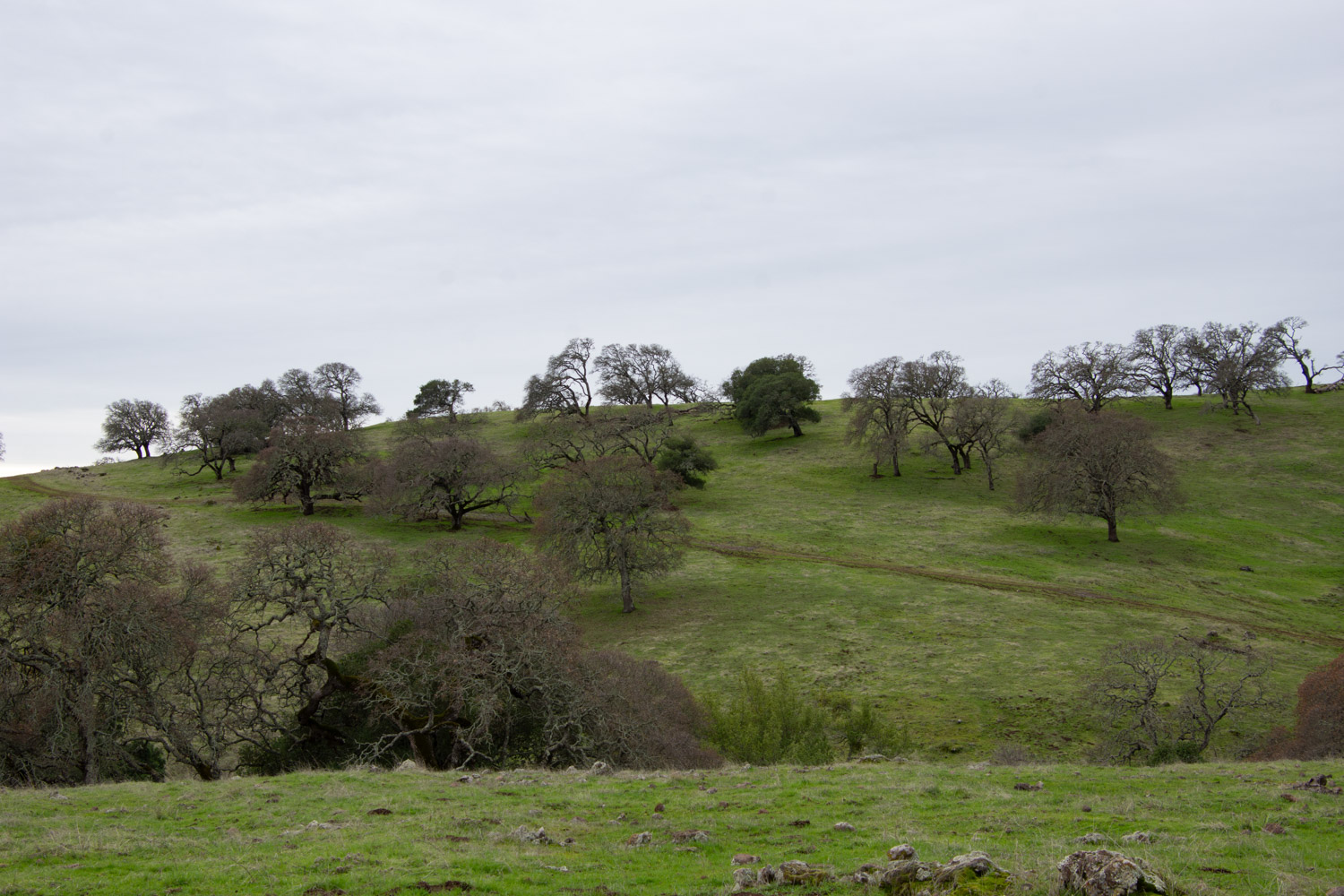
This is oak woodland. The blue oaks are deciduous so they are bare now. The recent rains have brought the landscape to life with green grass.

That is Mt. Diablo in the distance. That’s the mountain that features in many of my Across the Road photos because those are taken from the property just across Meridian Road where we live. Wikipedia says, “The Mount Diablo Meridian, established in 1851, is a principal meridian extending north and south from its initial point atop Mount Diablo in California at W 121° 54.845. Established under the U.S. Public Land Survey System, it is used to describe lands in most of northern California and all of Nevada.” DavisWiki says “Meridian Road is a north-south road, roughly located between Dixon and Vacaville. The Meridian refers to its location on the principal meridian for NorCal for the US Public Land Survey. If you were to travel due south from the road, you’d hit the peak of Mt. Diablo, a prominent geological landmark.”

The wind turbines along Hwy. 12 on the way to Rio Vista feature in the view to the southeast.

There are live oaks interspersed with the deciduous blue oaks.

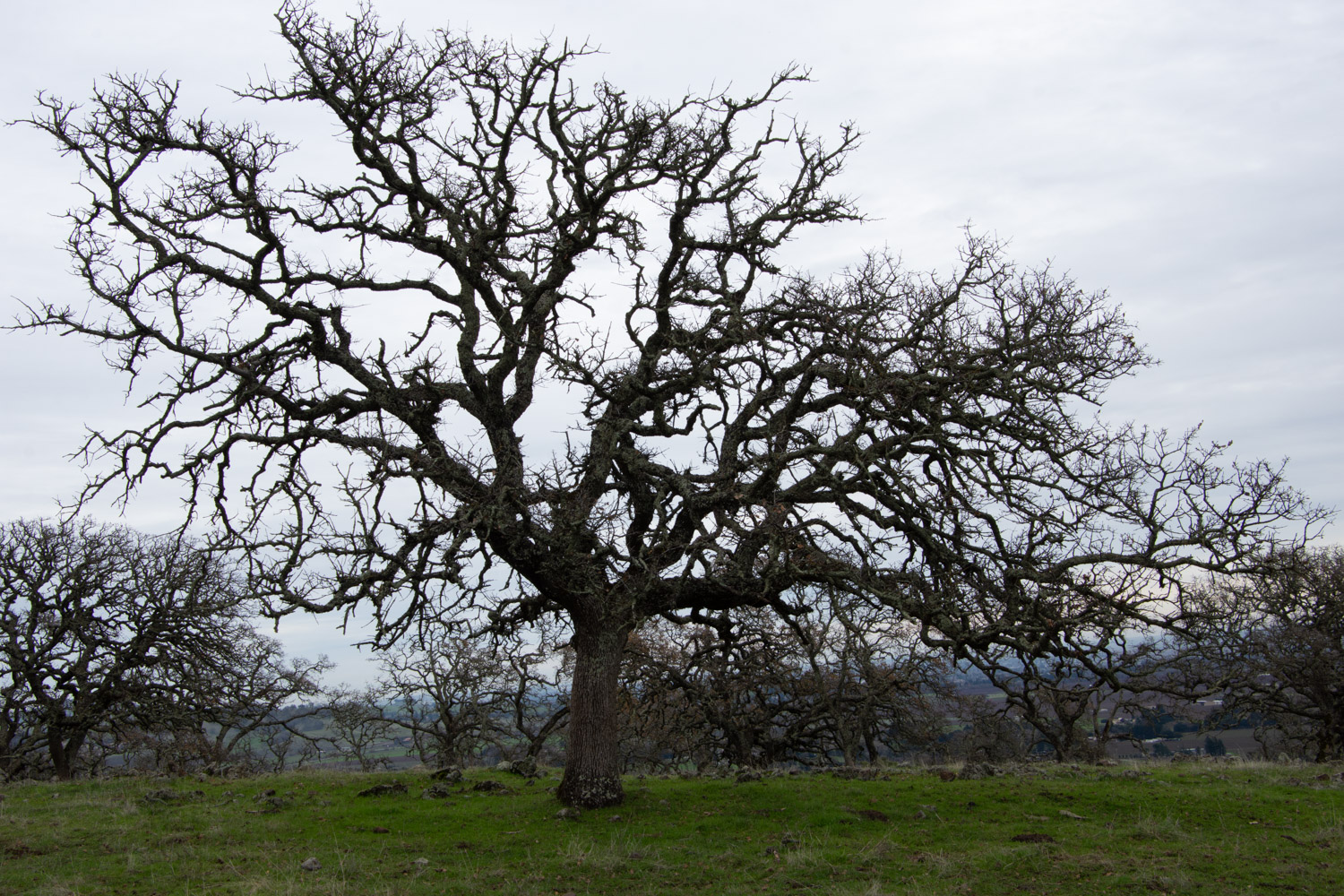
These blue oaks are magnificent with and without leaves.

Another view that includes Mt. Diablo. Hopefully I’ll go hiking there one of these days. I was there in 2020 and this is the blog post (on my website) about that.

I will definitely be back here in the spring for wildflowers.