Unknown's avatar

About Robin

Owner of Meridian Jacobs, farm and fiber shop. I raise Jacob sheep, teach fiber arts classes, weave handwovens for sale, and manage the store.

Week in Review – SF, Sheep, Weaving

So much for my one blog post every day routine. It’s been a week. I think I had a set back last weekend. I often work on the computer in the late evening. Last Friday I went to bed earlier than normal because I had to get up early for the next day’s event. That backfired. I woke up at 3 a.m. and couldn’t go back to sleep.

Charlene (Integrity Alpacas, creator of Gardener’s Gold, and my down-the-road neighbor) and I left at 5 a.m. for San Francisco to be part of the Fibershed booth at the Ferry Building Farmers’ Market.
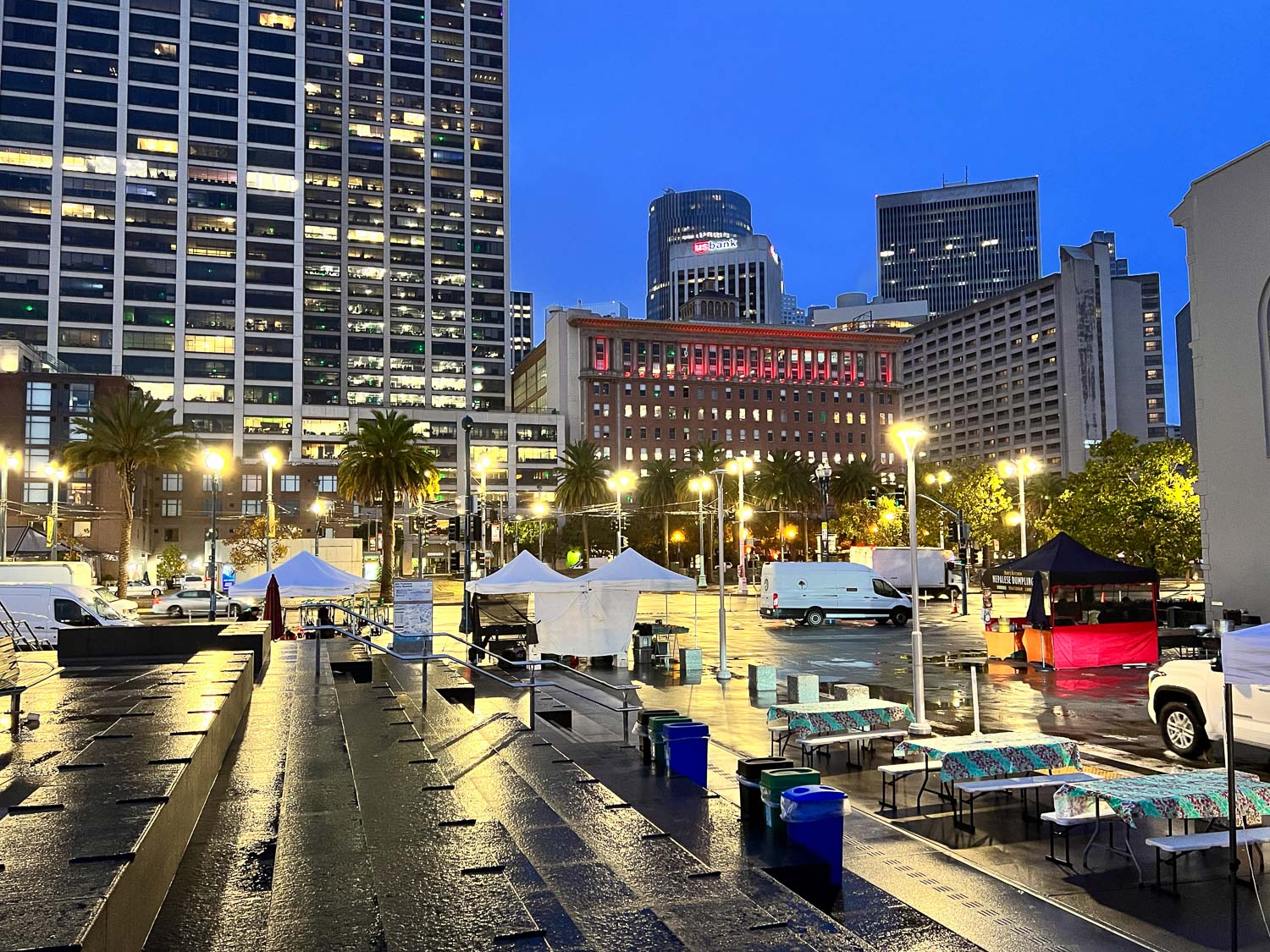
We arrived at dawn and some people were already setting up. It had been raining and continued to rain and drizzle off and on all day.

This is the opposite view from our location.
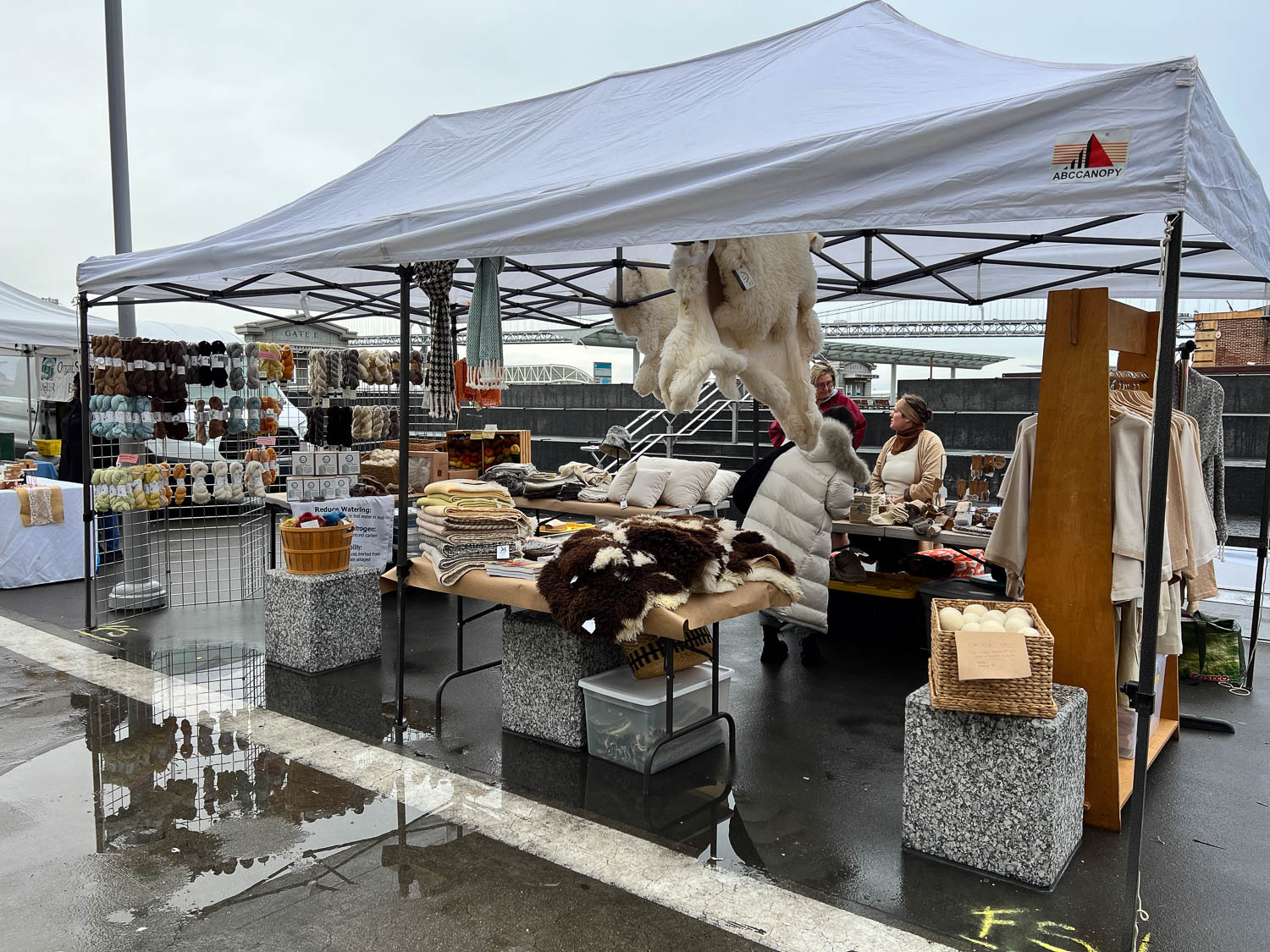
A few Fibershed producers arrived, and we finished setting up in time for the market to open. There were twelve producers represented at the booth.
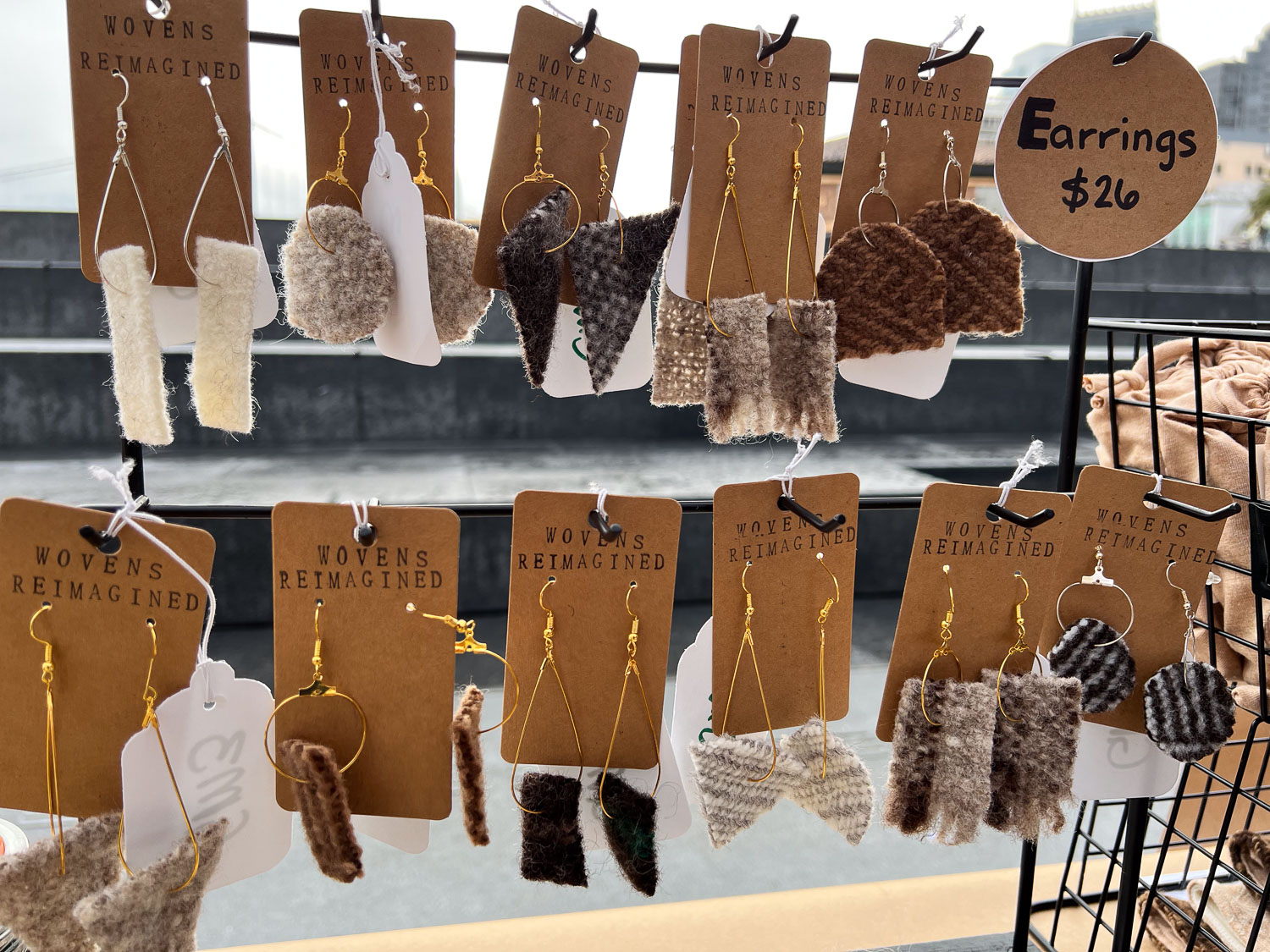
Do you recognize any fabric here? Gynna (creator of Soil to Soil Market is using some of my woven pieces to create earrings! (FYI – Soil to Soil Market is open, there are still only two of us listed while there is more behind-the-scenes work.)
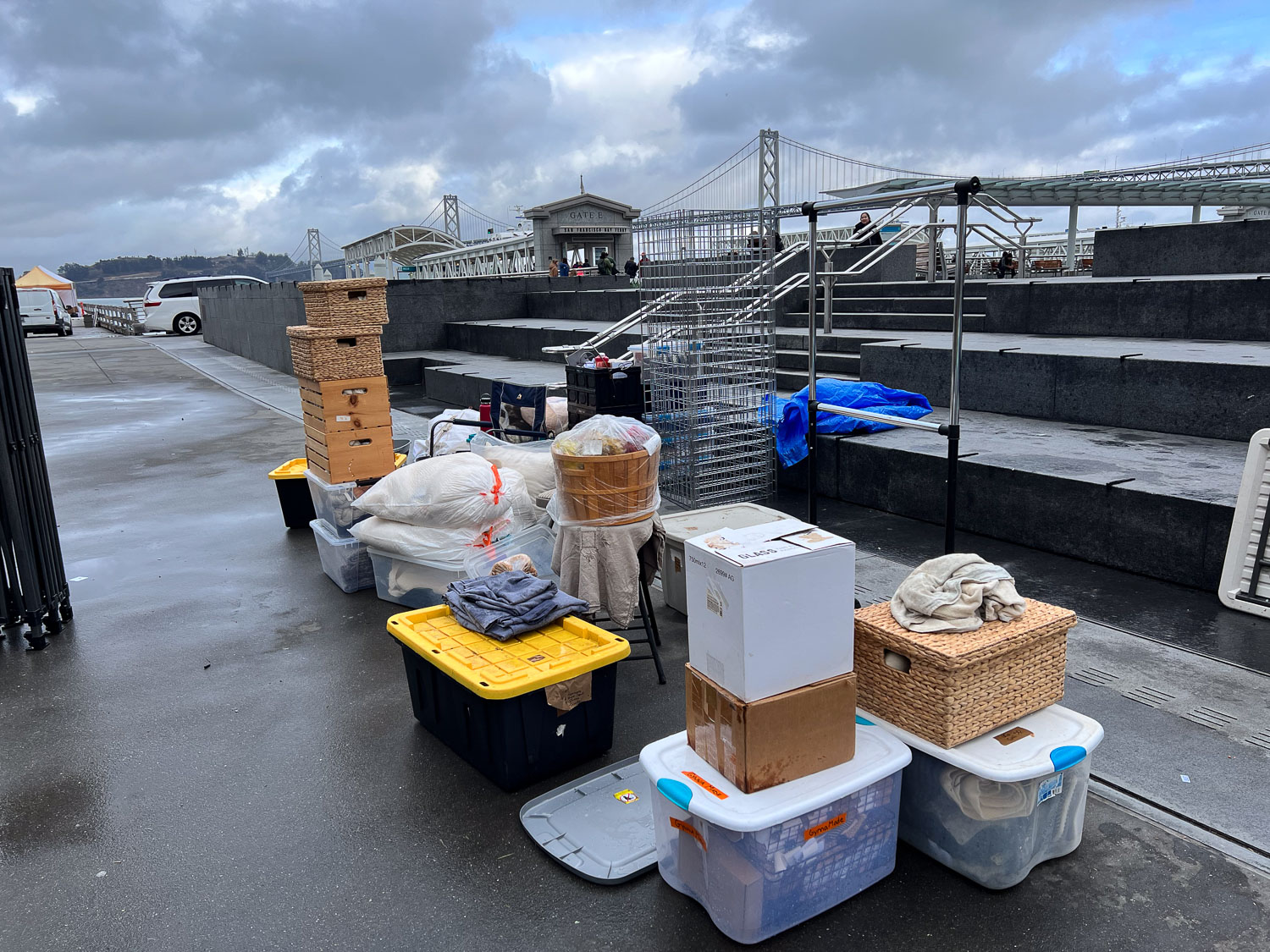
This was a cold, wet day. Thankfully we were able to pack up when the market was over at 2. When Charlene went to the parking garage to get her truck she found it, along with six other vehicles, had been broken into. Her rear passenger side window was shattered and the truck had been searched. The next day after, a night of freezing temperature, the front passenger window had shattered and you could tell where it had been hit first but hadn’t yet broken.

I didn’t feel warm until that night in bed (early). I’m ready to stay home.

Back to farm life.
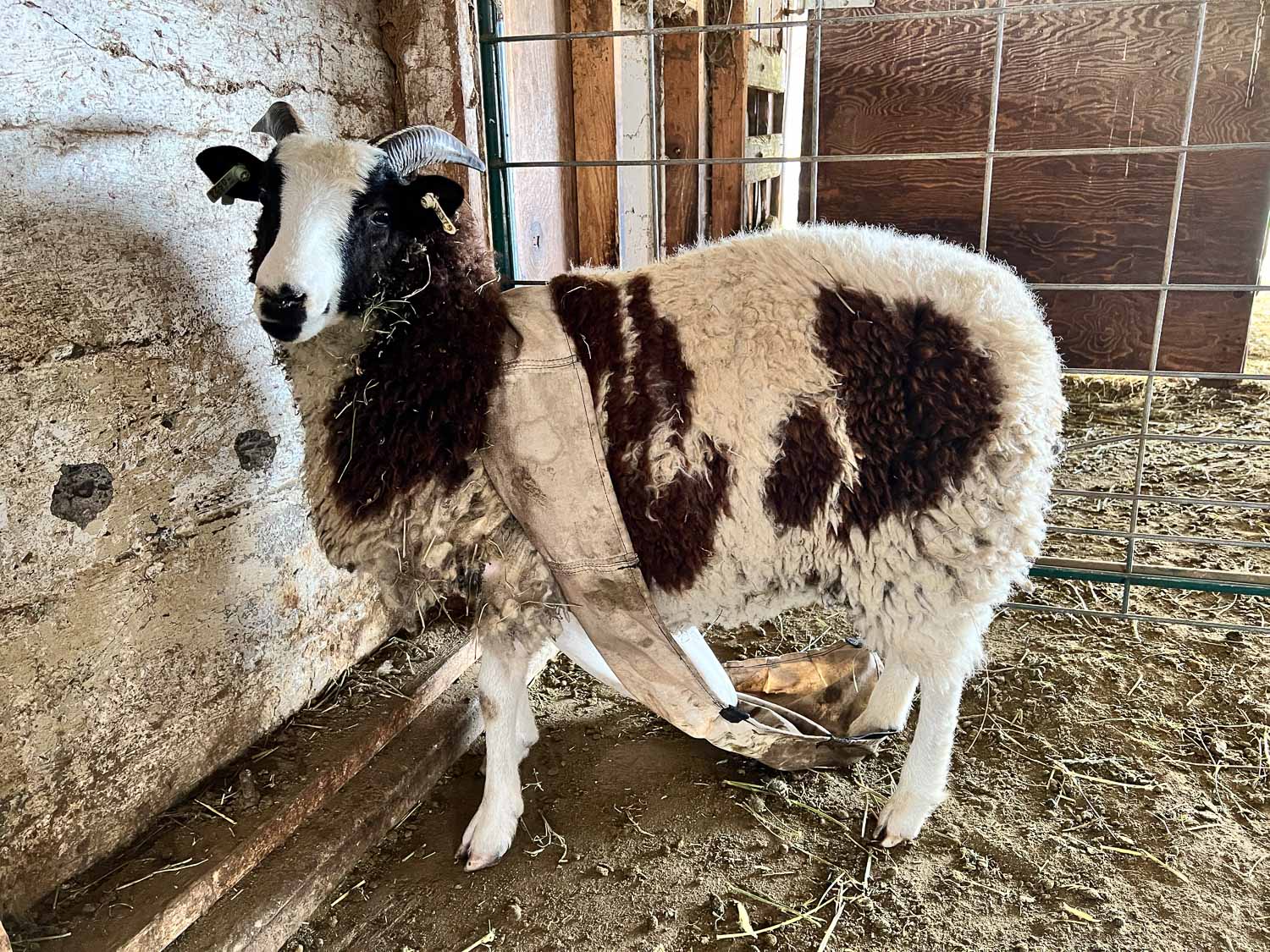
This is SilverSun, one of the March 2023 lambs. I changed coats a couple of weeks ago. Its always a gamble to figure out which coat is big enough to give room for more wool to grow but fits well enough to stay in place. I had bought some new coats last summer and I they fit a little differently. She had probably got a back leg out of the strap and then the front was loose enough to get a front leg through. Eventually the neck opening was around her middle and she was trapped with the coat dragging underneath. The other sheep were harassing her and she couldn’t do anything about it.
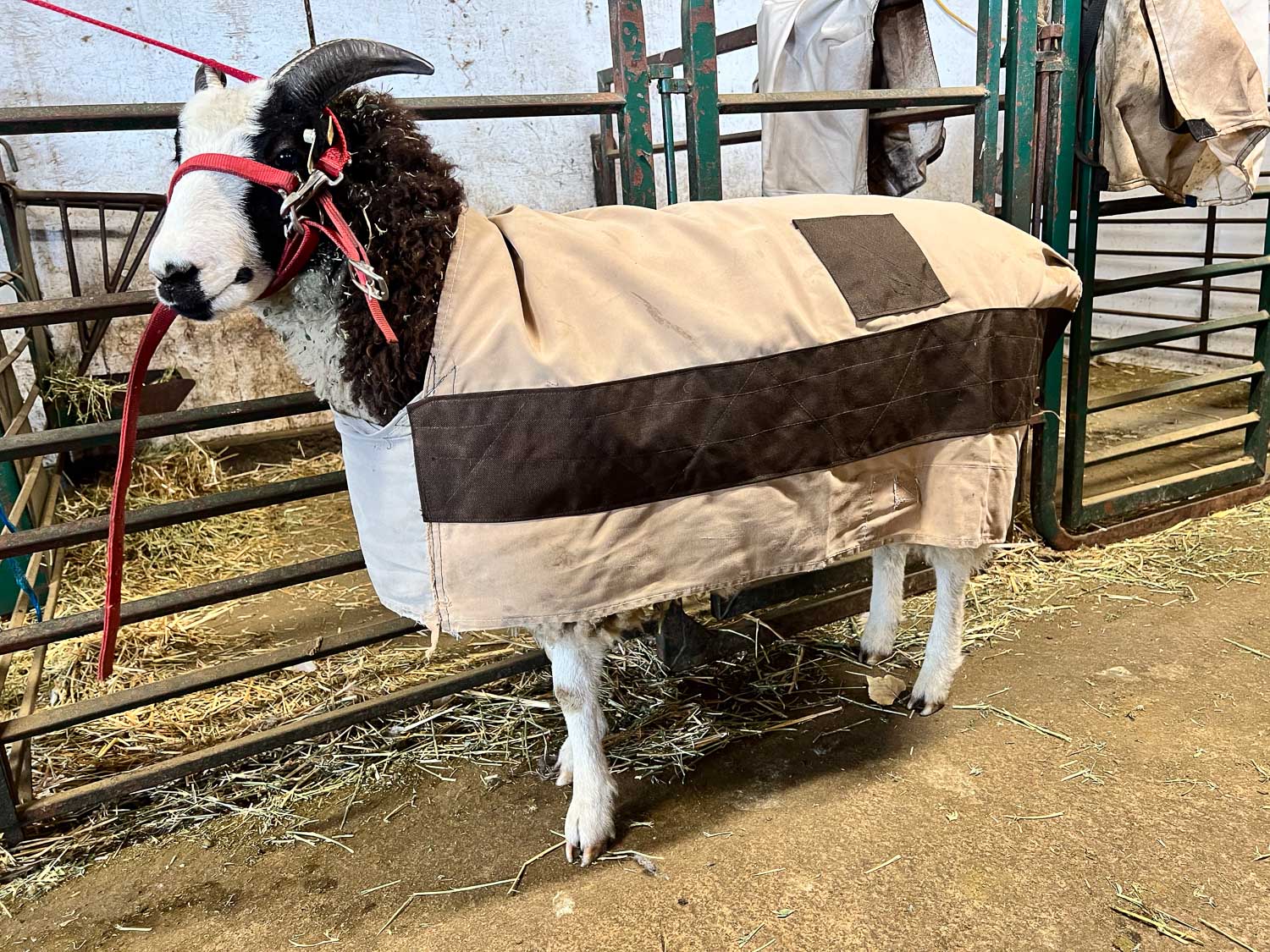
Here she is in one of the old style coats that has been patched. That’s a better fit.
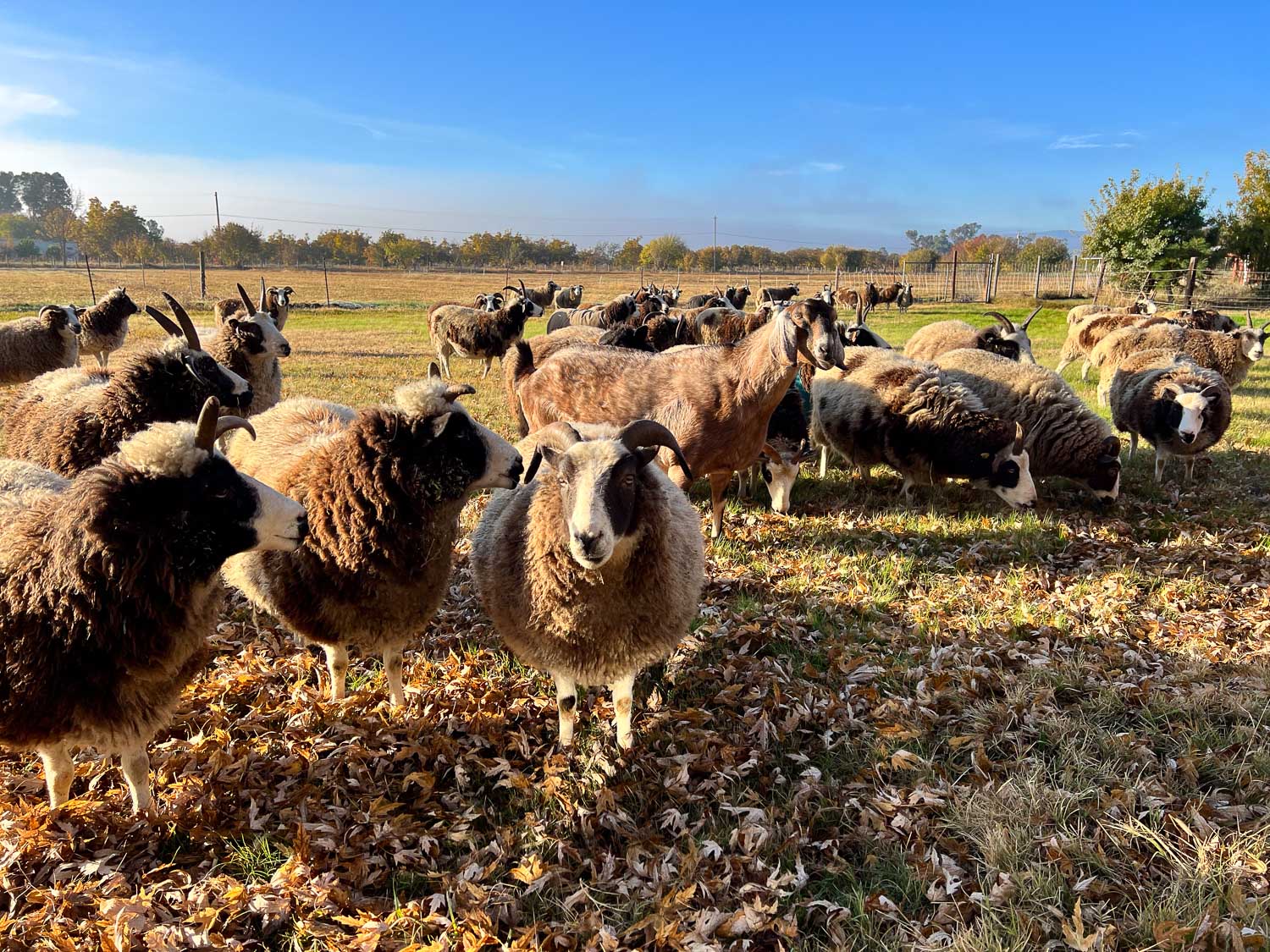
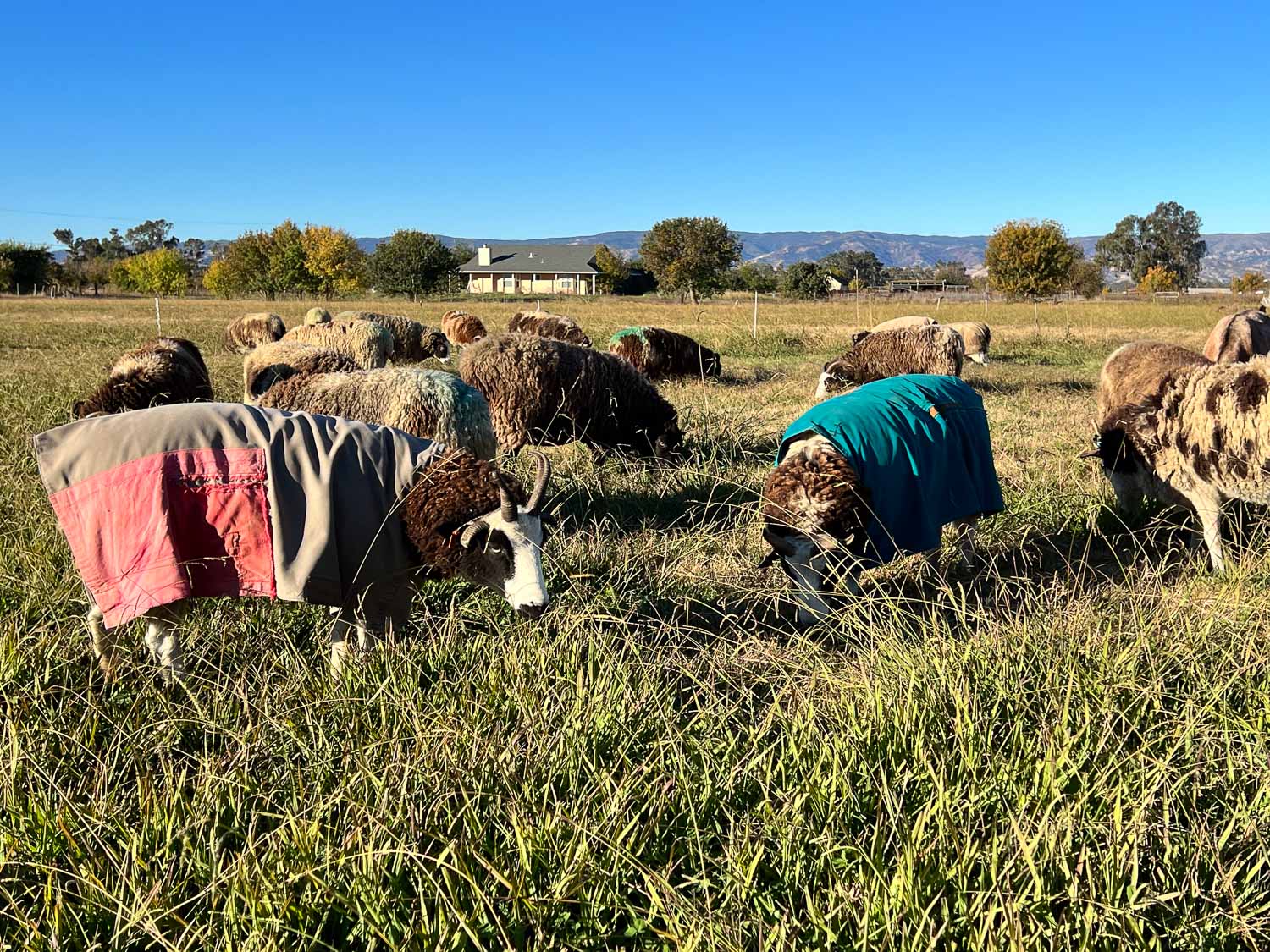
Ewes (and a goat) in the small field behind the shop.
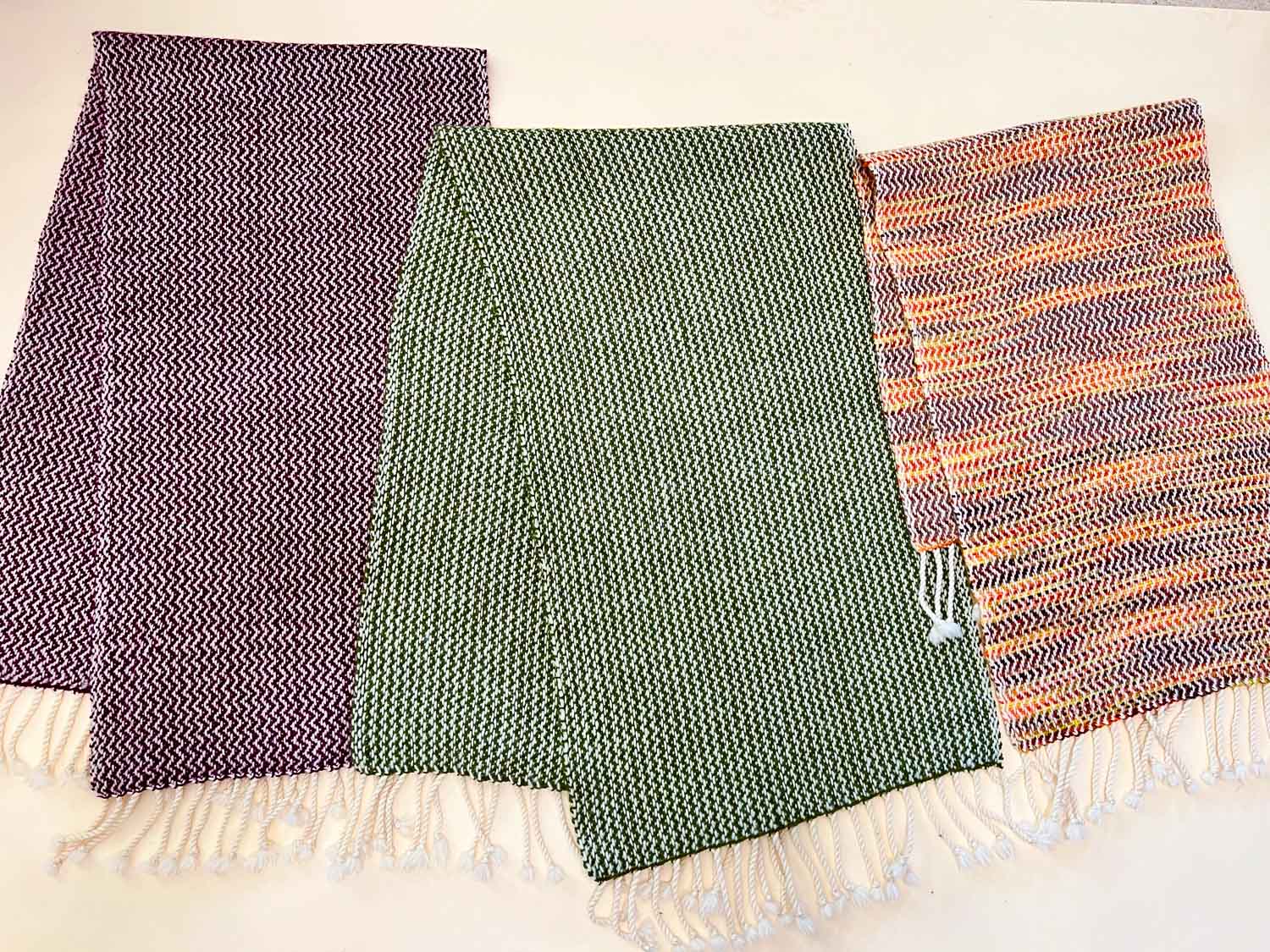
I’ve been focused on weaving…all the weaving that I wish I had done earlier in the year to be ready for the holidays. These are three wool shawls now at The Artery in Davis.
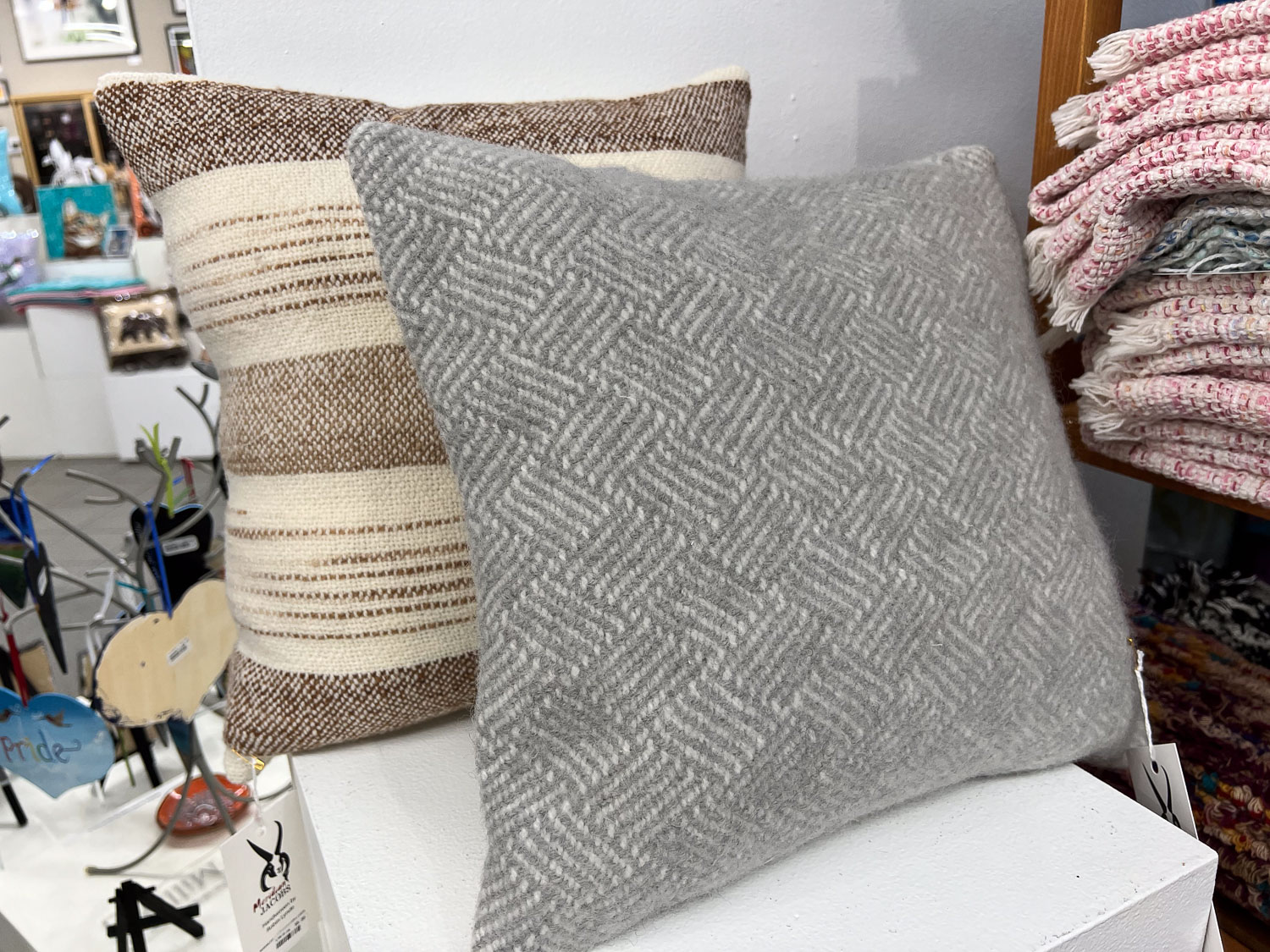
I’m also creating other pieces using odd bits of handwoven fabric. These pillows are at The Artery.
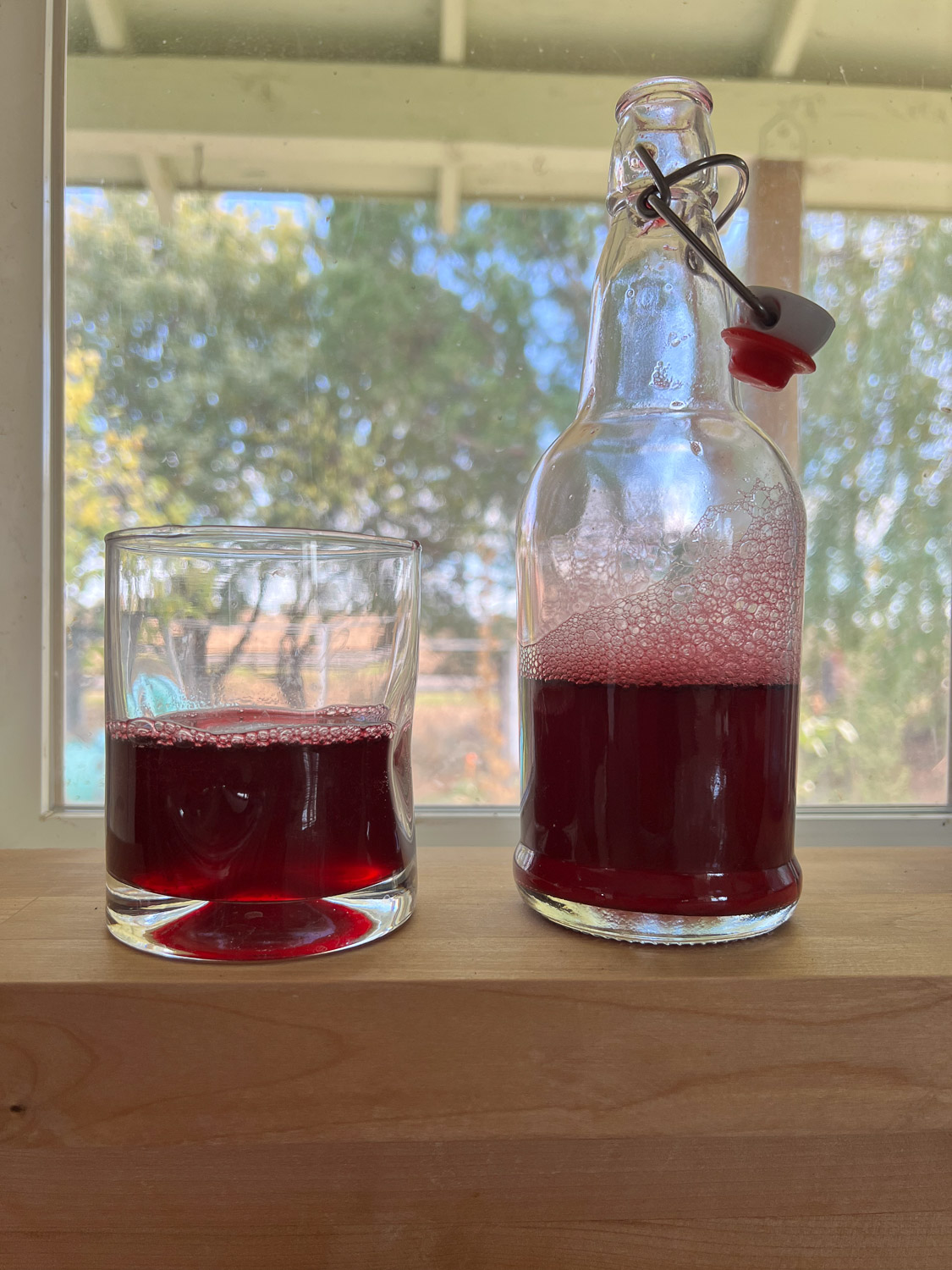
At Spinners Day Out on Friday a friend who had harvested our pomegranates brought me a treat of pomegranate soda!
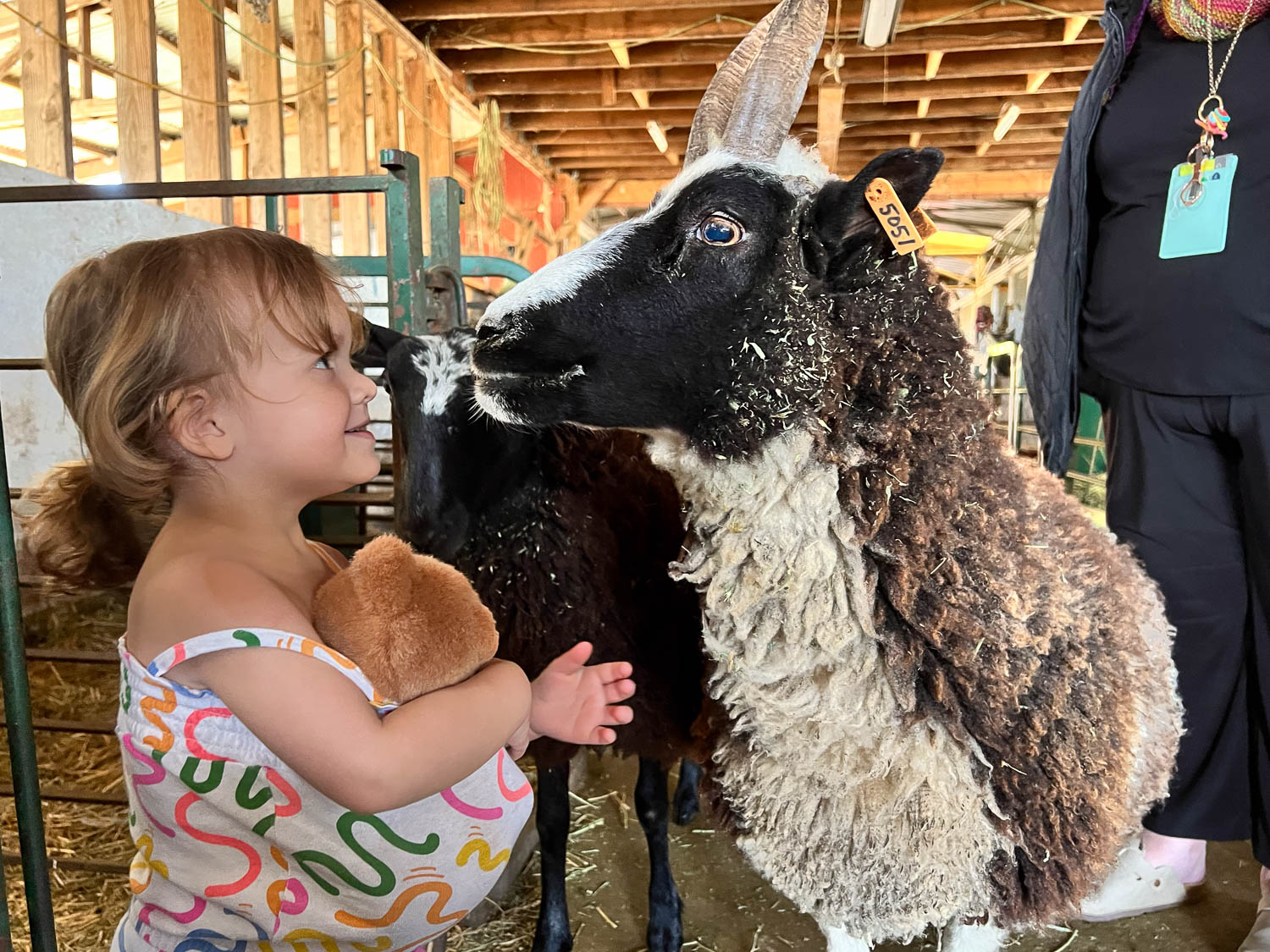
Also at Spinners Day Out, our youngest friend, daughter of one of the original Farm Club members, went to the barn to visit with Jade. (That’s a stuffed kitty snuggled in her clothes.)

Back to normal work–weaving, website, sheep, etc.
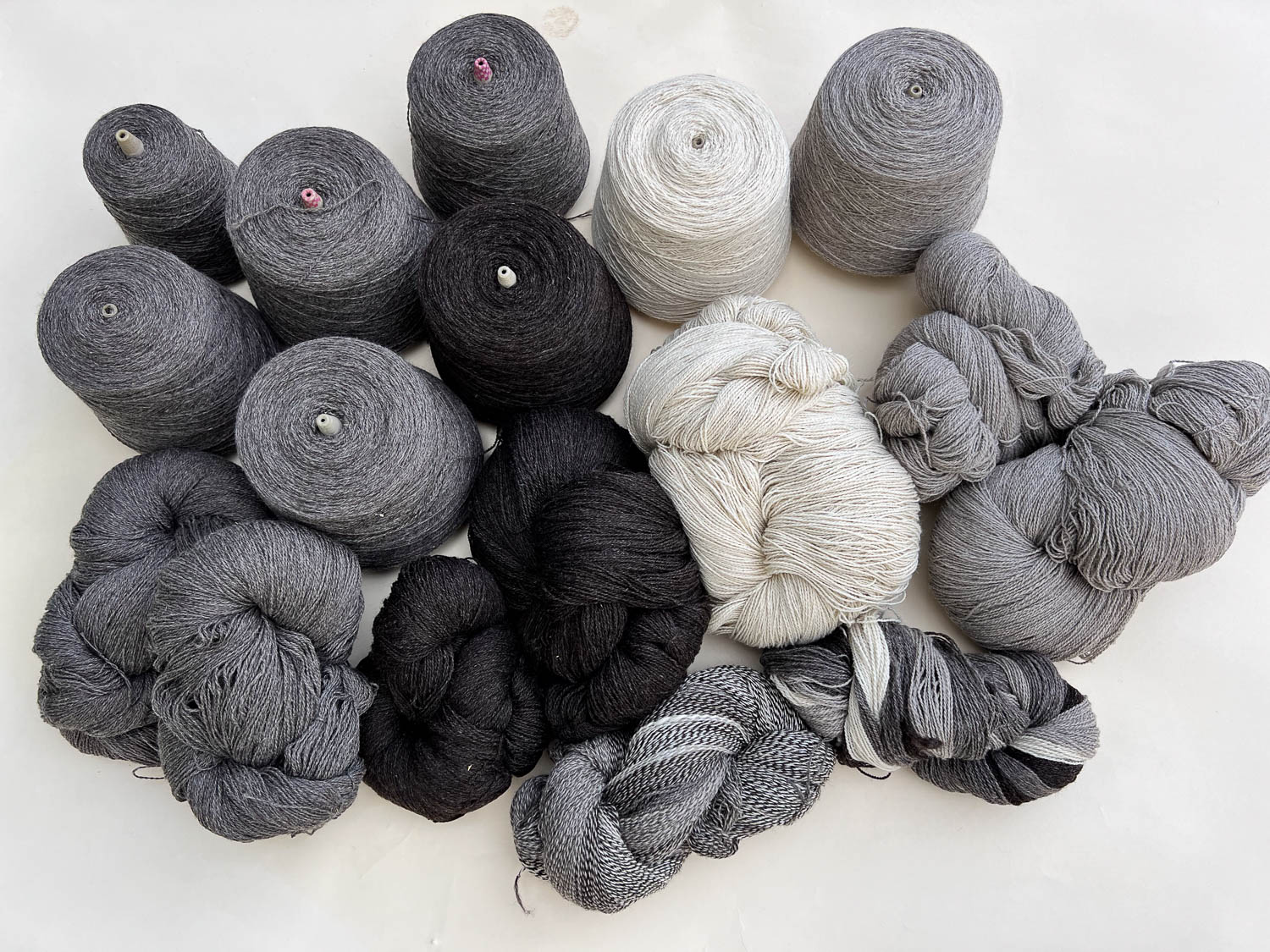
Stars and Stripes in Black and White AND New Jacob Yarn

Three days in a row with a blog post! I’m on a roll.
I didn’t write about my newest yarn because I wanted to have all the details. Here it is, although not on the website yet.
I shared this photo in a previous post. I just picked up the yarn from Valley Oak Mill a week or two ago. This is the last of the 2023 Jacob fiber.

The first thing I need to do before planning a weaving project and before listing the yarn for sale is evaluate the yarn. Measuring wraps/inch (WPI) is one step.

Look at what I finally figured out–how to put photos side-by-side. It only took 20 minutes of trial and error and I don’t know if I can do it again. Now if I could just figure out how to change the size of the spaces .

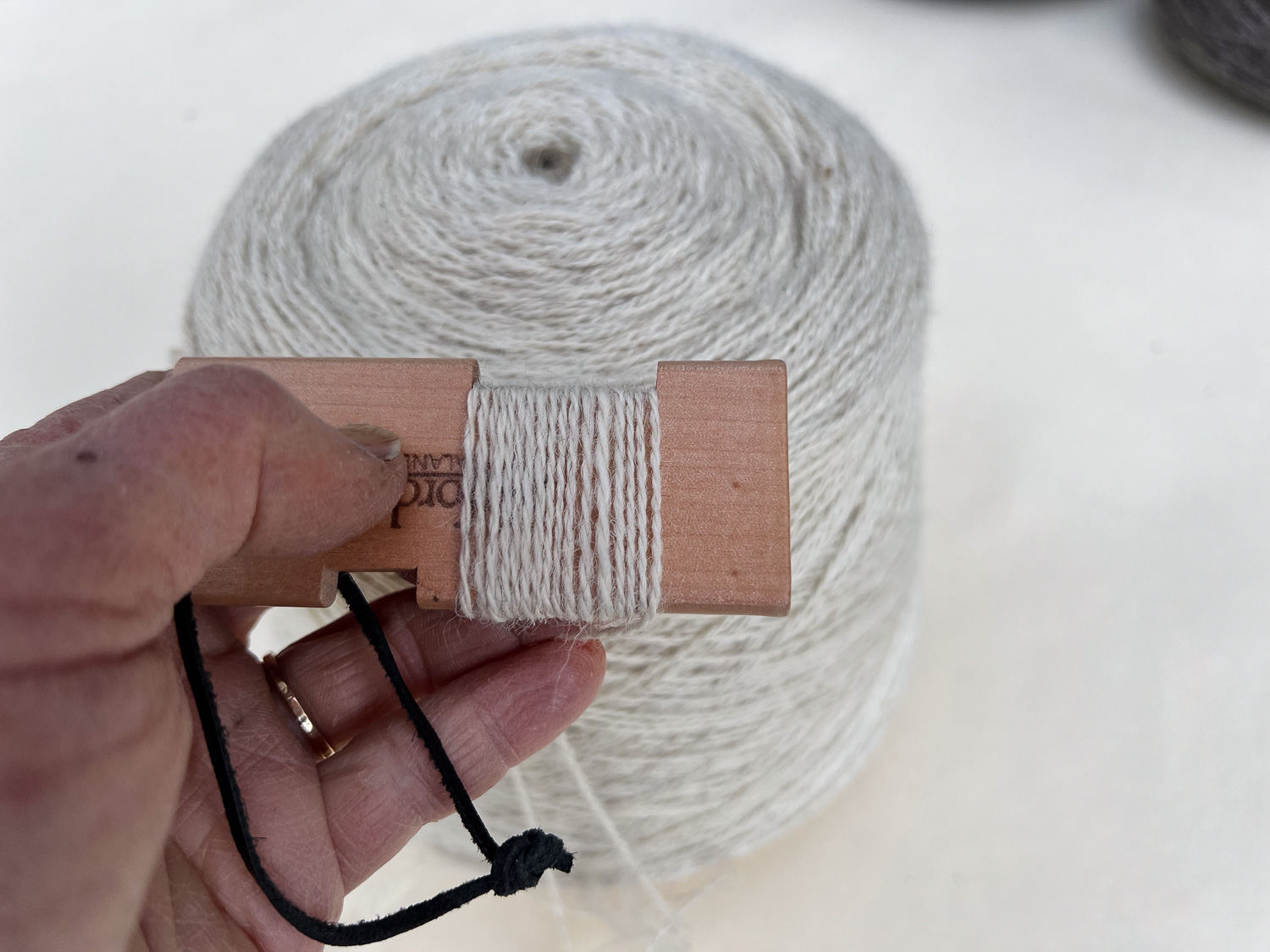
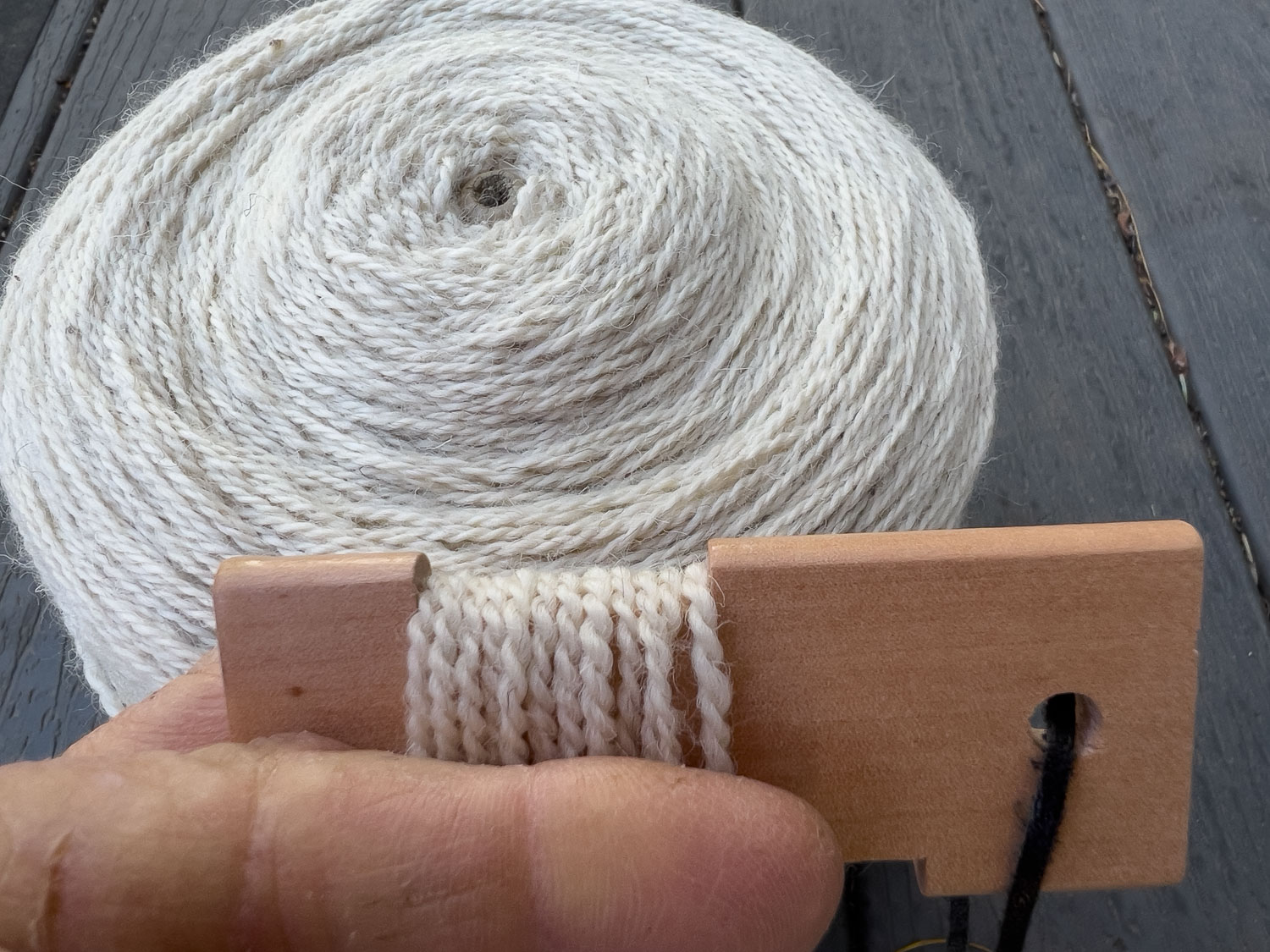
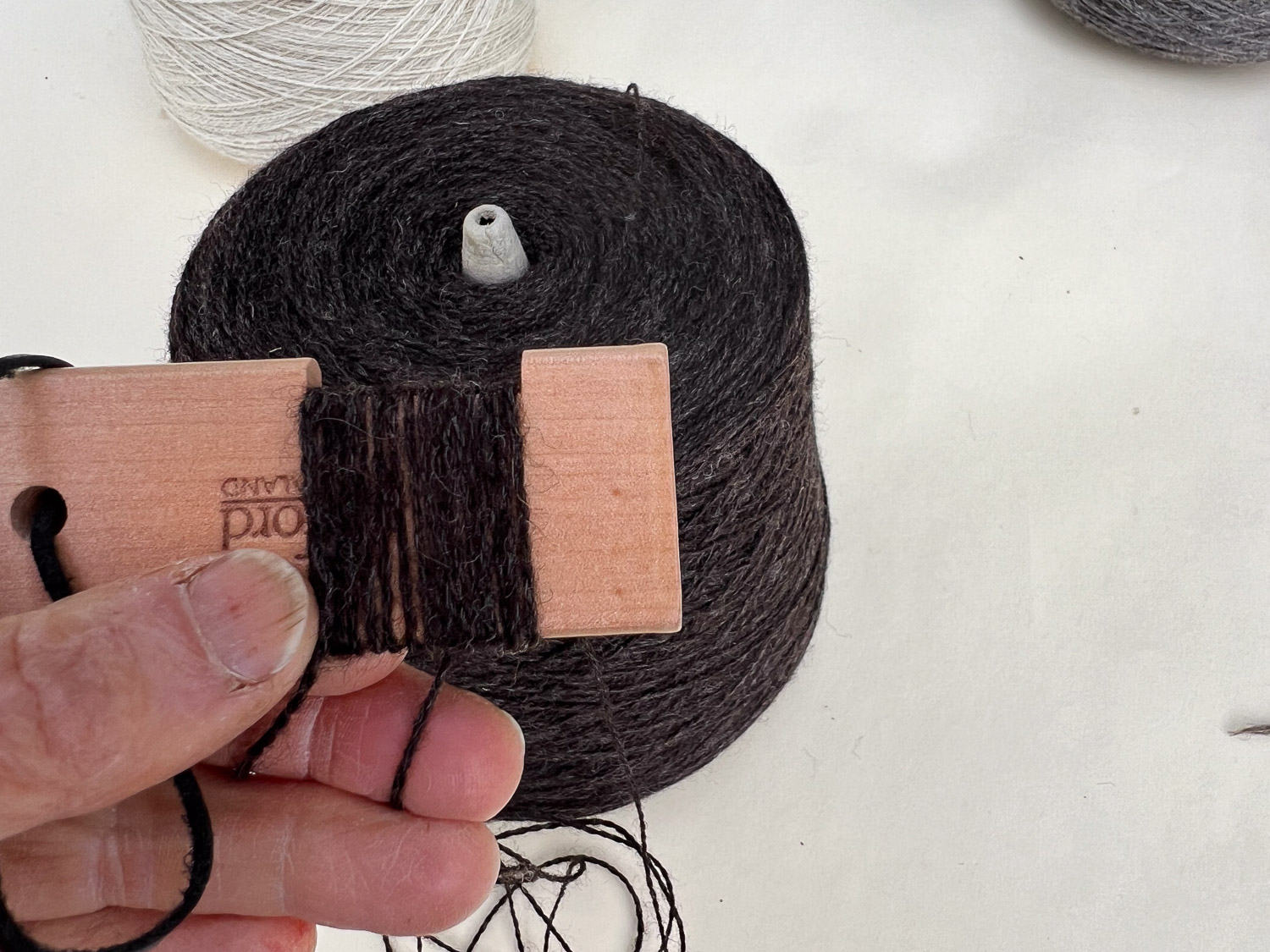
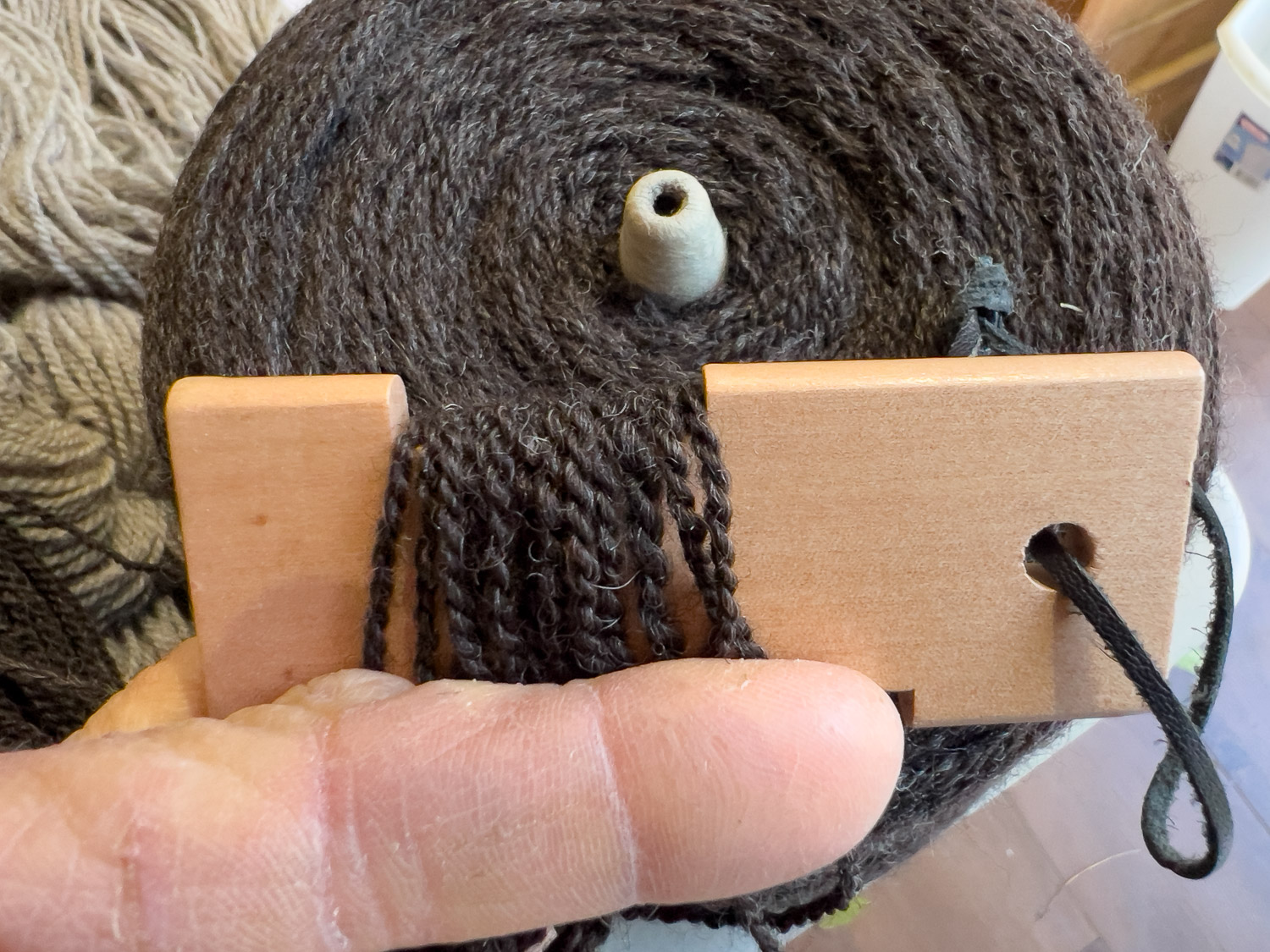
The point of this is to show the wpi measurements for the same yarn before and after wetting. The yarn on the left is wound straight from the cone. The sample yarn on the right shows the WPI after the yarn has “bloomed”. I soak the skeins in water for about five minutes and then spin them out and let them dry. It is important to plan a project based on what the yarn will look like when the knitted or woven or crocheted project is wet finished. In the case of all these yarns they measured 17 WPI when wound from the cone and 12 WPI after washing. That’s a big difference.

Here is how the black yarn looks.

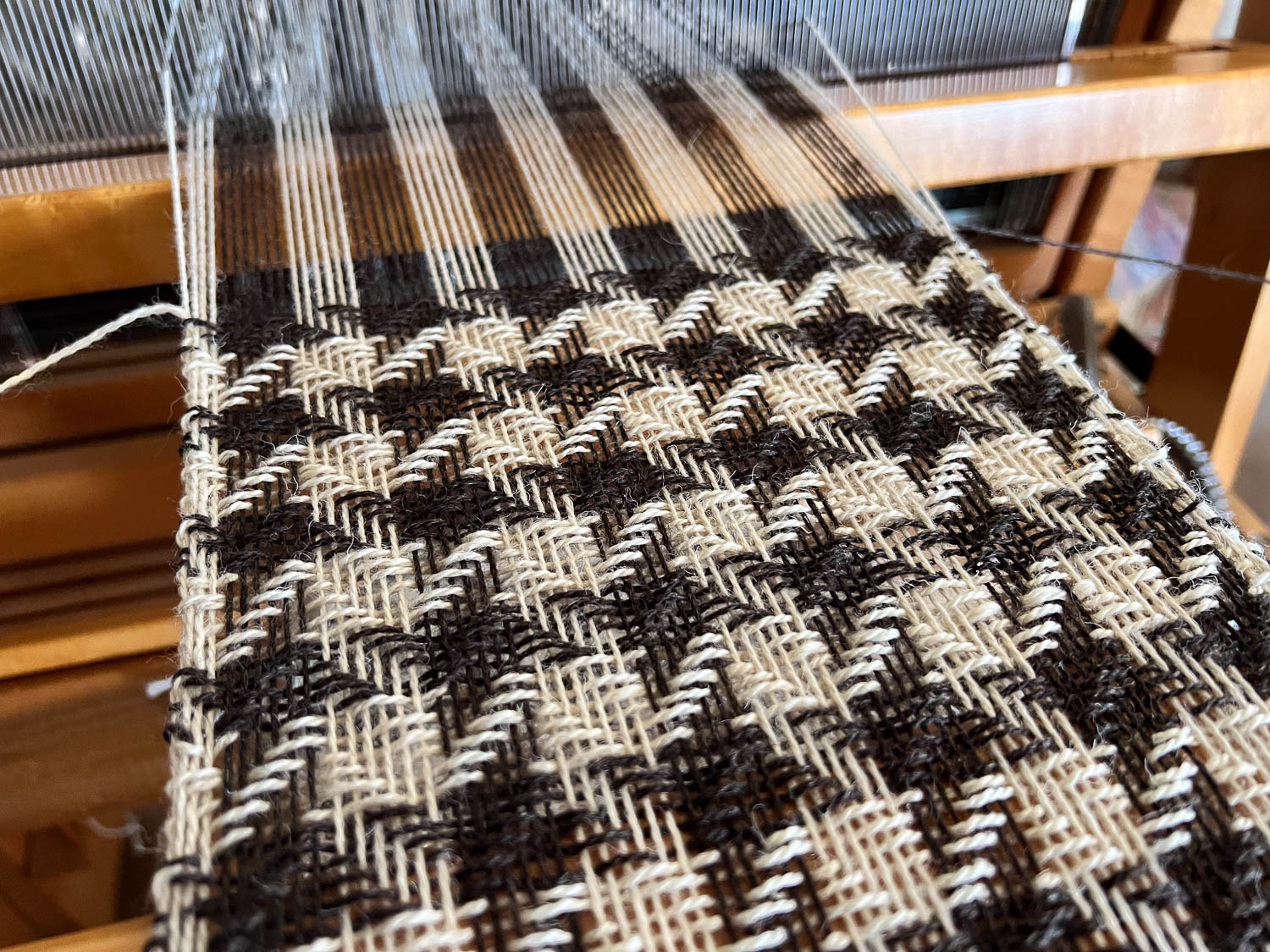
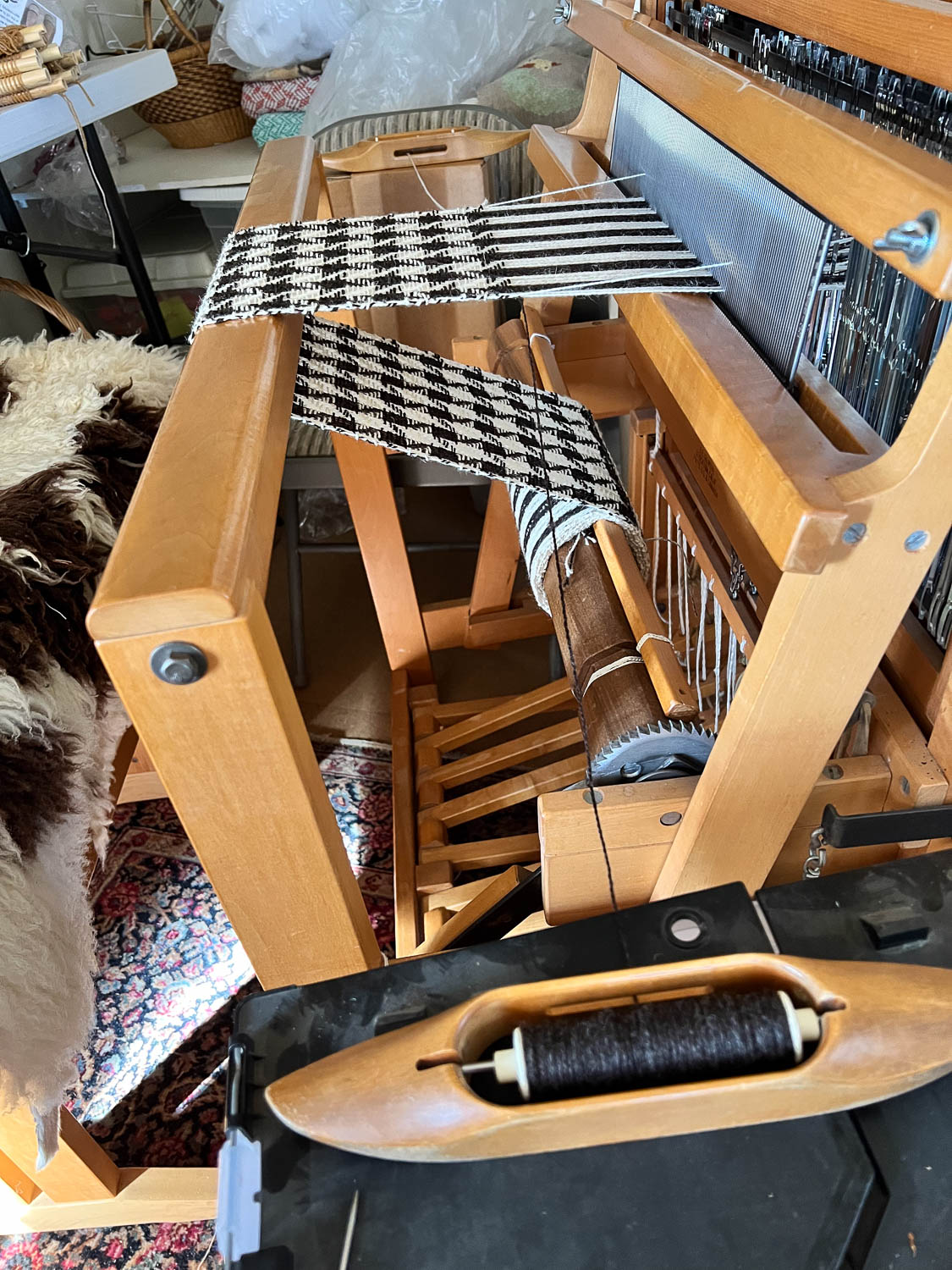
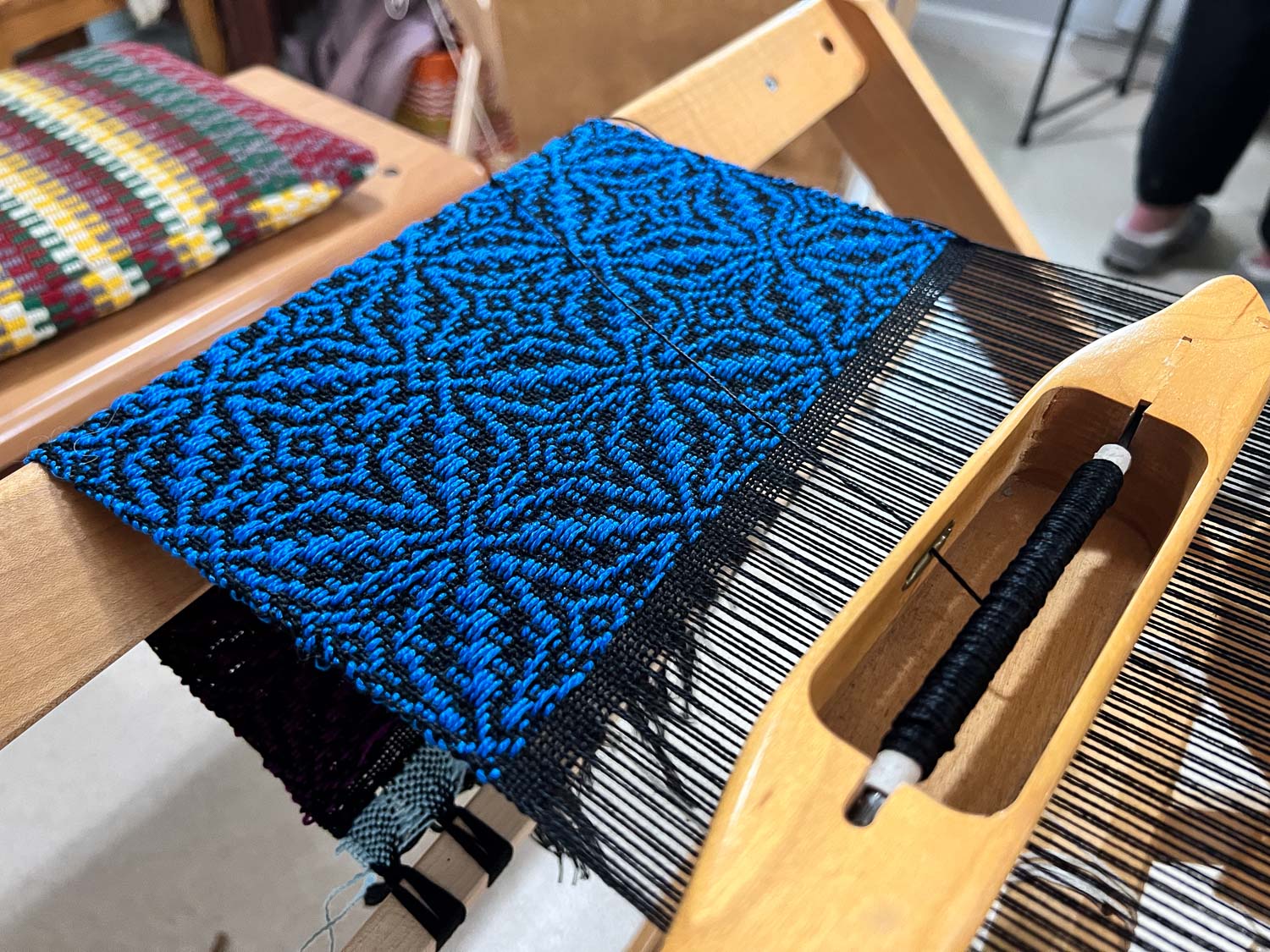
Here is this yarn on the loom. I sett it at 8 epi (ends per inch) based on the 12 WPI measurement. It looks very open but remember that the yarn is under tension on the loom and it has not been wet finished. It will bloom as in the photos above.

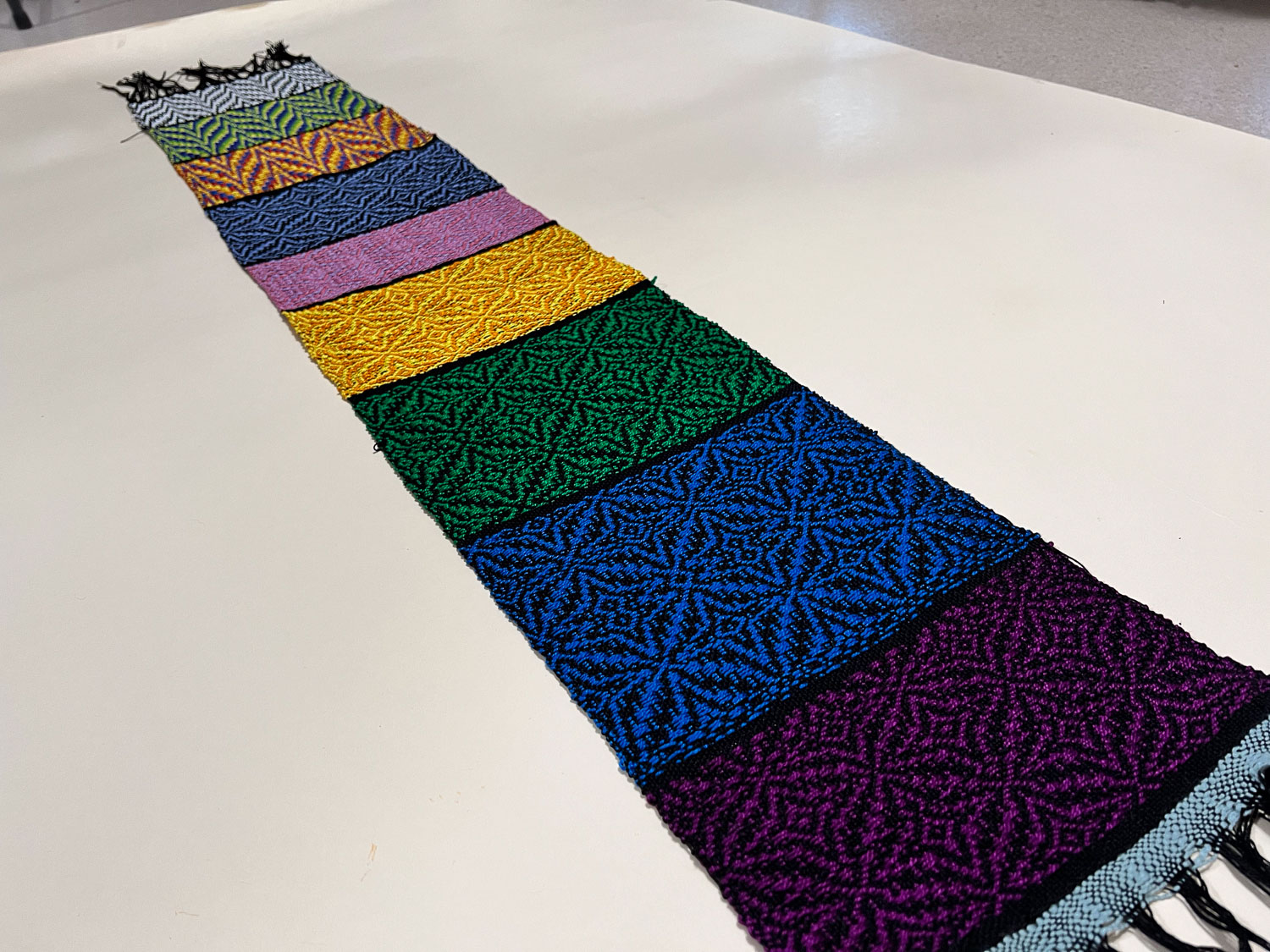
The stars appear due to alternating 6 dark threads and 6 light threads in warp and weft AND the weave structure. Without the two colors you wouldn’t see stars and without the weave structure (tie-up and treadling) you would see a plaid. There is a trick to weaving this without cutting the yarn every time you change color and keeping the selvedges neat. I put boxes at the right height at each side of the loom and rest the unused shuttle there where I can reach under the yarn when I catch the active shuttle for six picks.

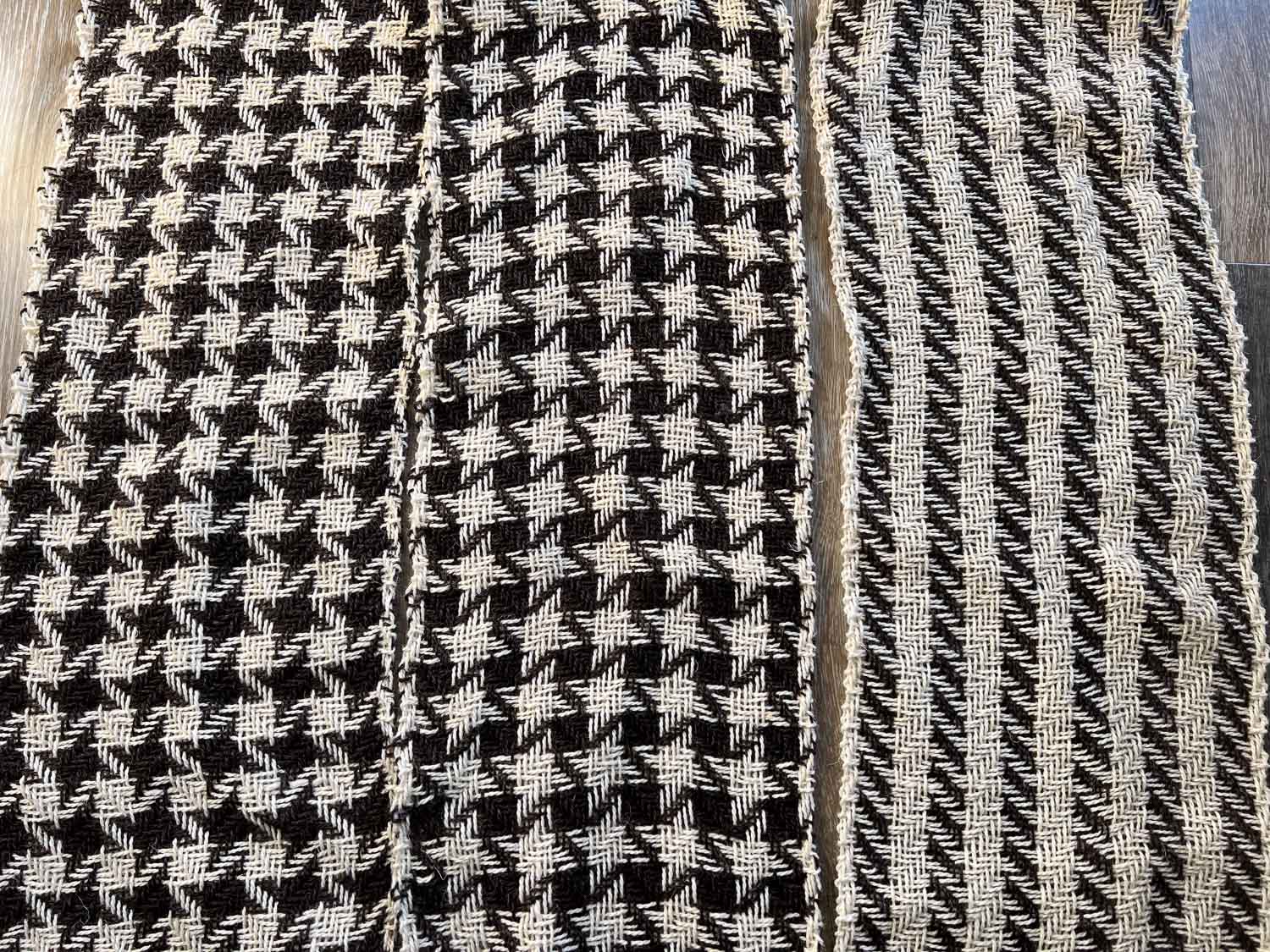
This is how the scarves look off the loom, not yet wet finished. The stars are black on one side of the scarf and white on the other.

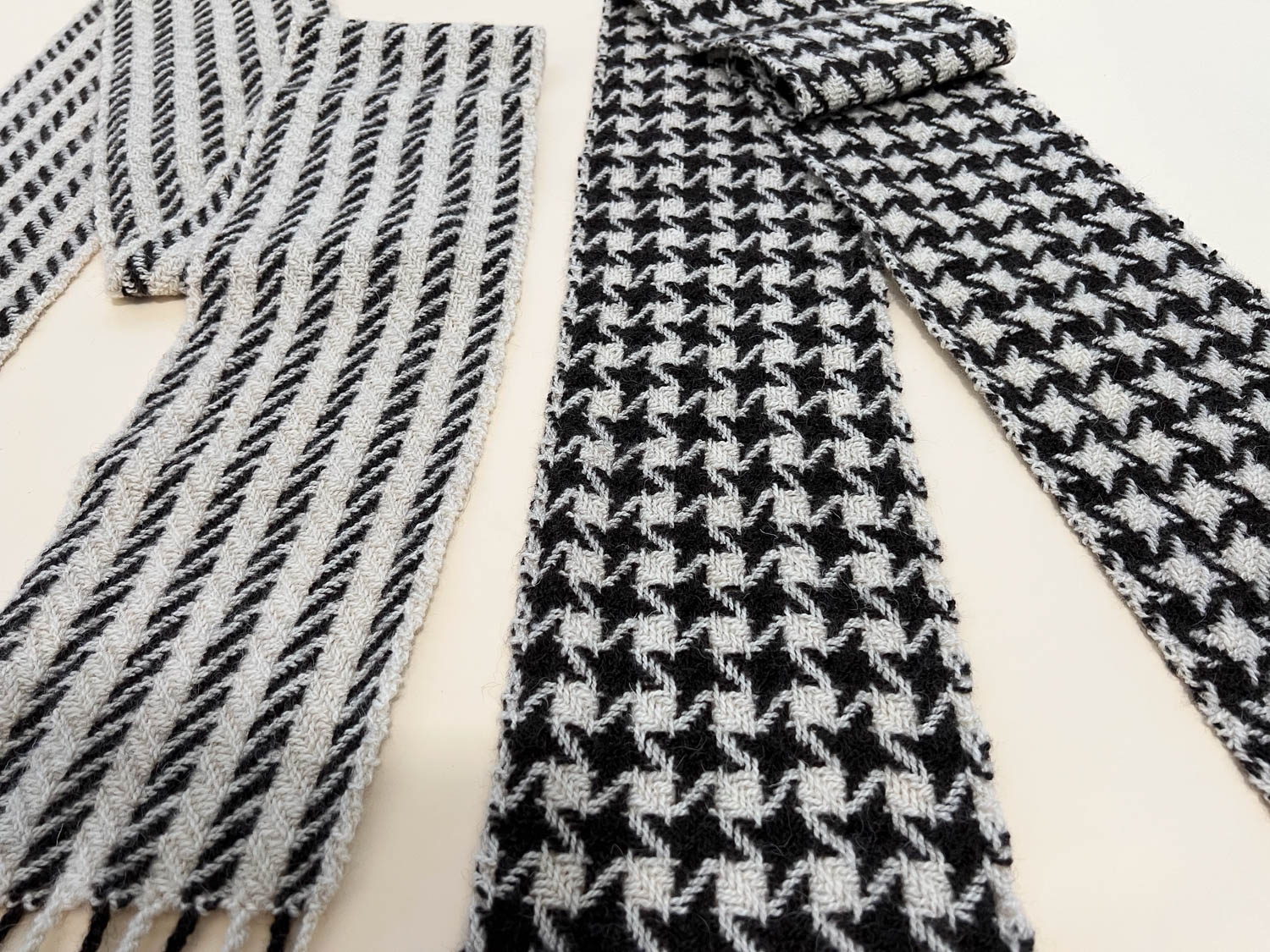
Here are the finished scarves. I have two of the stars scarves and one of the stripes. They may be sold this weekend but I can make more before Christmas. I wonder if I should try other colors. I could use the Timm Ranch naturally dyed yarn or Ashford yarn. I’d like to weave some in cotton as well. Too many ideas, too little time. If you’d like one let me know soon.

Today on the Farm – A Day of Random Projects

Could I actually write a post a day? This is two in a row. I don’t want to bore anyone who clicks here, but I think I could always find photos to write about.

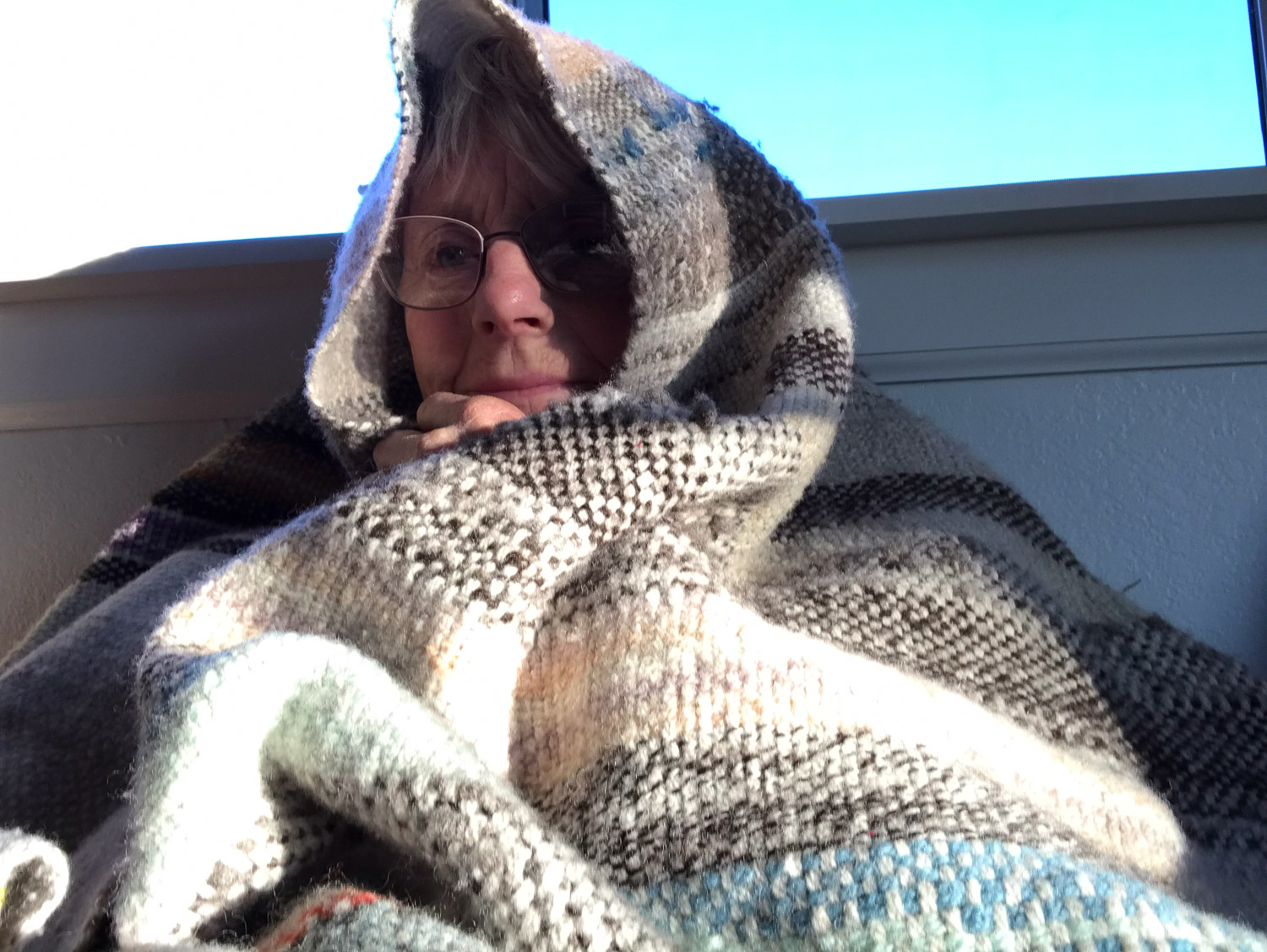
I shared this photo on IG this morning. This is me trying to stay warm while looking at IG before getting out of bed. The woven piece has meaning. After I had the major accident in 2019 my Farm Club friends got together at one friend’s house and wove this shawl/blanket using handspun yarn they had all brought. I think some weren’t even weavers, but Mary had the warp on the loom and guided them all through it. I have my own woven blankets around here but this one always makes me think of friends.

By the way if you go to that link in the last paragraph you’ll find lots of typos. That is because my small motor control still wasn’t very good and I couldn’t type very well.

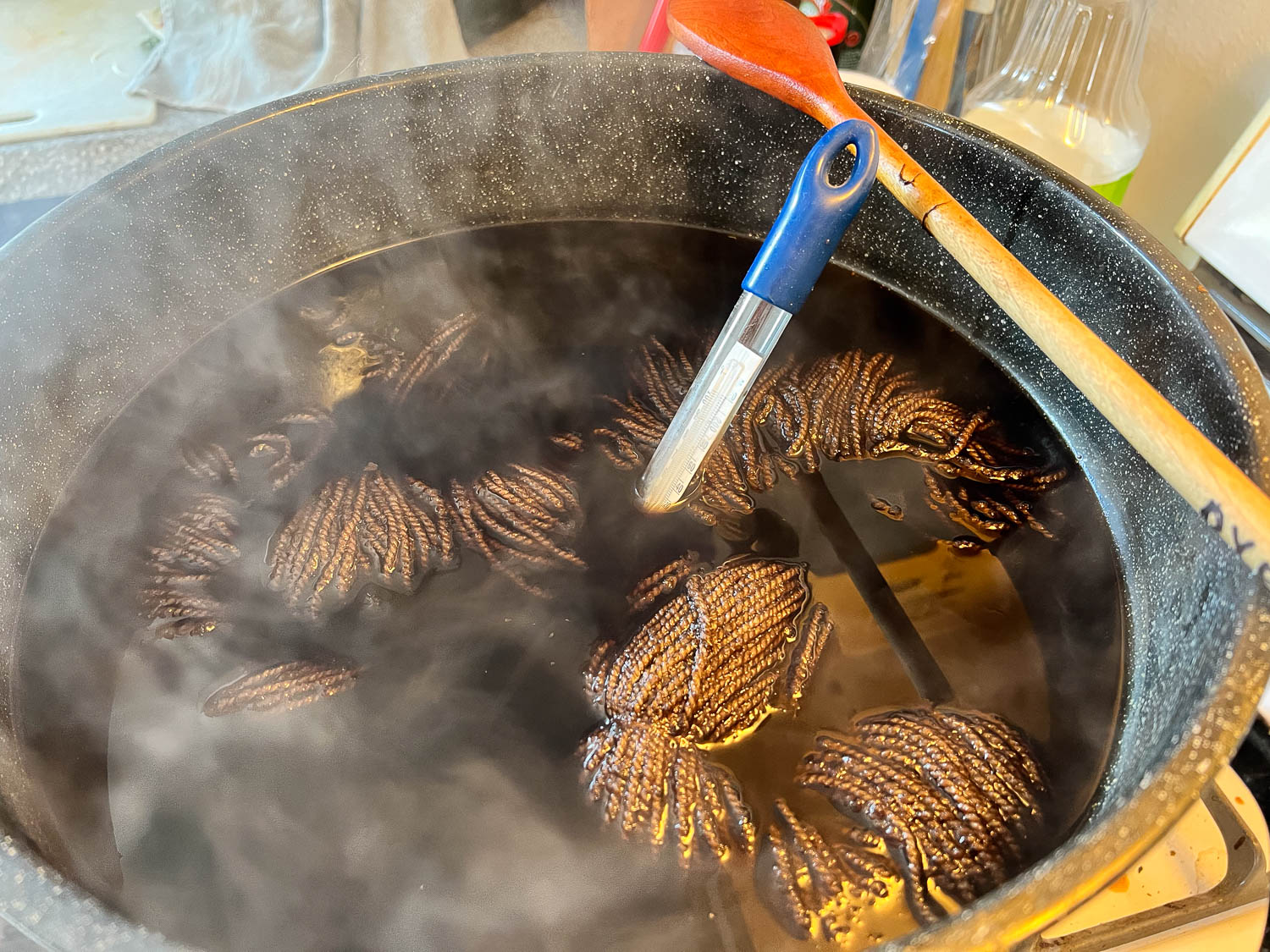
I have been harvesting my walnut crop. When the wind blows the walnuts off the tree a lot of them are still in husks. I can’t throw all those husks away when I know what great color they give. I had a bucket of husks that had been soaking for a week and decided to use them this morning.

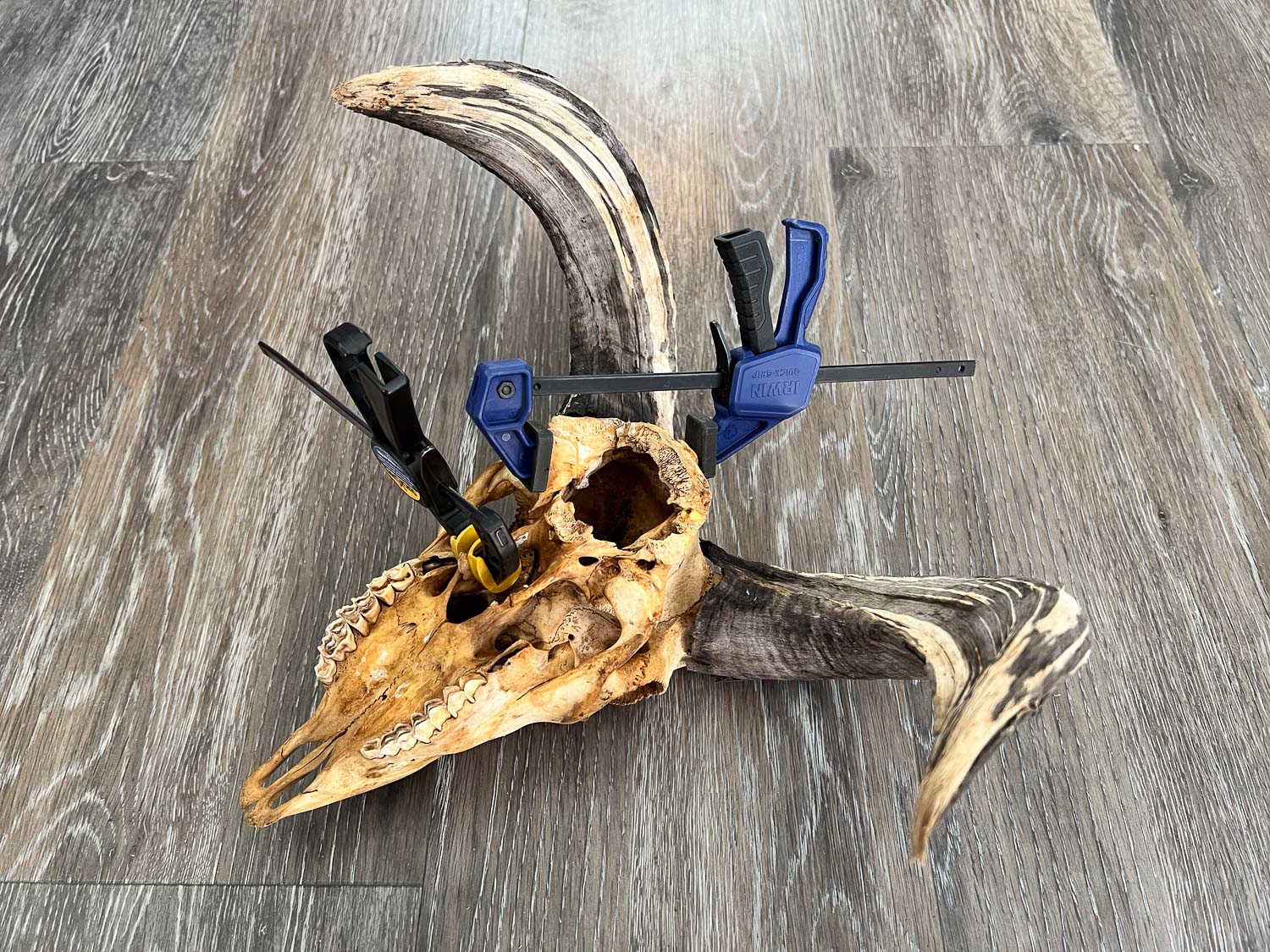
I also decided that its time to do something about the skulls that are in various stages of progress in the barn and the garage. I never get them as beautifully white as most you see for sale, but I still sell them. This one needed a little glue.

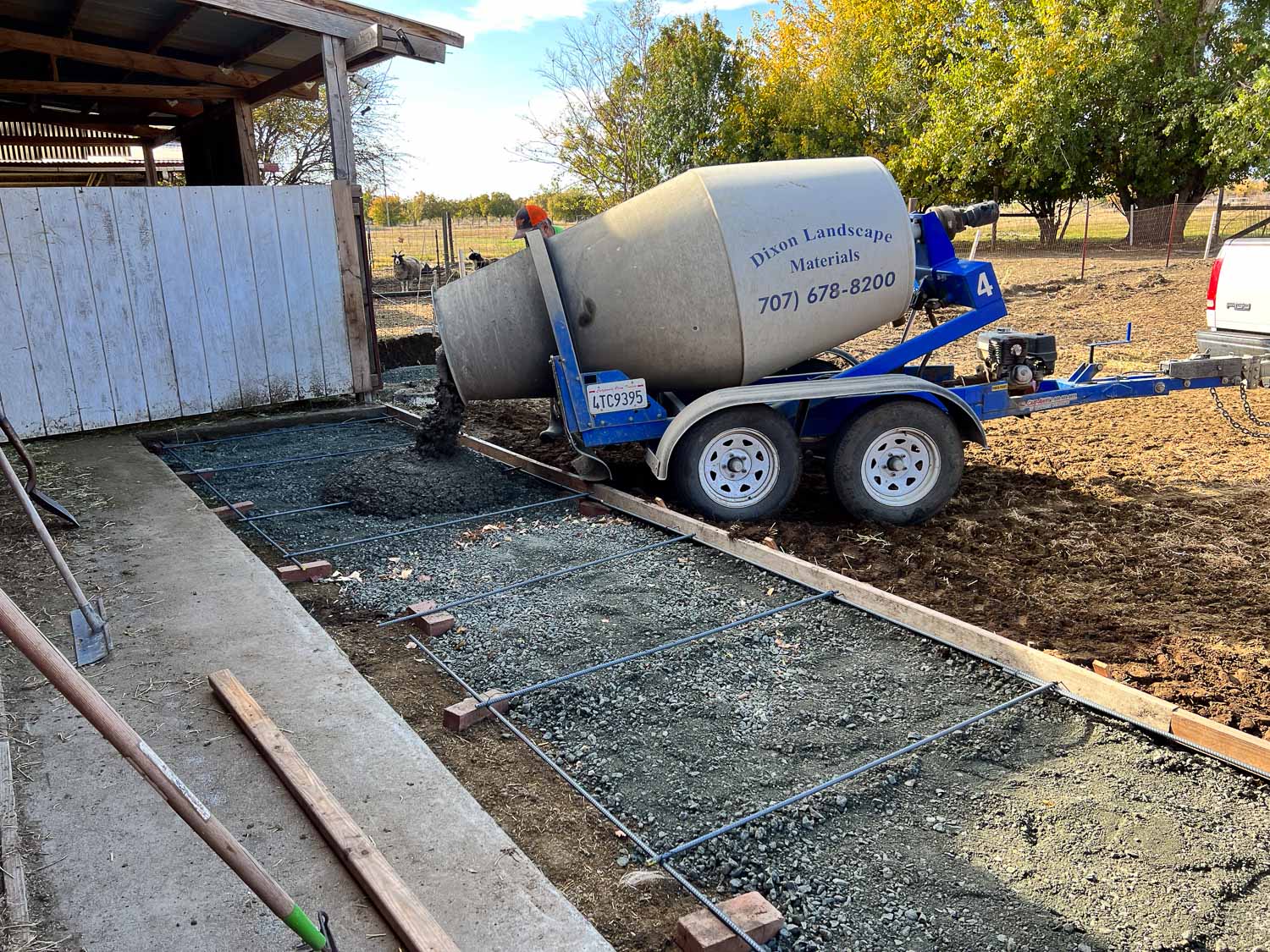
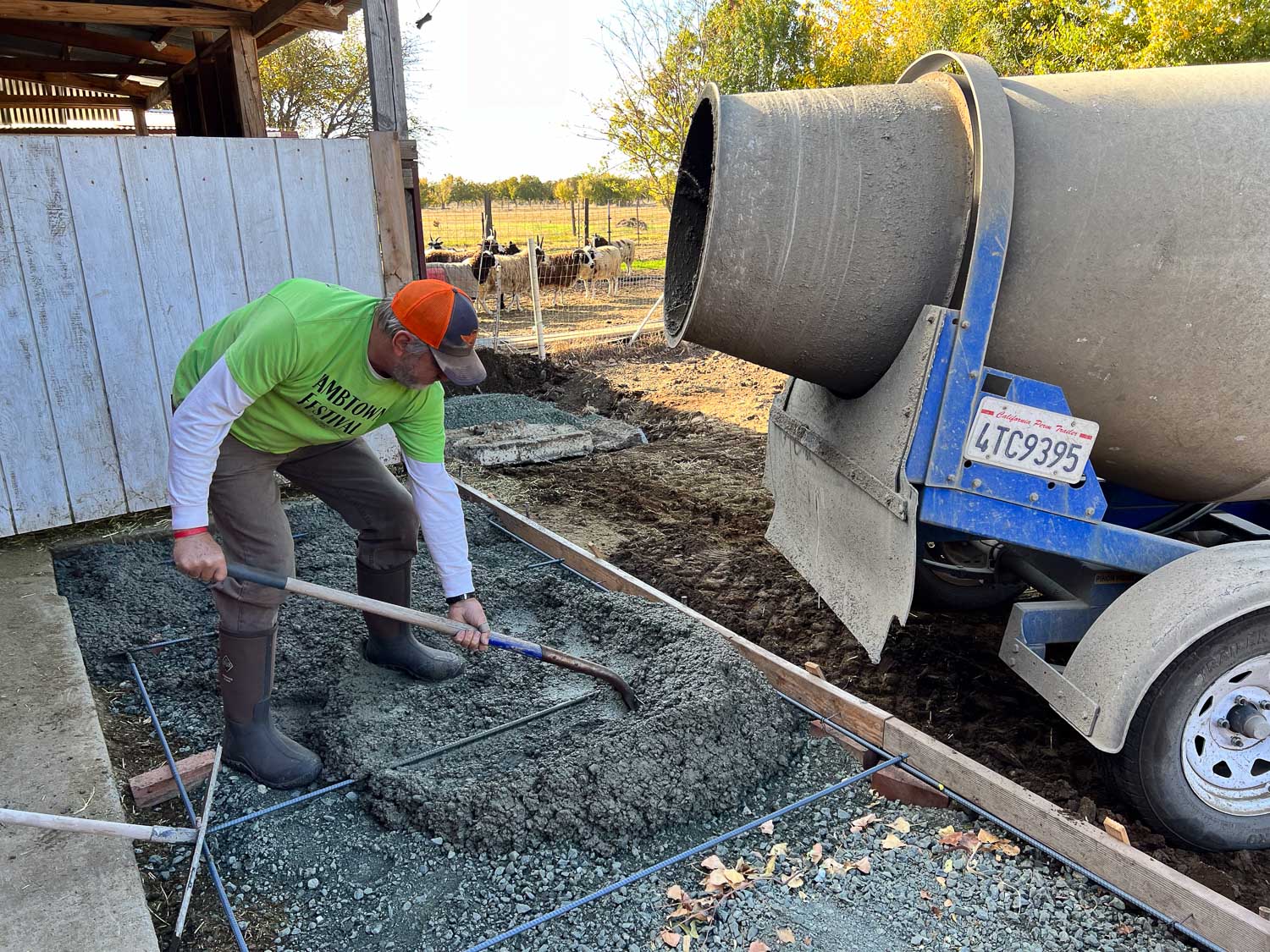
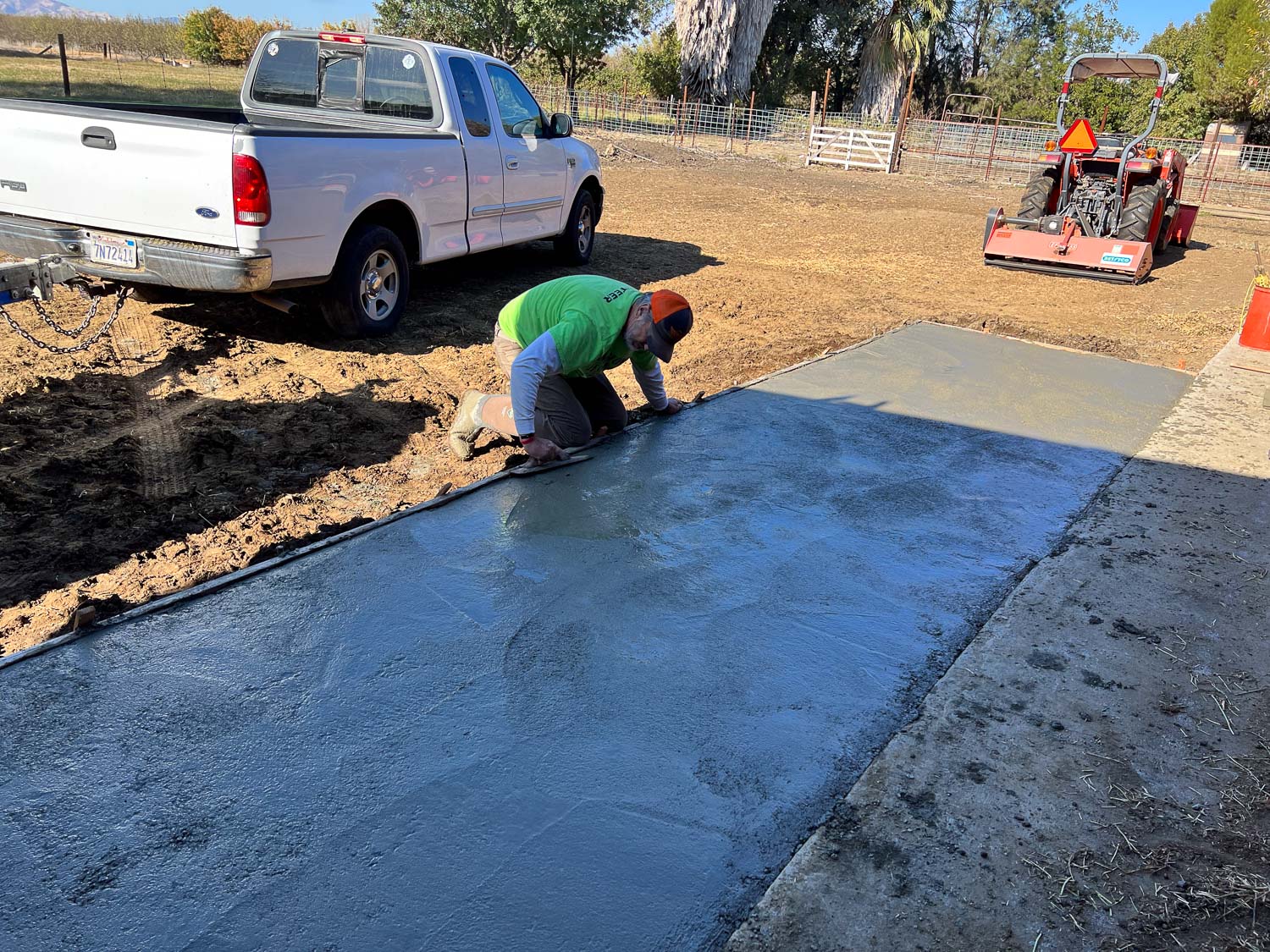
Dan’s project for the day was to pour concrete in an area where the concrete walkway is being undermined because it’s a low spot and holds water once it starts raining.

This was the first load.

He ended up getting two yards of concrete for this patch.

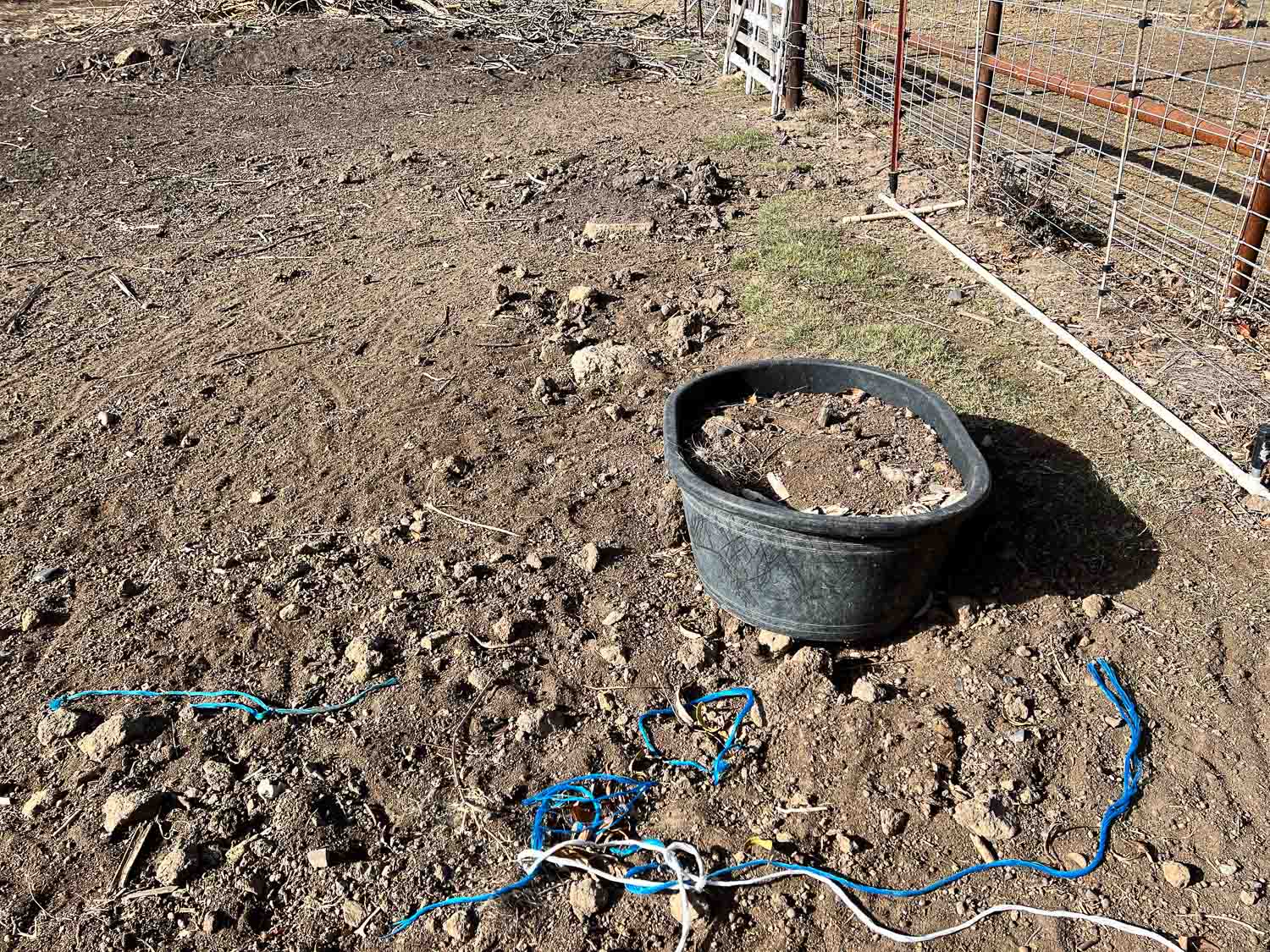
This is at the north end of what we call the corral, out of sight behind the tractor in the photo above. The disturbed part in the center above the black tub and in the foreground are where I have buried skulls. There are some in the tub too. The baling string in the front is tied to horns so that i can figure out where they are and how many. When I dig up the others I have to be careful because I don’t know exactly where to dig. When the ram, Townes, died Dan buried him in the mound at the very top of the photo in front of the burn pile. You can’t see it but there is a string on his horn too so I know where to dig eventually. At the time of his death he was so bloated, even his head, that I didn’t want to try and salvage it then. It seemed to likely to explode. [Some of you probably don’t want to hear this stuff, but it’s not always pretty on the farm.]

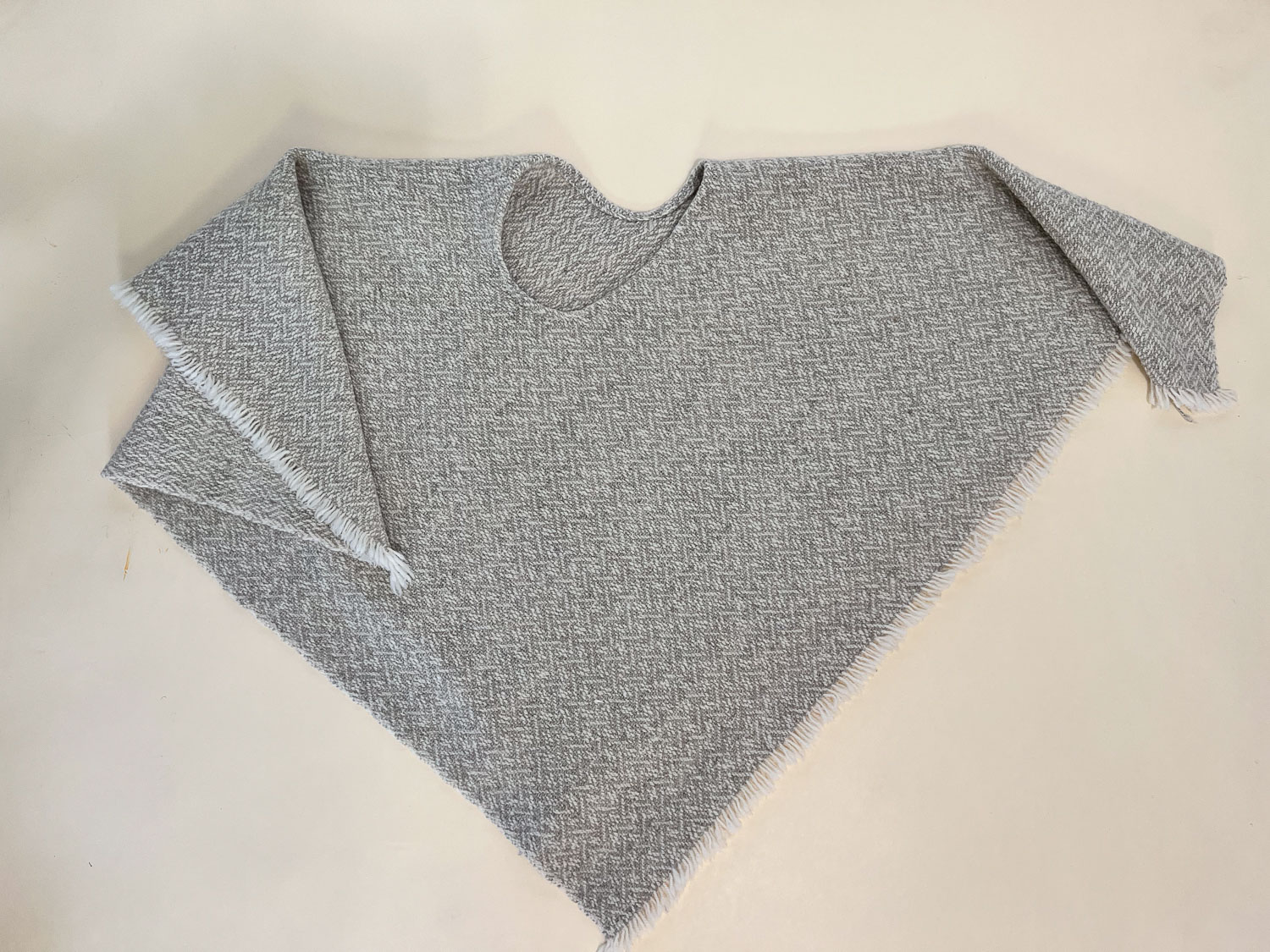
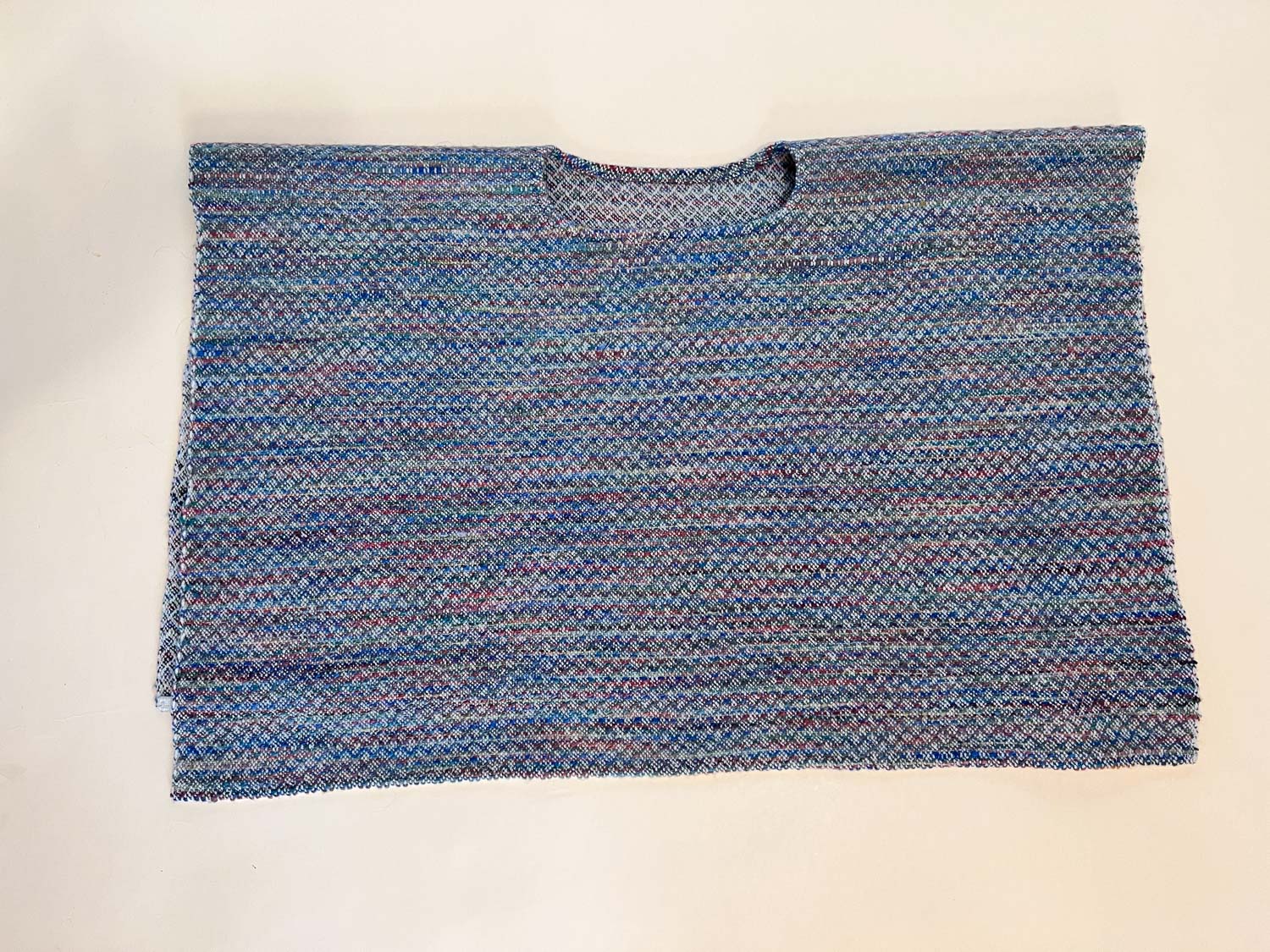
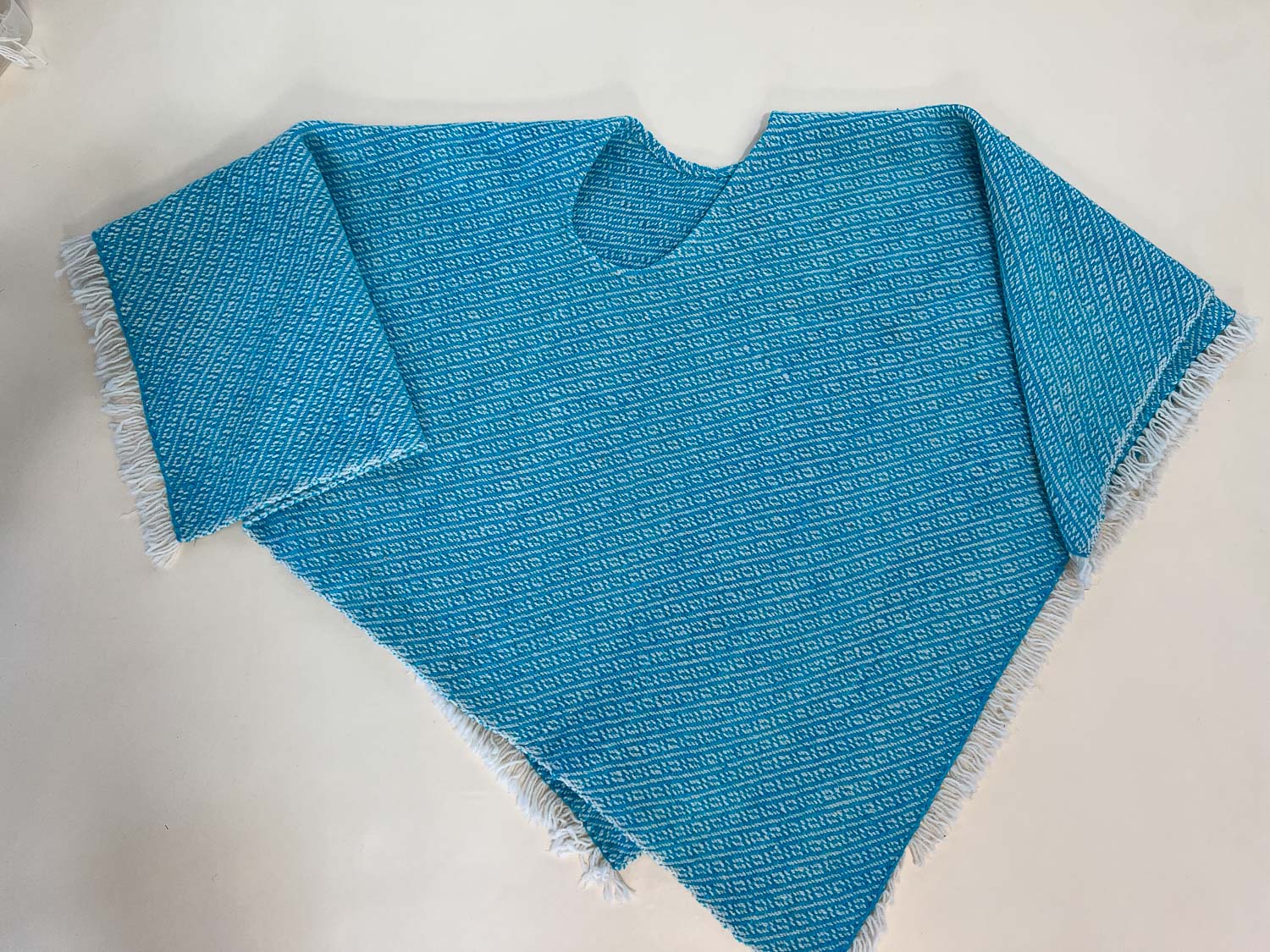
I spent the afternoon at the Weaving House working through a box of handwoven pieces that I had put aside and never got around to finishing. I think that three were destined to be ponchos–at least that’s what they are now.

I spent a long time going through all my weaving notes to figure out when I wove these and what fiber I used. This one is handspun weft. I don’t know if I meant it to be a poncho–maybe it was just a very short blanket. It’s a gamble to choose how it will sell best. It looks like an awkward size, but if it’s worn at an angle I think it will be good. I need a photo on a mannequin.

The third poncho of the day. I don’t know if these will make it to the website. I think one will be at The Artery and two may go with a friend to her Bay Area sales.

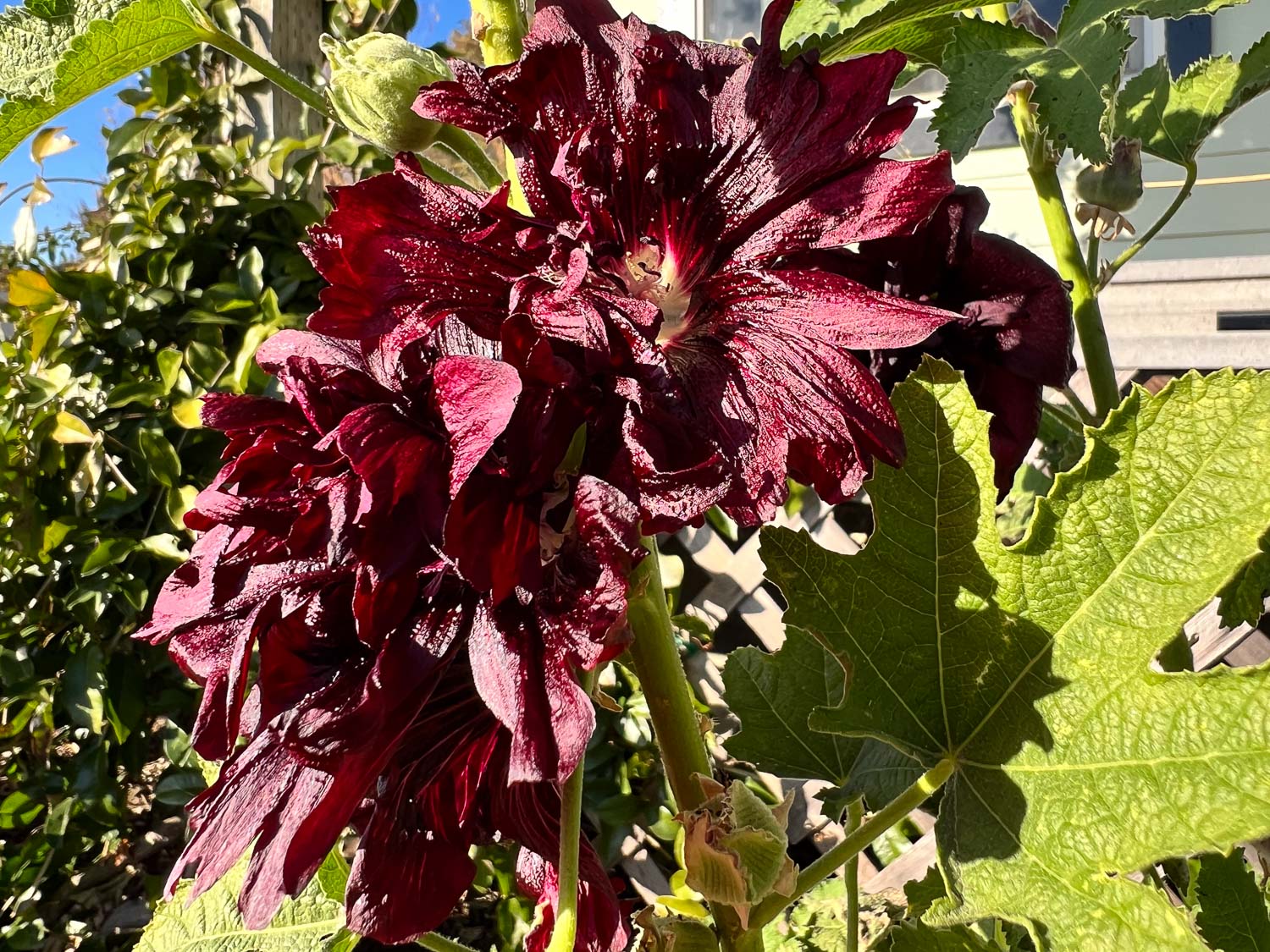
This is on the south side of the Weaving House. The vegetable garden is done and the indigo that was left is all shriveled and dry after the frost. It’s almost December and a couple of the hollyhocks I use for dyeing still have flowers! What’s with that? Do you know I have packages of these flowers for sale with directions on using them for dye?

Today on the Farm – Ultrasounds

I’ve been having the vets come for ultrasounds the last few years. I tell them the first and last day the rams were with the ewes and they tell me the best date to confirm pregnancy and be able to count fetuses.

I gathered all the ewes into the barn and while I was waiting thought I could get a photo of a sheep and me both in wool. The wool I’m wearing is all handspun and knitted. You know that I am not a knitter, but I did knit the hat. One friend spun and knit the sweater and another spun and knit the dickie (which I just pulled out of the drawer today since we are now getting into the 30s at night). COZY, COZY!

That’s Jade on the left, Patchwork Bettylou in the middle, and Betty on the right. Betty is the second oldest sheep here–she’ll be 10 when she lambs in the spring.

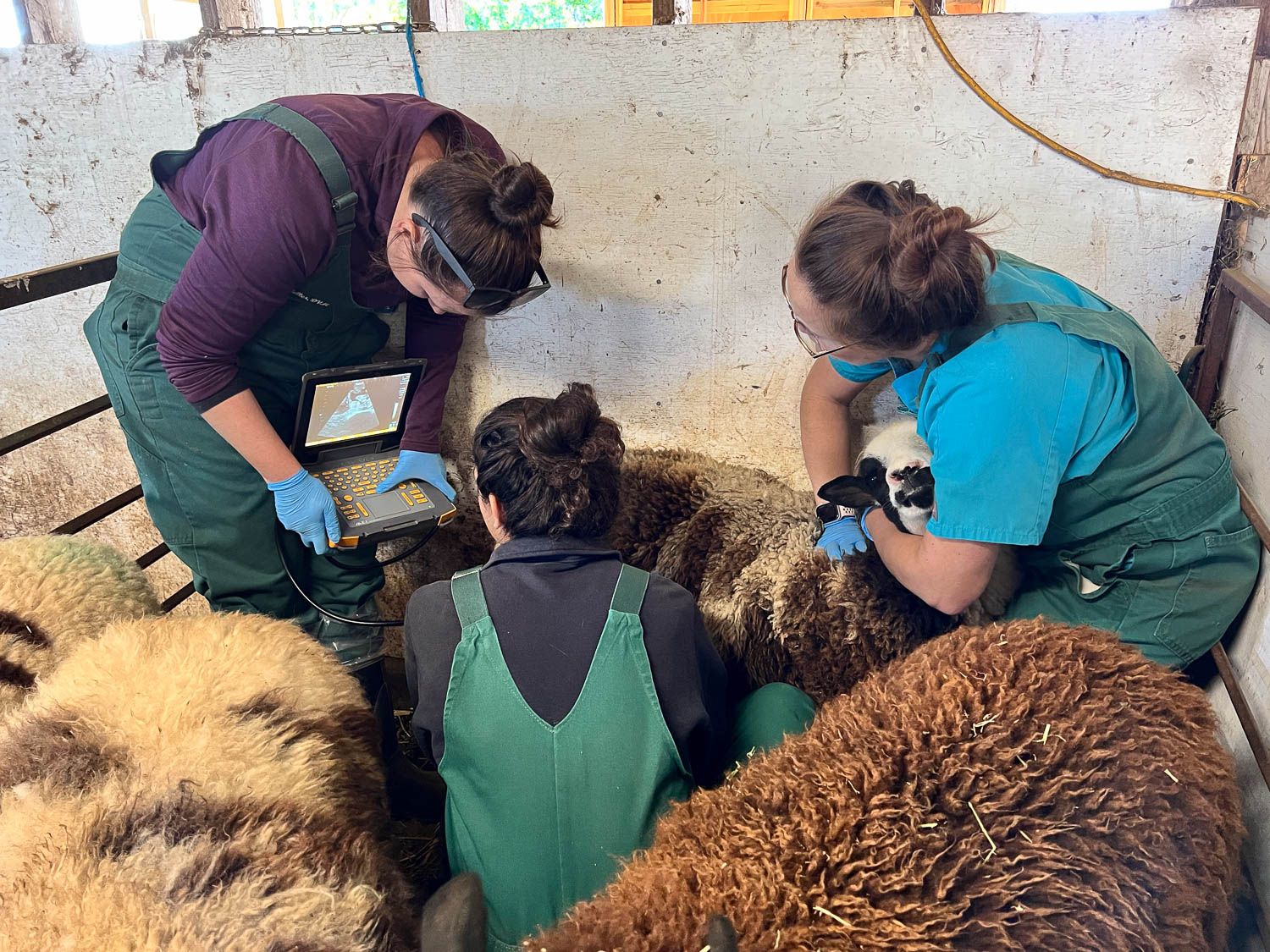
Four veterinarians were here. One held the sheep. She was also at the end to do a quick FAMACHA score and check teeth on the old ones. No problems to report. The person who is crouching has the probe and they are all looking at the monitor (about the size of an ipad). The fourth vet recorded results.

They used to bring a small TV-sized monitor that had to be on a table. That meant we had to bring the sheep to the monitor. Now they are using this portable one. We can load all the lambing pens with four or five sheep and the vets move from pen to pen. They looked at about 50 sheep in two hours.

I wonder how long it takes before you are good at interpreting this. All I know is that the black part is fluid. I don’t make out the lambs very well.

They confirmed the breeding dates I had written down and where I had a question mark or two dates they gave an estimate of the correct date.

Results: All ewes I expected to be pregnant are pregnant. Ewes were all bred between September 10 and October 6. Lambs are due from February 5 to March 5. There are 45 pregnant ewes predicted to have 82 lambs. There are six marked 1+. That means they confirmed one but didn’t rule out a second, so there could be more than 82. Last year we had 96 lambs and my goal was to have fewer this time. I guess I met the goal but not by much.

I kept one ewe back when we were finished because I hadn’t changed her coat when I changed the others last week. This is what her fleece looks like. It may be on the coarser side compared to some but it is sure long.

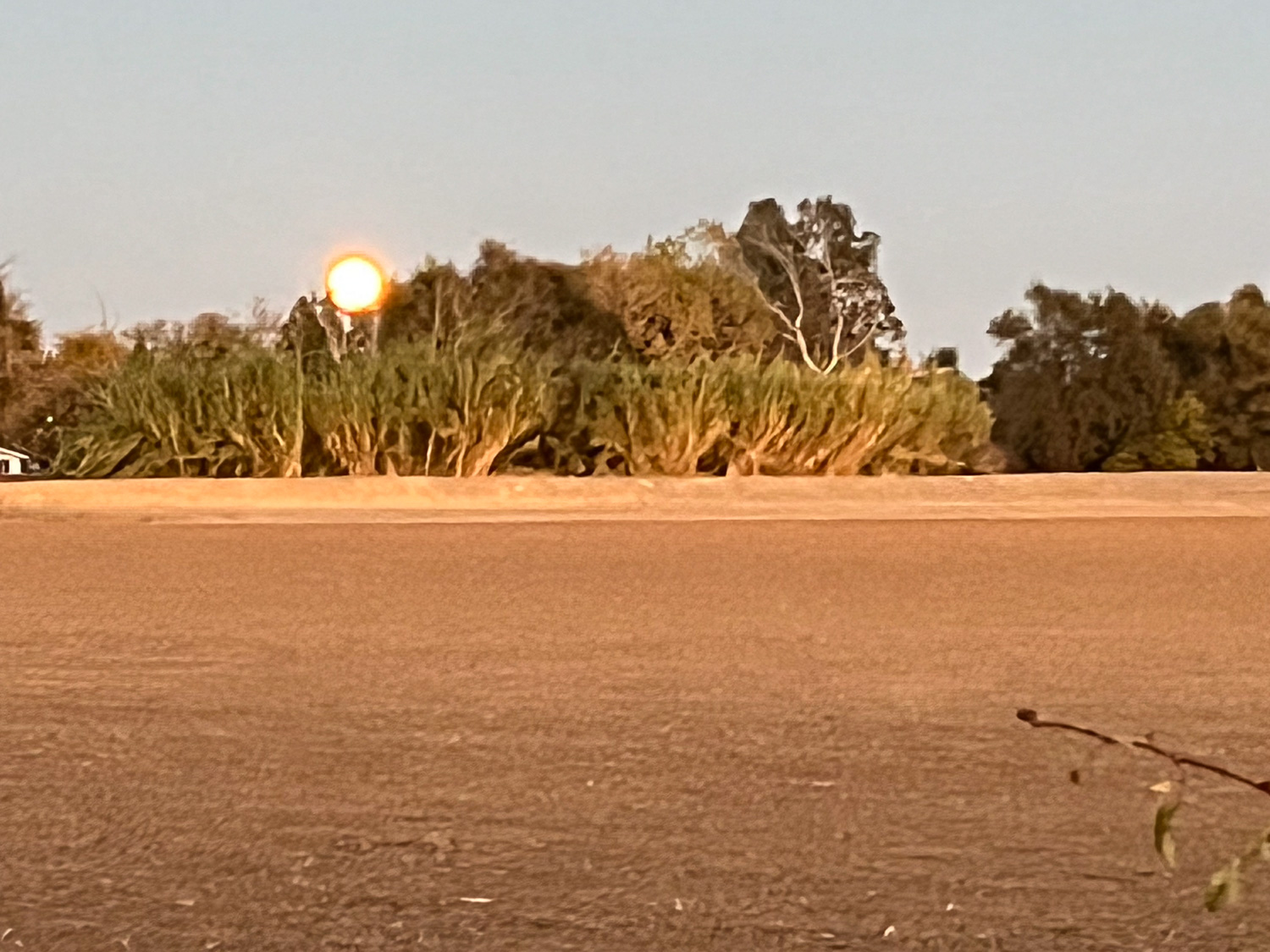
Moonrise this evening.

Random Farm Photos

Once again I had several great blog ideas to share, but other things happen. So here are random photos that were going to be in some of those post.

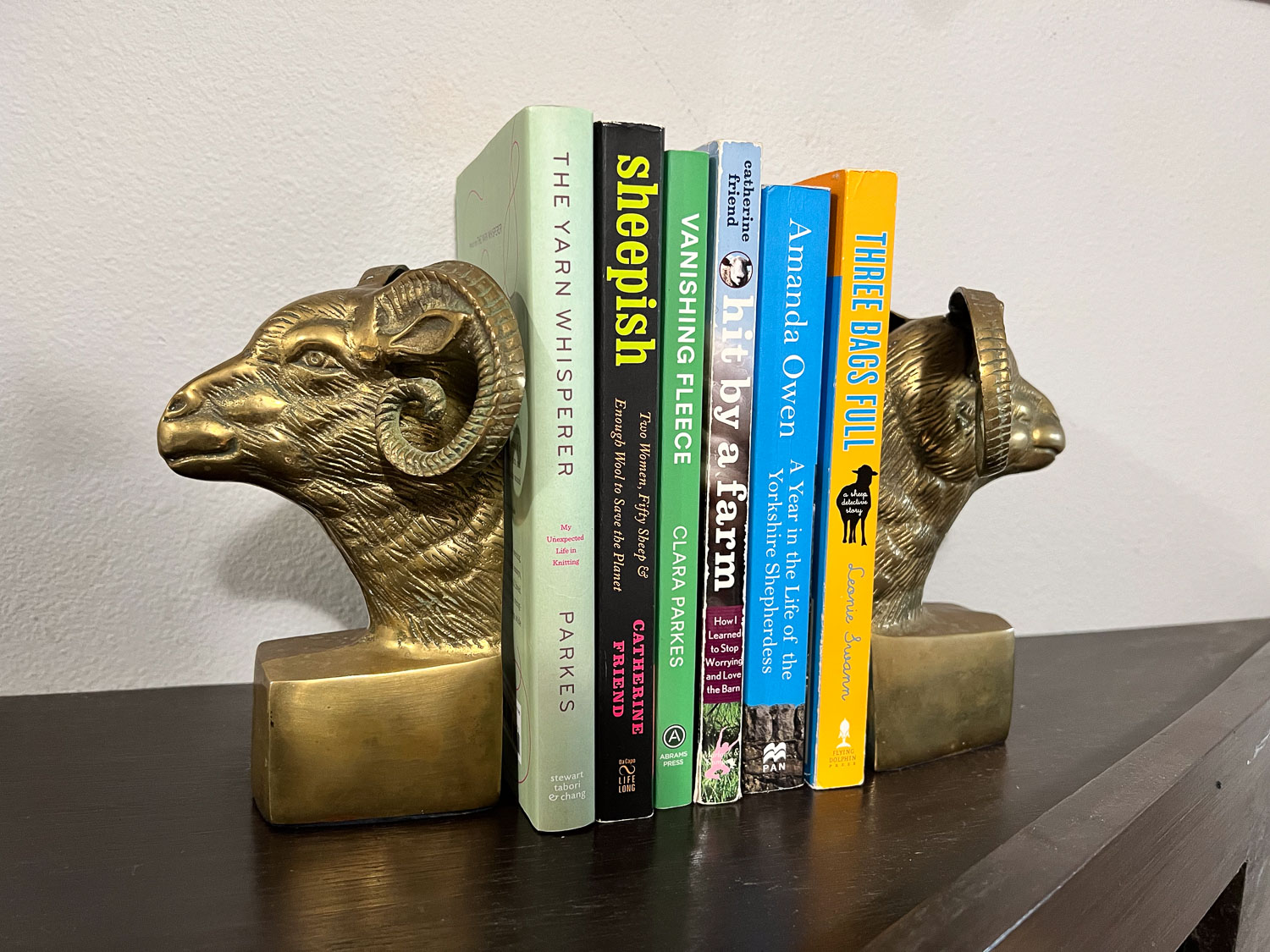
I have friends who talk about what they see on the Next Door website (or is it an app?) and I didn’t get around to exploring that until recently. I still haven’t spent much time on it, but right after I signed up I got an email about For Sale and Free stuff. I saw these bookends ($25) and knew I needed them. The person who had them was going to be driving near my place the next day and offered to deliver. Aren’t they great?

That’s random. What else?

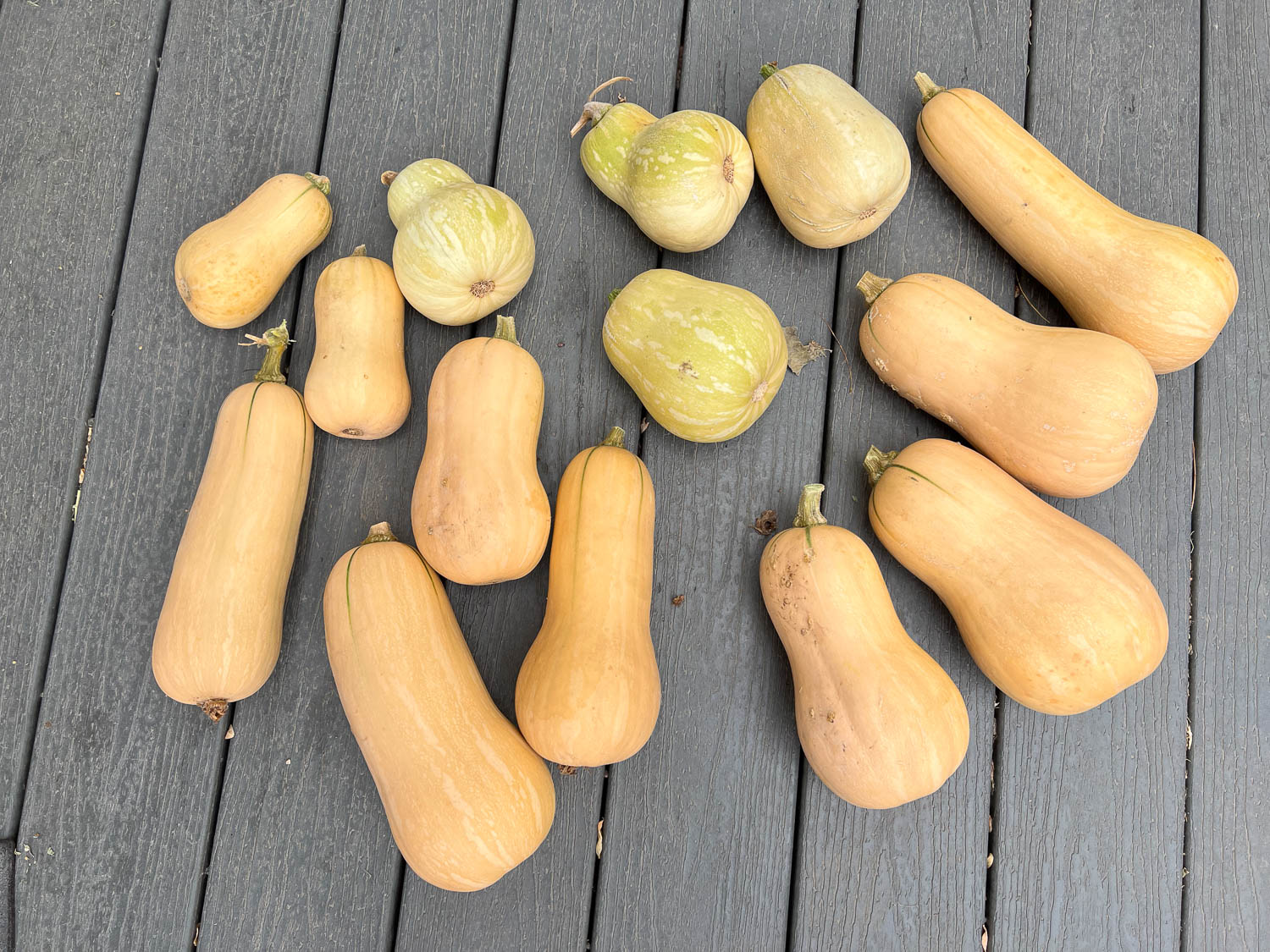
Butternut squash on a gray plank deck.

Butternut squash harvested from my garden. I made “pumpkin” pies from these for Thanksgiving. They turned out great! The three little ones at the top are too green but I thought I’d try them. Not ripe.

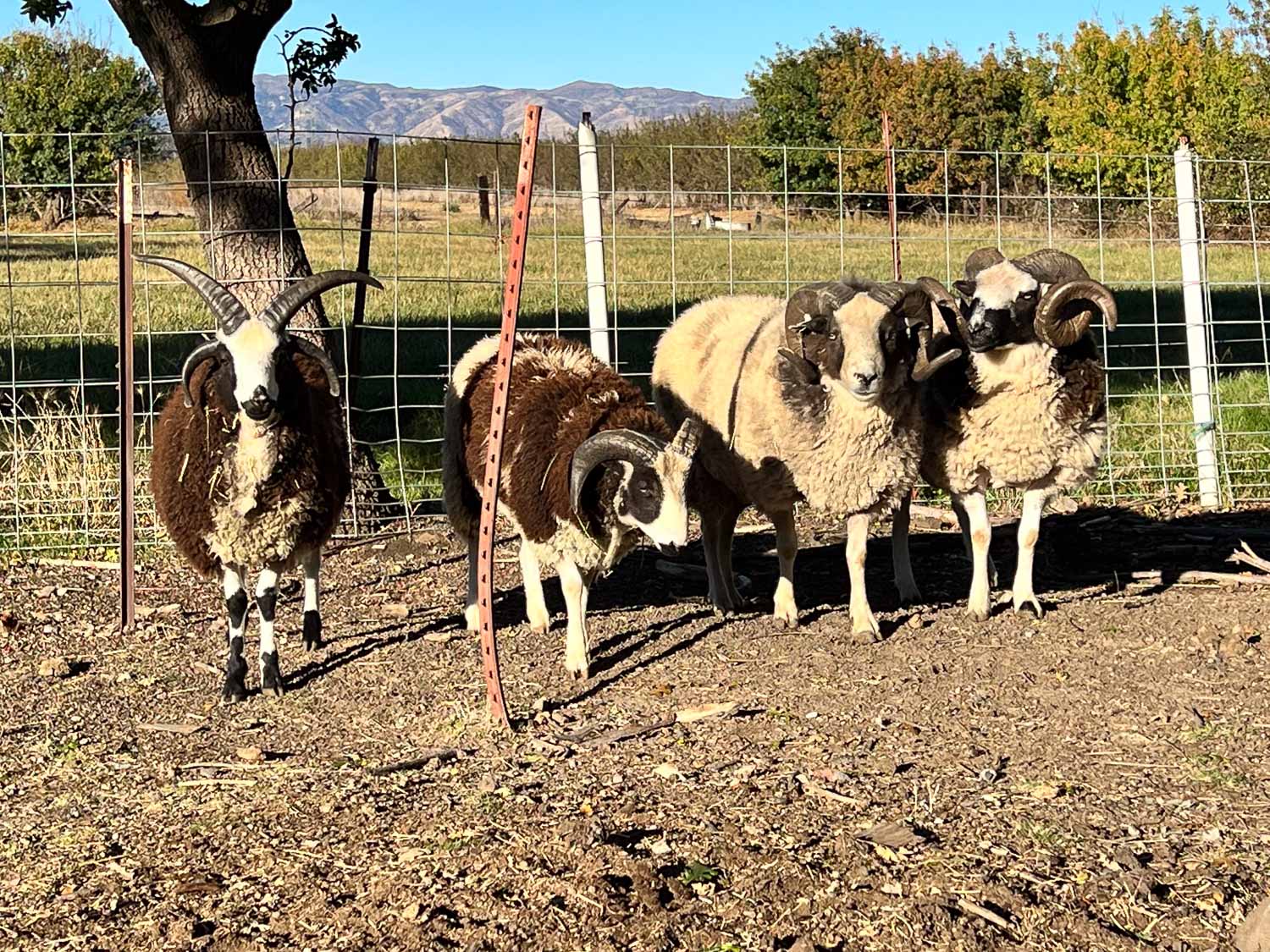
Here are the rams I’m keeping through the winter. The two on the left are this year’s lambs. The four horn ram is Typhoon and the two horn is Blizzard, both born here. The two two-horn rams on the right were born in 2021. That’s Hillside Gabby’s Barrett from Michigan on the right and Fair Adventure Horatio from Colorado on the left. I would have used another 4-horn ram for breeding but Townes died in a freak accident when he caught his horns in a fence panel. After a fertility issue last year I had the vets do some fertility testing and Silverado was found to be not fertile at the time of the test.

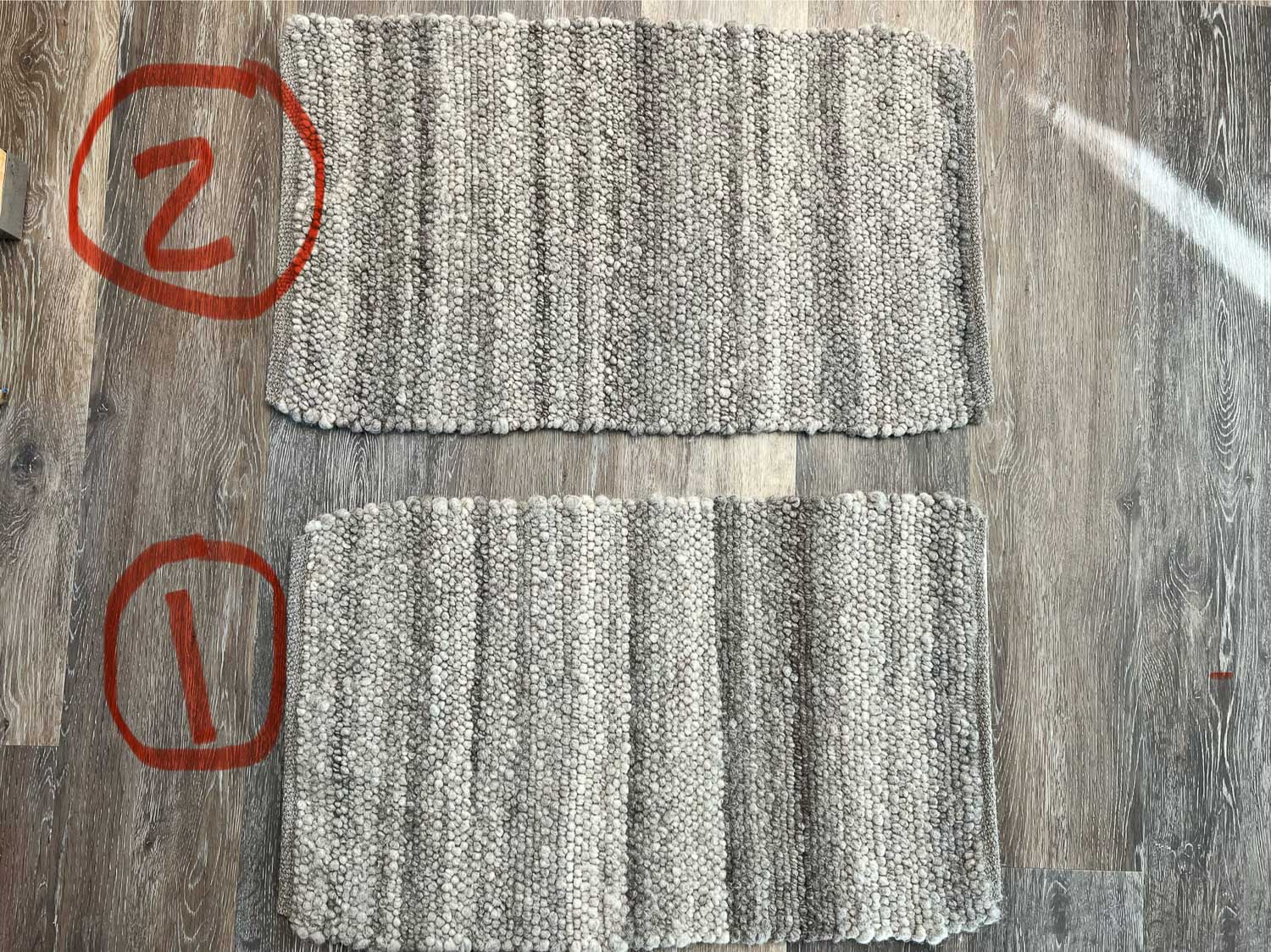
I have finally been spending time at the loom. These rugs are woven from corespun yarn that is spun from the coarser britch wool that I have sorted away from the rest of the fleece.

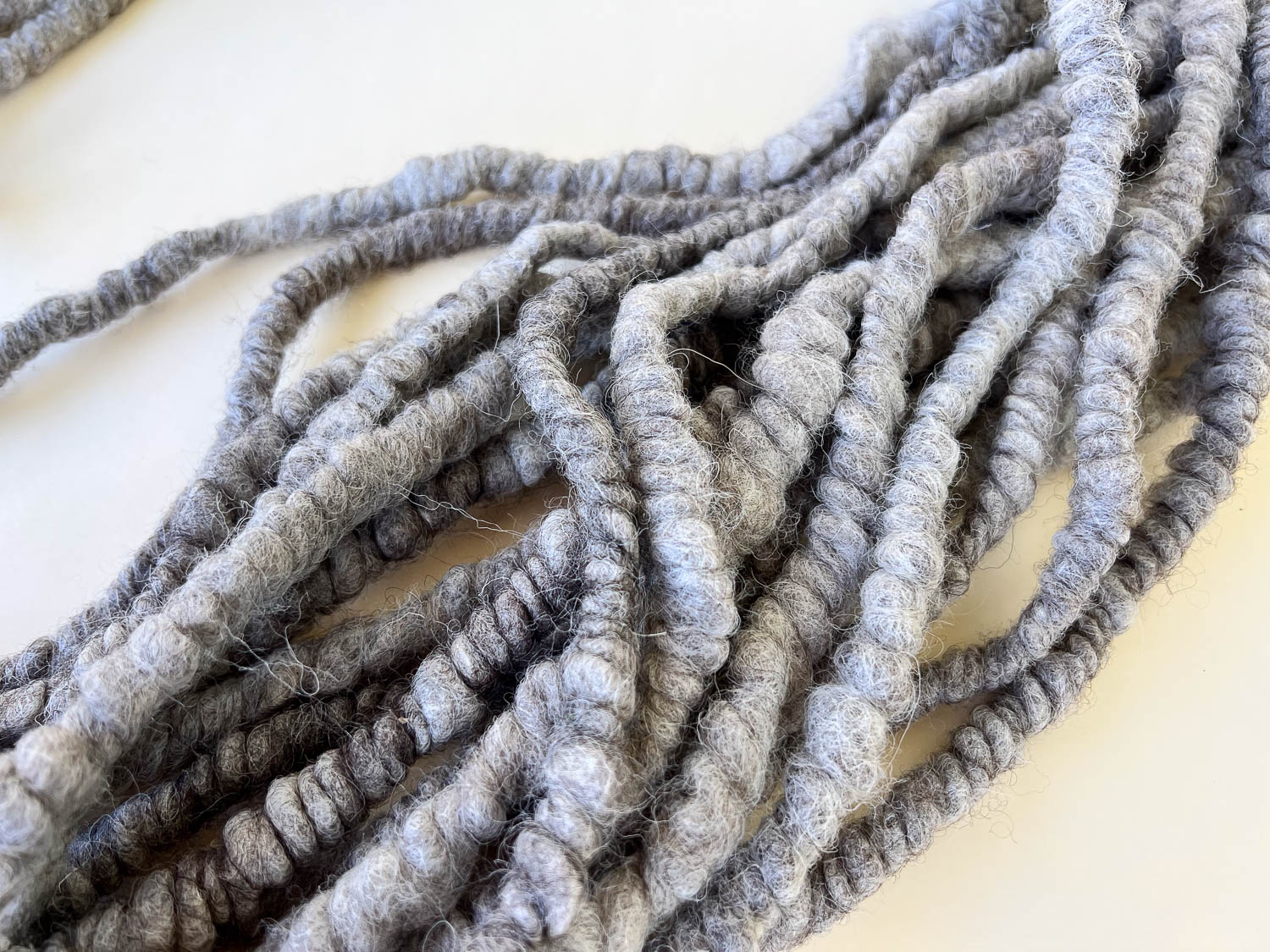
This is a close up of the corespun yarn that is the weft for those rugs. It is listed here on my website. The rugs are here and now I have two more to post.

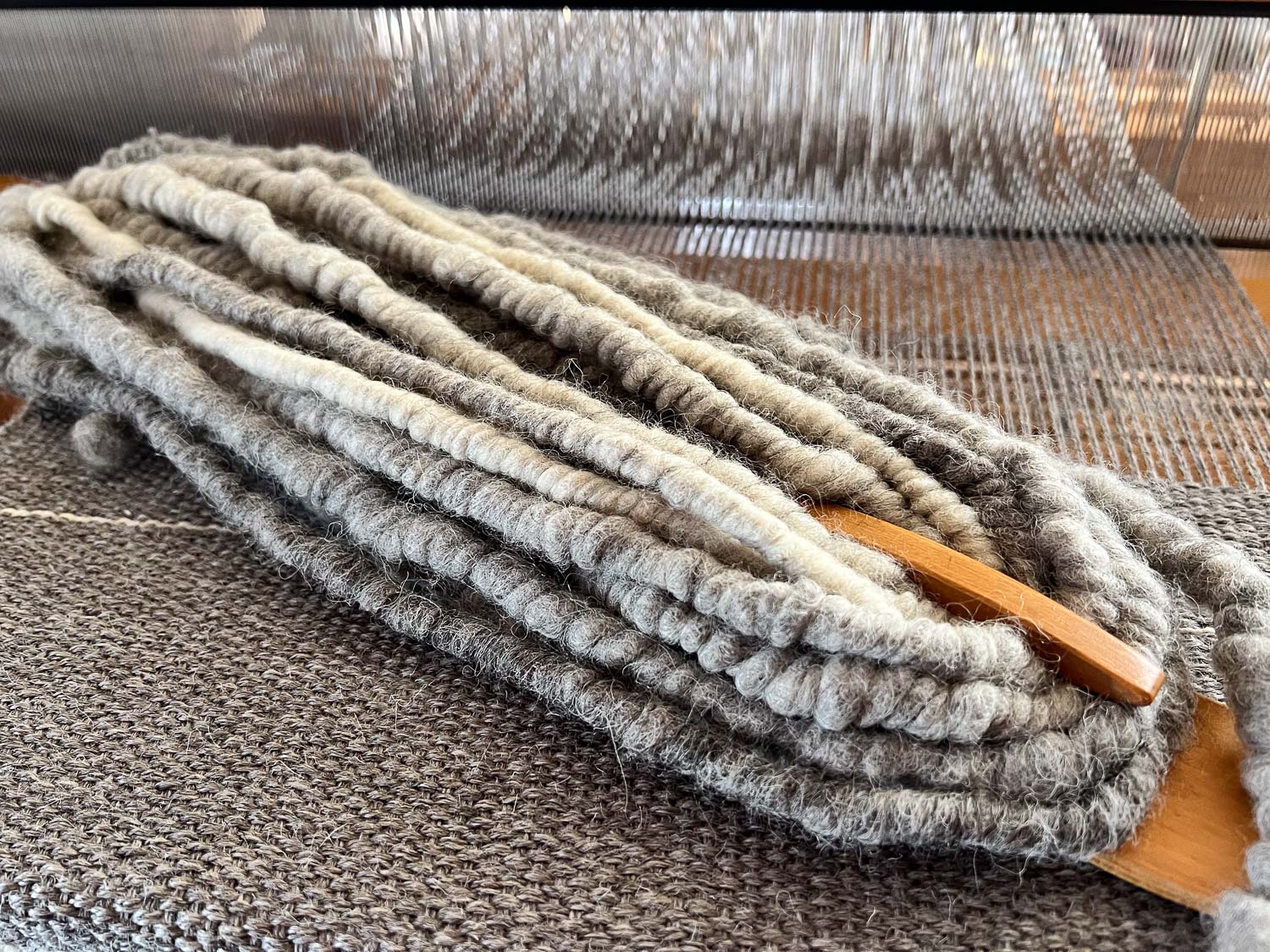
I use a big ski shuttle to weave with this yarn. What you see on the loom in this photo is the part that will be the hem and I’m ready to weave with the corespun yarn.

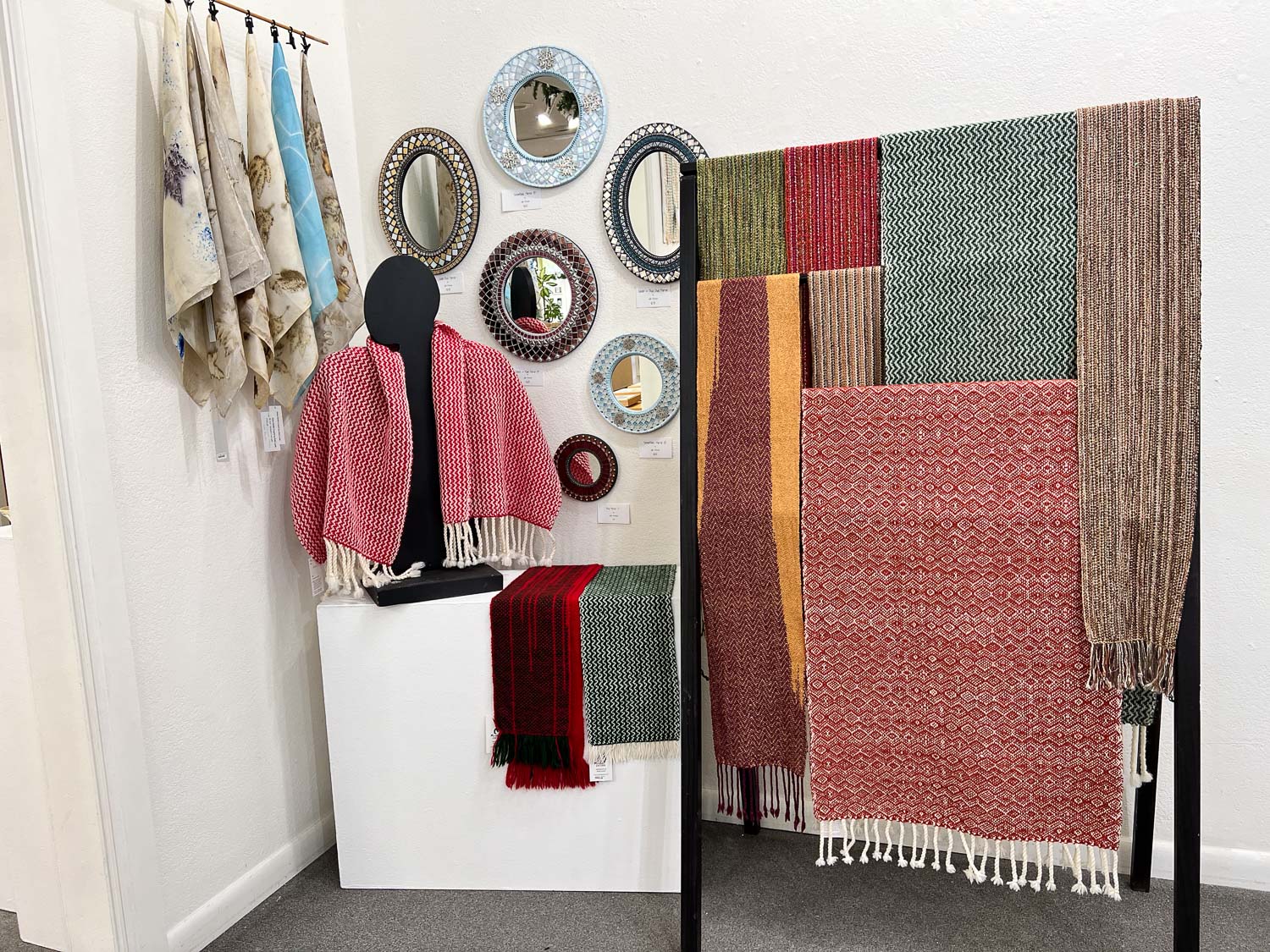
Speaking of weaving, these are some of the shawls that just came off the loom. I wove some holiday colors so that they would have a place in this room at The Artery in Davis. Everyone has an opportunity to bring more work in for the month of December.

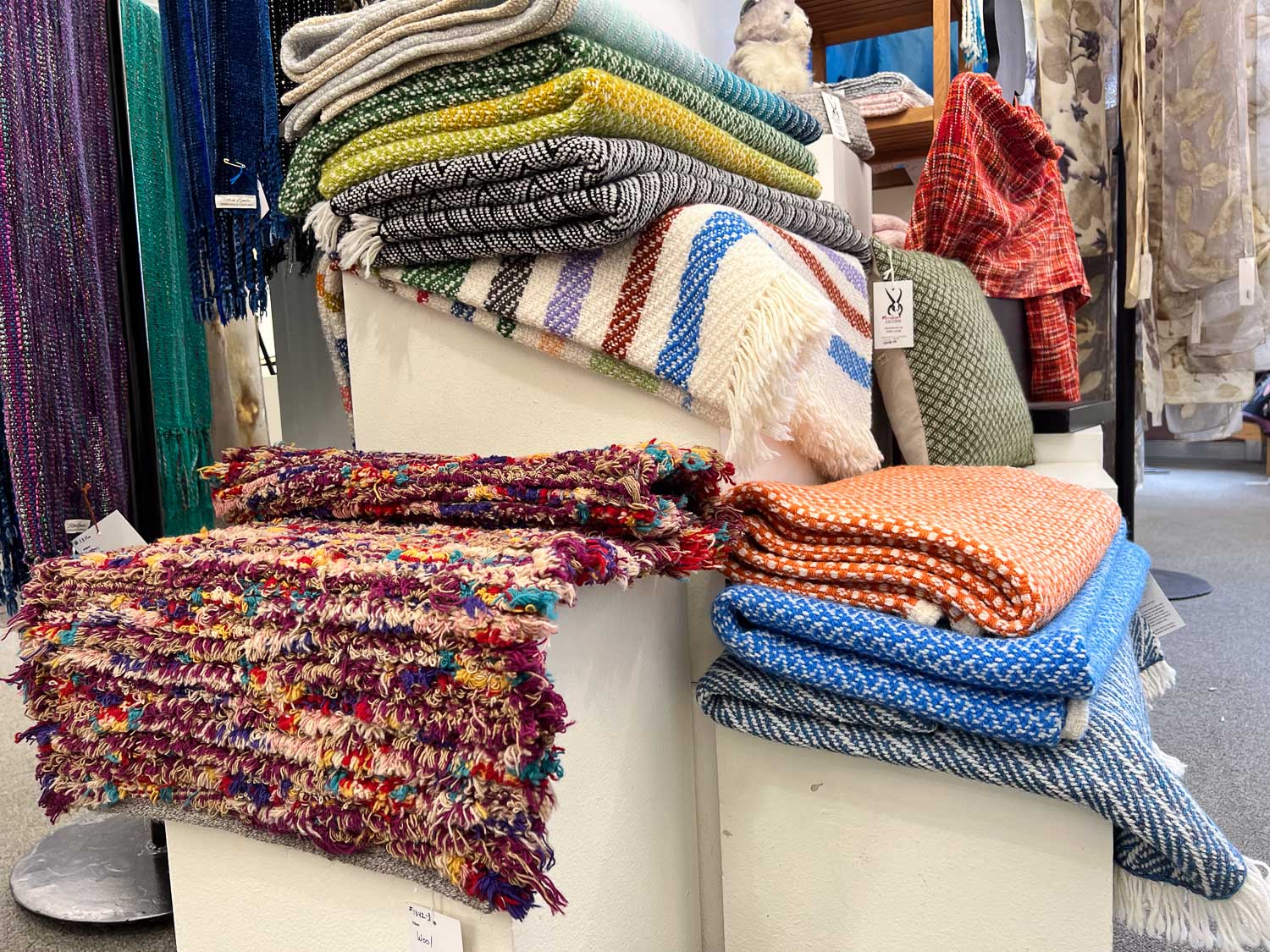
These items are in the main display area of The Artery. That colorful piece on the left is a rug I wove at the same time as I wove the corespun rugs. I have two more of these here at the shop. Most of these items are not on my website because it is risky to have them listed on-line but not know if they might have sold here at the Artery. The pieces in the middle are blankets.

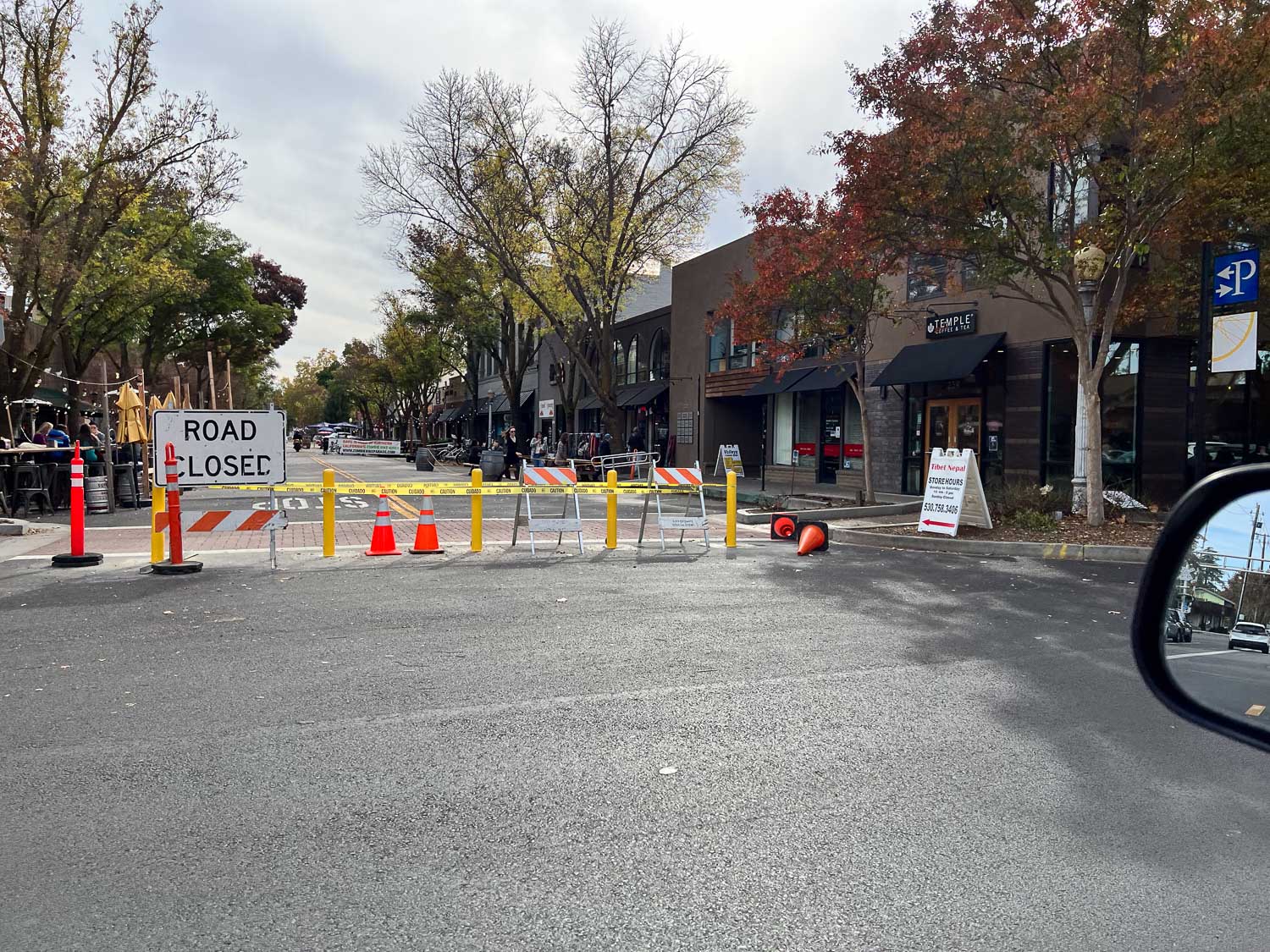
I took this photo out the window when I was leaving The Artery this week. The Artery is located at the other end of this block. At the beginning of the pandemic the bars and restaurants on this part of G Street were given permission to block off the street and have outdoor seating. The street is blocked at that the other end just past our store, so there is still access to the sidewalk and a small amount of parking, but it’s not exactly inviting when you look down the street and it looks like it is a crime scene or a medical emergency. Those of us at The Artery have tried to have the street reopened but The City is not interested. They have ideas about making G Street a destination venue of some kind. Where there used to be other retail shops, now mosts of the businesses here are bars and restaurants. So the street was closed off in 2020 or early 2021, and it still looks like this.

That was random too.

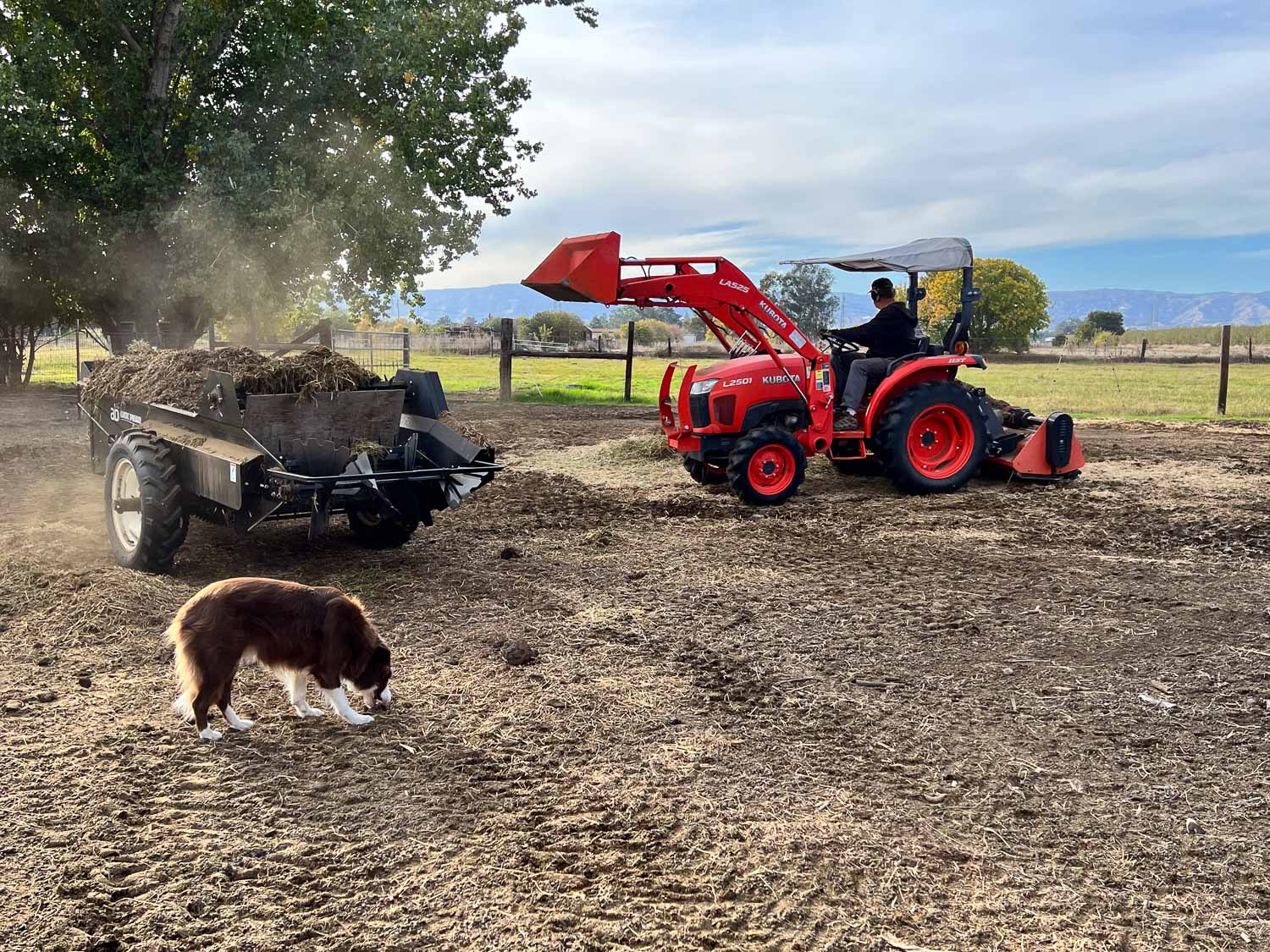
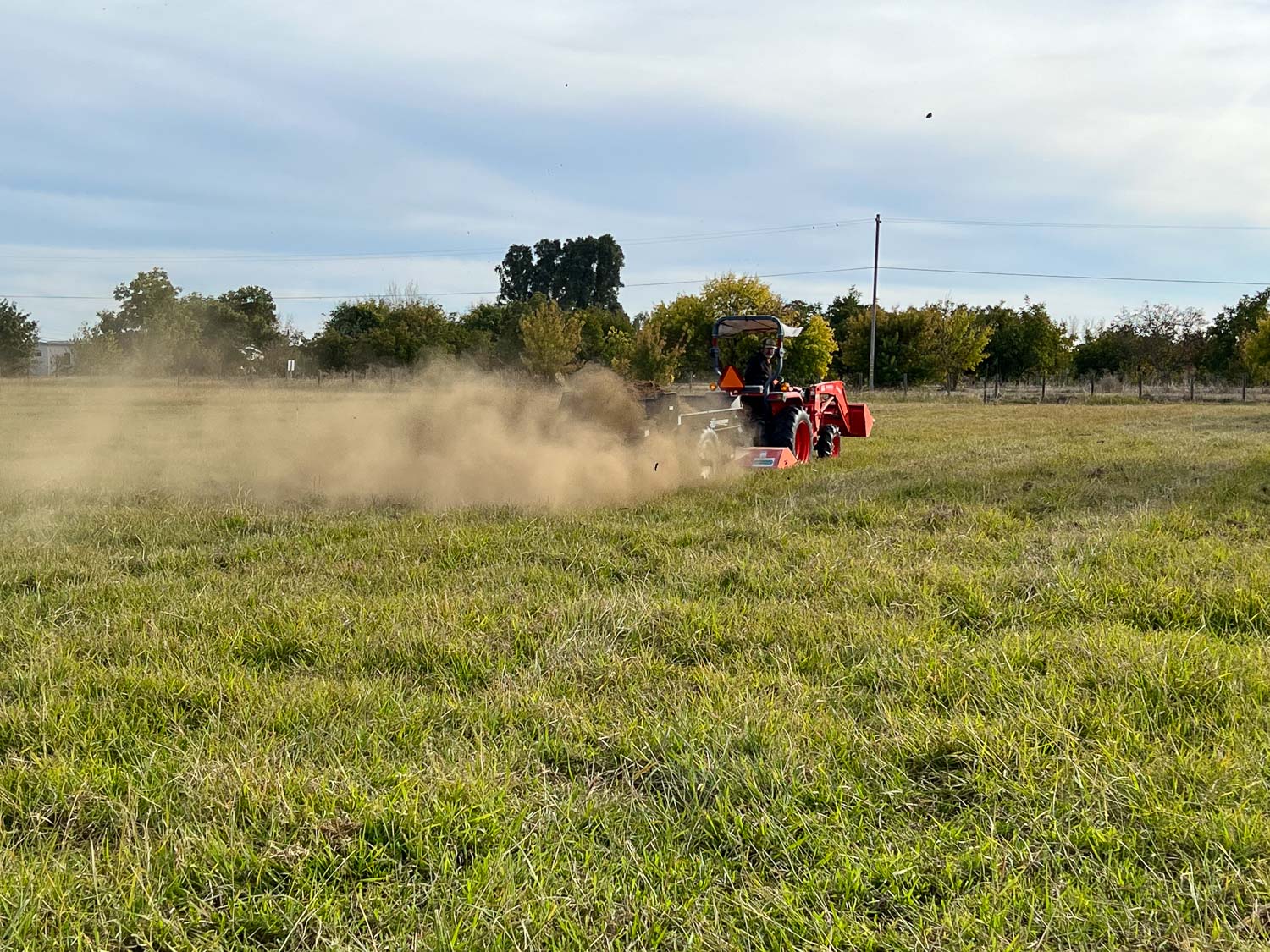
When I got home I saw that Dan was using our new (last year’s purchase) manure spreader to spread the composted pile on the pasture.

It is so much faster and more effective than the old way of taking the manure out one scoop at a time and then kicking it around to try and spread it.

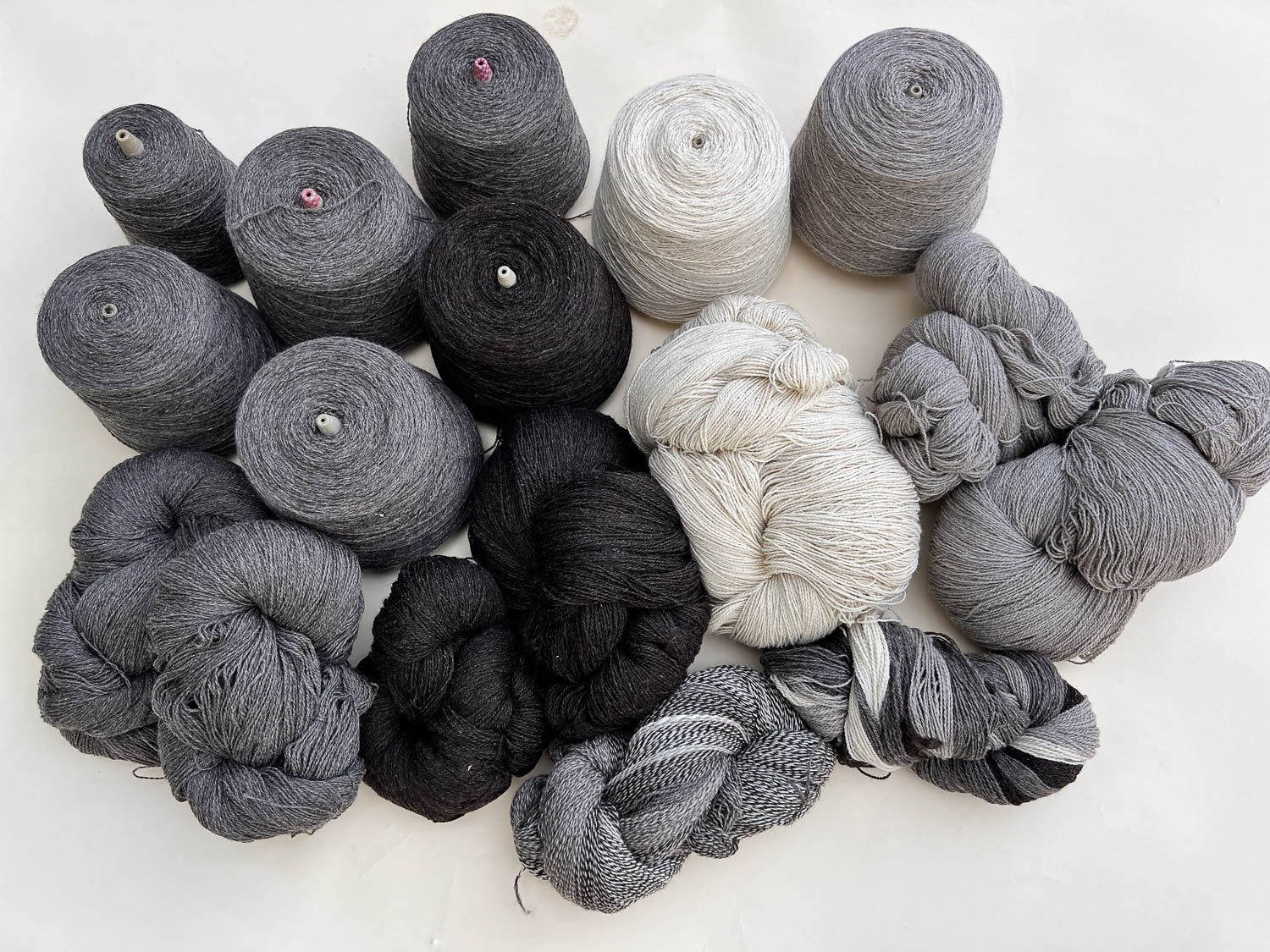
Last random photo. This is the Jacob yarn that I just picked up from Valley Oak Mill on Tuesday. This will deserve it’s own post soon. I am weaving scarves with it now.

Changing Sheep Coats

I started to name this Dress-Up Day for Sheep, but that is misleading and a little too cute. The title describes what I did yesterday.

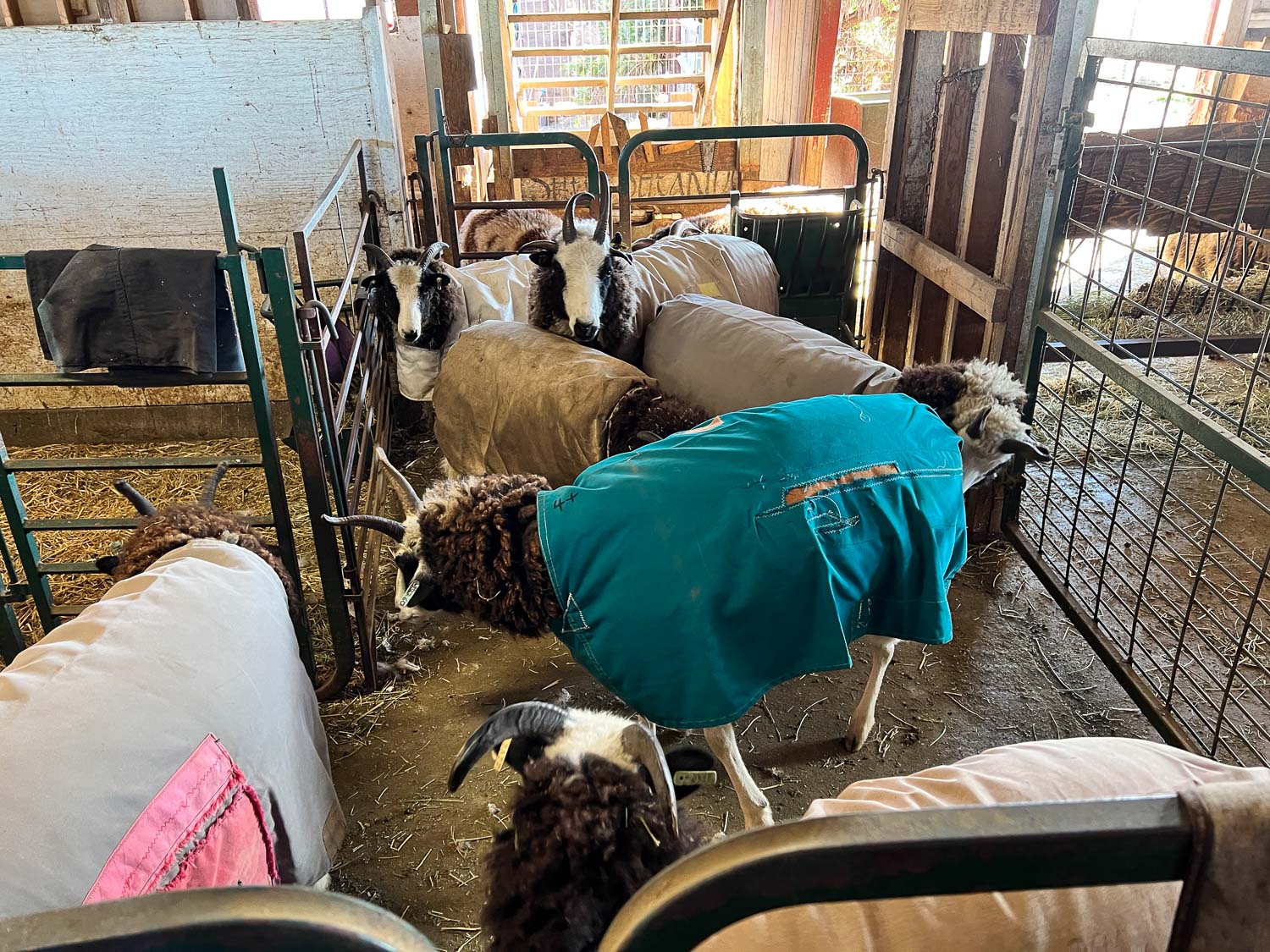
Horned sheep with sheep coats in the barn.

I caught 7 of the 8 sheep that have coats. A coated fleece is often prized because it is free of VM (vegetable matter). In my situation that is mostly hay and grass seeds. My coated fleeces may not be as wonderful as some because I don’t usually coat the sheep from shearing day on. Most of these coats were put on either when the sheep traveled to Black Sheep Gathering in June or went to State Fair in July and Lambtown in October. So they may have been coated only part of the year. But that is less VM than if there was no coat. There was also the advantage that those sheep with coats won’t have as much marking crayon from the rams in their fleeces (note the green rear of the sheep on the right).

Why don’t I coat all of my sheep?
1. I’d rather see spotted sheep, not coats.
2. It’s a lot of work. Coats need to be changed periodically through the year as the wool grows and they get too tight. Then they will cause felting and may ruin the fleece. We may go through 4 coat changes in a year, especially for a younger ewe who is not only growing more wool, but she is getting larger too. If I put on a coat that is too large I risk having sheep get a leg through the neck hole or slip out of one of the back leg straps. Then you have a sheep that can be tangled up and/or cause damage to the coat.
3. It’s a lot of work to repair the coats that are torn. Horned sheep are tougher on the coats than those without horns.
4. Eventually coats need washing, especially before I take them to my sewing machine for repair.

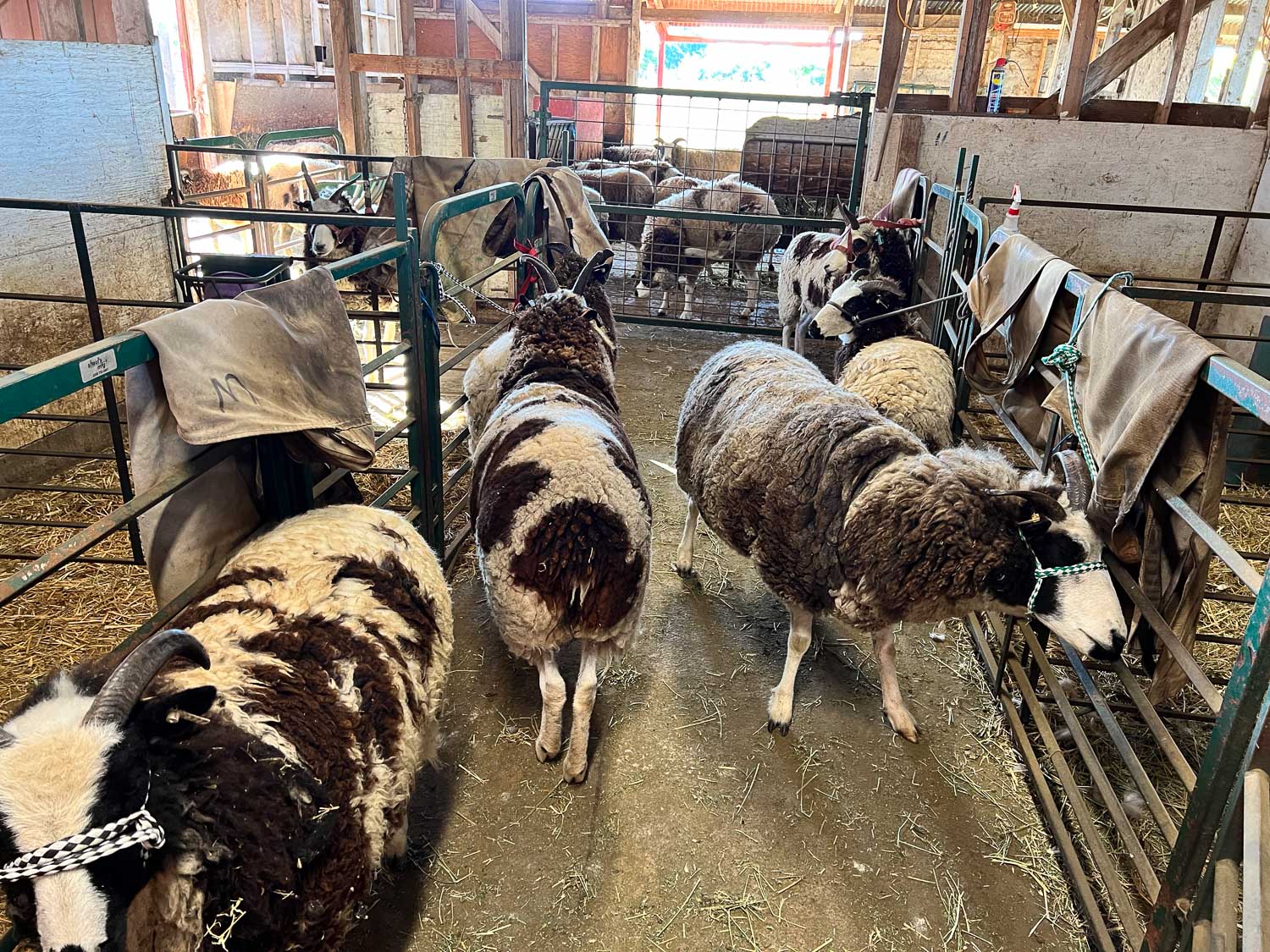
Spotted horned sheep tied to the fence with the sheep coat on the fence behind.

I tied all the sheep in the lambing area and removed coats. I hung the coats on the fence near the sheep so I could find the next size without trial and error.

This photo shows another advantage of coating. The fleece under the coat does not have sunbleached tips so the color of the black yarn will look blacker than if those brown tips are mixed in. You can also see the amount of hay in the neck wool of this sheep.

Close up of Jacob fleece parted at skin.

These photos are some views of the fleece under the coats.

Close up of Jacob fleece parted at skin.

Some are cleaner than others because the sheep has worn a coat for longer.

Close up of Jacob fleece parted at skin.

This photo and the one below it are good examples of the different styles of Jacob fleece, at least as far as the crimp. Both fleeces are within breed standard.

Close up of Jacob fleece parted at skin.
Spotted Jacob sheep tied to fence after removing coats.

Here they are all ready to have new coats.

Sheep with coat for protection.

This coat has a little more room for growth. Most of us probably don’t walk around with our clothes size showing, but it is helpful for me when keeping track of coats that may need changing. (The number 3 is above the shoulder.)

I have acquired coats from various sources although most came from Terri Mendenhall who is well-known for her award-winning sheep and fleeces. As the coats need repair they get a mix of patches.

They have been repaired by a Farm Club member who took some home, by me, and by my son who lives in Idaho and works as a smokejumper. Did you know that smokejumpers learn to sew so that they can make gear and handle all their own repairs? They use heavy duty sewing machines and fabric so Chris was able to make some repairs using fabric from the scrap pile.

Overshot Explorations and More

I tried a new class last week. I used overshot as a way to guide weavers through exciting discoveries of sampling treadling techniques, choosing colors, and changing yarn sizes.

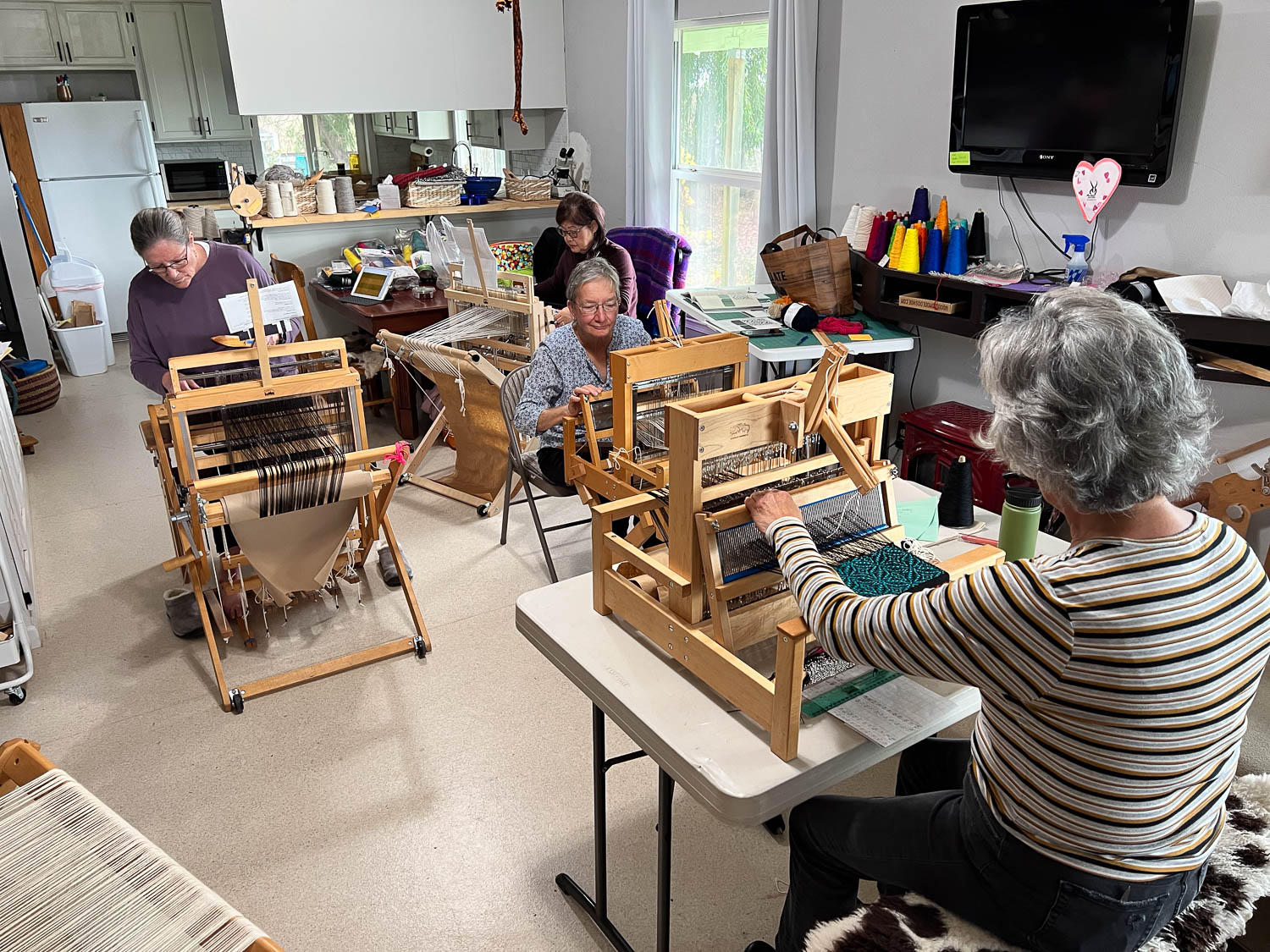
Two weavers came on Thursday to warp their looms. On Friday they were joined by two more weavers and they all wove overshot samplers.

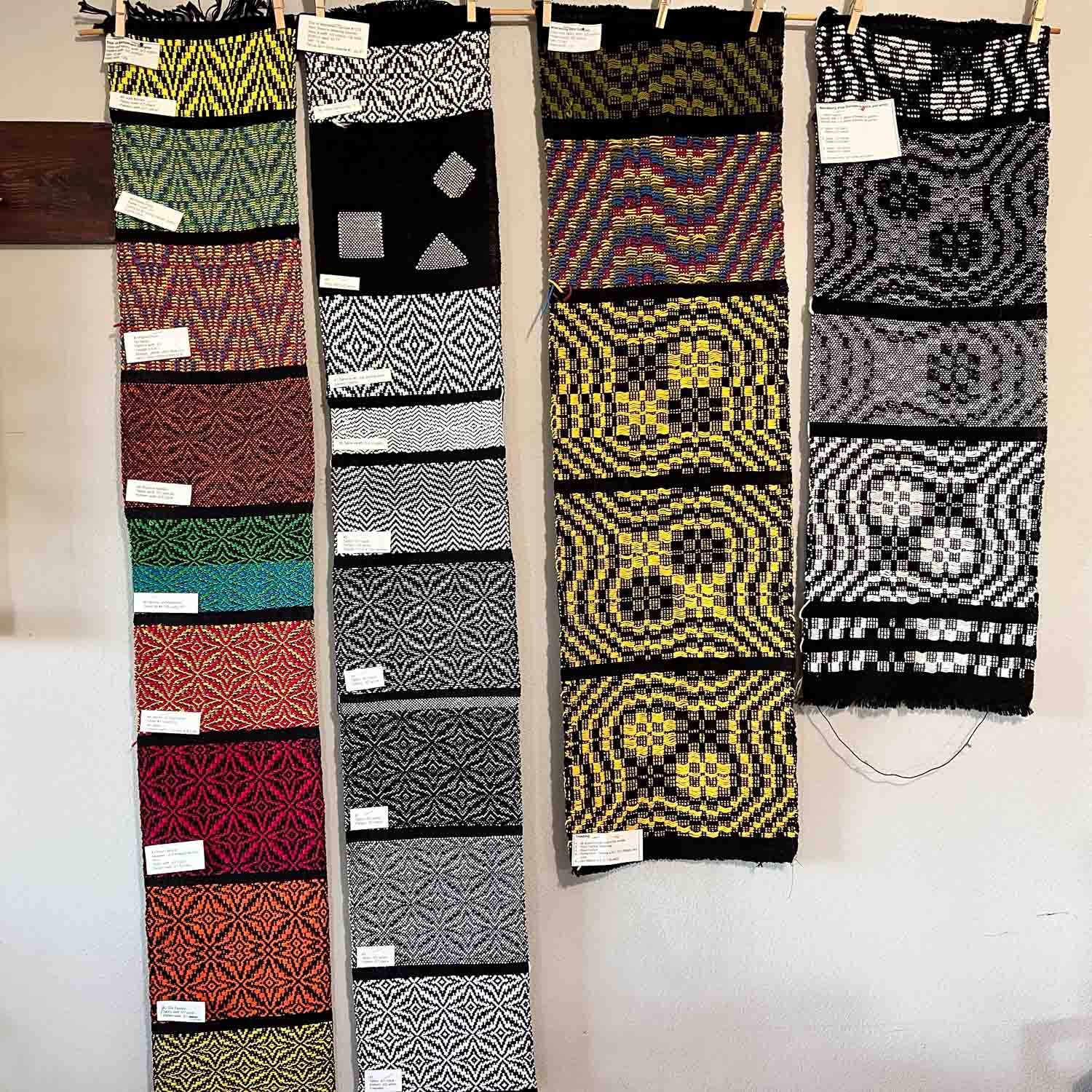
This is the Sample Wall with examples of the drafts and the variables they could try.

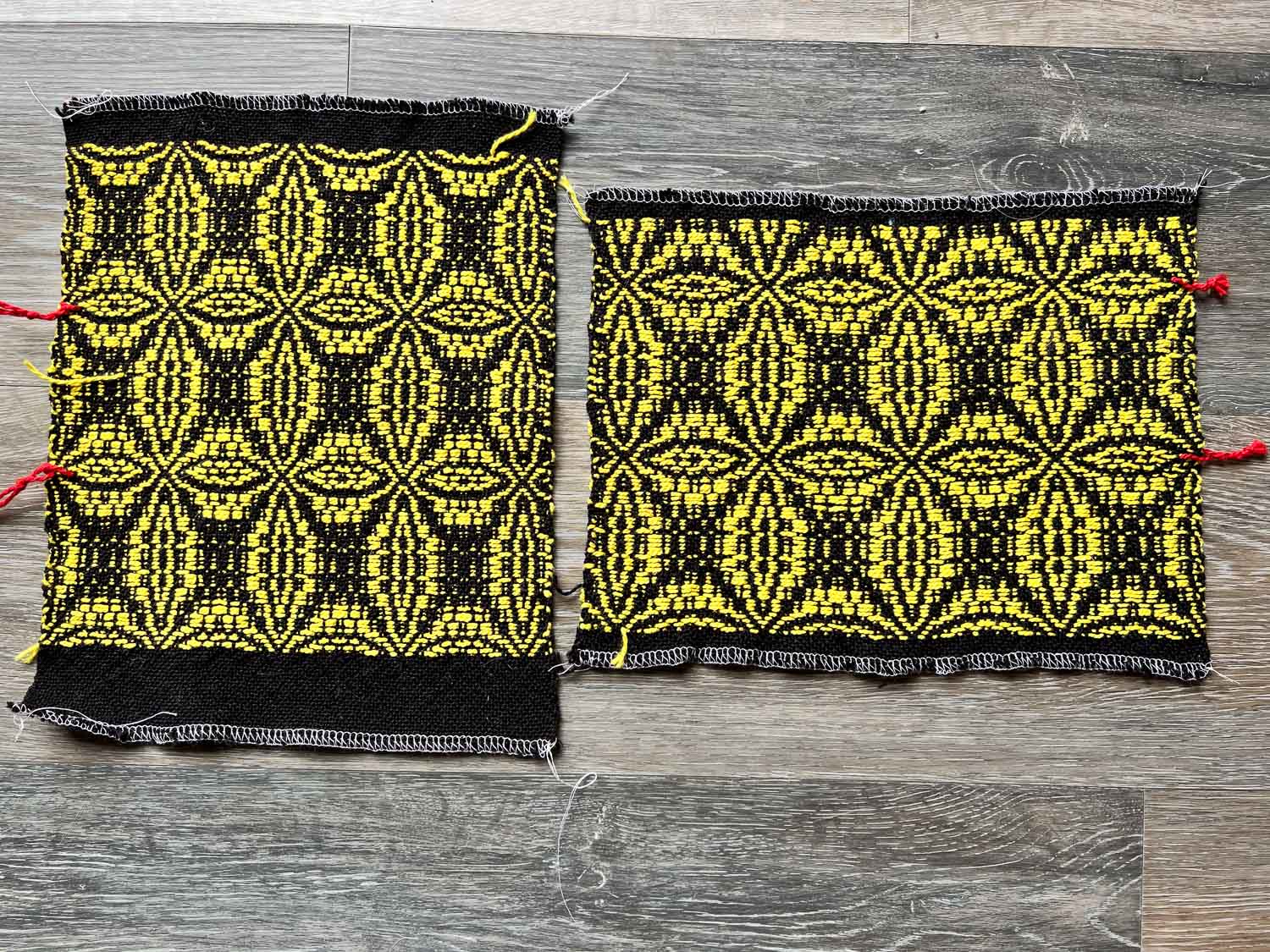
I didn’t hang the “orange peel” sample but had it available. This is a good example of the effect of sett on the appearance of a piece. These are woven on the same warp of 5/2 cotton. The one on the right is sett at 12 epi (ends per inch) and the one on the left is sett at 15 epi. With the warp threads that much closer together the orange peel pattern is elongated and the circle becomes an oval.

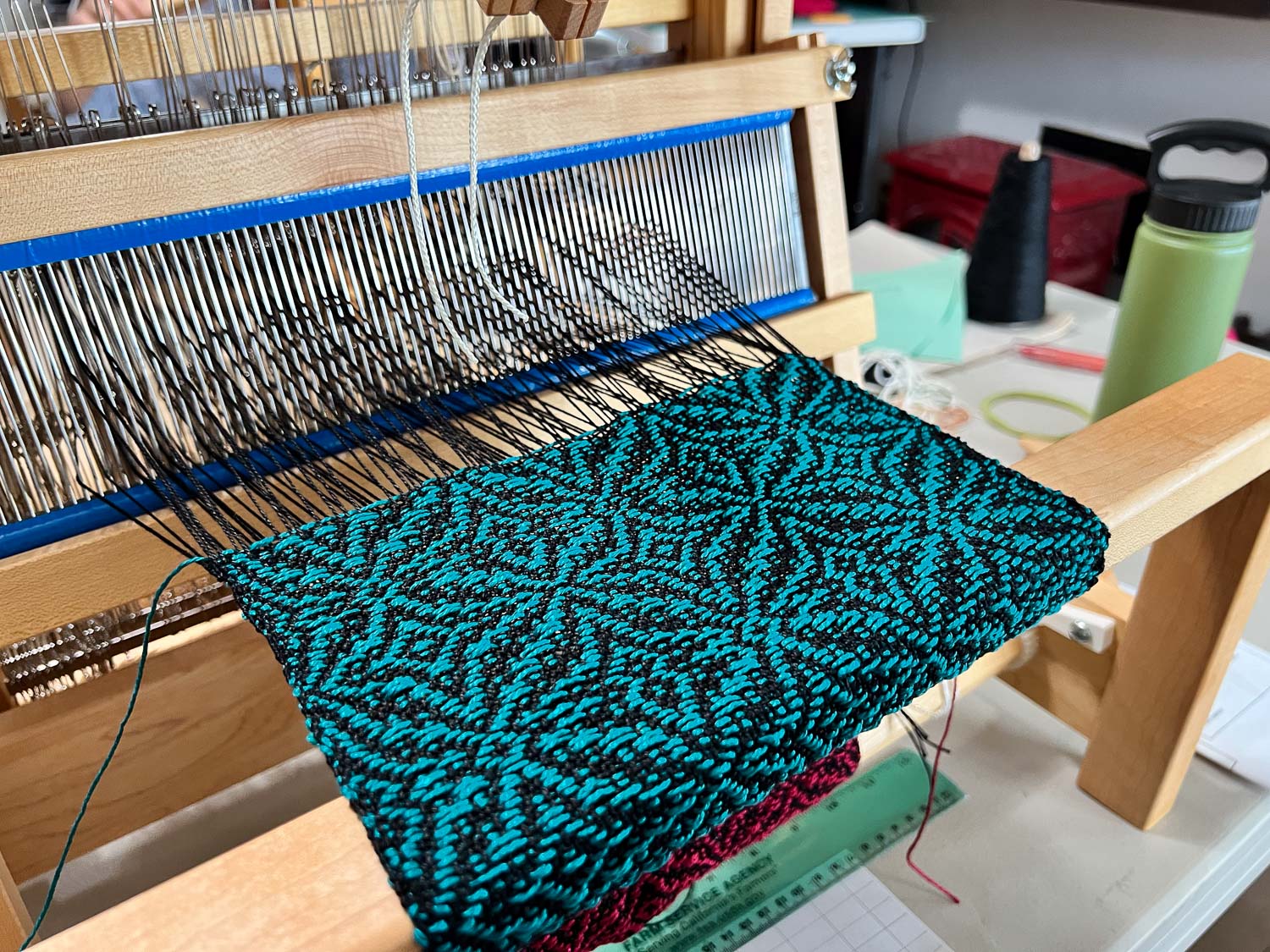
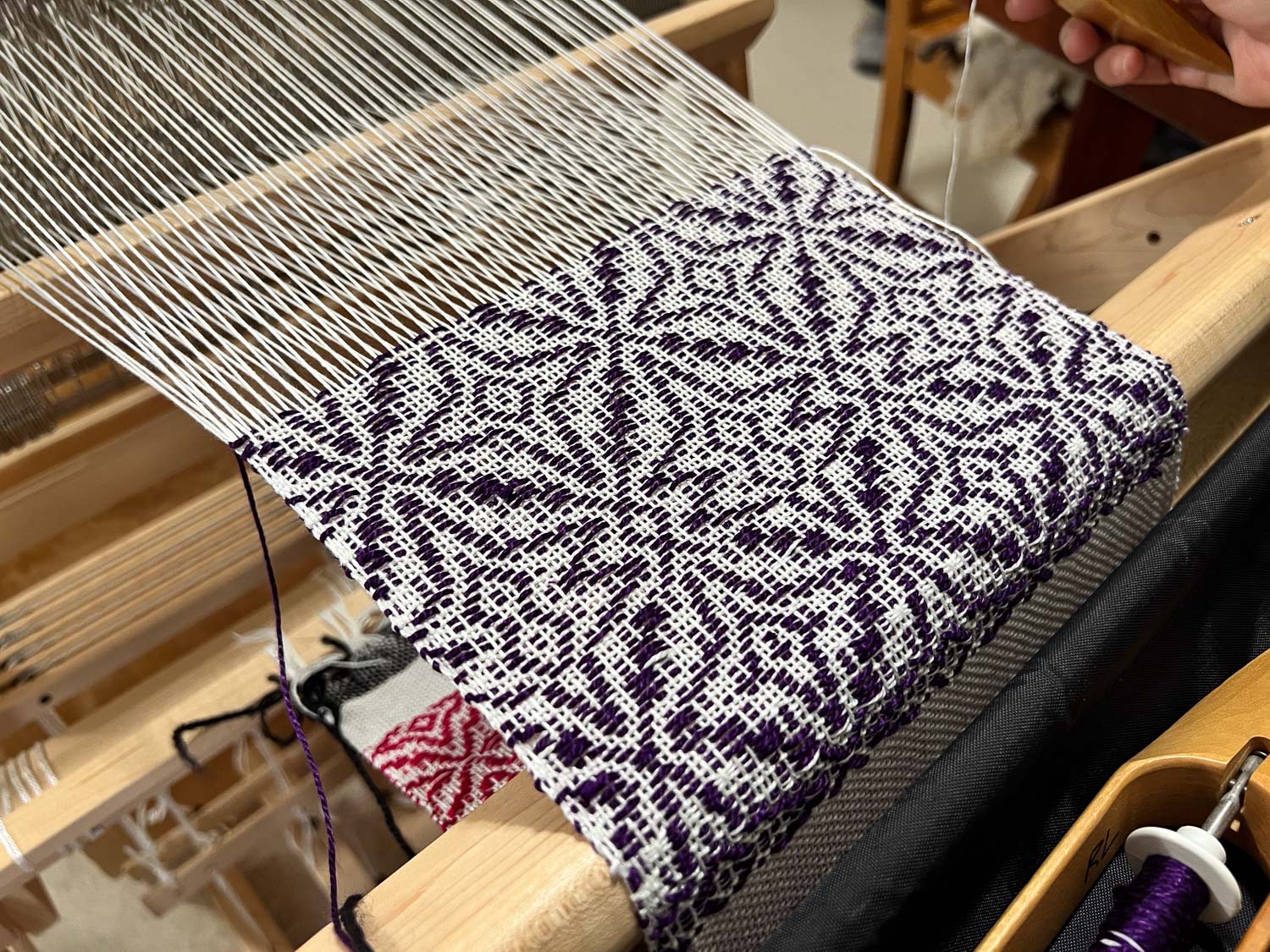
The next photos are some of the weavers’ work on the looms near the beginning of class.

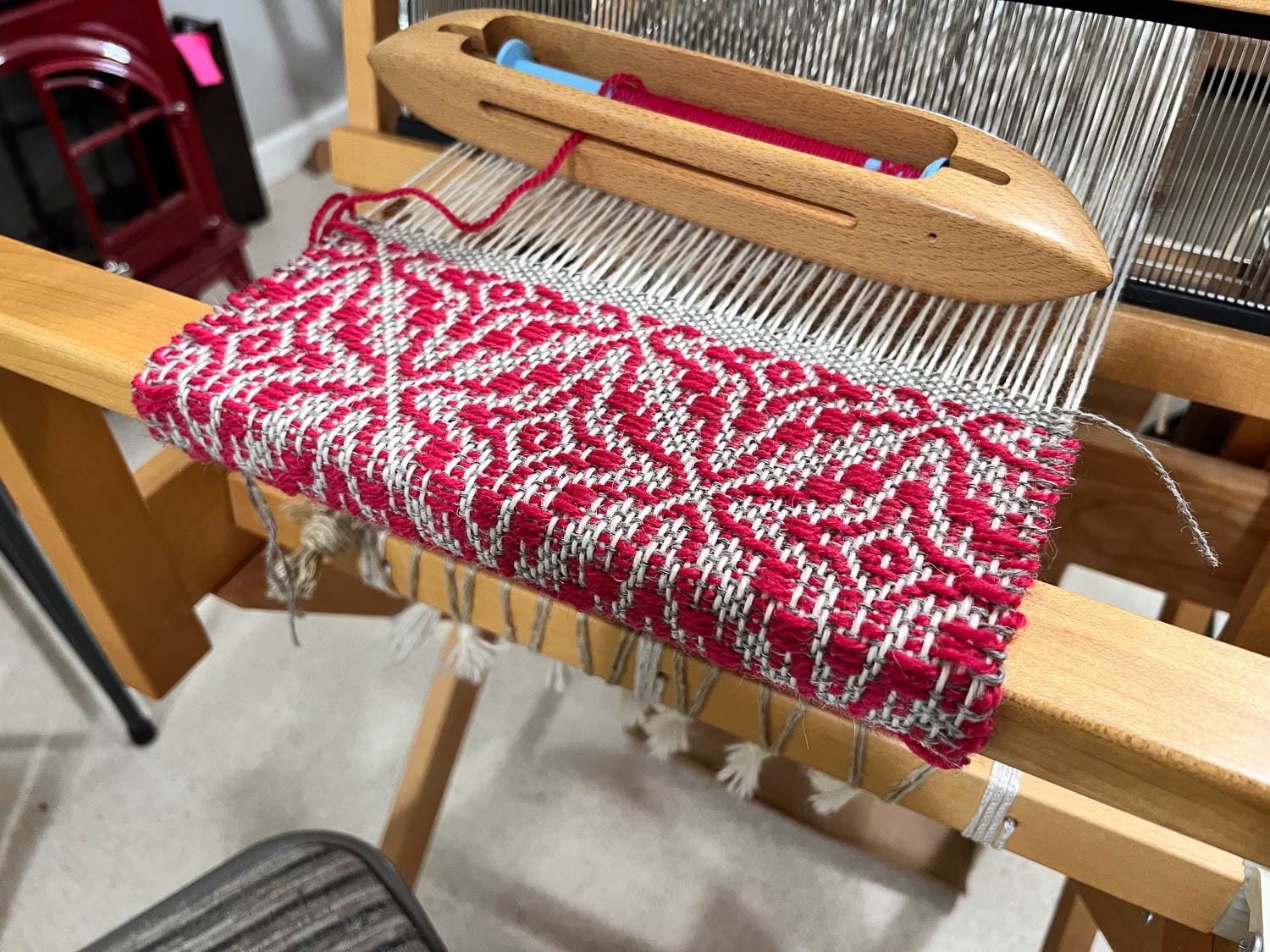
Two weavers chose black warp as in the samples. One weaver used white warp. Those are all cotton but the bottom one is wool because I already had that on a loom. That is white wool warp with gray tabby weft. It is so interesting to see the differences.

This was the first time for this class so I over-estimated how much warp would be woven. Two people have come back to continue work. Here is the sampler one of the students finished the next day. I will wait to see what others finished at home.

I hope to offer this class again but its not scheduled right now. Look for Overshot Explorations.

A Birthday Hike

M birthday was last week and I spent the day with my son exploring some of the El Dorado National Forest.

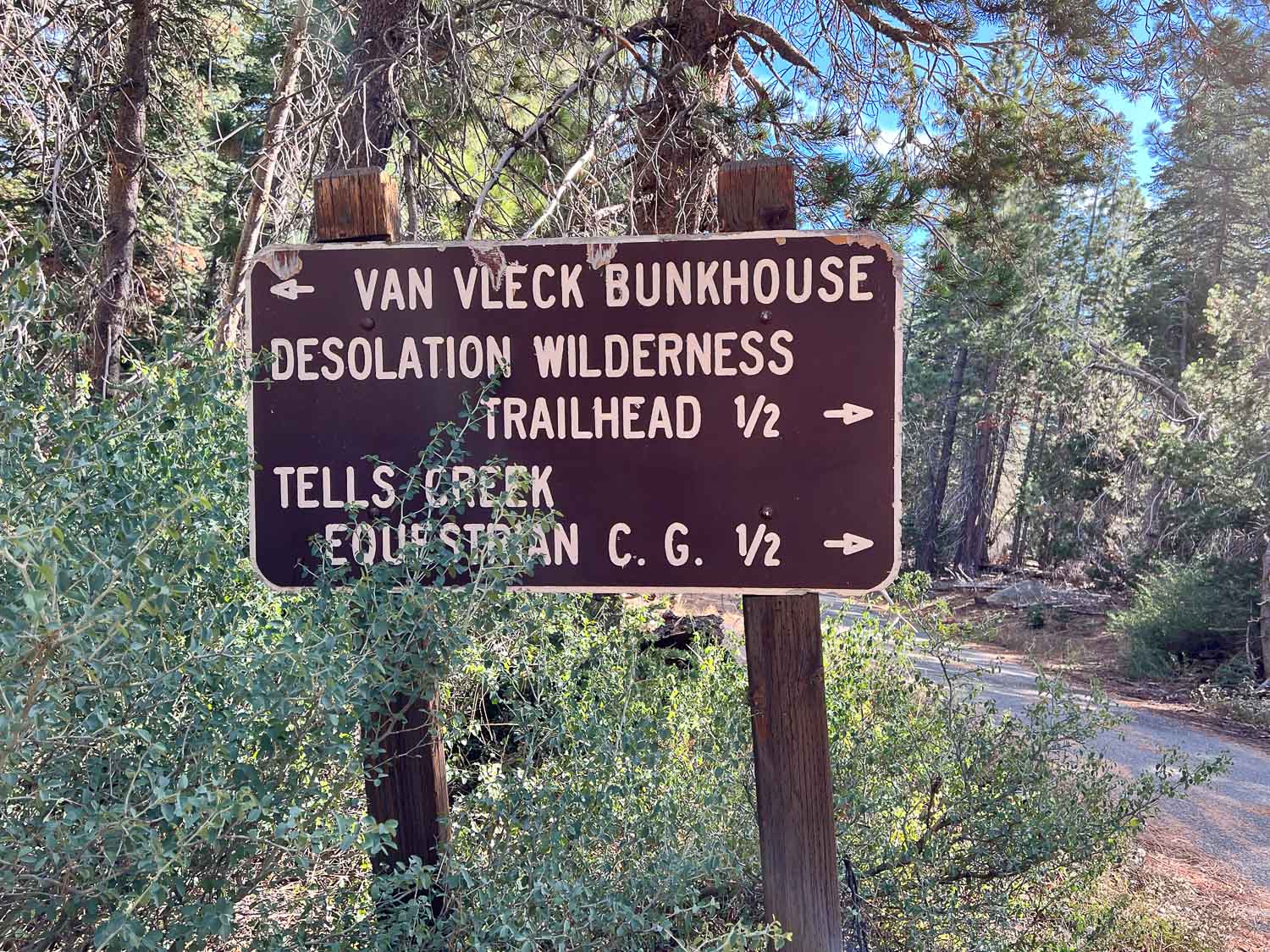
Matt drove and I wasn’t looking at a map so all I know is that we headed up Ice House Road and went beyond some of the other areas we have hiked in the past. The first stop was to look at the Van Vleck Bunkhouse, built in 1957, and now rented by recreational users from the Forest Service.

I had no idea that the Forest Service was in the vacation rental business. This might be a fun place to stay with a group of people. It sleeps six, has propane for cooking, but no electricity, and has running water during the summer.

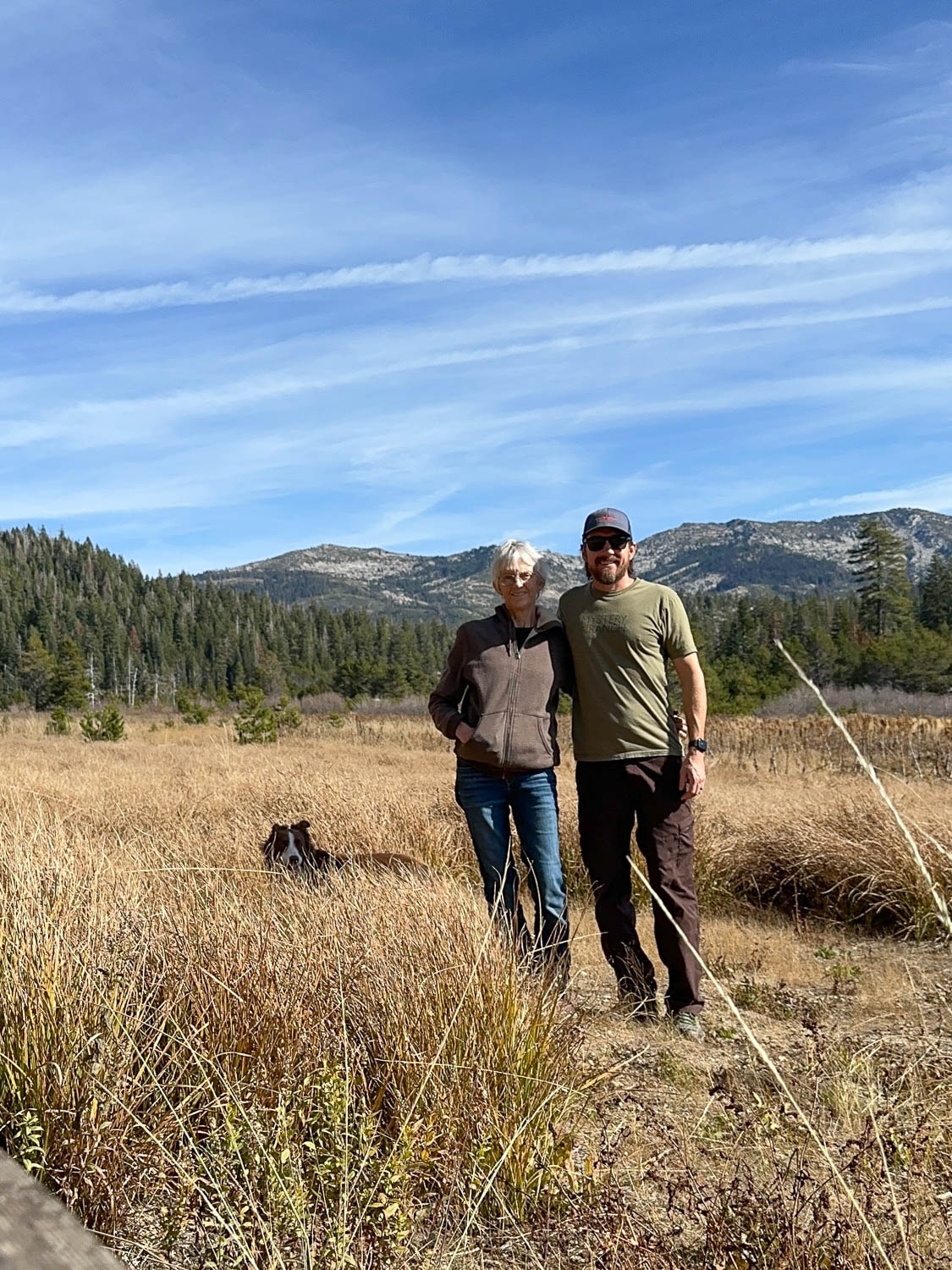
This is the meadow south of the bunkhouse with Desolation Wilderness in the background.

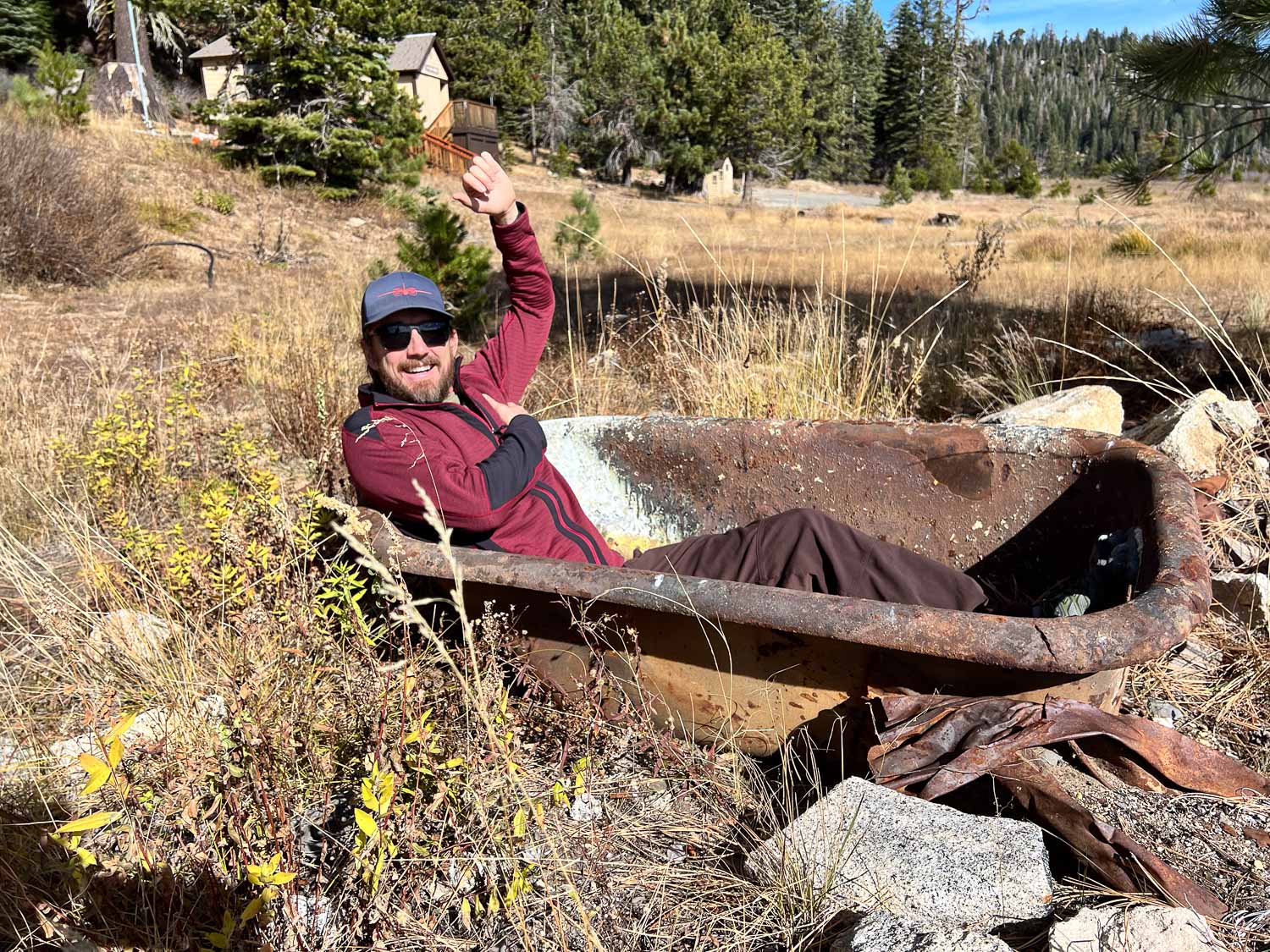
Matt didn’t care that there was no water. He tried out the bathtub at the edge of the meadow.

This is more of what was the meadow. Matt said that several years ago they did a prescribed burn here to maintain the meadow, but trees are encroaching again.

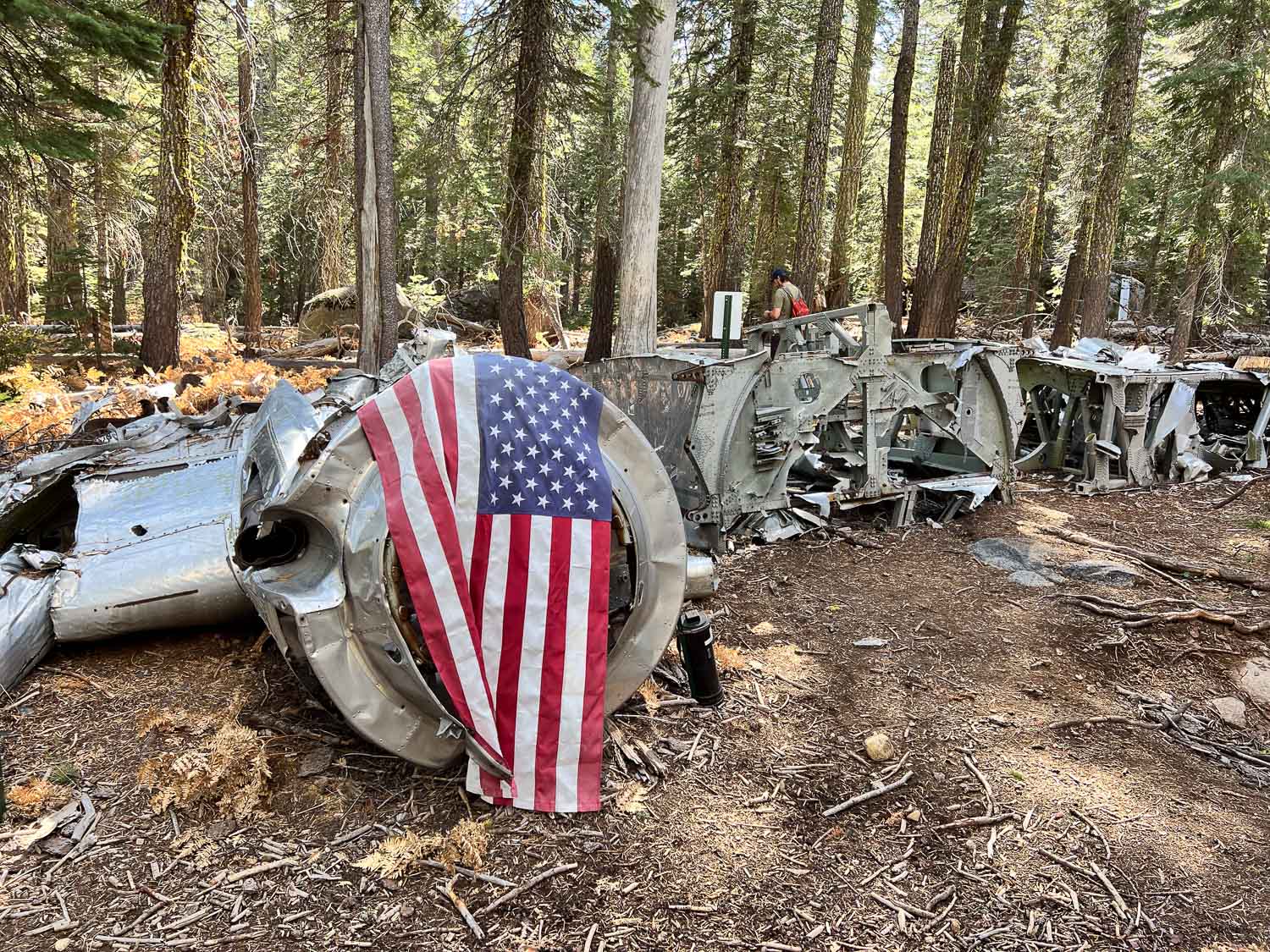
After leaving the meadow we drove further and then followed GPS coordinates to find the site of a plane crash in 1941. The info at that link tells of the air force pilot and crew that were flying a B-17, known as the Flying Fortress, from Salt Lake City to Sacramento. Due to weather and mechanical issues it went down on November 2, 1941. The pilot had ordered the passengers to put on parachutes. They all made it out but the pilot did not and two days later the crash site was discovered. We were here exactly 83 years later.

There is a trail of sorts to the site, but you’d still have to know where you’re going to find it.

The wing stretches off to the right. The other wing is at a different location.

This is what the remaining wing looks like.

Matt had the coordinates of other parts including the wing, and we walked farther to find the site, but didn’t see it before we turned back.

As we walked back down the trail I turned and could see the plane from an angle where I hadn’t noticed it before.

There were several downed trees in the area. I was surprised to see so many down with the roots pulled out of the ground. I suppose the severe storms last winter were to blame. The root structure of this one is massive.

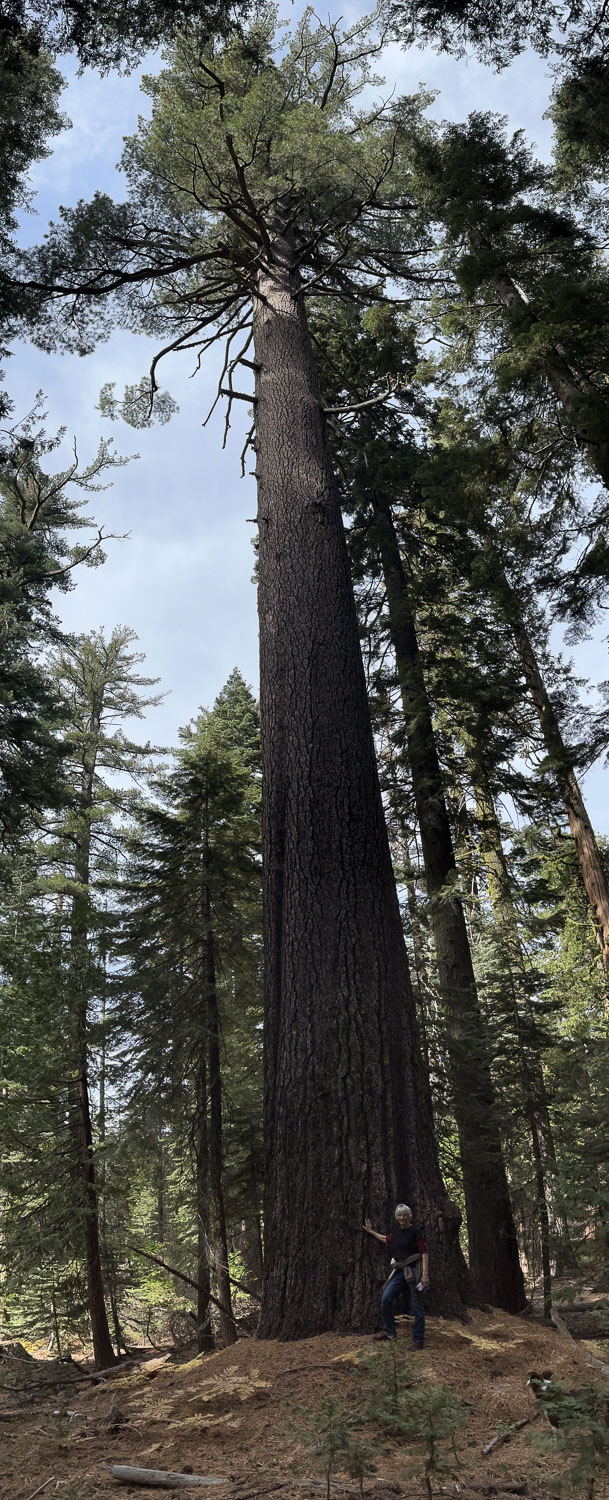
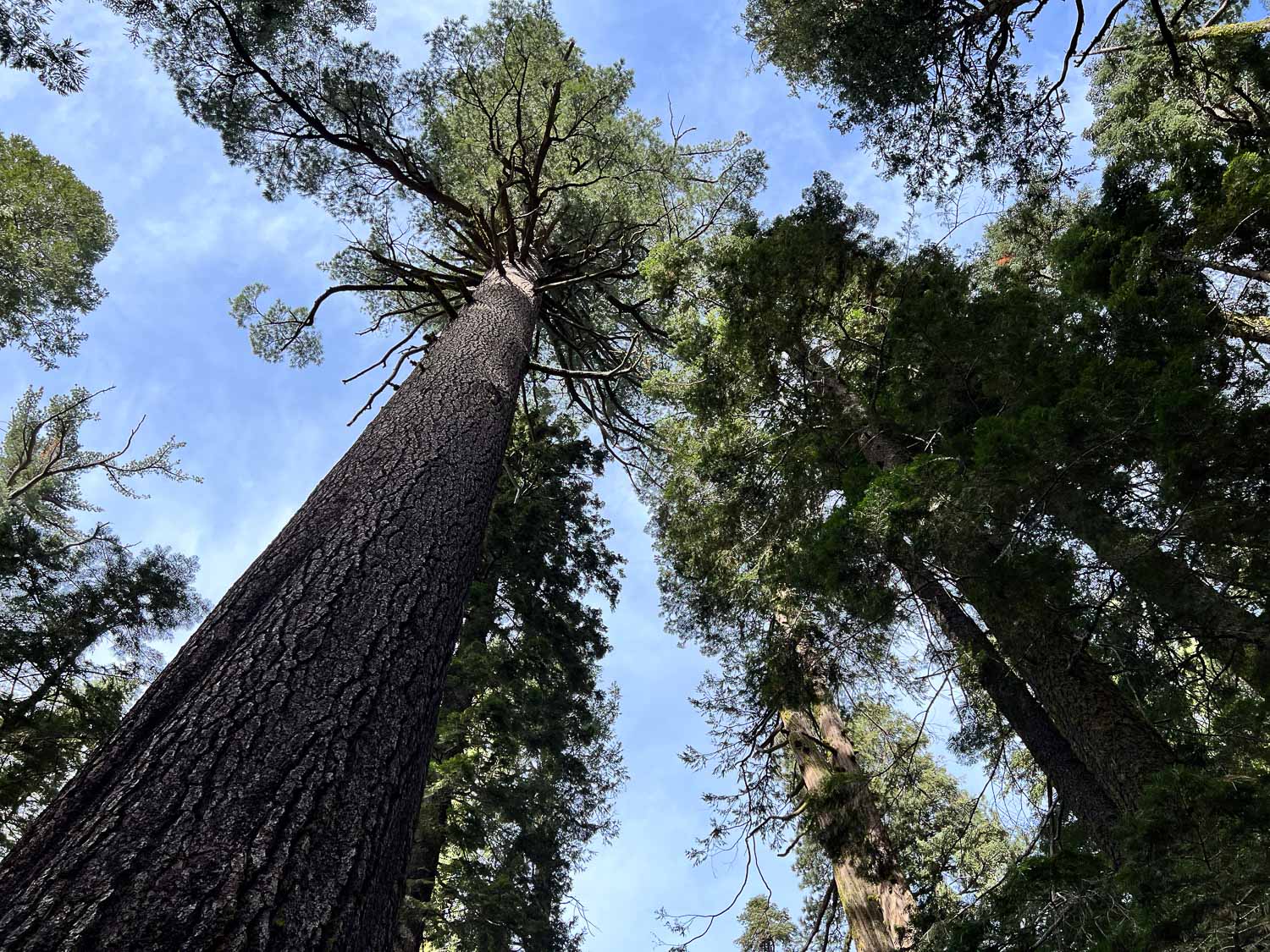
Check out the size of this tree.

This was my view.

There were some big mushrooms too. You can’t tell from the photo but that one is bigger than my hand.

We drove back towards Matt’s house, but first turned up the road to Big Hill, the heliport where Matt used to work. This is the view of where we had been earlier with Desolation in the background.

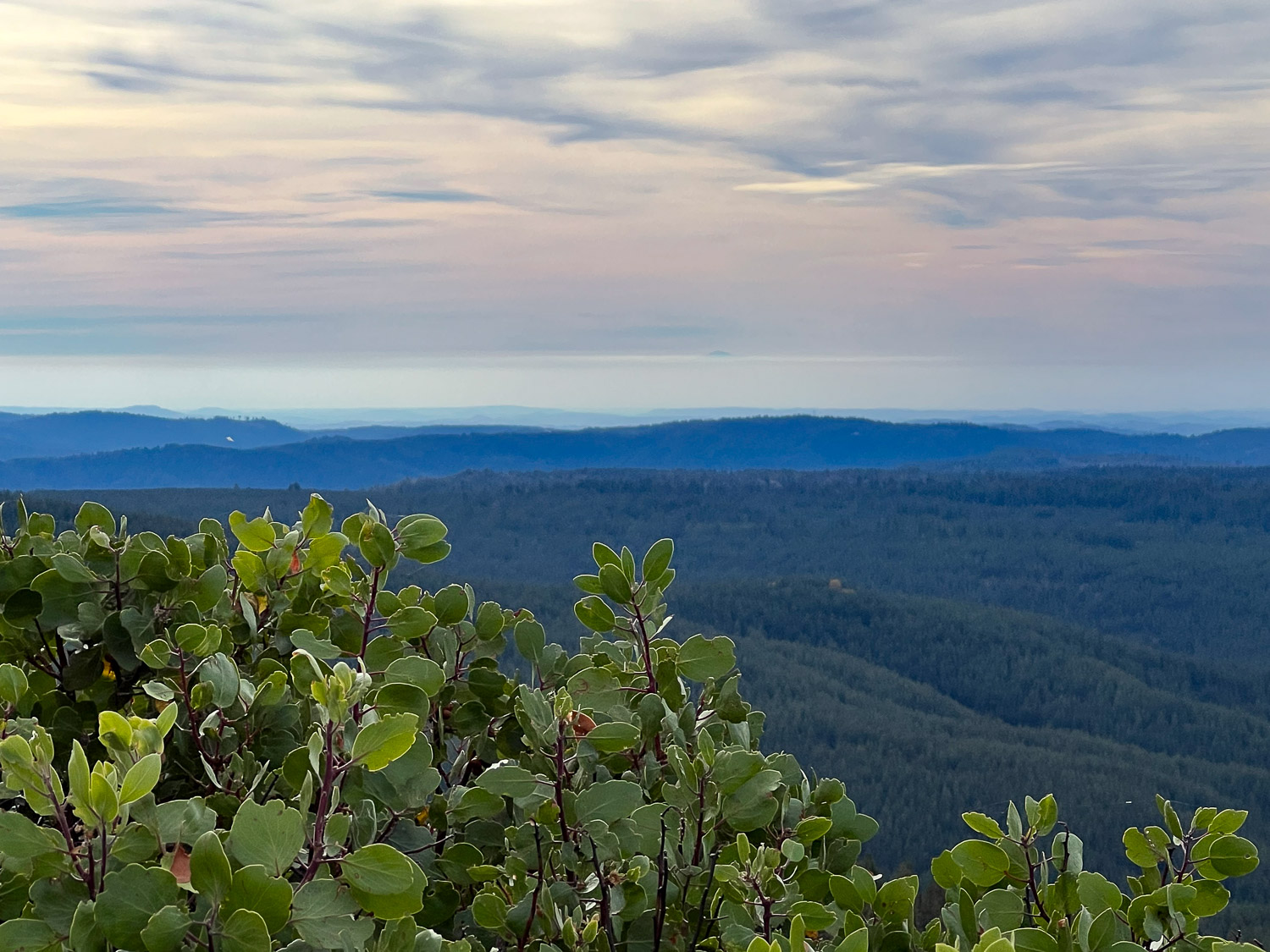
View to the west. I wish I could make an arrow on this photo. I’d point it to the mountain top that is Mt. Diablo, the mountain that I see due south when I walk Across the Road at my house. There is a strip of white above the mountains, below the blue-turning-pink part. Do you see a small dark bump just above that white strip, just to the right of center? That is the tip of Mt. Diablo. I think it’s interesting to see it from a totally different vantage point.

Visiting Boise

Between Lambtown in early October and Rhinebeck, New York two weeks ago I made a quick trip to Boise. My son got a ride here from Idaho to attend a wedding but then needed to get back home. I’d never had a chance to see the house he and Meryl bought over a year ago so this was a good chance, besides the opportunity to visit with them.

As I sorted through photos for this post I determined that this is a FAIL for photos of my family as it is mostly landscape and road trip type photos. That’s OK I guess, because even though I use this blog as my personal scrapbook, maybe I should be more reserved about sharing family photos. That’s my excuse, but it turns out that I didn’t take any, unless photos of dogs and cats count.

I was glad to let Chris drive. We had lots of conversation and I amused myself with a few landscape photos.

We drove to Boise on Tuesday. The next day we did two errands that were business related for me. We delivered salted sheepskins to the business that had tanned some for me a couple of years ago but then relocated. They are just starting up again and I we met in Boise to transfer the salted pelts from my car to her truck–a very convenient transfer for me. I look forward to getting these back. Then we drove to Lunatic Fringe at a location not far from Boise.

Lunatic Fringe is not open as a retail shop but I am one of their vendors and order cotton and hemp yarns and kits from them. It was fun to visit and be able to shop on-site instead of just on-line. Look at that selection!!

I was pleased to see this kit that they had just put together after I used their hemp in an article that was published in the most recent Little Looms magazine.

These are the bags I wove for the article.

This is the only photo I got of Chris and Meryl. At least they can’t accuse me of badgering them for family photos. We were walking on some trails in the hills north of Boise.

The view of the city from above.

I gave Chris and Meryl one of the cat baskets that I have been making. I think Luke is a little big for it, but I don’t expect these baskets to hold their shape once they are in use by the intended recipients.

This could be a scene from home but we don’t have any stoplights on our North Meridian.

On Thursday Chris and I went to the Idaho State Museum. It is an interesting museum and I’d go back to spend more time with some of the displays. We learned about parachuting beavers. (If you google beavers in Idaho you’ll find a few videos that explain what that’s about.)

I was amused to see this in the museum. My kids used to play a version although we didn’t have an Apple computer at the time.

Information about the number of sheep in Idaho and about women in Idaho ranching.

These are just a few many interesting displays at this museum. It would be easy to spend a few more hours there.

We drove downtown and parked so we could wander around the area.

Later we took the dogs for a ride and then a walk in natural area a friend told me about. That was an important part of my visit. I reconnected with a friend I had worked with in Utah around 1978. I last saw her when Chris was very young.

This prompted me to look back in the old photo albums to figure out when we had visited. I found this in the 1992 album. Those are my three kids in the middle, Matt, Katie, and Chris, and Joyce’s kids on the outside. Coincidentally they are named Dan and Katie, just to make things confusing. I hope to get to Boise again to visit Chris, 30 years older than in this photo, and Joyce too (maybe we’re only 15 years older?? I wish.)

I had to be home on Friday because there was a group of people coming on Saturday. So I took off Friday morning. I followed my phone’s directions to get out of Boise and for some reason ended up on the road to Elko instead of Winnemucca. That is the problem of not using real maps anymore. But it added only about an hour to the drive and I saw different country, although I don’t know where I took this photo.

This is probably Nevada. I think I got home at dark.

New York Adventure – Day 6

If you read the first post in this series you know that I started Day 1 with our first full day here. There was a travel day before that one, as is Day 6. So this would really be our seventh day away from home…just maintaining some level of accuracy.

We took a group photo before we all left. The California contingent are the four of us on the left. Adrianne, on the right, stayed with us. We first met her in Maryland several years ago and have stayed in touch. She drove here from Ohio. Some of the best time on this trip was spent hanging out together in the living room and at the kitchen table.

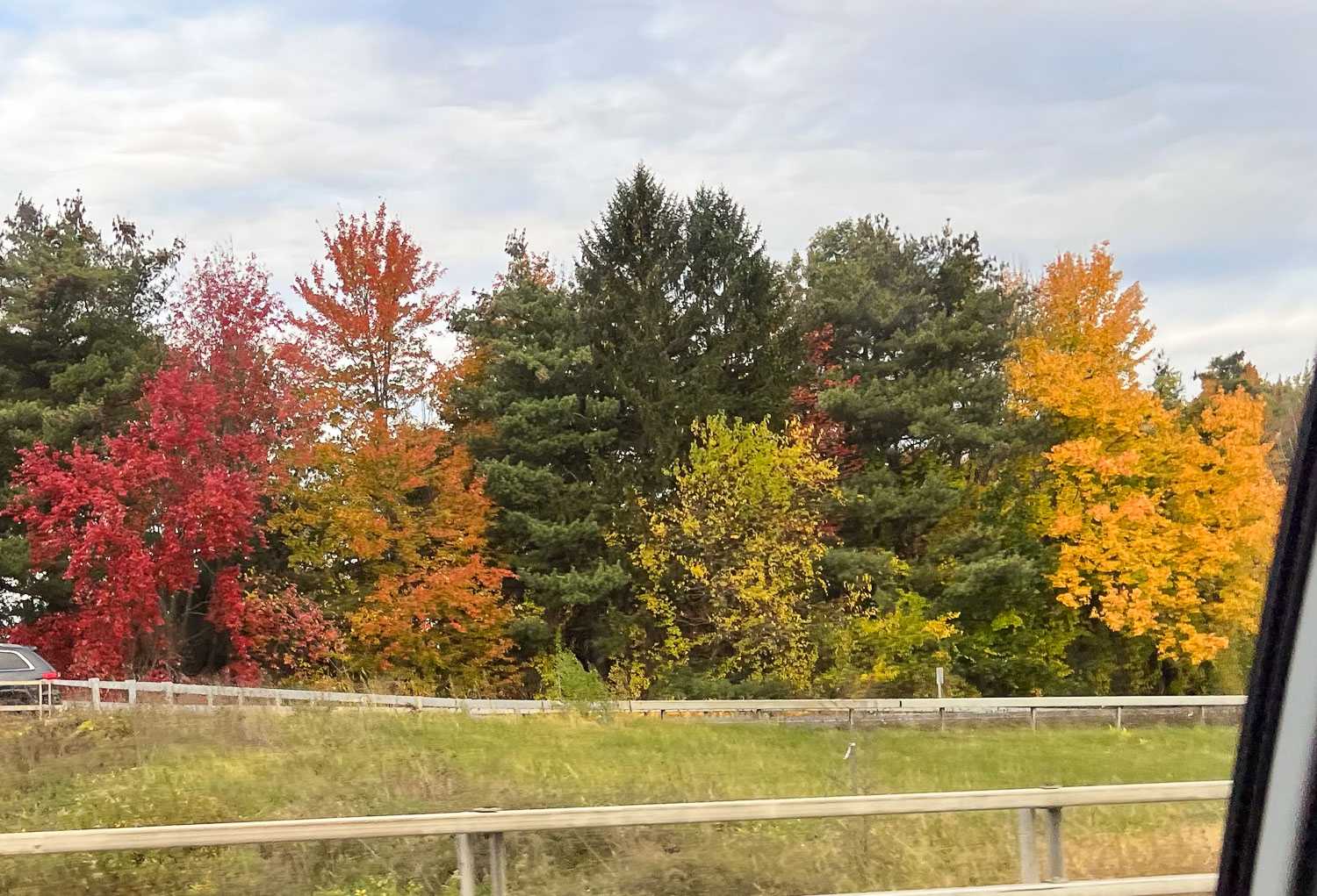
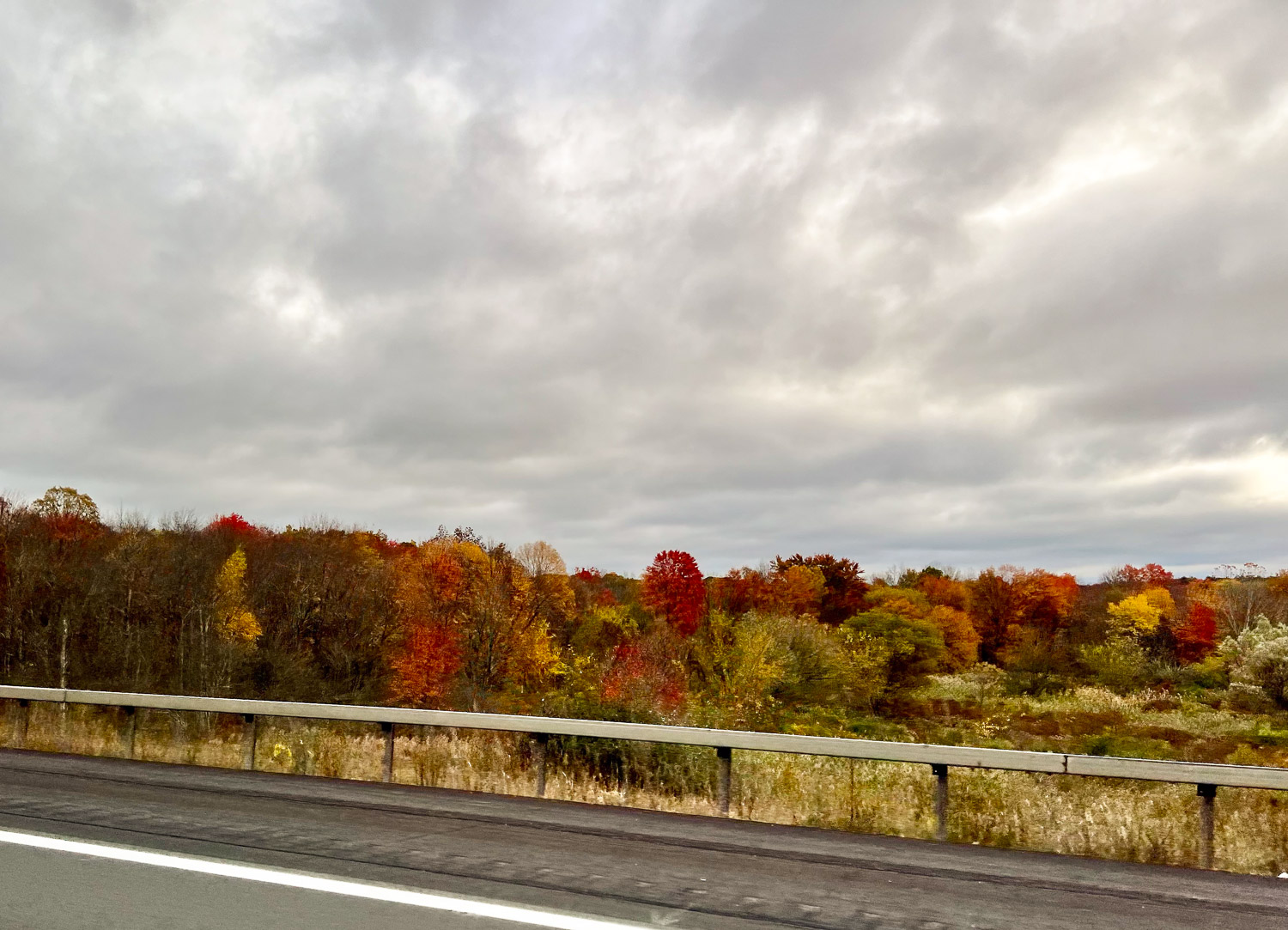
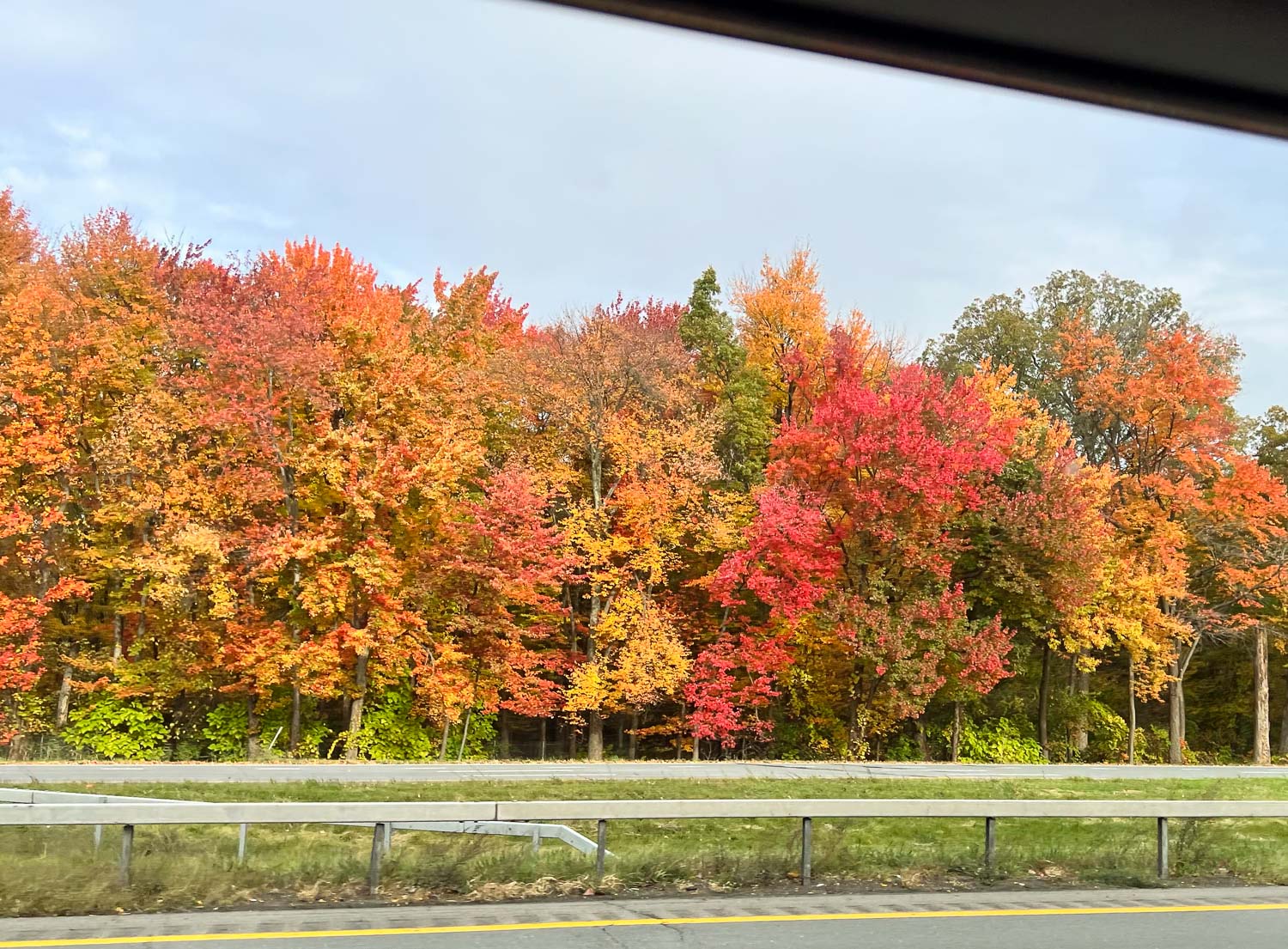
Fall color on the way to the airport.

Our travel days were easy and without incident. they were just long.

Somewhere over the mid-west.

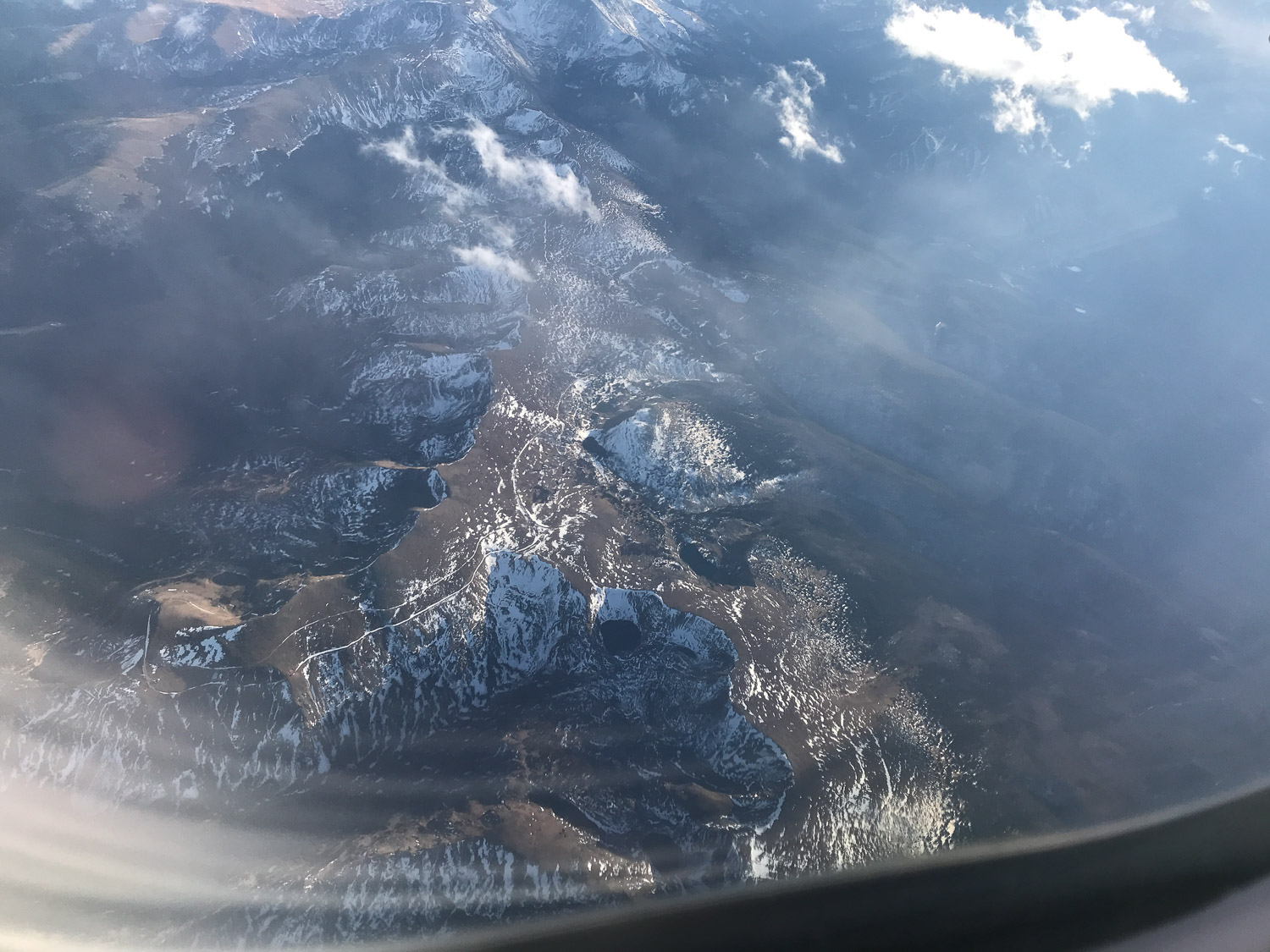
The Rockies.

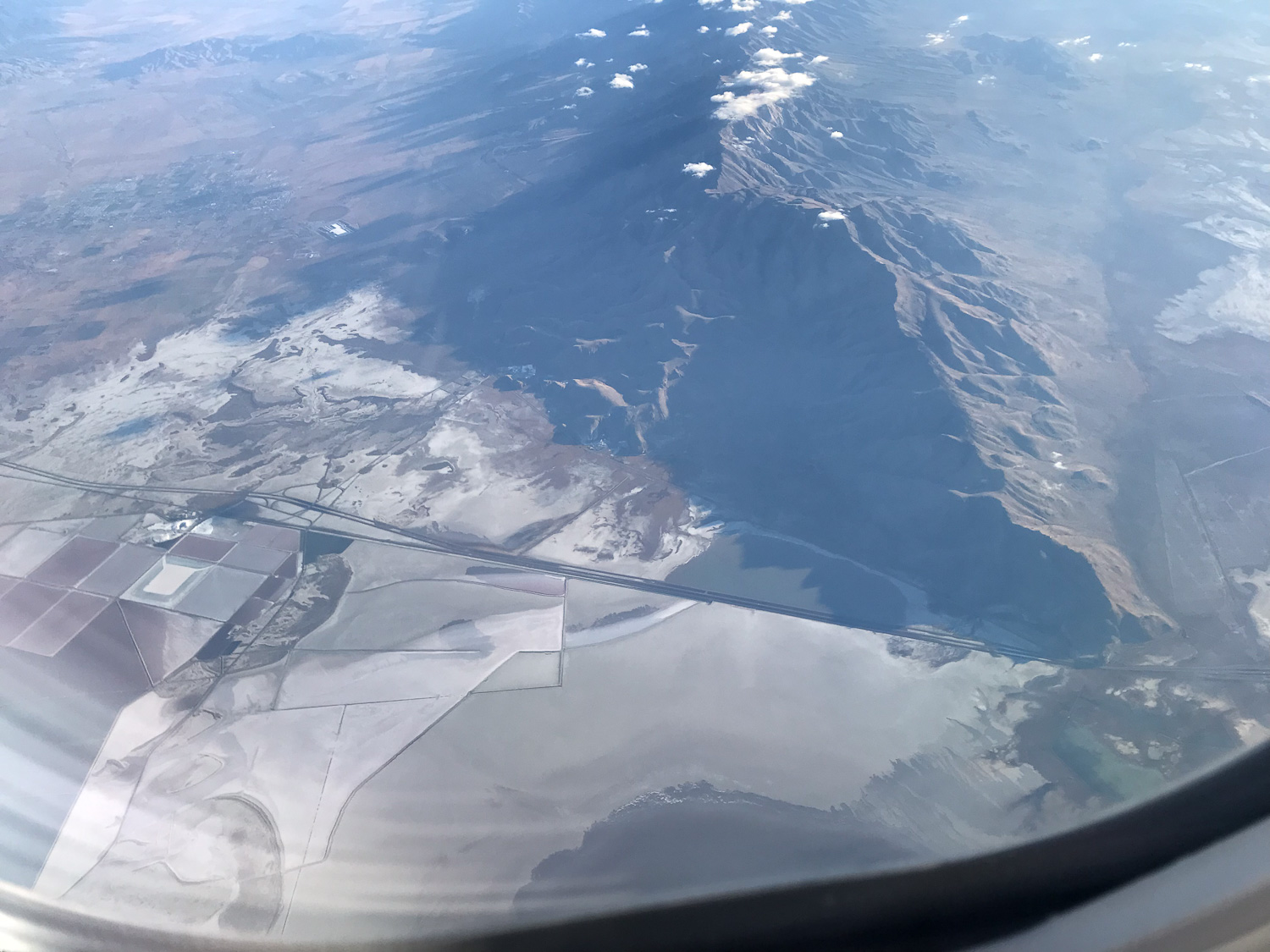
Over Salt Lake, but it’s mostly under the plane.

More of the salt flats. Some of you fly all the time and you are used to seeing this. I don’t see this often and I like getting this perspective

Lake Tahoe and the Sierras. That means we’re almost home.

When we see the fields of the Central Valley it means we are home. Aren’t those beautiful patterns?

Those hills just under the sunset are “my hills”. Our farm is in the valley just east of the lower hills.