One of the Lambtown events is the sheep show. I live so close that I like to participate and I know that people like to see my sheep there. But I knew that I couldn’t be a vendor AND show sheep. I told the FarmClub that I would get sheep to Lambtown if they wanted to handle the show. They were willing.
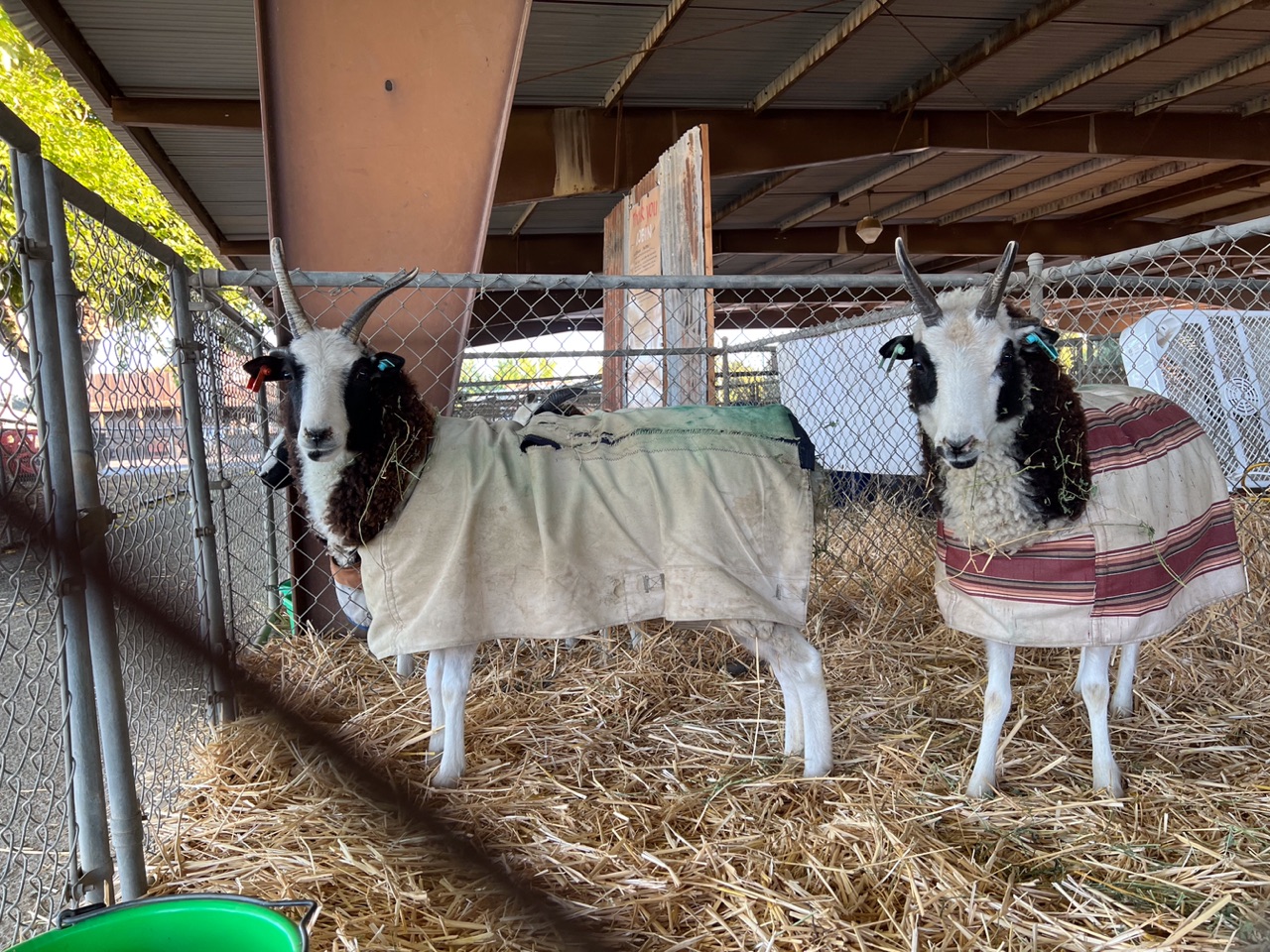
This was simpler than some other shows because there were no group classes and, as at many shows, you could only enter yearlings and lambs. I sold my yearling ram at Estes Park in June so we didn’t even have to worry about who would want to handle a ram. I entered two ram lambs, two ewe lambs, and two yearling ewes. It’s the yearling ewes in this photo. These are twins born in 2022.
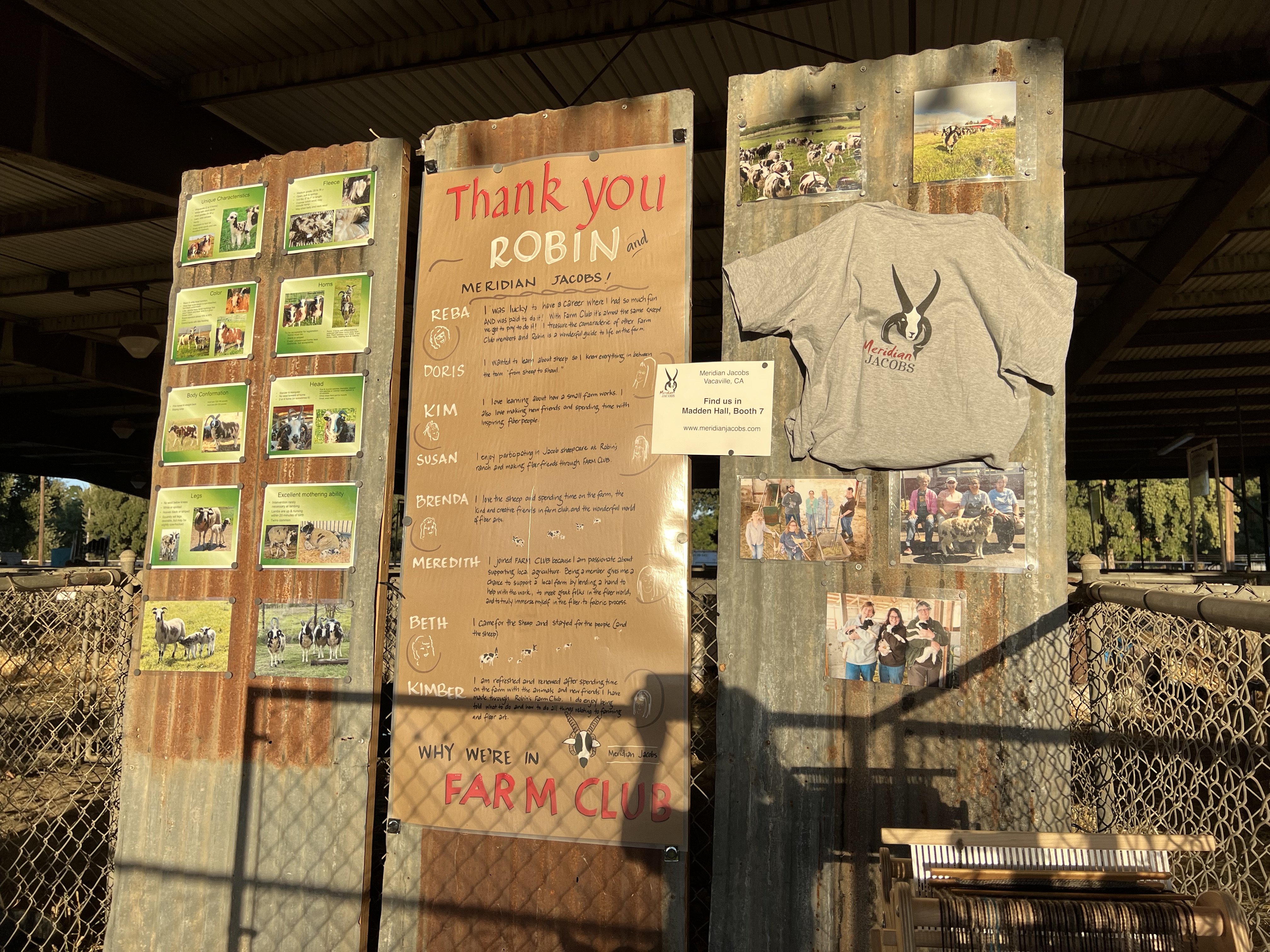
Farm Club members set up a display about Jacob sheep and Farm Club. All I had to do was bring a few of the panels that we use at State Fair and the box of photos and signs. I forgot that I’d be using the Meridian Jacobs sign in my vendor booth so Lisa used her t-shirt to indicate Meridian Jacobs. Clever!
I have to explain about that panel in the center. When you wind a warp on a loom you pack the layers of yarn with paper as you roll it on the beam. During one of the Sheep-to-Shawl competitions a few years ago FC member, Alison, thought that the paper used for rolling the warp could be made more interesting. As the shawl was woven, this message emerged from the back of the loom. Isn’t that a great idea?I thought it was worth laminating and using as a sign.
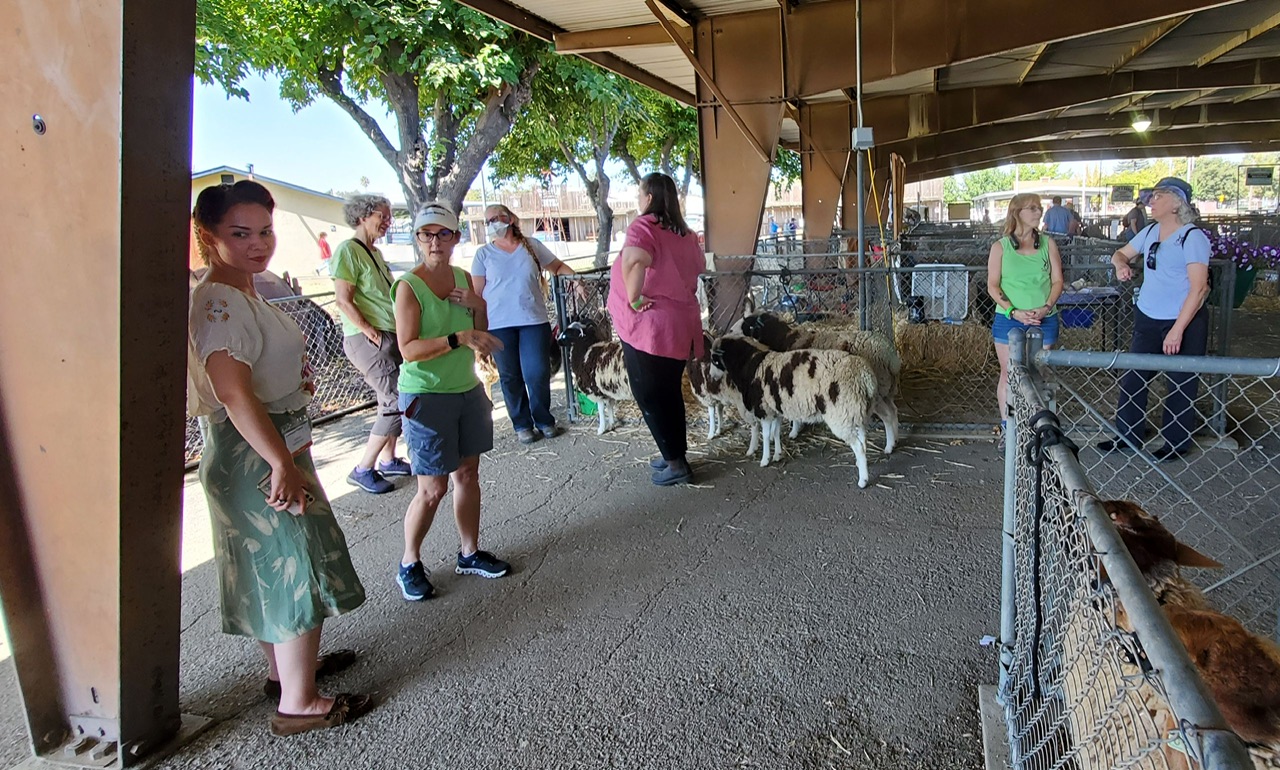
I did not get to see the sheep show, but many Farm Club members were there and some took the following photos.
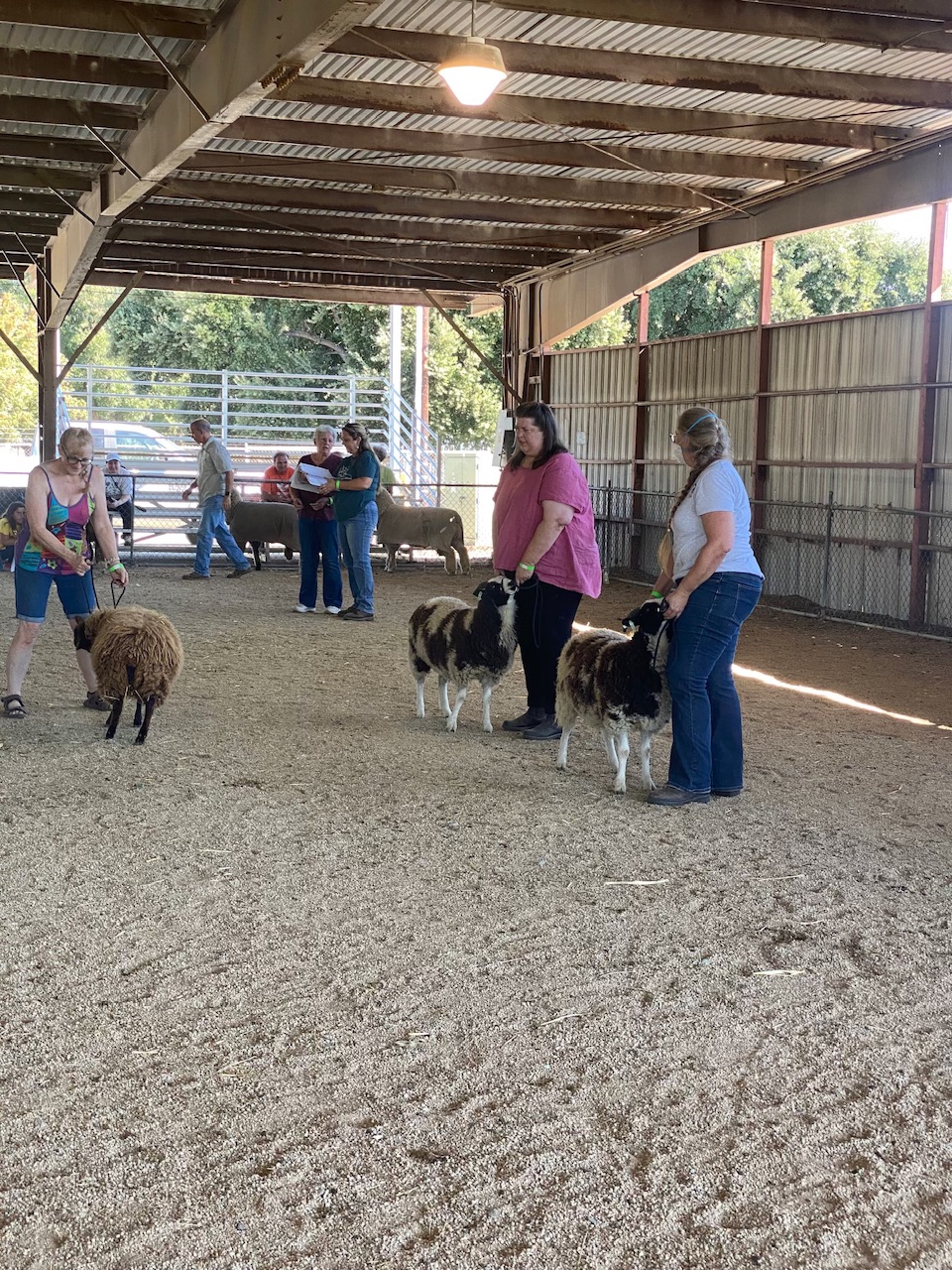
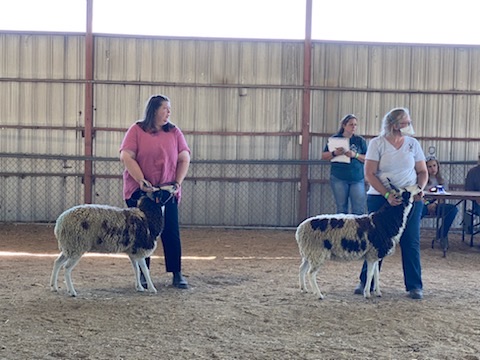
Beth and Marina did most of the showing. The competition was from a Shetland breeder. This is the ewe lamb class.
This is the ram lamb class. The green on the ram is because our breeding season had already started and this ram lamb was wearing a marking harness when he was with his group of ewes.
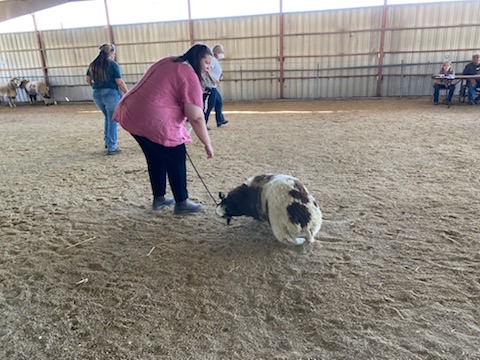
Beth ended up with a challenging sheep. This ewe decided to go on strike.
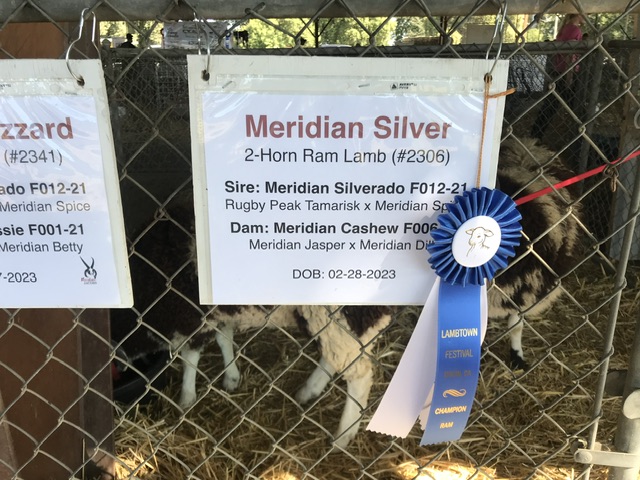
We ended up with Champion Ram and Champion Ewe of the Primitive Breeds division.
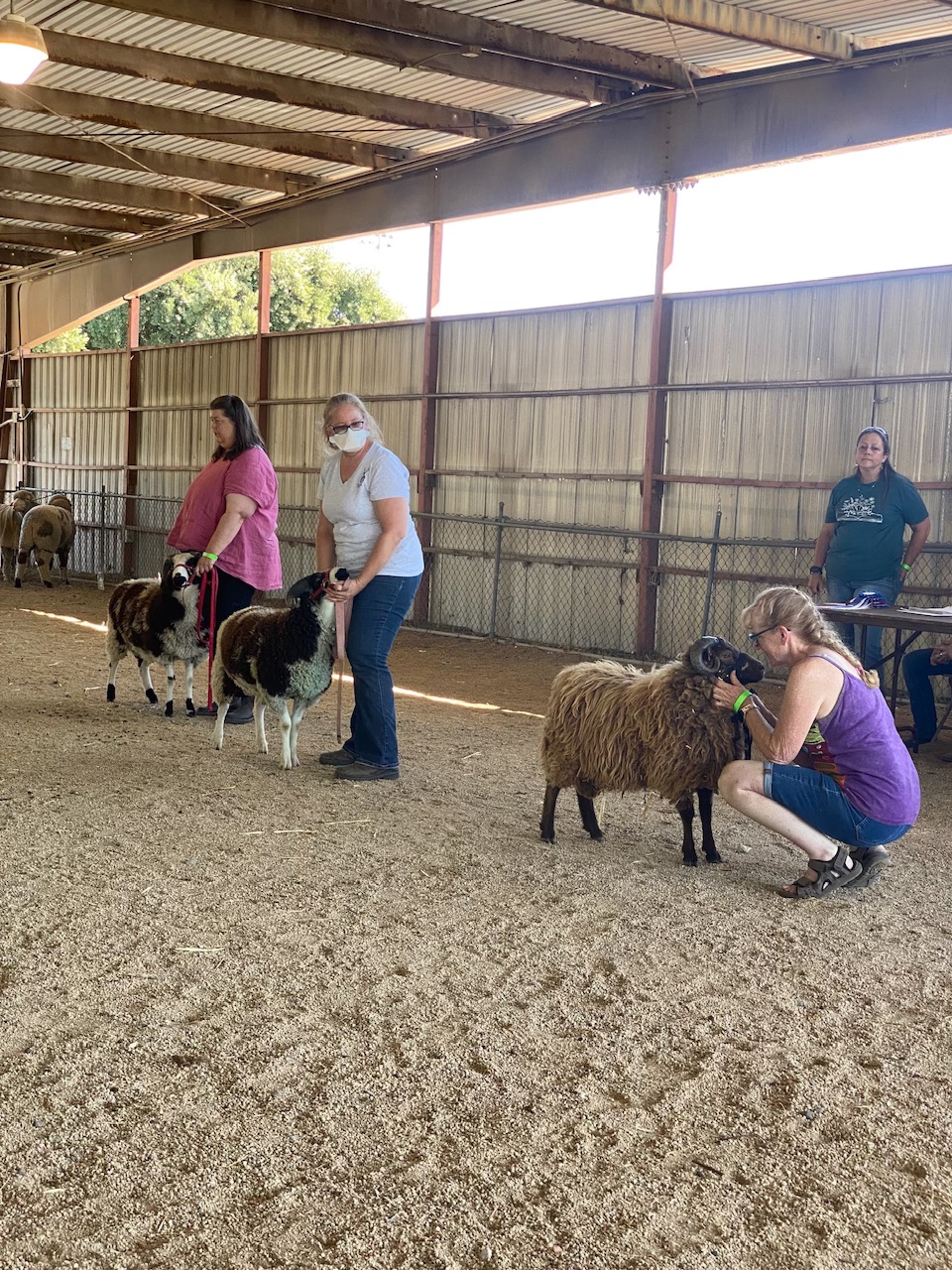
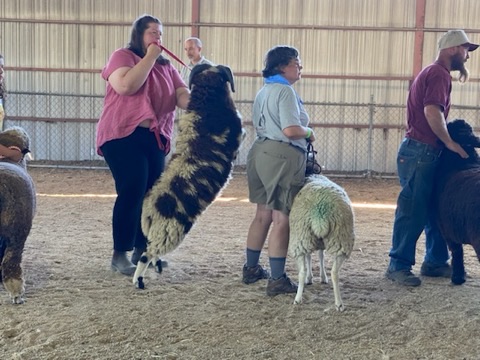
Deborah helped out when a third person was needed for the champion class. Once again Beth had a less cooperative sheep, but handled him well.
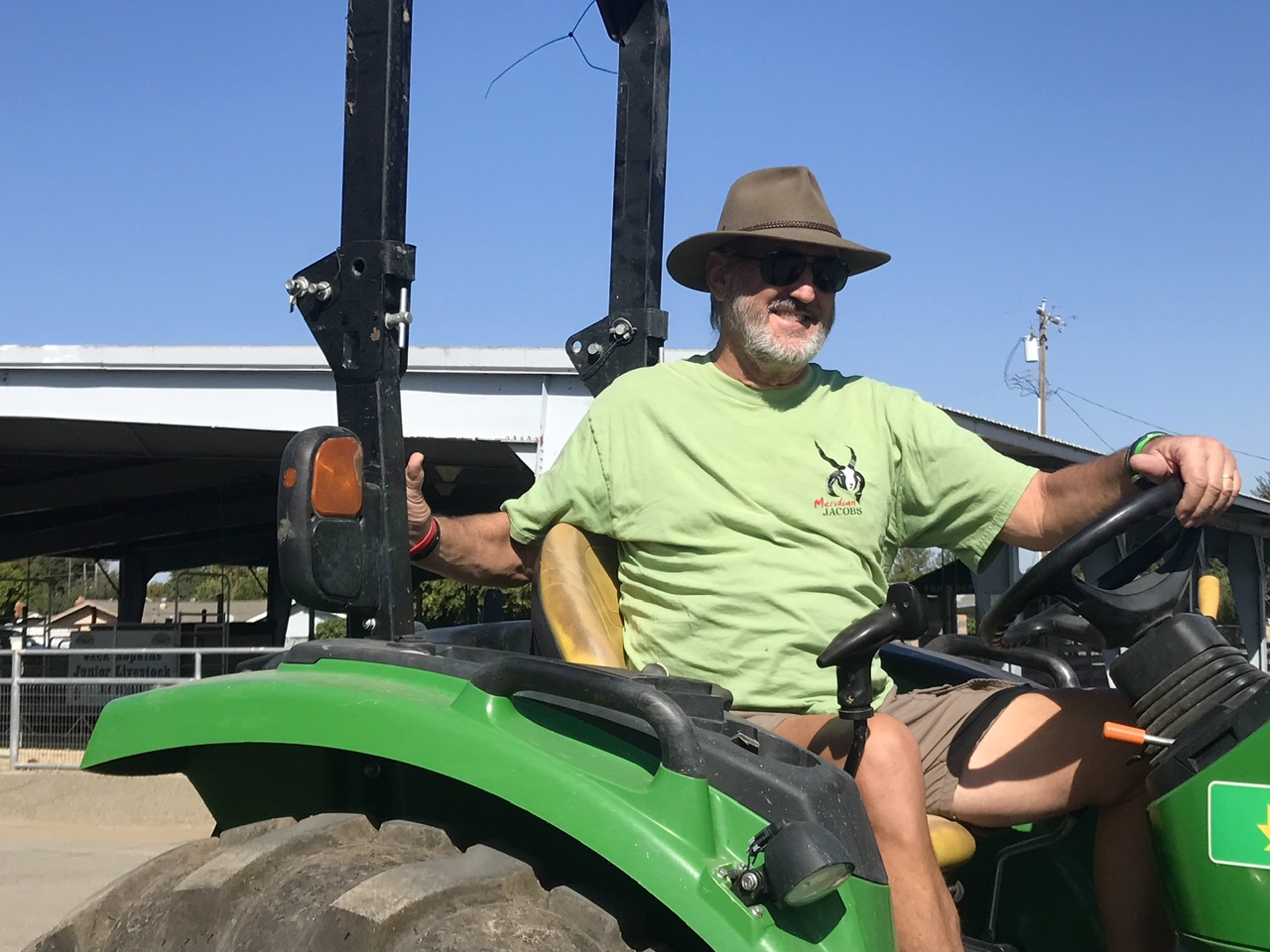
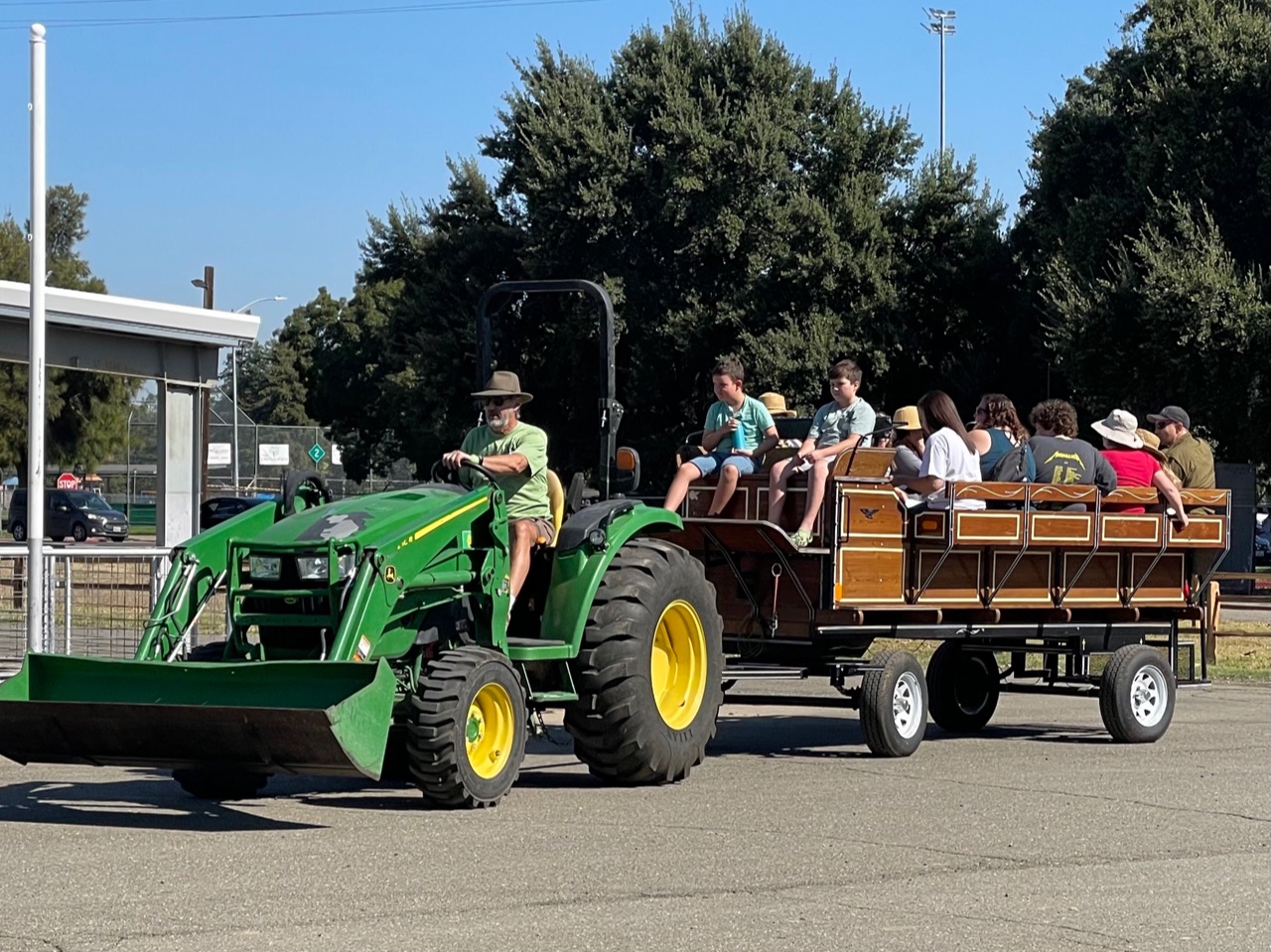
Dan spent all afternoon driving the tractor and wagon that transported people back and forth from the vendor halls to the livestock area.
This was very popular not only with adults that appreciated the rides, but with kids who liked to sit in the front. Dan took extra laps to give some of those kids more time sitting on the front bench.
Lambtown 2023 was a big success for all of us. The crew that put the show on this year is to be commended for the time they spent on planning and organizing and the professionalism they brought to the event.
Since 2011 Farm Club members have spent a weekend in January or February at a fabulous house in San Francisco, designed by Julia Morgan and built in 1928 for the Native Daughters of the Golden West. We haven’t been there since 2019 because in 2020 I was still recovering from the 2019 accident and then there was the pandemic. We had scheduled a retreat for January 2023 but the unusual California weather was enough to keep some of us from wanting to leave the farm(s). We rescheduled for May and this was our tenth retreat.
The “Home” is not the corner building, but the one on the left. There is a street level entry with a pioneer library, a museum, and a large meeting room. The second floor is the parlor and the dining room and a big kitchen for guests’ use. The third and fourth floors have bedrooms with shared or private bathrooms. There is access to a small garden in the back and there is an underground walkway and basement rooms with storage, laundry, etc.
We were shocked and dismayed to find that the parlor was not useable. It has been under renovation for over a year. The story is that a fourth floor toilet broke and by the time it was discovered water had severely damaged rooms on the third floor, the second floor parlor and water was running into the street. We usually spend all our free time gathered in the comfy seating areas of the parlor with our spinning and knitting projects. We settled on the dining room and had taken over several of the tables by the time the weekend was over.
This is in the entry way on the first floor. Right now the large meeting room in the shadows is filled with the furniture and paintings that had to be moved from all the water damaged rooms. A “silver lining” of the damage is that there was a discovery of what had been painted over years ago. Look at the next photo to see what was originally under those arches and on the columns.
The original design.
Yet another shock to our plan was that the two eating establishments we counted on were not what they used to be. The “pie place” across the street was a different shop, selling doughnuts but no pies. The Mexican restaurant at the end of the next block was now a place with squid and squab on the menu. So we found a different restaurant more our style within walking distance.
Saturday morning I got up and went for a walk. I took photos of some houses that I admired or because I wanted to remember the paint color. Before my son and DIL moved out of what is now the Weaving House they had started painting. The trim is black but they didn’t have time to do the rest of the house before they moved. I noticed this black trim on this building.
I love the look of these houses and would sure like to see inside. I also think of just how much maintenance there must be to keep these old houses in decent shape.
Saturday morning breakfast. Our traditional breakfast was lemon pie from the corner bakery and then some of our members started bringing homemade pie. Fortunately I made an apple pie and a couple of other people brought pies as well…tradition intact!
We hadn’t decided on a Saturday activity. When we planned the weekend the ideas ranged from visiting the Presidio, the SF Library, or the Botanical Gardens to staying in PJs and hanging out in the parlor. The night before at about midnight the Levi’s Experience popped up in my email. So that’s where we went.
Levi’s is celebrating the 150th anniversary of the 501 jeans. This is a 40,000 square foot venue.
The 501 jean is celebrating a major milestone in its hometown this week.From May 19-27, Levi’s is taking over San Francisco’s historic Skylight at the Armory to fete the 150th anniversary of the 501. The popup 501 Experience features an archive museum, factory, marketplace and opportunities for customization.The museum, called Chapters, brings to life the 501’s place in history and its cultural impact. The exhibit demonstrates how the 501 “went from workwear clothing of hardworking laborers and cowboys to a product that mirrored the course of socio-cultural history around the world and transformed fashion,” Levi’s stated.
I have included just a few of the many photos I took. To some of us the 1970’s doesn’t seem that long ago. I remember that my best friend through high school had embroidered the American flag on the back pocket of her cut-offs. I don’t know if they were Levi’s.
In case you can’t read the fine print: “To conserve raw materials during World War II, the back cinch and rivets on the small front watch pocket were removed from these 501s. The famous double stitching on the back pockets was printed to save thread, and eventually rubbed off. The watch pocket rivets and back pocket stitching returned after the war.”
Who besides me didn’t know that that little pocket inside the main front pocket was for a watch?
I have been to Huston Textiles located in a hangar at the old Mather AFB near Sacramento. Years ago I supplied some yarn so they could try out some of the fabric ideas that used our Northern California Fibershed based yarns. They are still using the old looms they started with but this fancy new loom with it’s associated technology is added to their line-up. The new looms will add some dependability to projects with serious time demands.
I don’t remember the details, but there are over 4000 threads in this warp, at 56 ends/inch, and the loom weaves a yard in two minutes. They were running this at 40% speed. I don’t remember if that yard in two minutes was at full speed or for this exhibit. There are separate selvedge threads on those spools above. The orange spools have two threads that are twisted at the edge of the blue yarn so that the selvedges can be cut off and the fabric will be intact.
We spent a lot of time talking with the mill owner and a supporter of the mill. They showed us some of the innovative work they are doing in the local textile production realm.
Huston Textile Company has high tech knitting machines as well to create zero waste garments.
The 501 line-up through the years.
The sign tells the story of these jeans being used to tow a broken-down car home. The jeans and attached rope were sent to the Levi company with a letter about the story.
This is the corner of the Home that we took over. One advantage of working in the dining room is that we could have food out at all times and there was plenty. (Food is not allowed in the parlor.)
This was a great weekend and I look forward to next year.
Farm Club members have spent time here during lambing and helped with cleaning, lamb ID, etc. And of course there is always lamb cuddling.Farm Club is a great way to learn about raising sheep before you invest in sheep or if you won’t ever have the lifestyle that lets you own a sheep.
Zorra had plenty of cuddling while she was still in the lambing area with her mom. Lisa is a lamb cuddling Pro. This is pet sheep Jade’s lamb (and me).
This is her again being held by Peggy. We’d really like her to be friendly too.
This is Zorra again with Sumi.
As the lambs get a little older we have other Farm Days. This was Betsy’s first day on the farm and she jumpred right in holding lambs as we ear tagged and castrated. I don’t castrate many because it’s hard to know how they will grow out and which might be a great flock sire for someone. Some are easy though–too much or too little color to fit within the 15-85% breed standard. This one’s horns are already touching at the base under that hair. As the horns grow they will fuse and not grow well separately. Marina and Maggie (no photo) helped catch lambs too and Mary handled the clipboard. The lambs were all tagged with their white ID tags right after they were born but we put added a colored tag on Farm Day. I like to use a second tag for back-up ID if the first one falls out and also to color code the sire. It’s interesting to keep track of that and it also helps to find a lamb when you’re looking for one among 75. You can narrow it down some if you have a color to look for. This year Cayenne’s lambs got orange tags. Pink tags go in all the lambs that have been castrated.
Green means these are Buster’s lambs. Blue was for Catalyst.
Peyton’s lambs are obvious so don’t need an extra tag.
After we tagged all the lambs Marina and Betsy stayed to help me set up the pasture for the sheep. I had put the sheep out for a few days but hadn’t cleaned and moved the water trough.
We walked around the pasture and took stock of things. I always point out the issue that I have with the dallisgrass that is out of control. That’s what all that dry grass is. I’d much rather see green grass growing. The whole pasture was looking somewhat dismal from a growth standpoint. At this point we had just had March rain after two very dry and cold months. I wasn’t seeing much growth–at least not enough to feed 55 ewes and 75 lambs. We spotted this grass that I don’t recognize. I took photos to send to a friend of Marina’s who she think might recognize it.
Dona took all the photos in the previous posts (this one too) because I was in the shop most of the day. Here are a few that I took when I made quick trips to the barn.Colleen brought roses for all the tables……and set up a booth with her felted creations and dyed yarns.Observed in the parking area.Speaking of parking, here is the Parking Attendant, who doesn’t get much attention in my blog, but is a Very Important Person behind-the-scenes.Bunnies in the barn were a big draw.Lisa worked on her Cricket loom all day and sent interested customers to the shop.
Alison led a Sheep Portrait class.
Feeding the bottle baby drew a crowd.At 4:00 everyone pitched in and sheep were put away, pens moved, and signs stored for next year in no time. Wow! What a crew! (What I haven’t talked about in a blog post was the huge help that Farm Club members were during the last week when I had severe tendonitis and couldn’t use my right arm at all. They did all the pen cleaning.)I think we got the whole Farm Club crew who was here (except for Gynna) in this photo.
The first day of our Farm Club Retreat was rainy and windy–a good day to relax in the parlor of the Home. On the second day the sun was out and we had a plan. But first we gathered in the dining room for our traditional breakfast.
Some of the group decided to stay at the Home and continue with their projects and others went to the Asian Art Museum. Some of us decided to take advantage of the beautiful day and walk to the museum.That was a good opportunity to see some of the beautiful old houses in this part of San Francisco.First stop at the Museum was the Museum Store. In recognition of the Year of the Sheep there were plenty of sheep figurines and trinkets. Alison showed me how this Buddha Board works. You “paint” with a brush and water. The image takes a few seconds to be seen and then disappears as it dries. Alison described it as a version of an etch-a-sketch.
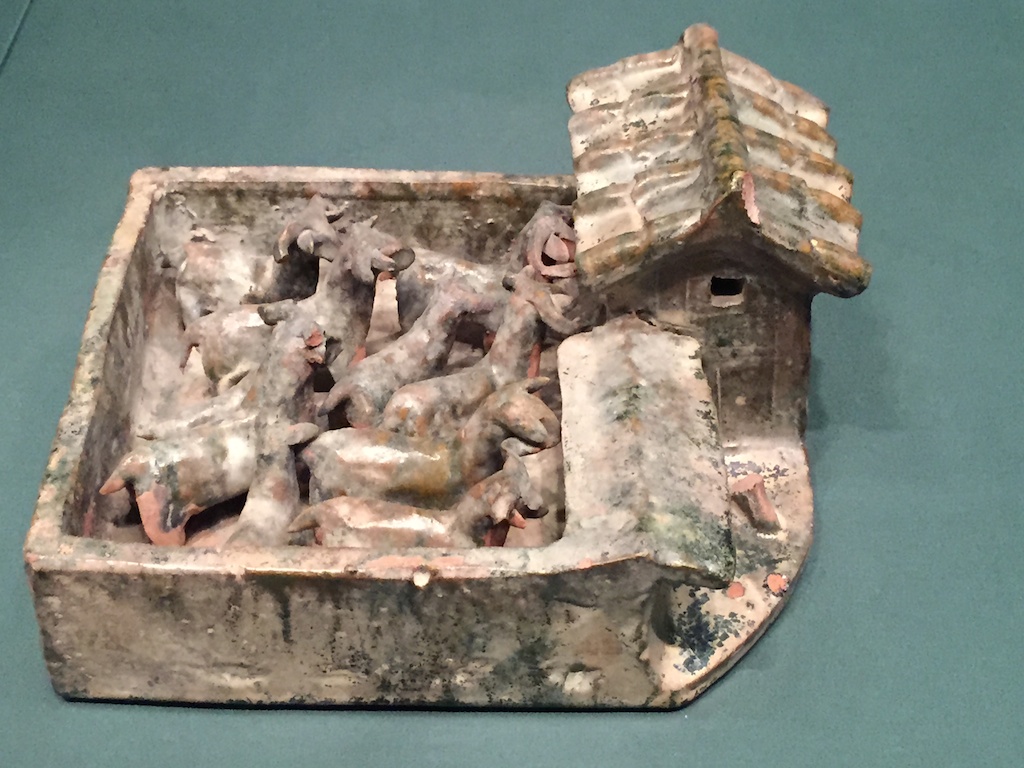
We didn’t have nearly enough time to see all that is in this museum. We split up as we wandered the three floors that hold art from 2000 years old to contemporary that represents all the Asian nations. I found myself focusing on finding sheep and horse images–at least a way to narrow my photographs. Not sheep, but labeled “A Goat Pen” from the year 25 to 220. Now that’s old!
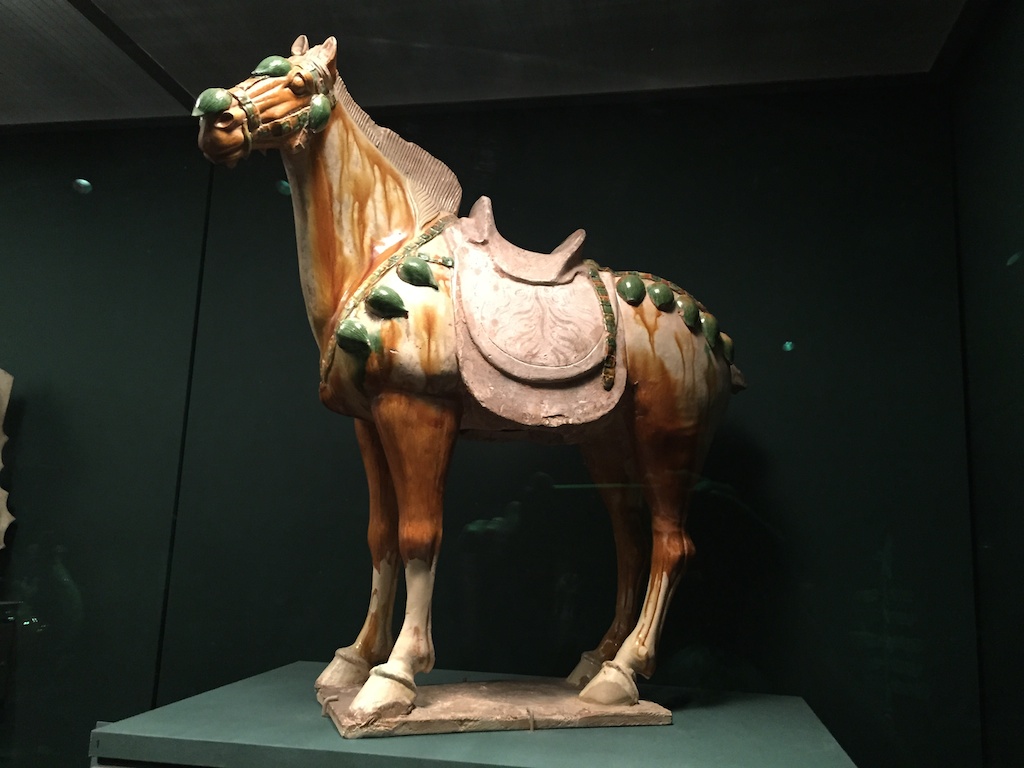
Here is a beautiful “glazed earthenware” horse (618-906).
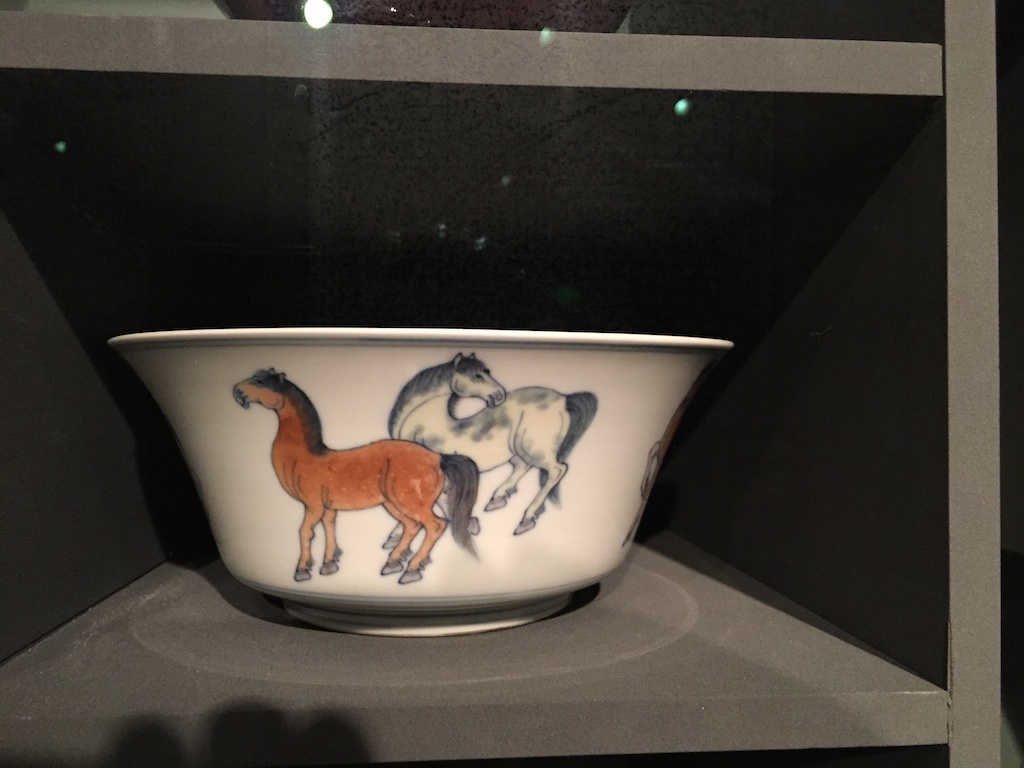
Bowl (1662-1722)“Horse with pack” (386-584).
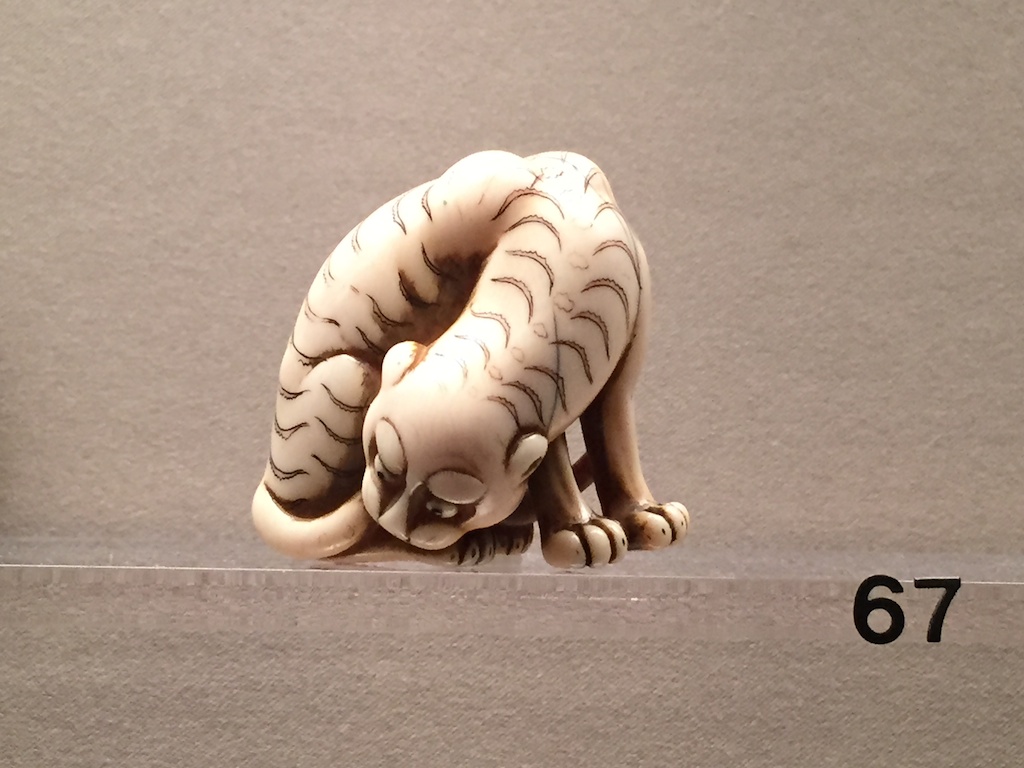
There were a lot of other animals represented as well.Tiger netsuke (1675-1800) in ivory. Wikipedia says: “Netsuke [netsu͍ke] are miniature sculptures that were invented in 17th-century Japan to serve a practical function (the two Japanese characters ne+tsuke mean “root” and “to attach”)” Traditional clothing had no pockets so people used small containers hung around the neck with cords. Netsuke were decorative closures.
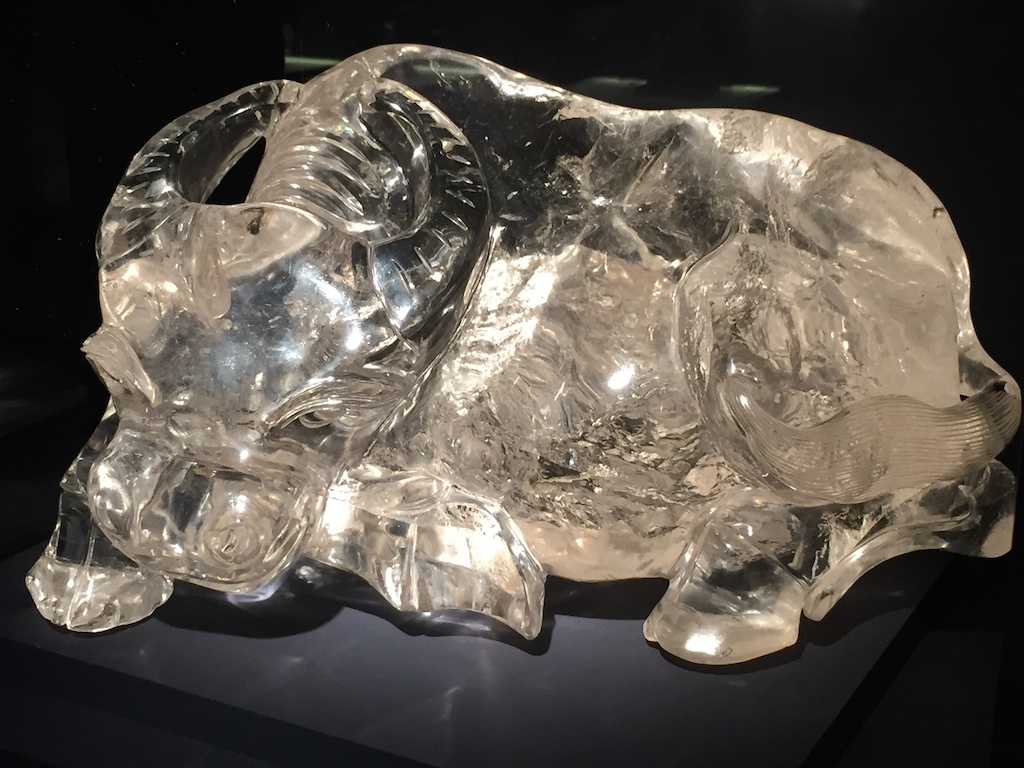
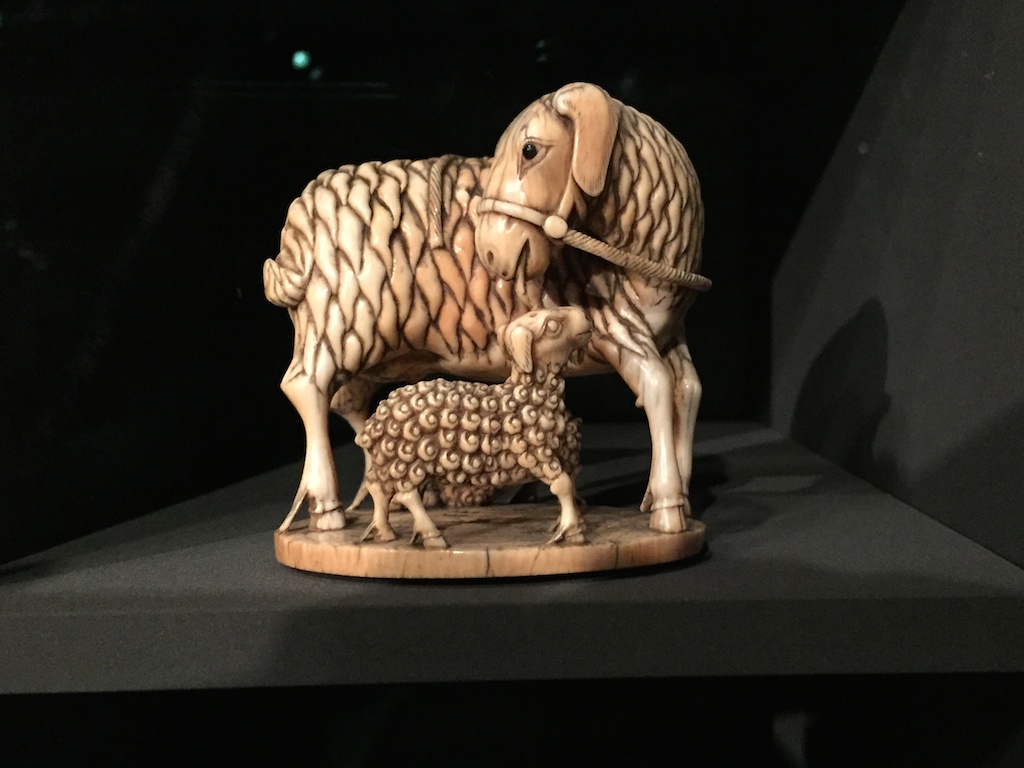
I love this one:Buffalo (1800-1900) in rock crystal, but I think my favorite piece of the day is this one:“Ewe with lamb” (1644-1911) in ivory.
After lunch at the museum we headed back to the home where we said our goodbye’s Some of us headed to Ribboneri, a store filled with any kind of ribbon you could possible want and some went to Lacis in Berkeley.
This was a great weekend and we already have a plan for next year!
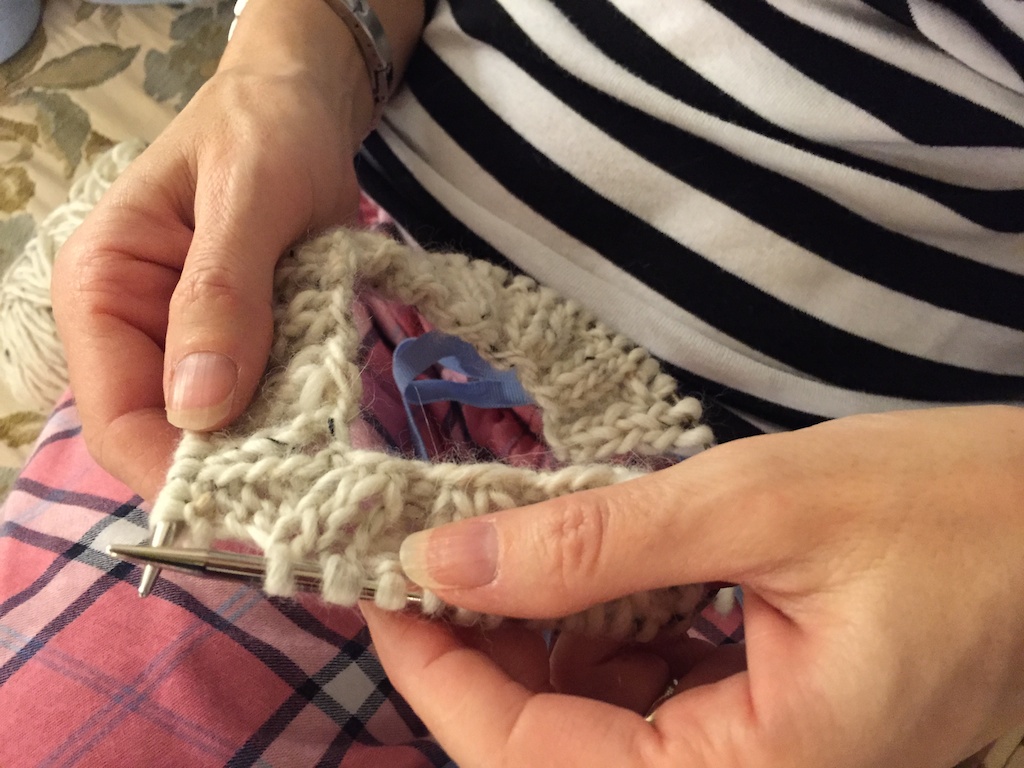
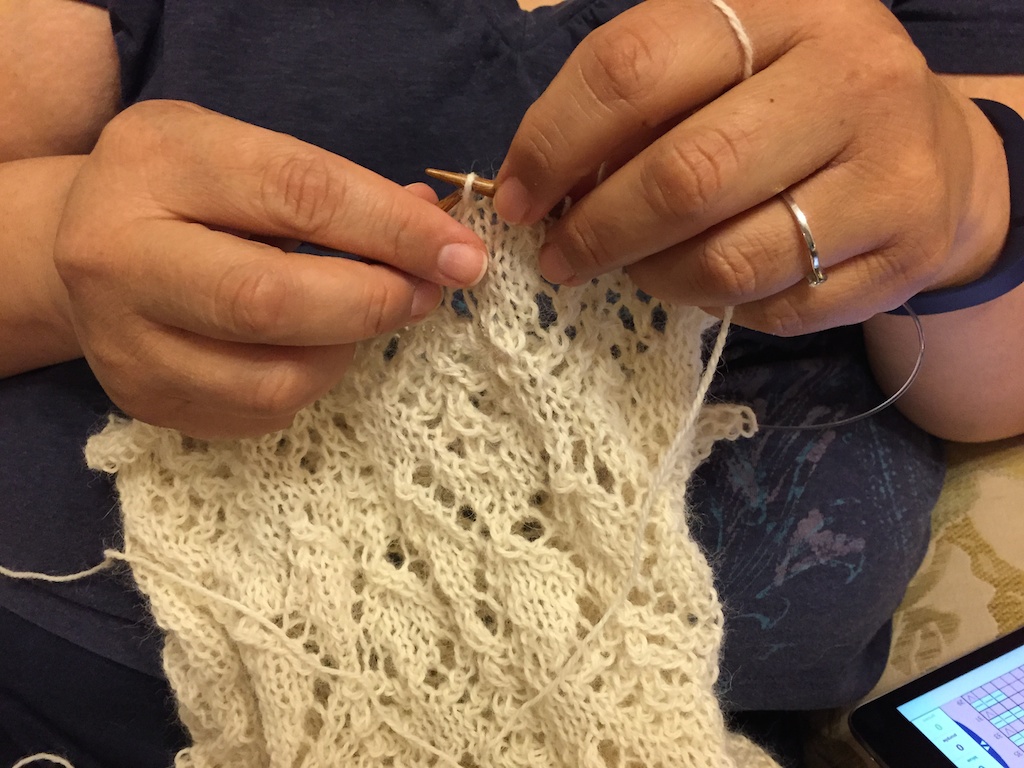
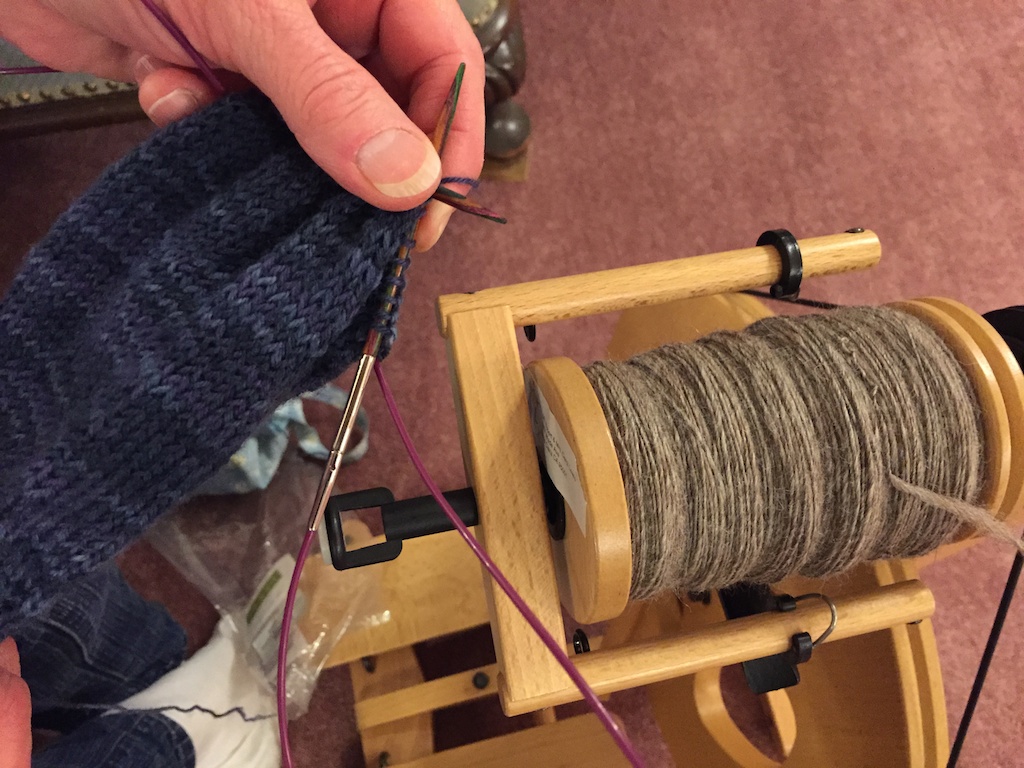
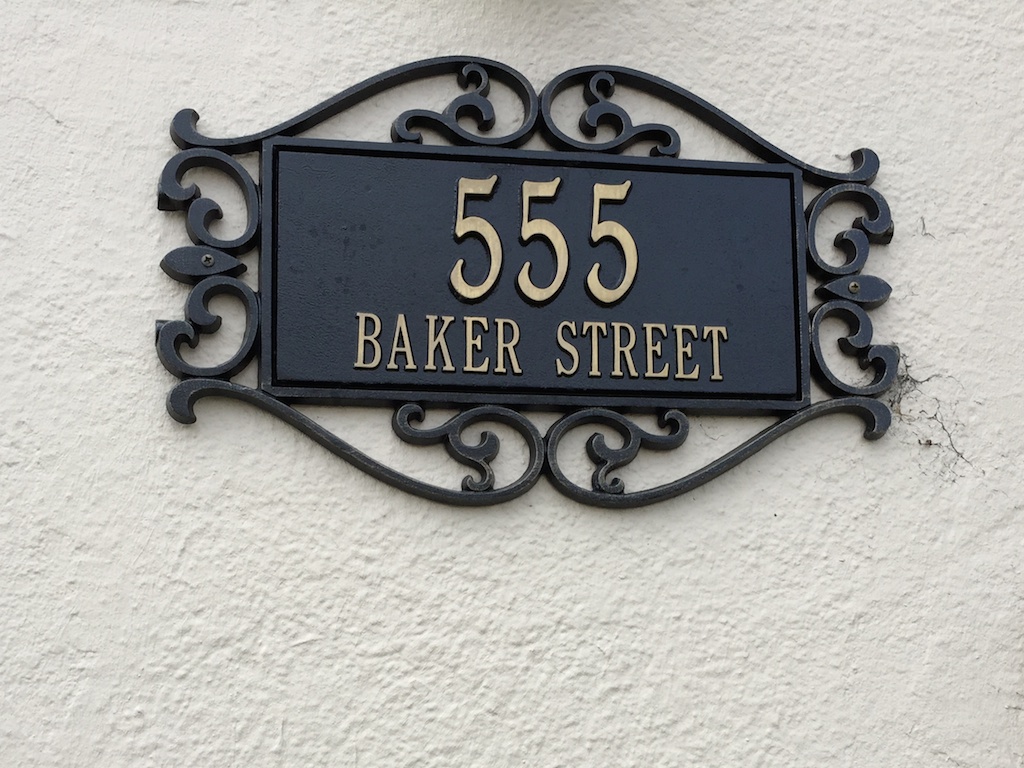
I think that this is Farm Club’s fifth annual retreat to San Francisco where we spend the night at the Home, designed by Julia Morgan and owned by the Native Daughters of the Golden West. If you search for NDGW in my blogs you will find photos of our activities during past retreats and of this gorgeous Home. We usually try to find a farm-related activity for Friday afternoon, but couldn’t come up with one this year. Since a big storm was predicted we decided that it was just as well to curl up in the parlor for the afternoon and evening with our spinning and knitting projects. And that’s just what we did.We arrived in the early afternoon from the North Bay, East Bay, South Bay and Solano and Yolo Counties. Since there were to be 14 (!!) of us for dinner we scoped out our favorite restaurant and the pie place (where we get pie for the next morning’s breakfast), were assured that there would be room for all of us at dinner, and returned to the Home (only a block away) to spin and knit for the afternoon.This is an example of one of the 30 rooms that can be reserved for NDGW members and their guests. Each room is decorated and maintained by one of the many “parlors” around the state.The rooms are on the third and fourth floors. This is looking down the stairway to the second floor. To the right is the dining room and a huge kitchen available to all who stay there. The atrium is directly across from the stairs and I found out on this visit that originally there was a glass pyramid in that area directly over the museum that is beneath. How wonderful that natural light must have been on the lower story. There was also decorative painting (I have just blanked on what that is called) on those columns and around the ceiling. To the left is the parlor where we spend our time socializing (albeit in pajamas instead of flowing gowns).We walked up Baker Street to Green Chili Kitchen……where we had an early dinner, which left us plenty of time for our evening of sitting around in the parlor in our pjs.There was a record 14 of us! Here are some of our projects:
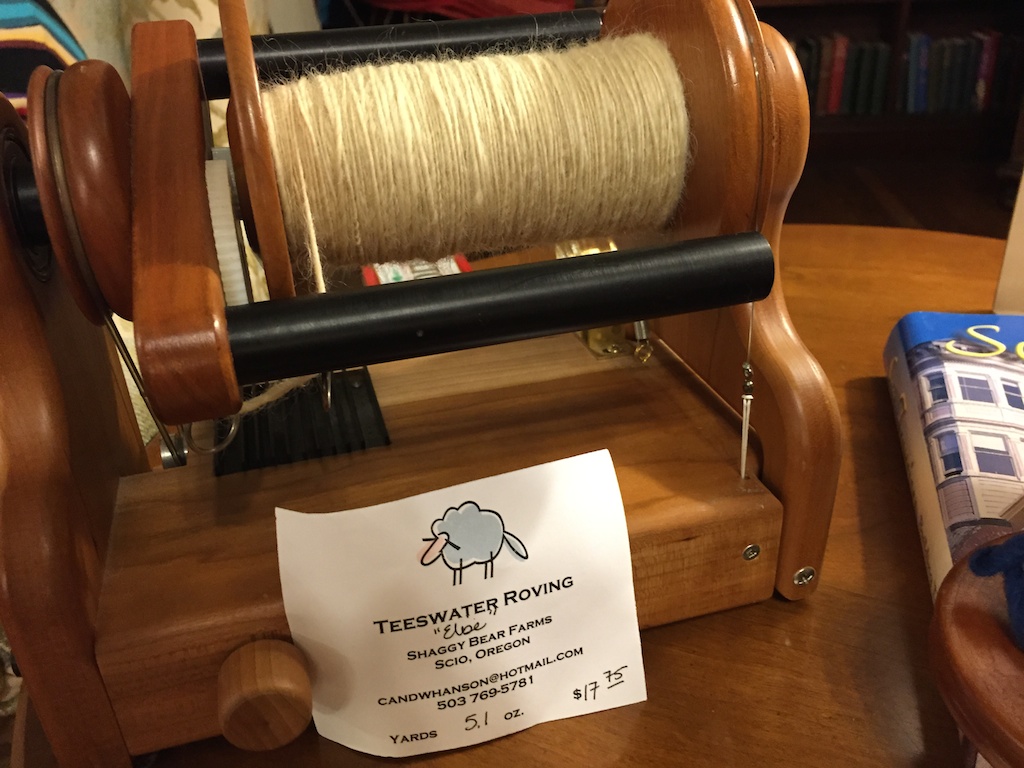
Alene spun Teeswater wool. Amy began a knitting project with help from Shelby. Betty was knitting a shawl.Wandering around the room to take a stretch break from projects one can find all kinds of interesting things. This is from an oversize journal in which donations to the Home were recorded. “Wool” caught my eye here. Other donations included tea towels, dishes, and preserves. Look at that penmanship!
Carol brought spinning and knitting.Kathy set to work on deleting what may be an embarrassing number of emails that were bogging down her computer. She worked diligently on this all evening and made good progress.
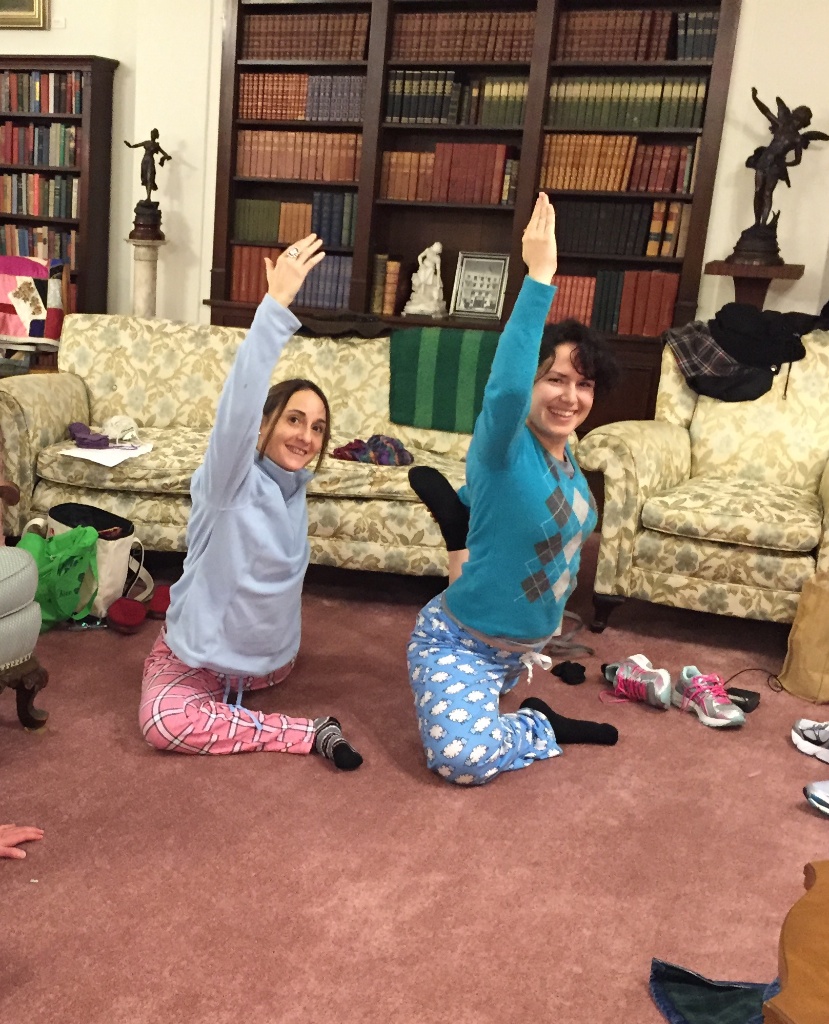
Another break time with yoga for Amy and Shelby.I worked on the Zoom Loom and on spinning Raquel’s fleece, bringing far more than I could possibly spin in a week.Joy needlefelted a guinea pig.Polly worked on rug-hooking while Janis took photos and worked on her computer.
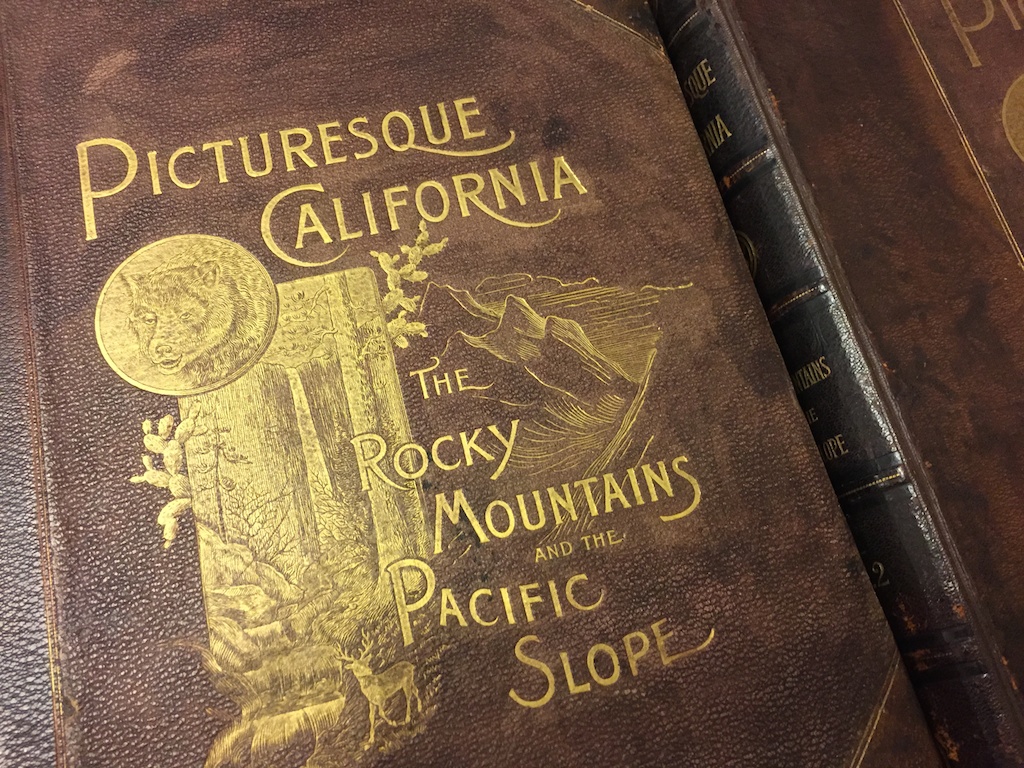
Another break. This is a book on the coffee table edited by John Muir.
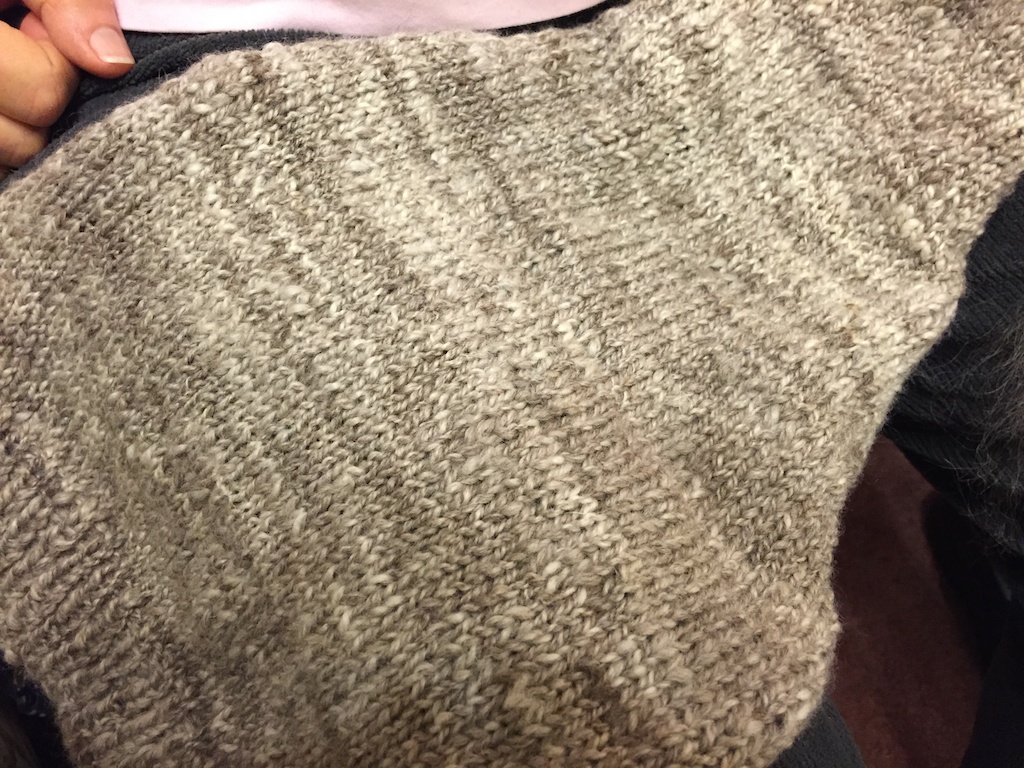
Kathleen finished a handspun knitted sleeve. Only one more and a body to go!
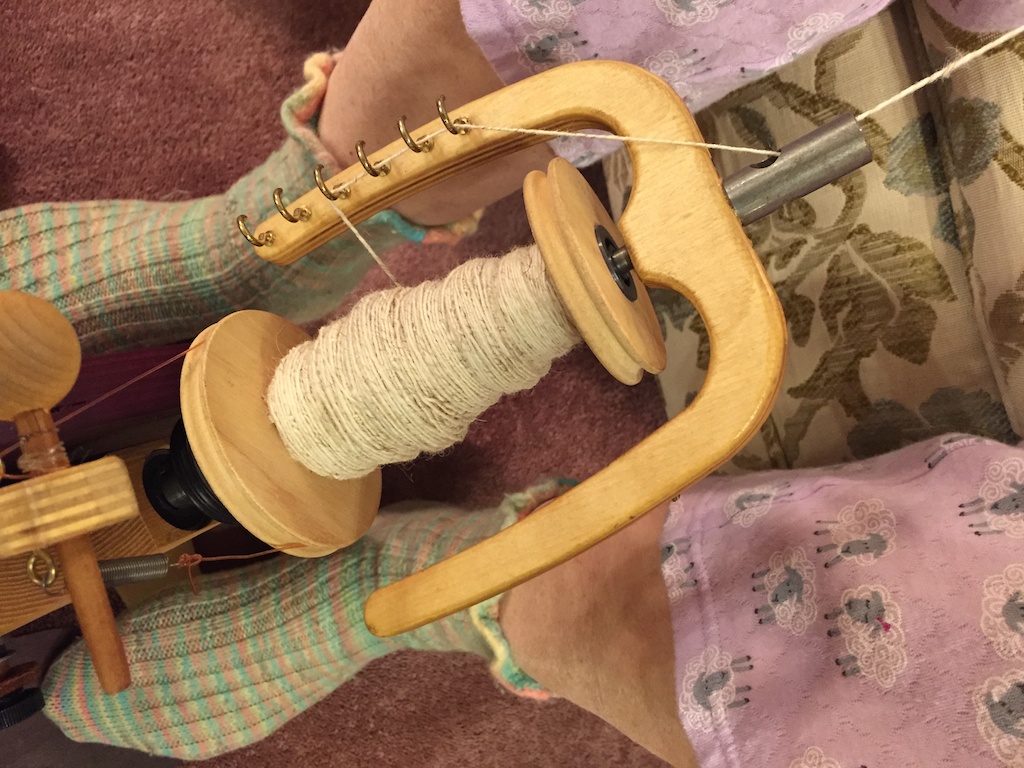
Lisa spun and knitted. If you look closely you’ll see someone else also wearing sheep pajamas.
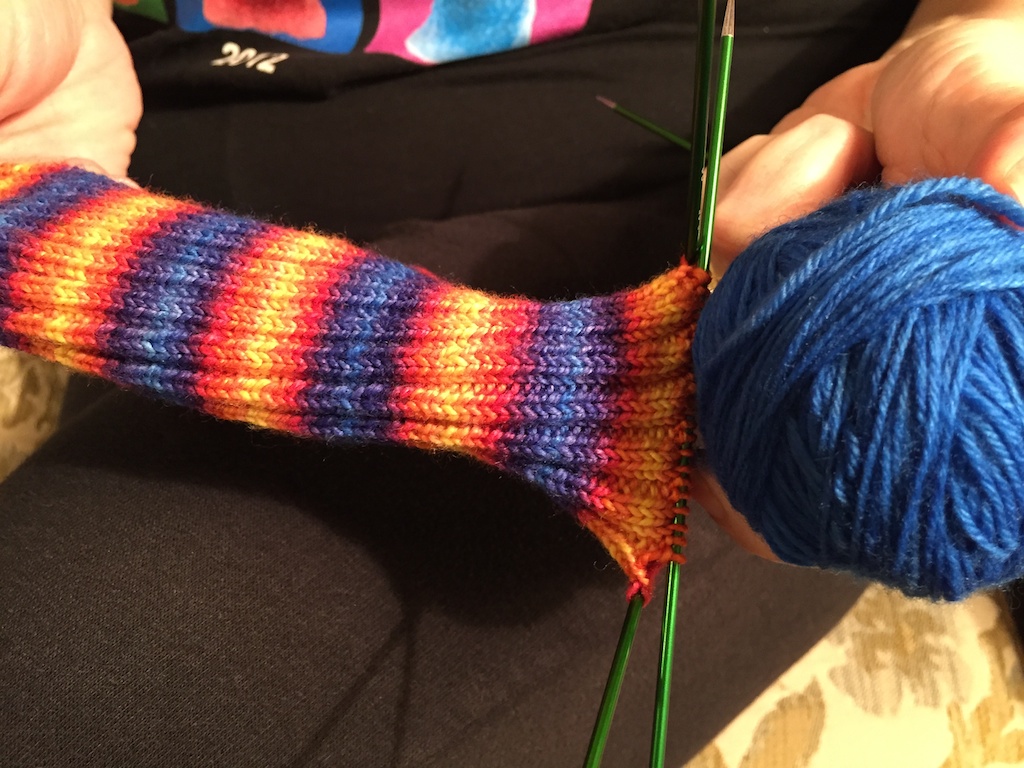
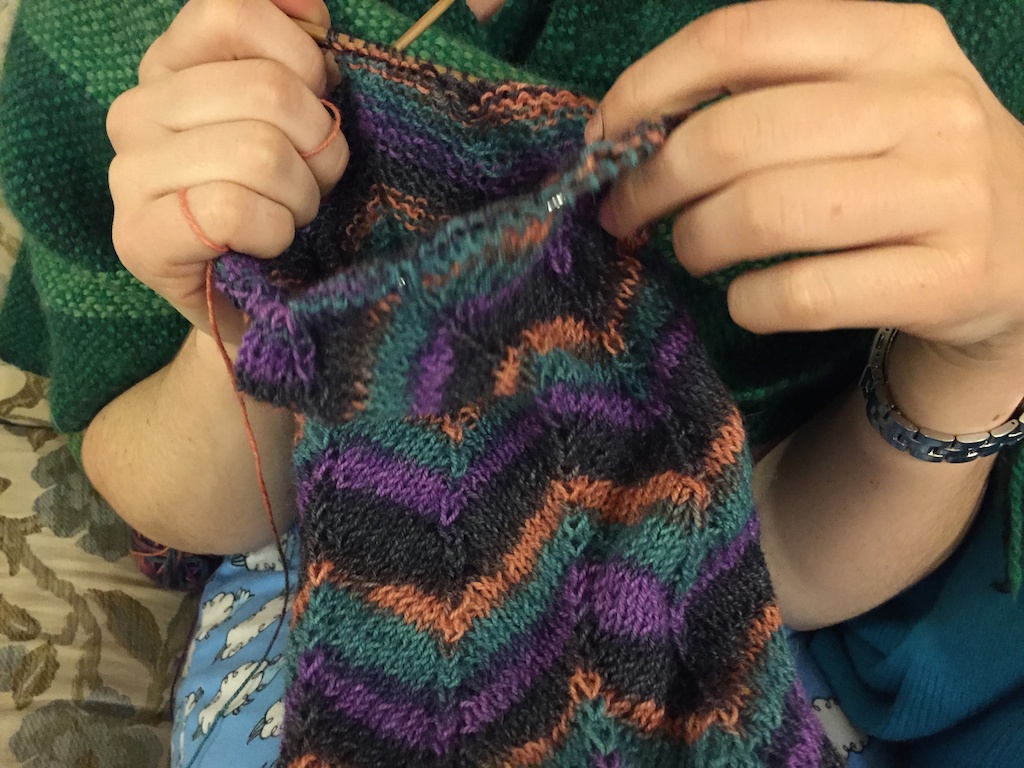
Mary knit a colorful sock.
Shelby knitted and……Stephany worked on a sweater. She is wearing a Jacob sweater that she finished last year.
Stay tuned for the Saturday adventures of Farm Club in the City.


 Zorra had plenty of cuddling while she was still in the lambing area with her mom. Lisa is a lamb cuddling Pro.
 This is pet sheep Jade’s lamb (and me).
 This is her again being held by Peggy. We’d really like her to be friendly too.
 This is Zorra again with Sumi.
 As the lambs get a little older we have other Farm Days. This was Betsy’s first day on the farm and she jumpred right in holding lambs as we ear tagged and castrated.
  I don’t castrate many because it’s hard to know how they will grow out and which might be a great flock sire for someone. Some are easy though–too much or too little color to fit within the 15-85% breed standard. This one’s horns are already touching at the base under that hair. As the horns grow they will fuse and not grow well separately.
 Marina and Maggie (no photo) helped catch lambs too and Mary handled the clipboard. The lambs were all tagged with their white ID tags right after they were born but we put added a colored tag on Farm Day. I like to use a second tag for back-up ID if the first one falls out and also to color code the sire. It’s interesting to keep track of that and it also helps to find a lamb when you’re looking for one among 75. You can narrow it down some if you have a color to look for.
 This year Cayenne’s lambs got orange tags. Pink tags go in all the lambs that have been castrated.
 Green means these are Buster’s lambs.
 Blue was for Catalyst.
 Peyton’s lambs are obvious so don’t need an extra tag.
 After we tagged all the lambs Marina and Betsy stayed to help me set up the pasture for the sheep. I had put the sheep out for a few days but hadn’t cleaned and moved the water trough.
 We walked around the pasture and took stock of things. I always point out the issue that I have with the dallisgrass that is out of control. That’s what all that dry grass is. I’d much rather see green grass growing. The whole pasture was looking somewhat dismal from a growth standpoint. At this point we had just had March rain after two very dry and cold months. I wasn’t seeing much growth–at least not enough to feed 55 ewes and 75 lambs.
  We spotted this grass that I don’t recognize.
 I took photos to send to a friend of Marina’s who she think might recognize it.


 F
F
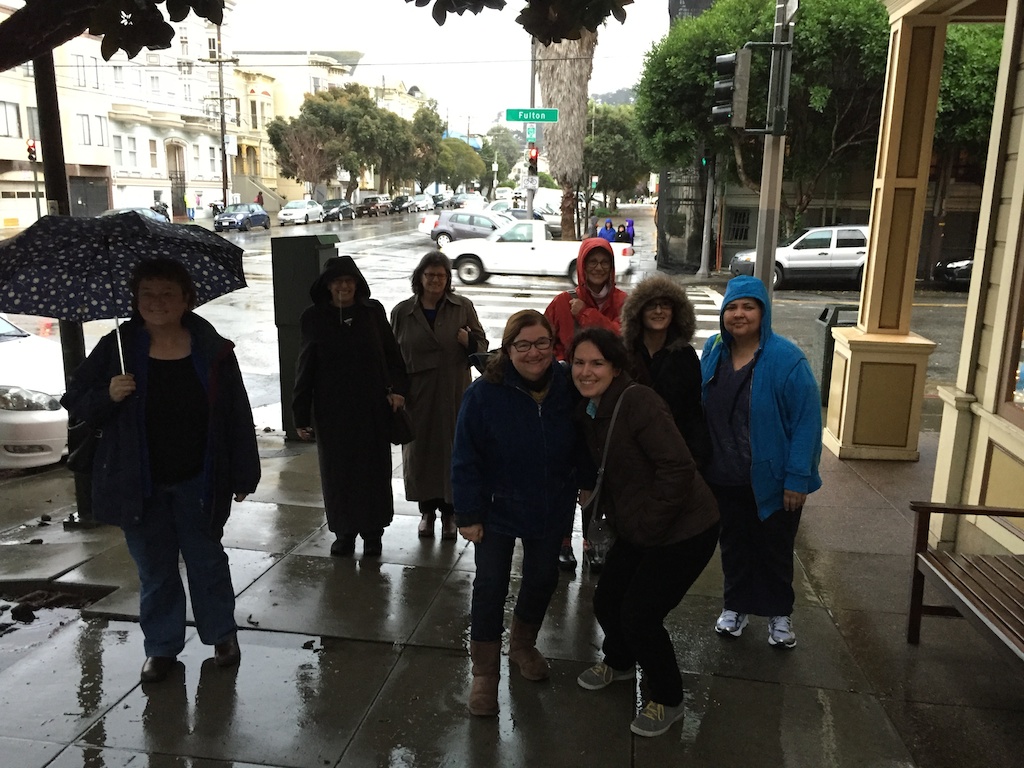
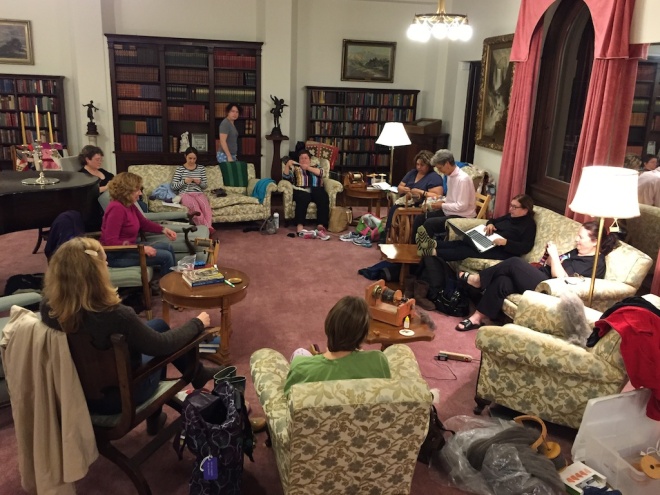 There was a record 14 of us! Here are some of our projects: