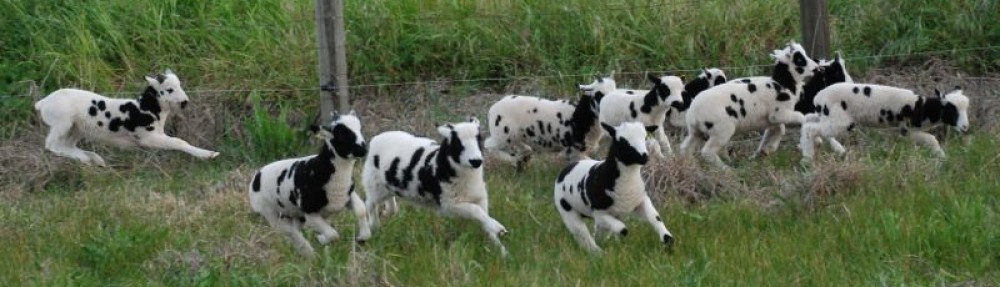
Shearing Day


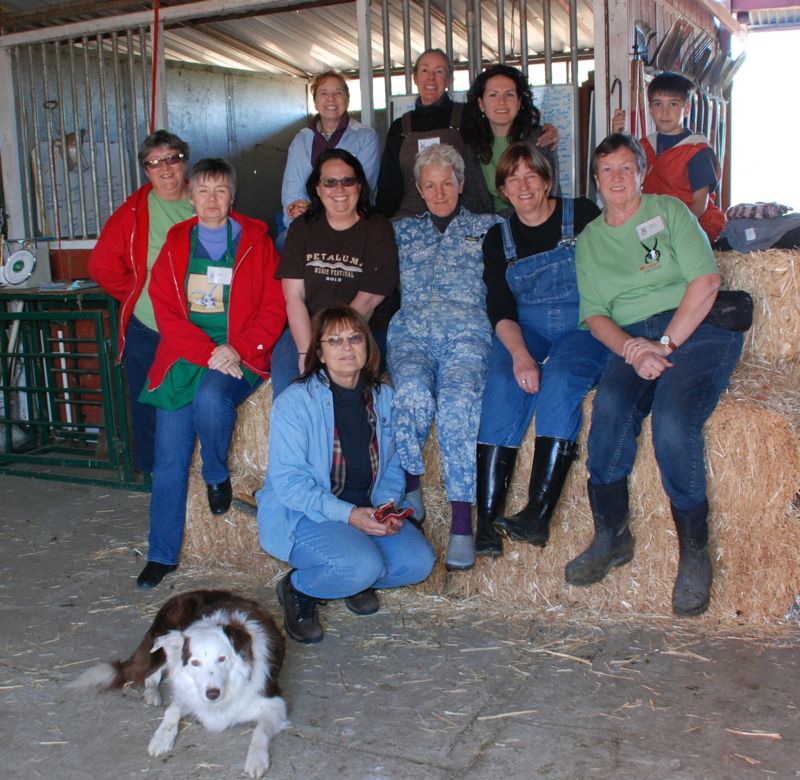
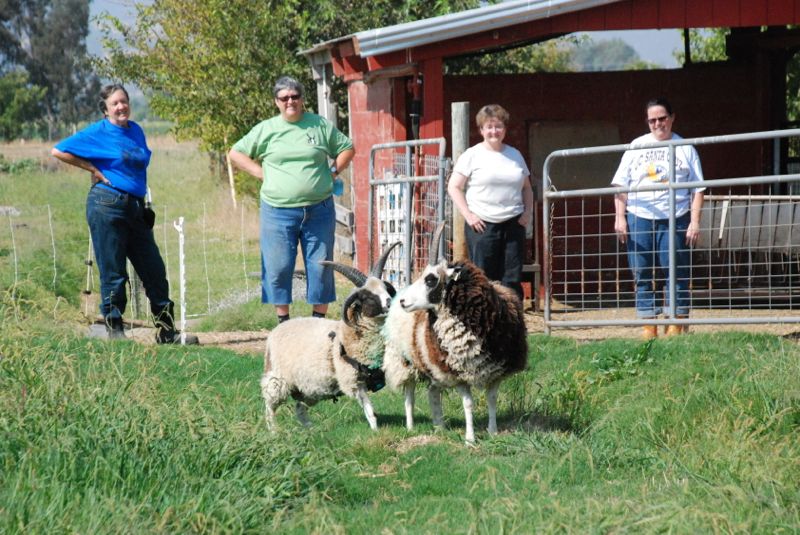
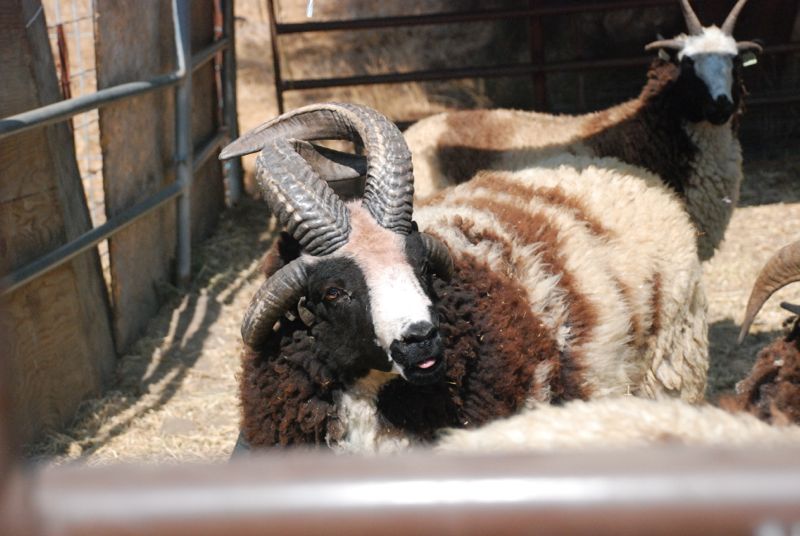
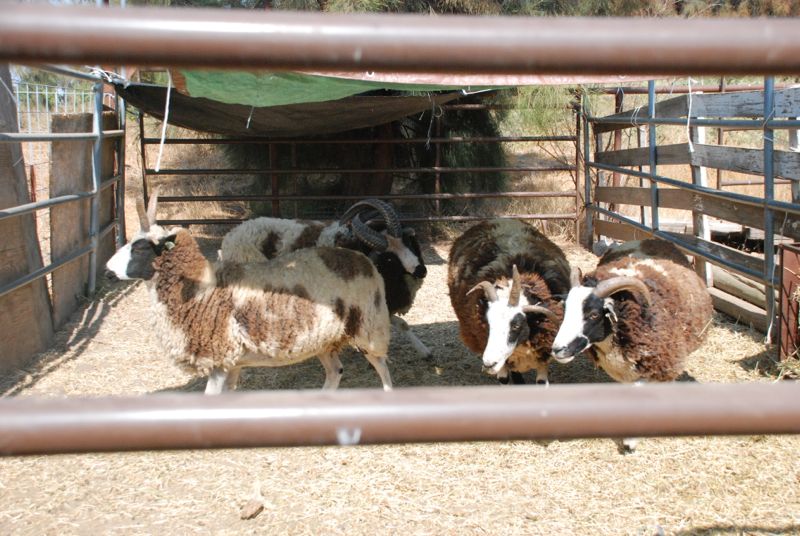
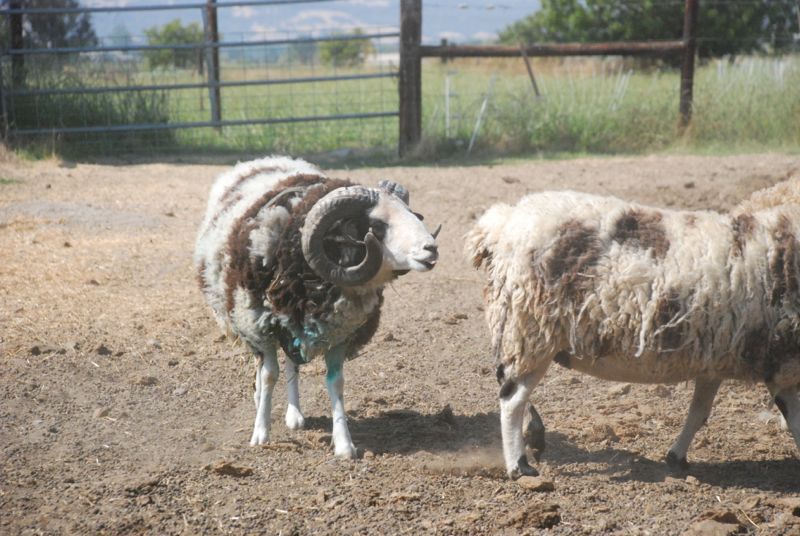
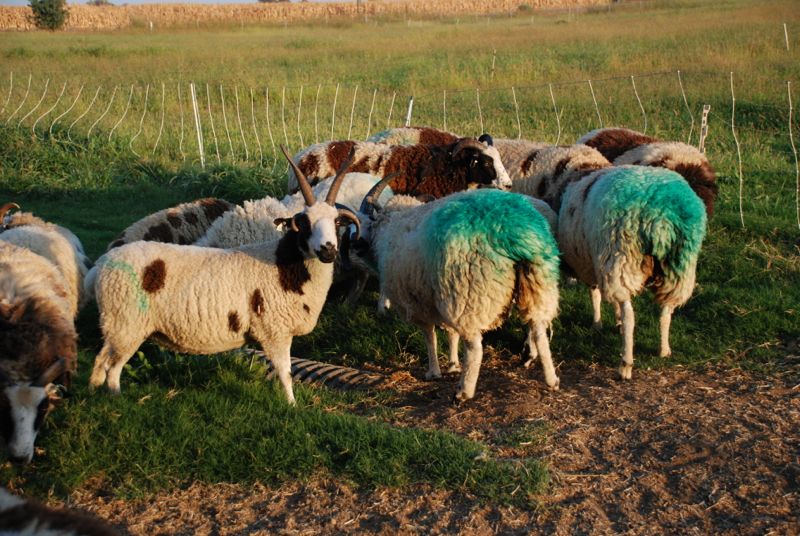
Shearing Day was yesterday. What a wonderful time. Farm Club came through (as always) and handled all the various tasks of the day. (Except for Rusty’s job, which he describes in his blog so I am not duplicating his photos here). I am grateful to the great shearer who has come for the last few years. He does a wonderful job–the sheep look good and the fleeces look good. John is so fast that he finished with 64 sheep in about 2 1/2 hours.
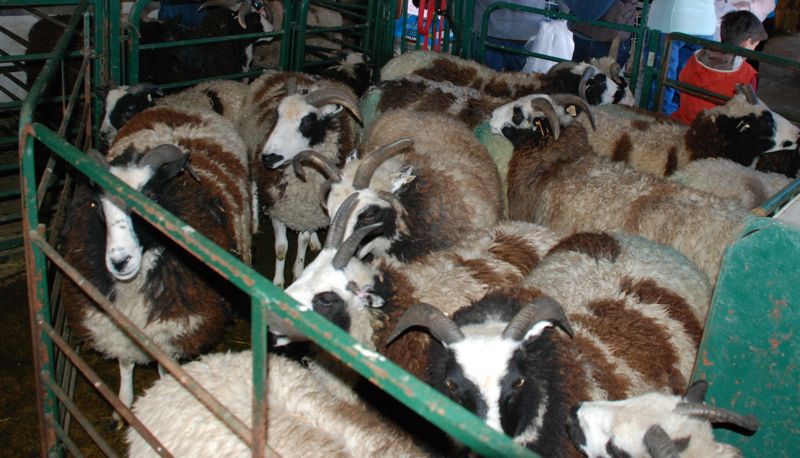
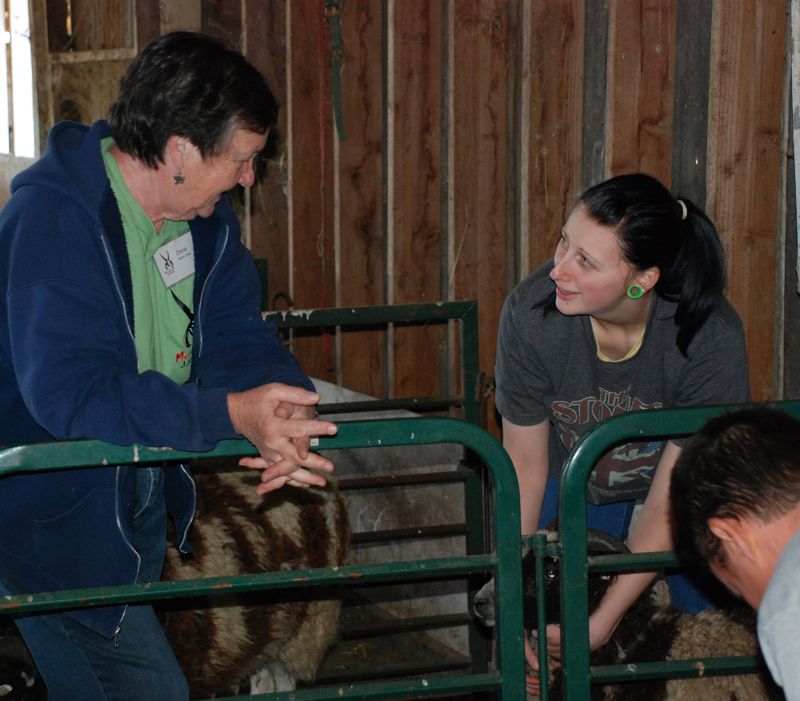
 

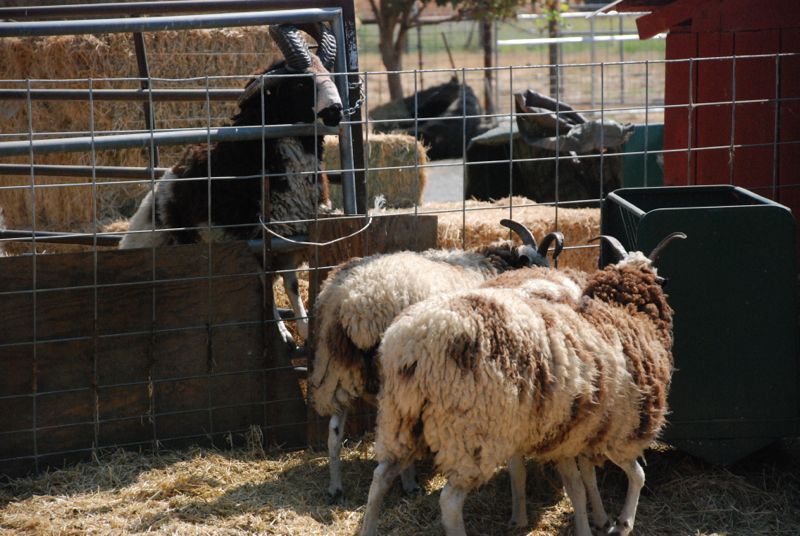
One important job is making sure that the shearer always has a sheep to shear as soon as he finishes with the last one.
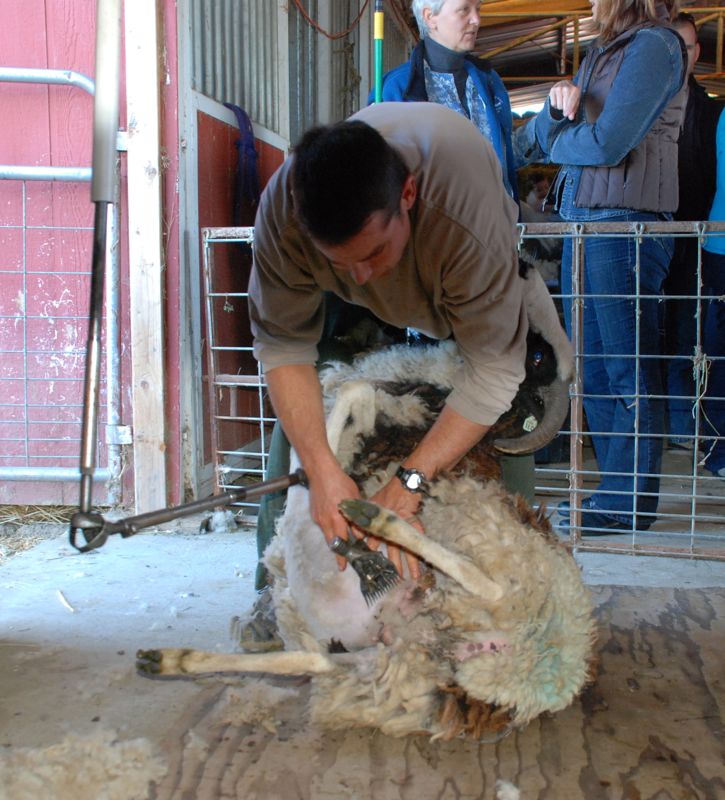
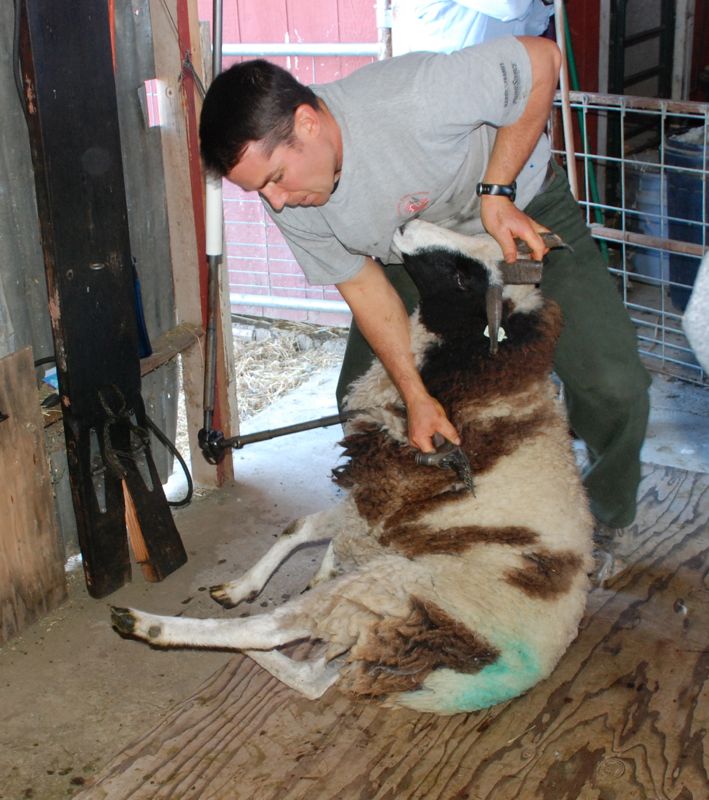
I took some videos too but it will take me awhile to get those edited. You can sign up on the Meridian Jacobs YouTube Channel and see them when they are ready.
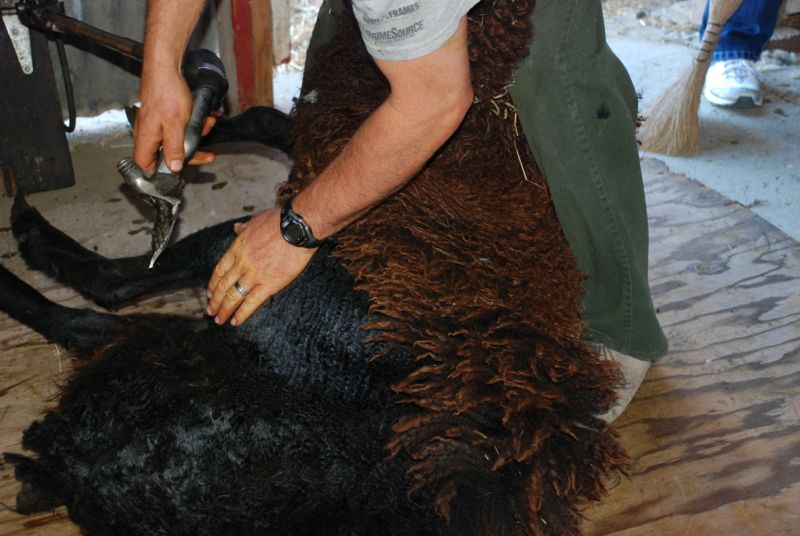
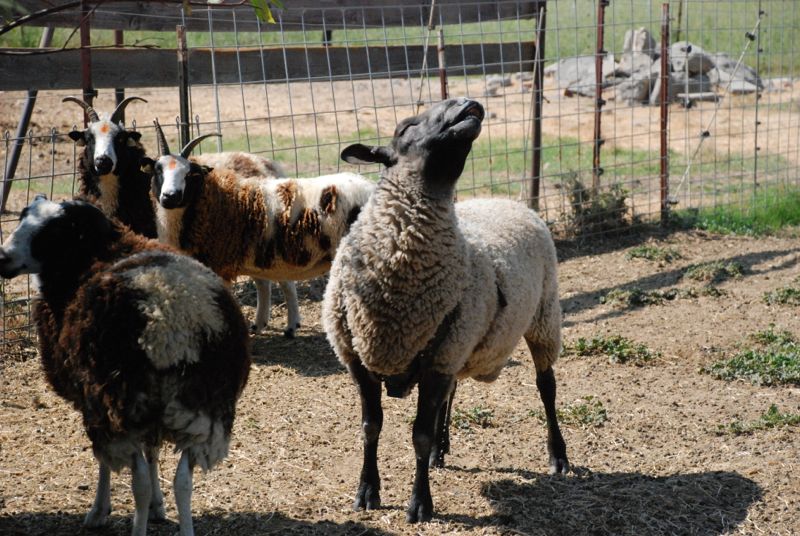
This is the BFL/Jacob crossbred ewe. I probably could have started a bidding war on her fleece, but I’m keeping it.
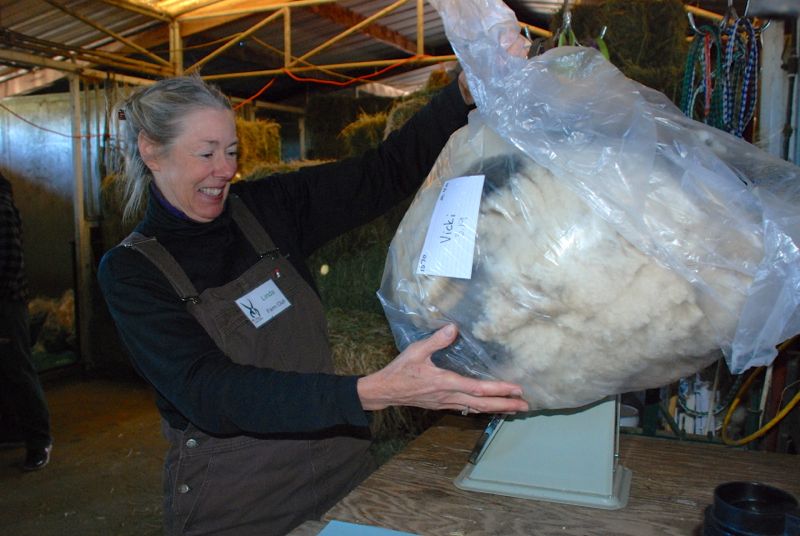
 

A couple of people bagged fleeces after shearing and  then each fleece was weighed.
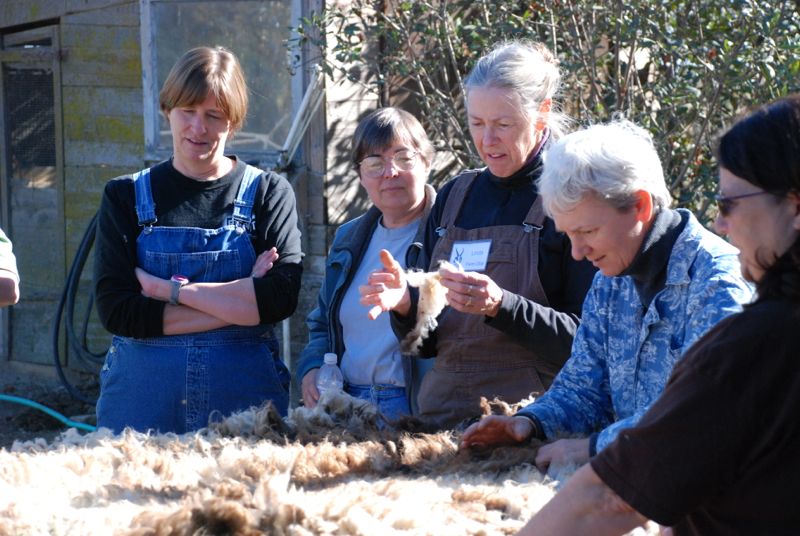
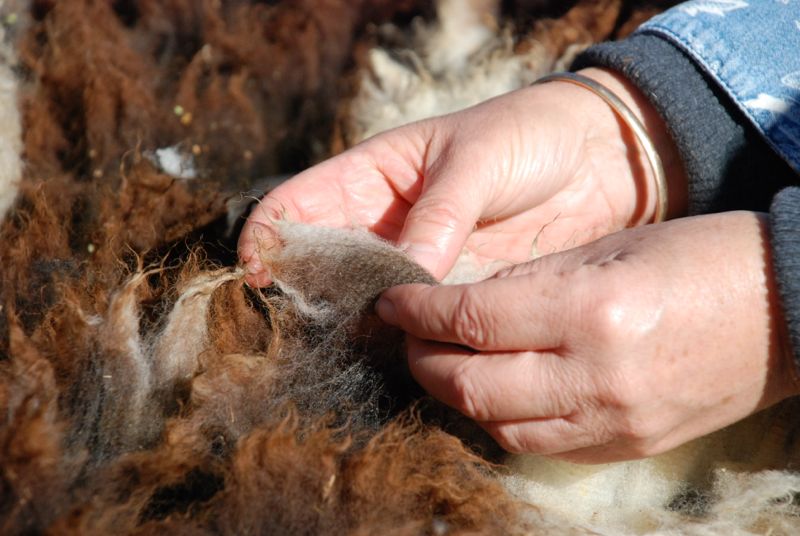
Alison and Linda helped many new Farm Club members and other visitors evaluate fleeces at the skirting table.
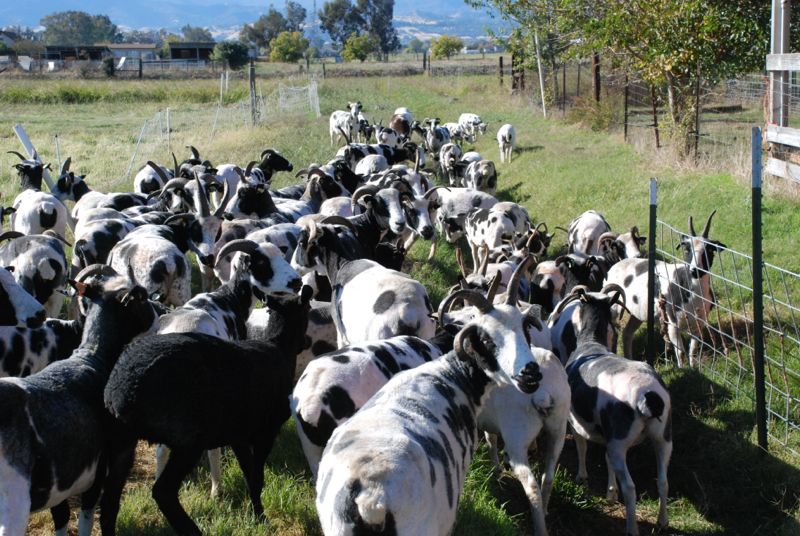
 

The warm afternoon sun was welcome after the cold morning.
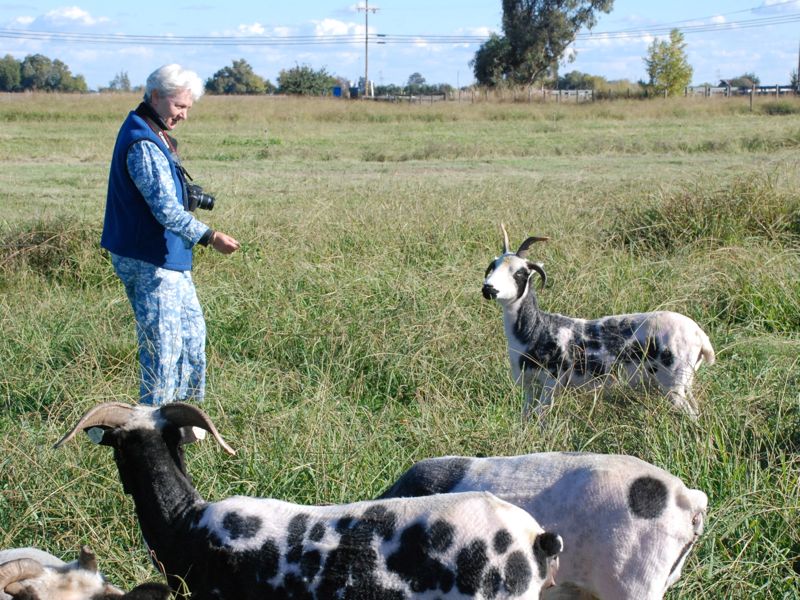
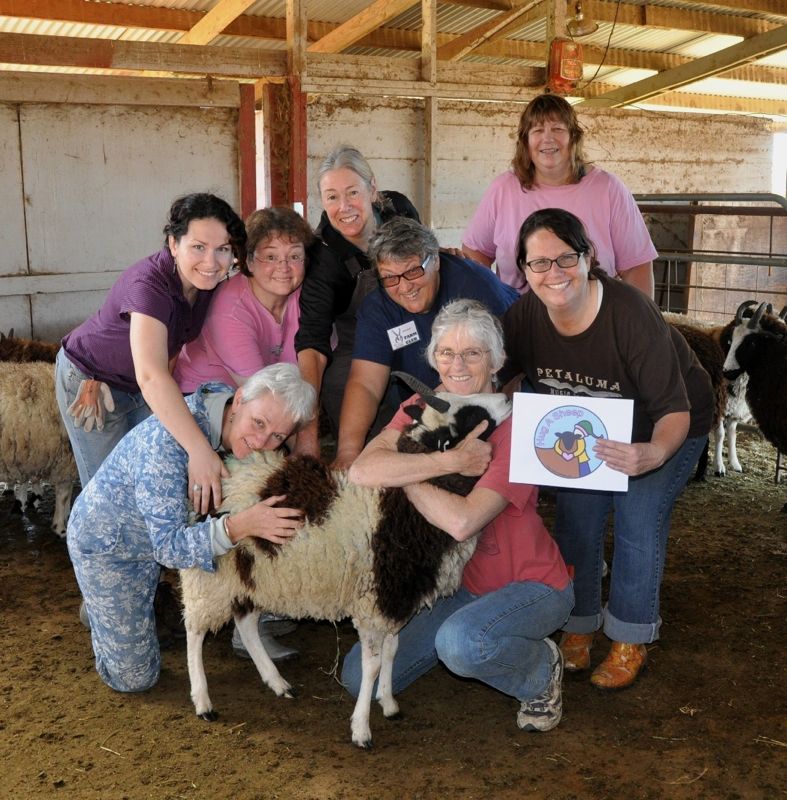
Good friendships and sharing the work make a day like this extra fun.


Color Everywhere I Look

It’s been awhile since I wrote a blog post–at least on paper…well, on on the computer. But you know what I mean. I write a lot of them in my head but they don’t always make it here. So I was looking at my latest photos to see which in-my-head blog post to put here and these are the things that caught my eye.

 The dye class that I taught last week.

The v-shawl class that I taught last week.

Socks that Jackie made for me but it hasn’t been the season to wear them.

The color wheel class that I taught at Lambtown on Sunday.

Georgia O’Keefe’s Purple Petunia which is now on the loom.

But when you think you’ve found the most fabulous colors of yarn, fiber, and dye, you walk outside  and see this:


A sunset from last week.


I think I need to find yarn in these colors.


Breeding Season is Here

Four Farm Club members came today to help me sort out breeding groups. I told myself that using four rams was plenty but in the end I put ewes with six rams. I don’t have a very big place and by the time I save spaces for non-breeding rams (a few ram lambs left), non-breeding ewes (my State Fair ewes and lambs and a few ewe lambs that I don’t want to breed yet) and try to leave buffer spaces between breeding groups it gets tricky to find space for everyone.

Kenleigh’s Matrix, a ram lamb, was the first to go out with 14 ewes.

Meridian Loretta was obviously in heat, but we wondered if Matrix, smaller than the ewes, was going to manage the job.

Meridian Fogerty, a yearling ram, was next. He has 8 ewes.

Faulkner was happy to be given eight ewes.

Meridian Clapton, the ram who has been behaving badly wanted some of the action.

Clapton is temporarily in a small pen so he has just three ewes.

Puddleduck Sullivan has ten ewes.

When you first put the rams with the ewes they get a little carried away trying to find a ewe in heat and you may see random marks on some of the ewes. One of the Farm Club members asked how you can tell if the marks from the ram harnesses are the “real thing”. I told her that you can tell.

This is in Fogerty’s pen later in the day.

These are two of Matrix’s ewes. One is Loretta, the ewe in the first photo.

It wasn’t until the end of the day that I picked up the marker for the sixth ram harness so Meridian Miller (the ram lamb who was champion at the State Fair) didn’t get his 7 ewes until evening. He is in the pen right behind my shop.

You could say that the ewes were a bit stand-offish, but Miller didn’t let that deter him.

Where will you be February 21? I’ll be in the barn with new lambs.

Pasture Maintenance

Nothing very exciting in this post.  But I spent all day Sunday in the pasture  after thinking the job at hand would take only a couple of hours.  I find that I am always writing blog posts in my head so here it is.

I started by mowing the paddock that the sheep had just been grazing. Now that I have my mower (never meant for this heavy duty work, but so far still working) I have been working on the dallisgrass that gets ahead of the sheep this time of year. In the past I have tried burning, trampling, weed eating (photos and past efforts in this post and this post and this post), but I think this mower will be the answer. It is at the south end of my pasture(right side of the photo) that the dallisgrass gets so thick and tall. The idea is to mow right after grazing and then everything has an equal change of regrowth, and the dallisgrass will be in a more palatable stage and the sheep will keep up with the growth.

In this photo the paddock that I just mowed is to the right. The sheep grazed the one on the left a few days before. I mowed that one that last time they grazed it and that made a big difference. I shouldn’t have to mow after each grazing–maybe once or twice per season I think. Notice the fence-line. That is a 3-wire electric fence and this was the other thing I wanted to deal with on this day. I have been putting off cleaning up the fence-line with the weed eater, but when you can’t even see the wire, it’s time. I have already used the weed-eater in the area where you can see the wire. This dallisgrass is tough. I have the heavy duty string on the weed-eater and it still gets used up quickly.  Slow-going. It took me about 3 hours to finish this fence-line.

Speaking of problem plants, here is another. This is what the medusahead looks like when it’s dry. There are plenty of posts about my battle with this noxious weed also. This is along the perimeter fence.

And lets not forget devils-claw. This one isn’t so bad because I don’t have much of it and it is easy to chop out the big plants. It doesn’t invade the irrigated pasture, but is along the edges where it is dry.

What is the problem with devils-claw? See the fruit? See those curved, pointed ends? When the fruit dries it splits in two and those curved points get caught in wool. I’ll show you other photos sometime. This is seed dispersal in action.

Moving on to other plant problems. This is the small blackberry bush on the west fence. On this morning I actually had breakfast here because the berries are ripe, but in general the blackberry bushes become a problem when they cover the electric fence as they do on my west fenceline. (Note wheelbarrow full of devils-claw.)

I started irrigating Sunday evening. Here is a spot that I hoped to get water to this time. The last few times I irrigated the water didn’t get here.

This is the pathetic state of the trefoil that didn’t get water.

Here is what it looks like where it was irrigated.

And here is a view of a paddock that has had plenty of water, has a manageable amount of dallisgrass,and hasn’t been grazed for a few weeks.

This is  self-portrait of the irrigator.

Green Pasture

You have all seen photos of my green pasture.

This does not happen naturally here in California’s Central Valley . We have what is known as a Mediterranean climate. I thought I’d give you a definition but what I found when I did a google search is more interesting:

There are not many places in the world that have our hot, dry summers and cool, wet winters. So how do we grow all that clover and grass in a hot, dry summer? Irrigation, of course. But irrigation water has to come from somewhere if it’s not coming out of the sky this time of year.

Our irrigation water is provided (sold) by Solano Irrigation District and comes from Lake Berryessa which fills from winter rainfall. Here is how our irrigation water is delivered.

Do you see that low spot in the mountains on the right side of the photo? Lake Berryessa is behind there. The water is carried down Putah Creek. Eventually it works it’s way into a system of canals. When I call for water the SID person opens a gate at the end of this ditch that is normally dry. The water flows to another gate at the northwest corner of my property (that cement box on the other side of the fence). When that gate is open the water flows under the fence into the standpipe in the foreground.

That black circle is the pipe carrying the water into the standpipe. It flows out the hole on the south side of the standpipe (at the top of the photo).

This is a close-up of that rushing cool water. It’s not a rushing mountain stream but it sure looked appealing this afternoon when I was outside working.

Here is where the water flows out of the standpipe into the pasture.

There is a ditch at the north end of each pasture. The water is just starting to fill the ditch.

I have to dig cut-outs in the ditch to get the water to flow where I want it. It’s not a perfect system because our ditches are worn out and trampled by sheep and the pastures aren’t level, but I can usually make it work. I have the water on for 24 to 36 hours to irrigate everything.

This is the last pasture the sheep were on yesterday and I finished mowing it (a story for another day)  just before irrigating.

This is what we’d have in the summer if we didn’t irrigate. (This is a small pen behind the barn.)

Here is what irrigation gives us.

Hot Day and Other Random Thoughts

Higby’s Country Feed is my favorite store. There is always something there I want to buy. I told them that if they started carrying underwear, then between Higby’s and Ace Hardware, I wouldn’t have to shop anywhere else. Today Higby’s had an anniversary celebration of opening the new expanded store five years ago.

With the weather forecast of 104 degrees and north wind today I scoped out the most protected spot for the canopy and sheep pen. The winds didn’t materialize, but it was breezy enough to help with the heat. Thanks to Jackie who met me there and stuck it out for most of the day. We were well fed as Higby’s provided home-made scones and cinnamon rolls for breakfast, enchiladas for lunch and snacks and cold drinks all day.

I was impressed with the raised beds for the vegetable garden. (Since our tractor tires just shredded maybe I’ll be able to use this idea too.)

This morning I caught a couple of lambs that I think I’ll be keeping.I figured that I may as well bring sheep that I want to halter break. At the time I wasn’t thinking of a blog post so I didn’t take many photos. But here is one lamb that I brought:

She is the biggest lamb I have and she has a beautiful fleece. Does she look familiar?

Here is Dad:

By the way, he was sheared last week. The flock is shorn in November but some of the long-wool breeds can benefit from twice/year shearing. Faulkner’s fleece looked so lovely that I decided to have him shorn since a sheep shearer was in the area to buy lambs anyway.

Penny, the shearer, chose to shear Faulkner standing up. He was a perfect gentleman about the whole thing.

Penny’s son helped catch the locks as they came off. Ummm…don’t look too closely at Faulkner. Maybe he could benefit from wearing a sheep size grazing muzzle.

Here is a photo that I took after washing half of Faulkner’s fleece.

This is the site that greeted me inside the door of the shop this morning.

It’s 7:30 p.m. and I think it’s probably still in the 90’s. I’m sitting under the ceiling fan I hope that in another hour it will be cooler outside than inside so we can turn on the whole-house fan. How many people go to Hawaii to find cooler temps? (For those of you who think, “wow, that’s a random thought”, stay tuned. Or maybe it’s just heat stroke.)

Benny 1999 – 2012

Benny was found cowering in a rain storm under the shopping carts at Safeway by the daughter of my friend, Colleen. Colleen rescued him and got him healthy. We had just moved to our current location a few months before and decided that we could handle another dog since we had only Flash at the time. Colleen had said that Benny was probably a Border Collie mix. What I didn’t expect when I saw him was that his legs were only about half the length they should have been to match his body. Colleen raised Corgis–maybe Benny looked normal to her!

We’ll never know what trauma Benny had experienced before he was adopted. He was always loving to our kids and their friends, but was not trustworthy with adult strangers.

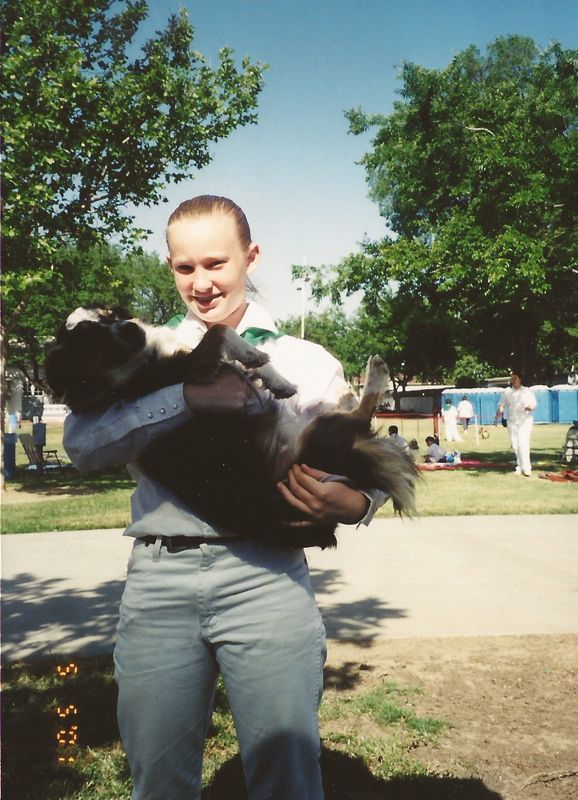
Katie took Benny in the obedience classes at the 4-H Dog Shows, but he was never given the Canine Good Citizen award because of his tendency to growl at a stranger who approached with a hand out (unless the hand was throwing treats).

Flash (right) was also found in a parking lot as a puppy and I got him from my vet at the time. He was probably about 6 when we got Benny. Doc (left) was a wonderful dog who came to us later when the neighbors moved and they didn’t want to take him. Benny looks as though he fits in, except for those short legs. Flash and Doc are both long gone.

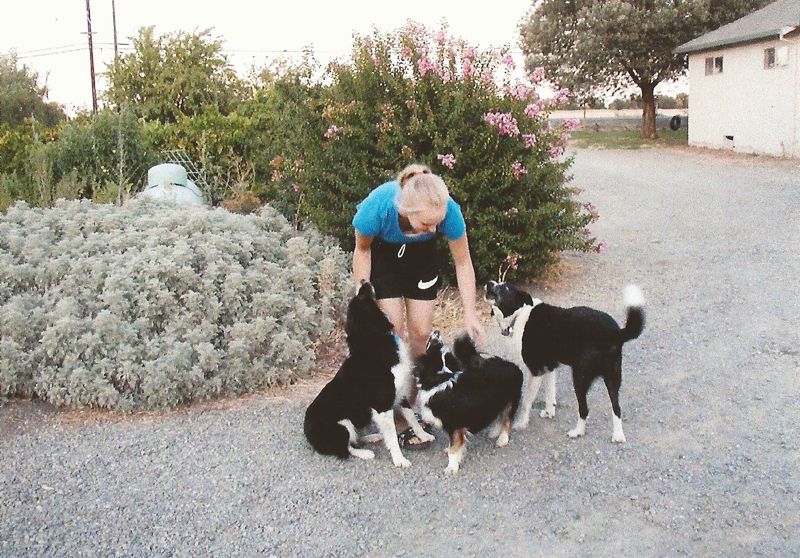
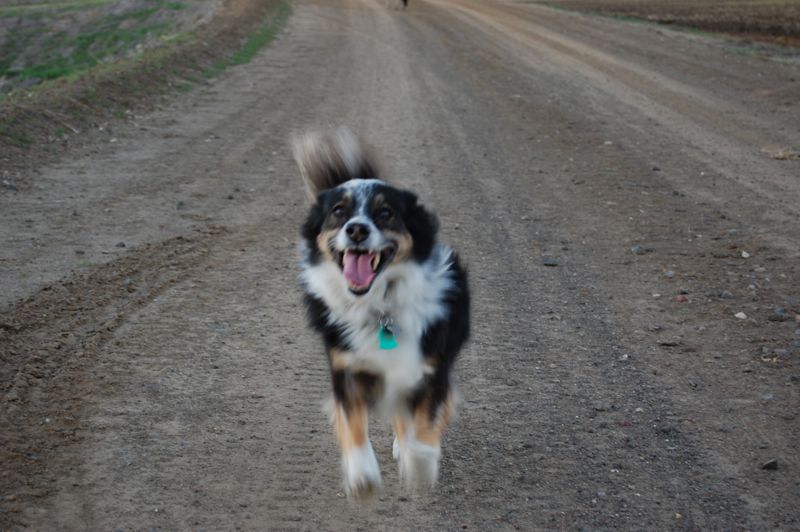
The next dogs were Rusty and Bonnie. Bonnie has since found a good home in Modoc County where she is a lot happier than she was here.

Benny greets Ozzie when he moved in two years ago. What is it with animals with no homes?

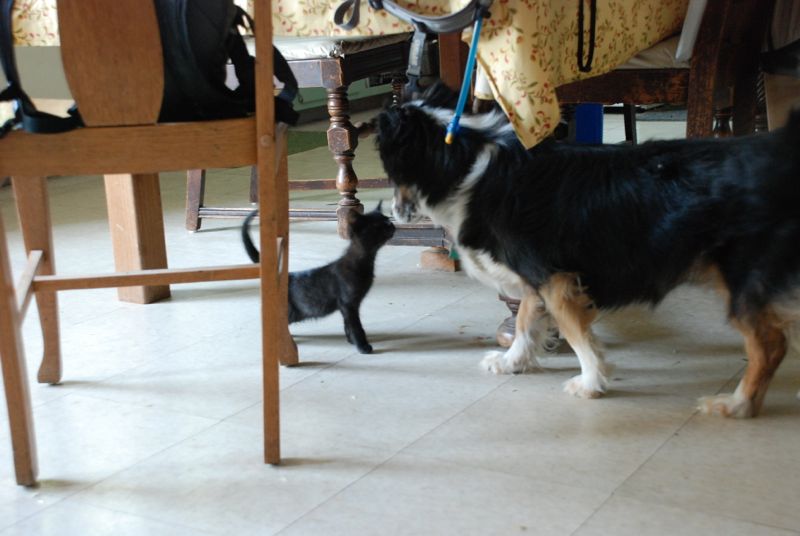
Investigating this spring’s temporary house-lamb.

Benny had congestive heart failure and kidney failure and is now buried under the trees here at his home.


Flash

You Can’t Always Count on Genetics

This is Ebony, a black and white Jacob ewe.

This is Hudson, a lilac Jacob ram.

Here is one of their lambs at almost 2 months old. He is lilac like Dad.

This is the other lamb at about a month old…

… and here he is at just over 2 months. He has been marked with a cull tag because of a severe split eyelid, but also, do you see how his horns are growing?

Both lambs today, at 3 1/2 months old:

I love the horns, the color, and the fleece on this lilac ram, but (as in the discussion over on Facebook) I sure wish that I could combine these lambs into one and keep just the parts I like. Look at those pretty blue eyes on the black and white ram…

…and he has nicely marked feet also.

Speaking of rams, here are a few more photos:

The photo above is of Meridian Clapton at about 6 months…

and here he is as a yearling.  Look at the photo below for horn detail on his right side.

The first thing that is unusual is how his horns go behind his neck instead of under, but there is also a fifth horn there.

Meet Puddleduck Sullivan, a 2-horn yearling ram. But is he really a 2-horned ram? I see a seam in those horns that could mean that he is a fused 4-horn. And he also has another horn on this side. People talk about 6-horn Jacob sheep, but I haven’t seen any in which the 5th and 6th horns weren’t scurs or some how compromised by the larger horns. After all, where would you put another full set of horns?

This is Meridian Fogerty, a another 2-horn yearling ram. I had so many rams last year that I didn’t use him, but he will be in this fall’s ram line-up. His horns are closer to his face than I’d like, but still OK.

One more ram. Sweetgrass Clint is Clapton’s sire and here he is (above) at 6 months old.

This is Clint last fall as an adult.

Bottom line–you don’t necessarily get the perfect lamb by breeding two “perfect” parents and you can’t predict how the lamb will look as an adult when you buy it at 4 months old.

For more photos of how rams’ horns change see my website photo gallery . By the way, Ebony, who is at the beginning of this post, stars in her own video over on YouTube. Click here  and find her video to see her having those ram lambs.