When I wrote a newsletter yesterday I referred to the series of blog posts about the pasture that I wrote over the last year. You can find any of these by searching Pasture and Irrigation Renovation (14 posts) and Grazing and Irrigation (7 posts).
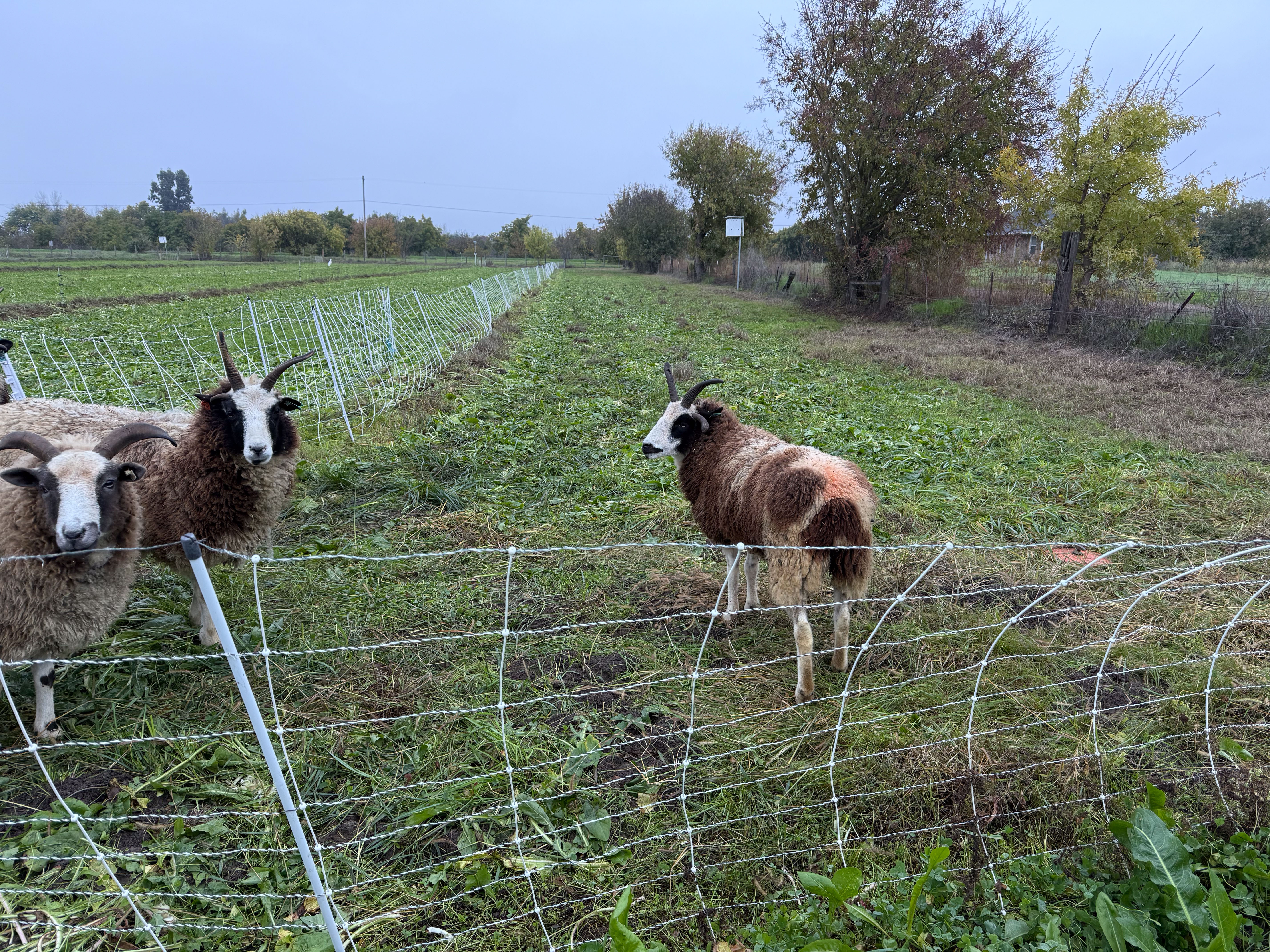
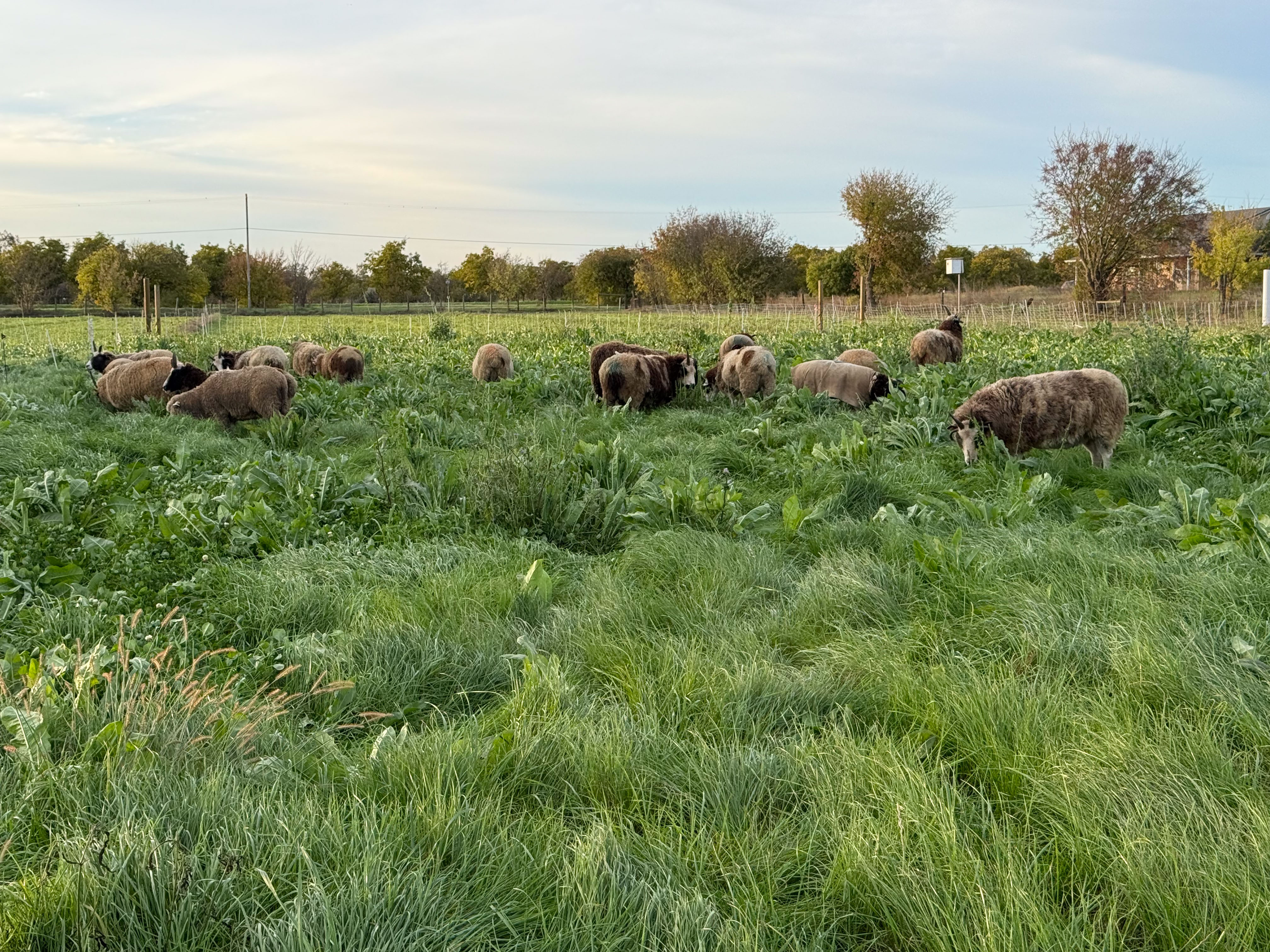
Tonight’s post will follow up on this Grazing and Irrigation post (#7) written in June about May grazing. The pasture looks much different now than it did then.
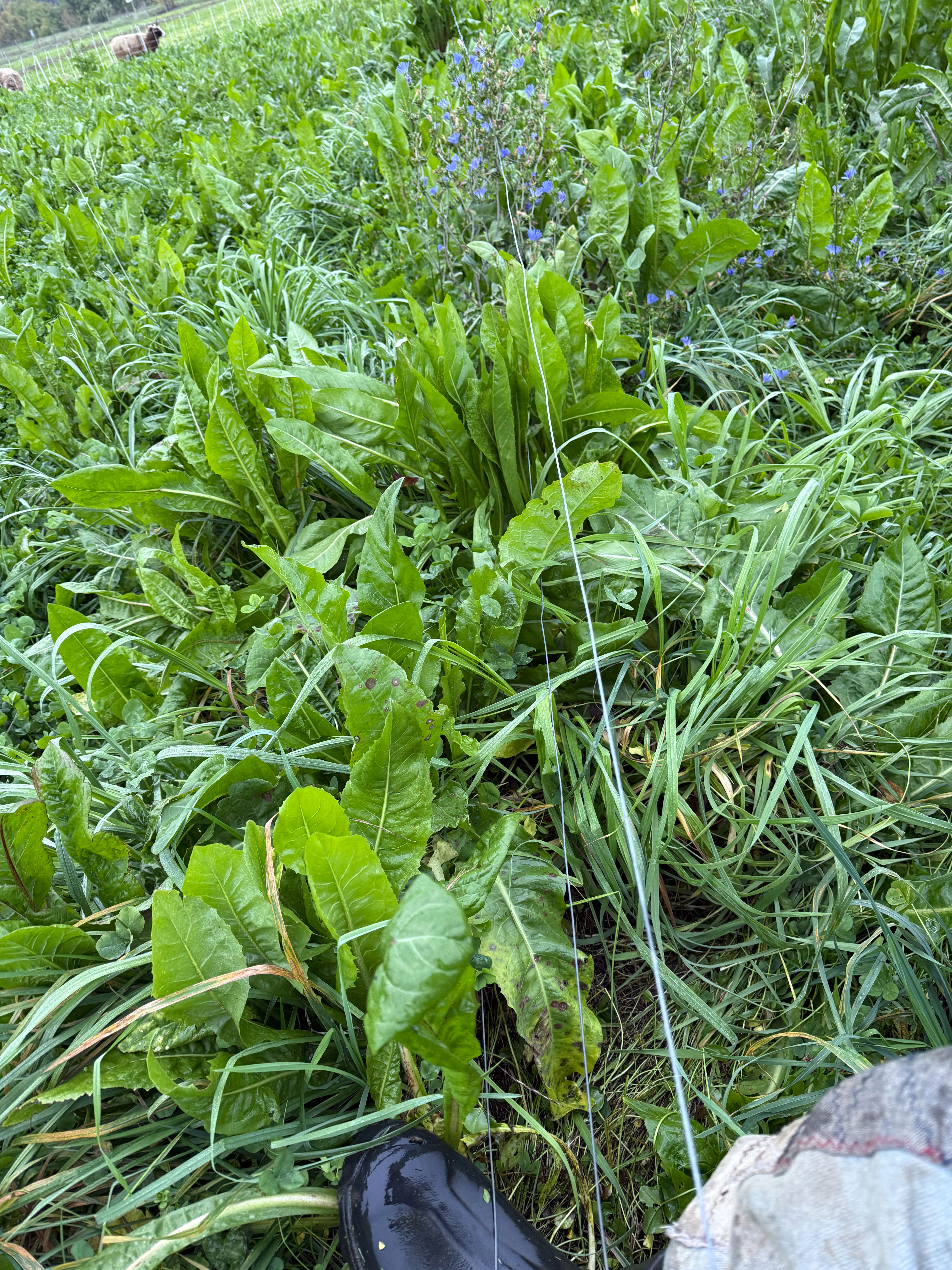
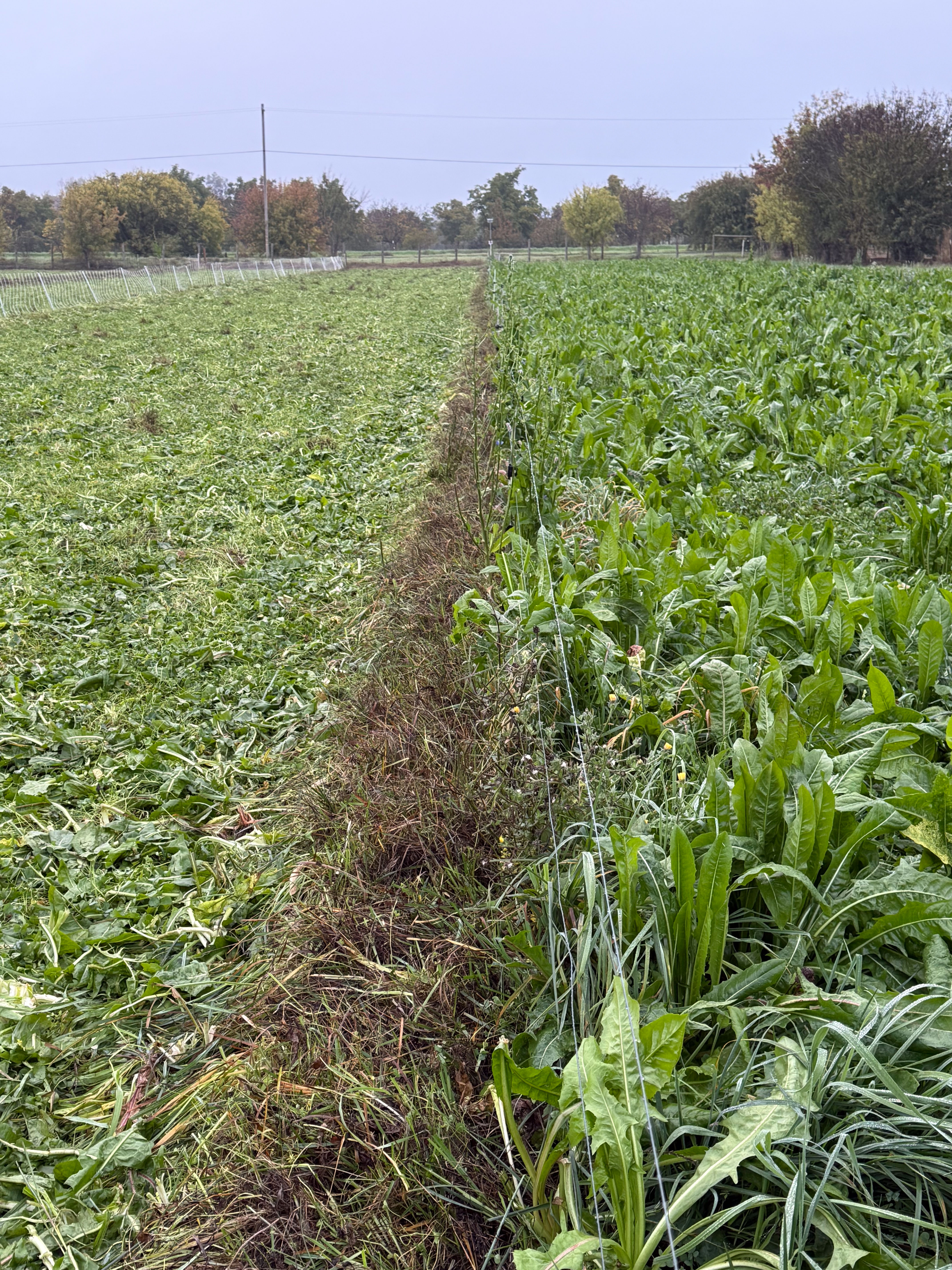
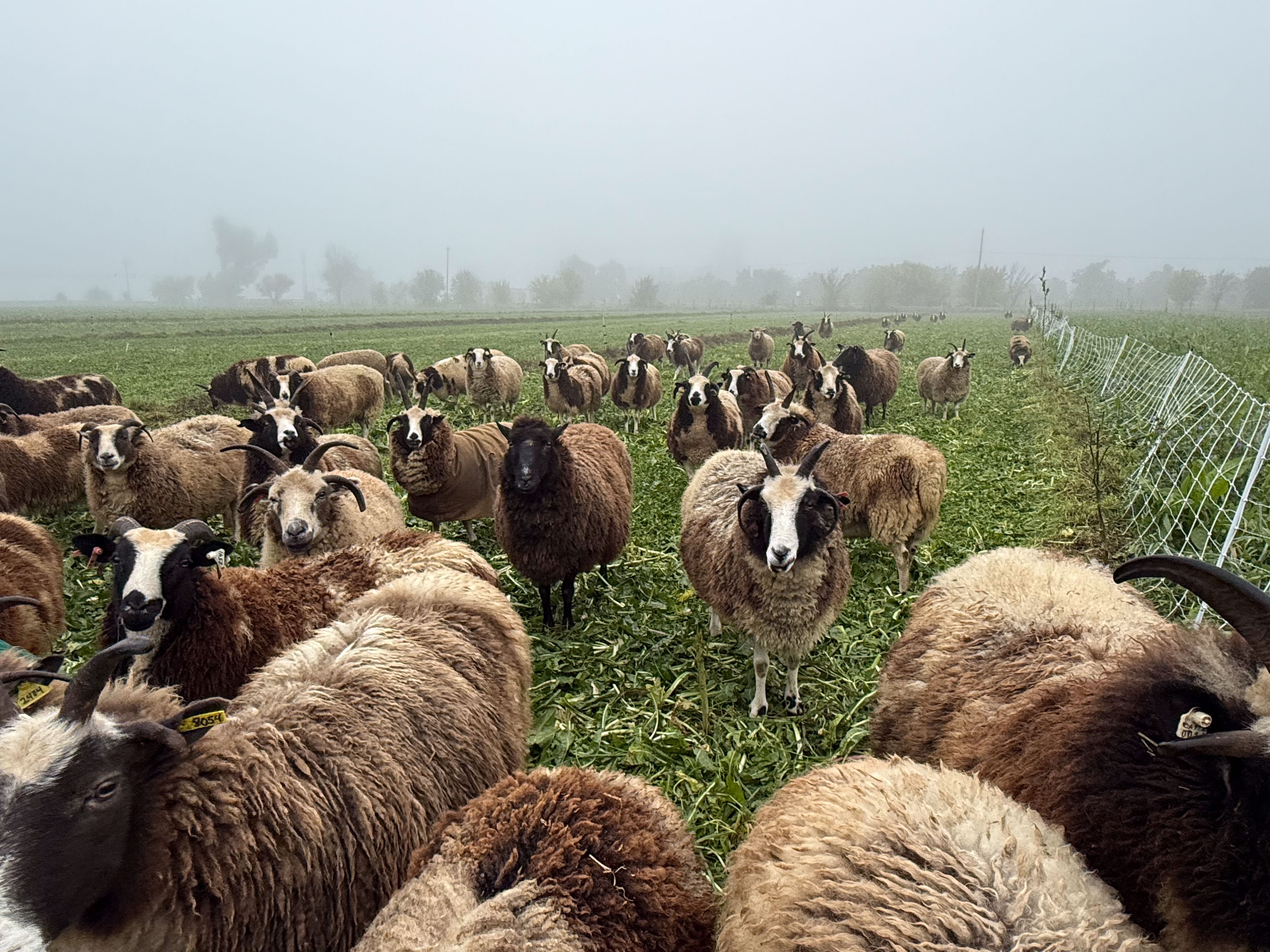
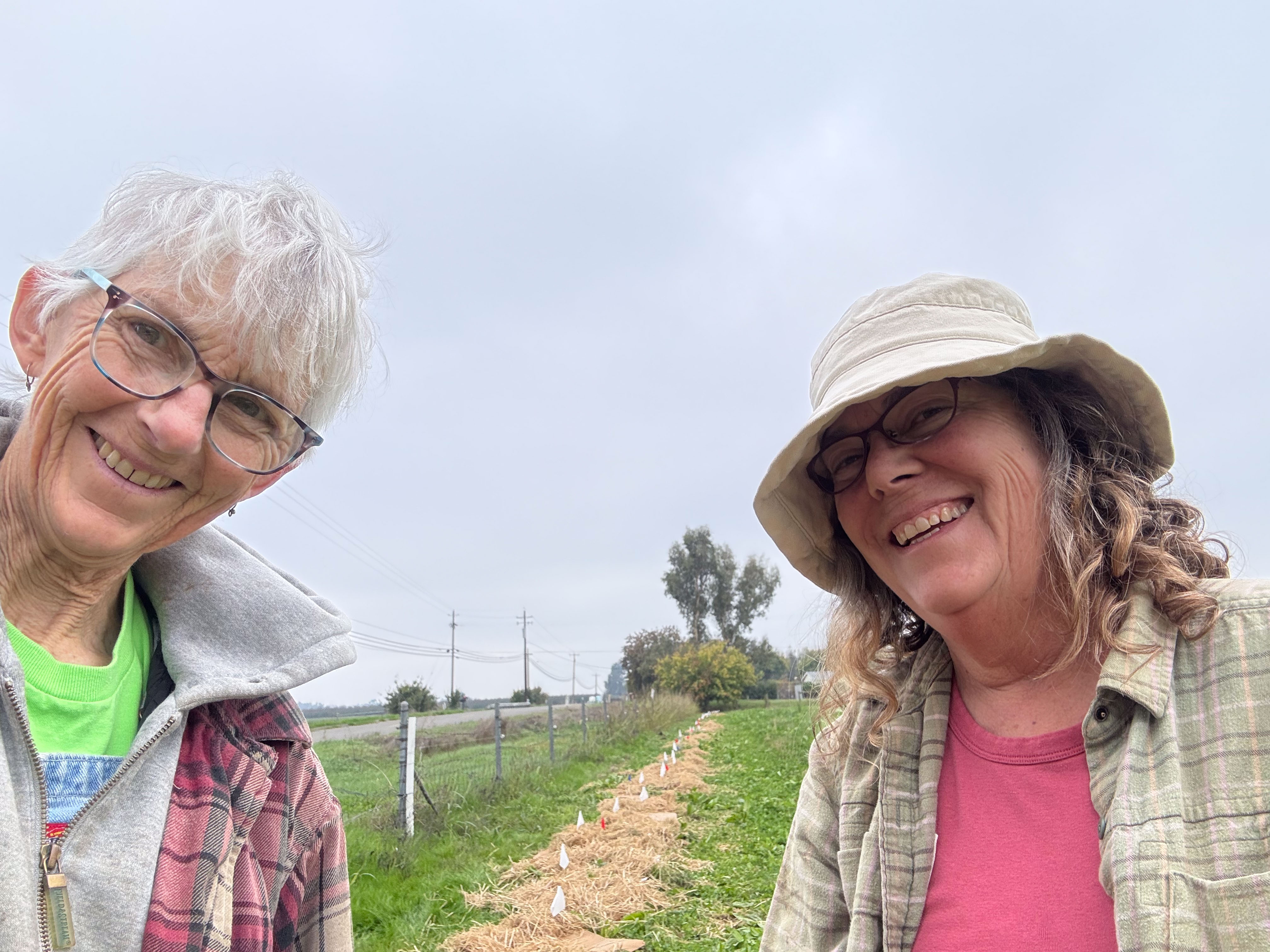
The ryegrass is gone and you see mostly clover.
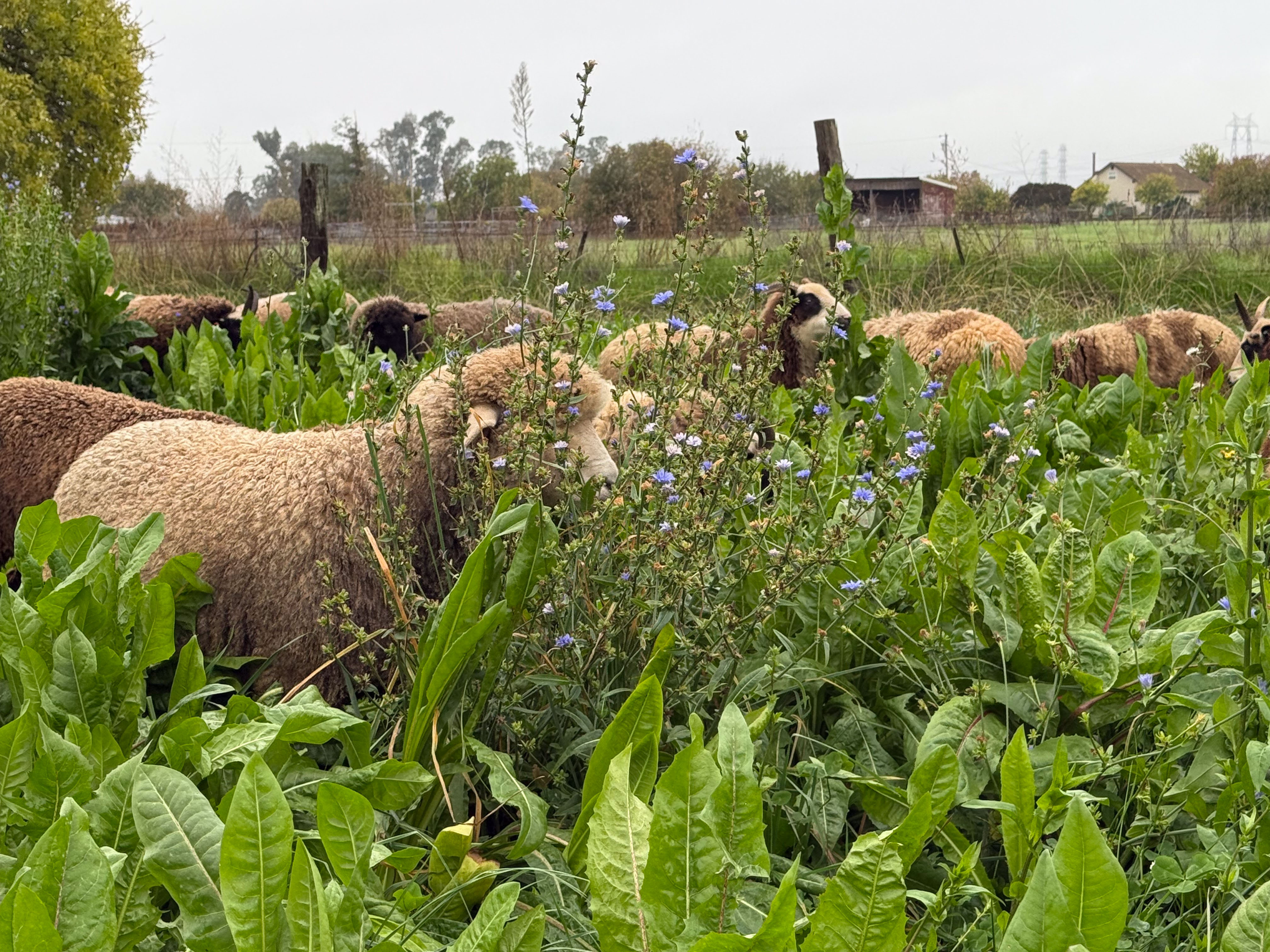
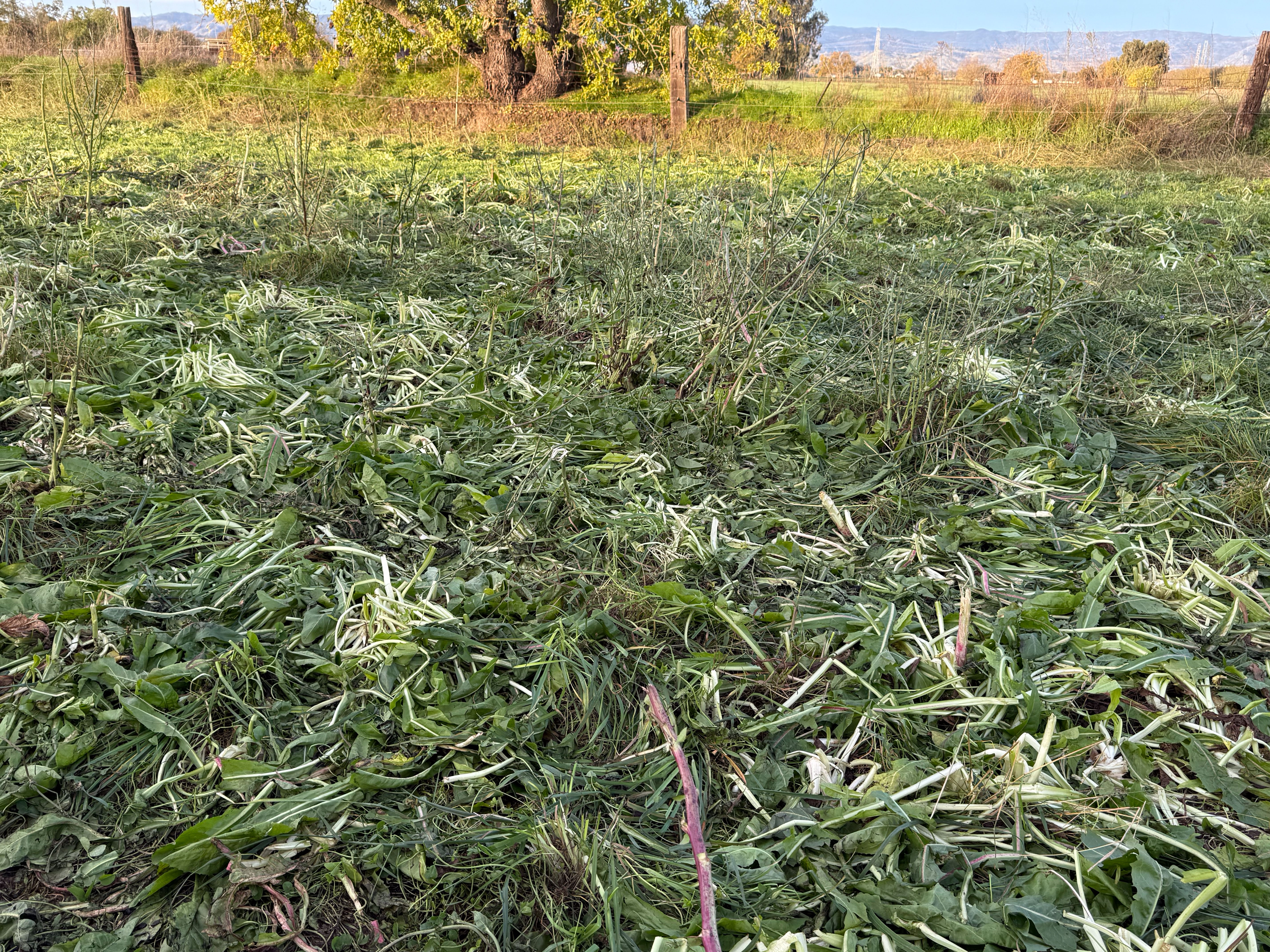
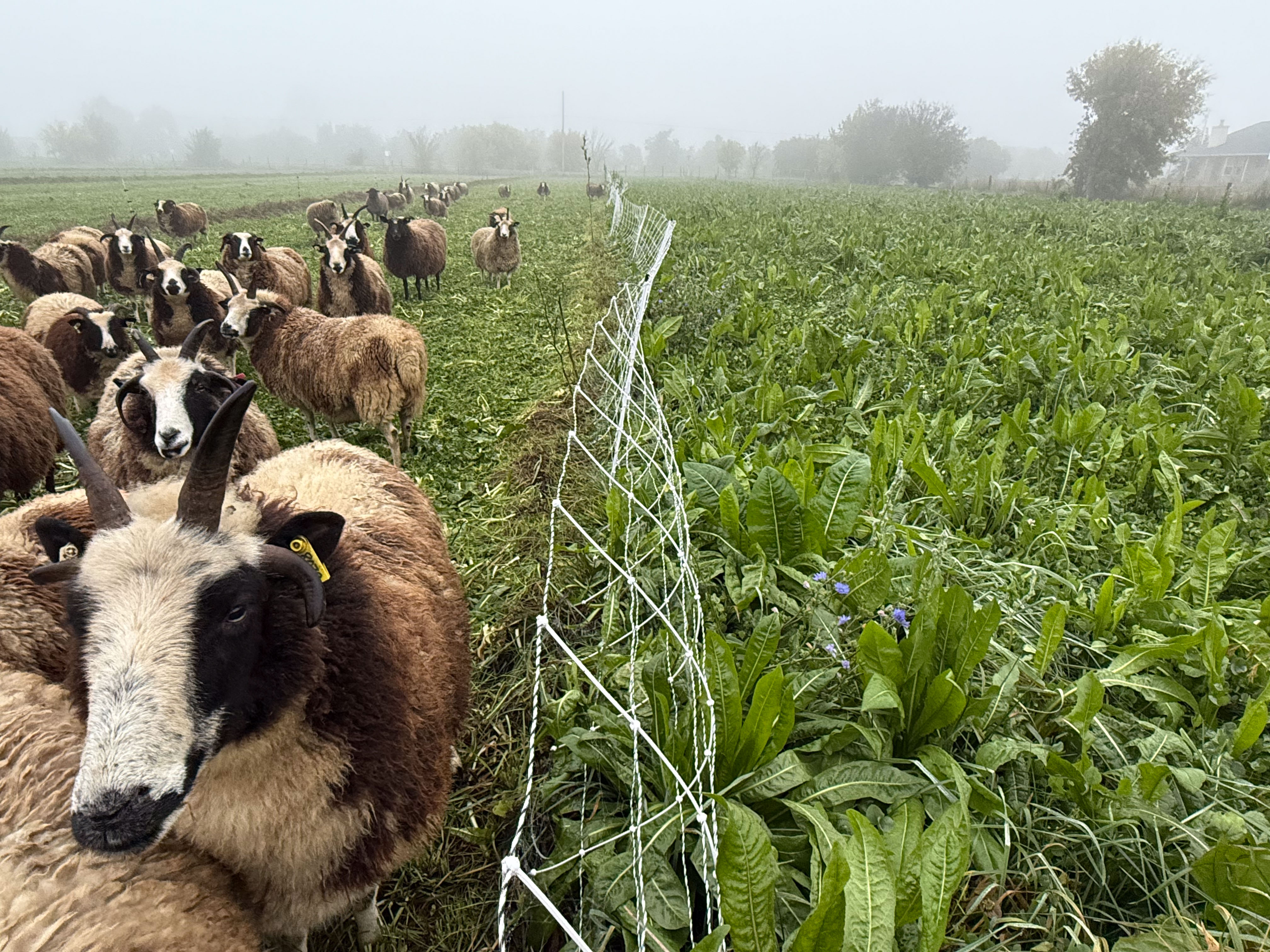
Next most prominent is birdsfoot trefoil, and more recently the chicory has taken a foothold. Those are the three broadleaf plants that were in our seed mixture. All of the paddocks in the south pasture look like this now. Back in the spring we started topping the ryegrass with the mower before grazing and mowed again after grazing. This prevented the ryegrass from being flattened over the clover and becoming a mulch layer.
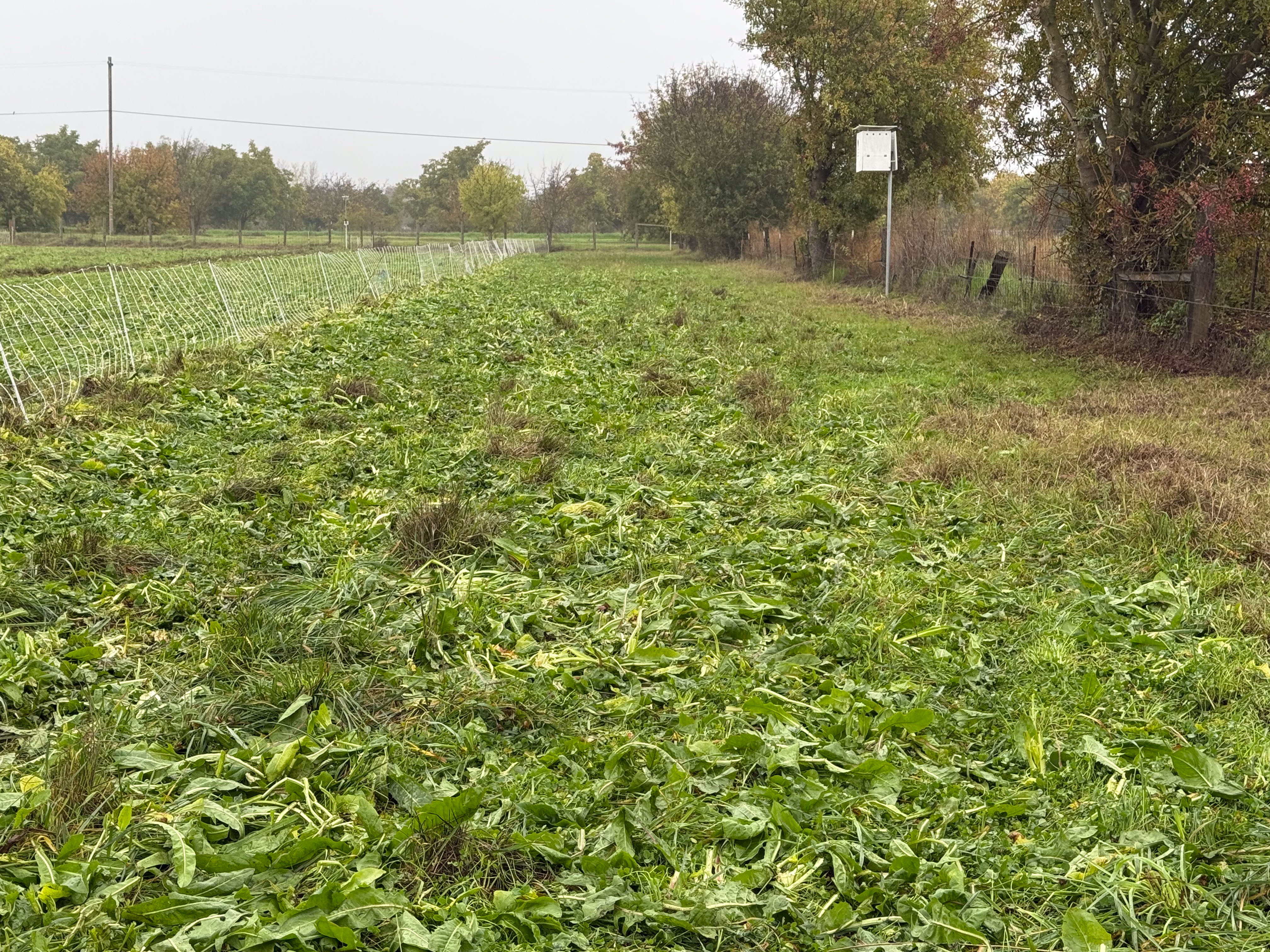
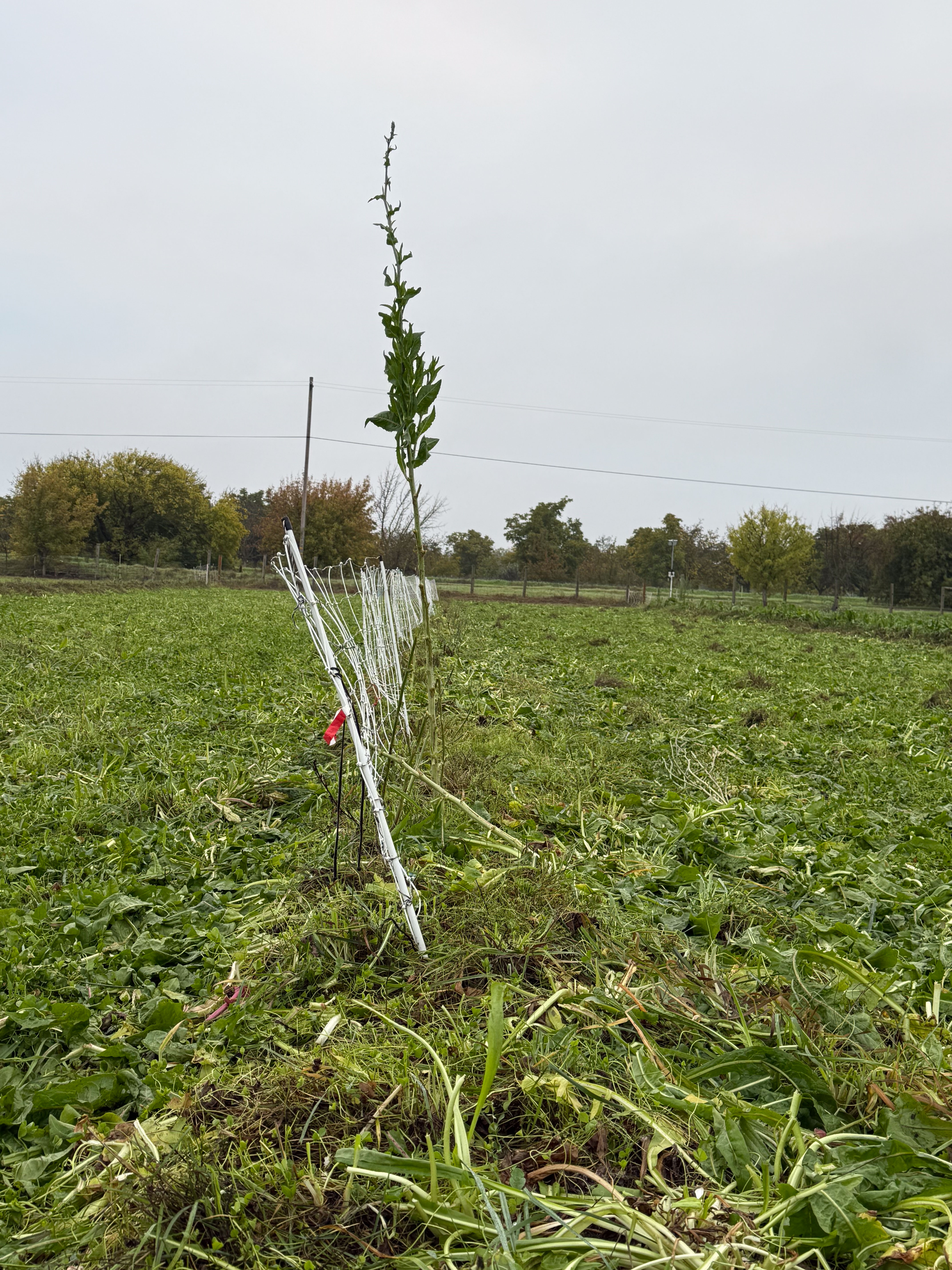
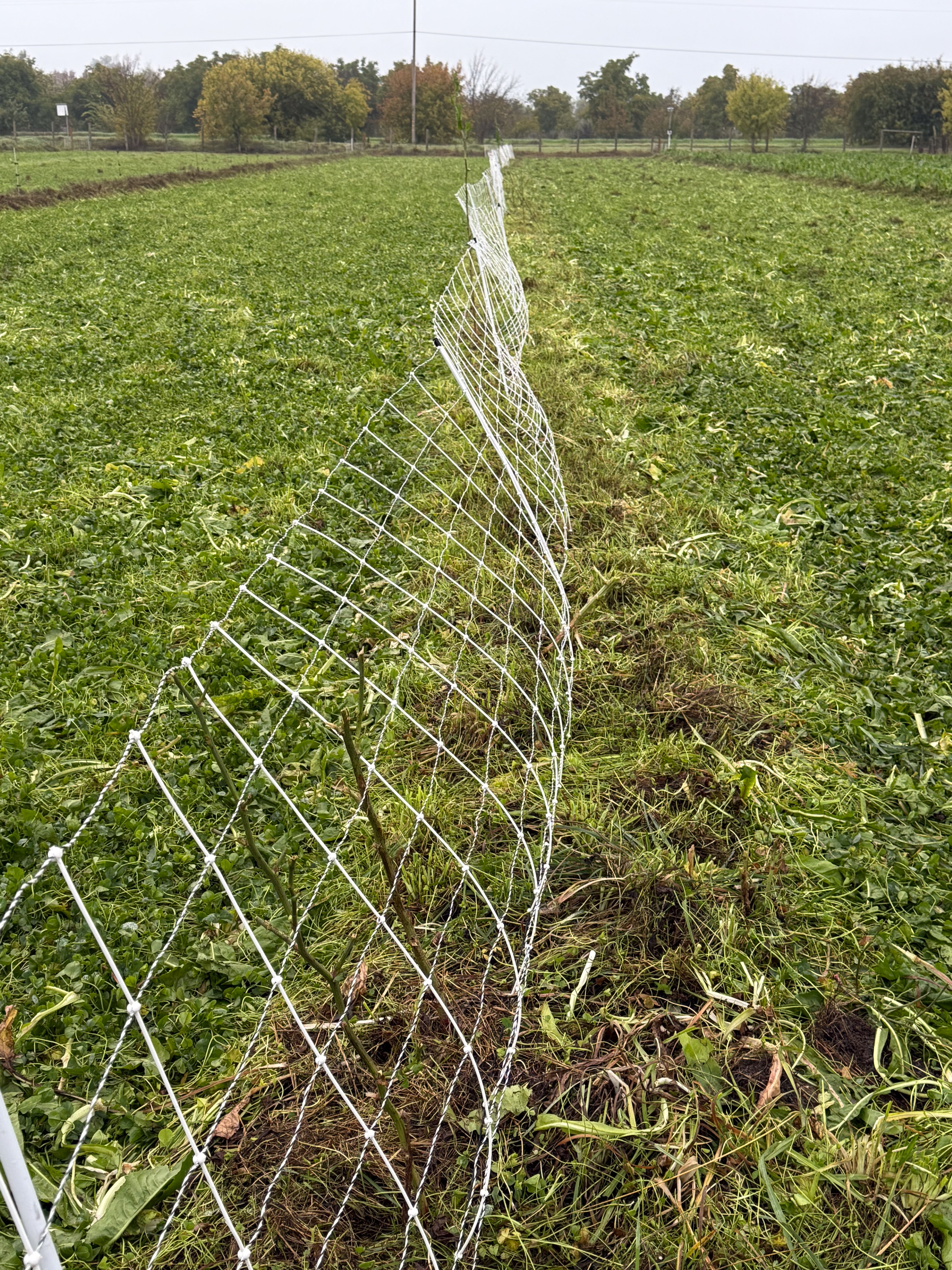
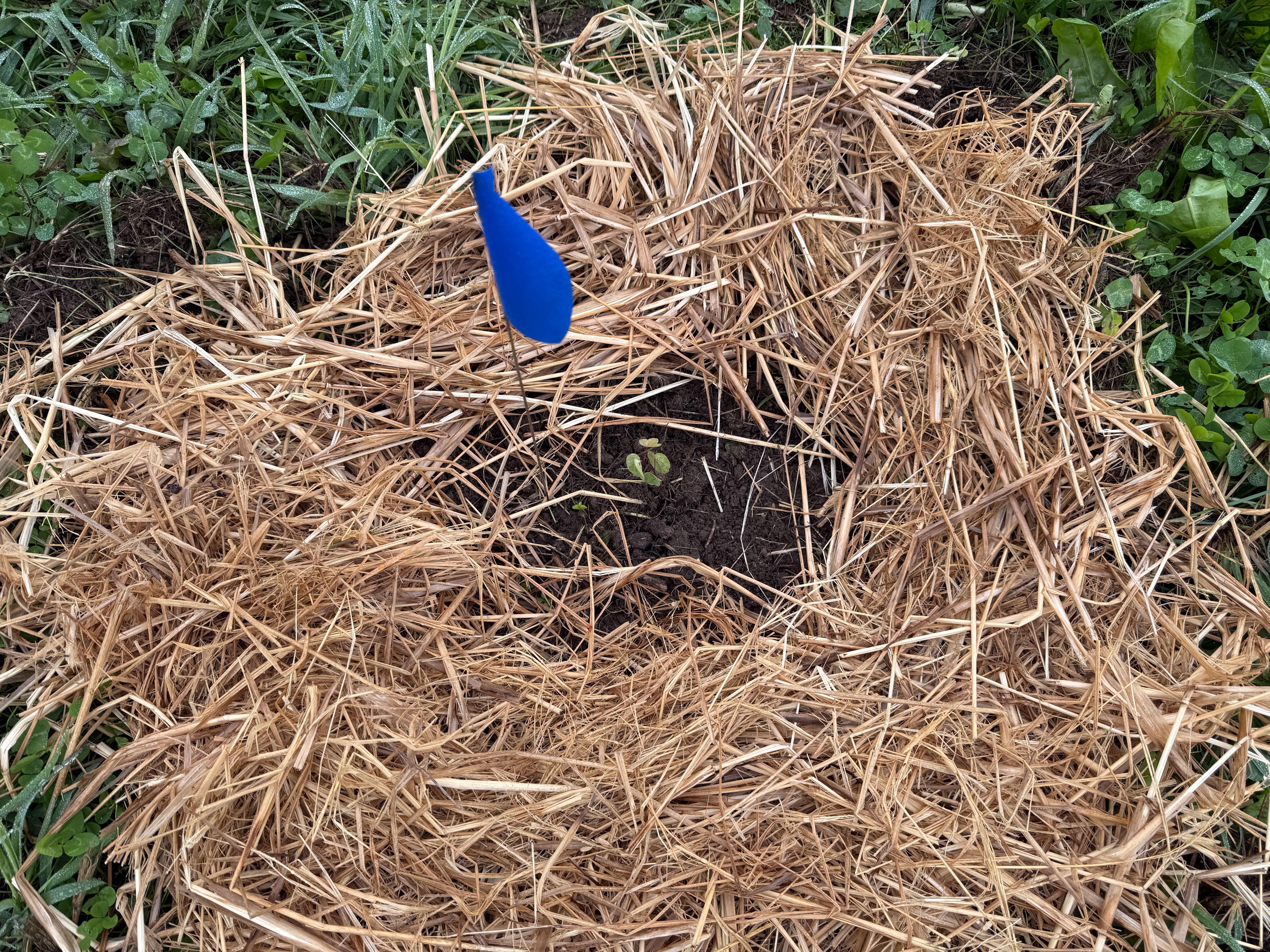
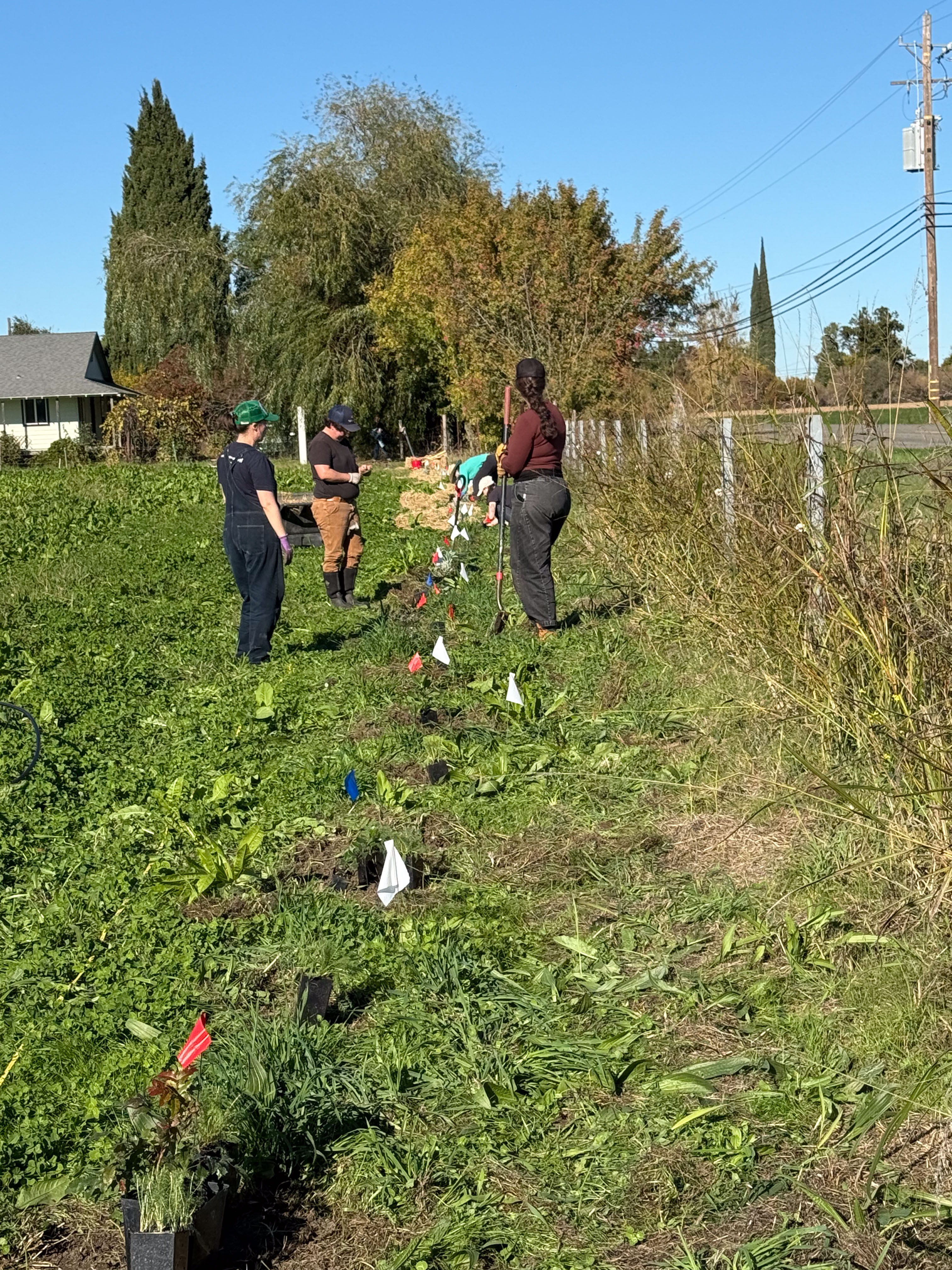
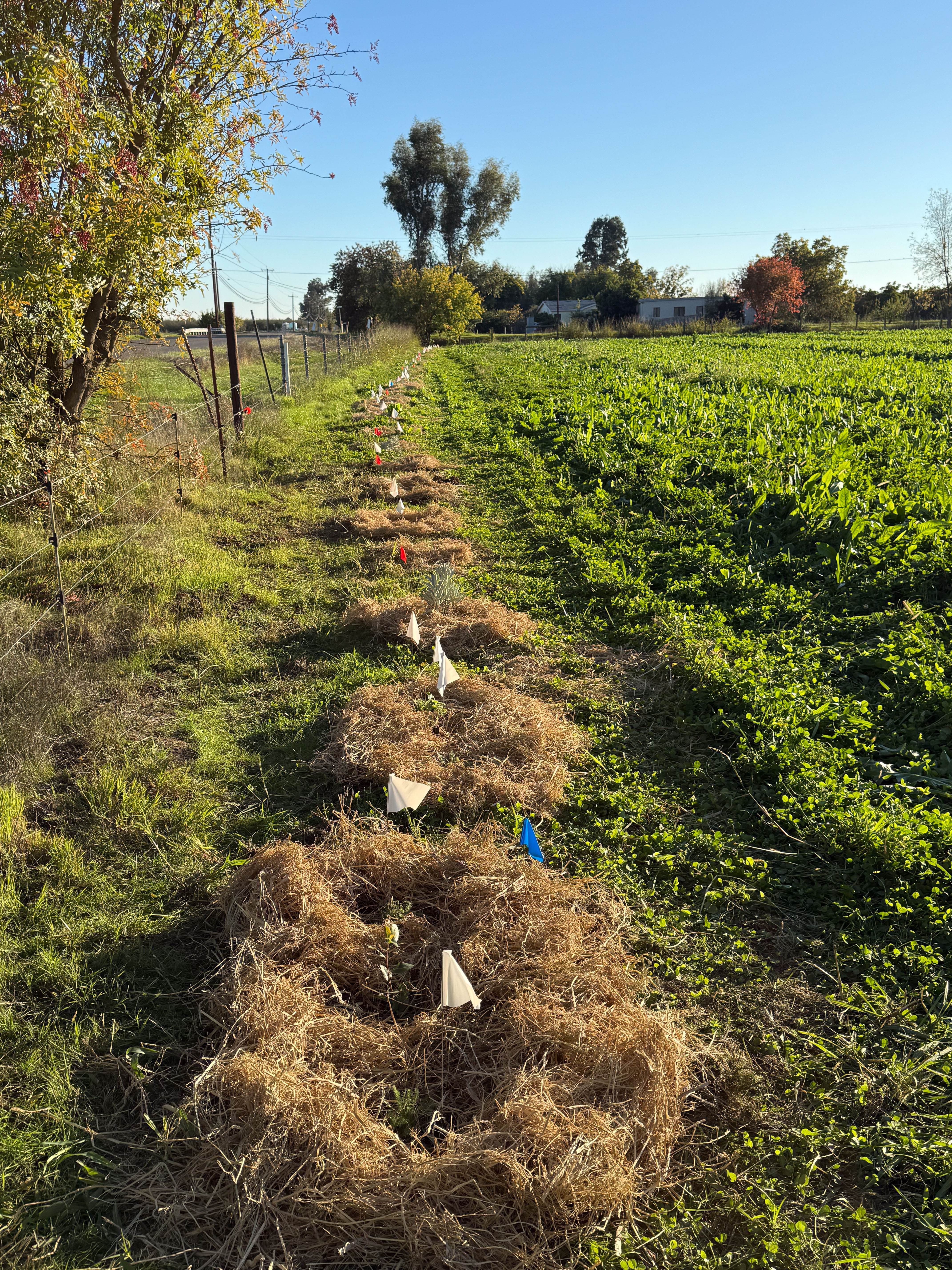
The smaller field on the north is different. We didn’t graze early enough and this is where the annual ryegrass had such a head start on the clover and overwhelmed it in places. I took this photo while irrigating two weeks ago. While the pasture was flooded, some of the ryegrass “mulch” floated and I was able to rake a lot of it into piles thinking that I’d be able to move it out with the tractor.
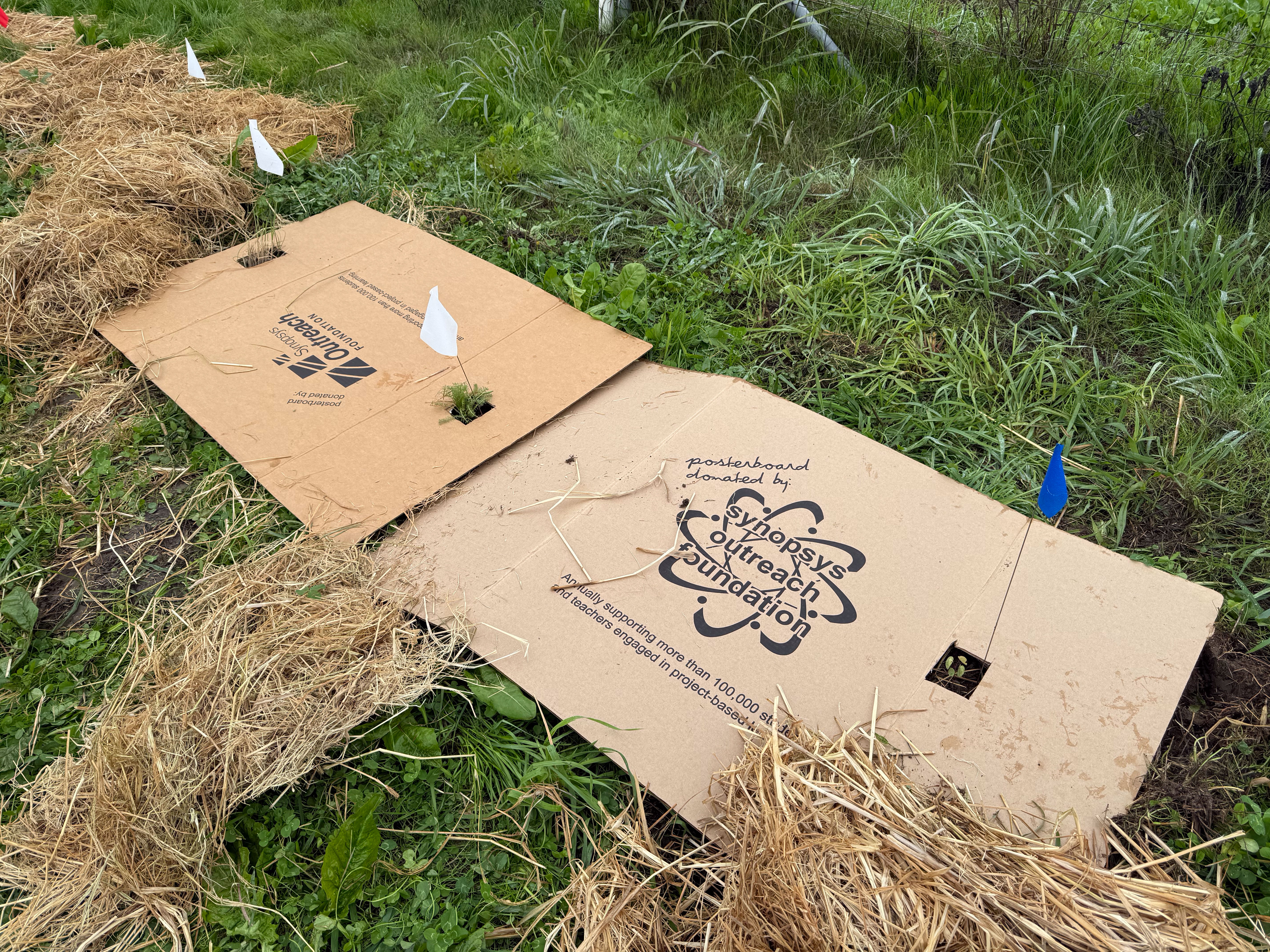
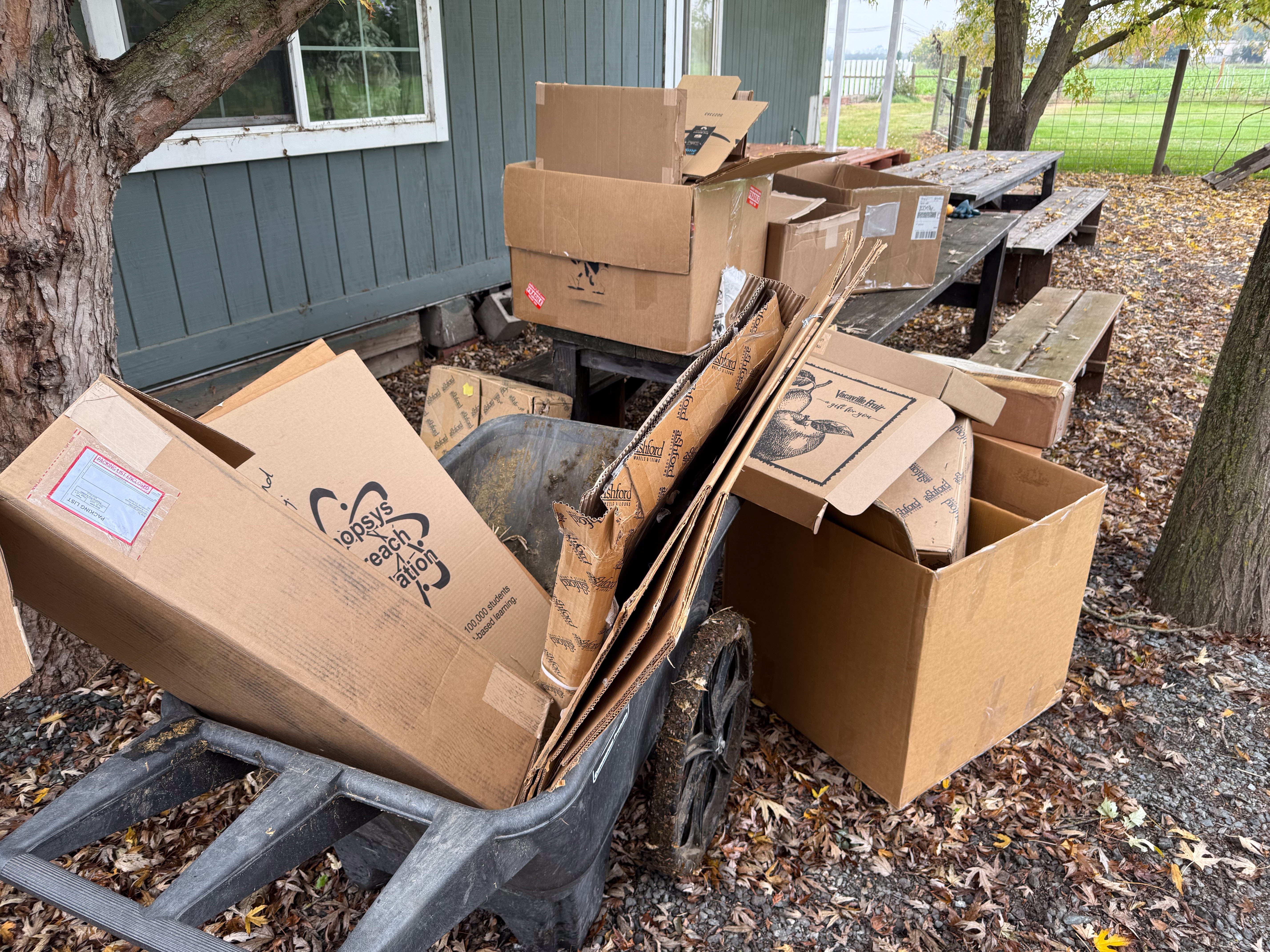
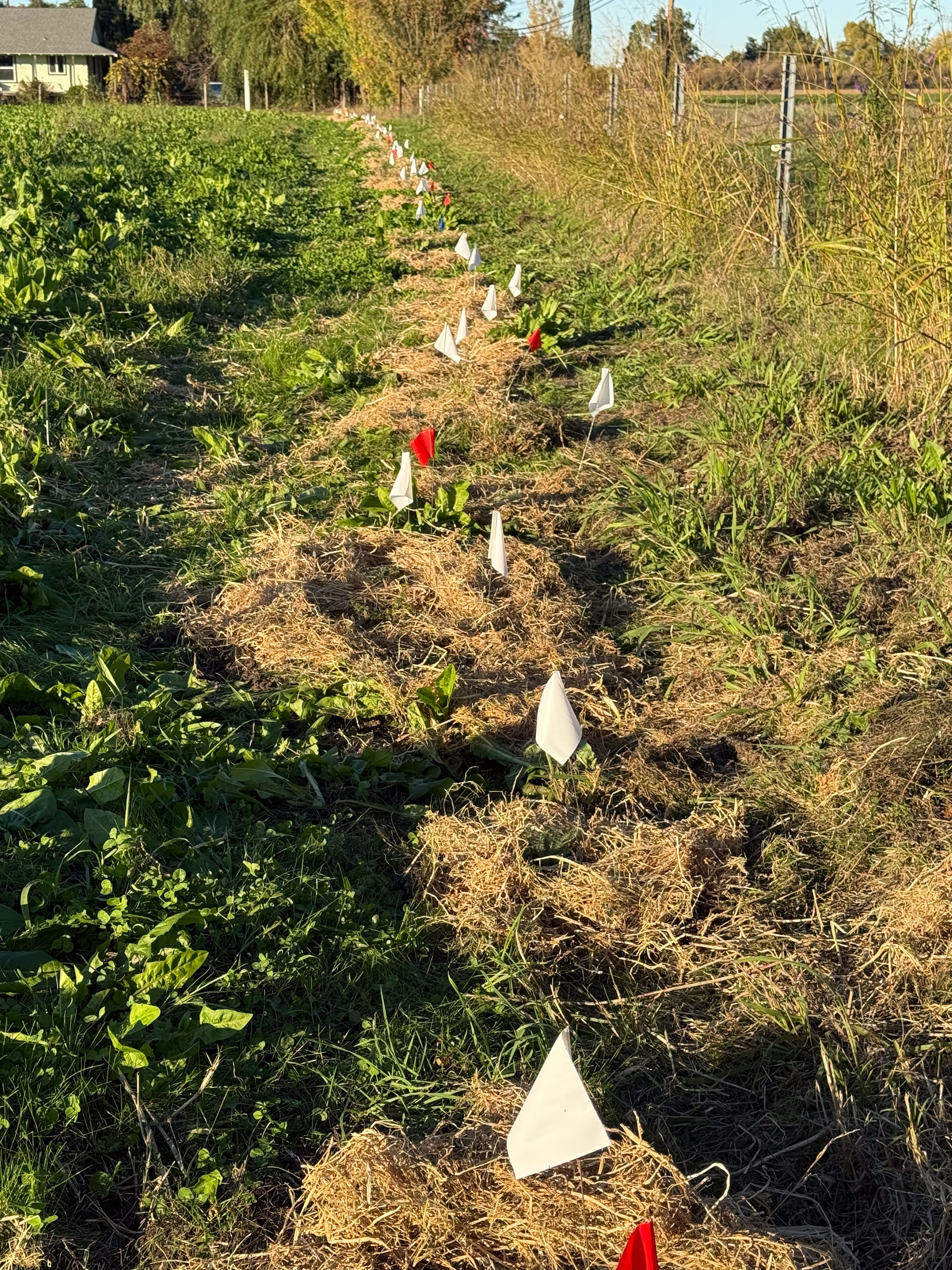
A few days later I realized that I didn’t want to wait until the field dried out enough to use the tractor. I was ready to graze again but the lane was still too muddy. I realized that I could use all that straw to cover up the mud. So I used the wheelbarrow.
I used at least a dozen big loads of ryegrass straw to fill in the lane.
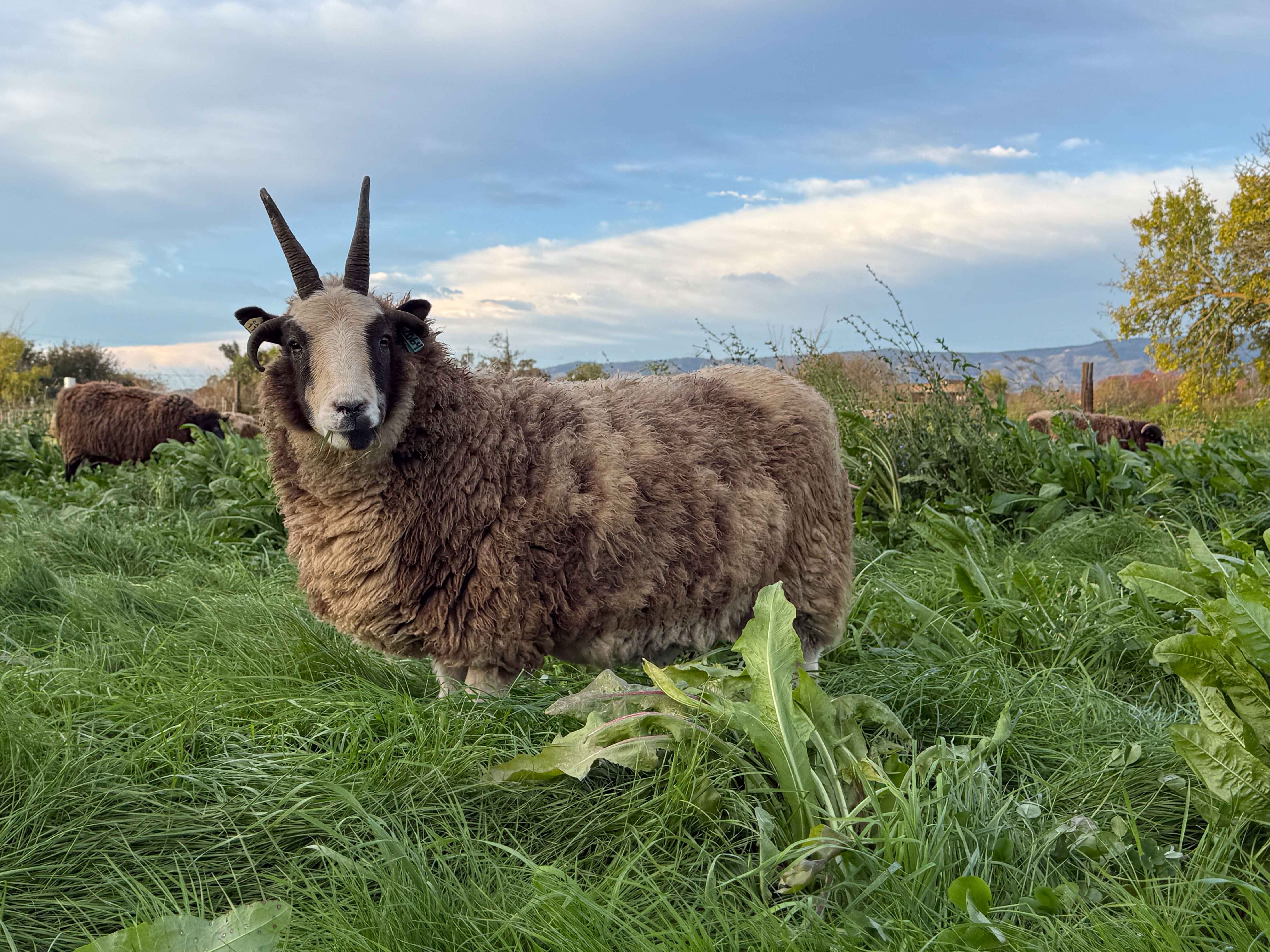
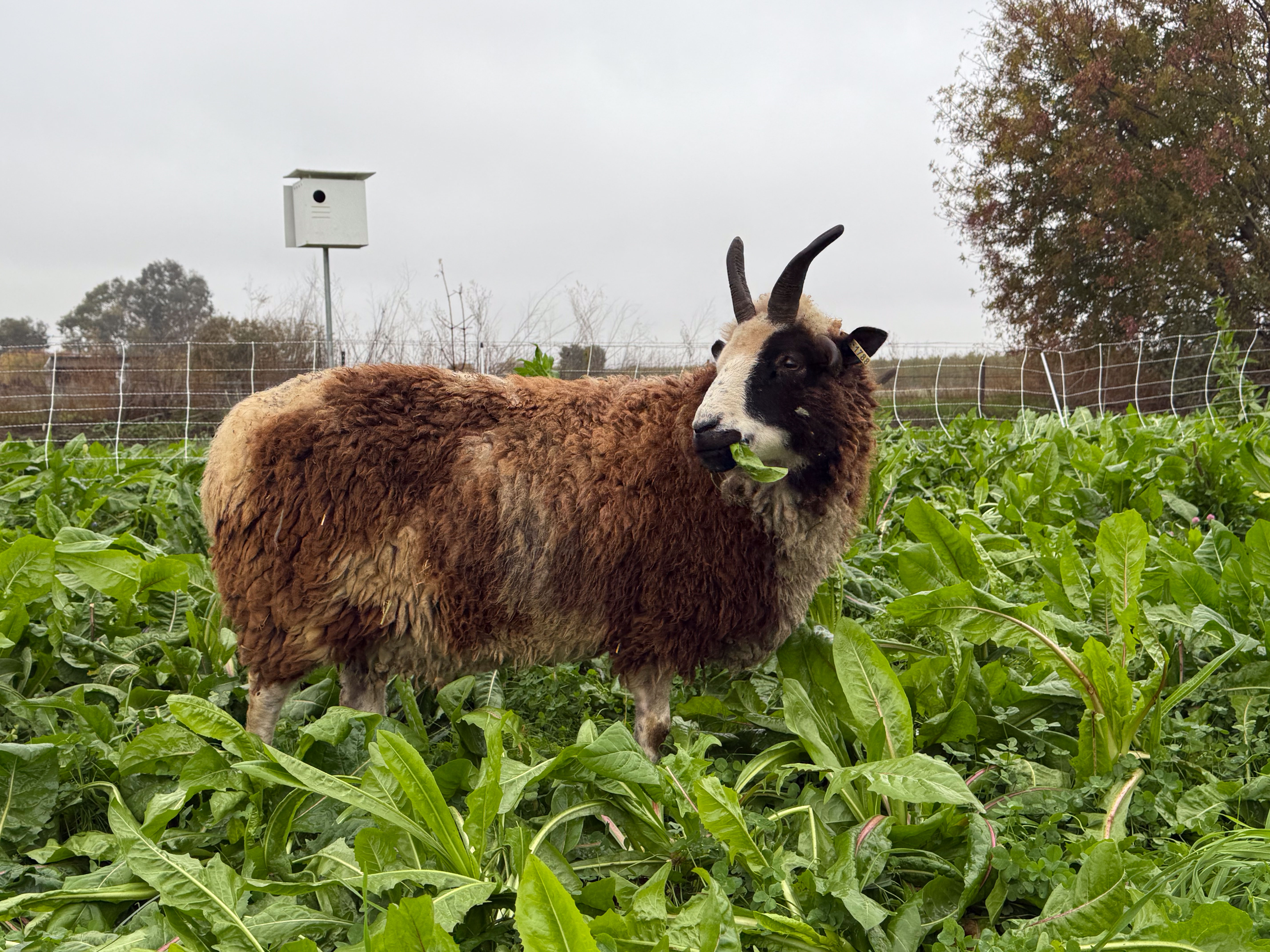
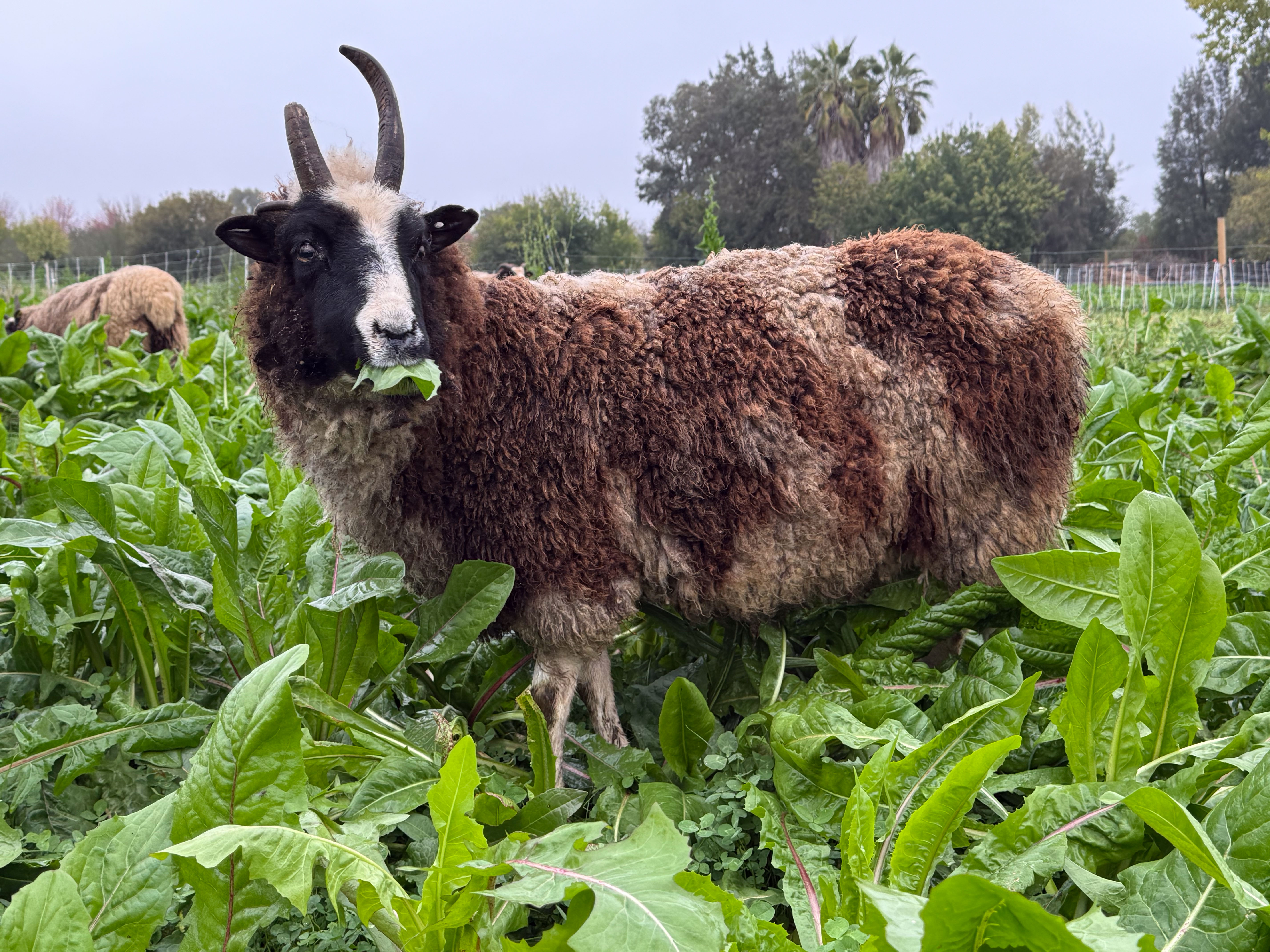
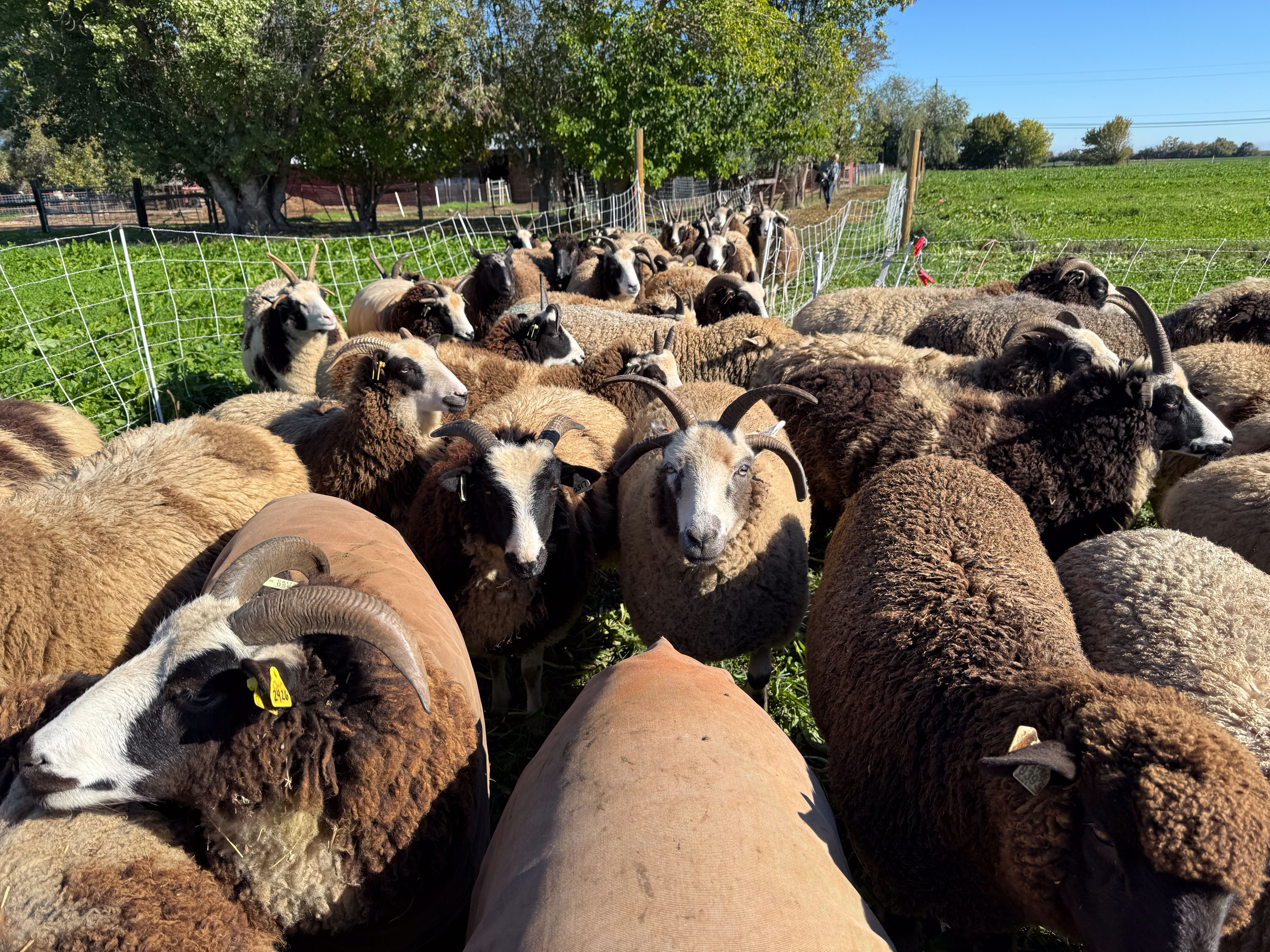
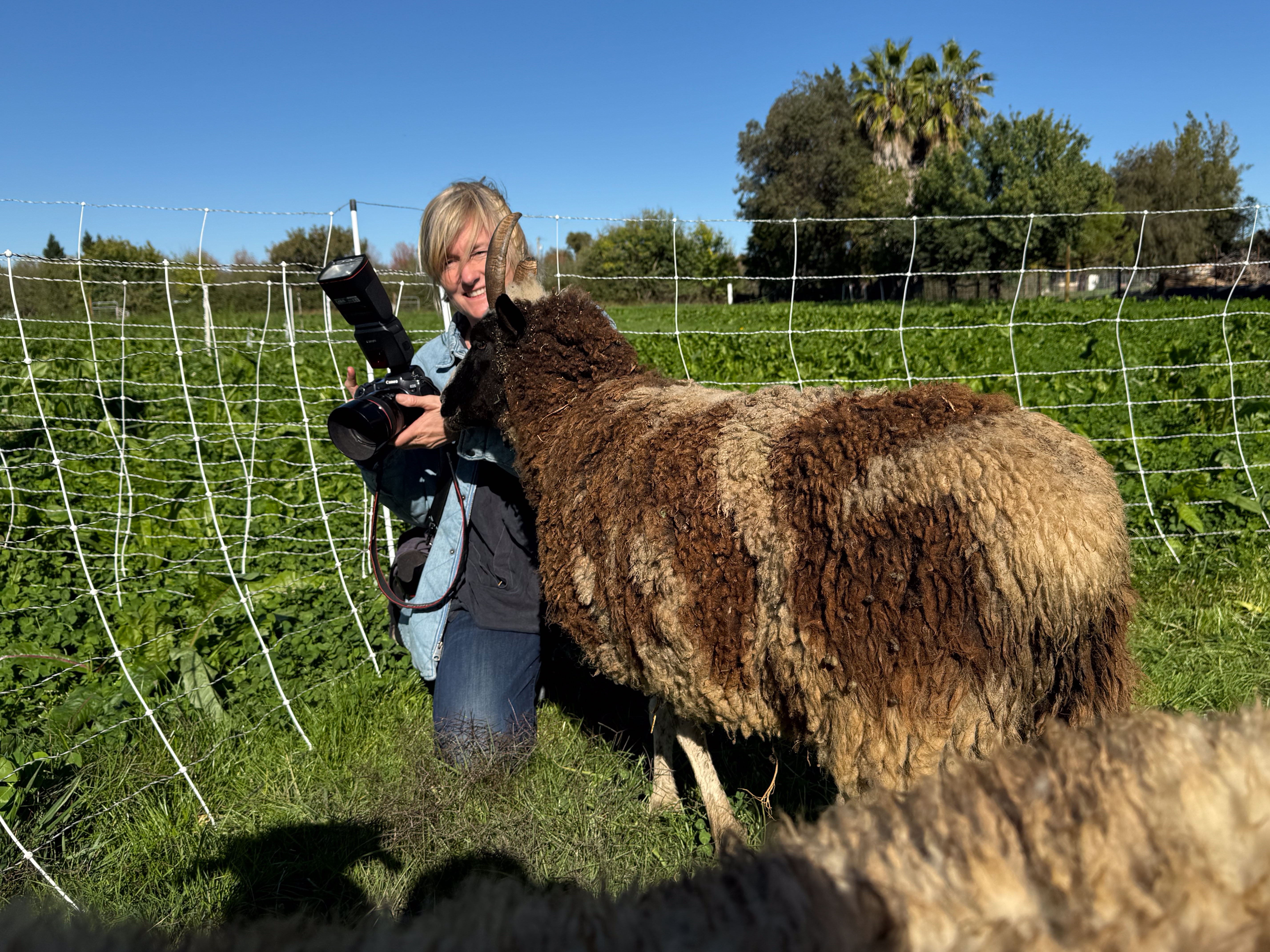
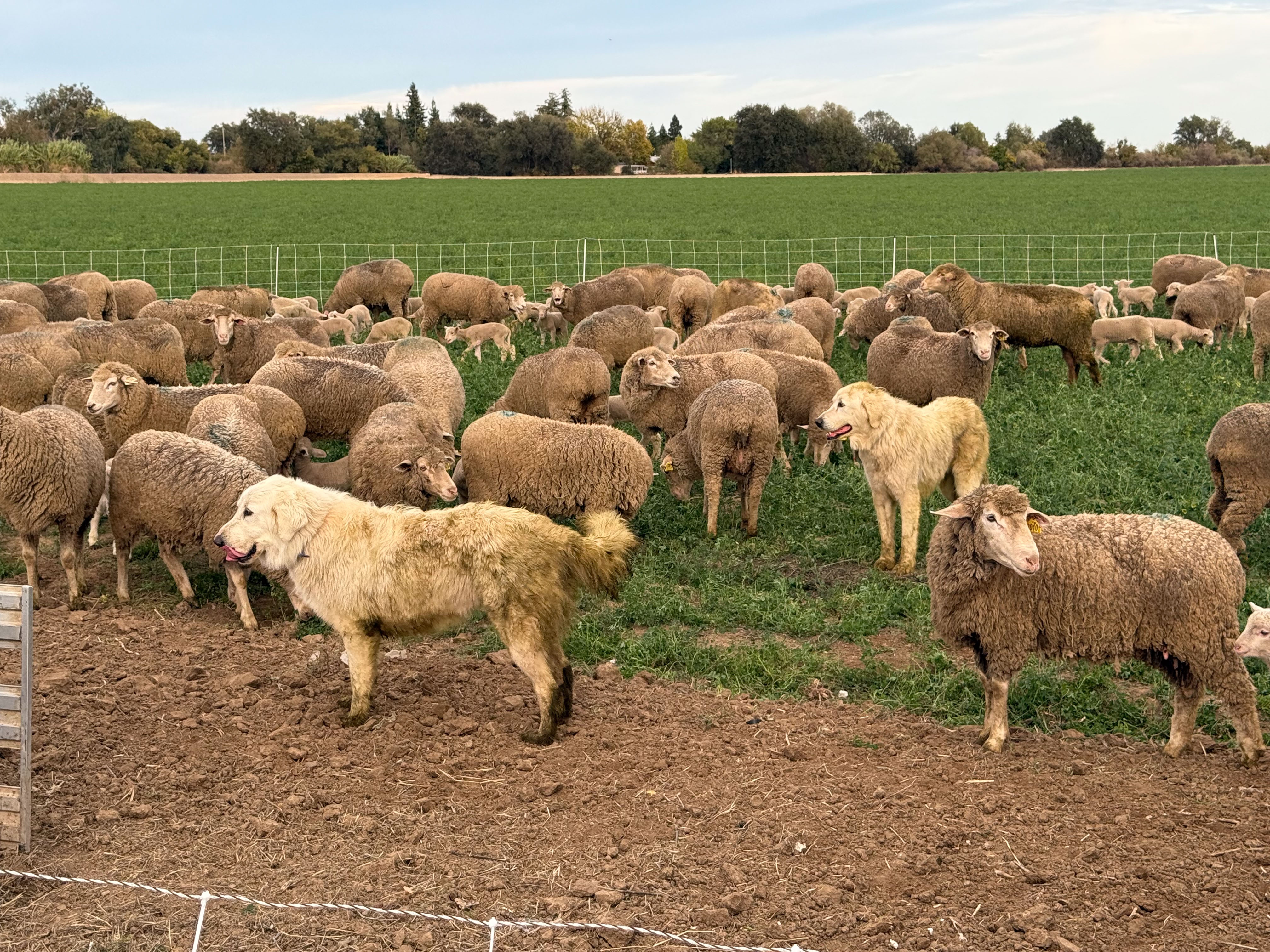
This is Sparky in that north field. Hopefully over the course of winter these bare spots will fill in now the they aren’t covered with mulch.
We were gone from July 29 to August 4 and I wrote the first blog post about it August 8. I am finally finishing the trip today, September 2, and soon will get back to sheep and weaving posts…hopefully.
We spent Sunday night at a motel in Green River, Utah. I don’t remember when we got on the road, but this photo was at 8:50 a.m. At this point I don’t remember much about any of the photos I took, but it’s one way I keep myself entertained while being a passenger. Most of these photos were taken in Utah.
Trinidad is over 1200 miles from Vacaville and we didn’t always take the most direct route. That’s a lot of time in the car. Dan likes the driving part so I am happy to be a passenger. I had taken a dozen magazines and books and a couple of fiber projects to keep myself occupied. I barely looked at any of them. What’s the point of a “road trip” if you don’t experience the road? This scenery is beautiful..
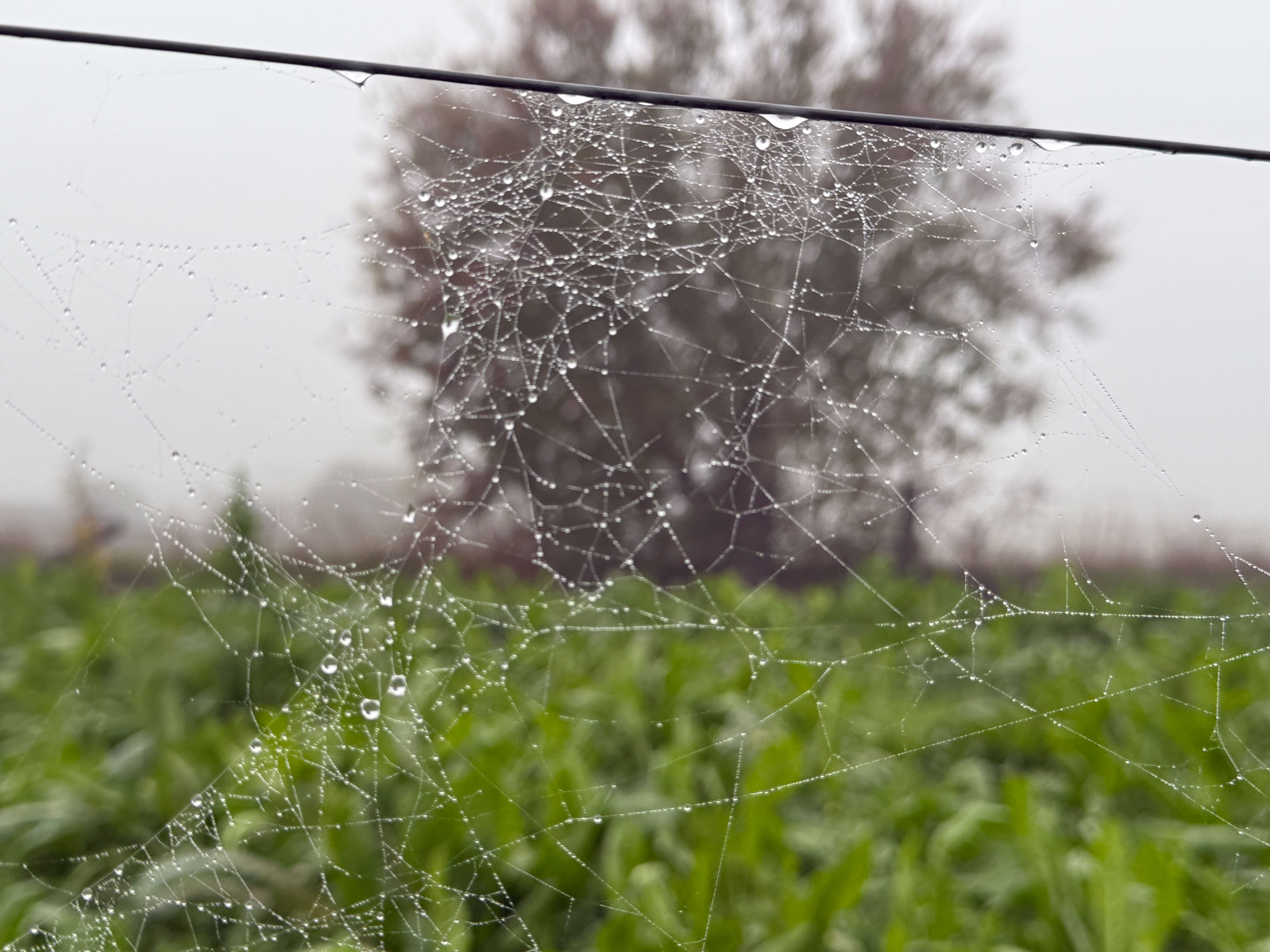
,,,and vast.
We didn’t make many stops so most of these are “drive-by” photos.
We did stop here because this marker was a short distance off the highway. The story of the Pony Express is fascinating but it was only a fragment of our history. The third photo of this blog series back on Day 1 shows one of the stations that were located about every ten miles. That’s a huge undertaking when I think of our drive of over 1200 miles that followed some of the Pony Express route. From the Pony Express National Historic Trail site: “It is hard to believe that young men once rode horses to carry mail from Missouri to California in the unprecedented time of only 10 days. This relay system along the Pony Express National Historic Trail in eight states was the most direct and practical means of east-west communications before the telegraph.”
Driving across the salt flats of Utah.
It seems that this was the last photo I took during the drive. This is 4:30 p.m. Unlike last year’s road trip, we didn’t have vehicle or traffic issues through the whole trip until we got near home. Just west of Sacramento the Causeway (I-80) was narrowing to one west-bound lane for the never ending highway work. We drove in the driveway about 11 p.m.
The green line is the 2024 road trip and pink is this year.
We were on the way home after the stop inTrinidad Friday and Saturday. We spent Saturday night with Dan’s brother and SIL in Colorado Springs.
We had brunch with Dan’s sister, also in Colorado Springs. This is Dan and his two Colorado based siblings, Rob and Sally.
We headed west and planned to turn north to go through Leadville. We had thought about this on last year’s trip, but this intersection (or was it the next?) was blocked due to a fatal accident and we made a big detour. No such problem this time.
Somewhere along the road we stopped at this sign. I am interested that bighorn sheep horns are classified based on where the tip of the horn is in relation to the ear and the eye. I wonder if that could apply to Jacob sheep.
When we got to Leadville we stopped at the cemetery to look up Dan’s relatives. This is the headstone for Dan’s great grandparents on his dad’s side.
There was a detour driving into Leadville due to an event and we decided to see what was going on. It was the Boom Days Pack Burro Race!
I have decided that I missed out on an activity that I could have really enjoyed had I been able to start years ago. If you’re going to go on a long run why not take a burro? I would have loved to do this.
We got here as the last few competitors were finishing the course. This burro and his handler, in his late 70s according to the announcer, finished the 15 mile course. Remember, Leadville is at an elevation of over 10,000′.
This mammoth donkey and his handler finished the 22 mile course. I looked up the rules. Burros must carry the pack saddle with some basic equipment–a pick, shovel, and gold pan. The rules state that the burro must be on a 15′ lead and “the runner may lead, drive, push, pull, or carry the burro…may not ride the burro…”
This burro seemed to enjoy being petted after the race.
We continued west on Hwy. 24 and stopped at the points of interest.
The story of the 10th Mountain Division and their impact in WW2 is fascinating. It is also interesting that well known ski resorts in Vail and Aspen were started by veterans of this regiment and many were also involved in manufacturing of ski equipment and clothing, trail development, and developing skiing for the disabled.
The memorial for the 10th Mountain Division.
Camp Hale is 7 miles beyond the Memorial site. I’d like to return to explore the trails of this National Monument .
There were several signs to explain and point out the remnants of Camp Hale. It is hard to imagine 15000 soldiers and 5000 pack mules and horses in this valley. We read the signs and pondered the impact of this Camp. Then it was time to move on.
We drove through some beautiful scenery, eventually making it to Green River, Utah where we spent the night.
In 2024 we attended the opening of this show because I was a “farm partner”. The explanation and story is in this blog post from 2024. I think I did a better job of photographing last year’s show and sharing artist info in my blog. I took this quote from last year’s blog post, after copying it from the Cowgirl Artists’ website. From the website: “Celebrating the true contributions of Women in the American West…Much Western art is an ode to the work and contributions of men, while often limiting women to a single sphere, or pretty face. “Women’s Work,” a groundbreaking exhibition that teams artists up with women on working ranches, turns that notion on its head. By showcasing Western women as multi-faceted contributors to the Western way of life. Furthermore, Women’s Work aims to provide a platform for Indigenous women to authentically share their own stories, rooted in their intimate connections to culture and heritage. Traditional and fine artists are included, with all work on the theme of “Women’s Work.”
After seeing the show and talking to the organizer I decided to submit an entry for this year. Entries were due in the fall and, if accepted, work was to be completed in the spring 2025. I entered Year to Remember blankets using locally produced wool, and naturally dyed by me with plants grown on the farm. I could serve as my own “ranch partner”. I was accepted! Work was shipped to the show to arrive by mid-July.
The catalog of the show is at this link. There you can see all the pieces and details about work.
The Women’s Work show is upstairs in this building. The second floor is in a horseshoe shape over the lower floor. When I went upstairs I was immediately drawn to this display. Four artists worked together to put together the display.
There is amazing detail on this saddle called She Who Made Me by Kari McCluey
This painting, CowGirl II – Securing a Win, is by Megan Wimberley, the woman behind Cowgirl Artists of America.
Bluebird Let Me Tag Along by Lisa Sorrell.
There are details about each piece in the catalog at the link above. There was by far more wall art than 3-D work, but it was difficult to get good photos of those. That’s why I recommend looking at the link.
These are my two blankets. Later I rearranged them so that the more colorful side is the one that shows. The blanket on the left indicates high temperatures for Trinidad, Colorado for 2024 and the one on the right is for Vacaville. The full year is portrayed following the stripes from one end to the other.
On Saturday I came prepared to include the info about the Year to Remember idea with color coding. I thought it would make the blankets more interesting (and more saleable). However, this is an art show and the person in charge wanted to keep the signage at a minimum. This info is in the catalog, so I took it off the blankets. I’m including it here as explanation…and because this is a plug for your custom Year to Remember blanket. I have a blanket warp on the loom now and can weave one. If these blankets don’t sell in this show they will be on my website after I get them back.
Dan took this photo.
The A.R. Mitchelll Museum has a large display about Mitchell and his friends as well as contemporary western art for sale. From the Museum website: “During the 1870s and 1880s Trinidad was the headquarters of the largest cattle and sheep operation in the state of Colorado. A booming cow town filled with cowboys, cowhands and ranchers, Trinidad’s streets and neighboring towns were home to the horses, cattle and beloved cowboys and cowgirls that A.R. Mitchell would paint and immortalize throughout his career.”
I am already over my self-imposed limit of 10 photos, but I want to continue the story so I can blog about things at home.
On Saturday there was a luncheon provided by CGA to be followed by an artists’ talk. I had been asked to be one of the panel. Before the luncheon we wandered around this block of Trinidad.
I got a kick out of this design. That’s a real truck, not painted.
We stopped in the Corazon Gallery across the street from the A.R. Mitchell Museum. I was interested in this because it is an artists’ coop as is The Artery where I sell in Davis, California. Here’s a “small world” experience. We wandered through the gallery and I noticed a landscape photograph with the photographer’s name Joe Coca. I knew that name. Having subscribed to Handwoven magazine since the first issue in fall, 1979 I was very familiar with photography by Joe Coca. I wondered if he might be the same person because Handwoven magazine was based in Colorado. We started up a conversation with the person staffing the store on that day. I assume it is like The Artery where all of us artists take turns being shopkeepers when the store is open. I said we were in town for the show across the street and I had entered handwoven pieces. It turns out that I was talked with Joe Coca! We talked awhile longer. He worked with Interweave Press for years and has been all over the world as a photographer. Joe’s website states that he is semi-retired, but it is worth looking at the website to see some stunning photography.
Back to the show!
After the luncheon awards were announced. There was a winner and an honorable mention in the 2-D and 3-D categories. I was so surprised to get the 3-D Honorable Mention!
The people selected for the panel discussion were all artists who were able to fill the role of their own “ranch partner”. Megan, left, had prepared questions for all of us to answer. It was a fun experience and I was very interested to hear the stories of the other women. The other women are all cattle ranchers. Megan asked questions about how we got started, how we integrate artwork with our daily lives as ranchers (I call myself a farmer, but that’s another story– what is the difference between a farmer and a rancher?), do we have issues with gender expectations, recommendations for young people just starting, etc. One difference that I thought about later is that although we all talked about seasonality of ranching/farming, I think I am the only one who direct markets. In other words, I don’t load all my lambs on a truck and send them off to market and I don’t take my fiber, yarn, and handwoven to a retail store and it’s gone. I have interaction with all the customers whether I’m selling lambs for meat or for breeding flocks or selling all the fiber products. I spend time at the computer on social media letting the world know I’m here (including this blog–please share!), time (not enough) working my website, teaching fiber arts, working at The Artery, and attending fiber shows. That doesn’t mean any of us have more or less work than the other. It’s just different. A theme in the discussion was that there is Never enough time for all of it.
Dan had my camera and recorded some of the comments. I haven’t had time to listen yet.
After this discussion we got on the road and headed north to Colorado Springs where Dan’s brother and sister live.
In the last blog post I shared photos of a brief stop at a corner of Black Canyon of the Gunnison National Park. Then we were on the road to Trinidad. We had time for one more stop.
We turned south off of I-50 on Hwy. 69, east on Hwy. 96, and south on 165 to find Bishop Castle. We had never heard of Bishop Castle, but the campground host at Bryce Canyon suggested a stop here.
We parked along the road and walked past other cars on the road to this entrance. This is not part of the castle, but the entryway to the property.
This sign is at the right of the entryway. I guess this is enough to limit any liability claimed by visitors.
View of one portion of the castle. This project was started by Jim Bishop in 1969 and was a work in progress until he died in 2024. Wikipedia says: “James Roland “Jim” Bishop was born in Honolulu in 1944.[6] He moved to Colorado with his wife, where they raised four children, including a son named Dan.[6] Bishop bought the land for the site for $450 when he was 15, and construction on what was originally intended to be a family project to build a cottage[7]started in 1969.[8] After Bishop surrounded the cottage with rocks, several neighbors noted that the structure looked something like a castle. Bishop took this into consideration and soon began building his castle.“
View from another corner. It’s hard to get the whole thing in one shot. The tower is 160 feet tall.
The property is owned by the family and, despite the warning posted, they seem to welcome visitors. There is a gift shop on site as well as a food truck.
We did not take the winding stairs on the outside or the inside all the way to the top, but we stopped here.
I saw on Instagram that the dragon breathed fire on July 4th and on Halloween.
Interesting detail.
Near the castle are the workspaces where lumber is milled and metal worked.
There is also a small cement mixer.
This is the backside of the entrance in the first photo. Bishop Castle is an interesting place to visit. Dan came home with ideas!
This was Friday and the goal was to be in Trinidad, Colorado by the late afternoon. We had time to do a bit of exploring along the way from Montrose to Trinidad. Black Canyon of the Gunnison National Park is very close to Montrose and we thought it would be worth a look. We were there in 2016 but only to camp nearby and drive above the canyon, as described here and here. However the Park was closed due to recent wildfires. We continued on Highway 50 and I realized that a small corner of the Park was accessible about 20 miles from Montrose.
The location known as Cimarron used to be a major hub for sheep and cattle transportation and, later, for tourists. There is a Visitor Center here but it wasn’t open.
We looked around outside and read about the train cars that are here.
We took a short drive from that location to the canyon.
There is a restored engine and cars on a bridge over the Cimarron River which runs into the Gunnison just around the corner.
I had not realized that one of the important aspects of the narrow gauge railroad is that the cars are much more maneuverably around bends in the track.
When you look east from the location of the train this is the view. This is the 468-foot tall Morrow Point Dam.
This photo is a view of the north side of the river below the dam. If you enlarge it you will see a ladder that is right next to the large tree in the center. Just to the left of the ladder, circled in red, is an instrument used to measure movements in the earth. It is described below.
We walked over the bridge to a trail on the north side of the river.
There were plenty of interesting plants to photograph, but I have shared only one here. This is poison ivy.
View of the Gunnison River just downstream from the Dam.
UhOh. I can tell already that Day 4 is a three blog post day. Enjoy!
I explained in the last post that I try to limit the number of photos in each post. That is partly because I think it helps the post to load better and I also want to keep whatever audience I may have. That’s you! However, I guess I’m sort of cheating because now I’m writing two posts for each day if there are just too many photos that I want to remember.
We headed north from Bryce Canyon National Park with the plan to get to Hwy. 50 and drive east as far as was practical.
As we turned north we saw plumes of smoke on the horizon.
About an hour later those plumes were much closer. This was the Monroe Canyon fire. It started burning July 13 and had now (August 16) burned almost 74,000 acres.
We passed the a fire camp.
This view shows two helicopters making water drops.
They are filling the buckets from a small reservoir on the other side of the highway.
There is a helicopter in the middle of this photo.
ireBy the time we were in eastern Utah we had left the smoke behind. We continued on to Montrose where we got a motel room for the night.
I left off in the last post when we arrived at Bryce Canyon and secured the last tent campsite in the park.
After looking over the landscape from the rim that evening Dan studied the park map and planned a hike. We started at the Queen’s Garden Trail, so called because of one of the hoodoos that looks like a statue of Queen Victoria.
We followed the trail down, which gave a different perspective than the view from the rim.
We came across a sign that explained the Hike the Hoodoos Challenge. If you photograph yourself with three of the benchmarks along these trails you get a prize! We found four. The prize is a sticker from the visitor center.
I took over 175 photos on this day and that’s one reason it’s taken me so long to write this post. I try to keep my blog posts to ten photos or fewer and that means a lot of sorting and decisions. I still didn’t meet that goal.
Two perspectives of the same formation (photo above and below).
The Queen’s Garden Trail led to the Peek-A-Boo Trail which connected with the Navajo Loop, part of which is what they have named Wall Street (below).
Its difficult to show how amazing this formation is.
This view is looking back towards the path with the stairs, through that slot and past the tree growing in the slot. There were a lot of people on this part of the trail. Look at what I just learned how to do:
I use Lightroom to edit photos and I was just able to remove all the people from this photo. That’s a great thing for ending up with pleasing photos, but it does make me realize that you can’t believe everything you see in print (or online).
A non-edited photo in which you get a feel for the scale of this place because I did not remove the people. .
View from the top after we finished the hike. You can see some of the trails–along a ridge in the center, and just below center on the left.
We hiked about 7 miles. That was significant because this is the first time Dan has hiked in a year and a half, after a knee injury in 2023. He’s had a new knee for just under four months!
Two other thoughts: 1. We stayed on the trails. I found myself wondering how many other formations there are like that slot canyon called Wall Street. 2. In this photo, what looks like clouds, is smoke, probably from the fire burning at the Grand Canyon. I’ve been following the progress of the fires because my kids’ involvement in wild land fire fighting.
We spent most of the day at Cedar Breaks National Monument and then headed to Bryce Canyon National Park.
One of two tunnels cut through the red rock on the way to the Park entrance.
We didn’t have reservations for camping but took our chances. We got the last space available for tent camping in the two campgrounds in the park.
After securing our camping space we walked the trail along the rim for the views in the following photos.
I took this photo at Cedar Breaks. It shows the geology of this part of Utah and where some of the parks lie in relationship to each other. It is interesting to see the layers of the rock so clearly.
Bryce Canyon is not really a canyon, but a collection of giant natural amphitheaters.
The towering formations are known as HooDoos. They are created as a result of water freezing and thawing and opening cracks in the rock, following by erosion. Bryce Canyon is known to have the greatest concentration of hoodoos in the world.
Bristlcone Pine along the rim.
On the way bak to the campsite we found a family of deer.
The doe had twins.
There was a buck nearby. In fact, there were 4 bucks, mostly younger than this one.
We left home Tuesday morning and I shared photos in this post. It was getting late in the day when we got gas in Ely, Nevada and we took time to look at the map. We found a place to camp in the Ward Mountain Recreation Area a few miles out of town.
Here is the campsite in the morning. Dan was still in the tent.
I went for a walk as the sun was coming up.
We packed up and got to Utah about 9:30.
We got off the main highway to drive the original road through the mining town of Pioche. This sign describes the tramway, the remnants of which are still here on the east side of the road.
This is the tramway that facilitated movement of ore from higher up the mountain (behind us) to the valley below.
This is a closer view showing the cogs that held the chain or cable that carried the buckets. The structure that is on the horizon towards the left of the photo is one of the buckets still on the cable.
Our first stop where we planned to spend some time was Cedar Breaks National Monument. We checked out the visitor center first and then went for a hike.
All the views of the breaks are incredible. Do you notice that light spot just right of center on the bottom of the photo. It sure looked like a rock for the longest time.
Then I saw it for what it was – a hole through that wall. I still see it as a boulder part of the time.
Closer up view showing the colors in the rock walls.
Marmot along the trail.
View of the ridge where we had been walking.
We left Cedar Breaks to get to Bryce Canyon before night. Flock of sheep and their herder along the road.