The girls were beautiful, the guys were dressed (see last post), and it was time for the wedding. After enjoying sunny skies at the beginning of the week we were a bit concerned about the weather forecast. The prediction changed daily whether or not it would be partly sunny, partly cloudy, or mostly cloudy, and whether there was a 10% or 50% chance of rain, and would that rain come Friday or hold off until Saturday.
I don’t have photos of the actual procession or ceremony but there are plenty on Facebook now. The classic has to be when, after trying to get Flower Girl #2 (Kirby) to walk up the short aisle, Daddy carried her down the aisle spreading flowers from Kirby’s basket as he went.

It was a beautiful ceremony with a beautiful couple. Afterwards there were all the official photos.

Kirby was willing to be included in these…well, sort of. She was focused on picking up all the flower petals.

My kids and their spouses.


While the wedding party was busy with photos guests played games and used the photobooth. Dinner was served. Chris pointed out that his family sat at Tables 1 & 2 and the other 14 or so were Meryl’s family (and other friends). His point was that he was glad to become part of such a large family. But the practical aspect of that turned out to be that Tables 1 through 4 had been served dinner and then the huge dark clouds that we had been watching come in from the northwest let loose. The rain was intense and everyone made for the house, which was supposed to be for only the bridal party and not all the guests and certainly not for food. (Later the owner of the venue told us that she made an exception because of how pleasant, responsible, and easy-to-work-with our kids and their friends had all been.)

As thunderstorms do, this one passed, leaving things wet and soggy. Chairs were wiped off and the festivities continued, albeit cold and windy. (I had loaded the car with blankets and jackets in anticipation.)


Kirby (or her parents) had the foresight to bring appropriate clothing in case of rain.

A little rain didn’t stop the dancing.


Kirby took her Dad to the dance floor.

Brothers.

Chris’ new grandma was given a seat at the bridal party table.

Speeches were made.

The cake(s), made by a special friend, were cut. Chris wanted chocolate and Meryl wanted white. So there were three cakes, one with a big C and a Starwars quote (“I love you…I know”), one with a big M and a Harry Potter quote (“Always”), and a marbled cake to cut together.

The storm had made for perfect conditions for photos…
…including those at sunset.
These are just a sampling of the photos that I took, but there are so many more taken by friends and family to help us remember this wonderful occasion. I’ve seen hundreds on Facebook already–isn’t the digital age wonderful when used in this way?


 Chris built one 8-foot and two 10-foot tables for the use of the wedding party. He also made assorted game pieces and a very cool guest sign-in board.
 Chris getting advice from his sister.
 More advice. Stout tables.
 Some of the bridal party who helped the day before. They were all there–what a great group of friends Chris and Meryl share.
 Table inspection by the resident cat…
 …who, having done his (her?) job, needed a nap.
 Wedding rehearsal. I didn’t get all the guys in the photo because I was seated in my mother-of-the-groom chair.
 The girls minus the bride.


 Meryl’s parents hosted a dinner the night before the wedding and here are my three beautiful daughters!
 This is one of several Brewer’s Blackbirds’ nests in the barn. This one is on a convenient shelf just over my lambing calendar. I’ve read that Brewer’s blackbirds eat seeds, grains, and insects.
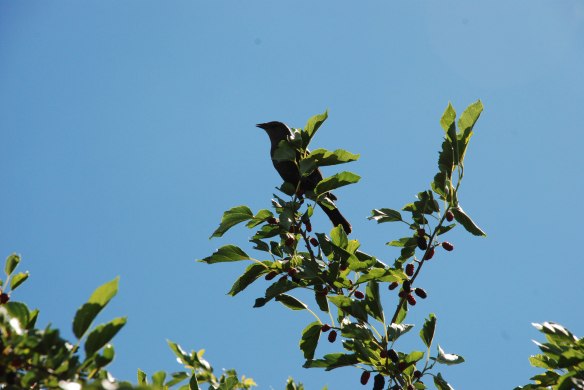 However, our blackbirds do quite well on the mulberry tree that overhangs the ram pen and is loaded with mulberries right now.
 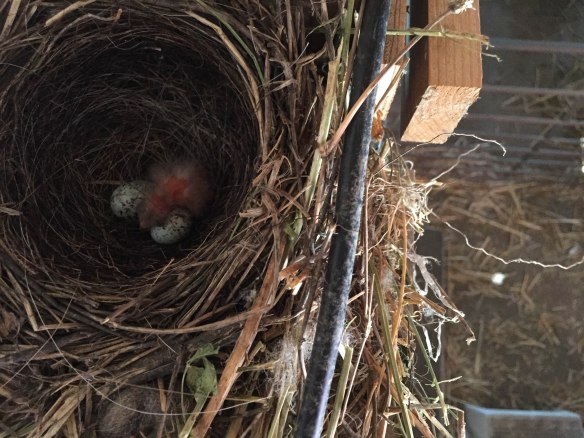 This bird hatched on April 30. Anytime we walk in the barn, the parents harass us relentlessly.
 This photo was taken two days later on May 2.
 May 6.
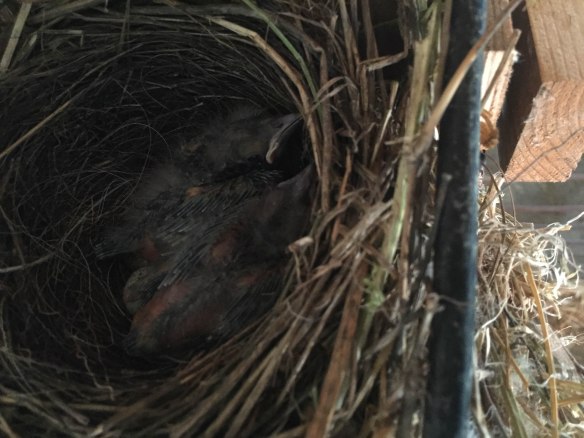 May 8. They grow quickly.
 This is May 9. The first baby is 9 days old.
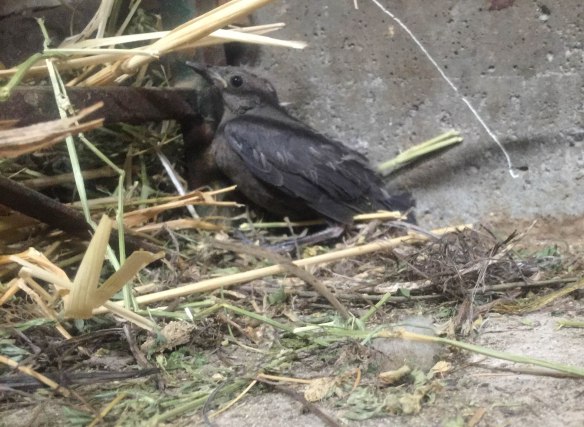 May 12. Out of the nest. There is a day or two when I find babies out of the nest. The parents are frantic. Maggie needs to be restrained because she is truly a varmint dog. She things that anything small and alive is fair game for her.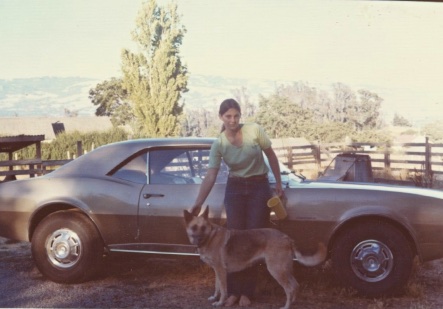


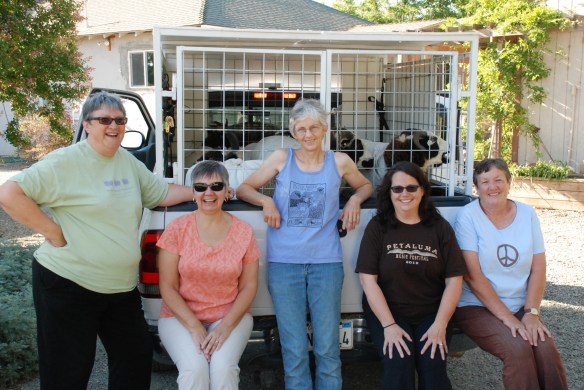 We took another trip in 2013 and again in 2015. I still have this truck.
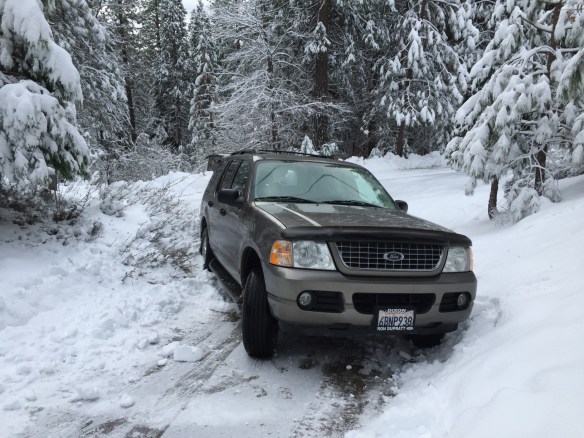 …although last Christmas the Explorer wasn’t adequate to get up the driveway. (That could have been because, knowing we were going to sell it, we hadn’t got new tires.)
 Found it. I needed to get it on
 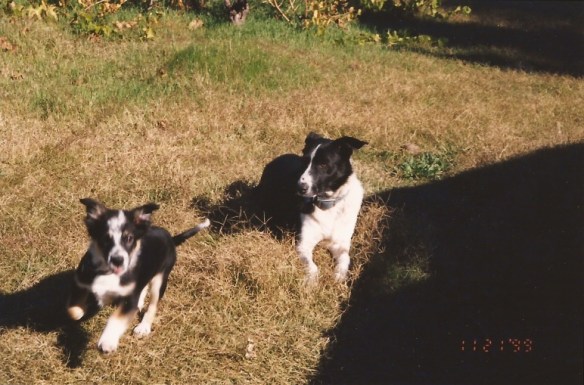 1999. Flash, my first Border Collie, who helped with dairy cows, and Benny who we got as a puppy when we first moved to our current location.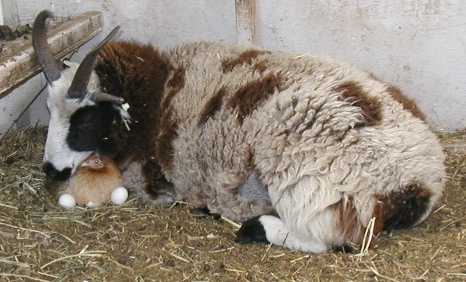

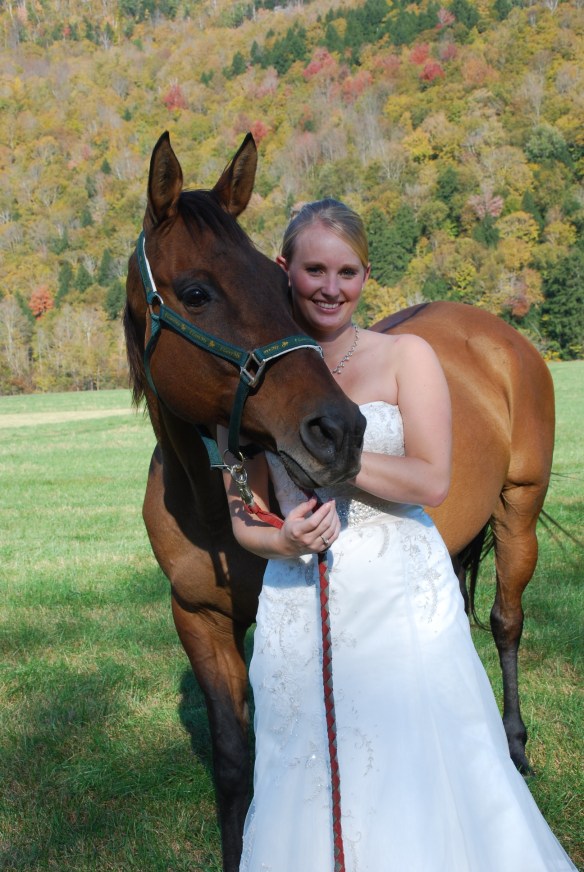 A gorgeous wedding day in Vermont.
 Amaryllis.
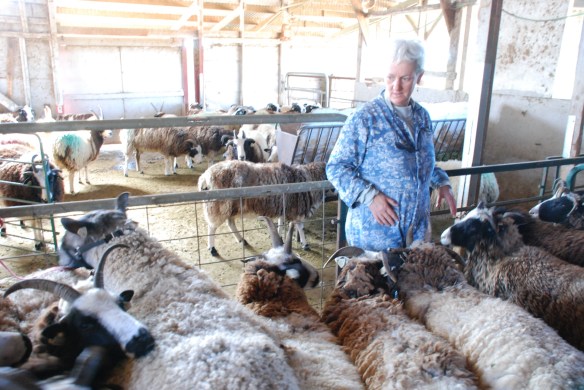 A line-up of the girls plus Faulkner, the BFL ram.
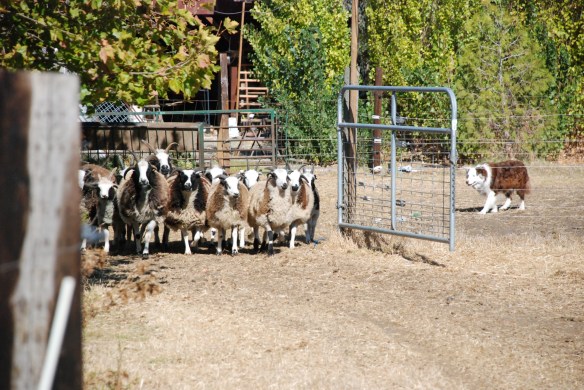 Rusty moving sheep.
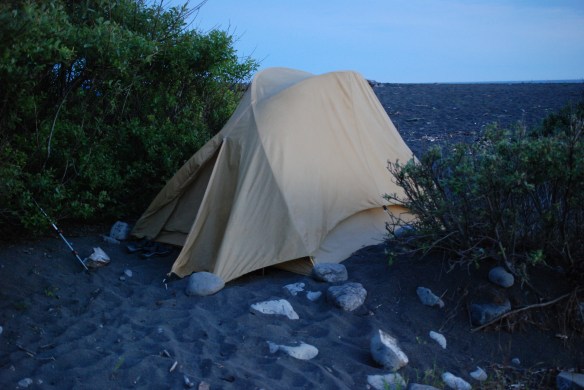 My tent when backpacking on the Lost Coast a few years ago.
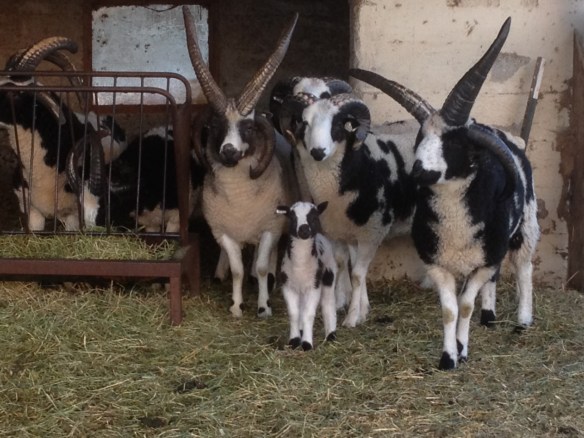 Taken 4 years ago. Look who got in with the big boys!
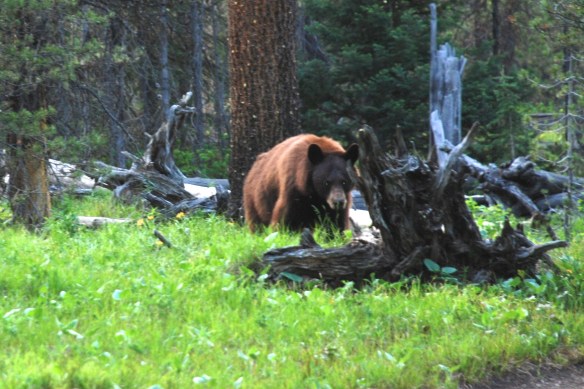 Speaking of big boys, this is a bear that Dan and came across when hiking in Grand Tetons National Park. She has a cub nearby and didn’t back down. Black bear or grizzly? We were never sure. We assumed it was a black bear but some people who saw they photo said grizzly.
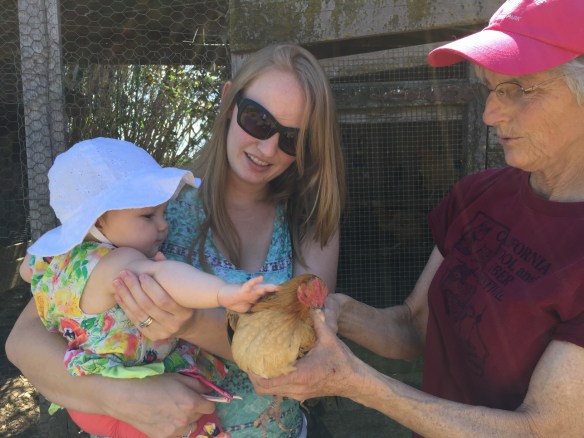 My granddaughter taken about a year ago. That’s the “little chicken”. Could that be the same one as in that photo with the sheep?
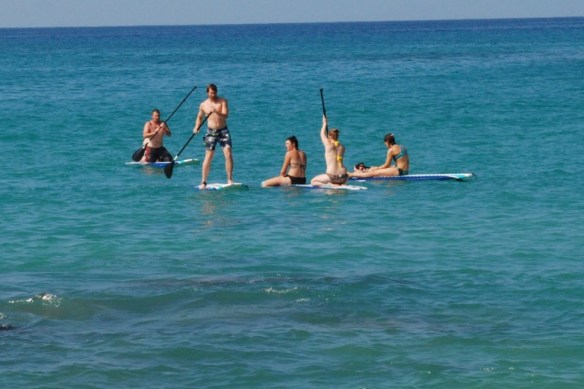 I took this photo in December when we were with all my kids and their spouses in Hawaii.
 …and was inspired to change to my 40 mm micro lens. Then I walked around looking at things through that lens. Some are tiny and some not so tiny, depending on the view.
 Grapes just forming.
 The rope part of Ginny’s Toy.
 Dried up “cone” from sheoak tree.
 That “cone” on the tree.
 Can you guess this one? Answer below the next photo.
 This is the new growth on the redwood tree. That photo above is the joint in a ram skull.
 Rose.
Rose. This bottlebrush is covered with flowers this year.
 This is what is left from last year’s flowers.
 Chain.
 I took the camera Across the Road too. This is a blackberry flower.
 Hoverfly on a blackberry leaf.
 Grass flowering.
 Buckeye flowers.
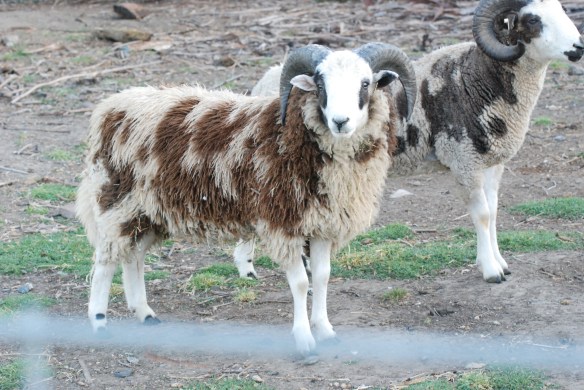 This is the 9 month old ram. He needs a name.
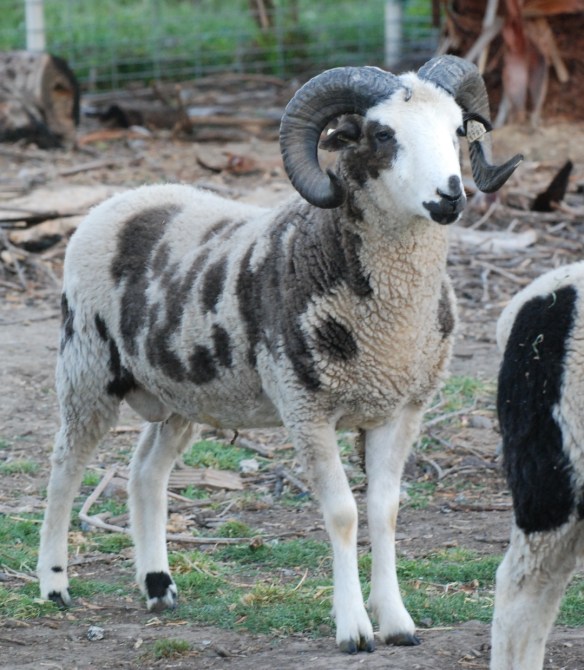 This is Meridian Nash. These rams have the same sire so I don’t need both. I think this one will be for sale.
 Puddleduck Ringo is also for sale. I have used him for two seasons and he needs to move on.
 Meridian Rotor.
  Isn’t this a beautiful stylish ewe lamb? She was born a month before everyone else because the ram lambs weren’t weaned soon enough. Too bad I don’t know her sire. Her very cute baby pictures with her brother are in
 Lamb in early morning light. Meridian Vanessa x Meridian Rotor.
 BFL-cross lamb. Love those BFL faces.
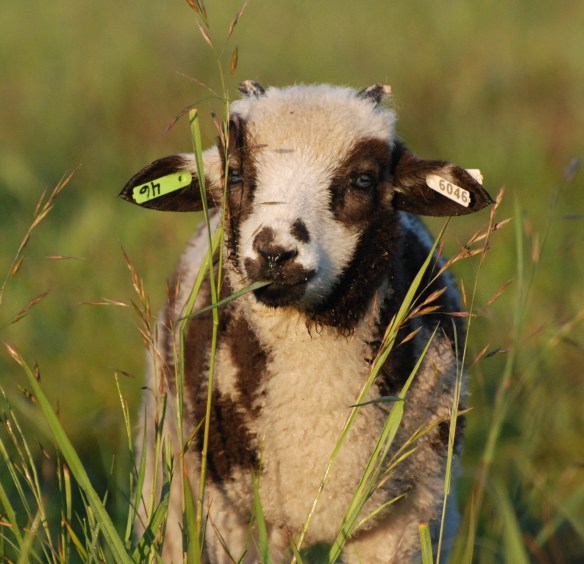 I’m keeping this lilac lamb. Mud Ranch’s Foxglove x Meridian Nash.
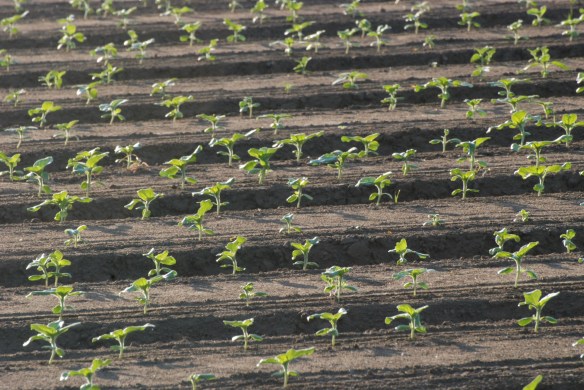 Not sheep, but the sunflowers Across the Road.
 Ginseng and BFL-X lambs.
 Fandango with lambs.
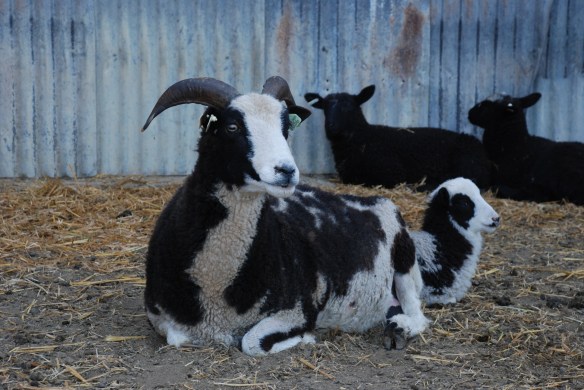 Hot Lips and lamb.
 Alexandria and her lambs.
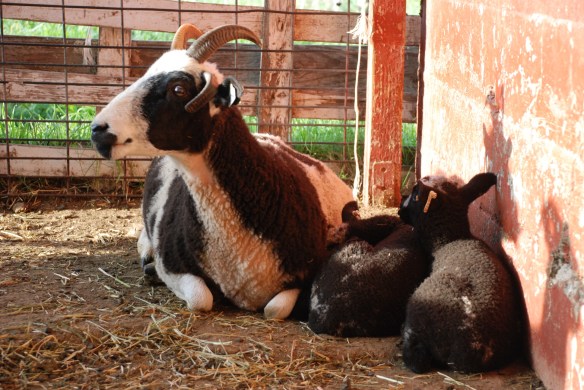 Isabelle with lambs.
 Melinda and lambs.
 These were the last ones born this year.
 Amaryllis.
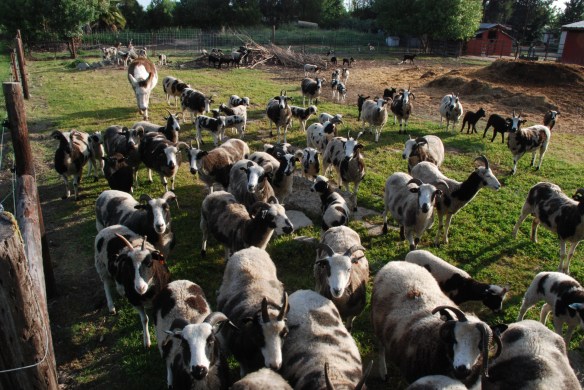 Sheep looking hopeful as I climb back over the gate.
 This is the ditch that runs north-south and brings the water from the upper ditch to the one that goes from west to east along the bigger pasture.
 This photo is looking the same direction but from a little bit west of the first one. You can see the same row of overgrown blackberries along the fence. The standpipe where the water comes in is in the upper left corner. In the lower center of the photo is one of the cut-outs that lets the water flow from the ditch into the field.
 Looking to the east as the water is flooding the pasture from north to south. In this photo the water hasn’t gotten very far into the paddock where the sheep are.
 Here is that tarp I showed in the last post.
 There are things to see besides just water and grass. One of the first things I noticed after the water filled the ditch was buzzing. These insects were everywhere over the water. I tried to ID it on the internet but didn’t find it. Anyone know what this is?
  This is one of the pair of Swainson’s hawks that lives nearby and hunts in our pasture.
 We have enough gophers to feed an army of hawks.

