I keep talking about seasons and everyone has their seasons that are important in their lives. Lambing Season for me may be Tax Season for someone else. Some of these seasons overlap. Last year Fly Season began to overlap with Lambing Season. It’s not fun to see lambs born and have flies everywhere. (I could comment on Global Warming here…). Fortunately Fly Season has held off. It is now Irrigation Season.
I live on the western edge of the Central Valley. We are supposed to have wet winters and dry summers. Here are some facts gleaned from the USGS website.
“The Central Valley, also known as the Great Valley of California, covers about 20,000 square miles and is one of the more notable structural depressions in the world…
Approximately 75% of the irrigated land in California and 17% of the Nation’s irrigated land is in the Central Valley.
Using fewer than 1% of U.S. farmland, the Central Valley supplies 8% of U.S. agricultural output (by value) and produces 1/4 of the Nation’s food, including 40% of the Nation’s fruits, nuts, and other table foods.”
Irrigation is the only way that we have green plants in the summer and fall. So Irrigation Season is important, but irrigating isn’t as simple or as easy as just turning on a faucet. Here was my irrigation prep this week. This was taken from standing in the northwest corner of the property and looking west. When SID (Solano Irrigation District) opens the right gate the water comes down that canal, through a gate in the cement structure at the bottom of the photo and…
 …comes up through this standpipe. It goes out that hole on the left and…
 into this ditch. At the end of the ditch it turns south and goes into the other part of the pasture. Later in the year this ditch will require weed-wacking for the whole length to allow the water to flow. This time I didn’t need to do that.
 This part of the ditch has old pipes that take the water under the burm. I can find two of the three that used to be functional.
 The first job is to dig out around both ends of these.
 As I walk through the pasture I find thistles that need to be chopped.
 The rest of the pasture doesn’t have those pipes, but instead has cut-outs or places where the burm is cut away to allow the water to flow from the ditch into the pasture. I didn’t get photos of those. This photo is a cut-out (under the fence) that I had to fill in because it was where we had cut through the burm to allow water flow INTO the ditch in the winter to help drain the rainwater that was all around the barn.
  Here is the place at the northeast corner of the pasture where I have to put a tarp to keep the water backed up in the ditch. After this point the ditch turns south and drains at the southeast corner of the property.
 I can never remember what size tarp to get. I bought 2 sizes and took this photo to remind myself that this one is just fine.
 The idea is to set the tarp so that the edges are buried in dirt and those boards behind will keep the water from pushing the tarp down flat. I did this twice.
  The first time the dirt that holds the tarp down on the bottom was too high. That means when I released the tarp at the end of irrigating there would still be a dam. I have a hard enough time getting the ditch to empty that I don’t need to impede it more.
 This is a second tarp that I set just around the corner in the ditch that goes south. I shouldn’t have to do this, but due to gopher holes, tree roots, and maybe my lack of irrigator skills it seems that one is never enough. Two tarps hold the water back better. Or at least one is a back-up for the other.
 While I was working in the pasture I saw that a couple of lambs had their heads through the electric net fence and didn’t seem to care. That prompted a search for the problem with the electric fence. I found a broken wire at the south end. I got new wire and fixed it but then found several more places where I had joined new wire to old. The more times you do that the less conductivity there is. So I took out a long stretch of the old pieced-together wire and replaced it. Low and behold, my tester showed higher strength than it has in years!
 One thing leads to another. While I was at that end of the pasture I was bothered again by the old dallisgrass that effectively mulches my pasture. It’s one thing to mulch a garden to keep weeds from growing, but mulching a pasture is counter-productive. If you search dallisgrass in this blog you’ll find many attempts to deal with this. This time I was simply knocking it off the electric wire that is about a foot and a half up on inside this fenceline. It broke and pulled away so easily at this time (this is last year’s dry grass) that I started pulling it away by the armfuls. I didn’t have any tools or even gloves, but threw mounds of it over the fence–hey, I’ll mulch the outside of the fence and maybe keep the growth down there. That felt somewhat productive although it may not be useful at all. But at least I could see a difference in the before and after.
More about irrigation in Part 2.
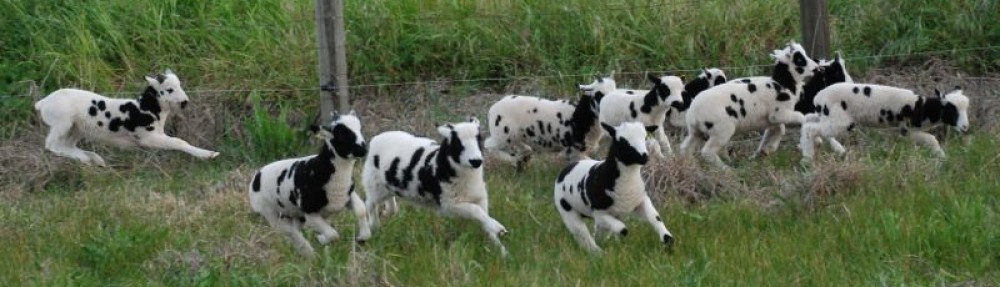
 Ginseng and BFL-X lambs.
 Fandango with lambs.
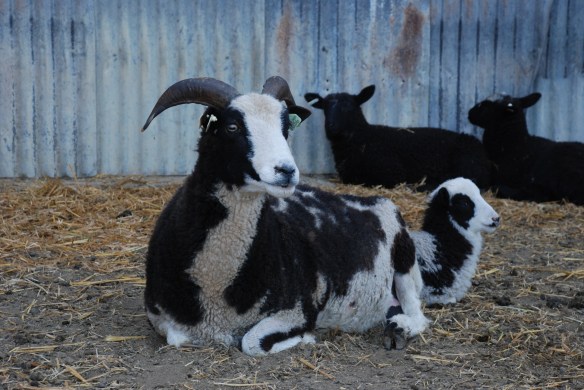 Hot Lips and lamb.
 Alexandria and her lambs.
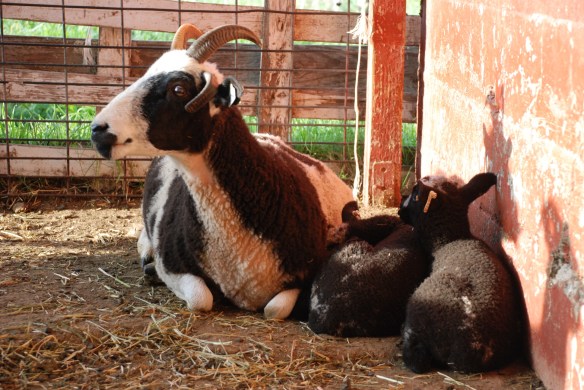 Isabelle with lambs.
 Melinda and lambs.
 These were the last ones born this year.
 Amaryllis.
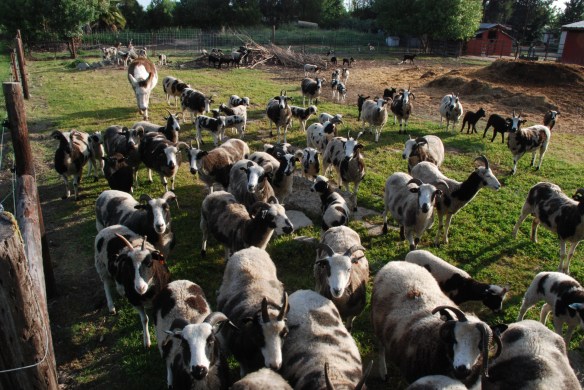 Sheep looking hopeful as I climb back over the gate.
 We caught all the lambs to check for number of horns and split eyelids (a trait that is sometimes seen in 4-horn lambs).
  This was also a good time to check the paperwork and make sure that I had recorded the gender and sires correctly.
 My neighbor who recently purchased sheep was here also to get some hands-on experience. He told me that a recently purchased goat had kidded that morning and he wasn’t sure the kid had nursed.
 I went to his place at lunchtime to check on the kid and while he held the doe (very skittish) I got the kid nursing.
 Back at our place, we finished moving sheep around. I moved “Ginny’s flock” of wethers and she was so hot when she was finished that she found the only accessible mud puddle to sit in.
 Last in the afternoon we decided to try grafting a lamb onto a ewe whose lamb had been killed the day before. I had debated it that day and at the time didn’t want to deal with it. But I had some new twins and though it was worth a try. This method of grafting is not as pleasant or as satisfying as “slime” grafting where you just cover the adopted baby in the birth fluids so that the mom will think the lamb is hers. With this method there is a dead lamb and you need to use it’s skin to cover the adoptive lamb to trick the mom into thinking it’s hers. That photo above is the lamb in the skin before I cut it to fit better. Bea, the young ewe, was unsure. The scent of her lamb was there but the sound wasn’t right. The lamb didn’t want to nurse at first and when it did Bea wasn’t happy about it.
 This photo is blurry because I must have smeared my iPhone lens while working with the lamb. When Bea finally lay down while trying to avoid me attaching the lamb to her teat I was able to get the lamb to nurse on the engorged udder. For a day or two I needed to halter her or just stand there.
 At this point Bea has completely claimed the lamb as her own. (The dead lamb’s skin is gone in this photo–I took it off the next morning.)
 We were impatiently waiting for Jazz to lamb. I was sure that she would have triplets because she was so huge. She surprised me with twins the day after Farm Day. They are 9.6 and 12 pounds. At that size it’s good there were only two of them.
 Lana had a very pretty lilac ewe lamb. Eventually, after it seemed things were taking a long time, I checked and found another lamb, pulled it, and spent about twenty minutes trying to make it live. I don’t know if it was doomed from the start or aspirated fluid during birth, but it could never get a good enough breath and it died.
  In the meantime Raquel was in labor. I have been in touch with some students at the UC Davis vet school who are interested in coming out for some hands-on practice. It’s been difficult to coordinate their schedules with sheep lambing, but they were able to come out then for a couple of hours. Unfortunately Raquel didn’t lamb while they were here but they did do some ear tagging, tail banding…
 …and they listened to the normal and the not-as-healthy lungs of these twins, one of whom has been getting penicillin because he almost died from pneumonia following a difficult birth (in
  We finally got the ewes with the first lambs out on the pasture. Can you tell where all the mom’s food is going now?
 After getting the ewe through the end of pregnancy and then lambing in good health, the next challenge is keeping an eye on the udder health. As the milk is coming in (the lesser amount of colostrum giving way to a greater quantity of milk) the udder may become engorged. If there is tenderness and the ewe doesn’t let the lambs nurse on one side it becomes a vicious cycle. Sore udder and teat…no nursing…more milk backing up…udder more full and sore. This can eventually lead to mastitis which, if not treated, can ultimately kill the ewe or at least ruin her udder.
 Walking back to the house I noticed Mae standing like this. “Lameness” in a ewe who in nursing lambs may have nothing to do with the feet at all, but be because her udder is full and painful.
 I went out to get her and bring her to the barn. I am amused by her response to me approaching.
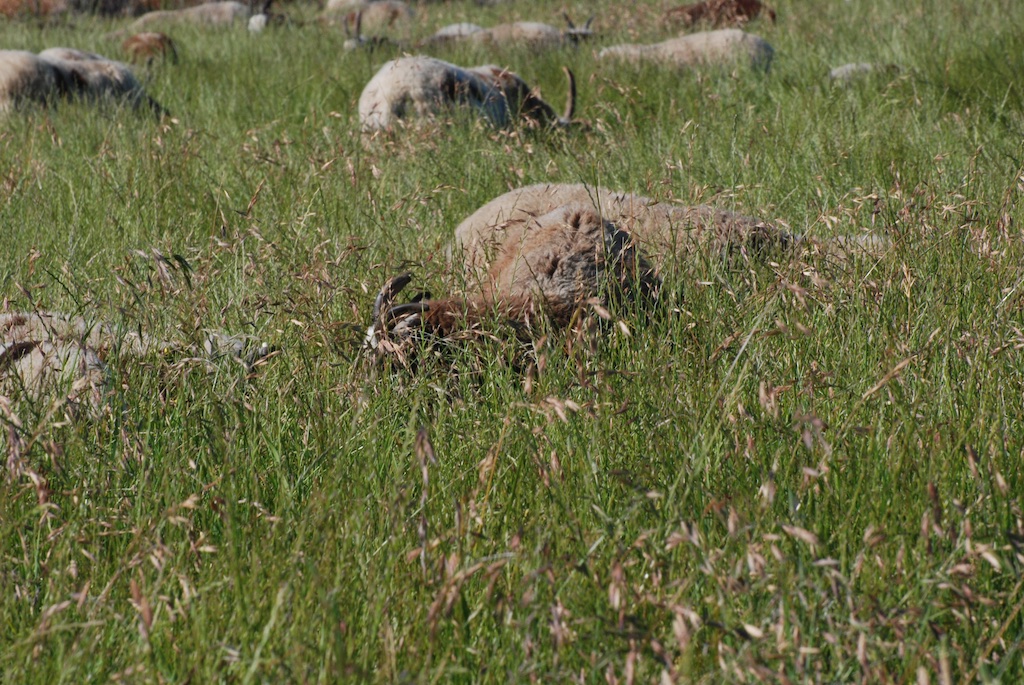
 This is why. Her lambs are hidden in the grass.
 This is how Mae looked walking back to the barn.
 This is from the front. I tied her to the fence and milked the one side, taking 7.5 ounces.
 Then it looked and felt balanced. I milked her again this morning. There was another ewe in a similar situation and I had to milk her a couple of times. I have to remember to be watching for that over the next few weeks as these ewes lamb.
 We set up the creep for the lambs. They can get through the narrow slots on that panel. The ewes aren’t always happy that their babies can go somewhere that they can’t follow.
 These are BFL-X lambs born the night before.
 The last lambing of the day was Raquel. After the vet students had left and I had finished working outside I finally went to the house. I went back to the barn to check and these lambs had been born. It wasn’t until later at the last check around midnight that I realized that Raquel didn’t want one of them. But that is another story.
 Mae from the front.
 Mae from the rear.
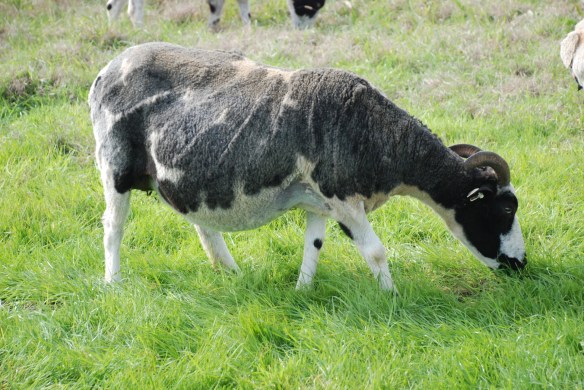 Shelby from the side.
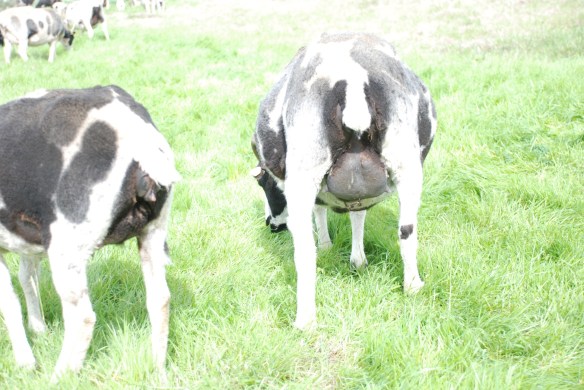 Shelby from the rear.
 Esmerelda, front.
 Esmerelda, rear.
 Athena from the front.
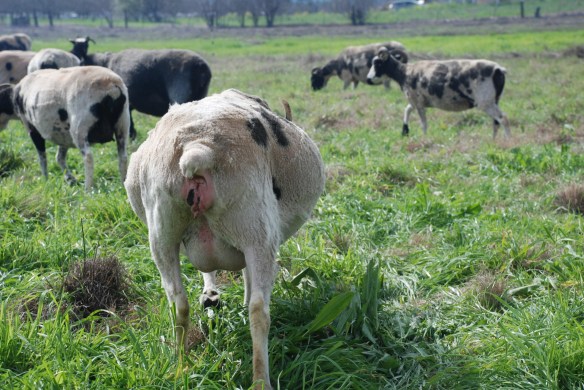 Athena from the rear.
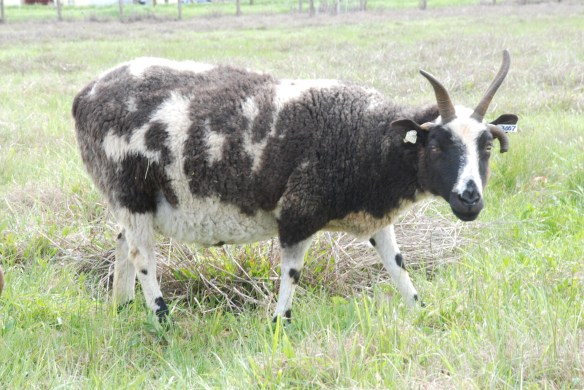 Marilyn is due 2/26.
 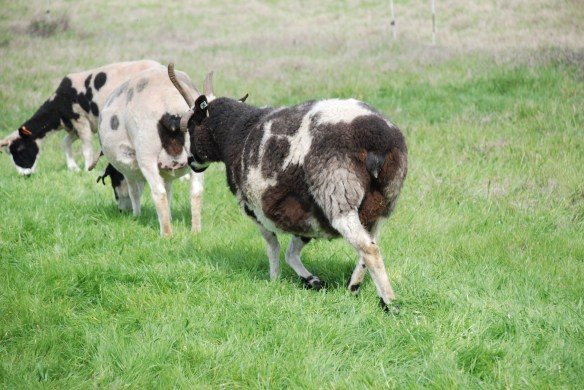 Here she is from the rear. She was shorn in November. I sure like the recently shorn views better for this.
 Noel is due 2/27.
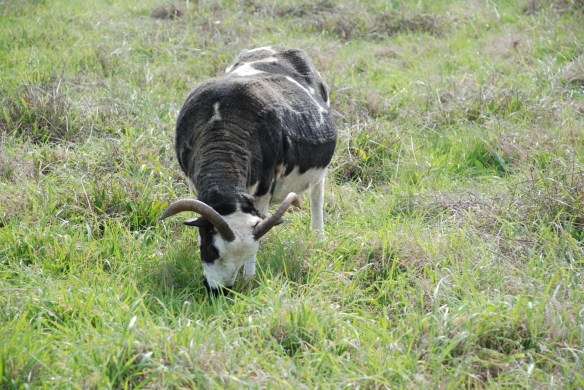 Fran is due 2/28.
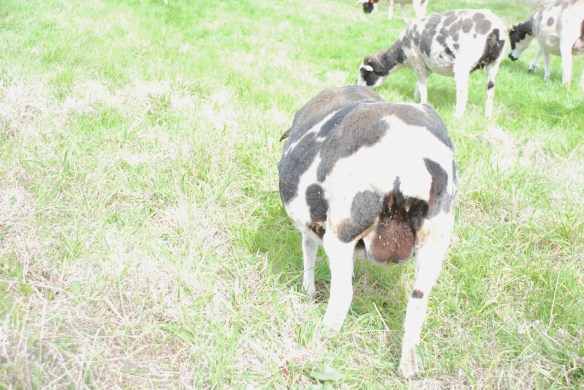 Fran from the rear.
 Spring isn’t due until March 5 but she always looks so big I thought I’d just give you a view.
 Who is this? Trick question. That is Delight who is nursing twins.
 And here is Dazzle with her single. You can sure see the difference in body condition of ewes that are nursing month old lambs.


 Gorgeous fleece.
 Why, it’s Jade! Who else? She’s the one in the Santa hat in the
  Sheep going out to pasture last week. I’ve closed the gate today. The grasses are dormant and need warm weather and more daylight to get growing well again…if they get water, that is. This grass is showing signs of drying out. I hope some of the rain that is predicted comes through.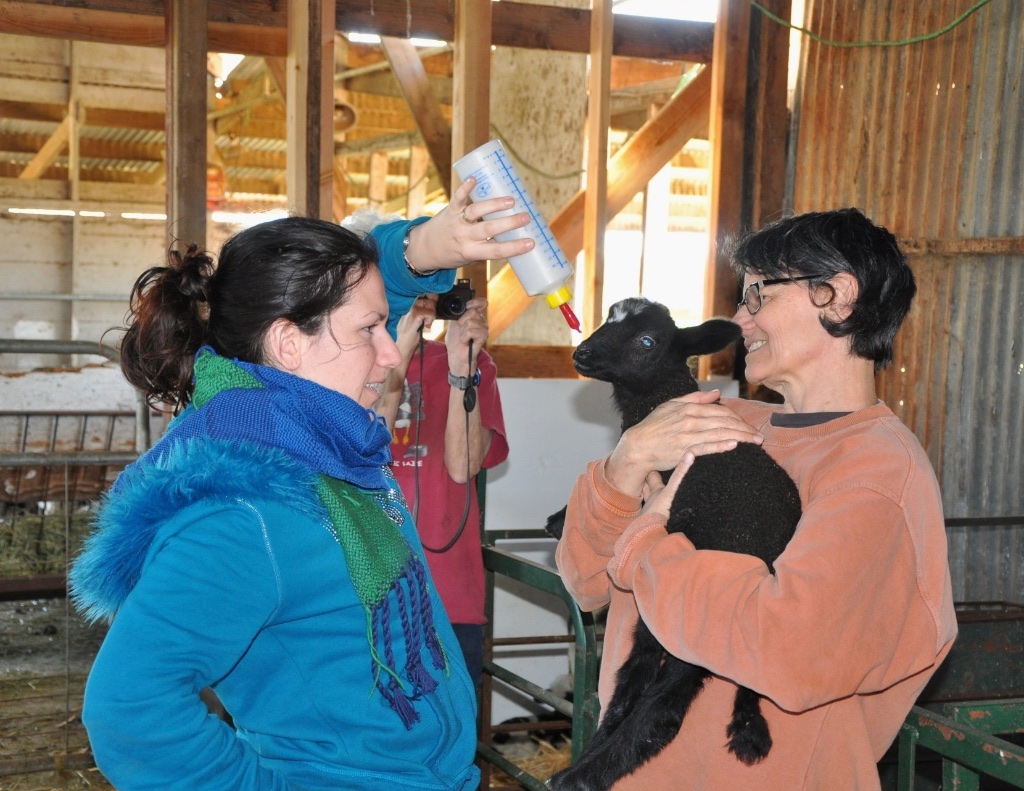
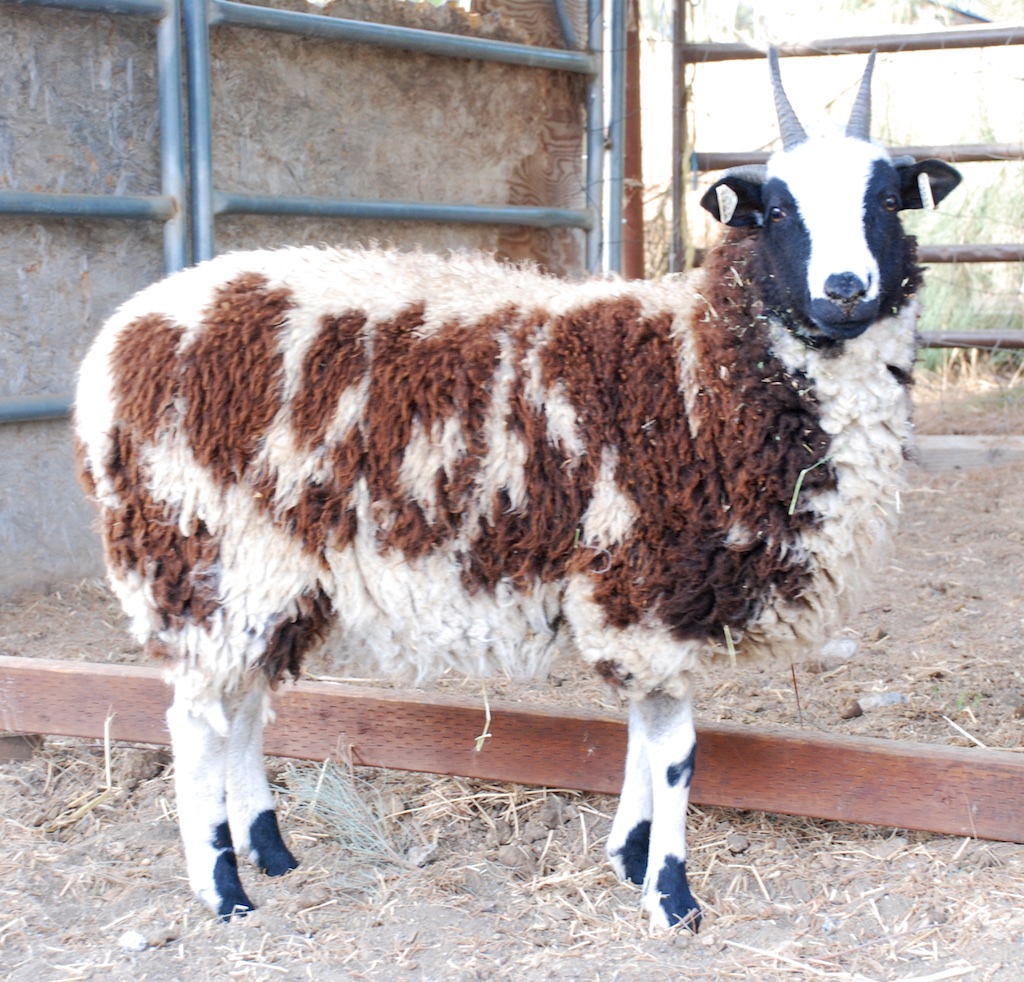
 Now they are back in the ram pen and best buddies. This is one of the photos I will send in for Nash’s registration.
 This is Rotor. Both are only 7 months old.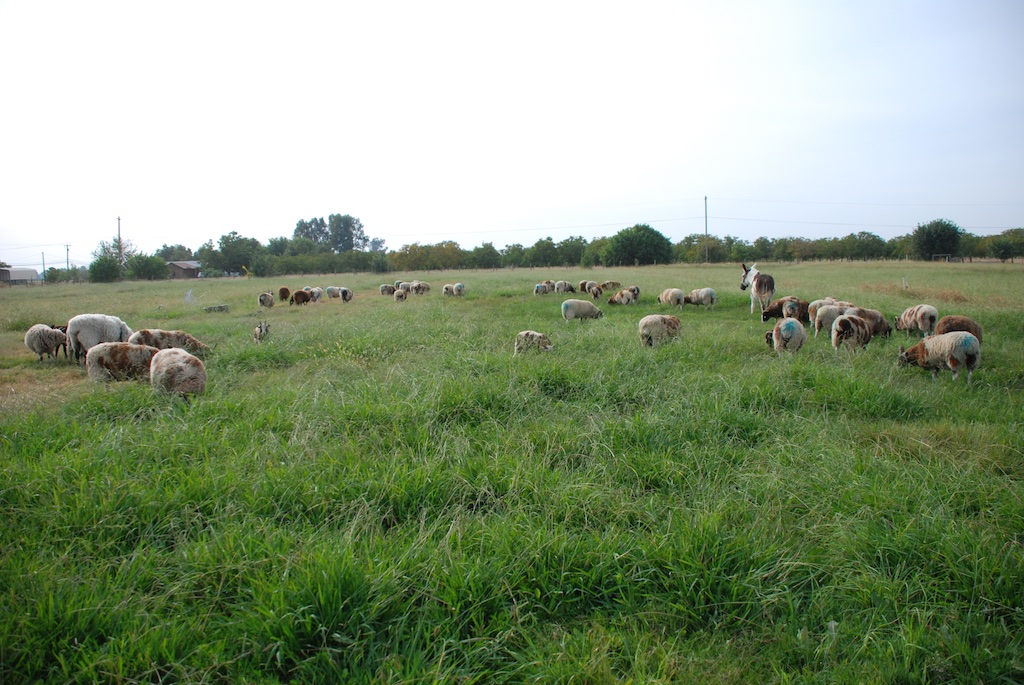
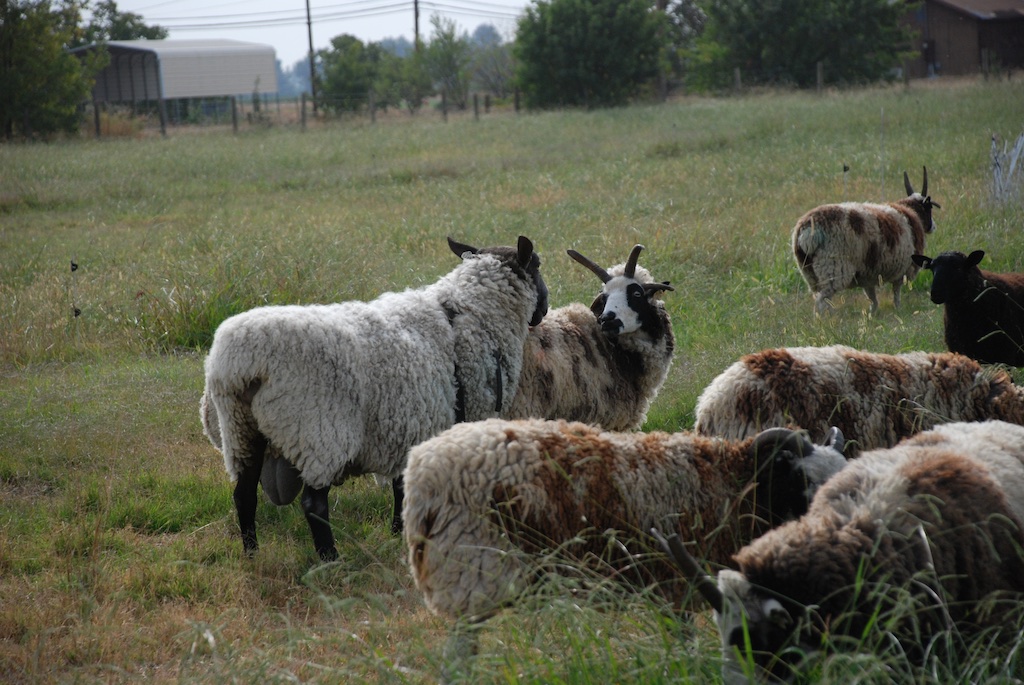

 Amaryllis following.
 Dallisgrass.


 Ginny in her watching the road spot. She likes to chase trucks from her side of the fence.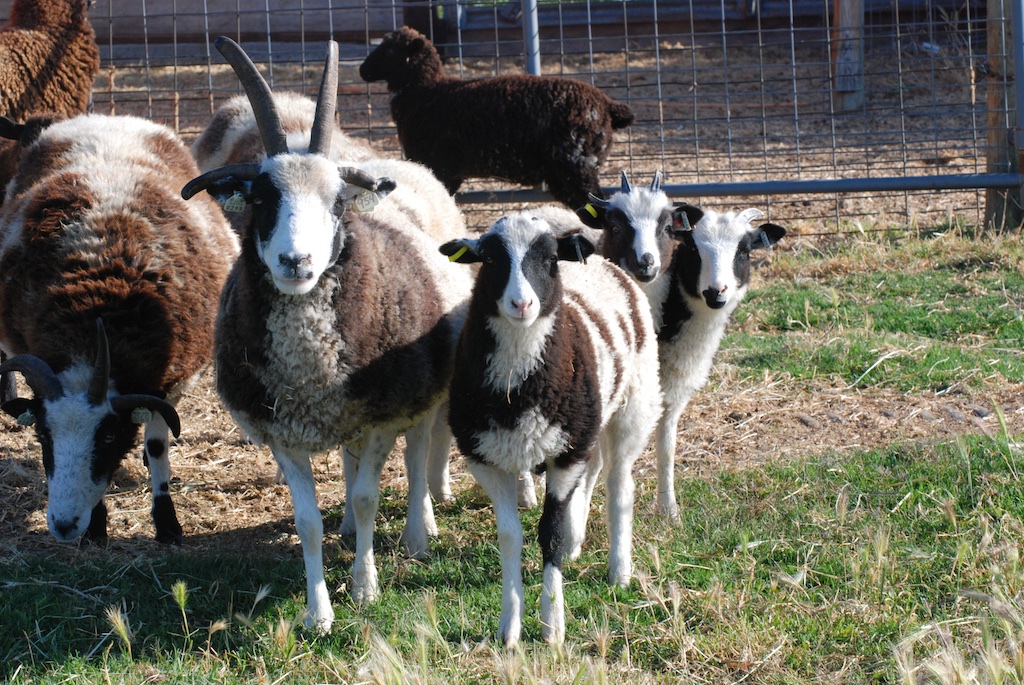
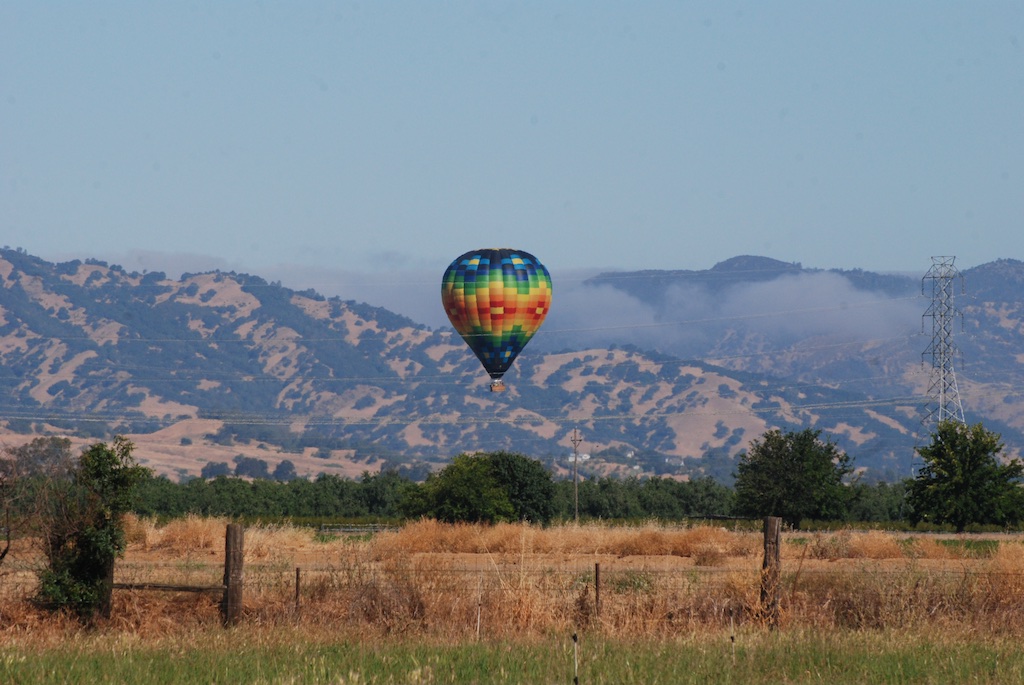
 I looked it up. Western Kingbird. I know my birder friends will tell me if I’m wrong.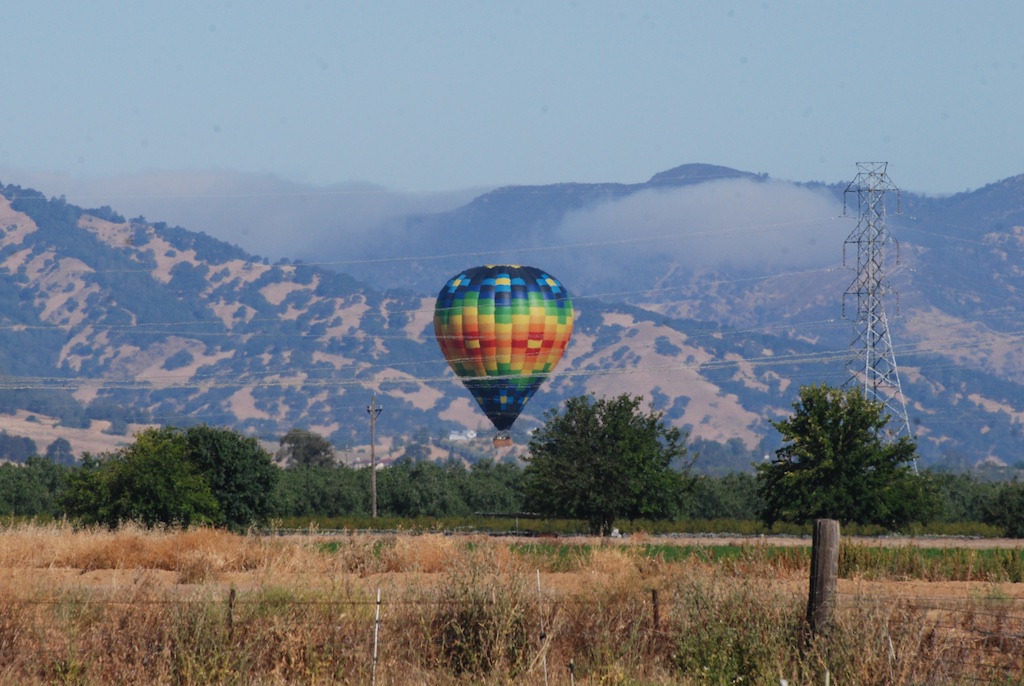
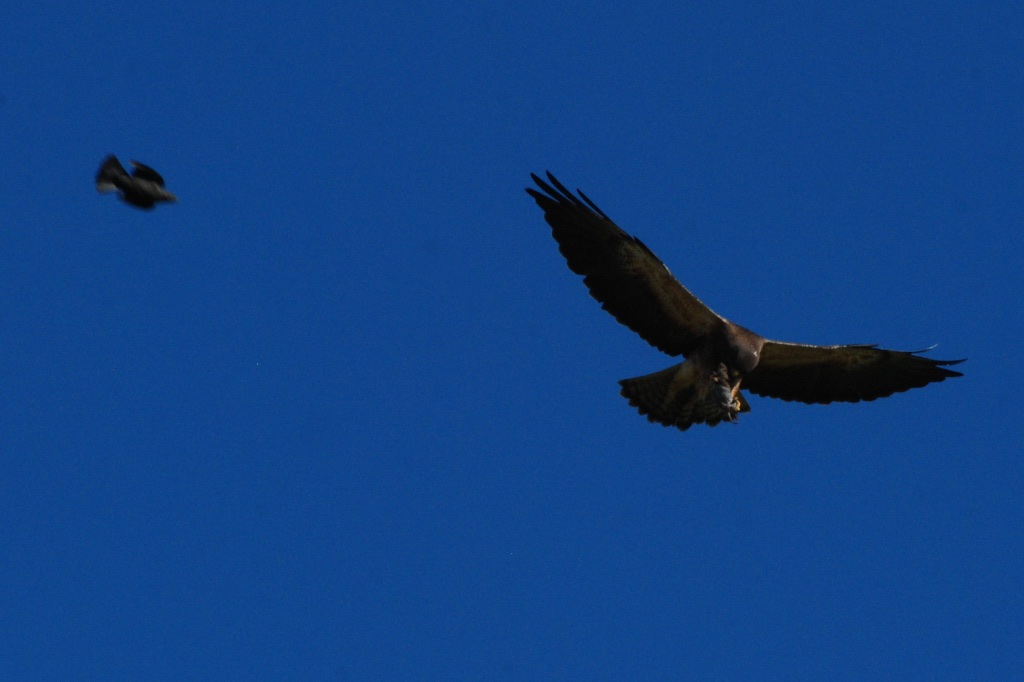
 …I saw this hawk being harassed by another bird.
 Meridian Jacobs' Blog