Grazing and Irrigation – 2 – April 21-22

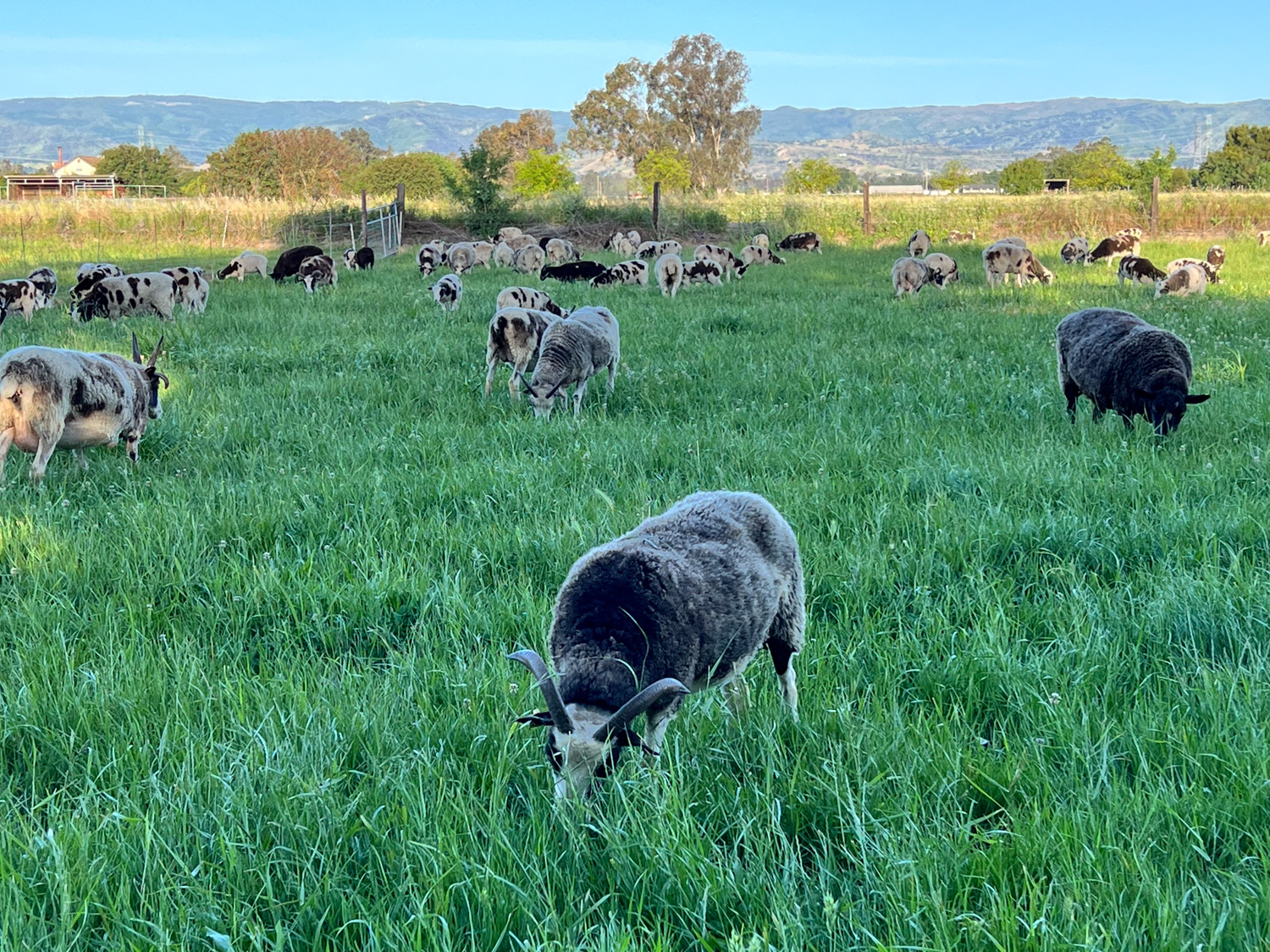
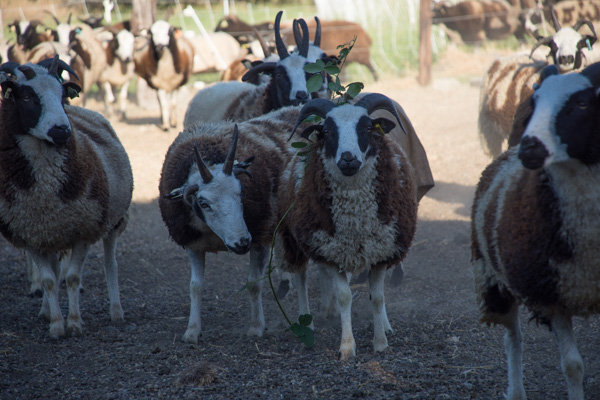
I showed the first photos of grazing the new pasture here. This is the second and third day, now a month ago.

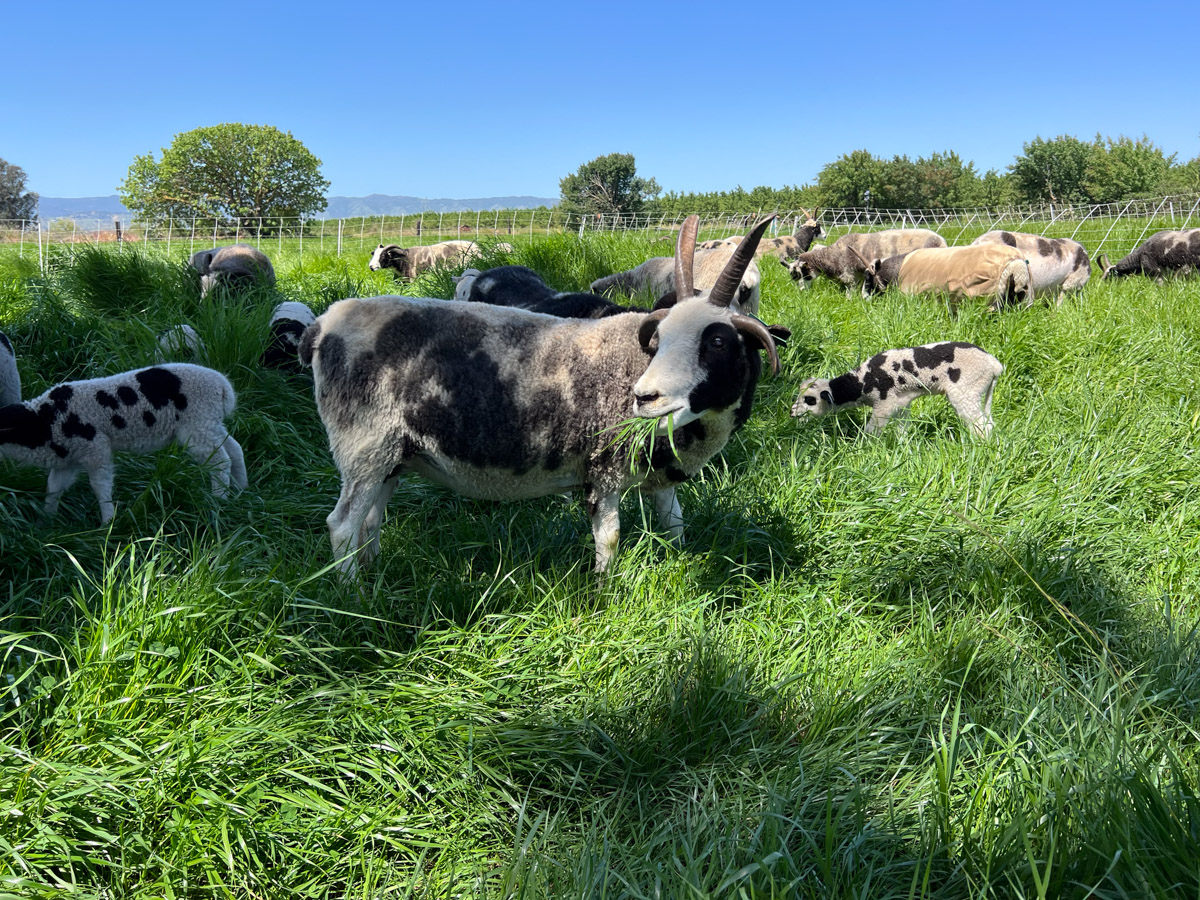
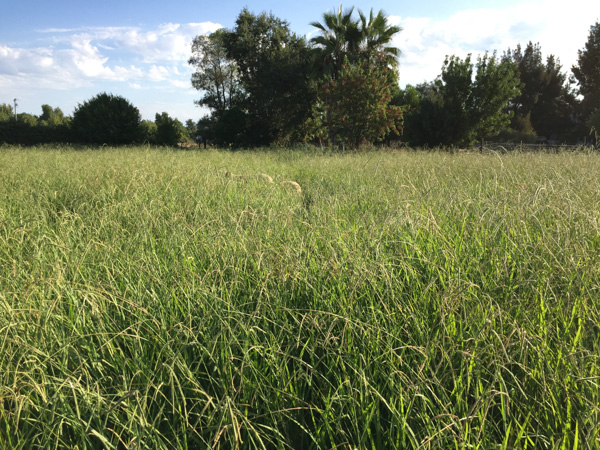
There is clover in this field but you can’t see it because the annual rye is so dense and tall.

There was certainly plenty of forage to eat, but a lot was also trampled.

The goal was to get the sheep to eat it as evenly as possible by fencing small areas.

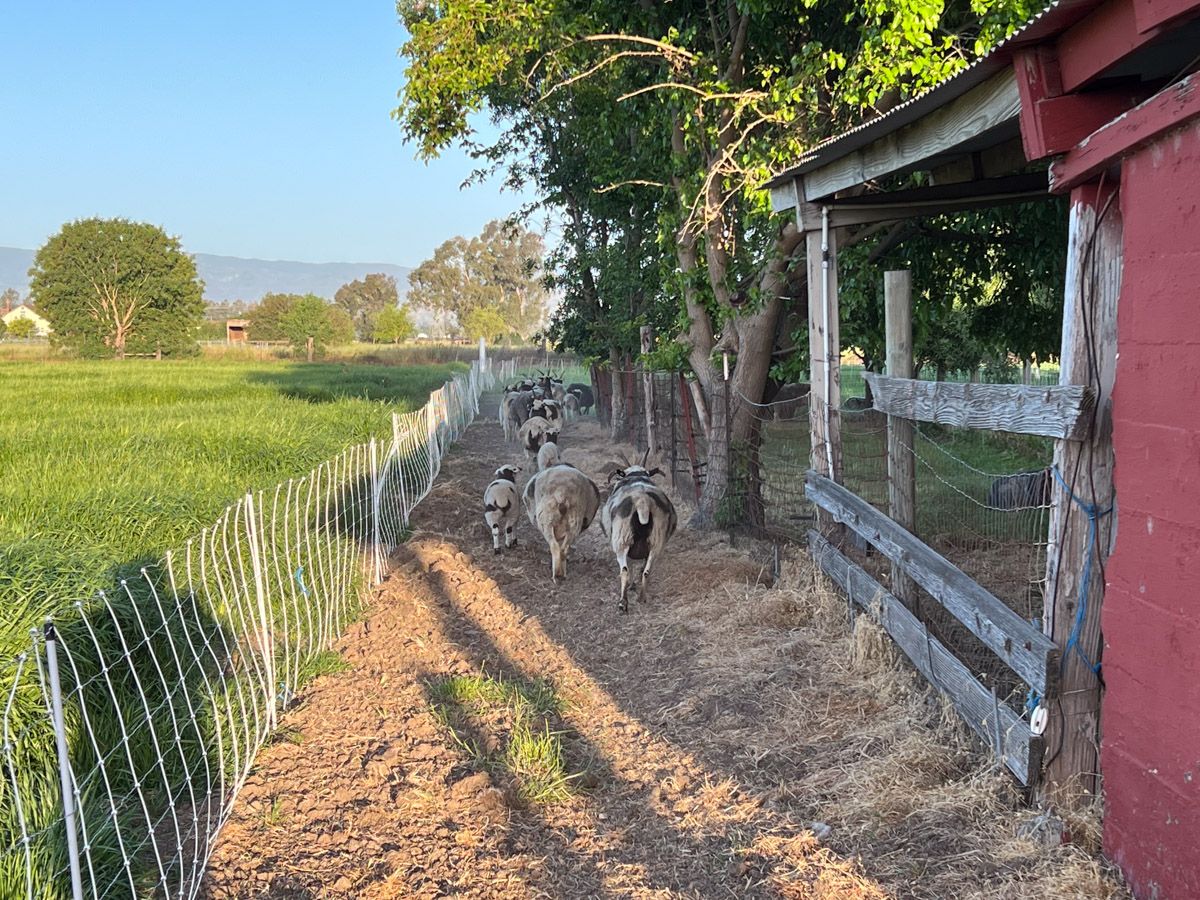
After being on the first small section we moved the fence so they would go to fresh grass.

They still have to trail back to the barn for water.

Another Busy Day at the Farm

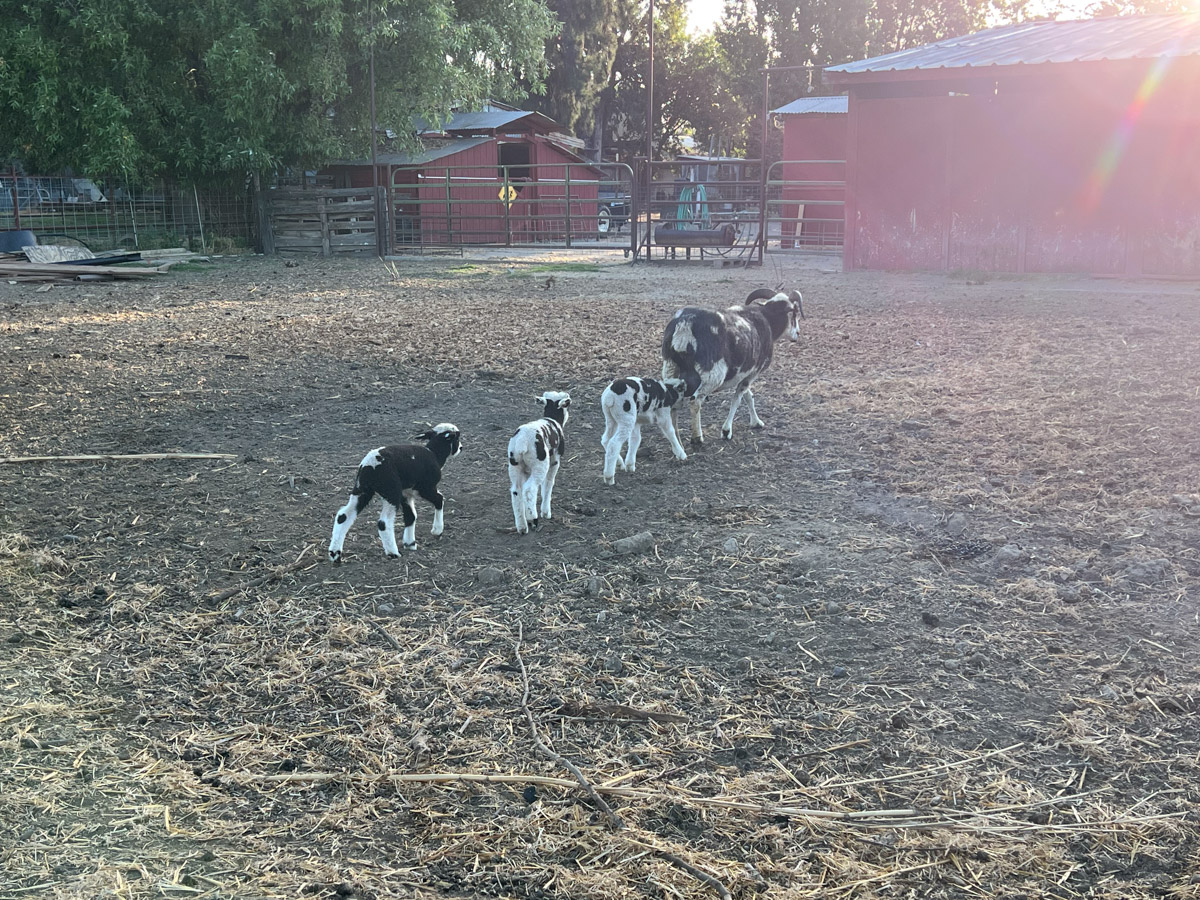
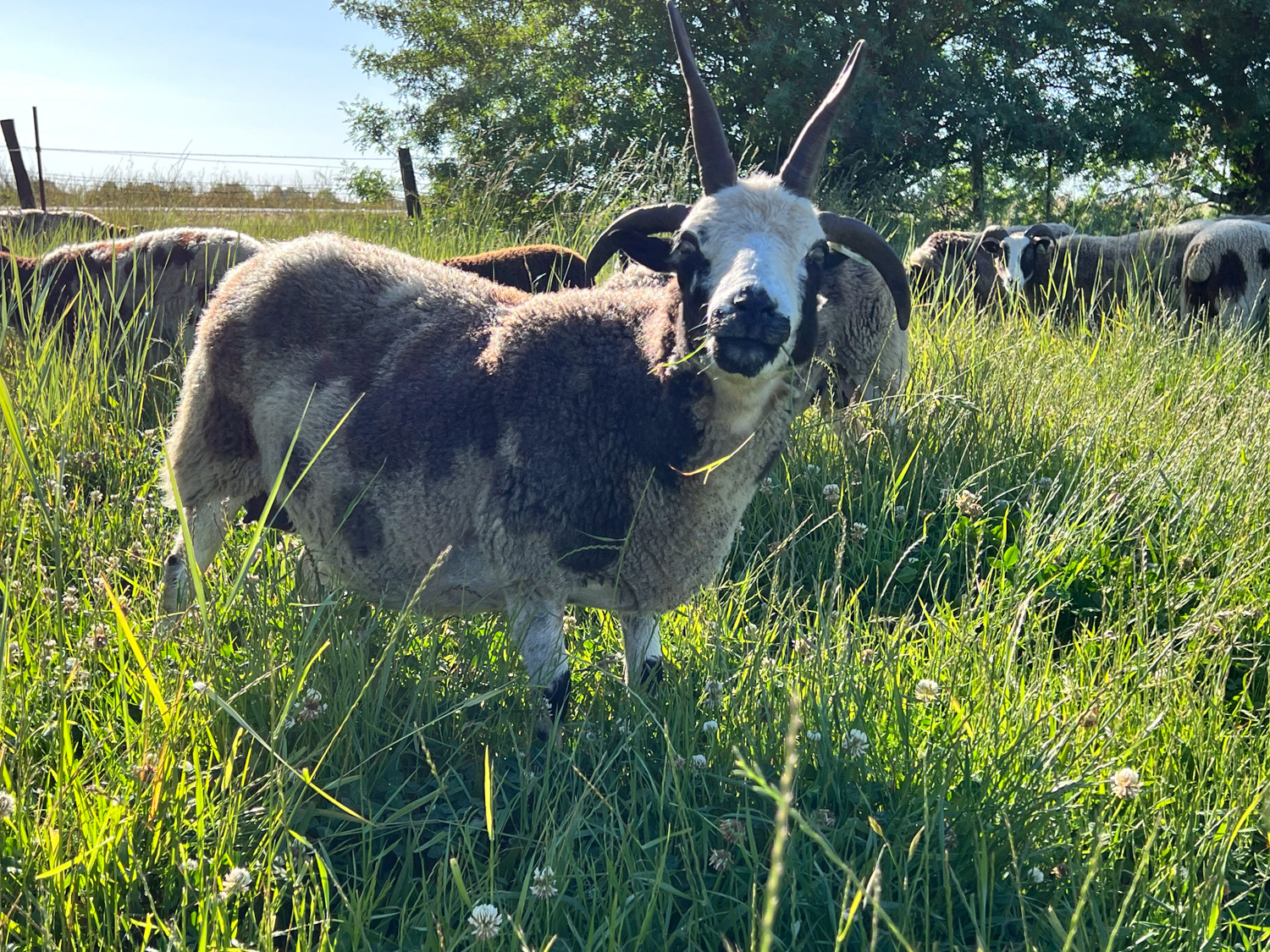
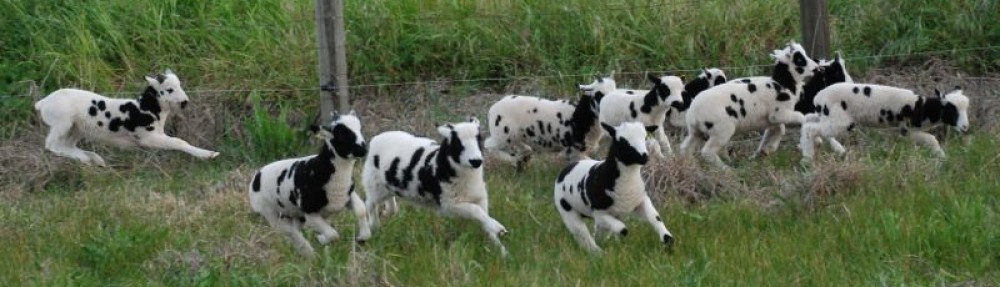
Yesterday was the first harvest day of the season. Some lambs are 4 months old now. The BFL cross lambs are bigger than the 100% Jacob lambs and some are ready for customers who like lighter lambs. I have a customer who likes the black lambs. I asked if he wanted both of these because they are twins. If they were 50:50 crosses they would both be black, but these are 3/4 Jacob. There are two 50:50 ewes here and when bred back to a Jacob you never know what you’ll get. One is black with very short horns and one is white with some Jacob markings and large horns.

While I was sorting and weighing sheep I heard Ginny barking at something at the other end of the barn. This is a fancy trap that I bought several years ago and sort of forgot about. It is a live trap where the animal drops in from the top. It was in the back of the barn on a woodpile. We caught a young opossum! The opossums aren’t a problem here. I took this one out to a brush pile and let it go out there.

After sorting all the sheep I let the rest out to the pasture. This is a view of the property from the south.

This yearling is KJ Royalty Cindy. KJ Royalty is the flock name of my granddaughter and her sheep are the progeny of the ewe lamb I gave her in 2019. Kirby will be here next month to work with the new lambs and show at State Fair. I’m glad that Cindy is getting more friendly.

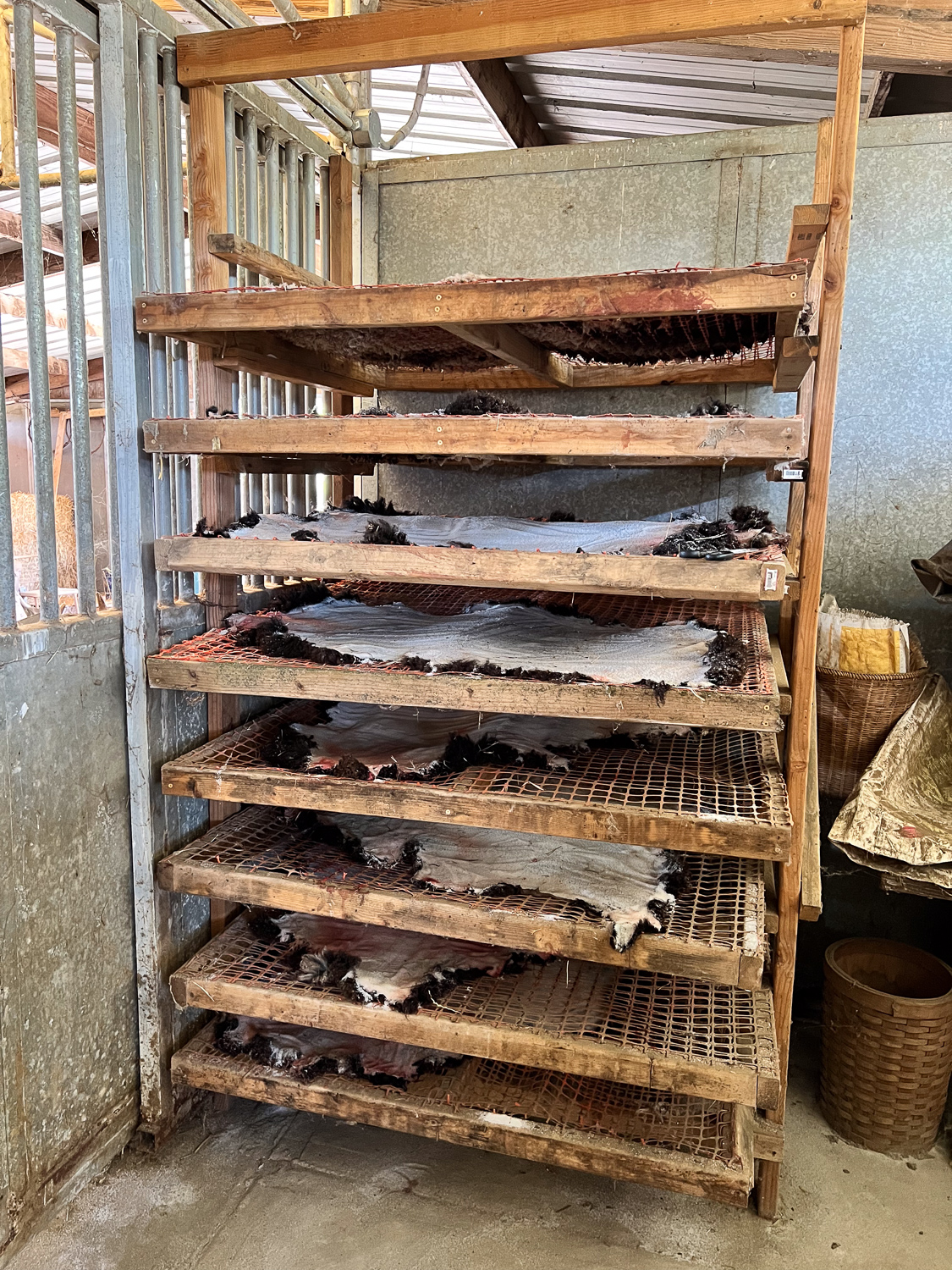
The person who harvests lambs is very fast and does a good job with the skins. I try to use all the parts of the sheep I can. I salted these hides and will ship them to a tannery when they are dry enough. The beautiful lambskins will be for sale when I get them back from the tannery–hopefully by early fall (but no guarantees). This page gives you an idea of what I will have for sale then, but these are all gone. I recently got back a dozen lambskins that were the first I sent off last year–a whole year ago. I haven’t had time to photograph and list them yet. Next week.

Harvest was over within two hours, but the rest of the day was busy with customers and computer stuff. Never ending computer deadlines. Late in the day we had a new kind of visitor.

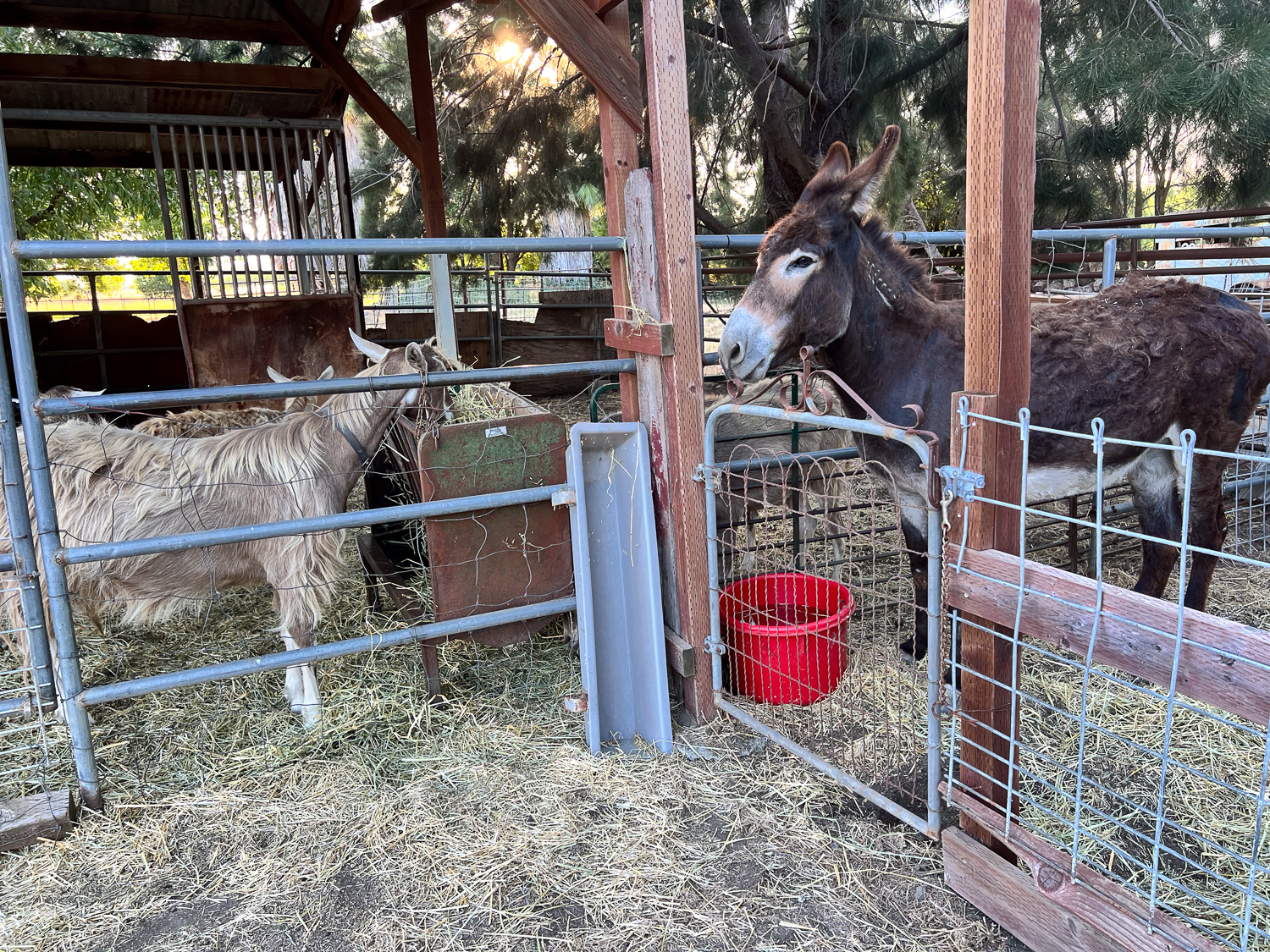
I am caring for these goats for a couple of weeks until their new property is ready for them. There are seven pet goats here and most of them originated from goats that my son Chris raised in his FFA project.

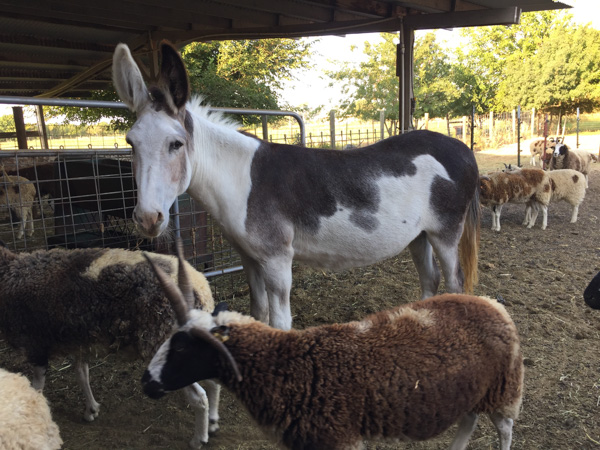
The goats came with a donkey! This makes me want a donkey again, but my irrigated pasture is not a good fit for a donkey. I can hear her braying right now even from the house!

Farm Views – Sheep and Hummingbirds

The title of this post implies a cool photo. Sorry. There are no photos of sheep and hummingbirds together. However I have some of each. This post was going to be about hummingbirds but then other photos caught my eye.

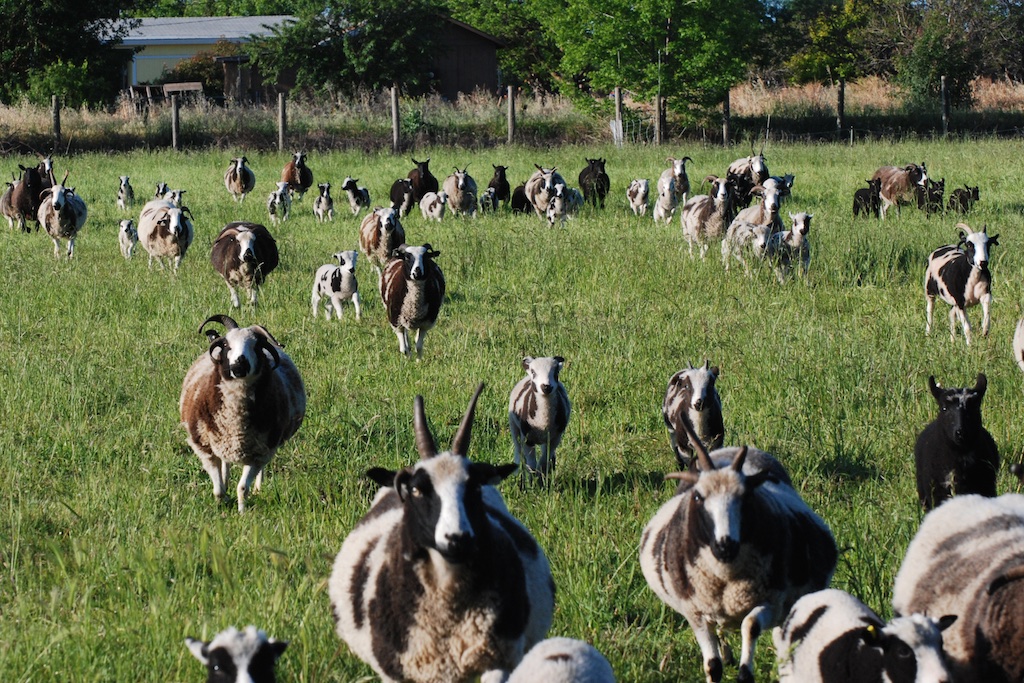
Sheep on fresh pasture.

This is Sweetgrass Eileen.

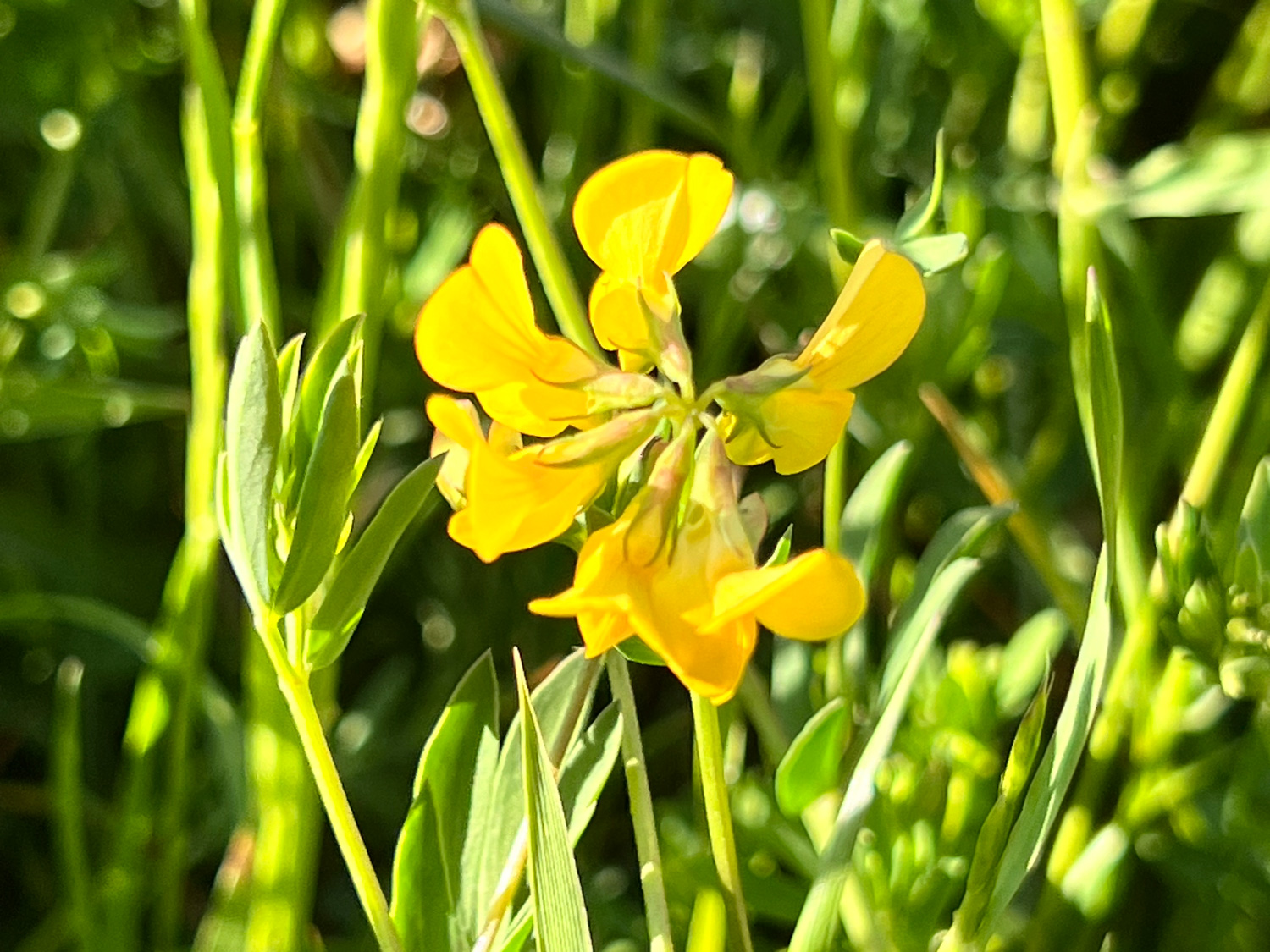
Birdsfoot trefoil flower.

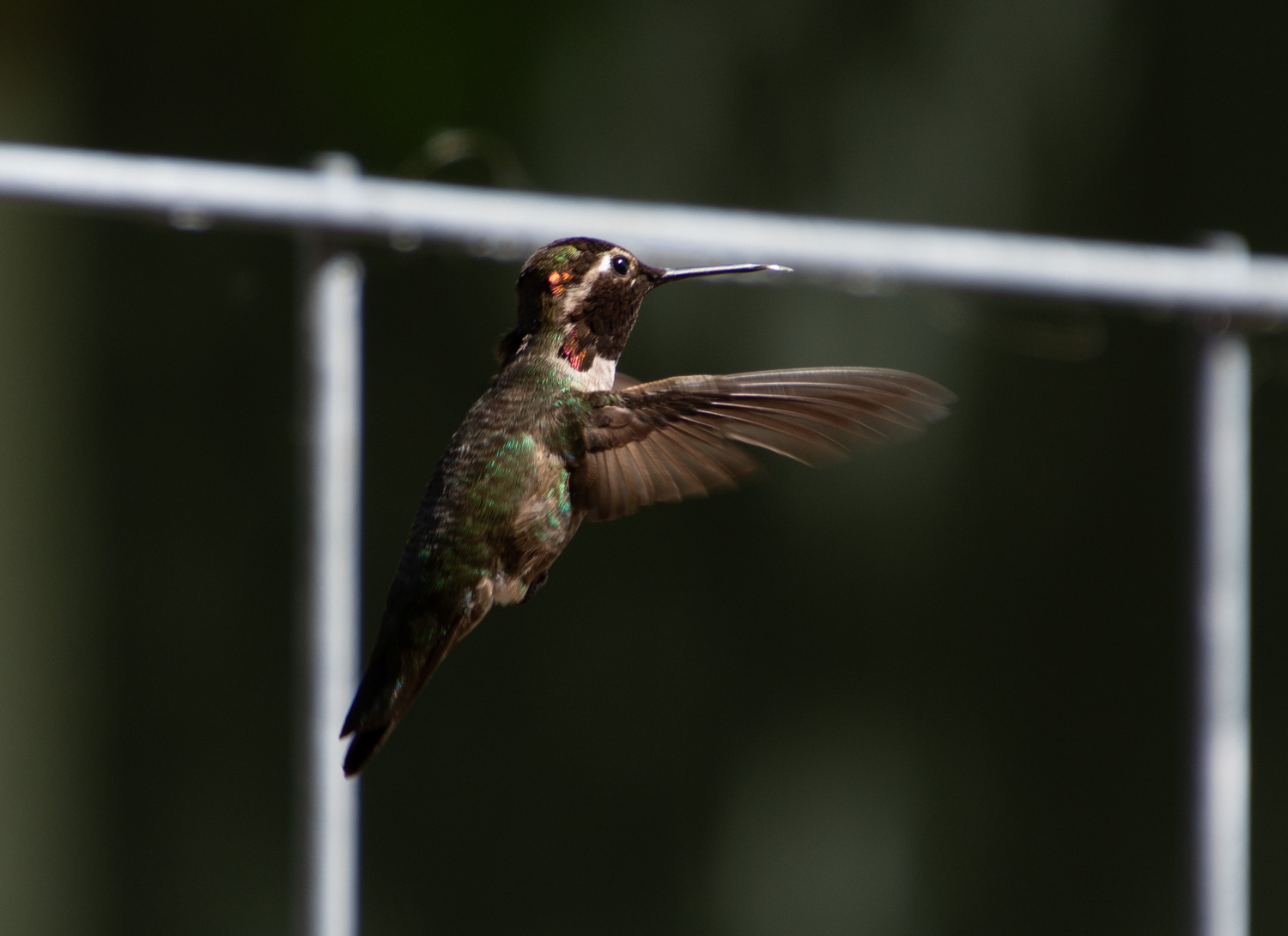
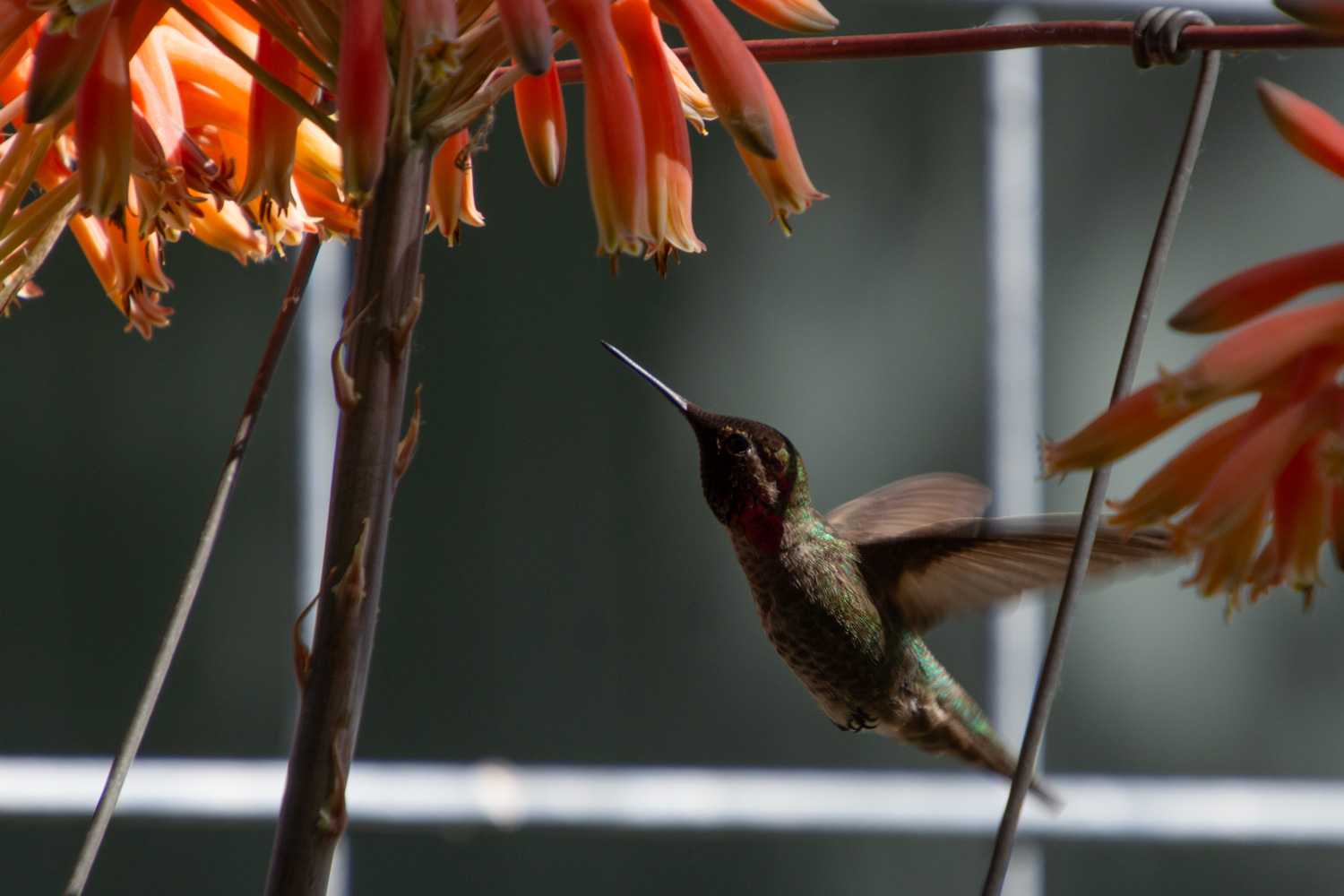
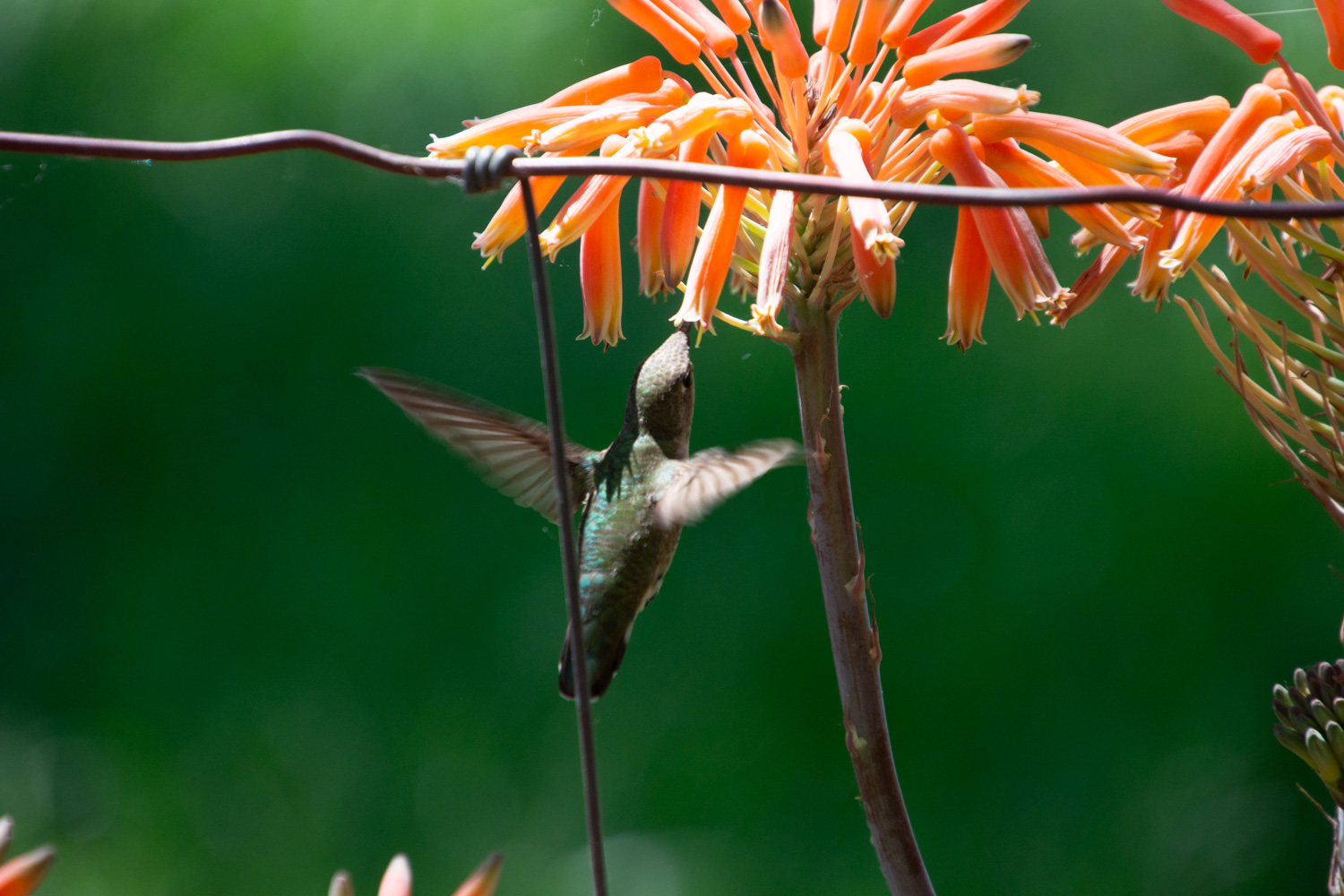
Now for the hummingbirds.

I had way too many photos but narrowed it down to these.

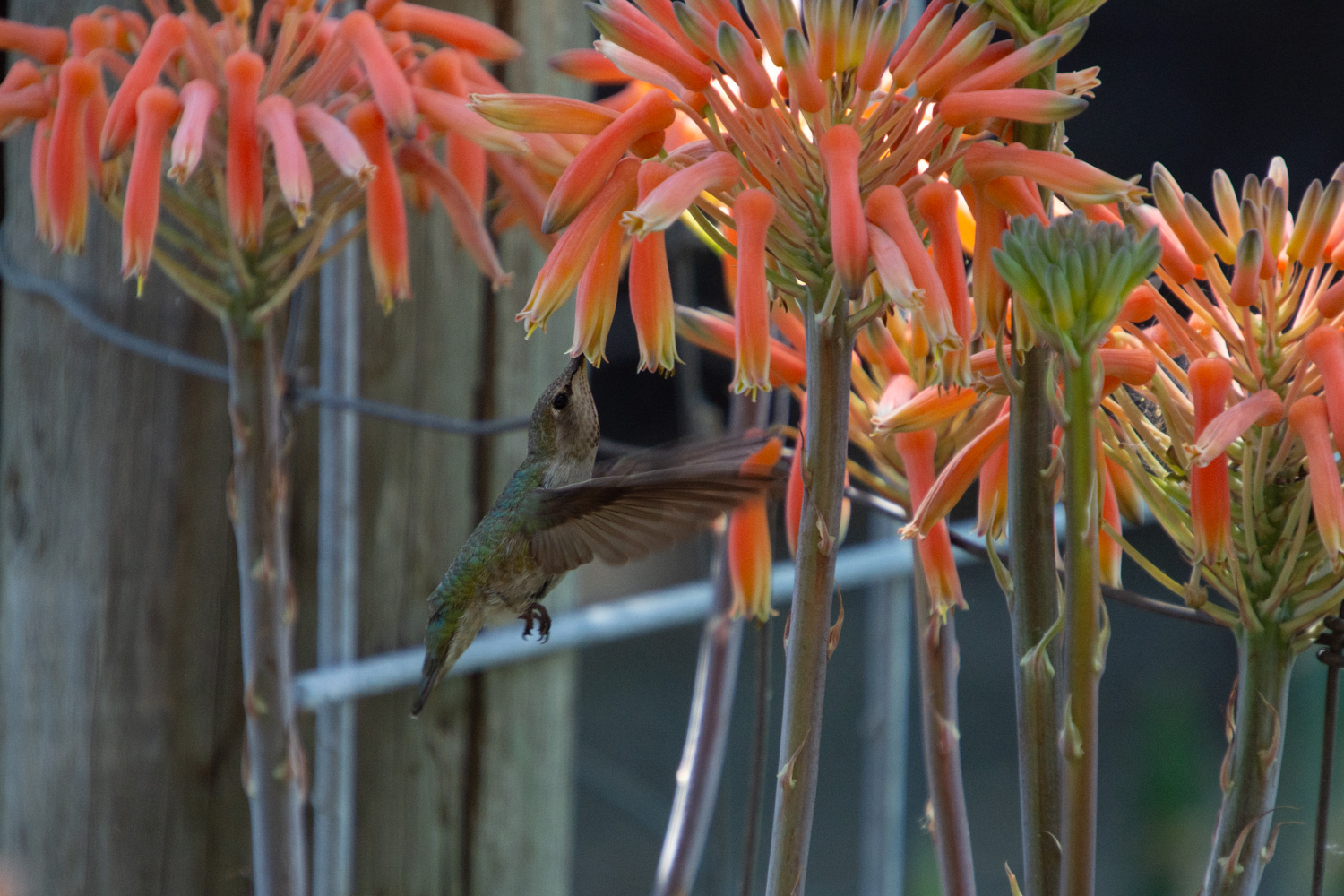
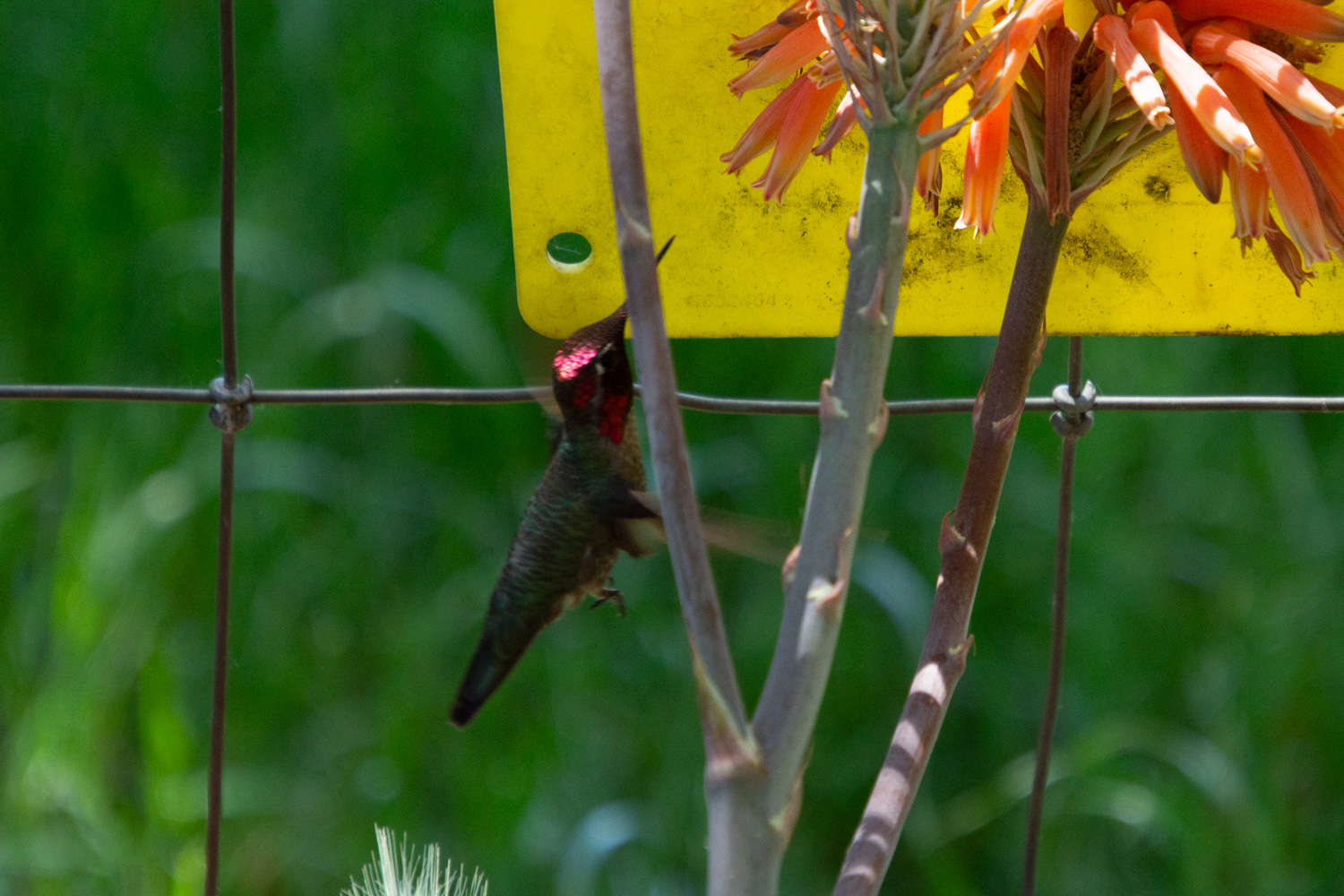
Now that the aloe is flowering I notice hummingbirds there frequently. Sometimes there are two or three at the same time.

This was easier to photograph than hummingbirds. I needed only one photo.

Today’s Random Farm Photos

Yesterday I spent time with sheep and weaving and ecoprinting and computer. I did more of the same today but didn’t take any weaving photos.

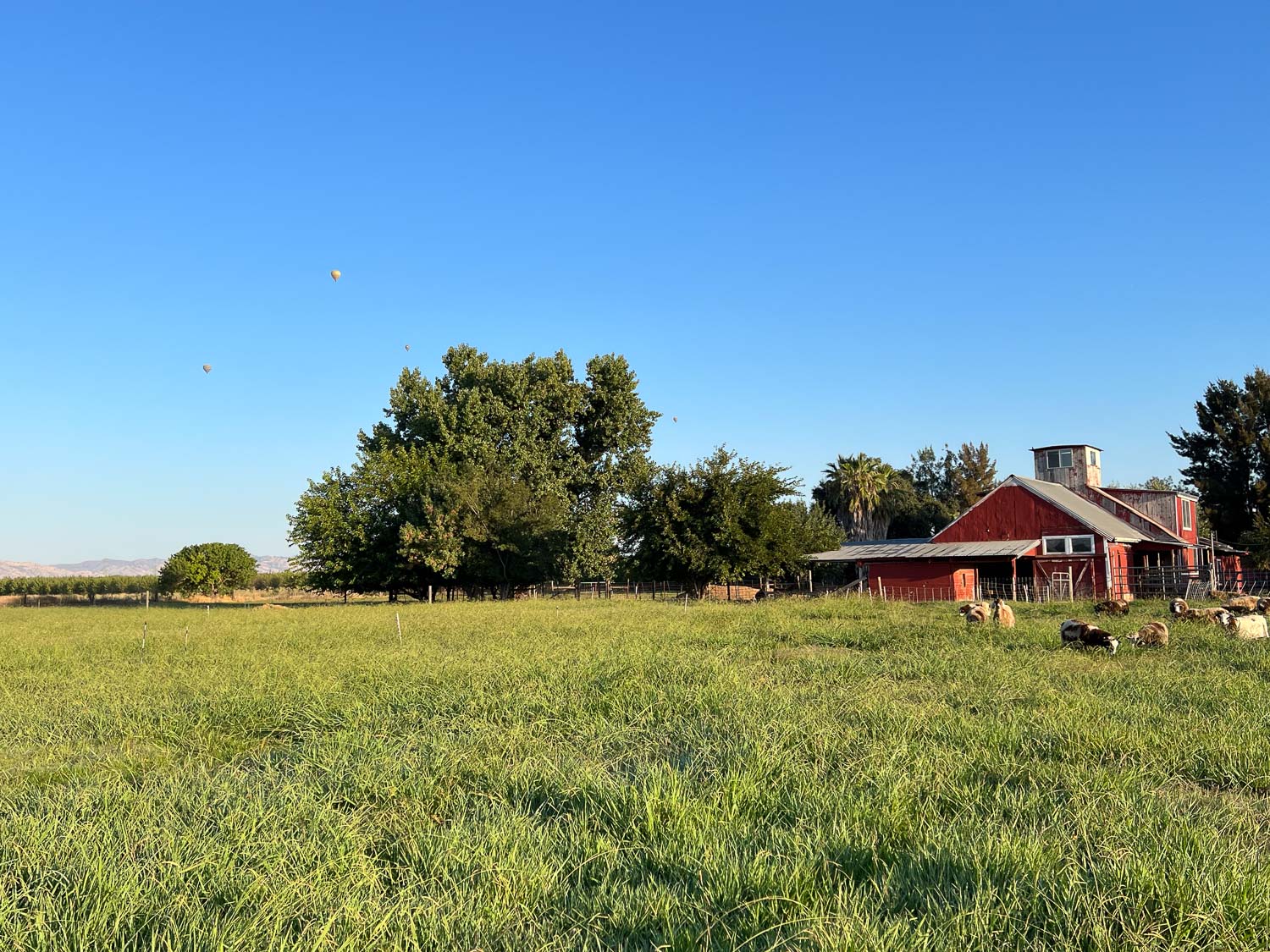
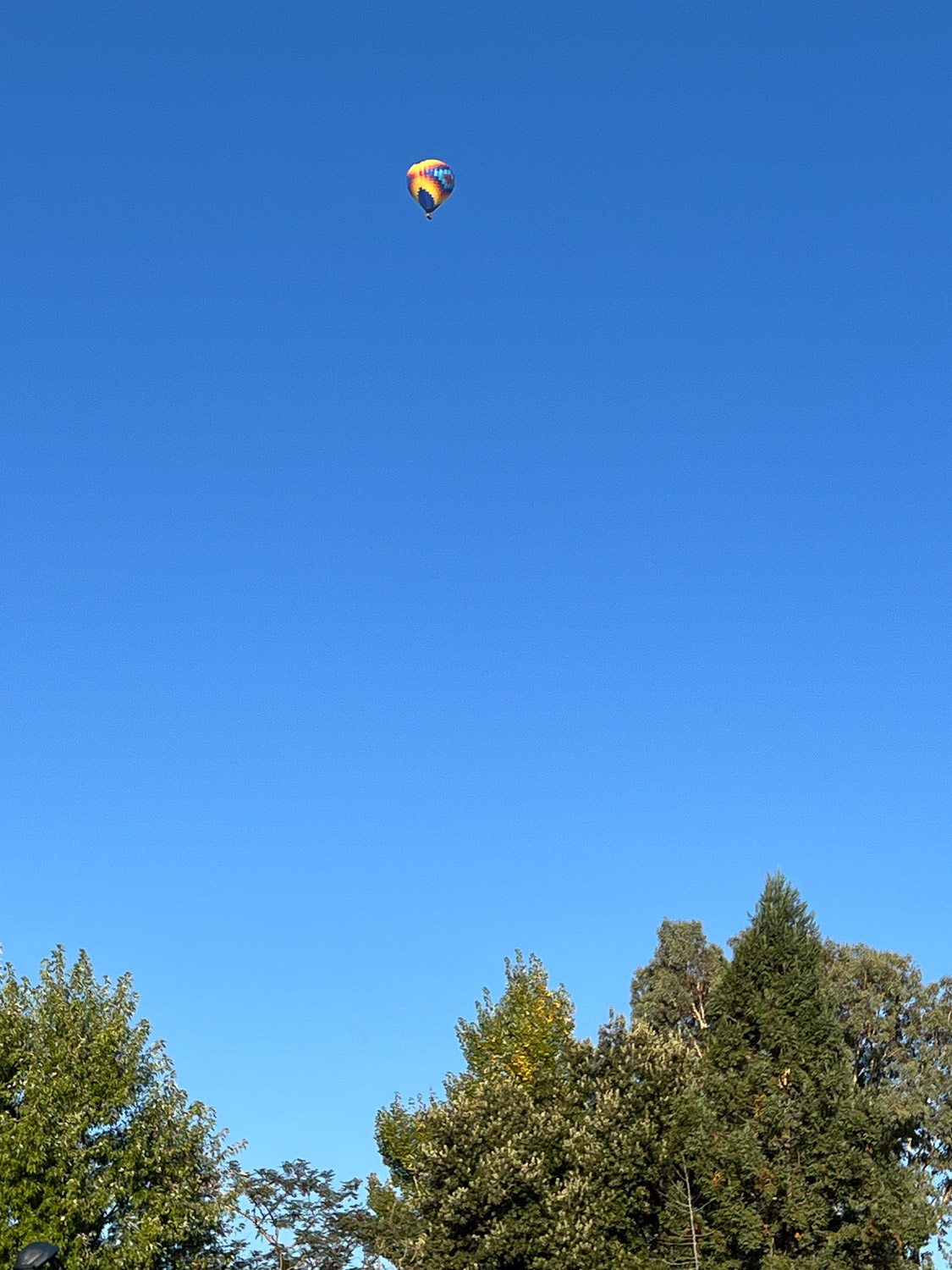
I changed the fence today to move the sheep into a separate paddock. You can’t tell from this photo but there are 8 paddocks that run north-south on this half of the property. There are 3-wire electric fences that keep the sheep in and I change the net fences at the two ends to open or close paddocks. Notice the hot-air balloons. It’s that time of year. There are four in this photo.

This looks like a lot of grass. It is a lot of grass, but it’s not the desirable grass and forbs I’d like. There is a lot of bermuda grass and dallisgrass. Those two take over this time of year. The sheep don’t like them when they get too coarse and head out. Then they go dormant in the winter and choke out the winter/spring annuals that I’d like to see. At least it’s green right now. That’s because we irrigate–there is no summer rain here.

Close up of one of the balloons. Who remembers Rusty? Blog post from 2011. Rusty even had his own blog for several years. I just got distracted and read back through some of it. Rusty was a pretty good writer and I enjoyed reading through his posts just now. I wonder if I could get Ginny to write a blog.

Anyway, about Rusty. He was afraid of these balloons. During “balloon season” he wouldn’t leave the house first thing in the morning. He knew that they’d be gone by mid-morning and then he would go out. Ginny doesn’t mind the balloons, but she is sure gun-shy and that’s a problem with all the recreational shooting around here.

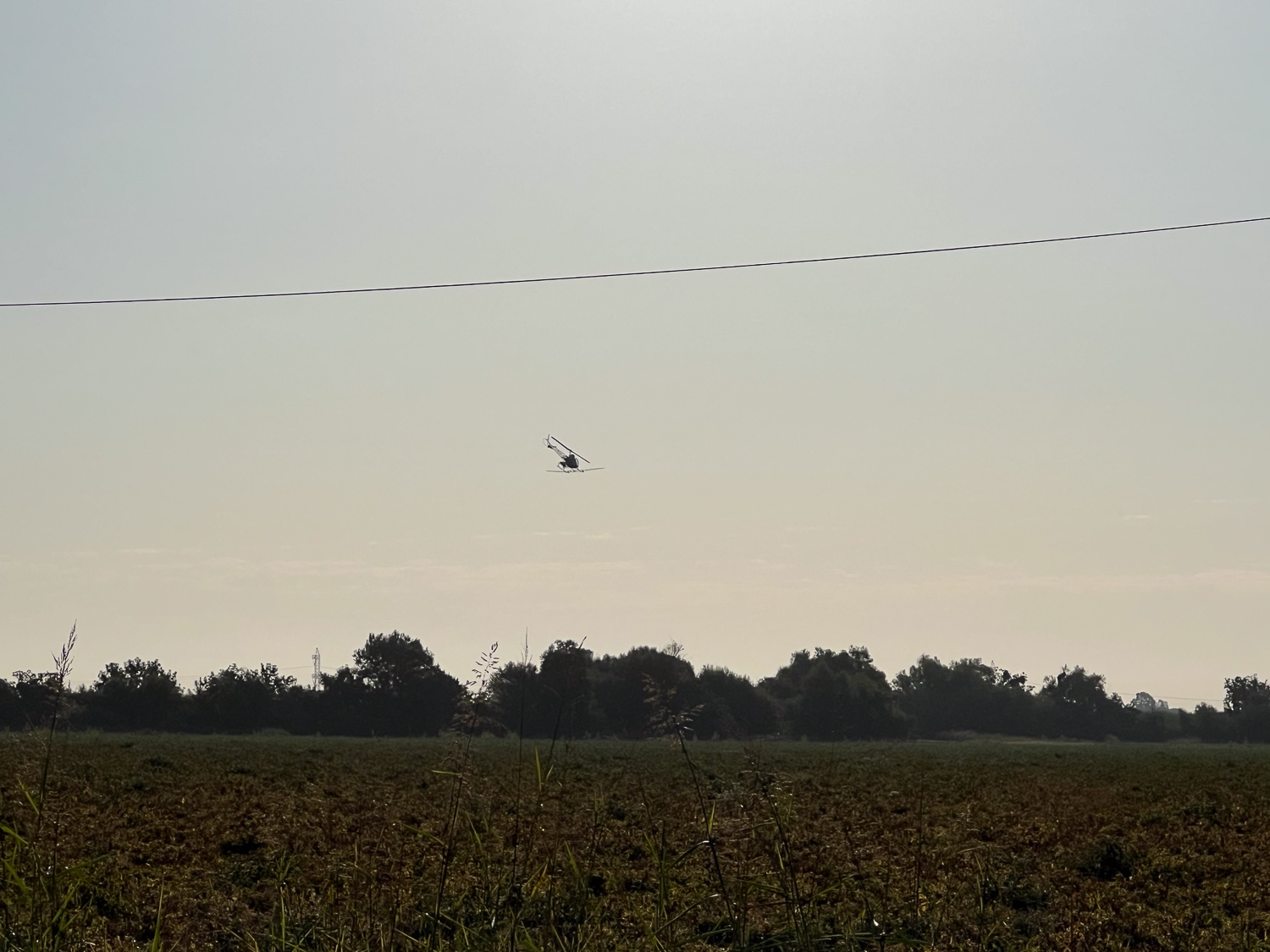
Speaking of things in the sky, this is the third time there has been a helicopter spraying the tomato field across the road.

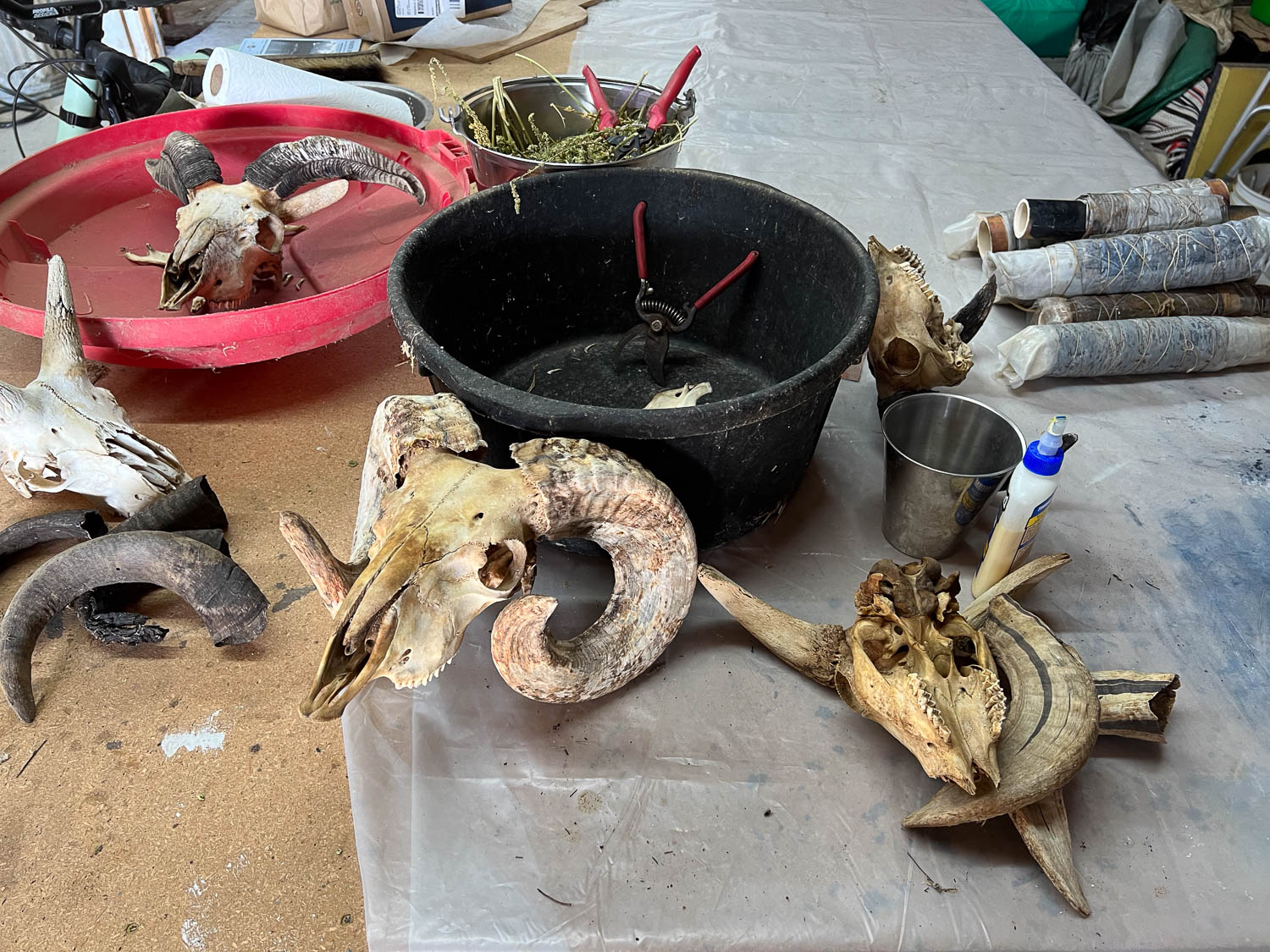
Before I went to the house after this morning’s chores I wanted to unroll the ecoprints from yesterday (see yesterday’s blog post). I have taken over this work table in the garage. The ecoprints are still rolled up on the right of the table. This is a look at the other projects I have going on–getting these skulls in some shape that I can sell them.

While I was working on the ecoprint scarves this morning I had a pot cooking with a couple of skulls to see if I could get them cleaned up better.

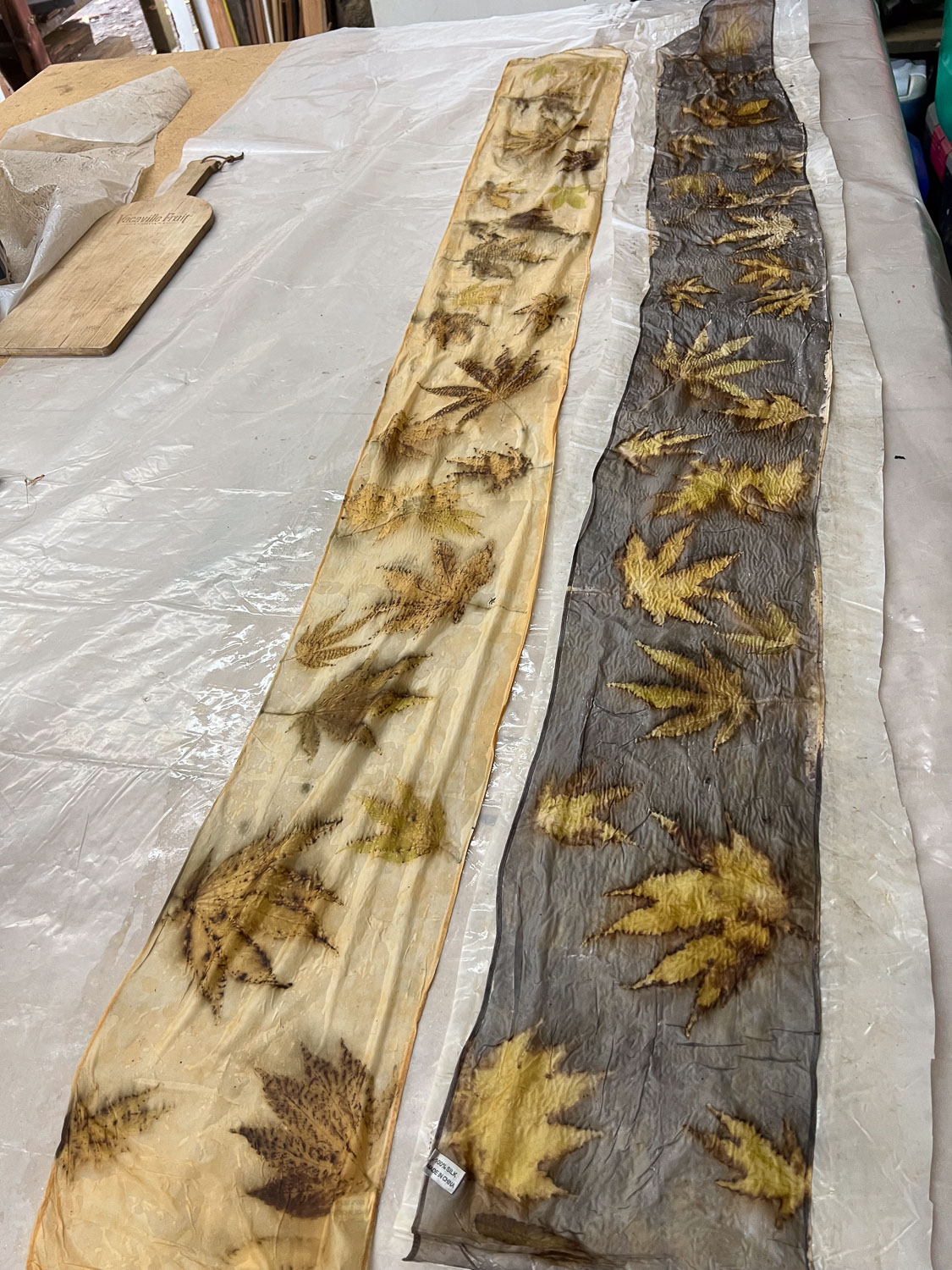
Here is a pair of square scarves. The photos in yesterday’s post show scarves with leaves or flowers in place. I put a second scarf on top of each of those and then roll them around a PVC pipe to steam. These photos show the pairs of scarves after unrolling. This pair has cosmos leaves and flowers. I am always fascinated by the different looks on the two scarves.

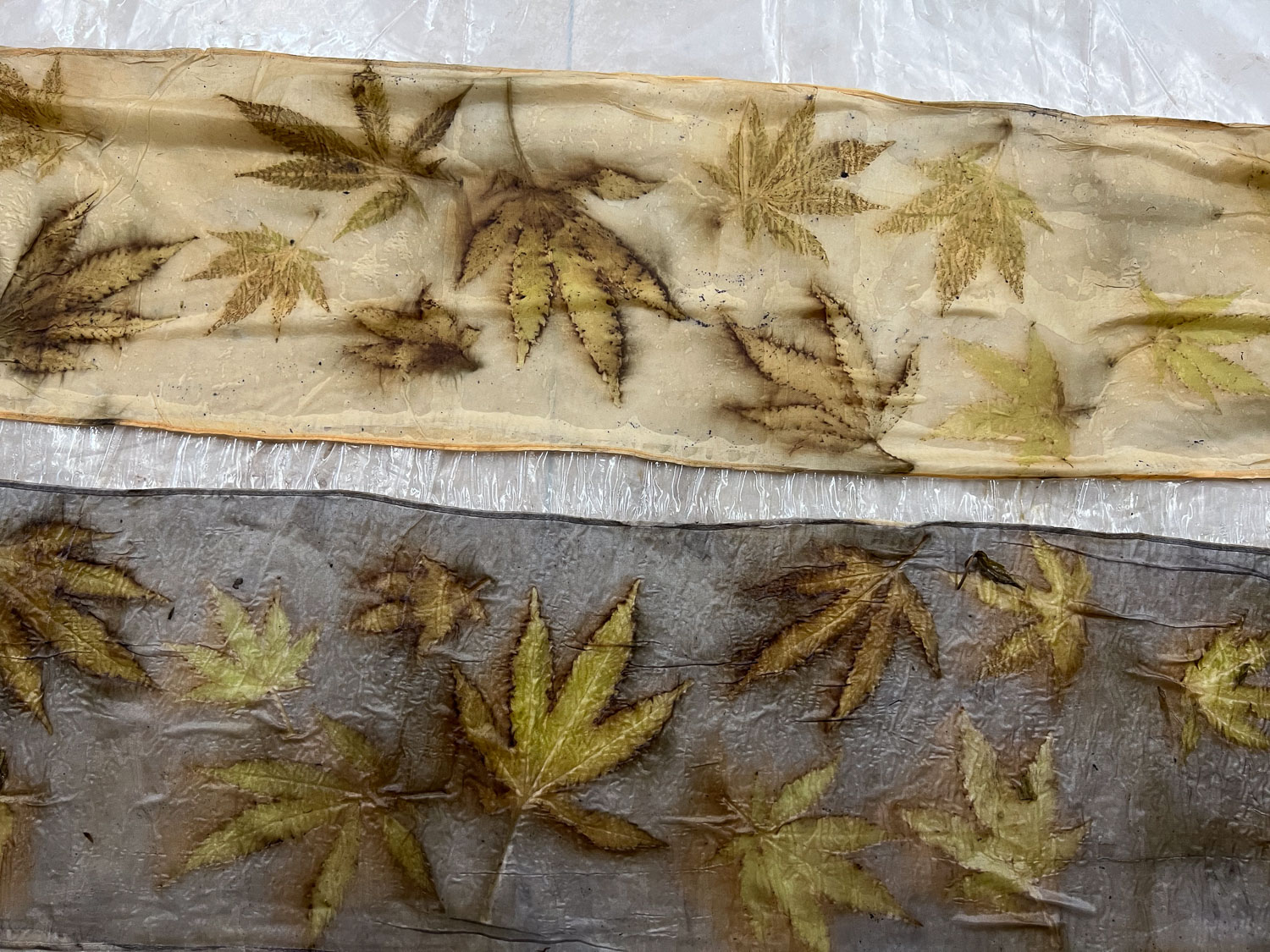
This one is all cannabis leaves (supplied by a friend). These don’t have that classic look of the ones below because by the time I got to this, the remaining leaves had started to fold up and at that point it is very tedious to spread them out again, especially with all these small ones.

Cannabis leaves in the more classic look.

Another set of cannabis leaves with a close-up below.

Some plants print on one scarf and create a resist on the other. These are printing on both scarves.

No, I am not selling cannabis. These are purple hollyhocks and cosmos flowers that I have added to my website and will have at Lambtown.

Tomorrow is a Farm Day and we’re setting up breeding groups! I need to look at my list one ore time.

More Farm Views

I have dozens of blog posts in my head and I’m determined to catch up with them.

DSC_3728-2

Look back at the post before this one to see the dallisgrass in the paddock where I put the sheep a couple of days ago. There comes a point after they have grazed it for five days or so when I want to move them. The plants I prefer (clover, trefoil) have been eaten to the round and I know that they will never finish off this grass. Besides, while they are in one paddock the dallisgrass in the next is just growing more. After I move them, then we mow. This is what the paddock looks like after mowing. I’d really like to rake up all that leftover grass and get it off the field, but the only way that happens is if I go out and do it by hand.

DSC_4108

This is Trista, also known as the Velcro Sheep.

DSC_4109

Do you see why? When she was a lamb she actually got herself stuck in the blackberries. Is this a the sheep way to always have a snack with you?

DSC_4159

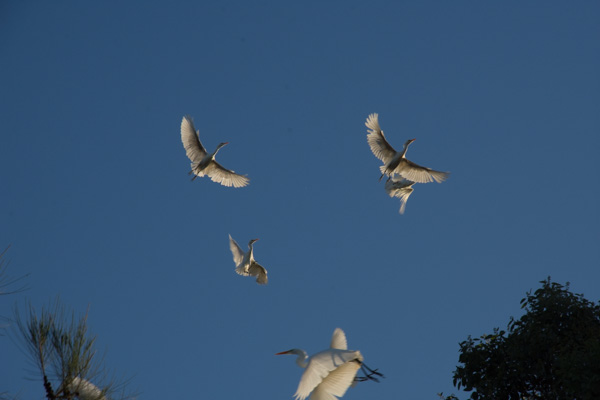
Cattle egrets in the eucalyptus tree.

DSC_4166

Take off.

DSC_4167

Donkey

Amaryllis looking slim(mer).

IMG_1932

As I go through this batch of photos, here is another dallisgrass one. This is in the horse pasture (so called because when we had horses that is where they grazed–no horses now).

IMG_1935

Yes, there are sheep there.

IMG_2041

This is at the end of Dixon Avenue on our way to town. I am amused that someone added a tail. I’ll be at this festival in Dixon next weekend. I’m teaching three weaving classes, will have a vendor booth, and will have sheep there for the show.

IMG_2056

Last random photo for this post. That’s Chris with his unexpectedly large pumpkin!

What’s in the Pasture?

The pasture is not a lawn. It is not a monoculture. My brother says it is more of a salad bar for sheep. Unless you walk around out there you don’t realize the number of plants that grow there. I am embarrassed that after 16 years of living here I don’t know the names of all of them. I have decided to change that. I am going to combine my enjoyment of photography and my recently dredged up college hobby (and class projects) of pressing plants and create a personalized herbarium of sorts. These photos are a start.DSC_9897I irrigated this weekend. The sheep were just moved off the paddock to the right and when it dries up enough they will go on the one to the left. Can you see the difference? It took only two days for them to eat that feed.Birdsfoot trefoil-2One of their favorite plants is Birdsfoot Trefoil.  It is a legume which means it is one of the plants that converts nitrogen in the air to a form that can be used by the plant. It is actually not the plant that does that but the bacteria that live in nodules on the roots of legumes.White cloverClovers are also legumes. This is a variety of white clover.DSC_9948This morning I noticed just a few of these flowers.  I can’t decide if this is a variant of the white clover or is a different species. The leaves are similar. I’ll have to do some more checking.Narrow-leaved milkweedDo you see how most of the other plants have been eaten and this one has not been touched? The sheep avoid plants that are toxic to them. This is Narrow-leaved Milkweed (Asclepias fascicularis). Not only is it a favored species for the monarch butterfly but according to a Plant Guide published by the NRCS “Zuni people utilize the silky seed fibers, which are spun on a hand-held wooden spindle, made into yarn, and woven into fabric (especially for dancers)…Milkweeds supply tough fibers for making cords and ropes, and for weaving a coarse cloth. Milkweeds stems are collected after the stalks dry in late fall to early winter. The dried stalks are split open to release the fibers. Milkweed fibers are sometimes mixed with fibers of Indian hemp, Apocynum cannabinum.” Sounds like a good challenge to my fiber-loving friends.
Narrow-leaved milkweed-3These are Narrow-leaved Milkweed flowers in various stages…Narrow-leaved milkweed-5…and a close-up.Field bindweedField bindweed (Convolvulaceae arvensis), also known as morning glory. It is, according to a  U.C. IPM website, “a perennial broadleaf, is considered one of the most problematic weeds in agricultural fields throughout temperate regions worldwide”.Soft bromeSoft Chess or Soft Brome, a non-native annual grass.Hare barley

Hare Barley. Also from the U.C. IPM site, “It is a useful livestock forage early in the season before the flower spikes develop. However, at maturity the spikelets have stiff, barbed, needle-like awns, and sharp bases that can injure the mouth, eyes, nasal passages, ears, and skin of animals.” Those are one of the many grass seeds we call foxtails and spend a fortune getting out of dogs ears and noses and agonize over when we find an otherwise beautiful fleece full of them.MedusaheadMedusahead as it is drying out. Medusahead covers thousands of acres of California foothills. It is not normally found in irrigated pasture, but it is in the easternmost paddock here which sometimes does not irrigate well. I have reclaimed part of that paddock, but I continually fight this plant. I find patches of it in other areas of the pasture and, although this is not an effective control technique, I pull it up by the handfuls as I walk by, coming back to the barn with it stuffed in the pockets of my overalls. It is a nasty plant that is “…among the worst weeds: not only does medusahead compete for resources with more desirable species, but it changes ecosystem function to favor its own survival at the expense of the entire ecosystem…Because grazing animals selectively avoid this plant, and because medusahead thatch tends to suppress desirable forage species, infestations often develop into near-monotypic stands.” From the U.C. Davis Medusahead Management Guide.

Blunt spikerush I have ID’d this one as Blunt Spikerush (Eleocharis obtusa), not a grass, but a sedge that is  found on poorly drained soil and marshy areas. That’s my pasture…poorly drained soil. There is a lot of this sedge in  the middle and south end of three or four of the paddocks. It looks like foot-tall grass, but that is why it is important to actually look at what is out there. This does not make good forage.Buckhorn plantain-3A rather artsy shot of Buckhorn Plantain, found throughout California…Buckhorn plantain-2.jpg…and a photo in which you will probably more easily recognize it.
Well, that’s nine species of plants in the pasture. There are dozens more to go.

Jungle Sheep

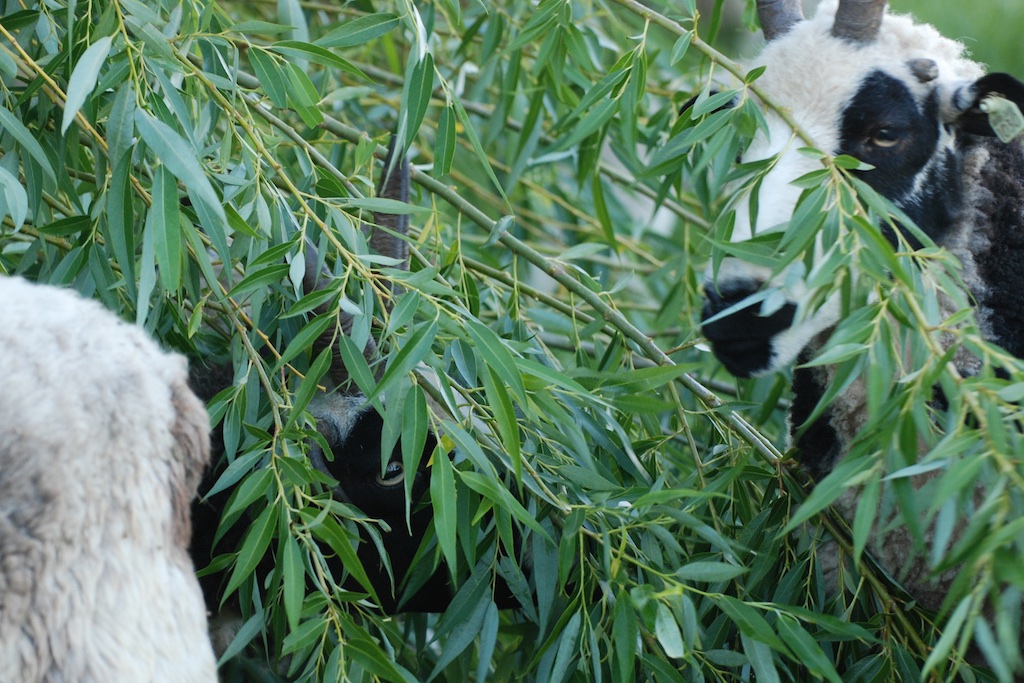
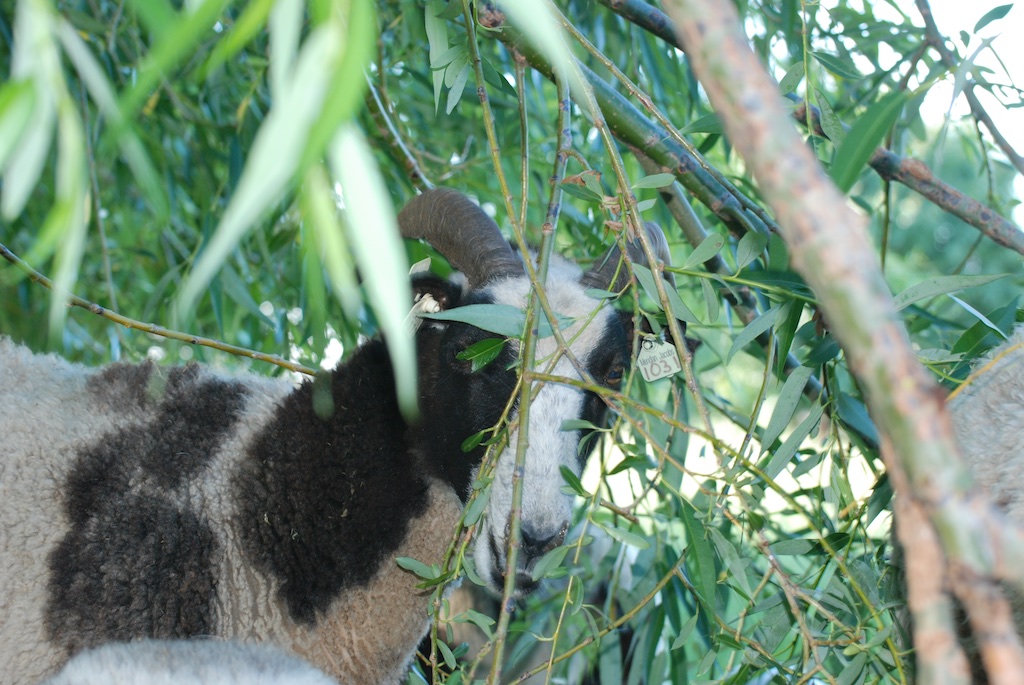
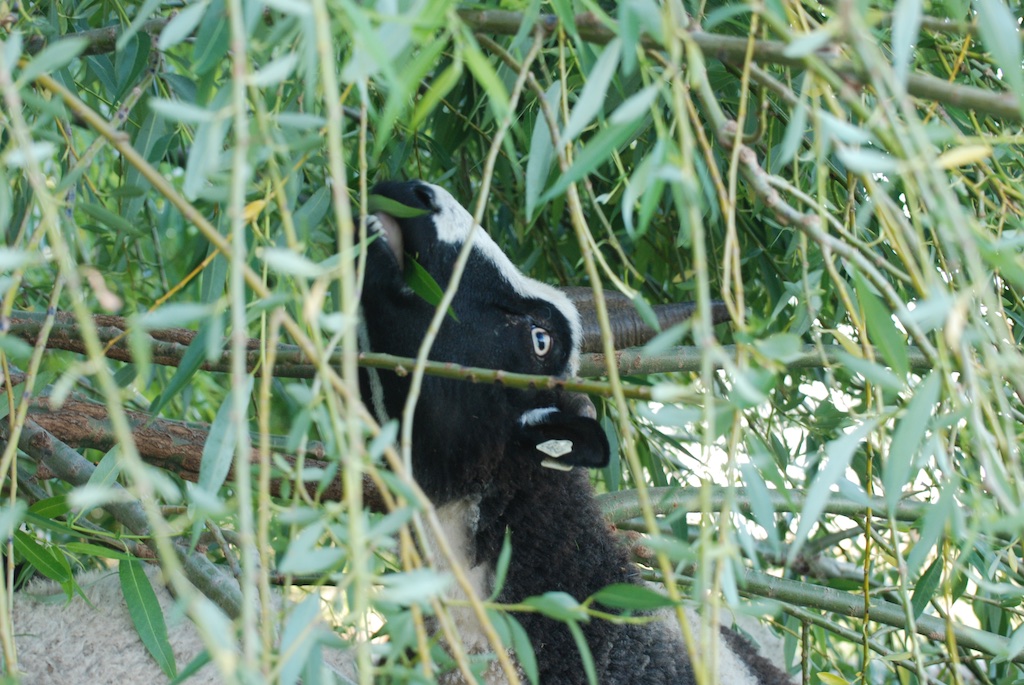
The sheep were glad to get the call to go to the next paddock yesterday morning.Hey, sheep DSC_5089Their favorite spot in the pasture is the weeping willow…DSC_5113 …which has branches so close to the ground now that I thought a branch had broken.DSC_5205We will have to cut these branches before they fall across the fence but it is good that the sheep can eat all the leaves off first.

sheep in willow tree DSC_5193 DSC_5196 DSC_5201 

Fall Grazing

Hendrix and his group of ewes have been in the back pasture since breeding season started and they have been at the north end of that pasture for a couple of weeks. Since hardly anything is growing (start the rain dance please) I figured that they couldn’t do too much damage leaving them that long. I thought that maybe that could take down the dallisgrass and they actually did a pretty good job of it in most of the pasture. It is still a challenge however along the ditch and the fence-line. (If you search dallis  in the blog search you’ll see several posts about my attempts to conquer it.)IMG_8004

This is the north end of the property. Notice the blackberries on the north fence. I cut these away in the spring to uncover the electric fence wire on the inside of the field fence. The sheep could help in that job except that this time of year the dallis grass growing in and around the ditch keeps them from going over there. It may seem hard to believe that a grass keeps sheep from something, but this stuff is so coarse and strong it’s like hacking your way through a jungle. And it’s very sticky now from a fungus that grows on the seed head. Several years ago I found a ewe whose horns were so tangled in it that she was stuck upside down in this ditch. The only reason that I knew she was there was that she was baaing.  The sheep in the photo above are in the ditch because I trampled some of the grass and put alfalfa there. IMG_7967IMG_7949 This photo shows that they are making progress. Now I can actually see a ditch and the sheep can get through it to the side with the blackberries.IMG_7951 They are finding the hay in the blackberries and it makes it worth their while to work their way through the grass.IMG_7959

IMG_8027After about a week we have worked our way through the ditch and I’m putting the hay near the fence.  IMG_8002   Then I moved beyond the blackberries and had them trample the dallisgrass along the rest of the fenceline.IMG_7960This is the east fence and it looked almost as full of grass before I started this project. It is more overrun with blackberries. The sheep have eaten some of the leaves off. I think I have to get in there with clippers now though. There is an electric fence hiding in there somewhere.

It’s a Jungle Out There

Here is a photo I took last September:photo

I was trying to figure out why I had no power on the electric fence and this was one of the areas that I had to check. Even though my charger will carry power through thick vegetation like these blackberries, the branches could be pushing the hot wire into the old fence and causing it to ground out. (Yes, is a strand of electric wire going through that mess.) I figured it was time to deal with it.photo-2

This is after I cut away blackberry branches. You can barely see the insulator that holds the electric wire near the bottom of the post. I cut those branches but left them between the ditch and the fence thinking that I would drag them away later to burn them. Yeah, right. (By the way, this was not the problem with the electric fence. It was grounding out elsewhere.)

IMG_4407 So only a few weeks later I knew that I needed to deal with the dallis grass along that same fence-line. This is the same area, but looking from the other direction. There is supposed to be an irrigation ditch in this photo.IMG_4411This is after weed-eating the ditch. You can see the blackberries that were cut a few weeks before that I never got around to moving and burning.

Fast forward to this spring. IMG_6398 This is the same view as the last photo. The blackberries are growing back through the old blackberries branches that were never moved AND through the mounds of dallis grass. This year I have a residential burn permit instead of an ag permit. If I don’t want to go get an ag permit then all my burning has to be done before May 1 (or maybe it’s the 30th). But in any case, I needed to get busy. I took a rake and the pruning shears and spent a couple of hours at it. IMG_6400 This is what it looks like now with 2 piles ready to burn. Now hopefully the sheep will keep up with the regrowth of sprouts. When it is so thick with brush and coarse grass the sheep don’t even try to get through it. IMG_6401 But there is more! This is the other fence-line–one that I did not deal with last year. See the two electric fence strands disappearing into it?IMG_6402Here it is from the other direction. Farm Club, where are you?

Pasture Maintenance

Nothing very exciting in this post.  But I spent all day Sunday in the pasture  after thinking the job at hand would take only a couple of hours.  I find that I am always writing blog posts in my head so here it is.

I started by mowing the paddock that the sheep had just been grazing. Now that I have my mower (never meant for this heavy duty work, but so far still working) I have been working on the dallisgrass that gets ahead of the sheep this time of year. In the past I have tried burning, trampling, weed eating (photos and past efforts in this post and this post and this post), but I think this mower will be the answer. It is at the south end of my pasture(right side of the photo) that the dallisgrass gets so thick and tall. The idea is to mow right after grazing and then everything has an equal change of regrowth, and the dallisgrass will be in a more palatable stage and the sheep will keep up with the growth.

In this photo the paddock that I just mowed is to the right. The sheep grazed the one on the left a few days before. I mowed that one that last time they grazed it and that made a big difference. I shouldn’t have to mow after each grazing–maybe once or twice per season I think. Notice the fence-line. That is a 3-wire electric fence and this was the other thing I wanted to deal with on this day. I have been putting off cleaning up the fence-line with the weed eater, but when you can’t even see the wire, it’s time. I have already used the weed-eater in the area where you can see the wire. This dallisgrass is tough. I have the heavy duty string on the weed-eater and it still gets used up quickly.  Slow-going. It took me about 3 hours to finish this fence-line.

Speaking of problem plants, here is another. This is what the medusahead looks like when it’s dry. There are plenty of posts about my battle with this noxious weed also. This is along the perimeter fence.

And lets not forget devils-claw. This one isn’t so bad because I don’t have much of it and it is easy to chop out the big plants. It doesn’t invade the irrigated pasture, but is along the edges where it is dry.

What is the problem with devils-claw? See the fruit? See those curved, pointed ends? When the fruit dries it splits in two and those curved points get caught in wool. I’ll show you other photos sometime. This is seed dispersal in action.

Moving on to other plant problems. This is the small blackberry bush on the west fence. On this morning I actually had breakfast here because the berries are ripe, but in general the blackberry bushes become a problem when they cover the electric fence as they do on my west fenceline. (Note wheelbarrow full of devils-claw.)

I started irrigating Sunday evening. Here is a spot that I hoped to get water to this time. The last few times I irrigated the water didn’t get here.

This is the pathetic state of the trefoil that didn’t get water.

Here is what it looks like where it was irrigated.

And here is a view of a paddock that has had plenty of water, has a manageable amount of dallisgrass,and hasn’t been grazed for a few weeks.

This is  self-portrait of the irrigator.