Farm Club Comes Through Again

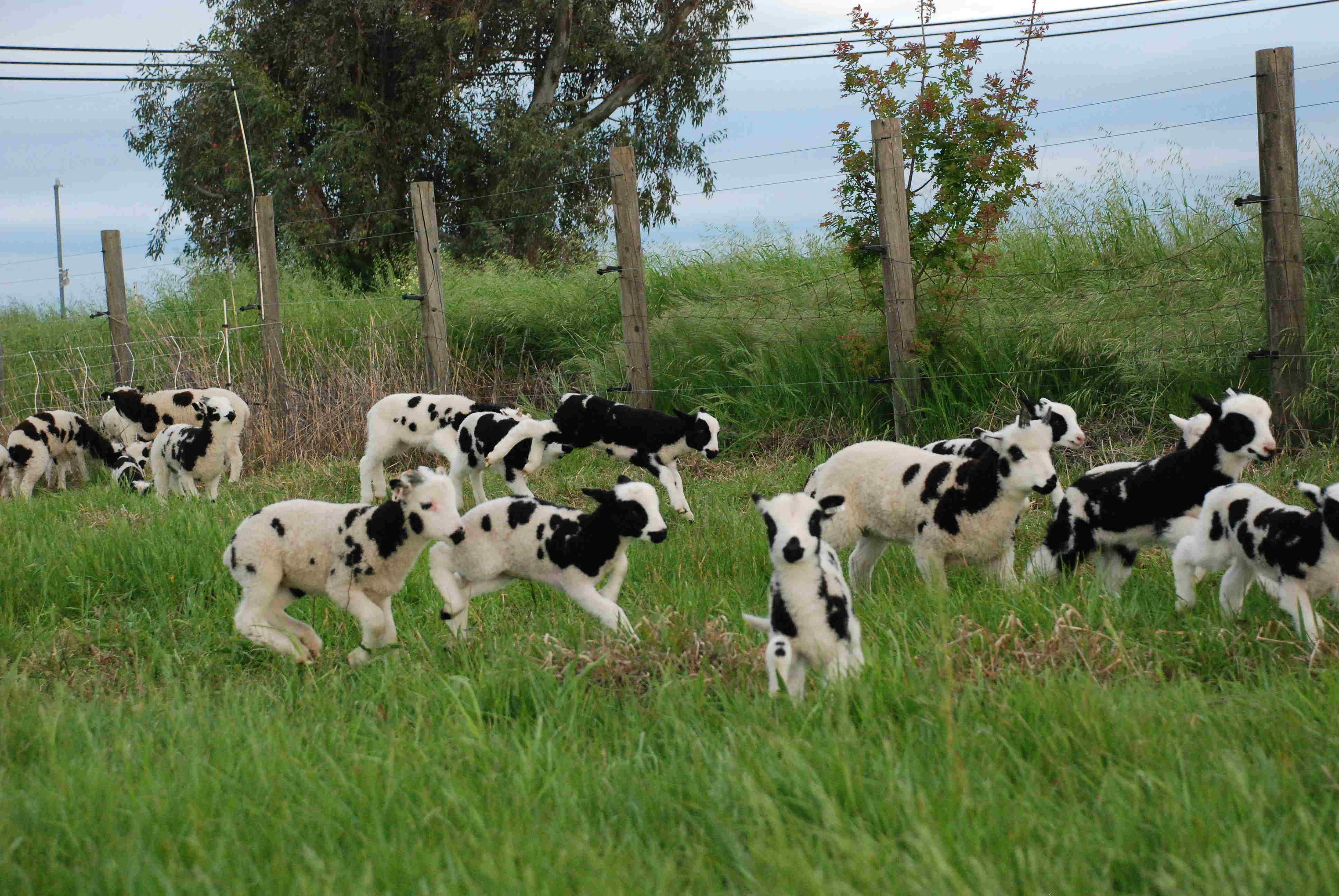
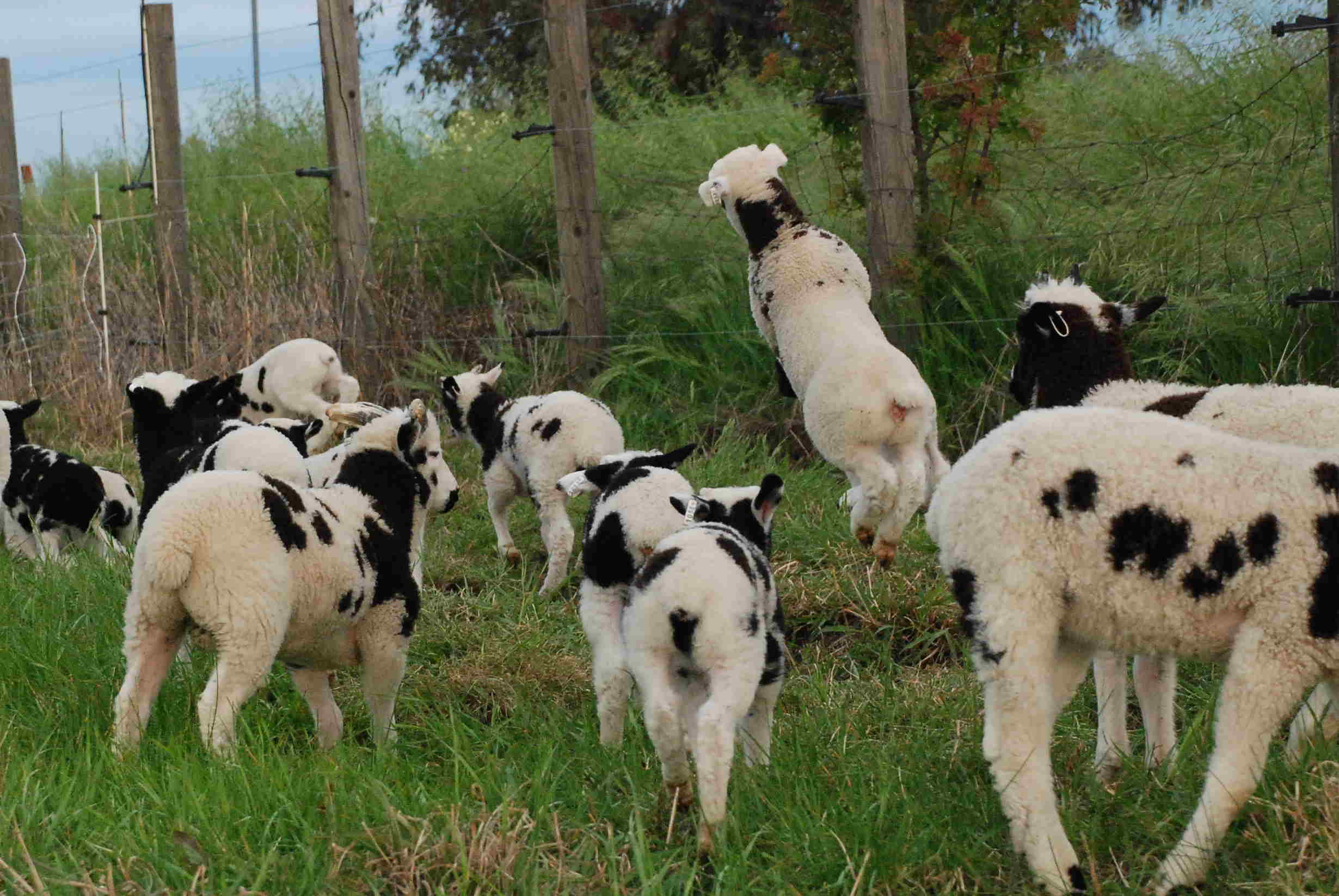
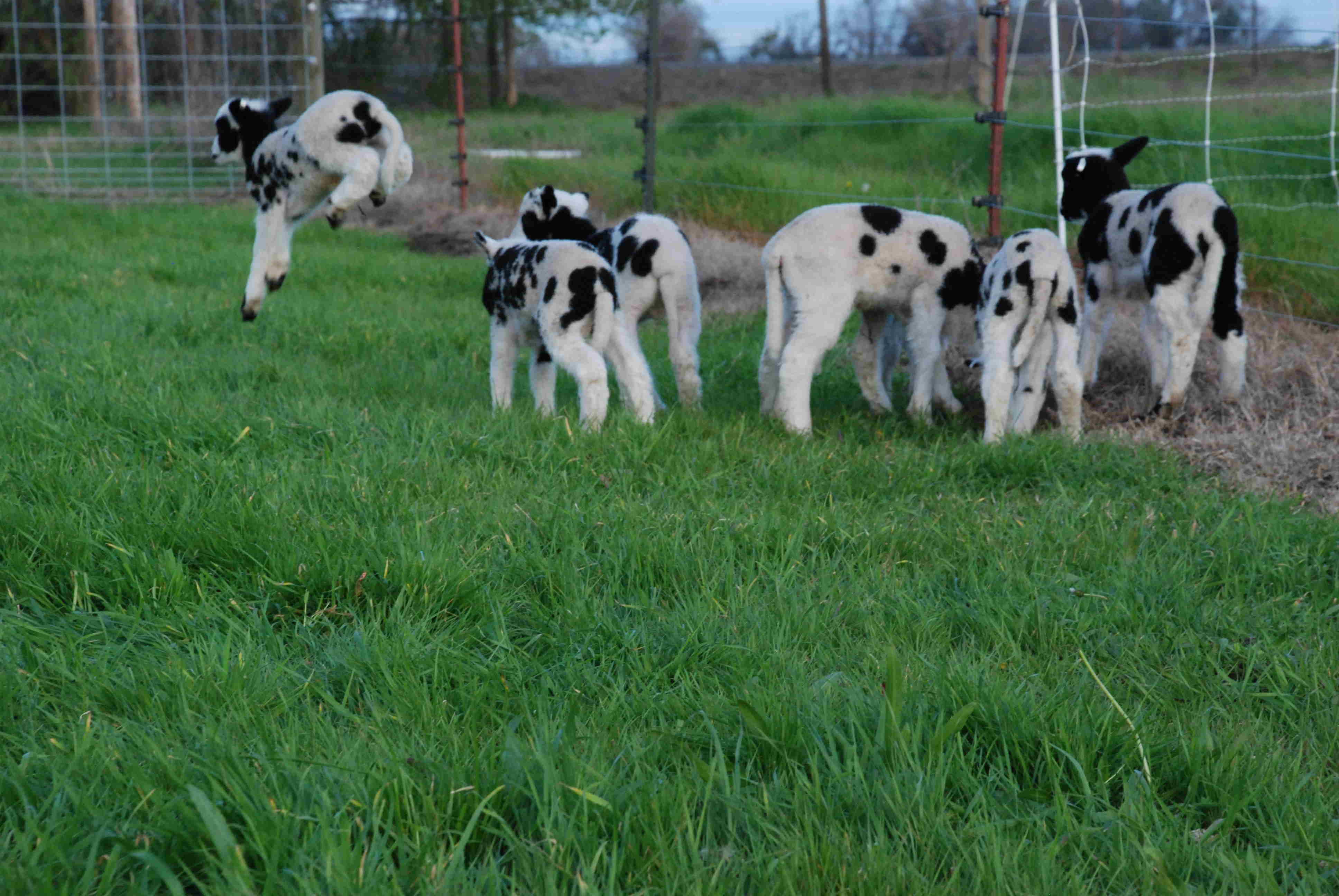
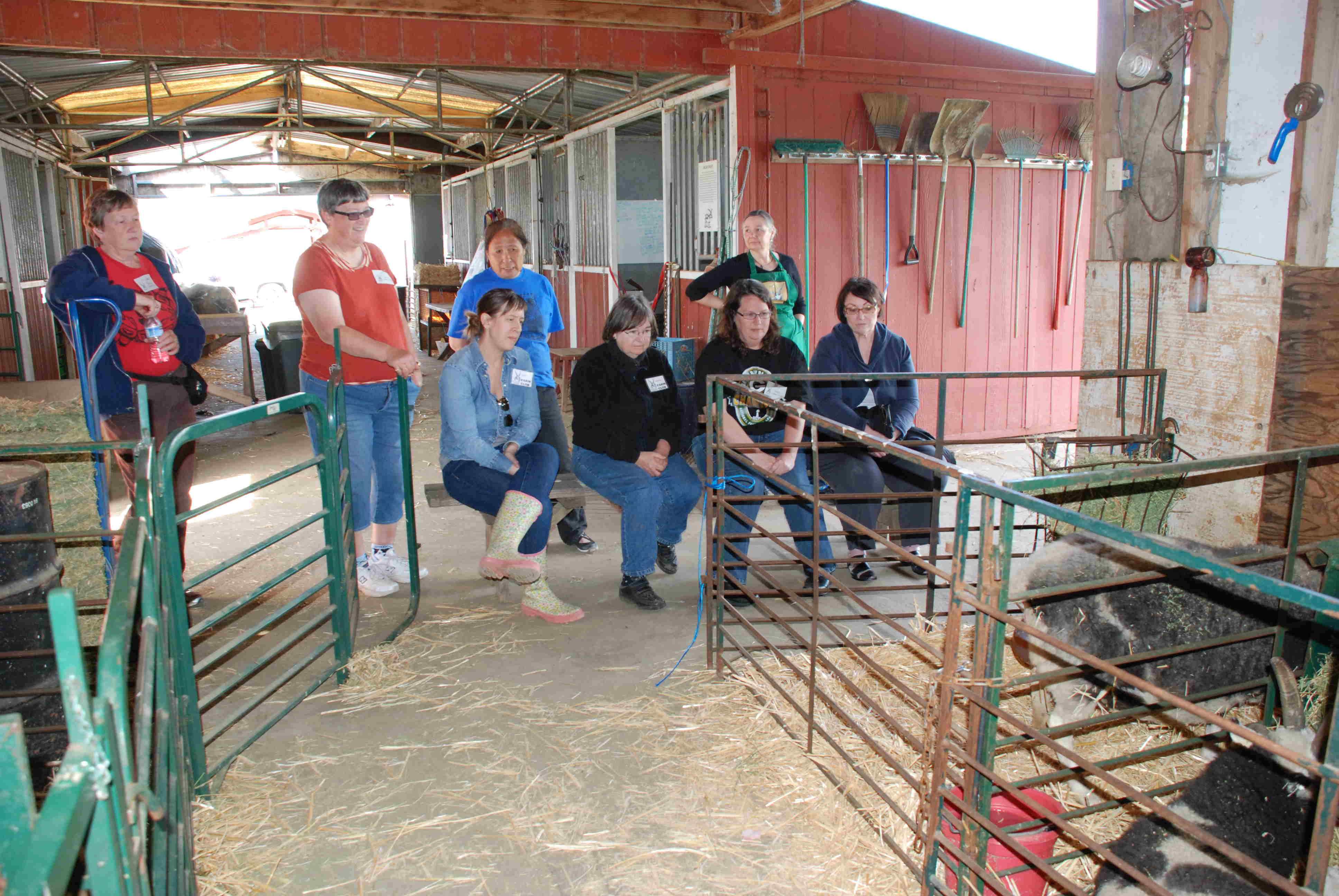
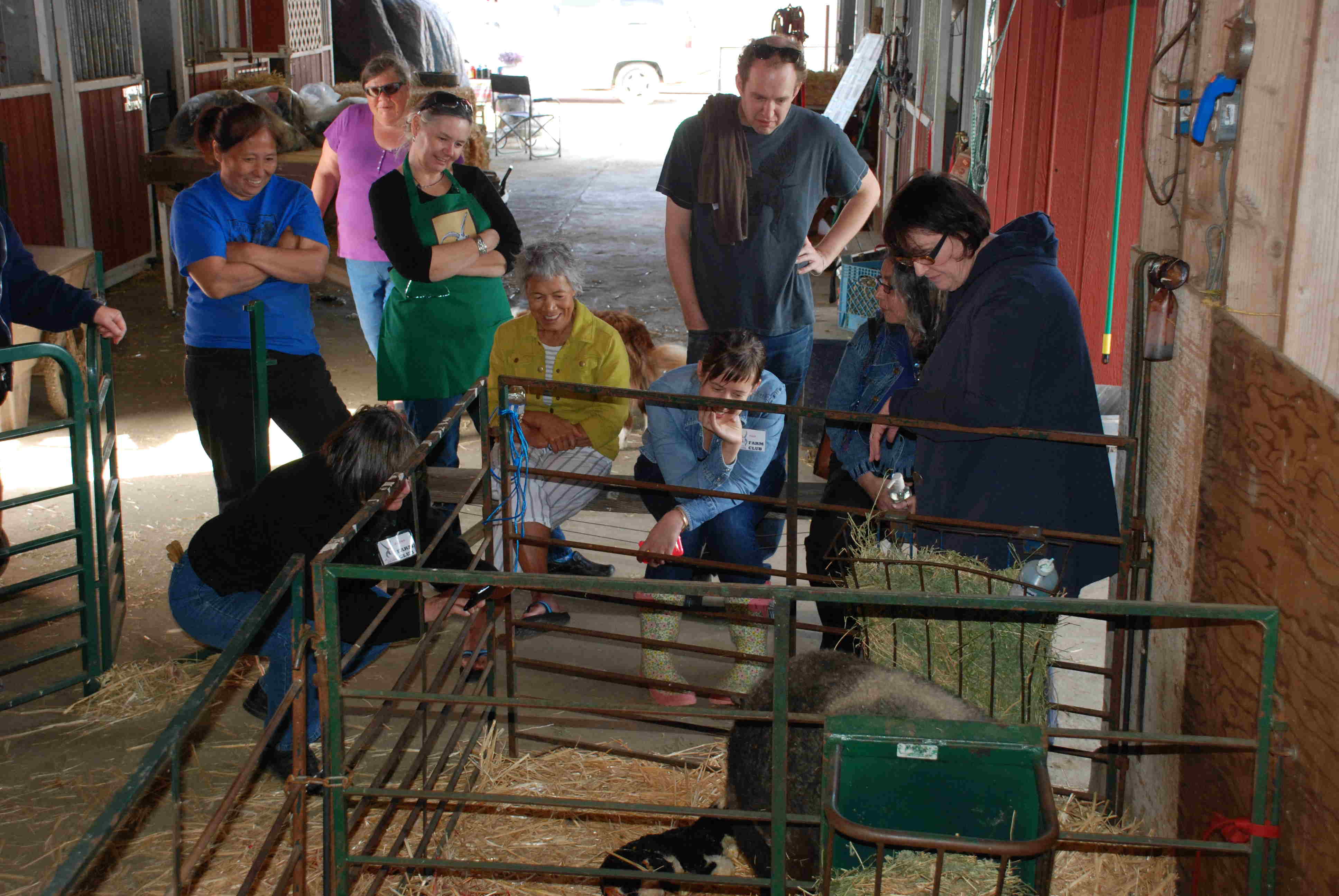
I sent an e-mail Friday  to the Farm Club  in which I said I was going to vaccinate lambs today and did anyone want to help? Dona and Tina were already planning on being here for a spinning class in the morning so they said that they would stay. Jacki, Shelby, and Allison came too.  Wow! What great response with only 24 hours’ notice.

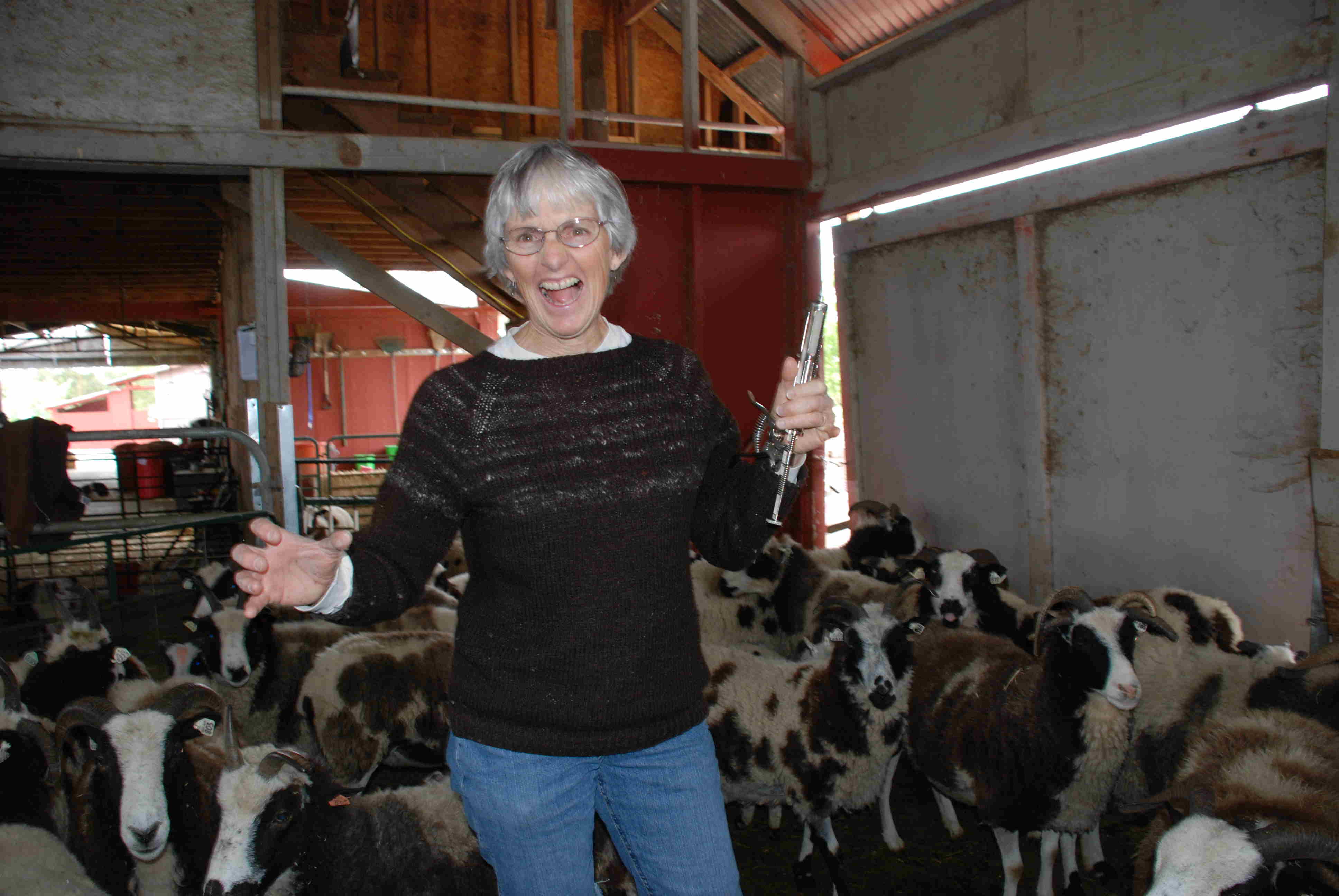
I bought a new tool. For years I have been vaccinating with single dose syringes. That means that you have to reload the syringe each time you give an injection.
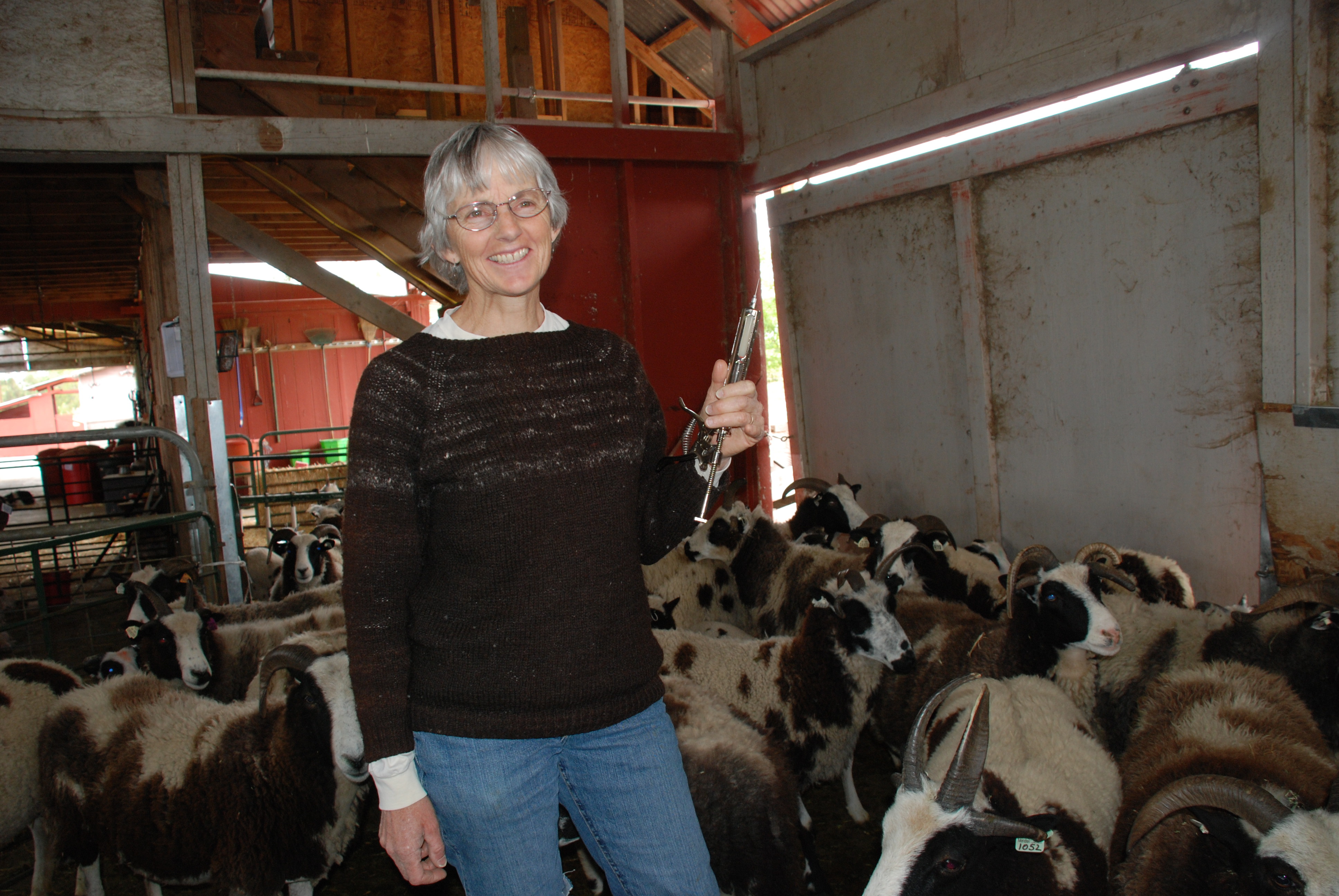
I just never thought about doing it differently, but I was at Higby’s Country Feed Store (my favorite store) and saw this syringe. There is a bit of a learning curve (remember to tighten needle, make sure you depress the handle part all the way, don’t drop because the barrel is glass–OOPS!), but what a huge difference it will make after I replace the glass part that broke about a third of the way into the job.

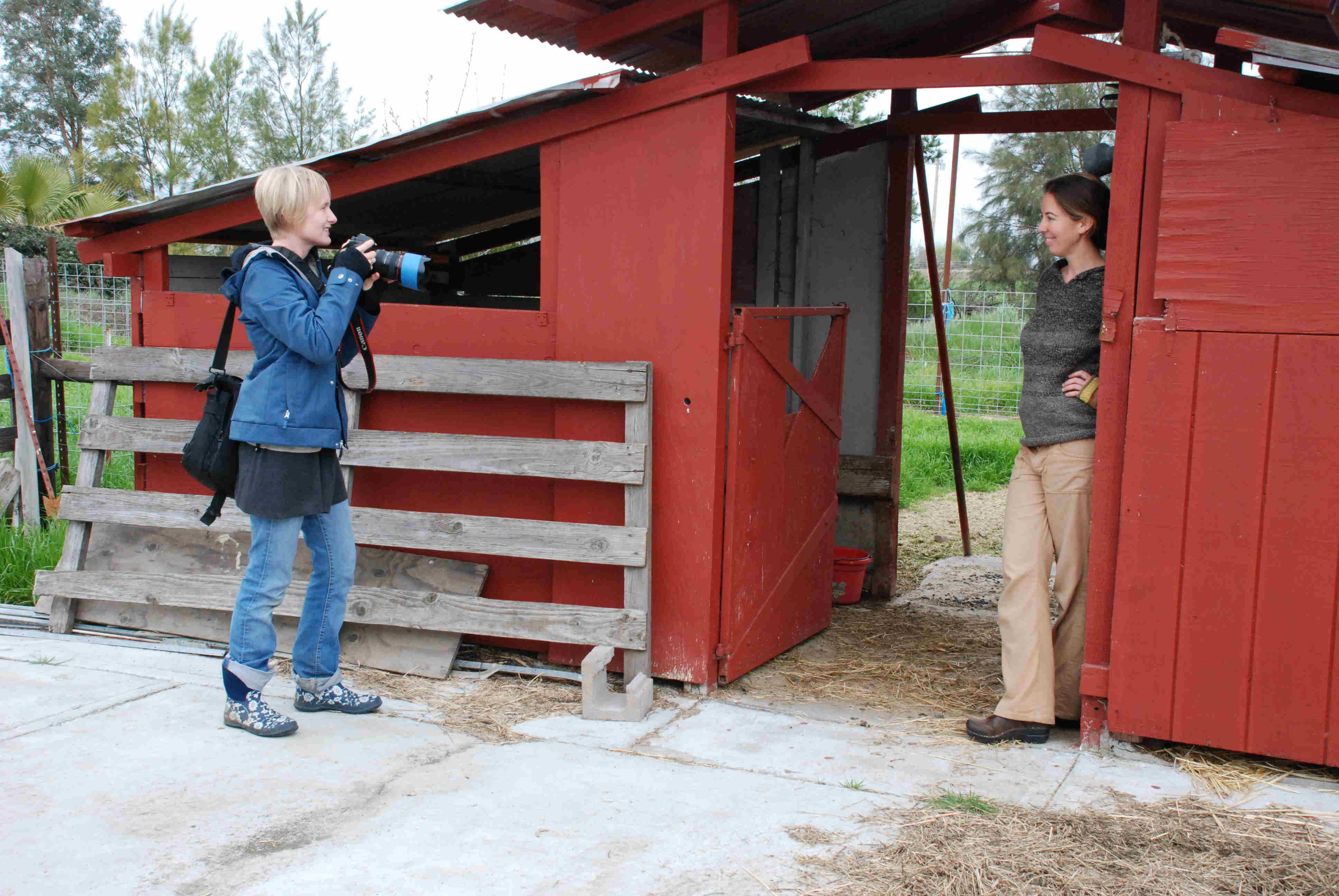
I appreciate all the Farm Club members (who are now friends) who show up for projects like this. Shelby manned the camera, as well as caught lambs and played with the loose chicken.

Alison, Jackie, Tina, and Dona all helped catch and mark lambs and…
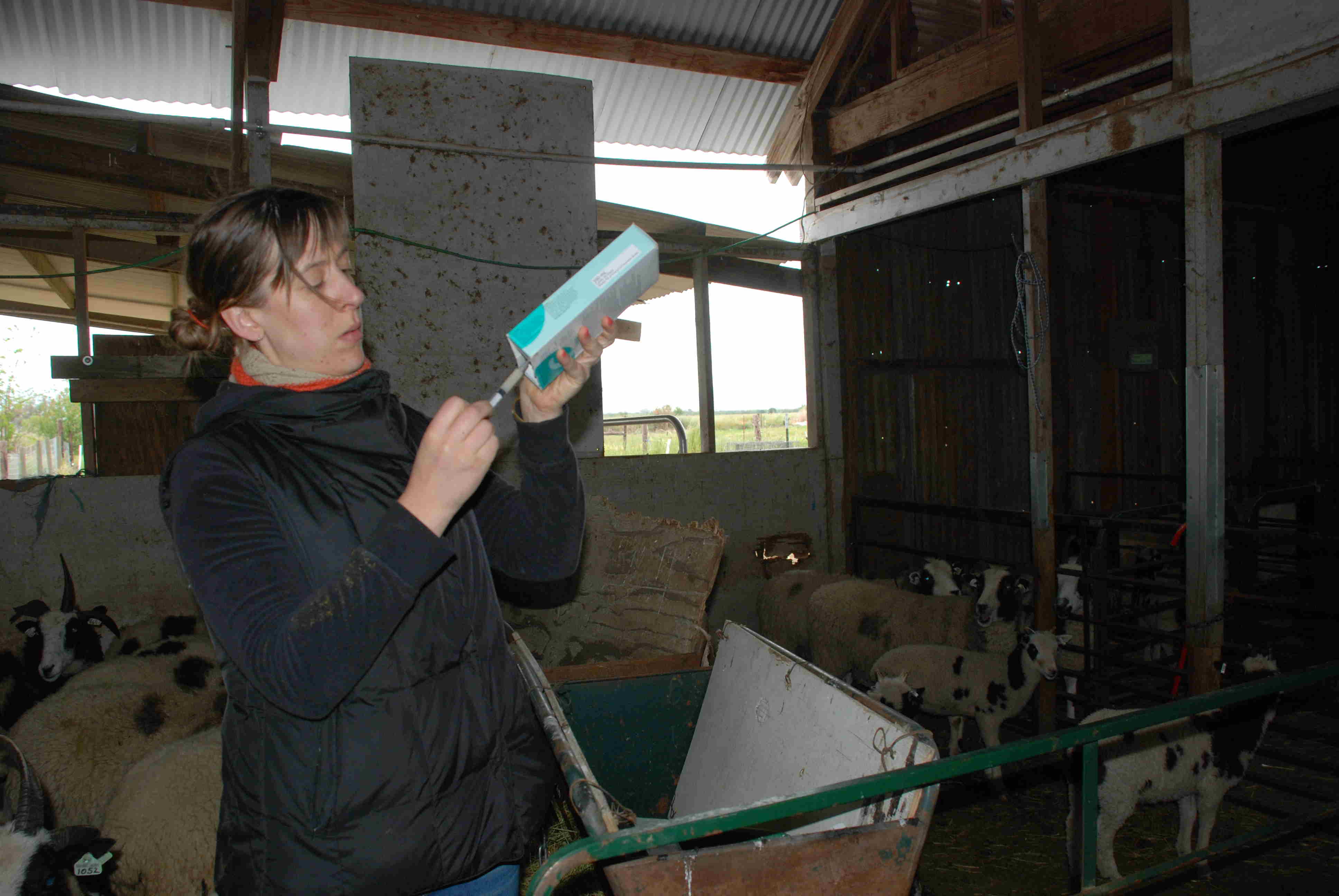
fill syringes (after the unfortunate incident with the new one).

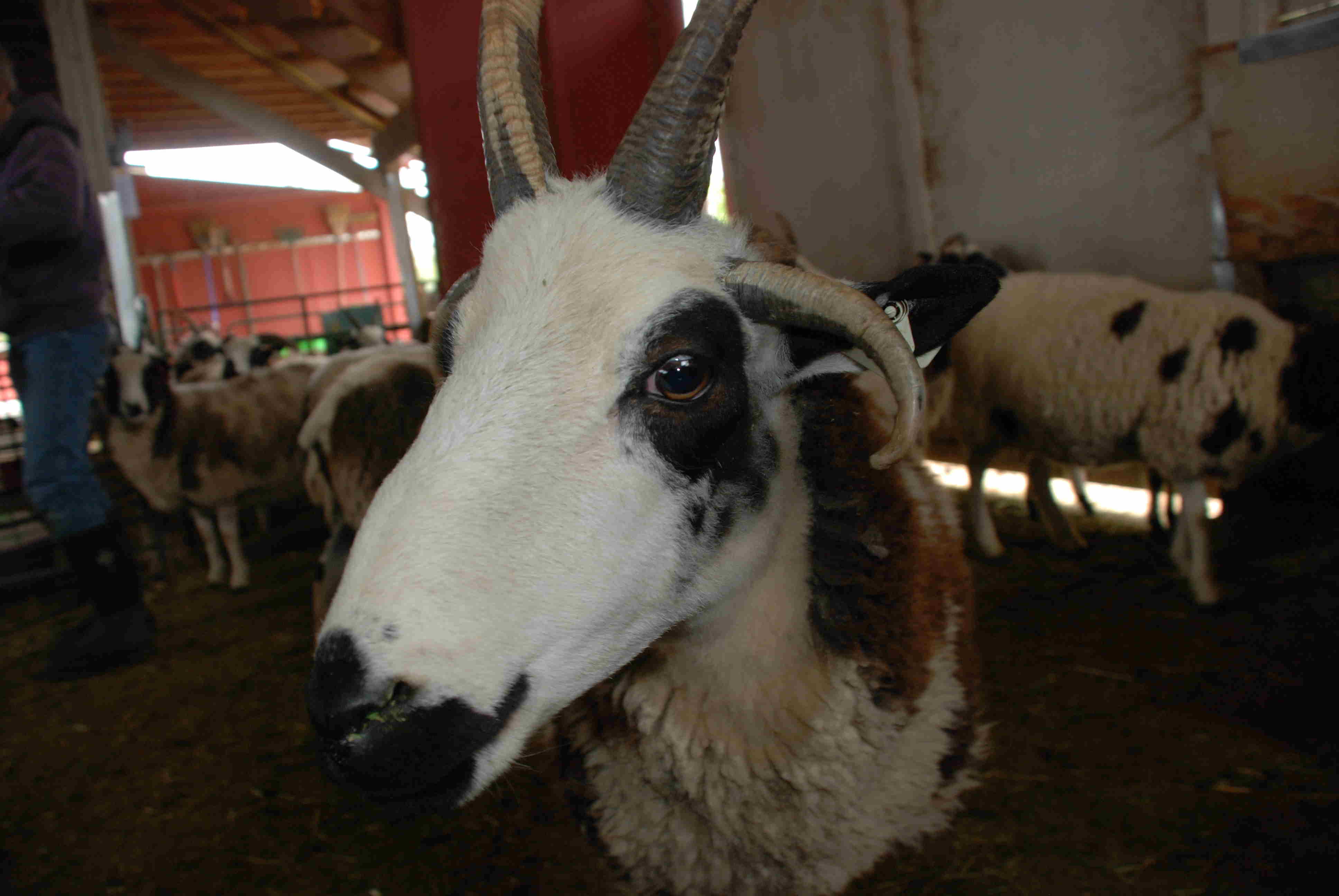
Shelby took the following portraits.

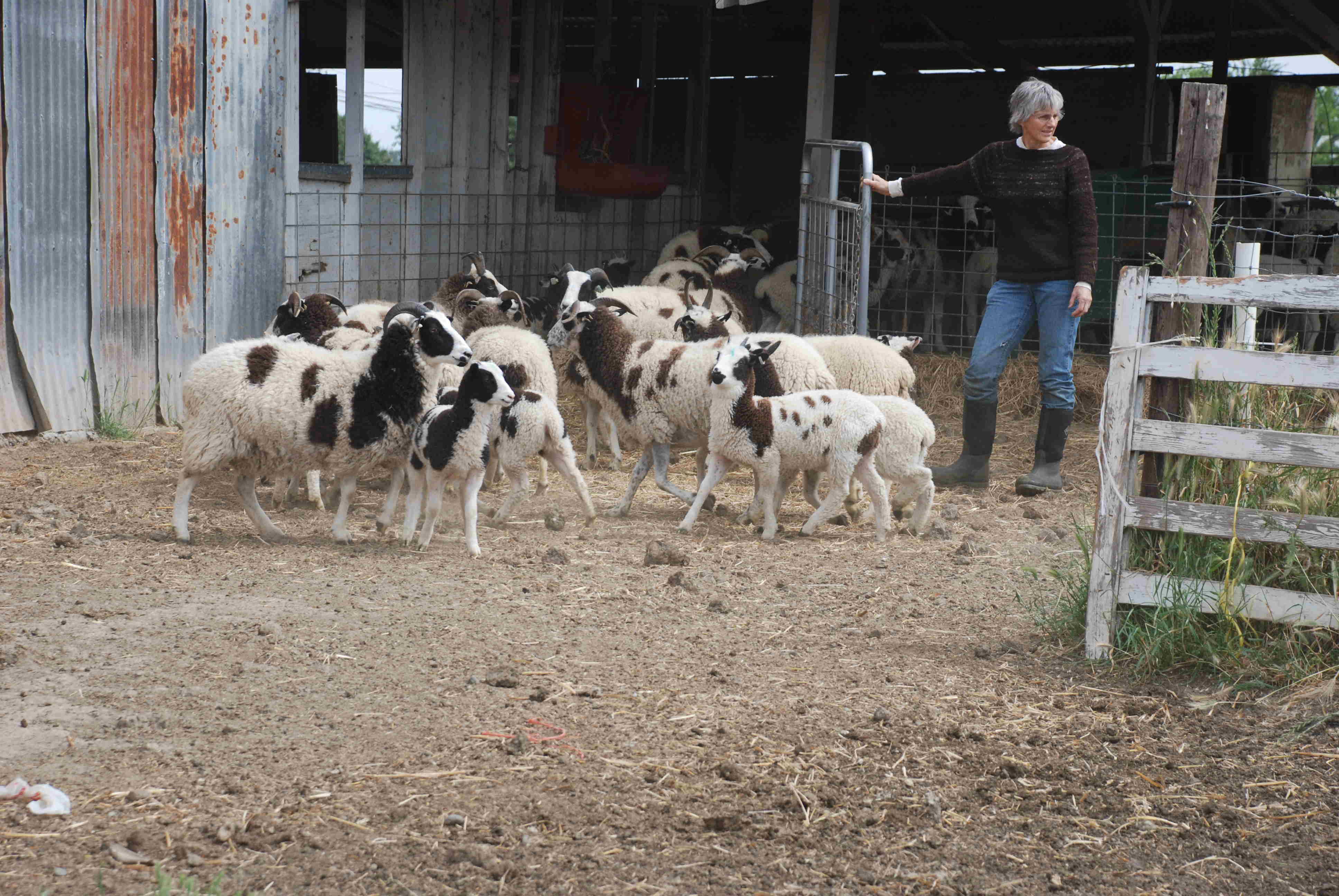
After vaccinating I let all the sheep out but then needed to catch one more lamb.
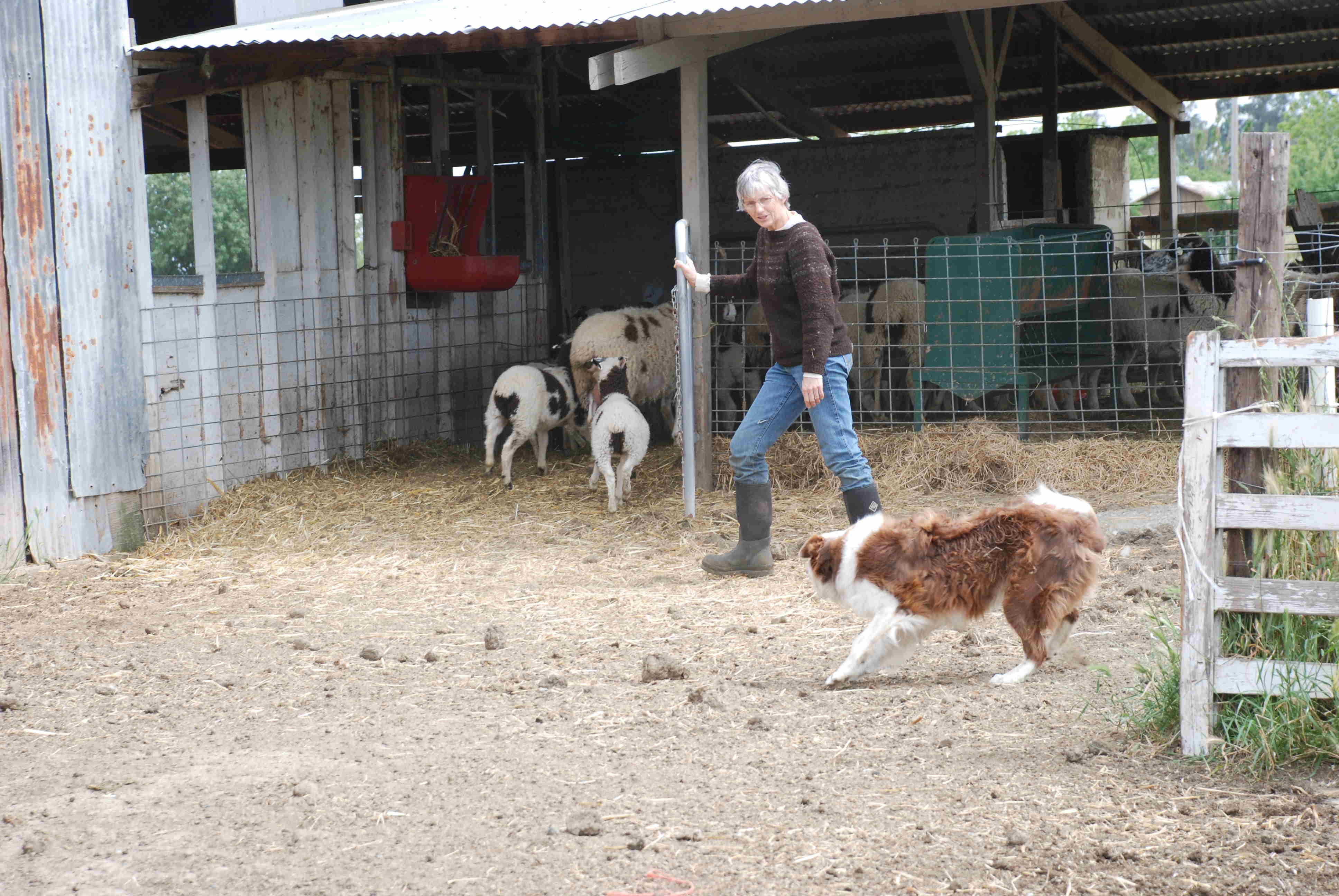
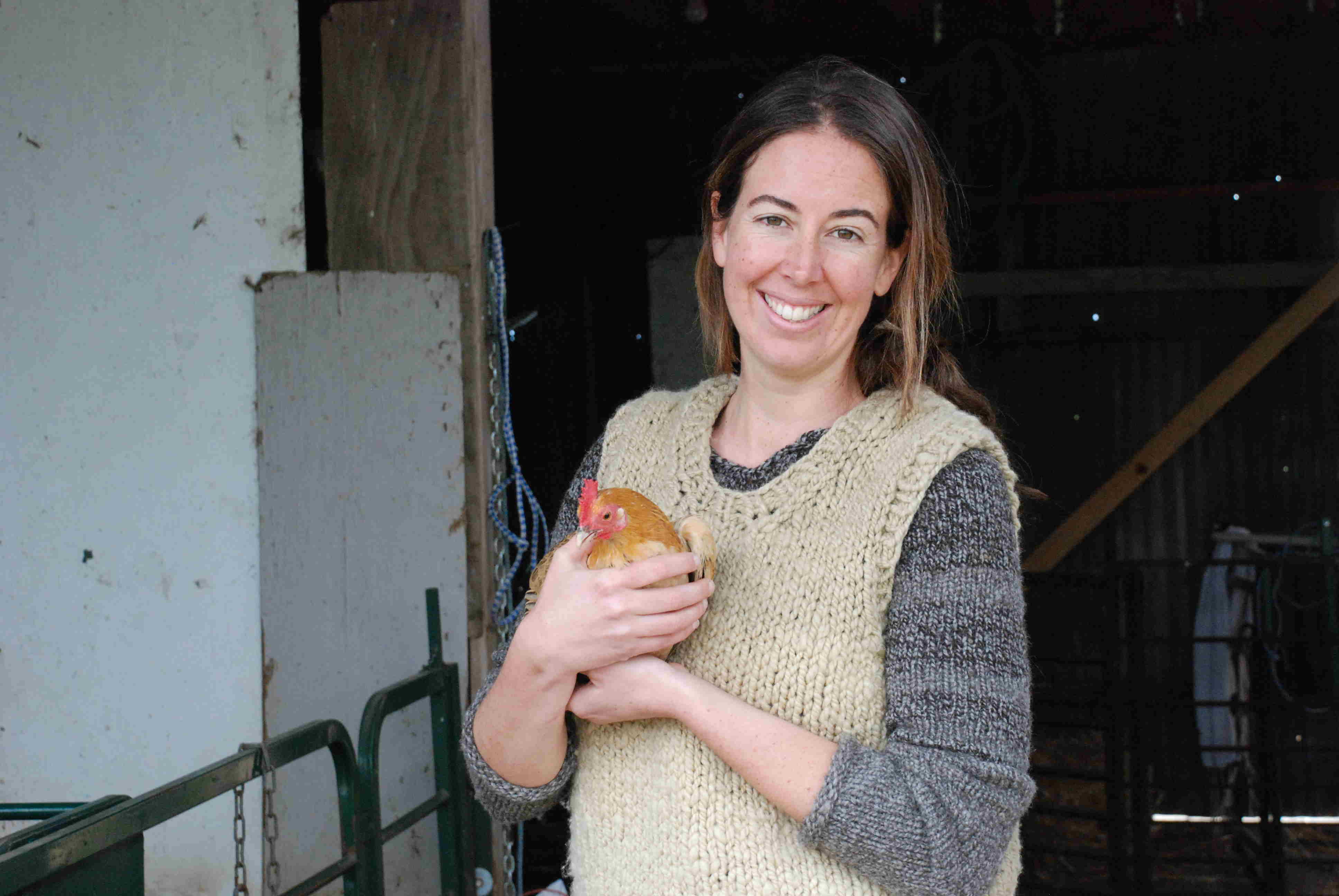
So Rusty had a chance to get involved also.

Thanks to all of you for helping. Wait until you hear about the next unscheduled Farm Day. I think it’s coming up soon.
Ram horn growth

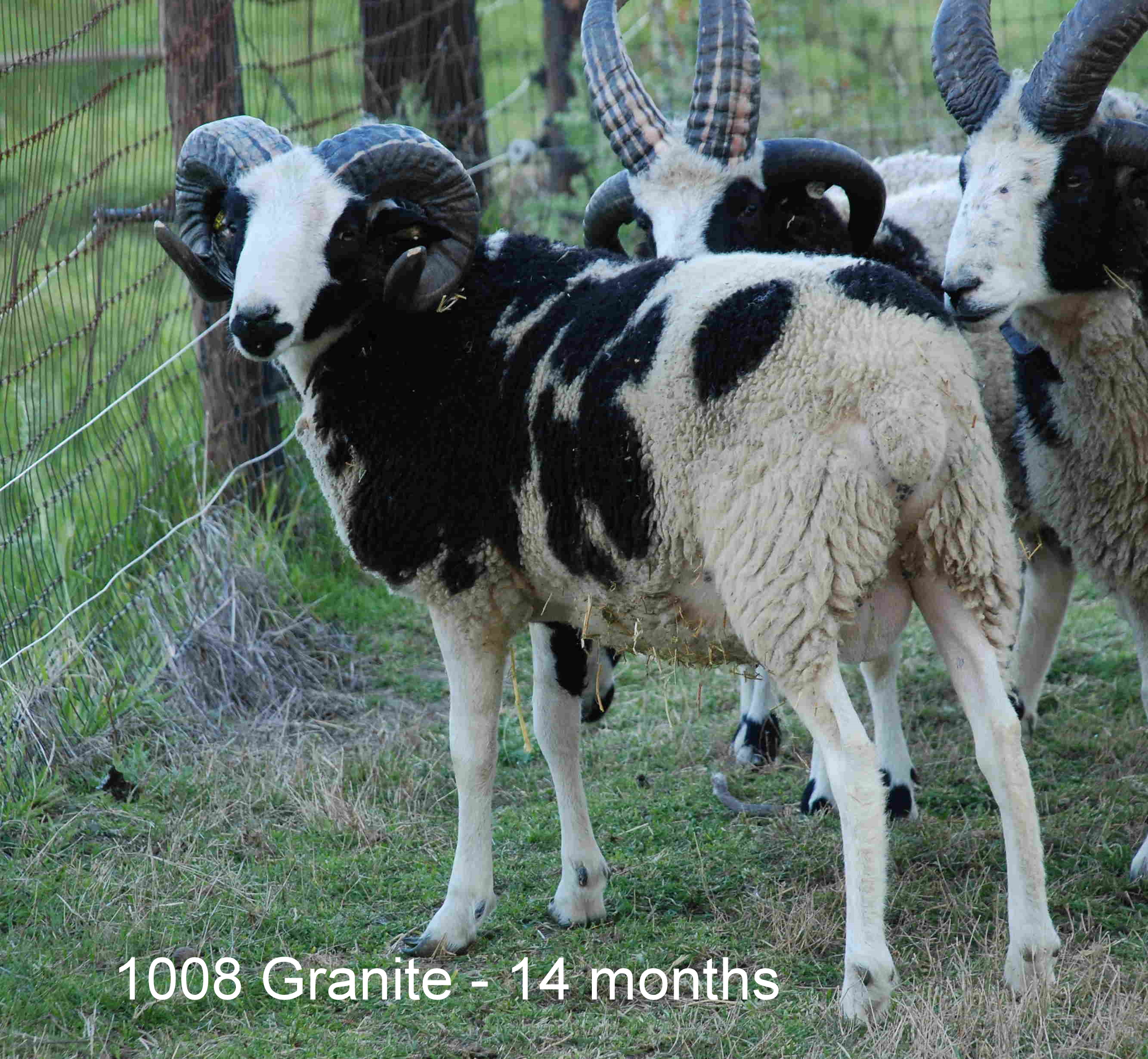
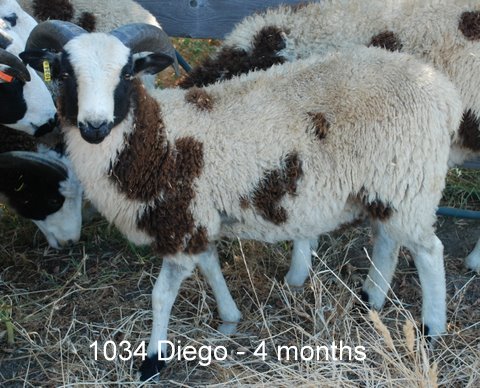
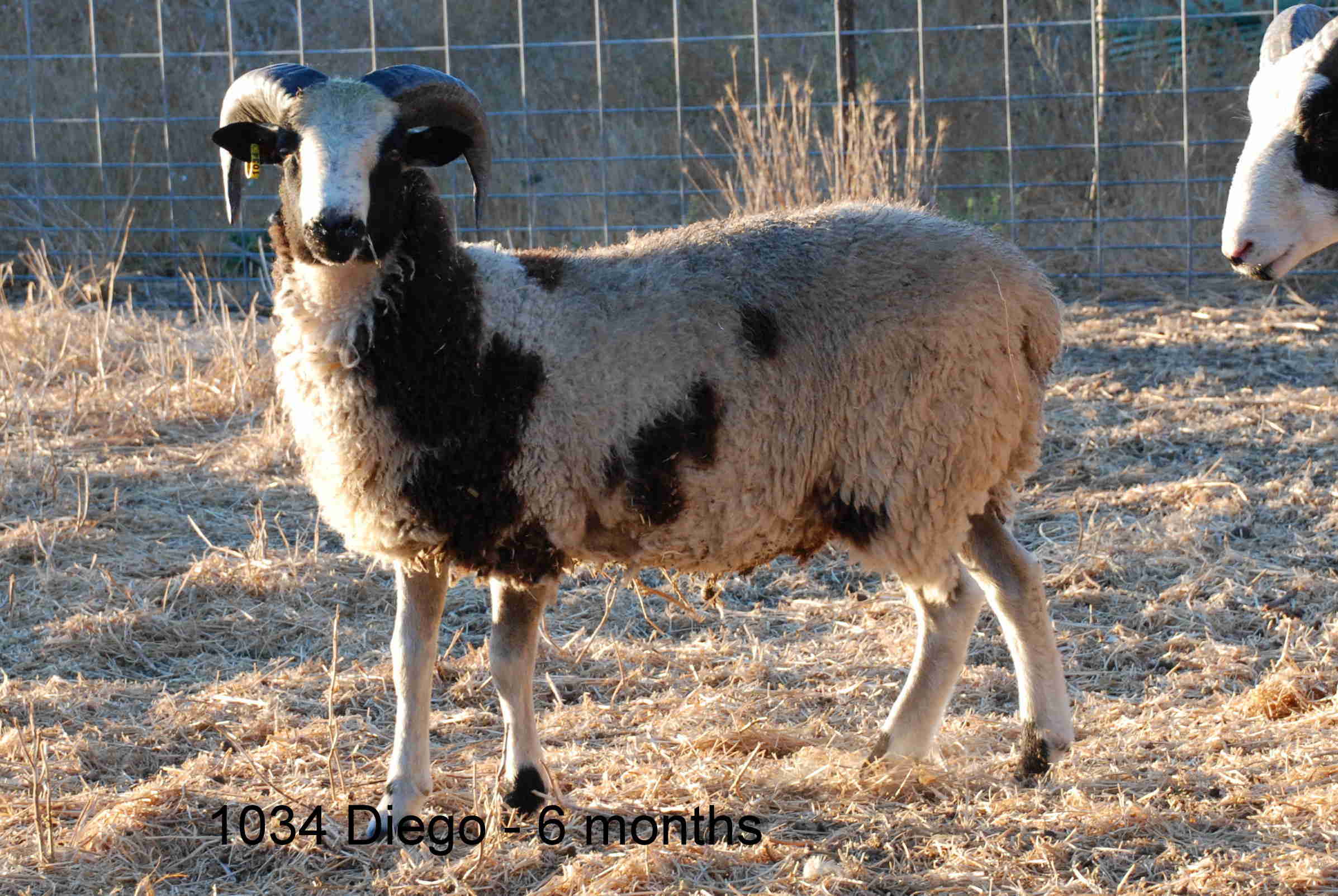
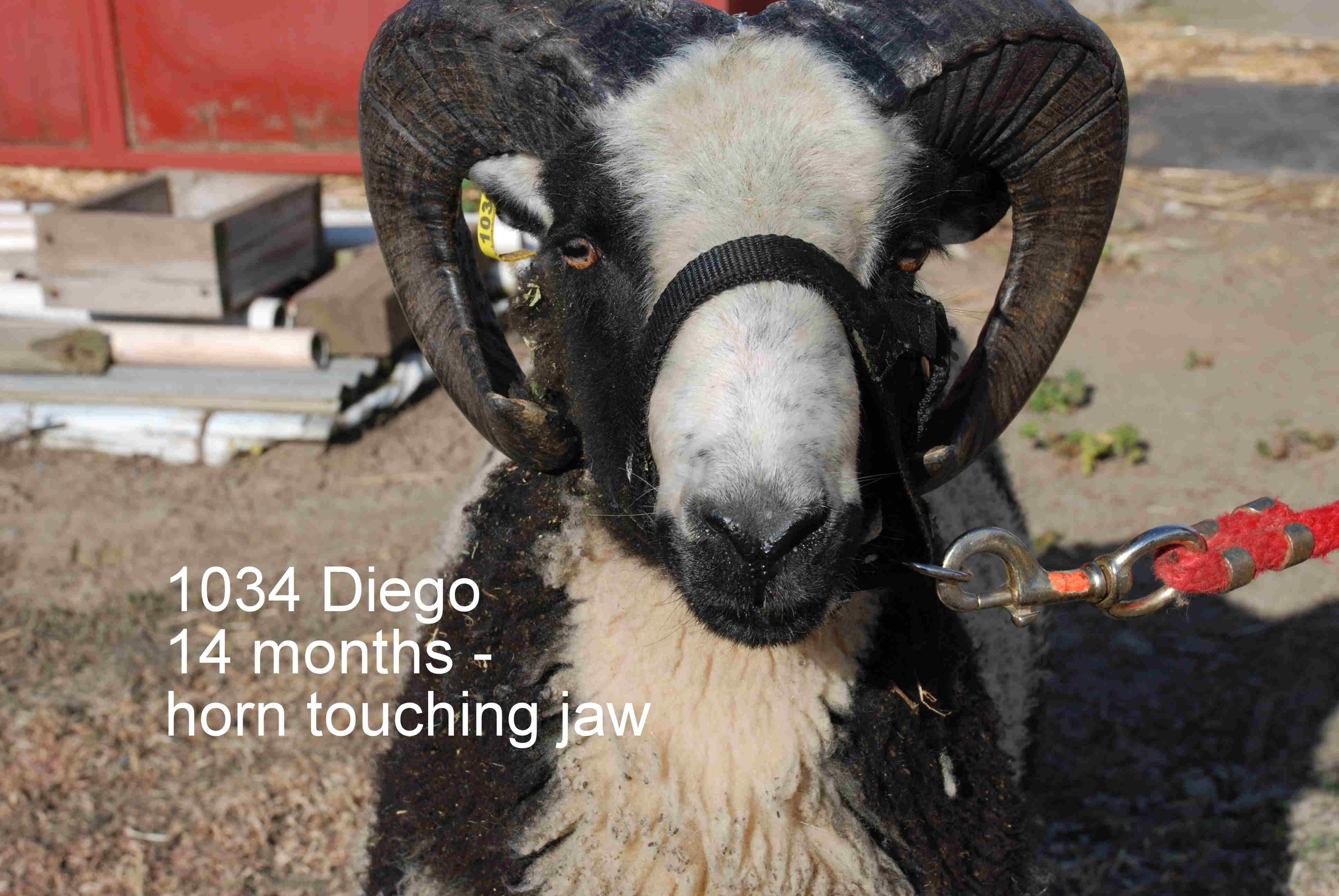
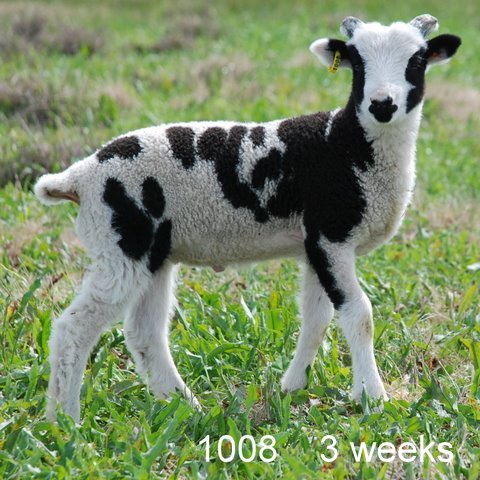
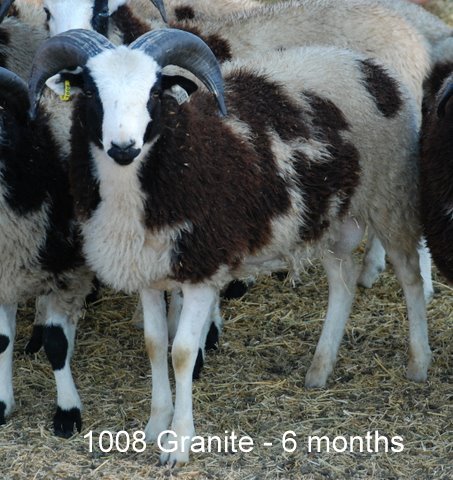
I have been talking to people who want to buy sheep. I explain that it’s hard to predict at this age (2 months) how ram lambs will turn out when they are six months or a year old. I finally got around to finding photos of some of my rams as younger ages. I have posted several of these in the photo gallery on my website to illustrate how the horns can change as the rams mature.  Here are a few of the photos, but look for the rest on the website.

Look at that nice spread.

These horns are still OK although as they have grown they have moved closer to his jaw.

Diego’s horns looked OK at 4 months.

At 6 months I had my doubts about his longevity.

Here I can barely get my finger between his right horn and his jaw. Diego became the entree for a crowd the other night and he will also provide a great pelt.

Pasture management revisited

Regular blog readers may know that in the late summer and fall I start complaining about the unpalatable late summer grasses. I’m sorry, but I’m going to complain now even though it is only spring. I only graze about 7 acres so all of it seems precious. We dealt with some of the issues of the thick dallisgrass a couple of weeks ago by burning it. I hope something starts growing where all that heavy thatch was.

Today’s issue is the condition of the east paddock. Medusahead is a nasty, unpalatable grass that goes to seed in the summer, covering all the soil with thick dry thatch. The medusahead is starting to grow now and the only other thing growing with it is a perennial grass (Elymus–wild rye– I think) that the sheep don’t like either. The rest of the soil is covered with the dry residue from both of these. My goal in this paddock is to  graze it hard enough that they will at least trample and break up the dried up grasses from last year and hopefully eat some of the less palatable grass.

As I was uploading these photos I realized that they don’t show what I’ve been talking about.

This is the view looking south. You can’t tell, but it’s the east side (left) of the east paddock that has the problem vegetation.  It took them only a day to clear off almost everything in the south part of this paddock (as opposed to 2 days in equal sized paddocks with better vegetation).
They are hungry and ready to move.

I took this photo as I opened the fence and stepped back so I wouldn’t get trampled.

Arthritic Stephanie follows the running sheep.

Amaryllis brings up the rear. She will follow Stephanie anywhere.

This view is looking north, from the part of the paddock they just left. In this photo you can’t really tell the difference in vegetation between the west (now on the left) and east sides of the paddock. It’s much easier in person, but notice where the sheep are. There is no fence keeping them from the east side–it just doesn’t have what they want to eat.

Compare this photo to the one where they are running into the new pasture. There is a blue cast to these plants–this is very sparse (although it may not look so in a photo from this angle) and it is so tall because the sheep avoided eating it the last time they were here.

Tomorrow I will start irrigating. I hope for some warm weather to follow so that the clover and trefoil will come in faster.

Meet the Sheep a Success

After a very wet winter, we welcomed fabulous weather (and our first dry weekend) for Meet the Sheep, our annual Open House. Even with the great weather it would not have been such a success without all my friends helping.

Julie set up a dying and drum carding demo area and also brought…

her cute Pygora goats.

Colleen skipped Saturday at he Farmer’s Market to bring her Fiber Confections booth here.

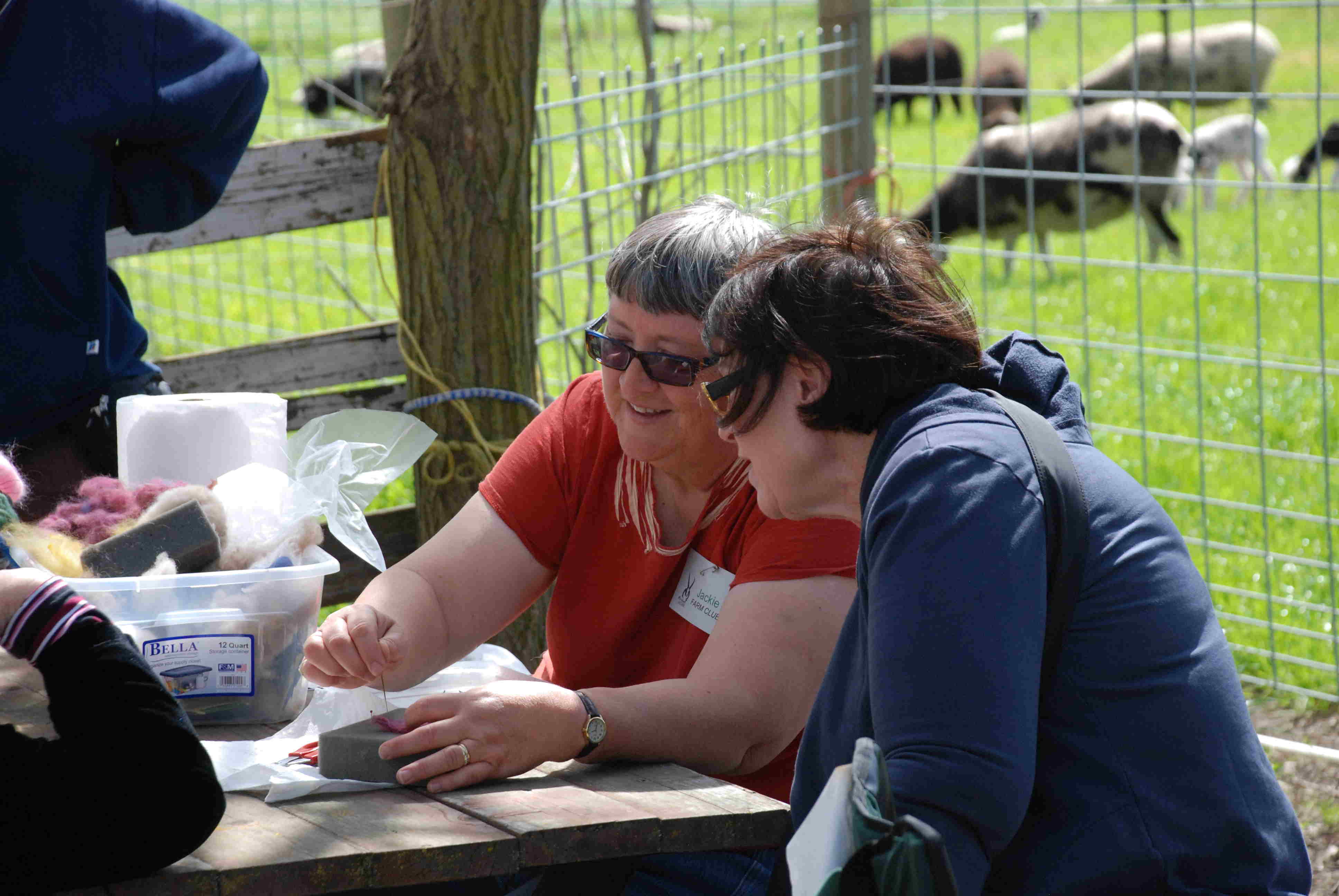
Jackie had her booth here and helped people learn to needle-felt.

I don’t have photos of everyone but I am grateful to Farm Club members for helping as well as to my friend Chris who worked in the shop.

There were a lot of visitors.

This is Marissa who modeled her first sweater made of handspun yarn, from Jacob wool of course.

New weavers enjoyed the weather, their wine, and a new weaving book.

At the end of an exhausting day Laura finally decided it was time to lamb. Most of the Farm Club members were here watching.

There was relief after Laura delivered a healthy set of twins.

Fibershed project

Last year I met Rebecca Burgess when she taught a natural dye class at my place. She told me of her Fibershed project and she describes it much better than I can:

“The Fibershed Project is a challenge:  To live for one year, in clothes made from fibers that are solely sourced within a geographical region no larger than 150 miles from my front door; this includes the natural dye colors as well!

Why? The textile industry is the number one polluter of fresh water resources on the planet, as well as having an immense carbon footprint. The average CO2 emitted for the production of one T-shirt is up to 40 times the weight of that shirt. The goal of this project is to both show and model that beauty and fashion can function hand-in-hand with sustainability, local economies, and regional agriculture.”

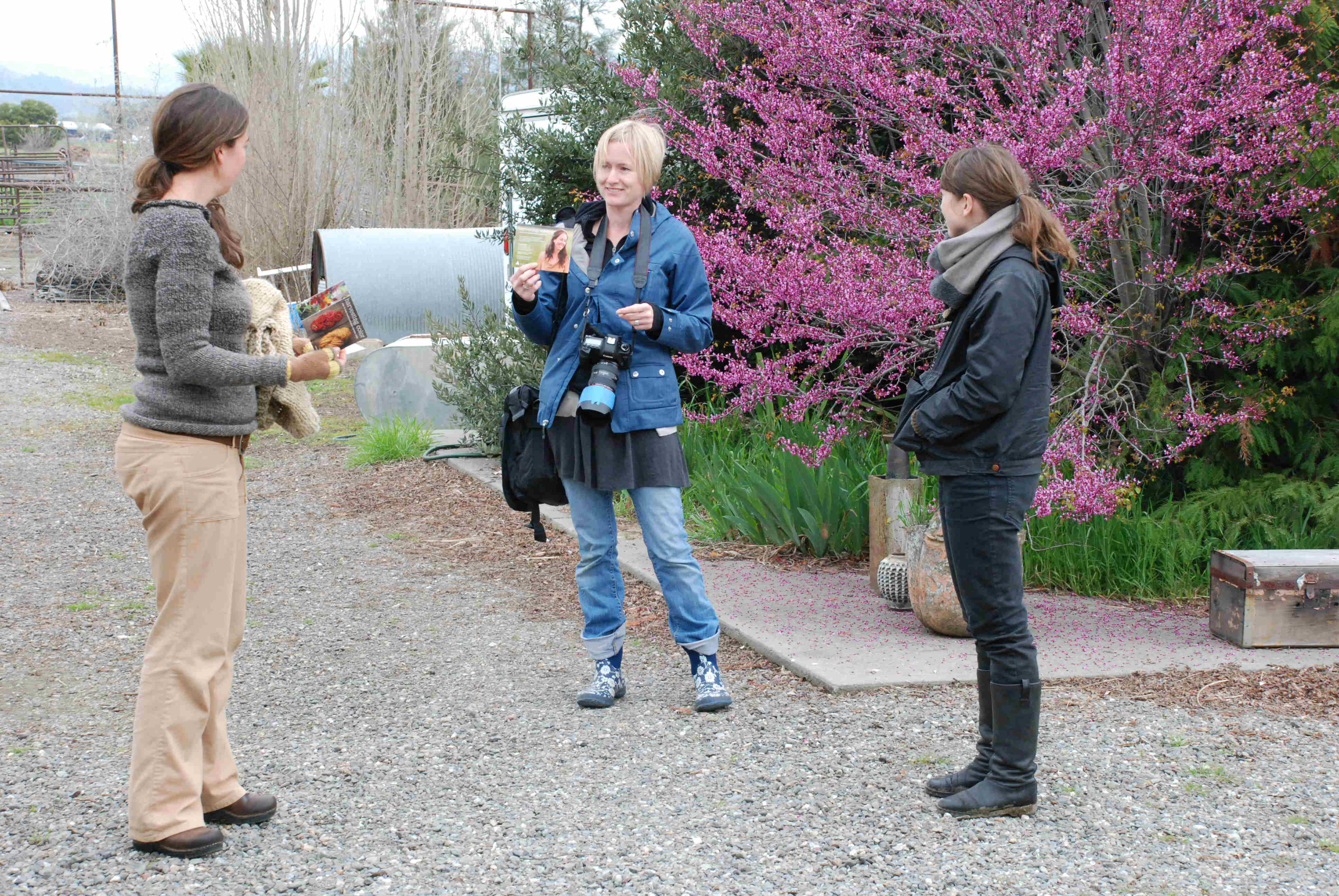
Rebecca visited today along with designer, Kacy, and photographer, Paige. I donated some yarn to the project last year and Kacy designed a sweater as part of the wardrobe.

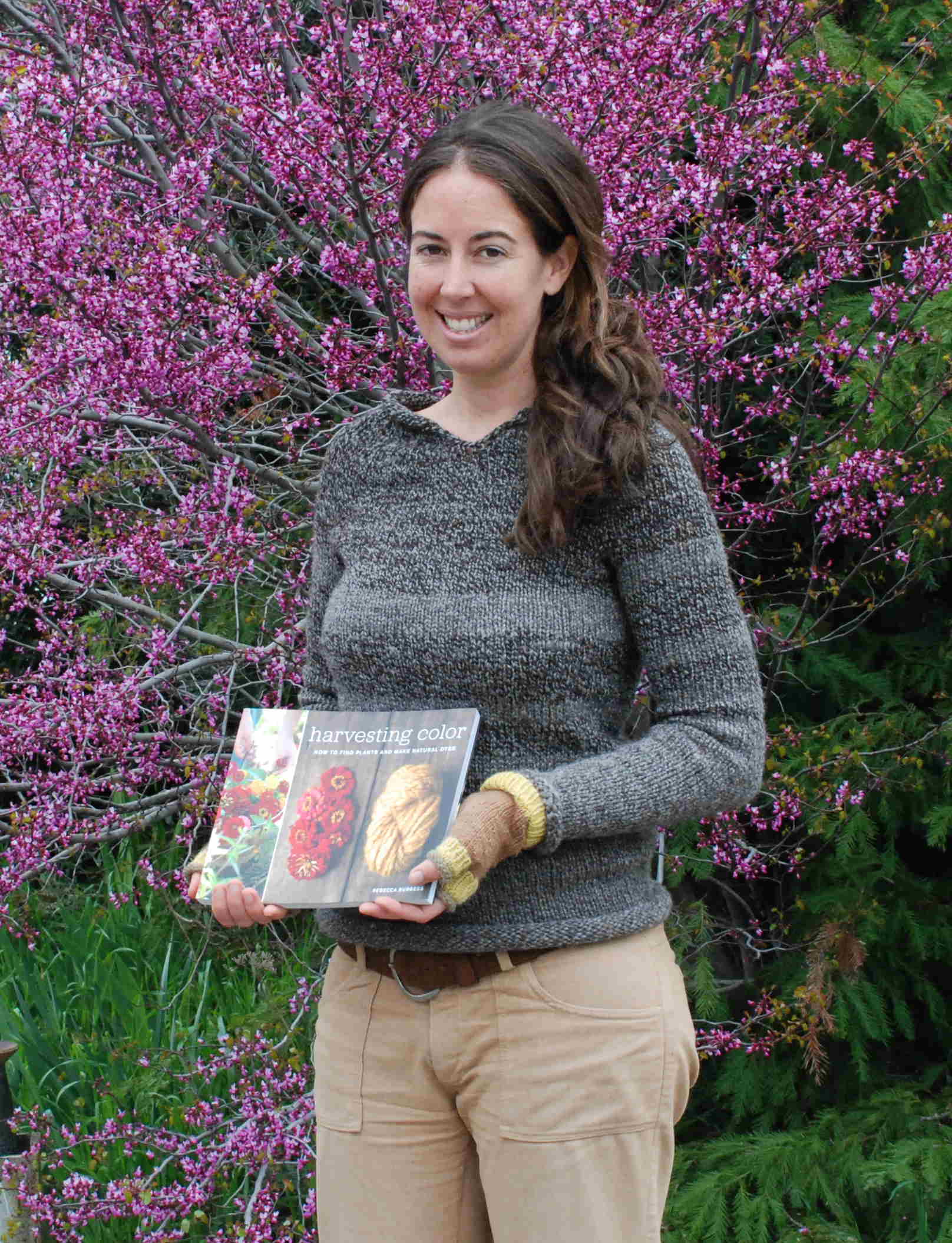
This is Rebecca wearing her Jacob sweater and showing off her new book (with photos by Paige) which will be out in April. I will have some here.


The three creative women who were here this morning.  You’ll be hearing much more from these three.

In the meantime while we were busy Dora lambed with twins:

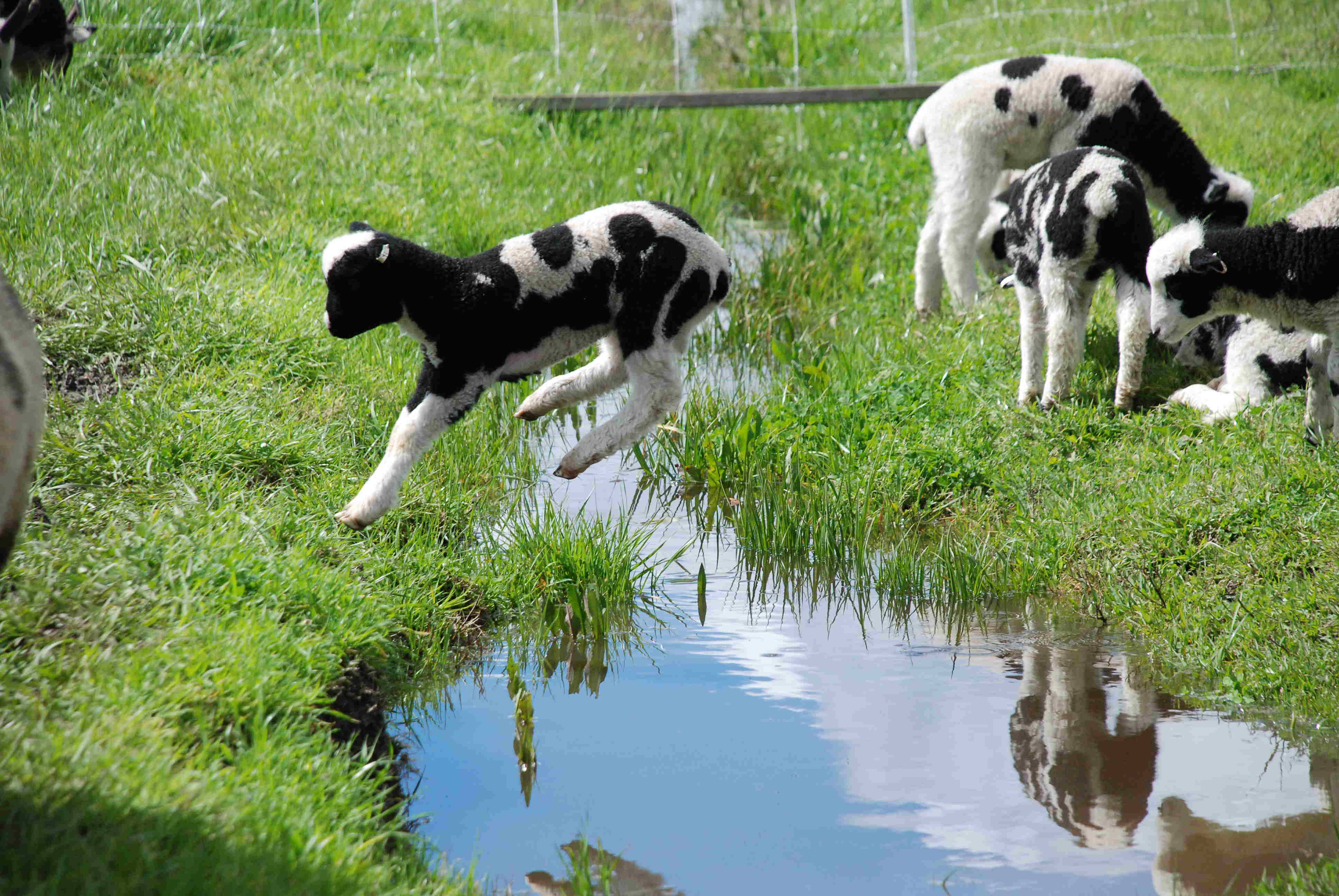
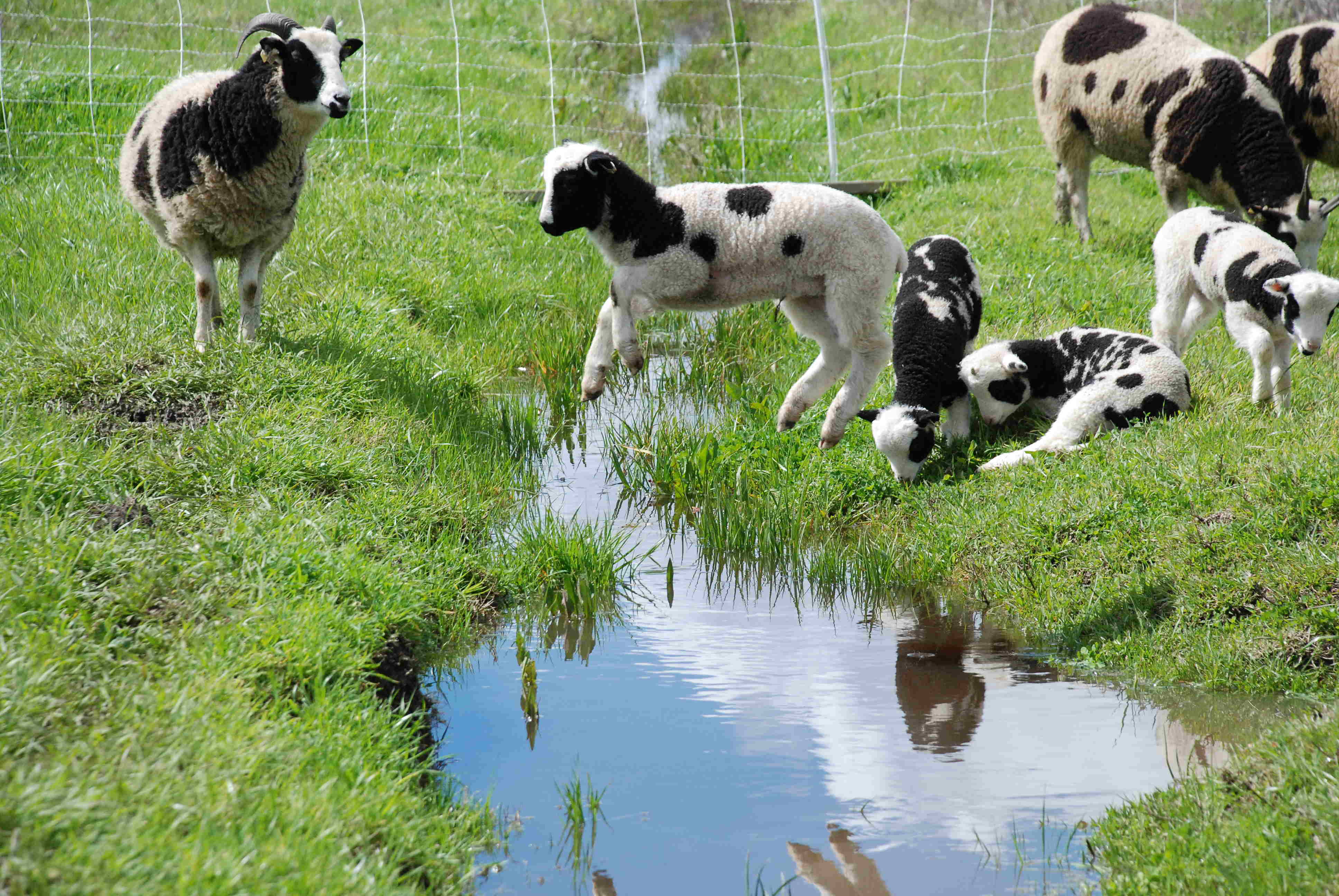
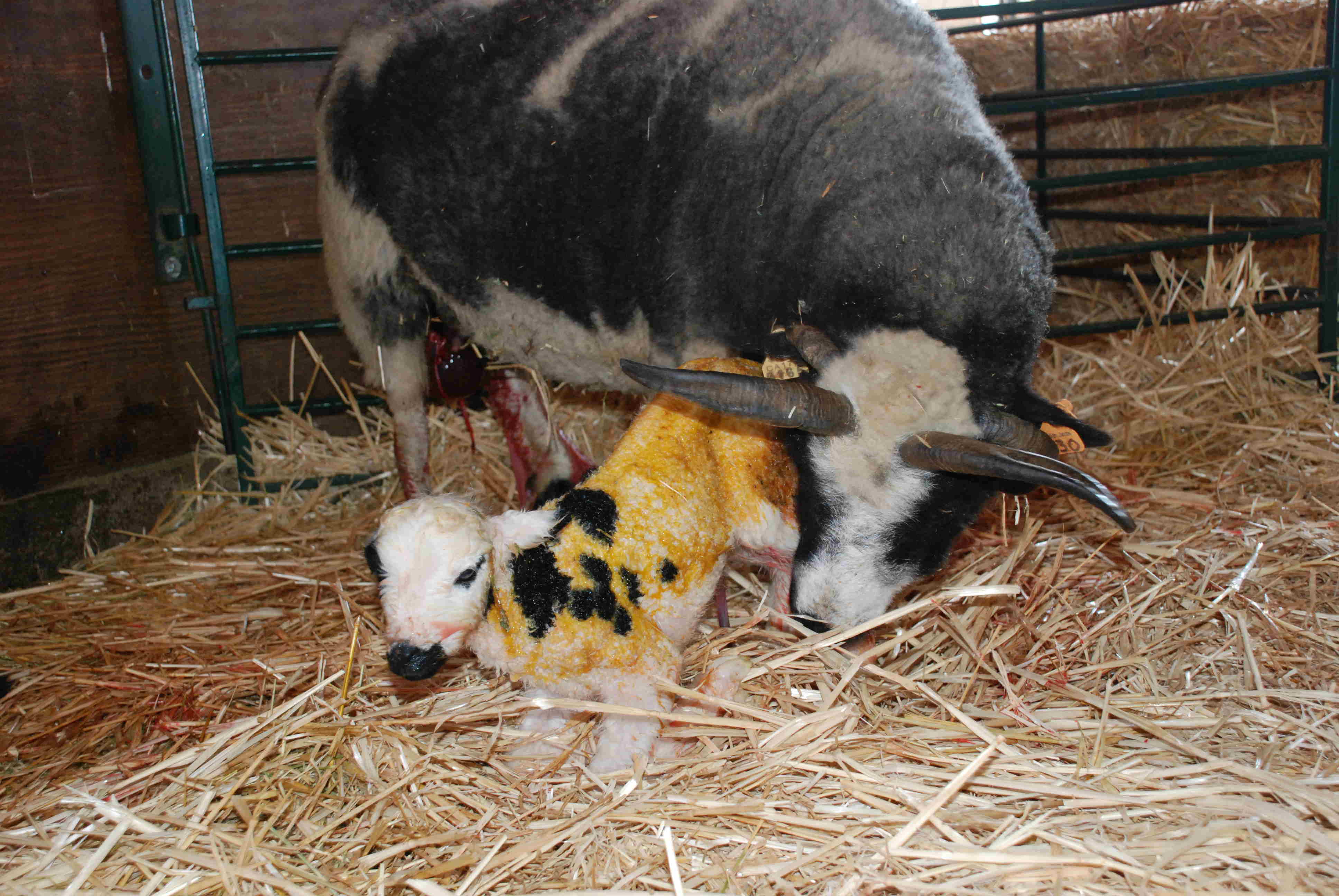
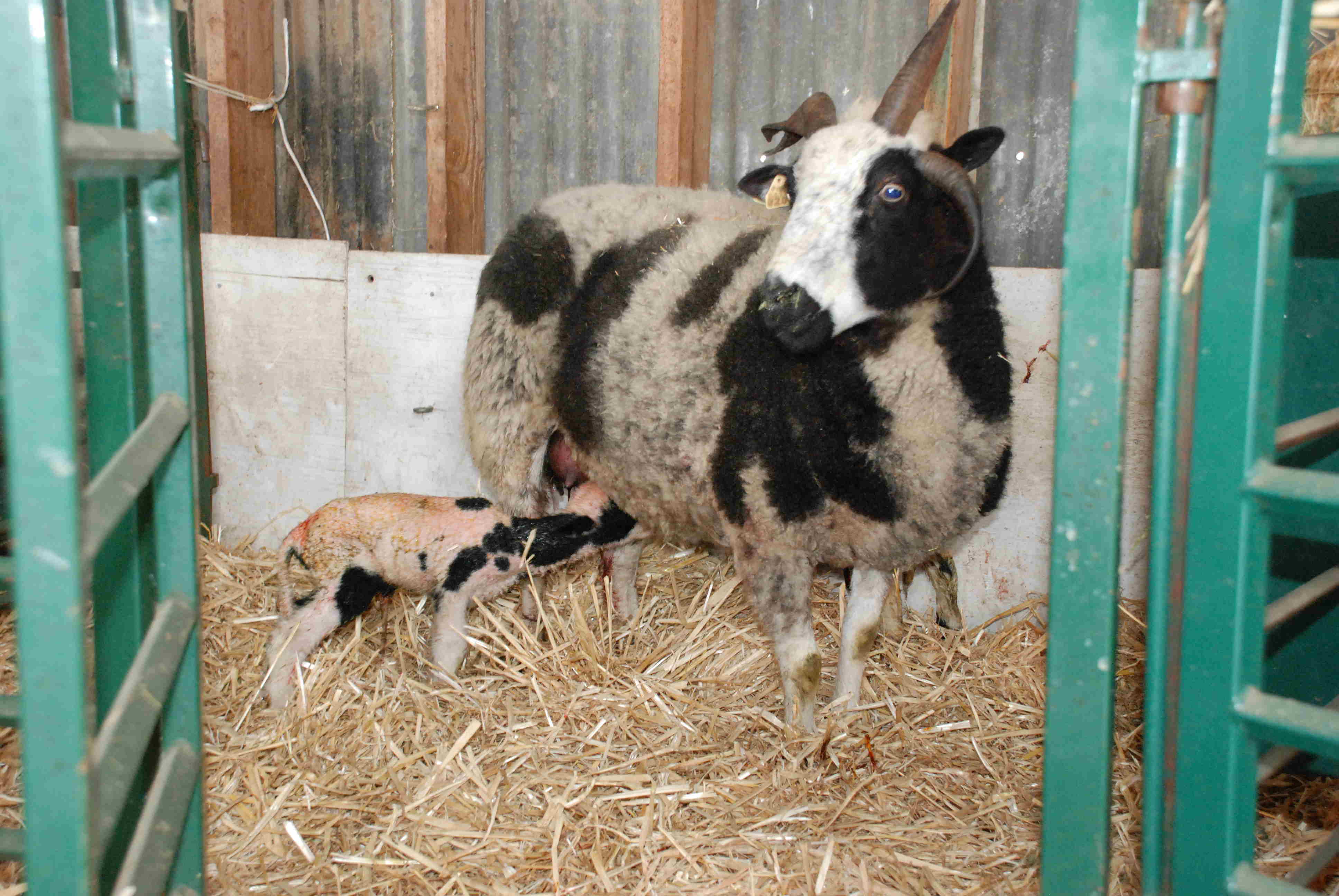
Lambs….again.

Are you tired of new lambs photos?

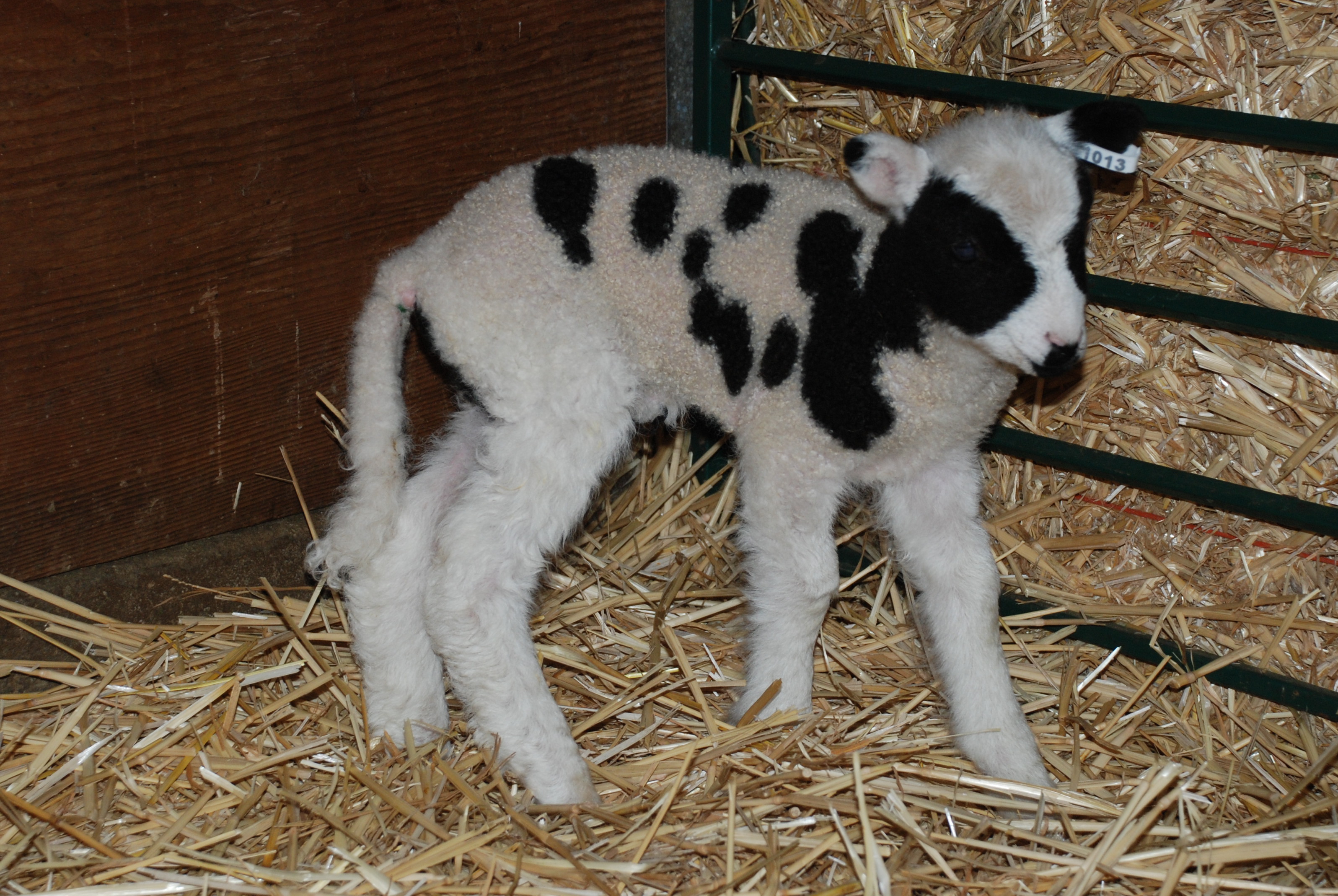
This is the wet butterfly look. The ears remind me of recently-emerged butterfly wings.
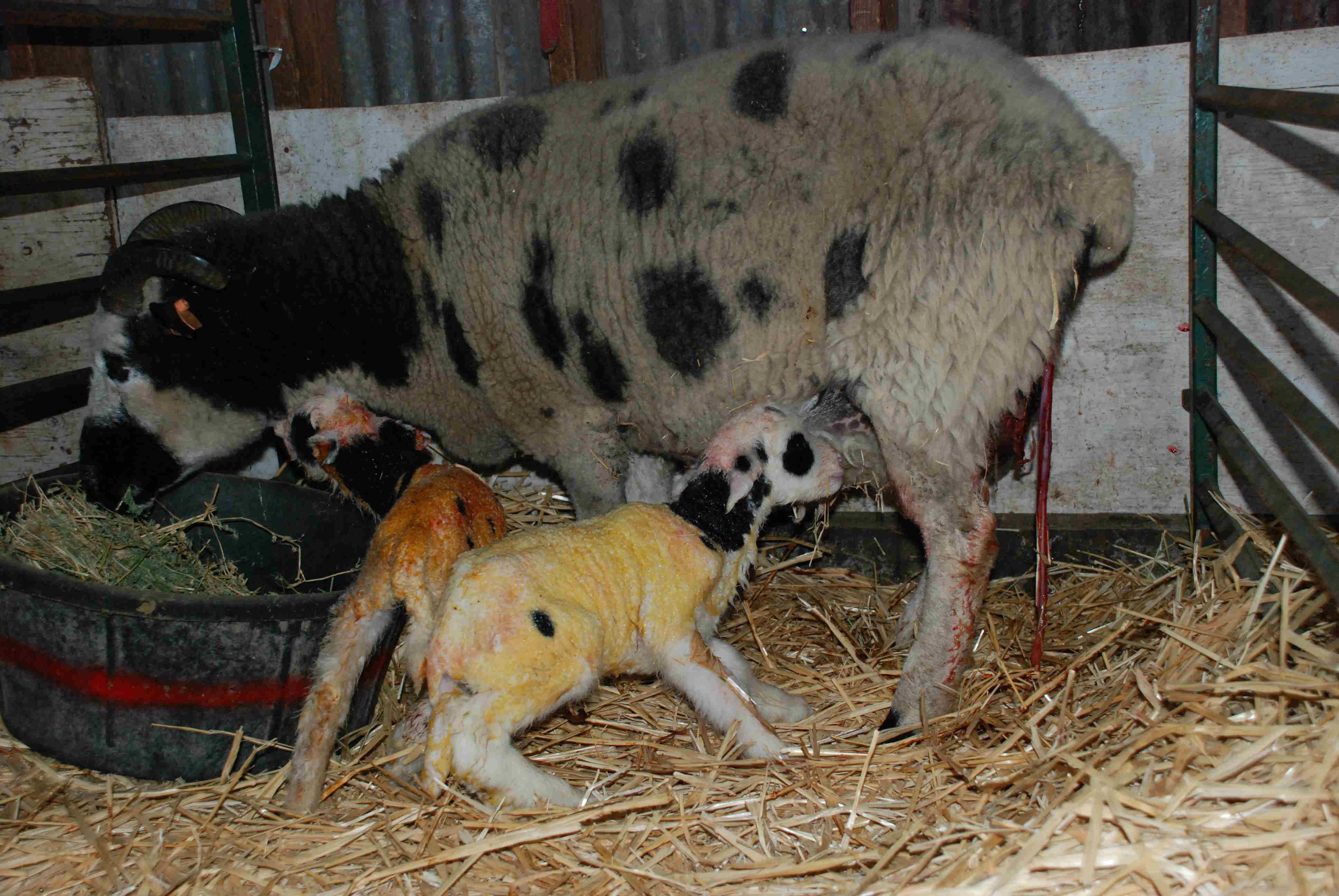
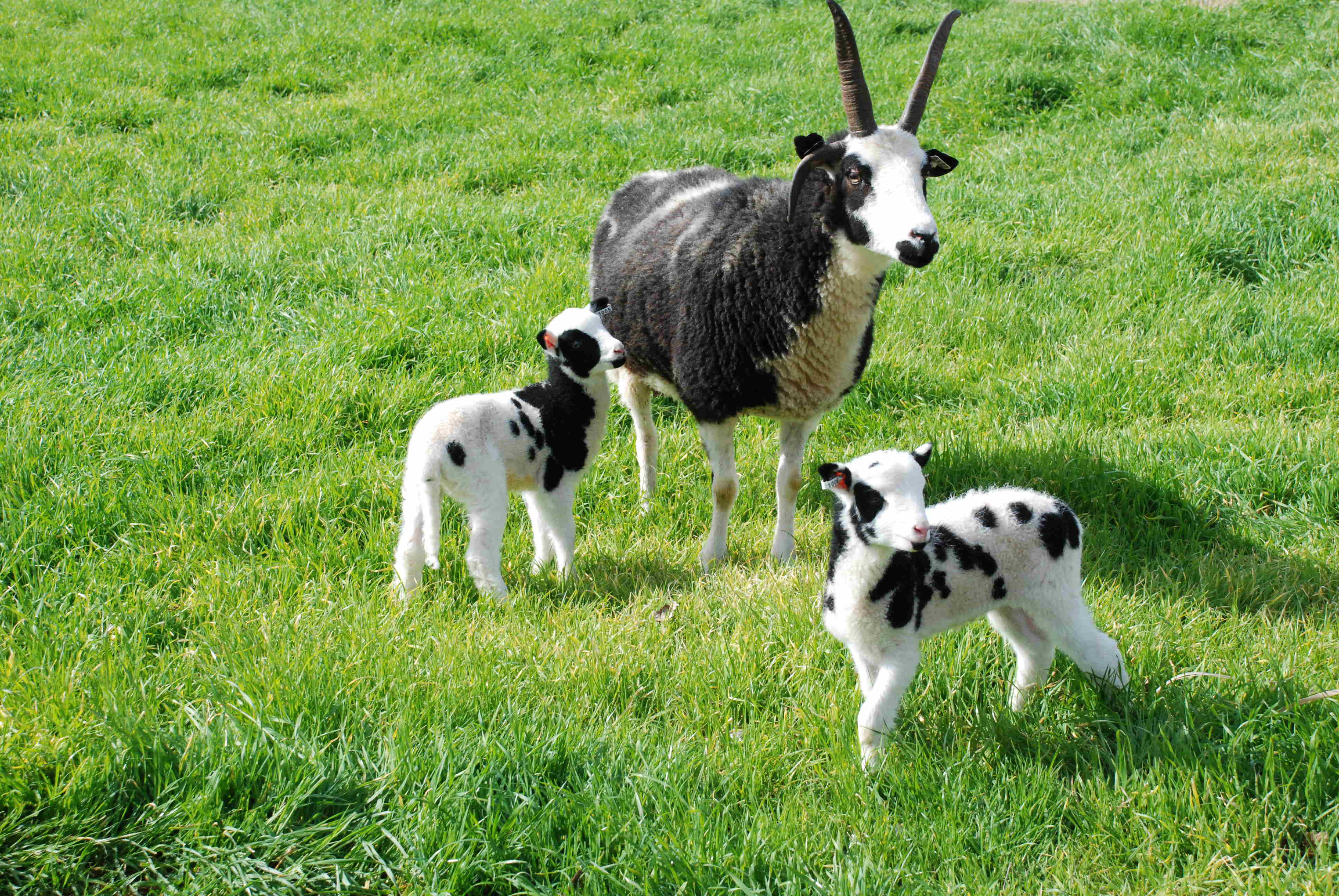
This is the “Jacobs come in all colors” look.

Weigh-in of new lambs. I don’t usually weigh lambs, but to be able to answer the question, “How much do they weigh?”, I’m weighing them all this year.  My guess is an average of 7.5-8 pounds but I’ll report back when it’s all over.


Knitting better

Today Meridian Jacobs hosted a knitting class taught by superb knitter, Nancy Jane Campbell. The purpose of this class was to evaluate our current knitting habits and work to “Knit Better’. There was pre-class homework.

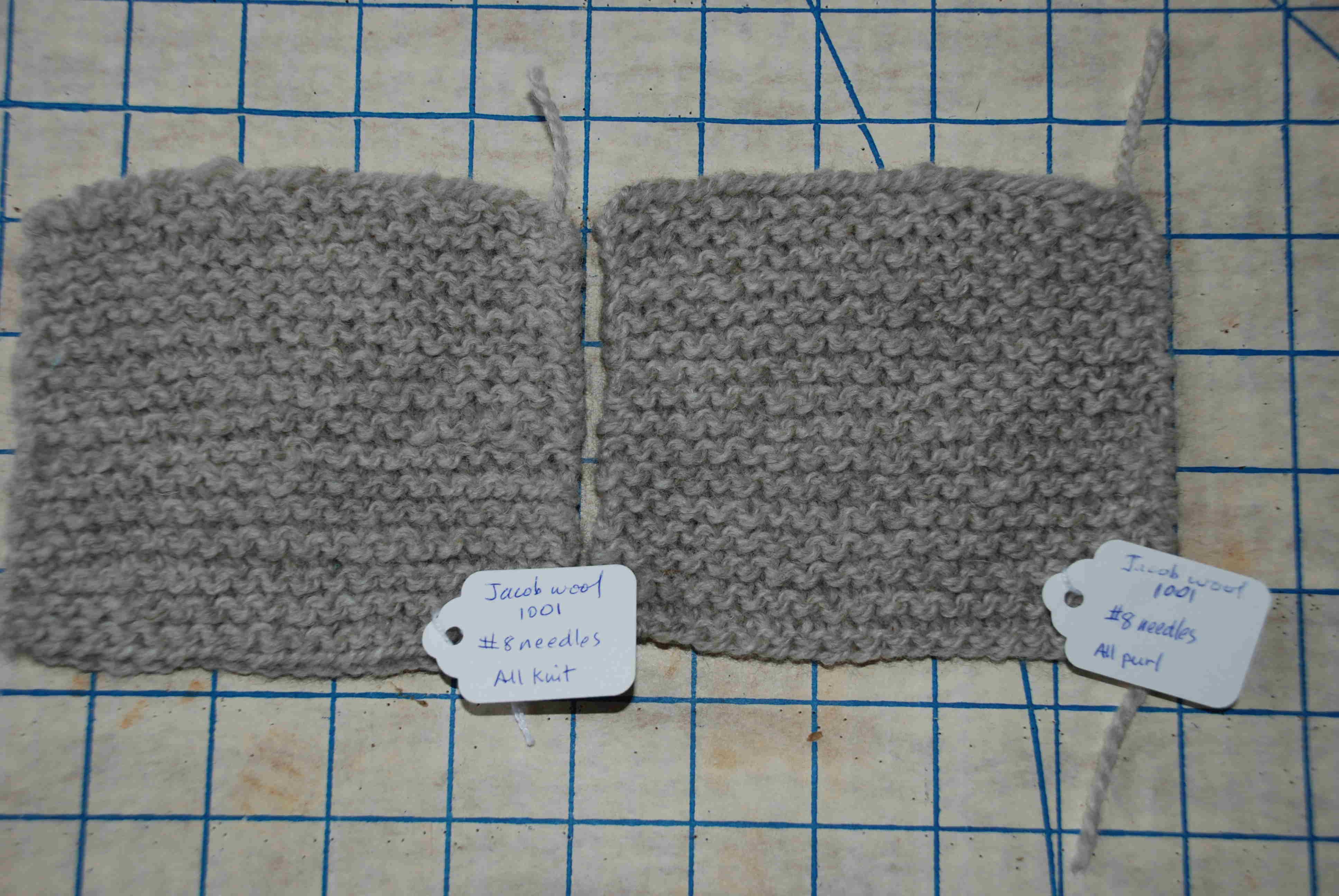
These are two garter stitch swatches. The difference is that one is the result of knitting every row and the other is knit by purling every row. There is a difference. Nancy pointed out that my purl sample is much more even than the knit sample. The stockinette sample (no photo) also showed that I knit and purl with different tensions, resulting in subtle ridges and uneven stitches.

Lunchtime. We went to the barn so I could feed Nellie. Yes, I named the bottle baby.

We found more lambs.

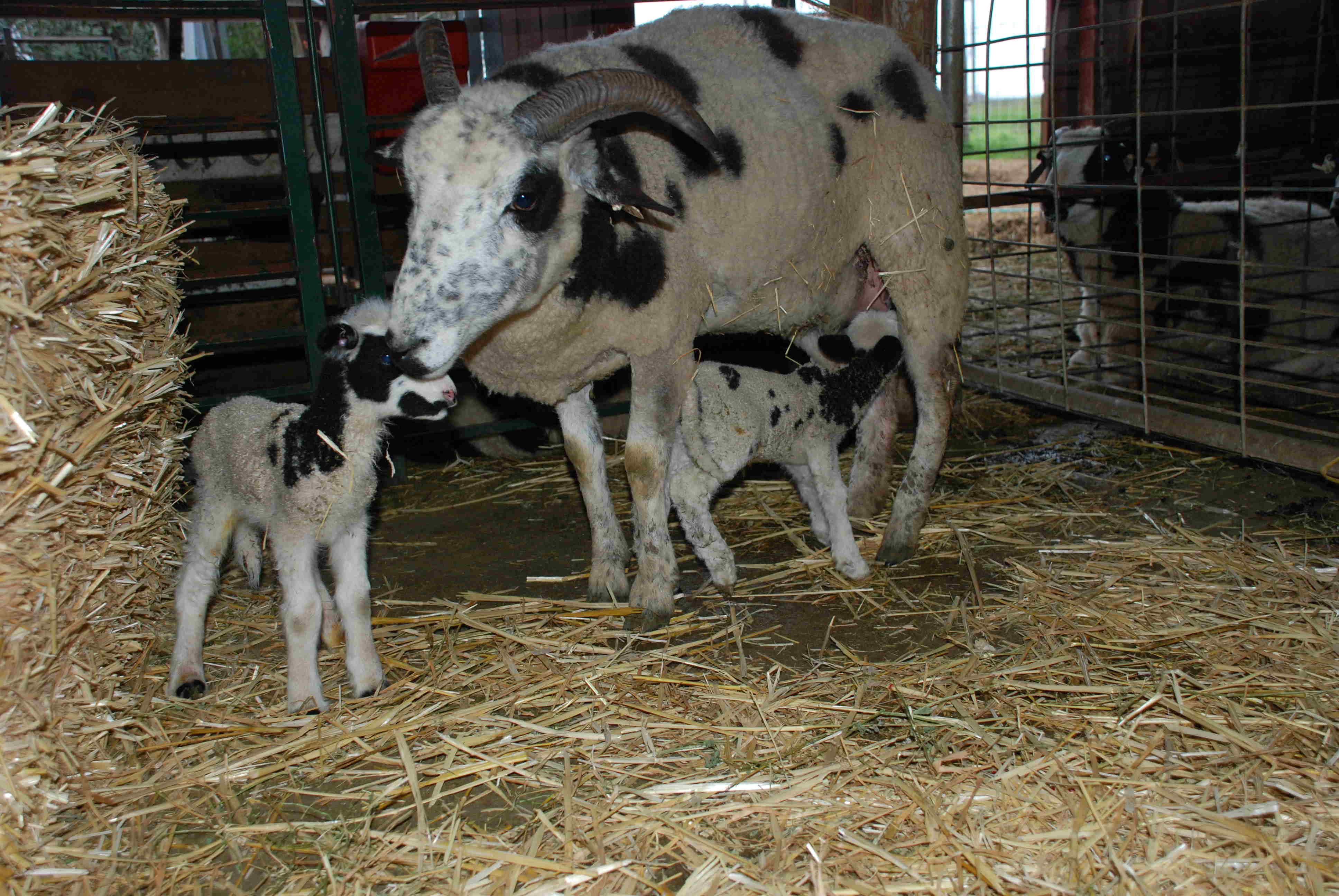
Soliloquy had twins–smallest lambs so far this year at 5-6 pounds and Victoria had triplets.  I dealt with all of them and went back to the shop for the afternoon session of the class.

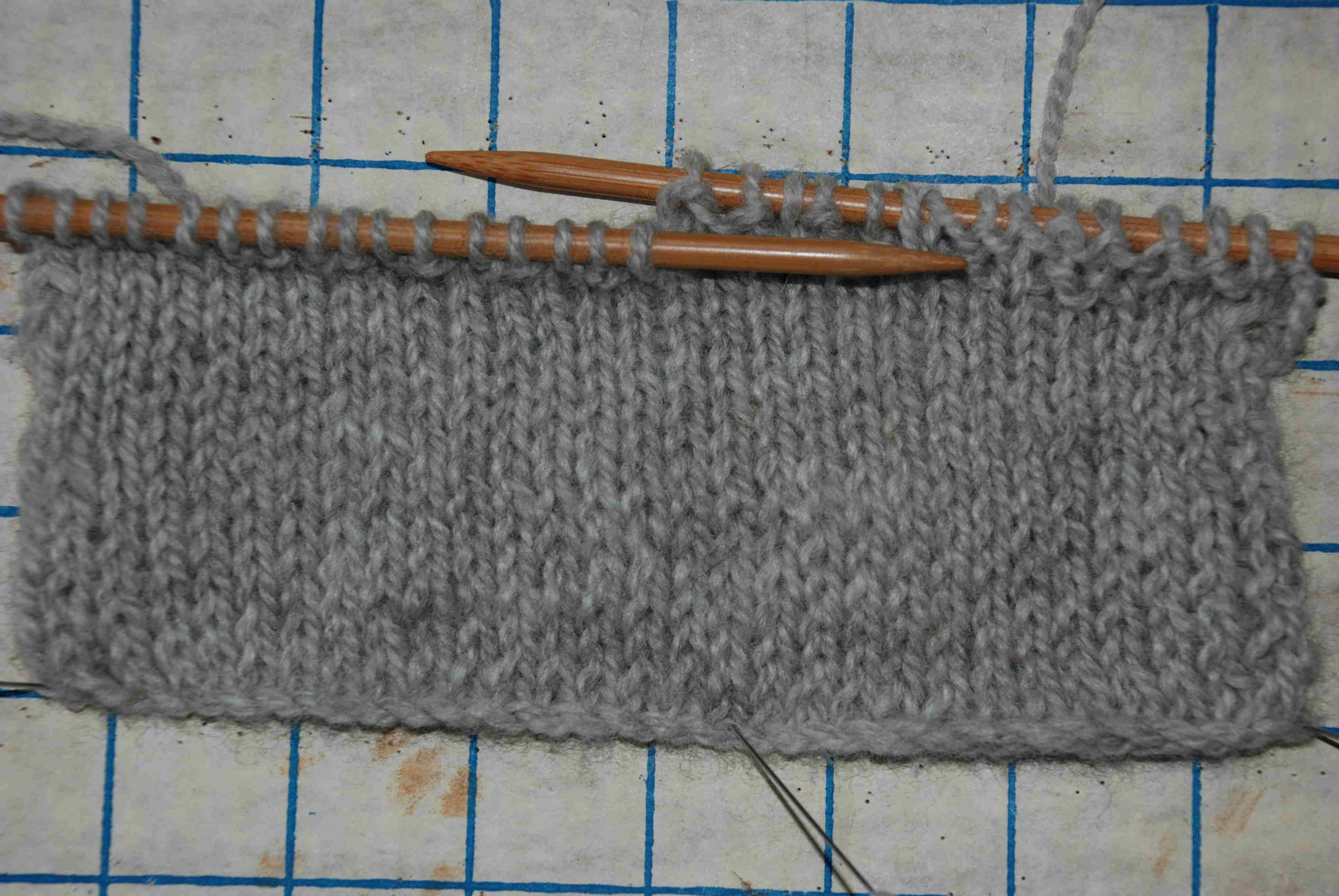
Before lunch we had measured and evaluated our samples. After lunch we started working on changing our habits and learning new techniques. The sample above may not be too impressive, but notice the very cool knitted cable cast-on edge.  It looks much neater than my long-tail cast-on. And notice the inch or so closest to the needles. There is a a big difference in the knitting for that inch than the couple of inches below. At the risk of knitting too tightly I have been knitting way too loose. It’s a lot easier to be consistent when there is a little more tension on the yarn and the added benefit is that the stitches aren’t always falling off the needle. This was a great class and Nancy is going to come back and teach a color knitting class later in the year.